
"The Annunciation," ca. 1580, by Maerten de Vos (Flemish, 1532-1603); oil on canvas, courtesy of a private collection
This selection of paintings and prints from a major private Charleston collection of Northern Renaissance art introduces a world of intensely, and sometimes disturbingly, vivid imagery.
Created in the Low Countries and Germany between 1440 and 1590, this is a world of contradictions and unease—whether the subject is a troubled Virgin Mary contemplating her young son, or a menacing group of malevolent figures inspired by Hieronymus Bosch, or Albrecht Dürer’s famous scenes from Revelations.
In the turbulent era of the Renaissance and the beginning of the Reformation in Northern Europe, viewers found their hopes, desires, and anxieties mirrored in images like these inspiring pious belief or depicting fantastic visions of good and evil.
“The Four Horsemen of the Apocalypse” from “The Apocalypse,” 1496-98, from the Latin edition of 1511, by Albrecht Dürer (German, 1471-1528); Woodcut on laid paper, courtesy of private collectionHans Baldung Grien (1475–1545), “The Bewitched Groom,” c. 1544, woodcut on ivory laid paper, 13 3/8 x 7 7/8 in. (sheet), private collection
Guest curated by Lawrence Goedde, Ph.D., professor of art history, University of Virginia
This exhibition is sponsored by Charleston Magazine and David and Claudia Cohen.
> Visit EricRhoads.com to learn about more opportunities for artists and art collectors, including retreats, international art trips, art conventions, and more.
> Sign up to receive Fine Art Today, our free weekly e-newsletter
As part of our effort to continue to help artists and art galleries thrive, we’re proud to bring you this week’s “Virtual Gallery Walk.” Browse the artwork below and click the image itself to learn more about it, including how to contact the gallery.
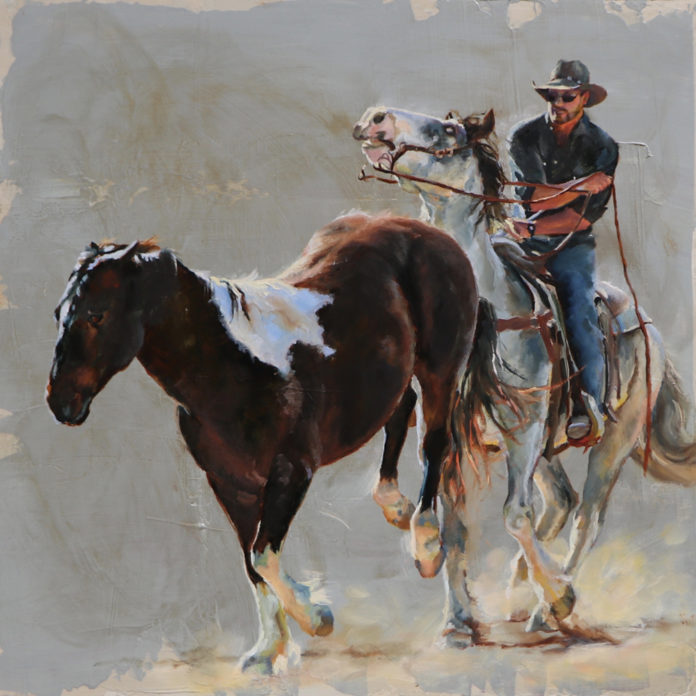
Red State by Booth Malone, Oil, 18 x 18 in., 20 x 20 in. framed; Anderson Fine Art Gallery
Bubble Bath by Lucia Heffernan, Oil on panel, 24 x 24 in. (Featured in Spirit Animal Full Exhibition – Gallery Walk Early Access); Rehs Contemporary
Pittsburgh, the Dean Adams Arriving at the Point in 1880 by John Stobart, Oil on canvas, 24 x 40 in., Signed and dated 1987; Rehs Contemporary
Uphill Climb by Robert W. Brunelle, Jr., Acrylic on canvas, 18 x 24 in.; Vermont Artisan Designs
Drum Dream by Myron Barnstone, Pen and ink on paper, 19.5 x 17.5 in.; Barnstone Studios
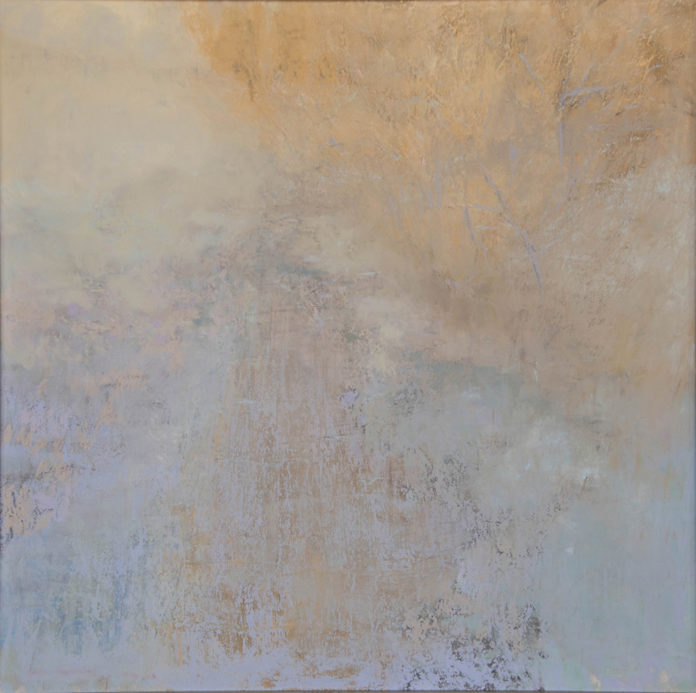
Last Light of Summer by Tara Will, Soft pastel, 29 x 23 in. (Featured in Back to Nature – A Landscape Painter’s Invitational Exhibition); Wayne Art Center
Bull Moose By The River by Claudio D’Angelo, Oil, 18 x 24 in.; ArtzLine.com
Want to see your gallery featured in an upcoming Virtual Gallery Walk? Contact us at [email protected] to advertise today. Don’t delay, as spaces are first come, first served, and availability is limited.
From cityscapes to landscapes to figurative art, this painter shares both his inspiration and process.
The following was originally written and published in 2015
Inspiration and the Journey Through Process
BY JACOB DHEIN
Cityscapes
Living in San Francisco is a gift in itself. The city is visually one of the most amazing in the world: it has elevation fluctuations, many cultures that influence the scenery, the ocean, cliffs, and lots of fog. I often walk around the city with my camera. Once when I was walking through Chinatown I noticed that the light and shadow patterns were just amazing. I immediately started snapping photos, and as if by fate, a line of young children walked into my camera frame. The way the light and shadow bounced off the children as they walked in and out of shadow was exquisite.
Soon after downloading the images I began the painting “Chinatown.” I began with an accurate drawing of the shadow pattern and filled it in with a dark wash, allowing some of the paint to run during application. After the dark pattern, I began adding the light, and eventually worked in limited detail into the shadow. By using a pixelated or blurry look, a sense of energy and the feel of movement created the dynamics of bustling Chinatown. I was careful not to overwork the painting, and I allowed some of the underpainting to show so the viewer could see my process.
“Chinatown” in progress“Chinatown” in progressJacob Dhein, “Chinatown,” 14 x 14 inches, Oil on panel
Another one of my favorite cityscape subjects is trolley cars in the rain, an iconic San Francisco image. These images have so much character and create a strong focal point. The tracks and overhead power lines act as a natural lead-in and enhance one-point perspective. The wet surface on the street is marvelous. The reflecting image suggests there is another mysterious world below the street.
“Market Trolley in the Rain II” was painted in a manner similar to “Chinatown.” In contrast to “Chinatown,” I let the underpainting dry before adding the final details. This ensured the two layers did not mix, making the paint application easier and bolder.
“Market Trolley in the Rain II” in progress“Market Trolley in the Rain II” in progressJacob Dhein, “Market Trolley in the Rain II,” 20 x 20 inches, Oil on panel
Landscape
Landscape painting is an exhilarating experience. It provides a sense of freedom and divinity, allowing me to bend compositions to my will. It allows me to move, change, or leave out areas without consequence. The majority of my landscapes are plein air paintings.
Several years ago a group of colleagues from AAU and I started painting together. During our plein air outings we discuss painting techniques and philosophies of art. During a plein air trip to Yosemite I remember talking with a fellow artist, James Kroner. He had the enthusiasm of a child at their first carnival when talking about photo references of rock structures he photographed at dusk. He explained why these images were so magnificent.
My eyes widened and I started seeing the forms as separate abstract elements that intricately work together. It is a great gift whenever I am able to see the world from a new perspective.
Jacob Dhein, “Rock Structure at Yosemite,” 16 x 16 inches, Oil on panel
On the last day of the trip our group went on the Tioga Road and found an awe-inspiring spot. There were rock formations everywhere, making it easy to choose a proper vantage point. Finding one, I envisioned the process leading to the finished painting. I’ve found that having a preconceived notion of what I want my painting to look like significantly increases my chances of success. The site I chose had multiple natural lead-ins to the area of interest.
During the next two hours I struggled with the painting because it wasn’t quite what I envisioned. After returning to San Francisco I put the painting away for a few weeks. When I looked at it again I was surprised that all the frustration creating it seemed to have been worked out. Although it wasn’t quite what I imagined I was very happy with the finished look and it became one of my favorite plein air paintings. I think the composition is very different from other painting I have done, and the busy detail work on the top quarter portion balances out nicely with the bottom area of the simple rock formation.
On another plein air excursion we went to Fisherman’s Wharf. There are amazing areas to paint in its nooks and crannies, if you’re not afraid to explore a little. I had a studio in North Beach, only a ten minute walk from Fisherman’s Wharf, and during that time I did many paintings in and around the Wharf.
To my surprise during one visit, one of the piers under construction for so long had reopened. At the end of the pier there is a vantage point that looks out to a small building that I found fascinating. In the past I was never able to get close enough to paint it properly.
In the beginning stage of the painting I used layers of thinned paint applied with a brush to get the light and shadow pattern. Then I used a squeegee to remove some of the original wash in preparation for the lighter reflections on the bottom. I added other thin layers of paint with a palette knife, allowing the paint to drip, creating a semi-controlled chaos. This painting became my favorite plein air. The mixture of abstract and representation, the variety of applications, and the color palette make for an interesting and unique painting.
Jacob Dhein, “San Francisco Piers,” 9 x 12 inches, Oil on panel
Figurative
Figurative painting is my favorite subject matter. I am fascinated by the variety of people that I encounter, and find myself staring at them at times. In these moments I am lost in thought, recreating their appearance in my head, imagining how I would paint them.
The first time I saw Theresa I found myself drawn to her eyes behind her glasses. I think the eyes can convey a sense of sadness, passion, love, calmness, awkwardness, and countless other things. Theresa’s glasses seemed to magnify the feeling that I saw in her eyes. Because she had very light flesh tones I decided to use cool natural light during the photoshoot. By doing so, I eliminated harsh shadows and kept a natural feeling to the image.
Jacob Dhein, “Theresa,” 24 x 24 inches, Oil on panel
The painting “Nude in Blue II” was inspired by Ann Gale and Alex Kanevsky. I love going to the Dolby Chadwick Gallery in downtown San Francisco to see their work. This painting was started after I had a photo shoot for my figurative drawing class.
During the photo shoot I asked the model to step off the modeling stage and pose in front of it. I put a strong warm light on one side and allowed a small amount of cool natural light in the window to add diversity to the color temperature relationship. I studied the images in my studio. The background was so simple, splitting the composition in a desired ratio.
For this painting, I set aside three days to make sure I had enough time to finish it while the paint was still wet. This permitted me to blend the transitions and merge the figure into the background. The painting was finished with many different paint applications, giving a sense of vast complexity within the simple composition.
“Nude in Blue II” in progress“Nude in Blue II” in progressJacob Dhein, “Nude in Blue II,” 20 x 20 inches, Oil on panel
While my paintings are diverse in subject matter and sometimes in style, to me they are a collective of my experiences and inspirations during different periods of my life. Rather than writing a diary in words, my diary is in brushstrokes, paint dribbles, and palette knife marks. With my art I hope future generations will see the world as I saw it, meet the people I met, see the places I went, and know what inspired me.
> Visit EricRhoads.com to learn about more opportunities for artists and art collectors, including retreats, international art trips, art conventions, and more.
> Sign up to receive Fine Art Today, our free weekly e-newsletter
Sexy Giggles
By Tanmaya Bingham
Acrylic, colored pencil, watercolor, and glitter on panel, 2020
60 x 72 in.
$19,200
Available through the Muskegon Museum of Art
Tanmaya Bingham’s dynamic series “Sexy Loud” (2019-20) is about women being their bold, raw, and badass selves. This work, “Sexy Giggles,” the largest in the series, portrays a likeness of the artist with her face pressed to a horse to show their nature as one-in-the-same. According to Bingham, “I was never into horses as a kid, but as an adult I am fascinated by their majestic, enduring, wild, and powerful presence. I also have a fondness for unicorns…hence the horn piercing out of the handbag in this artwork.”
Animal and figure accompany the word “Giggles” across the horse’s mane, which, along with the use of glitter and high-key color, brings a playfulness to the colorful, striking, and confronting composition.
The subjects in this series are strategically placed amidst a background of angular patchwork, acrylic paint, and glitter shapes that allude to a 3D space that converges to accentuate the subjects’ position. Bingham’s unconventional and sometime quirky manner of expressing the raw nature of women is refreshing and captivating.
Bingham has exhibited in solo exhibitions in galleries in Oregon and Santa Fe and in the cities of Melbourne and Sydney in Australia. Her works have appeared in group shows in the United States and internationally in such locales such as Tampa, Florida; Hong Kong, China; Vancouver, Canada; and Los Angeles, California and in publications including ArtSlant, Hi-Fructose, New American Paintings, Surface, Vogue Living AU, Art Collector, and The Sydney Morning Herald. In 2019, she received the 1st Place BBA Artist Prize at BBA Gallery in Berlin, Germany and 2nd Place in The 37th Bradley International Print and Drawing Exhibition at Bradley University Gallery in Peoria, Illinois.
The Lyman Allyn Art Museum is now presenting “Memories & Inspiration: The Kerry and C. Betty Davis Collection of African American Art.” The extensive exhibition celebrates the passion of an ordinary couple who spent more than 35 years as devoted connoisseurs building a collection of vivid artworks that is both resonant and remarkably personal.
“Memories & Inspiration” will be on view at the Lyman Allyn, the only venue in the Northeast, through August 22, 2021.
Image Credit: Sedrick Huckaby, “She Wore Her Family’s Quilt,”A 2015, oil on canvas. Photograph by Gregory Staley.
The show presents 62 selected works from a body of art amassed by Kerry, a retired mailman, and Betty, a former television news producer, who gladly gave up many ordinary comforts to fill their home with these extraordinary paintings, drawings, prints, and sculptures as their principal luxuries.
Their collection includes works by Radcliffe Bailey, Romare Bearden, Beverly Buchanan, Elizabeth Catlett, Ernest T. Crichlow, Sam Gilliam, Loïs Mailou Jones, Jacob Lawrence, Gordon Parks, Alma Thomas, and Charles White. In selecting their work, the couple did not search exclusively for well-known and/or documented artists. Rather, they focused on gathering and preserving a range of artistic approaches to the black image.
“We’re delighted to share this beautiful and eclectic collection with visitors to the Lyman Allyn,” said Director Sam Quigley. “It includes an exciting mix of artists and styles, but the couple’s story and personal connections to the art is equally powerful.”
“Memories & Inspiration: The Kerry and C. Betty Davis Collection of African American Art” was organized and toured by International Arts & Artists, Washington, DC. It is supported by the Department of Economic and Community Development, Office of the Arts; and an anonymous foundation. For more information, please visit www.lymanallyn.org.
> Visit EricRhoads.com to learn about more opportunities for artists and art collectors, including retreats, international art trips, art conventions, and more.
> Sign up to receive Fine Art Today, our free weekly e-newsletter
Ben Aronson, "Sun on Leavenworth," 2021, oil on panel, 12 x 12 in.
“While we now move ahead,” says artist Ben Aronson, “beyond a difficult year which forced and challenged us to confront serious threats and loss of many types, we must also remember that we can choose not to allow optimism to be counted a casualty.”
“Sightlines” refers to Aronson’s new group of paintings that celebrate the beauty of the visible world, the light and directions toward which we can choose to direct our view, in balance and apart from the negative. “Sightlines” is on view at Jenkins Johnson Gallery in San Francisco.
Ben Aronson, “Sun on the Bay,” 2021, oil on panel, 48 x 48 in.Ben Aronson, “California Street Midday,” 2021, oil on panel, 24 x 24 in.Ben Aronson, “Down Powell to the Bay,” 2021, oil on panel, 30 x 30 in.
The show, accompanied by an exhibition catalogue, is on view through July 2, 2021. For more details, please visit jenkinsjohnsongallery.com.
> Visit EricRhoads.com to learn about more opportunities for artists and art collectors, including retreats, international art trips, art conventions, and more.
> Sign up to receive Fine Art Today, our free weekly e-newsletter
Isabel Bishop, "Manhattan Street," 1929, oil on canvas, 10 x 12 1/4 in.
American social realism took shape in the 1920s in the centers of commerce also home to artistic communities, like New York and Chicago. The cultural shift in the United States seen in the art of the social realists bridges the high modernist ideals of Europe and the struggle and very human drama evoked by the Great Depression and the political upheavals of the 1920s and 30s.
Forum Gallery (NYC) is now presenting a group exhibition of American social realism featuring paintings, drawings, and sculpture dating from the first half of the Twentieth Century to today. Artists working in the years between the world wars and well known for their contributions are shown side by side with contemporary American Artists whose work continues the humanist legacy of social realism.
Linden Frederick, “Traveling Salesmen,” 2020, oil on linen, 55 x 55 in.
More from the gallery:
At a time when we again face political, social, and economic turbulence, “Then and Now: American Social Realism” presents paintings by five contemporary American artists whose emotive work shares with the early American social realists the impulse for humanist depiction.
Works in “Then and Now: American Social Realism” reflect and record the Nation’s fragile optimism of this time period. Highly emotional figuration, strong political content, and frank depiction of the common activities of daily life characterize the art of the social realists, demonstrated in this exhibition by masterworks in oil by Raphael Soyer, “In The City Park,” c. 1934, and Jack Levine, “1932 (In Memory of George Grosz),” painted in 1959.
The earliest paintings on view, dating from the 1920s, by Isabel Bishop and James H. Daugherty are joined by evocative works in oil by Philip Evergood, Wood Gaylor, William Gropper, Robert Gwathmey, Joseph Hirsch, Reginald Marsh, and Ben Shahn.
Also on view is an exceptional New York scene in pastel by Everett Shinn, pencil drawings that shine a light on the working class by Aaron Bohrod and Charles White, rare lithographs of industrial and urban subjects by Louis Lozowick, and sculptures imbued with humanism by Chaim Gross, John Storrs, Harry Wickey, and Mahonri Young.
In the art of Steven Assael, Rance Jones and Alan Magee, that fragile optimism of the early Twentieth Century is observed again in contemporary works that raise the unglorified every day to symbols of hope and residual strength in troubled times.
Linden Frederick’s singular hidden narratives pay tribute to working America with respect and empathy; while the inimitable political caricatures and heartfelt renderings in watercolor of immigrant garment workers created by the late David Levine combine the social and the political concerns of American social realist Artists, past and present.
Alan Magee, “Helmet II,” 2019, acrylic on canvas, 40 1/8 x 50 1/8 in.William Gropper, “Little Steel,” ca. 1937, oil on canvas, 33 3/4 x 44 1/2 in.Raphael Soyer, “In the City Park,” c. 1934, oil on canvas, 38 x 40 in.Steven Assael, “Days,” 2017, oil on canvas, 41 3/4 x 53 3/4 in.
> Visit EricRhoads.com to learn about more opportunities for artists and art collectors, including retreats, international art trips, art conventions, and more.
> Sign up to receive Fine Art Today, our free weekly e-newsletter
As part of our effort to continue to help artists and art galleries thrive, we’re proud to bring you this week’s “Virtual Gallery Walk.” Browse the artwork below and click the image itself to learn more about it, including how to contact the gallery.
Want to Buy the World a Coke by Catherine Hillis, Watercolor, 18 x 14 in.; Anderson Fine Art Gallery
Art Deco Building in Winter by Mark Daly, Oil on canvas, 30 x 24 in., 37 x 31 in. framed, Signed; Rehs Contemporary
Notre-Dame, Quai St. Michel by Antoine Blanchard (1910 – 1988), Oil on canvas, 13 x 18 in., Signed; Rehs Galleries, Inc.
Monadnock Splendor by Mary Iselin, Oil on canvas, 20 x 20 in., 24 x 24 in. framed; Vermont Artisan Designs
Beseech by Myron Barnstone, Oil on canvas, 43 x 30.5 in.; Barnstone Studios
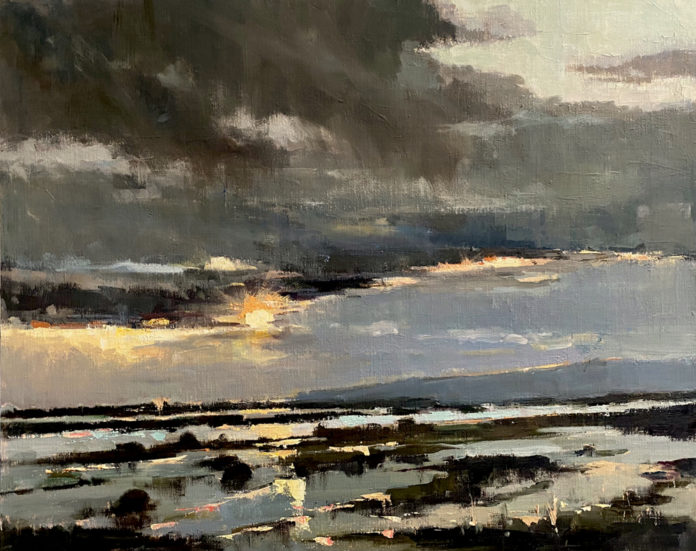
Drifting Dawn Storm by Darcie Peet, Oil, 10 x 10 in.; ArtzLine.com
Want to see your gallery featured in an upcoming Virtual Gallery Walk? Contact us at [email protected] to advertise today. Don’t delay, as spaces are first come, first served, and availability is limited.
Image: From the Netflix documentary mini-series, "This is a Robbery"
“This is a Robbery: The World’s Biggest Art Heist” is a new Netflix mini-series documents the world’s biggest art heist, which took place in 1990 at the Isabella Stewart Gardner Museum in Boston, Massachusetts. Two men dressed as cops conned their way into the museum and stole 13 artworks with an estimated combined value of $500 million.
From Netflix: “It was the biggest art heist in history: Over St. Patrick’s Day weekend in 1990, legendary works by Rembrandt, Vermeer and others worth over half a billion dollars today were stolen from the Isabella Stewart Gardner Museum in Boston. This four-part documentary series from director Colin Barnicle covers the leads, dead ends, lucky breaks and speculations that characterized the investigation of this still unsolved mystery.”
Watch the trailer for “This is a Robbery: The World’s Biggest Art Heist” here:
. Bonus: Watch the CBS Sunday Morning segment on the robbery here:
“It was the ‘heist of the century’: A two-man team of thieves stole several classic pieces of art from the Isabella Stewart Gardner Museum in Boston, including works by Rembrandt, Vermeer and Manet. More than 25 years later, no arrests have been made and none of the art has been recovered. Erin Moriarty of ’48 Hours’ tells the tale.”
.
> Visit EricRhoads.com to learn about more opportunities for artists and art collectors, including retreats, international art trips, art conventions, and more.
> Sign up to receive Fine Art Today, our free weekly e-newsletter
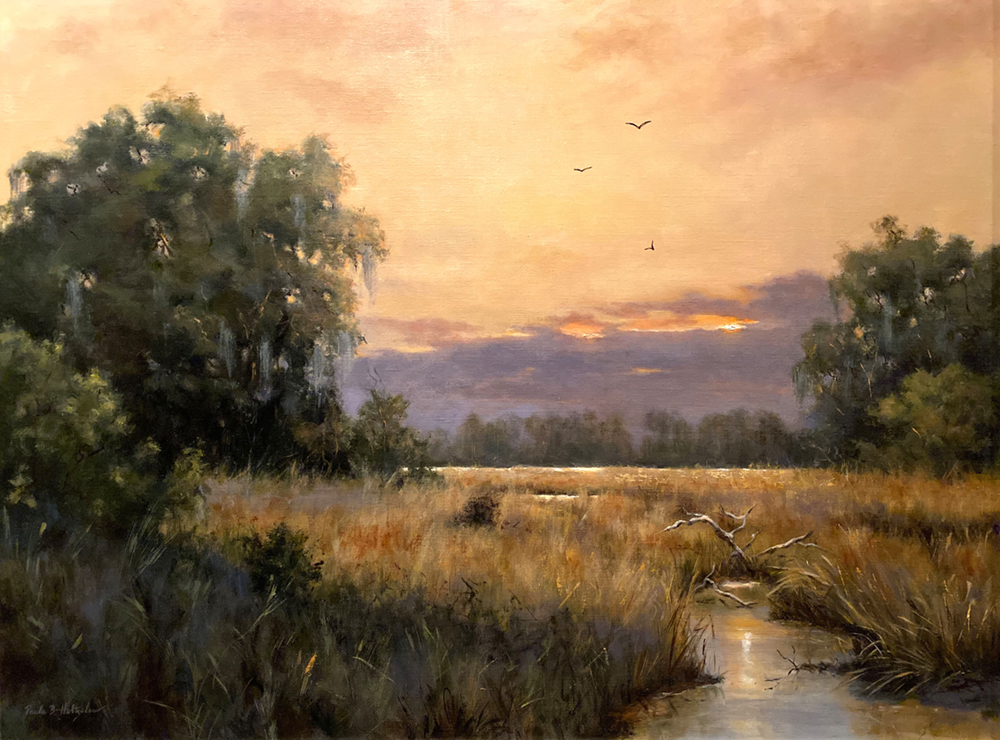
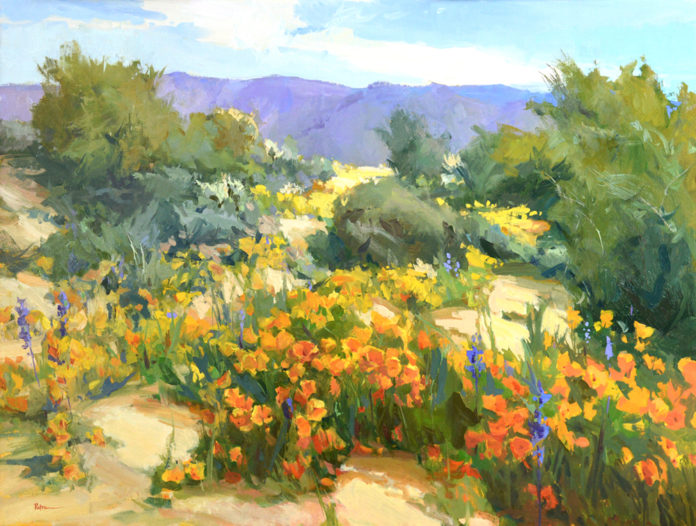
The Golden Hour
Oil
30 x 40 in.
Juried Into: “Lifting the Sky: Elevating the Works of American Women Artists,” AWA National Online Show May 20 – August 21, 2021
“I choose to paint what is beautiful and meaningful, knowing that this act of celebrating and communicating the beauty in this world has the power to uplift and inspire.”
North Carolina artist Paula Holtzclaw has gained a national reputation for her ability to capture the drama of nature on canvas. Light-filled paintings of pristine, undeveloped landscapes are executed with a unique blend of classical realism and impressionism, while her still life paintings demonstrate a love of the Old Masters’ works.
Holtzclaw’s paintings have been included in many national juried and museum exhibitions. Museum venues include the Haggin Museum, Gilcrease Museum, Booth Western Art Museum, Muscarelle Museum of Art, the Tucson Desert Museum, and the Arizona Sonora Desert Museum.
Paula has been the recipient of notable awards including: Award of Excellence, American Women Artists National 2019, Third Place- Master’s Division, Women Artists of the West National 2021, 2020, 2019, The F & M Bank Purchase Award, American Women Artists National 2018, First Place, Nautical Show, Salmagundi Club, New York, NY, 2017, Best In Show, Women Painters of the Southeast Exhibition, 2015.
PUBLICATIONS:
Recent publications and profiles of Paula and her work include the November 2020 SouthwestArt Magazine, “A Soft Glow”, January 2019 issue of Fine Art Connoisseur Magazine’s feature, “Today’s Masters,” and the April 2019 issue of Art of the West Magazine, showcasing Holtzclaw and her studio. Paula has also been featured in various other arts publications including American Artist magazine, the American Society of Marine Artists News & Journal, Charleston Style & Design Magazine, and Today’s Charlotte Woman Magazine.
PROFESSIONAL MEMBERSHIPS & HONORS:
Holtzclaw is a Master Member of American Women Artists (AWA), and Master Member of the Women Artists of the West (WAOW). Signature Memberships in numerous prestigious art organizations and societies include: Oil Painters of America (OPA)American Society of Marine Artists (ASMA), American Impressionist Society (AIS) and the National Oil and Acrylic Painter’s Society (NOAPS). By invitation, Holtzclaw is an artist member of the Salmagundi Club of New York, the Plein Air Painters of the SouthEast (PAP-SE), and Out-of-State Artist Member of the prestigious California Art Club. Paula is often called upon to serve as an entry and awards juror for regional and national exhibitions. Holtzclaw served on the Executive Board of American Women Artists from 2012-2019, a 501 (c) (3) educational nonprofit organization, dedicated to the advancement of women through the arts.
Fill your mind with useful art stories, the latest trends, upcoming art shows, top artists, and more. Subscribe to Fine Art Today, from the publishers of Fine Art Connoisseur magazine.