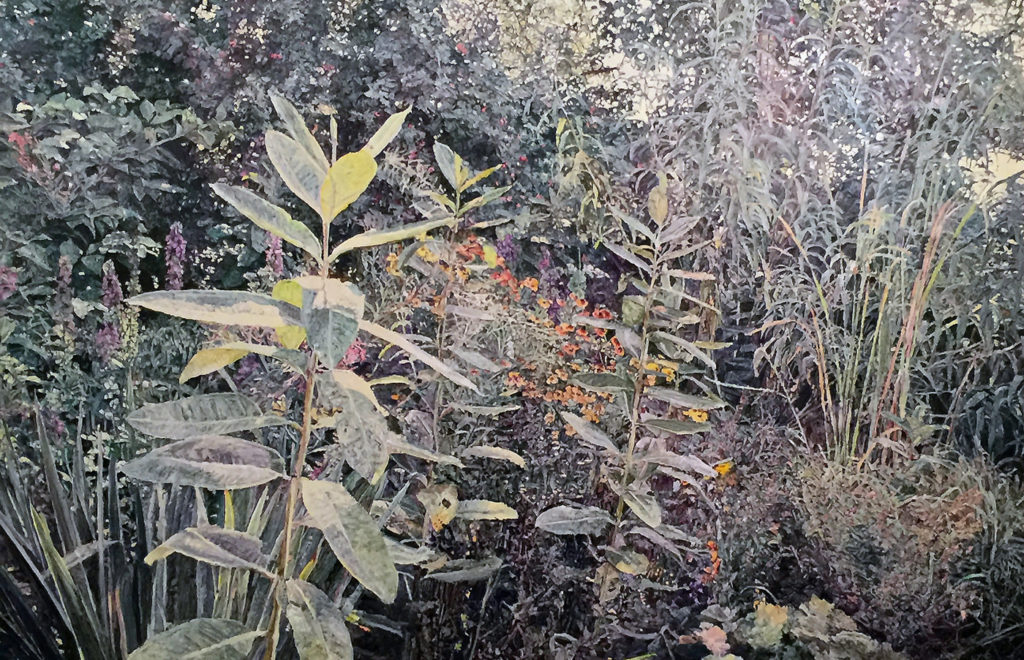
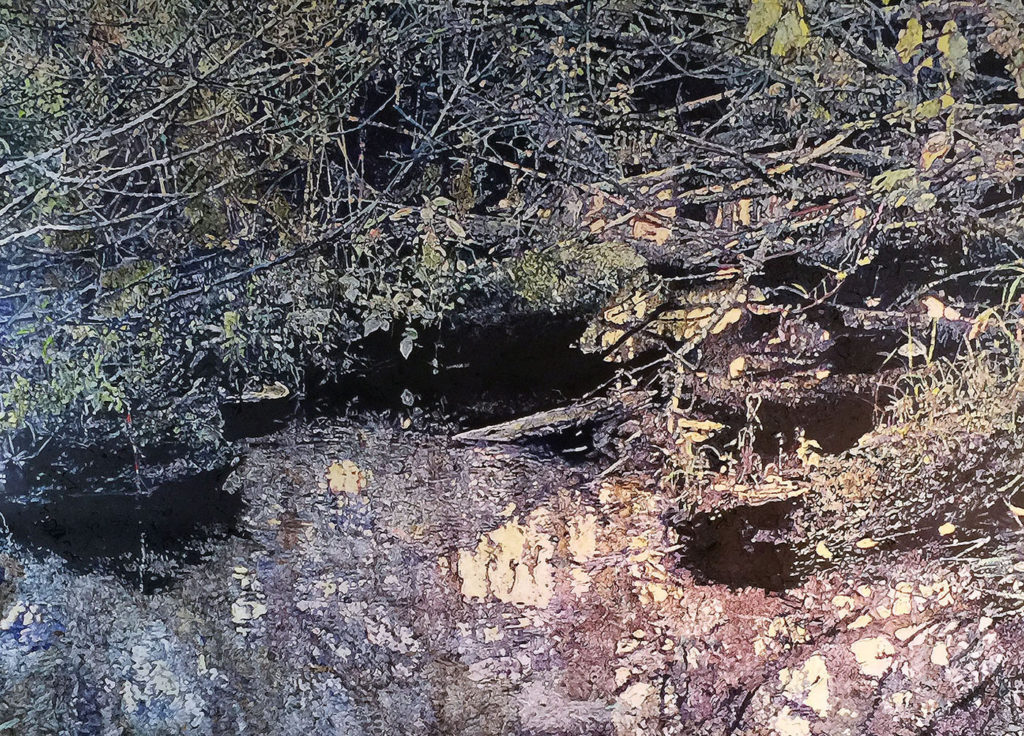
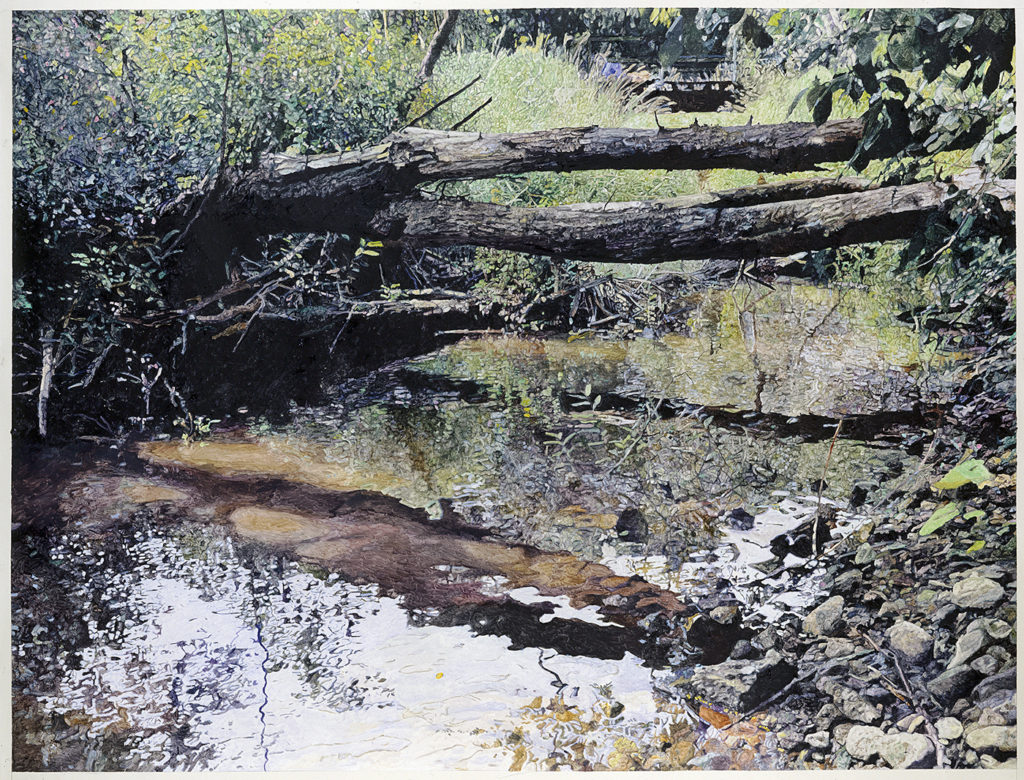
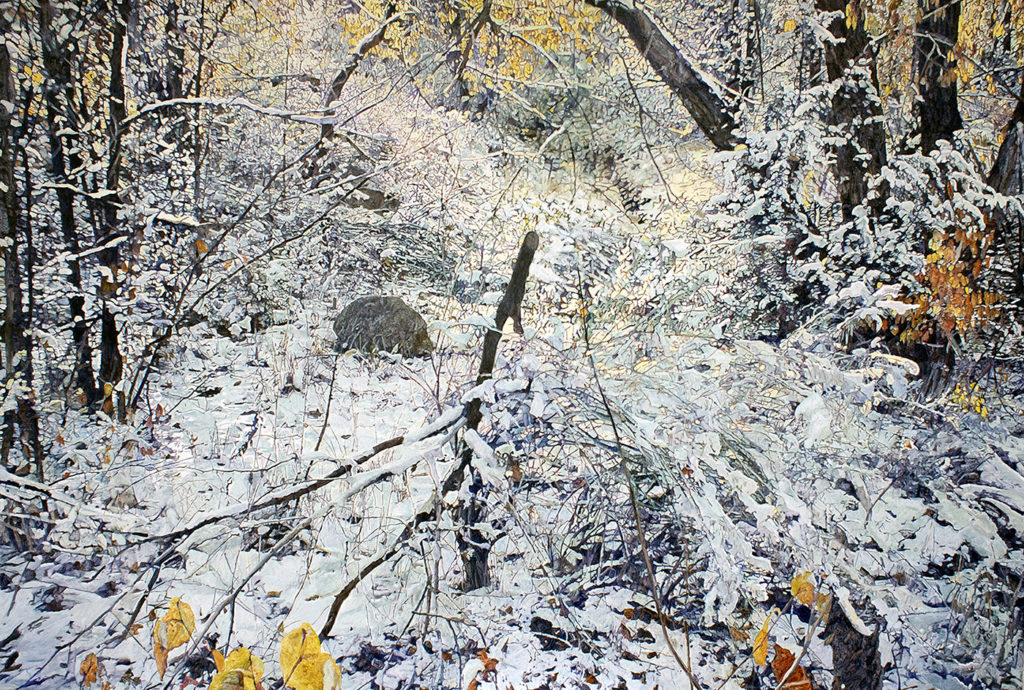
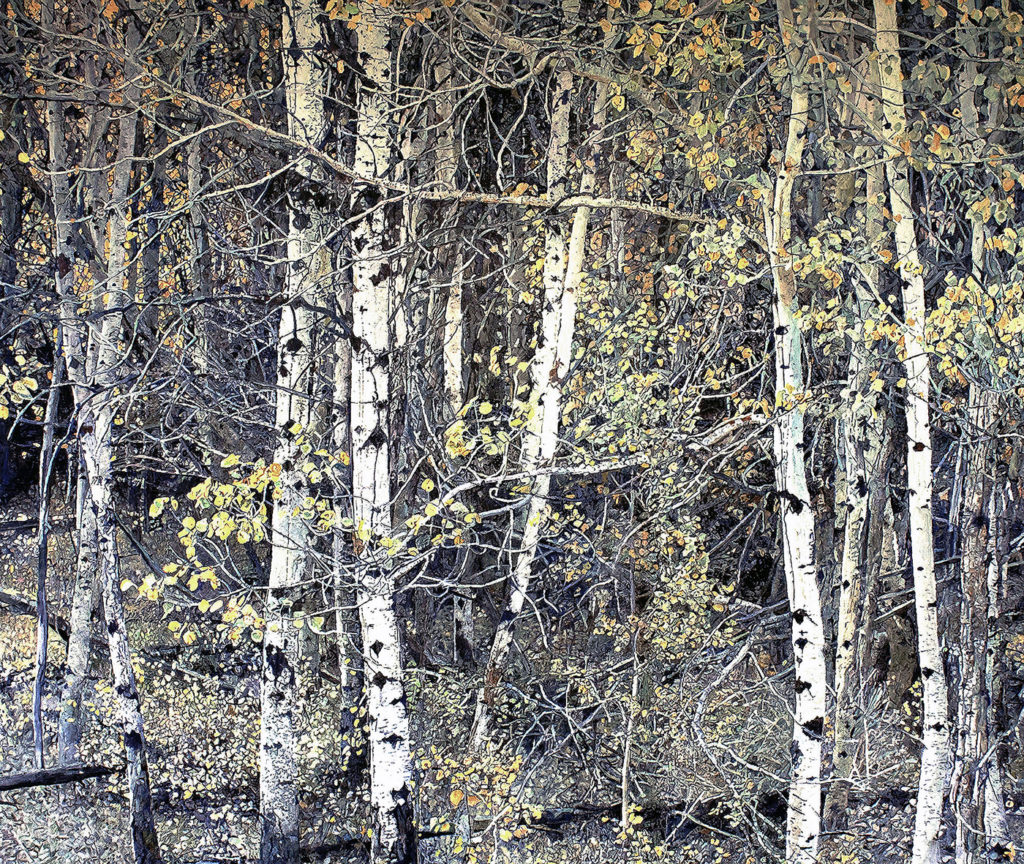
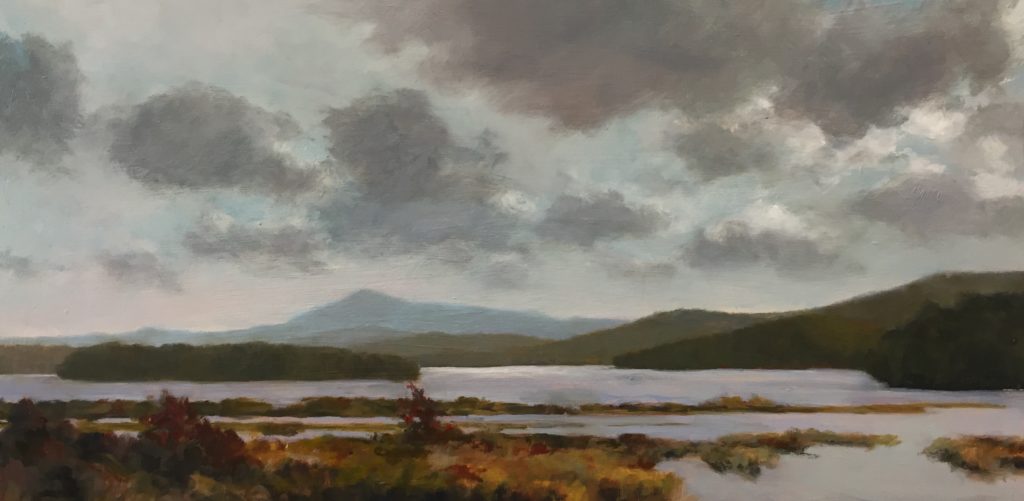
William Nichols, "Sunshine and Shadows," 2018, oil on linen, 54 X 74 in.
Paintings of Nature > It took William Nichols some time to develop a visual vocabulary that accurately expressed what he saw and experienced emotionally in nature. However, once discovered, the creativity — and paint — flowed in ways that continue to enthrall viewers and collectors.
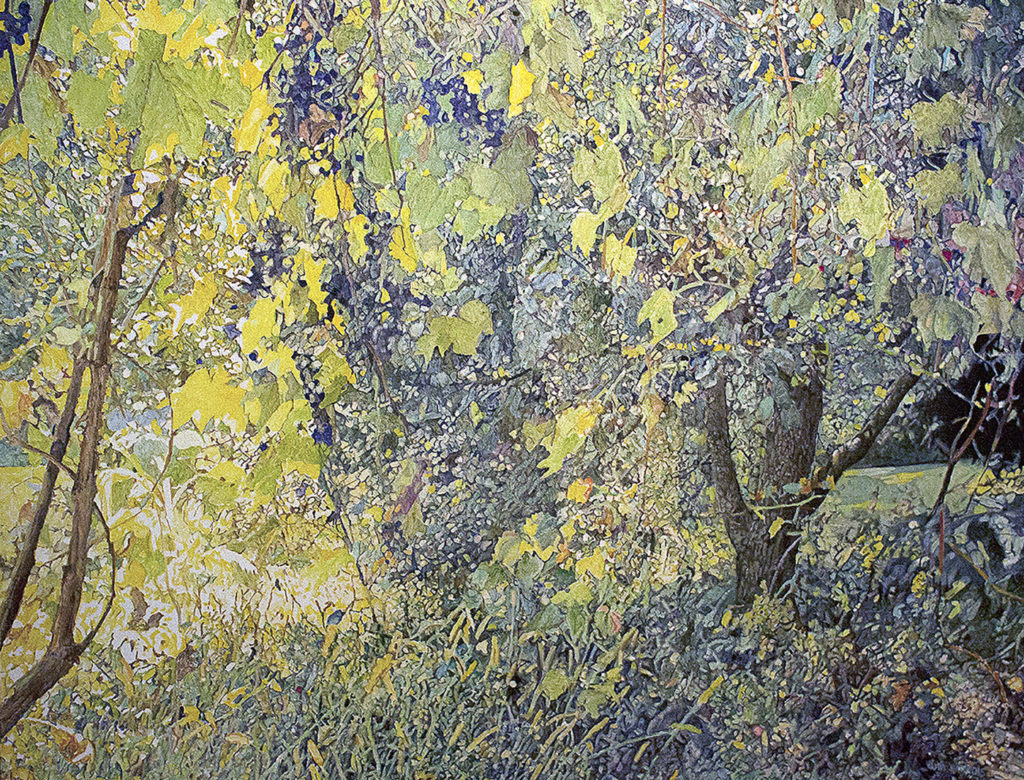
William Nichols, “Wild Grapeleaves,” 2014, oil on linen, 52 x 64 in.
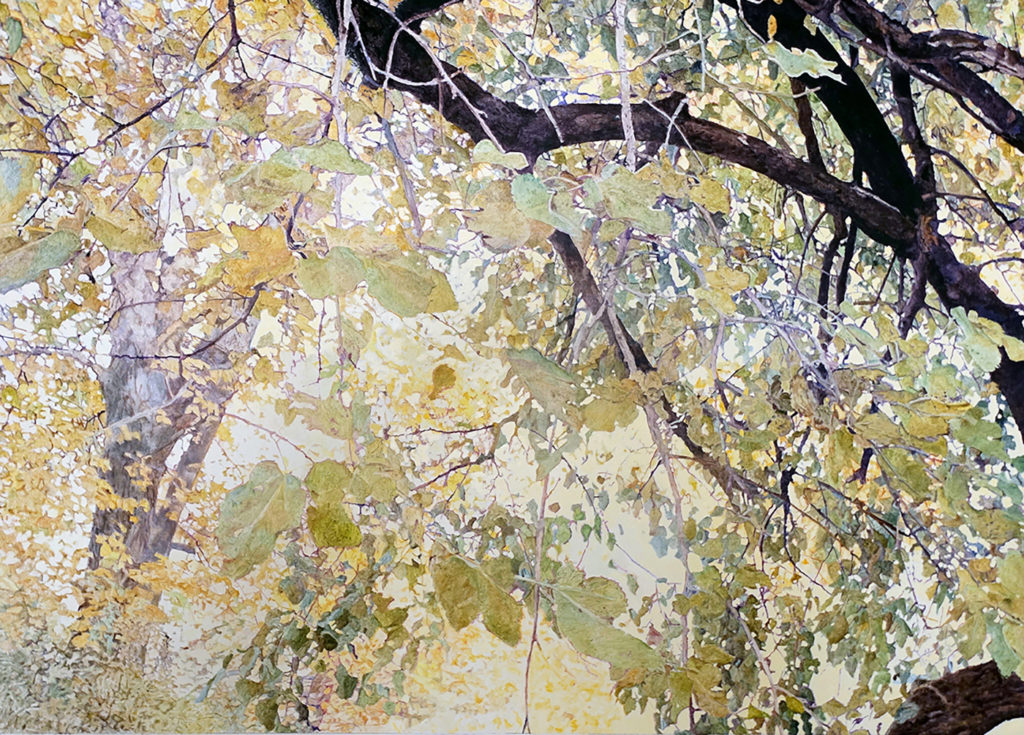
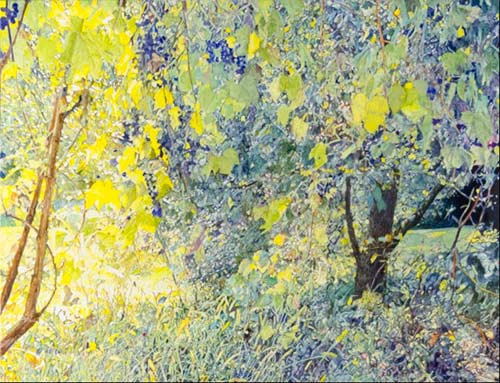
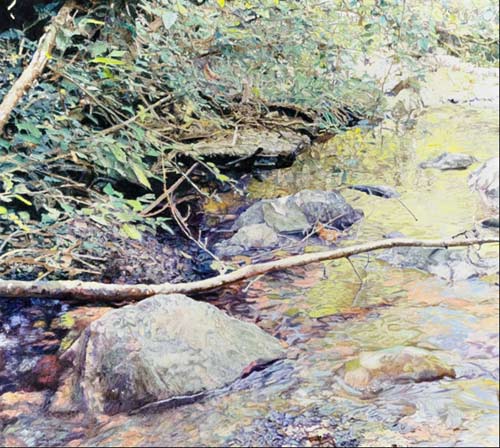
Viewing a painting by William Nichols is like being engulfed by a wave of color, energy, pattern, and light that could be overwhelming. Nichols typically works on a large scale, and his paintings have such an arrangement of color and active brushstrokes as to make even the most mundane and innocent locations absolutely magnificent.
William Nichols, “Window on Fall,” 2019, oil on linen, 50 x 70 in.
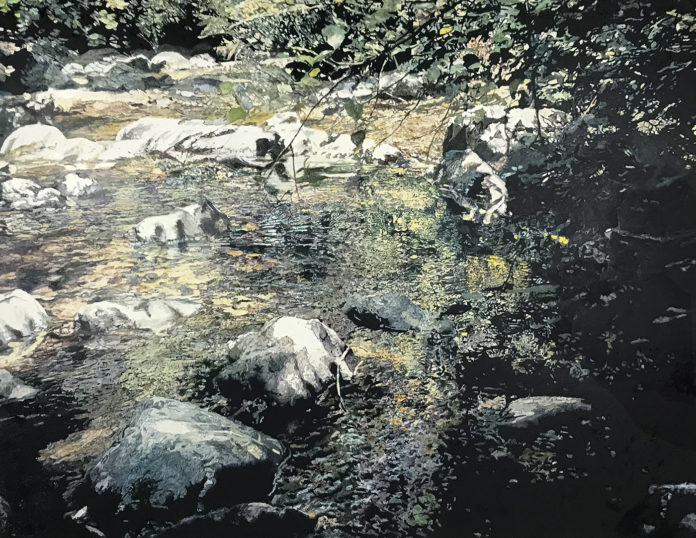
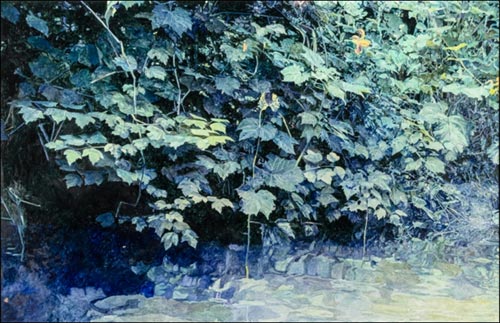
At first glance, paintings such as “Wild Summer Grapes” are so packed full of spots, shapes, and details of color that they almost appear abstract. However, the discerning eye (and brain) begins to pull together larger groupings of forms. Only after extended consideration does the spatial context emerge. Other works, such as “Saratoga Stream” and “Grape, Leaves & Orange Lillies” are more representational, but equally display Nichols’ mastery of color application and balance.
William Nichols, “Wild Summer Grapes,” 2013, oil on linen, 46 x 60 in.William Nichols, “Saratoga Stream,” oil on linen, 43 x 48 in.
Of his experiences, Nichols writes, “As a young painter, I saw the landscape for its potential as both a conveyor of visual beauty and a messenger of meaningful experience. The difficulty was defining what was special about it for me and then finding a way of orchestrating the visual vocabulary to meet what I was seeing and feeling. The conclusions I came up with were, I think, largely intuitive and it is only over a number of years that I have come to understand more fully what those qualities were and what they mean to me.”
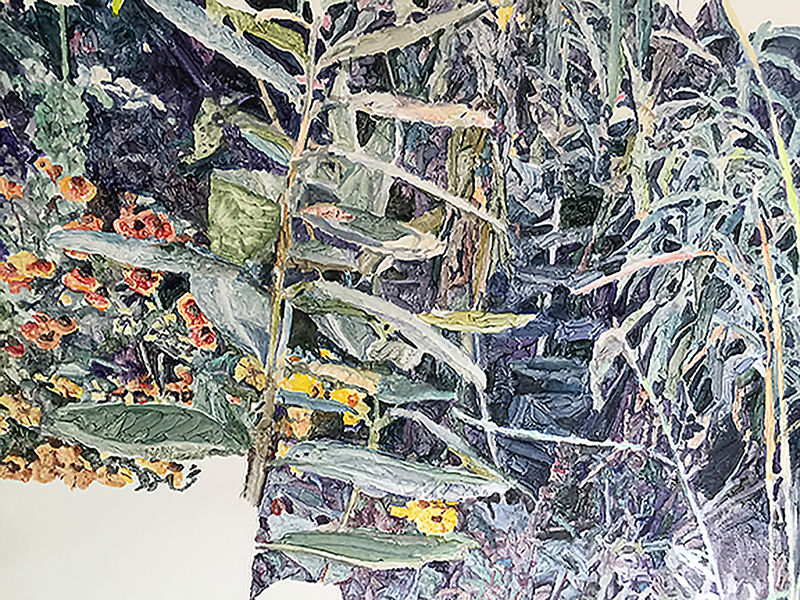
William Nichols, “Grape, Leaves & Orange Lillies,” 2010, oil on linen, 49 x 77 inchesDetail of “Milkweed” (full painting below)William Nichols, “Milkweed,” 2015, oil on linen, 54 x 74 in.William Nichols, “Early Evening Reflections,” 48 x 64 in., Purchased by Governor Pritzger and his wife as a gift to the State Mansion along with another work for the State Dining RoomWilliam Nichols, “Twin Logs Crossing,” 1994, oil on linen, 54 x 80 in.William Nichols, “First Snow Santa Fe,” 2014, oil on linen, 60 x 90 in.William Nichols, “Sundance Aspens,” 66 x 78 in., Oil on Linen
This article was originally written by Andrew Webster in 2017 and featured in Fine Art Today, a weekly e-newsletter from Fine Art Connoisseur magazine. To start receiving Fine Art Today for free, click here.
Galleries, artists, and art organizations around the country are participating in an effort to encourage consumers to shop for the gift of art this holiday season. In our endeavor to help keep arts thriving during the pandemic, we’re proud to bring you this “Virtual Gallery Walk.”
Browse the paintings below and click any image to learn more about the painting, including how to contact the gallery.
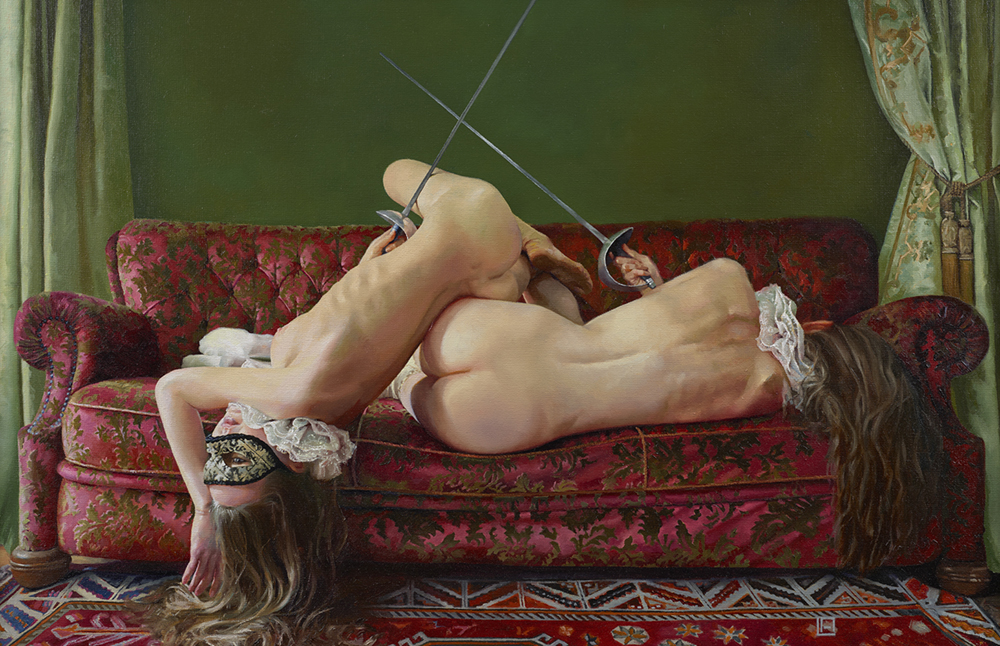
The Duel by Linda Adair (Born 1980), Oil on canvas, 23 1/2 x 35 1/2 in., Signed, also titled on the reverse; Rehs Contemporary
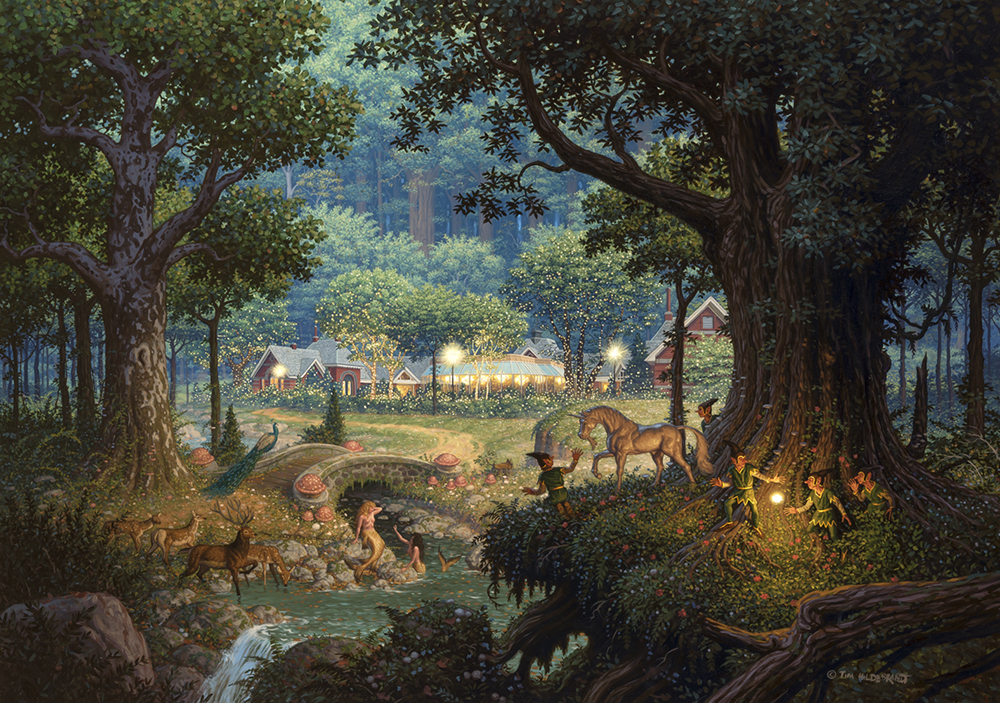
Tavern on the Green by Tim Hildebrandt (1939 – 2006), Oil on panel, 34 x 48 in., signed; Rehs Galleries, Inc.
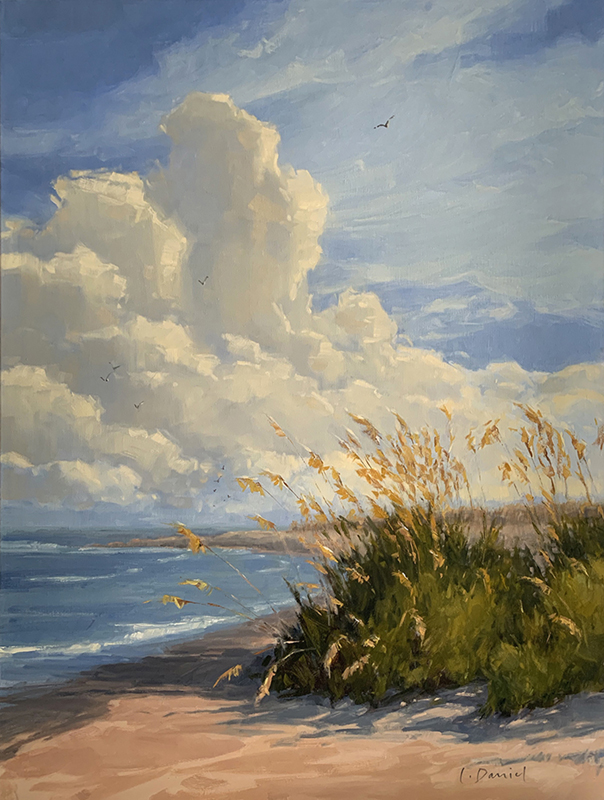
Bending Seagrasses by Laurel Daniel, oil, 40 x 30 in.; Anderson Fine Art Gallery
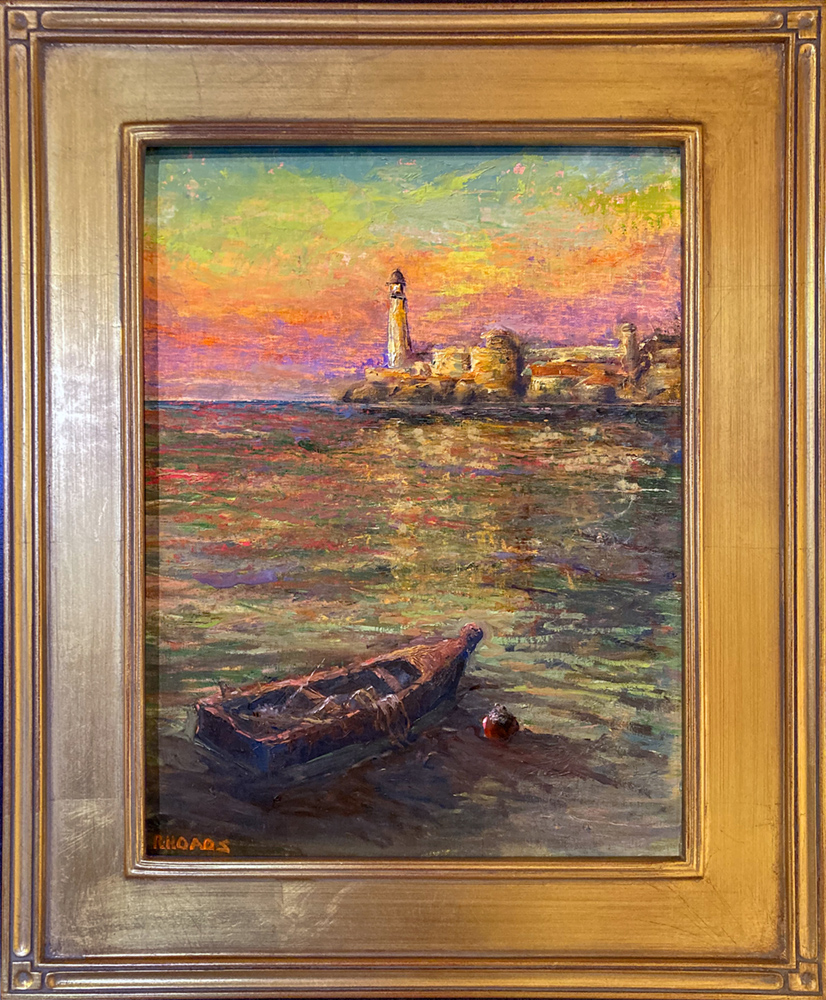
Havana at Sunset by Eric Rhoads, Oil, 20 x 16 in.; Ceres Gallery
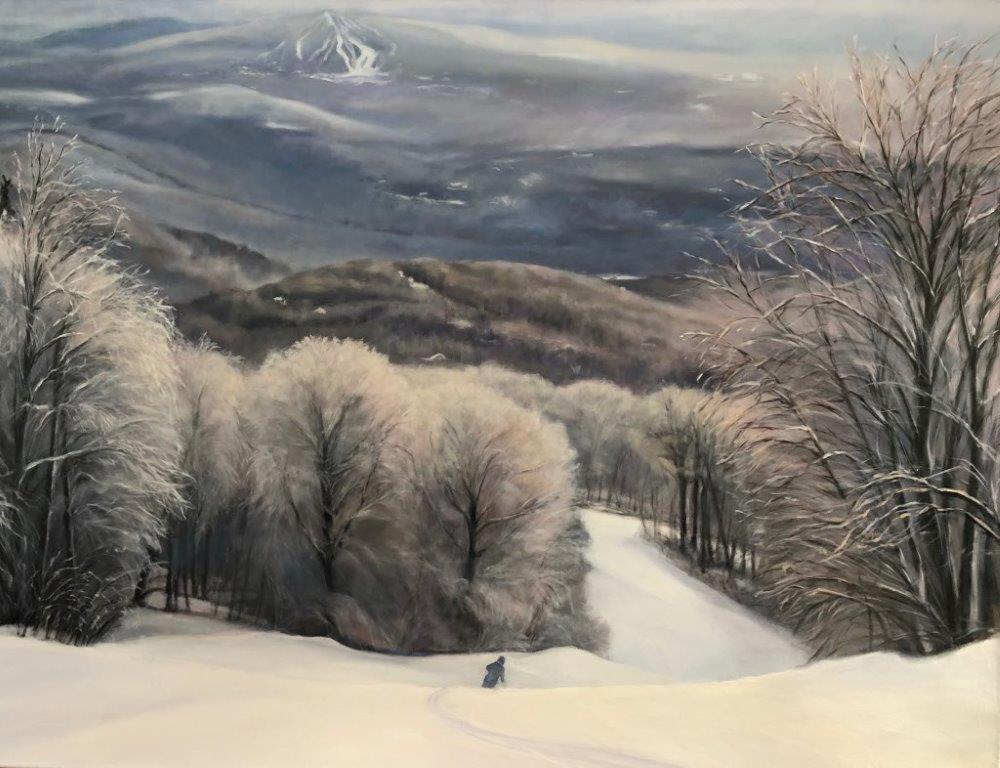
First Tracks by Jocelyn Sandor Urban, Oil on canvas, 46 x 60 in. (47 x 61 in. framed); Vermont Artisan Designs
Want to see your gallery featured in an upcoming Virtual Gallery Walk? Contact us at [email protected] to advertise today – don’t delay, as spaces are first-come first-serve and availability is limited.
Over the last 12 years, a group called ArtDataIntel (ADi)has been monitoring the winning paintings and artists across major art competitions.
They recently finished a daunting statistical analysis where they mixed all award winning artists in their database (5,600+) from 10 competitions, coming up with the following “Grand Slam” list:
Ranking #5 Mary Qian
Qian ranked first among 270 Award Winning Artists in the AIS Awards (12-year history) @americanimpressionistsociety and she ranked third among 580 Award Winning Artists in the OPA Awards (13-year history) @oilpaintersofamerica
Mary Qian, “Model on Break,” Oil, 24 x 36 inches
Ranking #4 William Schneider
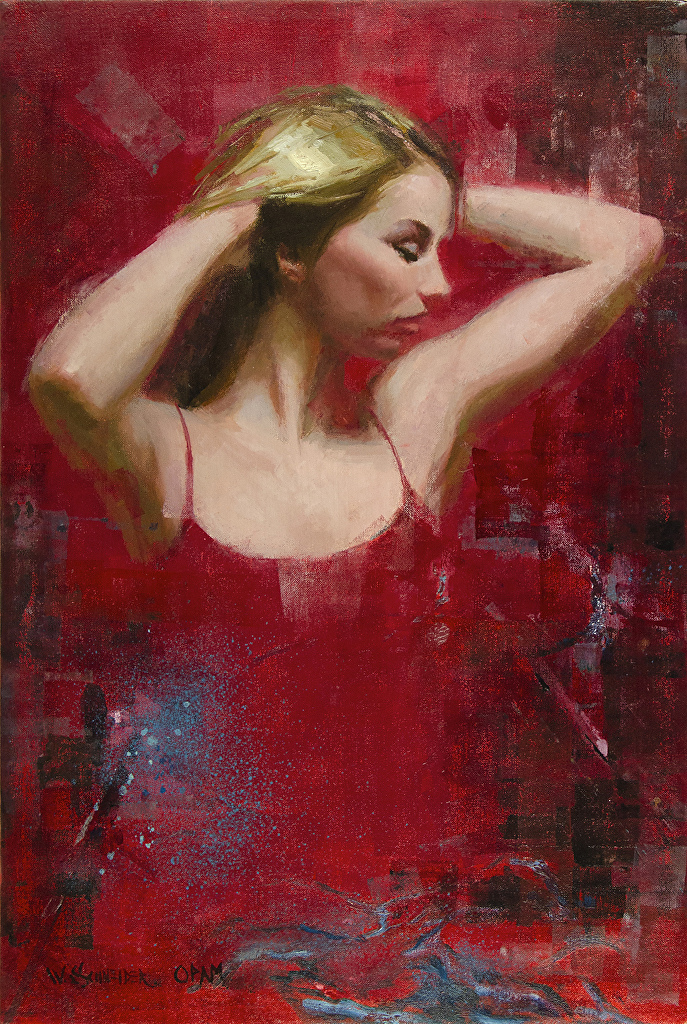
Schneider ranked first among 462 Award Winning Artists in the NOAPS Awards (16-year history) @natoilandacrylicsociety, also, he ranked fifth among 580 Award Winning Artists in the OPA Awards (13-year history) @oilpaintersofamerica and finally, he was one of the 10 Rising Stars @boldbrush
William Schneider, “Red Heat,” Oil, 30 x 20 inches
Ranking #4 James Crandall
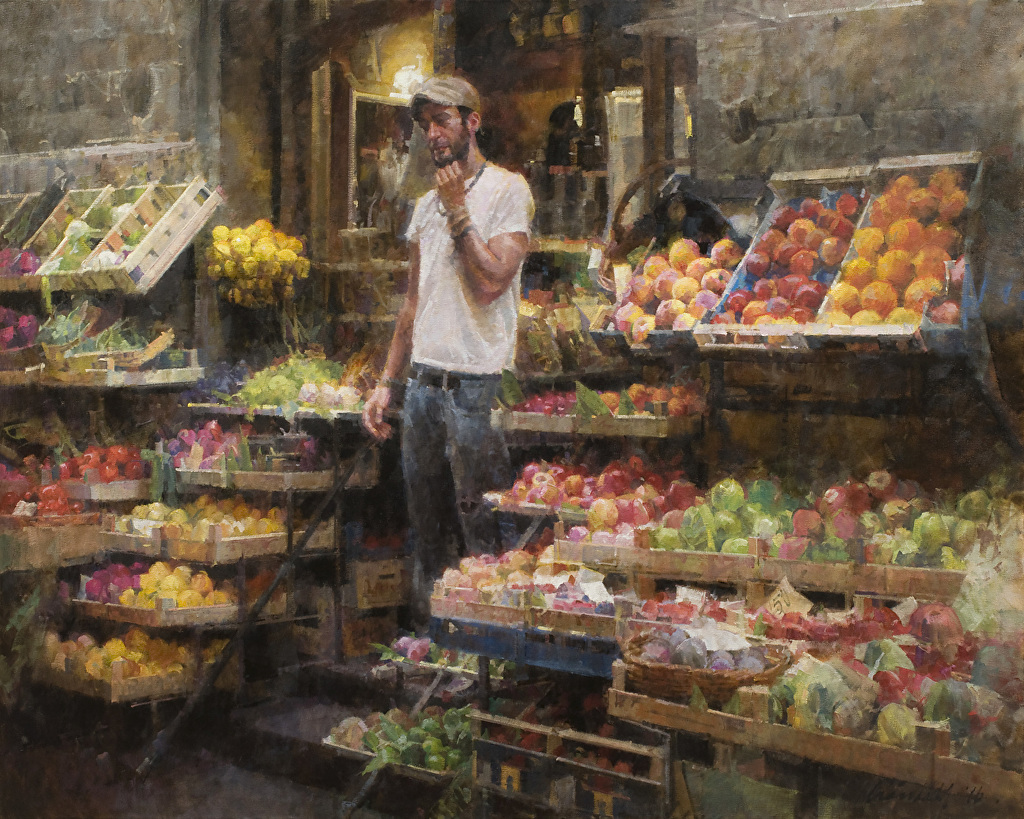
Crandall ranked second among 297 Award Winning Artists in the Raymar Art Awards (7-year history) @raymarart, also, he ranked third among 580 Award Winning Artists in the OPA Awards (13-year history) @oilpaintersofamerica and finally, he ranked sixth among 1016 Award Winning Artists in the BoldBrush painting competition (10-year history) @boldbrush
James Crandall, “Fruit Vendor,” Oil, 40 x 50 inches
Ranking #3 Ned Mueller
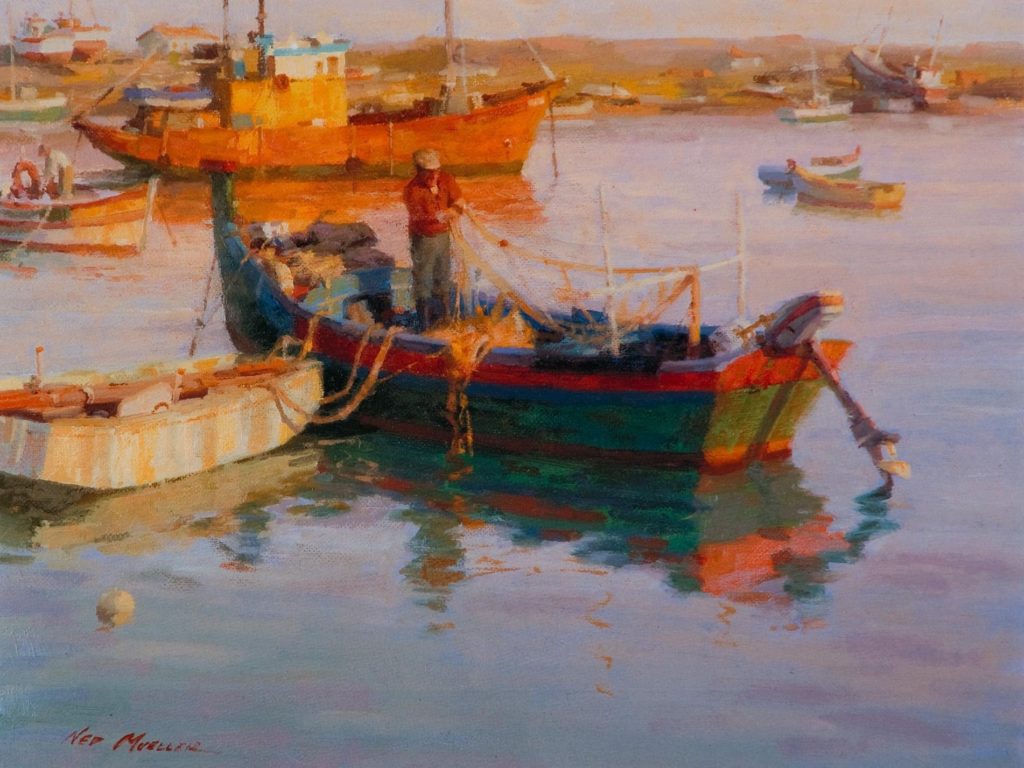
Mueller ranked first among 297 Award Winning Artists in the Raymar Art Awards (7-year history) @raymarart, also, he ranked second among 488 Award Winning Artists in the PleinAir Salon (9-year history) @pleinairsalon and finally, he ranked sixth among 1,016 Award Winning Artists in the BoldBrush painting competition (10-year history) @boldbrush
Ned Mueller, “Last Light – Lagos Portugal,” Oil, 12 x 16 inches
Ranking #2 Jason Sacran
Sacran ranked third among 462 Award Winning Artists in the NOAPS Awards (16-year history) @natoilandacrylicsociety, then, he ranked fourth among 1,016 Award Winning Artists in the BoldBrush painting competition (10-year history) @boldbrush, also, he ranked fourth among 488 Award Winning Artists in the PleinAir Salon (9-year history) @pleinairsalon and finally, he ranked fifth among 580 Award Winning Artists in the OPA Awards (13-year history) @oilpaintersofamerica
Jason Sacran, “Off North Ponce,” Oil, 16 x 20 inches
Ranking #1 Derek Penix
Penix ranked first among 580 Award Winning Artists in the OPA Awards (13-year history) @oilpaintersofamerica, he also ranked first among 270 Award Winning Artists in the AIS Awards (12-year history) @americanimpressionistsociety, then, he ranked fourth among 297 Award Winning Artists in the Raymar Art Awards (7-year history) @raymarart. After this, he ranked fifth among 1,016 Award Winning Artists in the BoldBrush painting competition (10-year history) @boldbrush, continuing with his winning streak, he ranked fifth among 462 Award Winning Artists in the NOAPS Awards (16-year history) @natoilandacrylicsociety, and finally, he also ranked fifth among 488 Award Winning Artists in the PleinAir Salon (9-year history) @pleinairsalon
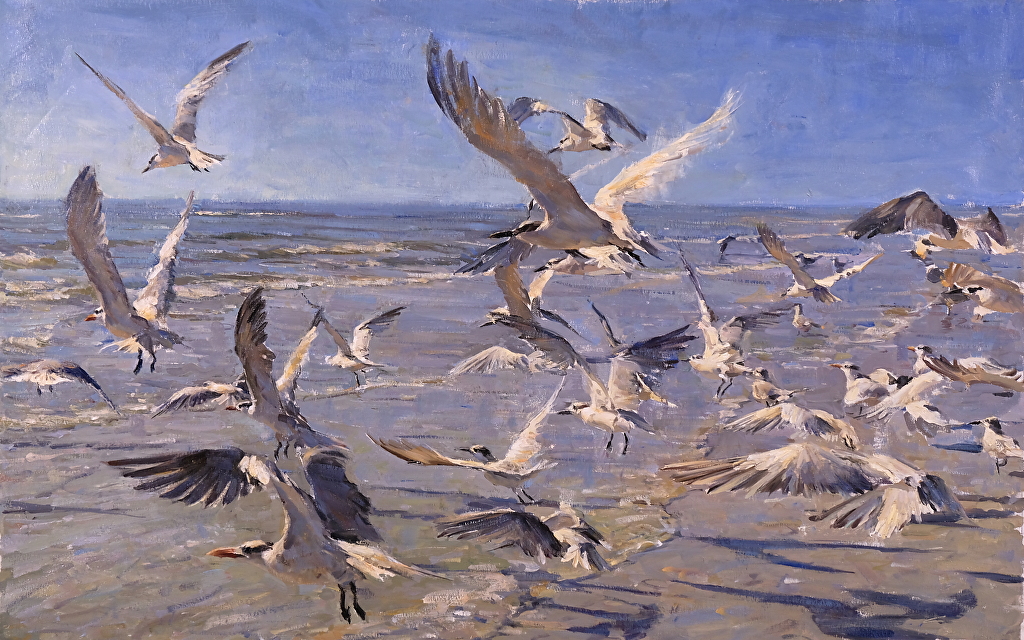
Derek Penix, “Seagulls in the Afternoon,” Oil, 30 x 48 inches
This ADi Grand Slam statistical analysis highlights the Top #5 Rankings across the combined history of the following competitions (with an average of 12 years of accumulated data):
BoldBrush
ARC Salon
Oil Painters of America
Raymar Art
National Oil & Acrylic Painters’ Society
American Impressionist Society
Portrait Society of America
International Guild of Realism
Pastel Society of America
PleinAir Salon
The goal of ArtDataIntel is to provide industry trends along with statistics on an artist’s multi-year performance, his or her ranking among peers, consistency across contests, rising trends and more. They share their findings on Instagram, which you can follow here.
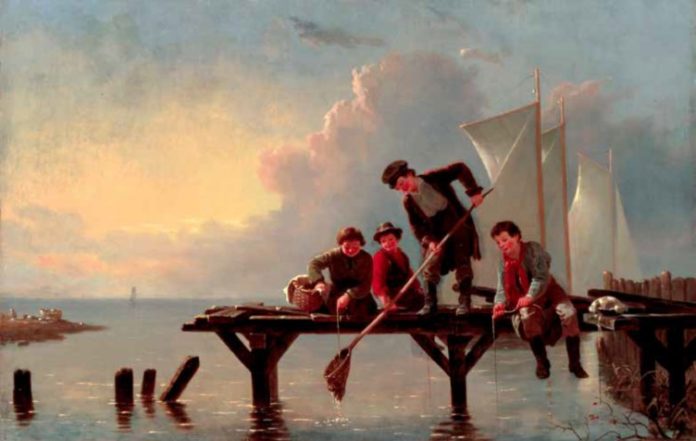
WILLIAM RANNEY (1813–1857), "Boys Crabbing," 1855, oil on canvas, 20 x 24 in., White House Historical Association
Funding For Artists > A spotlight on the Artists’ Fellowship, a charitable foundation that assists professional visual artists and their families in times of emergency, disability, or bereavement.
BY JONATHAN HARDING Jonathan Harding (1957–2019) was Curator of the Century Association in New York City.
Many of the causes and charities we support today have antecedents that date back to the 18th century and earlier. Commonly known as benevolent associations, relief organizations, or helpful societies, many were designed to help segments of society before governments began developing social safety nets in the 20th century.
Some of these early charities were based on race or creed, but a healthy portion evolved from medieval guilds and were devoted to professions. The farmer, textile worker, canal laborer, miner, or stonemason would, more likely than not, be a fellow of such a relief organization (precursors to our trade unions), to which he would pay dues or assessments. In return the member and his family would be guaranteed financial assistance in the event of illness or death.
Artists had also been participating in this support system as far back as Europe’s medieval guilds devoted to St. Luke, the patron saint of artists. By the dawn of the 19th century, the artists of many European cities had established relief organizations, including London’s bluntly named “The Artists’ Benevolent Institution for the Relief of Decayed Artists in the United Kingdom,” which J.M.W. Turner helped establish in 1814. The charitable organizations for artists in America came later, and this is the story of one, the Artists’ Fellowship of New York City.
BORN OUT OF NEED
The plight of America’s impoverished artists became evident in 1828, if not before. When the renowned portrait painter Gilbert Stuart died in that year, the Boston Athenaeum organized a memorial exhibition of his portraits for the benefit of his family, and in 1846 the City of New York did the same for its beloved portraitist Henry Inman. By mid-century the reality of such deaths made the artists of cities like Boston, Philadelphia, and New York realize that they needed relief organizations to attend to such eventualities.
The founding of the Artists’ Fellowship dates to 1857 and the premature death of William Ranney, an inspired, up-and-coming painter of the American West. Though Ranney’s talents were well recognized by his fellow artists, he had yet to receive public recognition, and he died leaving his family deeply in debt. The artists of New York City quickly grasped the tragedy of the situation and organized an impromptu auction of his works. To promote the sale, they decided to contribute works of their own. The 1858 exhibition-sale was a great triumph: it raised more than $10,000, which paid off the mortgage on Ranney’s house in West Hoboken, New Jersey, and established a fund for support of his wife and children. Such was the success of this event that a number of artists suggested that a more formal helpful society be created, one designed to assist artists’ families in future times of need.
In this spirit the Artists’ Fund Society of New York was created, with the artists Thomas Seir Cummings and Charles Loring Elliott leading the effort. By their design, the society would follow the formula that had just proven so successful for supporting the widows and children of artists — organizing estate auctions and donating works.
Artists, however, just like the rest of us, are prone to differences; as soon as one idea was offered, there was immediate dissent. The internecine warfare behind this squabble is mentioned in Cummings’s Historic Annals of the National Academy of Design (1865). Cummings covers the glory of the Ranney scheme but hints that it was soon undermined by a coterie of artists, led by Daniel Huntington, who had another formula in mind.
Their vision was modeled on the success of the Artists’ Fund Society of Philadelphia, which had established a more even-handed approach. Since 1835 it had sponsored annual exhibitions and sales of its members’ works and invested the proceeds for future cases of need. To Huntington and others, this formula seemed more balanced than one that hinged solely upon Death’s knock at the door. In the following years Huntington’s decision proved itself the more reliable tack, but the scheme devised for William Ranney never went away.
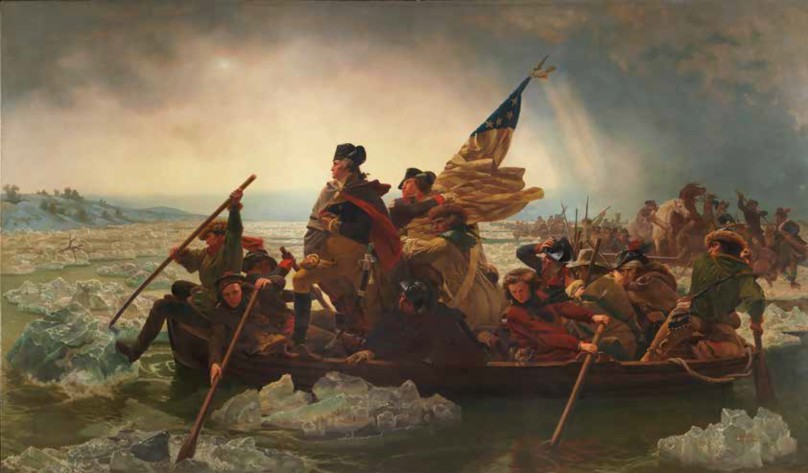
Dealing with estates is one of life’s challenges, and artists’ estates have always been particularly problematic. Even successful artists sell relatively few paintings in any given year, so the issues that arise when entire studios must be emptied quickly are innumerable. Emanuel Gottlieb Leutze, the German-American creator of Washington Crossing the Delaware, may have been one of the U.S.’s most successful historical painters, but he left his family in debt when he died in 1868. Newspaper accounts of the time reveal the revival of the formula used for Ranney, the estate sale to which living artists would contribute works, under the name of a new organization, the Artists’ Mutual Aid Society, the forefather of the Artists’ Fellowship. Once again the plan worked, and the society would organize similar sales for such artists as William J. Hays, Felix O.C. Darley, and Richard W. Hubbard in the following years.
EMANUEL GOTTLIEB LEUTZE (1816–1868), “Washington Crossing the Delaware,” 1851, oil on canvas, 149 x 255 in., Metropolitan Museum of Art, New York City
By the late 1880s, however, America’s art market had begun to change. The Gilded Age brought about a new awareness of artistic trends of Europe, and excitement and support that had been given to our native artists waned. The diaries of the landscape painter Jervis McEntee reveal this anguish in many ways, including the shrinking role of organizations like the Artists’ Fund Society of New York and the Artists’ Mutual Aid Society. “Buy American” was out of vogue in the art world, and artists of the Hudson River School generation began to see their works auctioned off at a fraction of their value.
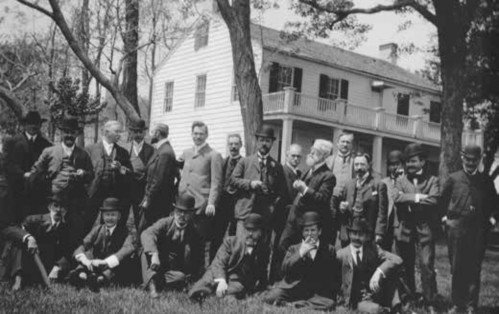
Photographer unknown, Spring Outing of the Artists’ Aid Society, c. 1910, silver gelatin print on paper, 8 x 10 in., Artists’ Fellowship, Inc.
By 1890 the members of the Artists’ Mutual Aid Society, artists of that very generation, were abandoning the whole idea of such exhibitions and auctions: while their affection and care for fellow artists would continue, it became simpler (and less humiliating) to support them through the simple solution of paying dues. The Artists’ Mutual Aid Society collapsed, and out of its ashes was born the Artists’ Aid Society, just such an organization.
Between 1890 and 1925, the Artists’ Aid Society continued to support its membership in the old tradition of a helpful society. Dues and assessments were collected, invested, and, when a member died, allocated to heirs. It was, in essence, a life-insurance policy whose primary duties were to those artists who had joined the club. Early on in these years, however, it was also realized that the cause should extend further, so the Society established separate funds that could be given to any artist in trouble. As early as 1891 the Artists’ Aid Society received a gift from Mrs. Hector Havemeyer that covered the cost of a bed at New York’s Presbyterian Hospital for any artist in need. This was a gift well used by both society members and non-members through the 1940s.
The records of the Artists’ Aid Society, now in the Smithsonian Institution’s Archives of American Art, reveal both the profound sense of pride and the bonhomie that accompanied membership in these early decades of the 20th century. While, in essence, the dues-paying members were buying a form of life insurance, the more successful among them rarely took advantage of their “policies.” Realizing their good fortune in life, they left provisions for their widows and children elsewhere, thus allowing their contributions to the society to revert to the support of their less successful brethren.
Although support was the primary concern of the Artists’ Aid Society, its members celebrated two annual events: a dinner and a spring outing. Both of these social affairs emphasized the fraternal nature of the society. While the spring outings eventually succumbed to evolving tastes and were abandoned, Joseph Lauber, president from 1917 to 1930, deftly captured the joie de vivre that accompanied them:
The spring outings were something to remember. The men would foregather at the Battery and board the old “Mary Patten” for the Highlands of New Jersey, old Thompson’s Hotel. The boat would arrive about 11 A.M. Then came the climb up the hill. By that time all of us had a fine appetite and a wee bit of a thirst. Our host had anticipated this and always had on hand an excellent brand of apple jack. When said thirst was quenched there was still an hour before dinner. The men would disport themselves on the lawn like school boys; it was amusing to see staid academicians like J.G. Brown and Seymour Guy lay aside their dignified frock coats and play.
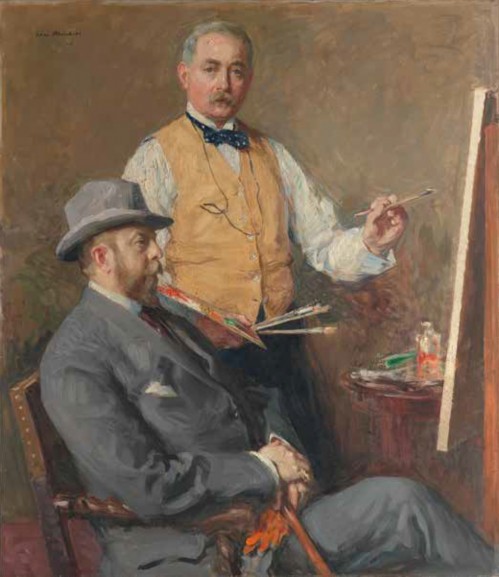
As early as 1916, the Artists’ Aid Society had realized that it needed to be incorporated in order to receive bequests. Several proposals were made to the State of New York, each shot down by either the governor or the legislature. Perseverance won the day, and on February 25, 1925, the legislature agreed to incorporate the Artists’ Aid Society with the provision that it drop “Aid” from its name. For at least a second time the Society arose anew like a phoenix, now under the name of the Artists’ Fellowship, Inc., the name it holds to this day. With incorporation, members’ largesse would increase, and the muralist Edwin Blashfield was one of the first to include it in his will. He would soon be followed by such artists as James Carroll Beckwith, William Bailey Faxon, and Gari Melchers.
GARI MELCHERS (1860–1932), “In the Studio (Gari Melchers and Hugo Reisinger),” 1912, oil on canvas, 54 3/16 x 47 13/16 in., Metropolitan Museum of Art, New York City
Throughout its history the Artists’ Fellowship has relied not only on the generosity of its members, but also that of its board. Its officers and trustees have donated their time and energies to ensure that funds are reserved for artists in need. This tightfistedness has also meant that the Fellowship has never had a fixed residence. During the 19th and early 20th centuries, its quarters were located in the studio of one of its officers, most of them in the renowned Tenth Street Studio building in Greenwich Village. In subsequent years the organization rented small rooms from such peers as the Art Students’ League, National Academy of Design, or Salmagundi Club (its current address).
A NEW ROLE TO PLAY
With Congressional passage of the Social Security Act in 1935, the vision of the Artists’ Fellowship evolved. Its role as a mutual aid society and life insurance program for members waned, and its duties in serving America’s larger artistic community increased. For the past 50 years it has devoted the majority of its funds to helping needy artists who are not members. In many instances these are artists who, lacking insurance, are confronting the medical costs of an injury or illness.
In other situations, the Fellowship assists artists who have been threatened with eviction or pressed in the aftermath of a natural disaster. Working with an endowment of $5 million, it has managed to give an almost identical sum to desperate artists every year over the past quarter-century. Each year between 50 and 70 professional artists receive emergency aid that provides vital support and renews productive careers. Today the Artists’ Fellowship is as vibrant and effective as ever. Membership touches almost every state and includes artists, sustaining (lay) members, and corporations. Bequests and grants continue the largesse begun by the Havemeyers, James Carroll Beckwith, Edwin Blashfield, and others.
Membership in the Artists’ Fellowship is open to everyone, both artists and patrons of the arts. To join the Artists’ Fellowship, make a donation, or apply for funding, please visit artistsfellowship.org.
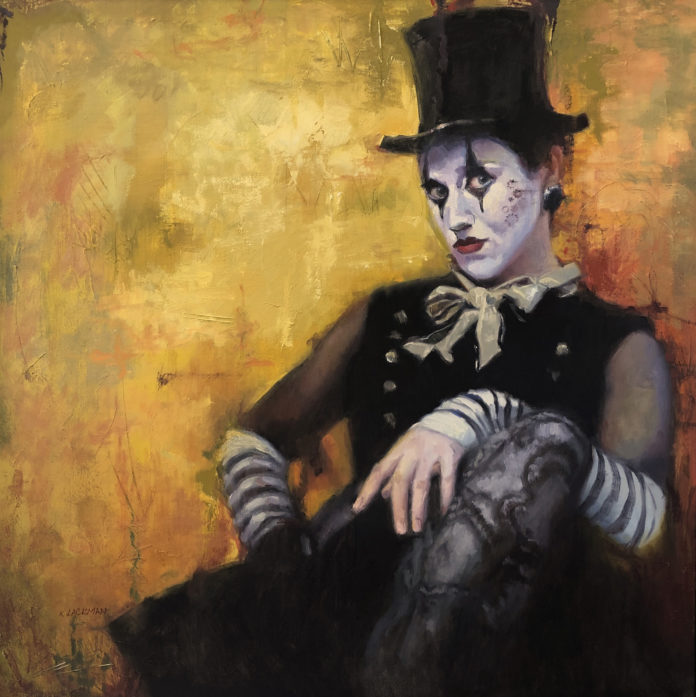
Kate Lackman (b. 1954), "Steam Pun-dit," 2015, oil on canvas, 24 x 24 in., available from the artist
Contemporary Figurative Art > Artists have always enjoyed the challenge of looking afresh at their models — of capturing them in a special outfit that strikes a different visual or emotional note. Today we survey artworks showing people in clothing we don’t see every day.
Figurative Art: 11 Paintings of People in Interesting Clothing
BY MATTHIAS ANDERSON contributing writer to Fine Art Connoisseur
Dressing up in costumes is an intrinsic part of the human experience. Most of us recently celebrated Halloween, and now it’s time to survey artworks showing people in clothing we don’t see every day. Some are wearing historical garments, others fantastical get-ups or their Sunday best, and still others “business” garb — be they belly dancers, beekeepers, or soldiers.
Artists have always enjoyed the challenge of looking afresh at their models — of capturing them in a special outfit that strikes a different visual or emotional note. Please enjoy this portfolio of recent creations of figurative art, and perhaps even consider having your own portrait painted, drawn, or sculpted wearing something distinctive.
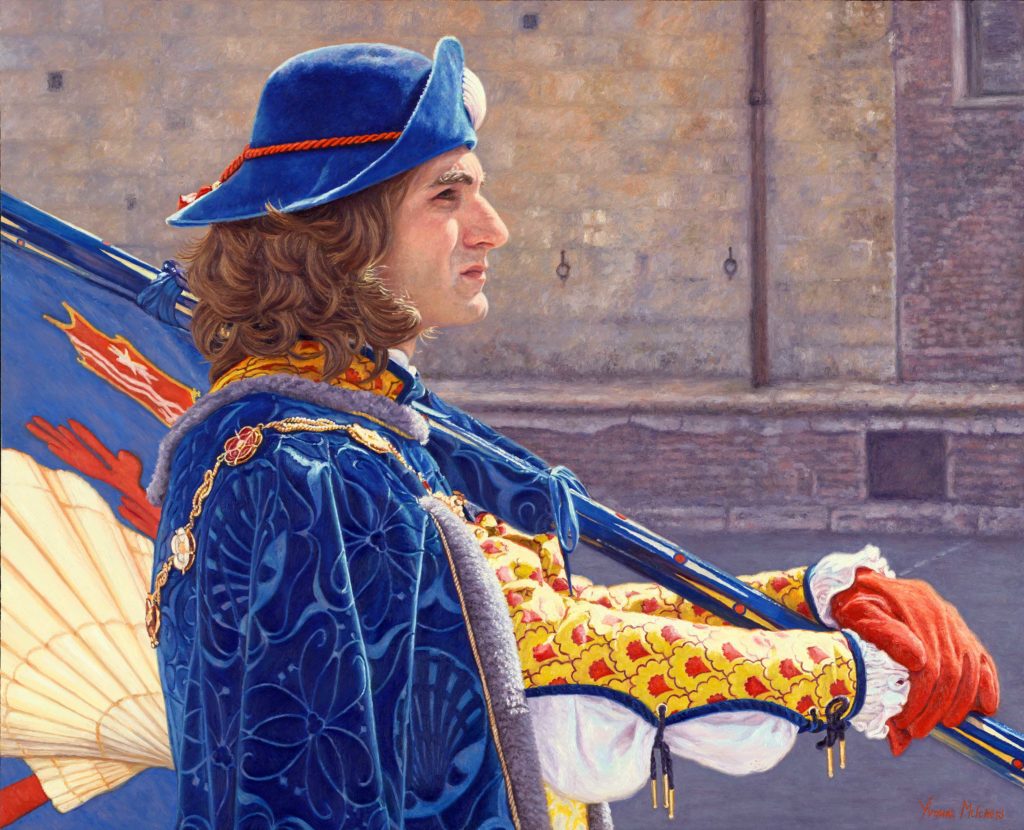
1. “Siena Palio XIII (Nicchio/Scallop)” by Yvonne Melchers
Yvonne Melchers (b. 1948), “Siena Palio XIII (Nicchio/Scallop),” 2016, oil on panel, 25 1/2 x 31 1/2 in., available from the artist
2. “Fall of a Dream” by Edson Campos
Edson Campos (b. 1955), “Fall of a Dream,” 2019, oil on canvas, 80 x 40 in., available from the artist
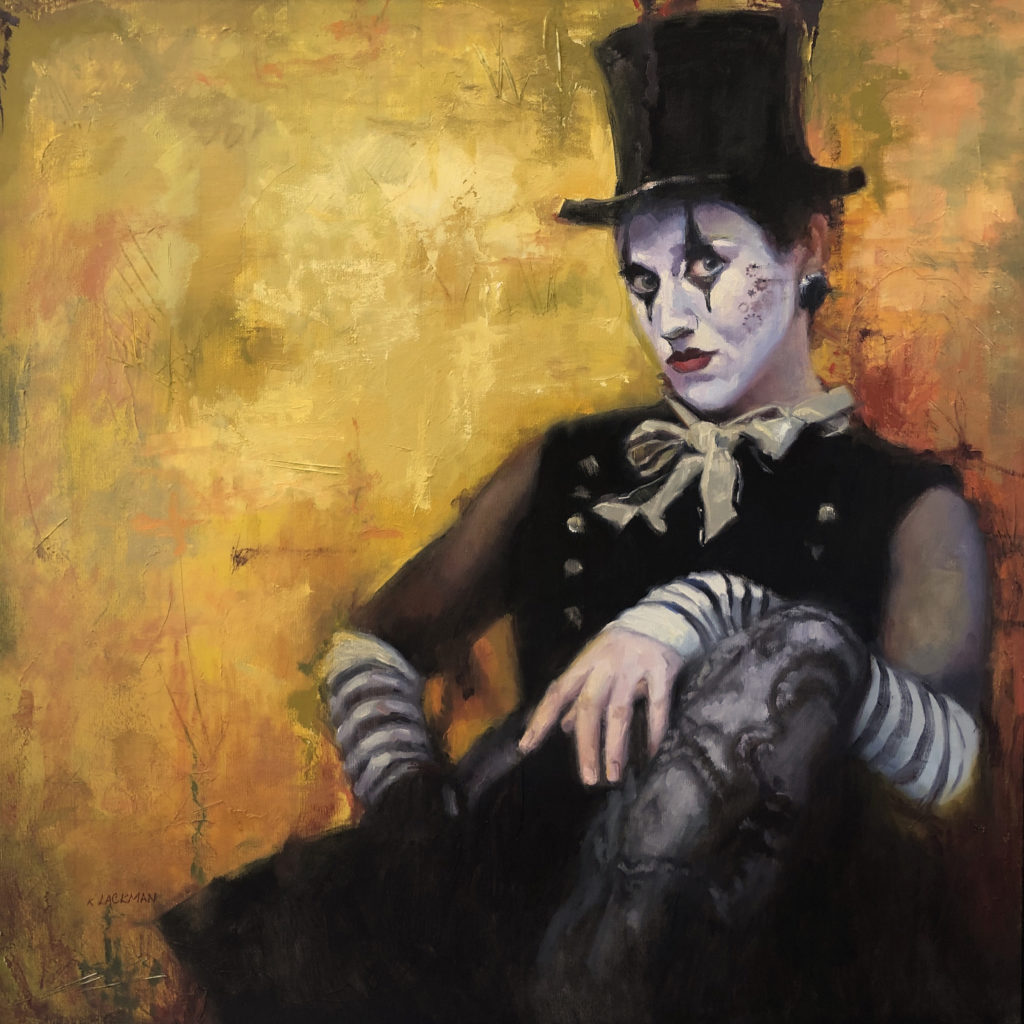
3. “Steam Pun-dit” by Kate Lackman
Kate Lackman (b. 1954), “Steam Pun-dit,” 2015, oil on canvas, 24 x 24 in., available from the artist
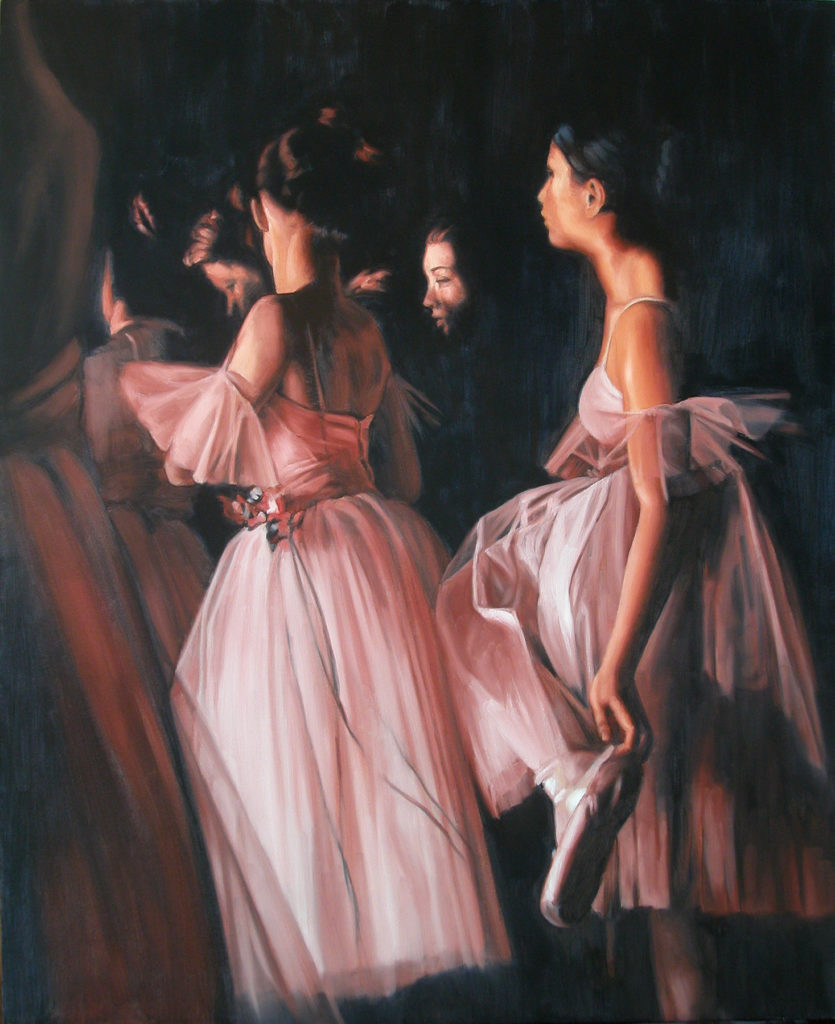
4. Ballerinas in Figurative Art: “The Slipper” by Robert Evans
Robert Evans (b. 1953), “The Slipper,” 2015, oil on canvas, 30 x 24 in., available from the artist
5. “Burang Princess” by Alexandra Manukyan
Alexandra Manukyan (b. 1963), “Burang Princess,” 2018, oil on linen, 24 x 18 in., private collection
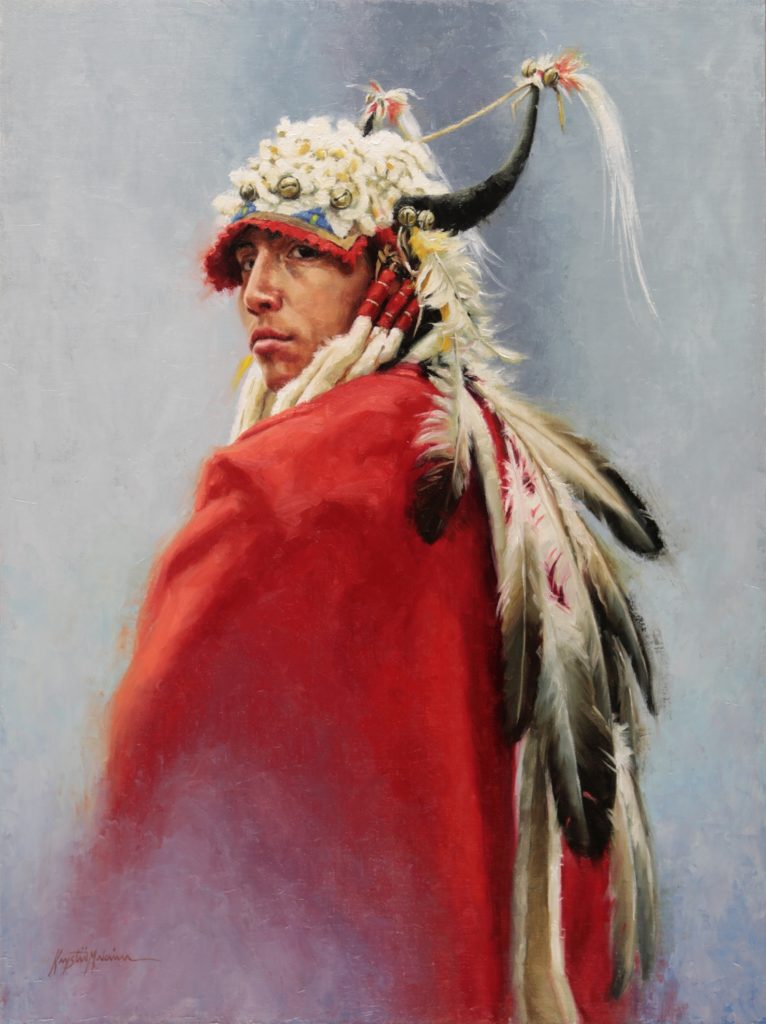
6. “Ksikkaapaiaiksi — White Weasels, Blackfoot” by Krystii Melaine
Krystii Melaine (b. 1963), “Ksikkaapaiaiksi — White Weasels, Blackfoot,” 2019, oil on linen panel, 24 x 18 in., Hockaday Museum of Art, Kalispell, Montana
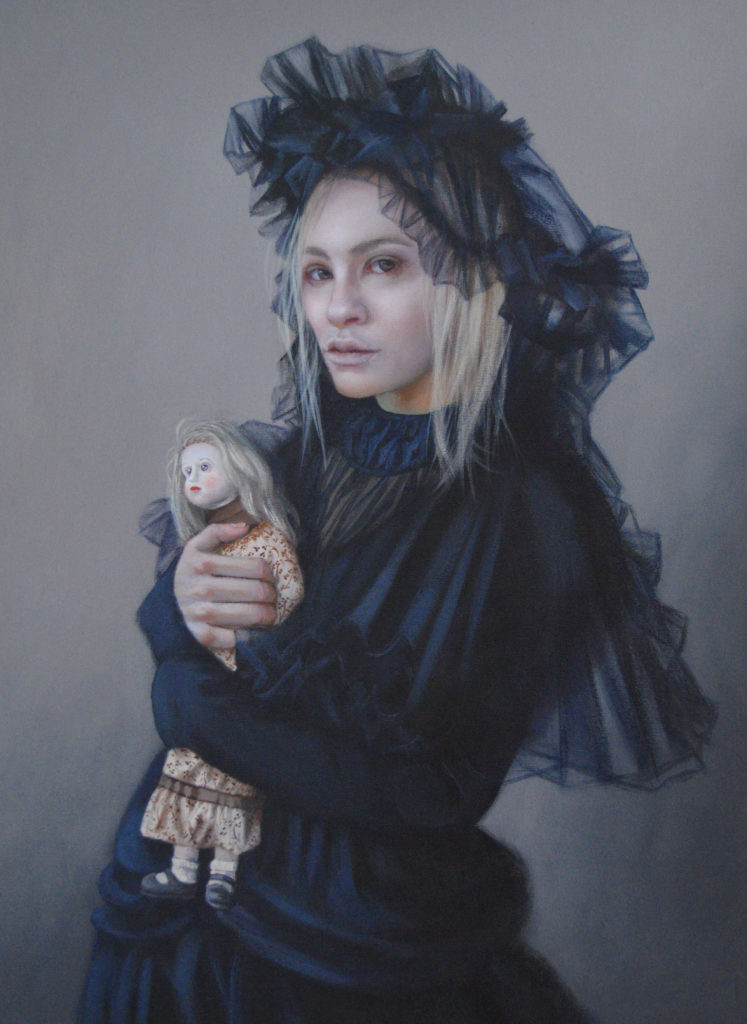
7. Contemporary Realism Figurative Art: “Let’s Play Dead” by Christina Ramos
Christina Ramos (b. 1961), “Let’s Play Dead,” 2019, acrylic on canvas, 24 x 18 in., available from the artist
8. “Buffalo Soldier — Fort Concho” by William A. Suys, Jr.
William A. Suys, Jr. (b. 1955), “Buffalo Soldier — Fort Concho,” 2018, oil on panel, 16 x 12 in., available from the artist
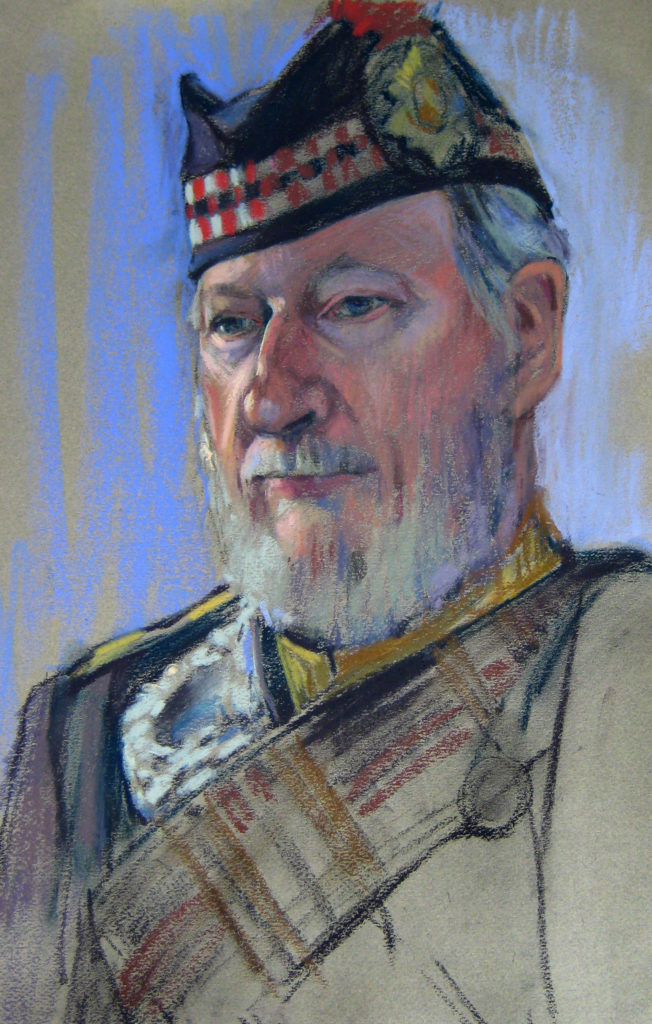
9. “Scottish Guard” by Jill Stefani Wagner
Jill Stefani Wagner (b. 1955), “Scottish Guard,” 2017, pastel on paper, 19 x 12 in., available from the artist
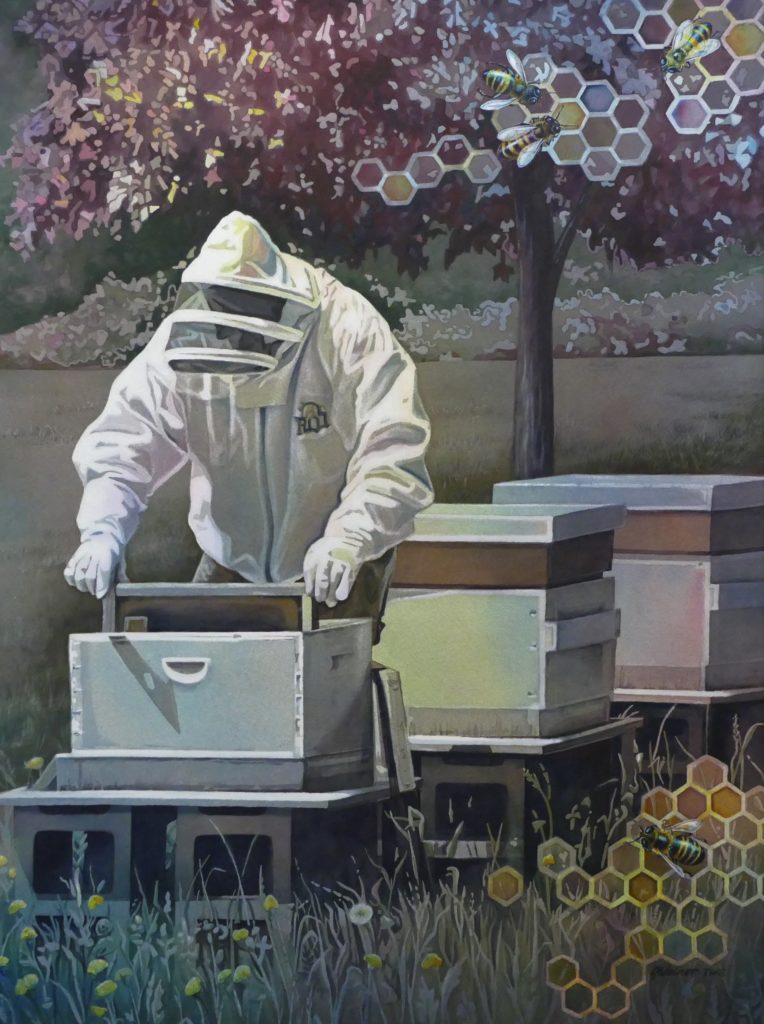
10. “The Beekeeper” by Jean Weiner
Jean Weiner (b. 1960), “The Beekeeper,” 2019, watercolor on paper, 30 x 22 in.
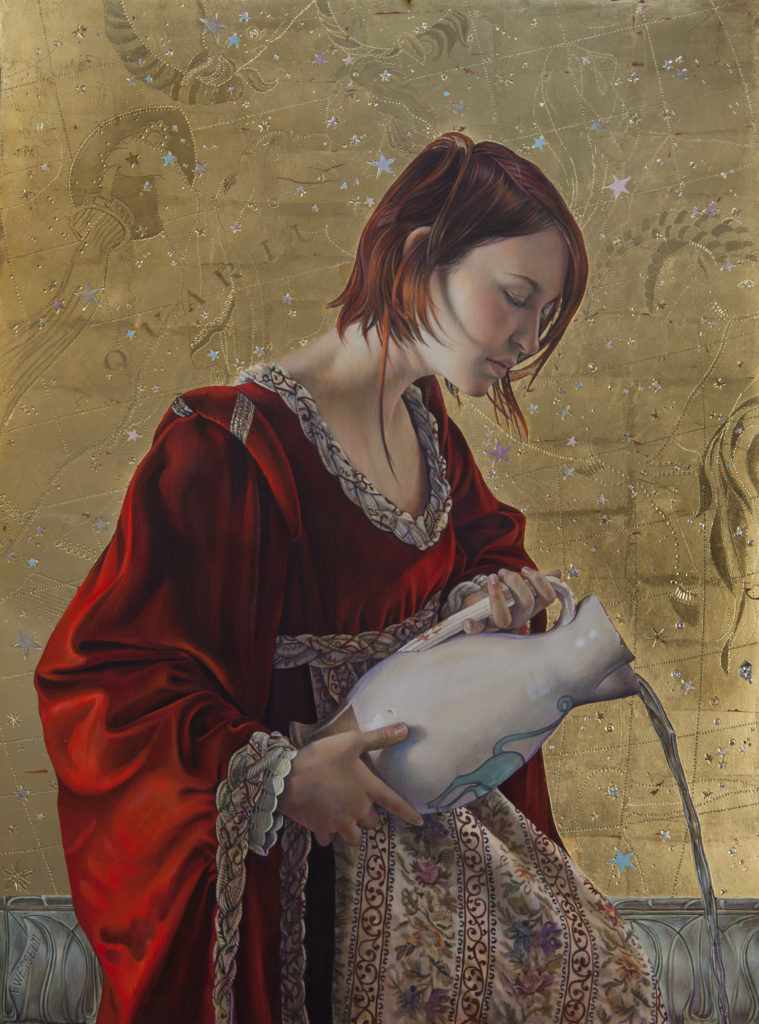
11. Representational Figurative Art: “Aquarius, 2011” by Fred Wessel
Fred Wessel (b. 1946), “Aquarius, 2011,” egg tempera with gold, silver, and palladium leaf on wood covered with gessoed linen, 24 x 18 in., private collection
Created in a diverse range of wet and dry media, Jon Sours’s figurative art subjects have a freshness that sets them apart from their abstract surroundings.
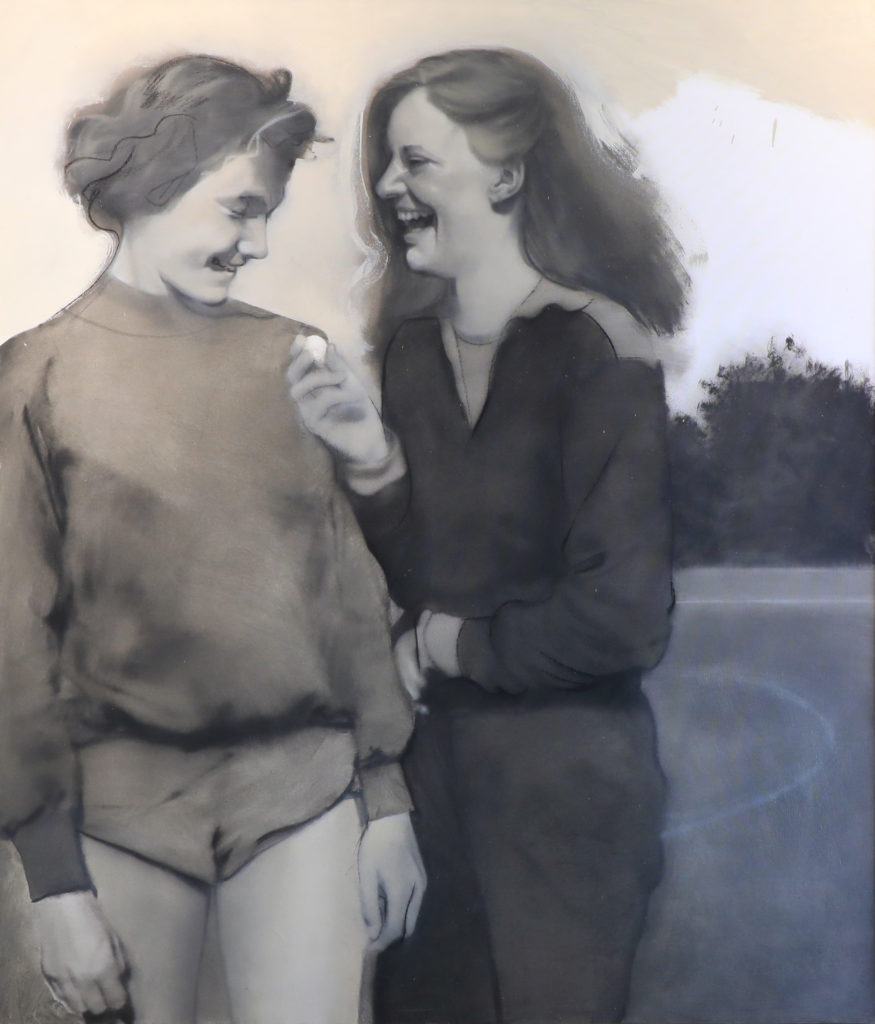
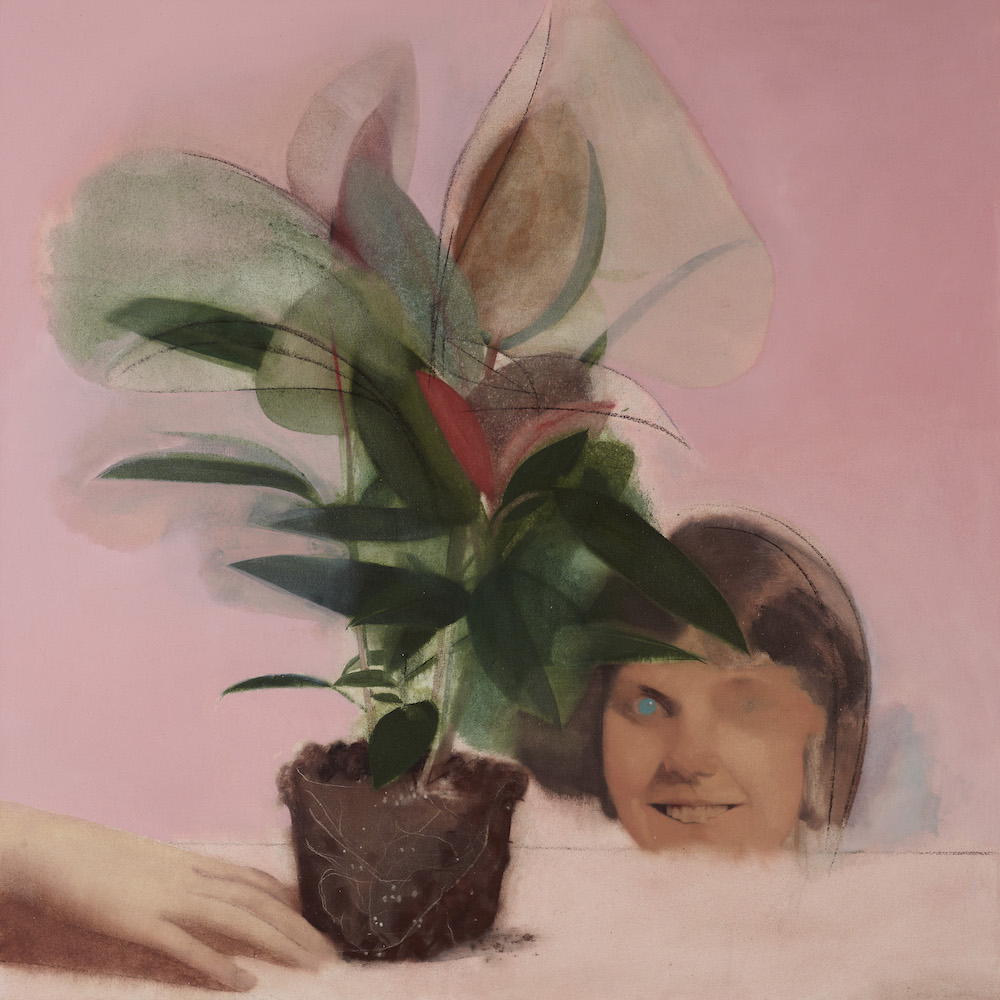
Working out of Asheville, North Carolina, artist Jon Sours is constantly challenging himself to get better at painting, and the hard work is paying off in some of his most recent work. For Sours, his process begins with a photographic reference, when a particular detail or expression captures his attention. “Everything else happens as a result of this process,” Sours avers, “with all of the decisions and mistakes piled up around it.”
Jon Sours, “Fata-Morgana,” oil, 26 x 24 in.
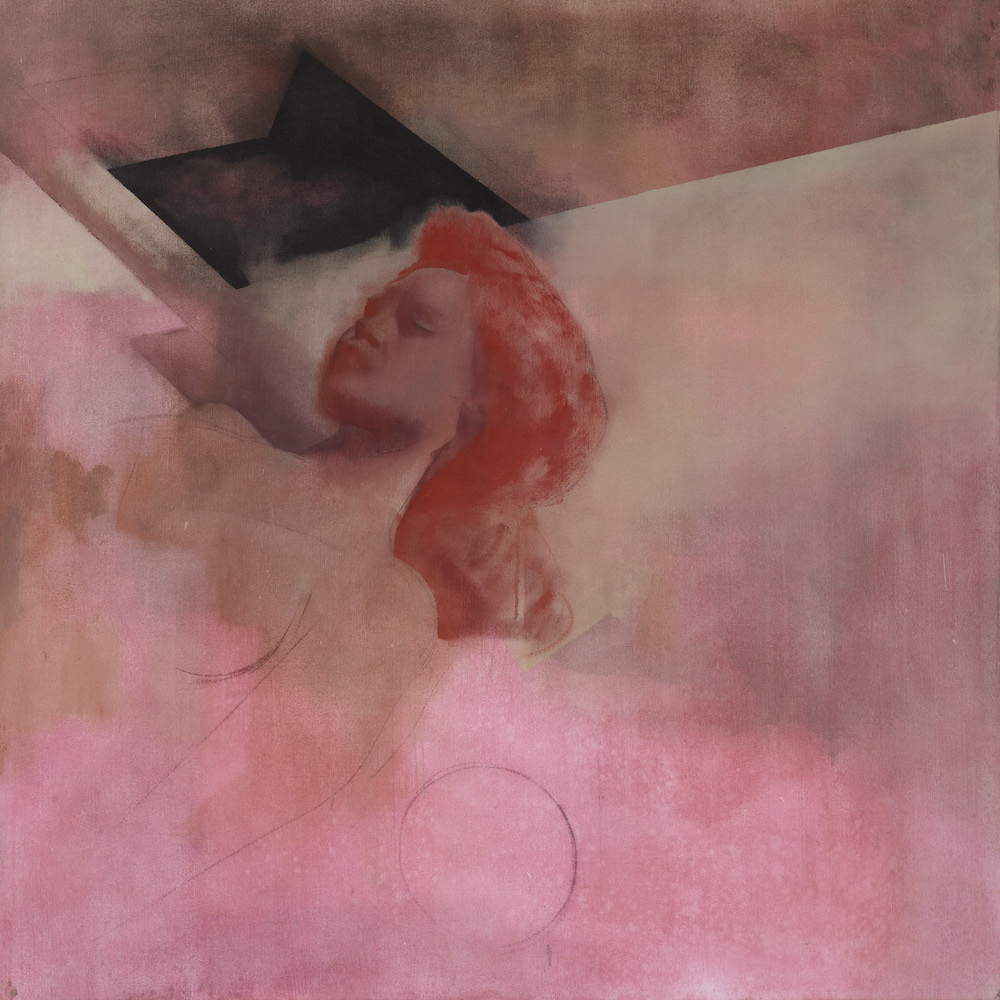
This process comes to the fore in works such as “Portal,” a magnetic image dominated by pink, red, and brown hues. At center-left, we find the reclined bust of a red-haired female figure, her outlines still visible from Sours’ initial sketch. Although the figure’s features have been reduced to their essentials, Sours has still managed to capture her individuality, the subtle nuances of her visage and expression. The figure’s torso flows smoothly into a cloud-like haze of pink, while above one finds a mysterious dark void, which is rigid and geometric. The apparent narrative within the painting is open to interpretation, a tantalizing proposition. “A successful painting means something different to everyone that sees it,” Sours says.
Of “Portal” the artist writes, “I occasionally stain the canvas with a very thinned-out wash of paint, and build lights and darks on top of this ground layer. In the case of this canvas, I went extreme with the stain. I liked the surface quality and decided to set it aside until I had a clearer idea of what the painting would be. You can see that there is actually very little paint, and what is there is very thin. There was not a lot of fussing around, I think all of the decisions I made were kept without any second guessing.”
Jon Sours, “Portal,” 45 x 45 in.
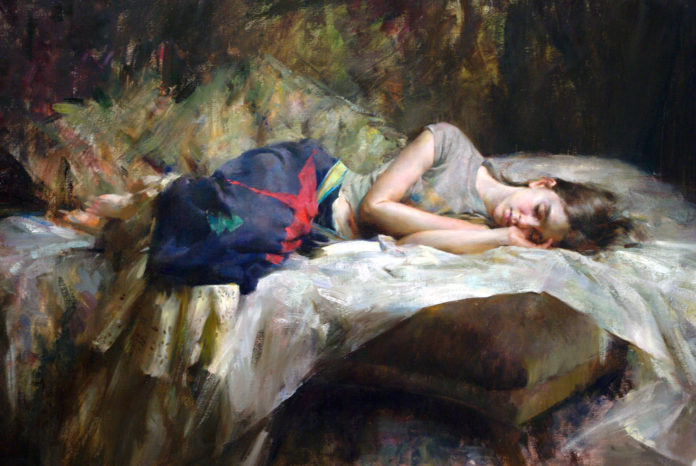
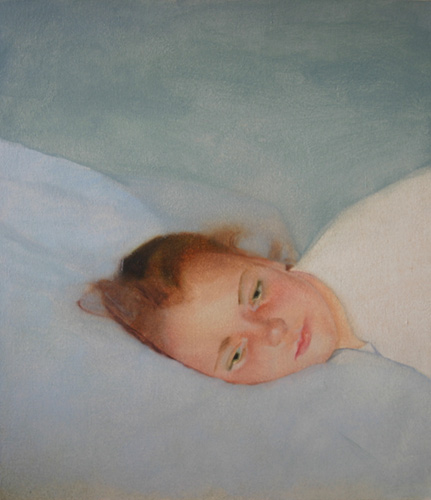
Another attractive image is “Anchor,” which is delightful in its softness and seemingly delicate approach. A quiet and calm female rests her head on a pillow, which takes nearly half of the canvas. Sours has beautifully blended her blushed cheeks and accurately captured her sensitive expression. Chiefly notable are the sitter’s sharp green eyes, which lock up the viewers’ attention for an extended moment.
Jon Sours, “Anchor,” mixed media, 19 x 17 inches
Additional Mixed Media Figurative Art Works:
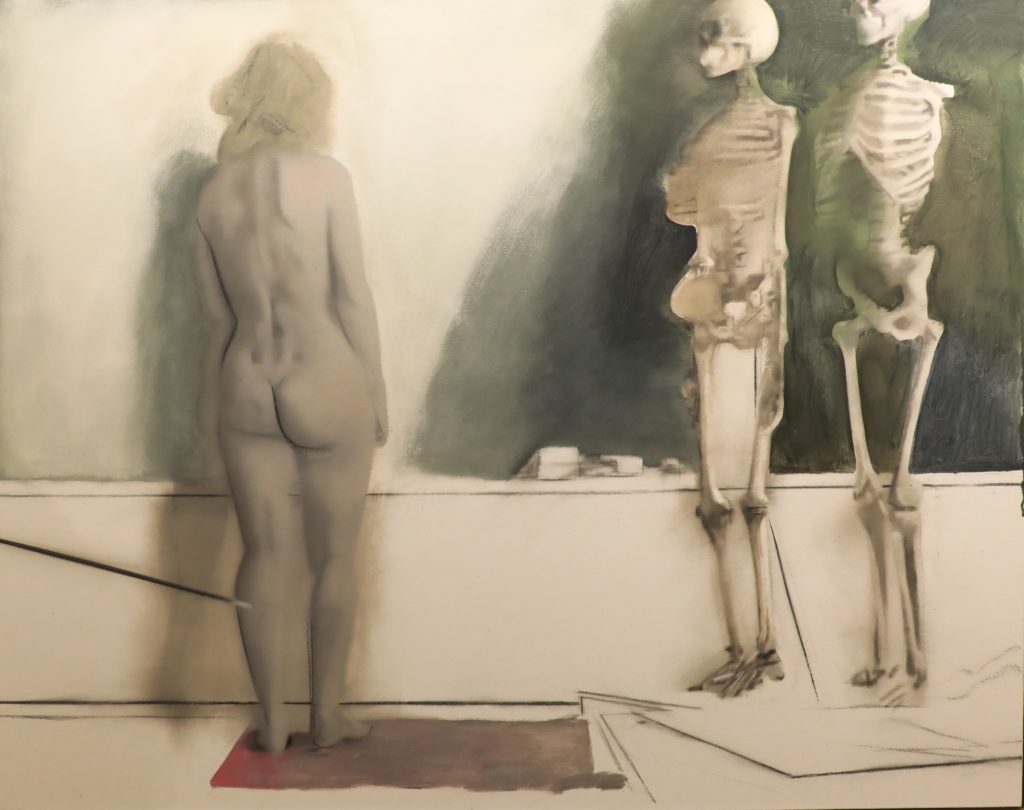
Jon Sours, “Chamber,” mixed media, 35 x 30 inchesJon Sours, “Recess,” oil, 53 x 45 in.Jon Sours, “Gumball,” oil, 36 x 36 in.Jon Sours, “Anatomy Lesson,” oil, 42 x 53 in.
Sours is represented by Blue Spiral 1 gallery in Asheville, NC. To contact the artist, visit Jon Sours.
This article was originally written by Andrew Webster in 2017 for Fine Art Today, a weekly e-newsletter from Fine Art Connoisseur magazine. To start receiving Fine Art Today for free, click here.
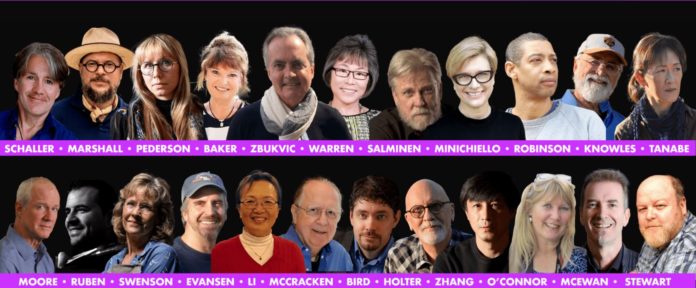
World-class watercolor artists from all over the world are welcoming you into their art studios for Watercolor Live, a global virtual art conference. The event takes place January 28 – 30, 2021, with a Pre-Event Beginners One-Day Session on January 27. (Register by January 10 and save up to $500!)
Enjoy Q&A sessions with the faculty, roundtable discussions, and much more.
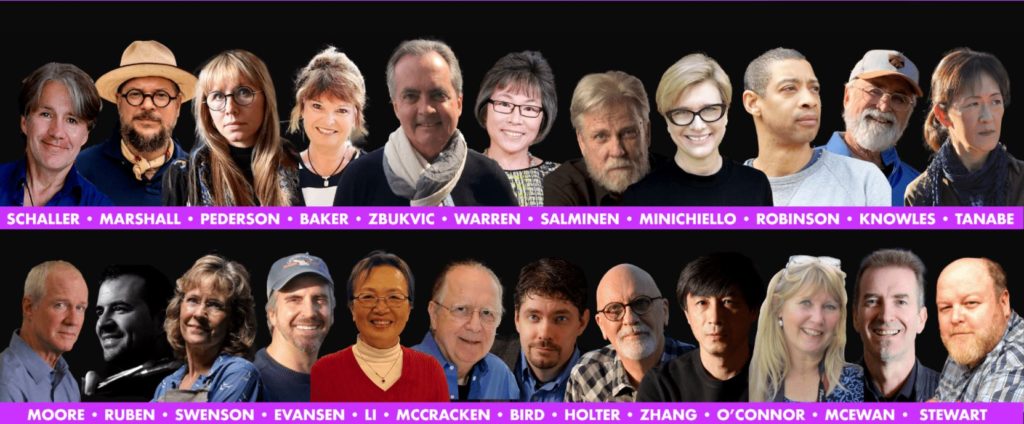
Featuring the World’s Top Artists Teaching Watercolor Painting
Joseph Zbukvic – John Salminen – Jean Haines – Thomas Schaller – Keiko Tanabe – Linda Baker – Matthew Bird – Andy Evansen – Dan Marshall – Laurin McCracken – Jean Pederson – Mario Robinson – Pablo Rubén – Brenda Swenson – Soon Y Warren – Stephen Zhang – And Many More!
Here’s just some of what you’ll experience at Watercolor Live:
Valuable insights and wisdom from faculty artists who are making a living with their art today
Experts revealing career-level success tips and strategies to get your art noticed, displayed, and SOLD!
What it takes to make your art (and yourself) stand out in the art world
Make new friends, see old ones, and find new mentors who will guide you
Instruction and demonstration on the best methods of drawing, designing, composing, color mixing, and more for: landscape/nature, portraits/people, figurative, still life, flowers, and cityscapes
Critique sessions where faculty members review artwork submitted by event attendees (maybe it will be one of your paintings!)
Interaction with other attendees in order to build your support network
Group painting — just wait until you see how this works in a virtual environment!
Full access to the replays so you can watch as many times as you’d like! No frantic note-taking and no missing any of the important stuff!
Prizes galore and special offers from our amazing sponsors
And so much more!
A true celebration of watercolor, this event will inspire and excite you to explore the medium further. We’ll honor watercolor’s rich artistic heritage, acknowledge how respected artists are using the medium to make powerful statements with their work today, and look ahead to exciting developments that can impact the future of watercolor.
Remember to register by January 10, 2021 to save up to $500 (also makes a great holiday gift for the artist in your life)!
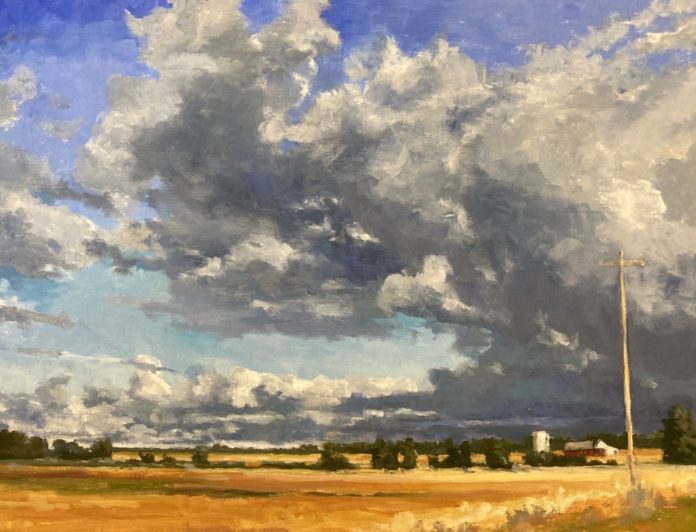
"Big Sky" (oil, 18 x 24 in.) by Robert Niedzwiecki won Third Place Overall in the October 2020 Plein Air Salon
Congratulations to Robert Niedzwiecki (robertniedzwiecki.com), whose work has been recognized in the PleinAir Salon, a monthly art competition. Here, Niedzwiecki tells us how his dramatic landscape painting, “Big Sky” came to be.
Robert Niedzwiecki on the Landscape Painting “Big Sky”
It had been a stormy few days when the weather finally cleared enough for me to leave my studio and get on my bike for a little exercise and quiet. As I came around the last bend on my way home I was stunned by this magnificent, silent event taking place in front of me in the sky. Fortunately, I didn’t drive off the road but instead pulled over and stared at the massive clouds pulling the storm away over the flat, golden fields.
Only moments before it had looked so ordinary; I stood there watching this magnificent show play out before me and I knew I needed to paint it. I made some notes about color and light direction, drew a couple of gesture drawings of the cloud’s movement and took a couple of shots with my phone for a point of departure. I had my concept: the pulling, bending gesture of the clouds in that big open space. I got back to my studio and laid in the first directional lines but let the canvas wait until the next day before I began the work; I wanted to let my subconscious work on the piece for me.
The next morning I worked alla prima following my concept to direct my choices of design, placement, value selection, color and mark making. The gesture was already there and I needed to make sure it survived the painting process. I stopped when I couldn’t add anything more without taking the feeling away. “Big Sky” reminds me of my time living in the open expansiveness of the west, and a good friend from Montana, even while living in the wooded Northeast.
When I retired after 20 years of teaching art at the high school level, I knew I really wanted to learn how to paint even though I had been painting since I was 12. I set a goal of painting for 10,000 hours; every day I painted, I moved forward without concern for failure. I recently met my goal, and while I have entered art competitions before, I entered this one as a way to find out where I was in my quest to improve.
I think there are all kinds of reasons to enter art competitions: it pushes you to your best work and to consider exactly what you value while creating art. Furthermore, looking at your work from the viewpoint of a judge or audience really makes you consider what makes a good painting. I was given advice in the form of a quote from Wayne Gretzky, “you miss 100% of the shots you never take,” and so maybe your art is recognized in a competition, and maybe it is not, but regardless you are working to improve. My former students have told me that my catchphrase in the classroom was “keep going” so for all of you reading this: keep going, keep painting, and find joy along the way.
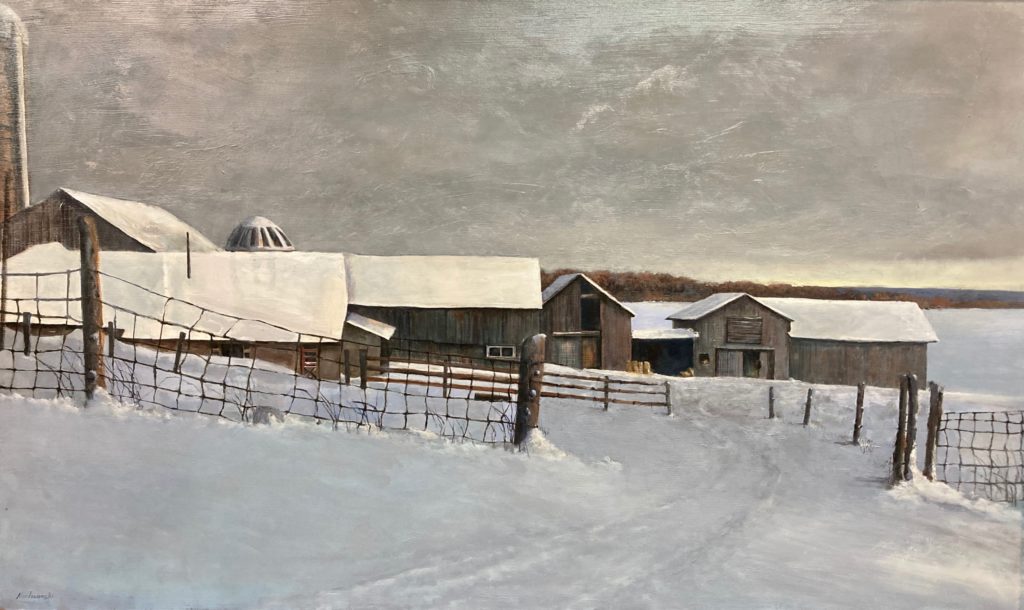
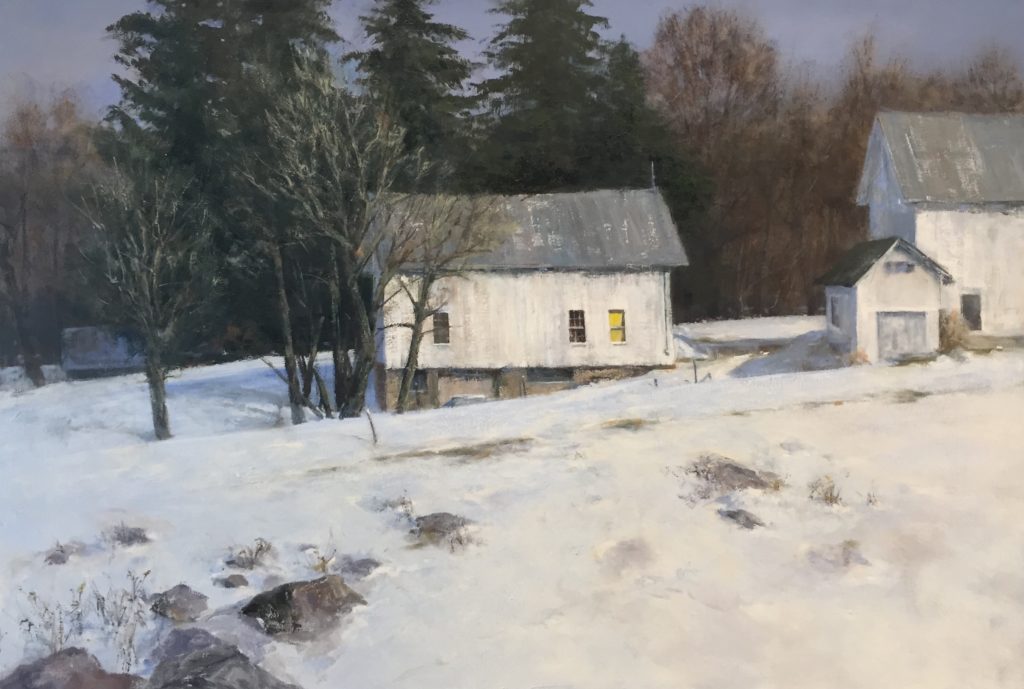
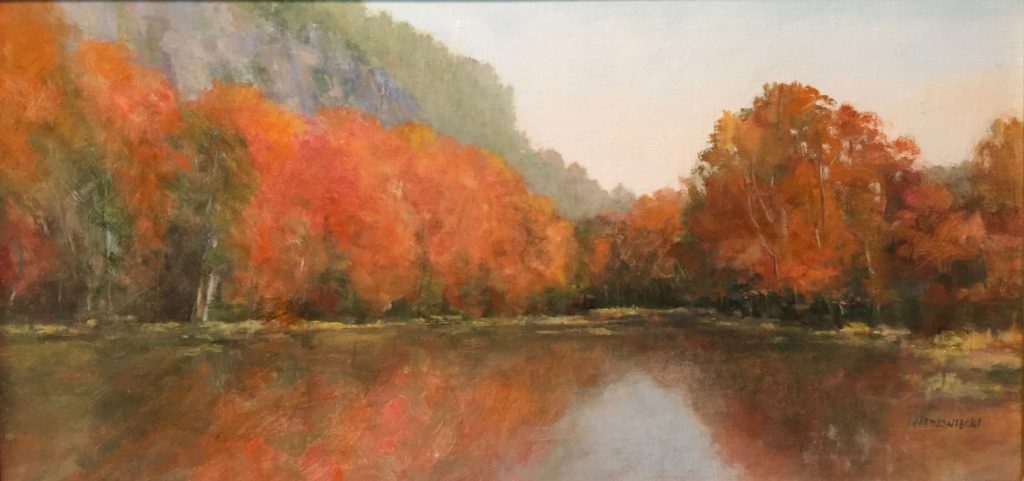
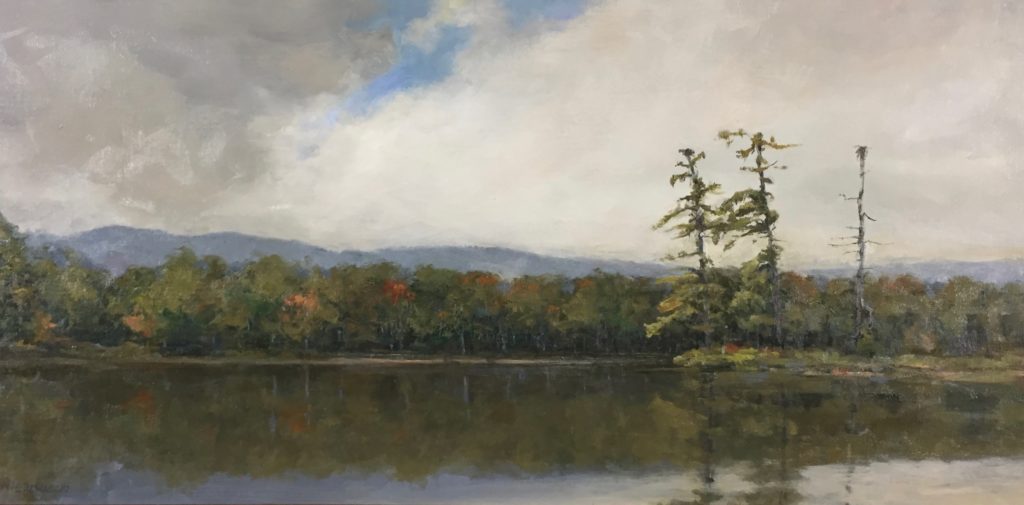
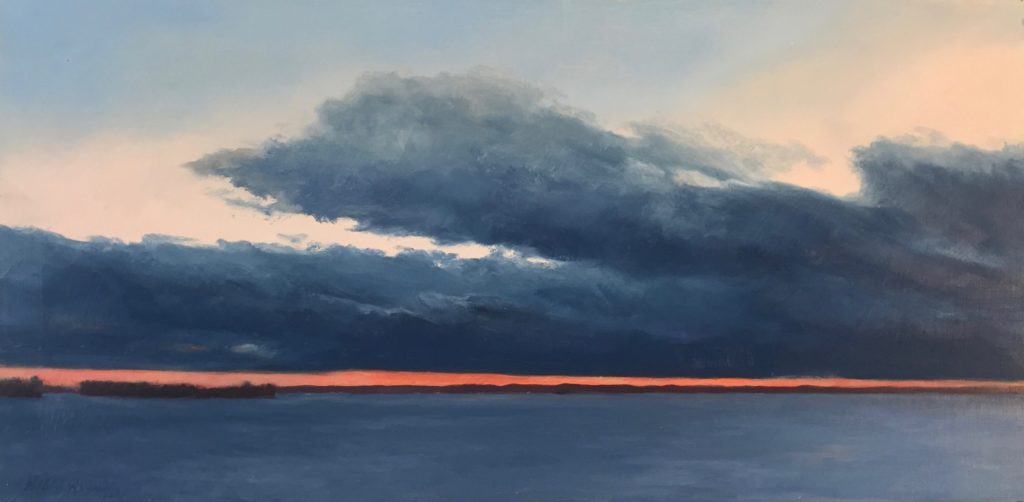
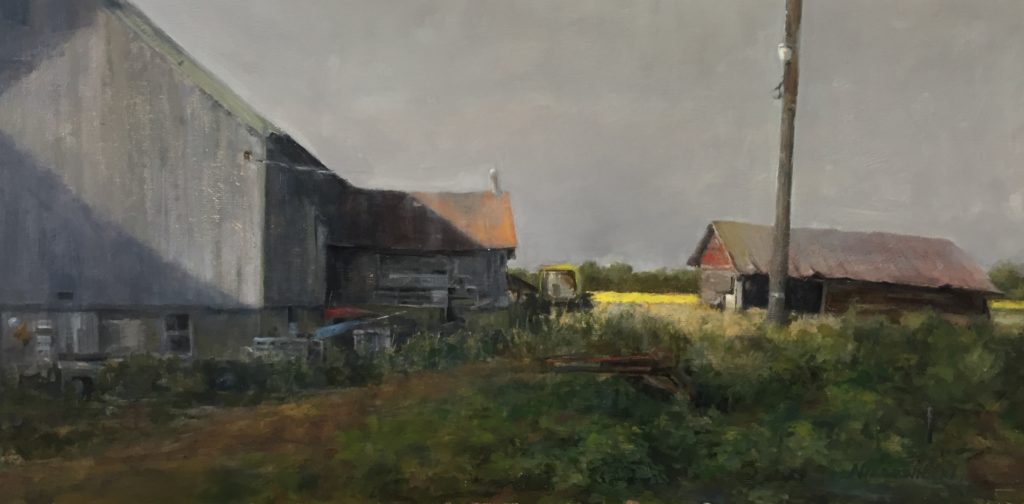
Robert Niedzwiecki, “Lake Effect,” oil, 30 x 40 in.Robert Niedzwiecki, “The Yellow Window,” oil, 24 x 36 in.Robert Niedzwiecki, “Warm Days Will Never End,” oil, 12 x 24 in.Robert Niedzwiecki, “The Pond’s Edge,” oil, 12 x 24 in.Robert Niedzwiecki, “Nights’ End in the Harbor,” oil, 12 x 24 in.Robert Niedzwiecki, “Mustard Fields,” oil, 18 x 24 in.Robert Niedzwiecki, “Intermission,” oil, 12 x 24 in.
Why should artists enter the PleinAir Salon?
Because this art contest is created by PleinAir magazine, which features not only plein air paintings, but also studio paintings, all types of paintings are eligible and do not need to have been completed in plein air, but should originate from a plein air study or plein air experience. As we know, many studio paintings start with plein air sketches. Our interest is in rewarding great paintings.
The PleinAir Salon awards $27,000 in CASH each year! Learn more at pleinairsalon.com, and enter your best work for your chance to win this art competition. Enter now – the next deadline is coming soon!
If you’ve never entered, it only takes a couple of minutes to create your own account. Once you do that, just upload the images of your best work and select the categories you wish to enter – very manageable to do!
All of our awards are CASH, with the grand prize winner getting called up on stage at the Convention & Expo to claim their check for $15,000. That grand prize winner will also have their winning painting featured on the cover of PleinAir magazine (can it get any better?).
There are smaller cash awards, too, and you can find out all about them here. Remember, even if a previous judge did not select your painting, our current judge just might find it to be a winner!
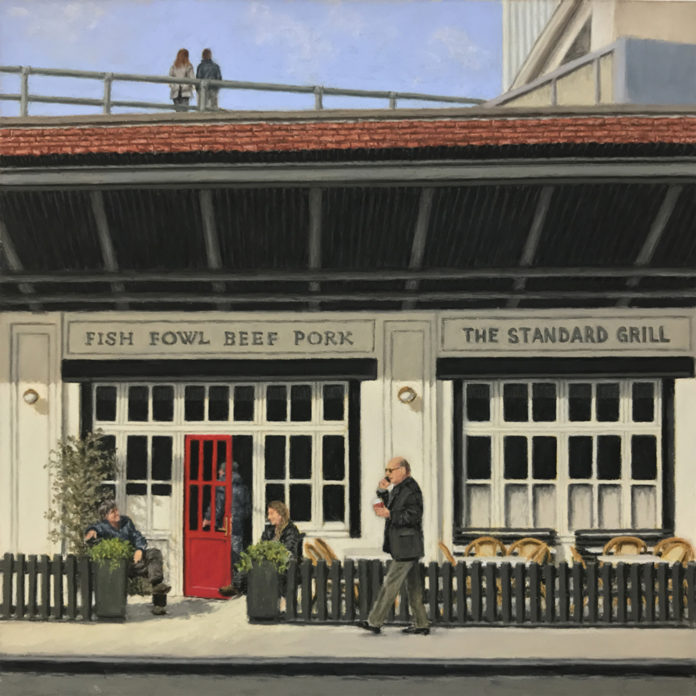
“The High Line, a public park built on an historic freight rail line elevated above the streets on Manhattan’s West Side, is a place to experience nature and explore the city from a unique perspective. While the long walk and views from atop the railway are worth experiencing, this eatery, which sits just below a section of the High Line, is what caught my eye.
“Its iconic style and architecture blends right in with the urban landscape in the surrounding neighborhood and I was drawn to the subtle highlights and shadows cast on the front facade, along with its bright red front door. Organically, people casually moving about above the railway and below, add a sense of life to the scene.”
An award-winning artist, Lisa Cunningham is a signature member of the Pastel Society of America, and her work is held in private and corporate collections. She is also a member of American Women Artists, The Salmagundi Club, the Catherine Lorillard Wolfe Art Club, and the American Artists Professional League.
See more of Lisa’s work on her website.
Stay connected with Lisa and subscribe to her newsletter.
Galleries:
Cooper & Smith
10 Main Street
Essex, CT 06426
Patricia Hutton Galleries
47 West State Street
Doylestown, PA 18901
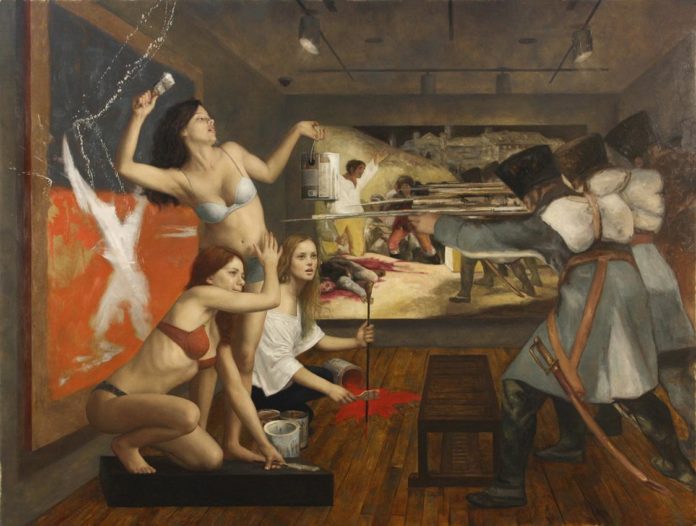
Cesar Santos, “The Three Graces,” oil on linen, 56 x 74 in.
When looking at “The Three Graces,” by Cesar Santos one can immediately see that there are several things happening at once. It’s the kind of painting that makes you stop and consider the implications of what you’re seeing, not to mention the inspiration for the work.
“I imagined this gallery room with a painting by Rothko next to Francisco Goya’s painting, ‘The Third of May, 1808.’” Santos says. “As the three graces appeared to vandalize the modernist ‘masterpiece,’ the soldiers of Goya are ready to execute, aiming at the muses.
“This got me thinking, if they shoot from that angle and sacrifice these beauties and stop this madness the painting will be destroyed as a consequence. My syncretism is to play with the opposite forces of art history to create a unified new result.”
Cesar Santos is well known for creating portraits that “reflect his passion for the unnoticeable, yet irreplaceable, people of his community.” He is also a Streamline Video artist (preview his Secrets of Portrait Painting below).
Fill your mind with useful art stories, the latest trends, upcoming art shows, top artists, and more. Subscribe to Fine Art Today, from the publishers of Fine Art Connoisseur magazine.