View paintings by the Washington Society of Landscape Painters (WSLP) at Principle Gallery in Alexandria, Virginia through March 16, 2020.
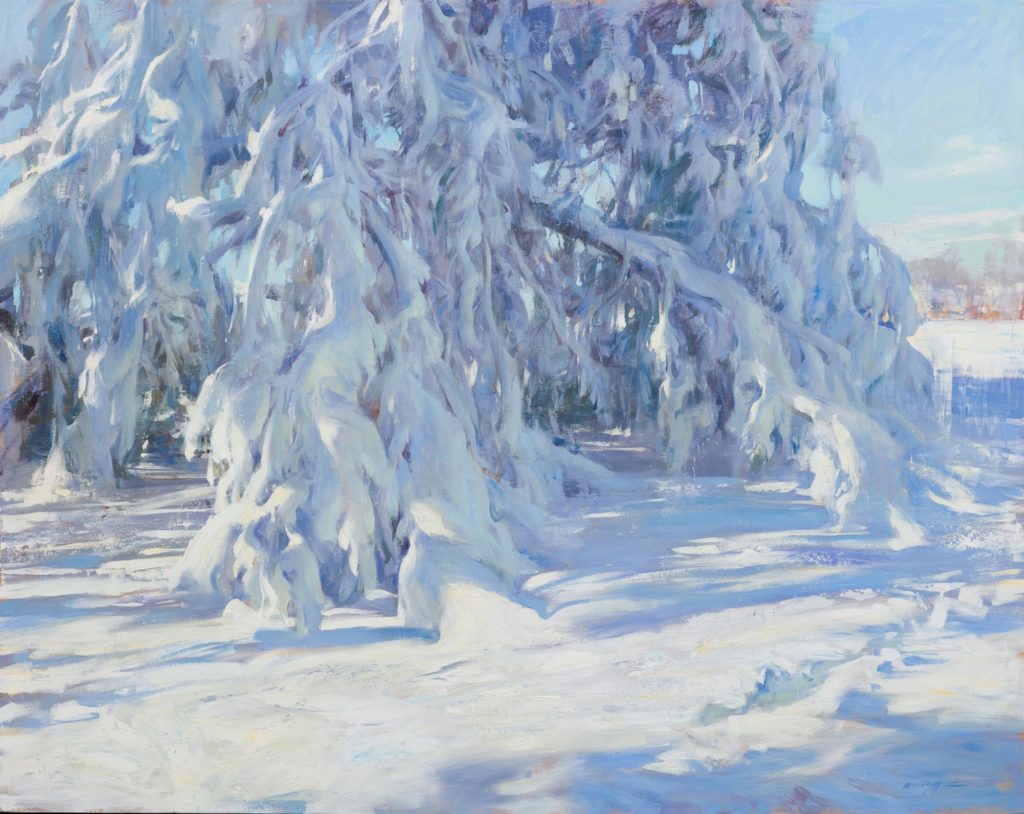
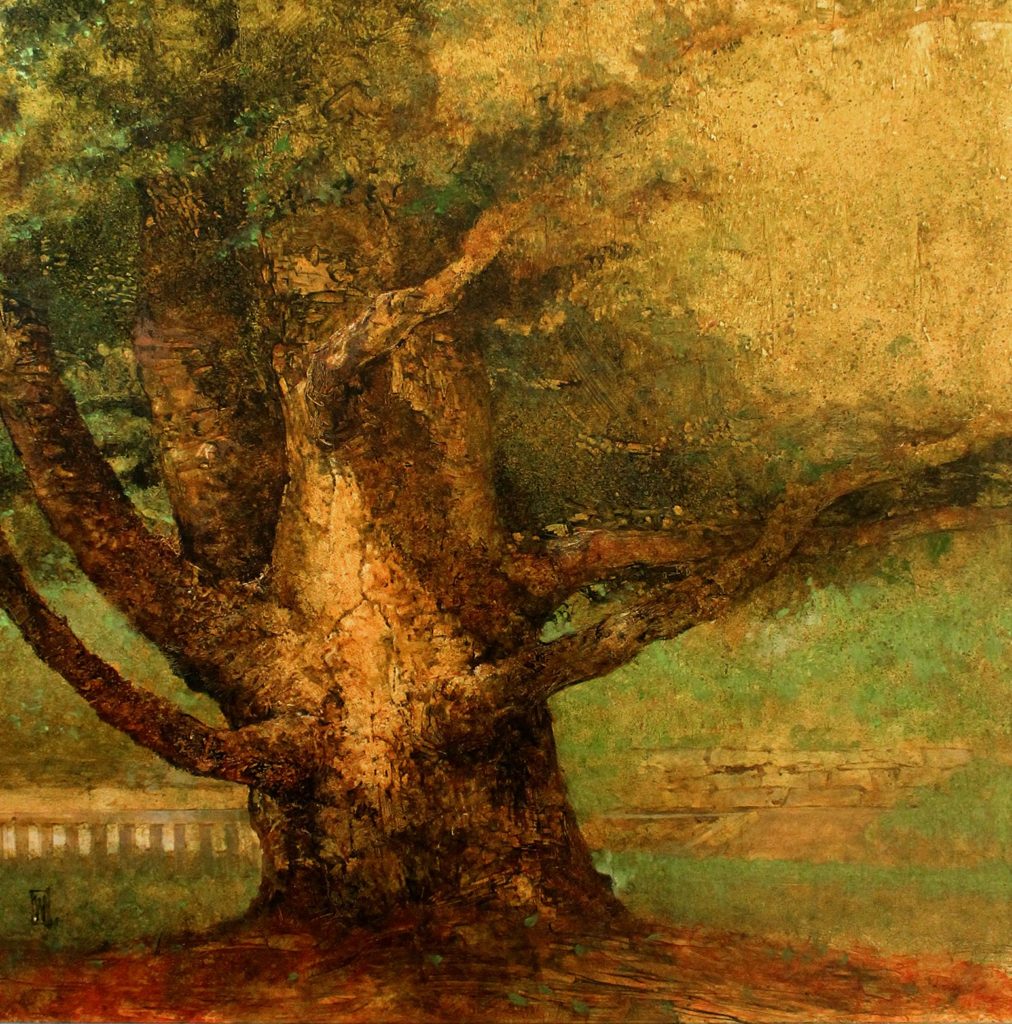
Web Bryant, “National Cedar,” oil
From the gallery:
The color and beauty of the world around us will illuminate the walls of the Principle Gallery (Alexandria, Virginia) in an exhibition by painters of the Washington Society of Landscape Painters.
For 106 years, WSLP artists have been united by a love of the landscape, but the current members also find inspiration and joy in florals, still life, and other subjects. This show will feature this variety of motifs, in the style and medium of each individual artist.
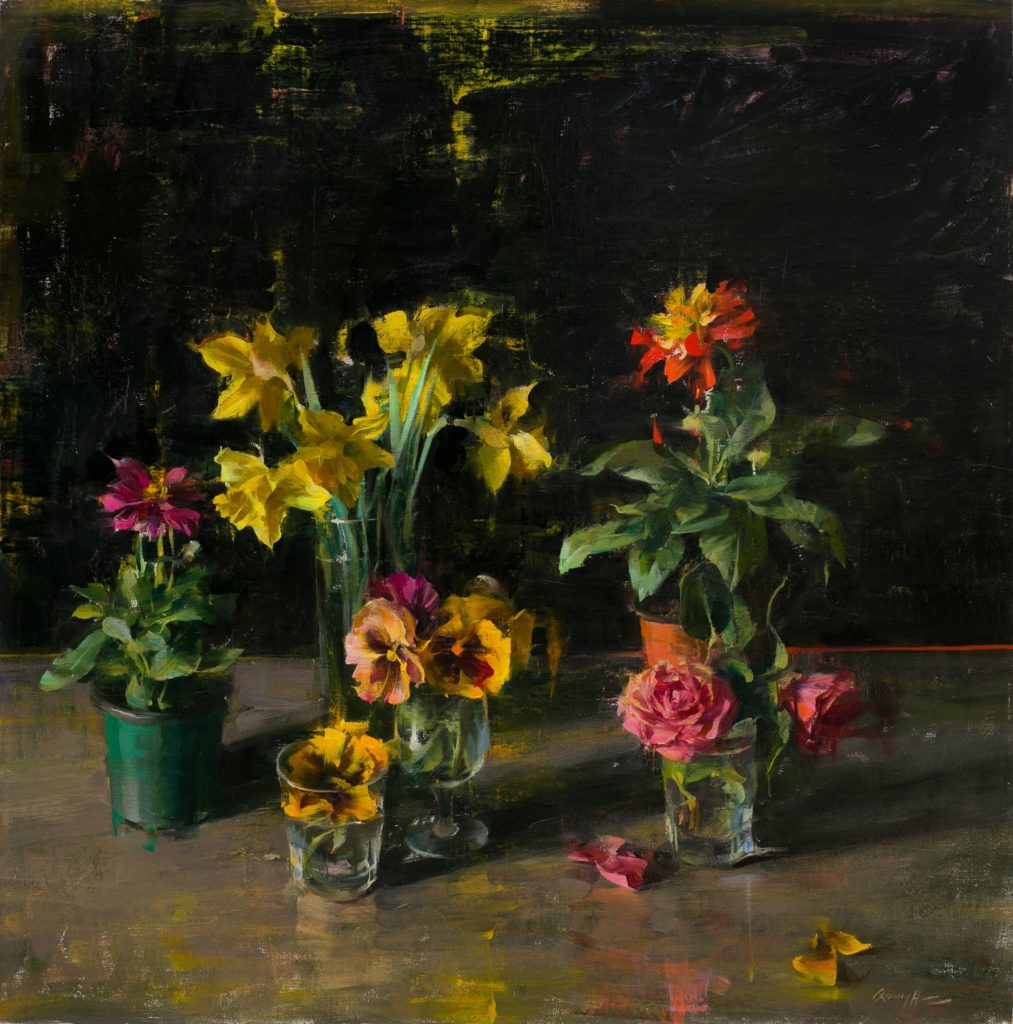
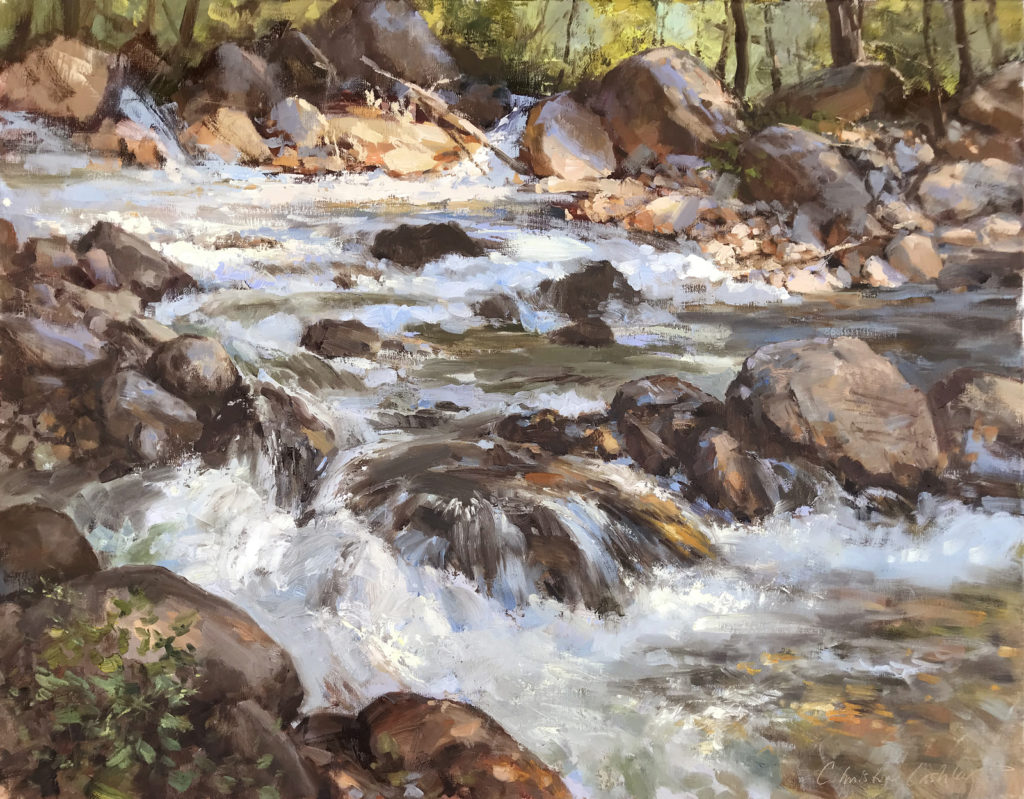
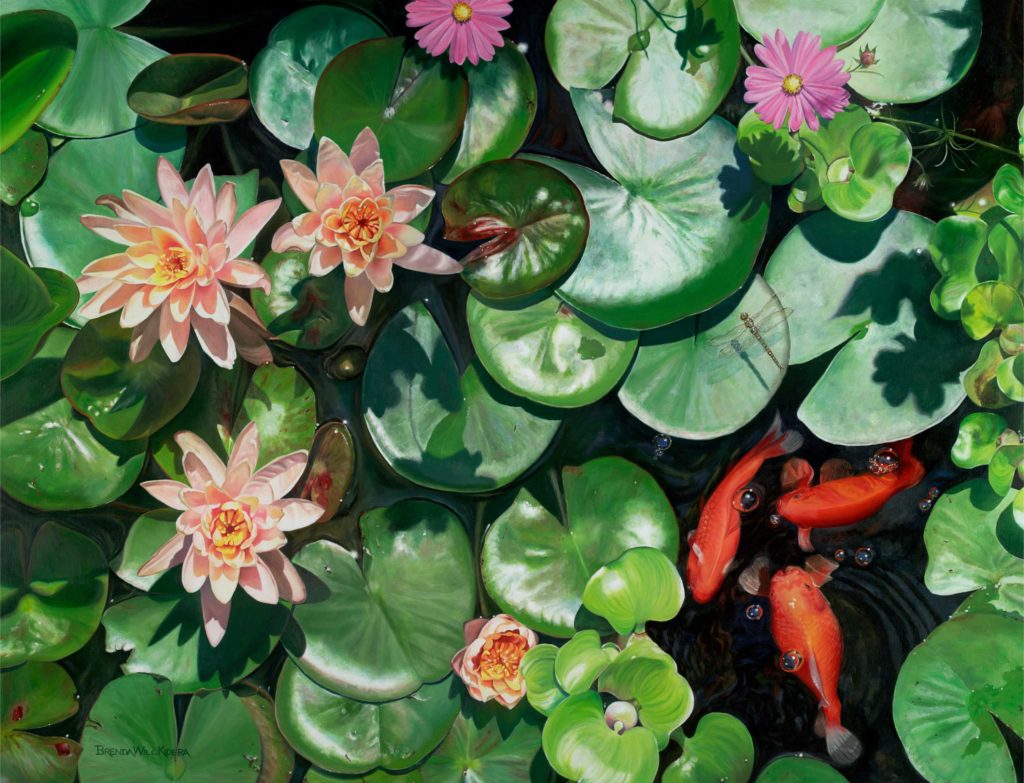
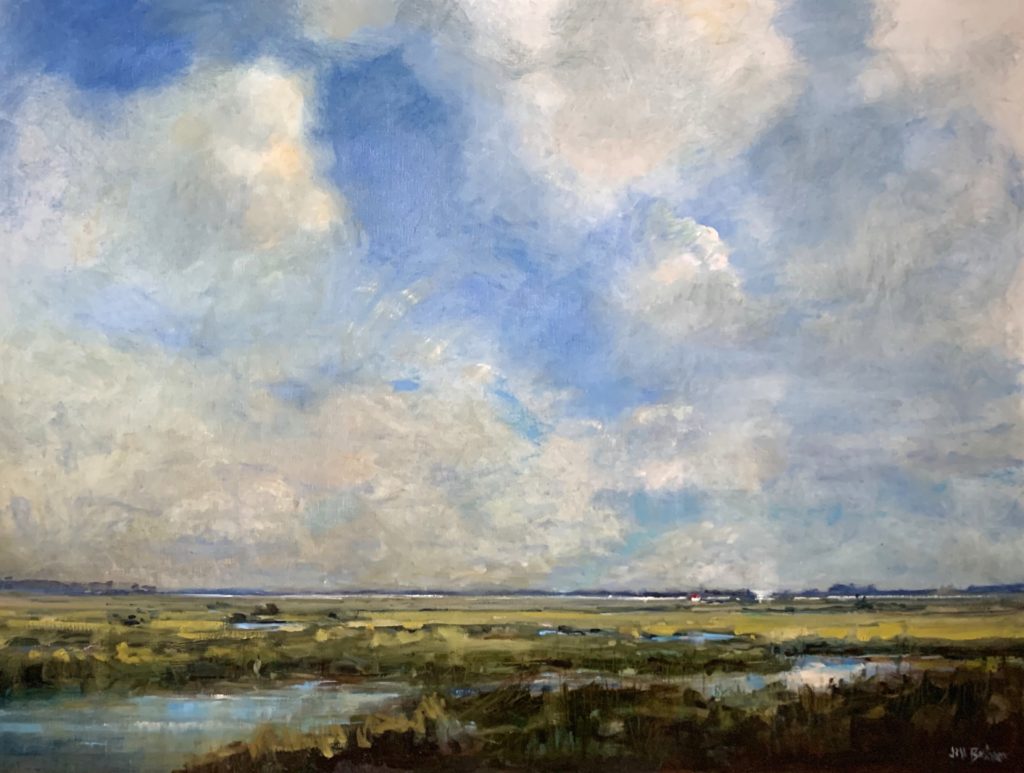
Lisa Egeli, “Silk and Wool,” oil on linenChristine Lashley, “Brook Cascade,” oil on linenJean Schwartz, “February Fire,” oil on panelBrenda Kidera, “Tranquility”Jill Basham, “Coastal Comfort,” oil on linen
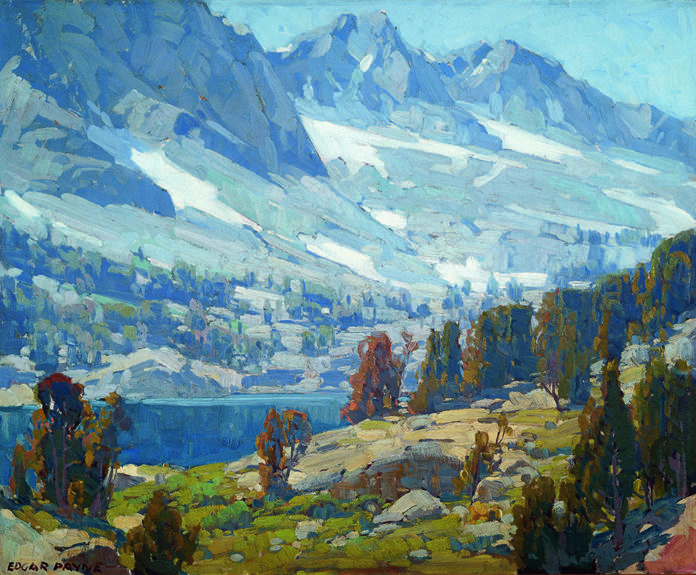
Edgar A. Payne, “Blue Lake, California,” oil on canvas, 28 x 34 in.
An essay by art historian Jean Stern on the Fleischer Collection, the earliest and one of the most extensive collections dedicated to California Impressionism. The Irvine Museum recently published the comprehensive and beautiful book, “The Fleischer Collection: Masterworks of California Impressionism.”
BY JEAN STERN
The Fleischer Collection is the earliest significant and one of the most extensive collections dedicated to California Impressionism. It was formed in 1983 at a time when works from this pivotal American art style were just coming to the fore and examples were easily available and relatively inexpensive.
Later, the collection became the core of the Fleischer Museum, a nonprofit, free-to-the-public institution that operated in Scottsdale, Arizona, from 1990 to 2002 with Donna Fleischer as director. Since then, the Fleischer Collection has remained a private collection in the home of Mort and Donna Fleischer.
I met Mort Fleischer and shortly thereafter his wife, Donna, in late 1983, when I was director of Petersen Galleries in Beverly Hills. Owned by magazine publisher Robert E. Petersen and his wife, Margie, it was one of the first art galleries to specialize in California Impressionist paintings. Moreover, it was the first gallery to present these works on a national basis through advertising, books, and exhibition catalogues.
The term itself, “California Impressionism,” originated there. On any given day, one could walk into Petersen Galleries and see important paintings by Guy Rose, Edgar Payne, William Wendt, Joseph Kleitsch, Franz Bischoff, Alson Clark, and many others.
At the time I met Mort, the gallery was located at 270 North Rodeo Drive, just one block from the Beverly Wilshire Hotel. Later, the gallery moved to 332 North Rodeo Drive, in the Anderton Court Building, designed by Frank Lloyd Wright and owned by Robert and Margie Petersen.
One morning early in December 1983, Mort Fleischer walked into the gallery and introduced himself. He told me that he was from Phoenix, Arizona, and was staying at the Beverly Wilshire Hotel. The evening before, he had taken a walk up Rodeo Drive to look in the shop windows. As he looked through our window, he liked what he saw and resolved to return the next morning.
Mort and I chatted as we walked around looking at one painting after the other. He pointed out what piqued his interest, and I gave him a brief biography of the artist, the quality of the painting, and the price. He told me that he had shopped in some New York galleries looking for French Impressionist art but he was put off by the prices. He felt the California paintings were equally good and far less expensive. He was especially attracted to the freshness and colorful style of the California Impressionist paintings.
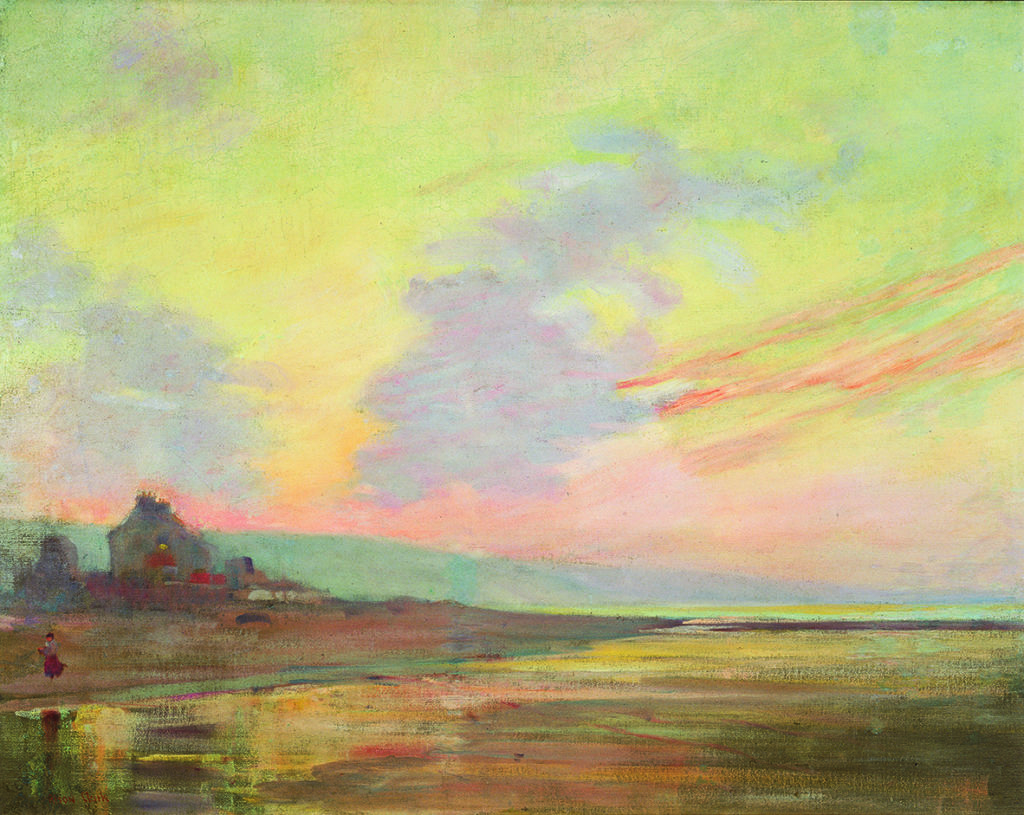
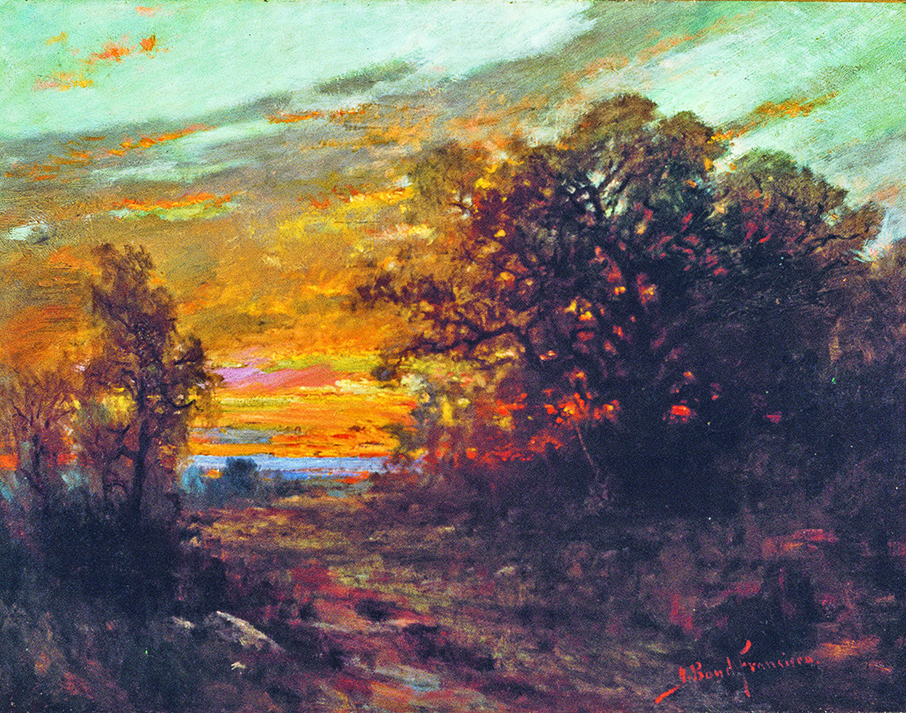
The first painting that Mort looked at was “Mt. Alice at Sunset” by Franz A. Bischoff. He scrutinized it for a while, asked the price, and said he would buy it. As we walked around, he pointed out a vivid painting by John Bond Francisco titled “California Landscape.” It was a large, 46 by 64–inch view in the San Gabriel Mountains painted sometime about 1900. He also liked a moody painting by Alson Skinner Clark, “Sunset, Normandy,” painted in 1901 on his first trip to France. He selected those two as well.
Alson Skinner Clark, “Sunset, Normandy,” c. 1901, oil on canvas, 25 ½ x 32 in.John Bond Francisco, “California Landscape,” c. 1900, oil on canvas, 46 x 64 in.
Soon it became clear that Mort was discerning and that he was serious about building a first-rate collection. So I took him to our storage room, something I rarely did with clients, as the lighting conditions there were far from optimal. I pulled out several paintings that I thought would interest him, and he selected two more works.
After about an hour, I wrote up the sale and gave him a copy of the invoice. He said he would send me a check when he got back to Phoenix. I said I would have them crated and sent upon receipt of payment. We shook hands and he walked out.
It was a memorable afternoon and quite a significant purchase. I have never before conducted a transaction where one client purchased so many of my best paintings. I have been in the art business since I was a child, helping at my father’s gallery, and had dealt with numerous collectors over the years. Mort’s transaction was quick, direct, substantial, and far from routine.
Experience had taught me to be wary of new collectors who pick out the very best paintings. I was concerned that I may never again see Mort or his check. The next day, an envelope arrived via overnight courier with the check. That was the last time I ever doubted Mort Fleischer.
On my visits to Scottsdale, Mort’s business kept him occupied for most of the day, but in the evenings we would have dinner, always at the best restaurants. We would talk about his growing collection and identify which artists should be added.
Number one on the list was Guy Rose, who is generally regarded as the very best California Impressionist painter. He is the only California Impressionist with a direct connection to French Impressionism, having lived in Giverny for eight years and been a friend of Claude Monet. At the age of 27, Rose contracted a serious bout of lead poisoning and he gave up oil painting for three years in mid-career. He suffered a debilitating stroke at the age of 54, which ended his art career. He died four years later.
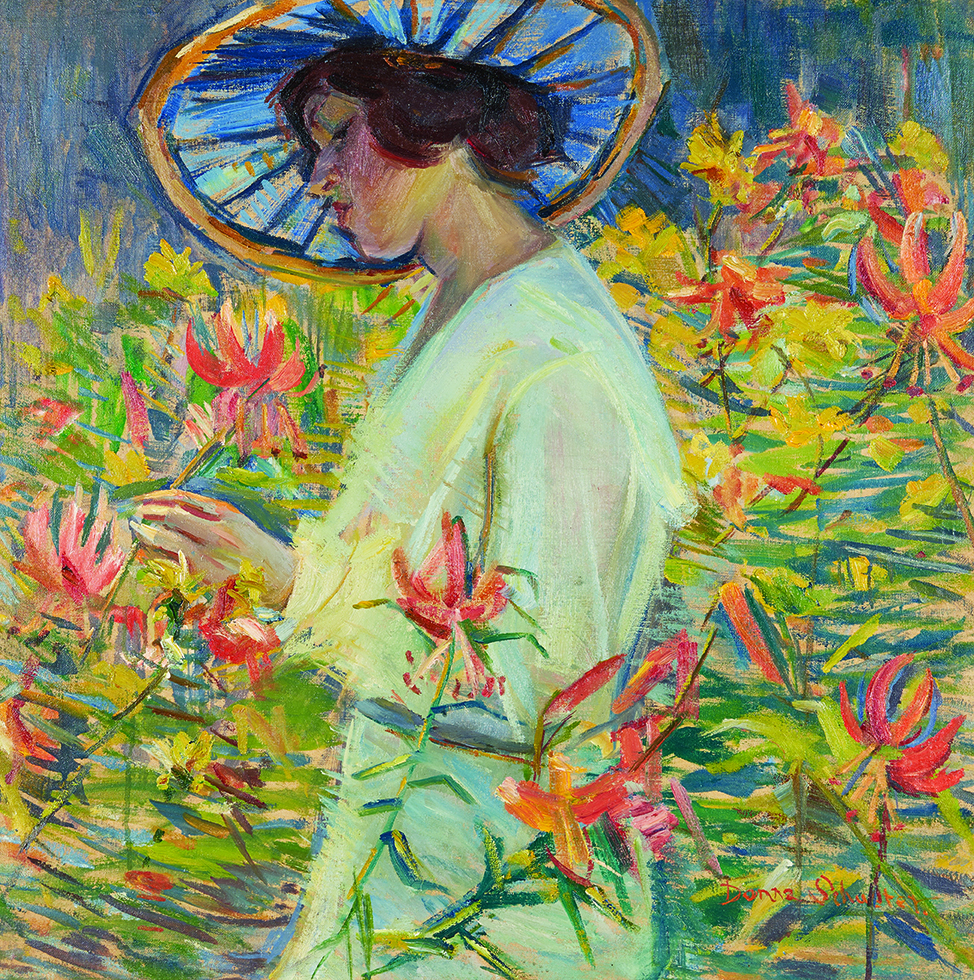
Quickly, the Fleischer Collection grew. Mort added a magnificent painting by Donna Schuster, “In the Garden.” Painted in 1917, it shows the convincing influence of William Merritt Chase, with whom Schuster studied in Carmel in 1914.
Donna Schuster, “In the Garden,” c. 1917, oil on canvas, 30 x 30 in.
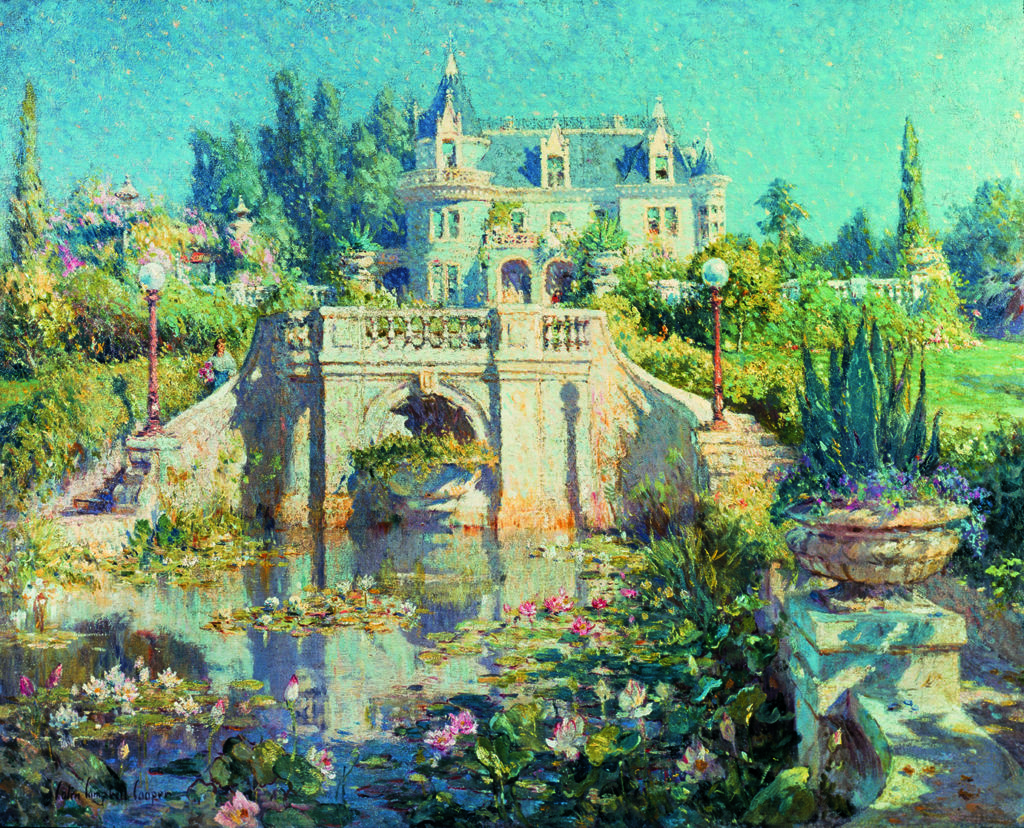
In addition, the collection acquired an elegant Colin Campbell Cooper called “A California Water Garden at Redlands,” set in the back garden of Kimberly Crest, at the time home of Mr. and Mrs. John A. Kimberly, of the Kimberly-Clark paper company.
Colin Campbell Cooper, “A California Water Garden at Redlands (Kimberly Crest),” oil on canvas, 29 ½ x 36 ½ in.
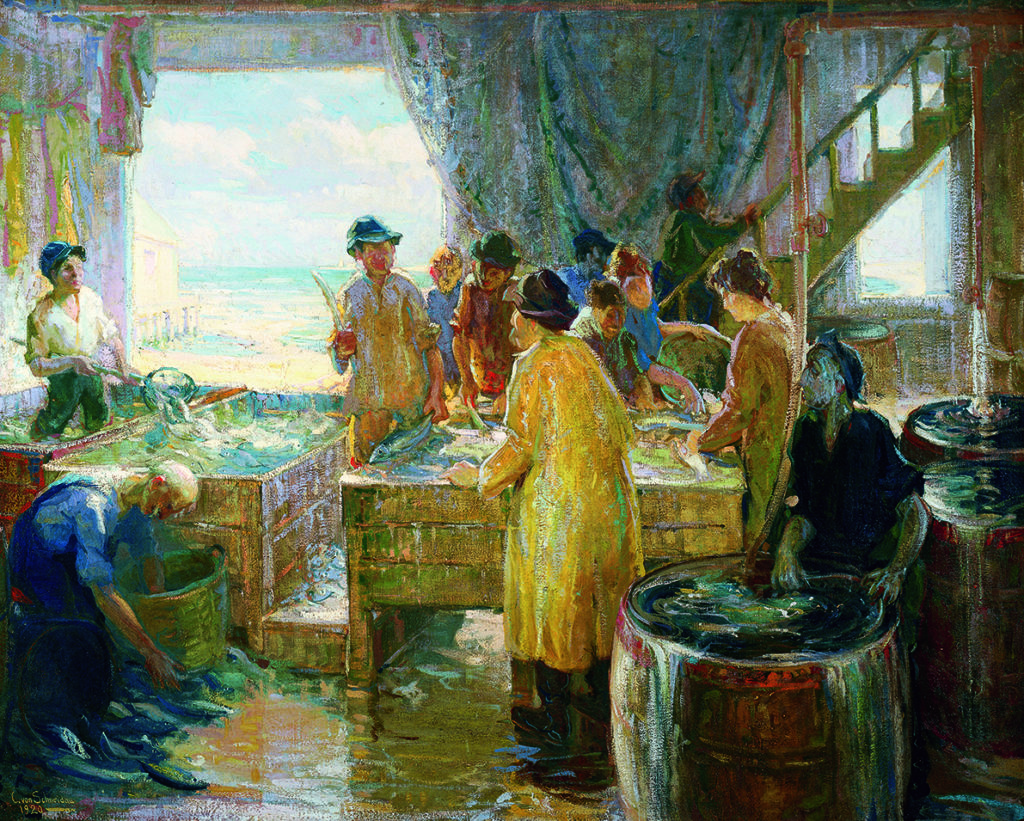
He also purchased “Blue Lake” by Edgar A. Payne; “Fish Market, Provincetown” by Christian von Schneidau; and several others, all from Petersen Galleries.
Christian von Schneidau, “Fish Market, Provincetown,” c. 1920, oil on canvas, 46 x 56 in.
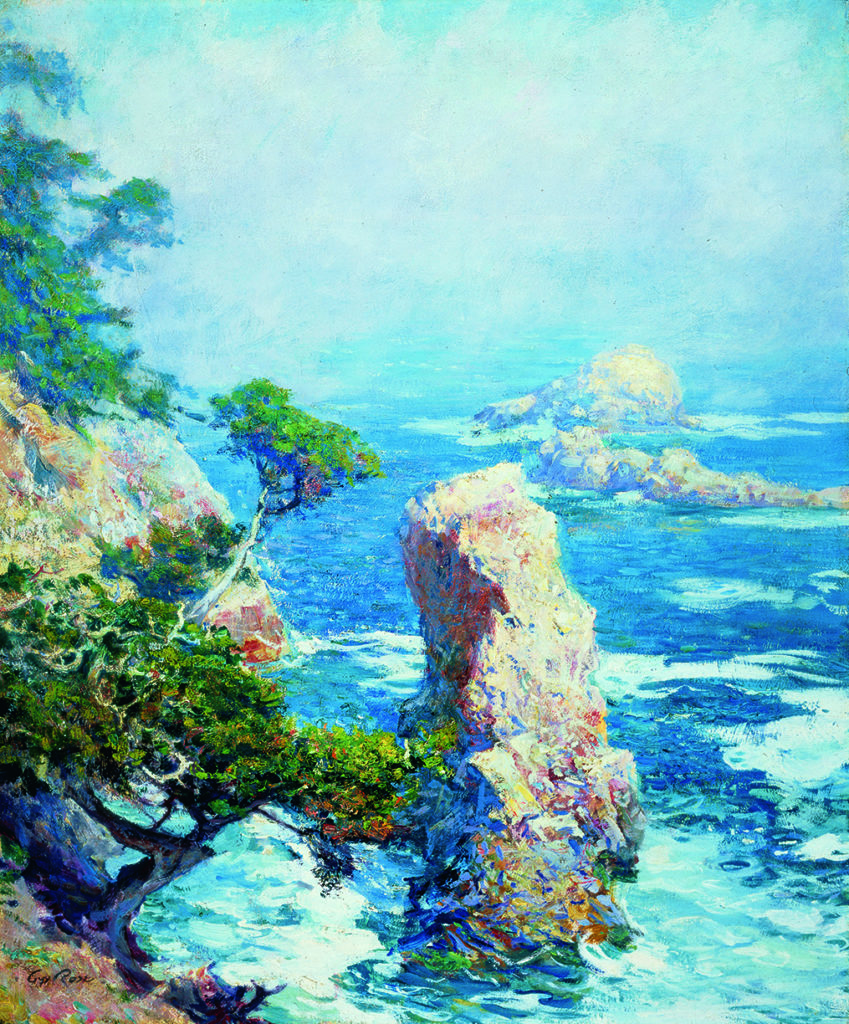
Although Mort was eager to add a Guy Rose to his collection, he wisely waited for the right one. In November 1984, I called him about an important painting by Rose that I had just acquired at a small auction in Michigan. It was “Mist over Point Lobos.” Again, Mort flew in to see it and immediately bought it. The painting quickly became the unofficial icon of the Fleischer Collection and is one of the most popular works by Guy Rose, appearing on posters, book covers, and notecards.
Guy Rose, “Mist over Point Lobos,” c. 1915, oil on canvas, 28 ½ x 24 in.
One day, I called Mort to tell him I was in the process of acquiring the most important work by Jessie Arms Botke I had ever seen. As he was looking for a present for his wife’s birthday, and as Donna was a professional horticulturist, an important painting by Jessie Arms Botke would be ideal. He asked me to describe it. It measured 48 by 64 inches and consisted of a huge bouquet of flowers set in a stone urn with a white peacock and two cockatoos. When I had secured the painting, he came to view the work and immediately purchased it. Some weeks later, at their home in Scottsdale, Donna and I stood in front of the painting while she counted more than twenty distinct varieties of flowers.
My relationship with Mort and Donna Fleischer did not end with Petersen Galleries, which closed when Robert Petersen sold his vast publishing company in 1991. Although I never again sold Mort a painting, I served as an advisor when he opened the Fleischer Museum and continued to do so for several years afterwards.
In 1992, I became executive director of the newly founded Irvine Museum. Established by Joan Irvine Smith and her mother, Athalie Richardson Irvine Clarke, the museum was from its inception dedicated to the California Impressionist style. Our first traveling exhibition, “Selections from the Irvine Museum” opened at the Fleischer Museum in 1992 and then traveled to the Oakland Museum and then back home to the Irvine Museum.
Over the years, I wrote three books on the collection. The first was Masterworks of California Impressionism: The F.F.C.A.-Morton H. Fleischer Collection, published in 1986. In 1989, I wrote American Impressionism: The California School, the official guide book for the Fleischer Museum Collection. When the collection was displayed at the eminent Gilcrease Museum, in Tulsa, Oklahoma, in 1991, we updated and re-issued Masterworks of California Impressionism to serve as the exhibition catalogue.
In 2018, my wife, Linda, and I were guests at Mort and Donna’s aptly named “Mor Do Ranch,” their 100-acre horse ranch in Scottsdale. At that time, we discussed publishing the conclusive book on the Fleischer Collection. Although there had been earlier books, they were not definitive, as the Fleischers continually added to the collection. We felt that the collection needed to be documented, since it was the first important collection to specialize in California Impressionism and had remained one of the best since it was founded in 1983.
Moreover, I told Mort that through this book, my name and my role would forever be linked to this magnificent collection. I broached the idea to James Irvine Swinden, president of the Irvine Museum. Since its founding in 1992, the Irvine Museum has been the definitive authority on California Impressionism.
As it was only fitting that the museum be associated with this pioneering collection, James Swinden immediately agreed to publish it. The book, The Fleischer Collection: Masterworks of California Impressionism, was published by the Irvine Museum in 2019. Thus, the Fleischer Collection and the legacy of Mort and Donna Fleischer will be accessible to future generations of art lovers.
River Painter
oil on linen on panel
26 x 30 in.
$2800
Brian Keeler – Artist as Environmental Advocate
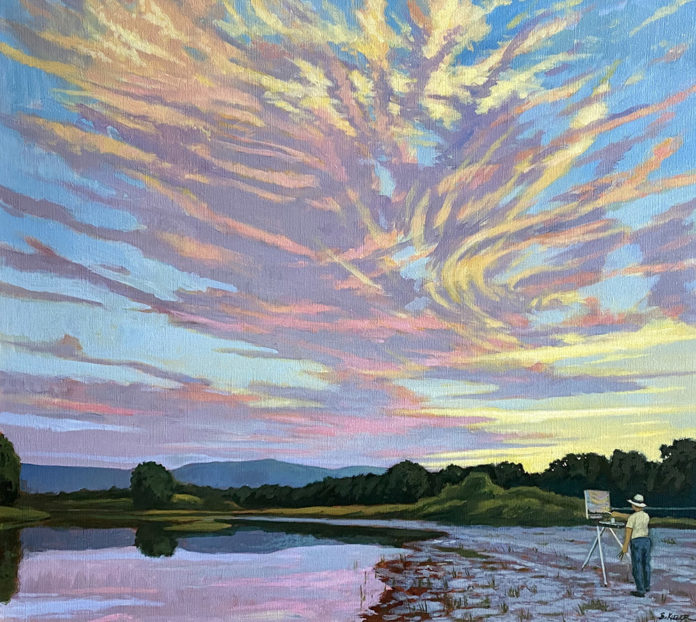
This painting is a view of the Susquehanna River in northern Pennsylvania; the location and muse for many of Brian Keeler’s paintings over a decades long career. This oil, a 26 x 30 in. painting on linen is titled River Painter as it includes a depiction of the artist. This island on the river is the muse for several of Keeler’s beautiful evening views of the river, and it is also part of his new Instructional DVD on painting the Susquehanna plein air and in the studio. This new DVD includes four paintings that the student will see from start to finish with all kinds of insights offered.
Keeler is aligning his mission as a painter with the Hudson River School’s leader Thomas Cole for his portrayals of American beauty but equally important for Cole’s environmental activism. In recent years Keeler has become active as an advocate for ecological responsibility in Pennsylvania and New York. His efforts are to meld the aesthetic with environmental, while in defense of the beauty, history and safety of the region and in opposition to the industrial onslaught by the fracking industry.
He organized a symposium in November of 2019 with historians, scientist, poets, musicians and artists for this cause and has presented lectures on this theme in the region.
Keeler has won many prestigious prizes over his career and his work has been featured in two career retrospectives, in 2004 at the Everhart Museum in Scranton, Pennsylvania and another in 2018 at the Roberson Museum in Binghamton, New York. Keeler has traveled extensively in Italy over the past 25 years where he paints and teaches workshops. In recent years his travels have included plein air trips to Ireland, Scotland and many excursions in Maine.
Brian Keeler’s works can be seen at The North Star Art Gallery in Ithaca, NY and The Argosy Gallery in Bar Harbor, Me.
Brian Keeler’s Susquehanna River paintings are part of his current show at North Star Art Gallery in Ithaca, New York through February 29th. He will be doing a presentation on “The Artist as Environmental Advocate” at the gallery on February 29th at 4 pm.
Brian’s exhibits, workshops, instructional books and videos are available at www.briankeeler.com.
Learn more about Brian Keeler and his work on Youtube and Facebook.
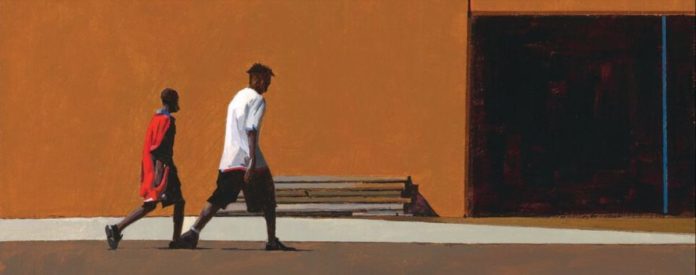
Painting by Dean Mitchell, credit: albanymuseum.com
Announcing “Looking at America and Painting How I Want, What I Want, and How I See It”
Works by Dean Mitchell at the Albany Museum of Art, through March 29, 2020.
From the museum:
In his four-decade long career, Dean Mitchell, of Tampa, Florida, has become known for his figurative works, landscapes, and still lifes. “Looking at America and Painting How I Want, What I Want, and How I See It” is an exhibition of works by the Pittsburgh, Pennsylvania, native.
“I’m looking for freedom, regardless of painting styles and labels imposed on artists in regards to race and ethnic origins,” Mitchell says, “total freedom to explore my full potential as an artist.”
Mitchell, who earned his MFA from the Columbus College of Art & Design in Columbus, Ohio, maintains a deep connection with Quincy, Florida, a small industrial city where he was raised and inspired by his grandmother.
His grandmother pushed him to not to waver in his pursuit, encouraging him to attend his art studies. His work has been collected by many prestigious museums and has received numerous accolades, including meeting President Barack Obama and his family, and being considered as a portrait artist for the 44th president. A small snapshot of Mitchell at the White House hangs on the wall at his Quincy location—aptly named after his grandmother — the Marie Brooks Gallery.
Mitchell has been featured in publications including The New York Times, the Christian Science Monitor, Southwest Art, Art of the West, American Artist, Western Art Collector, Artists Magazine, Fine Art International, Art News, The Art of Watercolour Magazine, Fine Art Connoisseur Magazine, and The Outwin: American Portraiture Today at the National Portrait Gallery.
His art can be found at the Autry National Center, Los Angeles; Arkansas Art Center, Little Rock, Ark.; Canton Museum of Art, Canton, Ohio; Nelson-Atkins Museum of Art, Kansas City, Mo; Kemper Museum of Contemporary Art, Kansas City, Mo.; Margaret Harwell Art Museum, Poplar Bluff, Mo.; Rockwell Museum, Corning, N.Y.; Nerman Museum of Contemporary Art, Overland Park, Kans.; Beach Museum of Art, Manhattan, Kans.; Phoenix Art Museum, Phoenix, Ariz.; Gadsden Art Center, Quincy, Fla.; Whitney Western Art Museum, Cody, Wyo.; Mississippi Art Museum, Jackson, Miss.; St. Louis Art Museum, St. Louis, Mo.; the Library of Congress; and the Quanhua Art Museum in China.
Mitchell has garnered more than 600 awards, including the T. H. Saunders International Artists in watercolor competition in London, England; the American Watercolor Society Gold and Silver Medals; the National Watercolor Society Masters Award; the Allied Artists of America Gold Medal in Watercolor and Oil, and the Thomas Moran Award from the Salmagundi Club in New York.
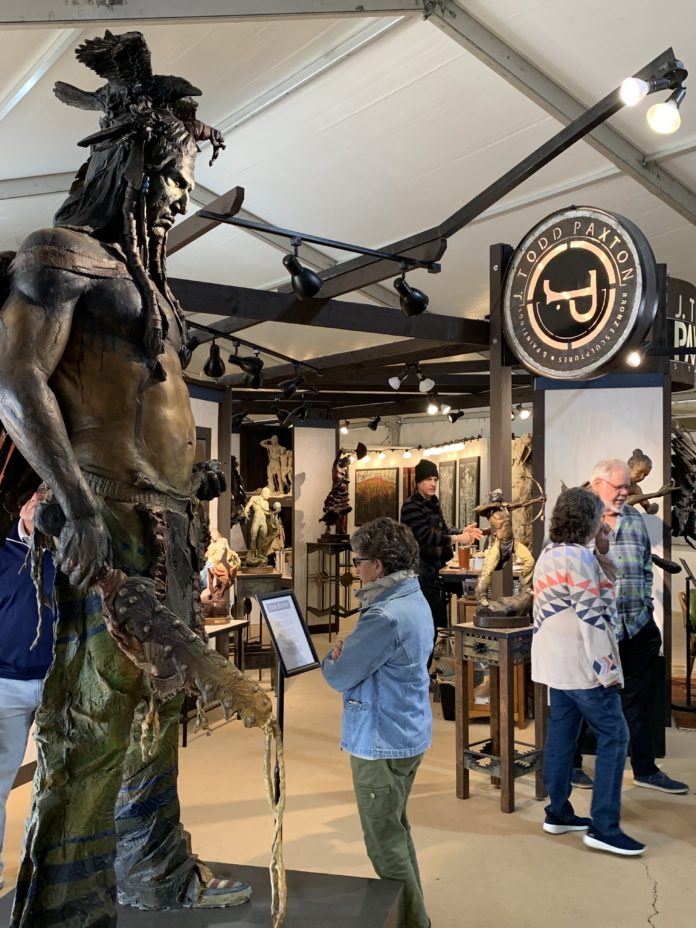
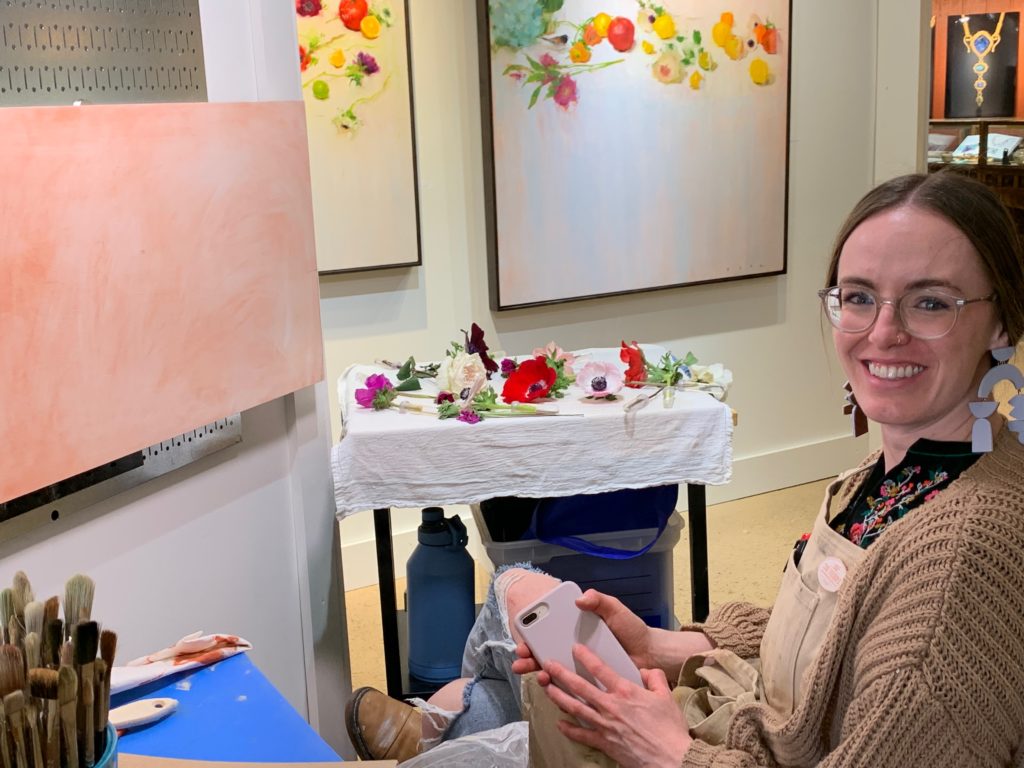
Visitors with sculptor Todd Paxton at Celebration of Fine Art
While the team at Fine Art Today is doing our best to give you up-to-date information about current art shows, please also check with the individual gallery or museum to confirm that the information has not changed since it was published here.
This juried invitational show and art sale is where art lovers and artists connect, featuring 40,000 square feet of working studios and works of art by 100 renowned and emerging artists from across the country.
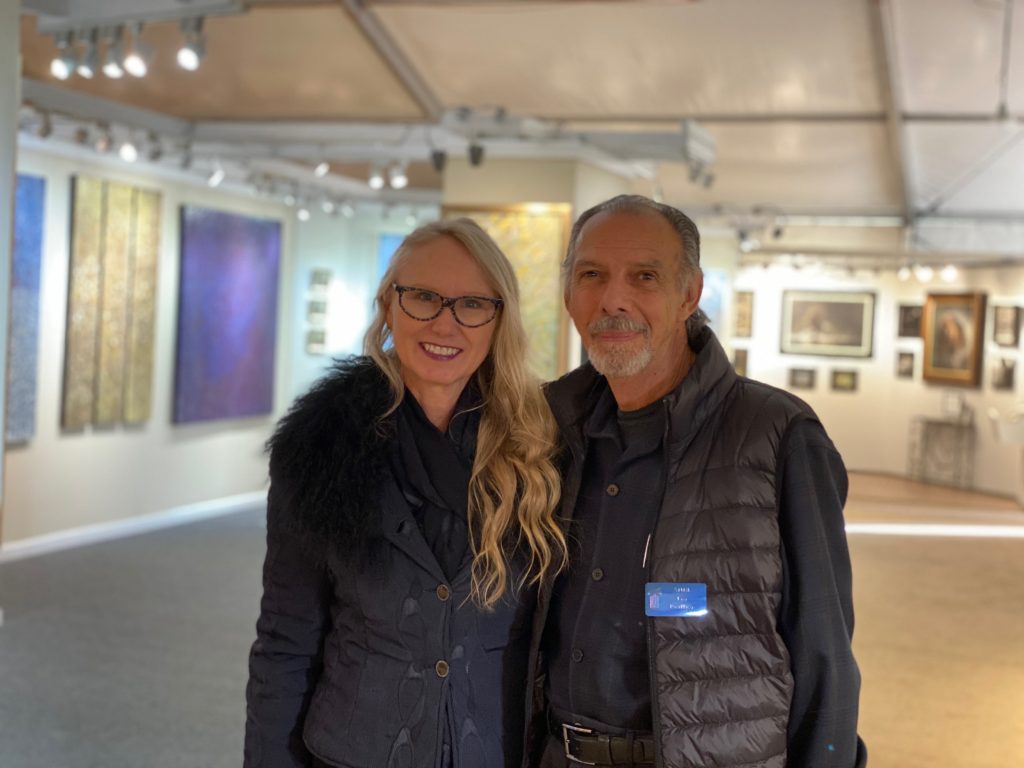
Jeweler Isabelle Posillico and Painter Leo Posillico at Celebration of Fine Art Opening
From the organizers:
The 10-week event enables visitors from around the globe to admire and acquire an unsurpassed selection of artwork in all mediums and styles. Plus, show guests have the opportunity to enjoy the hour-long Art Discovery Series each Friday.
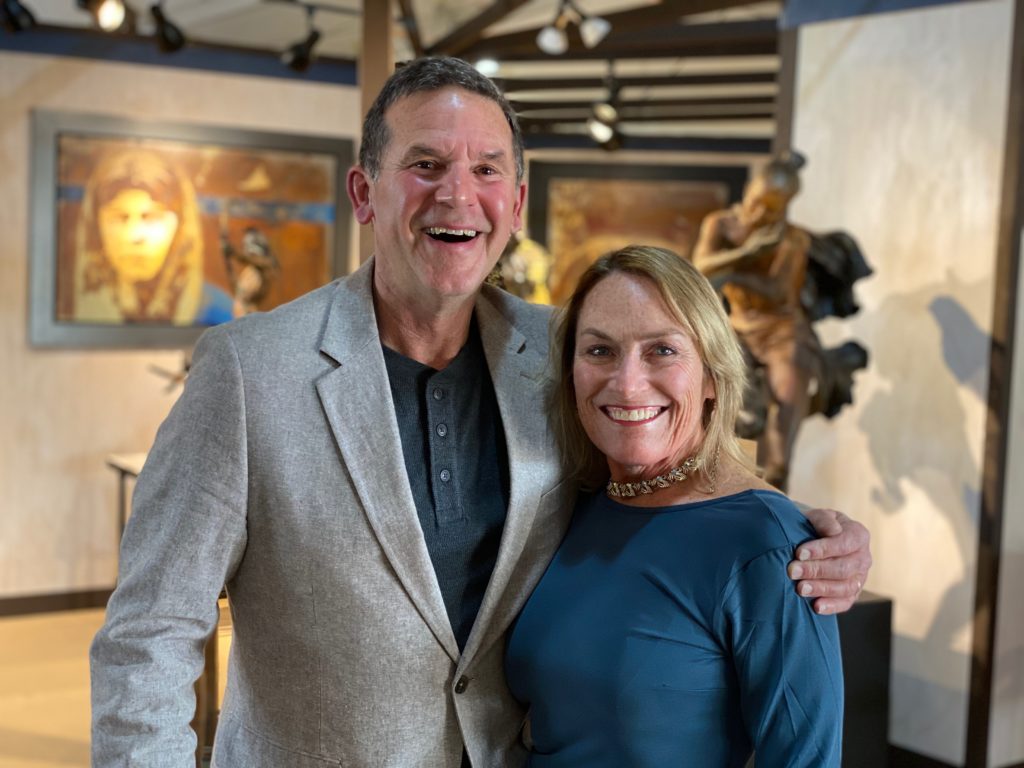
Michael and Karen Jones at Celebration of Fine Art Opening
During the Art Discovery Series, discover the inspiration, techniques, and stories behind the creation of art. Enjoy wine, cheese, and artistic dialogue at informative panel discussions and demonstrations with Celebration artists.
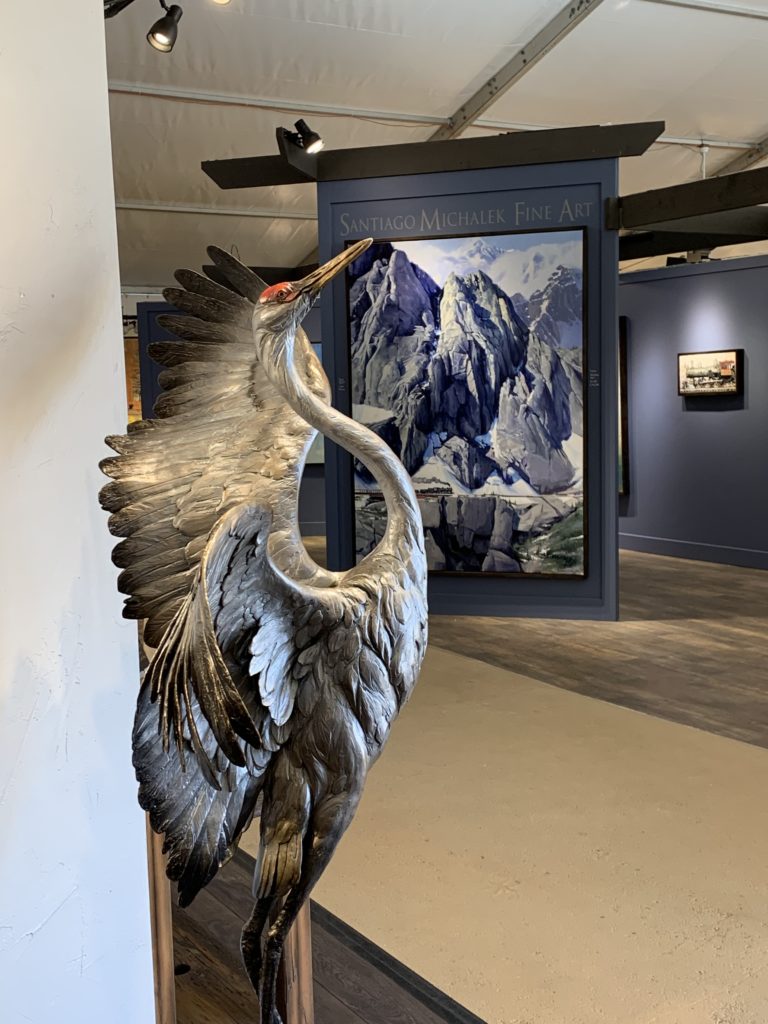
Painter Leslie Duke at Celebration of Fine Art OpeningSculpture by Bryce Pettit and Painting by Santiago Michalek at Celebration of Fine Art
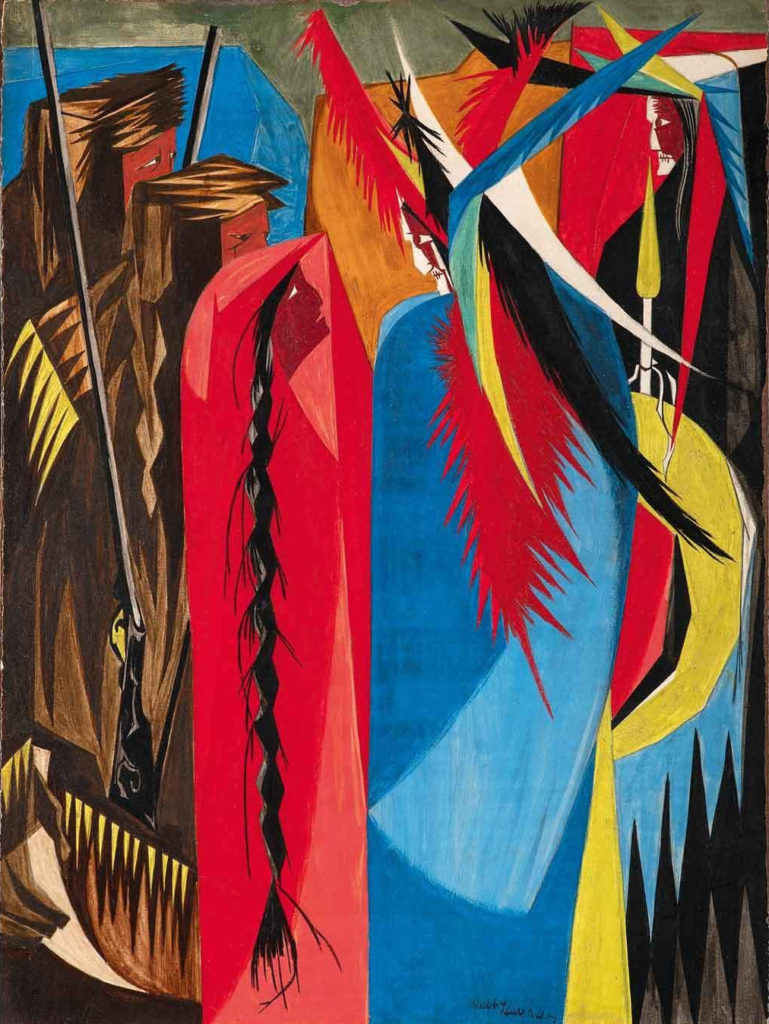
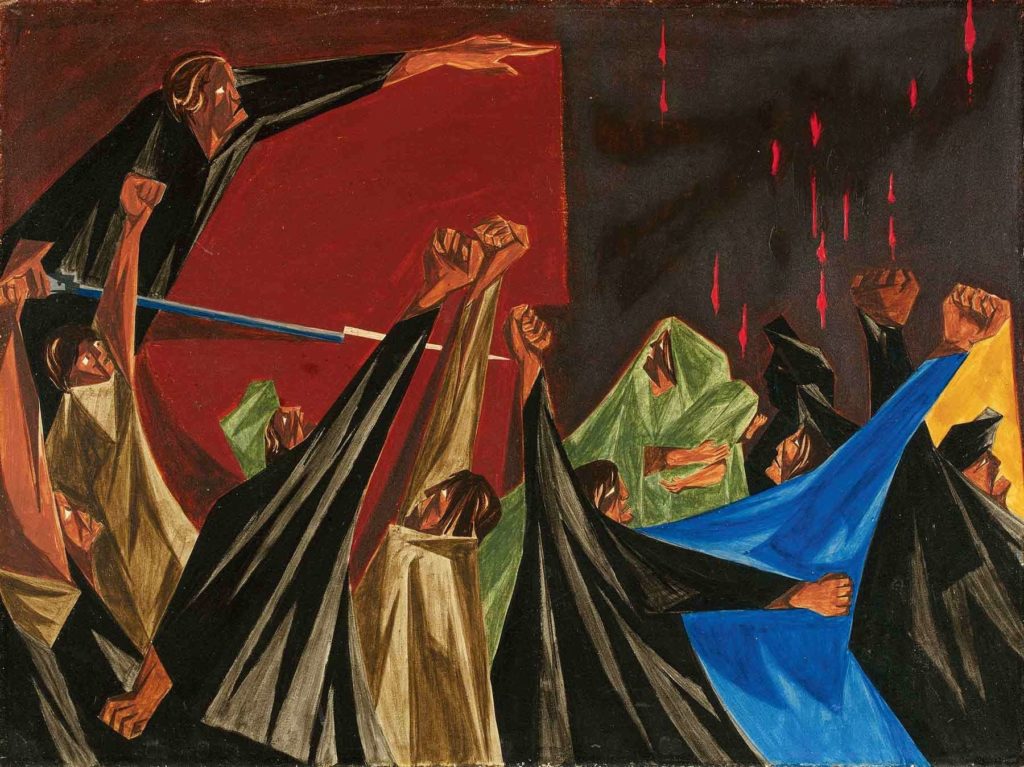
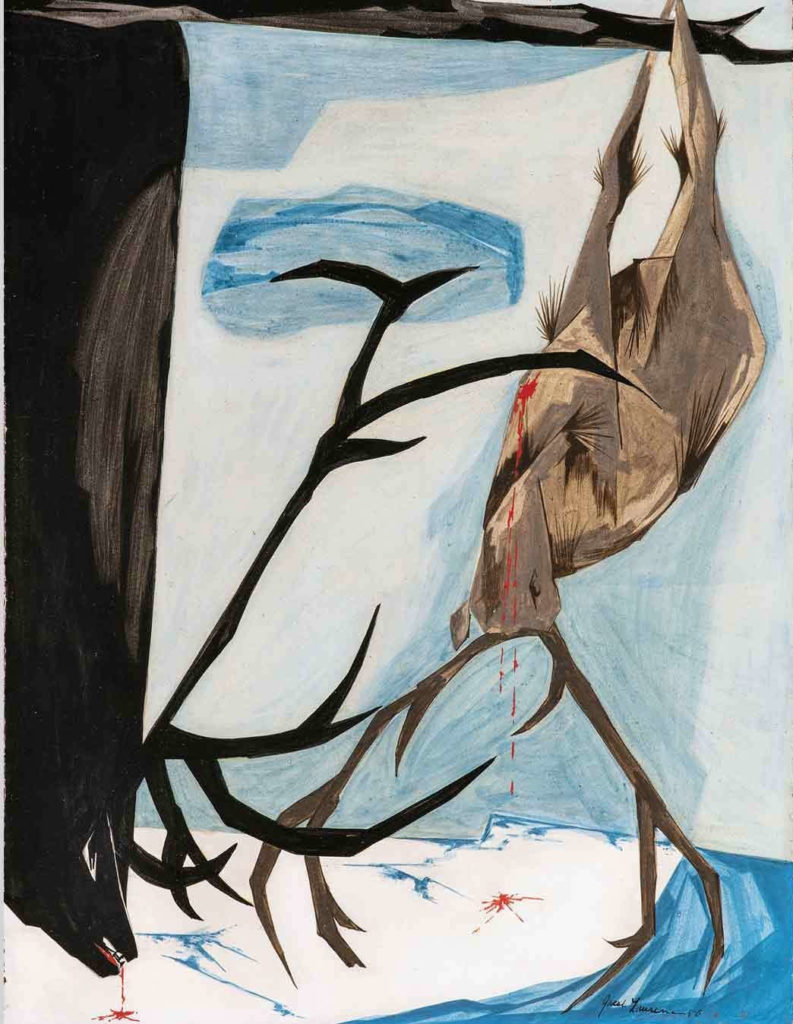
The Peabody Essex Museum (pem.org) has organized the first exhibition to examine “Struggle: From the History of the American People,” the series of paintings created by the African American artist Jacob Lawrence (1917–2000).
This new project, titled “Jacob Lawrence: The American Struggle,” will reunite — for the first time in more than 60 years — 25 of his 30 panels depicting pivotal moments in early American history. (Five panels remain unlocated.) All emphasize the contributions that blacks, Native Americans, and women made in shaping America’s identity.
Created during the modern civil rights era, Lawrence’s thirty intimate panels interpret pivotal moments in the American Revolution and the early decades of the republic between 1770 and 1817 and, as he wrote, “depict the struggles of a people to create a nation and their attempt to build a democracy.”
This show will travel onward to the Metropolitan Museum of Art (New York City), Birmingham Museum of Art (Alabama), Seattle Art Museum, and Phillips Collection (Washington, DC)
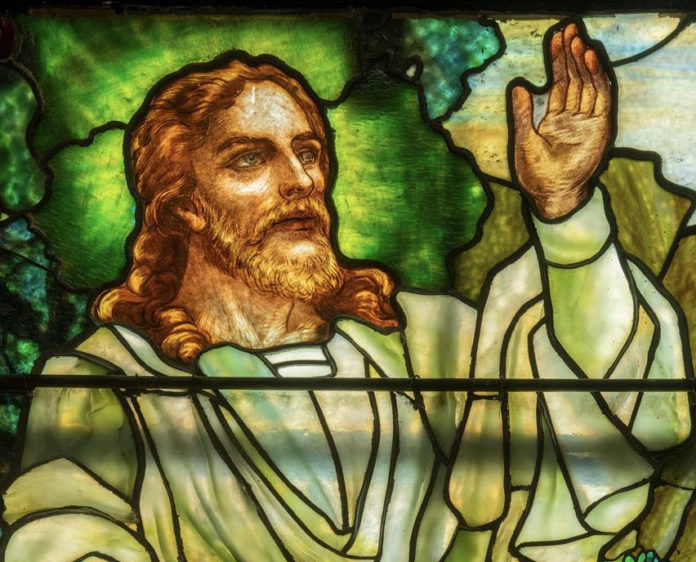
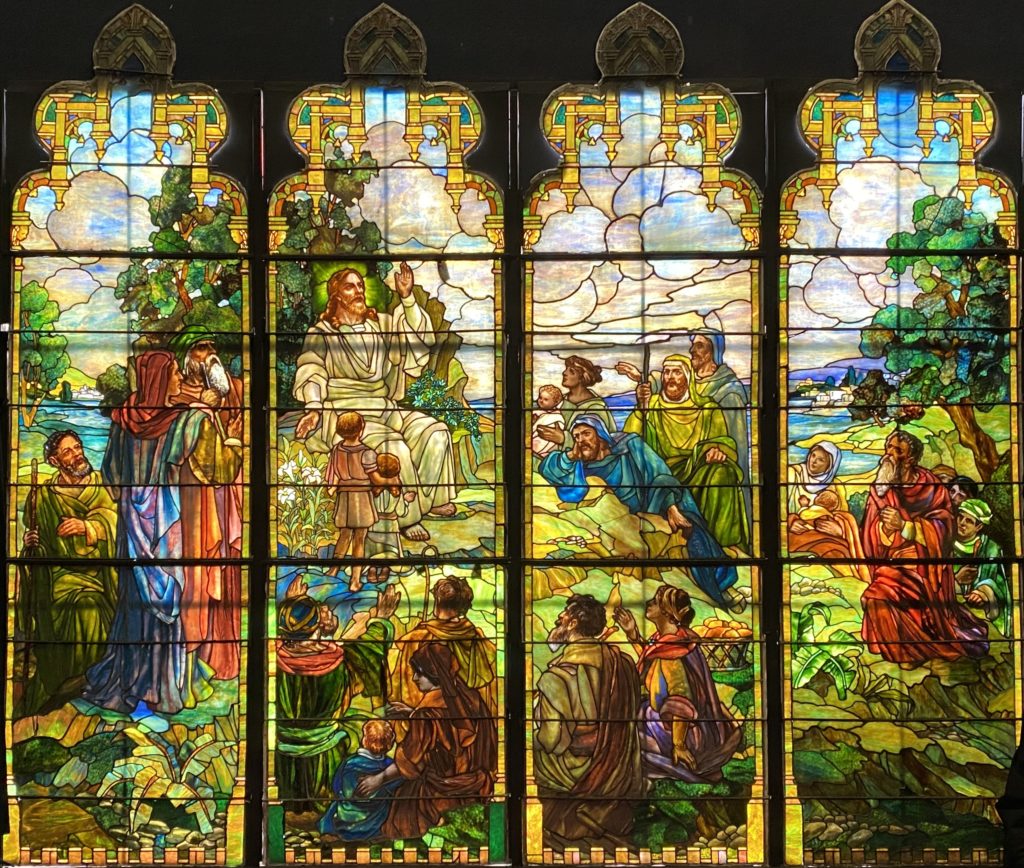
Detail, Sermon on the Mount stained glass. Images courtesy Anthony’s Fine Art
Join Dr. Micah Christensen (PhD, History of Art, University College London) to discuss a monumental stained-glass window recently acquired by Anthony’s Fine Art in St. Lake City, Utah.
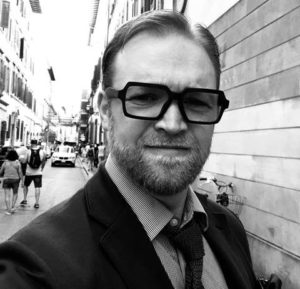
Dr. Micah Christensen
Originally commissioned for a New York church, the window depicts the Sermon on the Mount and offers an opportunity to to see, discuss, and celebrate the history of stained glass and its use in religious spaces.
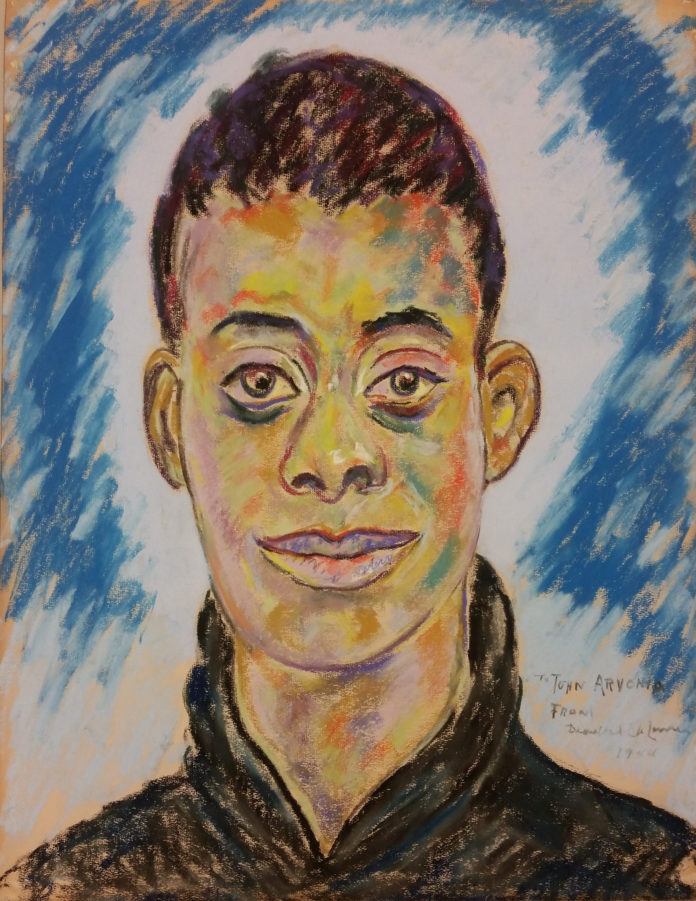
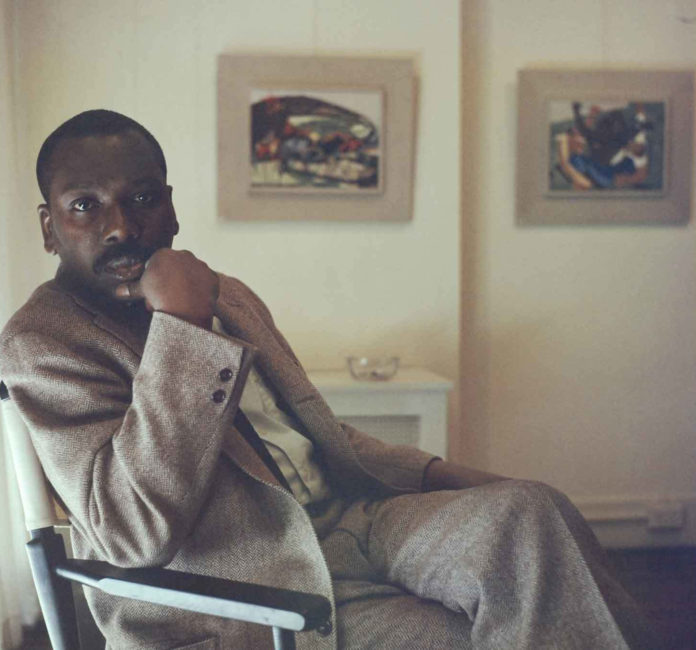
Beauford Delaney (1901–1979), “Portrait of James Baldwin,” 1944, pastel on paper, 24 x 18 3/4 in., Knoxville Museum of Art
Through May 10, view “Beauford Delaney and James Baldwin: Through the Unusual Door” at the Knoxville Museum of Art. This exhibition of 50+ paintings, works on paper, and unpublished archival material examines the 38-year relationship between painter Beauford Delaney (Knoxville 1901–1979 Paris) and writer James Baldwin (New York 1924–1987 Saint-Paul-de-Vence, France) and the ways their ongoing intellectual exchange shaped one another’s creative output and worldview.
“Through the Unusual Door” seeks to identify and disentangle the skein of influences that grew over and around a rich, complex lifetime relationship with a selection of Delaney’s works that reflects the powerful presence of Baldwin in Delaney’s life. The exhibition draws from the KMA’s extensive Delaney holdings, public and private collections around the country, and rarely displayed papers held by the Delaney estate. KMA curator Stephen Wicks is organizing the exhibition, which is accompanied by a color-illustrated catalogue published by the University of Tennessee Press.
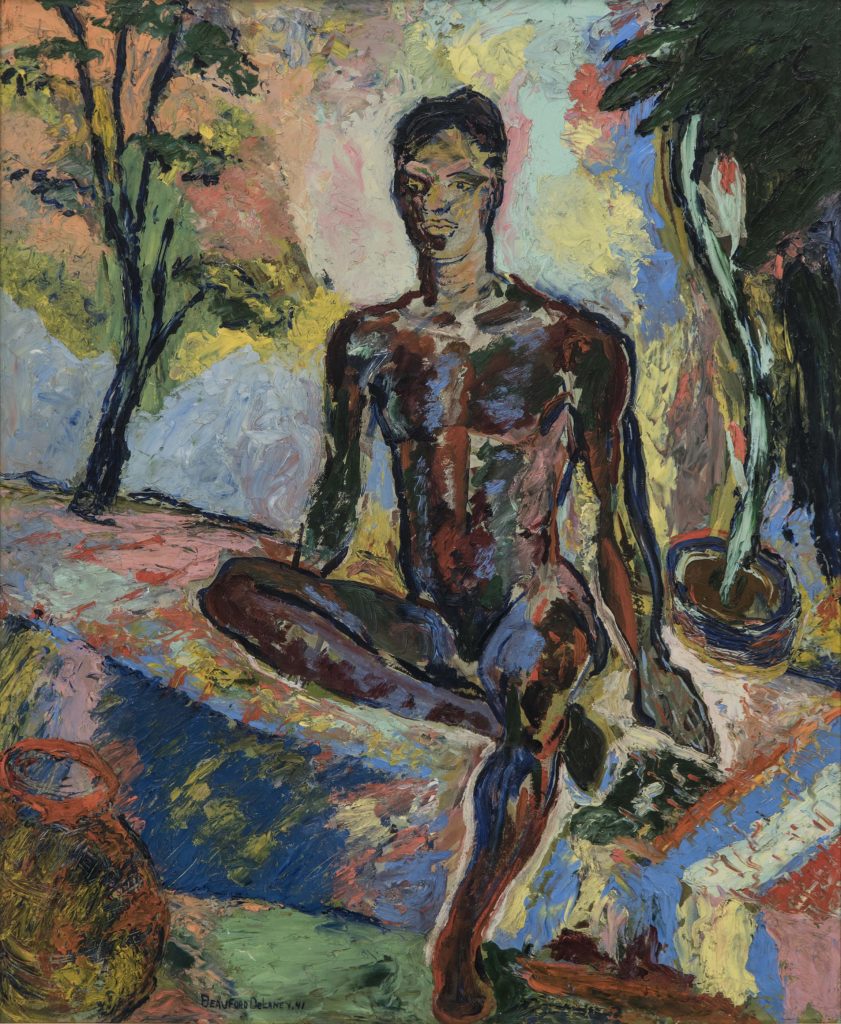
Beauford Delaney, “Dark Rapture (James Baldwin)”
The KMA is proud to hold the world’s largest public collection of work by Knoxville native Beauford Delaney, who overcame poverty, racial discrimination, and mental illness to achieve international renown. The young Delaney’s precocious talent was recognized by Lloyd Branson, Knoxville’s first full-time professional artist, who mentored Beauford and his brother Joseph. By 1929, Beauford Delaney had settled in New York, where he attracted a distinguished circle of cultural luminaries that included Georgia O’Keeffe and Henry Miller, but it was the much younger James Baldwin who had the most significant influence on the artist. Baldwin found in Delaney a father figure, muse, and model of perseverance as a gay man of color. Delaney found in Baldwin a powerful intellectual and spiritual anchor who inspired some of his finest works. Encouraged by Baldwin, Delaney left New York in 1953 and settled in Paris, where he lived until his death in 1979 and where artist and writer continued their long and mutually beneficial relationship. “Through the Unusual Door” presents the story of Baldwin and Delaney in a way that inspires reconsideration of their life circumstances and raises important questions about the nature of the racial and sexual identity barriers they faced.
The exhibition title, “Through the Unusual Door,” comes from a passage in Baldwin’s volume of collected essays The Price of the Ticket (1985), describing the author’s reaction to his initial encounter with Delaney in the doorway of the artist’s Greenwich Village studio: “Lord, I was to hear Beauford sing, later, and for many years, open the unusual door … I walked through that door into Beauford’s colors.” This first meeting encapsulates Delaney’s transformational effect on Baldwin’s view of himself and the world he lived in, and set the tone for the painter’s role in the author’s life as a father figure and mentor. Baldwin, in turn, inspired Delaney with his fearless social conscience and commitment to civil rights causes. They helped each other to move beyond the pain and oppression imposed on them by the world.
While no other figure in Beauford Delaney’s extensive social orbit approaches James Baldwin in the extent and duration of influence, none of the major exhibitions of Delaney’s work has explored in any depth the creative exchange between the two. Previous scholarship has almost exclusively emphasized the artist’s stylistic evolution from the 1940s to the 1960s as a function of his move from New York to Paris.
“Through the Unusual Door” posits the idea that this profound stylistic change was in part inspired by the intellectual and personal relationship between Delaney and Baldwin. Ordinary daily observations — reflections in puddles in the streets of Greenwich village or the quality of light filtered through the window of Delaney’s studio in the Paris suburb of Clamart — sparked extraordinary creative exchanges between the two. The exhibition incorporates previously unpublished archival materials and artworks that promise to extend the understanding of Delaney’s aesthetic agenda and range and reveal the extent of his ties to Baldwin.
Acquiring and showing the work of Knoxville native Beauford Delaney has been a longstanding institutional priority for the Knoxville Museum of Art. In the summer of 2017 the museum organized “Gathering Light: Works by Beauford Delaney” from the KMA Collection, the first-ever showing of its own holdings. “Gathering Light” kicked off a multi-year, community-wide initiative to honor the legacy of Beauford and his brother, Joseph, under the rubric of the Delaney Project, a consortium of organizations and individuals dedicated to making the Delaney brothers better known in their hometown.
The KMA, the East Tennessee Historical Society, Beck Cultural Exchange Center, Marble City Opera, and the University of Tennessee Humanities Center are just a few of the organizations involved in presenting the Delaney brothers to the local community and to the world. The KMA expects “Through the Unusual Door” to make a significant contribution to Delaney scholarship, raise the museum’s institutional profile nationally, promote the artist’s legacy in his hometown, and enhance Knoxville’s standing as a center for Beauford Delaney studies.
“Beauford Delaney and James Baldwin: Through the Unusual Door” is made possible by generous underwriting from the Henry Luce Foundation, the National Endowment for the Arts, and the Art Dealers Association of America Foundation.
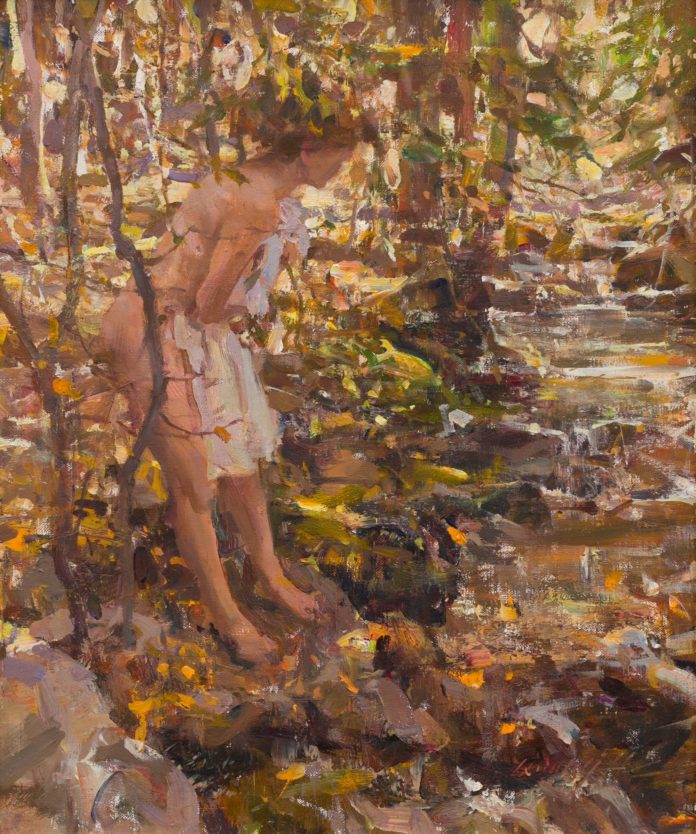
Quang Ho, “Figure by the Stream II,” oil on linen, 18 x 12 in. $4,100
Gallery 1261 (Denver, Colorado) recently announced that it is hosting a solo exhibition of new work by a nationally renowned master painter, Quang Ho, titled “Process.”
More from the gallery:
Quang Ho’s work, which is primarily in oils, ranges from still lifes to landscapes, interiors, and figurative work.
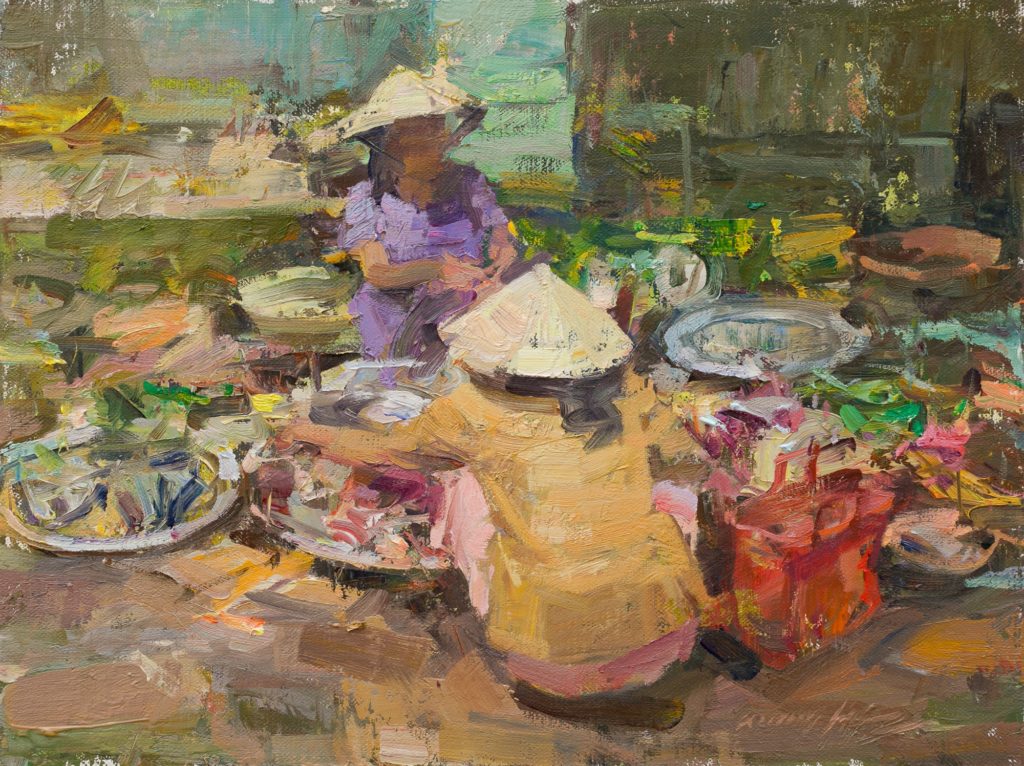
Quang Ho, “Fish Seller,” oil on linen, 9 x 12 in. $3,100
Providing insight into his newest exhibition, Ho shares, “This exhibition is called ‘Process.’ But it is also about play. To quote Einstein, ‘The highest form of research is play.’ It is in the process of playing with colors, texture, value, edges, and paint that one breaks through personal boundaries and tendencies. I have found that rather than finding new subject matter to paint, I can do more by revisiting ideas that were meaningful to me in the past and find new ways of engaging with them. It is the delight and surprise in unexpected happenings that bring me continually to the canvas. The first part of the development of an artist is mastering the medium of expression; after that comes speaking as much truth as you are capable of without all the intellectual gymnastics. That is a higher art.”
Quang Ho, “Heavy Laden,” oil, 48 x 60 in. $38,000
With this particular body of work, it was most important to Quang to explore different ways of saying what he has already discovered during his impressive creative journey of 56 years. “I’m bringing past themes to life, digging deeper into the visual language, and exploring new boundaries.” For Ho, creating the most fundamentally sound composition is imperative at this point in his creative journey. Whether the compositions before them are complex or simple, he hopes that the viewers walk away with a sense of emotional reaction that inspired each painting.
Quang Ho, “Spring Arrangement,” 2020, oil, 30 x 30 in. $14,500
Further considering the process of painting in his experience, Quang adds, “For me, painting is a marriage between the mastery of those basic visual elements: the discoveries and understanding of visual statements (the search for what is true on a personal level artistically), and the trust in one’s own wordless intuition and inspiration. Understanding gives rise to higher understanding. Working this way allows me to open the door to new ideas and inspirations. One day I may be interested in a color statement, and the next may be a relationship of simple shapes, and the next, an extremely complex arrangement of texture and edges. With every painting, there is a singular visual thought to be completed.”
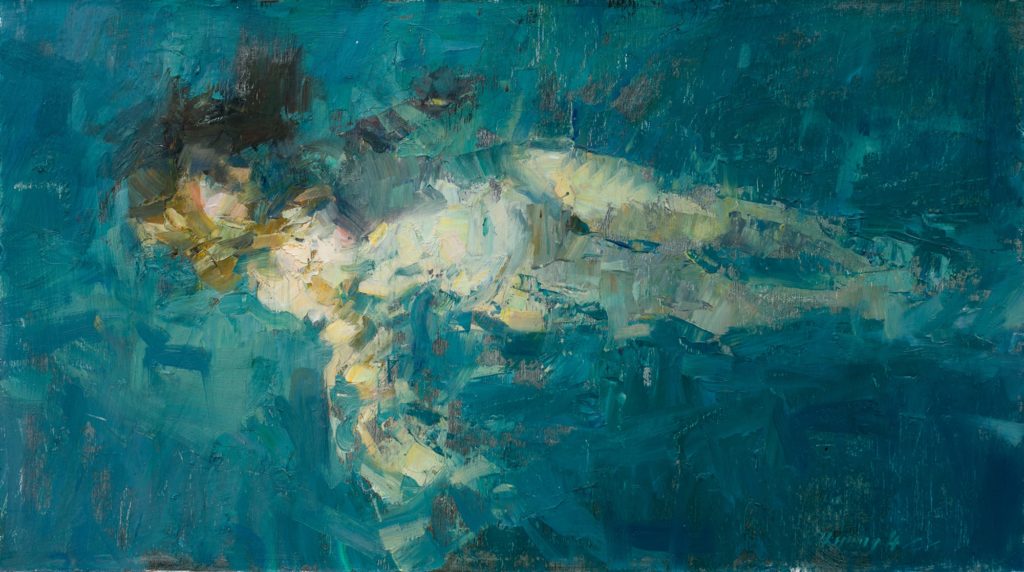
Quang Ho, “Mermaid,” oil on linen, 12 x 18 in. $4,300
As he contemplates his evolution starting with his first-ever solo, to now, Quang exclaims, “They are like night and day. My first solo was about execution. I was an accomplished major, but it was really about executing paintings well. The show I am presenting now is reaching much deeper. Now, I am composing a symphony, exploring a visual vocabulary, rather than trying to figure out what the visual world is doing.” Quang’s impressive artistic journey is a massive accomplishment. When asked what has been the primary driving force in his career, he chuckles. “With any discipline you enter into, you want to become a master and understand it. Now that I have no more questions about painting, I am enjoying discovering, exploring, and surprising myself.”
ABOUT THE ARTIST
Quang Ho was born on April 30, 1963, in Hue, Vietnam. He Immigrated to the United States in 1975. His artistic interest began at the early age of three and continued through grade school, high school, and art school and led him to an exciting and successful painting profession. In 1980, at the age of 16, Quang held his first solo show at Tomorrow’s Masters Gallery in Denver, Colorado. The exhibit was a big success for the high school sophomore. In 1982, Quang’s mother was killed in a tragic auto accident, leaving him the responsibility of raising four younger brothers and a six-year-old sister. That same year, Quang attended the Colorado Institute of Art on a National Scholastics Art Awards Scholarship. At CIA, Quang studied painting under Rene Bruhin, whom Quang credits with developing the foundation for his artistic understanding. Ho graduated from CIA in 1985 with Best Portfolio Award for the graduating class.
He is a much sought-after teacher and lecturer on art and has won numerous prestigious awards nationally from the Artists of America to the Oil Painters of America exhibits. He has held a retrospective exhibit at the Steamboat Springs Museum of Art and has held shows at the Woolaroc Museum as well as the Booth Museum of Western Art. Quang enjoys reading philosophy and science, playing guitar and golf, and he finds time to hunt for fossils and forage for mushrooms.
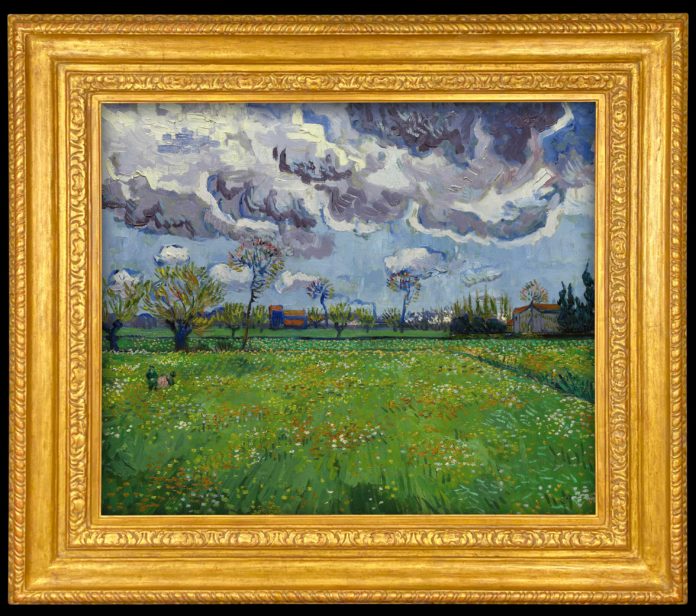
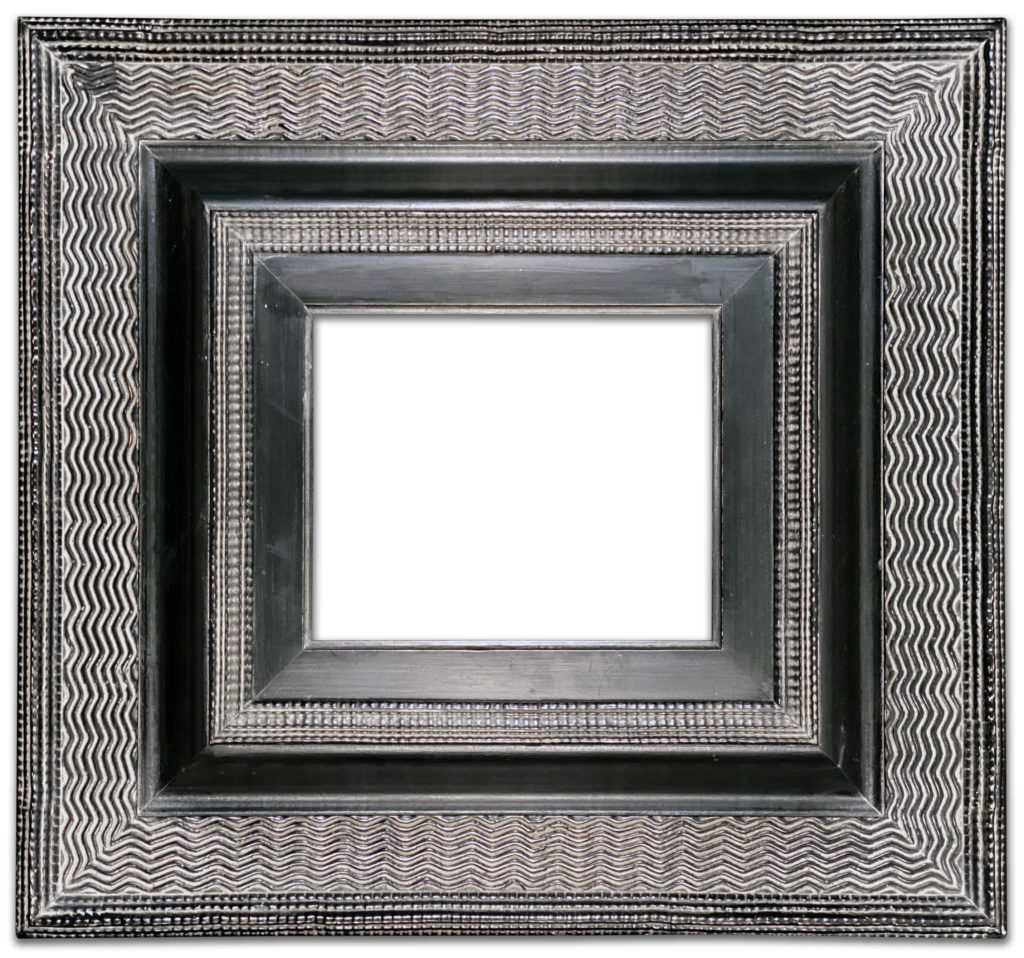
Eli Wilner Frame, European 19th Century Style Frame Ex. Vincent van Gogh
Based on a European 19th century period frame. Gallery price: $38,000 - 46,000; Auction estimate: $25,000 - 30,000; Starting bid: $6,000. Provenance: This frame was loaned to Sotheby’s to present Vincent van Gogh’s (1853–1890) “Paysage sous un Ciel Mouvementé” (1889), which realized a price of $54,010,000. The work is oil on canvas and was offered at Sotheby’s in Fall 2015. Photo credit: Guernsey’s
On February 19, Guernsey’s will conduct an unprecedented auction of The Frame as Art: Eli Wilner’s Personal Collection, consisting of more than four hundred of the workshop’s finest frames made using old-world artisanship.
What do the Metropolitan Museum of Art, the Smithsonian Museum, and the White House have in common? On the walls of each, one will find more than two dozen picture frames crafted at the workshops of Eli Wilner & Company, Master Framers. When The Met was searching for an intricately carved, stunning, and massive 14 by 23-foot gold-leafed frame to showcase its historic painting “Washington Crossing the Delaware,” the museum commissioned Eli Wilner for the coveted seven-figure assignment. And when Sotheby’s and Christie’s required the very finest frames to surround important works by Picasso, Van Gogh, Monet, O’Keeffe, Rockwell, and Magritte, they reached out to the Wilner studio.
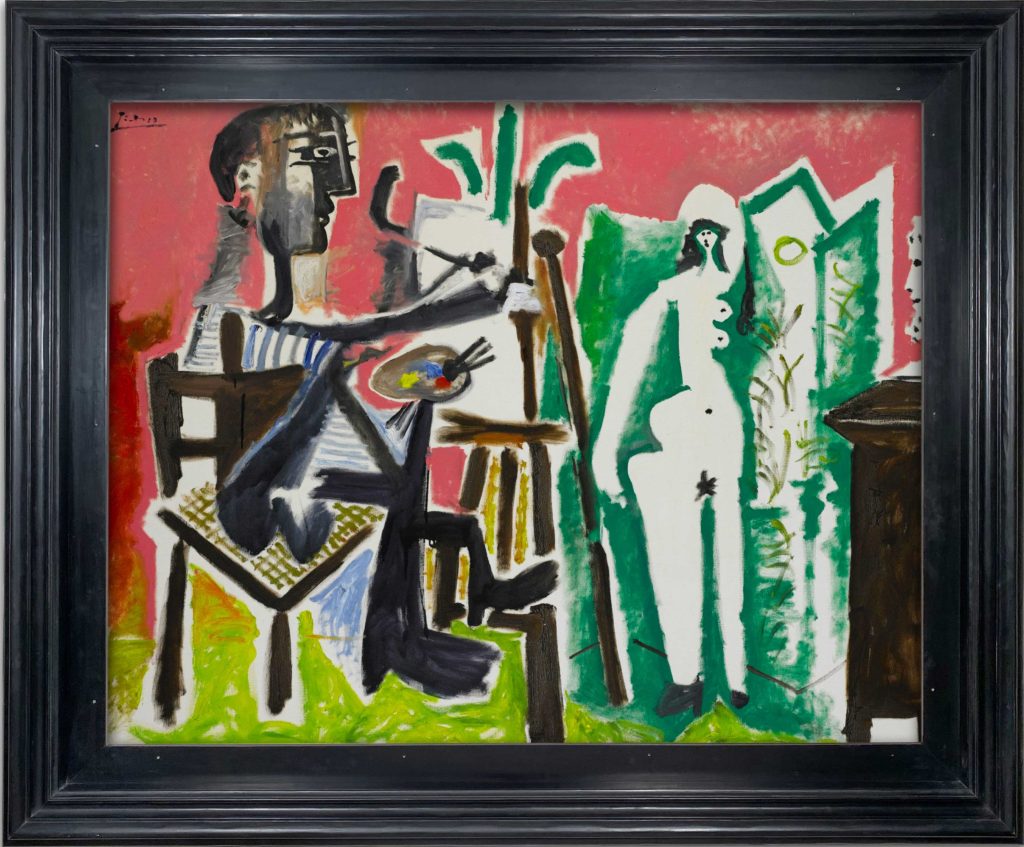
Eli Wilner Frame, European 19th Century Style Frame, Ex: Pablo Picasso Based on a European 19th century style frame. Similar replicas have been used by Wilner for Impressionist/Modern paintings such as those by Picasso, Miro, Chagall, and Braque. This frame includes a strainer designed for a float fitting. Gallery price: $52,000 – 63,000; Auction estimate: $35,000 – 40,000; Starting bid: $9,000. Provenance: This frame was loaned to Sotheby’s to present Pablo Picasso’s (1881–1973) “Le Peintre et Son Modèle” (1963), which realized a price of $12,906,000. The work is oil on canvas and was offered at Sotheby’s in Fall 2016. Photo credit: Guernsey’s
Following the conclusion of prominent museum exhibitions or important art auctions, frames that the company loaned for those occasions were returned and became part of the Eli Wilner Classic Frame Collection. Each unique frame will include its exhibition history. The auction will include frames that surrounded works such as van Gogh’s “Paysage sous un Ciel Mouvementé” for $54 million, Rockwell’s “The Gossips” for $8 million, and Picasso’s “Le Peintre et son Modèle” for $13 million, all of which were sold at Sotheby’s.
In addition to “Washington Crossing the Delaware,” The Met framed John Singer Sargent’s famous “Madame X” in an exquisite Wilner work, while a visit to the White House would include sightings of Eli Wilner frames on Albert Bierstadt’s powerful “Storm Clouds” and, in the Oval Office, Childe Hassam’s “The Avenue in the Rain.”
Eli Wilner Frame, American c. 1810 Iconographic Frame Ex. Gilbert Stuart “George Washington” Based on an American c. 1810 iconographic American frame with an eagle at the center top, stars in the cove, and shields at each corner. *Gallery price: $32,000 – 39,000; Auction estimate: $20,000 – 25,000; Starting bid: $5,000. Provenance: This frame was loaned to Sotheby’s to present Gilbert Stuart’s (1755–1828) George Washington (c. 1796–1803), which realized a price of $398,500. The work is oil on canvas, and was offered at Sotheby’s in Fall 2010. Photo credit: Guernsey’s
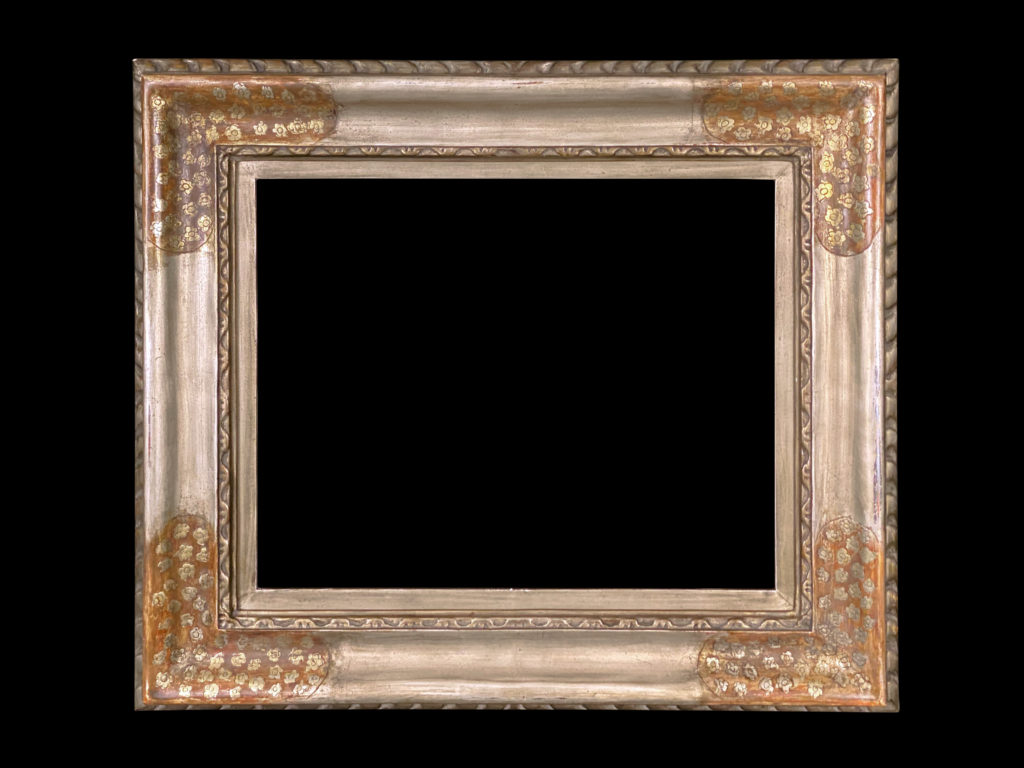
Eli Wilner Frame, Charles Prendergast Design, American c. 1920 Style Frame
Based on an American c. 1920 Charles Prendergast style frame. *Gallery price: $12,000 – 15,000; Auction estimate: $7,000 – 9,000; Starting bid: $1,750. Provenance: This frame was loaned to Christie’s to present Maurice Brazil Prendergast’s (1859–1924) “Seascape” (c. 1907), which had a price realized of $68,500. The work is oil on canvas and was offered at Christie’s in Spring 2010. Photo credit: Guernsey’sInquiries about this unprecedented upcoming auction should be directed to Guernsey’s (212-794-2280, [email protected]), the New York–based auction house known for such events as the landmark Cold War auction of artwork from the Soviet Union, the Titanic sale, auctions of recovered collections of Holocaust-related art, and the John F. Kennedy auctions. Visit https://www.guernseys.com/v2/eli_wilner_collection.html for more information.
Fill your mind with useful art stories, the latest trends, upcoming art shows, top artists, and more. Subscribe to Fine Art Today, from the publishers of Fine Art Connoisseur magazine.





 Details: