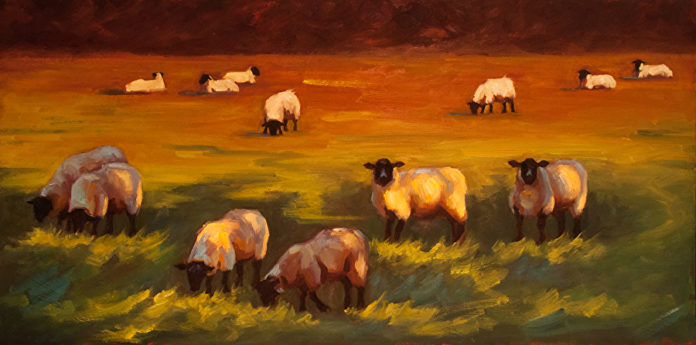
Cheri Christensen, “A Summer Graze,” oil on panel, 12 x 24 in.
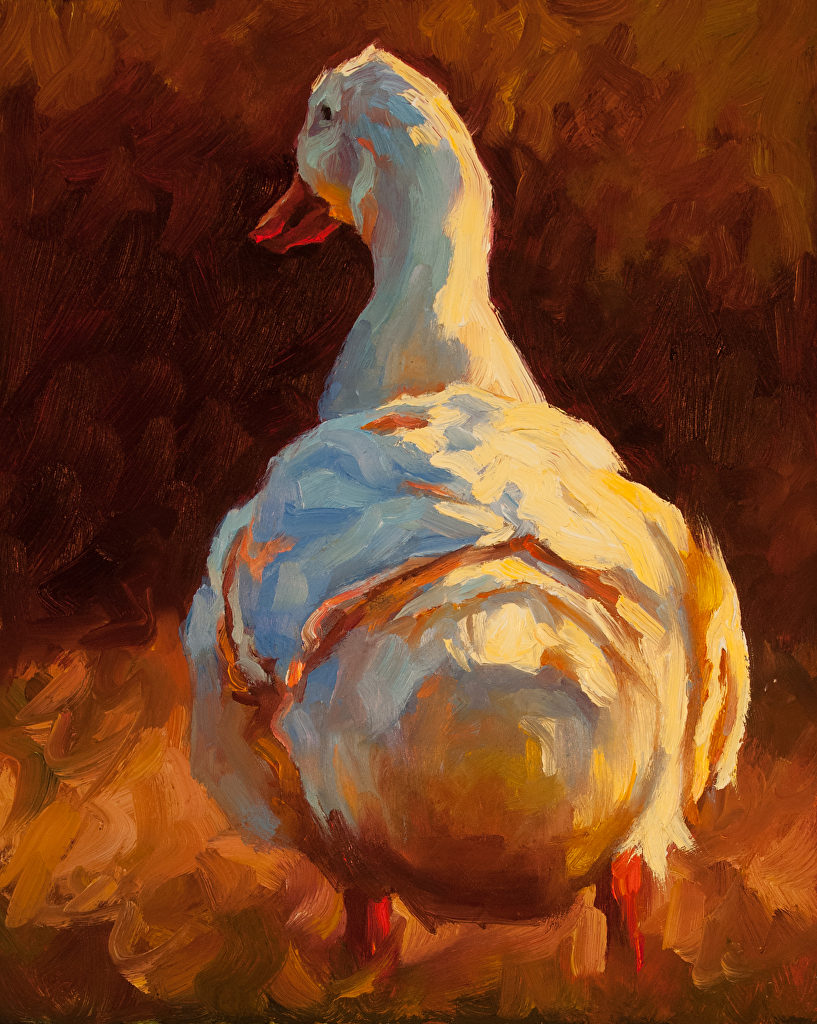
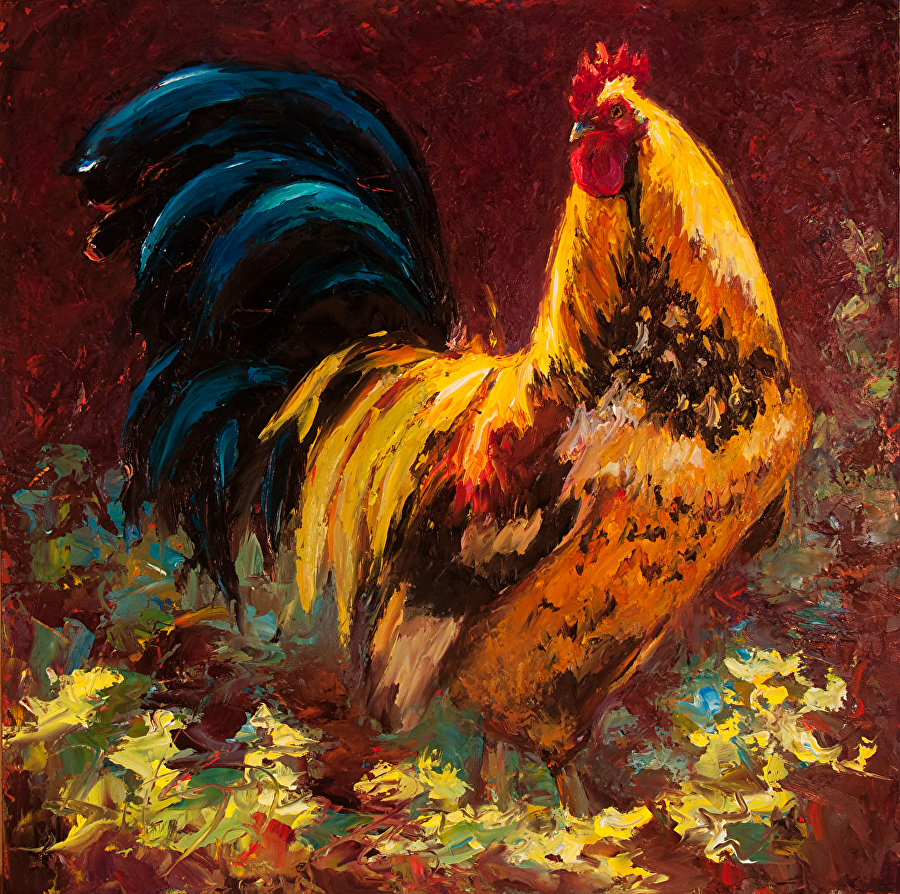
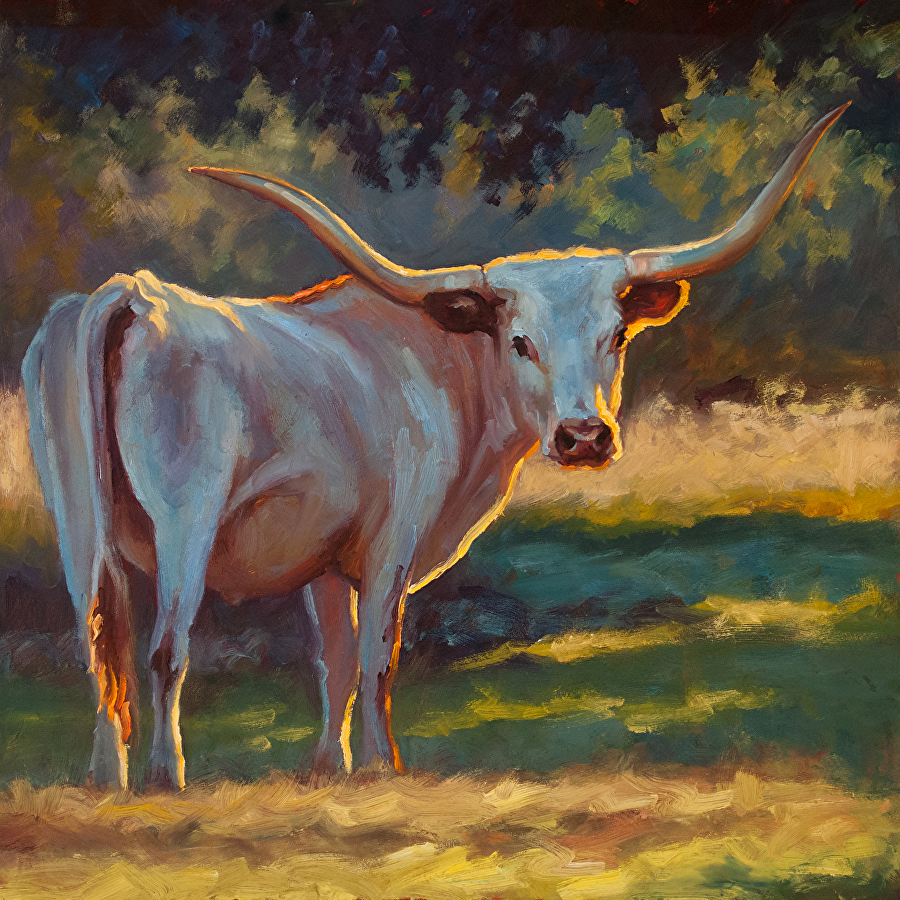
Preview works by Cheri Christensen, whose paintings are on view now in Fredericksburg, Texas.
Christensen was born in Enumclaw, Washington, a small rural town of horse, dairy, and cattle ranches at the foot of Mount Rainier. She attended the University of North Carolina at Greensboro and graduated with a B.A. from the University of Washington. She studied oil painting and drawing intensely for three years with Ron Lukas, a protege of Sergei Bongart, who taught in the tradition of the Russian Impressionists. Christensen concentrates on seeing and conveying the effects of color and light on form.
Cheri Christensen, “A New Direction,” oil, 10 x 8 in.Cheri Christensen, “It’s Good to Be King,” oil on panel, 18 x 18 in.Cheri Christensen, “A Glance Back,” oil on panel, 16 x 16 in.
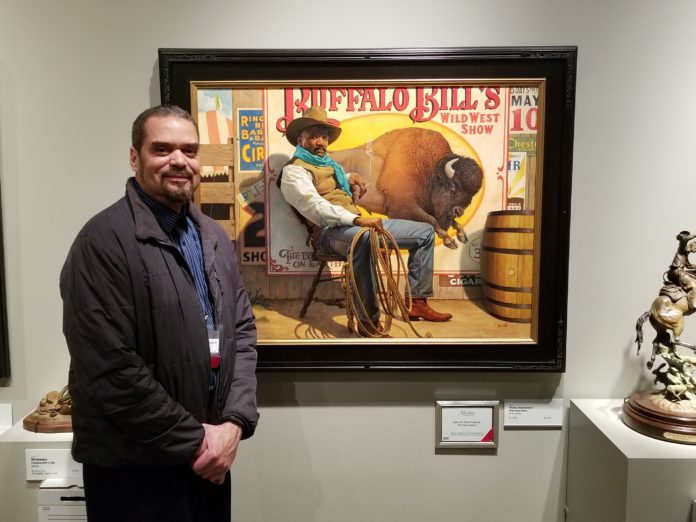
Thomas Blackshear II, “Wild West Show,” oil on canvas, 31 x 41 in. James R. Parks Trustees’ Purchase Award
Earlier this month, Fine Art Today announced that the Autry was presenting its 22nd Annual “Masters of the American West” Art Exhibition and Sale, which takes place through March 24, 2019, at the Autry Museum of the American West (Los Angeles, CA).
The 2019 “Masters of the American West” award winners include:
James R. Parks Trustees’ Purchase Award
Given in recognition of the work designated for purchase by the Autry Museum Board of Trustees: Thomas Blackshear II, “Wild West Show” (shown at top)
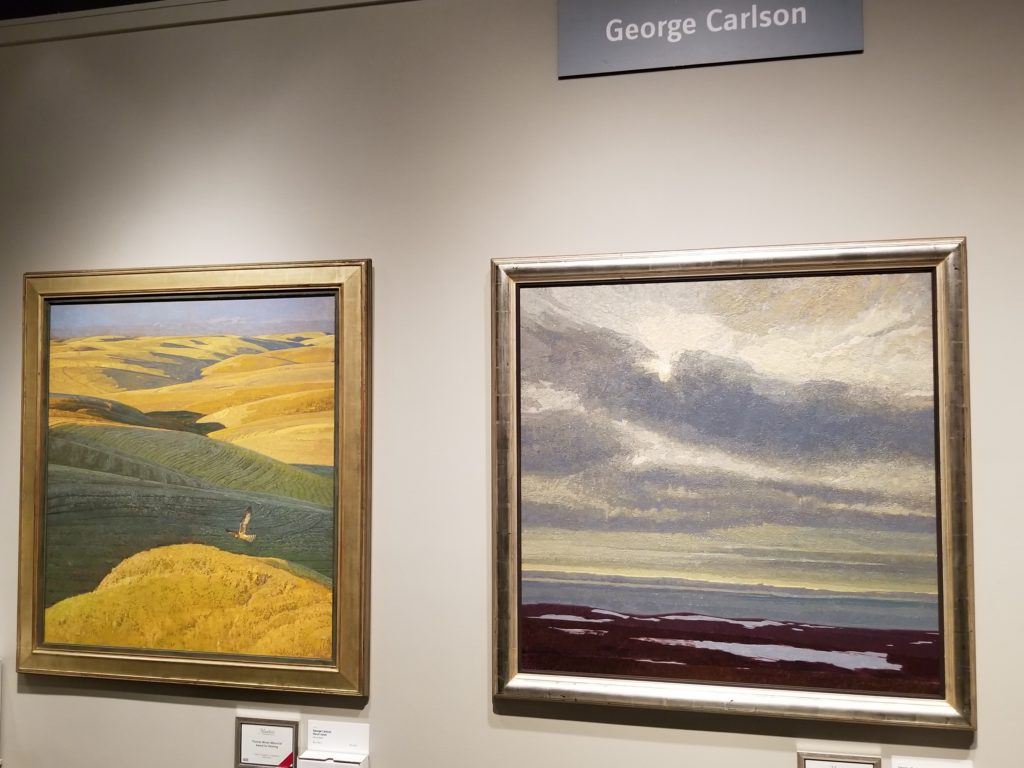
George Carlson, “Marsh Hawk,” oil on linen, 42 x 38 in. Thomas Moran Memorial Award for Painting. Plus, George Carlson was awarded the Gene Autry Memorial Award for best body of three or more works.
Thomas Moran Memorial Award for Painting
Given in recognition of exceptional artistic merit: George Carlson, “Marsh Hawk”
The Kenneth T. and Eileen L. Norris Foundation Award for Sculpture
Given in recognition of exceptional artistic merit: Richard Greeves, “Escape from the Predators”
Watercolor Award, Sponsored by Marilyn B. and Calvin B. Gross
Given in recognition of exceptional artistic merit: Dean L. Mitchell, “Walls of Zion”
Bob Kuhn Wildlife Award, Sponsored by Jodie and James Rea
Given in recognition of exceptional artistic merit: Tim Shinabarger, “Lined Out and Leaving”
Don B. Huntley Spirit of the West Award
Given in recognition of the most outstanding work in cowboy subject matter: Mark Maggiori, “Purple Haze”
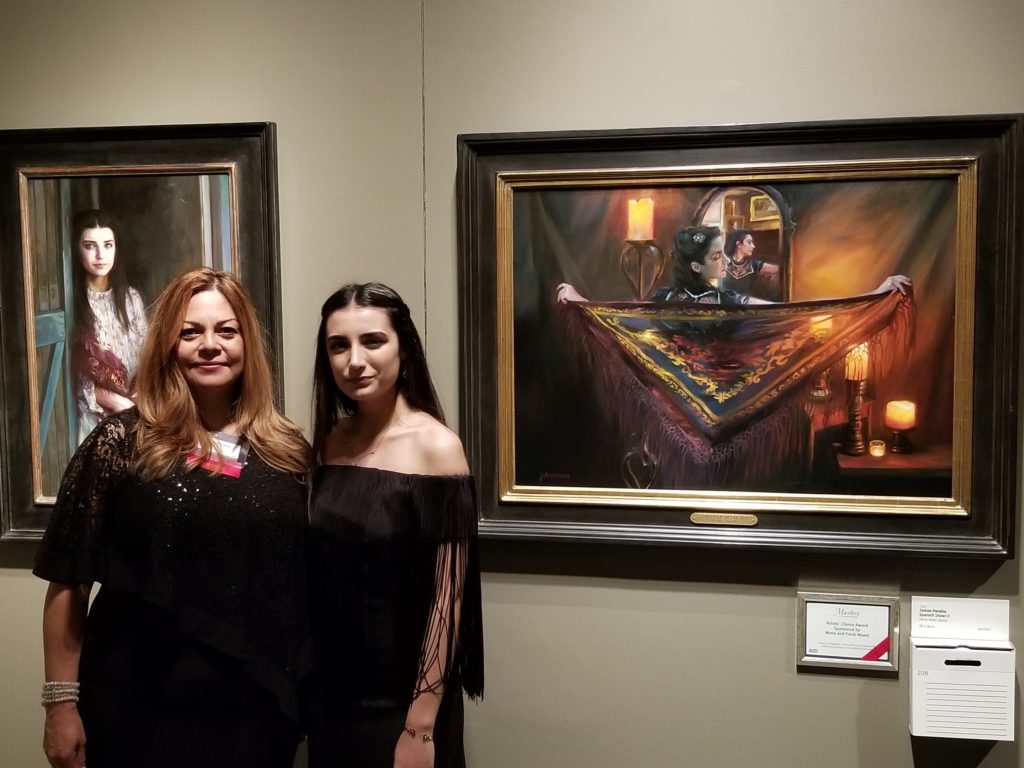
JoAnn Peralta, “Spanish Shawl II,” oil, 26 x 36 in. Artists’ Choice Award. Shown in photo with her model Maria.
Artists’ Choice Award, Sponsored by Mona and Frank Mapel
Given in recognition of the work most popular with artists participating in the exhibition and sale: JoAnn Peralta, “Spanish Shawl II”
Gene Autry Memorial Award
Given in recognition of the most outstanding presentation of three or more works: George Carlson
John J. Geraghty Award, Sponsored by The Bohlin Co.
Established by the Autry Museum Board of Trustees to recognize an individual for his or her advancement of contemporary Western art: William Acheff
Patrons’ Choice Award
Given in recognition of the work most popular with patrons of the exhibition and sale: Terri Kelly Moyers, “Historic Patterns”
For more information about “Masters of the American West,” visit theautry.org.
Preview a new collection of original oil paintings in this spotlight on a Charleston, South Carolina, artist.
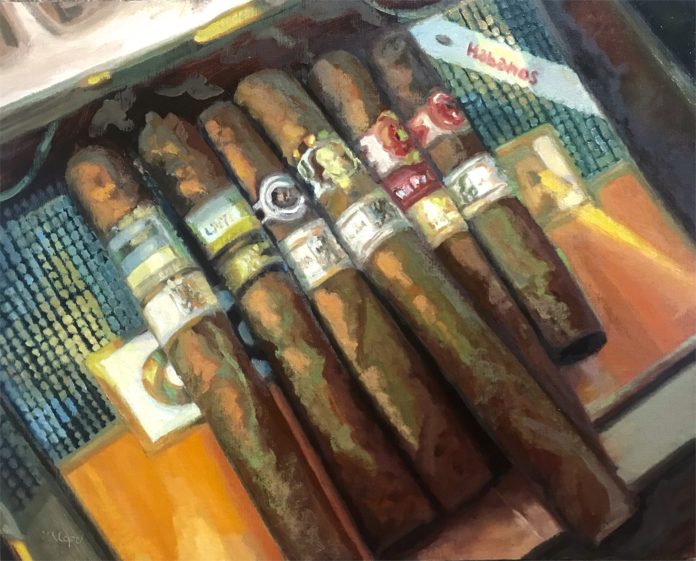
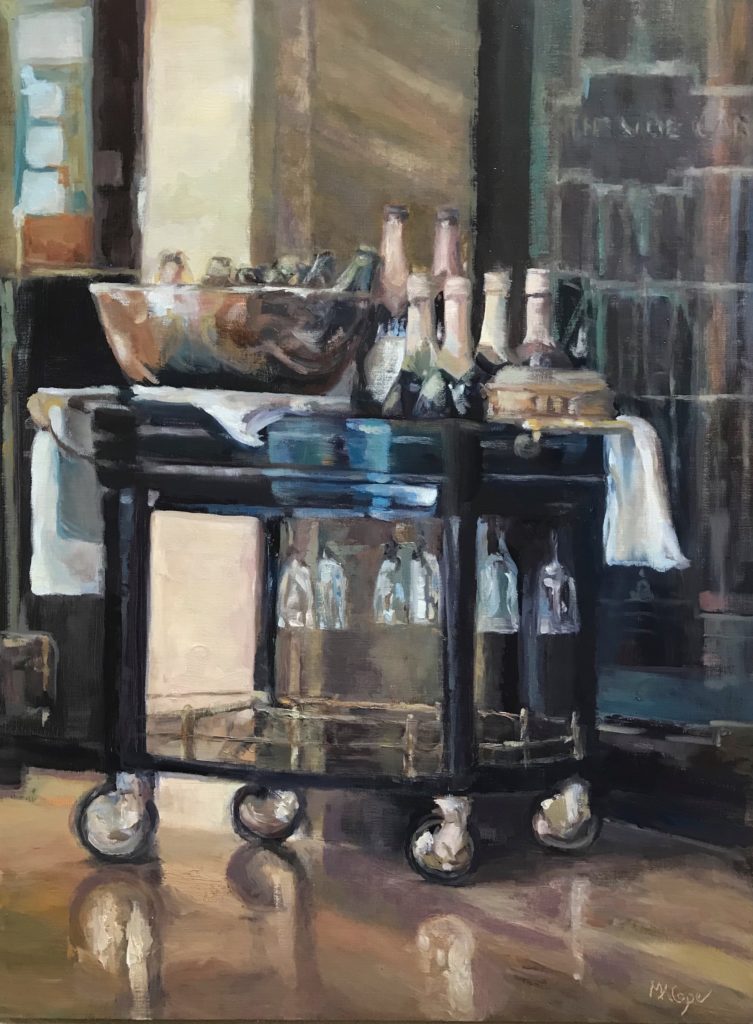
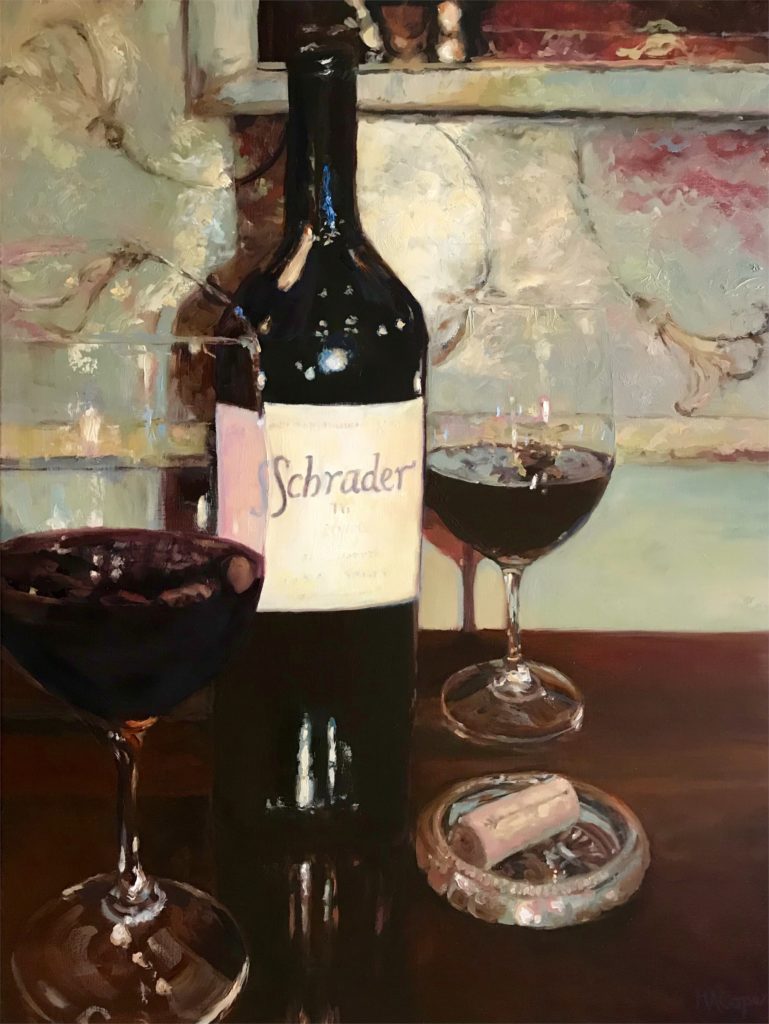
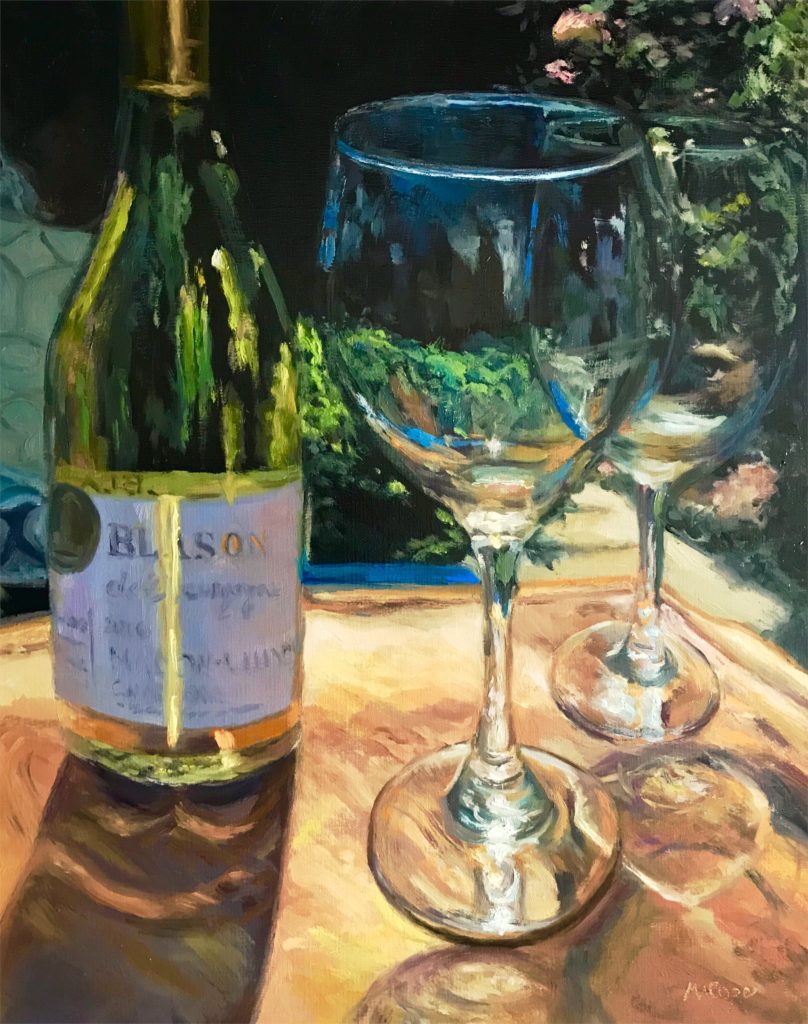
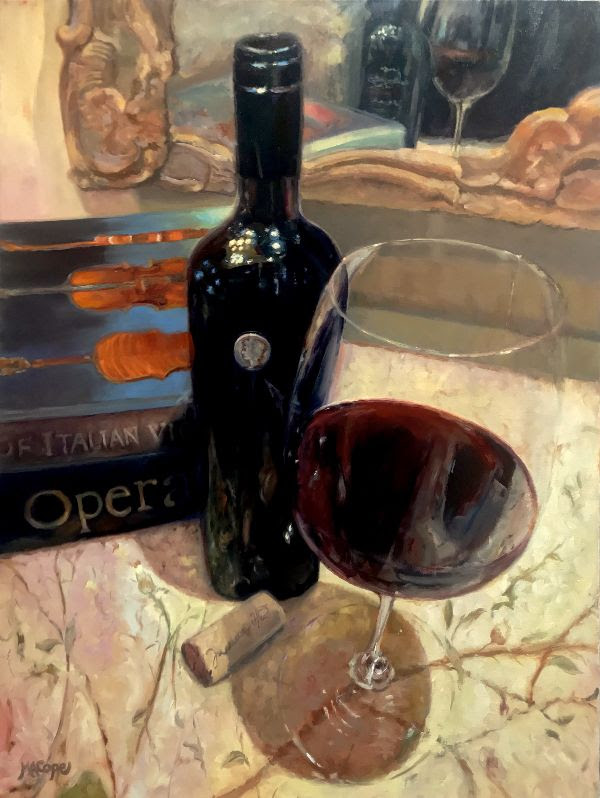
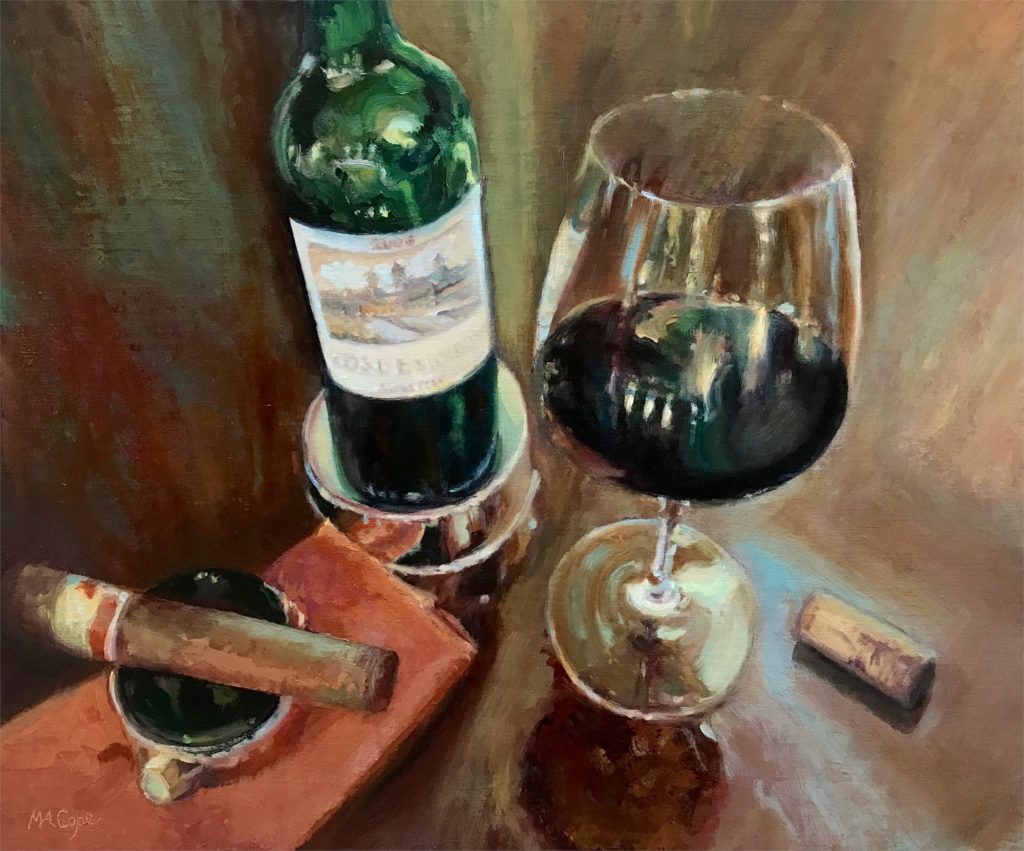
Mary Ann Cope’s latest paintings showcase one of her favorite subjects in exquisite, loosely-rendered detail: still life arrangements featuring fine wine, long-stemmed glassware, and other visually rich objects enjoyed by wine enthusiasts.
Mary Ann Cope, “The Side Car,” oil, 24 x 18 in.
This group of paintings conjuring memories of special occasions and delightful tastes, partaken of in cozy restaurants and far-away locales will be on spotlight March 6–10 at Hagan Fine Art Gallery, paired perfectly in time with Charleston’s famous Wine + Food Festival.
Mary Ann Cope, “Schrader T6,” oil, 40 x 30 in.
From the gallery:
Cope’s focus on vignettes of wine, cigars, and other fine tastes is a great example of “paint what you know.” Cope is a founding member of AuburnJames, an artisanal winery producing award-winning wines located on the famed Silverado Trail in the heart of Napa Valley. Over the past decade, she has rolled up her sleeves to work the sorting table during harvest and on occasion has added her nose and palate to the mix when the winemaking team makes blending decisions. She is a self-proclaimed oenophile, a student of wine and winemaking, and has traveled to many of the great wine regions of the world. For Cope, knowing the winemaker’s story and the nuances of the vineyard provides an intimacy with the wine and heightens the appreciation of its expression, allowing her to convey an emotional connection in her work.
Mary Ann Cope, “Savor the Moment,” oil, 20 x 16 in.
After a multi-decade career as an entrepreneur and healthcare CEO with a passion for collecting great art, Cope left the corporate world to hone her artistic skill set and studied under several well-known contemporary artists. She applies a consummate drive for craftsmanship and diligent study in her quest for artistic excellence. Her explorations in drawing, composition, rich color palettes, and oil painting techniques have proved highly popular among the patrons at Hagan Fine Art Gallery in Charleston, SC, and with private art collectors from coast to coast. Her subjects radiate and seduce the viewer with warm tones of reflected light and rich colors that call to mind delightful memories.
Mary Ann Cope, “Mercury Head,” oil, 48 x 36 in.
In her choice of wine subjects, her compositions express a universal love of fine craftsmanship and extraordinary tastes.
Mary Ann Cope, “Wine Pairing,” 20 x 24 in.
Says Hagan Fine Art Gallery owner Karen Hewitt, “Mary builds her creative vision for each painting upon a foundation of technical expertise in both wine-making and fine art techniques. Her knowledge as a vintner informs her paintings in convincing ways. I think her professional immersion in both worlds—fine art and fine wine-making—lends a touch of distinction to her artworks. Her work is highly collected; she is on the move up and is an artist to watch and collect now.”
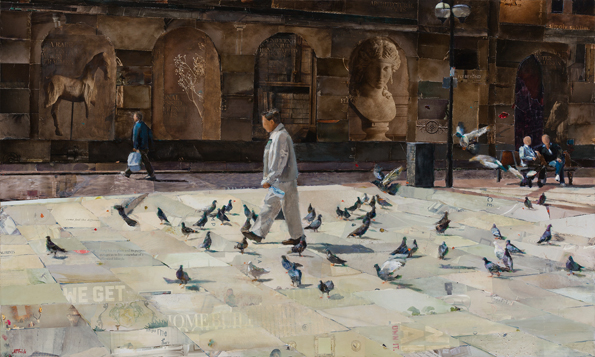
Aileen Frick begins her collage process by searching through magazines and tearing pages to create her composition. The text and imagery mysteriously reveal their true meaning at some point during the creative process. Once the collage is complete, Aileen then enhances each piece by layering with oil paint, playing with the transparencies of the oils, a process created by the artist herself. Although her compositions are straight forward, much deeper meaning can be found from her use of collage. The resulting combination creates a unique style that art aficionados have yet to experience. You can find her and her work, along with 100 other artists, at the Celebration of Fine Art in Scottsdale, Arizona, January 12 – March 24, 2019. Contact 480.443.7695 or [email protected].
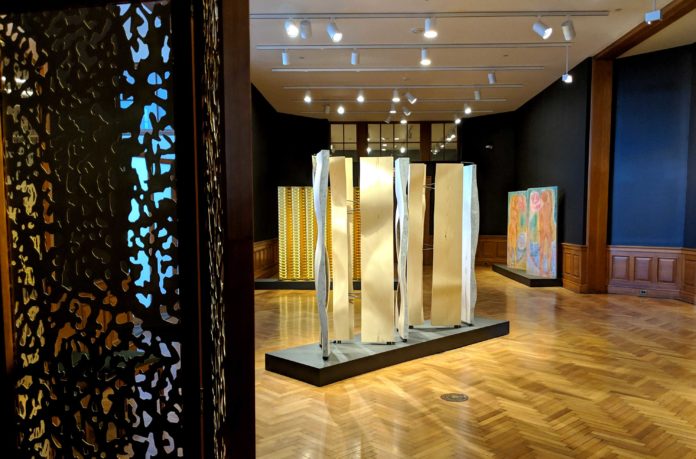
On February 9, 2019, the Farnsworth Art Museum in Rockland, Maine, will open a juried exhibition of new works by Maine artists that explores the screen form. “The Screen Show” will be on display in the museum’s Rothschild Gallery from February 9 through September 22, 2019. The exhibition will include six new works selected by the jury for this show.
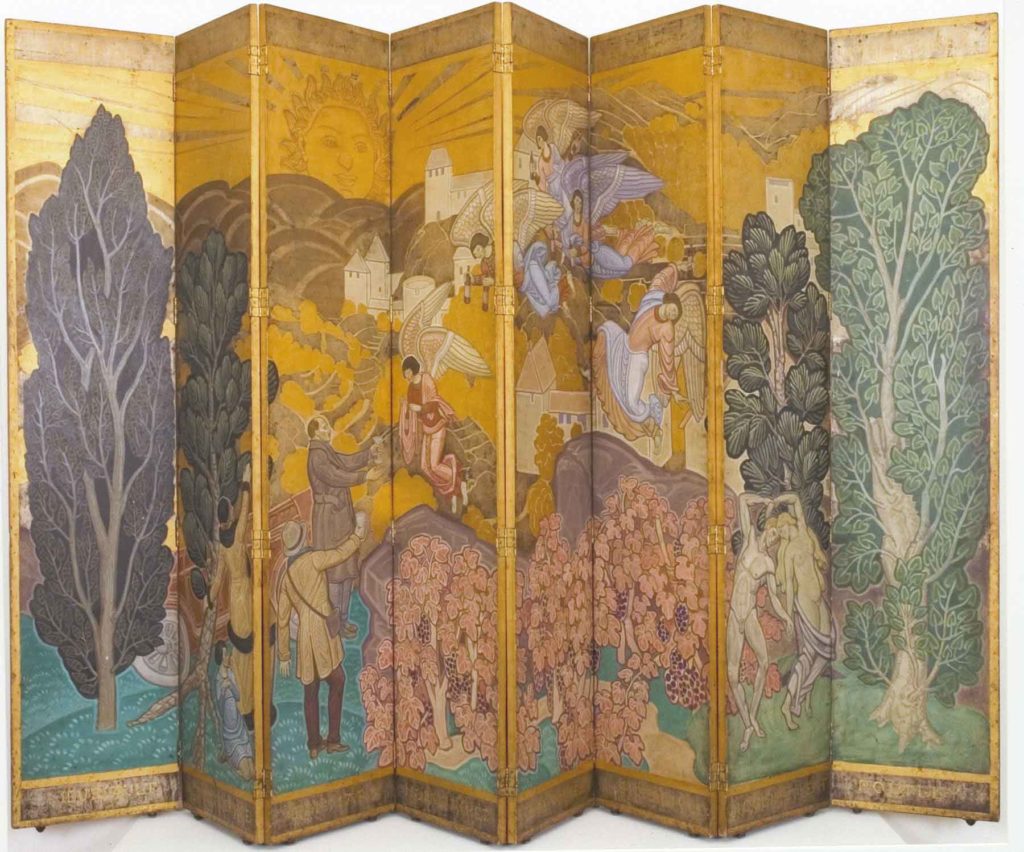
Barry Faulkner, “Manship Toasting the Angels,” 1923, oil on board, mounted and hinged as a screen, 6 x 10 ft. Collection of the Farnsworth Art Museum, museum purchase with support from the Friends of the Farnsworth Collection, 2008; 2009.1
Two folding screens from the Farnsworth collection will also be on view. These have served as a departure point for this exhibition of contemporary interpretations of the screen form. These two early-twentieth-century folding screens include an eight-panel oil on board painting, “Manship Toasting the Angels” done in 1923, and a three-panel oil on canvas painting by Carrol Thayer Berry with a fanciful view of Camden harbor done in 1930.
Folding screens were especially popular in the late nineteenth and early twentieth centuries, serving typically as room dividers and often used by their owners to dress or undress behind, but they have also been a more experimental form of artistic expression. Prominent artists, architects, and designers in both Europe and America, including James McNeill Whistler, Thomas Dewing, Louis Comfort Tiffany, Thomas Hart Benton, Donald Deskey, Ansel Adams, Jim Dine, Helen Frankenthaler, Robert Rauschenberg, and David Hockney, are among many who have explored the screen form.
Artists and artisans working in Maine submitted proposals for folding screens, which were then reviewed by a jury consisting of Susan Danly, former curator of prints, photographs, and contemporary art at the Portland Museum of Art; Susan Groce, professor of art at the University of Maine, Orono; Peter Korn, founder and executive director of the Center for Furniture Craftsmanship in Rockport, Maine; Warren Seelig, distinguished visiting professor in the Fibers/Mixed Media program at the University of the Arts, Philadelphia; Michael K. Komanecky, Farnsworth chief curator; and Jane Bianco, Farnsworth associate curator.
The jury selected works for this show from the following artists:
industrial designer Allison Davis of Rockland, Maine; textile designer Gigi Aea of Camden, Maine, in collaboration with cabinet maker Owain Harris; artist and frame maker Johanna Moore of Farmingdale, Maine; graphic designer Laurie Downey of West Baldwin, Maine, in collaboration with woodworker Ryan Rhoades; assemblage artist Susan Levett of Tenants Harbor, Maine; painter Alla Broeksmit of Brooklin, Maine.
In conjunction with this exhibition Farnsworth chief curator Michael K. Komanecky will give a talk entitled “The Screen Show: Six Folding Screens by Six Maine Artists,” on March 23. The primary media sponsor for “The Screen Show” is Maine Home + Design.
“The Screen Show” is on view at the Farnsworth Art Museum through September 22, 2019. For more information please visit www.farnsworthmuseum.org.
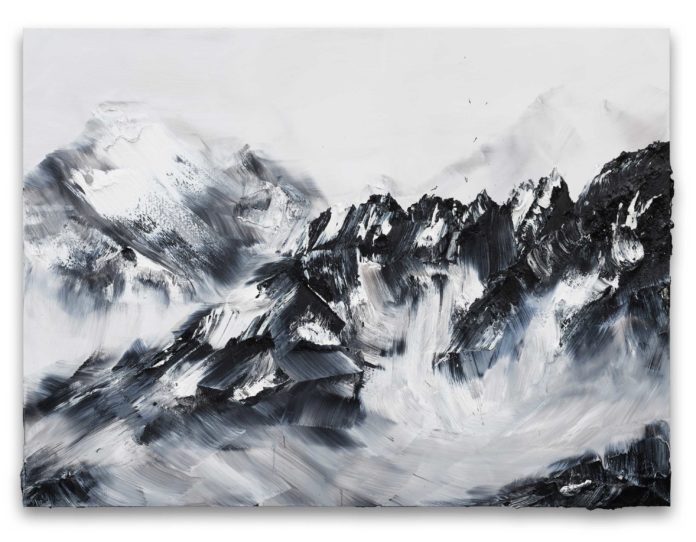
“To See Is Not To Speak #6,” oil on canvas, 170 x 170 x 230 cm
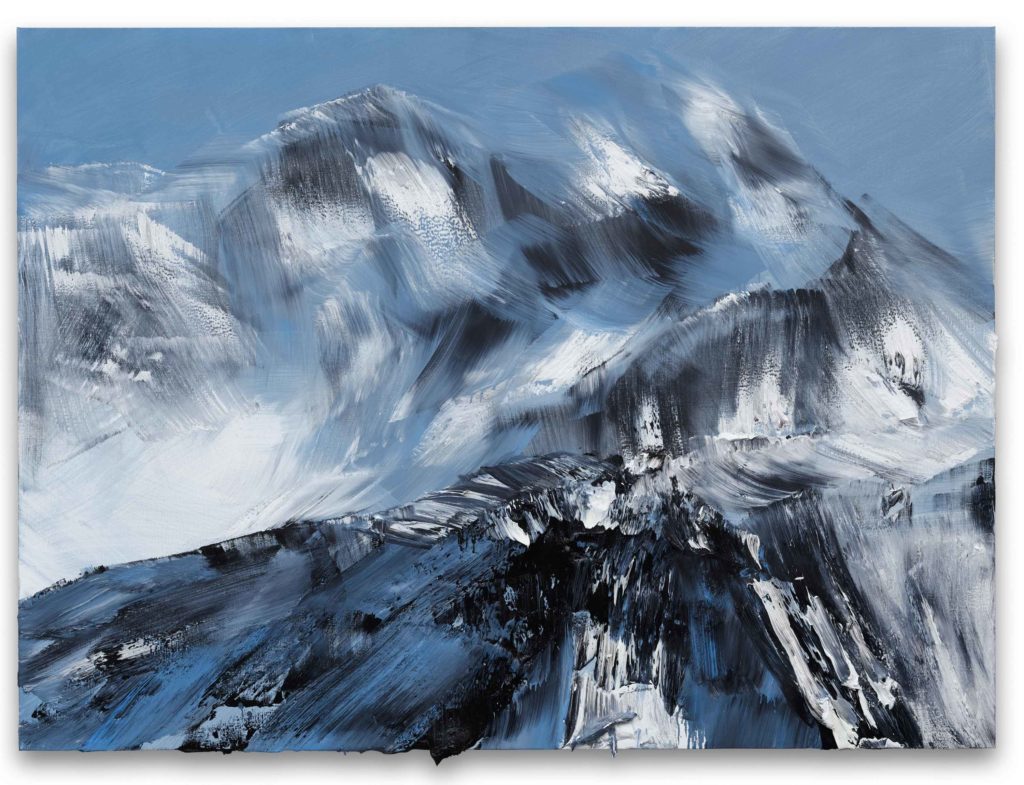
Celebrated Swiss painter Conrad Jon Godly brings the majestic Alps to London from January 25 with his first UK solo show, “To See Is Not to Speak” at Mayfair’s JD Malat Gallery.
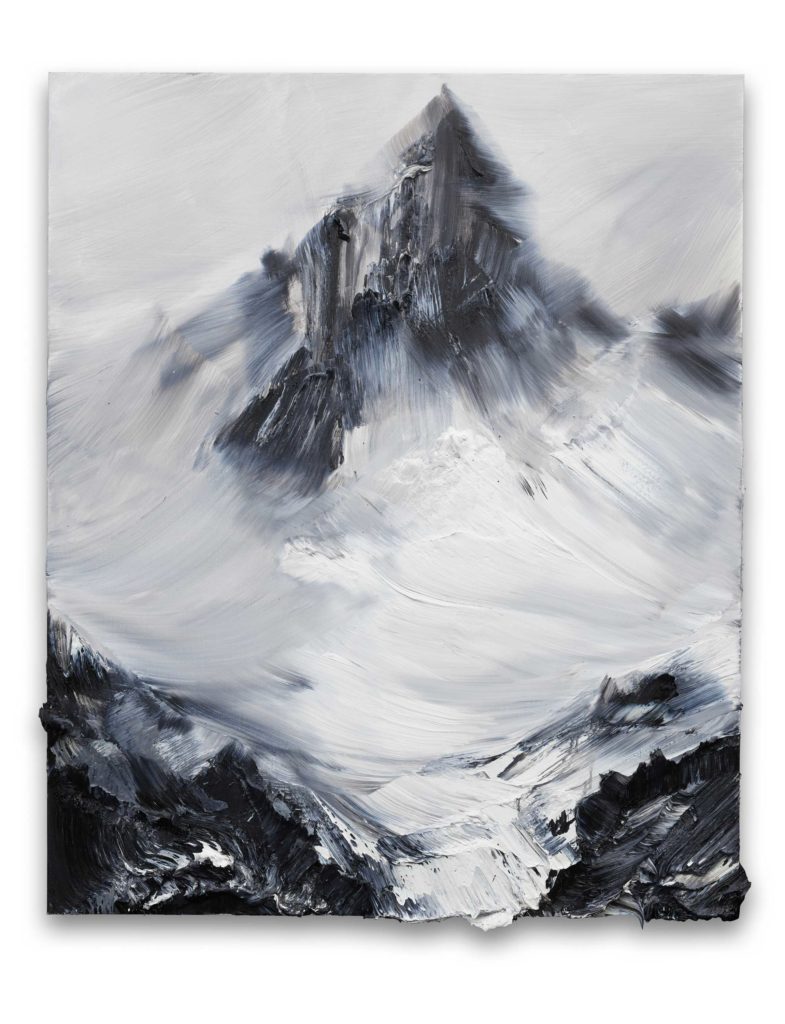
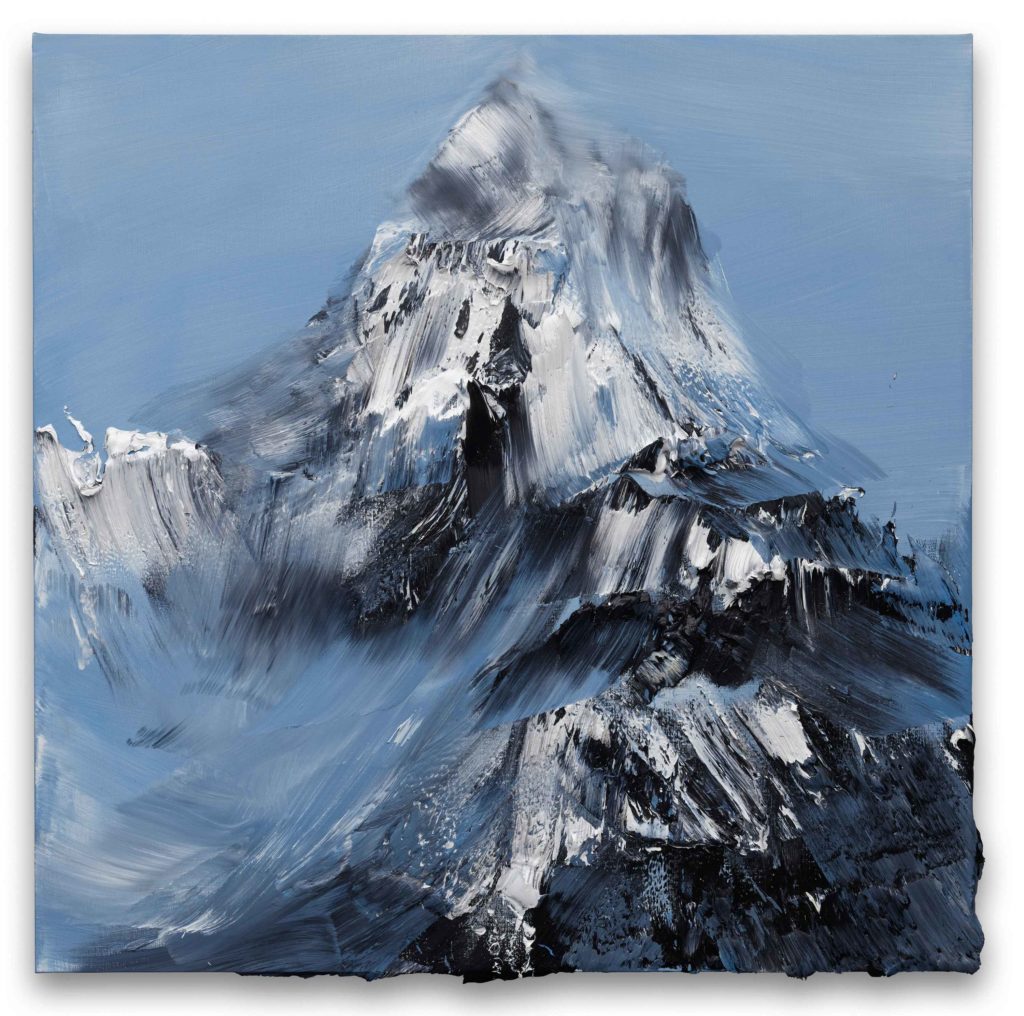
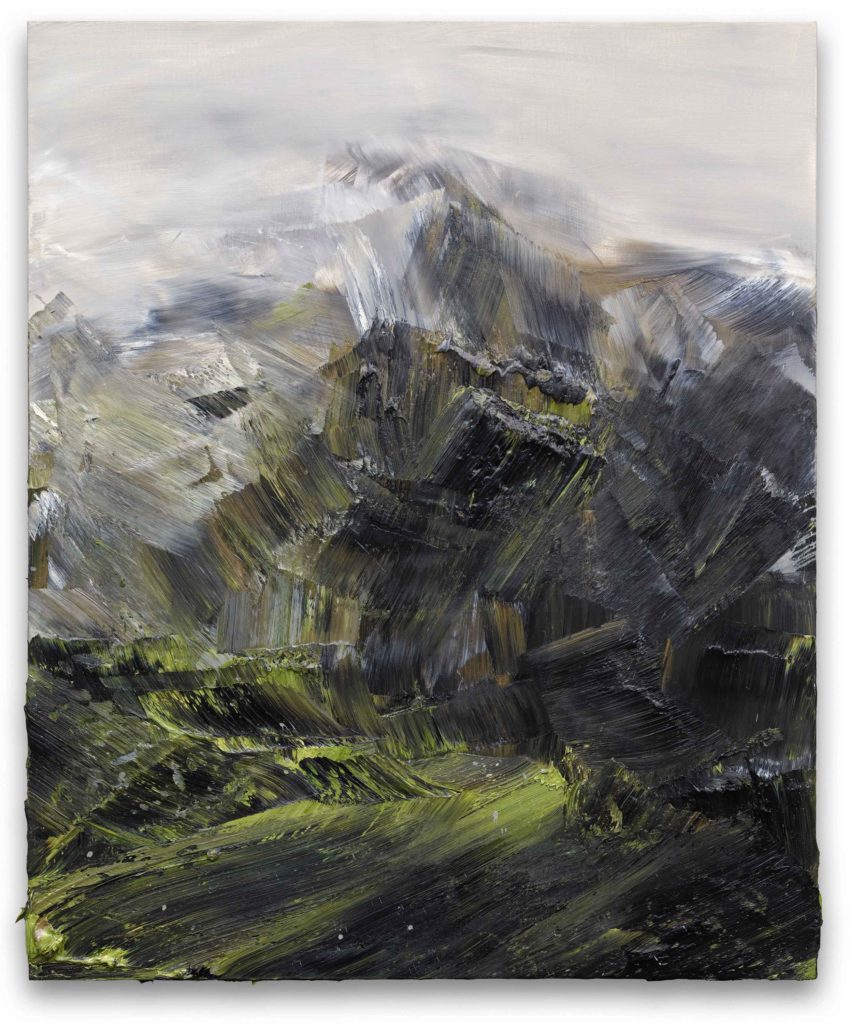
The exhibition’s 15 extraordinary pieces expertly straddle both abstract and hyperreal, with realistic mountains that drip from the canvas.
Up close, viewers can enjoy Conrad’s thick and heavy impasto marks, with frosty oils mixed with turpentine and his trademark wide, sculptural brushstrokes. But step back, and you might be looking at a photograph, staring down a misty precipice or gazing up at snow-capped peaks.
The mountainous vistas surrounding Conrad as he grew up have become his muse, and he is passionate about conveying the essence of them, explaining, “My surroundings have a huge influence on me, artistically and personally. I don’t see myself as a landscape painter; I am interested in capturing the mood and feeling of light, or the reflection of the moon on snow.”
“To See Is Not To Speak #4,” oil on canvas, 170 x 140 cm
After nearly two decades as a successful fashion photographer, Conrad walked away from the jet set and the city in 2005, returning to his roots as a painter and the mountains of Chur, for more meaningful, meditative work, studying nature and using his understanding, combined with memory and imagination to bring it to life on his canvases.
“Only after closely watching and listening, can you understand your subject. And understanding is crucial to paint the subject well,” he added.
Conrad’s experience as a photographer is evident in his jarringly lifelike renderings of light interaction, spatial projection, and texture. But unlike the superficial and transient beauty of the fashion world he photographed, the powerful mountains represent imperishable and natural magnificence and spirituality.
“To See Is Not To Speak #17,” oil on canvas, 150 x 150 cm
He lives between his native Switzerland and Japan, where he learned the art of mindful appreciation, which had a huge impact on his art and inspired the title of the exhibition “To See Is not to Speak,” taken from Japanese author Kobayashi Hideo’s quote: “To see is not to speak, because words could distract your eyes.”
Conrad has a huge following in Japan, thanks in part to his fast and expressive brushstrokes, which are similar to calligraphy.
Music is an integral part of Conrad’s meditative painting process, setting the mood and tone. Each piece is completed within a day, with quick, energetic brushstrokes, and this exhibition of 15 pieces — ranging from 150 cm by 130 cm to 200 cm by 250 cm — took two months to complete.
“To See Is Not To Speak #32,” oil on canvas, 170 x 140 cm
The thick paint lends a powerful, 3D sculptural quality to the pieces, interacting with the light in the room, and allowing gravity to pull the oil into icicle-like drips at the base of the canvas.
JD Malat Gallery founder, curator, and world-renowned art dealer, Jean-David Malat, said, “The power that emerges from the textured canvases of Conrad Jon Godly’s works is unmissable.
“He takes us into his own world through his almost 3D paintings that open our eyes to much more than a mountain. You have to see his pieces in person to fully experience his emotional universe and appreciate the sheer quality of his works.”
“To See Is Not To Speak #18,” oil on canvas, 170 x 230 cm
Godly was born in Davos, Switzerland, and studied as a painter at the Basel School of Art from 1981 until 1986. He has exhibited all over the world, from Asia to Europe and has important collections at the Swiss National Bank, UBS Bank, Credit Suisse, Julius Bar Bank, and DAVOS Collection.
Malat will be taking Conrad to Mexico’s Zonamaco Art Fair in February. “To See Is Not to Speak” is on view through March 2, 2019, at Mayfair’s JD Malat Gallery.
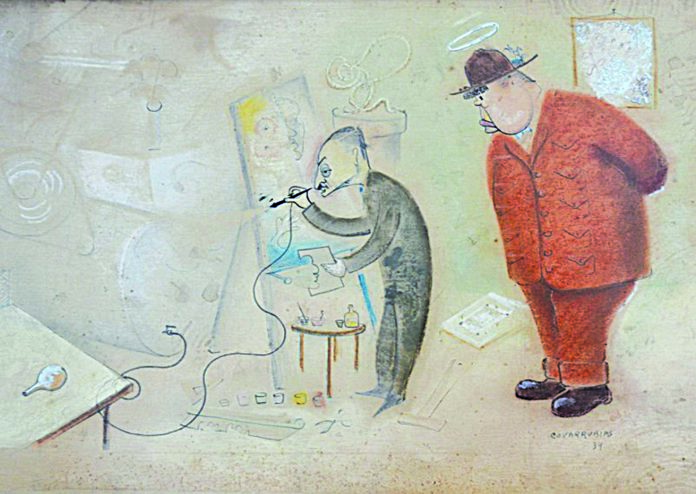
Fine art drawings on view now: Throckmorton Fine Art (New York) presents “Miguel Covarrubias: A Retrospective.” Covarrubias (1904–1957) was a Mexican illustrator, writer, and anthropologist.
In Miguel Covarrubias’s hands caricature became a cosmopolitan artform and appeared worldwide in prestigious publications ranging from Vanity Fair, Vogue, Harper’s Bazaar, and The New Yorker to Fortune magazine. During the 1920s and 1930s more than 300 Covarrubias caricatures of influential artists and politicians were featured on the covers of influential publications including The New Yorker and Vanity Fair.
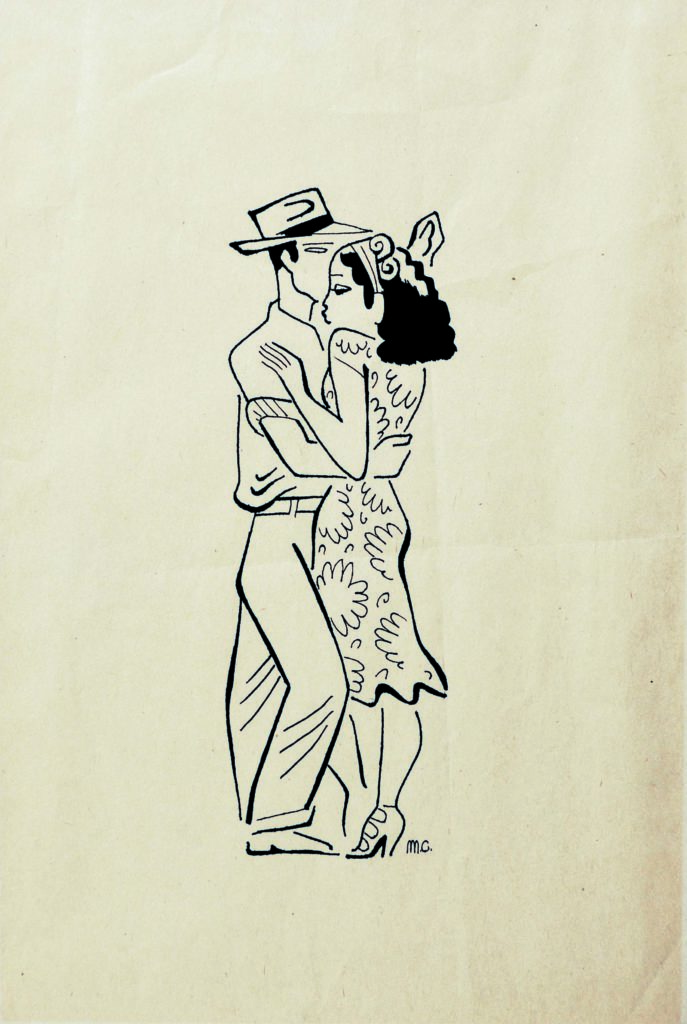
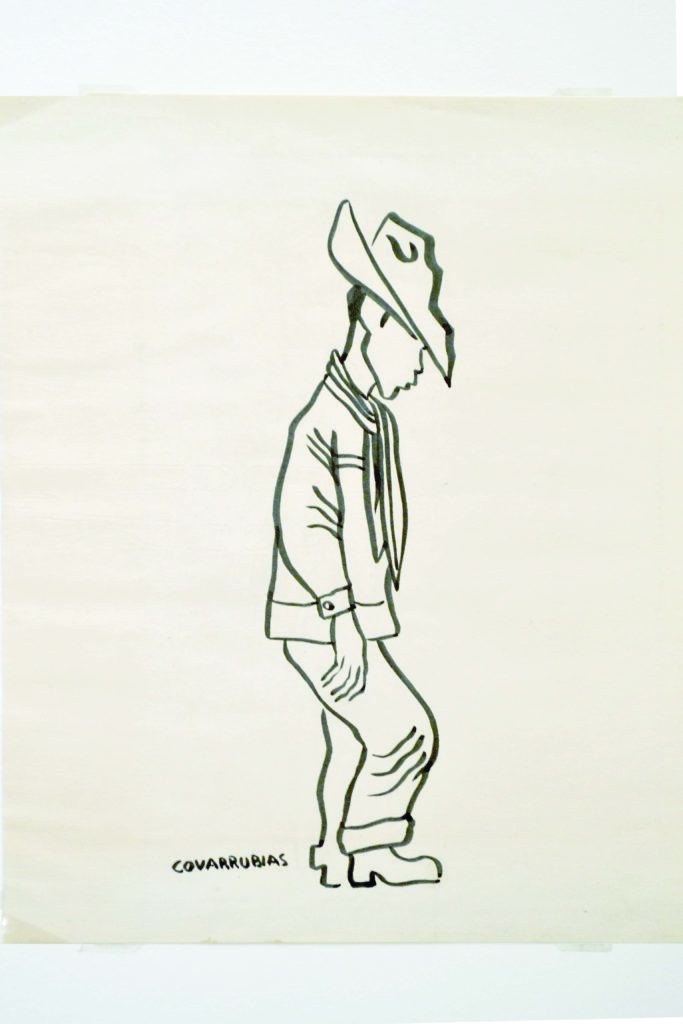
Miguel Covarrubias, “Danzoneros”
But caricature was just one expression of Covarrubias’s genius. He achieved acclaim in popular arts, fine art, photography, ethnography, archeology, anthropology, and dance. His contributions to the cultural oeuvre range from a fascination with the Harlem renaissance and the history of Latino artists living in the United States, to an immersion in the cultural life of Bali.
While his career started in Mexico, where as a teenager his work first appeared in El Heraldo, Ed Mundo and the Universal Ilustrado, he later chose to spend time in New York, Paris, Germany, Japan, Indochina, and Bali. He was witness to Mexico’s effervescent cultural rebirth after the Revolution and was a friend of leading arts talents, among them Diego Rivera and the poet Jose Juan Tablada.
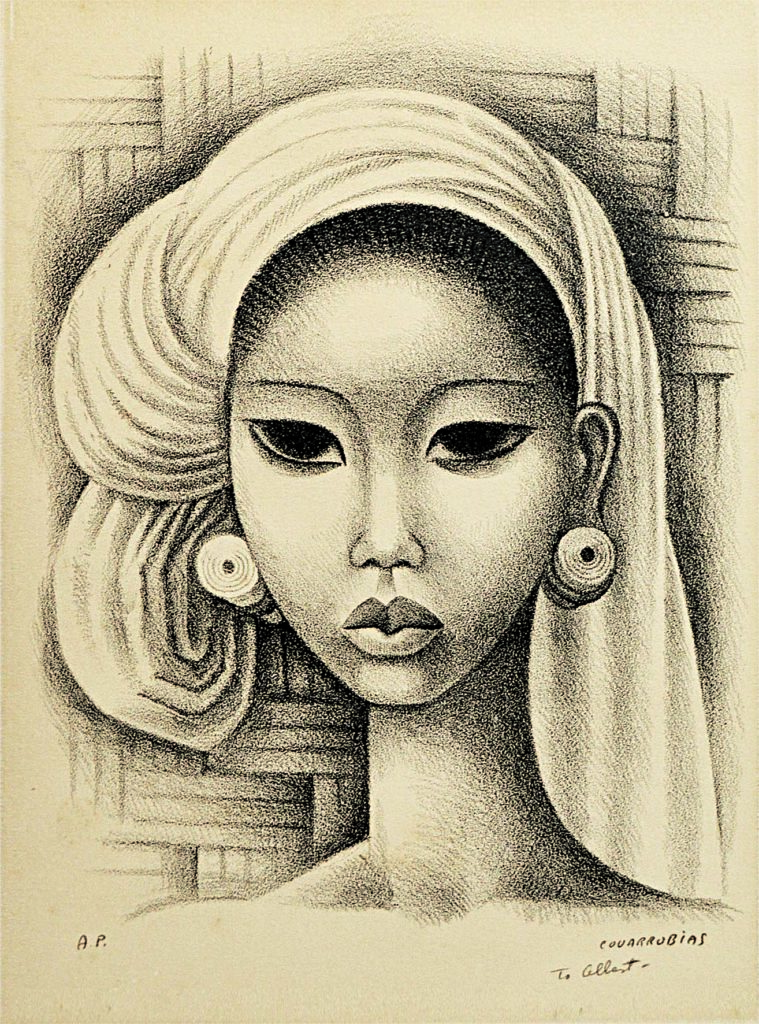
Miguel Covarrubias, “Balinesa”
Later, he and his wife, the dancer Rosa Rolanda, a close friend of Frida Kahlo, would entertain international figures including Georgia O’Keeffe, Orson Welles, Merce Cunningham, Luis Bunuel, John Huston, Amelia Earhart, Nelson Rockefeller, and Henri Cartier-Bresson at their Mexico City residence. Rosa and Miguel also traveled with Tina Modotti and Edward Weston, who taught Rosa photography.
Covarrubias was born in Mexico City to an upper middle-class family. His father was a civil engineer who held various prominent positions in the government, and his mother was from a family that included Spanish aristocracy. When his caricatures were first published in 1920, they drew attention from an artistic circle that led to a meeting with New York Times critic Carl Van Vechten who introduced Covarrubias to Vanity Fair, which published his work in 1924.
His first book, The Prince of Wales and Other Famous Americans was published in 1925. Covarrubias also illustrated Langston Hughes’s book The Weary Blues, and An Anthology of the Blues by W. C. Handy in the 1920s. Later his illustrations appeared in books by John Huston and Zora Neale Hurston and in Herman Melville’s Typee, as well as Harriet Beecher Stowe’s Uncle Tom’s Cabin.
Mural by Miguel Covarrubias
Adriana Williams, author of the 1994 Covarrubias biography (University of Texas Press) that helped bring new recognition to the artist, has said, “In his case drawing is an essential weapon of the intellect that allows for the assimilation of the complexities of current events, and also the paradoxes of history.
Thus, we often find in some of Miguel Covarrubias drawings not only very thorough field research, but also humor and irony.” Many of the artworks in this exhibition come from the Adriana and Tom Williams Collection of Miguel Covarrubias. Covarrubias works have been featured in numerous museums and galleries, including the National Portrait Gallery (1985) in Washington and the Centro Cultural Arte Contemporaneo (1987) in Mexico City.
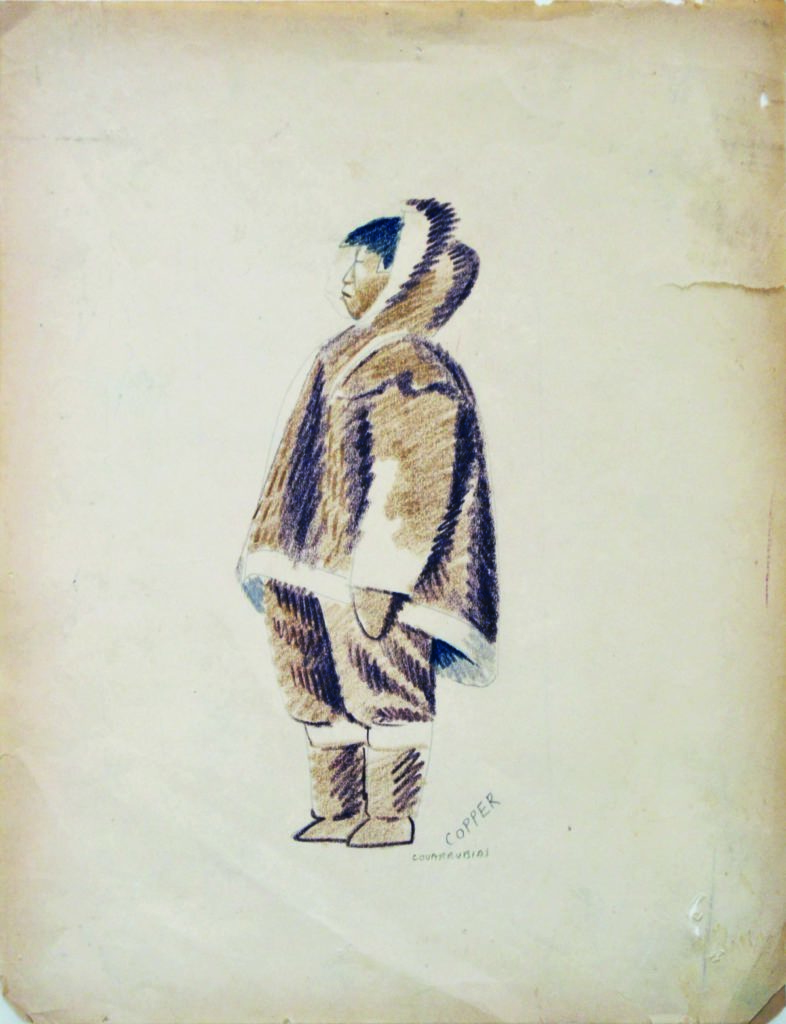
Miguel Covarrubias, “Copper”
Pablo Goebel mounted El Chamaco Covarrubias last year in his Mexico City gallery. He has said that the artist possessed “an assurance, a sensuous even melancholy desire to depict with character what he is viewing, seeing, recording. The direct synthesis of his characters and their environment is exceptional and delightful.
Miguel Covarrubias drew with an immediacy that for most of us is reserved for daydreaming. His linear control is absolute, his works make up a theatre of characters, some familiar and some not so. He did for anthropology and archeology what they could not do for themselves in that he was able to draw a registrar of that which was being unearthed. He had a refined eye for space, almost as discerning as an architect’s.”
Miguel Covarrubias, “Bailarín Mexicano”
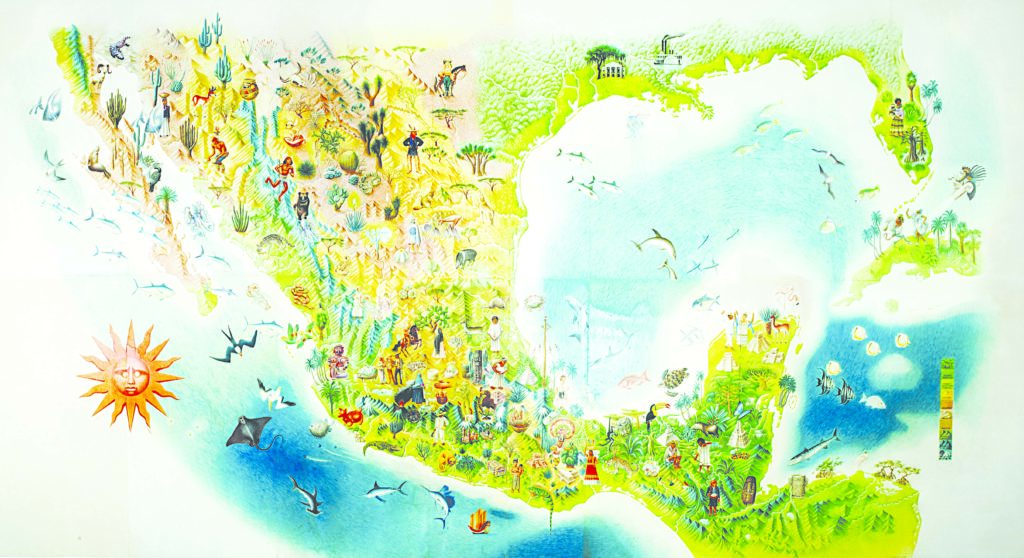
In the 1930s, Covarrubias became interested in indigenous cultures, in Mexico in particular, and he began writing a book for Knopf, Mexico South: Isthmus of Tehuantepec as well as creating pictorial maps for the 1939 Golden Gate International Exposition. He also undertook six murals, Pageant of the Pacific, mapping the countries of the Pacific Rim. Covarrubias focused on the peoples, fauna and flora, art forms, economy, native dwellings, and native means of transportation. These were later exhibited at the American Museum of Natural History in New York and until 2001 five of the murals were on view at San Francisco’s Ferry Building.
In the 1940s, he branched out to include museum work and dance production, and he received the first museology teaching appointment in Mexico and taught anthropology and art history courses at the Museo Nacional de Antropologia. He also mounted 34 ballets for the Instituto Nacional de Bellas Artes and was director of the dance academy there.
Rosa and Miguel Covarrubias visited Bali on their honeymoon in 1930 using the money from a National Art Directors Medal he had won. They returned there in 1933 when Miguel was a Guggenheim Fellow. His book Island of Bali included photographs taken by Rosa and contributed to the 1930s Bali craze in New York.
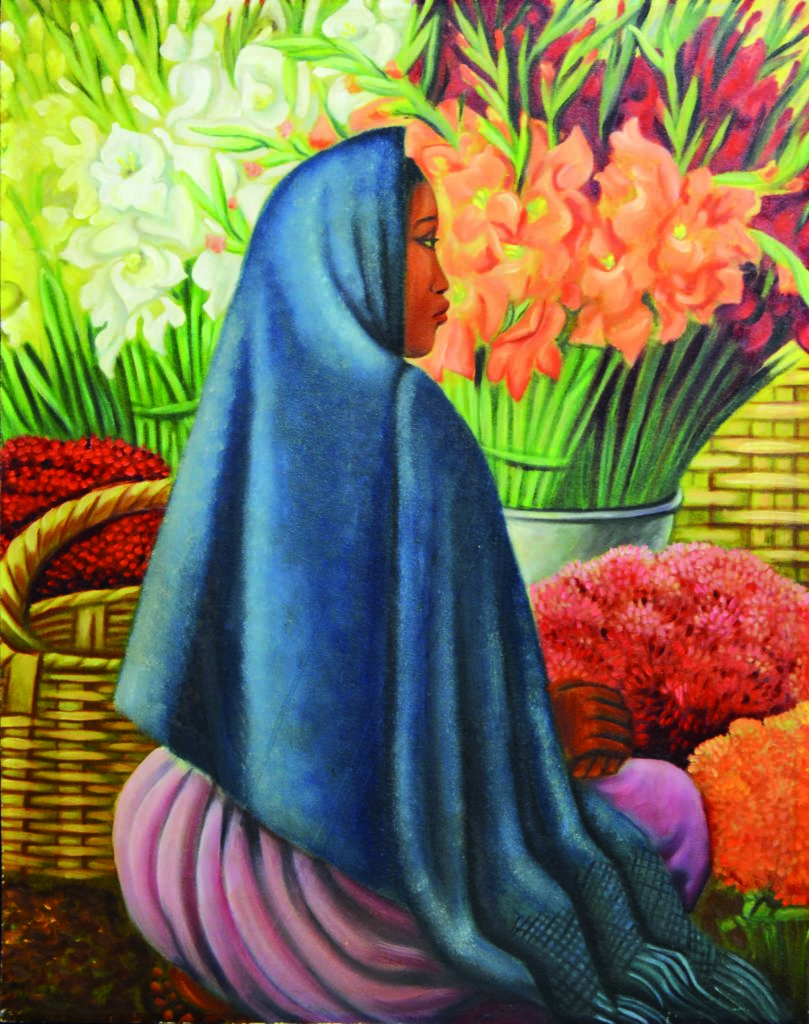
Miguel Covarrubias, “Port. Vendedora de Flores”
This Throckmorton Fine Art exhibition includes a wide range of Covarrubias’s work that not only shows his power of synthesis — his ability to evoke the feeling, character, and the movement of such a broad mix of subjects — but also reflects the far-flung interests and intellectual curiosity Covarrubias brought to his work.
Fine Art Connoisseur’s Editor-in-Chief Peter Trippi speaks often to art collectors about the importance of organizing, protecting, and insuring their precious works of art. A telling case-in-point unfolded in Wyoming. (This article was originally published in August, 2016, but is still relevant.)
In the world of fine art collecting, the names Harold “Hal” Tate and Naoma Tate are among the most well-known and respected. Since Hal’s death in 2003, Naoma Tate has continued to build an impressive and important collection with particular emphasis on American Western art.
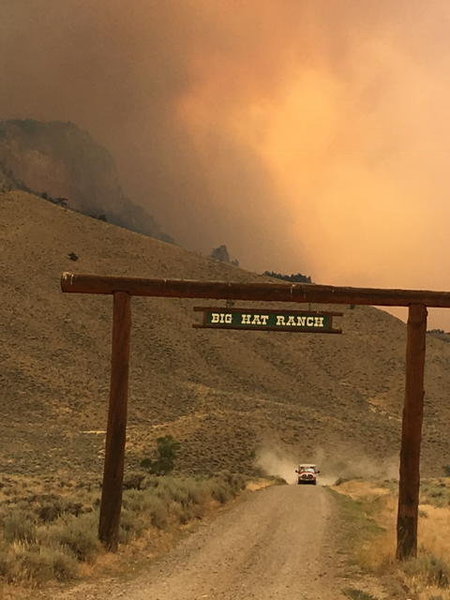
A rescue story unfolded at the Naoma Tate’s Wyoming ranch — “The Big Hat” — that serves as a potent reminder to collectors: keep track of and insure your art!
Years ago, Naoma was instructed by her insurance company to perform a number of seemingly excessive and expensive precautions in and around her house. Located about 16 miles from Cody, Wyoming, the area – like much of the west, is prone to potential wildfires that are usually quickly contained. Despite feeling that a major wildfire would never get close to her ranch, Naoma agreed to the expensive and time consuming changes requested by her insurance company. Workmen cleared a number of trees around the home; created large expanses of green space, and placed a number of fire hydrants on the property, among other important precautions.
In 2014, Tate then hired Dr. Donna Poulton — formerly a curator at the Utah Museum of Fine Arts — to inventory and appraise the collection, leaving a detailed record of the artworks’ location and value. These relatively simple actions by Mrs. Tate proved invaluable.
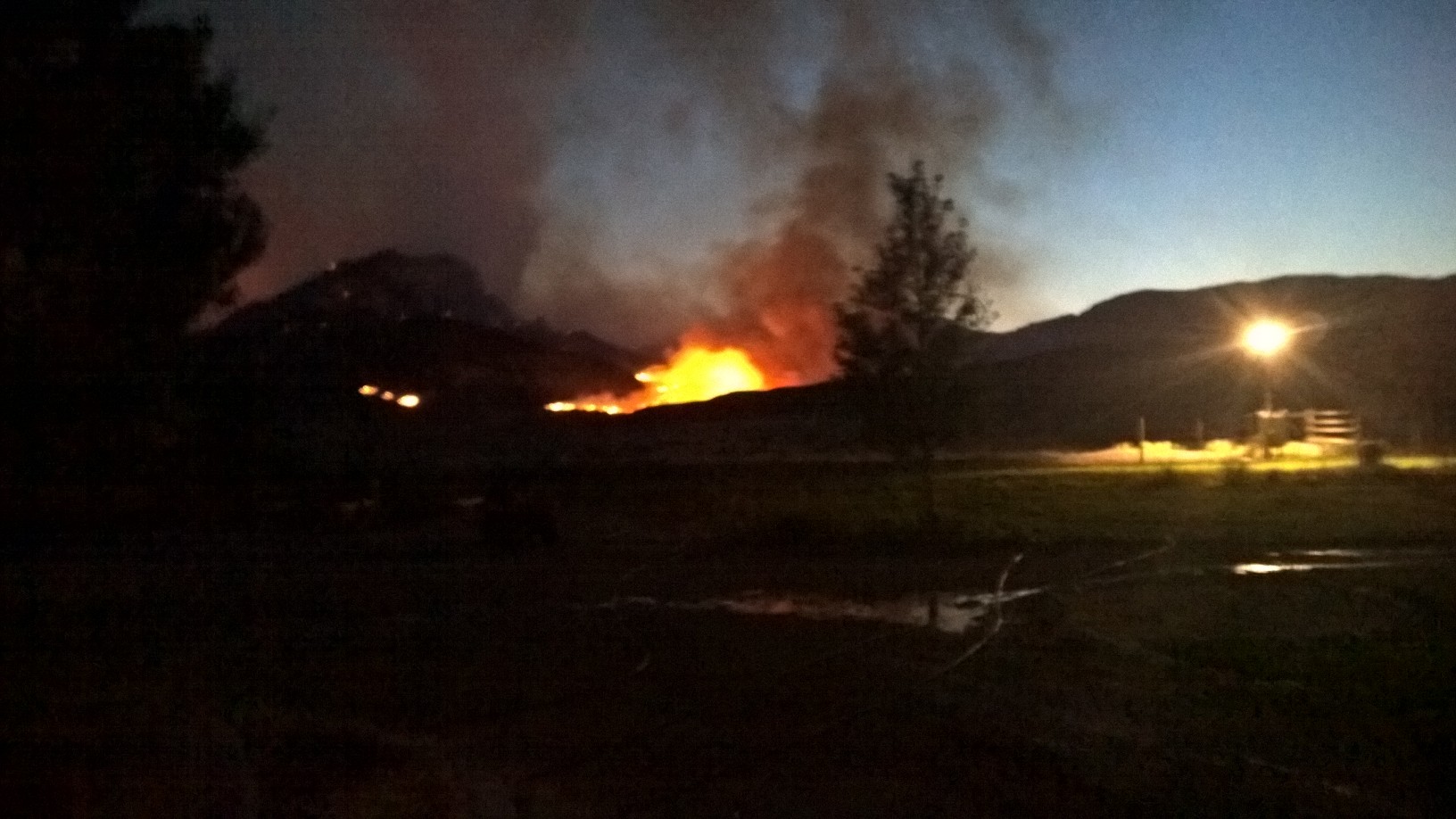
Flames are seen ranging on Tate’s Wyoming ranch (c) Image Gina Schneider 2016
This past week, Wyoming has been battling some of the worst wildfires in recent memory. The exact cause of the fires is still being investigated by local and federal authorities, but preliminary reports suggest accidental or natural causes. As the fire grew consuming large expanses of land, it began to encroach onto the Tate’s ranch — burning approximately 600 acres of her property. As the flames crept closer to the house – and subsequently her important collection of art – it became apparent that a rescue effort was needed.
When Naoma received mandatory orders to evacuate, the community came to her aid. All of the artworks were removed from Naoma’s home and taken to a safer location in a whirlwind process that took just three hours to complete. Untold firetrucks converged onto the property to hose the land surrounding the house and outbuildings, while helicopters flew overhead keeping the inferno at bay. The insurance company also had a representative and fire truck on location. The Buffalo Bill Center of the West in Cody rushed a crew of 19 volunteer staff to the ranch to help with the forced evacuation, including the museum’s CEO and Director, Bruce Eldredge and their Whitney Curator, Karen McWhorter. With the aid of a moving company, all of the artworks were taken to the Buffalo Bill Center, where they were properly stored until the fire was contained.
A Lesson in Art Collecting
Had Mrs. Tate not taken the precautions suggested by the insurance company, it would have been very difficult to save her home. Further, having detailed information about the location of the artworks proved vital in organizing an efficient effort to move them to a safe location.
From those of us at Fine Art Connoisseur, we wish to send all of the heroic firefighters, volunteers, the Cody Volunteer Fire Department, and Buffalo Bill staff members our sincere thanks and appreciation for helping to preserve Mrs. Tate’s extraordinary collection. Along with Mrs. Tate, we extend our most sincere sympathy to those families and residents whose homes and properties were destroyed.
This article was featured in Fine Art Today, a weekly e-newsletter from Fine Art Connoisseur magazine. To start receiving Fine Art Today for free, click here.
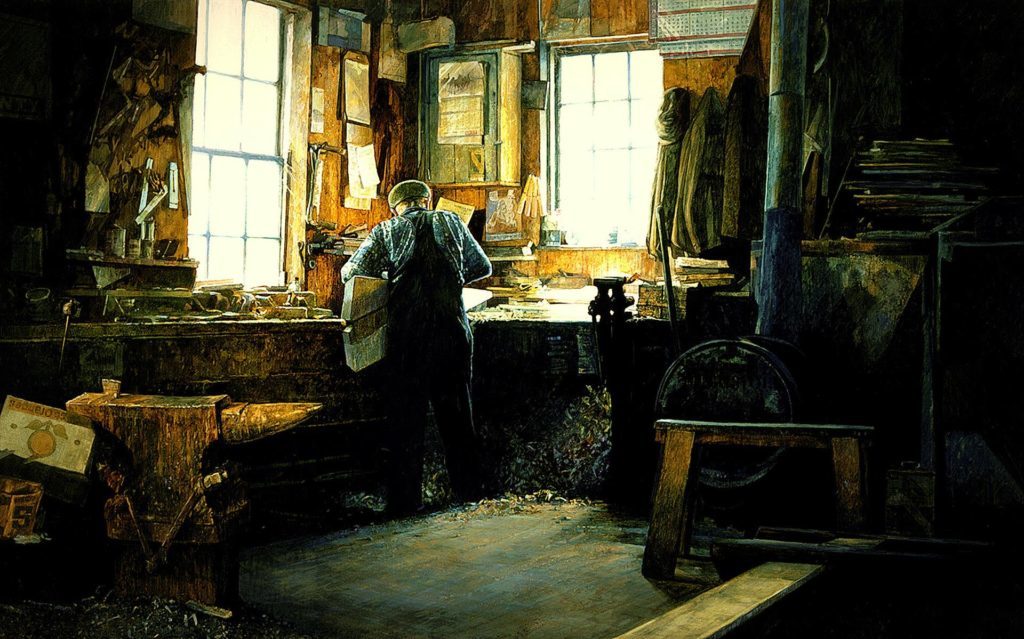
"Lunenburg Dorymaker" by Alan Wylie, oil, 25 x 40 in.
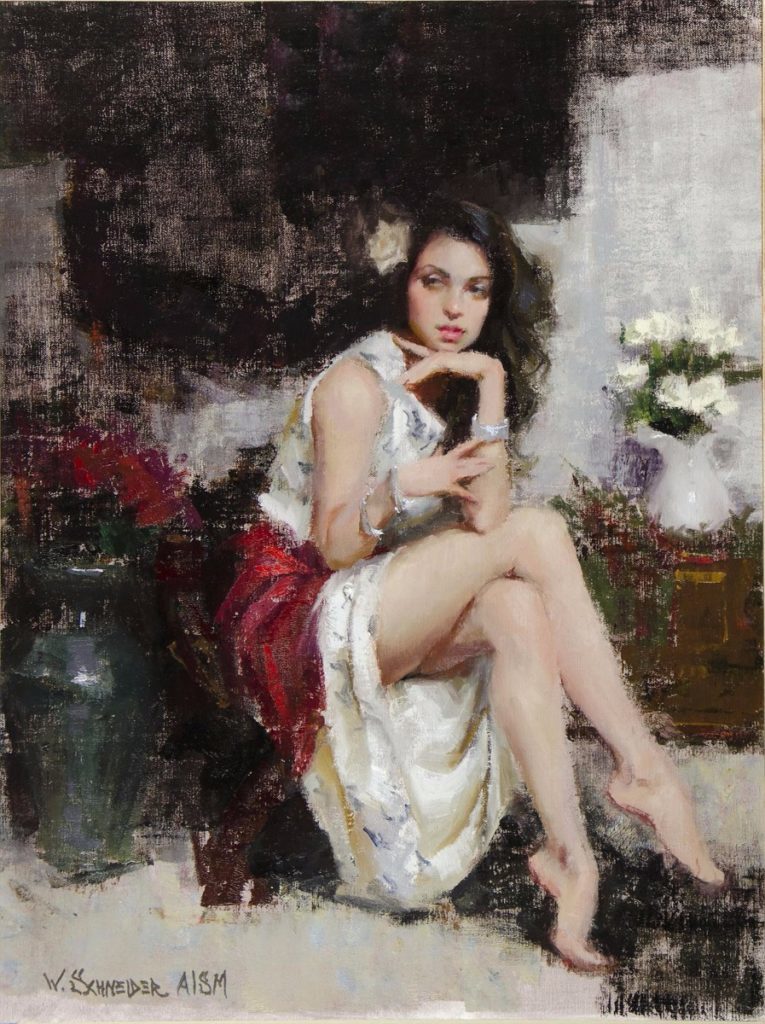
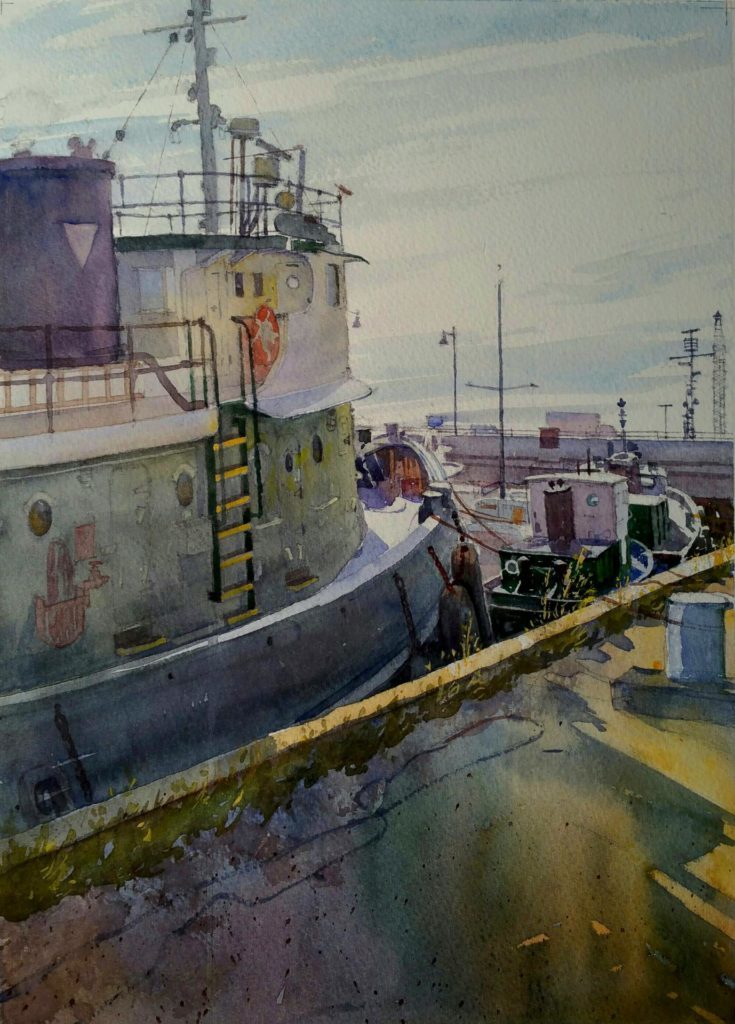
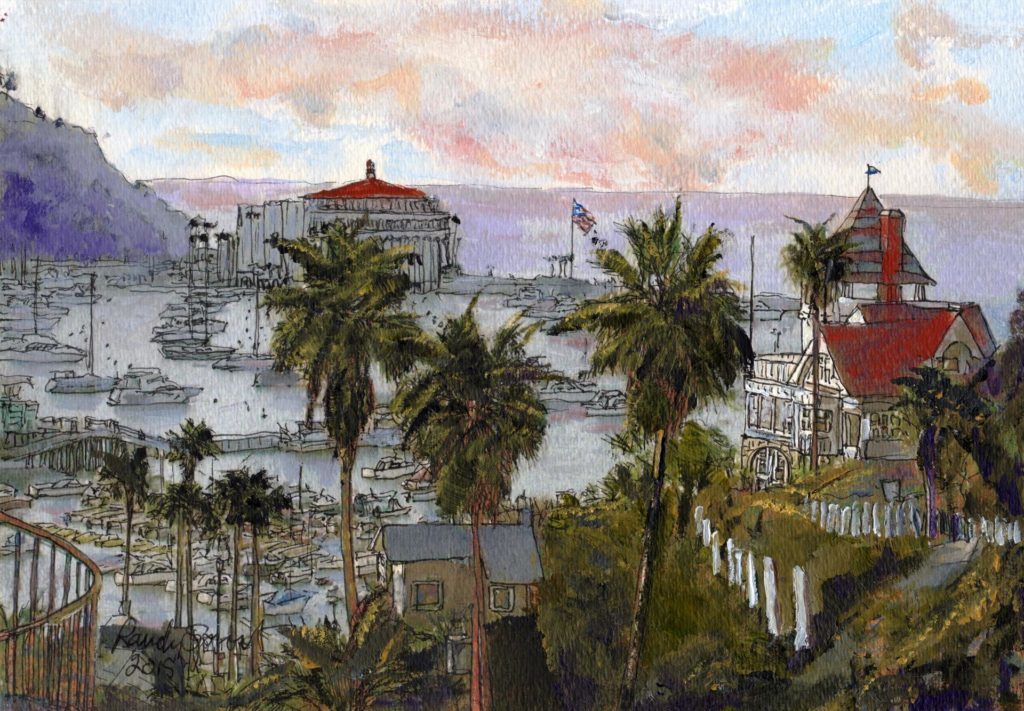
Six times a year a PleinAir Salon juror has the challenging task of choosing some of the best art that’s being created today, outside of and within the art studio. Among categories such as “Best Still Life,” “Best Watercolor,” and more, eligible artists can enter their paintings in the “Best Over 65” group. To celebrate some of our recent winners who are over 65 years old, we bring you (in order by last name) the following:
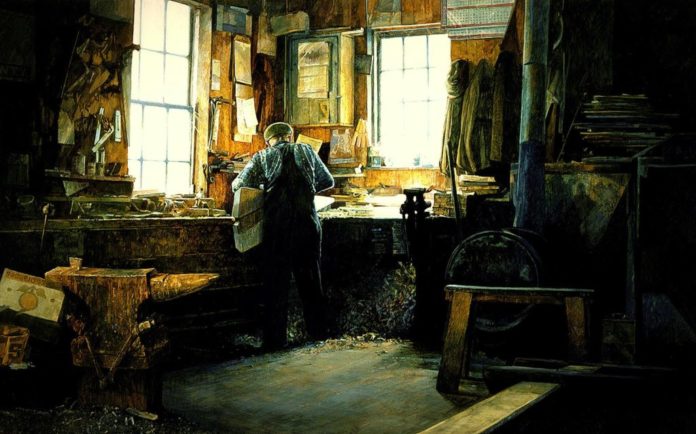
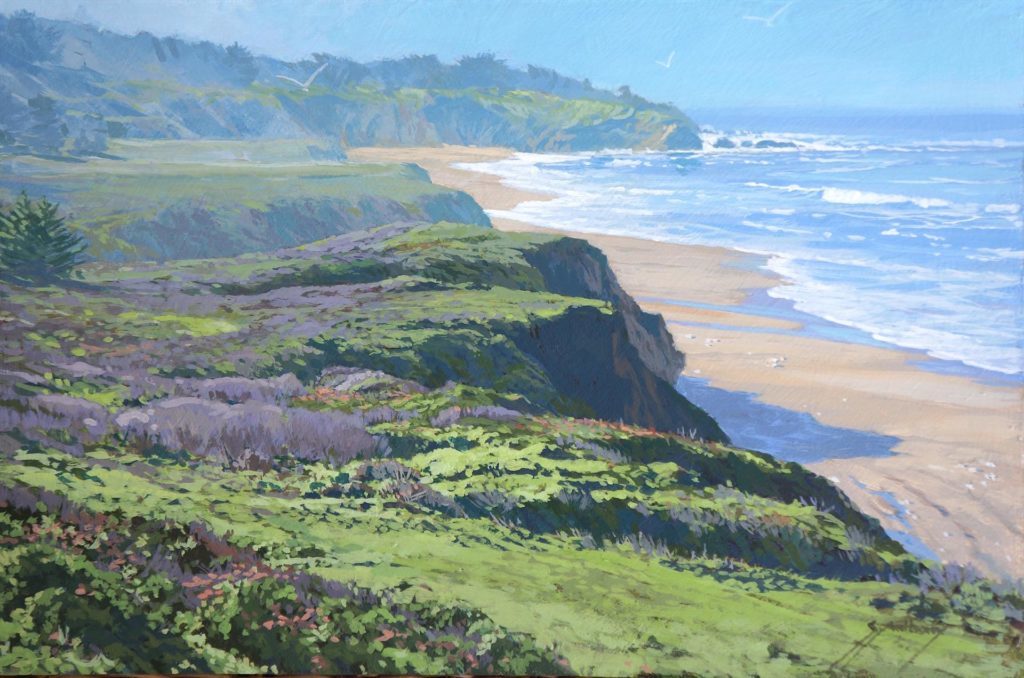
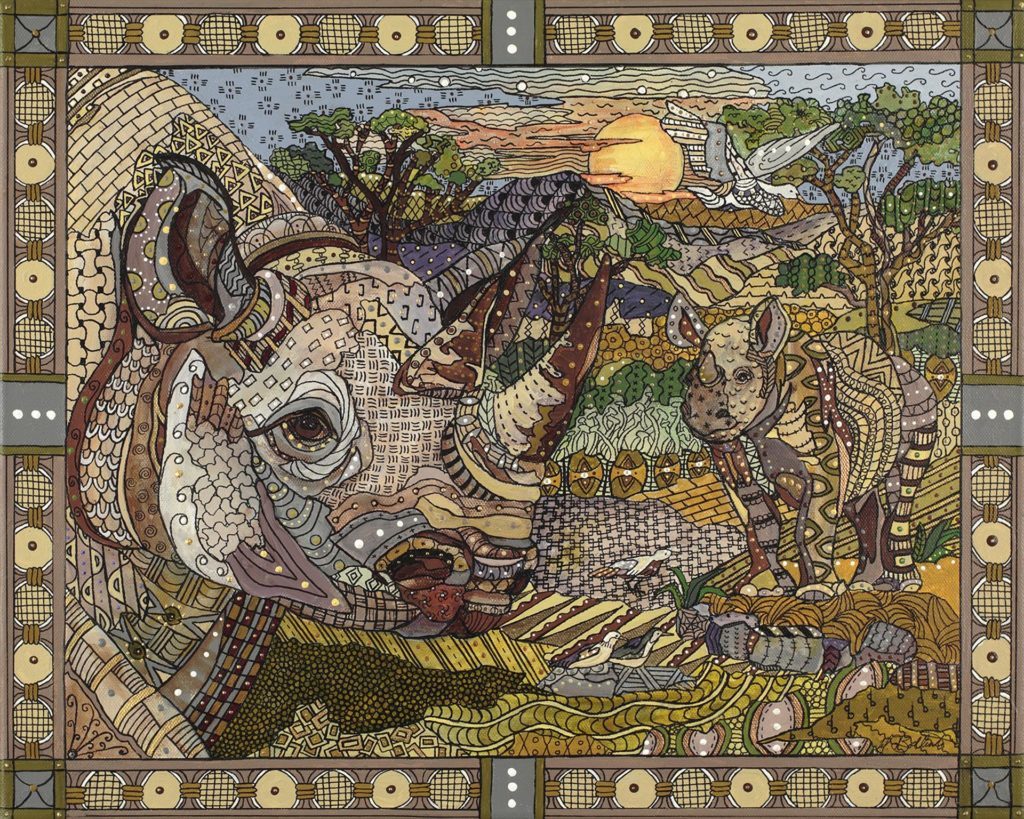
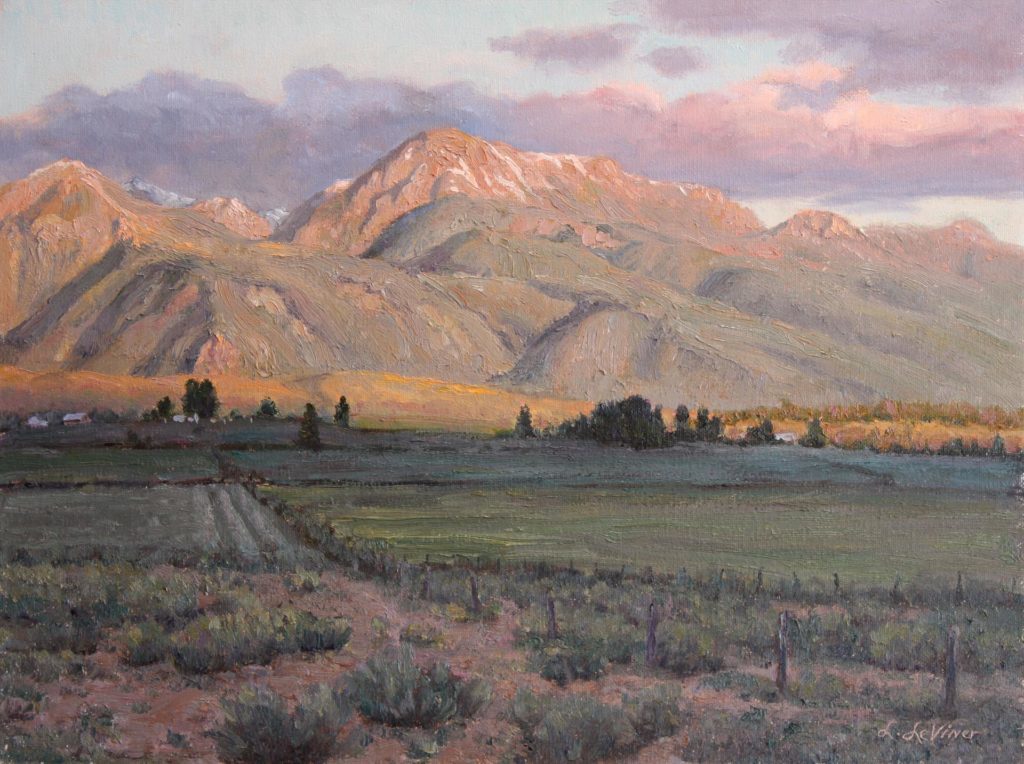
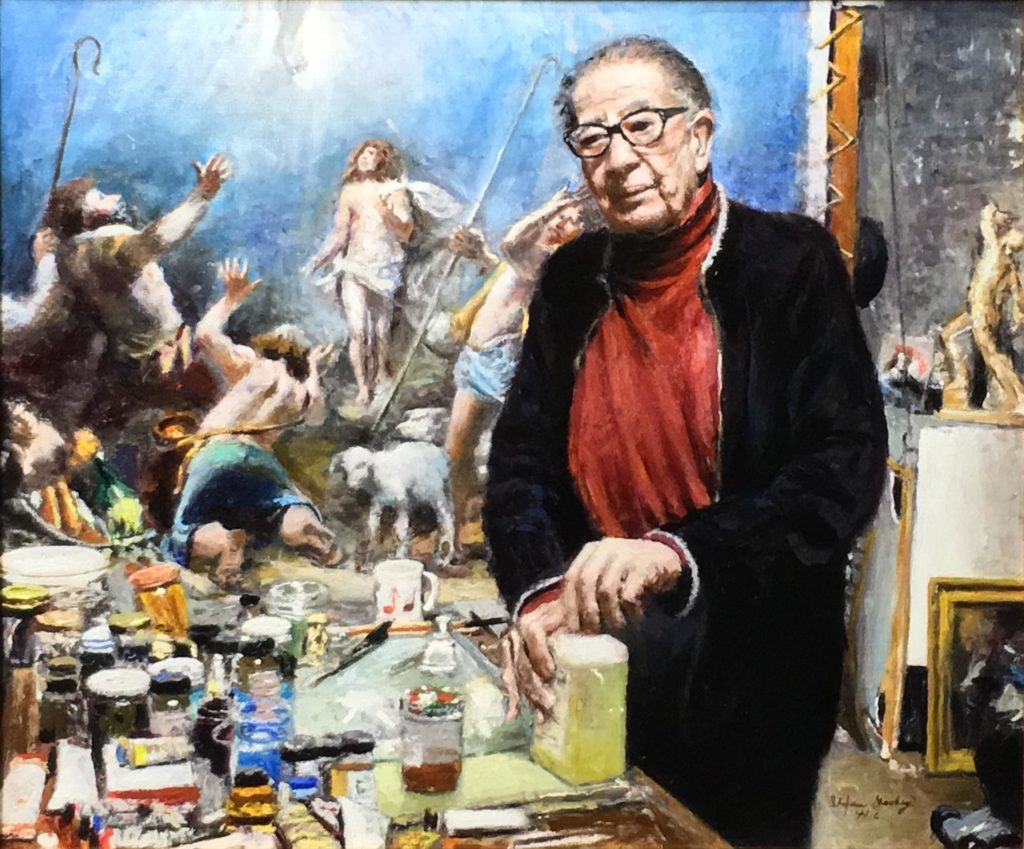
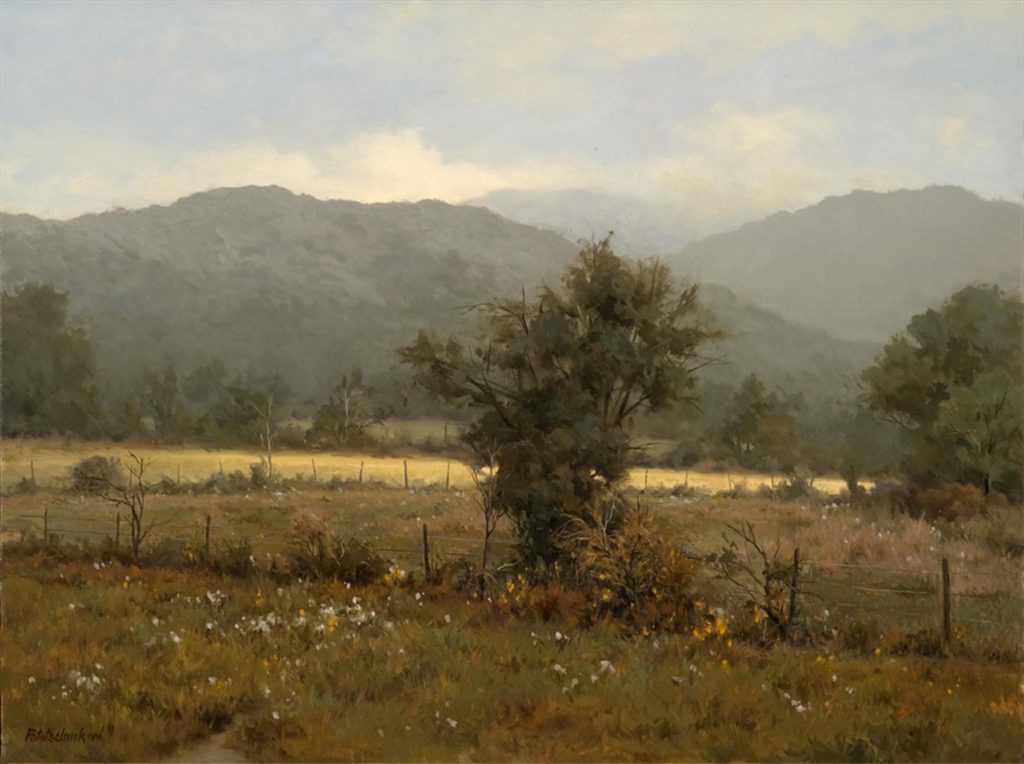
#1 “Montara Morning 2” by Scott Anthony, 12 x 16 in.#2 “Rhinos” by Dianne Bollentini, ink, 16 x 20 in.#3 “Morning Light on Ruby Peak” by Leslie Leviner, oil, 12 x 16 in.#4 “Mason in His Studio” by Stefan Mackey, oil, 20 x 24 in.#5 “Be Still My Soul” by John Pototschnik, oil, 30 x 40 in.#6 “On the Road to Mandalay” by William Schneider, oil, 24 x 18 in.#7 “Susan L” by Richard Sneary, watercolor, 10 x 14 in.#8 “Avalon Harbor Early Morning” by Randy Sprout, pen and ink with acrylics, 9 x 12 in.#9 “Lunenburg Dorymaker” by Alan Wylie, oil, 25 x 40 in.
There’s still time to enter the current PleinAir Salon art competition. Enter your best work for your chance to win cash and publicity: PleinAirSalon.com
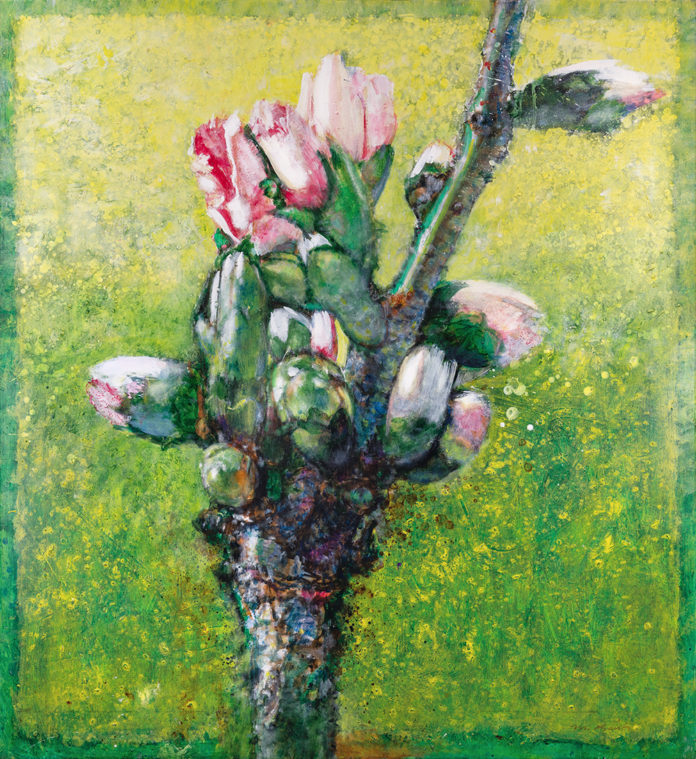
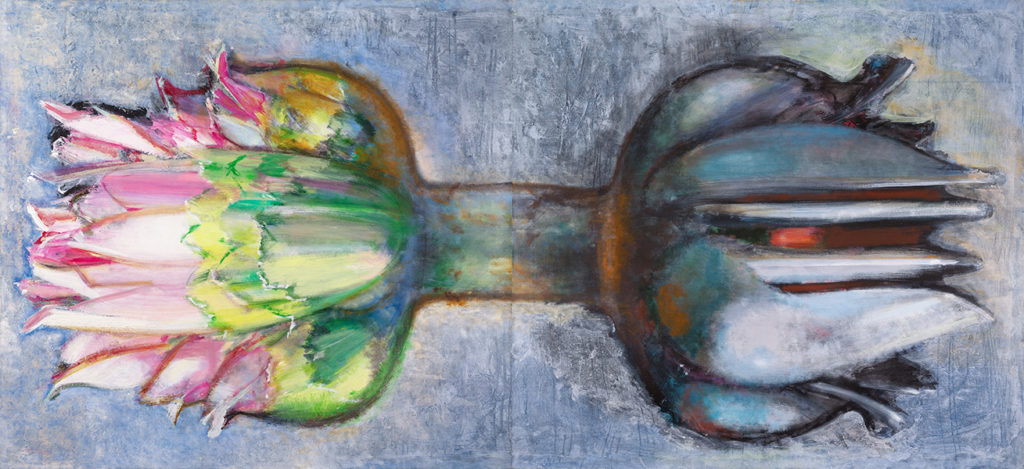
Morton Kaish, “Cherry Buds,” 1998, acrylic on linen, 48 x 44 in.
Morton Kaish is an American artist whose paintings, drawings, and prints can be found in major museums, including the Metropolitan Museum of Art, the Smithsonian American Art Museum, the Fitzwilliam Museum, and the British Museum.
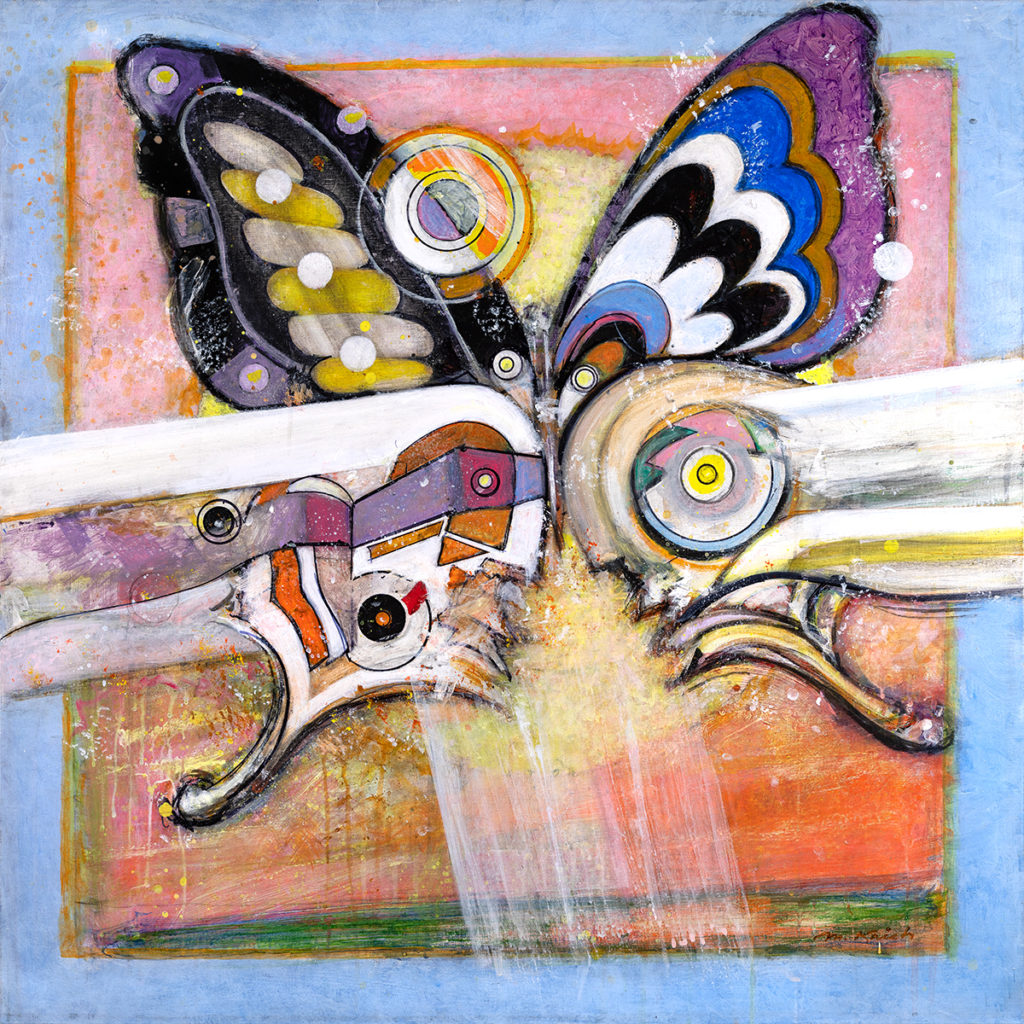
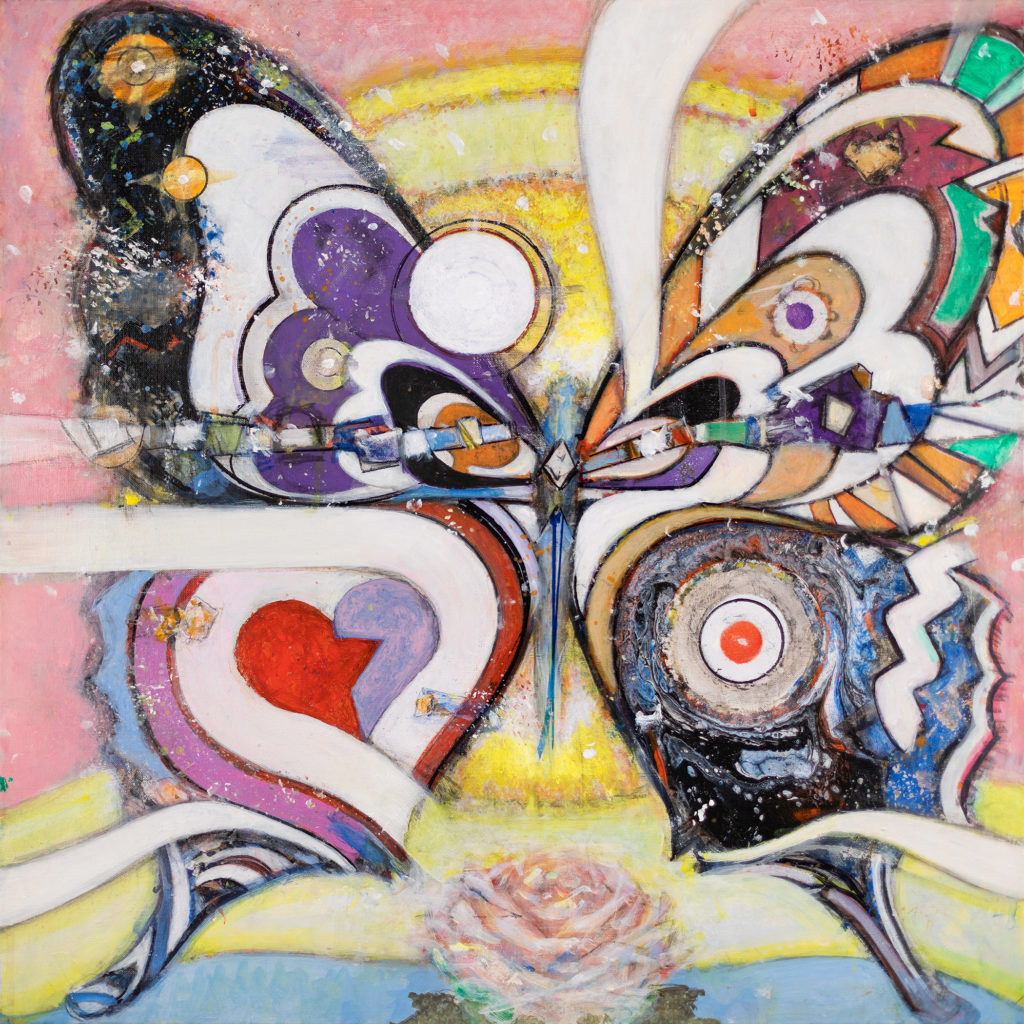
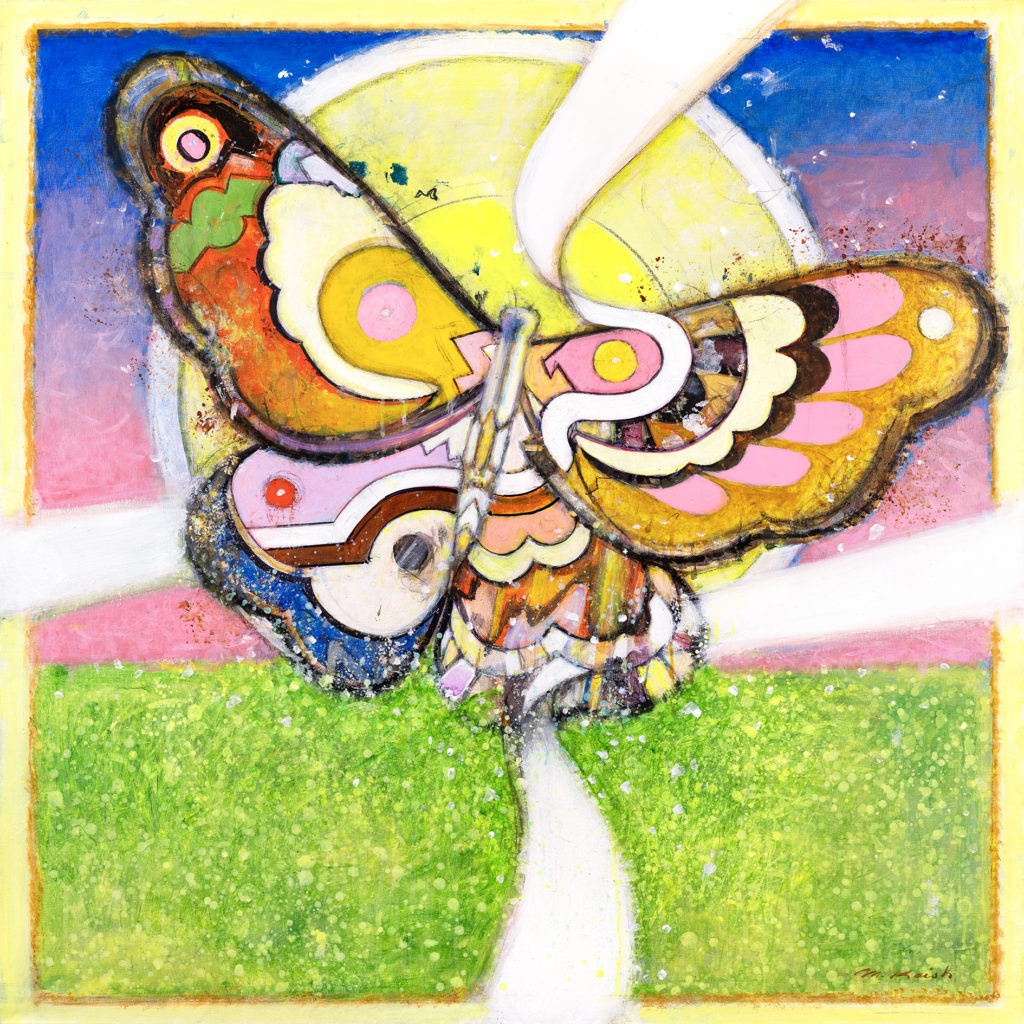
Morton Kaish, “Arrival IV,” 2018, acrylic on linen, 36 x 36 in.Morton Kaish, “Arrival V,” 2018, acrylic on linen, 24 x 24 in.Morton Kaish, “Arrival VII,” 2018, acrylic on linen, 36 x 36 in.
“I’d say that the simplest flower or the tiniest butterfly may be as close to a miracle as we come in our day-to-day lives,” said Kaish. “Nature seems to reach out to us to say something of the mystery and wonder of it all. It may be the sprawl of wildflowers across a meadow or an unexpected flicker of wings where sea meets sky — that will catch the eye and the imagination. And some part of us wants to reply, ‘I was here. I saw this. I felt this.’”
Morton Kaish, “Delicate Balance,” 1992, acrylic on linen, 2 panels, each 44 x 48 in.
Kaish’s light- and color-filled works combine both traditional and experimental painting techniques with contemporary insight. His paintings are inspired by a passion for the world around him, which he continues to explore in a diversity of mediums.
Kaish is professor emeritus in the School of Art and Design at FIT/SUNY and has served as artist-in-residence at Dartmouth College; the University of Washington, Seattle; and Haifa University, Israel, as well as on the faculties of the New School, the National Academy, and the Art Students League of New York.
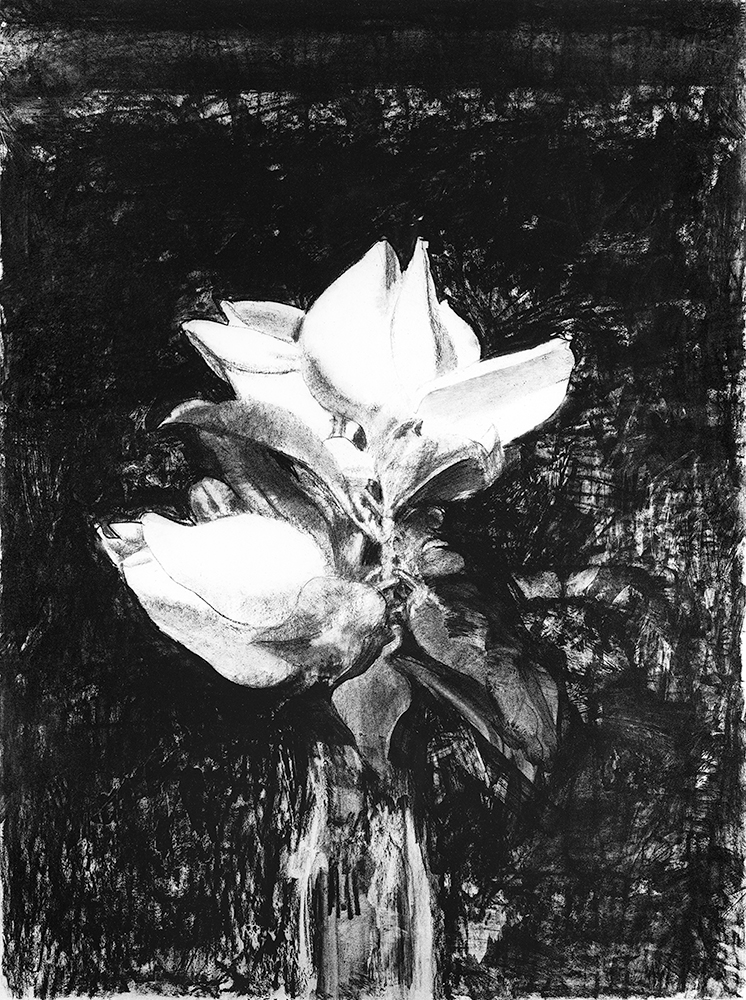
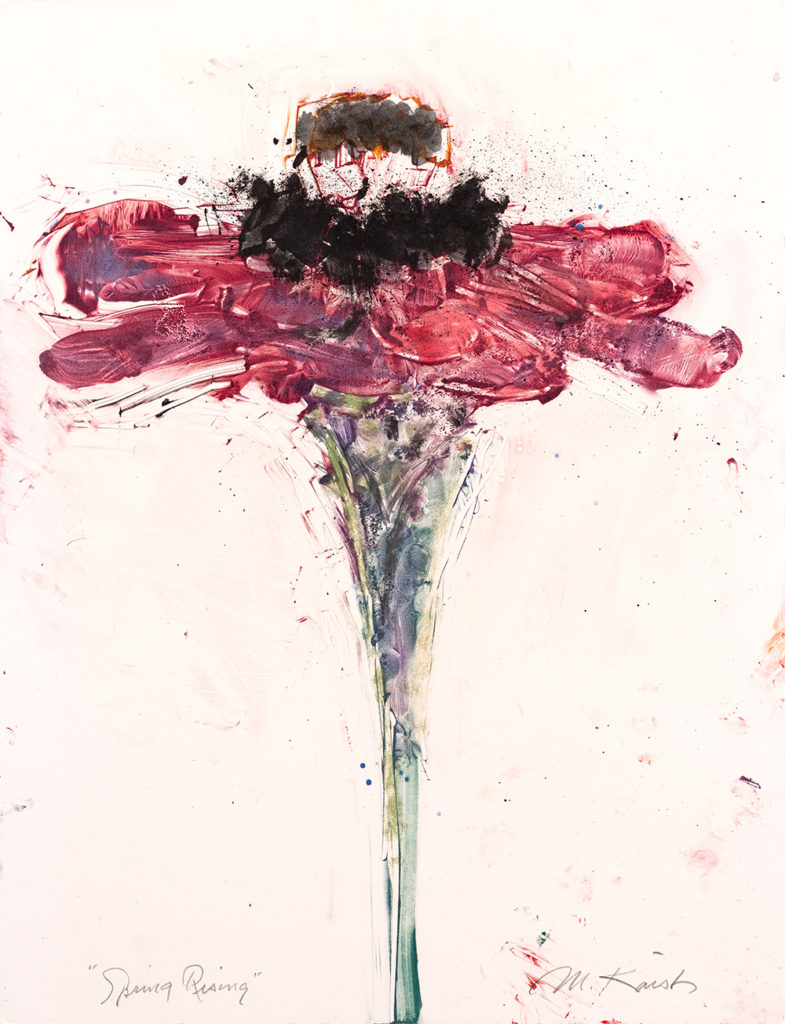
Morton Kaish, “New Day,” 2016, photogravure etching on rag paper, edition of 20Morton Kaish, “Spring Rising,” 2002, monotype, oil on rag paper, 12 x 16 in.
Fill your mind with useful art stories, the latest trends, upcoming art shows, top artists, and more. Subscribe to Fine Art Today, from the publishers of Fine Art Connoisseur magazine.

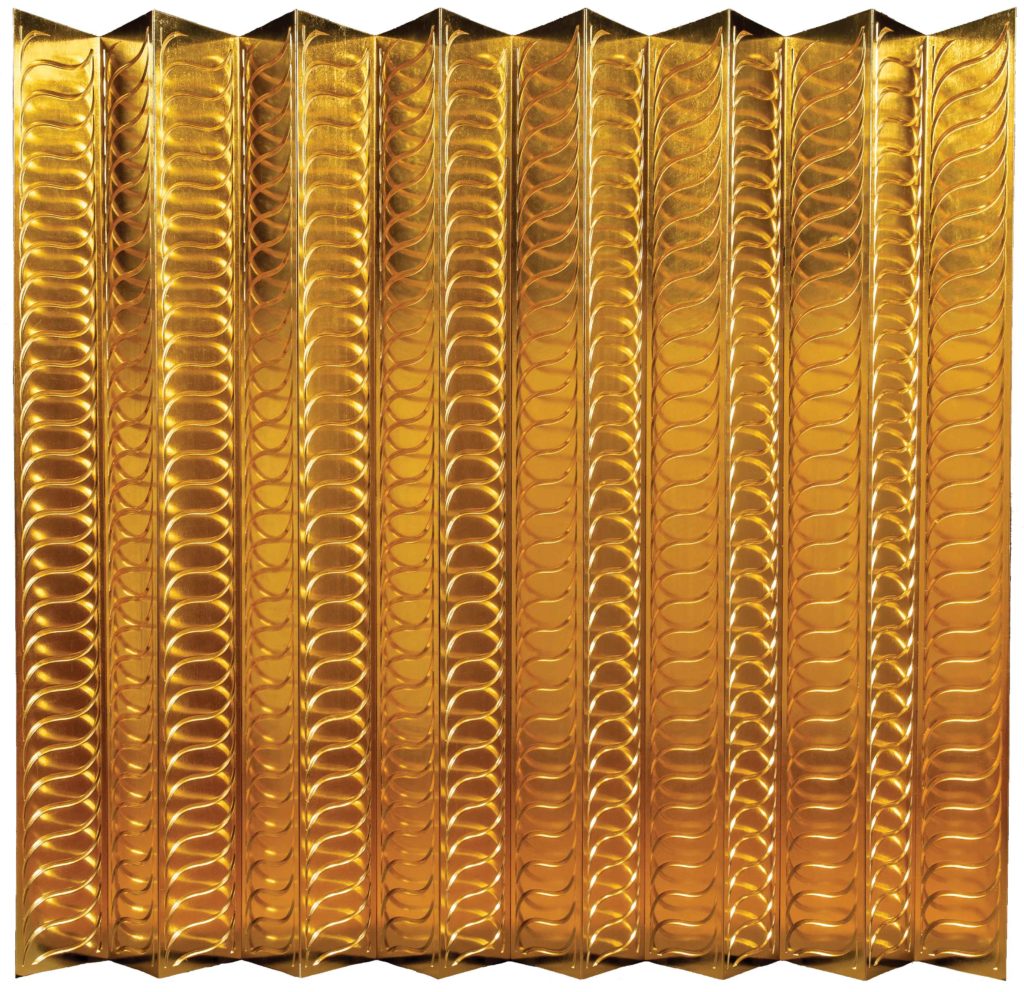 Folding screens were especially popular in the late nineteenth and early twentieth centuries, serving typically as room dividers and often used by their owners to dress or undress behind, but they have also been a more experimental form of artistic expression. Prominent artists, architects, and designers in both Europe and America, including James McNeill Whistler, Thomas Dewing, Louis Comfort Tiffany, Thomas Hart Benton, Donald Deskey, Ansel Adams, Jim Dine, Helen Frankenthaler, Robert Rauschenberg, and David Hockney, are among many who have explored the screen form.
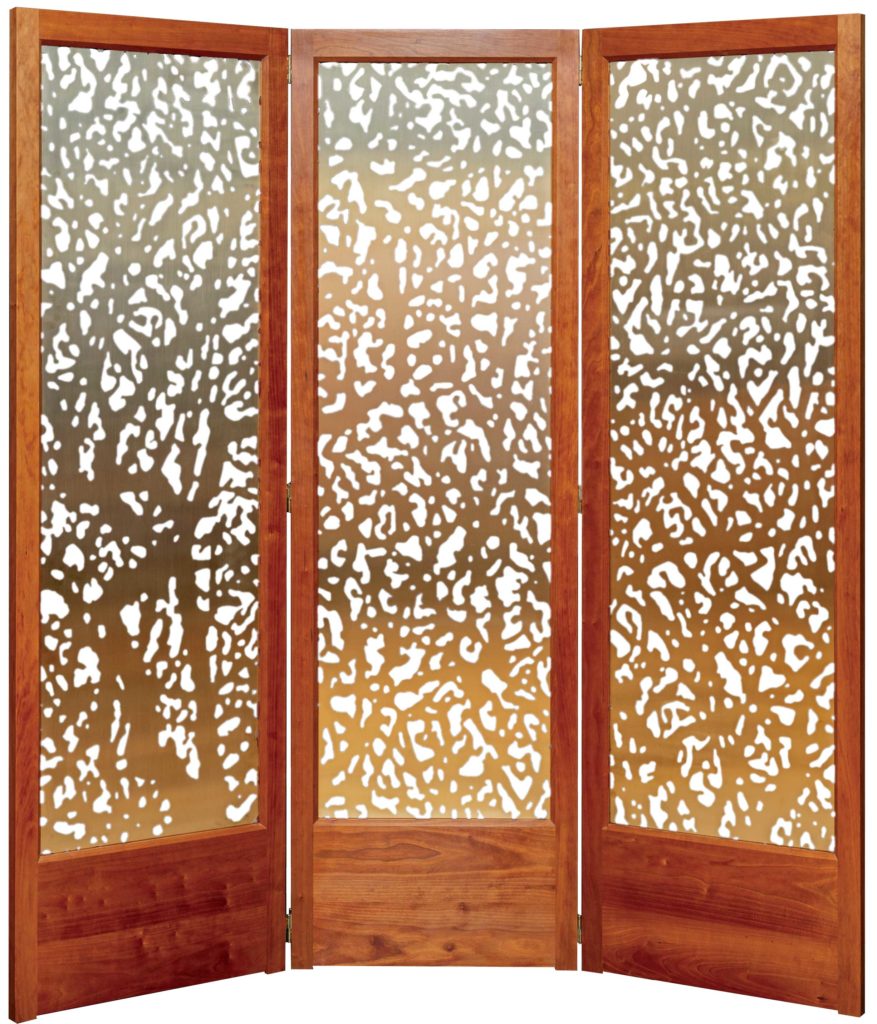 Artists and artisans working in Maine submitted proposals for folding screens, which were then reviewed by a jury consisting of Susan Danly, former curator of prints, photographs, and contemporary art at the Portland Museum of Art; Susan Groce, professor of art at the University of Maine, Orono; Peter Korn, founder and executive director of the Center for Furniture Craftsmanship in Rockport, Maine; Warren Seelig, distinguished visiting professor in the Fibers/Mixed Media program at the University of the Arts, Philadelphia; Michael K. Komanecky, Farnsworth chief curator; and Jane Bianco, Farnsworth associate curator.
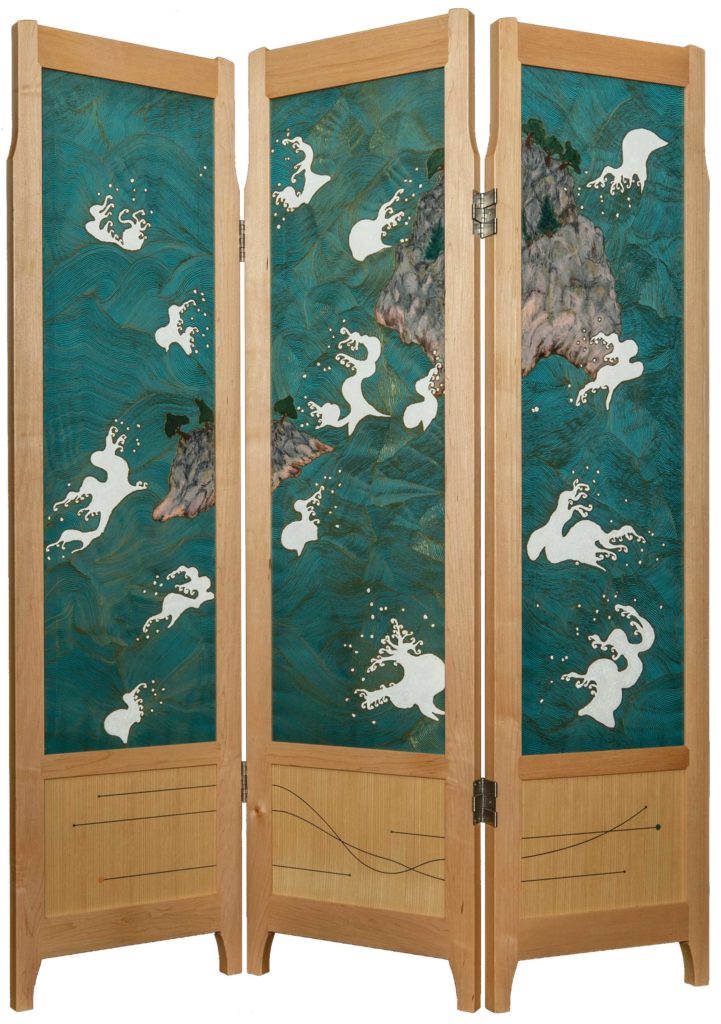 The jury selected works for this show from the following artists: