Home Blog Page 351

This Vertical Trajectory

0
Alexandra Pacula, “Vertical City,” oil on canvas, 78 x 96 in. © Gallery Henoch

Large-scale and dense urbanism are the focus of this impressionable exhibition in New York City this spring. In addition to the skyscrapers she depicts, this painter’s career is on a vertical trajectory.

Twelve large-scale paintings by Polish-born, New York-based artist Alexandra Pacula compose a brilliant solo exhibition at New York City’s Gallery Henoch from April 20 through May 13. “Vertical City” is an intoxicating exploration of dense urbanism through incredible views of skyscrapers. Using bold, geometric forms with a slight disorienting blur and abstraction, Pacula captures the grandeur of Manhattan’s shimmering towers with her unique creative voice.

Alexandra Pacula, “Surfacing Structures,” oil on canvas, 76 x 86 in. © Gallery Henoch
Alexandra Pacula, “Receding Tide,” oil on canvas, 48 x 64 in. © Gallery Henoch
Alexandra Pacula, “Shifting Horizon,” oil on canvas, 22 x 36 in. © Gallery Henoch

“In each picture,” the gallery suggests, “Pacula confronts the viewer with a wall of skyscrapers so vast they appear to extend beyond the canvas. Powered by columns of glowing windows, the multitude of soaring buildings projects the vigor of a thriving society and the enchantment of a restless metropolis. The cacophony of lights, represented throughout her canvases by elegant dashes and dots, stimulate multiple shifts of the viewer’s eye, rhythmically articulating the feel of a city captured in a fleeting moment. The singular visual energy is intensified through the exuberant placement of pulsating marks and glazes of brilliant color.”

“Vertical City” is Pacula’s second show with Gallery Henoch. To learn more, visit Gallery Henoch.

This article was featured in Fine Art Today, a weekly e-newsletter from Fine Art Connoisseur magazine. To start receiving Fine Art Today for free, click here.

Religion and Art in 2017

0
Sergio Barrale, “Double Vision,” mixed media on canvas, 84 x 65 ft. © Sergio Barrale

The intersection of art and religion is one that arguably dates to the Paleolithic origins of representational images on the walls of caves. Indeed, some art historians believe that most, even all, art ever produced is simply the human mind attempting to make sense of divinity. One artist is bringing this relationship to the fore during a thought-provoking solo show.

“Our Private Religion” is a fascinating solo exhibition currently on view at Last Rites Gallery in New York City. Featuring the new works of ascending artist Sergio Barrale, the show delves into the intersection of contemporary religion and art while also engaging with historical events.

Sergio Barrale, “Hermes Trismegistus,” oil and gold leaf on panel, 84 x 48 in. © Sergio Barrale
Sergio Barrale, “Jeanne D’Arc,” mixed media and gold leaf on canvas, 62 x 62 in. © Sergio Barrale

The exhibition is on view through April 22; viewers will encounter Barrale’s large-scale graphite and oil pictures, which “strive to shed light on past injustices of organized belief while exploring the changing role of religion for people today,” the gallery said. “The decline of power structures and muddied laws in classical religions has left those in the modern era in a state of refocus.

Sergio Barrale, “Night Book,” mixed media and gold leaf on canvas, 20 x 21 in. © Sergio Barrale
Sergio Barrale, “When Sleeping Things Wake,” mixed media on canvas, 68 x 55 in. © Sergio Barrale

“Barrale connects the use of graphite in his work to a naturalistic need for creative expression, and human desire to comprehend contemporary events rooting back to ancestral times. His large-scale works seek to incite a conversation about past approaches to religion as well as capture an outlook on it today as an ethical code, reformed without emphasis on hierarchy, but alternatively on individual truth and morality.”

To learn more, visit Last Rites Gallery.

This article was featured in Fine Art Today, a weekly e-newsletter from Fine Art Connoisseur magazine. To start receiving Fine Art Today for free, click here.

What’s Between Heaven and Earth?

3
Marian Fortunati, “Iceberg Lake,” oil on canvas, 20 x 24 in. © Santa Paula Art Museum

Since 2014, a group of women have made it their mission to capture the majesty and beauty of various American landscapes. The artistic products from their recent trip to the Sierra Mountains compose this can’t-miss exhibition. Details here!

On view through July 9 at the Santa Paula Art Museum in California, “Between Heaven and Earth” is a stunning group exhibition by the prolific artist cohort known as the PAC6 Painters. Hailing from Southern California, the PAC6 formed in 2014 “through their love of representational painting,” as the group says. “Their friendship has led to mutual challenge, adventure, and inspiration in their art.” The painters include Linda Brown, Marian Fortunati, Nita Harper, Debra Holladay, Laura Wambsgans, and Sharon Weaver.

Linda Brown, “Sierra Dawn,” oil on board, 24 x 36 in. © Santa Paula Art Museum
Nita Harper, “The Hawk Watcher,” oil on canvas, 24 x 30 in. © Santa Paula Art Museum

Throughout their tenure together, the PAC6 have traveled to many locations around the country, each time with the intention of creating a themed body of work that includes both plein air and studio paintings. Over 60 paintings compose “Heaven and Earth,” which takes viewers on a journey of discovery of the High Sierra.

Debra Holladay, “Sentinel Peak, Yosemite,” oil on canvas, 18 x 24 in. © Santa Paula Art Museum

Via the museum, “The first images of the Sierra Nevada Mountains, with their dramatic peaks and pristine lakes, caught the imagination of a young America and helped to open the West. Following in the historic footsteps of the early California Impressionists, the PAC6 have created a body of work that provides an opportunity to see these iconic vistas from a new and contemporary perspective. While each of the six artists paint in a personally distinctive style, the pack’s purpose in creating the show was identical. It is the hope of PAC6 that in seeing the exhibition, viewers will be inspired toward their own great adventure — one filled with awe at the beauty and grandeur of the American landscape. The exhibit also includes a short video documentary with film footage and commentary describing the group’s pack trip from Mammoth Lakes to Lake Ediza.”

Sharon Weaver, “Sierra’s Last Light,” oil on canvas, 24 x 36 in. © Santa Paula Art Museum
Laura Wambsgans, “High Sierra Trail,” oil on canvas, 24 x 30 in. © Santa Paula Art Museum

On March 4, the museum hosted a lively opening reception, which was attended by more than 200 guests and friends. The museum has also created this entertaining video to accompany the exhibition:

To learn more, visit the Santa Paula Art Museum.

This article was featured in Fine Art Today, a weekly e-newsletter from Fine Art Connoisseur magazine. To start receiving Fine Art Today for free, click here.

Featured Artwork: Marjorie Atwood

0
“THE MOIRAI CLOTHO” by Marjorie Atwood

“THE MOIRAI CLOTHO”

Oil and gold leaf on canvas

72 x 48 in.


About the Artist:

Beauty in art is what attracts us. Tension is what hooks and holds us. I find tension when I juxtapose smooth, polished elements with corroded, distressed ones, the rusting iron beside the gleaming silver leaf.

I often create my work in series. Taking a theme or an experience, I explore its unfolding on canvas. I follow the patterns, color, and texture that beckon to me, obeying and sharing their call for an emotional response.

The technical aspects of different art media have always fascinated me. Each of my exhibitions probes work methods and materials, combining them on board and on canvas. Often, this process takes me places I could never have planned. An uncharted journey of technique lies behind the creation of each of my paintings.

For over 20 years I have been a contemporary artist painting and exhibiting her work. After graduating from Holland Hall high school in Tulsa, I moved to New York where I earned a bachelor’s degree from Sarah Lawrence College while also studying at Parson’s School of Design. I have had solo shows at the Holliman Gallery and MA Doran Gallery in Tulsa. Other exhibition venues include Gallery North in Stony Brook, NY; Open Space Gallery in Allentown, PA; DeVorzon Gallery in Los Angeles, CA; and galleries in Dallas and Santa Fe.

My work was recently featured in Fine Art Connoisseur “Human Figures.” I am a member of Oil Painters of America and part-time instructor at Tulsa Girls Art School.

MARJORIE ATWOOD

[email protected]

View more of Marjorie’s work at www.marjorieatwood.com/figurative.html

Featured Lot: Oriental Splendor

0
Jean Lecomte du Nouÿ, “The Sentinel,” 1877, oil on canvas, 15 x 12 in. © Sotheby’s

In this ongoing series for Fine Art Today, we take a longer look at the history and features of a soon-to-be-available artwork of note. This week we feature a highlight of Sotheby’s upcoming Orientalist Sale.

It shouldn’t surprise that European artists have long been inspired by foreign lands, particularly the Middle East and Africa. The subject’s most famous artist, Jean-Leon Gerome, also inspired generations of painters to travel abroad and capture their stunning textiles, architecture, and people.

One such painter was Jean Lecomte du Nouÿ, whose work “The Sentinel” features during Sotheby’s April 25 “Orientalist Sale” in London. Among a stunning array of available lots, “The Sentinel” is a quintessential display of oriental precision and delight. Sitting under a stone archway, a white-bearded and turbaned man takes a long drag from his ornate pipe. Sporting a brilliant red robe, the subject rests a long rifle diagonally between his legs and on his lap. His left hand rests on a propped sword.

Via Sotheby’s, “Though a technique more commonly associated with French history painting, here the artist applies it to a contemporary Islamic subject and in the name of verisimilitude. The sentinel’s Ottoman weapons are observed so faithfully that the artist must have seen them in the original, from the chibouk with its gilt tophane bowl and mouthpiece and lavender enamelled shaft; to the curved shamshir sword with its horn hilt; and the flintlock rifle with its ivory butt plate.”

Auction estimates for the brilliant work are between $74,000 and $100,000. To learn more, visit Sotheby’s.

This article was featured in Fine Art Today, a weekly e-newsletter from Fine Art Connoisseur magazine. To start receiving Fine Art Today for free, click here.

You’re Invited to ‘Local Masters’

0
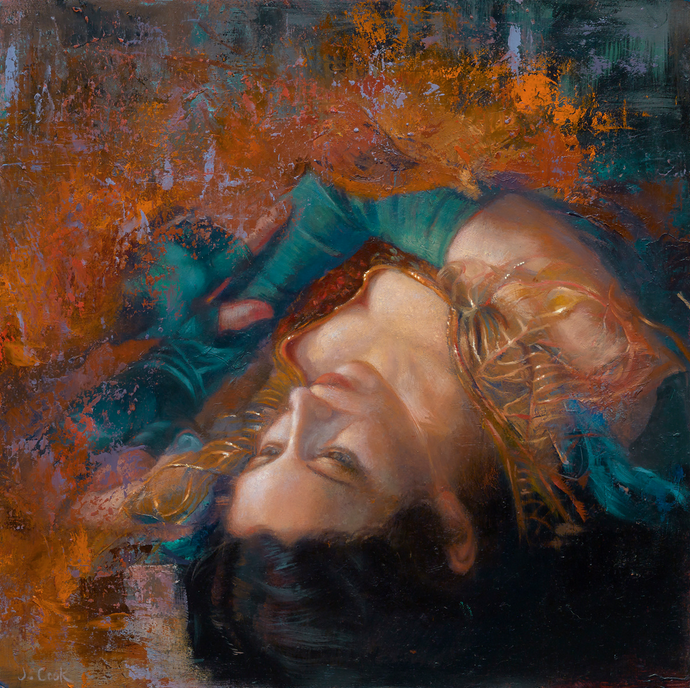
John Cook, “Hats Off,” oil on canvas, 60 x 40 in. © Southwest Gallery

Two nationally acclaimed painters are getting some local love from their preeminent gallery this spring with a vibrant group exhibition. Who are they, and where does it all take place?

Southwest Gallery in Dallas, Texas, is presenting the works of nationally acclaimed painters John Cook and John Pototschnik during an exhibition titled “Local Masters.” An opening reception, which will be attended by the artists, will take place on Saturday, May 13, from 1-5 p.m.

John Pototschnik, “Simply Marvelous,” oil on canvas, 12 x 24 in. © Southwest Gallery
John Pototschnik, “Docked,” oil on canvas, 32 x 48 in. © Southwest Gallery

“Action and energy permeate the canvases of John Cook,” the gallery writes. “There is a spontaneous nature to his paintings that conveys his need to quickly achieve the essence of light as it dances, pierces, careens, and bounces to find its way throughout the subject. By drawing with brush rather than pencil, Cook achieves the loose and free style that characterizes his work. Never belabored, each painting reflects his passion to catch a mood with the interplay of light and shade.”

John Cook, “Midmorning Burgandy,” oil on canvas, 60 x 72 in. © Southwest Gallery
John Pototschnik, “View Across the Valley,” oil on canvas, 30 x 30 in. © Southwest Gallery
John Cook, “Timeless,” oil on canvas, 24 x 30 in. © Southwest Gallery

Pototschnick says, “My paintings are not flamboyant, mysterious, trendy or shocking, but I am interested in depicting the truth about life, as I see it, in a naturalistic way free of frills and bravado. I enjoy depicting simple, common, everyday life and its objects as things of beauty and worth. I intend to show the dignity and value of the subjects I paint — just as my artistic influences have. Through continued hard work I want to give to society paintings that transcend the culture and its ever changing tastes … paintings that speak to the heart.”

To learn more, visit Southwest Gallery.

This article was featured in Fine Art Today, a weekly e-newsletter from Fine Art Connoisseur magazine. To start receiving Fine Art Today for free, click here.

How Emotional Were the Ancient Greeks?

0
A view of the installation at the Onassis Cultural Center; Image courtesy Onassis Cultural Center 2017

Although the Greeks are best known for their idealized renderings of Olympian gods and the human figure, and for early conceptions of democracy, there were hints of expression and emotion that have often gone unnoticed — until now.

The ways expression and emotion were depicted in some of the most beautiful objects from Classical Greece are the theme of a path-breaking exhibition at the Onassis Cultural Center in New York. Titled “A World of Emotions: Ancient Greece, 700 BCE-200 AD,” the show amasses a collection of more than 130 masterpieces from the finest museums in the world, including (among others) the Acropolis Museum, the National Archaeological Museum Athens, the Louvre Museum, the British Museum, and the Vatican Museums.

A view of the installation at the Onassis Cultural Center; Image courtesy Onassis Cultural Center 2017

“The exhibition explores the ideas and attitudes of people in classical antiquity toward emotion and the ways in which the emotions were depicted,” the Center writes, “revealing how some are striking familiar to us and some shockingly alien. Although ancient Greece is often said to have been flooded with the light of reason, ‘A World of Emotions’ lays bare the far different reality addressed in Homer’s Iliad, whose very first word is menis: wrath.”

“A World of Emotions: Ancient Greece, 700 BCE-200 AD” opened on March 9 and remains on view through June 24. To learn more, visit the Onassis Cultural Center.

This article was featured in Fine Art Today, a weekly e-newsletter from Fine Art Connoisseur magazine. To start receiving Fine Art Today for free, click here.

Old Masters Dominate Upcoming Print Auction

0
Martin Schongauer, “A Censer,” circa 1485, engraving, ($120,000-$180,000)

Swann Galleries will soon auction an impressive lineup of gorgeous prints, many by art history’s greatest printmakers, during its Spring Prints sale. For fine art collectors and print enthusiasts, this is one auction not to miss. The highlights?

Lovers of prints are aware that Swann Galleries remains one of the premier American venues for Old Master prints, and that trend continues May 2 with Swann’s “Spring Prints Auction.” A diverse range of time periods and artists is covered in the sale, giving collectors countless opportunities to add that special impression to their growing holdings.

Albrecht Dürer, “Knight, Death, and the Devil,” 1513, engraving ($50,000-$75,000)

Among the highlights of the sale are several iconic engravings by Albrecht Dürer, led by his 1513 “Knight, Death, and the Devil” (estimate $50,000-$75,000). Other important works by the master include “The Sea Monster,” “The Four Horsemen,” and “Melancolia I,” each with estimates between $40,000 and $60,000. An exceptional array of impressions by Rembrandt van Rijn is also available for acquisition, including a rare early impression of “Landscape with a Square Tower,” circa 1650. Other selections include Rembrandt’s “The Omval” and “Abraham Casting out Hagar and Ishmael.” Rounding out the Old Master lots are impressions by iconic artists such as Canaletto, Giovanni Piranesi, and Francisco José de Goya.

James A.M. Whistler, “Weary,” 1863, drypoint on japan paper, ($40,000-$60,000)

For impressions of the 19th and 20th centuries, selections include works by Marcel Duchamp, René Magritte, Henri Matisse, Emil Nolde, Wassily Kandinsky, Fernand Léger, Edward Hopper, James A.M. Whistler, George Bellows, Rockwell Kent, Georges Braque, Pablo Picasso, and Otto Mueller.

Swann Galleries’ “Spring Prints Auction” kicks off on Tuesday, May 2 at 10:30 a.m. at the venue’s New York City location on East 25th Street. To view selections from the full catalogue, visit Swann Galleries.

This article was featured in Fine Art Today, a weekly e-newsletter from Fine Art Connoisseur magazine. To start receiving Fine Art Today for free, click here.

Wyeth Honored in Maine

1
Andrew Wyeth, “Alvaro and Christina,” 1968, watercolor on paper, 22 1/2 x 28 3/4 in. © Farnsworth Art Museum

Marking the centennial of the artist’s birth, the Farnsworth Art Museum recently began a series of outstanding exhibitions aimed at celebrating Andrew Wyeth’s (1917-2009) invaluable contributions to American 20th-century art. All you need to know is one click away!

On April 15, the Farnsworth Art Museum in Rockland, Maine, opened the first of a major series of exhibitions dedicated to the art and legacy of important American artist Andrew Wyeth (1917-2009). Titled “Andrew Wyeth at 100,” the series begins with a comprehensive retrospective highlighting Wyeth’s Maine watercolors. Four other shows will explore his temperas and drawings “while a photography exhibition will focus on the Olson House, a major inspiration to the artist for over three decades,” the museum writes.

Andrew Wyeth, “Dr. Syn,” 1981, tempera on panel, © Farnsworth Art Museum

Co-curated by Farnsworth chief curator Michael K. Komanecky, “Andrew Wyeth: Maine Watercolors” opened on April 15 and includes works that represent every phase of the master’s career as well as a study for his final work, a watercolor to be titled “Goodbye My Love.” Two special exhibitions will also center around three of Wyeth’s best known tempera paintings — an intriguing “Self-Portrait” along with “Dr. Syn” and “Her Room.”

Andrew Wyeth, “Her Room,” 1963, tempera on panel, 24 3/4 x 48 in. © Farnsworth Art Museum

“‘The Olson House: Photographer’s Muse’ will feature photographs of the house made famous by Wyeth’s iconic ‘Christina’s World’,” the museum continues, “and will include works by Paul Caponigro, Linda Connor, Tillman Crane, James Moore, Bradley Prescott, Peter Ralson, Kosti Ruohomaa, George Tice, Brian Vanden Brink, and Eva Zembroski. Finally, an exhibition of the artist’s Maine drawings will complete the series. These five projects will be accompanied by a single illustrated catalogue documenting each show, with essays by Farnsworth’s Michael K. Komanecky and Henry Adams. The catalogue will be published by the Farnsworth Art Museum.”

The museum will officially celebrate Wyeth’s birthday with an event on Wednesday, July 12, with a party at 3 p.m. at the Wyeth Center (located at the museum). To learn more, visit the Farnsworth Art Museum.

This article was featured in Fine Art Today, a weekly e-newsletter from Fine Art Connoisseur magazine. To start receiving Fine Art Today for free, click here.

Save the Date: Degas Rediscovered

0
Edgar Degas, “Little Dancer Aged Fourteen,” circa 1881, bronze, 38 15/16 x 13 11/16 x 13 7/8 in. © Stair Sainty

Through the compelling research of Art Historian Dr. Gregory Hedberg, Stair Sainty in London has an incredible story to tell surrounding one of the most significant bronzes in modern art: Degas’ “Petite Danseuse de Quatorze Ans.”

(Art) History is being made at London’s Stair Sainty from April 27 through May 26. The gallery recently announced that it will be exhibiting a stunning bronze sculpture by Edgar Degas (1834-1917), titled “Little Dancer Aged Fourteen.” However, this is only where the fascinating story begins.

Significantly, it is believed that the featured bronze is actually a cast of the original 1881 wax sculpture made in Degas’ lifetime. The exhibition follows the recent publication of a monograph on the sculpture by Dr. Gregory Hedberg, director of European art at the Hirschl & Adler Galleries, New York. In the text, Dr. Hedberg presents a convincing argument that other casts of the sculpture — which display slight differences in the figure’s clothing and pose — are actually representative of Degas’ reworking of the original sculpture.

These later examples (cast after the artist’s death in 1917) are familiar because they exist in museums around the world, from the Tate, London, to the Metropolitan Museum, New York, to the Musée d’Orsay, Paris. Hedberg further demonstrates that the featured bronze at Stair Sainty better matches contemporary descriptions of the bronze that appeared at the 1881 Impressionist Exhibition in Paris.

Gallery owner Guy Stair Sainty adds, “‘Little Dancer, Aged Fourteen’ is one of the most renowned examples of western art and the discovery of the plaster, which Dr. Hedberg convincingly argues, records the wax as it was presented in 1881 and gives us a better understanding of Degas and his artistic development. The startling differences with the bronzes cast from the wax found in Degas’s studio after his death are a revelation and explain why contemporary descriptions of the original bodice, leggings, horse hair wig, pose, and Egyptian qualities of the the first version of Degas’s wax better match details recorded by the bronze that will be shown at the Stair Sainty Gallery.”

To learn more, visit Stair Sainty.

This article was featured in Fine Art Today, a weekly e-newsletter from Fine Art Connoisseur magazine. To start receiving Fine Art Today for free, click here.

WEEKLY NEWS FROM THE ART WORLD

Fill your mind with useful art stories, the latest trends, upcoming art shows, top artists, and more. Subscribe to Fine Art Today, from the publishers of Fine Art Connoisseur magazine.

  • This field is for validation purposes and should be left unchanged.