
Home Blog Page 370

It’s Been How Long?

0
Martin Johnson Heade, “Salt Marshes, Newburyport, Massachusetts,” circa 1866, oil on canvas, 15 1/2 x 30 1/4 in. (c) Museum of Fine Arts, Boston 2017

You may be surprised at how long it’s been since this 19th-century American painter earned a solo exhibition. That’s recently changed with an opulent display in Wisconsin. Who and where?

It’s been 20 years since American master Martin Johnson Heade (1819-1904) was the subject of an exhaustive exhibition, but all that’s changed with a current show at Milwaukee’s Museum of Art. Like many artists, Heade was largely forgotten by scholars and collectors after his death. However, the 20th century saw a revival of appreciation. Via the museum, “Heade is now being revisited as one of the most varied and inventive painters of his generation.

Martin Johnson Heade, “Dawn,” 1862, oil on canvas, 12 1/4 x 24 1/4 in. (c) Museum of Fine Arts, Boston 2017
Martin Johnson Heade, “Salt Marshes, Newburyport, Massachusetts,” circa 1866, oil on canvas, 15 1/2 x 30 1/4 in. (c) Museum of Fine Arts, Boston 2017

“Heade was the only major American painter of the time to devote equal attention to landscape, marine, and still-life subjects. He traveled the world and created powerful canvases of thunderstorms at sea, exquisite Victorian still lifes of flowers, and evocative paintings of South American hummingbirds accompanied by tropical orchids. The warmth and sheer beauty of this exhibition make it one everyone can enjoy this holiday season.”

Martin Johnson Heade, “Orchids and Hummingbird,” 1875, oil on canvas, 14 1/8 x 22 1/8 in. (c) Museum of Fine Arts, Boston 2017
Martin Johnson Heade, “Passion Flowers and Hummingbirds,” circa 1870, oil on canvas, 15 1/2 x 21 5/8 in. (c) Museum of Fine Arts, Boston 2017

“Nature and Opulence: The Art of Martin Johnson Heade” opened on November 18 and will be on view through February 26. To learn more, visit the Milwaukee Museum of Art.

This article was featured in Fine Art Today, a weekly e-newsletter from Fine Art Connoisseur magazine. To start receiving Fine Art Today for free, click here.
Fall In Love With Romantic Scotland

0
J.M.W. Turner, “Sea View,” mid-1820s, watercolor on blue paper, (c) National Galleries of Scotland 2017

Very much so in 2017. Scotland’s National Gallery is kicking off its 2017 exhibition schedule with a bang, highlighting watercolors by one of the most famous Romantics of all time. We bet you know his name!

A number of pristine watercolors by British Romantic J.M.A. Turner (1775-1851) are currently decorating the walls of Scotland’s National Gallery through January 31. The watercolors — bequeathed to the gallery by the distinguished collector Henry Vaughan — represent the whole of Turner’s career.

J.M.W. Turner, “The St Gothard Pass at the Devil’s Bridge,” 1830, watercolor, (c) National Galleries of Scotland 2017
J.M.W. Turner, “Monte Rosa,” 1836, watercolor, (c) National Galleries of Scotland 2017
J.M.W. Turner, “Sea View,” mid-1820s, watercolor on blue paper, (c) National Galleries of Scotland 2017

Among Turner’s early topographical wash drawings are also his atmospheric sketches of continental Europe from the 1830s and 1840s. The museum notes, “Vaughan stipulated in his bequest that these delicate watercolors should be exhibited to the public all at one time, free of charge, during the month of January.” For over 100 years, the museum has obliged, and 2017 is no different. Further, the museum concludes, “This limited exposure has resulted in the works retaining their luminous colors and pristine condition.”

To learn more, visit the National Galleries of Scotland.

This article was featured in Fine Art Today, a weekly e-newsletter from Fine Art Connoisseur magazine. To start receiving Fine Art Today for free, click here.
VIDEO: How Does a Printmaker Turn Music into Art?

0

Artists with documented cases of synesthesia — such as the Russian giant Wassily Kandinsky — had a little easier time than this accomplished printmaker in translating music into visual art. Even so, the results are incredible.

This article was featured in Fine Art Today, a weekly e-newsletter from Fine Art Connoisseur magazine. To start receiving Fine Art Today for free, click here.
The Phoenix Always Rises from the Ashes

1
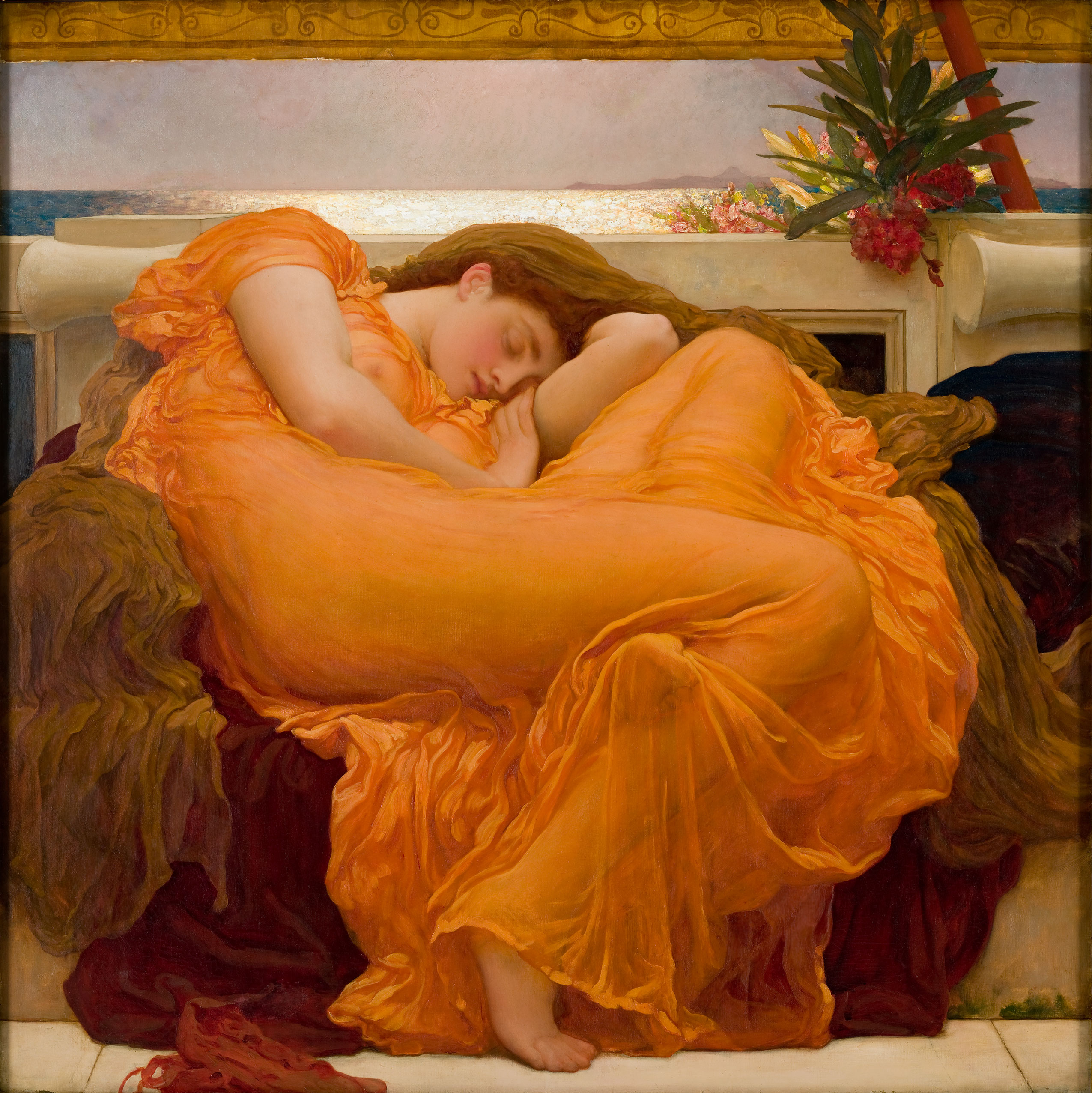
Mahmoud Farshchian, “The Last Breath of Phoenix,” 1999, oil on canvas, 32 x 20 in. (c) Mahmoud Farshchian 2017

It was perhaps the most tragic and unsettling art-related news of 2016: The esteemed RJD Gallery located in Sag Harbor, New York, suffered a total loss during a massive fire on December 16. However, the gallery’s adroit owner quoted Mark Twain recently, saying, “The reports of my death have been greatly exaggerated.”

It was news that sent shockwaves across the contemporary art world on December 17: A massive fire in Sag Harbor, New York, had led to the complete destruction of at least four buildings, including the Sag Harbor Cinema and one of the premier contemporary art galleries in the country, RJD Gallery.

The void left by the catastrophe will likely take years to fill, but it is with great excitement that we report that measures to bring RJD Gallery back to its feet are proceeding with incredible quickness. If there is a silver lining after the loss of numerous fantastic artworks, it is the fact that the gallery had a large storage facility offsite, which has allowed operations to continue despite the destruction of its exhibition space.

RJD is currently breaking ground on a new location, 2385 Montauk Highway in Bridgehampton, New York, between Bobby Vans and the Candy Kitchen. The goal is to open the gallery space by March 2017. Did we mention that the new venue will feature twice the space as well?

In Greek mythology, a phoenix is a long-lived bird that is regenerated or reborn. Associated with the sun, the phoenix rises and obtains new life from the ashes of its predecessor. In historical records, the phoenix symbolizes renewal and resurrection, emerging from its death stronger than before.

The flaming bird of Greek mythology is a perfect metaphor for RJD Gallery: It is sometimes through the most challenging of times that one can emerge stronger and more determined than ever.

Stay tuned to Fine Art Connoisseur and Fine Art Today as we track the rebirth of RJD Gallery.

This article was featured in Fine Art Today, a weekly e-newsletter from Fine Art Connoisseur magazine. To start receiving Fine Art Today for free, click here.

Do You Love Art Nouveau? Take Note!

0
Alphonse Mucha, “Benedictine,” 1898, lithograph, 80 1/4 x 29 3/4 in. (c) The Harry C. Meyerhoff Collection 2017

Collectors and enthusiasts of the Art Nouveau movement will want to pay close attention to what’s happening in New York City on January 26. Why?

On Thursday, January 26, Swann Galleries in New York City will launch its 2017 auction season with a blockbuster sale of incredible masterworks from the Harry C. Meyerhoff Collection — the largest collection of works by Alphonse Mucha and his circle of Art Nouveau champions.

Of the 200 lots available, over half are by Mucha himself and represent the artist’s entire career, from his time in Prague to Paris and New York. Among the collection are nearly 240 breathtaking lithograph posters, expected to sell for from $35,000 to $50,000.

To learn more, visit Swann Galleries.

This article was featured in Fine Art Today, a weekly e-newsletter from Fine Art Connoisseur magazine. To start receiving Fine Art Today for free, click here.
This Masterpiece Gets New Life

0
Alphonse Legros, “L’angelus,” 1859, oil on canvas, 25 3/4 x 31 7/8 in. (c) Gallery 19C 2017

So many precious historical artworks are only preserved through a few black-and-white photographs. However, an incredible work — thought to have been lost for decades and known only through photography — was recently discovered in Los Angeles. What’s the story?

It’s refreshing to know that wonderful masterpieces many believe to be gone forever sometimes reappear. That was precisely the case in Los Angeles at Gallery 19C. Just a few weeks ago, the gallery came across a legendary work by Alphonse Legros (1837-1911), titled “L’angelus,” which was previously known only from black-and-white photographs.

Alphonse Legros, “L’angelus,” 1859, oil on canvas, 25 3/4 x 31 7/8 in. (c) Gallery 19C 2017

First unveiled at the Paris Salon in 1859, the painting quickly earned a reputation, particularly for its acceptance and praise by a number of commentators, including the discriminating art critic Charles Baudelaire (1821-1867). Via ArtDaily: “Singled out for praise by numerous subsequent commentators, first in France and later in England, America, and Europe, and housed in some of the art world’s best-known and most discerning early twentieth-century private collections, the reappearance of L’angelus in 2016 is indisputably a monumental episode in the annals of modern art history. It now resides in an important private American collection. The new owner plans to share it via museum exhibitions with the public.”

To learn more, visit Gallery 19C.

This article was featured in Fine Art Today, a weekly e-newsletter from Fine Art Connoisseur magazine. To start receiving Fine Art Today for free, click here.
How Well Do Art and Natural Science Mix?

0
Walton Ford, “Loss of the Lisbon Rhinoceros,” 2008, watercolor, gouache, pencil, and ink on paper panel, (wings) 98 1/4 x 42 3/4 in. (center) 98 1/4 x 62 3/4 in. (c) Paul Kasmin Gallery 2017

A number of outstanding historical artworks that examine the world of natural science will be presented alongside works by contemporary artists during a great show in New York.

This January, Sotheby’s Old Masters Department has combined forces with New York City’s Paul Kasmin Gallery to present “Naturalia,” a fascinating exhibition curated by Danny Moynihan. “Naturalia” features a range of outstanding historical works from the 16th, 17th, and 18th centuries along with works by contemporary artists.

The theme of the show revolves around the myriad presentations of the natural sciences in art. Via the gallery: “It is hard to imagine now the sense of wonder and discovery that artists of centuries past felt when studying nature, for man was still on the edge of the world; discovering new species of plants and animals at a pace unlike almost any other in modern history. Nature was as admired as it was feared, concurrently paradisiacal and dangerous, giving it both the sense of the exotic and of dark mystery.

Walton Ford, “Loss of the Lisbon Rhinoceros,” 2008, watercolor, gouache, pencil, and ink on paper panel, (wings) 98 1/4 x 42 3/4 in. (center) 98 1/4 x 62 3/4 in. (c) Paul Kasmin Gallery 2017

It is in this spirit that earthly metaphors have been borrowed, stolen and created by artists and writers over the millennia. A host of preeminent contemporary artists, including Mat Collishaw, Mark Dion, Walton Ford, Damien Hirst and Sam Taylor-Johnson, have lent or created works especially for this exhibition.

“The sense of wonder and the sublime in nature is represented by Walton Ford’s monumental ‘Loss of the Lisbon Rhinoceros,’ 2008, juxtaposed here with Albrecht Dürer’s famous depiction of the very same exotic animal, both inspired by the story of the animal’s tragic 15th century voyage to Rome. With these two critical images as launching points, we cannot but help reflect on the consequences of human interference in our delicate world. Works by Theodora Allen, Adam Fuss, Michael Joo and Sean Landers evoke the sublime and conjure the same fantastical anthropomorphic narratives as the 17th century Dutch painter Matthias Withoos’ extraordinary ‘Landscape with Birds and Flowers in the Underbrush of a Wood,’ 1660.”

“Naturalia” opens on January 19 and will continue through March 4. To learn more, visit Paul Kasmin Gallery.

This article was featured in Fine Art Today, a weekly e-newsletter from Fine Art Connoisseur magazine. To start receiving Fine Art Today for free, click here.
Five Decades of Perfection: John Howard Sanden

0
John Howard Sanden, “His Highness the Emir of Kano, Nigeria,” (c) John Howard Sanden 2017

Fifty years is a long time, and in that span this leading American portrait painter has captured the likenesses of some of the most important leaders and much more. Some of his greatest achievements are currently hanging in one of New York’s most prestigious clubs.

It was a long time ago that portraitist John Howard Sanden first established himself as one of America’s leading painters. Since then, his reputation has only grown, to near-legendary status. Among his sitters have been Billy Graham, President George W. Bush, and African kings sitting for state portraits.

John Howard Sanden, “Reverend Billy Graham,” (c) John Howard Sanden 2017

Opening January 16 at New York’s venerable Salmagundi Club and continuing through February 3 is a monumental retrospective of Sanden’s portraits. This can’t-miss exhibition explores one visionary’s path through some of the most important estates and is co-sponsored by the Portrait Institute and by Portraits, Inc. — widely recognized as the premier portrait gallery and brokerage in the country.

John Howard Sanden, “His Majesty the Alafin of Oyo,” (c) John Howard Sanden 2017

An opening reception will be hosted at the club on January 19 between 6 P.M. and 8 P.M. Also on the slate is an illustrated lecture with Sanden on Sunday, January 22 at 3 P.M.

John Howard Sanden, “His Highness the Emir of Kano, Nigeria,” (c) John Howard Sanden 2017

To learn more, visit the Salmagundi Club.

This article was featured in Fine Art Today, a weekly e-newsletter from Fine Art Connoisseur magazine. To start receiving Fine Art Today for free, click here.

Portrait of the Week: How Does the Unknown Become Known?

0
Orazio Gentileschi, “Head of a Woman,” oil on panel, 16 1/2 x 14 3/8 in. (c) Sotheby’s 2017

In this ongoing series, Fine Art Today delves into the world of portraiture, highlighting historical and contemporary examples of superb quality and skill. This week: “Head of a Woman” by a monumental painter from long ago. Did we mention it could also be yours?

For the right price, of course. Sotheby’s New York expects this week’s feature portrait to land in someone’s collection for a modest price of between $2 million and $3 million during its January 25 Master Paintings & Sculpture Evening Sale. Although most — if not all — of us may not be able to acquire Orazio Gentileschi’s (1563-1639) gorgeous “Head of a Woman,” we can still marvel at the mastery of this portrait.

Tightly cropped just below the neck and nearly square in format, the portrait presents us with the thoughtful gaze of an unknown female sitter. Immediately noticeable is Gentileschi’s fantastic use of color — the subtleties of gray-blue that flash over her skin, or the oranges and reds found within her flushed cheeks. With her shoulder bare, some have detected a certain degree of sexuality in the portrait, leaving to the viewer’s imagination what lies beneath the picture’s frame. The sitter’s head has been tilted in three-quarter view, but her gaze returns to the viewer, endowing the portrait with a brief sense of life and movement. Although we may never know her identity, her presence and vitality have been captured with incredible sensitivity — forever immortalized through brush, canvas, and paint.

To learn more, visit Sotheby’s.

This article was featured in Fine Art Today, a weekly e-newsletter from Fine Art Connoisseur magazine. To start receiving Fine Art Today for free, click here.

Featured Lot: Oh How Sweet It Is

0
Adam de Coster, “A Young Woman Holding a Distaff Before a Lit Candle,” oil on canvas, 52 3/4 x 37 3/8 in. (c) Sotheby’s 2017

In this ongoing series for Fine Art Today, we take a longer look at the history and features of a soon-to-be-available artwork of note. This week: “A Young Woman Holding a Distaff Before a Lit Candle”.

Masters Week is just days away at Sotheby’s, and they’ve surely outdone themselves to kick off their 2017 auction schedule. Indeed, there are so many tantalizing lots available, we had difficulty choosing which one to feature. But the show must go on, and we’ve settled on an exquisite masterpiece by 17th-century painter and Antwerp Caravaggisti Adam de Coster (1586-1643).

With the title of “Caravaggisti,” it should come as no surprise to readers that de Coster was a master of chiaroscuro and, in particular, tenebrism (a technique championed by Caravaggio that features black backgrounds and dramatic contrast between light and shadow). De Coster is also known specifically for his compositions in which the central subjects are lit only by a single candle. Often, the flame of the candle is obstructed by a figure’s hand or arm, enhancing the spatial context and dramatic mood.

Highlighting Sotheby’s January 25 Master Paintings & Sculpture Evening Sale in New York City is de Coster’s “A Young Woman Holding a Distaff Before a Lit Candle.” Via Sotheby’s: “In this painting, the glow of a single flame illuminates the various rich fabrics and delicate features of a young woman set against a dark background. Vivid shadows cast throughout the composition define her engaging visage as well as the patterned details of her sleeve, the tufts of fur that line her robe, and the wispy tendrils of the distaff she holds near the candle. The same rich crimson color found in her robe and striped headdress is also subtly detectable in her supple lips, the apple of her cheeks, and the sheen of the stem of the candlestick. Distinct affinities are apparent between the present painting and de Coster’s ‘A Man Singing by Candlelight’ (circa 1625-1635, National Gallery of Ireland, Dublin), a work, like the present canvas, once thought to be by Honthorst. Both works depict a single figure dressed in a fur-lined costume, beautifully lit by the flame of what appears to be the same candle stick. Although it is tempting to think these two canvases may have once been pendants that hung at opposite sides of a grand gallery, the figures face in the same direction and hold slightly different places in the picture plane. Nevertheless, the undoubted connection between the two illustrates de Coster’s reworking of a successful and captivating compositional prototype.”

Auction estimates are between $1.5 million and $2 million. To learn more, visit Sotheby’s.

This article was featured in Fine Art Today, a weekly e-newsletter from Fine Art Connoisseur magazine. To start receiving Fine Art Today for free, click here.
WEEKLY NEWS FROM THE ART WORLD

Fill your mind with useful art stories, the latest trends, upcoming art shows, top artists, and more. Subscribe to Fine Art Today, from the publishers of Fine Art Connoisseur magazine.

  • This field is for validation purposes and should be left unchanged.