

A rare chance to see the magnificent prints of Mexico’s Alfredo Zalce is on now in Colorado.
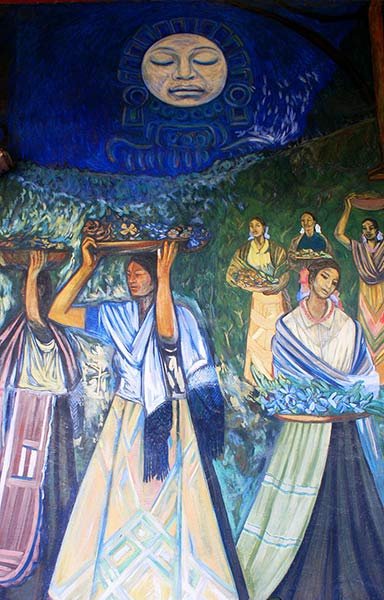
It is only six prints, but the impact of this exhibition of prints by Alfredo Zalce is big. Now through the end of April, the Dry Creek Art Press in Denver, Colorado, is presenting the prints with great excitement. Zalce, known predominantly for his colorful murals that illustrate his fervent social criticism, also produced wood-block prints that translate his imagery onto a smaller scale.
A contemporary of Diego Rivera and David Siqueiros, Zalce is widely considered a national treasure in Mexico and a museum was opened in 1971 in his honor.
To learn more, visit the Dry Creek Art Press.
This article was featured in Fine Art Today, a weekly e-newsletter from Fine Art Connoisseur magazine. To start receiving Fine Art Today for free, click here.
Alfredo Zalce Prints
Master Prints
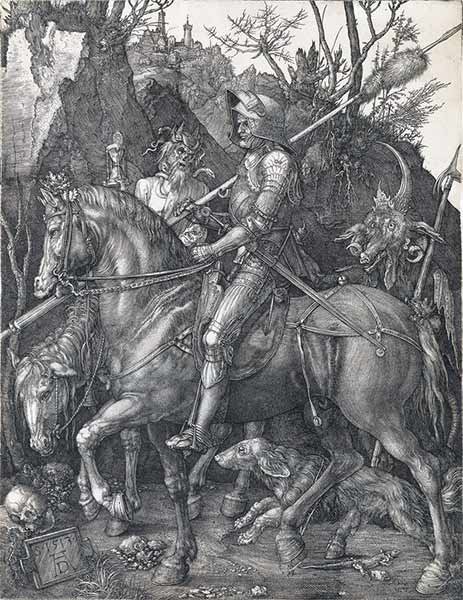
Both Rembrandt and Dürer highlight a major sale of master prints on April 28. Which prints are available, and who are the other big names included?
Your chance to own works from the master of printmaking — Albrecht Dürer — has arrived via Swann Auction Galleries on April 28. Among the notable works are his monumental “St. Jerome in his Study,” “Knight, Death and the Devil,” and “The Engraved Passion” —all canonical works in Dürer’s oeuvre. Prints are priced between $80,000 and $180,000, and the auction is an outstanding opportunity for collectors. A particular highlight is “Knight, Death and the Devil,” a vibrant and gorgeous print filled with unimaginable drama and detail. The available print is in outstanding condition, with no signs of wear, richly inked, strong contrast, and clarity. It is, without a doubt, one of the Holy Grails of print collecting.
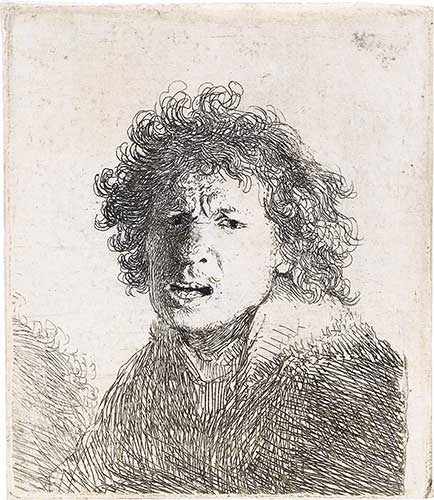
Rembrandt van Rijn, “Self-portrait,” ca. 1630, etching, (c) Swann Auction Galleries 2016
Also highlighting the sale are several prints from Rembrandt van Rijn, another master of the technique. Indeed, if there were any rival to Dürer’s position as the best, it would be Rembrandt. Along with a few landscape prints, a self-portrait of the artist is also included. Other top names included in the April 28 sale are Thomas Hart Benton, James Whistler, Marc Chagall, Edvard Munch, Henri Matisse, Giovanni Piranesi, Camille Pissarro, and Picasso. Whether a traditionalist or modernist, the sale is sure to have something for every collector.
To learn more, visit Swann Auction Galleries.
This article was featured in Fine Art Today, a weekly e-newsletter from Fine Art Connoisseur magazine. To start receiving Fine Art Today for free, click here.
Open Studios
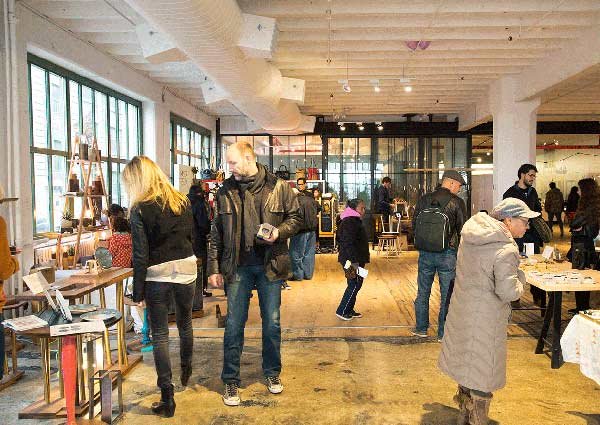
Any opportunity to visit the creative spaces of artists is captivating and exciting. Seventy-five studios will open to the public this May in New York.
Whether you’re an art collector, enthusiast, or connoisseur, we all share in the desire to know and understand the artists we admire. A major move in that direction is to step into their creative spaces, to see the props and equipment, and the finished and unfinished works stacked against the walls.
Today, it seems that nearly every city hosts an “Art Crawl” or “Studio Walk” to encourage and support their art communities, and the same can be said for Brooklyn, New York. On May 14 and 15, Industry City Studios in Sunset Park will open the doors to 75 artist studios, featuring the full spectrum of styles and media. Visitors can expect to see painters, photographers, sculptors, stained-glass artists, video artists, jewelers, textile designers, graphic designers, and many more. The events kick off at 11 A.M. and will continue through 6 P.M. on both days.
To learn more, visit Industry City Studios.
This article was featured in Fine Art Today, a weekly e-newsletter from Fine Art Connoisseur magazine. To start receiving Fine Art Today for free, click here.
High Society
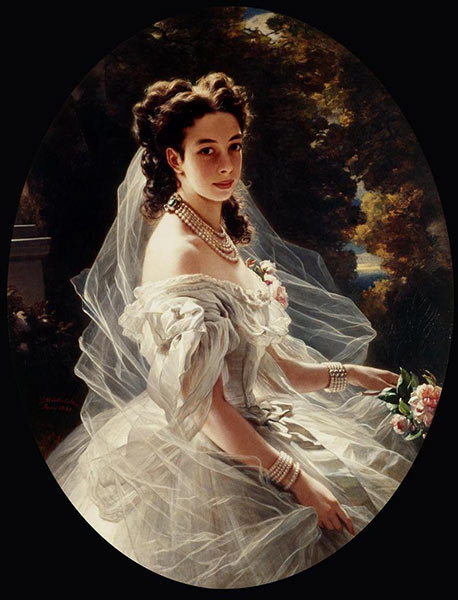
Portraits by one of the 19th century’s most renowned painters of European aristocracy are on view during this monumental exhibition in….
Over his illustrious career, painter Franz Xaver Winterhalter (1805-1873) consistently displayed an uncanny ability to capture with skill the elegance and opulence of Europe’s most distinguished individuals. He is hailed as one of the 19th century’s most accomplished portraitists, and Winterhalter’s works are often cited in the fields of high fashion, art history, and sociology.
Forty-five delightful works by Winterhalter are on view now at the Museum of Fine Arts Houston through August 16. Via the museum webpage: “This major survey features works drawn from public, private, and royal collections around the world.”
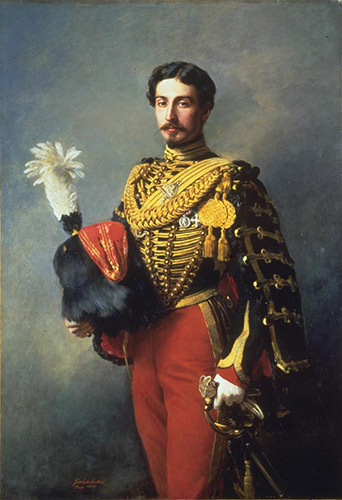
Franz Xaver Winterhalter, “Édouard André,” 1857, oil on canvas,
(c) Musée Jacquemart-André, Institut de France, Paris 2016
The German-born Winterhalter (1805–1873) gained popularity in Paris and became the preferred portraitist of England’s Queen Victoria and Prince Albert, and his services were eventually in much demand throughout Europe. He was celebrated for his ability to capture likenesses and for his superb rendering of textures and fashionable details.
Although many of Winterhalter’s iconic portraits of European nobility predate the entry of couturier Worth (1825–1895) into the field of fashion, their client lists among elegant women of the European courts overlapped. High Society showcases about 45 of Winterhalter’s magnificent paintings, along with glamorous evening gowns and other couture garments from the period.”
To learn more, visit the Museum of Fine Arts Houston.
This article was featured in Fine Art Today, a weekly e-newsletter from Fine Art Connoisseur magazine. To start receiving Fine Art Today for free, click here.
A New Caravaggio?

Michelangelo Caravaggio (1571-1610) is one of the most debated, researched, and beloved baroque painters, so the possibility of a new canvas being recently discovered is making waves.
It’s a familiar story, though one that many art lovers can only dream of: Covered in dust and maybe underneath an aged bedsheet in an attic lay a priceless work of artistic genius. This is what experts believe happened in Toulouse, France, just last week. Adding even more intrigue — if that were possible — is the suspicion that the painting just might be a long-lost Caravaggio original.

Michelangelo Caravaggio, “Judith Beheading Holofernes,” circa 1599, oil on canvas, 57 x 77 in.
(c) Galleria Nazionale d’Arte Antica, Rome 2016
The painting is a gorgeous representation of the Jewish princess Judith beheading Holofernes, a general of Nebuchadnezzar’s army, which has besieged her city. Executed with strong tenebrist light, a black background, and blood-red sheets dramatically draped above, the piece is undeniably in the style of Caravaggio. Eric Turquin believes every element of the piece aligns with the baroque master, including “the light, the energy typical of Caravaggio, without mistakes, done with a sure hand and a pictorial style that makes it authentic.” If the work is proven to be an original by Caravaggio, its value could easily top $178 million.

A direct comparison of the two reveals both similarities and differences.
However, not everyone is convinced the work is by Caravaggio — including this author. The subject of the painting was a familiar one to both Caravaggio and his contemporaries. In fact, a known painting of the same subject survives in the Galleria Nazionale d’Arte Antica — one of Caravaggio’s most dynamic and celebrated pictures. A comparison of the two reveals a number of compositional and stylistic similarities. However, the recently discovered work does not appear to be executed with the same level of naturalism or skill. In particular, the contorted body of Holofernes is awkwardly placed in the composition and the lack of foreshortening in his right arm seems oddly erroneous. Further, Caravaggio’s influence among his immediate and proceeding contemporaries is well documented, so the possibility of the work’s being a beautiful copy seems likely. As exciting as this may be, perhaps the art world is exhibiting some wishful thinking.
To learn more, visit ArtDaily.
This article was featured in Fine Art Today, a weekly e-newsletter from Fine Art Connoisseur magazine. To start receiving Fine Art Today for free, click here.
Women Painting Women
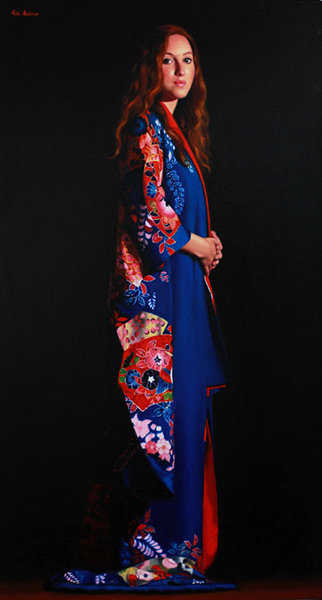
A major exhibition of stunning portraits by a group of renowned female artists will be a feast for the eyes.
On view April 20 through May 29, “Women Painting Women” is a captivating group exhibition in Australia that was, at least in part, inspired by similar shows in the United States. Showcasing seven outstanding creators — Fiona Bilbrough, Jacqui Grantford, Raelene Sharp, Sally Ryan, Vicki Sullivan, Avril Thomas, and Heather Ellis — both painting and sculpture will be featured.
The exhibition is hosted by Burrinja Gallery in Upwey, Victoria, and is the country’s first installment of the “Women Painting Women” phenomenon. Via the exhibition webpage: “Featuring well known Australian women such as Nobel Prize Nominee Dr Catherine Hamlin, actors Kerri Armstrong and Jacqui Weaver, opera singer Liane Keegan, and self-portraits of the artists, the exhibition highlights the power and insight of women painting women and situates the artists’ work within the broader art historical context.”
To learn more, visit Burrinja Gallery.
This article was featured in Fine Art Today, a weekly e-newsletter from Fine Art Connoisseur magazine. To start receiving Fine Art Today for free, click here.
Featured Lot: C.W. Eckersberg, “In the Wooded Landscape”
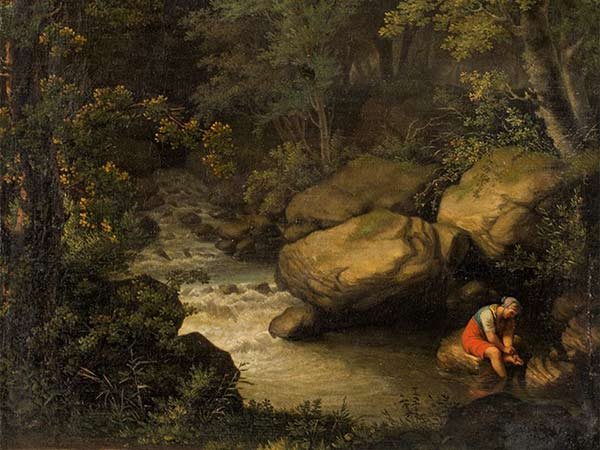
In this ongoing series for Fine Art Today, we take a longer look at the history and features of a soon-to-be-available artwork of note. This week: C. W. Eckersberg, “In the Wooded Landscape.”
Son of painter and carpenter Henrik Eckersberg, Christoffer Wilhelm Eckersberg (1783-1853) is hailed as the key artist who laid the foundation for the Golden Age of Danish Painting. This “father of Danish painting,” as he has been called, was apprenticed at 17 to Josiah Jacob Jessen in Flensborg before being accepted into the Royal Danish Academy of Art in 1803. Eckersberg progressed smoothly, but scholars have noted some friction that developed between the artist and Nikolaj Abildgaard, his teacher.
For several years following his academic training, Eckersberg traveled Europe, making stays in Rome, Florence, Germany, and Paris, where he studied the works and monuments of previous masters. Returning to Denmark, Eckersberg would eventually find himself back in the academy, though it was as a professor rather than a student. Eckersberg made his biggest impact as an educator. He stressed the importance of studying nature and working en plein air. Eckersberg also supported each of his students’ individual styles, which led to an esteemed roster of pupils.
Among a number of other notable works, Eckersberg’s “In the Wooded Landscape” will appear during Auctionata’s Old Master & 19th Century Paintings sale on April 27 in Berlin, Germany. The beautiful canvas, dated 1811, is a lush pastoral scene deep within a forest. A lone figure is found toward the bottom right of the picture, bathing in a calm pool along the shores of a stream. A warm glow of light cascades through the trees and illuminates the subject. Bidding will start at €20,000, though auction estimates are expected to exceed €40,000.
To view the full catalogue, visit Auctionata.
This article was featured in Fine Art Today, a weekly e-newsletter from Fine Art Connoisseur magazine. To start receiving Fine Art Today for free, click here.
Friday Virtual Gallery Walk – SAMPLE
As part of our effort to continue to keep artists and art galleries in business, we’re proud to bring you this new “Virtual Gallery Walk.” Browse the paintings below and click the image itself to learn more about it, including how to contact the gallery.
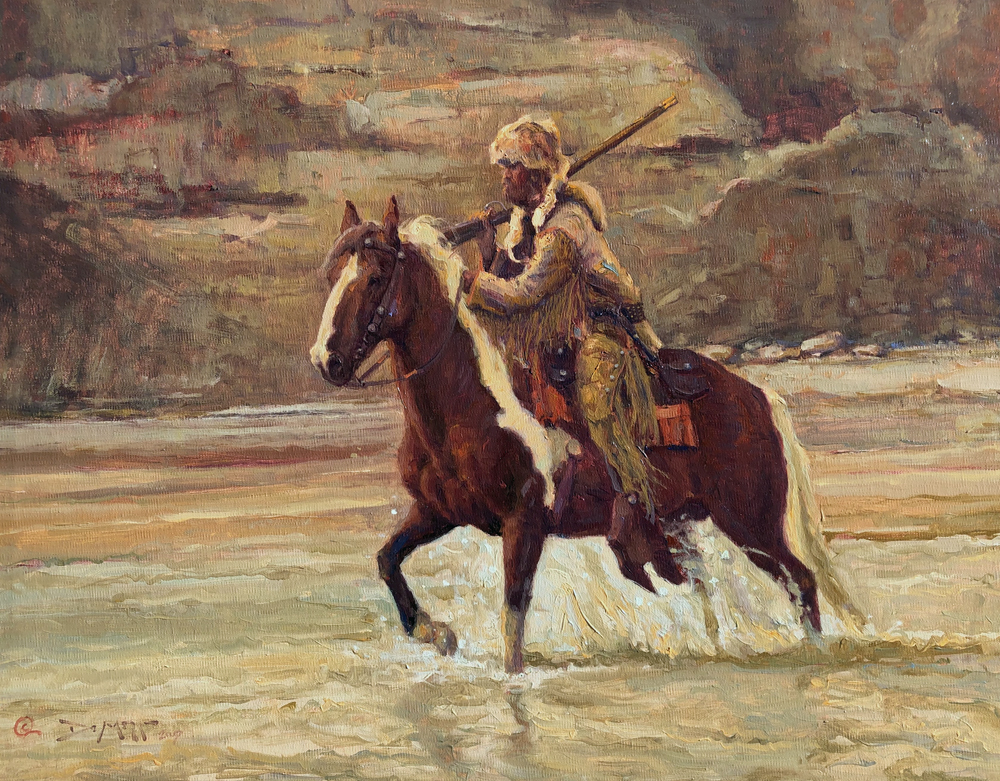



Want to see your gallery featured in an upcoming Virtual Gallery Walk? Contact us at [email protected] to advertise today – don’t delay, as spaces are first-come first-serve and availability is limited.
Featured Artwork: Heather Arenas WAOW PAAC
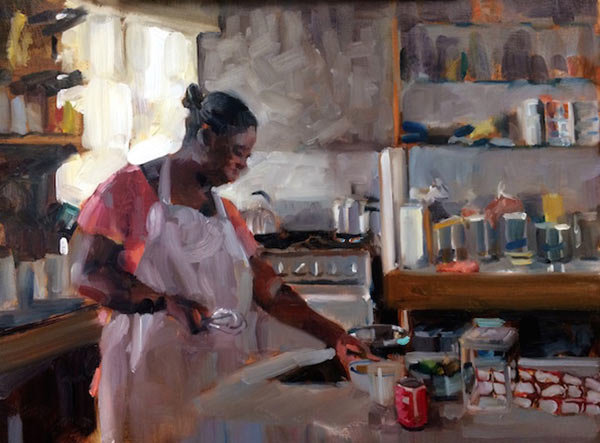
“The Belizean Chef”
Oil on Birch
14 x 18 in.
$1800
About the artist:
Although Arenas is a resident of Aurora, Colorado, much of her subject matter comes from her travels. In recent years she has traveled to Spain, Belize and several places in the US including New York, Pennsylvania and Arizona. The unique people encountered on these trips provide the stories illustrated in her paintings.
Arenas has been painting for many years in Colorado and has expanded her reach through plein air events and national competitions as well as showing her work in the following galleries:
Mary Williams Fine Arts, Boulder, CO 303-938-1588
Reflection Gallery, Santa Fe, NM 505-995-9795
Art Images, Denver, CO 303-863-1559
Stoneheart Gallery, Evergreen, CO 303-670-0565
Current events include:
“Dreams and Ambitions”, a show at the Cultural Center of Estes Park celebrating Women’s History Month, Estes Park, CO March 4th-April 3rd, 2016
“Montgomery Museum of Fine Arts 2016 smART Auction” to benefit MMFA, Montgomery, AL February 13th- March 5th, 2016
“Orange is the New Red”, Framed Image Art Gallery, Denver, CO March 1st – April 30th, 2016
Workshop schedule available at www.heatherarenas.com/workshops
Contact info
www.heatherarenas.com
720-281-4632
[email protected]
A Royal Artistic Flush
Only days remain for this playful exhibition at the Metropolitan.
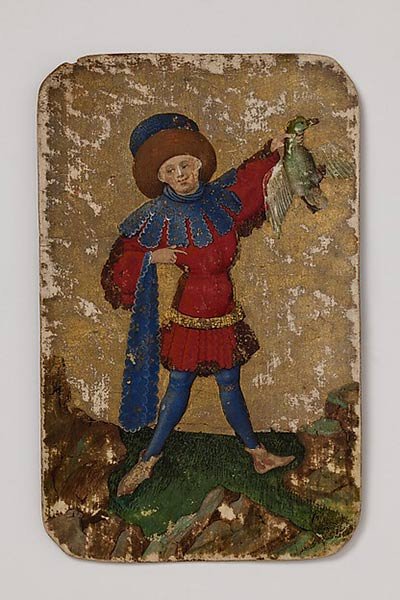
Only three decks of European hand-painted playing cards are known to have survived the late Middle Ages, and many of those cards are included in a small exhibition at the Metropolitan Museum of Art in New York. The exhibition is a magnificent display of early European painting and recalls the mastery of manuscript illumination.
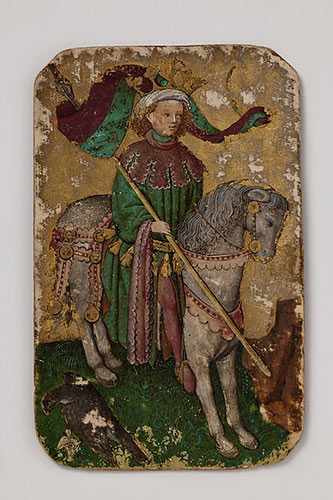
“Upper Knave of Ducks,” from The Stuttgart Playing Cards, ca. 1430, paper, gold, paint, ink, 7 1/2 x 4 3/4 in.
(c) Landesmuseum Württemberg, Stuttgart 2016
On view through April 17, “The World in Play: Luxury Cards, 1430-1540” presents a number of outstanding examples of playing card painting. Via the museum, “Examples of cards from the earliest hand-painted woodblock deck as well as 15th century German engraved cards, north Italian tarot cards of the same period, and the finest deck from the early 16th century will complete the display. Collectively, the figures and scenes depicted on these cards reflect changing worldviews during a period of tumultuous social, economic, and religious change, charting the transition from late medieval to early modern Europe.”
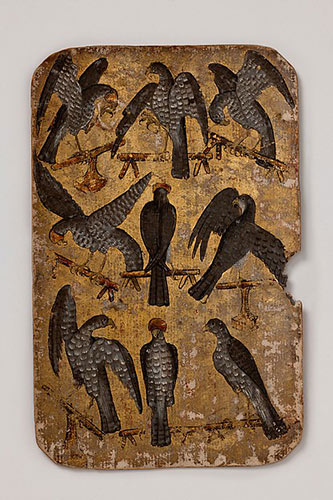
“9 of Falcons,” from The Stuttgart Playing Cards, ca. 1430, paper, gold, paint, ink, 7 1/2 x 4 3/4 in.
(c) Landesmuseum Württemberg, Stuttgart 2016
To learn more, visit the Metropolitan Museum of Art.
This article was featured in Fine Art Today, a weekly e-newsletter from Fine Art Connoisseur magazine. To start receiving Fine Art Today for free, click here.