

The Pennsylvania Academy of Fine Arts recently announced some of the newest acquisitions headed for its permanent collection. Who are the big names included?
The Pennsylvania Academy of Fine Arts announced this week that it has recently acquired a number of outstanding works for its permanent collection. Ranging in date from 1856 to 2015, the recent additions are eclectic in style and media. All told, over 40 paintings, sculptures, mixed media, and works on paper are included.
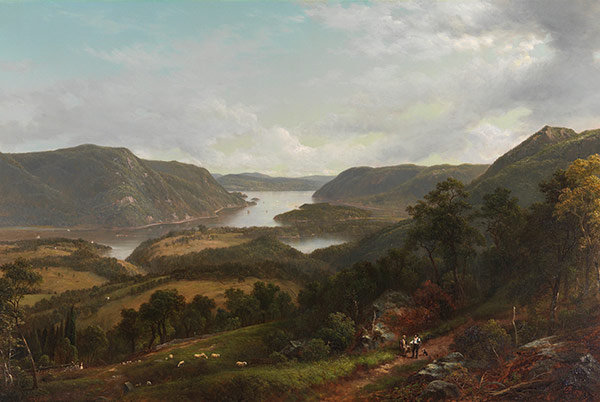
David Johnson’s exquisite panoramic landscape “The Hudson River from Fort Montgomery” of 1870 is a magnificent piece and a highlight of the additions. Johnson skipped no detail, and the painting appears as fresh today as it did nearly 150 years ago. Harriet Hosmer’s neoclassical marble sculpture “Puck on a Toadstool” from 1856 is also a feature.
Via the academy’s press release: “Expanding and diversifying its permanent collection — in particular its holdings of women and African-American artists, and Hudson River School painters – through gifts and purchases is a key focus of PAFA’s mission. The purchases are being made through collections endowments and dedicated collections funds.”
PAFA president and CEO David R. Brigham said, “PAFA is a living institution in which connections between the past, present and future are visible in all aspects of our identity. These latest acquisitions reflect this continuum and reinforce our continued mission to telling the full history of American art.”
PAVA curator of historical American art Anna Marley states that the newly acquired David Johnson is among the Hudson River School painter’s finest works. Marley said, “Given the excellent quality and condition of the painting, the fact that Johnson is only known to have painted six paintings at this scale, and the classic Hudson River scene with wonderful details like a train and steam and sail ships, we are thrilled to bring this work into PAFA’s permanent collection.’”
To learn more, visit the Pennsylvania Academy of Fine Arts.
This article was featured in Fine Art Today, a weekly e-newsletter from Fine Art Connoisseur magazine. To start receiving Fine Art Today for free, click here.
Pennsylvania Acquisitions
America, Seen
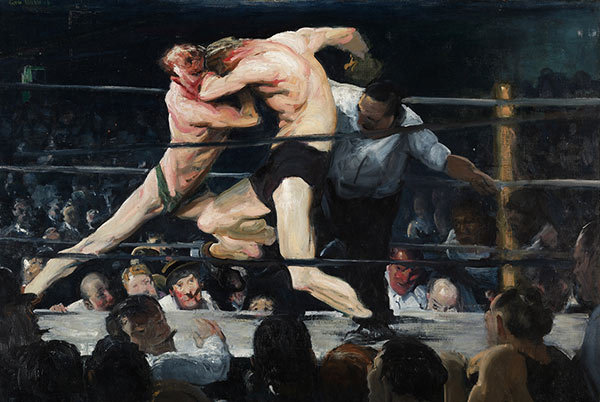
Between 1900 and 1950, America was a nation of constant evolution — cultural, political, social, and economic. The World Wars, industrialization, and the Great Depression produced an extraordinary time in the United States that resulted in artistic responses and reflections. And that is the subject of an outstanding exhibition in Minneapolis.
Featuring over 45 original prints, drawings, and watercolors by some of America’s leading artistic minds of the early 20th century, “America, Seen” is a small but powerful exhibition at the Minneapolis Institute of Art that explores one of the most dynamic periods in our nation’s history. Among the names included are John Sloan, George Bellows, Charles Burchfield, Thomas Hart Benton, John Steuart Curry, Grant Wood, Rockwell Kent, Reginald Marsh, Leo Katz, Elizabeth Catlett, Rico Lebrun, Ben Shahn, and many more.
The museum writes, “The first half of the 20th century was a time of enormous changes in American life. Industrial growth, unprecedented scientific and technological developments, and progressive social and financial reforms resulted in a higher standard of living, an expanded middle class, and greater levels of self-determination for both men and women. At the same time, global wars, economic depression, and racial and religious conflict produced suffering for many. These turbulent decades prompted insightful, often impassioned, responses from American artists whose perspectives conveyed many of the hopes, dreams, and fears of the public at large.”
“America, Seen” opened in December 2015 and will be on view through September 4. To learn more, visit the Minneapolis Institute of Art.
This article was featured in Fine Art Today, a weekly e-newsletter from Fine Art Connoisseur magazine. To start receiving Fine Art Today for free, click here.
The Edan Hughes Collection
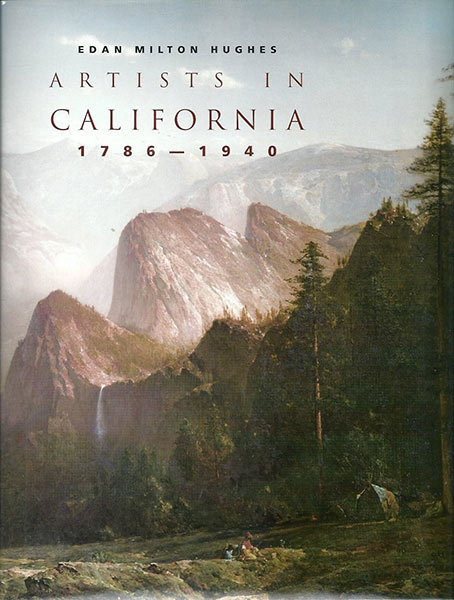
Author and acknowledged expert on California art Edan Hughes passed away in April 2015, and now selections from his renowned collection are being made available.
“Artists in California: 1786-1940” is without a doubt an essential guide for museums and galleries across the nation. The three-volume text was written by Edan Hughes, who himself amassed an impressive collection of art over his renowned career.
After Hughes passed in April 2015, many of his artworks were given to the Crocker Museum in Sacramento, where a gallery in his name has been dedicated. However, the remaining works were bequeathed to Hughes’ friend and neighbor of 20 years, Wayne Smith. Smith and another of Hughes’ friends are working to make their part of the collection available to the public.
The works can be found at www.edanhughes.com, where they will remain for at least a few more months. Both friends are currently working to develop a sales site before closing Hughes’ personal site.
To learn more, visit the California Desert Art.
This article was featured in Fine Art Today, a weekly e-newsletter from Fine Art Connoisseur magazine. To start receiving Fine Art Today for free, click here.
ADAA Draws Major Crows and Sales in 2016
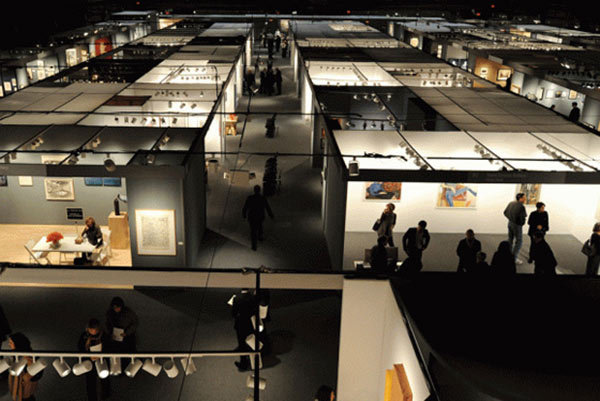
The Art Dealers Association of America recently closed the 2016 edition of “The Art Show” in New York City, which realized sales in the seven figures and attracted nearly 15,000 visitors over five days.
The longest-running — and arguably most respected — art fair in the United States boasted another successful year in 2016. The Art Dealers Association of America welcomed over 2,750 guests, including major collectors, philanthropists, and international art enthusiasts over five days during the first week of March. Via the organization’s press release: “The Art Show 2016 boasted one of the strongest years of attendance in the fair’s history, welcoming approximately 15,000 visitors throughout its five-day run. Together, proceeds from the Gala Preview and The Art Show raised a total of over $1.1 million for Henry Street Settlement, one of New York’s leading social service, arts, and health organizations.”
Adam Sheffer, ADAA president, said, “The Art Show 2016 dynamically reflected the vision and values that define the ADAA and its members. As a fair organized by a community of art dealers from around the country, the Art Show fosters critical conversations both within the art world and between the art world and the public, strengthening the vital relationships that power our cultural community.”
The ADAA reports, “Collectors responded with ardent enthusiasm to The Art Show, with galleries boasting strong sales, as well as meaningful engagements with museum professionals and scholars, laying the groundwork to advance the study and exhibition of artists from around the world. 303 Gallery sold out its presentation of multimedia works by rising New York-based artist Nick Mauss; Tilton Gallery sold out its debut presentation of new sculptures by Chicago-based artist Simone Leigh; Lehmann Maupin sold nearly all of the works in its solo presentation of recent paintings by Hernan Bas; Salon 94 sold a number of rarely seen early works by Marilyn Minter; David Zwirner sold nearly all of its presentation of Sherrie Levine’s new knot paintings; and Anthony Meier Fine Arts sold a number of Jasmin Sian’s new cut-outs.”
To learn more, visit the Art Dealers Association of America.
This article was featured in Fine Art Today, a weekly e-newsletter from Fine Art Connoisseur magazine. To start receiving Fine Art Today for free, click here.
Keiser Finds Success in ‘Day Painting’
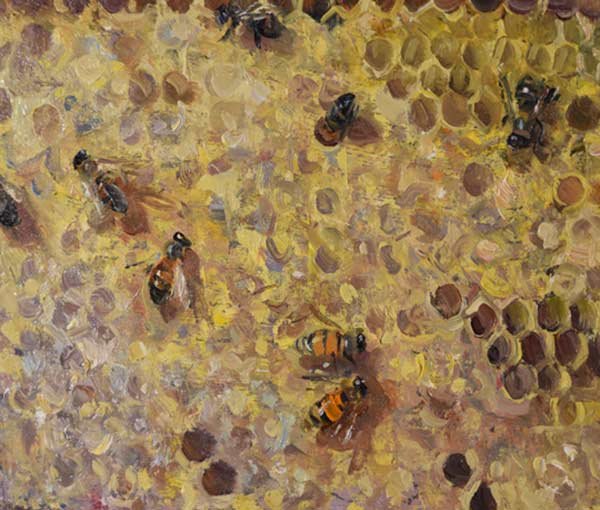
Begun in 2004, painter Duane Keiser’s blog titled “A Painting a Day” has caught fire — featured in the New York Times, USA Today, and The Huffington Post. Why is everyone talking about it? Find out here.
“If mindfulness can be defined as the simple act of noticing things, then ‘A Painting a Day’ is a kind of meditation,” writes painter Duane Keiser, who in 2004 began a blog on his website where — using a makeshift easel made from a cigar box — he would publish a postcard-sized painting each day. These small works would be offered on eBay, where collectors could bid and purchase them. For Keiser, “These paintings are about the pleasure of seeing; of being cognizant of the world around me and pushing to find an alchemy between the paint, my subject and the moment. I view each piece as being part of a single, ongoing work.”
The blog has exploded in popularity and earned Keiser nationwide notoriety. Further, the paintings are quick to sell, and the practice of “a painting a day” has been picked up by many other artists. Keiser’s blog includes an archive of previous paintings in addition to a selection of videos showing the creative process:
This article was featured in Fine Art Today, a weekly e-newsletter from Fine Art Connoisseur magazine. To start receiving Fine Art Today for free, click here.
Digital Painting
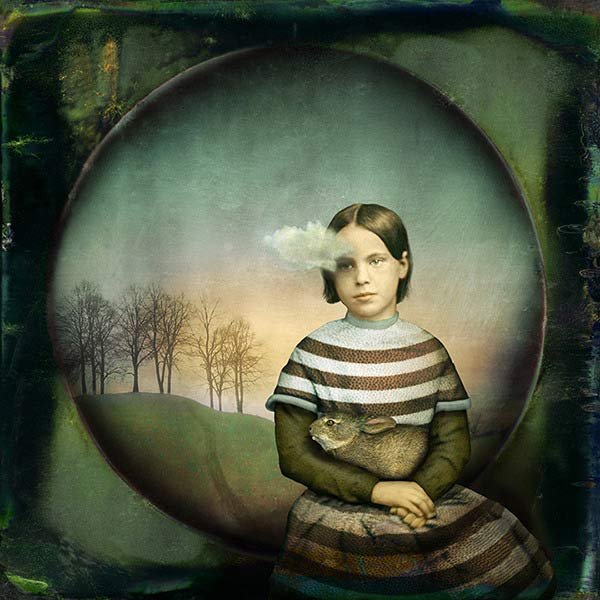
Turning her still life photography into so much more, the fascinating digital pictures by Maggie Taylor are the subjects of a solo exhibition. Get the details here!
Although her pictures are created using a digital platform, the effect is — without a doubt — a painterly one. Living on the outskirts of Gainesville, Florida, artist Maggie Taylor is a master at manipulating images in Adobe Photoshop, and her gorgeous compositions have earned the artist numerous awards.
On view now at The Vault Gallery in Cambria, California, Taylor is exhibiting a number of her prints and will also be available for a book signing on April 30 from 1-3 p.m. To learn more, visit The Vault Gallery.
This article was featured in Fine Art Today, a weekly e-newsletter from Fine Art Connoisseur magazine. To start receiving Fine Art Today for free, click here.
A Visionary Painter
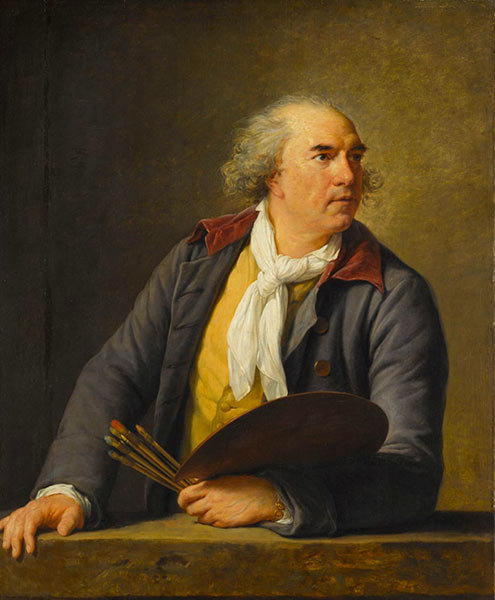
As one of history’s greatest creators of poetic images, Hubert Robert trod a remarkable artistic path during the 18th century, from Rome, to France, and beyond. The Louvre Museum in Paris recently mounted a major exhibition dedicated to this “enlightened” painter.
“Hubert Robert: A Visionary Painter” is the first monographic exhibition devoted to the life and career of Hubert Robert (1733-1808) since 1933. Opened on March 9 at the world-famous Louvre Museum in Paris, the exhibition features some 140 works by Robert, including drawings, paintings, prints, furniture, and much more.
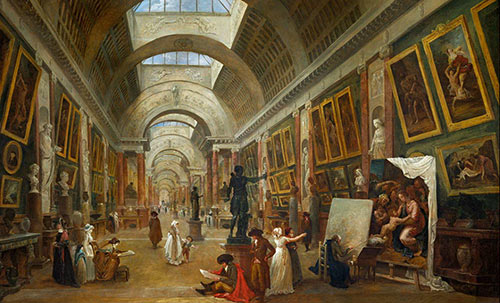
Hubert Robert, “Projet pour la Transformation de la Grande Galerie,” 1796, oil, (c) Louvre Museum 2016
Via the exhibition webpage: “Witty and urbane with an endlessly enquiring mind, Hubert Robert was a true man of the Enlightenment. He followed a remarkable artistic path that led him from Rome in the mid-18th century to the court of France, where he produced some of the most spectacular decors in the brilliant decade that preceded the French Revolution. A chronicler of Paris and of the stormy history that rocked the late 18th century, he ended his distinguished career as a thoughtful and committed curator of the brand new Muséum Central des Arts, the future Musée du Louvre. The work of this visionary artist was both eclectic and deeply coherent. It encompassed a broad range of genres: poetic landscapes, imaginary urban views inspired by architectural capricci, archaeological studies, remarkable and innovative designs for gardens and palatial decorations.”
“Hubert Robert: A Visionary Painter” will be on view through May 30. To learn more, visit the Louvre Museum.
This article was featured in Fine Art Today, a weekly e-newsletter from Fine Art Connoisseur magazine. To start receiving Fine Art Today for free, click here.
Kamille & Louise
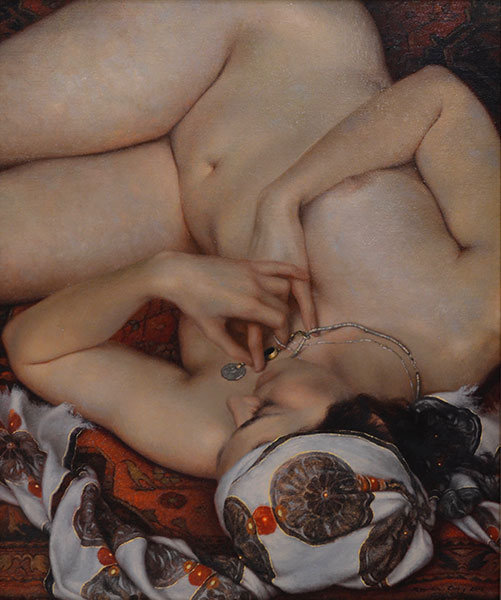
Ann Long Fine Art in Charleston, South Carolina, is proud to host a joint exhibition of two accomplished artists: Kamille Corry and Louise Fenne.
On view now at the lovely Ann Long Fine Art in South Carolina is an outstanding joint exhibition of recent works from Kamille Corry and Louise Fenne. Both artists are classically trained realist painters, but each has a magnetic individual style. Corry’s works focus on the human figure — arguably the most challenging of subjects for painters. Incorporating intricate patterning and landscape as well, “Her paintings reflect classical training and fine craftsmanship, rendering the figure in a modern, provocative light,” the gallery reports.
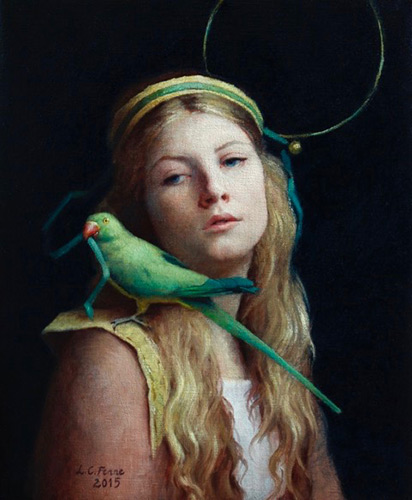
Louise Fenne, “Unraveller No. 4,” oil on canvas, 21 3/4 x 17 3/4 in. (c) Ann Long Fine Art 2016
Fenne’s work has recently explored colorful birds. In the Danish-born artist’s words, “My inclination to paint is driven primarily by the desire to make a visual statement rather than an intellectual one. Therefore my subjects tend only to be the means to a greater aesthetic end. The paintings are observations made over time, in layers, that I hope finally result in a harmony, giving the painting its own life and allowing it to speak for itself.”
The exhibition opened on March 4 and will be on view through the end of the month. To learn more, visit Ann Long Fine Art.
This article was featured in Fine Art Today, a weekly e-newsletter from Fine Art Connoisseur magazine. To start receiving Fine Art Today for free, click here.
Featured Lot: William Adolphe Bouguereau, “Prayer to the Virgin”
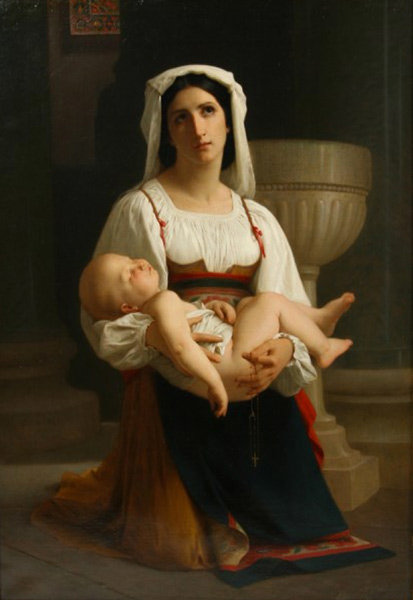
In this ongoing series for Fine Art Today, we take a longer look at the history and features of a soon-to-be-available artwork of note. This week: William Adolphe Bouguereau, “Prayer to the Virgin.”
Until recently, the name William Adolphe Bouguereau (1825-1905) had been all but forgotten and disregarded in the annals of history. A subject of vexed opinion and debate, Bouguereau suffered a fate similar to Rembrandt’s during the hundred years following his death in 1905: “ridiculed and banished from museums and official art circles,” as biographers Damien Bartoli and Frederick Ross put it. Bouguereau’s masterful paintings could be had for an average of $500 to $1,500 in 1960 — undoubtedly a consequence of the rapidly shifting views and definitions of art during the 20th century.
As one of history’s greatest painters of the figure, it seems opinions — and the market — for Bouguereau’s gorgeous pictures was bound to shift, and indeed, 1960 appears to have been rock bottom. Since the “swinging ’60s,” the value of Bouguereau’s paintings has exploded, doubling on average every four years. In fact, Bartoli and Ross document that in 1979 alone, prices for Bouguereau’s work quadrupled. By 2000, Bouguereau’s canvases were regularly commanding seven figures, and the desire for his works has only continued to increase.
As one of France’s preeminent academic and traditionalist painters, Bouguereau executed some 822 known paintings during his storied career, often portraying quintessential classical and mythological subjects. Bouguereau frequently depicted the figure, and his ability to render the human form is unparalleled; his knowledge of anatomy and physiology surfaces with remarkable clarity, craftsmanship, and skill. Bartoli and Ross write, “Bouguereau caught the very souls and spirits of his subjects much like Rembrandt. Rembrandt is said to have captured the soul of age. Bouguereau captured the soul of youth. Considering his consummate level of skill and craft, and the fact that the great preponderance of his works are life-size, it is one of the largest bodies of work ever produced by any artist. Add to that the fact that fully half of these paintings are great masterpieces, and we have the picture of an artist who belongs, like Michelangelo, Rembrandt, and Caravaggio, in the top ranks of only a handful of masters in the entire history of western art.”
Heading to the auction block via Stefek’s Auctions on March 24 in Michigan, “Prayer to the Virgin” is a brilliant Bouguereau original. The viewer is presented with a somber subject, a desperate mother who kneels and holds her child in her arms. Michelangelo’s famed “Pietá” undoubtedly inspires the figures, but here they are decidedly human. Flashes of brilliant red in the mother’s dress and the Rosary delicately hanging from her finders provide points of focus and vibrancy to the image as well. Auction estimates are between $300,000 and $400,000.
To view the full catalogue, visit Stefek’s Auctions.
This article was featured in Fine Art Today, a weekly e-newsletter from Fine Art Connoisseur magazine. To start receiving Fine Art Today for free, click here.
A Life of Their Own
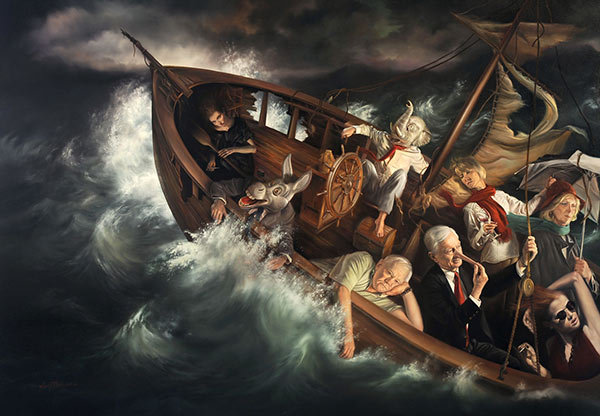
Learning more about the creative process of artist David Bowers, one could get the sense the painter is simply a conduit of pure inspiration. Focusing on his exquisite technique, Bowers allows the pictures to take on a life of their own, which frequently results in outstandingly beautiful works with unconventional narratives.
As one might expect from the tantalizing hints above, prolific artist David Bowers begins his creative process with a scene, subject, or idea that captures his attention. Using pencil or brown ink — and sometimes completing a watercolor study — Bowers records the source of inspiration. Once born, the paintings follow their own individual journeys, and it seems the end product is quite unpredictable.
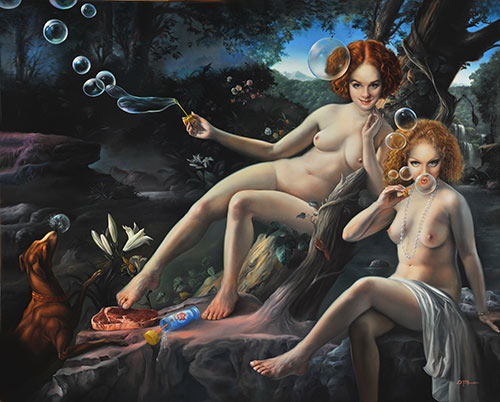
David Bowers, “Bust MY Bubble,” 2013, oil on linen, 26 x 32 in. (c) David Bowers 2016
“People always want to know what I was thinking when I create one of my more unusual paintings” Bowers says. “My answer to them is simple: I just really wanted to paint that girl wrapped in plastic holding a dead rat. The story sometimes just happens during the painting process. Sometimes the hidden narrative or true meaning is in the title itself. I am often inspired by an image that I see and my painting materializes from that image. It will often morph into so much more.”
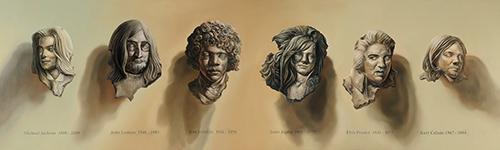
David Bowers, “Tears from Heaven,” oil on linen, 15 x 40 in. (c) David Bowers 2016
This process can be challenging and frustrating to follow, and Mrs. Bowers deserves some credit. “Halfway through a painting, I’m always in flux as to where I want to go with it and often complain to my wife that I don’t like the painting, it’s not working out, and I want to destroy it” the artist writes. “I wouldn’t be nearly as prolific if it weren’t for her. She tells me, ‘You always say that at this stage of the painting and it will work out in the end. It’s a beautiful painting and you are not going to destroy it!’”
Thank goodness, because she’s absolutely right; Bowers’ paintings are an outstanding example of contemporary realism, and his narratives are fresh, original, and captivating.
“Tears from Heaven” is a pertinent example. Bowers suggests, “This work was inspired by a wall in the Seattle Art Museum. The wall had a variety of busts and heads from antiquity in different degrees of decay attached to the wall. I loved the texture of the heads and how the shadows cascaded down against the wall. I love music and am a beginner guitar player, so I thought how interesting it would be to do something similar with rock and pop stars that died tragically and before their time.”
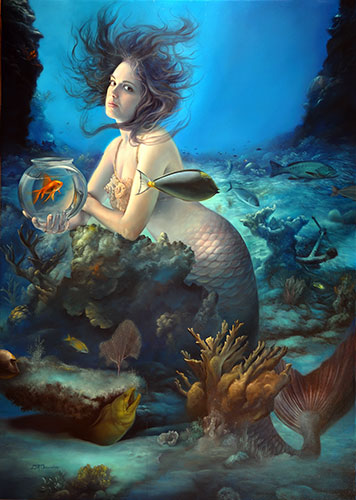
David Bowers, “Finding the Gold,” oil on Belgian linen, 34 x 24 in. (c) David Bowers 2016
Ultimately, Bowers seeks to perfect his technique, endeavoring to make each painting better than the last. With this in mind, it shouldn’t surprise that Bowers was inspired early in his career by the Dutch masters — their luxurious surfaces, captivating narratives, and subtle sense of humor. Today, only the desire to have a near-perfect finish on the surfaces of his work remains. “Now I try to paint without thinking of any past influences and create my own unique vision,” he says. “I spend a lot of time digging minute dust particles from my surfaces. I also sand the paintings carefully between layers with pumice stone powder to help with the removal of dust particles. My wife often says that I look like a mad scientist when I am creating a panel.”
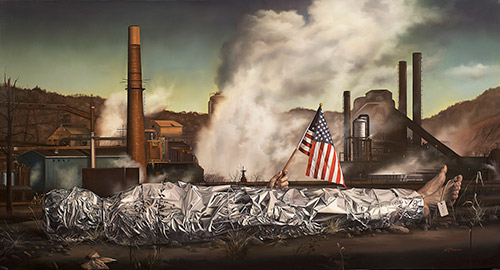
David Bowers, “Made in America,” 2011, oil on linen, 44 x 24 in. (c) David Bowers 2016
Modern-day Victor Frankenstein or not, Bowers indeed uses paint to bring his unique visions to the world, and the life they take on continues to draw collectors and connoisseurs. “My favorite quote was from Billy Joel. He said ‘In a world filled with mediocrity, just being competent makes you seem extraordinary.’ I will never settle for mediocrity. My drive is to make the next painting better than the last!”
To learn more, visit David Bowers.
This article was featured in Fine Art Today, a weekly e-newsletter from Fine Art Connoisseur magazine. To start receiving Fine Art Today for free, click here.