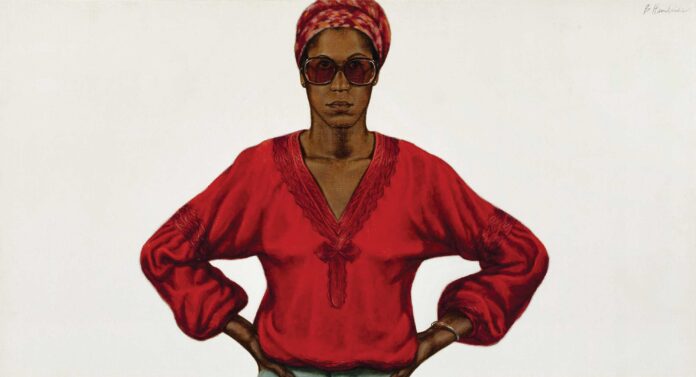
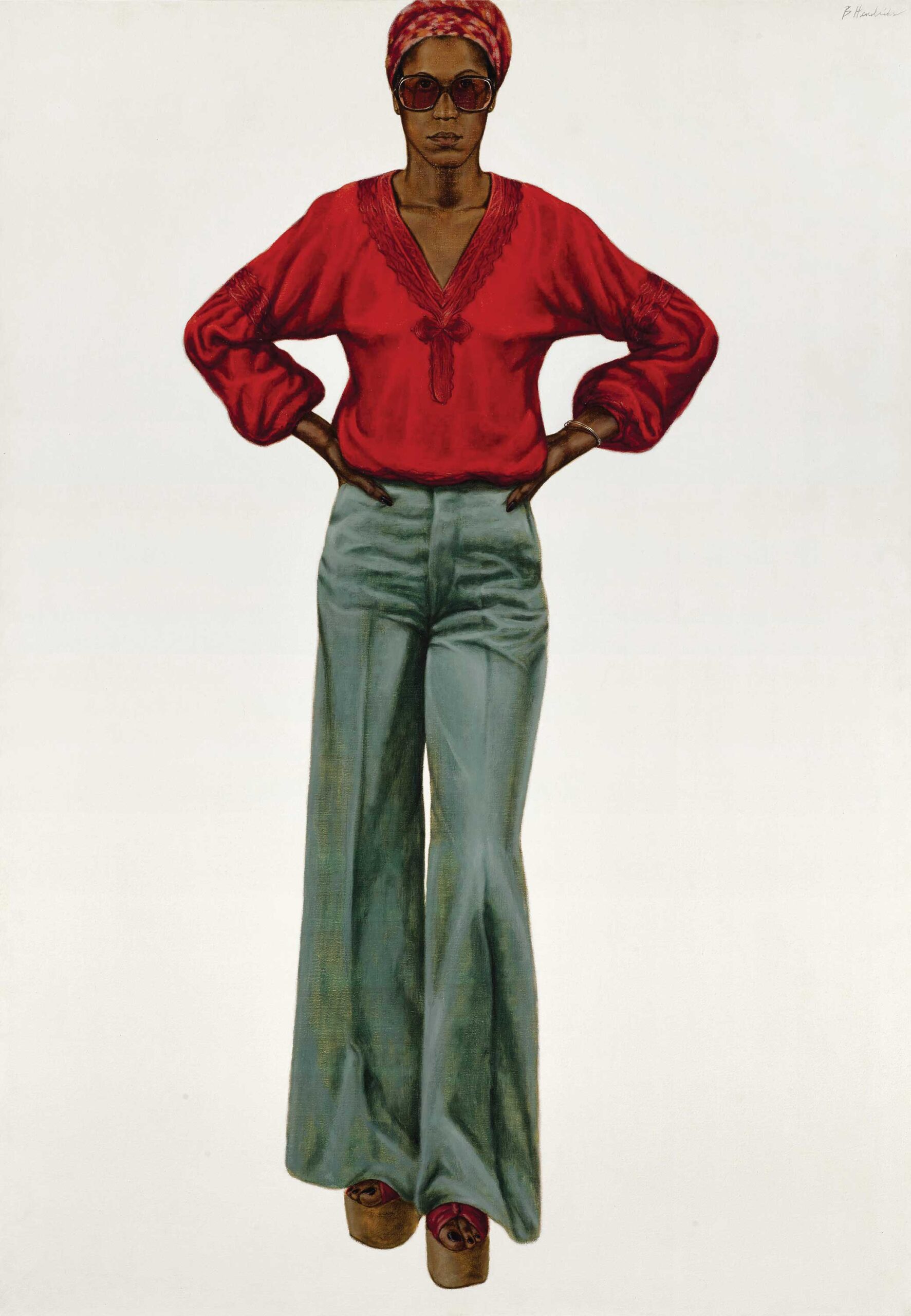
Today, the large, powerful portraits of Black men and women painted by Barkley L. Hendricks (1945–2017) sell for millions of dollars. Though successful and respected during his lifetime, the African American artist would probably have been amazed by his stratospheric prices and influence today.
Originally from Philadelphia, Hendricks studied at the Pennsylvania Academy of the Fine Arts, then Yale University. In 1972 he began teaching art at Connecticut College in New London — 50 miles east of Yale — and kept that post until 2010, remaining in the town until his death six years ago.
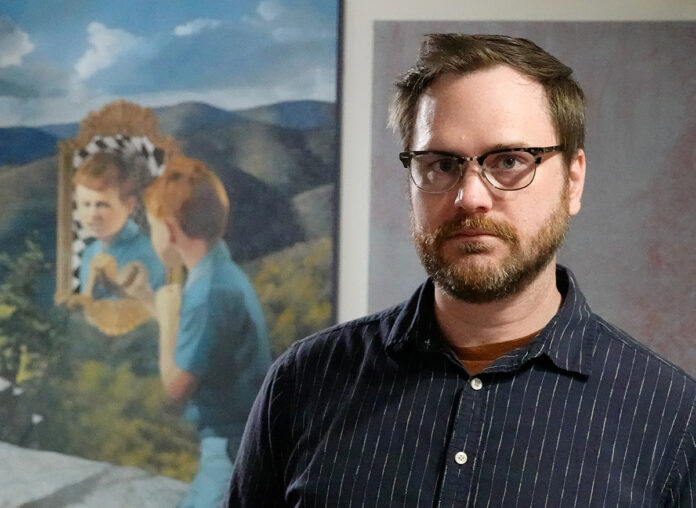
Now New London’s Lyman Allyn Art Museum has mounted an exhibition of 34 paintings and photographs that examines Hendricks “from a regional standpoint, exploring the role of place, community, and teaching over the span of his career in Connecticut,” in the words of curator Tanya Pohrt.
Depicted in them are Hendricks himself, as well as his neighbors, students, family, and strangers; several regional landscapes have been included, too.
Hendricks’s ascendance will be enhanced this autumn by a small show at New York City’s Frick Collection (September 21–January 7) that presents a dozen of his finest portraits in the context of that museum’s famous portraits by Rembrandt, Bronzino, Van Dyck, and others. Hendricks loved visiting the Frick, and would surely be gratified that his art has helped blaze a path for the richness of Black portraiture being produced today.
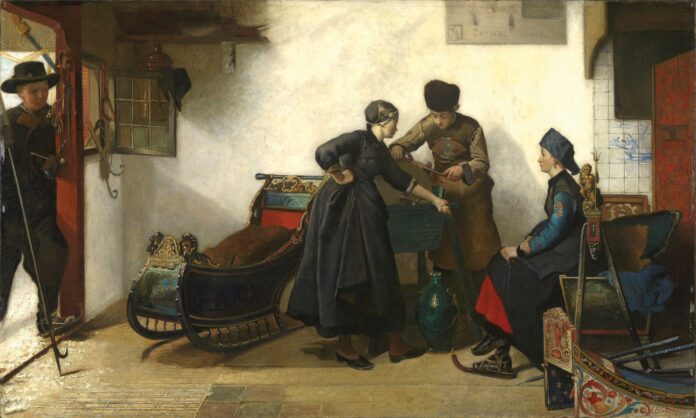
Christoffel Bisschop (1828-1904), "Winter in Friesland," c. 1876, oil on canvas, 31 4/5 x 53 in., Fries Museum
At the Fries Museum in Leeuwarden, The Netherlands: “Christoffel & Kate Bisschop: Longing for the Past” friesmuseum.nl
through January 7, 2024
Located in the northern Dutch province of Friesland, the Fries Museum has long highlighted local artists, including the great classicist Lawrence Alma-Tadema (1836–1912), who found huge success after he moved to London.
A talented contemporary who also moved away — though only as far as The Hague — was Christoffel Bisschop (1828–1904). Now quite forgotten, he and his London-born artist wife, Kate Bisschop-Swift (1834–1928), once enjoyed both commercial success and close relationships with the Dutch elite, including the royal family.
Now the Fries Museum has organized an exhibition, “Christoffel & Kate Bisschop: Longing for the Past,” that explores their achievements in unprecedented depth. The childless couple filled Villa Frisia, their mansion in the fashionable seaside resort of Scheveningen, with antiques that regularly appeared in their well-composed, somewhat sentimental scenes of daily life in the past.
Christoffel was particularly enchanted with the Frisian town of Hindeloopen; in the 17th and 18th centuries, ship captains returning home there had brought luxurious Asian porcelains and textiles to adorn their mansions. Frozen in appearance since the town’s economic collapse, those houses inspired both Bisschops, not only in their art, but also to evoke such interiors at home.
The Fries Museum recently acquired a once-famous painting by Christoffel, “Winter in Friesland” (c. 1876), which portrays a couple from Hindeloopen waiting for their skates to be sharpened so they can finally take to the ice.
The Bisschops helped make this style so familiar that soon it became equated worldwide with the Netherlands itself, thanks in part to a popular Hinderlooper Room at the 1878 world’s fair in Paris. After her husband’s death, Kate developed several similar rooms for the Fries Museum, one reason this year’s retrospective is so appropriate.
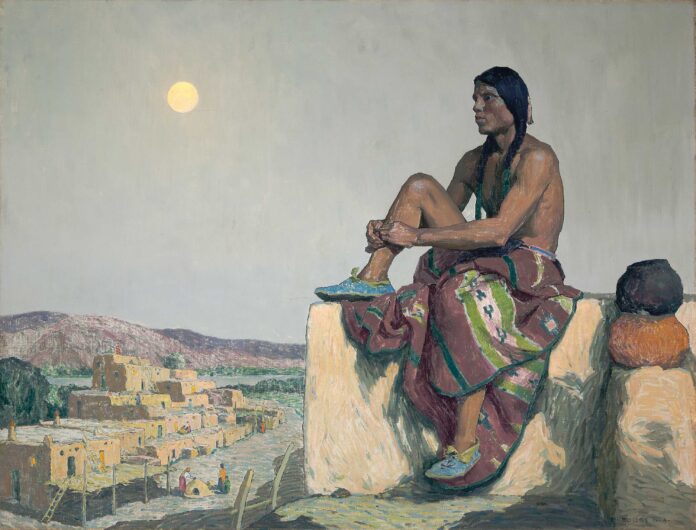
Eanger Irving Couse (1866–1936), "The Cacique," c. 1932, oil on canvas, 34 5/8 x 45 11/16 in., Harwood Museum of Art, gift of the Lewis J. Affelder Estate
Harwood Museum of Art Centennial
through January 28, 2024
Affiliated with the University of New Mexico since 2007, the Harwood Museum of Art (Taos, New Mexico) is home to a 6,500-object collection featuring works by Native American, Hispano-, and European-American artists, including members of the Taos Society of Artists and Taos Moderns. It was a century ago that Lucy Harwood created the museum, though she and her husband, Burt, had purchased the property in the heart of Taos seven years earlier.
This year’s centennial exhibition fills all nine galleries, highlighting the institution’s history with 200 artworks from the collection, plus important loans of art by such talents as Ansel Adams, Margaret Bourke-White, Elaine de Kooning, Georgia O’Keeffe, and Paul Strand.
It is accompanied by a new publication from the Museum of New Mexico Press, authored by Nicole Dial-Kay and Emily Santhanam. Both projects trace the ownership of the museum’s site from the Taos Pueblo to Spanish occupation and the Don Fernando de Taos land grant, onward to U.S. Army Captain Smith H. Simpson and ultimately the Harwoods.
The exhibition includes the museum’s original logo designed by Gustave Baumann in 1923, a never-before-exhibited work by Ernest Blumenschein, an array of WPA-era furniture and other objects, and artworks created as a collection for the Taos Municipal School District by such locals as Larry Bell, Emil Bisttram, Agnes Martin, Earl Stroh, and Katie Wells.
Also on view are photographs of John Gaw Meem’s original clay model of the museum building plus a new clay model by a Taos artist.
On August 3 and November 2, local artists will be able to exhibit their works on an “Open Wall.” For details on the year’s many upcoming programs, visit the museum website: harwoodmuseum.org.
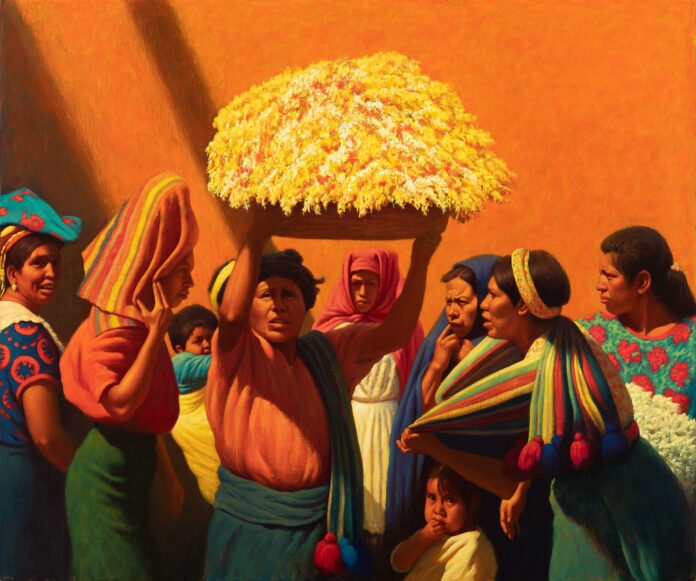
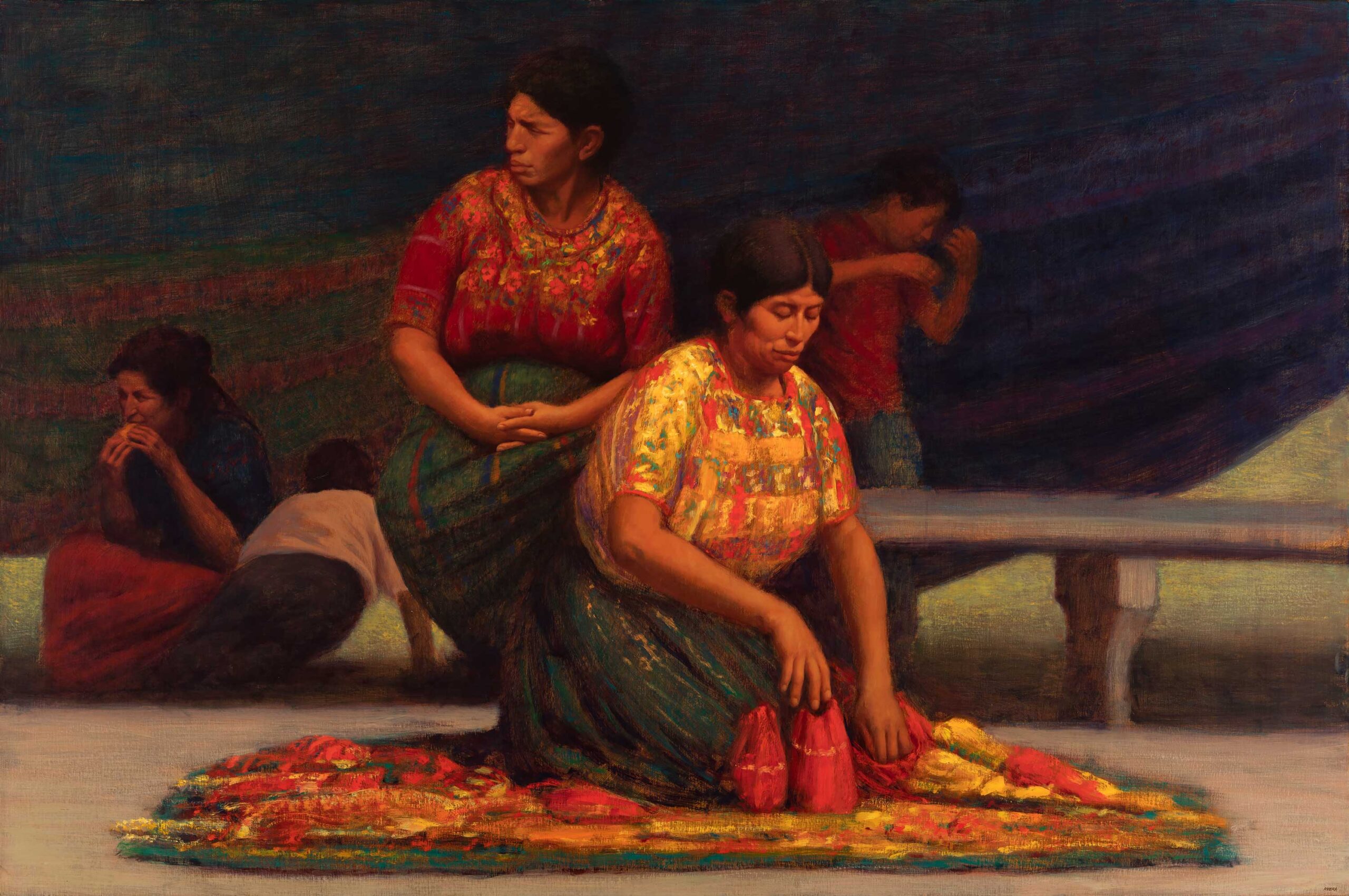
Elias Rivera, "Flowers of the Mind," 2002, oil on canvas, 50 x 60 in.
Figurative Art On View > American figural painter Elias Rivera (1937 – 2019) is best known for his striking body of canvases widely acclaimed for their visual eloquence in sublimely distilling the life of Indigenous communities whose cultural traditions persist little changed despite exposure to the contemporary world.
These works are regarded for their intimacy, purity of vision, and ability to impart a majestic sense of intrinsic nobility and dignity of their human subjects. LewAllen Galleries is pleased to announce its first exhibition of Rivera’s work, “From the Thread of Time,” as the exclusive representative of his estate. The exhibition is on view through Tuesday, August 22, 2023, including during the Indian Market in Santa Fe. The opening reception will be held at the gallery on Friday, July 28, and attended by Elias’s wife, Susan Contreras. Marimbist Steve Chavez will offer a live performance at the event, held during the Railyard Arts District Last Friday Art Walk.
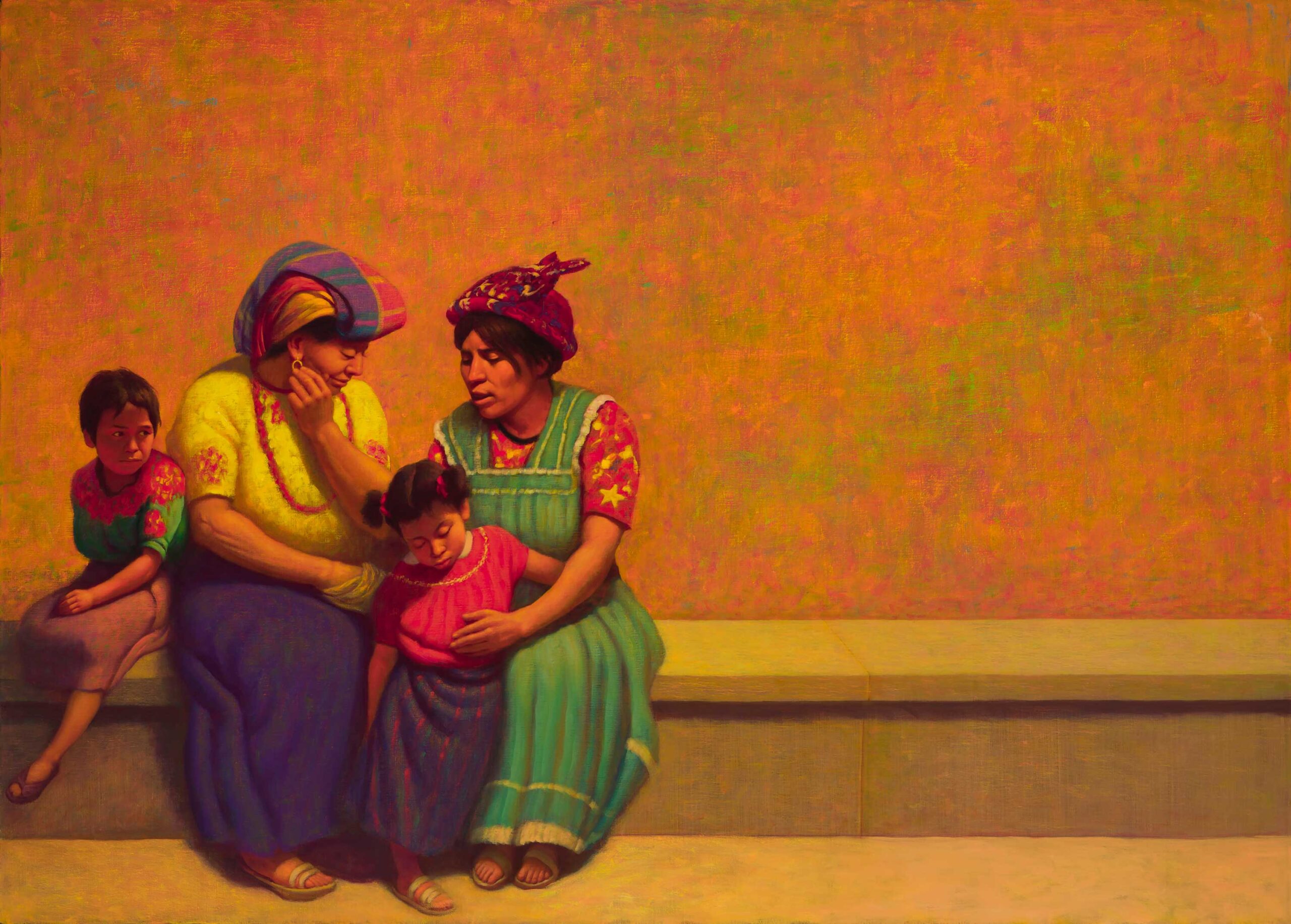
Elias Rivera, untitled, 2008, oil on canvas, 60 x 84 in.
More from LewAllen Galleries on the figurative art painter Elias Rivera:
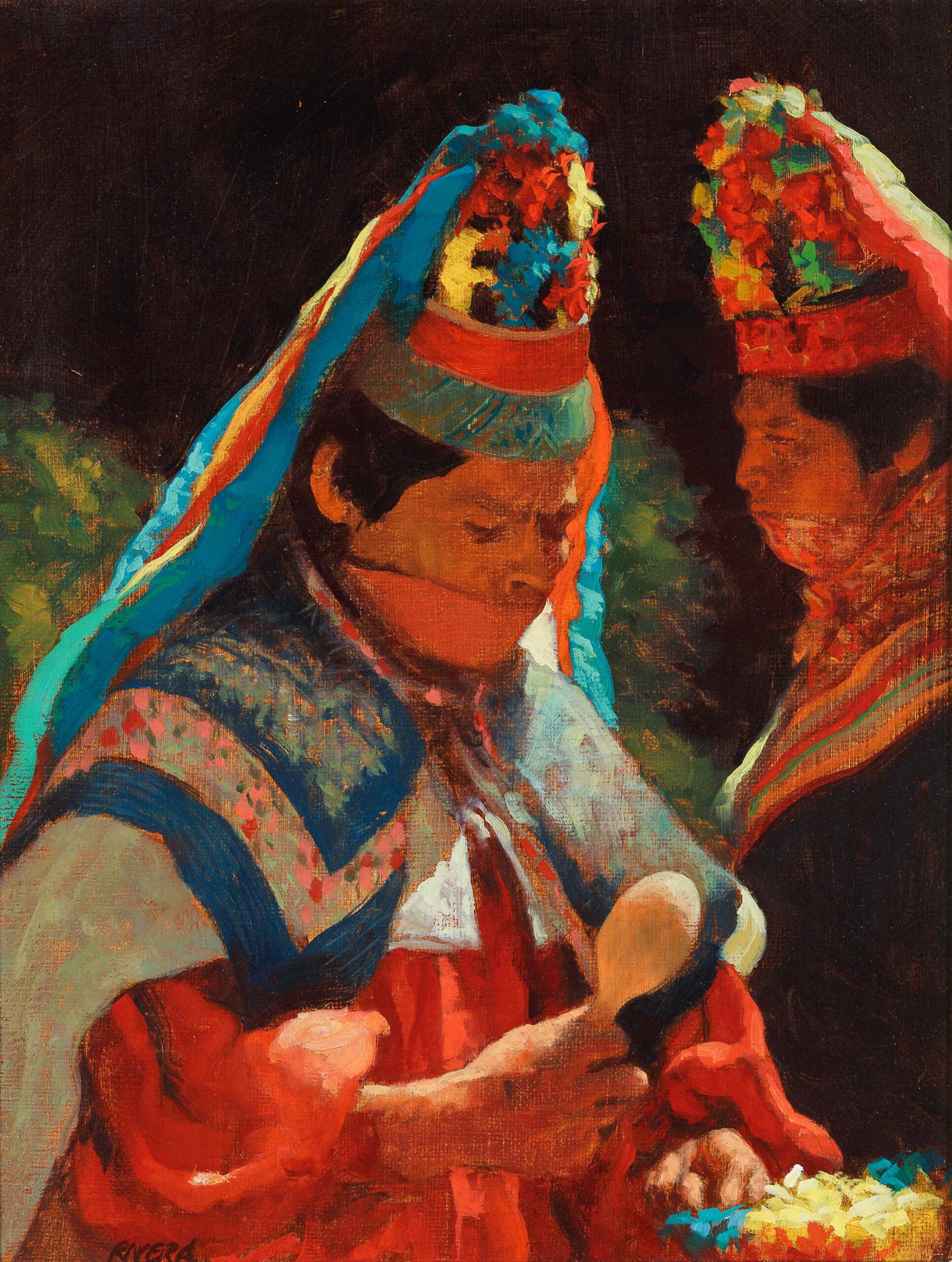
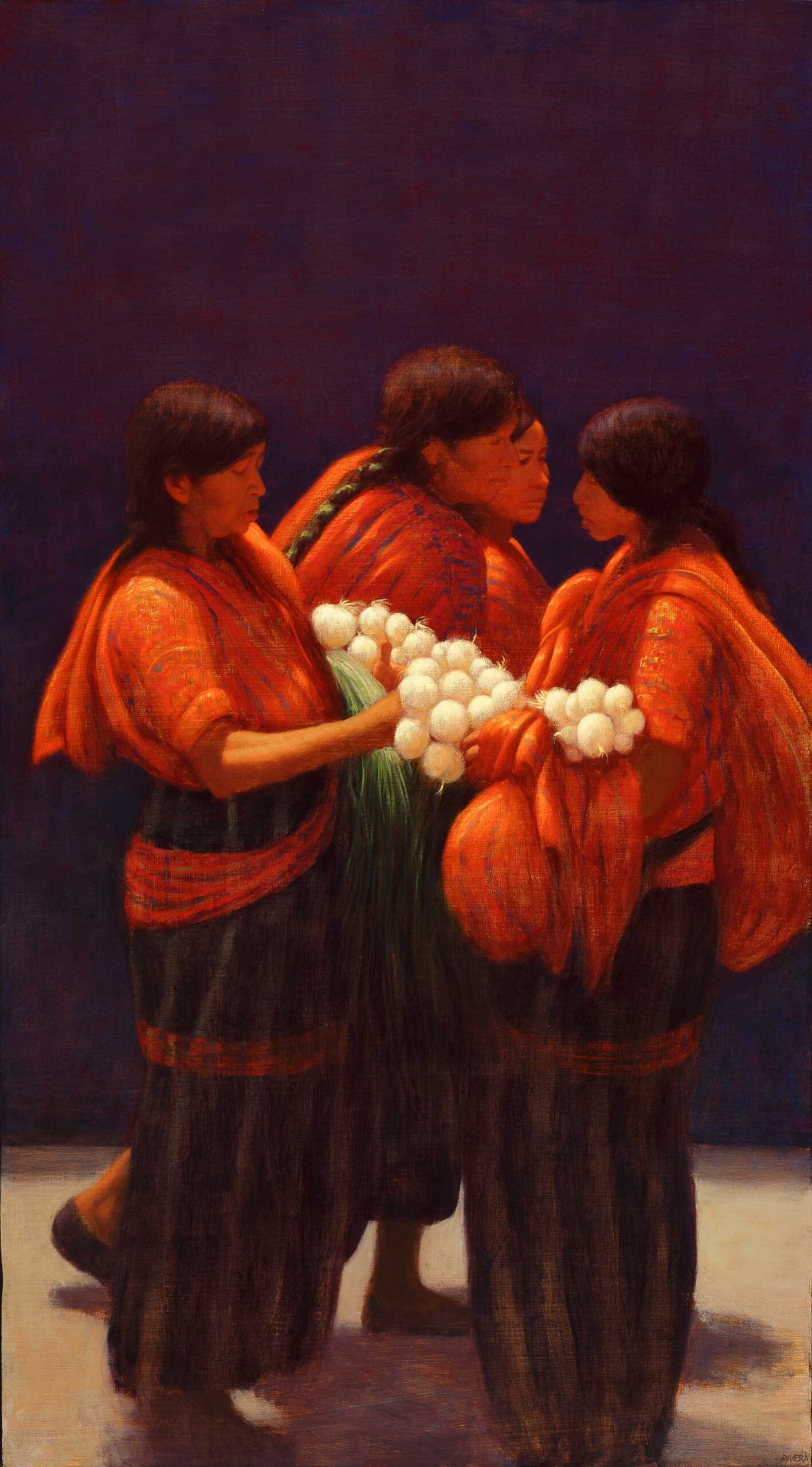
Rivera’s unique facility with bold and bright color, minimal composition, and a powerful, fresh focus on the primacy of the individuals portrayed, produces works that some critics have described as “frieze-like,” which allow viewers to sense the spirit of these subjects in his remarkable group portraiture that have been called cultural archetypes. Rivera’s work is renowned for its capacity to capture the colorful garments and ancestral rituals and markets as though frozen moments in time and to present the ordinary as extraordinary with a clarity of light and color.
“The magic of Rivera’s art is that it is simultaneously figurative and abstract, without having to compromise either aspect. From his beginnings as a social-realist painter, he has evolved almost to the opposite extreme, to become one who offers sensations that are focused on aesthetic experiences,” writes well-known international art critic Edward Lucie-Smith.
Rivera is noted for simplifying space and eliminating inessential forms in his paintings in order to emphasize the humanity of his subjects. The strong brushwork and luminosity of color in Rivera’s paintings communicate a dramatic sense of universal grace and majesty. His uncanny depiction of mundane details of a peasant’s life and resolute dedication to portraying the essence of his subjects with profound compassion create this drama that is both ennobling to his subjects and sublime for his viewers.
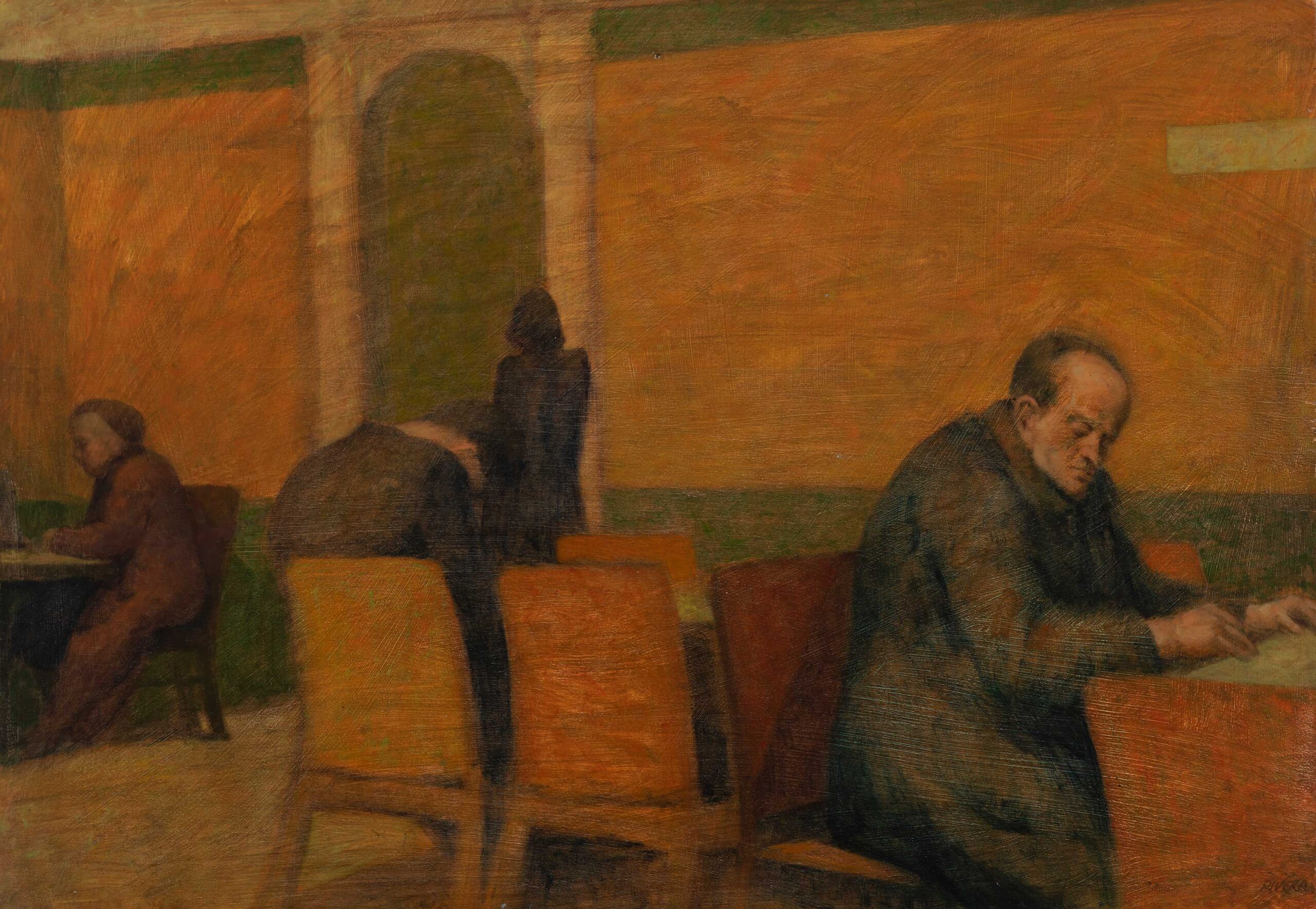
Elias Rivera, untitled Automat, (n.d.), oil on canvas, 15.5 x 22.38 in.
Rivera’s artistic sensibility has been distinguished from most contemporary artists and often likened to Renaissance and Old Master painters such as Vermeer, Rembrandt, Caravaggio, and Veronese. Part of this comparison results from Rivera’s use of an unusual painting medium, maroger, thought to have been used during the Renaissance, but largely lost until its rediscovery in the 1940s. Rivera employed it to produce the glowing and highly finished surface qualities distinctively associated with his works. Also like the Venetian masters, Titian and Tintoretto, Rivera was a genius of the colorito technique, using the juxtaposition of colors to define a composition rather than with lines.
Elias Rivera, “Matachine Dancers,” (n.d.), oil on linen, 12 x 9.5 in.
Before coming to Santa Fe in 1982 and developing the body of lush works for which he became best known, Rivera, a New York native of Puerto Rican descent, spent his formative years in the Bronx growing up generally devoid of art. When he left home at 18, Rivera began studying at the Art Students League under Frank Mason, and at the School of Industrial Arts.
For years, he painted life on the streets of New York—people in bars, subways, airports, and automats—and developed a keen power of observation. The darker, monochromatic aspect of Rivera’s paintings during this period has a fascinating Dostoevskian quality but contrasts dramatically in mood, size, and content with the later panoramas of color and warmth focused on Indigenous people created after he moved to Santa Fe. Works from this period of Rivera’s career are also included in this exhibition.
Elias Rivera, “Chi Chi Castenango,” 1993, oil on canvas, 48 x 72 in.
The exhibition presents Rivera’s truly exceptional abilities as a painter—his Renaissance-like quality, his methods and techniques, and his superb eye. Rivera was inspired by life in New York and New Mexico, as well as his journeys through countries like Guatemala, Peru, and Bhutan, always working with a deep empathy for the human soul.
In 2004, Rivera received the prestigious New Mexico Governor’s Award for Excellence in the Arts. In 2005, he was named the Artist of the Year by the Santa Fe Rotary Foundation. A major monograph entitled Elias Rivera was published in 2006 with an essay by well-known art critic and writer Edward Lucie-Smith. Following a tragic accident in 2008, Rivera stopped working in 2011 and passed away in 2019 in Santa Fe.
Elias Rivera, “White Onions,” 1995, oil on canvas, 72 x 40 in.
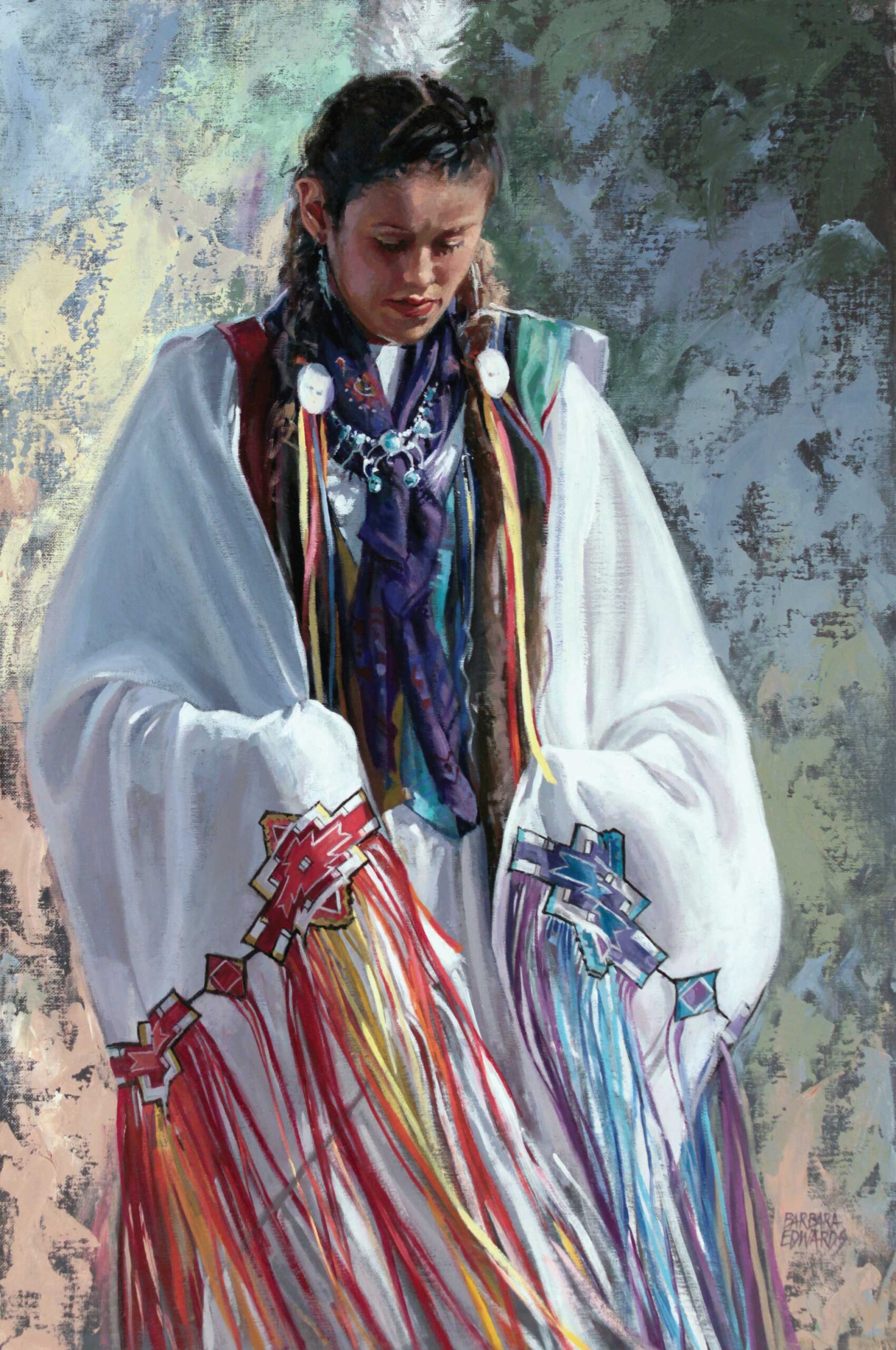
Barbara Summers Edwards (b. 1952), “Shades of Light,” 2022, oil on linen panel, 30 x 20 in.
The nonprofit organization Women Artists of the West (WAOW) is showing its 53rd National Juried Exhibition at the Carriage Factory Art Gallery.
Titled “No Place Like Home,” this show highlights the extraordinary diversity of 119 talented WAOW members working on both coasts, in between, and even beyond America’s borders.
The jury has selected two- and three-dimensional pieces in various media and styles, encompassing landscapes, cityscapes, figures, florals, still lifes, and animals.
This year’s awards judge is the distinguished artist Kim Casebeer.
This year’s venue is particularly fascinating: built around 1883, it was once a carriage factory and blacksmithing shop that was rescued by the Newton Fine Arts Association 40 years ago.
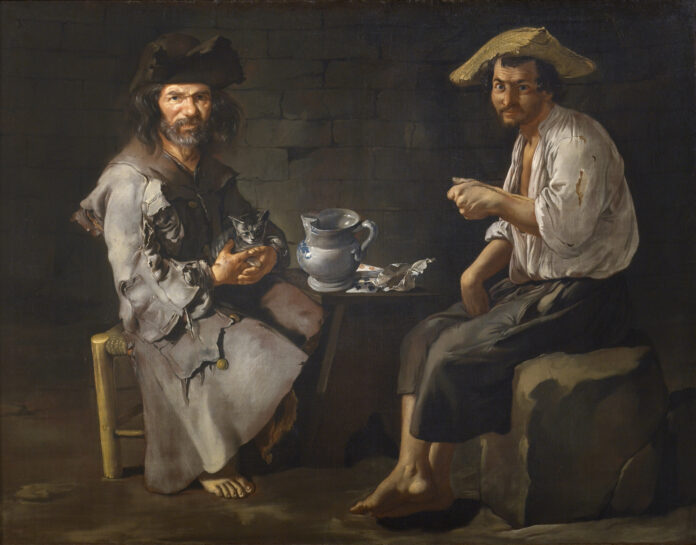
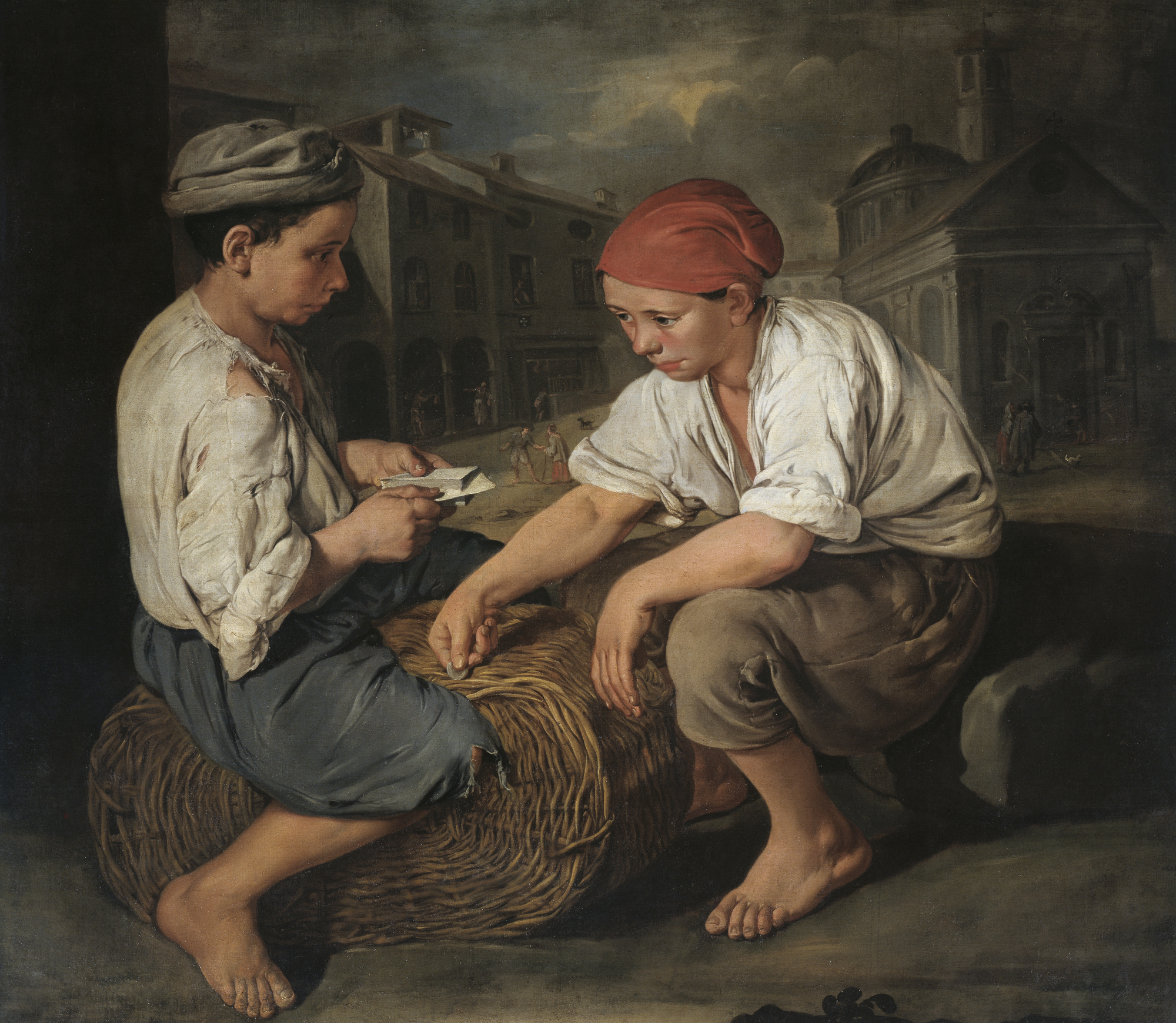
Giacomo Ceruti (Italian, 1698–1767), "Two Beggars," about 1730–1734, Oil on canvas, Pinacoteca Tosio Martinengo, Brescia, EX.2023.4.2
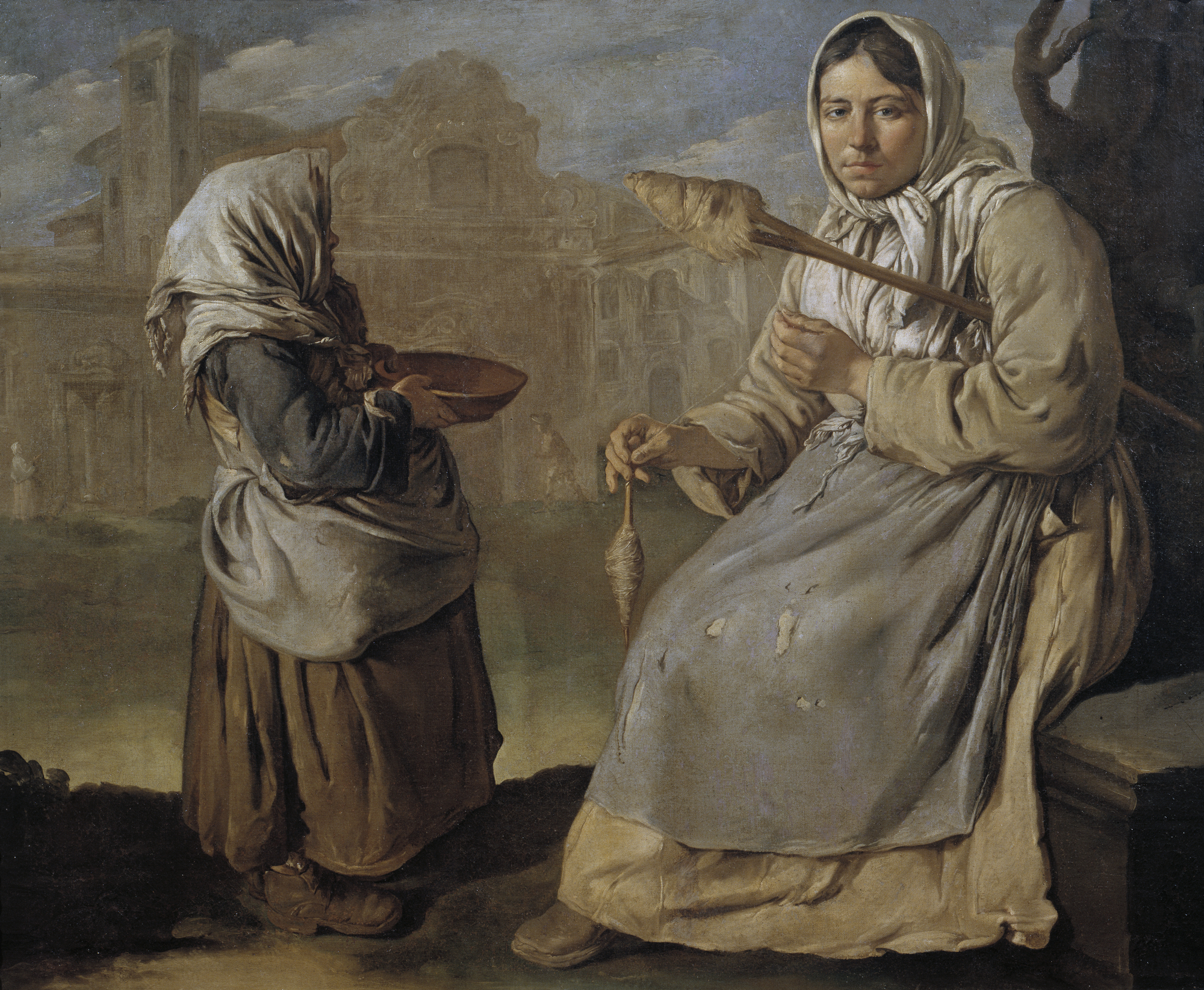
The J. Paul Getty Museum presents “Giacomo Ceruti: A Compassionate Eye,” an exhibition featuring hauntingly realistic portraits of men, women, and children experiencing poverty by 18th-century Italian artist Giacomo Ceruti. Organized with Fondazione Brescia Musei, the exhibition is on view through October 29, 2023.
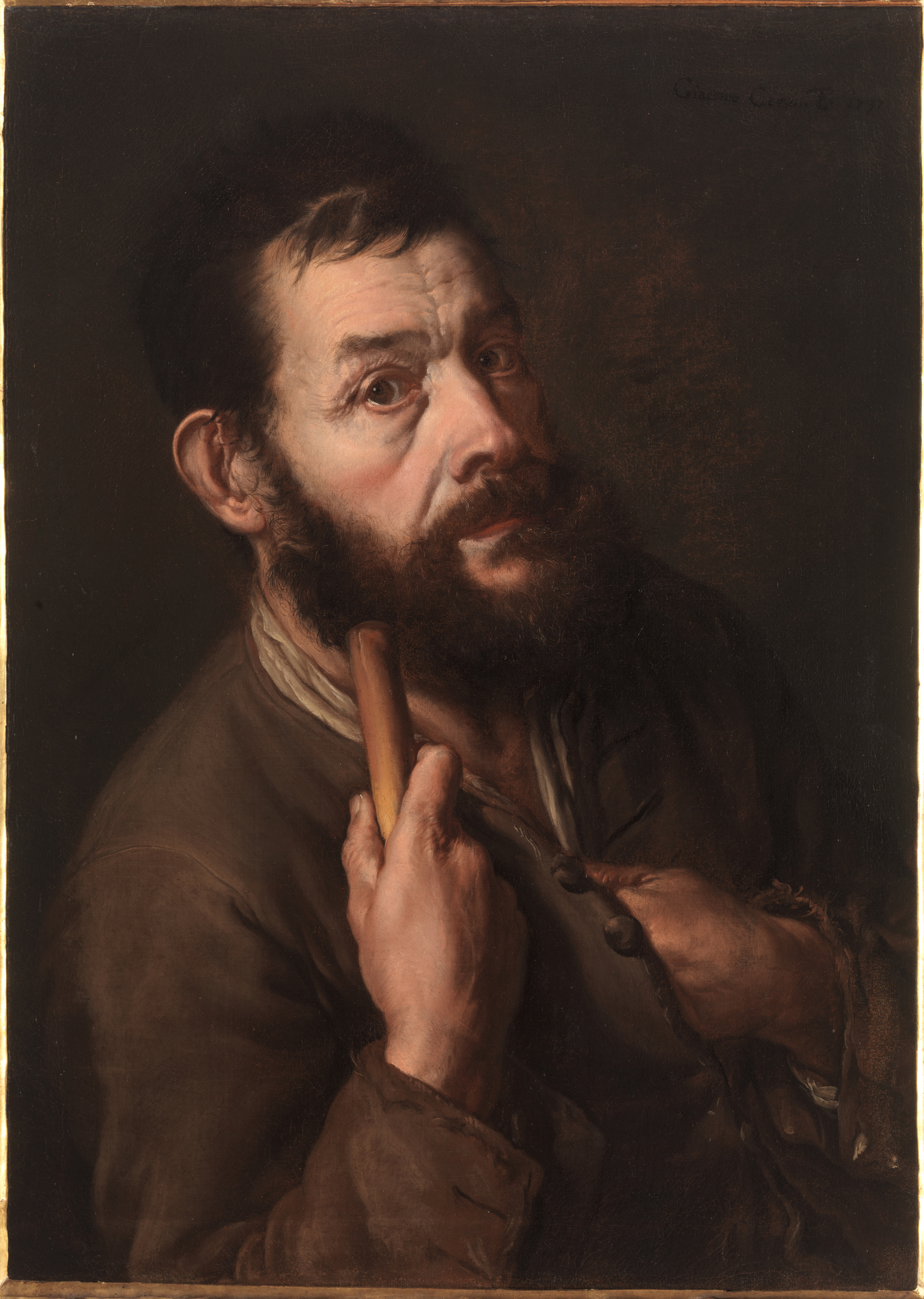
Giacomo Ceruti, “Self-Portrait as a Pilgrim,” 1737, Oil on canvas, Museo Villa Bassi Rathgeb, Abano Terme (inv. 013) EX.2023.4.1
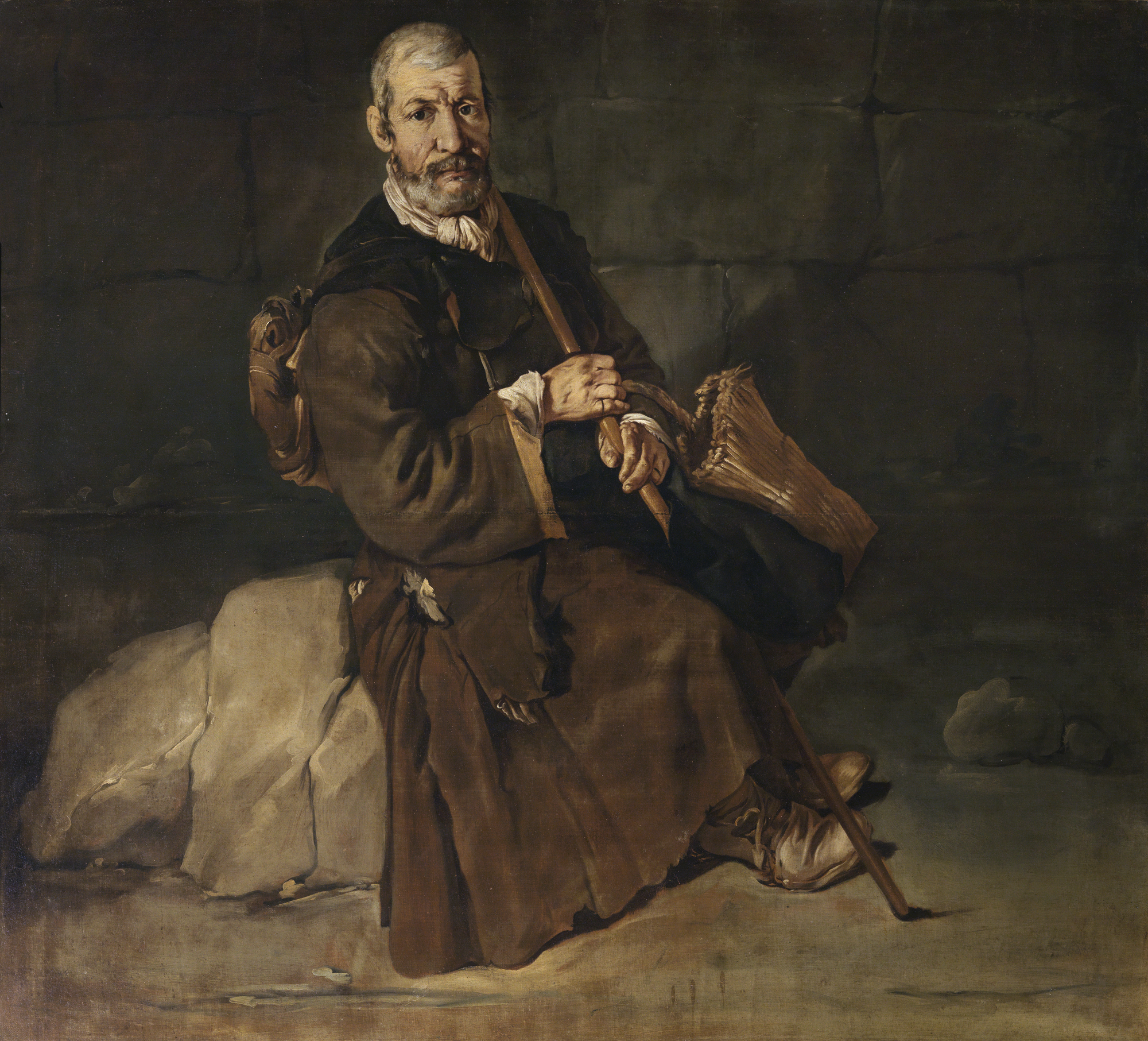
European paintings from the 17th and 18th centuries are best known for still lifes, historical scenes, portraits, and idealized representations of religious and mythological subjects. Artists rarely depicted the poor and, when they did, mostly portrayed them as scoundrels or as figures of parody. Ceruti’s paintings stand in stark contrast, providing an empathetic view of those living on the margins of society who were often written out of history. With a compassionate eye, he conveyed their humanity and dignity at a grand scale.
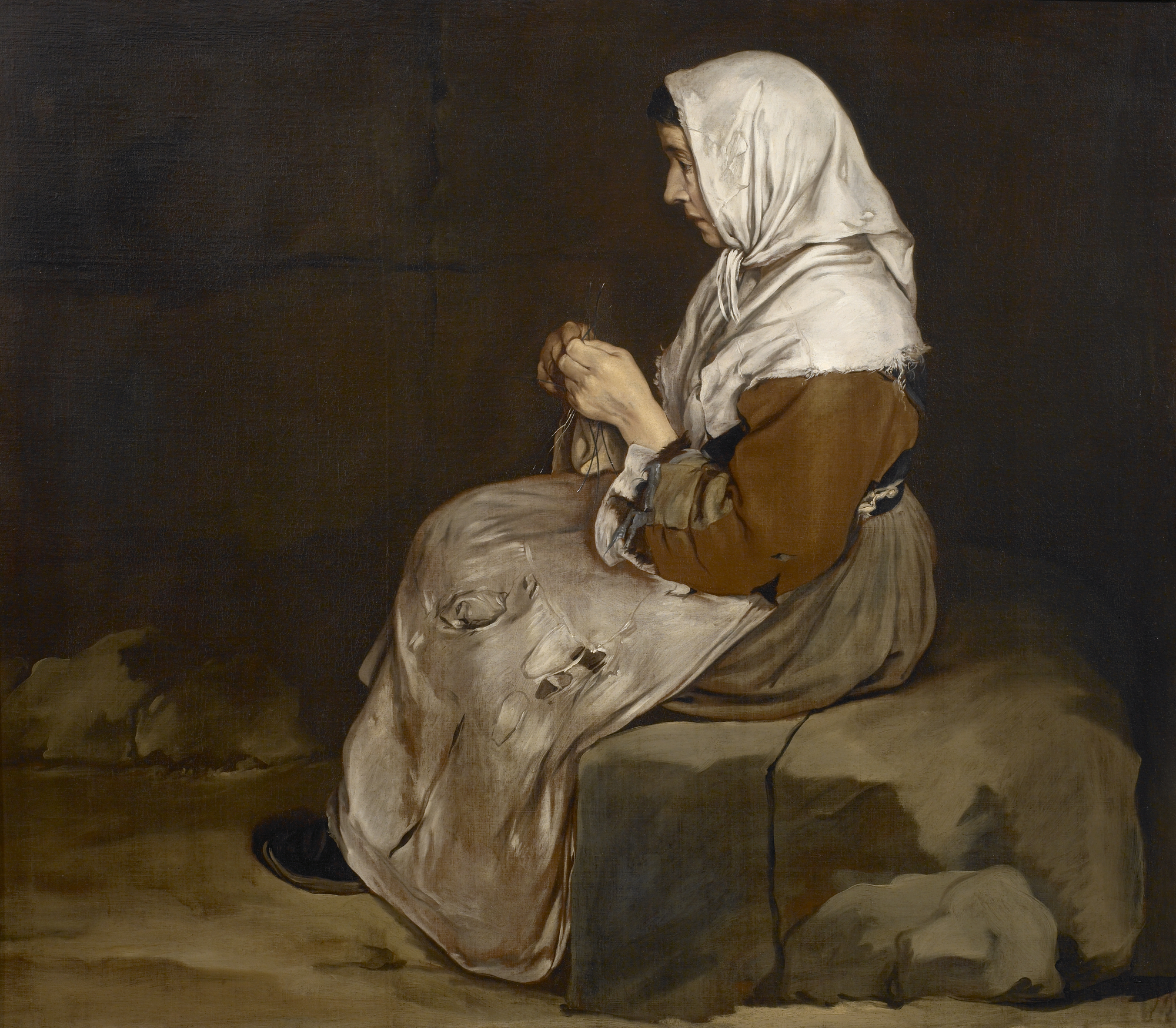
Giacomo Ceruti, “Woman Mending Socks,” about 1725–1730, Oil on canvas, Museo Lechi, Montichiari, Italy, EX.2023.4.8
“Ceruti’s uniquely moving depictions of destitute and marginalized subjects are a remarkable testimony both to his distress at their suffering and to the significance of his artistic achievement in capturing their character and dignity,” says Timothy Potts, Maria Hummer-Tuttle and Robert Tuttle Director of The J. Paul Getty Museum. “Few other painters have conveyed the plight of those experiencing poverty with such vivid immediacy and compassion. I have no doubt that these powerful works will have a lasting impression on all who see them.”
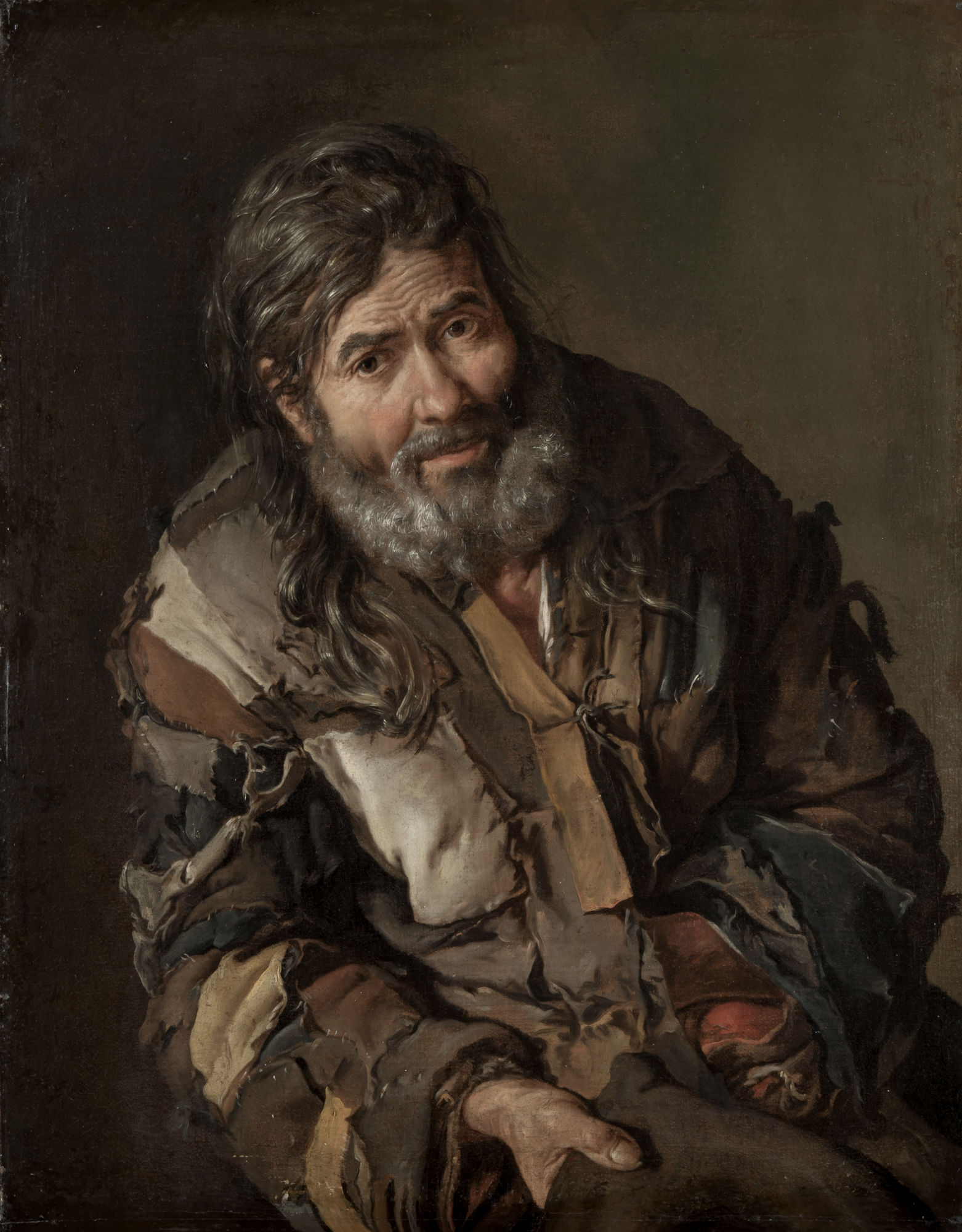
Giacomo Ceruti, “Beggar,” about 1735–40, Oil on canvas, Gothenburg Museum of Art, Photo: Gothenburg Museum of Art / Hossein Sehatlou, EX.2023.4.9
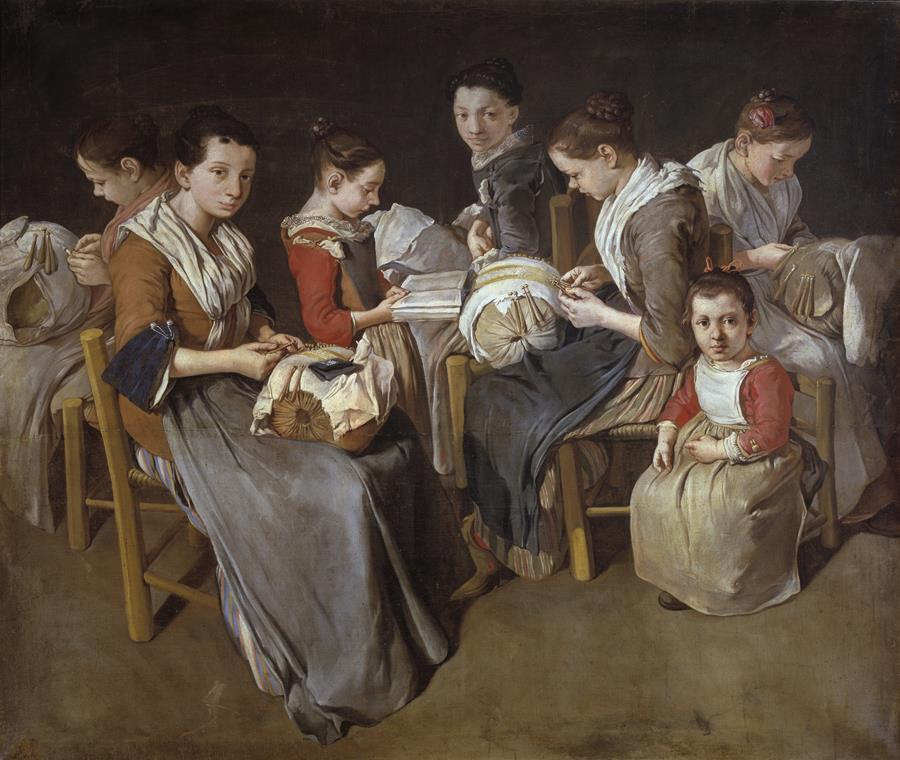
Recession, war, famine, and plague were common threats that led to poverty in Ceruti’s time, especially for those who relied solely on their own income to survive. The characters he depicted belonged to what society regarded as “redeemable poor,” or those who posed no danger to others and, as such, deserved financial and spiritual aid. Among them were women housed in charitable institutions that taught them to read and sew, such as those shown in Women Working on Pillow Lace (The Sewing School), which evokes a sense of emotional participation, as several figures look directly at the viewer amidst their daily occupations. Other protagonists of Ceruti’s paintings include elderly and disabled people begging or sitting in exhaustion, as well as men, women, and children struggling to make a living as cobblers, lacemakers, spinners, and young orphan boys forced to live on the street and work as porters.
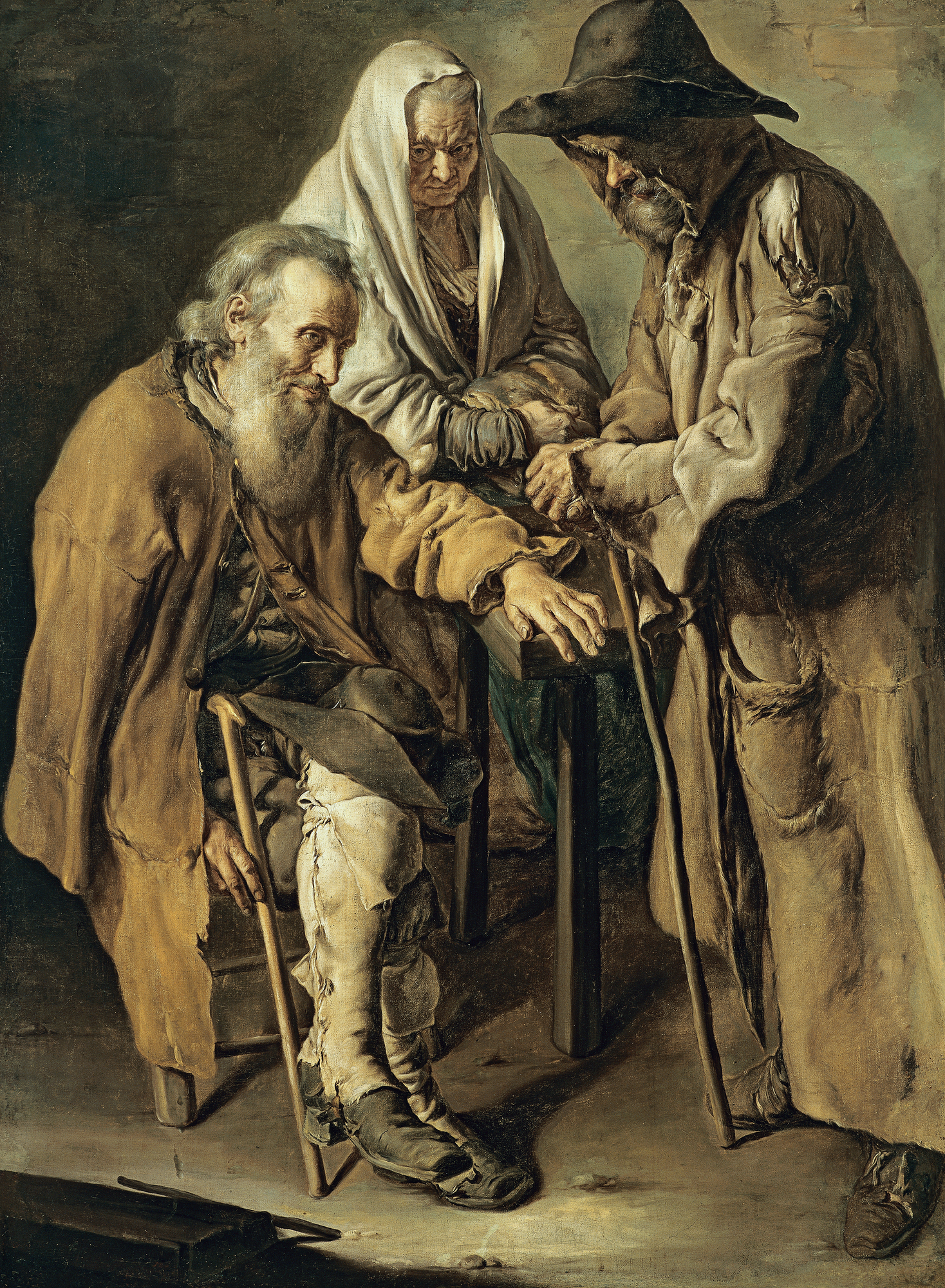
Giacomo Ceruti, “The Three Beggars,” 1736, Oil on canvas, Thyssen-Bornemisza Collection, Madrid, long-term loan to the Museu Nacional d’Art de Catalunya, Barcelona, 2004, EX.2023.4.10
The monumental size and striking facial expressions of Ceruti’s figures heighten their impact and raises them beyond traditional genre paintings of ordinary life. An example is The Three Beggars from the Museum Thyssen-Bornemisza, which shows three older figures dressed in rags who appear to be struggling to survive yet retain a strong sense of mutual empathy.
“Ceruti presents his sitters with remarkably lifelike features that seem to elevate them into recognizable characters with heroic backstories,” says Davide Gasparotto, senior curator of paintings at the J. Paul Getty Museum. “Despite the challenges they faced, the anonymous protagonists of his paintings maintain a profound sense of dignity and individuality, with faces as vivid and powerful as those Dorothea Lange photographed during the Great Depression.”
Although Ceruti experienced considerable success during his lifetime, he was nearly forgotten after his death until the late 1920s, when 12 of his works were rediscovered in the castle of Padernello near the city of Brescia in northern Italy. Dubbed the “Cycle of Padernello,” these works, which are at the core of the exhibition, have perplexed scholars who had wondered about their function, patronage, and original display.
Ceruti’s sympathy for individuals experiencing poverty is further showcased in Self-Portrait as a Pilgrim, intentionally employing a limited color palette to portray himself as a pilgrim on a religious journey. While most artists of the period exalted their profession through self-portraits and presented themselves as elegant, cultivated gentlemen, Ceruti chose to depict himself as a humble man in simple garb with his hand over his chest, suggesting a spiritual kinship with the destitute subjects of his paintings.
As part of our effort to continue to help artists and art galleries thrive, we’re proud to bring you this week’s “Virtual Gallery Walk.” Browse the artwork below and click the image itself to learn more about it, including how to contact the gallery.
Country Relish, Richard Hull, oil, 30 x 40 in; Southam Gallery
***
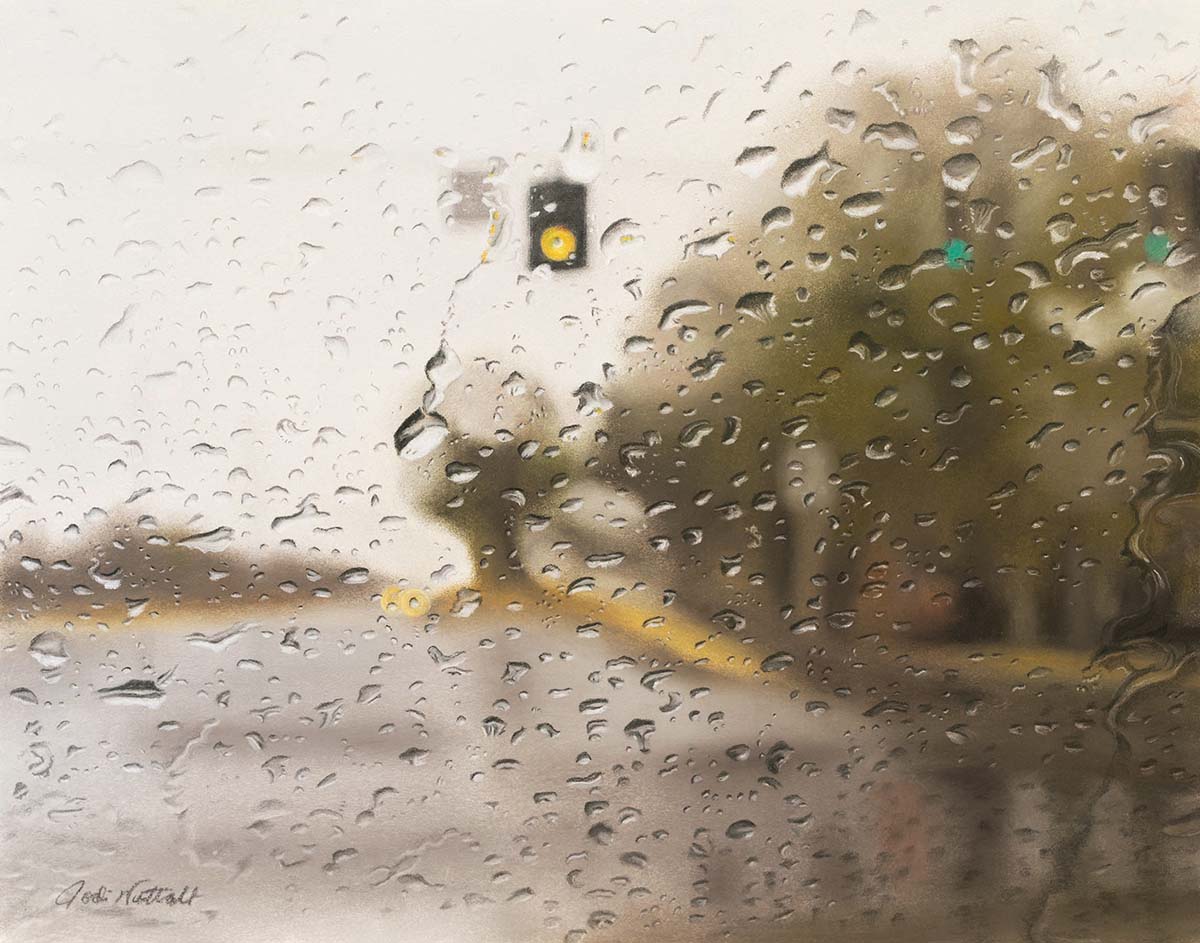
Rainy Left Turn, Jodi Nuttall, soft pastel on board, 11 x 14 in; Jodi Nuttall
***
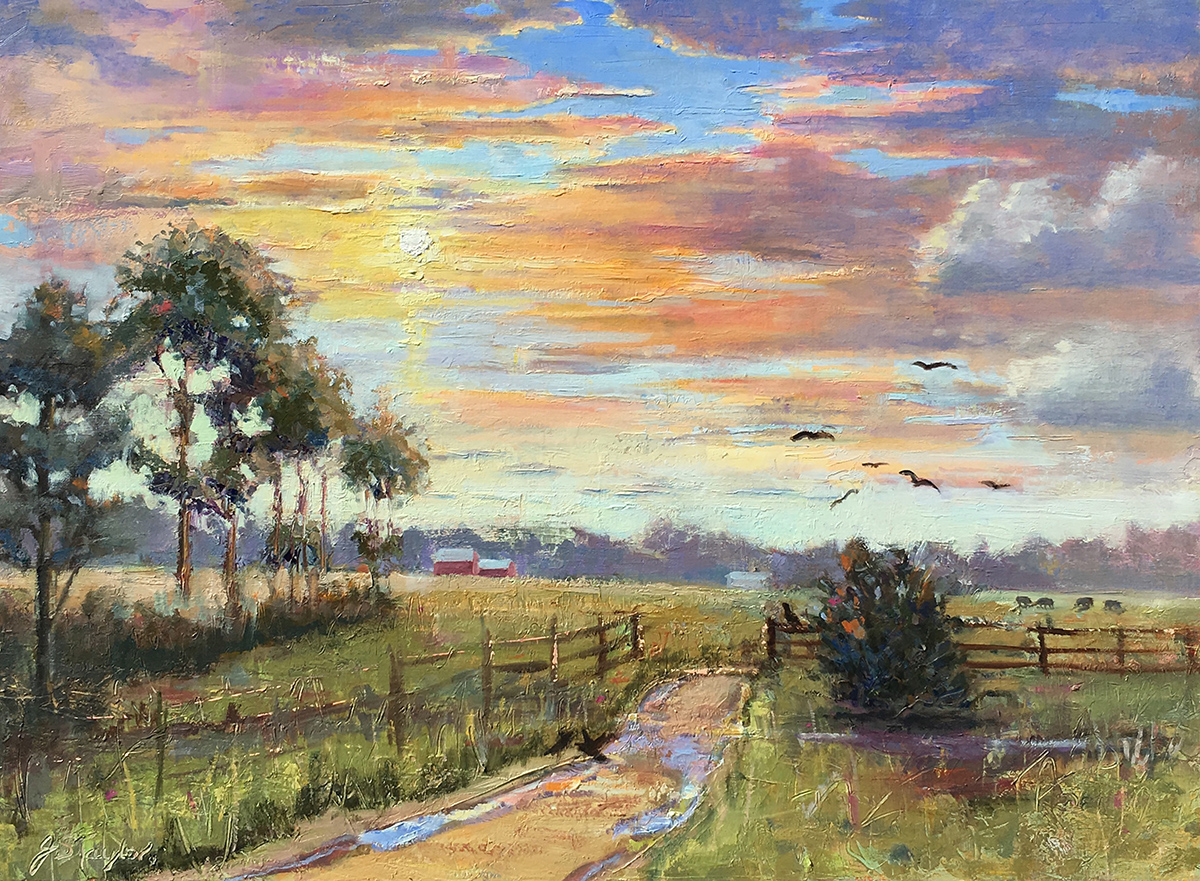
Calm After the Storm, Jennifer Taylor, oil on canvas, 30 x 40 in; Jennifer Taylor
***
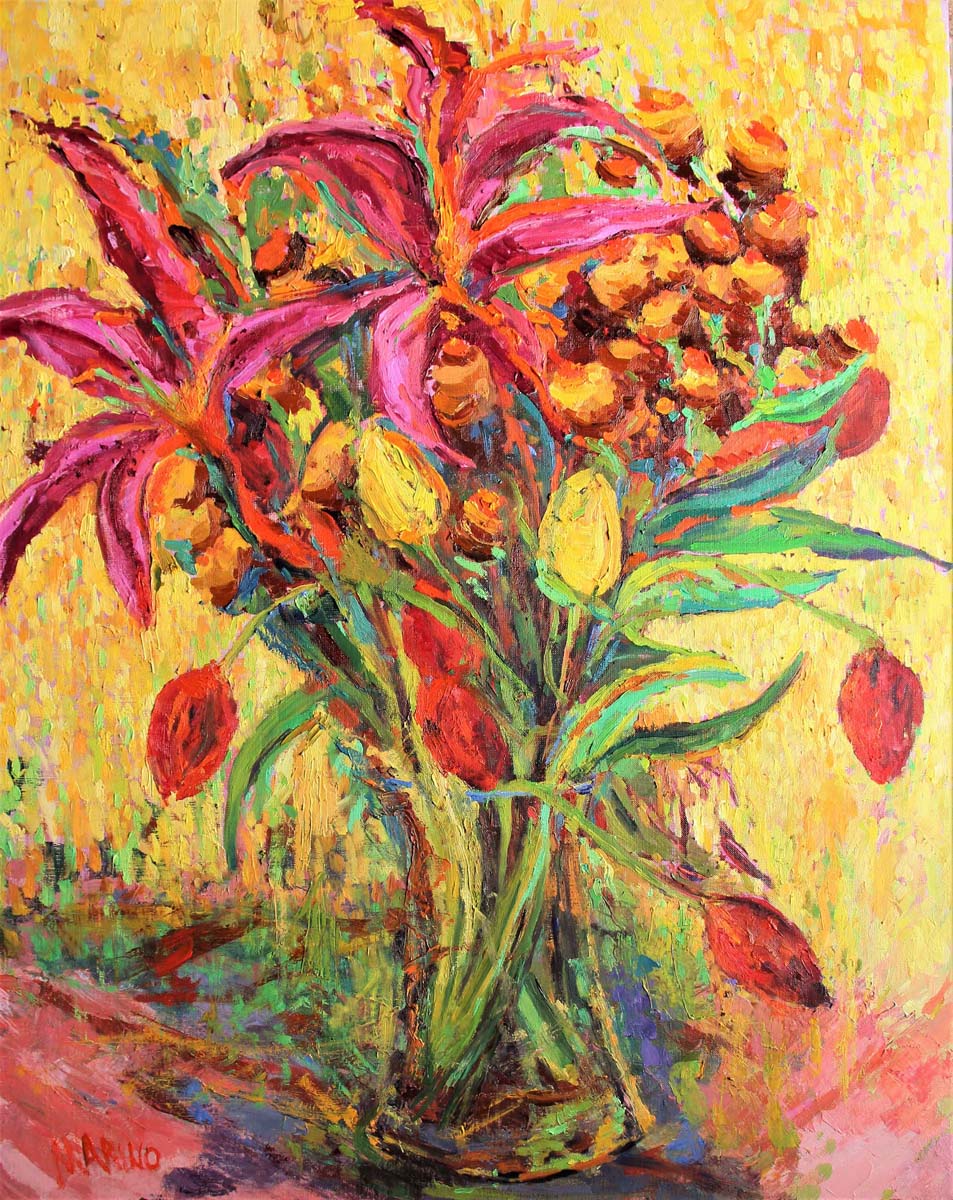
Flowers in a Vase, Maria Marino, oil, 30 x 24 in; The Artful Deposit, Bordentown, NJ
***
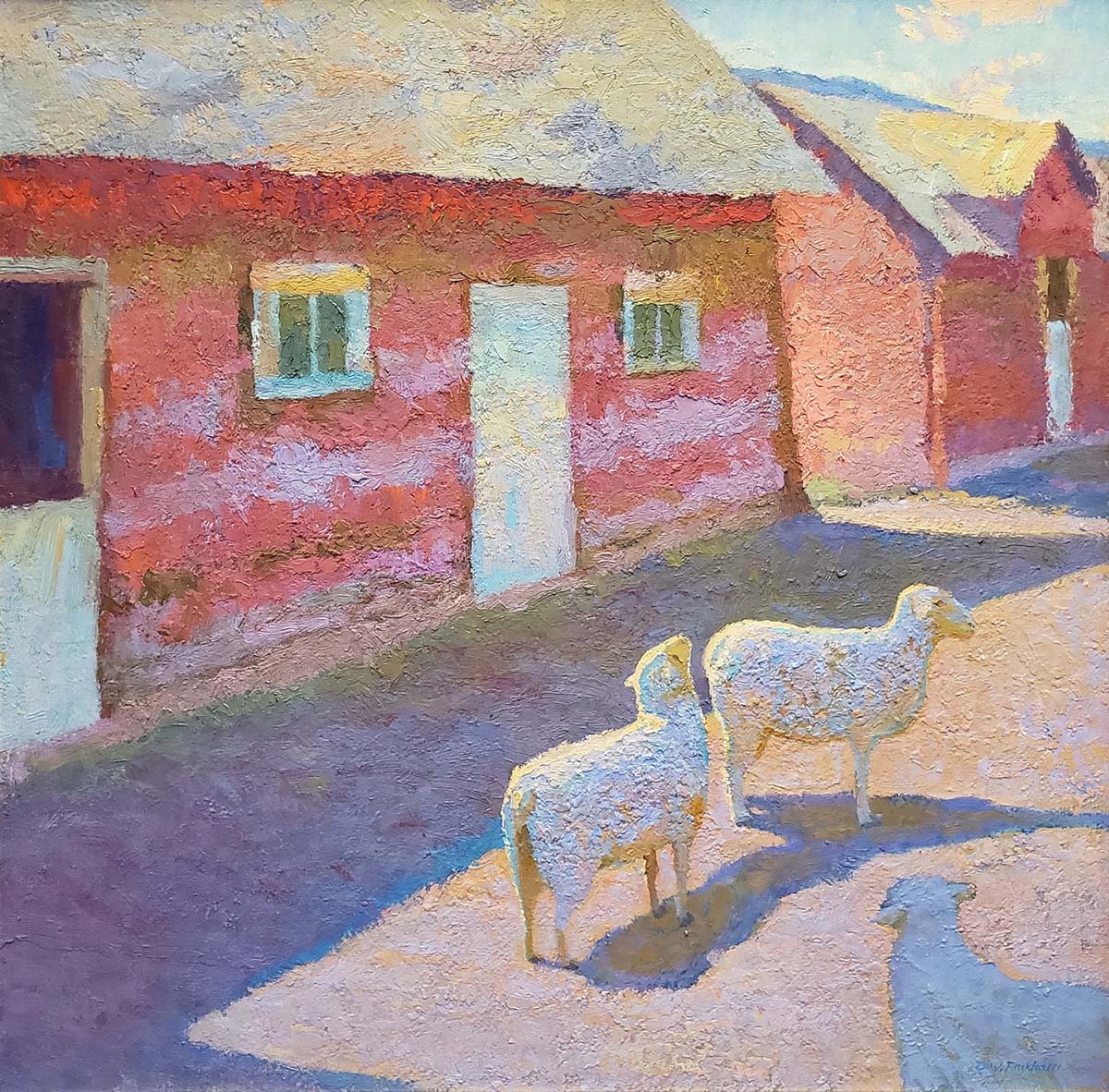
Waiting for their Shepard’s Voice, Daniel W. Pinkham, Oil on canvas panel, 24 x 24 in; American Legacy Fine Arts
Want to see your gallery featured in an upcoming Virtual Gallery Walk? Contact us at [email protected] to advertise today. Don’t delay, as spaces are first come, first served, and availability is limited.
The Brinton Museum is set to host the eighth edition of its popular Bighorn Rendezvous exhibition. On view will be oils, monotypes, pastels, and bronzes created by invited artists Roger Broer, Tammy Callens, Sonja Caywood, Jim Jackson, T. D. Kelsey, Tom Lockhart, David Mensing, Anton Nowels, Julie Oriet, Gregory Packard, Gerald Shippen, Kathy Wipfler, and Scott Yeager.
This show will conclude with a bang on August 26. That morning, these 13 artists (plus their colleague Jerry Salinas) will be found working all over the museum’s scenic property as they create new Quick Draw works to be auctioned at the gala later that day.
Also on view at the museum this summer are two other exhibitions.
Running through September 4 is a celebration of the multigenerational creativity within one Apsáalooke family; it showcases the work of artist Ben Pease V (b. 1989) alongside the artistic journey of eight generations of his ancestors, relatives, and children.
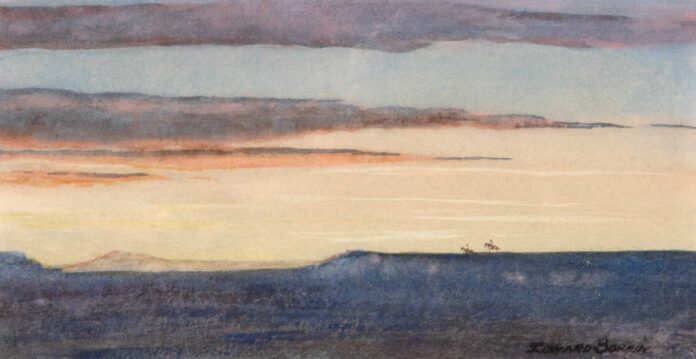
The Brinton Museum owns nearly 200 works by Ed Borein (1872–1945), most of them ink drawings and etchings. Born in California, Borein worked full-time as a cowboy before turning to art, ultimately channeling his deep experience to create hundreds of works depicting cowboys from every possible angle.
This show runs through October 2, and on July 21, scholar B. Byron Price will speak about Borein, whom he has researched in depth.
How did you get started and then develop your career?
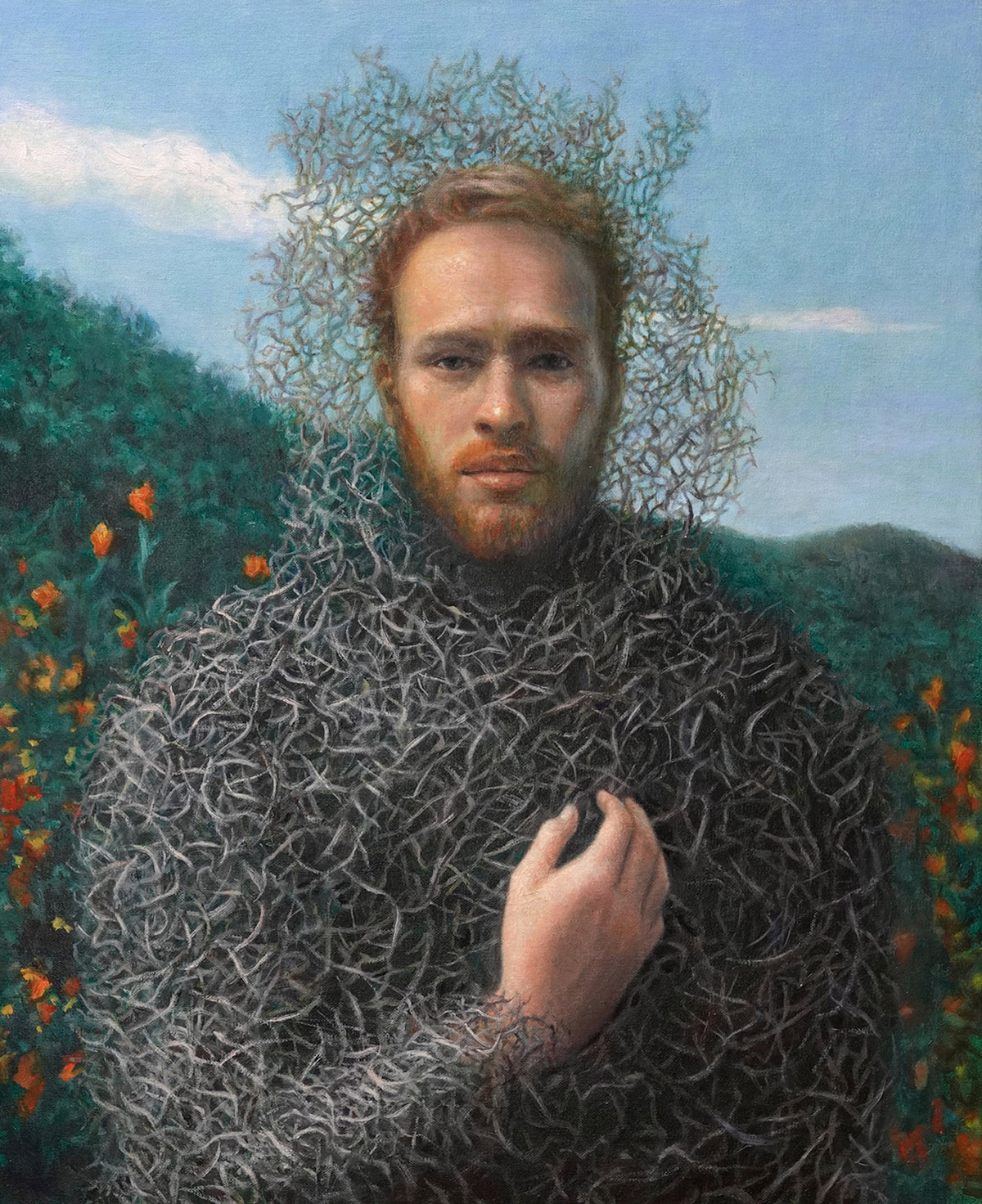
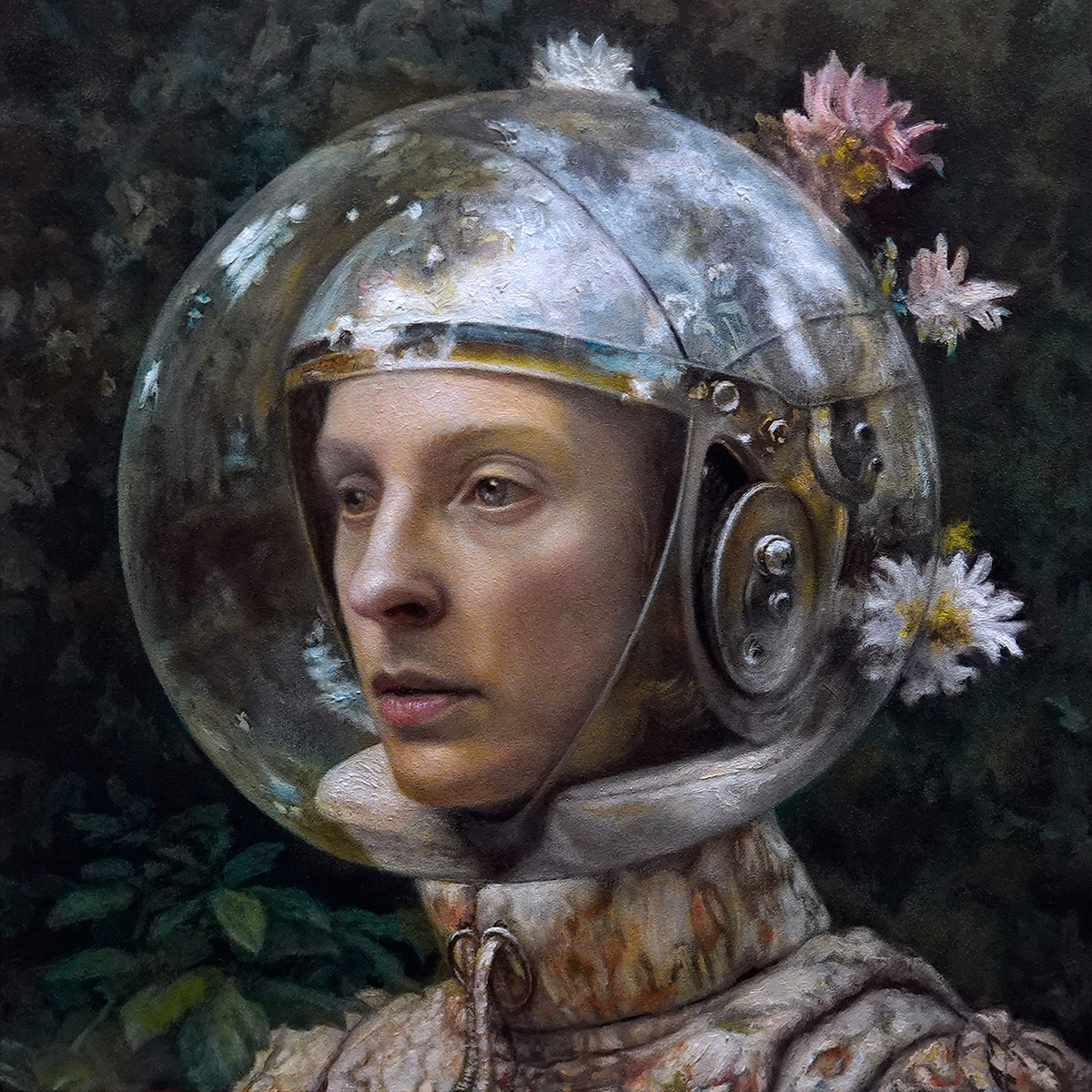
J. Adam McGalliard: Art has always been the one constant in my life. After college, I explored other career paths for a brief time, but none felt authentically me. A real turning point was deciding to move to NYC to attend the New York Academy of Art. Studying under renowned artists like Vincent Desidario and Steven Assael elevated my skill level and introduced me to an entirely new world of likeminded artists.
I’ve been fortunate to exhibit my work nationally and internationally, engage with various artist communities, and participate in residencies that have allowed me to broaden my horizons. There were times when my work was rejected, sales were slow, and self-doubt crept in, but persistence is key in the art world. My support system, especially my wife, has been integral to my artistic journey. She’s been my muse, collaborator, and financial backbone while I took on commissions and taught college classes as an adjunct professor.
Working as an artist is an ongoing process. It’s a process of self-discovery that unfolds as you grow and evolve over time through continuous exploration, experimentation, and self-reflection. I’m excited about what the future holds and where art will lead me next.
“On the Threshold: Ellen Howard, Tia Kratter & Kim Lordier” 3 Women, 3 Views, 3 Mediums
Holton Studio Gallery in Berkeley, California www.holtonframes.com
July 22-August 26, 2023
Opening Reception: Saturday, July 22nd from 2-4pm
From the Gallery
Simply to have the opportunity to admire three exceptional painting talents seems reason enough for a show featuring Ellen Howard, Tia Kratter, and Kim Lordier. But this is a show with an especially compelling and timely theme. The pictures are inspired by the notion of thresholds-transitional and often transformational passages in both space and time, when matters undergo qualitative shifts. Imbued with significance and meaning, thresholds and liminality (from the Latin word for threshold, limen) have always been a motive for the arts. But in human history, the significance of thresholds is felt most acutely in transformational ages such as ours.
In this show, each of the artists has focused on one expression or example of the threshold theme-seasonal changes, boundaries between abstraction and reality, dusk and dawn. It’s worth noting, though, that picture-making itself, as a creative act, is the crossing of a threshold, a becoming. Something in the world catches the eye of the artist, meets the human spirit, and is transmuted by the artist’s hands into a fresh picture, a new prospect, a new possibility. Crossing the threshold of the frame, the visual image conceived and transformed by the artist’s spirit-observed, remembered, imagined, altered – is made present again (re-presented), entering present reality and a world it is made to affect.
Artist Statements:
Ellen Howard:
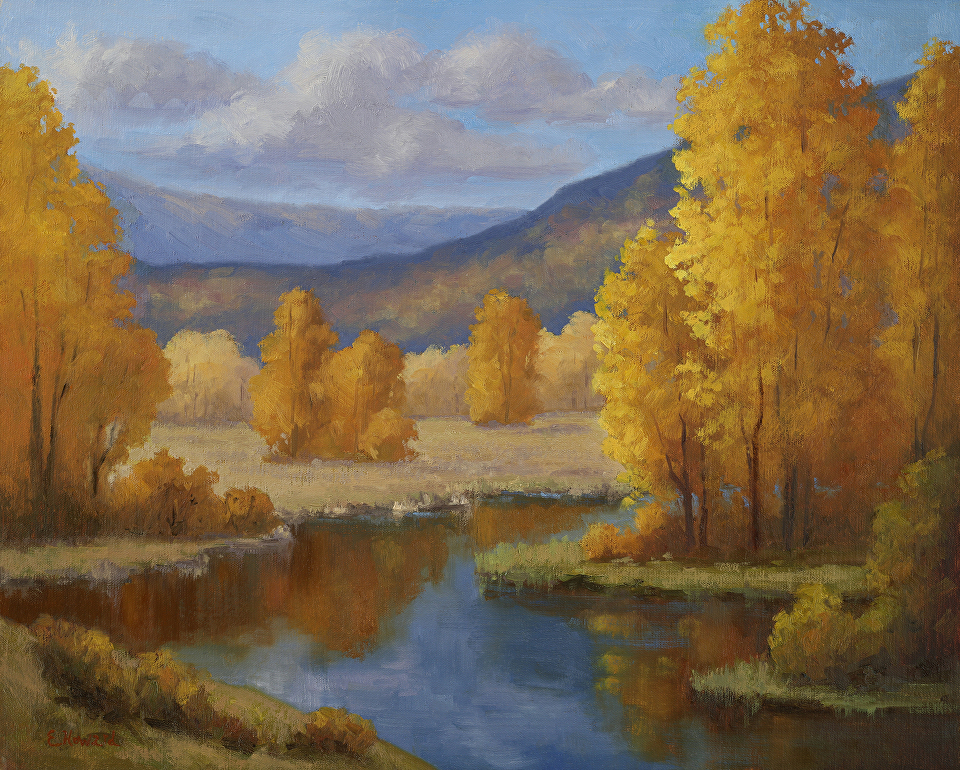
The threshold of each new season is a space in time for us to look at what has been and what is to come. The paintings in this show represent my creative journey, from the quiet dormancy of winter to the exuberance of spring, the vitality of summer, and the warm comforts of fall. Painting through the seasons allows me to boldly embrace change and listen deeply with intention to my creative calling.
Ellen Howard, “Interconnected,” oil on panel, 16 x 20 in.
Tia Kratter:
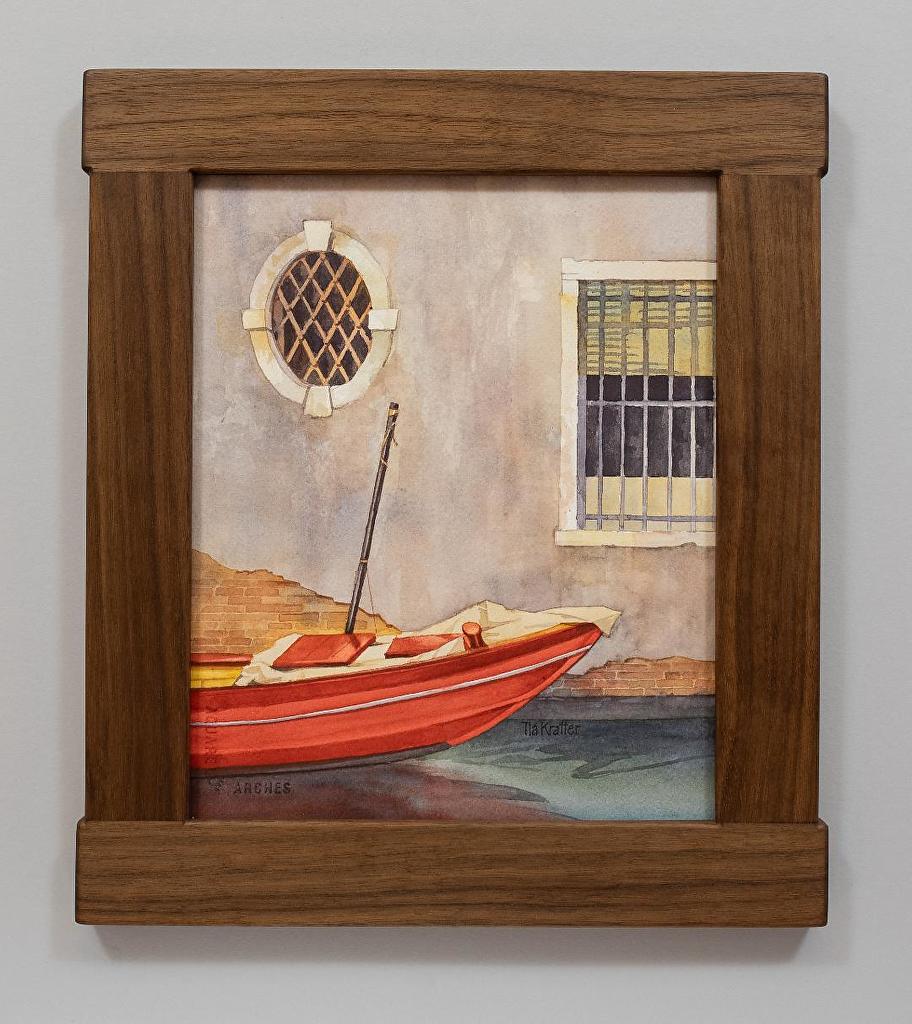
Threshold: that sensitive fine line between abstract and reality; what we think we should see and what is reality. There’s an opportunity to look more carefully at that tipping point; whether it’s a reflection, a play of light, or perhaps the translucency of objects.
I aim to look for visuals that blur the line between real and abstraction.
Tia Kratter, “Taxi Stand,” watercolor on paper, 10 3/4 x 9 in.
Kim Lordier:
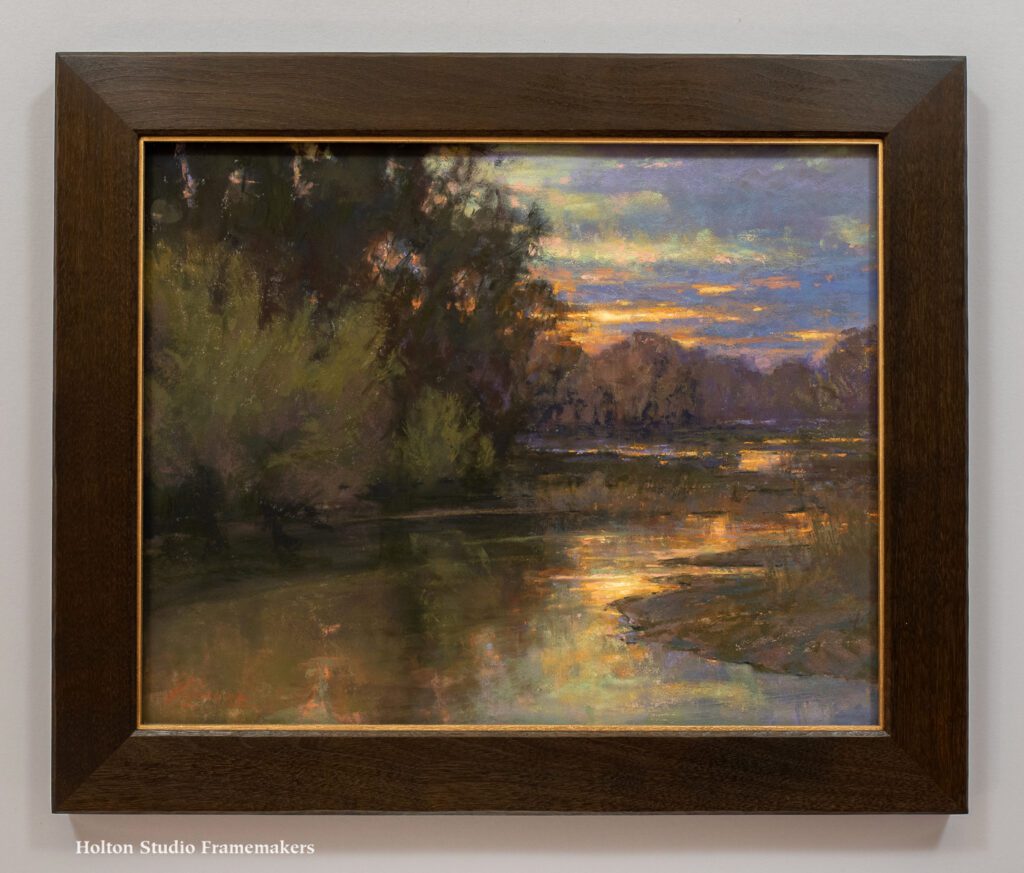
As the sun descends behind the earth, we sit within the threshold of darkness. Richly painted skies sink to the depths of our souls. A whisper of singing light floats naked on the undulating waterways, while the marsh reeds and stately Cottonwoods meet the edge of night.
Morning serenades. Bird song, rippling water, and the buzz of flying critters break the silent sun rising. Pastel skies promise the beginning of a new day.
This series of paintings are based on the exploration of dusk to dawn. Illuminated crossings through a threshold of light and absence of detail.
Kim Lordier, “Evening’s Threshold,” 2023, pastel on paper, 16 x 20 in.
Fill your mind with useful art stories, the latest trends, upcoming art shows, top artists, and more. Subscribe to Fine Art Today, from the publishers of Fine Art Connoisseur magazine.