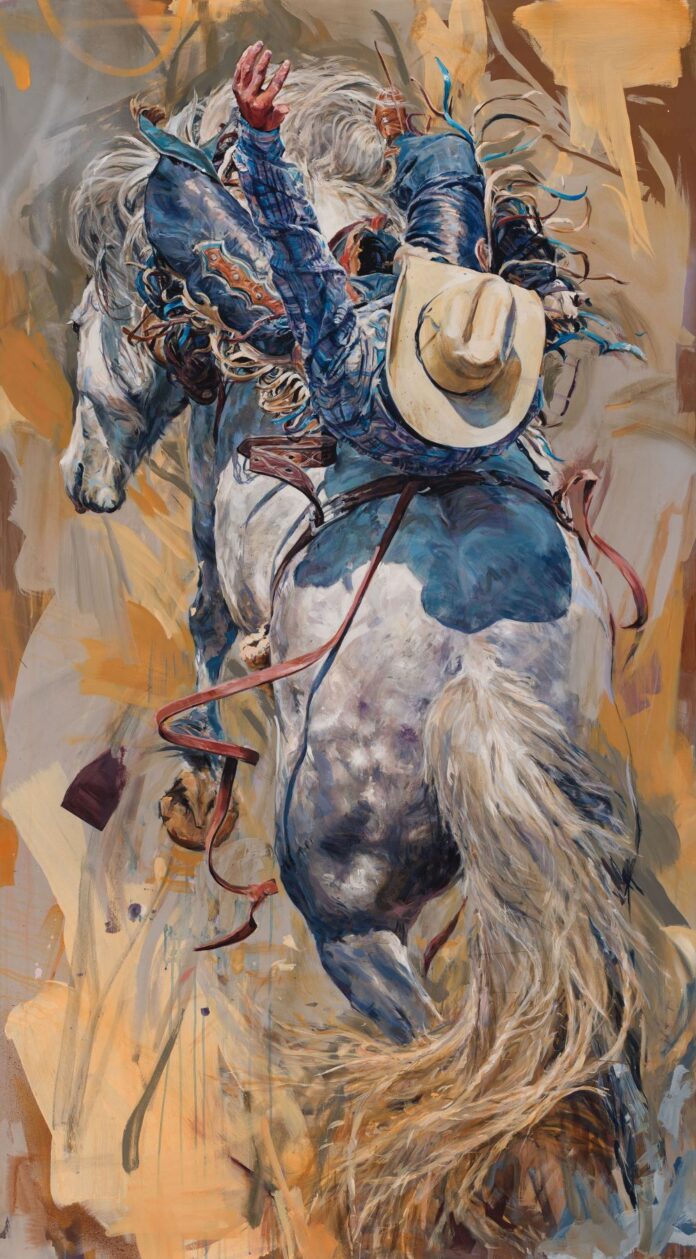
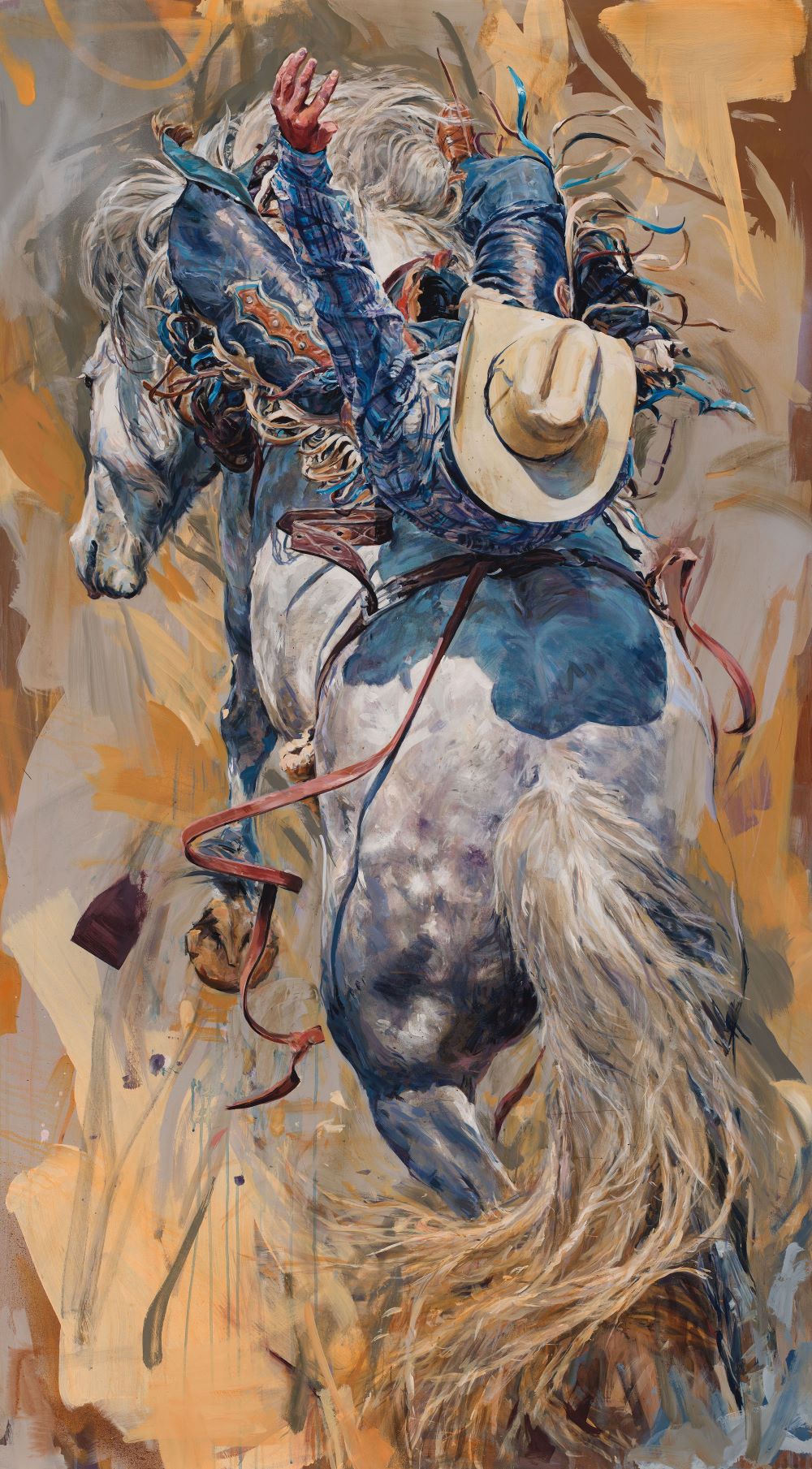
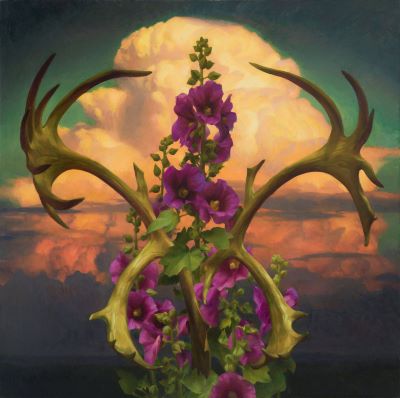
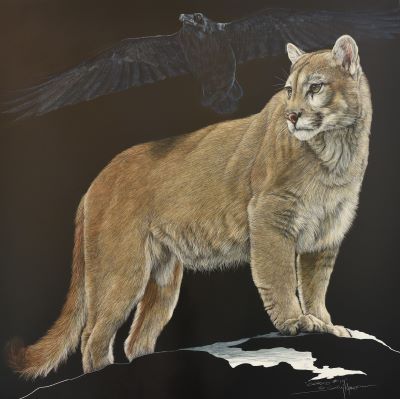
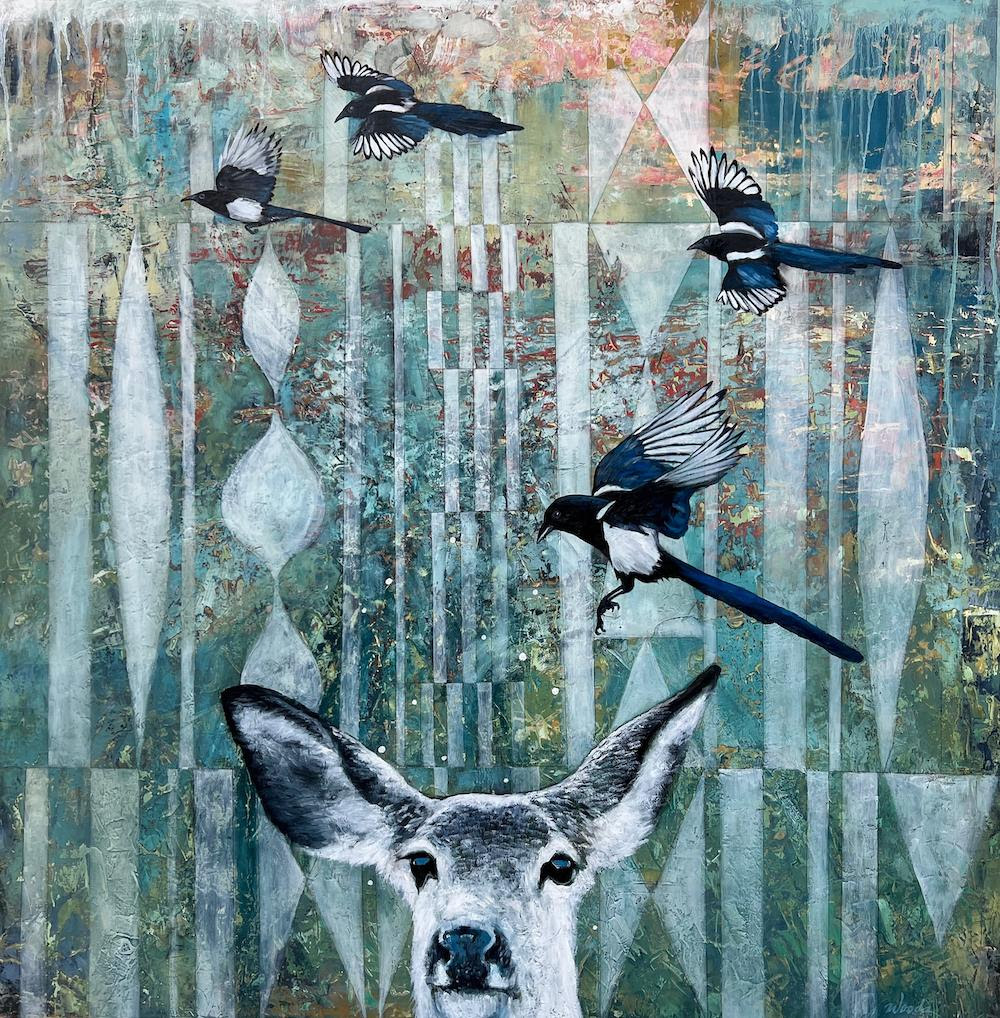
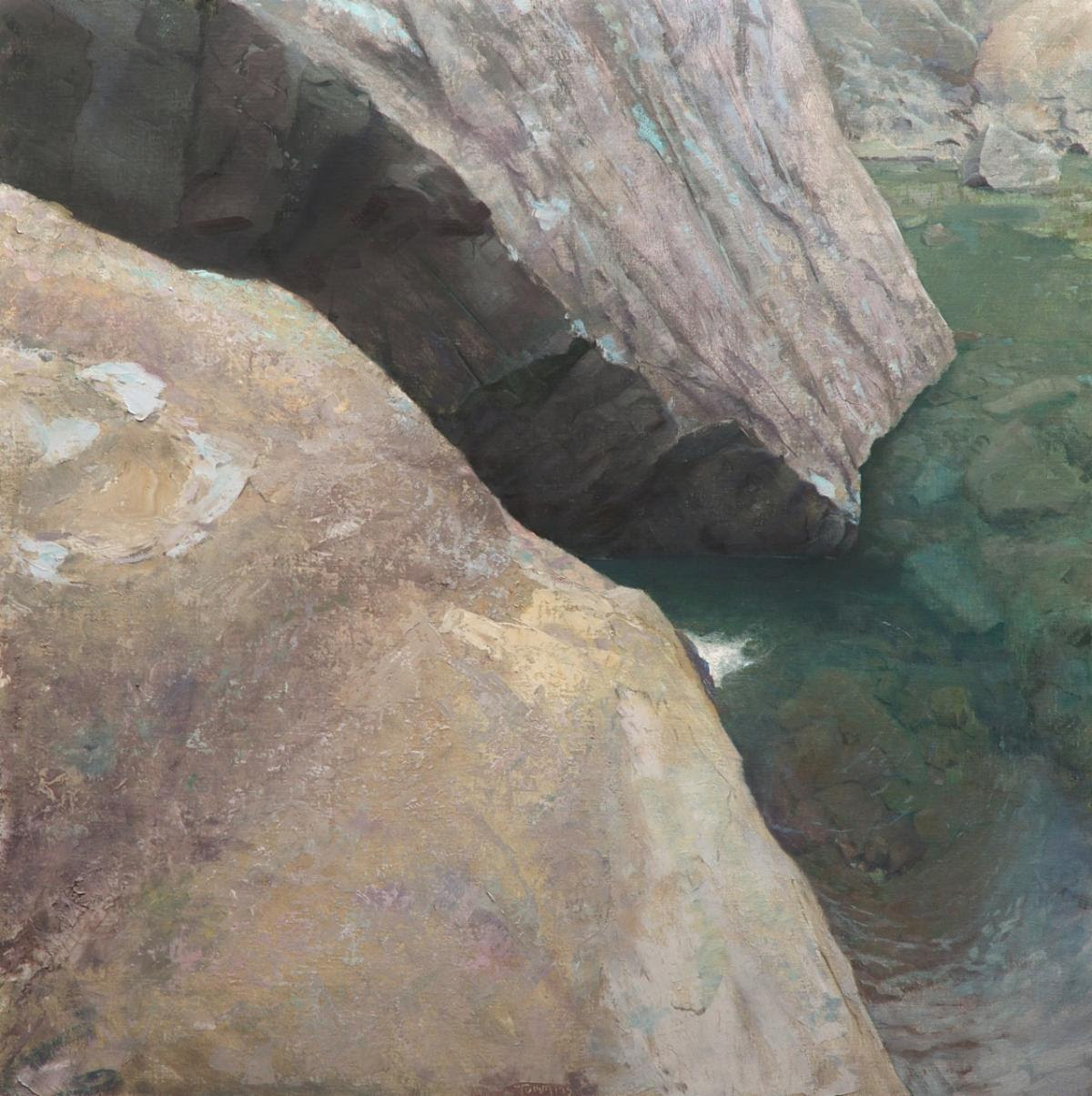
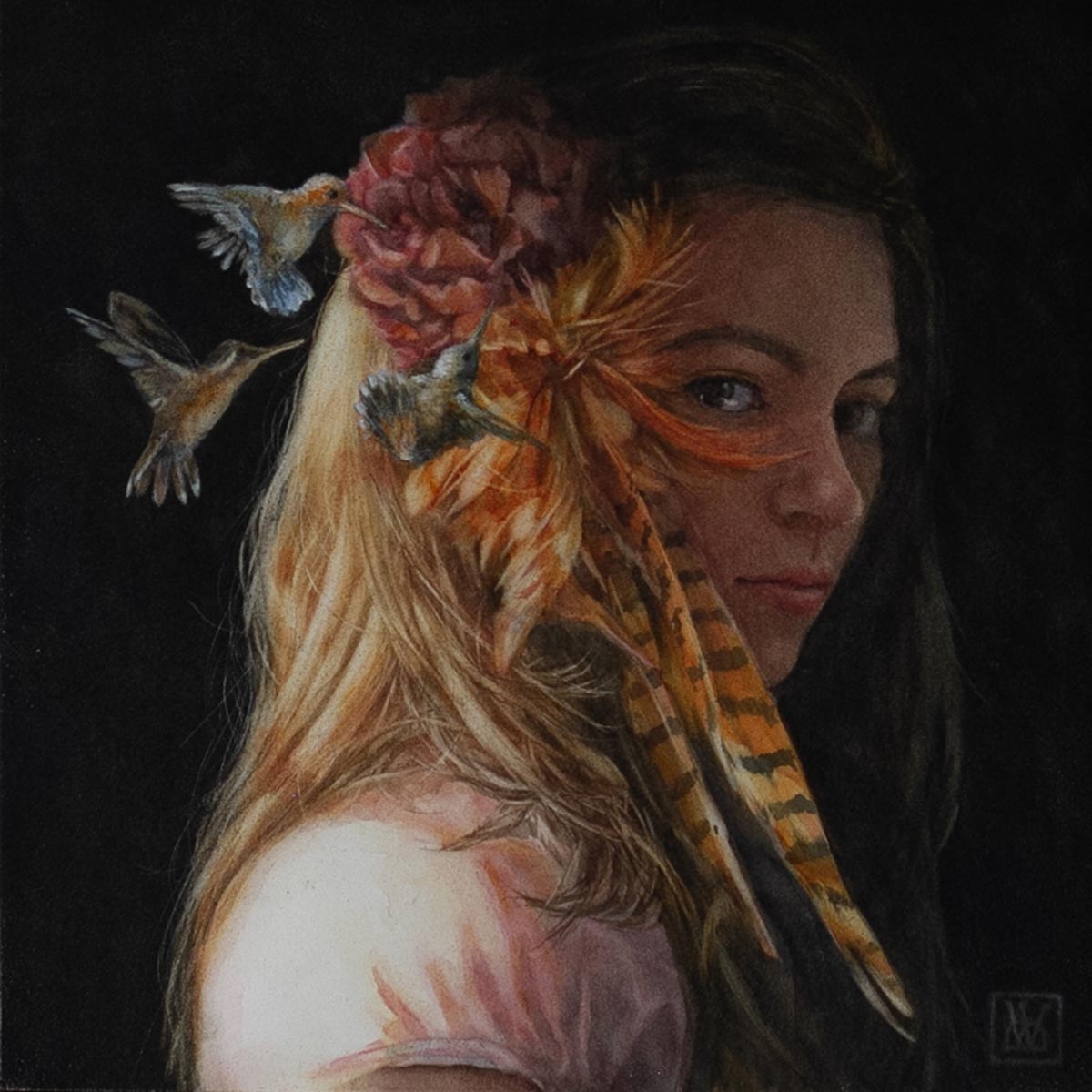
As part of our effort to continue to help artists and art galleries thrive, we’re proud to bring you this week’s “Virtual Gallery Walk.” Browse the artwork below and click the image itself to learn more about it, including how to contact the gallery.
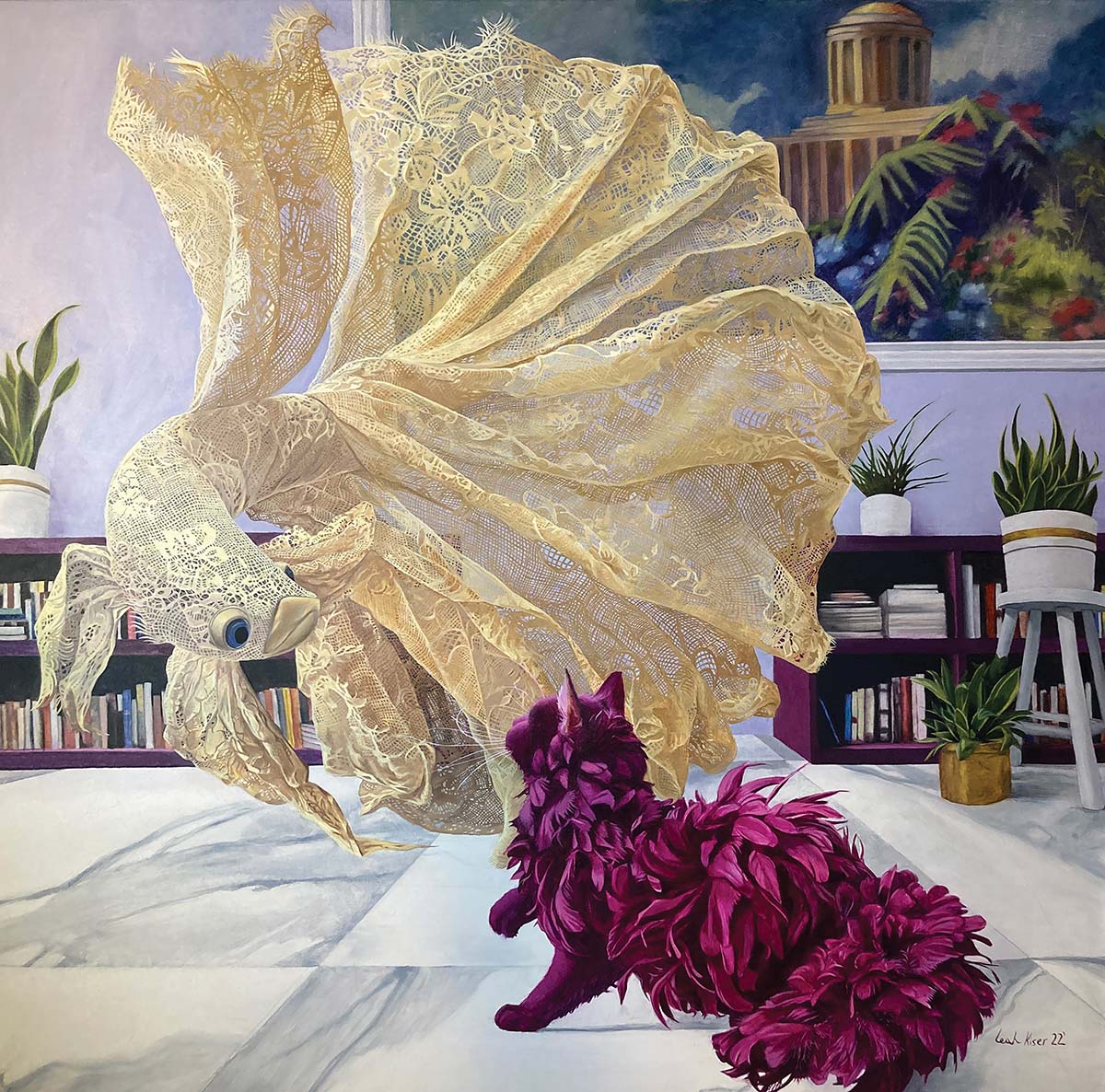
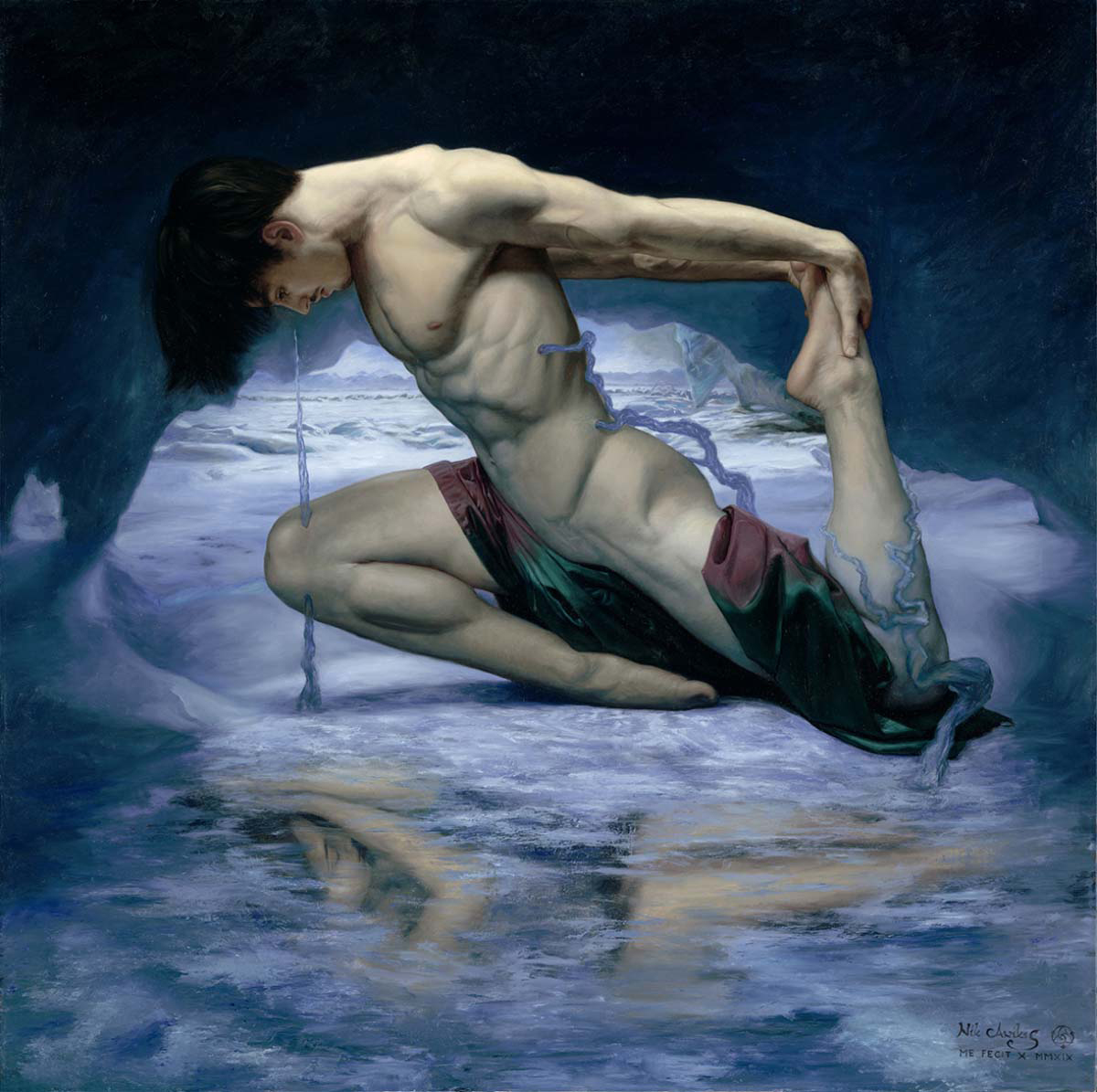
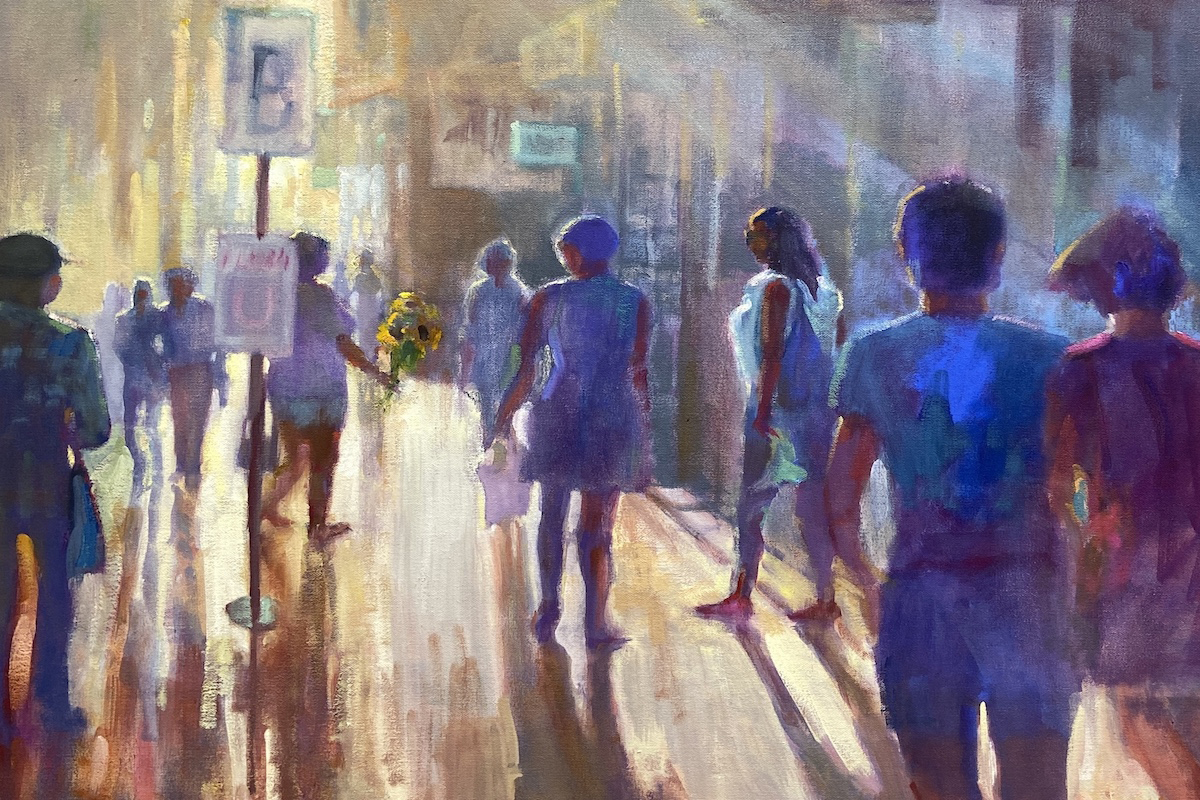
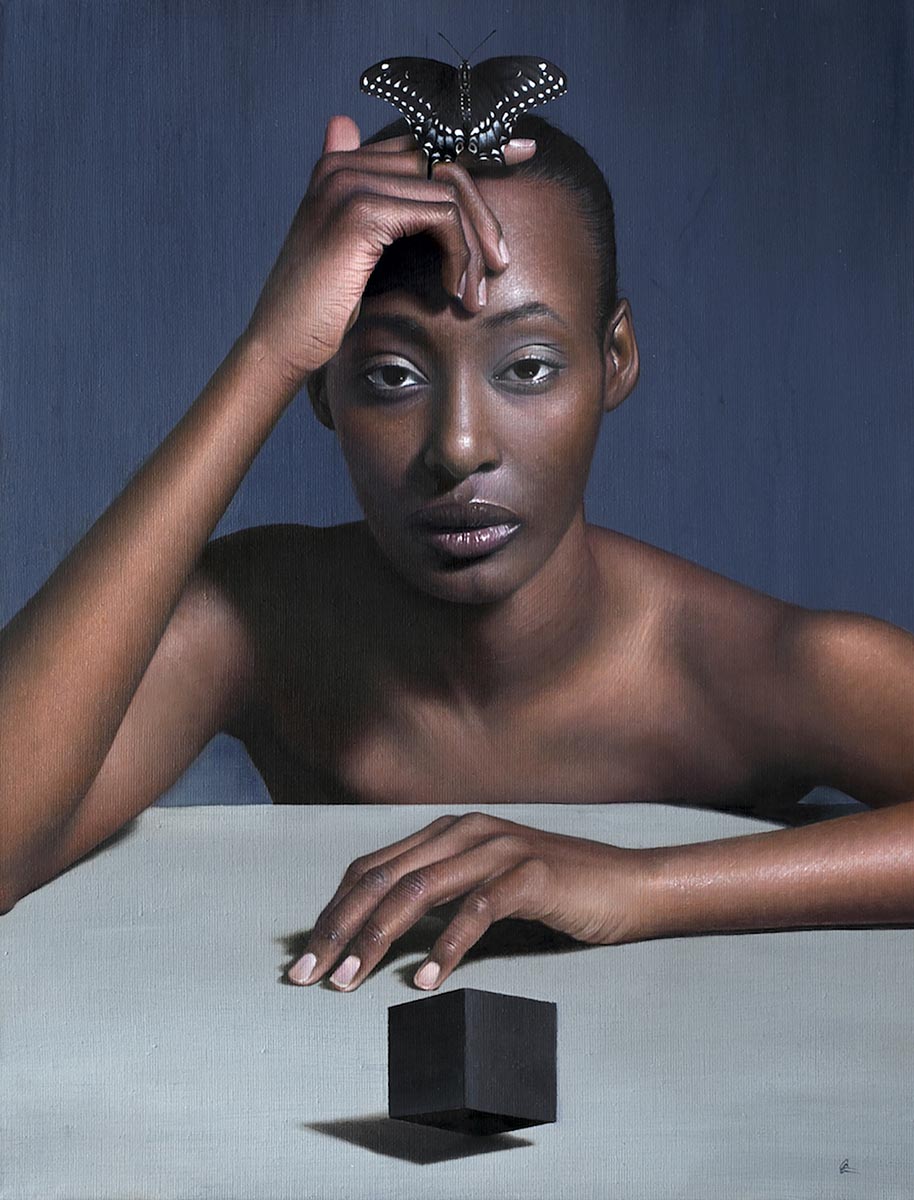
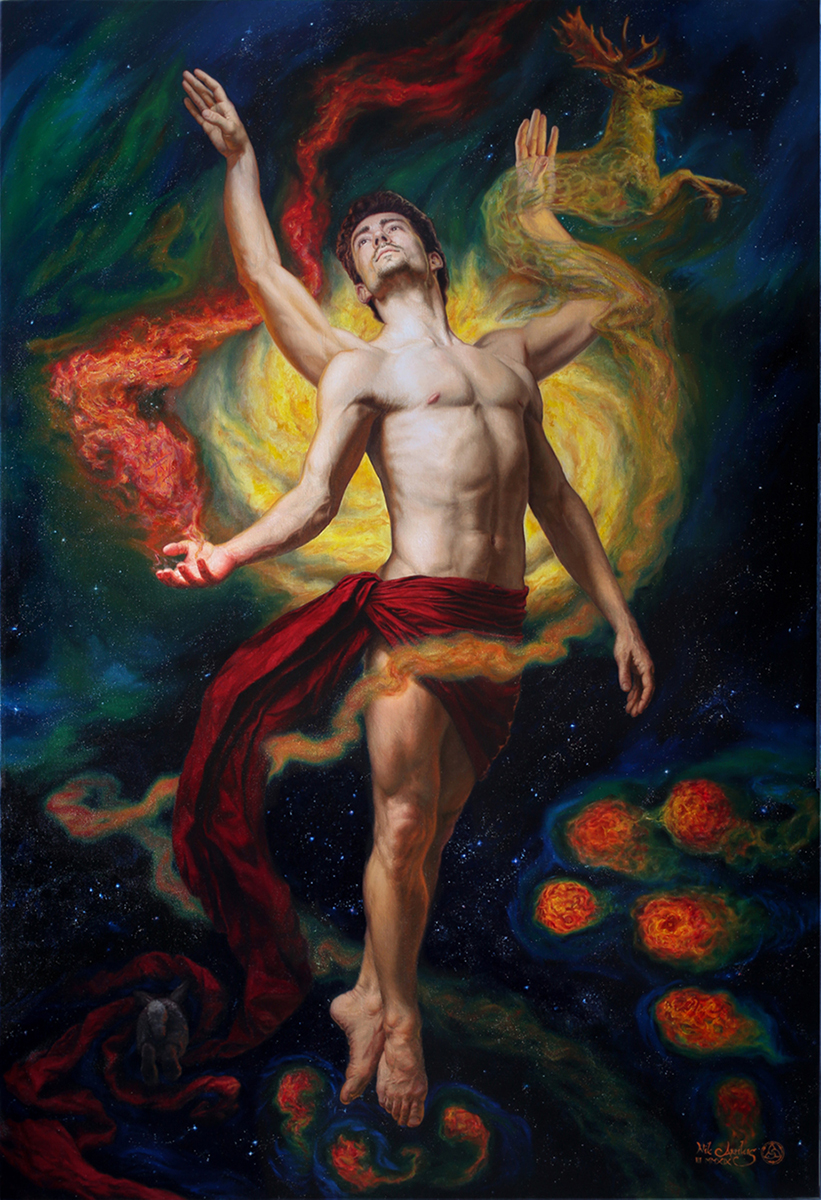
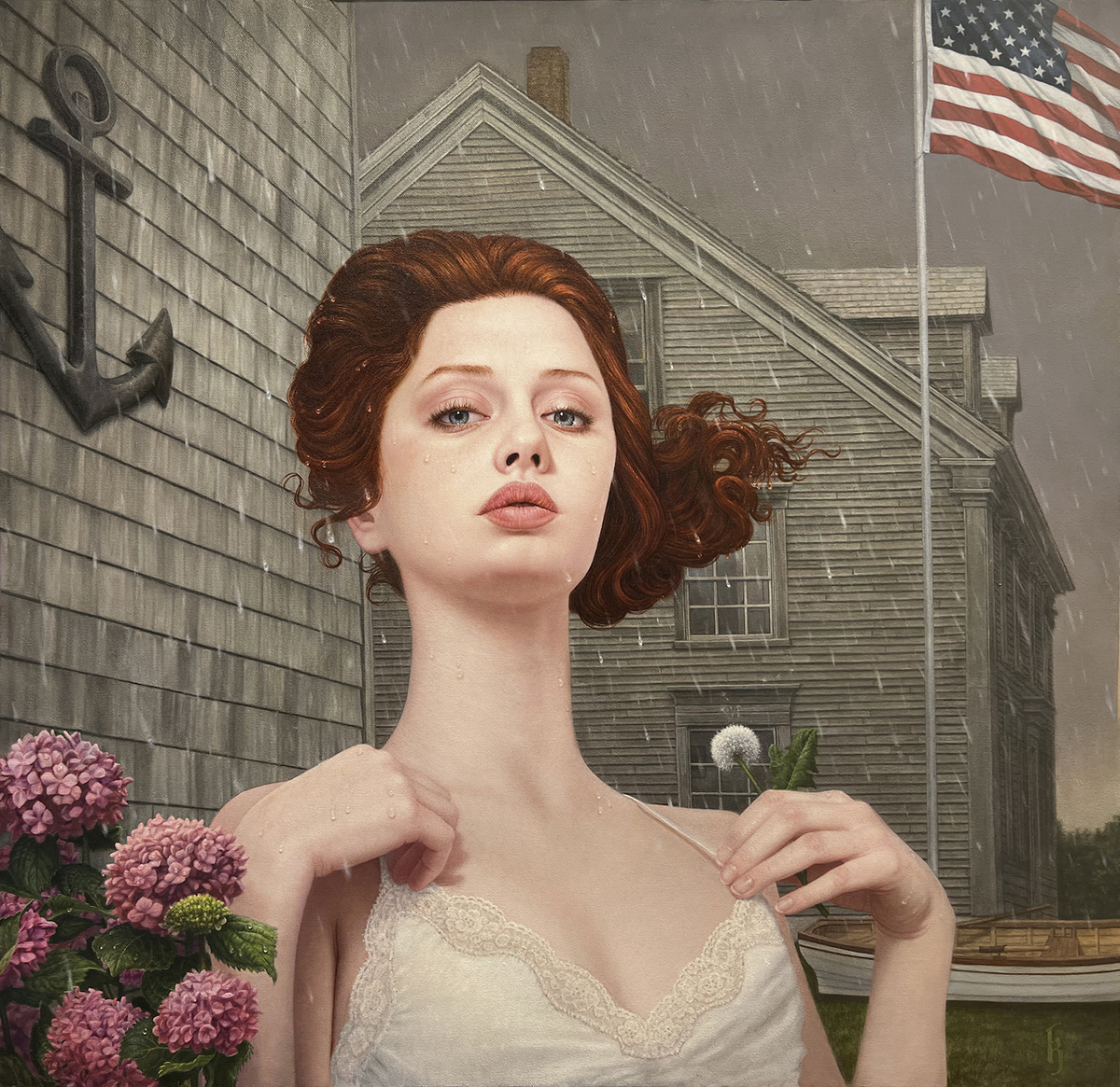
Fancy Meeting You Here, Leah Kiser, Oil on Linen, 40 x 40 in; Celebration of Fine ArtBreakfast On The Fly, Ross Buckland, oil, 12 x 16 in; ArtzLineCurse of Triton, Nik Anikis, oil on canvas, 51 × 51 in; Nik Anikis Street Light, Linda Richichi, oil, 30 x 30 in., detail; Linda Richichi, Opening Feb. 3, 530 Burns Gallery, Sarasota, FLBalanced, Grant Gilsdorf, oil on linen ,24 x 18 in; RJD Gallery
Want to see your gallery featured in an upcoming Virtual Gallery Walk? Contact us at [email protected] to advertise today. Don’t delay, as spaces are first come, first served, and availability is limited.
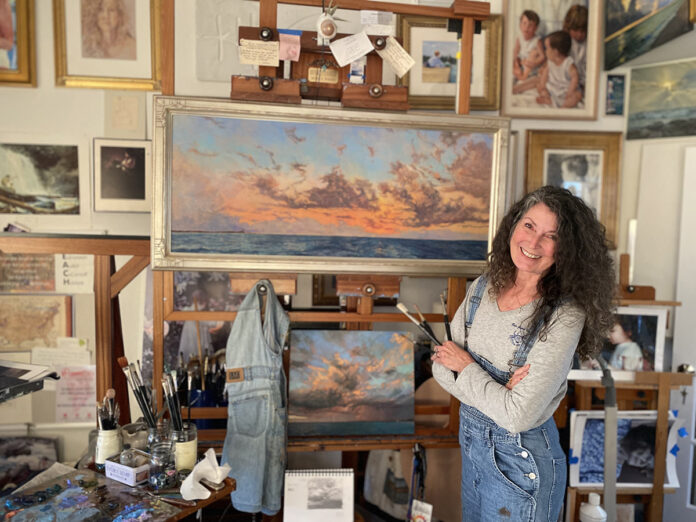
Karen Ann at her studio Hughes Easel with “Boca Rise” and “Night In Day” two works in progress on the easel, along with thumbnails, and inspiring notes tacked to the easel.
How do you describe success? Karen Ann Hitt: Having the opportunity to fully utilize aesthetic abilities in an environment allowing for growth and the continual development of its potential defines success to this artist. I love these three Michelangelo quotes: “I am still learning” spoken at 87. “The greatest danger for most of us is not that our aim is too high and we miss it, but that it is too low and we reach it.” “The true work of art is but a shadow of the divine perfection.” Success is having the opportunity to seek to reflect those shadows, continually pushing self to new limits and learning all along the way. There is no greater honor than when a collector connects and brings An Original Hitt into their home to add to their collection.
How do you find inspiration? Karen Ann Hitt: Inspiration rises from the emotion that causes an ‘at that moment…’ pause, and then the deep desire to capture it — reflecting those influential daily moments that occur in all our lives. Passion is to reflect light, life, land, expressions as genuinely experienced ‘at that moment.’
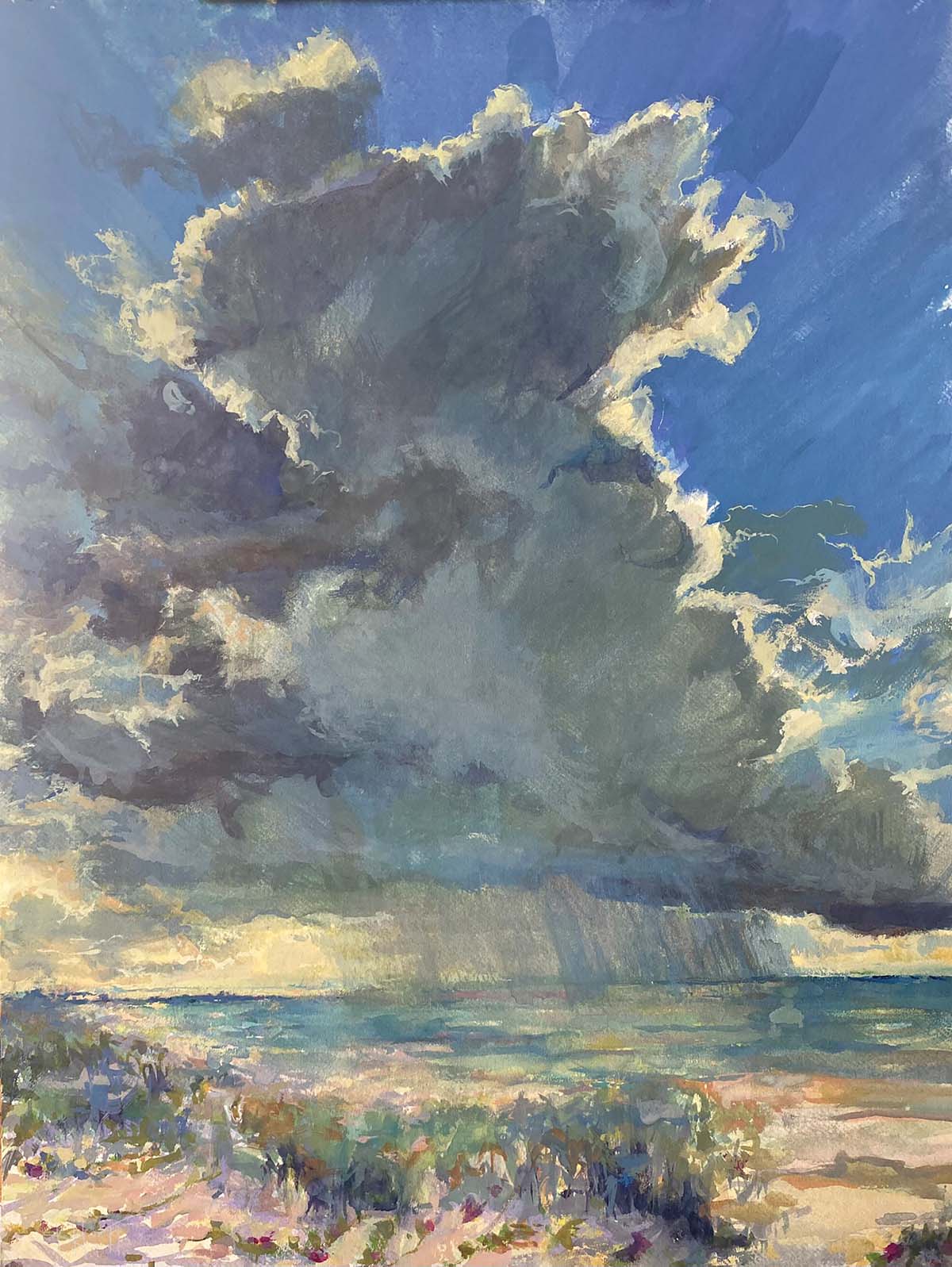
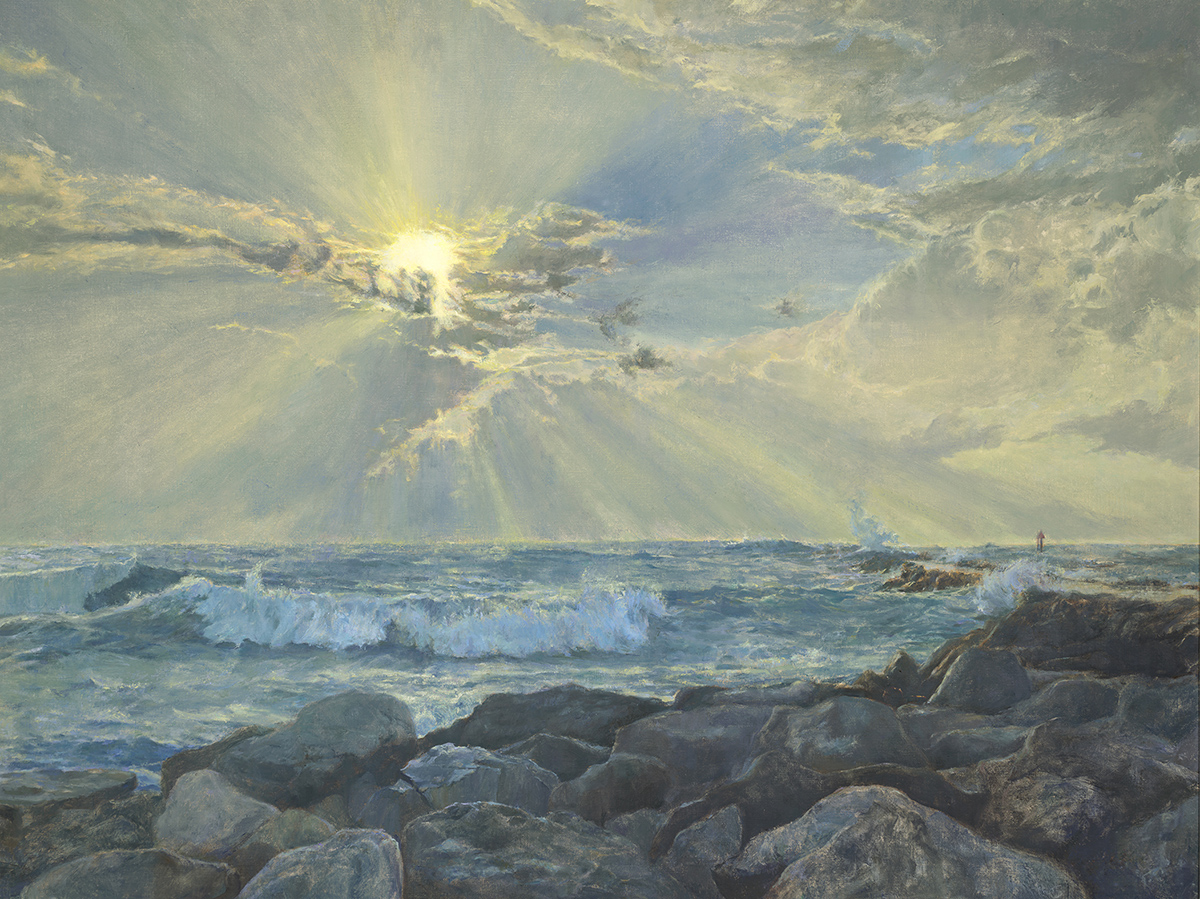
Karen Ann Hitt, “Thunder’s Gift,” 12 x 9 in., Gouache on W/C board, Plein Air Work 2023. There is nothing quite like the thunderheads as they rise over the sea in the keys. The title says it all with this one, Thunder’s Gift.Karen Ann Hitt, “Alleluia,” Oil on Linen, 36 x 48 in., 2022.Sometimes when we experience a view, all that we can say in reply is ‘Thank You for the blessing’! Alleluia- means “God be praised” yes indeed, Godspeed.
The 2023 Coors Western Art Exhibit and Sale, benefiting the National Western Scholarship Trust, ended recently after celebrating its 30th year anniversary.
From the organizers:
Thank you to all of our patrons, artists, buyers, volunteers, and visitors for another successful year of the Coors Western Art Exhibit & Sale. We couldn’t have done it without you.
We are proud to announce that this was one of our most successful years in the show’s 30-year history. It was also the most successful year for Young Guns since it began in 2013.
Selling just over $1,010,000 we continue to support the careers of local, national, and international artists as well as contributing to the Scholarship Trust of the National Western Stock Show to further encourage future generations in agriculture, veterinary science, and rural medicine.
This year’s Coors Western Art Exhibit & Sale winners are:
Best Of Show: Sophy Brown, “Lit Fuse and Count to Ten”
Sophy Brown, “Lit Fuse and Count to Ten”
Artist’s Choice: Adrienne Stein, “Arc”
Adrienne Stein, “Arc”
People’s Choice: Sally Maxwell, “Corvid #19 The Omen”
Sally Maxwell, “Corvid #19 The Omen”
Fine Art Connoisseur Club: Diana Woods
Art by Diana Woods
Fine Art Connoisseur Coors: Seth Tummins
Art by Seth Tummins
The Coors Western Art Exhibit & Sale is an annual event and gallery exhibition associated with the National Western Stock Show (non-profit) in Denver, Colorado. Taking place each January, the Coors Western Art Exhibit & Sale has become one of the finest exhibitions of contemporary Western art in the United States, featuring an eclectic mix of styles and mediums, with established artists to unknown talent.
The Young Guns of the National Western Stock Show is a social group that promotes art, philanthropy, Western culture, and networking for young professionals. With an annual event in December, social events throughout the year, and a strong connection to the West, the Young Guns are proud to represent Colorado’s next generation of leaders.
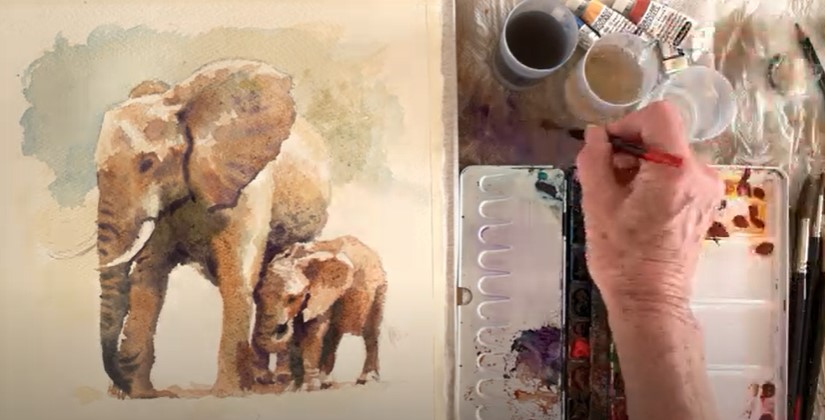
The 3rd Annual Watercolor Live came to an end Saturday, January 28, wrapping up with even more of today’s best watercolor artists sharing all of their secrets, explaining their materials, methods, and more.
The next Live event is March 9-11, 2023, with Plein Air Live. Join us then to be with fellow painters online for days of demonstrations, Q&A with your favorite artists, mingling during the breakout rooms and cocktail hours, and the incredible faculty painting auction.
From Hazel Soan’s session
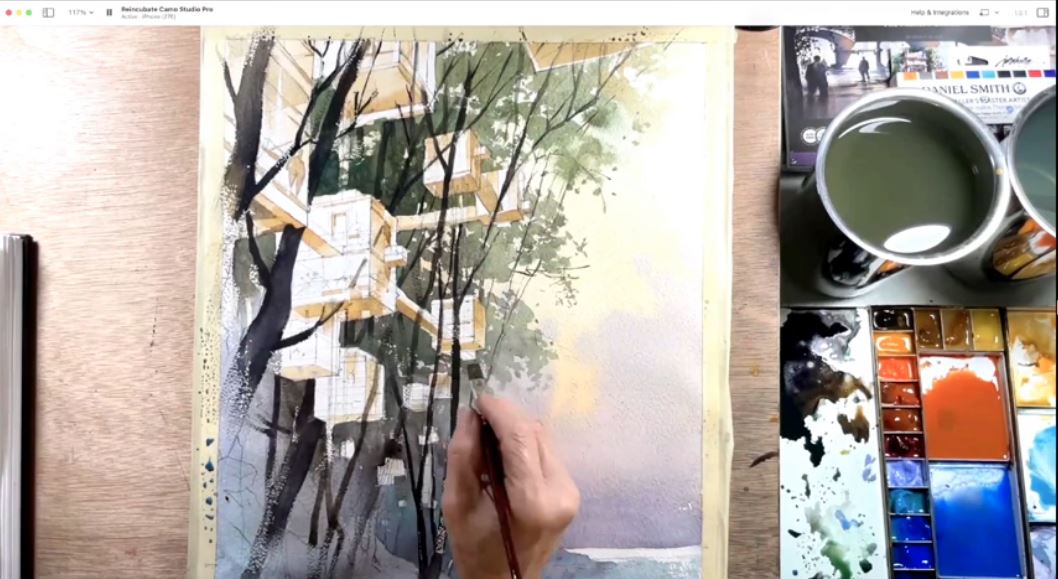
“In watercolor, we can’t actually paint the light because the white paper is the light,” explained Hazel Soan in her Beginner’s Day workshop. “You cannot paint the light. You have to paint around the light by using tints and shades.”
From Thomas Schaller’s session
Artist Thomas Schaller kicked off Day 1 of Watercolor Live on Thursday, January 26 with a live on-screen demo that included a conversational Q&A with Kelly Kane. Schaller shared not only his painting techniques but also generous words of wisdom about being an artist and learning to paint in general.
From Stan Miller’s session
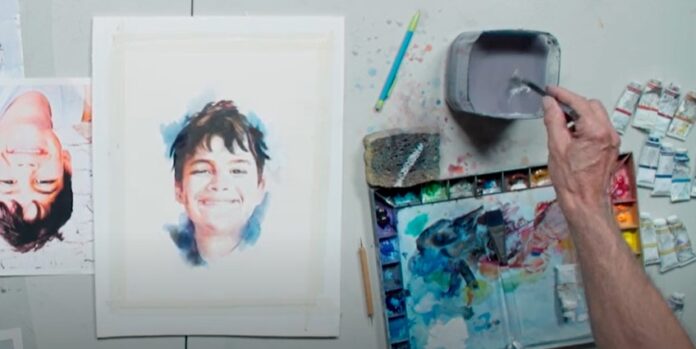
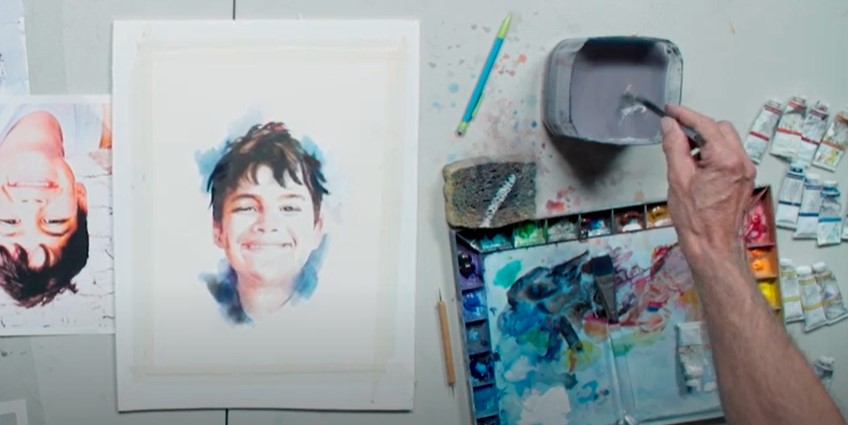
Stan Miller began his painting demo by going over how to use a photo reference; in this case, it was of his godson. After cropping the image, he showed us how to transfer the photo onto paper to have as a guide for the drawing. During the demo, he flipped the photo and painted it upside down as he continue adding detail.
From Birgit O’Connor’s session
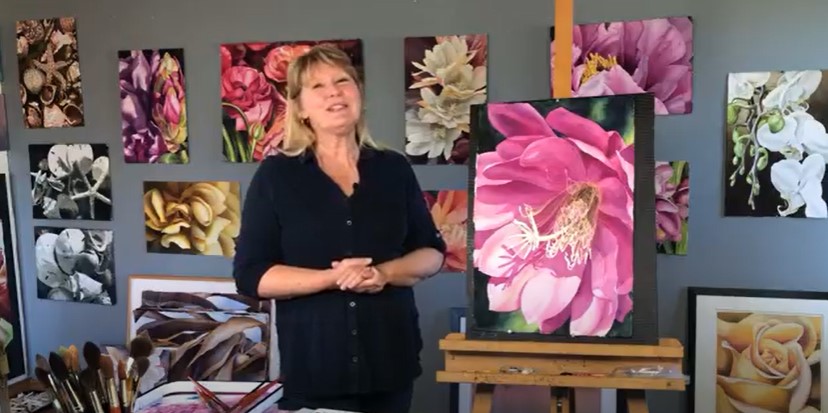
Previously at Watercolor Live, Birgit O’Connor led a session on Beginner’s Day but this year she took us inside her personal painting process. She used a composition that demonstrated her techniques for underpainting, using harmonized color, creating flower petals without overlapping the edges, working with shadows and even negative painting in specific areas.
The next Live event is coming in March with Plein Air Live, so visit PleinAirLive.com now to register and be with fellow artists online for days of demonstrations, Q&A with your favorite artists, and mingling during the breakout rooms and cocktail hours.
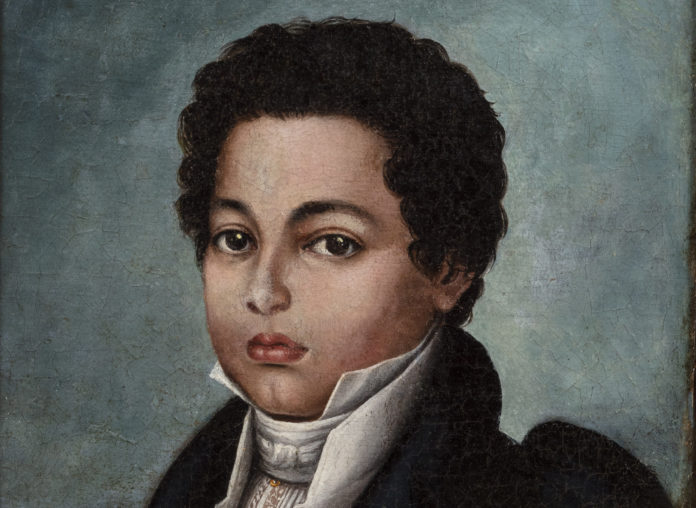
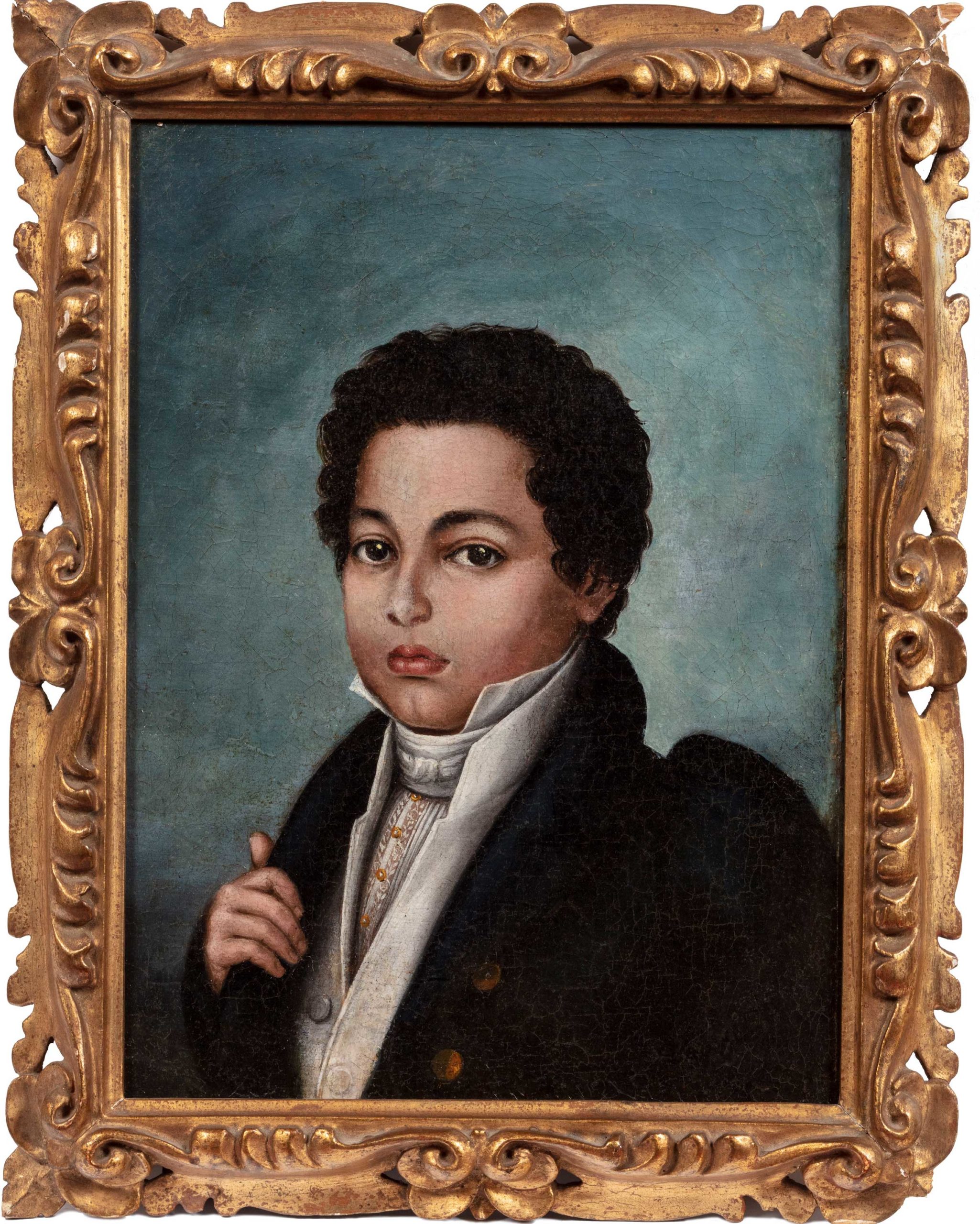
Circle of Julien Hudson (New Orleans, mid-19th century), “Portrait of a Youth,” oil on canvas, 12 x 8 7/8 inches.
The Lyman Allyn Art Museum has announced the purchase of a portrait painting of a mixed-race youth, ca. 1830s-‘40s, a rare work that speaks to the diverse community of free Blacks that existed in New Orleans before the Civil War. It is on view in the Museum’s American Perspectives gallery, having been installed just in time to add to the celebration of the Dr. Martin Luther King, Jr. weekend.
More from the museum:
The intriguing portrait of a mixed-race young man is closely related to the portraiture of Julien Hudson, one of the earliest free painters of color in America. Hudson was born in New Orleans and his principal period of activity was from 1831 until 1844, when he died prematurely at age 33. A thriving community of free people of color existed in early 19th-century New Orleans, unique to the American South.
Within that community, Hudson was patronized by both white and mixed-race clients and is known to have taught students as well, although their identities remain largely unknown.
“We are very pleased to add this exquisite image of a youth, very likely painted by an important free black American artist, to our permanent collection,” said Lyman Allyn Director, Sam Quigley. “It was acquired as part of our intentional effort to increase diversity, equity, and inclusion at all levels within the Museum’s collection, programming, staff, and board.”
The painting was purchased for the Lyman Allyn’s permanent collection from Robert Simon Fine Art, Inc., New York, where it was featured in the recent exhibition “Beyond Boundaries: Historical Art by and of People of Color.” At the Lyman Allyn this portrait is now on view in “American Perspectives,” the Museum’s permanent collection galleries of American art.
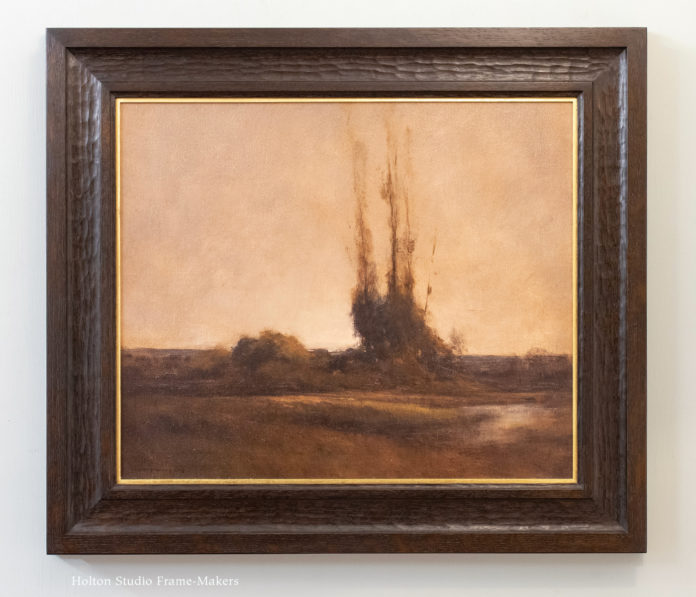
Robert Flanary, "A Grove in the Lowlands," 2015-2018. Oil on canvas, 20 x 24 in., Framed in a custom mitered (carved scoop)—3 1/2″. Quartersawn white oak (Saturated Medieval stain) with a gilt slip. (Inquire for other frame options.)
Landscape Paintings On View > Robert Flanary: Seeing All Together
Through March 3, 2023
Holton Studio, Berkeley, California holtonframes.com
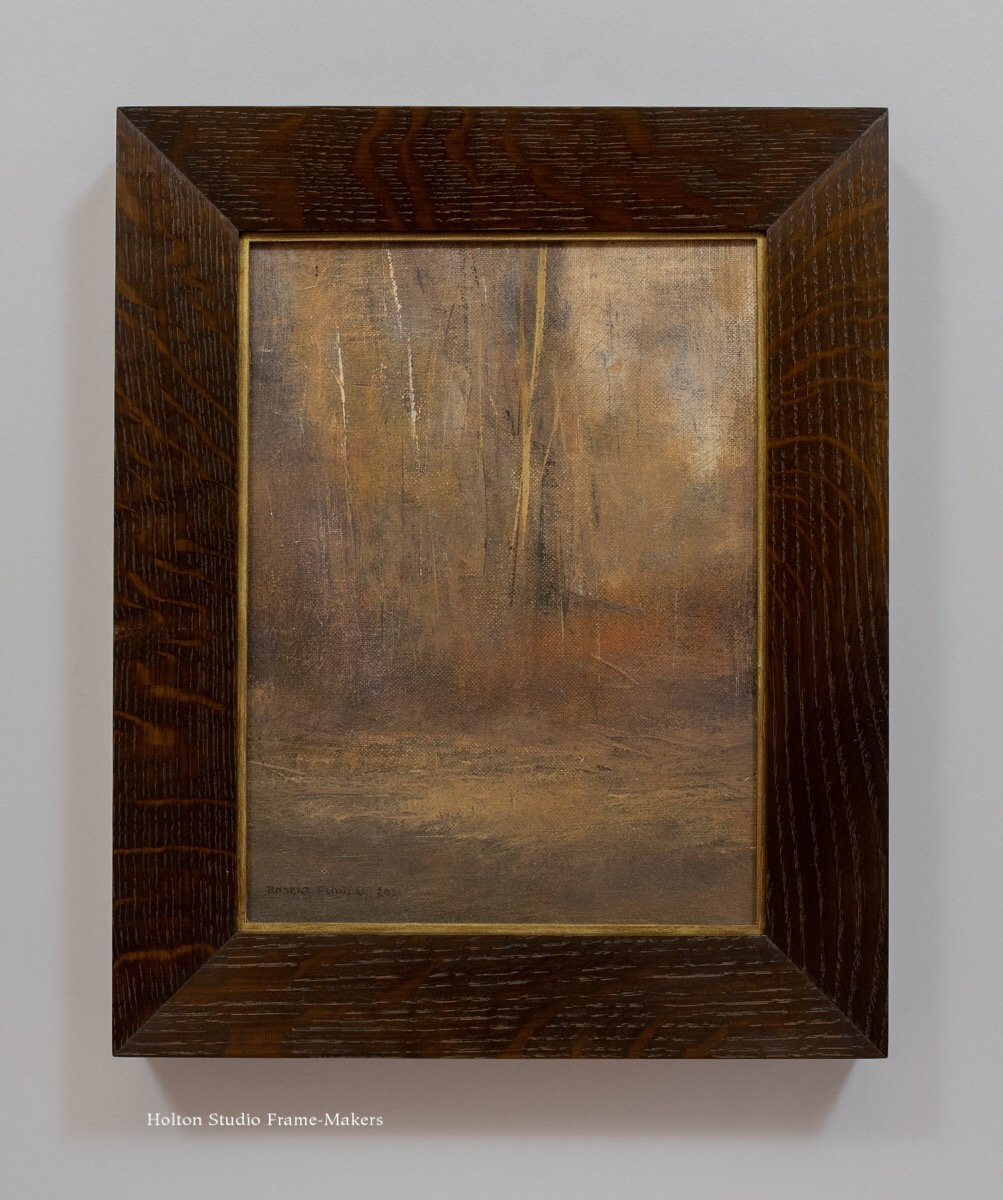
Robert Flanary, “In the Alder Bog,” 2021. Oil on canvas, 12 x 9 in., Framed in a No. 2—2″ in fumed quartersawn white oak with Medieval stain. Slip finished with metallic powder suspended in linseed oil wax. (Inquire for other frame options.)
From the gallery:
Bob’s life has been as devoted to painting as any artist’s could be, and now that he’s retired — after twenty years teaching art in a high-security juvenile prison in Olympia, Washington — he’s more focused on his work than ever. It’s an extraordinary thing to spend so many years honing one’s art—not only the skills but all the knowledge, insight, and understanding entailed in true mastery. I’ve witnessed many a gallery visitor, often painters themselves, stand entranced before a Flanary painting that is at once a compelling abstract composition, a precise observation of nature, and a painted surface that mesmerizes the attentive viewer by slowly revealing itself.
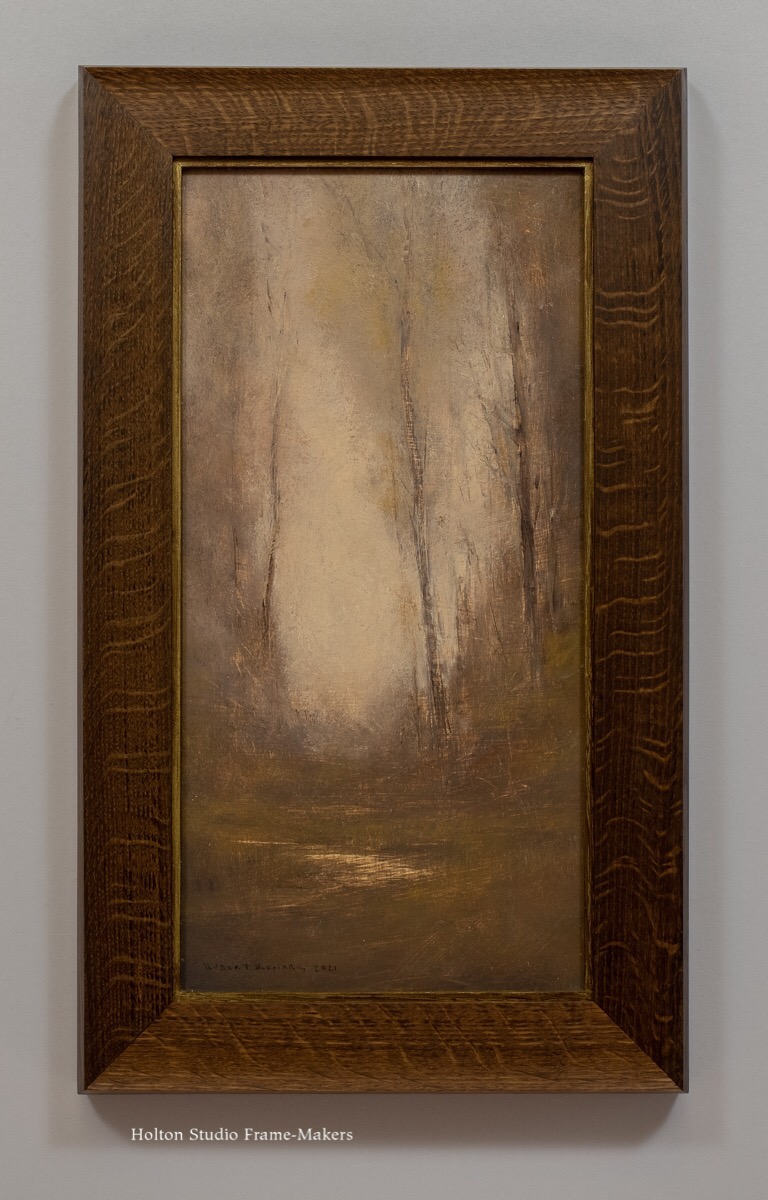
Robert Flanary, “Spires By A Brook,” 2021. Oil on panel, 16 x 8 in., Framed in a Custom Mitered—2″ in quartersawn white oak with Fumed stain. Slip finished with bronze wax. (Inquire for other frame options.)
In Bob’s latest work, much of his attention is on composition, exploring the fascinating interplay of a picture’s parts and elements that, in practiced hands, can lead to that transcendent vision and experience of the harmony of nature and the unity of being—the vision Bob calls “seeing all together.”
As part of our effort to continue to help artists and art galleries thrive, we’re proud to bring you this week’s “Virtual Gallery Walk.” Browse the artwork below and click the image itself to learn more about it, including how to contact the gallery.
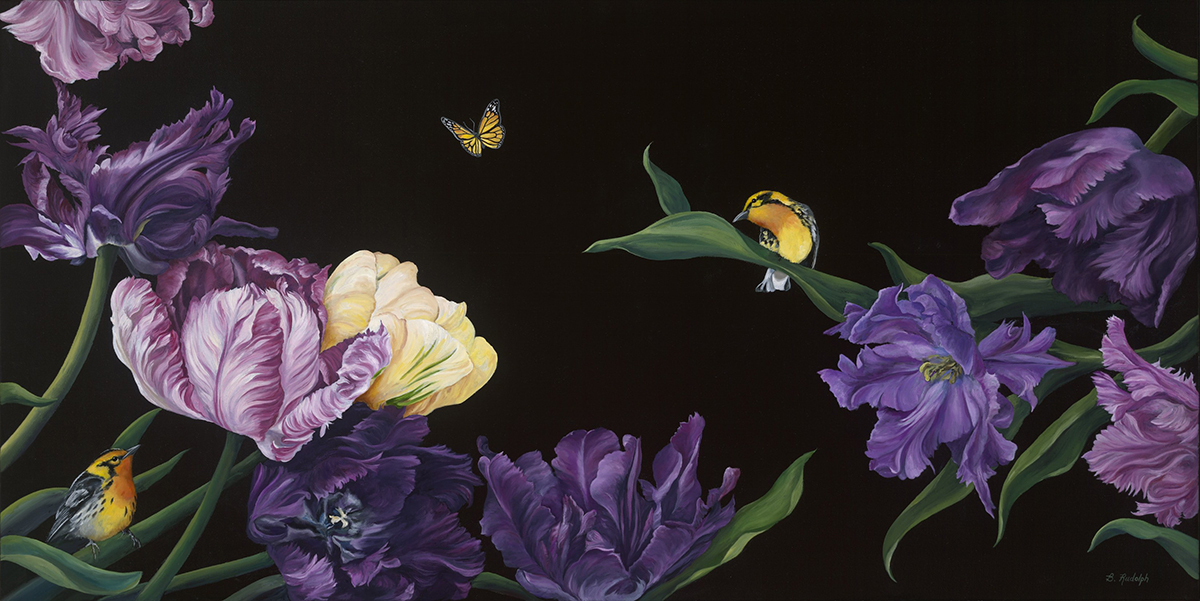
The Royal Garden, Barbara Rudolph, oil, 22 x 44 in; Celebration of Fine ArtThe Divine Creator, Anikis d.o.o., oil on canvas, 75× 51 in, Ljubljana, Slovenia; Anikis d.o.o.Vernal Bloom, Kris Lewis, oil on canvas, 30 x 30 in; RJD GALLERY
Want to see your gallery featured in an upcoming Virtual Gallery Walk? Contact us at [email protected] to advertise today. Don’t delay, as spaces are first come, first served, and availability is limited.
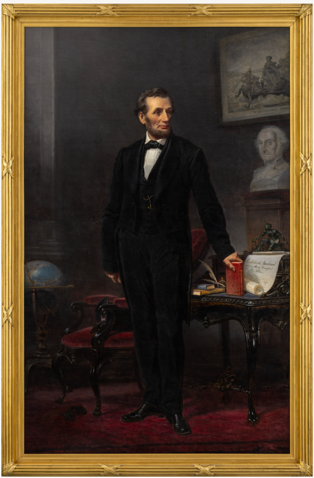
Credit: “Abraham Lincoln,” Willem Frederik Karel Travers, oil on canvas, 1865. On loan from the Hartley Dodge Foundation, and courtesy of the citizens of the Borough of Madison, New Jersey. Photo by Joe Painter, Courtesy of the Hartley Dodge Foundation.
The Smithsonian’s National Portrait Gallery has announced the installation of a life-size painting of President Abraham Lincoln by artist W.F.K. Travers. Created from life in 1865, the 9-foot-tall oil on canvas is one of three known, life-size paintings of the 16th president. The historic work comes to the National Portrait Gallery on a long-term loan from the Hartley Dodge Foundation, whose founder, Geraldine Rockefeller Dodge, acquired the painting from her family in the 1930s. The Portrait Gallery will display the Travers painting in the museum’s ongoing exhibition “America’s Presidents” beginning February 10, 2023.
The installation will precede the museum’s Presidential Family Fun Day, which will offer activities for all ages, including tours of “America’s Presidents” and the exhibition’s new tactile display. The festival will take place in the museum’s Kogod Courtyard Saturday, February 18, from 11:30 a.m. to 3 p.m. Admission is free.
“It is a pleasure to reunite the Travers painting with Gilbert Stuart’s Lansdowne portrait of George Washington—a highlight of the Portrait Gallery’s permanent collection—roughly 147 years after the two paintings were first displayed together at the 1876 Centennial Exhibition in Philadelphia,” said Kim Sajet, director of the National Portrait Gallery. “Congress debated purchasing the painting for the Capitol on numerous occasions in the late 19th and early 20th century, so it is fitting that the Portrait Gallery was able to bring this work back to Washington, D.C., in collaboration with the Hartley Dodge Foundation.”
“Travers’ painting only adds to the story of the ‘America’s Presidents’ exhibition,” said Nicolas W. Platt, president of the Hartley Dodge Foundation. “It is rich with symbolism that speaks to Lincoln’s history and accomplishments. Next to the Constitution, you see the artist’s nod to the Thirteenth Amendment, which Lincoln supported, and the globe in the background is positioned on Haiti, as Lincoln was the first to recognize it as an independent nation in 1862.”
The new loan will be joined by another new addition to “America’s Presidents.” Beginning February 7, a new tactile display will offer a more inclusive experience of the Portrait Gallery’s casts of Lincoln’s face and hands. Designed for blind visitors and those with low vision, the new display will present a free-standing structure with 3D-printed copies of one face mask by Leonard Volk and one face mask and a set of two hands by Clark Mills. It will be positioned next to the glass-enclosed plaster casts from 1917 (based on the originals by Volk in 1860 and Mills in 1865). The presentation will include object information in braille and new audio content featuring guided descriptions and further historical insight. By engaging these additional senses, the Lincoln tactile display will enhance the experience of the objects for all visitors.
For more information about this painting of Abraham Lincoln and the above events, please visit https://npg.si.edu.
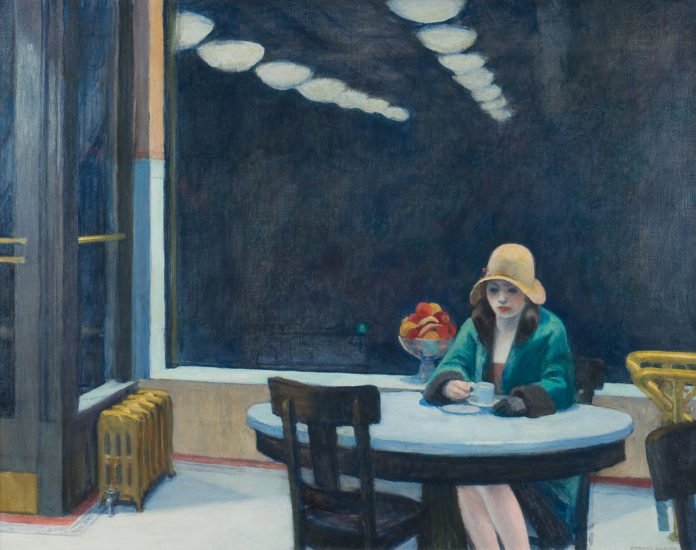
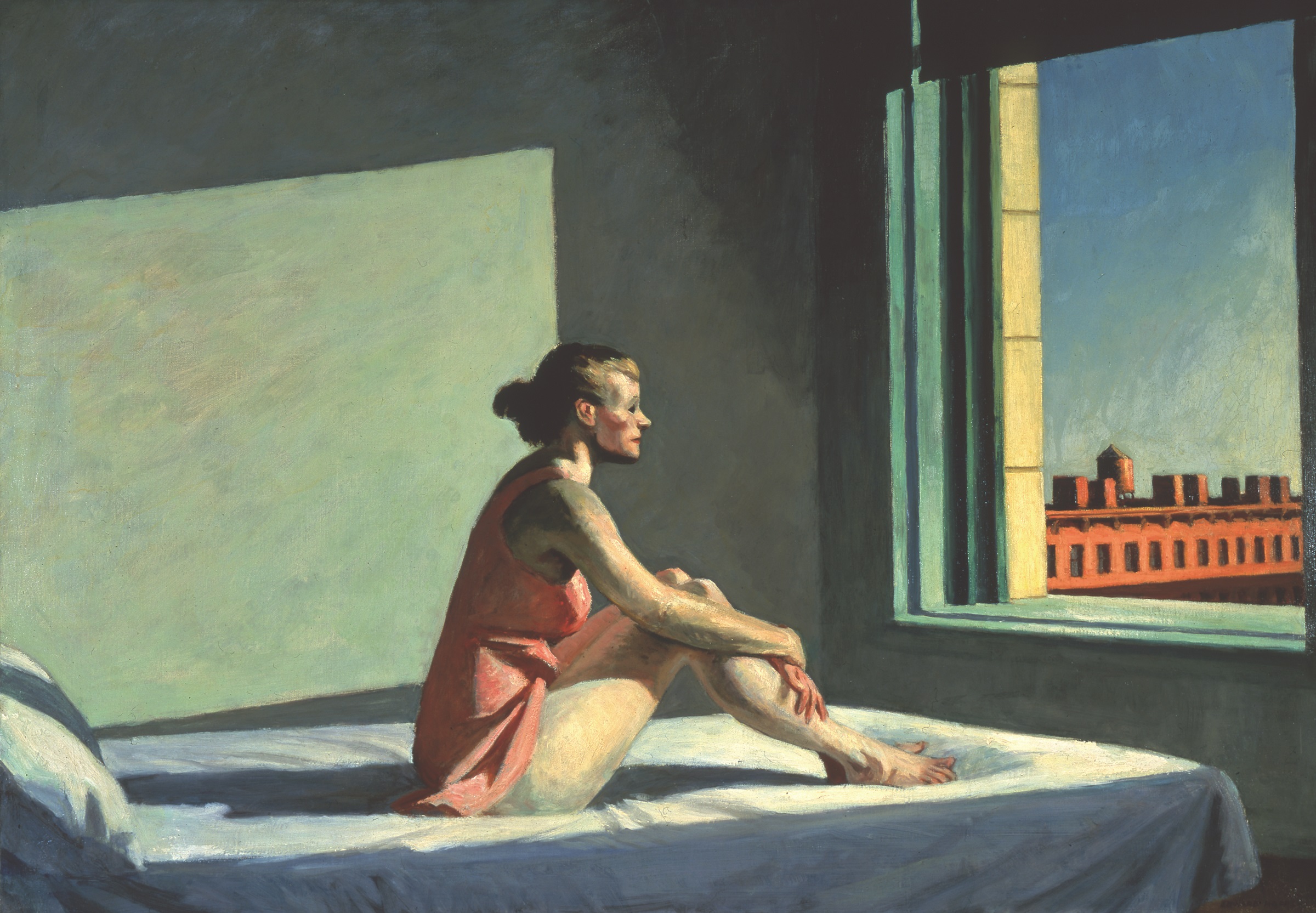
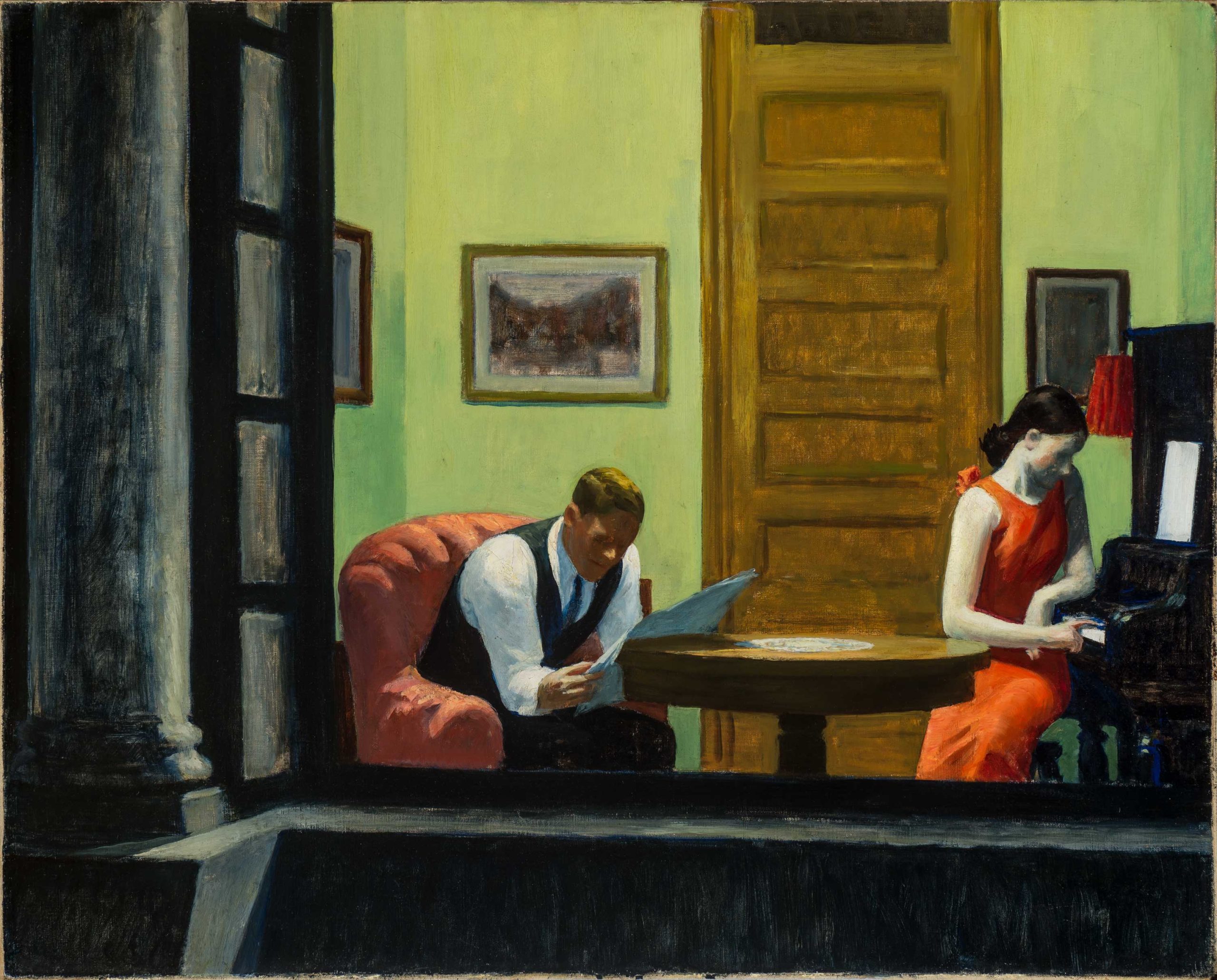
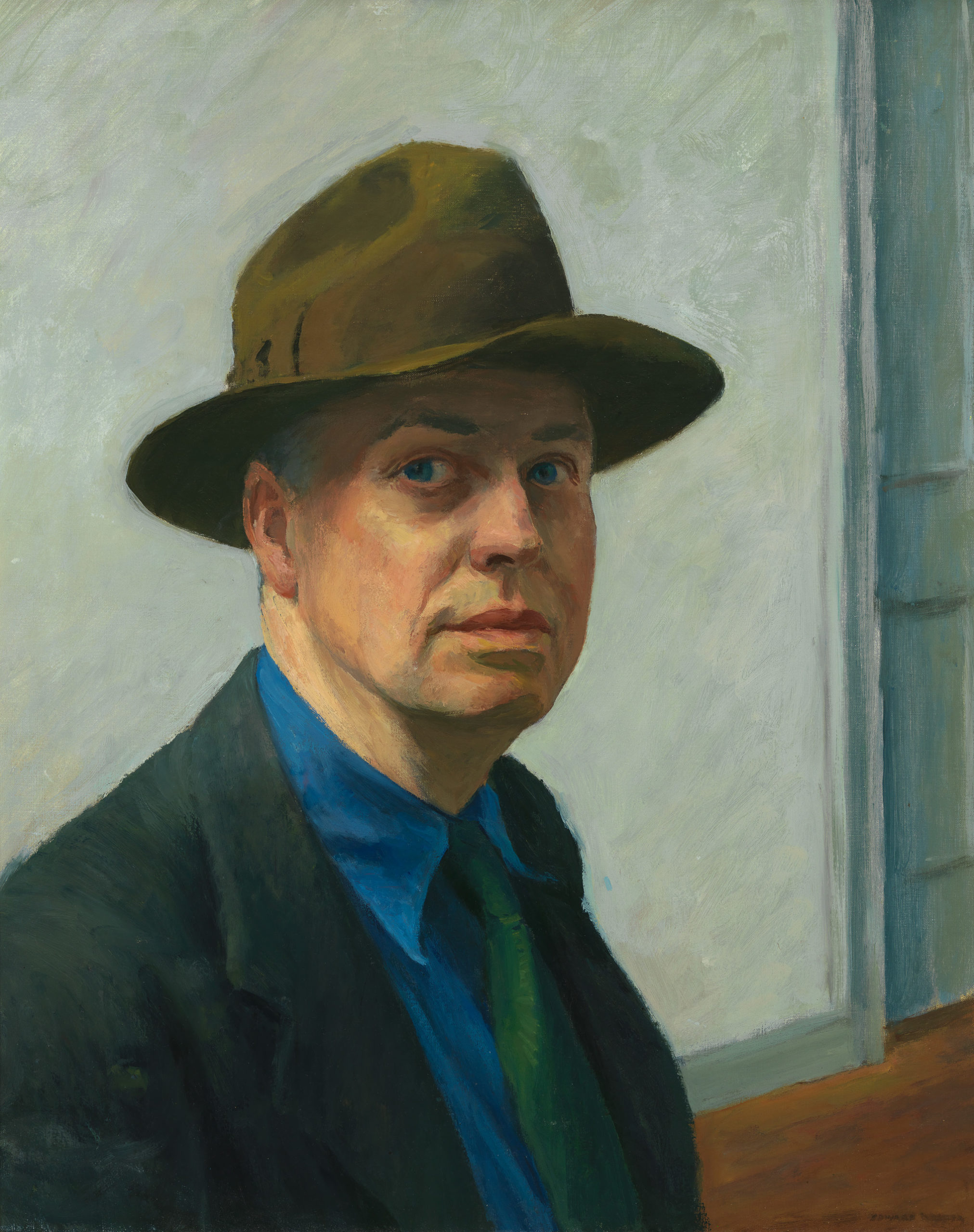
Edward Hopper Paintings of New York > This exhibition brings together many of Hopper’s most iconic city works to showcase a complex and compelling portrait of a rapidly developing New York.
From the organizers:
“Edward Hopper’s New York,” on view at the Whitney Museum of American Art through March 5, 2023, offers an unprecedented examination of Hopper’s life and work in the city that he called home for nearly six decades (1908–67). The exhibition charts the artist’s enduring fascination with the city through more than 200 paintings, watercolors, prints, and drawings from the Whitney’s preeminent collection of Hopper’s work, loans from public and private collections, and archival materials including printed ephemera, correspondence, photographs, and notebooks. From early sketches to paintings from late in his career, “Edward Hopper’s New York” reveals a vision of the metropolis that is as much a manifestation of Hopper himself as it is a record of a changing city, whose perpetual and sometimes tense reinvention feels particularly relevant today.
Instantly recognizable paintings featured in the exhibition, such as Automat (1927), Early Sunday Morning (1930), Room in New York (1932), New York Movie (1939), and Morning Sun (1952), are joined by lesser-known yet critically important compositions including a series of watercolors of New York rooftops and bridges and the painting City Roofs (1932).
“’Edward Hopper’s New York’ offers a remarkable opportunity to celebrate an ever-changing yet timeless city through the work of an American icon,” says Adam D. Weinberg, the Alice Pratt Brown Director of the Whitney Museum. “As New York bounces back after two challenging years of global pandemic, this exhibition reconsiders the life and work of Edward Hopper, serves as a barometer of our times, and introduces a new generation of audiences to Hopper’s work by a new generation of scholars. This exhibition offers fresh perspectives and radical new insights.”
“Edward Hopper’s New York” is organized by Kim Conaty, Steven and Ann Ames Curator of Drawings and Prints, with Melinda Lang, Senior Curatorial Assistant, at the Whitney.
Born in the Hudson River town of Nyack, New York, in 1882, Hopper first visited Manhattan on family day trips. After completing high school, he commuted to the city by ferry to attend the New York School of Illustration and the New York School of Art. In 1908 he moved to the city, and he spent the majority of his life, from 1913 until his death in 1967, living and working in a top-floor apartment at 3 Washington Square North in Greenwich Village. He was joined there by his wife, the artist Josephine (Jo) Verstille Nivison, following their marriage in 1924. Jo played a crucial supportive and collaborative role in Hopper’s practice, serving as his longstanding model and chief record-keeper. A selection of Jo’s watercolors, capturing their Washington Square home, are included in “Edward Hopper’s New York.”
“Hopper lived most of his life right here, only blocks from where the Whitney stands today,” says Conaty. “He experienced the same streets and witnessed the incessant cycles of demolition and construction that continue today, as New York reinvents itself again and again. Yet, as few others have done so poignantly, Hopper captured a city that was both changing and changeless, a particular place in time and one distinctly shaped by his imagination. Seeing his work through this lens opens new pathways for exploring even Hopper’s most iconic works.”
Over the course of his career, Hopper observed the city assiduously, honing his understanding of its built environment and the particularities of the modern urban experience. During this time, New York underwent tremendous development—skyscrapers reached record-breaking heights, construction sites roared across the five boroughs, and the increasingly diverse population boomed—yet Hopper’s depictions remained human-scale and largely unpopulated. Deliberately avoiding the famous skyline and picturesque landmarks such as the Brooklyn Bridge and the Empire State Building, Hopper instead turned his attention to unsung utilitarian structures and out-of-the-way corners, drawn to the collisions of new and old, civic and residential, public and private that captured the paradoxes of the changing city.
Edward Hopper’s New York: The Exhibition
Organized in thematic chapters spanning Hopper’s entire career, the installation comprises eight sections including four expansive gallery spaces showcasing many of Hopper’s most celebrated paintings and four pavilions that focus on key topics through dynamic groupings of paintings, works on paper, and archival materials, many of which have rarely been exhibited to the public.
“Edward Hopper’s New York” begins with early sketches and paintings from the artist’s first years traveling into and around the city, from 1899 to 1915, as he grew from a commuting art student to a Greenwich Village resident. In Moving Train (c. 1900), Tugboat with Black Smokestack (1908), and El Station (1908) he observed the ways people occupied and moved through space within a dramatically developing urban environment.
Although Hopper aspired to recognition as a painter, his first successes came in print through his illustrations and etchings, an important history featured in a section of the exhibition titled “The City in Print.” His artworks for illustrations and published commissions for magazines and advertisements often featured urban motifs inspired by New York—theaters, restaurants, offices, and city dwellers—that would become foundational to his art. During this early period, he also consolidated many of his impressions of New York through etchings like East Side Interior (1922) and The Open Window (c. 1918–19), which preview the dramatic use of light that has become synonymous with Hopper’s work.
“The Window,” the next section, focuses on this enduring motif for Hopper—one that he explored with great interest in his city scenes. While strolling New York’s streets and riding its elevated trains, Hopper was particularly drawn to the fluid boundaries between public and private space in a city where all aspects of everyday life—from goods in a storefront display to unguarded moments in a café—are equally exposed. In paintings on view such as Automat (1927), Night Windows (1928), and Room in Brooklyn (1932), Hopper imagines the unlimited compositional and narrative possibilities of the city’s windowed facades, the potential for looking and being looked at, and the discomfiting awareness of being alone in a crowd.
“Edward Hopper’s New York” presents, for the first time together, the artist’s panoramic cityscapes, installed as a group in a section of the exhibition titled “The Horizontal City.” Early Sunday Morning (1930), Manhattan Bridge Loop (1928), Blackwell’s Island (1928), Apartment Houses, East River (c. 1930), and Macomb’s Dam Bridge (1935), five paintings made between 1928 and 1935, all share nearly identical dimensions and format. Seen together, they offer invaluable insight into Hopper’s contrarian vision of the growing city at a time when New York was increasingly defined by its relentless skyward development.
“Washington Square” highlights the importance of Hopper’s neighborhood as his home and muse for nearly 55 years. Paintings like City Roofs (1932) and November, Washington Square (1932/1959) show Hopper’s fascination with the city views visible from his windows and his rooftop, and a rare series of watercolors—a practice he generally reserved for his travels to New England and elsewhere—reveals how attuned he was to the spatial dynamics and subtleties of the city’s built environment. As documented in the exhibited correspondence and notebooks, the Hoppers were fierce advocates of Washington Square, and they argued tirelessly for the preservation of their neighborhood as a haven for artists and as one of the city’s cultural landmarks.
“Theater,” a particularly revealing gallery in the exhibition, explores Hopper’s passion for the stage and the critical role it played as an active mode of spectatorship and source of visual inspiration. This section includes archival items like the Hoppers’ preserved ticket stubs and theatergoing notebooks and highlights the ways that theater spaces and set design influenced Hopper’s compositions through works like Two on the Aisle (1927) and The Sheridan Theatre (1937). Additionally, the presentation of New York Movie (1939) and a group of its preparatory studies along with figural sketches for other paintings reveal the Hoppers’ collaborative scene staging, in which Jo played an active part as model.
Throughout his career, Hopper explored the city with sketchbook in hand, recording his observations through drawing, a practice highlighted in this section of the exhibition. A large selection of his sketches and preparatory studies on view in “Sketching New York” chart Hopper’s favored locations across the city, many of which the artist returned to again and again in order to capture different impressions that he could later explore on canvas.
Finally, in “Reality and Fantasy,” a group of ambitious late paintings, characterized by radically simplified geometry and uncanny, dreamlike settings, reveal how New York increasingly served as a stage set or backdrop for Hopper’s evocative distillations of urban experience. In works such as Morning in a City (1944), Sunlight on Brownstones (1956), and Sunlight in a Cafeteria (1958), Hopper created compositions that depart from specific sites while still tapping into urban sensations, reflecting his desire, as noted in his personal journal “Notes on Painting”, to create a “realistic art from which fantasy can grow.”
Edward Hopper and the Whitney Museum of American Art
Edward Hopper’s career and work have been a touchstone for the Whitney since before the Museum was founded. In 1920, at the age of thirty-seven, Hopper had his first solo exhibition at the Whitney Studio Club. He was included in a number of exhibitions there before it closed in 1928 to make way for the Whitney Museum of American Art, which opened in 1931. Hopper’s work appeared in the inaugural Whitney Biennial in 1932 and in twenty-nine subsequent Biennials and Annuals through 1965, as well as several group exhibitions. The Whitney was among the first museums to acquire a Hopper painting for its collection. In 1968, Hopper’s widow, the artist Josephine Nivison Hopper bequeathed the entirety of his artistic holdings–2,500 paintings, watercolors, prints, and drawings–and many of her own works from their Washington Square studio residence. Today the Whitney’s collection holds over 3,100 works by Hopper, more than any other museum in the world.
“Given Hopper’s status in the Whitney’s history and within the ranks of American art history, this periodic reconsideration and regular reckoning is imperative and a critical obligation,” says Weinberg.
Exhibition Tickets
Visitors can purchase timed tickets for “Edward Hopper’s New York,” on view through March 5, 2023 on the Museum’s website.
As part of our effort to continue to help artists and art galleries thrive, we’re proud to bring you this week’s “Virtual Gallery Walk.” Browse the artwork below and click the image itself to learn more about it, including how to contact the gallery.
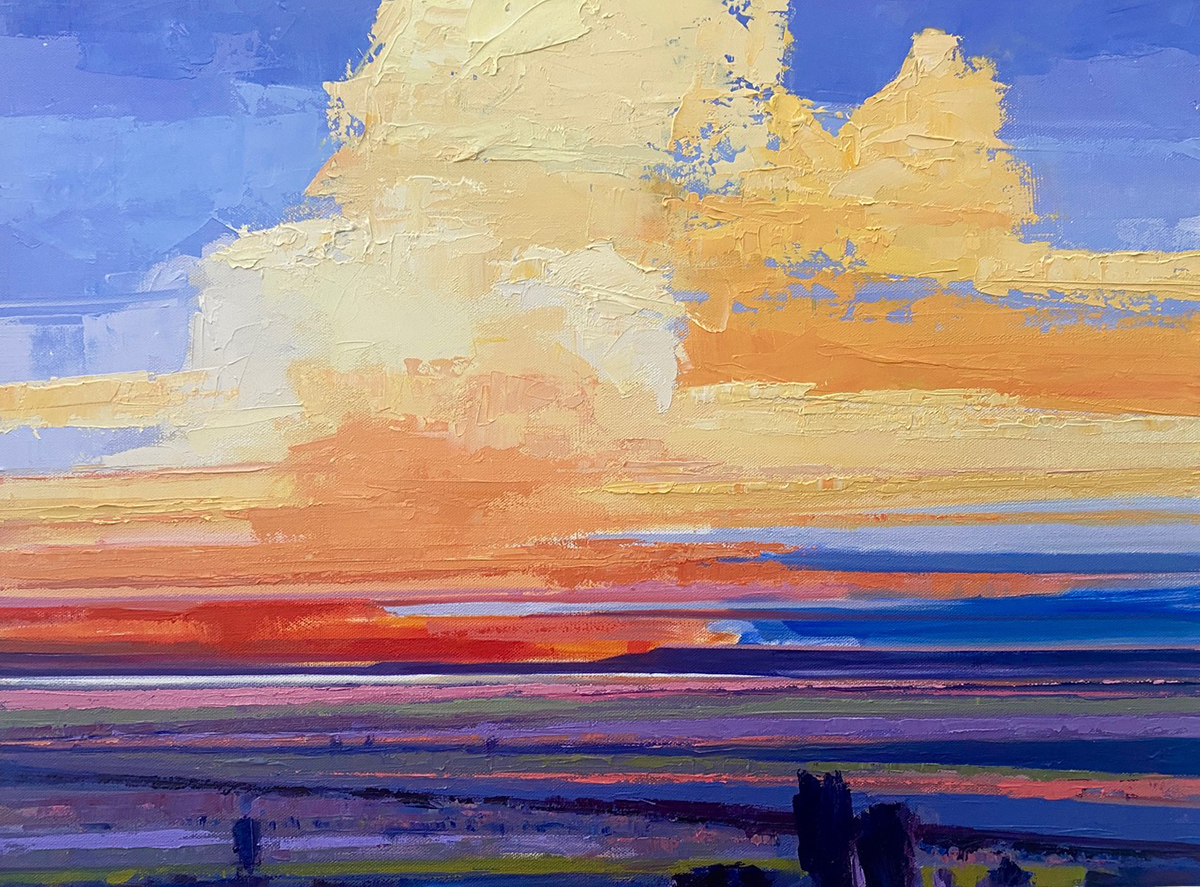
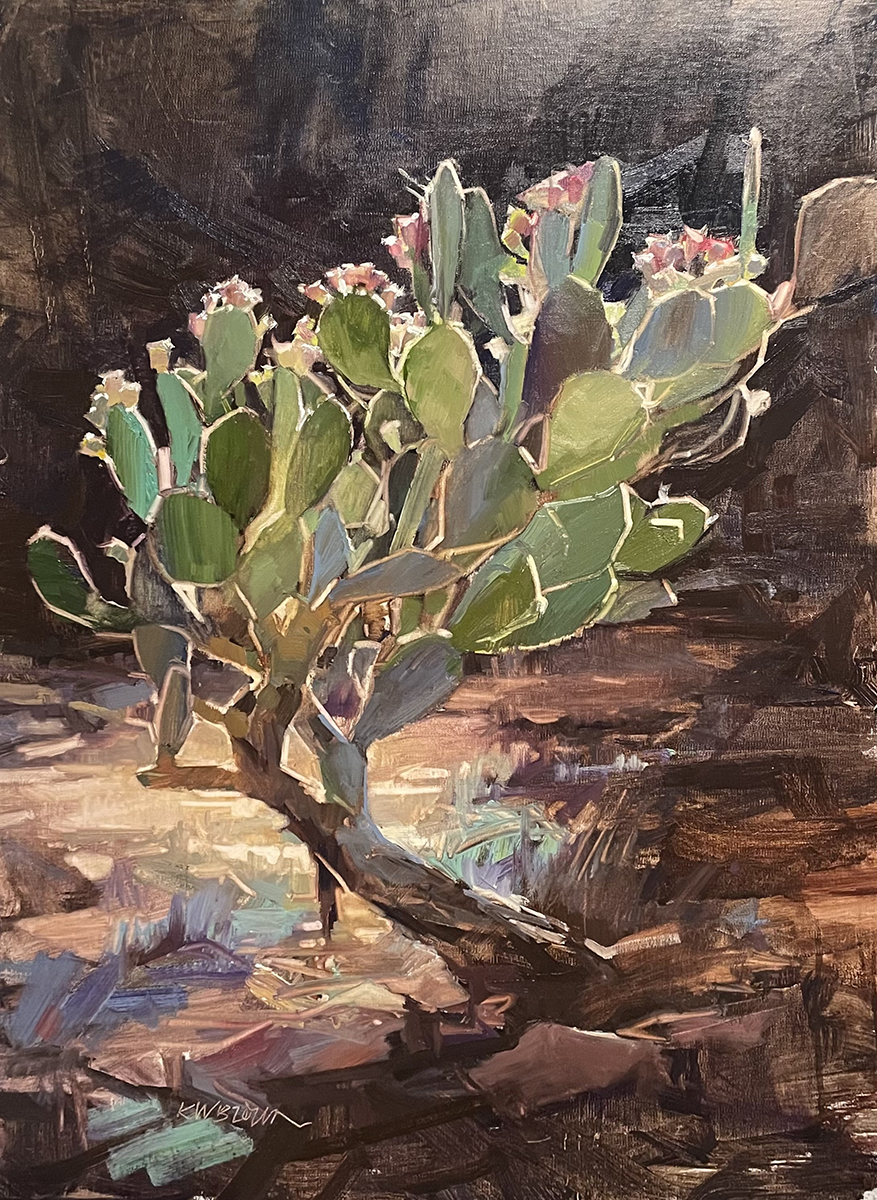
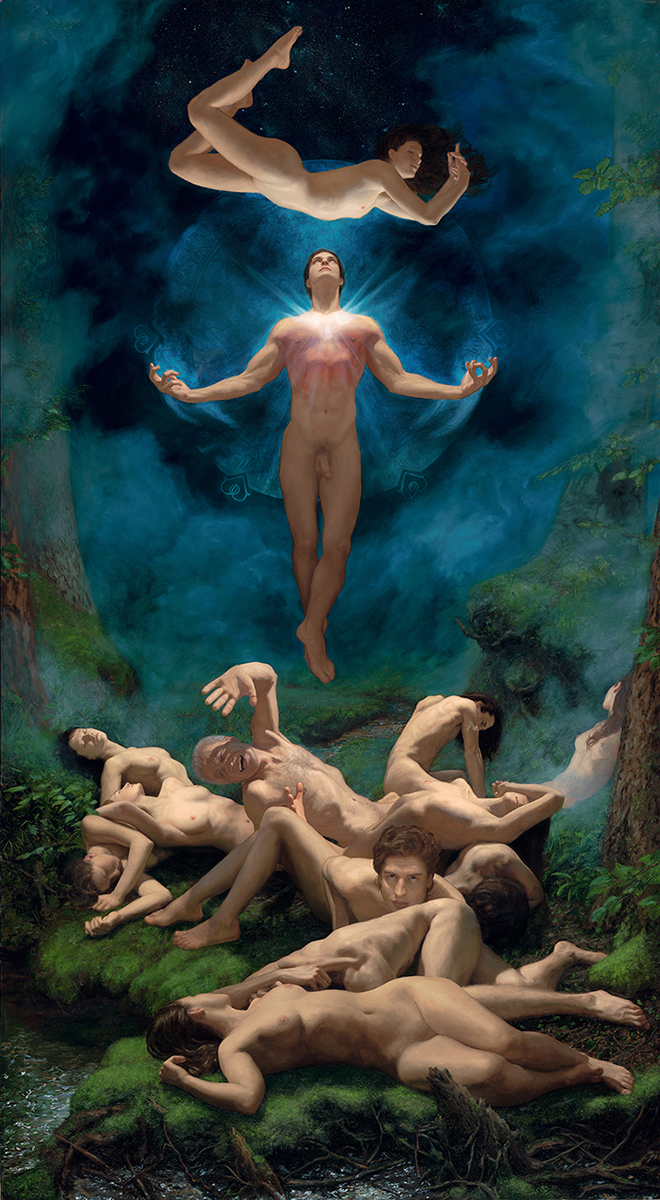
Red Horizon, Martin Blundell, oil, 18 x 24 in; Celebration of Fine ArtSun Salutation, Krystal W Brown, oil on linen, 24 x18 in; Krystal W BrownReawakening of Humanity, Anikis d.o.o., oil on canvas, 90.55 x 55.12.in Castle Sevnica; Anikis d.o.o.,Little Birds Told Me, Daniela Werneck, watercolor on aquaboard, 8 x 8 in; RJD Gallery
Want to see your gallery featured in an upcoming Virtual Gallery Walk? Contact us at [email protected] to advertise today. Don’t delay, as spaces are first come, first served, and availability is limited.
Fill your mind with useful art stories, the latest trends, upcoming art shows, top artists, and more. Subscribe to Fine Art Today, from the publishers of Fine Art Connoisseur magazine.