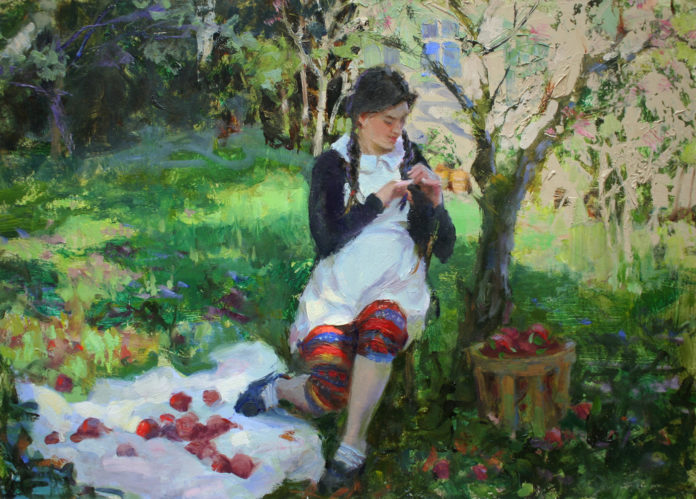
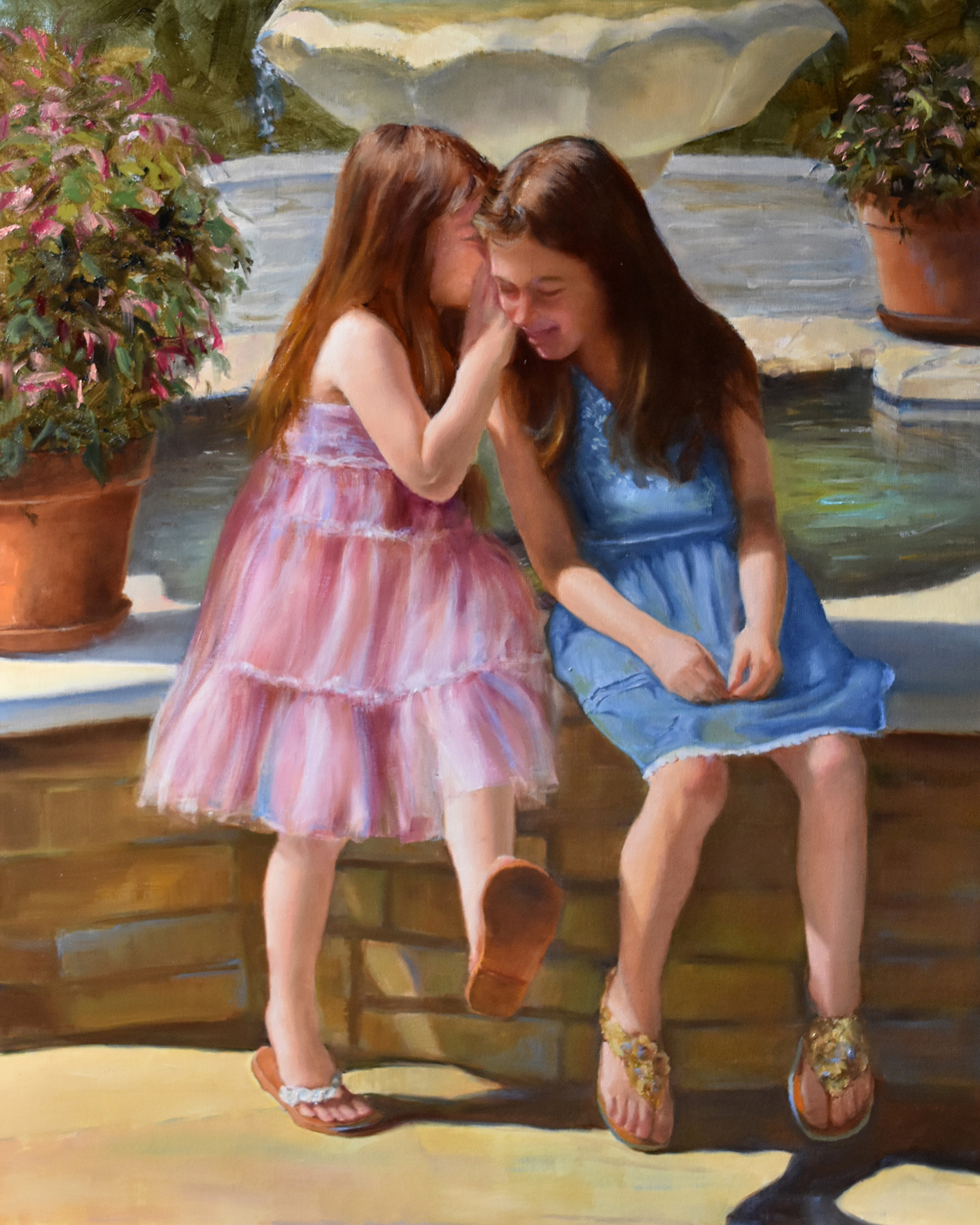
Carol Arnold, In the Captains Orchard, oil, 9 x12 in.
Carol Arnold: This was painted on a gorgeous fall day in Putney, Vermont. My daughter Grace was my model for the day. I didn’t complete the painting there, but put it away to work on other paintings. It’s been a few years, but luckily I had enough information already on the board to complete it from the photo while maintaining the look as if I were standing right in front of her!
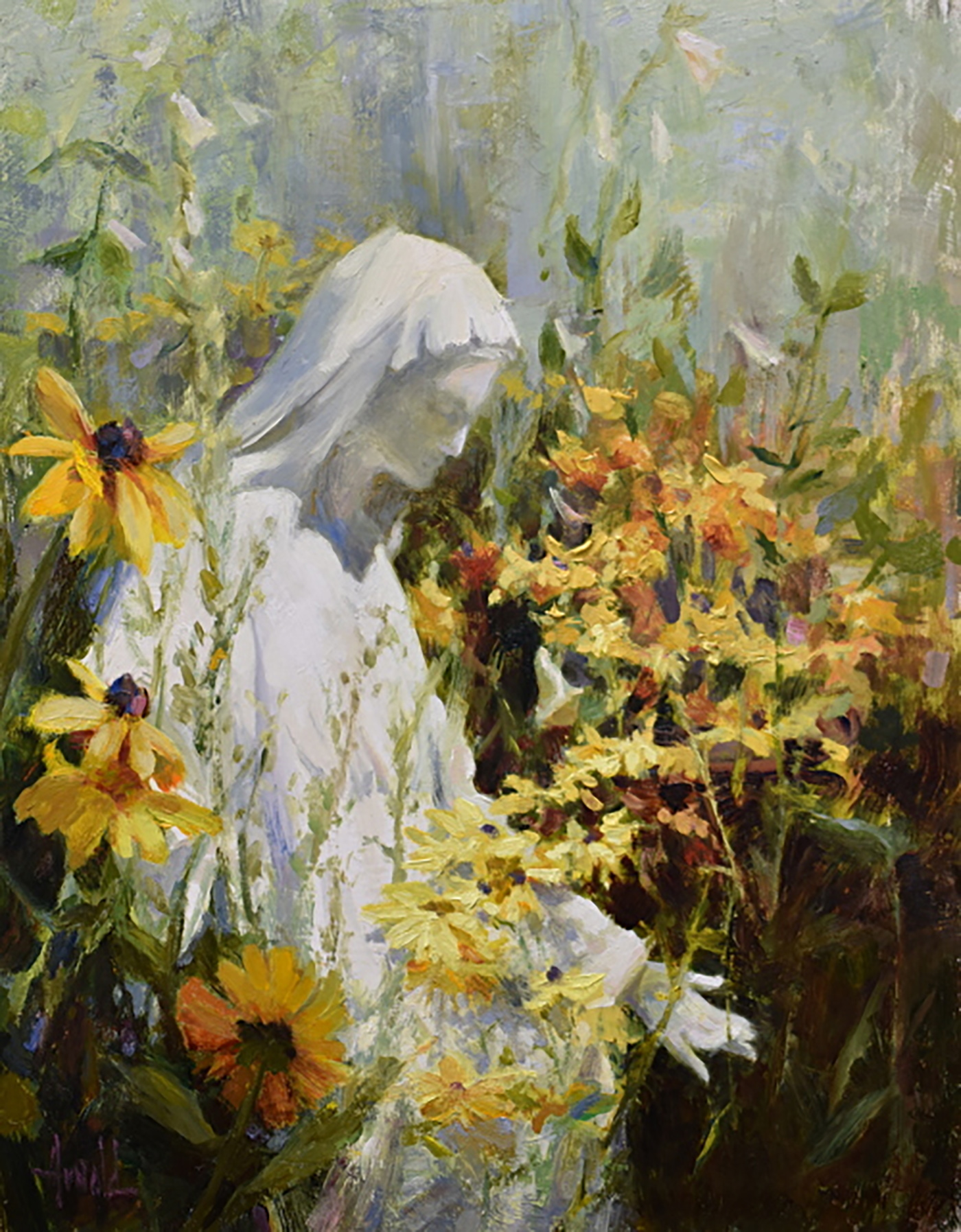
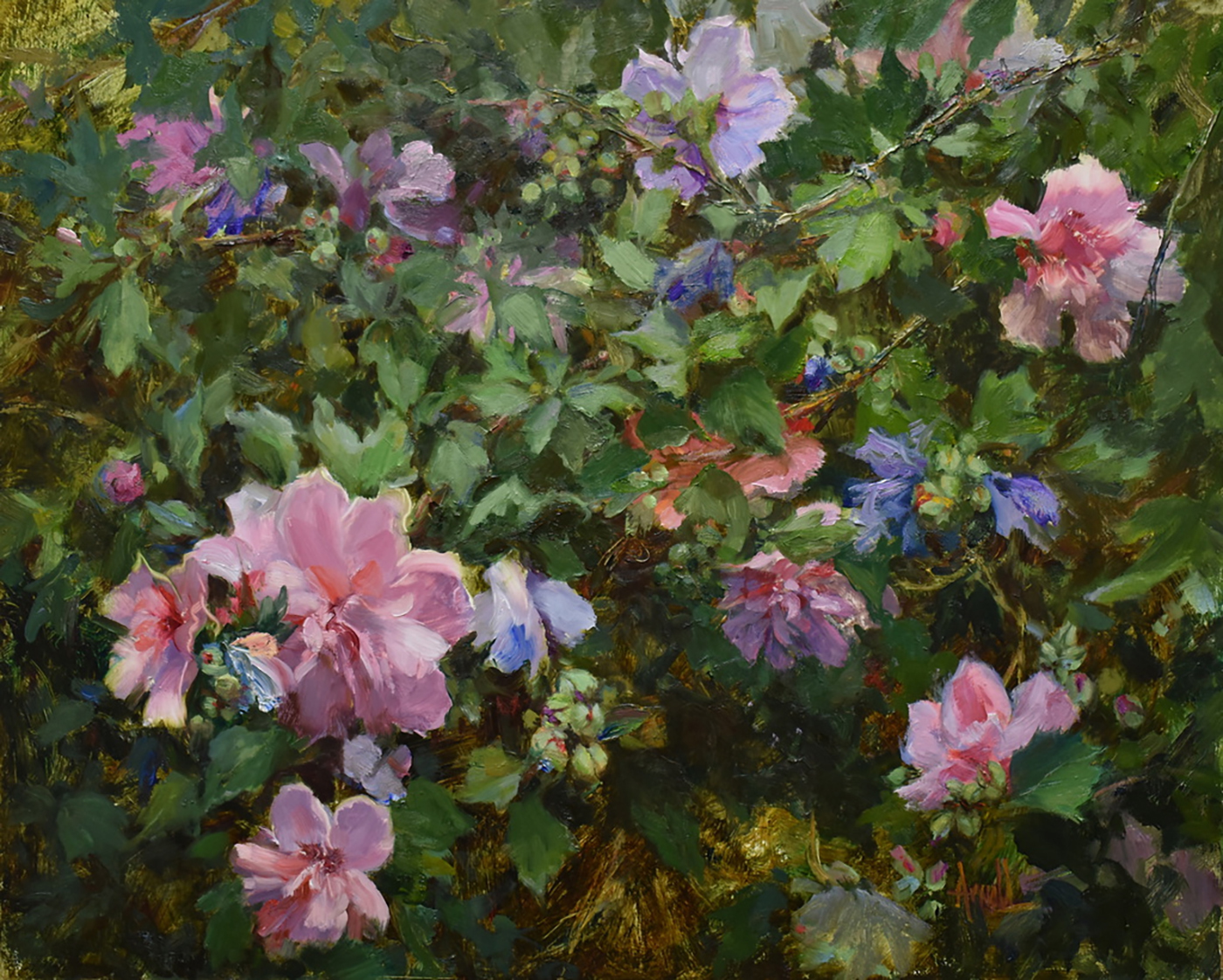
Carol Arnold, “Gardens Grace,” oil on panel, 11 x 14 in. Available through James R. Ross Fine ArtCarol Arnold, “Rose of Sharon,” oil on panel, 16 x 20 in., 2022. Available through the artist
Johanne Mangi, “Clara Bow,” oil on linen, 14 x 18 in., 2022, Private Collection
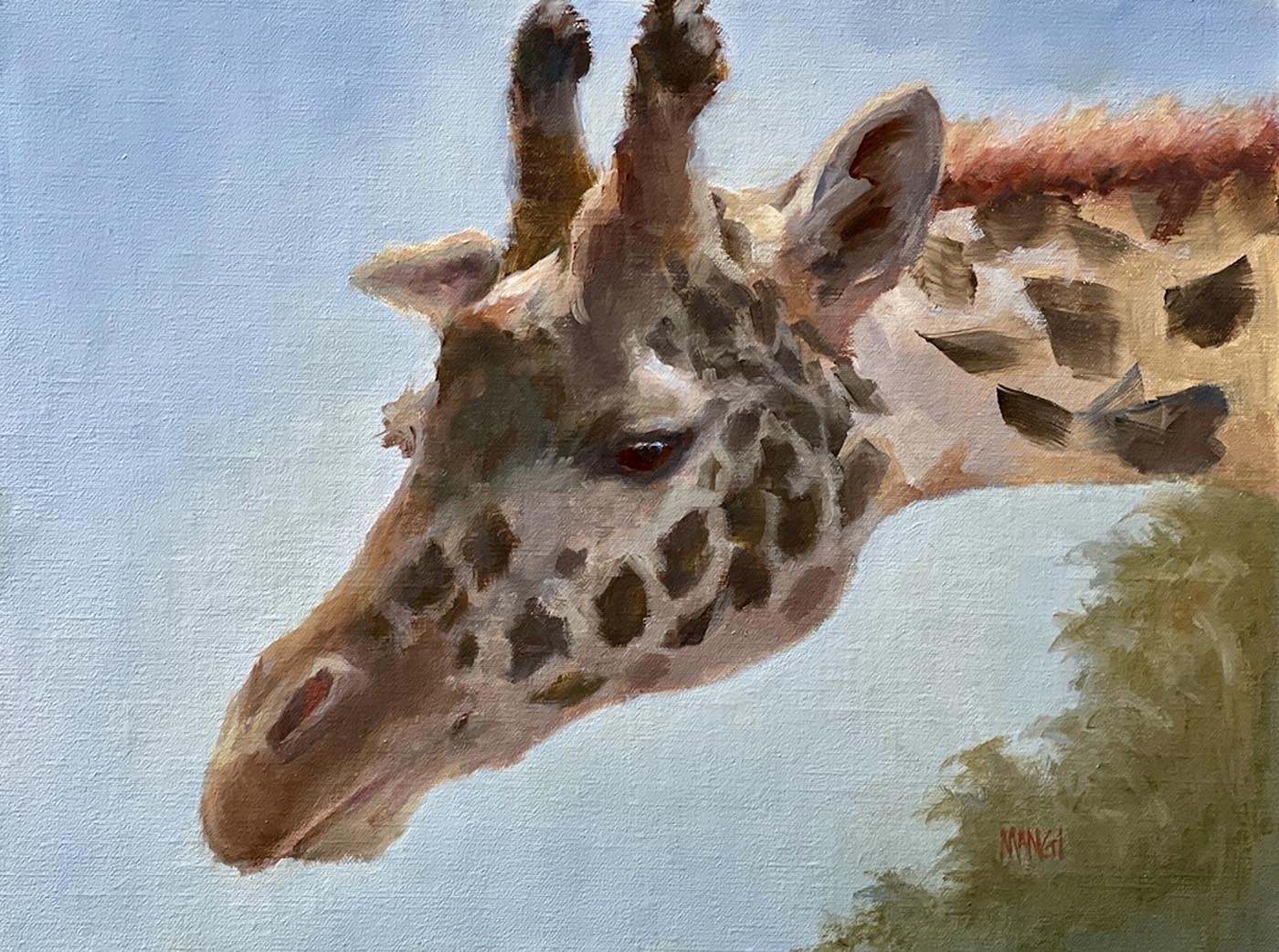
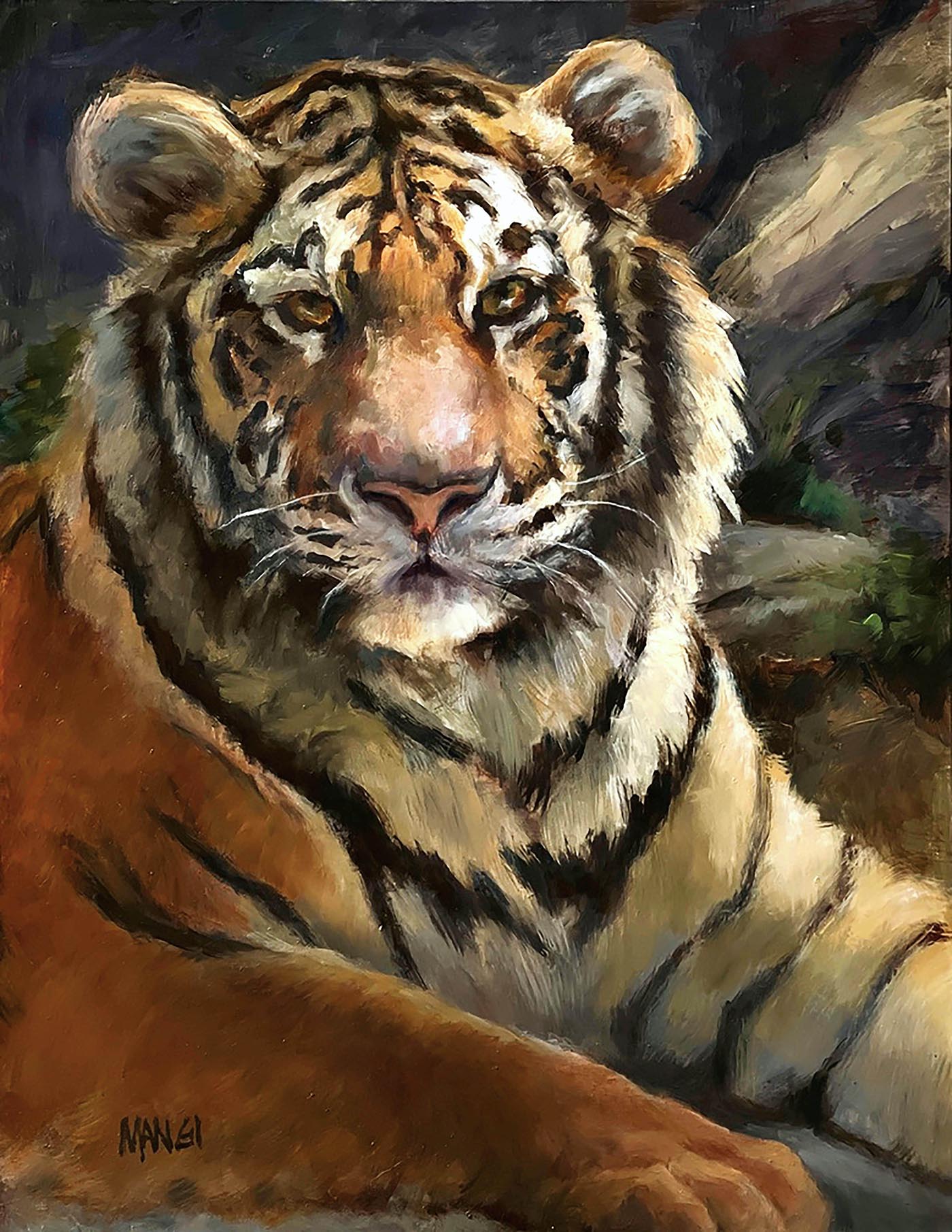
Johanne Mangi: Creating fresh and lively portraits is the goal that inspires both Johanne’s passionate work and her teaching. Fortunate to have studied painting from life with some of America’s best modern masters such as Richard Schmid, Nancy Guzik, Sherrie McGraw and David Leffel, her continuing desire to learn helps her in turn bring fresh ideas to every class she teaches. Taking to heart Richard’s counsel to “paint what you love, love what you paint”, Johanne’s lifelong love of animals eventually led to her promoting.
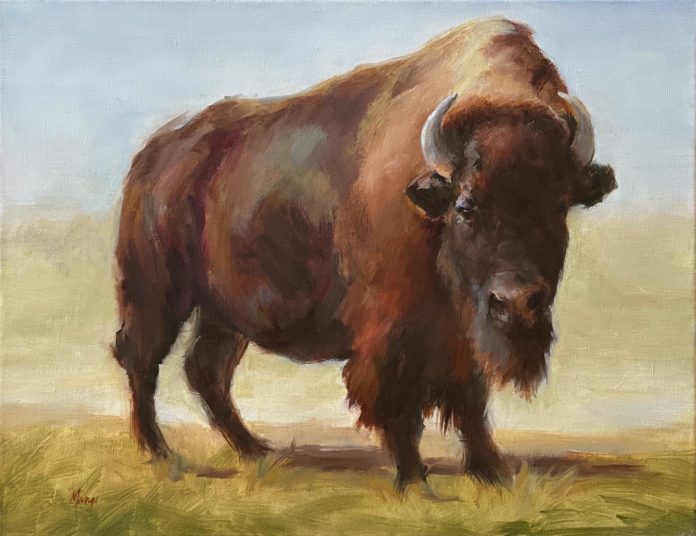
Johanne Mangi, “Curious Cow,” oil on linen board, 12 x 16 in., 2022. Available through ArtistJohanne Mangi, “Tiger Love,” oil on linen board, 18 x 14 in., 2022. Available through Artist
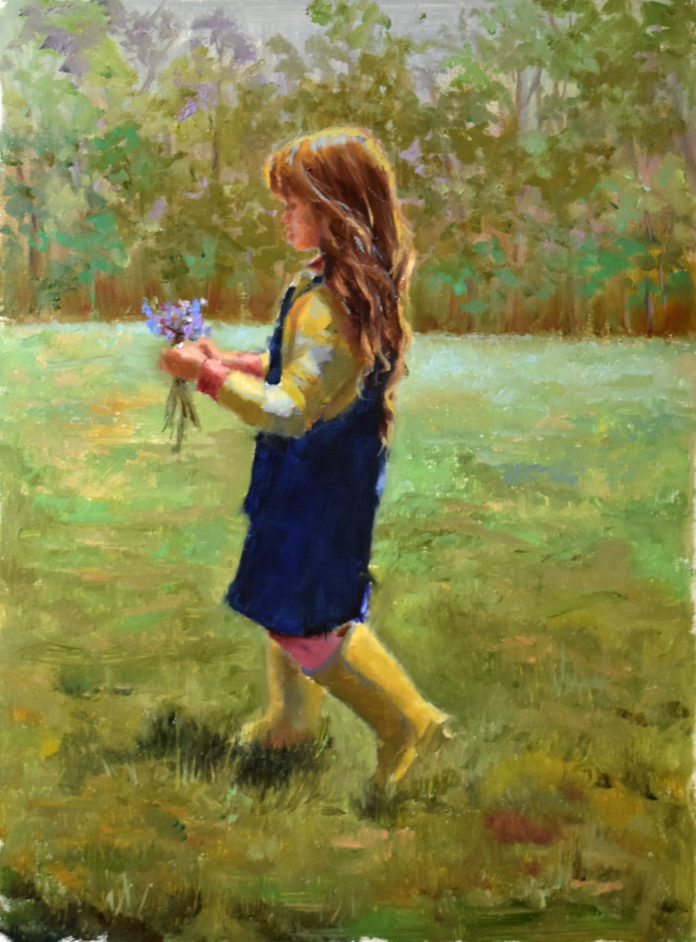
Aida Garrity, "Flowers For Mom," oil, 12 x 9 in, $1,500
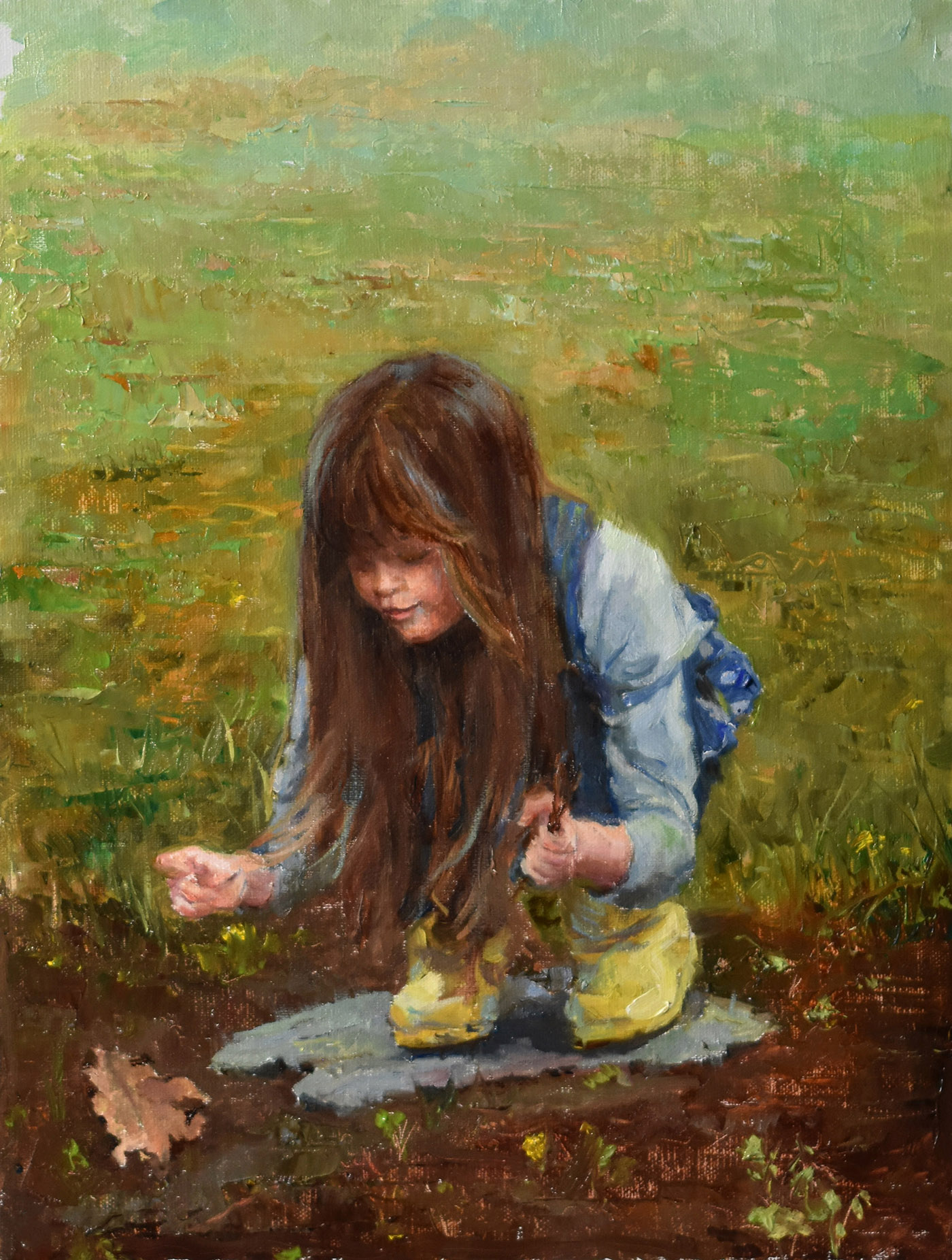
Aida Garrity: Aida Garrity is inspired by life and beauty, capturing individual personalities, moods and emotions. In these paintings of children scenes, Aida undertakes the challenge of crafting a composition that evokes emotion and transmits a story to the viewer. Her sweeping wide-brush background strokes and subtle soft-brush details capture the beauty of children’s love. Garrity discovered her passion for painting at age five through children’s art classes at the Museo de Bellas Artes in Caracas, Venezuela.
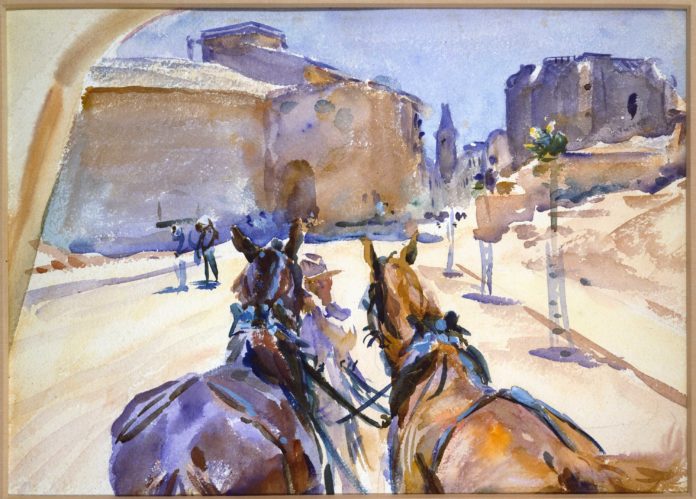
John Singer Sargent, "Driving in Spain," c. 1903, watercolor over graphite on paper, framed: 50.8 x 64.14 cm (20 x 25 1/4 in.), image: 34.93 x 48.26 cm (13 3/4 x 19 in.), private collection
John Singer Sargent (1856–1925) had a decades-long captivation with Spain, which yielded a remarkable body of work depicting the rich and diverse culture he encountered. “Sargent and Spain” is the first exhibition to reveal the depth of this engagement and the intentional approach the artist adopted there. Presenting some 140 oils, watercolors, drawings, and never-before published photographs, several almost certainly taken by the artist himself, the exhibition is on view through January 2, 2023, in the West Building of the National Gallery of Art (Washington, DC)
More from the organizers:
Sargent left a rich visual record of his time in Spain—over 225 oils, watercolors, and drawings, supplemented by sketchbooks, scrapbooks, and nearly 200 photographs that he collected or possibly took himself. Over seven extended visits between 1879 and 1912, he depicted stunning landscape views, detailed architectural studies, local peoples and traditions, dynamic scenes of flamenco dance, and everyday moments of Spanish Roma life. He copied paintings, especially by Diego Velázquez (1599–1660), in museums and was intrigued by art in churches, which influenced his expansive murals for the Boston Public Library.
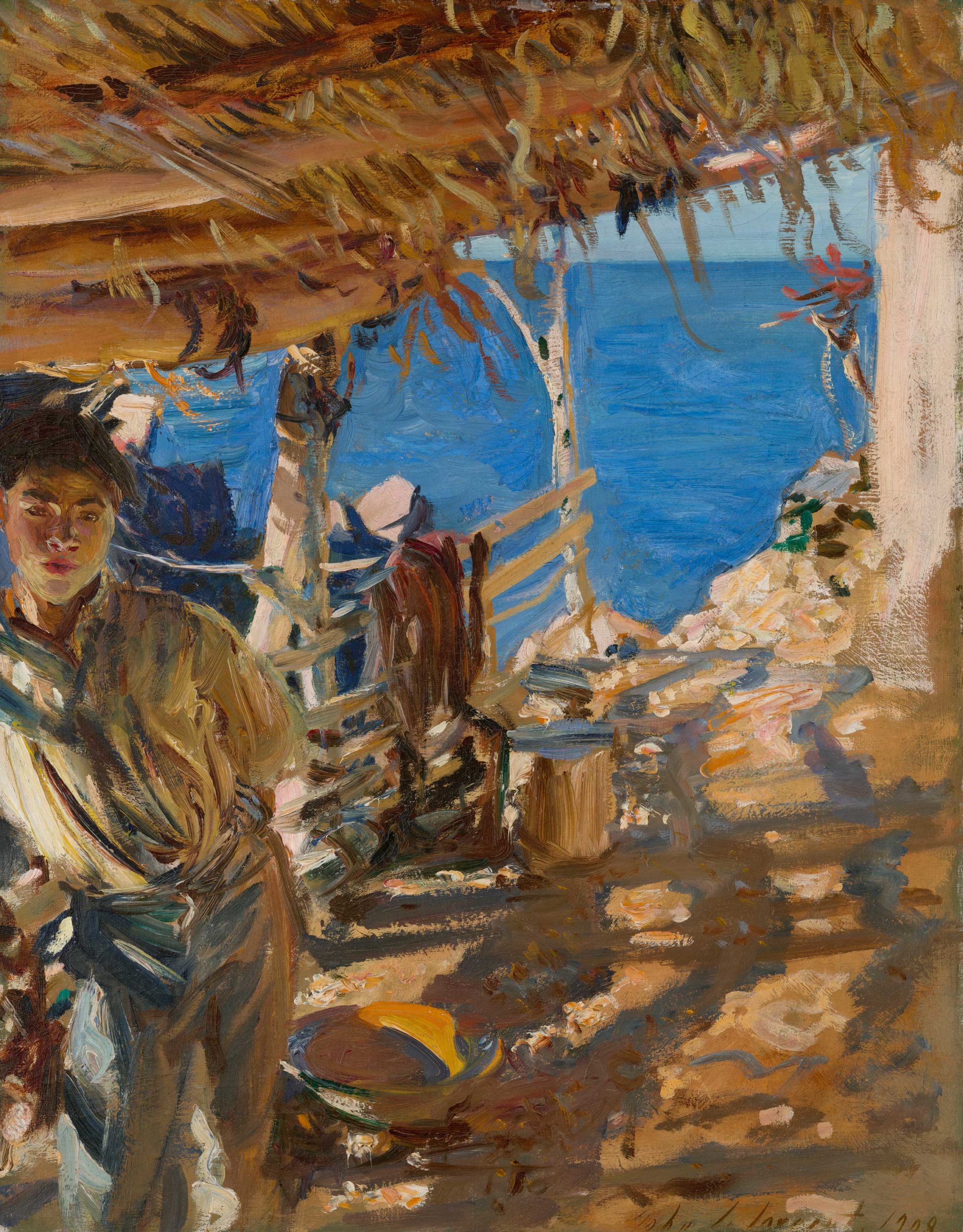
John Singer Sargent, “Majorcan Fisherman,” 1908, oil on canvas, framed: 89.54 x 74.93 x 6.67 cm (35 1/4 x 29 1/2 x 2 5/8 in.), image: 69.85 x 54.61 cm (27 1/2 x 21 1/2 in.), private collection
Arranged in six thematic sections, “Sargent and Spain” traces the artist’s many and varied approaches to depicting Spain. The first section examines the young Sargent’s immersion in Spanish art—especially by Velázquez—at the Museo del Prado in Madrid, where he learned to interpret the placement of the figure in shallow space, the simplicity of the silhouette against the neutral background, and the restrained palette. In addition to paintings and prints by Velázquez and other earlier artists, Sargent was drawn to works by several Spanish contemporaries who also influenced his artistic style, particularly works by Joaquín Sorolla and the slightly older Mariano Fortuny Marsal.
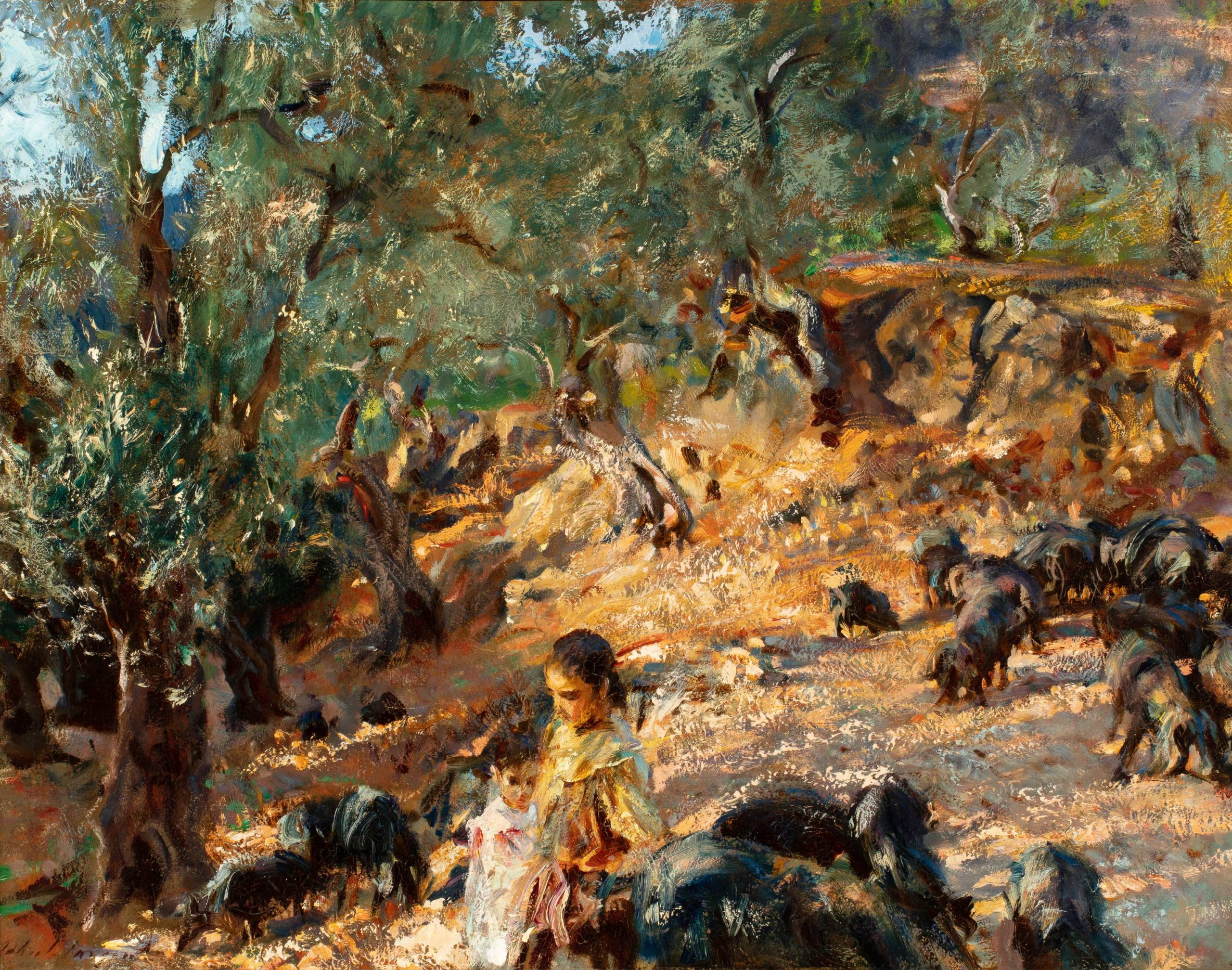
John Singer Sargent, “Under the Olives,” 1908, oil on canvas, overall: 55.88 x 71.12 cm (22 x 28 in.), framed: 77.47 x 93.98 x 5.72 cm (30 1/2 x 37 x 2 1/4 in.), Cedarhurst Center for the Arts, Mount Vernon, Illinois, Gift of John R. and Eleanor R. Mitchell, 1973.1.54 Photograph by Daniel Overturf
The second section reveals Sargent’s interest in depicting the performing arts he enjoyed in Spain. From 1879 to 1881 and again around 1890, this artist-connoisseur produced an extraordinary series of images of Spanish dancers and musicians, particularly those inspired by the traditions of Andalusia (southern Spain). Among the works on view are the paintings “The Spanish Dance” (c. 1879–1882) and “Spanish Roma Dancer” (two versions, both dated c. 1879–1880), the watercolor “Spanish Dancer” (c. 1880–1881), sketches and drawings related to El Jaleo (1882) and “Spanish Dancer” (c. 1880–1881), as well as images (1890) of the celebrated performer Carmen Dauset Moreno, known as La Carmencita.
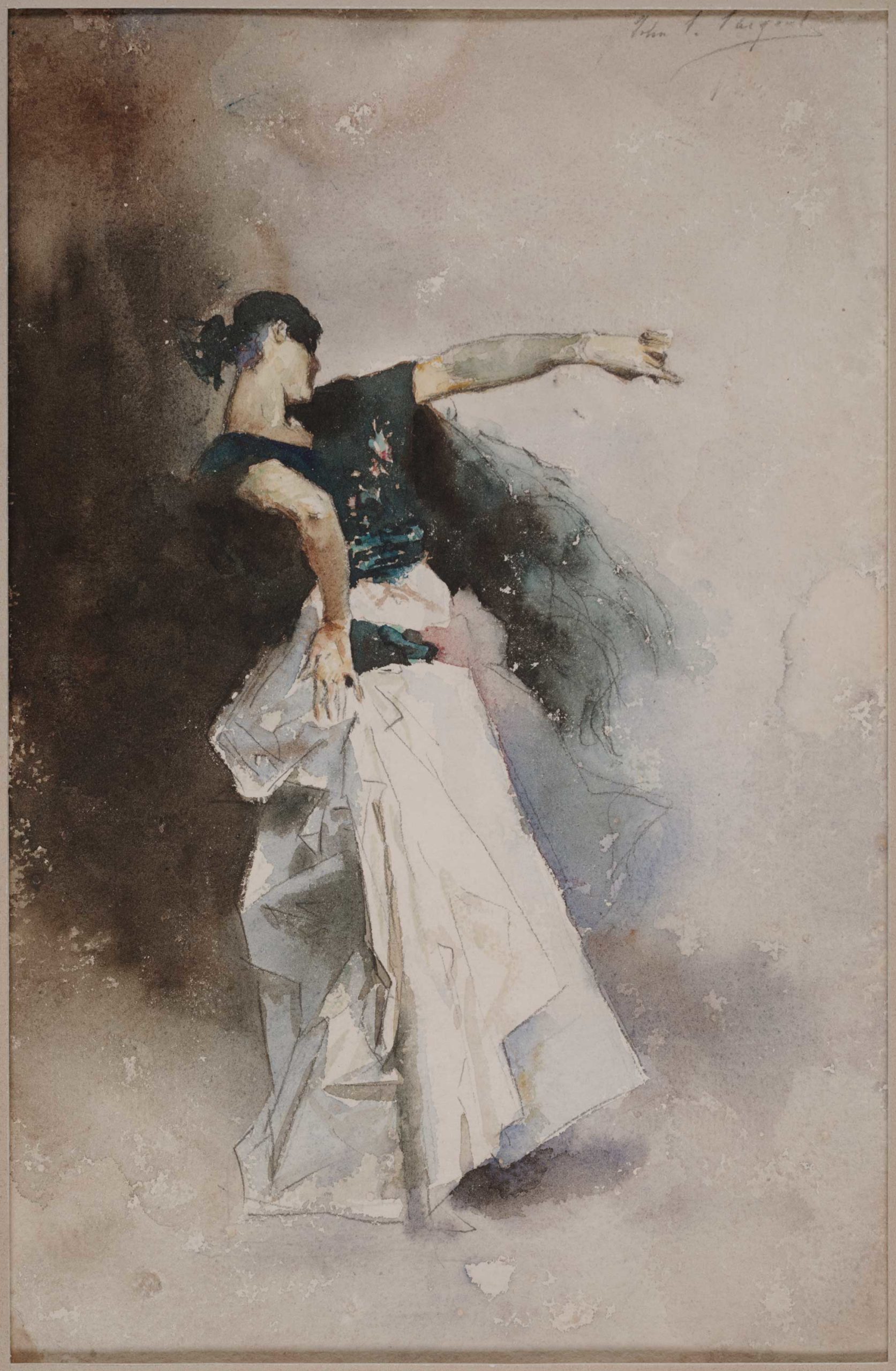
John Singer Sargent, “Study for Spanish Dancer,” c. 1880–1881, watercolor over graphite on paper, image: 30.16 x 20 cm (11 7/8 x 7 7/8 in.), framed: 52.07 x 41.28 x 4.13 cm (20 1/2 x 16 1/4 x 1 5/8 in.), Dallas Museum of Art, Foundation for the Arts Collection, gift of Margaret J. and George V. Charlton in memory of Eugene McDermott, Image courtesy Dallas Museum of Art
As Sargent traveled throughout Spain, he studied and depicted subjects from north (Santiago de Compostela and Camprodón) to south (Granada), and out to the island of Majorca, which fascinated him. He was captivated by both rural and urban locales, exploring the countryside, coasts, architecture, gardens, and the inhabitants he met. Along the way, over the course of three decades, he created a comprehensive portrayal of the Spanish landscape—its flora and fauna; its people and their animals; its ports and ships. These works capture the country’s intrinsic character and spirit of place, as well as the distinctive qualities of its light and atmosphere.
These works are featured in the next three sections of the exhibition, which includes highlights such as architectural elements in royal palaces, notably the Alhambra and Generalife, and their surroundings; the graceful arches, colonnades, and courtyards he found in the cities he visited; as well as the lush fruits and foliage of Majorca (he would soon adapt the latter for the Triumph of Religion murals at the Boston Public Library). His depictions, in both oil and watercolor, focus on the clarity of line; the interrelationship between exterior and interior space, ornament and pattern; and the dramatic and shifting play of light, shade, and watery reflection.
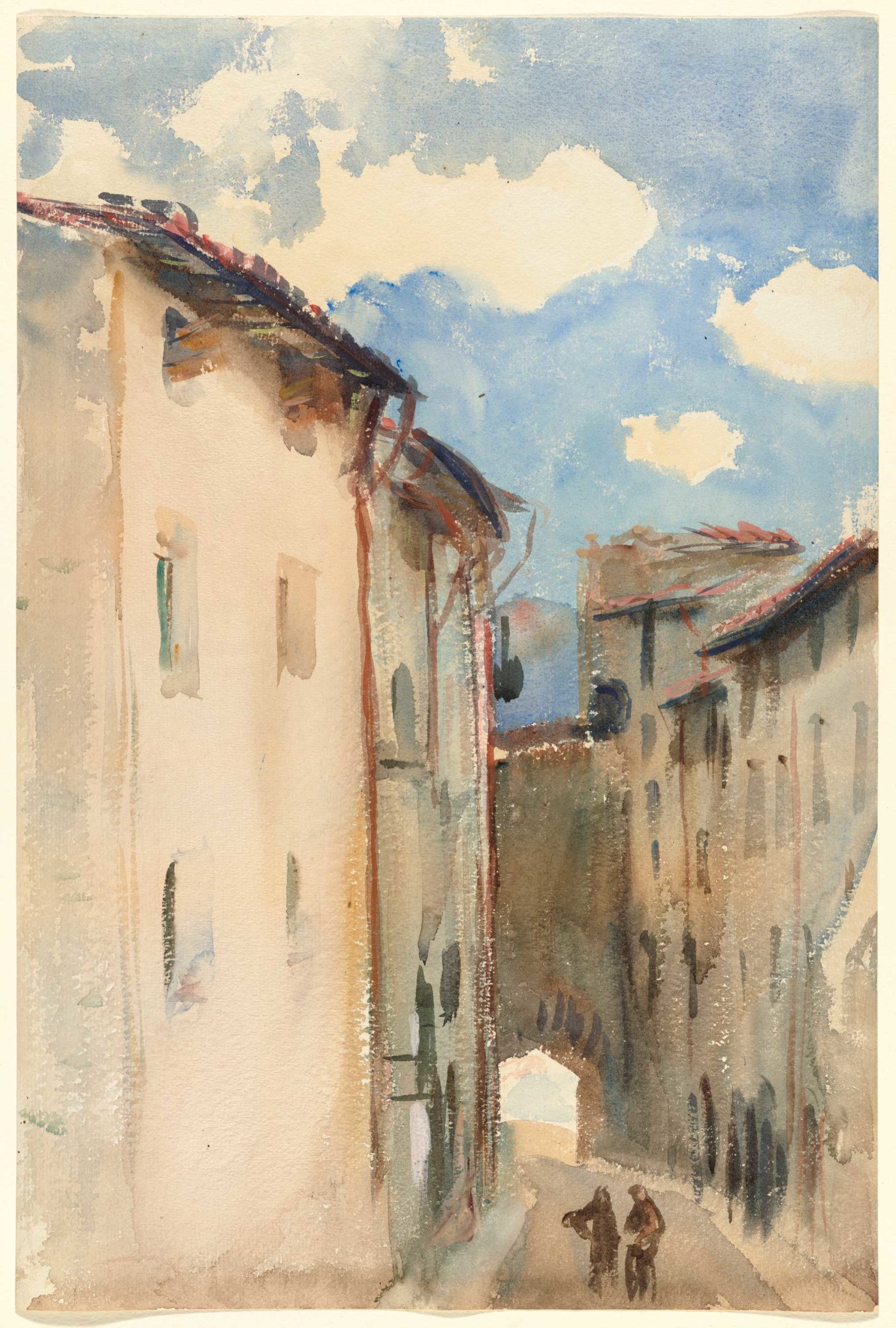
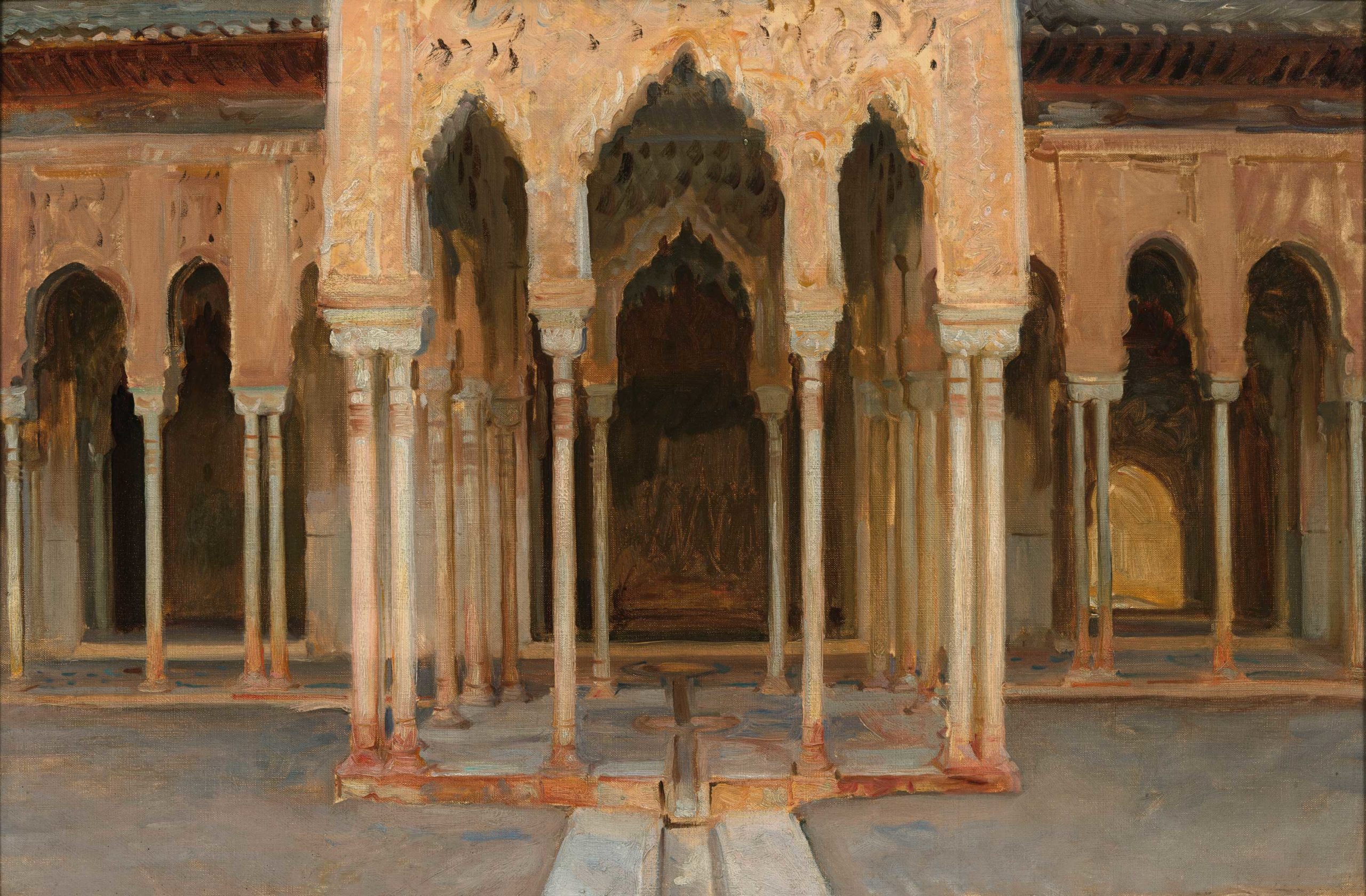
John Singer Sargent, “Camprodón,” c. 1892, watercolor over graphite, with gouache, on paper, sheet: 46.7 x 31.2 cm (18 3/8 x 12 5/16 in.), National Gallery of Art, Washington, Ailsa Mellon Bruce CollectionJohn Singer Sargent, “Alhambra, Patio de Los Leones (Court of the Lions),” 1895, oil on canvas, framed: 74.17 x 101.6 x 7.62 cm (29 3/16 x 40 x 3 in.), original canvas: 47.63 x 80.01 cm (18 3/4 x 31 1/2 in.), Private Collection
The exhibition concludes with an exploration of the religious imagery that occupied Sargent, especially in relation to his commission to paint the Triumph of Religion murals at the Boston Public Library. His engagement with Spanish Catholicism includes lively oil sketches—recording architectural spaces and designs—as well as objects he collected and represented. Among the works on view are studies of soaring cathedrals, the Crucifixion, and the Madonna that he made in preparation for the mural cycle. The final gallery in the exhibition offers photo murals, a reading area, and an interactive kiosk where visitors can examine one of Sargent’s scrapbooks.
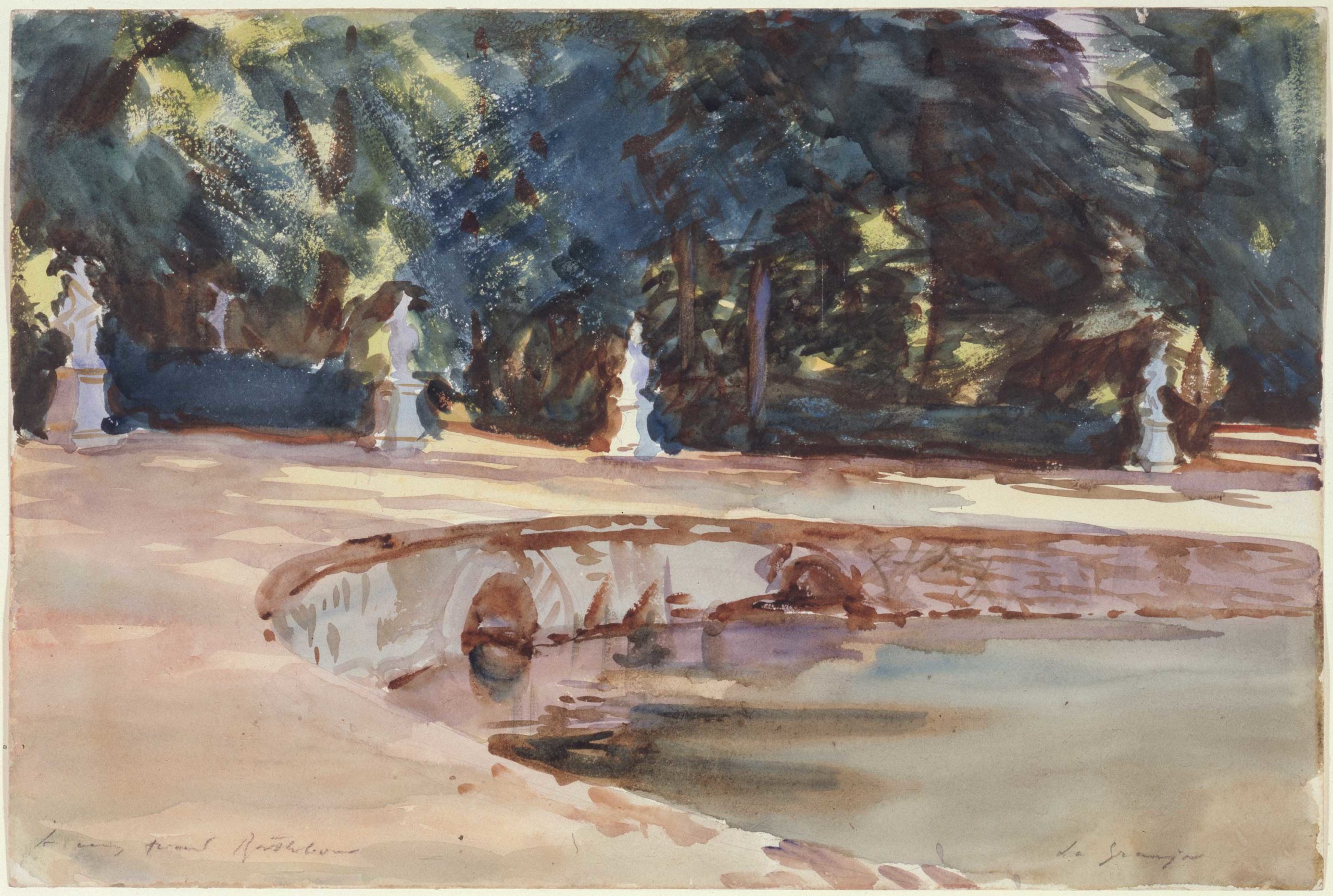
John Singer Sargent, “Pool in the Garden of La Granja,” c. 1903, watercolor over graphite on paper, framed: 49 x 64 cm (19 5/16 x 25 3/16 in.), image: 30.16 x 46 cm (11 7/8 x 18 1/8 in.), private collection
Exhibition Tour
National Gallery of Art, Washington, October 2, 2022–January 2, 2023
Fine Arts Museums of San Francisco, Legion of Honor, February 11–May 14, 2023
> Visit EricRhoads.com to learn about more opportunities for artists and art collectors, including retreats, international art trips, art conventions, and more.
> Sign up to receive Fine Art Today, our free weekly e-newsletter
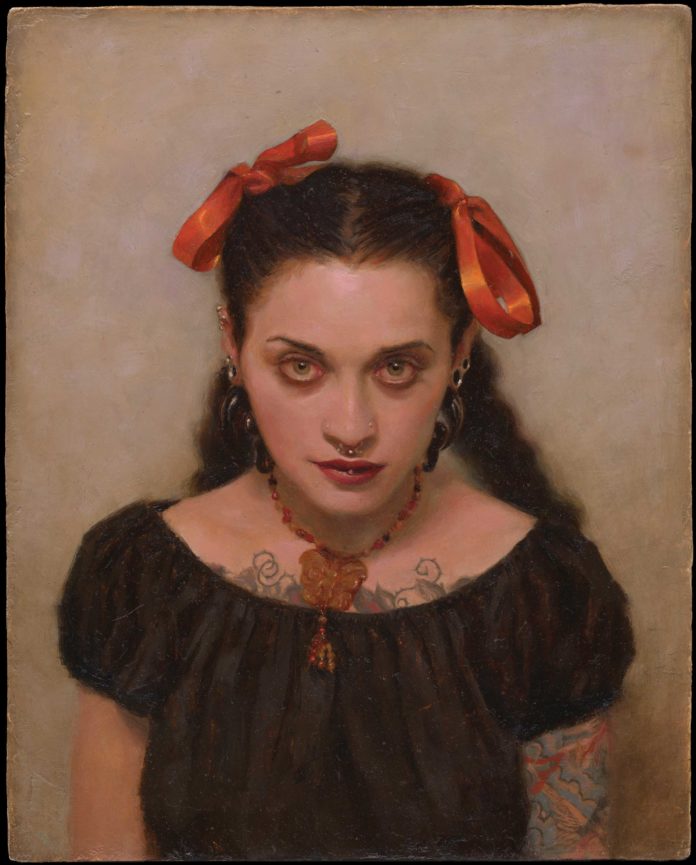
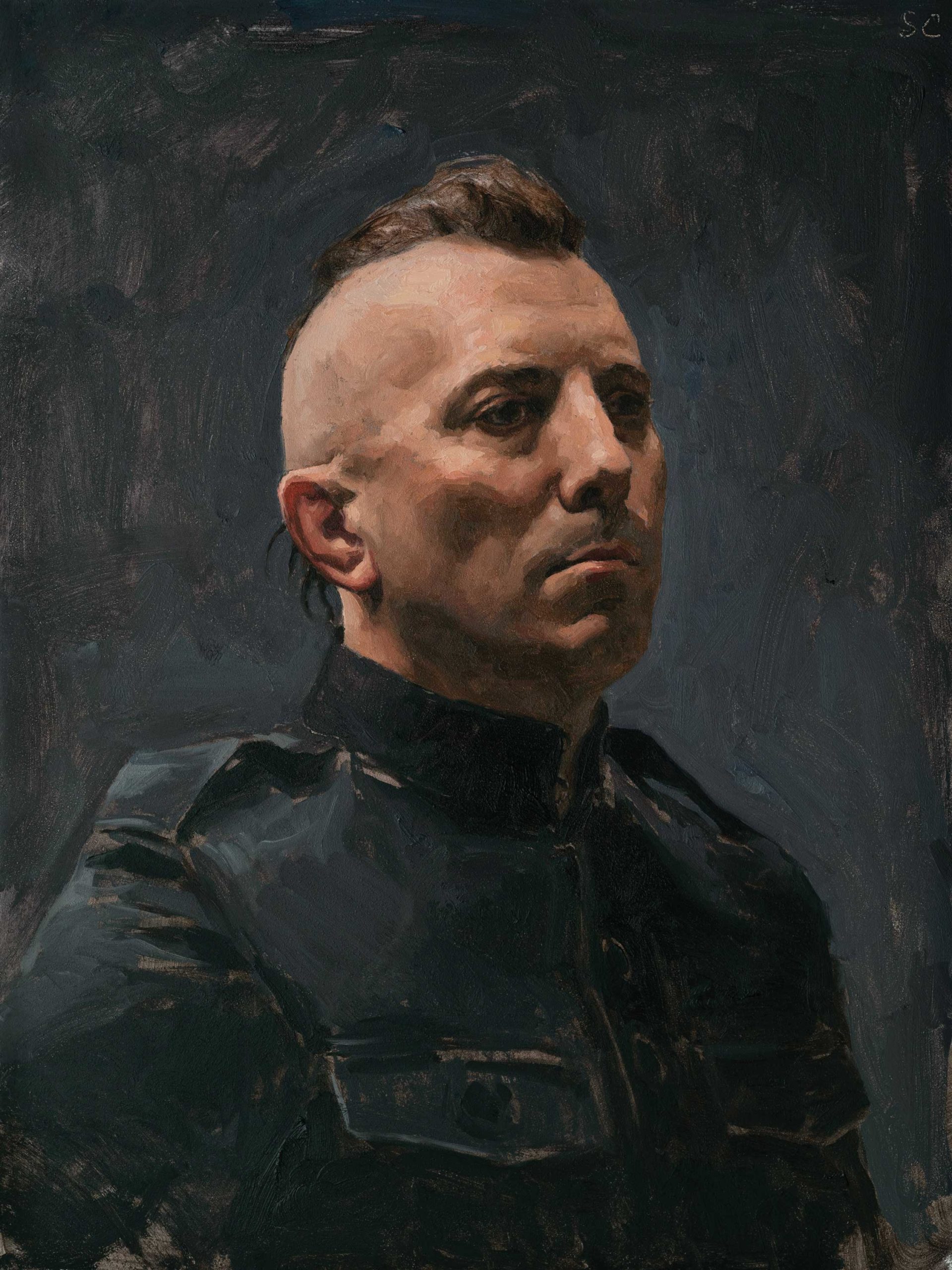
Sean Cheetham, "Portrait of Chantal Menard," 2004, oil on panel, 10 x 8 in., collection of the artist
How Sean Cheetham brings a genuine element of cool — a unique and honest edginess — to contemporary representational painting, which can often seem like “the art world’s nerd corner.”
Sean Cheetham: An Honest Edge
by David Molesky
Sean Cheetham (b. 1977) first appeared on my radar 15 years ago when his portrait of Chantal Menard, an artist friend with braids and tattooed arms, was circulated widely to promote the prestigious BP Portrait Award competition organized annually by London’s National Portrait Gallery. Many people (including me) mistakenly assumed that Cheetham’s painting had won the top prize. Even though it had not, the omnipresence of that advertisement powerfully announced the 28-year-old artist’s arrival in the art world.
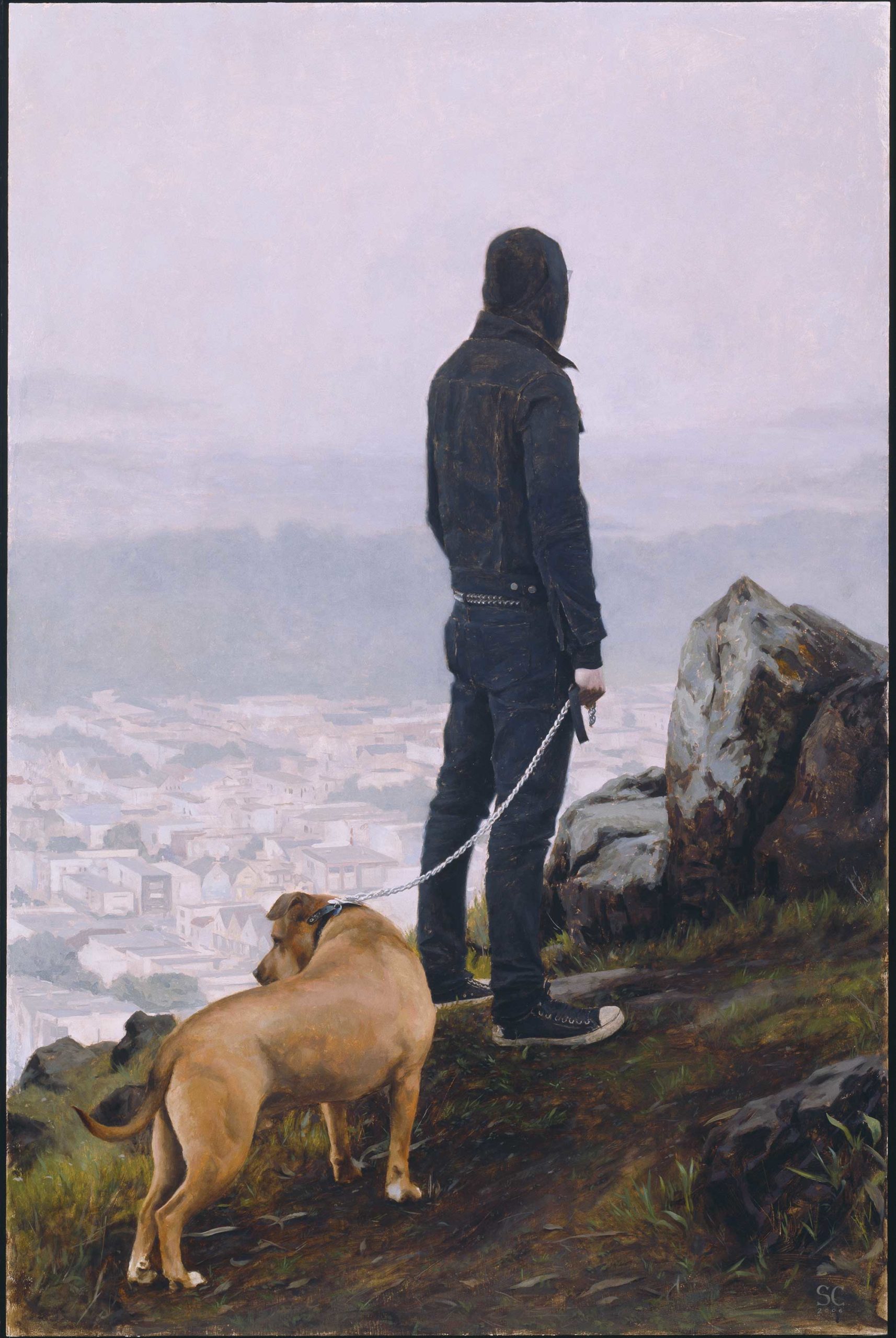
Two years later, in 2007, I fell in love with Cheetham’s painting “Turtle Hill” when I spotted it in the catalogue accompanying the Long Beach Museum of Art’s About Face portraiture exhibition. This Romantic scene, reminiscent of Caspar David Friedrich’s famous “Wanderer above the Sea of Fog,” depicts Cheetham and his now-deceased dog, Roscoe, on an outcropping surveying the Bay Area’s rolling hills.
Sean Cheetham, “Turtle Hill,” 2007, oil on panel, 45 x 30 in., private collection
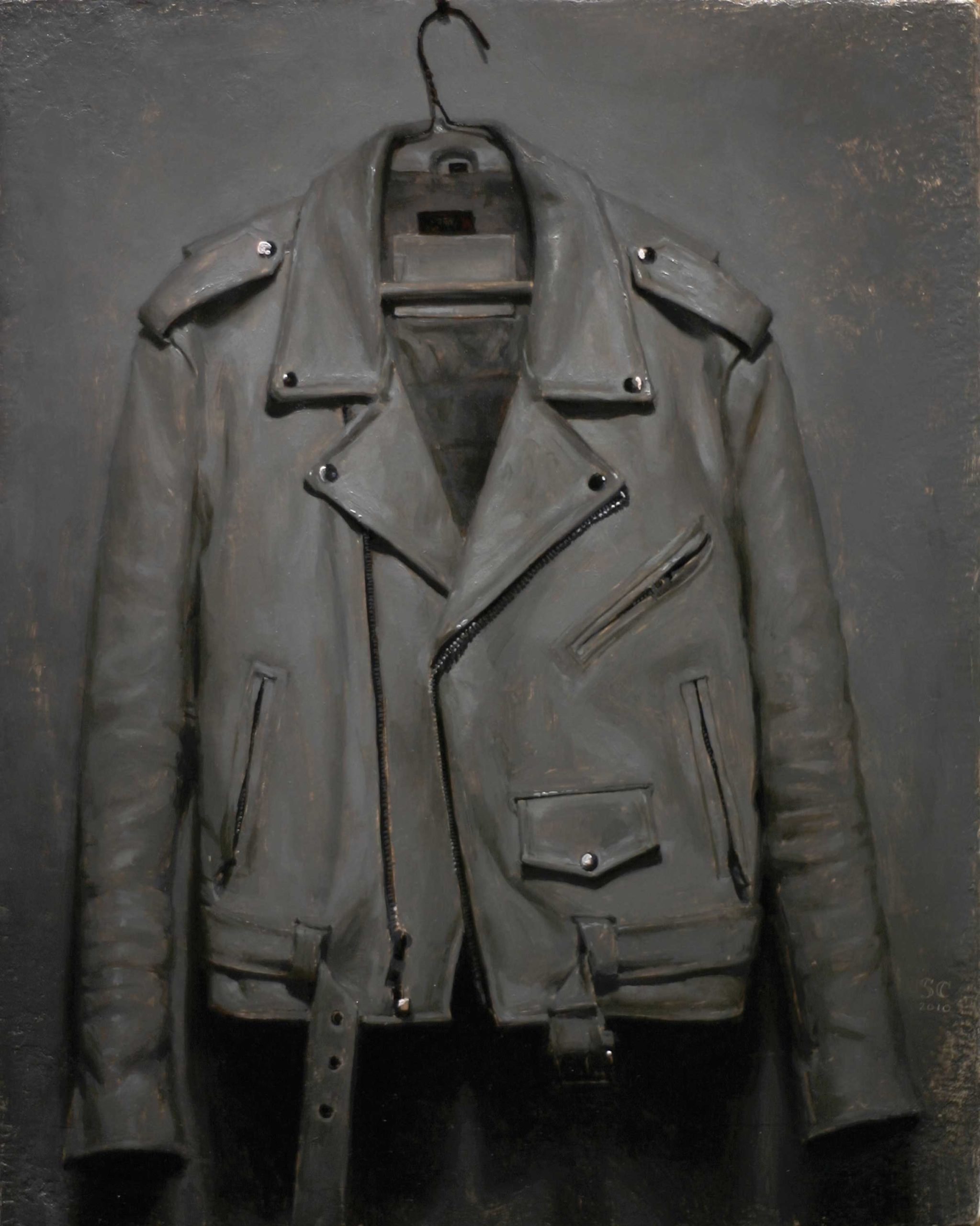
During my visit to the museum in Long Beach, I noticed that the large banner announcing its recent acquisitions showcased another of Cheetham’s paintings — confirming my suspicion that contemporary figurative art was starting its comeback. The painting on the banner showed the artist wearing a vintage white leather biker jacket with his arm around a woman sporting a punk hairstyle. I learned later that she is the mother of Cheetham’s son, Gunnar.
While admiring it, I began to grasp what makes Cheetham’s art so striking: he brings a genuine element of cool — a unique and honest edginess — to contemporary representational painting, which can often seem like the art world’s nerd corner. Cheetham delivers on the advice I have long received from mentors and gallery owners: “Paint what you know; paint what you love.”
Unfortunately, much figurative art — be it historical or modern — falls into pastiches of itself: scenes of mythology, religion, genre, and other tropes. One aspect that is so radical, yet incredibly natural, about Cheetham’s compositions is how they capture his forays into cultural realms outside painting and art. Rather than pulling from the vast sources of traditional subject matter, he draws from his life experience as an all-around cool dude of diverse interests.
Sean Cheetham, “White Leather,” 2005, oil on paper, 10 x 8 in., private collection
Made in California
In 2009 Cheetham and I were finally introduced by our fellow artist Marc Trujillo. I immediately found his laid-back, deadpan, and slightly twisted sense of humor perfectly in sync with how clearly he observes his surroundings, without the rose-tinted lens of classical idealism.
Within a year I was visiting Cheetham’s home near downtown Los Angeles; he still lives there and keeps a studio in the multi-car garage behind his apartment building. On the walls hung an eclectic mix of images, including Elvis, antique weaponry, and a painting of a dog attributed to Delacroix.
Near Cheetham’s easel rested a beautifully shaped wooden palette that his students had crafted for him. The garage space was interspersed with stacks of demo paintings made during his workshops, and with piles of hockey gear. (Hockey-playing caused the “shiner” of a black eye Cheetham sports in his 2011 self-portrait illustrated here.) Also cluttering this makeshift storage area were the heaps of wires, amps, and other equipment used by his rock band, Del Toro. This trio’s other members include Jeff Nentrup and Johnpaul Altamarino, whom Cheetham met while studying at Pasadena’s ArtCenter College of Design.
Having grown up in San Francisco obsessed with Star Wars, Cheetham dreamed of making storyboards for similar movies. In 1998, the 20-year-old enrolled at ArtCenter — a major pipeline to the entertainment industry — and went on to earn a B.F.A. in illustration with honors. “Illustration is about getting the job done,” Cheetham explains. “We would often get painting assignments that had to be completed overnight. It was like boot camp, in a way; the school got people ready to work.”
Partway through the program, Cheetham found himself hooked on oil painting, mesmerized by its alluring goopiness. He had started taking classes with Michael Hussar, the school’s head painting instructor and an influential artist known for dark pop-surrealist images of ghoulish figures. Cheetham notes that “whole generations of artists use Hussar’s system of observation, and also his methods for organizing a palette.”
Their student-mentor connection blossomed and the pair began organizing group sessions to paint models from life in the evenings away from school — an ideal opportunity for accelerated growth and learning. Cheetham’s bandmates were among the painters in this group who shared a loose yet precise approach, in which unblended patches of paint are applied with extraordinary accuracy.
In 2012, this group of friends found a new playground when Nentrup and his wife, Sonya Palencia, also a gifted artist, moved to a small ranch community in Los Padres National Forest. These new digs provided a perfect setting to delve into the group’s longstanding fascination with the Wild West.
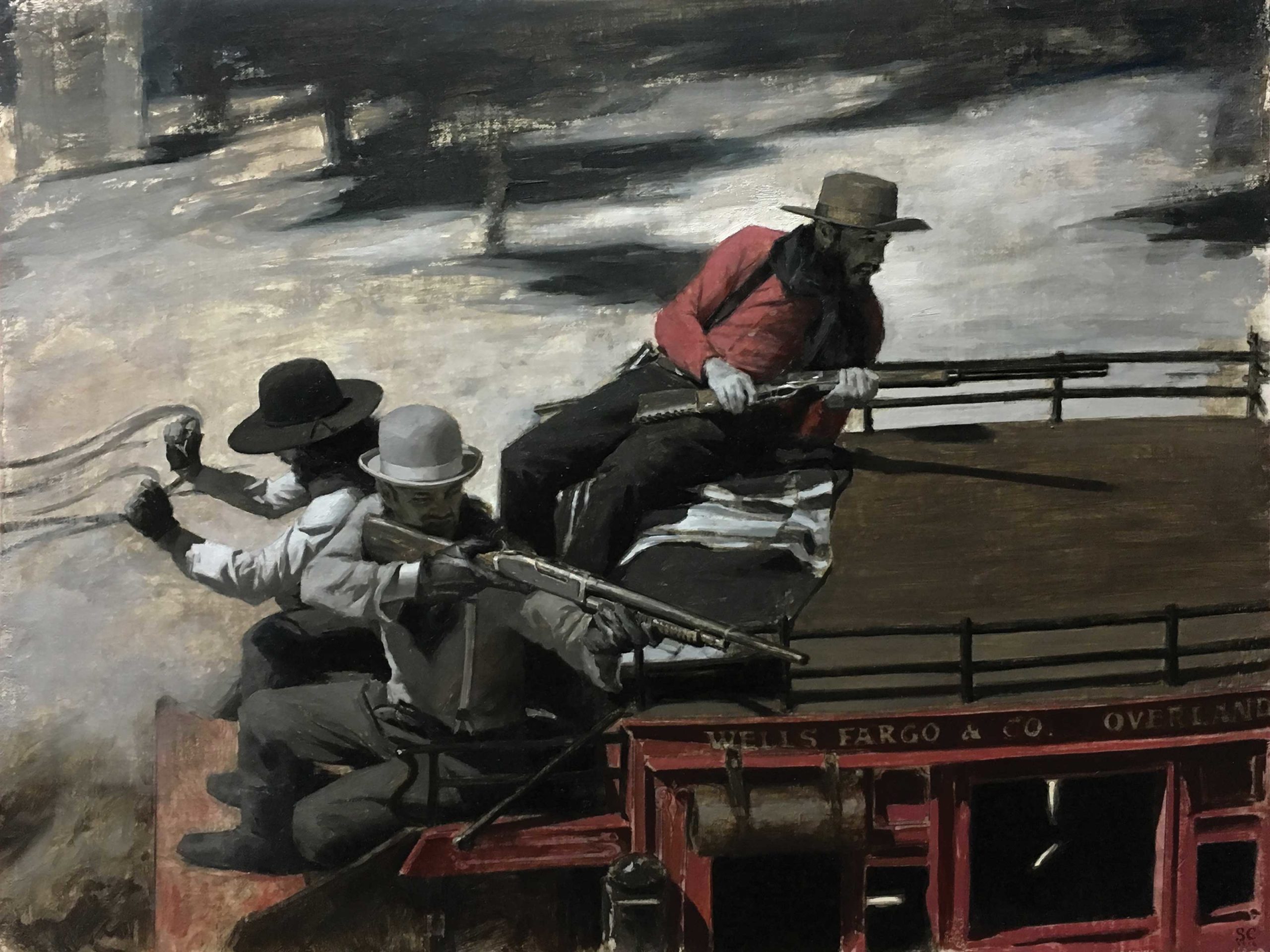
Sean Cheetham, “Coach Robbers,” 2016, oil on panel, 11 x 14 in., private collection
Cheetham recalls, “As a kid, I would dress up as the Lone Ranger and play the theme song and get really excited. It has always been a thing for me.” Using dirt bikes as trusty steeds, the trio would ride through the dry chaparral and sometimes shoot at a firing range, closing the day around a fire while drinking and grilling. “We thought it was so much fun that it should be illegal, but it was legal.
We had the idea to make some paintings of ourselves doing this. Then Fouladi Projects asked me to mount a three-person show.” In 2013, this San Francisco gallery opened the exhibition Ballad Del Toro, featuring paintings by each of the band members. I was lucky to attend its lively opening and the mini-concert afterward, though Cheetham reports the show itself “wasn’t a huge success. I think only a few things sold. People are always asking me for paintings of tattooed women, but I can’t cater to that market all the time.”
Indeed, Cheetham’s paintings in this vein have always won acclaim. Many students and emerging painters, intrigued by his ability to capture likeness and depict tattoos, wanted to learn his techniques. Immediately after graduating from ArtCenter, he was invited to teach at the Los Angeles Academy of Figurative Art, launching his career as a highly sought-after instructor around the world.
In 2007, Cheetham was offered a teaching position at ArtCenter and eventually he became a full-time, salaried instructor there. Soon, however, he found himself living out of a suitcase: between teaching, traveling to workshops, and twice-monthly visits to see his son in San Francisco, there wasn’t enough time to produce artworks for gallery shows.
“Lately, I’ve backed out of most gallery stuff,” he explains, and now he finds that illustration gigs are a more reliable way to get paid for new work. “Recently I painted portraits of the members of the band Tool. They paid me for the digital images and then bought the physical oil paintings as well. That was generous of them, and lucrative for me.”
Portrait of Maynard James Keenan by Sean Cheetham; All four portraits of the members of the band Tool were painted by Cheetham in 2019 in oils on panel and measure 12 by 9 inches. All are in the private collection of Tool.
Eventually Cheetham felt run-down and realized that something had to give. Because his teaching at ArtCenter had become his least favorite activity, he quit last year, recognizing that his workshop pupils were much more eager to learn than those at school. He adds, “With workshops, there’s no homework or grading, or having to punish people who don’t want to learn.”
New Horizons
One benefit of leaving full-time teaching has been the availability of time for other creative pursuits. Cheetham’s father is a retired jeweler whose work instilled the young artist with a deep appreciation for meticulous detail. He recalls “trying to make a sword and chainmail with my uncle and a crusader-type helmet with my dad’s friends.”
During a trip to Sweden in 2015, Cheetham visited a knifesmith’s shop. Its cool minimalism reignited his desire to try his hand at this craft, so in Los Angeles he started taking classes at a blacksmithing shop. This past year, Cheetham dedicated one of his garage’s spaces to metalworking. So far he has made elaborate cowboy-style knives, as well as a few special palette knives. Cheetham is pursuing this hobby for himself rather than for profit, despite the interest his social media posts have generated. “People are always asking if they can buy my knives,” he observes. “But I don’t think they could pay me enough. I’m worried about my passion becoming about money. Again.”
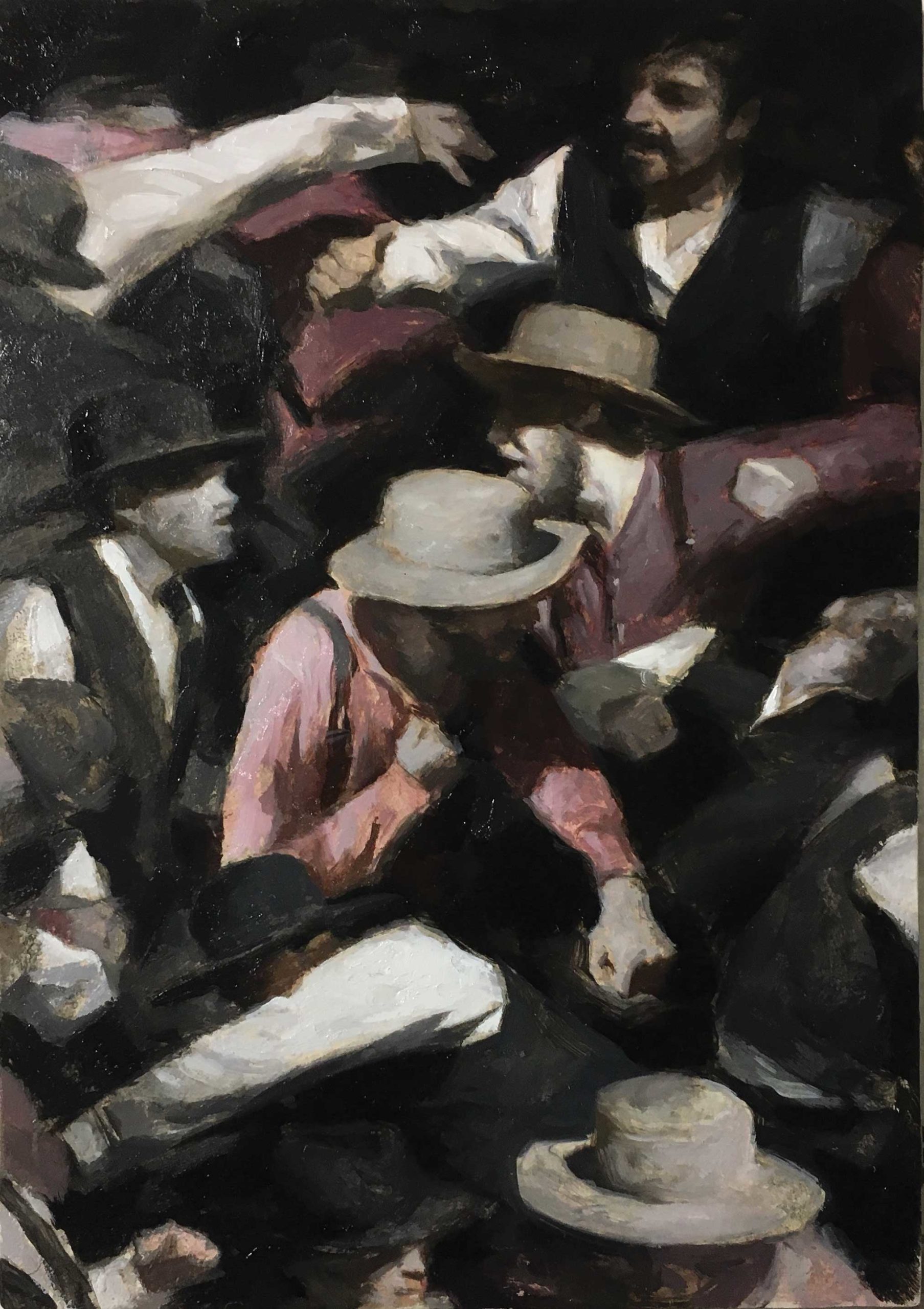
Cheetham is now planning several larger paintings that evoke a sinister vision of the Old West, somewhat like that of the film director Quentin Tarantino. “I’m going to make a very large brawling piece and videotape the process. It will feature some of the knives I’ve been making, and some of my friends who have been part of my journey will be featured. I want to include all of the different demographics who populated the Old West, battling it out. I can’t just make ‘pretty sunset’ kinds of paintings. I’m interested in some of the darker themes in American history, like the Donner party.”
Sean Cheetham, “Saloon Brawl Study,” 2018, oil on Dibond, 7 x 5 in., private collection
Unfortunately, Cheetham’s current studio is too small to accommodate these new projects, so he will create them nearby at Nohwave, a production studio that has already filmed videos of him demonstrating his alla prima painting technique. Now Nohwave will document every step in Cheetham’s new multi-figure works, and ultimately the artist will create his own videos capturing his technical process.
Cheetham also sometimes offers one-on-one instruction. For almost a year, he taught a famous Hollywood actor privately — a few days each week in Northern California and a few in Los Angeles. She then recommended him to a friend who comes from a high-profile film industry family. That pupil participated in Cheetham’s workshop in Rome, where “they were photographed by paparazzi constantly.”
Things are going well for Cheetham on another front, too. His girlfriend, Kate Zambrano, teaches painting in the atelier tradition to underprivileged city teenagers who could not otherwise afford art school or workshops. Now she is creating a scholarship program in partnership with art supply firms and a film-maker who is establishing an inner-city arts center.
Cheetham reflects, “I used to think that it might not be right to date another artist, but you just have to find the right one. Kate and I have a bunch of gigs lined up the rest of the year; we will be teaching different classes within the same workshop — in Scottsdale, Bakersfield, Chattanooga, and Rome. It’s really great.”
Bidders can look forward to a wide selection of fine paintings starting with the Old Master, British, and European art auction at Bellmans on October 11, 2022.
More from the organizers:
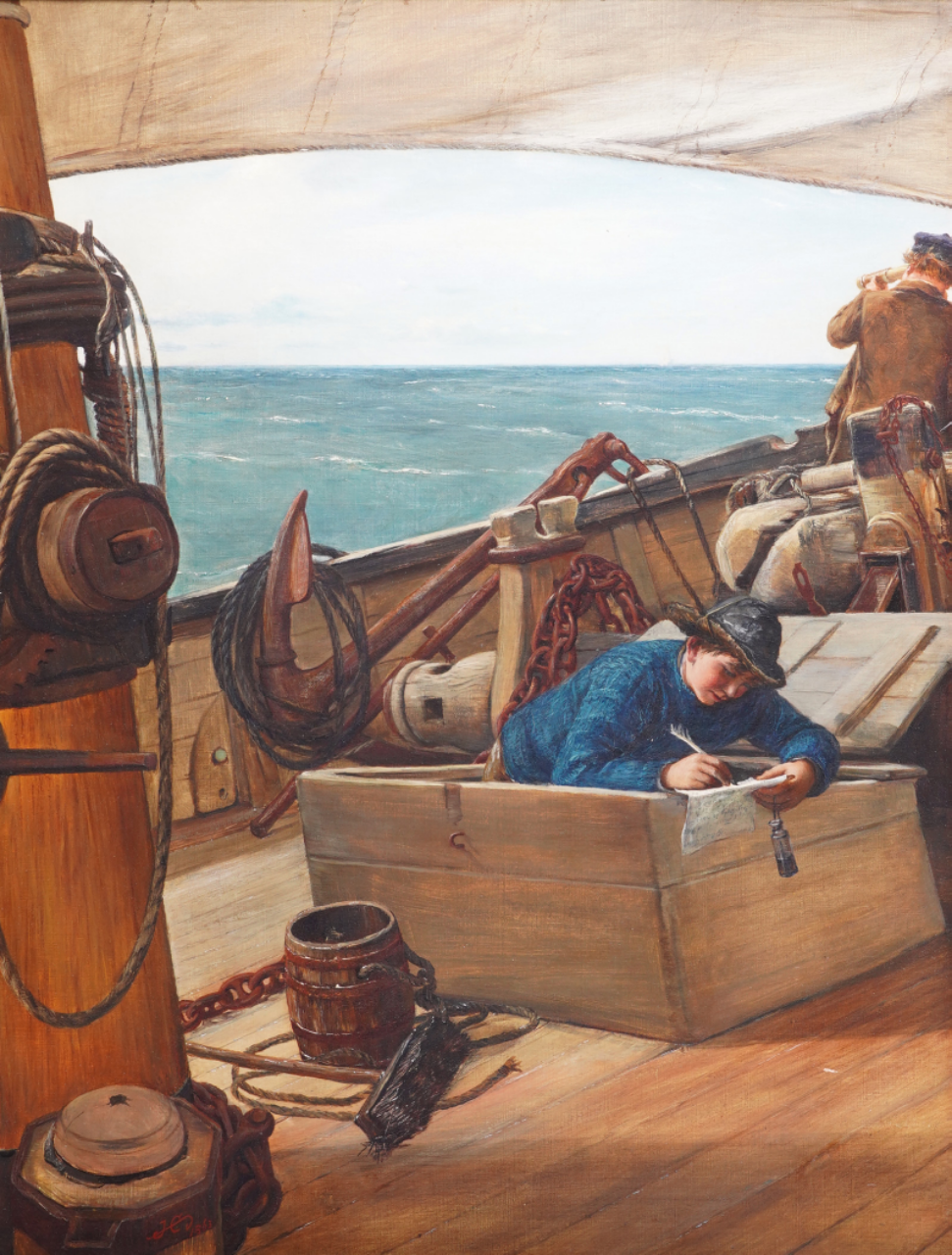
Undoubtedly a highlight are two corresponding paintings by local painter James Clarke Hook (British, 1819-1907), who lived near Godalming for the final 50 years of his life. He is best known for his genre painting and in particular his fascination with the sea and coastal scenes, which led to his paintings often being dubbed ‘Hookscapes’.
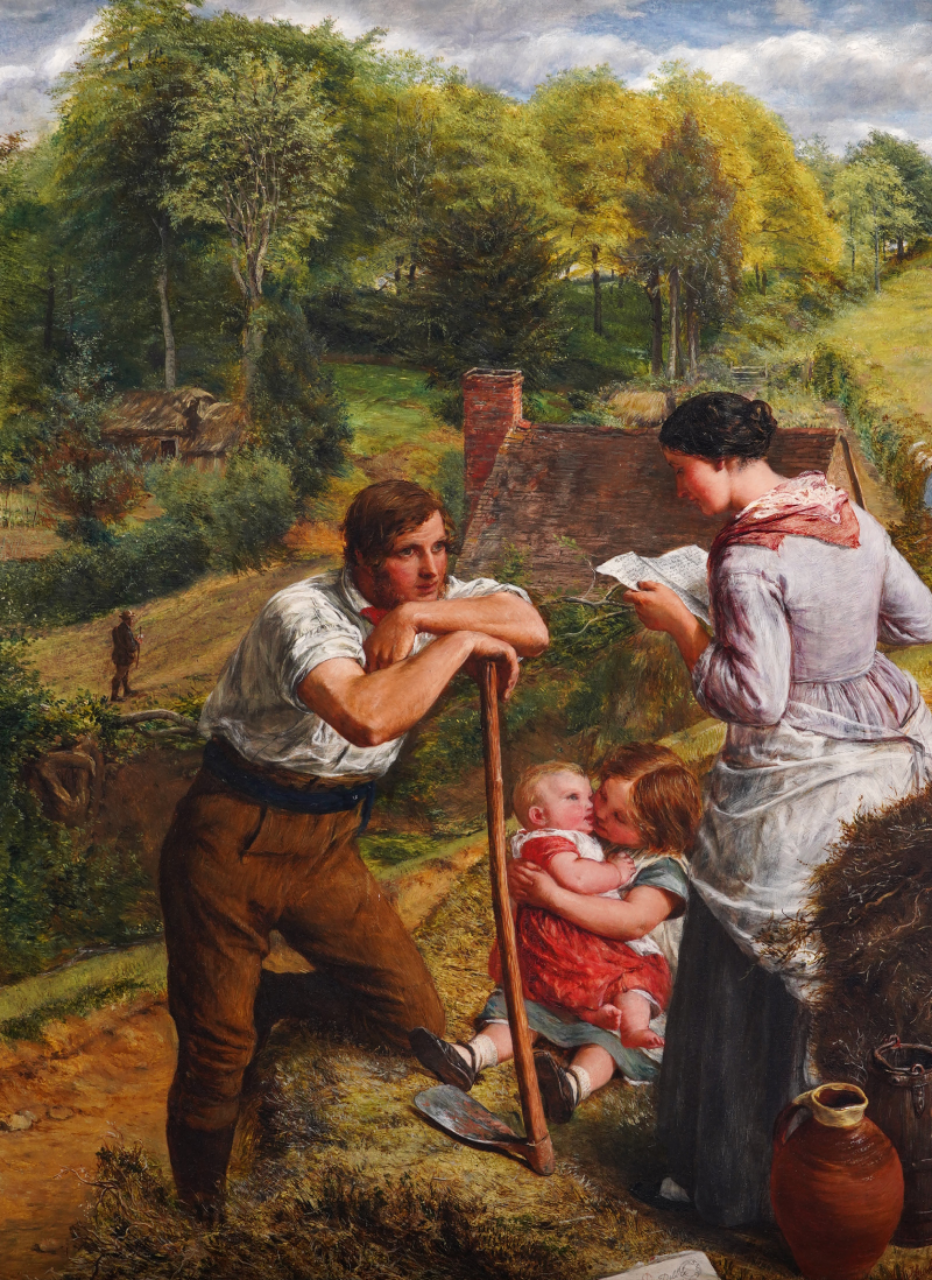
This auction includes two of his early paintings: “The Ship Boys Letter” from 1863, which has been well documented and exhibited at the Royal Academy in 1857 and shows a young boy writing a letter to his mother while at sea (estimate £2,000 – £4,000), and “Reading the Ship Boys Letter,” which depicts his mother reading the letter out to the rest of the family at home in the countryside (est. £4,000 – £6,000). Interestingly the latter was actually painted before the one of the boy writing the letter.
“The Ship Boys Letter” by James Clarke Hook“Reading the Ship Boys Letter” by James Clarke Hook
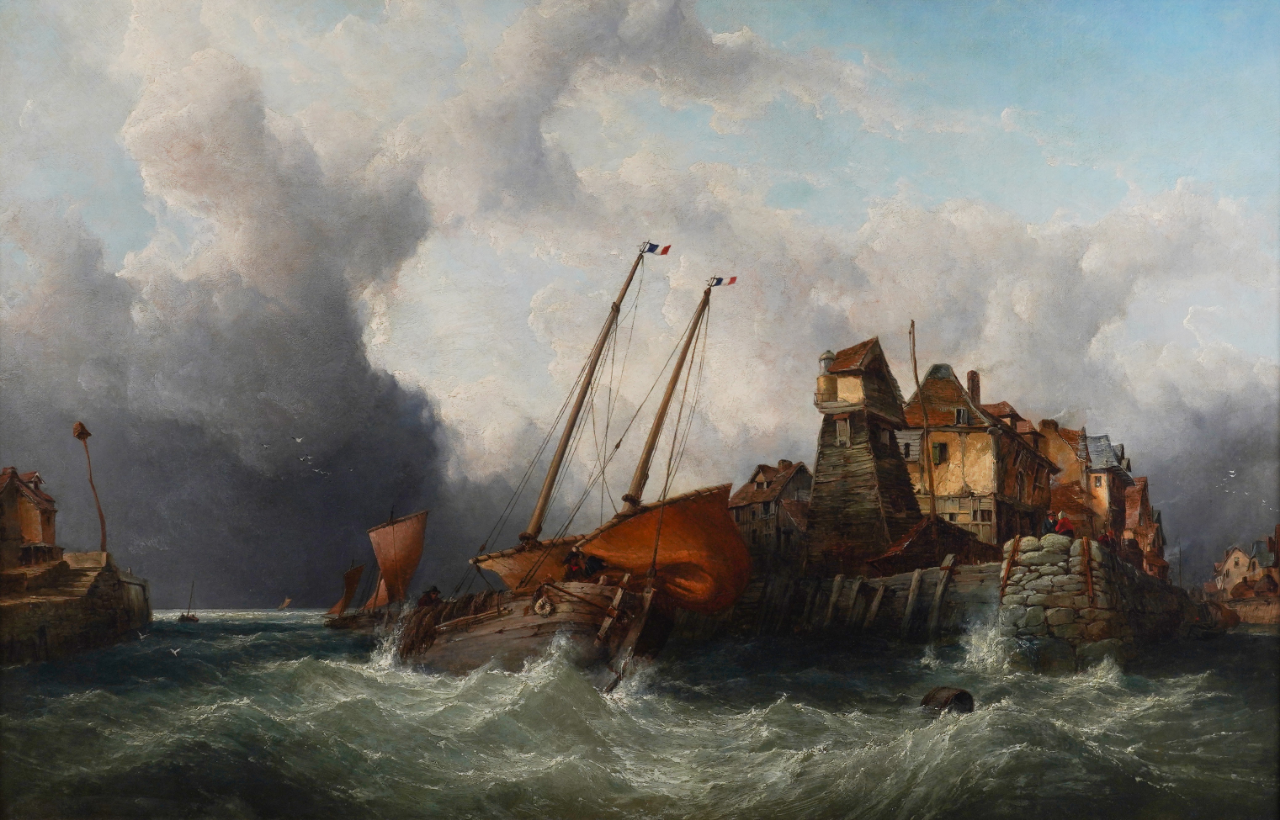
Another well-known marine painter, John James Wilson (British, 1818-1875), is also included with an 1869 work, “Boats Entering Harbour in a Swell,” which is estimated at
£1,000 – £1,500.
“Boats Entering Harbour in a Swell” by John James Wilson
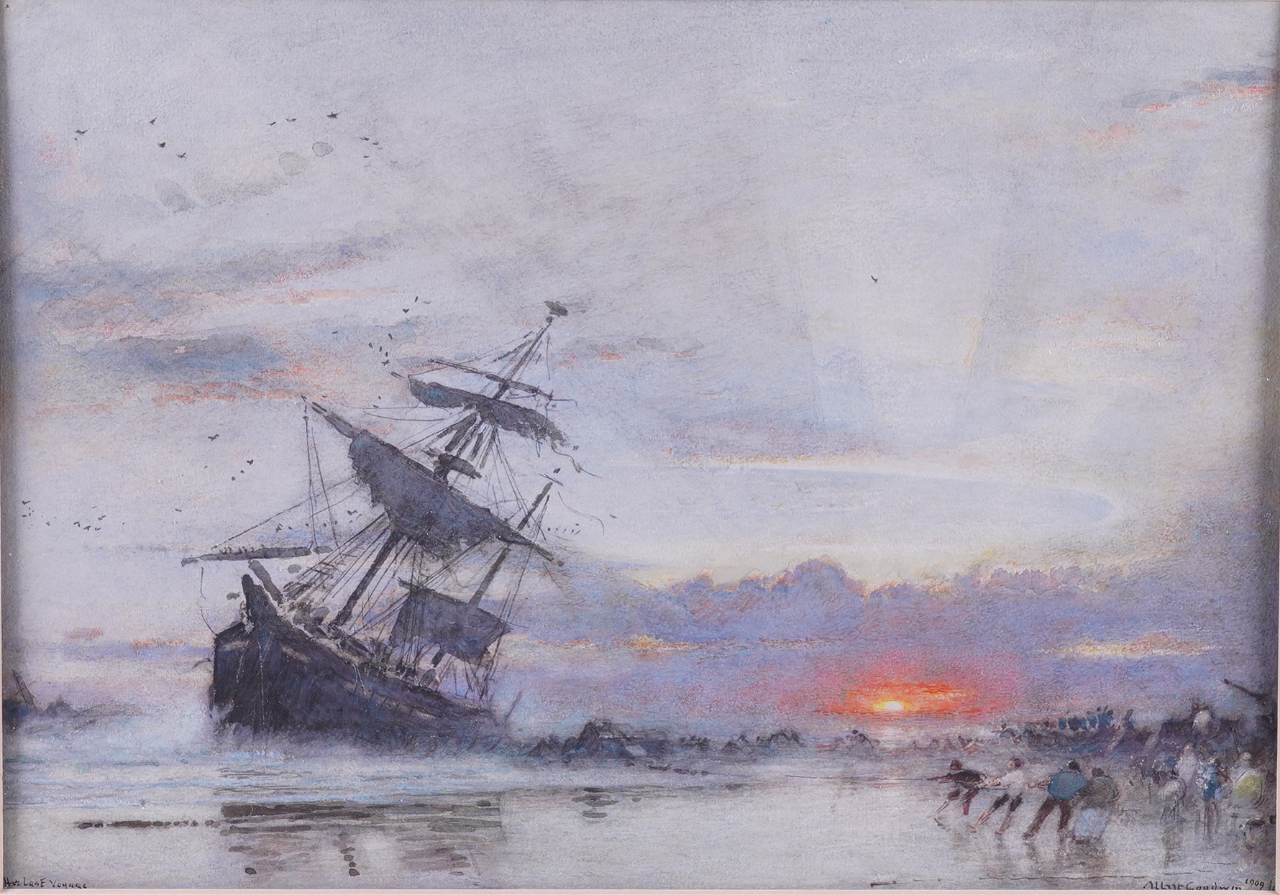
Two watercolours by Albert Goodwin (British, 1845-1932) are also in the auction, another marine themed work, “Her Last Voyage,” from 1909 carries an estimate of £700 – £1,000, and one depicting Durham Cathedral is expected to fetch £500 – £700.
“Her Last Voyage” by Albert Goodwin
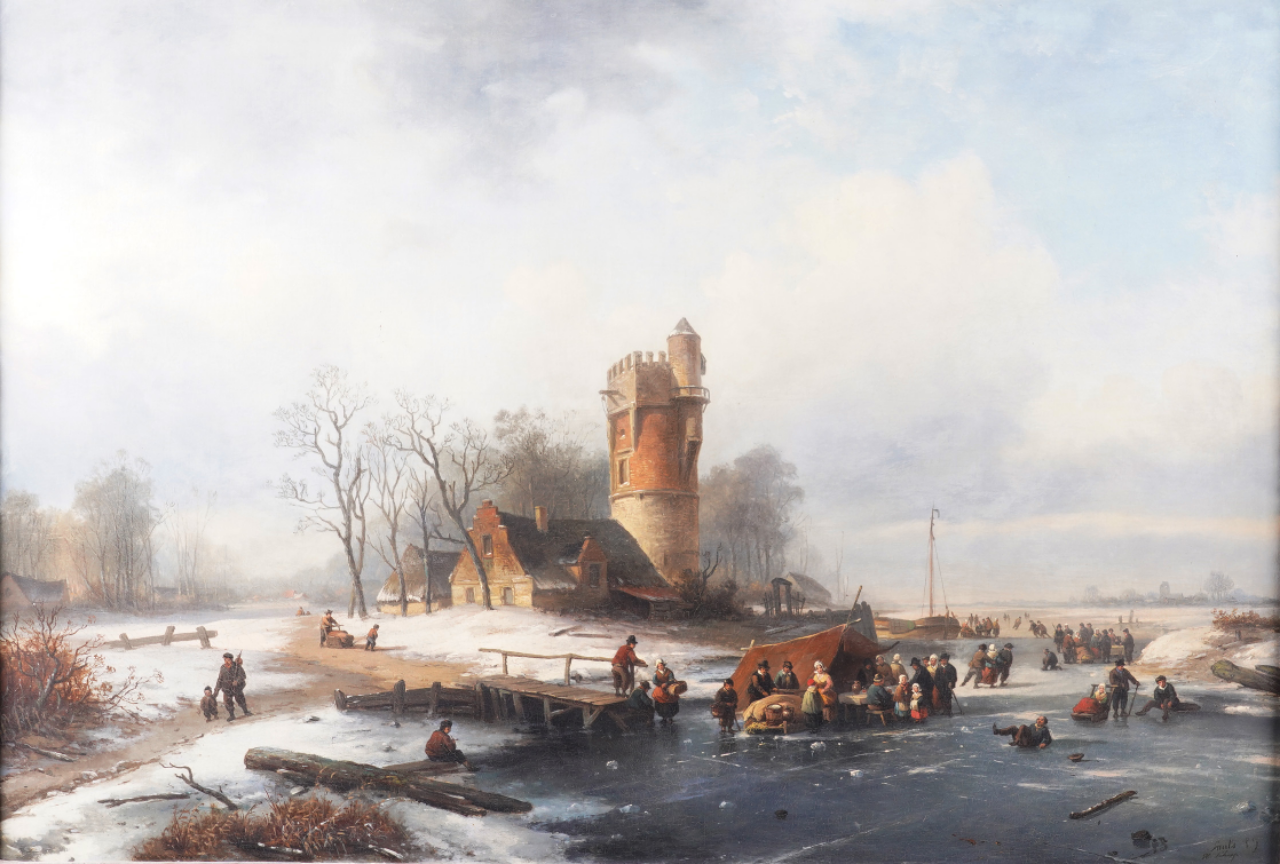
An oil on canvas winter scene by Belgian artists Hendrik Adolf Schaep (1826-1870) and Eugene Joseph Henri Smits (1826-1912) from 1889, was started by the former and finished by the latter. “Skaters on a Frozen River” carries an estimate of£1,000 – £1,500.
“Skaters on a Frozen River” by Hendrik Adolf Schaep and Eugene Joseph Henri Smits
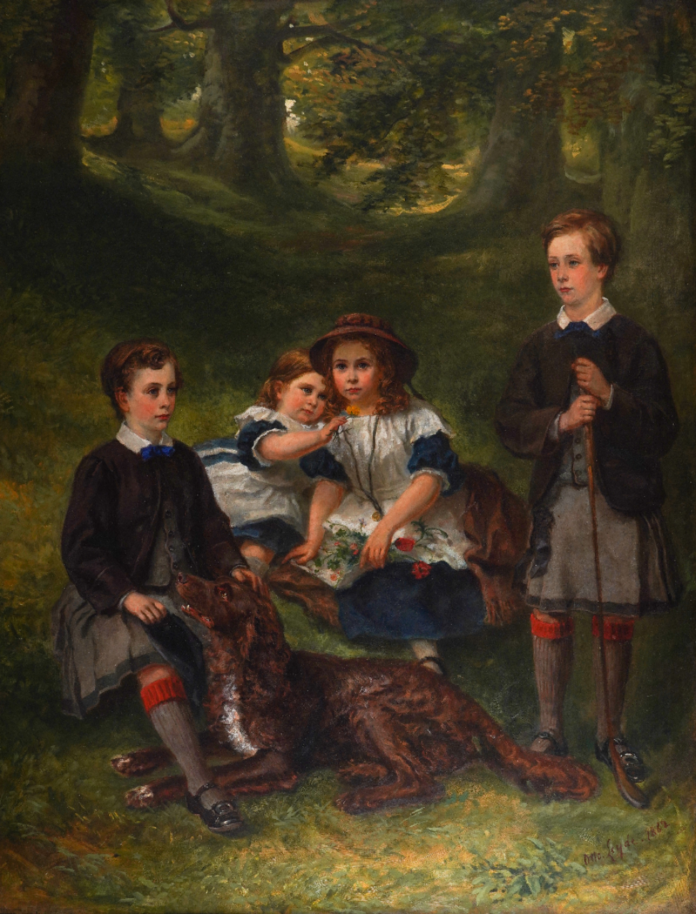
The auction also includes a Scottish painting by Otto Leyde (1835-1897), who was born in East Prussia in 1835, but moved and settled in Edinburgh in 1854 and devoted himself to painting, exhibiting in the Royal Scottish Academy for the first time in 1858. He is known for his portraits of Scottish society families, but also his subject pictures, often with a strong Scottish theme.
The charming portrait (shown at top) of four children and their red setter also has strong Scottish links, but the sitters are currently unknown – with the boys dressed in kilts (?) and the girls in blue and white dresses. To keep with the Scottish theme, one of the boys holding a golf club. The oil on canvas is signed and dated 1862 and estimated to sell for £1,000 – £1,500.
> Visit EricRhoads.com to learn about more opportunities for artists and art collectors, including retreats, international art trips, art conventions, and more.
> Sign up to receive Fine Art Today, our free weekly e-newsletter
As part of our effort to continue to help artists and art galleries thrive, we’re proud to bring you this week’s “Virtual Gallery Walk.” Browse the artwork below and click the image itself to learn more about it, including how to contact the gallery.
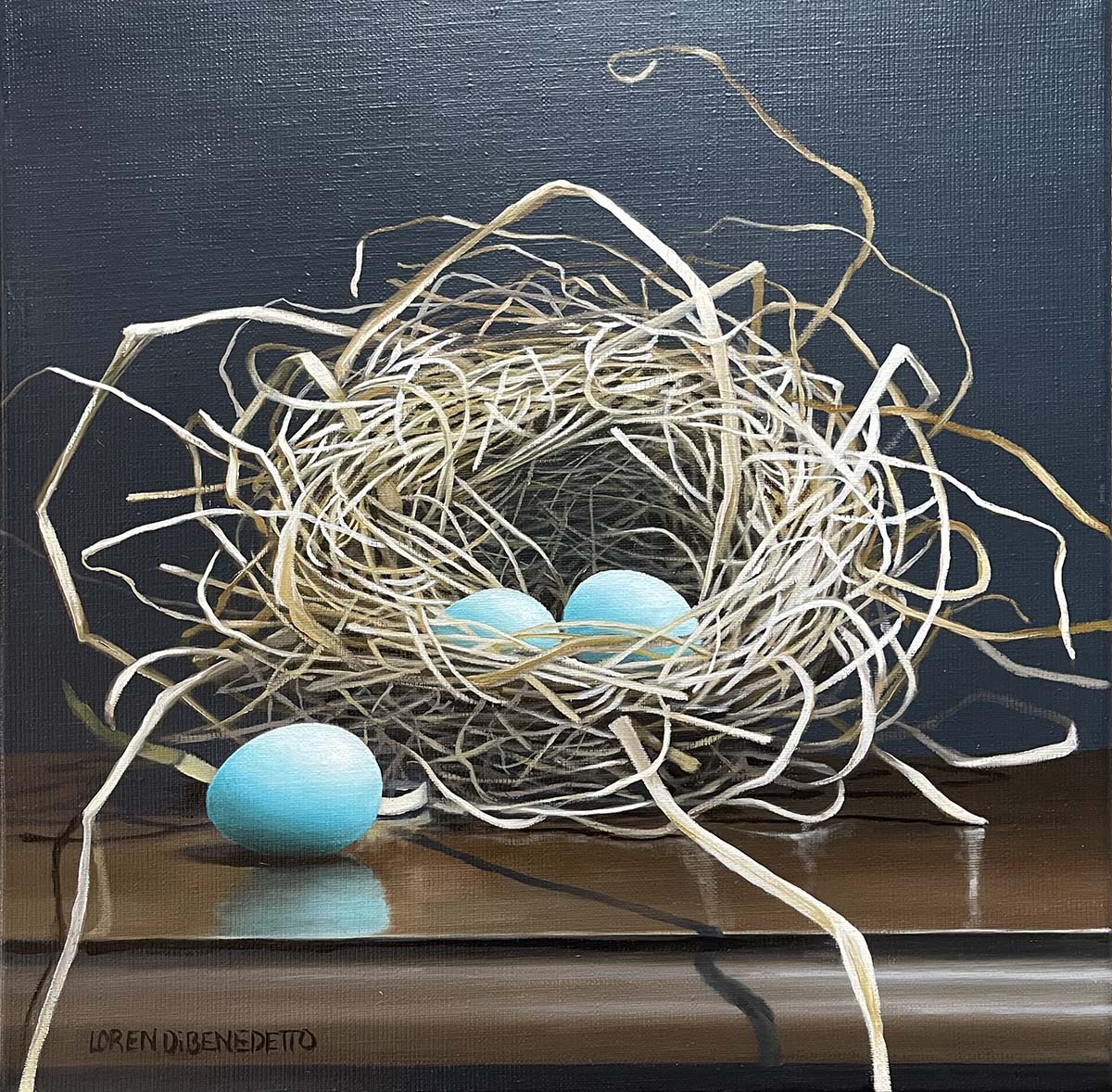
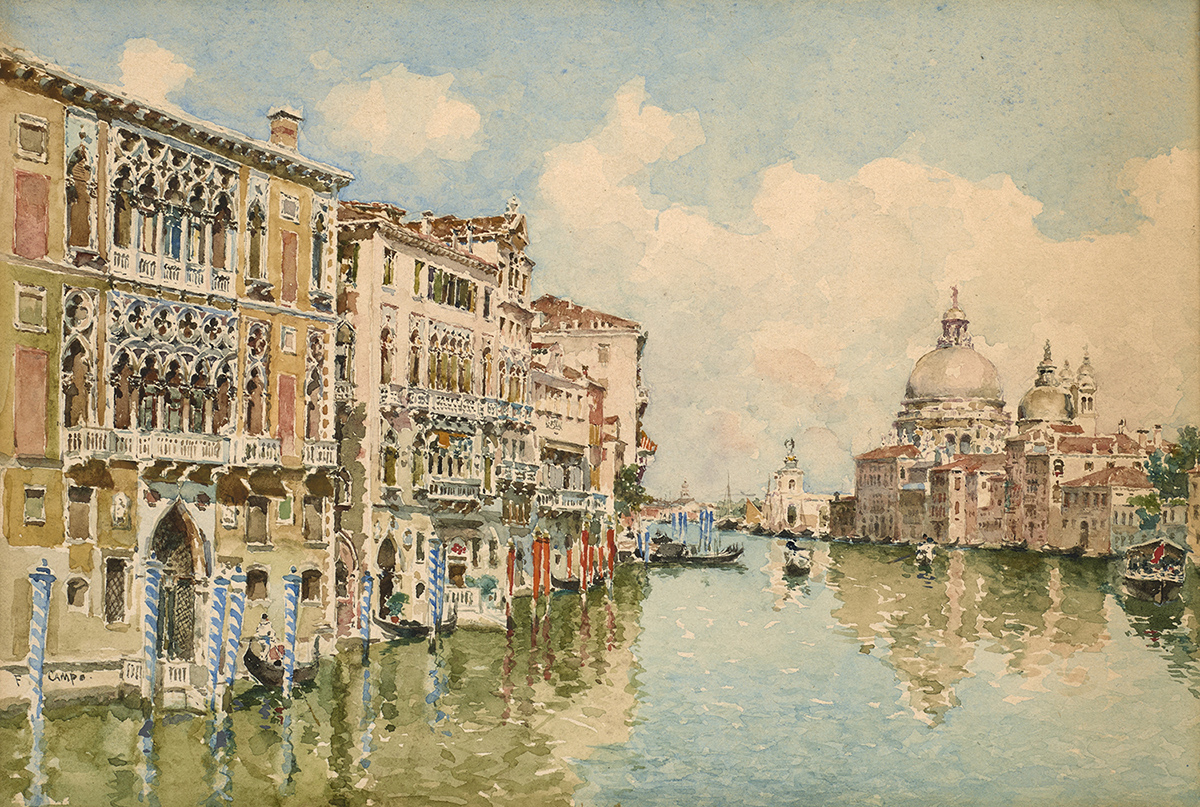
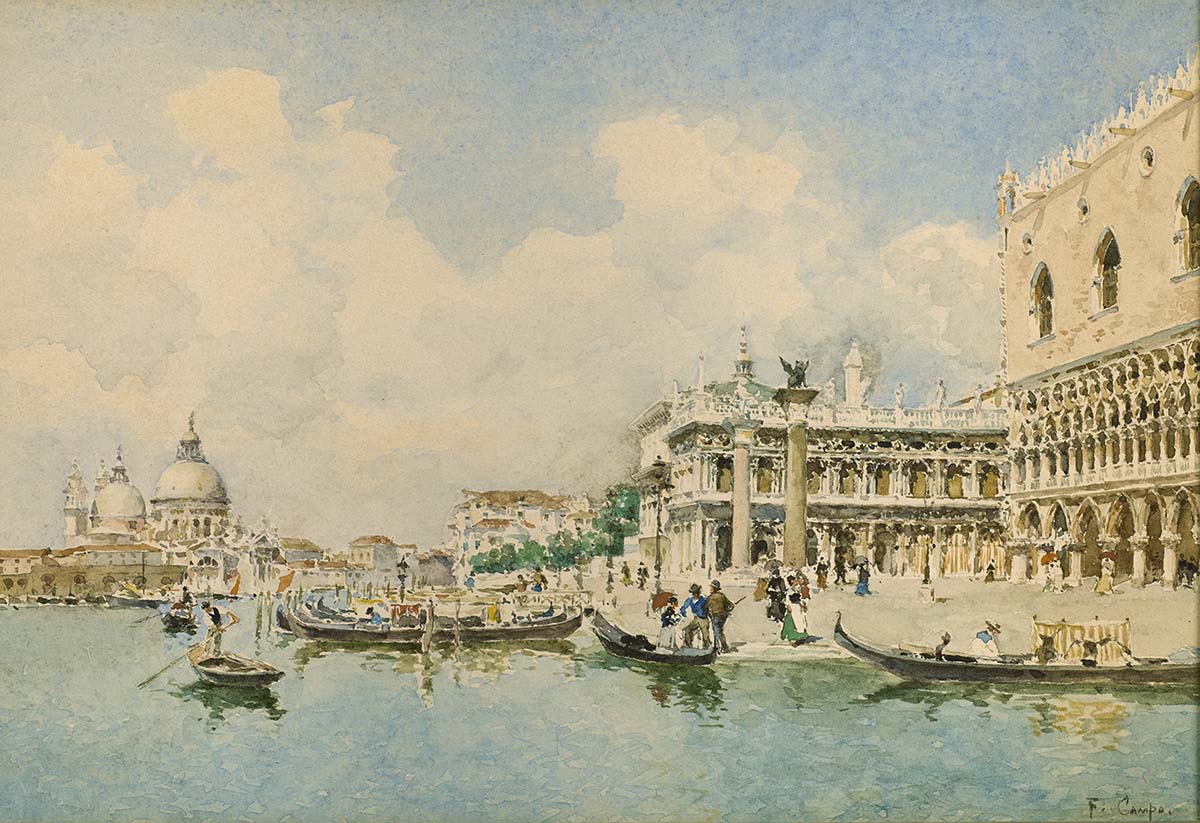
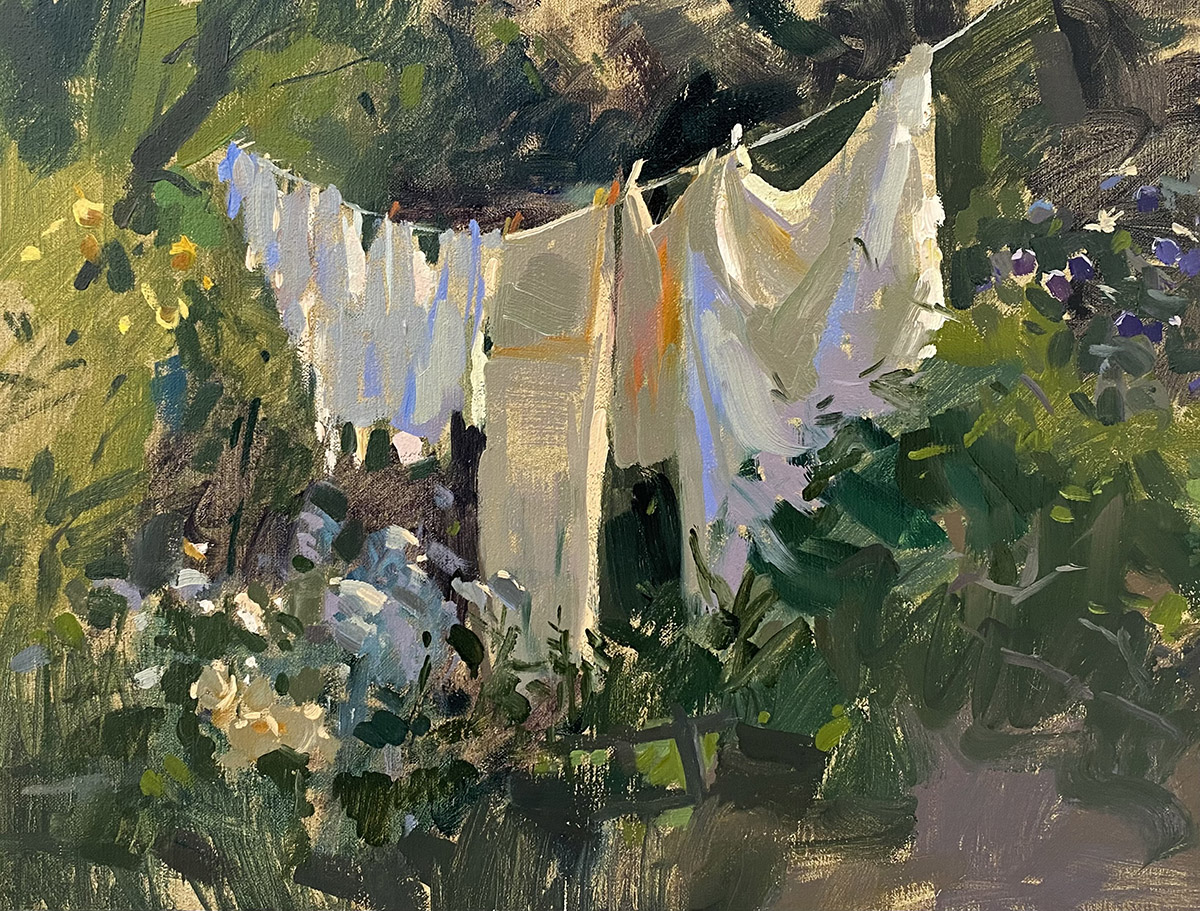
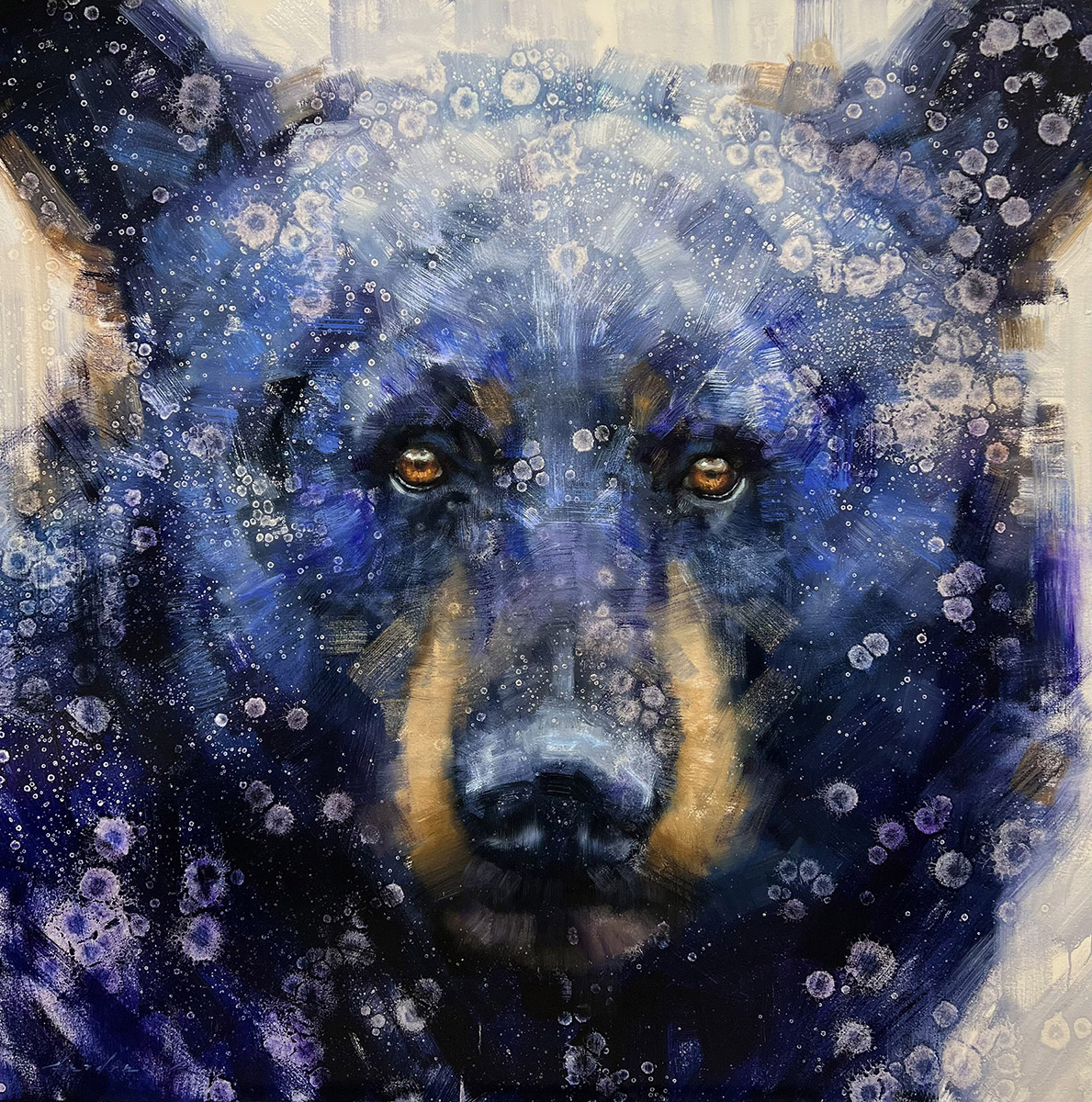
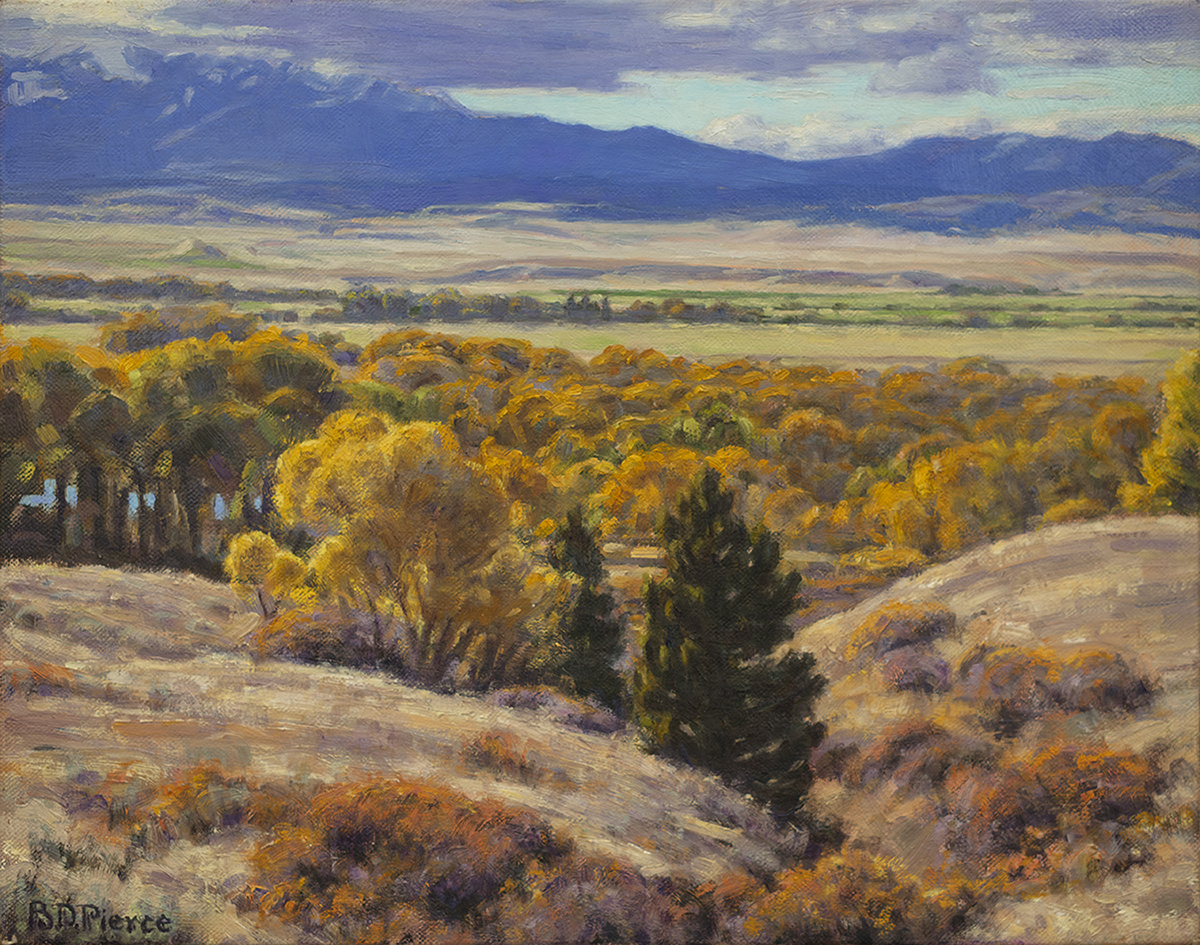
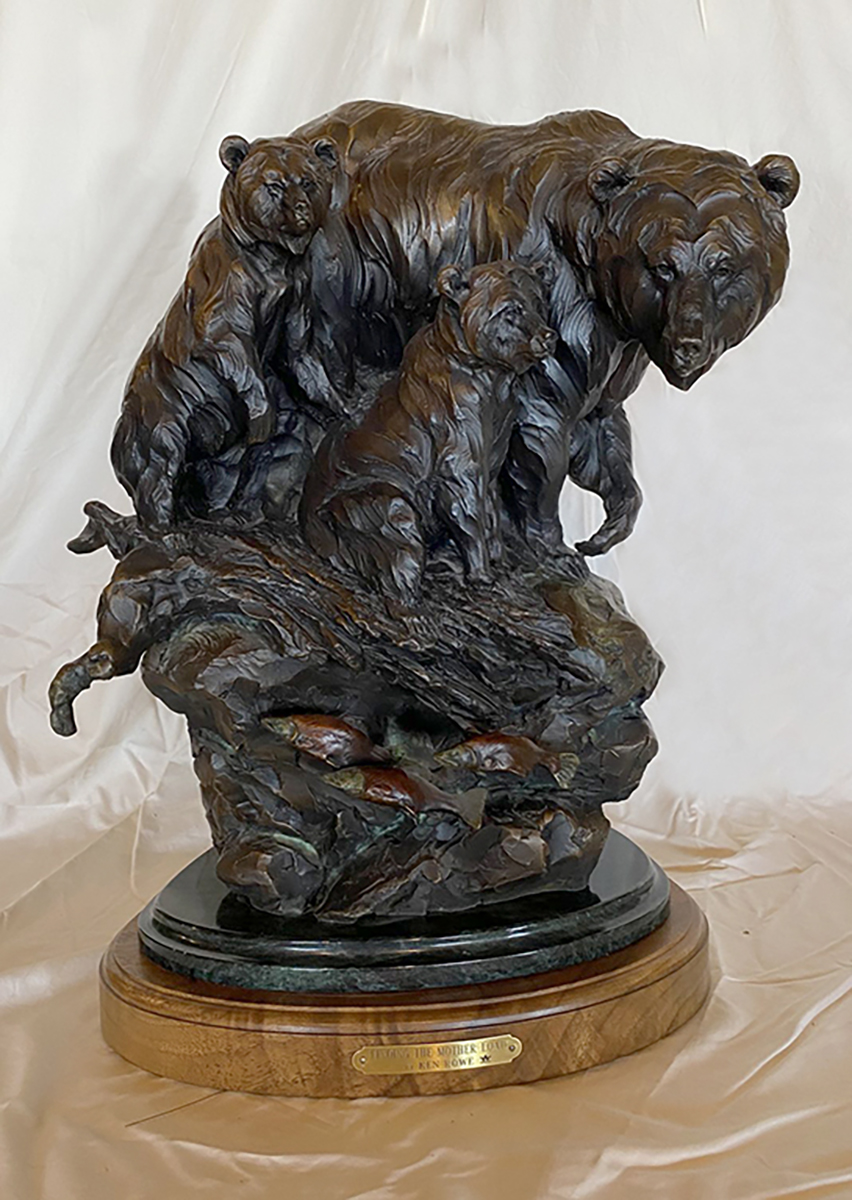
Nest with Blue Eggs, Loren DiBenedetto, oil, 12 x 12 in; Anderson Fine Art GalleryThe Grand Canal, Venice (One of a pair), Federico Del Campo (1837 – 1923), watercolor, 6.5 x 9.5 in, Signed; Rehs Galleries, Inc.The Doge’s Palace and the Grand Canal, Venice (One of a pair), Federico Del Campo (1837 – 1923), watercolor, 6.5 x 9.5 in, Signed; Rehs Galleries, Inc.Hazel’s Garden, Haidee-Jo Summers, oil, 8 x 12 in; LPAPA Art Gallery, The Catalog Art Show August 29-October 10, 2022Black Bear Blue, David Frederick Riley, oil on canvas, 60 x 60 in; David Frederick RileyJefferson River Overlook, Bruce D. Pierce, oil on canvas board, 11 x 14 in; Bruce PierceFinding The Motherload, Ken Rowe, bronze #15/25, 19 in. x 13 in. x 9 ¼ in. deep; ArtzLine.com
Want to see your gallery featured in an upcoming Virtual Gallery Walk? Contact us at [email protected] to advertise today. Don’t delay, as spaces are first come, first served, and availability is limited.
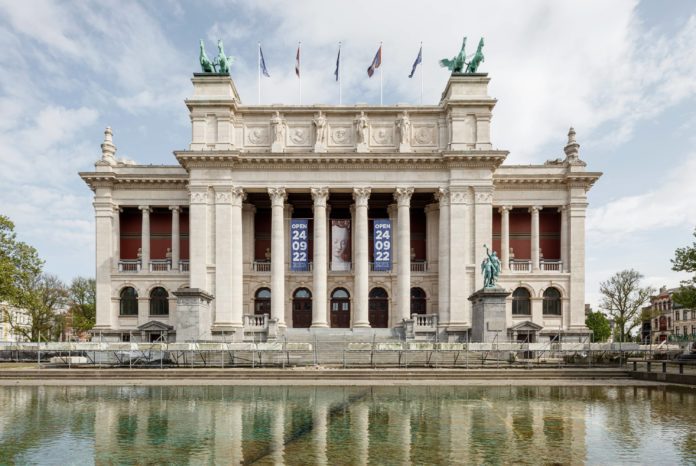
“Museums are places of imagination and reflection,” said Luc Delrue, Secretary General of Flanders’ Department of Culture, Youth, and Media. “The KMSKA will undoubtedly help many visitors, young and old, to discover their place in life. At last, our children and grandchildren can once again enjoy the extraordinary and brilliant art we have created in Flanders over the centuries.”
Photo credit: Karin Borghouts
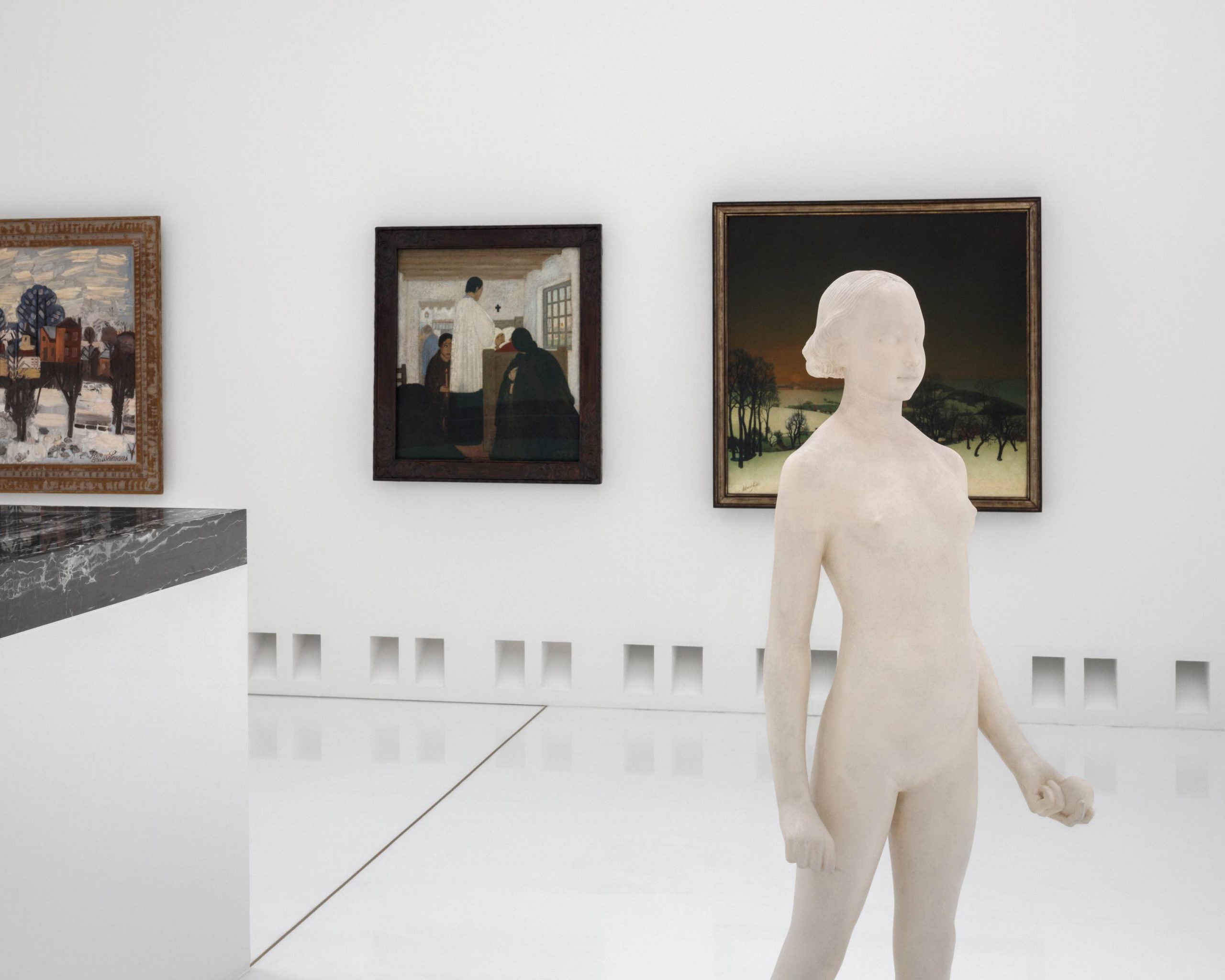
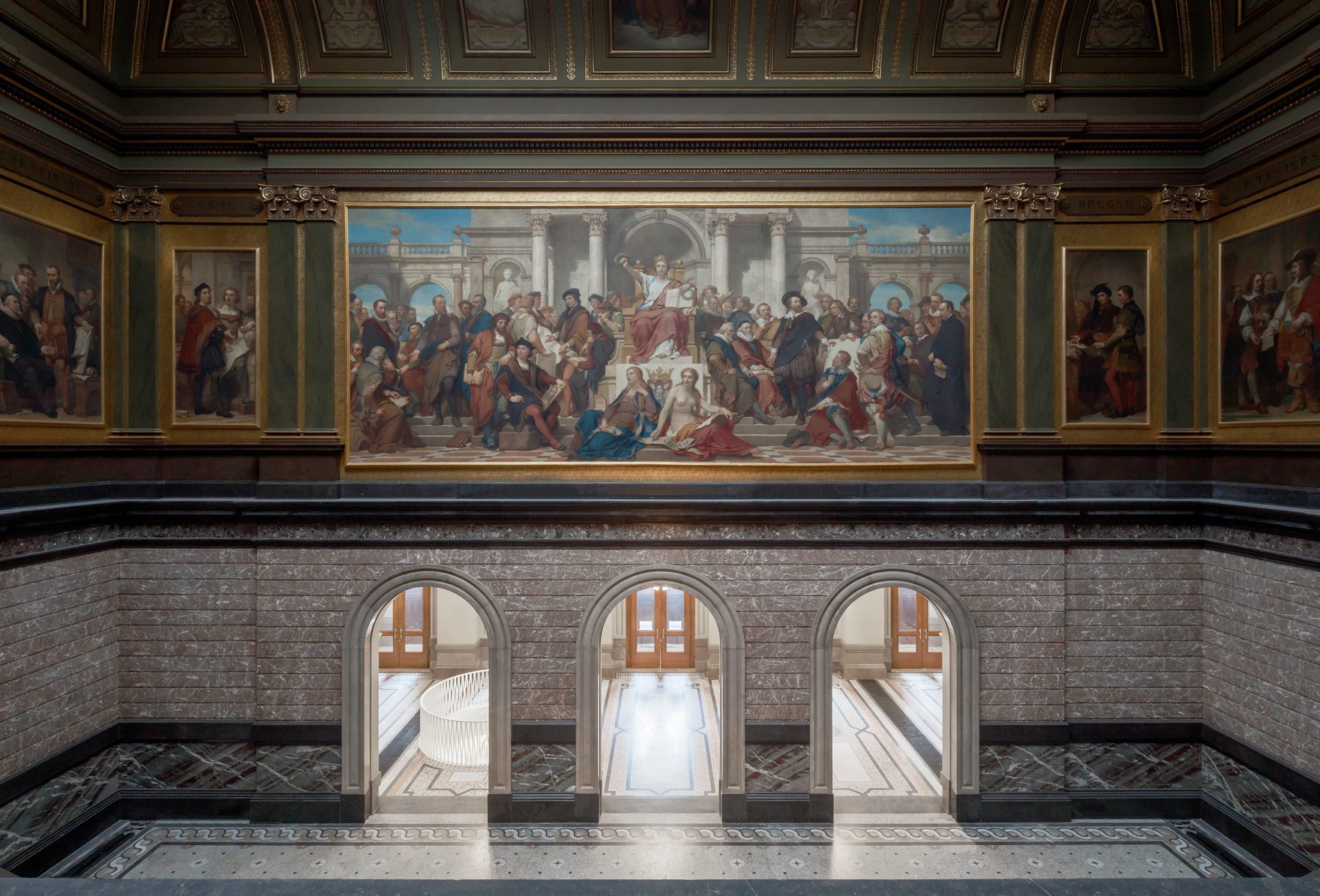
It was worth the wait. The museum houses the largest collection of art — 8,400 pieces in total — in Flanders, the northern region of Belgium. With the reconstruction and renovations, visitors can enjoy 40% more exhibition space compared to the original layout, showcasing seven centuries of fine art. Walking inside, you may find yourself stunned by the initial beauty of the immense paintings that greet you as you choose your path.
Photo credit: Karin Borghouts
The new space is organized by two major periods, Old Masters and Modern Artists, which are bridged by a wing devoted to the largest collection of James Ensor art in the world. “The KMSKA [was] too often still only associated with Old Masters,” said Luk Lemmens, Chairman of the KMSKA Foundation. “Thanks to the space gained, our fantastic collection of modern art gets the place it deserves.”
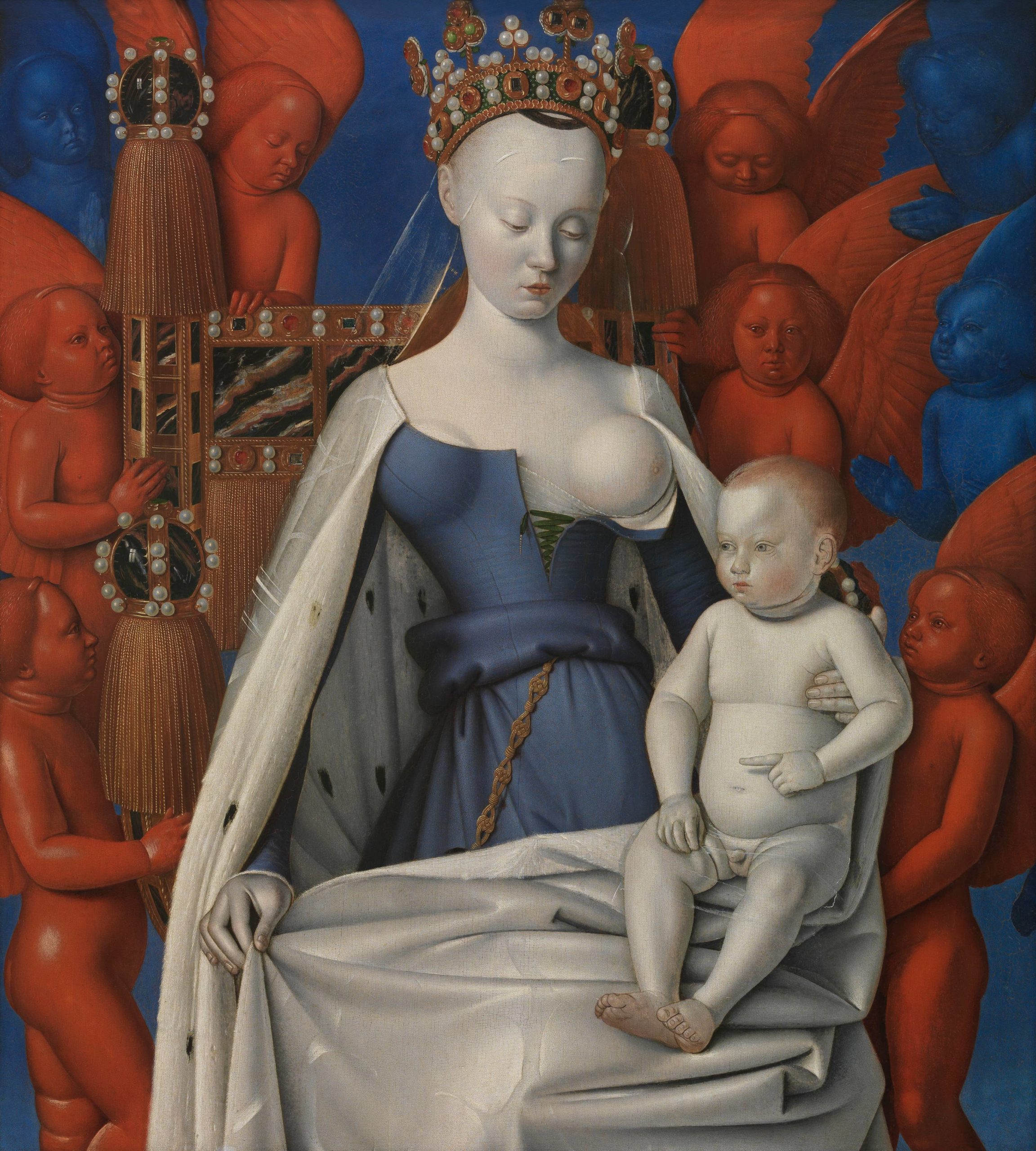
Madonna Surrounded by Seraphim and Cherubim by Jean Fouquet
It’s important to note that the museum’s efforts in the renovation include making visitors’ experience more interactive and immersive. For example, children in particular (as well as adults) will enjoy “The Ten,” an adventurous journey to find 10 surprising installations throughout the collection. Don’t just look at them, though — get a free booklet and participate in fun, creative “assignments” as you tour the museum.
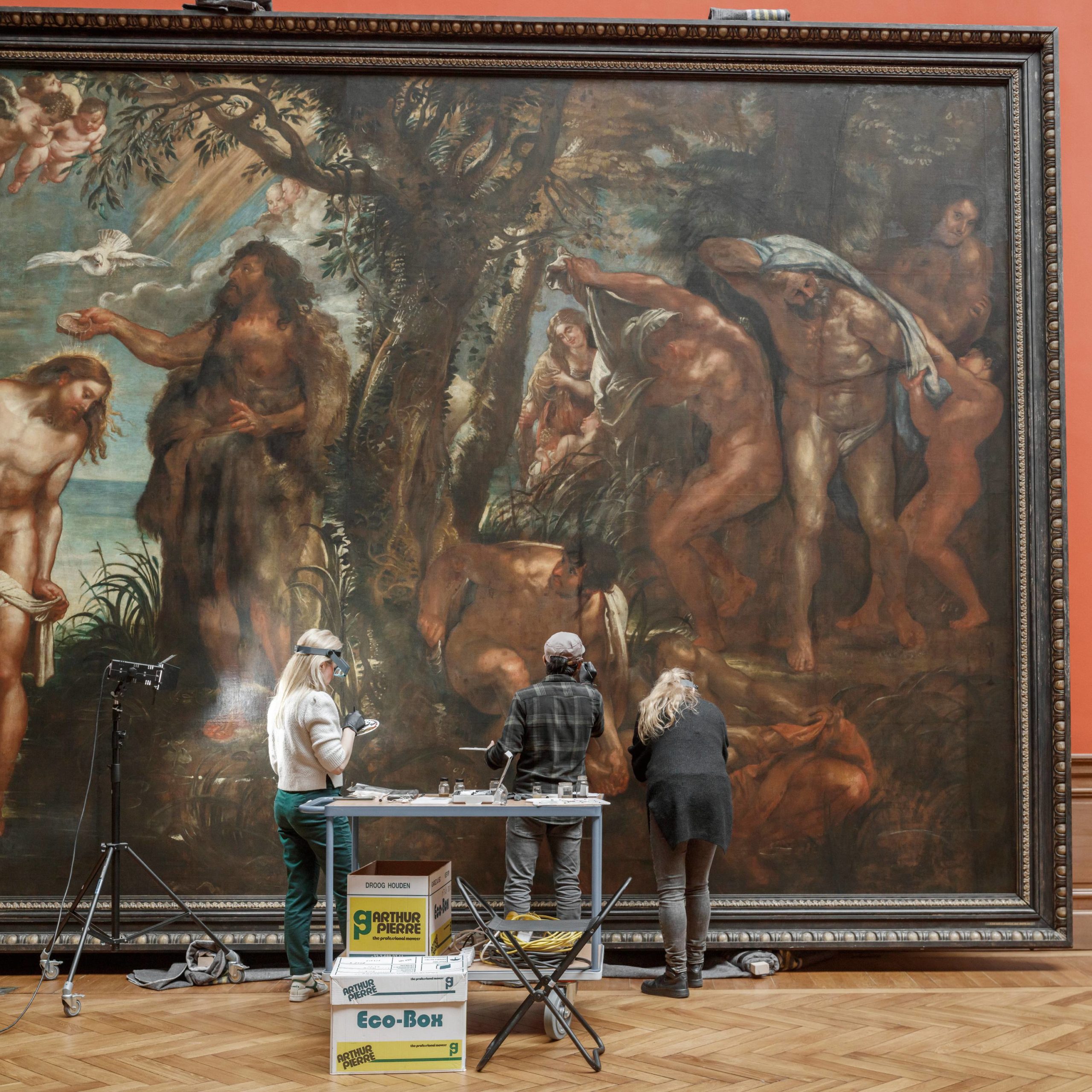
Restorations taking place while the museum was closed to the public: Photo credit: Karin Borghouts
Temporary exhibitions include “The Making Of: The KMSKA From Concept to Realization — with Photographs by Karin Borghouts,” “Cosmorama: Ives Maes,” and “The Poetry of the Abstract: Michel Seuphor.”
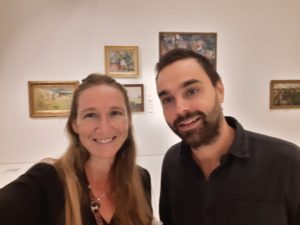
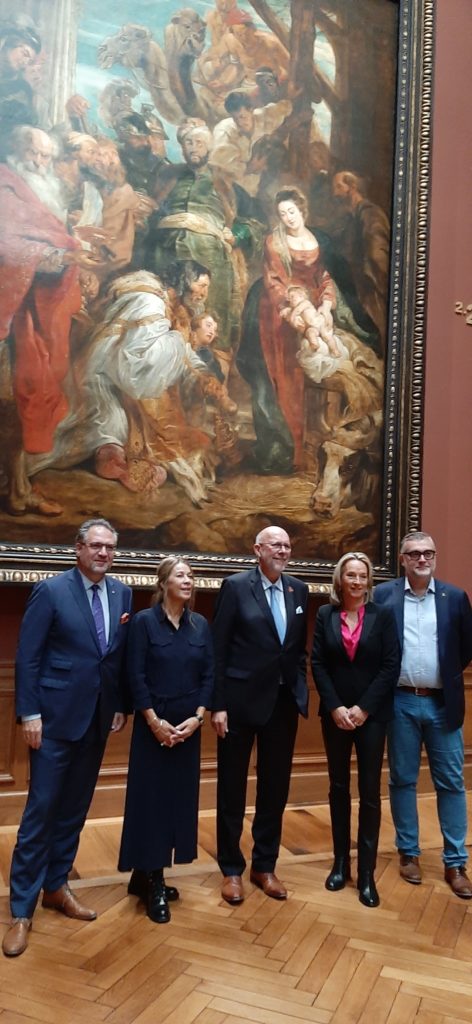
Fine Art Today Editor Cherie Dawn Haas with Adrianne Gonnissen, Historian and KMSKA Curator Modern Art in front of one of the sections he coordinated.Speakers from the KMSKA press conference included Luk Lemmons, Chairman KMSKA (far left), Carmen Willems, General Director (second from right), and representatives from the local tourism bureaus.
For more information:
Museum Website: kmska.be
Plan Your Trip: visitflanders.com (Pro tip: Get the Antwerp City Card for convenient access to local venues and transportation.)
#visitflanders #visitantwerp
Stay tuned for a full feature article on the KMSKA and surrounding area, including additional art museums and art destinations, in an upcoming issue of Fine Art Connoisseur magazine. Subscribe today so you don’t miss it!
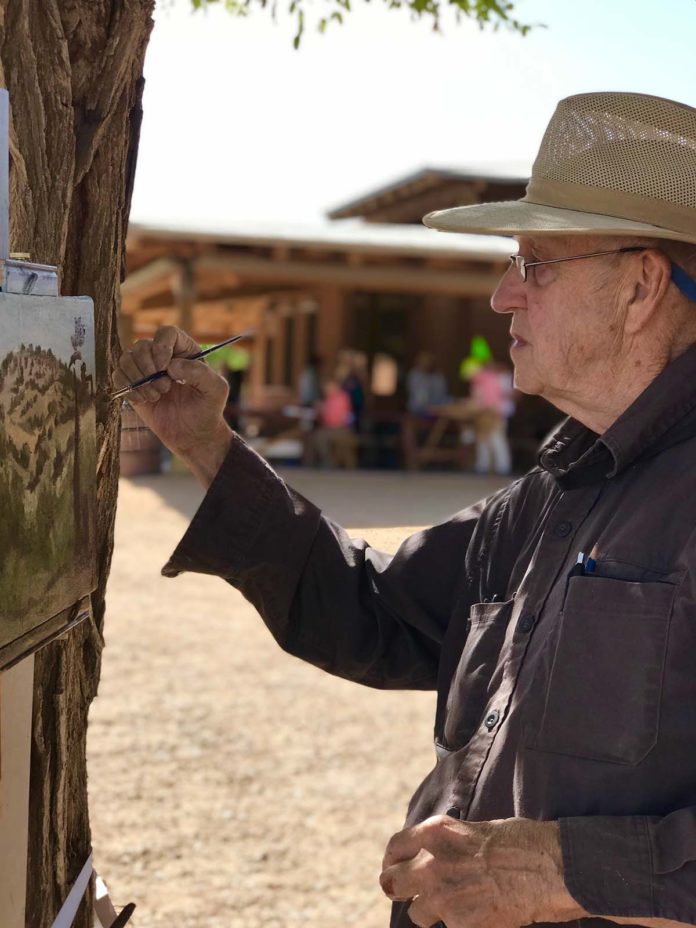
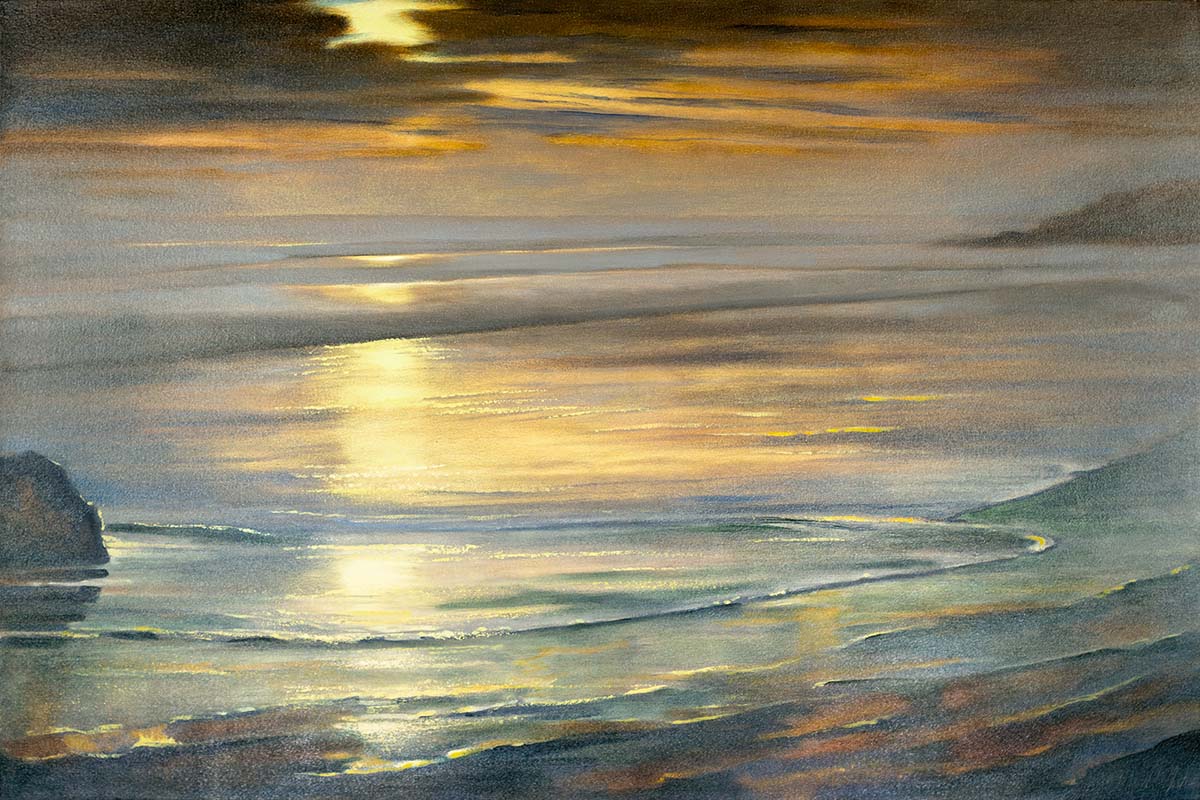
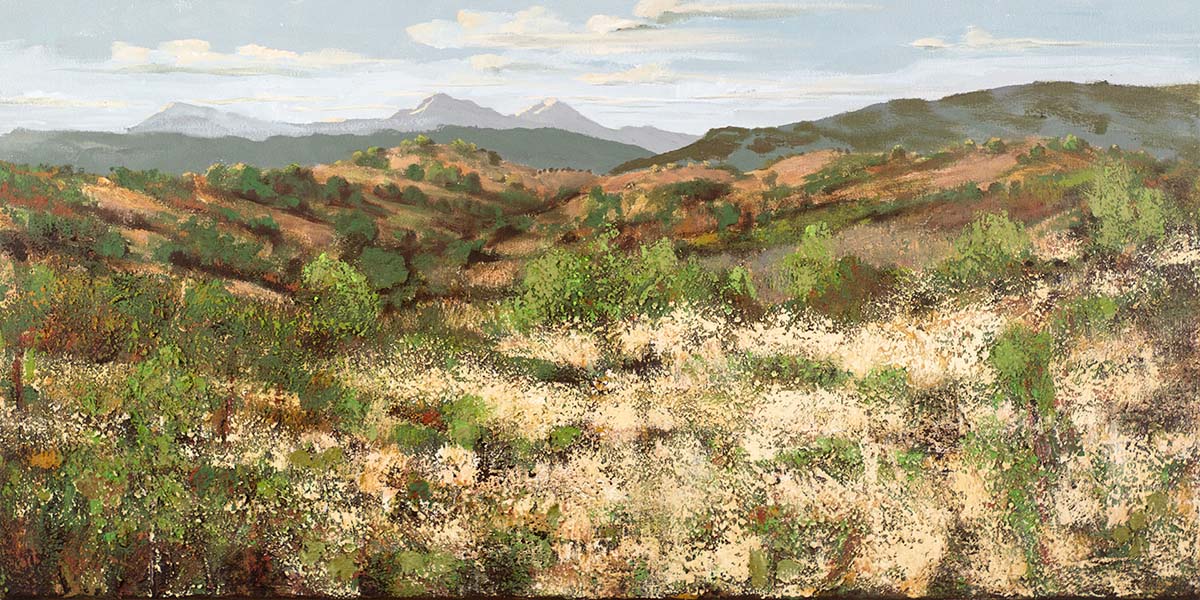
Mark White, plein air painting, El Rancho de las Golondrinas, Plein Air Convention (PAC) Santa Fe, NM 2022
How do you find inspiration? Mark White: Sometimes I refer to my drive to paint as a “fealty to the presence”. Recently, I moved to California and on the day I arrived, my son Ethan took me down to Broad Beach. I was awestruck by the sunset that greeted me. I have never had my consciousness so expanded as when I am sitting next to the ocean.
My “Ocean Atmosphere” collection is a result of being intrigued by and motivated to present on canvas how magical that morning moment is when the sun finally shines through a marine layer, and how the evening light reflects from the color-turning sky onto the receding tide.
My “New Mexico Gesso” collection began when I was experimenting with acrylic gesso that was heavily pigmented. Mixing the gesso with fibrous and sandy texture has resulted in a surface that has a feeling of pixelation, reminiscent of the chaotic weeds and grasses that you see in New Mexico.
I would often work on one painting from my home in Santa Fe on two different days. The light was very similar both days which resulted in a deep, receding, slightly atmospheric blending of the light conditions. This process gave the paintings a cinematic feel, allowing the overlapping areas of light to be in pristine focus.
Mark White, Malibu Broad Beach, oil on canvas, 24 x 36 in, Available through the artistMark White, On the Road to Chama, acrylic gesso on canvas, 15 x 30 in, Available through the artist
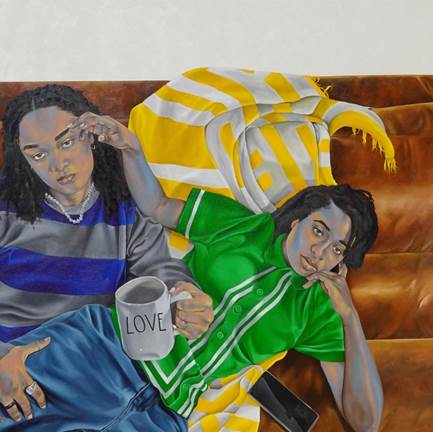
Robert Peterson, "Love Is Love," 2022, 60 x 60 in., oil on canvas, courtesy of Claire Oliver Gallery
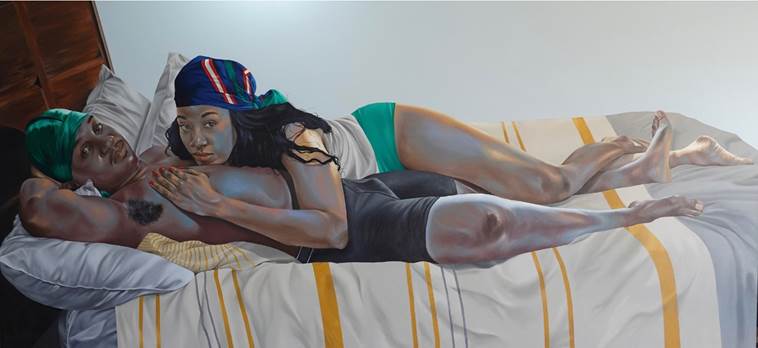
Claire Oliver Gallery (Harlem, NY) is presenting “When You See Them, You See Me,” the debut solo exhibition by artist Robert Peterson. Featuring 13 life-scale oil on canvas figurative paintings, Peterson aims to capture time through his art, highlighting Black family life as joyous, loving, and balanced. So often Black men and women are unfairly stereotyped, and fractured family dynamics are what the media and popular culture choose to highlight. Peterson looks at his work as an opportunity to flip the narrative and shed light on the strength, resilience, and gentleness of the Black community that is hardly ever showcased.
“When You See Them, You See Me”
Claire Oliver Gallery claireoliver.com
Harlem, New York
Through November 5, 2022
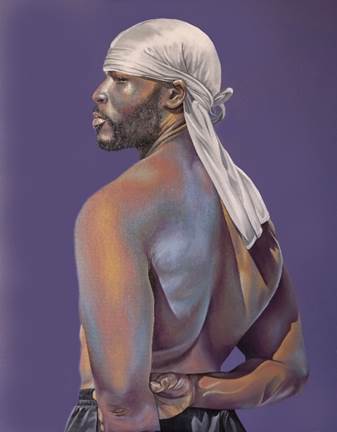
Robert Peterson, “Crown of Righteousness,” 2022, 30 x 24 in., oil on canvas, courtesy of Claire Oliver Gallery
“This exhibition is extremely personal to me as it showcases the balance that I have within my own life as a husband and a father, as a Black man,” states Peterson. “I create my work with the idea of correcting the historical record. In 500 years, I want viewers to see the normalcy, peace, and harmony with my subjects – Black people, and Black families in particular, that contrast with the often negative popular narrative. I want my subjects to get the chance to live forever through my work.”
Peterson’s works explore the mundane as a radical act of visibility for Black Americans, honing his work to focus on the Black family and drawing from his own experiences. Peterson’s monumental oil on canvas paintings depict Black individuals as both ordinary and regal, replacing iconographic regalia with the quotidian, and reframing embellished “crowns” with du-rags and jeans.
His works are homages to the quiet heroism of daily life and challenge the politicized gaze upon Black people. His figures’ skin tones are rendered in rich polychrome: a joyous and exuberant expression of love of Black skin.
Robert Peterson, “Sunday Kind of Love,” 2022, 54 x 114 in., oil on canvas, courtesy of Claire Oliver Gallery
In the past decade, Peterson has evolved from his self-taught origins to exhibiting his works in celebrated galleries and art fairs in New York City, Chicago, Los Angeles, and Miami. In 2016, he was the first Black artist selected “Artist of the Year for Southwestern Oklahoma” by the Oklahoma Arts Council. The following year, he became the Spectrum Spotlight Artist of the Year during Miami’s Art Basel.
> Visit EricRhoads.com to learn about more opportunities for artists and art collectors, including retreats, international art trips, art conventions, and more.
> Sign up to receive Fine Art Today, our free weekly e-newsletter
Fill your mind with useful art stories, the latest trends, upcoming art shows, top artists, and more. Subscribe to Fine Art Today, from the publishers of Fine Art Connoisseur magazine.