Home Blog Page 125

Featured Artwork: Jill Stefani Wagner

0
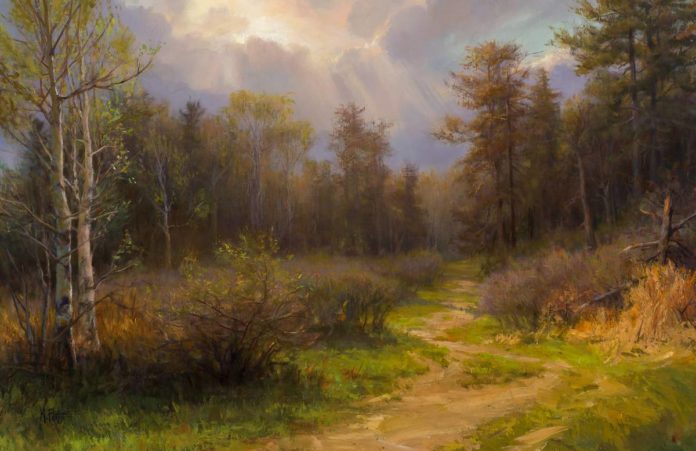
Oil painting of trees lining a road
Jill Stefani Wagner, “Taking the High Road, oil on linen panel, 12 x 16 in., $875, available through the artist

Jill Stefani Wagner PSA-MP IAPS/MC: Painting in pastel and oil, Jill finds inspiration in capturing light. An avid plein air painter, she travels the country capturing the unique views of each area. In her upcoming solo exhibit, “Close to Home” at Kerrytown Concert House in Ann Arbor, MI (1/6–2/15/22), she’ll feature plein air and studio paintings of Michigan. Jill will be Pastel Faculty for the 4th time at the 2022 Plein Air Convention in Santa Fe.

To see more of Jill’s work, visit:
www.jillwagnerart.com
www.instagram.com/jillwagnerart
J. Petter Galleries in Saugatuck, Michigan
Castle Gallery in Fort Wayne, Indiana
Fuller Art House in Sylvania, Ohio

Contact Jill at [email protected]

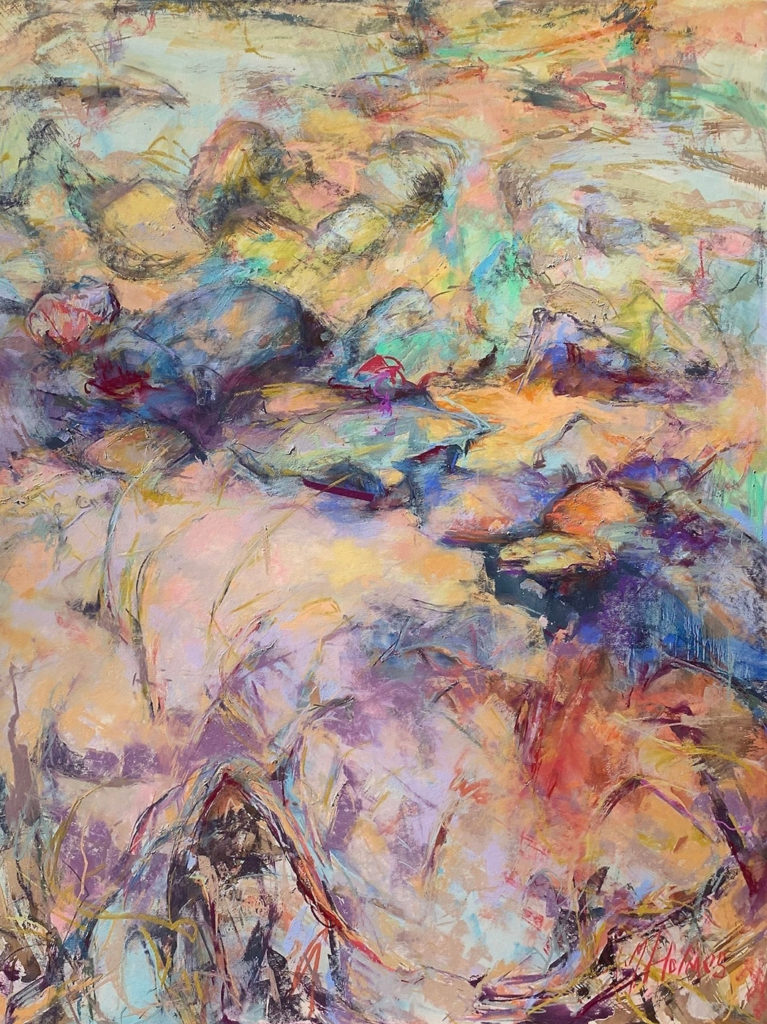
Pastel painting of a road along the water's edge
Jill Stefani Wagner, “Azure Daze,” pastel on prepared board, 16 x 20 in., $1250, available through the artist
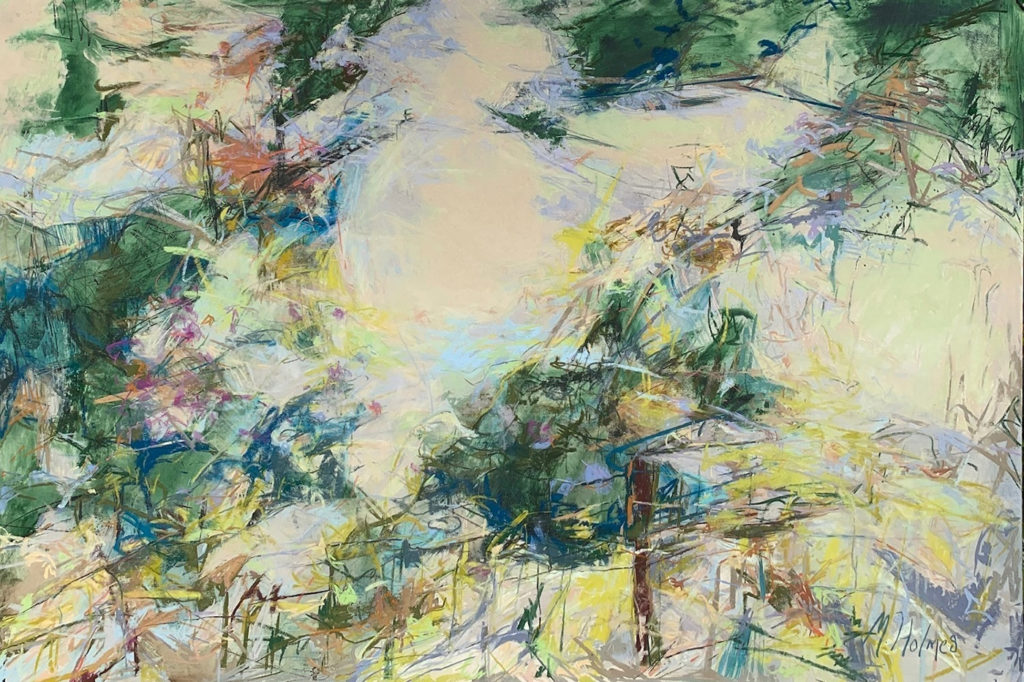
Pastel painting of a lake
Jill Stefani Wagner, “Serenity,” pastel on board, 16 x 20 in., $1250, available through the artist

Featured Artwork: Hai-Ou Hou presented by Grand Canyon Celebration of Art

0
Oil painting of a woman in a face mask at the Grand Canyon

Endurance
By Hai-Ou Hou
16 x 20 in.
Oil

The 13th annual Grand Canyon Celebration of Art recognized the achievements of 25 artists who have successfully interpreted the canyon, both in plein air and studio work.

The artists painted at the South Rim of the Grand Canyon National Park for a week in September, capturing on canvas the vastness, the ever-changing light and the many moods of the canyon. They also submitted studio paintings of the Grand Canyon.

Hai-Ou Hou is one of the participating artists. Born in China, she received her
B.F.A. from Central Institute of Fine Art and Design. Moving to the United States she later earned her M.F.A. from Townson State University in Maryland. Hou now resides on the Eastern Shore of the Chesapeake Bay where she operates Chesapeake Fine Art Studio, an art school that brings in instructors from all over the world.

Of her studio painting, Endurance, Hou says: “The Grand Canyon, devastatingly beautiful and monumental, has long inspired me to paint. The Covid-19 pandemic is devastation on a monumental scale and compels me to paint. This painting contrasts the solid greatness of the one to the fearful apparition of the other; the Canyon will remain long after Covid fades away.”

The work of the Celebration of Art artists will be exhibited at Kolb Studio at the South Rim through January 17, 2022, and can be viewed online at:

https://shop.grandcanyon.org/collections/celebration-of-art

Contact Kathy Duley at [email protected] or 480-277-0458 for more information.

Sargent, Whistler, and Venetian Glass

0

Sargent, Whistler, and Venetian Glass: American Artists and the Magic of Murano
Washington, D.C.
Smithsonian American Art Museum
americanart.si.edu
through May 8, 2022

John Singer Sargent (1856–1925), "A Venetian Woman," 1882, oil on canvas, 93 3/4 x 52 3/8 in., Cincinnati Art Museum
John Singer Sargent (1856–1925), “A Venetian Woman,” 1882, oil on canvas, 93 3/4 x 52 3/8 in., Cincinnati Art Museum

Gracing the Smithsonian American Art Museum is the new exhibition “Sargent, Whistler, and Venetian Glass: American Artists and the Magic of Murano.” It explores Americans’ engagement with Venice during the late 19th century, when anyone on the Grand Tour had to stop there.

Visitors found not only a floating city of palaces, museums, and churches, but also shops filled with brightly colored glass. The island of Murano’s production of glass boomed between 1860 and 1915 and its beauty led American artists to depict Italian glassmakers, as well as American patrons to buy superb examples of glass, mosaic, lace, and other expressions of Venetian skill.

On view now are many glass objects, plus an array of paintings, watercolors, and prints that encompass not only the show’s titular stars, John Singer Sargent and James McNeill Whistler, but also R.F. Blum, C.C. Coleman, Maria Oakey Dewing, Thomas Moran, Maxfield Parrish, and Maurice Prendergast.

The accompanying catalogue has been edited by Crawford Alexander Mann III, who organized the show, which will move to the Amon Carter Museum of American Art in Fort Worth (June 25–September 11, 2022) and finally Venice’s Ca’ Pesaro Galleria Internazionale d’Arte Moderna (October 15, 2022–January 8, 2023).


> Visit EricRhoads.com to learn about more opportunities for artists and art collectors, including retreats, international art trips, art conventions, and more.

> Sign up to receive Fine Art Today, our free weekly e-newsletter

> Subscribe to Fine Art Connoisseur magazine, so you never miss an issue

The Beckoning Sea

3
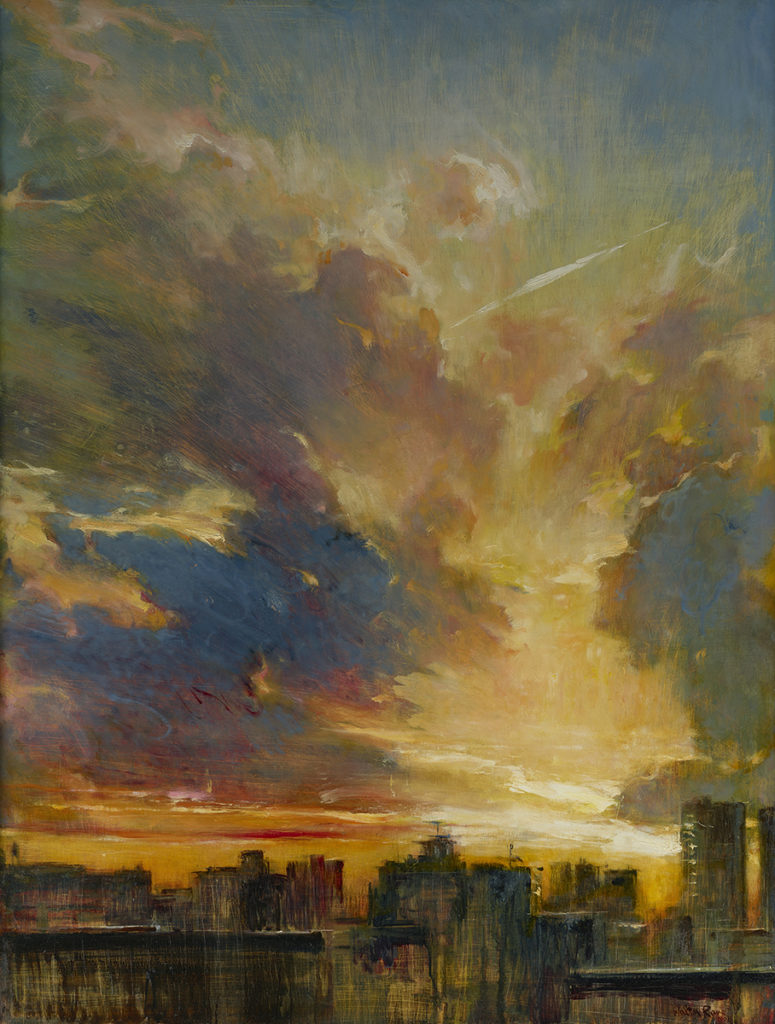
Timothy Wilson, "Sunset," 5 x 7 inches, Oil on panel

From inside the artist’s mind – an article by Timothy Wilson on the art of painting.

BY TIMOTHY WILSON

Constable believed that the Painter does not receive illuminations, but rather makes discoveries. It is the job of the Painter (perhaps one of many) to not just describe what something is, but how something is. In order to do so, we need to experience things to create a visual vocabulary from which we pull. In a moment of pure desperation last year, I took a makeshift easel to the ocean in an attempt to vent my never-ending frustrations in the studio; and suddenly found myself captivated by a form of painting that has completely, and dramatically, affected my entire philosophy and approach to painting and life.

The Importance of Experience

Everything naturally exists in a dimension of time. In a still frame or photograph, everything is equal. Everything is frozen. When we spend time studying an object or setting in person, we are exposed to the different mortalities of things. Everything dies at different rates, so in experiencing something in real life, we are progressing through time (dying) together, and thereby creating a more dynamic bond than just using photographic reference. As Painters, we take that tactile experience and push those unique intricacies to redefine how that Something can exist beyond its literal interpretation. We don’t need to use all of the information we get, just the essentials.

Below is an image that I painted using a porcupine skull I found washed clean in a river, and through a little trial and error I managed to somehow make it a bit more reminiscent of a human. I painted it on rough paper that I shellacked to a panel. I glued canvas to a panel using hide glue, and then traditionally gessoed the canvas. I always find I get a closer bond and perhaps a more interesting image when I spend the extra energy preparing my own supports and materials. There is an added weight to it.

Timothy Wilson, "Schkull," 8.5 x 8.5 inches, Oil on shellacked paper
Timothy Wilson, “Schkull,” 8.5 x 8.5 inches, Oil on shellacked paper

As we interpret visual information into our artwork, the descriptions may get lost or deconstructed into abstraction.

A viewer may not be able to place why they find an image compelling, but if we as Painters are truly able to empathize and relate to the ineffable makeup of our inspiration, whatever image occurs will have the sensory details needed so that the viewer can subconsciously relate to it without hesitation.

In other words: in order to output something unique, we need to first input something of importance. Prior to the past year, one could relate my approach to painting as beating my head against various walls to see which one would give the best dent. It wasn’t the most appealing approach. I locked myself away in the studio at all hours, trying to somehow get whispers of images from the back of my head out onto a canvas. I was a figurative and portrait artist painting without figures and portraits at my aid.

After each failed approach, I would make myself stay in the studio longer, usually half sleeping in the corner instead of going home, so I could get up first thing and try to redeem myself. I was too obsessed, and put too much pressure on having to create. Painting was a completely selfish act that was taking over my life in negative way: it was costing me close relationships and physical well-being. I wasn’t allowing myself to work from reference, and suddenly was giving up sketching altogether. Instead, I would just spend hours looking at a blank canvas before attacking it.

Those attacks usually failed. My work became almost completely gray, almost completely null of tone, and almost completely formless. Although I liked some of what I produced, it just wasn’t worth the mental anguish to produce it. I was trying to subvert Constable’s notion. I was pounding my head trying to make illuminations happen without venturing out to make my own discoveries. I wasn’t even allowing myself the enjoyment of nature because it wasn’t immediately “productive.” For me, studio painting was the only option. “Plein air” painting was something on hospital walls.

Going in to the out

One day something popped; rather, I may have finally bored my head through that wall: I had to get out of my studio. I found myself screwing a camera bracket to the bottom of a tabletop easel and driving out to the ocean to paint. I wasn’t even thinking; I just acted on impulse. I had to get outside and break down the proverbial studio walls. Suddenly, my hesitations and frustrations were gone. I was just standing there smelling the salt air, mushing paint around as waves crashed all around me. I was being productive; I was enjoying something, and being soothed by my surroundings simultaneously: I was finally making a discovery.

The painting was absolutely horrible. I didn’t know what I was doing but I absolutely loved the sensation. I bundled up and went out the next day, and the next. I didn’t care that it was the middle of winter and a blizzard was bearing down. I just had to go out and paint, and experience the sensations of the cold and the ferocity of the storm. The paintings weren’t much better, yet somehow the people I showed the work to could tell that I was enjoying it, and that enjoyment seeped through the paint and helped them enjoy the painting as well.

Almost overnight painting went from a laborious torture to a meditative passion. I now wake up to strap on my gear and set out for something that catches my eye. I go on a hunt, and the hunt is always rewarding.

The Sea

However, of all the elements that inspire, I have found the ocean to be the most intoxicating. It is a purity of expressionistic being. The ocean, like Constable and his skies, is an artistic anomaly. Waves are a climactic complexity of rippling form, color changes, light, shadow, form and volume all surging towards you . . . and in the blink of an eye it’s gone. The form of the wave literally explodes, or sinks into nothingness.

For me, it is an impossible thing to capture. So, just like the still frame that renders everything in equal mortality, I have never tried to “freeze” a particular moment. I just study the movement and try to make my marks as expressive as the movement: capturing the broad sense of scale, tone, color. There are certainly painters who are able to render a scene and still manage to capture the energy of a moment. When done correctly, the result is staggeringly beautiful—something I have yet to do.

Painting the ocean en plein airWhen I approach my larger compositions, rather than try to zero in on details I tend to rely more on reaction. I layer and scumble things, and as moments emerge I try to work with what happens and embrace the textures and slight color variations that I otherwise would never be able to control. The painting below dramatically changed form every time I worked on it, until it finally just felt done.

Timothy Wilson, "Damp Shower," 7.5 x 7.5 inches, Oil on panel
Timothy Wilson, “Damp Shower,” 7.5 x 7.5 inches, Oil on panel

Rather than always employing a brush, I use materials that lend themselves to a more tactile expression. Palette knives, squeegees and ink rollers are all amazing for redefining the mass of an image in a mere pull of the wrist. Sometimes I sprinkle sand in to get the paint a bit more coarse. Sometimes I drop the painting after two hours of working on it and decide to obliterate it and try again. Sometimes, when I forget materials, I forage for natural receptacles to put my mediums in (crab shells and seashells are perfect!).

Whatever happens, it’s just about the experience and pulling from what is around me. It’s not about minutely rendering the gradated crest of a wave, or the terminating shadow on a leaf stem, it’s about trying to find a way of saying “holy shit.”

Just like the egg that needs to be hatched, you need to spend time with a painting to make it fully realized. It doesn’t mean you need to sit on it hour after hour, day after day. In doing so you may squeeze the life out of it. Painters are in control of how much information is imparted. Certainly when you have an innate ability or flair for paint it is enticing to show it, but sometimes less is more. There is something to be said about the confident strokes of Sargent in which an entire feature is defined in a single motion.

Compare that to the panels of Van Eyck in which every detail is rendered. There is no natural focus as everything is microscopic in detail yet within a telescopic all-encompassing composition. Obviously each is masterful. And furthermore, I can never come close to replicating either! But in viewing them in a contemporary setting, one expresses energy through mark making and embraces the viewer, while the other almost takes the energy away from the viewer and combusts itself into a black hole.

I try to walk a balance in the middle when possible. The study below didn’t take very long, and although perhaps viewed from afar it might capture the scene, when you get up close it all falls apart into little energetic bits that somehow emulate details.

Timothy Wilson, "Sea Finale," 7.5 x 10 inches, Oil on paper on panel
Timothy Wilson, “Sea Finale,” 7.5 x 10 inches, Oil on paper on panel

My entire philosophy has been changed by painting on location—the experience of place, the sensation of direct painting and having a confidence to venture out beyond the dimly lit studio and embrace abstraction, color, and light. My daily studies have become a sense of calm for me, an essential meditation that helps me focus and think. A year earlier I was living in fear of making art. I now spend most of my days yearning to get into the studio to work on larger compositions, but can’t seem to stop painting out in the wild, making discoveries. Constable was right.

Learn more about Timothy at: www.timothypowerswilson.com


> Visit EricRhoads.com to learn about more opportunities for artists and art collectors, including retreats, international art trips, art conventions, and more.

> Sign up to receive Fine Art Today, our free weekly e-newsletter

> Subscribe to Fine Art Connoisseur magazine, so you never miss an issue

Model, Painter, Rebel

0

Suzanne Valadon: Model, Painter, Rebel
Philadelphia, Pennsylvania
Barnes Foundation
barnesfoundation.org
through January 9, 2022

Suzanne Valadon (1865–1938), "Nude Sitting on a Sofa," 1916, oil on canvas, 32 x 23 3/4 in., Weisman & Michel Collection © 2021 Artists Rights Society (ARS), New York
Suzanne Valadon (1865–1938), “Nude Sitting on a Sofa,” 1916, oil on canvas, 32 x 23 3/4 in., Weisman & Michel Collection © 2021 Artists Rights Society
(ARS), New York

At the Barnes Foundation, “Suzanne Valadon: Model, Painter, Rebel” is the first exhibition dedicated to this fascinating French artist at a major U.S. institution.

Neglected and poor in childhood, she posed for such talents as Renoir and Toulouse-Lautrec in her teens, when Degas praised her draftsmanship.

Entirely self-taught, she ultimately earned a living from selling art — extremely rare for a woman of her era.

Valadon painted daring, unapologetic portraits and nudes with bold colors and decisive lines, yet her second marriage, to a younger man, was met with disapproval and her fame was eclipsed by that of her artist son, Maurice Utrillo.

Curated by Nancy Ireson, this show features 55 paintings, drawings, and prints from all stages of Valadon’s career and offers an intriguing juxtaposition with the male-made art of her time elsewhere at the Barnes.


> Visit EricRhoads.com to learn about more opportunities for artists and art collectors, including retreats, international art trips, art conventions, and more.

> Sign up to receive Fine Art Today, our free weekly e-newsletter

> Subscribe to Fine Art Connoisseur magazine, so you never miss an issue

Art for a University City

0
Initial B: The Trinity
Nicolò da Bologna (documented 1349–1403), "The Trinity (in Initial B)," c. 1392–1402, tempera, gold, and ink on parchment (cutting from a choirbook), 14 x 12 in., J. Paul Getty Museum, Los Angeles

Medieval Bologna: Art for a University City
Frist Art Museum, Nashville, Tennessee
fristartmuseum.org
Through January 30, 2022

The Frist Art Museum has organized “Medieval Bologna: Art for a University City,” the first major U.S. museum exhibition to focus on medieval art made in the prosperous northern Italian city of Bologna between 1230 and 1400.

Senior curator Trinita Kennedy has selected nearly 70 illuminated manuscripts, paintings, and sculptures, borrowed primarily from American libraries, museums, and private collections.

The project is accompanied by a 256-page catalogue co-published with Paul Holberton (London).


> Visit EricRhoads.com to learn about more opportunities for artists and art collectors, including retreats, international art trips, art conventions, and more.

> Sign up to receive Fine Art Today, our free weekly e-newsletter

> Subscribe to Fine Art Connoisseur magazine, so you never miss an issue

Featured Artwork: Becky Pashia presented by the Celebration of Fine Art in Scottsdale, AZ

0
Oil painting of a golden sky over the desert

Desert Gold
By Becky Pashia
48 x 60 in.
Oil on canvas
$7,100

Becky Pashia’s paintings capture the emotion and the atmosphere in a way that draws the viewer in. Her modern impressionistic style has an “atmospheric” feel to it. She uses large brushes and palette knives to move the color across the canvas, laying the background atmosphere in first and then honing in on the focal point. She says, “I love painting atmosphere, and I love using color to convey emotion. I try to paint soul and light into every one of my paintings, to connect with the viewer in a positive way.”

Rebecca’s work is currently on display, along with 100 other artists, at the Celebration of Fine Art in Scottsdale, Arizona, January 15 through March 27, 2022. Contact us at 480-443-7695 or [email protected].

View more of Rebecca’s work at https://celebrateart.com/store/becky-pashia

An Art Nouveau Visionary

0

Alphonse Mucha: Art Nouveau Visionary
Raleigh, NC
ncartmuseum.org
through January 23, 2022

Art Nouveau lithograph
Alphonse Mucha (1860–1939), “Daydream (Rêverie),” 1897, color lithograph on paper, 28 5/8 x 21 3/4 in., Mucha Trust Collection

The North Carolina Museum of Art is the latest venue for the touring exhibition “Alphonse Mucha: Art Nouveau Visionary.”

Using some 100 objects loaned by the Mucha Trust, including works owned by his descendants, it explores how the Czech-born artist became the toast of Paris circa 1900.

Because Paris was then capital of the global art world, he was renowned everywhere for his graphic work, such as posters advertising the actress Sarah Bernhardt and other graceful women, all deploying the sinuous forms, organic lines, and muted colors that became synonymous with the decorative Art Nouveau style.

Later in life, Mucha made art that advanced the effort to create an independent Czechoslovak nation. For more on Mucha’s continuing influence, see the November/December 2021 issue of Fine Art Connoisseur.


> Visit EricRhoads.com to learn about more opportunities for artists and art collectors, including retreats, international art trips, art conventions, and more.

> Sign up to receive Fine Art Today, our free weekly e-newsletter

> Subscribe to Fine Art Connoisseur magazine, so you never miss an issue

Icons of Nature and History

0
David Driskell (1931–2020), "Woman with Flowers"
David Driskell (1931–2020), "Woman with Flowers," 1972, oil and collage on canvas, 37 1/2 x 38 1/2 in., Art Bridges Foundation, Bentonville, Arkansas

David Driskell: Icons of Nature & History
Washington, D.C.
phillipscollection.org
through January 9, 2022

The Phillips Collection is presenting “David Driskell: Icons of Nature & History,” the first extensive exhibition focused on the art of David Driskell (1931–2020), who served as a trustee at the museum until 2019.

It features more than 50 paintings, collages, prints, and drawings he created when he wasn’t busy being an influential art historian, curator, and educator.

Organized by the High Museum of Art (Atlanta) and Portland Museum of Art (Maine), the show was coordinated at the Phillips by curator Adrienne L. Childs, who was — like many Black art professionals —mentored by Driskell.

His art is most closely associated with the medium of collage and the incorporation of African forms, though he explored many aesthetic avenues during seven decades of work.


> Visit EricRhoads.com to learn about more opportunities for artists and art collectors, including retreats, international art trips, art conventions, and more.

> Sign up to receive Fine Art Today, our free weekly e-newsletter

> Subscribe to Fine Art Connoisseur magazine, so you never miss an issue

10 Art World Predictions for 2022

0

Though my crystal ball is cracked and I’ve shaved my Nostradamus beard, I have some thoughts on 2022 from the perspective of an art publisher who is in constant dialogue with artists, collectors, galleries, and art experts.

Everyone is in agreement that all bets are off for predictions in the event of another massive lockdown or spread of the virus, but we’re observing that people are starting to normalize and gain confidence in being out and about.

Money in the Marketplace

Though there will always be people who never seem to have enough money, it appears that money has become a secondary issue for some others. Most people remained employed, but the employed were not traveling or dining out, meaning they may have a significant amount of disposable income. Many who were business owners received PPP benefits, and others received extra compensation from unemployment.

During the lockdowns we saw a substantial increase in home upgrades, remodeling, painting, redecorating, and art buying. One can only stare at the walls for so long before needing something new to hang on them. Additionally, a substantial number of people have chosen not to commute and now work from home, so a lot of love and care is going into home office spaces.

Tax Benefits

For 2021 and 2022, those who own businesses can depreciate 100% of the cost of tangible business goods, which means that items that would normally be depreciated over their lifetime of several years can be depreciated this year. This tax law gift happens only this year and next, though this year has more favorable terms. Galleries are pointing out these benefits to people who are decorating offices or home offices — it can add up to a serious reduction in actual cost. (Check with your tax specialist for details; I do not give tax advice.) This should also apply to tangible items for art studios like easels, furniture, etc. Also note that gifting benefits can apply to art if you have a collection to gradually leave to your heirs over time.

Online Buying

Though most of us were up to speed with online buying even before the pandemic, the rest of the world, much of which was not up to speed, has now caught up. After being forced to buy essentials online, a full generation of non-online buyers are now buying online and getting more comfortable with substantial online purchases. Galleries and artists not offering online buying should take note.

Also, online buyers do not suffer inconveniences like “e-mail me for the price,” or “price upon request.” You can build and buy a Tesla online without ever talking to a human, and the same should be true for art. We’ve seen galleries making sales of highly expensive paintings without ever speaking with the buyer.

Christmas Sales

Two issues dominate the holiday giving market: Many families will be together for the first time in a year or two, so many are gifting at higher levels. But at the same time, last-minute buyers may be left without options as they enter stores, even online stores, and find limited choices or bare shelves. Galleries and artists would do well to point this out and remain highly visible throughout the season, stressing last-minute shipping.

Impacts of Inflation

People who are sitting on a lot of cash are seeking places to put that cash where it will remain valuable in spite of inflation. Housing and real estate are always popular, but art has also historically been a hedge against inflation. Investors seek assets that go up in value, protect their cash, and can easily be liquidated. Historic art and investable art are already seeing an uptick in sales.

Again, a provision in the 2020-2021 bonus tax code is that tangible assets can be depreciated 100% in the first year. That means office furniture, equipment, and art may be acquired for considerably less cash investment once the bonuses are used. (Check with your tax professional.) This also makes a case for art sales as a hedge, at a discounted (to the buyer) depreciation rate.

Migration

A massive migration is taking place across America. Pandemic fears, not wanting to be locked down, social concerns regarding the safety of communities, and higher taxes have resulted in a massive migration out of bigger cities into small towns and into states like Texas and Florida. New York City has been hit the hardest, with city dwellers moving to surrounding counties and to Florida. A migration away from California is also occurring — or, at least, away from the big cities. This has brought rapidly rising real estate prices as populations have doubled in some Florida and Texas communities, as well as higher housing costs in previously reasonable small towns. Moving companies are backed up for months and storage units aren’t available, meaning new furnishings for many (though supply chain issues are ongoing). While some maintain other homes, many people are establishing residency in income tax zones like Florida. More time in second homes — making them primary homes — will also mean more decorating.

The New York Times reported that a significant number of restaurants in New York City have been forced to close because of pandemic restrictions, and some of the better known restaurants have relocated to places like Miami and Palm Beach, following their customers. Will New York galleries be the next to follow?

New homes often result in new paintings purchased, and second homes often mean new artwork in a different style. For instance, more colorful artwork might be desired when moving into a second home in Florida. Can artists and galleries find a way to tap new residents in growing communities? We think so.

Realism Growth

Our magazine Fine Art Connoisseur has always been a standard bearer for realism, the resurgence of realism, and a solid future for young realist artists. Recent evidence indicates that realism may see its boom years sooner than expected because there is ample inventory available with the influx of young, talented realist artists. Additionally, some highly influential modern art dealers have started to show realism as something new, representing top realists and driving prices up. If this continues it should be a financial boon for realist painters and sculptors.

Plein Air Events

Prior to the lockdowns, the plein air world was booming. Tens of thousands of artists had started painting outdoors as a hobby and thousands more followed artists as collectors at plein air events. Sadly, lockdowns resulted in the loss of a few shows, and of course hundreds of shows were forced to cancel for at least a year. Early reports indicate event attendance is starting to return to healthy levels, and it is expected that once communities begin to feel safer about getting out, attendance will be at an all-time high, as will sales. This should mean a healthy year for plein air painters and events.

Gallery Survival

The pandemic proved to be a challenge for some gallery owners and death for others, but was a blessing for many. We must not forget that many galleries have the disadvantages of the high costs of rent, electricity, staff, etc. It appears COVID flushed out those whose survival was precarious. In some cases closures simply meant gallery owners retiring earlier than they had planned. Others were driven out of business by high rents and low sales. Those who survived were the ones who did not stop marketing, who kept active and visible, and who looked for ways to stimulate business via phone and online sales. Of course, further lockdowns may impact businesses, but we’re seeing some galleries in discussions about downsizing physical spaces and relying more on online and phone sales strategies. Others are considering relocation, in many cases for the same lifestyle-driven reasons buyers have left bigger cities.

Based on the high-end modern interest in realism, I suspect more galleries will dip their toes in the water and follow suit until it’s a verifiable trend (though others will wait till it’s too late to jump in).

The predicted end of galleries has not occurred, and does not appear to be on the way. Their role and approach may change or adjust, and, as always, galleries will evolve.

Art Workshops

COVID created a necessary pivot for those doing live workshops. Many shifted to online training via Zoom and other platforms and managed to survive and in some cases thrive. Though the adjustment required new technical proficiency, most people quickly figured it out.

The biggest concern we’ve heard is that the work involved in producing and planning training, and dealing with customers and payments, has resulted in unexpected headaches and time issues. Most artists, when calculating their hourly rate for time spent on online workshops, realized they were not being paid well. And though online was a good alternative to produce income during COVID, most feel it won’t be fruitful moving forward when time is tighter. Many have suggested that they intend to move away from or reduce the amount of personal online teaching that eats into valuable painting time.

Most artists have started returning to live in-person workshops or are eager to return, and there are strong indicators that attendance will be strong and that people are even willing to travel. We had a large crowd at both our June and October events, though we were probably off about 20 percent overall based on COVID fears. We seem to be coming out of that; for instance, early indications are making us believe our May Plein Air Convention & Expo will be sold out before February. Our hotel is already suggesting it may sell out sooner. This is great news, indicating that people are returning to life before COVID.

Because we discovered many people are unable to attend live events (for reasons other than COVID), we plan to continue our online training weeks like Watercolor Live in January, PleinAir Live in March, Pastel Live in August, and Realism Live in November.

A Strong Outlook

Most artists and galleries I know were worried that COVID lockdowns would kill their businesses, but the opposite has been true: Many had their best year in a decade. Though the level of spending on art has already declined slightly from the peak, it appears it will remain high for at least another year or so. Those who thrive will be those who continue to stay visible to art buyers and collectors through publications and websites. Social media has also offered a big boost, with more social art sales happening (though fewer than might have been expected). Whether that will continue remains to be seen, but those social outlets that have accumulated large, curated audiences appear to still be the most important places to be seen.

2022 looks strong. Of course, all bets are off if further lockdowns are required. Even if that happens, there will remain pockets where things are stronger or weaker depending on regional or local rules. Overall the prognosis is solid, though artists and galleries may wish to focus their efforts on regions where fewer lockdowns are occurring, or focus on getting in front of locked-down families who are in need of new things to make the walls they are staring at more bearable. In both cases, artists and galleries, they’ll need to adjust their 2022 plans and marketing to reflect these changes.

About the Author: 

B. Eric Rhoads is founder and publisher of Fine Art Connoisseur and PleinAir Magazines. He is the author of “Make More Money Selling Your Art: Proven Methods for Turning Your Passion into Profit.” He is the founder and CEO of Streamline, a company that produces art events, artist retreats, and art instruction videos. He is an artist whose work is exhibited in three galleries, and is the father of college-age triplets. He writes a weekly blog called Sunday Coffee and writes in each issue of the magazines and for ArtMarketing.com.

WEEKLY NEWS FROM THE ART WORLD

Fill your mind with useful art stories, the latest trends, upcoming art shows, top artists, and more. Subscribe to Fine Art Today, from the publishers of Fine Art Connoisseur magazine.

  • This field is for validation purposes and should be left unchanged.