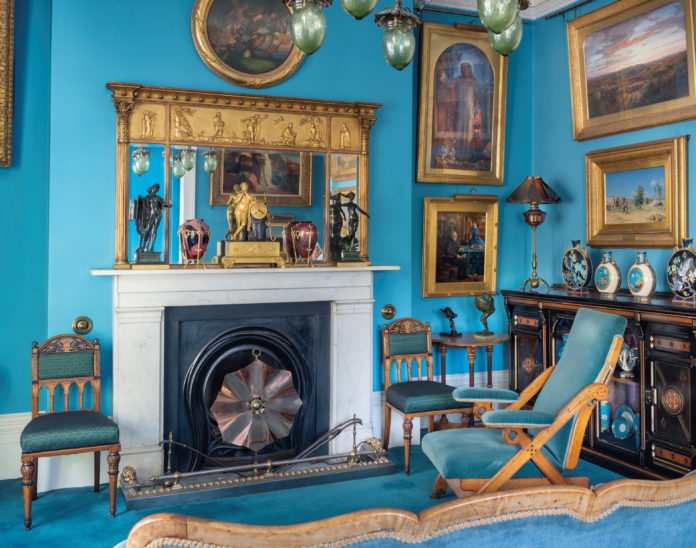
The blue drawing room, with Edward Robert Hughes’ contemporary studio version of William Holman Hunt’s masterpiece
"The Light of the World" hanging to the right of the chimneypiece (estimate: £60,000-100,000).
A picture of 19th century eclecticism, the room’s furnishings include reformed gothic oak furniture and Minton porcelain alongside examples of the ‘New Sculpture’ and avant-garde metalware by W. A. S. Benson.
Fine Art Collection on Auction > Christie’s will offer “An Aesthetic Odyssey ~ The Peter Rose and Albert Gallichan Collection” in a live auction on September 30, 2021. The couple were pioneering collectors of 19th Century fine and decorative arts and this unique collection was a shared passion assembled over the course of a lifetime from the 1950s onwards.
More from Christie’s about the Art Collection:
The sale comprises approximately 300 lots of British decorative arts and paintings spanning the major movements of the later 19th century. Highly regarded and recognised as academically important, a number of bequests of both decorative and fine arts from the collection have been accepted by museums including The British Museum and The Ashmolean.
This sale provides the market with a unique microcosm of the best of the period. Albert Gallichan died in 2001; the sale takes place now following the death of Peter Rose last year at the age of ninety-three.
Ensuring that the scholarly legacy of their life’s work lives on, the proceeds from the sale – which is expected to realise in excess of £1 million, with estimates starting from £500 – will benefit The Albert Dawson Educational Trust. Established in 2003, using the middle names of the two collectors for its title, the trust promotes and supports the study of 19th century English fine and decorative arts. The increased resources raised will be used to develop a more substantial programme of grants and to enable the trust to offer other support from 2022.
For more information on the art collection sale, including the e-catalogue when it is live, please visit www.christies.com/aesthetic-odyssey.
> Visit EricRhoads.com to learn about more opportunities for artists and art collectors, including retreats, international art trips, art conventions, and more.
> Sign up to receive Fine Art Today, our free weekly e-newsletter
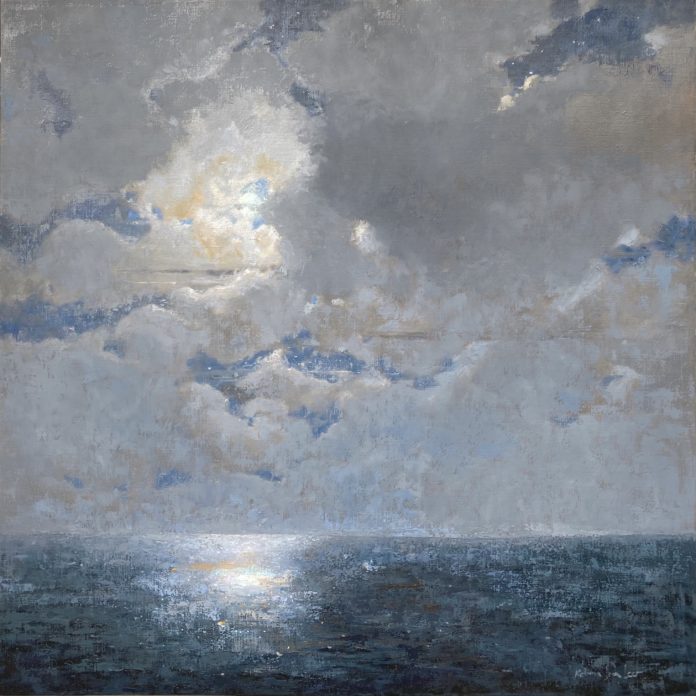
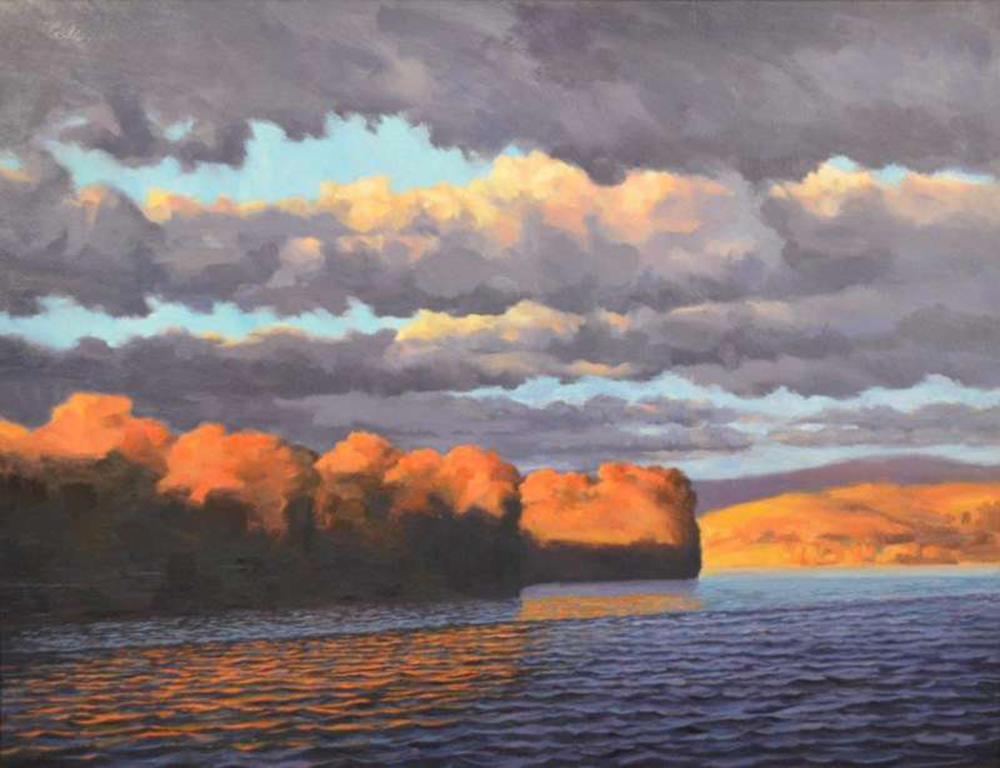
Rebecca Leer, "Be Still," 2021, Oil on Canvas, 30 x 30 in., Studio from plein air sketches
Oil Paintings On View > Award-winning painter Rebecca Leer’s upcoming show “Ascent: A Perspective on Loss to Transformation” is the culmination of over 15 years and 60 pieces of still lifes, landscapes and seascapes.
The exhibit encapsulates Leer’s journey following the passing of Rob Kelley, the man with whom she had spent 24 years building a life. From the shock of learning of her husband’s pancreatic cancer to the acceptance that the illness had taken his life, Leer’s art explores how grief and loss can transform us.
“One of the hardest things about a loss is not only the event itself, but the loss of all that could have been,” Leer says. “As I was going through all of his belongings, some items were painfully meaningful while others were more incidental characters in a man’s life. Painting these works provided me a portal to healing; I could feel beyond what was directly in front of me to the sacred.”
Leer’s new exhibit, “Ascent – A Perspective on Loss to Transformation,” runs through September 29, 2021 at the Ridgewood Art Institute (New Jersey). The exhibition will raise funds for Lustgarten Foundation, the largest private funder of pancreatic cancer research.
Additional Oil Paintings by Rebecca Leer:
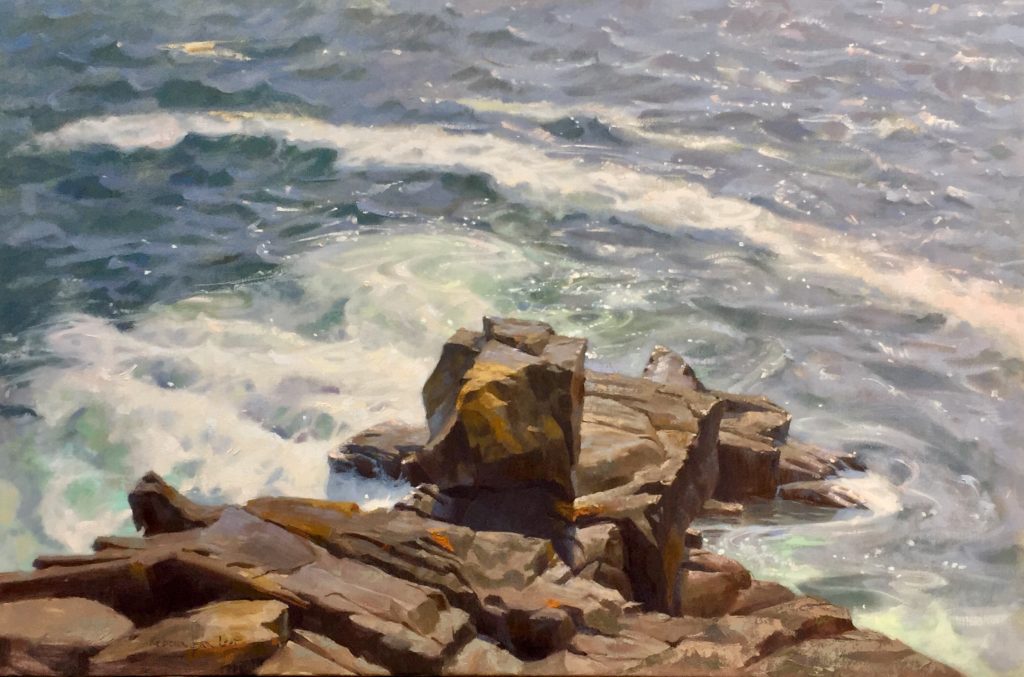
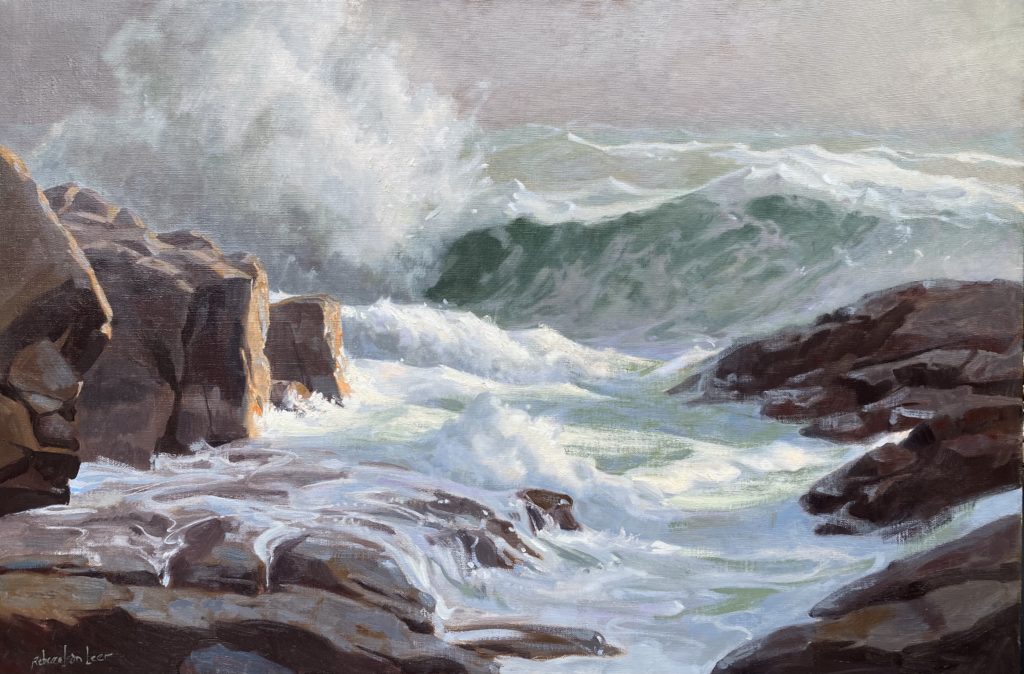
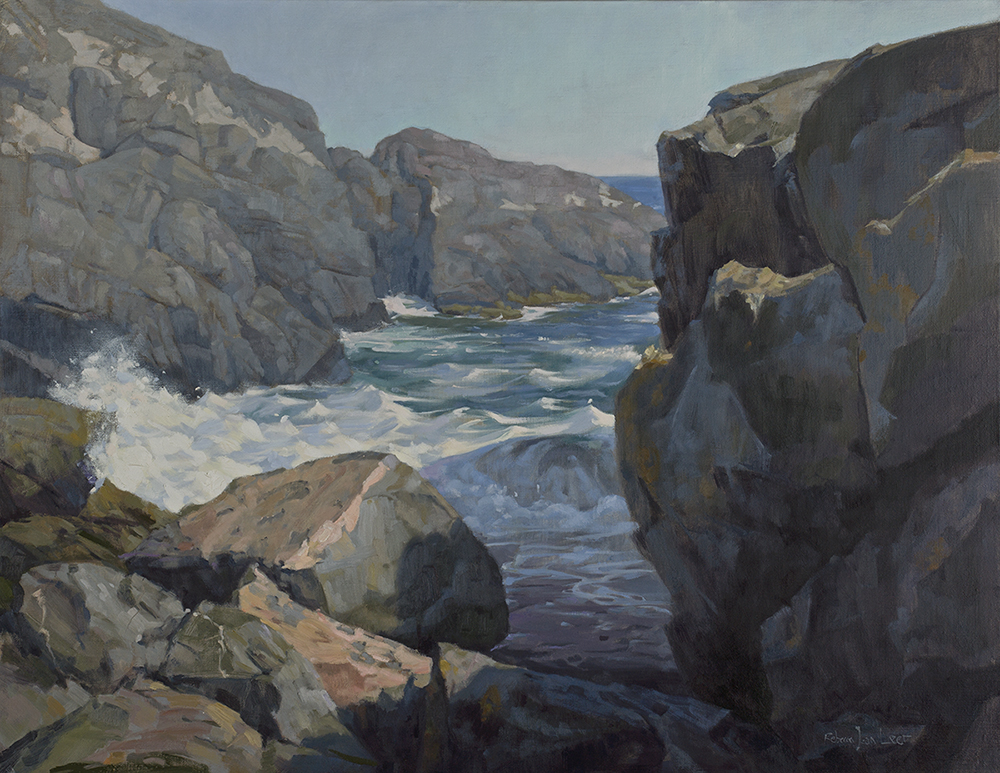
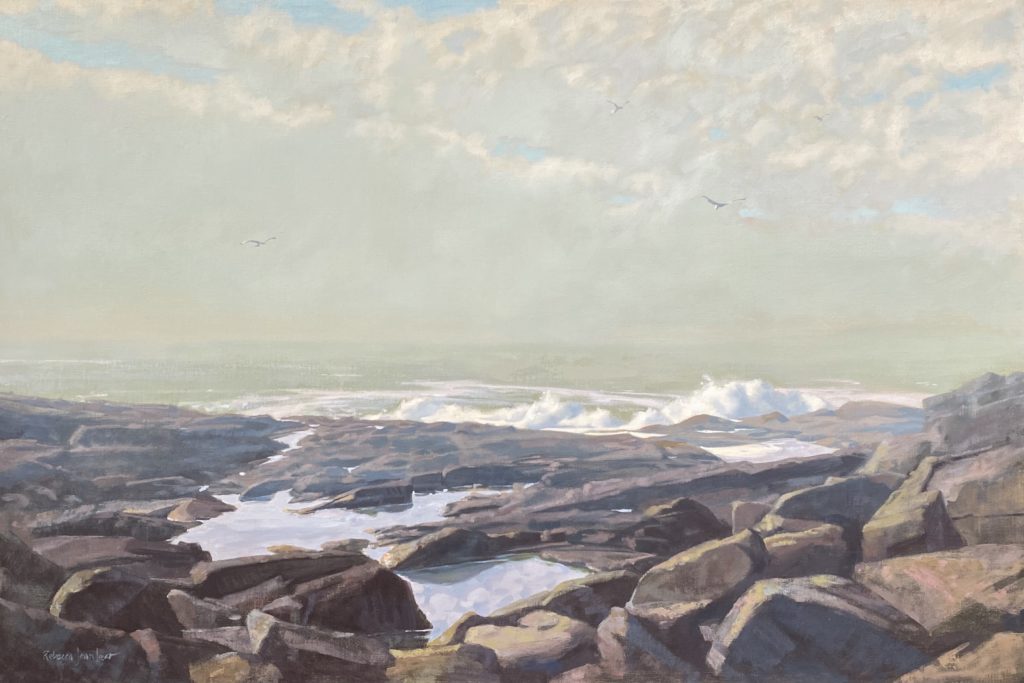
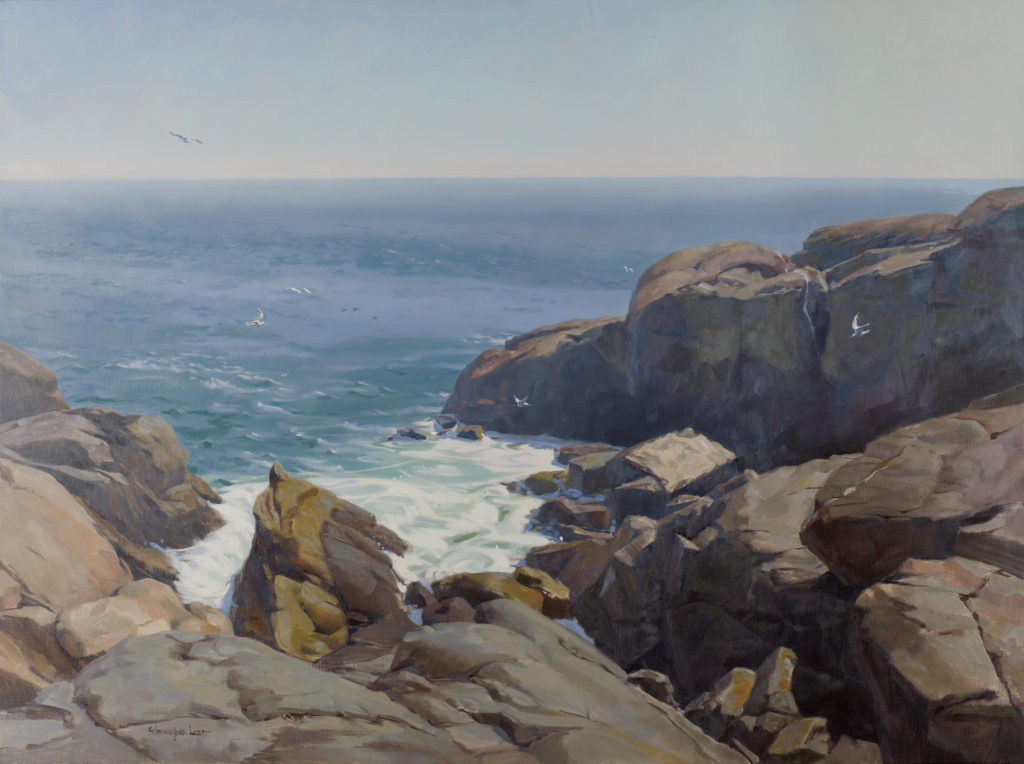
Rebecca Leer, “From the Cliff,” 2019, Oil on Canvas, 24 x 36 in., Studio from plein air sketchesRebecca Leer, “Tumult,” 2021, 20 x 30 in., Oil on Canvas, Studio from plein air sketchesRebecca Leer, “Rocky Cove,” 2018, 24 x 30 in., Oil on Canvas, Studio from plein air sketchesRebecca Leer, “Quietude,” 2021, 24 x 36 in., Oil on Canvas, Studio from plein air sketchesRebecca Leer, “Peaceful Updraft,” 2018, 36 x 48, Oil on Canvas, Studio from plein air sketches
> Visit EricRhoads.com to learn about more opportunities for artists and art collectors, including retreats, international art trips, art conventions, and more.
> Sign up to receive Fine Art Today, our free weekly e-newsletter
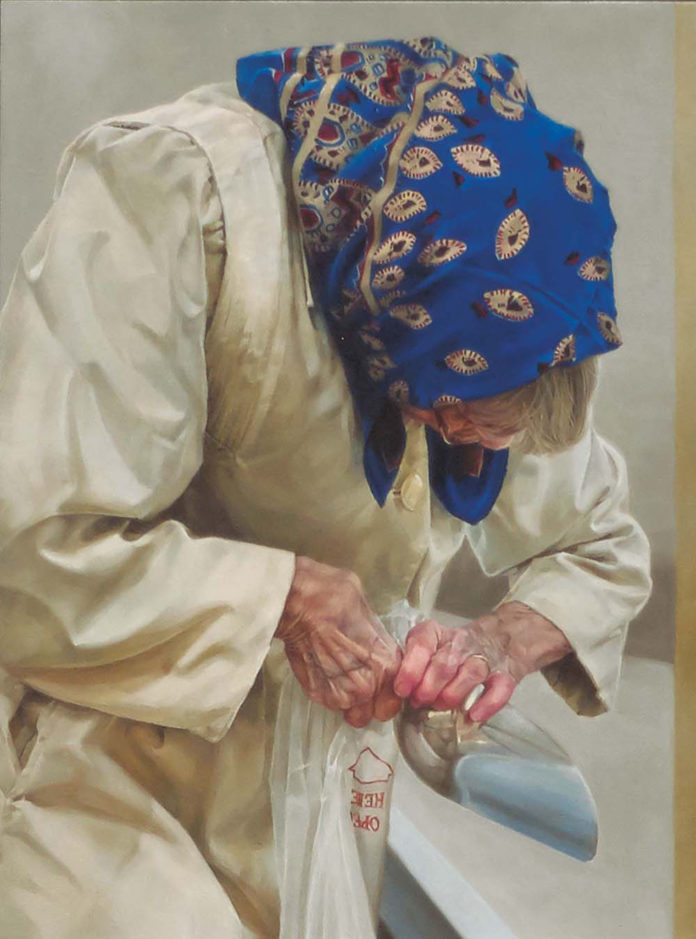
Blue Scarf II
By Amy Werntz
Oil, 2020
16 x 12 inches
$5,200
Amy Werntz is obsessed with time, of the fear of its passing to the feeling of not living in the correct moment. This passion plays out in her art, explored through translated vintage black and white photographs that bring forward the past to her current work, which seeks to capture the seemingly insignificant moments of everyday life. Her meticulously crafted and highly realistic figures are isolated from the environment, they are the only story and their features, gestures, and clothing and props offer the only cues to narrative. Wernzt leaves the viewer to fill in the details from their own life experience, to create a story from their history and perhaps to see the importance of every life in a society often too fascinated with the lure of youth.
Blue Scarf II is a stunningly rendered image of a woman struggling with the everyday tasks of life. This is a woman we know, the weight of years heavy on her frame. With her body and head shrouded in coat and scarf, her hands are left to communicate on her behalf. Wrapped in a struggle with a plastic bag, her hands are gorgeously and painstakingly detailed, bent and discolored by age with the veins and swollen joints clearly evident. Sympathetic and emphatic, this image reminds us of the passing of time and frailty and resilience of life.
Werntz is a practicing painter and interior designer, with a BFA in interior design from the Art Institute of Dallas, Texas. Her paintings have been exhibited widely in Texas and in group shows in Wausau, Wisconsin and Oklahoma City, Oklahoma. She has received recognition and numerous awards for her portraits from the Portrait Society of America and took first place in the Richeson 75 International Art Competition Portrait/Figure category in 2020.
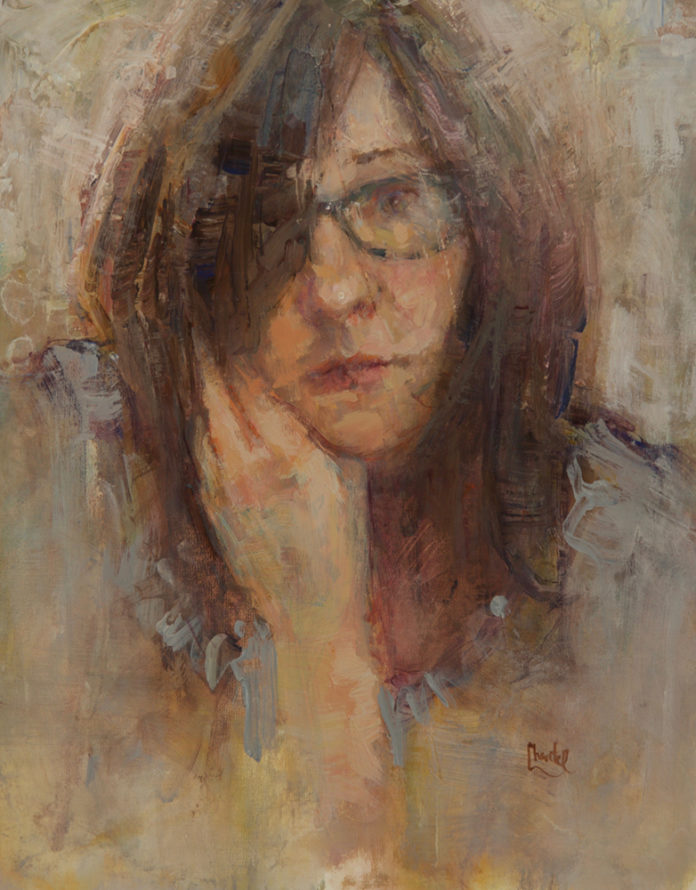
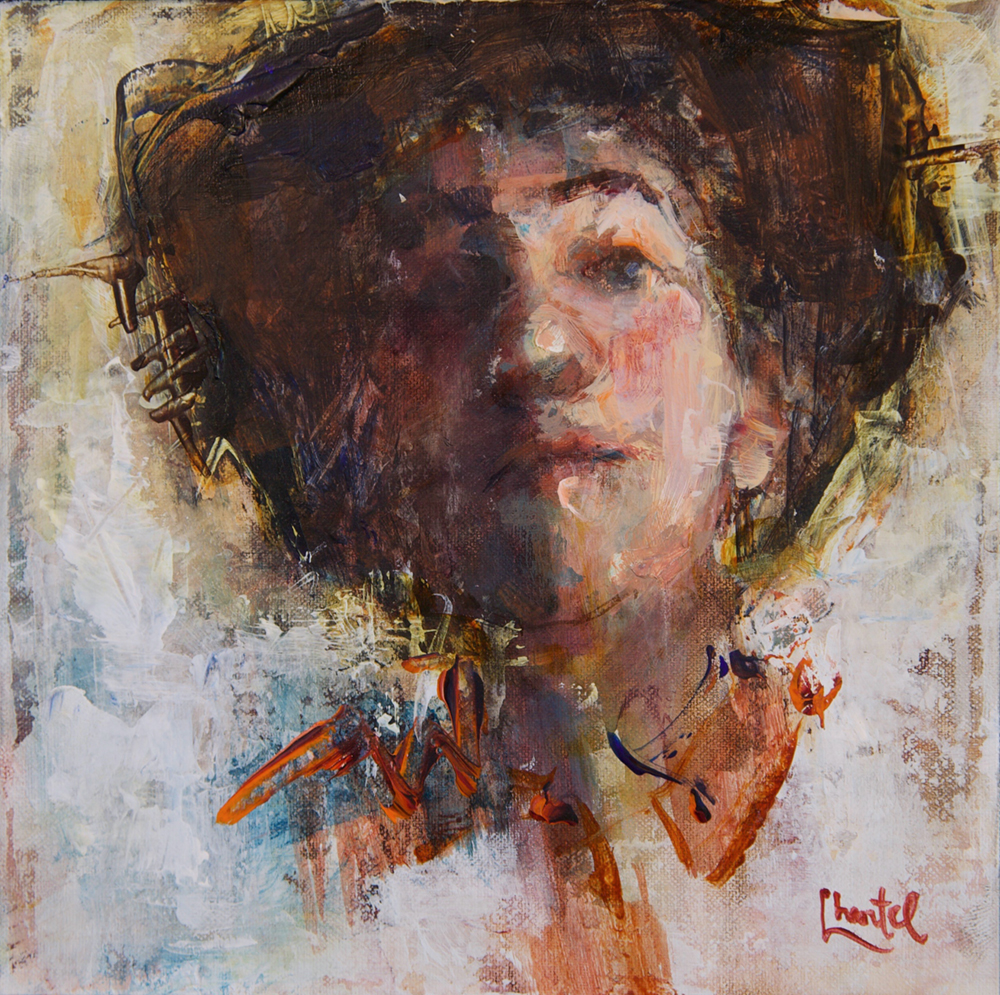
Chantel Barber, “Contemplating a Self-Portrait,” 14 x 11 in., acrylic, 2021
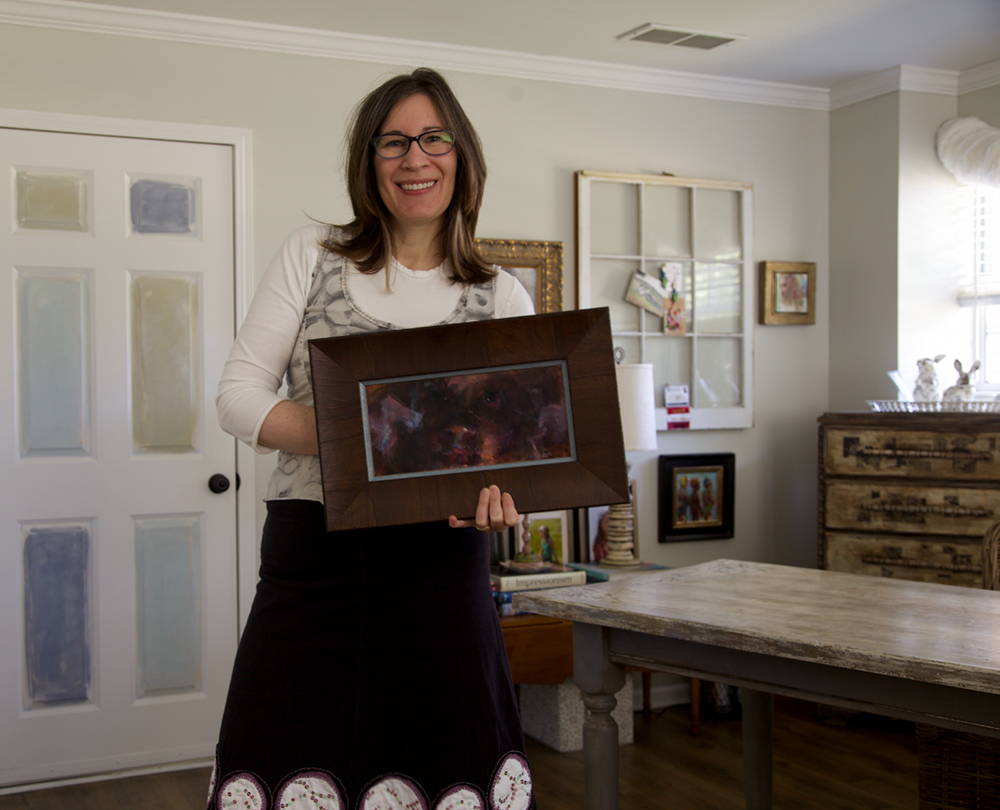
Chantel in the studio
How did you get started and then develop your career?
Chantel Barber: I started drawing at an early age and was mentored by a local San Diego artist when I was eleven. My mentor, who must have been in her seventies, introduced me to a world I had never known. I began subscribing to art magazines and buying art books. She taught me to paint in oil, and she encouraged the desire I already had in me, to paint people.
I continued to study and experiment with art in and out of college while living in such diverse places as Newport, Rhode Island, Keflavik, Iceland, and El Paso, Texas. While enrolled in a college art course, a fellow student introduced me to acrylic paints, and I soon fell in love with the medium but found it to be dominated by abstract styles. My first love was portraiture for which I found little advice. In perfecting my skills as an acrylic portrait artist, I continued to learn from professional oil painters and translated their teachings into acrylic techniques.
In 2006, I opened my professional art business in Bartlett, Tennessee. For the past 15 years I have continued to benefit from workshops and demonstrations with outstanding artists including Dawn Whitelaw, Rose Frantzen, and Marc Hanson. I work daily on commissions and create for my collectors. Periodically, I teach private workshops in my studio and throughout the United States and Canada.
How do you describe success?
There is a story about the explorer Ernest Shackleton, who placed an ad in the newspaper to recruit men for his Endurance expedition. It read as follows:
“Men wanted for hazardous journey. Low wages, bitter cold, long hours of complete darkness. Safe return doubtful. Honor and recognition in event of success.”
I think this statement metaphorically describes the life of a professional artist, especially if the artist desires to create art that captures the human spirit in a non-traditional medium, like acrylic. Every artist’s journey is different. Some may achieve honor and recognition early. But this may rob them of adventure and growth that happens when the journey is hazardous and difficult.
I’ve learned that too much safety can mean stagnation. Danger stretches the heart and builds maturity and character through the times of rejection. To be a success, an artist must survive. Failures faced make successes all the sweeter! And success for me is growing stronger all the while creating work that enriches my life as well as others.
How do you find inspiration?
Observing people. Everywhere I go I am inspired by people around me. When I went to the Grand Canyon, I was more interested in the people than the view. I can’t help it.
Who do you collect?
So far, I have paintings by Olga Krimon, Dawn Whitelaw, Kevin Beilfuss, David Boyd Jr, Johanna Spinks, Jenny Buckner, Rose Frantzen, Kelli Folsom, Elena Katsyura, Adam Clague, Susan Hotard, Suzie Baker, Anne Blair Brown, Kyle Buckland, and Kim VanDerHoek. Collecting art enriches my life! These paintings bring beauty and inspiration, and they improve my own work because I am always studying and learning from them.
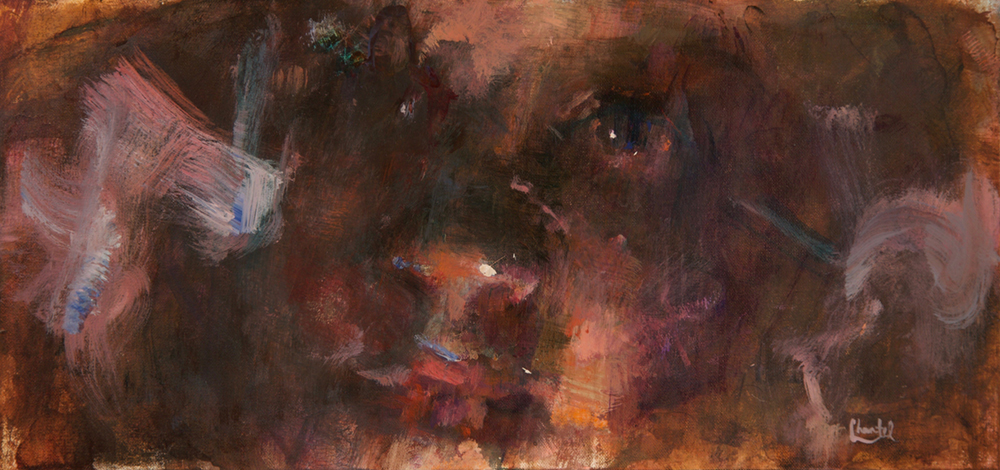
Chantel Barber, “Hope While in Darkness,” 6 x 12 in., acrylic, 2021Chantel Barber, “Courageous Chantel,” 16 x 20 in., acrylic, 2021Chantel Barber, “She Wore the Sky,” 18 x 14 in., acrylic, 2021Chantel Barber, “Brown Hat Red Tie,” 6 x 6 in., acrylic, 2020
As part of our effort to continue to help artists and art galleries thrive, we’re proud to bring you this week’s “Virtual Gallery Walk.” Browse the artwork below and click the image itself to learn more about it, including how to contact the gallery.
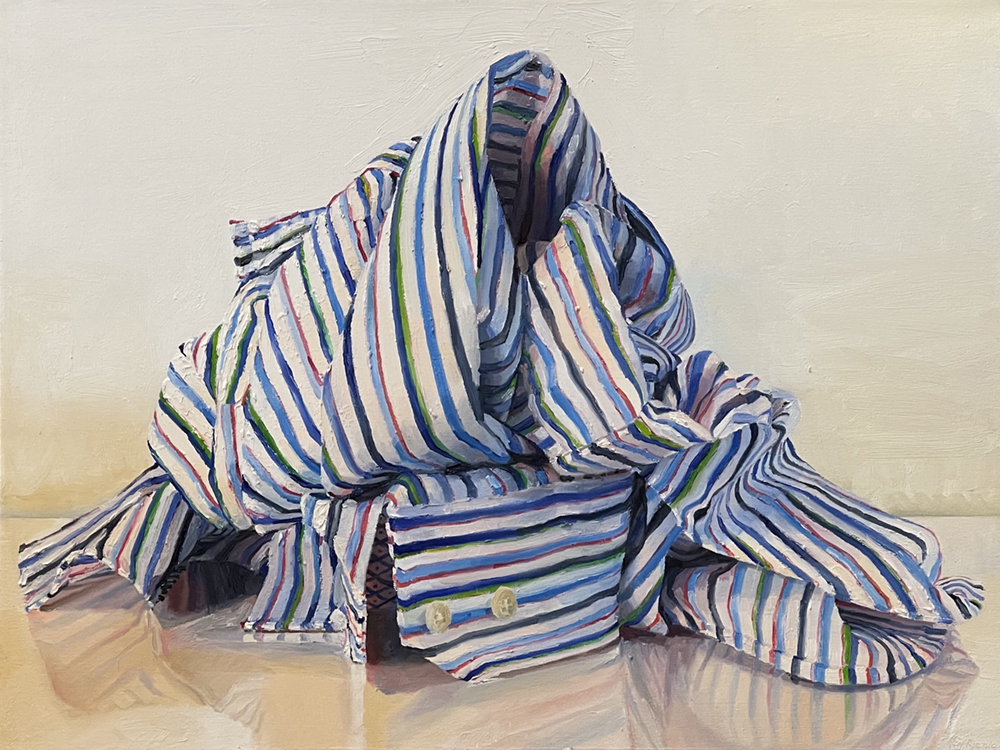
Stripes by Ray Kleinlein, Oil, 24 x 32 in.; Anderson Fine Art Gallery
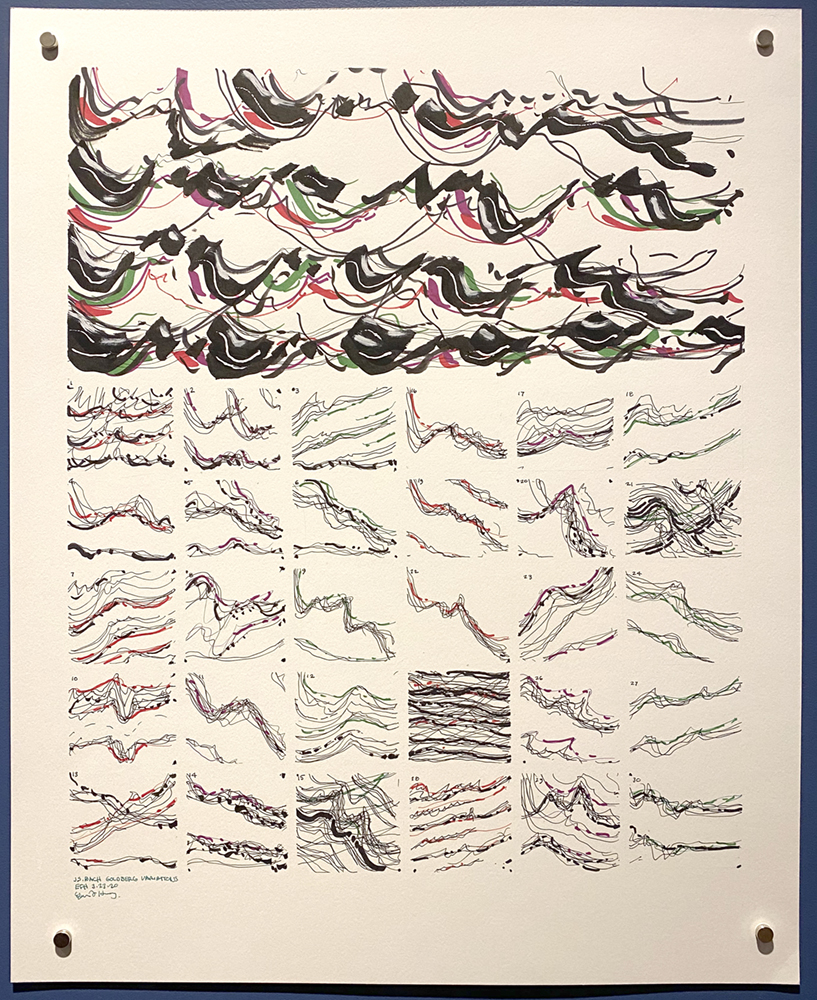
J.S. Bach, Goldberg Variations, 2020 by Abie Harris (American, 1934), Acrylic, ink, and marker on paper, Emergent Landscapes: Mountains, Music, & Improvisation in the Paintings of Abie Harris, August 24, 2021 – January 15, 2022; Blowing Rock Art & History Museum
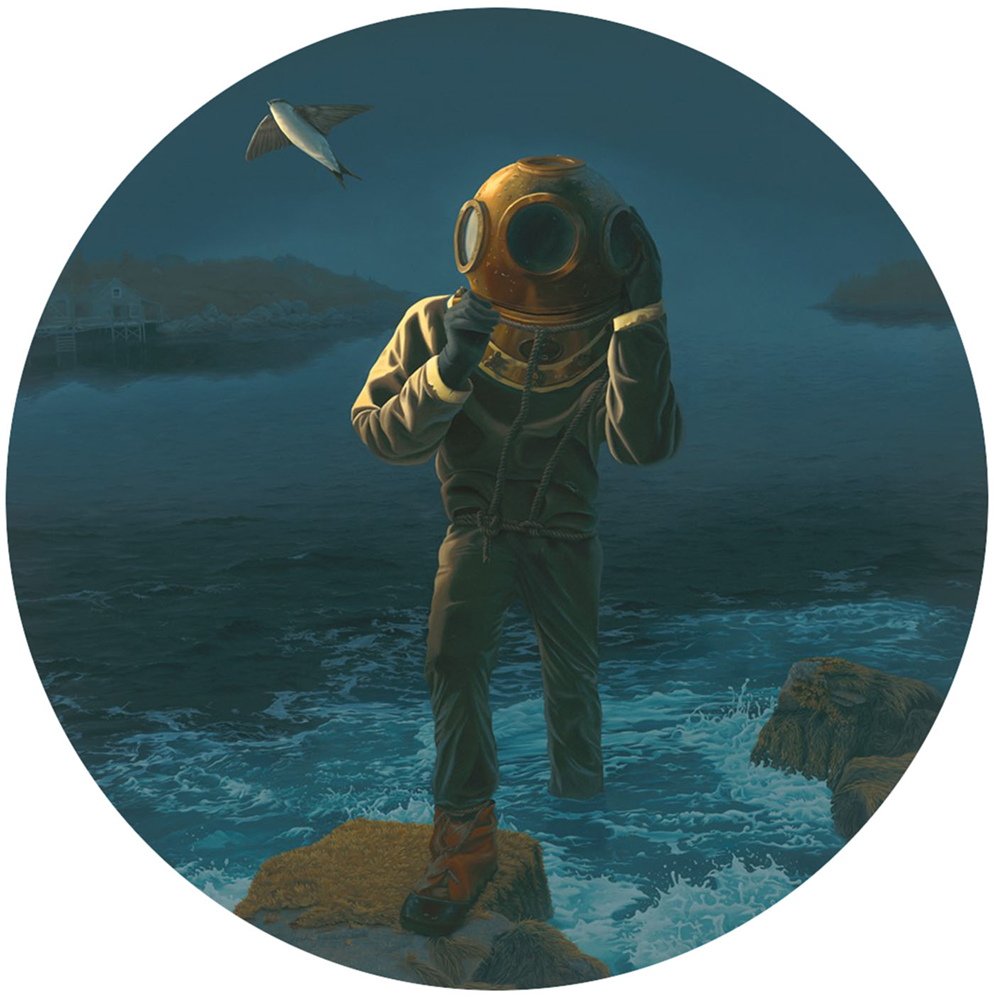
Ahoy Sleeper by Josh Tiessen, Oil on panel, 45 x 45 x 2 in., Signed; Rehs Contemporary
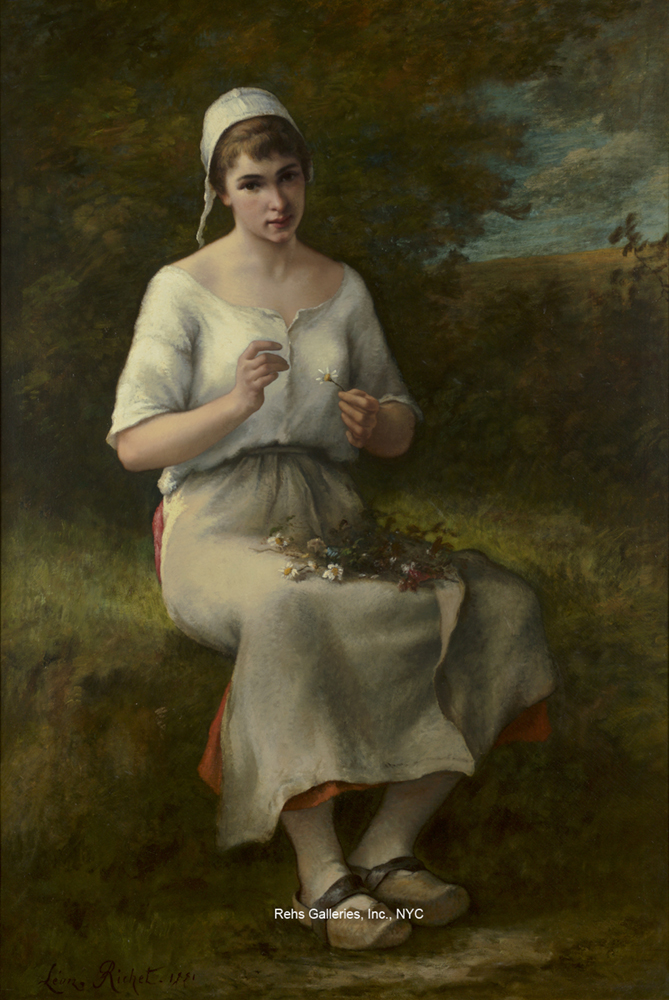
Marguerite by Leon Richet, Oil on canvas, 62 x 42 in., Signed and dated 1881; Rehs Galleries, Inc.
Connecticut River at Northfield by William E. Roberts Jr., Oil on canvas, 26 x 34 in. (28 x 36 in. framed); Vermont Artisan Designs
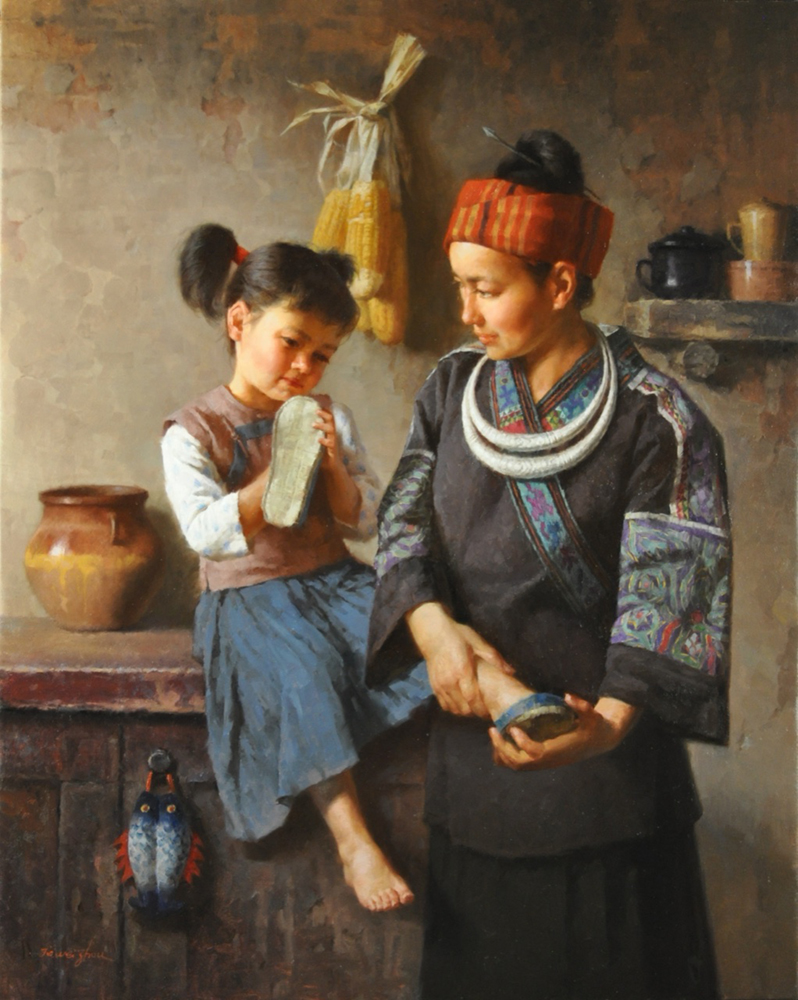
New Shoes by Jie Wei Zhou, Oil, 30 x 24 in.; ArtzLine.com
Want to see your gallery featured in an upcoming Virtual Gallery Walk? Contact us at [email protected] to advertise today. Don’t delay, as spaces are first come, first served, and availability is limited.
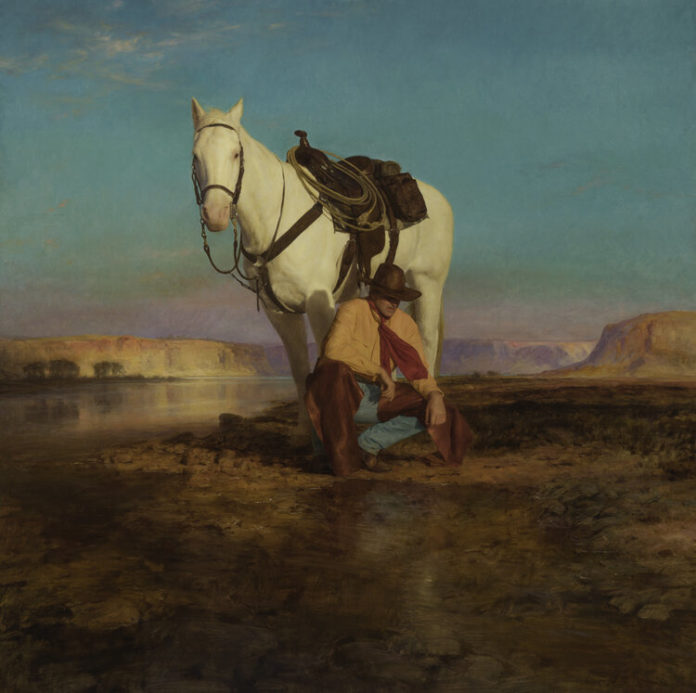
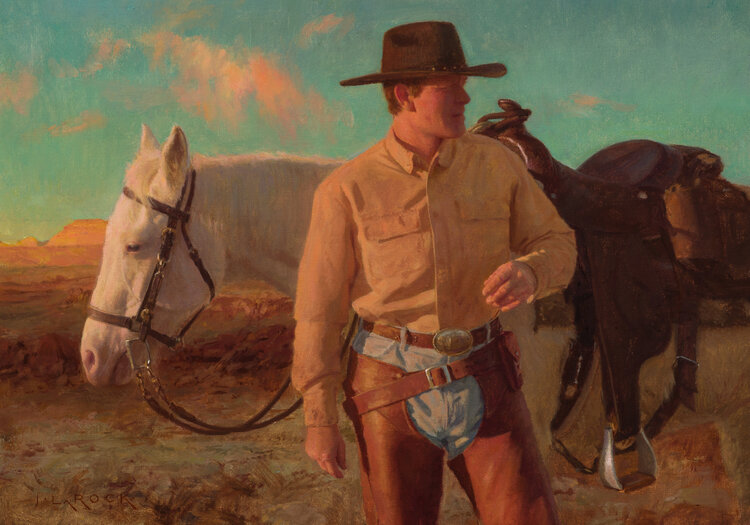
Joshua LaRock, "The Tracker," oil, 42 x 42 in.; These paintings (and more) will be sold by draw on September 18, 2021. To enter your commitment to purchase via the Draw, contact Maxwell Alexander Gallery.
LaRock’s ability to paint the human form is among the best of painters focusing on Western art subjects today. Continue reading >>>
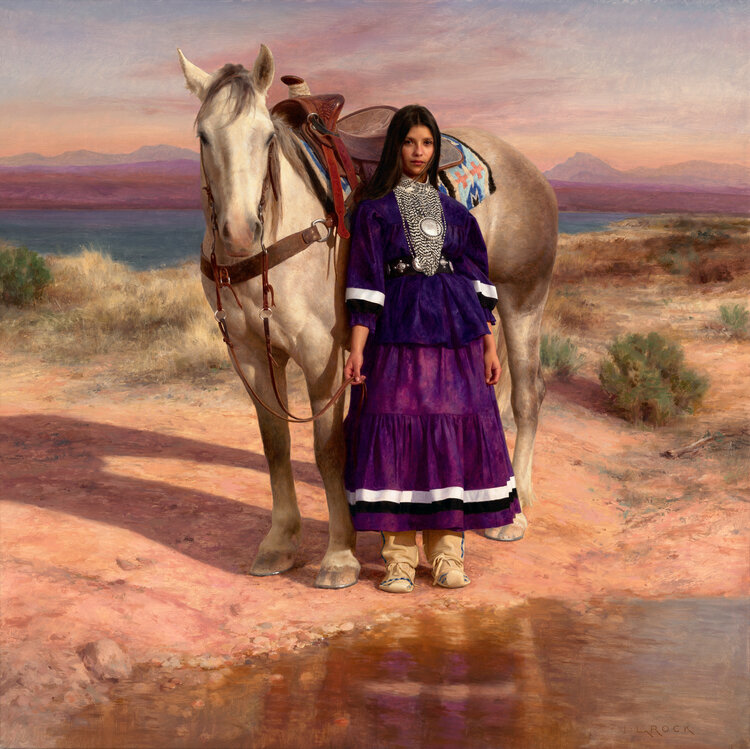
Maxwell Alexander Gallery is presenting Joshua LaRock’s second Los Angeles solo exhibition, titled “Tracking.” His first solo exhibition in 2019 was met with high demand and sold out within days of opening. LaRock’s latest body of work dives deeper into his desert travels with highlights from masters of the past.
The “Tracking” solo exhibition will feature 10 new oils ranging in size from small to large.
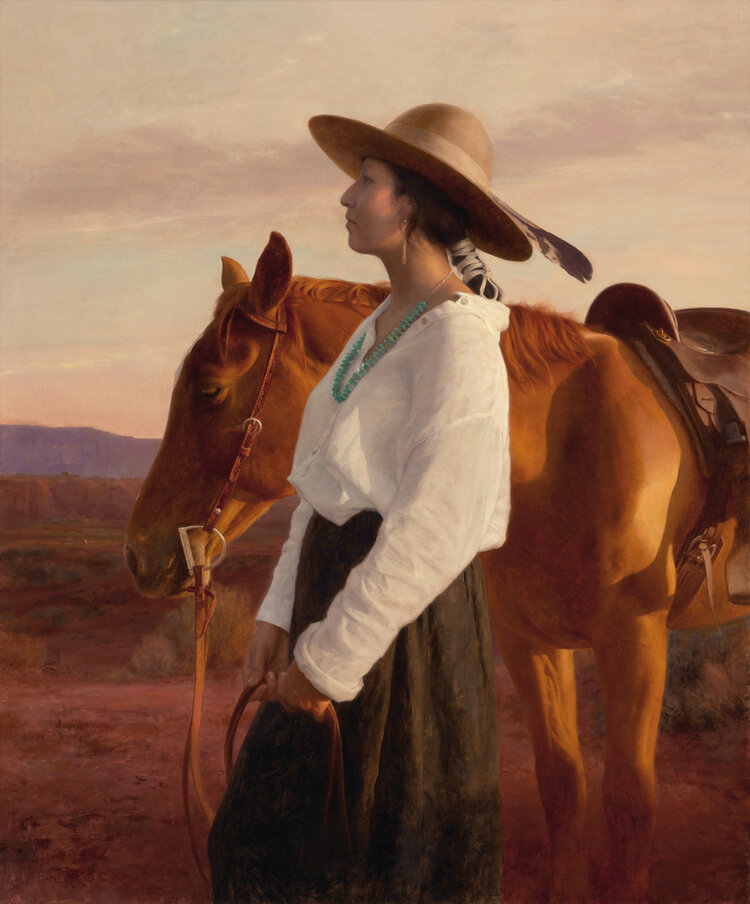
LaRock’s ability to paint the human form is among the best of painters focusing on Western art subjects today. The artist is influenced by the “old masters,” such as William-Adolphe Bouguereau and Thomas Moran. LaRock, a classically trained artist, is able to translate that old world mastery into current subjects.
In “The Tracker,” LaRock features a modern day cowboy set against a backdrop influenced by the early explorations of Thomas Moran.
LaRock works in many thin layers of paint, drawing on his formal study to accurately portray figures in the rugged American landscape.
“These paintings are a synthesis of my work, experiences, and traveling around the West. Every painting is exciting right now because I’m finding my voice in these new pieces.”
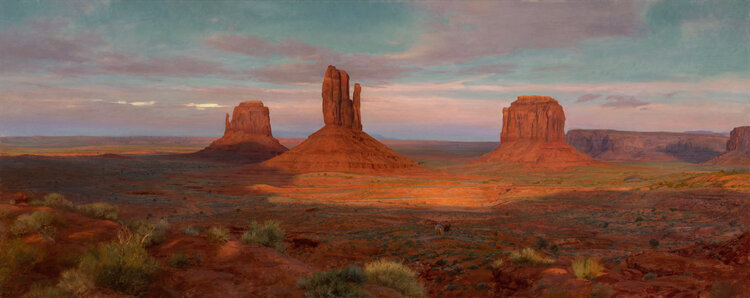
Joshua LaRock, “Reflection,” oil, 32 x 32 in.Joshua LaRock, “A Sound in the Distance,” oil, 10 x 14 in.Joshua LaRock, “Monument Valley,” oil, 23 x 58 in.Joshua LaRock, “Golden Light,” oil, 35 x 29 in.
Joshua LaRock’s painting “Rachel in Blue” was the featured work in his 16-hour art video workshop titled “Classical Portraits.”
LaRock is internationally recognized as a preeminent figurative artist. His exquisite paintings are an ode to the past, filtered through a contemporary life. His portraits and narrative pieces are memorable both for their emotive quality and for evoking an eerily present feeling.
James Kroner, "Past Midnight," 15 x 15 inches, Oil on panel
Beyond the Canvas > As an artist, one does not need to sacrifice his or her personal expression for the sake of learning the principles.
BY JAMES KRONER
We are all familiar with the universal truths that lay the foundation for representational painting—design, values, edges, drawing, color, and the many concepts that apply. Yet as we learn and employ these concepts, many of us tend to lose our expression, the very thing that gives us voice. We adapt techniques in order to make a painting work.
Whether we are reading an art instruction book, taking classes, or watching demos, as students we are learning a tradition that has been discovered over hundreds of years and passed along. Our teachers and mentors reveal to us in stages the many elements of composing a work. But at the end of the day what do we take away from this? Most of the time, it’s someone else’s technique. This is why the student’s work looks similar to the teacher’s. This is how we learn.
It’s okay—in fact in the beginning stages it is necessary—for our work to look like our teachers’. We have to adapt techniques in order to get a painting to read and ultimately to make it work. However, at the same time we are also told by our teachers that we must find our own voice. Now we are faced with the nearly impossible task of doing it.
As if taking a brush in hand and creating the illusion of form on a two-dimensional surface isn’t difficult enough, we must also do so through our own individual and unique form of expression. But if you are still in the stages of trying to understand these principles, which sometimes takes many years to learn, one is not capable of such expression. That old saying comes in here: “You have to learn the rules before you can break them.” But does that mean we are expected to put our true voice on the back burner in the meantime?
This was, and still is, one of my greatest challenges. I’ve spent much time shifting my focus between applying the principles and breaking free in a complete departure from tradition. In the early years of learning many of us do not have the confidence or stability, so these departures usually end up disastrously. This was the case for me. So I went back to continue to develop what I already know works.
What I didn’t realize at the time was that these disasters were all part of my working process and totally necessary. I spent years in my art education writing and reading and painting all the time, always trying to understand these principles in relation to myself. I thought it was imperative to understand as much as possible, until this knowledge became instinct.
I recall how absolutely frustrating it was to be stuck in this vicious entanglement of wanting to break free from the academics, and failing in the majority of my attempts. Or did I? That stack of paintings in the corner that didn’t go anywhere just kept piling up, hundreds of them, all failures, but all absolutely necessary.
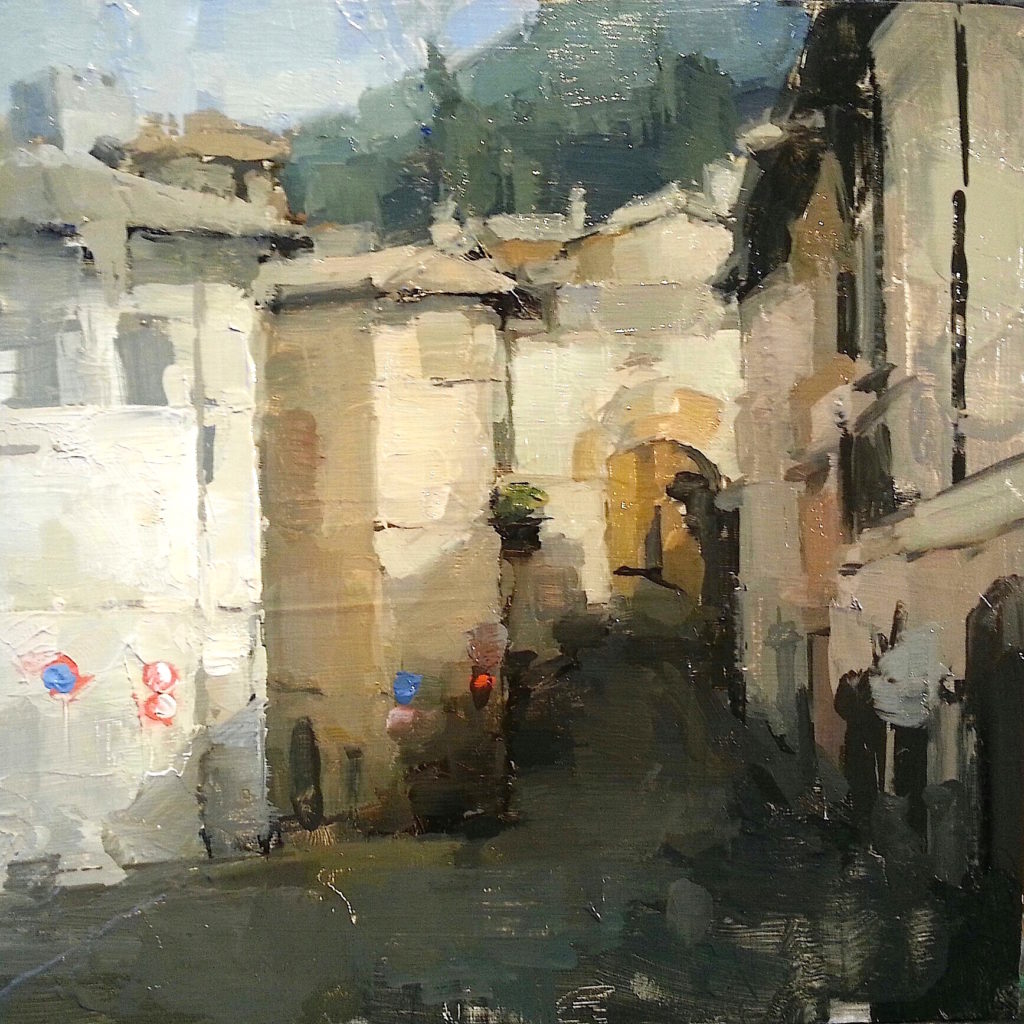
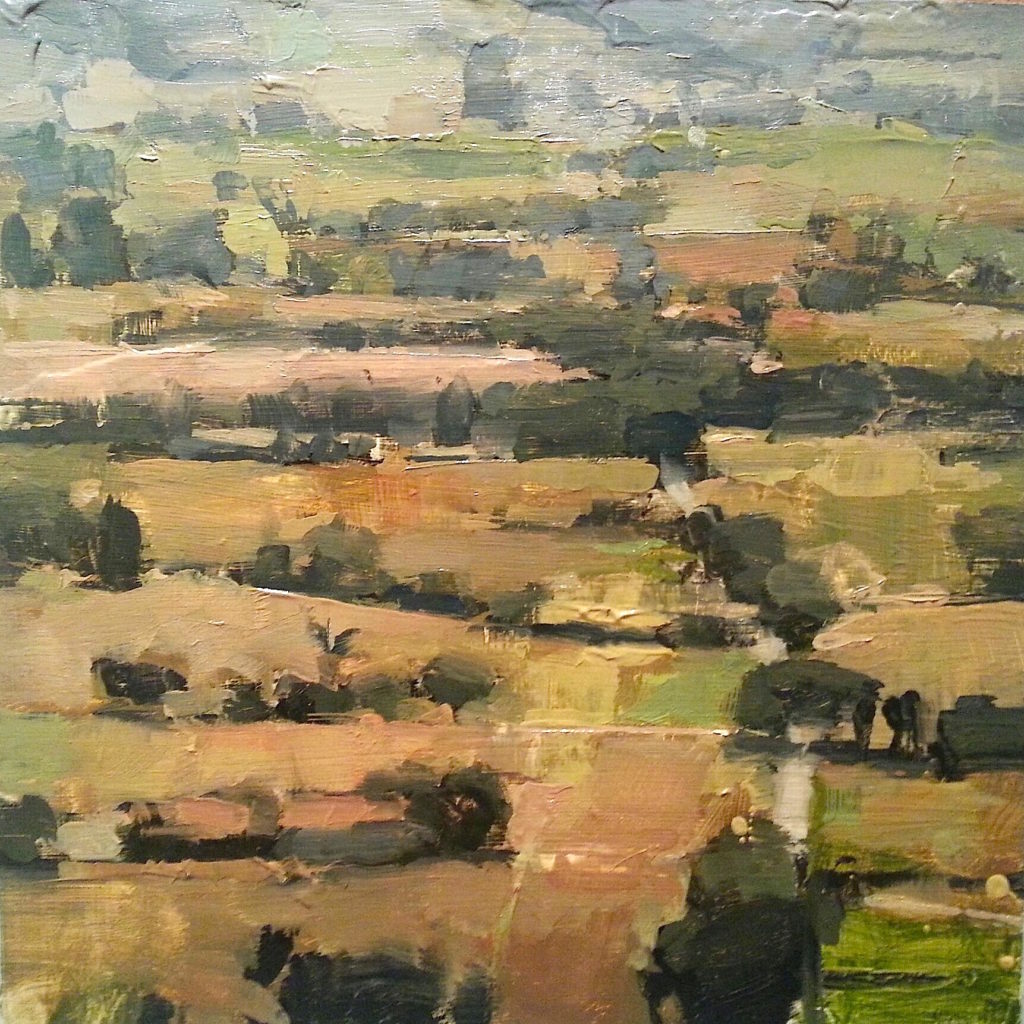
James Kroner, “Assisi,” 8 x 8 inches, Oil on panel
The highest element of a painting is this personal artistic expression of the artist, more so than any other technique. Yet we come to the realization that certain developments need to take place before we can really take flight.
Perhaps many of us have spent so much time developing the fundamentals that we think if we break from them, we have nothing. This is not true. Your true voice has always been with you. It is our job as artists to discover it. The world deserves to see your true artistic expression, not another endless version of something that has already been said. So the problem remains for many of us who don’t really know how to break away from the academics to access that true expression of ourselves.
We are all familiar with the necessity to set ourselves apart, to bring something new, to find a way to make it our own. Be careful, however—if we set out with the intention of doing something different for the sake of standing out, this can easily set us down the wrong path. To bring something new cannot be contrived; it is something very specific to the individual artist. It is the way one sees.
Pay attention to how you see your subject, and the emotion behind it. Try not to get caught up in academic analysis. When I am too obsessed with the “correctness” I lose the emotion, and the work becomes labor, not art. But when I can grasp my voice as a painter through this emotion, I have freedom of expression. I can interpret what I see in an unlimited way.
But what about the basic principles? We still need them, we are still concerned with realism and haven’t abandoned ourselves to non-objective abstraction. Let the principles be part of your instinct, and serve your expression, not the other way around. Through trial and error, through many variations to your approach you will discover things that work for you. It will be yours, not someone else’s. Be guided by the principles and not ruled by them, and you will find the freedom you need.
James Kroner, “Valley of Umbria,” 8 x 8 inches, Oil on panel
Here are a few things that work for me.
Write on a regular basis. This has provided much clarity about myself and direction. As an artist, what an incredible advantage you will have if you know yourself.
Take a break from looking at familiar artists. Look at paintings, sculpture, graffiti, land art, work you wouldn’t normally seek out. Also try not to look at other artists’ work at all for a period of time. Let go of familiar influences. Once I began looking at more abstract-based artists I gained a wonderful new perspective.
Listen to new kinds of music.
Change your painting environment. Try new mediums, new colors, new painting surfaces, new tools. Try different approaches to your work; see if you can arrive at a finished result by taking a different path to get there. If you need to produce finished work for an upcoming exhibition, do so, and when you have the time again, take those risks.
Become boundless in your exploration. Get away from familiar territory and influences. The goal is to pay attention to your feeling, to understand what lives within and to have the freedom to express it.
And most importantly never give up, never view your failed paintings as failures, but at valuable discoveries, and you will find the path that leads to your true self.
> Visit EricRhoads.com to learn about more opportunities for artists and art collectors, including retreats, international art trips, art conventions, and more.
> Sign up to receive Fine Art Today, our free weekly e-newsletter
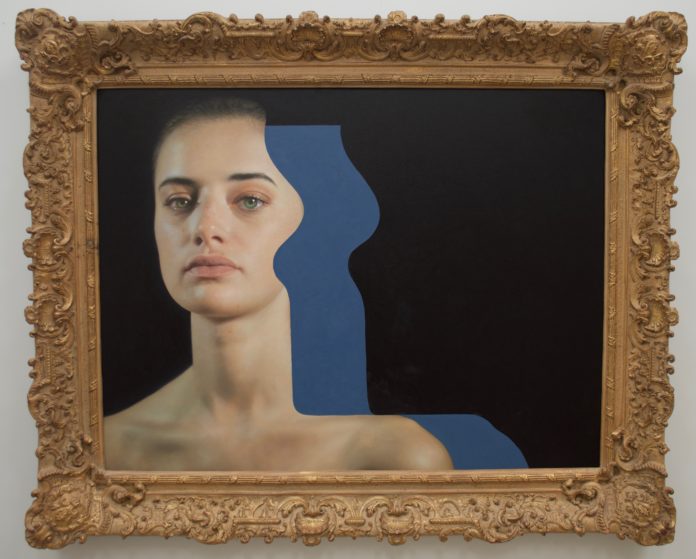
Ross Rossin, “Sophia,” 2020, oil on canvas, 38 x 50”
The Booth Museum is shining a spotlight on the enduring power of the American West as a transformative muse for artists from around the world through “Captivated: Rossin’s Southwest & Beyond.”
“Bulgarian-born American artist Ross R. Rossin grew up watching many of the same Western movies we all did, dreaming of visiting Monument Valley, featured in so many of director John Ford’s classic films,” says Booth Director, Seth Hopkins. That dream became reality in March 2019, when Hopkins and the artist spent nine days exploring parts of Nevada, Utah, Arizona, Colorado and New Mexico.
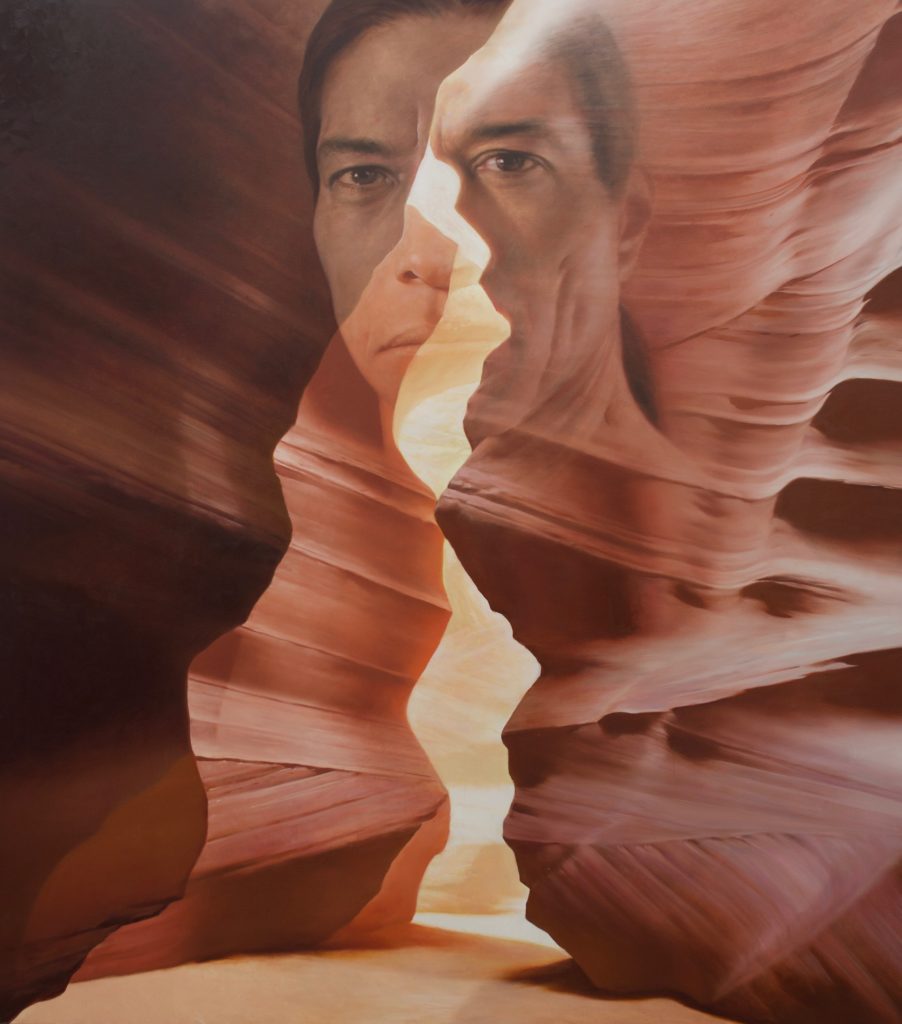
The experience has had a profound impact on Rossin’s work. Known internationally for his hyper-realist portraits created in the centuries old traditions of portrait painting, Rossin’s new, Western-inspired work, is quite a departure. “I felt this overwhelming sense of freedom, sense of liberation, from anything that resembled my convictions or conventional thinking or ideas about traditional art and what it should be. That’s what the West did to me,” said the artist.
This unexpected artistic detour comes in the midst of growing recognition for his traditional work. In recent years, four of his larger-than-life, celebrity portraits have entered the Smithsonian’s National Portrait Gallery collection, including Morgan Freeman and Maya Angelou, sponsored by Oprah Winfrey.
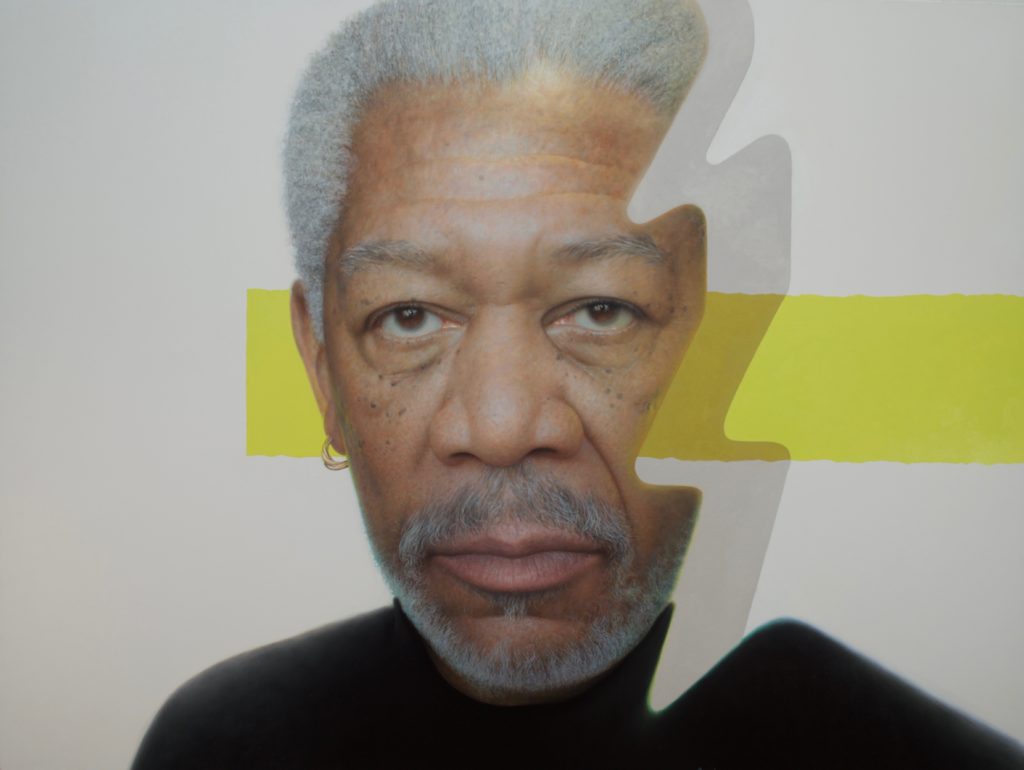
Ross Rossin, “Morgan Freeman,” 2020, oil on canvas, 72 x 96”
He recently completed his Commanders in Chief Mural Project; a three-part installation featuring all of the Presidents of the United States. Collectively the three paintings encompass over 800 square feet of highly detailed work, measuring 13 by 62 feet, and represent eight years of research and painting. Meanwhile, his commissioned portraits for titans of industry, academic leaders, politicians and the well-to-do are in constant demand.
As busy as he is, Rossin also creates figurative works in his own striking artistic style. Until recently there was relatively little stylistic difference between the two bodies of work. The difference maker? The 2019 trip that included stops at places like Bryce and Zion National Parks, Kanab, Monument Valley, Four Corners, Aztec Ruins, Taos, Abiquiu, Ghost Ranch, Santa Fe and many others. While these locales have captivated visiting artists for well over 125 years, the region’s inhabitants have also been influential. Rossin says, “As wonderful as these places were, in my mind they could not surpass the people I met along the way.”
Hopkins introduced Rossin to several important Western artists on the trip, including Tim Cox, Oreland and Beau Joe, Jody Folwell and Rosetta Santiago. Rossin photographed several individuals, including Folwell and two Native American models suggested by Santiago. Paintings based on these sessions form the backbone of the exhibition. Also on view will be paintings the artist had considered finished, like a major work depicting Morgan Freeman, that he went back and altered significantly based on his transformative Western experience.
Asked to sum up in a few words the powerful impact the West is currently having on his work, the artist sites freedom and clarity. “Clarity, was my first impression, and that is still my strongest impression now. There is the space – the light and rolling silhouettes of the landscape, the clouds and the moving shadows they cast, but much more than that, for me it was the clarity of thought, clarity of spiritual experience, clarity of emotions, clarity of connection with nature in a way that can only be described as magical. It also opened the floodgates of free spirit.
Ross Rossin, “Canyon Warrior,” 2020, oil on canvas, 90 x 80”
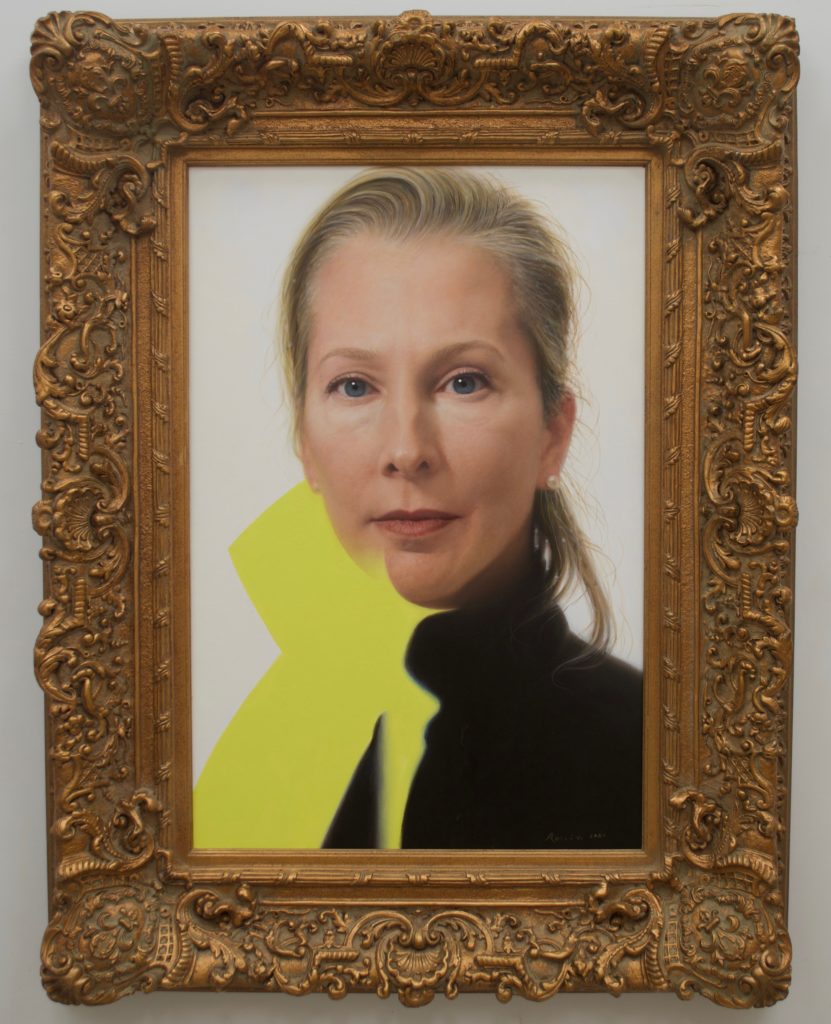
“For decades I’ve been doing what I do, translating, and studying the human face, the human psyche, the soul, with great respect for the form. But, I was wanting to find another angle to tell a bigger story, to go deeper and express ideas about the essence of human nature. And the West did exactly that – it broke the mold and gave me the confidence, the energy and the inner freedom. It gave me the inner freedom to do things like cut the face in half, to break it and free it from its own wretched limitations in this physical world.”
The impact on Rossin’s work was nearly immediate, according to Hopkins. “Within two weeks of returning home, Rossin was sending me drawings, studies and seemingly nearly finished paintings in styles I had not seen from him. There was no doubt the West had left a strong impression on my friend and that he was on his way to creating a body of work for this exhibition as monumental as anything we observed on our excursion.”
Rossin’s desire is for visitors to the exhibition to feel not only his connection with the people and places of the West – but the enlightenment he obtained along the way.
Ross Rossin, “Nicole,” 2020, oil on canvas, 36 x 24”
Rossin, is, and a very patriotic naturalized U.S. citizen. His original goal in painting the first canvas in what would become the Commanders in Chief series was to create a “Love Letter to America,” his adopted homeland. He believes it represents the most important American tradition, the peaceful transfer of power, an ideal much in the news in recent months.
For more details about “Captivated: Rossin’s Southwest & Beyond,” please visit BoothMuseum.org.
> Visit EricRhoads.com to learn about more opportunities for artists and art collectors, including retreats, international art trips, art conventions, and more.
> Sign up to receive Fine Art Today, our free weekly e-newsletter
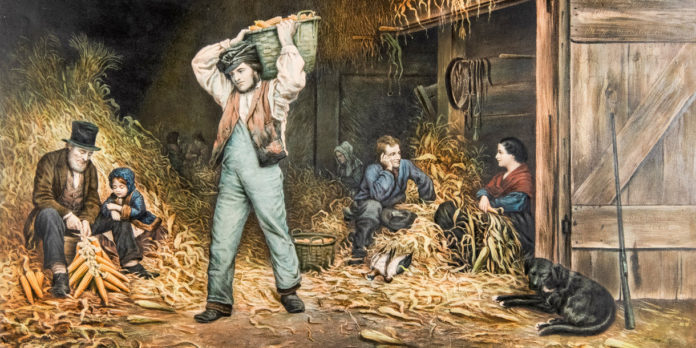
“Revisiting America: The Prints of Currier & Ives” explores how the largest printmaking company in 19th-century America visualized the nation’s social, political, and industrial fabric.
At a Glance:
Revisiting America: The Prints of Currier & Ives
Through October 17, 2021
Shelburne Museum (Vermont) shelburnemuseum.org
The company is best known today for its lush, hand-colored lithographs that nostalgically depicted an idyllic republic of pioneer homesteads, sporting camps, and bucolic pastimes; however, these sentimental images comprised only one aspect of Currier & Ives’ production.
The company’s inexpensive and popular prints touched on pressing social and political issues. On view at the Pizzagalli Center for Art and Education, Colgate Gallery.
> Visit EricRhoads.com to learn about more opportunities for artists and art collectors, including retreats, international art trips, art conventions, and more.
> Sign up to receive Fine Art Today, our free weekly e-newsletter
Western Art Collection > It’s highly appropriate that the slogan for this year’s Rendezvous Royale — the joyful celebration of the arts that Cody, Wyoming, hosts each autumn — is “Back in the Saddle.” 2020 was definitely a year to forget, and now this small but lively town is set to enjoy a range of workshops, lectures, art classes, and studio tours.
As ever, the centerpiece of the week will be the Buffalo Bill Art Show & Sale, which offers a broad range of stylistic interpretations of the West from both established and emerging artists.
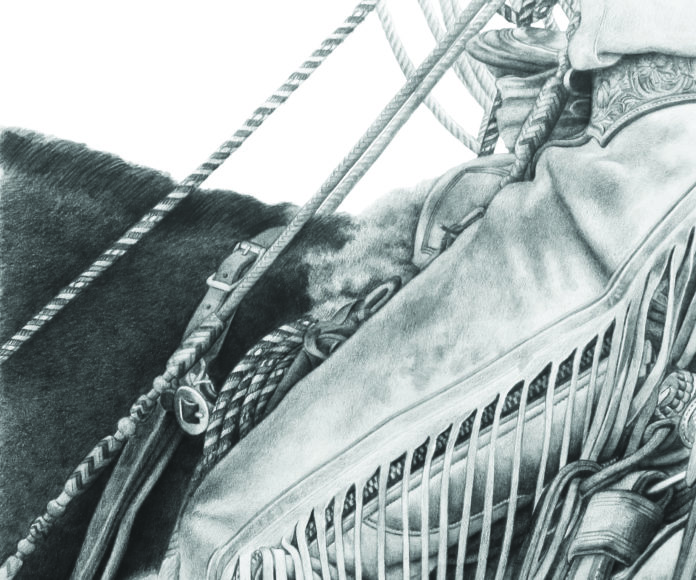
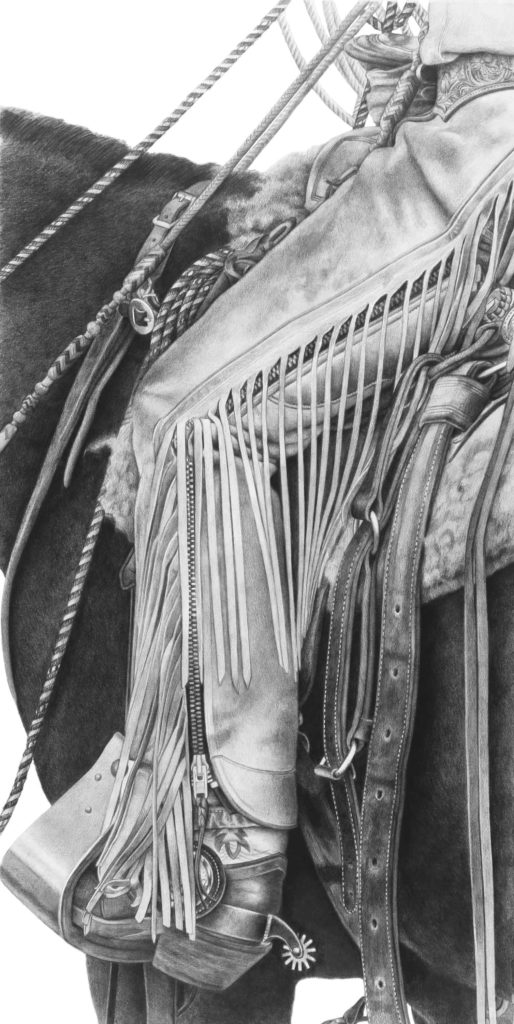
KARMEL TIMMONS (b. 1966), “Fringe Benefits,” pencil on paper, 22 x 11 1/4 in., Buffalo Bill Art Show & Sale
The works to be sold during the live auction will be displayed at the Buffalo Bill Center of the West through September 17; that evening the auction and dinner will occur in an adjacent tent, with collectors competing in the room, by phone, online, and via absentee bids.
The next day will find the exhibiting artists participating in a quick draw while onlooking patrons enjoy brunch. All proceeds benefit the Buffalo Bill Center of the West, Cody Country Chamber of Commerce, and local art organizations.
Also buzzing all week long will be By Western Hands, the nonprofit organization that is preserving the legacy of Western design by promoting today’s top artisans. Its Western Functional Art exhibition will remain on view at its downtown gallery right through September 18, 2021.
> Visit EricRhoads.com to learn about more opportunities for artists and art collectors, including retreats, international art trips, art conventions, and more.
> Sign up to receive Fine Art Today, our free weekly e-newsletter
Fill your mind with useful art stories, the latest trends, upcoming art shows, top artists, and more. Subscribe to Fine Art Today, from the publishers of Fine Art Connoisseur magazine.