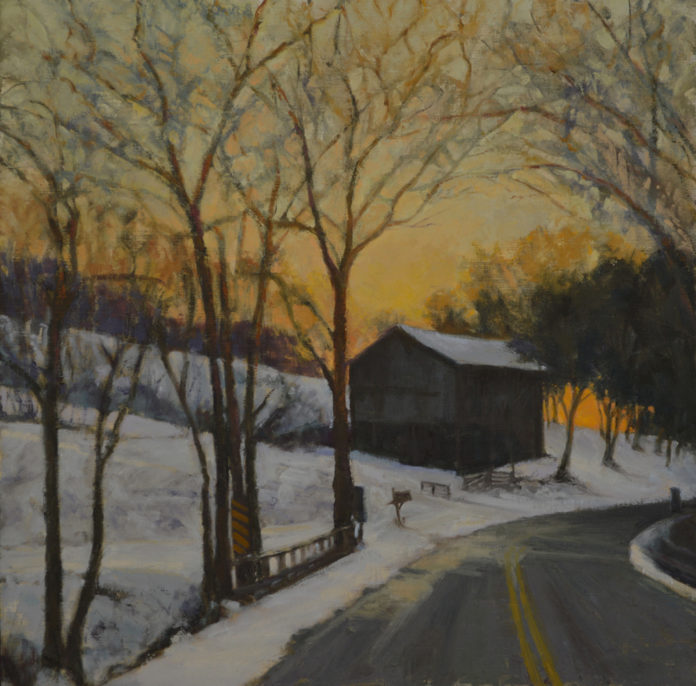
Brenda Coldwell: “Road To The Vines” was created this past winter. We seldom get snow here in Middle Tennessee, but when we do, I take advantage of the beauty and get out to take pictures and possibly paint outside. This scene is one of my favorites anytime of the year, but that moment of light, right before darkness settles, well, it was seared into my mind. I went into the studio the next day and sketched out several snow scenes on canvas, and this was one of the results.
Being outside enjoying nature has always been a big part of my life. I love trying to convey the spirit of the outdoors through some of my work. Whatever I paint these days, I want it to evoke feelings and emotions.
I started my own business from the ground up. It’s a working studio that has six art studios within, a common work area, and a workshop area where a variety of workshops, open studio, and classes are held. “On Track Studios” is located on about 2 acres, and there is plenty of room for painting “en plein air.” I’m learning how to run a business, and developing my own career as an artist. I look forward to meeting fellow artists and teachers during workshops and classes at On Track Studios.
For enquires about this work or others, please visit the websites below.
As part of our effort to continue to help artists and art galleries thrive, we’re proud to bring you this week’s “Virtual Gallery Walk.” Browse the artwork below and click the image itself to learn more about it, including how to contact the gallery.
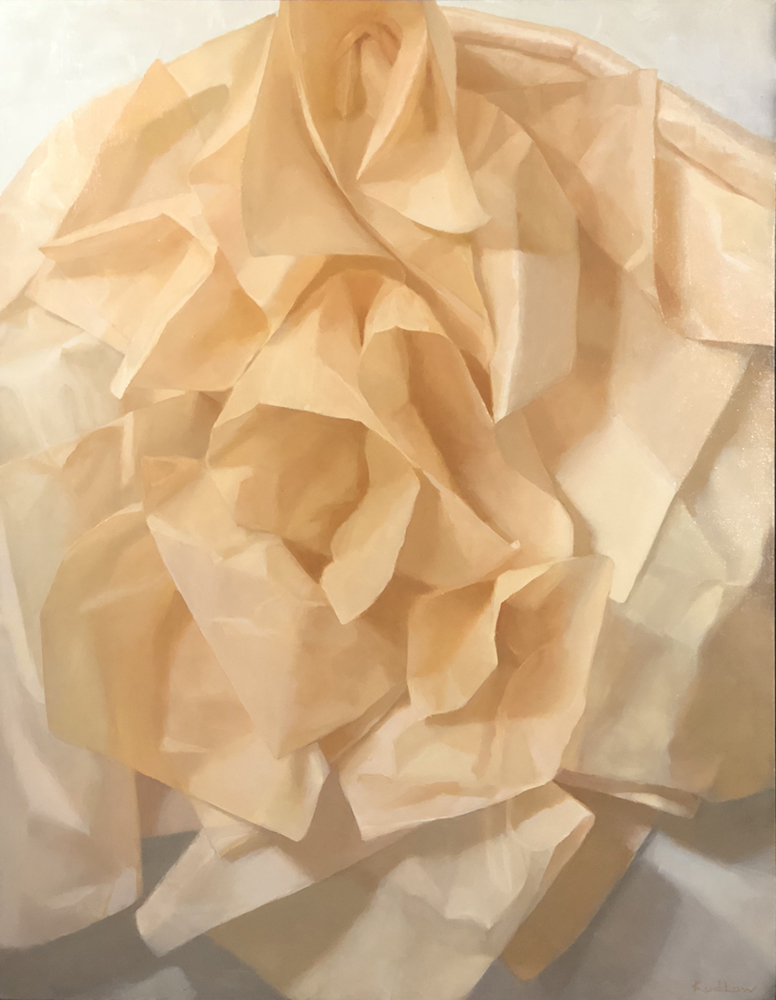
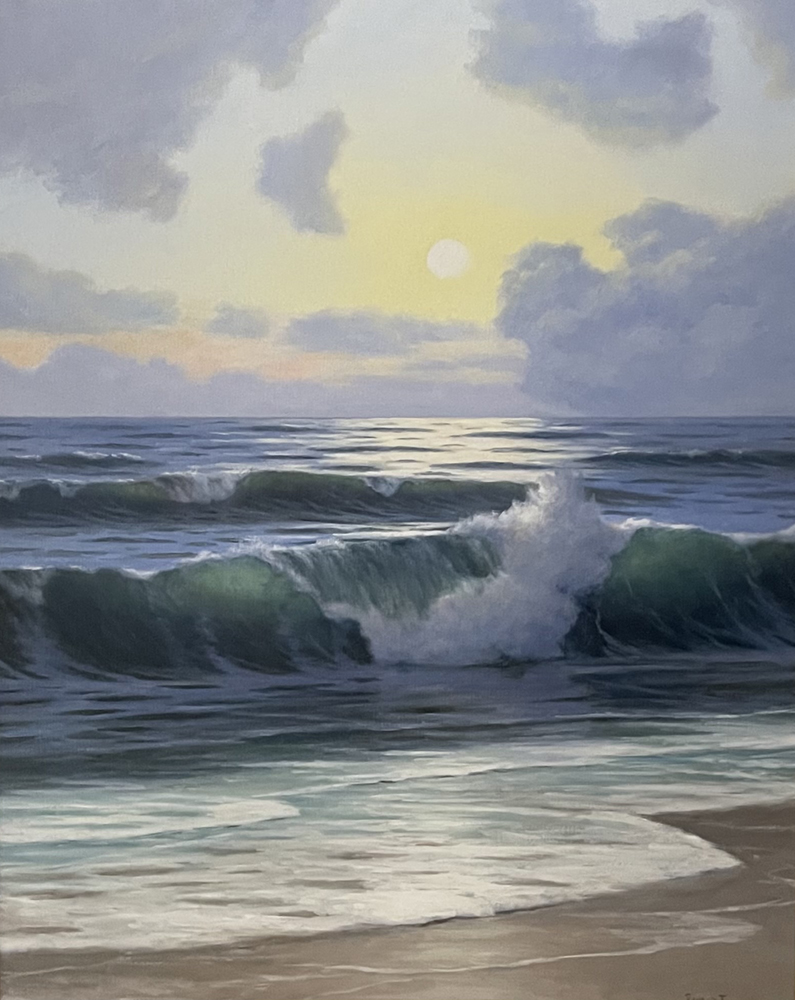
Apricot Sunrise by Judith Pond Kudlow, Oil, 37 x 29 in. (41 x 33 in. framed); Anderson Fine Art Gallery
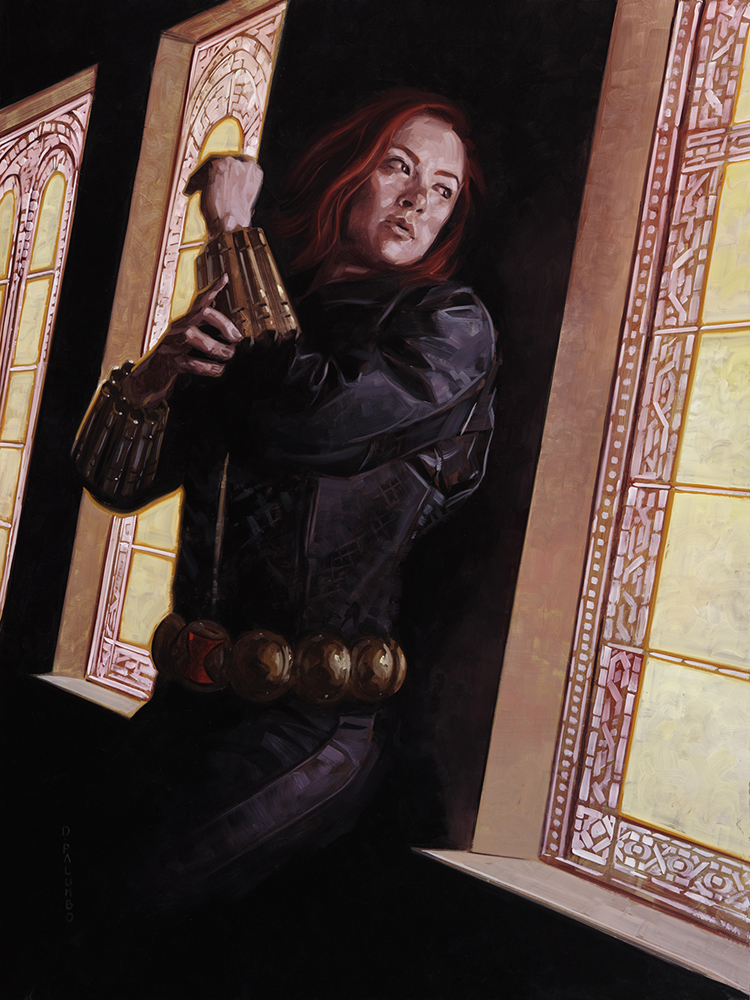
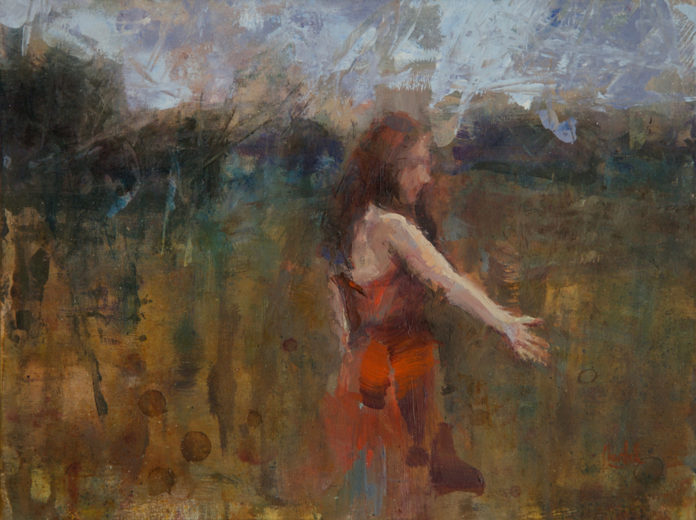
Black Widow by David Palumbo (Born 1982), Oil on panel, 24 x 18 in., Signed; Rehs Contemporary
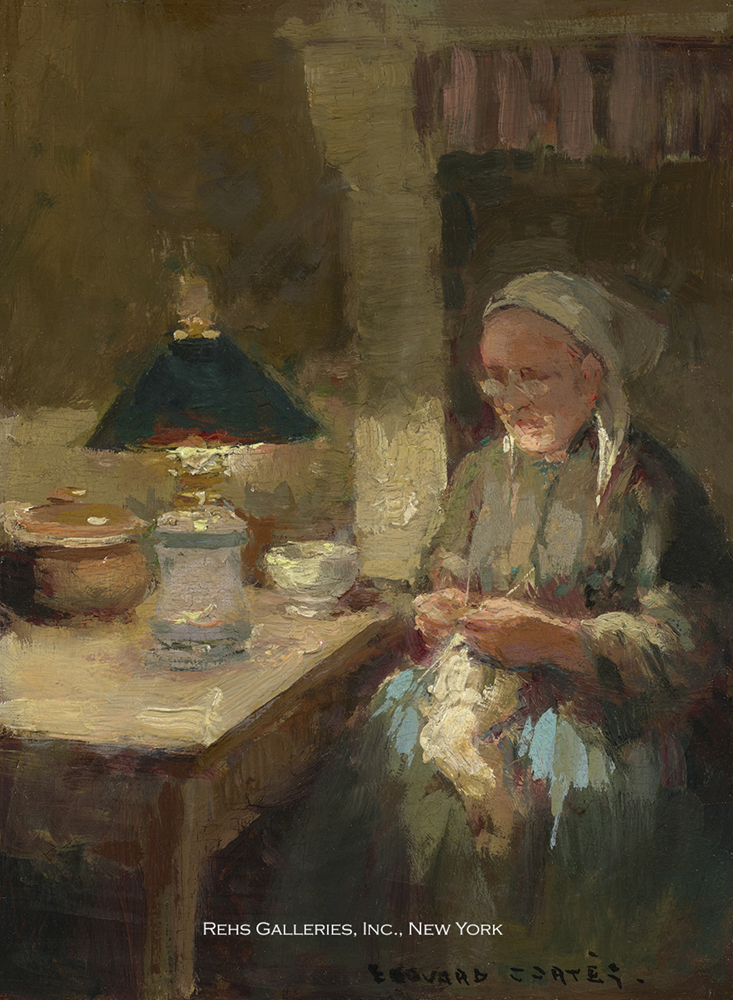
Tricot by Edouard Leon Cortes, Oil on panel, 8.625 x 6.375 in., Signed; Rehs Galleries, Inc.
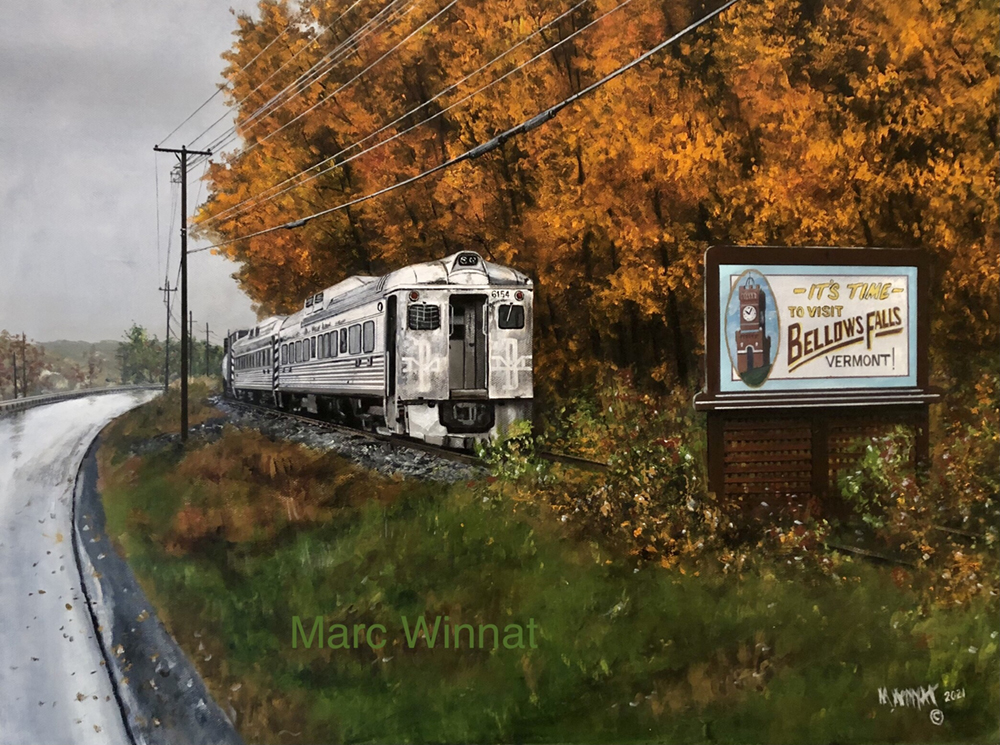
Enter the Cheshire by Marc Winnat, Acrylic on canvas, 18 x 24 in. (21 x 27 in. framed); Vermont Artisan Designs
Want to see your gallery featured in an upcoming Virtual Gallery Walk? Contact us at [email protected] to advertise today. Don’t delay, as spaces are first come, first served, and availability is limited.
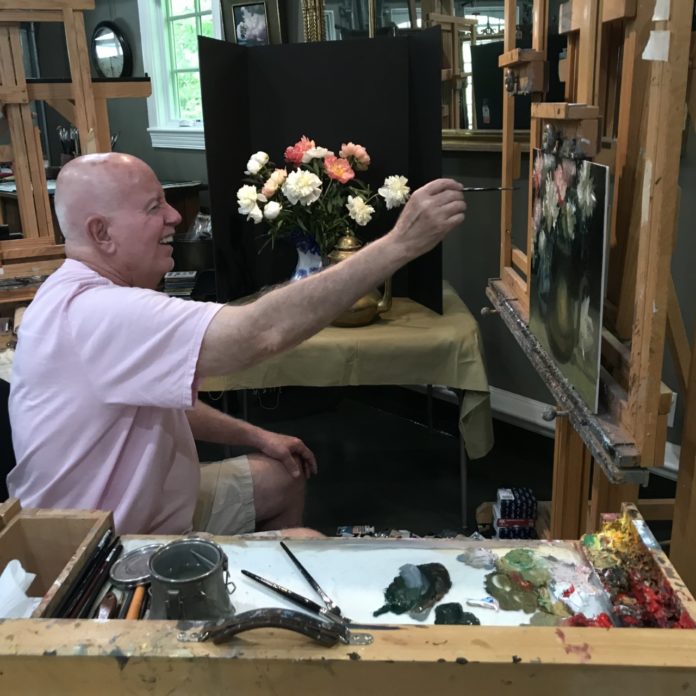
As part of an ongoing series in which we feature prominent artists and their art studios, today we present American Impressionist CW Mundy. Mundy calls his studio his home, and his home, his studio. Enjoy.
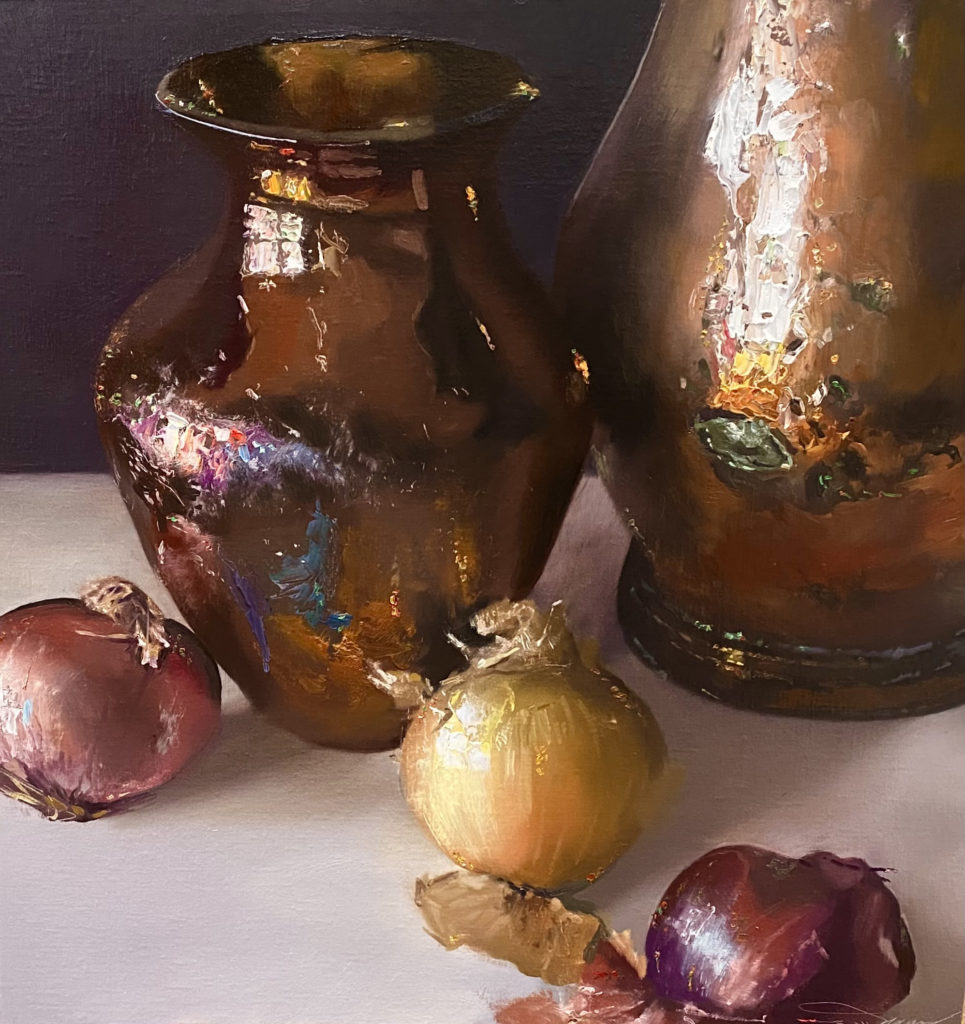
CW Mundy, “Raku Copper with Onions,” 24 x 24 in.
Cherie Dawn Haas: What did your earliest studio space look like, and how did it change over the years?
CW Mundy: My earliest studio space was a small (10×15’) bedroom in our home, with south-facing windows. I tacked up drywall on the north wall to use as my painting easel. It was sparse but functional. I hung paintings and illustrations all around the room on the walls.
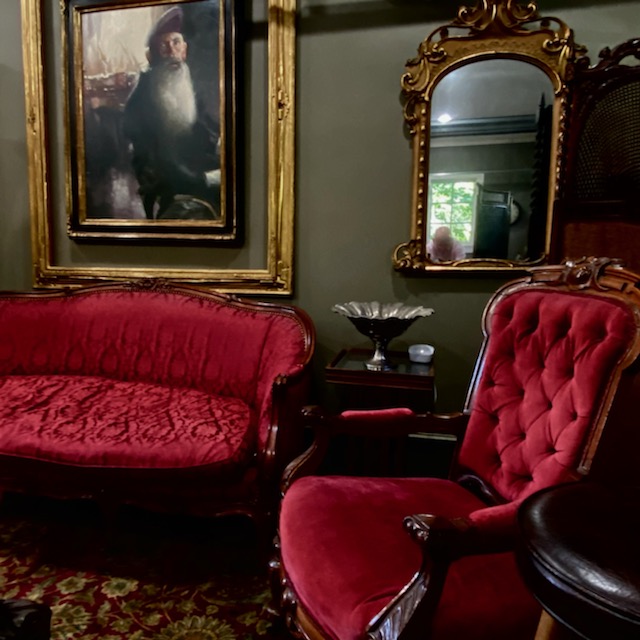
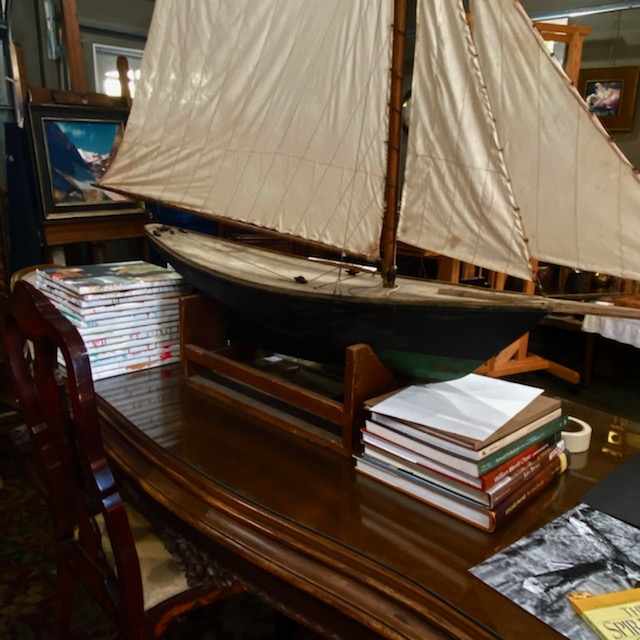
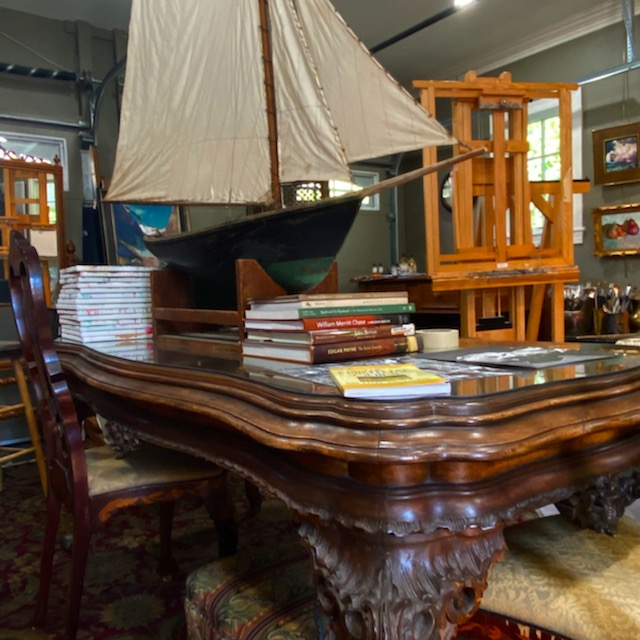
From that earliest space, I moved in 1999 to a 1,250-square-foot industrial space in a 1911 warehouse, the Stutz Building, in downtown Indianapolis. Large windows on the south and west were covered with light-controlled curtains. This space was decorated to emulate a 100-year-old turn of the century studio, such as Sorolla or Sargent might have had. It was decorated with antique furniture, a large oriental rug, antique props and “Pond Yachts” and with special track lighting.
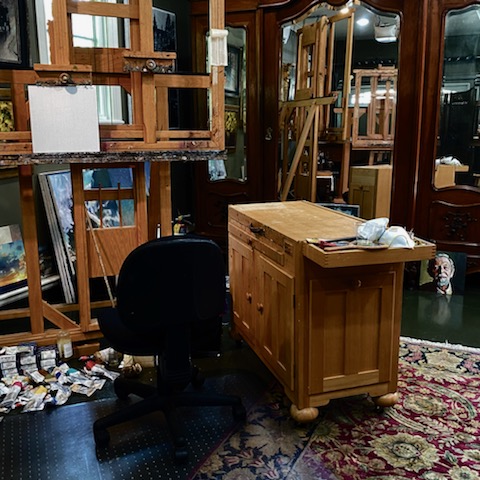
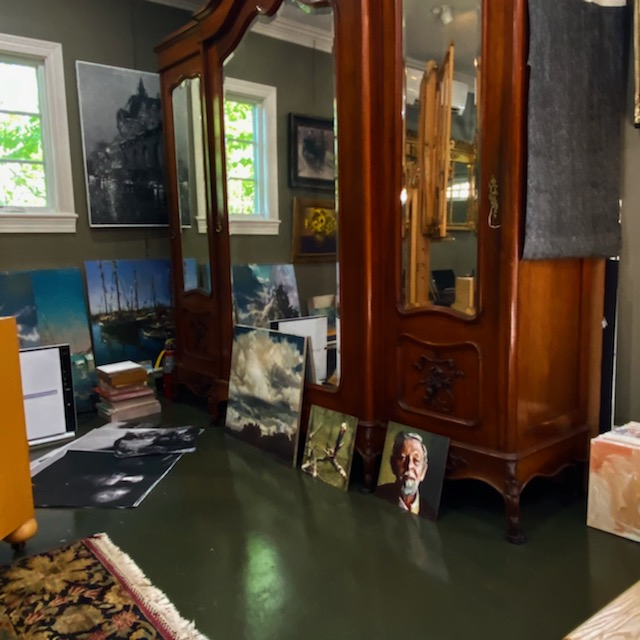
As of autumn of 2020, after over 20 years downtown, I moved home again, now to my remodeled garage space, measuring about 20×25’ with north light windows, and controlled-light from small windows on the east and west walls. We moved what furniture we could from the larger space, but had to downsize.
CDH: What parts of the studio are specific to painting?
CWM: In my new space, I have two Hughes easels of different sizes, a taboret, and a worktable.
I also have two large, antique armoires for storing art supplies and painting props, an antique library table and seating, an antique red settee, and several large mirrors.
For lighting, I currently have two “Method” Art Studio Lights, which are mounted in the ceiling above the easels, and I have ten recessed ceiling lights, with 5000K Northlux Studio Art Lights, which are controllable and dimmable by three different switches.
CDH: How has having a studio space benefited you and your art practice?
CWM: My studio is dedicated to my art and my music (see below). Having my studio at home saves at least an hour of travel every day, as compared to driving to my downtown studio. It is a separate and a designated space where I can go anytime, day or night, without leaving home!
CDH: What’s the most important thing in your studio?
CWM: My “painting station” at the easel is the most important thing in my studio.
CDH: How much time, on average, do you spend there?
CWM: My time spent in the studio varies. I can be in there every day for weeks at a time. Or it can be “off and on,” depending on travel, plein air painting, and music events.
CDH: Based on your experience, what does an art studio need?
CWM: An art studio needs to have a “painting station” with an easel and taboret, controlled light, perfect climate control and ventilation, storage space as with my antique armoires, worktables for varnishing and framing and for still life setups, and a music sound system.
My Hughes easels are crucial for me, in that I can sit or stand in the same place and paint any area of the painting, as the easel moves up and down and also left to right.
CDH: What advice would you give to artists who want to buy, rent, or create a space?
CWM: You need proper ventilation and a very comfortable environment.
Your studio should emulate your personality. Your studio needs to be “you,” not somebody else. It should be an excellent working environment.
More about CW Mundy and his music: World-renowned painter, C.W. Mundy, is expanding his artistic scope through his debut CD, Road Trip.
Currently based in Indianapolis, C.W. Mundy is a Master Signature Member of the Oil Painters of America, he holds Master Status with the American Impressionist Society, and regularly sells out artist workshops nationwide. However, this true renaissance man is also a member of the Disco Mountain Boys, a popular Indy-based bluegrass band consisting of other highly-skilled musicians committed to their current professions, yet in need of a musical outlet.
Mundy has a musical background that extends back to his college days at Ball State University in Indiana, where he was a member of a band called American Gothic, specializing in folk and bluegrass music. After graduation in 1969, he headed to California, where he fell into a musical crowd that included such revered names as Byron Berline, Dan Crary, and Pat Cloud. In 1975, Mundy helped form the Tarzan Swing Band, whose unique blend of jazz, country, blues, bluegrass, and swing landed them a house gig at a club in Redondo Beach, took them on the road, and nearly got them signed to MCA. The band broke up before the opportunity could manifest following the death of the band’s fiddle player, who lost her battle with Hodgkin’s disease. Other musical offers came his way throughout this time, including one from Linda Ronstadt, but ultimately, CW Mundy moved back to Indiana in 1978 and shifted his focus to art, where it has primarily stayed for the past 30 years.
Listen to CW Mundy’s interview with Eric Rhoads on the Plein Air Podcast:
.
> Visit EricRhoads.com to learn about more opportunities for artists and art collectors, including retreats, international art trips, art conventions, and more.
> Sign up to receive Fine Art Today, our free weekly e-newsletter
Vincent Desiderio, "Mourning and Fecundity II," 2011, mixed media and oil on canvas, 81 1/4 x 107 1/4 in, private collection; photo: Bill Orcutt
BY DAVID MOLESKY
After graduating from Haverford College and the Pennsylvania Academy of the Fine Arts, Vincent Desiderio (b. 1955) emerged on New York City’s painting scene in the mid-1980s. By the early ’90s he was picked up by the blue-chip global gallery Marlborough, which presented his latest solo show in New York last winter, and his pictures continue to enter important public and private collections.
Desiderio has a unique perspective on art, not only because he is exceptionally well-read, but also because he worked primarily in abstraction before becoming a figurative painter. I visited his studio in Sleepy Hollow, New York, to hear his thoughts on painting in relation to history, literature, and contemporary society.
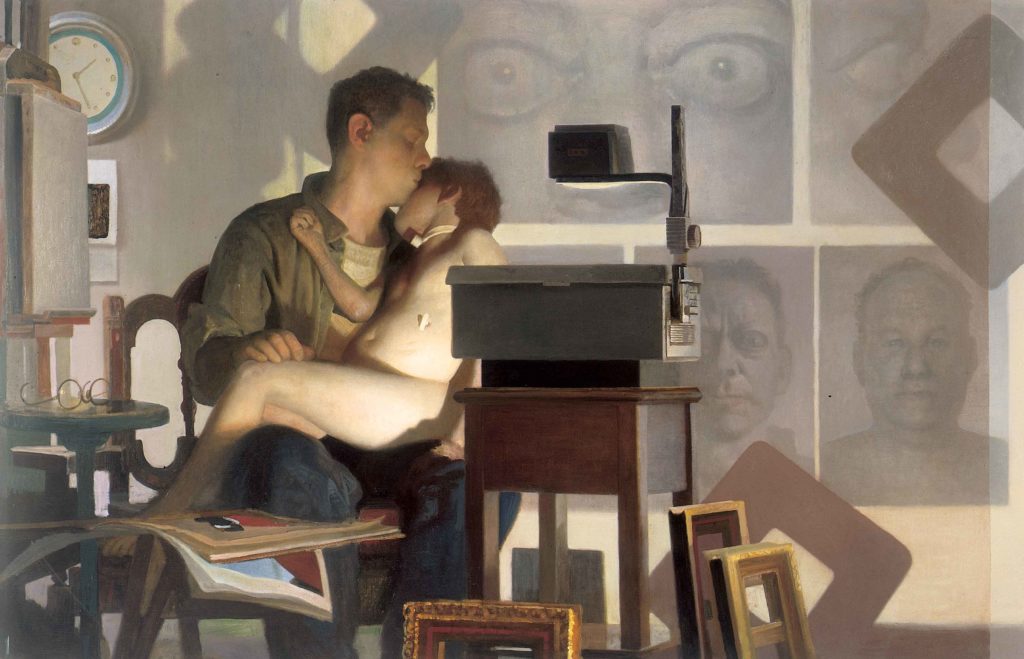
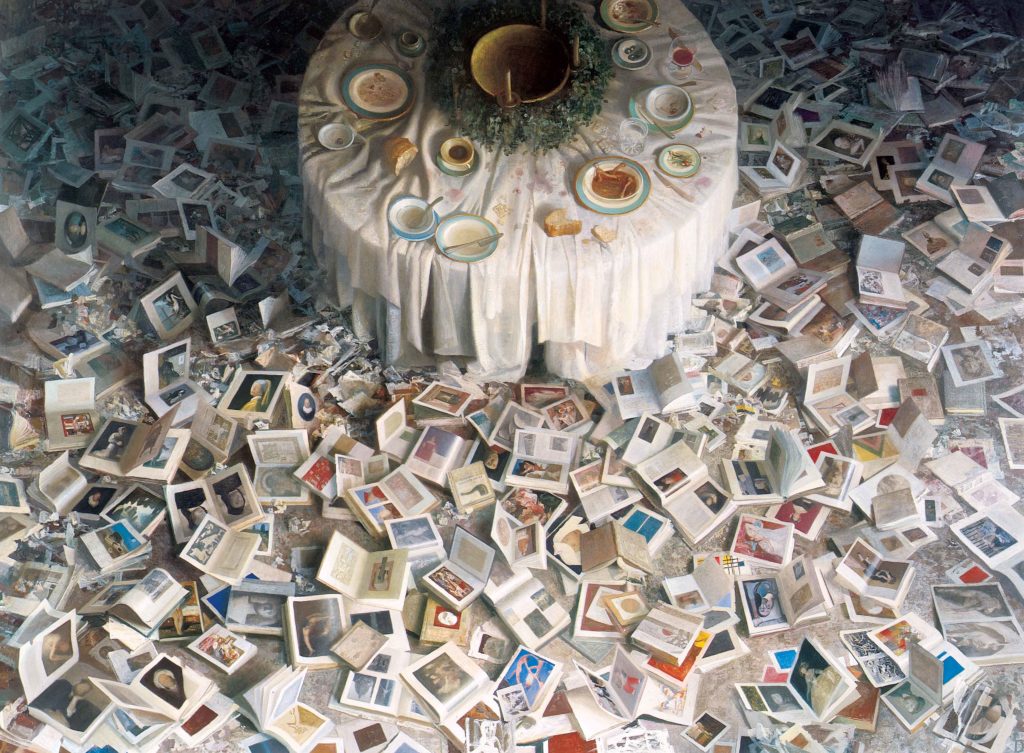
Vincent Desiderio, “An Allegory of Painting,” 2003, oil on linen, 48 x 74 in., Seven Bridges Foundation, Connecticut
David Molesky: What kinds of things do you think about when beginning a painting?
Vincent Desiderio: I approach a new painting with both excitement and terror. On one hand, the canvas seems like a terrifying void; I feel a type of hysteria that compels me to fill it, lest I lose my footing and fall. In this sense, the act of painting provides me with an armature for rational composure. On the other hand, reason is preordained by the blank white rectangle into which I place the visual elements.
In the past, some painters saw space as a perspectival structure into which objects are placed according to the laws that govern the artificial visual field. For them space was homogenous, in line with the Renaissance notion that it is measurable. This differed from an older idea that space is heterogeneous — that when we move an object within the void, we have moved space itself. Although the former camp won the day, the latter has endured. While David and Ingres placed their figures within a measured continuity of space, Delacroix allowed the figures to generate the space’s nature through expression and distortion.
DM: As our culture’s literacy diminishes, can paintings that reflect a consciousness of literary traditions inspire people to learn?
VD: I am sometimes criticized for using language that is overly intellectualized. This is due partly to my education and upbringing but mostly to my faith that painting is an encoding of thought in a highly condensed manner. I don’t believe painters have an obligation to make “literate” pictures, but I do believe that the curricula used to educate people about painting are irrelevant vis-à-vis painting’s vital importance today. This is due partly to the general view of painting as anachronistic, and also to how contemporary painting is taught in universities, as well as ateliers’ neoconservative effort to categorically reject the modernist paradigm.
We are experiencing a dumbing down of all things once regarded as “high” culture. But this is a recurring condition historically. It’s just like the idea that everything has been done before; many people have been taught to think of painting as an evolutionary process akin to scientific revolutions and changes in technology.
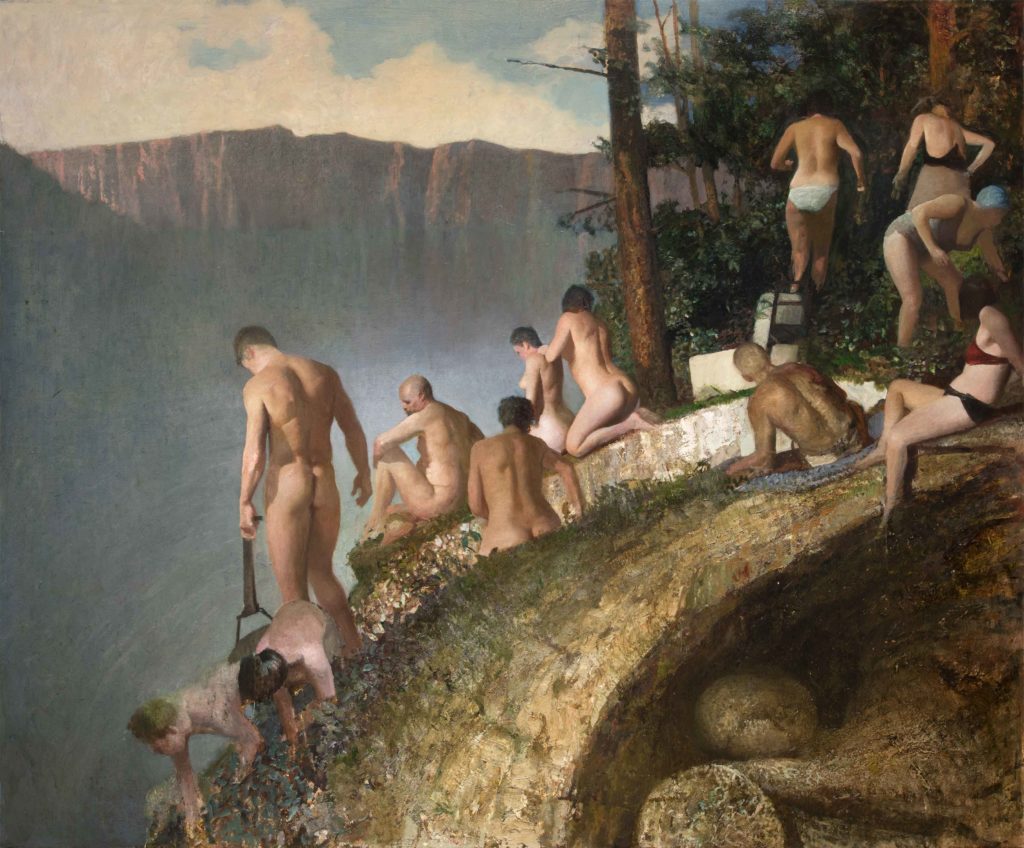
Vincent Desiderio, “Bathers,” 2017, oil on canvas, 57 x 69 in., private collection
DM: An artist friend recently suggested that humans may have always been at the same level of intelligence. But then I wondered why such a large percentage of the population in classical Athens were doing amazing things. Perhaps because people could speak directly with talents like Socrates? What’s weak about our university system is that a professor writes about Michelangelo and the students read that interpretation rather than Michelangelo’s letters themselves. Through this game of telephone, everything becomes mediocre.
VD: We should be careful when speaking about Athens as an intellectual Arcadia. It was only within the elite that its philosophical, literary, and artistic innovations flourished. For the majority, philosophy was not a preeminent concern, nor is it today.
The object of a liberal arts education is to foster critical thinking: what has been written in books and articles about any given subject can be assessed and challenged if need be. Scholarship is more fluid than most people realize — an ongoing discussion, not the final word. It is replete with biases and misreadings, as well as insights. Michelangelo’s writing tells us a lot less about his thoughts than his artworks do. To really understand him, we must come to terms with his milieu — his early exposure to the neoplatonism of Poliziano in the court of Lorenzo, the influence of Savonarola, and his involvement with clandestine Counter-Reformation movements. When we view his development with this background information, it comes alive in a new way. That is not to say his work cannot, on its own, equip us for our own endeavors, but we can also learn how his genius came to terms with his environment.
Vincent Desiderio, “Cockaigne,” 1993–2003, oil on canvas, 111 7/8 x 153 3/8 in., Hirshhorn Museum and Sculpture Garden, Washington, D.C.
DM: I didn’t study art history, but it has been part of my daily meal.
VD: As painters we are obsessed with history, in constant dialogue with it. I would encourage students to familiarize themselves with every possible piece of visual information in cultures worldwide. But I would also require they educate themselves about the contexts in which the works were created.
DM: You’re jumping into a wide and long river.
VD: Absolutely. You sink or swim. Unfortunately, most sink.
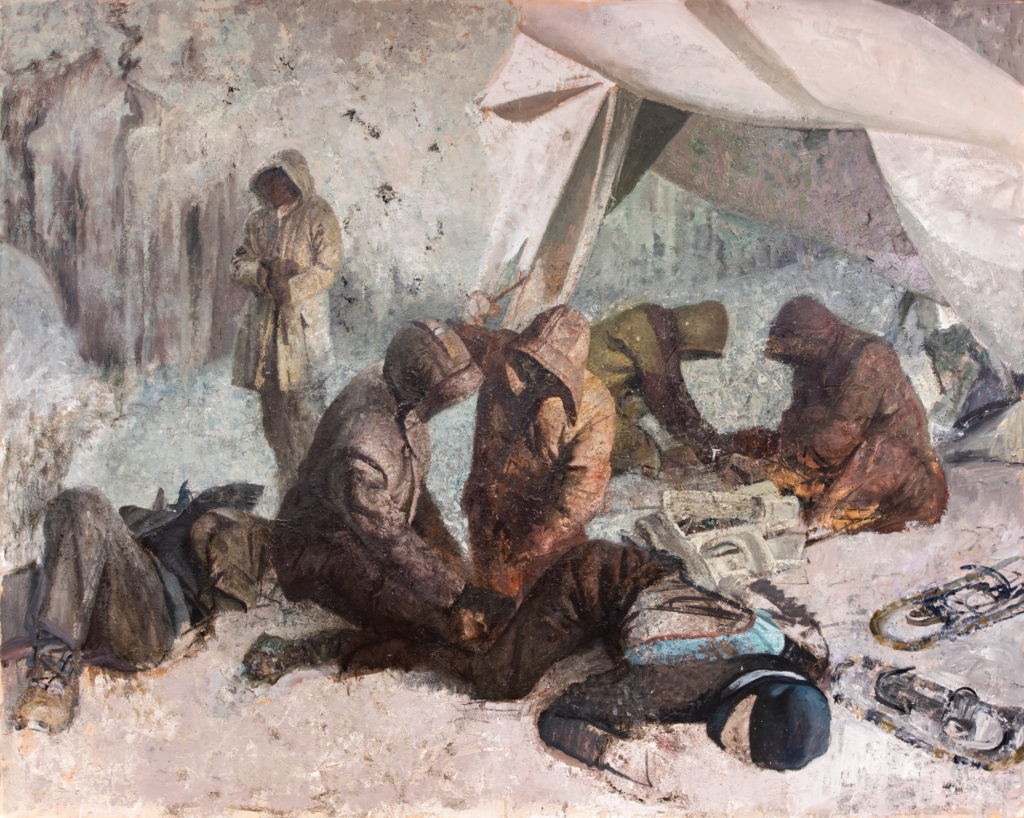
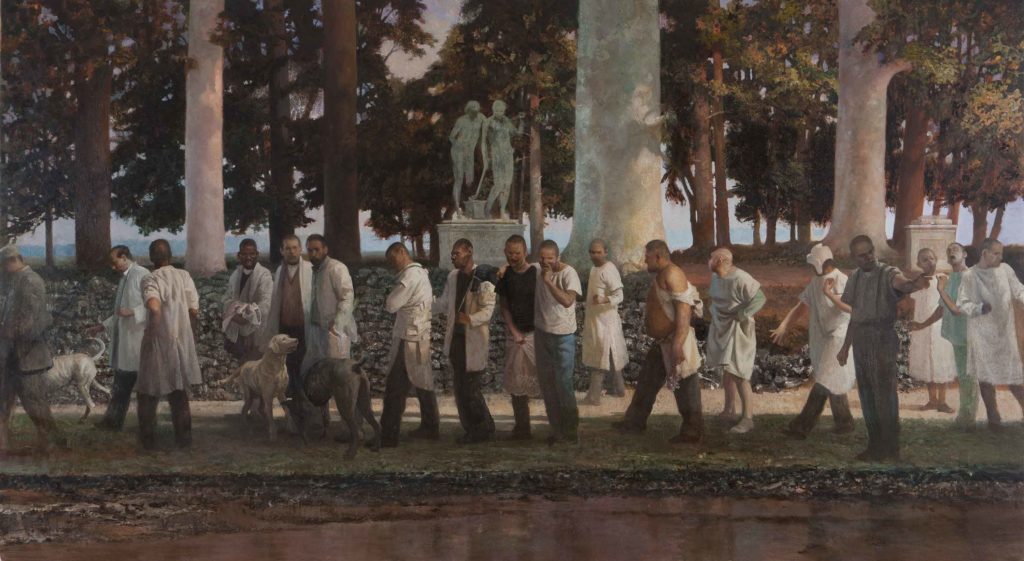
Vincent Desiderio, “Men in Snow,” 2016, oil on canvas, 77 x 97 in., private collection
DM: Should we stop prioritizing originality? So much art tries too hard to look contemporary.
VD: You mean, “If it looks like the avant-garde and smells like the avant-garde, it’s not the avant-garde.” In any given era, there are legions of artists doing exactly what their times require. They are seen as cutting-edge but are actually what we call “academic.” They traffic in officious demonstrations of correctness. Those who govern the art market promote the belief that the classic avant-garde never ended; a “ghost allegory” of the avant-garde is perpetually floated above our heads.
DM: It’s a copy of a copy, but we believe it’s as exciting as the original.
VD: That’s right. But in periods of academic ennui, there generally emerge individuals who stand in stark contrast to their times. Ironically, they are seen as the embodiment of their times. It is as if the flint that sparks originality is embodied in a rapid shift or collapse of categorical assumptions. This is where brilliance occurs — the stark realignment of factors in opposition to the times. Originality has more to do with the “real” than the “new.”
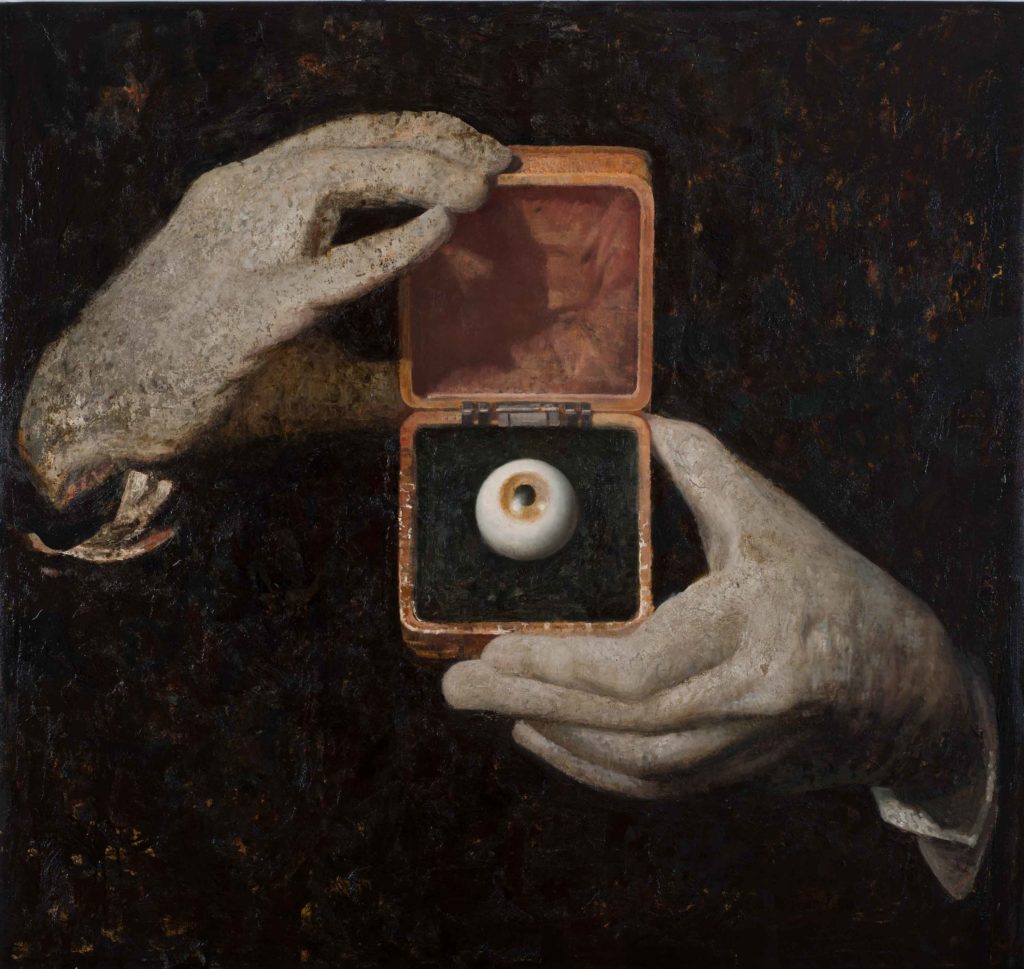
Vincent Desiderio, “Hitchcock’s Hands,” 2012, oil and mixed media on canvas, 64 x 66 in, courtesy of the artist and Marlborough Gallery; photo: Bill Orcutt
DM: It’s almost like the creation of the universe.
VD: I have been accused of demanding too much of painting. A friend once said, “It’s painting, not philosophy.” I asked which model of thinking he himself had the greatest faith in — literature, music, science? — which rational system allowed him to think optimally. For me, art affords the greatest potential. At the moment of instinctual creation, incentive drives you toward the discovery.
DM: That moment of inspiration is like a lightning bolt.
VD: It’s about imagination, about being prepared. Louis Pasteur said, “Chance favors the prepared mind.” A moment of chance could be missed or overlooked. It is our state of preparation that allows us to take note of it.
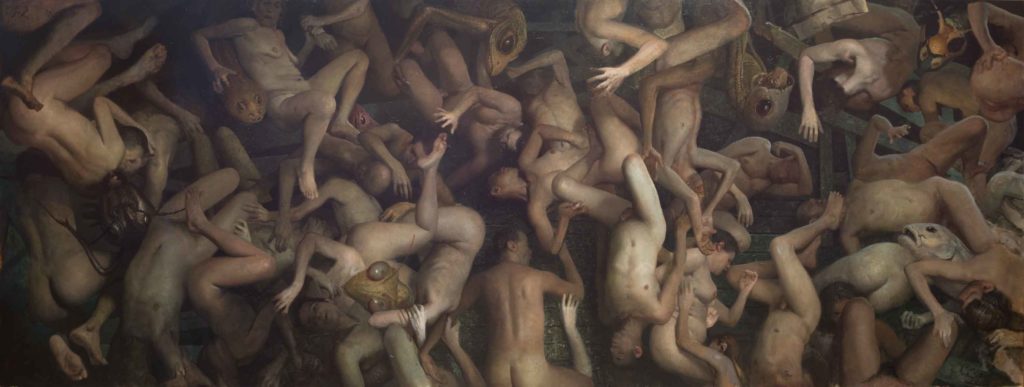
Vincent Desiderio, “Theseus,” 2016, oil on canvas, 62 x 164 in., courtesy of the artist and Marlborough Gallery; photo: Bill Orcutt
DM: Delacroix is important to you. Was he one of those individuals who turned his back on his times?
VD: Yes! In the wake of the Enlightenment, he, like other Romantics, sought a realm of intelligibility beyond the strictures of science. Form’s privileged position over color had for centuries underscored the rational component of painting. Its measurability and stability held a superior position above color, which was considered ephemeral. Delacroix emphasized the primacy of the half-light, describing direct light and cast shadows as “mere accidents.” This was important to the Impressionists and Post-Impressionists, but there is another aspect of Delacroix that interests me.
In his retrospective at the Metropolitan Museum, four small pictures revealed a major conflict in his developing mind. This conflict, abundantly evident in his writing, concerned his preference for the Classical at the same time he sympathized with Romanticism. From his journals we know he preferred, for example, Mozart to Beethoven and Racine to Shakespeare. He was doubtful of Michelangelo’s over-emphasis on anatomy but fascinated by his terribilità. It can be said of Delacroix what has been said of his friend Chopin: he had the heart of a Classicist and the mind of a Romantic.
It is interesting to note how choice of subject matter can reveal deeper intentions enacted within the technical processes of the painting itself. The four Delacroix paintings I alluded to — “Michelangelo in His Studio,” “Tasso in the Asylum,” “Louis d’Orléans Showing His Mistress,” and “Self-Portrait as Hamlet” — all contrast with similar subjects painted by his rival, Ingres. They also reveal Delacroix’s proclivity for Mannerism.
Whereas Ingres depicted the worldly Raphael, Delacroix painted the brooding Michelangelo. Though they both illustrated scenes from the Renaissance poet Ariosto’s Orlando Furioso, Delacroix also painted Tasso, the quintessential Mannerist poet, locked away in an asylum. Delacroix painted himself as Hamlet, the Mannerist protagonist incapacitated by doubt, and revisited that drama in graphic works.
It is “Louis d’Orléans Showing His Mistress” that best reveals the essence of Delacroix as colorist while underscoring his critique of the “truth” in form. This work is small and not well known, yet it neatly displays the subversive nature of half-light. The subject is taken from a fable in which Duke Louis, a great seducer, tricks the husband of his mistress in a peculiar way. He covers the lady’s head with a sheet while allowing the husband to admire her naked body; he never realizes it’s his own wife. Delacroix makes us privy to both sides of the sheet. On the left, bathed in direct light, is the voluptuous body observed by the husband. On the right in the indirect glow of reflected light is the wily duke cavorting with his love. The ruse is a “play within a play” or, as Picasso would say, “a lie through which the truth is revealed.”
Vincent Desiderio, “Un’Istoria,” 2011, mixed media and oil on canvas, 60 1/4 x 108 1/4 in., private collection; photo: Bill Orcutt
DM: We can learn the history of human thought just through painting. It’s absurd to say that painting is dead or to try to categorize one style of vision within a certain era and not let it carry over into present works. Painting is a shared exploration of the psychology of vision and relationships to the world.
VD: I agree. In a sense, we painters are historical nomads. No longer believing in the inevitability of formal development, recognizing that the classic avant-garde is a thing of the past, we are free to reinvestigate the deep secrets of painting’s history.
> Visit EricRhoads.com to learn about more opportunities for artists and art collectors, including retreats, international art trips, art conventions, and more.
> Sign up to receive Fine Art Today, our free weekly e-newsletter
The Copley Society of Art has announced its National Marine Art Exhibition, featuring works from artists across the United States. Coastal New England is the inspiration for “Connected Land and Sea,” recognizing the Copley Society of Art’s legacy in the region and reflecting the important intersections between the land and the sea.
From the organizers:
The Copley Society is honored to welcome the nationally-recognized artist Donald Demers to jury this exhibition and to award several artists for their outstanding thematic creations. The Alden Bryant Award and the Gazzola Family Award are among the several distinguished cash prizes to be presented.
The exhibition runs through August 22, 2021 in the Upper Gallery, located at 158 Newbury Street, Boston, MA.
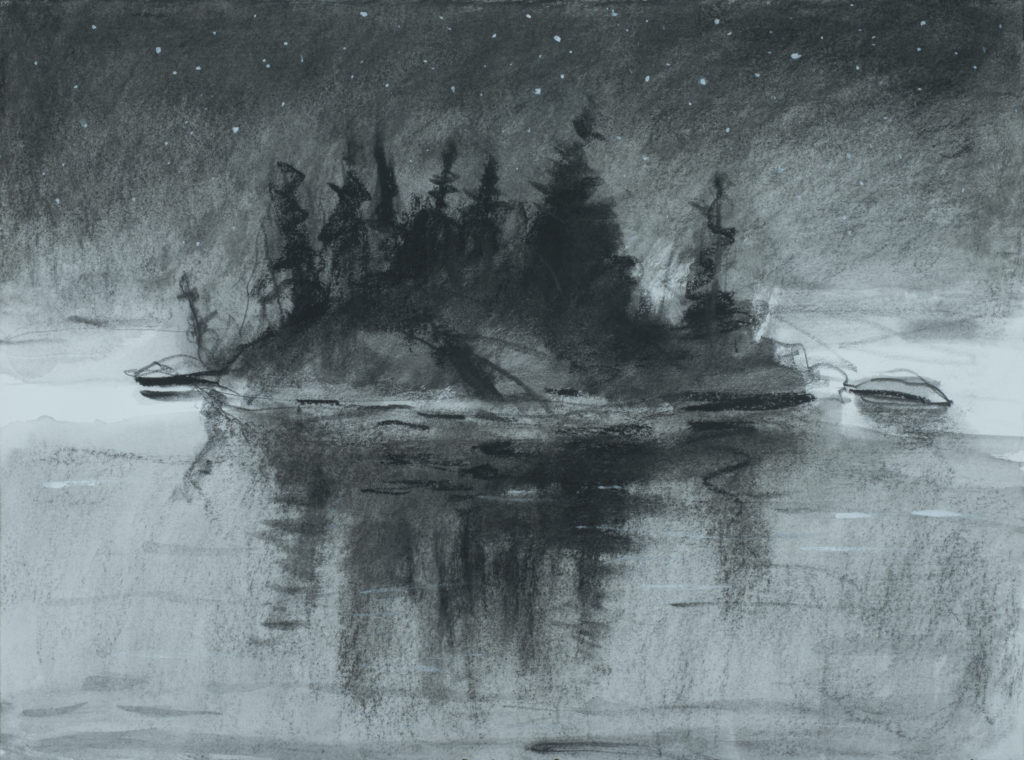
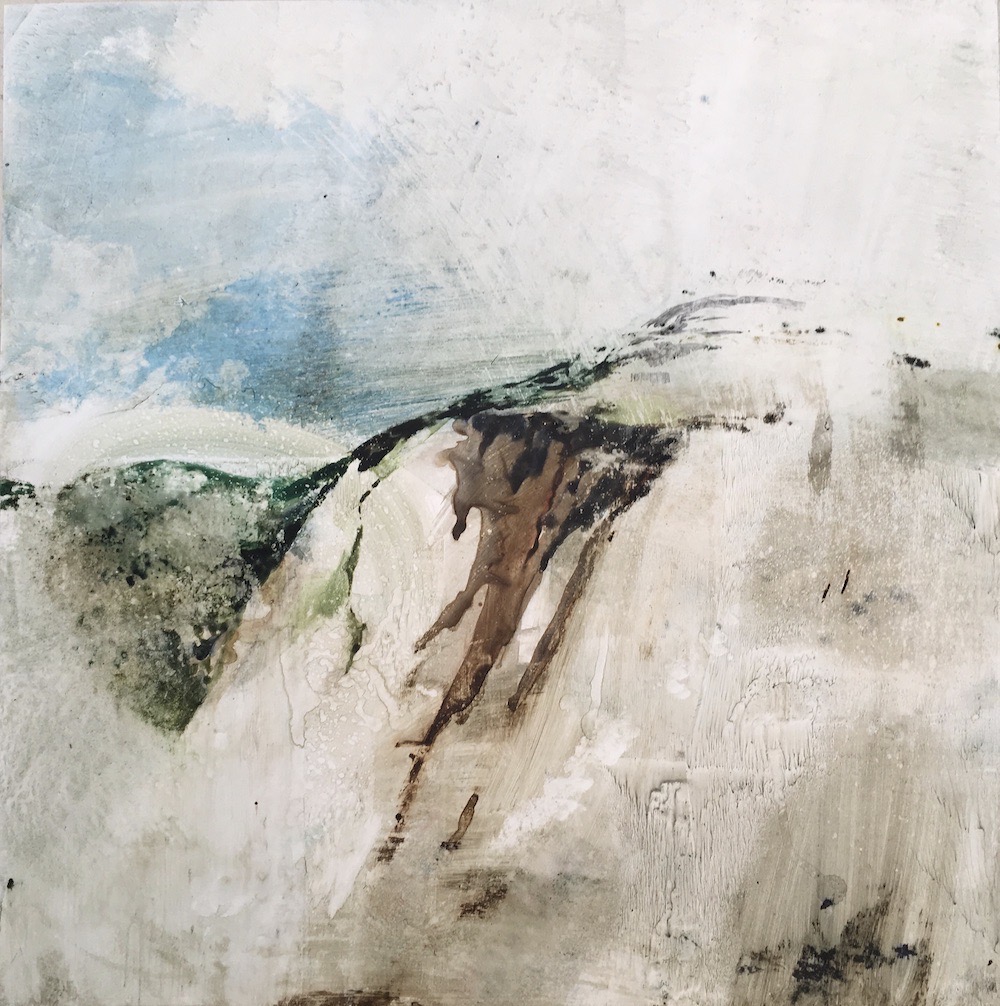
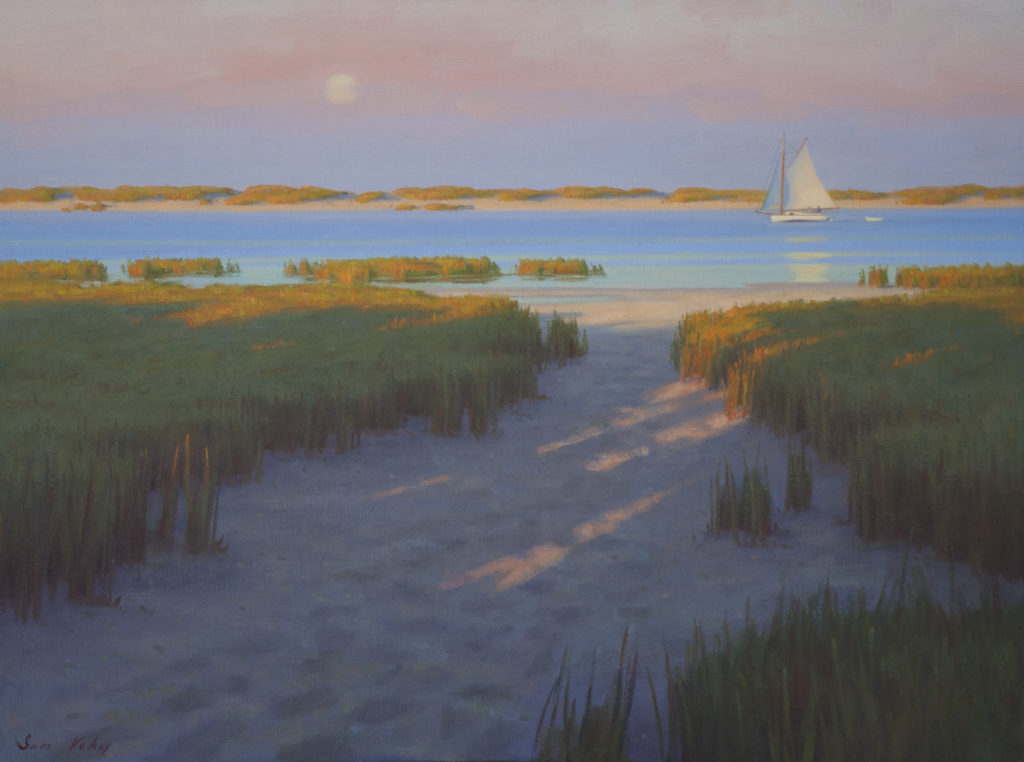
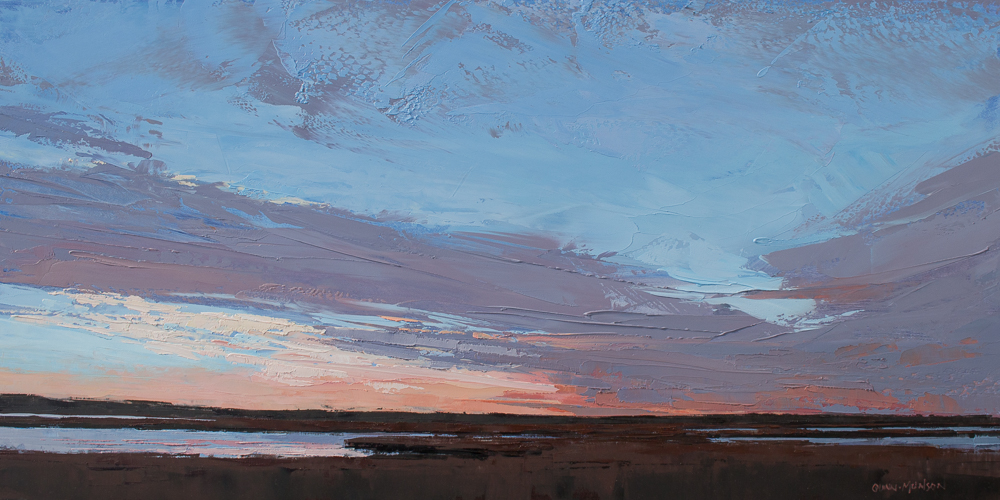
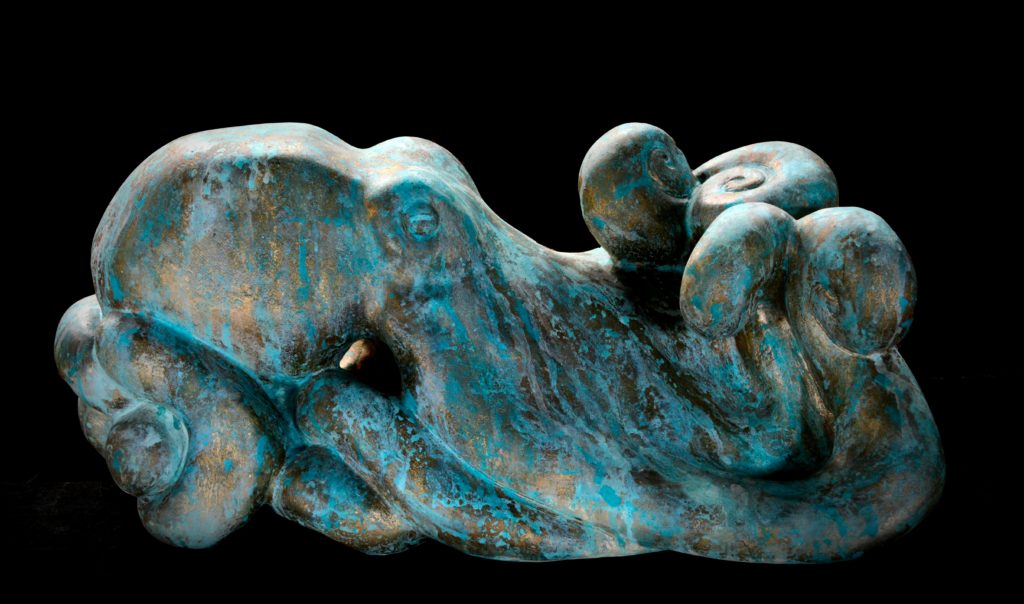
Joe Norris, “Magic Island at Midnight,” charcoal on paper, 16×20″Ginny Zanger, CA, “Dunes of Memory,” watercolor, 30×30″Sam Vokey, CM, “Shadows and Light, Sun and Moon,” oil on linen, 24×30″Deborah Quinn-Munson, “Late Day Light,” oil, 20×38″Serena Bates, “Leviathan,” hydrostone, 10x8x18″
Selected Artists:
Daniel Ambrose – Serena Bates – John Caggiano – Kathleen Caswell – Sally Ladd Cole – Dan Cook, CA – Ray Crane – Cindy Crimmin, CA – Jeff Drake – Austin Dwyer – Mike Eagle – Christina Eckerson – Bill Farnsworth – Christopher Forrest – Paul Garnett – Robin Herr, CA – Laureen Hylka – Tom Kallechey – Anna Kasabian – Charlie Longtine – Maria Luongo, CM – Susan Lynn – Joe Norris – Ed Parker – Heather Patterson – Deborah Quinn-Munson – Katherine Richmond – Janine Robertson, CA – Jeanne Rosier-Smith, CM – Marie Sapienza – Tony Schwartz, CA – Sam Vokey, CM – Ginny Zanger, CA
> Visit EricRhoads.com to learn about more opportunities for artists and art collectors, including retreats, international art trips, art conventions, and more.
> Sign up to receive Fine Art Today, our free weekly e-newsletter
Chantel Lynn Barber yearns to promote the human spirit in her work. She believes that when it comes to the human race, there is more that unites than divides. There is beauty in everyone, regardless of whether they measure up to society’s definition of beauty. Not only their joys, but their sorrows too. She wants to show the beauty in the human condition.
Chantel is on a journey to capture the vision in her mind’s eye — the one blood we as humans share. And she does it all in acrylic — with strong color, energetic brushwork, light and story. Her loose style draws the viewer’s attention, visually beckoning them to wonder at the essence of life.
Chantel is a Signature Member of the International Society of Acrylic Painters. She is a member of the Portrait Society of America, The National Oil & Acrylic Painters’ Society, and American Women Artists.
Selected Award Highlights
Best Acrylic 10th Annual Plein Air Salon Competition 2020
Award of Excellence – National Oil & Acrylic Painters’ Society 2020 Spring Online International Exhibition
Finalist – BoldBrush Painting Competition, March 2020
Finalist – BoldBrush Painting Competition, January 2020
Finalist Outside the Box Category – Portrait Society of America’s Members Only Competition, December 2019
Honorable Mention – International Society of Acrylic Painters All-Member Online Exhibition, December 2019
Winner AcrylicWorks 7: Color and Light Peak Media 2019 Acrylics Competition
Finalist – BoldBrush Painting Competition, August 2019
Award of Excellence – National Oil & Acrylic Painters’ Society 2019 Spring Online International Exhibition
Finalist – BoldBrush Painting Competition, March 2019
Winner AcrylicWorks 6: Creative Energy North Light Books’ 2018 Acrylics Competition
Winner Strokes of Genius 9: Creative Discoveries North Light Books’ 2016 Drawing Competition
Master Class Finalist – Art Muse Contest, November 2018
Master Class Finalist – Art Muse Contest, February 2018
Outstanding Acrylic – BoldBrush Painting Competition, January 2018
2017 Annual Award Winner Master Class – Art Muse Contest
Master Class Finalist – Art Muse Contest, October 2017
Master Class Winner – Art Muse Contest, May 2017
Finalist – BoldBrush Painting Competition, February 2017
2nd Place – BoldBrush Painting Competition, December 2015
As part of our effort to continue to help artists and art galleries thrive, we’re proud to bring you this week’s “Virtual Gallery Walk.” Browse the artwork below and click the image itself to learn more about it, including how to contact the gallery.
Stunning Moment by Ronald Tinney, Oil, 30 x 24 in. (38 x 32 in. framed); Anderson Fine Art Gallery
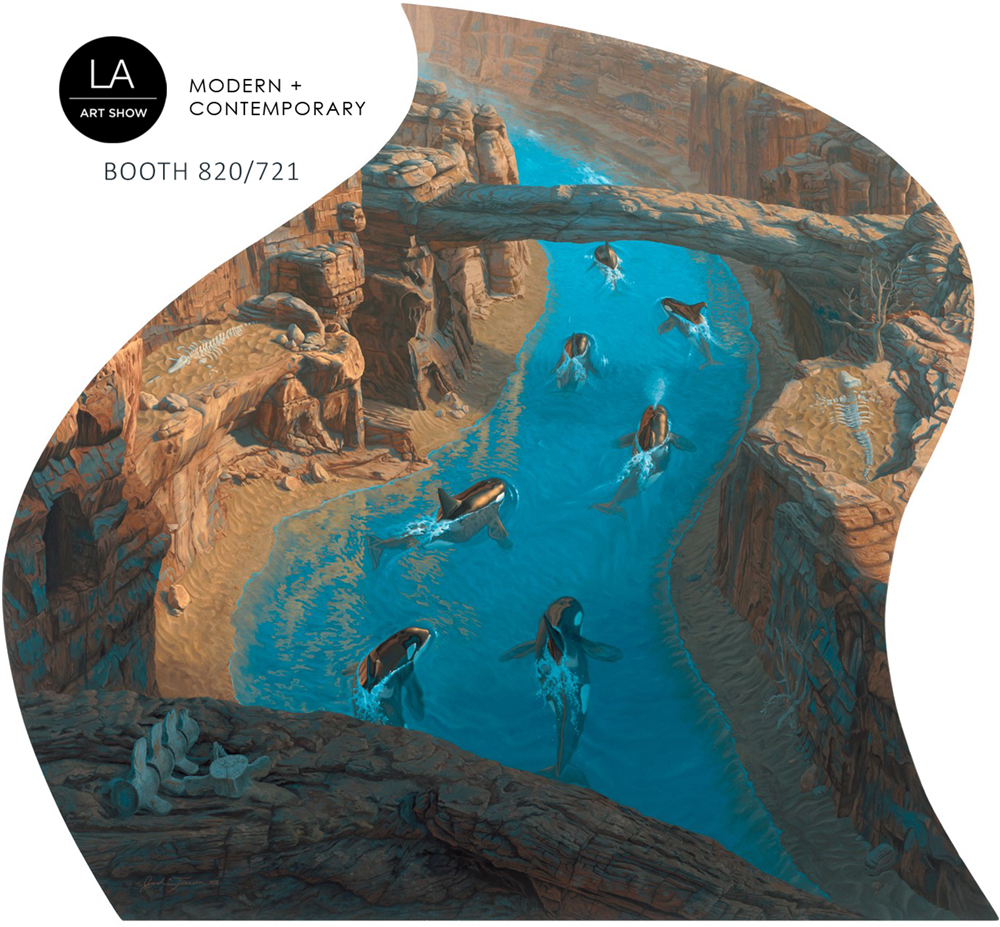
Peace Like A River (on view at the LA Art Show, booth 821/720) by Josh Tiessen, Oil on panel, 33 x 34 in., Signed; Rehs Contemporary
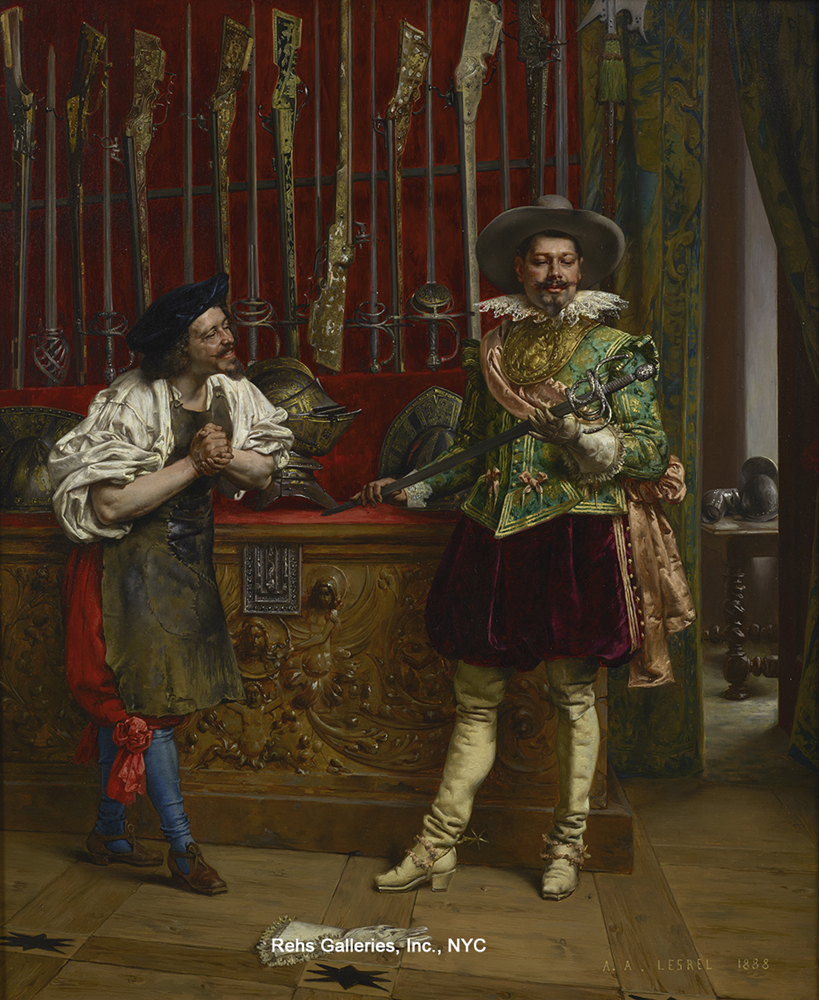
A New Sword by Adolphe Alexandre Lesrel (1839 – 1929), Oil on panel, 21 3/4 x 18 in., Signed and dated 1888; Rehs Galleries, Inc.
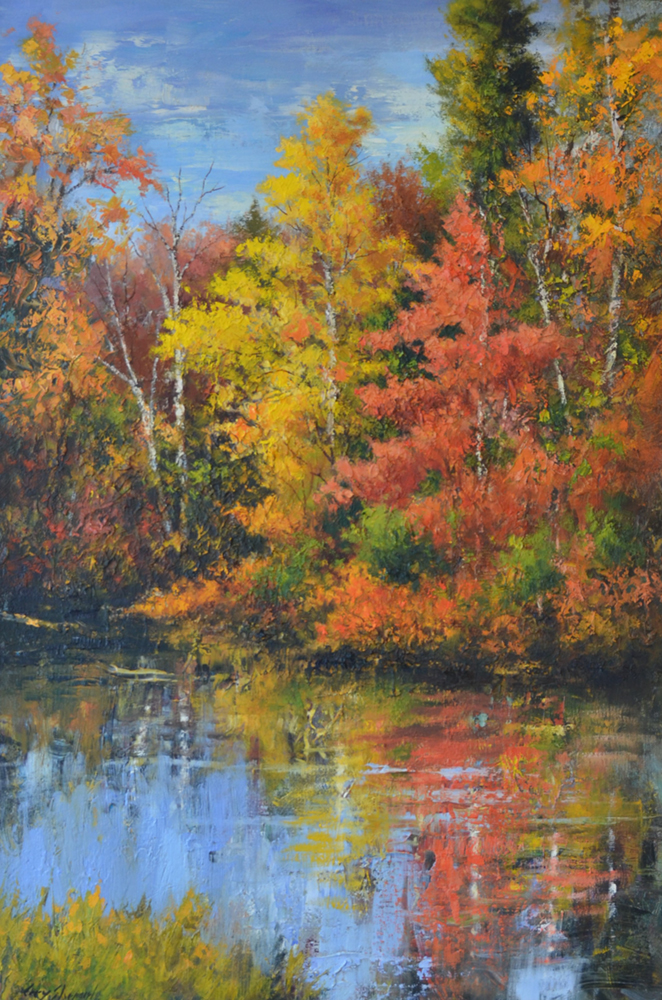
Autumn Tapestry by Gary Shepard, Oil on canvas, 36 x 24 in. (43 x 31 in. framed); Vermont Artisan Designs
Want to see your gallery featured in an upcoming Virtual Gallery Walk? Contact us at [email protected] to advertise today. Don’t delay, as spaces are first come, first served, and availability is limited.
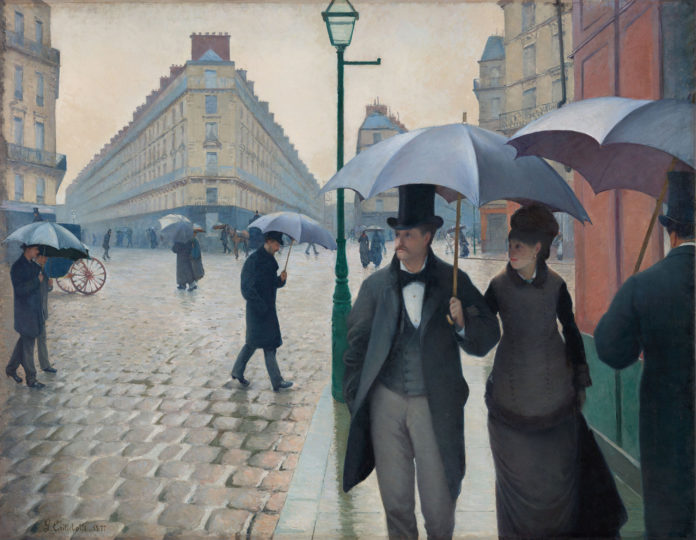
Gustave Caillebotte (1848–1894), "Paris Street: Rainy Day," 1877, oil on canvas, 83 1/2 x 108 3/4 in.
Art Institute of Chicago,
Charles H. and Mary F.S. Worcester Collection
Thoughts On “Paris Street: Rainy Day” > One of New York’s most stylish women, reflects on the famous – and fashionable – painting.
BY DAVID MASELLO
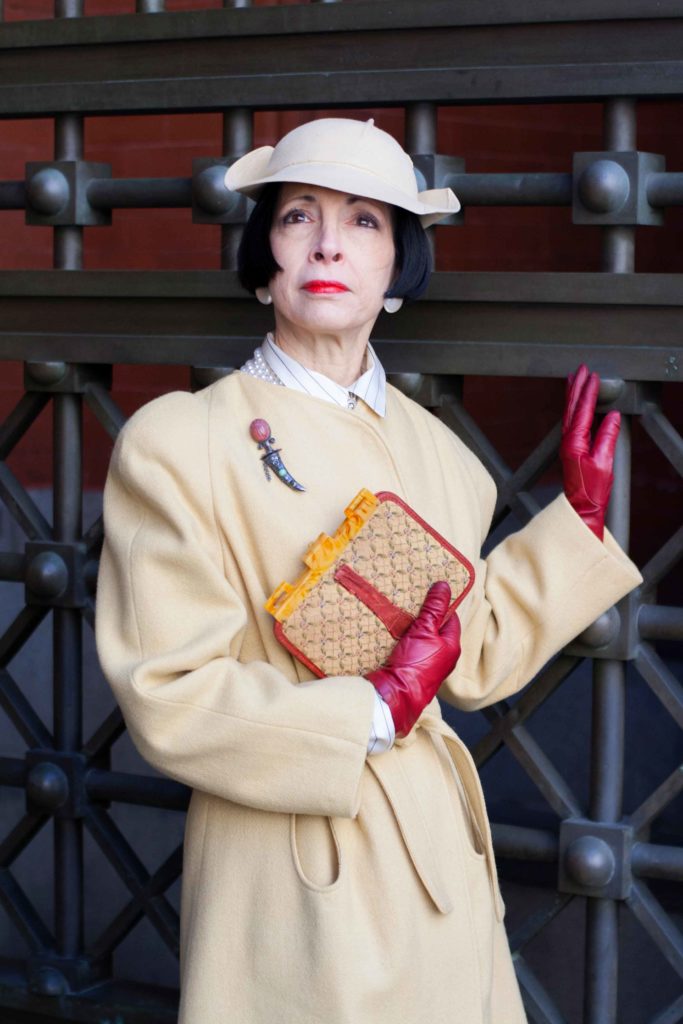
Linda Zagaria likes the past. When she puts on one of her vintage 1930s hats, perhaps lowering its veil or reshaping a broad brim, and walks into New York’s National Arts Club, where she served as president from 2016 to 2020, she is as much a woman of the present as she is of the (fashionable) past. So, upon first seeing Gustave Caillebotte’s 1877 “Paris Street: Rainy Day” at the Art Institute of Chicago, with its depiction of an elegant couple strolling arm-in-arm beneath an umbrella, Zagaria said to herself, “That’s where I want to go, that version of Paris.”
Linda Zagaria, Executive Director, Beaux Arts Alliance, and President, The National Arts Club, New York City, 2016-2020
She has been to Paris, likely strolling the very intersection depicted, and while she loves the city, she acknowledges that what we see in the painting no longer exists. Yet it does, in part, since the Haussmann buildings are still there, as well as the moody hues and gray cast of the sky. “It’s a bygone era, a version of Paris we’ll never see again, but it’s been captured here, not only that particular part of the city, but that one particular moment, that day, that rain,” Zagaria notes. “Yes, it makes me a bit wistful to look at the painting, but there’s nothing wrong with that. It evokes that in me.”
Zagaria is recognized as one of New York’s most stylish women (for example, images of her appear in Ari Seth Cohen’s fashion chronicle Advanced Style), but she wears that designation with a sense of humor and lack of pretension. She cites her fascination with clothes of the 1930s and ’40s (“though, of late, I’ve been venturing into the ’50s”) as beginning with Fred Astaire and Ginger Rogers movies she watched on television as a girl, growing up in Brooklyn. “I was mesmerized by Fred and Ginger,” she says, “the dancing, the elegant clothes, the magnificent sets.”
When Zagaria first saw the Caillebotte canvas, far larger in size than she had imagined, she likens the experience to “having entered a movie set.” She says, “The figures were that large and it felt as if I were suddenly occupying the street with them.” As every viewer does with this iconic painting, Zagaria suddenly assumed a starring role, for Caillebotte’s life-size figures appear ready to include everyone in their Paris. She says they loom so closely that many viewers wonder, “Will there even be room on the sidewalk for us all to pass?”
“The woman’s elegant outfit, beautifully trimmed in fur, the way the man is dressed, the neat mustache he sports, these are the details that first struck me,” says Zagaria, though she admits to a mild disappointment when she saw the pedestrian white frame that once surrounded the work (rather than a gold-toned one). “The painting deserved something more than that, perhaps something more of its period, the Beaux Arts,” Zagaria says, a fitting remark given that she also serves as executive director of the Beaux Arts Alliance, a nonprofit that promotes cultural links between France and the U.S.
Although the couple appear ready to meet the viewer momentarily, Zagaria is struck, too, by their off-center glance. “Every time I see a reproduction of the painting, I’m struck by the fact that they’re not looking at each other but at something else. Who is it they’re suddenly spotting — a friend across the Place de Dublin, or is she pointing to a hat in a shop? They’re not necessarily a romantic couple, but there’s a real romance to the picture. When I look at it, I do feel that I’m in that Paris.” And when New Yorkers spot Zagaria on the street, garbed in period outfits seemingly tailor-made for her frame, they, too, are aware of being in New York at a certain time in its history.
> Visit EricRhoads.com to learn about more opportunities for artists and art collectors, including retreats, international art trips, art conventions, and more.
> Sign up to receive Fine Art Today, our free weekly e-newsletter
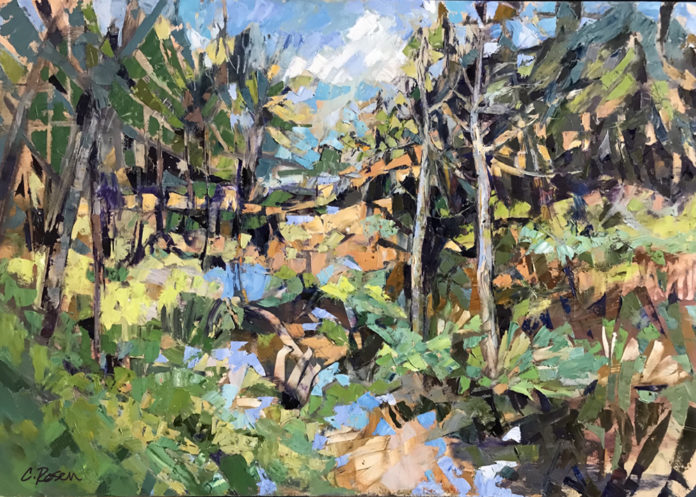
Cynthia Rosen paints with a contemporary vision that bridges the representational world with the elements of art often associated with the Impressionists, Expressionists, Futurists and Color Field painters. Her work has been recognized for helping to broaden the Plein Air community as she melds her love of nature with painting images that stretch beyond the traditional, finding her unique visual voice with a palette knife.
Rosen states “Our personal visual voices are our means of connecting and interpreting our ever-changing world. I pursue mine through improvisation while creating order. As soon as I embark on a path, I find new roadways opening up. While the size of my works vary, I have found my fascination with color and the movement a constant and in keeping with our fast moving world. The love of painting in the field to limitless color and ever-changing light is engaging and challenges both perceptions and expression while the studio allows for even greater personal expression and exploration of scale.”
Streamline Art Video recently released her video Cynthia Rosen Expressive Landscape Painting – Palette Knife In Plein Air Painting. She was and is an invited instructor at the famed Plein Air Convention. Cynthia has recently been featured in Practique des Arts and has also been featured in PleinAir Magazine, Southwest Art Magazine, American Art Collector, Outdoor Painter, The Artist’s Road, and Fine Art Connoisseur.
While she limits the number of events she attends, Cynthia has most recently participated in Plein Air Easton. In addition, she has been an invited artist to the prestigious Olmsted Invitational and Borrego Plein Air Invitational, receiving awards at both, and as of late participated in the selective Mountain Oyster Club Art Show as well as several other events, often garnering awards. Cynthia also gives several workshops each year.
PODCASTS:
“The Artful Painter: Letting Loose with Color”
“Art As Your Business: An Interview with Cynthia Rosen”
“Painting with A Palette Knife and More,” podcast with Eric Rhoads
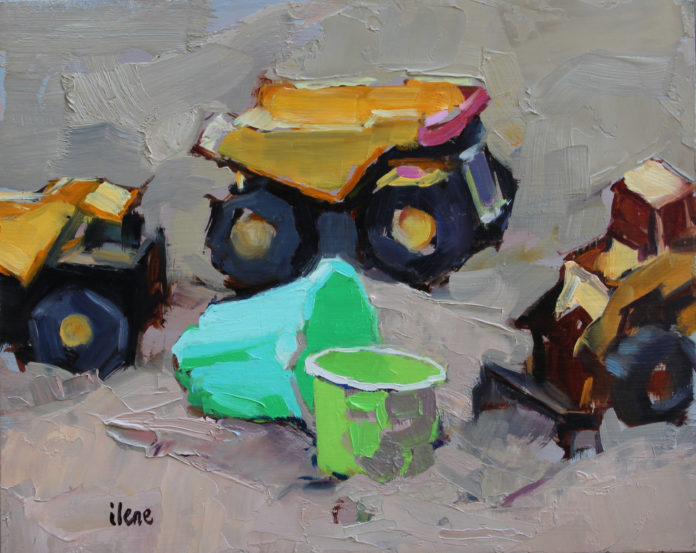
Ilene Gienger-Stanfield, "Sandbox," oil, 8 x 10 in.
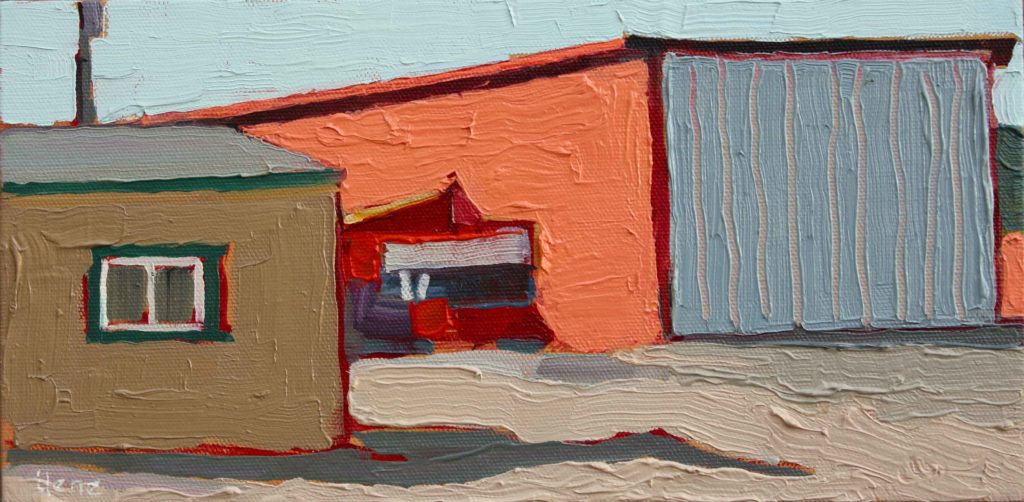
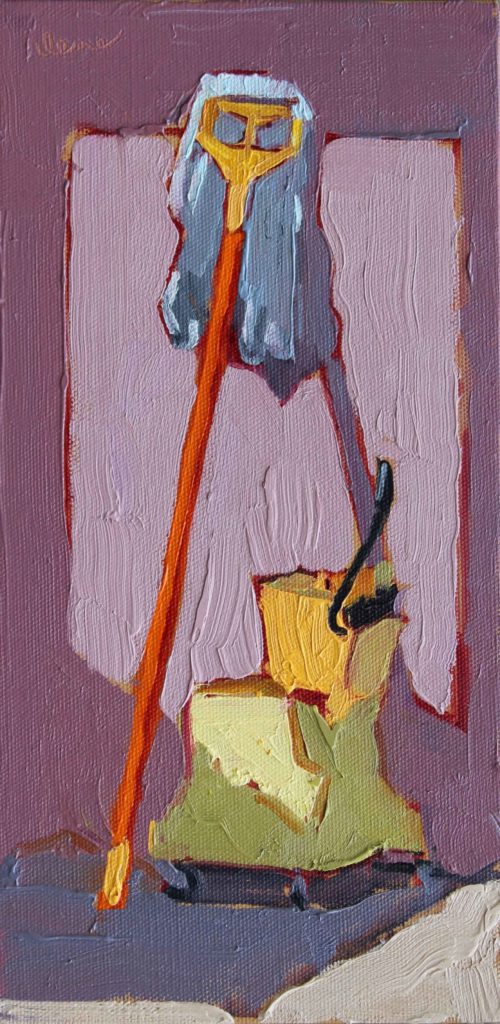
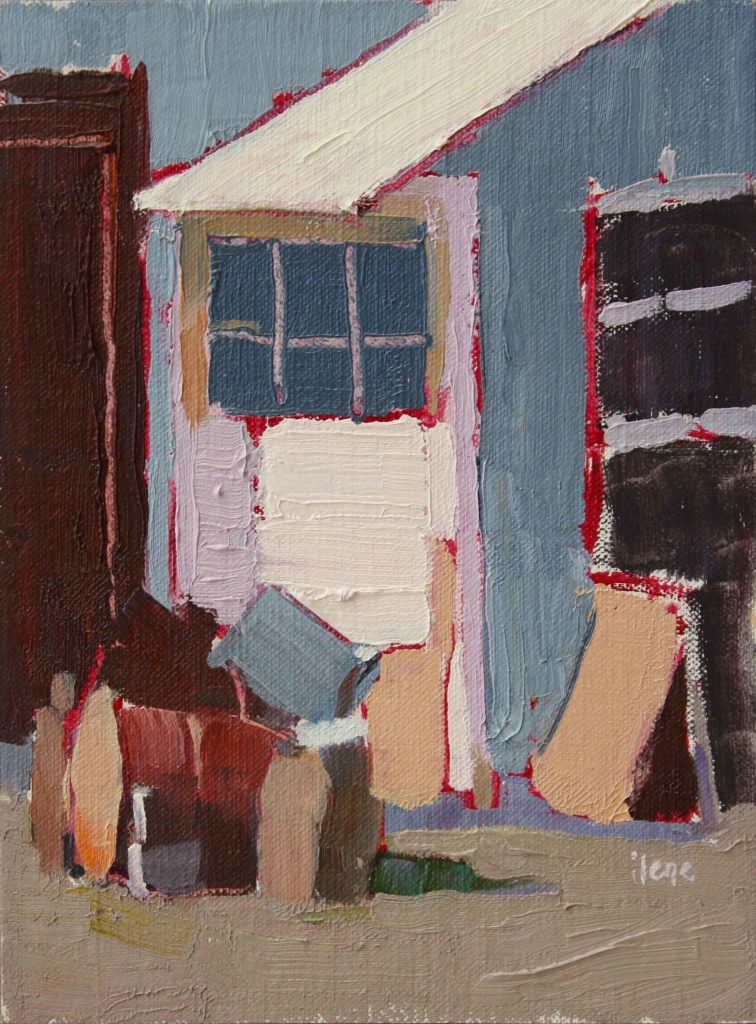
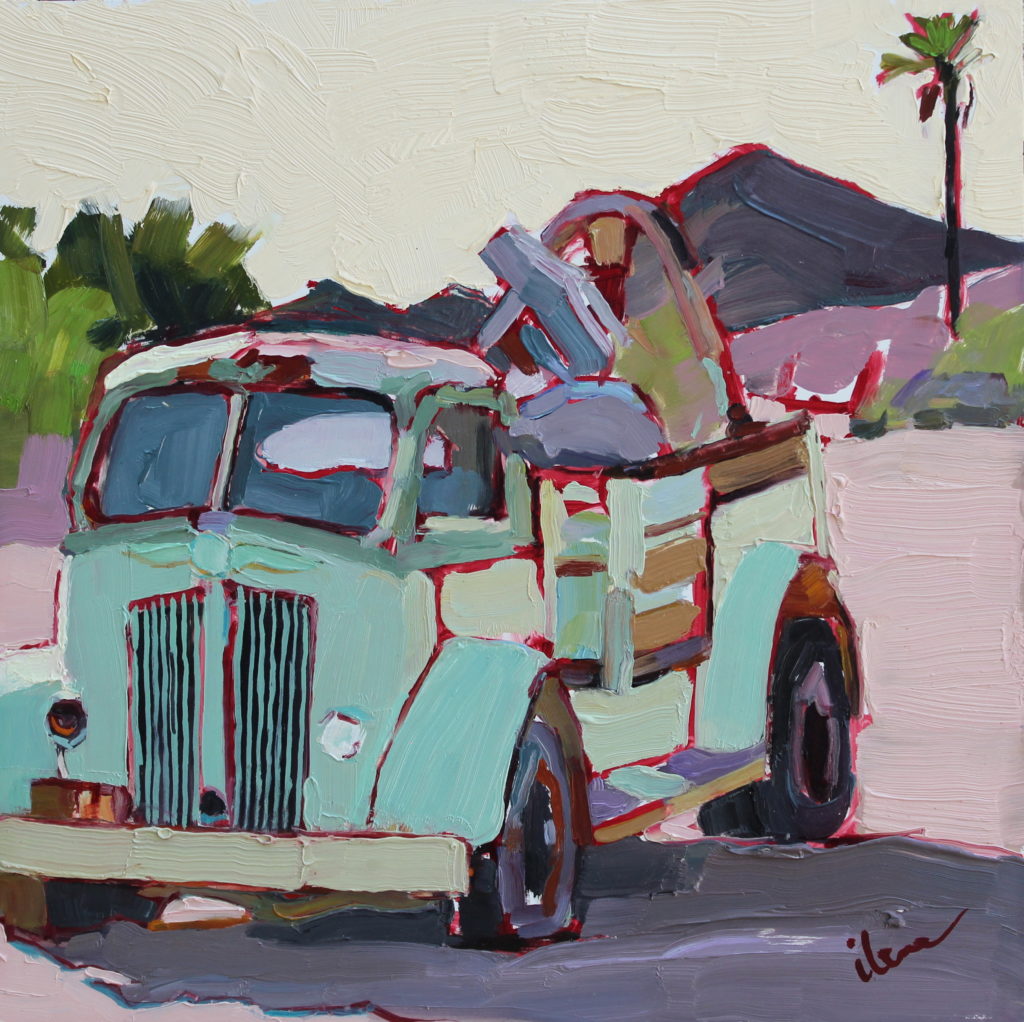
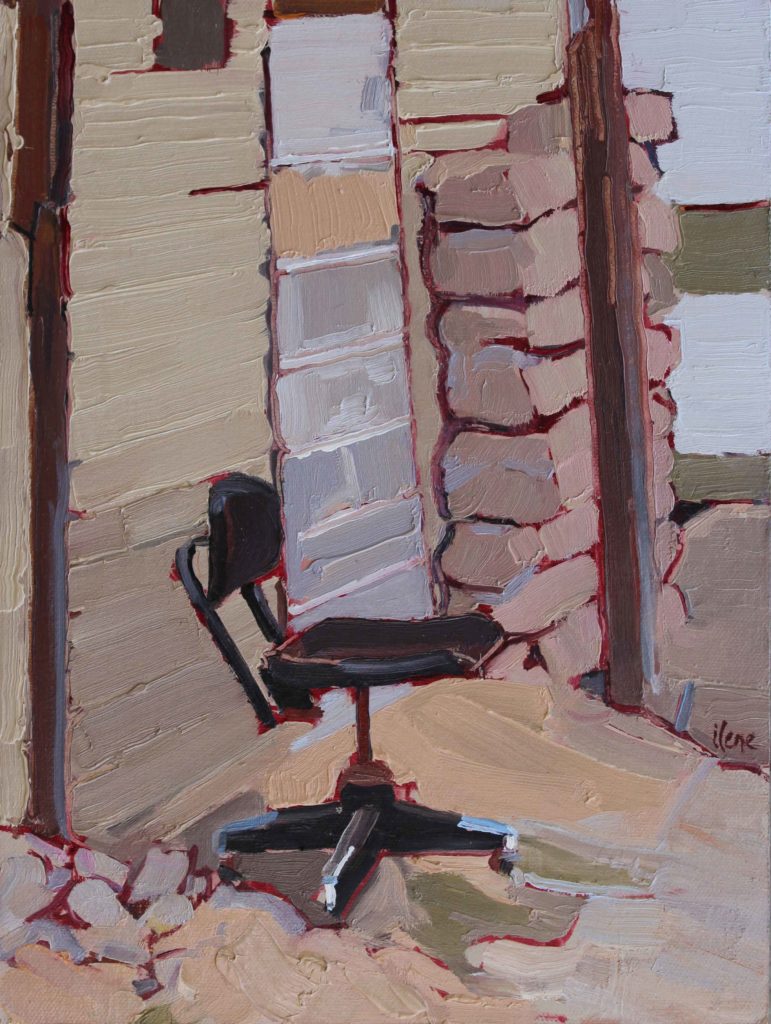
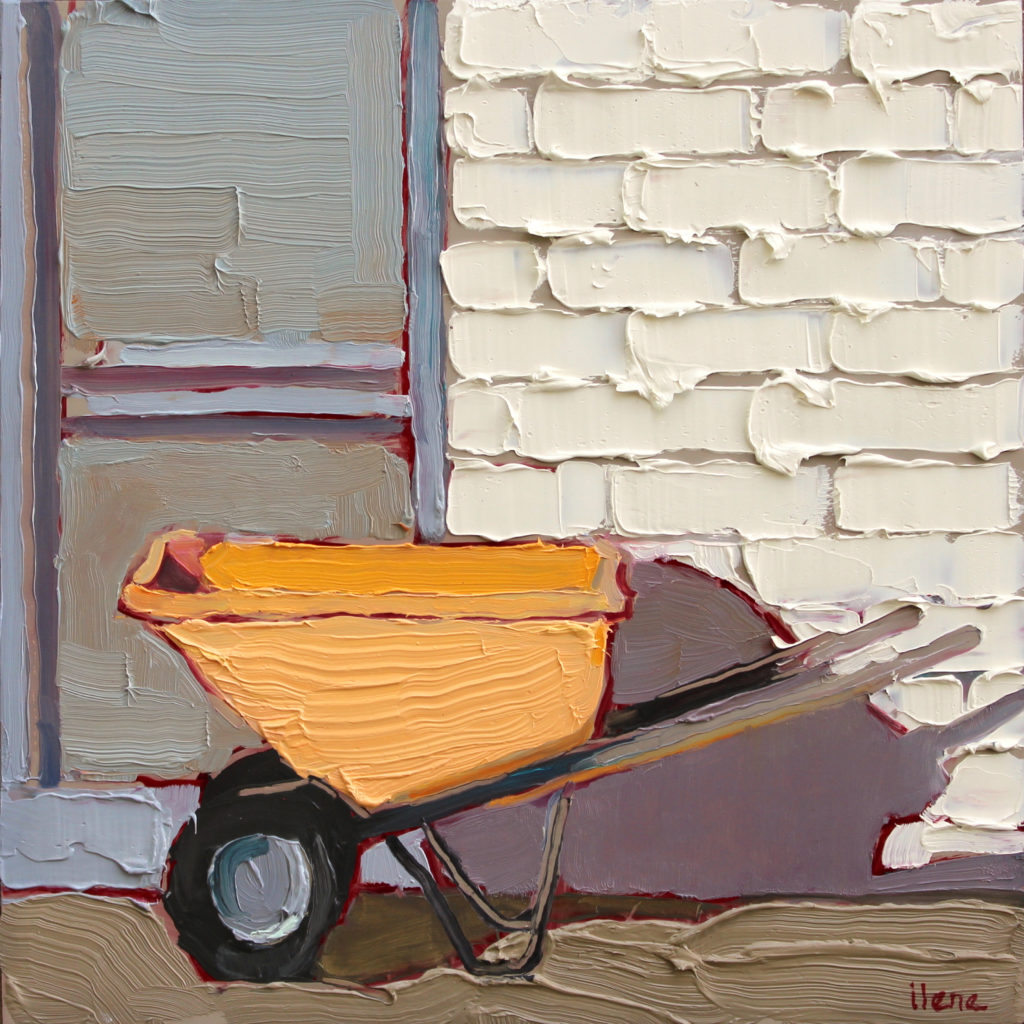
Plein air painters have an eye out for interesting subjects to paint while traveling to and from destinations. Ilene Gienger-Stanfield’s paintings portray an eye not for distant horizons but for more intimate subjects full of drama and character. Wheelbarrows, antiquated vehicles, garden tools, or a sandbox full of toys executed in thick passages of color, are familiar subjects in Ilene’s work.
Ilene Gienger-Stanfield, “Sunlit Warehouse,” 2020, oil, 6 x 12 in.Ilene Gienger-Stanfield, “Partners in Grime,” oil, 12 x 6 in.Ilene Gienger-Stanfield, “Purple Door,” oil, 8 x 6 in.Ilene Gienger-Stanfield, “World War II Bomb Loader,” oil, 10 x 10 in.Ilene Gienger-Stanfield, “On Social Security,” oil, 12 x 9 in.Ilene Gienger-Stanfield, “Masonry,” oil, 8 x 8 in.
Grants Pass Museum of Art is presenting a solo exhibit titled “Painting Outside” by Ilene Gienger-Stanfield, July 27 through September 10, 2021. There will be 25 of Gienger-Stanfield’s paintings on exhibit.
Grants Pass Museum (Oregon) is located in a beautiful artistic community and hosts a First Friday art walk. Details: www.gpmuseum.com
> Visit EricRhoads.com to learn about more opportunities for artists and art collectors, including retreats, international art trips, art conventions, and more.
> Sign up to receive Fine Art Today, our free weekly e-newsletter
Fill your mind with useful art stories, the latest trends, upcoming art shows, top artists, and more. Subscribe to Fine Art Today, from the publishers of Fine Art Connoisseur magazine.