
Home Blog Page 170

Narrative Paintings: Guillermo Lorca’s Painted Operas

0
Guillermo Lorca artist
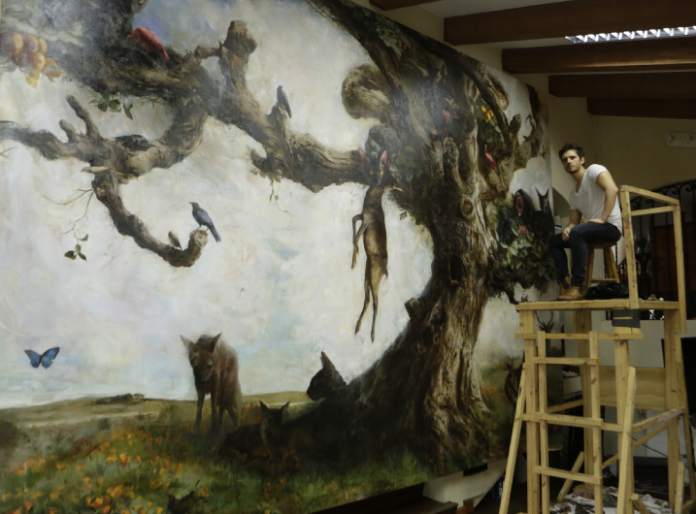
Guillermo Lorca painting "The Man of the Cats," 2016; photo: Jaime Arrau

A curious collection of characters are present Lorca’s painted operas depicting the darker sides of human psychology. Read about his narrative paintings, his time with Odd Nerdrum, his inspiration, and more in this interview.

BY DAVID MOLESKY

The Chilean artist Guillermo Lorca (b. 1984) and I first met about a decade ago at the master painter Odd Nerdrum’s farm in southern Norway. Initially he struck me as a South American James Dean, handsome and ruggedly attired. Lorca’s English was still undeveloped and became a source of much mutual laughter, but soon I realized how extremely well-read he is in English and Russian literature.

When he shared photographs of his work, I was floored, especially because I assumed someone with that much talent would betray more of an ego. It was hard to wrap my head around why Lorca had traveled so far to study with Nerdrum when he was already doing well in Chile, so I asked him directly. He replied without hesitation that the mission of this stay in the northern hemisphere was to ascertain Rembrandt’s painting secrets by studying his greatest works in the flesh (primarily in the Netherlands), and to learn more about those techniques from Nerdrum, who is considered by some a veritable Rembrandt Reincarnated.

While we were staying on Nerdrum’s farm, Lorca produced a dozen or so incredibly life-like self-portraits from a mirror. These paintings displayed a remarkable maturity in his establishment of pictorial hierarchies — knowing which areas to develop with thickness and detail, and which areas to leave looser and less defined. During breaks, Lorca and I would sit with Nerdrum and sip coffee. Lorca often tried to steer the conversation with pertinent questions like “What colors did Rembrandt use?”
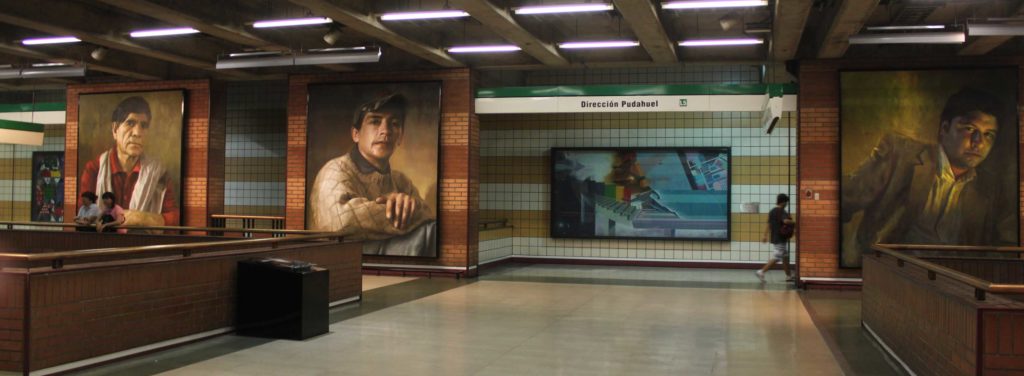
Several of Lorca’s portraits in a Santiago subway station

Equipped with his newly acquired experiences and Old Master wisdoms, Lorca unleashed a torrent of ambitious projects as soon as he returned to Chile. Among them were a series of colossal portraits depicting various character types — old, young, male, female — that were installed in a Santiago subway station. Lorca seems to have no trouble expanding the virtuosity I first glimpsed in his easel paintings into mural-sized compositions. Especially in larger works, he demonstrates an ability to paint accurately loose as well as thick and thin.

He not only uses paint to illustrate reality but can also make paint mimic materials in a manner that reminds us of Rembrandt, Velázquez, Sargent, Zorn, and Repin.

More recently, Lorca has been making dynamic paintings based on the digitally collaged images he creates with Photoshop. These feature the same ferocious action seen in Rubens’s hunting scenes, for example the masterly “Wolf and Fox Hunt” at New York’s Metropolitan Museum of Art. These large, ambitious works highlight the intense interactions between innocence and the violence of nature. Lolita girls, dogs, meat, blood, milk, birds of prey, and fire form the cast of characters in Lorca’s painted operas depicting the darker sides of human psychology.
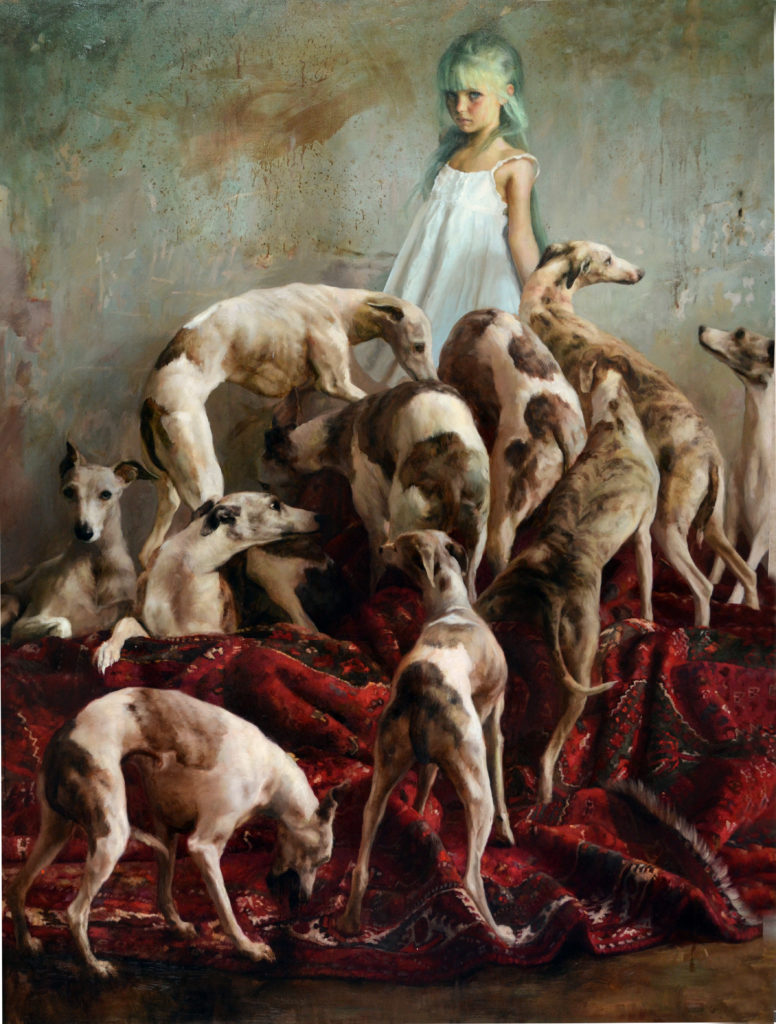
"Laura and the Dogs," 2012, oil on canvas, 78 3/4 x 59 in., private collection, Chile
Guillermo Lorca, “Laura and the Dogs,” 2012, oil on canvas, 78 3/4 x 59 in., private collection, Chile
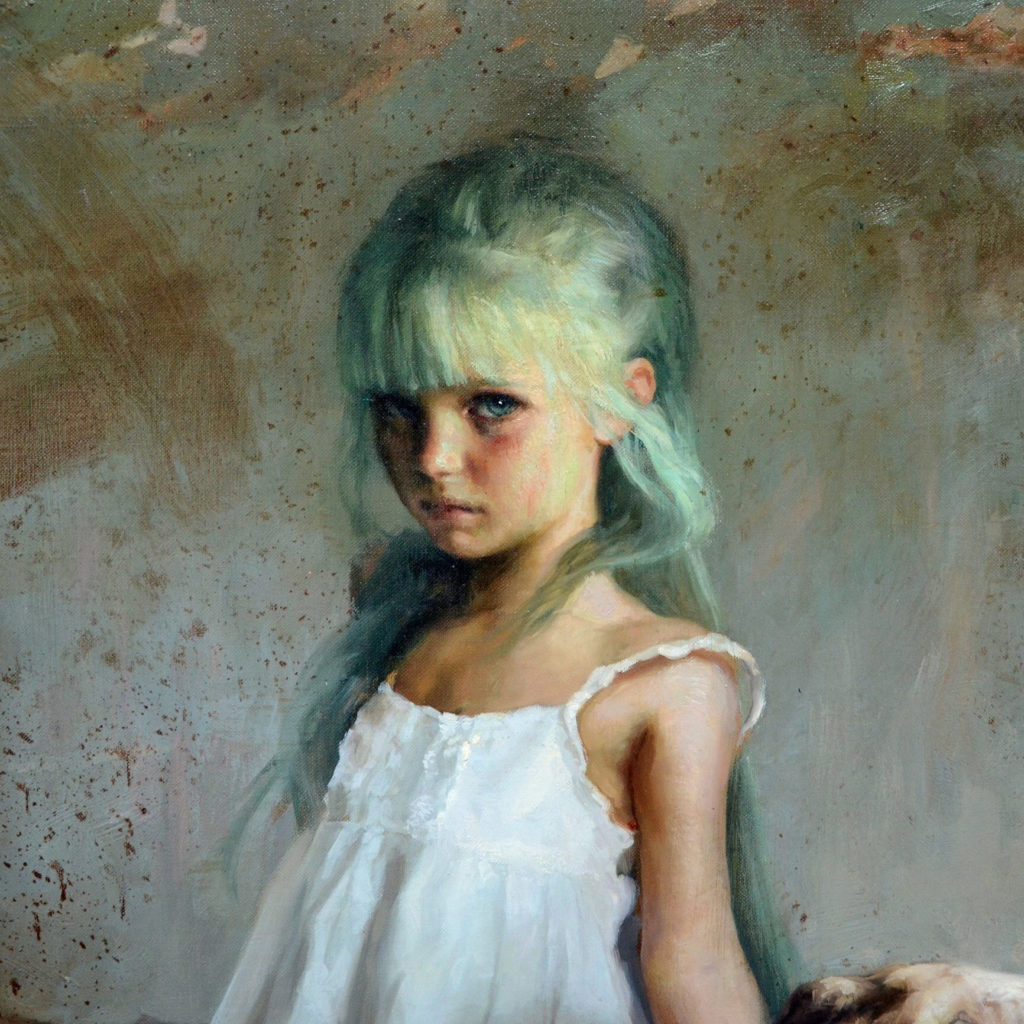
detail of Laura’s head
Detail of Laura’s head

Recently I caught up with Lorca on the phone:

David Molesky: I watched some of the online video interviews about your exhibition at Santiago’s Museo Nacional de Bellas Artes, but I couldn’t understand the Spanish dialogue. Tell me about that show.

Guillermo Lorca: It was great! I was very happy with the installation and how the audience accepted my work; more than 100,000 people attended. I exhibited 24 paintings made over three years, many of them large. To have work in that sort of space is truly a luxury; what’s more, I had visited it as a child and dreamed I would exhibit there one day. I’ve been really lucky.
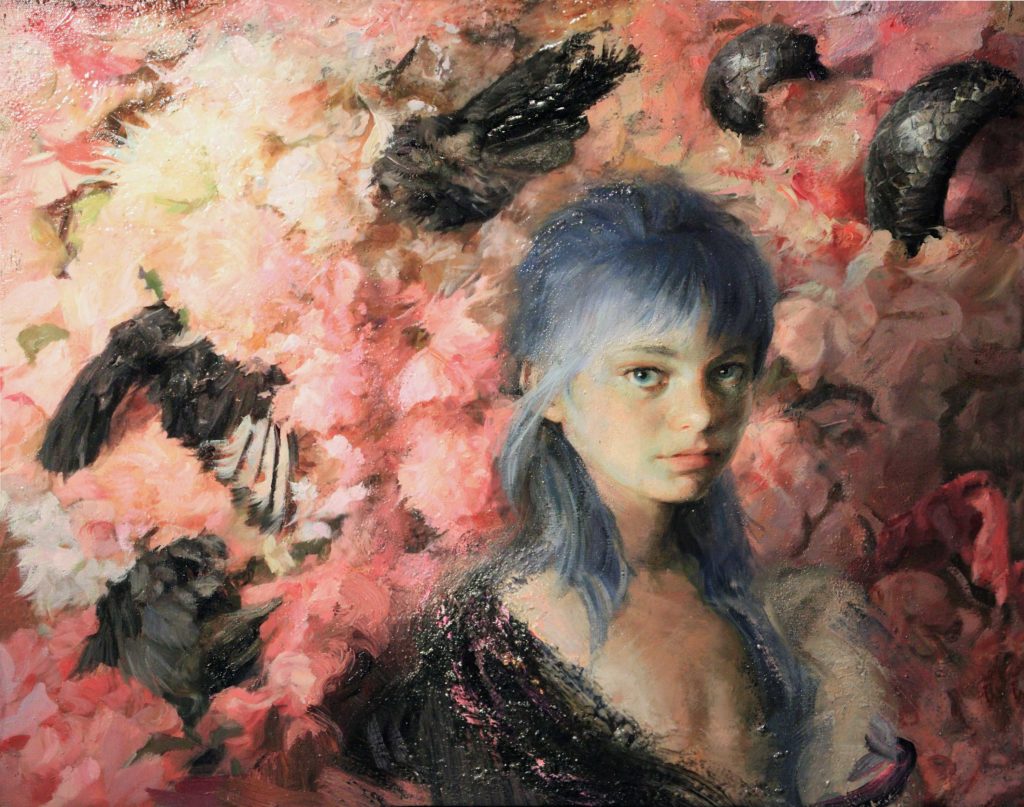
"The Girl of the Birds," 2018, oil and acrylic on canvas, 19 2/3 x 27 1/2 in., private collection, Chile
Guillermo Lorca, “The Girl of the Birds,” 2018, oil and acrylic on canvas, 19 2/3 x 27 1/2 in., private collection, Chile

DM: I’ve always been impressed by how you can make working large look so easy. What determines scale in your work?

GL: I like to make the characters in a scale similar to the viewer’s. I start with an idea, then the composition determines the format. Sometimes I can’t help but make something very large. It’s satisfying to be immersed in a painted world; a large format helps me achieve that objective.

DM: Tell me about the colossal portraits.

GL: Those had a very different intention compared to my latest series. I had the idea back in 2007 while studying with Nerdrum. I loved the series of small portraits that he made for his exhibition in Porsgrunn [Norway]. I asked myself how the language of portraiture would work at an enormous scale, like a billboard advertisement.

DM: Who are the young people in your paintings?

GL: In earlier works, I painted Lolita characters based on models who were either my friends or my friends’ sisters. More recently, I have painted children who play roles to represent a different point of view. The girls with colored hair are characters from another world. In some paintings, I modify my models or mix them together; I might put one head on the body of another or modify their features until I create a being who doesn’t actually exist, which is the case in “Laura and the Dogs.”
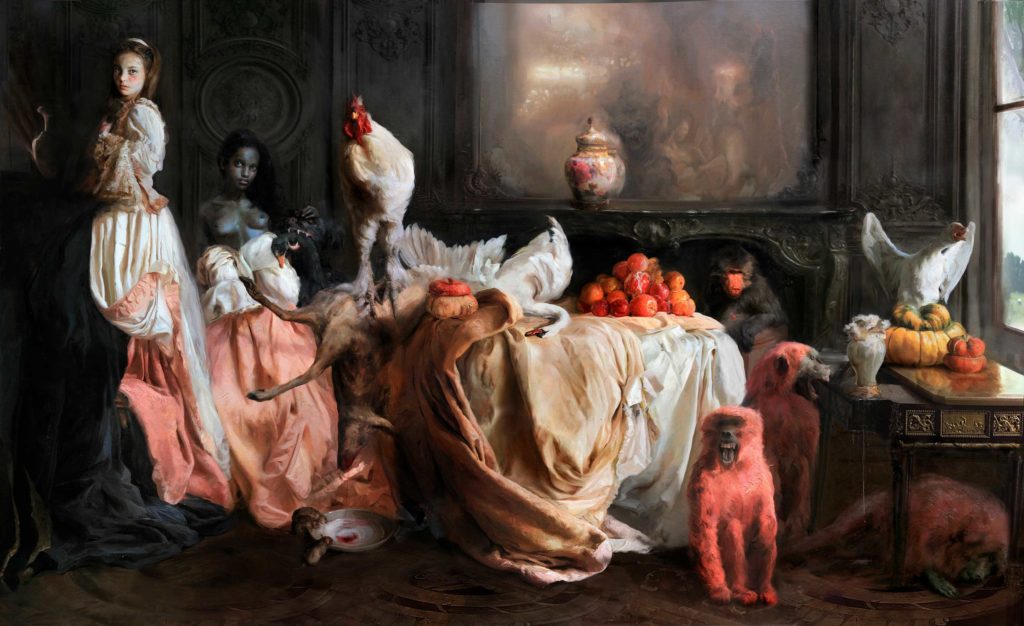
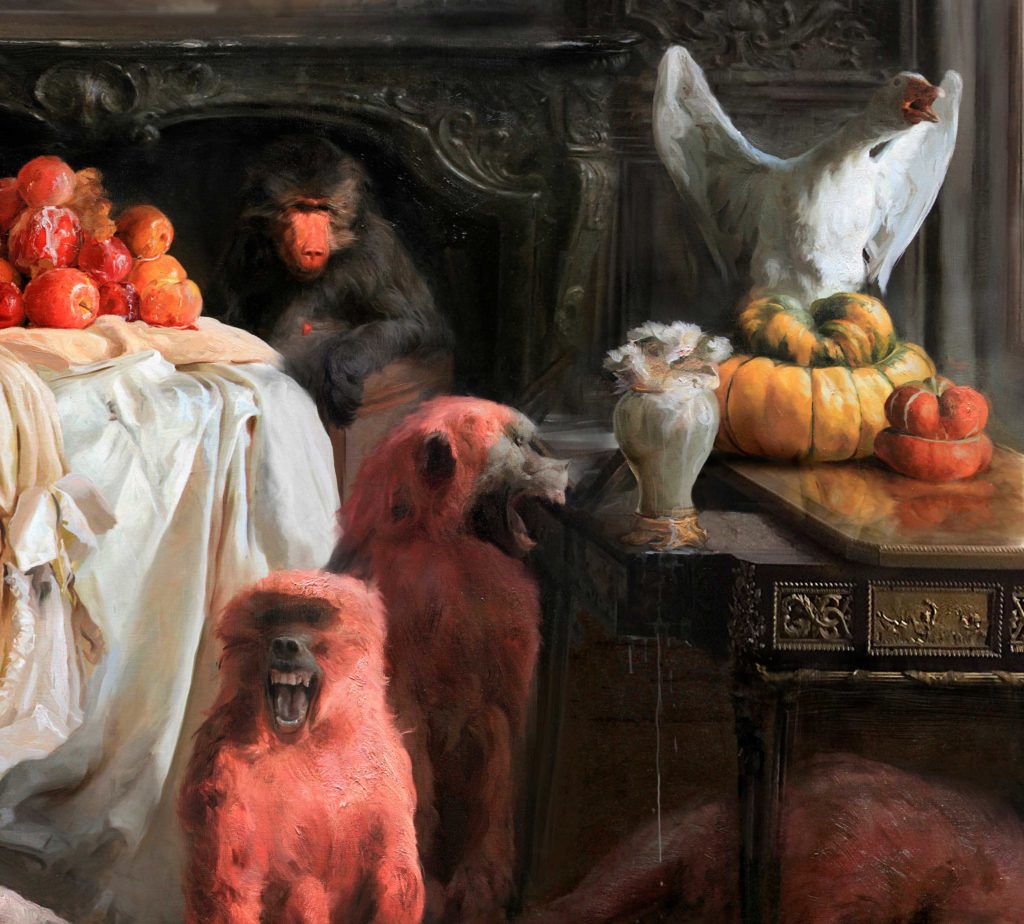
"Yaksha’s Party," 2018, oil on canvas, 70 3/4 x 118 1/4 in., private collection, Chile
Guillermo Lorca, “Yaksha’s Party,” 2018, oil on canvas, 70 3/4 x 118 1/4 in., private collection, Chile
Detail of the painting
Detail of this scene’s right side

DM: What are the inspirations behind the subjects of your recent narrative paintings depicting girls, dogs, and meat?

GL: I feel like I am getting closer to my true self in the latest paintings. As I reach for an imaginary amoral world with few adults, the children, animals, and other natural forms become the protagonists. The interactions between them express in imagery what is difficult to say in words. The paintings can be read in many different ways, all of which have validity.

“Eternal Life,” for example, contains the archetypical tree, our former home as pre-hominids. The tree has been symbolically occupied to address the exit from paradise, our own instinctive state, animals’ innocence, etc. In this tree, the girl is either playing dead or has actually died. It is watched by a pack of dogs, one of which has been wounded in a fight. It’s hard to tell if they are protecting or waiting for someone, or even if they appreciate our presence. The birds search the branches for something we don’t know. Within such “narrative” scenes I am not seeking a definitive meaning, but my images are not random either. One must take charge of the symbols and understand that they may signify different things all at the same time.
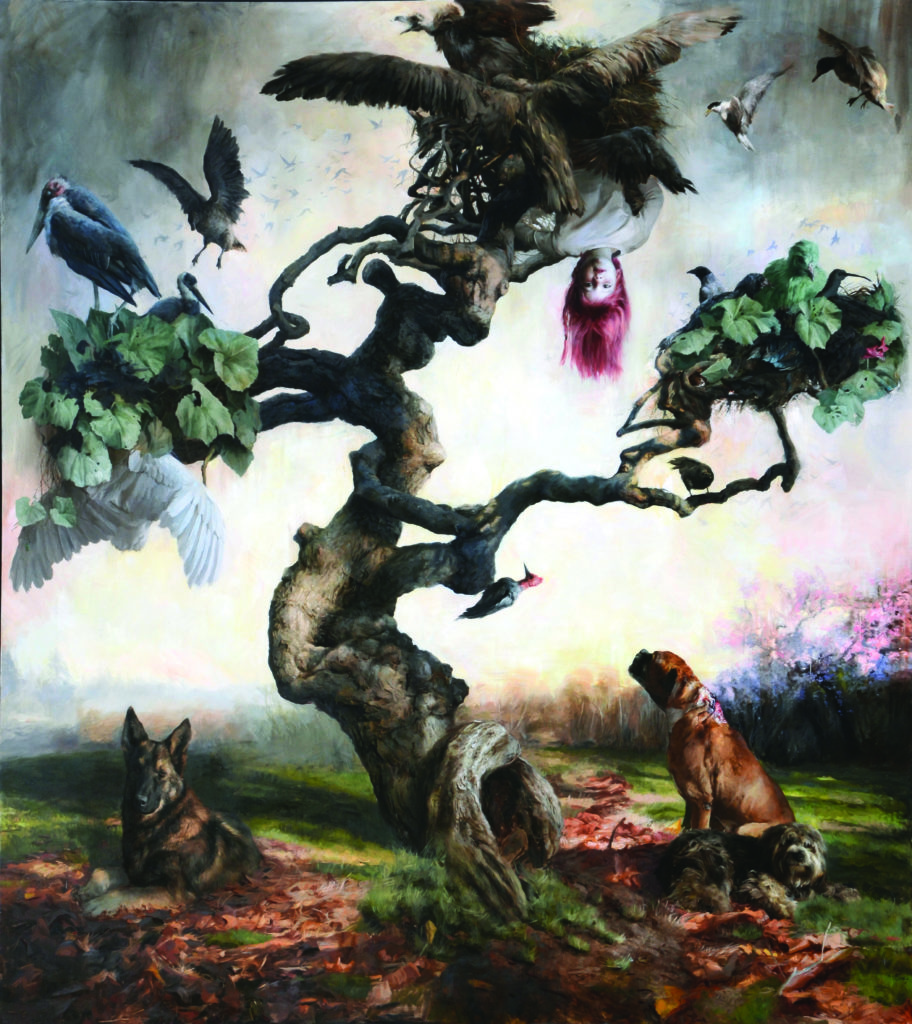
"Eternal Life," 2013, oil on canvas, 114 1/4 x 102 1/4 in., Museo Nacional de Bellas Artes, Santiago
Guillermo Lorca, “Eternal Life,” 2013, oil on canvas, 114 1/4 x 102 1/4 in., Museo Nacional de Bellas Artes, Santiago

DM: What did you learn from working with Nerdrum?

GL: My stay in Norway was both enriching and strange. It was the middle of winter (I should have gone in summer!) and there was almost no social interaction beyond the few other students, with whom I could barely speak in English, much less Norwegian. Odd is a very particular person, completely committed to his job. What interested me most was the expressive side of his painting.

DM: How was it seeking classical training in Chile? How did you stumble upon your style of painting?

GL: Chile has no academic art schools of excellence, so studying art there was a lonely and disappointing experience. In fact, I dropped out during the third year and carried on with my studies in another way. Fortunately, I had Maurizio Marini’s superb book about Velázquez with its high-quality reproductions. It was a gift from my mother, perhaps one of the best I’ve ever received, or at least the most useful.

DM: Who are some of your favorite contemporary painters?

GL: I love Nicola Samori, Adrian Ghenie, Odd Nerdrum, Walton Ford, and Beth Cavener, just to name a few talents. In contemporary art there are many great things mixed with other bad ones in the same blender. Making distinctions is difficult.

DM: When we were in Norway, you showed me photos of your murals. Could you tell me more about them?

GL: I made the first in the cellar of a vineyard when I was 20. Its dimensions were 13 x 131 feet, painted in oils. I had never made anything bigger than 40 x 60 inches before. The second was for a casino, 98 feet wide. Making the murals was a good way of forcing myself to compose better. Then came the giant portraits displayed in the subway station. Now I am working on large paintings, but if another worthwhile mural project comes up, I’ll do it.
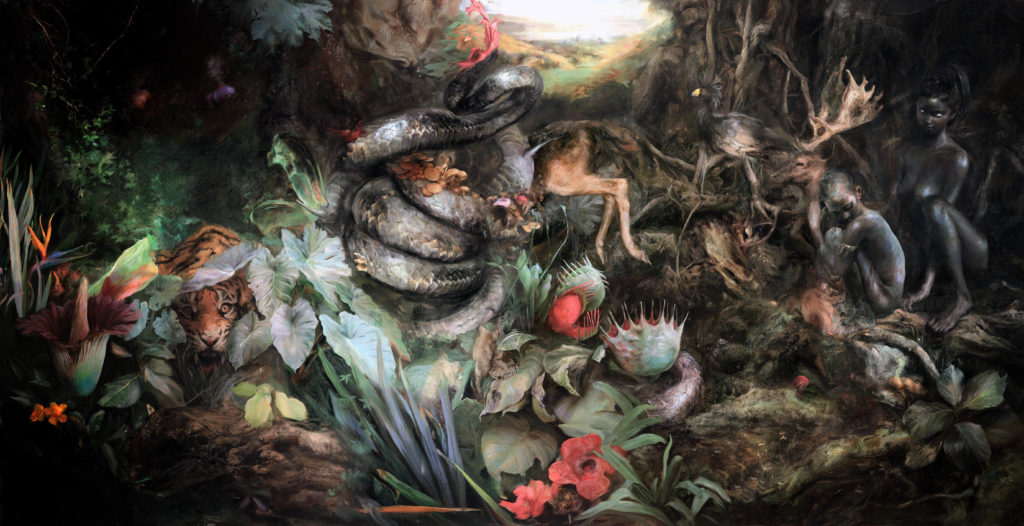
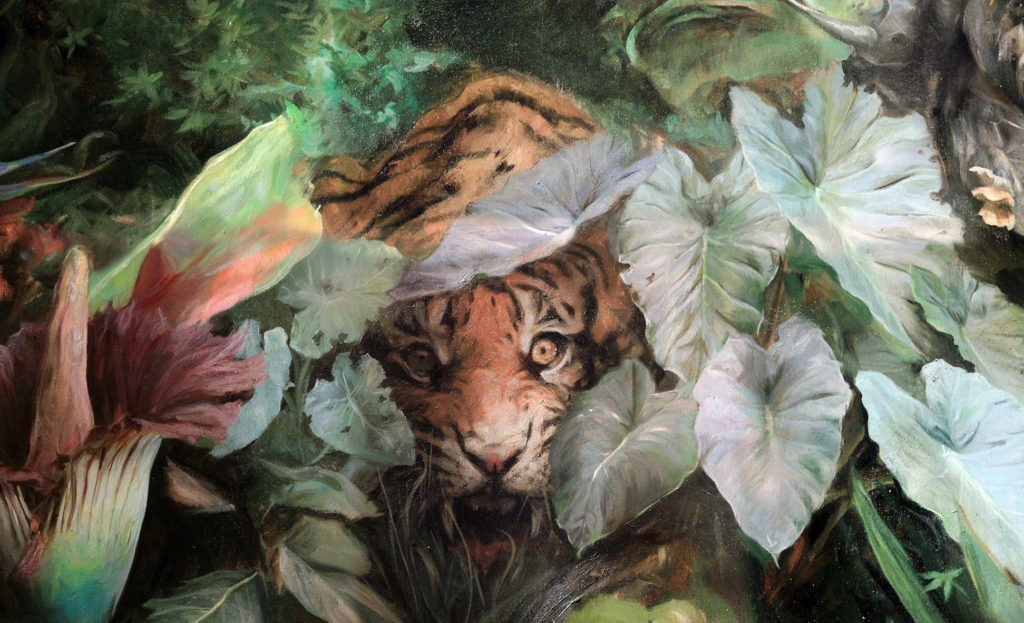
"The Black Dragon," 2018, oil and acylic on canvas, 59 x 118 1/4 in., private collection, Rotterdam
Guillermo Lorca, “The Black Dragon,” 2018, oil and acrylic on canvas, 59 x 118 1/4 in., private collection, Rotterdam
A detail of the tiger’s head

DM: What themes are you exploring now?

GL: I am interested in such topics as death, eroticism, and nature — and their symbols. I try to find a balance between my own subjectivity and a collective subconscious. I believe that animals will gain more prominence, but even though I plan ahead, new ideas come up as I paint and the direction changes.

DM: What books have you read that inspire you? Movies? Plays?

GL: I love reading! I really like Fyodor Dostoevsky, Gabriel García Márquez, Ágota Kristóf, Doris Lessing, and Yasunari Kawabata. I am also interested in philosophy and psychology: Carl Jung, Sigmund Freud, Michel Foucault, Friedrich Nietzsche, Melanie Klein, and more. I don’t know if books directly inspire me. I read more as a hobby. My inspiration comes from other artists, from nature and movies, especially Andrei Tarkovsky and Akira Kurosawa. I don’t like closing myself to any possible source of inspiration. A part of me is always looking carefully at everything going on, and it alerts me to something worth closer attention.
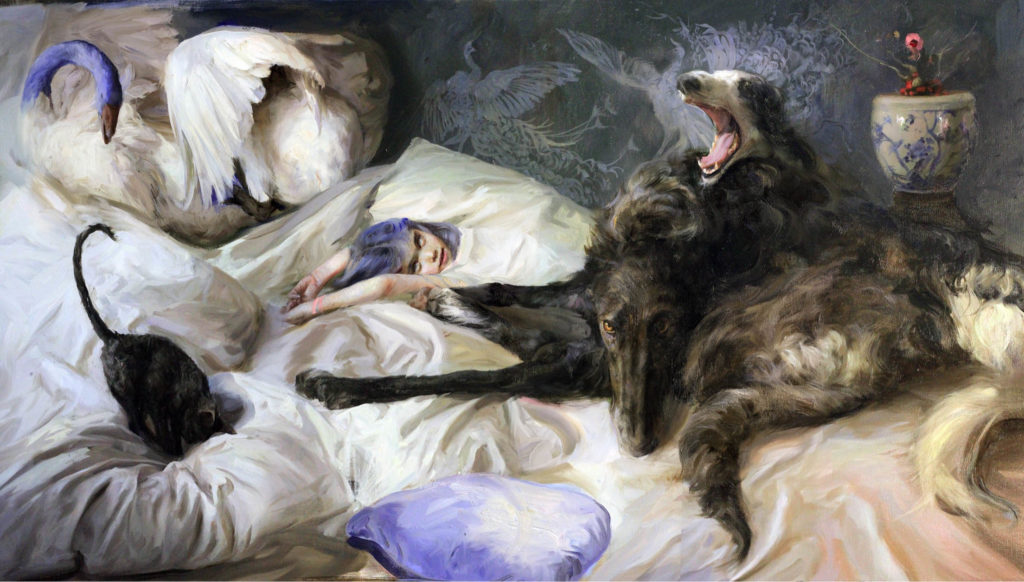
"The Girl in the Peacock Room," 2018, oil on canvas, 29 1/2 x 59 in., private collection, Chile
Guillermo Lorca, “The Girl in the Peacock Room,” 2018, oil on canvas, 29 1/2 x 59 in., private collection, Chile

DAVID MOLESKY is a representational artist and writer based in Brooklyn. His oil paintings of figurative narratives and turbulent elements are part of museum collections in the U.S., Europe, and Asia.

This article was originally published in Fine Art Connoisseur magazine (January/February 2019)


> Sign up to receive Fine Art Today, our free weekly e-newsletter

> Click here to subscribe to Fine Art Connoisseur magazine, so you never miss an issue
The Winter Show 2021 Exhibitors Announced

0
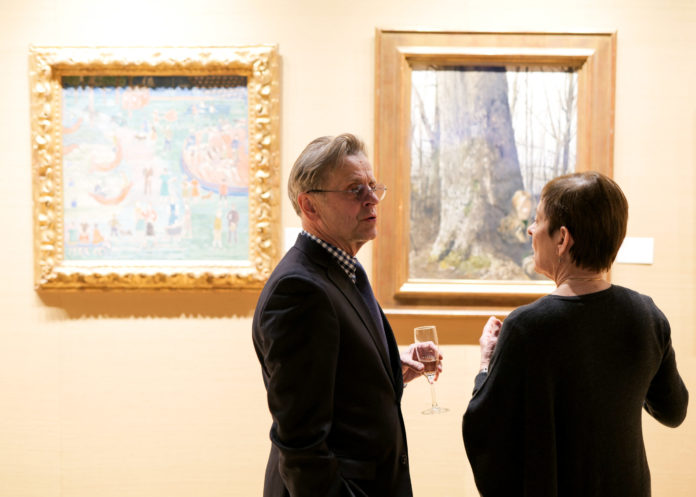
Mikhail Baryshnikov at the Winter Show art fair
Mikhail Baryshnikov, The Winter Show opening night party 2020. Photo credit BFA / Ryan Kobane

Discover who’s exhibiting at New York’s longest-running art, antiques, and design fair, now entering its 67th year.

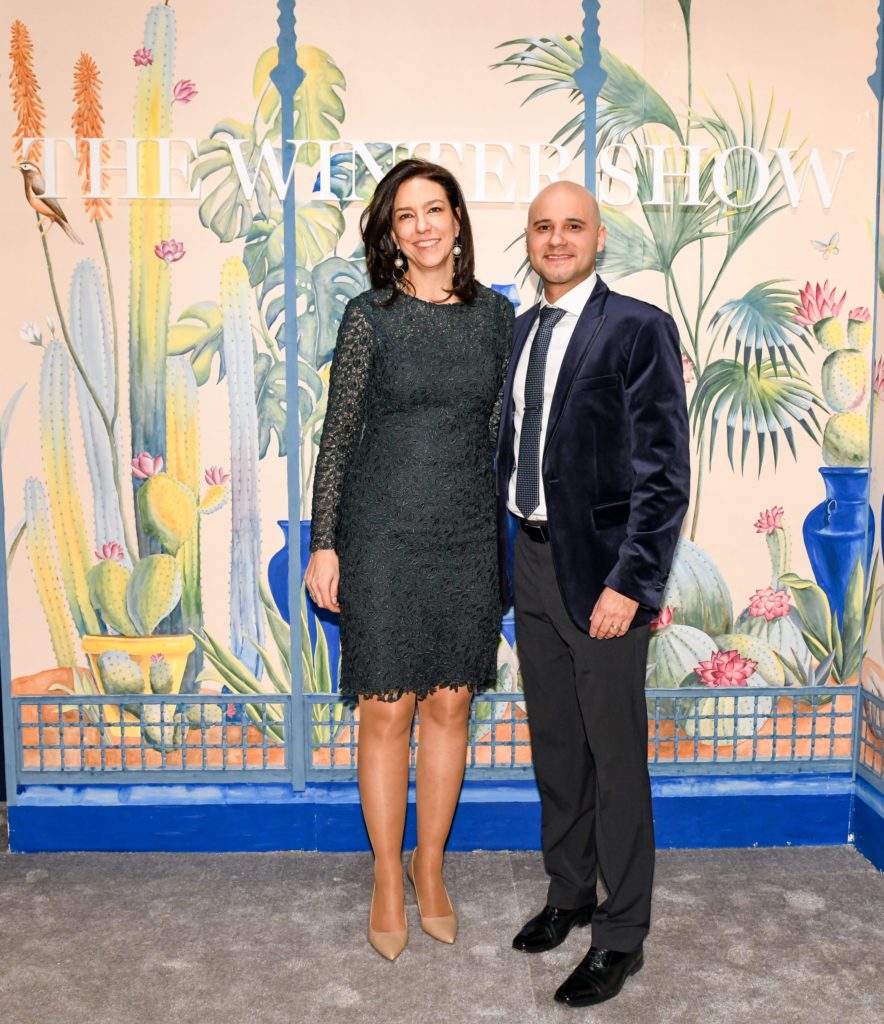
The Winter Show Announces Exhibitors for 2021 Online Edition and Design Co-Chairs Wendy Goodman, Thomas Jayne, and Frank de Biasi. The new virtual fair and programming will take place January 22–31, 2021 with VIP Preview Access on January 19–21, 2021.

The Winter Show Executive Director Helen Allen and East Side House Settlement Executive Director Daniel Diaz. Photo credit BFA / Zach Hilty

From the organizers:

The Winter Show’s new virtual platform will feature some 60 exhibitors, bringing together a dynamic group of leading international dealers that represent a diverse and global mix of fine and decorative arts from ancient times to the present day. The show is New York’s longest-running art, antiques, and design fair, established in 1954 by East Side House Settlement to benefit the community-based organization’s critical mission serving the Bronx and Northern Manhattan. All net proceeds from The Winter Show’s VIP Preview Access, general admissions, and any additional donations directly benefit East Side House and contribute substantially to the organization’s life-changing work.

“While the format of The Winter Show may look different this year, the quality of our exhibitors, programming, and partners remain as engaging as ever,” said Executive Director Helen Allen. “We have worked to create a virtual format that is interactive, visually stimulating, and showcases the quality and depth of the objects presented. We are excited to bring The Winter Show and the transformative work of East Side House to an even greater international audience through our new online platform.”

The Winter Show 2021 will take place on an immersive online platform that allows exhibitors to present a gallery exhibition in a three-dimensional virtual space. Visitors will be able to take in the digital presentations as a whole and view close-up, detailed views of each work. Exhibitors will curate their selections, featuring up to twenty artworks and objects at a time in the virtual space. The Winter Show will also provide a space for discussion and engagement, offering virtual “office hours” for visitors to connect with dealers directly.

In keeping with the Show’s commitment to presenting a high-quality selection of works in the fine and decorative arts, the objects on view in the online fair are vetted for authenticity, date, and condition by a committee of experts from the United States and Europe.

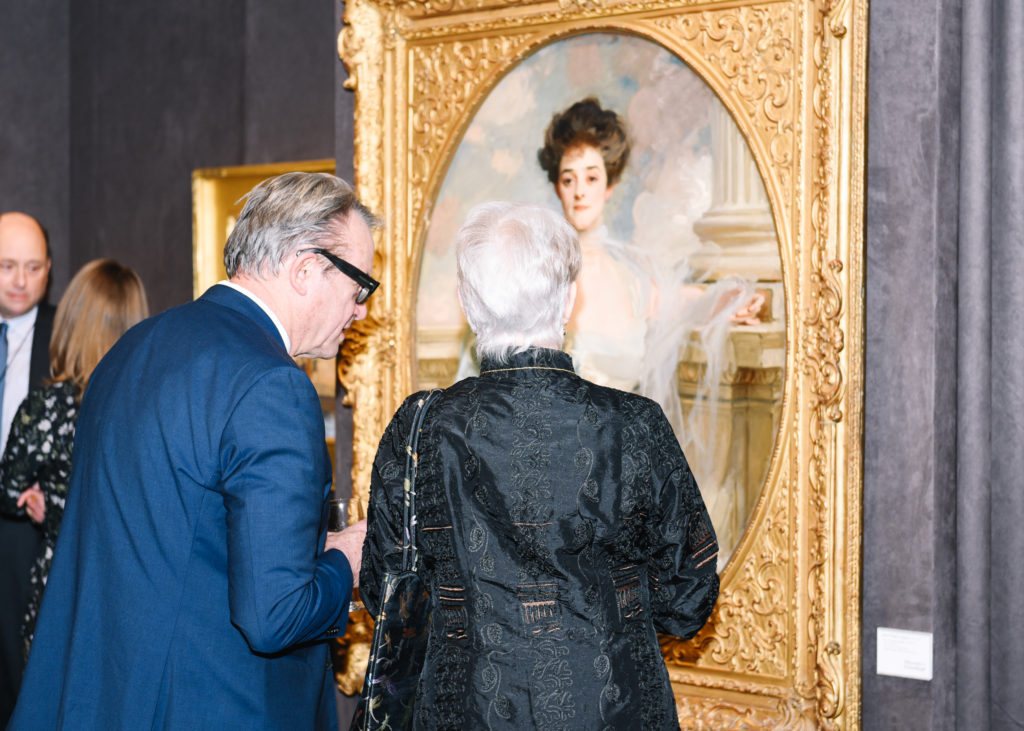
The Winter Show 2019, opening night party

Each year, The Winter Show invites leaders from the worlds of interior design and architecture to lend their voices as Design Co-Chairs, reinforcing the Show’s deep relationship with the design community. The Show’s 2021 Design Co-Chairs are Wendy Goodman, Thomas Jayne, and Frank de Biasi. Their support heightens awareness of the important work done by East Side House, in addition to promoting the use of historic art and objects in contemporary architecture and design.

In 2020 in response to the COVID-19 crisis, East Side House Settlement created new initiatives to address the immediate needs of the communities that bear the brunt of public health crises, including the distribution of food to families through the Harvest to Haven program and education tools to students to mitigate the digital divide and keep students learning remotely.

The Winter Show 2020. Photo credit Matthew Gilbertson

“East Side House has always prioritized the needs of our community above all else. Now, in a time where families in the Bronx are bearing the brunt of this pandemic—in jobs lost, in household income depleted, and in lives lost—we made sure to step up and mobilize to meet their needs,” said Daniel Diaz, Executive Director of East Side House Settlement. “East Side House is proud to be able to feed over 5,000 of our neighbors each week from our new Harvest to Haven program, conduct thousands of wellness checks with families to make sure they are safe and healthy, and rethink how we can educate our young people in this new environment. Every day, we are inspired by the resolve of the families we serve. The funds raised by The Winter Show help make it possible for us to provide critical resources, programs, and opportunities to empower individuals and make a meaningful difference in our communities.”

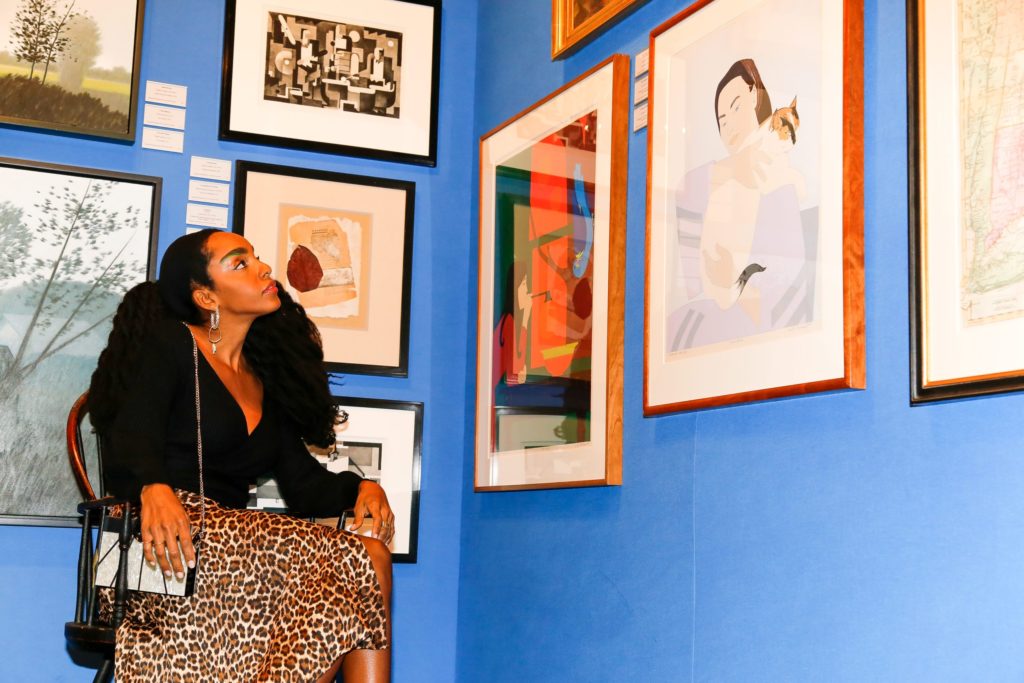
Cipriana Quann in art gallery
Cipriana Quann, The Winter Show Young Collectors Night 2020. Photo credit BFA / Brandon Cook

2021 Winter Show Exhibitors:

  • Adelson Galleries, Inc., New York, USA
  • A La Vieille Russie, Inc., New York, USA
  • Apter-Fredericks, London, UK
  • Arader Galleries, Philadelphia, PA, USA
  • Aronson of Amsterdam, Amsterdam,
    Netherlands
  • Barbara Israel Garden Antiques, New York, USA
  • Bernard & S. Dean Levy Inc., New York, USA
  • Bernard Goldberg Fine Arts, LLC, New York, USA
  • Bowman Sculpture, London, UK
  • Carolle Thibaut-Pomerantz, Paris, France
  • Cohen & Cohen, Reigate, UK
  • Cove Landing, New York, USA
  • Daniel Crouch Rare Books, London, UK; New York, USA
  • David A. Schorsch–Eileen M. Smiles American Antiques, Woodbury, CT, USA
  • Didier Ltd, London, UK
  • Donzella, New York, USA
  • Elle Shushan, Philadelphia, PA, USA
  • Erik Thomsen Gallery, New York, USA
  • H. Blairman & Sons Ltd, London, UK
  • Hill-Stone, Inc., South Dartmouth, MA, USA
  • Hirschl & Adler Galleries, New York, USA
  • Hyde Park Antiques, Ltd., New York, USA
  • James Graham-Stewart, London, UK
  • James Infante, New York, USA
  • James Robinson, Inc., New York, USA
  • Joan B Mirviss LTD, New York, USA
  • Jonathan Boos, New York, USA
  • Kelly Kinzle, New Oxford, PA, USA
  • Kentshire, New York, USA
  • Keshishian, London, UK
  • Koopman Rare Art, London, UK
  • Les Enluminures, Chicago and New York, USA; Paris, France
  • Lillian Nassau LLC, New York, USA
  • Lobel Modern, New York, USA
  • Lost City Arts, New York, USA
  • Lowell Libson & Jonny Yarker Ltd, London, UK
  • Macklowe Gallery, Ltd., New York, USA
  • Maison Gerard, New York, USA
  • Martyn Gregory, London, UK
  • Menconi + Schoelkopf, New York, USA
  • Michael Goedhuis, London, UK
  • Michele Beiny, Inc., New York, USA
  • Nathan Liverant and Son LLC, Colchester, CT, USA
  • The Old Print Shop, Inc., New York, USA
  • Peter Finer, London, UK
  • Peter Pap Oriental Rugs, Dublin, NH, USA
  • Plektron Fine Arts AG, Zurich, Switzerland
  • Ralph M. Chait Galleries, Inc., New York, USA
  • Red Fox Fine Art, Middleburg, VA, USA
  • Robert Simon Fine Art, New York, USA
  • Robert Young Antiques, London, UK
  • Ronald Phillips Ltd, London, UK
  • Schwarz Gallery, Philadelphia, PA, USA
  • S. J. Shrubsole, New York, USA
  • Spencer Marks, Southampton, MA, USA
  • Tambaran, New York, USA
  • Thistlethwaite Americana, Upperville, VA, USA
  • Thomas Colville Fine Art, Guilford, CT, USA
  • Thomas Heneage Art Books, London, UK
  • Throckmorton Fine Art, New York, USA

For more details and to purchase tickets for The Winter Show, visit thewintershow.org.


> Sign up to receive Fine Art Today, our free weekly e-newsletter

> Click here to subscribe to Fine Art Connoisseur magazine, so you never miss an issue
One to Watch: Contemporary Artist Kathryn Engberg

0
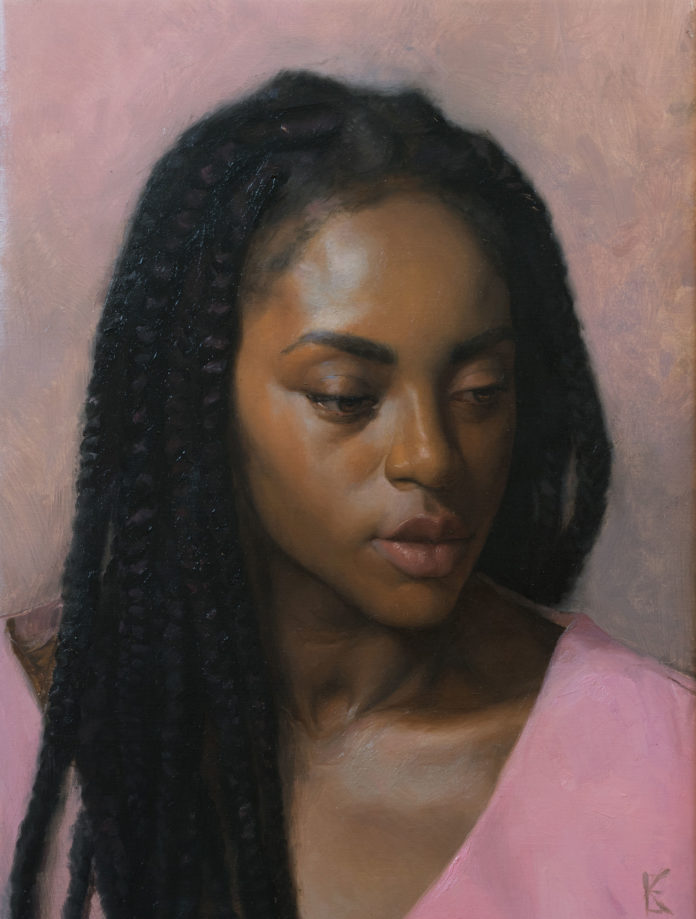
Oil portrait painting of a woman
Kathryn Engberg, "Fatima in Pink," 2018, oil on linen, 12 x 9 in., available from the artist

There is a lot of superb art being made these days; this article by Allison Malafronte shines light on a gifted contemporary artist.

Art has been a mainstay in the life of Kathryn Engberg (b. 1994) since childhood. As a third-generation artist, she regularly spent time in her mother’s and grandmother’s studios watching them paint, and trips to museums and art projects were a standard part of growing up in her hometown of Salisbury, Maryland. By the time she reached adolescence and young adulthood, Engberg was developing into an artist all her own, and those around her continued to nurture her talent.

After high school, Engberg attended the Grand Central Atelier (New York City) and graduated from it in 2016. Today she is a core instructor at the school, passing on to the next generation the 19th-century academic approach that was taught to her by founder Jacob Collins and his colleagues. Some of the tenets this curriculum espouses are working exclusively from life under natural light, with a time-intensive and gradually progressive understanding of the figure and form.

The classical-style portraits the young artist produces stand out for their contemporary and mature viewpoint. Although Engberg sometimes dresses her sitters in period costume, she just as often paints people exactly as they are today, being completely honest in her interpretation. To make the process as informed as possible, the artist spends significant time getting to know her subjects both personally and structurally, and each portrait takes between 20 and 30 hours to complete. “This is an integral part of my approach,” Engberg shares. “The subject sits for me the entire time and I do not use photography, so this allows me to really get to know him or her.”

In her painting Fatima in Pink, Engberg has captured the type of quiet resolve found in several of her portraits. “Many of my paintings aim to show a gentle strength that I think is present in women,” the artist notes. “I love the idea of depicting a woman plainly and simply but giving her strength in the honesty of that portrayal. It’s not about the glamour shot or smoothing away every flaw — it’s about embracing every facet of every form. Here my model just seemed to radiate this serenity that I aimed to capture with the ambient pink light surrounding her.”

Engberg is represented by Simie Maryles Gallery (Provincetown, MA) and Mountain Trails Fine Art (Santa Fe).


> Sign up to receive Fine Art Today, our free weekly e-newsletter

> Click here to subscribe to Fine Art Connoisseur magazine, so you never miss an issue
Friday Virtual Gallery Walk for January 8, 2021

0
Friday Virtual Gallery Walk

As part of our effort to continue to help artists and art galleries thrive, we’re proud to bring you this week’s “Virtual Gallery Walk.” Browse the artwork below and click the image itself to learn more about it, including how to contact the gallery.

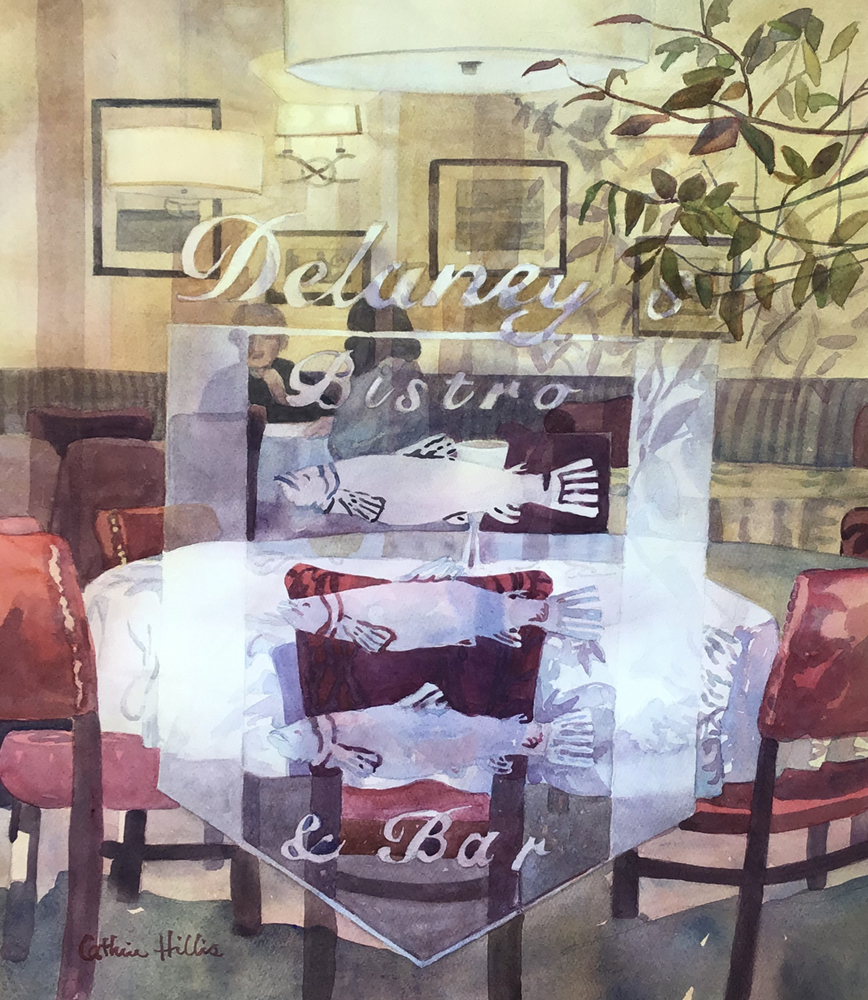
Reservations Required by Catherine Hillis, Watercolor, 20 x 18 in.; Anderson Fine Art Gallery


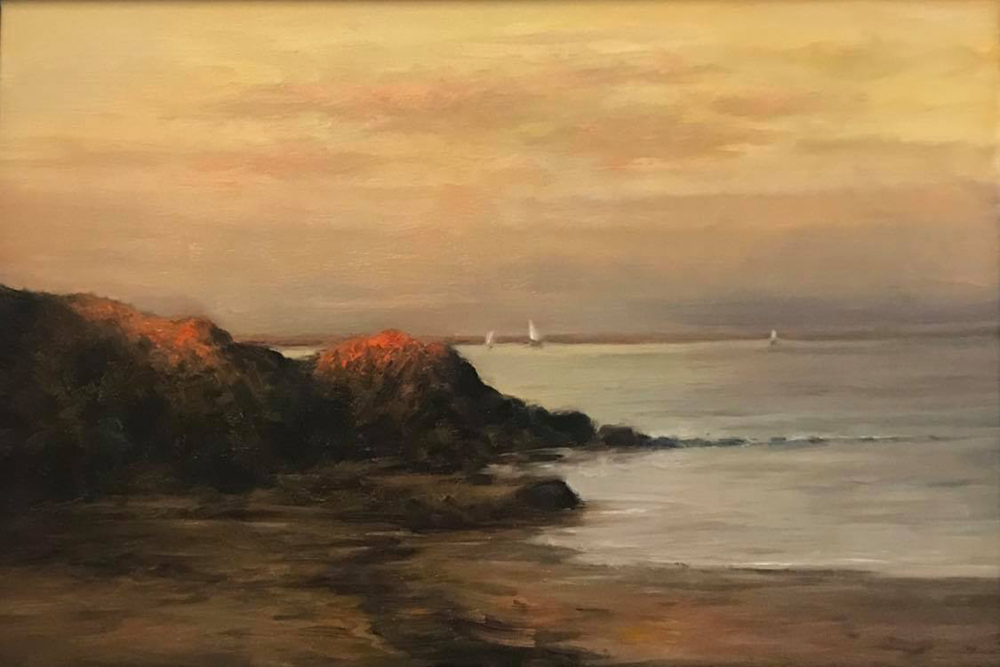
Evening on the Shore by Dennis Sheehan, Oil, 14 x 20 in.; Ceres Gallery


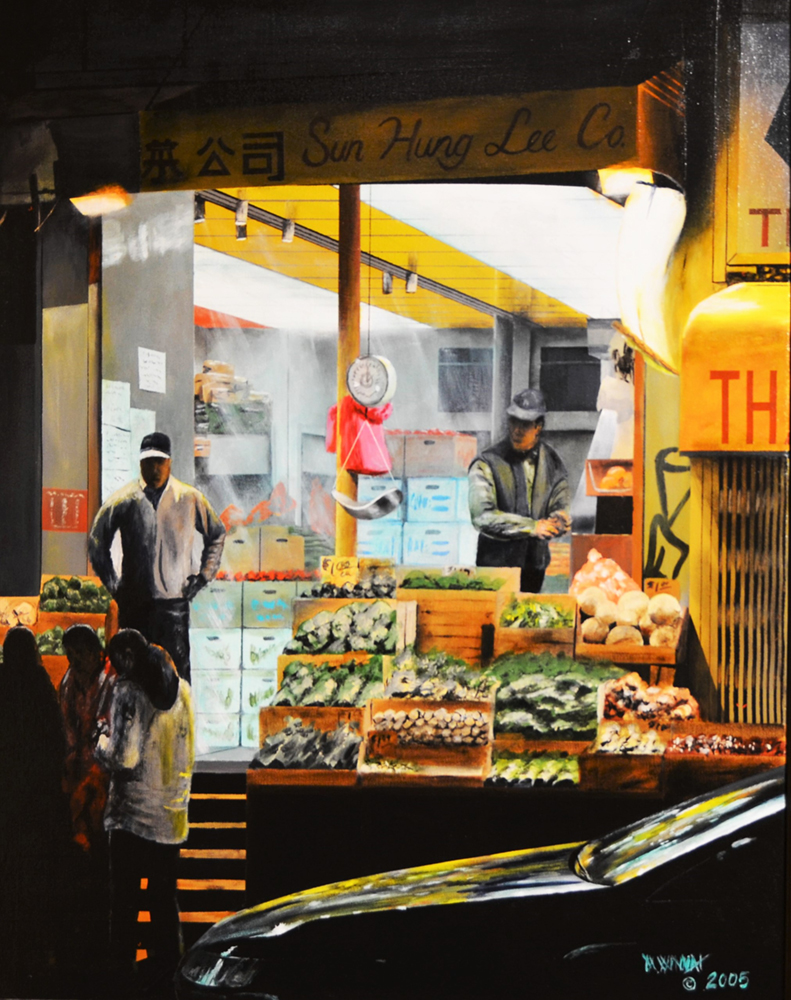
Dragon Breath by Marc Winnat, Acrylic on canvas, 30 x 24 in. (32 x 26 in. framed); Vermont Artisan Designs


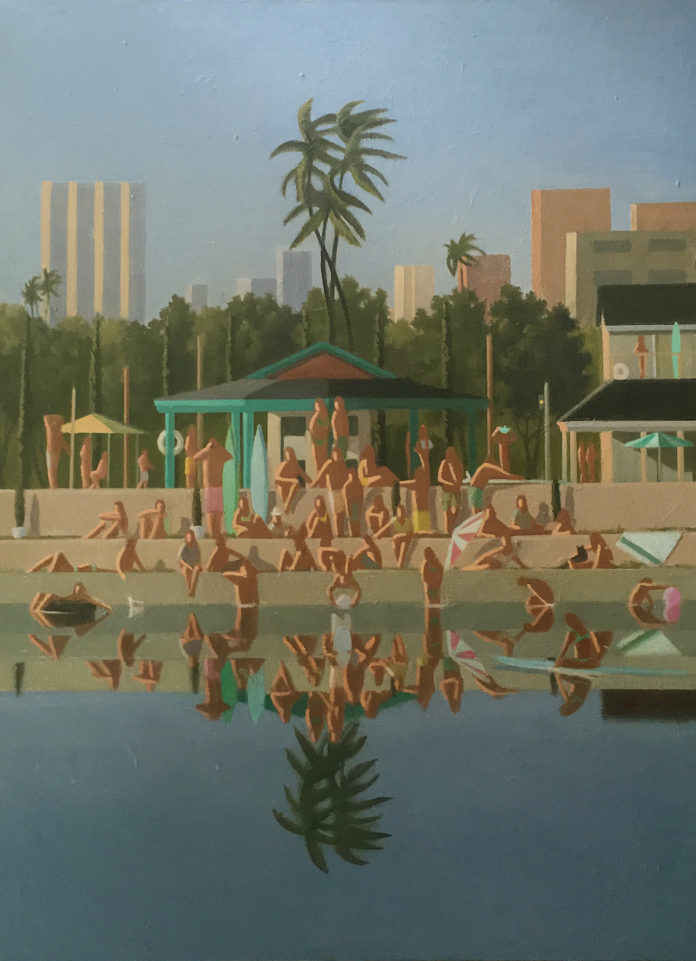
Pool by James Neil Hollingsworth (Born 1954), Oil on panel, 16 x 16 in., Signed; Rehs Contemporary


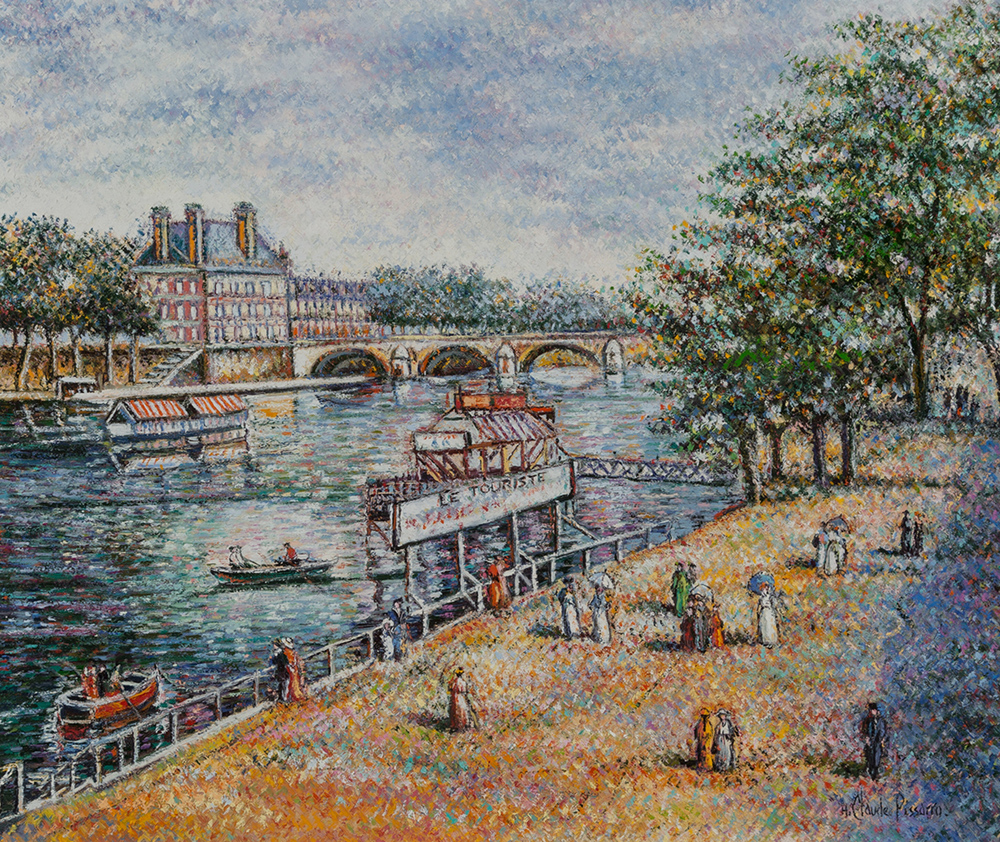
Bateau mouche sur la Seine by Hugues Claude Pissarro (Born 1935), Oil on canvas, 21.25 x 25.5 in., Signed, also signed and titled on the reverse; Rehs Galleries, Inc.

Want to see your gallery featured in an upcoming Virtual Gallery Walk? Contact us at [email protected] to advertise today – don’t delay, as spaces are first-come first-serve and availability is limited.

Your 2021 Guide to Art Museums

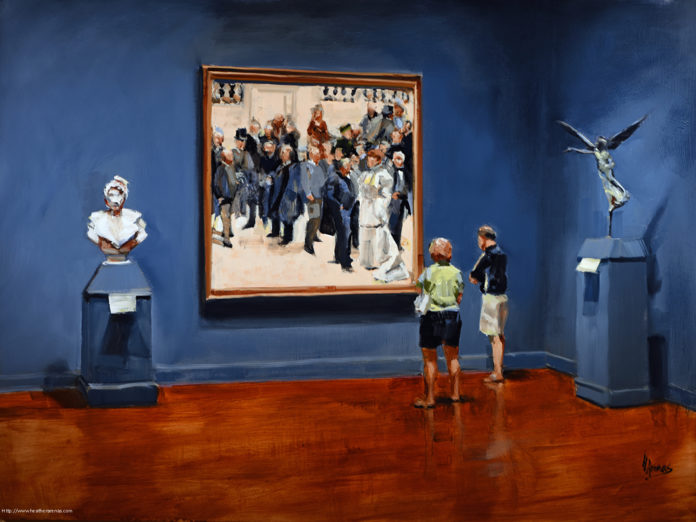
Heather Arenas (b. 1969), "The Regulars," 2020, oil on cradled wood, 30 x 40 in., available through Reiner Fine Art
Heather Arenas (b. 1969), "The Regulars," 2020, oil on cradled wood, 30 x 40 in., available through Reinert Fine Art

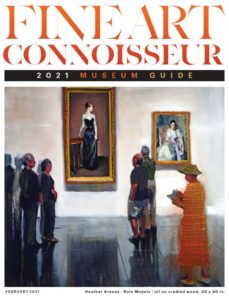
The 2021 Fine Art Connoisseur guide to art museums is now available. Review it for free here: 2021 Museum Guide Fine Art Connoisseur 2021 art museums guide

A Shout-Out For Our Art Museums

BY PETER TRIPPI

Every winter, Fine Art Connoisseur dedicates part of an issue to highlighting America’s art museums and the important, wide-ranging roles they play in our lives. I am particularly fond of this initiative because I spent much of my career working in art museums and still love visiting them because they always expand my horizons through their exhibitions and other programs.

Of course, my visits became less frequent during 2020, the year most of us hope to forget. Throughout the pandemic turmoil, I have been impressed by the resilience of our museum colleagues, and by their unwavering dedication to sharing the joys of fine art even when it’s harder, or impossible, for us to enter their remarkable buildings.

One of their chief challenges is negotiating the difficult financial conditions triggered by the sudden collapse in earned income (ticket sales, space rentals, café and gift shop revenues, etc.) and by the shifting of much philanthropy toward social justice and human services. Much has been said and published about viable coping strategies, and among the most interesting platforms for such conversations has been the American Alliance of Museums, the field’s largest membership organization.

It’s a sad fact that most places in America — including New York City, where I live — will not see tourism rebound until late 2021 at the earliest. Tourists are a key constituency within many museums’ visitor-ship, and so, without them, the institutions are rightly refocusing their attention on attracting more visitors from their immediate surroundings. This is not to say museums previously ignored their neighbors, but now is the ideal time to deepen these friendships. Every large town in America has at least one great art museum, so make a point to visit it soon, especially now that the weather is cooler.

As awful as 2020 was, it is worth celebrating the fact that more museums invented terrific online programs to engage their current audiences, entice new ones, and — in some savvy cases — raise revenues, too. I have been simply amazed at the plethora of digital lectures, tours, workshops, and even benefit galas and summer camps devised in the past 10 months. These remind us of how creative museum staffers are, and also that the need for cultural enrichment is actually more urgent now that fewer of us can leave home.

There are two more ways readers of Fine Art Connoisseur can support their beloved museums. First, join as a member. In the past 10 months, I have been signing up at various institutions as a lower-level member even when I am not particularly passionate about the museums’ specialties — I simply want them to survive, and I know how much they enrich my community’s life. Many museums have (wisely) created a cheaper virtual membership that allows first-timers to dip their toes in, or alternative membership categories that prioritize contact with institutional staff for research or expertise.

Second, there’s the worthy impulse to shop. Many museums have terrific websites highlighting the same high-quality merchandise they sell in their on-site boutiques. Even though the holidays are behind us, why not click on the relevant webpage and buy art-related items to delight your loved ones while supporting your favorite museums?

2021 looks to be as challenging a year for museums as 2020, though in different ways. Let’s all do what we can to make their paths a little easier, and let’s thank them for all they do to lift our spirits, something more valuable than ever before.

Bookmark the 2021 Museum Guide today so you can plan an art-filled year.


> Sign up to receive Fine Art Today, our free weekly e-newsletter

> Click here to subscribe to Fine Art Connoisseur magazine, so you never miss an issue

Fearless: The Collection of Hester Diamond

0
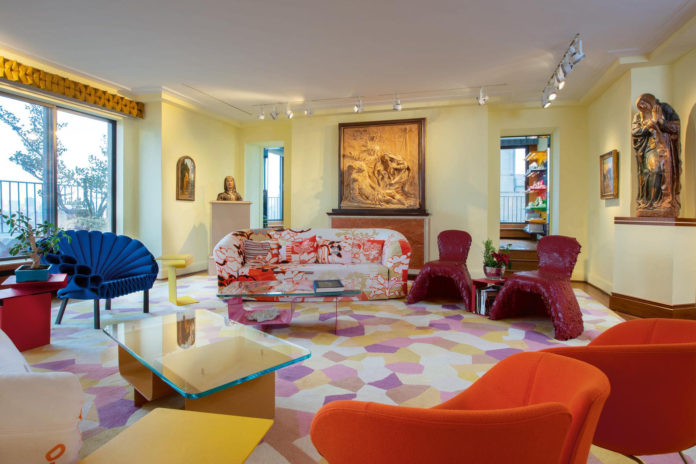
Hester Diamond art collection

Sotheby’s is honored to present the collection of prominent New York collector, interior designer, and philanthropist Hester Diamond in a dedicated single-owner sale in New York in January 2021, as part of Sotheby’s annual Masters Week auctions. The selection of works on offer – spanning Old Master paintings and sculpture, contemporary art, 20th century furniture and design, exotic minerals, and more – is a reflection of Diamond’s vision as an innovative and inquisitive collector, curating her collection of Old Masters amidst vibrant and eclectic modern and contemporary pieces in a signature visual style that defined her independent spirit.

More from Sotheby’s:

George Wachter, Chairman of Sotheby’s America and Co-Chairman of Sotheby’s Old Master Paintings Worldwide, commented: “Dynamic, independent, and incomparable, Hester Diamond was a fearless and visionary collector. Whether through the expressive qualities of the paintings and sculpture in her home, the electric colors of her furniture, or in the mesmerizing patterns of the textiles she chose, each piece in her collection personifies Hester’s distinct vision and the freedom that came with being true to herself. The ability to pursue her passions with such conviction and clarity not only propelled Hester to build an extraordinary career as a venerated interior designer, but, in a remarkable feat, to assemble important collections of both Modernist works and Old Master paintings and sculpture from the ground up. While others were intimidated by change, Hester embraced it with a fervor, never hesitating to start anew – she instinctively knew how to challenge the status quo with a fresh perspective, both in her art collection and in life.”

The Hester Diamond collection features an unparalleled selection of Old Master paintings and sculpture, highlighted by wonderful examples of early Italian Renaissance painting, early Netherlandish painting, and a remarkable array of terracotta, marble and wood European sculpture from masters such as Lorenzo Ghiberti, Benedetto da Maiano, Girolamo della Robbia and Leonhard Kern.

Spanning the early 14th century through the 18th century, the Old Master works in the collection are characterized by their eclecticism, which attests to Hester’s unique eye, seeking only the highest level of quality and a fearless pursuit of her interests. Drawn especially to bright, bold colors which can be rare in the Renaissance era, Hester acquired extraordinary works by important artists across a spectrum of genres, styles, and geographies. With Old Masters as the core of the collection, Diamond also collected significant pieces of contemporary art, as well as minerology. Displayed together, the collection was entirely unique to her personality, and represented her unwavering, singular spirit.

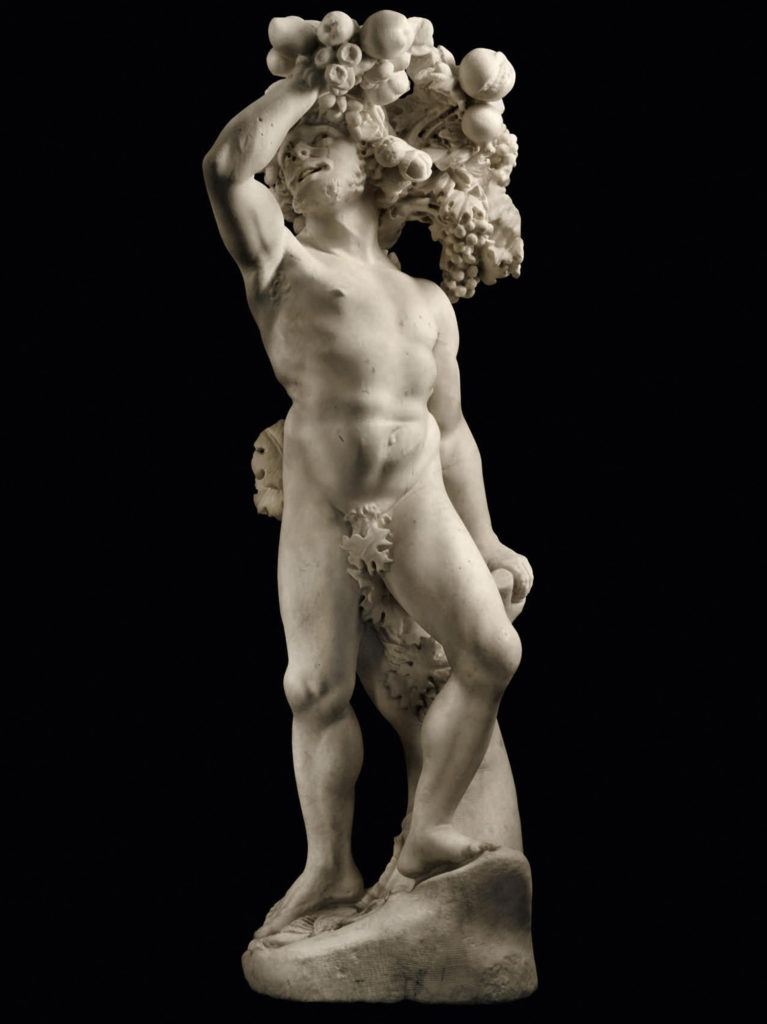
Leading the collection is an exceedingly rare sculpture by Gian Lorenzo Bernini and his father Pietro titled “Autumn” (below, estimate $8/12 million), one of only a handful of sculptures by Bernini and his father that remain in private hands. Few artists have changed art history as significantly as Gian Lorenzo, who is remembered as the greatest sculptor since Michelangelo, and whose artistic achievements gave life to the new figurative language of the Baroque, which dominated all of Europe for nearly two centuries.

Carved in 1616 when Gian Lorenzo was only 18, the exceptional and powerful Autumn, symbolizing abundance and rebirth in the guise of an unbridled man of the woods reaching for a piece of fruit, is an indisputable masterpiece by Bernini in which Gian Lorenzo’s involvement can be identified. The present work represents the young Bernini’s bravura and the moment when Gian Lorenzo began to eclipse his father in skill and conception. The young Bernini was still working in his father’s studio at the time Autumn was made for Prince Leone Strozzi, one of the Berninis’ first major patrons in Rome. Bernini’s work very rarely comes up for auction, with the last piece, a terracotta bozzetto or sketch, titled Il Moro, selling in 2002 at Sotheby’s London for $3.2 million, the current auction record for the artist.

Figurative art sculpture
“Autumn”

In addition to the Bernini, the Diamond collection features a deeply curated selection of rare and important Old Master sculpture. Among them is Jörg Lederer’s polychrome limewood figure of St. Sebastian (estimate $600,000/1 million), a favorite subject in early wood sculpture. Depicting Saint Sebastian partially naked in a contorted pose, Lederer displays the brilliance and inventiveness of his craft in this exceptional and dynamic polychrome wood figure. Lederer’s design and skill with the chisel place him beside the great masters of German gothic wood sculpture. Many of his workshop’s altarpieces have been lost and the present sculpture appears to be the only surviving full figure of the saint attributable to the sculptor. It is a remarkable and rare discovery, with the artist’s work infrequently appearing at auction.

Girolamo Della Robbia’s “Madonna and Child” (estimate $300/500,000), circa 1510, is a quintessential work of the Florentine Renaissance. The glazed terracotta sculpture is a beautifully modeled variant of the traditional Marian theme which appeared in various media during the Florentine Renaissance. The copious garland of fruit, vegetables, and flowers is modeled with pronounced naturalism and spiritedness and it surrounds an image of domestic intimacy and great devotional power. The pure white glaze illuminates the figures’ innocence and purity further underscoring the potency of this image. Della Robbia’s works were popular among Florentine patrons as decorations for their homes, and were usually acquired to mark significant family events such as marriages and births.

The collection also features a significant group of paintings, including a pair of magnificent canvases by Dosso Dossi, one of the most innovative and idiosyncratic artists of the Italian High Renaissance. This pair of canvases, “The Sicilian Games and The Plague at Pergamea” (estimate $3/5 million), are sections of the artist’s ten-piece frieze of scenes from the Aeneid commissioned by Alfonso d’Este (1476 – 1534), the Duke of Ferrara, for the decoration of his private study.

Determined for the interior to reflect not only his personal passions, but his intellect and cultural imminence, the Duke acquired a superlative series of paintings from Italy’s most preeminent artists, including Giovanni Bellini’s Feast of the Gods (now in the National Gallery, Washington); Titian’s Bacchus and Ariadne (National Gallery, London), the Bacchanal of the Andrians and the Worship of Venus (Museo Nacional del Prado, Madrid). Above these large canvases hung Dosso’s exquisite frieze, its subject inspired by Virgil’s epic poem, the Aeneid. The specificity and detail with which Dosso describes Virgil’s epic poem through these surviving canvases show that Dosso did not simply synopsize the journeys of Aeneas, but chose instead to select specific episodes from the text that reflected the aspirations and favored pursuits of his esteemed patron – scenes of games, hunting, and leisure.

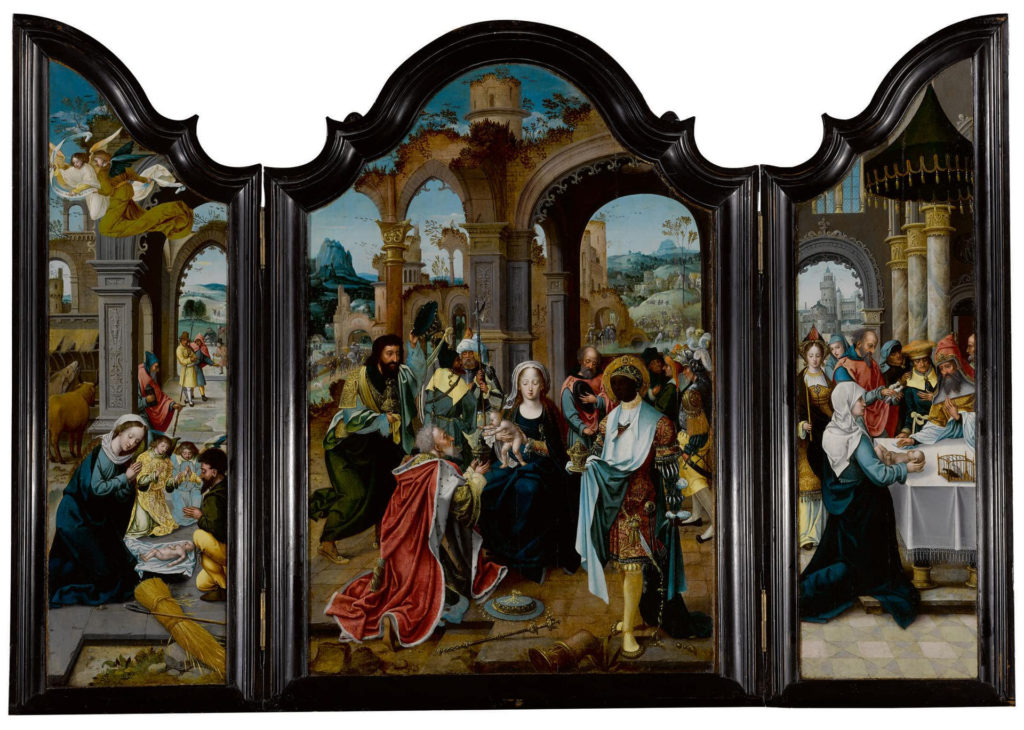
The collection is further highlighted by an impressive triptych of “The Nativity, The Adoration of The Magi, The Presentation in The Temple” by Pieter Coecke van Aelst (below, estimate $2.5/3.5 million), one of the most important artists of the Northern Renaissance. This very early work, executed circa 1520-25, and fully intact in its original frame, is not only remarkable for its size, and excellent condition, but for the originality of Coecke’s iconography and use of color; the overall composition and fine details in the fabric patterns, still life elements, and landscape completely encapsulates painting in the Northern Renaissance. Following its re-attribution to the artist, the present work was the centerpiece of The Metropolitan Museum of Art’s exhibition, “Grand Design: Pieter Coecke van Aelst and Renaissance Tapestry” in 2014.

The Nativity, The Adoration of The Magi, The Presentation in The Temple by Pieter Coecke van Aelst

Filippino Lippi’s “Penitent Mary Magdalene Adoring the True Cross in a Rocky Landscape” (estimate $2/3 million), is a hauntingly beautiful private devotional work datable to the late 1470s, a period in which the artist was adhering to the style of his second teacher, Sandro Botticelli. A cult devotional figure in 14th-century Florence, Lippi emphasizes the ascetic life of the penitent Mary Magdalene, by showing her emaciated figure as all bones and sallow skin, and her hair has grown so uncontrollably that it doubles as a garment. The extreme devotion of the saint evokes an emotional response in the viewer, much like Donatello’s sculpted version of the Magdalene for the Baptistery in Florence (circa 1453-55), which was indeed a source of inspiration for Lippi, as were Florentine sculptures throughout his career.

Several significant works of contemporary art showcase the diversity and range of the Diamond collection. Bill Viola’s “Ablutions” (estimate $70/100,000), a video diptych mounted on two plasma displays installed prominently in Hester’s dining room behind the head of the table, plays a loop of two people washing their hands. Barry X Ball’s “Envy” (estimate $80/120,000) is more closely associated with the Old Master sculpture in the Diamond collection, as the work is modeled after a 17th century sculpture by Giusto Le Court, a sculptor who is represented in the Diamond collection by a terracotta sketch model circa 1690 of St. James the Less, located in Ca’ Rezzonico in Venice. Large-scale three-dimensional works by Dustin Yellin and Xu Zhen further round out the contemporary offerings.

Further to her independent design sense, Hester Diamond was known for her wide-ranging and comprehensive collection of exotic minerals, metals, and gemstones, which were prominently displayed throughout her home and will be offered as part of the collection. The vibrant colorscape of the minerals perfectly complemented the modern furnishings of the home and her eclectic style. Displayed from the perspective of an art installation rather than a cabinet of specimens, the collection is an excellent cross section of mineral collecting over the last 30 years. Highlights from the group include an impressive Smoky Quartz and Amazonite (estimate $20/30,000), an extremely delicate Amethyst “Rose’ (estimate $1/2,000), and a massive Naturally Etched Aquamarine (estimate $20/30,000)

About Hester Diamond

Born in the Bronx, Hester appreciated art from a young age, visiting New York’s museums nearly every afternoon following her classes at Hunter College. After first working as a social worker in the early 1950s and wanting to pursue a career in the arts, Hester took a position at Stair and Company, a leading antiques gallery on 57th Street in New York. Through her work at Stair, she and her first husband, Harold Diamond, would become friends with Martha Jackson, the owner of an important gallery of cutting-edge contemporary art also on 57th Street, and would soon become immersed in the art world. Not long after, Hester and Harold approached British artist Barbara Hepworth, whose work she admired but whom she had never met, offering to represent her in the United States. To their surprise, Hepworth accepted, and from there on, friendships with artists and collectors ensued, and the Diamonds began their career as prominent art dealers.

As one of the preeminent tastemakers of her generation, Hester would go on to establish a thriving interior design business, recognizing a market for her refined and eclectic sense of style. But, it was after the death of Harold in 1982 that Hester began to seriously collect Old Master paintings and sculpture, selling much of her modern collection, including works by Picasso, Matisse, and Kandinsky, at Sotheby’s in 2004, in an effort to seek out new collecting opportunities and build a collection with a new identity.

Hester’s interest in Old Masters would blossom with her second husband, Ralph Kaminsky, and with this new aesthetic focus, Hester’s characteristic design sensibility would inform her approach to organizing and displaying her new collection. She replaced the 18th and 19th century furniture in her home with modern and contemporary pieces featuring vibrant colors, angular shapes, and hard edges, to create a dynamic contrast between in the home. She also acquired several significant pieces of contemporary art to further highlight the contrasting aesthetic.

Her deep passion for Old Masters and commitment to philanthropy led her to co-found The Medici Archive Project, an organization that supports archival research for scholars and students of Renaissance and Baroque art, and Vistas (Virtual Images of Sculpture in Time and Space), a non-for-profit publishing project focused on new scholarship for Old Master Sculpture.


> Sign up to receive Fine Art Today, our free weekly e-newsletter

> Click here to subscribe to Fine Art Connoisseur magazine, so you never miss an issue
The Sleep of Reason

0
Oil painting of a landscape
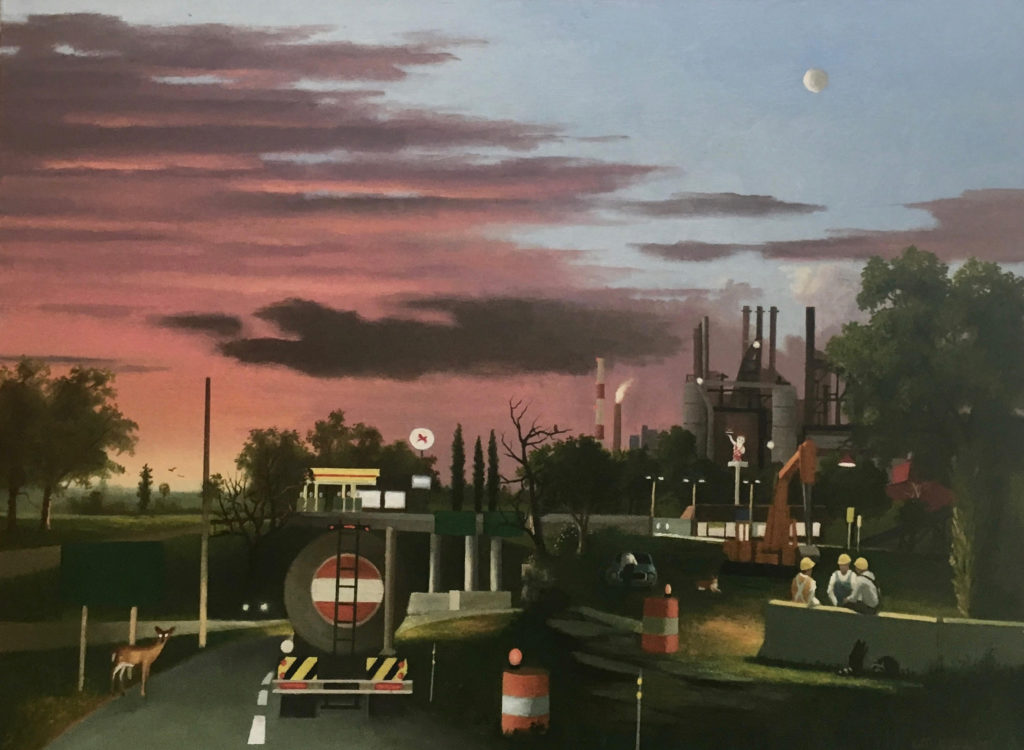
Keith Kattner, "Reflection Eight," 40 x 30 in., Oil on Canvas, 2016

“The Sleep of Reason: Keith Kattner and Anthony Haden-Guest” is on view through January 13, 2021 at Paul Fisher Gallery, West Palm Beach, Florida. The exhibition is curated by Debbie Dickinson, and proceeds support the disaster relief efforts of the American Red Cross.

Keith Kattner (b. 1961) retired from a successful neurosurgery practice at 49 to pursue his first love—art. A prolific researcher, residency program director, and co-founder of the Central Illinois Neuroscience Foundation, Dr. Kattner moved in 2010 to Manhattan for two years to immerse himself in the art scene and the Metropolitan Museum of Art.

Seven years and 600 paintings later, he leads a bohemian existence showing his work in New York galleries. He says, “It took me a considerable amount of effort to realize that the rules of art don’t always comply with the rules of science. I had to decide which set of rules would supersede the other.”

Oil painting of a landscape
Keith Kattner, “Twilight Over the Mohawk River Valley,” 36 x 48 in., Oil on Canvas, 2019

Now oil paintings from Kattner’s “Entropy, Classical,” and “Reflection” series are being exhibited alongside drawings by Anthony Haden-Guest (b. 1937), the British critic, writer, reporter, and longtime resident of New York, who is presenting his recent “Cartoonery, Apparitions Lucky Stiffs” and “Neons” series.

Together this pair of artists have demonstrated how art reflects and responds to times of fear and uncertainty, and they have reminded us that if we don’t appreciate history, it will repeat itself. Their exhibition title was inspired by Francisco Goya’s ”The Sleep of Reason Produces Monsters”—one of eighty aquatints that comprise his famous series ”Los Caprichos” (1797–99). Kattner and Haden-Guest share Goya’s fascination with the conflict between reason and irrationality, satire, and protest.

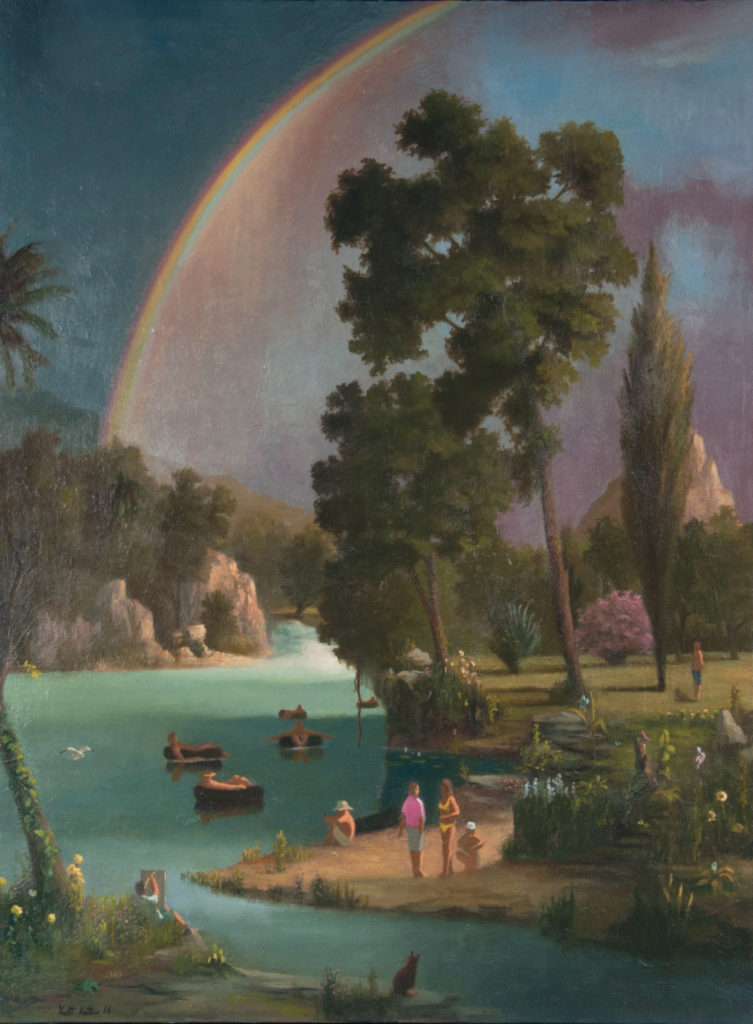
In Kattner’s work, there is an unnerving foreboding of something bad just over the horizon, something about to happen to a rational society that has no idea of the looming crisis that the artist’s subconscious felt. His scenes range from serene [such as “Classical Study 2 (After Lorrain)”] to chaotic.

Oil painting of a landscape
Keith Kattner, “Classical Study Two, After Lorrain,” 40 x 30 in., Oil on Canvas, 2017

“Entropy” is especially timely now because, as we know, things fall apart and chaos is inevitable. Kattner juxtaposes rural settings with urban sprawl, the changing seasons, and the idea of disorder.

He explains: “Entropy wants randomness and decay. If we put a garden behind our house and don’t take care of it, it will end up as weeds. When we as human beings try to organize things, we’re really fighting the forces of entropy.”

Kattner credits great Surrealists as his inspiration (Salvador Dalí in particular): “First I imitated reality, then I worked myself into the process of painting from my subconscious. All images and elements are moved around until the perfect balance has been achieved. A total rational painting is achieved. There are no flaming giraffes in my world.”

Oil painting of a landscape
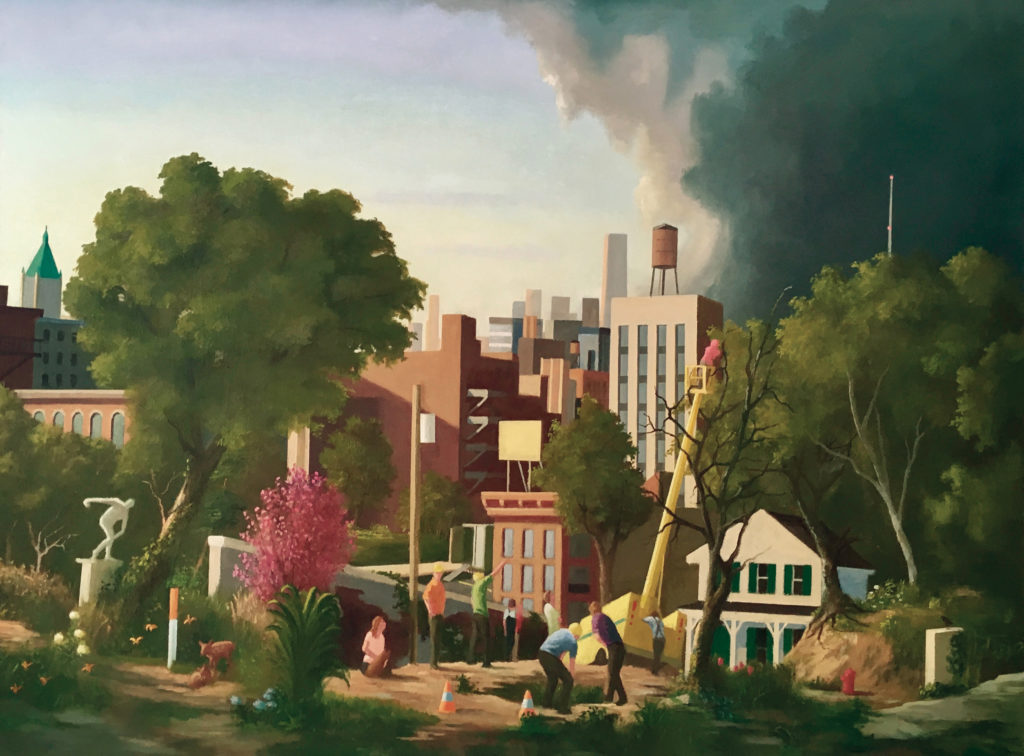
Keith Kattner, “City Sublime,” 36 x 48 in., Oil on Canvas, 2018

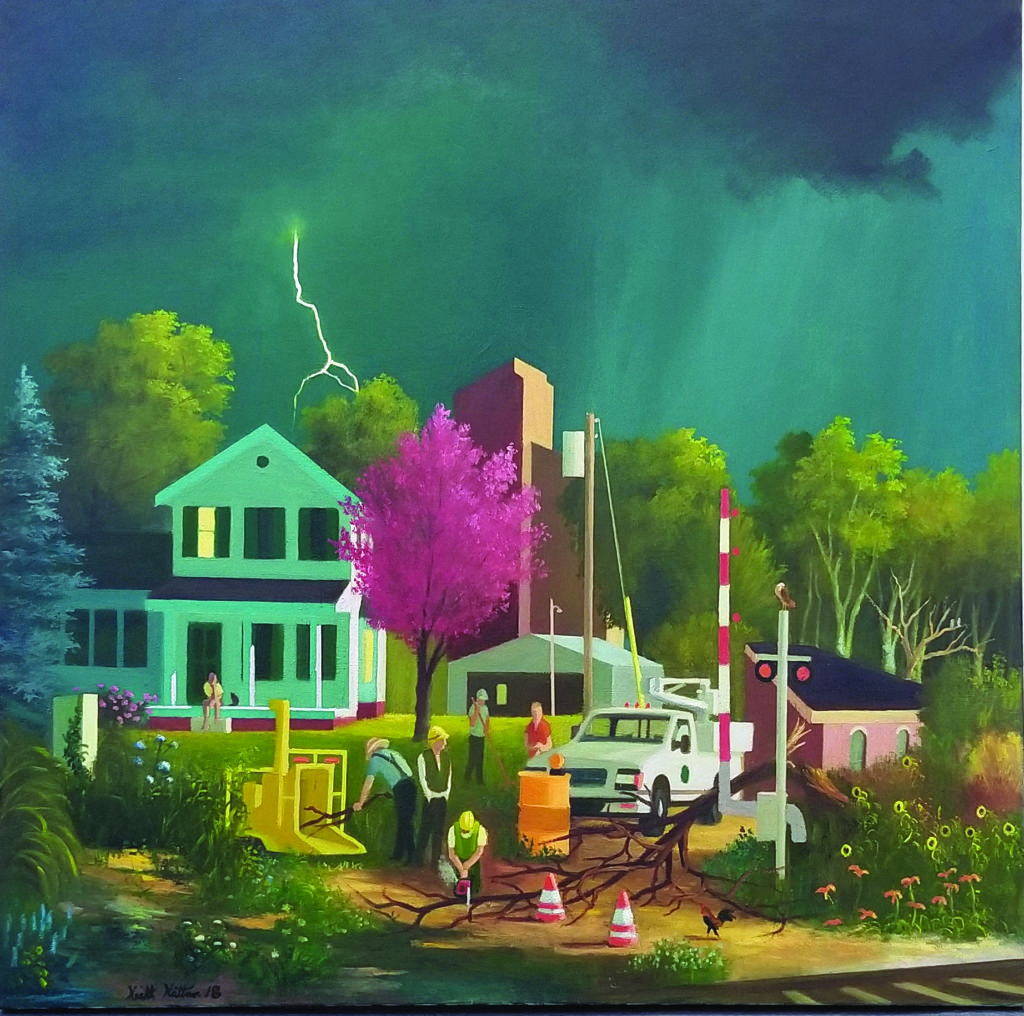
Kattner also explores the notion of inevitable change and growth. For example, in the painting “Thor and the Little Red Rooster,” we see the idyllic home setting interrupted by man as well as nature. Not only are the construction workers a source of change and upheaval, but so is something as natural as the lightning bolt’s indication of an electrical storm.

These days the absolute devastation of climate change is all around us and Kattner’s painting serves as a sort of artistic warning. Nature erupts with bustling man-made change. The human beings are, in this painting, the villains, so to speak.

Oil painting of a landscape
Keith Kattner,” Thor and the Little Red Rooster,” 36 x 36 in., Oil on Canvas, 2018-20

Learn more about “The Sleep of Reason” at http://paulfishergallery.com.

For more about Kattner, visit keithkattnerartist.com.

Additional articles on the artist:


> Sign up to receive Fine Art Today, our free weekly e-newsletter

> Click here to subscribe to Fine Art Connoisseur magazine, so you never miss an issue
Featured Artwork: Heidi Rosner presented by Celebration of Fine Art
0
Featured Artwork: Heidi Rosner presented by Celebration of Fine Art

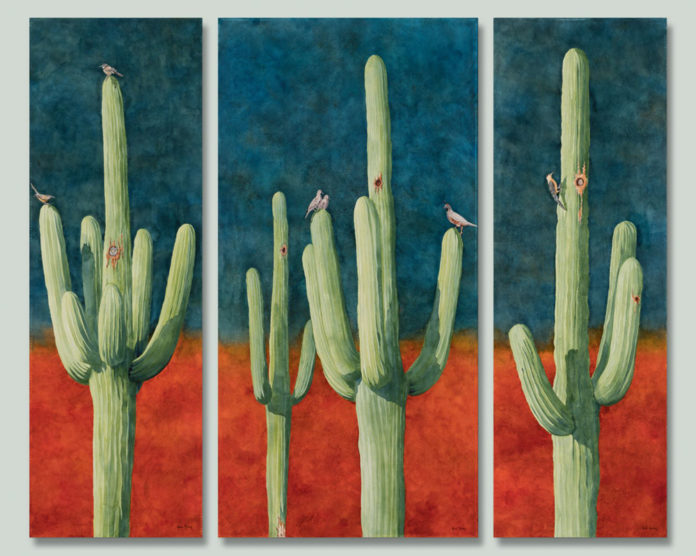
Desert Sentries Triptych
By Heidi Rosner
60 x 72 in.
Watercolor
$15,000

A self-taught artist, Heidi Rosner was an engineer in the aerospace industry before pursuing fine art. She paints in the studio as well as en plein air and is fulfilled by the spontaneous nature and flexibility of watercolor. “My love of the outdoors helps me to see and capture the vibrancy of native plants in the scenes that I paint.” With every painting, her goal is for people to feel as if they can walk into her landscapes and enjoy the experience, or to feel the sun that illuminates her florals. When Rosner’s viewers share in these experiences, she knows she has succeeded.

“My inspiration comes from scenes in and around the Southwest, the West Coast, as well as on location all over the world. Because I travel extensively, I have made my painting setup extremely portable to enable me to take it with me everywhere I go.”

Come watch Heidi and 100 other artists create at the Celebration of Fine Art, where art lovers and artists connect, in Scottsdale, Arizona, January 16 – March 28, 2021. Contact us at 480-443-7695 or [email protected].

You can see more of Rosner’s work at: www.celebrateart.com/store/heidi-rosner

11 Floral Paintings in Oil, Watercolor, and Pastel

1
Floral Paintings - PleinAir Salon - FineArtConnoisseur.com
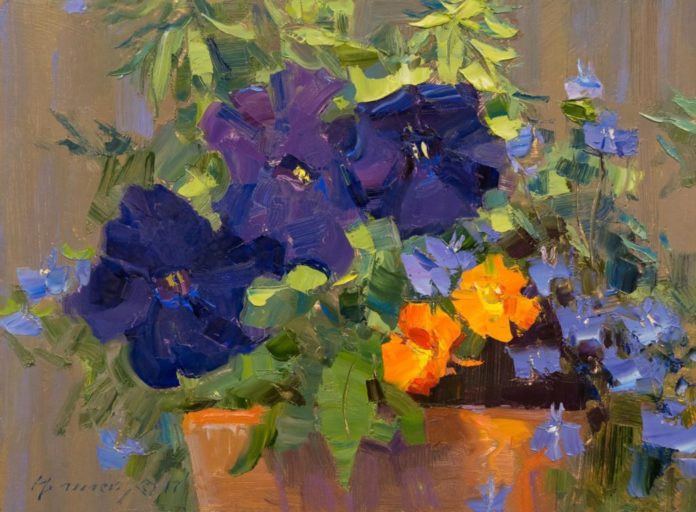
Greg Wallace, “Velvet Petunias,” oil, 12 x 16 in.

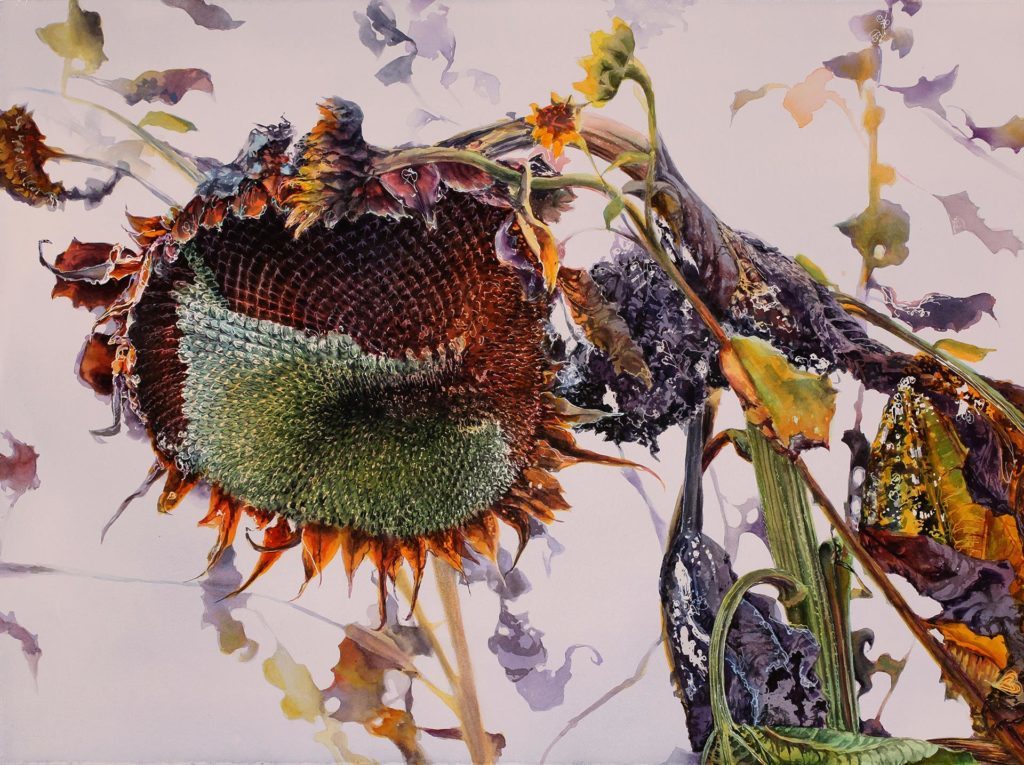
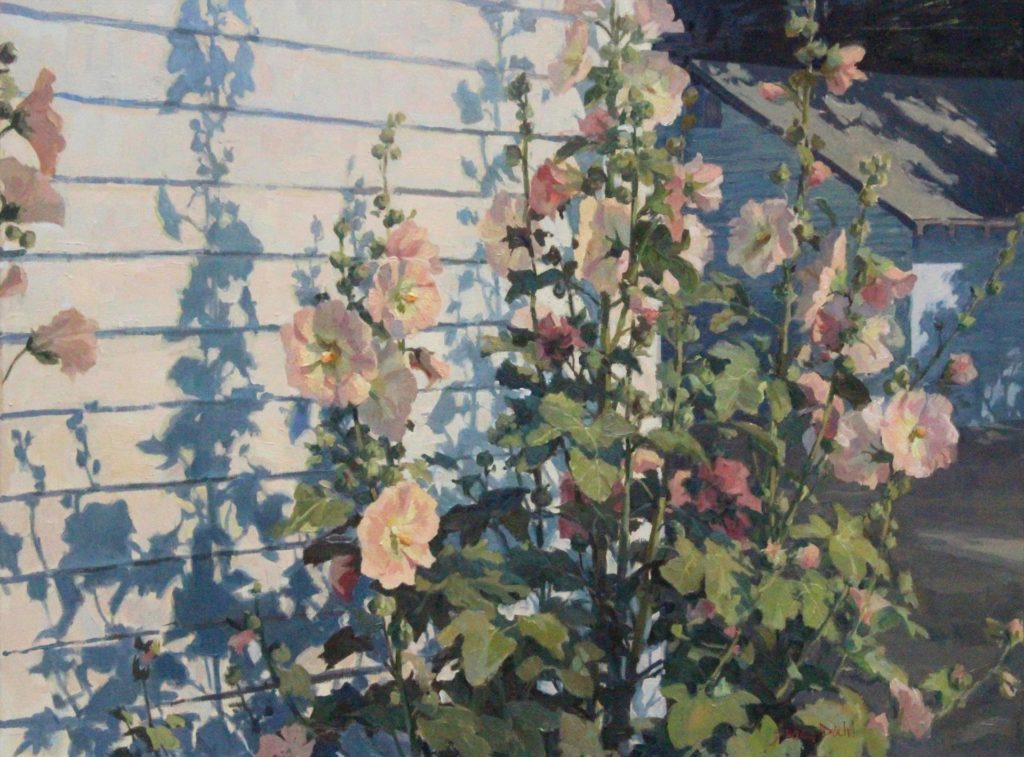
View exceptional floral paintings that have won recognition in the PleinAir Salon.

Floral Paintings - PleinAir Salon - FineArtConnoisseur.com
Soon Warren, “Peeking Last Time – Sunflower,” watercolor, 30 x 22 in.
Floral Paintings - PleinAir Salon - FineArtConnoisseur.com
Susan Diehl, “Sunlite and Lace,” oil, 24 x 30 in.
Floral Paintings - PleinAir Salon - FineArtConnoisseur.com
Kyle Ma, “Mother’s Day Roses,” oil

Related articles by or about Kyle Ma >
6 Things That Keep Artists From Improving Their Work by Kyle Ma
A Prodigious Prodigy (submitted by Wilcox Gallery)

Floral Paintings - PleinAir Salon - FineArtConnoisseur.com
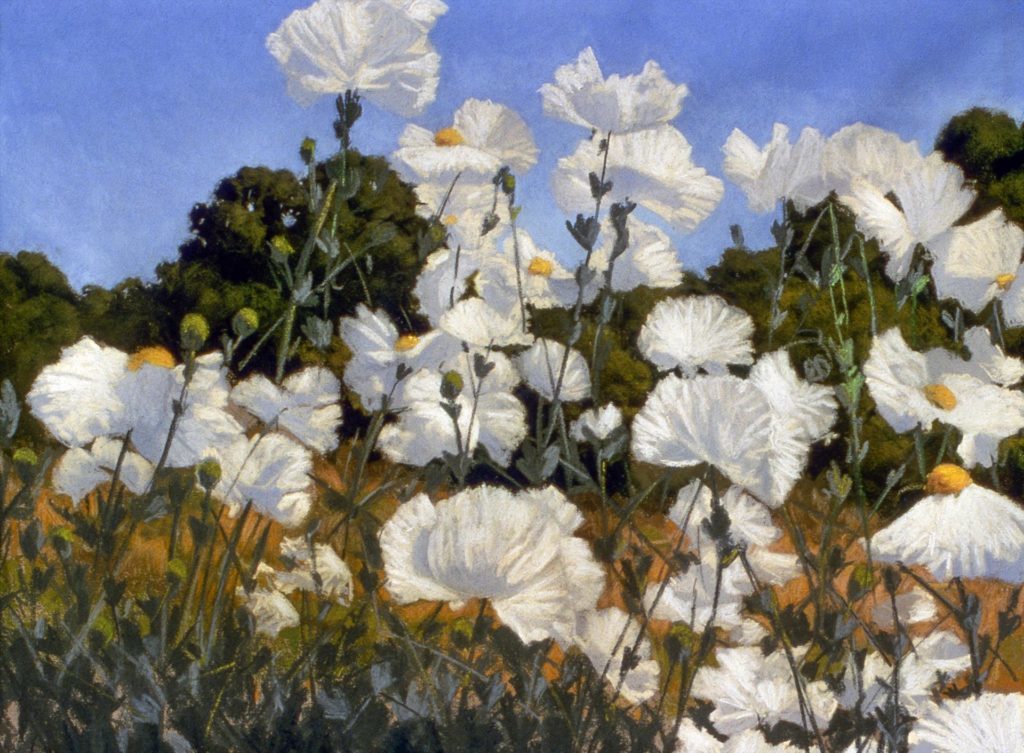
Jim Promessi, “Matilija Poppy,” soft pastel, 22 x 28 in.
Floral Paintings - PleinAir Salon - FineArtConnoisseur.com
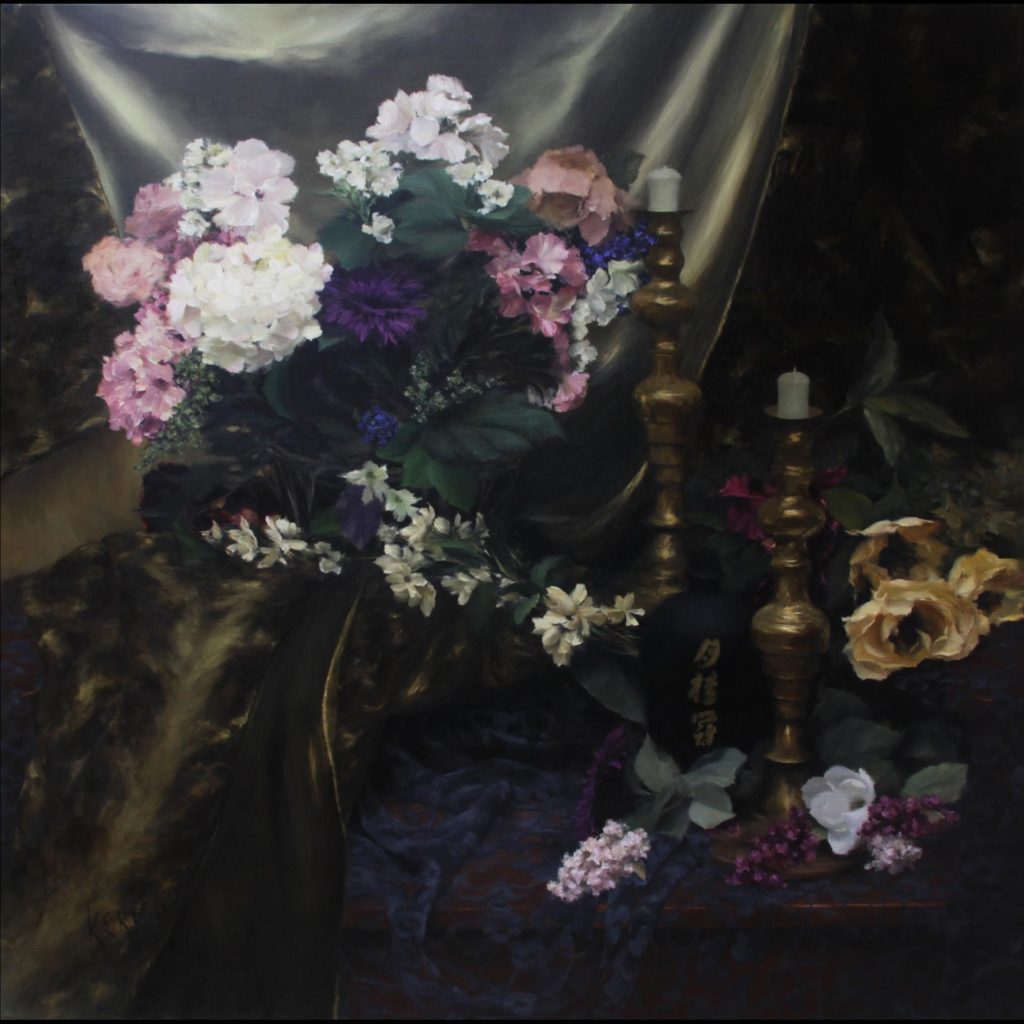
Kerri Mcauliffe, “Chinese Vase,” oil, 30 x 30 in.
Floral Paintings - PleinAir Salon - FineArtConnoisseur.com
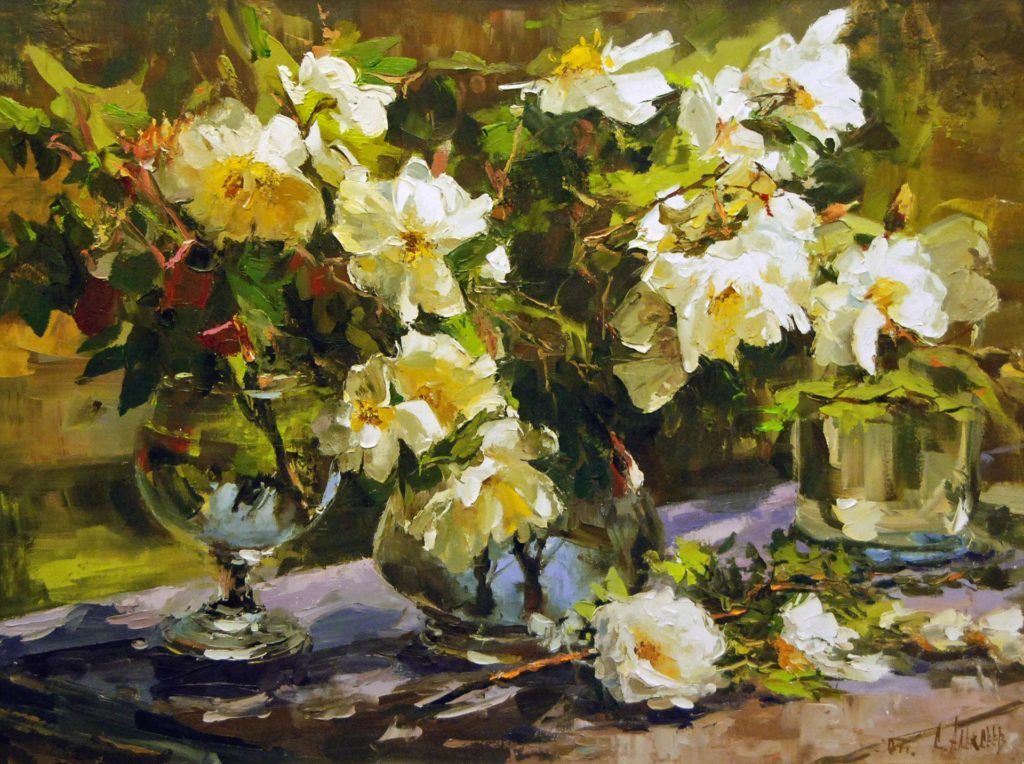
Sergey Alexeev, “White Wild Roses,” oil, 36 x 25 in.
Oil pastel still life - PleinAir Salon - FineArtConnoisseur.com
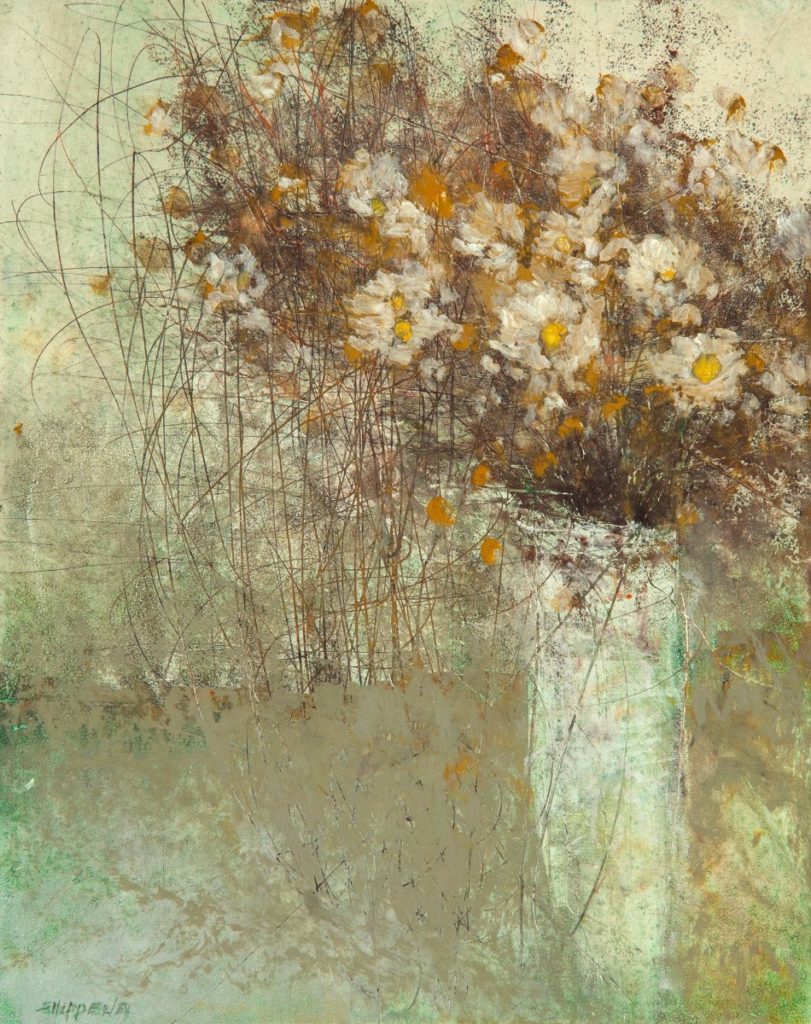
George Shipperley, “The White Vase,” oil pastel, 10 x 8 in.
Wildflower art - PleinAir Salon - FineArtConnoisseur.com
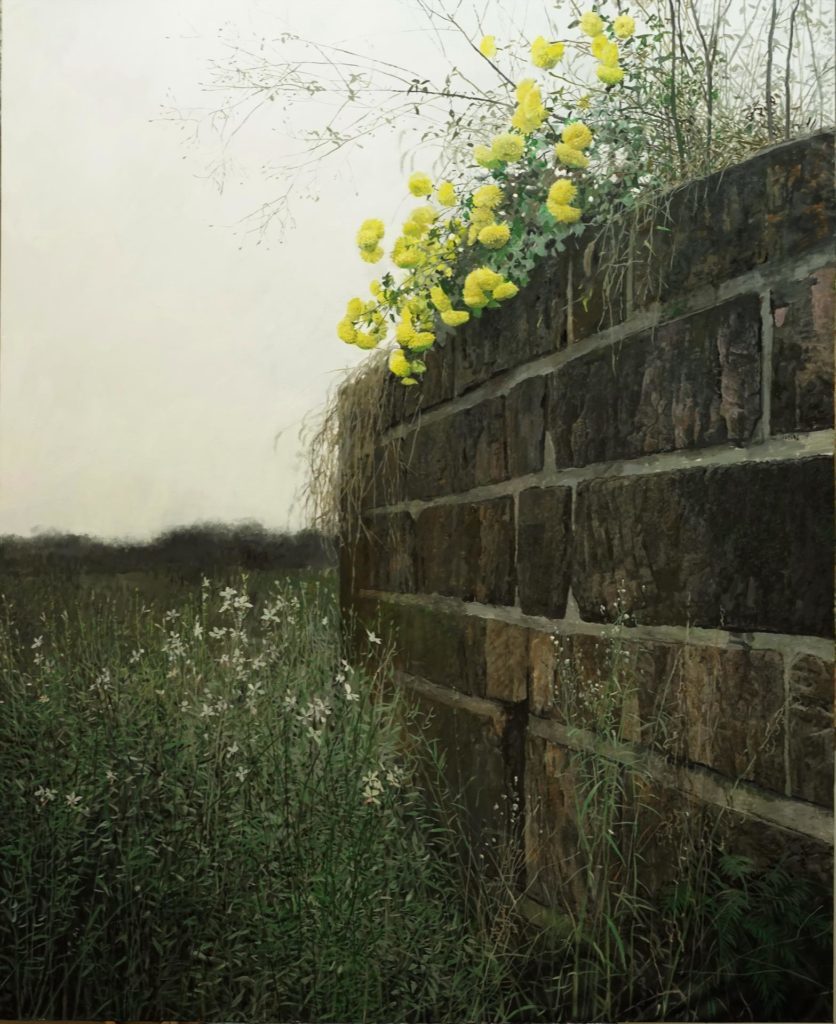
Chenglong Wang, “Wild Chrysanthemum,” oil, 63 x 51 in.
Garden art - PleinAir Salon - FineArtConnoisseur.com
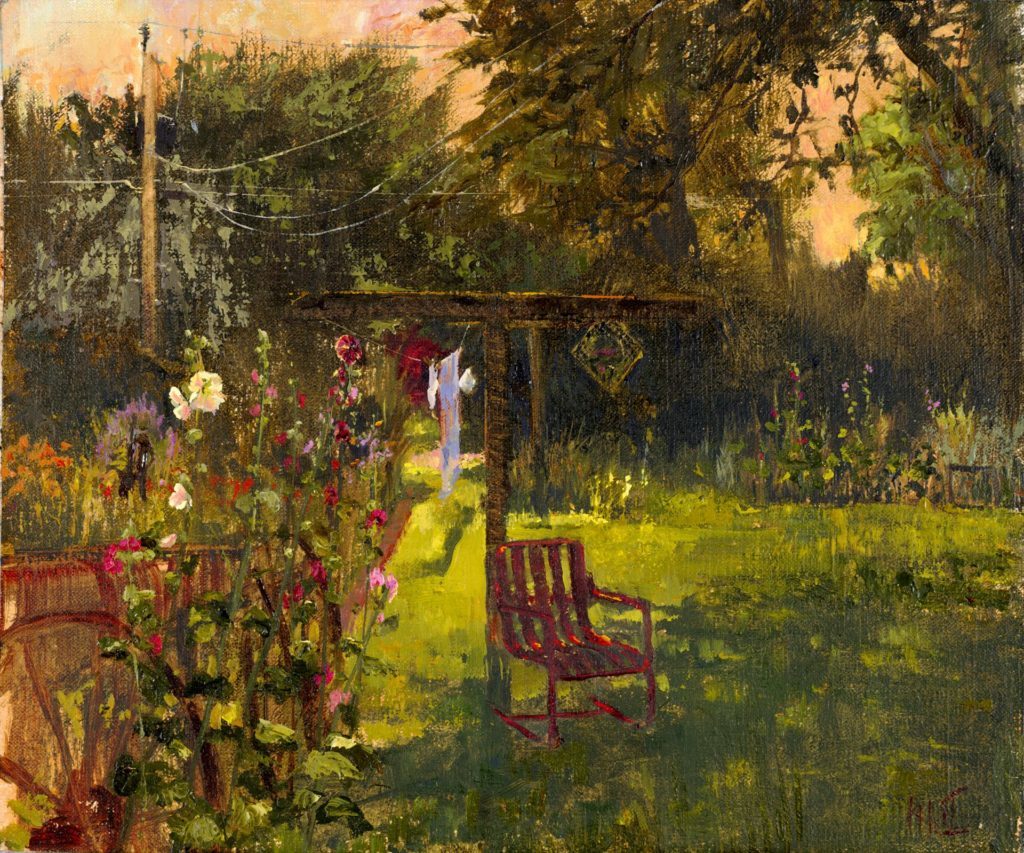
Karen Hitt, “Cindy’s Gift,” oil, 10 x 12 in.
Watercolor art - PleinAir Salon - FineArtConnoisseur.com
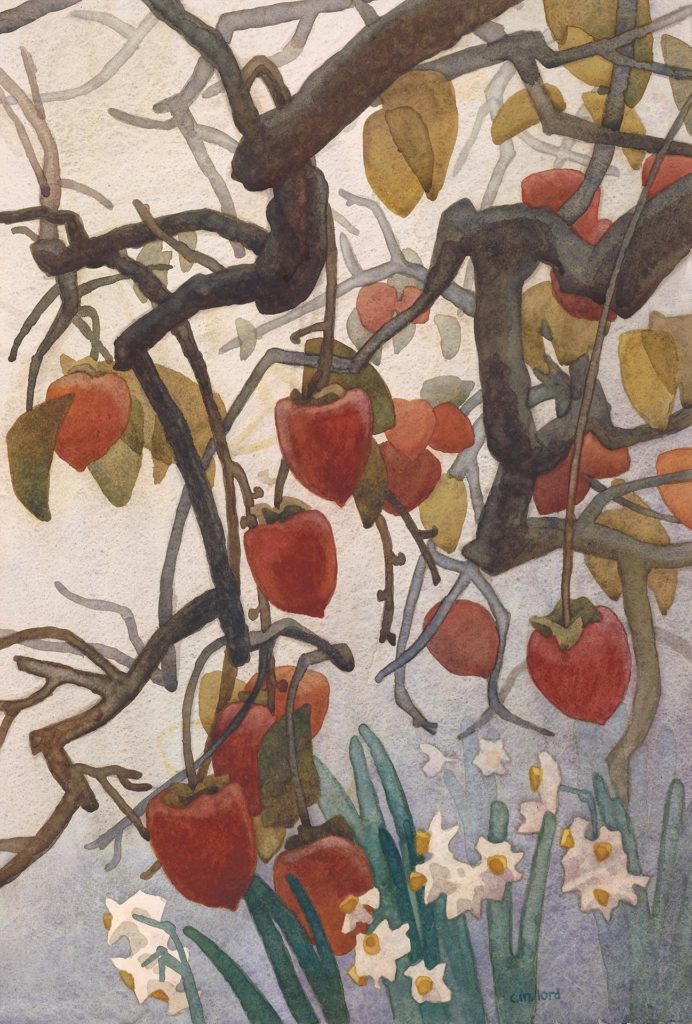
Carolyn Lord, “Misty Morning Persimmon,” watercolor, 22 x 15 in.

The PleinAir Salon is now open and accepting entries. View the art competition rules and learn how to enter at PleinAirSalon.com.

11 Floral Paintings in Oil, Watercolor, and Pastel - FineArtConnoisseur.com
Pin this collection of floral paintings to your Pinterest board!

Why should a representational artist enter the PleinAir Salon?

All types of paintings are eligible and do not need to have been completed in plein air, but should originate from a plein air study or plein air experience. As we know, many studio paintings start with plein air sketches. Our interest is in rewarding great paintings.

Plein Air Salon art competition 10th Annual


The PleinAir Salon awards $27,000 in CASH each year! Learn more at pleinairsalon.com, and enter your best work for your chance to win this art competition. Enter now – the next deadline is coming soon!

Enter Now

If you’ve never entered, it only takes a couple of minutes to create your own account. Once you do that, just upload the images of your best work and select the categories you wish to enter – very manageable to do!

All of our awards are CASH, with the grand prize winner getting called up on stage at the Convention & Expo to claim their check for $15,000. That grand prize winner will also have their winning painting featured on the cover of PleinAir magazine (can it get any better?).

There are smaller cash awards, too, and you can find out all about them here. Remember, even if a previous judge did not select your painting, our current judge just might find it to be a winner!

This article was originally published in 2018 in Fine Art Today


Sign up to receive Fine Art Today, the free weekly e-newsletter from
Fine Art Connoisseur magazine.

Featured Artwork: Sara Jane Reynolds

0

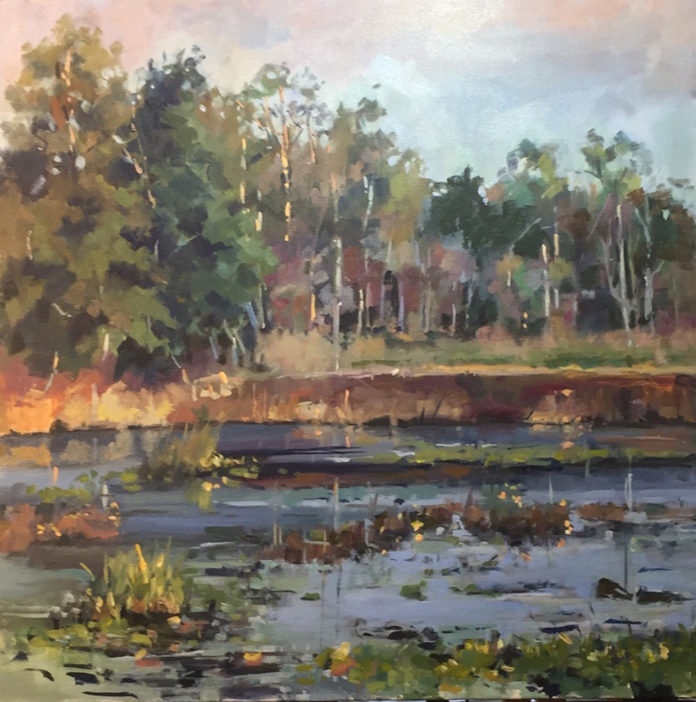
Lilies Along the Edisto by Sara Jane Reynolds
Oil on canvas
24 x 24 x 2 in.
$1,600
Available through the artist

I am fortunate to live in the Lowcountry of South Carolina on Johns Island near the historic city of Charleston. This area is called lowcountry because there are no hills, just the flat coastal plain with infinite variety of swamps, marshes, tidal creeks, and freshwater and saltwater ponds. Great swaths of South Carolina are under conservation with the ACE Basin as the crown jewel. The ACE Basin is comprised of the Ashepoo, Combahee and Edisto Rivers and combines to form 250,000 acres of prime forest and wetlands. This is the rich habitat that inspires me and in which I explore with my heart and mind.

Lilies Along the Edisto is a painting that evolved from a stop on the roadside. I was driving through the rural backroads and came across this beautiful and wild space of rambling river cutting a path though the fields and creating a large lily pond, the last of fall colors just tipping the leaves.

I collect thoughts and ideas for paintings through observation and by working en plein air. I strap a knapsack on my shoulders lightly packed with oil paints, easel, water, bug spray and hat and hike into the woods, marsh or fields. My goal is to catch morning light and three to four hours of painting. I observe the colors and shapes around me and emotionally try to plug into this particular moment. Sometimes I get lost in the process and hours can slip by. It is crucial to work this way. I need to authentically experience the landscape and sensually drink it in. By submitting to this process, I can sometimes super charge my instincts and emotions. It’s never a sure thing, but I put myself in a condition to receive.

I use the oil sketches from life to inform larger works that I complete in the studio. I also use photographs for reference, but the field work is the most valuable resource for me.

My goal is to share my experience of the landscape and the beauty of the natural world as in a prayer or song.

I have life long been influenced by a poem by Edna St. Vincent Millay, God’s World:
“Oh World, I cannot hold thee close enough. . .”

Professional organizations:
Oil Painters of America
American Impressionists Society
California Art Club
Portrait Painters of America

To see more work by Sara Jane Reynolds, please visit sarajanereynolds.com

Contact her directly at [email protected] or 843.442.6929

WEEKLY NEWS FROM THE ART WORLD

Fill your mind with useful art stories, the latest trends, upcoming art shows, top artists, and more. Subscribe to Fine Art Today, from the publishers of Fine Art Connoisseur magazine.

  • This field is for validation purposes and should be left unchanged.