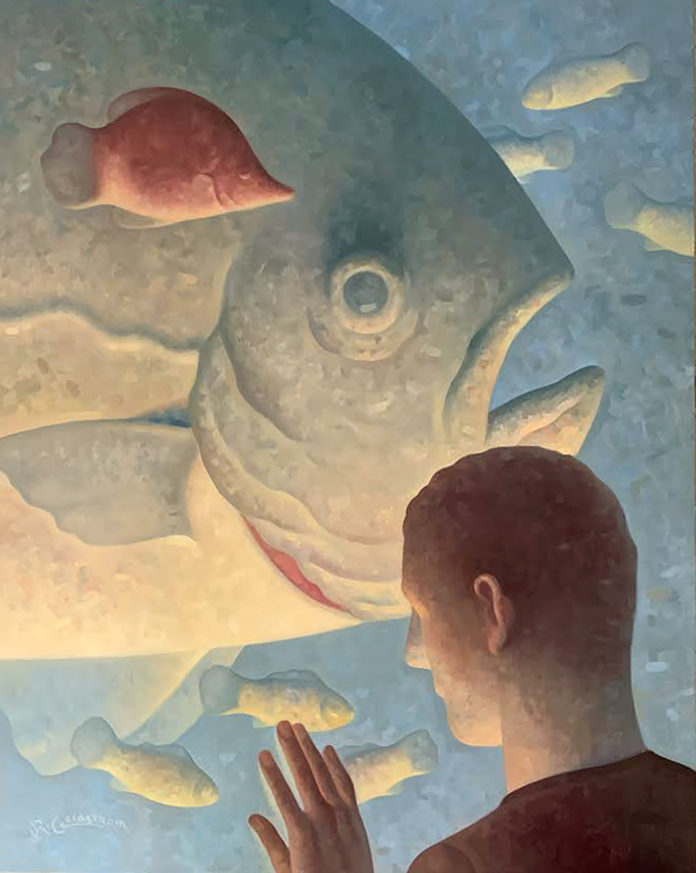
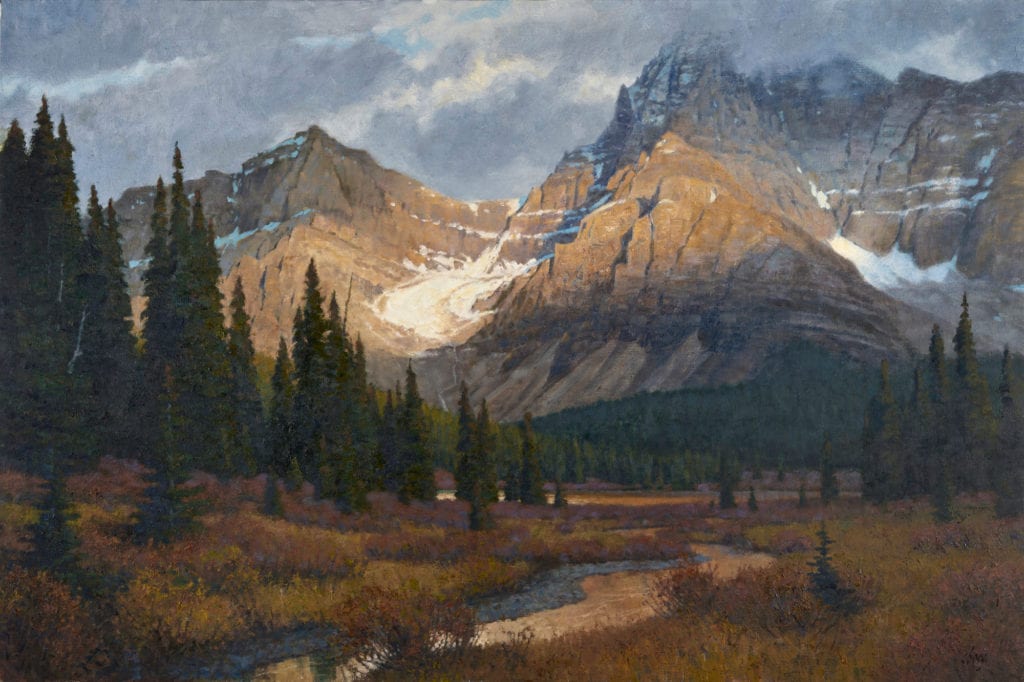
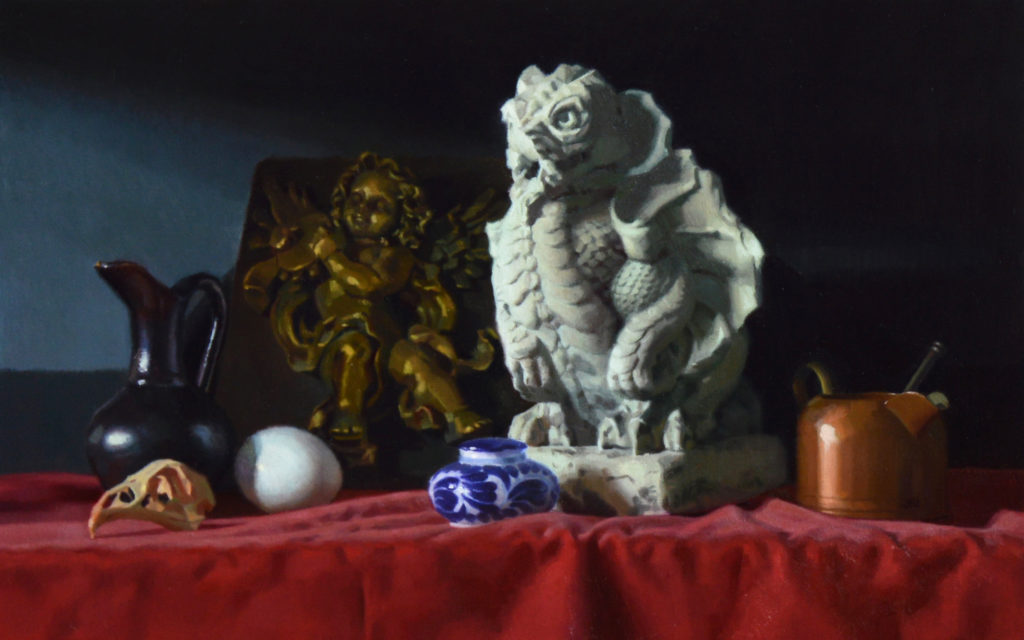
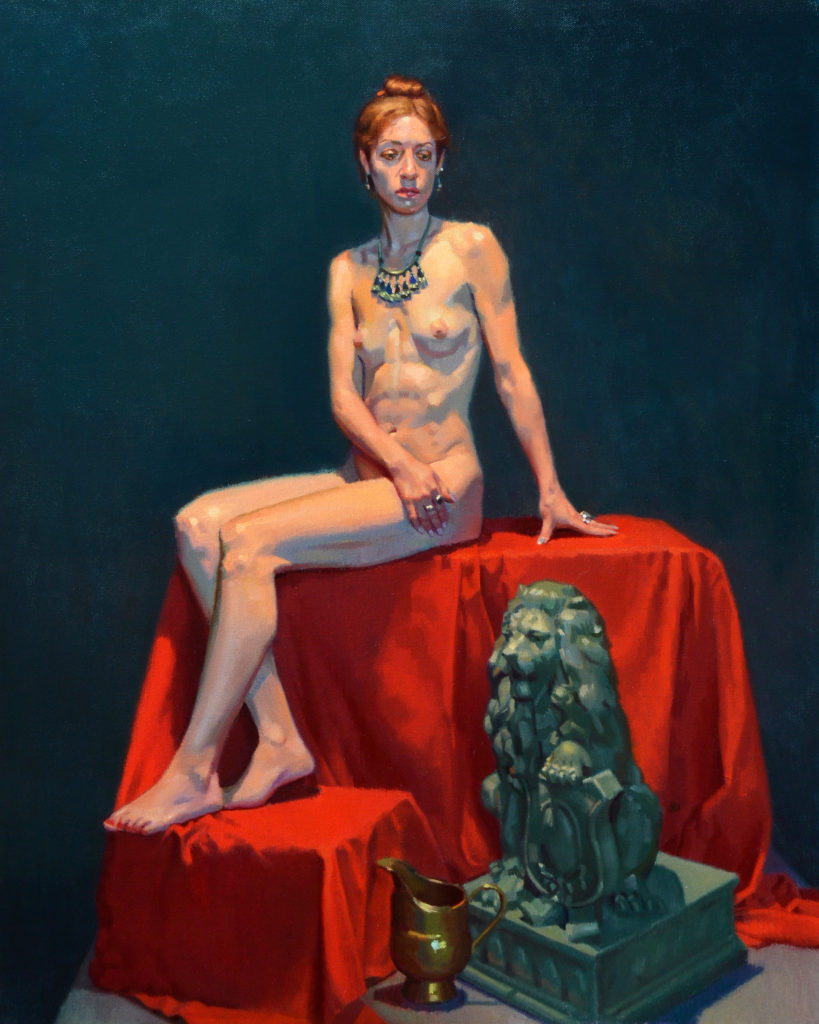
Robert Goldstrom, "Red Tang," 30x24, oil on linen, $3200
ROBERT GOLDSTROM (b. 1953) is a painter who thinks in series, revisiting a compelling motif again and again until it plays itself out.
Born in Detroit, Goldstrom paid his way through the University of Michigan by designing posters around campus. On his last day job-hunting in Chicago, he landed an assignment at Playboy, which led to an award-winning career making posters for the New York City Opera, shopping bags for Bloomingdales, and covers for Time and The New York Times Magazine. Between assignments, Goldstrom started painting for enjoyment, and has since gone full time in that direction.
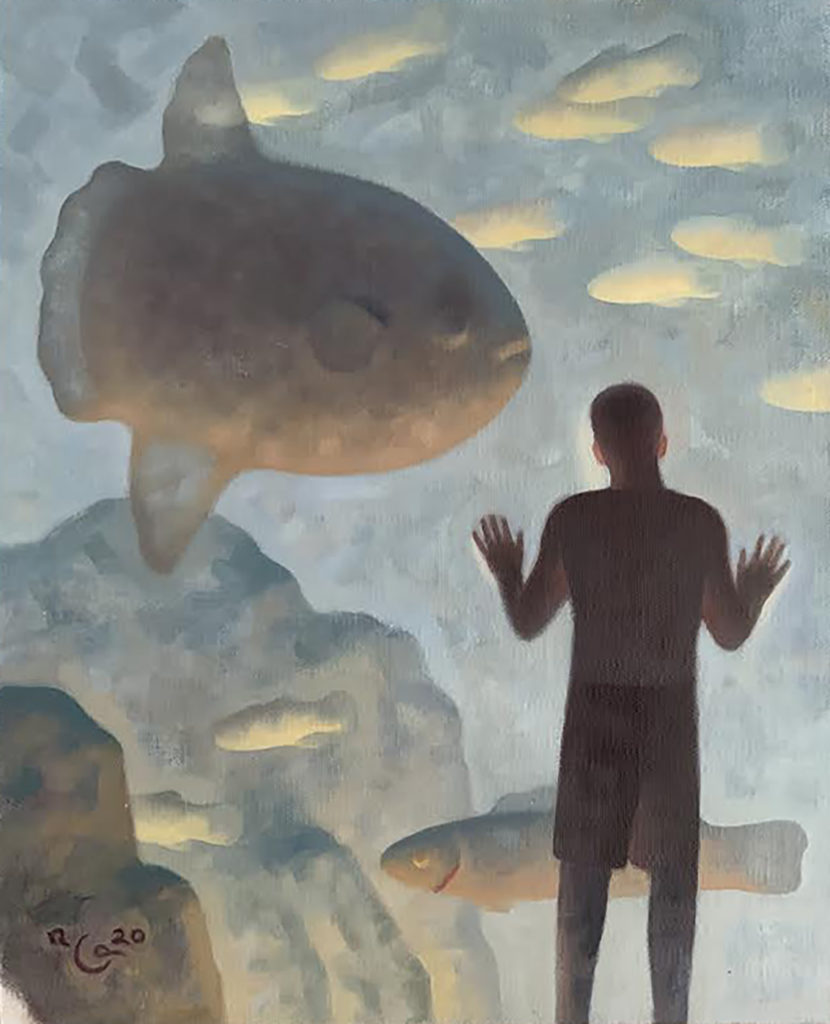
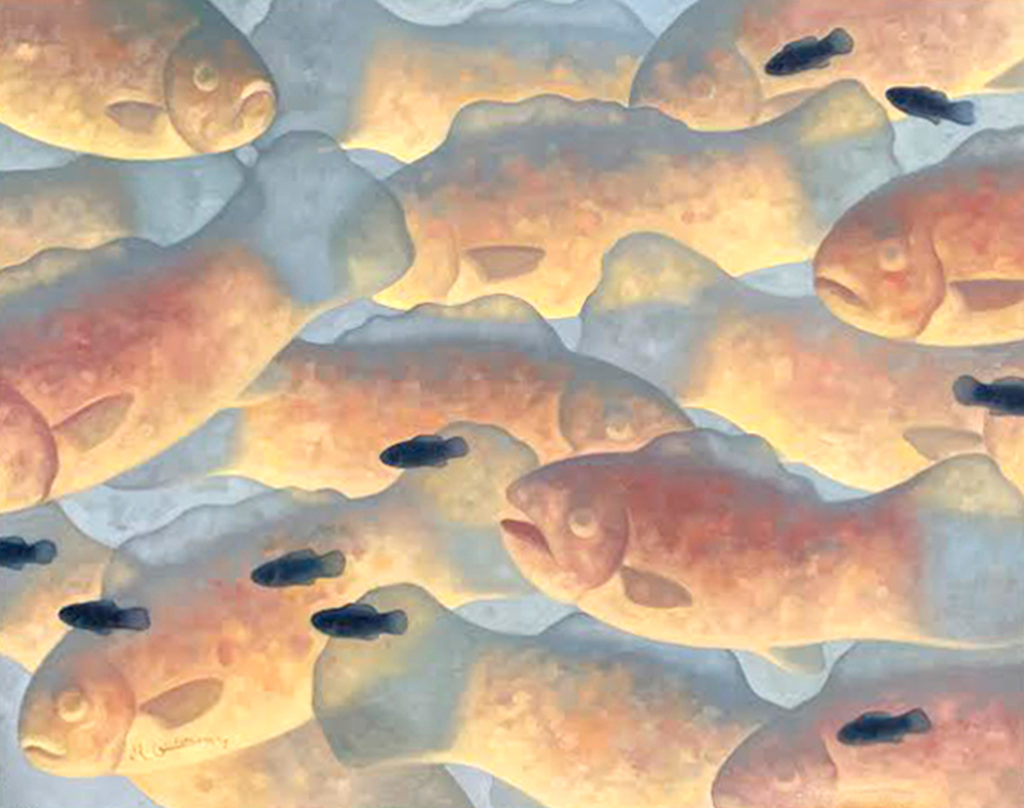
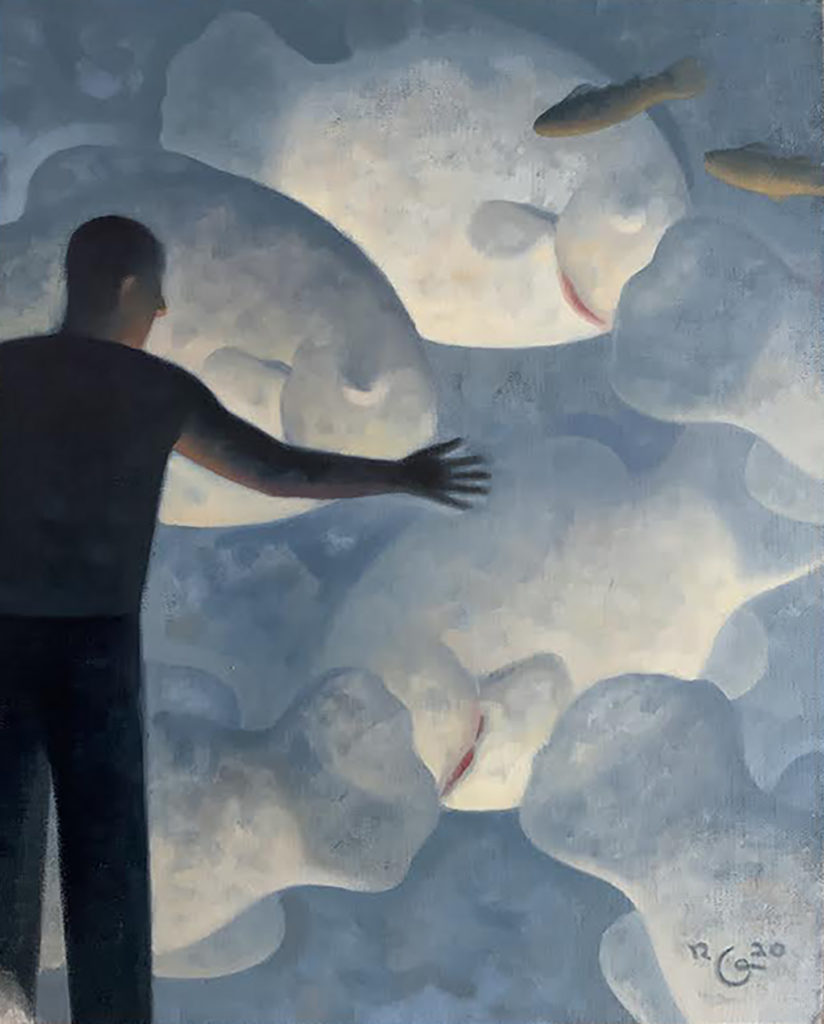
Robert Goldstrom, “Sunfish (study),” 10×8, oil on linen panel, $950Robert Goldstrom, “Gold #10,” 24×30, oil on linen, $3200Robert Goldstrom, “White Discus (study),” 10×8, oil on linen panel, $950
“I have yet to run out of inspiration. When I stop looking, the ideas will stop coming.”
.
Goldstrom’s next show is at Rice Polak Gallery in Provincetown, MA. The exhibition runs through September 3, 2020 and features works by Robert Goldstrom, Michael Snodgrass, Blair Bradshaw, and Jennifer Goldfinger.
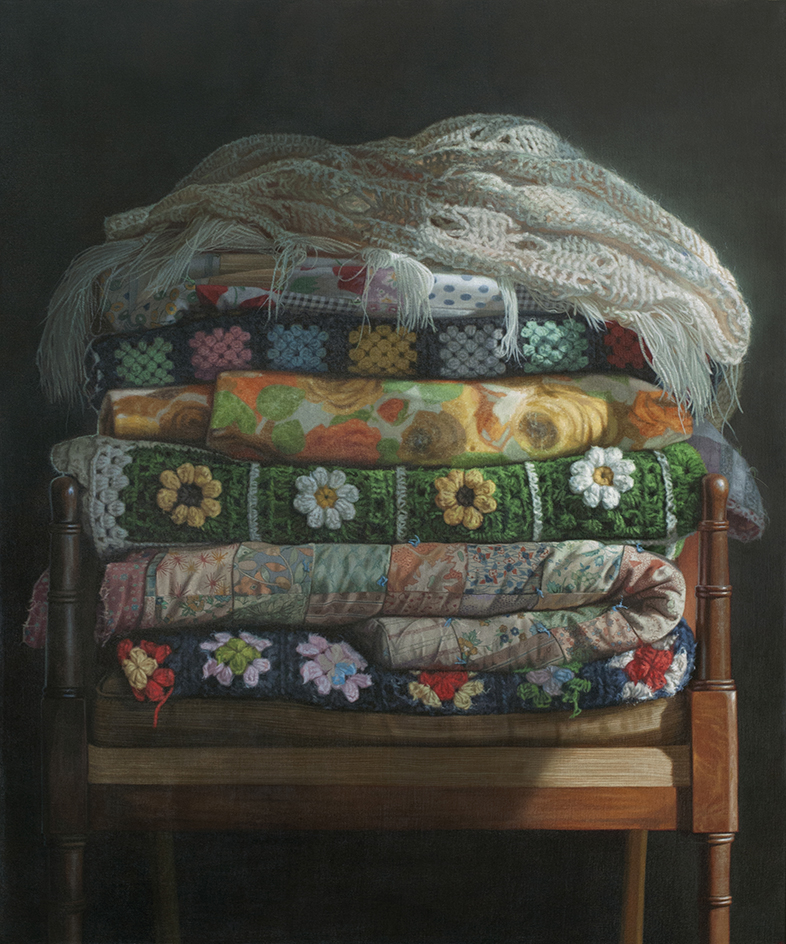
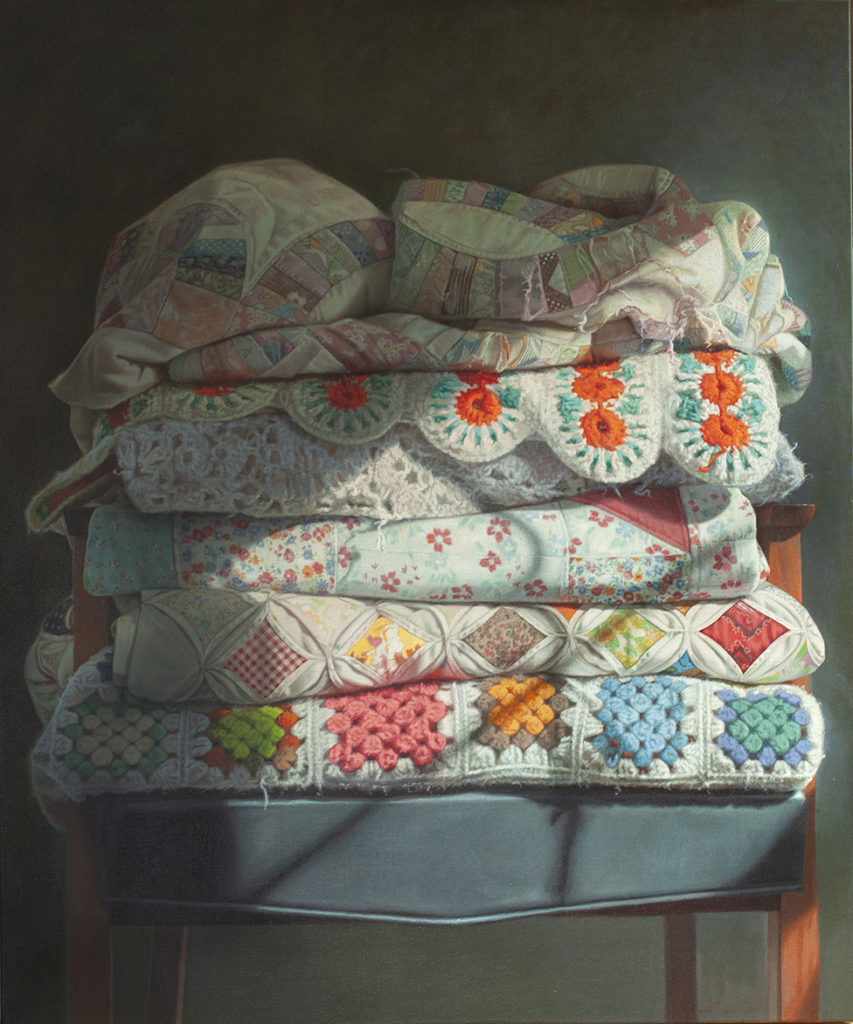
CINDY RIZZA (b. 1984), "Stockpile II," 2018, oil on linen, 30 x 24 in., private collection
There is a lot of superb contemporary realism being made these days; this article by Allison Malafronte shines light on a gifted individual.
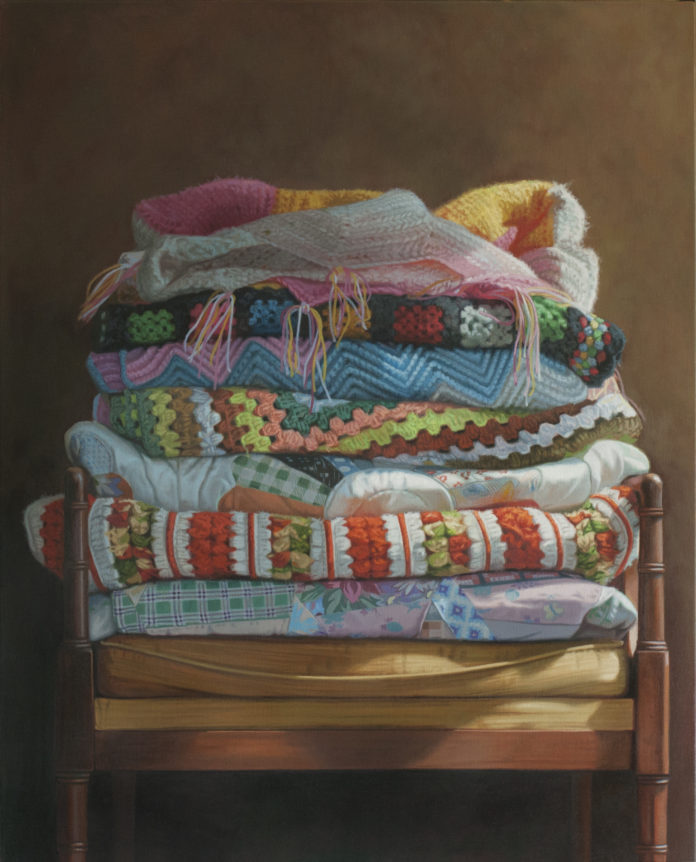
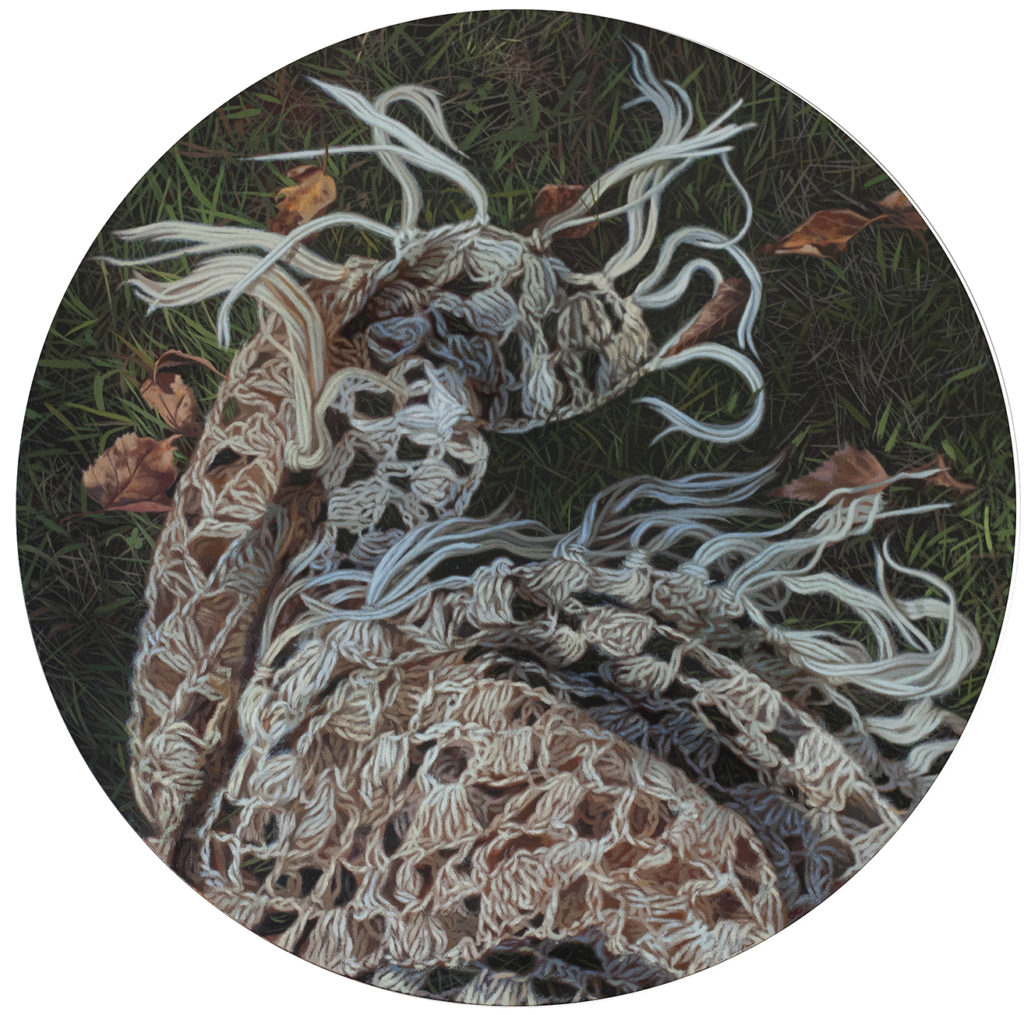
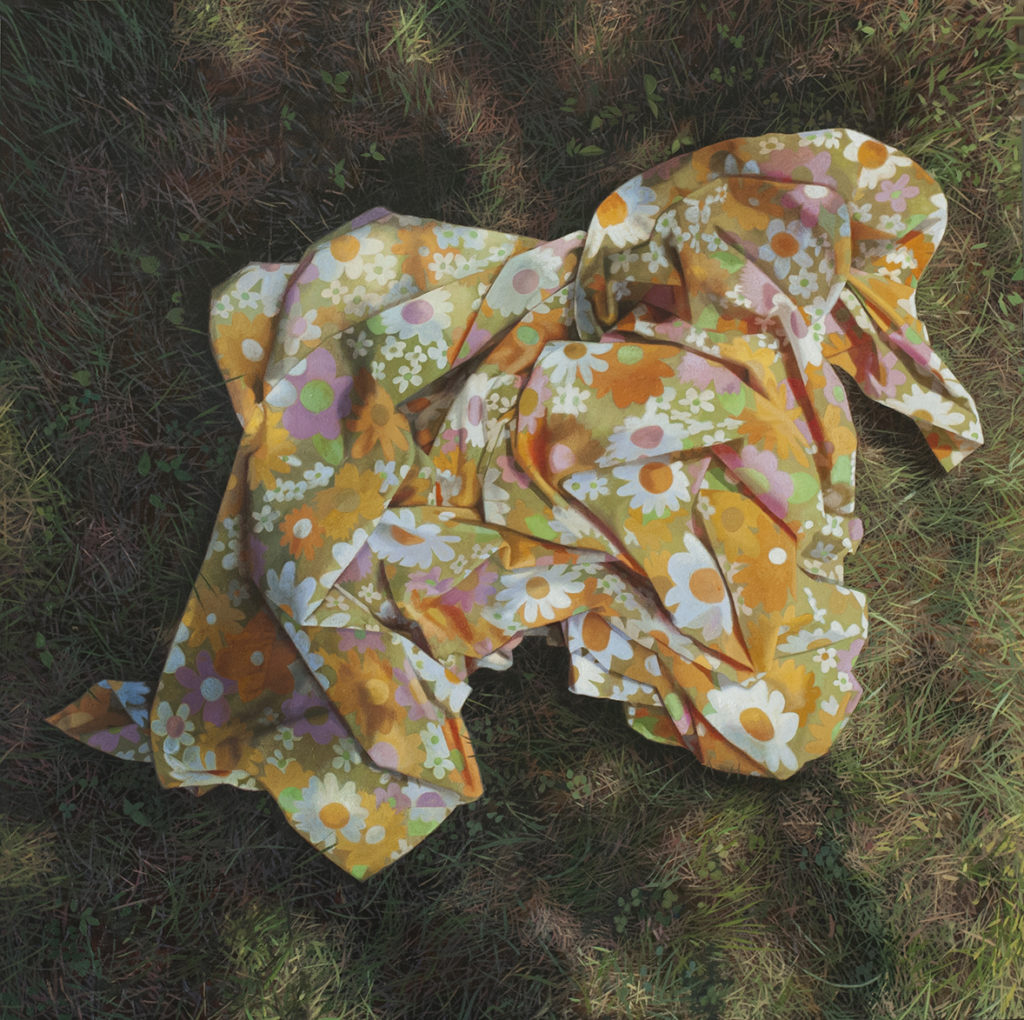
CINDY RIZZA (b. 1984) makes paintings of familiar and comforting heirloom objects — such as handmade quilts and blankets — that explore the concepts of safety and security, while also questioning how much control we have over these elements. “In examining the unique identities of heirloom textiles, my work summons conflicting feelings of comfort and loneliness, hope and foreboding, love and loss,” the artist shares. “I aim to expose the contradictions within the subjects — to honor the comfort they bore, but question their capacity to keep us truly secure from what we cannot control.”
Currently living in New Hampshire, Rizza grew up in Maine and earned her B.F.A. at the New Hampshire Institute of Art. Continuing education classes at the New York Academy of Art helped her learn to combine classical techniques with contemporary thought and conceptualization. With an eclectic mix of influences — Andrew Wyeth, Andy Warhol, and Robert Bechtle among them — Rizza has taken a cue from artists of the past whose works carry a tension between how things appear and what lies beneath the surface.
We see this impulse in Rizza’s series of stacked crocheted blankets, in which she questions not only the object but also the maker and meaning behind it. “As women, and as mothers especially, we work to create nests and protected worlds for our families and the people we love, almost to a fault,” the artist explains.
“Although these blankets are comforting, I also think of them as somewhat frightening because of the questions they provoke. Do they actually provide security? Are their makers still here? What happened to the people they were made for? Are we safe? Are we secure? While these blankets provide shelter and warmth, do they weigh on us and tie us down?”
In “Stockpile II” (shown at top), for example, Rizza explores these concerns through careful attention to contrasts of sunlight and shadow and the ambiguities found between them. Her multi-step approach — beginning with a compositional sketch, creating an underdrawing, laying down an imprimatura wash as an underpainting, and building up layers with increasingly thick paint — allows Rizza to create a detailed representation carrying all of the multi-layered dimension and symbolism she seeks.
Cindy Rizza, “Armory,” oil on linen, 30″ x 36″, 2019Cindy Rizza, “Serpentine,” oil on panel: 18″ diameter, 2020Cindy Rizza, “Resistance,” oil on panel, 24″ x 24″, 2020Cindy Rizza, “Arsenal,” oil on linen 30″ x 36″, 2020
Rizza’s upcoming fall solo exhibition will be at the George Billis Gallery, New York City. Visit her website at cindyrizza.com for more information.
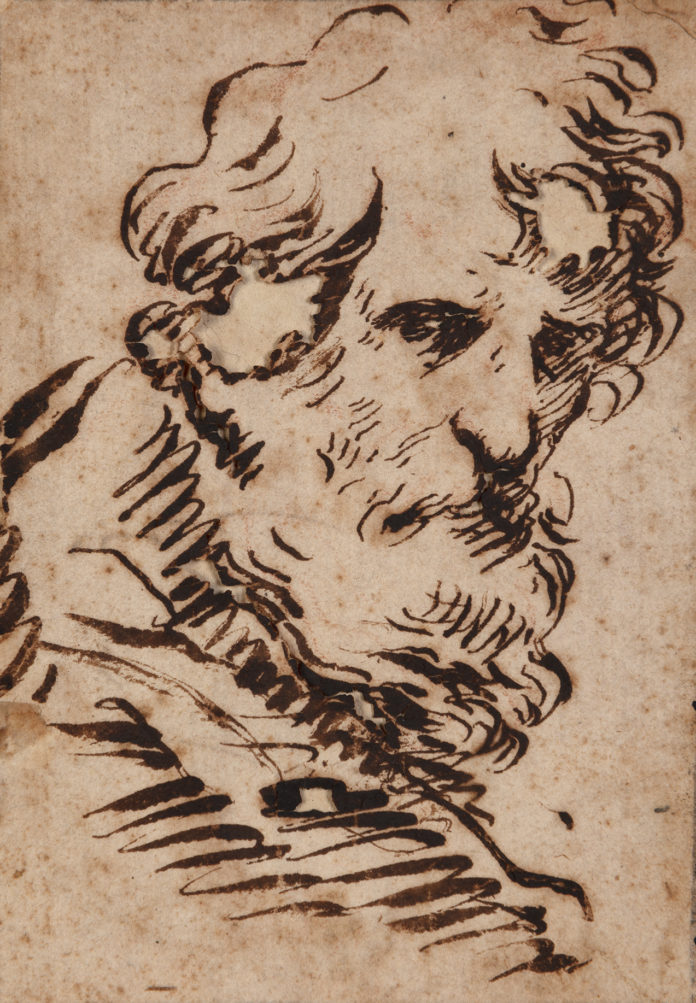
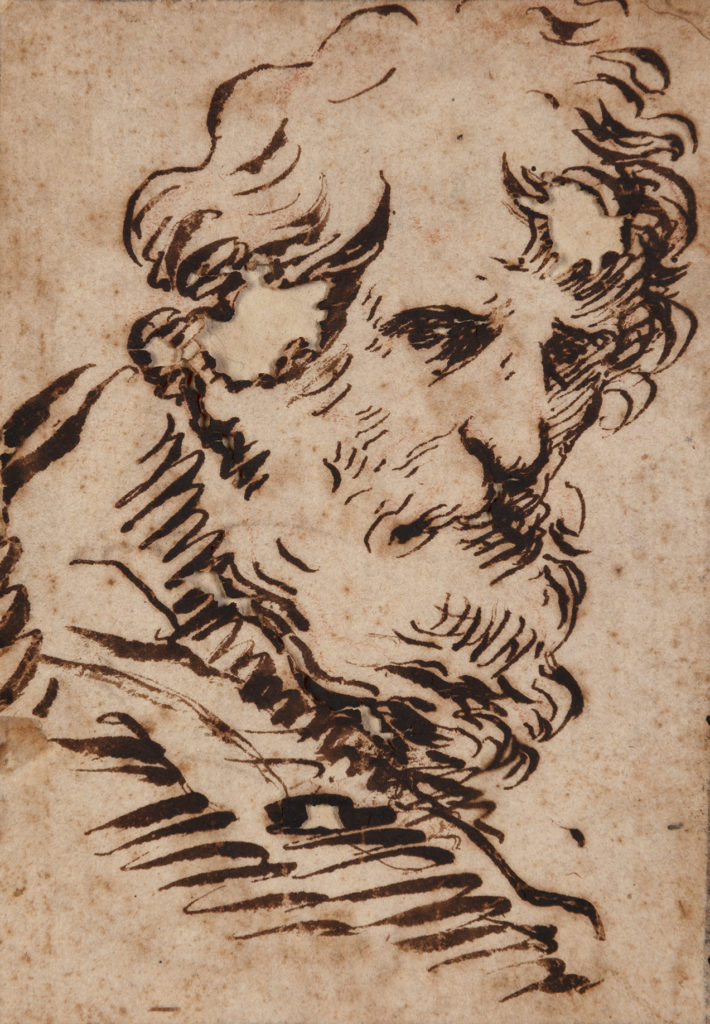
Francisco de Herrera the Elder (Spanish, c. 1590–1654), “Bearded Head in Half‐Profile,” c. 1642. Reed pen with gray‐brown ink on laid paper, 3 7/8 x 2 7/8 in. (10 x 7 cm). Meadows Museum, SMU, Dallas. Museum purchase with funds from The Meadows Foundation with additional support provided by the ExxonMobil Foundation, MM.2020.03. Photo by Kevin Todora.
The Meadows Museum, SMU (Dallas, Texas), announced recently that it has acquired six new works for its collection: five Spanish drawings from the seventeenth and eighteenth centuries, including one by Alonso Cano (1601–1667), and one terracotta sculpture by the Catalan Modernist Agustín Querol y Subirats (1864–1909).
From the museum:
Purchased together from De la Mano Gallery in Madrid, Spain, the five sheets reflect the strong tradition of Spanish draftsmanship in the early modern period, and significantly enhance the museum’s collection of drawings.
Works by Francisco de Herrera the Elder (c. 1590–1654) and Pedro Duque Cornejo (1678–1757) are the first by these artists to enter the Meadows’ collection, while other drawings offer new insight into the creative processes of artists already represented, including Alonso Cano, Mariano Salvador Maella (1739–1819), and José Camarón Bonanat (1731–1803).
The sculpture by Agustín Querol y Subirats adds to the Meadows’ growing collection of Catalan art and joins two important paintings, one by Catalan artist Josep de Togores i Llach (1893–1970) and the other by Santiago Rusiñol i Prats (1861–1931), both acquired by the museum earlier this year.
“We are looking forward to the scholarship that will result from studying these newly acquired works alongside those already in our collection,” said Mark Roglán, the Linda P. and William A. Custard Director of the Meadows Museum. “It is important to have a drawing by Alonso Cano, one of the Golden Age’s masters of the Spanish School and a colleague of Velázquez, in addition to the Cano painting already in the collection. The significant addition of the other four sheets to our Spanish drawings collection—including a beautifully rendered head by Francisco de Herrera the Elder—is likely to spur new research and perhaps even result in publications and exhibitions that further deepen our understanding of Spanish draftsmanship and its influence on the built environment and culture of seventeenth and eighteenth-century Spain. Meanwhile, the acquisition of the Querol work is a milestone in the growth of holdings that represent both modernist and Catalan art, areas of the collection that the Meadows is committed to developing further.”
About the Works
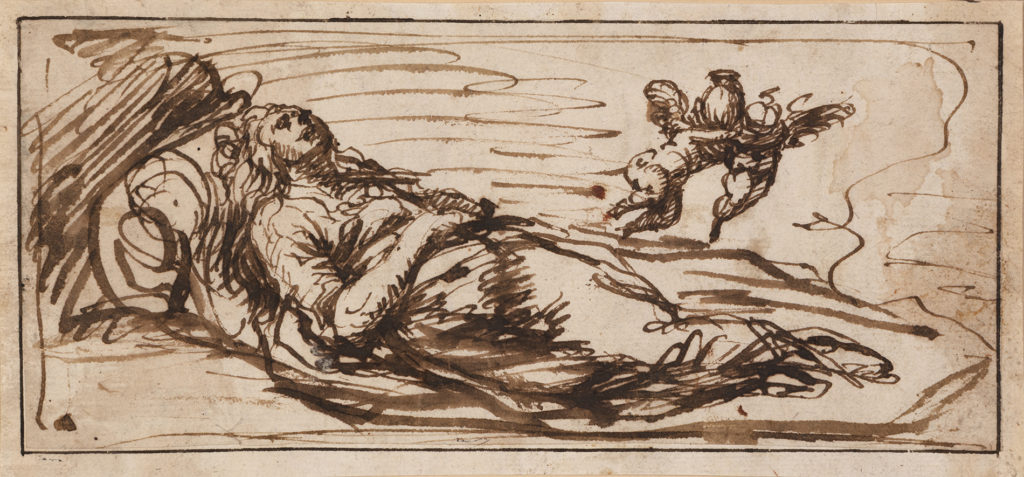
“The Death of Mary Magdalene” is the first work on paper by Alonso Cano to enter the Meadows Museum’s collection, joining a small panel painting by the artist titled “Christ Child” (c. 1628–29).
Cano was a master draftsman, painter, architect, sculptor and designer who is best known for his work at Granada Cathedral, where he became clergy in 1652. His oeuvre includes a series of paintings on the life of the Virgin Mary as well as the design for the cathedral’s façade, which was built posthumously.
Cano studied painting alongside Diego Velázquez and under Francisco Pacheco and studied sculpture under Juan Martínez Montañes while in Seville. Scholars have identified only about 120 of the artist’s drawings, most of which are now in Spanish museums, making this acquisition quite rare, especially for a U.S. institution.
Like many of Cano’s drawings, “The Death of Mary Magdalene” is small in scale and created with dynamic marks that are informal in appearance. “The Death of Mary Magdalene” is likely a preparatory sketch for which there is no known finished work. The drawing, which features a female figure recumbent on a mat or bed with two small angels above her, demonstrates the artist’s skillful draftsmanship and mark-making. This sheet is part of a lot of five drawings purchased together from De la Mano Gallery, Madrid, Spain.
Alonso Cano (Spanish, 1601–1667), “The Death of Mary Magdalene,” c. 1645–50. Pen and gray‐brown ink on laid paper, 3 ½ x 7 ½ in. (9 x 19 cm). Meadows Museum, SMU, Dallas. Museum purchase with funds from The Meadows Foundation, MM.2020.05. Photo by Kevin Todora.
***
Francisco de Herrera the Elder was an esteemed artist who was central to the cultural life of early seventeenth-century Seville. Drawings by the artist appear in the collections of major museums worldwide, including the Metropolitan Museum of Art, New York; the Museo Nacional del Prado, Madrid; and the Hamburger Kunsthalle.
His work serves as a representative example of the shift that many artists made during the period, moving away from the elongated forms of Mannerism toward the more naturalistic tendencies characteristic of the high Baroque. “Bearded Head in Half‐Profile” is a later work by the artist that demonstrates his embrace of naturalism. In this drawing, Herrera the Elder portrayed an older man in half profile, capturing his subject’s facial features with marks that are economical but effective.
Herrera the Elder frequently studied heads, observing and documenting the details of human faces and facial expressions as in this drawing. “Bearded Head in Half‐Profile” is the first work by Herrera the Elder to enter the Meadows collection, and is part of a lot of five drawings purchased together from De la Mano Gallery, Madrid, Spain.
Francisco de Herrera the Elder (Spanish, c. 1590–1654), “Bearded Head in Half‐Profile,” c. 1642. Reed pen with gray‐brown ink on laid paper, 3 7/8 x 2 7/8 in. (10 x 7 cm). Meadows Museum, SMU, Dallas. Museum purchase with funds from The Meadows Foundation with additional support provided by the ExxonMobil Foundation, MM.2020.03. Photo by Kevin Todora.
***
Pedro Duque Cornejo was a Baroque artist known for his sculptural and architectural works. A disciple of his grandfather, the sculptor Pedro Roldán, Duque Cornejo was born in Seville and primarily worked in his home city as well as in Granada and Córdoba.
Among others, Duque Cornejo is known for his work as a master architect and sculptor for the altarpiece of the Church of San Lorenzo in Seville, two altarpieces for the Monastery of Santa María de las Cuevas in Seville, sculptures for the Cartuja Monastery of Granada and the Monastery of Santa María de El Paular in Madrid, and the choir of the Cathedral of Córdoba.
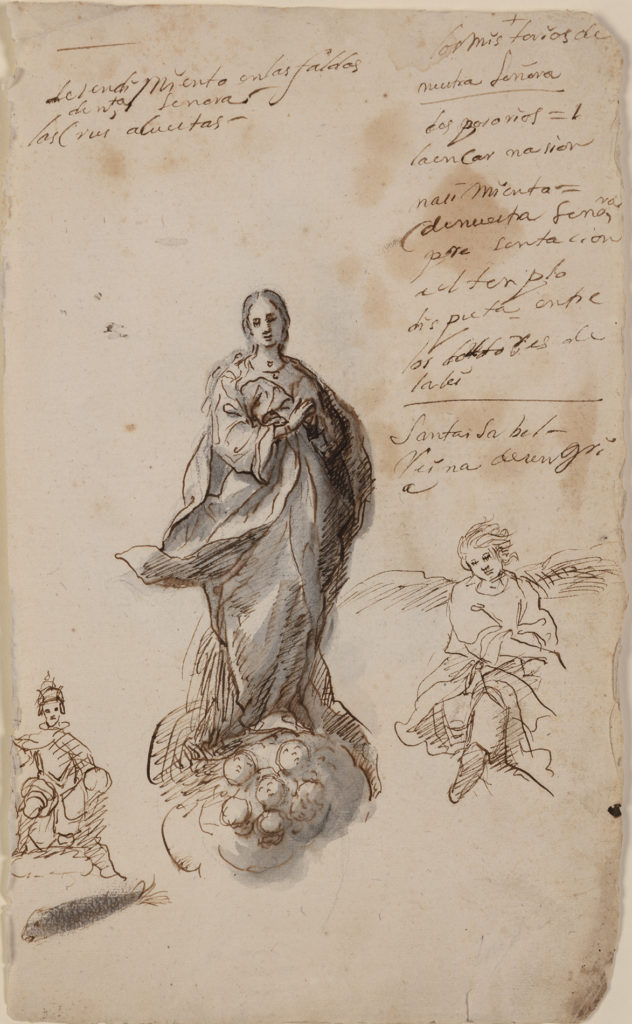
Duque Cornejo used drawings, such as this “The Immaculate Conception, Saint Ferdinand, and a Seated Angel,” to aid his sculptural practice. In this work, three unrelated sketches appear on the same sheet along with corresponding notes, suggesting the artist may have used one sheet for planning various projects.
These preliminary sketches have not yet been definitively assigned to final works created by the artist, allowing for the possibility of further research and study of his artistic process.
This sketch, the first example of the artist’s work to enter the Meadows collection, joins a terracotta sculpture by Pedro’s aunt, Luisa Roldán, titled “Infant Saint John the Baptist.” This work is part of a lot of five drawings purchased together from De la Mano Gallery, Madrid, Spain.
Pedro Duque Cornejo (Spanish, 1678–1757), “The Immaculate Conception, Saint Ferdinand, and a Seated Angel,” c. 1720–30. Pencil, gray‐brown ink, and grayish wash on laid paper, 12 5/8 x 7 5/8 in. (32 x 19 cm). Meadows Museum, SMU, Dallas. Museum purchase with funds from The Meadows Foundation with additional support provided by The Joe M. and Doris R. Dealey Family Foundation, MM.2020.04. Photo by Kevin Todora.
***
José Camarón Bonanat (or Boronat) was a Spanish draftsman, painter, and printmaker who was one of the most esteemed artists in Valencia during the second half of the eighteenth century. Camarón was one of the founding members of the Real Academia de Bellas Artes de San Carlos in Valencia; he served as that academy’s director of painting in 1790 and its general director from 1796 until 1801.
Among others, he is well known for his religious commissions, including those for Valencia Cathedral and San Francisco el Grande in Madrid.
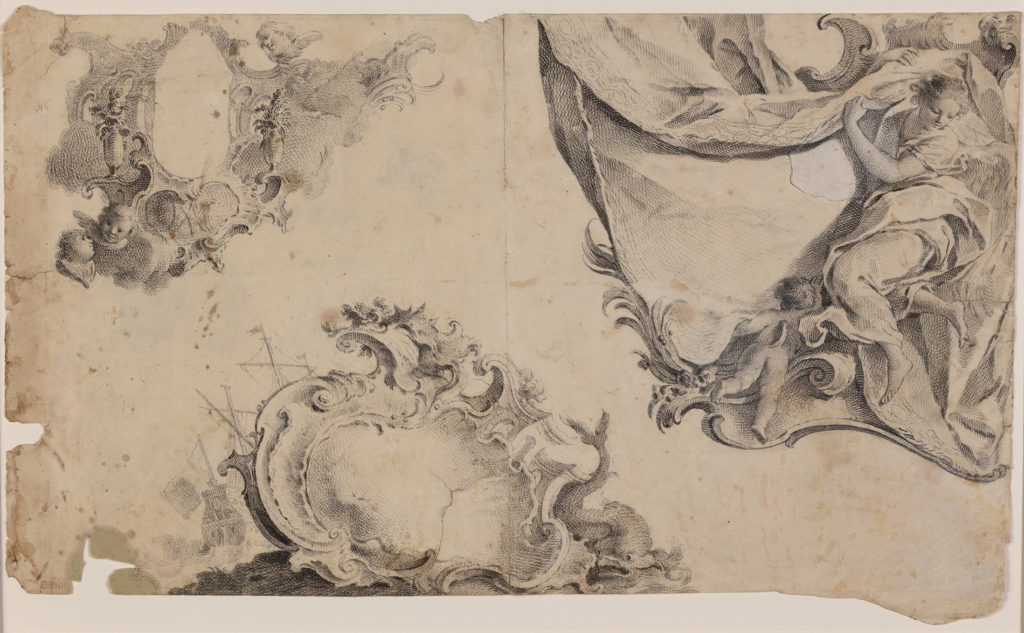
Many of Camarón’s drawings, such as this work, were reproduced by engravers as book illustrations. The front side of this sheet features three highly finished drawings of cartouches.
Reproduced in prints by Hipòlit Ricarte, these cartouches were used to illustrate the texts on a 1761 map of the Archbishopric of Valencia created by cartographer Tomás Vilanova. The sheet is likely a final version of Camarón’s designs as the drawing and the printed map—copies of which are housed at the Universidad Politécnica in Valencia, the Universidad de Lleida, and the Biblioteca Nacional de España in Madrid—are very similar.
The other side of the sheet features small sketches that seem to have been completed more quickly than those on the front, which have not yet been matched with finished works by the artist, thus presenting an opportunity for further study.
This acquisition is the second work by Camarón to enter the Meadows Museum collection; it joins another drawing, “The Madonna and Child in Glory Surrounded by Saints and Putti.” This work is part of a lot of five drawings purchased together from De la Mano Gallery, Madrid, Spain.
José Camarón Bonanat (or Boronat) (Spanish, 1731–1803), “Cartouches for the Map of the Archbishopric of Valencia [recto]/Models for various bookplates and a small sketch for a scene with a sword shop [verso],” 1761. Black chalk and ink on laid paper [recto]/pen with gray‐brown and black ink on laid paper [verso], 10 x 16 3/8 in. (25 x 42 cm). Meadows Museum, SMU, Dallas. Museum purchase with funds from The Meadows Foundation, MM.2020.06.A-B. Photo by Kevin Todora.***
Mariano Salvador Maella was a master of eighteenth-century Spanish art. Maella was employed at the Spanish court of the Bourbon kings Charles III (r. 1759–1788) and Charles IV (r. 1788–1808), and was greatly admired as a draftsman. During his lifetime, his work was acquired by the Real Academia de Bellas Artes de San Fernando in Madrid and used to teach students at the academy.
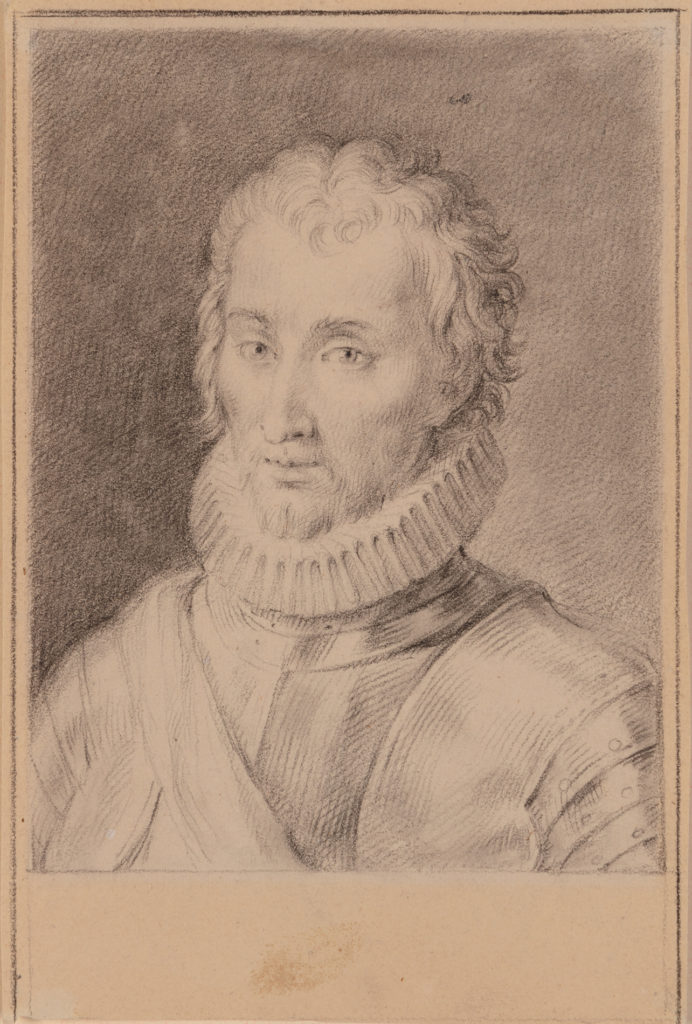
“Portrait of Christopher Columbus” was commissioned by the historian and philosopher Juan Bautista Muñoz, who was tasked with writing a comprehensive history of the Spanish conquest and colonization of the Americas and asked Maella to create a drawing of Christopher Columbus to serve as the design for the cover.
This drawing was the third created by Maella for Muñoz, who selected it for his volume Historia del Nuevo Mundo (1793) because of its unadorned and direct nature.
Maella used black chalk to meticulously highlight various textures in the drawing, from Columbus’ skin and hair to his armor and clothing. “Portrait of Christopher Columbus” is the third work by Maella to enter the Meadows Museum collection; it joins the oil sketch Spain and the “Four Parts of the World” (1798) and the drawing “Gaius Mucius Scaevola before Lars Porsena” (c. 1790–1800).
Each of these works is an example of Maella’s preparatory process, revealing different components of the artist’s practice. Portrait of Christopher Columbus is part of a lot of five drawings purchased together from De la Mano Gallery, Madrid, Spain.
Mariano Salvador Maella (Spanish, 1739–1819), “Portrait of Christopher Columbus,” 1793. Black chalk and gray and sepia ink washes on laid paper, 5 3⁄4 x 4 3/8 in. (14.5 x 11 cm). Meadows Museum, SMU, Dallas. Museum purchase with funds from The Meadows Foundation, with additional support provided by Linda Gardner and Fred Alsup with additional donations from Cathryn Withrow; MM.2020.07. Photo by Kevin Todora.
***
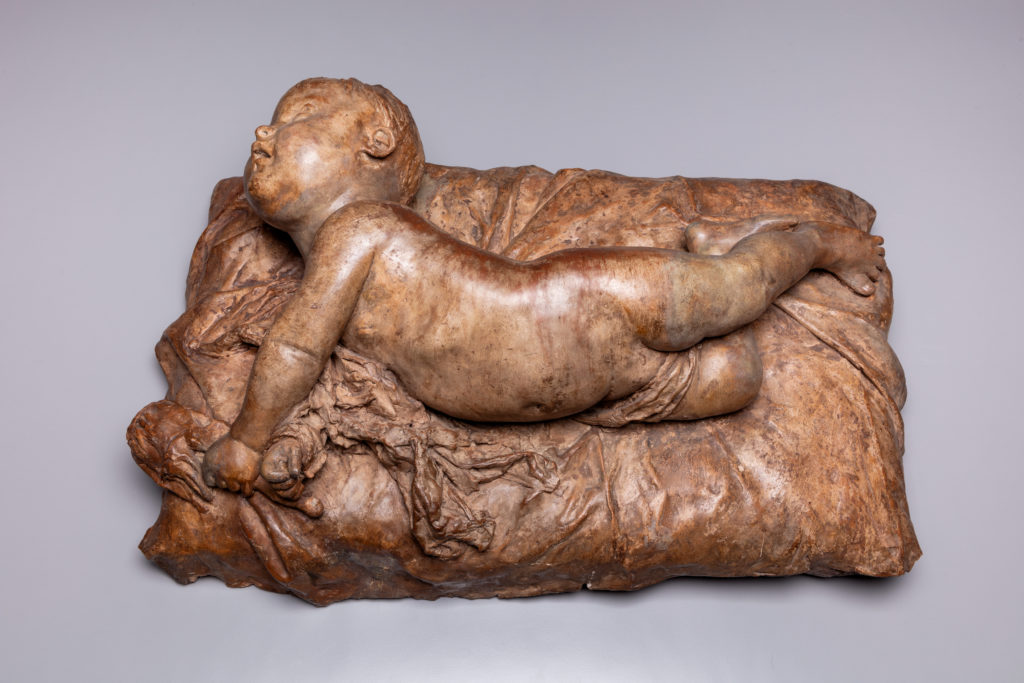
“A Baby Rolling Over” is not only the first work by Agustín Querol y Subirats to enter the Meadows Museum’s collection, it’s also the first example of nineteenth-century sculpture to be acquired by the Meadows.
Querol’s work is rarely of a scale that is practical for a public institution to own and exhibit; he is best known for monumental works such as the dramatic figures that top the Spanish Ministry of Agriculture in downtown Madrid and his “Allegory of Spain” on the façade of the Biblioteca Nacional de España.
In “A Baby Rolling Over,” Querol depicts a milestone event in the life of the young child, the moment when they learned how to roll over. It’s an intimate and sensitive work, created with the artist’s own hands as opposed to a workshop of assistants, as would be the case with his larger, commissioned works.
The sculpture was donated to the Meadows by Dr. Michael P. Mezzatesta, a noted art historian and the Mary D.B.T. and James H. Semans Director Emeritus of the Nasher Museum of Art at Duke University in honor of Dr. William B. Jordan, founding director of the Meadows Museum, who died in 2018. It is a fitting tribute to Jordan, whose own appreciation of Spanish terracotta sculpture was well known and evidenced by his 1999 donation of Luisa Roldán’s sculpture of Saint John the Baptist.
Agustín Querol y Subirats (Spanish, 1864–1909), “A Baby Rolling Over,” 1884–87. Terracotta, 15 ¾ x 25 ¼ x 8 ¾ in. (40 x 64 x 22 cm). Meadows Museum, SMU, Dallas. Given by Michael P. Mezzatesta in honor of William B. Jordan, MM.2020.02. Photo by Kevin Todora.
As part of our effort to continue to help artists and art galleries thrive, we’re proud to bring you this new “Virtual Gallery Walk.” Browse the paintings below and click the image itself to learn more about it, including how to contact the gallery.
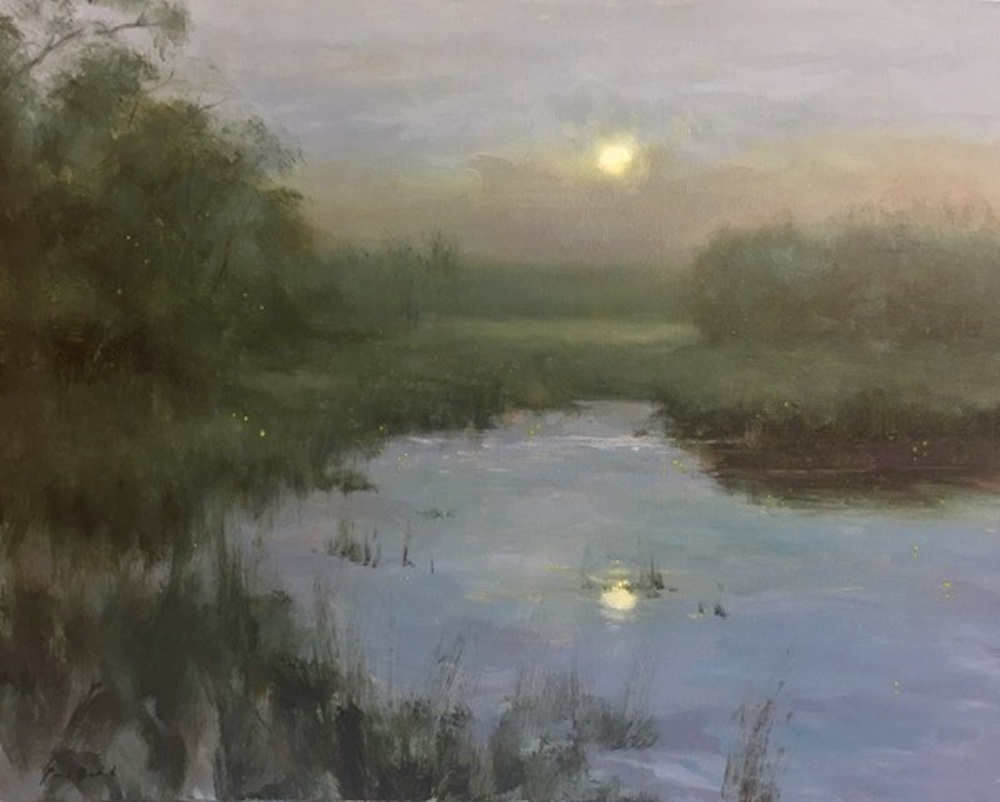
Fireflies by Paul Batch, Oil, 24 x 30 in.; Anderson Fine Art
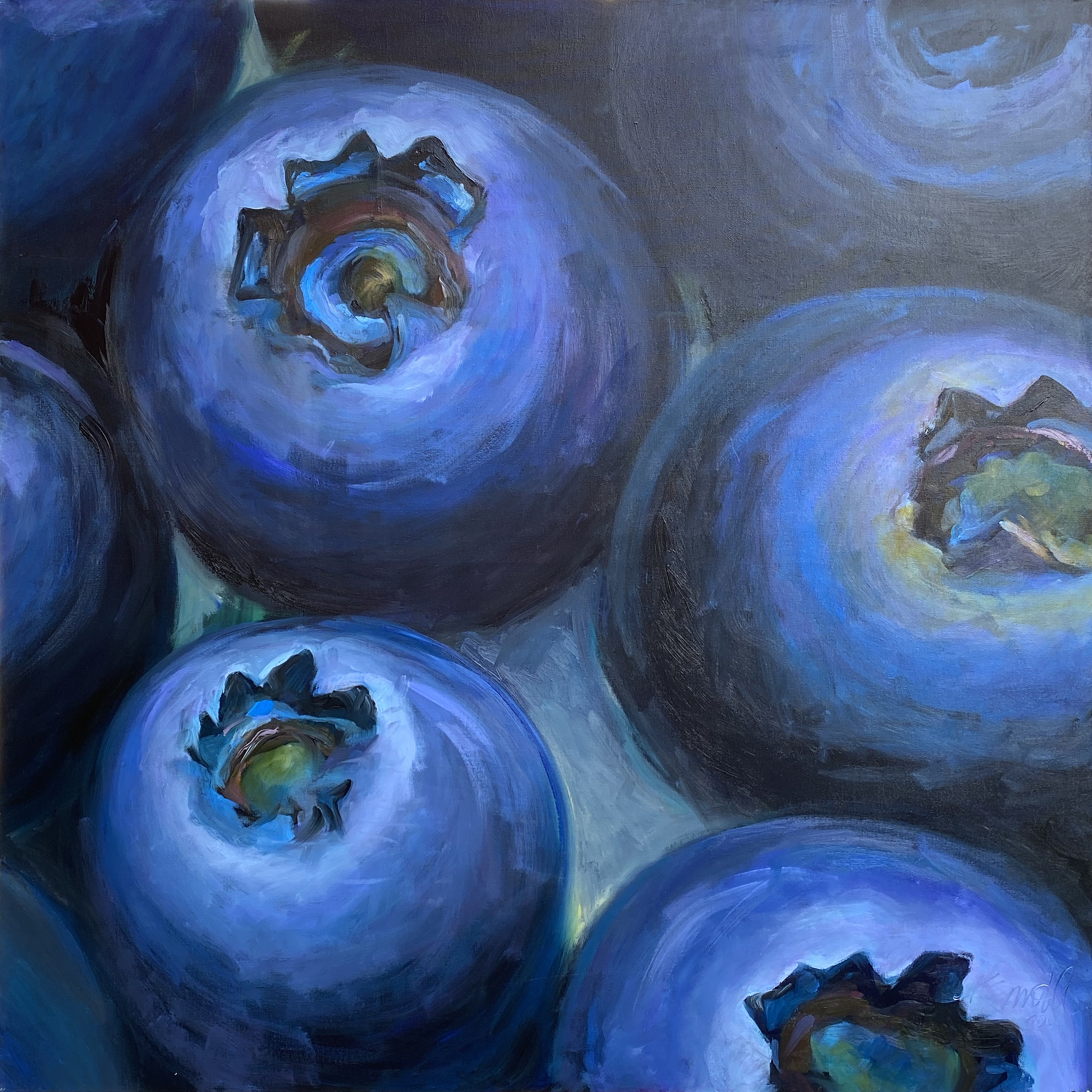
Blueberry Joy by Kim Smith, Oil on Canvas, 36 x 36 in.; Bluestone Fine Art Gallery
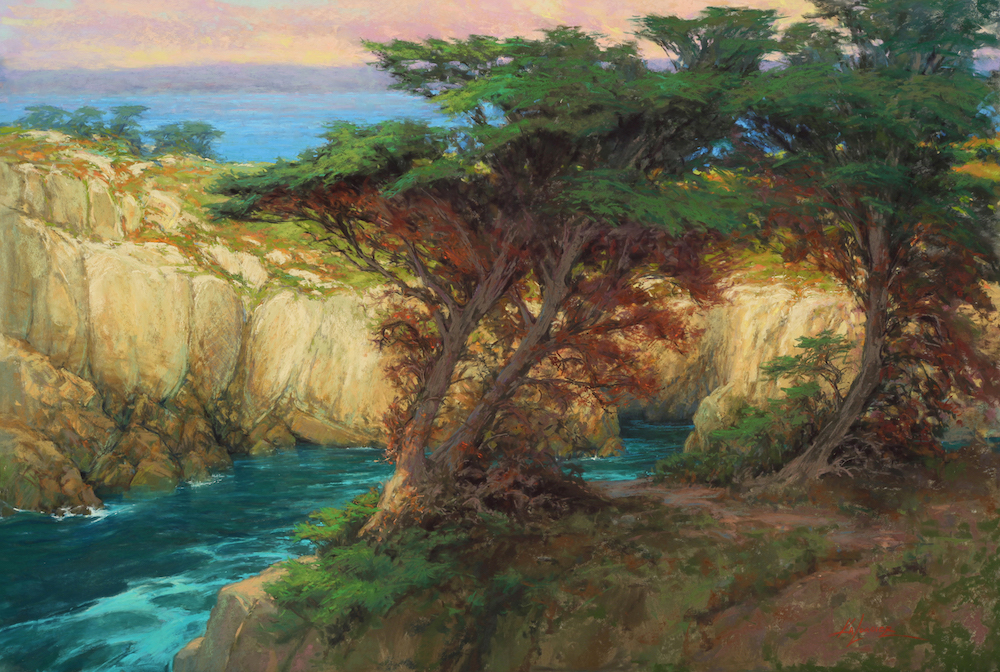
Cypress Grove Fringe by Kim Lordier, Pastel on Archival Board, 27 x 40 in.; Rieser Fine Art
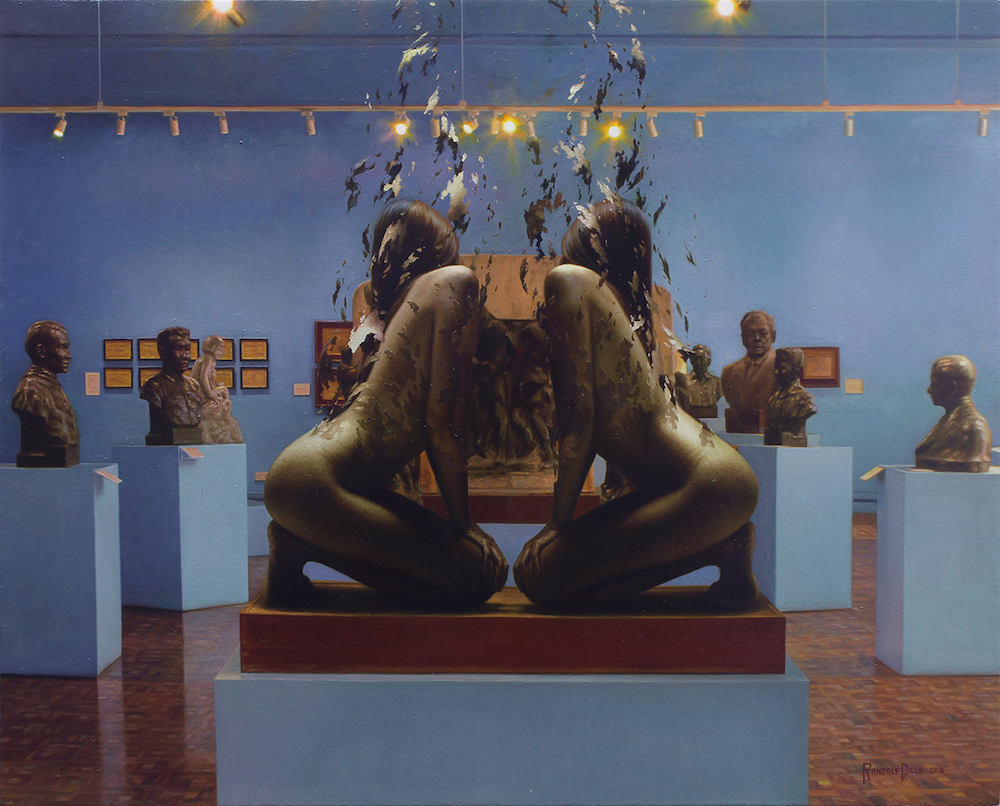
Metamorphose by Randalf Dilla (born 1986), Oil on Canvas, 24 x 30 in., Signed; Rehs Contemporary
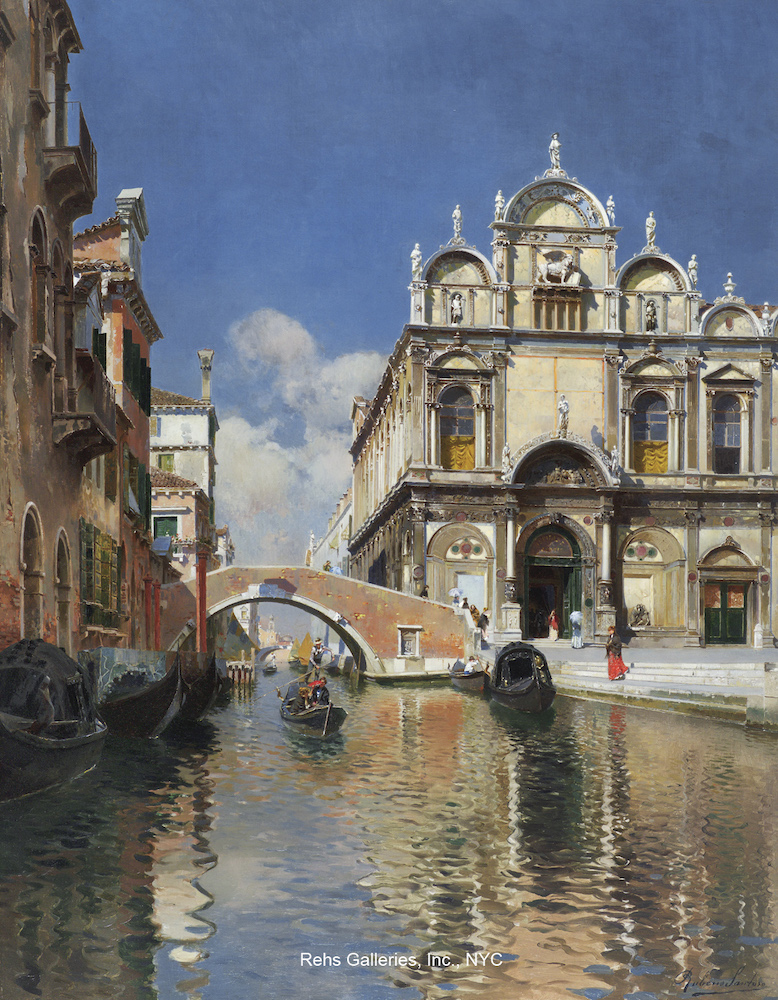
Scuola Grande di San Marco and the Ponte Cavallo on the Rio dei Mendicanti, Venice by Rubens Santoro (1859-1942), Oil on Canvas, 33 1/2 x 26 in., Signed; Rehs Galleries, Inc.
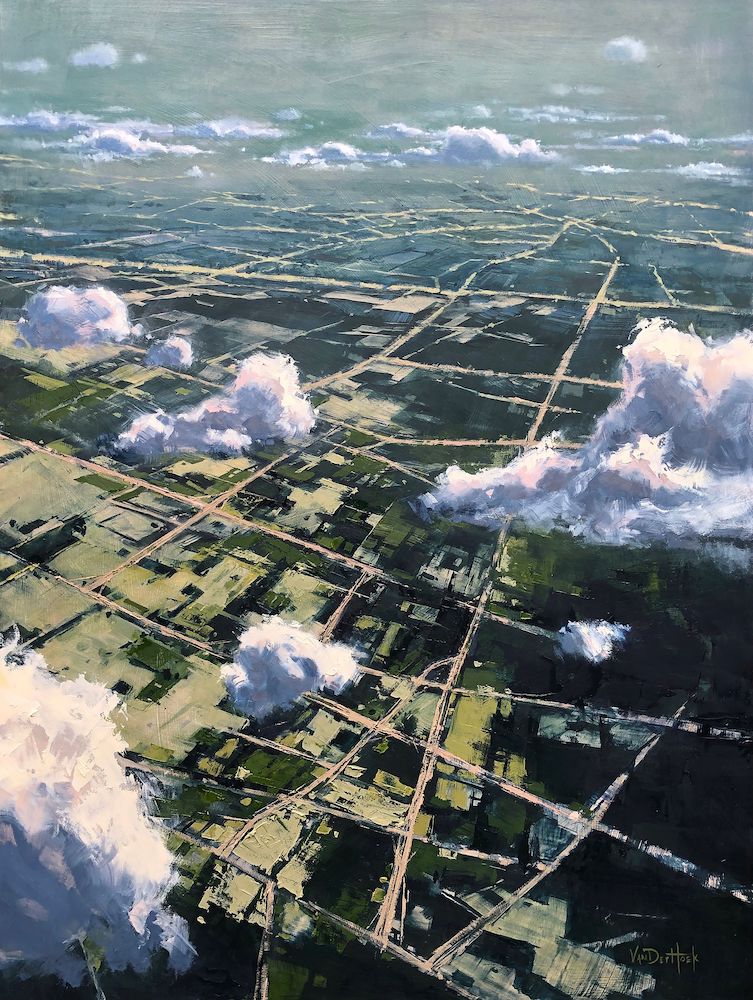
To Fly Toward A Secret Sky by Kim VanDerHoek, Oil on Panel, 40 x 30 in.; Principle Gallery
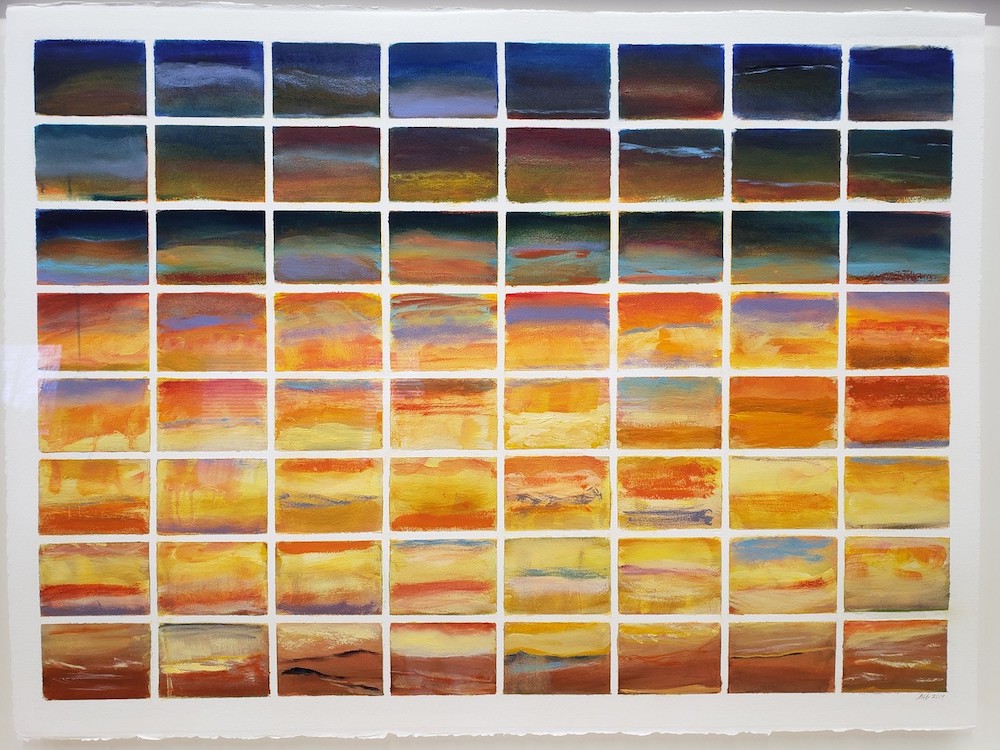
Sunrise, Sunset II by Appel Bronstein, Oil on Paper, 22.5 x 30 in., 27 x 34.5 in. framed; Vermont Artisan Designs
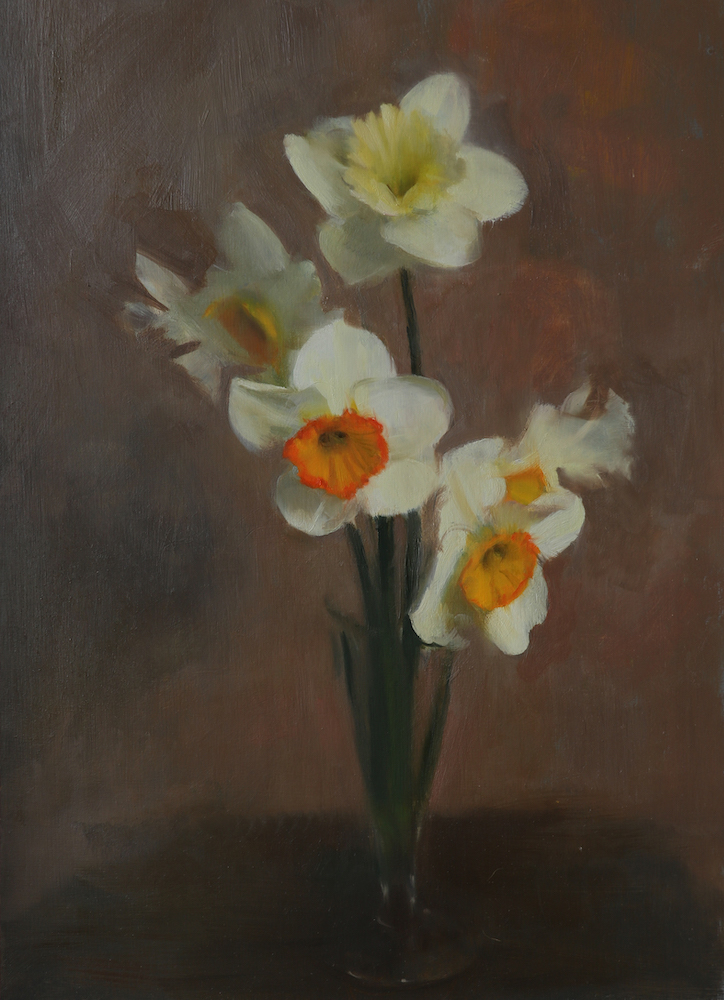
Narcissus and Daffodils by Kathleen Speranza, Oil on Panel, 14.5 x 10.5 in.; Turner Fine Art
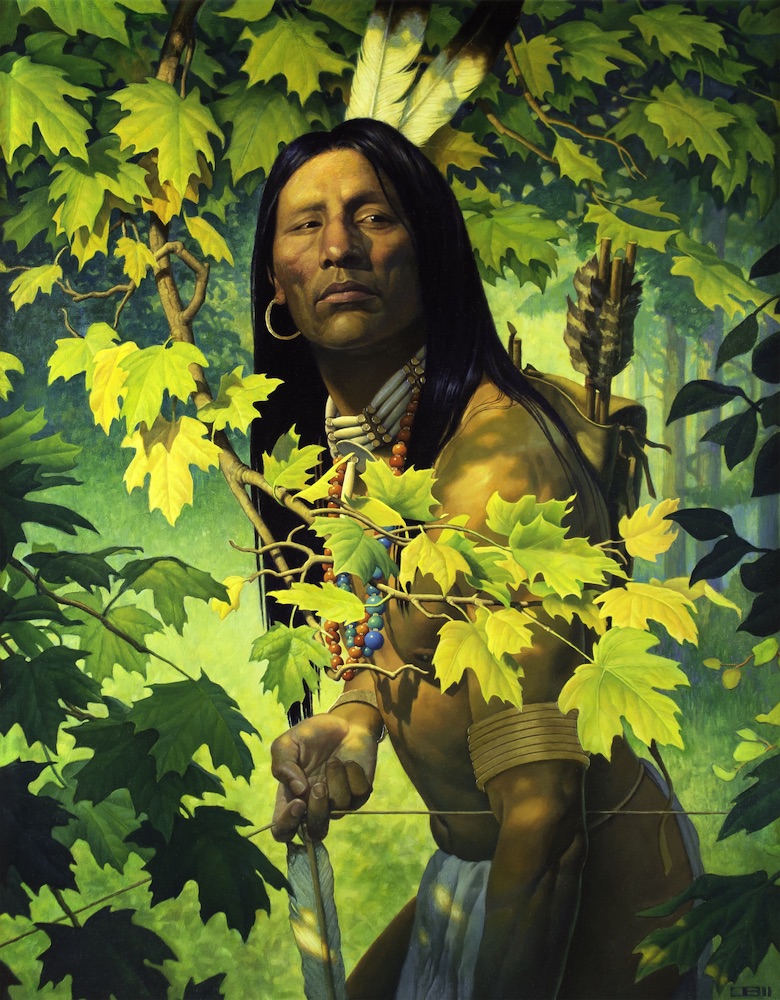
Hunter’s Watch by Thomas Blackshear, Oil on Canvas with Gold Leaf, 30 x 38 in.; Trailside Galleries during Jackson Hole Fall Arts Festival
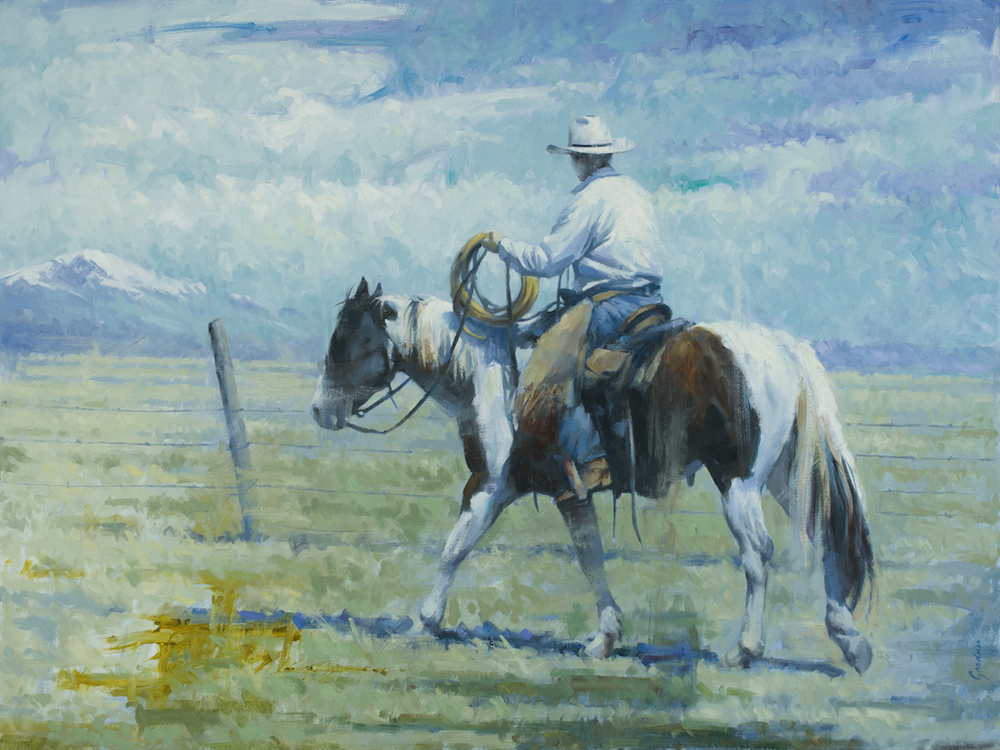
Terry Gardner, Beyond the Range by Terry Gardner, Oil on Canvas, 36 x 48 in., 2020; Ann Korologos Gallery
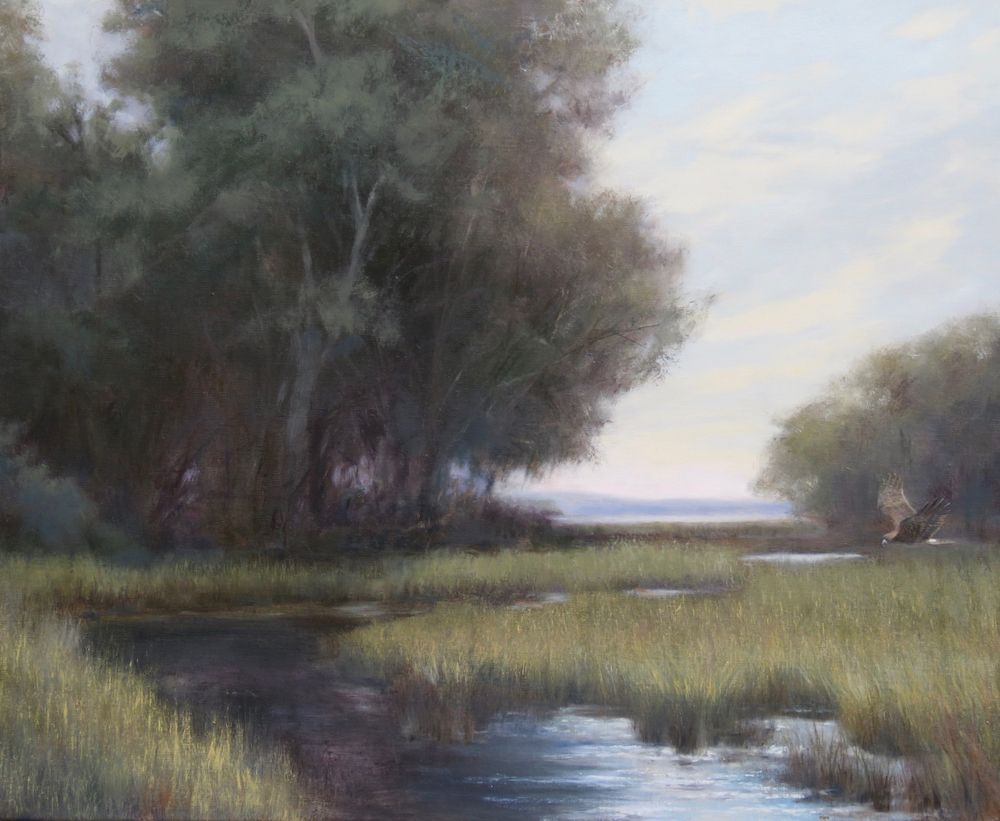
Hunting the Marsh – Northern Harrier by Mary Erickson, Oil on Linen, 20 x 24 in.; American Tonalist Society
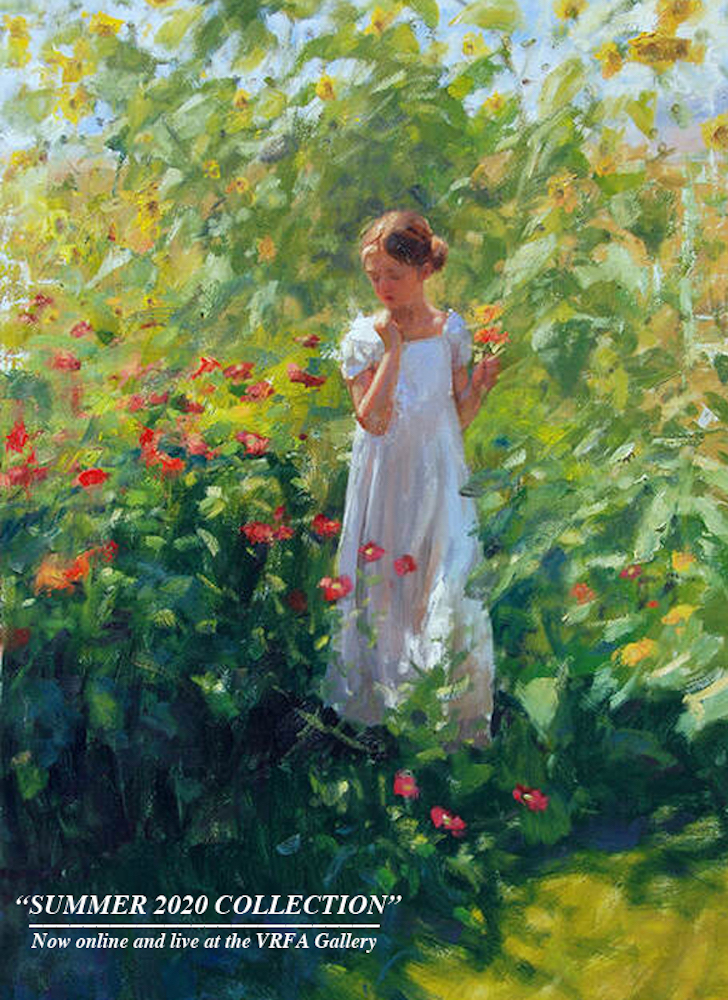
In the Summer Garden by Trent Gudmundsen, Oil, 32 x 24 in.; Vanessa Rothe Fine Art Gallery
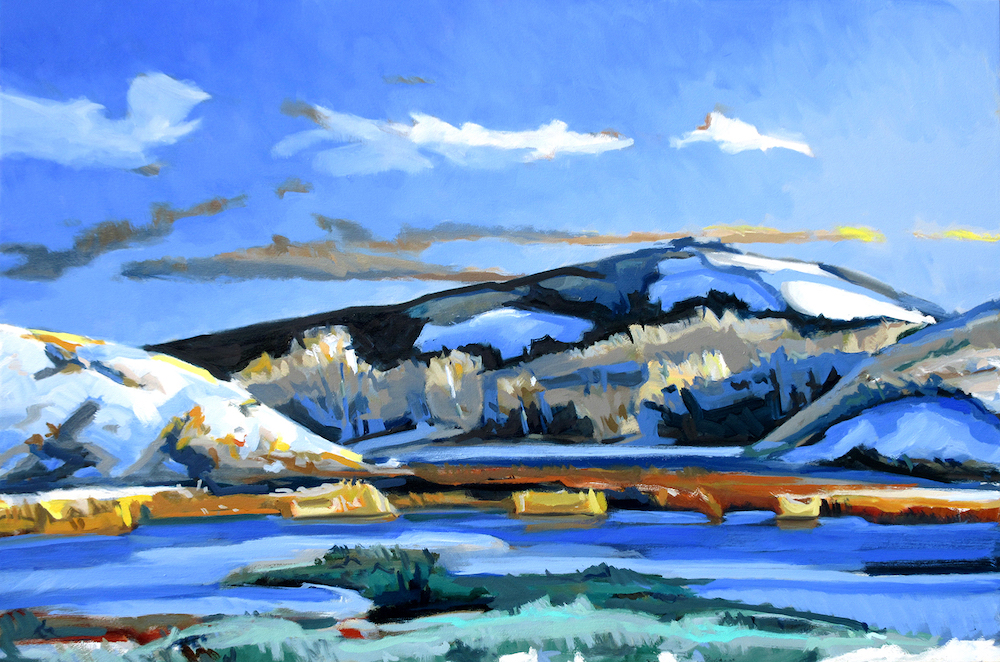
The Great Dune by Philip Koch, Oil on Canvas, 28 x 42 in., 2020; Somerville Manning Gallery
Want to see your gallery featured in an upcoming Virtual Gallery Walk? Contact us at [email protected] to advertise today – don’t delay, as spaces are first-come first-serve and availability is limited.
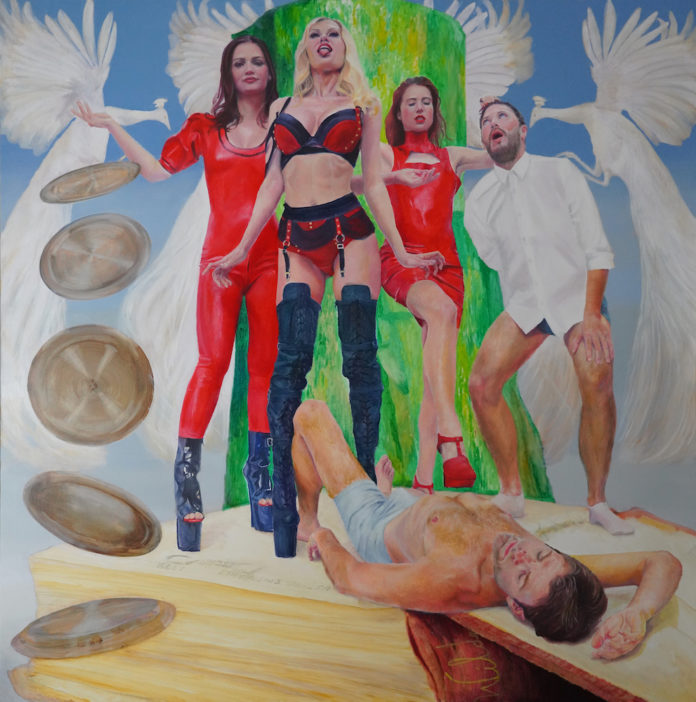
In Michele Ann Murtaugh’s figurative narrative paintings, her subjects address the current condition of human intimacy, the desire of it and the lack of it. She combines realist human form with surrealistic atmospheric nuances to give the viewer the feeling of being in the subconscious. Her large scale oil paintings combine delicate, refined and crude brush work to intensify the psychological contradiction of surrender with immediacy and impatience. Her subjects are often nude or costumed in inorganic fantastic materials. They can be found masked or uncomfortably gazing back at the viewer. The paintings mirror our beautiful and imperfect attempt to connect and be accepted.
As Shepherd Gallery prepares for its reopening, the gallery owners present a series of dossiers. In these collections, they will further explore the gallery’s holdings by expanding upon and focusing on one work of art.
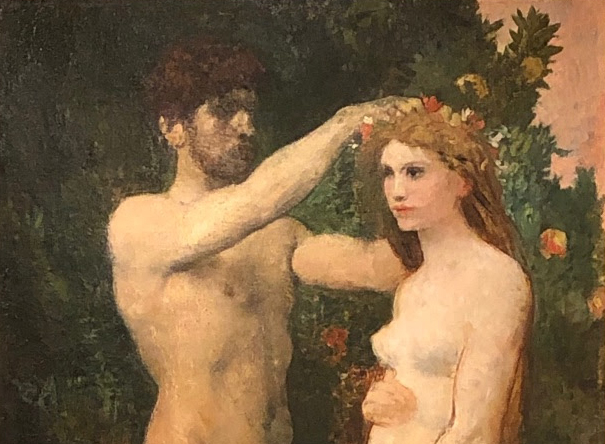
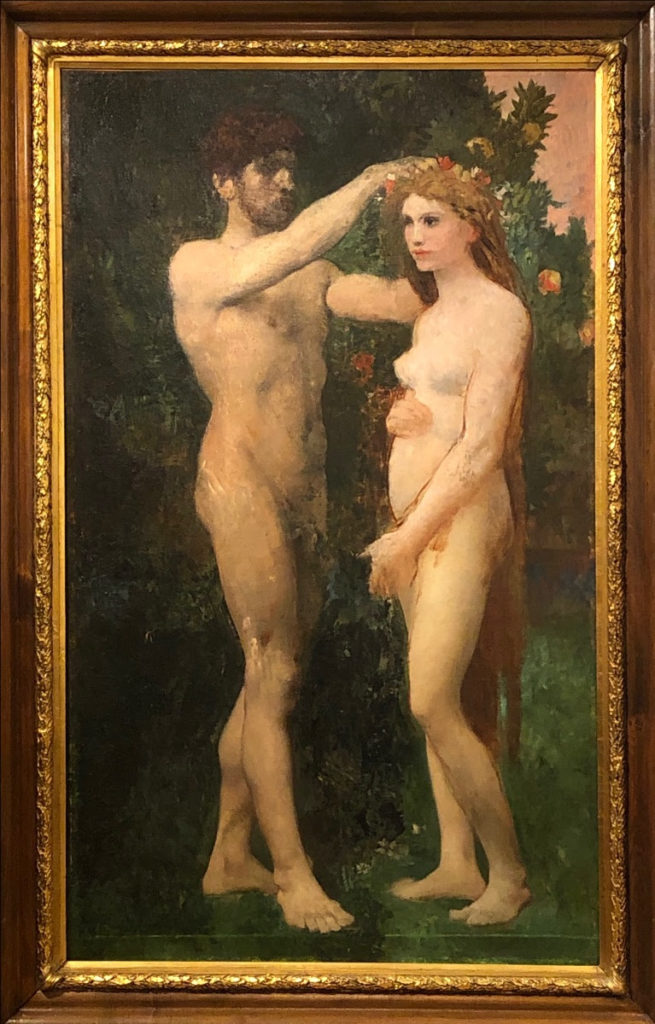
The first in this series is Jules-Élie Delaunay’s (1828-1891) “Daphnis and Chloe.” The unfinished painting, found on the artist’s easel at the end of his life, takes a peek behind the centuries old developments of Western European painting and reveals all the nuances which make up Academic tradition and training,The unfinished painting, found on the artist’s easel at the end of his life, takes a peek behind the centuries old developments of Western European painting and reveals all the nuances which make up Academic tradition and training, as well as the contemporary “isms” (Symbolism and Impressionism) that were threatening to break away from and break through tradition.
Jules-Élie Delaunay (1828-1891), “Daphnis and Chloe,” oil on canvas, 69 x 41.5 in.
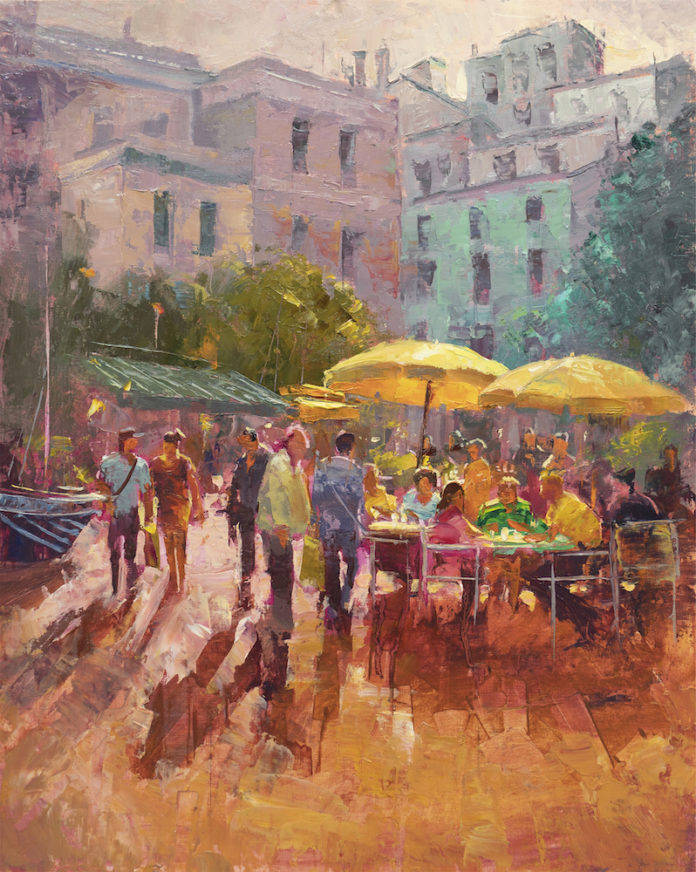
Cinque Terre Sunlight
20 x 16 in.
Oil on linen panel
Available at Illume Gallery in St. George, UT for the American Impressionist Society’s Annual Exhibit
“This past October I spent two glorious weeks painting in Tuscany and visiting Rome, Florence and Cinque Terre. My plan had been to return this August to teach a workshop.
Since the Covid19 pandemic changed everything, and I was quarantined to my home/studio, I decided to paint this piece from memory and photo reference. Memories are a huge part of my painting process.
Approximately 85% of my work is done plein air. Most of my work has figures in movement and I use my photographic memory to remember the body language of the figures as they pass by. For studio pieces I also use my memory. Memories of the places I visited; the thoughts, lighting and color are used to enhance the piece. My memory of Vernazza was of dazzling sunlight, glowing umbrellas and friendly people celebrating life.”
Michele Byrne is a contemporary impressionist painter known for her dynamic palette knife paintings full of life, color and movement. Her paintings depict the art of conversation and each piece tells a unique figurative story with brush and knife.
Michele travels extensively, painting plein air in various locations across the United States and abroad. Michele was a Faculty Demonstrator at the Plein Air Convention & Expo in 2019. She is a nominated member of the Salmagundi Club in NYC, Oil Painters of America and a Signature Member of the American Impressionist Society. She has three instructional videos with Lilliedahl Productions and a YouTube Channel where she discusses her art practice.
Michele has recently moved to Santa Fe, New Mexico, and looks forward to painting with a new sense of light and landscape.
Byrne has won numerous awards for her work. Recent awards include:
• President’s Choice Award in the American Impressionist Society’s 2018 Annual Exhibit
• Cover of PleinAir Magazine December/January 2020 issue showing one of her rainy street scenes, along with eight-page article explaining her palette knife technique and process
• Michele’s second video, PALETTE KNIFE Painting with Michele Byrne, was awarded Best Selling Video of the Year by Lilliedahl Productions.
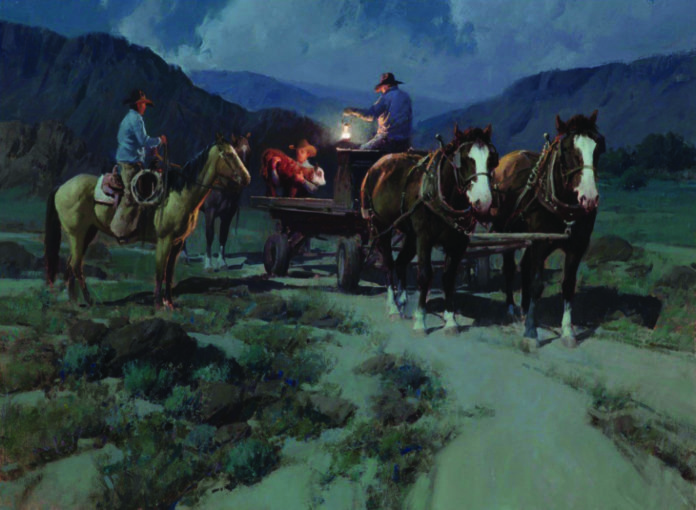
Bill Anton, "Makeshift Ambulance," Oil on linen, 34″ x 46″
The sale of the 48th Annual Prix de West Invitational Art Exhibition & Sale isn’t the only aspect of the nation’s premier Western art exhibition and sale that’s gone virtual: In a format befitting of 2020, the Prix de West committee presented the 2020 awards virtually to the winning artists recently via video conference.
“We wanted the thrill and excitement of announcing this year’s winners to come through even if we were hosting the announcement virtually,” said Natalie Shirley, The Cowboy’s president. “These winners are truly deserving, and it was wonderful to gather and celebrate them, even if it was from a safe distance this year.”
In addition, The Cowboy is pleased to offer a fully virtual tour of the entire Prix de West Invitational Art Exhibition. The virtual tour, produced by 3D Scans Plus, allows Western art enthusiasts from around the world to tour the entire Prix de West exhibition and view each piece of art as if they were standing in the gallery. View the virtual tour and online catalog at nationalcowboymuseum.org/prixdewest.
48th Annual Prix de West Invitational Art Show Winners
Prix de West Purchase Award: Bill Anton received the top-honored Prix de West Purchase Award, which is given to the artist whose work of art is selected by the Prix de West Committee and purchased for the Museum’s permanent collection.
Anton won for his painting titled “Makeshift Ambulance” (shown at top). In addition to the purchase price, Anton will receive the Prix de West medallion and an award of $5,000 sponsored by Roberta M. Eldridge Miller.
“I’ve done this show for 23 years and it’s been a joy in my life,” said Anton. “It’s an honor just to be in the same building as the other Prix de West artists.” In 2009, Anton won both the Prix de West Robert Lougheed Memorial Award and the Express Ranches Great American Cowboy Award. He captured the Express Ranches award again in 2011 and 2018.
“We want to congratulate Bill on his exceptional work and the recognition of the Purchase Award this year,” Shirley said. “He is an exceptional talent in the Western Art world, and we are honored to add this piece to the Museum’s permanent collection.”
Other 2020 Prix de West award winners:
Donald Teague Memorial Award
An award of $3,000 for exceptional artistic merit for a work on paper, sponsored by Scottsdale Art Auction.
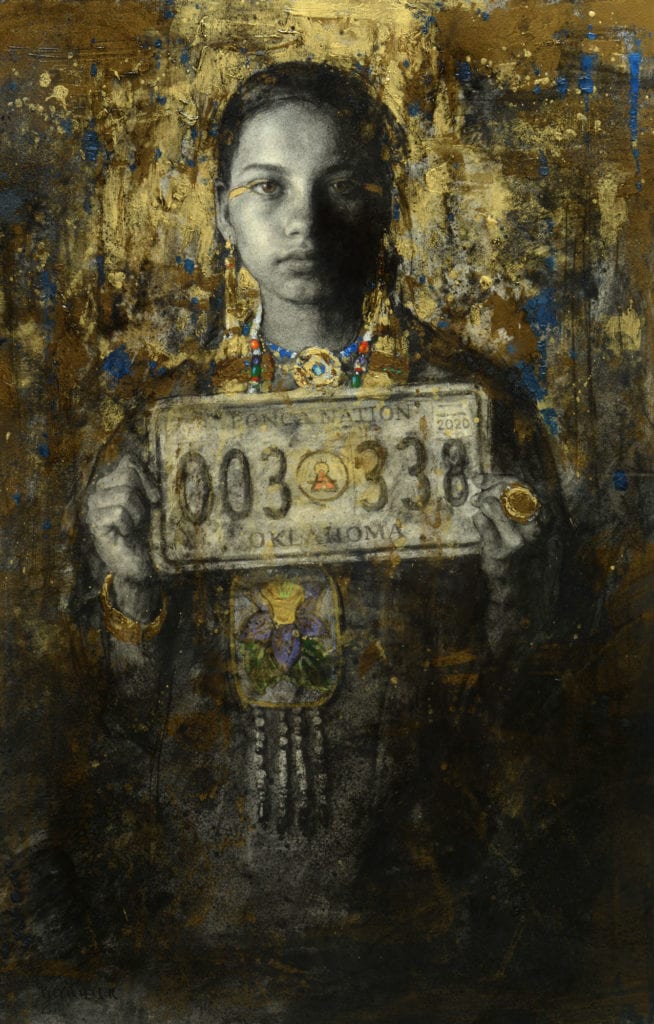
Winner: Scott Burdick, “Ponca Nation”
Scott Burdick, “Ponca Nation,” Charcoal and acrylic on paper, 36″ x 24″
Express Ranches Great American Cowboy Award
An award of $3,000 for best cowboy subject matter, sponsored by Robert A. Funk and Express Ranches.
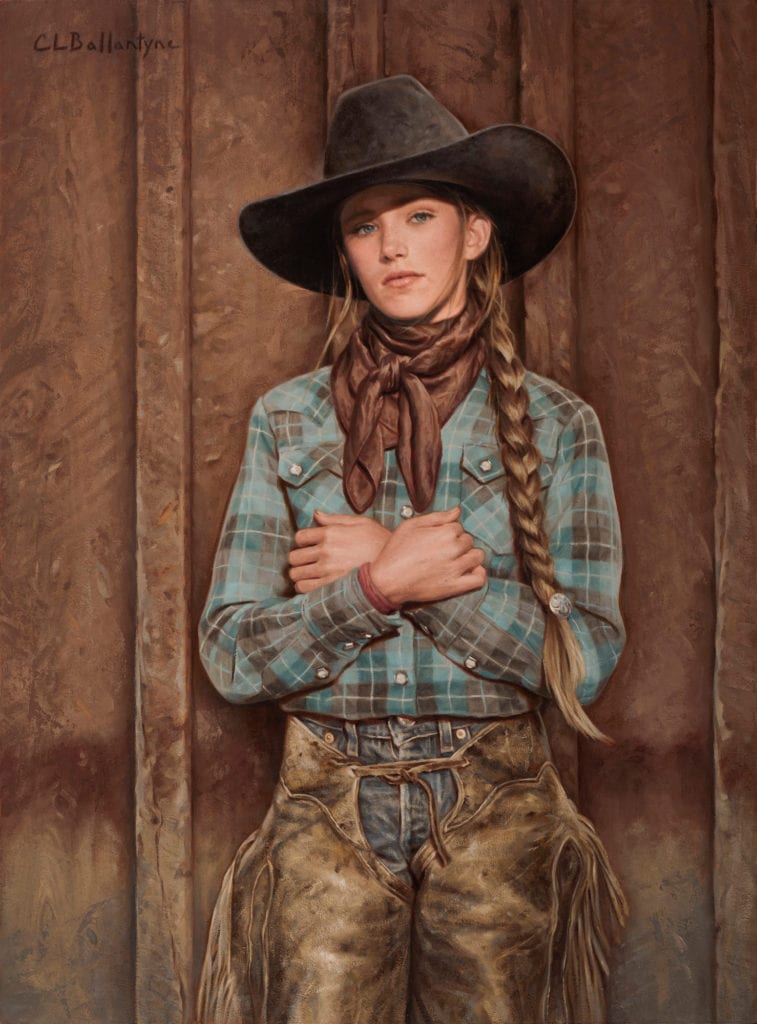
Winner: Carrie L. Ballantyne, “Young Hand”
Carrie L. Ballantyne, “Young Hand,” Oil, 23″ x 17″
James Earle Fraser Sculpture Award
An award of $3,000 for exceptional artistic merit for a sculpture, sponsored by the Charlie Russell Riders in honor of Steve Rose.
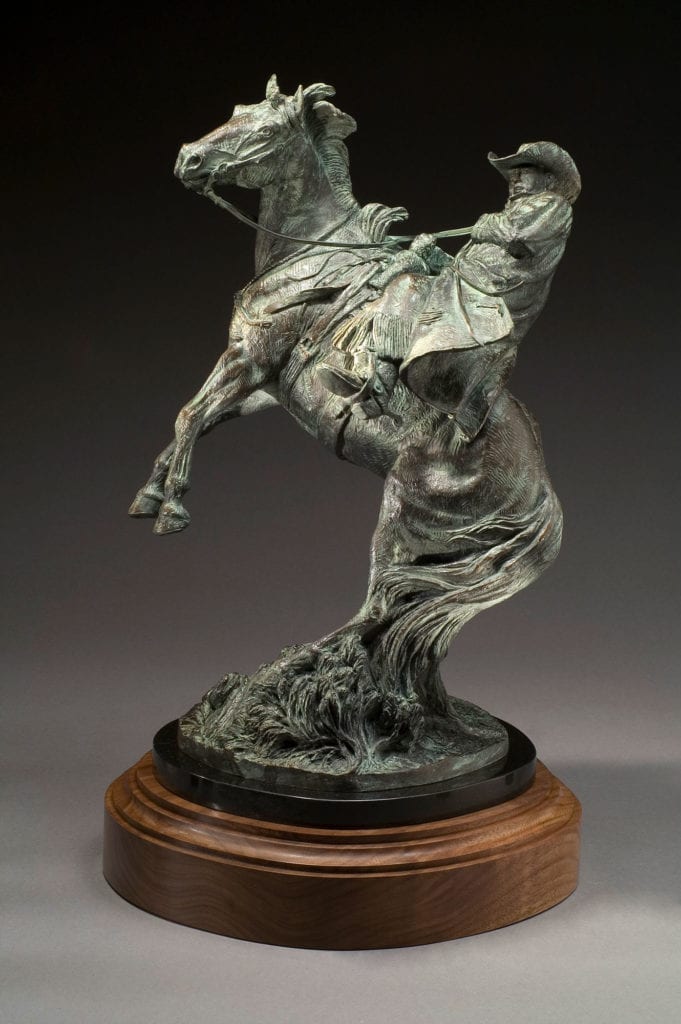
Winner: Harold T. Holden, “Strike Lightning”
Harold T. Holden, “Strike Lightning,” Bronze, 30″ H x 23″ W x 23″ D
Major General and Mrs. Don D. Pittman Wildlife Award
An award of $3,000 for exceptional artistic merit for a wildlife painting or sculpture, sponsored by the Estate of the late Major General and Mrs. Don D. Pittman.
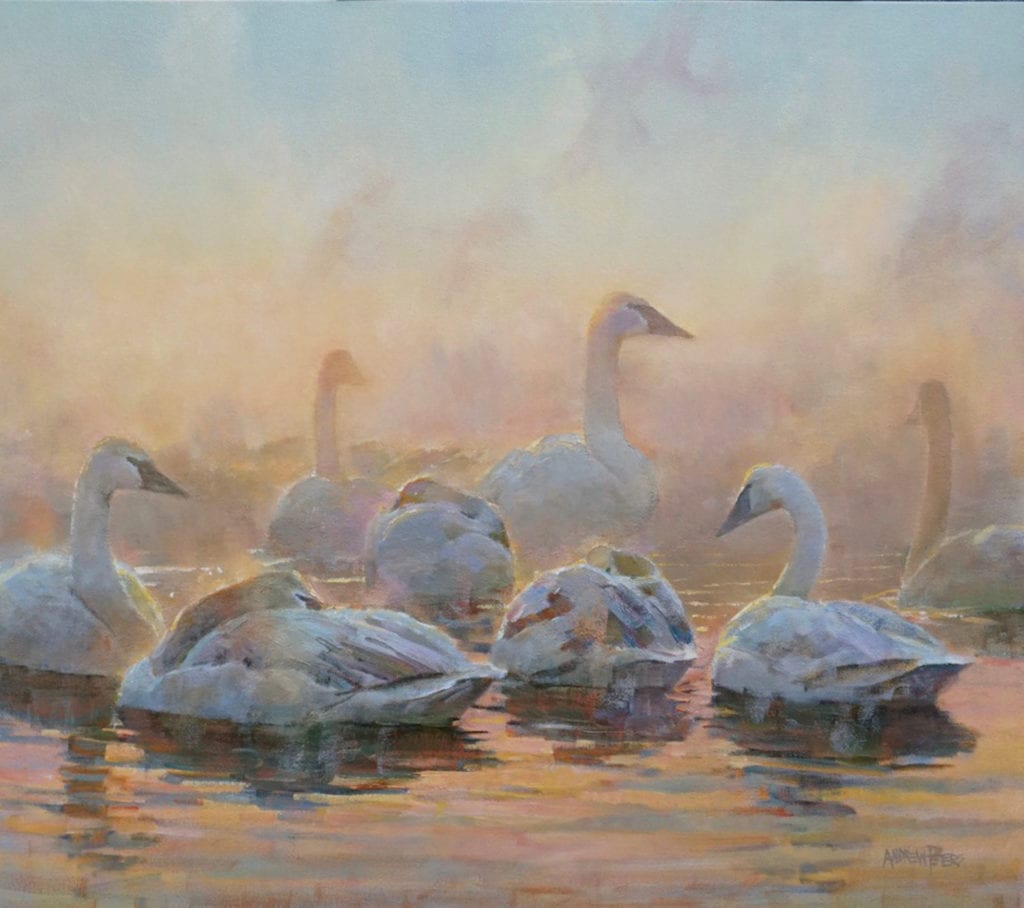
Winner: Andrew Peters, “Pleistocene Messengers”
Andrew Peters, “Pleistocene Messengers,” Oil, 28″ x 32″
Wilson Hurley Memorial Award
An award of $3,000 for exceptional artistic merit for a landscape, sponsored by Rod Moore.
Winner: Ralph Oberg, “A Remnant of Wildness”
Ralph Oberg, “A Remnant of Wildness,” Oil on mounted linen, 32″ x 48″
Robert Lougheed Memorial Award
An award of $3,000 for best display of three or more works chosen by Prix de West exhibiting artists, sponsored by Barbara and Roger Simons in memory of Faydra and George Simons, true Western enthusiasts.
Winner: Matt Smith, “North Fork Creek,” “North Wash Autumn,” “Point Lobos” and “The San Miguel in Winter”
Visit the Prix de West and the National Cowboy and Western Heritage Museum online at nationalcowboymuseum.org.
View the collection and bid
All art remains on display through September 13, and all but the Purchase Award winner are available for purchase in this year’s proxy-bid-only virtual sale. Proxy bids for the fixed-bid sale will be accepted until the night of the sale September 12, when the typical in-person sale will be replaced with an exciting virtual experience. To view the virtual tour and online catalog, as well as more details on submitting proxy bids, visit nationalcowboymuseum.org/prixdewest.
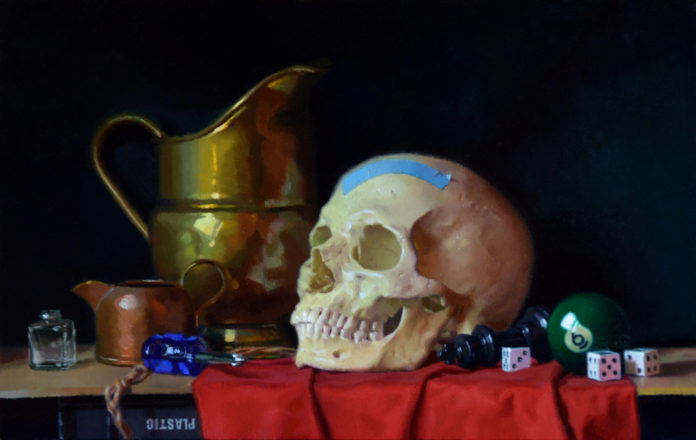
Jason Patrick Jenkins (b. 1979), "Hindsight," 2017, oil on canvas, 15 x 24 in., private collection
There is a lot of superb contemporary realism being made these days; this article by Allison Malafronte shines light on a gifted individual.
JASON PATRICK JENKINS (b. 1979) is a standout graduate of Philadelphia’s Studio Incamminati now teaching in that school’s advanced and continuing education programs. Beyond contributing to the realist community through teaching and painting, he is an observant commentator on contemporary times — one who hopes to bring humanism back to his digitally oversaturated generation.
“Despite our interconnectivity, we are so disconnected that we have lost sight of much in the face of temporal chaos,” Jenkins observes. “Beneath the journey of our daily lives there are the same underlying, unifying, timeless truths of human experience: courage, compassion, empathy, perseverance, justice, mortality, and legacy. I want to use art to awaken sensitivity in a generation that has been dulled by apathy, nihilism, and desensitization. Great art can provide transcendence, clarity of vision, and a sense of purpose.”
To that end, Jenkins creates each painting with intention and purpose, plumbing the depths of his own feelings and intelligence to imbue it with thought-provoking content. An antidote to the cursory glances that online imagery fosters, Jenkins’s paintings reward us for taking a longer look, as there is much to be uncovered here.
In “Hindsight” (shown at top), for instance, our immediate thought might be that this is a memento mori in the classical tradition, a reminder of the frailty and brevity of life. Looking closer at its symbols — blue tape on the skull, dice, a billiard ball, and an overturned crate with the word plastic — we are asked to go beyond our initial assumptions and ponder the deeper meaning of Jenkins’s message, which seems to be about not only the passage of time but also the chances we take and the aspects of life we do and do not have control over.
Jenkins has resided in Philadelphia for the last six years. Previously he lived in South Korea and in Canada, where he earned a B.F.A. from Memorial University of Newfoundland. He supplemented that training by teaching himself glazing, alla prima painting, and the Dutch/Flemish method, and ultimately earned a fellowship at the conclusion of four years’ study at Studio Incamminati. Today Jenkins travels the world, sharing his observations through paintings made in a contemporary classical realist style.
Jason Patrick Jenkins, “Vessels,” oil on linen, 16 x 20 in., 2016Jason Patrick Jenkins, “Pequena Muerte,” oil on panel, 10 x 8 in., 2016, private collectionJason Patrick Jenkins, “Resonance,” oil on canvas, 15 x 24 in., 2018Jason Patrick Jenkins, “Angel,” oil on canvas, 20 x 16 in., 2018, private collectionJason Patrick Jenkins, “Justin,” oil on canvas, 20 x 16 in., 2016Jason Patrick Jenkins, “Alex M. in Amarillo,” oil on canvas, 20 x 16 in., 2016Jason Patrick Jenkins, “Cardinal,” oil on canvas, 30 x 24 in., 2018Jason Patrick Jenkins, “Legacy,” oil on canvas, 48 x 36 in., 2019
Jenkins is represented by Gallery Gora (Montreal). Visit his website at jasonpatrickjenkins.com.
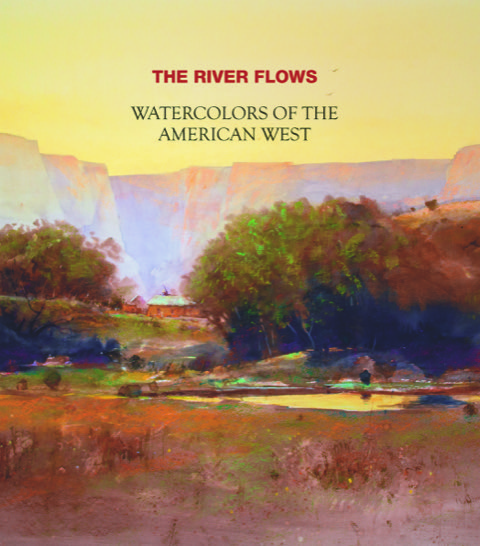
Take a 200-year trip through the West with 41 watercolor artists in a new book titled “The River Flows.”
Watercolors of the West
ESSAY BY VICKI STAVIG
The exploration and settling of America’s West was one of the most exciting times in the country’s history. It also was one of the most adventurous, as many brave souls—men, women, and children—bade goodbye to family and friends, as they headed out into the great unknown. It surely was a scene that included tears and well wishes and a little envy at the courage those pioneers exhibited and the opportunities they were about to explore.
Little was known about the West before the 18th century, when artists joined explorers and pioneers intent on seeing for themselves what the new frontier would hold, capturing scenes of its people, land, and wildlife to share with those who stayed behind. While letters to friends back East provided some information of the beauty and the struggles those pioneers experienced, readers had to use their imaginations to visualize those written descriptions.
Morten Solberg, “His Domain,” Private Collection
Not surprisingly, many of the early artists who painted the Old West used watercolors to do so. The medium has been used to depict scenes and tell stories since prehistoric times, when cavemen used them to paint on the walls of their caves. By the mid-1500s, European explorers used watercolors to document the New World.
Many art critics and collectors scorned the medium, but by the mid-1800s, it had gained respectability, and galleries began to show watercolor paintings along with those done in oils. In 1866, the American Society of Painters in Water Colors—later renamed the American Watercolor Society—was founded to promote watercolor painting and host annual exhibitions. Today, dozens of watercolor societies are scattered throughout the country.
Related > In 2019 Streamline Publishing released American Watercolor Weekly, a free newsletter for watercolor artists and art lovers
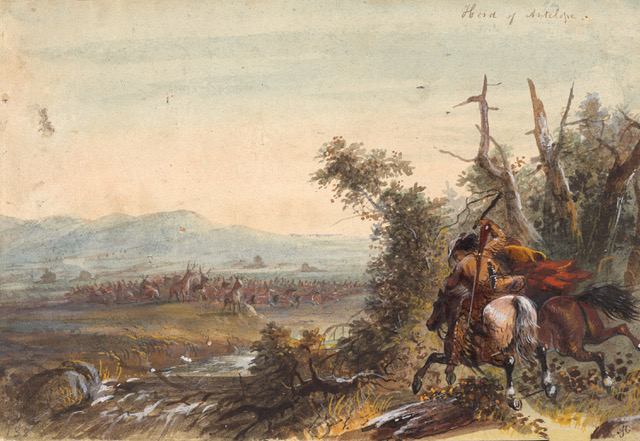
Alfred Jacob Miller, “Herd of Antelope,” From the collection of the Gilcrease Museum, Tulsa, Oklahoma, GM02.1073
Just as watercolors were gaining in popularity, so were artists who were depicting the West. Albert Bierstadt, who documented the region’s wildlife and landscapes, was one of them. He made his first trip to the West in 1859 and painted his first Western landscapes. He headed West again in 1871 and 1893 and is best known for his images of California’s Yosemite Valley. Other artists also gained fame for their paintings of the West, including George Catlin, who painted the Native American, and Thomas Hill, whose works featured the Rocky Mountains.
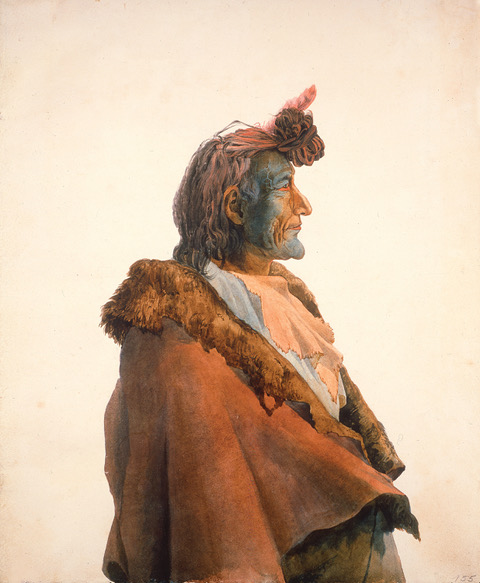
Karl Bodmer (Swiss, 1809-1893), “Pioch-Kiäiu, Piegan Blackfeet Man,” 1833, watercolor on paper, Joslyn Art Museum, Omaha, Nebraska, Gift of the Enron Art Foundation, 1986.49.296
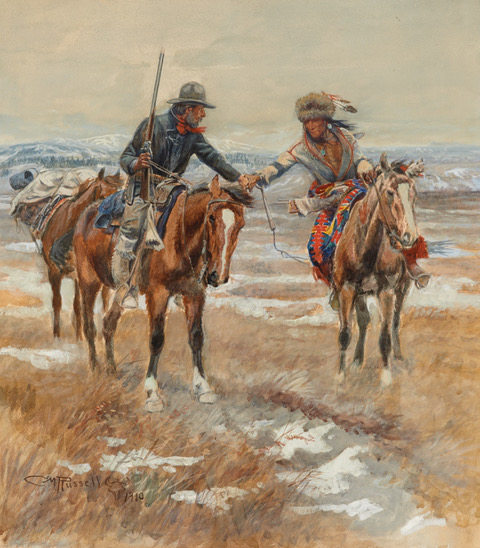
Frederic Remington created paintings of Native Americans, the U.S. Cavalry, and cowboys, while Charles Russell is said to have created more than 2,000 paintings of the West’s cowboys, Indians, and landscapes. Joining them in those artistic endeavors were Karl Bodmer, who focused on the customs of Native American tribes, and Thomas Moran, who documented the grandeur of the West.
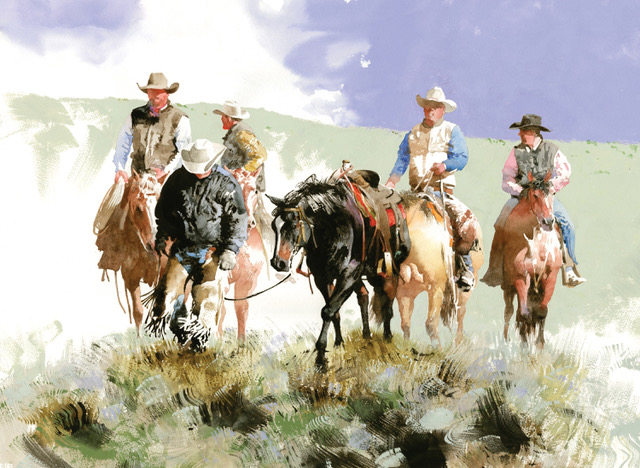
Don Weller, “Been Workin’,” Collection of Michael Slabaugh
Another of those artists who felt the call of the West too strong to ignore was remarkable for two reasons, the first being that she was a woman. Helen Henderson Chain not only painted the landscape of the West, including the Grand Canyon, but in 1877, she was also the first woman to climb the Mount of the Holy Cross.
From the majestic mountains, verdant valleys, and endless skies to the colors, cultures, and cowboys, those early artists captured the West in all its glory. The fascination with the West continues today, as artists not only portray the region as it is—but as it was.
Charles Marion Russell, “A Doubtful Handshake,” From the collection of the Gilcrease Museum, Tulsa, Oklahoma, GM02.1450
Many artists painting the West today prefer to do so with watercolors, citing a variety of reasons for that choice. The medium’s portability, particularly when used out in the field, makes it appealing; all you need to do is add water. Artists also praise its spontaneity, transparency, energy, vibrancy, and luminosity.
On the other hand, watercolors are not easily mastered. They are unforgiving; unlike oils, they cannot be scraped off and painted over. They also are unpredictable, not always staying where the artist places them. Contemporary Western watercolorist Gerald Fritzler has described painting with watercolors, saying, “You have to decide where you will place each brushstroke of color and then let it do its magic.”
Watercolors also dry quickly, which means artists using them don’t have the luxury of time to stop and reevaluate what they are doing and where the painting is headed. They must make compositional and color decisions before beginning each piece—and then plunge in. Sergei Bongart said of the medium, “Watercolor is like life; better get it right the first time—you don’t get a second chance.”
The challenges—and opportunities—watercolors present are many, but those artists who use the medium embrace both. “I’ve dabbled in other mediums, but the challenge to tame the ‘wild horse’ of watercolors keeps calling me home,” says Nelson Boren. “It’s an endless learning experience and one I don’t plan on ever mastering in my lifetime.”
Artists continue in ever-increasing numbers to embrace watercolors as they feed our fascination with the West—past and present—connecting us to places we’ve never been and people we’ve never met. The art—and artists—featured within the pages of this book give testimony to the magic of the medium as they document the wonders of the West.
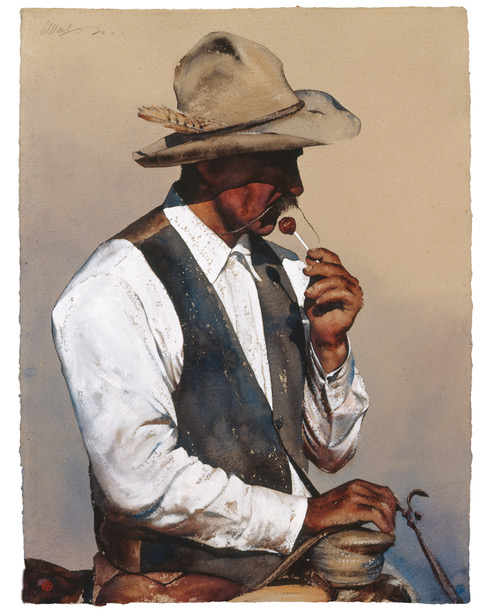
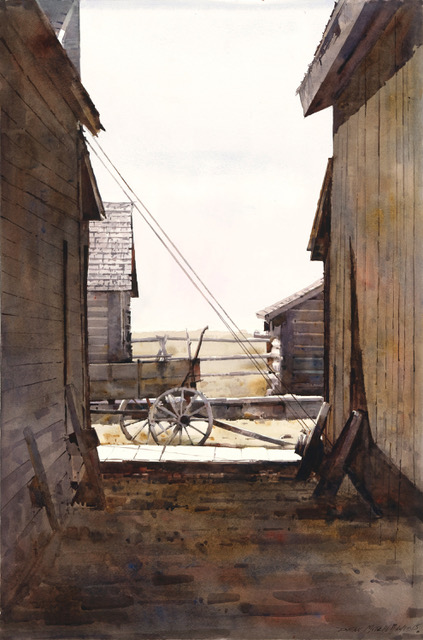
William Matthews, “Hard Candy,” Private CollectionDean Mitchell, “Trail Town Alley,” Private Collection
Learn more about “The River Flows: Watercolors of the American West,” including how to order your copy, at riverflowsbook.com.
Fill your mind with useful art stories, the latest trends, upcoming art shows, top artists, and more. Subscribe to Fine Art Today, from the publishers of Fine Art Connoisseur magazine.