
Home Blog Page 225

The Hilton Als Series: Lynette Yiadom-Boakye

0
The Hilton Als Series: Lynette Yiadom-Boakye
Lynette Yiadom-Boakye, “1 pm, Mason’s Yard,” 2014, oil on canvas, Private Collection, courtesy of the artist and Jack Shainman Gallery, New York, © Lynette Yiadom-Boakye

The Yale Center for British Art presents an exhibition of recent works by the British artist Lynette Yiadom-Boakye (b. 1977). This display is the second in a series of three devoted to women artists working in Britain today, curated by the author Hilton Als in collaboration with the artists and the Center.

This selection of paintings and etchings, completed between 2012 and 2018, focuses on Yiadom-Boakye’s interest in making portraits of fictional people of color drawn from found images and her rich imagination. At turns dreamy, dramatic, and lyrical, Yiadom-Boakye’s images depict people living in worlds where they have complete sovereignty and are viewed as human beings rather than artistic symbols of pain, suffering, triumph, or other projected notions.

Lynette Yiadom-Boakye, “Fly VI,” 2012, etching, Yale Center for British Art, Laura and James Duncan, Yale BA 1975, and Friends of British Art Fund, in honor of Gillian Forrester, courtesy of the artist and Jack Shainman Gallery, New York, © Lynette Yiadom-Boakye

Matthew Hargraves, Chief Curator of Art Collections, said, “Lynette Yiadom-Boakye
is among the most important artists working in Britain today. The selection of these works, which includes six paintings loaned by generous private collectors and a portfolio of etchings from the Center’s own holdings, offers an opportunity to see her powerful representations of imaginary people of color shown in action and contemplation. Arresting in its painterly beauty, her oeuvre stands in a long but often unrecognized tradition of images of black nobility.”

Yiadom-Boakye’s subjects exist outside a specific place and time. The artist deftly achieves this uncanny atmosphere through the use of fields of color and minimal settings, allowing the character of the imaginary sitter to come forward. The painting “1 pm, Mason’s Yard” (2014; shown at top) features a female figure in repose in a patterned chair, which is banked on the right side by a potted plant. The cues are few but speak volumes; naked feet with painted toes, a spiky plant, and splashes of green on the chair’s fabric all conspire to establish the presence of a personality but also to edge the artificial up against hints of nature.

Lynette Yiadom-Boakye, “Harp-Strum,” 2016, oil on canvas. The Rachofsky Collection, courtesy of the artist and Jack Shainman Gallery, New York, © Lynette Yiadom-Boakye

“Harp-Strum” (2016) is a diptych telling a tale of motion and stillness through the juxtaposition of two images of dancers that vary just enough to show how a small gesture makes all the difference between openness and finality, reaching and refusing. The spontaneity, discipline, and joy expressed by the dancers also finds its form in the act of painting itself. The subtlety of expression is as natural as breathing and the brushy quality of the artist’s technique.

Lynette Yiadom-Boakye, “Amber and Jasmine,” 2018, oil on linen. Lent by the Nerman Family Collection, courtesy of the artist and Jack Shainman Gallery, New York, © Lynette Yiadom-Boakye

Throughout her career, Yiadom-Boakye has examined what introspection looks like not only to the spectator but to the subject. In “Amber and Jasmine” (2018), a young woman is poised between the moment she has just had and the one to come. Like Rodin’s “The Thinker,” her chin is cupped in her hand, a gesture indicating contemplation. The vibrancy of the rug’s patterns contrasts with the woman’s stillness, paused fleetingly between inhaling and exhaling. Here and elsewhere, Yiadom-Boakye addresses the question of what privacy looks like to an observer.

Lynette Yiadom-Boakye, “Greenhouse Fantasies,” 2014, oil on canvas. Hudgins Family Collection, courtesy of the artist and Jack Shainman Gallery, New York, © Lynette Yiadom-Boakye

Like the great American portraitist Alice Neel, Yiadom-Boakye focuses on the humanness in men of color and their presence in a visual field, as in “Brothers to a Garden” (2017). In “Greenhouse Fantasies” (2014), Yiadom-Boakye pays particular attention to her subject’s eyes — their direct gaze and gentle, assured connection with the viewer.

As an emerging artist, Yiadom-Boakye was drawn to Whistler’s moody surfaces and Manet’s portraits of individuals in social situations, brought into being with a strong sense of color. (Whistler, like Yiadom-Boakye, was also a prolific writer). The paintings seen here recall those artists in their use of darkness — not as light’s absence but rather as light of a different kind.

“The Hilton Als Series: Lynette Yiadom-Boakye” is organized by the Yale Center for British Art and curated by Hilton Als, staff writer and theater critic for The New Yorker, in collaboration with Lynette Yiadom-Boakye and Matthew Hargraves, Chief Curator of Art Collections at the Center.

The exhibition will be on view at the Yale Center for British Art (New Haven, Connecticut) through December 15, 2019, and then travel to the Huntington Library, Art Collections, and Botanical Gardens in San Marino, California, in January 2020. For more details, please visit britishart.yale.edu.


Sign up to receive Fine Art Today, the free weekly e-newsletter from
Fine Art Connoisseur magazine.
William Bailey: Looking Through Time

0
Contemporary still life paintings
William Bailey, “Still Life – Monterchi,” 1981, oil on canvas. Private collection. © 2019 William Bailey/Artists Rights Society (ARS), New York

William Bailey: Looking Through Time
Yale University Art Gallery (CT)
through January 5, 2020

“William Bailey: Looking Through Time” considers the career of William Bailey (b. 1930, BFA 1955, MFA 1957), the Kingman Brewster Professor Emeritus of Art at Yale University, through a focused survey of the artist’s paintings, drawings, and prints. Special emphasis is given to Bailey’s still life paintings in oil, including the Yale University Art Gallery’s “Still Life –Table with Ochre Wall” (1972), an outstanding example of the artist’s signature style.

Contemporary still life paintings
William Bailey, “Eggs,” 1974, oil on linen. Whitney Museum of American Art, New York, Lawrence H. Bloedel Bequest, inv. no. 77.1.4. © Whitney Museum of American Art/Licensed by SCALA/Art Resource, N.Y.

Known for his meditative canvases depicting objects and figures painted from memory and imagination, Bailey is one of the artists—including Audrey Flack, Alex Katz, and Philip Pearlstein—who defied the prevailing taste for abstraction at midcentury and instead committed themselves to representational painting. His works have been compared to visual poems, a fitting description given their freedom from the constraints of descriptive realism, evocative balance of both form and color, and iterative development of a distinct visual aesthetic.

Contemporary still life paintings
William Bailey, “Nocera Umbra,” 1998, oil on canvas. Private collection. © 2019 William Bailey/Artists Rights Society (ARS), New York

Working closely with the artist, Mark D. Mitchell, the Holcombe T. Green Curator of American Paintings and Sculpture, selected approximately 40 works spanning the six decades of Bailey’s career. Some of the artist’s finest pieces have been borrowed from private collections, and many have not been on public display in a quarter century. These will be presented alongside key loans from the Whitney Museum of American Art, New York, and the Fralin Museum of Art at the University of Virginia, Charlottesville. Most of the approximately 20 drawings and prints on view were chosen from the artist’s own collection, offering a more intimate perspective on his vision, process, and stylistic development over time.

Contemporary still life paintings
William Bailey, “Plateau,” 1993, oil with wax medium on canvas. Private collection. © 2019 William Bailey/Artists Rights Society (ARS), New York

For more information, please visit the gallery website at artgallery.yale.edu.


Sign up to receive Fine Art Today, the free weekly e-newsletter from
Fine Art Connoisseur magazine.
The Female Eye: 11 Contemporary Painters You Should Know

2
Contemporary figurative paintings - FineArtConnoisseur.com
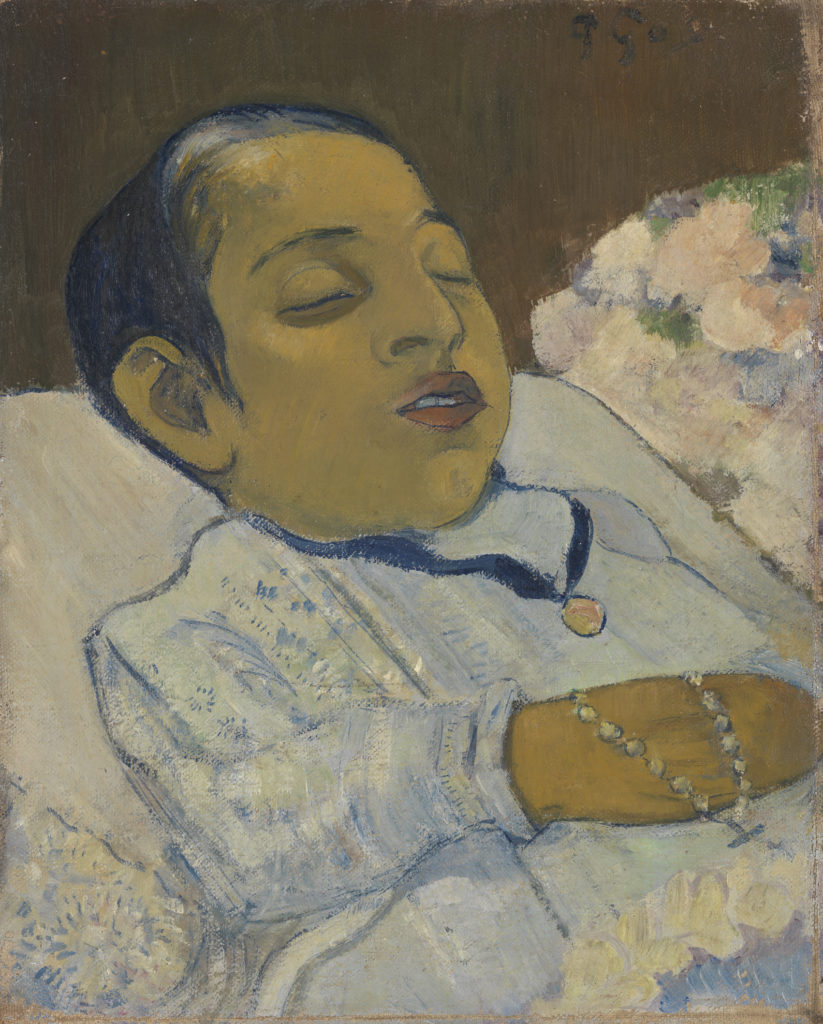
Renée P. Foulks, “Charnée,” oil on linen, 9 x 9 in.

“The Female Eye” at Gallery Henoch (NYC) is a group exhibition of 11 contemporary female realist painters investigating their present-day truths. The exhibition will be on view to the public through October 22, 2019.

Contemporary figurative paintings - FineArtConnoisseur.com
Patricia Traub, “Rescuer With a Lemur, African Wild Dog, Two Rare Poultry,” oil on panel, 12 x 12 in.

The idea for this exhibition took form early in 2017, when women and women’s concerns were experiencing a notable resurgence. “For those of us at Gallery Henoch, featuring the work of our female artists has become a means to underscoring the talent and resilience of women everywhere,” the gallery says. “We hope to point towards a better future, one which affords women, especially women artists, increasingly greater visibility. Since its earliest inception by George Henoch Shechtman over 50 years ago, a relatively large percentage of the artists the gallery represents have been female. This is a part of our history of which we are particularly proud. Eleven of these artists have contributed paintings to ‘The Female Eye.’”

Contemporary oil paintings
Sunghee Jang, “Floor,” oil on linen, 51.3 x 51.3 in.

More from the gallery:

Because the artists in the current exhibition are female, there is no doubt that gender affects the way they experience themselves in the world, and thus the way they see and portray it. The title of this exhibition, “The Female Eye,” refers to this phenomenon. Yet within this group of 11 artists there is no “Women’s Art,” only women who do art, each conveying her own personal vision. In presenting the work of our artists who are women, we seek to demonstrate the diverse ways in which each creates her art.

Contemporary still life paintings
Elizabeth McGhee, “Carol of the Bells,” oil on panel, 18 x 36 in.
Contemporary figurative paintings - FineArtConnoisseur.com
Sharon Sprung, “Serendipity,” oil on panel, 42 x 42 in.

Learn more about “The Female Eye” at galleryhenoch.com.


Sign up to receive Fine Art Today, the free weekly e-newsletter from
Fine Art Connoisseur magazine.
Fruitfulness: An Exhibition and Farm-to-Table Dinner

0
Nathalia Edenmont, “My Mind’s Eye,” 2016, c-print mounted onto aluminum, 55 x 55 in.

Organized by the Flint Institute of Art, this collection of monumental photographs features elaborate compositions of garments constructed from unconventional, often organic, materials, with each piece taking up to 18 hours to create.

Stamford Museum & Nature Center (SM&NC) invites the public to register for a special evening of events on Thursday, September 19, featuring the exhibition opening reception of “Fruitfulness by Nathalia Edenmont,” followed by SM&NC’s signature Fall Farm-to-Table Supper ($150/person), prepared by award-winning chef Alison Milwe Grace. From 5:30 to 7:30 pm, guests will join artist Nathalia Edenmont for cocktails in the Bendel Mansion at the opening of her exhibition, “Fruitfulness by Nathalia Edenmont,” with live music by local musicians John Lawrence and Rick Crossman.

Chef Alison Milwe Grace
SM&NC Fall Farm-to-Table chef, Alison Milwe Grace

Organized by the Flint Institute of Art, this collection of monumental photographs by the artist features elaborate compositions of garments constructed from unconventional, often organic, materials, with each piece taking up to 18 hours to create.

Edenmont was born in Yalta in 1970, and moved to Sweden by the time she was 20, realizing that life in the Soviet Union was disintegrating and held no future for her. At 27, she was accepted to Forsberg Skola to study graphic design, where an artist mentor encouraged her to visualize her inner pictures and try to capture them with a camera. “I only look inside my head; what I see in my mind is what I create,” said Edenmont. “I do not sketch; the image is complete and sharp within me. I have absolute control over all aspects of what I do.”

Nathalia Edenmont, “Juicy,” 2016, c-print mounted on aluminum, 61 x 50 in.

“We are very pleased to welcome Nathalia, who will be travelling from Sweden specifically for our opening,” said Jillian Casey, Curator of Collections & Exhibitions for the Stamford Museum & Nature Center. “This is a rare opportunity for the public to meet the artist and talk with her personally about the conception and creation of her beautifully arresting photographs.”

At 7:00 p.m., Farm-to-Table guests will move on to SM&NC’s newly opened Knobloch Family Farmhouse for the Fall Farm-to-Table Supper, sponsored by First County Advisors. The evening’s menu will showcase chef Alison Milwe Grace’s farm-fresh cuisine, with offerings that include cider-glazed braised organic chicken, maple-thyme dusted salmon, honey-apple roasted pork, local cheeses, wine pairings, and an open bar.

A food industry veteran, chef Grace is the owner/chef of AMG Catering and Events of Wilton, which has won many awards, including the Best of the Gold Coast. “Great food makes people happy,” said Grace. “I provide the freshest, most delicious food served in a professional and friendly atmosphere.”

“Delivering upon our mission, we invite the community to an inspired evening of events that embody robust rustic ‘fruitfulness’ in both art and flavor,” said Melissa H. Mulrooney, Executive Director & CEO of the SM&NC. “We encourage everyone to join us for this signature night out in our galleries and magnificent new farmhouse in support of the Stamford Museum & Nature Center.”

SM&NC’s evening of events is suitable for adults only, and advance reservations are required. While the exhibition opening is free to attend, tickets for the Farm-to-Table Supper are $150 per guest, with all proceeds directly supporting the mission and programming of the Stamford Museum & Nature Center. To reserve your tickets, contact Jennifer Parry at [email protected] or 203.977.6536, or visit stamfordmuseum.org/supper to register online by September 10.

“Fruitfulness by Nathalia Edenmont” will be on view in the Stamford Museum’s Bendel Galleries from its opening on Thursday, September 19, through November 3, 2019.

For more information visit www.stamfordmuseum.org.


Sign up to receive Fine Art Today, the free weekly e-newsletter from
Fine Art Connoisseur magazine.
What Happens at the Edge

0
Contemporary portrait paintings - FineArtConnoisseur.com
Aleah Chapin, “Max,” 2018, oil on linen, © Aleah Chapin, Courtesy of Flowers Gallery

Aleah Chapin: What Happens at the Edge
Flowers Gallery (New York)
Through November 2, 2019
www.flowersgallery.com

Flowers Gallery presents an exhibition of new paintings by Aleah Chapin, focusing on the unified depiction of the human body and the natural environment. In her latest work, Chapin describes a world concerned with “in-betweenness and edges” — from the juxtaposition of soft human flesh against the hard contours of cliffs and rock faces, to the symbolic representation of emotional edges and extremes.

The people and place of Chapin’s home in the US Pacific Northwest are the foundation of her work, involving naked portraits of aunties, cousins, her mother, and friends. Described by painter Eric Fischl as “the best and most disturbing painter of flesh alive today,” Chapin’s bold and intimate portrayal of nude figures has broadened the debate around the visibility of aging or so-called imperfect bodies in images of everyday life.

Chapin describes her recurring cast of elderly women as having an energy and directness that demonstrates joyful resistance, reflecting her own desire to “take up space, speak up, and be loud.” They perform mysterious, playful dances (such as “Our Voices Are Still Singing on the Margins,” shown at top) and appear to howl, sing, or roar. Monumentally scaled nudes such as “And It Caught Fire” appear powerful and confrontational, while intertwined groups of women supporting each other’s bodies recall the solidarity of the Me Too movement.

Since moving from New York to the Northwest, Chapin’s realistic depiction of the landscape has become a highly significant attribute of her painting. Her scenes of pristine wilderness reflect the strong influence of nature and the seasons during her island upbringing, and a wider, growing concern for the environment and the future stability of natural resources. In recent paintings of dramatic mountain ranges and lush rainforests Chapin’s palette is saturated by the indigo blue of half-light, bathing her figures with an opalescent moonlit glow. Two large-scale landscapes titled “Where the Edges Meet” (Under/Over) are entirely devoid of figures, allowing space for the viewer to occupy the scene.

Aleah Chapin, “We Held the Mountains on Our Shoulders,” 2017, oil on canvas, © Aleah Chapin, Courtesy of Flowers Gallery

In the self-portrait “Turning,” Chapin confronts fragility and change using her own image framed by fallen leaves. Shifting her gaze to herself, Chapin addresses the experience of transitioning from youth to womanhood and coming to terms with the onset of physical change. Further ideas of passage are explored in the painting of a close friend Max, who identifies as transgender (using the pronouns they/them). Chapin has explored the edges and boundaries of gender specificity and gendered expression in several previous paintings of close family and friends such as “Qwill” and “Emmett” (both 2016), countering the often-politicized view of transitioning bodies with striking empathy.

Aleah Chapin, “Our Voices Are Still Singing on the Margins,” 2019, © Aleah Chapin, Courtesy of Flowers Gallery

For more information and images please visit flowersgallery.com.


Sign up to receive Fine Art Today, the free weekly e-newsletter from
Fine Art Connoisseur magazine.
Borrowed Light: Large-Scale Watercolors by Barbara Ernst Prey

0
Large-scale watercolors - FineArtConnoisseur.com
Barbara Ernst Prey, “Red Cloak, Blue Bucket,” 2019, watercolor and drybrush on paper, 28 x 40 in.

To the Shakers, light was everything, fuel for body, mind, and spirit. “Borrowed Light: Barbara Ernst Prey,” on view at Hancock Shaker Village May 26 – November 11, 2019, captures this dynamic essence in the form of 10 large-scale watercolors ranging in size from 28 x 40 inches to 40 x 60 inches. Each work is imbued with “borrowed light,” a term adopted by the Shakers to describe their architectural technique of incorporating windows and skylights into interior walls. The result is both pragmatic and sublime.

More from the organizers:

The Shakers designed their built environment to let light in, as can be seen in the 20 buildings on the campus of Hancock Shaker Village. Artist Barbara Ernst Prey (American, b. 1957) spent many days during the fall and winter of 2018–2019 immersed in these buildings and in the material culture and landscape of the Village. Carefully observing luminescence, she sketched boxes, garments, tools, and domestic objects as angular refractions of light migrated slowly across interior and exterior scenes. An astonishing palette of color emerged under her acute painterly gaze — violet and emerald awash in the Laundry and Machine Shop, indigo and gold in the Round Stone Barn, slate and amber in the Sisters’ Dairy & Weave Shop.

Large-scale watercolors - FineArtConnoisseur.com
Barbara Ernst Prey, “Threads, Spindles,” 2019, 28 x 40 in.

“Borrowed Light” offers an opportunity to see Hancock Shaker Village in a new way, to explore the Shakers through a contemporary lens. It is part of a rigorous changing exhibition program at the Village and comes on the heels of the contemporary exhibitions “Making, Then and Now,” with works by Maya Lin, Jenny Holzer, and others, and “Altered Visions,” with works by Abelardo Morell, Marko Remec, and Henry Klimowicz.

The exquisitely beautiful works in “Borrowed Light” are unexpectedly big and bold, a deliberate approach by the artist to explore how we can connect to the universe in an expansive and meaningful way. The exhibition lends new insight into the visual and haptic experience of sacred design, featuring objects and spaces enlivened by luminosity. Such light is expressed in intimate paintings such as “Channeled Light” (watercolor and drybrush on paper, 2019), in which a wash basin and bucket are bathed in geometric-patterned light cast from a window.

Large-scale watercolors - FineArtConnoisseur.com
Barbara Ernst Prey, “Channeled Light,” 9 x 10 in.

Similarly intimate is “Spindles” (watercolor on paper, 2019), with its rows of colorful spools of thread resting on simple wooden shelves, casting long shadows on the white wall behind them.

“My paintings are based on abstract shapes, so there are multiple narratives within the painting,” Prey said. “If you think about it, that space is a microcosm of Shaker life. They raised the crops and animals to make the fiber, grew the plants to make the dyes, spun the thread, wove the textile, sewed the jacket, and later washed the jacket, all using tools that were handmade, down to the smallest hand-carved spool of thread,” she explained. Intrigued by the Shakers’ concept of equality between men and women, Prey also has a particular interest in women’s work, the subject of both “Channeled Light” and “Spindles.” The simplicity of Shaker design, pared down to its essentials, is a recurring theme in the exhibition.

But light can also be vast, as in “Shaker Barn” (watercolor and drybrush on paper, 2019). The Village’s iconic Round Stone Barn stands sentinel at the center of a winter landscape, anchored by a dramatic cloudy sky and shadows of tree branches in the foreground.

Large-scale watercolors - FineArtConnoisseur.com
Barbara Ernst Prey, “Sisters,” 2019, 28 x 40 in.

Said Jennifer Trainer, director of Hancock Shaker Village, “When Barbara and I discussed the idea of a series of paintings of the Shaker buildings at Hancock, and then she showed me paintings she had made of quiet moments in houses of worship, I knew she would capture the ethereal quality of this former Shaker settlement like no other artist. Her ability to capture light, and give tangible essence to the spirit of an environment, took my breath away.”

“I’ve always been drawn to the simplicity of Shaker design,” said Prey. “I’m also drawn to the handmade, which is something I equate with the Shakers.” It was during her undergraduate years at Williams College in the 1970s that she was introduced to the Shakers. She felt an immediate connection to their use of color in art, furniture, and everyday objects — a connection that became even stronger as she worked toward the master of divinity degree she earned at Harvard Divinity School in 1986. Her studies led her to examine existential questions — “who we are, where we’re going, why we’re here, and what’s important, what really matters,” said Prey. “I think this is reflected in much of my work. “Borrowed Light” is influenced by Shaker design, spirit, and sense of community, and we’re all connected through community.”

Large-scale watercolors - FineArtConnoisseur.com
Barbara Ernst Prey, “Days Work,” 2019, 40 x 60 in.

Prey deliberately chose watercolor as her medium for all 10 paintings in the exhibition, explaining that watercolor lends a transparency that, in the context of this series, is akin to a kind of spiritual transparency. “When I’m looking at architecture, essentially, I’m looking at light itself. In this way, all light is borrowed light,” she said.

“Borrowed Light: Barbara Ernst Prey” was curated by Sarah Margolis-Pineo for Hancock Shaker Village, Pittsfield, Massachusetts. The exhibition is supported by Herbert Allen, Duncan and Susan Brown, Paul Neely, Sheila Stone, and Balance Rock Investment Group. A fully illustrated catalogue (Puritan Press, 42 pages) with essays by Sarah Margolis-Pineo and Charles A. Riley II, PhD, accompanies the exhibition.

For more information, please visit hancockshakervillage.org.


Sign up to receive Fine Art Today, the free weekly e-newsletter from
Fine Art Connoisseur magazine.
Under the Influence: Contemporary Artists and the Masters Who Inspire Them

0
Contemporary paintings - FineArtConnoisseur.com
Shawn Fields, “One Man Band,” oil on board, 52 1/4 x 43 in.

Somerville Manning Gallery (somervillemanning.com) announces the exhibition “Under the Influence: Contemporary Artists and the Masters Who Inspire Them.” The exhibit closes October 12, 2019.

All artists study the masters in varying degrees. They glean technique, application, ideas, composition, meaning, and a host of other information that informs their art. After continued hard work and careful observation, an artist’s own voice emerges in a unique style. Somerville Manning Gallery presents an exhibition of talented artists along with the masters who gave them inspiration, exploring the importance of art history even through modern times.

Drew Ernst, “Kanawha,” 2019, oil on linen, 40 x 30 in.

As specialists in the Wyeth Family for over 35 years, it is no surprise that three out of five artists in this exhibit are linked to that distinguished family. Drew Ernst is a figurative realist gathering advice from N. C. Wyeth’s well-known son, Andrew Wyeth. As a student at the Pennsylvania Academy of Fine Arts, Ernst studied with numerous talented painters, many of whom could also reference the impact of Andrew Wyeth.

Shawn Fields (work featured at top) names both Winslow Homer and Jamie Wyeth as compelling forces in his development as a painter. Fields paints stories of childhood with convincing detail, reminding us of the simplicity of a childhood full of curiosity and play.

Theo Platt, “Azure,” 2018, oil on canvas, 60 x 48 in.

Theo Platt’s “Ocean” series, of which two will be on display, focuses on the magnitude of great bodies of water. He names N. C. Wyeth as his “recent obsession,” and his sculptural waves certainly reflect his reverence for the natural world and the scale of Wyeth’s powerful works. Platt attended the Royal College of Art in the UK and has been commissioned by the Scottish National Portrait Gallery and the Royal Family.

Victoria Adams, “Lowlands #120,” 2019, oil on linen, 24 x 24 in.

In a different take on epic panoramas, Victoria Adams’s paintings were shaped by the Hudson River School of artists. After spending her childhood under the skies of the American Midwest and more recent decades in the Pacific Northwest, Adams’s work owes a visible debt to those views. Her work is collected extensively in the Northwest, including works in the Tacoma Art Museum and the Allen Foundation for the Arts.

Betsy Eby, “Half the World,” 2019, encaustic on canvas on panel, 48 x 66 in.

Also familiar with the pull of the Pacific Northwest, our final artist, Betsy Eby, creates abstract encaustic paintings that “fuse the line between the musical and the visual composition.” Experiencing these works in person casts a spell similar to that of her influence, Pat Steir. Eby’s works have been shown widely and collected by many institutions, including the Georgia Museum of Art, the Columbus Museum, and the United States Embassy, Dubai, UAE.


Sign up to receive Fine Art Today, the free weekly e-newsletter from
Fine Art Connoisseur magazine.
Michelangelo: Mind of the Master

0
Michelangelo drawings
“Seated Male Nude,” c. 1511. Michelangelo Buonarroti (1475–1564). Red chalk with highlights in white lead; 27.9 x 21.4 cm. Teylers Museum, purchased in 1790. © Teylers Museum, Haarlem

Cleveland, Ohio
ClevelandArt.org
Through January 5, 2020
“Michelangelo: Mind of the Master”

Michelangelo drawings
“Study of a Left Leg,” 1524. Michelangelo Buonarroti (Italian, 1475–1564). Black chalk; 20.7 x 24.7 cm. Teylers Museum, purchased in 1790. © Teylers Museum, Haarlem

The exhibition “Michelangelo: Mind of the Master” presents an unprecedented opportunity for museum visitors to experience the brilliance of Michelangelo’s achievements on an intimate scale through more than two dozen original drawings.

Michelangelo drawings
“Three Draped Figures with Hands Joined,” 1496–1503. Michelangelo Buonarroti (Italian, 1475–1564). Pen and brown ink; 26.9 x 19.4 cm. Teylers Museum, purchased in 1790. © Teylers Museum, Haarlem

Michelangelo’s genius is especially evident through his breathtaking draftsmanship on sheets filled with multiple figures and close studies of human anatomy. These working sketches invite us to look over the shoulder of one of Western art history’s most influential masters and to experience firsthand his boundless creativity and extraordinary mastery of the human form.

Michelangelo drawings
“Study of a Striding Male Nude,” 1504 or 1506. Michelangelo Buonarroti (Italian, 1475–1564). Black chalk; 40.4 x 25.8 cm. Teylers Museum, purchased in 1790. © Teylers Museum, Haarlem

These drawings demonstrate Michelangelo’s inventive preparations for his most important and groundbreaking commissions, including the Sistine Chapel ceiling fresco, sculptures for the tomb of Giuliano de’ Medici, and the dome of Saint Peter’s Basilica.


Sign up to receive Fine Art Today, the free weekly e-newsletter from
Fine Art Connoisseur magazine.
38th Annual Buffalo Bill Art Show & Sale

2
Terry Cooke Hall, “Tail Lights,” oil, 48 x 48 in.

Cody, Wyoming
rendezvousroyale.org
September 20–21

The Buffalo Bill Art Show & Sale offers works relating to the land, people, and wildlife of the American West. Artists offer a broad range of stylistic interpretations of the West, in oil painting, watercolor, pastel, sculpture, ceramic, and mixed media. All works are original art.

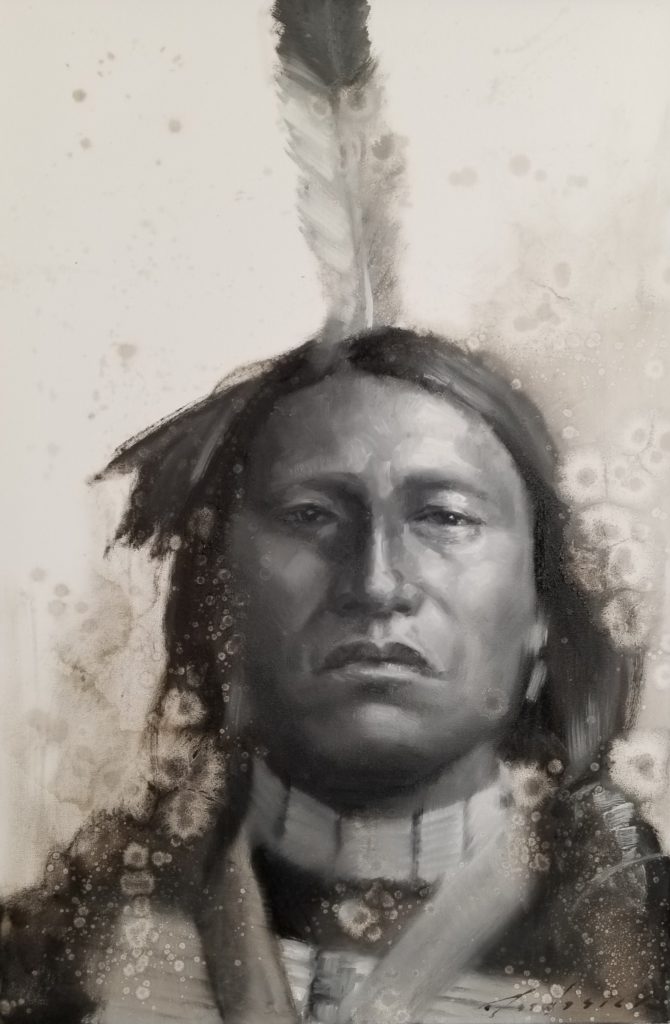
Kevin Red Star, “Crow Indian Totem – Blackbird Headpiece,” acrylic, 24 x 30 in.

The Buffalo Bill Art Show & Sale benefits the prestigious Buffalo Bill Center of the West as well as the Cody Country Chamber of Commerce. The Buffalo Bill Art Show & Sale is held in conjunction with the Center’s Patrons Ball black tie gala, and By Western Hands’ Functional Design Exhibition, all of which are part of the annual Rendezvous Royale Week in Cody, Wyoming.

Mark Kelso, “The Indomitable,” oil, 36 x 48 in.

The art exhibition, housed in the Buffalo Bill Center of the West’s John Bunker Sands Photography Gallery, is free for public viewing each September. Main events include the Friday evening auction, where guests view the exhibition a final time, then stroll next door to the beautiful party tent adjacent to the museum for food, drinks, live music, and a spirited live auction; and the Saturday morning Quick Draw, where guests enjoy breakfast then observe nearly thirty painters and sculptors at work in the Robbie Powwow Garden, often using live models, to complete a piece in one hour.

Additional works:

Charlie Hunter, “Go Broncs!” oil, 24 x 48 x 2 in.
Joshua Tobey, “Go with the Flow,” bronze, 20 x 63 x 13 in.
Matt Smith, “Summer’s End,” oil, 9 x 12 in.

Sign up to receive Fine Art Today, the free weekly e-newsletter from
Fine Art Connoisseur magazine.
Bertoldo di Giovanni: The Renaissance of Sculpture in Medici Florence

1
Bertoldo di Giovanni frieze
Bertoldo di Giovanni and collaborators, “Frieze for the Portico of the Medici Villa at Poggio a Caiano” (detail), ca. 1490, glazed terracotta, 22 7/8 x 571 1/4 in. Villa Medicea di Poggio a Caiano, Polo Museale della Toscana; Gabinetto Fotografico delle Gallerie degli Uffizi

Open through January 12, the Frick Collection presents the first exhibition devoted to the Renaissance sculptor Bertoldo di Giovanni (ca. 1440–1491) in “Bertoldo di Giovanni: The Renaissance of Sculpture in Medici Florence.” It shines a long-overdue light on the ingenuity and prominence of the Florentine artist, who was a student of Donatello, a teacher of Michelangelo, a favorite of Lorenzo de’ Medici, and an active collaborator with many other artists.

More from the organizers:

By uniting nearly his entire extant oeuvre—more than twenty statuettes, reliefs, medals, a life-sized statue, and a monumental frieze never before shown outside of Italy—the show demonstrates the artist’s creative process and ingenious design across media, his engaging lyrical style, and, especially, the essential role he played in the development of Italian Renaissance sculpture.

Indeed, Bertoldo was one of the earliest sculptors since antiquity to create statuettes in bronze, an art form that became ubiquitous in prestigious collections during the fifteenth century and thereafter.

Bertoldo di Giovanni sculpture
Bertoldo di Giovanni, “Shield Bearer” (detail), ca. 1470–80, gilt bronze, H 8 7/8 in.
The Frick Collection, New York Photo: Michael Bodycomb

The exhibition was organized by Aimee Ng, Curator; Alexander J. Noelle, Anne L. Poulet Curatorial Fellow; and Xavier F. Salomon, Peter Jay Sharp Chief Curator, with the assistance of Julia Day, Conservator. Comments Salomon, “The Frick is the only institution outside of Europe that owns a statuette by Bertoldo, and we have long desired the opportunity to study and present this artist’s work in great depth. We are thrilled that the resulting monographic display—on view only in New York—will finally bring into focus Bertoldo’s unique position at the heart of the artistic and political landscape of fifteenth-century Florence. Most appropriately our team has enjoyed working on this project in partnership with that city’s esteemed Museo del Bargello.” The catalogue that accompanies “Bertoldo di Giovanni: The Renaissance of Sculpture in Medici Florence” is the most substantial publication ever produced on the artist.

Bertoldo di Giovanni sculpture
Bertoldo di Giovanni, “Hercules on Horseback” (detail), ca. 1470–75, bronze, H 10 3/4 in.
Galleria Estense, Modena; Su concessione del Ministero per i Beni e le Attività Culturali – Archivio fotografico delle Gallerie Estensi; photo: Carlo Vannini

A PIVOTAL FIGURE RECONSIDERED IN HIS OWN LIGHT

Initially, Bertoldo developed his skills under the aegis of Donatello, inheriting his models and, upon the master’s death, completing the pulpits that were commissioned to adorn the Basilica of San Lorenzo in Florence.

Bertoldo went on to gain the life-long patronage and friendship of the state’s de facto ruler, Lorenzo de’ Medici, eventually moving into the Medici palace and creating numerous objects for his patron, some of which were designed as propagandistic tools. Bertoldo was even appointed the custodian and curator of Lorenzo’s famed garden of antiquities near San Marco, where he instructed the gifted pupils studying the relics, one of whom was Michelangelo, whose creative genius flourished under the master’s guidance.

His legacy, however, was largely written out of history by Michelangelo, who fashioned his own identity as a self-taught artist divinely blessed with ability. Michelangelo’s biographers, including the art historian Giorgio Vasari, reduced Bertoldo’s role significantly, mentioning him only in passing while focusing more extensively on the pioneering creativity of Donatello, the magnificent patronage of the Medici family, and the staggering genius of Michelangelo.

Modern scholarship, as a result, has largely followed this precedent. The exhibition and catalogue offer a comprehensive exploration of Bertoldo’s work, reconsidering the sculptor’s associations with Donatello, Lorenzo, and Michelangelo, which are central to his narrative. These relationships, however, are reframed, thereby allowing Bertoldo to be appreciated in his own right, his artistic identity no longer overshadowed but, rather, enhanced by his connections to three of the most important figures of the Renaissance.

Bertoldo di Giovanni frieze
Bertoldo di Giovanni, “Battle” (detail), ca. 1480–85, bronze, 17 3/4 x 39 1/8 in.
Museo Nazionale del Bargello, Florence; Su concessione del Ministero per i Beni e le Attività Culturali; photo Mauro Magliani
Bertoldo di Giovanni bronze
Bertoldo di Giovanni, “Mehmed II (1433–1481),” ca. 1480, bronze, diam. 3 3/4 in.
Skulpturensammlung und Museum für Byzantinische Kunst, Staatliche Museen, Berlin; photo: Karsten Dahmen

For more information, please visit frick.org.


Sign up to receive Fine Art Today, the free weekly e-newsletter from
Fine Art Connoisseur magazine.
WEEKLY NEWS FROM THE ART WORLD

Fill your mind with useful art stories, the latest trends, upcoming art shows, top artists, and more. Subscribe to Fine Art Today, from the publishers of Fine Art Connoisseur magazine.
  • This field is for validation purposes and should be left unchanged.