As part of our effort to continue to help artists and art galleries thrive, we’re proud to bring you this week’s “Virtual Gallery Walk.” Browse the artwork below and click the image itself to learn more about it, including how to contact the gallery.
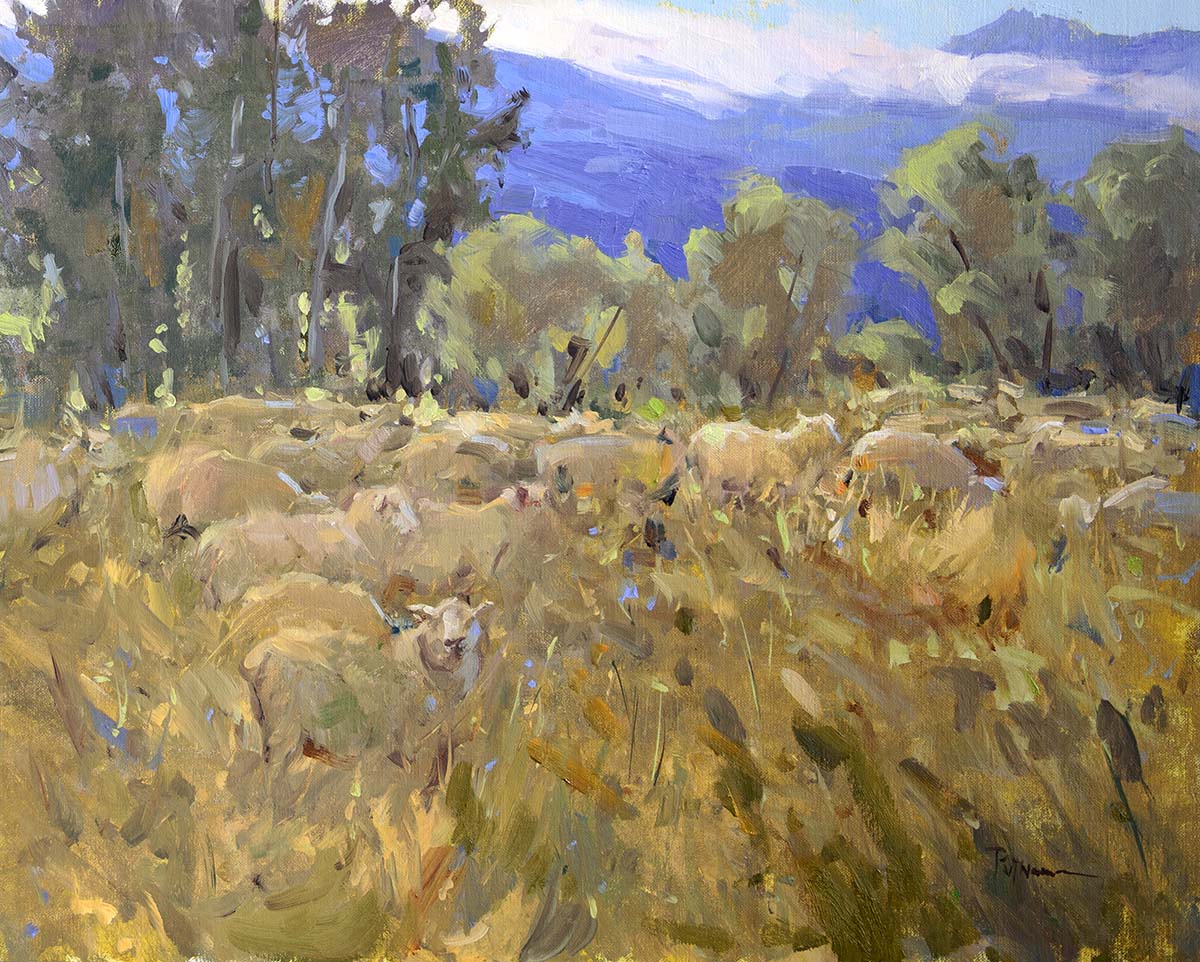
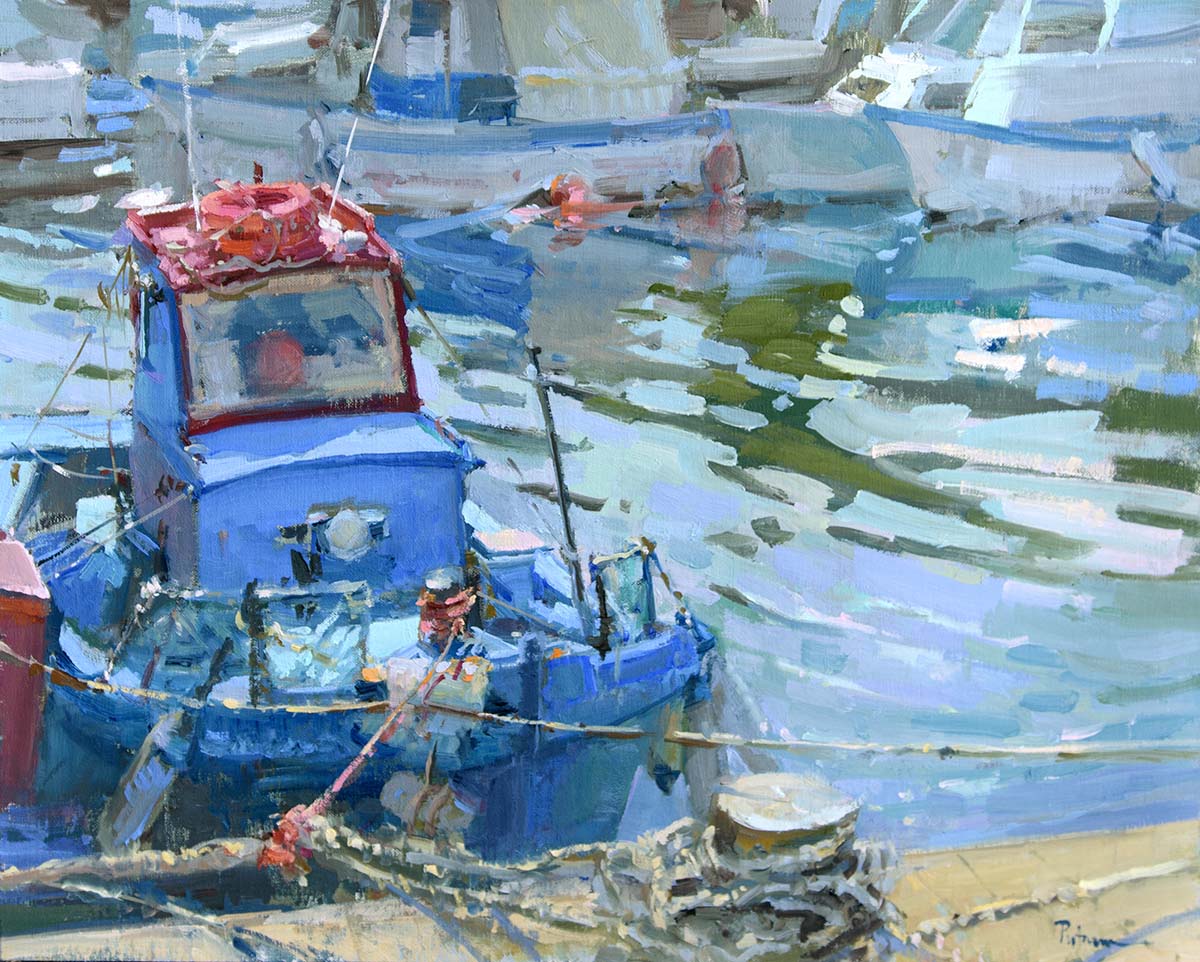
Sheepish, Lori Putnam, oil, 16 x 20 in; Putnam Fine Art Studio; Master Signature Member Bronze Medal, Oil Painters of America National Exhibition 2025
Want to see your gallery featured in an upcoming Virtual Gallery Walk? Contact us at [email protected] to advertise today. Don’t delay, as spaces are first come, first served, and availability is limited.
David Sokosh (b. 1963), "Bottle Display," 2023, cyanotype image (19 x 15 in.) on a sheet of Hahnemuhle Sumi-e paper (23 x 18 in.), no. 1 of 5, Shelburne Museum. All works are available for purchase through the artist.
BLUEPRINT OF A COLLECTION: CYANOTYPE PHOTOGRAPHY BY DAVID SOKOSH
Shelburne Museum
Shelburne, Vermont shelburnemuseum.org
through October 26, 2025
There’s something different on view this year at Vermont’s Shelburne Museum, renowned for its superb holdings of American material culture, especially works by folk and self-taught artists. The exhibition “Blueprint of a Collection: Cyanotype Photography by David Sokosh” highlights images of old works newly created by a photographer and filmmaker based in New York’s Hudson Valley.
For the last two years, Sokosh has carefully explored the museum’s collection, photographing specific artifacts using his large-for-mat camera and the 19th-century cyanotype process, which is best known for its deep blue tones. The artist has selected a diverse array of objects ranging from weathervanes and glass goblets to quilts and architectural details. In his photographs, a lighthouse lens is removed from its original context to become a striking study in form, or the details adorning a mammoth jug evolve into rhythmic, abstract patterns. Sokosh has created 25 different photographs in two sizes: 20 x 24 and 32 x 40 in.
In addition, Sokosh has made a group of experimental photographic objects — cyanotypes applied to four new hat boxes and one new quilt. Also on view is his groundbreaking video presentation, composed of more than 6,000 individual cyanotype prints that have been scanned and sequenced to re-create motion in a process Sokosh calls a Cyanimation Moving Picture.
All of these pieces take their cue from the passionate collecting of Shelburne Museum founder Electra Havemeyer Webb (1888–1960), who rightly foresaw that “simple” examples of Americana were at risk of being destroyed or neglected. In various ways, Sokosh’s show bridges past and present, allowing familiar icons to take on new meanings and appearances.
Maynard Dixon (1875–1946), "Open Range," 1942, oil on canvas mounted on board, 36 x 40 in., estimate: $800,000–$1,200,000
The 40th annual Coeur d’Alene Art Auction is set to occur at Reno’s Grand Sierra Resort. Over the years, this event has generated more than $400 million in sales of top-quality paintings and sculpture reflecting the American West, both historical and contemporary.
Auction partner Mike Overby stresses the significance of “Open Range,” the major work illustrated above, which was painted by Maynard Dixon in 1942. Formerly in a museum collection and featured on the cover of The Oxford History of the American West (1996), this painting has not been on the market in more than 40 years.
Montana native son Charles M. Russell is well represented in this sale by paintings and sculptures, including the watercolor “Roping a Wolf “(1918), estimated at $ 500,000 – $750,000. Another highlight is the Reynolds Collection of important paintings by Oscar Howe (1915–1982), the South Dakota talent who brought Native American art into the modern era. These four works have also been off the market for over 40 years.
The historical painters in this year’s auction include Oscar Berninghaus, Earl Biss, Nicolai Fechin, E. Martin Hennings, Bert Geer Phillips, Birger Sandzén, Joseph Henry Sharp, Walter Ufer, and N.C. Wyeth. They are complemented by historical bronzes from Solon Borglum and Rembrandt Bugatti. Collectors of sporting art will appreciate superb examples by Bob Kuhn and Philip R. Goodwin, and those who follow California art will like the pieces by Thomas Hill, Thomas Moran, and Edgar Payne.
Among the living artists represented are Tony Abeyta, Logan Maxwell Hagege, Mark Maggiori, Don Oelze, Billy Schenck, Howard Terpning, and Jamie Wyeth.
At a Glance:
Coeur d’Alene Art Auction
Grand Sierra Resort
Reno, Nevada cdaartauction.com
July 26, 2025
Kerry Simmons, “All in Clover,” oil on canvas, 22” x 28”
This August, RLS Gallery (Charleston, South Carolina) invites art lovers to step into a garden unlike any they’ve seen before. “From the Garden,” a new group exhibition, features a vibrant and thought-provoking collection of works that explore the natural world through a lens of imagination, metaphor, and emotion.
More from the gallery:
Curated with an eye for both beauty and surprise, “From the Garden” brings together a diverse roster of painters—traditionalists and experimenters alike—who were each tasked with creating garden-themed work. The result is an evocative mix of styles, from classical still lifes to narrative figurative pieces and surreal interpretations that push the boundaries of what “garden art” can mean.
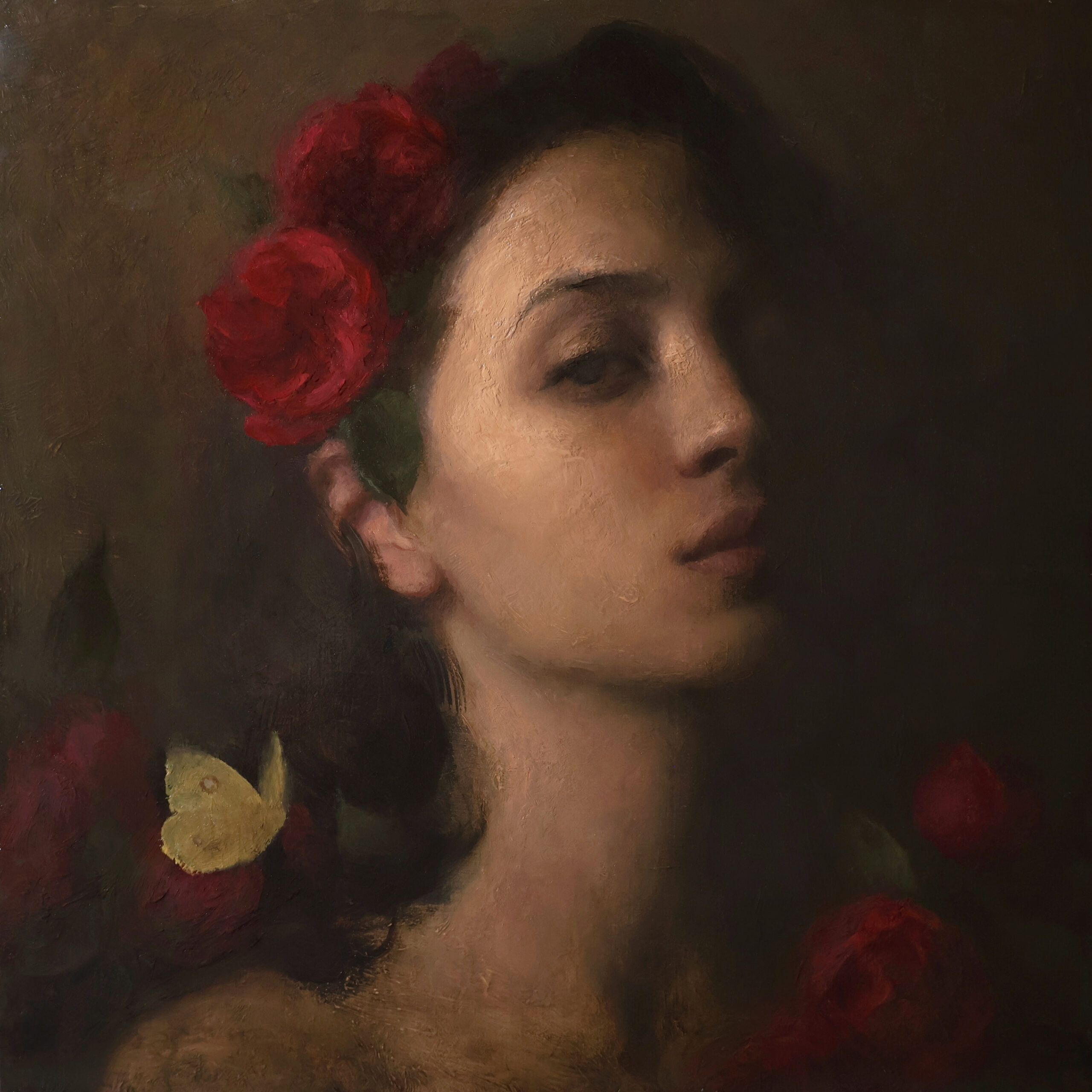
Larisa Brechun, “Eve’s Garden,” oil on panel, 10” x 10”
The exhibition explores not only the visual richness of gardens but their deeper symbolic potential. Twisting vines, sun-dappled orchards, and tangled beds become backdrops for stories of growth, secrecy, solitude, and transformation.
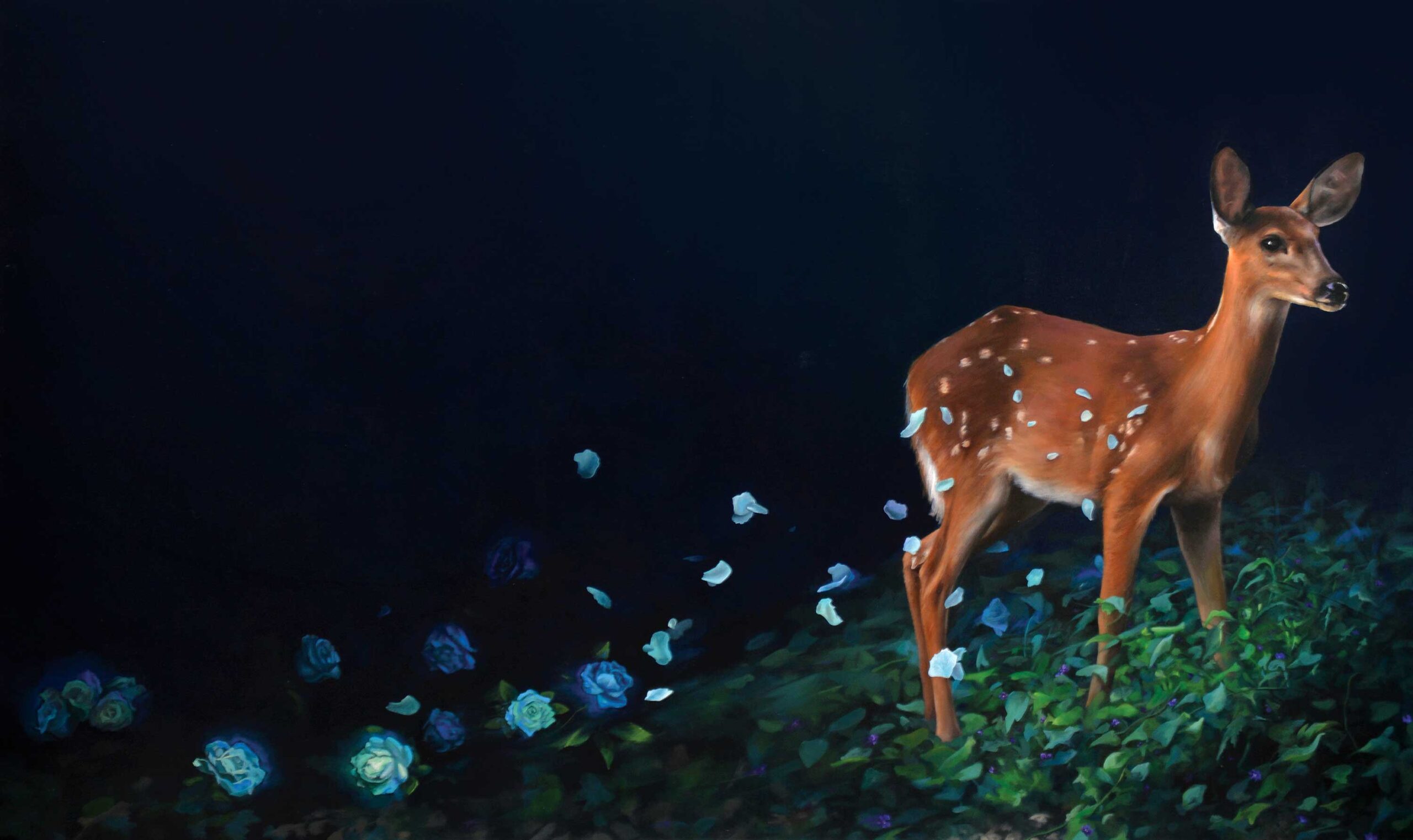
Katie Koenig, “The Nature of Delicate Loss,” acrylic on linen, 36” x 60”
“I love how gardens carry this duality—they’re controlled yet wild, serene yet teeming with life,” says Katie Koenig, whose work in the show merges storytelling with natural symbolism. A lone deer fades into petals as it emerges from the darkness. “In my piece, the garden becomes a place of memory and metamorphosis.”
Claudia Tullos-Leonard, “Chasing the Light,” oil on panel, 30” x 40”
Participating artists include Andrew Sjodin, Harriet White, Narelle Zeller, Larisa Brechun, Brett Scheifflee, Dakota Pitts, Anna Rose Bain, Kerry Simmons, Reynier Llanes, Denise Stewart Sanabria, Nathan Durfee, Robert Lange, Mia Bergeron, Timur Akhriev, Joshua Flint, and many more.
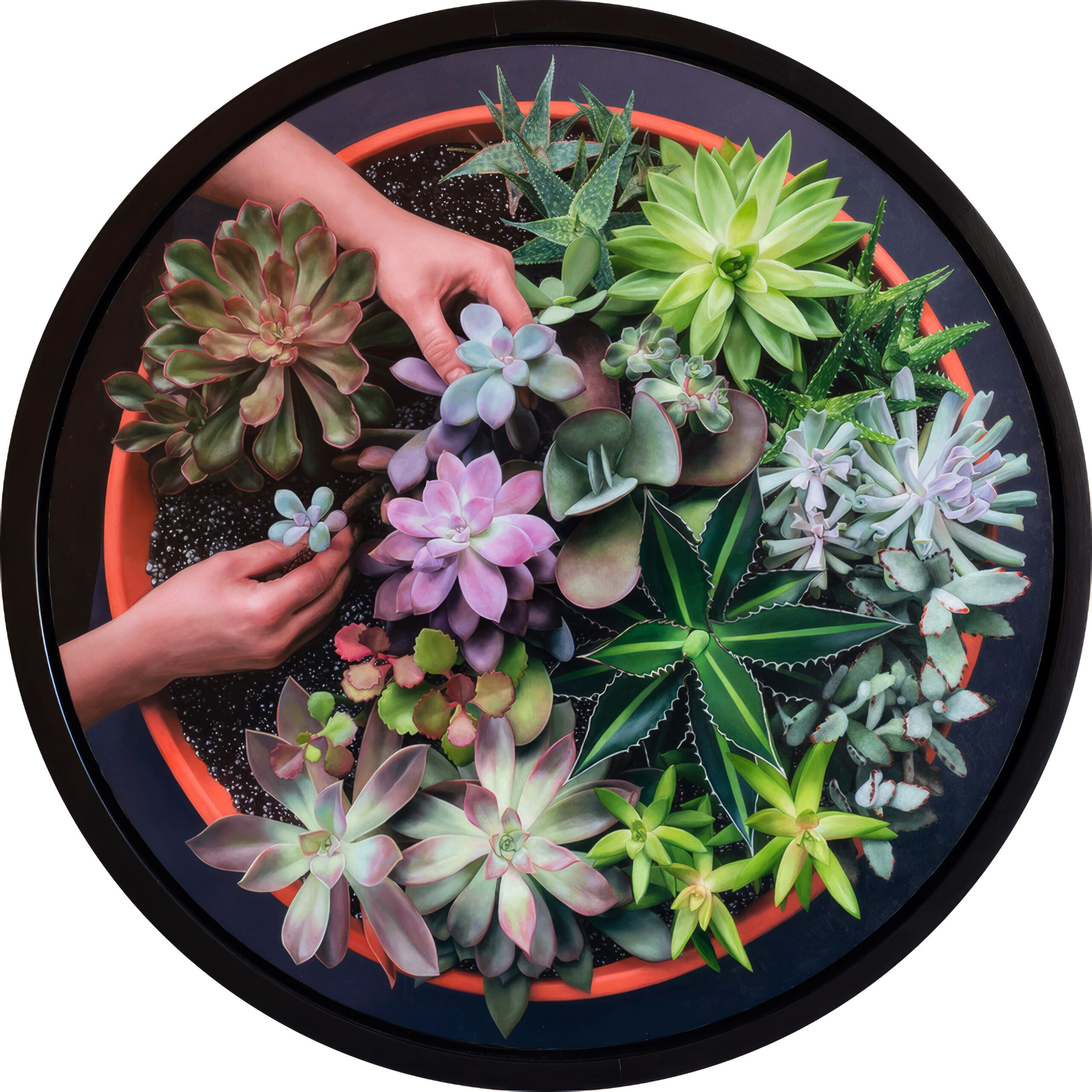
Karen Ann Paavola, “Succulent Garden II,” oil on panel, 24” round
This mix of classic and unconventional interpretations makes “From the Garden” a refreshing take on a well-loved subject. Artist Karen Ann Paavola, who painted a 24” round arial view of a succulent garden in mid arrangement said, “It’s a reminder that gardens, like art, are spaces of both order and surprise—where beauty can be cultivated, but also where the unexpected can take root.”
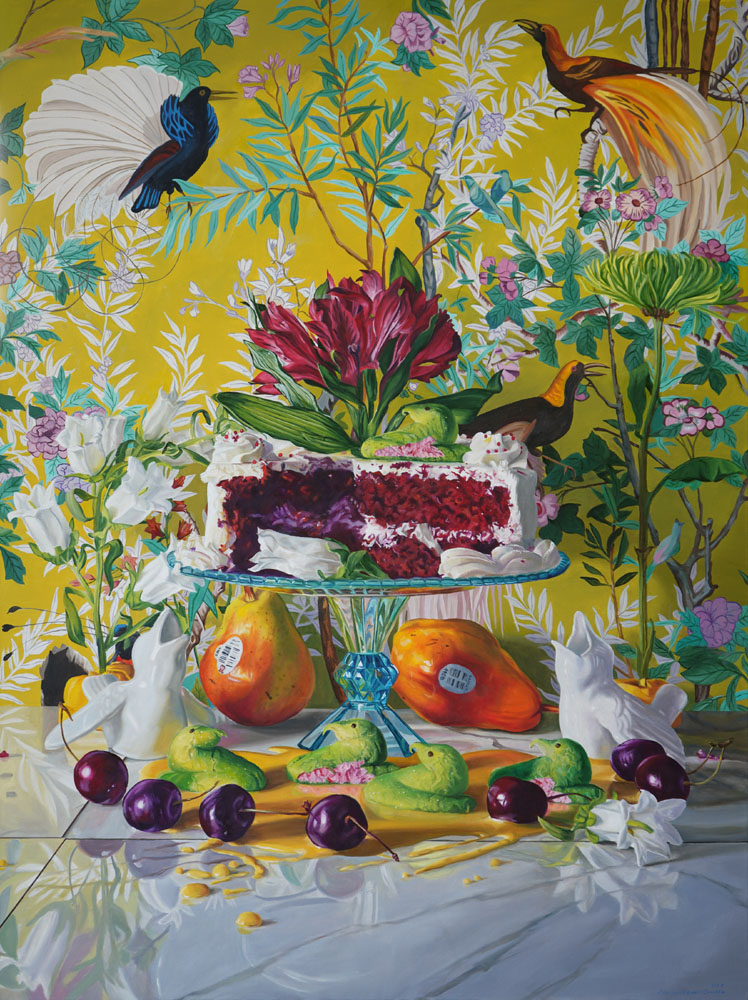
Denise Stewart-Sanabria, “Birds in Red Velvet,” oil on linen, 40” x 30”
Curator and gallery owner Robert Lange said, “Curating group shows offers an opportunity to give artists something to think about and to push them to create work that may go beyond their usual practices. This particular theme gives enough room for all these many invited artists to ‘grow’ in new ways.”
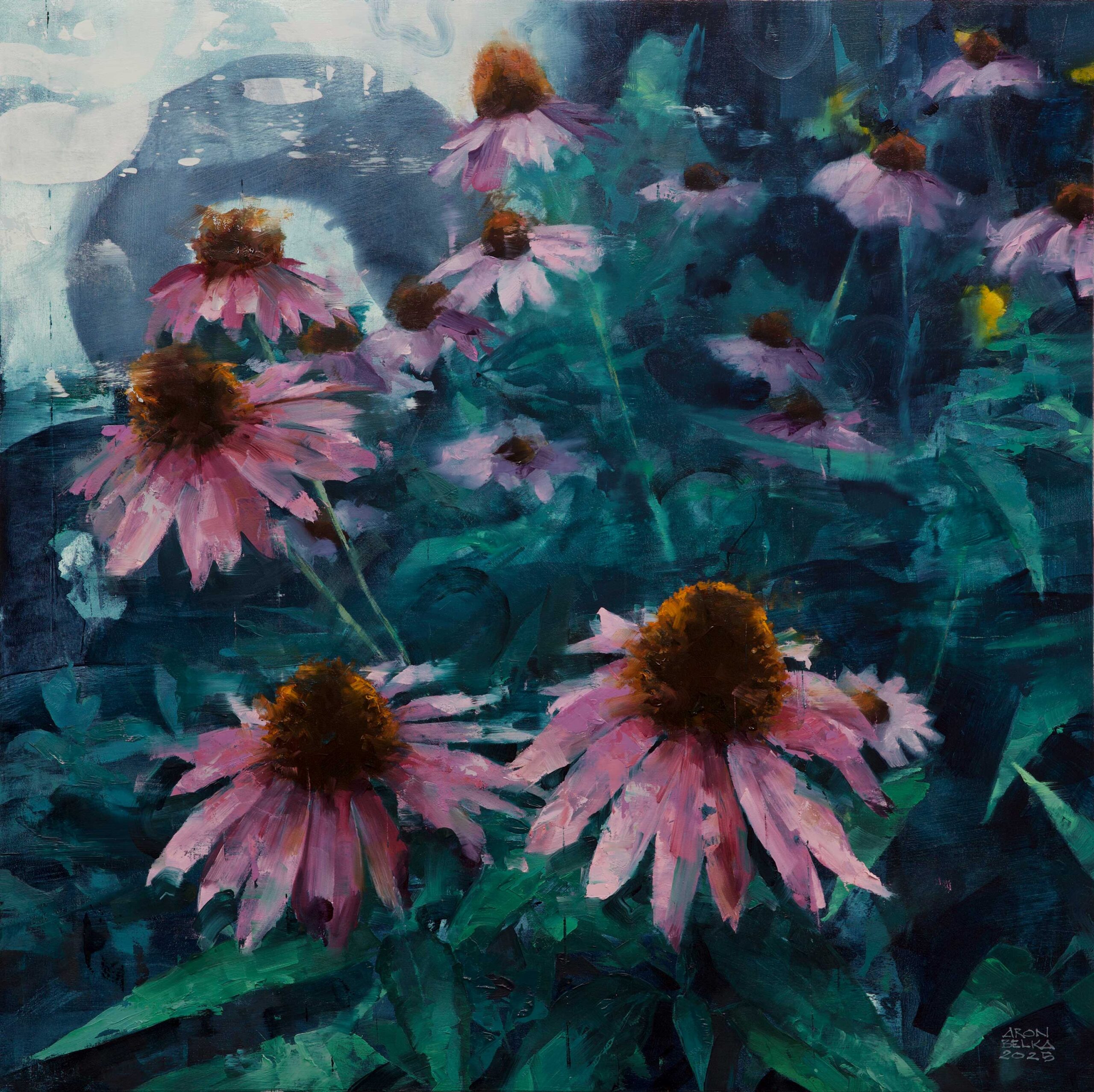
Aron Belka, “Cone Forest,” oil on panel, 24” x 24”
“From the Garden” is on view August 1-22, 2025. For more details, please visit www.robertlangestudios.com.
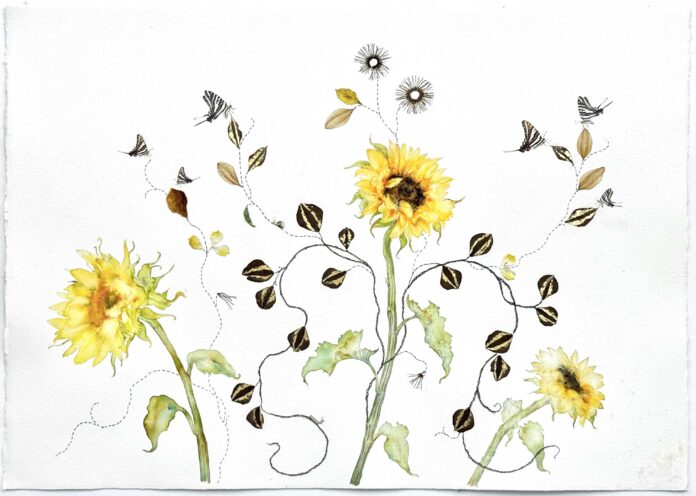
Marilla Palmer, "Ecstasy of the Sun," 2025, watercolor, gold leaf, embroidery, millinery foliage, pressed flowers, Durabright prints on Arches paper, 29.5 x 41 in.
Kathryn Markel Fine Arts (NY, NY) is pleased to announce “Ecstatic Earth,” featuring new paintings by Marilla Palmer. This will be her sixth solo exhibition with the gallery.
Palmer’s mixed-media works immortalize the temporality of nature. In all her work, but particularly the newest works on panel, nature is exalted in shimmering details that shift with light and movement. This is the first exhibition of her botanical paintings on panel, and also the first to include an underwater scene.
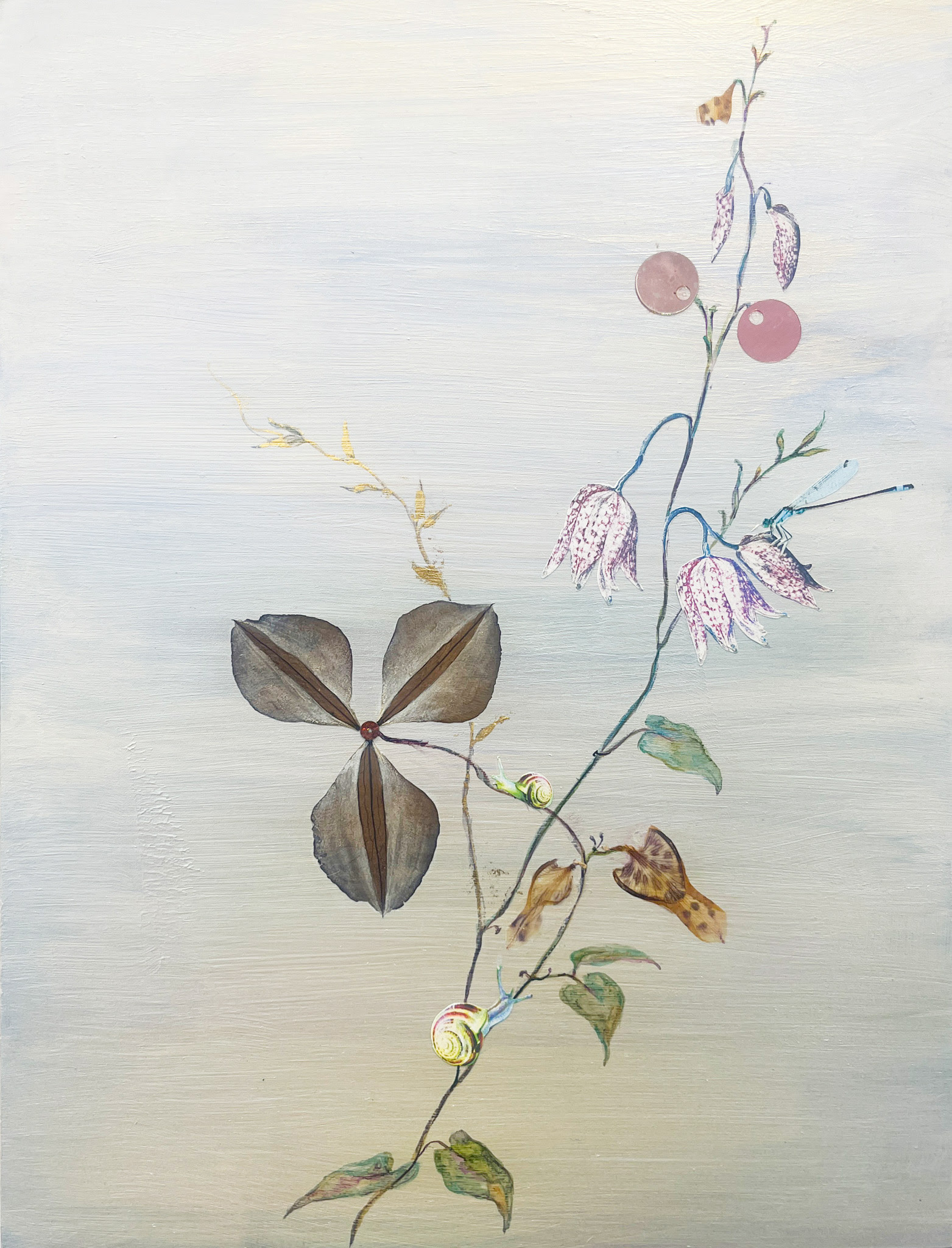
Marilla Palmer, “Ecstatic Clematis,” 2025, pressed petals, Durabrite prints, sequins, 24K gold leaf, acrylic on Ampersand panel, 16 x 12 in.
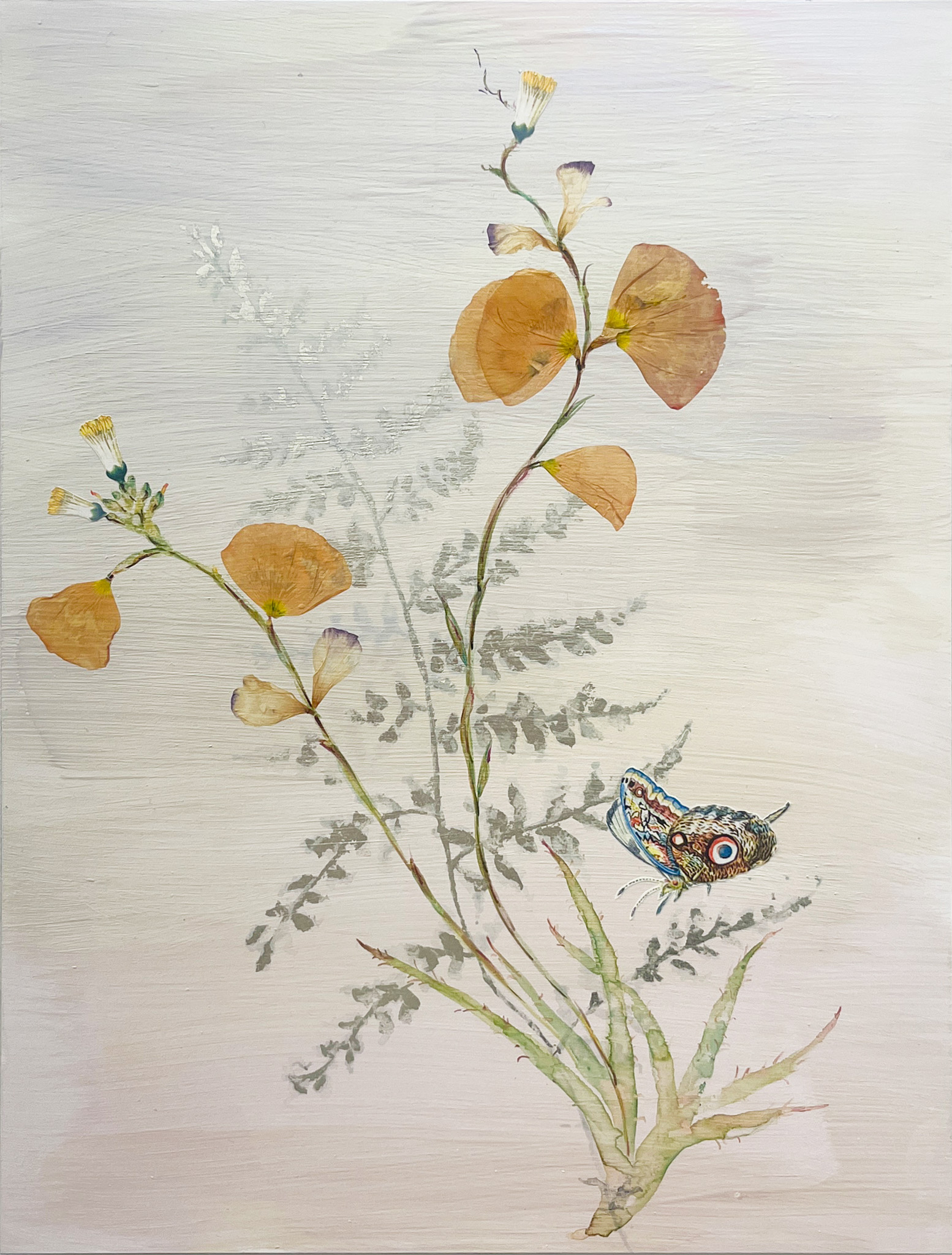
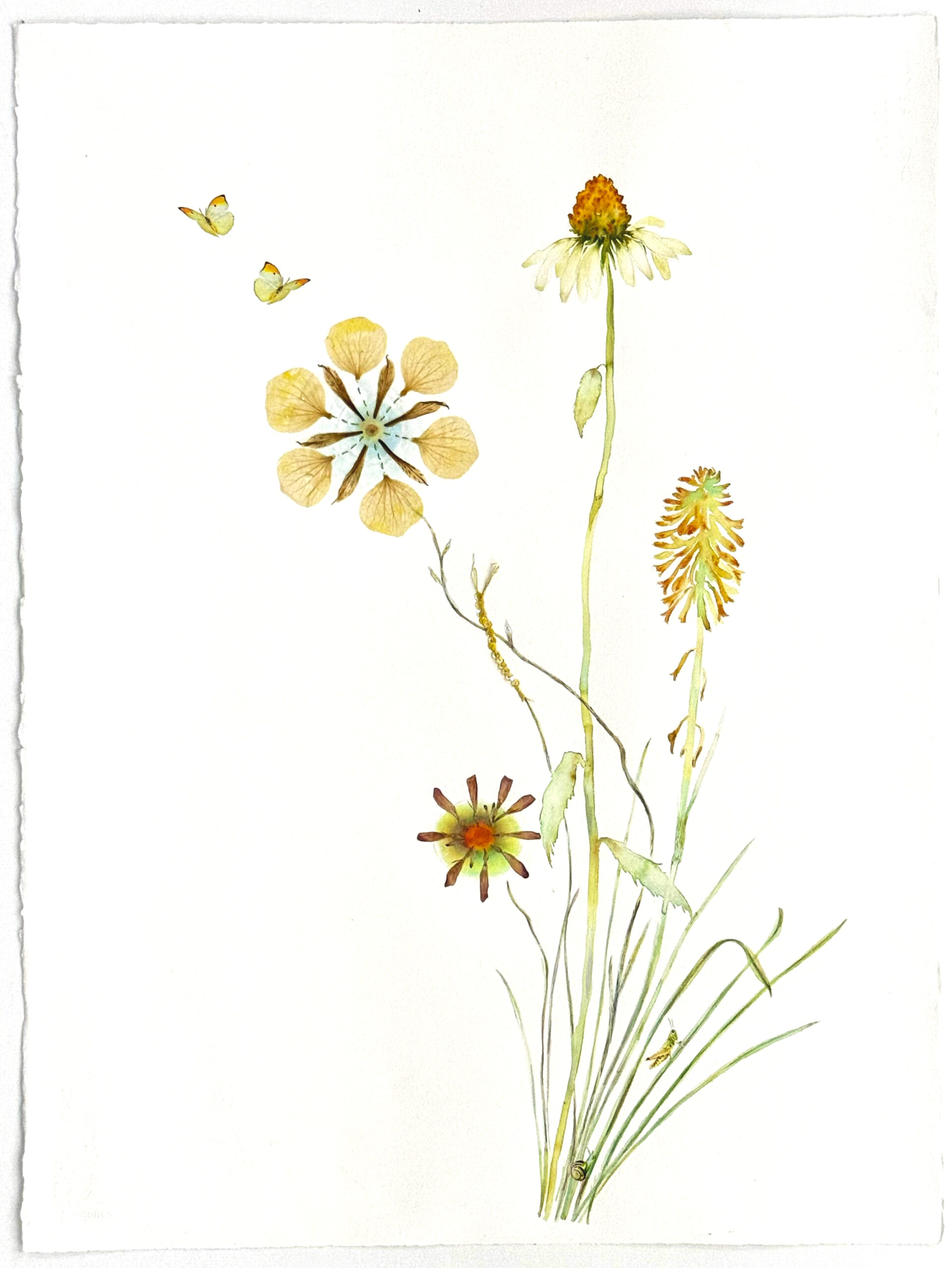
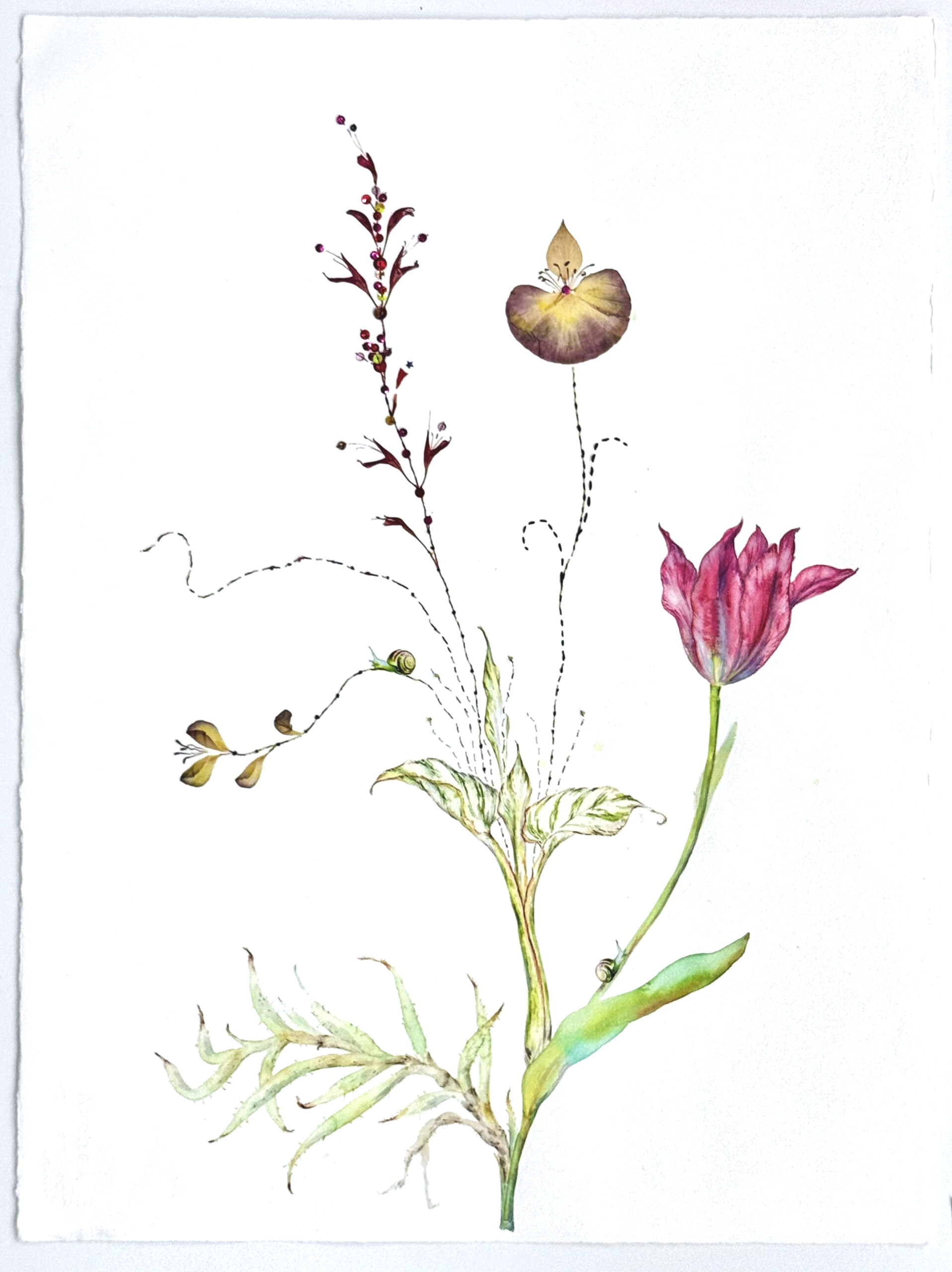
Her deceptively serious still lifes become playful, fantastical tableaus upon closer inspection. Delicate watercolor brushstrokes are accompanied by plastic sequins, dried petals, sumptuous fabrics, gold leaf, and more. This juxtaposition is both humorous and lovely, theatrical and erudite. Palmer cultivates her own garden that she observes for both inspiration and material. She explains, “Working so directly with nature makes it feel like I’m collaborating, but with an unpredictable partner. Who knows what will appear in my studio garden? How will the petals change when pressed or if the wet watercolor, interference paint or sequins will capture the ecstasy of what I see?”
Marilla Palmer, “The Impermanence of Light,” 2025, Pressed foliage, Durabrite prints, 12K gold leaf, acrylic on Ampersand panel, 16 x 12 in.
Glittering collage elements and iridescent backgrounds add movement and lively energy to the static depictions and signify the growth and life associated with the imagery. In the work, insects, flowers, and leaves are frozen in time, their impending end suggested in the dried petals and leaves the artist incorporates. Tendrils stretch across the surface as if reaching for the sun. In her statement, when contemplating mother nature, the artist quotes Goethe, “We live in her midst and know her not. She is incessantly speaking to us, but betrays not her secret.” Palmer preserves the ephemeral and depicts exuberant abundance all at once.
Marilla Palmer, “Mellow Yellow,” 2025, watercolor, sequins, pressed petals, Durabrite prints, stitching on Arches cold press paper, 30 x 22 in.Marilla Palmer, “A Wild Bouquet,” 2025, watercolor, pressed petals, sequins, stitching, Durabrite prints on Arches cold press paper, 30 x 22 in.
Marilla Palmer lives and works in Brooklyn, NY and Connecticut. Her work has been exhibited at the Brooklyn Museum, Brooklyn Academy of Music, Carlsbad Museum and Art Center, MoMA PS1, and extensively among other galleries and institutions throughout the United States.. She received her B.F.A from the Philadelphia College of Art.
Amy Werntz (b. 1979), "QE III," 2021, oil on panel, 24 x 18 in.
There’s more good news from Michigan’s Muskegon Museum of Art (MMA). As we reported this spring in Fine Art Connoisseur, the MMA has benefitted enormously from the vision of the San Antonio collectors Steven Alan Bennett and Dr. Elaine Melotti Schmidt, who recently donated their collection of figurative realist art made by women, along with a new wing to house it. In 2016 they established The Bennett Prize, endowing a $3 million fund at the MMA to ensure it will be awarded every two years in perpetuity. This $50,000 honor offers the winner an opportunity to create new work for a solo exhibition that then travels the country.
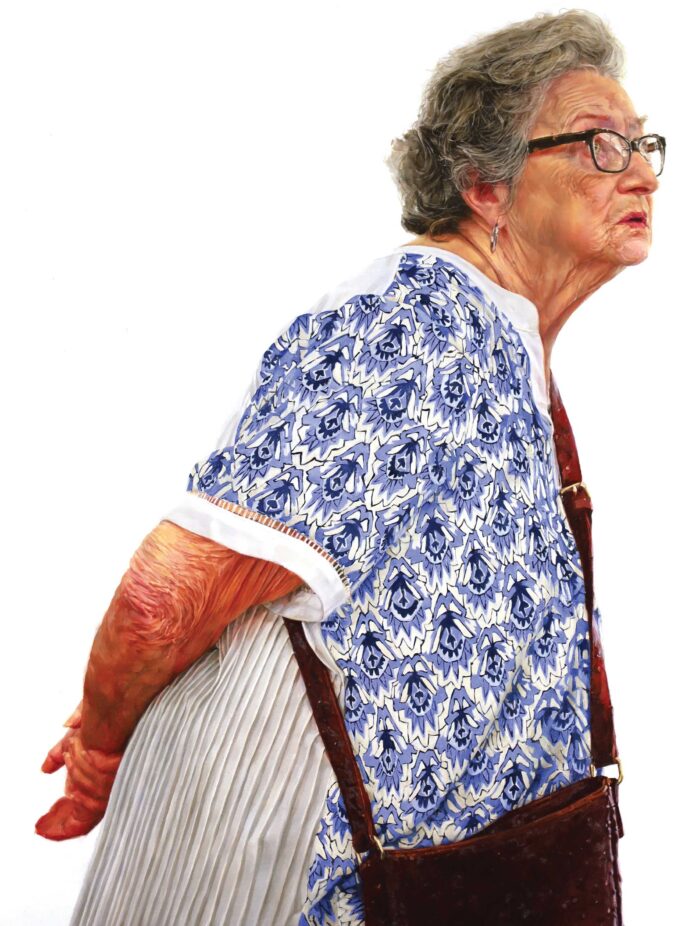
This May, the Dallas-based artist Amy Werntz won the fourth Bennett Prize, selected from among 10 finalists by a jury that included Art Institute of Chicago curator Gloria Groom, artists Margaret Bowland and Angela Fraleigh, and Elaine Melotti Schmidt. Best known for images of elderly people, Werntz says she strives to highlight “ordinary moments in everyday life and to show the importance and value of this generation so often overlooked in our society by the lure of youth.”
Co-founder Steven Alan Bennett adds, “We continue to be delighted by the high quality of the finalists. We were especially impressed by the work of Amy Werntz. Her level of mastery is remarkable, and her pieces have a finished, jewel-like quality that is instantly attractive. Her understanding of figurative painting is palpable and her treatment of her subjects is both kind and subtle.”
Werntz’s honor was announced during the May opening celebration for the MMA exhibition “Rising Voices 4: The Bennett Prize,” which features 30 paintings created by the 10 finalists. Another finalist, Nicole M. Santiago of Williamsburg, Virginia, was presented with the Dr. Elaine Melotti Schmidt Prize of $10,000. The other eight finalists were Olivia Chigas, Nimah Gobir, Ambrin Ling, Jane Philips, Audrey Rodriguez, Abbey Rosko, Helena Wurzel, and Rei Xiao.
Also on view at the MMA this season is the solo exhibition of new works created by the 2023 Bennett Prize winner, Shiqing Deng of Brooklyn.
As part of our effort to continue to help artists and art galleries thrive, we’re proud to bring you this week’s “Virtual Gallery Walk.” Browse the artwork below and click the image itself to learn more about it, including how to contact the gallery.
Fishing Port, Lori Putnam, oil, 16 x 20 in; Putnam Fine Art Studio; Meyer Vogl Gallery, Crab Season: A Group Exhibition of Artists With Cancer Zodiac Signs; Mac Ball, Paul Ferrari, Marc Hanson, Kathleen Jones, Lori Putnam, and Marissa Vogl, July 11 – Aug 1
***
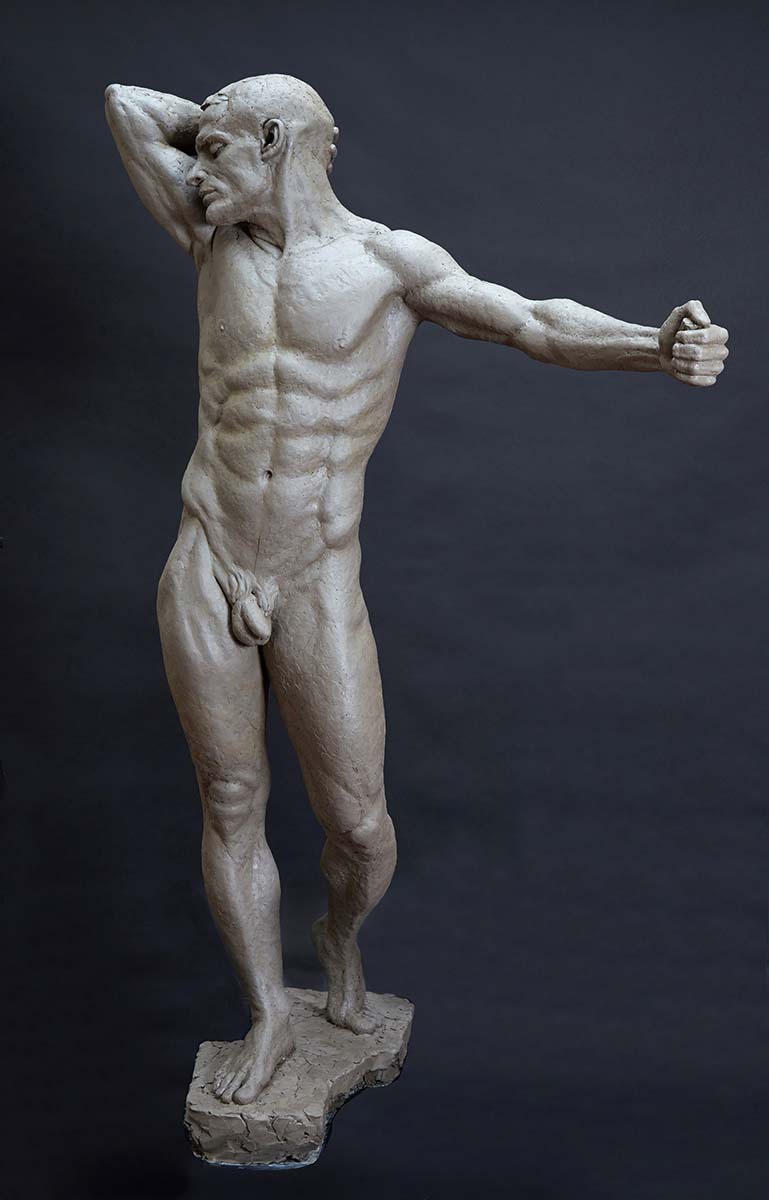
Solitude’, Dr Anil Surendran, bronze 1/9, 78 x 11 x 9 in; Dr Anil Surendran
Want to see your gallery featured in an upcoming Virtual Gallery Walk? Contact us at [email protected] to advertise today. Don’t delay, as spaces are first come, first served, and availability is limited.
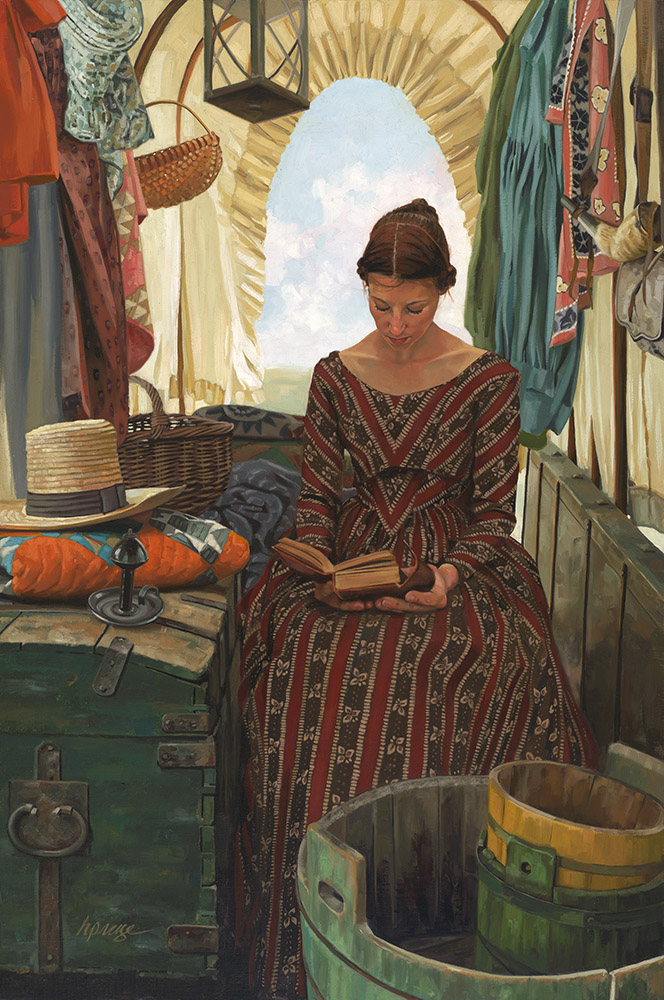
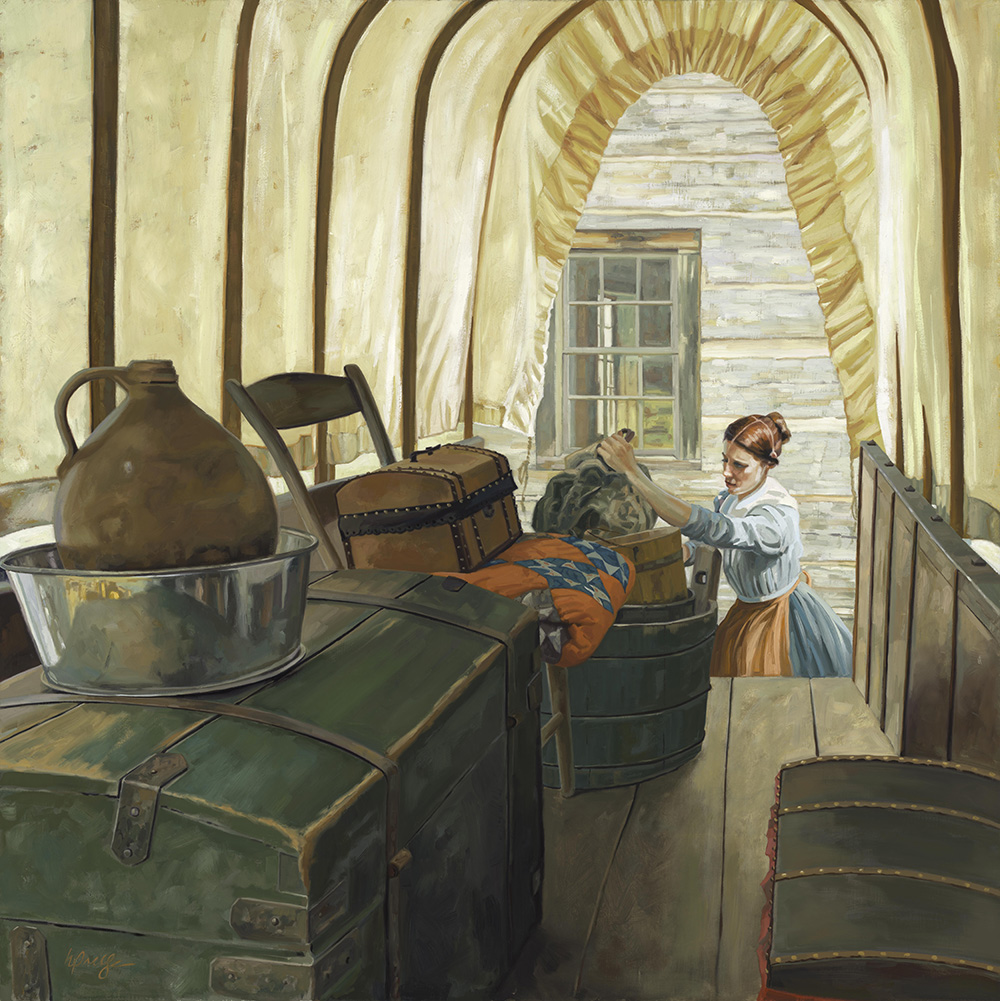
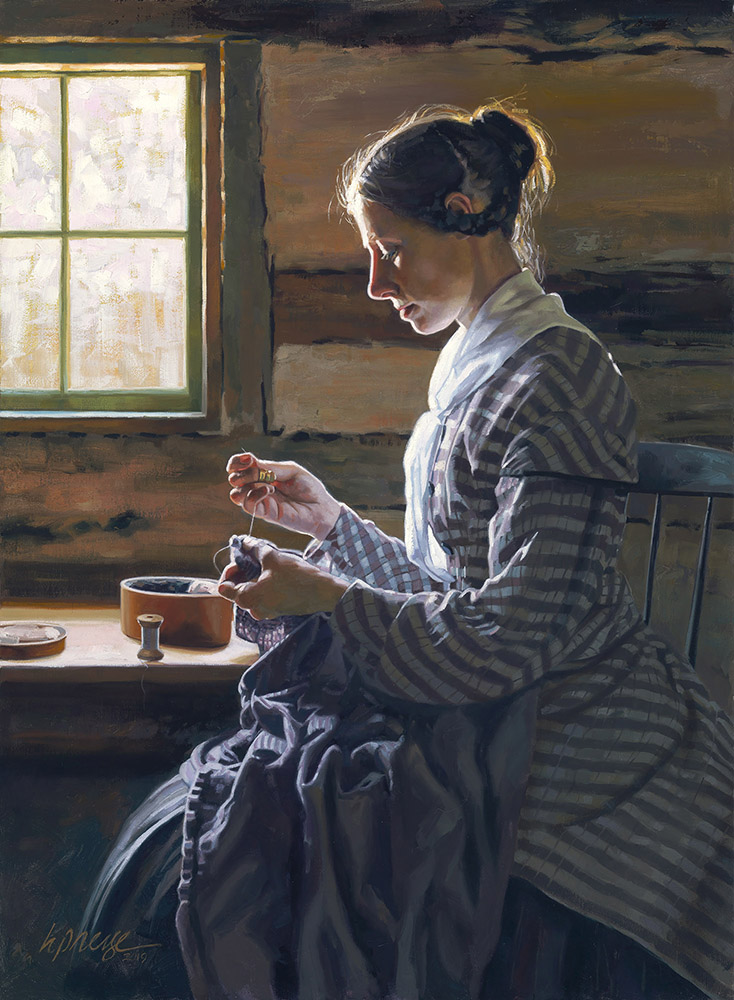
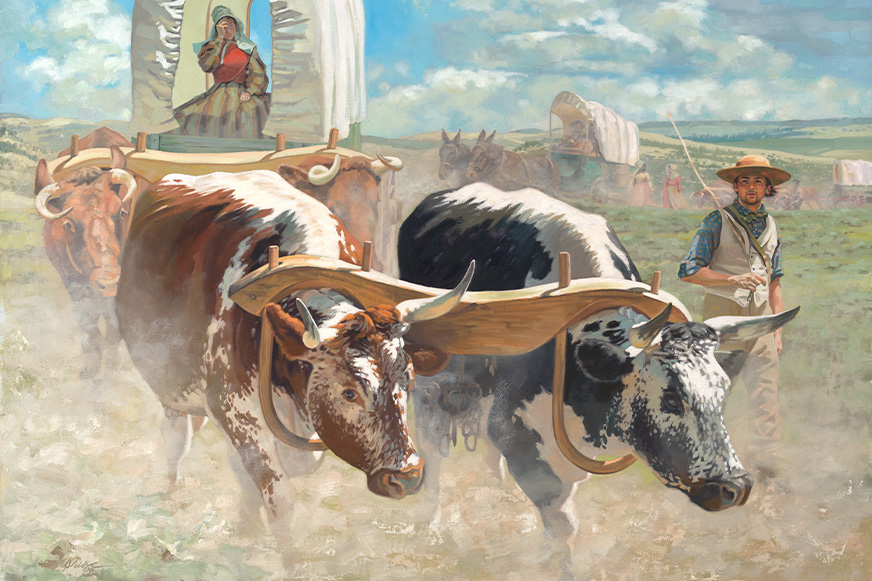
The exhibition “Perseverance: A Woman’s Journey West” offers a rare look at the American West through the often-overlooked eyes of a pioneer woman. Inspired by the 1840s journal of Keturah Belknap (1820–1913), artist Heide Presse created a collection of vibrant oil paintings and graphite drawings that brings Belknap’s story to life, from her family’s homestead in Iowa to their journey along the Oregon Trail.
At a Glance:
“Perseverance: A Woman’s Journey West”
The James Museum
St. Petersburg, Florida thejamesmuseum.org
Through September 28, 2025
Heide Presse, “And I Shall Give You Rest,” 2023
“Little did I know that discovering Keturah Belknap’s journal would spark a deeply personal journey of my own. As I traced her path, I found myself reflecting on the choices we all face—the risks we take, the changes we embrace, and the ways we push the boundaries of our lives. My greatest hope is that this work not only honors Keturah’s story but also inspires others to reflect on their own and to enjoy their journey, wherever it may lead.” -Heide Presse
Heide Presse, “Everything in its Place,” 2023
At the heart of Perseverance is the richly detailed journal of Keturah Belknap. Recognized by her family as a vital historical record, which led to its preservation, the journal offers an intimate glimpse into the everyday moments and emotional weight of her family’s decision to risk everything for a chance at a new beginning. The exhibition is laid out to follow that same path, guiding visitors from their life in Iowa to their eventual home in Oregon.
Heide Presse, “Not an Idle Minute,” 2019
Through sentimentalized paintings and drawings, this exhibition draws powerful parallels between past and present, reminding us that the desire to grow, to seek something better and to hold fast to those we love transcends time. Visitors are invited to reflect on how the twists and turns of life shape every journey, some by choice, others by circumstance, and to consider how courage and connection guide us forward.
Heide Presse, “Pursuing Their Dreams”
Take Part of the Exhibition Home
Heide Presse, “Cradle for Two,” graphite, 12 x 12 in., 18 x 18 in. framed
Acclaimed artist Heide Presse has generously donated an original graphite drawing, “Cradle for Two” (12×12, 18×18 framed), to support The James Museum. This tender portrait of a mother and her two children reflects the heart of Perseverance—a story of family, resilience and the emotional truths of frontier life. Bidding open through June 30 at noon. Proceeds benefit the museum. Drawing will remain in the exhibition and available for pick up after September 28, 2025.
Vittore Carpaccio, “Portrait of Doge Leonardo Loredan,” 1501–05, tempera and oil on panel; 26 1/2 x 20 1/8 in., Fondazione Musei Civici di Venezia – Museo Correr, Cl. I n. 0043
The Frist Art Museum (Nashville, TN) presents “Venice and the Ottoman Empire,” an exhibition that explores the artistic and cultural exchange between the Republic of Venice and the Ottoman Empire over four centuries. Organized by the Fondazione Musei Civici di Venezia and The Museum Box, the exhibition will be on view in the Frist’s Ingram Gallery through September 1, 2025.
This ambitious cross-cultural exhibition examines the complex links between the Republic of Venice and the Ottoman Empire from 1400 to 1800 in artistic, culinary, diplomatic, economic, political, and technological spheres. “The relationship between Venice and the Ottomans represents a fascinating and multifaceted chapter in the history of Mediterranean geopolitics, one marked by a blend of cooperation and conflict, handshake- and arms-length approaches, diplomacy and back-stabbing, understanding and misunderstanding,” writes exhibition curator Stefano Carboni in the exhibition catalogue.
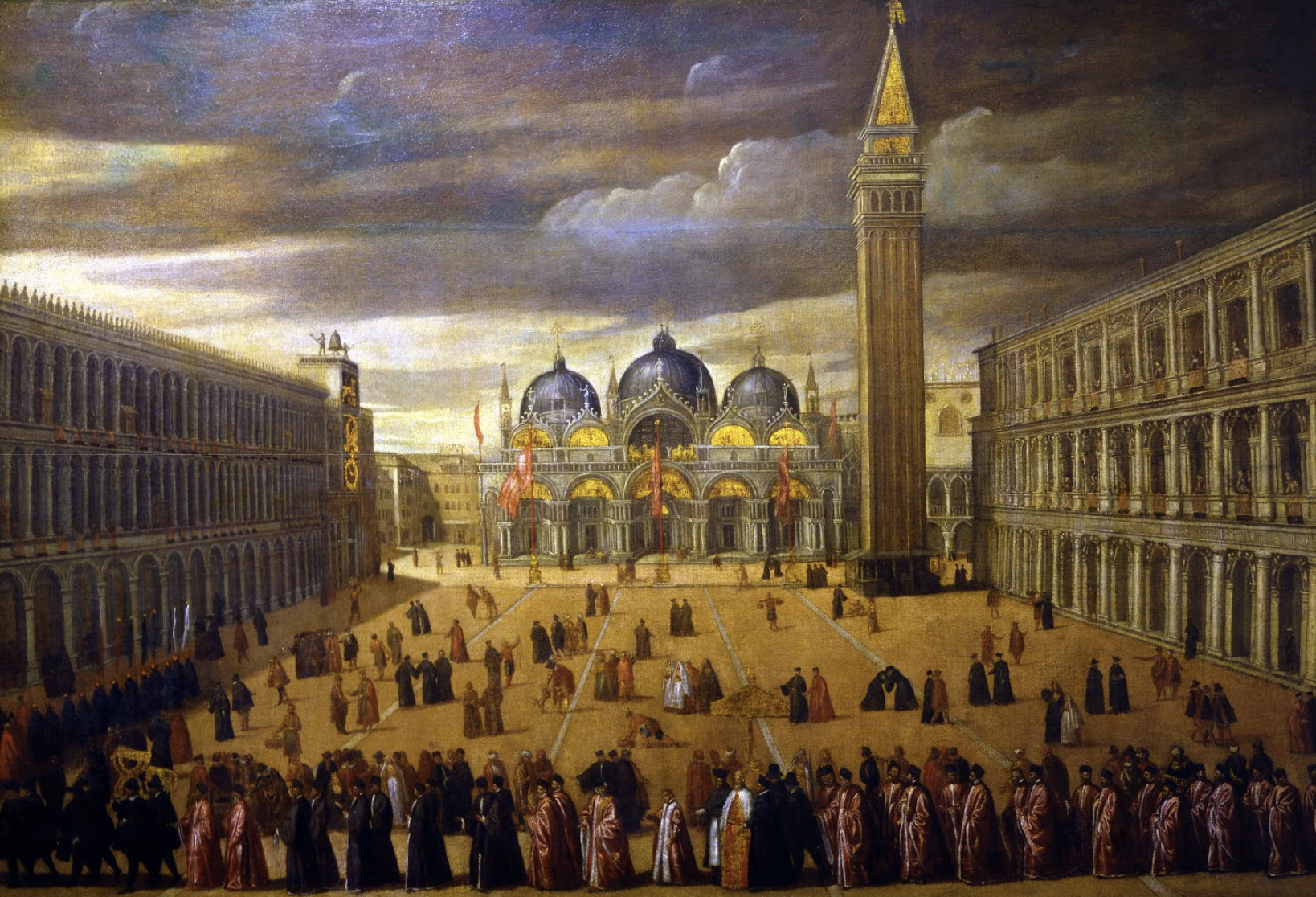
Cesare Vecellio (1521-1601), “Processione in Piazza S. Marco,” 1586-1601, oil on canvas
Featuring a richly diverse selection of more than 150 works of art in a broad range of media, including ceramics, glass, metalwork, paintings, prints, and textiles, the exhibition draws from the vast collections of seven of Venice’s renowned museums. The creative contributions of well-known Venetian artists such as Gentile Bellini, Vittore Carpaccio, and Cesare Vecellio are showcased alongside works created by the best anonymous craftspeople both in Venice and the Ottoman Empire. The Venetian loans are joined by a trove of recently salvaged objects from a major 16th-century Adriatic shipwreck of a large Venetian merchant vessel that have never been exhibited outside Croatia. A gallery dedicated to Mariano Fortuny’s Venetian- and Ottoman-inspired fashions and decorative arts created in the early 20th century brings the exhibition to a spectacular conclusion.
“Venice stood at the crossroads of a vast trade network connecting Africa, Asia, and Europe,” writes Frist Art Museum Curator at Large Trinita Kennedy. “To maintain its status as an international emporium, with markets full of ceramics, metalwork, spices, textiles, and other goods, Venice acquired overseas territories to its east and cultivated close ties with the Ottomans, whose empire became the wealthiest and most powerful in the Eastern Mediterranean after their conquest of Constantinople in 1453 and widespread expansion in the 16th century.”
Organized thematically, the exhibition begins with an overview of diplomacy and trade during the period illustrated through portraits of powerful Venetian and Ottoman leaders including doges, sultans, and ambassadors. On display are nautical maps as well as a printed manual that illustrates how merchants who spoke different languages conducted business using hand gestures. Despite diplomatic efforts, relations were not always harmonious. Between 1400 and 1800, the two powers fought seven major wars, with the Venetians gradually losing almost all their overseas territories to the Ottomans.
The exhibition, however, emphasizes that during periods of peace, the two powers forged a close relationship and shared aesthetic tastes. “Venetians and Ottomans admired and sought one another’s luxury goods and gave them to each other as gifts,” writes Kennedy. “Ottoman sultans liked Murano glass and portraits of themselves by Venetian artists, while Venetian women wore Ottoman clogs and perfumed their homes with incense burners imported from Ottoman regions.”
The next two sections are dedicated to decorative arts and textiles, which figured prominently in commercial exchanges and the interior design of Venetian homes. Extravagant Ottoman velvets and brocaded silks were synonymous with status and survive in Venetian museums today. The Ottomans were just as enthusiastic about Venetian textiles. “Both cultures favored red and gold and bold designs with carnation, pomegranate, and tulip motifs,” writes Kennedy. “Their textiles are so similar that sometimes it can be difficult to discern whether a textile was made in Venice or Bursa, the Ottomans’ principal textile center.”
A section dedicated to the spice trade traces how Venetian merchants sailed to Ottoman-controlled ports in Africa and Asia to purchase goods and then sold them in markets back home to merchants from elsewhere in Western Europe. In addition to spices such as cardamom, nutmeg, pepper, and saffron, Venetians depended on trade with Ottomans for coffee, figs, pistachios, raisins, salted sturgeon, sugar, vinegar, and, most importantly, wheat. Through a video featuring two Nashville chefs, a take-home recipe card, a display of spices, and scent devices with fragrant aromas, guests will learn about Venetians’ and Ottomans’ shared culinary culture.
Ship building, sailing, and a storied shipwreck are the focus of the next two sections. One of the highlights of the exhibition is a large group of objects recovered from a shipwreck that illustrates the opportunities and perils of seafaring in this age. They come from the Gagliana Grossa, a fully loaded Venetian ship that sank in 1583 in the waters off the Dalmatian coast of modern-day Croatia while traveling to Constantinople. The ship’s diverse cargo offers evidence of the types of goods Venetians traded in the Eastern Mediterranean. “The Venetian Senate sent a Greek diver to salvage diamonds, emeralds, pearls, and some luxury textiles onboard, but the rest of the goods remained on the seabed until the site was rediscovered in the 1960s,” explains Kennedy. “Excavations are ongoing, and this exhibition presents some of the most recently found objects.”
Works in the penultimate section center around the revered Venetian naval commander and doge Francesco Morosini (1619–1694), who played a major role in Venice’s interactions with the Ottoman Empire in the seventeenth century and amassed a large collection of art taken from his campaigns as well as acquired from the Venetian art market. The exhibition concludes with an enchanting gallery devoted to the exquisite creations of Mariano Fortuny (1871–1949)—the Spanish artist, designer, and inventor who lived and worked for most of his life in a Gothic palace in Venice creating sumptuous textiles with new printing techniques that recalled the bygone era of Venice and the Ottoman Empire.
Contemporary artworks can be confusing or aggravating, but at least we know who made them. Today’s artists put their names on every work, document it with photographs, and create archives to make it easier for future scholars to research them. Before the mid-19th century, however, most artworks were not signed or even titled, leaving future collectors, curators, historians, dealers, and auctioneers asking urgent questions about authenticity and provenance. Their ongoing research adds to our shared knowledge, and thus to the financial value, of these unsigned, undated artworks.
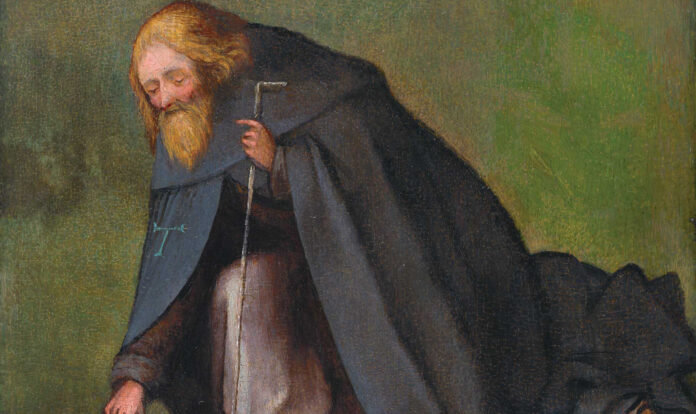
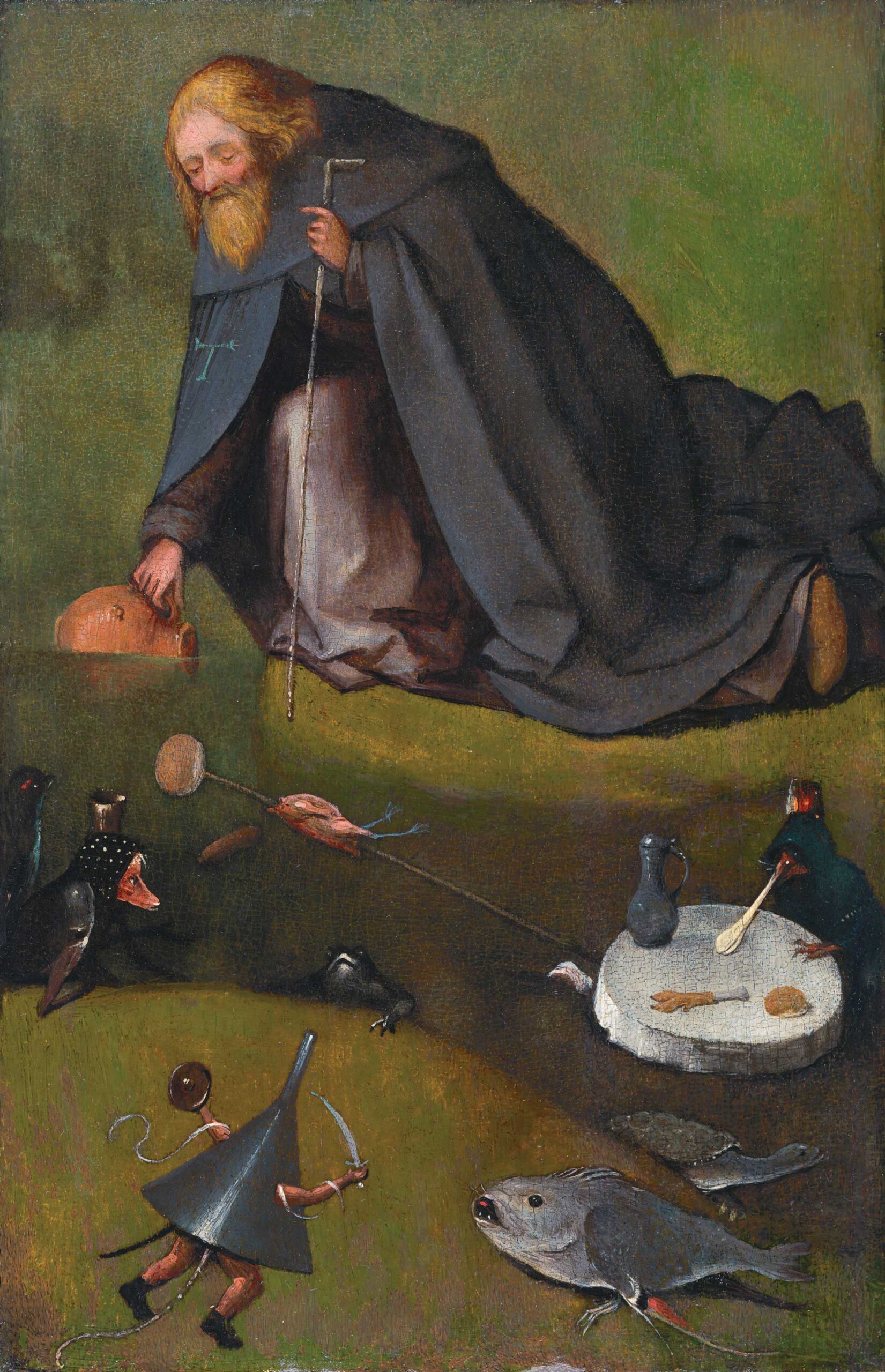
HIERONYMUS BOSCH (c. 1450–1516), “The Temptation of St. Anthony,” 1500–10, oil on panel, 15 3/16 x 10 in., Nelson-Atkins Museum of Art, 35-22
The holy grail is finding out definitively “who did it” — through documentation (e.g., letters or contracts), physical analysis (x-rays or laboratory testing of pigments), and/or connoisseurship (spotting the same pattern of brushwork). In 2017, “The Temptation of St. Anthony,” a 500-year-old painting at Kansas City’s Nelson-Atkins Museum of Art that for 80 years had been consigned to storage as the work of a follower of Hieronymus Bosch (c. 1450–1516), was upgraded to Bosch himself. Why? Because the Bosch Research and Conservation Project had undertaken a detailed study and found the picture to be the genuine article. Every year, new discoveries and reattributions like this occur. It’s a miracle of our time.
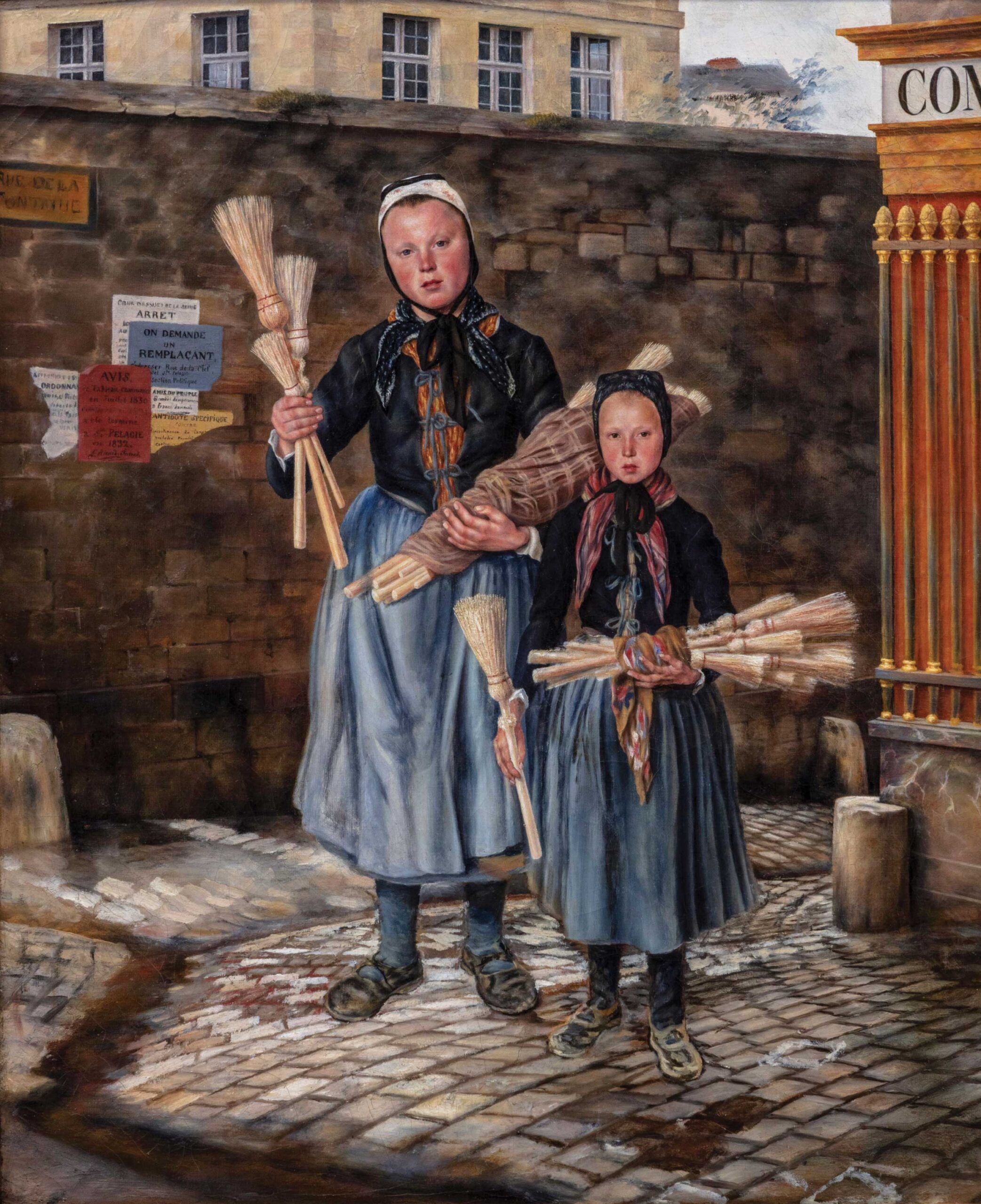
Gallery 19C’s “mystery picture” (oil on canvas, 25 1/2 x 21 1/4 in.), presumably painted in France in the mid- to late 19th century
Artists in the past were no less prolific than their successors today, so by definition there are many artworks whose authorship is unknown. Most remain unstudied, so we may never know for certain who painted them. We are powerfully reminded of this state of affairs when we go to examine the lots on display before an auction of Old Masters. For example, gracing a 2016 sale at Sotheby’s London were some fully identified paintings by artists more prominent in their day than in ours.
At that sale, Scotland’s Sir Henry Raeburn (1756–1823) was represented by a half-length “Portrait of a Young Indian Woman” that had been confirmed as a Raeburn by a former director of the Scottish National Gallery. Two Arcadian paintings of peasants tending to their animals with the outline of a town beyond had been attributed to Francesco Zuccarelli (1702–1788) by Federica Spadotto, author of this Italian painter’s 2007 monograph. Yet most of the remaining 200 or so lots were of less certain attribution. Among them were a “Ferrarese School, 16th century,” a “Follower of Andrea del Sarto,” a “Circle of Paolo Veronese,” a “Manner of El Greco,” a “Workshop of Lorenzo di Credi,” an “After Sir Peter Paul Rubens,” and a “Studio of Follower of Jan Brueghel the Younger.”
A sale at Sotheby’s Paris of artworks owned by actor Peter Ustinov similarly contained a range of vague attributions: a bronze sculpture was “probably Russian,” two watercolors were “English School, 18th Century,” a drawing of cow heads was “Attributed to Jean-Baptiste Huet,” a painting was “Circle of Albert Cuyp,” three paintings were “Manner of Alfred Stevens,” a drawing was attributed to a “Follower of Goya,” and another drawing was “After Pablo Picasso.”
Attend Realism Live ~ a multi-day virtual art conference led by 20+ world class artists. (No tech skills? No problem! If you can click a link, you can join our event!)Learn more at RealismLive.com!
Story prepared for the web by Cherie Dawn Haas, Editor of Fine Art Today
Fill your mind with useful art stories, the latest trends, upcoming art shows, top artists, and more. Subscribe to Fine Art Today, from the publishers of Fine Art Connoisseur magazine.