Home Blog Page 250

Featured Artwork: J. Russell Wells

0

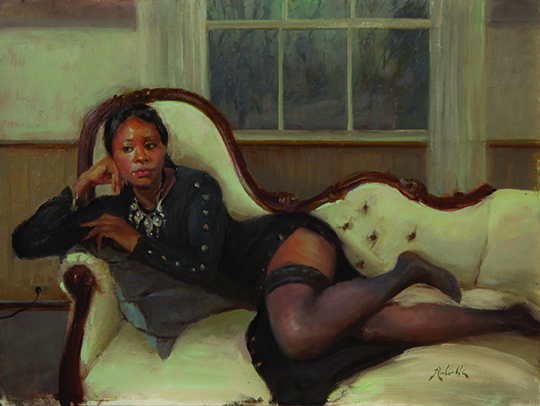
Deandrea
18 x 24 in.
Oil on Panel
Available through the artist

Deandrea is a painting of one of my models, posed lounging on a Victorian sofa in my studio. Deandrea and I had just started working together and I typically want to do a couple of paintings of new models so we get used to each other and so I can get a sense of their personality and the ways they carry themselves. These are usually 2-3 hour quick paintings that often lead up to a larger gallery piece. However, with Deandrea, I found that her pose and costume with her sideways glance told a wonderful story and decided to use this for a larger painting. I was drawn to the replicated curves of her figure juxtaposed against the curves of the sofa. The original background had a round mirror and drapery in sweeping curves behind her as well as a curved arrangement of lilies – too many curves! In order to give importance to the relationship of Deandrea to the sofa, I imagined and created a room using various horizontals and verticals. I created the nocturne landscape out the window using the same palette used on the painting of the floor. All of the colors in the background are greyed versions of the colors in Deandrea and the sofa, giving a beautiful sense of air and light to the composition. Deandrea is currently available directly from the artist.

Education
Palette and Chisel Academy of Art, Chicago
American Academy of Art, Chicago
Northern Illinois University, BSed
William Rainey Harper College

Recent Workshops
Alyssa Monks
Casey Baugh
Roger Dale Brown
Vincent Desiderio
Steven Assael
Quang Ho
Bernardo Siciliano

Recent Shows
NOAPS Best pf America 2018 3rd Place Award for “The Gift”
NOAPS Small Works 2018
OPA Eastern Regional 2017 Award of “Excellence” for ‘Model Break’
NOAPS Best of America 2017 Award “Best Figurative Work” for ‘Allure’
Unlocking The Bible Fundraiser: Painting “The Sower” completed live and auctioned at the event
American Impressionist Society Small Works 2017
Portrait Society Award of NOAPS Signature Artist Group Show 2016 Honorable Mention “Out of the Box” category for ‘Free Bird’
“Thief on the Cross” one act play by Stephen Baldwin, Painting “Redemption” featured in the performance.
“Grasshopper” movie, commissioned painting “It’s Over”
NOAPS Online International 2014 Award of Excellence
NOAPS Best of America 2013 Award of Excellence
American Impressionist Society 2013
OPA Salon 2013
American Impressionist Society 2012
NOAPS Best of America 2012
OPA Eastern Regional 2011
OK Art, Oklahoma Best of Show Award for ‘Longing’
23rd Annual Conservatory Art Classic, Bosque TX
22nd Annual Conservatory Art Classic, Bosque TX 1st Place Gold for “Contemplation”
Barns & Farms National Juried Competition 2007
OPA Eastern Regional Miniature 2007
OPA Eastern Regional 2005

Professional Memberships
OPA Oil Painters of America
Portrait Society of America
ARC Art Renewal CenterAmerican Impressionist Society
NOAPS National Oil and AcrylicPainters Society, Signature Status

Galleries
R. S. Hanna Gallery, Fredericksburg, TX
Castle Gallery, Fort Wayne, IN

Web: www.jrussellwells.com

Instagram: @jrussellwells

Email: [email protected]

In addition to his studio painting J. Russell Wells is nearing completion on a book about contemporary artists describing their artistic epiphanies which have impacted their careers.

Museum Acquires Major 19th-Century Segantini Landscape

1
Fine art news - Getty Museum
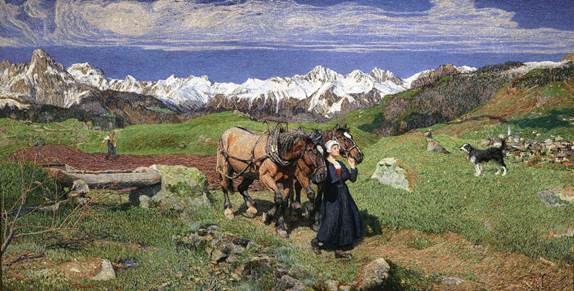
“Spring in the Alps, 1897” by Giovanni Segantini will be on view at the Getty Museum, Getty Center, Los Angeles beginning February 12.

The J. Paul Getty Museum announced recently the acquisition of “Spring in the Alps, 1897,” by Giovanni Segantini (Italian, 1858–1899). Originally painted for Jacob Stern, a San Francisco collector and director of Levi Strauss & Co., the painting has a long connection to California. It was on continuous loan to the Legion of Honor in San Francisco from 1928 until it was sold by Stern’s descendants in 1999.

“Giovanni Segantini was at the peak of his career when he created this luminous panoramic scene,” said Timothy Potts, director of the Getty Museum. “Featuring his characteristic thick brushstrokes and brilliant color palette—which includes flecks of gold leaf—the painting is among the most extraordinary and captivating landscapes produced in Europe at the end of the 19th century. It will resonate powerfully alongside our great Impressionist and Post-Impressionist works from France and paintings by Northern European artists of the era. Significantly, with this acquisition,”Spring in the Alps” finds a permanent public home in California, its original destination, and we hope museum-goers from San Francisco, where it was on view for more than 70 years, will visit the painting at the Getty when they are in Los Angeles.”

From the Getty Museum:

At more than four by seven feet, “Spring in the Alps” is a monumental, sweeping depiction of an alpine landscape near the village of Soglio in Switzerland, with its recognizable church tower visible on the right side of the picture. The view is of an expansive plateau and valley ringed by glaciers and majestic snow-capped mountains. In the middle of the composition a farm woman dressed in a blue and red peasant costume characteristic of eastern Switzerland leads two large horses past a watering trough. They are coming from a freshly plowed field where a sower scatters seeds and a black and white dog stands guard. The scene is sunny and colorful, emphasizing a glorious vista with a brilliant blue sky and ribbons of clouds.

Segantini painted the sizeable canvas in the open air, with additional work completed in the studio. He took liberties with the topography to suit his composition, adjusting the relative scale of the mountains, the perspective of the valley, and the position of the town. He created the vibrant color scheme and brilliant effects of light following the principles of Divisionism, the practice of juxtaposing pure local colors in the belief that the hues mix optically in the eye of the viewer, creating especially luminous effects. This pseudo-scientific movement in painting was first launched in France in the 1880s by George Seurat and Paul Signac, where it was dubbed “Neo-Impressionism.” The movement was subsequently adopted by Italian painters, with Segantini becoming a principal exponent. In contrast to Seurat’s pointillist brushstrokes, Segantini employed long, thin strokes of contrasting color. The rich impasto and the tactile, almost woven, quality of the painted surface marvelously capture the crisp transparency of the atmosphere, the harshness of the rocks, the thickness of the grass, and the roughness of the skin of the animals.

“‘Spring in the Alps’ is a joyous hymn to the cycle of life and the reawakening of nature in spring after a long, hard winter,” said Davide Gasparotto, senior curator of paintings at the Getty. “It is an extraordinarily accomplished work where symbolism and naturalism are inextricably intertwined. Segantini himself counted it among his absolute masterpieces. Panoramic in scale and astonishingly luminous, ‘Spring in the Alps’ is one of the greatest paintings of the Italian Ottocento in America, an iconic work that expands our ability to tell the story of 19th-century European painting.”

“Spring in the Alps” was commissioned by the American painter Toby E. Rosenthal (1848–1917), who resided in Munich, for San Francisco businessman and collector Jacob Stern (1851–1927), whose father, David Stern, co-founded Levi Strauss & Co. Segantini exhibited the picture at the 7th Munich Secession in 1897 and then took the painting back to his studio in Switzerland where he made further adjustments. In early 1899 the picture was sent to San Francisco to be the centerpiece of Stern’s collection. It was so well known even then, that the painting’s rescue from the 1906 earthquake and fire was reported in the national press. Upon Stern’s death in 1927, and in accordance with his wishes,”Spring in the Alps” was loaned by his heirs to the California Palace of the Legion of Honor. There it stayed on public view for more than 70 years. In 1999 the estate of Stern’s heir sold the picture at auction in New York.

Born in Arco (Trento) in 1858, Giovanni Segantini counts among the most important Italian artists of his generation. He was internationally famous for his dreamy Alpine landscapes, which combine elements of Jean-François Millet’s reverent naturalism with Georges Seurat’s dappled Divisionist technique and the allegorical subjectivity of the work of contemporary Symbolists, from Gustav Klimt to Paul Gauguin. Segantini’s work represents the transition from traditional 19th-century art to the changing styles and interests of the 20th century.

Orphaned as a boy, Segantini was apprenticed to a photographer in Milan, where in 1873 he began attending night classes at the Brera’s Academy of Fine Arts. In the early 1880s, on the advice of the painter-dealer Vittore Grubicy de Dragon, he experimented with plein-air painting during an extended visit to the Brianza region. Marketed by Grubicy, with whom Segantini signed an exclusive contract in 1883, the resulting landscapes attracted international attention and quickly made their author’s fortune. Segantini settled in the picturesque Swiss valley of the Engadine, where he painted views of the surrounding mountains for the rest of his career, often carting his enormous canvases out into the elements to work directly from nature. Despite his somewhat remote location, Segantini kept abreast of the contemporary art scene, maintaining a lively correspondence with Gustav Klimt, Max Liebermann, and others, while his work was exhibited in London, Amsterdam, Paris, and Munich.

In 1897, Segantini was commissioned by a group of local hotels to build a huge panorama of the Engadine valley to be shown in a specially built round hall at the 1900 Exposition Universelle in Paris. Before it was completed, however, the project had to be scaled down for financial reasons. Segantini redesigned the concept into a large triptych known as Life, Nature, and Death (Museo Segantini, St. Moritz), which is now his most famous work. Eager to finish the third part of his large triptych, Nature, Segantini returned in 1899 to the mountains near Schafberg. The pace of his work, coupled with the high altitude, affected his health, and in mid-September he became ill with acute peritonitis. Two weeks later he died at the age of 41. Two years later the largest Segantini retrospective to date took place in Vienna. In 1908, the Museo Segantini was established in St. Moritz, Switzerland.

“Spring in the Alps” joins another important work by Segantini in the Getty Museum’s collection, “Study for ‘La Vita’” (1897), a large pastel that parallels the painting’s composition and is dedicated to his friend Toby Rosenthal, who facilitated the commission of “Spring in the Alps” from Jacob Stern. In excellent condition, “Spring in the Alps” comes to the Getty in the elaborate frame that the artist originally designed for it. It will be put on exhibition in the Museum’s West Pavilion on February 12, alongside other works of art from 19th-century Europe.

Additional information is available at www.getty.edu.


Sign up to receive Fine Art Today, the free weekly e-newsletter from
Fine Art Connoisseur magazine.


Featured Artwork: Cory McLaughlin

0

I’m artist Cory James McLaughlin, a Texas artist. I have shown in exhibitions both Nationally and Internationally. I’ve been a professional artist for nearly 15 years now, focusing on wildlife for the last five years. I’m a member of the prestigious Society of Animal Artist’s. I am currently represented by Going to the Sun Gallery in Whitefish, Montana. I focus on waterfowl and western wildlife. My work will be on display in room 165 at the Out West Art Show and Sale, March 20-23.

Please visit my website at www.coryjamesfineart.com and follow me on Instagram @coryjamesartmarket.

Featured Artwork: Chantel Lynn Barber

0

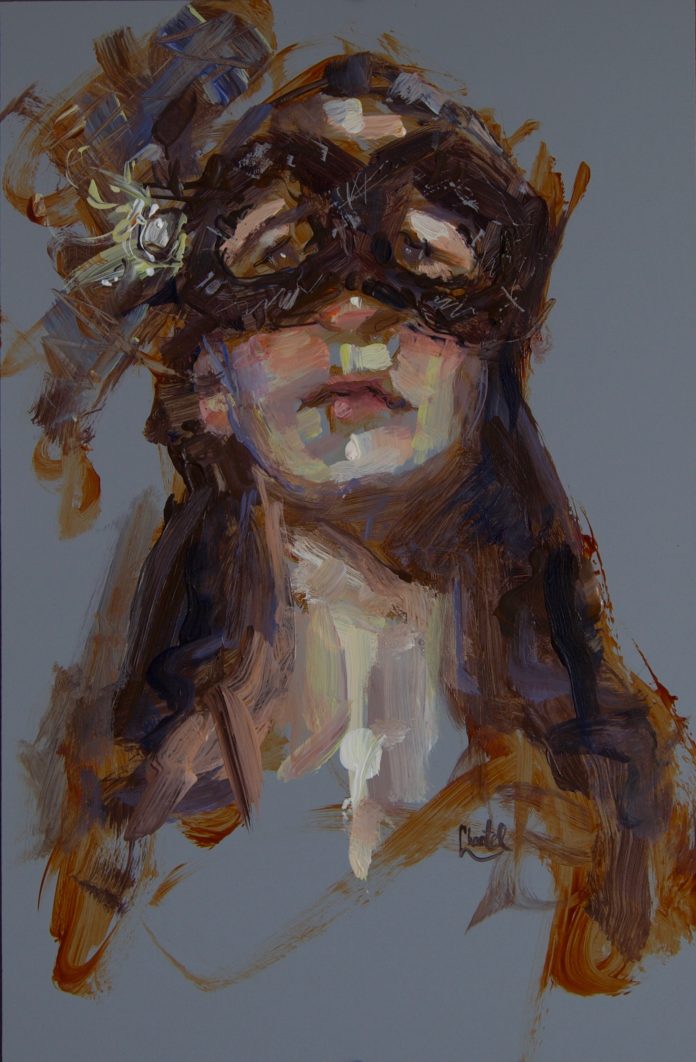
The Artist’s Muse
9 x 6 in.
Acrylic on panel
Available through the artist

Chantel’s passion for art began flourishing at age 12 when she was mentored under local San Diego artists. She continued to study art, largely self-taught, while living in Newport, Rhode Island and Keflavik, Iceland. While enrolled in a college art course, a fellow student introduced her to acrylic paints, and she soon found it to be a medium dominated by abstract art. But her first love was portraiture for which she found little advice. As she dreamed of perfecting her skills as an acrylic portrait artist, Chantel continued to learn from professional oil painters and translated their teachings into acrylic techniques. All the while, she remained active in local art communities, including serving as President of Artists’ Link in Memphis, Tennessee.

In 2006, Chantel opened her own art business called Chantel’s Originals near Memphis Tennessee. Chantel soon benefited from workshops and demonstrations with outstanding artists including Dawn Whitelaw, Michael
 Shane Neil, Suzie Baker, and Marc Hanson. Chantel is currently the National Coordinator of the State Ambassador program for the Portrait Society of America, and is also a member of The Chestnut Group, the National Oil & Acrylic Painters’ Society, and the International Society of Acrylic Painters.

Chantel has been featured in solo art shows and juried exhibitions. Her award-winning paintings are in private and public collections throughout the United States and overseas. Her work is published in Acrylic Artist magazine, American Art Collector, Southwest Art, The Artist’s Magazine, Fine Art Connoisseur, International Artist and several books. Chantel resides in Bartlett, Tennessee, where she teaches online and in workshops throughout the United States and Canada.

Featured Artwork: Susan Lynn

0

A Penthouse Garden

A nationally recognized artist, Susan Lynn’s paintings are frequently described as poetic, lyrical, luminous and serene. Susan regularly participates in many of the top juried and invitational plein air events throughout the country. This painting was created while she was participating in the Olmsted Plein Air Invitational. “I was fortunate to be given access to the rooftop garden of an exclusive apartment building in downtown Atlanta, and arrived just as a swath of mid- morning sun was cutting between two buildings to illuminate the garden’s beautiful rose arbor. I loved the glowing atmosphere it created, accented by the reflections in the glass doors just beyond the arbor,” says Susan.

Capturing a sense of light and atmosphere is a persistent theme of her paintings. Whether focusing on landscape or still-life, she believes that nature is a subject that speaks to the viewer in a visceral way, tapping into universal memories, emotions and the human connection to the world around us. While having pursued a nearly 30 year career in the field of architectural illustration, fine art painting has been her primary focus for many years. She found the world of architectural illustration to be a fantastic training ground for a realist painter, demanding a thorough knowledge of perspective, and a constant study of light, shadow, and color. Susan creates her paintings both in studio and “en plein air,” and although watercolor remains her favored medium, she recently began adding oils and acrylics to her repertoire, expanding the creative possibilities of her work.

Exhibited widely, Susan has earned signature membership in a number of national arts organizations, including American Women Artists and the Outdoor Painters Society. In 2017, she became an elected Artist Member of the historic Salmagundi Club in New York, and has since had work selected for exhibition in three of the club’s juried shows, winning the Herbert L. & Harmer Smith SCNY Award at the Salmagundi Club Spring Auction Exhibit in 2018. Most recently, her oil painting, Prairie Lightcatchers, was juried into the prestigious
American Women Artists exhibition “Looking West: Highlighting works of American Women Artists” at the Steamboat Springs Museum. Exhibition dates are May 24th-September 2nd, 2019.

Visit Susan’s website to sign up for her newsletter and enjoy updates on her latest work and insights into her painting process. You may also follow Susan’s work online on Facebook and Instagram.

Featured Artwork: Christine Lashley

0

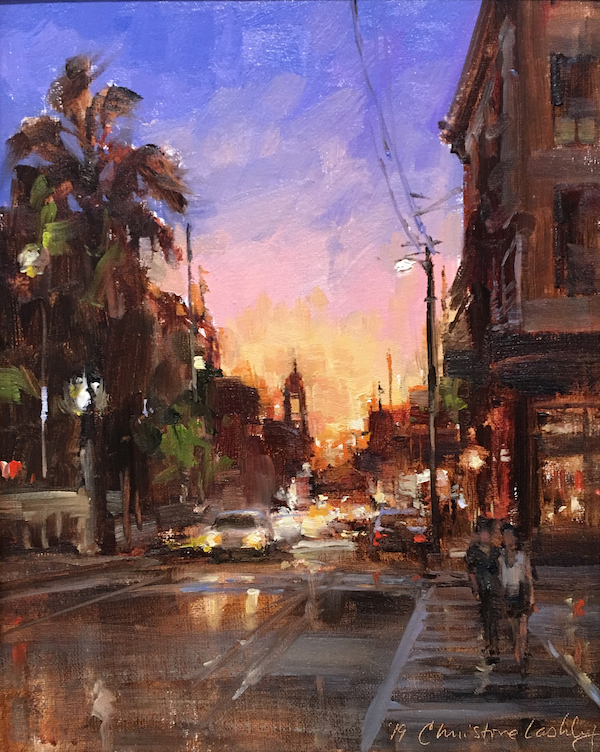
Cumberland Street
10 x 8 in.
Oil on panel
$1100
Available from Principle Gallery, Charleston, South Carolina

Cumberland Street was created by artist Christine Lashley while painting on location at Principle Gallery Charleston.

“During my week in Charleston the gallery encouraged me to paint whatever I liked. It was the first time I saw the town and I painted non-stop. The luminous skies, quaint streets and tropical foliage inspired me day and night. I was enthralled by the variety of edges, wherever I walked I could see a potential painting, especially in the historic French Quarter,” says Christine.

Cumberland Street is on exhibit at Principle Gallery as part of a series of new paintings (many created on-location) highlighting Christine’s love of both natural and artificial light in the landscape.

Using layers, colors and texture to look ‘real’ from afar, but dissolving into abstraction up close, Christine’s paintings are often a fusion of filtered reality and memory. She paints to match what she sees in her ‘mind’s eye’ and often puts all references away. Christine frequently creates artwork on location ‘en plein air’ and uses these works to inform her larger studio pieces. Her on-site painting allows her to see engaging color harmonies and watch how a subject changes over time, which she documents with multiple studies.

Christine’s paintings have been exhibited nationally and internationally. Recent juried exhibitions include 27th Oil Painters of America (OPA) National Show where she won the Best Landscape Award, and the 2018 Olmsted Invitational where she won the Cezanne Award for Best Light in the Landscape and the Judges Choice Award at the Quick Draw. Christine participates regularly in invitational and juried outdoor painting competitions such as Plein Air Easton, Olmsted, Telluride and EnPlein Air Texas.

Involvement in art has been a lifetime experience for Christine. As a teenager in Paris, she studied at the Parsons Art Institute and the Sorbonne, continuing on to earn her Bachelor of Fine Arts at Washington University in St. Louis. She then worked for several years in the fashion industry in Europe, then as a muralist and graphic designer. She turned her interest back to creating fine art soon after her children were born. An art teacher for over 20 years, she teaches workshops worldwide. Her artwork has been published in many articles and one of her noted nocturnal city-scapes was the cover of PleinAir Magazine’s 2018 Oct/Nov issue. She is a signature member of OPA, the Salmagundi Club, and the Washington Society of Landscape Painters.

View more of Christine’s work on her website, and see a schedule of upcoming classes and workshops.

Featured Artwork: Nancy Tankersley presented by South Street Art Gallery

0

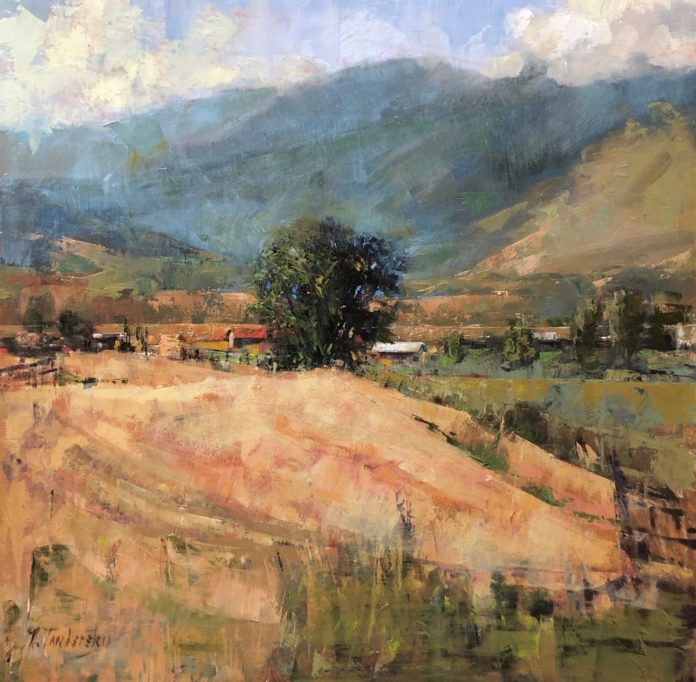
Apex
Oil on gessoed muslin panel
24 x 24 in
$4500
Available at South Street Art Gallery Easton, MD

In this painting, artist Nancy Tankersley was intrigued by the geometry of the western landscape and used it as an underlying framework for the image. Having spent much of her life living on the east coast, she still feels a strong pull from the West where she finds inspiration for many of her landscape paintings. “Perhaps it is in my DNA as my father’s family had been ranchers and farmers in Colorado and Wyoming, but during the depression my father’s branch ended up in the Los Angeles area where my Dad graduated high school. He joined the Navy, was sent East and married my Baltimore born mother. My older brother ended up on the western slope of Colorado and two of my children live in Austin, Texas so I am frequently able to visit this inspiring landscape.”

Nancy has been active in the plein air movement in many roles. A founder of Plein Air Easton, a juried competition in Easton, Maryland, she has served as advisor and/or judge for numerous invitations and juried events, as well as actively participating as an artist in many others. As she enters her fifth decade as a professional artist, she finds herself returning more and more to the studio where she can explore the paints and surfaces and experiment with new painting techniques and tools. Her recent body of work is more about memory, imagination and emotion. As Thomas Cole the famous Hudson River landscape artist said, “If the imagination is shackled, and nothing is described but what we see, seldom will anything truly great be produced either in painting or poetry…In my studio, I have the luxury of time to draw a veil over the common details, the unessential parts which shall leave the great features, whether the beautiful or the sublime dominant in the mind.” (Thomas Cole to Asher B. Durand, 1838).

In addition to numerous awards in plein air events and national competitions, Nancy has twice been invited to exhibit in the American Masters Exhibit at the Salmagundi Club and this year will return to PACE (Plein Air Convention and Expo) as a field instructor. In 2018, she released a video titled Painting Figures from Photographs through Liliedahl. To see her current biography and awards, and to sign up for her mailing list, visit her website.

In March of this year the artist will have a solo show at South Street Art Gallery titled Journeys.

“Nancy Tankersley is one of America’s premier living artists. Her current work is but the latest chapter in an ongoing narrative about design, materials, technique, and meaning; and most recently, about memory, imagination and emotion. Through her painting, her teaching and mentoring of other artists, her consulting with arts and civic organizations, and her long journey as an artist she is influential in contemporary American painting. Any collection that purports to represent the late 20th and early 21st centuries in American art is incomplete without Nancy’s work. Nancy is a true American Master,” says Alan Brock, collector and owner of South Street Art Gallery, Easton, Maryland.

New Addition at the Briscoe

0
Western art
Images courtesy Briscoe Western Art Museum

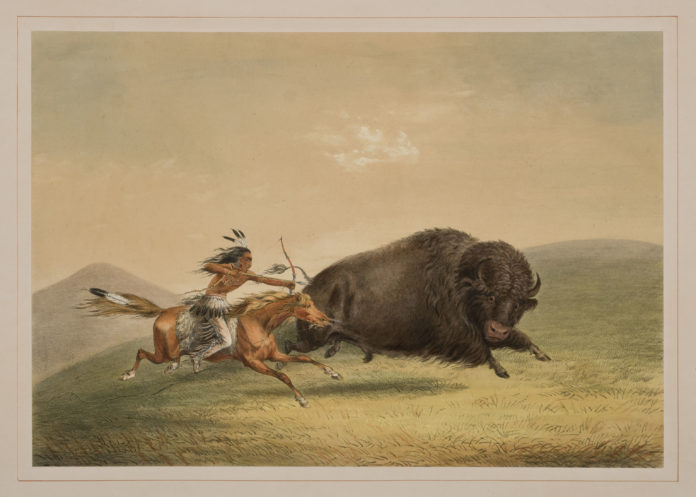
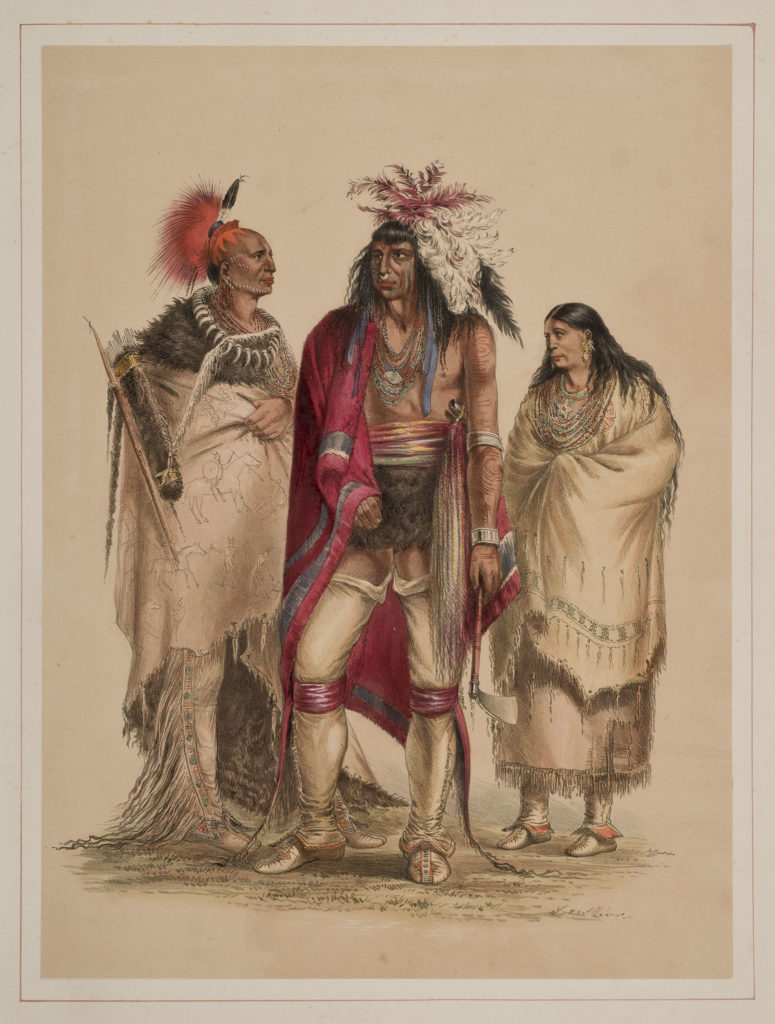
The Briscoe Western Art Museum (San Antonio, TX) is pleased to present the newest addition to its permanent collection, a very rare deluxe set of George Catlin’s North American Indian Portfolio.

This edition of 31 hand-painted color plates is one of only three known sets still in existence. “Catlin’s Portfolio” is among the most famous color plate books relating to North America’s Native populations produced in the 19th century.

Western artThe collection, originally on exhibition at the museum in the summer of 2017, now belongs to the museum and will be on display beginning Friday, February 1, 2019, in the Marmion Gallery.

For more information, please visit www.briscoemuseum.org.


Sign up to receive Fine Art Today, the free weekly e-newsletter from
Fine Art Connoisseur magazine.
Snow & Ice: Coin of the Realm

0
acrylic paintings
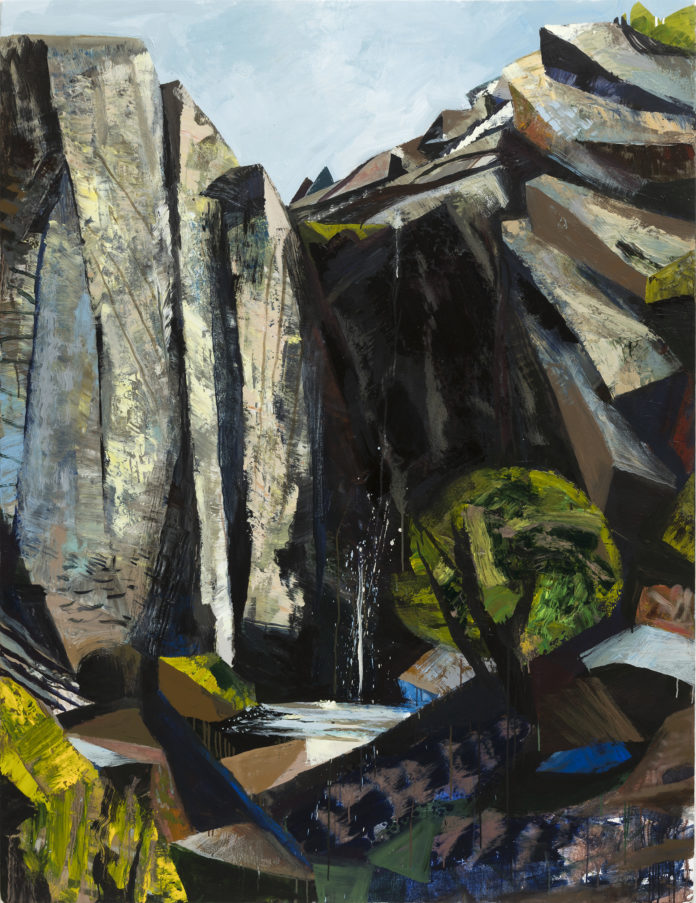
Lucinda Parker, “Cliff & Trickle,” 2018 acrylic on canvas, 78.50 x 60 in.

A fine art exhibition announcement from Russo Lee Gallery:

Following her 2018 completion of two major paintings commissioned for the new Broadway Tower in downtown Portland, Lucinda Parker presents “Snow and Ice: Coin of the Realm” (through March 2). Guiding this body of the work is Parker’s question, “What is of the most value in the Northwest?”

She concludes that it is snow and ice, which changes its own shape, and that of the land it touches, as it provides pristine water in an increasingly limited supply. Parker’s latest images continue to explore the Northwest’s mountainous landscapes and what shapes them. She builds energetic forms in a thousand shades of white, combined with exuberant color, from small, intimate gouaches to large-scale works on canvas. This exhibition coincides with a retrospective at the Hallie Ford Museum of art in Salem, OR, titled “Force Fields,” and the publication of a monograph by Roger Hull of the same title.

Mixed media art
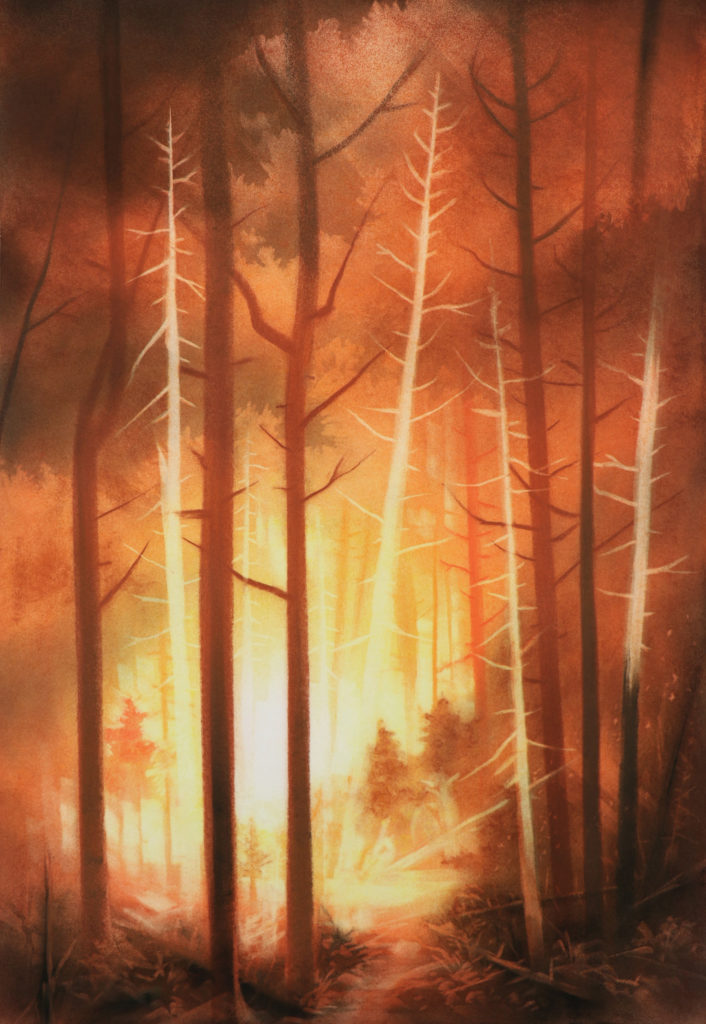
Amory Abbott, “Love Without Hope VIII,” 2018, charcoal and soft pastel on paper, 27.5 x 19.5 in. framed

Also at Russo Lee Gallery: Amory Abbott

The term Anthelion means “opposite the sun.” The so-named series in this show explores ideas that are “opposite” of the sun — darkness, fire, apocalypse, and the unknown, coalescing into a foretelling of a darkened future. In the series “Love Without Hope,” the artist considers increasingly common wildfires as they relate to climate change, pollution, industry, and land use, finding beauty and evolving realities. All works are charcoal and pastel chalk on paper and look at a potential near-future world, where the sun cannot be seen. Amory Abbott’s art practice reinterprets the romanticized sentiment of spirituality in nature by visualizing darkness and cataclysm in landscapes on the brink of transformation.

Digital art
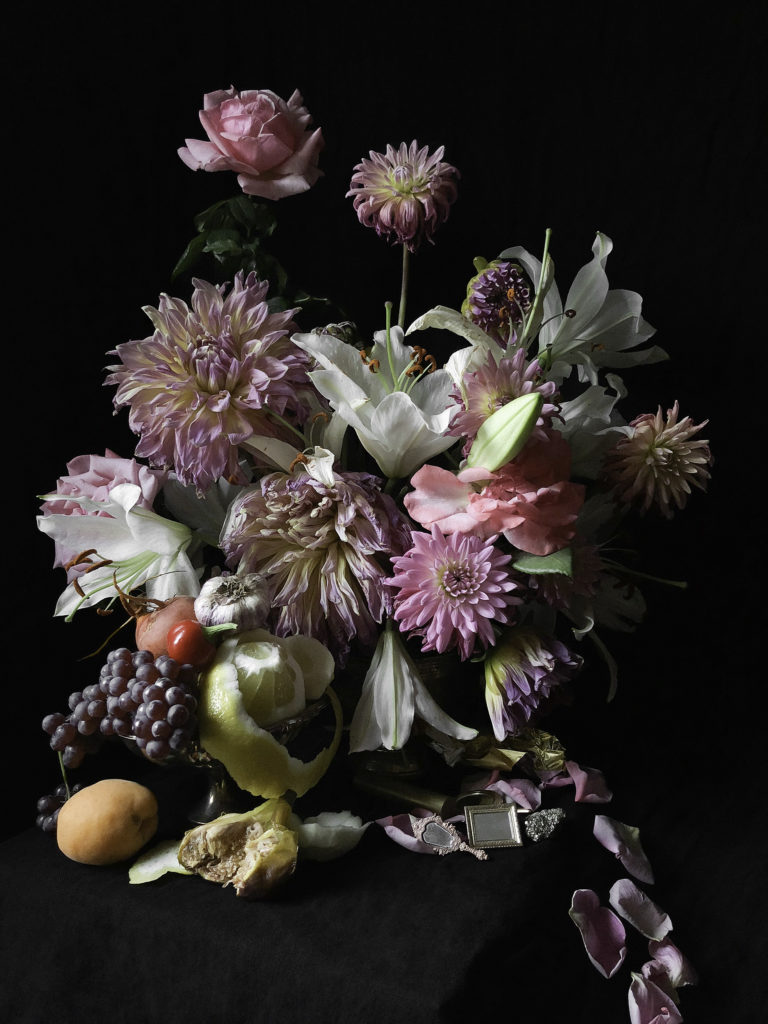
Manu Torres, Untitled, 2018, digital pigment print 15 x 12 in. framed, 1/1 with 1 AP

The Office: Manu Torres
For 2018–2019, we have resumed our exhibition program in “The Office,” in which we are presenting works by invited, unrepresented artists in the region. The upcoming series of shows will each run for two months, and is curated by Disjecta Director Blake Shell. Running through February, Manu Torres presents a floral arrangement installation and other photographic and mixed-media works that document past arrangements.

“Snow and Ice: Coin of the Realm,” “Anthelion,” and “The Office” are on view through March 2 at Russo Lee Gallery (Portland, OR). For more information, please visit russoleegallery.com.


Sign up to receive Fine Art Today, the free weekly e-newsletter from
Fine Art Connoisseur magazine.
A Difficult, Unreasonable Vision

3
Landscape paintings - National Parks
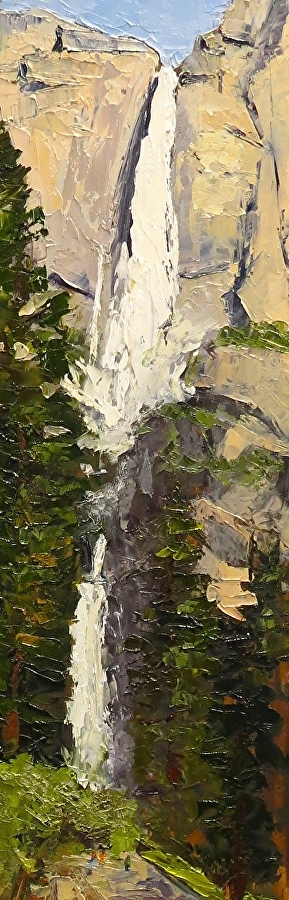
Mary Fassbinder, “Yosemite National Park, CA #59,” oil, 27 x 9 in.

By Mary Fassbinder

As a painter and lifelong naturalist, I’ve learned that inspiration comes in many different forms. Sometimes it’s an inkling of an idea that grows slowly, until finally manifesting into a vision; other times, inspiration comes in a lightning bolt of an idea — this must be done, no matter how difficult or unreasonable it seems now.

The latter describes how the National Parks Project came to me. I awoke one day and realized that my 20 years of painting and many more years of exploring the natural world would be reflected and recorded in a series of paintings done on location, en plein air, in each of the 60 national parks in the United States. The plan was simple: Go to every national park and make a painting of the park. Simple, and yet not at all easy.

As a 55-year-old woman who did not consider herself a risk-taker, my improbable journey began. I planned to pay for the project through my framing business and by selling my art. What I didn’t realize at the time was that completing the project was impossible without the assistance and generosity of so many people all along the way. From Acadia National Park in Maine to American Samoa National Park, and everywhere in between, I was the recipient of an unbelievable level of care and assistance, including offers of places to stay, vehicles to borrow,
even free train tickets and air flights. Most importantly, during this project I learned about faith. Faith in people; faith in the process; and ultimately, faith that the universe will provide.

As an example, as my commitment to the project came into focus, a customer walked into my framing shop and mentioned that a friend in Ohio was selling a 30-year-old Volkswagen Westfalia. Did I know anyone interested in buying it? A month later, after a big art sale in my shop, I was driving across the U.S. in my new “Westy,” whom I named Charlie, painting the first eight parks of my project. That first park, Isle Royale in Michigan, remains my favorite, for it signifies the moment I stepped into my vision. This was real!

Landscape paintings - National Parks
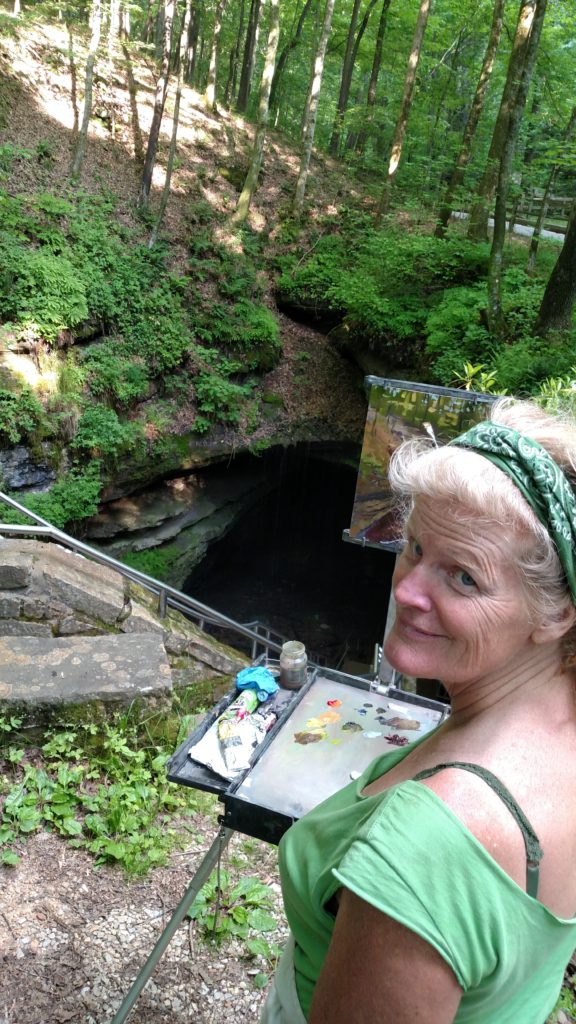
Mary Fassbinder, painting en plein air at Mammoth Cave, Kentucky

I chose the sites for my paintings by asking someone I met along the way and felt good about – a ranger, docent, volunteer – their favorite spot in the park. I then went to that spot and painted. So my paintings reflect not the iconic images we may have come to know, but the hidden gems of those who know the places well. Hidden gems are always best, in national parks and in real life.

Despite many obstacles, including a broken elbow, and seemingly insurmountable financial and logistical challenges, I found my way to the end.

I thought I completed the project in May 2018, in Yosemite National Park, but then discovered that a brand-new park, Gateway Arch in St. Louis, Missouri, had just been named, so I officially completed my project there.

I would like this collection to be seen by many people, and to provide inspiration to get outside and visit these national treasures. I especially would like people to share with others the love of the natural world.

Ultimately, I hope that this project will make a difference, that it is actually true that one person can have lasting effect on the world. If that is true, I will look forward to being an old woman, sitting on my porch, satisfied with a job well done.

Landscape paintings - National Parks
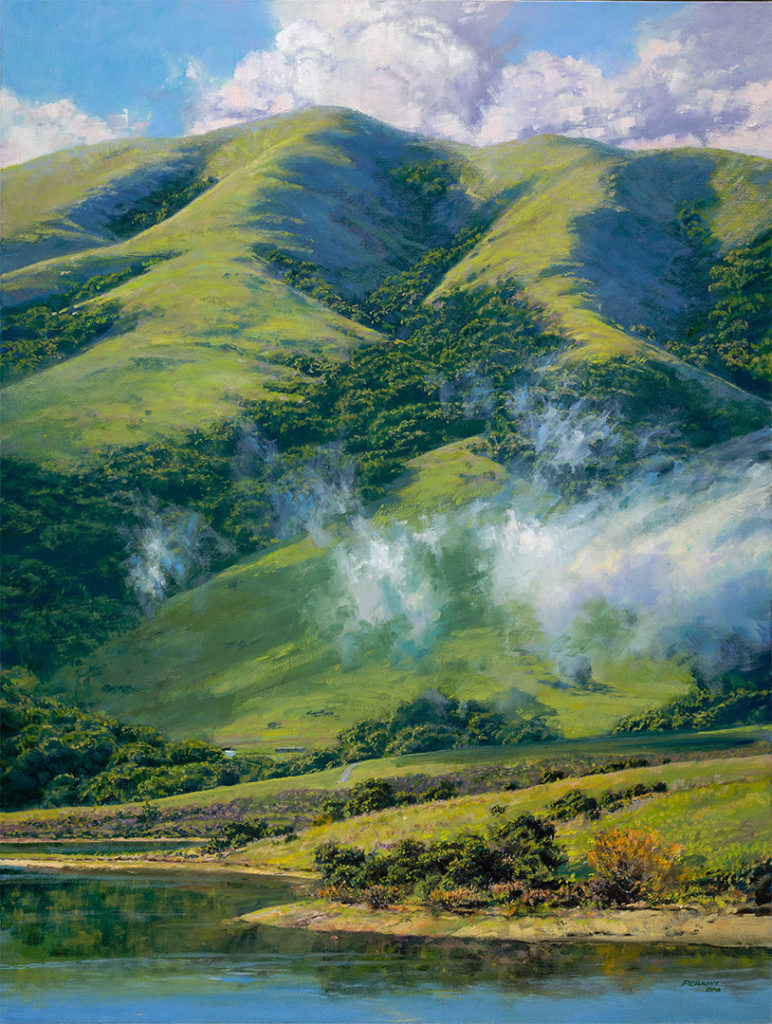
Davis Perkins “Nicasio Valley,” oil on canvas, 30 x 40 in.

Davis Perkins has been chosen as the Guest Artist for the National Parks Painting Project by Mary Fassbinder. This exhibition is on view at Petaluma Arts Center through March 23, 2019.


Sign up to receive Fine Art Today, the free weekly e-newsletter from
Fine Art Connoisseur magazine.

WEEKLY NEWS FROM THE ART WORLD

Fill your mind with useful art stories, the latest trends, upcoming art shows, top artists, and more. Subscribe to Fine Art Today, from the publishers of Fine Art Connoisseur magazine.
  • This field is for validation purposes and should be left unchanged.