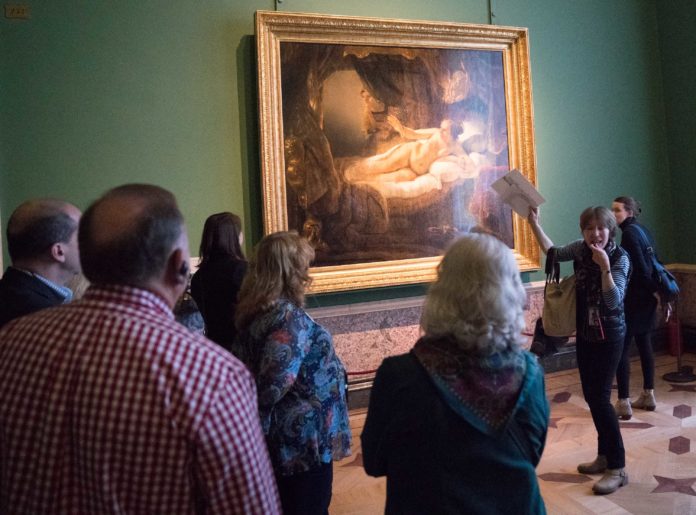
Admiring Rembrandt’s Danaë at the Hermitage. All images are from a previous Streamline Publishing art trips, and are courtesy of Peter Trippi.
Each year Fine Art Connoisseur magazine Editor-in-Chief Peter Trippi and Publisher B. Eric Rhoads lead a select group of art lovers and collectors on a memorable trip to a major art destination. This October 18–26 (plus optional pre- and post-trips), you can join them for a behind-the-scenes tour and guided trip to Italy.
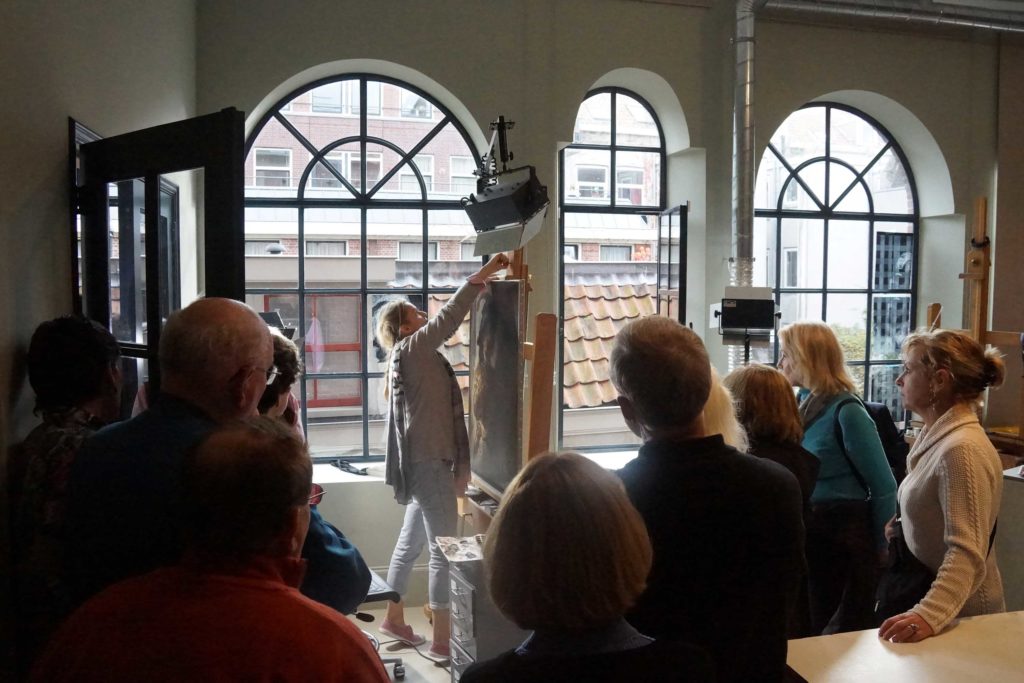
Visiting conservator Lara van Wassenaer in her Amsterdam studio
It’s truly “behind the scenes,” because Rhoads and Trippi’s deep art contacts allow them access to the true movers and shakers in the art world, many of whom you’ll meet, and allow you entry to some unseen collections of art — often in private homes or palaces — and even access to special places in museums not open to the public.
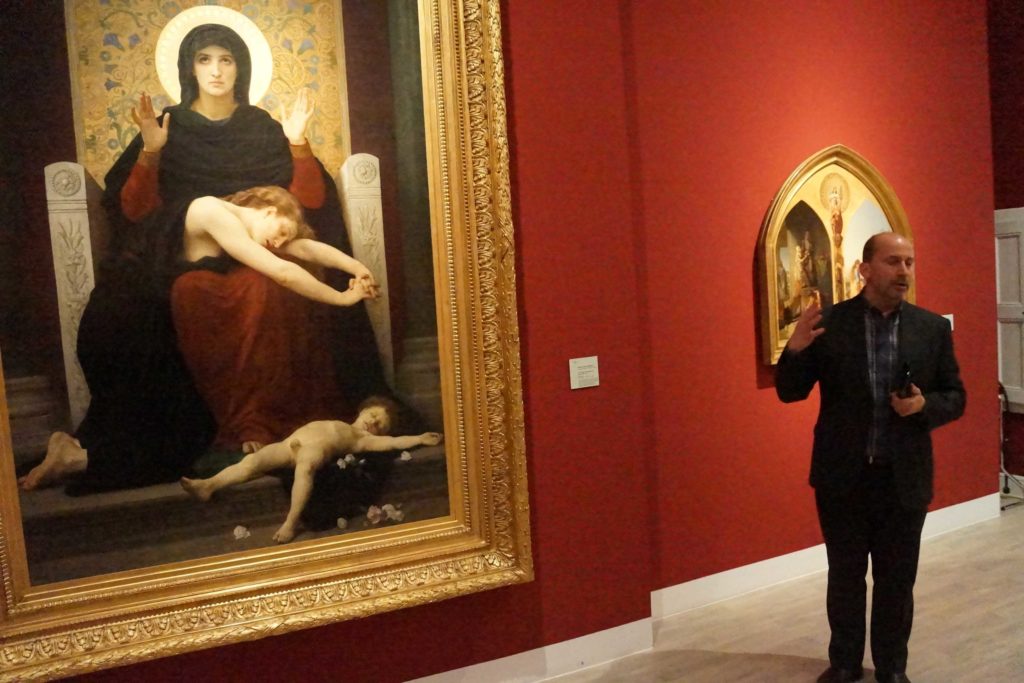
Peter Trippi discusses a painting by Bouguereau at Strasbourg’s Palais Rohan.
“As terrific as our destinations are, there is always extra pleasure to be enjoyed from traveling with other readers of Fine Art Connoisseur,” Trippi says. “Everyone on the trip cares about great art and architecture, and we are completely immersed in the experience of discovering them together — asking questions, sharing ideas, agreeing to read more when we get home, etc. It’s a really friendly circle of friends, old and new — and it’s never about showing off, just genuine enthusiasm for the intriguing sites we bring our travelers to see.
This year, during the Italian Art Trip, the group will spend four nights in Florence, then travel by a luxury train to spend another four nights in Rome. There are even options of adding three nights in Milan (pre-trip) and/or three nights in Sorrento and the Amalfi Coast (post-trip).
“We’re a fun group,” Rhoads says. “You’ll make a lot of friends, you’ll see a lot of art, and you’ll create a lifetime memory and gain access to places most others would never be able to provide.”
In front of Moscow’s Tretyakov Gallery
This annual trip has become the envy of the art world and sells out each year, so you must register quickly if you would like to join Fine Art Connoisseur for this once-in-a-lifetime opportunity. As of this writing, the Italian Art Trip is 92% sold out, so click here to learn more and save your spot on a guided trip to Italy today.
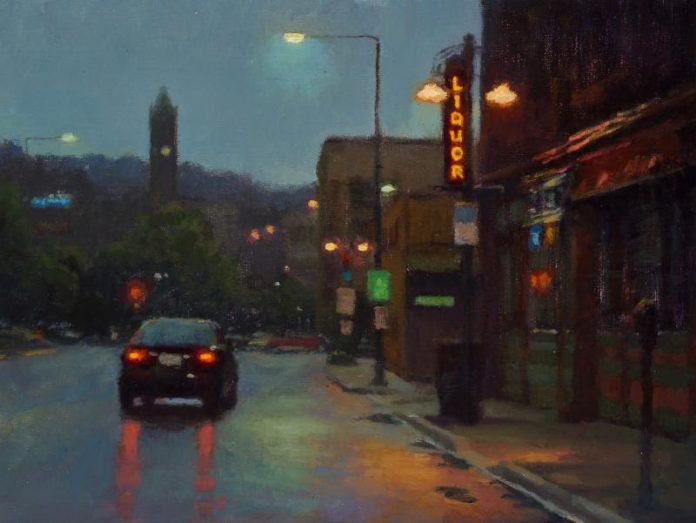
“Wet Drive on Lake Avenue,” Carl Bretzke, oil on panel, 9 x 12 in., 2018, $1,800
“Bauman Bretzke”
Grenning Gallery, Sag Harbor, New York
Through June 18, 2018
From Grenning Gallery: Stephen Bauman (b. 1980) offers a series of drawings and paintings that are both stylistically realistic and technically expressive. Bauman’s work excites the technical enthusiast and fulfills the contemporary need for impact with his two viewpoints: On one level his work makes a big impression across the room, and on another level, up close, reveals abstract markings that convey an intense observation of the details found in nature.
Bauman is returning to the Grenning Gallery after a decade of developing his career overseas. Bauman, a New York resident for two years now, spent the prior ten years honing his very original visual voice while working in ateliers in Italy and Sweden. With his eternally original and introspective expression, Bauman is well poised to make his mark on the art scene, especially now that he is living and working in the New York area. We have always been drawn to his original and deeply felt paintings and drawings, having first shown him back in 2006 when he was only 25 years old.
The emotional intensity found in Bauman’s figurative work is astounding. A hallmark of Bauman’s character portraits is that, somehow, the subject’s gaze mysteriously extends beyond the plane of the canvas to connect directly with the viewer.
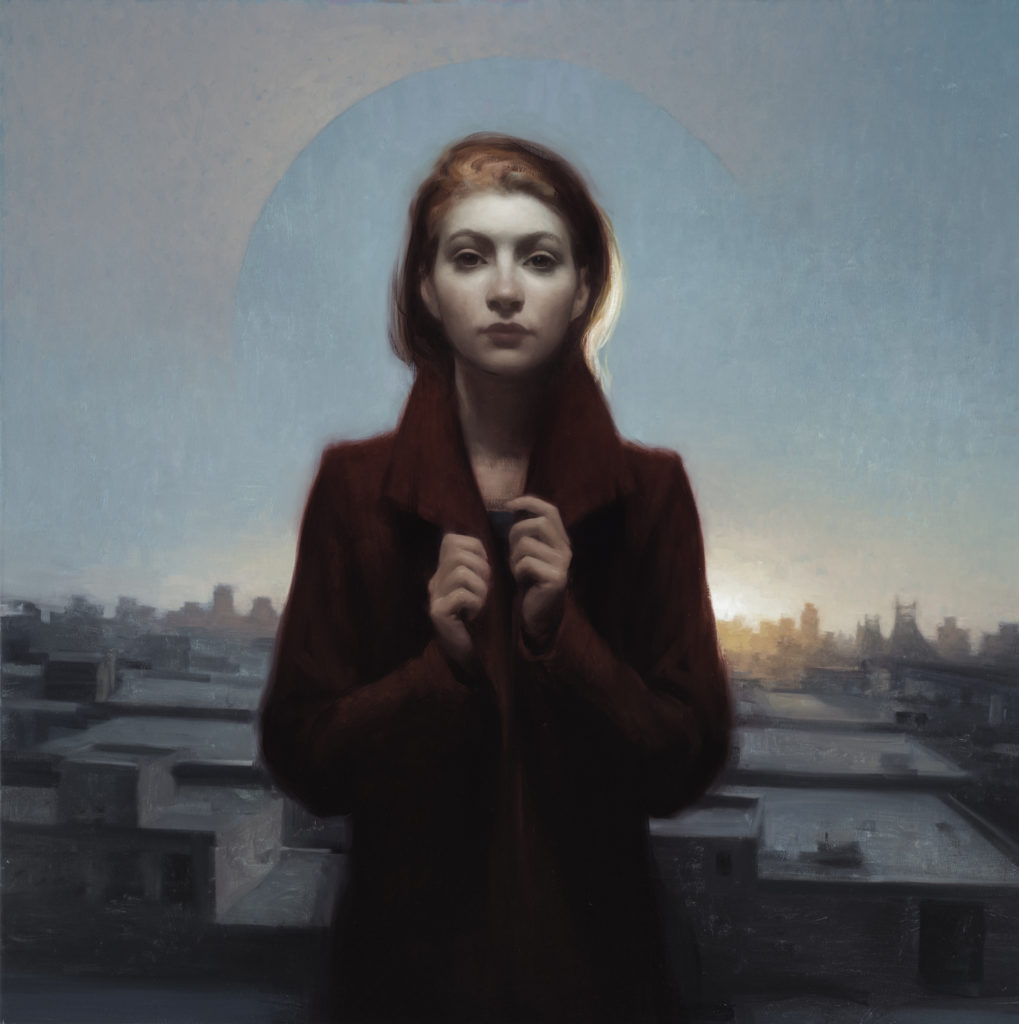
“New Town,” Stephen Bauman, oil on linen, 35 x 35 in., 2018, $11,000
In “New Town” we see a young woman heroically posed against the backdrop of a minuscule New York. Here Bauman uses his highly refined figurative painting technique to convey a 21st century twenty-something thoughtfully facing the challenges of the big city — a classical realism “Me Too” painting, subtle yet direct, using his considerable technique to convey a contemporary subject.
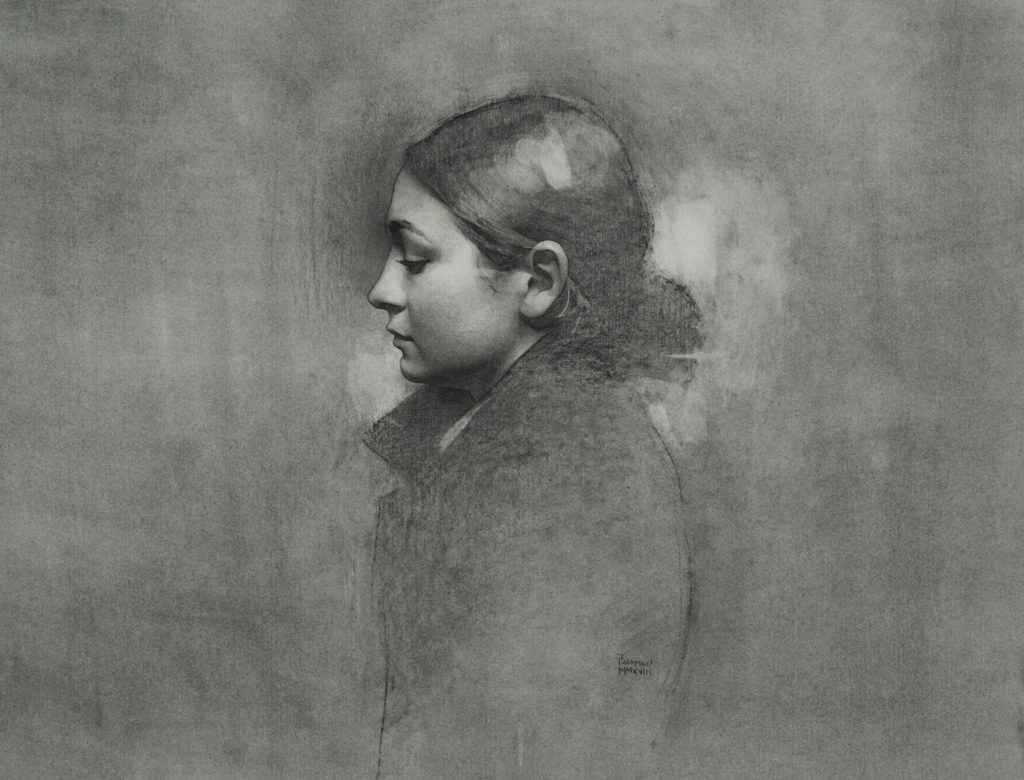
“Ghost on the Highway” Stephen Bauman, graphite, 19 x 23 in., 2018, $4,000
Bauman claims that “people are not familiar with drawing as a fine-art form,” so he began exploring painting techniques through drawing. The same way painters use impasto or a palette knife, Bauman uses drawing materials like charcoal and graphite to an expressive end; for instance, he modulates the heaviness of markings, creates depth through layers, and accentuates highlights using an eraser. The medium’s capabilities are infinite. Bauman’s drawings are deeply crafted, and time consuming.
Growing up in Miami as a street artist, although seemingly miles away from his current aesthetic, explains the graphic sensibility that distinguishes Bauman from many of his compeers in the classically trained artist world. He is currently living in New York City and teaching at the Florence Academy of Art’s New York branch and painting in his studio at Mana Contemporary.
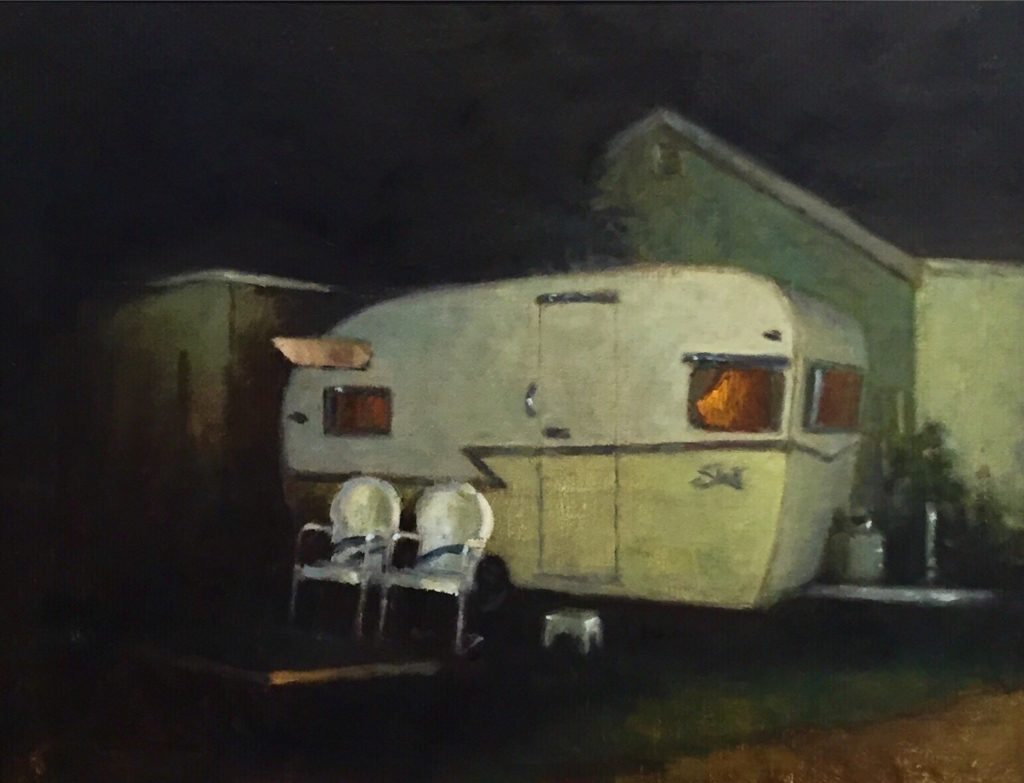
“Shasta at Night,” Carl Bretzke, oil on panel, 11 x 14 in., 2018, Sold
Carl Bretzke (b. 1954) has been showing and painting at the Grenning Gallery for several years. He is drawn to scenes that evoke a sense of familiarity, not unlike Hopper and Norman Rockwell. His work instills an emotional connection to the feeling of a place rather than to the place itself. A quiet city scene at night is more about the quietness than about the city.
Most of Bretzke’s paintings include unpretentious contemporary vehicles. “I find that vehicles,, like figures, add a sense of realism and scale to my paintings.” And it is true. Automobiles in paintings are an immediate indicator of the era.
Carl Bretzke, best known for his recent series of a well-known movie theatre façade, being the last artist to paint it from life in November 2016, a month before it burned down. We have prints available of this painting “The Last Show.” Bretzke’s work is growing in quality and depth, which is evidenced by this interesting collection of familiar local and not so local scenes from American life.
Bretzke explains his work clearly: “Mark Jenkins, of The Washington Post (Feb 20, 2015), once described my work as simultaneously intimate and detached … with a style that recalls Edward Hopper and the Ashcan School. This was an appropriate assessment, in that Hopper and Bellows are two of my personal favorites from history. I am attracted to work like theirs that depicts familiar images of everyday life with a somewhat undefined narrative that involves the viewer on a slightly different level. Although I most recently have been known as a plein air painter*, I don’t think of myself as a single-category artist. I spend equal time in the studio developing larger and somewhat more complex work. Many friends and teachers in the contemporary art world have been influential to my work, including St. Paul artist Joe Paquet and Florence artist Ben Fenske.”
Bretzke has garnered countless awards in plein air contests around the country (including the PleinAir Salon), is represented by Grenning Gallery and three others across the country, and has been covered extensively in the art press.
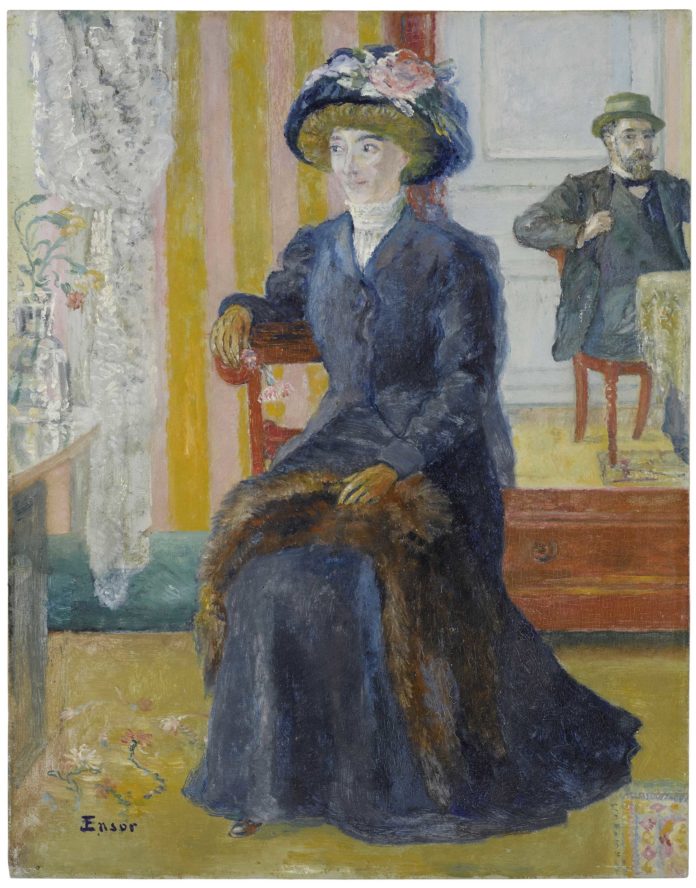
James Ensor (1860–1949), “Nos deux portraits,” oil on panel, painted circa 1905. Estimate: $300,000–$500,000, Price realized: $396,500
From Bonhams New York:
The May 15 sale of Impressionist and Modern Art achieved $4,042,000 (US) with outstanding sell-through rates. The top lot of the sale was “Nos deux portraits” by James Ensor (1860–1949), painted circa 1905, which realized $396,500.
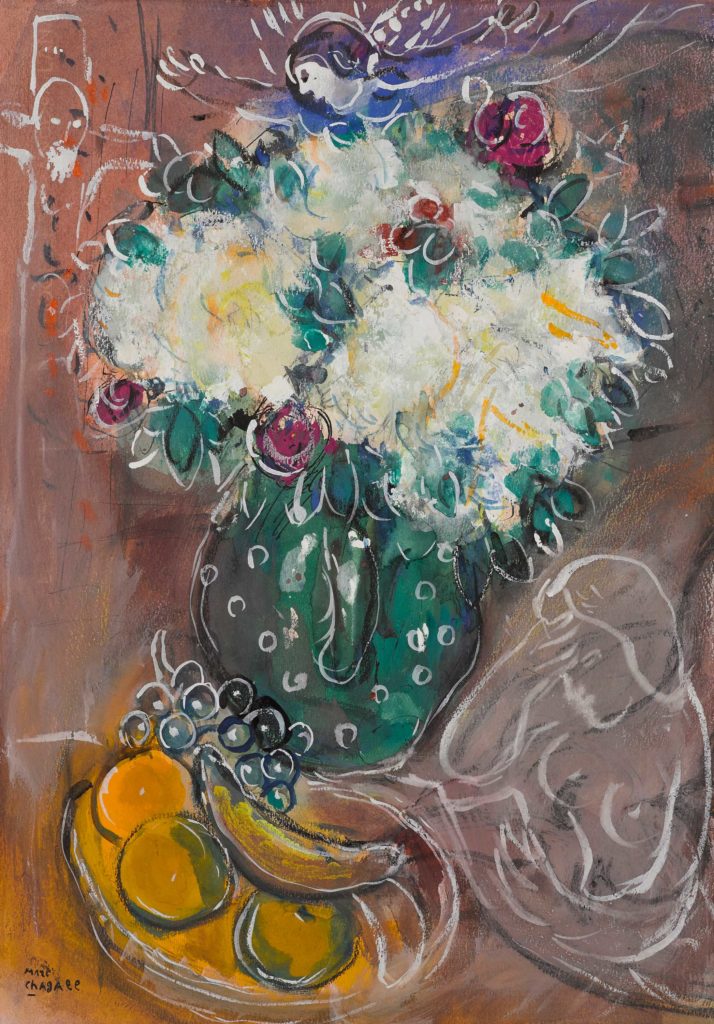
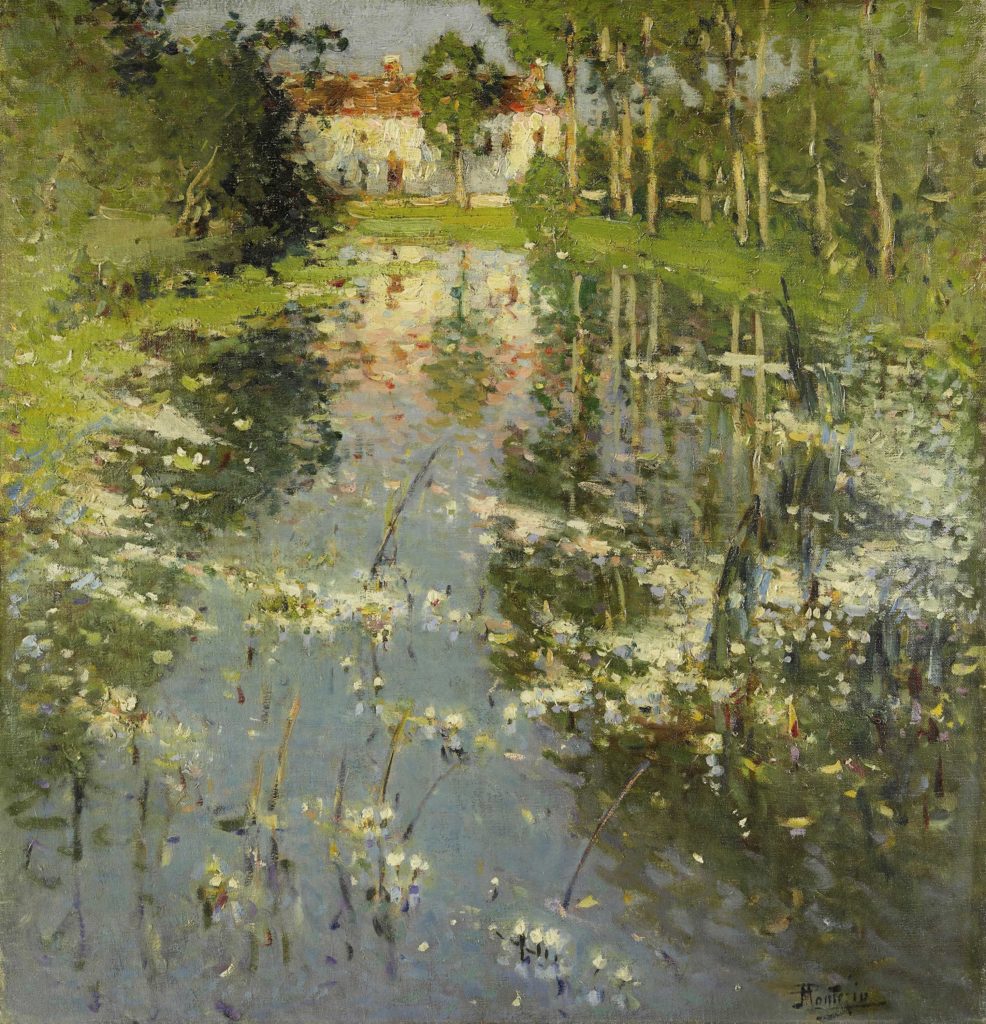
Caitlyn Pickens, Head of Sale, Impressionist and Modern Art, commented: “We are thrilled with the exceptional sell-through rates of 92 percent by lot and 97 percent by value, the highest ever achieved for an Impressionist and Modern Art sale at Bonhams New York. The strong results indicate continued demand for impressionist and modern works with important provenance and reaffirm the market is present and more international than ever. There was high energy throughout the auction, with many works that drew intense competition and sold well over their estimates, which included Pierre Eugène Montézin’s ‘Sur les bords du ruisseau,’ Marc Chagall’s ‘Le bouquet au pot vert,’ and Léonard Tsuguharu Foujita’s ‘Nu aux bras levés (La petite Cariatide à la pâquerette)’”.
About “Nos deux portraits”
Distinguished by its important early provenance and extensive exhibition history, “Nos deux portraits” is a rare double portrait of the artist and his close companion Augusta Boogaerts. This work was exhibited in Ensor’s first retrospective exhibition in 1929 at the Palais des Beaux-Arts in Brussels and has since been exhibited throughout Europe and North America. The first owner of “Nos deux portraits” was Augusta Boogaerts herself.
“Nos deux portraits” is one of four portraits Ensor painted of Augusta. She met Ensor in 1888 while working for his family’s business and remained his close companion for over sixty years. Ensor’s family never approved of the relationship and the two never married or lived together. Instead, Augusta took on the role of an unofficial business and studio manager. She supervised Ensor’s production and arranged many of his still-lifes composed of trinkets, shells, and skulls. Ensor wrote Augusta’s initials, A.B., in his sketchbook, where he reproduced all his paintings, further indicating that she had enormous influence over his still-life compositions.
Further highlights in the sale were:
Marc Chagall (1887–1985), “Le bouquet au pot vert,” watercolor, gouache, and pastel on paper, 1951.
Marc Chagall (1887–1985), “Le bouquet au pot vert,” achieved $360,500 after an estimate of $150,000–$250,000.
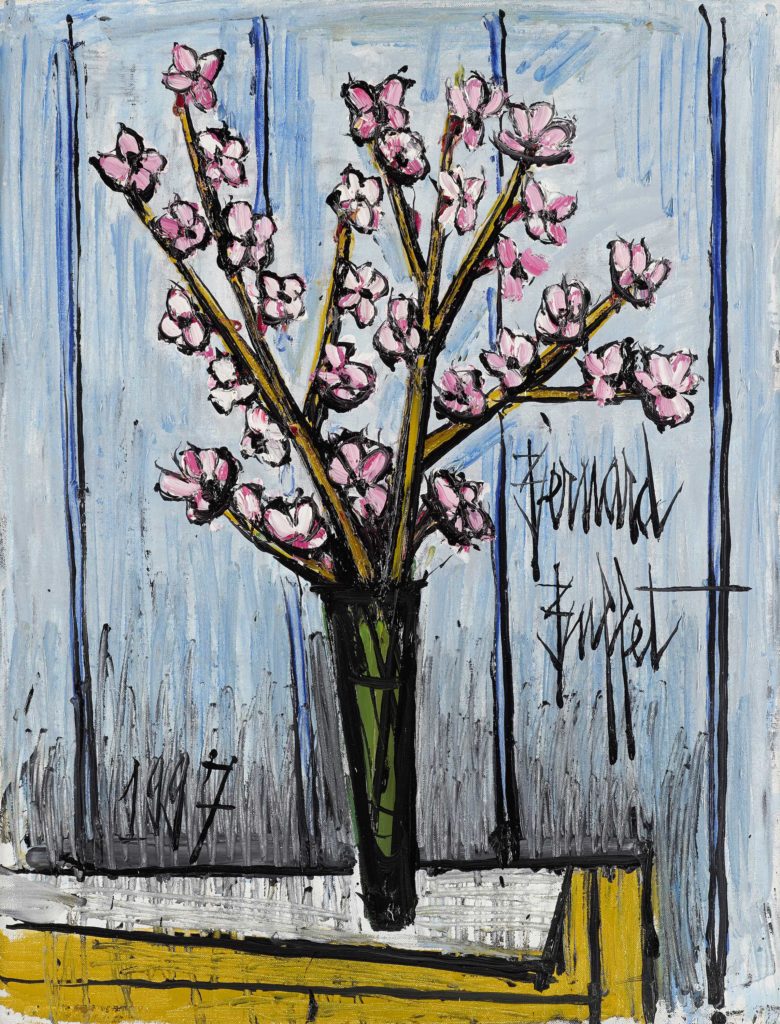
Bernard Buffet (1928–1999), “Branches de cerisiers en fleurs”
Bernard Buffet (1928–1999), “Branches de cerisiers en fleurs,” achieved $225,000 after an estimate of $100,000–$150,000.
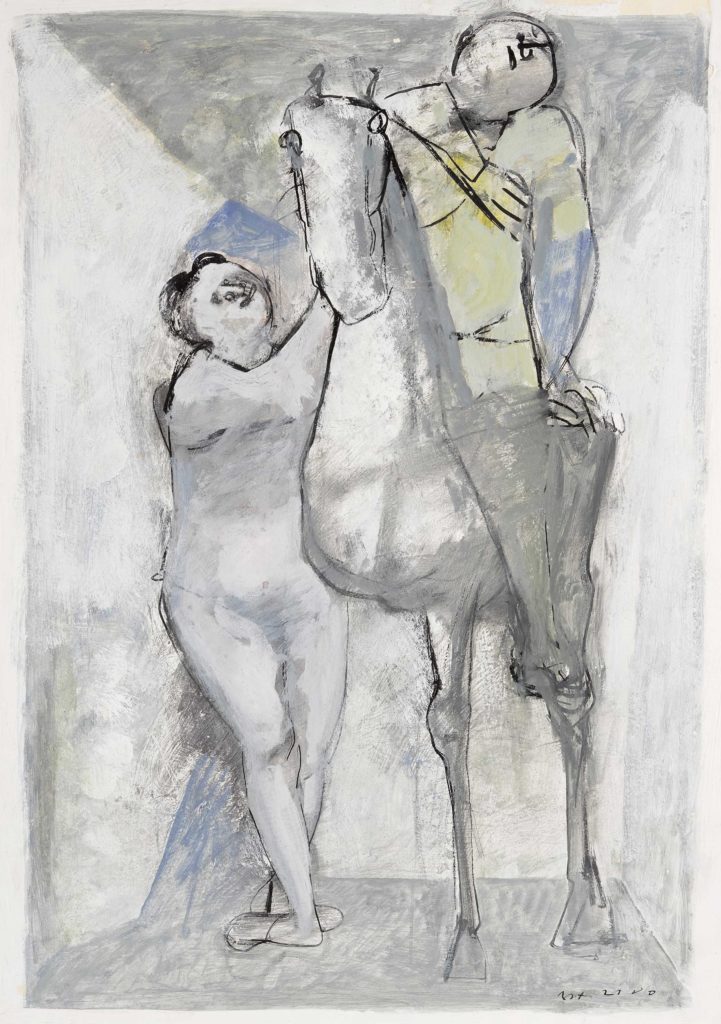
Marino Marini (1901–1980), “Acrobati e cavallo” signed “Marino” (lower right), oil, gouache, pen, and black ink on board 33 x 23.38 in.
Marino Marini (1901–1980), “Acrobati e cavallo” achieved $150,000 after an estimate of $100,000–$150,000.
Pierre Eugène Montézin (1874–1946), “Sur les bords du ruisseau”
Pierre Eugène Montézin (1874–1946), “Sur les bords du ruisseau,” achieved $93,750 after an estimate of $15,000–$20,000.
For more information about fine art auctions at Bonhams, please visit bonhams.com.
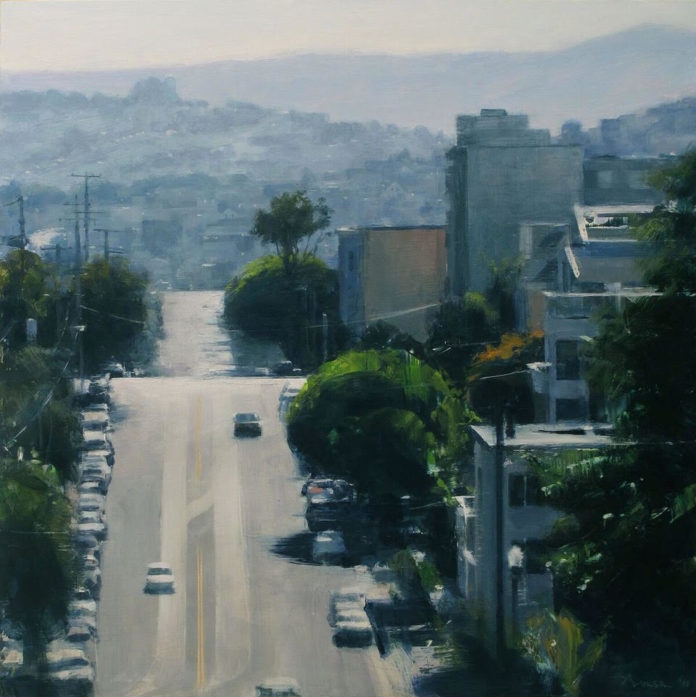
Ben Aronson, “Toward Potrero,” 2018, oil on panel, 24 x 24 in.
A fine art exhibition of painterly cityscapes by Ben Aronson, hosted by Jenkins Johnson Gallery in San Francisco, California
From the gallery:
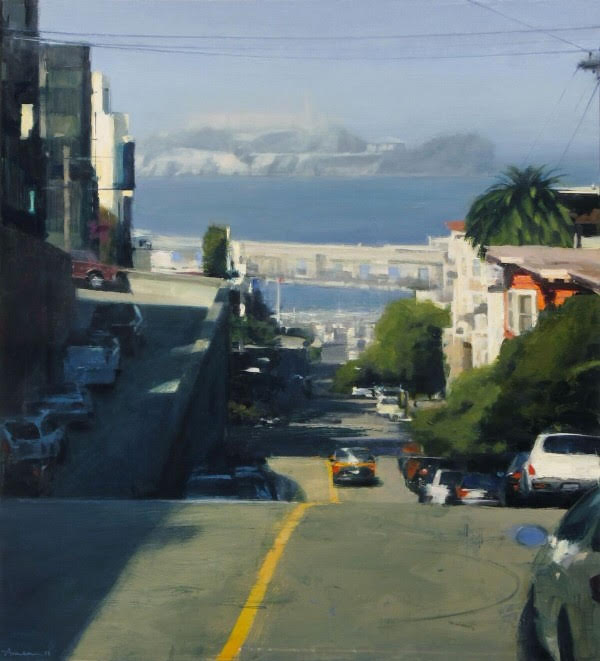
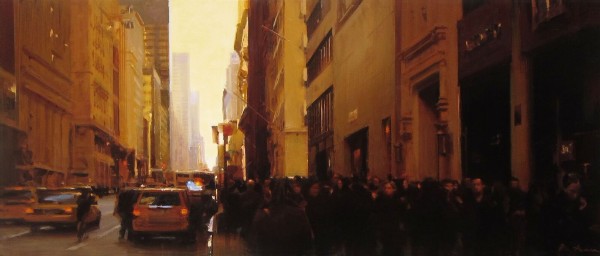
Jenkins Johnson Gallery San Francisco is excited to present “Distilled Realities,” a solo exhibition of Ben Aronson’s vibrant, atmospheric cityscape paintings of San Francisco, New York, Chicago, Paris, and Rome. Synthesizing the gestural energy of emotionally charged abstract expressionist brushwork, influenced by Richard Diebenkorn, with the observational precision of contemporary realism, Aronson’s new, psychologically arresting paintings land for a dynamic fifth solo show at the gallery.
Ben Aronson states, “The making of successfully expressive art requires some sort of visual distillation of priorities excerpted from reality. In order to create a heightened reality, rather than simply re-creating visual scenes with a collection of carefully rendered details, the goal is not only physical likeness, but more importantly, the prioritization and selection of certain key visual elements.”
This, Aronson says, creates “a personal shorthand which serves to deepen and intensify our emotional connection to the work.” With this shorthand, Aronson creates paintings that speak to the particular evocative ethereal nature of pausing for a moment to look at the city as it moves around you. Through the haze of fog, the blurring of blues in the sky, the moving of leaves in the wind, Aronson’s language is distinct and intoxicating.
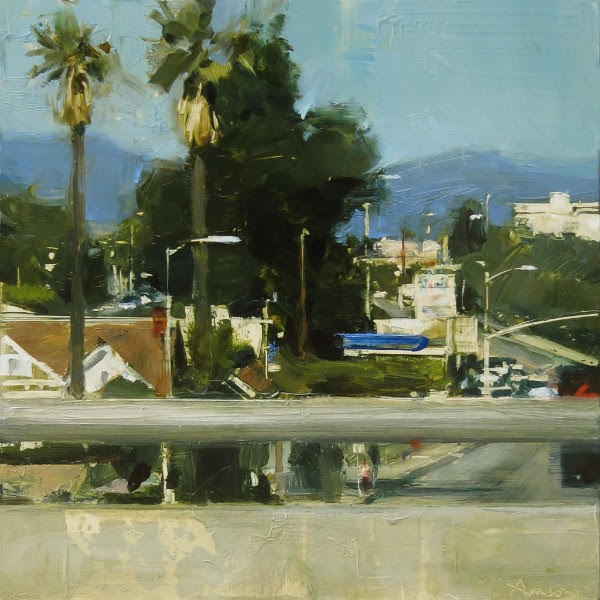
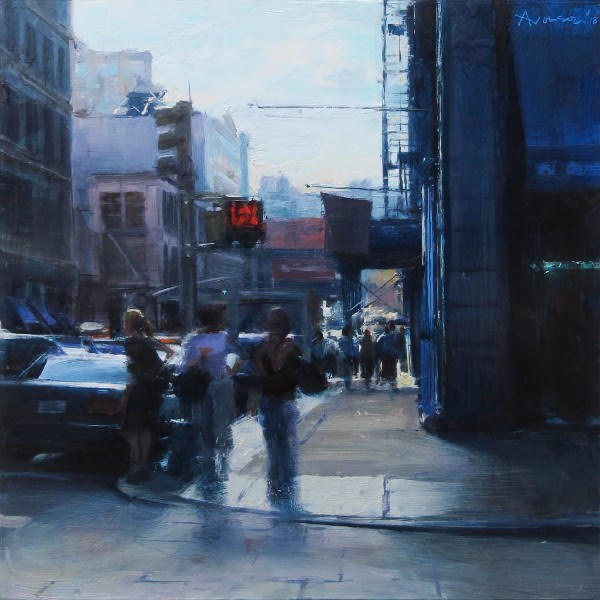
With loose painterly strokes and a deft rendering of atmospheric light, fleeting and familiar moments of cars breezing by and the afternoon sun casting long shadows onto the road materialize in visual poetic verse. Building from studies created en plein air, Aronson’s specificity and attention to light and shadow transport his viewer to a precise location and an exact moment in time, from early morning in the Hollywood Hills to late afternoon in SoHo. Foundational to Aronson’s work is his innate ability to capture light, and the ways in which light varies between and within the cities he visits. Aronson’s diversified use of light and color demonstrates his range in depicting cities and neighborhoods with specific atmospheric moods.
Ben Aronson, “Receding Fog, San Francisco Bay,” 2018, oil on panel, 35 x 32 in.Ben Aronson, “Hollywood Hills,” 2018, oil on panel, 12 x 12 in.Ben Aronson, “Soho,” 2018, oil on panel, 12 x 12 in.Ben Aronson, “Morning, Fifth Avenue,” 2018, oil on panel, 24 x 57 in.
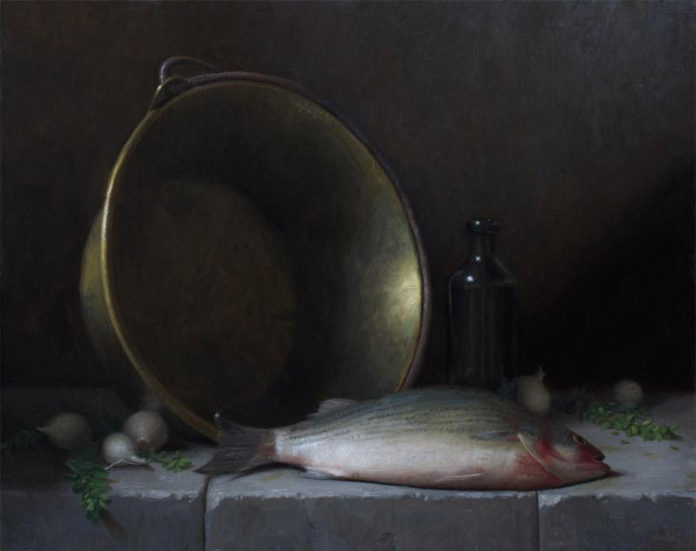
Justin Wood, "Sea Bass,” 2018, oil on canvas, 19 x 24 in.
An exhibition of contemporary paintings and drawings alongside Old Master works, revealing the unbroken line of fine art into the 21st century.
From Robert Simon Fine Art, NY, NY:
Art historian and art dealer Robert Simon curates a selection of Old Master paintings and drawings paired with new works by New York–based painters Jacob Collins, Colleen Barry, Anthony Baus, Will St. John, and Justin Wood, who are all instructors at Grand Central Atelier.
These 21st century atelier artists are carefully attuned to the idea that in order to evince this language with roots in the ancient world, one must first be a humble observer of nature and bear witness to its nuance and sensitivity.
When fully realized through years of serious commitment to study, this language possesses great power to communicate the human condition with limitless beauty and endless variation.
The Unbroken Line: Old and New Masters
Through June 1, 2018
For more information, please visit grandcentralatelier.org.
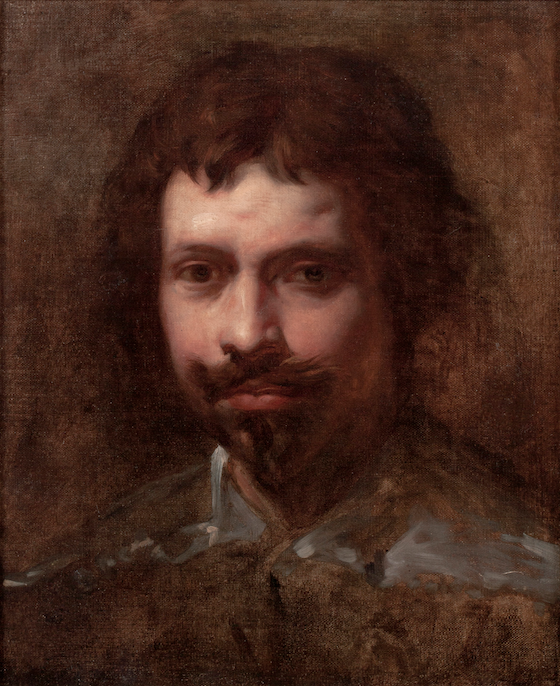
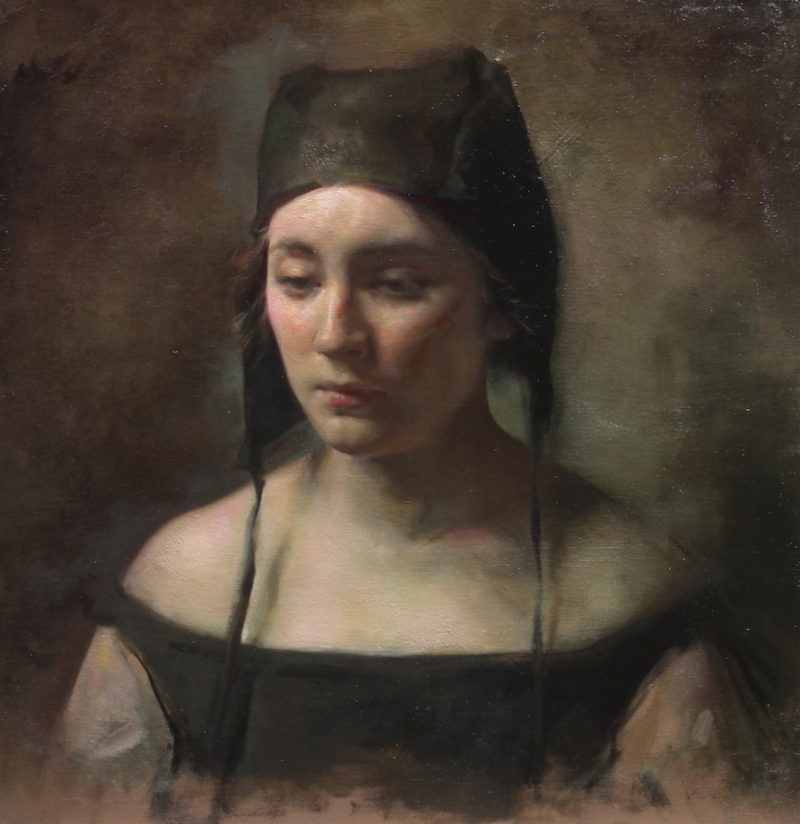
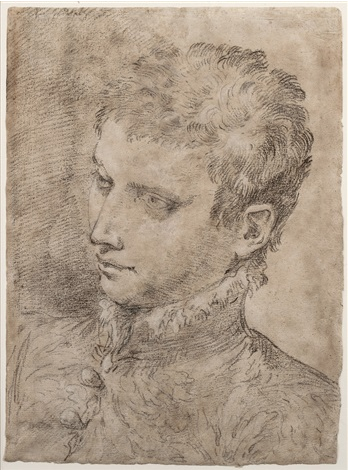
Simon Vouet (Paris 1590–1649), “Portrait of a Young Man,” oil on canvas, 16.75 x 13.63 in.Colleen Barry, “Black Hat,” 2018, oil on canvas, 19 x 24 in.Rachel Li, “Ruby,” 2018, oil on linen, 20 x 24 in.Donato Creti (Cremona 1671 – Bologna 1749) “Study of a Young Man,” black chalk with white heightening on light brown paper, 16.5 x 12 in.
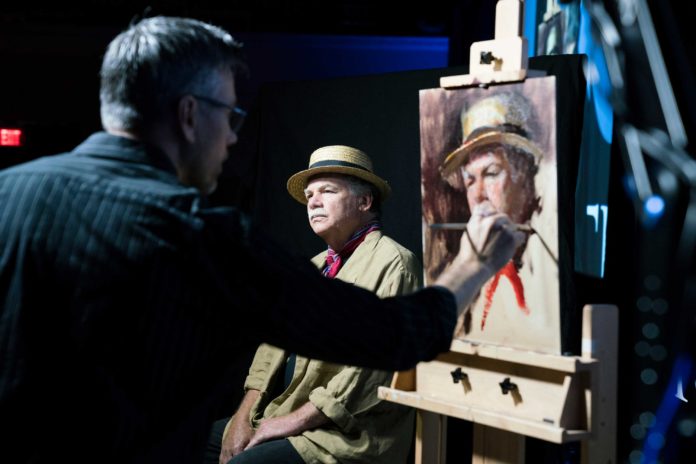
Daniel Gerhartz paints Richard Lindenberg at FACE 2017
Last November, the field of contemporary realism took a big step forward when the first Figurative Art Convention & Expo (FACE) drew almost 350 people to Miami’s historic Biltmore Hotel for a lively celebration of art and ideas. Organized by Fine Art Connoisseur and hosted by publisher Eric Rhoads and myself, FACE offered a memorable combination of demonstrations by renowned masters, informal conversations among artists, and formal lectures by scholars. Participants gained technical skills and philosophical insights, all while getting to know each personally in a friendly, un-stuffy atmosphere.
Eric and I have long envisioned a forum like FACE: As we hoped, when like-minded people get together in person to share techniques and information, their sense of community and their passionate determination to excel grow exponentially. We all rely on social media and teleconferencing, but nothing can ever replace meeting face to face.
One highlight for me was the inspiring talk given by FACE’s youngest attendee, Fina Mooney, a 13-year-old currently studying part-time at the Art Academy in Minneapolis. Fina discussed why figurative art matters to young people like herself, bringing the entire audience to their feet. This led in perfectly to a full demo by our oldest attendee, the realist master Max Ginsburg (b. 1931).
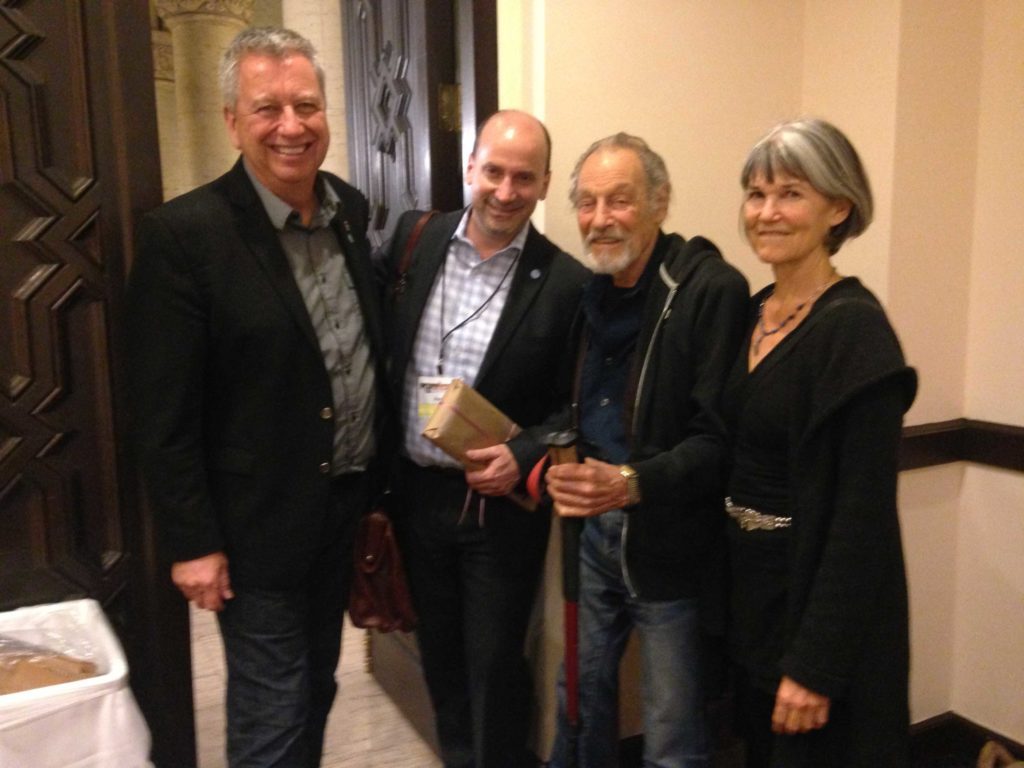
Eric Rhoads, Peter Trippi, David A. Leffel, and Sherrie McGraw
It was a thrill to observe three more days of demos by world-class artists, and also a series of eloquent one-hour talks delivered by other masters. Watching demos often makes you want to try out what you’ve learned right away, so FACE offered an optional hands-on studio experience. For two nights in a row, 125 registrants filled a gigantic ballroom as they drew, painted, and sculpted from nine live models. That was a truly extraordinary sight.
A post-event survey of FACE participants revealed that while most were initially attracted by opportunities to meet and observe world-class artists, they also relished getting to know other artists, thus anchoring themselves within a supportive community. To that end, we are delighted that FACE will return to Miami again this year: November 7–10, 2018, with pre-convention courses on November 6. See you there!
Engulfed
28 x 19 in., watercolor on paper
$1850
Available through South Street Art Gallery, Easton MD
Watercolor is often thought to be a translucent liquid medium which resists manipulation once applied. If so, what possibilities do those challenges present a painter? For watercolor artist Ken Karlic the opportunities are many. Ken refers to his style as “Sophisticated Chaos,” seeing and capitalizing on the unpredictable nature of watercolor. “No two paintings develop in the same way. Marks, scratches, drips, and splatters all become part of the final piece. Each work, whether I am painting in the studio or plein air, begins with an accurate drawing, typically of an urban or industrial landscape,” says Ken, a Chicago native and longtime Baltimore resident. His main subject matter is highways and traffic, railroads, refineries, docks, factories—in every kind of light. Ken’s paintings have a basis in the representational but often dissolve into varying levels of abstraction, and he creates effects in any way possible with any means necessary.
“Typically, a watercolorist’s approach is the opposite of an oil painter’s, but Ken upends the conventions that prize translucence and transparency. His watercolors have active surfaces and an allover quality, are saturated in every way—with color and pencil marks,” says Johanna Halford-MacLeod, Executive Director, Franz and Virginia Bader Fund. “Not for him the reservation of white areas and the application of light washes before dark ones. He attacks the sheet with the energy of an action painter, paint dripping everywhere, adding and subtracting, a water-filled spray bottle in constant use. Ken’s methods are driven by the requirements of each painting: he may work from dark to light, opaque to transparent in one picture, while in another he may suffuse an area with the feeling of transparent silvery or golden iridescence before adding darks to another spot on the same sheet. In his fluency, fearlessness, and ease, and in the skill with which he avoids muddiness, Ken seems unaware of his medium’s supposed challenges.”
Learn more about Ken Karlic and view additional paintings online.
Watch Ken painting: Ken Karlic / Sophisticated Chaos with Daniel Smith Watercolors.
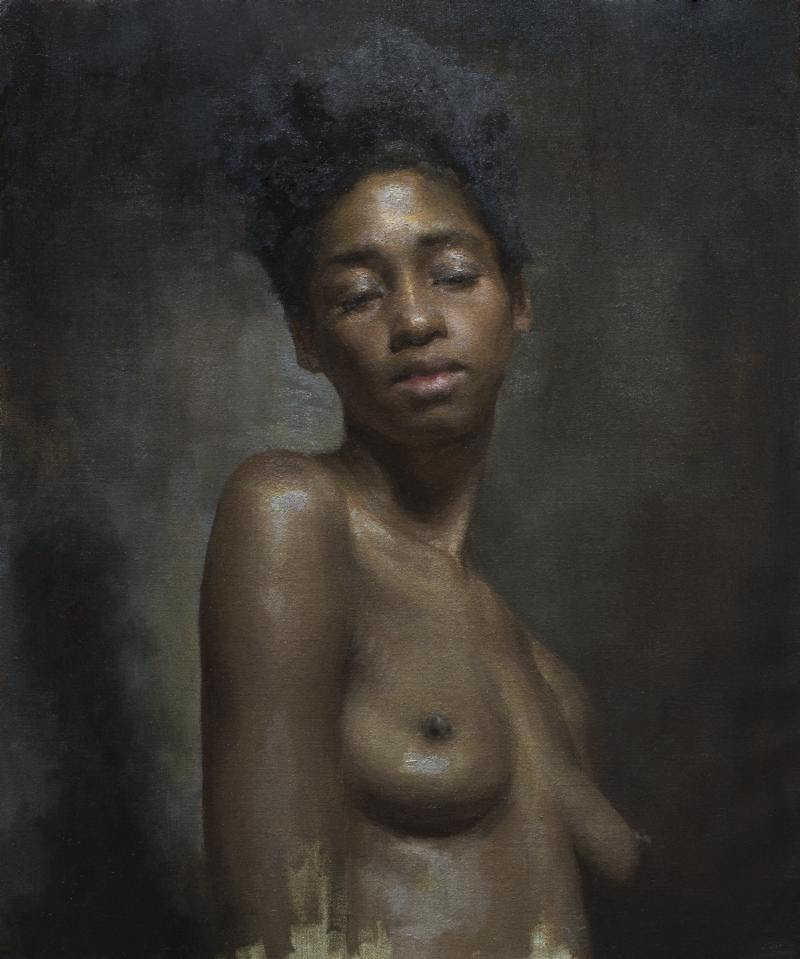
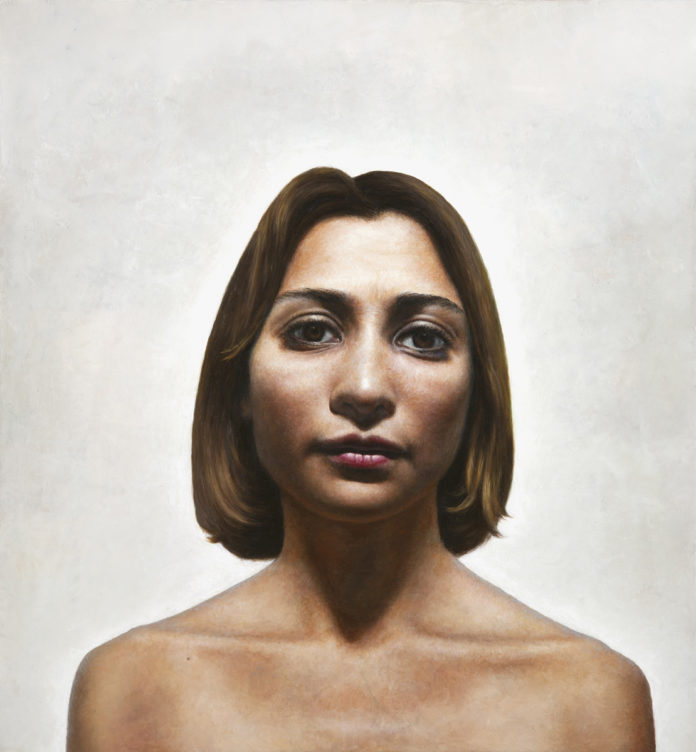
Costa Vavagiakis, “Maria XII,” oil on panel, 13 x 12 in.
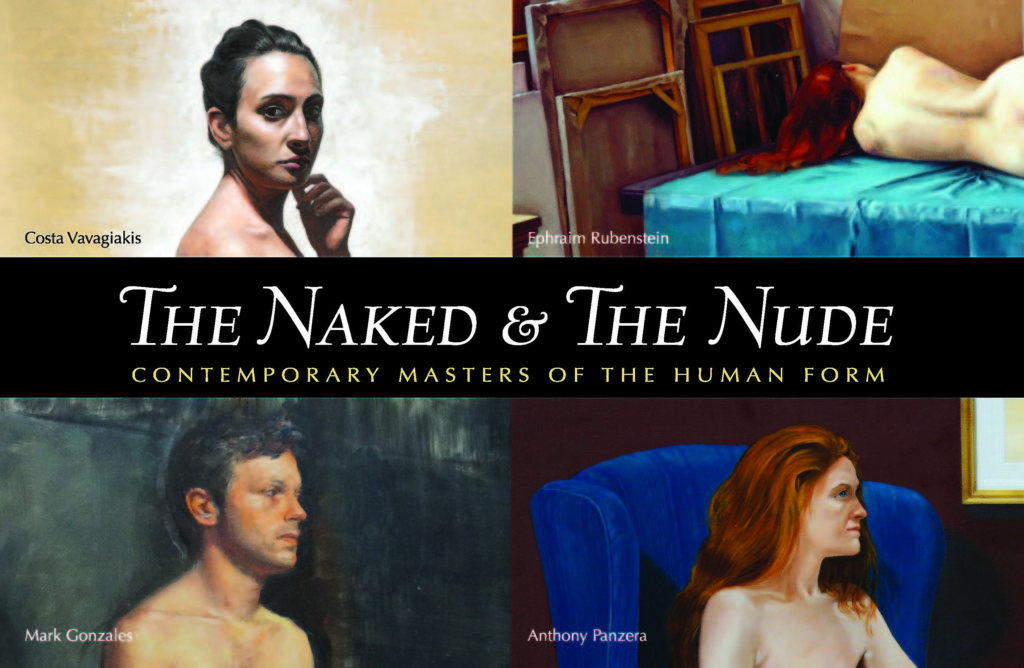
The Naked & The Nude: Contemporary Masters of the Human Form
Featuring Costa Vavagiakis, Ephraim Rubenstein, Mark Gonzales, Anthony Panzera
Studio 7 Art Gallery, New Jersey
Through June 30, 2018
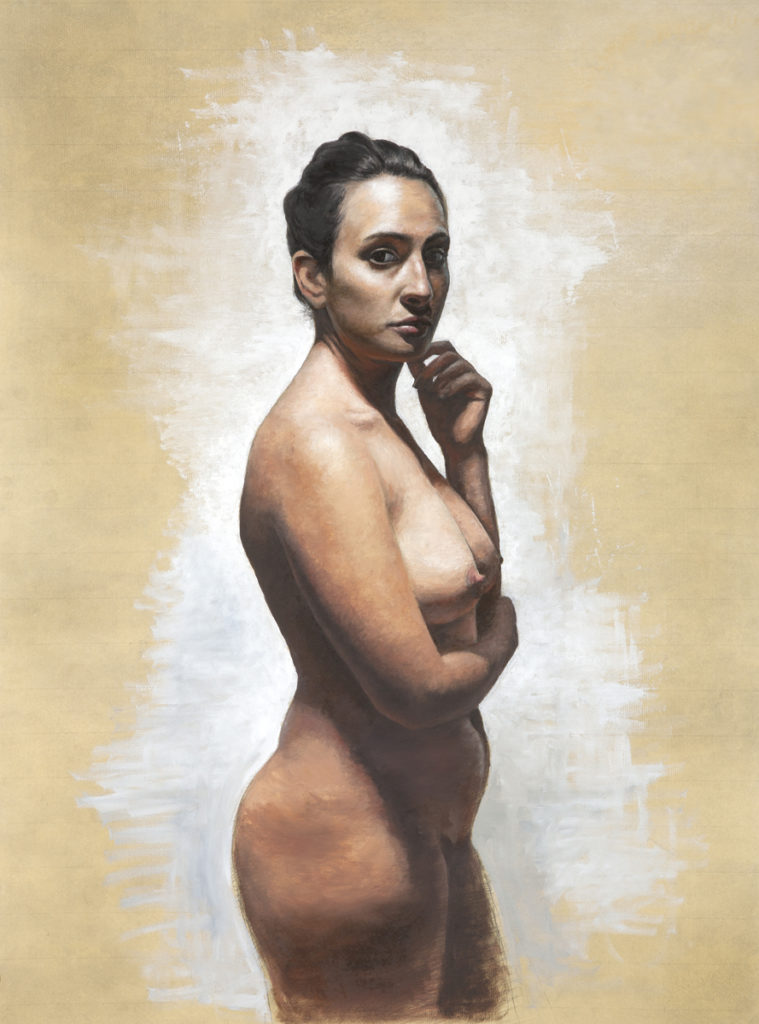
Costa Vavagiakis, “Rainbow XXXVI,” oil on panel, 24 x 18 in.
A Word on the Human Form, from Costa Vavagiakis
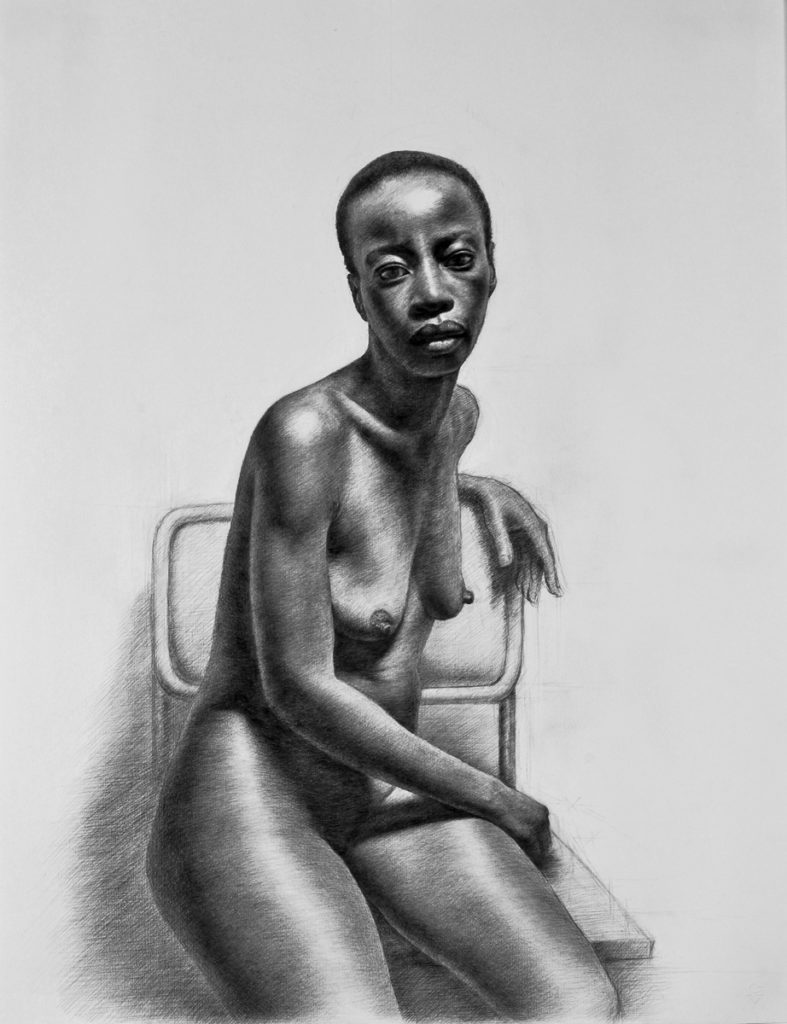
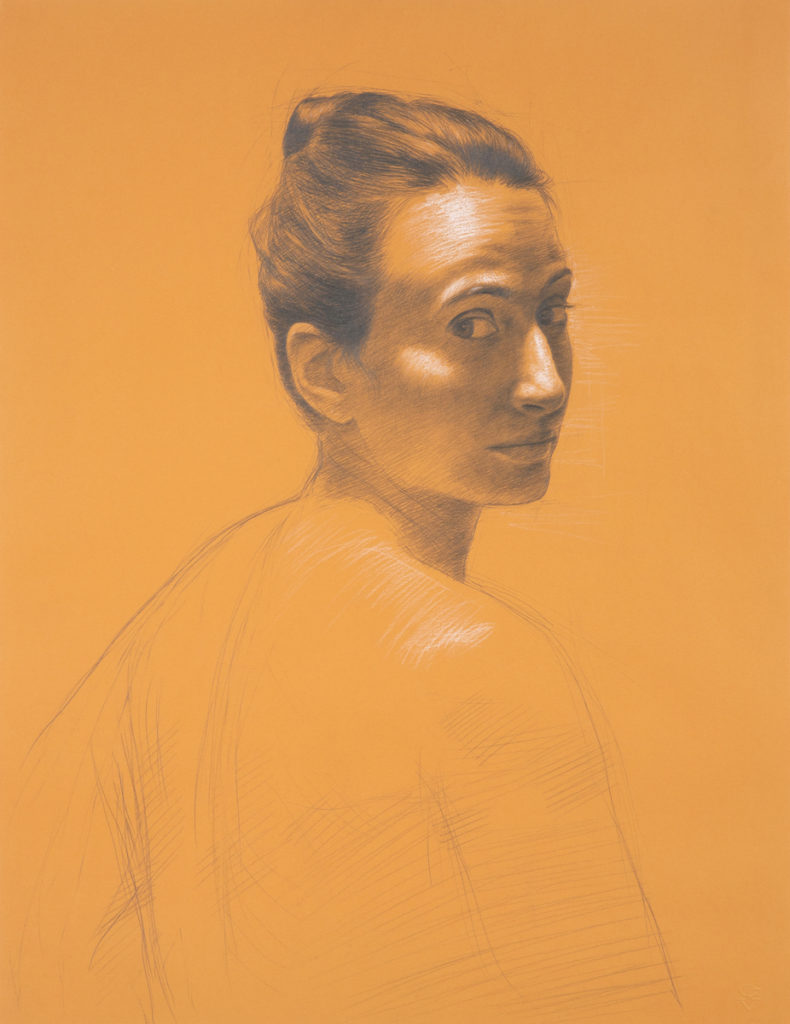
“Nature and Classical Art have long been my twin muses, my guides and inspirations,” says Vavagiakis. “The art that I came to love and study shared an aspiration of capturing the timelessness of the human spirit through the combination of formal beauty and an expression of emotion. I aspire to achieve these concerns in my work. I paint the sitter straight on and objectively, stripped of narrative content. I light from above to capture and record the specific qualities of the skin, hair, and vascular posture. I scrutinize my subject’s physiognomy intensely, transcribing a detailed roadmap of the sitter. I want the viewer to have the sensation of encountering a living, breathing human being with unique spiritual dimensions.”
Costa Vavagiakis, “Connie VI,” graphite on paper, 25.5 x 19.5 in.Costa Vavagiakis, “Rainbow XXXIII, graphite and white chalk on paper, 20.5 x 15.5 in.
The Abiding Value of the Figure
By Ephraim Rubenstein
Our naked bodies are our most fundamental physical possession. We navigate the world through our bodies, and we experience and understand that world through our physical senses.
The naked body is what we all have in common; it is the great unifier. While clothes speak of rank, profession, privilege, or poverty, we all have our naked bodies in common. “Naked I came into this world, and naked I shall go from it.”
Clothes come and go; fashions and styles come and go; but the body remains. It is less subject to the vicissitudes of time and fashion than anything else. But if looking at representations of our bodies gives us pleasure, it is not an easy pleasure. Its obvious sensual beauties are admixed with the guilt associated with sex, as well as the fear of our mortality. Our bodies remind us that we are temporal beings, subject to decay and dying.
So while many people find it easier to clothe the body and not stir all of these difficult emotions, we choose to explore them; to celebrate the sublime beauty of the naked body and to face squarely the difficulties it presents.
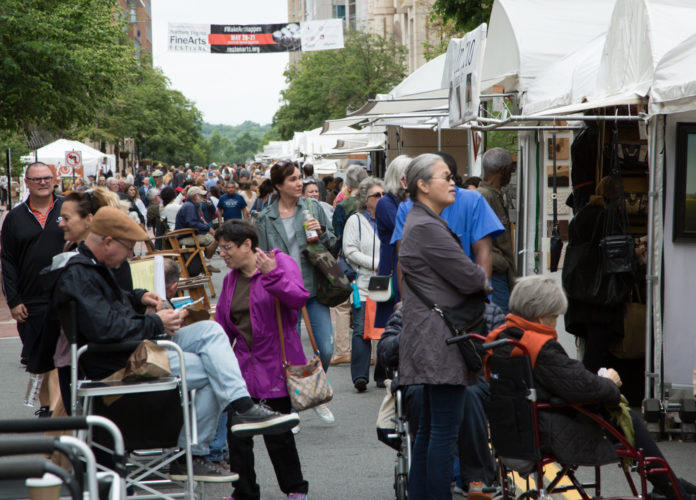
The Northern Virginia Fine Arts Festival takes place May 18–20, 2018. Photo credit: Don Renner
Learn about the Northern Virginia Fine Arts Festival, and why it’s “an event unlike any other.”
From the Greater Reston Arts Center:
Greater Reston Arts Center (GRACE) recently announced major changes to its nationally acclaimed event, the Northern Virginia Fine Arts Festival, which brings to the unique outdoor environment of Reston Town Center more than 200 fine artists from across the nation, presenting original works in 16 categories of fine art and fine craft.
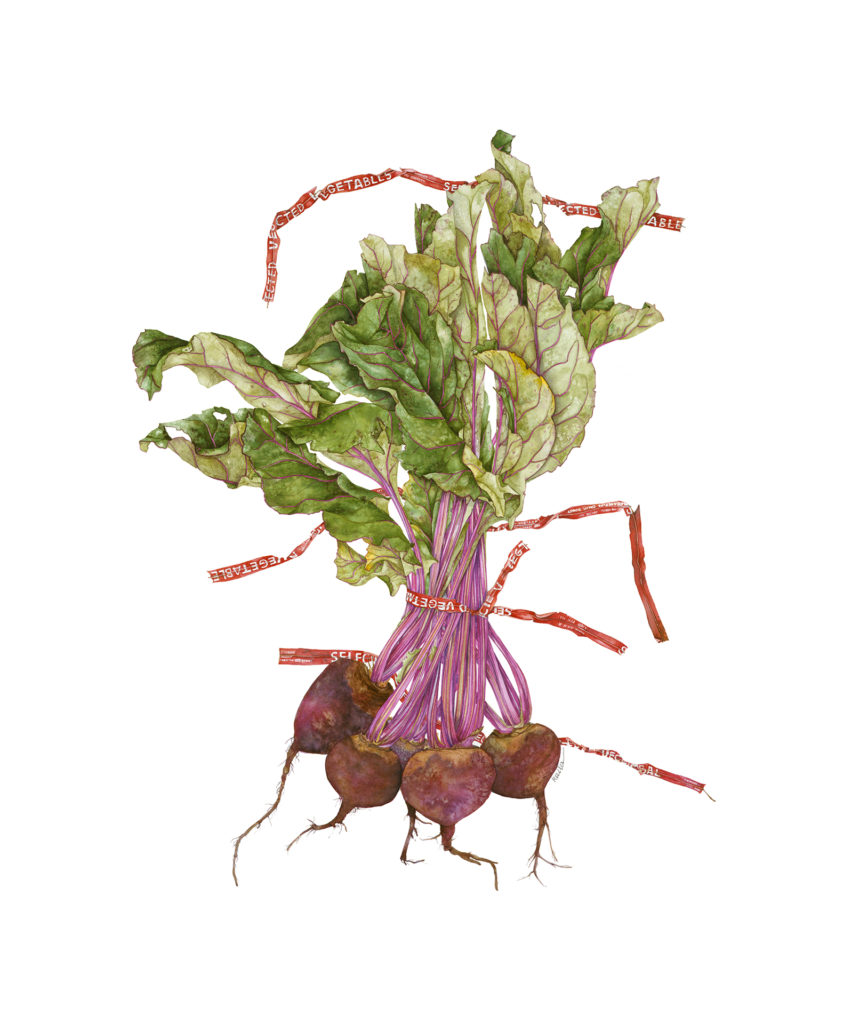
Patricia Kessler, “Select Beets,” watercolor on paper, 30 x 26 x 1 in.
“The Northern Virginia Fine Arts Festival is an event unlike any other. The quality of the fine art is exceptional, and the variety ensures that there is something for everyone, from woodwork to jewelry, ceramics, and painting,” states GRACE Executive Director and Curator Lily Siegel. “We are thrilled to welcome our title sponsor, Balducci’s, to Reston. What a way to introduce itself to the community! And a heartfelt thank-you to all of our community and private sponsors, without whom we could not be making these exciting changes to continue evolving and improving this signature event on the community calendar.”
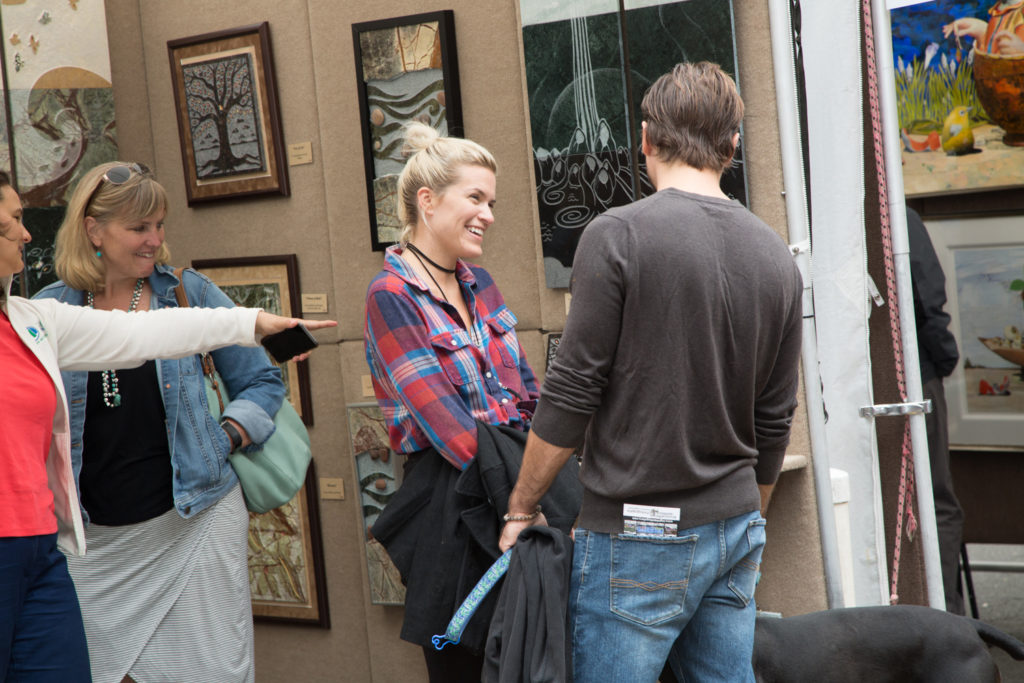
At a previous Northern Virginia Fine Art Fair; Photo credit: Don Renner
“We’d also like to encourage individuals to consider our Adopt-an-Artist program,” said Siegel. “For $100 an individual can directly support our hospitality package for artists. At the same time, you’re creating a very personal connection to the artist you adopt and to the festival experience.”
Acceptance into the Northern Virginia Fine Arts Festival is a major accomplishment for the artists. The selection process begins in December under the direction of an independent panel of professional jurors with assistance from GRACE curatorial staff. The three jurors for 2018 are Spencer Dormitzer, visual artist and director of Joan Hisaoka Healing Arts Gallery; Isabel Manalo, an interdisciplinary visual artist and founding manager of The Studio Visit (TSV), a collaborative art blog featuring artist interviews in their studios; and Francis Thompson, art program project manager at JLL, commercial real estate. These three jurors will also judge each artist booth on Friday and Saturday to select the ten Awards of Excellence winners. Each winner will receive a $500 cash prize, a blue ribbon for booth display, and automatic acceptance into the 2019 Northern Virginia Fine Arts Festival.
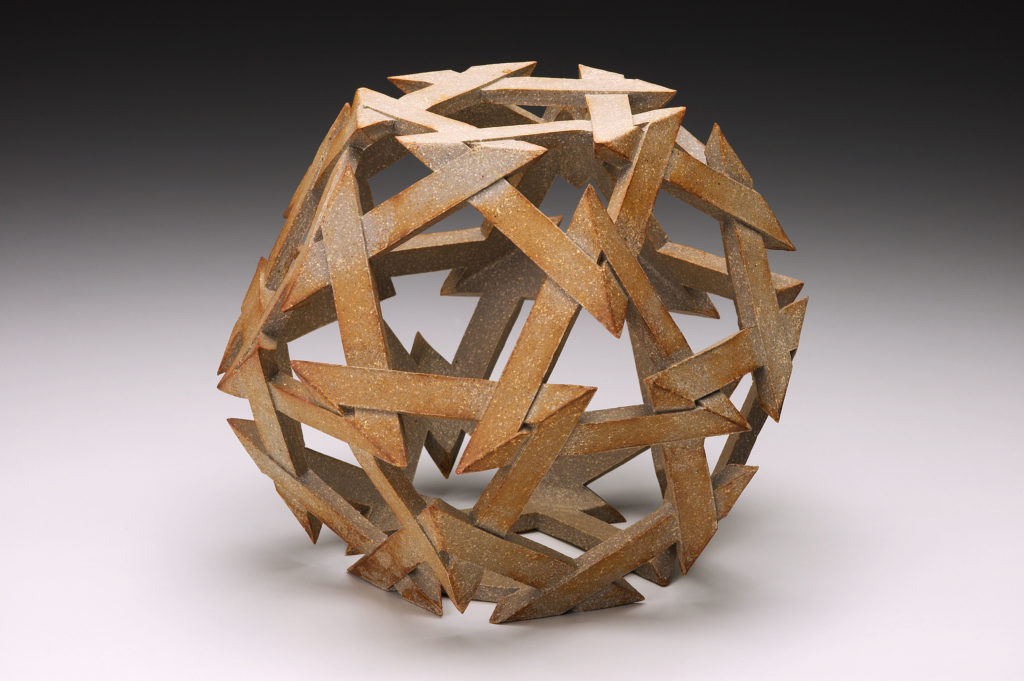
K C Osvog, “Dodecahedron #1,” stone/ceramic 9 x 9 x 9 in.
All opportunities for volunteering (500 volunteers are needed), sponsoring, and other ways to get involved can be found on the GRACE website, www.restonarts.org. For a $5 suggested entry donation, festival guests will receive the festival program, which includes nearly $200 of dining certificates from local restaurants. Art sales benefit the participating artists. All other proceeds directly benefit GRACE and its compelling year-round exhibitions at its Reston Town Center Gallery (free and open to the public) and its other programs.
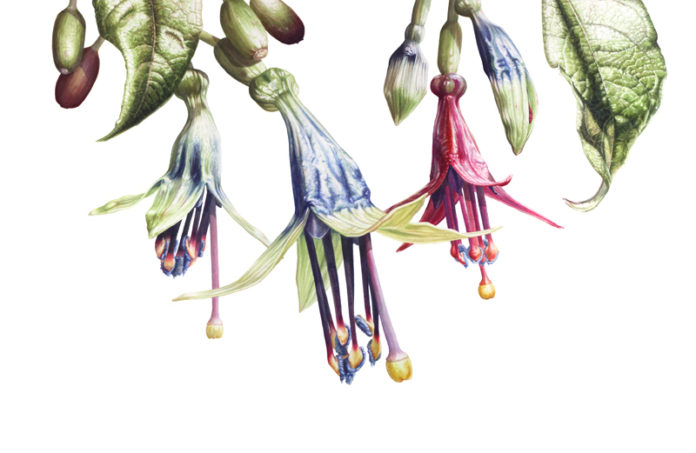
Denise Ramsay, “The Tree, Fuchsia excorticata,” watercolor on paper
This summer, you may happen to be in one of 25 countries participating in the Worldwide Day of Botanical Art, in which dozens of galleries will celebrate our love of plant life in a simultaneous exhibition.
In addition to the USA, the Worldwide Day of Botanical Art will take place in Australia, Brazil, France, Japan, Mexico, southern Africa, and several other countries.
From Botanical Art Worldwide:
Botanical art is undergoing a worldwide renaissance, a movement that includes thousands of artists active in every corner of the globe. For this project, artists are working to document wild plants where they live to create a record of today’s botanical diversity. These artworks will be submitted for juried exhibitions in each participating country, on view this year.
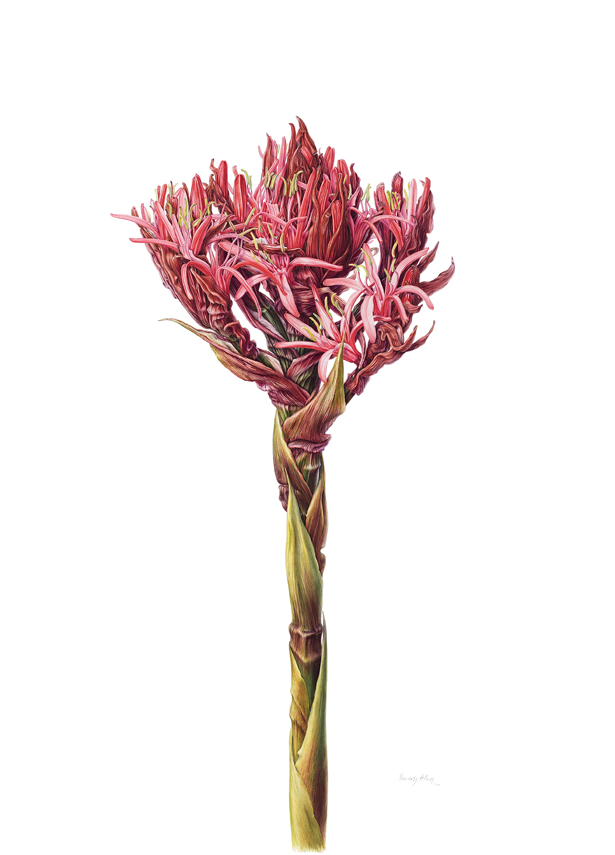
Beverly Allen, “Gymea Lily, Doryanthes excelsa,” watercolor on paper
This worldwide exhibition and its events will bring together institutions, organizations, artists, and the public to call attention to the importance of conserving our botanical diversity. Currently 25 countries are participating, representing artists and plants of six continents. Each country boasts unique habitats and plants that are common, rare, or threatened.
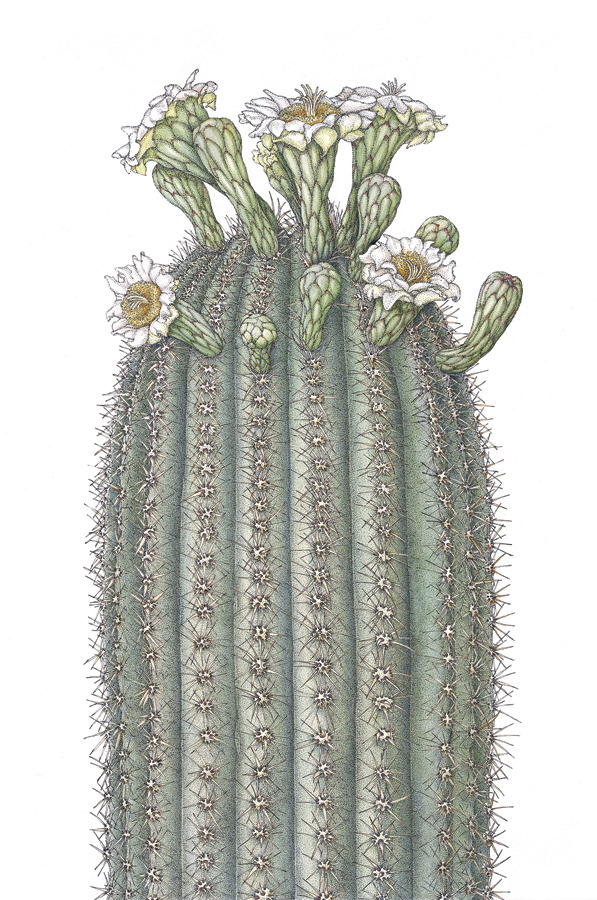
Joan McGann, “Saguaro, Carnegiea gigantea,” ink and watercolor on paper
Worldwide Day of Botanical Art, May 18, 2018
Although each country’s exhibition will have its own opening and closing dates, all exhibitions will be on view on May 18, 2018, and each will have events scheduled to celebrate this historic project. For more information, please visit www.botanicalartworldwide.info.
Fill your mind with useful art stories, the latest trends, upcoming art shows, top artists, and more. Subscribe to Fine Art Today, from the publishers of Fine Art Connoisseur magazine.



 The Abiding Value of the Figure