
Home Blog Page 309

Sokol’s Debut

0
Jordan Sokol at work in his studio

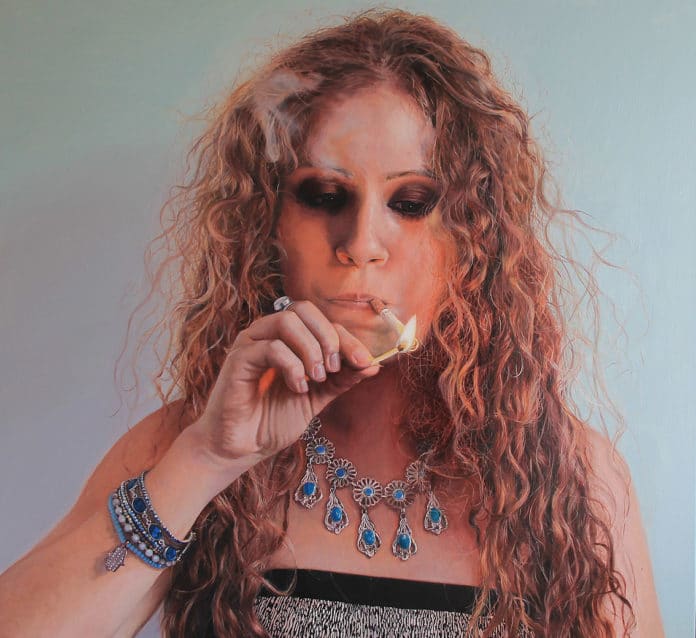
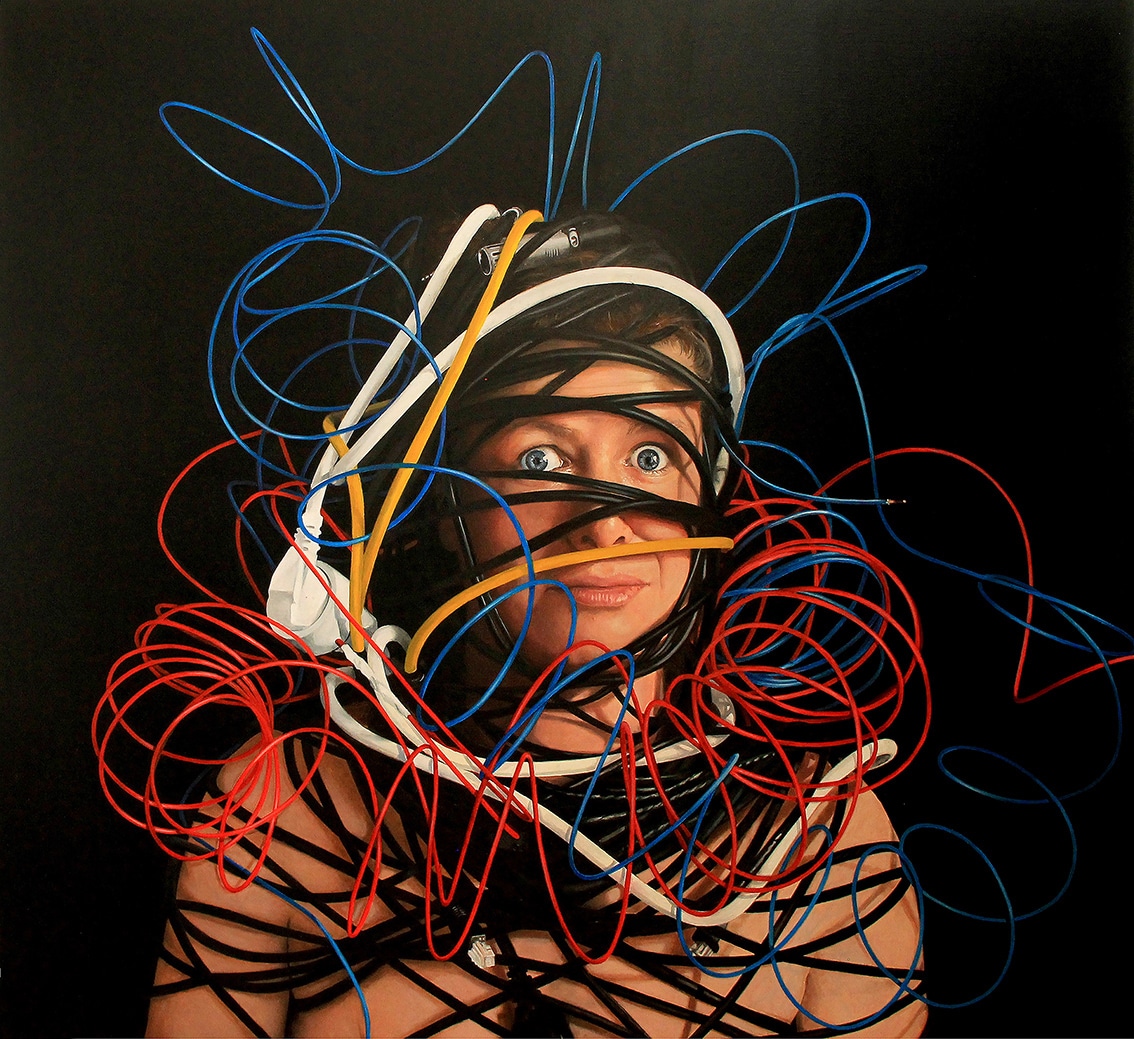
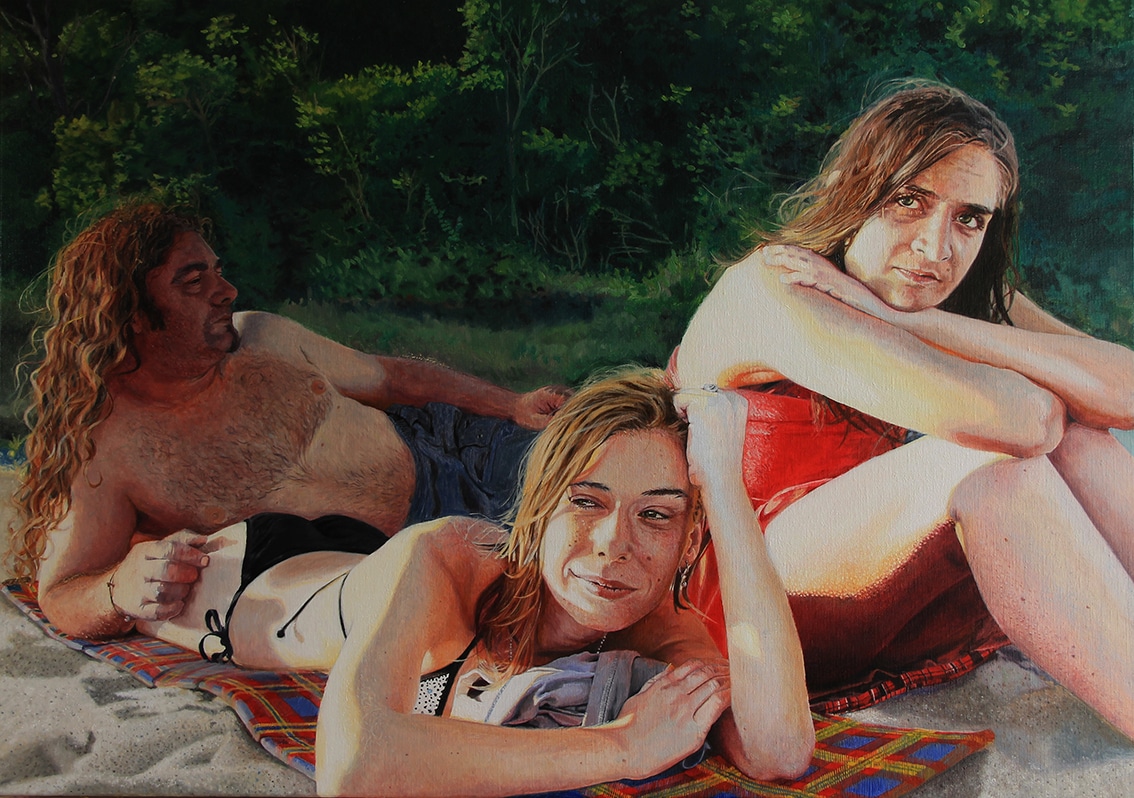
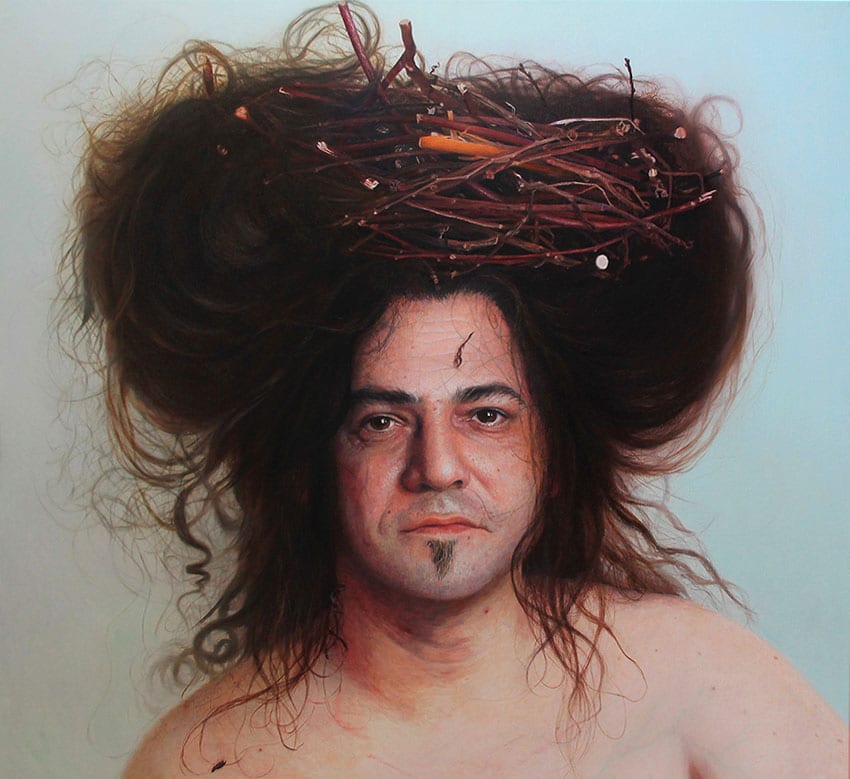
Arcadia Contemporary will soon be presenting Jordan Sokol’s debut solo exhibition in Culver City, California. When?

Save the date: November 18! That’s when the renowned Arcadia Contemporary will present its first solo exhibition of original oils by the renowned painter Jordan Sokol. Originally from Queens, New York, Sokol studied and then taught at the prestigious Florence Academy of Art in Italy for more than a decade before branching off to teach in his private studio in Madrid, Spain. In 2014, Sokol was sought out to become the academic director of the Florence Academy’s first U.S. branch, at the Mana Contemporary Art Center in Jersey City, and he continues to hold that position today. Painting exclusively from life, Sokol says, “I like to use portraiture as a way of exploring the psychology behind the human experience.”

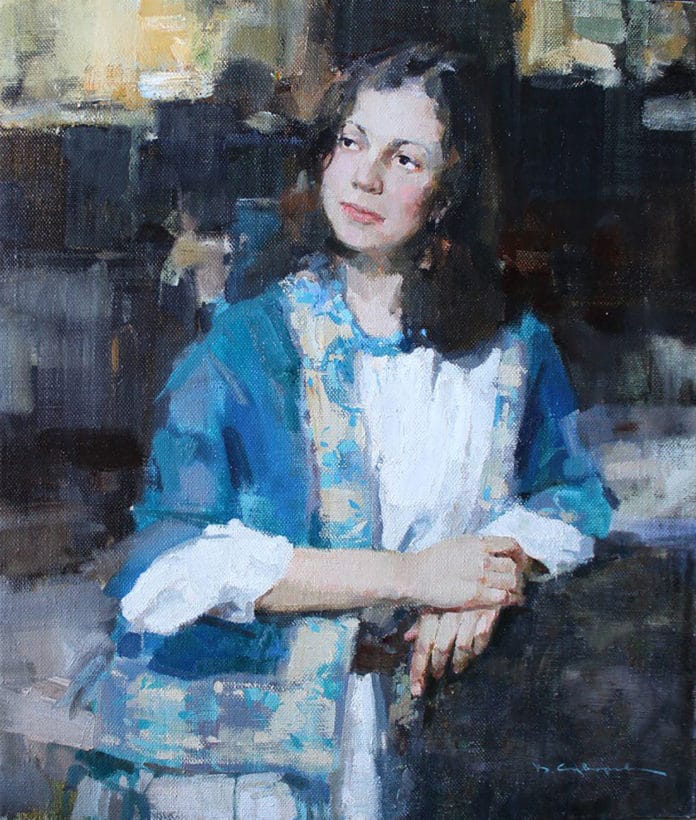
Jordan Sokol, “Solstice,” oil on canvas, 31 x 27 1/4 inches
Jordan Sokol, “Eddie,” oil on panel, 15 x 13 inches

To learn more, visit Arcadia Contemporary.

This article was featured in Fine Art Today, a weekly e-newsletter from Fine Art Connoisseur magazine. To start receiving Fine Art Today for free, click here.
Ages of Wonder

0
Jacopo Bassano, “The Adoration of the Kings,” circa 1540, oil on canvas, 183 x 235 cm, Royal Scottish Academy

In partnership with the Royal Scottish Academy, the National Galleries of Scotland have recently mounted the largest collections-based exhibition to date, building on the moment in 1910 when the RSA transferred significant works to the National Collection, securing exhibiting rights within what is now called the RSA building.

“Ages of Wonder” is a truly magnificent display of both artistic achievement and Scottish culture and heritage. Opened on November 4 and continuing through January 7, “Ages of Wonder” was organized in partnership with the Royal Scottish Academy, which was established in 1826 and remains Scotland’s longest established artist-run society.

“The story of the collections will be told through work from all disciplines and in a variety of media from marble to film,” the NGS suggests. “Individual gallery rooms will be curated to focus on particular subjects, including the teaching role of the Academy, architecture, 19th-century print and photography collections, artist printmaking, sculpture, portraiture, and the future of collecting. Three galleries will explore changing conventions of exhibiting in the Victorian, Modern and Contemporary periods, with a recreated Victorian ‘salon-style’ hang of works exhibited from dado to ceiling.

“Throughout the rest of the exhibition there will be a mix of historic and contemporary works, including work by emerging artists. Contemporary commissions and exhibition events will bring the exhibition right up to the present day. The renowned photographer Calum Colin will be bringing his studio into the gallery to create a brand new work during the exhibition. Award-winning architect Richard Murphy has designed a new ‘Wunderkammer’ to house and display selected exhibition items from the RSA Collection. These new works, in addition to the aforementioned Kenny Hunter sculpture, will be accessioned into the RSA Collection after the exhibition ends.”

To learn more, visit the National Galleries of Scotland.

This article was featured in Fine Art Today, a weekly e-newsletter from Fine Art Connoisseur magazine. To start receiving Fine Art Today for free, click here.

Frick Celebrates 400 Years of Murillo

0
Bartolomé Esteban Murillo, “Self-portrait,” circa 1670, oil on canvas, 48 1/16 x 42 1/8 inches

2017 marks the 400th anniversary of the birth of one of the most celebrated painters of the Spanish Golden Age, Bartolomé Esteban Murillo (1671-1682). A number of international exhibitions are planned to pay tribute to the artist’s achievements, and the first just opened at the Frick Collection in New York City.

On view November 1 through February 4, 2018, “Murillo: The Self-Portraits” is an important display of Spanish Golden Age work by Bartolomé Murillo at the Frick Collection in New York City. Following its run there, the works will travel to London’s National Gallery from February 28 through May 21, 2018.

Bartolomé Esteban Murillo, “Two Women at a Window,” circa 1655-60, oil on canvas, 49 1/4 x 41 1/8 inches
Bartolomé Esteban Murillo, “Juan Arias de Saavedra,” 1650, oil on canvas, 53 1/8 x 38 9/16 inches

According to the Frick Collection, “Murillo’s career was a successful one, and he painted canvases for the most important patrons and churches in Seville. While the majority of his artistic production was for religious institutions, he also created allegorical and genre scenes. Murillo’s paintings of urchins in the streets of Seville are particularly well known and, together with his Immaculates and other religious images, they remain the artist’s signature works. Less familiar are a number of portraits, both full- and half-length, that Murillo painted of his patrons and friends. Biographers and scholars have paid little attention to this aspect of the artist’s career, and this is the first exhibition dedicated exclusively to the subject. Murillo’s first biographer, Antonio Palomino, described the artist in 1724 as ‘an eminent portrait painter,’ although only about fifteen portraits by or attributed to him (including two self-portraits) have survived. Five of these are included in the exhibition.

Bartolomé Esteban Murillo, “Self-portrait,” circa 1650-55, oil on canvas, 42 1/8 x 30 1/2 inches

“Significantly, the painter’s only known self-portraits will be shown together for the first time since they were documented in the 1709 inventory of his son Gaspar’s art collection. These two self-portraits — one recently given to The Frick Collection and the other from the National Gallery in London — will be shown with a group of other works by Murillo that will provide a larger context for these rare canvases. At the Frick, seventeen works, paintings as well as works on paper, will be presented in the intimate lower-level galleries.”

To learn more, visit The Frick Collection.

This article was featured in Fine Art Today, a weekly e-newsletter from Fine Art Connoisseur magazine. To start receiving Fine Art Today for free, click here.
Portraiture in a New Nation

0
Image via the DeWitt Wallace Decorative Arts Museum

Portraits by notable artists such as Charles Wilson Peale, Charles Peale Polk, Gilbert Stuart, Thomas Sully, and Cephas Thompson feature during a significant exhibition at the DeWitt Wallace Decorative Arts Museum in Williamsburg, Virginia.

“Painters and Patrons in the New Nation” is a fascinating exhibition on view at the DeWitt Wallace Decorative Arts Museum in Virginia through December 2019. The show features portraits made between 1780 and 1840 by notable artists including Charles Wilson Peale, Charles Peale Polk, Gilbert Stuart, Thomas Sully, and Cephas Thompson as well as lesser-known folk artists.

The exhibition will also focus on works from the Chesapeake region of Virginia, Maryland, and Washington, D.C., also with examples from Georgia, Alabama, West Virginia, and Kentucky. Nearly three quarters of the portraits on view will be new to visitors; many of the artworks were either recently acquired by the DeWitt Museum or were newly conserved.

To learn more, visit here.

This article was featured in Fine Art Today, a weekly e-newsletter from Fine Art Connoisseur magazine. To start receiving Fine Art Today for free, click here.

OPA Eastern Regional Exhibition

0
Daniel M. Cassity, “And So the Panic Begins,” oil, 16 x 20 inches

Anderson Fine Art Gallery in Saint Simons Island, Georgia, is proud to soon be hosting the Eastern Regional Exhibition for the Oil Painters of America. When do festivities kick off and who’s represented? Find out here.

On November 17, Anderson Fine Art Gallery will officially host the Eastern Regional Exhibition for the Oil Painters of America (OPA). On view through December 16, artworks are being judged by Howard Friedland. There will also be a number of painting demonstrations by esteemed artists, including John Michael Carter, Marc Hanson, Katie Cundiff, and Howard Friedland. Oil Painters of America Master artists will be submitting paintings as well, among them Daniel Greene, Daud Akriev, Charles Cox, and Albert Handell, to name a few. The focus in the jurying process was to select paintings that show the highest quality in draftsmanship, color, and composition, emplacing diversity in representational style and subject matter.

Meredith J. Cope, “Last Chance,” oil, 16 x 12 inches
Elizabeth Floyd, “Morning Ramble,” oil, 20 x 16 inches
J.E. Daly, “The Reenactors,” oil, 24 x 18 inches

A reception will be hosted at the gallery from 6-9 p.m. Represented artists include — among many others — Christopher Zhang, Warren Chang, Anne Blair Brown, Lon Brauer, Susan Budash, Diana T. Cutrone, Sue Foell, Daniel E. Greene, Marjorie A. Grinnell, and Charles Cox.

To learn more, visit Anderson Fine Art Gallery.

This article was featured in Fine Art Today, a weekly e-newsletter from Fine Art Connoisseur magazine. To start receiving Fine Art Today for free, click here.
From Nature, In Stone

0
Fitz Henry Lane, “View of the Town of Gloucester, Mass.,” 1836, colored lithograph on paper, Pendleton’s Lithography, Boston

The Cape Ann Museum in Gloucester, Massachusetts, is proudly presenting an important selection of lithographs by one of America’s most important artists of the mid-19th century. Who was he?

“Drawn from Nature & on Stone” is a significant exhibition at the Cape Ann Museum featuring important works by Fitz Henry Lane, a Gloucester native. On view through March 4, the exhibition has been organized in conjunction with the museum’s release of the artist’s catalogue raisonné. According to the museum, “Lane was born in Gloucester, trained in lithography in Boston and, during the same time, exposed to the art world. By the late 1840s, Lane was rapidly establishing himself as a well-known and sought-after painter. During the 1850s and into the 1860s, working from a studio overlooking Gloucester Harbor, Lane created an unknown number of canvases documenting and celebrating in amazing detail and beauty the world around him. His work included views not only of Gloucester and surrounding communities but also of Boston Harbor, coastal Maine, New York Harbor, and other locales.

“Today, the Cape Ann Museum, located just a few blocks away from Lane’s studio, proudly displays the world’s single largest collection of oil paintings by this esteemed American artist. While his canvases, exhibited in museums around the world, remain the work Lane is best known for, his life-long fascination with the art of lithography remains an important and central part of his career.

“With the exhibition ‘Drawn from Nature & on Stone,’ the Museum will investigate Lane’s lithographs, exploring the intersection of his work in oil and in print and his success at creating illustrations for sheet music, business cards and stationery, advertising materials and book illustrations. The exhibition will highlight a series of views Lane created of towns and cities throughout the region including Gloucester; Boston; Norwich, Connecticut; Castine, Maine; and Baltimore. In total, Lane is thought to have had a hand in the production of approximately 65 lithographs.

“‘Drawn from Nature & on Stone’ will feature lithographs from the Cape Ann Museum’s own holdings and from collections throughout the region including the American Antiquarian Society, the Boston Athenaeum, The New York Public Library and the Library of Congress. The exhibition will offer scholars and lay people alike the opportunity to explore the intersection of Lane’s work as a printmaker and a painter, to learn more about the art of lithography, and to consider the enduring effects image production has had on American culture since the early 19th century.”

To learn more, visit the Cape Ann Museum.

This article was featured in Fine Art Today, a weekly e-newsletter from Fine Art Connoisseur magazine. To start receiving Fine Art Today for free, click here.
Passionate Pursuits

0
Mike Anderson, “Red-winged Blackbird,” 2012, woodcut on rives paper

Avian marvels in a wide variety of styles and mediums are currently being showcased at the Leigh Yawkey Woodson Art Museum in Wisconsin. Who’s included?

“Passionate Pursuits: Birds in Our Landscapes” is an ongoing exhibition of avian art at the Leigh Yawkey Woodson Art Museum in Wausau, Wisconsin. On view through February 18, 2018, the exhibition presents a range of both historical and contemporary works in a variety of media —celebrating one of the most inspirational subjects in art.

Robert Caldwell, “Sewanne Barn,” 2008, oil on hardboard
Eric Conklin, “The Brood,” 2004, oil on oak panel
John Mullican, “Downy Woodpecker,” paint on tupelo
Roger Tory Peterson, “Baltimore Oriole and Young,” 1950, watercolor on illustration board

“Avian marvels that live in and pass through Midwest cities, rural landscapes, and our backyard feeders connect us with nature,” the museum writes. “They are alluring to watch, sing melodiously, and balance our ecosystem. Whether perched atop a tree, taking a turn at the nest, or foraging for food, birds provide unlimited inspiration for creative artistry.”

To learn more, visit the Leigh Yawkey Woodson Art Museum.

This article was featured in Fine Art Today, a weekly e-newsletter from Fine Art Connoisseur magazine. To start receiving Fine Art Today for free, click here.
Renaissance Icon in Kansas City

0
Lorenzo Ghiberti, “Gates of Paradise,” circa 1452, gilded bronze, 17 feet, Florence baptistery

Originally created for the east façade of the Baptistery in Florence, Italy, “The Gates of Paradise” by Lorenzo Ghiberti — a monumental pair of 17-foot gilded bronze doors — are considered a defining moment of the Italian Renaissance. How have they landed in Missouri?

A team of engineers and workers triumphed over multiple challenges recently when they successfully installed casts of the original “Gates of Paradise” doors in the Bloch Lobby at the Nelson-Atkins Museum of Art in Kansas City, Missouri. The 15th-century doors are massive, at 17 feet tall and weighing in excess of 4 1/2 tons.

Via the museum, “The doors require a location that allows for anchoring and framing against a strong wall, and the top of the ramp in Bloch Lobby offered just such a majestic location. The original ‘Gates of Paradise’ were set within the east portal of the Baptistery in Florence, and they functioned as a space of transition through which the baptized passed on their way to the Cathedral, which signified the Heavenly Kingdom to believers.”

“‘Bloch Lobby is the entry point for the museum, and “The Gates of Paradise” will signal that as visitors enter the modern and ethereal Bloch Building, they will encounter not only contemporary work, but also art from all over the world and across many time periods,’ said Julián Zugazagoitia, Menefee D. and Mary Louise Blackwell CEO & Director of the Nelson-Atkins.

“Ghiberti was commissioned in 1425 to create the doors, and he and his workshop toiled for 27 years (1425-1452) to create striking, sculptural panels depicting scenes from the Old Testament. The panels are surrounded by intricate framework, foliage, fruit, and busts. For centuries, the doors have been considered one of the masterpieces of Western art and the beginning of the Renaissance.

“‘The original doors represented a transition to the Italian Renaissance, which was so fundamentally transformative that its influence left no Western culture untouched,’ Zugazagoitia said.

“‘The contemporary cast of Ghiberti’s ‘Gates of Paradise’ fits within a long trajectory and tradition of copying great works of art from the past, extending to Antiquity. Romans filled their homes and their bathhouses with copies of Greek sculptures. Renaissance collectors including Cosimo I de Medici, and Antoine Perrenot de Granvelle, whose portrait by Titian hangs in the Nelson-Atkins, commissioned bronze copies of sculptures for their private collections. The practice continued in the 18th century among English collectors including the Duke of Hamilton, the Duke and Duchess of Lauderdale, and the Duke of Northumberland, all of whom commissioned marble replicas of the most important Italian works they saw during their travels on the Grand Tour.

“In the 19th and early 20th centuries, museums throughout Europe and America, including the Victoria and Albert Museum in London, and The Metropolitan Museum of Art in New York, assembled vast collections of plaster casts of Classical and Renaissance sculptures created from molds taken directly from the originals to educate and as a way to disseminate knowledge. William Rockhill Nelson participated in this trend from the early 20th century and acquired a small collection of sculpture casts, which he displayed in a gallery on the second floor of the Kansas City Public Library. Such plaster casts provided museum visitors — many of whom found travel to Europe difficult —the only opportunity to experience the extraordinary power of great masterpieces of Western Art. Mr. Nelson also commissioned copies of paintings by the ‘European Old Masters,’ works that he felt ‘have stood the test of time and are acclaimed as the foremost achievements.’

“The contemporary bronze casts of Ghiberti’s ‘Gates of Paradise’ at the Nelson-Atkins offers visitors another opportunity to see a monumentally important work of art in its original scale and materiality. It is one of two authorized casts made in 1990 from molds taken by Bruno Bearzi in the late 1940s, directly from Ghiberti’s original. The casting process was organized to preserve the original and was fully monitored by the Ufficio Tecnico dell’Opera di Santa Maria del Fiore and carried out by the Fonderia Marinelli of Florence. The ‘sister’ cast on view at the museum is the one in the east portal of the Florence Baptistery, replacing Ghiberti’s original doors, which are now on display inside the Museo dell’Opera del Duomo.

“Between 2013 and 2016, the new casts of ‘Gates of Paradise’ traveled in an exhibition tour that included Mumbai, India and Seoul, South Korea. On returning to Florence, they were purchased by the DeBruces as a promised gift for the Nelson-Atkins. The massive gates were crated, sent on a ship across the ocean, and transported to Kansas City, arriving in February of this year.”

To learn more, visit the Nelson-Atkins Museum of Art.

This article was featured in Fine Art Today, a weekly e-newsletter from Fine Art Connoisseur magazine. To start receiving Fine Art Today for free, click here.
Golden Gift

0
Hendrick Goltzius, “Seated Female Nude,” circa 1594, black chalk and brown ink, 15 5/16 x 11 3/8 inches

The Harvard Art Museums recently announced they will receive a spectacular gift of 330 master drawings. The gift was made public by George S. Abrams, the esteemed Boston-based collector, at a dinner held on November 3 in his honor. Details of the acquisition here!

Administrators of the Harvard Art Museums are jumping with joy this week as George S. Abrams announced his intentions to gift the institution a premier collection of 330 master drawings from the Dutch Golden Age, including works by Rembrandt and his pupils.

“The gift further establishes the museums as the major site for the appreciation, research, and study of works on paper from the Dutch Golden Age in North America,” the museums write. “This newest promised gift from the Abrams family brings tremendous depth and breadth to the museums’ holdings; the works represent over 125 artists and include extremely fine examples by major masters such as Rembrandt, Jacques de Gheyn II, Hendrick Goltzius, and Adriaen van Ostade, as well as a remarkable range of drawings by lesser-known masters who worked in a wide range of subjects and media. Impressive drawings by artists Nicolaes Berchem, Jacob Marrel, and Cornelis Visscher will help fill gaps in the museums’ collections. Taken as a whole, the Abrams Collection at the Harvard Art Museums reveals the critical role of drawing in the art world of the Dutch Golden Age.

Cornelis van Haarlem, “Two Female Nudes,” circa 1608, oil on paper, varnished and mounted, 14 5/16 x 9 3/4 inches

“‘George has generously supported the Harvard Art Museums over many decades and in countless ways; we are incredibly thankful for the role that he and Maida have played in galvanizing the study of drawings at Harvard and particularly for their commitment to telling the rich story of draftsmanship from the Low Countries,’ said Martha Tedeschi, the Elizabeth and John Moors Cabot Director of the Harvard Art Museums. ‘The latest gift from the Abrams family is truly transformative for our museums — indeed, for the entire Boston area, especially as the city strives to become a major destination for the study and presentation of Dutch, Flemish, and Netherlandish art. Together with the newly founded Center for Netherlandish Art at the Museum of Fine Arts, we now can pursue institutional collaborations that will serve visitors and scholars from around the world.’

Jacques de Gheyn II, “A Roma Woman with a Child,” circa 1604, brown ink and black chalk

“Mr. Abrams and his late wife Maida made earlier gifts that brought more than 140 drawings to the Harvard Art Museums over the course of several decades. With their collective gifts, the museums now have the most comprehensive holding of 17th-century Dutch drawings outside Europe.

Roelant Savery, “Six Peasants Merrymaking,” circa 1608, black and red chalk on paper, 10 5/8 x 8 1/8 inches

“‘When the collection grows in quality and quantity in such a major way, suddenly there are stories you can tell with greater force and depth, with fewer gaps in the narrative,’ said Edouard Kopp, the Maida and George Abrams Curator of Drawings at the Harvard Art Museums. ‘Since its creation, the Fogg Museum has been a key U.S. institution for the study and appreciation of drawings, and this gift will enable us to be an even more vibrant center, particularly for Dutch drawings.’”

To learn more, visit The Harvard Art Museums.

This article was featured in Fine Art Today, a weekly e-newsletter from Fine Art Connoisseur magazine. To start receiving Fine Art Today for free, click here.
Featured Lot: Old Masters at Freeman’s

0
James Docharty, “Sheep in an Oak Woodland,” oil on canvas, 18 x 24 inches

In this ongoing series for Fine Art Today, we take a longer look at the history and features of a soon-to-be-available artwork of note. This week we highlight a robust upcoming sale at Freeman’s.

Five centuries of Old Master paintings, prints, and sculpture head to the auction block via Freeman’s on November 22 in Edinburgh, Scotland. The auction opens at 11 a.m., and nearly 100 lots are available, among them works by such luminaries as Giovanni Battista Piranesi, Jan van Goyen, Edwin Cooper, Sir Thomas Lawrence, Sir John Everett Millais, Sir Edwin Landseer, Sir Alfred Munnings, and Cecil Kennedy.

Giuseppe Carelli, “Fisherman off the Coast,” oil on canvas, 15 1/4 x 11 1/4 inches
Giovanni Battista Piranesi, “Veduti del Tempio detto della Concordia,” etching, 20 1/4 x 29 inches

To learn more, visit Freeman’s.

This article was featured in Fine Art Today, a weekly e-newsletter from Fine Art Connoisseur magazine. To start receiving Fine Art Today for free, click here.
WEEKLY NEWS FROM THE ART WORLD

Fill your mind with useful art stories, the latest trends, upcoming art shows, top artists, and more. Subscribe to Fine Art Today, from the publishers of Fine Art Connoisseur magazine.
  • This field is for validation purposes and should be left unchanged.