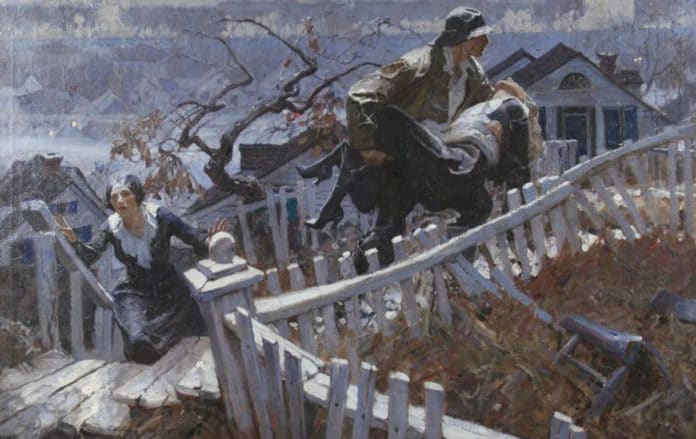
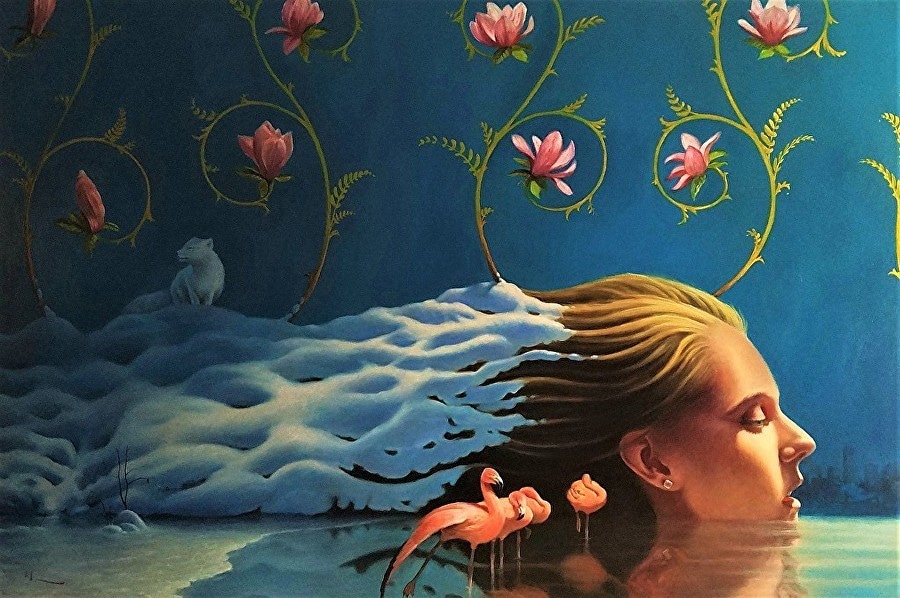
Dean Cornwell, “Gold Hands (from Good Housekeeping magazine, March 1924),” 1924, oil on board, 37 x 53 inches, Museum of Illustration
The Florence Academy of Art U.S. is proud to be presenting significant selections from the oeuvre of Dean Cornwell as part of its ongoing educational exhibition series. Featuring a total of nine works — six paintings and three drawings — the exhibition looks to explore the artist’s legacy as one of America’s most important illustrators.
Throughout his career and during the Golden Age of Illustration, which occurred from roughly 1880 until shortly after World War I, Dean Cornwell (1892-1960) received many prestigious commissions, including work for major U.S. companies and publications, famous authors, and mural projects. The Florence Academy of Art U.S. will soon be celebrating Cornwell’s legacy during “Dean Cornwell: A Lasting Influence,” which opens in Jersey City, New Jersey, on October 15.
On view through December 15, “A Lasting Influence” explores how Cornwell became one of the most celebrated illustrators and muralists, earning him the nickname “The Dean of Illustration.” His exceptional draftsmanship and natural story-telling abilities have influenced several generations of narrative realist painters. “America’s Golden Age Illustrators, many of whom were also educators, helped preserve the foundation of picture-making during a time when Modernism was turning its back on tradition,” says Jordan Sokol, the academic director of the Florence Academy U.S. and curator of “Dean Cornwell: A Lasting Influence.” “This exhibition is a celebration of one of the Golden Age of Illustration’s most esteemed artists.”
This article was featured in Fine Art Today, a weekly e-newsletter from Fine Art Connoisseur magazine. To start receiving Fine Art Today for free, click here.
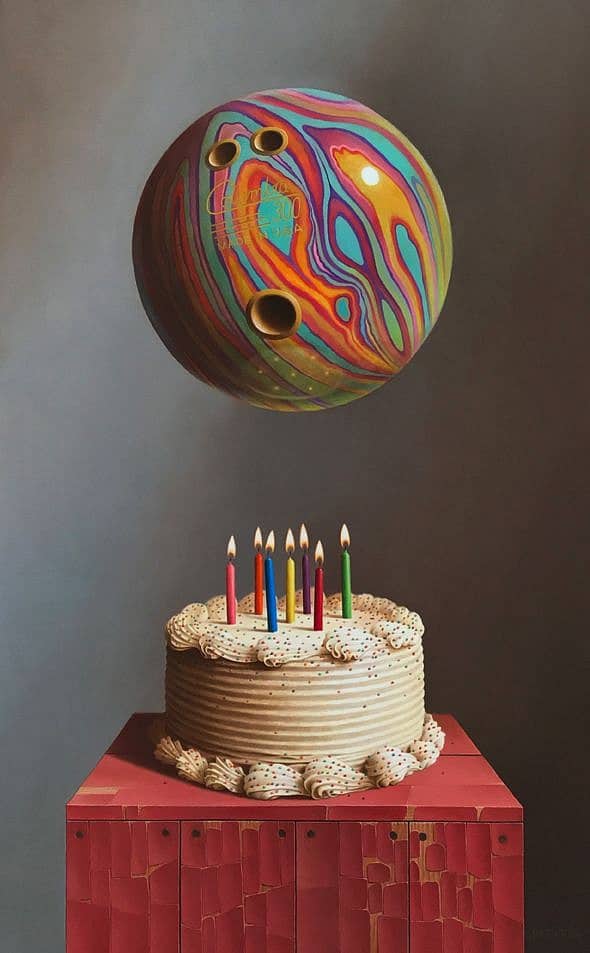
Jacob Pfeiffer, “Party Crasher,” oil, 26 1/2 x 16 1/2 inches
If you’re in Santa Fe, New Mexico, and feel the need to view some startlingly beautiful realistic paintings with a challenging, yet humorous tone, Jacob Pfeiffer and Meyer Galleries have what you’re looking for.
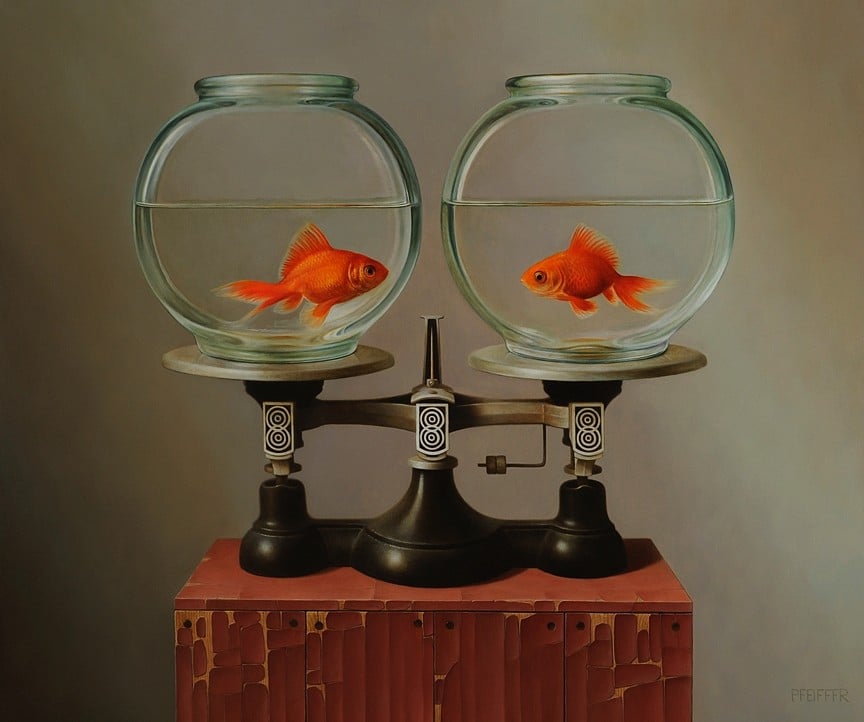
Opening this Friday, October 6, and continuing through October 19 at Meyer Galleries in Santa Fe is a fantastic solo display of contemporary realism from artist Jacob Pfeiffer. In his work, Pfeiffer delicately balances serious technical painting skills with lighthearted visual metaphors that engage viewers on multiple levels. “By titling each piece with clever puns or idioms, Pfeiffer reveals deeper narratives that are suggested through the painting’s ironic imagery,” the gallery writes. “For his exhibition, Pfeiffer will debut a body of work that portrays visually suspended objects that seek to simultaneously hold the viewer’s attention as we predict the outcome of each implied scenario.”
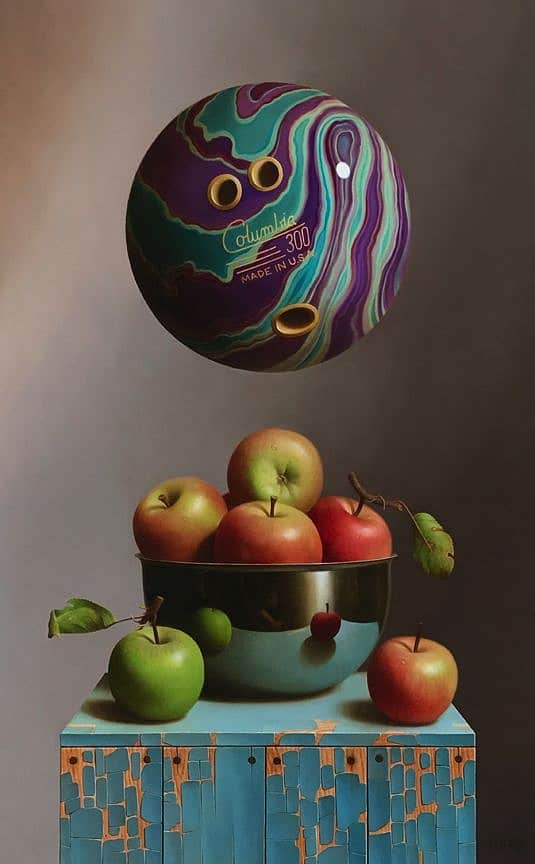
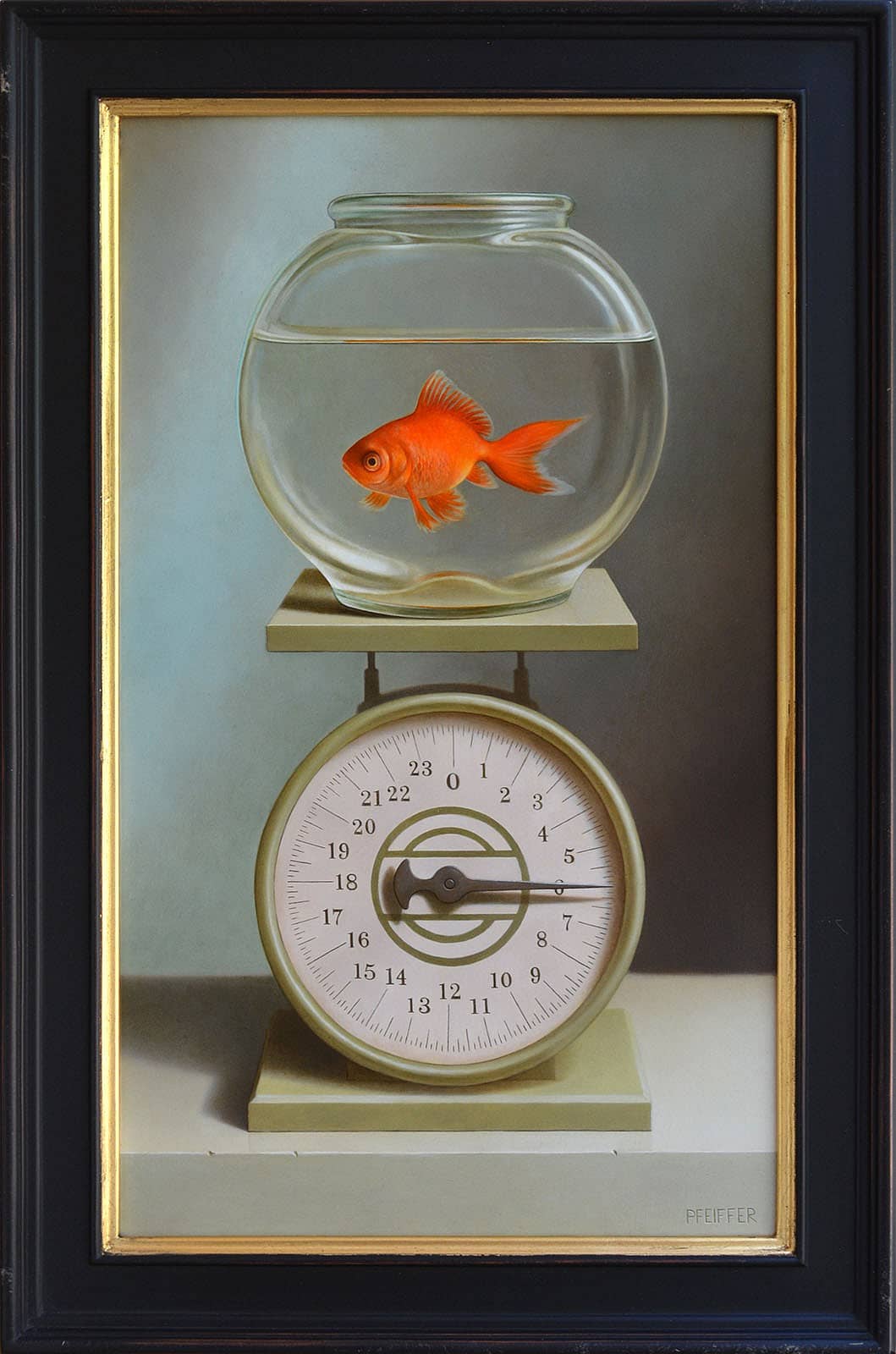
Jacob Pfeiffer, “Scales,” oil, 20 x 24 inchesJacob Pfeiffer, “Apple Sauce,” oil, 26 1/2 x 16 1/2 inches
The artist added, “Paintings in this exhibition are suspended in time and suspended on strings. And, of course, I am hoping that viewers of my work will suspend their disbelief while taking a moment to enjoy it.” The theme of suspension has its roots in 16th- and 17th-century Dutch realism, particularly the “vanitas” theme that was fashionable to Golden Age still life painters.
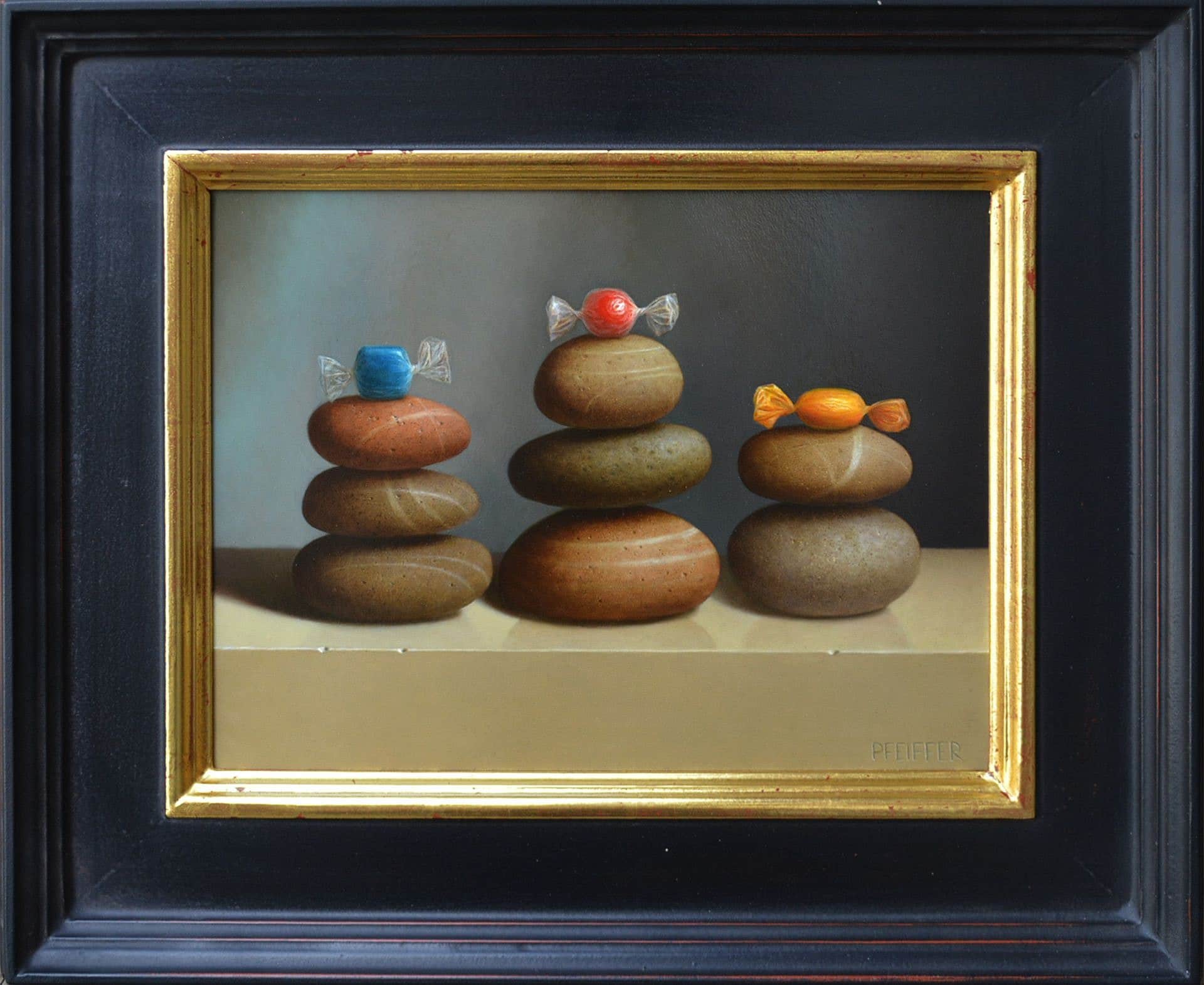
Jacob Pfeiffer, “Rock Candy,” oil, 9 x 12 inchesJacob Pfeiffer, “Spilling the Beans,” oil, 8 x 10 inches
“The vanitas style incorporated symbolism that pointed to the brevity of life and fleeting nature of time,” according to the gallery. “Pfeiffer incorporates this theme into paintings like ‘Apple Sauce,’ where a bowling ball is held in midair above a still life of awaiting apples. The title humorously suggests the deadly outcome of the suspended moment, while the painting prolongs the inevitable for the viewer’s anticipation. Pfeiffer’s wit is portrayed with masterful technique as he paints each object with intense detail and a saturated color palette.”
This article was featured in Fine Art Today, a weekly e-newsletter from Fine Art Connoisseur magazine. To start receiving Fine Art Today for free, click here.
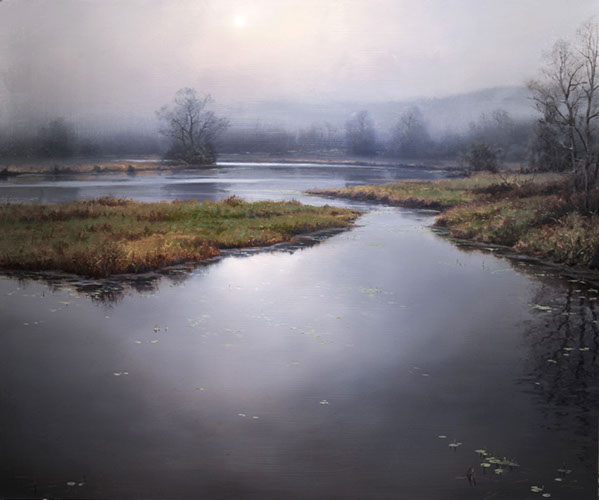
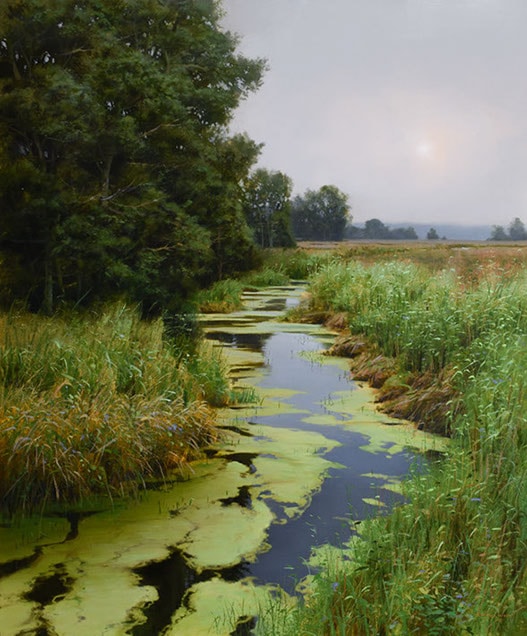
Renato Muccillo, “Back Waters in Morning Light,” oil on aluminum panel, 20 x 24 inches
Howard/Mandville Gallery in Kirkland, Washington, is currently presenting the newest oils by accomplished painter Renato Muccillo. Check out these beauties!
Tight, crisp, tranquil, luminous, and highly sought-after are all words that can be aptly applied to the paintings of Renato Muccillo, who is currently presenting his newest oils at Howard/Mandville Gallery in Washington state. “My heart lies in the natural environment,” the artist says. “I focus on the area where I live … and the experience of seeing what I see and being honest about it. I feel my best expressions are painted. I am continually driven to analyze and to try to understand the effects of light and atmosphere on color — then using my ability as an artist to decipher and record those effects.”
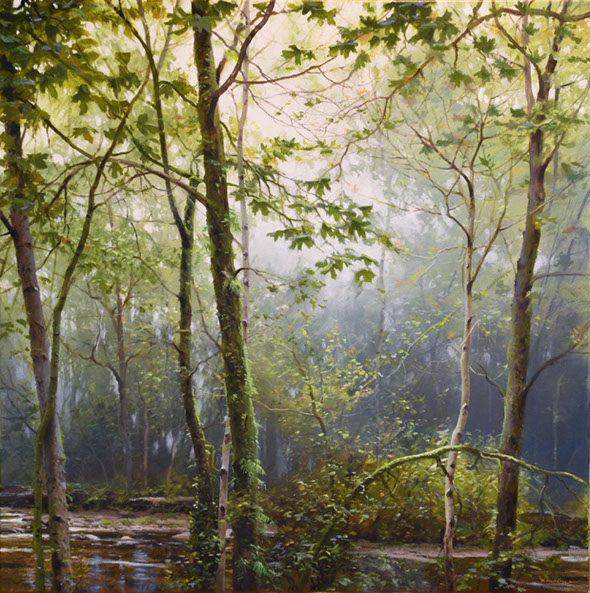
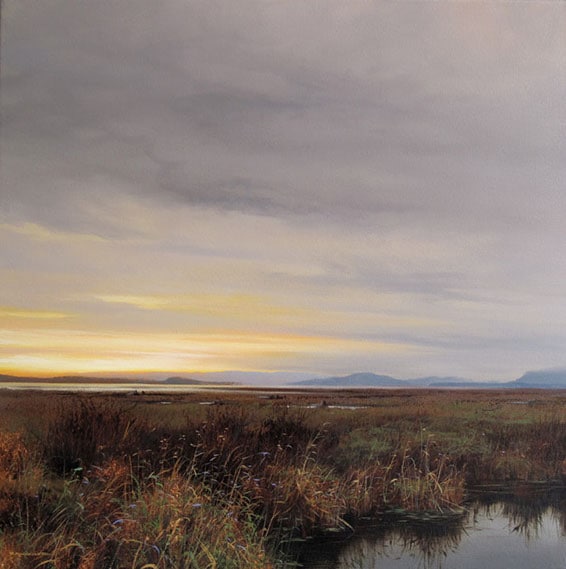
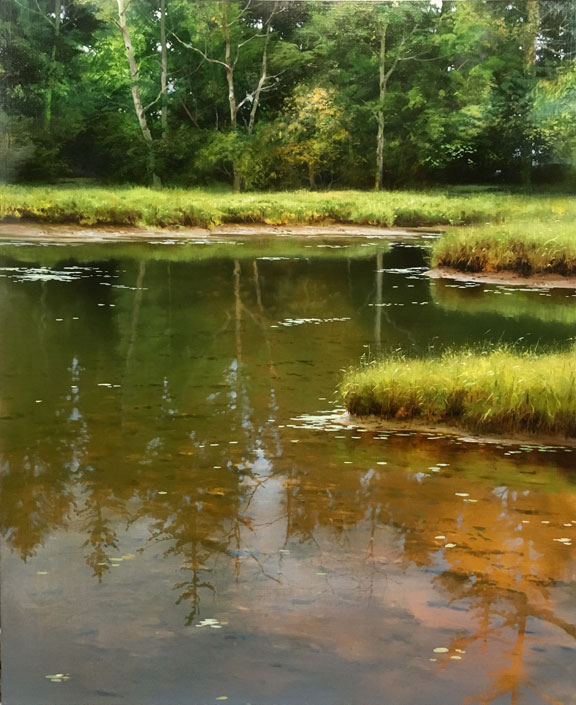
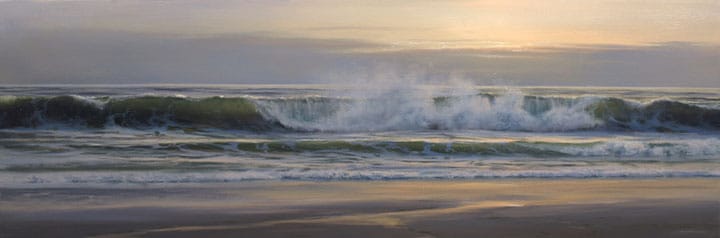
Renato Muccillo, “Forest Interior,” oil on canvas, 24 x 24 inchesRenato Muccillo, “Emerald Banks,” oil on aluminum panel, 24 x 20 inchesRenato Muccillo, “Tin Roofs,” oil on board, 15 x 11 inchesRenato Muccillo, “Tidal Marsh,” oil on panel, 20 x 20 inchesRenato Muccillo, “Crystalline Cove,” oil on panel, 20 x 24 inchesRenato Muccillo, “Incoming Tide at Dusk,” oil on canvas, 12 x 36 inchesRenato Muccillo, “Illuminated Grove,” oil on linen, 20 x 16 inches
“These quiet, elusive scenes are an attempt to slow everything down,” the gallery adds. “Muccillo hopes his paintings convey the message that beauty is everywhere, even in the simplest of things. Muccillo’s lush, atmospheric oil paintings are a response to his love of the natural environment. From his home near Vancouver, BC, he has access to an array of enticing subjects to paint. He skillfully paints the big moody skies that tower over our rainy West Coast. Muccillo’s artwork conveys a sense of peace and serenity. The landscapes seem timeless and traditional, flowing with washes of light and color that draw the eye into the soft mystery of the scenery. Subtle shading and muted tones let the eye rest gently in the moist, near miraculous landscapes. Like an old friend, the paintings reveal their secrets gradually, becoming more familiar and interesting with the passing of time.”
This article was featured in Fine Art Today, a weekly e-newsletter from Fine Art Connoisseur magazine. To start receiving Fine Art Today for free, click here.
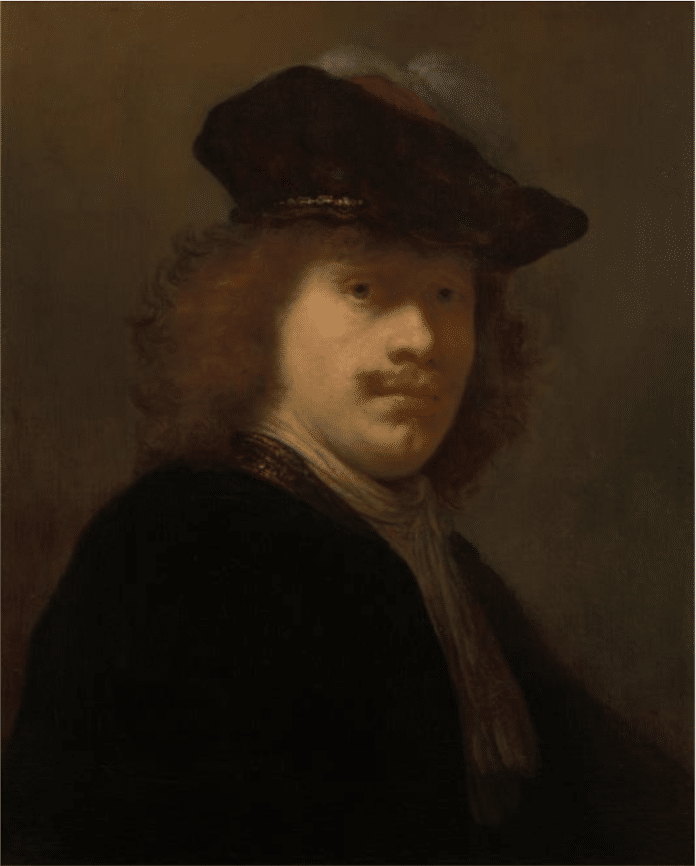
Govert Flinck, “Self-Portrait,” circa 1640, oil on panel, 59 x 47 cm., Wallraf-Richartz Museum, Cologne
Many important paintings are coming together from across the world for a significant double exhibition in Amsterdam — some of which haven’t been in the Dutch capital since the 17th century. What’s the buzz in the Netherlands?
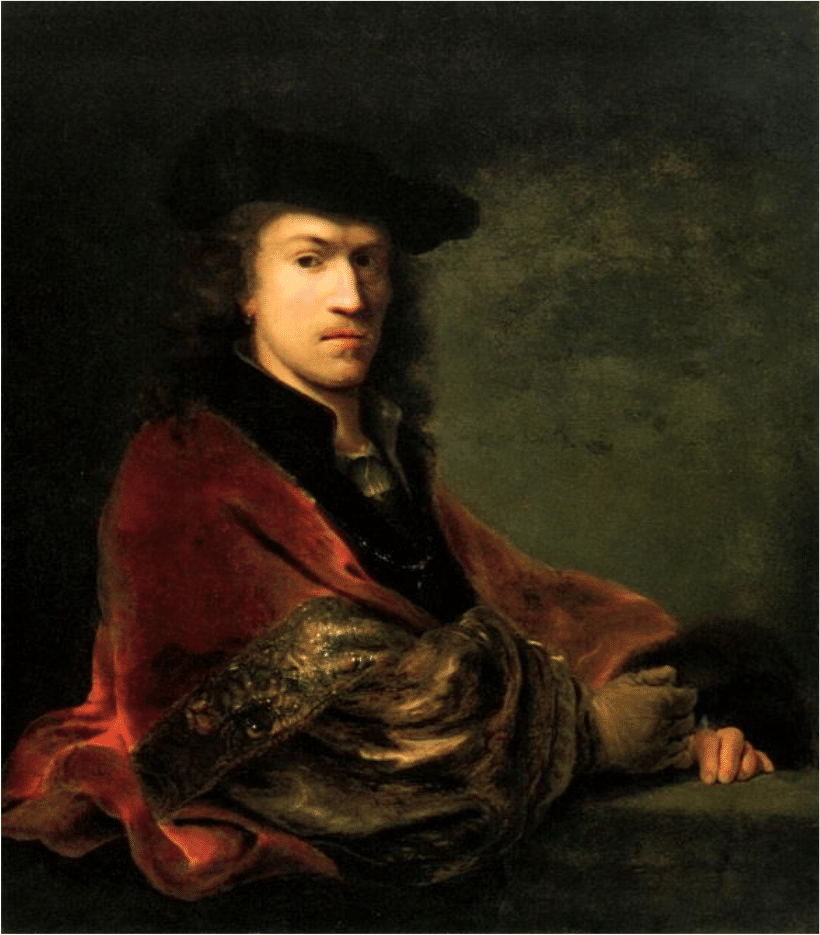
The Amsterdam Museum and Rembrandt House have teamed together to offer art lovers and museum-goers the chance to explore the mastery of Ferdinand Bol and Govert Flinck — considered to have been two of Rembrandt van Rijn’s master pupils. In the Rembrandt House, the place where Rembrandt taught Bol and Flinck, the emphasis is on their time with the master. According to the museum, “the works on view will transport visitors back in time to the painters’ early years and their training.”
Ferdinand Bol, “Self-Portrait,” circa 1647, oil on canvas, 93 x 83.5 cm., private collection
Conversely, the Amsterdam Museum will give visitors the opportunity to “discover that Bol and Flinch developed into great artists in their own right. Helped by a carefully constructed and nurtured network, the ambitious painters succeeded in reaching the pinnacle of the art market. The two men, who were of an age, became formidable competitors of their former teacher — and one another. During their lifetimes, they were even more successful than Rembrandt himself.”
“Ferdinand Bol and Govert Flinck: Rembrandt’s Master Pupils” opens on October 13 and will continue through February 18, 2018. To learn more, visit The Amsterdam Museum or the Rembrandt House.
This article was featured in Fine Art Today, a weekly e-newsletter from Fine Art Connoisseur magazine. To start receiving Fine Art Today for free, click here.
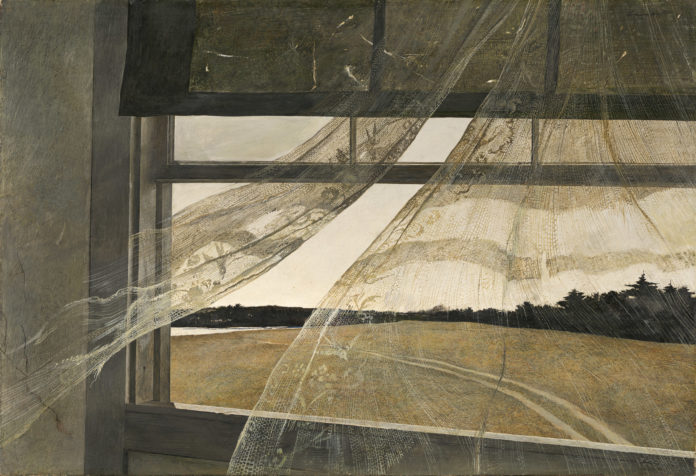
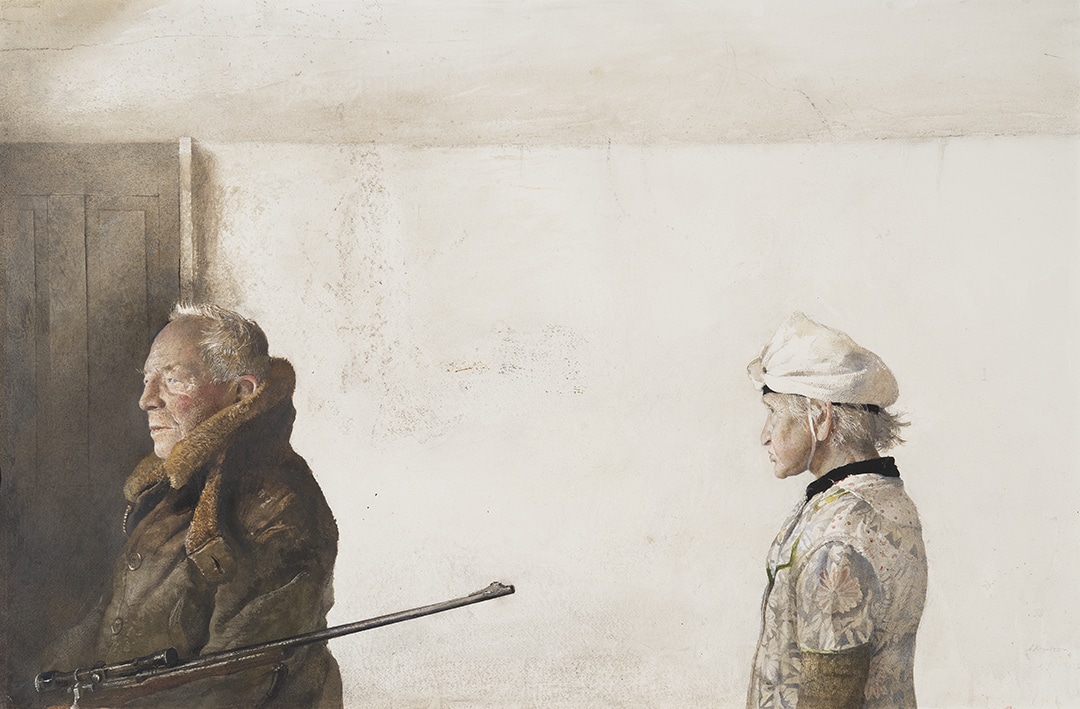
Andrew Wyeth, “Wind from the Sea,” 1947, tempera on hardboard panel, 18-1/2 x 27-1/2 inches, National Gallery of Art, Washington
The Seattle Art Museum is soon presenting a radical reimagining of one of the 20th century’s most complicated — and celebrated — artists. More information here…
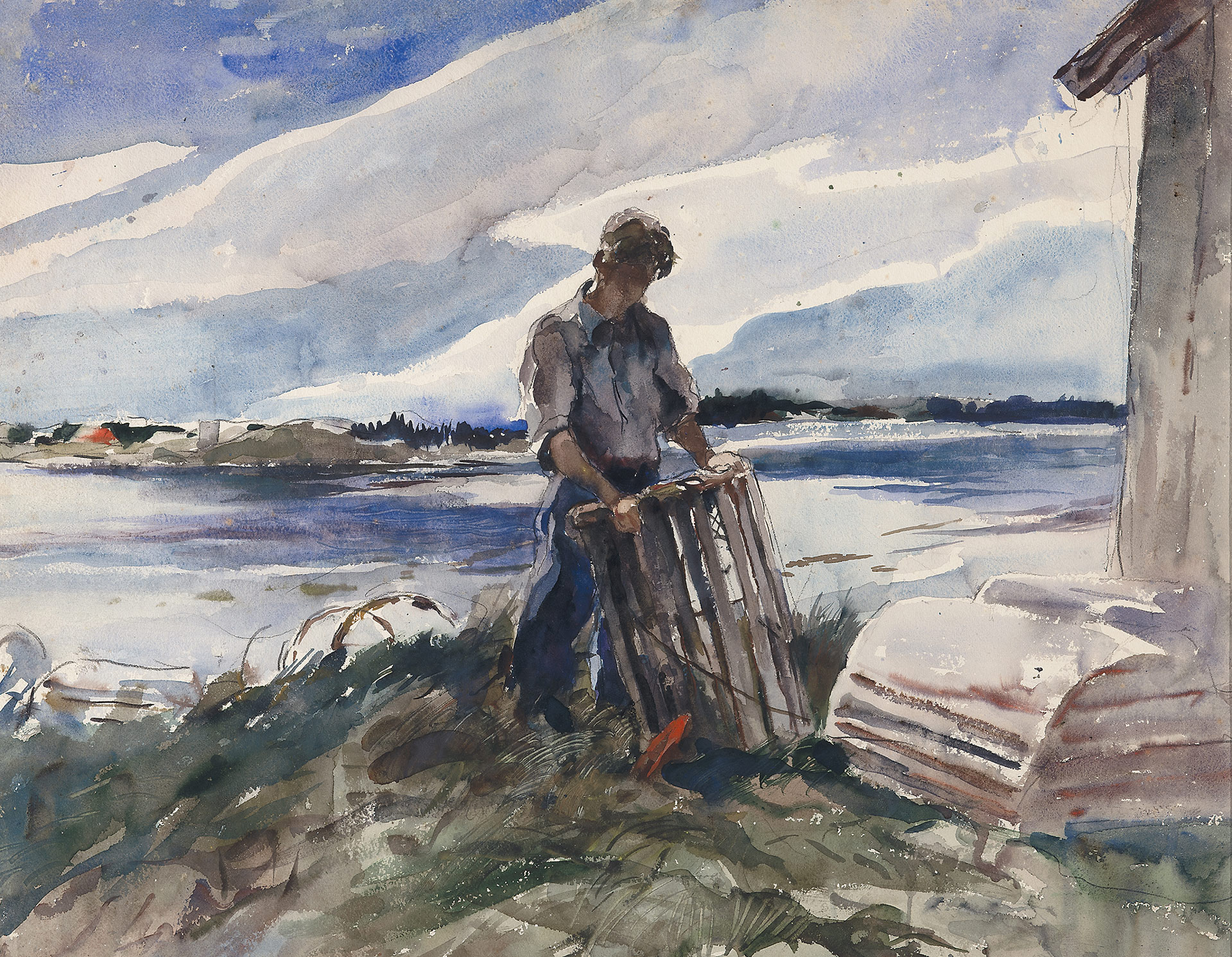
The renowned Andrew Wyeth is getting a fresh look from the Seattle Art Museum during “Andrew Wyeth: In Retrospect.” Opening October 19, the groundbreaking exhibition explores new perspectives on the art and legacy of the American painter’s 75-year career. Organized in conjunction with the Brandywine River Museum of Art for the 100th anniversary of the artist’s birth, the exhibition brings together 110 paintings and drawings ranging from the late 1930s to 2008, including rarely seen loans from the Wyeth family. According to the museum, ‘In Retrospect’ reflects on Wyeth’s work through the historical lens of a century in which he deviated from the American art mainstream but continued to figure prominently in much of the country’s artistic discourse.
Andrew Wyeth, “Lobsterman (Walt Anderson),” 1937, watercolor on paper, 21-1/4 x 27-3/4 inches, Brandywine River Museum of Art
“In Retrospect”opens with a gallery of significant works introducing the cast of characters from Wyeth’s world who feature in some of his most famous portraits, such as Christina Olson of Maine and Karl Kuerner, his neighbor in Chadds Ford, Pennsylvania. These dream-like works complicate long-held critical notions of Wyeth as an out-of-step realist, revealing how he imbued images of the places, people, and things around him with his own mysterious temperament.
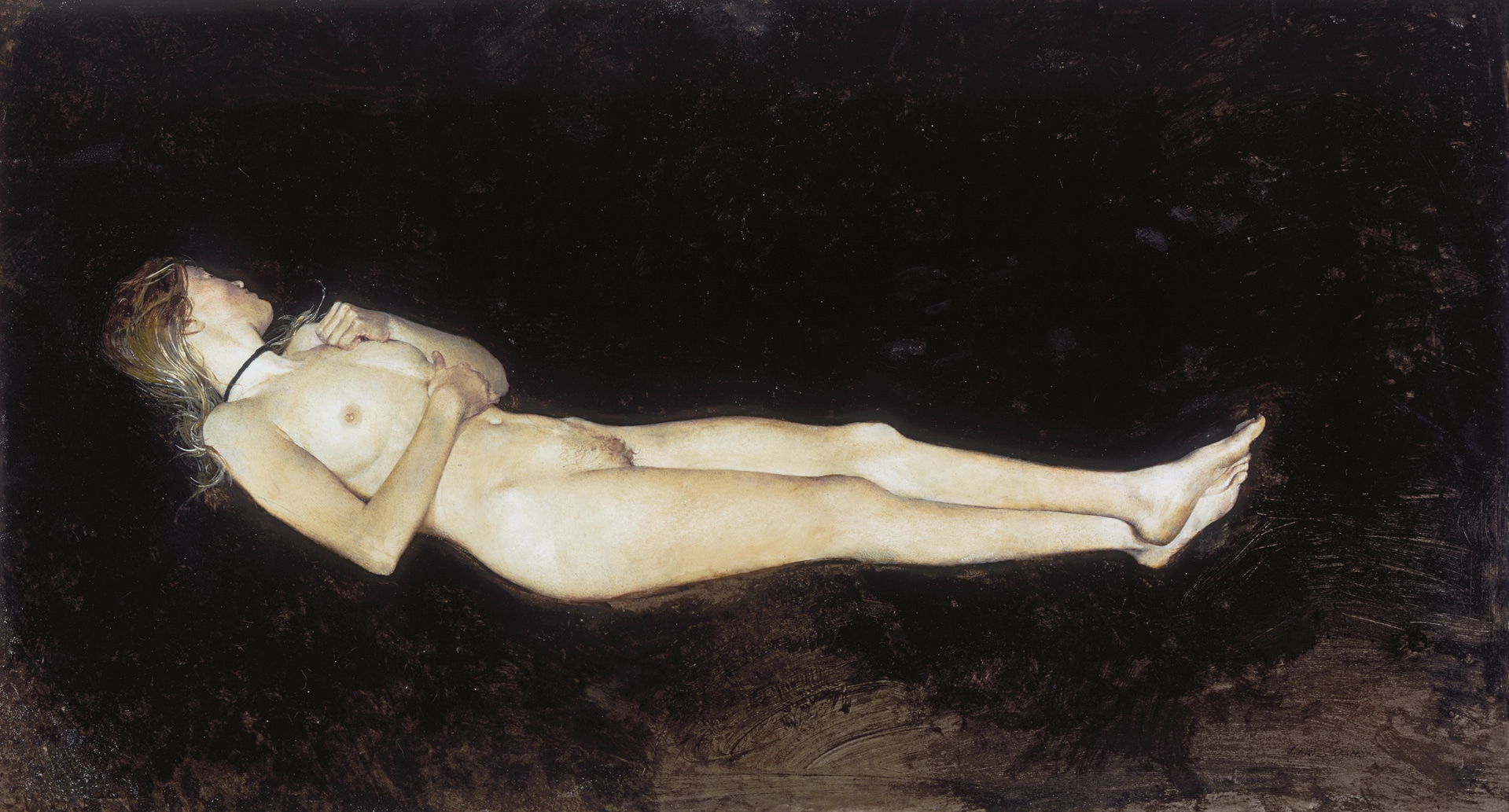
Andrew Wyeth, “Black Velvet,” 1972, drybrush watercolor on paper, 21-1/4 x 39-1/2 inches, private collection
“The work of Andrew Wyeth is technically dazzling, narratively riveting, and, well — weird,” says Patricia Junker, SAM’s Ann M. Barwick Curator of American Art. “His portraits, figures, and landscapes reveal a complex mind investigating the deepest human emotions: love, death, and how we experience the passing of time. We are thrilled to offer this rare opportunity to see such an impressive array of Wyeth’s work.”
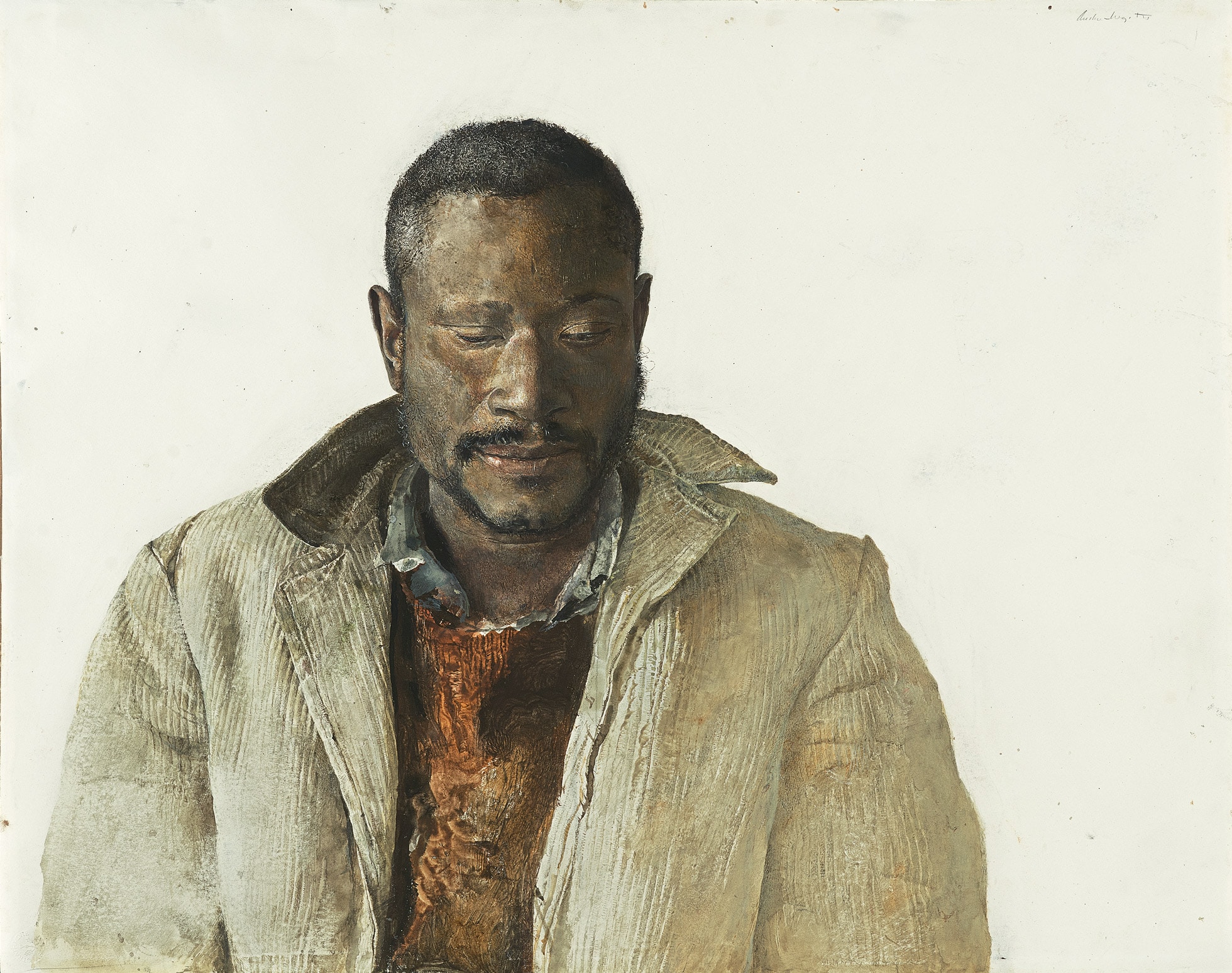
Andrew Wyeth, “The Drifter,” 1964, drybrush watercolor on paper, 22-1/2 x 28-1/2 inches. Phyllis and Jamie Wyeth Collection
The press materials report, “After the first gallery, the exhibition is organized in rough chronological order, tracing Wyeth’s development from his earliest watercolors, to more staged works of the 1940s-50s, and to deeper technical experimentation in the 1950s-60s, incorporating elements of chance. These include the artist’s little-known portraits of African Americans from the Chadds Ford community. The exhibition also offers a rare view into Wyeth’s artistic and technical process, presenting studies in a variety of media in an intimate tabletop display.
Andrew Wyeth, “Snow Hill,” 1989, tempera on hardboard panel, 48 x 72 inches, Andrew and Betsy Wyeth Collection
“A subsequent gallery presents the transitional moment in the late 1960s when Wyeth created portraits of two favored subjects, Christina Olson and Siri Erickson. Enigmatic, unsettling paintings of Wyeth’s neighbors Anna and Karl Kuerner investigate a marriage; poignantly, these are adjacent to Wyeth’s nude portraits of the Kuerners’ nurse Helga Testorf, created in secret at the same time and kept hidden for decades. Also from this era are complex, more abstract paintings that stand out against the rest of Wyeth’s oeuvre, including ‘Thin Ice’(1969), an early work on loan from a private collection in Japan being shown for the first time on the West Coast.
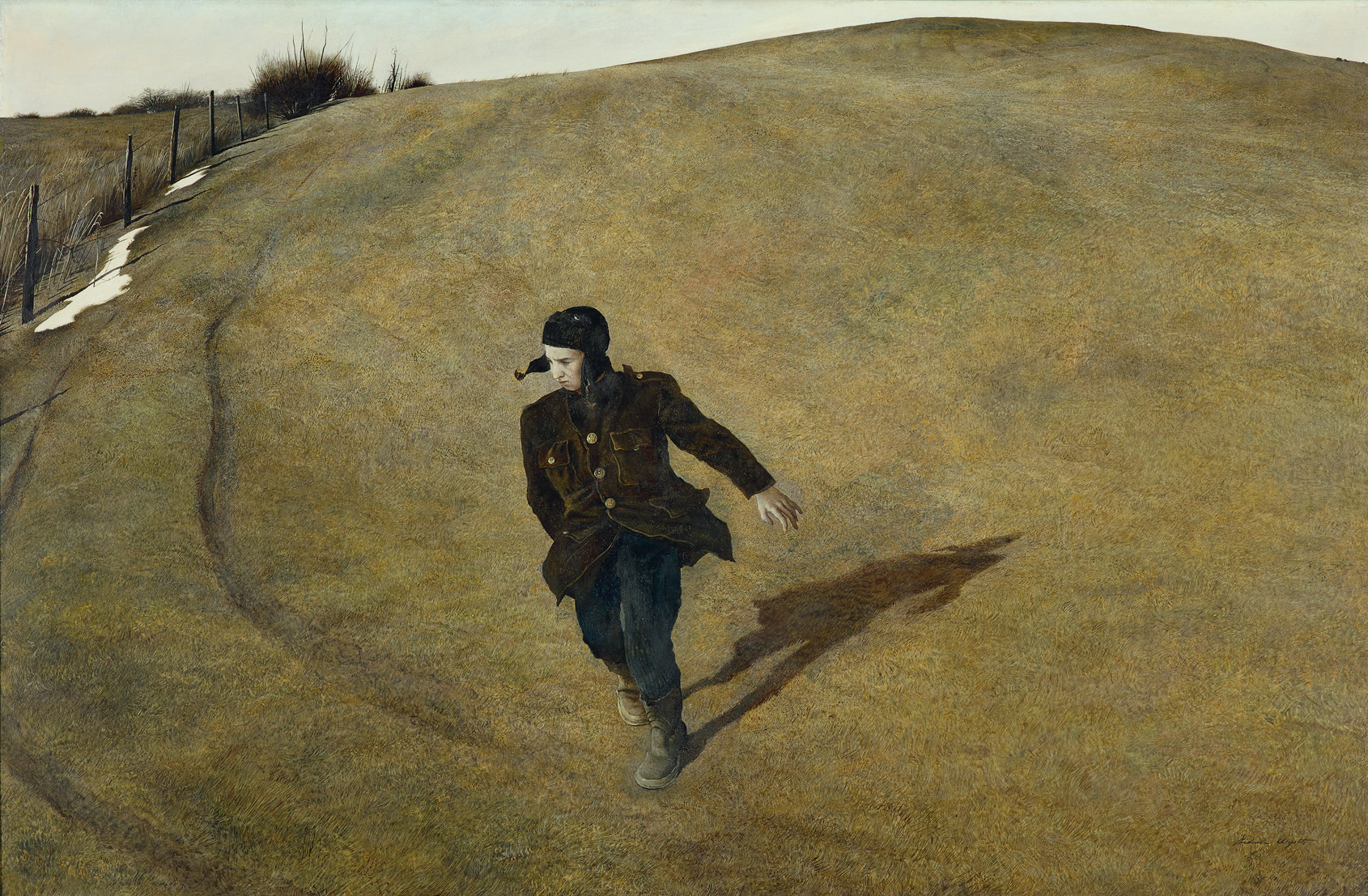
Andrew Wyeth, “Winter,” 1946, tempera on hardboard panel, 31-1/2 x 48 inches, North Carolina Museum of Art
“‘In Retrospect’explores less-understood influences on Wyeth, such as popular film and images of war. On view are clips from ‘Metaphor’ (1975), a filmed conversation between director King Vidor and Wyeth, including scenes from Vidor’s silent masterpiece about World War I, ‘The Big Parade’(1925), which Wyeth first saw as a child and re-watched hundreds of times. Also playing in the exhibition are clips from Ingmar Bergman’s ‘The Seventh Seal’(1957), another film that deeply influenced Wyeth. While his contemporaries were expressing the modern age through abstraction, these clips reveal how Wyeth found his own way to a powerful symbolism through the experimental, modern art form of film.
Andrew Wyeth, “The Kuerners,” 1971, drybrush watercolor on paper, 26-1/2 x 40-1/2 inches, Andrew and Betsy Wyeth Collection
“The exhibition closes with increasingly surreal late works and reflections on mortality, ending with Wyeth’s last painting, ‘Goodbye’ (2008), seen in this exhibition for the first time since it was briefly shown to those who attended the artist’s memorial service in 2009.”
“In Retrospect” will continue through January 15, 2018. To learn more, visit the Seattle Art Museum.
This article was featured in Fine Art Today, a weekly e-newsletter from Fine Art Connoisseur magazine. To start receiving Fine Art Today for free, click here.
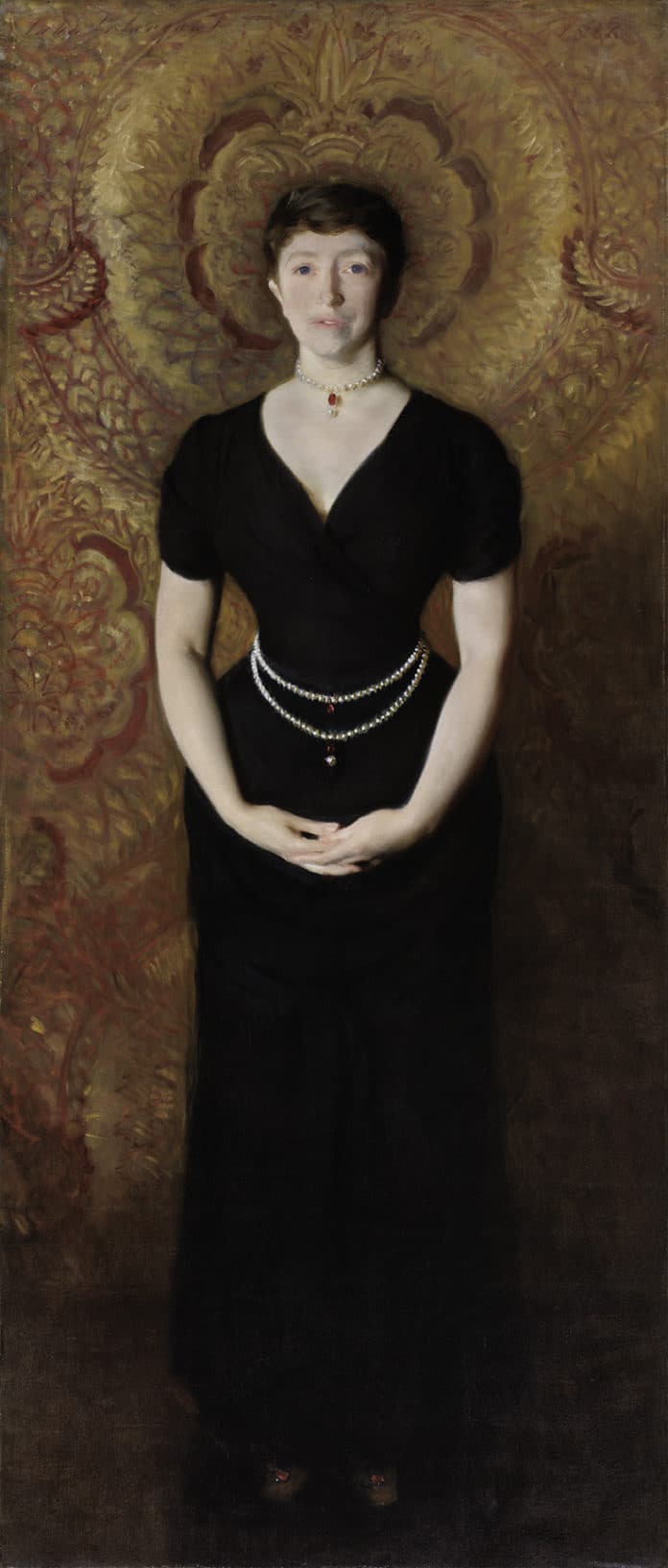
John Singer Sargent, “Isabella Stewart Gardner,” 1888, oil on canvas, 74 13/16 x 31 1/2 inches
A rich selection of more than 50 oil paintings, drawings, watercolors, photographs, manuscripts, letters, and printed books from 24 museums and private collections in the U.S., Great Britain, and Ireland, have been brought together to explore the relationship between author Henry James (1843-1916) and the visual arts of the 19th century. Where?
From October 19 through January 21, 2018, the Isabella Stewart Gardner Museum in Boston will host a stunning exhibition that highlights the important intersection between literature and visual art during the 19th century. Specifically, the exhibition explores — as its name suggests — the relationship between author Henry James and the visual arts. According to the museum, the show “offers a fresh perspective on the master novelist and the significance of his friendships with American artists John La Farge, John Singer Sargent, and James McNeill Whistler, and close friend and esteemed arts patron, Isabella Stewart Gardner.”
The museum adds, “James, who had a distinctive, almost painterly style of writing, is best known for his books Portrait of a Lady (1880), Washington Square (1880), TheWings of a Dove (1902), and The Ambassadors (1903). He was part of a creative circle of writers and artists in the late 1800s that were on the move between grand salons and artists’ studios in Boston, Florence, London, and Rome. A woman ahead of her time, Gardner was an influential part of the group, and her Museum vividly evokes one city that captivated all of them: Venice.
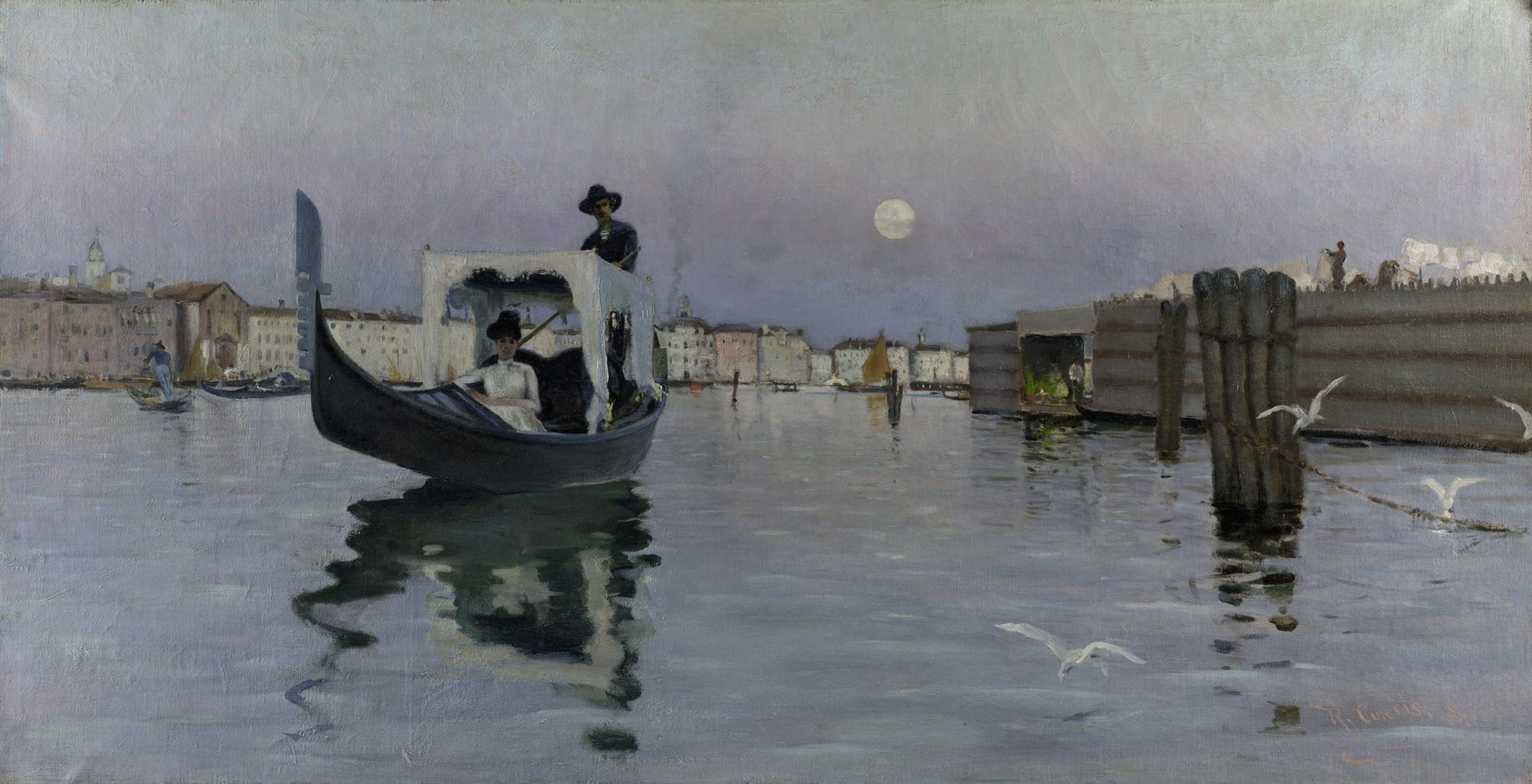
Ralph Wormeley Curtis, “Return from the Lido,” 1884, oil on canvas, 29 1/8 x 56 inches
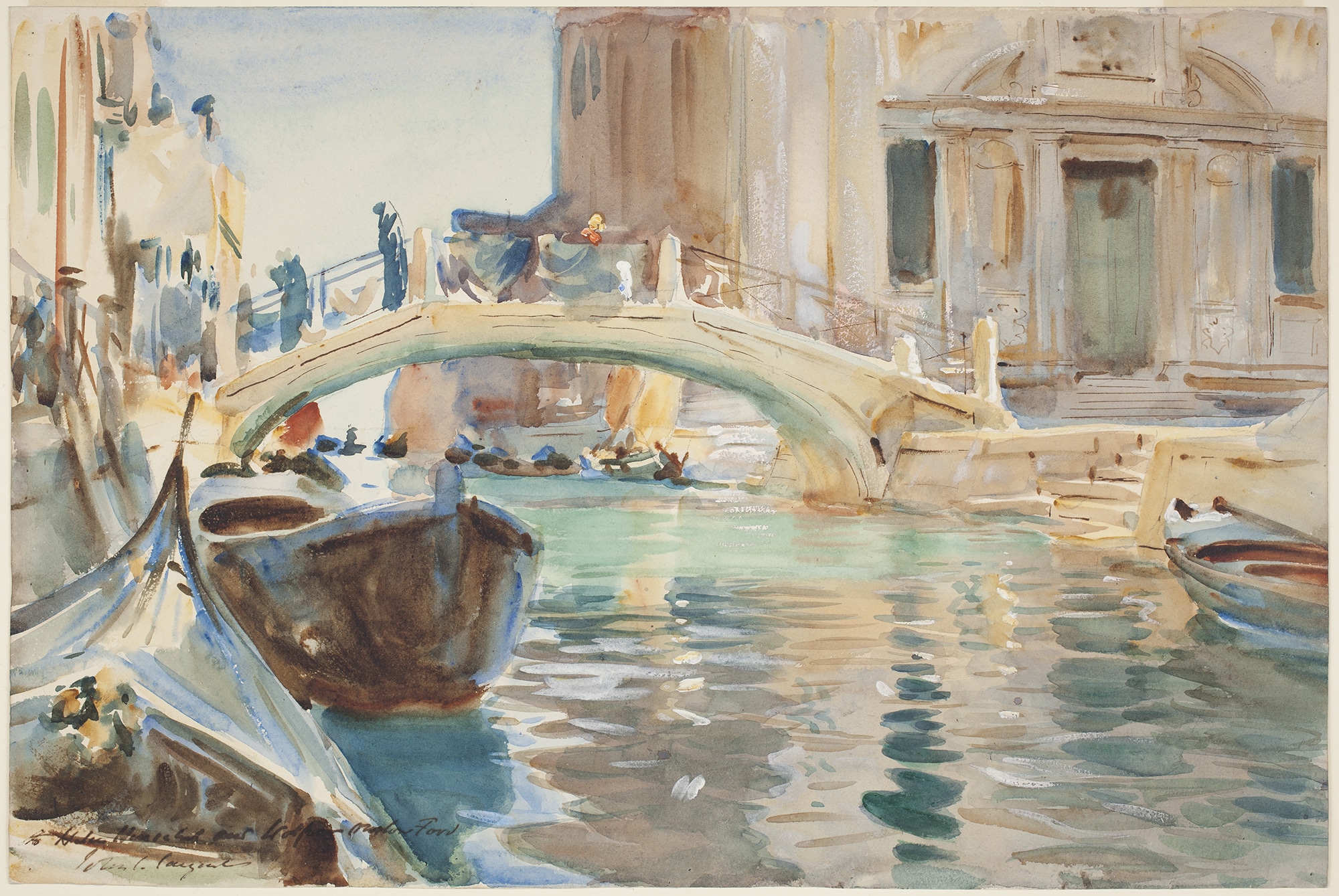
“Gardner and her husband, Jack, spent considerable time in Venice where they rented the lavish Palazzo Barbaro on the Grand Canal from friends and fellow Boston expatriates Daniel and Ariana Curtis. In 1892, James was a guest of the Gardners, and Palazzo Barbaro became the model for the palace in The Wings of the Dove.Sargent’s 1889 painting An Interior in Venice showcases the palazzo’s grand salon and is part of the exhibition, on loan from the Royal Academy of Arts in London. Gardner’s own meticulously crafted photo and travel albums record the profound impact that Venice, Palazzo Barbaro, and her creative friends had on the formation of her museum.”
John Singer Sargent, “San Giuseppe di Castello, Venice,” circa 1903, watercolor on paper, 12 x 18 inches
“With the Gardner Museum’s renowned collection of art, rare books, and archival material that detail how installations were inspired by great artists and writers of her time, we are the perfect partner with the Morgan for this exhibition,” said Christina Nielsen, the Gardner Museum’s Williams and Lia Poorvu Curator of the Collection, who curated the Boston exhibition along with consulting curator Casey Riley of the Boston Athenaeum. “In fact, Isabella’s first serious acquisitions were books, and she was herself an avid reader who understood that words could paint vivid images in one’s mind. A strong and complex woman who sometimes followed — and sometimes flouted — social conventions, she had much in common with the most memorable of James’s heroines.
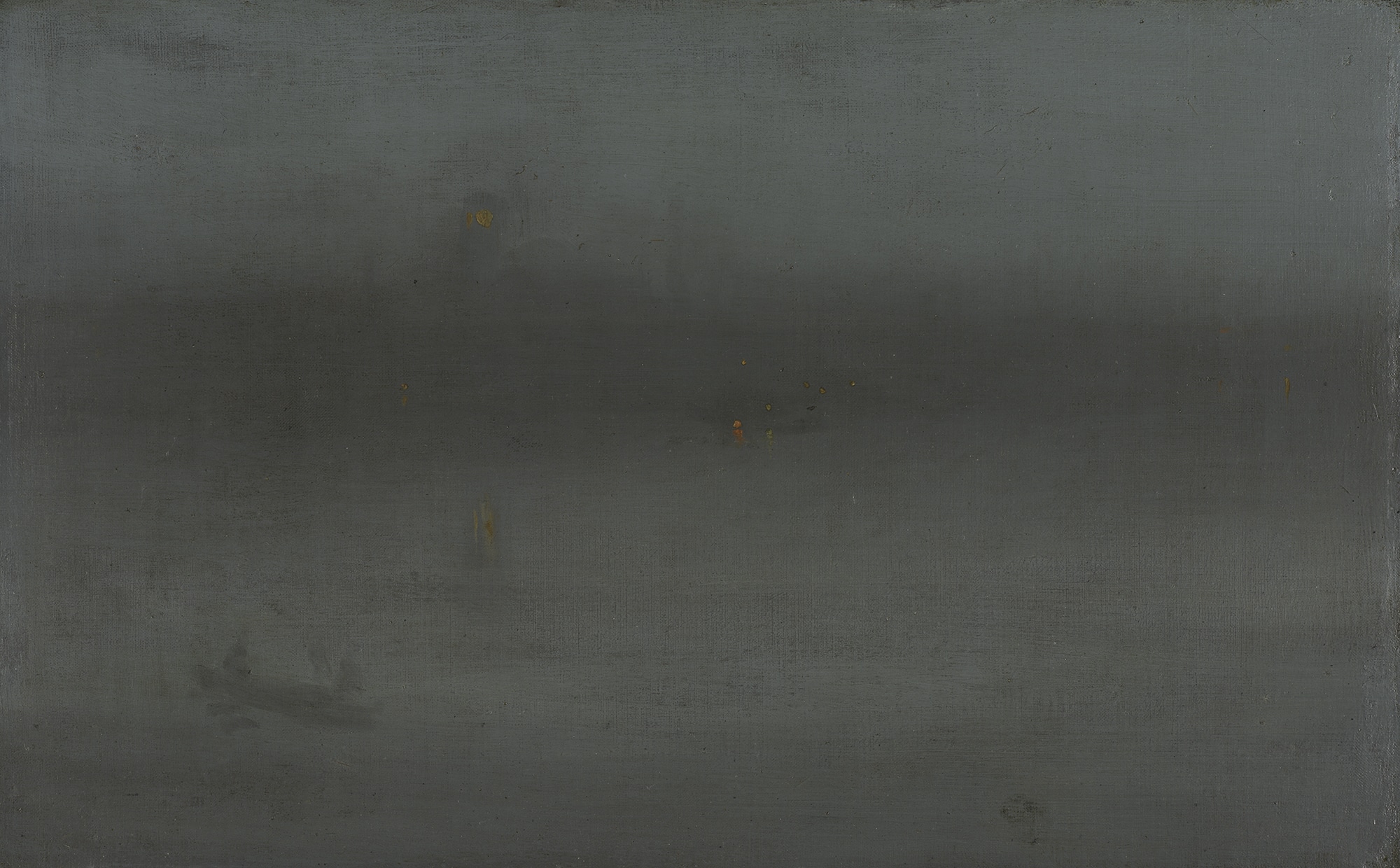
James McNeill Whistler, “Nocturne, Blue and Silver: Battersea Reach,” circa 1872 78, oil on canvas, 15 1/2 x 24 3/4 inches
“Portraiture is a major theme in the exhibition. In less than one decade, James used the word ‘portrait’ in three book titles, including his first literary masterpiece, The Portrait of a Lady. Fiercely protective of his privacy, James nevertheless sat for numerous portraits and photographs. Sargent’s 1913 portrait of James, a treasure on loan for the exhibition from the National Portrait Gallery, London, is perhaps the most famous painted image of the author on his 70th birthday. James described it — with his characteristic wit: ‘Sargent at his very best and poor old H.J. not at his worst; in short a living breathing likeness and a masterpiece of painting.’ Photographs of James by Alice Boughton and Ellen Gertrude Emmet Rand are on loan from the National Portrait Gallery, Washington, D.C., for the exhibition. They will be featured alongside Sargent’s beloved ‘Portrait of Isabella Stewart Gardner,’ from the Gardner Museum — which James famously described as a ‘Byzantine Madonna’ — and the ‘Portrait of Mrs. Edward Darley Boit,’ on loan from the Museum of Fine Arts, Boston.
“Like Sargent, Whistler had long-lasting friendships with James and Gardner, and his ‘Nocturne,Blue and Silver: Battersea Reach’and his ‘Little Note in Yellow and Gold,’ from the Gardner’s collection, are featured prominently in the exhibition. Notable women in the circle of friends are Lila Cabot Perry, whose 1913 self-portrait, ‘The Green Hat,’ will be positioned near landscapes painted by another friend, Elizabeth Boott Duveneck. Duveneck inspired characters in three of James’s most important works: Washington Square (1880), The Portrait of a Lady (1881), and The Golden Bowl (1904). On loan from the Cincinnati Museum of Art for the exhibition is a portrait of Duveneck with her father by her husband, American painter Frank Duveneck — again illustrating the artistic connections between the influential friends.”
This article was featured in Fine Art Today, a weekly e-newsletter from Fine Art Connoisseur magazine. To start receiving Fine Art Today for free, click here.
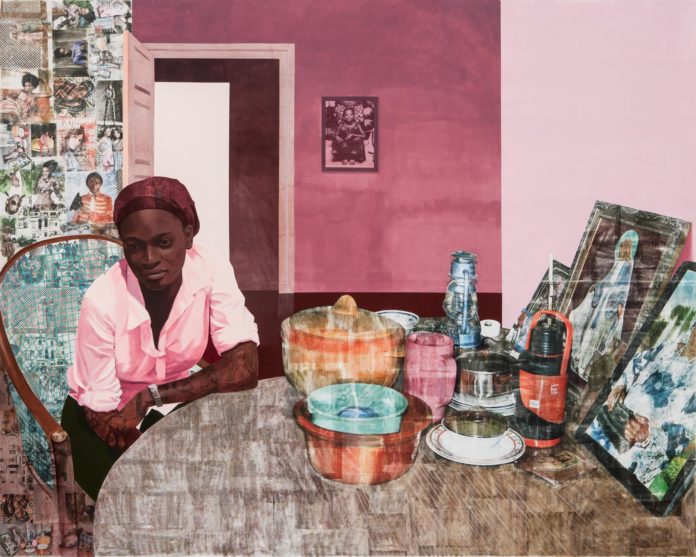
Njideka Akunyili Crosby, “Mama, Mummy and Mamma (Predecessors #2),” 2014, acrylic, colored pencil, charcoal, and transfers on paper, 84 x 108 inches, New Church Museum, Cape Town
The Tang Museum in Saratoga Springs, New York, along with Nigerian artist Njideka Akunyili Crosby, are soon opening a fascinating exhibition featuring a portrait series depicting domestic scenes and daily life. Details here!
On October 14, the Tang Museum — located on the campus of Skidmore College in Saratoga Springs, New York — will open an exhibition showcasing the monumental works of Nigerian artist Njideka Akunyili Crosby.
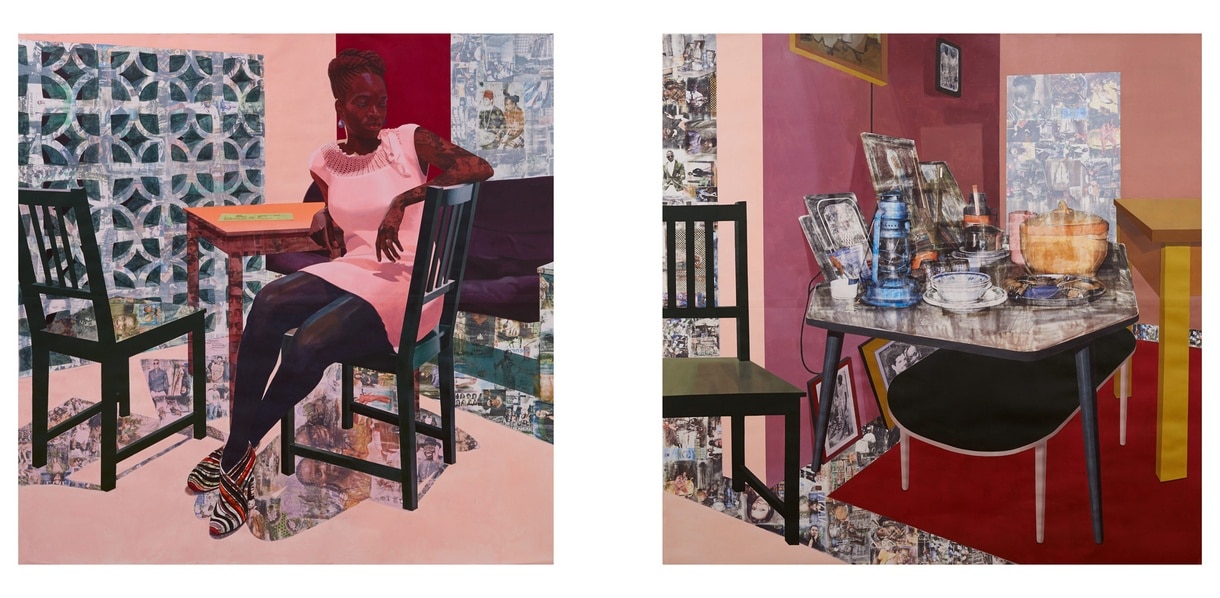
In “Predecessors,” personal themes transcend individual experience and speak to universal themes of family, love, and domesticity, but also provide a powerful perspective on the African diaspora and postcolonial culture. According to the museum, “Akunyili Crosby depicts her late mother, who was a prominent Nigerian politician, her sister, and herself within compositions of her grandmother’s home. The psychologically powerful, monumental works examine her relationship with loved ones, her Nigerian upbringing, subsequent immigration to America, and marriage to a white Texan. Through the utilization of collage, printmaking, painting, drawing, and photo transfer, Akunyili Crosby creates a sophisticated visual language that draws upon her Igbo tribe’s customs, Nigeria’s British colonial past, and tropes of Western art. In ‘Predecessors,’personal themes transcend individual experience and speak to universal themes of family, love, domesticity, and enters the global discussion of postcolonial cultural exchange.”
Njideka Akunyili Crosby, “Predecessors,” 2013, two works on paper, charcoal, acrylic, graphite, and transfer, 84 x 84 inches (each), Tate London
Tang Teaching Museum Dayton Director Ian Berry said, “Akunyili Crosby’s work, in stunning detail, subverts preconceived notions of artistic representation. Through layering different methods and at times unexpected materials, she presents an alternative to stereotypical perceptions about Western art and the lives of contemporary Africans. It is a pleasure to collaborate with Njideka and the Contemporary Arts Center in Cincinnati to present her series ‘Predecessors’ at the Tang, and we are excited to have her join us on campus this fall.”
The exhibition continues through December 31. To learn more, visit the Tang Museum.
This article was featured in Fine Art Today, a weekly e-newsletter from Fine Art Connoisseur magazine. To start receiving Fine Art Today for free, click here.
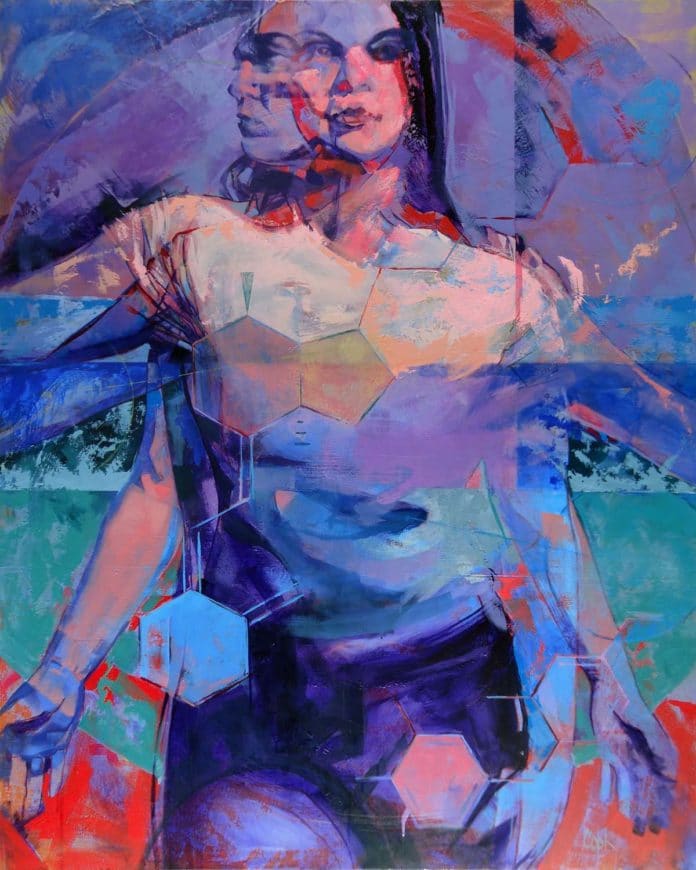
Bud Cook, “Endochrine,” 2014, acrylic on panel, 48 x 60 inches
How do you define “imaginative realism”? Renowned artist James Gurney has suggested that it is the realistic depiction of something that one can only imagine. Perhaps it’s something more? This gallery investigates during a major group exhibition.
GoggleWorks Center for the Arts in Reading, Pennsylvania, will be the proud host of a cutting-edge exhibition featuring many of the world’s best imaginative realist artists. The IX Arts Main Show will open on October 18 and continue through October 22 — a short stint, so plan now. The exhibition will feature works by some 140 artists from around the globe.
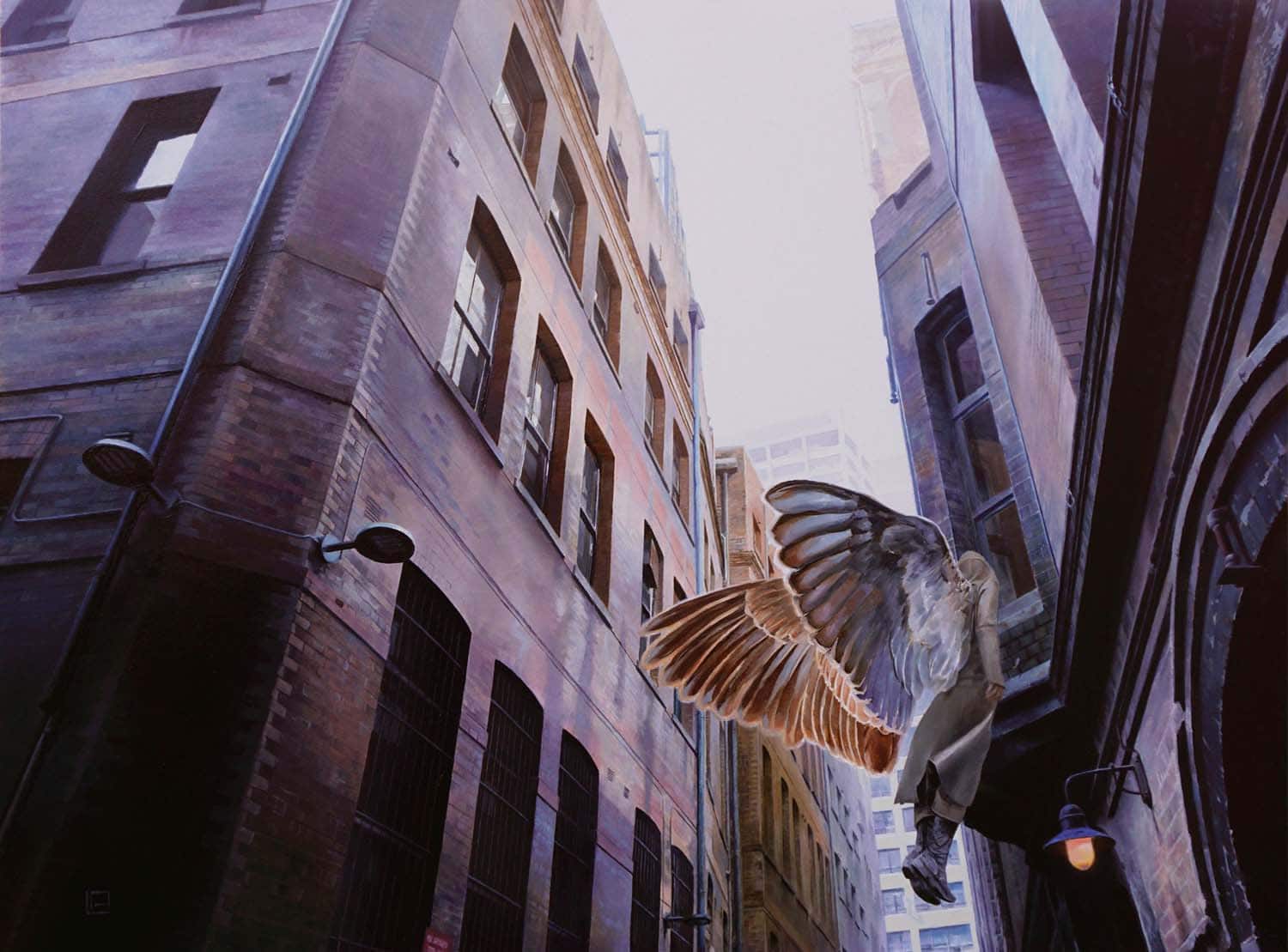
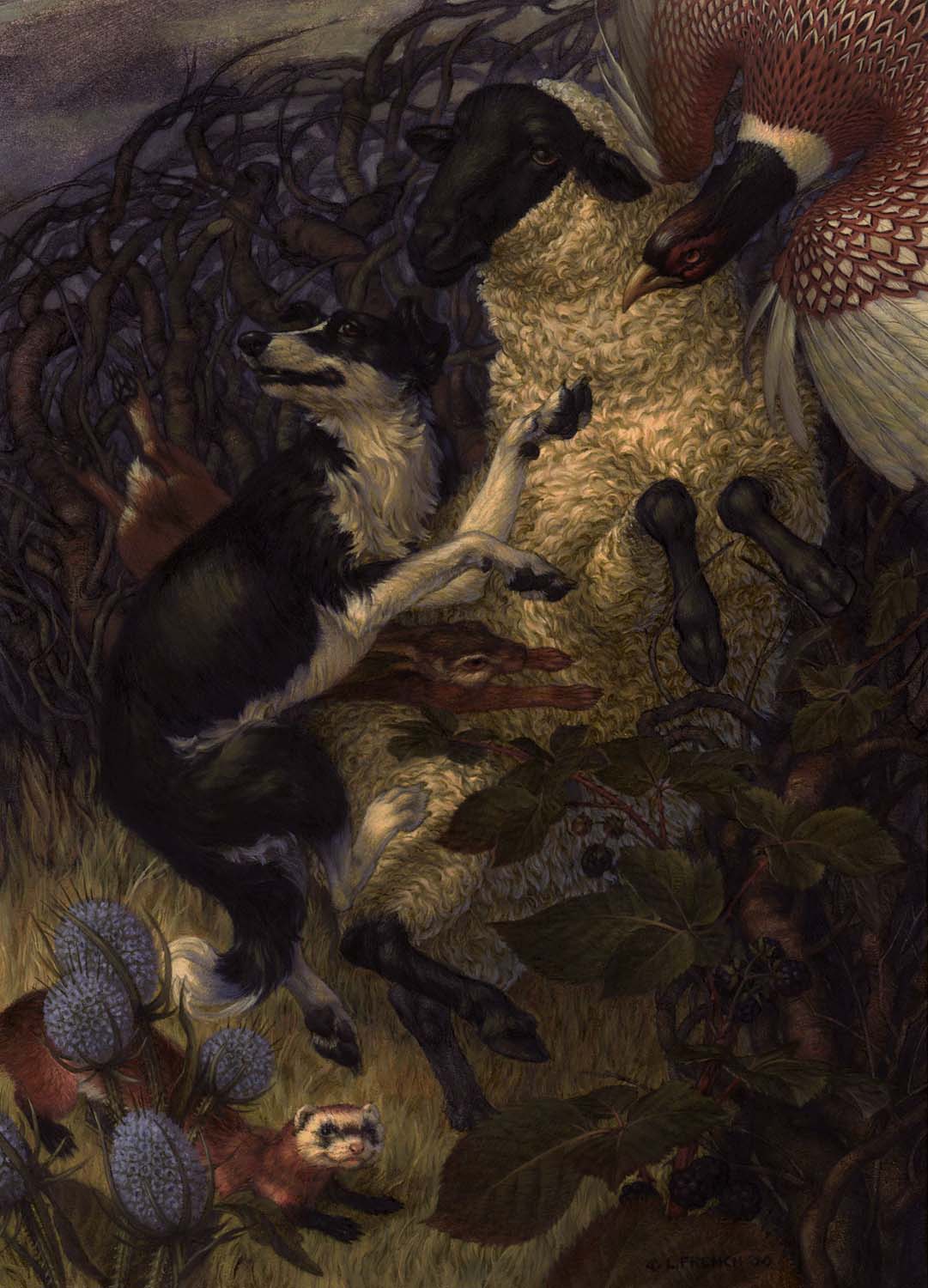
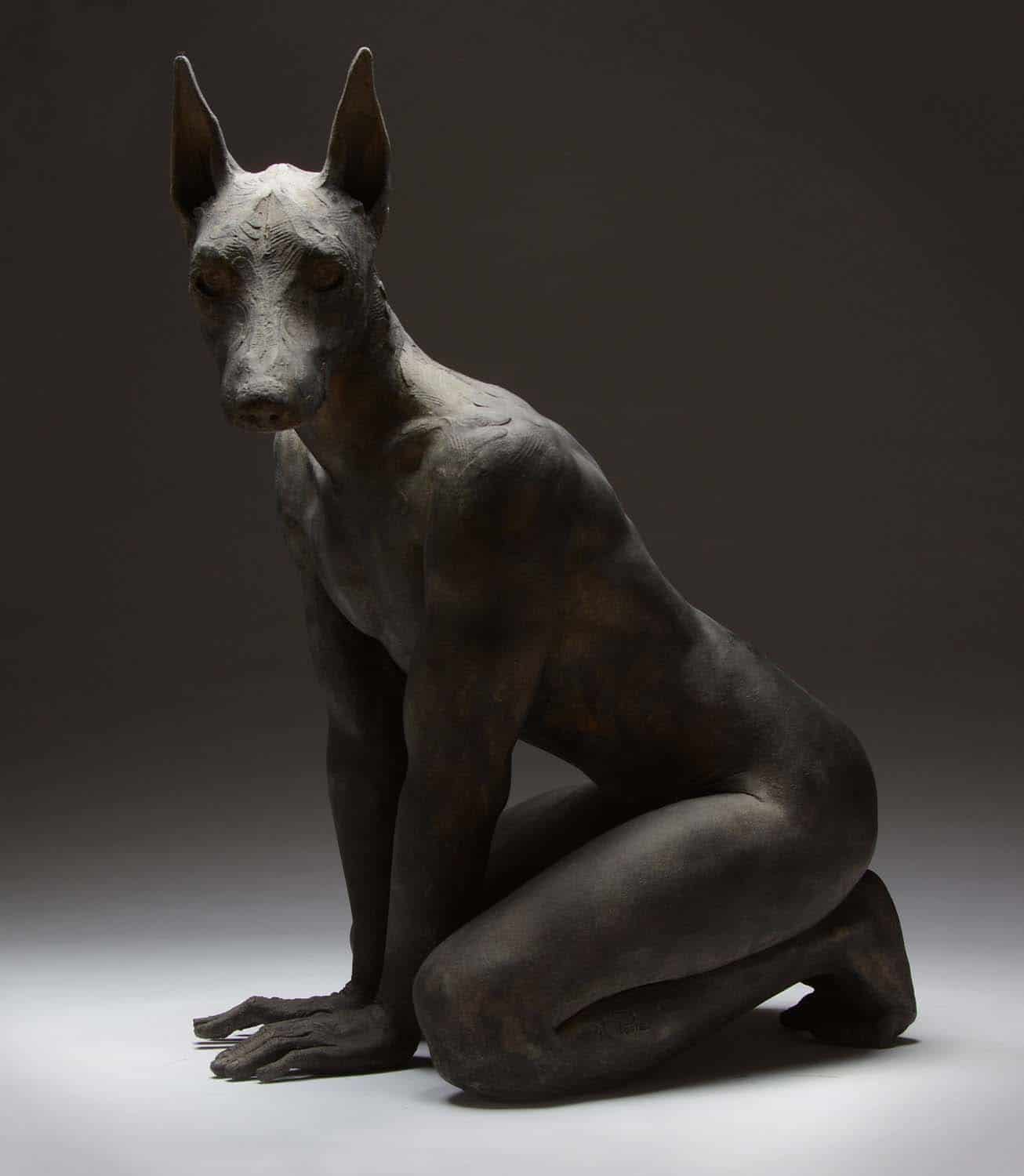
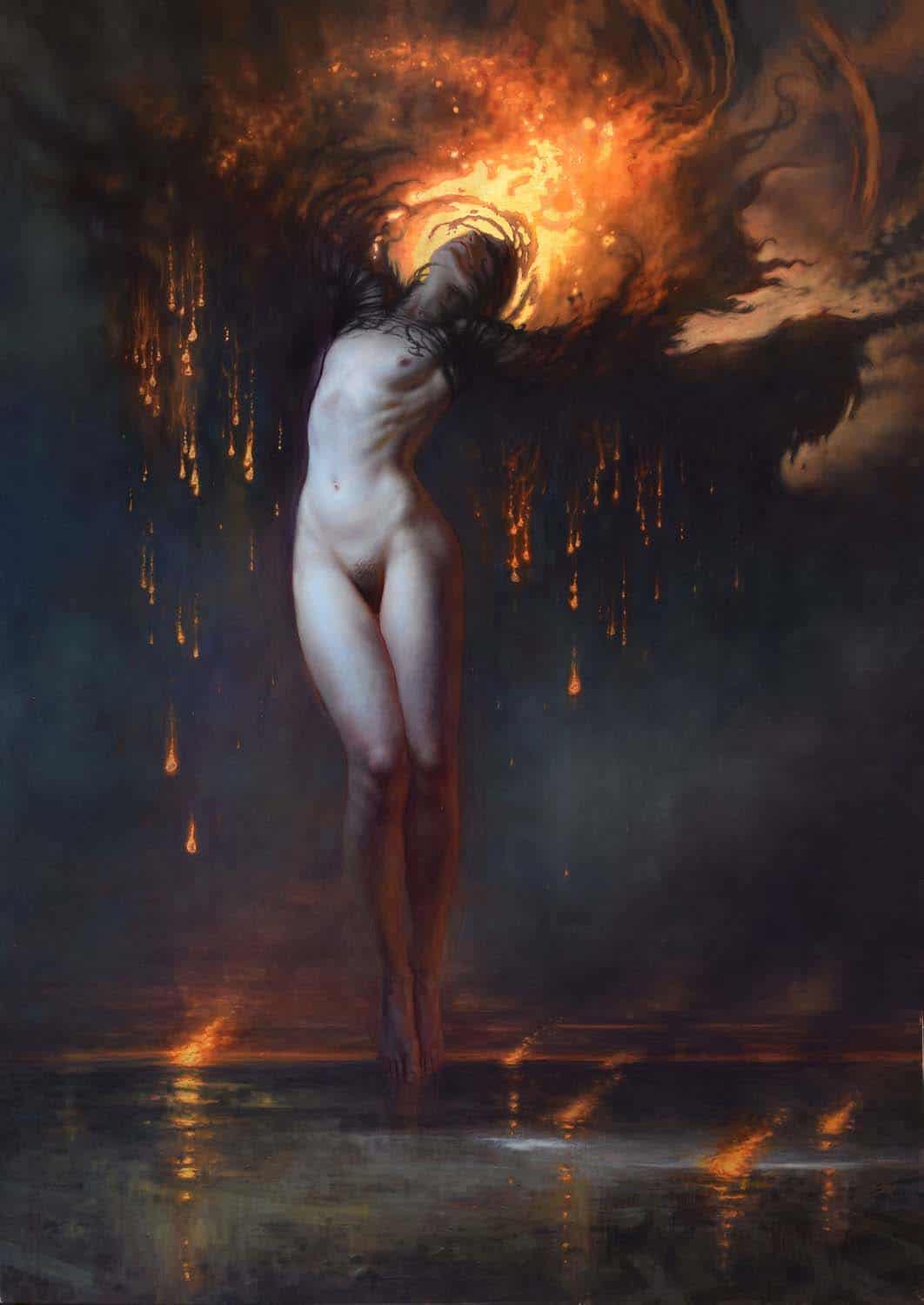
Linda Adair, “Longing,” 2016, oil on panel, 24 x 18 inchesLisa French, “Hedgerow,” 2000, oil on board, 12 x 17 inchesRandy Gallegos, “Glossai Pyros II,” 2016, oil on Masonite, 18 x 24 inchesJohn Jude Palencar, “Ghost Punch,” 2016, acrylic on panel, 36 x 48 inchesColin & Kristine Poole, “Hot Diggity Dog,” 2014, clay, 28 x 21 x 21 inchesTenaya Sims, “Semillas,” 2016, oil on linen, 72 x 101 inches
Founded in 2008, IX Arts is the first, groundbreaking art show, symposium, and celebration dedicated solely to imaginative realism — bringing artists, students, collectors, and art fans together for an annual gathering intended to inspire and create further awareness and zeal for imaginative realism.
This article was featured in Fine Art Today, a weekly e-newsletter from Fine Art Connoisseur magazine. To start receiving Fine Art Today for free, click here.
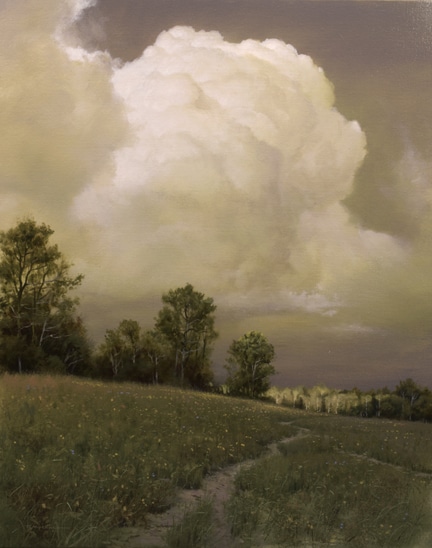
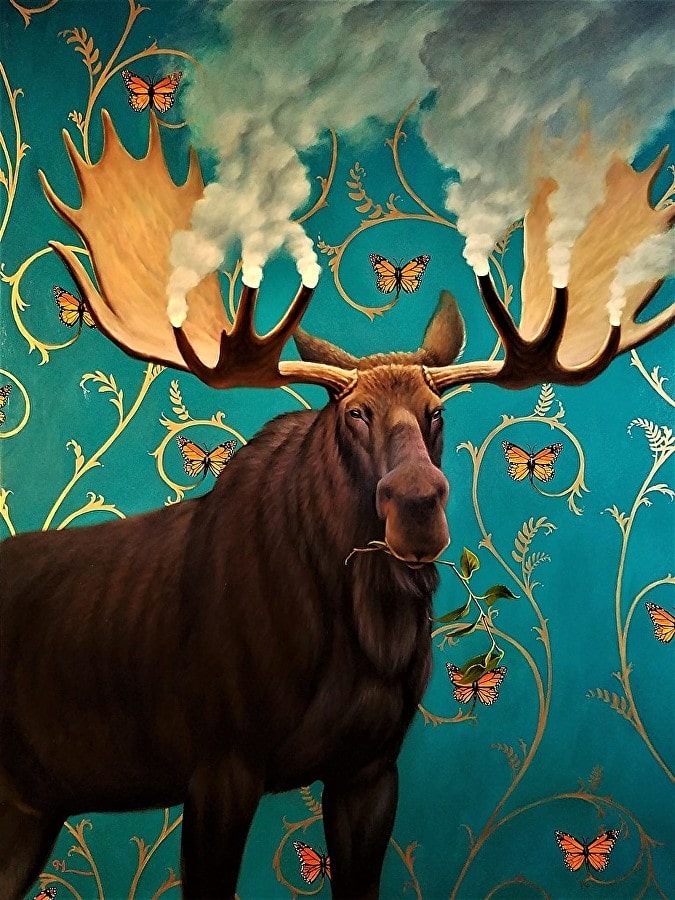
Mark Larson, “Monarch,” oil, enamel, and gold leaf on panel, 64 x 48 inches
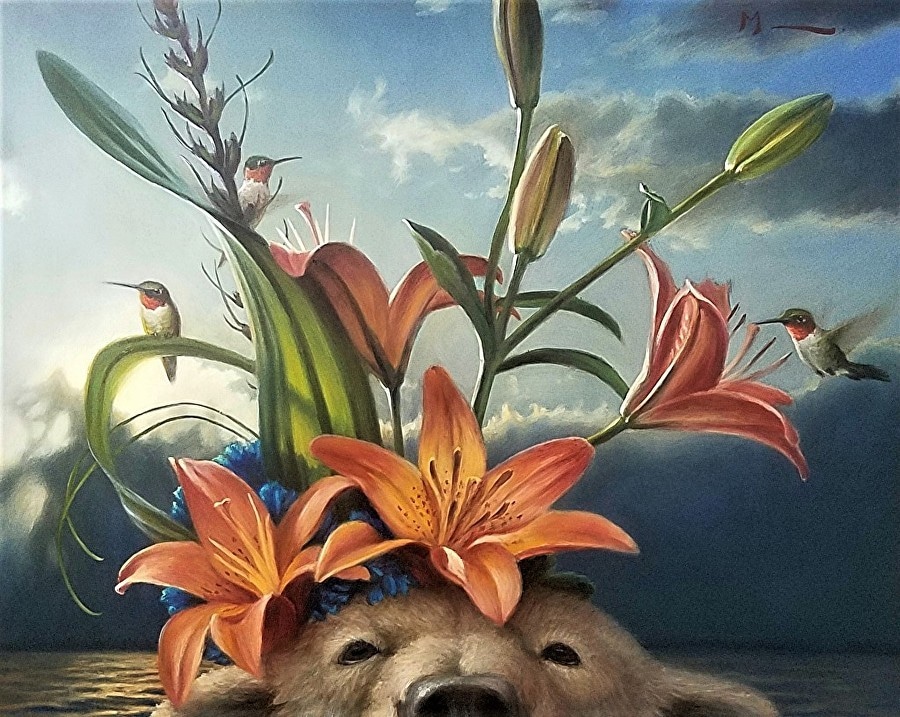
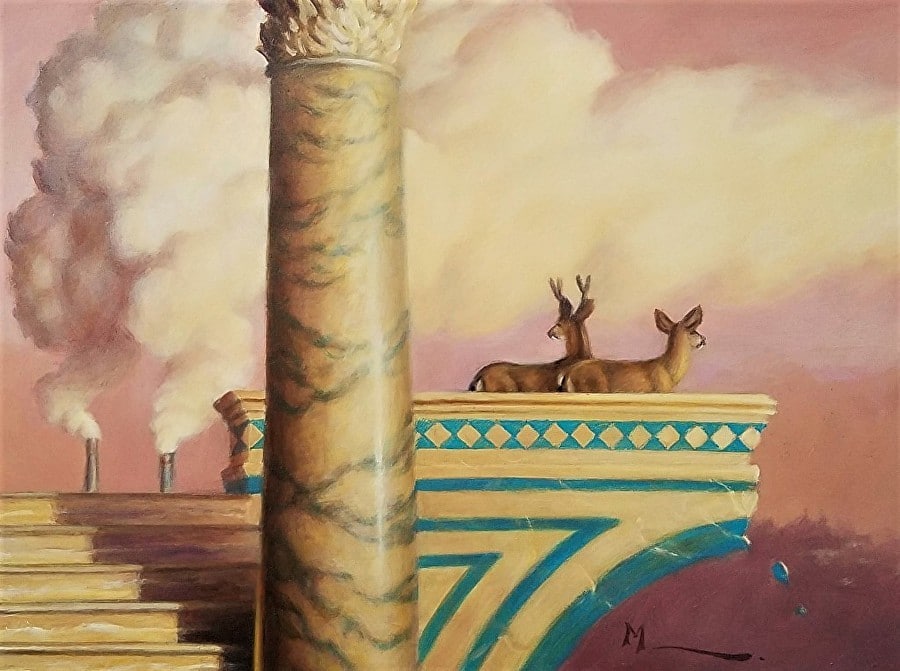
Well-known Tacoma, Washington, painter Mark Larson is currently showcasing a fantastic lineup of new works that explore man, nature, and their intersection in the modern world.
On view through November 10, “New Totems” is an engaging display of contemporary realism by artist Mark Larson. Hosted at the Washington Center for the Performing Arts in Olympia, Washington, these new works cover all three floors of this beautiful venue and kick off the center’s fall performance season.
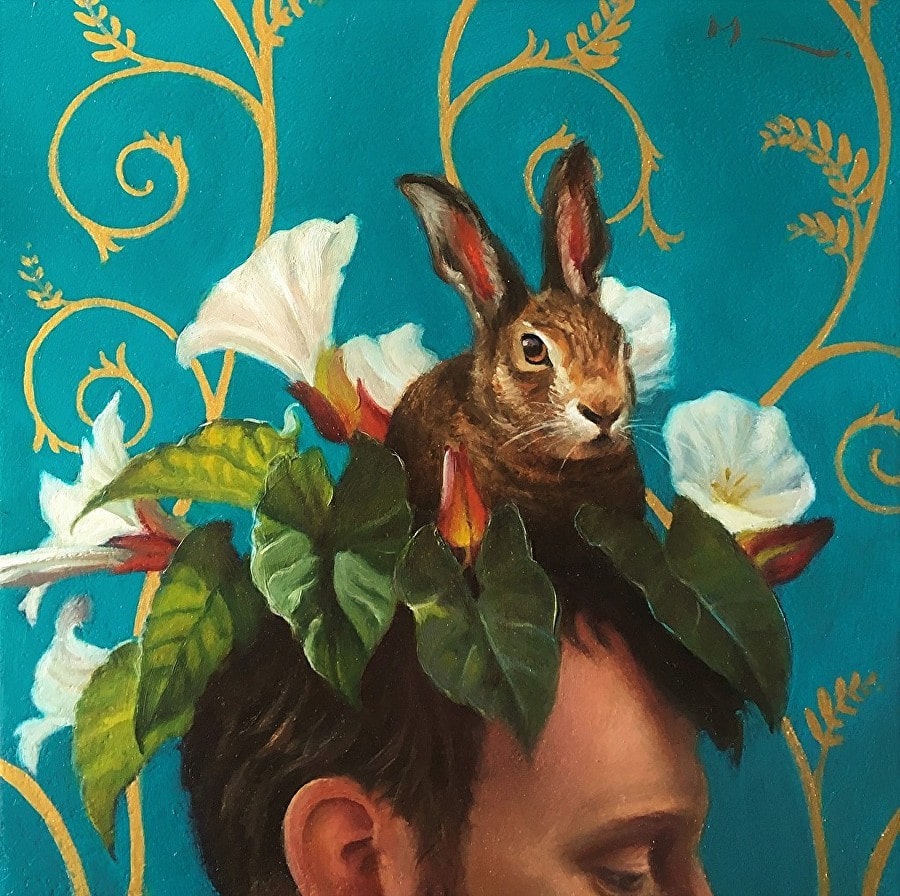
Mark Larson, “Bloom,” oil on panel, 16 x 20 inchesMark Larson, “Good Hare Day,” oil on panel, 10 x 10 inchesMark Larson, “Vista,” oil on panel, 12 x 16 inchesMark Larson, “Thaw,” oil, enamel, and metal leaf on panel, 40 x 60 inches
“Larson’s paintings are a thought-provoking exploration into the often strained dialectic between humanity and nature in our modern world,” writes the center. “In this time of tremendous cultural and environmental change, ‘New Totems’ aims to show us how we intersect with and have an impact on nature. Mark has been working on this body of work since 2015, and this will be the first time that many of these works have been shown in public. With paintings ranging from small studies to very large canvases as large as eight feet across, this is a show you won’t want to miss.’
This article was featured in Fine Art Today, a weekly e-newsletter from Fine Art Connoisseur magazine. To start receiving Fine Art Today for free, click here.
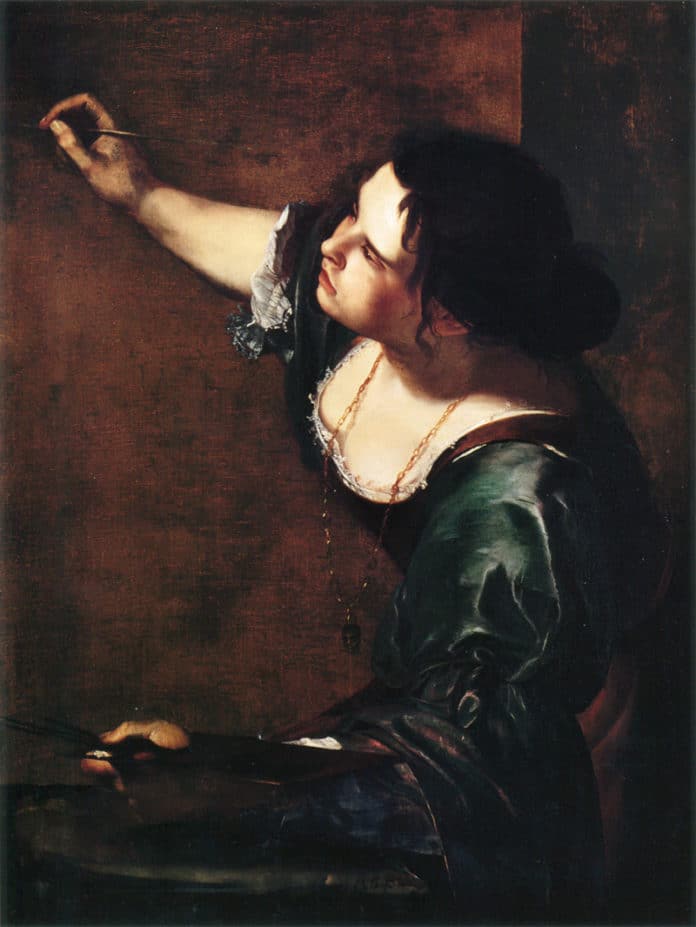
Artemisia Gentileschi, “Self-Portrait as the Allegory of Painting,” circa 1638-39, oil on canvas, Royal Collection Trust
Following its successful run at the Queen’s Gallery, Buckingham Palace in 2016, this incredible exhibition that delves into the world of self-portraiture through a remarkable selection of works from the Royal Collection soon lands here.
The Royal Collection is one of the most important art collections in the world, and now important examples of historical self-portraiture from the collection are heading to the Vancouver Art Gallery in British Columbia. “Portrait of the Artist: An Exhibition from the Royal Collection” is the first outside the United Kingdom to focus on images of artists within the Royal Collection. Among the artists represented are Rembrandt, Peter Paul Rubens, Artemisia Gentileschi, Lucien Freud, and David Hockney; also included are images of artists by their friends, relatives, and pupils, including the most reliable surviving likeness of Leonardo da Vinci, by his student Francesco Melzi.
Following its run at the Queen’s Gallery, “Portrait of the Artist” will open in Vancouver on October 28 and remain on view through February 4, 2018. Kathleen S. Bartels, director of the Vancouver Art Gallery, remarked, “‘Portrait of the Artist’ presents a remarkable group of paintings, drawings, prints, photographs, and works of art spanning six centuries from the Royal Collection. These works highlight both the enormous richness of the Royal Collection and the complex and deep relationship that the British monarchy has had with artists. We are delighted to offer audiences this rare opportunity to trace the evolving role of artists across time.”
Continuing, the gallery’s press release reads, “Central to the history of the British monarchy has been the role of art, both to define the image of the monarchs and to confirm their power, wealth, and taste. However, during the Renaissance, artists began claiming an increasingly central role in visual culture, as emphasis shifted toward individual achievement and the notion of the artist as a uniquely visionary genius. This growing respect for artists as creators led to the collecting of artist’s self-portraits and images of artists playing roles and at work. Such voracious collection began with King Charles I, one of Europe’s greatest art collectors. As soon as succeeding British monarchs began employing and collecting the work of artists (both British and European), they also began collecting artist’s self-portraits.”
This article was featured in Fine Art Today, a weekly e-newsletter from Fine Art Connoisseur magazine. To start receiving Fine Art Today for free, click here.
Fill your mind with useful art stories, the latest trends, upcoming art shows, top artists, and more. Subscribe to Fine Art Today, from the publishers of Fine Art Connoisseur magazine.