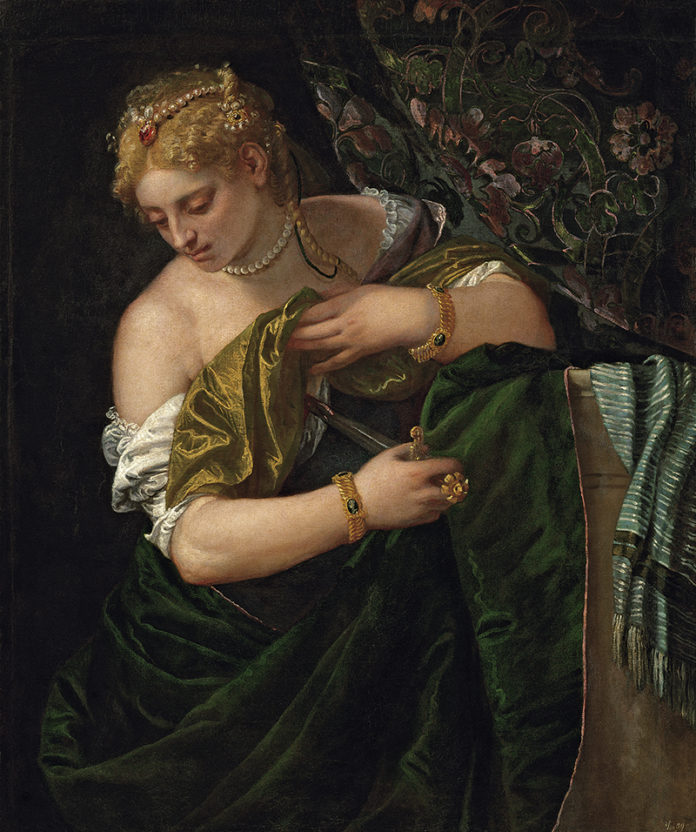
Paolo Caliari, “Lucrecia,” 1580, oil on linen, 109.5 x 50.5 cm. Kunsthistorische Museum, Vienna
Nearly 100 masterful works hailing from 16th-century Venice will embellish the walls of this Spanish museum through September. What’s the theme, and who are the principle players? Find out more here.
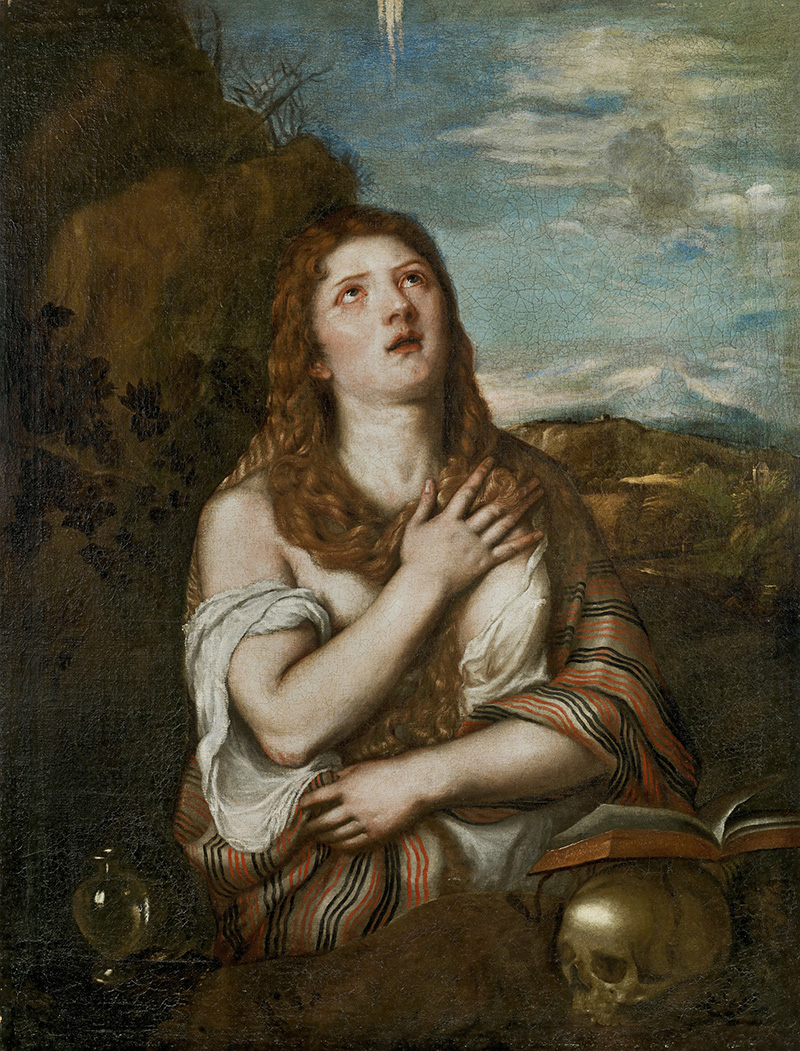
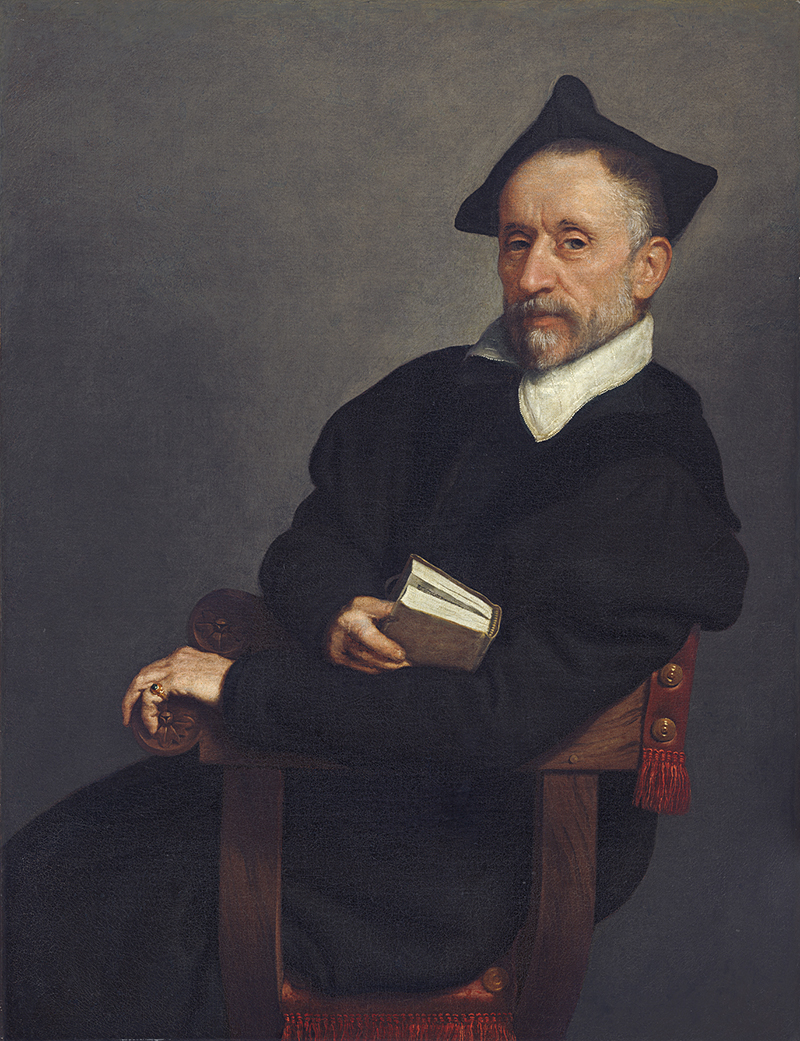
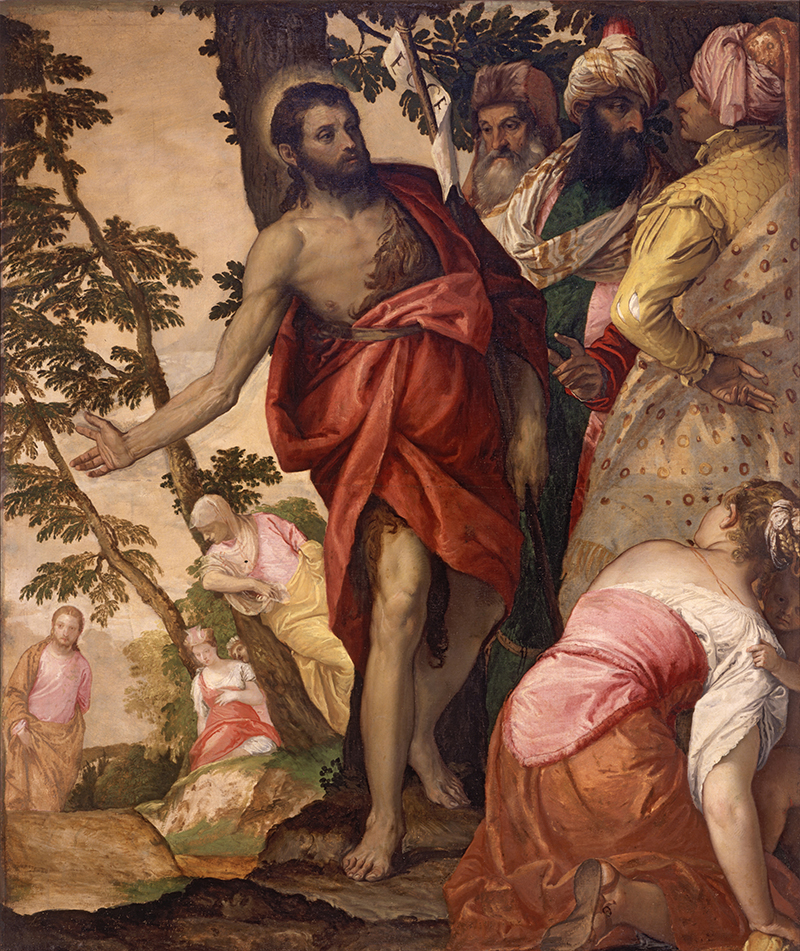
Madrid’s Museo Thyssen Bornemisza is currently exhibiting a significant selection of Renaissance artworks from Venetian masters this Summer. “The Triumph of Beauty and the Destruction of Painting” runs through September 24 and “sets out to show how the specific devices of Venetian painting, from the use of chiaroscuro and color as the bases for representing figures and space to a closer attention to nature than was advocated by the classical tradition, more idealistic in its conception, embodied a fully Renaissance idea of beauty that was on par with, and sometimes superior to, the art then being produced in Rome, Parma, and Florence,” the museum reports.
Titian, “The Penitent Mary Magdalen,” circa 1540-46, oil on linen, 125.6 x 94.7 cm. Private CollectionGiovanni Cariani, “The Musicians,” 1520, oil on linen, Fondazione Accademia CarraraGiovanni Battista Moroni, “Titian’s Schoolmaster,” oil on linen, 98.8 x 74.3 cm. National Gallery, WashingtonPaolo Caliari, “Saint John the Baptist Preaching,” 1562, oil on linen, 208 x 104 cm. Galleria Borghese
Among the major artists represented are Titian, Tintoretto, Paolo Veronese, Jacopo Bassano, Giorgione, and Lorenzo Lotto. Continuing, the press release reads, “Curated by Fernando Checa Cremades, professor of Art History at the Universidad Complutense, the show examines this hub of art production, which is essential to understanding the history of painting, through a careful selection of the subjects depicted by the masters who earned it universal fame rather than from a chronological or stylistic approach. It features an outstanding group of paintings and a few sculptures, prints, and books from private collections and museums such as the Galleria dell’Accademia in Venice, the Fondazione Accademia Carrara in Bergamo, the Palazzo Pitti in Florence, the Kunsthistorisches Museum in Vienna, the Galeria degli Uffizi in Florence, the Musée du Louvre in Paris, and the National Gallery in London.”
A full outline of the exhibition and its 10 sections can be found here. To learn more, visit the Museo Thyssen Bornemisza.
This article was featured in Fine Art Today, a weekly e-newsletter from Fine Art Connoisseur magazine. To start receiving Fine Art Today for free, click here.
As part of its Artist Lecture Series, the Seven Bridges Foundation in Greenwich, Connecticut, will soon be hosting one of America’s leading figure, portrait, and still-life painters and one of the world’s most renowned pastelists. He has perfected his craft for over 65 years, and you don’t want to miss hearing him detail his artistic odyssey.
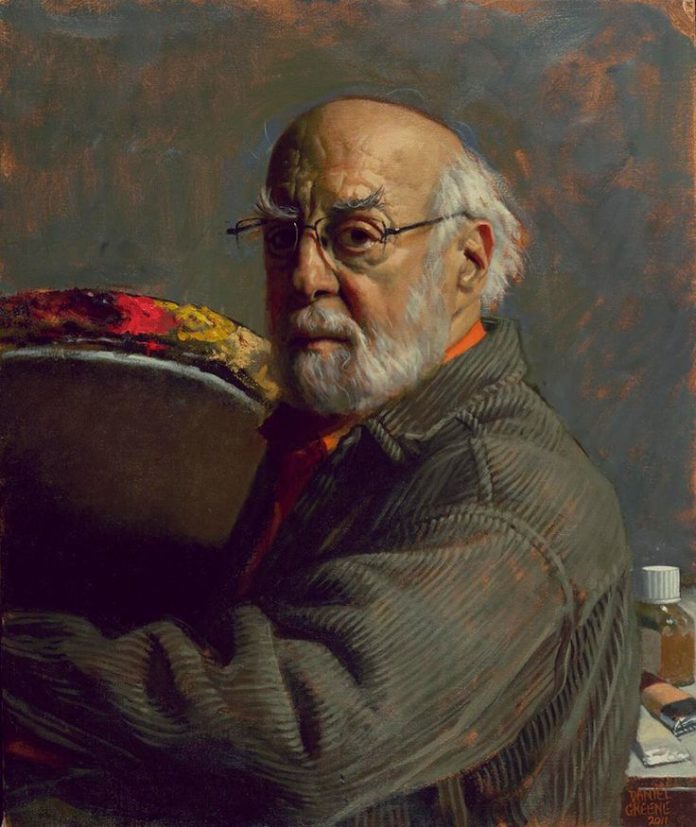
On Saturday, July 22, at 2 p.m., Gallery 1 at Seven Bridges Foundation in Greenwich, Connecticut, will welcome acclaimed American artist Daniel E. Greene to discuss his creative journey in art in addition to his evolution over a career than spans 65 years. Greene is “one of America’s leading figures, portrait, and still-life painters and has been internationally acclaimed as one of the world’s most renowned pastelists,” the foundation reports. “His portrait subjects include leaders of government, banking, education, industry, and include First Lady Mrs. Eleanor Roosevelt, author Ayn Rand, publisher William Randolph Hearst, and commentators Bryant Gumbel and Bob Schieffer. His works now hang in more than 700 public and private collections including the Metropolitan Museum of Art. He has taught at the Art Students League and at the National Academy of Design. Mr. Greene is the author of two definitive books, Pastel and TheArt of Pastel, which have been translated into nine languages.”
The foundation continues, “In 2001, the Portrait Society of America presented Daniel E. Greene with the Medal of Honor for his distinguished body of work. In 1999, he was awarded the Artists Fellowship Benjamin West Clinedinst medal for the achievement of exceptional artistic merit. In 1995, the American Society of Portrait Artists honored Greene with the John Singer Sargent Award for life-long dedication to the achievement of excellence in portraiture. In 1992, the Oil Painters of America Society named him to their Hall of Fame. In 1983 Mr. Greene was inducted into the Pastel Hall of Fame.”
With so many accolades under his belt, the artist is sure to have a wealth of fantastic stories and words to the wise. To learn more, visit Seven Bridges Foundation.
This article was featured in Fine Art Today, a weekly e-newsletter from Fine Art Connoisseur magazine. To start receiving Fine Art Today for free, click here.
Jesus Navarro, “Catching a Ride,” oil on canvas, 20 x 31 inches
The mesmerizing hyper-realist paintings by Spaniards Jesus and Iban Navarro feature during a blockbuster joint exhibition at this established gallery in the Southwest.
“Oil & Water” will leave viewers stunned and awestruck at the capabilities a few possess to turn pigment, vehicle, and support into seeming three-dimensional perfection in two dimensions. Featuring the hyper-realist paintings of Jesus Navarro and Iban Navarro, Gallery 901 in Santa Fe, New Mexico, can barely wait to open its doors for “Oil & Water” on July 28.
Iban Navarro, “The Catch of the Day,” egg tempera and watercolor, 24 x 36 inches
The show, which will remain on view through August 28, will be both artists’ first in the United States, and each will be in attendance at the gallery for the opening reception, slated for 5 p.m. on July 28. “Father and son painters Jesus and Iban Navarro form a duo of talented artists that reach a remarkable level of hyper-realism,” the gallery writes. “Skillfully manipulating color and light, the two exceptional painters capture a stunning representation of every scene they create, ranging from vibrant floral arrangements to waves crashing against the Spanish coast. Perhaps most importantly, the influence they impart on each other proves that similarity may be found in diversity. Through employing different artistic techniques and images, both artists compose their works with classical foundations while adding unique technical elements to their paintings. Jesus masterfully uses oils, while his son Iban favors watercolors as his primary material. Despite the disparity in media, the pair works together to prove that in the art world, oil and water may sometimes mix.”
This article was featured in Fine Art Today, a weekly e-newsletter from Fine Art Connoisseur magazine. To start receiving Fine Art Today for free, click here.
Roy Nuse, “Peace of Mind,” n.d., oil, 30 x 25 inches, Bucks County Intermediate
Believe it or not, many of our nation’s public and private schools have remarkable art collections. The James A. Michener Art Museum explores the phenomenon during this fascinating show.
The James A. Michener Art Museum in Doylestown, Pennsylvania, recently mounted an interesting exhibition aimed at showcasing the longstanding tradition of art collecting by public educational institutions in southeastern Pennsylvania.
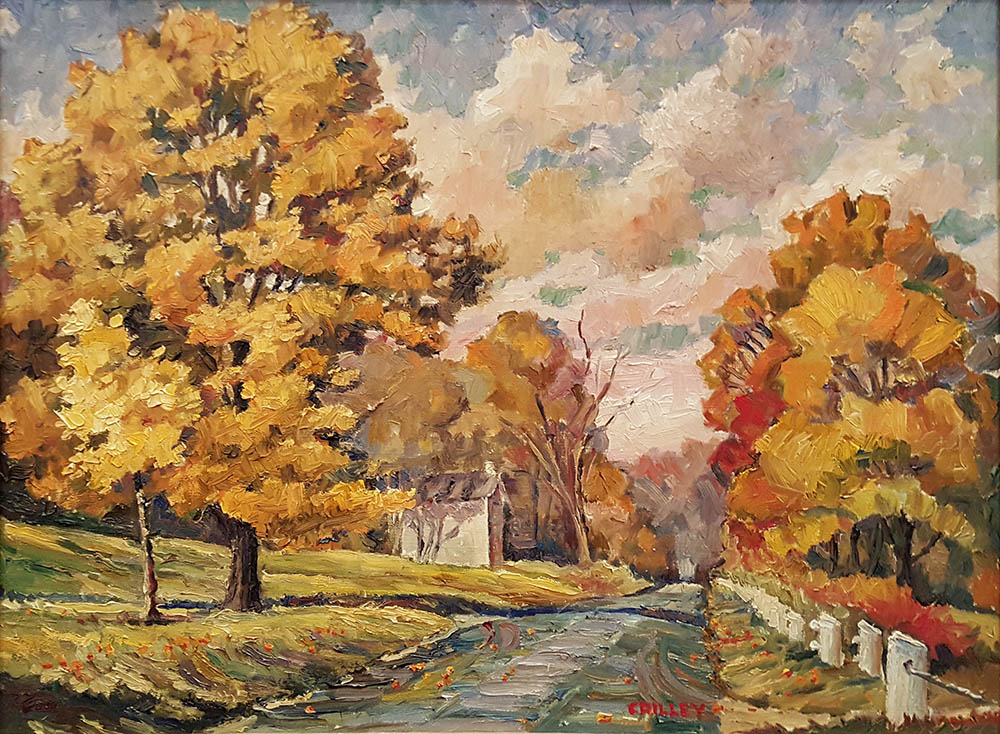
Walter Baum, “The Brook,” circa 1930, oil on canvas, 32 x 40 inches, School District of PhiladelphiaJoseph Crilley, “Country Road to Bucks County,” circa 1952, oil on canvas, 18 x 24 inches, New Hope-Solebury School District
Opened on July 8 and running through January 7, 2018, “Dedicated, Displayed, Discovered: Celebrating the Region’s School Art Collections” is a remarkable collaboration of six educational institutions that, from the 1890s to the mid-20th century, “embraced opportunities to introduce original works in hallways and classrooms, advancing a holistic approach to educating and enriching the lives of students,” the museum reports. “The Michener Art Museum is presenting the first-ever exhibition of these long-hidden artistic treasures, inviting the public to view these historically significant works and to learn the stories of the schools, artists, and educators behind them.”
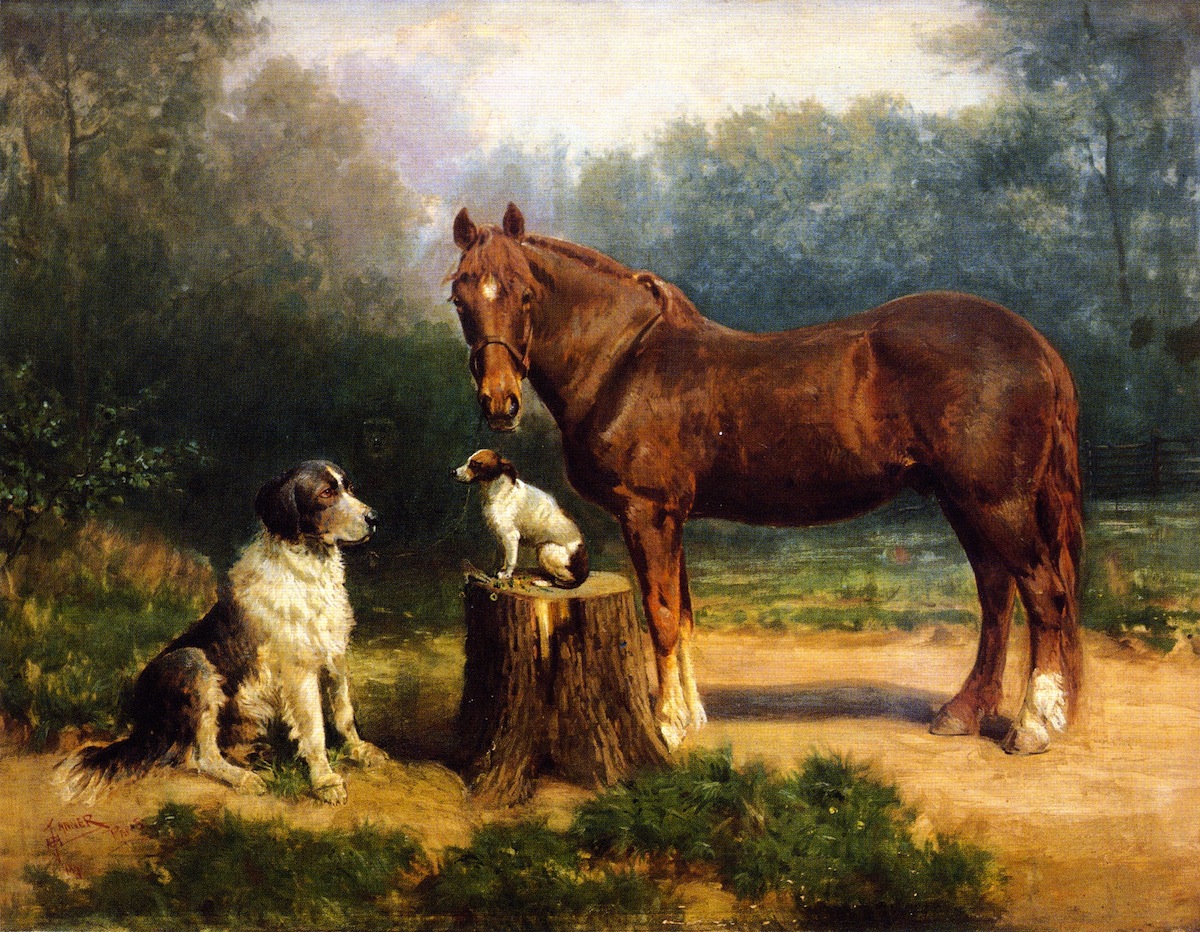
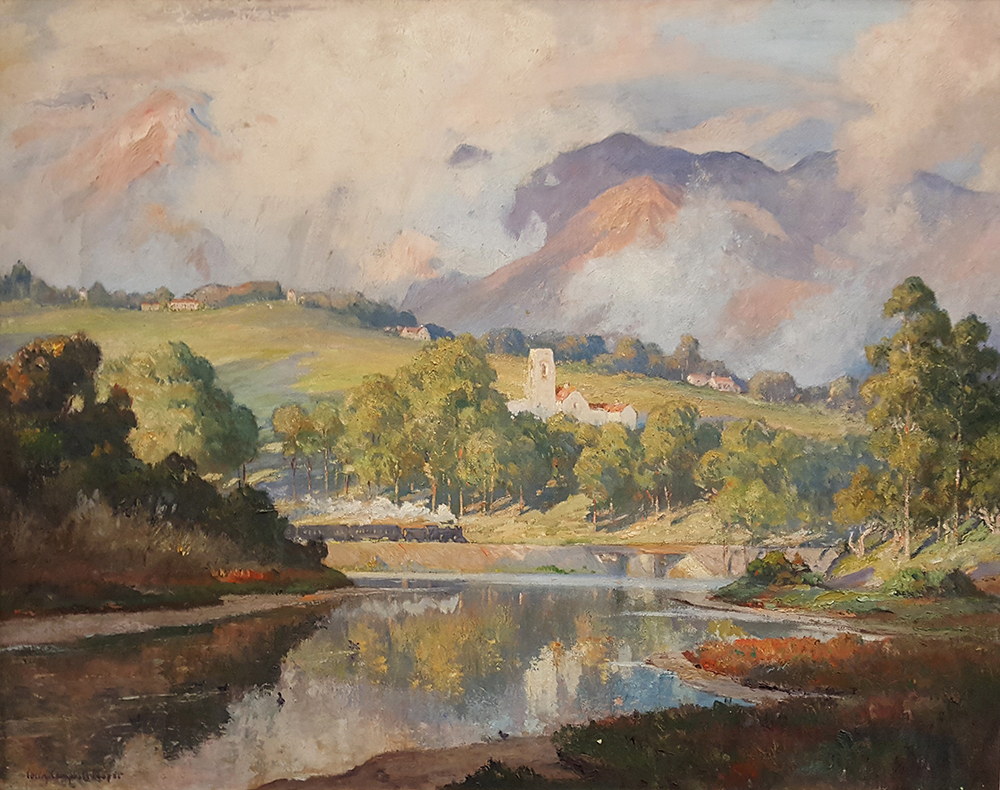
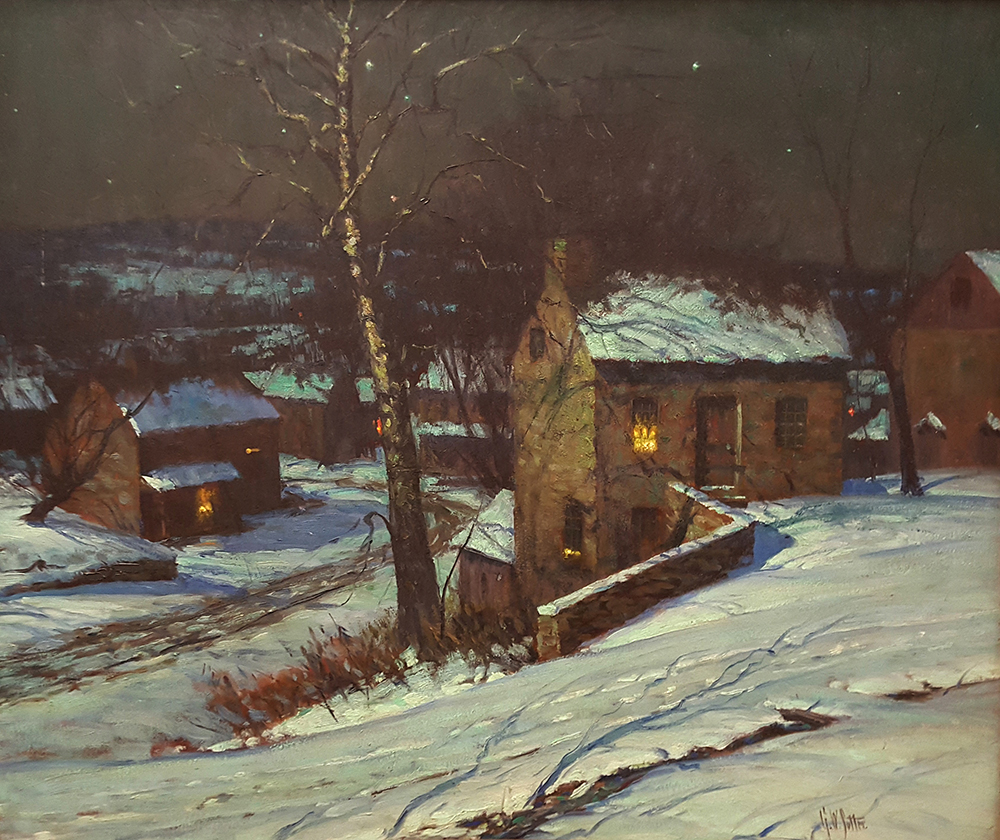
Henry Ossawa Tanner, “A Horse and Two Dogs in a Landscape,” 1891, oil on canvas, 30 x 38 inches, School District of PhiladelphiaColin Campbell Cooper, “The Bird Refuge,” circa 1915, oil, 42 x 52 inches, Pennridge School DistrictGeorge Sotter, “Two Roads,” circa 1951, oil, 26 1/2 x 30 1/2 inches, Pennridge School District
“For well over a century, the connection among artists, educators, and students has been an important part of the rich artistic heritage of this region,” added Adrienne Neszmelyi-Romano, the Michener’s director of interpretation and innovation. “We are delighted to be able to present for the first time how these connections evolved over the decades and benefited everyone involved — especially students, whose intellects were shaped by continuous exposure to and discussions about the original works of art in their classrooms and hallways.”
This article was featured in Fine Art Today, a weekly e-newsletter from Fine Art Connoisseur magazine. To start receiving Fine Art Today for free, click here.
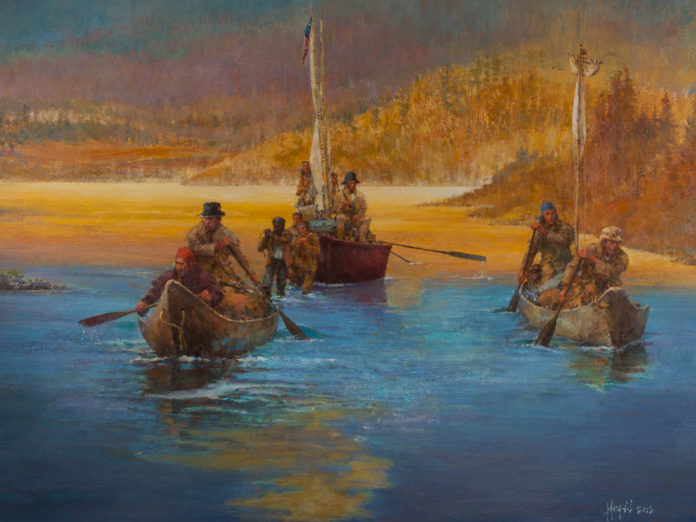
Frank Hagel, “Sunrise on the Upper Missouri,” oil, 30 x 40 inches
Two great galleries recently celebrated the First Thursday Artwork in Whitefish, Montana, and it featured the gorgeous works of Frank Hagel, Jack Lyons, Laurie A. Stevens, and Ben Pease. What’s the buzz?
On Thursday, July 6, Frame of Reference Fine Art and Dick Idol Signature Gallery opened two fantastic shows as part of Whitefish, Montana’s First Thursday Artwork. “Western Perspectives,” which opened at Frame of Reference Fine Art, features the recent works of three major artists: Frank Hagel, Jack Lyons, and Laurie A. Stevens. All three artists were on hand and discussed their works during the opening.
Whether it be an extended experience, a split-second moment, or a historical account met through research, Hagel is always ready for his next painting’s subject to reveal itself. When the spark of inspiration hits, Hagel’s methodical process begins, a course that is finely tuned and has consistently yielded breathtaking results. “My paintings are almost always inspired by Montana,” Hagel suggested, “whether landscapes, animals, or humans, they are all familiar to me and interesting in an historical or pictorial sense.” Hagel is one of the preeminent painters of the American West, and his connection with Montana and Western culture runs extremely deep and, to be sure, well beyond his art.
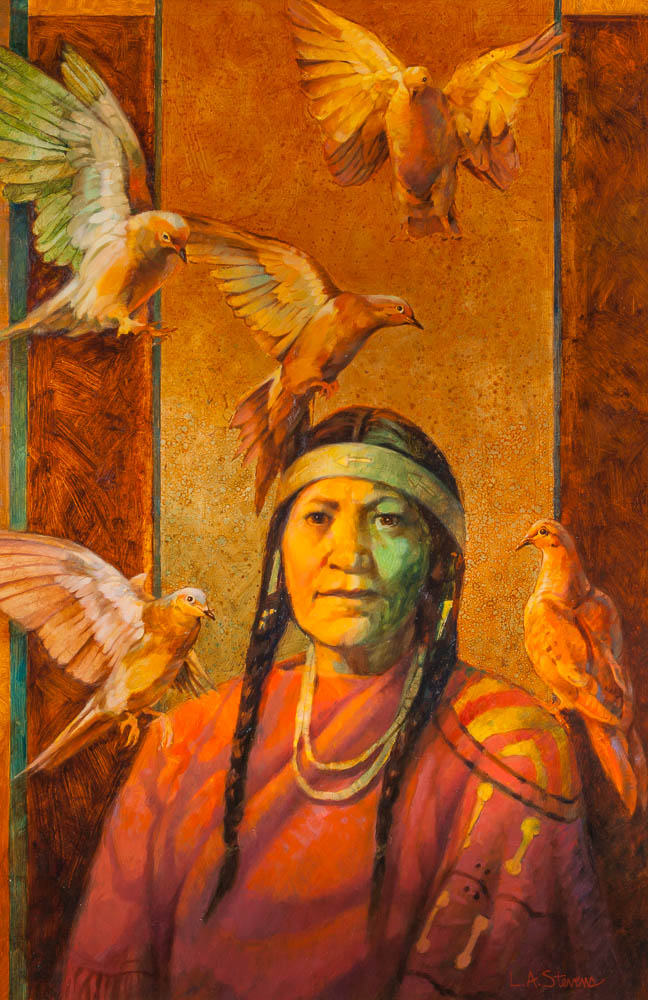
Laurie A. Stevens, “Morning Dove,” oil and gold leaf, 36 x 24 inches
Also on view are the works of Laurie A. Stevens, also one of the most collected painters of the American West. Her work “reflects the small daily wonders of the land she calls home,” the gallery said, “the first crocus of spring, the resilient beauty of the plains, or that special sense of hope and possibility that is only found in the West. Stevens is also interested in regional history, particularly the interactions of Native Americans and white settlers during the Reservation Period. Many of her paintings are an exploration of this dynamic and a meditation on the taming of the West.”
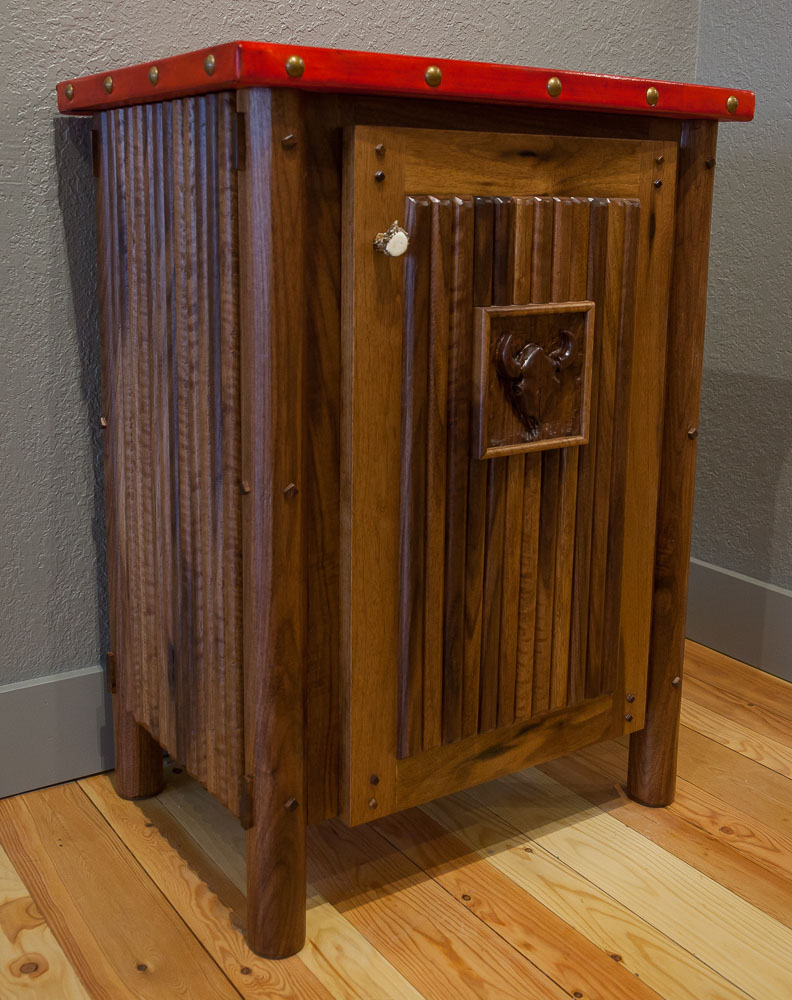
Balancing the two-dimensional works of Stevens and Hagel is the exquisite cabinetry of Jack Lyons. “He is known throughout the region for his ability to combine an artist’s creative vision with stunning craftsmanship, and then create something unique and enduring: handcrafted beauty you can reach out and touch,” the gallery continued. “Lyons’ work over the years has been diverse — building custom furnishings and imaginative themed spaces for model homes, designing and building his own homes and of course all the furniture; building several artists’ studios, custom artistic furniture, metal art pieces and expressive wood carvings.”
Jack Lyons, Walnut Cabinet, 35 x 26 x 19 inches
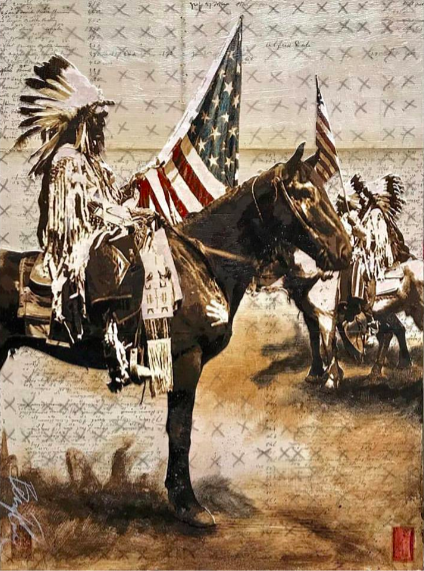
Certainly not outdone by Frame of Reference Fine Art is Dick Idol Signature Gallery, which mounted “Breaking Sacred Ground: An Indigenous Introspective” featuring the works of Ben Pease. Via their press materials, Pease says, “Throughout my life, I’ve tried to soak up as much cultural, societal, and traditional aspects of what it means to be an aboriginal from North America in the whirlwind of today. I find my definition of being Native to this land as an interpersonal physical and spiritual relationship which is connected to all surrounding entities, beings, organisms, and geological features.
“I come from the Crow and Northern Cheyenne Nations in South Eastern Montana.
Ben Pease, “Nacerima,” 2017, acrylic, digital paint print, ink, and stamps on canvas, 24 x 18 inches
“I have been practicing as a professional Native Artist for almost 4 years around the country. My work and process are currently evolving, for the more I learn, the less I know. I’ve recently crossed paths with the self-appointed task of narrating the Aboriginal struggles and aesthetics through my personal interpretation. Whether my art focuses upon statements drawn from the aspect of an activist or based on cultural recording, I feel the need to educate and speak volumes. I will continue my transition from a so-called ‘Rez-Kid’ to a culturally rich contemporary storyteller.”
This article was featured in Fine Art Today, a weekly e-newsletter from Fine Art Connoisseur magazine. To start receiving Fine Art Today for free, click here.
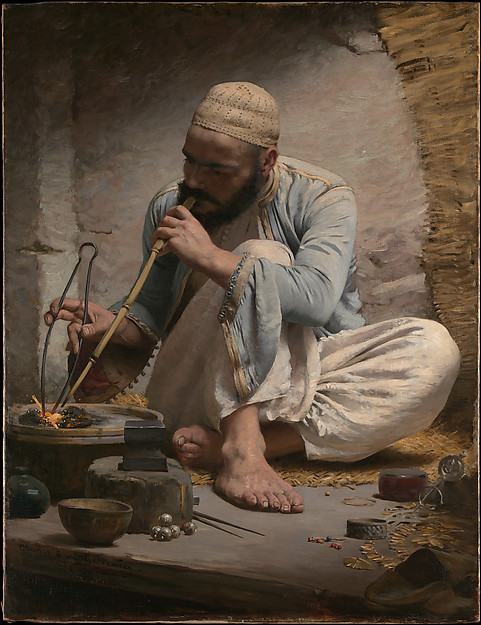
Charles Sprague Pearce, “The Arab Jeweler,” circa 1882, oil on canvas, 46 x 35 3/8 inches, Metropolitan, New York
In this occasional series, Fine Art Today delves into the world of portraiture, highlighting historical and contemporary examples of superb quality and skill. This week we detail a fantastic oriental masterwork circa 1882.
Nestled into a dimly lit corner with reed pipe in hand, an Arab jeweler delicately stokes a small bed of coals. Surrounding the figure are the tools of his trade — a small anvil, tongs, a ceramic bowl, and a jar of oil. Just as captivating as his activity is the sitter’s cool, sky blue coat embroidered with gold trim, and his woven cap.
The sights, sounds, culture, and color of the orient have here been masterfully captured, frozen in time, by the accomplished painter Charles Sprague Pearce. The image is tightly rendered and cropped, and there is a wonderful sense of intimacy in “The Arab Jeweler” that pulls viewers into the scene, encouraging them to participate in its narrative. Completed circa 1882, the painting is a product of the artist’s four-month excursion along the Nile in the early 1870s, which undoubtedly led to his particular interest in the oriental or “exotic.”
This article was featured in Fine Art Today, a weekly e-newsletter from Fine Art Connoisseur magazine. To start receiving Fine Art Today for free, click here.
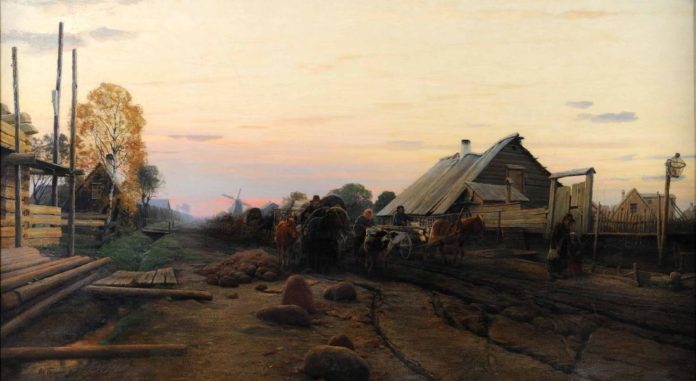
Oskar Hoffmann, “Road to Reval,” circa 1890, oil on canvas, 27 x 48 inches
In this ongoing series for Fine Art Today, we take a longer look at the history and features of a soon-to-be-available artwork of note. This week we feature a luminous and tightly rendered 19th-century painting by little-known master Oskar Hoffmann.
A remarkable work by little-known Baltic-German painter Oskar Hoffmann (1851-1912) headlines a July 29 auction via the Los Angeles-based house Bid Network Online. To be sure, the available painting, titled “Road to Reval,” is remarkable — rendered with such precision that no detail of the casual country-themed composition has been neglected. Indeed, it seems odd that such a skillful painter has slipped into relative obscurity.
Born in 1851 in Estonia, Hoffmann is best known for his colorful and luminous depictions of Estonian peasants, such as “Road to Reval.” He began his artistic career circa 1872 when he enrolled at the Kunstakademie Düsseldorf, working briefly under the guidance of Eduard von Gebhardt. Graduating in 1877, Hoffmann would eventually establish his own studio in Düsseldorf and, throughout his career, would participate in international exhibitions in Vienna, Berlin, and elsewhere.
Captured within a strong horizontal format, “Road to Reval” brings together a very masterful realistic portrayal of a range of symbols, including windmills, campfires, muddy paths, paupers vs. a train of market-goers, etc., all of which were understood and close to the public. A stunning golden light from the frosty morning illuminates the scene. The light is just beginning to grace the rooftops of nearby cottages and a lone birch tree toward the left edge of the canvas. Still veiled in shadow, a group of peasants wades through the muddy street past a row of large boulders.
Auction estimates are between $34,000 and $50,000. To learn more, visit here.
This article was featured in Fine Art Today, a weekly e-newsletter from Fine Art Connoisseur magazine. To start receiving Fine Art Today for free, click here.
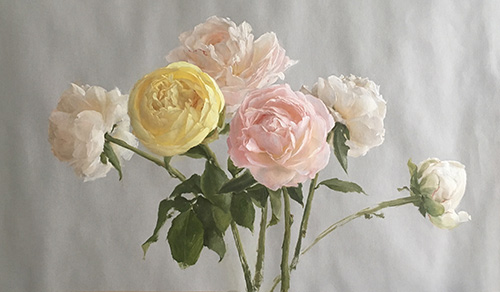
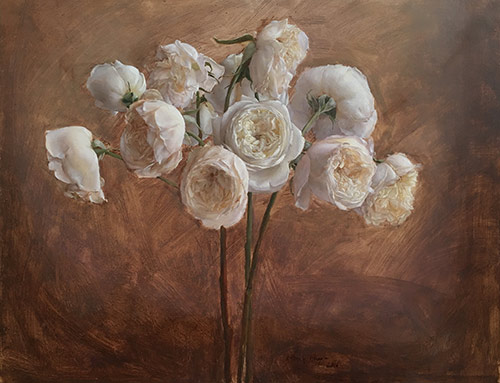
Katie Whipple, “A Study of Peonies,” 2016, oil on prepared paper, 11 x 20 inches
Fine Art Today recently caught up with the magnificent and quickly ascending painter Katie G. Whipple for an in-depth inquiry into the woman, the artist, and her paintings. Her responses were attentive, complete, and sure to intrigue our readers. They deserved to be quoted in full.
Fine Art Today: Talk to us a little about your creative process. Once a moment of inspiration hits, how do you approach the panel or canvas? How do you know when a piece is completed?
Katie Whipple: In some sense, every piece I make has a completely different process. But to my students or an outside observer, it probably doesn’t seem that way. What I mean is that I tend to start my pieces in a similar fashion: a drawing, an underpainting, then the final pass or passes. But to me, each piece feels like completely uncharted territory, even if I have been painting the same subject matter for weeks or months. Inspiration comes from infinite sources, and the initial spark of an idea is what tends to guide my process for the painting.
Lately, I have been painting lots of flowers. Because I am such a slow painter and like to paint many-petaled flowers, I have a painting rate of about one flower per day. This is not a very sustainable pace if you are trying to paint a bouquet of live flowers. I decided to start composing my paintings one flower at a time, adapting my subject matter to my limited skill and speed. This saved me money on flowers and allowed me to get my desired effect for creating a bigger composition.
Of course, when working in this “in the moment” kind of painting style, I have no idea where the composition is heading when I paint that first flower on the canvas. I know it is completed when I have added enough flowers to make a composition work (there is always a scary point where this doesn’t seem possible) and can’t add anything else to the composition without breaking the integrity of the piece. Or sometimes paintings are finished when you simply run out of time! Honestly, though, I hate finishing paintings. It always seems to me as if a complete canvas is just whispering to me, “Well, you tried your best. Don’t worry kid, you’ll get ’em next time.”
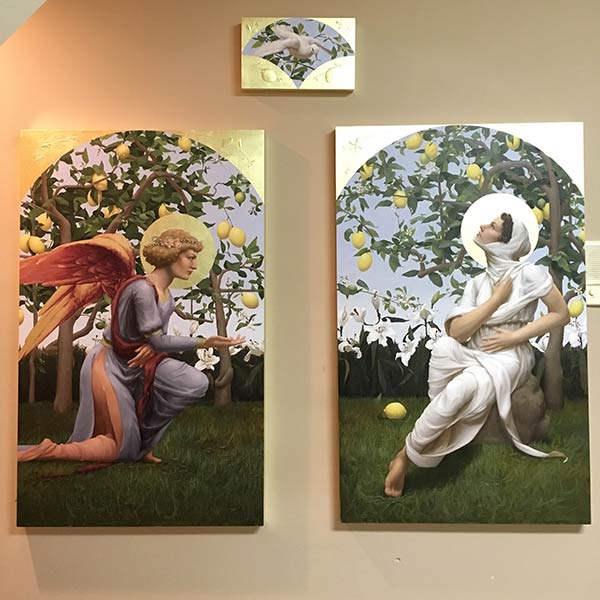
Katie Whipple, “Annunciation,” oil on panel
Fine Art Today: Is there something specific that draws you to your subjects, such as the figure? What has this evolution been like?
Katie Whipple: I decided I wanted to be a professional artist around age 12. I had been drawing and painting all my life, and already was taking oil painting lessons by that point. My mother is a very talented, mostly self-taught painter who started encouraging my interest in art at a very early age. But it was at age 12, in 2003, when I saw the Richard Schmid retrospective at the Butler Museum in Youngstown, Ohio, that I thought I could make this my life. I especially remember his paintings of his family and how much they moved me, even at that young age.
Around this same time, I realized I could copy a picture from a magazine and actually make it look like the person. So began my love affair with drawing faces. My love of drawing and the desire to master the human form led me to Jacob Collins and the Grand Central Atelier in New York City. In my four years of study at GCA I was completely devoted to studying the human form. It was the only thing I cared to draw or paint, and it was my highest aspiration to be a portrait painter.
I still deeply love painting and drawing the figure, and it attracts me for the same reasons it attracts all of us: because we are human beings. We will always, always be most attracted to a painting that reflects ourselves. A Rembrandt portrait can communicate to us about love, loss, perseverance, devastation, strength, and compassion equally with 1,000 pages of Victor Hugo. This will always be one of the reasons I paint. Now, to be rather contradictory, it is for similar reasons that I have stepped away from the figure for the last several months of my life, and am focusing on some new channels to let inspiration speak through.
Fine Art Today: What are your primary goals in art, and what do you hope your viewers take away from it?
Katie Whipple: A perfect follow-up to the last question, and the answer [to] why I am taking a break from portraits and figures at this point in my career. Right now, my primary goal in my paintings is to create joy and delight. This is much harder to do with painting people than it is with painting flowers. To me, flowers are the embodiment of Nature’s joy. They are pure beauty, pure delight. We humans have cultivated and selectively bred the flowers for centuries — for no other reason than to make them the most beautiful, the most fragrant, and the most lovely.
We attach so very much emotion to a face or human form. I found I was doing this in my own work and it seemed to be clouding my vision and making me take myself way too seriously — I am just a painter, after all. You can never look at a portrait of anyone objectively, no matter how long ago it was painted. So, for now, and I do hope this will change if you ask me this question a year from now, I hope that my viewers take away the same delight in my paintings that I feel in making them.
Katie Whipple, “Patience Roses,” 2016, oil on wood, 14 x 18 inches
Fine Art Today: Which artists have been the most influential for you? Whether historical or contemporary, is it purely an aesthetic influence or conceptual? Perhaps both?
Katie Whipple: Oh, this question! I know every artist has a thousand different answers every day of the week! Right now, my biggest influences are Odilon Redon, Roman wall paintings, and Golden Age botanical illustrations. Redon for his sheer delight in creation and his incredible use of floral motif. Roman wall paintings because they are masterpieces, and consume me to tears, wonder, and speechlessness every time I walk into a room of them — but most specifically the “Painted Garden” from the Villa Livia. It is (right now) my favorite painting, and of course we have no idea who painted it. And botanical illustrations because they are teaching me so much and are so incredibly fun to look at.
As far as my “Mount Rushmore” of artists, as my father would say, this is a different batch altogether. Michelangelo, Rembrandt, Fra Angelico, and Van Gogh. Simply because they were all geniuses and because they are the four artists that never fail to bring me to tears. Hans Holbein is pretty high up there as well. Fra Angelico, though, is my dear friend, and his pieces have an effect on me like no piece of art ever has. I wasn’t raised Catholic and am not particularly religious, so I can’t really explain this except to say that his paintings touch my soul in a way that is completely unexplainable.
Influential contemporary artists, of course, are my wonderful teachers, mentors, and friends. Firstly, Edward Minoff, because I firmly believe I wouldn’t know how to paint or draw at all without his guidance over the years. And Jacob Collins, to whom I owe so much. As well as some of my very favorite artists that I am lucky enough to call my teachers, friends, and colleagues: Colleen Barry, Travis Schlaht, Will St. John, Patrick Byrnes, Liz Beard, and my husband, Brendan Johnston.
There are so many more to include!
Katie Whipple, “Devin Finley,” 2016, graphite and white chalk on watercolor-toned paper, 22 x 15 inches
Fine Art Today: Your surfaces are so incredibly lovely. They have a such an attentiveness, vitality, and warmth. How important are these — and other — surfaces in your work?
Katie Whipple: Thank you! Oh, I’m so glad you asked this question, because I am so excited about my surfaces! When I was living and studying Old Masters in Italy in 2013-14, I started painting on wood panels because I was copying Renaissance paintings. I completely fell in love with working on oil-primed wood, and I have hardly painted on canvas since!
Surface is important because it completely changes the application of the paint and the effects you are able to achieve. I love working on wood because I am able to lay down a brushstroke and the integrity of the stroke will hold, no matter how transparent or opaque that stroke is. I also love the ability to achieve more translucent effects with a smooth, hard surface — perfect for painting flowers.
As far as the gold leaf goes, you don’t have to work on panel to gild a surface, but for me it is one way to cut framing costs and make a piece complete within itself — just like altarpieces in the Renaissance. Also, I like to add very low gesso reliefs to my works to gild over and create a “frame” for the piece; this can only be done on a hard surface, otherwise the built-up gesso would crack.
Small shout-out, I custom-order my panels from SoHo Art Materials; they are so beautiful, and I very highly recommend them. And I prime the raw wood panels with two layers of rabbitskin glue, and two layers of lead ground from Natural Pigments. I couldn’t dream of a more beautiful surface to work on!
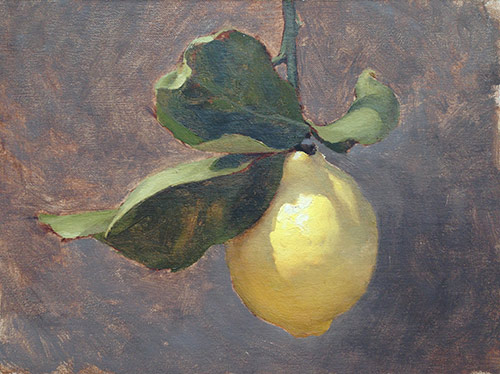
Katie Whipple, “Lemon: Light Study,” 2014, oil on linen, 6 x 8 inches
Fine Art Today: Talk to us about your journey to becoming an artist. Were you always interested in art?
Katie Whipple: I think I made my first watercolor painting at age 4, and I can’t remember a time when I wasn’t painting or making something with my hands. I have always loved art, and other than a brief time of wanting to be a veterinarian when I was 9, it has really been my only desired career path.
I have been incredibly lucky in my artistic journey. My parents have always supported and believed in me and encouraged me to make a career in art. My mom always took me to museums and art lectures as a child, which I loved. When I was 18, I moved to New York City right after graduating high school to attend what was then the Grand Central Academy in Manhattan — now Grand Central Atelier in Queens. At the time I knew hardly anything about the atelier movement, or academic painting in general. I had certainly never heard of the Ecole de Beaux Arts.
All I knew is that I wanted to learn how to draw really well, and I was completely blown away by the work I saw at GCA. I am so incredibly grateful to my 18-year-old self for taking the plunge into the unknown. In being at GCA and living in New York City for four years, many things were opened up to me, and I learned much more than how to draw. I am so grateful for Jacob’s vision in this; during my first years at the GCA I heard lectures that included Shakespeare and classical violin concerts, as well as lectures about Brunelleschi and the Golden Ratio. I leaned into my love of history and learned more about all kinds of painting.
After graduating GCA, I received the Alma Schapiro Prize, which sent me to live at the American Academy in Rome for three months. My husband (then boyfriend) and I stayed for eight months, traveling to Florence, Naples, and the Amalfi Coast. This time in Italy might be one of the most shaping events for where my career is today, for that is where I fell in love with the Renaissance, Roman wall painting, and painting fruits and flowers. It is also where I learned to cultivate pure delight in my work and in my studio practices.
Katie Whipple, “Daffydowndillys,” 2016, oil on wood, 14 x 17 1/2 inches
Fine Art Today: Where do you see yourself in, say, five years? How do you see your career and artworks evolving?
Katie Whipple: I have no idea! I would hate to know where I am going to be in five years. I hope that I will be painting, that I will be happy, and that I will continue to surprise myself with what I choose to paint, or not to paint. Right now, my highest hope is that my paintings make the viewer feel like listening to Mozart makes me feel. For me, there is no higher aspiration than to touch people’s spirit with my work, and to make them feel that, despite the hardships and the ugliness, the world is beautiful.
To learn more about this incredible artist, visit her website here.
This article was featured in Fine Art Today, a weekly e-newsletter from Fine Art Connoisseur magazine. To start receiving Fine Art Today for free, click here.
In May, the White House released details on its proposed Fiscal Year 2018 “skinny budget,” which will, among other things, give the 52-year-old National Endowment for the Arts (NEA) just enough money to wind down its activities and close permanently ($29 million vs. its previous allocation of $150 million). For now, let’s overlook the fact that the resultant savings are paltry when measured against the government’s $1.1 trillion annual budget. And let’s overlook the fact that NEA grants support arts events in every state, usually at organizations unable to replace that funding with private dollars because their communities are poor or sparsely populated.
Instead, let’s focus on something you may not know: closing the NEA will kill off almost all of our country’s temporary museum exhibitions of high-value masterpieces. Why? Because the NEA operates an insurance program that enables U.S. museums to organize ambitious loan shows that would otherwise be prohibitively expensive. Its offcial name is the Arts and Artifacts Indemnity Program, and here’s how it works in everyday terms. When your favorite regional museum (Houston? Denver? Cleveland?) arranges to borrow multi-million-dollar Rembrandt or Monet paintings from Paris or Chicago, it sends a list of those artworks to the NEA. The staff there ensures your museum is professionally operated and therefore a good “risk” — that it will transport and care for these precious artifacts properly so that they can return home to Paris or Chicago undamaged. The NEA then sends your museum a letter saying, “We trust you and we’ve got your back; you don’t need to pay an insurer hundreds of thousands of dollars in cash premiums to cover your risk. If you do something wrong, the U.S. government will pick up the tab.”
So surely we taxpayers have been losing our shirts on this since the indemnity was launched in 1975, right? No, actually, two claims totaling $4,700 have been paid, and 1,400 exhibitions have been mounted thanks to a cumulative premiums savings of $450 million. This means that you and your family have not necessarily needed to visit Paris or Chicago to experience Rembrandt or Monet. If the NEA closes next year, however, that’s it: all museums will either have to pay their premiums in cash, or cancel/dilute their shows. I live in New York City, so I am not worried: the Museum of Modern Art and the Metropolitan Museum will probably raise the money needed. But if you’re in Denver, Houston, Cleveland, or an even smaller community, you’re out of luck. Tough choices will be made.
In our information-overloaded age, it saddens me that most people have never heard of this program. That’s ironic because next year, its name will become famous when we read that your city’s big Monet show was canceled for budgetary reasons.
If this concerns you, please visit the website of the Arts Action Fund (artsactionfund.org) to learn how we citizens can alert our U.S. legislators. It’s actually as easy as tweeting #SAVEtheNEA, but the fund’s website is cool and has other interesting tips. See you on Twitter.
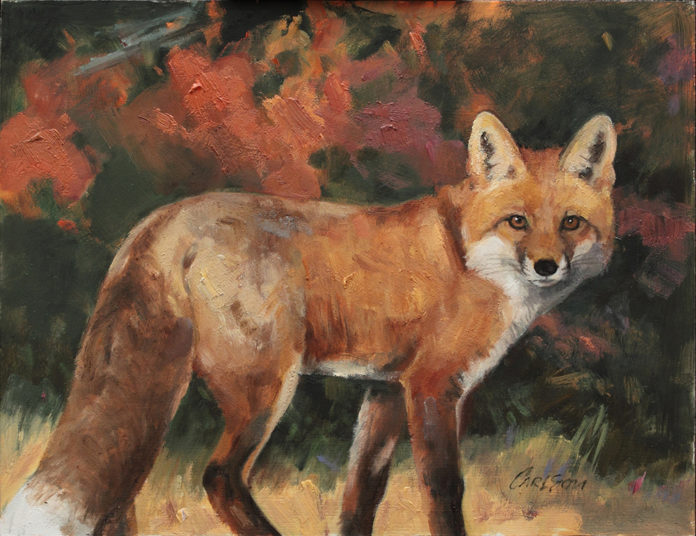
Ken Carlson was born and raised in Minnesota and now resides in the hill country of central Texas. Following art school training, he began his career as a commercial illustrator. In 1968, he put aside commercial work to devote fulltime to painting wildlife. A critical element of Carlson’s work has always been first-hand observation of his wildlife subjects. Each fall, he travels to Alaska, the western prairies, the Canadian Rockies or to Africa to study animals in their varied habitat.
Western Visions® is the National Museum of Wildlife Art’s largest and longest running fundraiser, with a variety of exciting events. The show features a wide selection of art for sale. Western Visions® painters and sculptors participate in the art portion of the show and sale and as many as 2,000 people attend the events.
Fill your mind with useful art stories, the latest trends, upcoming art shows, top artists, and more. Subscribe to Fine Art Today, from the publishers of Fine Art Connoisseur magazine.