Home Blog Page 338

Contemporary Landscape in Focus

0
April Gornik, “Approaching Night,” Image via Heritage Museums & Gardens

Works by many of the most compelling American landscape painters feature during a hypnotic group exhibition that seeks to explore a number of engaging historical and contemporary concepts. Who’s included and where?

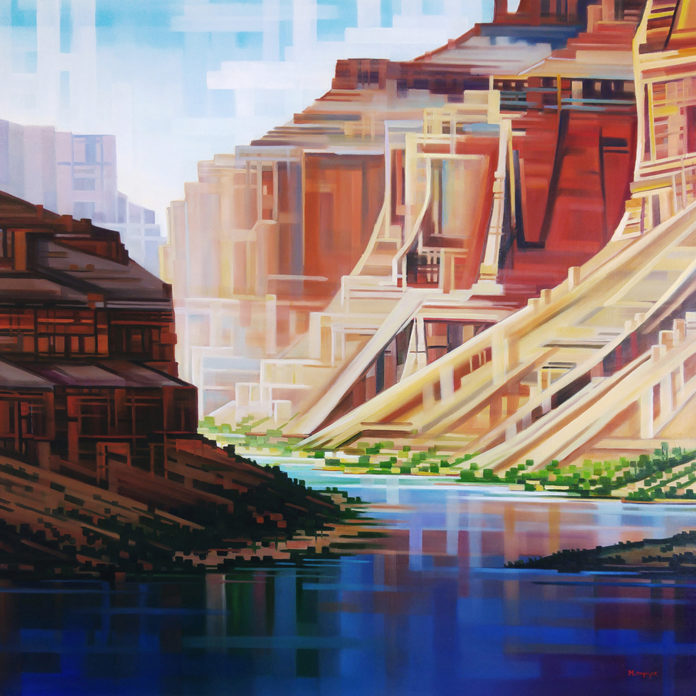
On view now through October 9 at the Heritage Museums & Gardens in Sandwich, Massachusetts, “Painted Landscapes” is an incredibly diverse group exhibition showcasing works by nearly 50 world-class artists. The aim of the robust show is to illuminate the compelling new ways in which contemporary artists both employ and interpret the traditional genre of landscape painting. Among the themes are artists who “address contemporary issues of land use, nature appreciation, and ecology through their paintings of the American environment,” the museum reports. “The exhibit examines landscape paintings in terms of their historical inspiration, their formal elements of structure and form, and their theoretical underpinnings in which a landscape could be read as a specific location or as a place of human experience.

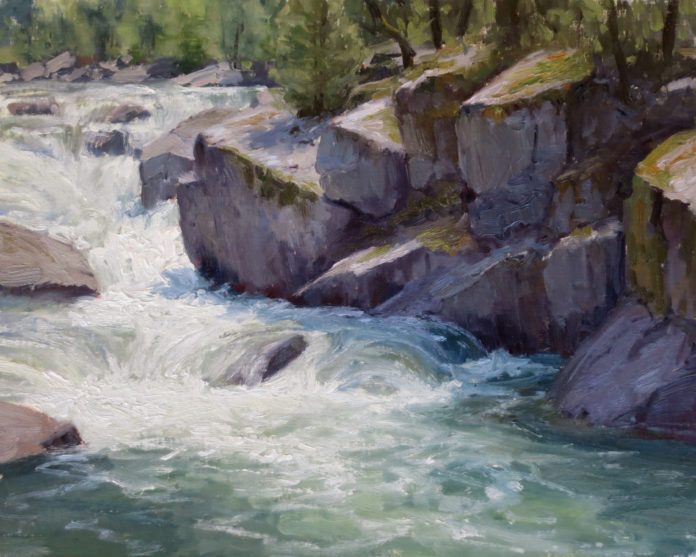
Clay Wagstaff, “Light on Rock No.10,” Image via Heritage Museums & Gardens
Sylvia Plimack-Mangold, “Summer Maple, 2009,” Image via Heritage Museums & Gardens

“The exhibit features key aspects of what defines landscape paintings, including History & Inspiration (documenting change in America from a rural, agrarian society to the urban, populous place it has become, capturing the countryside, the seaside, and all the places artists live and work), Place (whether natural or man-made, urban or rural, real or imagined), Structure & Landscape (either imposed upon the natural landscape through man-made structures or in naturally occurring formal features of the landscape itself), The Tree (depiction of the common and familiar tree), and The Act of Painting (where the subject of ‘landscape’ and the place depicted are almost secondary to the process and stylist choices of the artists).” The exhibition was curated by Lauren P. Della Monica.

To learn more, visit the Heritage Museums & Gardens.

This article was featured in Fine Art Today, a weekly e-newsletter from Fine Art Connoisseur magazine. To start receiving Fine Art Today for free, click here.

How Variable Are Pines?

0
Peter Fiore, “Pine Variations: Tangle 6,” oil on panel, 50 x 50 inches

Conveying color, texture, and a dynamic energy, the paintings of Peter Fiore are magnetic representations of the artist’s search to find something eternal and more meaningful. He also extends the same invitation to you, the viewer, during his latest solo show in New York.

On view June 30 through July 29 at Alliance Gallery in Narrowsburg, New York, “Pine Variations” is a display of painter Peter Fiore’s latest body of work exploring tree “portraits.” In his pursuit of what he calls “a universal moment in our commonplace world,” Fiore has repeatedly represented a white pine tree located close to his home studio. “This work exemplifies my ongoing visual investigation,” he says. “I like to visit a motif repeatedly to learn its faceted nature throughout the year.

Peter Fiore, “Pine Variations: Lavender Variant,” oil on panel, 18 x 18 inches

“I’m looking for something eternal and more meaningful. My tree portraits continue the pursuit of communicating a complexity of feelings within the works, while also seeking to display the unique character within a single tree. Featured is a closely cropped tree, its branches dancing from edge to edge, anchored by a steady central trunk — this bifurcating vertical is the dominant element. Such a design has the potential to divide the composition in a way that depletes it of energy, but that is the challenge — a command to depart from the norm. A square is stability and, as such, has no innate force.

Peter Fiore, “Pine Variations: Red Variant,” oil on panel, 18 x 18 inches

“I paint almost exclusively in a square format, embracing the absolute symmetry and universality of the shape. Therefore, I’m tasked with infusing energy into the piece by extracting it from within the subject matter. One needs to work intelligently to make a successful composition. I relish this challenge, which forces me to rely on hand and heart to bring movement to an otherwise static shape.

Peter Fiore, “Pine Variations: Lamentation,” oil on panel, 36 x 36 inches

“I revel in the questions, not the answers. I continue my visual journey, eager to discover the next direction. The physicality of process remains paramount to my work, as it has from the beginning. Painting is cultural. Painting is thinking. Painting is passion. Painting is education. Painting is intellectual. I am creating a poetry that goes beyond the surface, and I have questions.”

To learn more, visit Alliance Gallery.

This article was featured in Fine Art Today, a weekly e-newsletter from Fine Art Connoisseur magazine. To start receiving Fine Art Today for free, click here.

A Divine Encounter

0
Rembrandt van Rijn, “Abraham Entertaining the Angels,” 1646, oil on panel, 6 3/8 x 8 3/8 inches, Private collection

A little known, but incredibly moving exhibition is currently on view this summer featuring a privately owned Rembrandt painting shown to the public only a handful of times. Generously loaned to this institution, the painting has sparked an exhibition.

The Frick Collection in New York City was the recent recipient of a remarkable loan from a private collection. Currently on view now through August 20 is Rembrandt van Rijn’s captivating and luminous “Abraham Entertaining the Angels” of 1646. Only shown a handful of times to the public, the generous loan sparked the Frick to mount “Divine Encounter” — a “tightly focused exhibition in which the painting appears alongside other depictions by Rembrandt of the Old Testament figure Abraham — a spectacular selection of prints and drawings from American and international collections,” the museum writes.

Rembrandt van Rijn, “Abraham Entertaining the Angels,” 1656, etching, 6 5/16 x 5 1/8 inches, National Gallery of Art, Washington
Rembrandt van Rijn, “Abraham Caressing Isaac,” circa 1637-45, etching, 4 1/2 x 3 1/2 inches, The Morgan Library & Museum

The show offers viewers a chance to understand Rembrandt’s approach to history painting and the artist’s shift towards religious subject matter from the late 1630s to the late 1650s. “In them,” the Frick continues, “the artist took a progressively deeper interest in the psychological content of the Abraham story, specifically the emotional experience of a father confronting the most magnificent of blessings and the most heartbreaking of losses. At the same time, Rembrandt also began to move away from the physicality and instantaneity of his earlier narrative work in favor of imagery characterized instead by an overwhelming sense of stillness and calm. These are the defining qualities of his 1646 ‘Abraham Entertaining the Angels,’ in which the momentous nature of the event depicted is conveyed solely through light and a single, gently raised hand.”

Rembrandt van Rijn, “Abraham Casting Out Hagar and Ishmael,” 1637, etching, 4 7/8 x 3 3/4 inches, The Morgan Library & Museum

To learn more, visit The Frick Collection.

This article was featured in Fine Art Today, a weekly e-newsletter from Fine Art Connoisseur magazine. To start receiving Fine Art Today for free, click here.

Wyeth Goes Postal

0
An image showing the commemorative selvage and all 12 stamps.

In celebration and commemoration of the centennial of Andrew Wyeth’s birth on July 12, 1917, the United States Postal Service will release a series of stamps embellished with some of the artist’s most iconic works. We have a preview here!

The great American realist Andrew Wyeth (1917-2009) will soon be honored by the United States Postal Service with a series of 12 stamps featuring iconic works from throughout his career. Released on July 12, the stamps are a celebration of the centennial of the artist’s birth.

Stamp #1, Andrew Wyeth “Young Bull,” © USPS 2017
Stamp #2, Andrew Wyeth “Wind from the Sea,” © USPS 2017
Stamp #5, Andrew Wyeth “Spring Fed,” © USPS 2017
Stamp #6, Andrew Wyeth “Soaring,” © USPS 2017

A dedication ceremony for the Andrew Wyeth Forever stamps will be hosted at the Brandywine River Museum of Art in Chadds Ford, Pennsylvania, on July 12. The ceremony will be attended by the artist’s son, Jamie Wyeth, U.S. Postal Service Senior Director and Chief of Staff to the Postmaster General Patrick Mendonca, and Frolic Weymouth Executive Director and CEO Virginia A. Logan.

Stamp #7, Andrew Wyeth “Sailor’s Valentine,” © USPS 2017
Stamp #8, Andrew Wyeth “North Light,” © USPS 2017
Stamp #9, Andrew Wyeth “My Studio,” © USPS 2017
Stamp #10, Andrew Wyeth “Frostbitten,” © USPS 2017

Via the USPS announcement: “This pane of 12 Forever stamps celebrates the centennial of the birth of Andrew Wyeth (July 12, 1917-Jan. 16, 2009), one of the most prominent American artists of the 20th century. Working in a realistic style that defied artistic trends, Wyeth created haunting and enigmatic paintings based largely on people and places in his life, a body of work that continues to resist easy or comfortable interpretation.

Stamp #11, Andrew Wyeth “Christina’s World,” © USPS 2017
Stamp #12, Andrew Wyeth “The Carry,” © USPS 2017
Stamp #3, Andrew Wyeth “Big Room,” © USPS 2017
Stamp #4, Andrew Wyeth “Alvaro and Christina,” © USPS 2017

“This issuance includes stamps that each feature a detail from a different Andrew Wyeth painting. The paintings are: ‘Wind from the Sea’ (1947), ‘Big Room’ (1988), ‘Christina’s World’ (1948), ‘Alvaro and Christina’ (1968), ‘Frostbitten’ (1962), ‘Sailor’s Valentine’ (1985), ‘Soaring’ (1942–1950), ‘North Light’ (1984), ‘Spring Fed’ (1967), ‘The Carry’ (2003), ‘Young Bull’ (1960), and ‘My Studio’ (1974). The selvage, or area outside of the stamp images, shows a photograph of Wyeth from the 1930s. Art director Derry Noyes of Washington, DC, designed the pane.”

To learn more, visit the USPS.

This article was featured in Fine Art Today, a weekly e-newsletter from Fine Art Connoisseur magazine. To start receiving Fine Art Today for free, click here.

Featured Lot: Mood, Atmosphere, and Brilliance

0
Jean-Baptiste Camille Corot, “Ville d’Avray,” circa 1860-65, oil on canvas, 32 x 40 cm.

In this ongoing series for Fine Art Today, we take a longer look at the history and features of a soon-to-be-available artwork of note. This week we feature a remarkable landscape by this 19th-century French century master.

Hampel Fine Art Auctions in Munich, Germany, will soon be offering up a fantastic landscape by French painter Jean-Baptiste-Camille Corot (1796-1875). Heading to the block on July 5, “Ville d’Avray” is a mature work by Corot and displays the artist’s characteristic softness and restricted color. “In his late studio landscapes” the National Gallery, London, writes, “which were often peopled with bathers, bacchantes and allegorical figures, he employed a small range of colors, often using soft colored greys and blue-greens, with spots of color confined to the clothing of figures. Topographical detail was suppressed in favor of mood and atmosphere, above all in his ‘souvenirs’, which were based on memories of real landscapes.”

A large sweeping diagonal dominates the composition in “Ville d’Avray.” In the foreground, the viewer discovers a pair of cattle, followed by two peasant workers to the right. Up the diagonal hill is the modest home of the workers. Other details in the landscape beyond — as it winds its way into the distance — are difficult to identify, but the sense of atmosphere, simplicity, and mood is remarkable. Cool gray and blue tones in the overcast sky also heighten these perceptions. Auction estimates are about $80,000.

To learn more, visit Live Auctioneers.

This article was featured in Fine Art Today, a weekly e-newsletter from Fine Art Connoisseur magazine. To start receiving Fine Art Today for free, click here.

Portrait of the Week: Rembrandt van Rijn, “Self-Portrait with Beret and Turned Up Collar”

1

In this occasional series, Fine Art Today delves into the world of portraiture, highlighting historical and contemporary examples of superb quality and skill. This week: Rembrandt van Rijn, “Self-Portrait with Beret and Turned-Up Collar.”

Last week Fine Art Today debuted our new Portrait of the Week series with a remarkable contemporary work by Elena Vladimir Baranoff. Her official portrait of the Lord Bishop of London, Richard Chartres, was a stunning example recently selected for — and on view at — the BP Portrait Awards in London.

There seemed no better way to showcase the diversity of this new series than to follow a contemporary masterpiece with a historical one. Universally considered one of the greatest — if not the greatest — portraitists who ever lived, Rembrandt van Rijn is a monumental painter and person who continues to captivate scholars to this day. It could be argued that, perhaps more than anyone else who ever lived, Rembrandt possessed a genius that allowed him to capture with amazing sensitivity an individual’s spirit and character — including his own.

Painted in 1659, about 10 years before the artist’s death, “Self-Portrait with Beret and Turned-Up Collar” is visual evidence of a gripping process of self-exploration. Of all the artist’s self-portraits (scholars estimate Rembrandt produced nearly 100 self-portraits in various media throughout his life), the example here is frequently cited in scholarly attempts to understand the master’s state of mind and professional condition during his later years.


Detail showing the brushwork and diverse palette found within the self-portrait’s upper cheekbone.

Around the time of this self-portrait’s production, Rembrandt was embroiled in a battle to avoid bankruptcy and the sale of his home and vast collection of art and antiquities. Rembrandt displays himself seated and facing toward the viewer’s left, modestly dressed and hands clasped before him. A single source of light drapes over his face from the upper right of the canvas. Considering the face that peers longingly at the viewer, author Clifford Ackley suggested it reveals “the stresses and strains of a life compounded of creative triumphs and personal and financial reverses.” Indeed, close inspection of the artist’s face exposes the exhausted, melancholic, yet proud spirit of a man who — by this time — had witnessed the death of a son, two daughters, and his beloved wife, Saskia van Uylenburgh.

From a technical perspective, the portrait also highlights the increasing expressiveness and looseness of Rembrandt’s brush as his life and career waned. Scholars are quick to note the thickness of the paint in the artist’s face in addition to the higher diversity of pigments found within his skin.

“Self-Portrait with Beret and Turned-Up Collar” is part of the Andrew W. Mellon Collection and has called the National Gallery of Art in Washington, D.C., home since 1937.

This article was featured in Fine Art Today, a weekly e-newsletter from Fine Art Connoisseur magazine. To start receiving Fine Art Today for free, click here.

Featured Artwork: Olaf Schneider

0
"Love Letter to Tracey" by Olaf Schneider

“Love Letter to Tracey”

Oil on canvas

40 in. x 60 in.

Available through the artist


Biography

Olaf Schneider (b.1964) is a husband, father of two, and grandfather of six. He studied at the Ontario College of Art as well as Sheridan College. In 1986, while painting large scale outdoor advertising billboards for Mediacom, he acquired a strong practical foundation that would become integral to his work today.

He is greatly inspired by mentor Ron Grieg and Norman Rockwell.

For Olaf each piece represents an intense exploration and refinement of his personal pictorial sensitivities, especially as they relate to beauty, form, light, and shade. Composition, color, and craftsmanship are all elements that become the building blocks of his work. Olaf is a prolific painter who is inspired by the power and diversity of the northern landscape, and anything that needs a “second look”. An explorer by nature, he travels across North America and Europe to gain inspiration.

 “Each dab I make is stimulated by the details that I observe. I hope to see what others miss and then make it compelling. I push and alter the colors to suit my ravenous needs and I love to improvise on the spot.” 
Olaf has a passion for a variety of subjects. Through his art, he expresses his love for life and his affinity with vibrant colour.

“I like to use expressive and thick impasto brushstrokes or soft blended strokes to render a sense of movement and texture giving the painting a life of its own. My interpretation of colour also sets the dynamic mood. The tones often range from the darkest to the lightest in an effort to achieve maximum drama. This creative combination is spontaneous and intuitive.”

To keep his mind clear and focused he limits his exposure to all the media ‘noise’ we generally are pummelled with daily. He does not watch TV and restricts his time on the computer. He starts his day with God in prayer and meditation. Painting six to ten hours a day is common practice. Equally important to Olaf is continued growth and learning.

 
“I want to always have an open mind so that new ideas may come in. In the mind of an expert, there are few possibilities, but in the mind of an amateur they become endless. This is a God given gift and I value it greatly. If I am able to bring emotion, understanding, comfort, or joy into another’s life then I am using it wisely in His glory.”

Philosophy

Art is a celebration of life, and the making of art is an expression of the sacred spiritual discipline. If a painting could, for a moment, capture the attention and awareness of the viewer through visual harmony, carry on a dialogue, bring the viewer further than the call of the senses, beyond a momentary concern for the past or future, to a timeless state free from thought and self consciousness. Then the work has approached the realm of art, the realm of life. Art and money don’t mix.

View more of Olaf’s work at http://www.olaf.ca.

Solo Exhibitions

2016 – Tilting at Windmills Gallery, Vermont

2016 – Broadway Galleries, Virginia

2015 – Westmount Gallery, Ontario

2015 – Woodbine Raceway

2015 – International Artist Magazine June issue

2014 – Cannes France

2005–2013 – Westmount Gallery, Toronto

2011 – Royal Gallery, Rhode Island

2009 – Mercedes Benz, Ontario

2009 – Homer Watson Gallery

2008 – Gallery DeLisle

2005 – Hummingbird Centre

2004 – McMichael Gallery, Kleinburg

2003–2006 – International Artists Magazine

1998–2004 – Formula 1, Montreal & Indianapolis

Group Exhibitions

2014 – Chapel St. Bernardin, France

2014 – Le Cannet, France

2008–2013 – Westmount Gallery, Toronto

2013 – The Louvre, SNBA Salon, France

2009–2013 – Edgewood Orchard Gallery, Wisconsin

2013 – Galerie Demante, California

2012 – The Connecticut Society of Portrait Artists

2012 – Portrait Society of America

2011 – Thornwood Art Gallery, Texas

2011 – Canadian Heritage Art Gallery

2010–2013 – Toronto International Art Fair

2010 – Canadian Heritage Art Gallery, Toronto

2010 – Thornwood Art Gallery , Texas

2009 – Boston International Art Fair

2007–2011 – Miller Gallery, Ohio

2007 – Scottsdale Art Gallery, Arizona

2006 – Kipling Gallery Woodbridge, Ontario

2006 – Manitou Gallery, Santa Fe, NM

2006 – Latino America International

2004–2006 – Todmorden Mills Heritage Museum

2002–2005 – Hummingbird Centre, Toronto

2000 – Living Arts Centre, Mississauga

1998–2002 – Molson Indy, Toronto & Vancouver

Publications

American Art Collector Magazine

Arabella Magazine

Houston Lifestyles and Homes

Ducks Unlimited 2007, 2009, 2010, 2011

Etobicoke Guardian

Scarborough Mirror

Vaughan Weekly

George Chuvalo Fight Against Drugs

International Artist

Art Fix

WPBS Television

Algonquin Park news

The Huntsville Forrester

24 Hours

Toronto Life

2004–2006 Magazin’art Biennial Guide

Creative Source 1989, 2004

Corporate and Private Collections

Ripley’s Aquarium Canada, Toronto

PCO – Construction Ltd.

The Haven on the Queensway, Toronto

The Good Shepard, Toronto

Mackenzie Financial, Toronto

Toronto Dominion Bank, Toronto

Ducks Unlimited 2007, 2009, 2010, 2011, 2012

Make a Wish Foundation

George Chuvalo Fight Against Drugs Foundation, Canada

Paul Smith’s College, New York

Make a Wish Foundation, Toronto

Hospital for Sick Children, Toronto & Montreal

Jessie Centre for Teenagers, Toronto

Ontario Provincial Police, Canada

Labatt Breweries Ltd. Ontario, Canada

Evian Canada

Gilles Villeneuve Museum, Quebec

Chapters Indigo Canada

Mercedes-Benz, Toronto

Ford Ontario

Ferrari North America

Apple Canada

Governor General of Madrid, Spain

L.L.C.B.O.

Art Gallery of Ontario

Centennial College

Van Moorehem Barristers, Ontario

Block Parents Foundation,  Canada

Current Gallery Representation

Chloe Gallery, San Francisco CA  415.531.5748

Eclipse Gallery, Huntsville ON  705.783.2579

Emma Butler, St. John’s NFLD  709.739.7111

Lovetts Gallery, Tulsa OK  918.664.4732

MountainMist Gallery, Cashiers NC  407.620.2685

Palm Avenue Fine Art, Sarasota FL  941.388.7526

Rendezvous Gallery, Vancouver BC  604.687.7466

Spa Fine Art Gallery, Saratoga NY  203.226.6934

Tilting Windmills Gallery, Manchester VT  802.362.3022

Westmount Gallery, Toronto ONT  416.239.5427

Westport Gallery, Westport CT  203.226.6934

Featured Lot: A Genius in Your Home

0
Attrib. Rembrandt van Rijn, “An Old Bearded Man,” circa 1660, oil on canvas, 27 5/8 x 23 1/8 inches

In this ongoing series for Fine Art Today, we take a longer look at the history and features of a soon-to-be-available artwork of note. This week we feature a brilliant painting by arguably the greatest portraitist of all time.

Universally considered one of the greatest portraitists who ever lived  — if not the greatest —  Rembrandt van Rijn is a monumental painter and person who continues to captivate scholars to this day. It could be argued that, perhaps more than anyone else who ever lived, Rembrandt possessed a genius that allowed him to capture with amazing sensitivity an individual’s spirit and character — including his own.

Perhaps it’s these qualities that have led to much debate surrounding his original paintings. Indeed, Rembrandt inspired generations of painters, and his style was frequently imitated. A remarkable period portrait that has been attributed to the master heads to the auction block on July 6 during Christie’s “Old Masters Evening Sale” in London.

Titled “An Old Bearded Man,” the half-length visage bears much Rembrandt character. Dimly lit, a rather strained-looking bearded man with a beret and fur coat rests his left arm as he holds a cane. A warm light blankets the sitter’s face. He doesn’t engage the viewer, but rather glances downward toward our left. The muted tones of the piece, along with the sitter’s expression and glance, infuse the portrait with the psychological intensity that historians, collectors, and enthusiasts have come to love in Rembrandt’s painting.

Christie’s writes, “Documented since the mid-eighteenth century and recorded in all of the most significant works on the artist’s paintings, this picture disappeared from the public eye in the 1930s, only to re-emerge again in 2010 when rediscovered by Arthur Wheelock in an American private collection. Wheelock conducted a thorough re-assessment of the painting, further to restoration and technical study, publishing his findings in a 2011 article in which he puts forward a persuasive case to admit the picture unequivocally into Rembrandt’s illustrious late oeuvre.”

To learn more, visit Christie’s.

This article was featured in Fine Art Today, a weekly e-newsletter from Fine Art Connoisseur magazine. To start receiving Fine Art Today for free, click here.

Portrait of the Week: Anno Domini, 1500

1
Albrecht Durer, “Self Portrait,” 1500, oil on panel, 26 x 19 inches, Alte Pinakothek

In this occasional series, Fine Art Today delves into the world of portraiture, highlighting historical and contemporary examples of superb quality and skill. This week we consider one of the most important self-portraits ever created.

Albrecht Dürer was undoubtedly one of the most spectacular and accomplished artists of the Renaissance. Indeed, his iconic “Self-Portrait” from the year 1500 is one of the most significant self-images ever produced.

It is often suggested by scholars that Durer’s 1500 self-portrait depicts the artist in the guise of Christ Pantocrator, and it has come to represent one of the first explicit visualizations of how artists viewed themselves as craftsmen inspired by God. As foremost German Renaissance scholar Joseph Leo Koerner writes, the painting is “formalized so as to display its underlying construction almost in the manner of an architectural front elevation.” He adds, “[S]et off against a neutral ground, the 1500 likeness is less a body in a setting than a principle of pictorial order consubstantial with the visual image itself.”1

The deep symbolism, semiology, proportions, and ratios Dürer manipulated in the self-portrait were extraordinarily original and radical for the time. The picture is not just a visual representation, but something beyond appearance and status, something that gave the viewer “access to an interior self and reflected the underlying idea of painting itself: art is the image of its maker.”2

Today, the brilliant oil is located at the Alte Pinakothek in Munich, Germany. To learn more about this extraordinary portrait, visit Alte Pinakothek.

1 Joseph Leo Koerner, The Moment of Self-Portraiture in German Renaissance Art, (Chicago UP, 1993): 63.

2 Omar Calabrese, Artists’ Self-Portraits, 1st ed. (New York: Abbeville Press, 2006): 18.

This article was featured in Fine Art Today, a weekly e-newsletter from Fine Art Connoisseur magazine. To start receiving Fine Art Today for free, click here.

Two-for-One with Fine Art Connoisseur

0
Pieter Christiaan Cornelis Dommersen, “Hoom on the Zuiderzee, Holland,” 1902, oil on panel, 11 3/4 x 16 inches, Exhibited by Burlington

The United Kingdom’s largest and most established art and antiques fair is about to kick off, June 26 at London’s iconic Kensington Olympia Exhibition Center. What could be better? How about getting two tickets for the price of one?

One hundred and sixty of the world’s finest specialist dealers will soon converge in London for the 45th Annual Art & Antiques Fair Olympia. With prices ranging from $100 to over $1 million, collectors and enthusiasts always find an eclectic range of high-quality fine art and antiques each year.

Albert Gabriel Rigolot, “Paysage d’Automne,” pastel on canvas, 25 3/4 x 39 1/2 inches, Exhibited by Burlington

All items exhibited at the fair undergo a rigorous vetting process that involves authentication, date, and condition. Thirty-two committees composed of museum curators, auction house specialists, restorers, and dealers make sure only the highest-quality antiques are featured.

Fritz Wagner, “Good News,” 1896, oil on canvas, 25 3/4 x 31 1/2 inches, Exhibited by Burlington

The pot is sweetened this year as attendees have an opportunity to purchase two tickets for the price of one using the promotion code FINEAC17; click the link here. The offer is available only for standard tickets purchased in advance. The box office closes at midnight on June 25, so don’t drag your feet!

To learn more, visit The Art & Antiques Fair Olympia.

This article was featured in Fine Art Today, a weekly e-newsletter from Fine Art Connoisseur magazine. To start receiving Fine Art Today for free, click here.

WEEKLY NEWS FROM THE ART WORLD

Fill your mind with useful art stories, the latest trends, upcoming art shows, top artists, and more. Subscribe to Fine Art Today, from the publishers of Fine Art Connoisseur magazine.

  • This field is for validation purposes and should be left unchanged.