
Home Blog Page 344

Featured Artwork: Gerald Anthony Shippen presented by The Brinton Museum

0
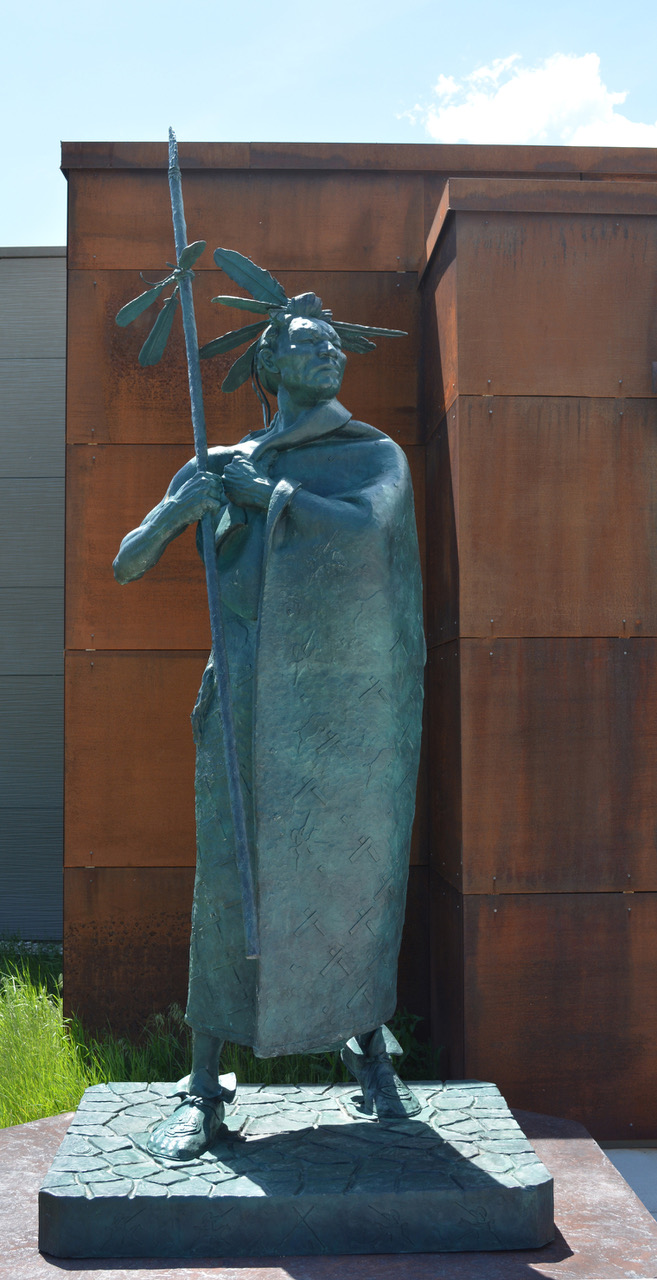
"Sentinel of the Plains" by Gerald Anthony Shippen

“Sentinel of the Plains”

Bronze editions of the 28-inch scale model, titled “Mountain Crow,” are available for purchase.

The official dedication of the “Sentinel of the Plains” sculpture by Gerald Anthony Shippen, commissioned by Forrest and Jacomien Mars, is scheduled for Saturday, July 1 at 1:30 p.m. at The Brinton Museum. The monumental-size piece was installed last fall next to the entrance of the Forrest E. Mars, Jr. Building at The Brinton Museum.

The dedication will include blessing ceremonies conducted by highly respected tribal elders from The Brinton Museum’s American Indian Advisory Council.

For more information please check the museum’s website at TheBrintonMuseum.org under “Events”.


Artist’s Statement

Human beings have inhabited the North American continent for over 18,000 years. If you are Native American, you may believe that your ancestors were always here. Petroglyphs and pictographs, etched in and painted on cliff walls and rock surfaces, tell the story of this continuous habitation. The Paleolithic images created by the Mountain Crow people of the Bighorn Basin were the inspiration for “Sentinel of the Plains.”

The “Sentinel” represents an iconic figure—a stone-age man—ancestral to not only the North American Plains cultures, but to all cultures around the world. Standing tall and resolute, the Sentinel pays tribute to the strength of character, tenacity and endurance of Native peoples everywhere. Reminiscent of rock carvings and paintings, images dance across the sculpture’s surface: teepees spread out over the grassy plains; equestrian warriors and stampeding bison foretell the rise of the Plains Buffalo Culture.


About The Brinton Museum

The Brinton Museum is located on the historic Quarter Circle A Ranch in the foothills of the Bighorn Mountains. First homesteaded in 1880, within a decade the original homesteaders (the Clark family) sold the property to the Becker family, who then sold the property to William Moncreiffe. The Moncreiffes established the Quarter Circle A Ranch and built the Ranch House in 1892. Of Scots descent, William and his brother Malcolm Moncreiffe, along with their neighbor Oliver Wallop and business partner Bob Walsh sold some 20,000 horses to the British Cavalry during the Boer War.

In 1923, William Moncreiffe sold the 640-acre Quarter Circle A Ranch headquarters to Bradford Brinton. Mr. Brinton was born in Illinois in 1880 and graduated from the Sheffield School of Engineering at Yale University in 1904. He went to work for the family company, Grand Detour Plow Company, which was later acquired by the J.I. Case Threshing Machine Company. Bradford Brinton retired from J.I. Case in 1926.

Bradford Brinton used the Ranch House at the Quarter Circle A as a vacation home, spending several months each year in Big Horn. His main residence was an apartment in New York City and for a time he maintained a home in Santa Barbara, California.

An avid collector of fine art, American Indian artifacts, firearms, and books, Bradford Brinton filled his home with fine and beautiful items. He was personal friends with many artists, such as Ed Borein, Hans Kleiber and Bill Gollings, whose art decorated the Ranch House. He also collected works by Frederic Remington, C. M. Russell, and John J. Audubon.

In 1936, Bradford Brinton died from complications after surgery. His will left the Quarter Circle A Ranch property to his sister, Helen Brinton. Helen Brinton summered on the ranch in Big Horn and spent winters at her ranch near Phoenix, Arizona. She died in 1960. In her will, Helen Brinton specified that the Quarter Circle A Ranch be kept as a memorial to her brother, Bradford, and established a trust for that purpose. Helen wished that the public should enjoy Bradford’s magnificent collection of art and that the ranch land be kept in a natural state to provide sanctuary for birds and other wildlife.

Bradford and Helen Brinton left an enduring legacy of the golden era of an early 20th Century gentleman’s working ranch. The Wild West had been tamed, the vast rangelands fenced, and motorized vehicles were replacing horses. Americans were clinging to the images of hardy cowboys, noble Indians, and untamed land filled with birds and wild beasts. Bradford and Helen Brinton have helped preserve the feeling of the West at that time for all of us to enjoy today.

Incorporated in 2013, the New Museum at the Bradford Brinton Ranch launched a Capital Campaign to build a 24,000 sq. ft. state-of-the-art museum building, which opened June 2015, to increase exhibition space, visitor services and storage vaults.  With our new Forrest E. Mars, Jr. Building, The Brinton Museum remains committed to preserving and interpreting the Brinton lands and all of the museum’s collections in order to demonstrate their relevance to the historic past, present and future. Our collecting emphasis concentrates on American arts and crafts as well as fine and decorative art relating to the late 19th, 20th and 21st centuries. Focus is placed on art and artists who depicted the West during these periods.


Gerald Anthony Shippen biography:

Birthplace: Lander, Wyoming (1955)

For much of childhood, I lived and attended school on Wyoming’s Wind River Reservation where my friends and classmates were members of the Shoshone and Arapahoe Tribes.

Art Studies:

Harry Jackson Studios, Camaiore, Italy and Cody, Wyoming, 1976-77

Bachelor of Fine Arts, University of Wyoming, 1981

Master of Fine Arts, University of Wyoming, 1984

Established: Shippen Art Studios in 1978

Sculpture Commissions:

“Bill Strannigan” portrait bust, University of Wyoming, 1984

“Ev Shelton” portrait bust, University of Wyoming, 1985

“Lucille Wright” portrait bust, Friends of the University of Wyoming Art Museum, 1985

“Gift of the Smoking Water,” Hot Springs State Park, Wyoming, 1986

“Lady Justice,” Lincoln County Courthouse, Kemmerer, Wyoming, 1987

“St. Anthony of Padua,” St. Anthony Church, Cody, Wyoming, 2013

“Robert and Joan Wallick Commemorative Fountain,” The Brinton Museum, 2014

“Birds of a Feather,” The Brinton Museum, 2015

“Sentinel of the Plains,” Forrest E. Mars, Jr. Memorial Sculpture, The Brinton Museum, 2016

Many other private and public art commissions

Featured Artwork: James McGrew presented by Zion National Park Plein Air

0
"Eternal Majesty" by James McGrew

“Eternal Majesty”

30 x 40 inches

oil on linen panel

James McGrew, Lake Oswego, Oregon

James McGrew’s “Eternal Majesty” sets the tone for the 2017 Zion National Park Plein Air Invitational. As this year’s featured artist, James’s work will appear on upcoming promotional materials. A veteran of this and many other plein air events, James has become a crowd favorite. Although he often completes large pieces in his Oregon studio, he prefers to paint directly from nature. He backpacks several hundred miles each year, and has developed a reputation for painting scenes which require long, strenuous climbs to unusual locations. For example, “Eternal Majesty” depicts a stunning vista seen from the top of a 2000 ft. vertical ascent in Zion National Park.

This painting, along with those produced by the other 23 participating artists, will be available for purchase, with proceeds benefitting Zion National Park. The event is sponsored by the Zion Natl Park Forever Project, the park’s official nonprofit partner. It will be held November 6-12, 2017, in several locations in Zion and Springdale, Utah. The week will start with daily demonstrations by each artist, and culminates with a private sale and paint-out event at the end of the week.

For more information, please visit https://zionpark.org/2017/2017-plein-air-invitational-artists-announced/ or call 435.772.3264.

Seeing Music, Feeling Beauty

1
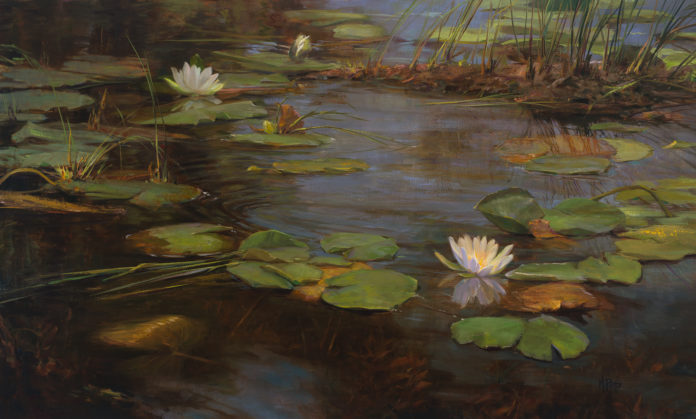
Mary Pettis, “The Cycle of Lilies,” 2017, oil on linen, 29 x 48 inches © Mary Pettis

Nineteenth-century French composer Claude Debussy (1862-1918) often invited his audiences to “see” art and abstract visual elements in his music. Collaborating with him across time is master painter Mary Pettis, who will soon mount a breathtaking solo exhibition that celebrates the music in art and the art in music.

The Minnesota Orchestra will perform five brilliant movements from Claude Debussy’s Images for Orchestra in Minneapolis on June 8, 9, and 10. Joining the performances at the newly renovated Orchestra Hall will be “Beyond the Surface,” a solo exhibition by expressive realist Mary Pettis featuring paintings created specifically for the concert.

Twenty paintings by Pettis will be on view, five of which pair directly with the five performed movements. To be sure, the exhibition is not a series of literal illustrations of Debussy’s Images for Orchestra, but rather a celebration of the connection between the languages of paint and Debussy’s compositions. “Pettis emphasizes the musicality of visual arts as a vehicle of deliberate expression,” according to the press materials. “And like Debussy’s compositions, this exhibition is designed to satisfy the viewer on both an intuitive and a technical level.”

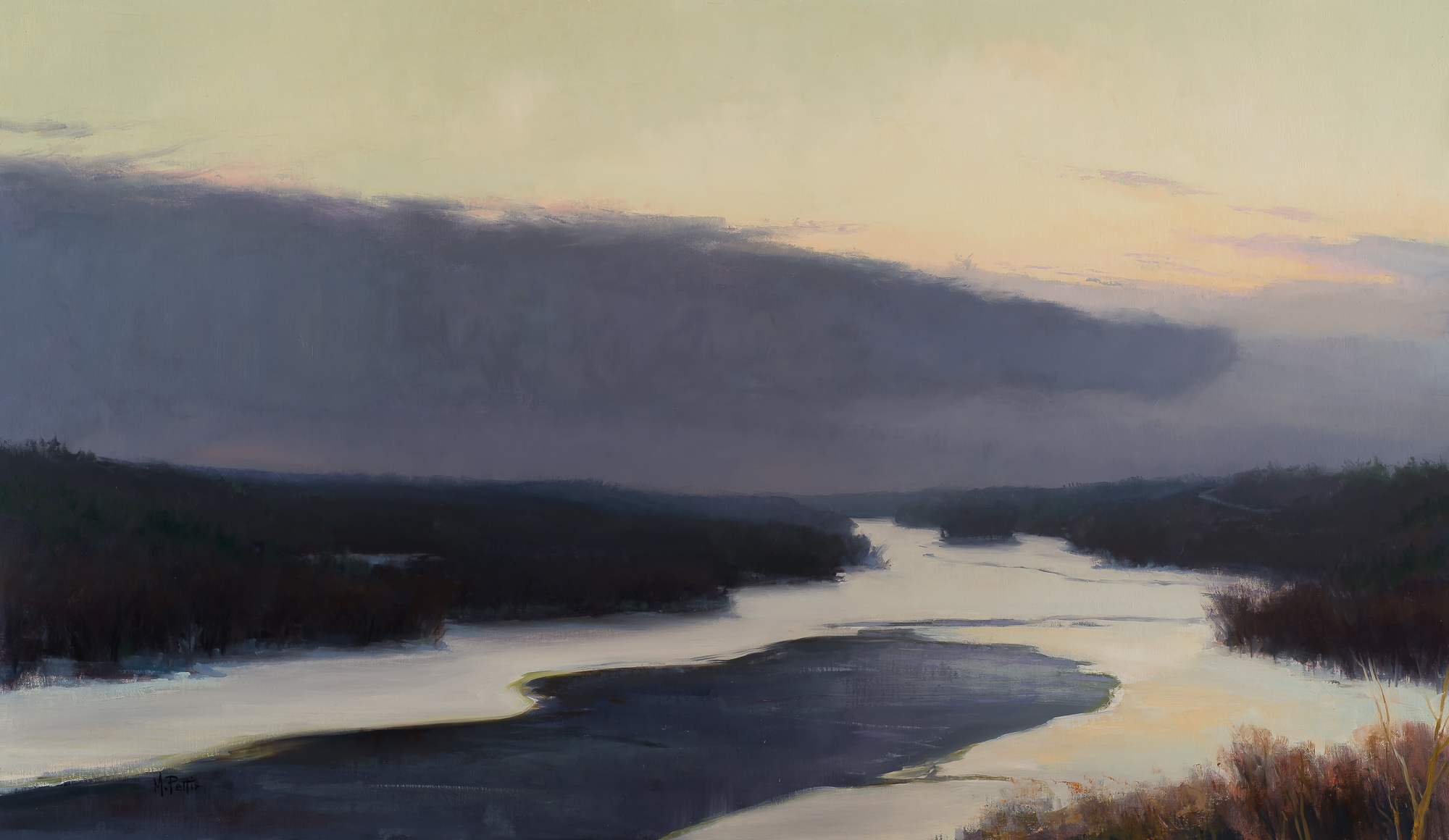
Mary Pettis, “Largo — With Expression,” 2017, oil on linen, 28 x 48 inches © Mary Pettis

The exhibition equally highlights expressive realism, a contemporary movement that fuses the purest elements of art (such as color, texture, and form) with familiar, timeless subjects. “Expressive realism employs, rather than shuns, the artistic language uncovered by the modern art movement. The result is an intensely fulfilling visual experience, both for the art novice and for those who are drawn to spend the time to look beyond the surface,” the announcement continues. “As Debussy invited his audience to look for images in the music, Pettis invites the viewer to see music in the images. [Debussy] often used nostalgic images and songs as source material for his tradition-breaking style. Mary uses a similar approach: she translates the visual world into evocative sensory experiences.”

The show’s signature painting, “The Cycle of Lilies,” is a representative example of this intriguing concept and is paired with the second movement of Debussy’s Images for Orchestra, titled Ibéria: Les Parfums de la Nuit. Viewers find themselves among a peaceful, tightly cropped grouping of waterlilies and cattails. Two brilliant flowers are in full bloom, adding highlights of white and giving the eye a resting point from the soft arrangement of green pads that sweeps across the linen. Cool blue and purple hues indicate the surface of the water and illuminate soft ripples that approach the viewer. Deep yellows, oranges, and browns compose elements below the surface, providing a strong foundation and balance to the palette.

“Like the melodic woodwinds echoing the oscillating motion of the accompaniment, the gentle movement of the water’s surface affects all of the plant life residing within it,” a description reads. “The weeds below reveal glimpses of hidden, nourishing depths felt in the ambient bass. The floating opalescent flowers catch the eye against the strong dark reflections of the unseen trees, in the same way that the light reedy oboe and the breathy flute bring their melody to the forefront of the orchestra. The lily pads lazily dip in and out of the water in syncopation, mirroring the flowing movement within the strings. And much like Les Parfums de la Nuit, the longer you let the work wash over you, the more enriched and immersed you become.”

That, folks, is 1/20th of the show. I will certainly be there, will you?

To learn more, visit Mary Pettis.

This article was featured in Fine Art Today, a weekly e-newsletter from Fine Art Connoisseur magazine. To start receiving Fine Art Today for free, click here.

A Rendezvous for Collectors

0
Photo: Anne Weiler-Brown

by Anne Weiler-Brown

Two weeks ago, a group of art collectors were invited by the Coeur d’Alene Galleries to Northwest Montana along the Clark Fork River for a special rendezvous. Who attended and what took place? Your recap is one click away!

Nearly 50 collectors gathered in Northwest Montana this spring for a three-day retreat that featured, among other happening, artists Brent Cotton, Andy Thomas, Ben Pease, and Joe Kronenberg painting and sharing their perspectives.

Buddy Le and Ron Nicklas of Coeur d’Alene Galleries offered tips on building a collection, including advice to be confident in your tastes, be an informed buyer, focus on quality, document your art, and have a plan for future owners. Another topics of discussion: how to judge elements that contribute to the overall value of artworks and your collection, such as auction records, places in the permanent collection of museums, galleries, book and magazine references, appraisals, and market and liquidation values.

Other speakers included Duane Braaten, director of art and philanthropy for the C.M. Russell Museum, who discussed art auctions; William E. Farr, promoting his coffee table book on the late artist Julius Seyler; and a combined presentation on conservation and framing from conservationist Joe Abbrescia and Frame of Reference Fine Art framer Derek Vandeberg.

By all accounts, one of the highlights of the Rendezvous was the final day’s forum, with collectors, artists, and speakers sharing different perspectives about the Western art market.

This article was featured in Fine Art Today, a weekly e-newsletter from Fine Art Connoisseur magazine. To start receiving Fine Art Today for free, click here.

Into the Night

0
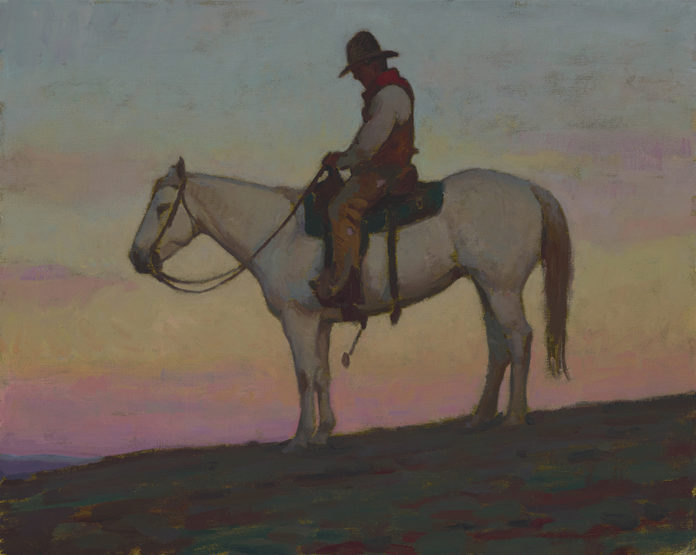
Glenn Dean, “Contemplation,” 2016, oil, 12 x 15 inches

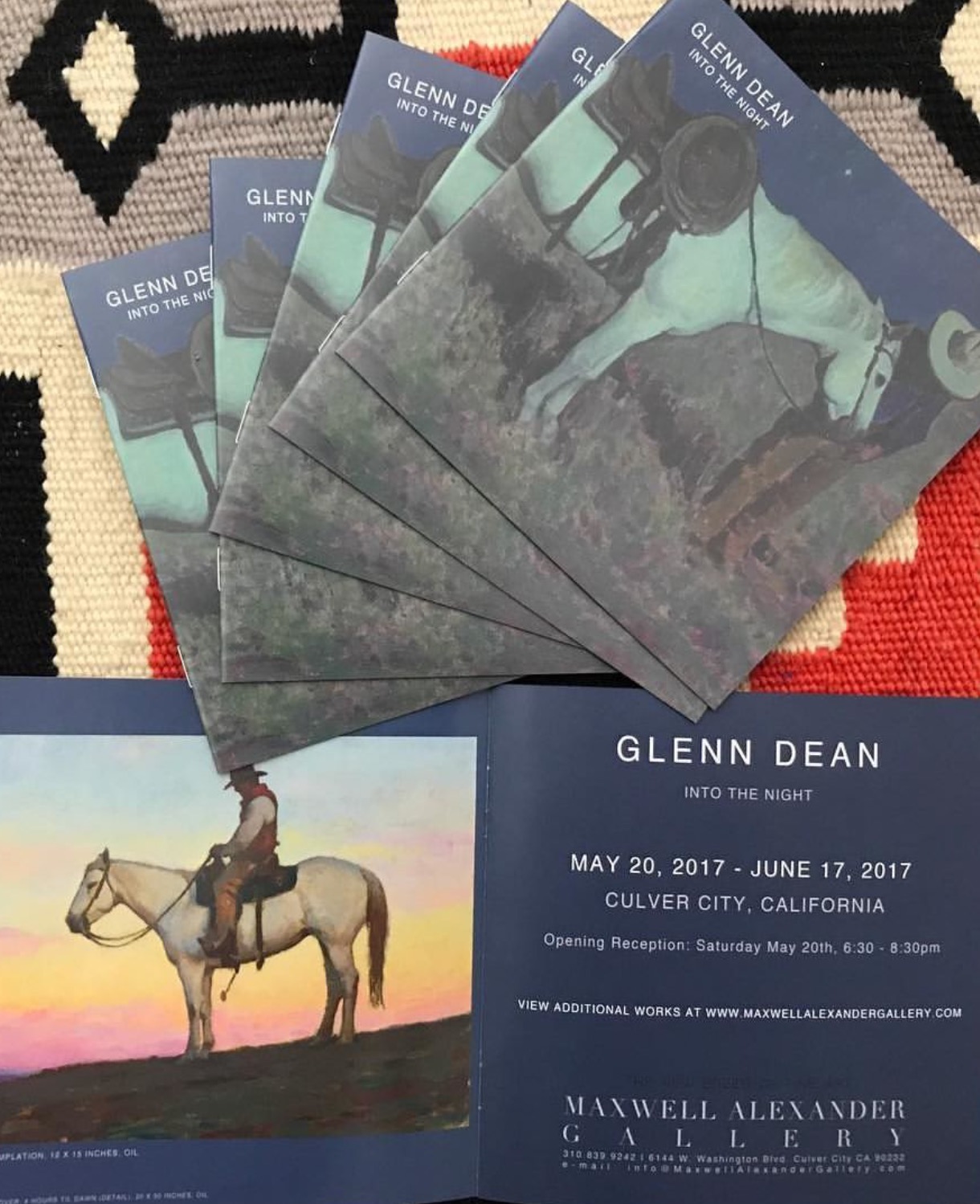
A unique new collection of works by artist Glenn Dean enjoyed a very successful opening night at Maxwell Alexander last weekend. Through this new body of work, Dean explored a new subject that historically has dazzled and will continue to dazzle collectors. Details here!

By Vanessa Françoise Rothe

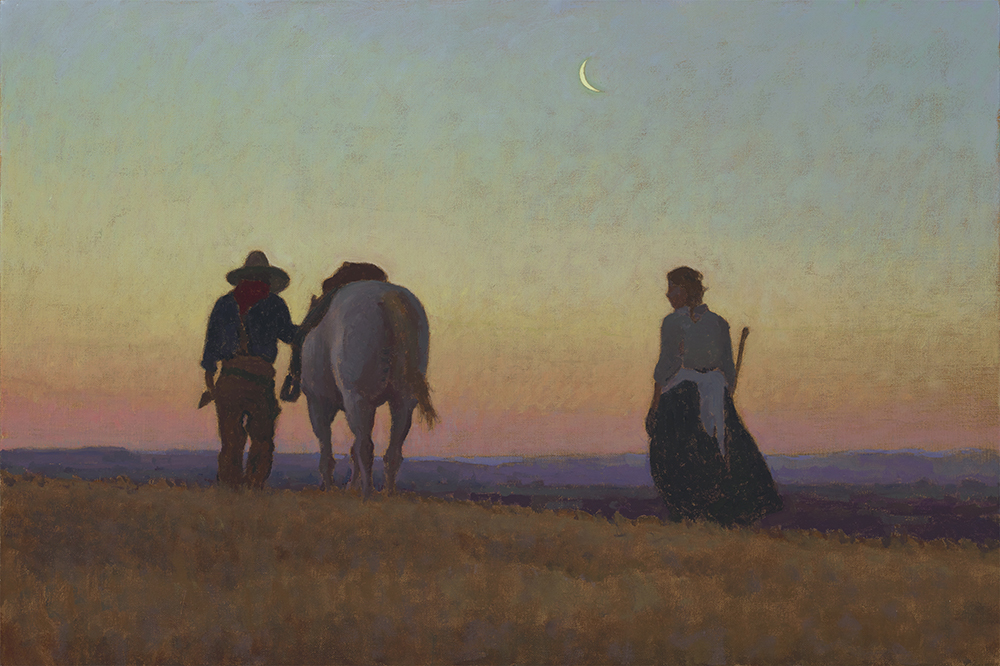
On display through June 17, 2017, “Into the Night” has brought an evening glow to Los Angeles’s Maxwell Alexander Gallery. The exhibition features the artist’s recent exploration of a new subject — horses and riders set among twilight or nocturnal landscapes — and they have a subtle, soothing ambiance about them. The exhibition is both alluring and pleasing; the works share a peaceful note. Dean is famous for his color harmonies, and he delivers an exhibition consistent with that reputation, using warm and cool harmonies that mix with tonal grays. During the opening reception, Dean himself mirrored that harmony with a calm, confident air as he shared the moment with his fellow artists and clients.

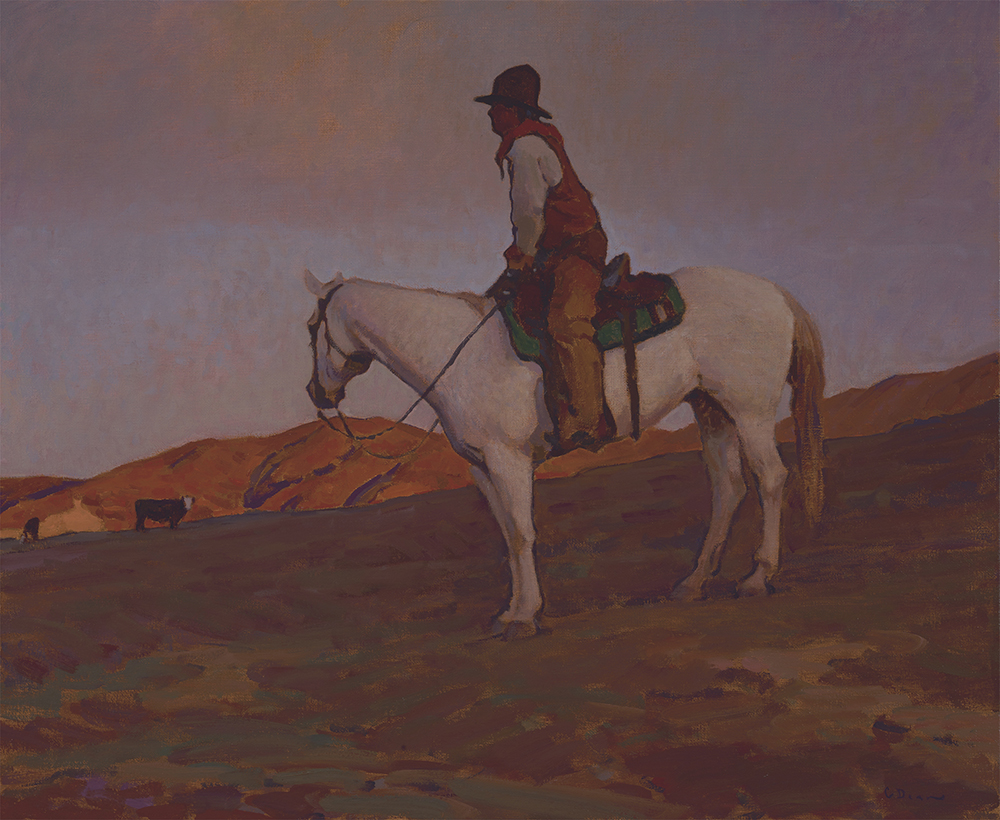
Glenn Dean, “Watchful,” 2017, oil, 25 x 30 inches

With moonlit skies, wheat fields, beautifully rendered horses, and prairie scenes of the American West, the exhibition transports the viewer to stunning planes and rolling hillsides at dusk. A printed catalogue is available through the gallery.  Dean explains, “The body of work for this show is really an exploration of light and color…working within the transition from the fading light of day, to the moonlit night.  I wanted to explore how these changes in light effect how we see our surroundings and how the surroundings (and subjects) themselves visually merge together and into the night sky, nearly losing all definition unless defined by the direct light of the moon.”

Glenn Dean, “Heading Home,” 2017, oil, 24 x 36 inches

Dean has been a fine landscape artist for many years, well-known in California and beyond, respected and followed by many. His ocean and California landscapes are widely collected, and Dean has, in the last few years, rediscovered the West with horses and riders as a main subject, traveling to paint in Utah, the hills of California, and on nearby ranches. These new themes will continue to offer an exciting new subject for him. The nocturnal collection takes this series further, adding the effects of night and dusk, and celebrates this main theme as his subjects roam and walk … into the night.

Fantastic catalogues for “Into the Night,” Photo: Vanessa Rothe

Maxwell Alexander Gallery is located at 6144 W. Washington Blvd. Culver City CA 90232

Inquiries: [email protected] or 310-839-9242

This article was featured in Fine Art Today, a weekly e-newsletter from Fine Art Connoisseur magazine. To start receiving Fine Art Today for free, click here.

Boathouse Beauty

0
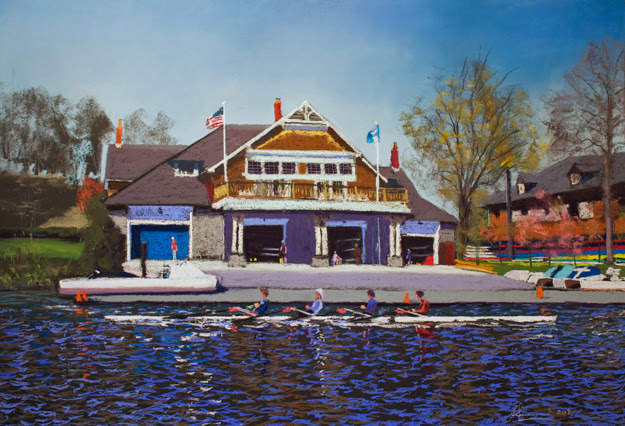
Joseph Sweeney, “University Barge Club,” 2017, pastel on paper, 22 x 32 inches

Along the Eastern Seaboard of the United States lie hundreds of small towns and cities that boast stunning views of river landscapes. These classic scenes form an important part of late 19th- and early 20th-century American art. That tradition continues today, as seen in the recent body of work by Joseph Sweeney.

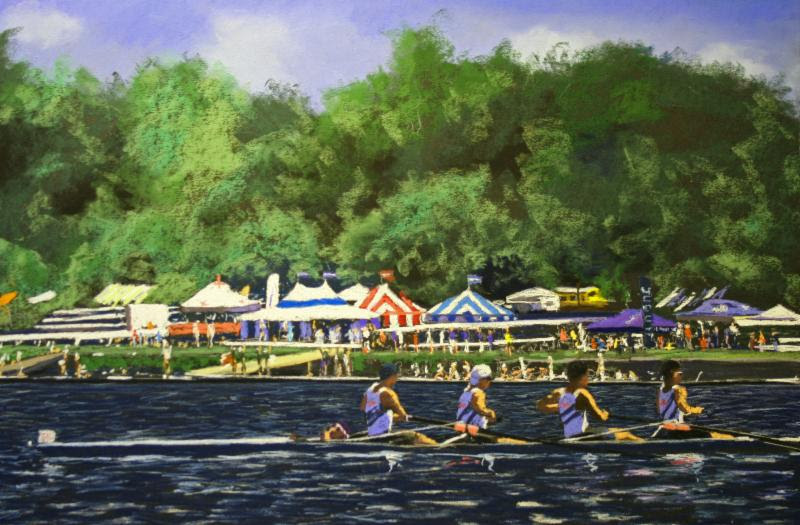
Born in the Farimount section of Philadelphia, artist Joseph Sweeney returns to his roots during “On the River,” a solo exhibition at Gross McCleaf Gallery in Philadelphia. On view June 1 through June 30, “On the River” is Sweeney’s recent exploration of the classic river scenes that have drawn artists to the state of Pennsylvania for generations.

Joseph Sweeney, “Regatta Morning,” 2017, pastel on paper, 22 x 32 inches

“After exploring landscapes of central Pennsylvania, the New Jersey shore, Ireland, and Bermuda, the artist is revisiting a subject matter that has inspired so many Philadelphia painters over the years,” the gallery writes. “Managing to strike a fine balance between rendering a portrait of a place and capturing its essence without being literal, Sweeney identifies and reveals what is vital in each scene with the quickness of stroke and the intensity of color only possible through the medium of pastel. The resulting images emerge as refined and poetic; infused with Sweeney’s genuine affection for his subject matter.”

To learn more, visit Gross McCleaf Gallery.

This article was featured in Fine Art Today, a weekly e-newsletter from Fine Art Connoisseur magazine. To start receiving Fine Art Today for free, click here.

Thinking About Lines

0
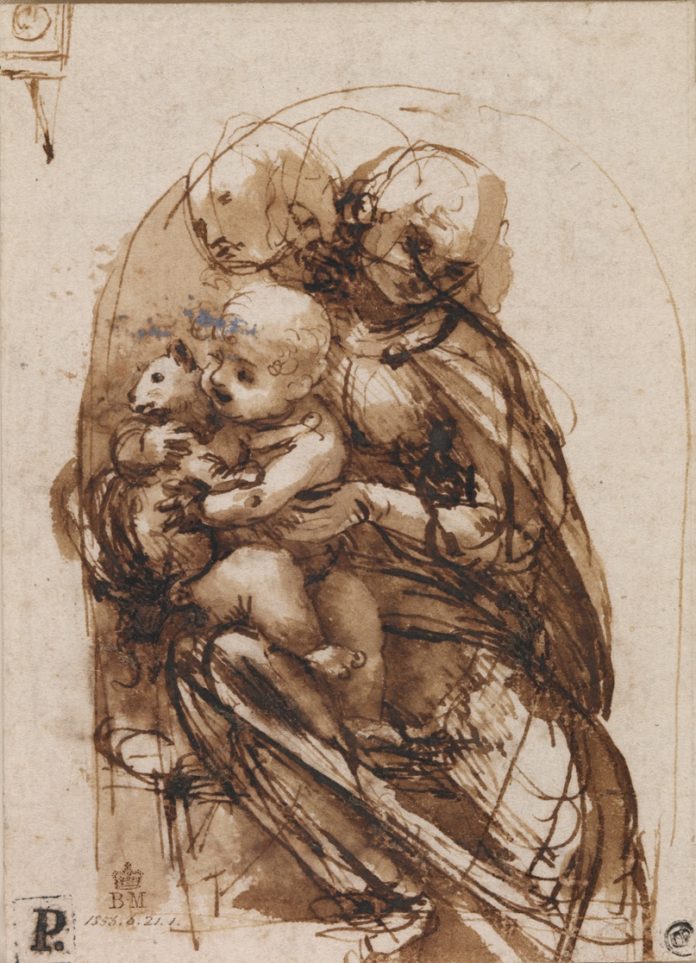
Leonardo da Vinci, “The Virgin and Christ Child with a Cat,” circa 1478-81, pen and brown ink over stylus drawing, British Museum

There’s a reason many describe line as the most basic and important of the visual elements. Lines are infinitely variable in their expression of time, movement, emotion, and intensity — qualities that are directly translated to artworks made only from lines: drawings. How did some of art history’s greatest minds employ line? Find out here.

The New Mexico Museum of Art is one of only two U.S. institutions to host a major exhibition of historical drawings on loan from the British Museum. Opened on May 27 and on view through September 17, “Lines of Thought: Drawing from Michelangelo to Now: from the British Museum” presents an important examination of the enormous variety of methods used by some of history’s greatest artists, including Leonardo da Vinci, Michelangelo, Albrecht Dürer, Piet Mondrian, Paul Cézanne, Pablo Picasso, Bridget Riley, Barbara Hepworth, Henry Moore, Franz Kline, and Rachel Whiteread.

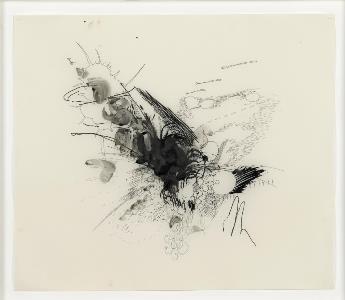
Julie Mehretu, “Untitled,” 2002, pen and ink and brush drawing on vellum and Mylar, British Museum

Drawn from the British Museum’s world-class collection of more than 50,000 drawings, “Lines of Thought” will showcase some 70 drawings that exhibit powerful designs and expressive sketches through the ages. “A drawing can capture and preserve a record of an artist’s thoughts, rendering visible ideas, developing and refining them, serving as a key conceptual tool throughout each stage of the artistic process,” explains museum director Mary Kershaw. “‘Lines of Thought’ explores the numerous and invaluable lessons one can learn from examining the drawings of past masters in the context of artists working today, from Michelangelo to Mondrian, Rembrandt to Rachel Whiteread, Piranesi to Picasso.”

To learn more, visit the New Mexico Museum of Art.

This article was featured in Fine Art Today, a weekly e-newsletter from Fine Art Connoisseur magazine. To start receiving Fine Art Today for free, click here.

Business for Artists

0

Co-sponsored by Collectors for Connoisseurship at Windows to the Divine and the Clark Hulings Fund, a unique opportunity for artists is set to begin on Tuesday, June 20 in Colorado. What’s the buzz?

The art business can be nebulous and confusing at times — it’s a minimally understood and difficult profession to be sure. Avoid madness this summer at Space Gallery in Denver on June 20 with a half-day forum for professional artists through Collectors for Connoisseurship and the Clark Hulings Fund.

During the forum, peers and experts in the field will “engage in important visionary dialogue about the future of living artists,” the organization suggests, “and consider practical advice from experts.” Subjects include: What’s selling? Where and to whom? How can the artist be in control of his or her own career? When and how should artists use marketing tools like social media and e-mail to best effect? What can artists do individually and collectively to make their businesses more sustainable and successful?

The event takes place between 1-5 p.m., and a cocktail reception will follow at 6:30 p.m. The gathering is only open to members of ArtLover, which can be joined at any time for $49. Already an ArtLover member? The forum is free!

To learn more or register, visit Windows to the Divine.

This article was featured in Fine Art Today, a weekly e-newsletter from Fine Art Connoisseur magazine. To start receiving Fine Art Today for free, click here.

Relationship Goals: Modernism and Classicism

0
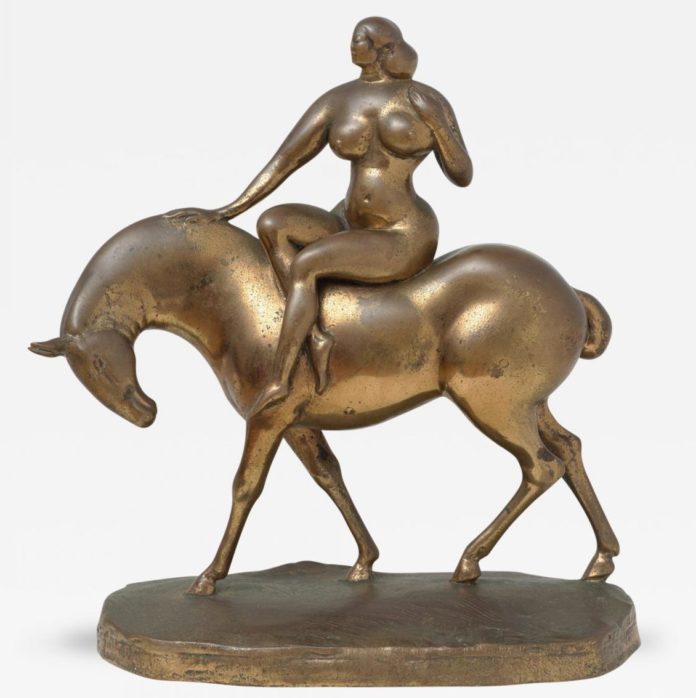
Gaston Lachaise, “Equestrienne,” 1918, gilt bronze, 10 5/8 x 10 x 4 5/8 inches, George H. Warren

A fascinating new exhibition seeks to investigate for the first time the integral relationships among modernism, classicism, and pop imagery through interwar sculpture. Who are the central players, and where can you see it?

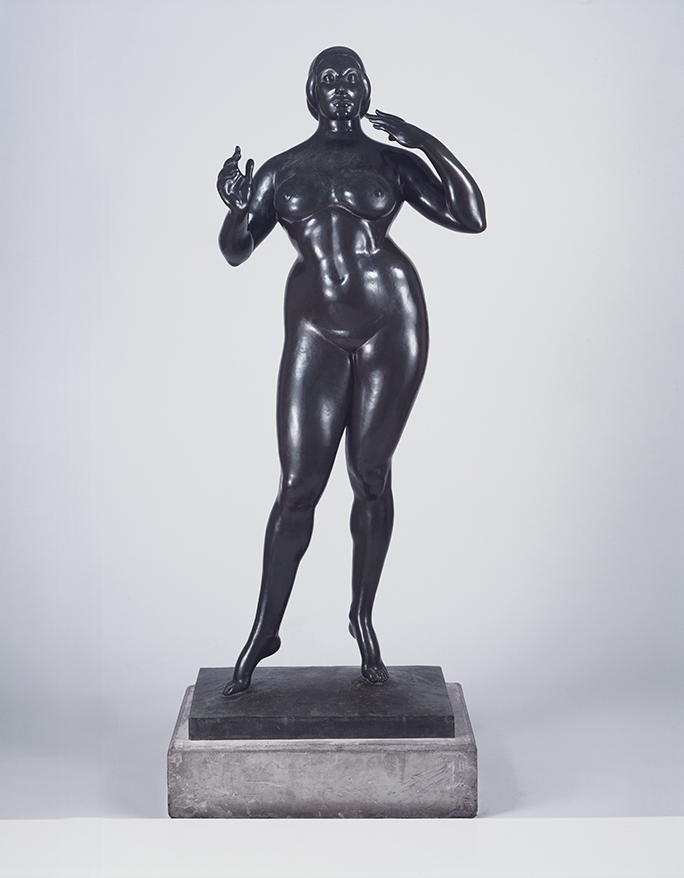
The Portland Museum of Art, Maine, has recently mounted an incredible exhibition that explores the formative sculpture of modernists Gaston Lachaise, Robert Laurent, Elie Nadelman, and William Zorach. Titled “A New American Sculpture, 1914-1945,” the show explores how this cohort of European-born sculptors became important figures of modernism in the United States. Amassed from both public and private collections, this gathering of 60 sculptures and several preparatory drawings “reveals the confluences of sources — from archaism and European avant-garde art to vernacular traditions and American popular culture — that informed these artists’ novel contributions to the history of sculpture,” the museum writes. “[The exhibition] also addresses the remarkable affinities between the oeuvre of four divergent personalities, who redefined sculpture’s expressive potential during the turbulent interbellum period.

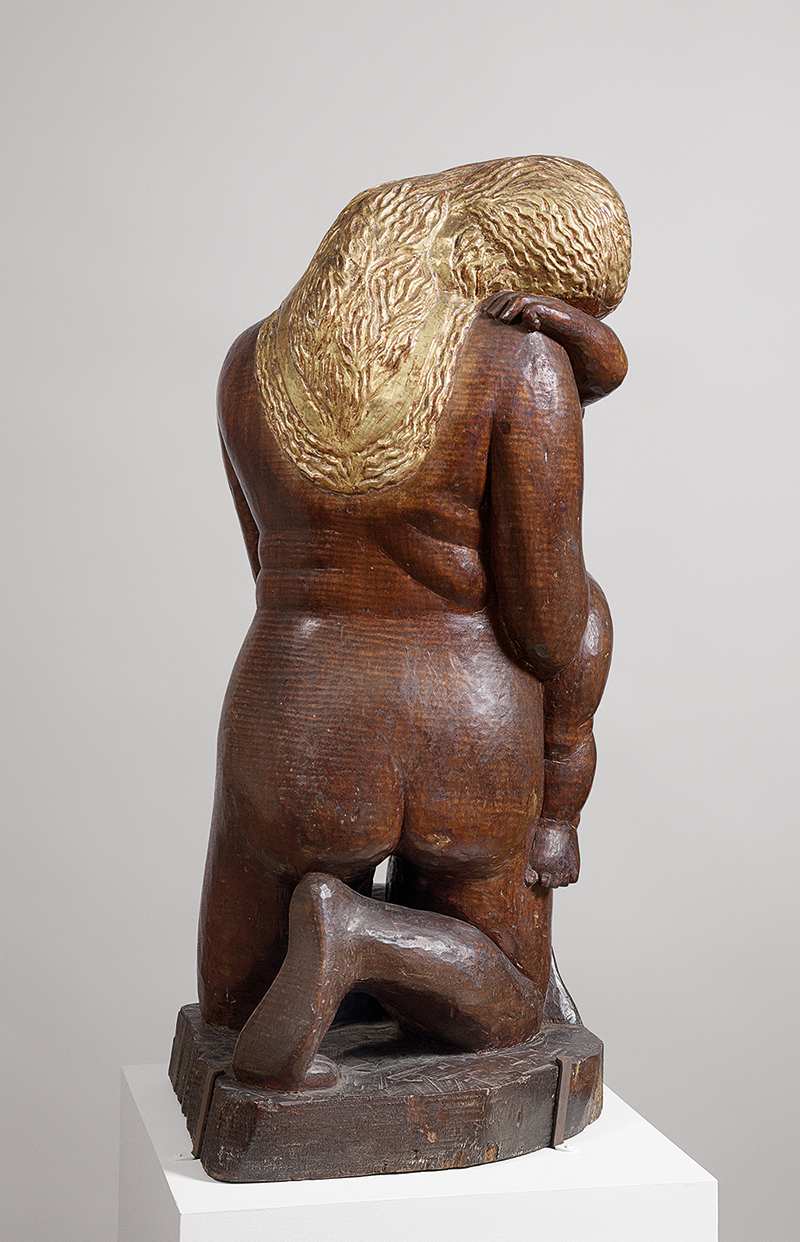
Gaston Lachaise, “Standing Woman,” 1912-17, bronze, 72 x 28 x 17 inches, Philadelphia Museum of Art
William Zorach, “Mother and Child,” 1922, mahogany, 31 x 12 x 12 1/2 inches, Portland Museum of Art, Maine
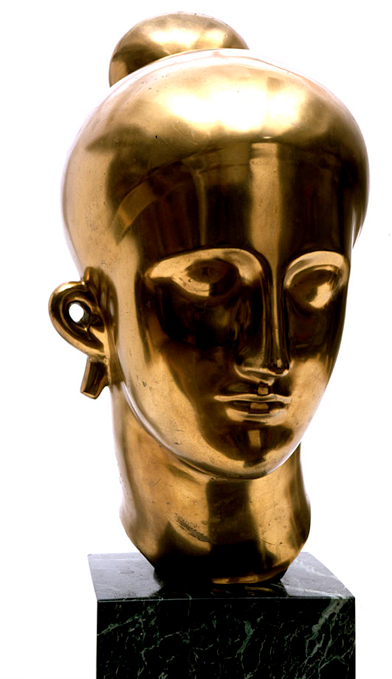
Elie Nadelman, “Head of a Woman,” circa 1916-32, bronze, 18 3/4 x 10 x 15 1/2 inches, Memorial Art Gallery of the University of Rochester

“Between 1900 and 1914, Lachaise, Laurent, Nadelman, and Zorach each enjoyed formative experiences in Paris amid an exhilarating era of artistic experimentation and fomentation. They witnessed the development of modern sculptural modes informed by divergent currents of classicism, global sources, the energy of science and industry, and nontraditional technical approaches. By the beginning of the first World War, all four artists had settled in the United States, each responding differently to his new home and laying the seeds for what would become their shared, lifelong preoccupation: exploring the communicative power of the human form.”

The exhibition opened on May 26 and will be on view through September 8. To learn more, visit the Portland Museum of Art.

This article was featured in Fine Art Today, a weekly e-newsletter from Fine Art Connoisseur magazine. To start receiving Fine Art Today for free, click here.

How One Artist Is Bridging Worlds

0
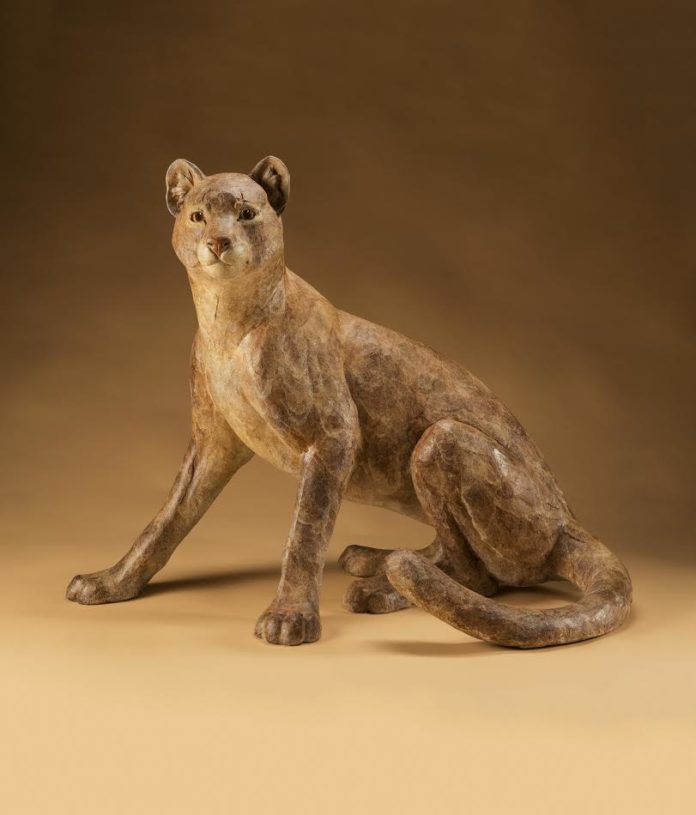
Star Liana York, “Echo in the Canyon,” bronze, 35 x 37 x 21 in. © Sorrel Sky Gallery

Have you ever thought about the connections between humans, animals, and conceptions of divinity? A talented sculptor took up this challenge for a solo exhibition this summer that merits your consideration.

Opening June 2 and continuing through the month, Sorrel Sky Gallery in Durango, Colorado, will present several new sculptures by the renowned artist Star Liana York. Titled “Bridging Worlds — Human, Animal, Divine,” York’s mesmerizing bronzes tell compelling stories of life and discovery.

Although the artist finds creative interest in people, animals, and the environment of the Southwest, “For Star, inspiration is drawn from the world as a whole,” the gallery reports. “From history, the present day and future expectations; deepening her understanding through patient observation, attentive listening, and then accepting what her surrounds are saying. As she assimilates, she creates bridges between worlds. Bridging the worlds between the human, the animal, the divine.”

In her own words, York suggests, “When a character emerges from a work I am sculpting, I feel touched at a deeply intimate, subconscious level. It is the essence in a work of art that makes it intensely personal and entirely universal at the same time.”

Sorrel Sky Gallery will host an opening reception on June 2 from 5 to 7 p.m. To learn more, visit Sorrel Sky Gallery.

This article was featured in Fine Art Today, a weekly e-newsletter from Fine Art Connoisseur magazine. To start receiving Fine Art Today for free, click here.

WEEKLY NEWS FROM THE ART WORLD

Fill your mind with useful art stories, the latest trends, upcoming art shows, top artists, and more. Subscribe to Fine Art Today, from the publishers of Fine Art Connoisseur magazine.

  • This field is for validation purposes and should be left unchanged.