Home Blog Page 358

Keeping It in the Family

0
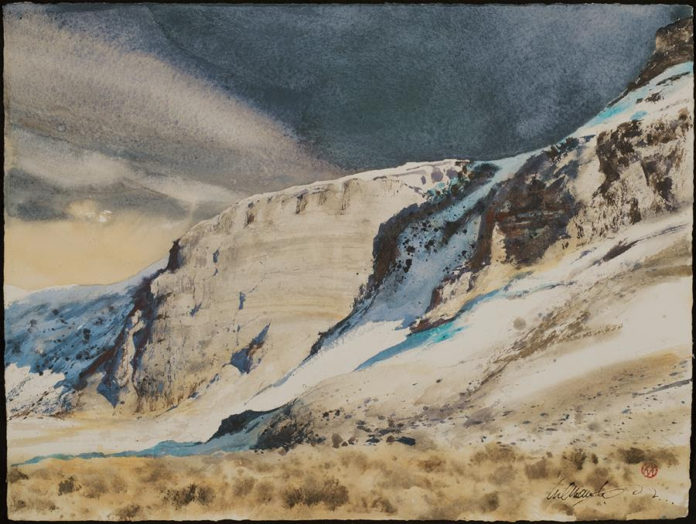
William Matthews, “Utah,” © William Matthews 2017

Sometimes we hear about interesting, but surprisingly common, artistic tandems of husband and wife. Together, they have embarked on a creative journey, critiquing one another and, on occasion, exhibiting together. Less common, however, are artistic siblings — the focus of this exhibition in Colorado.

The Great Basin Studio in Denver, Colorado, recently opened a fascinating joint exhibition showcasing the brilliant landscapes of siblings Kim Matthews Wheaton and William Matthews. Titled “Sister & Brother,” the show features landscapes by both artists, offering viewers a tantalizing comparison between two artists who share much more than artistic talent.

Kim Matthews Wheaton, “Long Afternoon Shadows,” © Kim Matthews Wheaton 2017

The works of Kim Matthews Wheaton are interesting displays of shape in the landscape, whether natural or manmade. Bold forms of light, shadow, and color interweave, overlap, and fade into distant horizons. The depth of field is a bit smaller in the works of William Matthews. Tall mountains stretch skyward from low horizons, with minute details in foliage and topography.

“Sister & Brother” opened on March 24 and will hang through May 12. To learn more, visit the Great Basin Studio.

This article was featured in Fine Art Today, a weekly e-newsletter from Fine Art Connoisseur magazine. To start receiving Fine Art Today for free, click here.

How One Artist Finds Love in Gray

2
Brett Scheifflee, “Awakening,” oil on panel, 12 x 16 in. © RLS 2017

Earth’s atmosphere has such an infinite array of effects on light, diffusing and refracting it to produce vivid colors and muted tones. One contemporary landscape painter is poised to showcase his creative interpretations of fog and mist during a solo show that thrusts gray into a gorgeous spotlight.

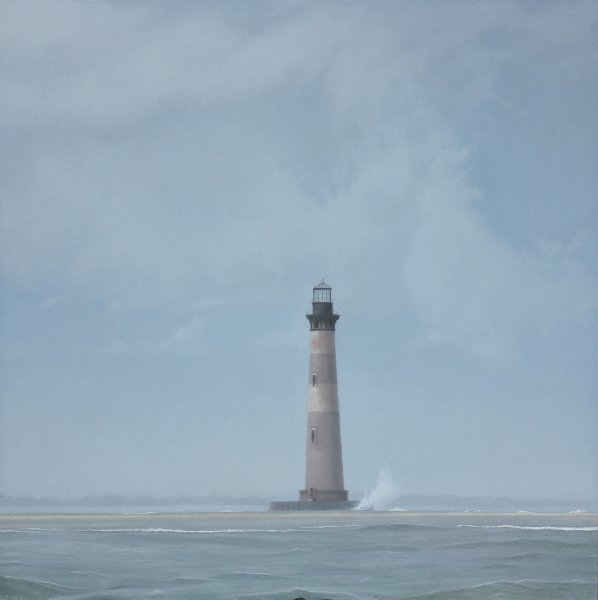
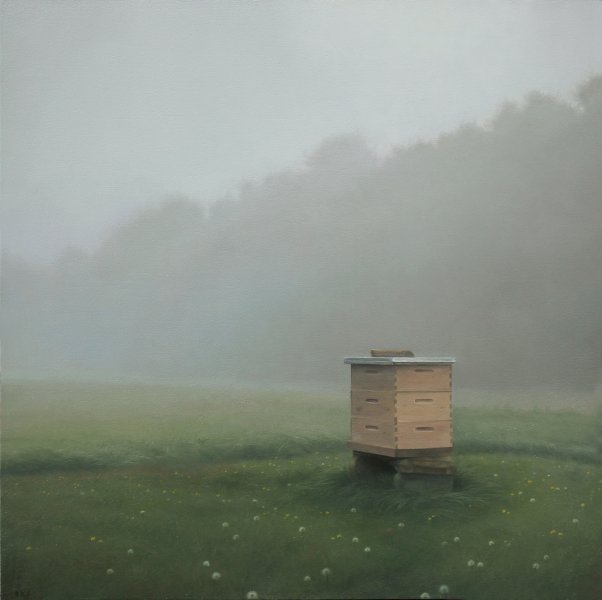
From April 7 through April 28, Robert Lange Studios in Charleston, South Carolina, will present a body of recent works by contemporary landscape master Brett Scheifflee. Titled “For the Love of Gray,” the exhibition is Scheifflee’s painterly exploration of the unique qualities of fog and mist at various times of day. Principally captured in the artist’s former home, an area including the Barrier Islands and Lowcountry marshes, this body of work is not only a representation of the artist’s ability to meticulously render the details of the landscape in which he is immersed, but to do so with a rather limited palette.

Brett Scheifflee, “Morris Island,” oil on panel, 12 x 12 in. © RLS 2017

“Like everything we make, desire precedes existence. It seems a love of the soft and subtle must have occupied the thoughts of artists for many, many years and we should be thankful it did, as we now have oil paints,” Scheifflee suggests. “There is no better medium a painter can turn to when they want to convey the subtleties of light, whether it’s the waking beauty of a foggy landscape, or northern light trickling in through an old Dutch house to find a pearl earring.”

Brett Scheifflee, “The Warming Hive,” oil on panel, 11 x 11 in. © RLS 2017

The gallery adds, “Visitors to the exhibition are given a glimpse into the artist’s world and are provided with paintings that visually communicate the conjured emotions of Scheifflee’s explorative life. The featured paintings with their quiet and subdued palette, draw the viewer to take a closer look.”

To learn more, visit Robert Lange Studios.

This article was featured in Fine Art Today, a weekly e-newsletter from Fine Art Connoisseur magazine. To start receiving Fine Art Today for free, click here.

The Spirit of Representation

0
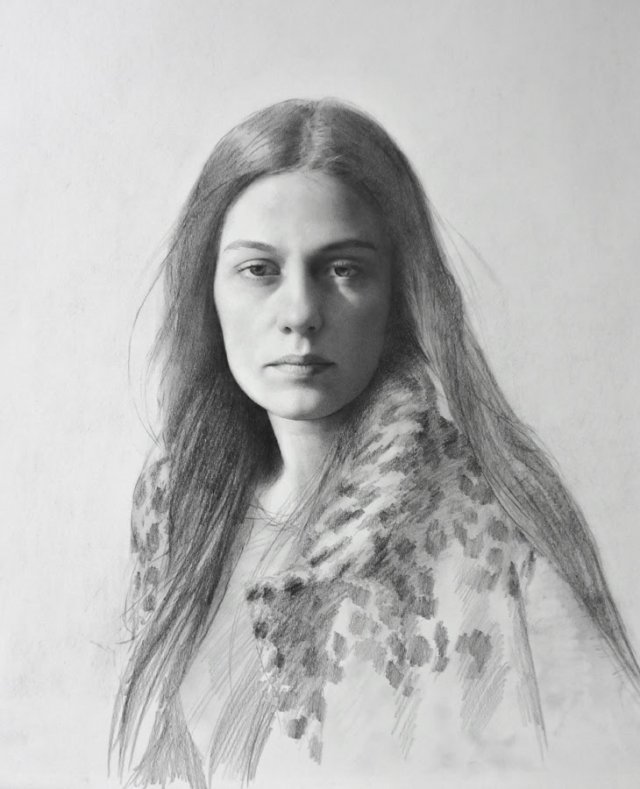
Kerry Simmons, “Amy,” 2017, graphite on paper, 13 x 15 in. © Dacia Gallery 2017

Several of the nation’s top representational artists are headed to this New York City gallery next month for a stunning group exhibition. All artistic sprits are welcome during “Spiritu Vivae.” Who’s included and where?

“Spiritu Vivae” will surely be a fantastic exhibition when it opens at New York City’s Dacia Gallery today, March 30. Featuring the works of Erin Anderson, Patt Baldino, Ryan Chapman, Paula Craioveanu, Kristy Gordon, Lisa Ficarelli-Halpern, Travis Little, Sari Mallow, Iliya Mirochnik, Michael O’Sullivan, William Reed, Kerry Simmons, Dori Spector, and Leah Yerpe, the show is a tour de force of representational talent.

Via the gallery, “This exhibition embodies an eclectic mix of contemporary artists that focus on representational art through painting and drawing. The collection contains a mosaic of work through a life-long study of anatomy, depth, color and light through the unique vision of each artist. From renowned representational artists Erin Anderson and Travis Little to classically influenced Ilya Mirochnik and rising stars Paula Craioveanu and Kerry Simmons. Fusing together an achievement of what is currently being created in representational art at the peak of a new movement by inspiring artists.”

“Spiritu Vivae” opens on March 30 and will continue through April 28. To learn, more visit Dacia Gallery.

This article was featured in Fine Art Today, a weekly e-newsletter from Fine Art Connoisseur magazine. To start receiving Fine Art Today for free, click here.
RJD Recap

0
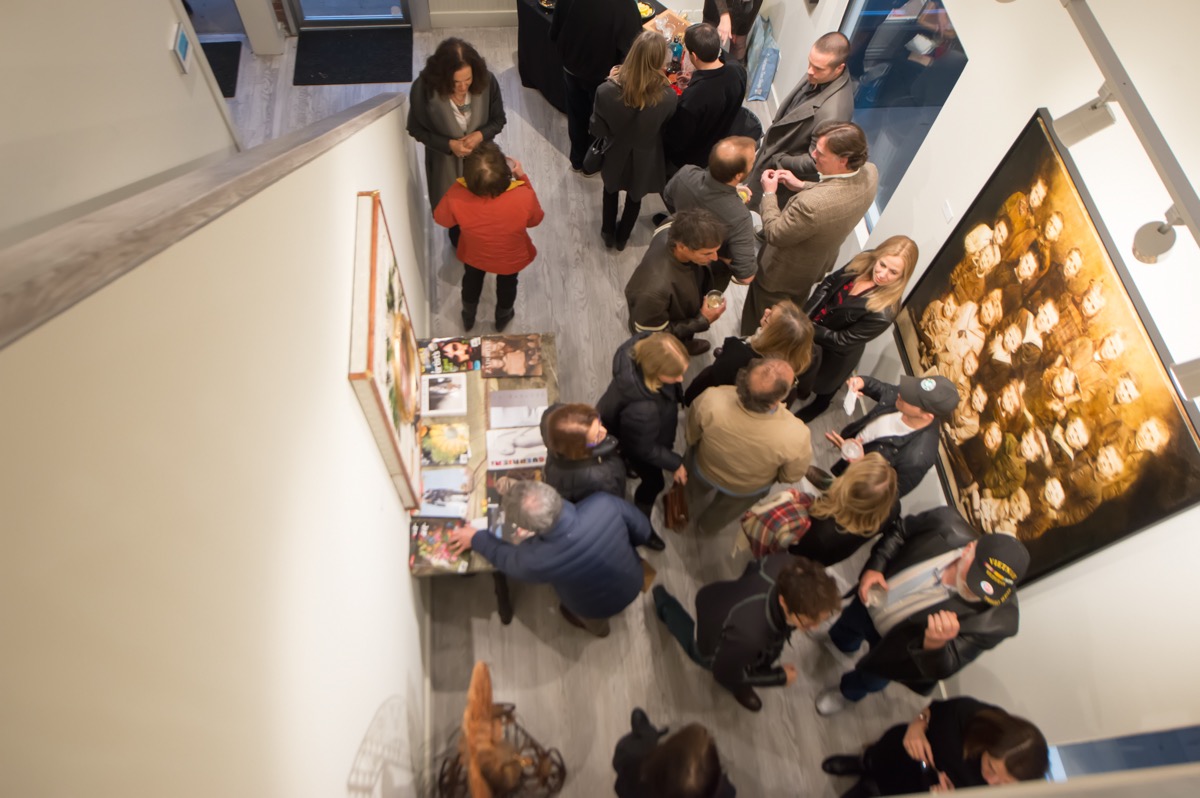
Crowds peruse Andrea Kowch’s viewing room.

It was an atmosphere unlike any other as many attended RJD Gallery’s highly anticipated reopening after its devastating December 2016 fire. Just in case you missed it, we’ve got you covered.

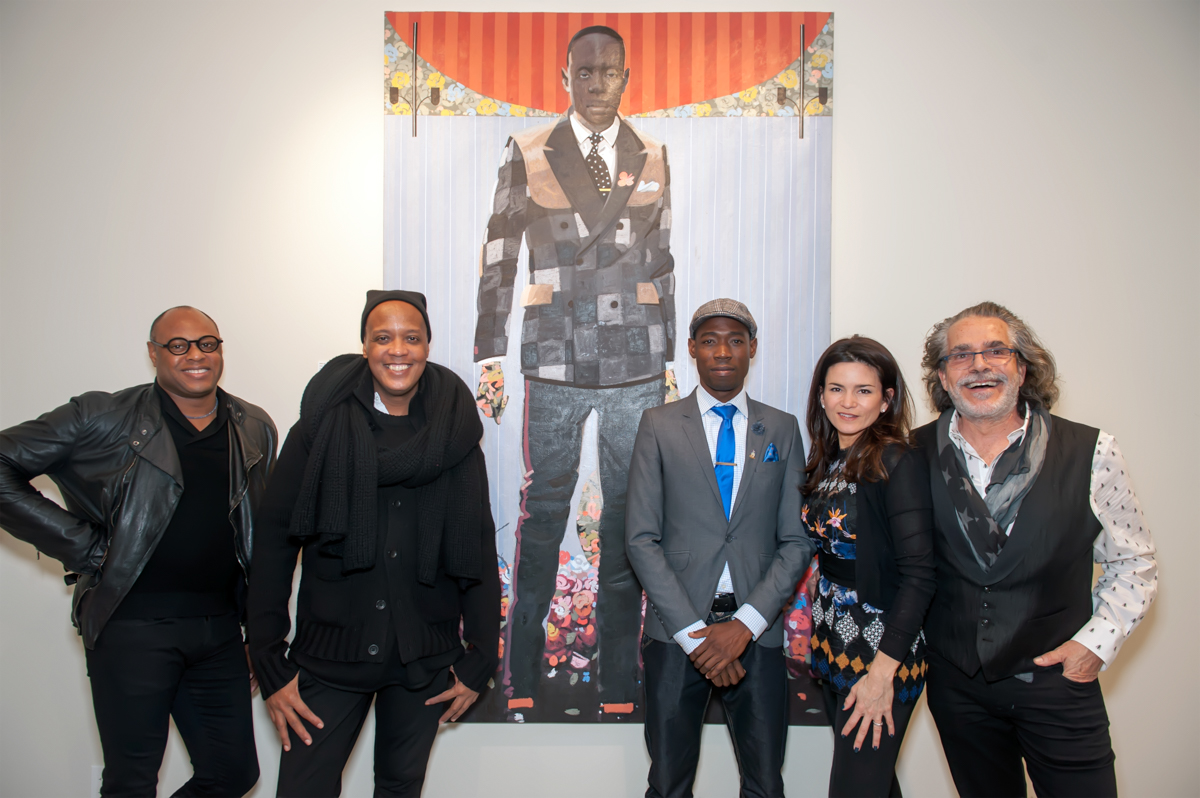
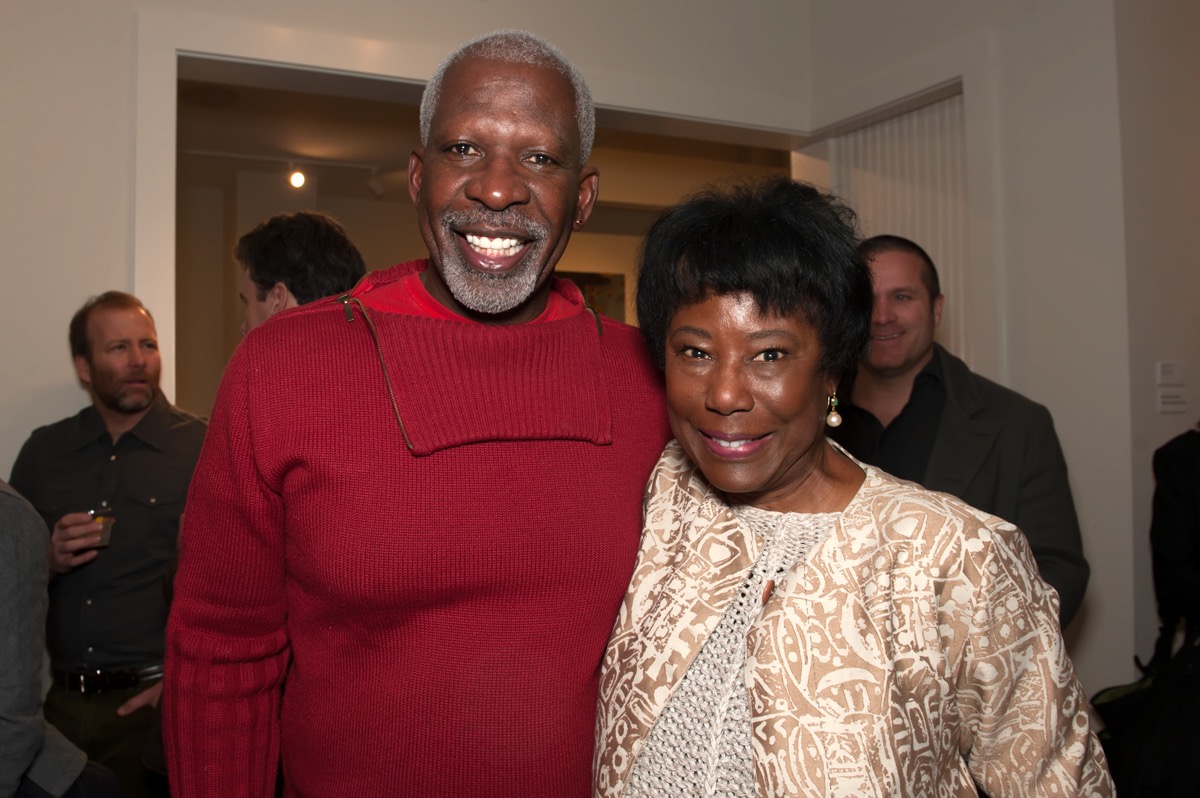
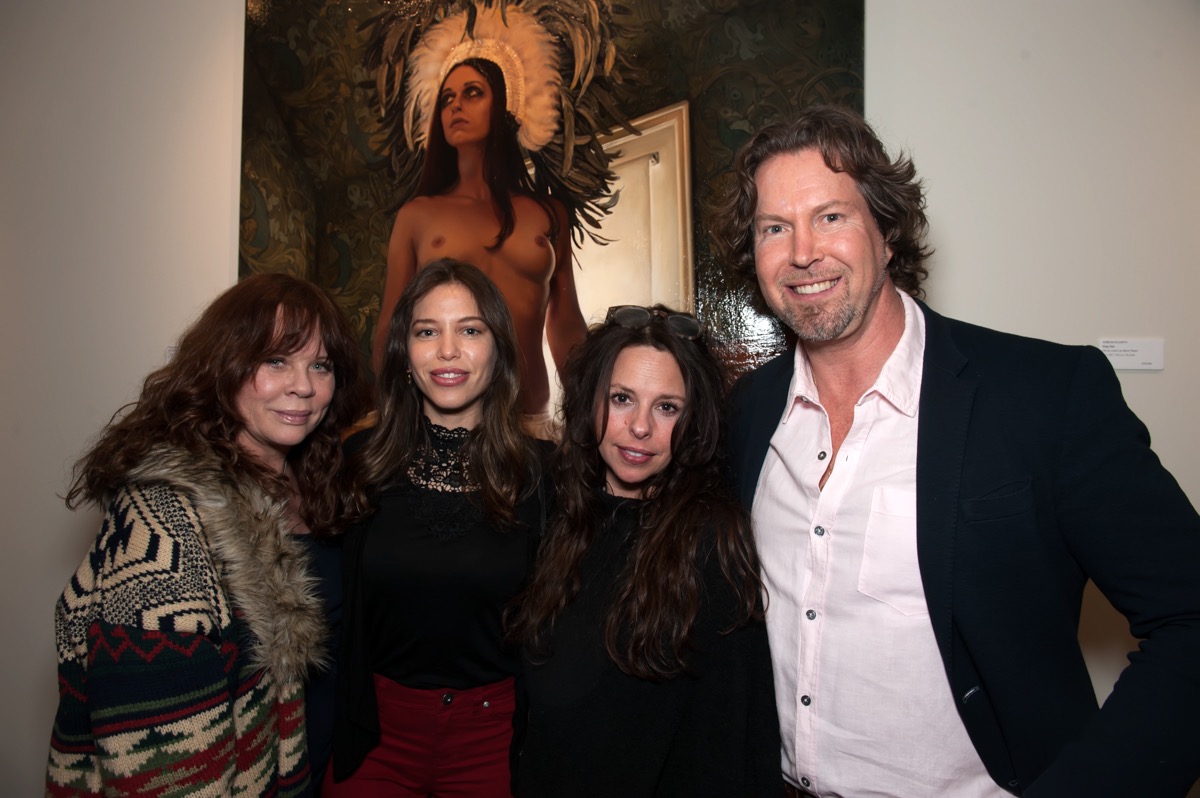
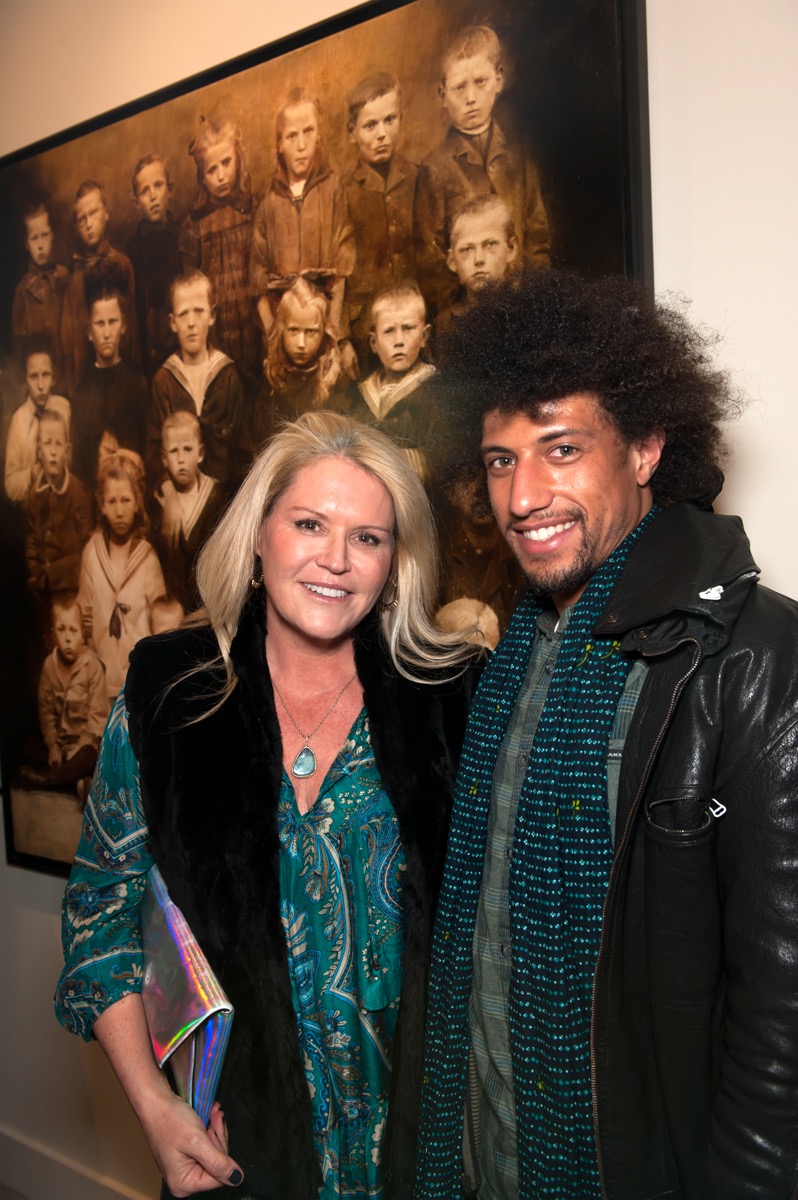
Hundreds attended the grand re-opening of RJD Gallery in Bridgehampton, New York, this past Saturday evening, March 25. The opening marked a major point of celebration for the gallery’s owners and roster of esteemed artists as their original Sag Harbor location was destroyed by fire in December 2016.

(Left to right) Ron Saleh, Edward Wilkerson, and Phillip Thomas with gallery director Eve Gianni Corio and owner Richard J. Demato in front of Thomas’ painting “Exit”
(Left to right) Sculptor Hans Van de Bovenkamp with artists April Gornik and Nathan Slate Jacobs in front of Veronique Guerrieri’s piece “Lapinou”
(Left to right) Kristen Peterson, Danielle Wilson, gallery director Eve Gianni Corio, Gretchen Comply, and Laura Molinari Tarbet
Dan Gasby and Joyce Jackson

It’s amazing to think about where the gallery was just a few months ago and seeing it now. By January, the gallery was already meeting with its insurance company, continuing remote operations for the inventory that survived, searching for a new location, and beginning to plan to breakground. Speaking to the Sag Harbor Express, gallery owner Richard J. Demato suggested, “It is a rebirth and a revival. We had to make a decision. Do we stop or do we go? We made that decision the same day of the fire. We went and sought new spaces; we worked out of my home for a while; we aggressively went out and went after new art. We had to.”

Tomas Hill with artist Dinah Delfin and friends with Pamela Wilson’s painting “Did the Harebell Lose her Girdle?”
Jennifer McSweeney and Tripoli Patterson with Andrei Zadorine’s painting “Class Reunion II”
A look down from Andrea Kowch’s viewing room above

Continuing, Demato reported, “The space is much more serene because it’s much larger. It’s nice and clean and bright. We always loved sculpture, but never had the room. Also, in most of the galleries out here, you can’t step back from the piece enough. It gives it a better perspective and you feel more comfortable making the purchase because you’re more aware of the art rather than the small space. Several people have told me there’s more of a museum feeling here.”

To learn more, visit RJD Gallery.

This article was featured in Fine Art Today, a weekly e-newsletter from Fine Art Connoisseur magazine. To start receiving Fine Art Today for free, click here.

Portrait of the Week: Sculpture’s Modern Icon

0
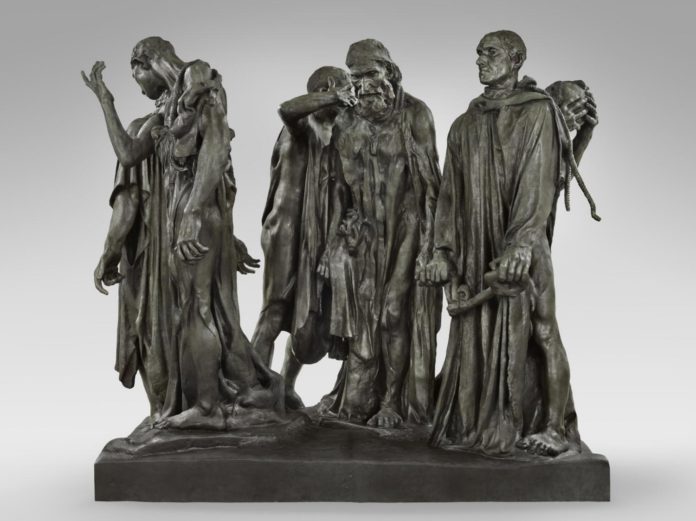
Auguste Rodin (1840-1917), “The Burghers of Calais,” circa 1884-1889, bronze, 6 feet, 10 1/2 in. x 7 feet, 10 in. x 6 feet, 3 in, © Museé Rodin 2017

In this ongoing series, Fine Art Today delves into the world of portraiture, highlighting historical and contemporary examples of superb quality and skill. This week we join a chorus of celebration in honor of Rodin’s centenary.

Many — indeed most — consider Auguste Rodin (1840-1917) the father of modern sculpture. As the art world celebrates Rodin’s legacy this year, we’ve decided to join the festivities by detailing one of his most famous works, “The Burghers of Calais”.

Completed between 1884 and 1889, “The Burghers of Calais” is a powerful public monument in bronze featuring six portraits of French prisoners from the city of Calais. Calais was a besieged city during the Hundred Years’ War between England and France. Fascinated by the conflict, Rodin closely followed the account of French chronicler Jean Froissart (1333-after 1400), who describes — among many other details — the moment when six principal citizens of Calais were ordered to come out of the city with bare heads and feet, ropes around their necks, and the keys of the town and castle in their hands.

Rodin has sculpted the individuals, in various states of emotional distress, with incredible expressiveness. The sculptor’s roughly hewn surfaces powerfully echo the intensity of the moment and lend themselves beautifully to the subjects’ gripping expressions. Led by Eustache de Saint-Pierre (the bearded man in the middle of the group), each member seems to be contemplating his imminent death, unaware that their lives will ultimately be saved by the intercession of the English queen, Philippa.

Via the Metropolitan Museum of Art in New York, “the arrangement of the group, with its unorthodox massing and subtle internal rhythms, was not easily settled, and the completed monument, cast in bronze by the LeBlanc-Bardedienne foundry, was not unveiled in Calais until 1895.”

To learn more, visit the Rodin Museum.

This article was featured in Fine Art Today, a weekly e-newsletter from Fine Art Connoisseur magazine. To start receiving Fine Art Today for free, click here.

Featured Lot: A Piece of American History

0
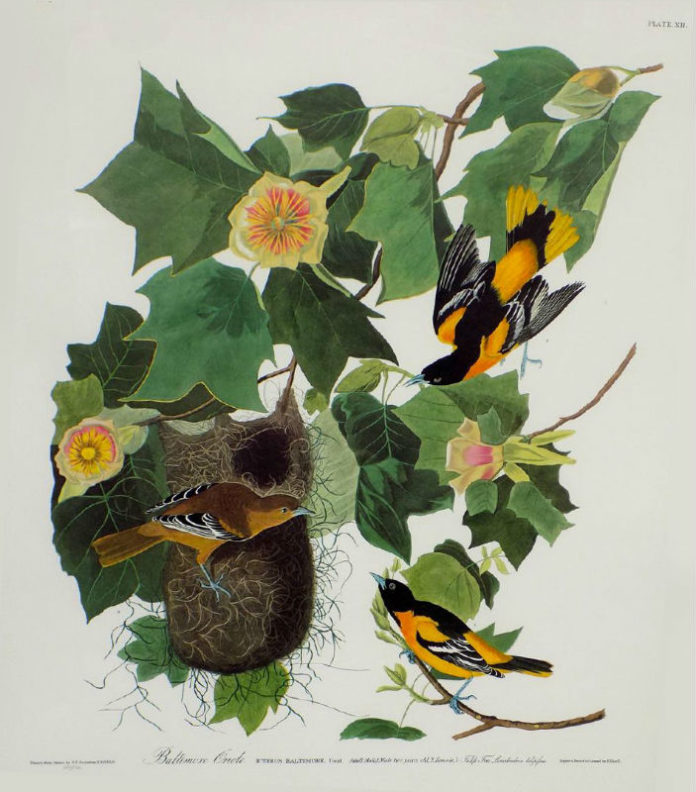
John James Audubon, “Baltimore Oriole,” circa 1829, engraving on paper, 35 x 40 in. © Jasper52 2017

In this ongoing series for Fine Art Today, we take a longer look at the history and features of a soon-to-be-available artwork of note. This week we consider the work and legacy of an iconic printmaker.

As children, we often found ourselves searching for and collecting hidden treasures of nature. Eggs, feathers, nests, bones, and snakeskins were all celebrated items of discovery. As a youth, John James Audubon (1785–1851) was no different. Audubon would spend his afternoons wading through the woods and fields near his home in Santo Domingo (now Haiti) in the hopes of a new discovery to proudly display in his room. This early appreciation and love for nature was eventually combined with immense artistic talent as he grew to a young man and an adult, which resulted in one of the most beloved and famous books in the world: The Birds of America. A masterwork of 435 images of virtually all known American species, The Birds of America is a testament to Audubon’s lifelong mission to capture and possess nature.

Audubon’s lineage is a subject of debate, but scholars generally agree that he was the illegitimate son of a French merchant and planter and a Creole woman of Santo Domingo. After he turned 18, Audubon fled to America to avoid conscription into Napoleon’s army and enter business. Travelling up and down the Eastern Seaboard, Audubon began his cataloging and study of birds. After Audubon’s attempts to publish his studies were met with rejection in America, he traveled to England in 1826 in search of patrons and publishers.

Audubon was warmly received in Edinburgh and London, where the engraver Robert Havell undertook publication of The Birds of America. Audubon divided his time between Europe and the United States as his reputation and fame grew. By the 1840s and with his vision failing, Audubon settled in New York, where his sons, John Woodhouse Audubon (1812–1862) and Victor Gifford Audubon (1809–1860), assumed most of the production responsibilities for his later books. John James Audubon died on January 27, 1851 in Manhattan, likely from Alzheimer’s disease.

Millions of reproductions of the original plates from The Birds of America exist in homes across the world today, but on April 1 collectors have an opportunity to own a limited-edition Princeton print of Audubon’s “Baltimore Oriole” via Jasper 52 in New York City. Set within a thicket of tree branches, an attentive female oriole has perched on her nest as two males flaunt their brilliant colors nearby. As expected, the rendering of the birds is unparalleled, with nearly every feather and natural detail captured with accuracy. Auction estimates are between $1,300 and $1,700.

To learn more, visit here.

This article was featured in Fine Art Today, a weekly e-newsletter from Fine Art Connoisseur magazine. To start receiving Fine Art Today for free, click here.
Featured Artwork: Judith Dickinson presented by the Celebration of Art

0
“The Glow” by Judith Dickinson

“The Glow”

20 x 16 in.

oil


About the Artist:

Judith began painting in oils at 8 years of age and has been painting professionally for more than 35 years.  Her love and passion is for portraiture and figure. She was honored to have been selected to paint the official portrait of Colorado Governor Bill Ritter, Federal Judge Figa, as well as two large public art commissions for Adams County, Colorado.

Judith’s extensive body of work includes a series of paintings of African widows and orphans. She also paints western paintings depicting the character and strength of Native Americans and western people.

An artist and educator, Judith owns and teaches at the Art Academy of Colorado, a thriving art school for children and adults. Judith considers her love, passion, and ability to create and reproduce beauty to be a truly spiritual experience and a gift which she has been entrusted to use and to share with others.

Judith’s work can be seen at the Celebration of Fine Art in Scottsdale, Arizona,  January 14–March 26, 2017. The Celebration of Fine Art is a unique art experience which gives visitors the opportunity to watch 100 artists in their working studio under one roof. Open daily from 10 am–6 pm. Visitors enjoy strolling through the 100 artist studios under the 40,000 square foot exhibit tent. Artists are on-site creating, allowing for the visitor to watch them at work, discover what inspires them and the techniques used to create the works of art. Come to Scottsdale to see more of Judith’s works in person and discover the stories behind each unique work of art.

www.celebrateart.com

celebrateart.com/artsy_gallery/judith-dickinson/

Featured Lot: Not What You Might Expect

0
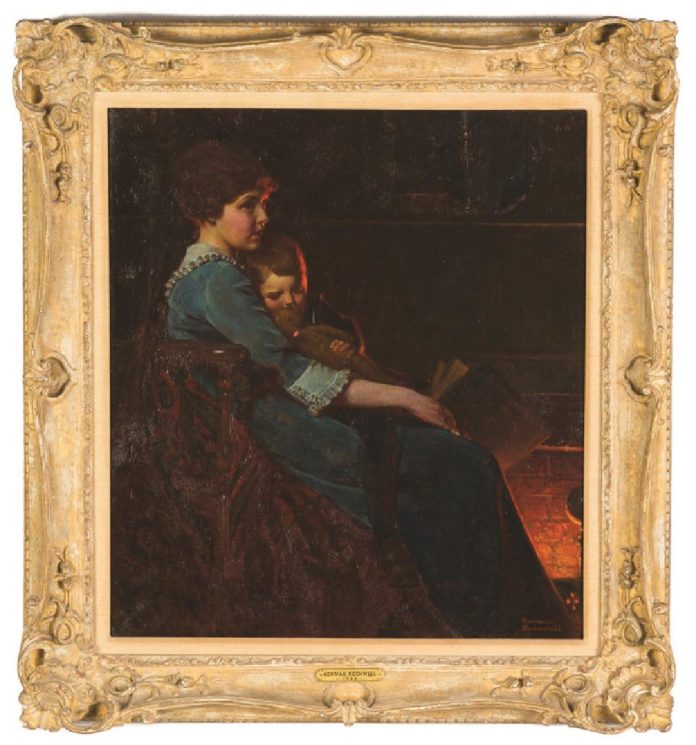
Norman Rockwell, “Bedtime,” 1923, oil on canvas, 21 x 19 in. © Cottone Auctions 2017

In this ongoing series for Fine Art Today, we take a longer look at the history and features of a soon-to-be-available artwork of note. This week we consider a heartwarming scene titled “Bedtime.” You might be surprised to learn who painted it…

Norman Rockwell (1894–1978) is remembered as perhaps the greatest painter and illustrator of American wartime culture, and his works are, without a doubt, some of the most coveted and highly collected artworks today. Born in New York, Rockwell pursued an art career early. His passion and talent were noticed by age 15, when he painted his first commission of four Christmas cards.

Still in his teens, Rockwell landed his first major commissions from Boys’ Life, the official publication of the Boy Scouts of America. At age 22, Rockwell had painted his first cover for The Saturday Evening Post, which would become the artist’s launch pad to national acclaim and success. Over the next 47 years, Rockwell would paint an additional 321 covers for the Post, part of more than 4,000 original works during his lifetime, cementing his place in history and in the hearts and minds of millions of Americans.

Still enjoying widespread popular appeal, Rockwell’s style was characterized by idealistic and sentimental portrayals of American life and culture. This was especially true during the end of World War I and throughout World War II. As part of the effort to mobilize America for the war effort, Rockwell turned his artistic lens away from the youthful subjects seen in his illustrations for Boys’ Life and toward inspiring subjects.

Unfortunately, many of Rockwell’s original works belong to public and private collections or have been destroyed. Rarely do originals head to auction, but, when the occasion presents itself, prices are expected to soar.

This week’s featured lot wouldn’t necessarily be identified as by Rockwell at first glance. Canonical pictures by Rockwell typically display his subjects against a stark white background, forcing the viewer to confront his subjects directly. Moreover, as they were often designed for the covers of publications, the white background was a natural — and practical — decision. However, “Bedtime” reads much more like an autonomous work of art. Heading to auction on March 25 in New York City via Cottone Auctions, “Bedtime” displays a young mother and a small boy, who clutches his teddy bear, in her lap. In this rather dark composition, a soft orange glow is emitted by an unseen fire in the background. The sitter has just soothed the boy to sleep by reading a bedtime story. She still holds the book, but rests it in her lap as well.

Via Cottone Auctions, “The boy pictured on the lap of the woman in the painting is the son of John A. Chew. The boy was 5 years old in 1923, when ‘Bedtime’ was painted. Mr. Chew and Rockwell were neighbors in New Rochelle, NY in the 1920s and had become lifelong friends.”

Auction estimates are between $100,000 and $150,000. To learn more, visit here.

This article was featured in Fine Art Today, a weekly e-newsletter from Fine Art Connoisseur magazine. To start receiving Fine Art Today for free, click here.
Portrait of the Week: Her Gift, Our Visual Delight

1
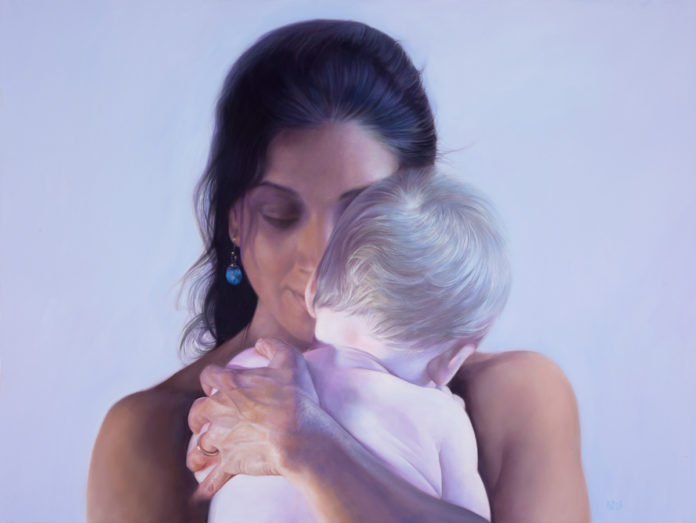
John Rowe, “Her Gift,” 2015, oil on canvas, 30 x 40 in. © John Rowe 2017

In this ongoing series, Fine Art Today delves into the world of portraiture, highlighting historical and contemporary examples of superb quality and skill. This week we consider a powerful and loving portrait of a mother and her child.

We seem to be on a theme this week: those unforgettable moments between mother and child. This week’s featured portrait, titled “Her Gift,” is a tender and moving image by talented California artist John Rowe.

Before a soothing solid background, the viewer is presented with two subjects: a brown and dark-haired mother tenderly grasping a pale-skinned infant. Albeit simple in subject, the piece bursts with emotional and interpretive potential. The piece has a very special meaning to the artist, made palpable through his description.

He writes, “The painting of my wife and our foster child — who has since been returned to his family — is still very close to me. I watched my wife over months give her love and strength and protection to this child. Tears, joy, fierce protection, devotion, sleepless nights — all while knowing she might never see him again but that he would carry the sense of being loved unconditionally into his future life and it would become a foundation for him. We had taken classes to learn about how those first relationships can lay a groundwork for the core of who you become. I wanted the differences in hair, skin, and ethnicity to be apparent and for the emotional connection between her and the baby to be strong enough to make that completely irrelevant. I wanted to leave the viewer with the feeling of profound love that only a mother can have for her child.

“We did a photo shoot at my studio, and I combined several different shots together. I closed her eyes to give the composition a feeling of peace and began painting. To me one of the most important parts was her hand. Each finger held the baby differently: from the talon-like security of her thumb and forefinger gripping him, to the gentle touch of her ring finger and left pinky floating in space, half touching and half letting go, as she would eventually have to do. I painted my wife’s face out of focus so other mothers could relate to her and not become too specific. The child’s fine hair was represented as real as possible so the viewer could relate to the fragile nature and delicate features of a baby.”

To learn more, visit John Rowe.

This article was featured in Fine Art Today, a weekly e-newsletter from Fine Art Connoisseur magazine. To start receiving Fine Art Today for free, click here.
Sale of the Century, in 2018?

0
David Rockefeller at the Museum of Modern Art’s 41st Annual Party in the Garden in 2009. Courtesy of David X. Prutting, © Patrick McMullan

The art world is reacting to the death of billionaire David Rockefeller at age 101 this week with one simple question: What is to happen to his art collection of more than 15,000 objects?

Less than 48 hours after David Rockefeller’s death at 101 years old, museums, collectors, investors, lawyers, galleries, and many more are setting into motion what could be the art sale of the century. A major patron of the arts and modernism, Rockefeller spent a large portion of his life — and money — amassing a personal collection of more than 15,000 objects whose worth is estimated in the billions (yes, we used the b-word).

According to Art Market Monitor, the sale of Rockefeller’s estate could happen as early as the fall of 2017, but will most likely take place in 2018, with Christie’s owning the rights to the auction. Art Market Monitor also suggests that the sale of Rockefeller’s collection could have a major effect on the global art market for decades to come: “Though Yves Saint-Laurent-Pierre Bergé sale in 2009 came at a very different time when the global economy was at its most vulnerable, the sale contributed greatly to the idea of art as an asset. In a more stable financial environment, a huge A+ sale of this size and quality could have transformative effects on the market.”

To learn more, visit Art Market Monitor.

This article was featured in Fine Art Today, a weekly e-newsletter from Fine Art Connoisseur magazine. To start receiving Fine Art Today for free, click here.
WEEKLY NEWS FROM THE ART WORLD

Fill your mind with useful art stories, the latest trends, upcoming art shows, top artists, and more. Subscribe to Fine Art Today, from the publishers of Fine Art Connoisseur magazine.

  • This field is for validation purposes and should be left unchanged.