
It’s the only atelier in Wisconsin to earn the prestigious stamp of approval from the Art Renewal Center. Collectors and lovers of traditional fine art should take note of this outstanding faculty/student exhibition.
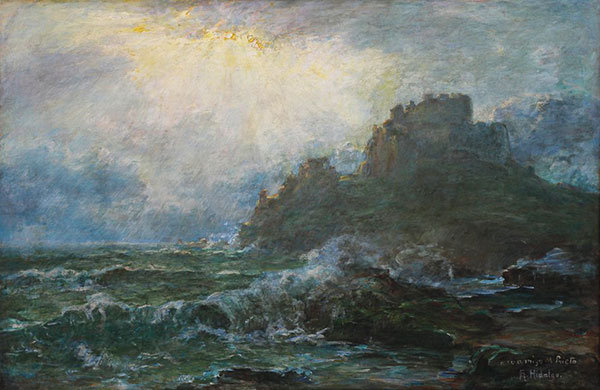
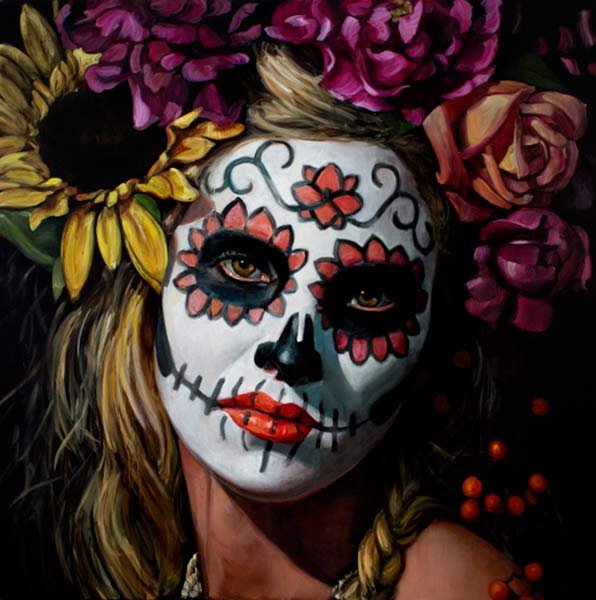
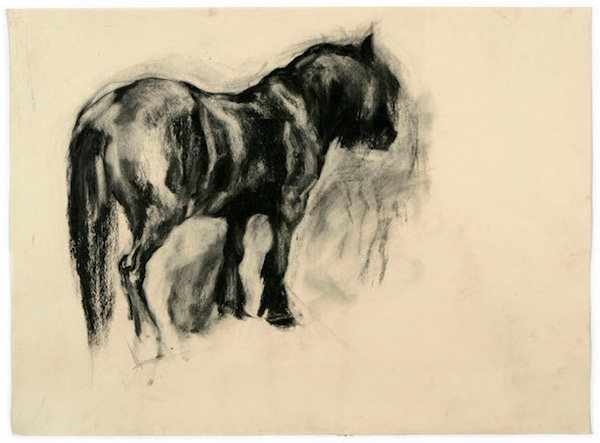
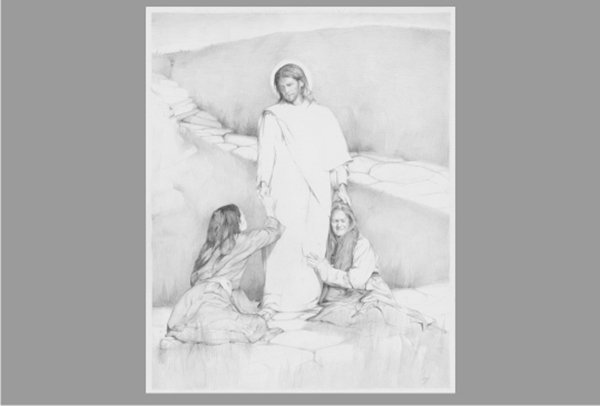
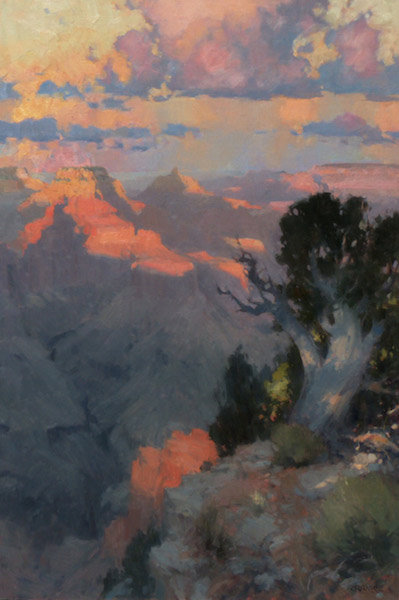
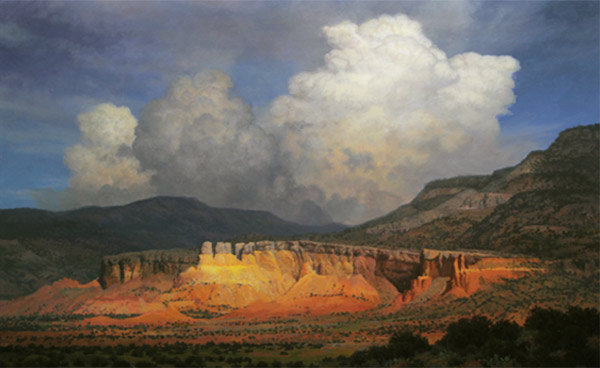
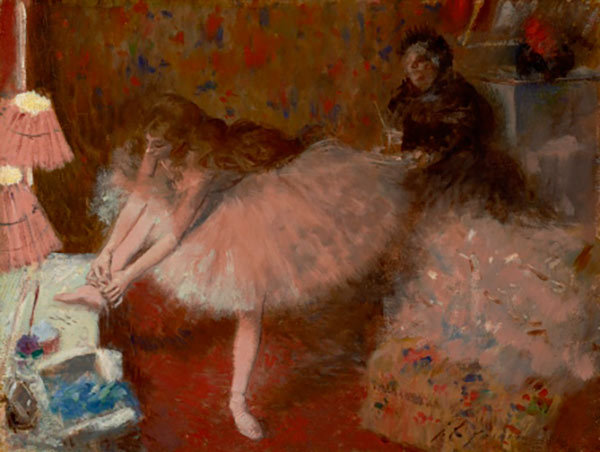
The Academy of Fine Art, Wisconsin’s only ARC-Approved Atelier, will mount its annual faculty and student exhibition at Green Bay’s The Art Garage on June 2. The exhibition will feature an extraordinary range of paintings, drawings, and sculptures from the school’s artists and professors, including Lori Beringer, Marcia Brice, David Carpenter, Ken DeWaard, Jeff Hargreaves, Patrick Burke, and Mark Zelten.
To learn more, visit The Academy of Fine Art.
This article was featured in Fine Art Today, a weekly e-newsletter from Fine Art Connoisseur magazine. To start receiving Fine Art Today for free, click here.
With High Standards Comes High Art
How Tennessee Celebrates Women’s Suffrage
The establishment of a woman’s right to vote was finally realized in 1920, when Tennessee passed the 36th vote needed to ratify the 19th Amendment. Today, despite the countless important accomplishments women have made in our country, as little as 8 percent of public monuments celebrate their achievements.
The state of Tennessee and sculptor Alan LeQuire are overjoyed to be unveiling a new public monument celebrating the Women’s Suffrage movement. The sculpture will feature five figures and will be located at Centennial Park in Nashville, Tennessee. Via the press release for the monument, “Select works will be on exhibit through August at LeQuire Gallery to celebrate Alan’s broad career and his newest Public Commission. The exhibit will include clay and bronze figures, miniature to monumental, as well as some of Alan’s drawings and watercolors, and of course, his portraiture. One or two of the clay figures from the Suffragist Monument may be in the room too, providing a sneak peek of the August 26th unveiling.”
To learn more, visit LeQuire Gallery.
This article was featured in Fine Art Today, a weekly e-newsletter from Fine Art Connoisseur magazine. To start receiving Fine Art Today for free, click here.
Featured Lot: Francesco Righetti, “Apollo & Daphne”
In this ongoing series for Fine Art Today, we take a longer look at the history and features of a soon-to-be-available artwork of note. This week: Francesco Righetti, “Apollo & Daphne.”
During the 17th and 18th centuries, it was fashionable for the wealthy to amass collections of exotic goods, cutting-edge technologies, scientific oddities, and exquisite art as part of their Wunderkammers or “Cabinet of Curiosities” collections. These encyclopedic collections were evidence of the owner’s expertise, intelligence, and control over the natural and man-made worlds.
An outstanding selection of artworks from a Milanese cabinet collection will be available on June 13 via Sotheby’s in Milan, Italy. Among the highlights of the auction is Francesco Righetti’s gorgeous reproduction of Gian Lorenzo Bernini’s masterwork “Apollo & Daphne” in the Borghese Collection in Rome. Although the sculptor, founder, and silversmith would receive numerous commissions from popes and monarchs during his career, it is indeed the artist’s small-scale reproductions — such as his version of “Apollo & Daphne” — for which Righetti is best remembered.
Scholar James Harper writes, “Righetti trained in the workshop of the leading Roman sculptor-silversmith of the day, Luigi Valadier, and emerged from his training as a versatile artist-craftsman in his own right. Righetti’s first major independent commission came in 1781, from the English banker Henry Hope. Hope requested twelve full-sized lead replicas of famous sculptures, which were to be painted white to simulate marble.”
The sculpture displays the dramatic mythological moment when the Olympian god Apollo attempts to capture the nymph Daphne. Overcome with hatred for the god, Daphne tries to flee. As she pleads to her father, Peneus, for help, he obliges by transforming Daphne into a tree. Bernini’s baroque masterpiece captures Daphne mid-transformation, her feet beginning to root themselves into the ground, tree bark flowing into her torso, and her fingers growing leaves. The sculpture displays a dynamic diagonal composition, heightening its dramatic impact and sense of movement. Auction estimates are between $34,000 and $56,000.
To view the full catalogue, visit Sotheby’s.
This article was featured in Fine Art Today, a weekly e-newsletter from Fine Art Connoisseur magazine. To start receiving Fine Art Today for free, click here.
Making Melancholy More
He was one of the most exciting, experimental, and affecting artists of his day, but his reputation was quickly eclipsed by the triumph of Impressionism. Over 75 gorgeous works from this French painter are on view at the Getty.
Although his paintings are often categorized as “grave” or “melancholic” in nature, Théodore Rousseau was a supremely gifted artist who was a giant among French landscape painters during the second half of the 19th century. Though he was once avidly collected for monumental prices across Europe and the United States, Rousseau’s immediate legacy fell prey to the growing taste for Impressionism in France after his death in 1867.
On view June 21 through September 11 at the Getty Museum in Los Angeles, “Unruly Nature: The Landscapes of Théodore Rousseau” will bring together some seventy-five paintings by the artist. On loan from several international galleries and private collections, “the exhibition explores the astonishing technical and stylistic variety of Rousseau’s work, revealing him to be one of the most exciting, experimental, and affecting artists of his day,” the museum reports.
The works included will feature great variety, as the artist was notorious for leaving many of his works “incomplete.” However, the term is relative because Rousseau had a reputation for spending exorbitant amounts of time developing his subjects. He left many of his works with areas fully complete while others may be underdeveloped. Although frustrating for his contemporaries and modern collectors, the state of his canvases nonetheless offers viewers insight into the artist’s unique working methods and techniques.
To learn more, visit the Getty.
This article was featured in Fine Art Today, a weekly e-newsletter from Fine Art Connoisseur magazine. To start receiving Fine Art Today for free, click here.
You’ll See Them in Hudson River Heaven
There can be little doubt that, when one sees or hears the names Cole, Heade, Bierstadt, Kensett, or Cropsey, interest is piqued.
Although the seminal artists of the Hudson River School were working well over a century ago, there still remains ample opportunity to spotlight how innovative each of them were and how their lessons continue to influence art today. On view now through June 25 at Driscoll Babcock Galleries in New York City, “The Shock of the Old: Epic Visions in 19th Century American Art” is an exciting exhibition that seeks to celebrate some of our greatest painters.
“The Hudson River School was America’s first native school of painters,” writes the gallery, “and their imagery of the unfettered American landscape probed deeply into the psychological, political and sociological manifestations of the new nation and produced some of the greatest painters of the nineteenth century.
“Today, nineteenth century American paintings are being recognized as never before with the recent renovation and reinstallation of new American galleries at major museums throughout the country, including the Metropolitan Museum of Art, the Museum of Fine Arts in Boston, the Nelson-Atkins in Kansas City, [and] the Art Institute of Chicago and the formation of major new collections including the Crystal Bridges Museum of American Art in Bentonville, Arkansas and The Minnesota Marine Art Museum in Winona. ‘The Shock of the Old’ refreshes consideration of the ‘Old,’ in the context of new perspectives and new audiences.”
To learn more, visit Driscoll Babcock Galleries.
This article was featured in Fine Art Today, a weekly e-newsletter from Fine Art Connoisseur magazine. To start receiving Fine Art Today for free, click here.
Painting With Light
Concurrent with the development and rise of the Pre-Raphaelite Brotherhood and British Impressionism in England during the late 19th century was the development of photography. How one influenced the other is a story worth telling.
On view now through September 25 at the Tate Britain, “Painting with Light” is an innovative exhibition that seeks to explore the ties between early photography and several concurrent artistic movements in Britain, including the Pre-Raphaelites, Aesthetic Movement, and British Impressionism.
Covering a time period of about 75 years — from the Victorian and Edwardian ages — “the exhibition opens with the experimental beginnings of photography in dialogue with painters such as J.M.W. Turner and concludes with its flowering as an independent international art form,” the museum suggests. “Stunning works by John Everett Millais, Dante Gabriel Rossetti, J.A.M. Whistler, John Singer Sargent and others will for the first time be shown alongside ravishing photographs by pivotal early photographers such as Julia Margaret Cameron, which they inspired and which inspired them.”
To learn more, visit the Tate Britain.
This article was featured in Fine Art Today, a weekly e-newsletter from Fine Art Connoisseur magazine. To start receiving Fine Art Today for free, click here.
Caravaggio, Enough Said?
Murderer, defector, villain, painter. Caravaggio is indeed one of the most fascinating characters in the history of art. Very few of the artist’s works survive, which means any opportunity to see even one is an opportunity worth taking.
It’s been two years since the public last laid eyes on the magnificent “Crucifixion of Saint Andrew” by Baroque master Michelangelo Merisi da Caravaggio. Since 2014, the Cleveland Museum of Art has been painstakingly conserving the priceless painting, predominantly focusing on cleaning the work from edge to edge. Via the museum webpage, “This is the first time the painting has been conserved since coming to the museum in 1976. In 2014, extensive treatment began on the work, whose original paint layer was obscured by clouded, cracked varnish and retouching. The cleaning of the painting was the subject of a Conservation in Focus exhibition during the summer of 2014, when a sophisticated paintings conservation lab was constructed in the museum’s Julia and Larry Pollack Focus Gallery, where visitors were able to watch the museum’s Conservator of Paintings Dean Yoder and ask questions. ‘The Crucifixion of Saint Andrew’ returns on view May 17, 2016, in the Reid Gallery (gallery 217) in time for the museum’s centennial summer celebrations. Visitors will be able to fully appreciate the newly conserved Baroque masterpiece, the largest painting by Caravaggio in America.”

A conservator works on the masterpiece. (c) Image by David Brichford
The museum continues, “The painting depicts the martyrdom of Saint Andrew, who was sentenced to death for his missionary activity in Greece. While bound to the cross, he preached for two days to an increasingly sympathetic crowd. Finally pressured to release Andrew, his executioners were paralyzed while trying to untie him. Caravaggio portrays the moment when Andrew’s desire to be martyred has been fulfilled. In an unusual interpretation of the subject, Caravaggio presented the event as intimate and private rather than as a gruesome public spectacle.”
To learn more, visit the Cleveland Museum of Art.
This article was featured in Fine Art Today, a weekly e-newsletter from Fine Art Connoisseur magazine. To start receiving Fine Art Today for free, click here.
Classical Painting on a Budget?
The 2016 auction season is in full swing, with the latest major sale just around the corner at Auctionata. Classic works from the 16th through 20th centuries head to the block on May 30 in Berlin. The highlights?
As it brings together a host of outstanding classical paintings from the 16th through 20th centuries, collectors are sure to flock to Auctionata on May 30. One hundred and nine artworks comprise the sale, which includes highlights from Pietro Bardellino, John James Masquerier, Luise Ebel, Constantin Stoiloff, Eduard Otto von Braunthal, Josef Brettscheki, and Emil Il Pirchan.

Eduard Otto von Braunthal, “Fellah,” circa 1904, oil on panel, 18 1/2 x 23 cm. (c) Auctionata 2016

Josef Brettscheki, “Party in the Park,” oil on canvas, (c) Auctionata 2016

Luise Ebel, “Landscape with Resting Children,” circa 1860, oil on canvas, (c) Auctionata 2016

Attrib. John James Masquerier, “Portrait of Two Women,” circa 1810, oil on canvas, 81 x 100 cm. (c) Auctionata 2016

Constantin Stoiloff, “Gouverneur auf Reisen,” oil on canvas, 83 x 129 cm. (c) Auctionata 2016

Emil Il Pirchan, “Artistic Monkeys,” oil on cardboard, 37 1/2 x 32 1/2 cm. (c) Auctionata 2016
To learn more, visit Auctionata.
This article was featured in Fine Art Today, a weekly e-newsletter from Fine Art Connoisseur magazine. To start receiving Fine Art Today for free, click here.
How to Turn Softness Into Solidity
Works by Russian artist Victor Koulbak are currently embellishing the walls of this outstanding New York City Gallery. Watch as his works magically evaporate from the page while retaining their solidity.
Featuring a number of still lifes, animal studies, and portraits, Didier Aaron in New York City is overjoyed to be presenting recent works from Russian artist Victor Koulbak. Inspired by the techniques and focus of Old Masters, Koulbak works in the extremely challenging medium of silverpoint — an engraving method using a prepared page and a stylus of pure silver. With little room for error, Koulbak prefers natural subjects, including wildlife and plants that appear smoky and hazy on the page.

Victor Koulbak, “Iris No. 1,” 2015, silverpoint and watercolor, 12 1/2 x 10 in. (c) Didier Aaron 2016
Marilyn Laufer, director of the Jule Collins Smith Museum of Fine Art at Auburn University, says of the works in her essay for the exhibition catalogue: “they seem in the process of evaporating off the page: those enhanced with a wash of watercolor magically solidify.” Continuing, the gallery writes, “Koulbak continues the traditional method of preparing the paper by creating a ground, instead of following many of his contemporaries with the use of gesso, gouache, or commercially manufactured clay-coated paper. However, upon closer inspection, his works remain undeniably modern despite the traditional methods. His studies of animals reveal a hauntingly self-aware presence; they look out at the viewer as if acknowledging their condition as works of art. His portraits are self-assured and manifest a modern self-possession. These works are undeniably strong, straddling the classic appeal of old master works on paper with a contemporary sensibility.”
To learn more, visit Didier Aaron.
This article was featured in Fine Art Today, a weekly e-newsletter from Fine Art Connoisseur magazine. To start receiving Fine Art Today for free, click here.
Are You Ready for This?
Although we’re still over three months away, it’s never too early to begin anticipating and getting excited for one of the nation’s biggest and best art festivals.
Scheduled for September 16-17 in Jackson, Wyoming, the Jackson Hole Art Auction is one of the most anticipated fine art events every year. Although festivities don’t begin for a few months, highlights of the show and sale are already being announced, with Trailside Galleries and Gerald Peters Gallery being the most recent to showcase their lineup of stellar artworks.

N.C. Wyeth, “He Rode Away Among the Sage, Following a Dim Trail,” 1909, oil on canvas, 38 x 25 in.
(c) Jackson Hole Art Auction 2016
“New highlights include N.C. Wyeth’s masterwork ‘He Rode Away Among the Sage, Following a Dim Trail.’ Other western highlights include high-quality works by Robert Lougheed, E.S. Paxson, Frederic Remington, and Olaf Wieghorst,” the galleries note. “New wildlife highlights, the signature of the Jackson Hole Art Auction, include Robert Bateman’s ‘Above the Rapids — Gulls and Grizzly.’ New Bob Kuhn acquisitions include ‘Midnight Serenade’ and ‘In Ellesmere Land — Arctic Wolf.’ [Also featured will be] Stanley Meltzoff’s ‘The Lord of the Barcajon Channel.’
To learn more, visit the Jackson Hole Art Auction.
This article was featured in Fine Art Today, a weekly e-newsletter from Fine Art Connoisseur magazine. To start receiving Fine Art Today for free, click here.