

The incredibly talented and widely collected artist James B. Robinson is honored during a retrospective exhibition in Texas. Where?
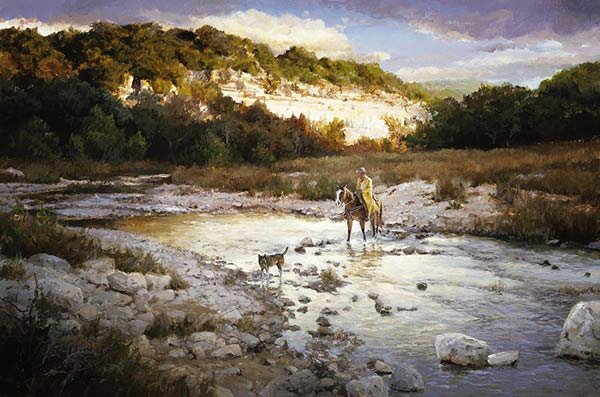
Known for its stable of outstanding contemporary and historical artists, InSight Gallery in Fredericksburg, Texas, opens a retrospective for the late James B. Robinson on January 23. A prolific painter of Western life and culture, Robinson was widely collected throughout the United States and was known as one of the preeminent painters of his generation.
The exhibition is sure to dazzle as it captures Robinson’s body of work, which includes pieces from private collections in addition to newly released paintings. As the gallery suggests, “all will culminate in a special and memorable evening celebrating one of Texas’ beloved artists.”
Considering Robinson’s work, it comes as no surprise that the artist was able to cultivate a robust following of collectors and admirers during his storied career. Works such as “Deep in the Heart of Texas” display a timeless luminosity and inner radiance. The painting appears to emit its own light through the artist’s brilliant application of paint. Further, the texture and expressive brushwork found on the surface of Robinson’s canvases is nearly as captivating as the artist’s delightful, balanced palette.
To learn more, visit InSight Gallery.
This article was featured in Fine Art Today, a weekly e-newsletter from Fine Art Connoisseur magazine. To start receiving Fine Art Today for free, click here.
Celebrating a Life
The Overlooked Gets and Look
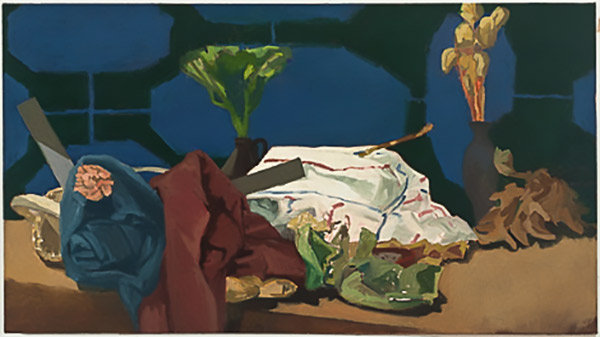
Open now at the Westbeth Gallery in New York City is a group exhibition that spotlights contemporary still life painting.
On view now through January 30, “Looking at the Overlooked” is a group exhibition in New York that considers contemporary still life painting from a number of accomplished artists.
Curated by Peter Colquhoun and hosted by the Westbeth Gallery, the exhibition features Lennart Anderson, Robert Bunkin, Sandra Caplan, Simon Carr, Ray Ciarrocchi, Peter Colquhoun, Francis Cunningham, Gwen Fabricant, Lawrence Faden, Robert Feinland, John Goodrich, Xico Greenwald, Albert Kresch, Valerie Mendelson, Thaddeus Radell, Jean Francois Rocheman, Peter Ruta, Susan Walp, and Rachel Youens.
Via the exhibition website, the exhibition “focuses on contemporary still life painting, in a spirit of re-evaluation and revelation. The still life genre offers possibilities that no other motif can.”
To learn more, visit Westbeth Gallery.
This article was featured in Fine Art Today, a weekly e-newsletter from Fine Art Connoisseur magazine. To start receiving Fine Art Today for free, click here.
Breathtaking Water
Robert Lange Studios in Charleston, South Carolina, is hosting a magnetic solo exhibition that — in both subject and skill — will take your breath away. Who’s the artist?
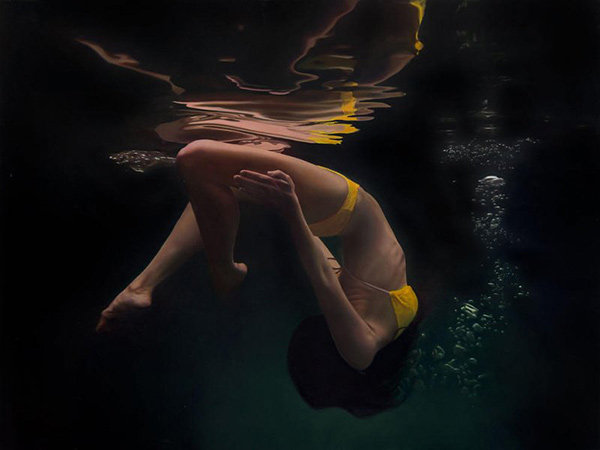
Sometimes one comes across a painter who works with such verisimilitude that it quickly reminds one of how capable the human hands — and imagination — are. That’s the case with the hypnotic paintings by artist Matt Story, whose underwater subjects are nothing short of spectacular. The astute Robert Lange Studios in Charleston, South Carolina, is proud to be presenting a carefully selected group of Story’s paintings on February 5.
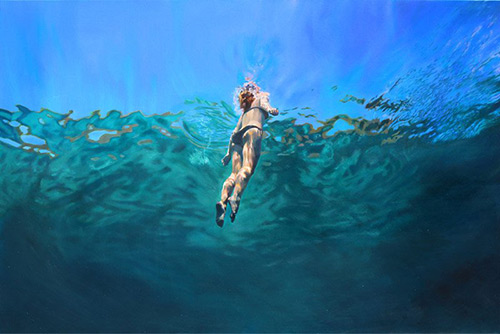
Matt Story, “Red in Big Blue,” oil on linen, 40 x 60 in. (c) Robert Lange Studios 2016
Although the acclaimed painter is based in New York, Story began visiting Charleston in 2013, and the relationship between artist and gallery blossomed. Story writes, “I try to paint contemporary life so as to capture crystals of pristine memory that we all share but never describe to one another. Each composition uses the gesture or figure or setting to evoke a platonic form, an archetypal notion, a distilled essence, that thing that lasts beyond the moment.” The gallery adds, “Story’s realist, bordering on hyper-realist, style gives his figurative works a strong vibrancy but it is not the technique, as much as the subject matter, that sets Story apart. Each painting depicts casually beautiful women submerged beneath the surface. It is evident that the steps needed to capture these images are a large part of the artist’s process.”
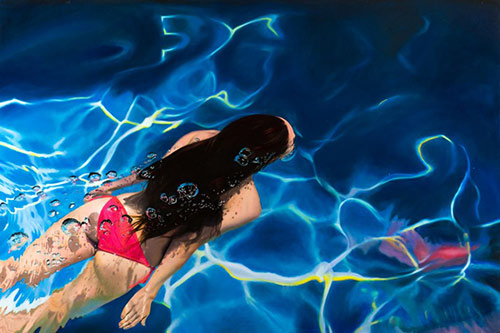
Matt Story, “Red Rising Right,” oil on panel, 40 x 60 in. (c) Robert Lange Studios 2016
“Water” will be on view through February 26.
To learn more, visit Robert Lange Studios.
This article was featured in Fine Art Today, a weekly e-newsletter from Fine Art Connoisseur magazine. To start receiving Fine Art Today for free, click here.
Honoring Oscar
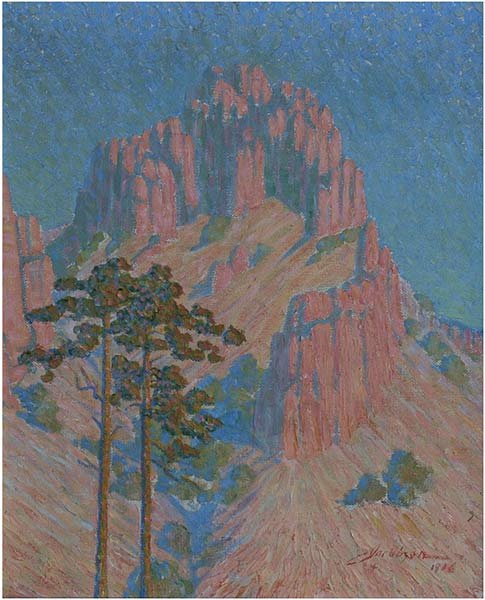
One of the most important art figures in the history of Oklahoma has the spotlight during this landmark exhibition.
True to Oklahoma’s artistic heritage and strong Native American culture, monumental figure Oscar Brousse Jacobson once said, “It may now be considered old-fashioned, but I seem to prefer to paint the world unconquered by man, unviolated by human greed, a world untouched by misery and despair.” One of the preeminent figures in Oklahoma’s art history, Jacobson helped to found the Association of Oklahoma Artists in the 1930s and was a prolific artist himself.
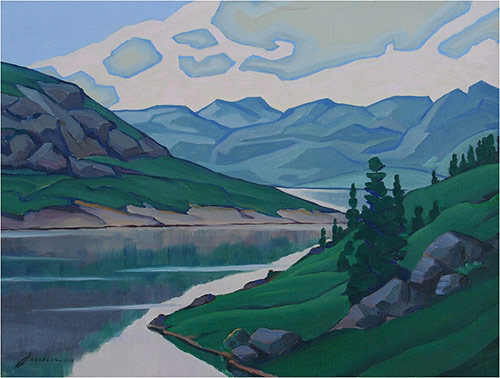
Oscar B. Jacobson, “Green Mountains,” 1936, oil on canvas board, 24 1/2 x 31 in. (c) JRB Art at the Elms 2016
On view through January 31, “Oscar Brousse Jacobson” is an exhibition that honors the artist and his legacy, hosted by JRB Art at the Elms in Oklahoma City. Via the gallery website: “Just released after 50 years in a private collection, JRB Art at The Elms is pleased to present these 12 paintings for acquisition by the public.”
To learn more, visit JRB Art at the Elms.
This article was featured in Fine Art Today, a weekly e-newsletter from Fine Art Connoisseur magazine. To start receiving Fine Art Today for free, click here.
A View of the World
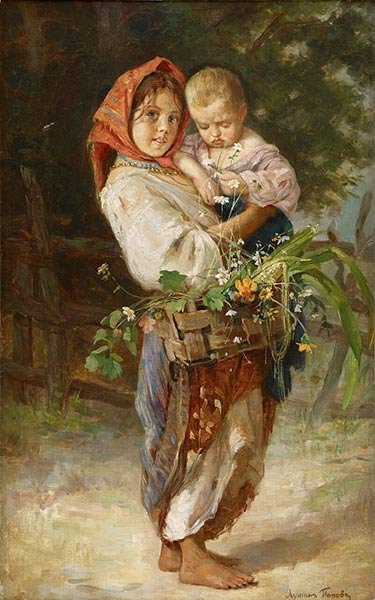
2016 has kicked off with a number of outstanding opportunities for collectors of Old Master, European, and traditional art. One of them is the acclaimed Freeman’s, which is offering you a chance to bring a view of the world into your own home.
Over 250 exceptional lots will become available on January 25 during Freeman’s European Art & Old Masters Auction, including what the auctioneer states is “likely the single largest offering of oil, watercolors, and etching by Canadian artist Frank Milton Armington (1876-1941).” The auction will be hosted at Freeman’s Philadelphia headquarters, with an exhibition of the lots scheduled for today, January 21.
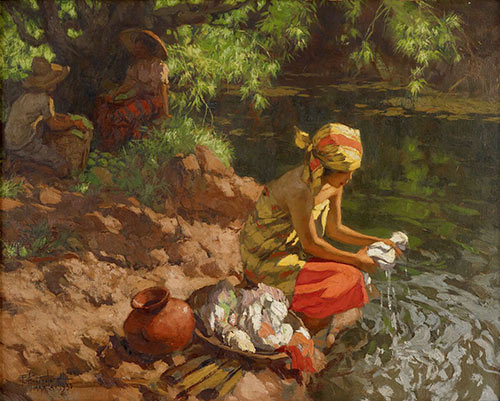
Fernando Cueto Amorsolo, “Lavanderas,” 1930, oil on canvasboard, 16 x 19 3/4 in. (c) Freeman’s 2016
In addition to a number of works by Armington, the sale is also strong in 16th- and 17th-century drawings that also display an array of subjects, including genre, landscape, and Neoclassical studies. Collectors with a taste for Russian artworks will also want to take note of the sale, which features a gorgeous sculpture by Prince Paolo Troubetzkoy and a number of oils by Henryk Siemiradzki, Lukian Popov, Konstantin Trutovsky, Konstantin Gorbatov, and Petr Vereshchagin. Continuing, the auctioneer suggests, “Other standouts in the sale include previously unknown works by Lesser Ury, John William Godward, and Franz Richard Unterberger. Post World War II works by Auguste Chabaud, Edouard Cortes, Jean Dufy, and Jorge Gonzalez Camarena round out this fine sale.”
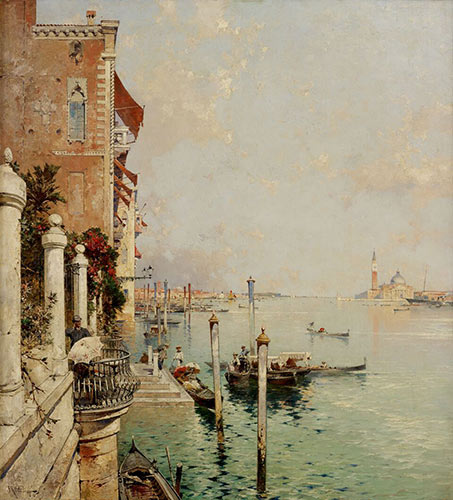
Franz Richard Unterberger, “The Bacino di San Marco, Venice, Looking East,” oil on canvas,
43 3/4 x 40 in. (c) Freeman’s 2016
To view the full catalogue, visit Freeman’s.
This article was featured in Fine Art Today, a weekly e-newsletter from Fine Art Connoisseur magazine. To start receiving Fine Art Today for free, click here.
Animalia
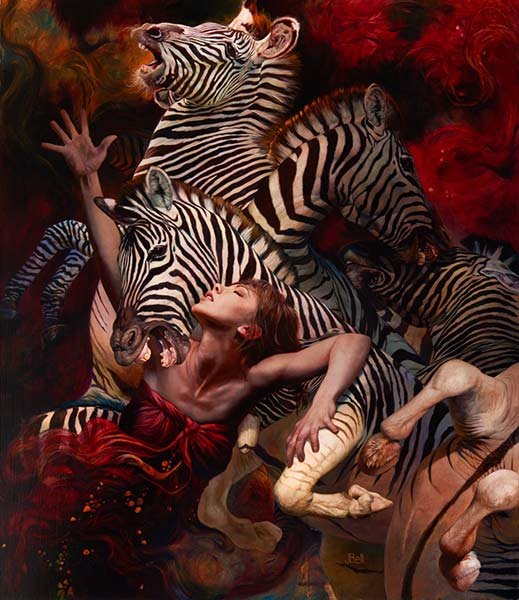
Opening the Abend Gallery’s 2016 schedule is a fascinating exhibition that features captivating portraits, fantastical settings, and incredible technique inspired by animals and wildlife.
Opening January 29 at the acclaimed Abend Gallery in Denver, Colorado, is “Animalia” — an enthralling group exhibition that surveys the depiction of animals in a variety of ways by some of the most talented representational artists.
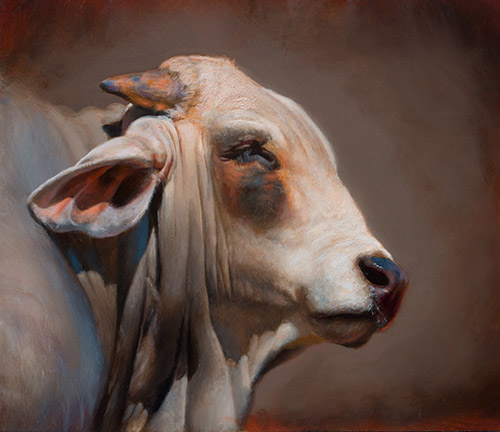
Teresa Elliott, “Desert Brahman,” oil on metal, 10 x 12 in. (c) Abend Gallery 2016
The exhibition includes, among others, Yael Maimon, Benjamin Björklund, Henry Schreiber, and Teresa Elliott, and, says the gallery, “each artist is armed with a unique sense and perspective on the subjects they portray. From the hyper-realistic … to hilarious anthropomorphic marmots, there is something for everyone in this exhibition.”
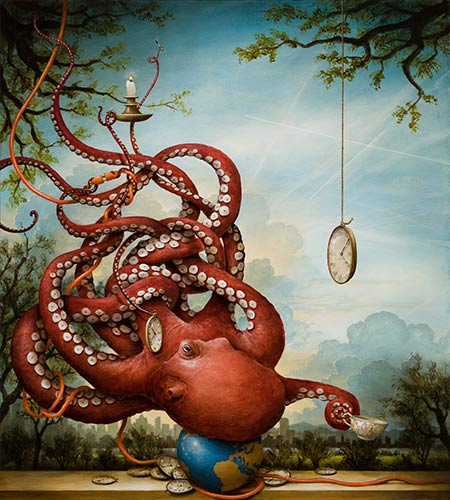
Kevin Sloan, “Our Modern Animal,” acrylic, 60 x 54 in. (c) Abend Gallery 2016
“Animalia” will hang through March 5.
To learn more, visit Abend Gallery.
This article was featured in Fine Art Today, a weekly e-newsletter from Fine Art Connoisseur magazine. To start receiving Fine Art Today for free, click here.
Featured Lot: Orazio Gentileschi, “Danaë”
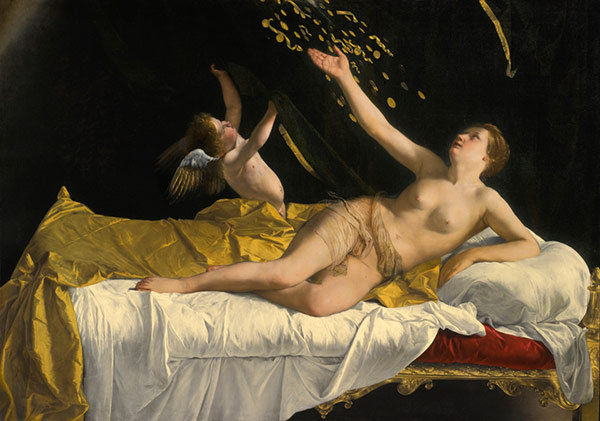
In this ongoing series for Fine Art Today, we take a longer look at the history and features of a soon-to-be-available artwork of note. This week: Orazio Gentileschi, “Danaë.”
Orazio Gentileschi’s (1563-1639) “Danaë” is, without a doubt, one of the great masterpieces of Italian Baroque and one of the most significant paintings to head to auction in recent memory. The popular mythological subject, adapted from the recounting in Ovid’s Metamorphoses, was represented by many of the period’s most accomplished painters, including Titian and Rembrandt. The beautiful Danaë is often represented as a reclining nude, locked away in a bronze tower. While her father attempts to keep her from mortal men, the lustful god Jupiter transforms himself into a shower of gold and impregnates her.
Gentileschi’s representation of the scene is nearly flawless and illustrates the painter’s mature period. A Mannerist early in his career, Gentileschi became very much inspired and influenced by the work of Michelangelo Caravaggio (1571-1610), whose dramatic, dark, and multi-figural compositions had taken Rome by storm in 1600. After Caravaggio’s untimely death in 1610, Gentileschi’s Mannerist roots began to resurface through his lighter palette and precision with detail, though the intense spotlighting and black backgrounds popularized by Caravaggio remained.
Gentileschi’s “Danaë” — commissioned in 1621 by the nobleman Giovanni Antonio Sauli for his palazzo in Genoa — “draws together the Caravaggesque naturalism prevalent in early seventeenth-century Italy with the refinement and color which mark the mature style of Gentileschi, one of the most elegant and individual figures of the Italian Baroque,” Sotheby’s notes. Describing the magnificence of the work, Sotheby’s adds, “Gentileschi seamlessly blends the movement and dynamism of the falling gold coins and ribbons with the serenity of Danaë’s sculptural physicality and classical appeal. The diagonal line formed by the curtain which Cupid holds aloft parallels both the coins and Danaë’s arm, accentuating the speed of the gold’s penetration into the scene. Gentileschi’s picture could also be considered one of the highpoints of early seventeenth-century still-life painting since it is a meticulously observed study of light, surface, and color. The various different textures of gold, the sheen of the fabrics, ranging from the gold bedcover to the cool white linen, the deep crimson mattress, the gilt bed and the artichoke-shaped bed knobs are the very highest order.”
As one might expect, a work of this caliber and significance will command a price only a few could possibly afford. Sotheby’s will offer the painting on January 28 at its New York City location during the “Master Paintings Evening Sale.” The auction house expects the painting to realize between $25 million and $30 million.
Accompanying the magnificent painting at Sotheby’s is an engaging film inspired by the piece:
This article was featured in Fine Art Today, a weekly e-newsletter from Fine Art Connoisseur magazine. To start receiving Fine Art Today for free, click here.
Navigating the Ambiguous Spaces of Life
Traditional art is so much more than the construction of pretty pictures. Through it, nature’s profound beauty and the human form are employed to communicate the transcendental, connecting viewers in ways that are often impossible to articulate. Artist Jason Jenkins uses painting and tradition as conduits to express universal messages, lifting viewers out of the mundane and into fulfilling experiences.
As artist Edward Hopper once remarked, “If I could say it in words, there would be no reason to paint.” Artists and connoisseurs often cite Hopper’s statement because, in its simplicity, the quote alludes to the complex ways in which representational art communicates with its viewers. Fundamentally, art is a visual language, and the traditional use of it to re-create nature’s beauty speaks to a universal spirit and connection we all share.
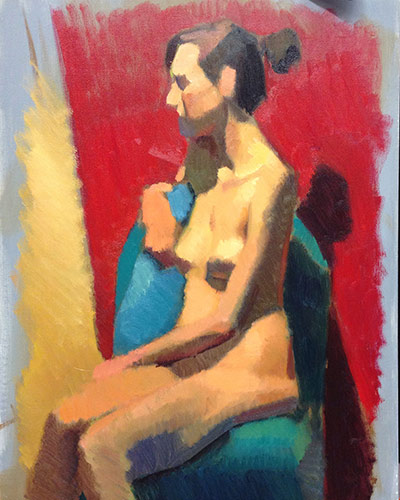
Jason Jenkins, “Color Study #120,” 2015, oil on canvas, 20 x 16 in. (c) Jason Jenkins 2016
Painter Jason Jenkins has made it his artistic mission to champion this fundamental principle, to “deliver themes, truths, and subtexts that resonate with a broad audience by traveling on a deeper current beneath the superficial elements of my images,” as he suggests. More specifically, Jenkins employs the human body in much of his art, as a potent and direct form of communication with his audiences. He writes, “That is where the glorious and beautiful potential of humanity resides; within each of us, there is divinity, and by facing each other we are witnesses to it, and hopefully accountable to it. What is more, the human figure is the one thing we all relate to, regardless of who we are or where we are from, or how much wealth or privilege we possess, or how much trauma we have suffered. It is the common language of humanity the world over. It unifies all of us, and it evokes emotion without a word in the simplest of ways: a glance or a penetrating gaze, an expression, a gesture, a state of agitation or repose. A figure can evoke feelings of anxiety or arousal, courage or hope, sympathy or despair. The figure has all the communicative power that we could possibly imagine, and it speaks to us directly, deeply, in our bones. Simultaneously it is the greatest symbol of our entrapment within the most profound polarity that there is: life and death; mortality and the urgency of being.”
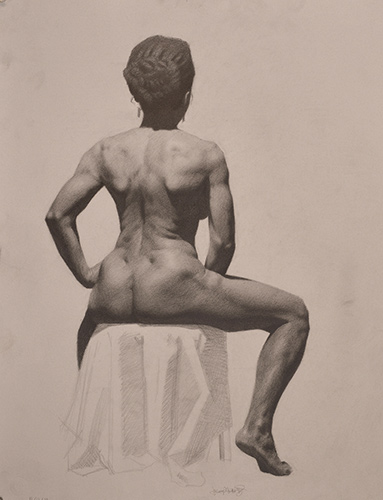
Jason Jenkins, “Dione,” 2014, graphite on paper, 20 x 24 in. (c) Jason Jenkins 2016
Raised Roman Catholic, Jenkins — now a secular humanist — holds art in a place very similar to religion and believes it serves a parallel function. “In art, I see something very spiritual,” the artist says. “It speaks to a deeper, older part of us and carries within it the power of reconciliation. What I mean is, I think art has the power to help us navigate in the often ambiguous spaces of life, from establishing and maintaining a moral and ethical compass, to maintaining our emotional and spiritual health as individuals and as a community. Moreover, I think art can provide a greater capacity for compassion, courage, and consolation while uniting and keeping us in touch with our humanity. Ultimately, I see us as responsible to ourselves and each other, rather than to God’s will or judgment.”
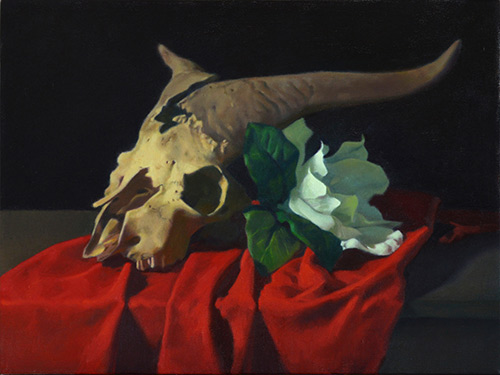
Jason Jenkins, “Evolution,” 2015, oil on canvas, 12 x 16 in. (c) Jason Jenkins 2016
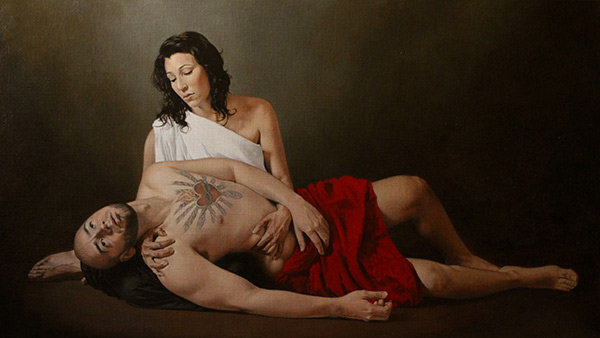
His “Pietá” is a powerful illustration of these principles. The classic subject — a mourning Virgin embraces the recently deceased and deposed Christ — is here given a contemporary flavor. Without spatial context, the two subjects are positioned against a muted background. The Virgin cradles her son and gazes at his body. Noteworthy is how alive Christ appears, his open eyes and flushed skin perhaps symbolizing his moment of resurrection or offering viewers a glimpse of transcendence, or the peace that we may experience when facing our mortality. Prominently displayed across his chest is a tattoo of the Sacred Heart — a well-known Roman Catholic devotion that is meant to symbolize Christ’s divine love for humanity.
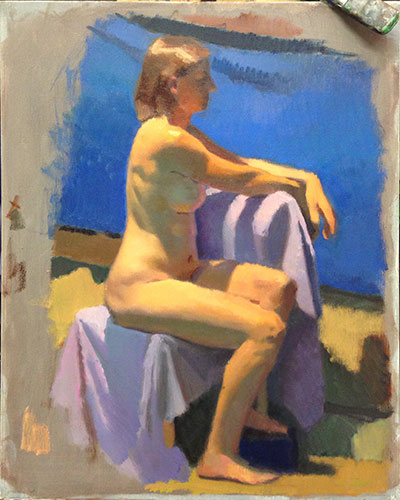
Jason Jenkins, “Full-color Figure Study,” 2015, oil on canvas, 20 x 16 in. (c) Jason Jenkins 2016
Continuing, Jenkins writes, “Perhaps one of the most relevant spaces to navigate today is the one between individuality and community, which are often confused as opposed rather than balanced. Our current cultural climate lends itself to detachment and isolation, and we are left with a holistic need that great art can fill. Great art can enable us to experience consolation, compassion, or courage, and I believe that through it, we can achieve moments of peace, clarity, or transcendence, which allows us to see the big picture, gain perspective, and reconnect with our values, ideals, and each other. It can remind us of what it is to be human and of the great importance of our principles, ethics, and unity. Art is vital to the development and maintenance of our cultural and moral fabric, and I see it as a great privilege, a responsibility, and perhaps even a sacred duty of artists to take that seriously.”
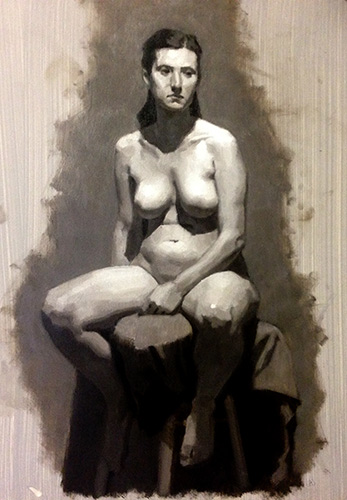
Jason Jenkins, “Value Study (Alex),” 2015, oil on panel, 20 x 16 in. (c) Jason Jenkins 2016
Currently studying at the prestigious Studio Incamminati, Jenkins seeks to continue exploring these themes in future works. An acknowledged lover of Caravaggio, Bernini, Rembrandt, Jacques-Louis David, and many other classical painters, Jenkins says he is “interested in exploring classical themes from mythology, biblical stories, history, and possibly fantasy as well, but I want to do so in a way that highlights humanist undercurrents and makes connections to contemporary viewers. I want to create work that pulls from the history and tradition of this profession, and that also perhaps pulls on dramatic compositional developments pioneered by film and comic book professionals. I aim for my work to underscore the universal truths of mortality and the experience of living, that unites us all on common ground; that employs beauty and tragedy; to elicit compassion, courage, and consolation. Ultimately, I am inspired to produce work that evokes moments of clarity and transcendence, that puts us back in touch with what it is to be human, and to remind us that we are all precious and need each other.”
To learn more, visit Jason Jenkins.
You can also find Jason’s work at:
www.facebook.com/jasonpatrickjenkinsart
www.instagram.com/jasonpatrickjenkins
[email protected]
This article was featured in Fine Art Today, a weekly e-newsletter from Fine Art Connoisseur magazine. To start receiving Fine Art Today for free, click here.
Featured Artwork: Leah Lopez
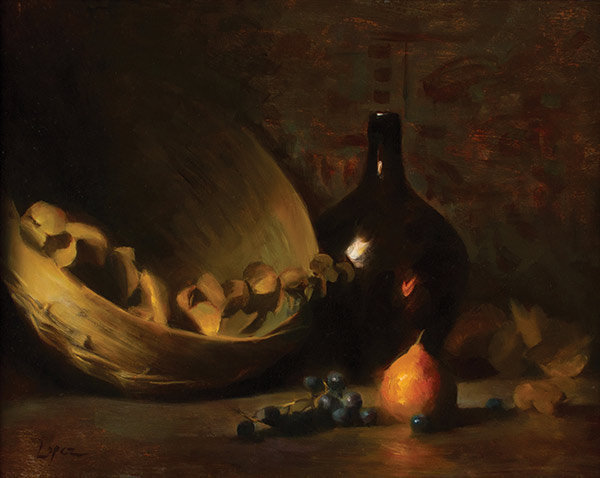
“Taylor’s Gold and Fox Grapes”
Oil on panel
14 x 18 in.
Contact Roux & Cyr International Fine Art Gallery:
www.rouxandcyrgallery.com
[email protected]
Leah Lopez is a devoted New York artist, painting between 4 to 12 hours a day. Her efforts are widely rewarded by the extraordinary oil paintings she produces. Often compared to the Dutch masters, Lopez brings emotion and sensitivity to the still life’s she creates. Working from her beautiful Union Square Studio, she delights us and captivates us with deep rich color and brightly lit objects that seem to emerge out of darkness.
“I’ve always been an explorer and a seeker, these experiences serve as inspiration for my paintings.”
Leah Lopez plays with light to lure her viewers into her delicate pieces. Her compositions dance the eye to explore every part of the artwork. Be it carefully rendered porcelain, brass, cloth, fruit or glass, a Lopez’s still life is unforgettable. Once drawn into her romantic spell, it is clear that her passion for color and value translate into an emotional creation that touches the soul.
Roux & Cyr International Fine Art Gallery
48 Free Street
Portland, ME 04101
207-576-7787
www.rouxandcyrgallery.com
[email protected]
January 20: Quidley & Company Opens New Location
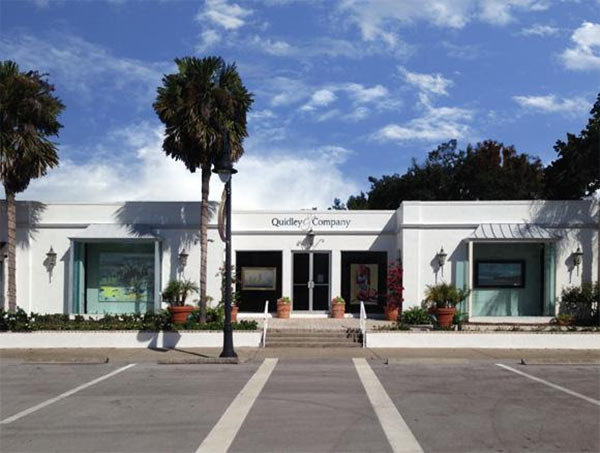
The outstanding Quidley & Company is overjoyed for the opening of their third gallery on January 20. Where?
On January 20, Quidley & Company opens their newest gallery in Naples, Florida with a number of outstanding exhibitions slated for early 2016. Via the gallery, “The Quidley & Company Naples gallery will feature our highly sought after roster of contemporary artists, along with various important historical works, and a few additional artists hand selected for our South Florida patrons.”
To learn more, visit Quidley & Company.