
Home Blog Page 441

The Best of Representation

0

Art Basel Miami 2015 has officially kicked off. Where can you find the best representational works?
 
As detailed in last week’s edition of Fine Art Today, Art Basel Miami Beach 2015 is upon us, and organizers expect nearly $2 billion in art sales over the next several days. Although nearly every type of medium and style is to be expected among the massive number of events and exhibitions, we’ve taken the opportunity to highlight some of the best that representational art has to offer.
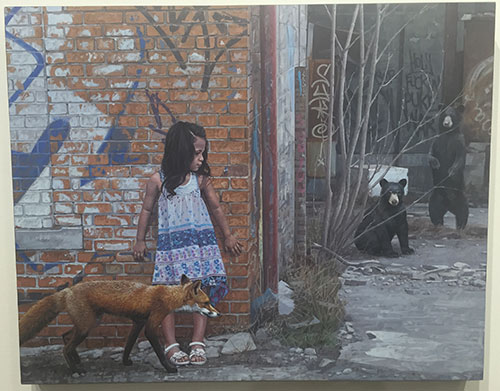


Kevin Peterson, “Holy Fuckin Puke War,” 2015, oil on panel, 24 x 19 in. (c) Thinkspace Gallery 2015

 
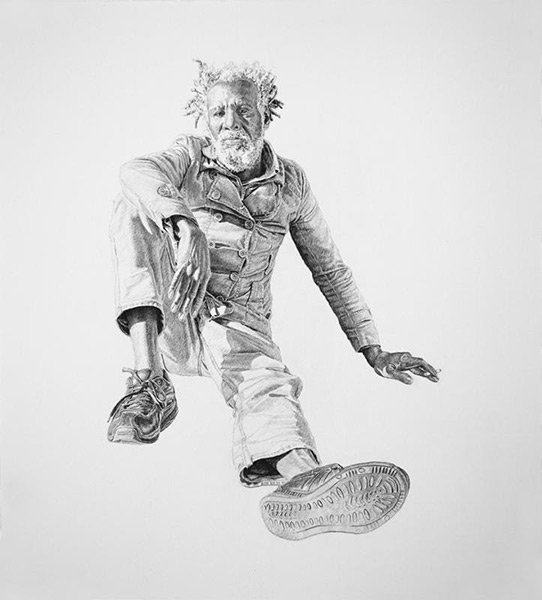
Showcasing his hyper-realistic drawings, artist Joel Daniel Phillips will impress with his photographic detailing and the sheer scale of his works. His exhibition at Miami Project in Deauville Hotel is a must-see.
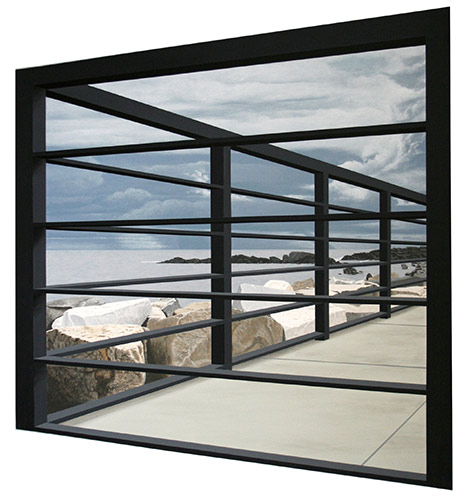


Warner Friedman, “Rising Barometer,” oil, 54 x 48 in. (c) Clark Gallery 2015
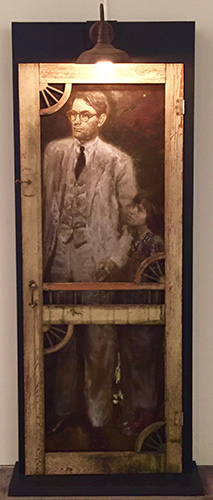

Jamie Wyeth, “Atticus and Scout, Second in the Screen Door Sequence,” 2015, oil on canvas with found America door and lamp, 40 x 28.5 in. (c) Adelson Galleries 2015­­­­­
 

Satellite fair SCOPE Miami Beach also has a range of outstanding works and exhibitions to offer, beginning with the sculptures of Martin C. Herbst, whose work is presented by Jacob Karplo Gallery. Represented by Thinkspace Gallery in Culver City, California, are the magnetic works of Kevin Peterson, especially his oil “Holy Fuckin Puke War.”
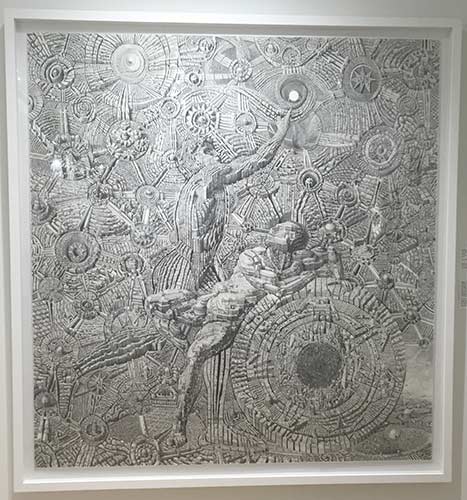


Ben Sack, “Cosmoglyph,” 2015, pen & ink on woven paper, 73 x 68 in. (c) Robert Fontaine Gallery 2015
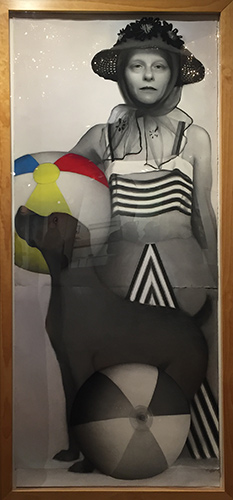

Susan Hauptman, “Hair Self-portrait with Dog,” 2001, charcoal, pastel and hair on paper, 94 x 40.5 in.
(c) Forum Gallery 2015
 

Also at SCOPE are hypnotic pen-and-ink works by Ben Sack, represented by Robert Fontaine Gallery. Sack’s “Cosmoglyph” is a monumental work in both scale and detail, displaying two figures amid a heavily populated landscape of architectural shapes and forms. The figures themselves are constructed from the basic shapes as well. Clark Gallery, coming to the show from Boston, also has an eclectic mix of outstanding paintings, some of which display unique architectural settings along an overcast coast by artist Warner Friedman.
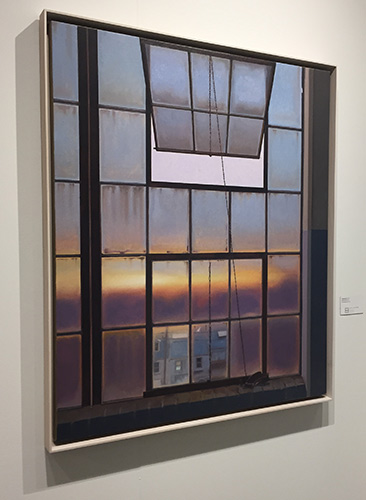


John Moore, “Quitting Time,” 2015, oil on canvas, 50 x 42 in. (c) Hirschl & Adler Modern 2015
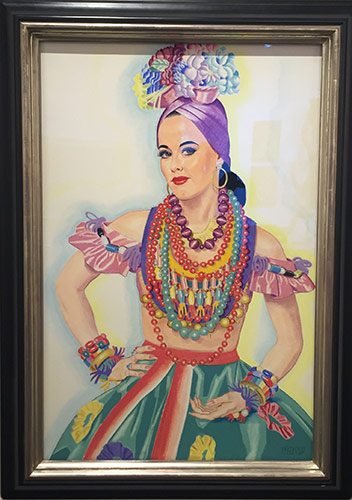

Winold Reiss, “Bakelite Girl,” ca. 1930, pastel on paper, 37 x 24.5 in. (c) Bernard Goldberg Fine Arts, LLC. 2015
 

Works by the late Susan Hauptman are also on view via Forum Gallery at Miami Project, along with John Moore, represented by Hirschl & Adler Modern; Winold Reiss, presented by Bernard Goldberg Fine Arts LLC.; Andrew Wyeth, via Avery Galleries; and Jamie Wyeth, via Adelson Galleries.
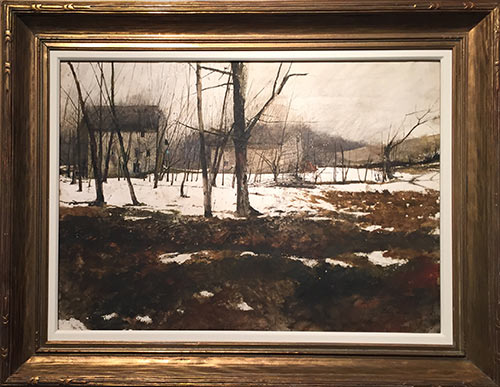


Andrew Wyeth, “Saplings,” 1962, watercolor, 22 x 30 in. (c) Avery Galleries 2015

 
While the list could go on and on, there is sure to be something for everyone over the next week in Miami Beach, Florida. The surface has, indeed, only been scratched: Satellite fairs Red Dot, SPECTRUM, Art Dot, and Art Basel opened last night as well.
 
To learn more, visit Art Basel Miami Beach 2015, or read last week’s article here.
 
This article was featured in Fine Art Today, a weekly e-newsletter from Fine Art Connoisseur magazine. To start receiving Fine Art Today for free, click here.
 

Ingres

0

Hailed as the preeminent academic painter of his era, Jean-Auguste-Dominique Ingres was the heir apparent of Raphael and Poussin during the late 18th and early 19th centuries. A major exhibition of the master’s work recently opened. Where?
 
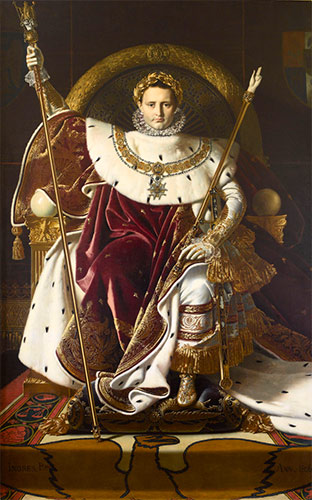
Offering a concise chronological presentation of Jean-Auguste-Dominique Ingres’s (1780–1867) life and career, “Ingres” is a monumental exhibition at Madrid’s Museo Nacional del Prado that is sure to amaze. Featuring works created throughout the master painter’s career, the exhibition “also pays particular attention to his complex relationship with portraiture (characterized by his simultaneous rejection and admiration for it), which is juxtaposed with his ongoing aim of being primarily recognized as a history painter,” the museum states.


Jean-Auguste-Dominique Ingres, “Napoleon I on His Imperial Throne,” 1806, oil on canvas, 260 x 162 cm.
(c) Louvre Museum, Paris 2015

 
The show is nearly exhaustive, comprising 11 different themes, including A Multi-faceted Training, Informal Portraits & Early Official Portraits, Rome and the Myths of Art, The Classical Challenge, Troubadour, Ingres and the 14th Duke of Alba, Captive Women, New Portraits, Religious Painting, Sumptuous Nudity, and Late Portraits.


“Ingres” opened on November 24 and will be on view through March 27.
 
To learn more, visit the Museo Nacional del Prado.
 
This article was featured in Fine Art Today, a weekly e-newsletter from Fine Art Connoisseur magazine. To start receiving Fine Art Today for free, click here.
 

OPPORTUNITY: Painting in Tuscany

0

Explore the Tuscan countryside through the Southern Vermont Art Center in the spring of 2016 with this great workshop.
 
The Southern Vermont Art Center (SVAC) will host a trip to Italy, designed for artists and their partners, from April 23-30, 2016. Registration has recently opened, and, says the center’s press release, “Students will have ample opportunity to paint, with plein air sessions led by professional artist and frequent SVAC instructor T.J. Cunningham. Students will have the choice of landscape and village locations to capture the essence of the Italian countryside.
 
“Students will spend seven nights in a charming hotel or villa south of Siena and have ample opportunity to sample Italian food and wine. There will be day excursions to Assisi, home of St. Francis, and an excursion to Siena, among the most beautiful cities in all of Italy.
 
“Non-painting partners, photographers, and others are welcome on the tour, with optional day tours available to explore the rolling hills around Pienza and Montepulciano, an area designated a UNESCO Cultural Landscape Site by the UN.”
 
To learn more, visit the Southern Vermont Art Center or contact the center’s director of education, Abby Pinkard, at 802.367.1311 or [email protected]
 
This article was featured in Fine Art Today, a weekly e-newsletter from Fine Art Connoisseur magazine. To start receiving Fine Art Today for free, click here.
 

AWA Winners

0

Featuring an amazing array of works, American Women Artists (AWA) recently celebrated 25 years of excellence with its 2015 Annual Master & Signature Member Show & National Juried Exhibition at Bonner David Galleries in Scottsdale, Arizona. The event was held November 9–14; who were the ladies that took home this year’s top awards?
 
Uniting women artists and elevating awareness of their art, the American Women Artists (AWA) is an outstanding organization that hosts a monumental national exhibition each year, with the 2015 show recently concluding at the Bonner David Galleries in Arizona.


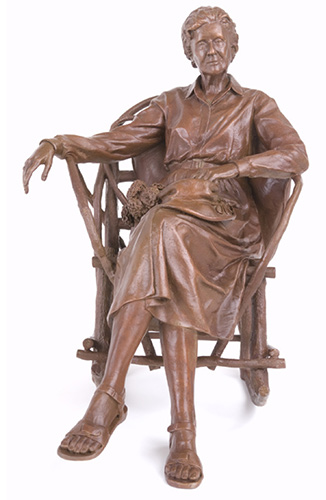
Suzie Chisholm, “The Garden,” bronze; winner of the Marilyn Newmark Foundation Award
(c) American Women Artists 2015

 
Awards of Merit were given to Nancy Bass, Kathleen Bergstrom, Marsha Chandler, Ginger Gehres, Tina Moore, Diana Reuter-Twining, and Robin Wellner.
 
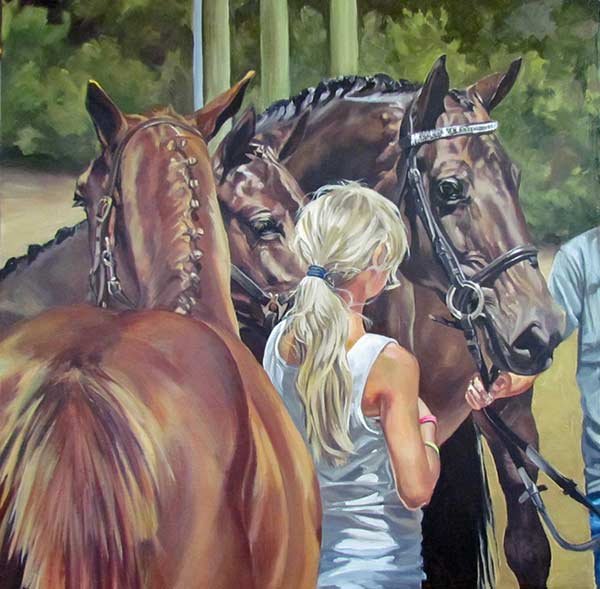
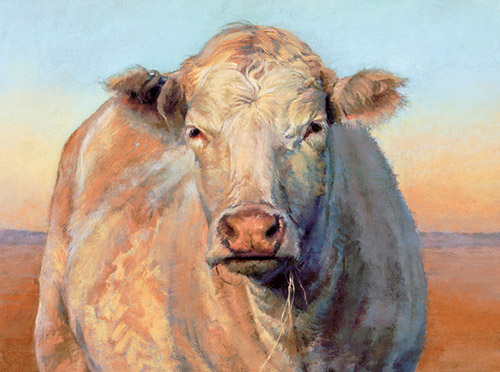
The Rogue Guirey Simpson Memorial Award, given for excellence in animal art, was taken by Elaine Lierly Jones for her piece “Manhattan’s Glory.” Suzie Chisholm earned the Marilyn Newmark Foundation Award, which honors the best sculpture done in a traditional manner, for her brilliant bronze “The Garden.” As a proud sponsor of the event and organization, Fine Art Connoisseur supports an Award of Excellence, which went to Amy Larson and her lovely painting “Zulu.”


Elaine Lierly Jones, “Manhattan’s Glory”; awarded the Rogue Guirey Simpson Memorial Award
(c) American Women Artists 2015

 
Taking the honor as Best of Show was “Pony Tails” by Cathryne Trachok. To view a full list of awards, visit American Women Artists.
 
This article was featured in Fine Art Today, a weekly e-newsletter from Fine Art Connoisseur magazine. To start receiving Fine Art Today for free, click here.
 

A Land Remembered

0

The Sunshine State is known for its spectacular beaches, diverse ecology, vast everglades, marshes, and so much more. And many of these attractions are among the subjects found within an upcoming exhibition in Sarasota.
 
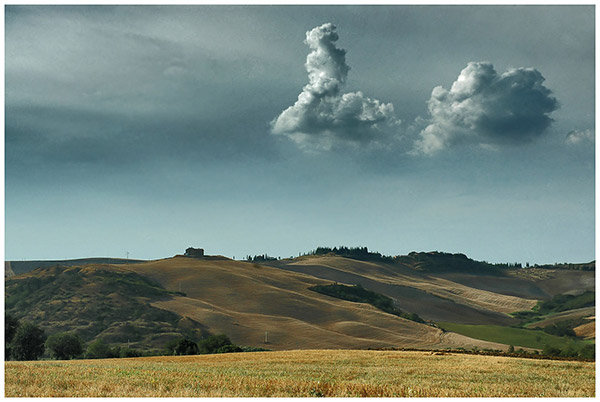
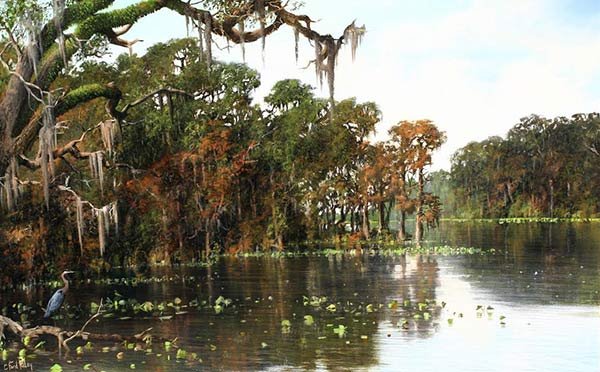
Showcasing — among others — Joseph McGurl, C. Ford Riley, Tripp Harrison, Dominic Avant, Henry Von Genk III, Hodges Soileau, Mary Erickson, Armand Cabrera, and Daniel Ambrose, “A Land Remembered” is an impressive group exhibition opening tomorrow, December 4, at Palm Avenue Fine Art in Sarasota, Florida. Featuring a distinctive display of individual styles, the show will offer viewers a journey to discover the Sunshine State’s most memorable people, places, and things. Celebrating the diverse ecology of the state, several works feature the majestic cranes, herons, and egrets that fill the skies. Others detail the beauty of the land, including sunset beaches, marshes, the everglades, and more.


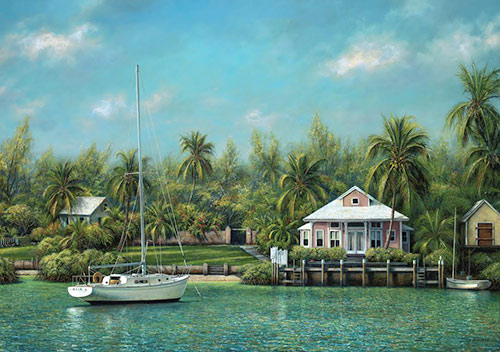
Tripp Harrison, “Hidden Cove,” oil, (c) Palm Avenue Fine Art 2015

 
“The Blue Heron” by C. Ford Riley is an outstanding highlight of the exhibition. Although dwarfed by its surroundings, the heron — found at the bottom left corner of the piece — commands attention as his brilliant flash of blue provides a focal point among the plethora of greens, reds, browns, and grays used to compose the marsh. Despite the focus on the feathery subject, the landscape is masterful as well, rendered with acute details and keen observational skill. Tripp Harrison’s “Hidden Cove” oozes warmth and desirability during these cold months through his rendering of a tropical cove. Among a dense forest of palm trees, the viewer finds a vacant property with a cottage and two shacks. Anchored in the cove is a sailboat, seeming to gently bob in the calm waters. Particularly noteworthy is how Harrison has captured the water’s sparkle — one truly gets the impression of the water’s movement and clarity.
 
“A Land Remembered” will open on December 4 with a reception from 6-8 p.m. The exhibition will be on display through December 18.
 
To learn more, visit Palm Avenue Fine Art.
 
This article was featured in Fine Art Today, a weekly e-newsletter from Fine Art Connoisseur magazine. To start receiving Fine Art Today for free, click here.
Multisensory Art

0

Colorado-based artist Ann Cunningham, along with the Woodson Art Museum, is eagerly awaiting December 5, when they will offer audiences a multisensory art exhibition that will encourage visitors to “see” with touch.
 
Artist Ann Cunningham is thinking along the same lines as the Unseen Art Project also detailed in this week’s edition of Fine Art Today. Opening December 5 at the Woodson Art Museum in Wausau, Wisconsin, “Forest Folklore: A Multisensory Experience” will offer viewers the opportunity to see, or feel — or both!
 
Beginning in 1992, Cunningham has often thought about how her low-relief sculptures could communicate with the blind. Working with her students at the Colorado Center for the Blind, she discovered that the sense of touch can be an extremely powerful tool for communication. In fact, one could argue that touch is the most intimate of senses — consider the way we delight in hugging friends and loved ones during the holidays more than simply seeing them. As Cunningham writes, “We can learn more about ourselves and how we fit into the world.” Although precious artworks are to be protected, it is tantalizing to think of the traditional barriers in fine art being challenged, of cultivating new relationships with art using a variety of our sensory perceptions.
 
Cunningham’s gorgeous “Consternation” — a slate, limestone, cork, and raffia relief — would indeed be a fascinating multisensory experience. The slate stone is a rich, royal blue and is carved into the frame and the piece’s main subject, a protective and possessive bird hovering over its eggs. The cork background contrasts sharply with the stone in both appearance and texture. One can easily imagine the feel of the smooth, cold slate against the softer cork. The nest of the bird is woven raffia while the eggs are carved from the limestone. The whole effect — both visually and texturally — is stunning.
 
“Forest Folklore: A Multisensory Experience” opens December 5 and will be on view through February 21. Cunningham will also partake in the Woodson Art Museum’s Artist in Residency program December 3-18, where she will work with 700 pre-K through first-grade students during visits to the museum. Other public programs will be available as well.
 
To learn more, visit the Woodson Art Museum.
 
This article was featured in Fine Art Today, a weekly e-newsletter from Fine Art Connoisseur magazine. To start receiving Fine Art Today for free, click here.
Peaks and Valleys

0

Visiting China’s Yellow Mountain can be a stunning experience — both visually and physically. Three artists traveled to the location with artist Michael Nock in March of 2015, and the results of that trip are featured in a current exhibition.
 
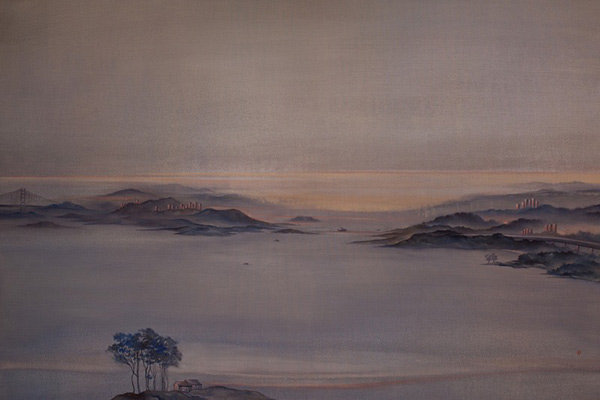
Showcasing the work of three distinctive artists with eclectic styles, “Peaks and Valleys” is sure to delight at NockArt Gallery through December 19. In March 2015, Tim Allen, Steve Lopes, and Dapeng Liu travelled to the impressive Yellow Mountain region with gallery owner and artist Michael Nock, where they each chose a variety of dazzling views and subjects to represent in their own unique styles along the way.


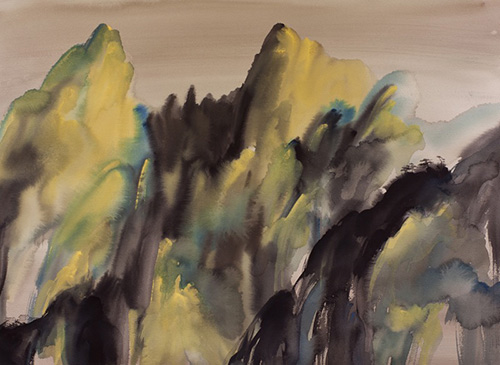
Dapeng Liu, “View from Qingliang Pavilion,” 2015, gouache on paper, 56 x 76 cm. (c) Dapeng Liu 2015

 
Liu’s “Deep Bay and the Reclining Man” displays a wonderful atmospheric space with cool tones blended to perfection. In the sparsely populated scene, the viewer finds a small grove of trees just above the bottom edge of the canvas as distant mountain peaks pierce the rich fields of graduated colors. Liu’s “View from Qingliang Pavilion” features the artist’s more expressive and fluid brushwork. Executed with gouache on paper, the jagged and dominating mountain peaks abstractly fill the page. Their strong vertical motion emphasizes their scale, character, and drama.


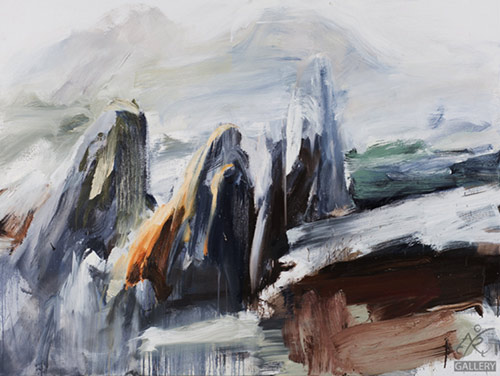
Tim Allen, “Empty and Full (Huangshan),” 2015, oil on linen, 136 x 183 cm. (c) NockArt Gallery 2015

 
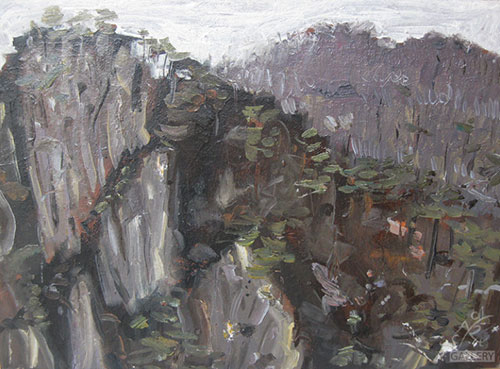
Lopes’s “Cliffface Yellow Mountain” shows a thicker, more abstract application of paint.  Although the subject may be static, the movement and vibration of the surface are hypnotic. Cool tones of gray, brown, and green dance across the panel and convey the artist’s energy and individuality.


Steve Lopes, “Cliffface Yellow Mountain,” 2015, oil on board, 25 x 35 cm. (c) NockArt Gallery 2015

 
Expression and abstraction are taken even further in the works of Tim Allen, who employs large, bold, and sweeping brushstrokes to reveal his subjects. “Empty and Full (Huangshan)” is one example. At first glance the piece may appear completely abstracted, with quick — nearly violent — strokes of the brush animating the surface. However, at distance, representation and form emerge and we find large, powerful peaks stabling into the space.


To learn more, visit NockArt Gallery.
 
This article was featured in Fine Art Today, a weekly e-newsletter from Fine Art Connoisseur magazine. To start receiving Fine Art Today for free, click here.
 

Featured Lot: Sir Edward John Poynter, “Zenobia Captive”

0

In this ongoing series for Fine Art Today, we take a longer look at the history and features of a soon-to-be-available artwork of note. This week: Sir Edward John Poynter, “Zenobia Captive.”
 
One of the 19th century’s most accomplished neoclassical painters, Sir Edward John Poynter (1826–1919) established a lasting career re-creating some of history’s greatest myths, legends, and heroes in the academic tradition. In addition to his success as an artist, Poynter was extremely active in academia, serving as the Slade professor and later director of art at the South Kensington Museum. Poynter also had a prolific career with the Royal Academy: ARA 1869, RA 1876, PRA 1896–1918. He also served as director of the National Gallery from 1894 to 1906.
 
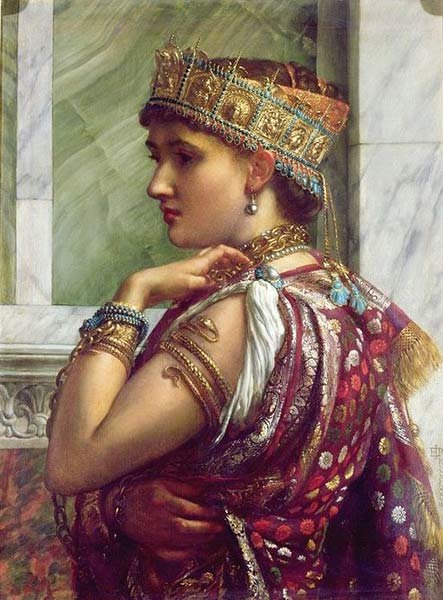
Heading to auction on December 16 at Christie’s is the beautifully exotic “Zenobia Captive,” which displays the 3rd-century queen of Palmyra (modern-day Syria). Christie’s reports, “Whilst she initially enjoyed the protection of Rome, her declaration of her son as Emperor, and herself as Empress, aggravated the true Emperor Aurelian to march against her. Zenobia was captured, and was led be-jewelled, but enchained, through the streets of Rome.”
 
Poynter shows the queen in a dazzling array of colorful jewels and in Eastern costume. Poynter, in fact, earned his first success as a painter showing Eastern subjects in 1867. Christie’s writes, “Between these set pieces came smaller works such as ‘Zenobia Captive,’ where Poynter evoked the ancient world rather than describing it with archaeological precision. Zenobia’s robe for instance was a studio prop of probably Indian origin, possibly supplied by his brother-in-law John Lockwood Kipling, principal of the Mayo School of Arts, Lahore. The headdress is markedly similar to pieces from productions of ‘Aida’ now found in the Museum of London. The snake band worn on the upper arm is comparable to one made for Alma-Tadema for inclusion in various paintings. Indeed for his depiction of ‘Helen of Troy’ (1881, Art Gallery of New South Wales), Poynter composed a necklace of his own design, which was then made by Carlo Giuliano.”
 
Poynter’s “Zenobia Captive” will feature in Christie’s December 16 “Victorian, Pre-Raphaelite & British Impressionist Art” sale. Auction estimates are between $377,500 and $528,500.
 
To view the full catalogue, visit Christie’s.
 
This article was featured in Fine Art Today, a weekly e-newsletter from Fine Art Connoisseur magazine. To start receiving Fine Art Today for free, click here.


Major Discovery Imminent?

0

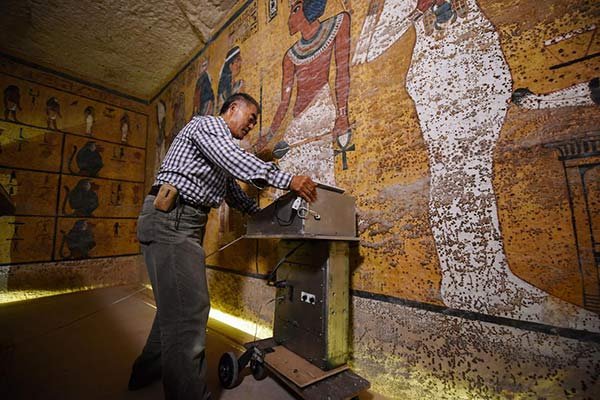
Researchers and scientists are 90 percent sure that two hidden chambers lie behind the walls of Egypt’s King Tutankhamun’s tomb. What do they think lies beyond?
 
Making international headlines this week were reports coming out of the Valley of the Kings that researchers are 90 percent sure that two hidden chambers lie behind one of the walls in King Tutankhamun’s tomb. Ever since the tomb’s discovery by Howard Carter and George Herbert in 1922, it has been hailed as one of the greatest repositories of dazzling 18th Dynasty objects, ranging from the young pharaoh’s death mask to wooden furniture and solid gold statuary. What is more, the tomb was fully intact at its discovery — the only undisturbed tomb ever found.
 
If the reports prove true, the tomb might reveal even more. Unfortunately, the “hidden chambers” lie behind a wall that displays beautifully carved and painted murals. Recent radar and thermal scans have proved promising, but what lies within the chambers remains a subject of conjecture. Archaeologist Nicholas Reeves believes the chambers contain another royal burial — King Tut’s mother-in-law, Nefertiti. National Geographic reports, “If so, this would be only the second intact royal burial site to be discovered in modern times — and it would, in the words of Mamdouh Eldamaty, the Egyptian antiquities minister, represent ‘one of the most important finds of the century.’”
 
The indications seem promising, but confirmation and any findings will have to wait until a detailed strategy emerges that will allow archaeologists to access the hidden spaces.
 
To learn more, visit National Geographic.
 
This article was featured in Fine Art Today, a weekly e-newsletter from Fine Art Connoisseur magazine. To start receiving Fine Art Today for free, click here.
 

Unseen: Bringing Art to the Visually Impaired

0

Historical masterpieces are being brought to life for the visually impaired through an innovative project that uses the latest technology to create accurate models. READ MORE
 
Involving people from all over the world, The Unseen Art Project is a remarkable project launched in Finland on November 12 that seeks to make art available to the visually impaired by way of 3D printing and scanning technology. The project seeks to scan in detail classical paintings, which are then rendered in three dimensions. Using the latest 3D printers, an exact model can be created that may be touched and felt, both in exhibitions and in people’s homes. Just as exciting is the open source designation for the models, meaning they can be printed anywhere in the world where there’s access to 3D printers.


A pair of hands investigates the model (c) The Unseen Art Project 2015

 
Unseen has also launched a crowdfunding campaign to help raise funds for the project. Marc Dillon launched the campaign to offer a 3D-printed version of Leonardo da Vinci’s “Mona Lisa” to backers that can be sent to a loved one, child, or charity. Dillon states, “Creating equal access for art globally is our passion and goal. There are many people in the world who have heard of classical artworks their whole lives but are unable to see them. Now they can experience them for the first time and create their own impressions and opinions. Making global impact through crowdfunding allows blind and visually impaired people globally to personally experience the inspiration, education, and thought-provoking feelings that meaningful art creates.” Even those who don’t suffer from blindness or visual impairment might find the experience an enriching sensory addition to already visually stunning artworks.
 
If you would like to donate to the crowdfunding campaign, click here.


To learn more, visit The Unseen Art Project.
 
This article was featured in Fine Art Today, a weekly e-newsletter from Fine Art Connoisseur magazine. To start receiving Fine Art Today for free, click here.
WEEKLY NEWS FROM THE ART WORLD

Fill your mind with useful art stories, the latest trends, upcoming art shows, top artists, and more. Subscribe to Fine Art Today, from the publishers of Fine Art Connoisseur magazine.

  • This field is for validation purposes and should be left unchanged.