Home Blog Page 451

November 4: Women Painting Women

0

A gorgeous exhibition featuring women artists and women subjects is illuminating one New York Gallery.

On view through November 4, Richard J. Demato Fine Arts Gallery in Sag Harbor, New York, presents a magnetic exhibition that is sure to delight. The gallery reports, “For many women Art can serve as their voice when they want, deserve, and need to speak. We are thrilled to again have an opportunity to provide a venue for these women to share their souls, their hearts, their stories, and their talents. Last year over 250 works were submitted from women around the globe, including artists from Spain, Russia, Mexico, China, Canada, and from across the USA. We look forward to another experience of the incredible energy and affinity created when women are both the subject and the speaker.”

To learn more, visit Richard J. Demato Fine Arts Gallery.

October 16: Grand Reopening

0

Friday, October 16 was a date to remember for the New Masters Gallery in Carmel, California.

After suffering from an accidental fire, the New Masters Gallery hosted its grand reopening reception on October 16 at a new location.  250-300 people attended the opening, which featured some 250 paintings – recently cleaned of smoke damage.

To learn more, visit the New Masters Gallery.

The Light of Inspiration

0

Playing with mysterious light both physically in her studio and in paint has had remarkable results for painter Suzanne Hughes Sullivan. Her passion for still life offers viewers near-endless varieties of harmonic compositions that are timeless and sure to delight.
 
Capturing the phenomena and luminance of light as it reflects off forms and shapes is a vital skill possessed by some of the best contemporary — and historical — artists. Still life in particular demands acute observational qualities. Indeed, a skillfully executed still life will demonstrate an artist’s ability to represent light, texture, and color.
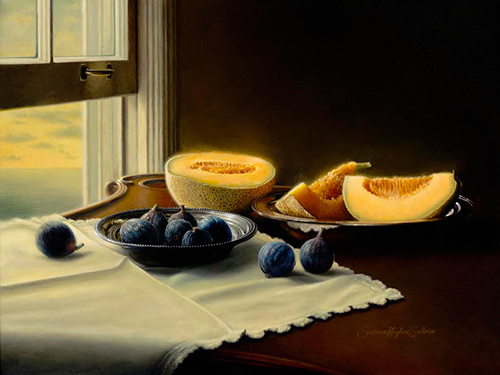


Suzanne Hughes Sullivan, “Still Life with Cantaloupe and Figs,” oil, 24 x 18 in. (c) Suzanne Hughes Sullivan 2015

 
Light is the primary point of inspiration for painter Suzanne Hughes Sullivan, so naturally the artist has gravitated toward still life despite her love of landscape. The genre has also given Sullivan a particular visual and compositional language that has yielded outstanding works. “Part of the draw to still life is my fascination with the endless variety of harmonic compositions I can create using a diagonal grid system,” she writes. “It’s like a secret geometric language and the key to dynamic picture compositions.” Combining that with her ability to capture light, Sullivan’s still life paintings establish strong emotional connections with her viewers, and not just for their technical proficiency.
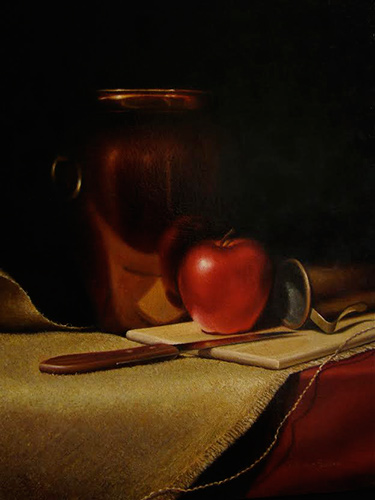


Suzanne Hughes Sullivan, “Copper Reflections,” oil, 11 1/2 x 14 1/2 in. (c) Suzanne Hughes Sullivan 2015

 
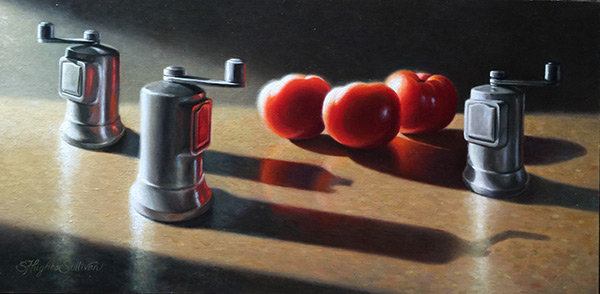
Each of these features comes to the fore within Sullivan’s magnetic “The Fruits of Summer.” “In everyday life, I’m the most excited and inspired by the transient nature of light that catches me by surprise,” Sullivan writes. “The Fruits of Summer” appears to illustrate this concept well. The subject is familiar, but Sullivan has elegantly captured it at a moment of profound beauty. Resting on a beautifully finished wooden countertop, the viewer finds a group of juicy, vibrant, and ripe red tomatoes. The strong rays of a bright sun enter the picture from a window to the left, out of view. Surrounding the tomatoes are three stainless steel hand-cranked grinders. The arrangement of objects encourages one to conjure up an ominous narrative, one in which the tomatoes end as liquid rather than solids. The range of interpretations seems endless, perhaps recalling nostalgic feelings of grandma’s kitchen, but even so, the technical mastery and photographic realism are commanding in themselves. Every shade and grain in the wood countertop is imaged with outstanding clarity, along with the sheen of the steel and the subtle gradations of red within the tomatoes.
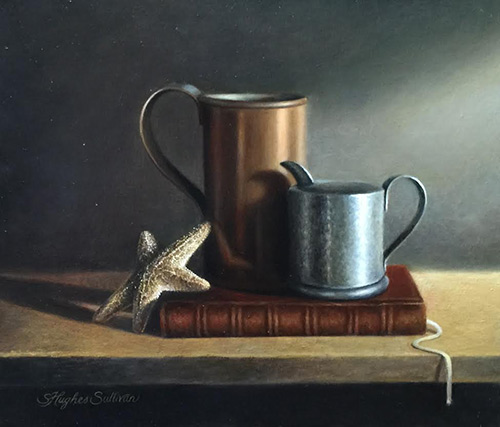


Suzanne Hughes Sullivan, “Classic Cups,” oil, 10 x 8 in. (c) Suzanne Hughes Sullivan 2015

 
Of her creative process, Sullivan continues, “Many times I begin with the design and lighting of a still life composition in my studio using objects that will not spoil and light that doesn’t change. I love the clarity of detail that painting from life affords me. Many times moments of inspiration come as the result of lighting that is very transient and the still life subjects are subject to spoilage. In those cases, I don’t have the luxury of painting a detailed studio painting from life. I need to work as quickly as possible to set up an agreeable composition and execute an oil sketch.”
 
Discussing “Fruits of Summer,” Sullivan says, “I was spending the weekend at a friend’s farm and came downstairs in the morning to a stunning display of raking light on the subjects. I didn’t have my paints with me, so I took scores of photos of the grinders and tomatoes in many positions. The design composition aspect of this painting was quite complex, but I wanted to make it appear harmonious and effortless. The positions of the grinders’ handles are designed to lead the viewer’s eye on a dance through the picture plane.”
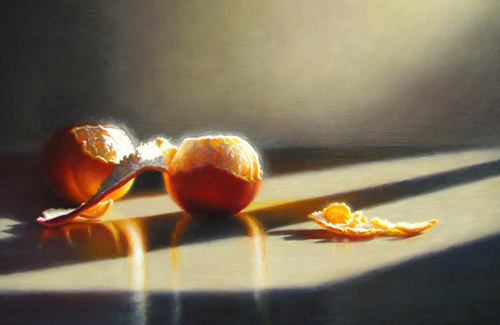


Suzanne Hughes Sullivan, “Appealing Oranges,” oil, 20 x 13 in. (c) Suzanne Hughes Sullivan 2015

 
Although she still considers herself an emerging artist, Sullivan has already established herself as one to watch. “I expect over the next five years my style will deepen and mature,” she writes. “Still life will continue to be my primary genre, but I can’t predict exactly what my evolution will look like.” You’ll just have to stay tuned.
 
To learn more, visit Suzanne Hughes Sullivan.
 
This article was featured in Fine Art Today, a weekly e-newsletter from Fine Art Connoisseur magazine. To start receiving Fine Art Today for free, click here.

Medusa Unearthed

0

Images of the mythical temptress who could turn you to stone have existed for thousands of years. One ancient example was just discovered.
 
With serpents for hair and her stone-cold gaze, representations of the ancient gorgon Medusa typically instill fear and recoiling among viewers. Since her mythic origins, Medusa’s visage has been employed in a myriad of ways that illustrate how different artists in different periods of history represent the grotesque.
 
But opposite feelings — joy, excitement, and satisfaction — likely ensued when University of Nebraska professor Michael Hoff and his team of excavators gazed upon an ancient marble head of Medusa within the ruins of a Roman city in southern Turkey. Discovered in Antiochia, a city founded sometime in the first century CE, the head shockingly survived the widespread destruction of pagan artifacts by the Christians who came to inhabit the site. The head, which survives in fragment, is believed to have been part of a temple’s pediment sculpture rather than a freestanding piece.
 
To learn more, visit Live Science.
 
This article was featured in Fine Art Today, a weekly e-newsletter from Fine Art Connoisseur magazine. To start receiving Fine Art Today for free, click here.

 

Amazing Albas

0

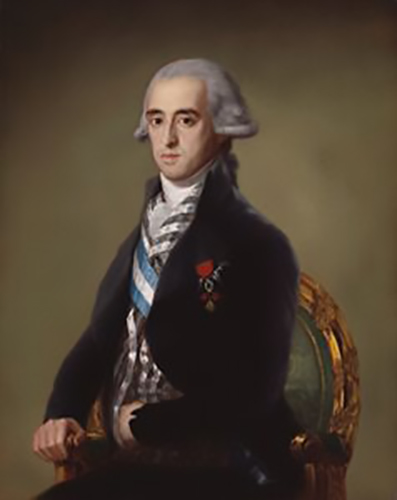
For five centuries the Alba family of Spain has proven to be one of the most important lineages in Europe. The Albas exercised considerable influence in all facets of life, military, political, and social, including cultural patronage and art collecting. More than 130 objects by the biggest names in art history from the Alba family collection are illuminating one Dallas museum.
 
Fra Angelico, Titian, Goya, Van Gogh, Rembrandt, Ingres, Renoir, and Sargent are only a few of the names one can expect to find during a star-studded exhibition of the Alba family collection. On view now at the Meadows Museum on the campus of Southern Methodist University in Dallas, “Treasures from the House of Alba” is sure to dazzle. Presented thematically, the exhibition will trace the prominent family’s most significant periods of collecting and patronage, from their roots in 15th-century Spain through the 20th century. As a result, viewers will experience an incredible range of styles and mediums across the full spectrum of the art historical canon.


Francisco de Goya, “Portrait of the Duke of Alba,” ca. 1795, oil on canvas, (c) The Art Institute of Chicago 2015

 
The museum reports, “The exhibition displays a broad selection of works by artists that, as such, are leaving Spain for the first time and groups them, also for the first time, in a manner that explains the historical development of the family and the collection from the end of the 15th century to the present day. It is the first exercise in the understanding of the history of this family, shown through a vast display of more than 130 objects.”


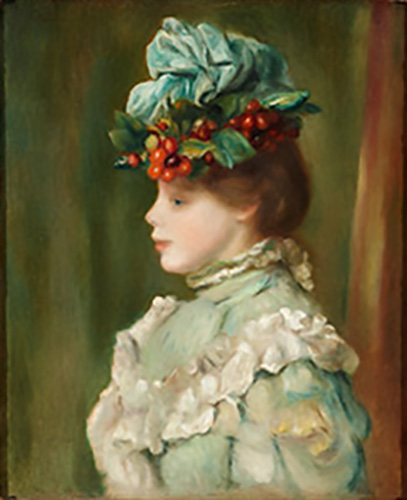
Pierre Auguste Renoir, “Girl with Hat with Cherries,” 1880, oil on canvas, (c) Alba Family Collection 2015

 
“Treasures from the House of Alba: 500 years of Art and Collecting” opened on September 11 and will show through January 3.
 
To learn more, visit the Meadows Museum.
 
This article was featured in Fine Art Today, a weekly e-newsletter from Fine Art Connoisseur magazine. To start receiving Fine Art Today for free, click here.
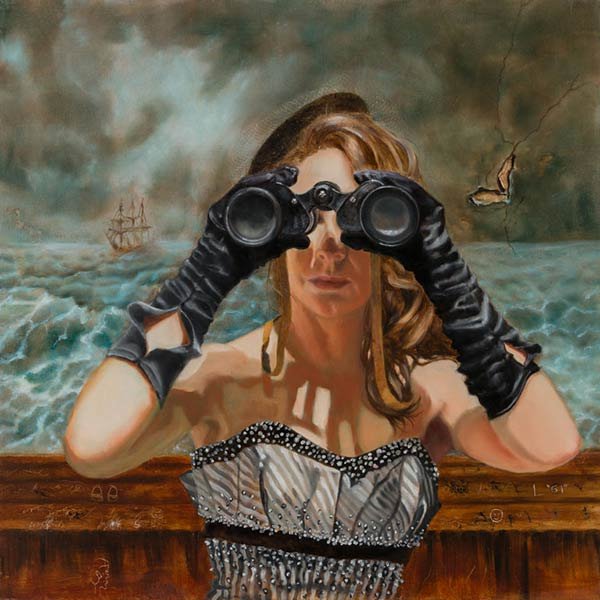
 

Dancing with Degas

0

An outstanding exhibition in Toledo, Ohio, is celebrating both the city’s ballet heritage and the art and legacy of Edgar Degas.
 
This year will mark the 75th anniversary of the Toledo Ballet, which offers the oldest continuously running annual “Nutcracker” performances in the United States. In celebration and in conjunction with the ballet, the Toledo Museum of Art has organized “Degas and Dance,” a lovely exhibition that features iconic works by Edgar Degas (1834-1917) from the museum’s own collection alongside major loans from the United States and Europe. Lawrence W. Nichols, the museum’s William Hutton senior curator of American painting and sculpture, noted, “This very special exhibition provides the museum with the wonderful opportunity to showcase some of the most beloved dance imagery ever created and in the process to underscore the important heritage of Degas at the museum and the rich legacy of 75 years of the ‘Nutcracker’ in Toledo.”


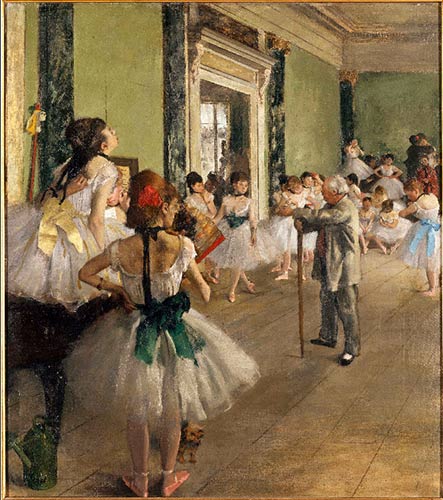
Edgar Degas, “The Ballet Class,” ca. 1873-1876, oil on canvas, 33 x 29 1/2 in. (c) Musee d’Orsay, Paris 2015

 
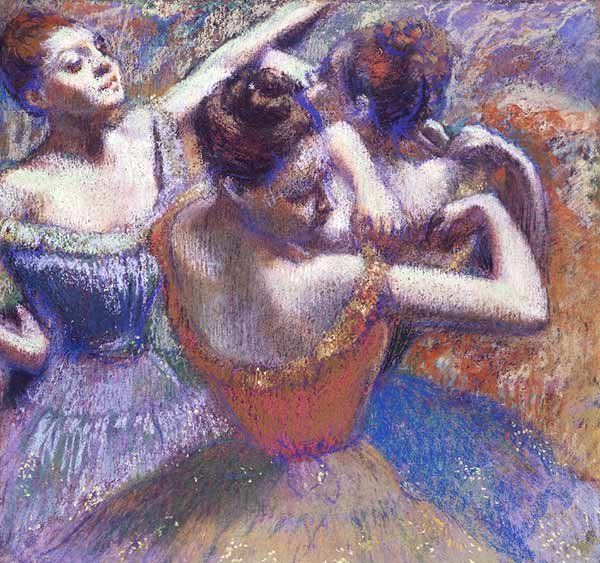
Indeed, the exhibition seems particularly apropos given the modern artist’s fascination with dance and, specifically, ballet. Degas would frequent the Paris opera to study its performers in the rehearsal rooms, backstage spaces, and auditorium, which helped him establish a noteworthy career during his lifetime. Museum Director Brian Kennedy says, “It is only natural that the Toledo Museum of Art would organize an exhibition dedicated to Degas and the dance given our history with the artist and the Toledo Ballet.” Kennedy’s statement calls attention to the museum’s very first acquisition, which came in 1928 from endowed funds left by its founder, Edward Drummond Libbey. The work? You guessed it: an exquisite pastel drawing of ballerinas by Degas, now a feature of the exhibition.


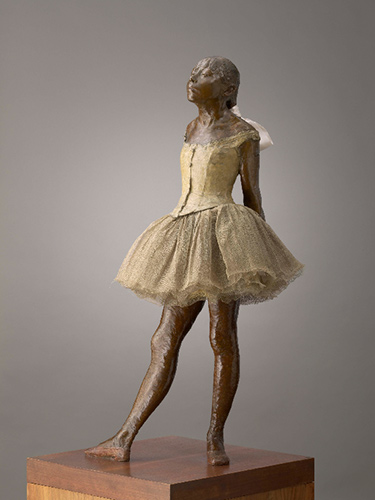
Edgar Degas, “Little Dancer Aged Fourteen,” ca. 1879-1919, bronze with gauze tutu and silk ribbon, wooden base, 39 in. (c) The Sterling and Francine Clark Art Institute 2015

 
The exhibition will present not only Degas’s two-dimensional work, but his sculptural bronzes as well. Six sculptures anchor the show while several paintings of dancers and the museum’s original pastel comprise the two-dimensional works. Also worthy of mention is the installation of an actual dance studio within an adjacent gallery, complete with ballet barre, dance floor, and mirrors. In fact, students from the Toledo Ballet will periodically rehearse in the space for all to see in preparation for a January 3 performance. Admission to “Degas and the Dance” is free, and the exhibition is on view through January 10.
 
To learn more, visit the Toledo Museum of Art.
 
This article was featured in Fine Art Today, a weekly e-newsletter from Fine Art Connoisseur magazine. To start receiving Fine Art Today for free, click here.
 

Pricey Portrait Lands at VMFA

0

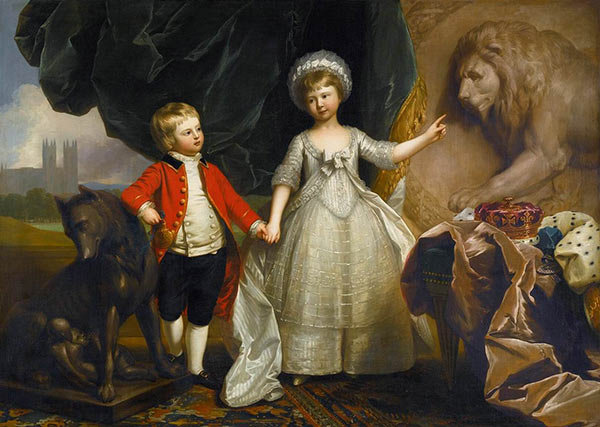
Known to many as the “father of American painting,” Benjamin West worked extensively for English royalty during his illustrious career. Recently one of six group portraits commissioned from West by King George III — not to mention the only one outside the Royal Collection — found a new permanent home.
 
On view now at the Virginia Museum of Fine Arts in Richmond, Virginia, is Benjamin West’s “Portrait of Prince William and His Elder Sister, Princess Sophia,” which was acquired during the June 18 meeting of the VMFA Board of Trustees. The painting is among the most valuable acquisitions in VMFA history.
 
The museum writes, “This is one of six group portraits commissioned by King George III during the American Revolution. Intended as a gift for the king’s brother, HRH Prince William Henry, Duke of Gloucester and Edinburgh, it is the only one of the six outside the Royal Collection. Descended in the family of George III, whose daughter HRH Princess Mary wed the sitter, Prince William, the painting celebrates the king’s protection of his niece and nephew at a moment during their father’s ill health. In acknowledgement of the king’s generosity, the children and father — symbolized by the robe and crown — signal their obedience to the king, symbolized by the lion. This patriarchal narrative of duty and protection served a dual purpose as wartime propaganda. As the king served to protect his subjects, so his subjects — the colonists — owed their obedience to the king.”
 
To learn more, visit the Virginia Museum of Fine Arts.
 
This article was featured in Fine Art Today, a weekly e-newsletter from Fine Art Connoisseur magazine. To start receiving Fine Art Today for free, click here.
 

States of Undress

0

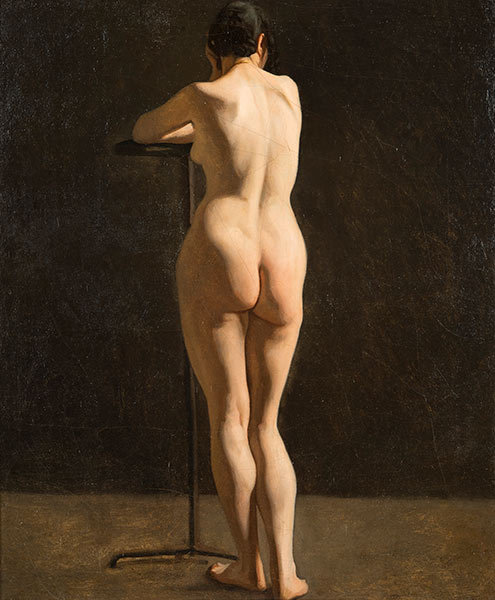
Nude figures have been the subjects of artists’ attention throughout the history of representational art. Even so, artists continually find new and innovative ways to depict the nude that reveal their individuality in addition to each artist’s respective social and cultural contexts. One museum is shining a light on the nude in 19th-century France.
 
The proliferation of visual information across digital formats has made images of nudity incredibly numerous and easy to access. However, before the late 19th century, the availability of nudes for artistic study was restricted to prestigious academic classes or the studios of established artists.
 
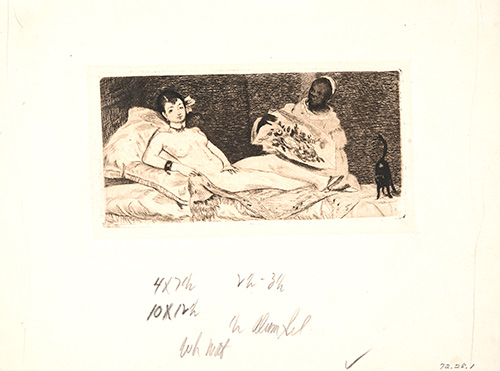
On view now at the Zimmerli Art Museum at Rutgers University is “States of Undress: Bathers and Nudes in Nineteenth-Century French Art,” which “examines an era when the notion of ‘indecency’ dramatically shifted and a more modernist view of the representation of the human figure emerged.” Showcasing only 20 prints and drawings, “States of Undress” is small but includes beautiful works by — among others — Edouard Manet and Theo van Rysselberghe. As suggested by the museum, the exhibition serves to illuminate the evolution of the nude in 19th-century French art, “revealing these radical visual changes that also influenced people’s attitudes in accepting the modern nude as an expressive vehicle for conveying physical and emotional states of human experience.”


Edouard Manet, “Olympia,” 1867, lithograph, (c) Zimmerli Art Museum 2015

 
Via the museum’s website: “Mastery of the human figure continues to be a key tenet of serious artistic training. Renaissance masterpieces established the nude as a pinnacle of artistic achievement, a status that persisted for hundreds of years. When the French Royal Academy of Painting and Sculpture institutionalized its program for drawing instruction in 1648, only the most advanced students were permitted to draw from nude models. The Academy also showed preference for painters who focused on allegorical, mythological, and historical subjects. Though the Academy was dismantled following the 1789 Revolution, and traditional subject matter declined in favor of landscapes and contemporary life, standards for representing the unclothed body remained static in the French artistic establishment well into the 1800s. But by the second half of the century, artists initiated new approaches to the topic.”
 
Associate Curator of European Art Christine Giviskos adds, “Nude figures traditionally represented ideal beauty in art and ambitious artists worked diligently to master the human form. During the 19th century, artists still emphasized the human figure, but they no longer felt obligated to depict perfect human forms.” 
 
“States of Undress: Bathers and Nudes in Nineteenth-Century French Art” opened on October 13 and will be on view through January 6.
 
To learn more, visit the Zimmerli Art Museum.
 
This article was featured in Fine Art Today, a weekly e-newsletter from Fine Art Connoisseur magazine. To start receiving Fine Art Today for free, click here.

Featured Lot: John Frederick Kensett, “Fishing in a Catskills Stream”

0

In this ongoing series for Fine Art Today, we take a longer look at the history and features of a soon-to-be-available artwork of note. This week: John Frederick Kensett, “Fishing in a Catskills Stream.”
 
Born in Cheshire, Connecticut, in 1816, John Frederick Kensett (1816-1872) was introduced to artistic expression at an early age. Kensett’s father employed the young artist in his engraving firm in New Haven before seeing him apprentice with the engraver Peter Maverick in New York. After his father’s death, Kensett would return to New Haven to oversee the firm. He would continue to be active in engraving through 1829, but increasingly became interested in exploring landscape painting.
 
Extensive studies and travels abroad to England, France, Italy, Switzerland, and beyond characterize the next 20 years of Kensett’s life. Among his acquaintances and confrères at Hampton Court and Paris were Thomas P. Rossiter, Thomas Cole, Benjamin Champney, Thomas Hicks, and Francis W. Edmonds. Kensett’s return to New York in November of 1847 marks a significant moment in the artist’s career, for this is when he began to produce his coveted scenes of sites along the Hudson River, Niagara Falls, the Catskills, and the Adirondacks. The Metropolitan Museum of Art suggests, “Though a few such paintings reveal the impress of the sublime style of Cole, the founder of the American landscape school, most reflect Kensett’s experience with English art and the soberer, more tonal style of his older colleague [Asher B.] Durand, with whom in London Kensett had admired the landscapes of John Constable.”
 
Until his death in 1872, Kensett increasingly came to produce reductive views of shoreline locations — “spare compositions of simple terrestrial profiles against expanses of calm open water delicately punctuated with a few sailboats on the horizon,” the Met reports. These later paintings are the most noteworthy of Kensett’s career and earned him immediate success among clients who frequently vacationed at the coastal resorts.
 
A gorgeous oil by Kensett will head to auction via Great Gatsby’s in Atlanta, Georgia, on October 24. Titled “Fishing in a Catskills Stream,” the picture is a superb example of Kensett’s love for this locale, one he frequently represented. Coming into our view from the lower right edge of the canvas is a calm stream, which winds its way into the center before disappearing behind the shore. At distance we find the rolling peaks of a sun-bathed mountain.
 
Particularly notable is the feathery brushwork and expressive application of paint, undoubtedly a feature inspired by Kensett’s love for English landscape and for Constable. Within this picture, Kensett has done a marvelous job of capturing light as it cascades across different surfaces and foliage, an approach that eventually earned him recognition as a master of the mode termed “luminism” in American landscape painting. The painting is part of the Estate of James & Dorothy Mitchell, the entirety of which heads to auction on October 24.
 
Starting bids begin at $650,000 and are expected to exceed $1.2 million. To view the full catalogue of available works, visit Great Gatsby’s.
 
This article was featured in Fine Art Today, a weekly e-newsletter from Fine Art Connoisseur magazine. To start receiving Fine Art Today for free, click here.
 

Dual Citizenship

0

It’s not uncommon to read stories about two nations squabbling over the acquisition or return of an artwork or cultural artifact. However, France and the Netherlands finalized an agreement in late September that demonstrates how, in a case involving two marvelous portraits by Dutch master Rembrandt van Rijn, sharing is possible.
 
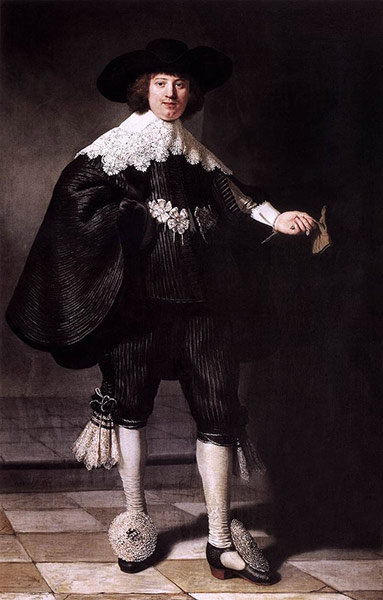
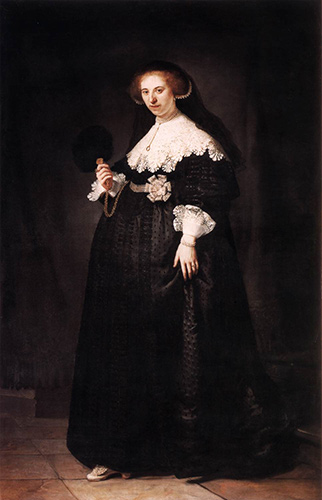
In an encouraging act, France and the Netherlands have agreed to split ownership of two outstanding portraits by Rembrandt van Rijn. The well-known and acclaimed Rothschild family has owned the paintings, “Portrait of Marten Soolmans” and “Portrait of Oopjen Coppit,” since 1877.
 
Discussions between the two nations over the artworks began in 2013, when the Rothschild family announced that both paintings would head to auction. Dutch officials believed that the portraits should return to their home nation, but were unable to raise the $182 million asking price. Dutch officials worried that missing out on this opportunity could result in the Netherlands losing the paintings forever to another country.


Rembrandt van Rijn, “Portrait of Oopjen Coppit,” 1634, oil on canvas, 81 x 52 in.
(c) Rijksmuseum, Amsterdam & Louvre, Paris 2015

 
France was also attempting to purchase one of the portraits to hang in the Louvre Museum in Paris, believing that because the pictures had been in French possession since 1877, at least one should stay in the country. Heated battles ensued even as both French and Dutch officials agreed that separating the portraits would represent the biggest failure. In late September, it was announced that the countries had come to an improbable agreement: dual ownership, with the countries splitting the cost of moving and installing the works on a six-month rotating basis.
 
Aside from being by the hand of Rembrandt, the portraits are extremely significant within the Dutch master’s oeuvre. With the subjects standing and shown at full length, the two portraits are the only ones of their kind in Rembrandt’s career. Further, the portraits brought the most expensive commission Rembrandt ever received and were painted for some of the artist’s most steady customers. What is more, because of their private ownership, the painters have rarely been seen or exhibited in public, heightening their allure for both countries.
 
To learn more, visit Newsweek.
 
This article was featured in Fine Art Today, a weekly e-newsletter from Fine Art Connoisseur magazine. To start receiving Fine Art Today for free, click here.
 

WEEKLY NEWS FROM THE ART WORLD

Fill your mind with useful art stories, the latest trends, upcoming art shows, top artists, and more. Subscribe to Fine Art Today, from the publishers of Fine Art Connoisseur magazine.

  • This field is for validation purposes and should be left unchanged.