
Home Blog Page 466

Saints and Sinners

0

As one of the Renaissance’s biggest and most well-known names, Albrecht Dürer created deeply religious pictures along with some disturbing creations. A current exhibition in Texas showcases a permanent collection of Dürer’s prints that features the full range of the master’s imagination.
 
Fourteen original prints by Renaissance genius Albrecht Dürer (1471–1528) feature in an exhibition at the Dallas Museum of Art. Albeit small, both in terms of the exhibition’s scope and scale of the works themselves (many are approximately 3 x 5 inches), the show creates big impressions due to the range of subjects represented, iconographic models, dynamic compositions, and detail. The project was organized by the McDermott Curatorial Intern for European Art.  


Albrecht Dürer, “The Sea Monster,” ca. 1498, engraving, 9 3/4 x 7 1/2 in. (c) Dallas Museum of Art

 
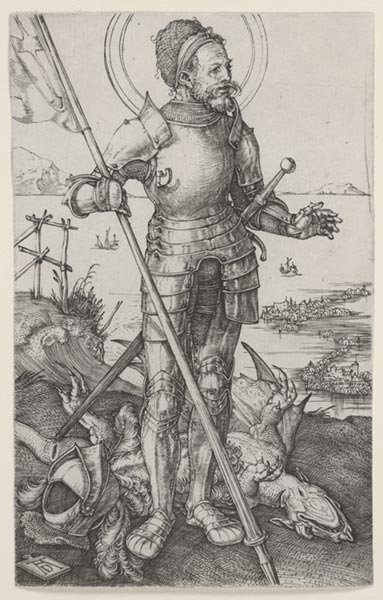
One stunning example from the show is Dürer’s “St. George on Foot,” circa 1502–1503. Standing at center and seen at full length is St. George, clad in armor and standing over a slain dragon. As arguably the best printmaker in history, Dürer has treated the Saint’s face with an unparalleled delicacy and sensitivity. Keeping the print’s size in mind, the masterful modeling — achieved through hatching and cross-hatching — is worthy of extended consideration and appreciation.


Albrecht Dürer, “The Entombment of Christ,” 1512, engraving, 4 1/2 x 3 in. (c) Dallas Museum of Art

 
Saintly subjects, such as “St. George on Foot,” are juxtaposed next to fantastical imagery, such as “The Sea Monster.” An unprecedented amount of detail has been included in this print, which displays what appears to be the capture of a man’s wife by a horned and bearded merman. Upon close consideration, one can discern individual scales on the monster’s tail. As we journey toward the background, we can make out individual trees, rock formations, and a walled city in the distance — even the individual bricks in the wall are indicated.


Albrecht Dürer, “St. Paul,” 1514, engraving, 4 3/4 x 3 in. (c) Dallas Museum of Art

 
“Saints and Monsters: Prints by Albrecht Dürer” opened in April and will show through November 15.
 
To learn more, visit the Dallas Museum of Art.
 
This article was featured in Fine Art Today, a weekly e-newsletter from Fine Art Connoisseur magazine. To start receiving Fine Art Today for free, click here.
 

Masters at the Munch Museum

0

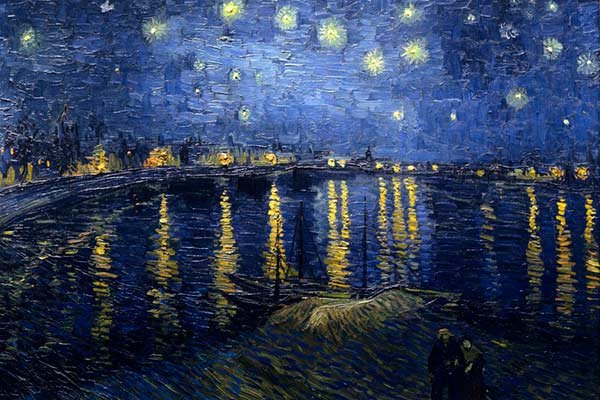
Working during the late 19th-century, Edvard Munch and Vincent van Gogh produced artworks that oozed with emotional content and innovative individual styles. For the first time, both are featured together in a blockbuster exhibition in Oslo, Norway.
 
The paintings and artistic aims of Edvard Munch (1863­–1944) and Vincent van Gogh (1853–1890) are — according to critics and experts — strikingly similar. However, these connections have never been comprehensively featured in the context of an exhibition, until now. The Munch Museum and the Van Gogh Museum have teamed together to illuminate this artistic parallel in Oslo, Norway. The exhibition, “Van Gogh + Munch,” challenges established perceptions and “takes a closer look at their artistic point of departure, the influences they were exposed to, the development in style and technique and what artistic goals they set for themselves, and in this way creates a deeper understanding of why these artists are so often compared to each other.”


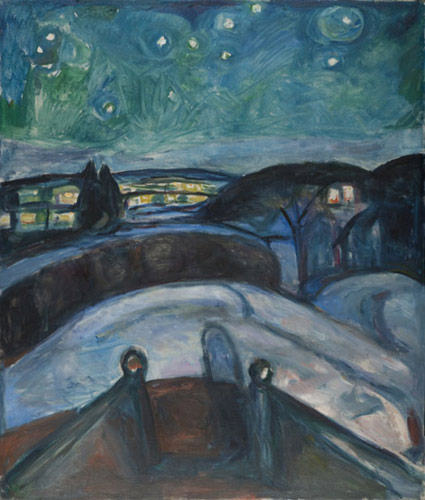
Edvard Munch, “Starry Night,” ca. 1922-24, (c) Munch Museum 2015


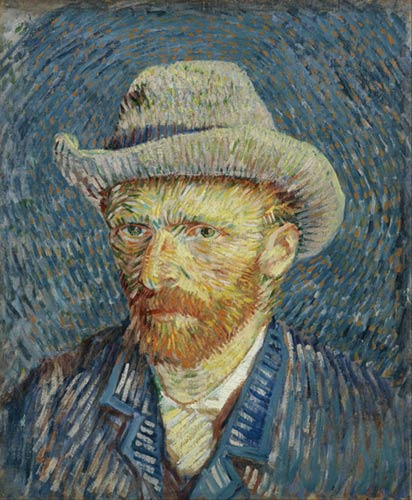
Vincent van Gogh, “Self-portrait with Grey Felt Hat,” ca. 1887-88, oil on canvas, 17 x 14 in. (c) Van Gogh Museum, Amsterdam

 
“Van Gogh + Munch” features nearly 75 paintings and 30 artworks on paper, including 10 comparative works by additional artists. The exhibition’s narrative surrounds both artists’ travels in Paris, where the modernizing artistic environment encouraged each artist to find his own voice and aesthetic. The museum reports that, “although their works may be different with regard to motif and implementation, they were both preoccupied with giving expression to the condition of modern man, and they accomplished this by pressing painterly means to the utmost: a vibrant palette, a highly stylized idiom, personal and bold brushwork and unconventional compositions.”


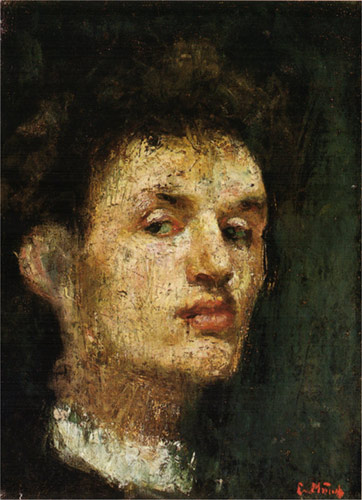
Edvard Munch, “Self-portrait,” 1886, oil on canvas, 13 x 9 1/2 in. (c) National Museum Norway 2015

 
The exhibition also includes the artists’ writings in addition to a catalogue with contributions by leading art historians Jill Lloyd, Uwe Schneede, and Reinhold Heller. “Van Gogh + Munch” opened on May 9 and will be on view through September 6.
 
To learn more, visit the Munch Museum.
 
This article was featured in Fine Art Today, a weekly e-newsletter from Fine Art Connoisseur magazine. To start receiving Fine Art Today for free, click here.
 

Creativity Unfurled

0

Under the tutelage of guest curator Mia Bergeron, Gallery 1261 is turning heads by showcasing 25 world-renowned artists who were asked to create “without boundaries.”
 
With names like Zhaoming Wu, Jeremy Mann, Susan Lyon, and Rachel Constantine, the upcoming exhibition “Unfurl” at Gallery 1261 in Denver, Colorado, was sure to be amazing even if each hadn’t been asked to simply work with abandon and with true creative freedom. The gallery offers, “The objective of ‘Unfurl’ is to host not only an exhibit that stretches the limits of what each artist is capable of manifesting, but also to invite collectors to view a potentially untold and private part of these artists’ creativity.” If successful, the works available are sure to be one-of-a-kind, with outstanding investment potential.


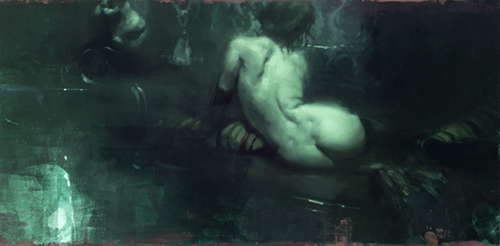
Jeremy Mann, “Lure,” oil, 12 x 24 in. (c) Gallery 1261 2015

 
Collectors should act quickly, however, as several works have already been claimed, including Jeremy Mann’s “Lure.” This gorgeous oil displays Mann’s typical nude figure within an abstracted space. A strong green blankets the entire work, giving the work a monochromatic scheme.


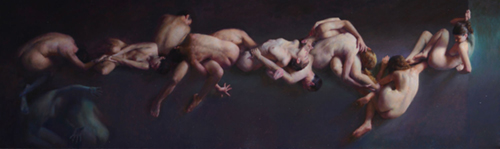
Stephen Early, “Undertow,” oil, 14 x 46 in. (c) Gallery 1261 2015

 
Stephen Early’s “Undertow” is captivating as well, with its kinetic, figurative movement. In a strong horizontal format, we find a multi-figured arrangement from left to right. The bodies, both male and female nudes, intertwine and embrace one another in continuous connection. At a glance, the picture calls to mind the dramatic and multi-figured compositions in a Baroque Peter Paul Rubens painting or Renaissance Michelangelo fresco.  


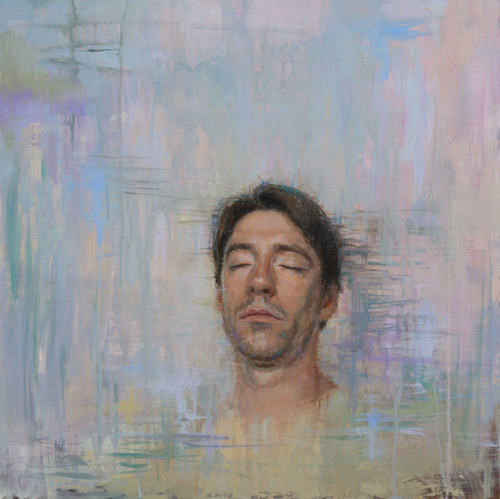
Rachel Constantine, “Nimbus,” oil, 24 x 24 in. (c) Gallery 1261 2015

 
“Unfurl” opens tomorrow, August 21, and will run through September 26 at Gallery 1261.
 
To learn more, visit Gallery 1261.
 
This article was featured in Fine Art Today, a weekly e-newsletter from Fine Art Connoisseur magazine. To start receiving Fine Art Today for free, click here.
 

A Tradition Continued…

0

As the market for great Western American art continues to expand, so too do the opportunities to purchase it — coupled with cocktails, exhibitions, and more, of course.

From 2010 through 2014, the annual Western Art Week in Great Falls, Montana, established a tradition of fun and sales success — so much so that a new show and sale were established at the Coeur d’Alene Resort in Idaho: The Heart of the West Show. Taking place over three days this weekend (August 20-22), the Heart of the West Show will feature over 60 juried artists and galleries, many of whom are regular attendees of previous Western Masters events.


Michael Ome Untiedt, “Going Home,” oil on canvas, 24 x 30 in. (c) Michael Untiedt 2015

 
Via the venue’s website, “The Heart of the West Show gives Western art lovers a unique opportunity to meet and talk to their favorite artists while enjoying food, drinks, demonstrations and educational presentations. Attendees inevitably connect and bond over a shared love of fine art while supporting local, regional, and national artists.”


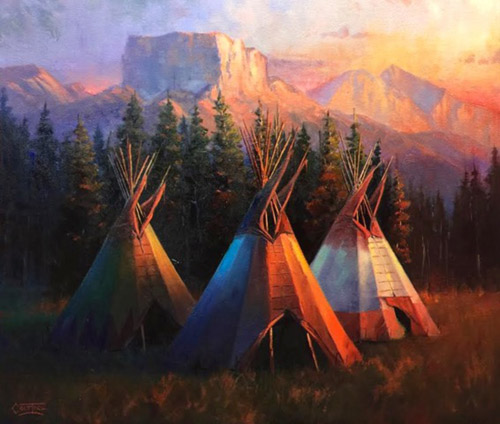
Colt Idol, “Chief Mountain Trio,” oil on canvas, 26 x 30 in. (c) Colt Idol 2015

 
Just a few of the notable names featured in this year’s event include Colt Idol, Joe Kronenberg, Michael Ome Untiedt, Michele Usibelli, and Julie Oriet. In addition to its stunning beauty, Mike Untiedt’s “Going Home” has a back story that imbues the piece with a particular allure. Relaying several stories throughout history in which individuals have made the ultimate heroic sacrifice to help others in need, Untiedt says, “This painting is in honor of all courageous individuals who gave their lives to save others. May each and every one of them find comfort and peace in an eternal home.”


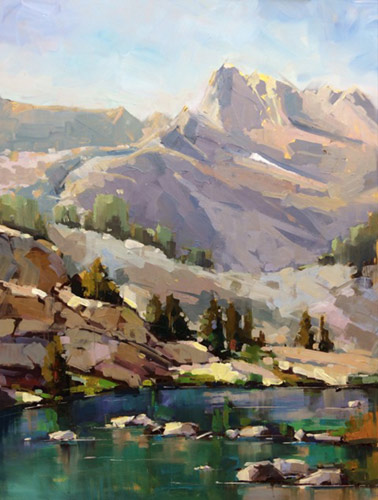
Michele Usibelli, “Sailor Lake, High Sierras,” oil, 24 x 18 in. (c) Michele Usibelli 2015

 
In the picture, we find a featureless rider cast in shadow, the ambiguity leaving him with no objective identity. Located in the foreground, the rider perks and looks attentively out of our view, perhaps alerted to a crisis as he makes ready to depart. In the distance we find a barn and simple home capped with a red tin roof. A glimmer of brilliant yellow light faintly shines through, capturing our gaze.


Joe Kronenberg, “Proud Mount,” oil on Masonite, 36 x 24 in. (c) Joe Kronenberg 2015

 
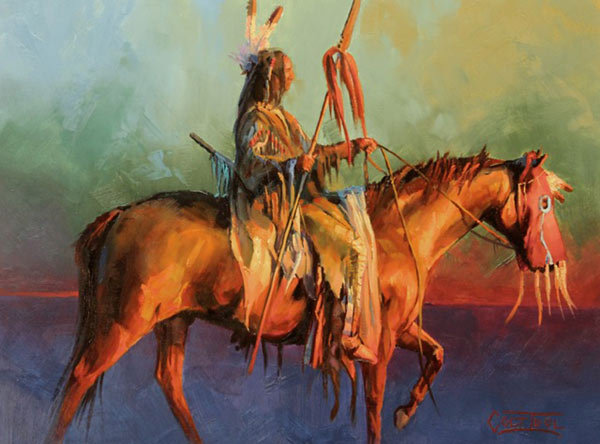
Colt Idol’s “Chief Mountain Trio” and “Strength” are breathtaking as well. Each presents a Native American subject, and Idol’s use of a full spectrum of color gives his pieces a rainbow-like luminescence that is entrancing. Both paintings display Idol’s virtuoso range of controlled and expressive touch. Michele Usibelli’s “Sailor Lake, High Sierras” is more abstracted, but perhaps conveys a higher degree of emotion, expression, and experience. The patterned arrangement of aquamarine, purple, green, and blue will undoubtedly move the viewer.


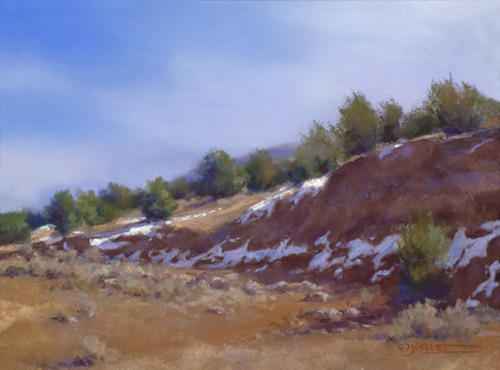
Julie Oriet, “Last Snow,” pastel, 9 x 12 in. (c) Julie Oriet 2015

 
“The Heart of the West Show” opens on August 20 and will continue through August 22. The auction will take place on Saturday, August 22.
 
To learn more, visit Western Masters Art Show.
 
This article was featured in Fine Art Today, a weekly e-newsletter from Fine Art Connoisseur magazine. To start receiving Fine Art Today for free, click here.
 

Sea Heist

0

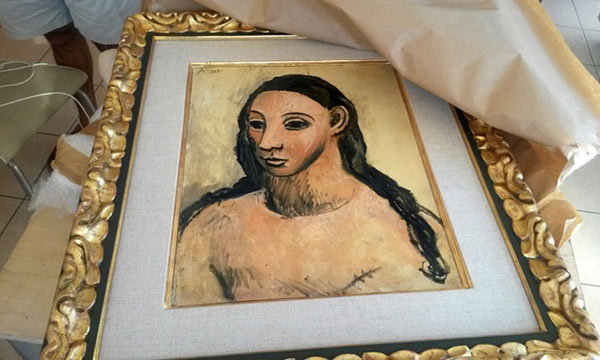
A billionaire banker’s attempt to illegally export Picasso’s “Head of a Young Woman” is averted by French authorities.
 
Worth an estimated $27 million, Picasso’s “Head of a Young Woman” is the type of stunning original that only the financial elite can afford. Unfortunately for Spanish banker Jaime Botin, he’ll need to find another after trying to unlawfully export the painting from its home country of Spain.
 
Botin, who acquired the piece in 2012, has been trying to get permission to take it out of the country ever since. According to multiple reports, Spanish courts ruled the painting “unexportable” because of its significant cultural interest. Regardless, Botin attempted to move the painting to Switzerland via his yacht, which was found by French authorities docked at Corsica, a Mediterranean island between France and Italy, on July 31. The painting, which was onboard, had no documentation but was carefully packed for transport.
 
French authorities have taken the work to a secure location where they await the arrival of Spanish experts to retrieve the piece.
 
To learn more, visit CNN.
 
This article was featured in Fine Art Today, a weekly e-newsletter from Fine Art Connoisseur magazine. To start receiving Fine Art Today for free, click here.
 

Elegant Serenity

0

For the average person, it can sometimes be hard, even impossible, to find the aesthetic beauty of worn, casual, or everyday objects. Using his masterful skill to create realist paintings, Eric G. Thompson draws our attention to the flawed beauty of subjects that many would pass by.
 
Whether it’s the decades-old facade of a country barn, a sun-bleached rocking chair, or a muddy pair of shoes, Eric G. Thompson finds beauty in some of the most mundane objects. Thompson himself suggests, “Objects have spirit. An old cup is like a person.”


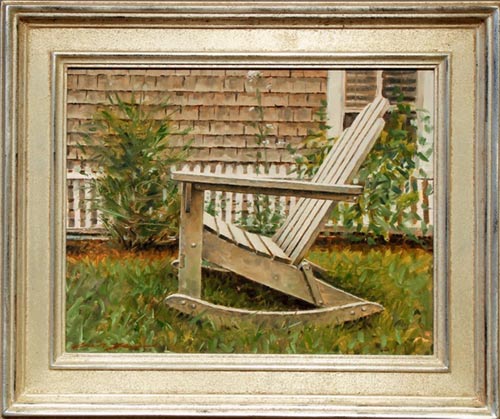
Eric G. Thompson, “Adirondack,” oil on panel, 11 x 14 in. (c) Matthews Gallery

 
“Eric’s artwork possesses an elegant serenity that often stops our visitors in their tracks,” says gallery owner Lawrence Matthews. “The allure lies in the way he plays with light, illuminating beautiful details but also revealing hints of entropy and decay.”
 
As his painting “Adirondack” proves, the skilled artist can make nearly anything gorgeous. The picture here displays a worn rocking chair nestled in its proper place among grasses and shrubs. With attention thus focused on a benign chair, the viewer is encouraged to probe more deeply and appreciate the object’s engineering and construction, and the potential memories contained within its aged boards. The stillness of the chair is paired with a lively array of expressive brushstrokes in the plants and grass. “Adirondack” will hang in a current solo exhibition of Thompson’s recent work.


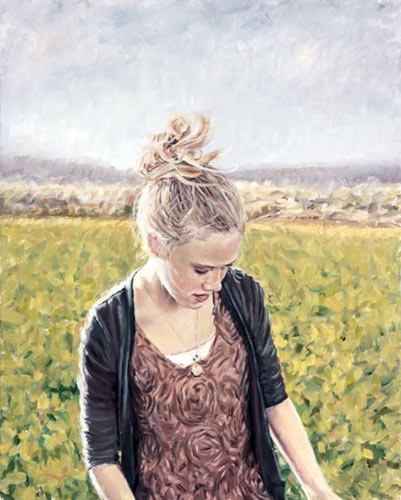
Eric G. Thompson, “Grace,” oil on linen, 20 x 16 in. (c) Matthews Gallery

 
Among works that explore everyday objects are also some of Thompson’s figurative works, such as the lovely “Grace.” The half-length figure stands in a shallow field of abstracted greens and yellows. Her gaze does not meet ours, but there is something about the sitter that pulls one into the picture — perhaps our curiosity as to what she’s thinking about or looking at. Chiefly notable are the dazzling swirls of maroon and white that compose her shirt.


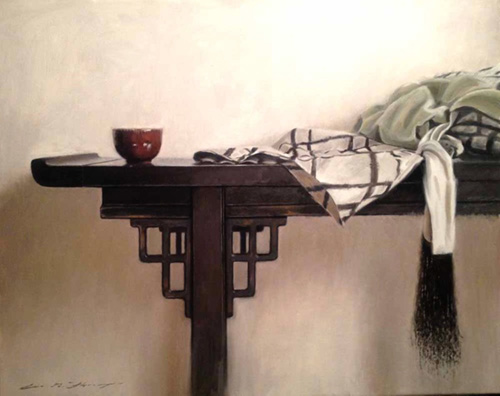
Eric G. Thompson, “After Tea,” oil on canvas, 24 x 30 in. (c) Matthews Gallery

 
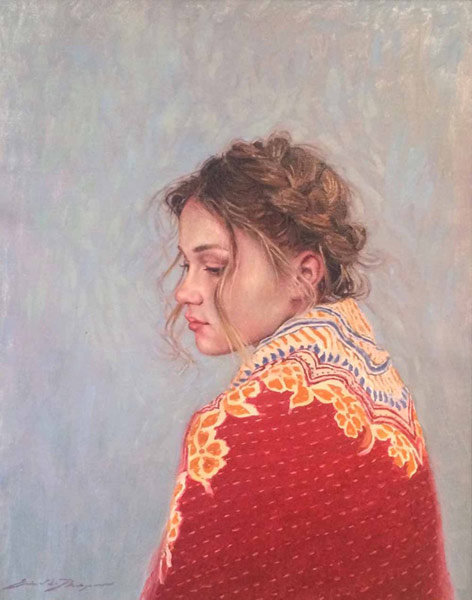
Another beautiful picture is “Santa Fean Girl,” which shows a figure in near half-length who stares outside the picture. Her back is to us almost completely, but she softly turns back toward the viewer. The patterned array of reds, oranges, and yellows that engulf the blanket in which the figure is draped capture the viewer’s attention.
 
These paintings, among many others, will showcase in “Eric G. Thompson: New Works” at Matthews Gallery in Santa Fe, New Mexico. The exhibition opened on August 14 and will be on view through August 28.
 
To learn more, visit Matthews Gallery.
 
This article was featured in Fine Art Today, a weekly e-newsletter from Fine Art Connoisseur magazine. To start receiving Fine Art Today for free, click here.
 

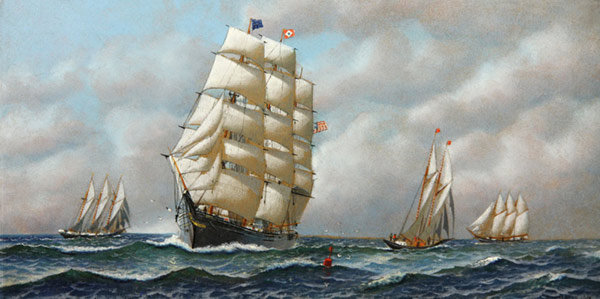
Featured Lot: Antonio Jacobsen, “Full Clipper Ship”

0

In this ongoing series for Fine Art Today, we take a longer look at the history and features of a soon-to-be-available artwork of note. This week: Antonio Jacobsen, “Full Clipper Ship.”
 
If John James Audubon is an artist known for obsessively categorizing all the birds of America, then Antonio Jacobsen (1850–1921) is the equivalent for steam and sailboats. The Danish-born American has earned the distinction as one of the most prolific of marine artists, and over 6,000 works exist that document the thousands of vessels that frequented New York Harbor between 1873 and 1919.
 
Born in Copenhagen, Jacobsen attended the Royal Academy of Design before immigrating to the United States. Settling in West Hoboken, New Jersey, Jacobsen had the perfect vantage point from which to observe his subjects. The artist quickly rose to notoriety and was frequently commissioned by ship captains and owners to paint portraits of their ships. Although his paintings never sold for much during his lifetime, Jacobsen’s finest oils have commanded six-figure prices.
 
Featuring in Kaminski’s August 23 estate auction is a Jacobsen original, titled “Full Clipper Ship.” Just as portraitists capture the identity and character of their subjects, so too does Jacobsen harness the majestic beauty of not one, but four vessels as they bob and cut through the choppy seas. There is a dramatic sense of movement that could have viewers swaying from side to side. Jacobsen’s attention to detail is outstanding and the piece retains a vibrancy of color that is exceptional for its age.
 
“Full Clipper Ship” has a starting price of $6,000, with bidding opening on August 23 at 10 a.m. in Beverly, Massachusetts.
 
To view the full catalogue, visit Kaminski.
 
This article was featured in Fine Art Today, a weekly e-newsletter from Fine Art Connoisseur magazine. To start receiving Fine Art Today for free, click here.
 

Coming Together

0

Much more than just an art show, Maynard Dixon Country is an assembly of artists, collectors, community, and friends.
 
Celebrating its 17th year is the Maynard Dixon Country art show and sale, a fundraising event aimed at supporting the Thunderbird Foundation for the Arts in Mt. Carmel, Utah. Via their website: “We want to help artists in America and we want to ensure the viability of historic preservation. We are deeply connected to the art of Maynard Dixon and his contributions to American art. But rather than focusing solely on the beloved paintings of Maynard Dixon, we focus on the ‘art spirit’ and intention of Maynard Dixon, the artist, poet, and whole person. In choosing to remember Dixon this way, we believe his legacy becomes even more meaningful when it is illuminated by the artists who are living and making art in 2015.”


John Budicin, “Wednesday Afternoon,” oil on canvas, 18 x 24 in. (c) John Budicin 2015

 
Some of the featured names in the sale include, among many others, Christopher Blossom, John Budicin, Jill Carver, Jeremy Lipking, Chris Morel, Charles Muench, Ray Roberts, Kate Starling, Kathryn Stats, and Dan Young


Bonnie Posselli, “Bathed in Hidden Splendor,” oil, 14 x 18 in. (c) Bonnie Posselli


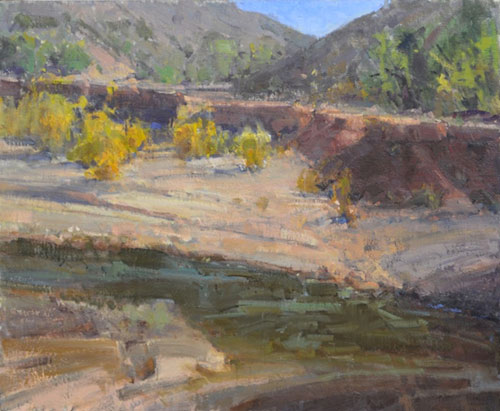
Kathryn Stats, “Paria River,” oil on linen panel, 18 x 23 in. (c) Kathryn Stats 2015
 

Tickets are $75 and grant admission to all events. Maynard Dixon Country begins on Friday, August 21.
 
Friday: 5 p.m. art preview at the Thunderbird Foundation Gallery
Saturday: 10 a.m. Wet Paintings Sale at the Dixon Studio
2 p.m. Symposium and musical performance featuring Hal Cannon at Valley High School, Orderville. Cocktail reception to follow, with Artists Awards Ceremony.
 
To learn more, visit Maynard Dixon Country.
 
This article was featured in Fine Art Today, a weekly e-newsletter from Fine Art Connoisseur magazine. To start receiving Fine Art Today for free, click here.
 

Power and Pathos

0

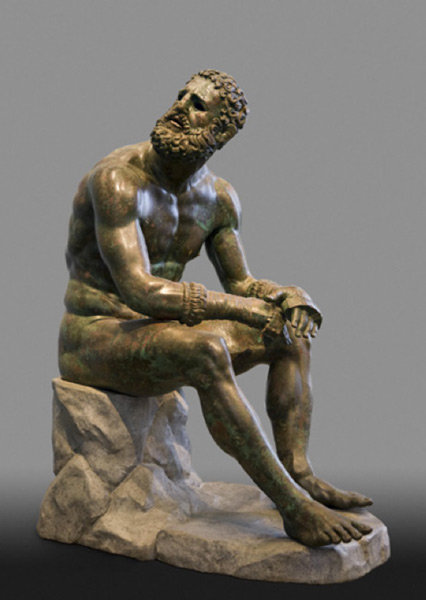
Although Greek sculptors worked extensively in marble, many preferred working in bronze because the medium allowed greater exploration of complex poses, anatomy, and movement in the body. Today, bronze originals are difficult to find, let alone to serve as the center of an exceptional exhibition.
 
Ever since the 4th century BCE, Western cultures have sought to imitate Classical Greece in both life and art, especially sculpture. Alexander the Great and his father, Philip II of Macedonia, were both lovers of Greek culture and built a Hellenistic empire that was Grecian at its foundation. However, the Hellenistic period (323-31 BCE) was characterized by intense urbanization in the Mediterranean world. Hellenistic artists — while copying Greek styles and techniques — were also more keen to explore less idealized, and sometimes controversial, subjects.


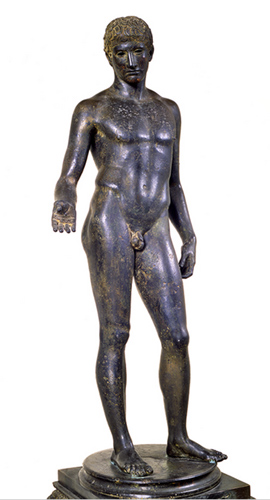
“Youth,” ca. 30 BCE, bronze/copper/lead, Museo Archeologico Nazionale, Firenze

 
The J. Paul Getty Museum has brought together an extraordinary collection of bronze sculpture from the Hellenistic world, which is now on view. A particularly well-known example is “The Seated Boxer,” circa 300-200 BCE. The sculpture is unequivocally masterful in its anatomical precision, but be that as it may, scholars are quick to discuss the sculpture’s exploration of the human psyche, seen in the pained and exhausted expression on the sitter’s face. The psychological realism and intensity to the sculpture characterize well the Hellenistic preference. The furrowed brow, hunched posture, and grimace are mesmerizing.


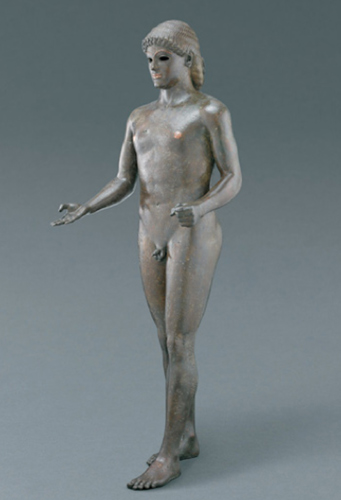
“The Piombino Apollo,” ca. 120-100 BCE, bronze/copper/silver, 46 x 15 x 13 in. Musee du Louvre

 
Also deserving of mention is a bronze “Youth” from around 30 BCE. The sculpture is based on a similar sculpture that, to this day, remains one of the most famous in history: Polykleitos’s “Doryphoros” from 440 BCE. Although aspects of the “Youth” sculpture have been changed from its inspiration, the sculpture retains the canonical contrapposto stance, idealized musculature, and stylized hair.
 
“Power and Pathos: Bronze Sculpture of the Hellenistic World” opened on July 28 and will be on view through November 1.
 
To learn more, visit the J. Paul Getty Museum.
 
This article was featured in Fine Art Today, a weekly e-newsletter from Fine Art Connoisseur magazine. To start receiving Fine Art Today for free, click here.
 

Luminous Life

0

Exceptional at capturing the play of light as it falls on a variety of familiar objects, artist Wendy Higgins creates still life paintings that are absorbing in their quiet beauty.
 
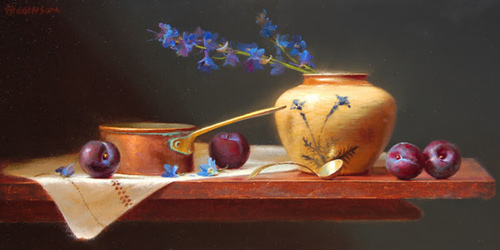
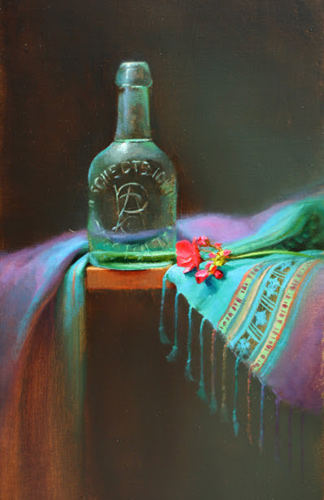
Although still life paintings are static images, they remain a staple genre because of their ability to move our emotions through light, texture, color, and naturalism. Artist Wendy Higgins has established a lasting career built on her exquisitely beautiful still lifes, which have a luminosity and glow that imbues them with a dream-like mood.


Wendy Higgins, “Reflections,” oil on board, 36 x 24 in. (c) Greenberg Fine Art

 
On August 7, Greenberg Fine Art in Santa Fe, New Mexico, opened its annual exhibition of Higgins’s newest works. Gallery director Bella Gaspich offers, “Wendy’s work captures the mysterious allure of familiar objects with a subtlety that begs the viewers to look longer. I watch people every day entranced by the beauty of the most sumptuous arrangements of velvet-soft petals or frosted grapes. The carefully balanced colors and delicately draped light make Wendy’s work absolutely timeless.”
 

 Wendy Higgins, “The Silver Spoon,” oil on board, 12 x 24 in. (c) Greenberg Fine Art
 

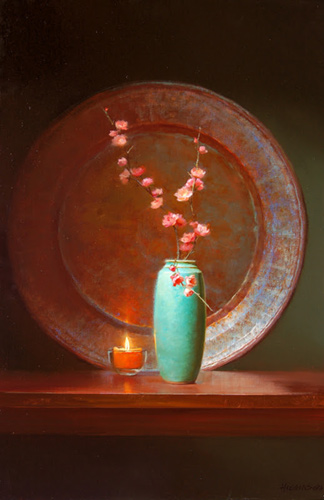
Indeed, “timeless” seems to capture well the overall impression of Higgins’s “Reflections.” Perched atop a wooden tabletop sits a tall ceramic vase, which supports the long stems of a pink orchid. Sitting next to the vase, and dwarfed by it, is a small candle. Certainly, the bright glow of the candle draws the viewer’s gaze and encourages a lengthy meditation. Framing the vase and candle is a massive round platter, which contains our focus to the objects on the table, but also adds a number of compositional devices. The orientation of the platter in the background, propped against the wall, and its perfect geometry add a degree of movement to the piece, keeping our visual interest. Truly amazing is how a simple scene with limited objects can pack such a large impact.


Wendy Higgins, “A Love Affair,” oil on board, 20 x 10 in. (c) Greenberg Fine Art

 
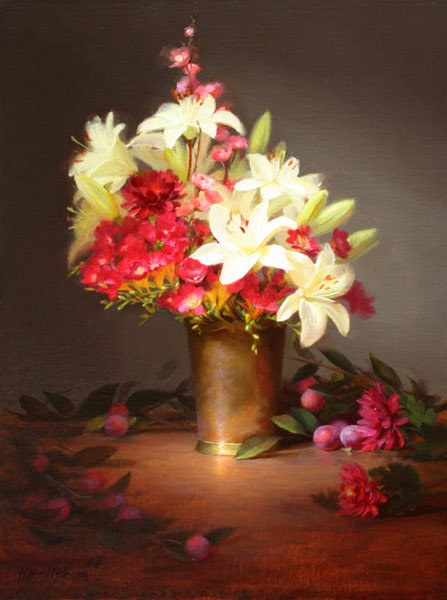
“In the Mood” is dazzling as well. We can almost smell the lilies that populate the masterfully rendered bouquet of flowers that forms the focus of this still life. The flowers appear to emanate their own supernatural glow, giving life to the subjects with near-blinding radiance. Perhaps adding an element of narrative are the flowers that lay in an arch around the vase on the table. Perhaps we are to imagine a florist has just composed this bouquet as artfully as Higgins has rendered it?
 
“Wendy Higgins: Glowing Simplicity” opened on August 7 and will be on view through today, August 20.
 
To learn more, visit Greenberg Fine Art.
 
This article was featured in Fine Art Today, a weekly e-newsletter from Fine Art Connoisseur magazine. To start receiving Fine Art Today for free, click here.
 

WEEKLY NEWS FROM THE ART WORLD

Fill your mind with useful art stories, the latest trends, upcoming art shows, top artists, and more. Subscribe to Fine Art Today, from the publishers of Fine Art Connoisseur magazine.

  • This field is for validation purposes and should be left unchanged.