
Home Blog Page 472

Quiet Sophistication

0

Absorbed in plumbing the recesses of their minds, Milt Kobayashi’s figures seem aloof while floating in their unfamiliar spaces.
 
The Meyer Gallery will host a brief but compelling exhibition of Milt Kobayashi’s recent work. Kobayashi, a third-generation Japanese-American, finds influence in the art of Whistler, Chase, and Sargent, as well as 16th- and 17th-century Japanese ukiyo-e woodblock print masters Hokusai, Sharaku, and Utamaro. Kobayashi’s art is enigmatic, fresh, original, and unusual — elements sure to captivate audiences.


Milt Kobayashi, “Morning,” oil on canvas, 24 x 30 in. Meyer Gallery.
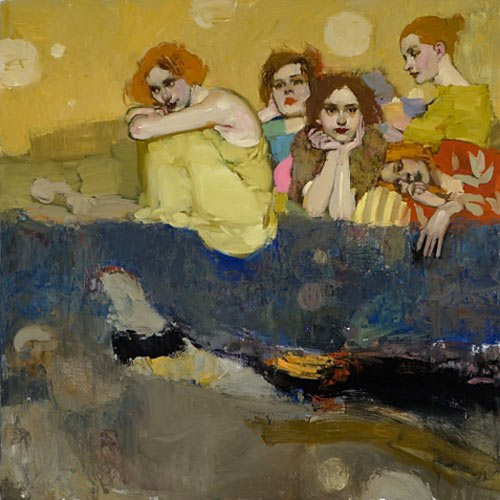

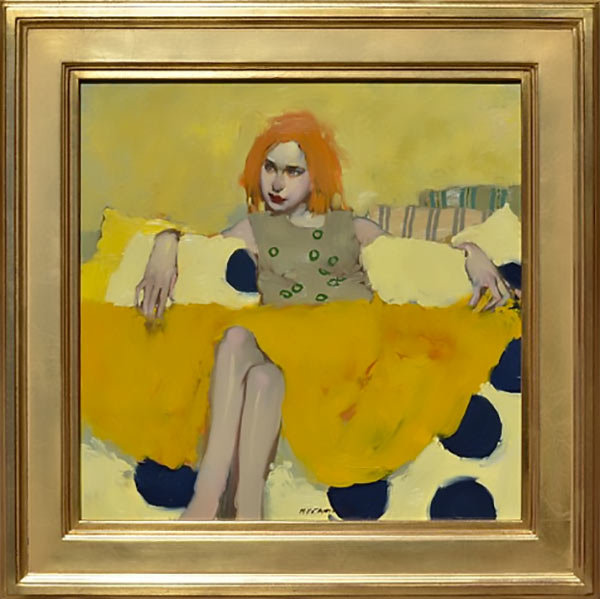
Milt Kobayashi, “Birds,” oil on canvas, 26 x 26 in. Meyer Gallery.
 

Similarly to Gustav Klimt, another artist influenced by Japanese art, Kobayashi juxtaposes the naturalistic physiognomy and accuracy of his subjects with abstract planes and geometric forms of color and pattern. The result plays with and confuses our perceptions of form, two-dimensionality, three-dimensionality, and space.
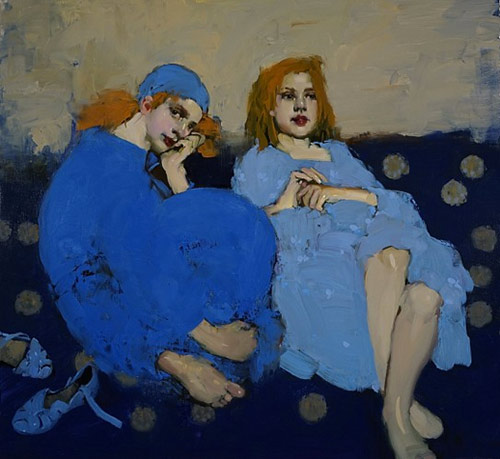


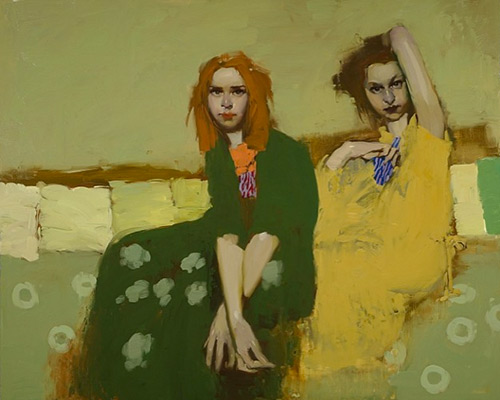
Milt Kobayashi, “Friends,” oil on canvas, 24 x 26 in. Meyer Gallery.

 
Kobayashi adds another dimension to his work through the poses, gestures, and expressions of his figures. “Her Yellow Dress” is a characteristic example, showing a reclining figure with an intense demeanor, her attention directed outside the frame. Her dress fans across the entire canvas, but displays little shading, flattening into a large plane of color. Her hands, completely detached from her form, leap from the surface while the patterned pillows flatten again. The experience can be dizzying, but is undeniably fun and visually interesting.
 
Milt Kobayashi’s work will be on view at the Meyer gallery from July 24 through July 31.
 
To learn more, visit Meyer Gallery.
 
This article was featured in Fine Art Today, a weekly e-newsletter from Fine Art Connoisseur magazine. To start receiving Fine Art Today for free, click here.
 

Bouquet of Impressionism

0

Motivation to start your next garden — or painting — project lies just beyond the doors of the Denver Art Museum.
 
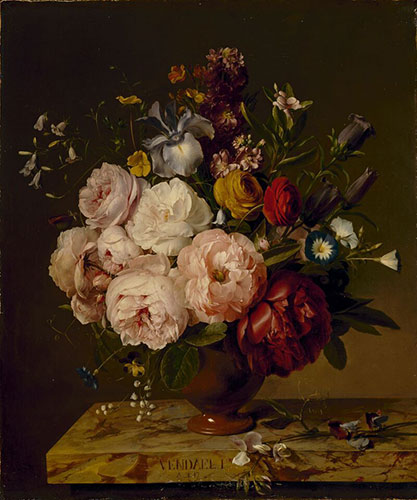
A colorful new exhibition just opened at the Denver Art Museum exploring the floral still life paintings of 19th-century French modernists Édouard Manet, Edgar Degas, Pierre-Auguste Renoir, Paul Cézanne, Vincent van Gogh, and others. “In Bloom: Painting Flowers in the Age of Impressionism” is the centerpiece exhibition for a campus-wide summer celebration of flowers. Featuring over 60 paintings by history’s greatest Impressionists, the colorful exhibition explores how this traditional subject and genre were reinvented in late-19th-century France.


Jan Frans Van Dael, “A Vase of Flowers on a Ledge,” 1817, oil on canvas, 21 7/8 x 18 1/4 in.
The Syndics of the Fitzwilliam Museum.


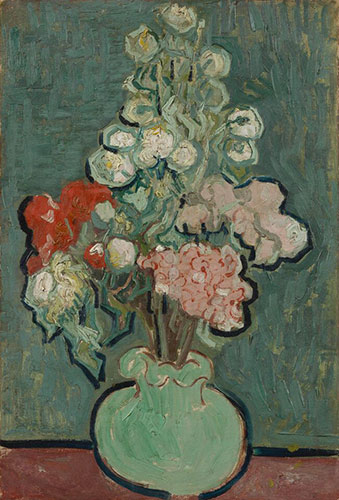
Vincent Van Gogh, “Vase of Flowers,” 1890, oil on canvas, 16 9/16 x 11 7/16 in. Van Gogh Museum, Amsterdam.

 
To highlight the evolution, curators have included paintings from the late 1700s through 1900 as well. Early paintings by such masters as Pierre-Joseph Redouté begin the chronological journey, continuing with Camille Pissarro before leading into the Impressionists. The exhibition concludes with the paintings of Odilon Redon, Pierre Bonnard, and Henri Matisse, who continued to evolve the practices of the Impressionists and modernism.


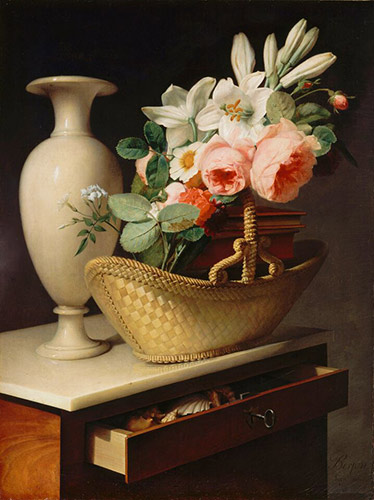
Antonie Berjon, “Bouquet of Lilies and Roses in a Basket on a Chiffonier,” 1814, oil on canvas, 26 3/16 x 19 1/2 in.Musée du Louvre, Département des Peintures, Paris.


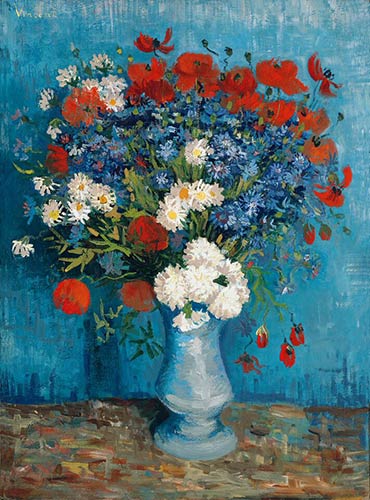
Vincent Van Gogh, “Vase with Cornflowers and Poppies,” 1887, oil on canvas, 31 ½ x 26 3/8 in.
Triton Collection Foundation.
 

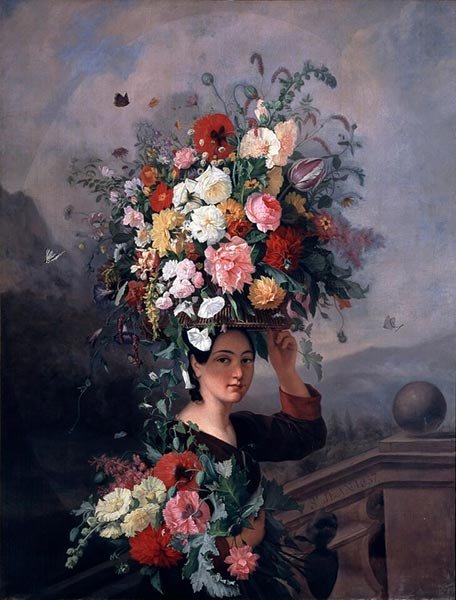
Of note is Simon Saint-Jean’s “The Gardener,” a beautifully rendered portrait of an unnamed sitter engulfed by an exquisite arrangement of roses, tulips, peonies, lilies, and so much more. One can almost detect a sweet aroma emanating from the canvas, the same aroma that attracts the fluttering butterflies that circle the subject. Equally pleasing is van Gogh’s “Vase of Flowers,” displaying the artist’s characteristic impasto and moving expressionism. In a sea of greens and blues, a single vibrant red flower reaches out to the viewer and commands attention, its intensity heightened by the complementary greens.
 
“In Bloom: Painting Flowers in the Age of Impressionism” opened on July 19 and will be on view through October 11.
 
To learn more, visit the Denver Art Museum.
 
This article was featured in Fine Art Today, a weekly e-newsletter from Fine Art Connoisseur magazine. To start receiving Fine Art Today for free, click here.
 

Portraiture’s Finest

0

See which 18th-century portraitist is being comprehensively celebrated at Scotland’s National Gallery.
 
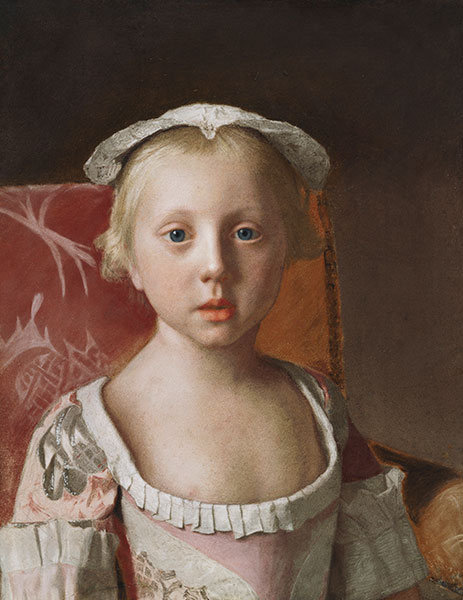
Visitors to Scotland’s National Gallery will have their chance to take in the masterful portraits and self-portraits of 18th-century painter Jean-Etienne Liotard (1702–1789). Working in pastel, charcoal, oil, and enamel, Liotard was a heavily employed portraitist in an age of opulence and magnificence. His portraits, however, such as the hypnotic “Princess Louisa Anne” of 1754, have an informal truthfulness that is absolutely gripping. The young girl, aged 5 or 6, has piercing blue eyes, golden blond hair, and a flushness of skin that reads like a photograph rather than a pastel on vellum.


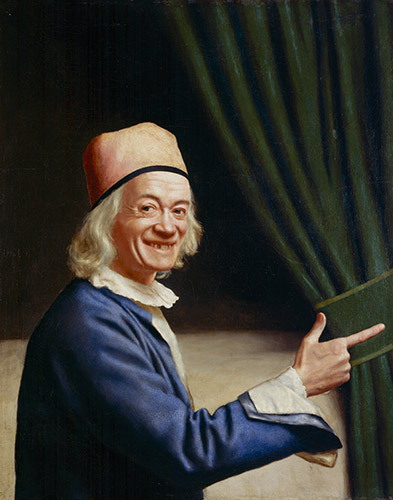
Jean-Etienne Liotard, “Liotard Laughing (Self-Portrait),” ca. 1770, oil on canvas, 84 x 74 cm. (c)
Musée d’art et d’histoire, Ville de Genève.


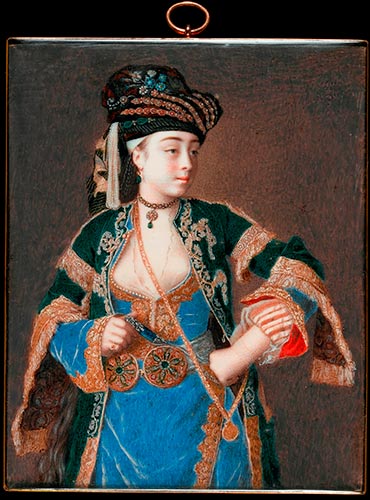
Jean-Etienne Liotard, “Laura Tarsi, ‘a Grecian Lady’,” ca. 1745-1749, watercolor on ivory, 96 x 77 mm. (c)
Fitzwilliam Museum, Cambridge.
 

Liotard is rarely exhibited or appreciated in Britain, and the exhibition, titled “Jean-Etienne Liotard,” surveys his international prowess, famous portraits, startling self-portraits, and experimentations with still life subjects. Liotard’s “Self-Portrait Laughing” of 1770 shows the sophisticated and witty side of the man. In three-quarter view, we see Liotard gazing out at the viewer with an engaging smile. Perhaps he knows something we do not, as he curiously points and directs our attention outside the picture frame.


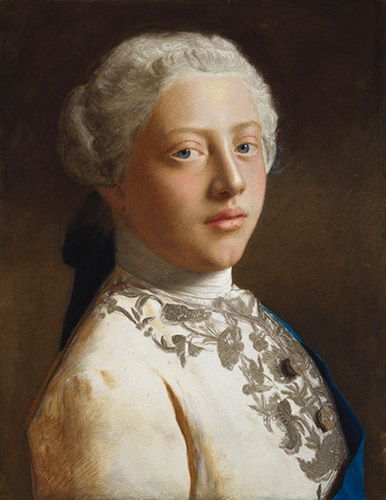
Jean-Etienne Liotard, “George, Prince of Wales,” 1754, pastel on vellum, 40.6 x 29.8 cm. Royal Collection Trust (c)
Her Majesty Queen Elizabeth II 2015.


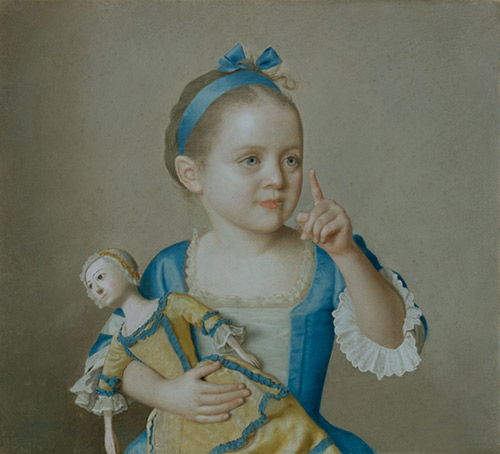
Jean-Etienne Liotard, “Marie-Anne Françoise Liotard with a Doll,” ca.1744, Pastel on parchment, 45 x 50 cm. (c)
Vienna Shonbrunn Palace.
 

Liotard’s clientele included the bourgeoisie of Geneva and aristocrats, actors, Grand Tourists, and men and women of fashion. Liotard’s obsessive interest in the details of clothing surfaces in “Laura Tarsi, ‘A Grecian Lady’” circa 1745–1749. The portrait displays a well-to-do woman adorned in extravagant clothing. Liotard has meticulously rendered nearly every fold, stitch, and bit of lace embroidery on the woman’s costume. Vibrant greens and blues add vitality to the image and capture the viewer’s attention.
 
“Jean-Etienne Liotard” opened on July 4 at the Scottish National Gallery and will be on view through September 13.
 
To learn more, visit Scottish National Gallery.
 
This article was featured in Fine Art Today, a weekly e-newsletter from Fine Art Connoisseur magazine. To start receiving Fine Art Today for free, click here.
Of Light, Shadow, and Beyond

0

Phil Dike was more than a gifted watercolorist. He was an influential educator who inspired students and challenged them — and himself — to continually expand their understanding of nature, light, and shadow.
 
In connection with the Laguna Art Museum’s current exhibition “Phil Dike: The Wave and Malibu Set Series, 1968–1981,” the Laguna College of Art and Design features a number of watercolors by Dike dated circa 1940 through 1982 as well as prints, ceramics, photography, and illustrations by others to highlight his influence. Many of the watercolors in “Phil Dike: Of Light, Shadow, and Beyond” have never been exhibited before.


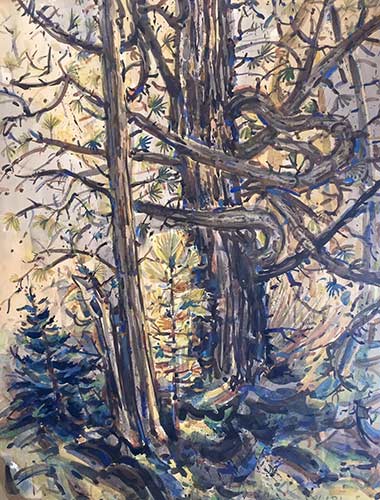
Phil Dike, “Young Pine, Cambria,” 1963, watercolor on board, (c) Laguna College of Art and Design.

 
Phil Dike (1906–1990) was born in Redlands, California, and studied at the Chouinard Art Institute in Los Angeles, Arts Students League in New York, and American Academy in France. Around 1930, Dike was teaching for the Chouinard Art Institute, and he’d begun exhibiting all over America, earning acclaim. By 1935, he was working and teaching with Walt Disney Studios, working on notable films such as Snow White and the Seven Dwarfs, Fantasia, and The Three Caballeros. His work became increasingly abstract after World War II, when he left Disney and continued to teach and paint.


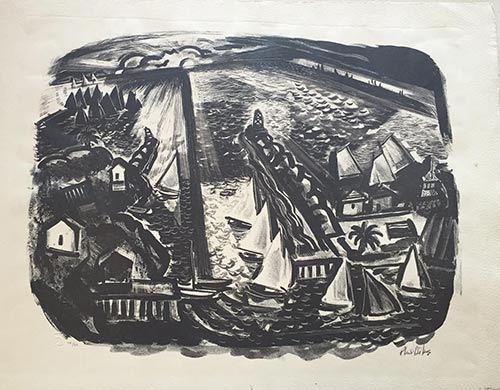
Phil Dike, “Evening Light, Newport Harbor,” ca. 1950, lithograph, (c) Laguna College of Art and Design.

 
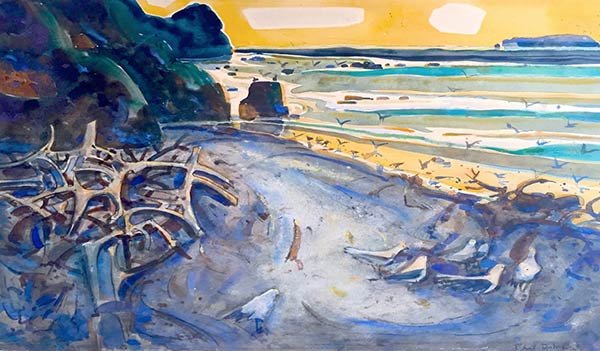
“Young Pine, Cambria” is a moving example and highlight of the exhibition. There is a boldness and energy in Dike’s brushwork that recalls Claude Monet and Vincent van Gogh. The watercolor displays the dramatic growth patterns of branches within a large tree. There is additionally a great balance of color, light, and dark between the upper left and lower right of the page. Another, “Birds and Sea Sculpture,” is equally splendid. The image shows an empty beach with flocks of seagulls, driftwood, and a rocky projection. Similar to “Young Pine, Cambria,” Dike has balanced the composition diagonally, showing the beach in deep blue shadow to the lower left and a sun-drenched yellow and orange sea to the upper right. Upon first glance, the picture appears geometric, with bold horizontal lines and simple forms. However, closer inspection reveals a detailed touch that gives the piece a lovely finish.
 
“Phil Dike: Of Light, Shadow, and Beyond” opened on July 16 and will be on view until August 15 at the Laguna College of Art and Design’s main campus conference room.
 
To learn more, visit Laguna College of Art and Design.
 
This article was featured in Fine Art Today, a weekly e-newsletter from Fine Art Connoisseur magazine. To start receiving Fine Art Today for free, click here.
Echoes of the Past

0

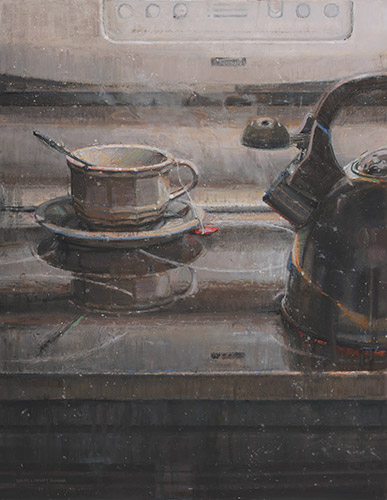
Still life is a genre that is nearly as old as art production itself. So much more than just static images of inanimate objects, still life is often injected with deep levels of irony, symbolism, and meaning. These concepts can change due to time, place, and culture, making the genre tantalizing in its reflection of an ideology or individual. One Colorado gallery is bringing this to the fore in a thought-provoking exhibition.
 
The term “still life” was likely coined during the 17th century and the genre became popular for its connotations and references to the transience of life, the fleeting nature of time and beauty, and the inevitability of death. It also became an efficient way for painters to showcase their ability to render convincing textures and the subtle effects of light on a variety of objects. Gallery 1261 in Denver, Colorado, seeks to highlight the individuality of 16 artists as viewed through their still life paintings. “The Object of Objects” will feature artists who “have all created work that falls under the category of still life but differentiate themselves in terms of style, point of view, color choice, and other various details. Each artist has an acute perspective that comes through in their work which sets them apart.”


Dianne Dunbar, “Sleepy Time Tea,” 18 x 14 in. Gallery 1261.


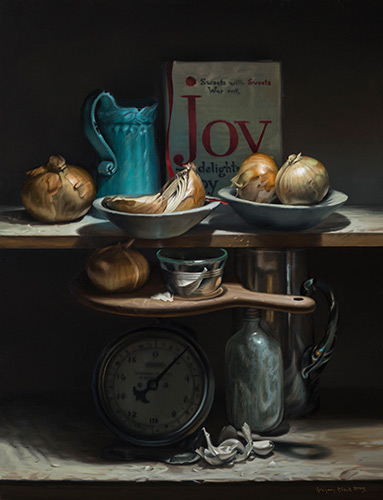
Gregory Block, “Joy,” oil on board, 26 x 20 in. Gallery 1261.

 
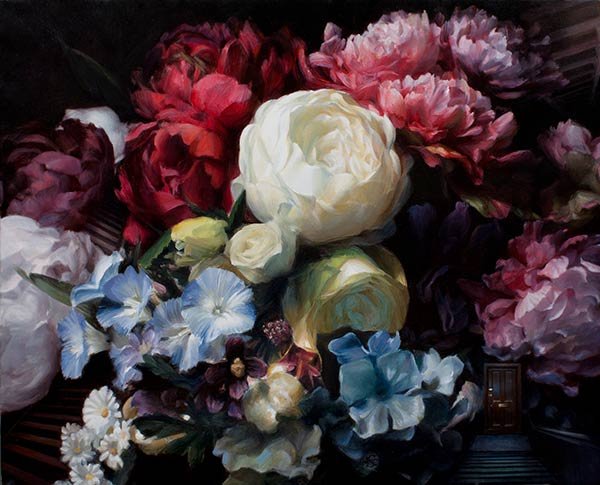
Kate Sammons’s “Stairs and Flowers” is a great example of the subtleties that often lie beneath the surface of a still life painting. Upon a quick glance, the picture appears to be a beautifully rendered bouquet of flowers. Be that as it may, Sammons has quietly included a staircase and hallway to the lower right of the canvas, the meanings of which are subjective to both artist and viewer. Meanwhile, Gregory Block’s “Joy” displays an unusual arrangement of scales, bottles, a box of Joy, and garlic. The high contrast of light and dark, black and white, seems to recall the cycle of life, as the garlic appears to be in decay. Indeed, viewers are sure to experience a range of emotions during their thought-provoking investigations of each piece in the exhibition.


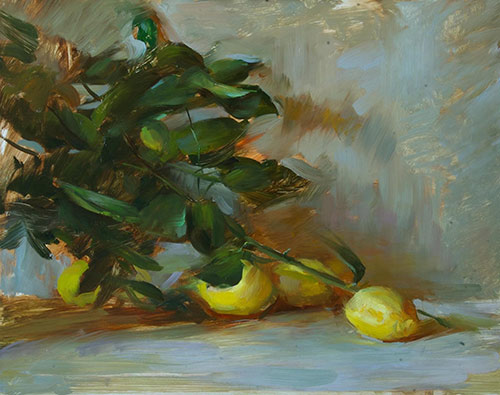
Suchitra Bhosle, “Lemon Arrangement Under North Light,” 16 x 20 in. Gallery 1261.

 
Other artists featured in the exhibition include Mia Bergeron, Suchitra Bhosle, David Cheifetz, Dianne L. Massey Dunbar, Greg Gandy, David Gluck, Zoey Frank, Michael J. Lynch, Dan McCaw, Danny McCaw, John McCaw, C.W. Mundy, Kevin Weckbach, and Jordan Wolfson.
 
To learn more, visit Gallery 1261.
 
This article was featured in Fine Art Today, a weekly e-newsletter from Fine Art Connoisseur magazine. To start receiving Fine Art Today for free, click here.
Through the Malzahn Lens

0

With a nod to 19th-century landscape masters and the French Barbizon School, Jerry Malzahn offers his latest examples of poetry in paint during an upcoming solo exhibition.
 
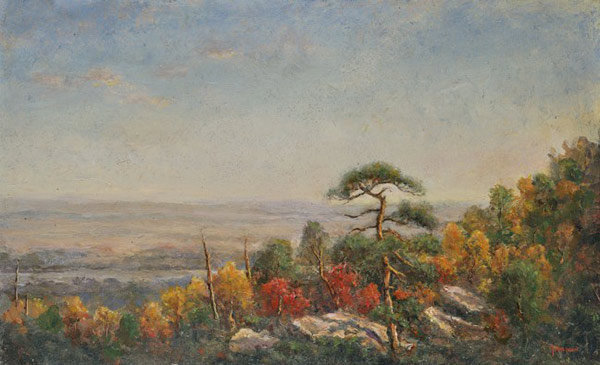
There have been a number of painters who capture well the breadth of America’s natural beauty. Thomas Moran, Albert Bierstadt, and John Frederick Kensett established lasting careers and legacies stemming from their heroic Western landscapes and grand panoramas. Born in Arkansas but a Texas resident, Jerry Malzahn has been establishing his own career within that artistic lineage since 1994. His powerful landscapes evoke feelings of awe and wonder, similar to the Hudson River School, but his application of paint has a delicacy and expressiveness that sets the mark of his individuality. Also notable are the dreamlike atmospheres of Malzahn’s work, which pays homage to artists of the French Barbizon School, such as Camille Corot and Henri-Joseph Harpignies.


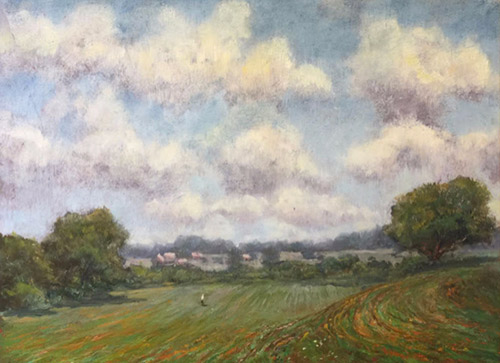
Jerry Malzahn, “Cotton Farm, Friendship, Tennessee,” 2006, oil on paper laid down on board, 11 x 14 in. Questroyal Fine Art.
 
 
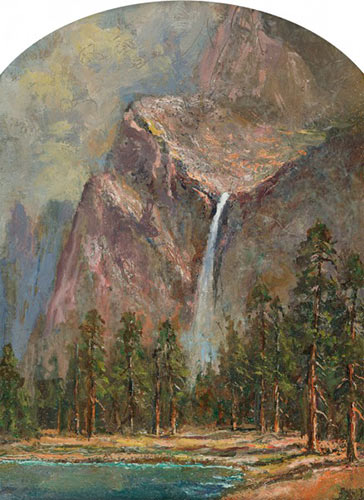
Jerry Malzahn, “Brida Veil Falls,” oil on board, 6 5/8 x 4 5/16 in. Questroyal Fine Art.  
 

Malzahn will feature his latest pictures during an exhibition and sale at Questroyal Fine Art in New York City. “Jerry Malzahn: American Landscapes” will open on July 24 and hang through August 15.
 
To learn more, visit Questroyal Fine Art.
 
This article was featured in Fine Art Today, a weekly e-newsletter from Fine Art Connoisseur magazine. To start receiving Fine Art Today for free, click here.
 

Let the Bidding Begin

0

A St. Louis, Missouri, auction house will soon hold its inaugural auction, offering collectors a variety of fine art, furniture, and jewelry. Is your next acquisition featured in the catalogue?
 
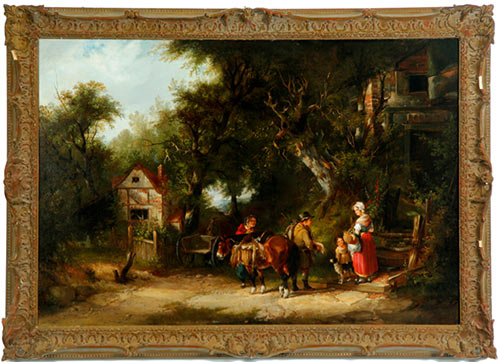
Selkirk Auctioneers & Appraisers are overjoyed that their highly anticipated inaugural auction will arrive on July 31. Located within the historic CWE neighborhood in St. Louis, the auction has notables such as William Shayer’s “The Rabbit Seller” and “Landscape” by Thomas Bangs Thorpe. Company CEO Richard “Jeff” Jeffers noted, “Our first auction, in our newly renovated space on McPherson, is incredibly exciting and long awaited. I am beyond proud of the efforts of our team.”


William Shayer, “The Rabbit Seller,” 1869, oil on canvas, 30 x 44 in. (c) Selkirk Auctioneers & Appraisers.

 
Jeffers has led a team of seasoned auction and appraisal veterans at a renowned international gallery in Ohio for more than 20 years. Known for cutting-edge marketing, high-quality auctions, and outstanding customer service, Garth’s Auctioneers & Appraisers will be the driving force behind (and sister company to) the newly formed St. Louis gallery. “All of the strategic partnerships, thousands of client relationships, media connections — all of these assets will translate from Garth’s to Selkirk,” Jeffers explains. “We believe the consolidation of resources will combine with a very personal experience to benefit buyers and sellers at both auction houses.”
 
To learn more, visit Selkirk Auctioneers & Appraisers.
 
This article was featured in Fine Art Today, a weekly e-newsletter from Fine Art Connoisseur magazine. To start receiving Fine Art Today for free, click here.
 

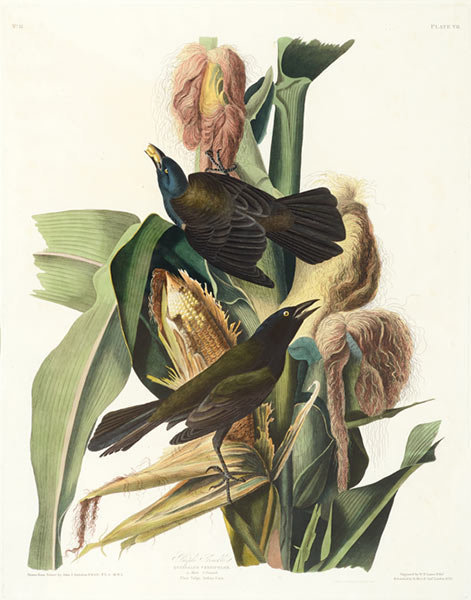
Featured Lot: John James Audubon, “Purple Grackle, Plate VII”

0

In this ongoing series for Fine Art Today, we take a longer look at the history and features of a soon-to-be-available artwork of note. This week: John James Audubon’s “Purple Grackle, Plate VII.”
 
As children we often found ourselves searching for and collecting hidden treasures of nature. Eggs, feathers, nests, bones, and snakeskins were all celebrated items of discovery. As a youth, John James Audubon (1785–1851) was no different. Audubon would spend his afternoons wading through the woods and fields near his home in Santo Domingo (now Haiti) with the hopes of a new discovery to proudly display in his room. This early appreciation and love for nature was eventually combined with immense artistic talent as a young man and adult, which resulted in one of the most beloved and famous books in the world: The Birds of America. A masterwork of 435 images of virtually all known American species, The Birds of America is a testament to Audubon’s lifelong mission to capture and possess nature.
 
Audubon’s lineage is a subject of debate, but scholars generally agree that he was the illegitimate son of a French merchant and planter and a Creole woman of Santo Domingo. After he turned 18, Audubon fled to America to avoid conscription into Napoleon’s army and enter into business. Travelling up and down the Eastern seaboard, Audubon began his cataloging and study of birds. After Audubon’s attempts to publish his studies were met with rejection in America, he traveled to England in 1826 in search of patrons and publishers.
 
Audubon was warmly received in Edinburgh and London, where the engraver Robert Havell undertook publication of The Birds of America. Audubon divided his time between Europe and the United States as his reputation and fame grew. By the 1840s and with his vision failing, Audubon settled in New York, where his sons, John Woodhouse Audubon (1812–1862) and Victor Gifford Audubon (1809–1860), assumed most of the production responsibilities for his later books. John James Audubon died on January 27, 1851 in Manhattan, likely from Alzheimer’s disease.
 
Millions of reproductions of the original plates from The Birds of America exist in homes across the world today, but on July 25 buyers will have a chance to own an original. The Coeur d’Alene Art Auction is featuring — among a number of beautiful Western-themed oil paintings and sculptures — Audubon’s “Purple Grackle,” a stunning example of the artist’s faithfulness to nature and penchant for drama. As was typical for his representations, Audubon displays both the male and female purple grackle. Both sit perched on stalks of corn. The male is noticeable for his colorful head, a deep blue hue with a slight sheen. Audubon has positioned the male and female differently as a means to show both the profile and top views, aiding in identification. Every detail, from the individual feathers to the kernels of corn and beyond has been meticulously observed and represented.
 
The engraving, produced by Audubon’s English affiliates W.H. Lizars and R. Havell, dates to 1829 and has an auction estimate of $5,000–$7,000. “Purple Grackle, Plate VII” will feature in the July 25 auction at the Peppermill Resort in Reno, Nevada.
 
To view the full catalogue, visit The Coeur d’Alene Art Auction.
 
This article was featured in Fine Art Today, a weekly e-newsletter from Fine Art Connoisseur magazine. To start receiving Fine Art Today for free, click here.
 

Sirona Summer

0

Visitors to Sirona Fine Art in Hallandale Beach, Florida, will experience a diverse range of artworks from many talented artists on the gallery’s roster.
 
Excellent works from such names as Steven Skollar, Michele Harvey, Omalix, and Andrew Smenos will feature in the Summer Exhibition at Sirona Fine Art. Collectors will be pleased to learn that many of the artists exhibiting were shown during the past year, giving collectors an opportunity to evaluate what they may have missed earlier.


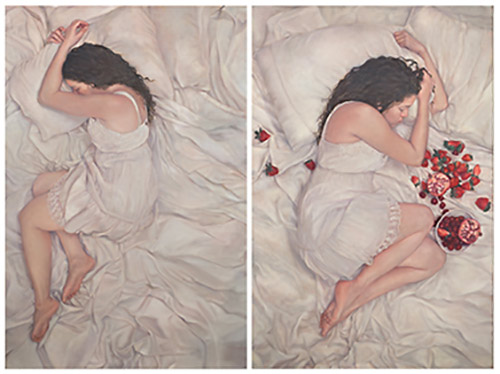
Omalix, “Cornucopia Diptych,” Sirona Fine Art.

 
The talented roster of artists presents both classic academic and traditional techniques with an awareness of their modern context. Omalix’s “Still” and “Cornucopia Diptych” are entrancing in their mysterious, melancholy tone. “Still” is a tightly cropped image of a female subject in water. Her expression is one of relaxation and tension, leaving the viewer feeling both calm and unsettled. Omalix’s awareness of the play of light in the ripples of water is masterful.
 
Other artists on view during the Summer Exhibition include Carol Carter, Hollis Dunlap, Clinton Hobart, Joseph Lorusso, Jean-Paul Mallozzi, Scott Redden, John Sanchez, Holly Sears, Victoria Selbach, Sharon Sprung, Brian Stephens, Voka, Gary Weisman, Wesley Wofford, and Treacy Ziegler.
 
To learn more, visit Sirona Fine Art.
 
This article was featured in Fine Art Today, a weekly e-newsletter from Fine Art Connoisseur magazine. To start receiving Fine Art Today for free, click here.
Natural Meditations

0

The landscapes of Lynn Boggess are living, breathing canvases that encourage viewers to recall memory and experience with the beauty of nature in a current exhibition.
 
The Haen Gallery in Asheville, North Carolina, is currently showing the recent works of West Virginia plein air painter Lynn Boggess. Boggess’s paintings will undoubtedly create an enduring impression on viewers not only for their immense beauty, but for their size as well. Working on massive canvases and using variously sized cement trowels, Boggess applies paint largely and loosely, capturing the spirit and transience of nature. Unlike the Impressionists, however, his predominant use of trowels creates a sharpness of line and focus of image that distinguishes his individual aesthetic.


Lynn Boggess, “5 June 2015,” oil on canvas, 30 x 34 in. (c) The Haen Gallery

 
Each canvas pulsates with movement, rhythm, and an energy that is mesmerizing. At first glance, “29 June 2015” could appear haphazard, abstracted, and unfamiliar, but an extended moment with the picture reveals clarity of form. Individual leaves and flowers begin to emerge from the symphony of color at the bottom of the picture. Further, the origins of the central tree can be detected from the bottom.


Lynn Boggess, “25 August 2014,” oil on canvas, 26 x 30 in. (c) The Haen Gallery

 
“4 March 2015” fashions a similar effect, though with more spatial context. Running from lower left to the center of the canvas is a backwoods river surrounded by looming leafless trees. Particularly captivating is the sense that we can observe Boggess’s creative process. Especially in the lower right corner, large broad marks of the trowel form the most basic and abstracted foundation before expressive, loose details are applied on top. One can easily get a sense of the complex layering that aids in the illusion and perception of space. Compositionally, the piece is balanced wonderfully. Although dominated by earthy tones of tans, greens, and browns, the steel blue, black, and hints of white in the river water provide respite for the eyes.


Lynn Boggess, “29 June 2015,” oil on canvas, 40 x 46 in. (c) The Haen Gallery
 

Thirty-five outstanding pieces feature in the exhibition of Boggess’s work at The Haen Gallery, which is currently on view.
 
To learn more, visit The Haen Gallery.
 
This article was featured in Fine Art Today, a weekly e-newsletter from Fine Art Connoisseur magazine. To start receiving Fine Art Today for free, click here.
 

WEEKLY NEWS FROM THE ART WORLD

Fill your mind with useful art stories, the latest trends, upcoming art shows, top artists, and more. Subscribe to Fine Art Today, from the publishers of Fine Art Connoisseur magazine.

  • This field is for validation purposes and should be left unchanged.