
Home Blog Page 8

Master Drawings New York: What to Expect for 2026

0

Master Drawings New York (MDNY), the U.S. fair dedicated to exceptional works on paper, is pleased to share highlights for its 20th anniversary edition, taking place through February 7, 2026, across more than two dozen galleries on the Upper East Side.
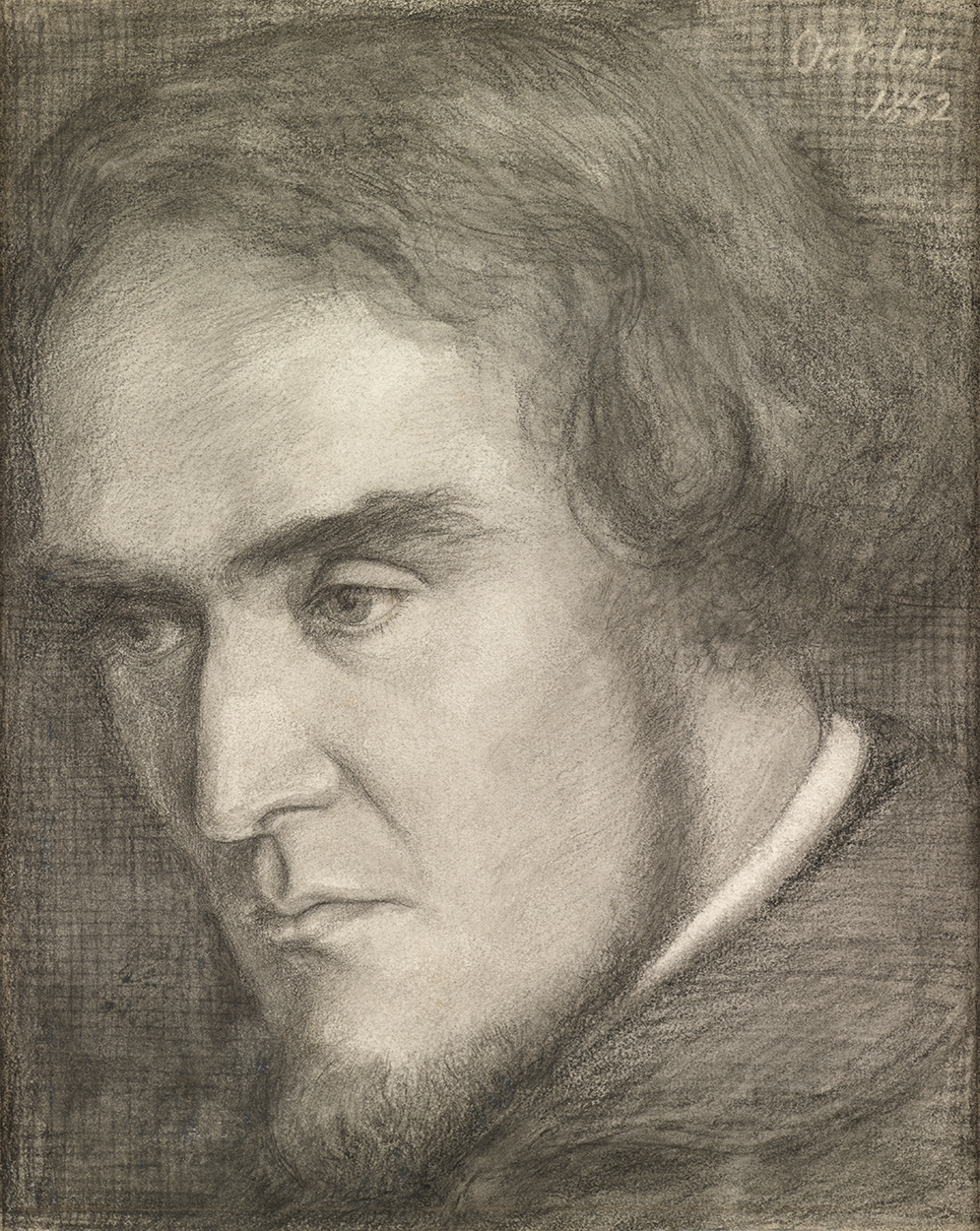
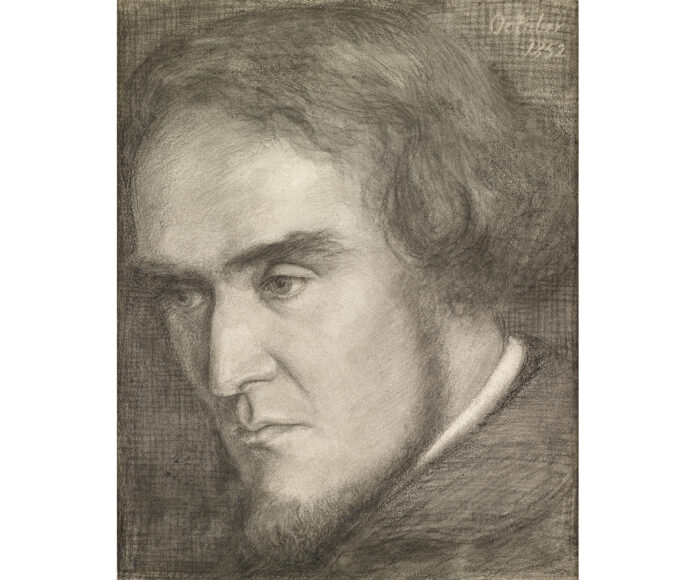
Dante Gabriel Rossetti (1828-1882), "William Bell Scott," London, England, Birchington, England 1852; pencil, chalk, and wash, 11.75 x 9.5 in.
Dante Gabriel Rossetti (1828-1882), “William Bell Scott,” London, England, Birchington, England 1852; pencil, chalk, and wash, 11.75 x 9.5 in.

The 2026 fair will feature 36 exhibitors, including 11 first-time participants, presenting works on paper from the 15th to the 21st centuries, along with select paintings, sculpture, and photography. To commemorate the milestone, MDNY will publish a special anniversary book, “20 Objects for 20 Years,” highlighting some of the most important artworks to have appeared at the fair since its founding, from participating galleries past and present.
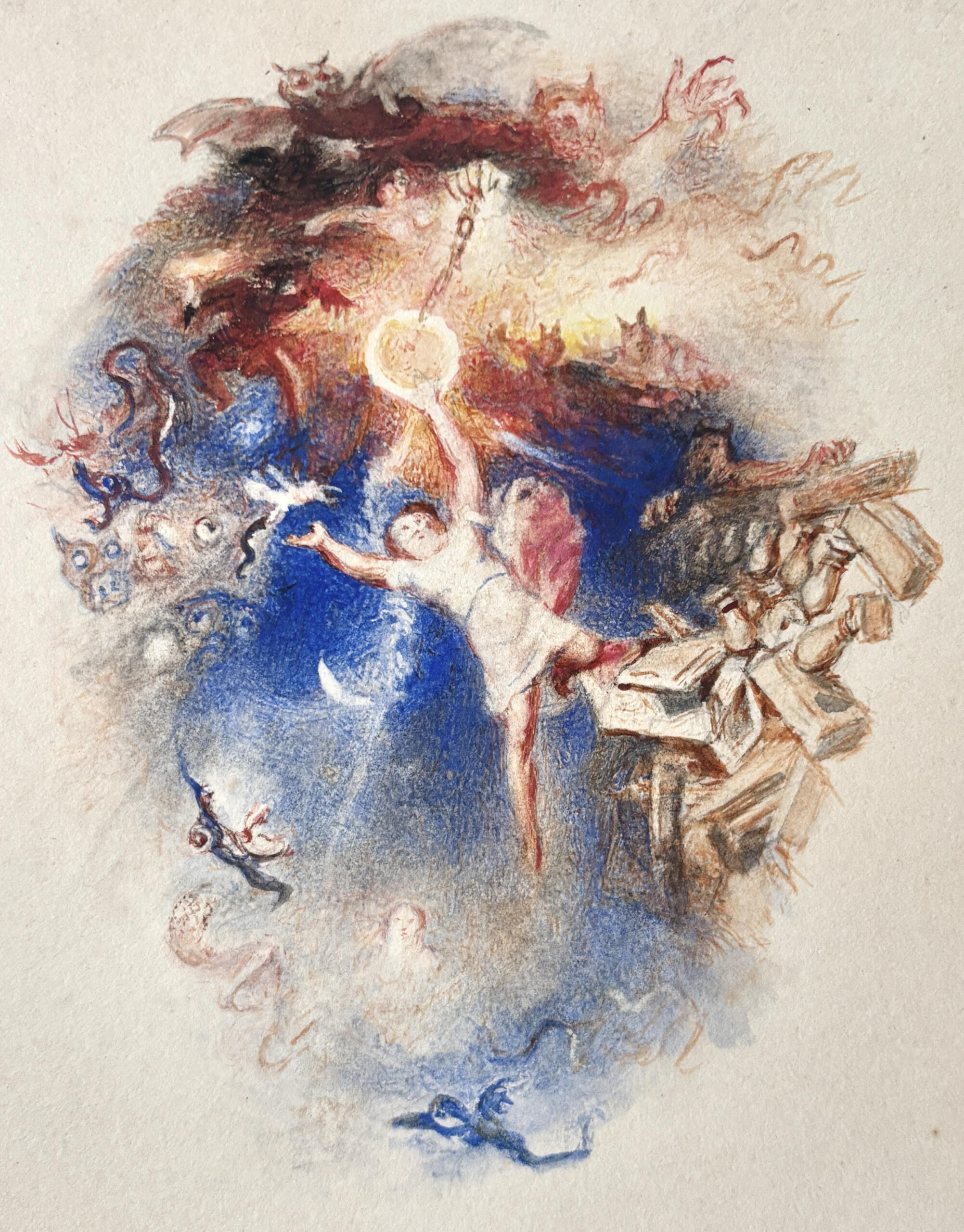
Joseph Mallord William Turner, R.A. (1775-1851), "Study for 'The Ring'," London, 1839. Watercolour with pencil. Courtesy of The Nonesuch Gallery.
Joseph Mallord William Turner, R.A. (1775-1851), “Study for ‘The Ring’,” London, 1839. Watercolour with pencil. Courtesy of The Nonesuch Gallery.

More from the organizers:

Exhibitions across the fair explore a wide range of themes and subjects, from birds and animals, gardenscapes, and biblical scenes, to mysticism, still lifes and striking portraiture, as well as historical engagements with WWII concentration camp drawings, overlooked Nordic impressionists, and early drawings of the Sistine Chapel—offering depth and surprise at every turn.

Visitors can expect to see works from celebrated artists like Harriet Hosmer (American, 1830-1908), Mark Tobey (American, 1890-1976), Giovanni Battista Tiepolo (Italian, 1696-1770), Mercedes Matter (American, 1913-2001), Fernand Léger (French, 1881-1955), and Egon Schiele (Austrian, 1890-1918), as well as under-recognized artists ripe for rediscovery like Ellen Jolin (Swiss, 1854-1939), Toshio Bando (Japanese, 1895-1973), Alfredo Pina (Italian, 1887-1966), Allan Crite (American, 1910-2007), Gösta Adrian-Nilsson (Swedish, 1884-1965), and Bertha Wegmann (Swiss, 1846-1926).
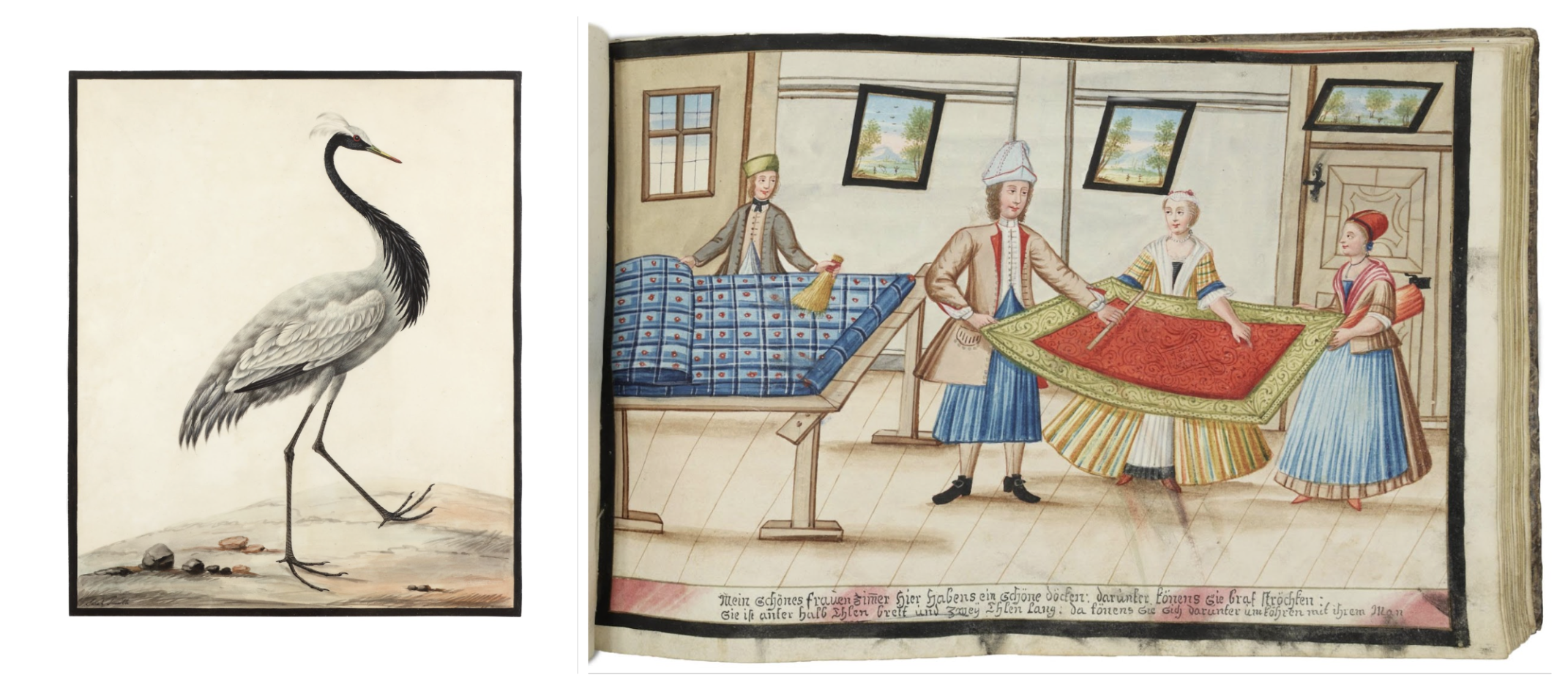
Master Drawings New York 2026 artworks
Left: Sarah Stone (1760-1844). “Demoiselle Crane (Anthopoides Virgo),” 1780. Watercolor on paper. Courtesy of Finch & Co. The work comes from Sarah Stone: Unseen Works, a collection of rare ornithological watercolor illustrations by Sarah Stone.
Right: J.F. Hörmannsperger, “Album and baroque pattern book of the Imperial blanket maker J.F. Hörmannsperger,” Vienna, 1736. Hand colou, engraving and gouache washed raised in gilt and silver.

The 20th anniversary edition of Master Drawings New York positions the fair as both a celebration of legacy and a timely reflection on why works on paper matter now. Across centuries and disciplines, a unifying theme emerges: the renewed urgency of the artist’s hand in an era increasingly shaped by digital mediation and AI-generated imagery.
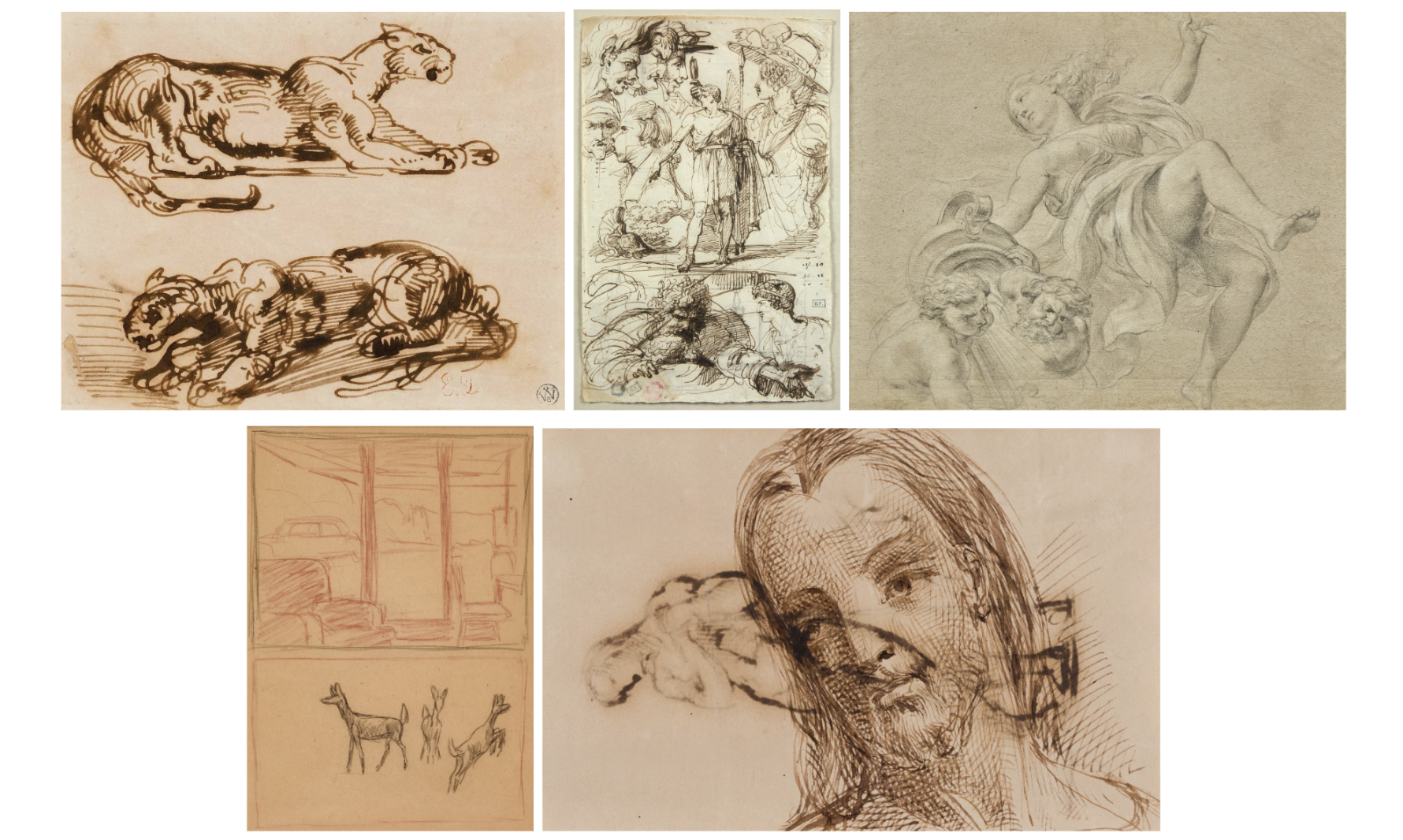
Historical artworks
Top, left to right: 1. Eugène Delacroix (1798-1863), “Study of Two Wild Felines,” Saint-Maurice, Paris, c. 1840s. Pen & ink. Courtesy: The Nonesuch Gallery.
2. Luigi Sabatelli (Florence, 1772- Milan, 1850), “Caricatures and old-fashioned figures,” Pencil, pen and brown ink on laid and watermarked paper. Courtesy: Miriam Di Penta Fine Arts.
3. Lorenzo de Ferrari (1680-1744), “Allegorical Figures of Virtue and the Winds” (preparatory drawing for fresco). Genoa, 1740. Black chalk heightened with white. Courtesy: Didier Aaron.
Bottom, left to right: 1. Edward Hopper (1882-1967) “Studies of Room and Deer,” Double-sided. C.1950s. Conté crayon on paper. Courtesy: Agar Marteau Fine Art.
2. George Richmond (1809-1896), “Portrait Sketch of Samuel Palmer (1805-1881),” C. 1828-1830. Pen and Ink. Courtesy: Abbott and Holder.

Drawing—intimate, exploratory, and irreducibly human—anchors the fair’s presentations, from Old Master studies and rediscovered sketches to contemporary works that lay bare the virtuosic faculties of touch, line, and material presence. Among the exhibited works, viewers will have a chance to consider the artfulness of works on paper in their more utilitarian guises—as scientific illustrations, those of the literary variety, architectural sketches, and more.
Master Drawings New York
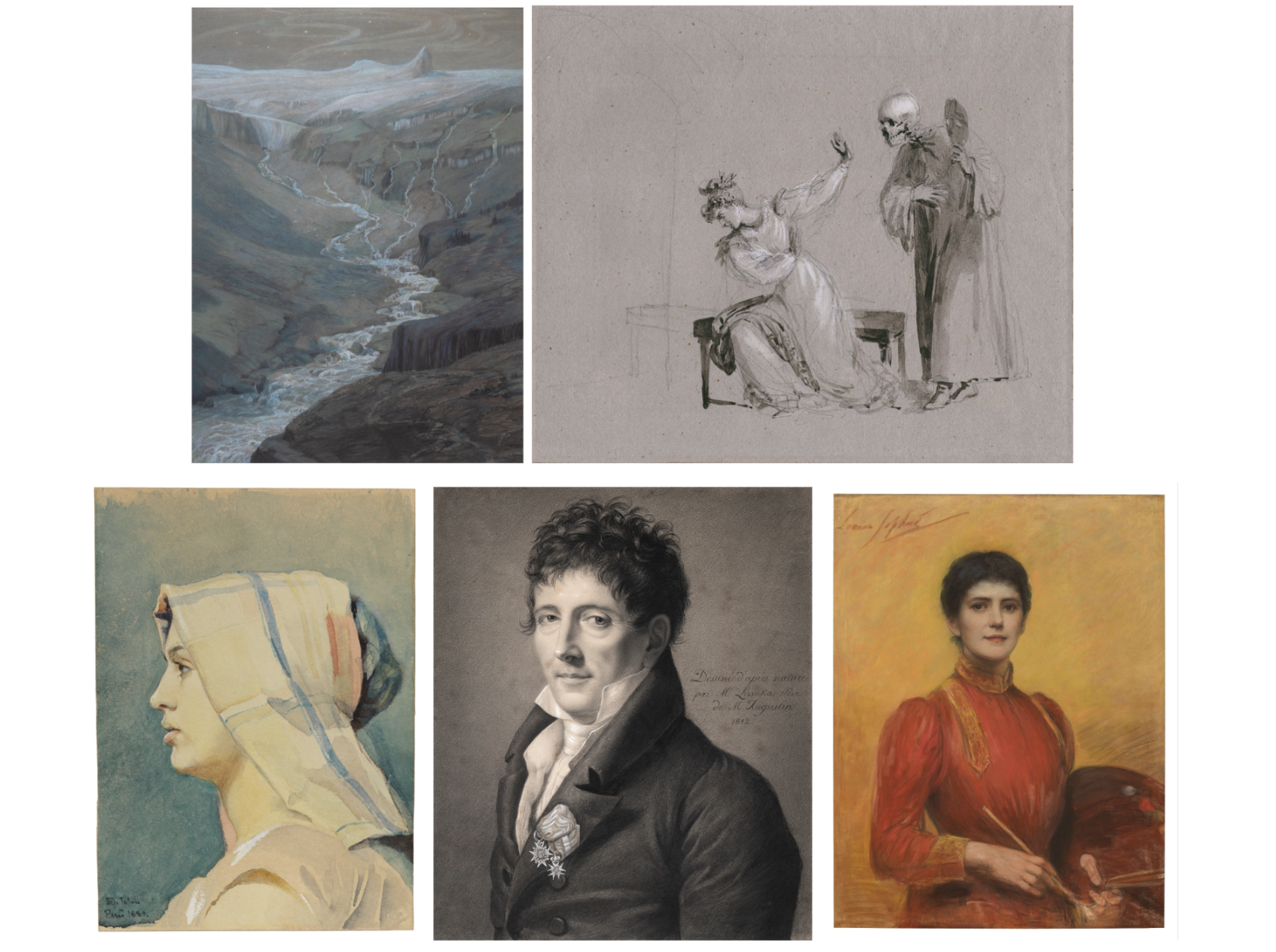
Top, left to right: 1. Emilie Mediz-Pelikan (1861-1908), “Moonlit Glacier,” Austria, 1901. Colored chalks. Courtesy: The Maas Gallery.
2. Stéphanie de Virieu (French, 1785-1873), “La Mort au masque,” C. 1819-1823. Pencil, ink wash and white gouache on beige paper. Courtesy: Jill Newhouse Gallery
Bottom, left to right: 1. Ellen Jolin (1861-1943), “Portrait of a French Woman,” Vastervik, Sweden, 1889. Watercolor and gouache on paper. Courtesy: Harry Gready & Benappi Fine Art.
2. Lizinka Aimée Zoe de Mirbel (1796-1849), “Portrait of a Gentleman,” 1812. Charcoal on paper. Courtesy: Charles Ede.
3. Louise Jopling (1843-1933), “A Study in Red, Portrait of the Artist,” Manchester, England, 1890. Pastel on linen. Courtesy: The Maas Gallery

Equally central is MDNY’s identity as a fair of discovery. Set within a walkable network of galleries on the Upper East Side, the fair encourages close comparison, sustained attention, and meaningful dialogue between past and present. Visitors will encounter not only rare and newly surfaced works, but also stories of provenance, reattribution, and scholarly rediscovery, including the continued efforts to give women artists across centuries their due recognition. Conversations between seasoned experts and younger collectors further underscore how connoisseurship continues to evolve.

For more information and highlights, visit: www.masterdrawingsnewyork.com/artworks.
Virtual Gallery Walk for January 23rd, 2026

0
Friday Virtual Gallery Walk

As part of our effort to continue to help artists and art galleries thrive, we’re proud to bring you this week’s “Virtual Gallery Walk.” Browse the artwork below and click the image itself to learn more about it, including how to contact the gallery.

Ever After, Tina Garrett, oil on Raymar panel, 40 x 30 in; Celebration of Fine Art

Want to see your gallery featured in an upcoming Virtual Gallery Walk? Contact us at [email protected] to advertise today. Don’t delay, as spaces are first come, first served, and availability is limited.

Sara MacCulloch: Sun Fog Rain

0
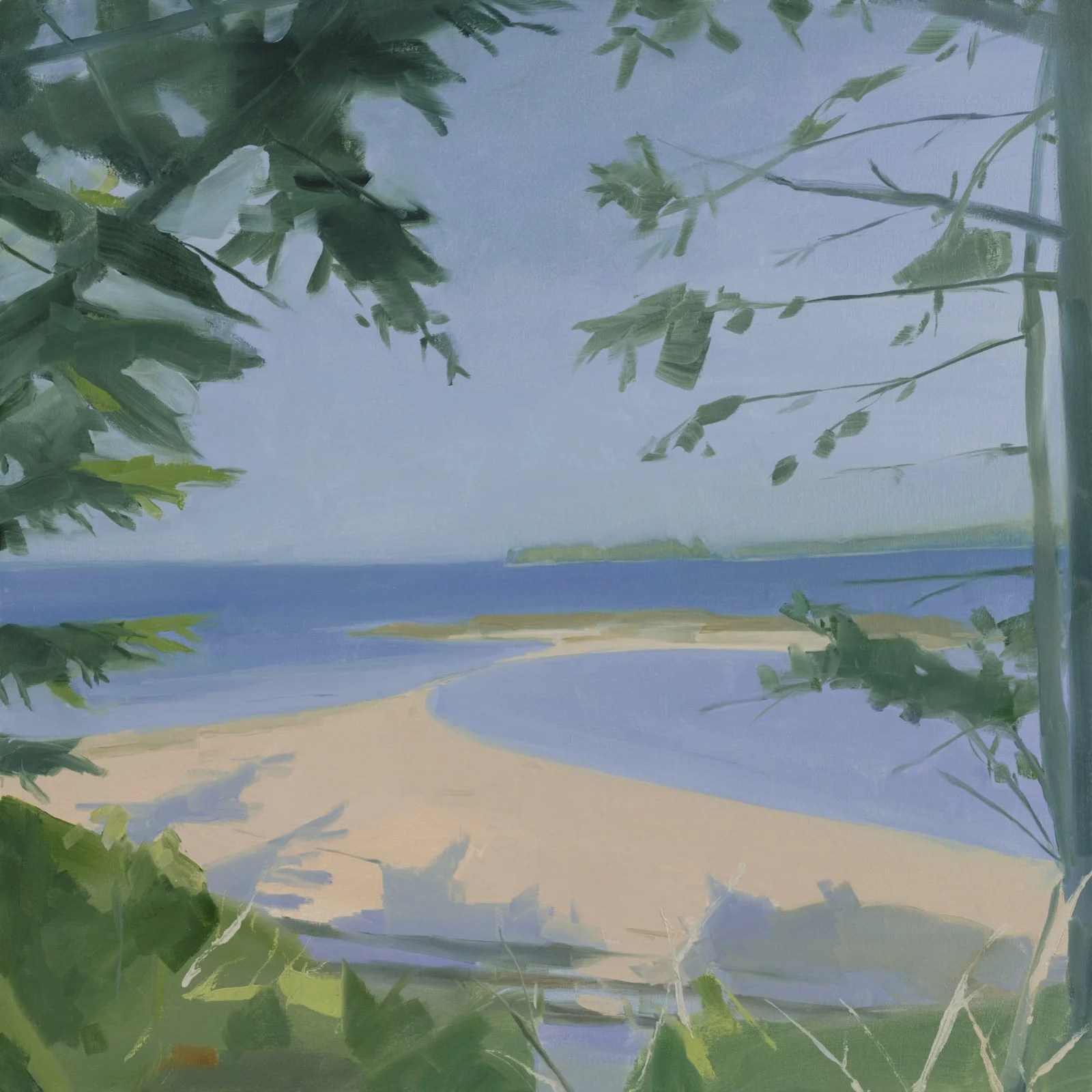
Markel Fine Arts - Sara MacCulloch, "Crystal Crescent Morning," 2025, oil on canvas, 42 x 42 in.
Sara MacCulloch, "Crystal Crescent Morning," 2025, oil on canvas, 42 x 42 in.

Sara MacCulloch is a landscape artist who paints in order to capture the transient experiences of nature. She paints seasonally, leaving her home in Toronto for the familiar vistas of Maine and Nova Scotia, where she grew up. Summer days immersed in nature provide necessary relief from the challenges of today’s world. As Sara says, “Finding solace even in the bad weather, in the skies made opaque from fog or forest fire smoke, in the rain, or despite the drought, in the hot sun.”

“Sun Fog Rain” is an exhibition of new paintings by Sara MacCulloch. This will be her fourth solo exhibition with Kathryn Markel Fine Arts (NY, NY). The exhibition is on view through February 14, 2026.

Sara MacCulloch, "Conrad's After Sunset," 2025, oil on canvas, 36 x 36 in.
Sara MacCulloch, “Conrad’s After Sunset,” 2025, oil on canvas, 36 x 36 in.

More from the gallery:

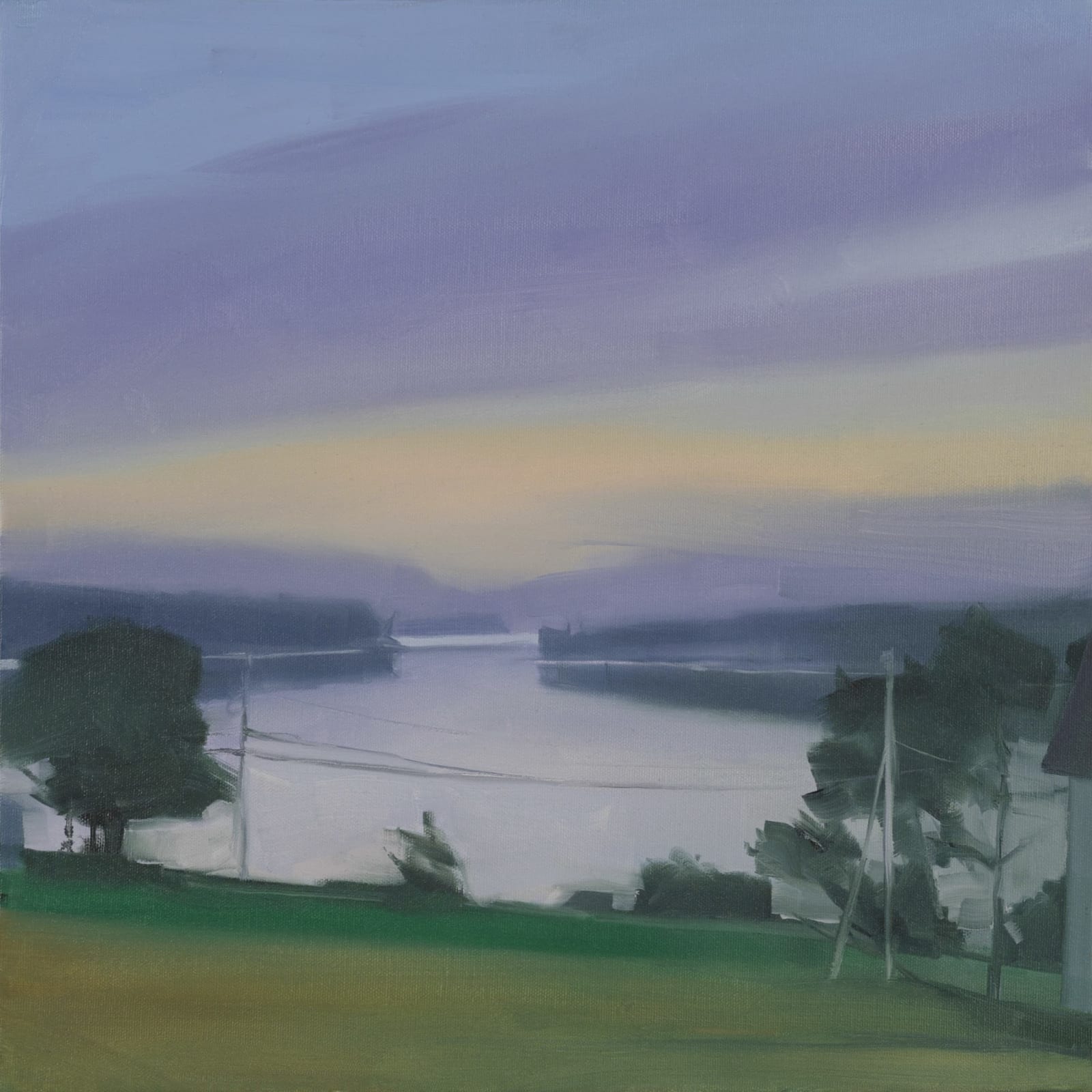
All the small changes in time of day, weather, plant growth, and shoreline variations interest her. With photos and sketches, Sara absorbs the subtleties and feelings of a specific landscape and a specific experience.

In the fall, she returns to her studio to paint. She paints with deliberation, commits to each brushstroke strategically, and completes most paintings in one sitting. If, occasionally, a painting doesn’t work in a day or two, she scrapes it away and starts over. Intuitive, sensual brush strokes and a creamy palette create a sense of immediacy and clarity. The resulting paintings are a distillation of the experience and an invitation to enter these spaces and share a precise moment.

Sara MacCulloch, "First Day on Great Spruce (Sunny)," 2025, oil on canvas, 30 x 30 in.
Sara MacCulloch, “First Day on Great Spruce (Sunny),” 2025, oil on canvas, 30 x 30 in.

Sara is based in Toronto and studied painting at the Nova Scotia College of Art and Design. She exhibits extensively throughout Canada and work is represented in various public and private collections including TD Bank, Mayo Clinic, Bank of Montreal, the Art Gallery of Nova Scotia, University of Toronto, University of Iowa, Department of Foreign Affairs, Royal Bank of Canada, and Gotlands Kunstmuseum, SE. She has also received numerous grants and awards including the Canada council for the Arts and the Brucebo Scholarship in Gotland, Sweden.

Sara MacCulloch, "Fog Breaking at Dawn," 2025, oil on canvas, 18 x 18 in.
Sara MacCulloch, “Fog Breaking at Dawn,” 2025, oil on canvas, 18 x 18 in.

For more information about the exhibition, please visit markelfinearts.com.

Artist Spotlight: Lon Brauer

0
1957, Lon Brauer, oil on canvas, 36 x 36 in.; 2025

Lon Brauer:

How did you develop your unique style?

Lon Brauer: I came out of school a painter, but life took me in a different direction. I found myself in the world of studio photography to make a living. Not my plan, but in the end, it has defined me, and my vision, and I’m grateful for the journey. For 30 years I lived and breathed photography, advertising, and graphic design. All disciplines of the commercial world of print media. We are the sum of our experiences and mine were all about telling stories through shape, color, and design for the printed page.

Now as a painter, I draw upon this same esthetic, never forgetting that I am working with a two-dimensional surface. A painting is made with marks on a canvas. An abstraction. In my work I strive for new and fresh ways to bring life to old ideas. Always tell the story with fresh eyes. Utilizing photography and photo tropes I bridge the gap between traditional painting and graphic imagery. I want to do more than just record what is in front of me. I want to make a story. There are no rules. An adventure yet to be determined.

To see more of Lon’s work, visit:

Website

Artist, Lon Brauer


Renaissance-Inspired Portraits by Émile Brunet

0
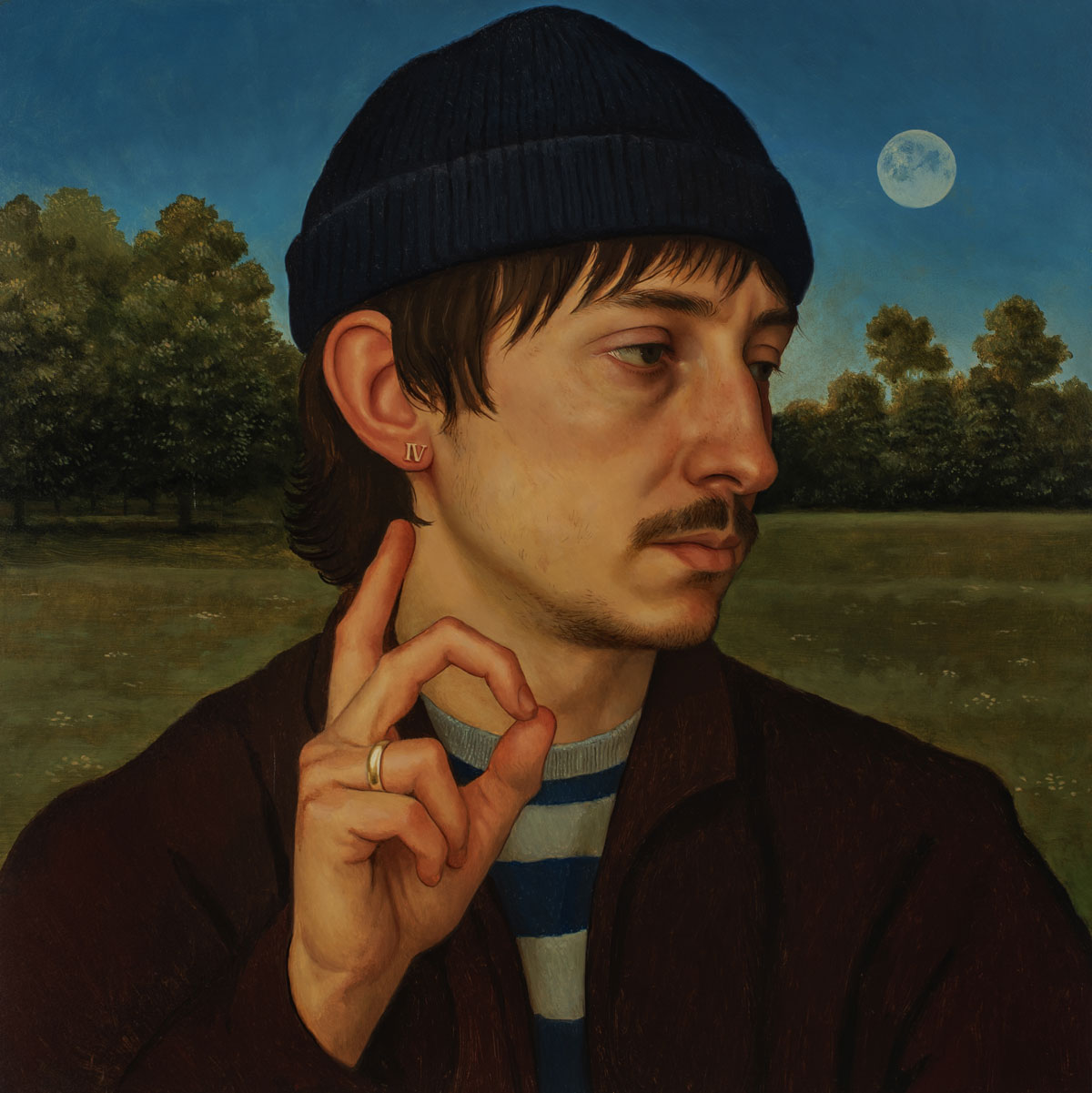
Émile Brunet, "4th Major," 2025, oil on wood panel, 16 x 16 in.

Now through March 7, 2026, Plato Gallery (NY) is presenting a solo exhibition of contemporary realism works by Émile Brunet in “Are They Peasant.”

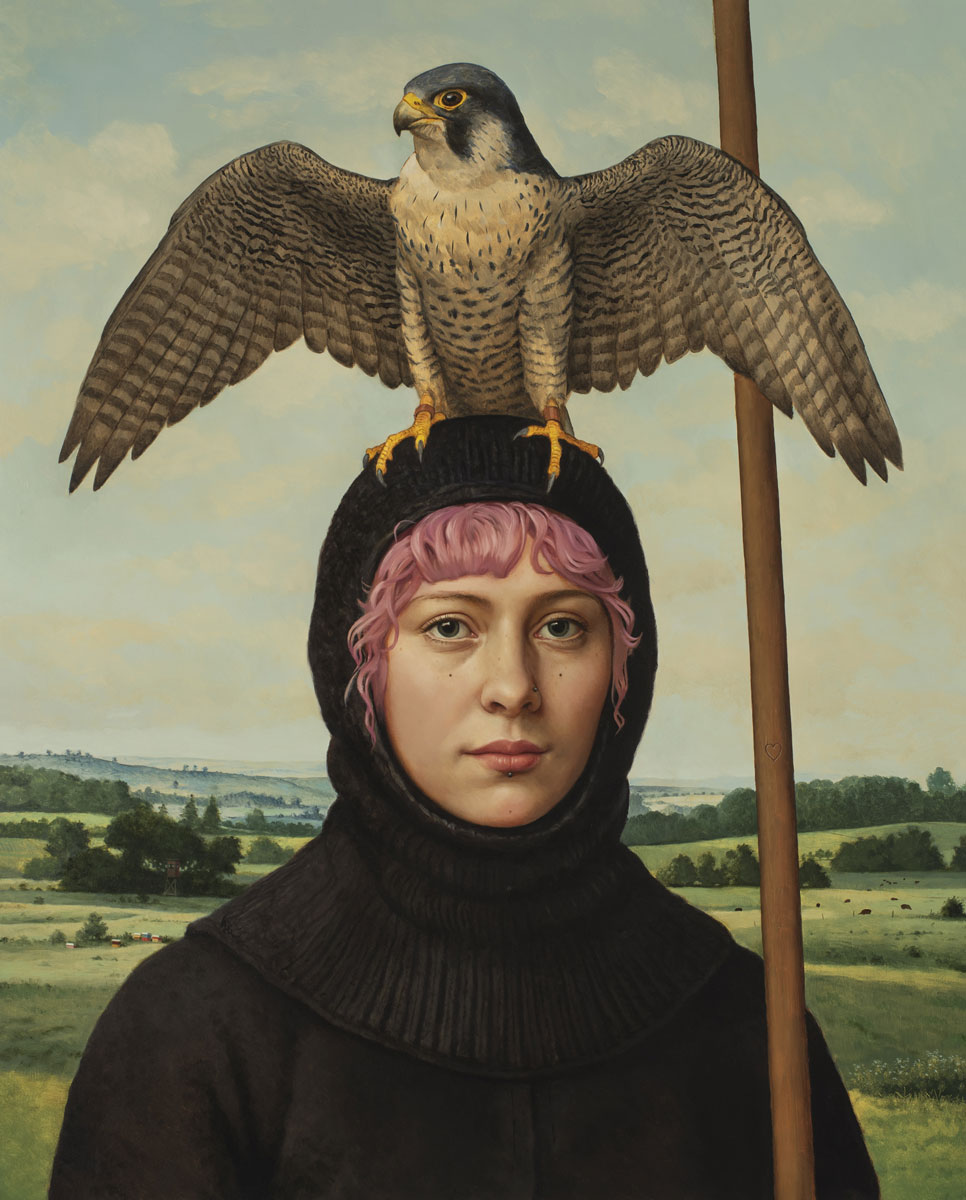
Contemporary realism portrait of a woman with a falcon
Émile Brunet, “Girl with a Falcon,” 2025, oil on wood panel, 30 x 24 in.

From the gallery:

Émile Brunet (b. 1989, Montréal, Canada) employs the codes of Western Renaissance and Medieval art to present history and popular culture from common, yet unfamiliar perspectives. His stylized imagery and meticulous sense of detail question the strive for artificial idealization of our surroundings and examine self-representation through time. Exploring classical forms of figuration such as portrait, landscape, and still life through Northern Renaissance oil painting techniques, Brunet’s work embodies a timeless yet paradoxical form of symbolism where traditions and archaic technologies aid in understanding contemporary condition through a lens of humor and irony.

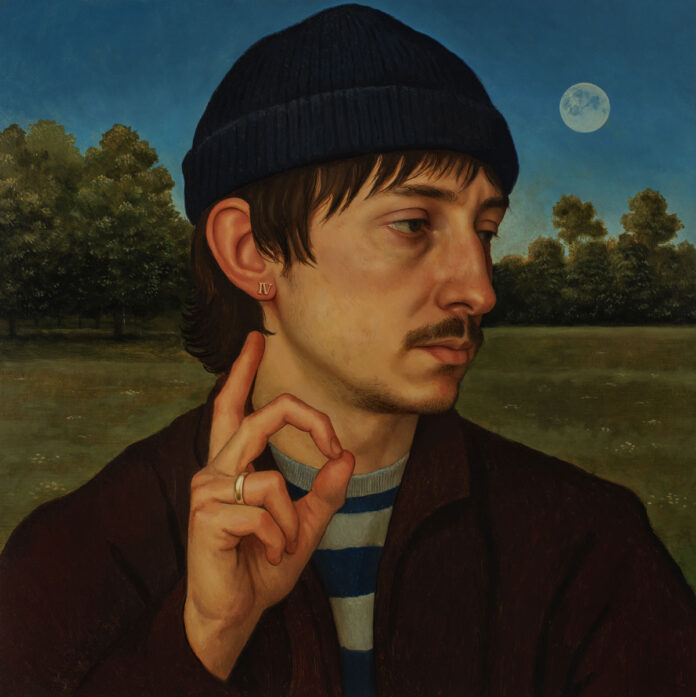
Émile Brunet, "4th Major," 2025, oil on wood panel, 16 x 16 in.
Émile Brunet, “4th Major,” 2025, oil on wood panel, 16 x 16 in.

In the artist’s own words: “’Are They Peasant’ is a series of Renaissance-inspired portraits of today’s neo-rural characters.” These men and women are less resemblant of agrarian workers toiling in the countryside than of young professionals with remote jobs, picking apples and tending to bees in the after hours. They inhabit their adopted roles with charm and gusto, much like nobility performing pastoral fantasies in Rococo paintings, where earls and countesses disguised themselves as shepherds.

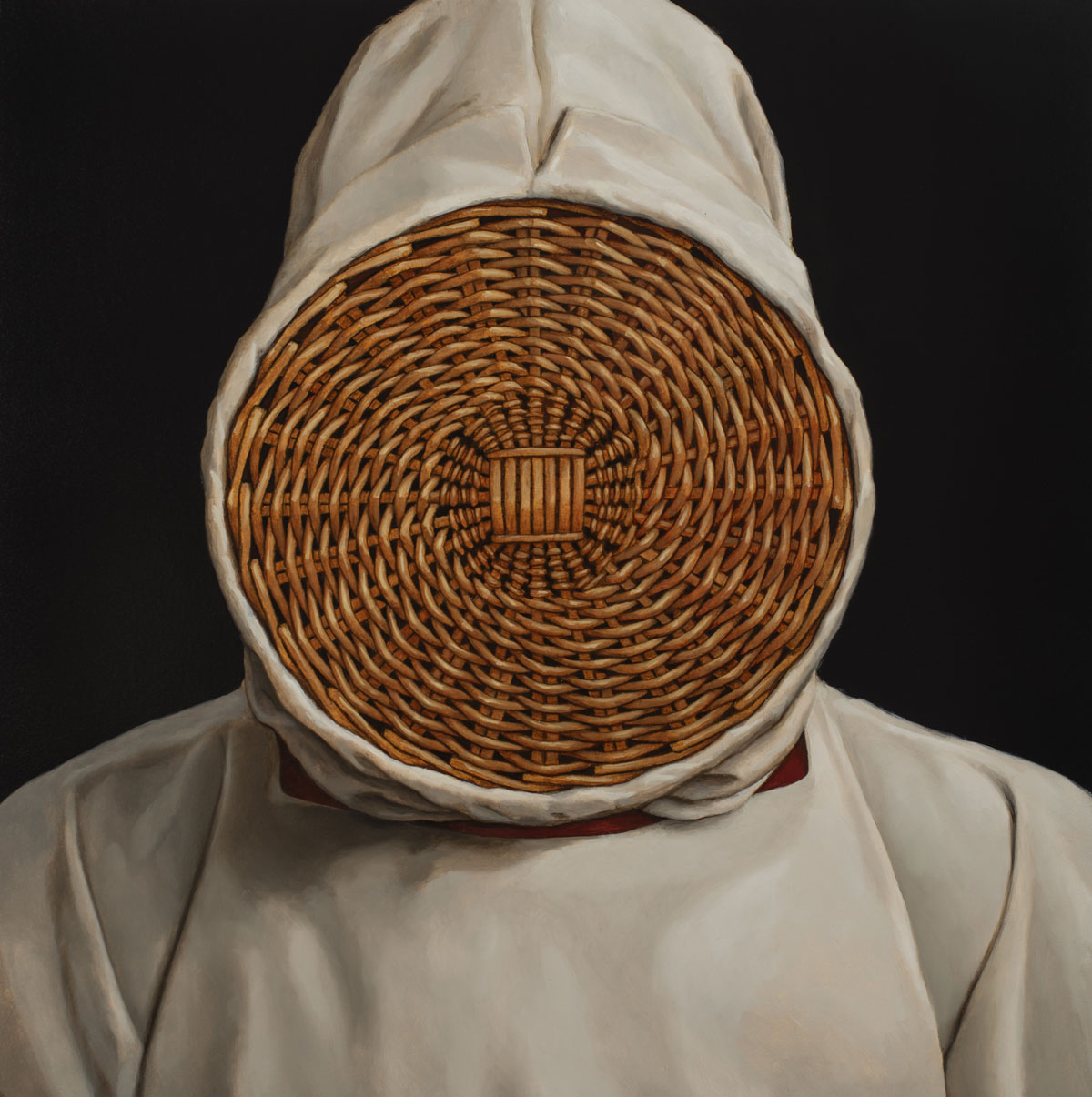
Émile Brunet, "Beekeeper," 2025, oil on wood panel, 16 x 16 in.
Émile Brunet, “Beekeeper,” 2025, oil on wood panel, 16 x 16 in.

The series originated with the artist’s relocation from Montreal to the small town of Stanstead, on the U.S.–Canada border, during the global pandemic in search for a simpler life. A neo-alchemist of sorts, Brunet is deeply interested in handmade objects and raw materials, which led him to explore traditional practices such as mixing herbs, producing cosmetics, soap, wine, and cider, as well as working for a small art materials manufacturer—whose oil paint he still uses exclusively. For similar reasons, Brunet turns to Northern Renaissance portraiture as a primary reference. He admires the old masters’ intimate knowledge and discerning use of materials, resulting in images that function as precious artifacts.

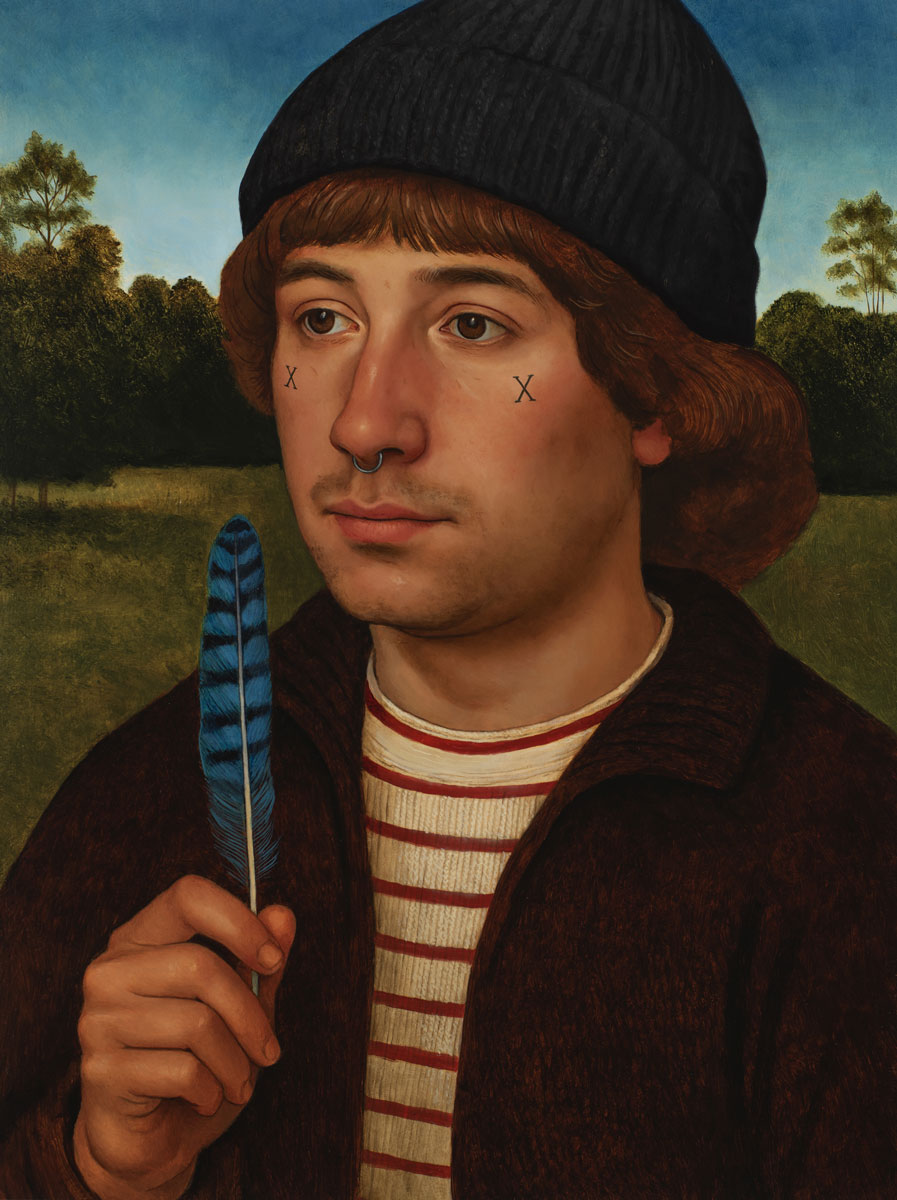
contemporary realism portrait of a man with a feather
Émile Brunet, “Man with a Feather,” 2025, oil on wood panel, 16 x 12 in.

Each of Brunet’s paintings begins with an impression glimpsed from real life—a fleeting visual memory whose mystery he seeks to unravel. He then sketches out ideas and assembles a bank of images that he merges and collages, occasionally using AI to aid his intuition. Once the concept crystalizes, he creates an underdrawing directly on an oil-primed wood panel, overlays it with a golden imprimatura, and starts to paint with a mixture of oil and resin, a technique strongly influenced by traditional Flemish methods.

Although nearly all of his sitters are imaginary, Brunet often draws his inspiration from the eclectic cast of characters in his village – locals as well as recent transplants from both sides of the border and beyond. These figures coexist in relative harmony, united by their love of the countryside, or inability to escape it. Complex and often brooding, with a spark of intellect and self-reflection in the eyes, Brunet’s villages feel faintly familiar, like good-natured, long forgotten friends.

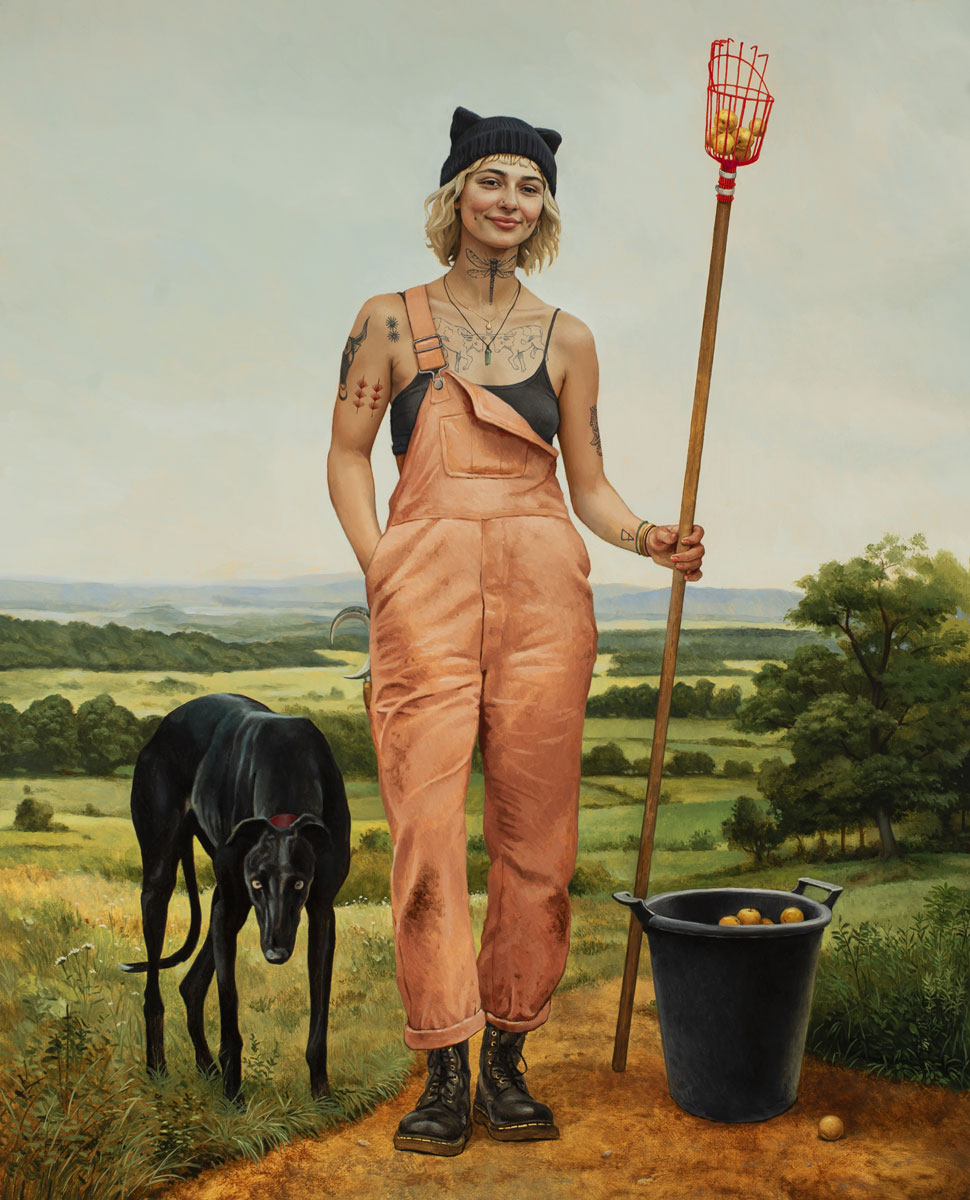
contemporary realism painting of a woman farmer
Émile Brunet, “The Apple Picker,” 2025, oil on wood panel, 30 x 24 in.

“The Apple Picker” presents a contemporary reinterpretation of the ancient Roman goddess of the hunt and wilderness, Diana. Guarded by her loyal hunting dog and adorned with nature-inspired tattoos, she wields a basket on a stick instead of a spear, while a sickle in her pocket parodies Diana’s crescent-moon diadem. “Man with a Feather” directly references Hans Memling’s “Portrait of a Young Man” (c. 1480). Half a millennia later, the youth’s counterpart sports a beanie, a nose ring, and X-shaped tattoos on his face.

Émile Brunet, "Self-Portrait with a Squash," 2025, oil on wood panel, 16 x 12 in.
Émile Brunet, “Self-Portrait with a Squash,” 2025, oil on wood panel, 16 x 12 in.

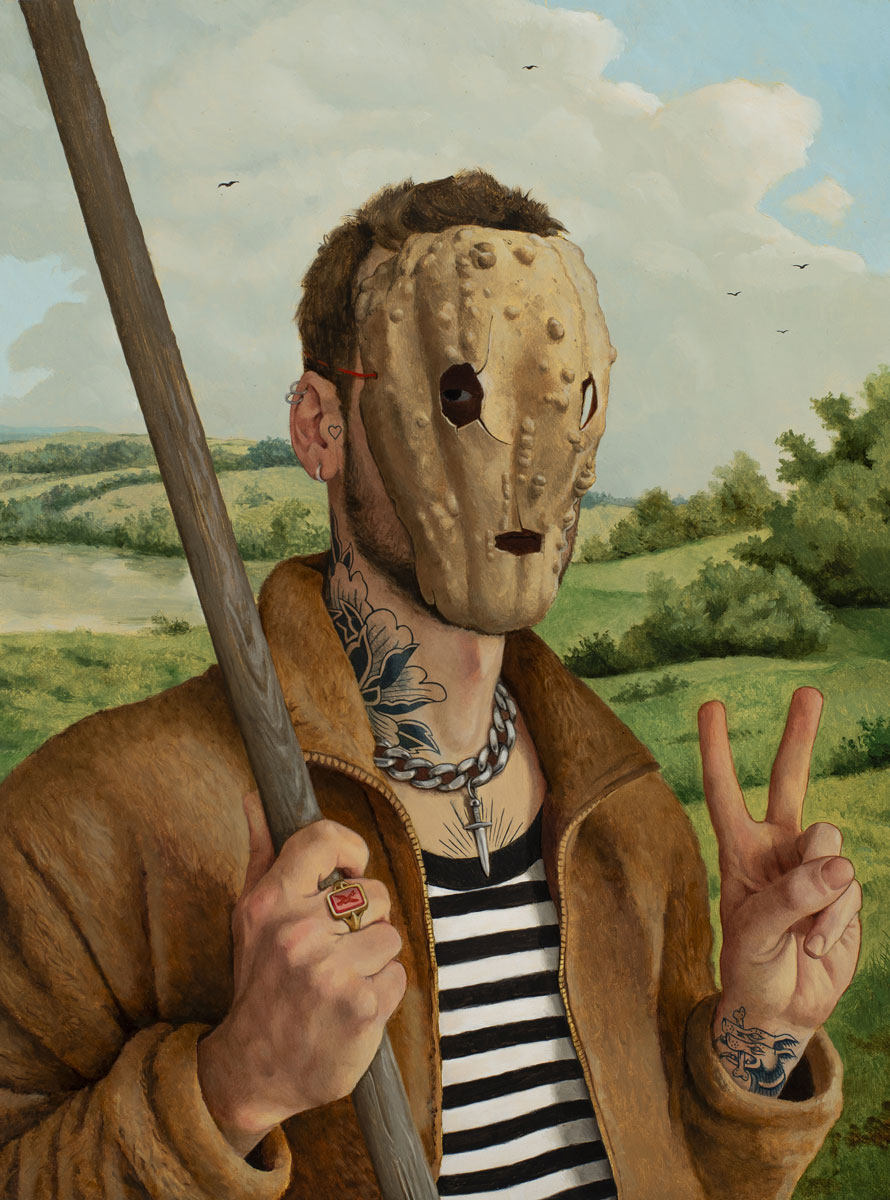
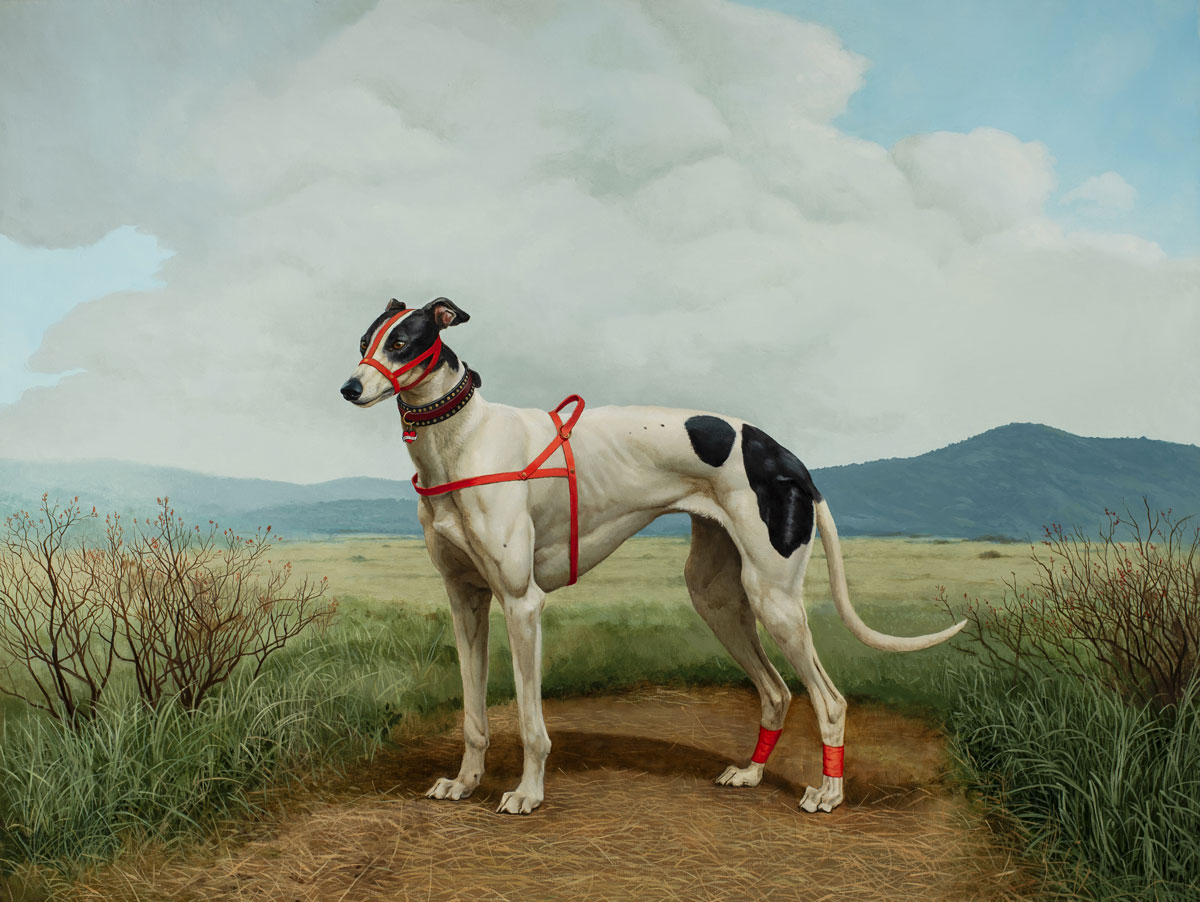
According to the artist, tattoos function throughout the series “like spices,” providing the right “seasoning” for each portrait. In “Self-Portrait with a Squash,” Brunet imagines tattoos for himself—or his alter ego—including a floral motif on the neck, a tiny heart on a pierced ear (a sign of a good listener?), and two dogs fighting over a bone on his wrist. An impromptu mask made from a Halloween gourd and a V-sign gesture nod to selfie culture and social media self-fashioning, apparently in vogue in the countryside. So too are dog portraits, echoing European nobility’s tradition of immortalizing their beloved pets—even though the original aristocrats might have found the “Dad’s Babe” inscription on the collar a bit more risqué than touché.

contemporary realism painting of a dog in a rural scene
Émile Brunet, “The Hound,” 2025, oil on linen, 36 x 48 in.
contemporary realism portrait of a woman with tattoos
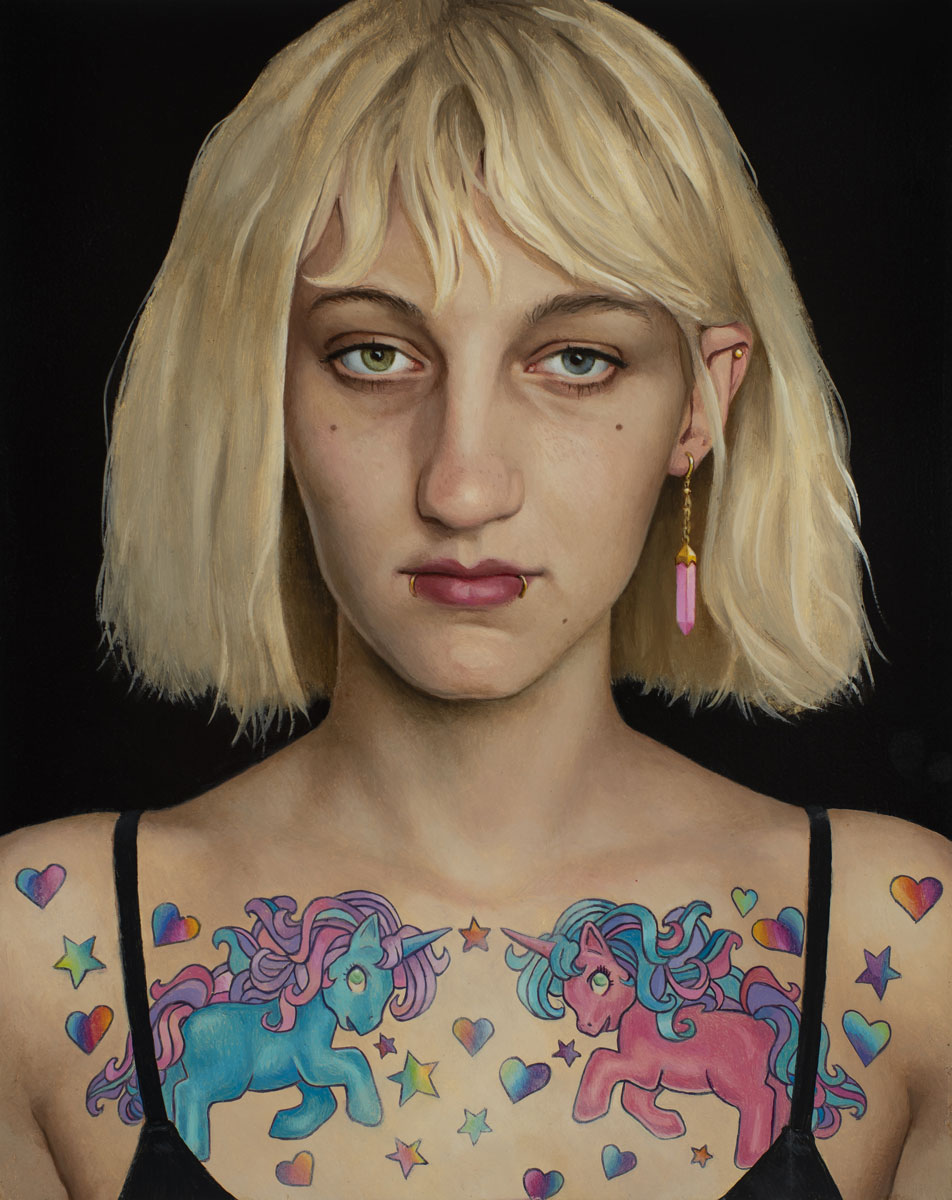
Émile Brunet, “Two Unicorns,” 2025, oil on wood panel, 10 x 8 in.

Counterbalancing “The Hound,” the largest painting in the exhibition, one of the smallest works also features animals—albeit imaginary ones. In “Two Unicorns,” a pair of blue and pink magical creatures emblazon the chest of a young woman loosely resembling Anne of Cleves from Hans Holbein the Younger’s 1539 portrait. Surrounded by stars and hearts, they suggest a youthful mistake or a desire to quite literally embody the joys of childhood. Notably, these tattooed creatures are the only unicorns Brunet has ever painted, despite working for years on a series called Unicorn Hunters. Perhaps they serve as a reminder that the objects of our quests and desires are sometimes nothing more than myths or illusions—not unlike the fantasy of going feral in a modern countryside.

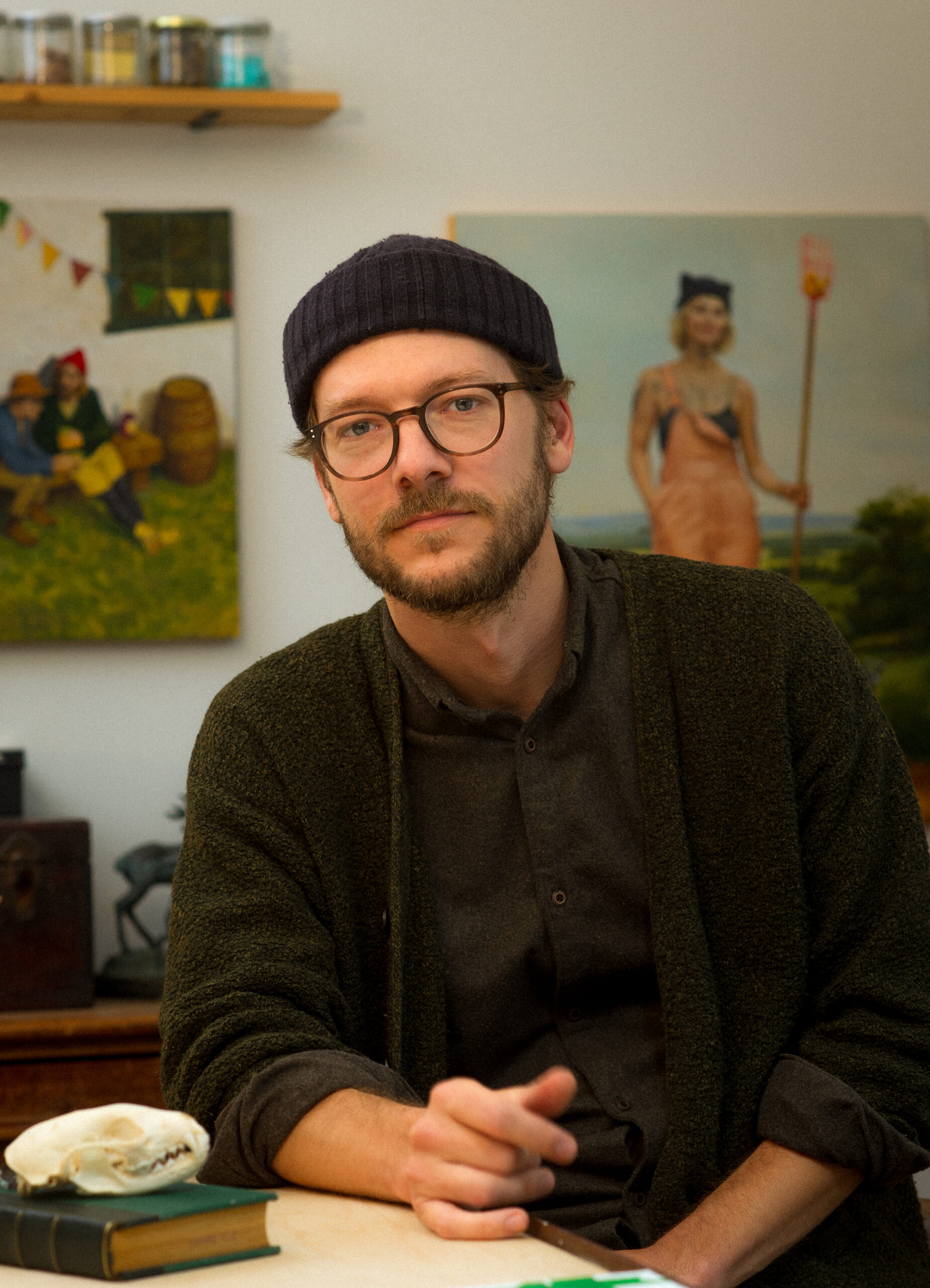
Émile Brunet in his studio. Image courtesy of the artist and Plato Gallery

For more information about “Are They Peasants,” please visit www.platogallery.com.


Sign up here for the weekly Fine Art Today newsletter, which brings you high-level content while providing you with current and upcoming art exhibitions and events, late-breaking stories, and more from the art collecting world.

On View: American Flag Paintings by Gary Erbe

0
Painting of the American Flag
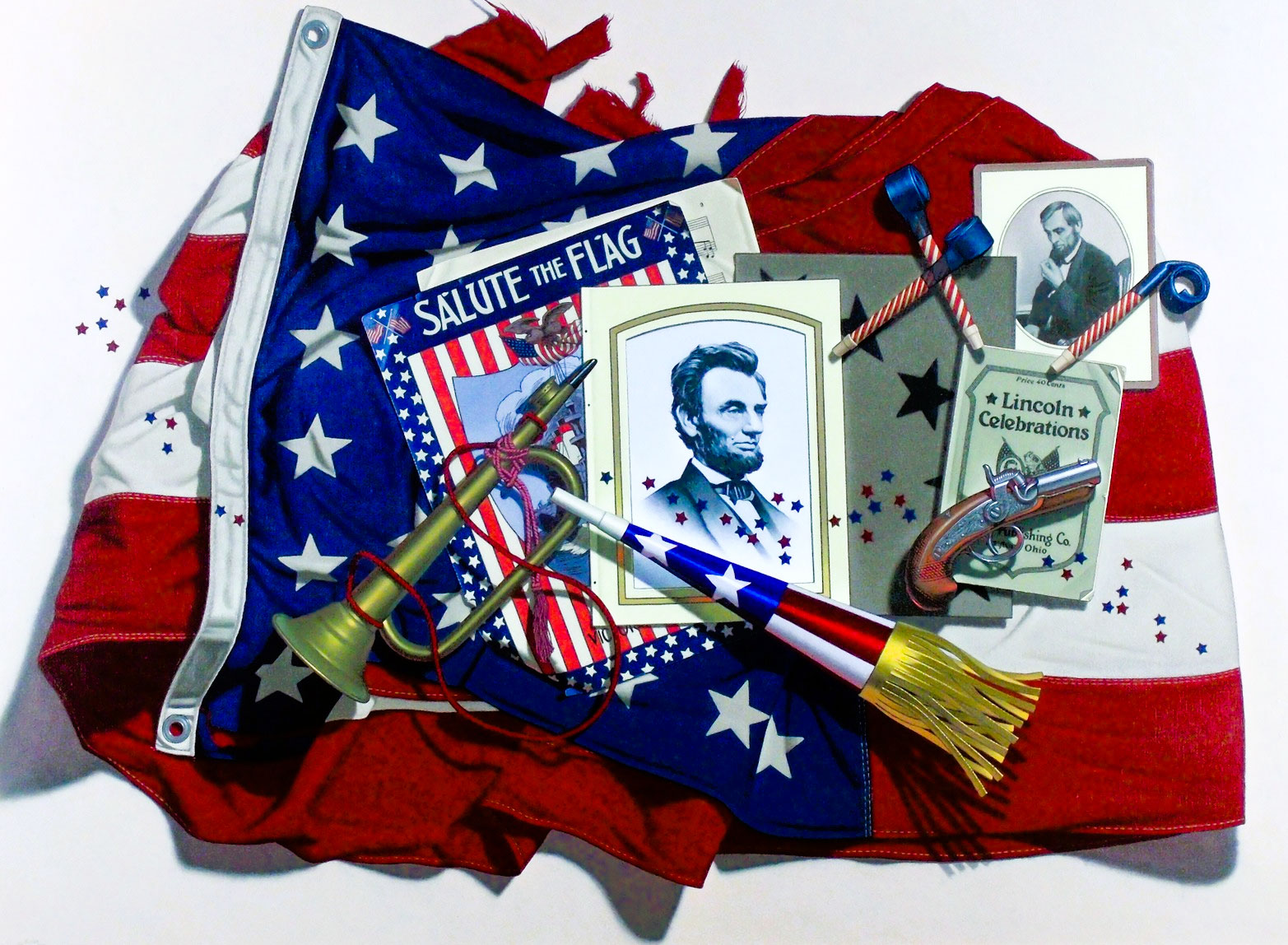
Gary Erbe, “Composition in Red, White and Blue,” 1975, oil on canvas, 72 x 112 inches

The national touring retrospective “Gary Erbe: Magical World” explores 55 years of paintings and assemblages created by Gary Erbe (b. 1944), a lifelong resident of New Jersey. It has been organized by Louis A. Zona, executive director of the Butler Institute of American Art, where it is set to open January 25, 2026.

This exhibition has been scheduled in tandem with America’s 250th anniversary, and so it’s appropriate that, as Erbe notes, “For the first time, all 15 American flag paintings I have made since 1971 will be on view, along with an additional 35 works. Seeing my flag paintings will be an educational experience for some, controversial for others, and an awakening for all. I have never been interested in how people look but how they think. Perhaps this exhibition will give people something to think about, along with an insight into the creator’s mind.”
Painting feature Annie Oakley
Gary Erbe, “Annie Oakley: Little Sure Shot,” 2012, oil on canvas, 48 x 60 inches, Crystal Bridges Museum of American Art, AR

His show includes important loans from many private collections, as well as the Crystal Bridges Museum of American Art and Philadelphia Art Museum. Its 88-page catalogue contains contributions by independent scholar Carol Lowrey, Scott A. Schweigert from Pennsylvania’s Reading Public Museum (where the show will be on view May 23–August 2), and Amanda Shepard from Indiana’s Fort Wayne Museum of Art (August 22–October 25).

American Flag paintings - Gary Erbe, “Celebrating an American Patriot,” 2014, oil on canvas, 30 x 40 inches, The Philadelphia Museum of Art, PA
Gary Erbe, “Celebrating an American Patriot,” 2014, oil on canvas, 30 x 40 inches, The Philadelphia Museum of Art, PA

Shepard writes, “Whereas some modernists found meaning in the object by dissecting it and examining it by its parts, Erbe points to an object’s meaning by contextualizing it in its integrity.” She adds that his “command of realist painting is critical to a profound understanding of each object’s significance…. His skill is essential to conveying the properties of an object—its proportion, texture, and color, which, in turn, are what make it that object and distinguish it from the next.”

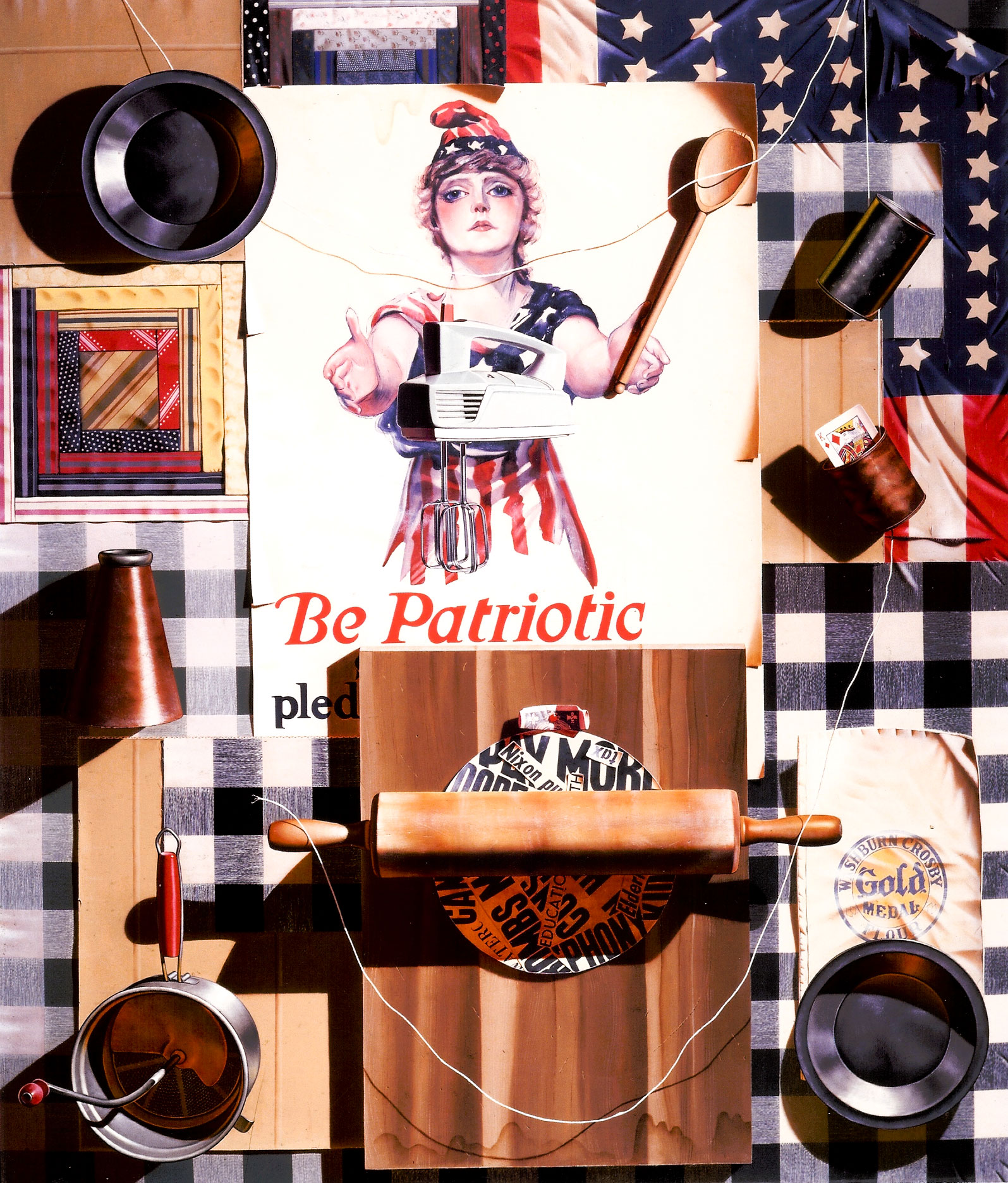
American art - Gary Erbe, “American Recipe,” 1974, oil on canvas, 50 x 42 inches
Gary Erbe, “American Recipe,” 1974, oil on canvas, 50 x 42 inches

Erbe’s exactitude makes sense when we learn that he began his journey not in art school, but working full-time as an engraver. His juxtapositions hover somewhere between magic realism, trompe l’oeil, cubism, and surrealism, and Schweigert rightly observes that “what sets Erbe apart from earlier masters is his distinct blend of historical homage with a bold, contemporary sensibility.” Among Erbe’s quintessentially American subjects are not only flags, but also Hollywood icons, television programs, and baseball.

Paintings of the American flag
Gary Erbe, “Frenzy,” 2007, oil on canvas, 60 x 70 inches
American art - paintings by Gary Erbe
Gary Erbe, “Pieces of Time,” 1976, oil on canvas, 65 x 100 inches, The Butler Institute of American Art, OH
Gary Erbe, “The Final Rinse,” 1971, oil on canvas, 72 x 50 inches, Fort Wayne Museum of Art, IN

Exhibition Details At a Glance:

GARY ERBE: MAGICAL WORLD
Butler Institute of American Art
Youngstown, Ohio
butlerart.com
January 25–March 29, 2026

Virtual Gallery Walk for January 16th, 2026

0
Friday Virtual Gallery Walk

As part of our effort to continue to help artists and art galleries thrive, we’re proud to bring you this week’s “Virtual Gallery Walk.” Browse the artwork below and click the image itself to learn more about it, including how to contact the gallery.

By Dawns Early Light, Andrew Bolam, oil, 54 x 54 in; Celebration of Fine Art

***

Shell Beach- Seacliff, Marian Fortunati, oil on canvas, 20 x 20 in; Marian Fortunati Fine Art

Want to see your gallery featured in an upcoming Virtual Gallery Walk? Contact us at [email protected] to advertise today. Don’t delay, as spaces are first come, first served, and availability is limited.

2026 BRAFA Welcomes 23 New Galleries

0
Pieter Brueghel the Younger (Brussels 1564-1638 Antwerp), "The Payment of the Tithe or the Village Lawyer," 1622, Oil on panel, 78.9 x 123.2 cm, Signed and dated: P. BREVGHEL, 1622. Provenance: private collection, Belgium; Galerie Legenhoek, Paris, 1991; private collection, France. Literature: Ertz, Klaus, Pieter Brueghel der Jüngere: Die Gemälde mit kritischem Oeuvrekatalog, Lingen, Luca Verlag, Vol. I, 2000, p. 513, cat. E 507, repr.; Curie, Christina, Allart, Dominique, The Brue[H]el Phenomenon, Brussels, Royal Institute for Cultural Heritage, vol. III, p. 1030-1031

The Brussels Art Fair (BRAFA, Belgium) will return to Brussels Expo from January 25 through February 1, 2026. This new edition will bring together 147 leading galleries from 19 countries. More than 20 disciplines will be on display, ranging from antiquities to contemporary art, including Old Master paintings, classical African art, antique and designer furniture, silverware, carpets and textiles, rare books, jewelry, and more.

For its 71st anniversary, BRAFA’s Board of Directors have carefully selected 23 new dealers. Nearly half of these new galleries are Belgian or have an exhibition space in Belgium. The others come from France, the Netherlands, Germany, Italy, Brazil and the United States.

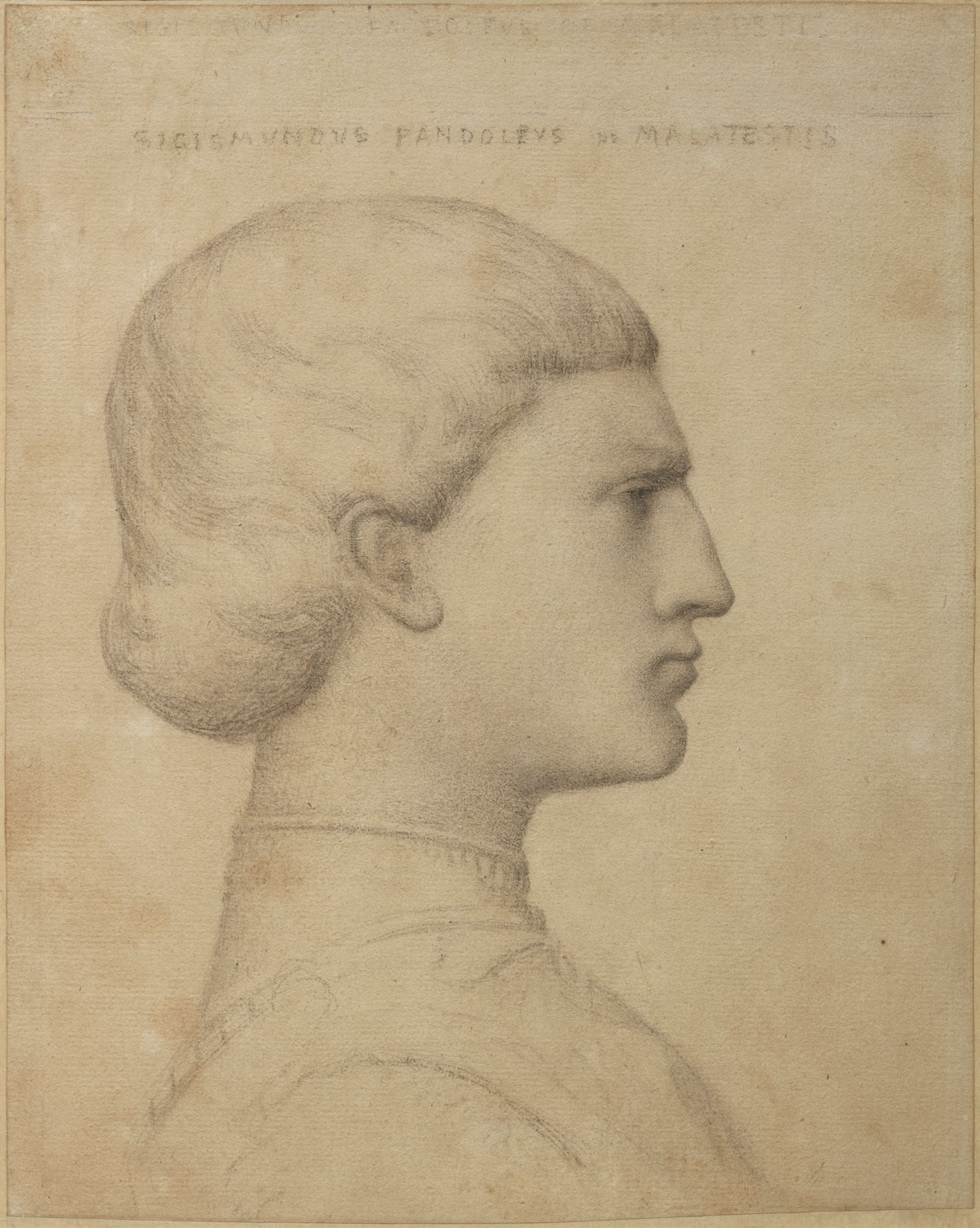
graphite side profile portrait drawing by Jean-Auguste-Dominique Ingres
Jean-Auguste-Dominique Ingres (Montauban 1780-1867 Paris), Sigismondo Pandolfo Malatesta,” circa 1814
Graphite and stump on paper, 28.2 x 22.7 cm, Authenticity confirmed by Mr. Sylvain Bédard after a direct examination, Provenance: collection of Jules Cambon (Paris 1845-1935 Vevey)

The Antiques and Old Masters section of BRAFA will be enhanced this year by Petworth located Vagabond Antiques (UK), whose founder Joe Chaffer has a rich collection of sculptures, paintings and objects dating from the second century AD to the nineteenth century. Also joining the list of participants in the field of ancient art are Arte-Fact Fine Art (BE), a gallery specializing in Old Master paintings (BE), and Pelgrims de Bigard (BE), renowned for its expertise in fifteenth, sixteenth and seventeenth century Flemish paintings. Carlucci Gallery (IT), located in the prestigious Via del Babuino in the heart of Rome, will be exhibiting paintings by Old Masters, antique furniture and sculpture at the next edition of the fair.

Brussels Art Fair / still life oil painting of peonies in a vase
Henri Fantin-Latour (1836–1904), “Vase of Peonies,” 1902, oil on canvas, 16 1/8 x 14 1/2 in., Douwes Fine Art (Amsterdam and London)

The King Baudouin Foundation, which is celebrating its 50th anniversary this year, will be the guest of honor. Visitors will be able to discover an extended stand, featuring recent acquisitions as well as masterpieces that have been entrusted to Belgian museums and public collections over time.

Amongst other things, the King Baudouin Foundation will be presenting a beautiful bracelet by Pol Bury, a figure of Christ by Willem Key, a tapestry by Elisabeth De Saedeleer and a unique coat of Brussels lace. It will also be exhibiting emblematic works such as Bonnecroy’s panoramic view of Brussels, the delicate Holy Blood banner and the Gallic Treasure of Thuin.

The organizers share that “Beyond the quality of the works on display, BRAFA brings together an international constellation of gallery owners, collectors, curators, patrons, decorators, designers and art lovers every year. This community helps to make the fair a true cultural event that fosters exchange.”

For more information, please visit www.brafa.art/en/home.

“I’m Inspired Daily” – A Fine Art Collection Spotlight

A Fine Art Collection Profile >

Fine Art Collection - Stephanie Marzella artist and collector
Stephanie Marzella, artist and collector

Stephanie Marzella is a professional landscape painter. Inspired by the tonalist movement of the late 19th century, her scenes, she says, “express my emotional response to
nature’s mystery and her constant transitions, evoking a mood and atmosphere that often awaken emotions in the viewer.”

Today Marzella resides on Johns Island, southwest of Charleston, where she paints the flat, luminous Lowcountry all around her. She is proud that “Charleston is home to a thriving arts community and has become a lively destination for buying art, especially from several excellent galleries in the French Quarter.” (Among them is Reinert Fine Art, which represents Marzella.)

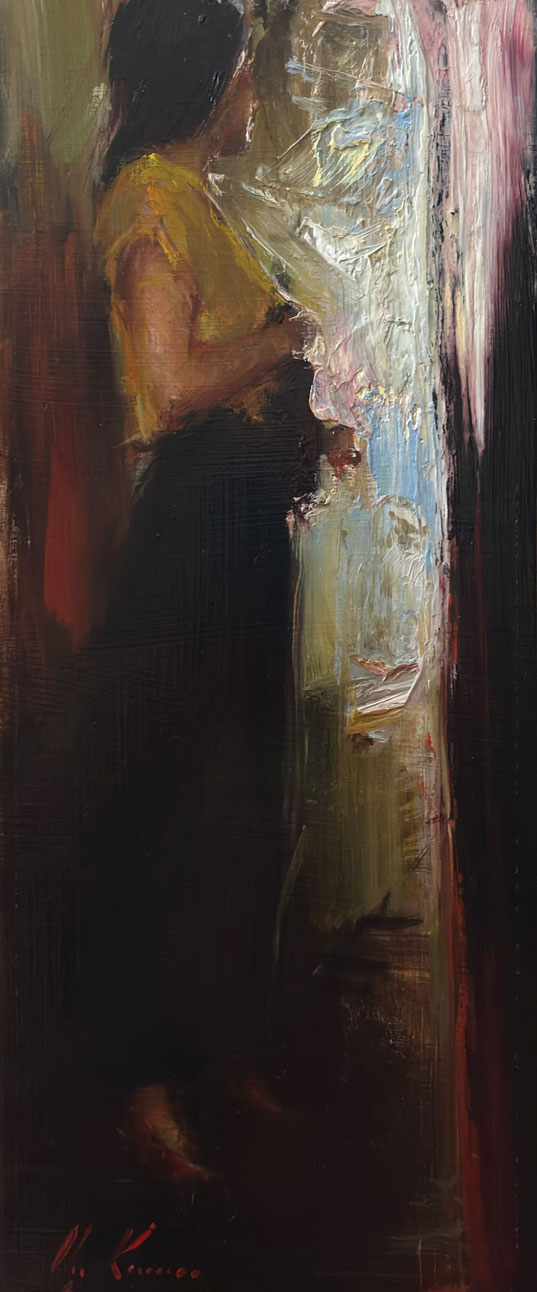
Olga Krimon (b. 1972), "Wait," 2018, oil on panel, 15 x 6 in.
Olga Krimon (b. 1972), “Wait,” 2018, oil on panel, 15 x 6 in.

Much as she loves South Carolina, Marzella is not originally from there. She was born and raised near Cleveland and became interested in art during junior high school. While earning her B.F.A. at the Cleveland Institute of Art, she made her first serious art purchase, “Final Act,” a hand-colored silkscreen print created by Walter Fraunfelder, an upperclassman she admired deeply.

Since then Marzella’s collection has grown significantly to include paintings and drawings by Marjorie Ball, Cindy Baron, Jill Basham, Christina Beecher, Jim Carter, Salvatore Federico, Tracy W. Hambley, Richard Harrington, Michelle Held, Gregor Kammerer, Tim Kelly, Olga Krimon, Claire Marschak, Nicolas Martin, M.A. Podolak, Connie Rigdon, James Ruby, Dennis Sheehan, Phyllis Sloane, Jill Soukup, and Jennifer Stottle Taylor.

Most are smaller in scale, not only because that suits the budget of a working artist, but also because Marzella prefers it that way: “It is pretty impressive,” she declares, “when a small painting is so powerful it draws you across the room.” She continues, “My only criterion for buying a piece is when it stops me in my tracks and connects with me emotionally. I am often amazed at the feeling that comes over me when I see an artwork I absolutely must own. It’s usually an instant reaction.”

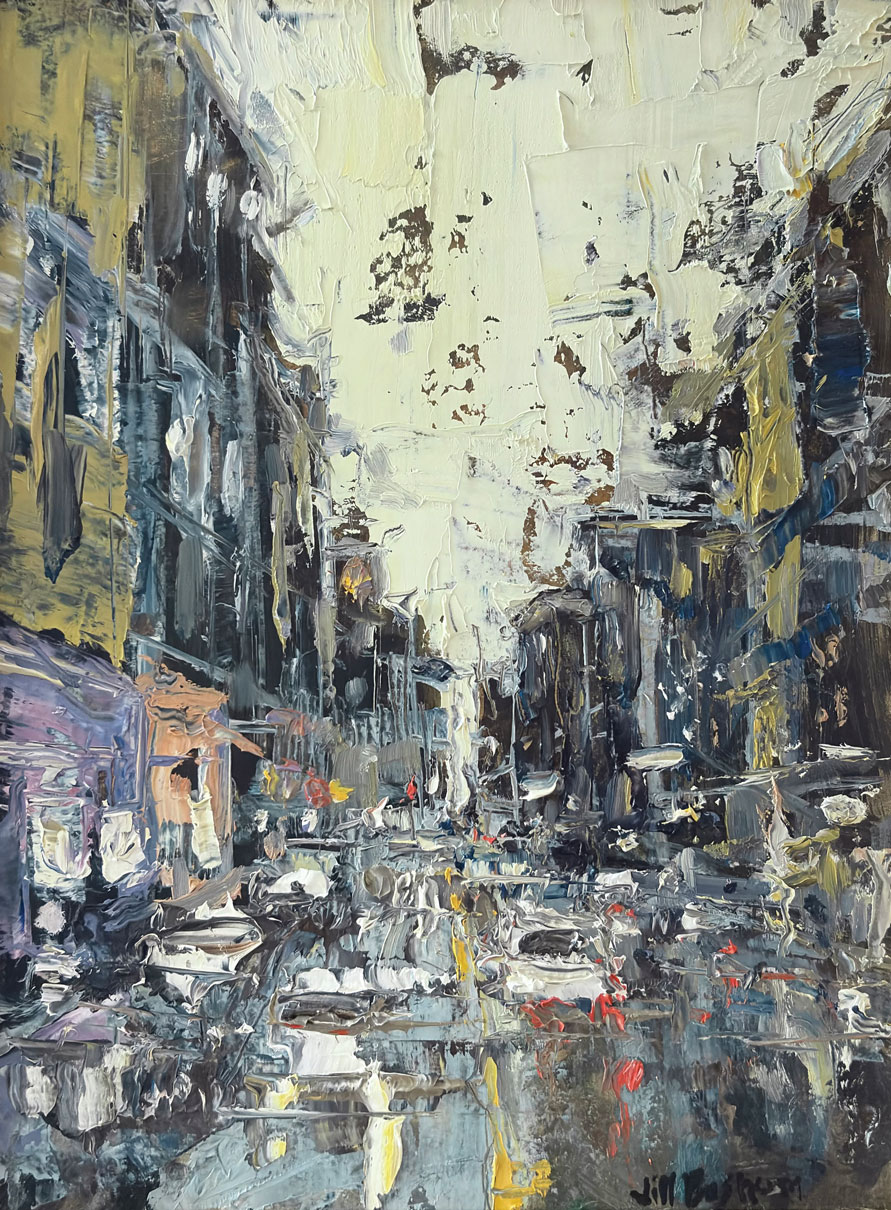
Fine art collection - Jill Basham (b. 1965), "Charles Street Memory," 2019, oil on panel, 11 x 9 in.
Jill Basham (b. 1965), “Charles Street Memory,” 2019, oil on panel, 11 x 9 in.

Over the years, Marzella has bought art through galleries, festivals, Instagram, and Facebook, but her favorite source is the large and collegial community of artists she knows. Many of their friendships were forged during plein air competitions, which can be physically and psychologically challenging. Whatever the backstory, she believes that “When you purchase a piece from a fellow artist, it is a sign of respect. I usually buy paintings not executed in my style; I think to myself, ‘Wow, I wish I had painted that.’ That’s the greatest compliment an artist can receive.”

Marzella adds that artists often collect works that push them to be better themselves. Though she will name no favorites in the collection, she is particularly “inspired by the freedom of brushwork and enviable paint application” in Olga Krimon’s Wait and Jill Basham’s Charles Street Memory, both illustrated here.

Was there ever something that got away? “Yes, one time I did not purchase a painting I fell in love with,” Marzella admits. “I was on vacation. It was a woman dancing in a red dress. The movement in it was astounding. We wanted to think about it. We wrote down the name of the artist and gallery, but then we misplaced the paper. Unfortunately, we had been in so many galleries that day that we couldn’t remember where we had seen it. To this day, it’s my biggest regret.”

To help her collectors avoid that same pang of regret while they are mulling over their options, Marzella often tells them, “I have never regretted any art purchase I have ever made. In fact, I am inspired daily by every painting I own.” Those are powerful words coming from someone who looks at art constantly, and hopefully those collectors take her advice.

View more artist and fine art collection profiles here at FineArtConnoisseur.com.

Subscribe to Fine Art Connoisseur magazine here for expert art collection advice, gallery exhibition news, and more.

A Busy Weekend for Scottsdale Art Lovers

0
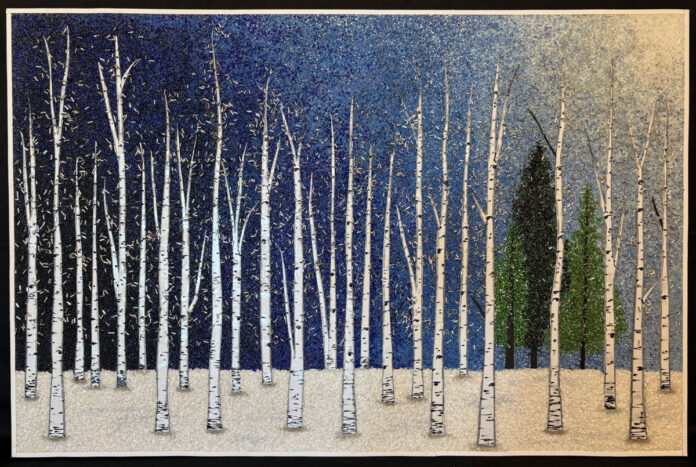
mosaic of birch trees - Sabrina Frey (b. 1970), "Winter Blues," 2024, glass bead mosaic, 24 x 36 in. / Arizona Fine Art Expo
Sabrina Frey (b. 1970), "Winter Blues," 2024, glass bead mosaic, 24 x 36 in.

Learn about this year’s Arizona Fine Art Expo and Celebration of Fine Art, both taking place in Scottsdale, Arizona, soon.

Celebration of Fine Art

January 17–March 29, 2026
celebrateart.com

mixed media painting of a pink motel - Rachel Dory (b. 1974), "Motel Dust," 2021, mixed media on birch panel, 48 x 72 in.
Rachel Dory (b. 1974), “Motel Dust,” 2021, mixed media on birch panel, 48 x 72 in.

Now entering its 36th year, Celebration of Fine Art is Arizona’s longest-running art show. It brings together 100 artists from across America, all invited to spend 10 weeks creating pieces in front of visitors. Their works range widely in both aesthetics and media — from realist to abstract, Western to modern, and everything in between.

Guests are invited to ask questions as the artists work, and these encounters are complemented by Art Discovery discussions every Friday during which visitors learn about the processes, adventures, and techniques that shape the art. Everyone is welcome to explore the one-acre sculpture garden, which features nearly 100 pieces, and to enjoy meals and wine in the cafe on site.

In 1991, inspired by California’s Laguna Beach Festival of Arts, Tom and Ann Morrow collaborated with Scottsdale officials and the community to open CFA’s “big white tents” for the first time. Now encompassing 40,000 square feet of covered space, the event is carried on by Tom’s daughter Susan Morrow Potje and her husband, Jake Potje.

Arizona Fine Art Expo

January 16–March 29, 2026
arizonafineartexpo.com 

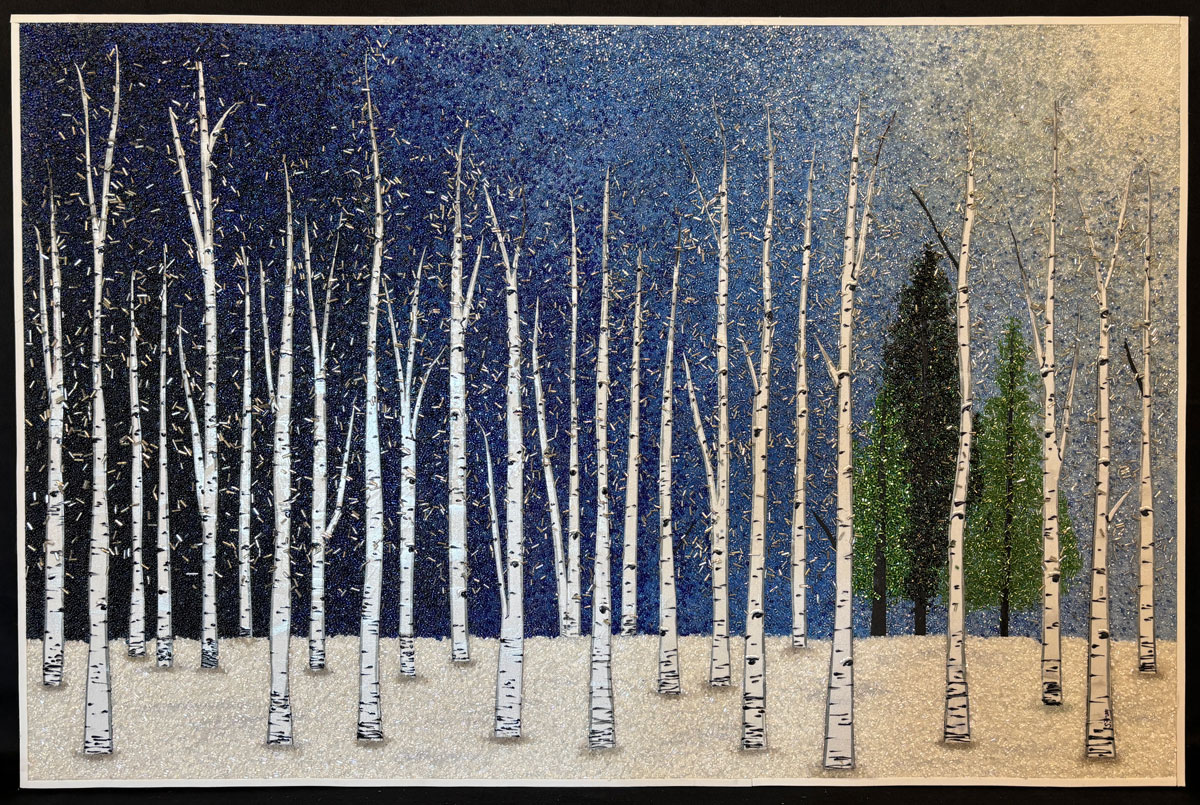
mosaic of birch trees - Sabrina Frey (b. 1970), "Winter Blues," 2024, glass bead mosaic, 24 x 36 in.
Sabrina Frey (b. 1970), “Winter Blues,” 2024, glass bead mosaic, 24 x 36 in.

The 22nd annual Arizona Fine Art Expo is held in a group of soaring white tents that cover more than 44,000 square feet. Inside, visitors can observe and chat with more than 80 artists working in their own studios. This is a rare opportunity to learn about their inspirations and techniques, and all works on view are for sale.

After exploring these spaces, visitors can relax in the large sculpture garden, where they might get to chat with the Expo’s co-owners Rick Long and his wife, Ji. Purchasing a season pass means you can return as often as you like.

WEEKLY NEWS FROM THE ART WORLD

Fill your mind with useful art stories, the latest trends, upcoming art shows, top artists, and more. Subscribe to Fine Art Today, from the publishers of Fine Art Connoisseur magazine.

  • This field is for validation purposes and should be left unchanged.