
By David Masello
The cabaret singer and actress Lynne Charnay knows why she has reached the age of 100. “People think I must have wonderful genes, but I have terrible genes. I truly believe that my good condition and the age I’ve reached are because of my interest in other people.”
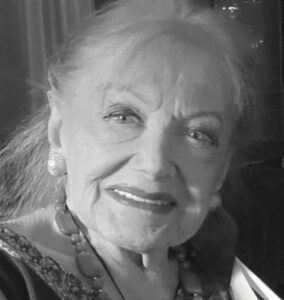
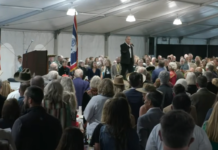
Indeed, attending a glamorous and crowded New Year’s Eve party at her rambling apartment on Central Park West, or one of her monthly salons at which a pianist plays on her baby grand Steinway, one encounters people of all ages. As her son, Tony Mark, a movie producer, says, “Everyone is here because they want to be here, not because they feel they should be here. They love the company of my mother.”
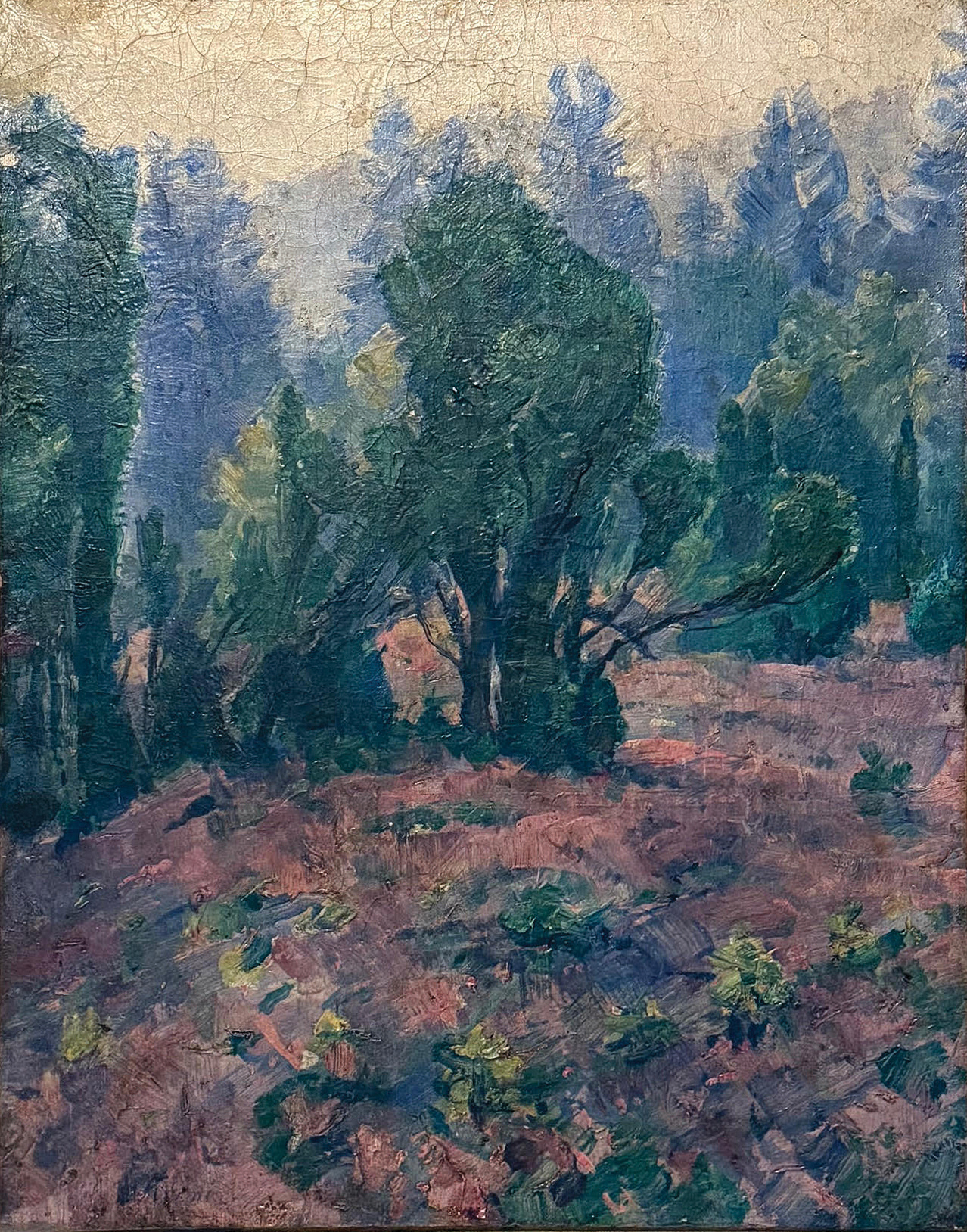
Ms. Charnay was one of my late mother’s college friends at the University of Wisconsin, Class of 1946. Lynne has lived in this particular apartment since 1974, and its rooms are filled with treasures and memorabilia, each with a story she can tell well. But of the many paintings and prints that hang on the walls, she cites a mauve-colored canvas in her bedroom as among her favorites.
It depicts a mottled, lush foreground of flowers and meadow grasses, back-dropped by a stand of tall, wind-blown green trees, beyond which are more such specimens and the hint of a mountain range. “When I wake up in the morning, I can see reflected, in the mirror over my dresser, this work by [Willem] de Kooning on one side, and on the other side a great work by R.C. Gorman,” she says. “The colors in the de Kooning — purples, mauve, lavender — are my favorites.”
Where de Kooning’s oeuvre is immediately thought of as emphatically abstract, even violent, with compositions that often include sharp-breasted women and scowling faces, here is a realistic scene, poetic in its message. “What one normally thinks of as a de Kooning does not appeal to me,” Lynne emphasizes. She recalls buying this work at auction years ago. “I don’t remember what I paid. I’m bad at remembering numbers, though I’m good at remembering song lyrics.” At her annual birthday performances at Manhattan’s Don’t Tell Mama nightclub, Lynne takes the stage to perform classics from the Great American Songbook.
“The moment the auctioneers held up the work and I saw mauve, I raised my hand and bid. I didn’t have any idea who the artist was. It was the color and structure that spoke to me. The auction house didn’t have much competition that day, and it was remarkable I got it for what must have been an affordable price. My husband at the time, Jacques, went to pick it up the following morning and when he saw the label, he said, ‘Lynne, you have no idea what you bought.’ They obviously weren’t paying attention at the auction house.”
At first, Lynne was skeptical that de Kooning would have even painted something so serene and visually accessible. “I researched and found that he did this kind of work very early in his career. Otherwise, I was beginning to think they just maybe put his name there.”
After a century-plus of life, Lynne has accumulated much, but every item in her home remains visible and fresh; she often reaches to a coffee table surface to re-straighten an object. She describes the velvet-upholstered, throne-like chair she occupies as having come from her Russian immigrant parents’ apartment on Riverside Drive, and she holds up some of the objects she bought traveling frequently in France, where Jacques attended to his business of buying valuable violins.
Lynne walks to the front of her apartment and points six floors down to a pair of adjoining benches along Central Park West, each affixed with plaques she bought to honor her family and the park itself.
The editorial above is part of a series that spotlights the work of an accomplished contemporary artist featured in Fine Art Connoisseur magazine.
Subscribe to Fine Art Connoisseur magazine for expert advice for art collectors, gallery exhibition news, and more.
Sign up for the Fine Art Today newsletter, which brings you high-level content from the art collecting world.
Story prepared for the web by Cherie Dawn Haas, Editor of Fine Art Today