
Home Blog Page 101

The Tudors: Art and Majesty in Renaissance England

0
Queen Elizabeth I The Rainbow Portrait
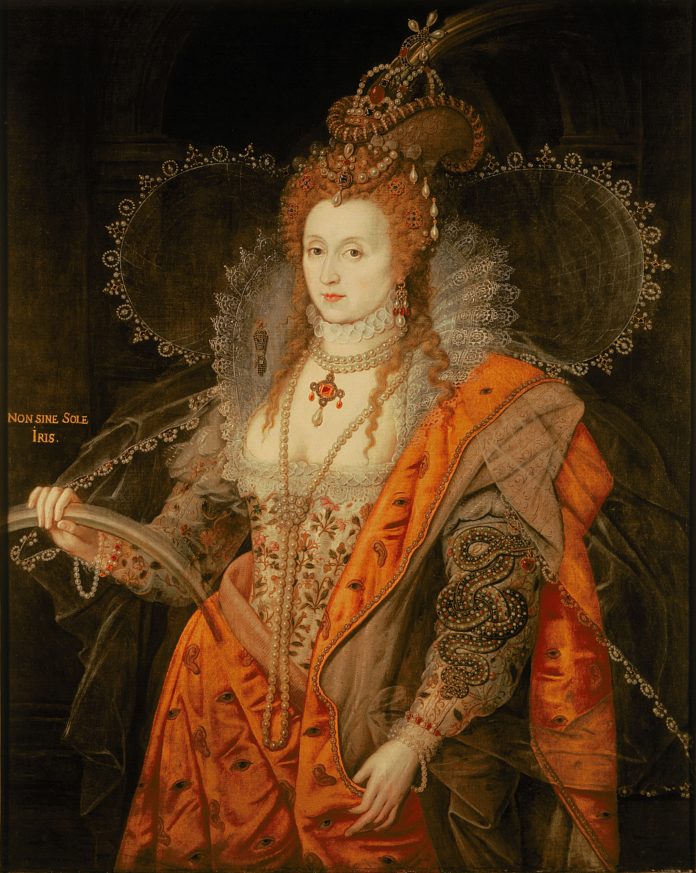
Attributed to Marcus Gheeraerts the Younger,, (Flemish, 1561-1635/36), "Elizabeth I (The Rainbow Portrait)," ca. 1602, Oil on canvas, 50 3/8 x 40 in. (128 x 101.6 cm), Reproduced with the permission of the Marquess of Salisbury, Hatfield House Image © Hatfield House, Hertfordshire, UK / Bridgeman Images

The first exhibition in the United States focusing on art created during the Tudor dynasty will feature more than 100 paintings, tapestries, sculptures, and more …

From King Henry VII’s seizure of the throne in 1485 to the death of his granddaughter Queen Elizabeth I in 1603, England’s Tudor monarchs used art to legitimize and glorify their tumultuous reigns. On view at The Met through January 8, 2023, “The Tudors: Art and Majesty in Renaissance England” will trace the transformation of the arts under their rule through more than 100 objects—including iconic portraits, spectacular tapestries, manuscripts, sculpture, and armor—from both the Museum collection and international lenders.
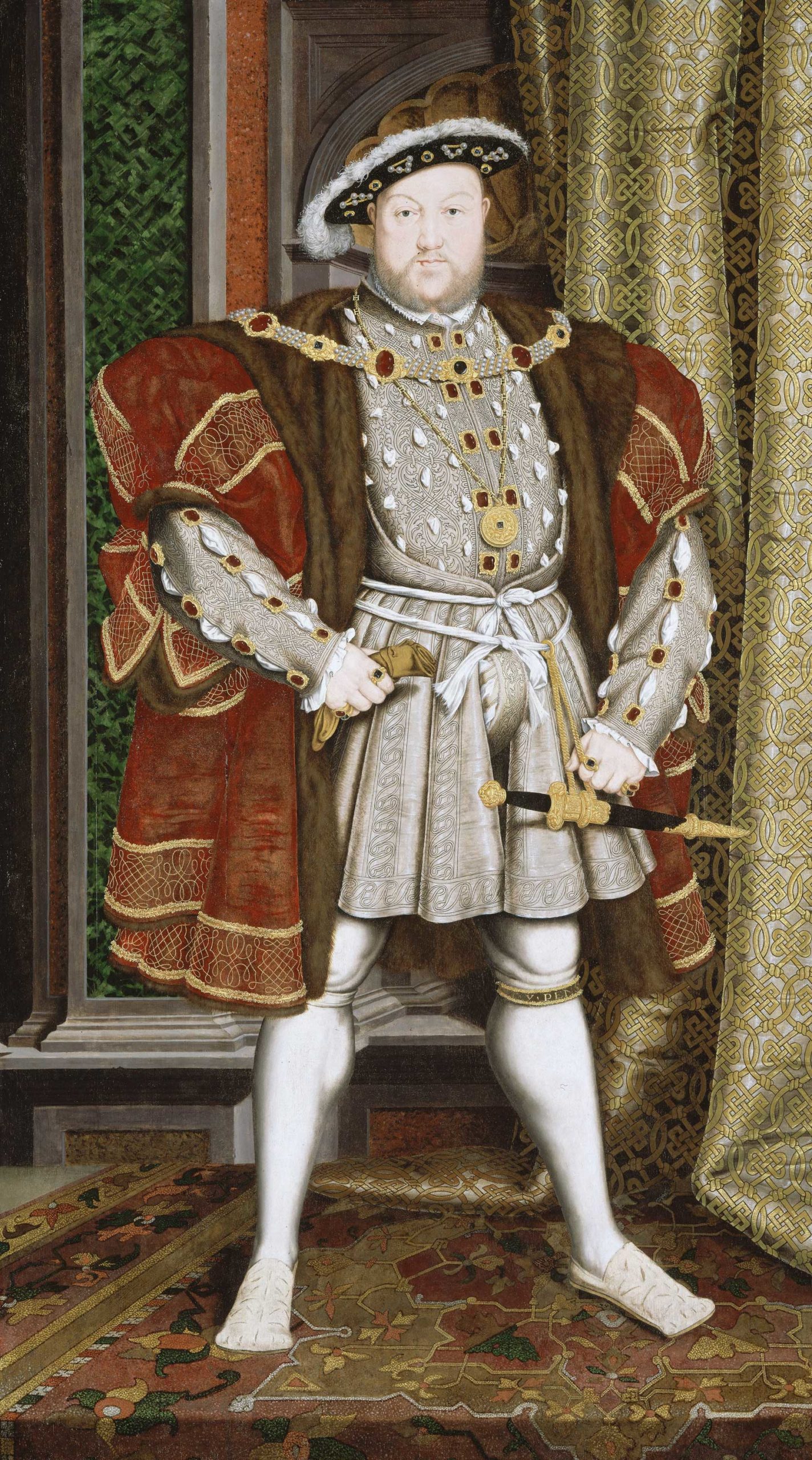
Tudor Dynasty - Hans Holbein the Younger, Henry VIII
Workshop of Hans Holbein the Younger (German, Augsburg 1497/98-1543 London), “Henry VIII,” ca. 1540, Oil on panel, 93 5/8 × 52 3/4 in. (237.9 × 134 cm), Walker Art Gallery, National Museums Liverpool (WAG 1350) Image Courtesy National Museums Liverpool, Walker Art Gallery

“This magnificent exhibition brings the stunning majesty and compelling drama of the Tudor dynasty to life,” said Max Hollein, Marina Kellen French Director of The Met. “By examining the wider political and societal context in which these sumptuous goods and
extraordinary portraits were made, we can appreciate both their exquisite beauty as works of art and the complex and often turbulent stories they tell.”

Exhibition co-curator Elizabeth Cleland, Curator in the Department of European Sculpture and Decorative Arts, added: “The sense of majesty that the Tudors crafted around themselves was so successful that, even now, we need to take a step back and remind ourselves just how tenuous their claim to the throne actually was and how many challenges they were facing.”

“English Renaissance literature of this time, particularly the plays of William Shakespeare, continues to be world famous today,” added exhibition co-curator Adam Eaker, Associate Curator in the Department of European Paintings. “This exhibition gives us the opportunity to introduce The Met’s audiences to the stunning visual arts of the period and the ways that both artists and patrons used imagery to navigate the treacherous waters of court life. Rather than an illustrated history of the Tudor monarchy, it offers a fresh look at the incredible figurative and decorative arts made or acquired for the court.”
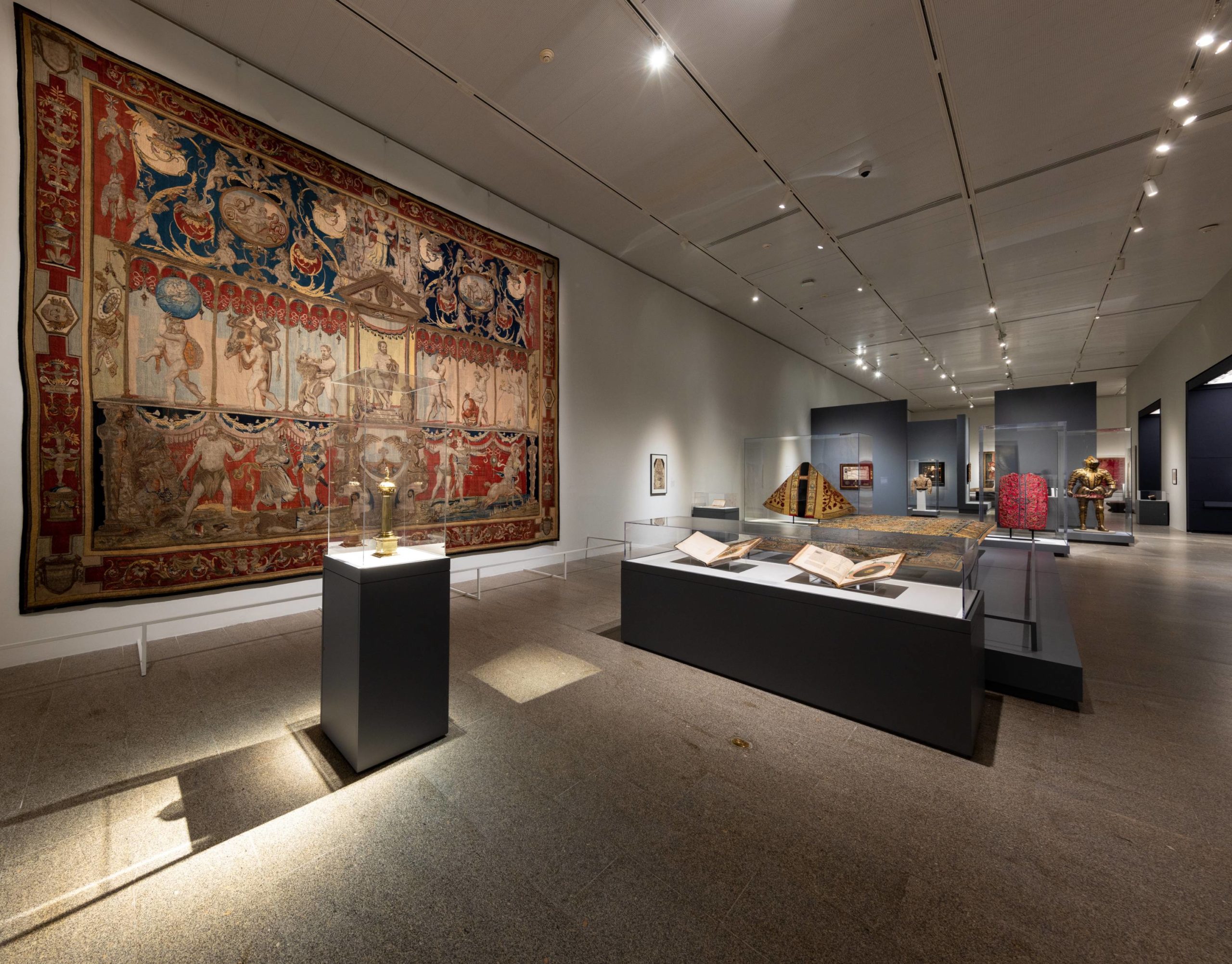
Tudor Dynasty art museum exhibition
Installation view of “The Tudors: Art and Majesty in Renaissance England,” on view through January 8, 2023 at The Metropolitan Museum of Art. Photo by Anna-Marie Kellen, courtesy of The Met

Exhibition Overview

England under the volatile Tudor dynasty was a thriving home for the arts. An international community of artists and merchants, many of them religious refugees from across Europe, navigated the high-stakes demands of royal patrons against the backdrop of shifting political relationships with mainland Europe.

The Tudor courts were truly cosmopolitan, boasting the work of Florentine sculptors, German painters, Flemish weavers, and Europe’s best armorers, goldsmiths, and printers, while also contributing to the emergence of a distinctly English style.

This exhibition features works of art made under the patronage of all five Tudor monarchs: Henry VII (reigned 1485–1509), Henry VIII (1509–47), Edward VI (1547–53), Mary I (1553–58), and Elizabeth I (1558–1603). It is organized thematically in five sections within an overall exhibition design that evokes the long galleries and intimate alcoves that defined Tudor palace architecture.

Deriving their power from Henry VII’s seizure of the throne in 1485, concluding the Wars of the Roses, all five monarchs of the Tudor dynasty grappled with crises of legitimacy and succession. Beginning with a spectacular group of Italian bronze sculptures (reunited here for the first time since the 17th century) from a never-completed tomb for Henry VIII, the exhibition’s first section, “Inventing a Dynasty,” shows how the Tudors devoted vast resources to crafting a public image as divinely ordained sovereigns, shoring up their tenuous claim to the throne.

A series of portraits will introduce visitors to the five Tudor monarchs; included here are the exceptional loans of Hans Holbein the Younger’s portrait of Henry VIII from the Museo Nacional Thyssen Bornemisza in Madrid and the “Sieve Portrait” of Elizabeth I by Quentin Metsys the Younger from the Pinacoteca Nazionale in Siena.
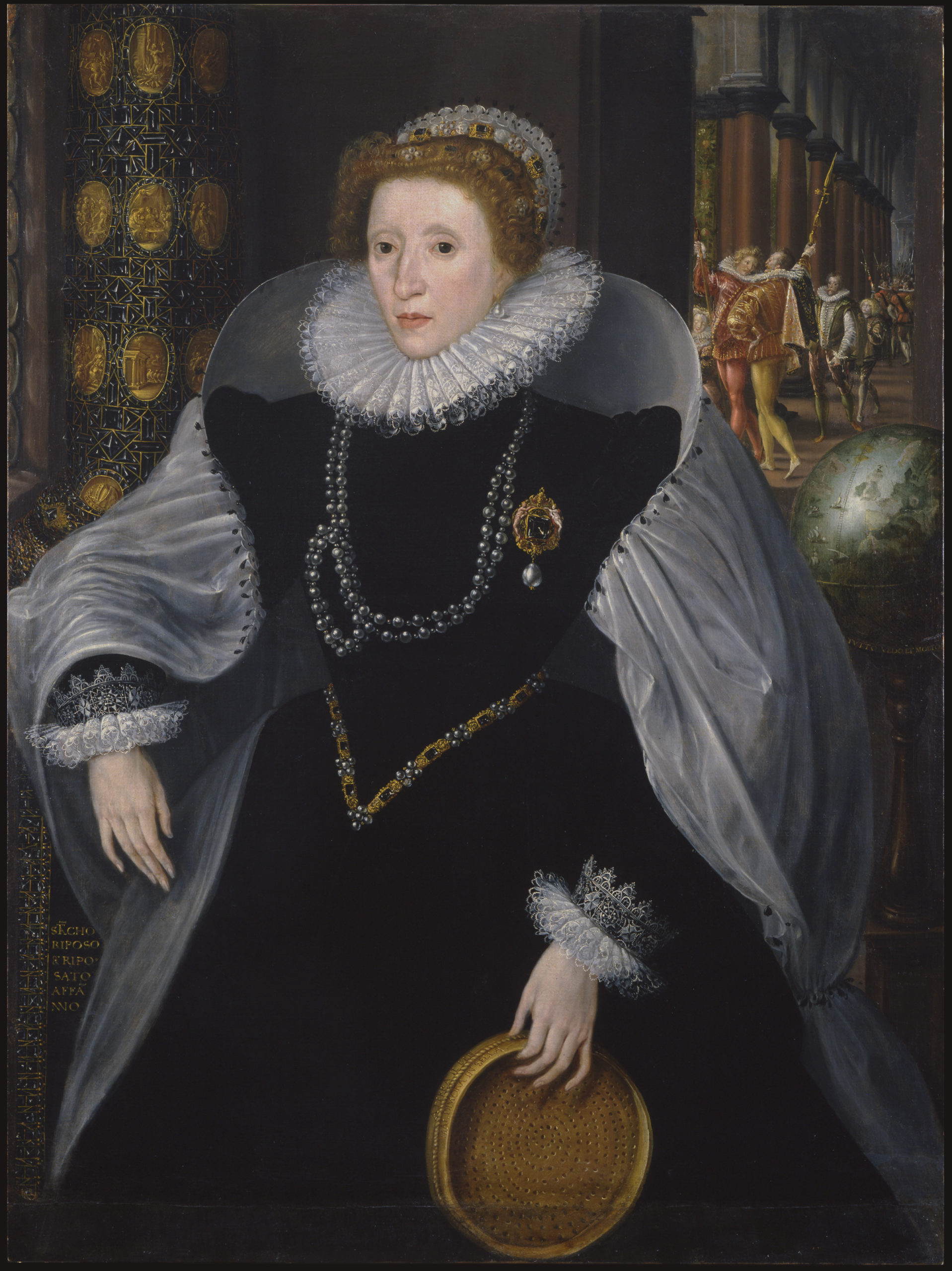
Portrait of Elizabeth 1 - Tudor Dynasty
Quentin Metsys the Younger (Netherlandish, 1543–1589), “Elizabeth I of England (The Sieve Portrait),” 1583, Oil on canvas, 49 x 36 in. (124.5 x 91.5 cm), Pinacoteca Nazionale di Siena. By permission of the Ministry of Cultural Heritage and Activities, Museum Complex of Tuscany (Polo Museale della Toscana), Photo Archive of the National Gallery of Siena (Pinacoteca Nazionale di Siena)

The next section, “Splendor” evokes the ornately layered interiors of Tudor palaces, filled with figurative plasterwork, tapestries, metalwork, and the lavishly dressed bodies of the courtiers themselves. As monarchs traveled between residences, portable furnishings transported their magnificence with them. Tapestries woven in richly dyed wools, silks, and metal-wrapped threads enveloped rooms. Private chapels offered devotional manuscripts and images. Games, music, and athletic tournaments provided opportunities for ostentatious displays.

This section highlights the Tudor monarchs’ taste for luxurious imports from the continent, but also the work of local artists and newly arrived Flemish and French immigrants. Examples include Henry VIII’s personal book of psalms (British Library), featuring handwritten annotations by the king himself; a rare French-made “Sea-Dog” Table with Italian marble inlay (National Trust, Hardwick Hall, The Devonshire Collection); and a dazzling London-made rock crystal vase mounted in gold with the devices of Henry VIII and his first wife, Katherine of Aragon (Museo delle Cappelle Medicee, on permanent loan to the Tesoro di San Lorenzo, Basilica di San Lorenzo, Florence).
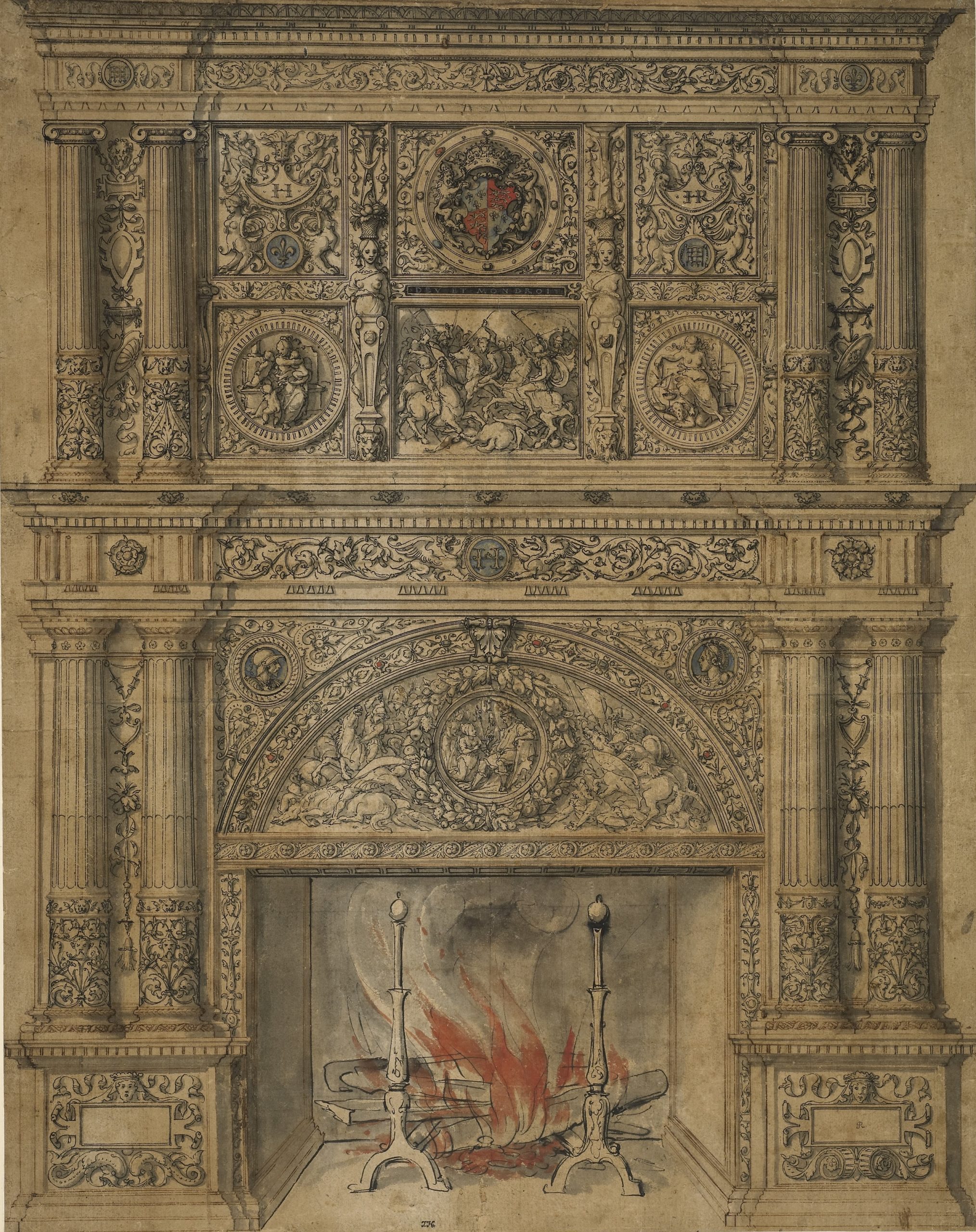
Hans Holbein the Younger tapestry design
Attributed to Hans Holbein the Younger (German, Augsburg 1497/98–1543 London), “Design for a Chimneypiece,” ca. 1537–43, Pen and black ink, with gray, blue, and red wash, 21 1/8 x 16 7/8 in. (53.9 x 42.7 cm), British Museum, London (PD 1854,0708.1), Image © The Trustees of the British Museum

“Public and Private Faces” spotlights the dominance of portraiture in Tudor painting and the transformative impact that Hans Holbein the Younger (c. 1497–1543) had on the genre. In 16th-century England, portraits recorded status, lineage, piety, and political affiliation, as well as physical appearance. They allowed for physically distant relatives to keep in touch, or for royals to gauge the attractiveness and health of potential future spouses.

The emergence of the portrait miniature, intended to be held in the hand or worn on the body, heightened the association between portraiture and intimacy and portraiture’s role in bridging geographic separation. Highlights of this section include Holbein’s portrait of the royal falconer Robert Cheseman, on loan from the Mauritshuis, along with a group of the artist’s portrait drawings in the collection of HM Elizabeth II at Windsor Castle.

Also featured is Marcus Gheeraerts the Younger’s elegant portrait of the Welsh aristocrat Ellen Maurice (recently acquired and conserved by The Met), and an unknown English artist’s portrait of the Moroccan ambassador, whose six-month stay at the English court was the subject of intense fascination (from the University of Birmingham).

“Languages of Ornament” illuminates how Tudor arts combined the classical, the natural, and the neo-medieval, forming a uniquely English Renaissance aesthetic. Like other elites of Renaissance Europe, the Tudors were interested in the artistic legacy of ancient Greece and Rome, as seen in the classical whimsy of “The Apotheosis of Henry VIII,” a drawing on loan from the Victoria and Albert Museum, London.

In the decorative arts of 16th-century England, however, this classical tradition was also often blended with a new taste for motifs from the natural world. They drew upon both longstanding conventions of floral symbolism as well as a new fascination with untamed wilderness as a place of liberation. Meticulously woven vines of Tudor and Lancastrian roses, for example, decorate a velvet cope from a lavish suite of vestments commissioned by Henry VII, on loan from the British Jesuit Province.

Additionally, elaborate court performances and choreographed tournaments revealed a nostalgia for the Middle Ages—nodding to the Tudors’ shrewd appropriation of King Arthur as a legendary ancestor. Interlacing geometric straps evoking Celtic knotwork and Anglo-Saxon manuscripts flourished in patterning on everything from armor to textiles, like the boldly colored Luttrell Table Carpet from the Burrell Collection in Glasgow.

The exhibition culminates with “Allegories and Icons,” a collection of striking depictions of Elizabeth I, the last Tudor monarch, including the celebrated “Ditchley” and “Rainbow” portraits, on loan from the National Portrait Gallery (London) and the Marquess of Salisbury, respectively.
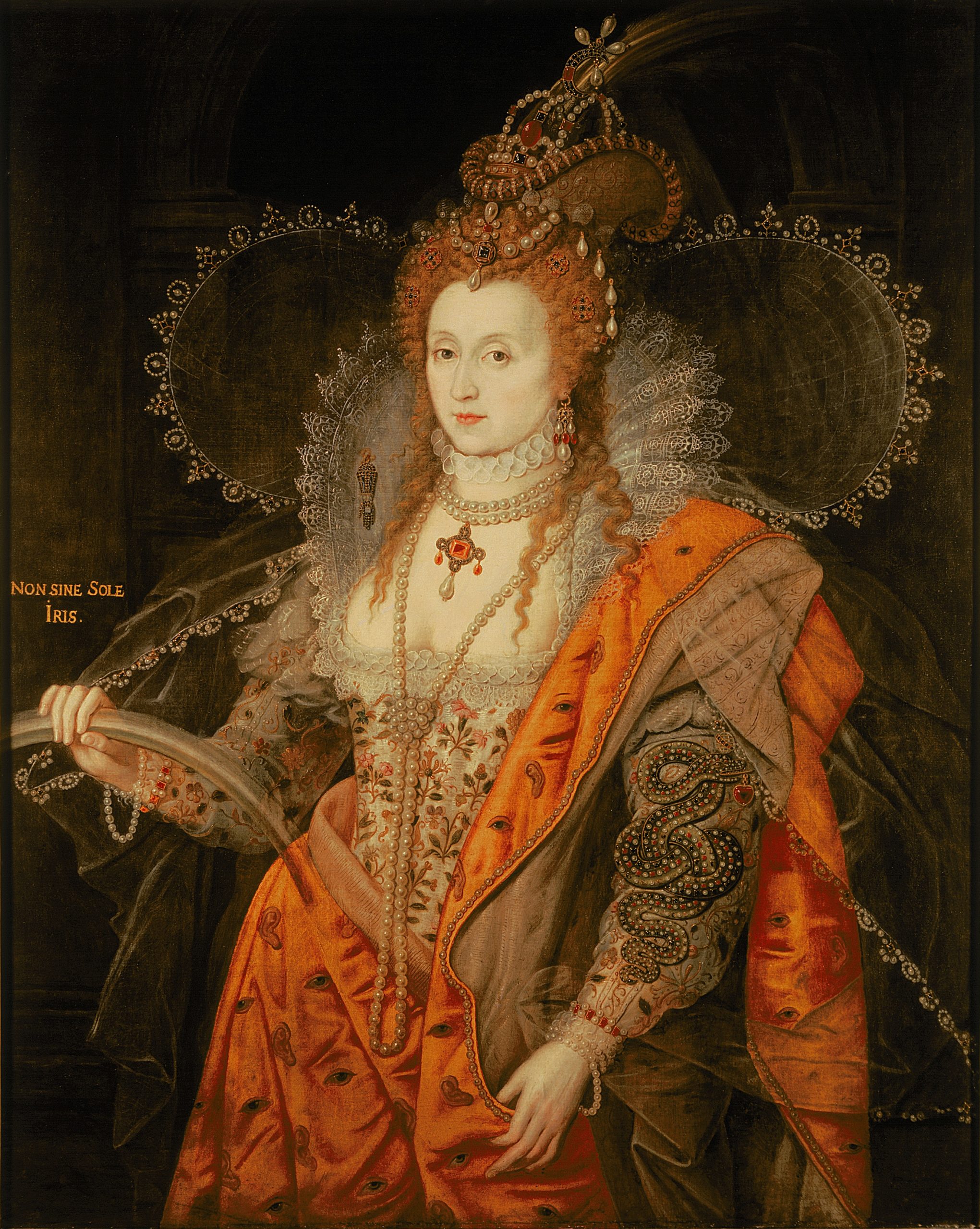
Queen Elizabeth I The Rainbow Portrait
Attributed to Marcus Gheeraerts the Younger,, (Flemish, 1561-1635/36), “Elizabeth I (The Rainbow Portrait),” ca. 1602, Oil on canvas, 50 3/8 x 40 in. (128 x 101.6 cm), Reproduced with the permission of the Marquess of Salisbury, Hatfield House Image © Hatfield House, Hertfordshire, UK / Bridgeman Images

Facing enormous pressure as an unmarried female ruler, the queen exerted tight control over her image. Her carefully vetted portraitists drew upon the elaborate allegories devised by court poets to pay tribute to the queen and her immense powers. As the Protestant Reformation had brought about the destruction or removal of religious images from English churches, most artists focused on investing the monarch—as newly proclaimed head of the church—with an enchanted and sacred authority. At the same time, printmakers created mass-produced images that celebrated Elizabeth as a protector of the Protestant cause.

The exhibition concludes with a portrait, from The Met collection, of Henry Frederick, Prince of Wales, a dynamic depiction of the Stuart dynasty that came to the throne after Elizabeth’s death in 1603, ushering in a new age of artistic styles.

The exhibition is made possible by Alice Cary Brown and W.L. Lyons Brown, Frank Richardson and Kimba Wood, Barbara A. Wolfe, the Diane Carol Brandt Fund, The Coby Foundation, Ltd., The Klesch Collection, Ann M. Spruill and Daniel H. Cantwell, and Sharon Wee and Tracy Fu. It is supported by an indemnity from the Federal Council on the Arts and the Humanities. The exhibition is organized by The Metropolitan Museum of Art and The Cleveland Museum of Art, in collaboration with the Fine Arts Museums of San Francisco.

For more details, please visit MetMuseum.org.


> Visit EricRhoads.com to learn about more opportunities for artists and art collectors, including retreats, international art trips, art conventions, and more.

> Sign up to receive Fine Art Today, our free weekly e-newsletter

> Subscribe to Fine Art Connoisseur magazine, so you never miss an issue
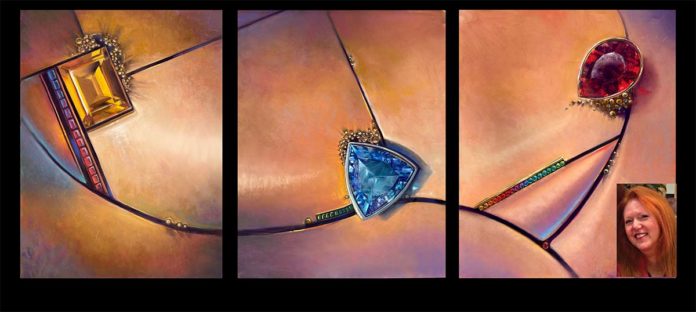
Artist Spotlight: Laura Pollak

0
Laura Pollak, “Jewels, Triptych,” pastel, 26 x 58 in., available through the artist

What is the most interesting thing you have painted/sculpted and why?
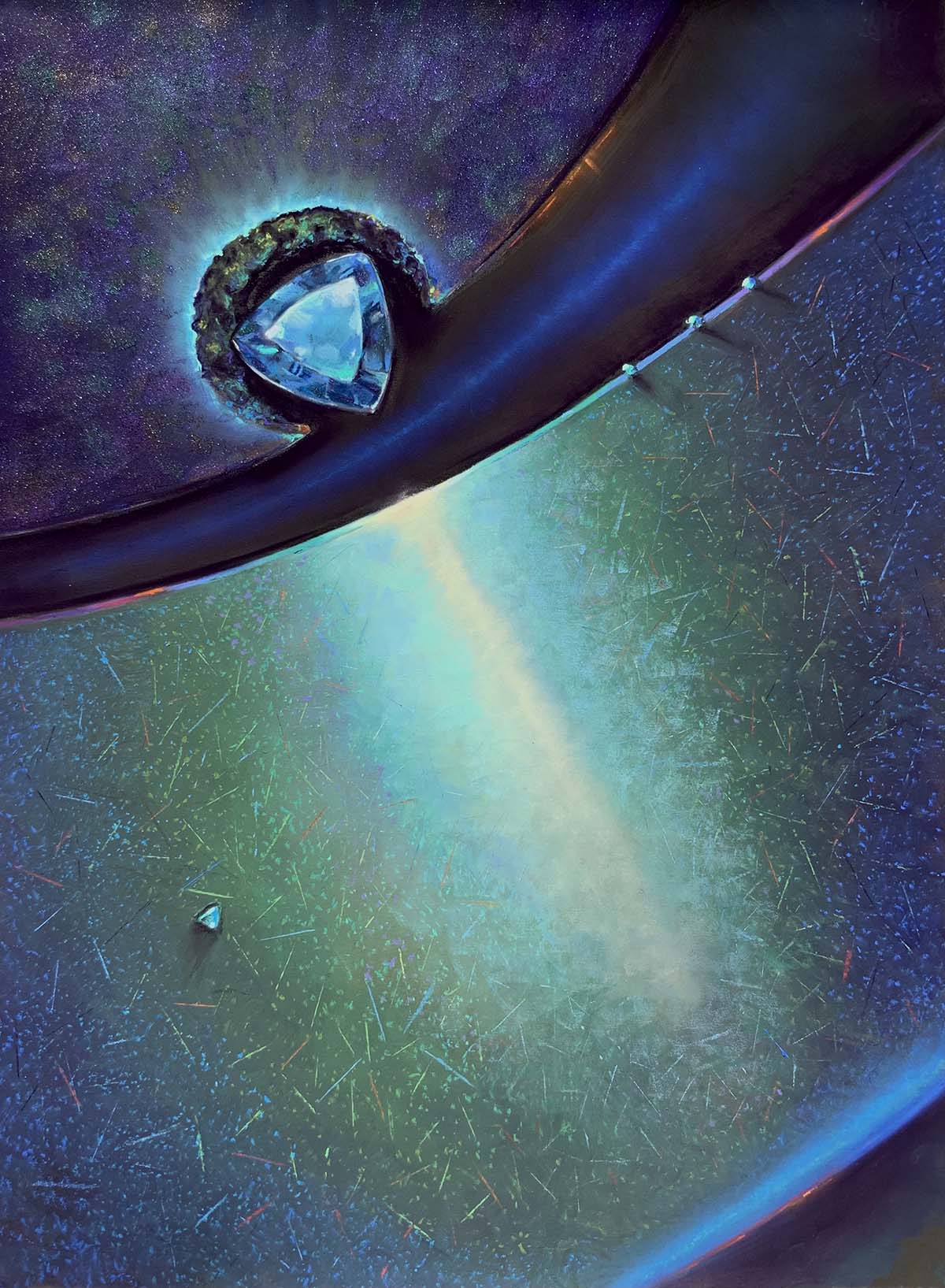
Laura Pollak: Laura Pollak is an internationally acclaimed Pastel Artist winning top awards and is represented in numerous venues, including Galleries and Museums across the nation. Most recently her work has been curated into the Hilbert Museum in Southern California and shown in the VEFA GALLERY also in California. Pollak’s landscapes inform her abstract paintings, that are in the genre of Abstract Realism. This last year she has become enthralled with embedding gem stones into her paintings, creating a glistening, translucent sense of space. Laura’s unique paintings have an ethereal glow, where the source of light emanates from within the painting like a flame.

“Creating art is only part of the process. Like a dialogue between friends, art must be shared and seen in order to close the circle and convey the idea. I invite you to join me on this journey of discovery.”

To see more of Laura’s work, visit:
www.laurapollak.com

abstract pastel painting of red gem stone on a bed of twisted white and gray soft objects
Laura Pollak, “Ruby,” pastel, 11 x 14 in., available through the artist
pastel painting of blue gemstone with a light shining reflecting off the stone, projecting on the what the gem is laying on, with a blue/green background
Laura Pollak, “Aquamarine,” pastel, 18 x 24 in., available through the artist

Auction Sees Bidding War Over Two Oval Portraits

0

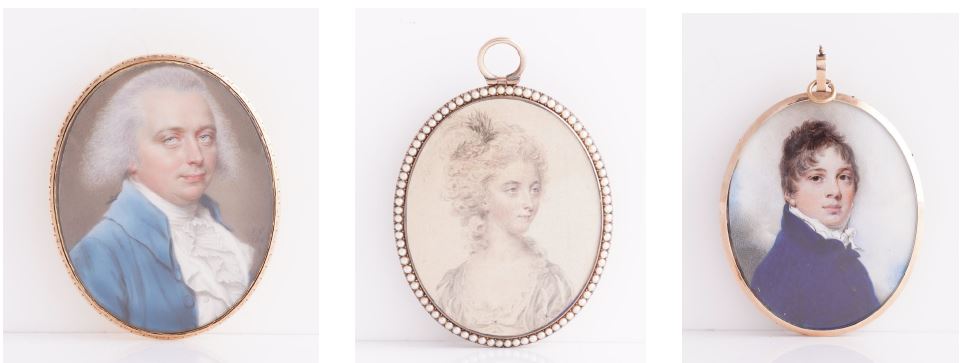
The Old Master, British & European Paintings auction started with several collections of over 70 portrait miniatures, of which only three failed to sell during the recent Bellmans auction. They sold to both trade and private collectors. (Read “It’s Autumn Auction Season at Bellmans.”)

More from the organizers:

Top lot was rather unsurprisingly the portrait miniature of General Powney but John Smart (British, 1741-1811) which sold above low estimate for £3,500 (£4,424), while another one by the same artist of Mrs. Shippey of Sloane Street, Knightsbridge from 1784 sold for three times its low estimate at £3,000 (£3,792). A stunning portrait of a young Philip Button Esq. of Gifford, Essex by William Wood (British, 1769-1810) attracted much attention and sold online for £3,200 (£4,044) against an estimate of£1,500 – £2,500.

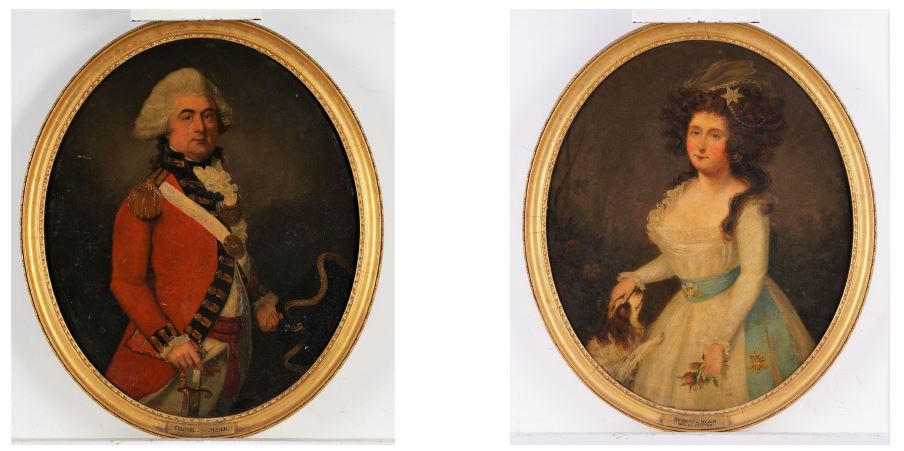
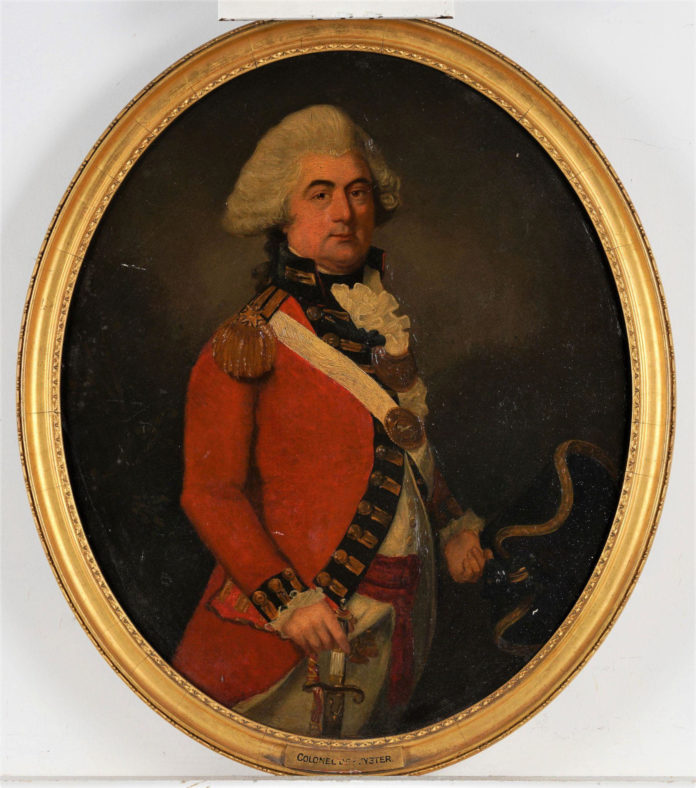
The real bidding war, however, was fought over two oval portraits of Colonel Arent DePeyster (1736-1822) and his wife Rebecca DePeyster (nee Blair, died 1827).

Portraits of Colonel Arent DePeyster and Rebecca DePeyster

The portraits had been found by Bellmans in a cupboard in a house clearance in South London and catalogued as late 18th/early 19th Century English School with an estimate of £150 – £250. While DePeyster, the American-born British colonial military officer best known for his term as commandant of the British-controlled Fort Michilimackinac and Fort Detroit during the American Revolution, has been largely forgotten in the UK, he clearly still has his place in the US. Strong bidding between two US bidders meant that the relatively conservative commission bids were soon out and the bidding continued online and on the phone, the online bidder finally succeeded when the hammer came down at £38,000 (£48,032).

Just over a month short of the 200th anniversary of Arent DePeyster’s death, Bellmans is thrilled to hear that the portraits will return to the US, where following the capture of Lieutenant-Governor General Henry Hamilton, DePeyster is often credited as being the military leader of the British and Native American forces in the Western American and Canadian frontiers. The DePeysters actually moved to Dumfries after he retired in 1794, but when the United Kingdom was threatened by Napoleon, he became actively involved with the militia again, which included the prominent Scottish poet Robert Burns, who dedicated his poem on “Life” to him.

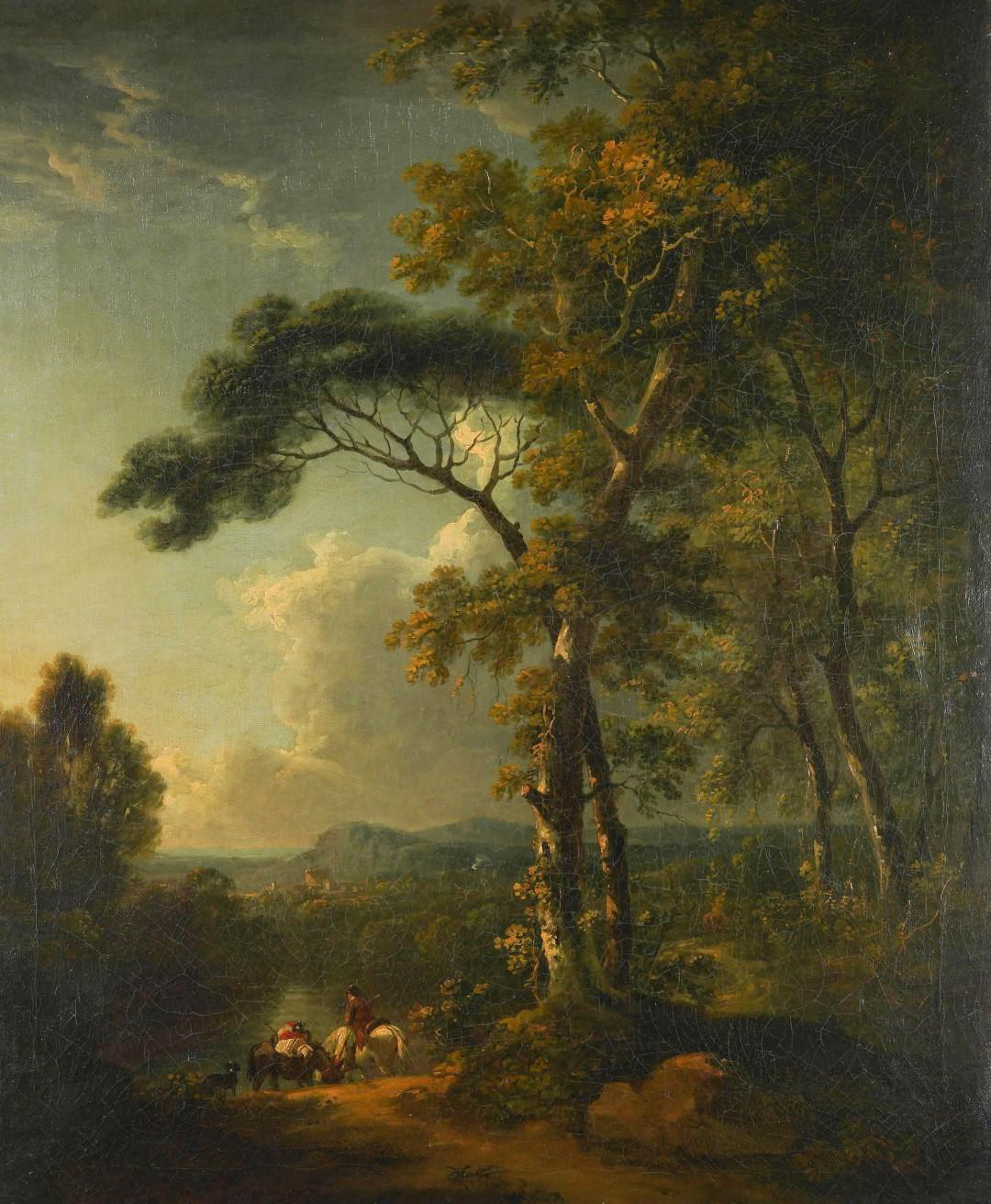
The second highest lot was part of the Shakenhurst Hall Collection – an impressive landscape with figures on horseback by a lake that has to be assumed to be by a follower of Richard Wilson. As such it was estimated at £800 – £1,200 and sold for £9,500 (£12,008).

Landscape painting from the Shakenhurst Hall Collection

Julian Dineen, head of pictures at Bellmans, said: “We were delighted with the sale which included some outstanding results, with competitive bidding coming from across the UK, Europe, and further afield. We look forward to following this up with what is sure to be a fantastic Modern British and 20th Century Art Sale on 15th November.”

90% of the auction sold with most lots achieving prices above expectations. With £225,000 it is one of the best totals of a Bellmans picture auction in recent years.


> Visit EricRhoads.com to learn about more opportunities for artists and art collectors, including retreats, international art trips, art conventions, and more.

> Sign up to receive Fine Art Today, our free weekly e-newsletter

> Subscribe to Fine Art Connoisseur magazine, so you never miss an issue

PleinAir Salon Spotlight: Raging Spring

0
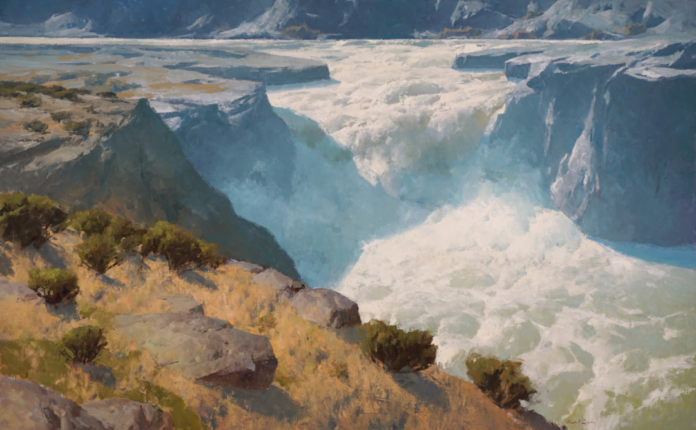
Kimball Geisler, “Raging Spring,” oil, 45 x 72 in., PleinAir Salon August 2022 First Place Overall winner

We’d like to congratulate Kimball Geisler for winning Overall First Place in the August 2022 PleinAir Salon, judged by Lori Putnam, 10th Annual PleinAir Salon Grand Prize winner.

“There was never any question that this piece was worthy of the top-most award,” Lori said. “Besides being immediately breathtaking, it has everything that all of us work to achieve: impeccable design, beautiful color harmony, and the drawing and edges are flawlessly executed. I am drawn in, right there, then travel about throughout the entire painting. I can feel the mist, and the power of the rushing water is so strong, that I want to step back from the edge to safety. Masterfully done.”


About the PleinAir Salon:

In the spirit of the French Salon created by the Academie des Beaux-Arts in Paris, this annual online art competition, with 11 monthly cycles, leading to the annual Salon Grand Prize winners, is designed to stimulate artistic growth through competition. The competition rewards artists with over $33,000 in cash prizes and exposure of their work, with the winning painting featured on the cover of PleinAir Magazine.

Winners in each monthly competition may receive recognition and exposure through PleinAir Magazine’s print magazine, e-newsletters, websites, and social media. Winners of each competition will also be entered into the annual competition. The 12th Annual Awards will be presented live at the Plein Air Convention & Expo in May 2023.

The next round of the PleinAir Salon has begun so hurry, as this competition ends on the last day of the month. Enter your best art in the PleinAir Salon here.

.

Van Gogh in America

0
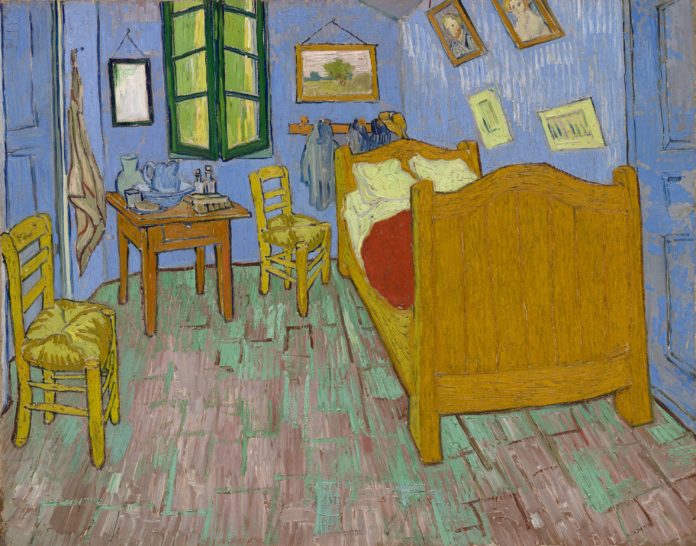
Vincent van Gogh paintings, "The Bedroom," 1889
Vincent van Gogh, "The Bedroom," 1889

Van Gogh Paintings On View: “Van Gogh in America”
Detroit Institute of Art (DIA), Michigan
Through January 22, 2023

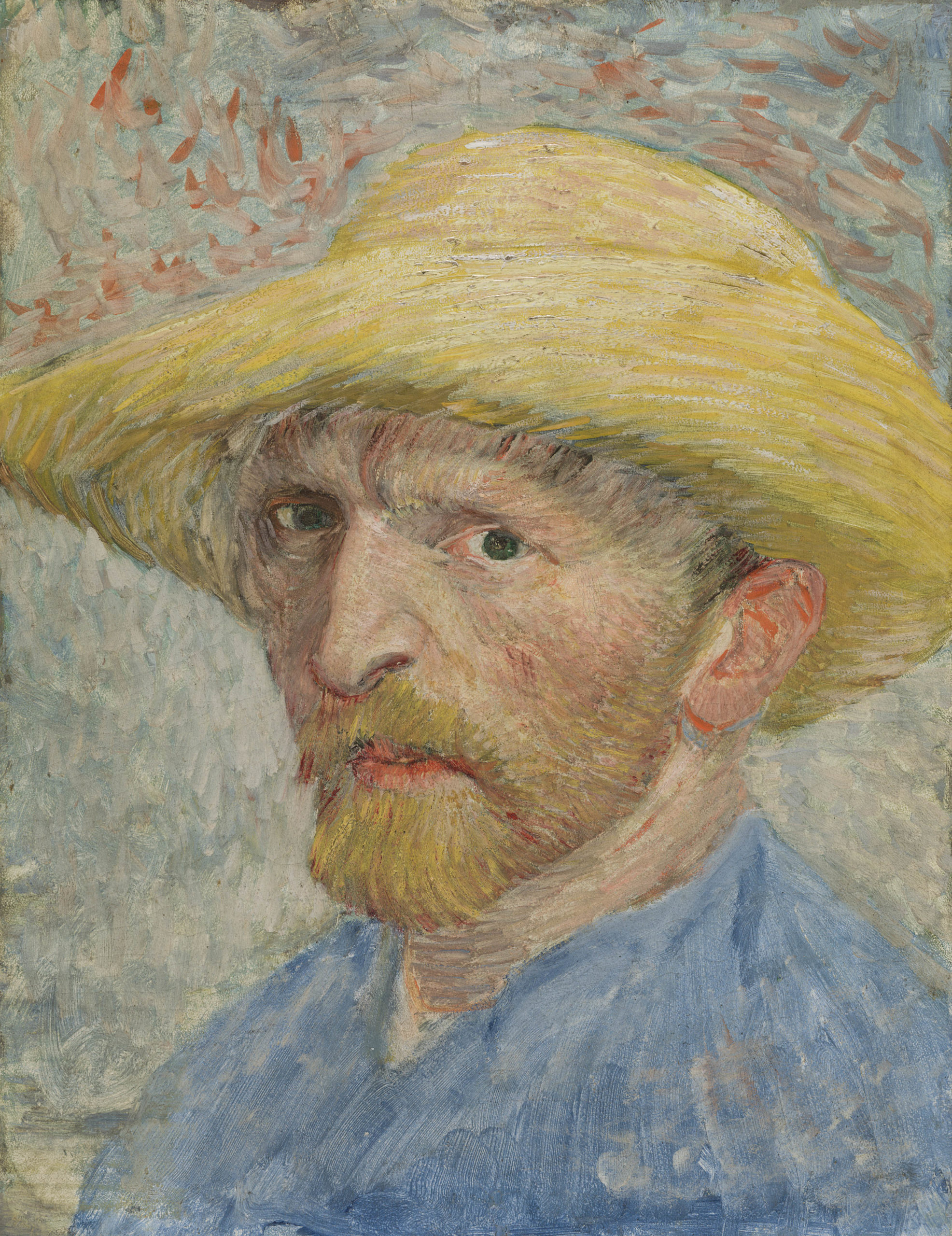
Vincent van Gogh paintings, "Self-Portrait," 1887
Vincent van Gogh, “Self-Portrait,” 1887

“Van Gogh in America” celebrates the DIA’s status as the first public museum in the United States to purchase a painting by Vincent van Gogh, his “Self-Portrait” (1887). On the 100th anniversary of its acquisition, experience 74 authentic Van Gogh works from around the world and discover the fascinating story of America’s introduction to this iconic artist, in an exhibition only at the DIA.

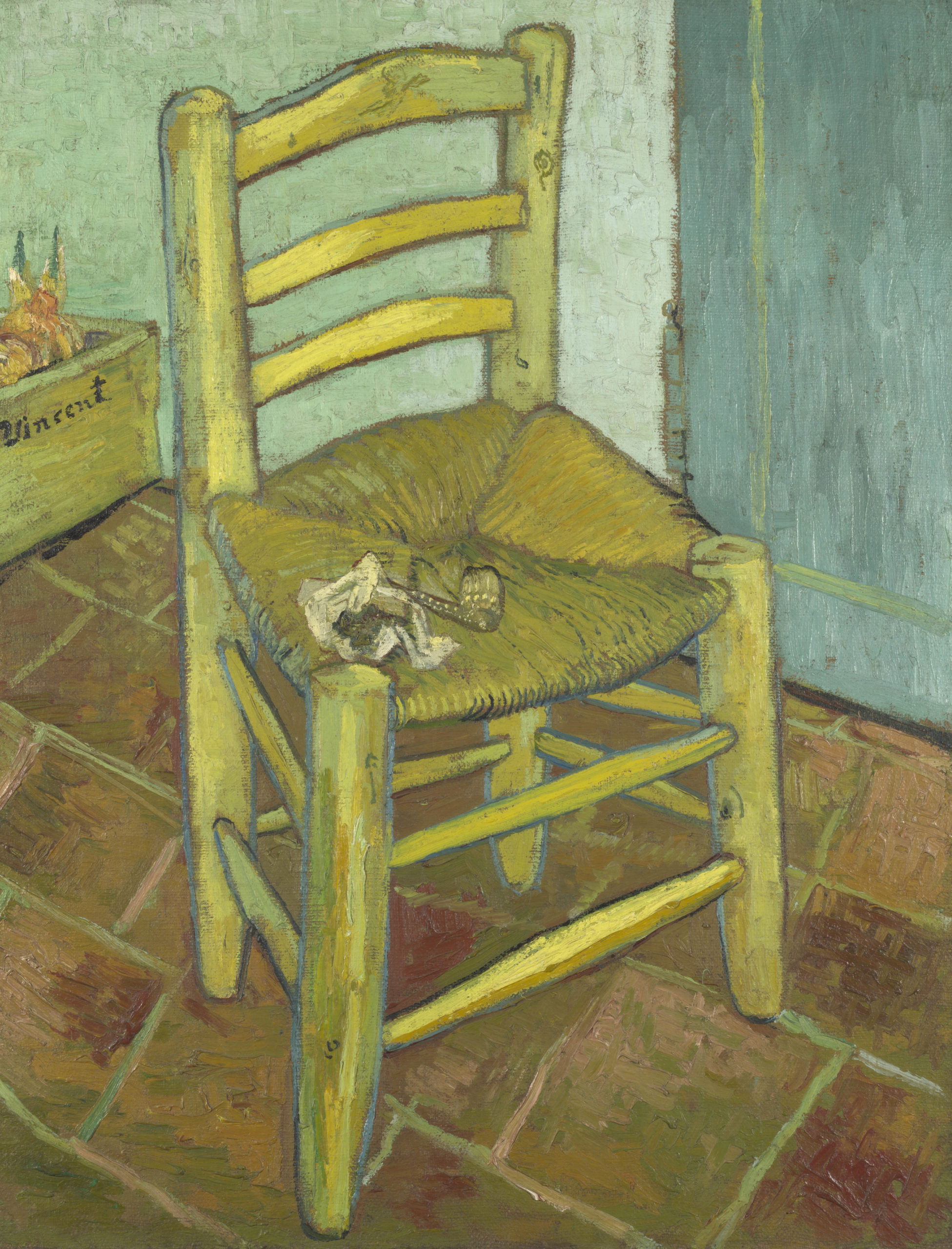
Vincent van Gogh paintings, "Van Gogh's Chair, 1888," 1888
Vincent van Gogh, “Van Gogh’s Chair, 1888,” 1888

A full-length, illustrated catalogue with essays by the exhibition curator and Van Gogh scholars will accompany the exhibition. The Detroit Institute of Arts is the exclusive venue for this exhibition.

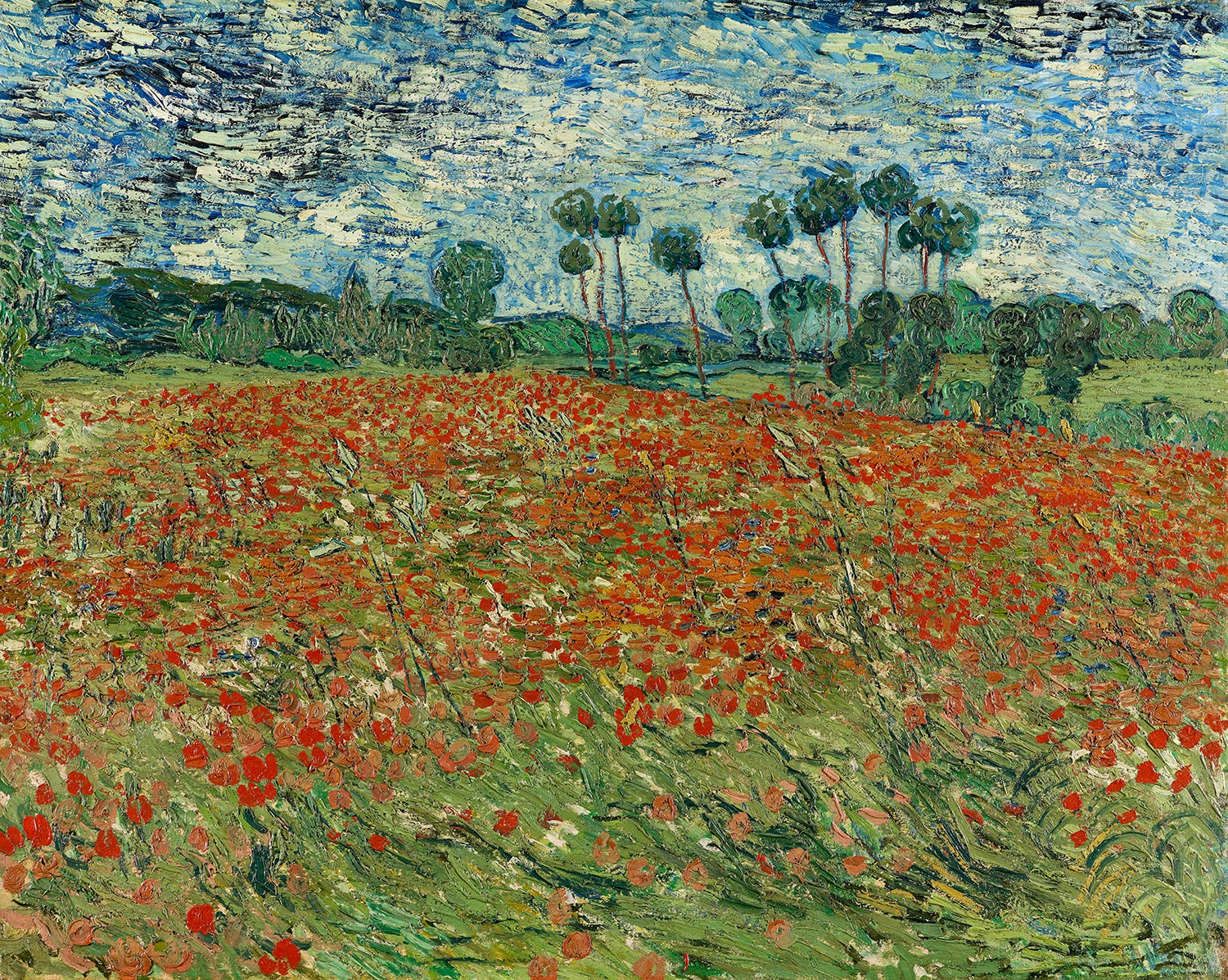
Vincent van Gogh, "Poppy Field," 1890
Vincent van Gogh, “Poppy Field,” 1890

The exhibition will explore the considerable efforts made by early promoters of modernism in the United States—including dealers, collectors, private art organizations, public institutions, and the artist’s family—to introduce the artist, his biography, and his artistic production into the American consciousness.

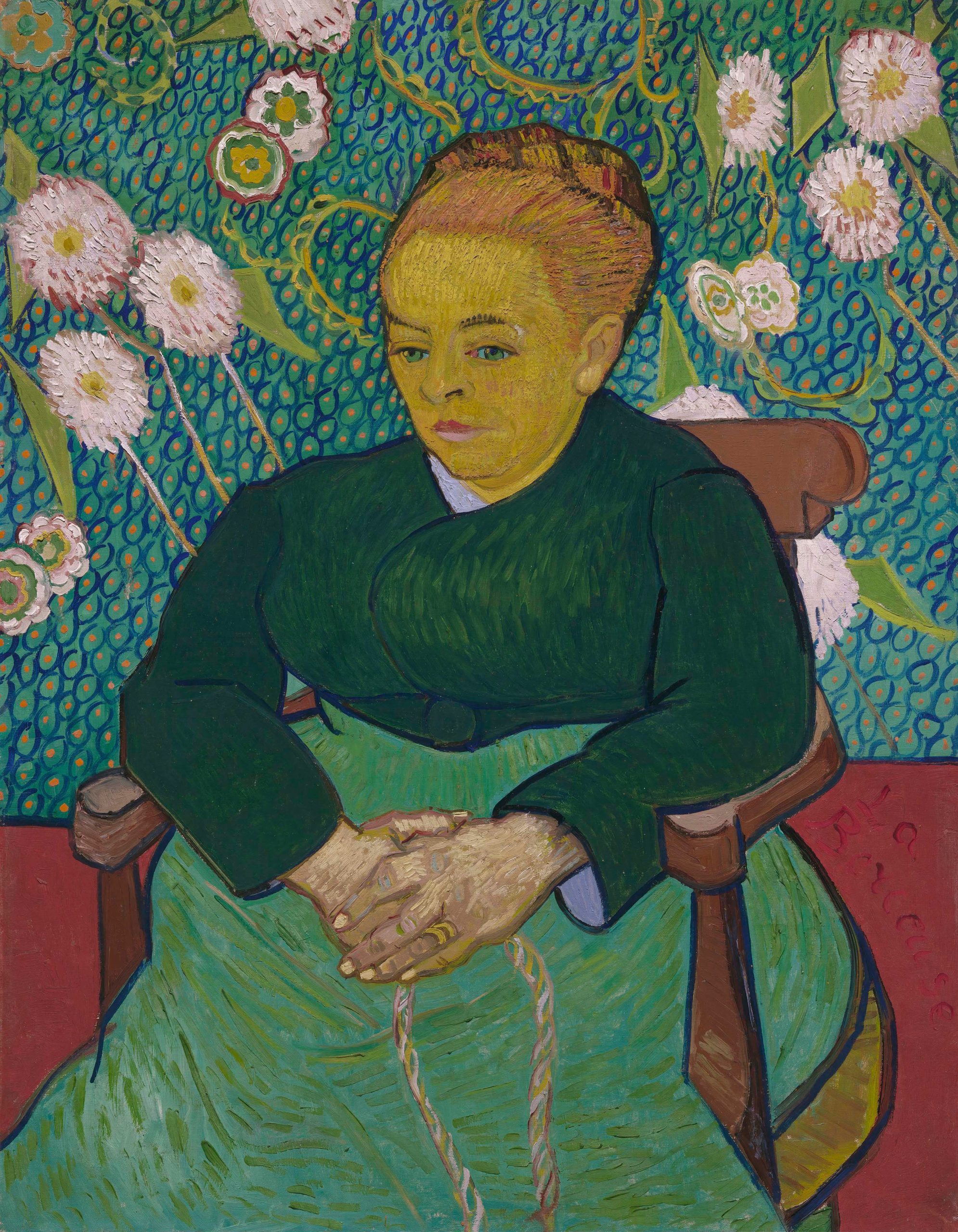
Vincent van Gogh, "Lullaby: Madame Augustine Roulin Rocking a Cradle (La Berceuse)," 1889
Vincent van Gogh, “Lullaby: Madame Augustine Roulin Rocking a Cradle (La Berceuse),” 1889

For more Van Gogh paintings and details on the exhibition: dia.org


> Visit EricRhoads.com to learn about more opportunities for artists and art collectors, including retreats, international art trips, art conventions, and more.

> Sign up to receive Fine Art Today, our free weekly e-newsletter

> Subscribe to Fine Art Connoisseur magazine, so you never miss an issue
You’re Invited: Celebrating the Centennial of a Modern Realist

0
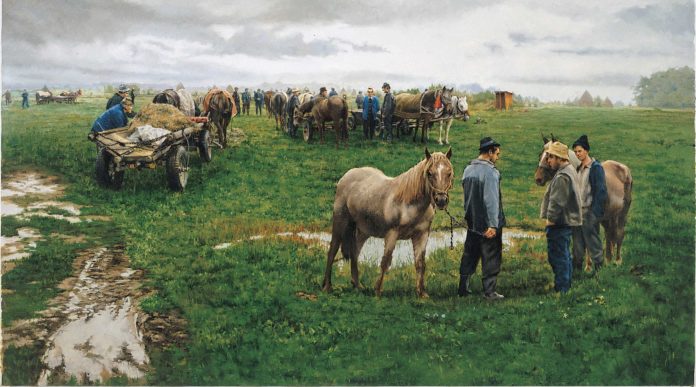
Clark Hulings, “Horse Traders,” Romania

The centennial of American modern realist Clark Hulings launches with a birthday gala in Santa Fe:

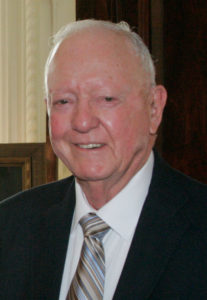
modern realist Clark Hulings, photo by Cory Weaver
Modern Realist Clark Hulings, photo by Cory Weaver

Celebrating the centennial of modern realist painter Clark Hulings (1922-2011), The Clark Hulings Foundation will throw a 100th birthday party in Santa Fe, New Mexico, November 20, 2022, to launch a year-long commemoration of Hulings’ life and work. Fittingly, the Hulings Centennial will be launched in the artist’s home city from 1972, and staged in Santa Fe’s historic hotel, La Fonda on the Plaza, also commemorating its first century.

More from the organizers:

Clark Hulings’ paintings, whether visions from Europe, North Africa, or the Americas, have immersed us in exquisitely realistic portrayals of life since he first put brush to canvas in the 1950’s. With the skill of an 18th Century master, and 20th Century eloquence, Hulings captures the people’s labors, domestic lives, and street cultures from the mid-20th to early 21st centuries. He reveals them as if to remind us how utterly we depend on the natural rhythms of life’s endeavors and are served by the nobility of our shared human spirit.

In a nod to Clark Hulings’ senses of humor and perspective, birthday celebrants will be welcomed to La Fonda by a gregarious live donkey, Rosita, and offered one of Hulings’ favored Martinis to begin a cocktail hour of mingling with family members, writers, collectors, curators, gallerists, and working artists gathered on the hotel’s La Terraza & Garden Terrace. During cocktail hour, guests can bid on silent auction items, demo the Hulings VR exhibition, and observe five Santa Fe artists, Lee Rommel, McCreary Jordan, Katherine Stedham, Brad Smith, and Ric Dentinger, as they complete paintings to be sold off their easels.

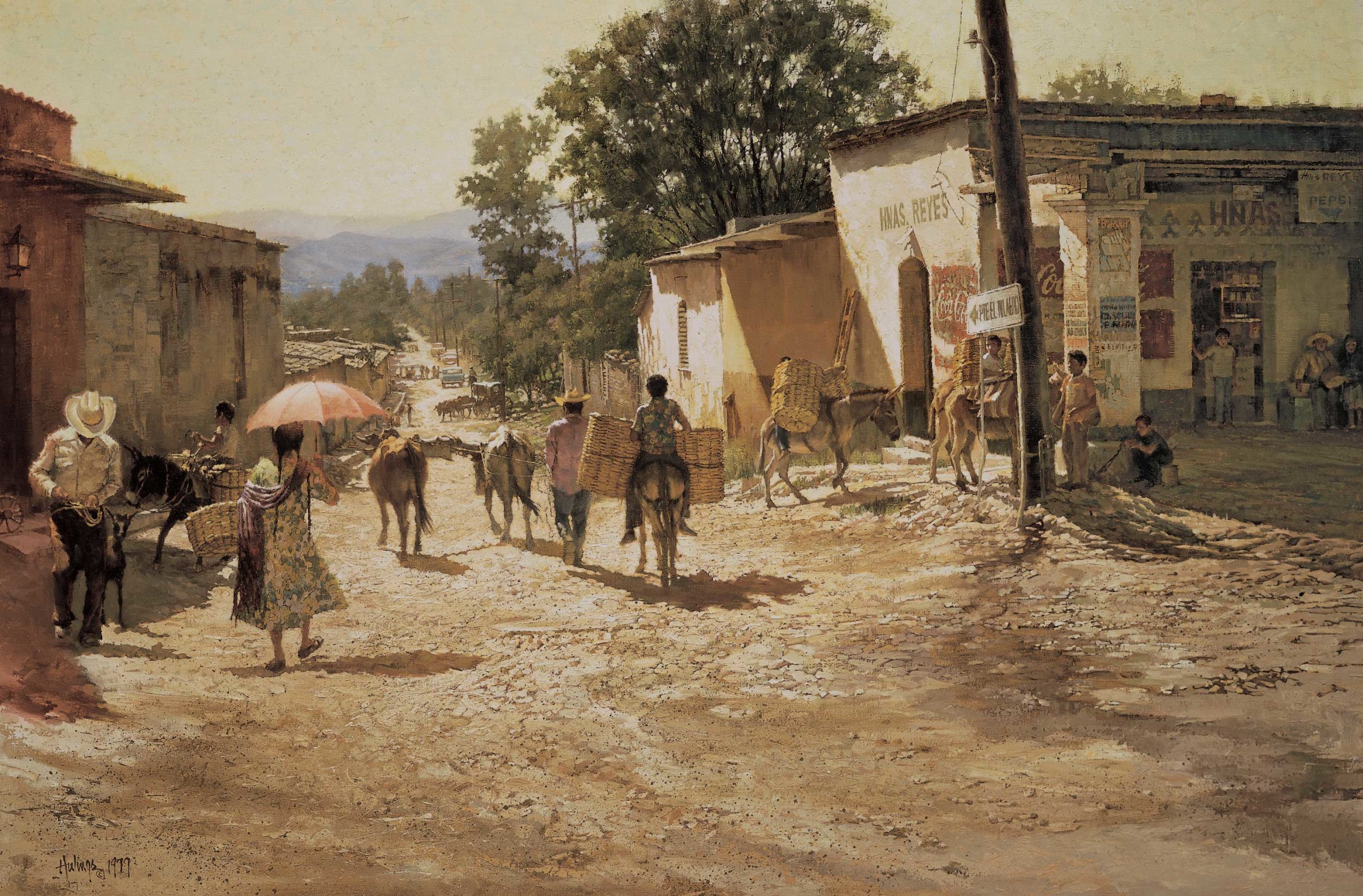
Clark Hulings, “The Pink Parasol,” Etla, Mexico

During dinner, those whose lives and work were influenced by Clark Hulings will reminisce via a collection of short videos assembled by maverick film editor Barbara Ottinger and award winning Photographer Carol Halebian. The Director of the Booth Western Art Museum, Seth Hopkins, will virtually cut the ribbon to launch his museum’s Clark Hulings Virtual Reality Exhibition and the evening will draw to a close with expressions of appreciation, a birthday cake, and a champagne toast to the launch of the coming months’ Centennial events.

Among the Hulings Centennial programming in development for 2023 are further virtual exhibitions of his work in collaboration with museums including The New Mexico Museum of Art; further virtual and in-person exhibitions; and the re-launch of in-person educational programming by The Clark Hulings Foundation that leverages CHF’s digital and hybrid model.

The Centennial Birthday Party can be attended in person or virtually, to be streamed on date and time to be announced, with an MC hosting live on-line.

All celebrants will receive a collectible NFT commemorative featuring Clark Hulings’ original donkey and cart and the Hulings Centennial Logo—one more example of Clark Hulings’ forward-facing legacy.

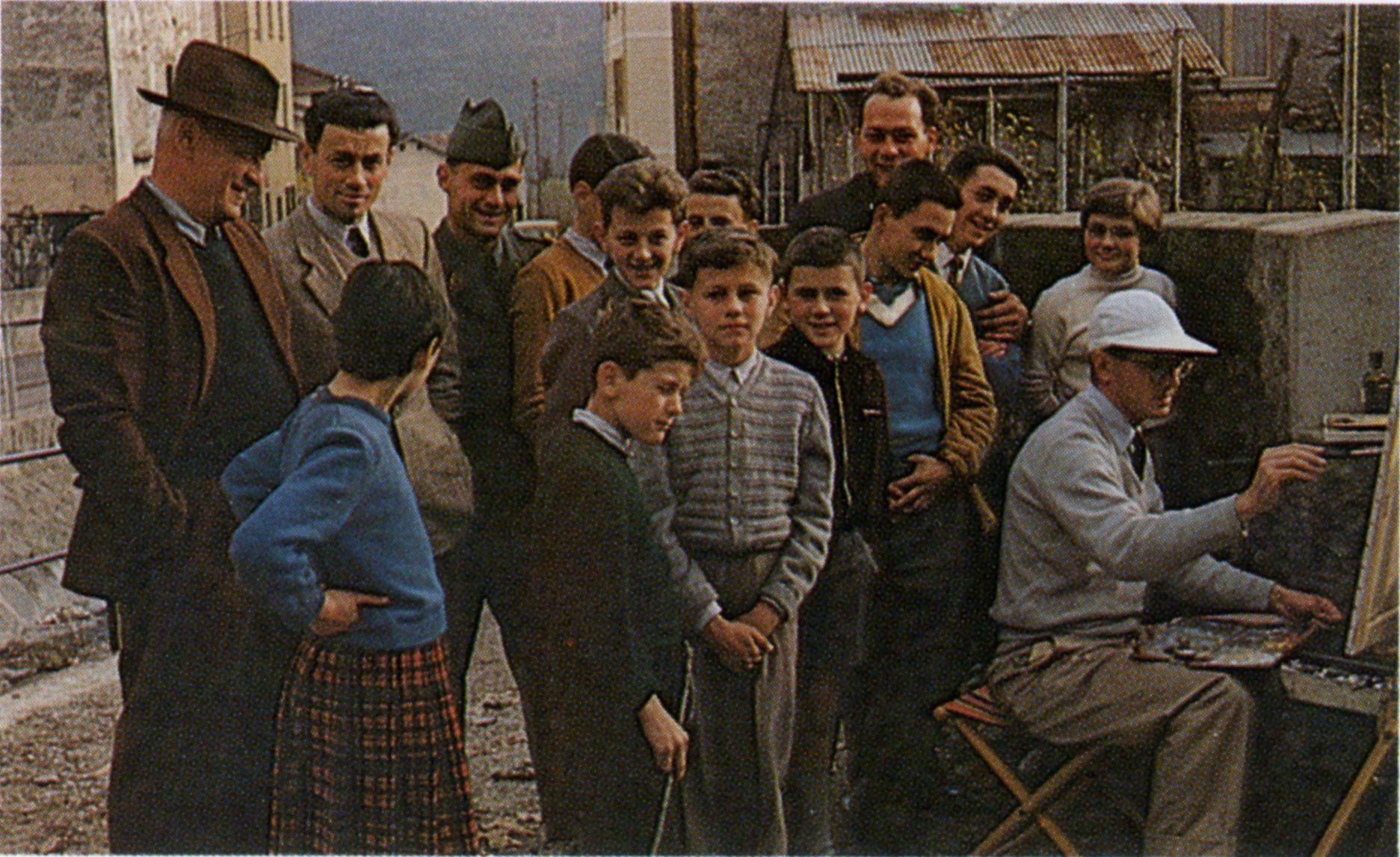
Modern realist Clark Hulings in Lugano, Italy, 1954
Clark Hulings in Lugano, Italy, 1954

The evening benefits The Clark Hulings Foundation, established in 2013 to promote Hulings’ legacy by equipping artists to be self-sustaining entrepreneurs so that they can thrive from their artistry, as he did. The Foundation delivers an ongoing suite of integrated learning services via live events, digital channels, and portable media formats and builds professional networks of opportunity.

The Clark Hulings Foundation, based in Santa Fe, New Mexico, is led by Hulings’ daughter, Elizabeth, the Executive Director. The board of directors and advisors is drawn from business, fine arts, and education in 20 American cities.

Additional details about and reservations for the November 20th Santa Fe Gala are available at clarkhulingsfoundation.org/hulings100.


> Visit EricRhoads.com to learn about more opportunities for artists and art collectors, including retreats, international art trips, art conventions, and more.

> Sign up to receive Fine Art Today, our free weekly e-newsletter

> Subscribe to Fine Art Connoisseur magazine, so you never miss an issue
Friday Virtual Gallery Walk for October 7, 2022

0
Friday Virtual Gallery Walk

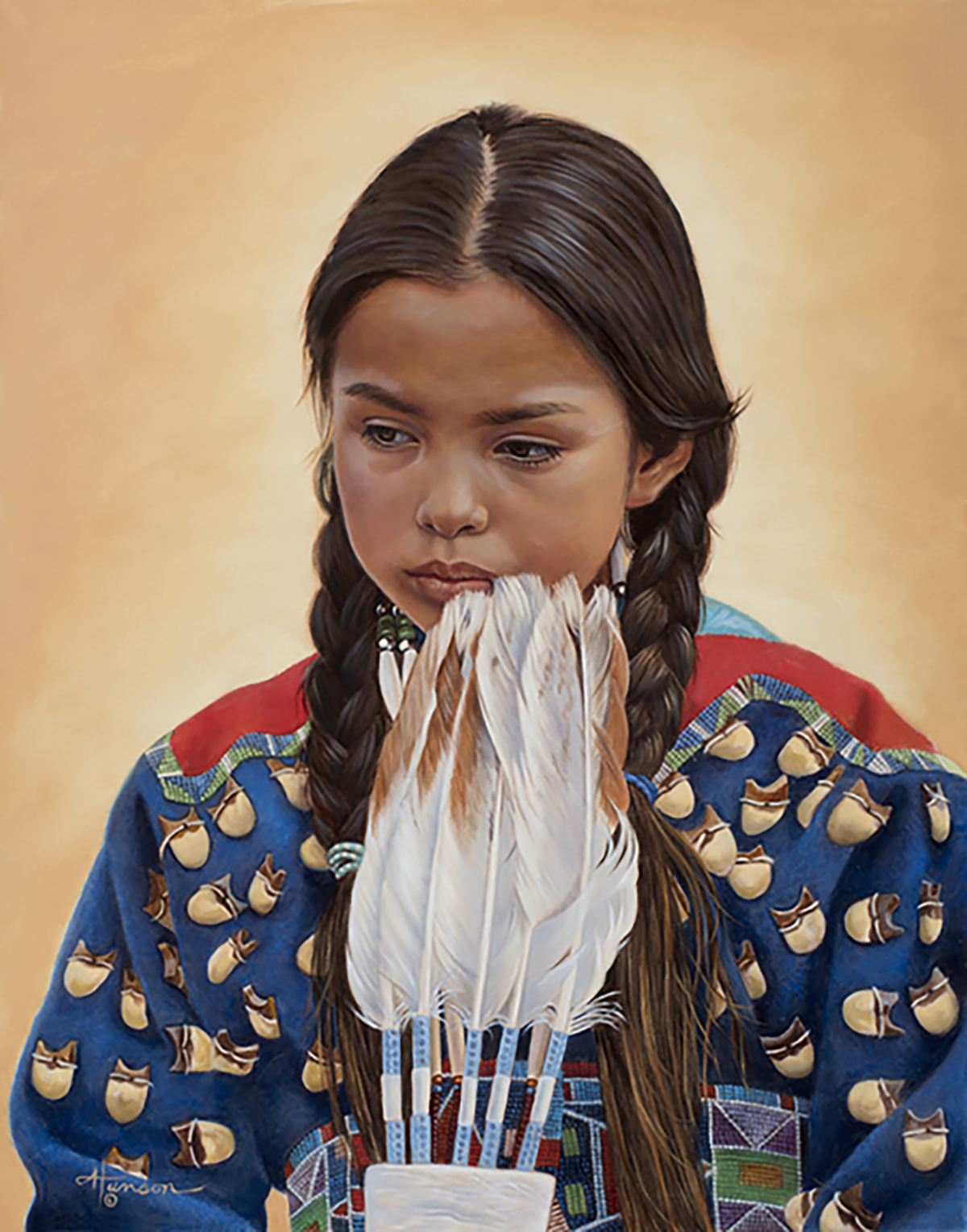
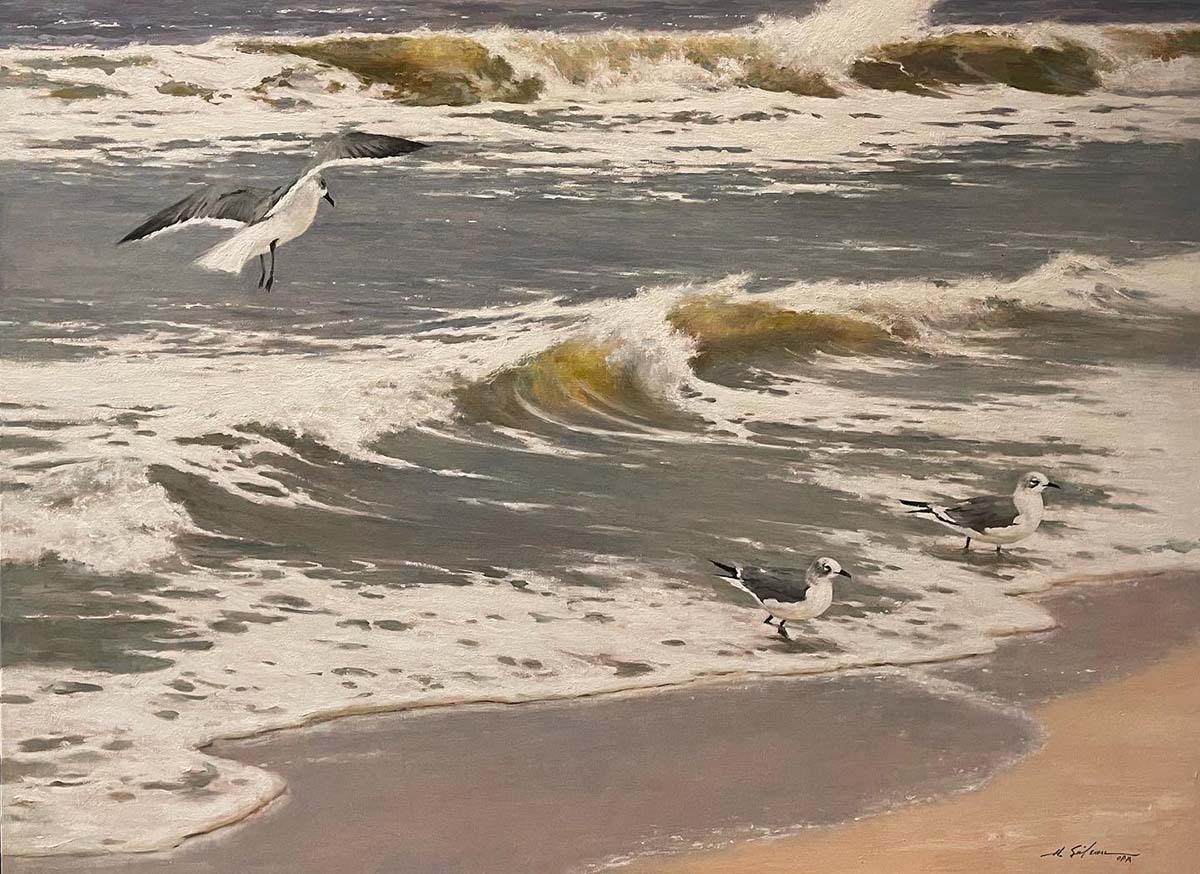
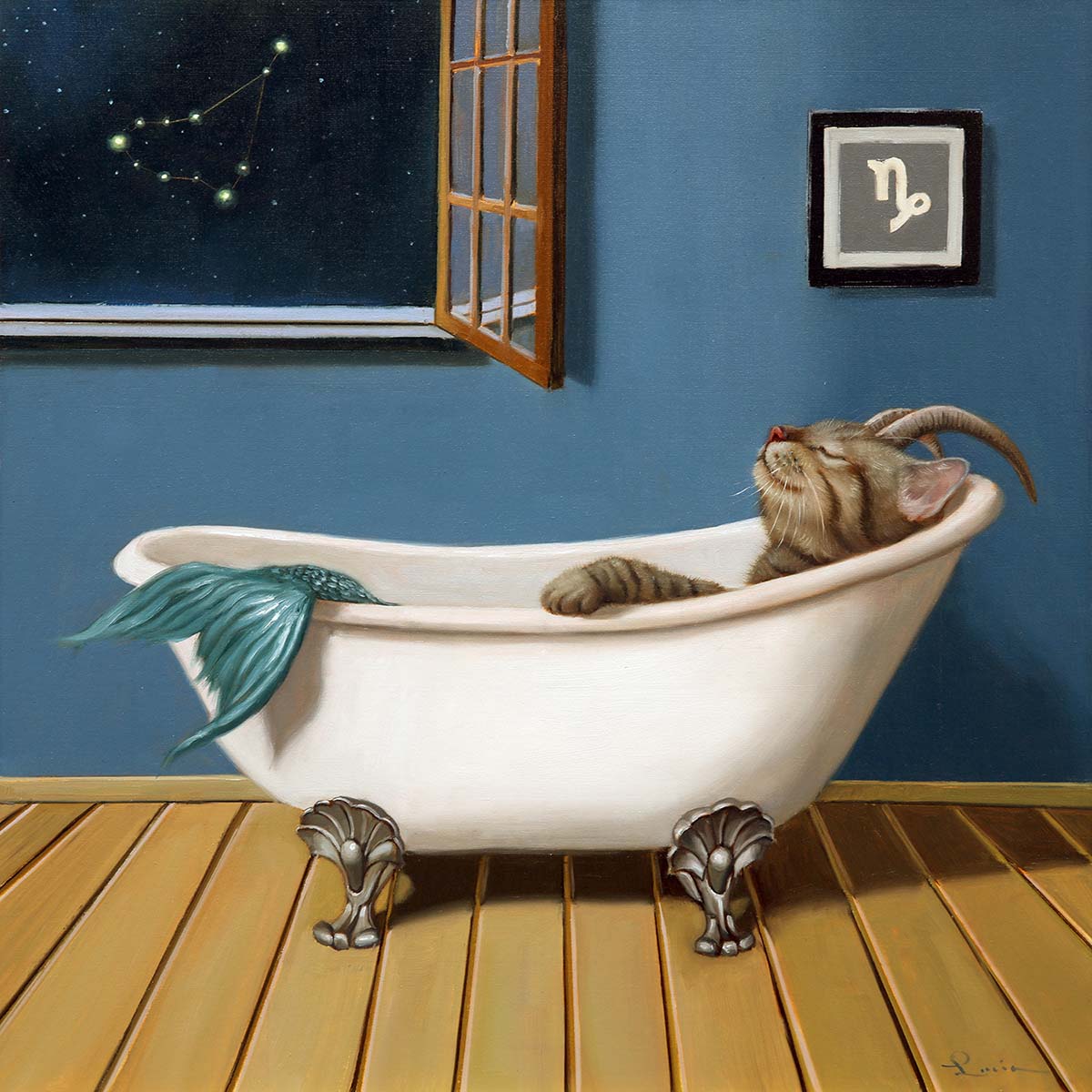
As part of our effort to continue to help artists and art galleries thrive, we’re proud to bring you this week’s “Virtual Gallery Walk.” Browse the artwork below and click the image itself to learn more about it, including how to contact the gallery.

Making Plans, Ann Hanson, oil, 14 x 11 in; Artzline
Gulls in the Surf, Hodges Soileau, oil, 36 x 48 in; Anderson Fine Art Gallery
Capricorn, Lucia Heffernan, oil on canvas-panel, 16 x 16 in, Signed; Rehs Contemporary
Aries, Lucia Heffernan, oil on canvas-panel, 16 x 16 in, Signed; Rehs Contemporary
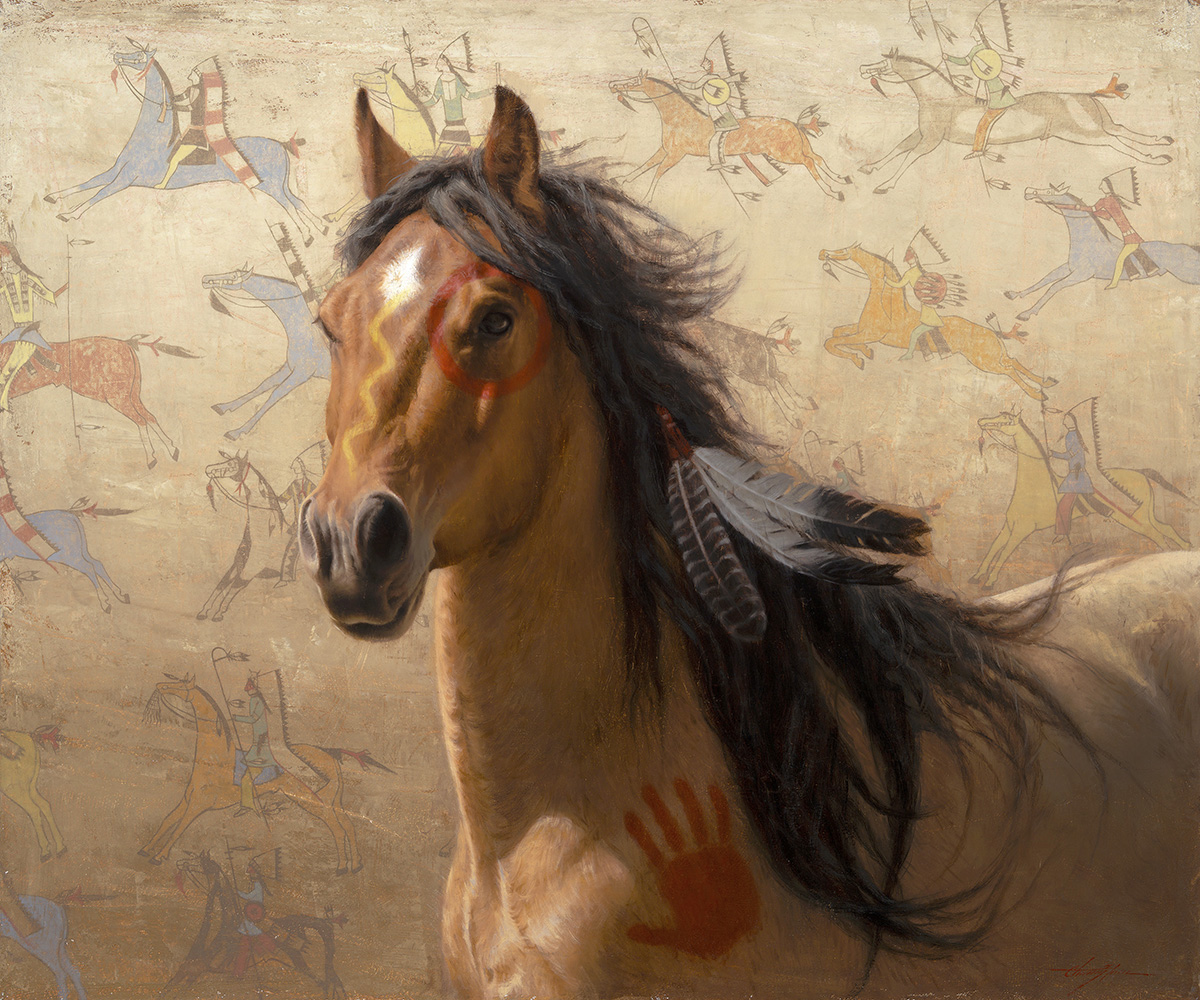
Oath of Vengeance, Chauncey Homer, oil on linen, 30 x 36 in; Chauncey Homer Fine Art
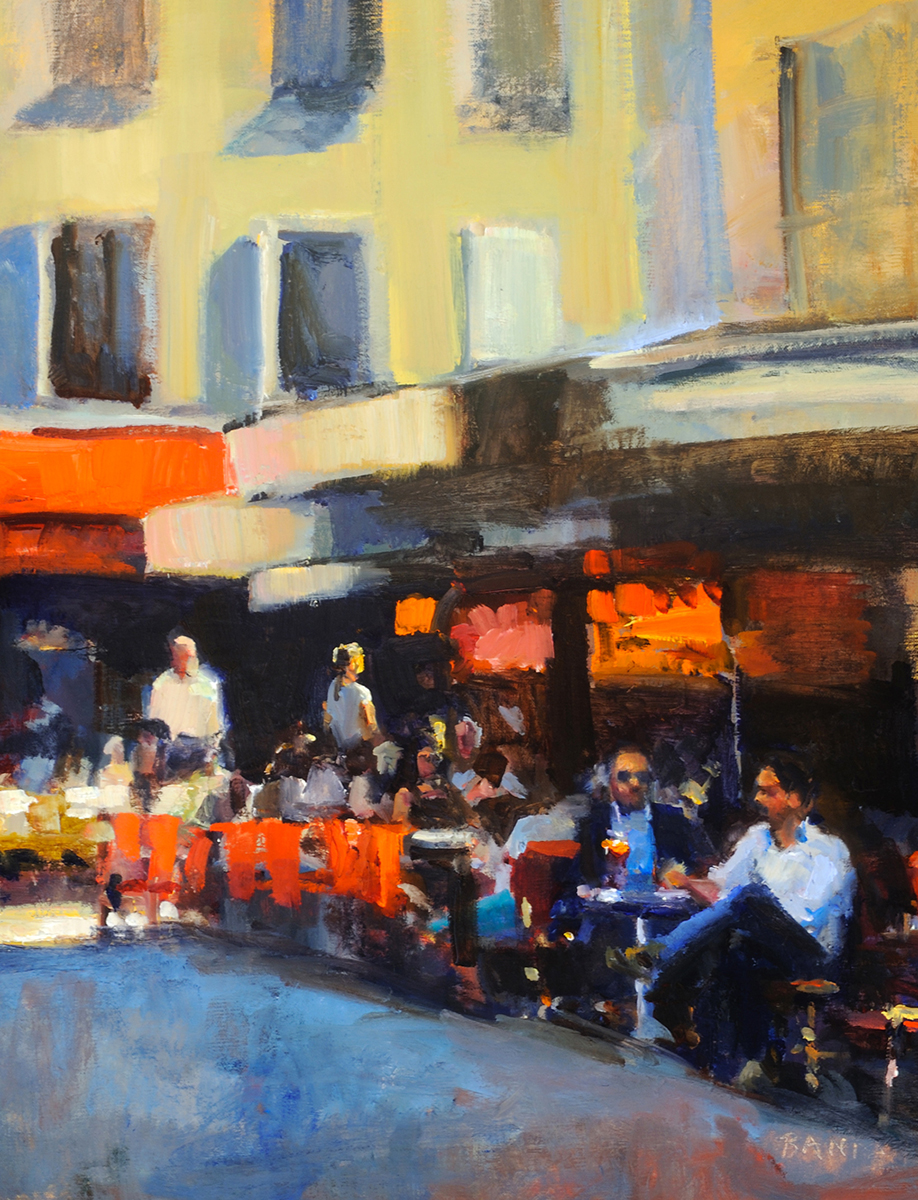
Aperitifs, Jill Banks, oil on linen-lined panel, 20 x 16 in; Jill Banks
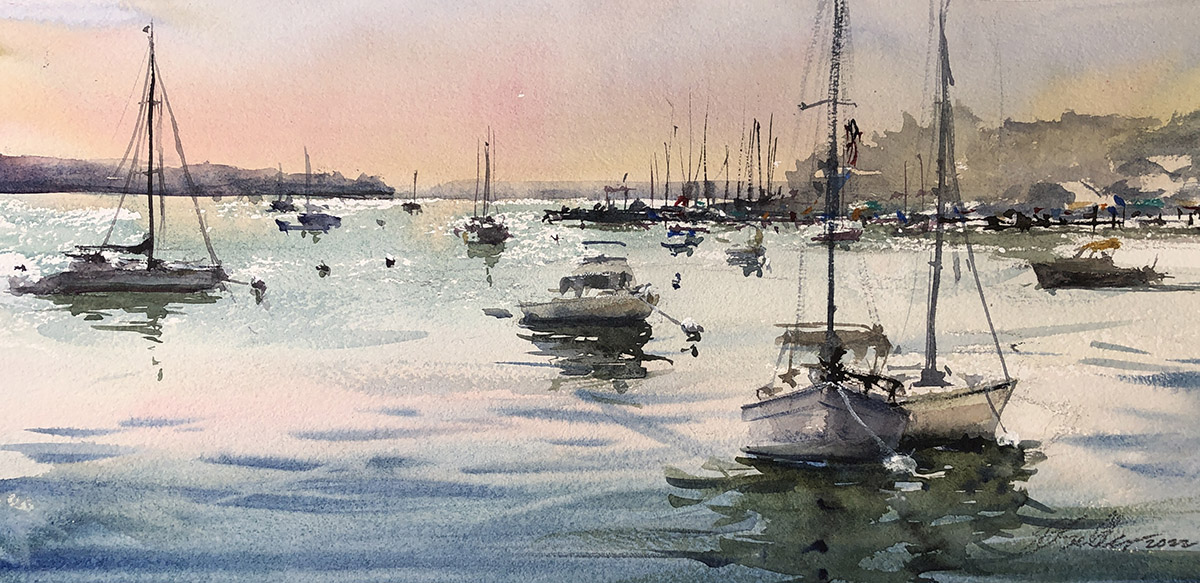
Annapolis Morning, David Savellano, watercolor, 9 x 18 in; LPAPA Art Gallery, The Catalog Art Show August 29-October 10, 2022
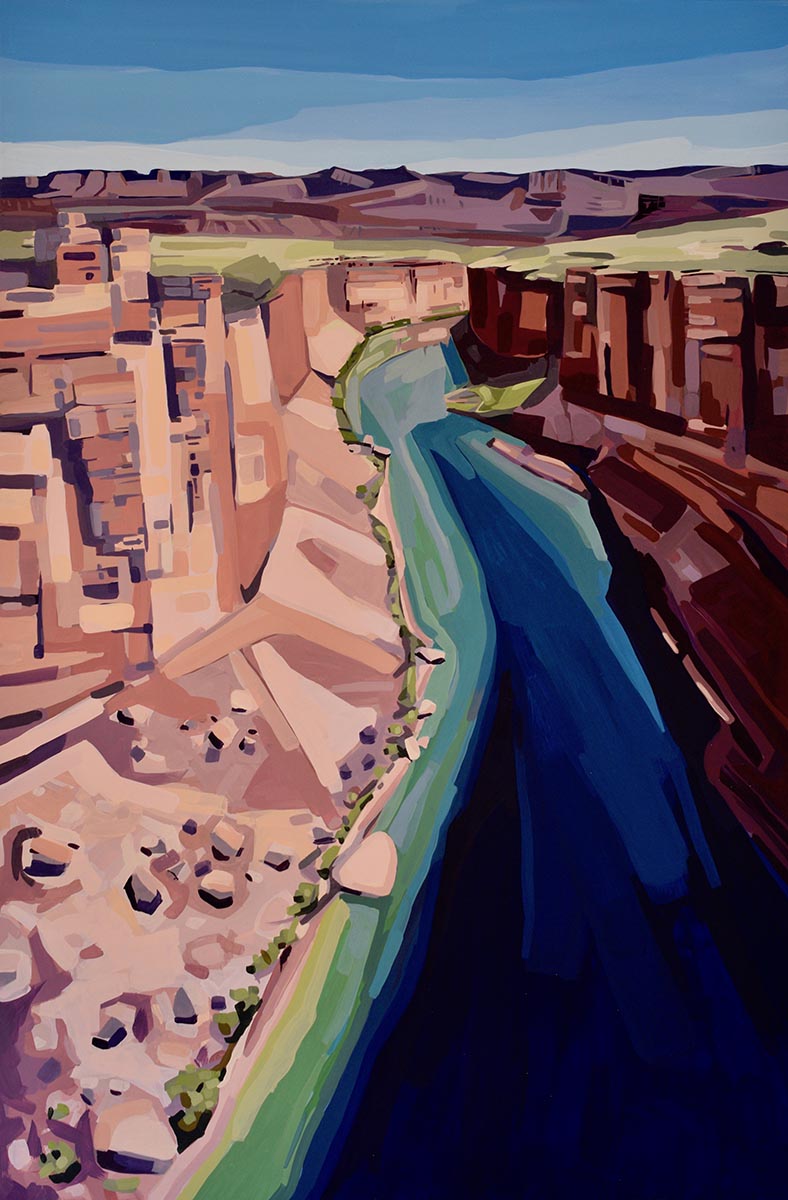
View from Navajo Bridge, Betsy Menand, acrylic gouache, 36 x 24 in; Grand Canyon Conservancy/Celebration of Art
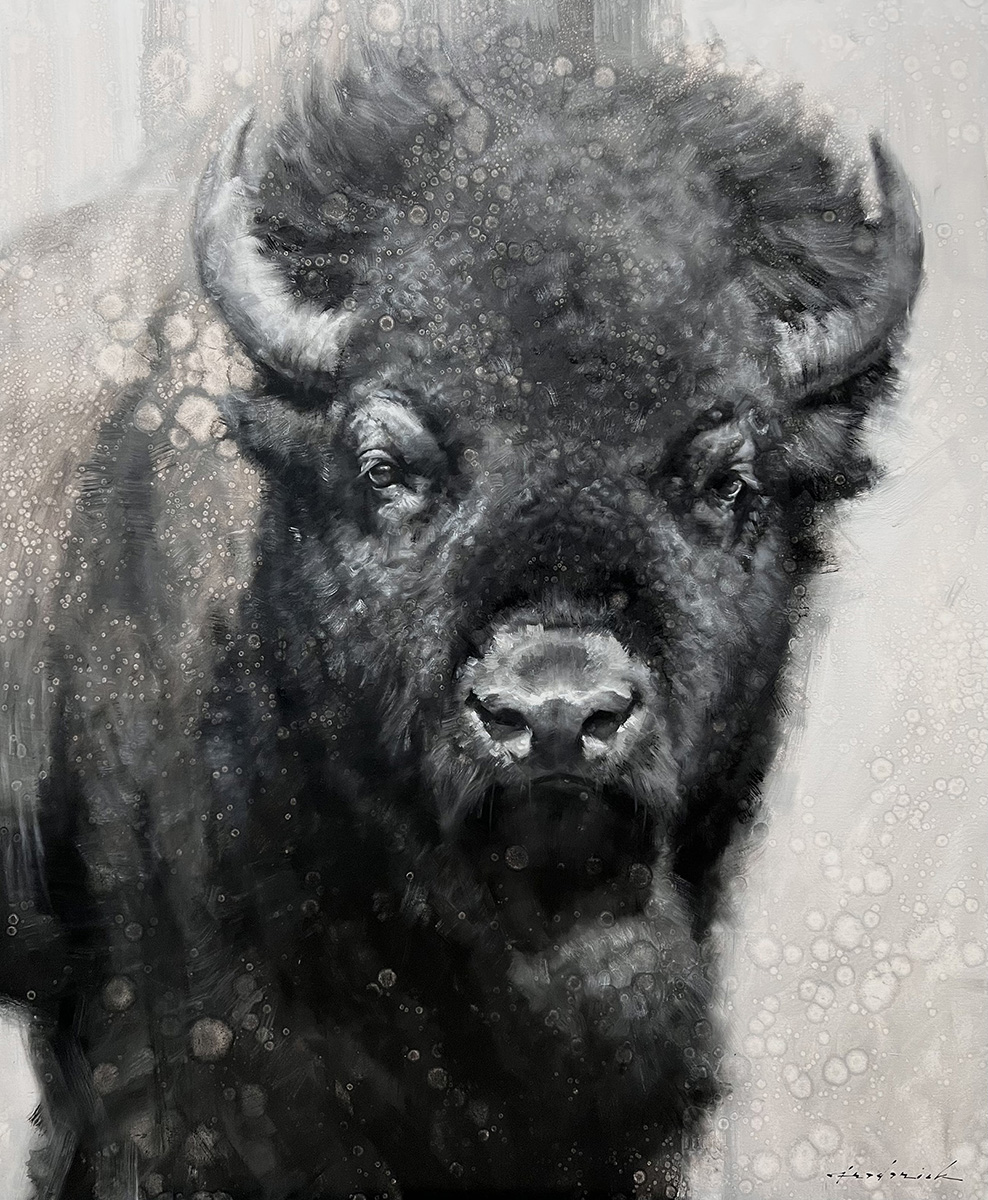
Mystic, David Frederick Riley, oil on canvas, 72 x 60 in; David Frederick Riley


Want to see your gallery featured in an upcoming Virtual Gallery Walk? Contact us at [email protected] to advertise today. Don’t delay, as spaces are first come, first served, and availability is limited.

Artist Spotlight: Brenda Coldwell

0
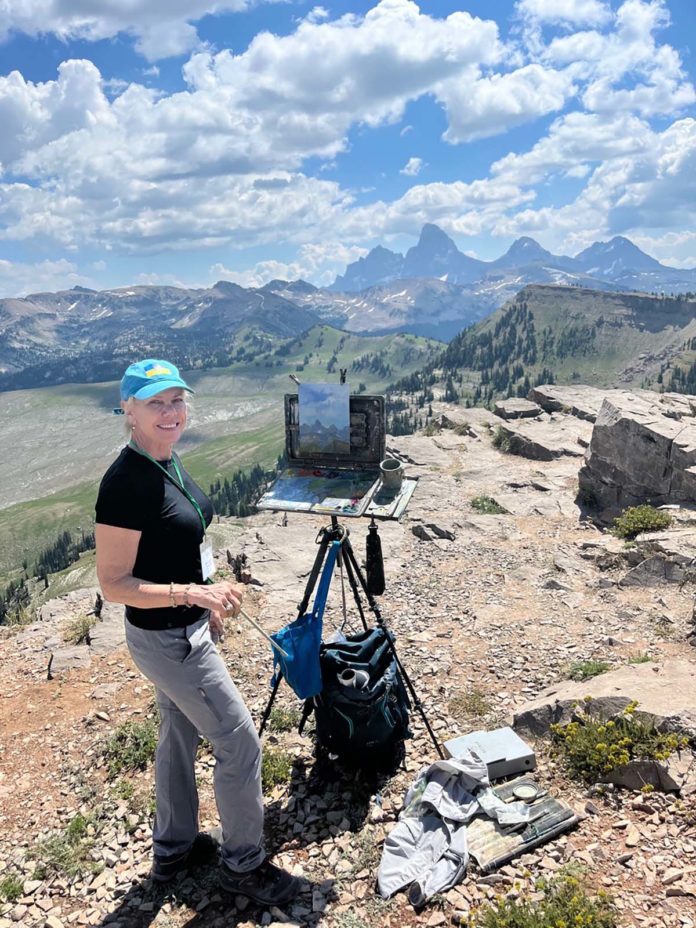
Artist painting on mountain top, posing for photograph
Plein air in the Teton's

What is the most interesting thing you have painted/sculpted and why?
Brenda Coldwell: ARTIST IN RESIDENCE. In 2021, I was juried into OPA’s (Oil Painters of America) National Show. One result of this was an opportunity to participate in an “artist in residency” at Ghost Ranch, New Mexico. I spent the entire month of September there. I painted en plein air for 28 days. When I wasn’t painting outside, I was in my little studio painting abstracts. The landscape there was magnificent and I completed 73 paintings! I was totally immersed for that month and came away a better artist and a changed woman. This was undoubtedly the most interesting painting experience I’ve ever had!

To see more of Brenda’s work, visit:
www.brendacoldwell.com

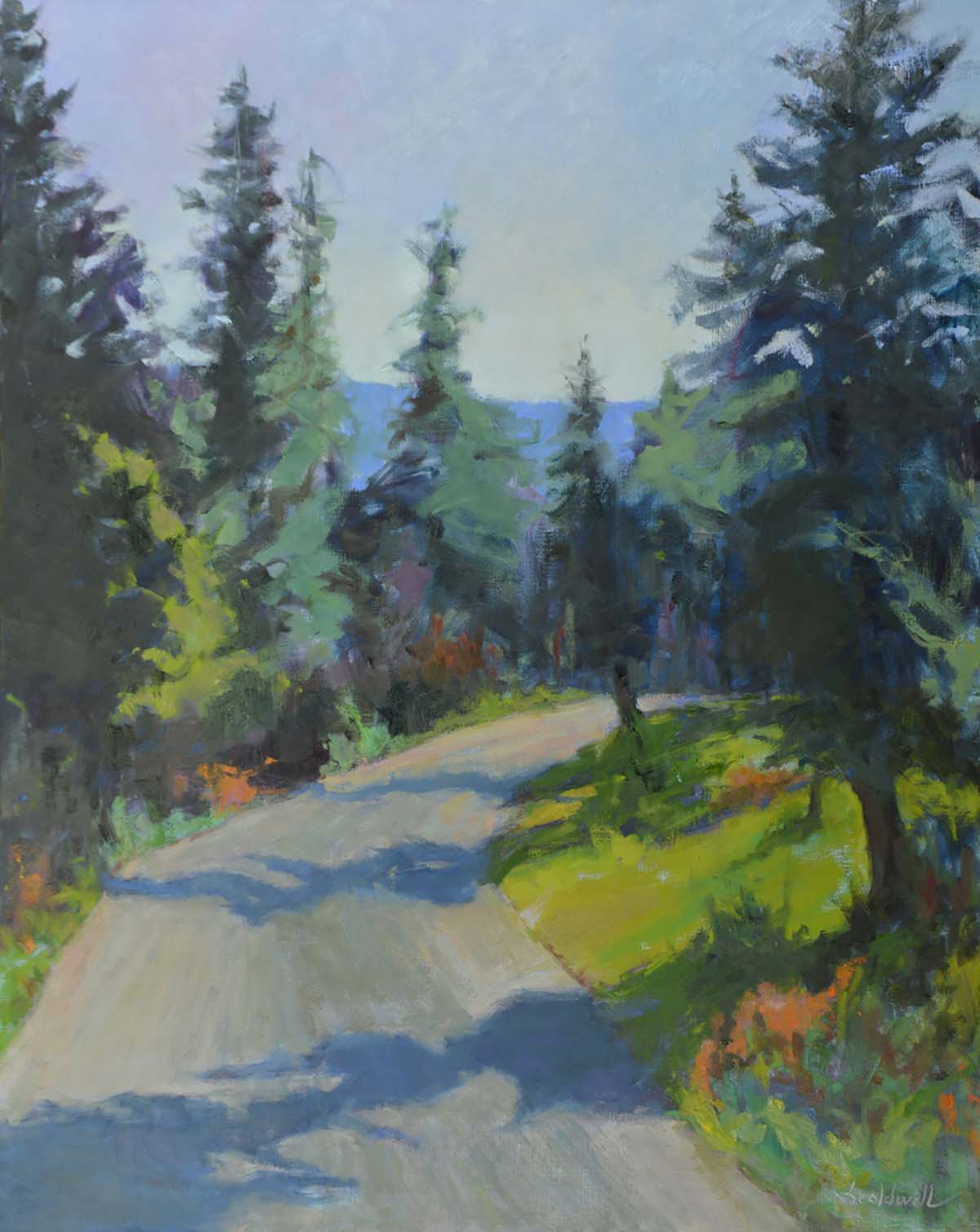
oil painting of roadway leading to the right, with trees along the road
Brenda Coldwell, “Camping Road,” 30 x 40 in, oil on linen
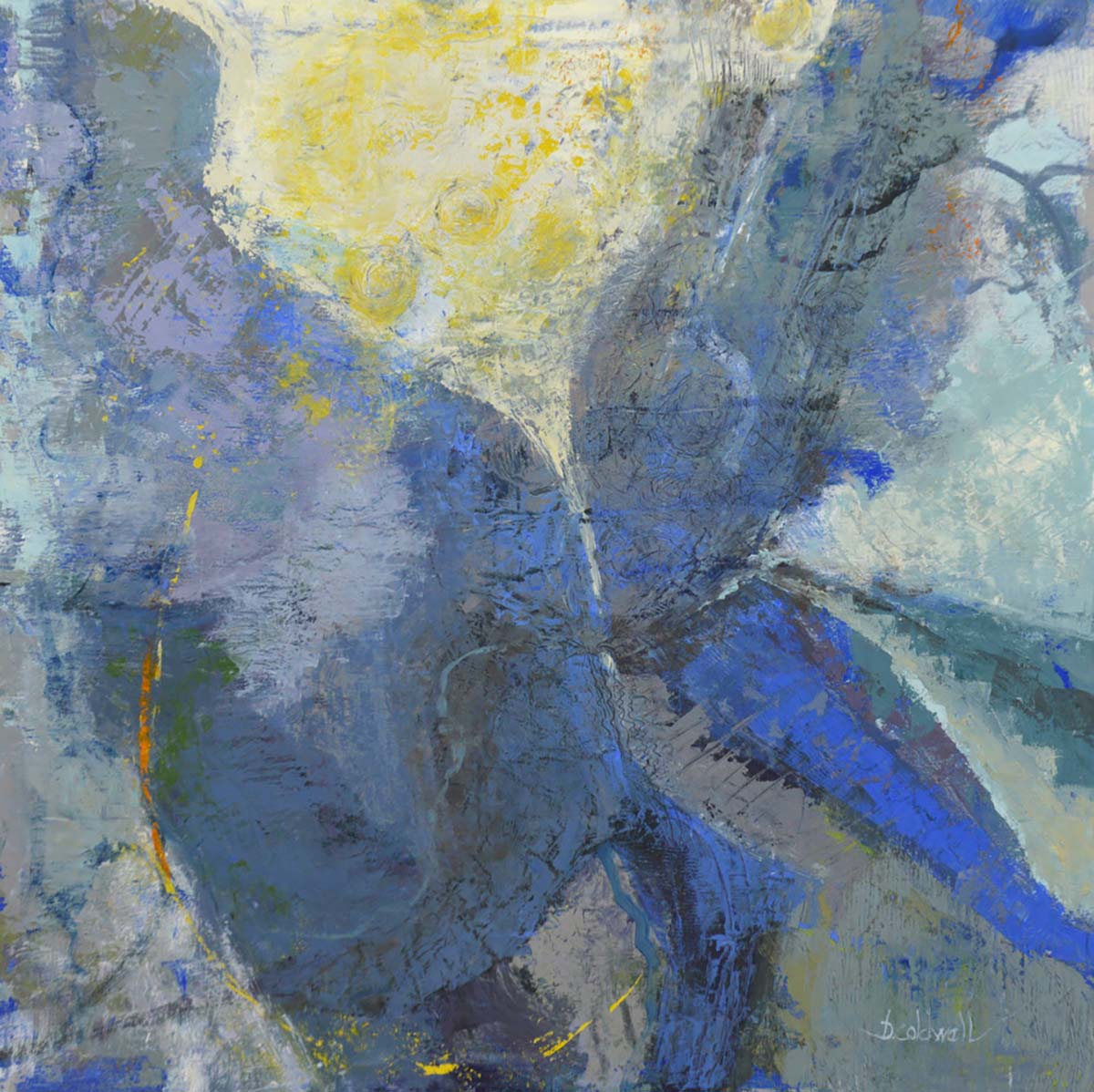
oil painting of abstract mountain view
Brenda Coldwell, “Blue Morpho,” 24 x 24 in, oil and cold wax on wood

American Travelers: A Watercolor Journey through Spain, Portugal, and Mexico

0
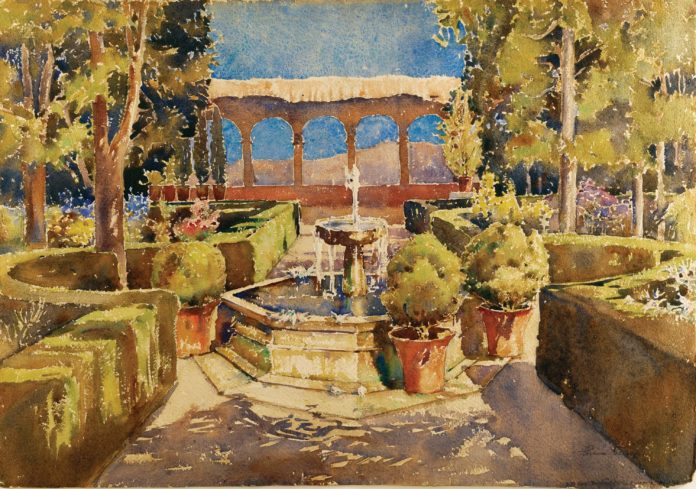
Florence Robinson (1874–1937), "The Generalife Gardens, Alhambra," 1914?, watercolor on paper, 15 x 21 1/2 in.

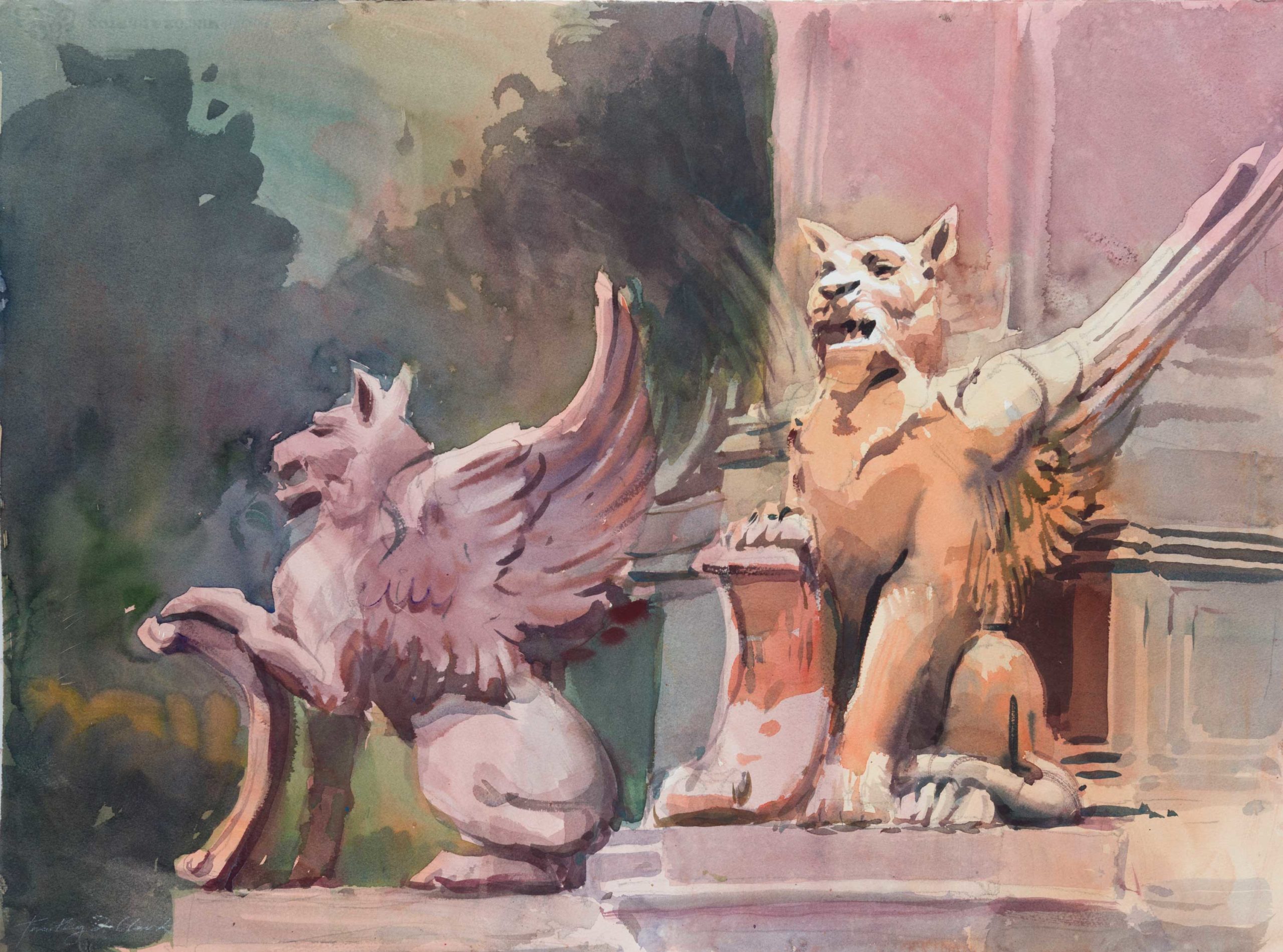
Through October 16, 2022, Manhattan’s Hispanic Society Museum & Library is presenting a unique exhibition, “American Travelers: A Watercolor Journey through Spain, Portugal, and Mexico, Featuring the Contemporary Works of Timothy J. Clark.”

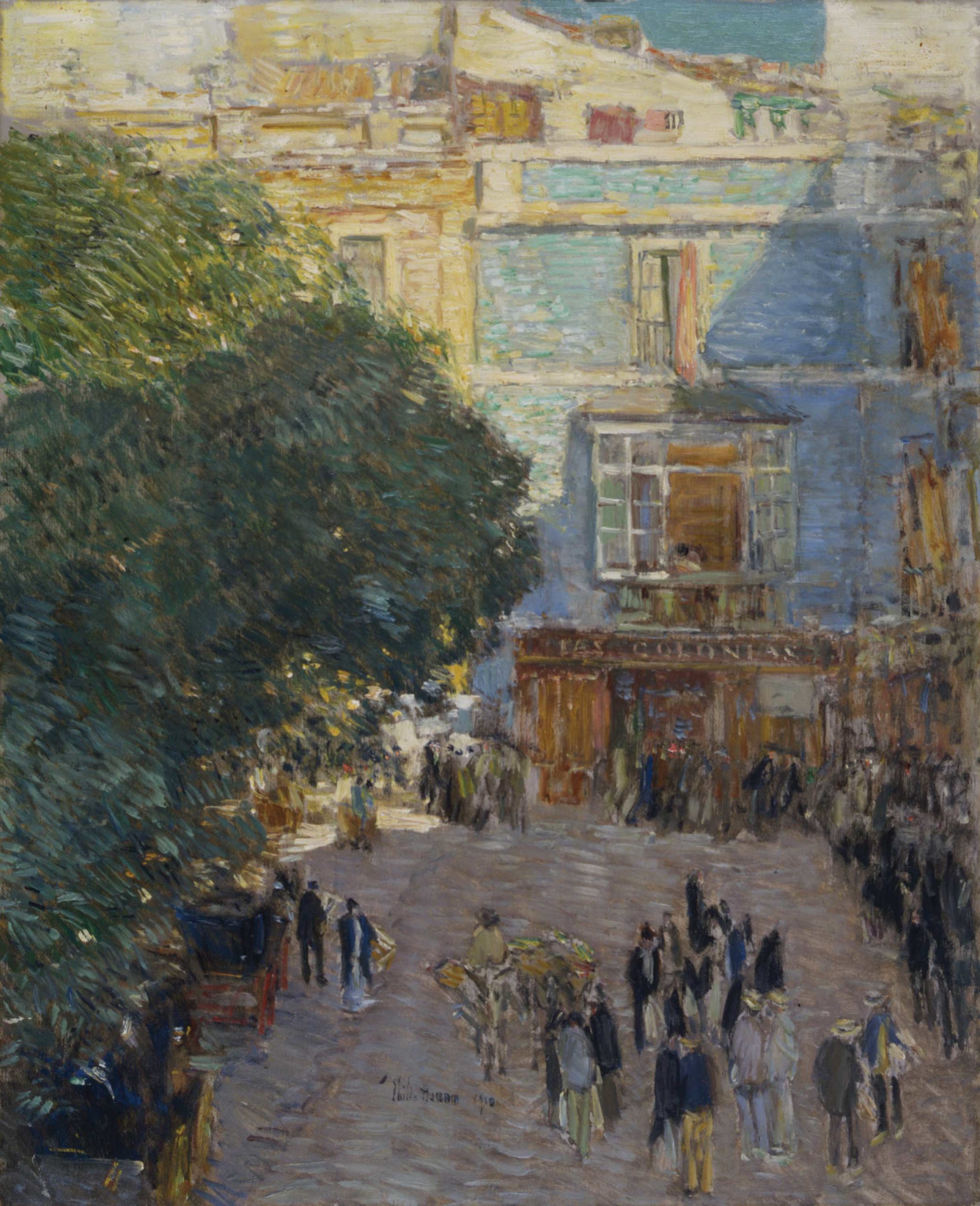
Childe Hassam (1859-1935), "Square at Seville," 1910, oil on panel, 25 9/16 x 20 13/16 in.
Childe Hassam (1859-1935), “Square at Seville,” 1910, oil on panel, 25 9/16 x 20 13/16 in.

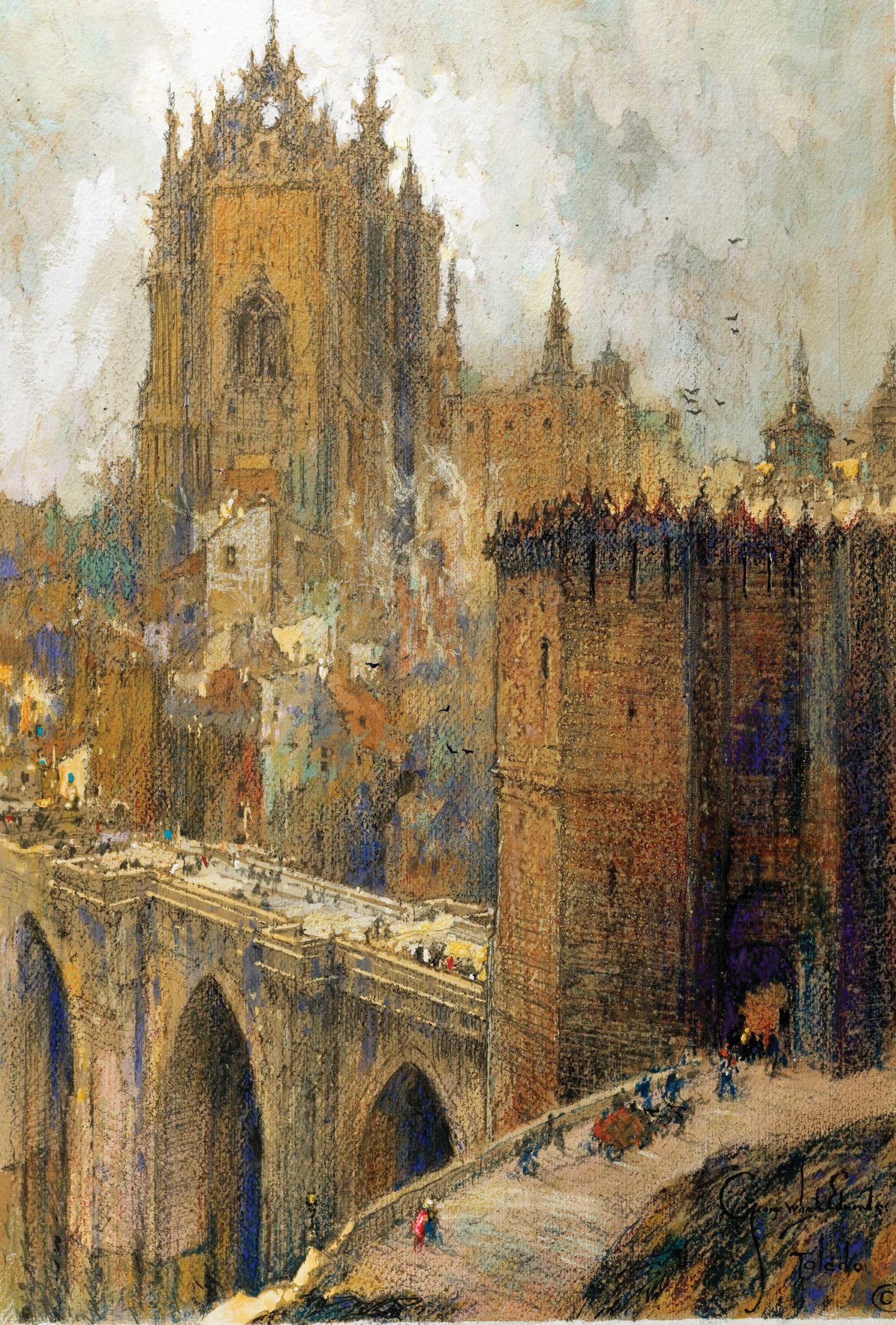
It pays special attention to a group of early 20th century artists — Childe Hassam, George Wharton Edwards, Florence Robinson, Ernest Peixotto, Orville Houghton Peets, and Milan Petrovic — as well as to almost a dozen watercolors, many of them large, by the contemporary artist Timothy J. Clark.

Timothy J. Clark (b. 1951), "Cuenca Jesuit Doorway," 2016, watercolor on paper, 37 x 44 1/2 in., collection of the artist
Timothy J. Clark (b. 1951), “Cuenca Jesuit Doorway,” 2016, watercolor on paper, 37 x 44 1/2 in., collection of the artist

Also on view are oil paintings by Hassam, Peixotto, and Peets; small (“pochette”) panels sketched in oils by Hassam and Max Kuehne; and a range of decorative artworks that reflect similar aesthetics.

George Wharton Edwards (1859–1950), "St. Martin Bridge, Toledo," 1925, watercolor, gouache, and mixed media on paper, 21 5/8 x 15 7/8 in.
George Wharton Edwards (1859–1950), “St. Martin Bridge, Toledo,” 1925, watercolor, gouache, and mixed media on paper, 21 5/8 x 15 7/8 in.

All but 11 of the works on display are drawn from the Society’s own collections.

For more details, please visit hispanicsociety.org.


> Visit EricRhoads.com to learn about more opportunities for artists and art collectors, including retreats, international art trips, art conventions, and more.

> Sign up to receive Fine Art Today, our free weekly e-newsletter

> Subscribe to Fine Art Connoisseur magazine, so you never miss an issue
Featured Artwork: Heather Arenas, WAOW Master and AWA Signature member

0
People in a museum, looking around the artwork
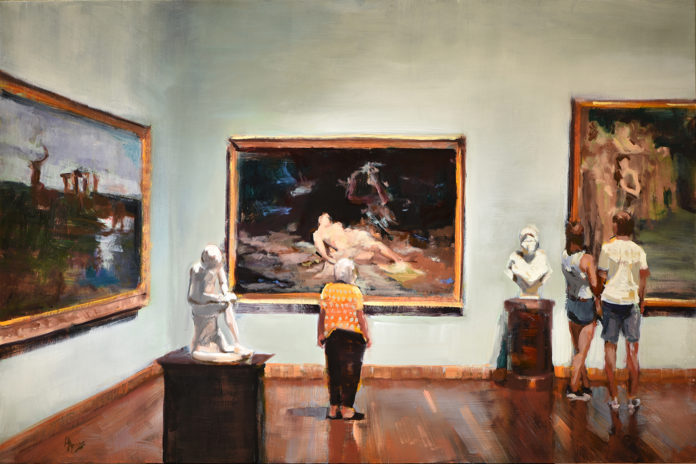
Heather Arenas, “Eye Catching”, oil on cradled wood, 24 x 36 in.

Heather Arenas: My favorite piece in the Ringling Museum of art is a piece by Carl Marr, ‘The Mystery of Life’. I have stood in this position staring at it. Do you ever wonder what people are thinking when they stare at a piece in a museum? Are they an artist looking at technique? Are they interested in the artist’s meaning of the piece? or are they making up their own story? Or is it all of the above?

To see more of Heather’s work, visit:
www.heatherarenas.com

McBride Gallery

Reinert Fine Art, Charleston, SC

oil painting of people inside a museum looking at the paintings in the dim lit room with blue walls
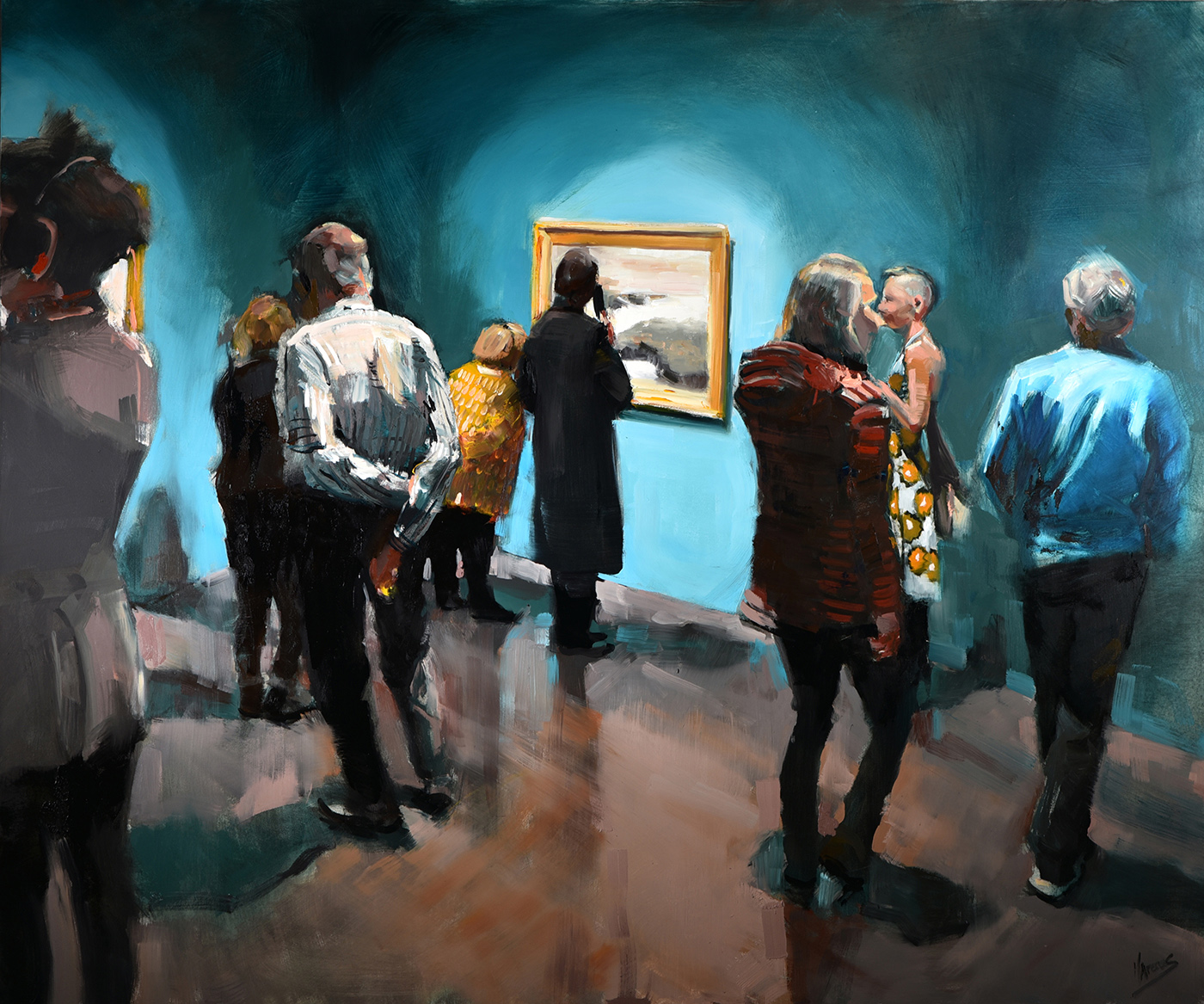
Heather Arenas, “Show Me the Monet!” oil on cradled wood, 30 x 36 in., 2021. Available through McBride Gallery in the WAOW 52nd Annual Exhibition November 6th – January 7th. 
oil painting of people sitting at a museum, listening to a woman; red walls
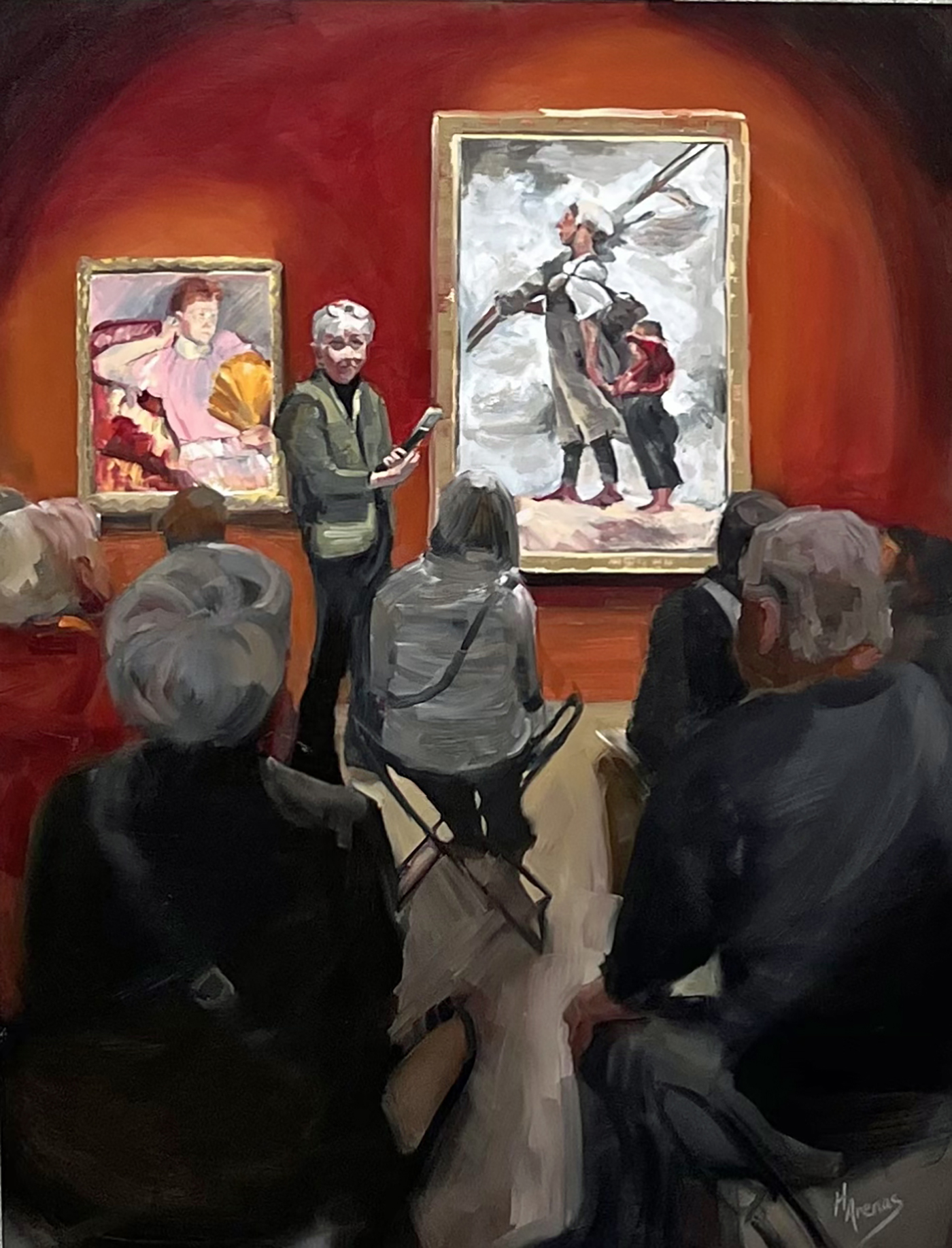
Heather Arenas, “Paved Roads,” oil on cradled wood, 40 x 30 in., 2022. Available from Reinert Fine Art, Charleston, SC. 

WEEKLY NEWS FROM THE ART WORLD

Fill your mind with useful art stories, the latest trends, upcoming art shows, top artists, and more. Subscribe to Fine Art Today, from the publishers of Fine Art Connoisseur magazine.

  • This field is for validation purposes and should be left unchanged.