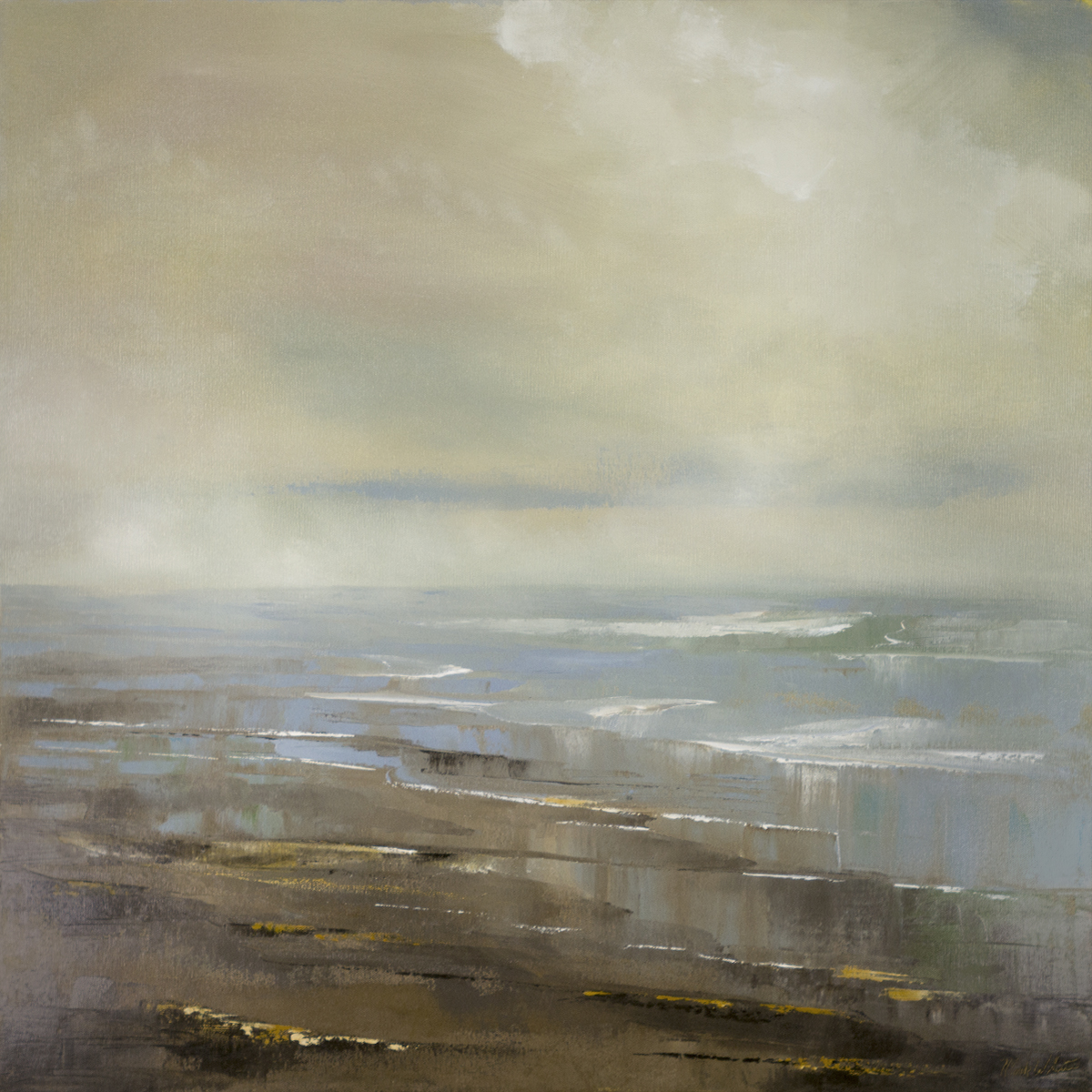
Artist with her work, Renascent, oil on linen panel, 8 x 16 in, 2021. The Franklin mountains in El Paso, Texas, seeing these amazing sunrises and sunsets.
What is the best thing about being an artist? Nina Cobb Walker: One of the best things about being an artist, after spending many years working at honing my skills is to be able to paint from my surroundings and convey the beauty of the day.
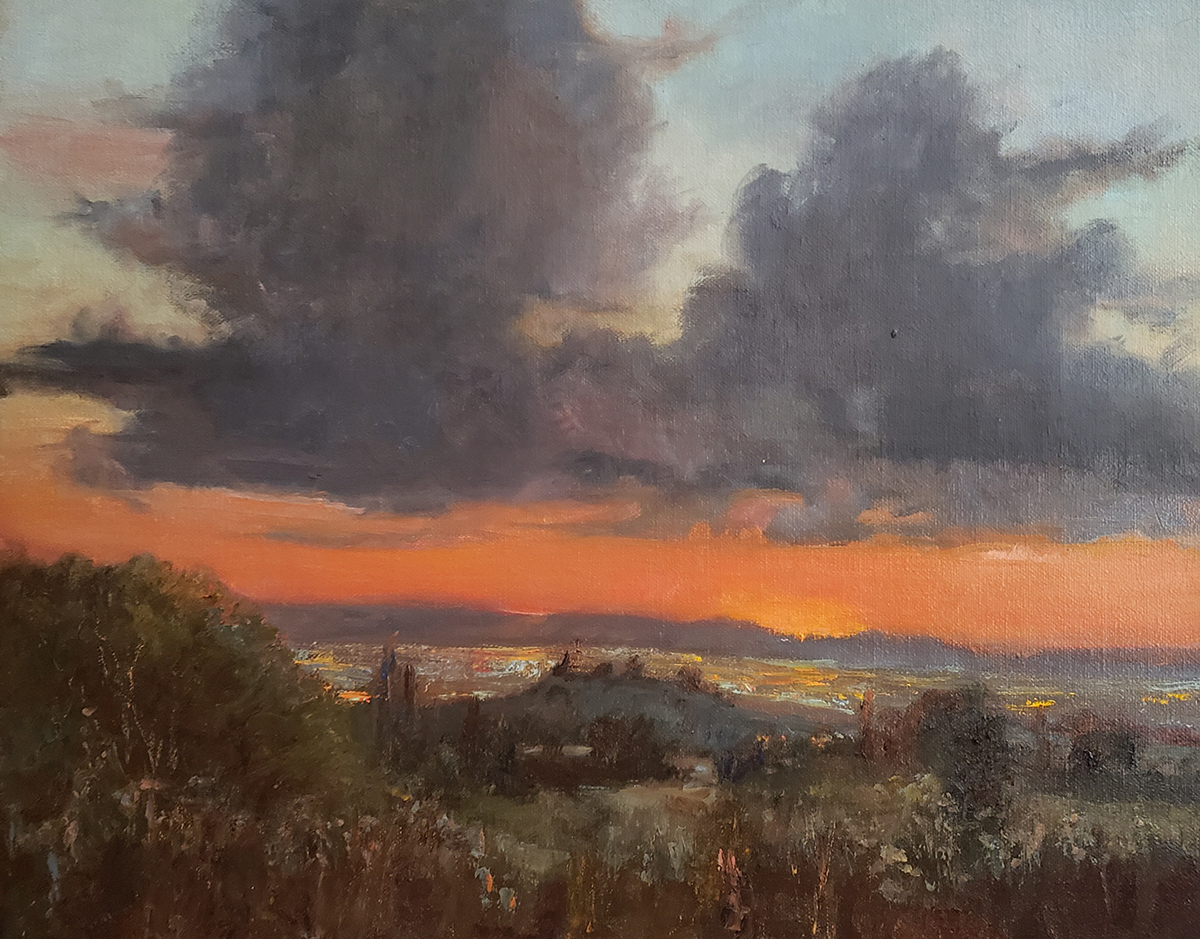
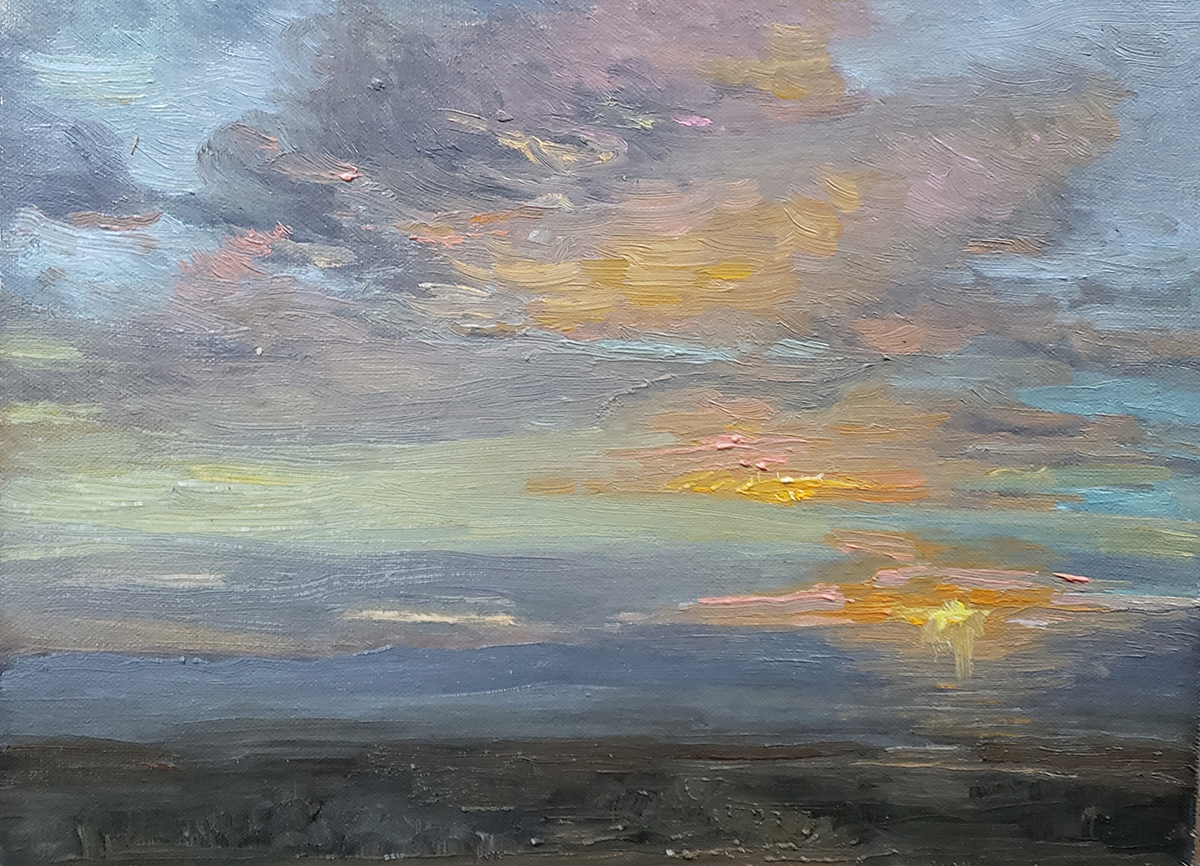
Nina Cobb Walker, Joy In My Heart, oil on linen panel, 11 x 14 in, 2022 An early summer morning sunrise walk revealed a brilliant orangish sky behind heavy rain cloudsNina Cobb Walker, Moon Of Dawn, oil on linen panel, 9 x 12 in, 2021 A rare soft beautiful early morning moment in December.
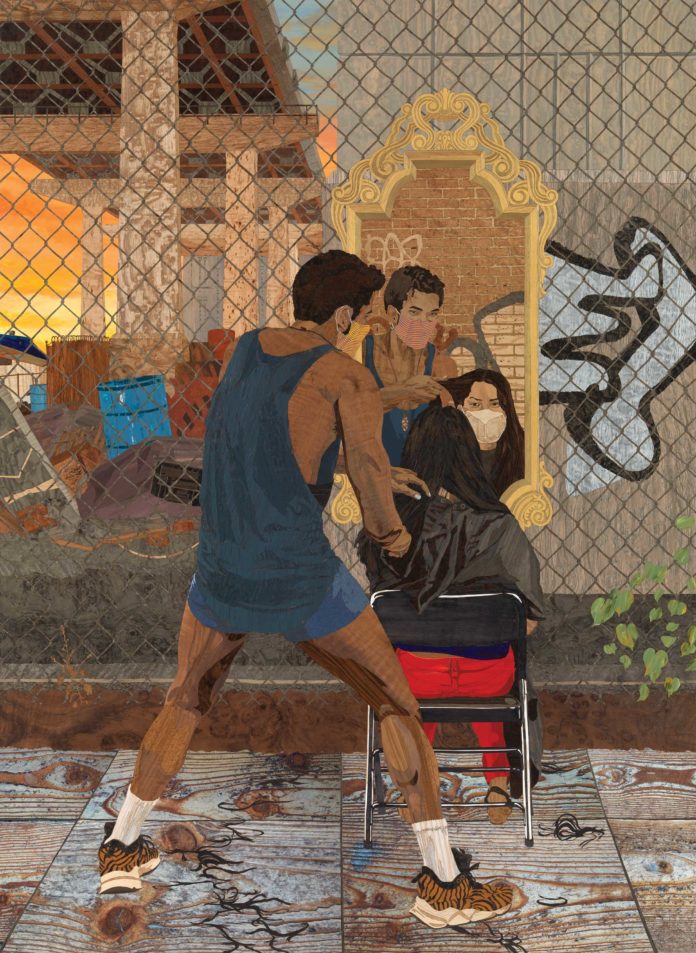
Alison Elizabeth Taylor (b. 1972), "Anthony Cuts under the Williamsburg Bridge, Morning," 2020, marquetry hybrid (wood veneers, oil paint, acrylic paint, inkjet prints, shellac, and sawdust on wood), 73 1/16 x 53 3/8 in., collection of the artist
Portrait Paintings On View > The Outwin 2022: American Portraiture Today
National Portrait Gallery
Washington, D.C. portraitcompetition.si.edu
through February 26, 2023
This April, the Smithsonian Institution’s National Portrait Gallery (NPG) announced the winners of the 2022 Outwin Boochever Portrait Competition.
This is the sixth edition of an initiative launched in 2006 thanks to the bequest of Virginia Outwin Boochever, a long-time docent at the NPG.
Essentially a triennial (despite the pandemic’s best efforts), the program seeks to reflect the ever-changing nature of American portraiture.
In this latest cycle, the NPG received more than 2,700 open-call submissions, all made since 2019 by established and emerging artists throughout the U.S. and its territories. The jury ultimately selected 42 artworks as finalists, with just eight of them as nominees for three prizes.
NPG director Kim Sajet announced that the $25,000 first prize would go to the Brooklyn-based artist Alison Elizabeth Taylor.
Through the process she has developed and named “marquetry hybrid,” Taylor used vivid paints, inkjet prints, and the natural grains of more than 100 veneers to create a multilayered portrait of the Brooklyn hair groomer Anthony Payne.
With his workplace shuttered by the pandemic, Payne offered donation-based haircuts to support Black Lives Matter, and Taylor proceeded to make drawings and photographs of him that informed her winning work. (Her prize also encompasses a new commission to create a portrait of a living individual for the NPG’s collection.) Second prize went to Tom Jones of Wisconsin, and the third to Pao Houa Her of Minnesota.
Now that the competition is over, visitors can enjoy the exhibition titled “The Outwin 2022: American Portraiture Today.” Organized by NPG curators Taína Caragol and Leslie Ureña, it presents all 42 finalist works, which range from traditional to conceptual in every possible medium: painting, photography, drawing, sculpture, video, even performance.
Further reflecting the democratization of portraiture in our time, the winner of the People’s Choice Award will be announced this October, and next spring the exhibition will begin a lengthy national tour.
> Visit EricRhoads.com to learn about more opportunities for artists and art collectors, including retreats, international art trips, art conventions, and more.
> Sign up to receive Fine Art Today, our free weekly e-newsletter
How to Inventory Your Art Collection > Even seasoned collectors may not realize how disorganized their records are. We buy art, we enjoy it, the years roll by, and suddenly we have a home full of treasures not inventoried properly. Our accountants would not let us “get away” with this if these assets were bonds, but artworks often mystify them.
For those of us who don’t have a professional art adviser, now is the time to banish the disorder. Some of us are planning our estates, or documenting our possessions so the insurance company will know how much to compensate for damages after the next natural disaster. Others of us are just curious to remember exactly what we have — to go down Memory Lane and recall the moment when we acquired that special artwork.
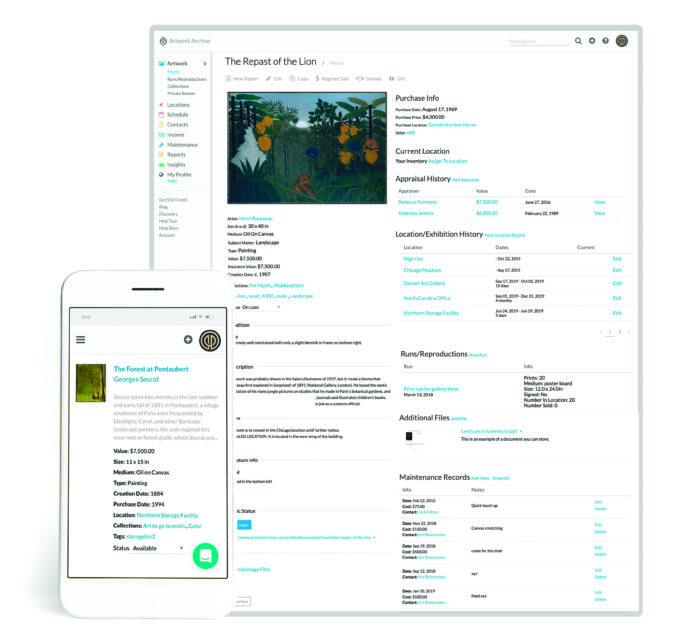
For any of these objectives, find an easy-to-use inventory system. Artwork Archive is a Denver-based firm of artists, entrepreneurs, developers, writers, and designers collaborating since 2010 to give artists, collectors, and organizations better ways of managing their art. Led by Justin Anthony and John Feustel, this outfit launched one of the first cloud-based art inventory systems and now serves clients in 130 countries.
This initiative launched under less than ideal circumstances. When the collector Justin Anthony’s basement flooded, he did not have a clear handle on which works were actually down there. While researching his options for the future, he realized that most commercially available software systems were either too costly or too complicated for a “regular person” to run. Because necessity is the mother of invention, he and John Feustel created their own, and in 2020 marked their 10th anniversary.
Embracing the Details for Your Art Collection
The most important field in any artwork’s profile is its title. Once it’s established, everything else falls into place: you can then input the size, materials, date, source, condition (including damage caused by the movers), and location inside your home — right down to which wall it’s hanging on. The system makes it possible to scan and upload relevant documents such as purchase receipts, certificates of authenticity, and appraisal histories, and there are fields for works already sold or donated. The notes field allows users to, for example, reminisce about how the artwork was acquired.
It is easy to share all (or parts) of your Artwork Archive account with professionals who work with you. For example, the attorney handling your estate can be shown fields to do with which artworks go to which heir or museum. This is accomplished by running a customized report for him or her, or by granting access to relevant parts of the system to trusted attorneys, insurers, advisers, assistants, and dealers. These individuals can make changes or notations in your records, or they can have read-only rights.
As one should expect of any data-set software, reports can be sorted and run in various formats: lists, illustrated lookbooks, pie charts, and graphs — digitally, on paper, and for downloading to your hard drive. The system even allows you to print a customized gummed label (on Avery products) that can be adhered to the back of your artwork.
Artwork Archive users have the capacity to create private “viewing rooms” where all or some of their works can be “visited” by selected outsiders. Anthony adds that just under 10 percent of his clients take this further by creating a public profile that makes their collection searchable on Google.
A Small Marketplace
Artwork Archive is not the only firm active in this space, though it is the least expensive and most user-friendly. Large galleries, museums, artist-endowed foundations, advisers, contract registrars, and other art professionals also turn to such providers as Gallery Systems (founded in 1981), Artsystems (1989), Artlogic (1994), and Collector Systems (2003).
These firms are experienced in integrating the inventory system to websites and auction consolidator databases (such as 1stdibs) and, for commercial art galleries, to the tracking of which artworks are sold. These services are generally not needed by most private collectors, yet are worth knowing about.
How do you inventory your art collection? Share it with us in the comments below.
> Visit EricRhoads.com to learn about more opportunities for artists and art collectors, including retreats, international art trips, art conventions, and more.
> Sign up to receive Fine Art Today, our free weekly e-newsletter
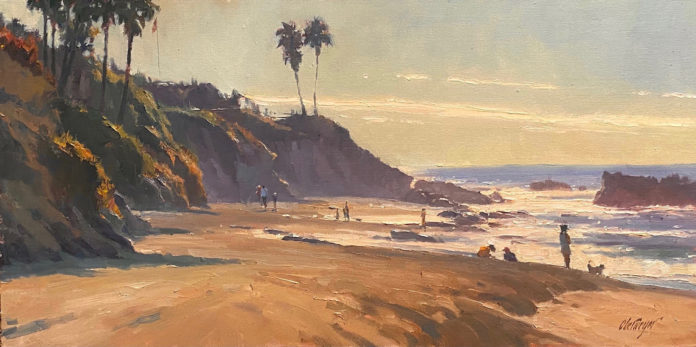
Michael Obermeryer, 9 x 12 in., Oil, "Cove Overlook"
This exhibition features 20 nationally known California artists and revolves around each one’s interpretation of transitional elements in our lives.
“Transitions: The Beauty of Life’s Journey”
Firehouse Art Center, Harrington Gallery
Pleasanton, California
Through October 22, 2022 firehousearts.org/gallery
From the organizers:
Artists Tia Kratter, Inna Cherneykina, and Kim Lordier all explored the organic world through their work with still life and different mediums, watercolor, oil, and pastel respectively.
Tia Kratter’s painting “Aging Gracefully” reflects the beauty of the aging process by “showing the flowers exquisiteness beyond the edge of excellence as they fade, wilt, and lose their petals.”
Kim Lordier uses sunflowers to illustrate the transitions in mood and feeling. “Sad Sue” reflects a “state of decline for the sunflower, but the sun still chose to shine on her crown of falling petals.” Kim recalls that the subject called to her to paint her, to honor her gifts of beauty as she transitioned through life.
Inna Cherneykina’s painting “Spring” reflects her “vision of the world, and her emotions brought to life by beautiful flowers.”
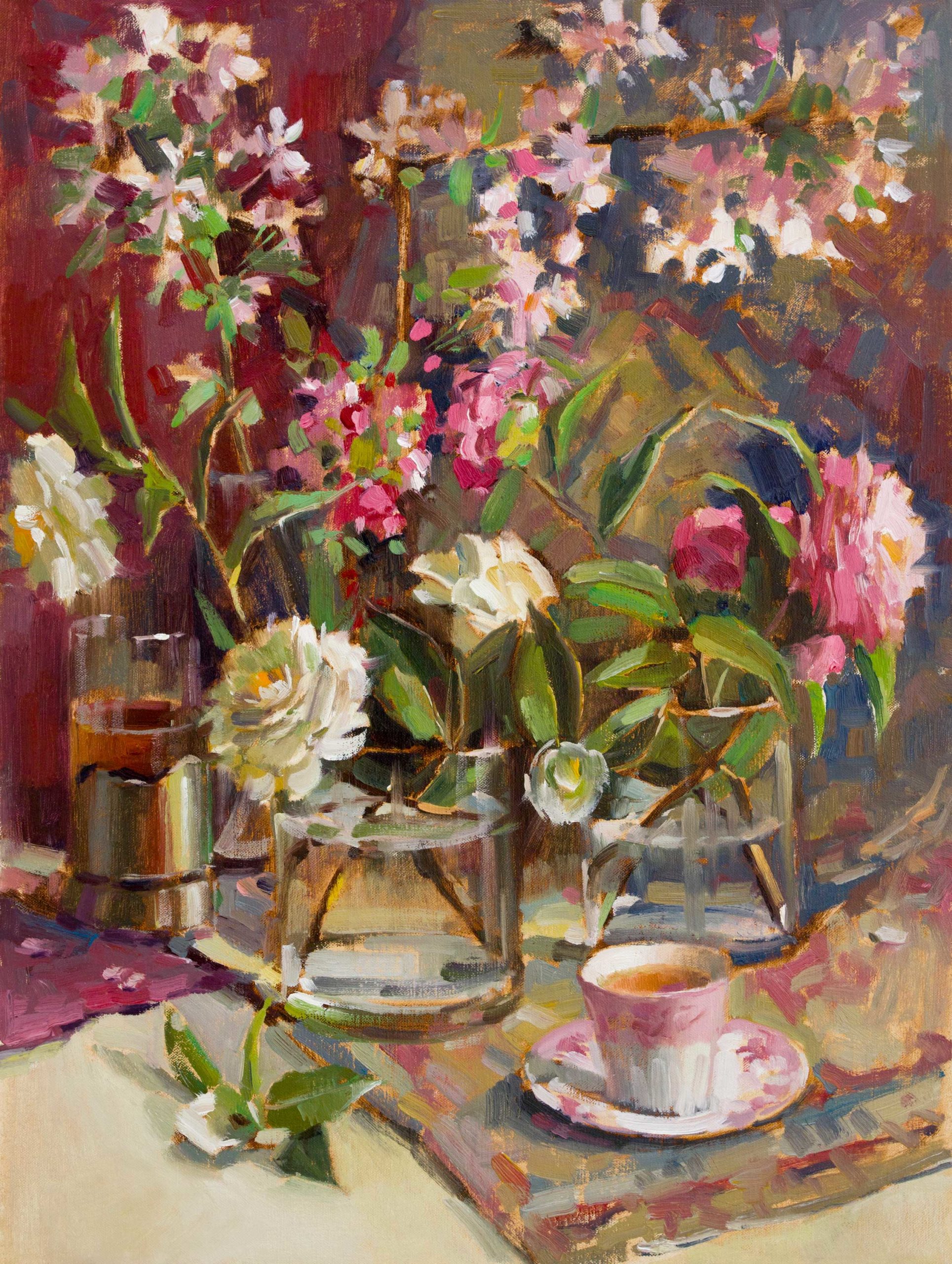
Inna Cherneykina, 18 x 24 in., Oil, “Spring”
Several other artists chose to look at the theme of transitions by viewing our landscape as it changes throughout the day and by the season.
Paul Kratter’s painting “Up into the Sky” depicts the beauty of Yosemite in Winter and Linda Mutti focuses on the changing light of the California coast at sunrise and sunset which is seen in her work “California Gold.”
Elizabeth Tolley chose to focus on the time of day in a particular location and see the effects each season brings to the scene.
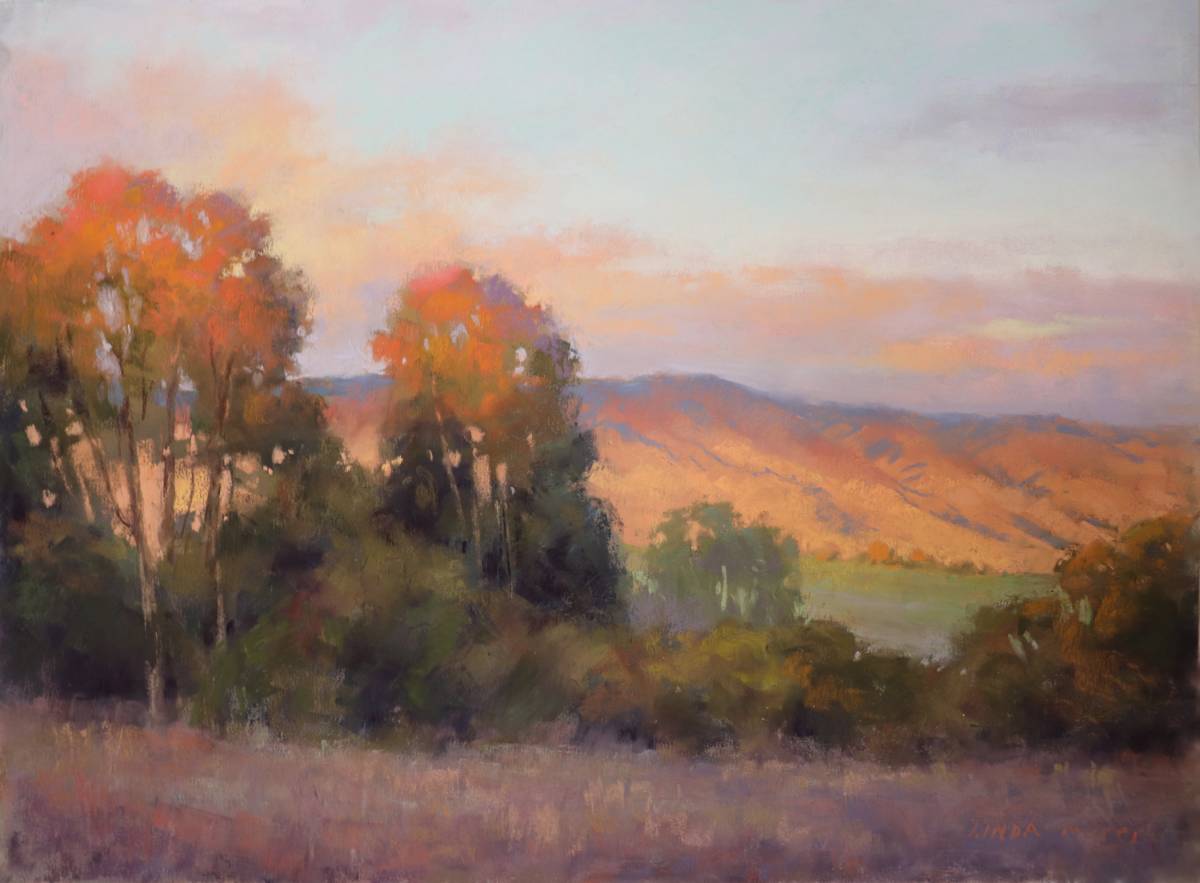
Linda Mutti, “Afternoon Delight,” pastel, 12 x 16 in.
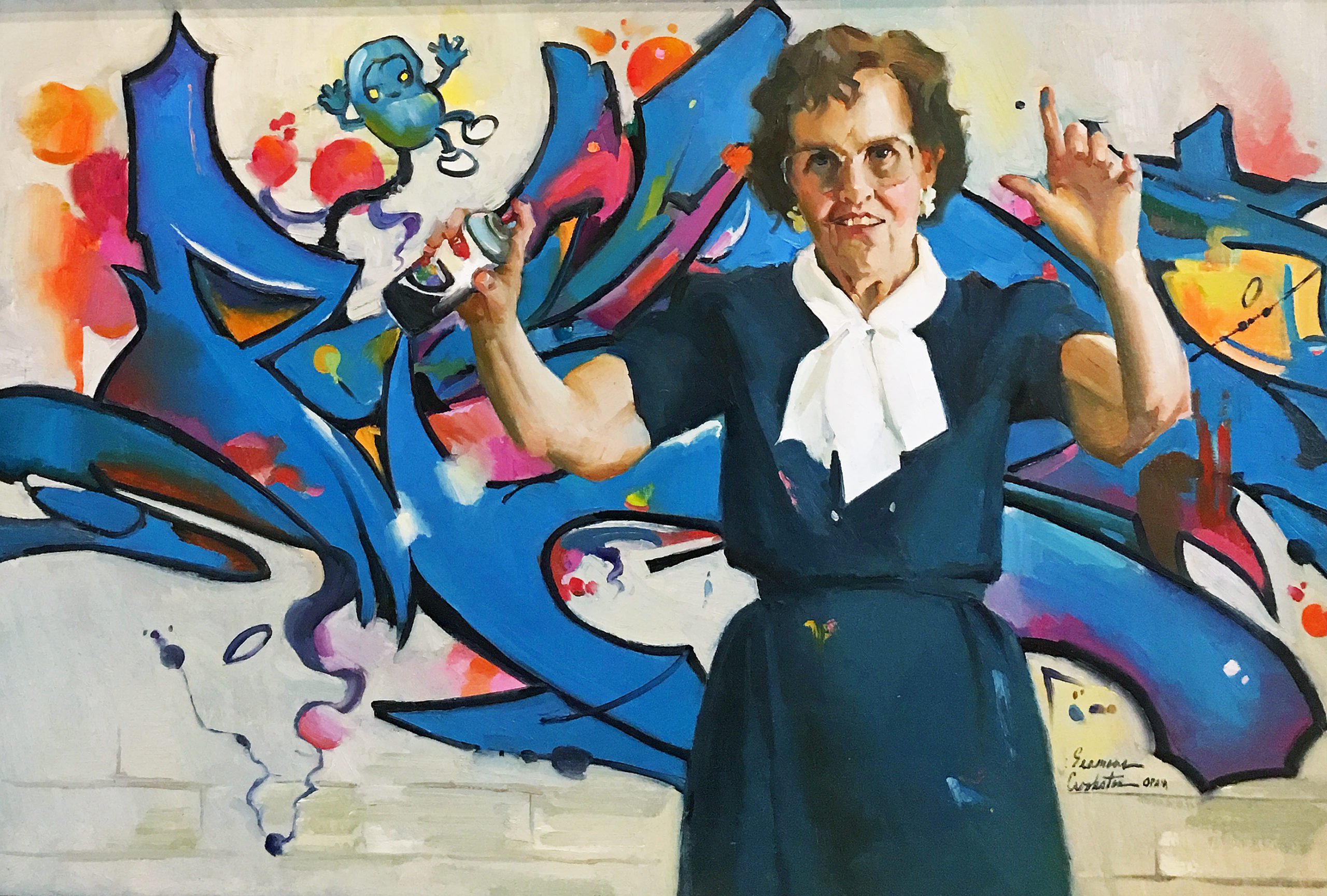
The figurative work of Nancy Seasmons Crookston, Carole Rafferty and Durre Wassem reflect the beauty of transitional moments in our human experience. Nancy’s theme focused on our ability “to dance through every stage of our life.”
Nancy Seamons Crookston, 24 x 36 in., Oil, “Graffiti Grandma”
Carole’s work reflects the intimate moments in time where she has spotted people on the street or on the beach in both real and comical situations.
Durre Wassem’s work focused on the spiritual nature of our lives as human beings.
Bill Cone, Michelle Jung, Carolyn Lord, Randy Sexton, and Barbara Tapp explored the effects of time on the changing elements of our landscape and our communities.
Bill explores some of the environmental elements of local creeks and the effects of climate change.
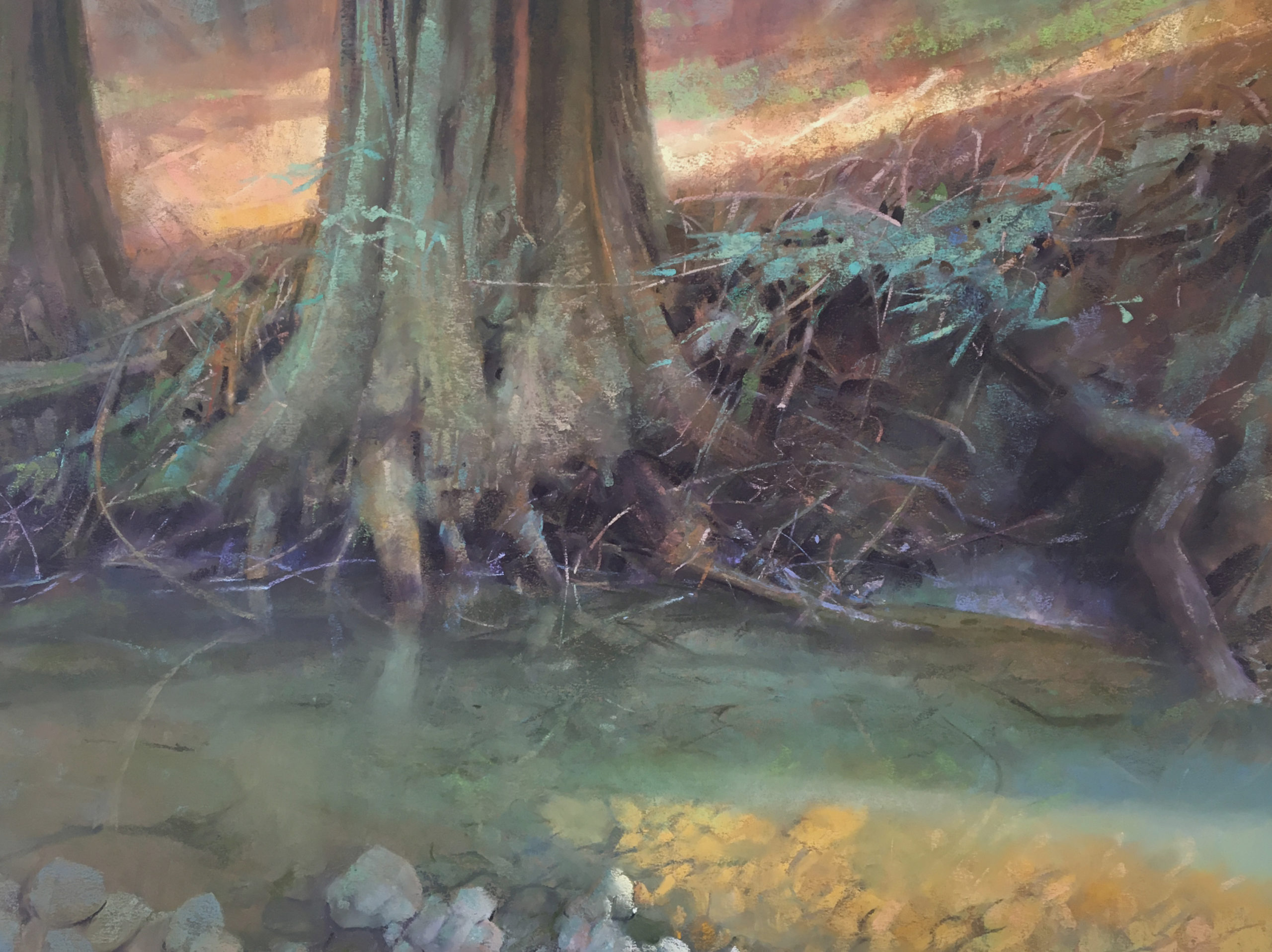
Bill Cone, 18 x 24 in., Pastel, “Shallow Creek”
Michelle Jung’s work explores the environmental impact on our coastal communities while Randi Sexton focused on the revival and rebirth of Ruth Bancoft’s vision for her gardens over 10-year period.
Carolyn Lord and Barbara Tapp explore the transitory nature of certain areas. Carolyn shows the “corrosive effect of fossil fuels that is evident in global, political strife, degradation of the landscape, and comprised health and fecundity of all organisms.” Her painting “Googie Relic” depicts a mid-20th century gas station, where “low mileage cars would fill up before cruising the endless highways.” Barbara’s work focused on changing environment of the Salinas Valley from its functioning and derelict farms.
Terry Miura and Dug Waggoner took a totally different twist on the theme by interpreting transitions as “applied to the creative process, rather than a depiction of change of time, seasons, etc… Miura states that “an initial study is done in gouache, which becomes a reference and the jumping off point for the next piece, which in turn becomes the catalyst for the one following. In this way, the creative process continues to evolve and the vision transitions from something based on a photo of an actual place, to a much more personal expression of an environment borne of imagination and introspection.”
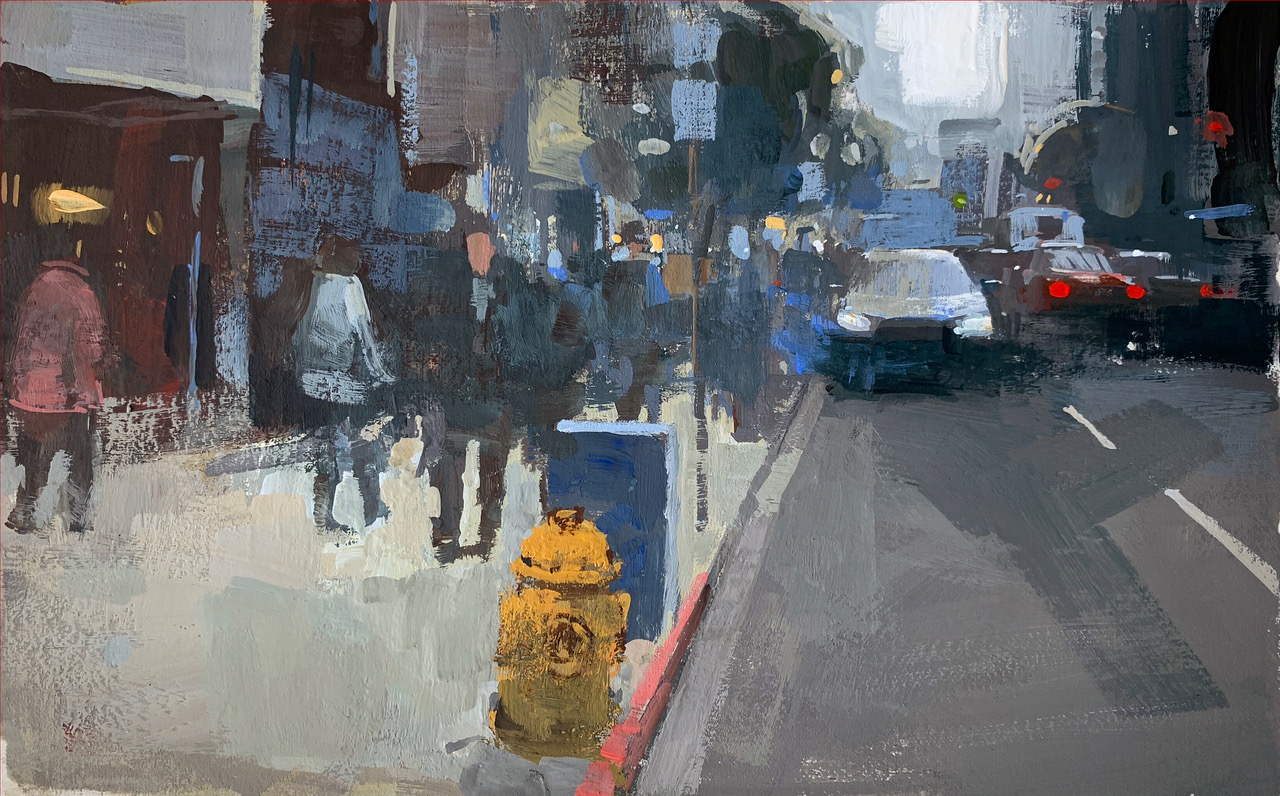
Terry Miura, 5 x 8 in., Gouache on Paper, “City Clamor”
Dug has also focused on the transitional elements of his painting process which recently “utilizes a textured surface that is enhanced by the pastel as it finds harmonious passages and movement within the composition.”
Brian Blood, Ellen Howard, Richard Lindenberg, and Michael Obermeyer’s work reflected the beauty of the California coast. Brian’s work focuses on the beauty of a specific place and how the changing light during each moment of the day highlights the uniqueness of this site. Ellen and Richard’s work focus on the metaphor of the changing elements and drama on the coast which is reflected in our own human condition.
Michaels’ work reflected his curiosity in finding new ways to paint his iconic scenes from transitional elements of light to the changing activity on the beach.
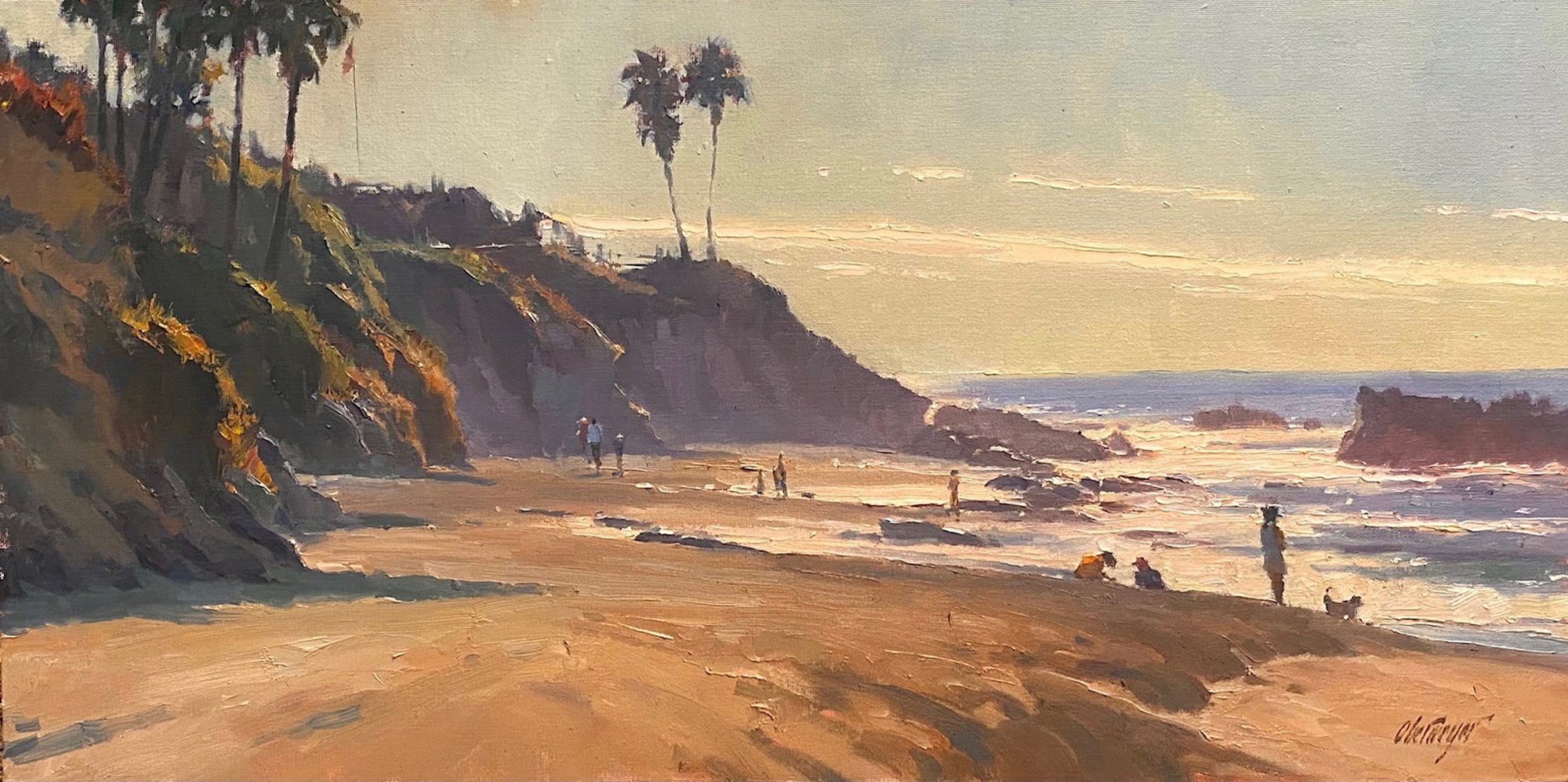
Michael Obermeryer, 9 x 12 in., Oil, “Cove Overlook”
> Visit EricRhoads.com to learn about more opportunities for artists and art collectors, including retreats, international art trips, art conventions, and more.
> Sign up to receive Fine Art Today, our free weekly e-newsletter
As part of our effort to continue to help artists and art galleries thrive, we’re proud to bring you this week’s “Virtual Gallery Walk.” Browse the artwork below and click the image itself to learn more about it, including how to contact the gallery.
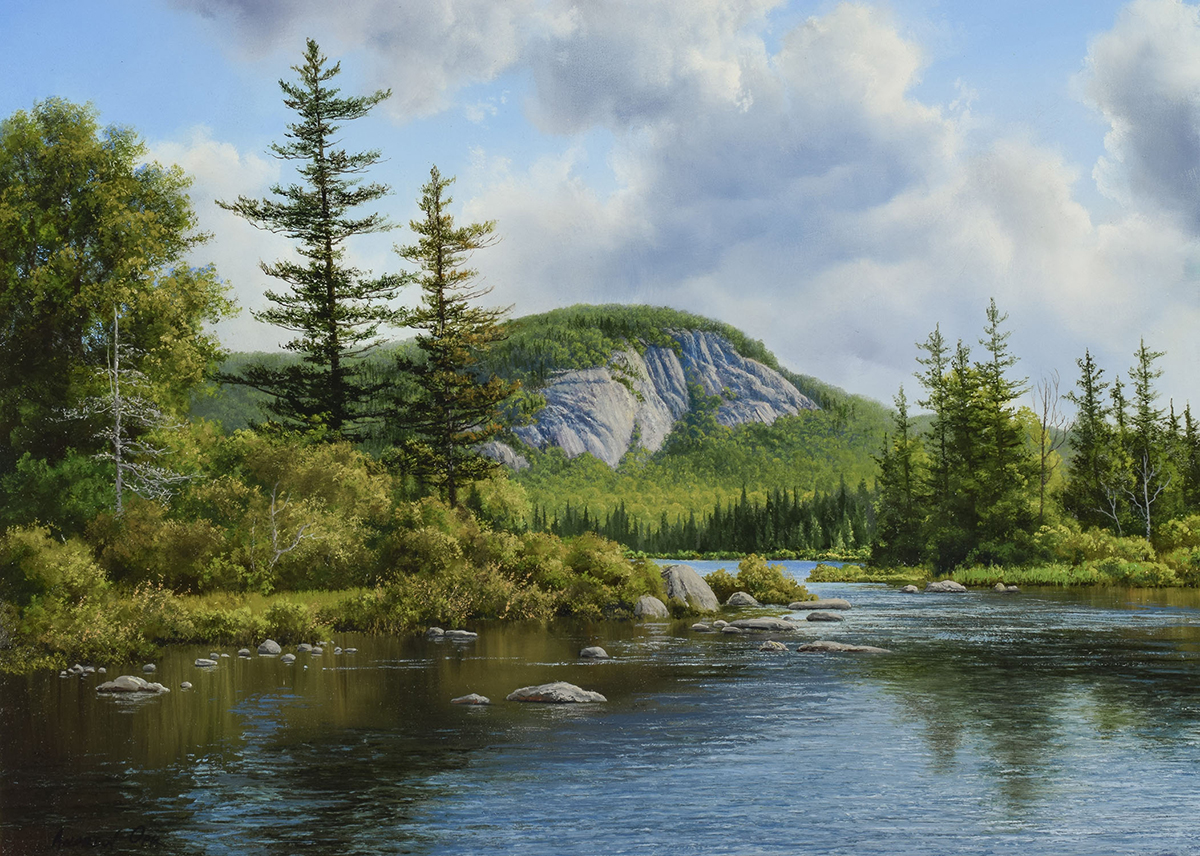
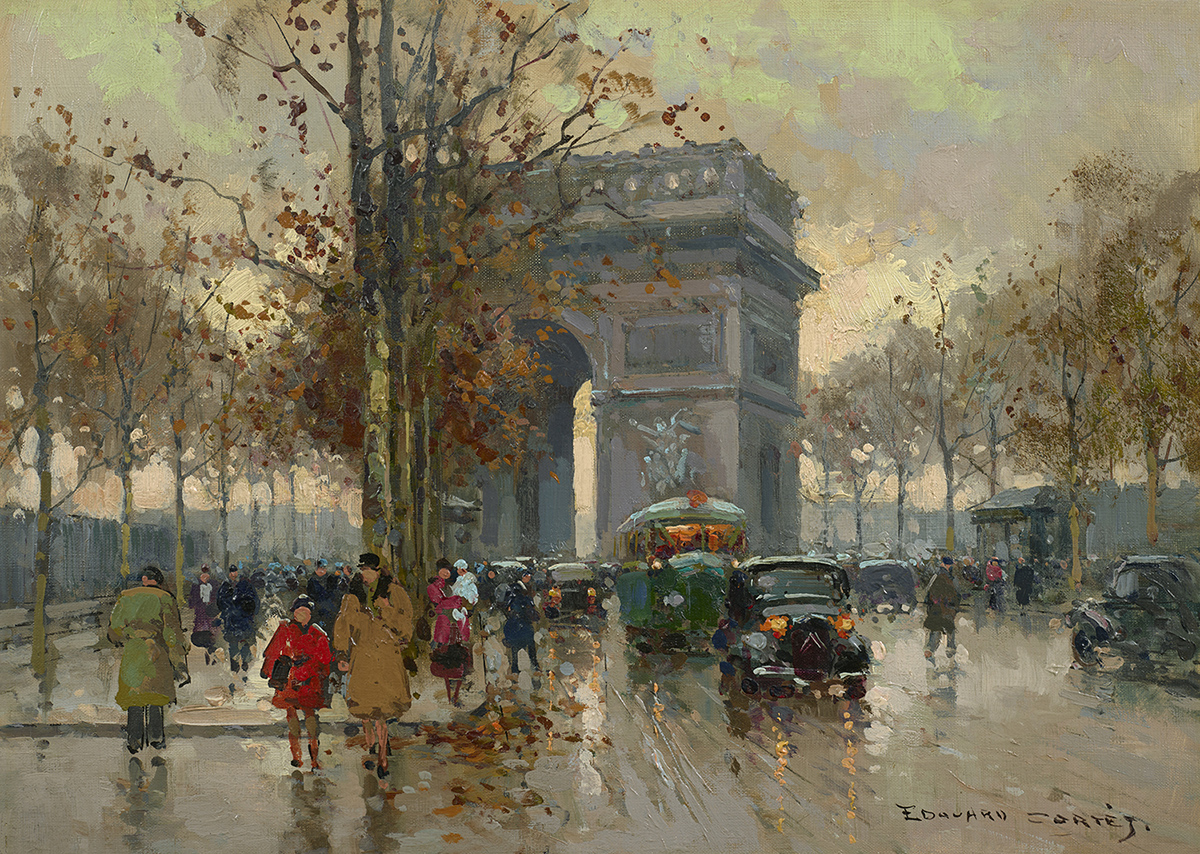
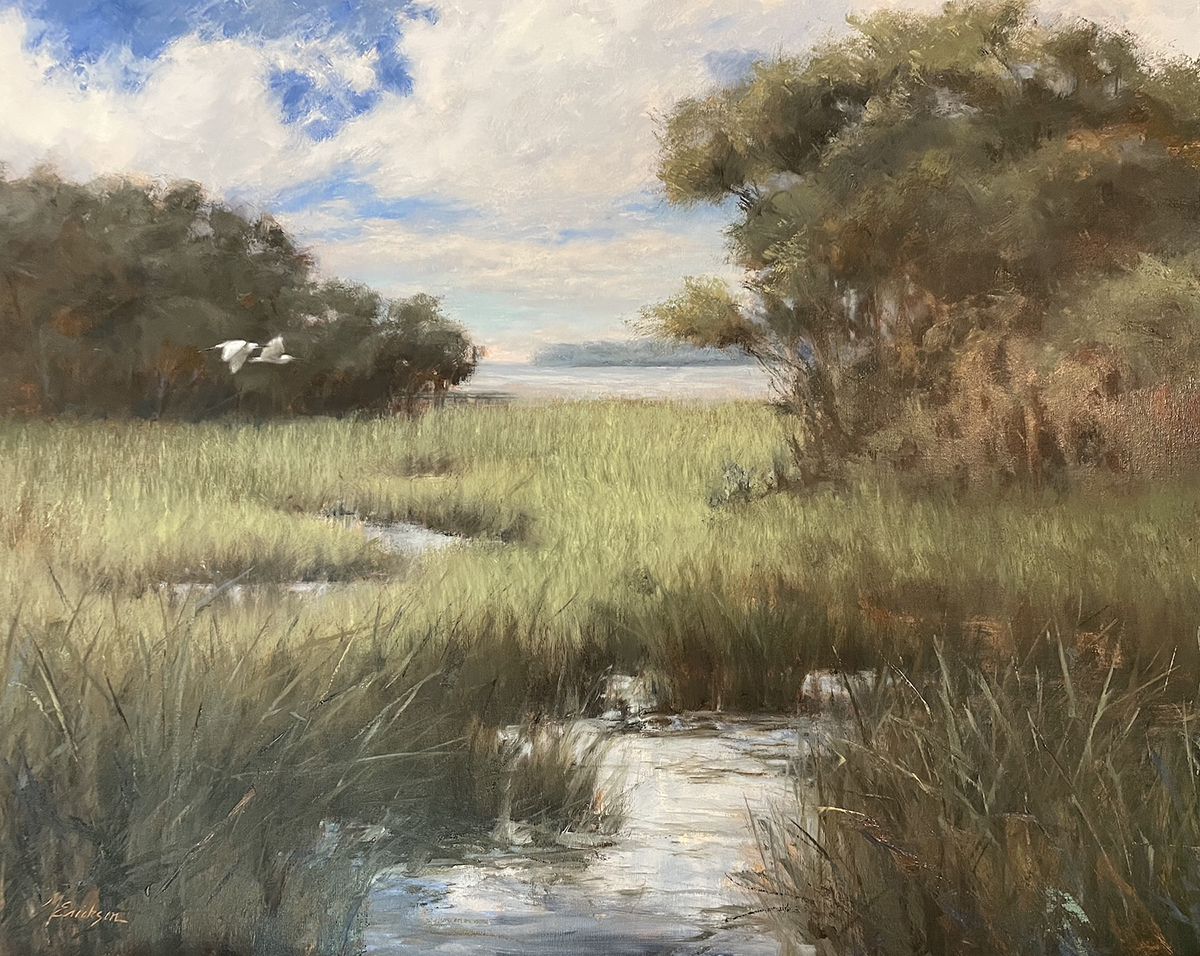
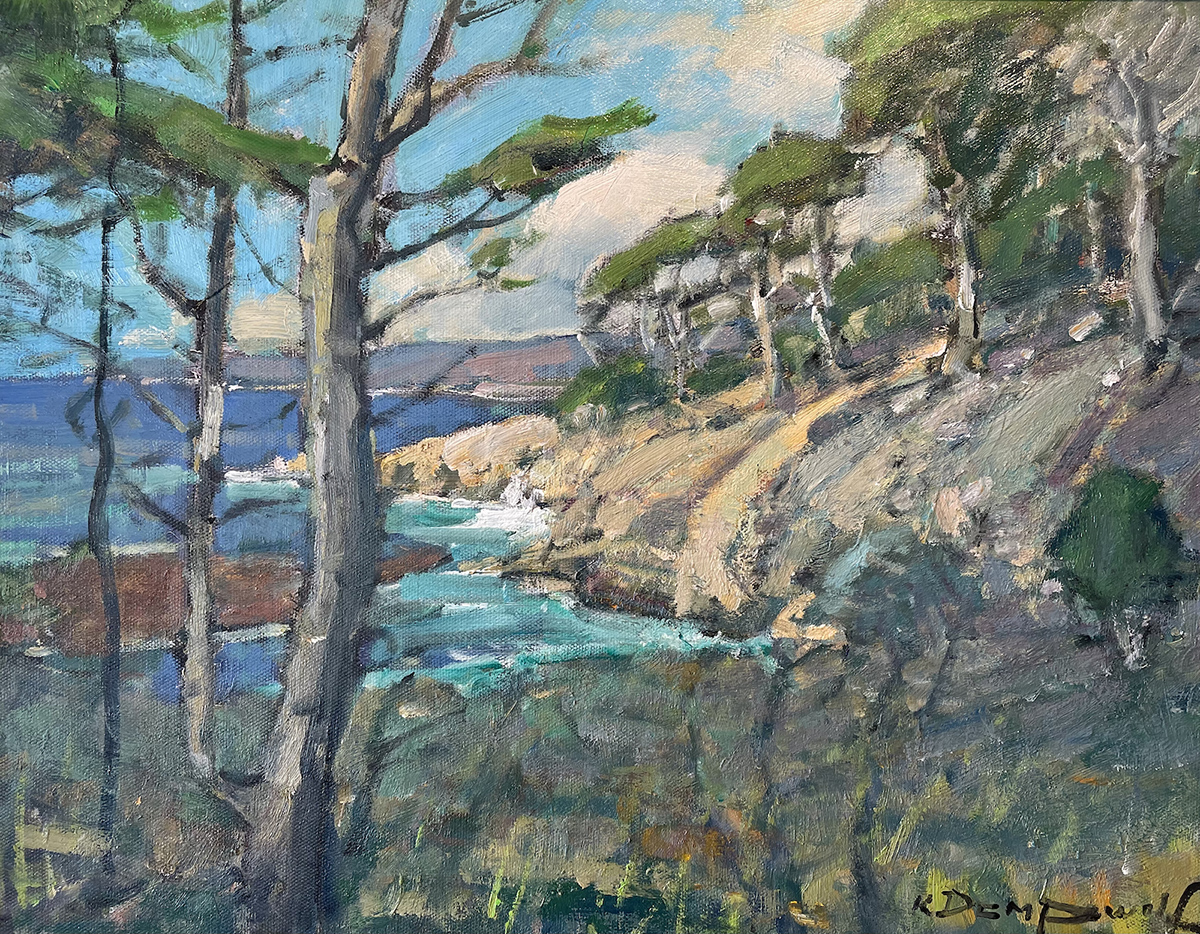
Be Still, Roger Dale Brown, oil, 40 x 30 in; Anderson Fine Art GalleryMarshfield Pond In Early Summer, Andrew Orr, oil on panel, 9 x 12 in, Signed; Rehs ContemporaryL’Arc de Triomphe, Edouard Leon Cortes (1882 – 1969), oil on canvas, 13 x 18 in, Signed; Rehs Galleries, Inc.Perfect Summer Day, Mary Erickson, oil on linen, 20 x 24 in; ATS Mary EricksonThe Lifting Mist, Mark White, oil on canvas, 30 x 30 in; Mark White Fine ArtPt Lobos Morning Shadows, Karl Dempwolf, oil, 14 x 18 in; Huse Skelly Gallery
Want to see your gallery featured in an upcoming Virtual Gallery Walk? Contact us at [email protected] to advertise today. Don’t delay, as spaces are first come, first served, and availability is limited.
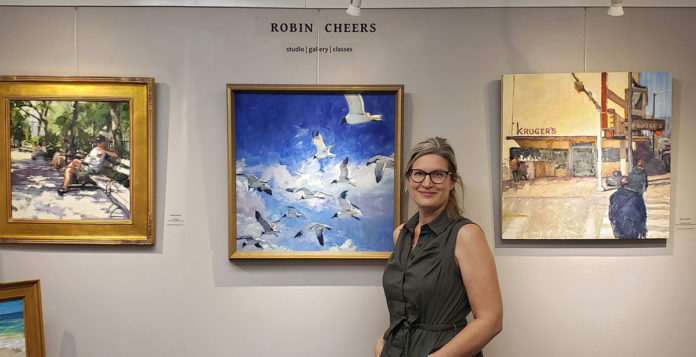
Robin in her studio/gallery space in Austin, Texas
How do you describe success? Robin Cheers: Success comes in many forms. Sometimes just being able to tackle a tough subject and love my painting is a huge win! But more than anything, I feel that I’ve been successful when I touch someone with my art. Whether it’s helping a student resolve a difficult passage and I see the light in their eyes and their smile when it clicks, or when a patron tells me how much a painting means to them, how it reminded them of a special moment in their lives. When I communicate and capture something that inspires people in this crazy, hectic world, then I feel the most success.
What is the best thing about being an artist? Robin Cheers: I’ve been blessed to work my art career into my family life. Sometimes painting takes a backseat while I am needed by family. Sometimes it is all consuming. I’ve learned over the decades that my passion isn’t something that I will lose. It’s a comfort when I can create in difficult times, it’s a joy when I can immerse myself completely. My paintings have always evolved from my family life – ideas come from trips, hobbies with my child, my own childhood memories, and imagery close to home. My works are all about connection, the everyday scenes that we may overlook but are the moments that make up a lifetime.
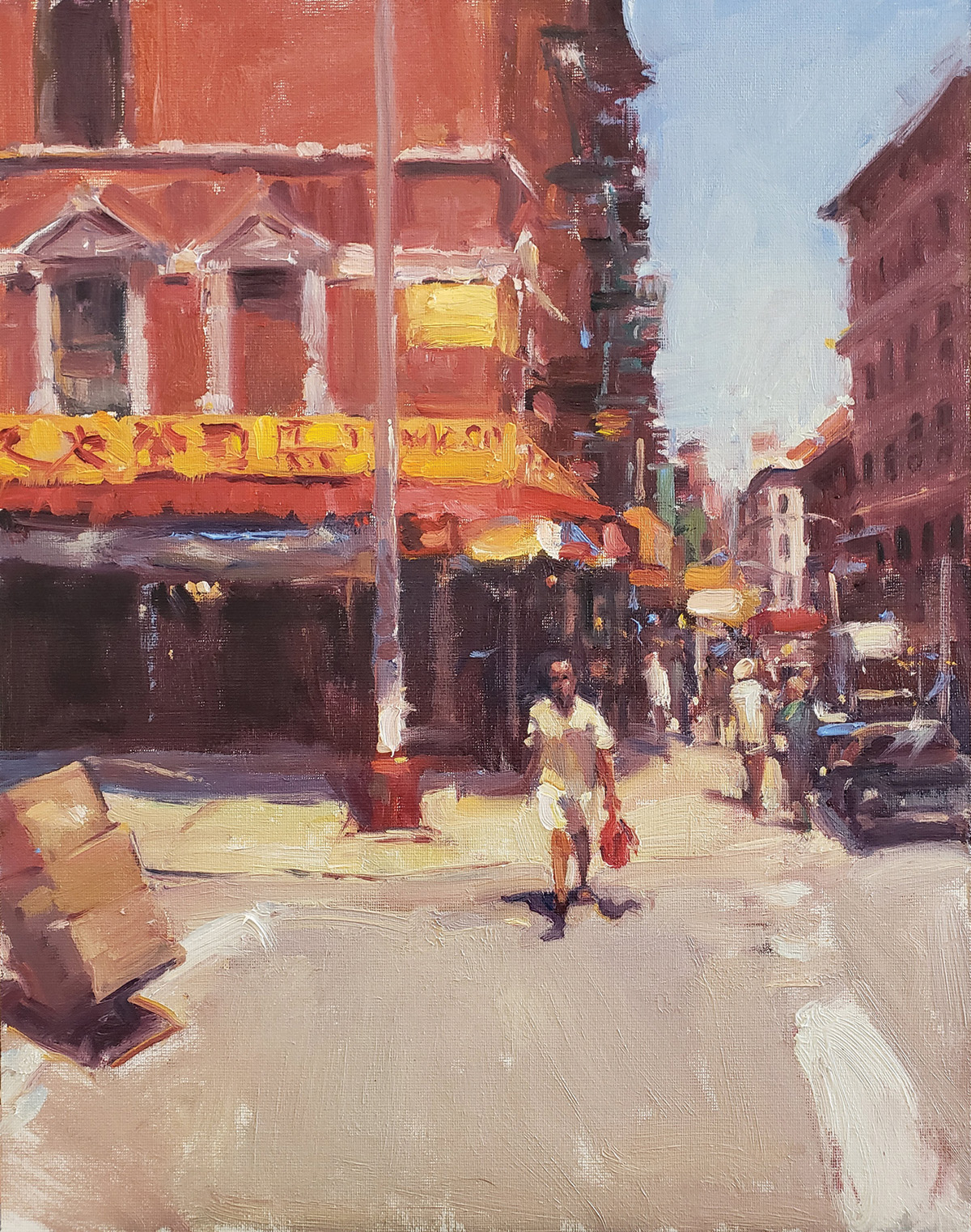
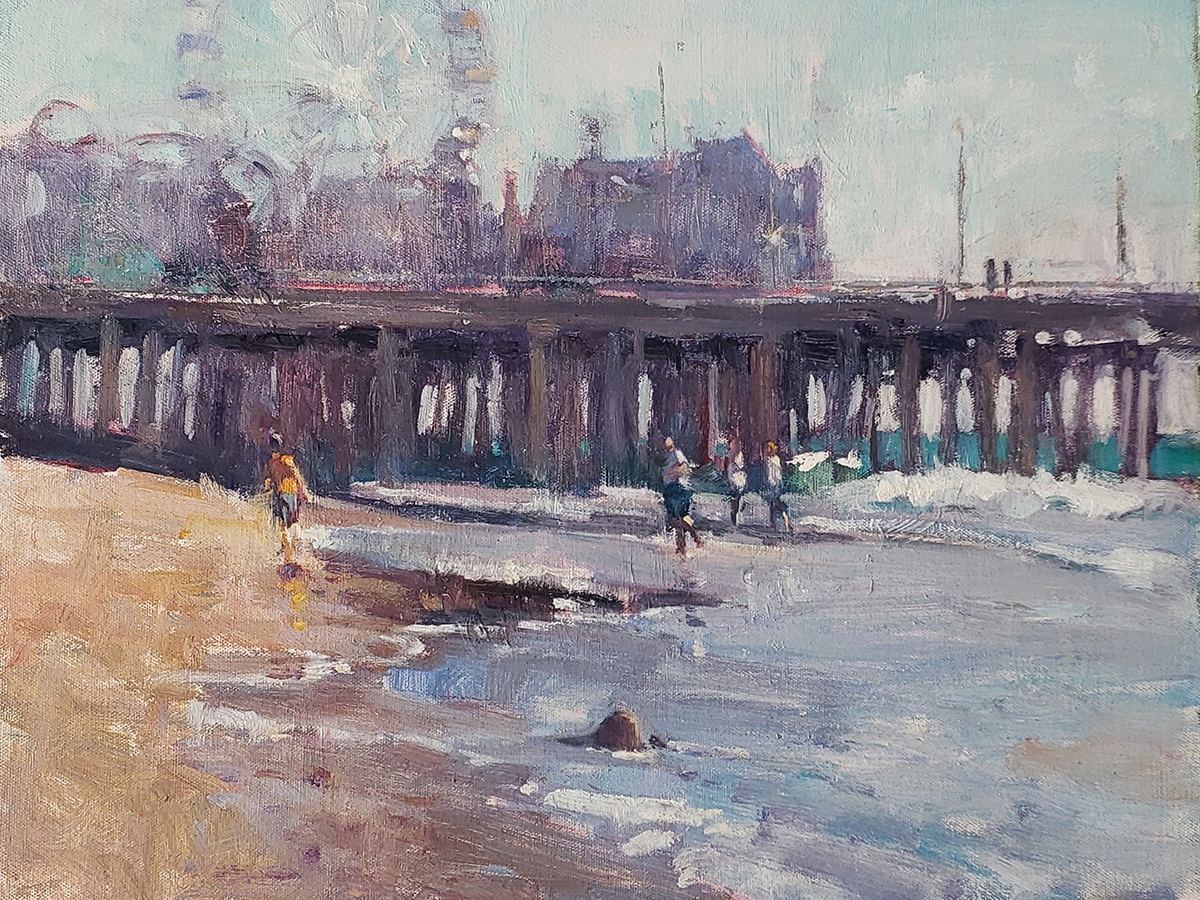
Robin Cheers, “Crossing Chinatown”, oil on panel, 14 x 11 in., 2022, Available during American Impressionist Society National Juried Show starting Sept. 15, 2022Robin Cheers, “Under the Boardwalk”, oil on panel, 14 x 18 in., 2021
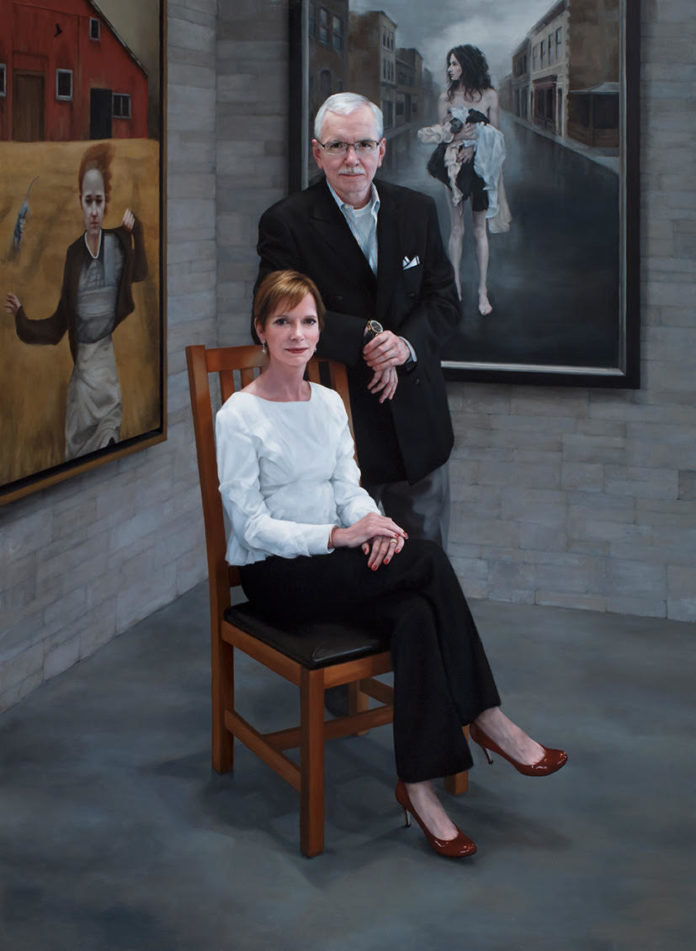
Katie O'Hagan (born 1972), "Portrait of the Collectors, Dr. Elaine Melotti Schmidt and Steven Alan Bennett" oil on canvas, 78" x 58" 2016
Two of the country’s leading collectors of figurative realist paintings have donated $12 million in artworks and cash to help create a new wing at the Muskegon Museum of Art (MMA) where they are dedicating space for artwork by women. Fewer than five museums in the world dedicate space solely to the work of women artists.
More than 150 paintings by women artists were given to the Michigan museum by art collectors and champions of gender equality, Steven Alan Bennett and Dr. Elaine Melotti Schmidt, of San Antonio. Their donation also includes a $1.5 million cash gift, which will help create a new wing to more than double the size of the museum.
“From the moment we commenced collecting, we were concerned that women artists were not being treated equally with men,” said Bennett. “They have fewer shows; they have fewer pieces in museums’ permanent collections; and their works have almost universally sold for less than those of men. We have seen our Collection as a way to right some of these wrongs and are delighted that the Muskegon Museum of Art is joining us to ensure that the effort continues long into the future.”
The project is expected to be completed in early 2024.
Bennett and Schmidt have collected figurative realist paintings by women artists since 2009 creating The Bennett Collection, and in 2018 established The Bennett Prize—a $50,000 biennial award designed to propel the careers of women painters who have not yet realized full professional recognition. It is the largest art award offered solely to women painters.
The Bennett Prize is currently in its third cycle; two winners, Aneka Ingold, of Tampa and Ayana Ross, of Atlanta have been selected thus far. The call for entries for the third cycle is open through Oct. 7, 2022.
Bennett and Schmidt say their mission is to encourage women painters to take their place among the most celebrated painters, a group currently dominated by men. They also hope to expand opportunities for the public to learn more about figurative realist painting and the creative vision of talented women artists.
Over the past decade, only 11 percent of art acquired by the country’s top museums for their permanent collections was by women, according to a survey completed by the art market website ArtNet in 2019. Of the 260,470 works acquired by 26 of the top museums in the United States, less than 15% were by female artists.
The Muskegon Museum of Art opened in 1912 and houses over 5,000 pieces in its collection. With the $11.2 million expansion, the museum will more than double in size, adding three new rotating galleries, two classrooms, rooftop terrace, museum store, connecting and support space and public plaza. Bennett and Schmidt’s cash gift of $1.5 million joins $9.6 million in gifts from other lead donors including $1 million from the Van Kampen Boyer Molinari Foundation, $1 million from the City of Muskegon, $500,000 each from Carol R. Folkert & Family, The Hilt Foundation, Patrick O’Leary Foundation, Brad & Kathleen Playford, Shape Corporation, and Mrs. Shaw Walker. About 250 additional gifts total $11.1 million raised to date.
Paintings donated from The Bennett Collection include works by more than 115 artists, including Artemisia Gentileschi, Mary Cassatt, Agnes Martin, Elaine de Kooning, Harmonia Rosales, Julie Bell, Andrea Kowch, Katie O’Hagan and dozens of others representing contemporary and historical women figurative realist painters.
“This is a transformative and once-in-a-lifetime gift,” said MMA Executive Director Kirk Hallman. “In the context of an expansion project, it is all the more redefining. The MMA has been honored to partner with and host The Bennett Prize. Steven and Elaine’s vision is one shared by the MMA. This relationship has helped to elevate this art museum to a national scale. Not only is this gifted artwork, it adds an entirely new dimension and balance to our already impressive collection. In addition, the Bennett-Schmidt gift is a call to action institutionally, encouraging both the Muskegon Museum of Art and other museums to continually expand opportunities for women artists.”
“The artwork being donated to the Muskegon Museum of Art catapults them into the forefront of progressive museums that recognize the primacy and power of the work of women painters,” said Bennett. “What has been an exceptionally good collection will now be augmented with many powerful works by women that span the generations. The people of Muskegon will be the beneficiaries, and their Museum will be able to present a much broader picture of the contributions that painters have made to our understanding of culture, history and ourselves.”
> Visit EricRhoads.com to learn about more opportunities for artists and art collectors, including retreats, international art trips, art conventions, and more.
> Sign up to receive Fine Art Today, our free weekly e-newsletter
"Young Woman with a Fan," early 1750s, Pietro Antonio Rotari (Italian, 1707-1762), pastel of blue-green paper, mounted on canvas, 46 x 37 cm, Getty Museum, 2019.111
By the mid-18th century, pastel paintings reached an unprecedented peak of popularity and acclaim. The dry, satiny pigments, manufactured in sticks of every hue, were portable and allowed for swift execution—allowing artists to essentially “draw” a painting.
The J. Paul Getty Museum presents “Eighteenth-Century Pastels,” an exhibition that explores the popularity of pastel paintings across eighteenth-century Europe and showcases their striking physical properties. Presenting works from the Getty Museum collection along with four loans, the exhibition is on view at the Getty Center through February 26, 2023.
(Editor’s Note: Watch and interact with 30 world-renowned pastel artists as they demonstrate their skills at Pastel Live, August 17-19, 2023. Included is an exclusive faculty art auction. [learn more]
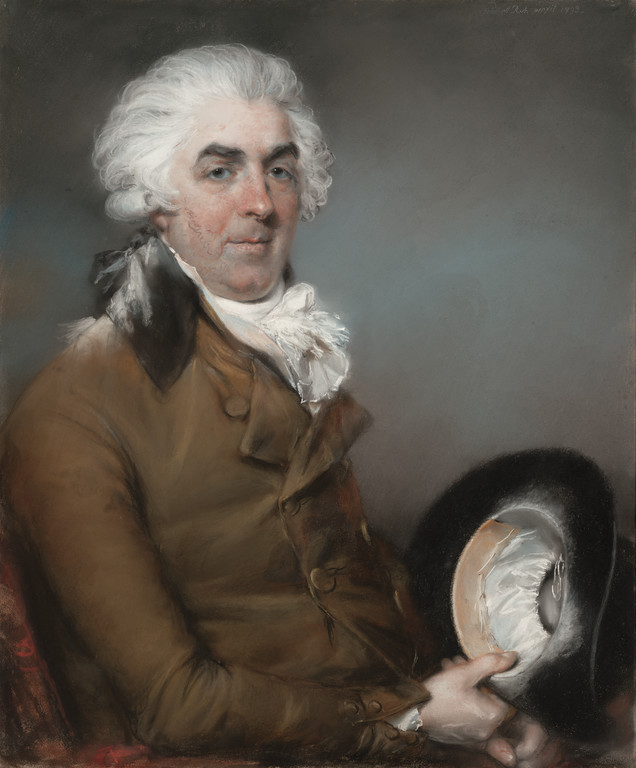
“Portrait of George de Ligne Gregory (1740-1822),” 1793, John Russell (English, 1745-1806), pastel on paper, laid on canvas, 75.9 x 63.2 cm, Getty Museum, 2001.77
More from The Getty:
“Working with pastels differs greatly from painting with oils, which require cumbersome equipment, long sittings, and extensive drying times,” says Emily Beeny, curator of European paintings at the Fine Arts Museums of San Francisco and former associate curator of drawings at the Getty Museum. “Their relative ease and portability made pastels an especially desirable medium for traveling artists seeking to expand their portfolio with portraits.”
Pastelists were often very mobile, traveling far and wide in search of commissions. The artists and sitters represented in “Eighteenth-Century Pastels” hail from Austria, England, France, Germany, Italy, Switzerland, and the Netherlands—a testament to the Pan-European nature of the pastel phenomenon.
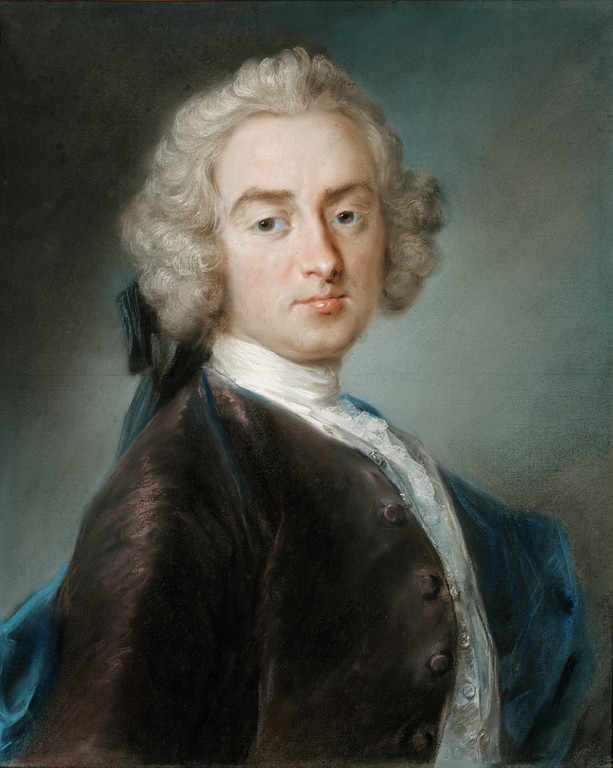
“Portrait of Sir James Gray, 2nd,” about 1744-1745, Rosalba Carriera (Italian, 1673-1757), pastel on blue paper, 56 x 45.8 cm, Getty Museum, 2009.80
“Eighteenth-Century Pastels” highlights works from the Getty Museum collection by Jean-Étienne Liotard, John Russell, and Rosalba Carriera, among others. The exhibition also includes recently acquired works by Adélaïde Labille-Guiard and Pietro Antonio Rotari, as well as seldom-seen works by Cornelis Troost on long-term loan from the Mauritshuis in the Netherlands.
With standout pieces like Rotari’s “Young Woman with a Fan” and Liotard’s “Portrait of Maria Frederike van Reede-Athlone at Seven Years of Age,” the pastel paintings in this exhibition will entrance audiences with their rich hues and ethereal quality.
“Featuring works by many of the most talented pastel portraitists of the age, this exhibition is a sumptuous feast for the eyes,” says Ellie Bernick, graduate intern at the Getty Museum and co-curator of the exhibition. “Plus, the exhibition features several works by female pastelists like Adélaïde Labille-Guiard, Rosalba Carriera, and Mary Hoare, exemplifying the important role the medium played in bringing women artists into the profession.”
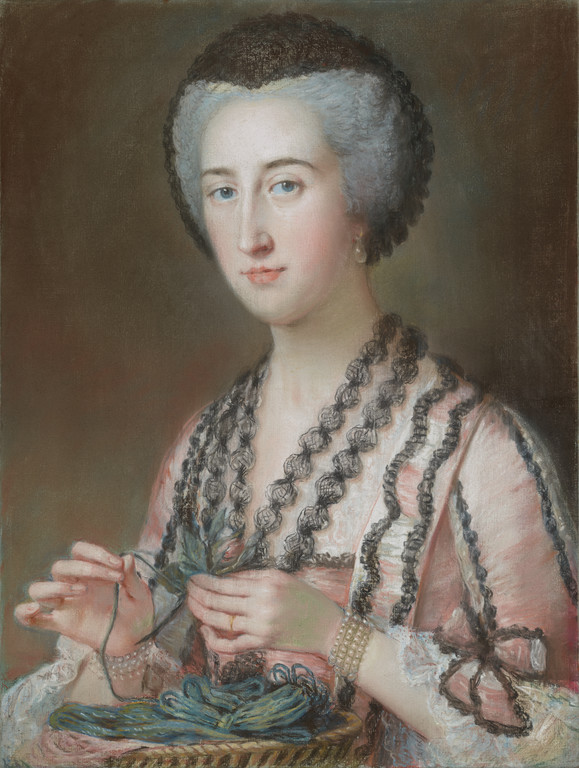
“Portrait of Lady Dungarvan, Countess of Ailesbury (née Susanna Hoare),” about 1760, Attributed to Mary Hoare (English, 1744-1820), pastel on blue paper, mounted on canvas, 61 x 45.7 cm, Getty Museum, 2013.47.2
“Eighteenth-Century Pastels” is curated by Emily Beeny, curator of European paintings at the Fine Arts Museums of San Francisco and former associate curator of drawings at the Getty Museum and Ellie Bernick, graduate intern at the Getty Museum, with the assistance of Julian Brooks, senior curator of drawings at the Getty Museum.
> Visit EricRhoads.com to learn about more opportunities for artists and art collectors, including retreats, international art trips, art conventions, and more.
> Sign up to receive Fine Art Today, our free weekly e-newsletter
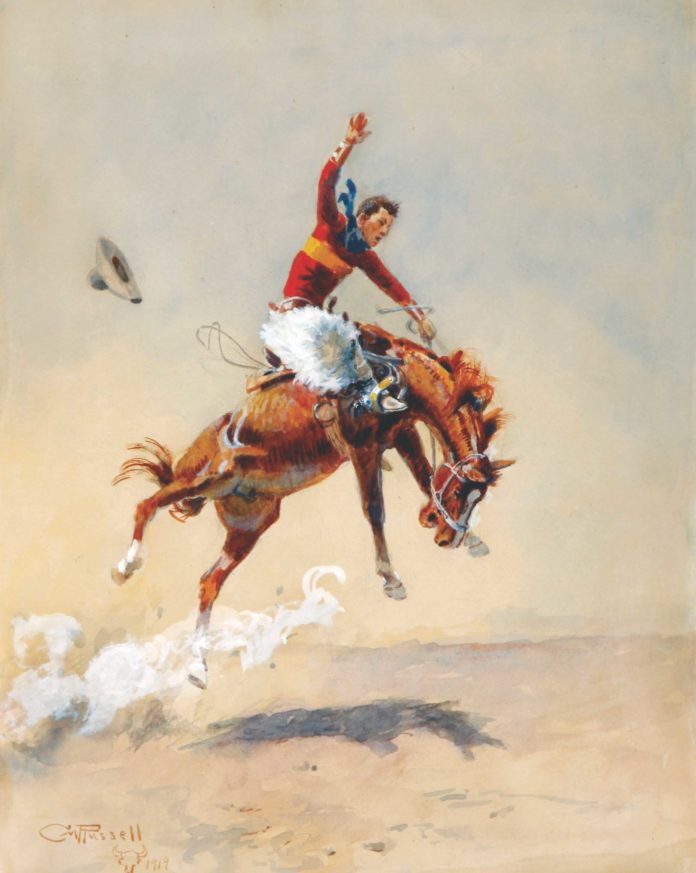
Charles M. Russell (1864–1926), "High, Wide, and Handsome," 1919, watercolor, gouache, and pencil on paper, 16 x 12 1/2 in.
C.M. Russell Museum
Great Falls, Montana cmrussell.org
August 18–21, 2022
It was in Great Falls, Montana, that the Western master Charles M. Russell (1864–1926) spent the second half of his life, and he died there in 1926.
Not surprisingly, the C.M. Russell Museum there is the world’s leading resource for discovering the artist, and now The Russell, its most important annual fundraiser, is set to resume this August after two years of pandemic-related distractions.
At the heart of the celebratory weekend is the August 20 auction, the highlight of which will be Russell’s rare 1919 watercolor, “High, Wide, and Handsome.” This depicts one of his most sought-after subjects — the bucking bronco.
Although Russell created many sketches of rodeo scenes, very few paintings resulted. “High, Wide, and Handsome” is a rare example showing a contestant vying for prize money. It was likely intended for use in the advertising of a rodeo close to Russell’s heart — the 1919 Calgary Stampede. Because rodeos became a substitute for Russell’s former cowboy life, his presence at the Calgary Stampede and pieces like this were his ongoing tributes to the cowboy tradition.
The auction on August 20 will feature many other works by Russell and by other historical and contemporary Western artists. Please visit the museum’s website for ticketing and bidding information.
> Visit EricRhoads.com to learn about more opportunities for artists and art collectors, including retreats, international art trips, art conventions, and more.
> Sign up to receive Fine Art Today, our free weekly e-newsletter
As part of our effort to continue to help artists and art galleries thrive, we’re proud to bring you this week’s “Virtual Gallery Walk.” Browse the artwork below and click the image itself to learn more about it, including how to contact the gallery.
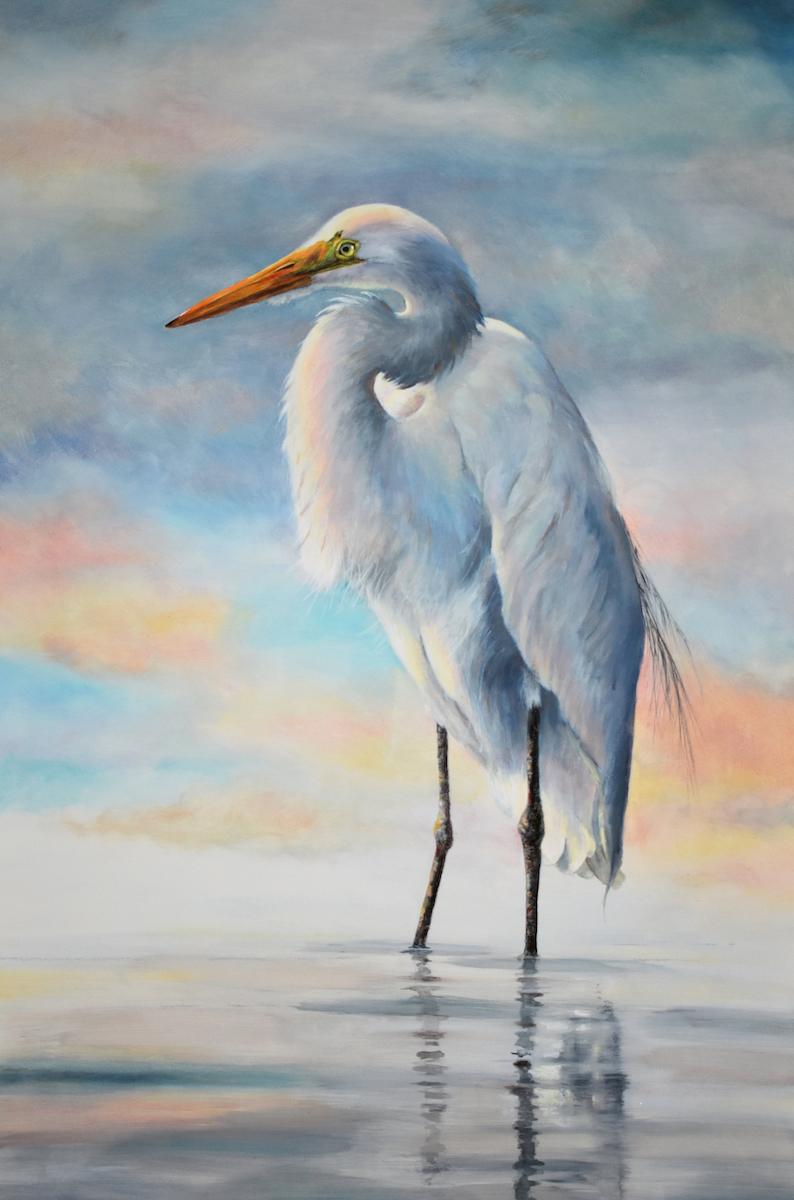
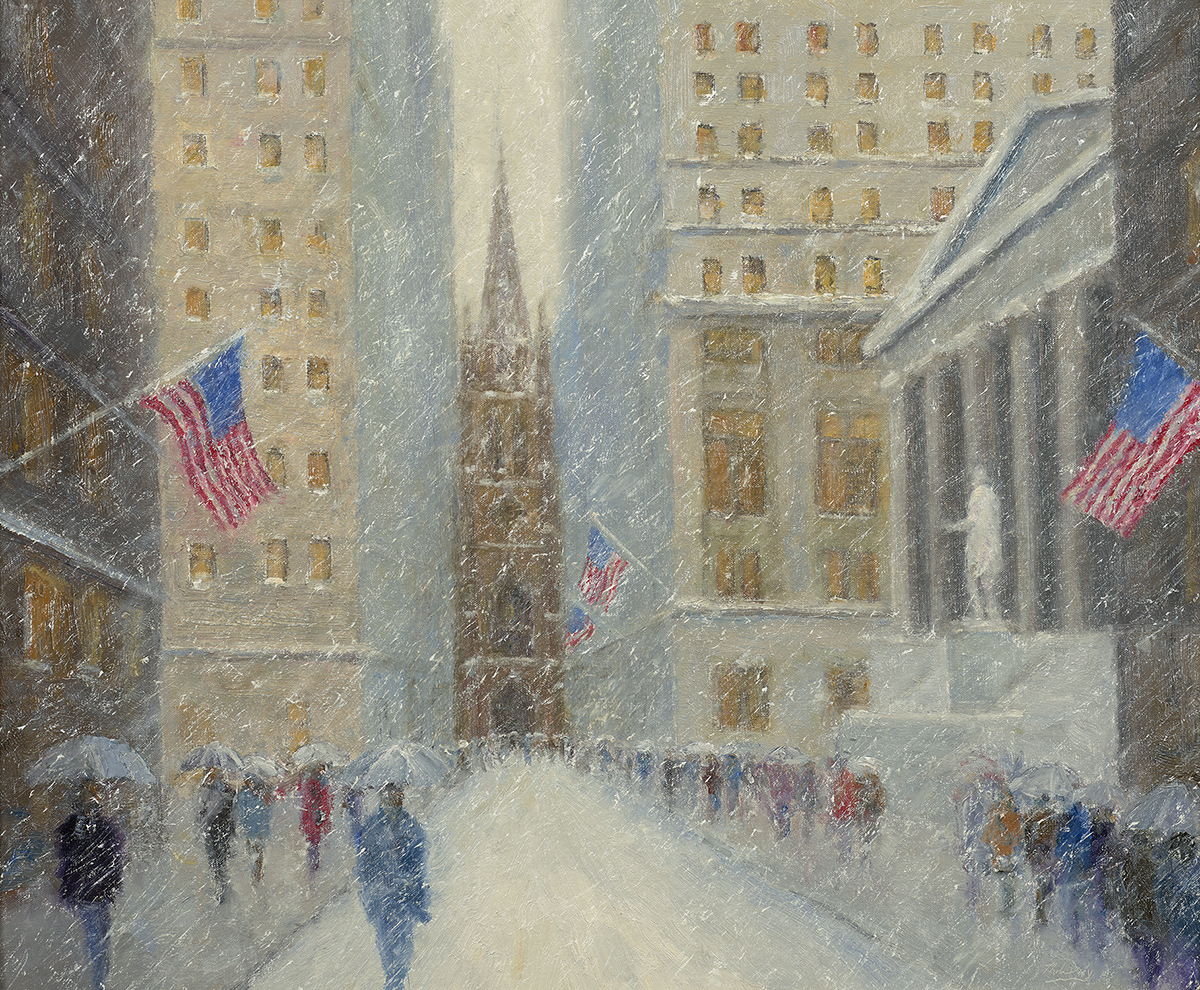
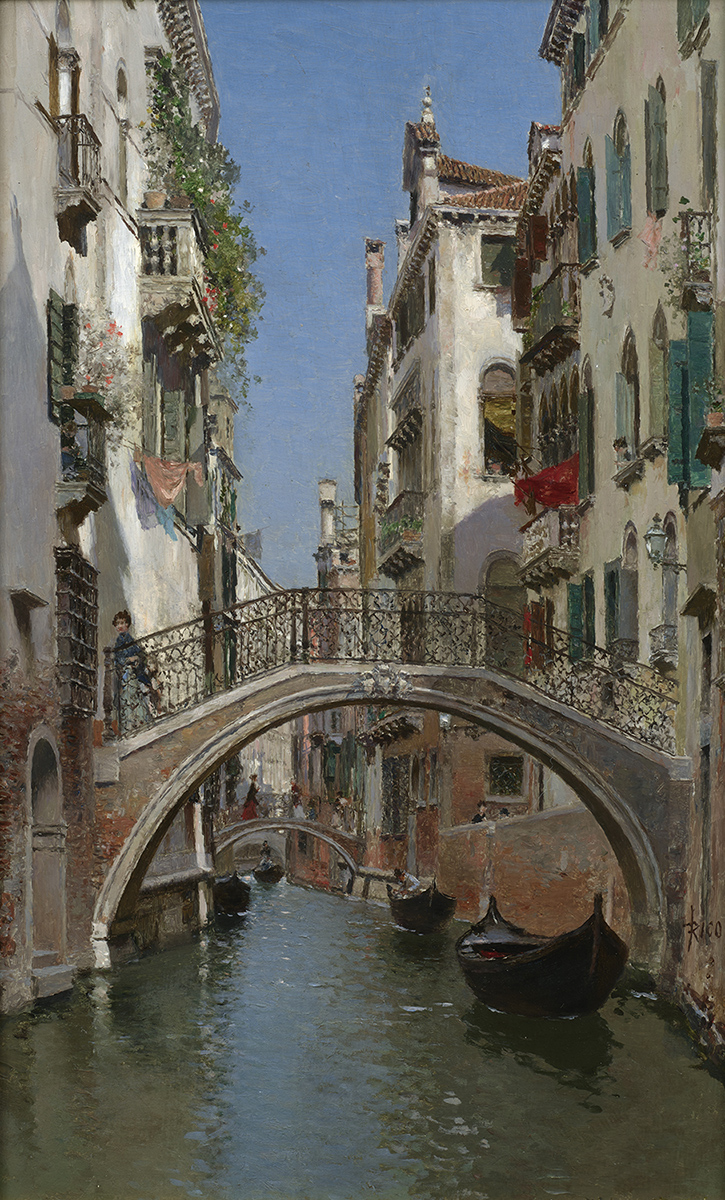
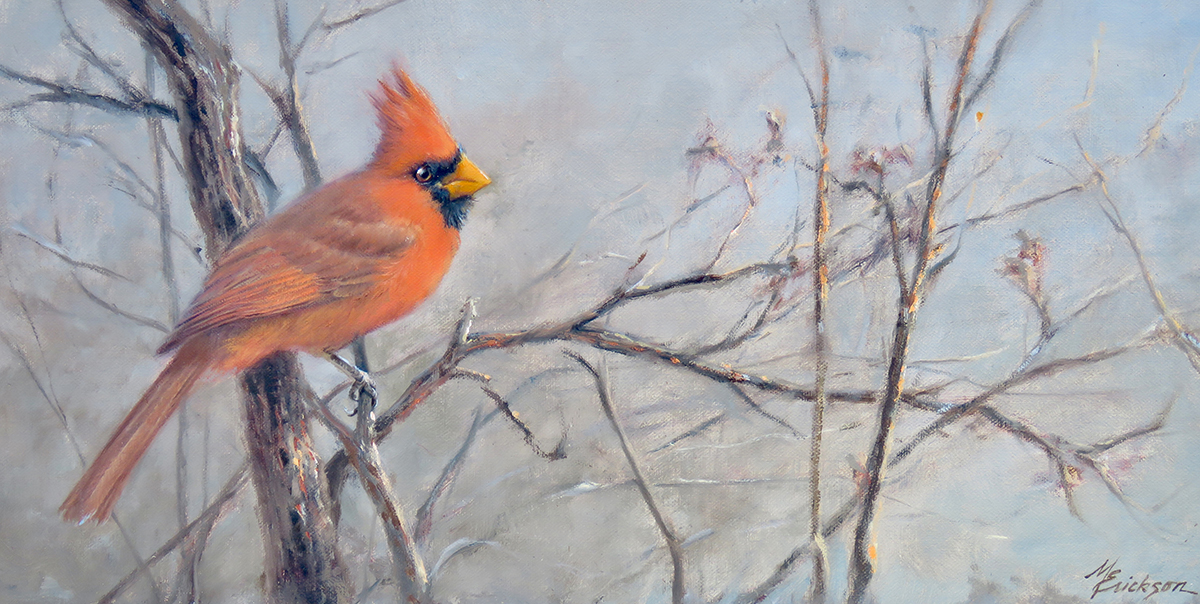
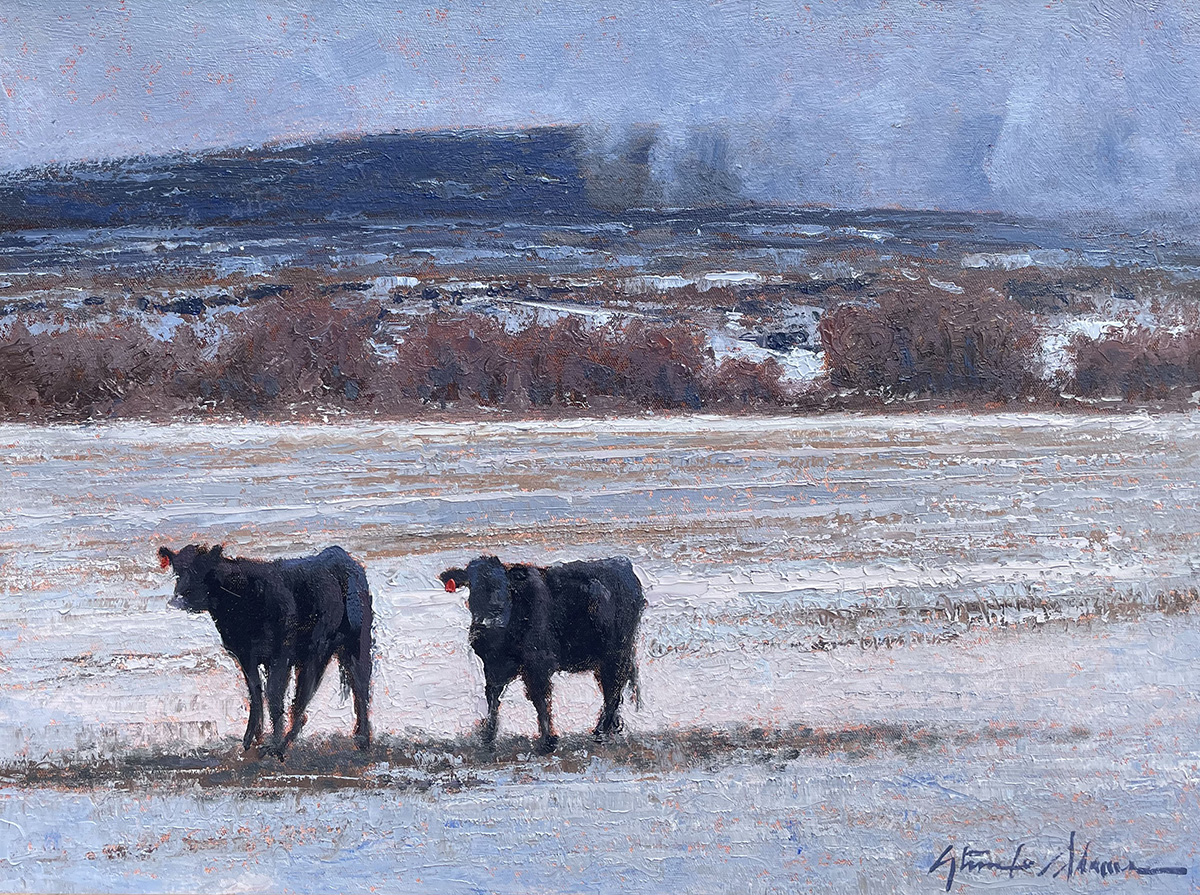
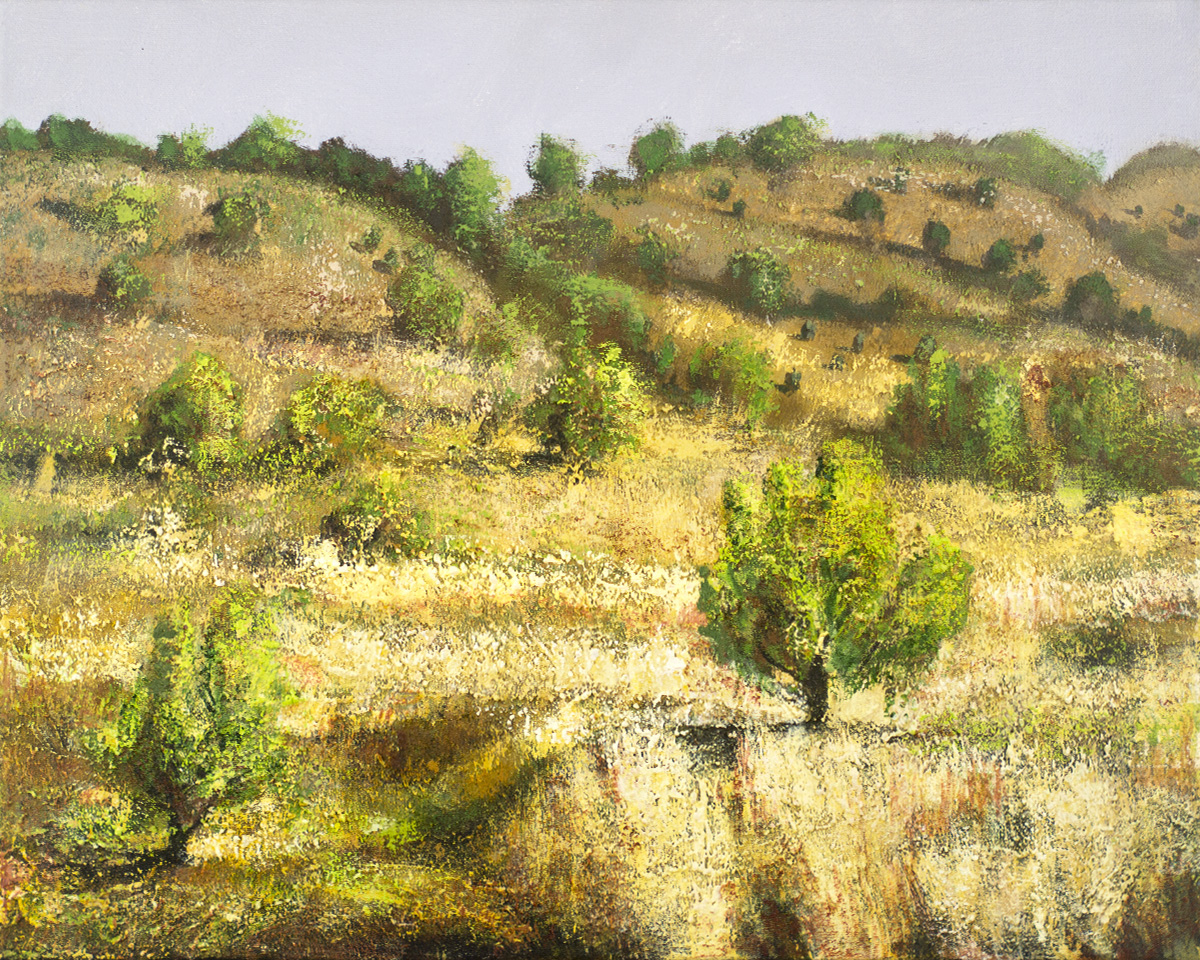
Great Egret, Sherry Egger, mixed medium, 36 x 24 in; Anderson Fine Art GalleryOld Trinity Winter Storm, Mark Daly, oil on canvas-panel, 20 x 24 in., Signed; Rehs ContemporaryA Summer Afternoon, Venice, Martin Rico Y Ortega (1833 – 1908), oil on panel, 14.125 x 9.125 in., Signed; Rehs Galleries, Inc.Sweet Red – Northern Cardinal, Mary Erickson, oil on linen, 8 x 16 in.; MARY ERICKSONTwo Angus, Steven Lee Adams, oil, 12 x 16 in.; Mockingbird Gallery; Mockingbird Gallery’s exhibition “Vestiges”, show featuring Steven Lee Adams and Joseph AllemanTextures of New Mexico II, Mark White, acrylic gesso and oil on canvas, 16 x 20 in; Mark White Fine Art
Want to see your gallery featured in an upcoming Virtual Gallery Walk? Contact us at [email protected] to advertise today. Don’t delay, as spaces are first come, first served, and availability is limited.
Fill your mind with useful art stories, the latest trends, upcoming art shows, top artists, and more. Subscribe to Fine Art Today, from the publishers of Fine Art Connoisseur magazine.