“Metro Montage” is the Marietta Cobb Museum of Art’s annual juried exhibition featuring all types of genre, medium, style, subject matter, concept, and technique in art from across the country.
“Metro Montage XXII” features works of fine art by contemporary artists that showcase the diversity and skill within our nation’s culture.
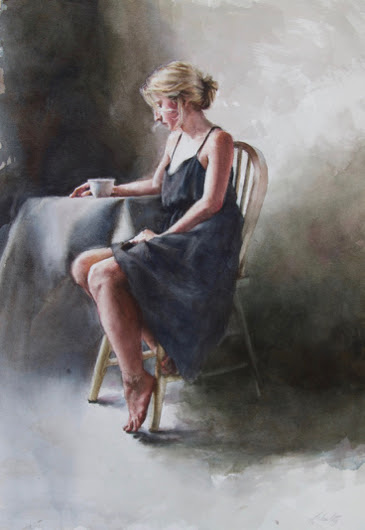
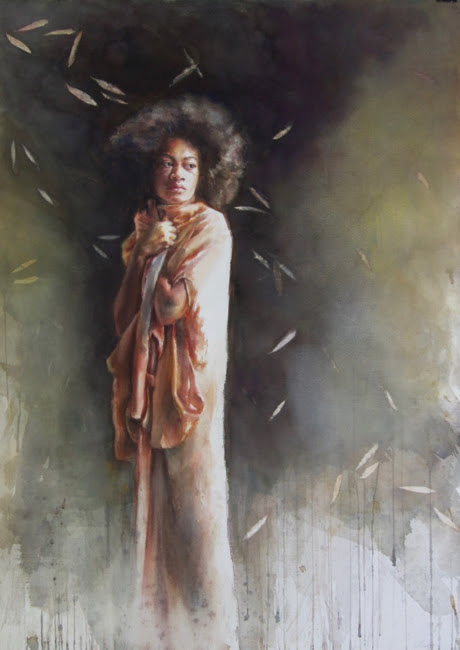
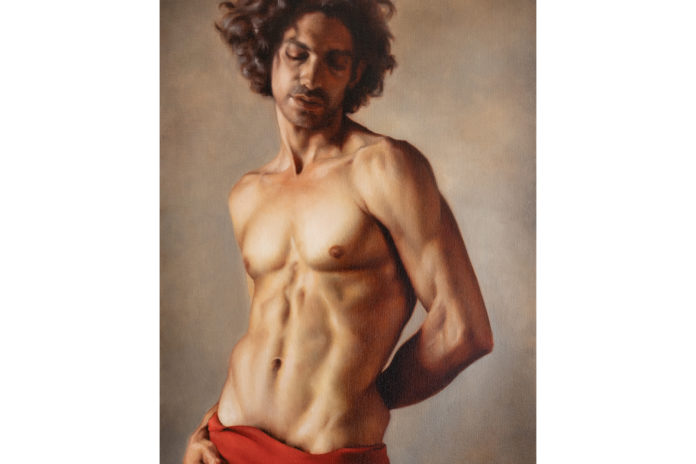
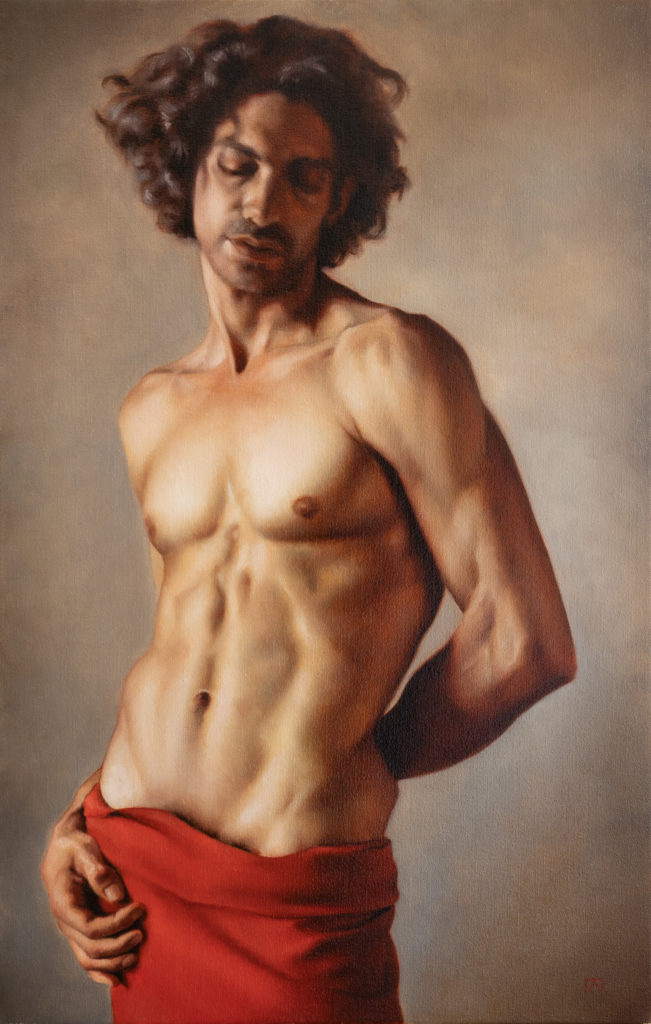
The figurative paintings “Falling Leaves” and “Contemplation” by Suzy Shultz have been juried into exhibition, which takes place July 9 – September 4, 2022 in Atlanta, Georgia.
“Falling Leaves” by Suzy Schultz
Schultz grew up in St. Petersburg FL, and was encouraged in her art by her artist mother and physician father, and later her boss/mentor at a missions agency. She has painted full time since 1995. Her work has won many awards, and has been shown in museums and galleries throughout the US, as well as in art books and magazines. Most recently her work won an award from the American Watercolor Society, and was part of their 2018/2019 traveling show. She was also a 2019, 2020 and 2021 Art Renewal Center Salon Finalist. She lives in Atlanta, GA. Her work can be seen at Art on Broad, Augusta, GA as well as on her website at www.suzyschultz.net.
> Visit EricRhoads.com to learn about more opportunities for artists and art collectors, including retreats, international art trips, art conventions, and more.
> Sign up to receive Fine Art Today, our free weekly e-newsletter
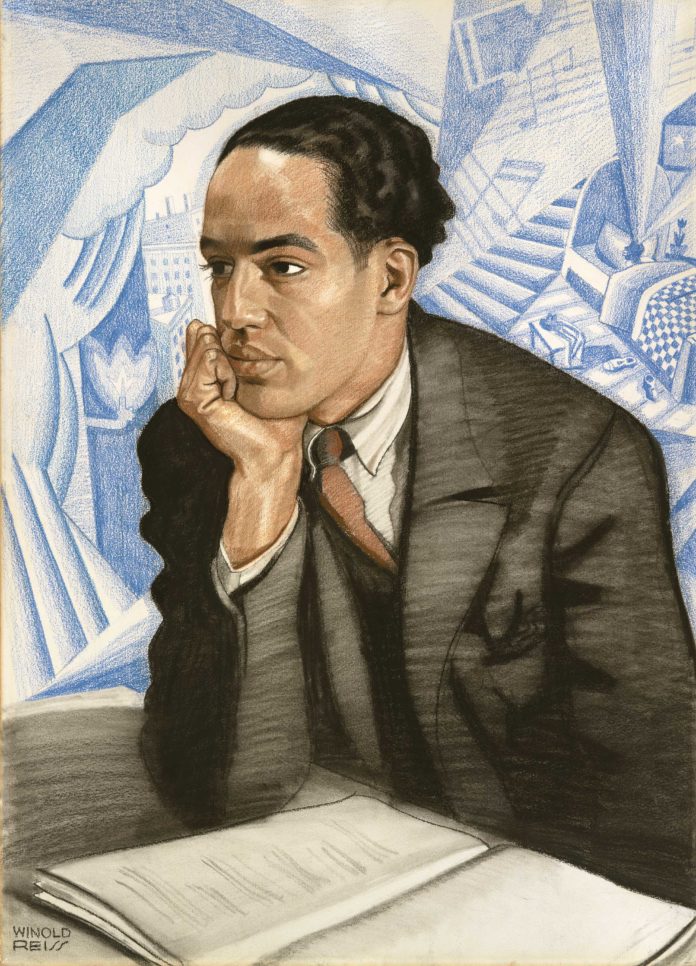
Winold Reiss, "Langston Hughes," 1926, pastel on Whatman board, 10 1/16 x 21 5/8 in., National Portrait Gallery, Smithsonian Institution, gift of W. Tjark Reiss, in memory of his father, Winold Reiss; Featured in "The Art of Winold Reiss: An Immigrant Modernist" exhibition, highlighted in the July/August issue of Fine Art Connoisseur
From the Fine Art Connoisseur July/August 2022 Editor’s Note:
Let’s Solve This
One thing that continues to mystify me about American art museums is the absence of a single forum where institutions can apprise each other of traveling exhibitions to be shared.
Say, for example, that you are a museum curator in Missouri with a unique opportunity to organize a retrospective of a local landscape painter now in her 60s. This landscapist is collected nationally but has never had a major museum show before, let alone one that travels to three or four museums nationwide. The costs of gathering her works will be comparatively low because the insurance values are reasonable, and because all artworks can be shipped easily from locations around the U.S. mainland. Securing the loans will be no problem, as most works are owned by individuals who are only too happy to share them for 12 or 14 months. (After all, the value of your artwork always rises when a curator thinks highly enough of it to request it for exhibition.)
So, you can now curate and mount this show at your own institution, but how do you identify a few other museums that would enjoy presenting it, and that would also benefit from dividing the project’s fixed costs equally?
Believe it or not, the U.S. has absolutely no system in place for making these connections. Of course, there are informal friendships among curators, artists, directors, and collectors, but these are ad hoc and often driven by who went to graduate school with whom, by academic specialization, etc. There are now thousands of art museums in this country, far too many for one curator to know exactly which colleagues are envisioning the same kind of project in the same budget range.
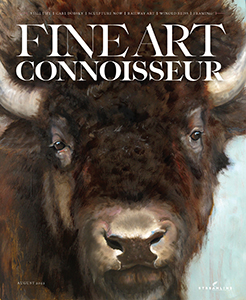
On the cover: LAURA L. CUTLER (b. 1964), “Bison #5” (detail), 2020, oil on board, 24 x 36 in. (overall), collection of Nicholas T. Otis. Click here to see the Table of Contents.
Unfortunately, many worthwhile exhibitions never see the light of day because their organizers cannot construct a tour itinerary that will help balance the budget. Or sometimes a worthwhile exhibition is mounted at just one venue that you and I don’t have occasion to visit. If no catalogue is published to accompany the show, it will vanish completely within a decade, remembered only by those lucky enough to have seen it.
Why does this situation exist in a communication-obsessed society like ours? Over the decades, various organizations have taken steps to work on the problem, but nothing has stuck, usually due to worries about the potential cost of administering a system.* Yet creating a website or blog where curators can post their project descriptions and solicit partners would cost very little indeed. I know children who have designed their own (sophisticated) websites, so why can’t a single grantmaking foundation be found to underwrite the one-time creation of a museum exhibitions clearinghouse?
This diatribe may strike you as technocratic, but rest assured that you, dear reader, are the one most adversely affected here. If you’re reading Fine Art Connoisseur magazine, you love fine art, but your local museums are simply not offering you the number and scope of exhibitions they could if America had a low-cost, truly national system that worked more efficiently, and more collegially. Let’s figure out how to create one.
*The most interesting recent development has been Art Bridges, a spinoff of collector-philanthropist Alice Walton’s Crystal Bridges Museum of American Art. But even that does not directly address the challenge raised here.
What are your thoughts? Share your letter to the Editor below in the comments.
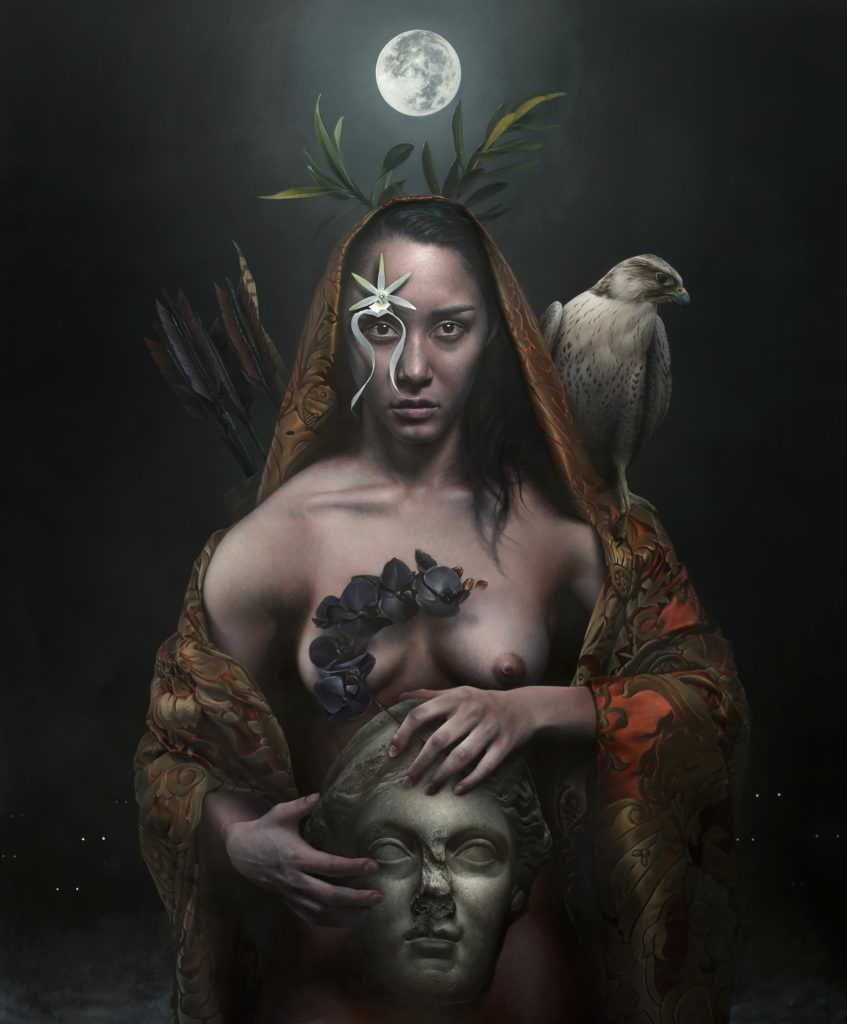
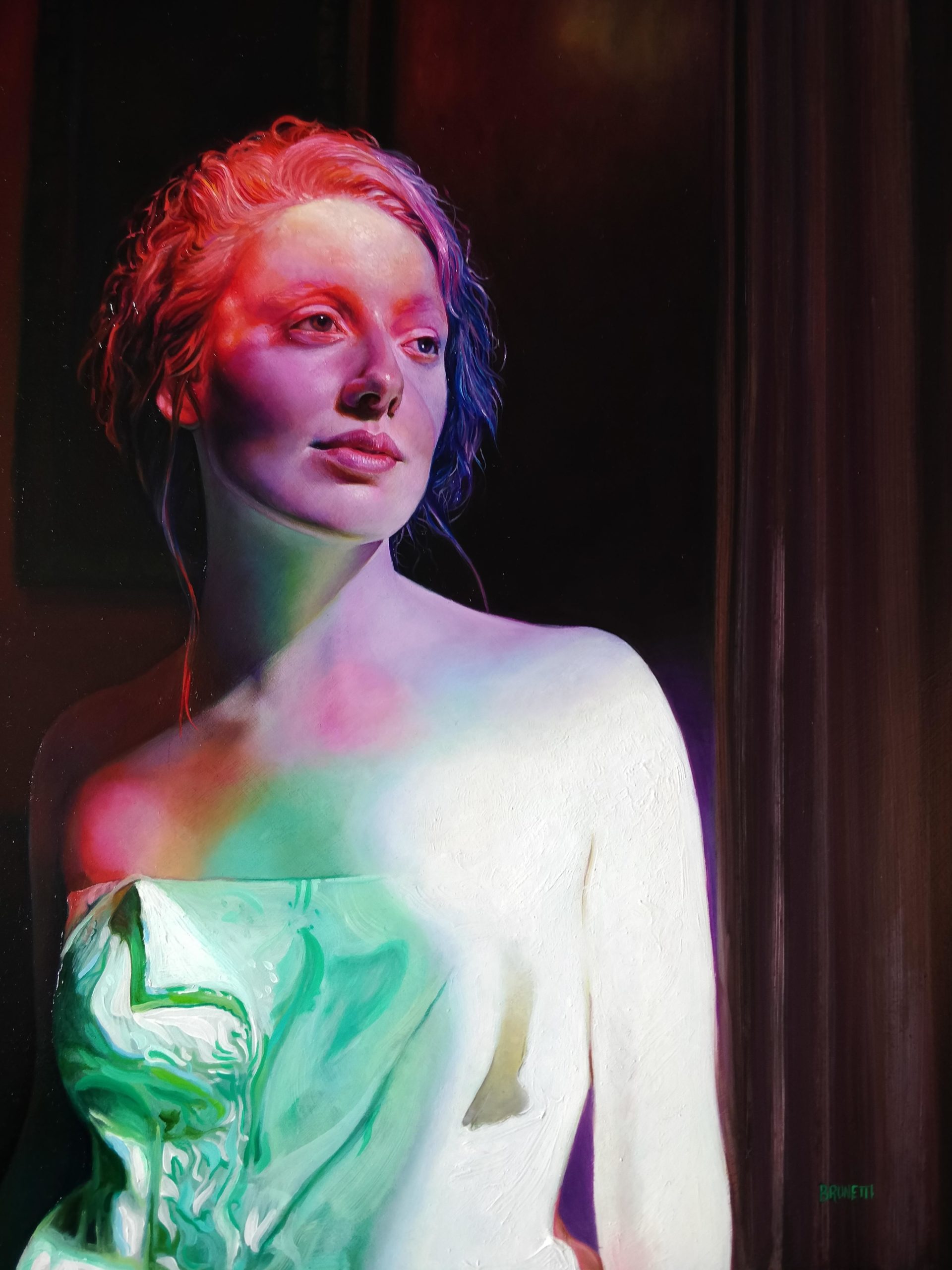
“Painting the Figure Now,” an annual exhibition presented by PoetsArtists International
Where: Wausau Museum Of Contemporary Art, Wausau, Wisconsin
Through October 1, 2022
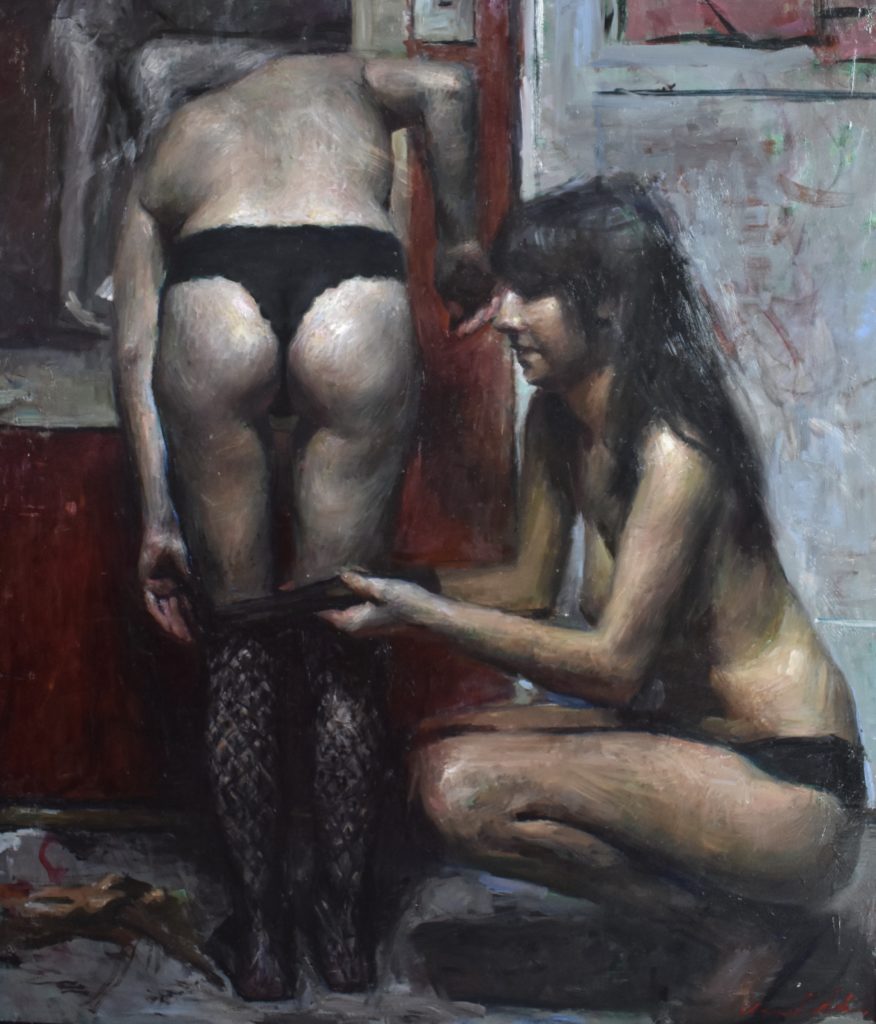
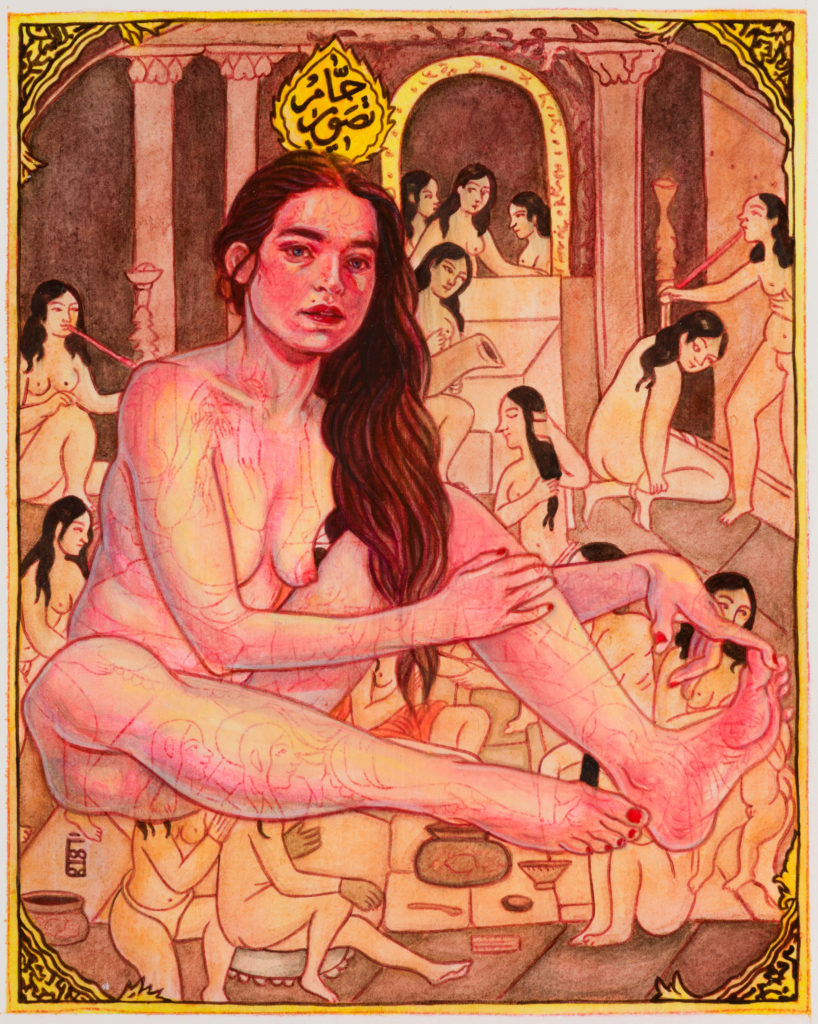
“Reverie” by Erica Calardo“The Reckoning” by Gilsdorf Grant“Shine” by Heather Brunetti“Play Time Getting Undressed” by Annie Louise Goldman“Hammam” by Maryam Gohar
“Beyond the focus on the figurative element, the works in ‘Painting the Figure Now’ embrace a subtle narrative or symbolic subtext that imbues them with a presence that is more meaningful, and more immediately emotional.” ~ Dr. Samuel Peralta, curator
> Visit EricRhoads.com to learn about more opportunities for artists and art collectors, including retreats, international art trips, art conventions, and more.
> Sign up to receive Fine Art Today, our free weekly e-newsletter
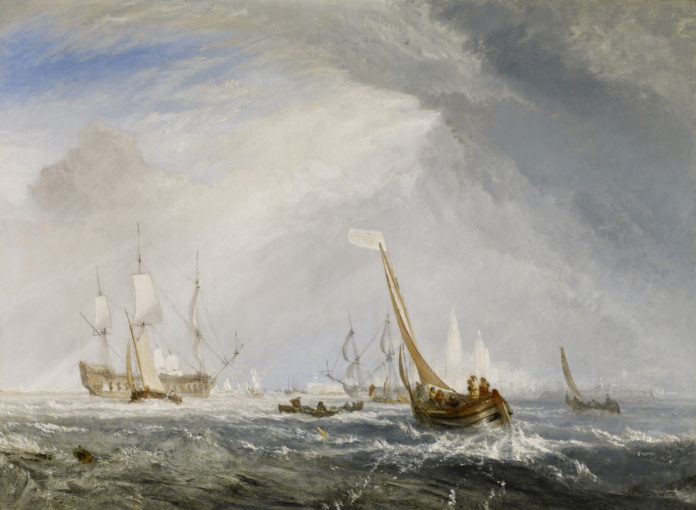
J.M.W. Turner, "Antwerp: Van Goyen Looking Out for a Subject", 1833, oil on canvas, 36 1/8 x 48 3/8 in., Frick Collection, New York, 1901.1.118
When you fall in love with someone, you develop a love for the things that matter to him or her. As for my friend? Turner’s paintings. One of art’s functions is that it links people, two people certainly, and ideally many people.
By David Masello
My friend used to take me to see his favorite paintings at the Metropolitan Museum of Art in New York City. I would watch him stare and stare, and continue to stare, at the canvases in Gallery 808, artworks he had seen numerous times. Watching him watch the paintings was like attending an act of performance art. Eventually, he would turn to me and say, as if he hadn’t said it many times before, “No one paints light like him. It’s as if the paintings are backlit.”
Every time he announced this to me, I would think, “You can love someone not just for how they appear in this world, but also for how they observe it.” I know no one who observes J.M.W. Turner’s paintings — really, any artist’s paintings — better than that friend, who, alas, is no longer a friend. Once he discovered, as if suddenly uncovering a detail amid the turmoil of paint on a Turner canvas, that I had developed stronger, romantic feelings for him, he chose to vanish — metaphorically into one of the Turneresque fogs so that he wouldn’t feel, as he said, “uncomfortable” around me. I certainly was never as threatening as a Turner storm or inferno, yet he retreated and remains concealed.
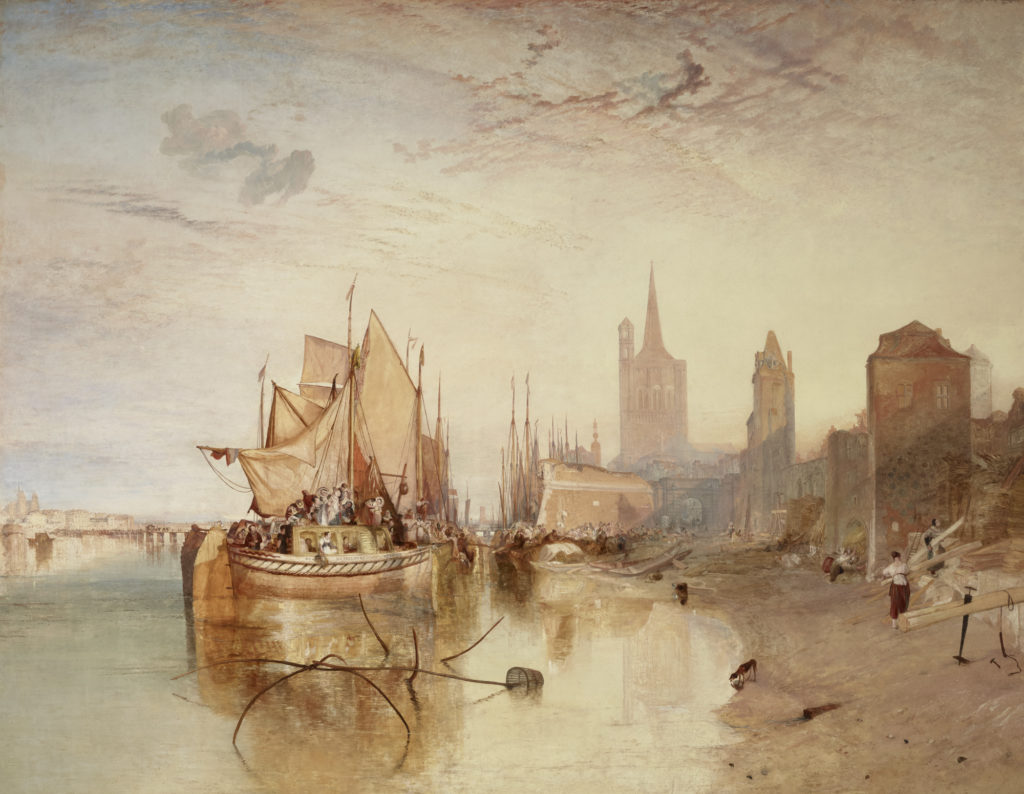
J.M.W. Turner, “Cologne, the Arrival of a Packet Boat: Evening,” 1826, oil on canvas, 66 3/8 x 88 1/4 in., Frick Collection, New York, 1914.1.119
What I want to say, to anyone, is that when you do fall in love with someone — be it requited or unrequited — you develop a love for the things that matter to that him or that her. As for my friend? Turner’s paintings. One of art’s functions is that it links people, two people certainly, and ideally many people.
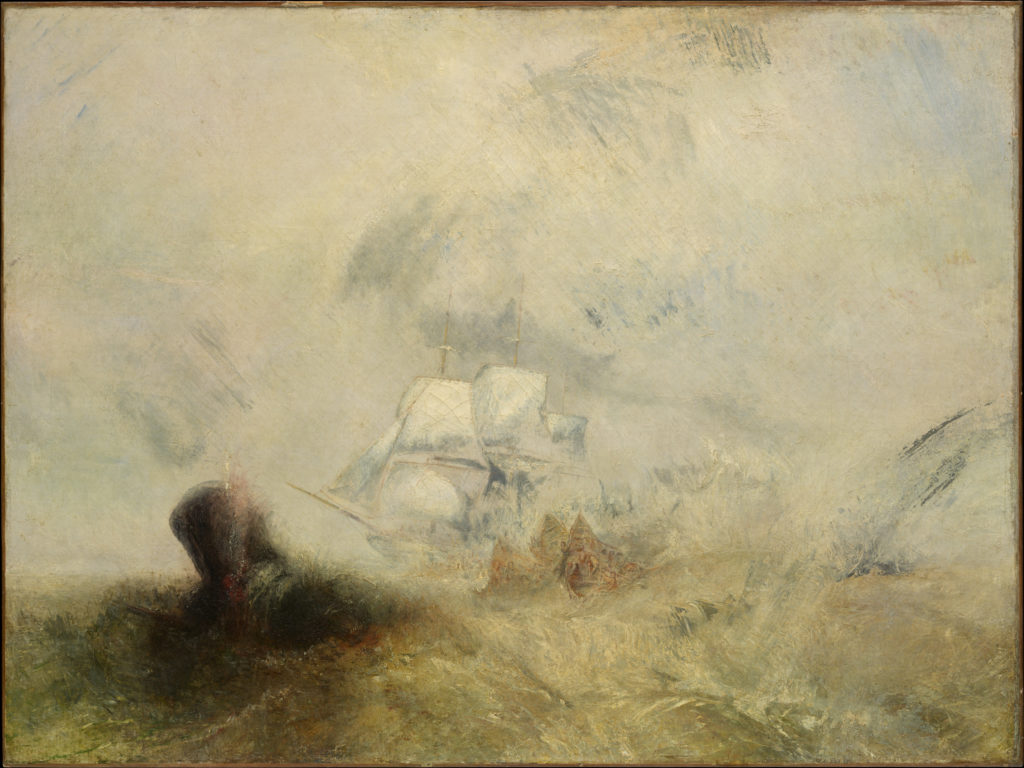
I never liked Joseph Mallord William Turner (1775–1851). Yes, he was eerily ahead of his time in the 1830s and ’40s, painting works that are an amalgam of the realistic and the abstract. You can look at any of his seascapes, portscapes, landscapes, cityscapes and know what is happening and what isn’t. In Turner’s “Whalers” (c. 1845), one of the works in that Met gallery my friend admired, a many-masted ship rides a turbulent sea, with dark, roiling waves seemingly about to wash over the frame into the gallery. A large bruise-colored shape appears like a wound at the left side of the composition, and a chalk-white skyscape, as abstract an application of paint as that by any 20th-century Abstract Expressionist, looms above it all.
J.M.W. Turner, “Whalers,” c. 1845, oil on canvas, 36 1/8 x 48 1/4 in., Metropolitan Museum of Art, New York, 96.29
But unlike Clyfford Still or Ellsworth Kelly or Joan Mitchell, or any such practitioner in the 1950s and ’60s, Turner’s moments of abstraction seem, to me, sloppy, messy, unorganized. I admire his powerful response to natural elements and his depictions of them, but I rarely want to look for long. His port scenes reveal murky shorelines at low tide, and if you beachcomb in a gallery long enough, you’re likely to detect the stink of sea-weed and rotting fish. His sunsets and sunrises are blinding. His shipwrecks, violent and hopeless. Fogs and rains and cloud formations obscure the beauty of a city skyline, and people rarely appear anywhere, having been subsumed by the elements on display.
Whalers is one in a long series of works by Turner that depict that horrific maritime industry. Apparently, he painted this scene upon reading a true-life tale by Thomas Beale (1807–1849), a ship’s surgeon who recounted his adventures in an 1835 book, The Natural History of the Sperm Whale. Turner’s depiction both adheres to and departs from Beale’s story. The author described how the head of the whale knocked fishermen into the sea, with the justly vindictive mammal “swimming round and round them, as if meditating an attack with flukes.”
Beale’s account of whale hunting’s brutality is riveting. He wrote, “The sea, which a moment before was unruffled, now becomes lashed into foam by the immense strength of the wounded whale, who with his vast tail strikes in all directions at his enemies.” According to the Met’s wall label, it is thought that Turner painted this work for a man who had made his fortune in whale oil. Upon seeing the finished work, however, he gave it back to Turner. Perhaps it was too realistic for the patron — not exactly good publicity for his industry.
My friend’s admiration for Turner affected and infected me. He’s right about the light on canvas. I would not have noticed that key dynamic of Turner had it not been for his vision: Turner does paint light, its dark and bright versions, its illuminating and concealing versions, its violent and calming versions, like no other artist can.
Now, whenever I wander a museum and find a work by him, I feel that satisfying jolt of discovery. I think how much my friend would love this work. I imagine him examining it in silence, standing before it as still as one of Turner’s ships in his windless ports, then turning to me and uttering his familiar phrase: “No one paints light like him.” I would nod in agreement, as I did at the Met, and off we would go to look at more art. It was as if his very body would fill with that painterly glow he had seen, be cast in it. I swear, he would stand taller, exude even more radiance, perhaps put a hand on my shoulder to guide me along, in a rare moment of affection.
Like many art lovers, I prefer to visit museums and galleries alone. It’s difficult to gauge another person’s interest in the art, and I never like to be lectured by someone about the meaning of a painting or the details on which I’m supposed to focus. I know how to look and I know what I want to see. Don’t make me linger longer than I want, and don’t tell me to move on … yet. To go on a date at a museum with someone you don’t know well is to engage in an awkward ballet: you leave the partner, then rejoin him, then hesitate and wind up re-meeting at the bench. That choreog-raphy is always stilted. But with my friend, I was always happy to hear him comment on what we were seeing together. He didn’t lecture or explain unless asked. Rather, he articulated his heartfelt responses. So maybe another indication of love — confirmation that it exists — is your wanting to hear the object of your affection’s responses to art.
That friend is kind of an anomaly, in that he admires representational art as much as abstrac-tion. On the walls of his apartment hang a series of all-white works on paper, their surfaces simply, almost imperceptibly, embossed with shapes. I miss the company of someone able to want to live with those. He “taught” me to admire some of the most minimalist, monumental sculptures anchored in sculpture parks like Storm King or OMI in upstate New York.
After one of our first dinners, at the National Arts Club, I unlocked the gate to Gramercy Park (a privilege of club membership) and brought him in to see an Alexander Calder sculpture. He was able to discern, with only the faintest help from a streetlight, the primary colors coating its parts. As he did that night, and did with all such sculptures, he petted the metal, fingering the rivets as if they were Braille. He evinced an actual physical affection for the sculptures. Even if he didn’t say anything to me, I felt his admiration for them — or his dismissal. And that made me look even more closely at their unembellished I-beams or nebulous, organic forms. And at him, more closely. I admit, we did some heavy petting that night in Gramercy Park — of the sculpture, not of each other.
When some love affairs end, you might be left with letters to re-read or clothing to wear. With my friend, though there never was a consummation of affection, I have something lasting. Now I can look at a Turner and understand that what he painted mirrored, in many ways, what I felt for my friend: a yearning to see clarity inside something complex. My friend is enigmatic, as are Turner’s paintings. His longtime friends describe the “wall” he erects, the emotional distance he maintains while exuding warmth. I was in Chicago with him and one of his old friends when suddenly she steered me away from him. With big-sisterly concern, she confided, “I know that you love him. We both do. But I want to tell you that he has boundaries. And you can’t cross them.”
As I learned from looking long enough into Whalers, its purple bruise is actually the whale’s tail after it has slapped apart a boat of hunters, scattering them into the sea. There is both the nebulous form of the whale itself and the faintest scar of paint that represents the tail, in an oblique profile. Turner painted the tail that exactingly and also that inexactly. In visual art, as in the most powerful poems, the suggested is always more evocative than the actual. The profoundly talented living sculptor Jane Rosen, whose works bridge abstraction and realism, told me once, “Great art produces a question, not an answer. The moment you have an answer, you stop looking.”
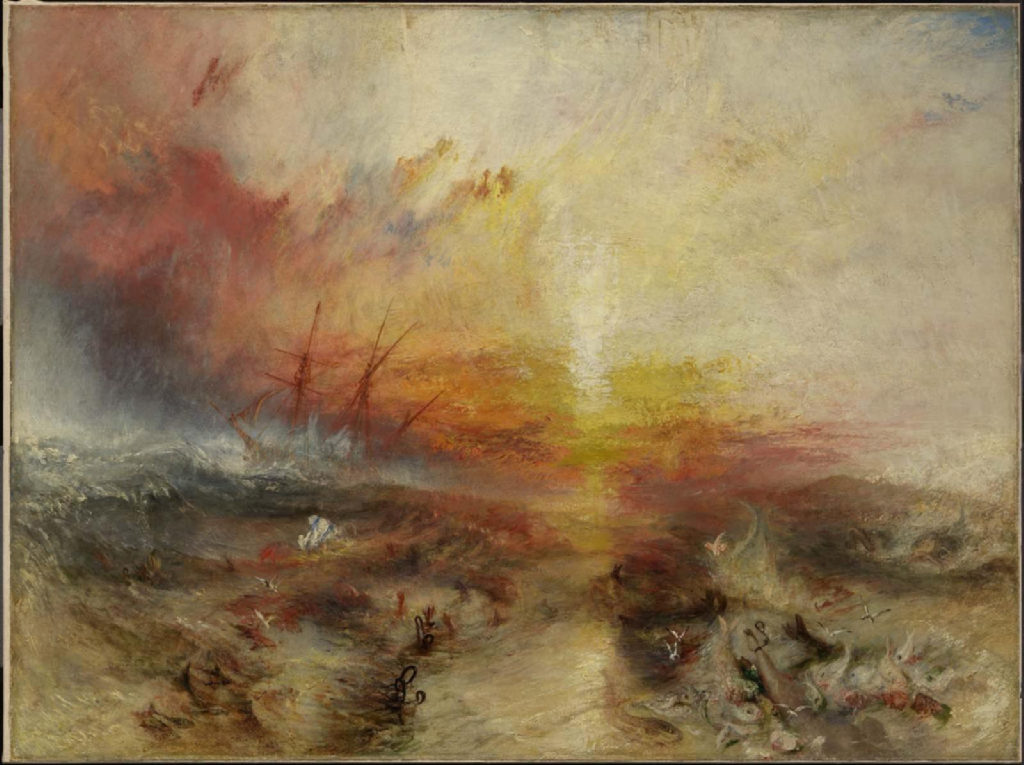
Turner hides reality in his abstraction, just as my friend hides passion in his formality. If you look long and closely enough, the light that Turner paints reveals what he wants you to see. No matter how actually or metaphorically dark the subject matter of a Turner painting — a storm at sea, the houses of Parliament on fire, a slave-carrying ship whose captain has thrown his human cargo into the sea — there is light.
J.M.W. Turner, “Slave Ship (Slavers Throwing Overboard the Dead and Dying, Typhoon Coming On),” 1840, oil on canvas, 35 3/4 x 48 1/4 in., Museum of Fine Arts, Boston, 99.22
Every good artwork inspires both a personal and a universal response. I lost someone who felt like a lover but who never was, and I lost a friend who did not act like a friend at a crucial moment in our friendship. The fallout feels as complicated as the miasma of a Turner scene. My friend had pointed out to me that moment of purple in “Whalers,” that note on canvas representing both beauty and death. He moved his index finger up and down to emphasize it to me. The men who got too close to the whale perished.
My friend and I were often mistaken for a couple. Once at a glamorous party, the hostess said to me, “Your partner has the most radiant smile.” I look at — and into — Turner’s paintings, aware now that all is revealed because of the inner light the painter has supplied. And amid that glow, I still look, too, for my friend. He’s in there, and I wonder if he’ll emerge from it and stand beside me again to look at these paintings. He’s there, backlit, somewhere in the background, amid the radiance. I’ll never stop looking.
> Visit EricRhoads.com to learn about more opportunities for artists and art collectors, including retreats, international art trips, art conventions, and more.
> Sign up to receive Fine Art Today, our free weekly e-newsletter
As part of our effort to continue to help artists and art galleries thrive, we’re proud to bring you this week’s “Virtual Gallery Walk.” Browse the artwork below and click the image itself to learn more about it, including how to contact the gallery.
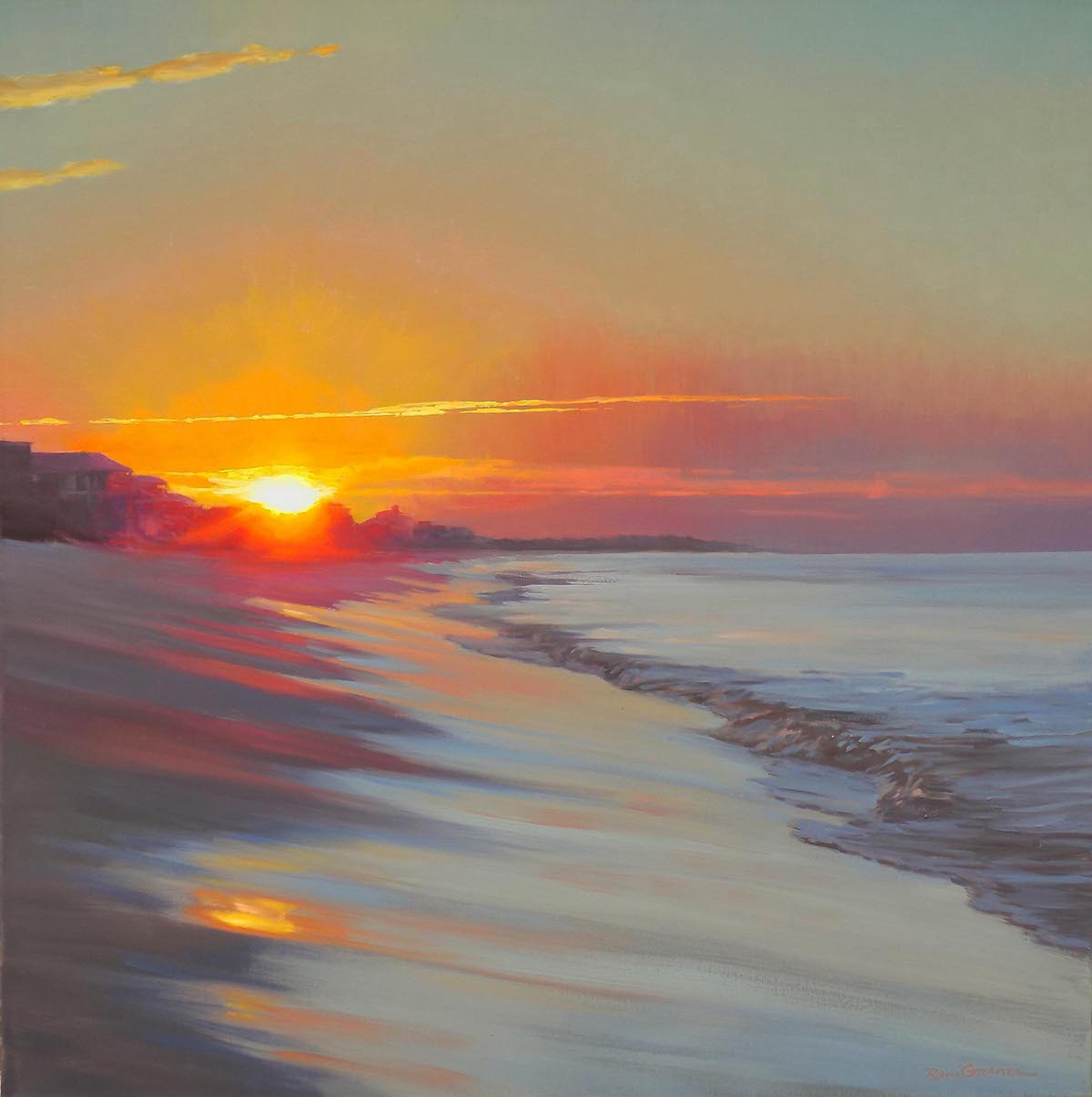
Rising Star, Rani Garner, oil, 30 x 30 in; Anderson Fine Art GalleryBritannia Revisited, Tony South, acrylic and oil on canvas, 35.5 x 47.25 in., Signed and dated 2016; Rehs ContemporaryÀ Toute Allure, Orville Bulman, oil on panel, 8 x 10 in., Signed, titled and dated 1972 on reverse; Rehs Galleries, Inc.
Tales of Valor, Chauncey Homer, oil on linen, 48 x 48 in; Chauncey Homer
Want to see your gallery featured in an upcoming Virtual Gallery Walk? Contact us at [email protected] to advertise today. Don’t delay, as spaces are first come, first served, and availability is limited.
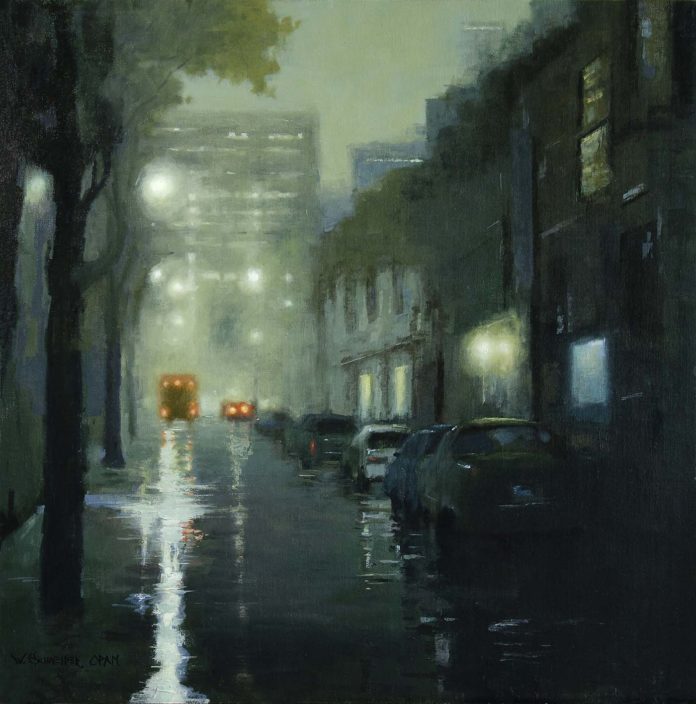
William A. Schneider, DePaul Rain, Oil on Linen on Panel, 30 x 30 in, $6575; Available at Reinert Fine Art, 179 King St, Charleston, SC, (843) 694-2445
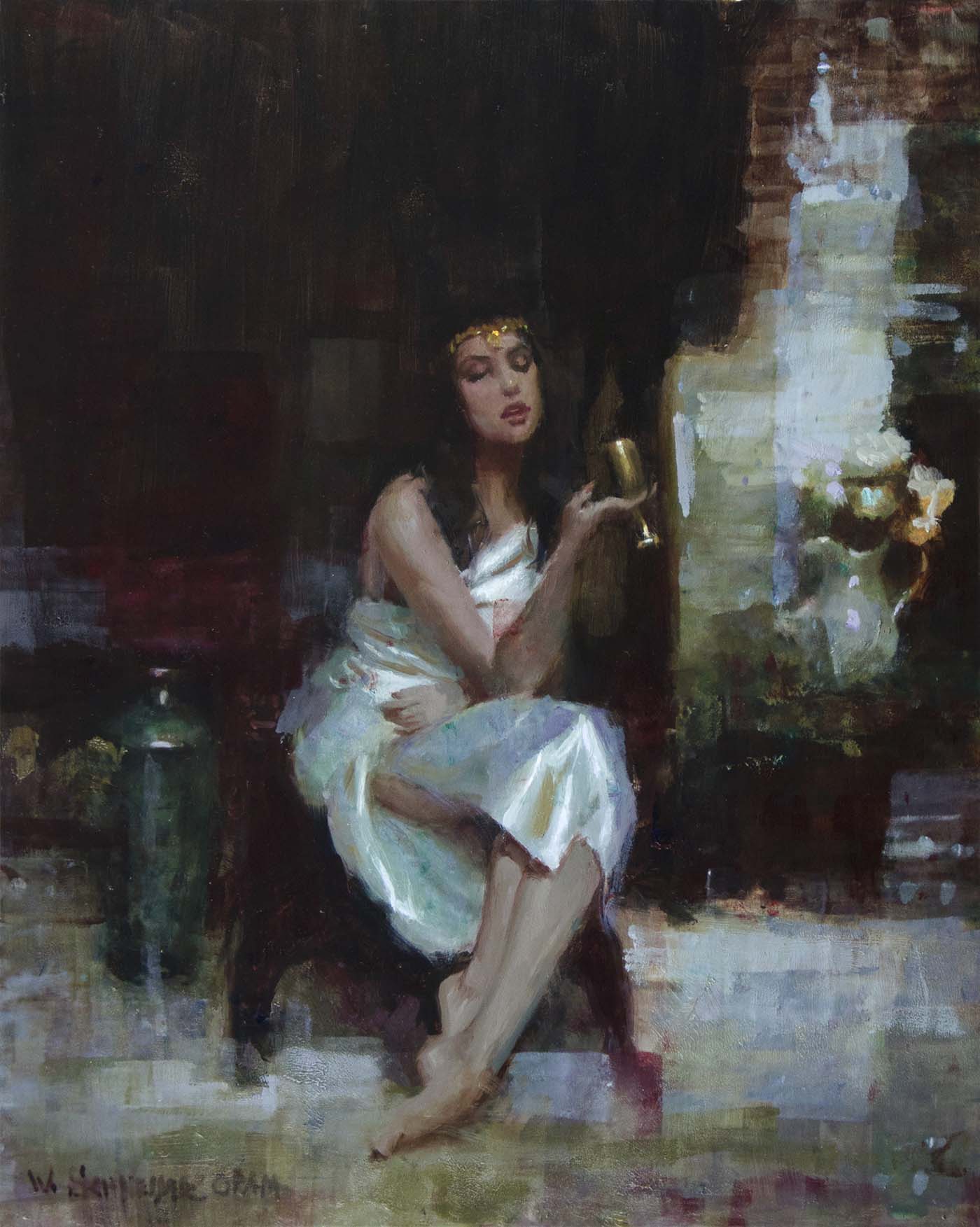
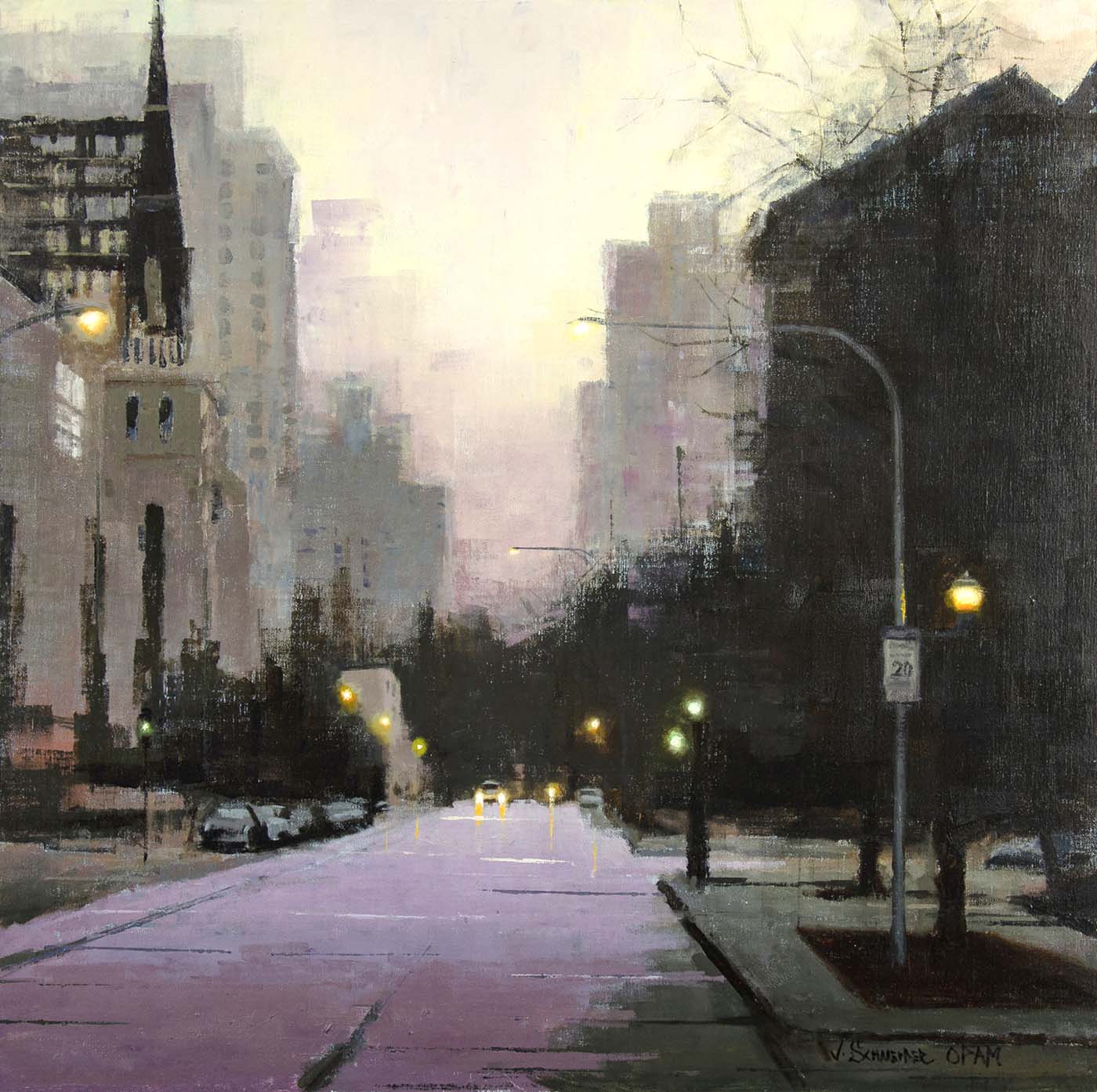
William A. Schneider: OPAM is best known for his expressive work in two genres: depictions of the human face and form; abstracted cityscapes. William commented, “My approach to both genres is grounded in a search for narrative and meaning. Whether implied by a gesture and expression or carried by the harmony and mood, I want each piece to tell a story.”
Drink from My Cup, Oil on Linen on Panel, 20×16, $3250 Available at Reinert Fine Art, 179 King St, Charleston, SC, (843) 694-2445Leaving the P&C at Dusk, 30 x 30 in, $6575 Available at Reinert Fine Art, 179 King St, Charleston, SC, (843) 694-2445
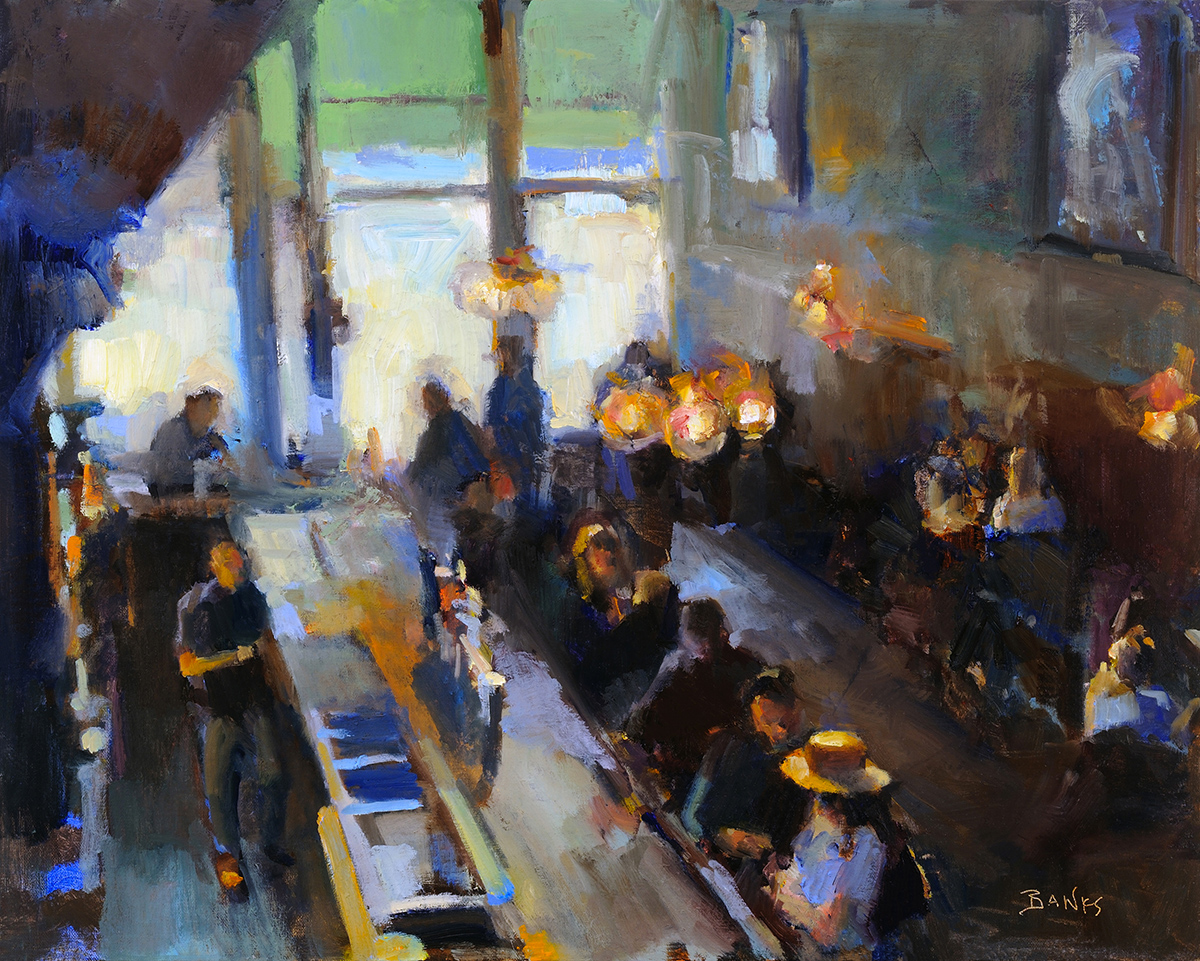
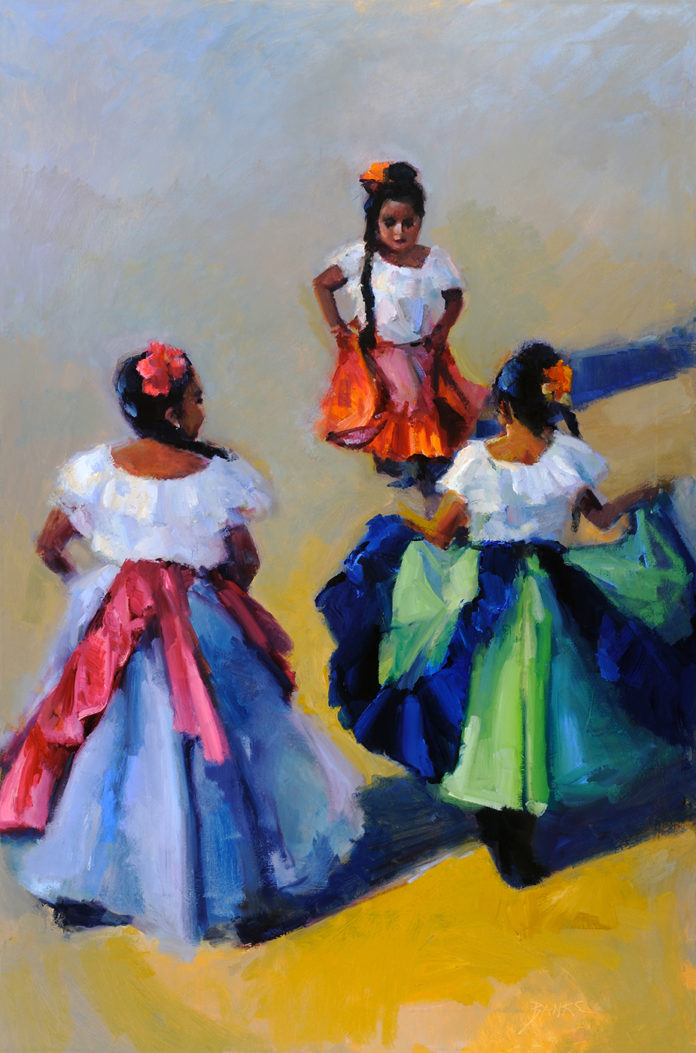
Jill Banks, Joyful Dance, oil on linen, 36 x 24 in. Available through Settlers West Gallery – Intent to Purchase Draw on Saturday, May 12 at 7pm Mountain Time
Jill Banks: “Capturing Life in Oils – Plein Air and in the Studio. Join the adventure, add to your collection and subscribe to keep up on the latest art news.”
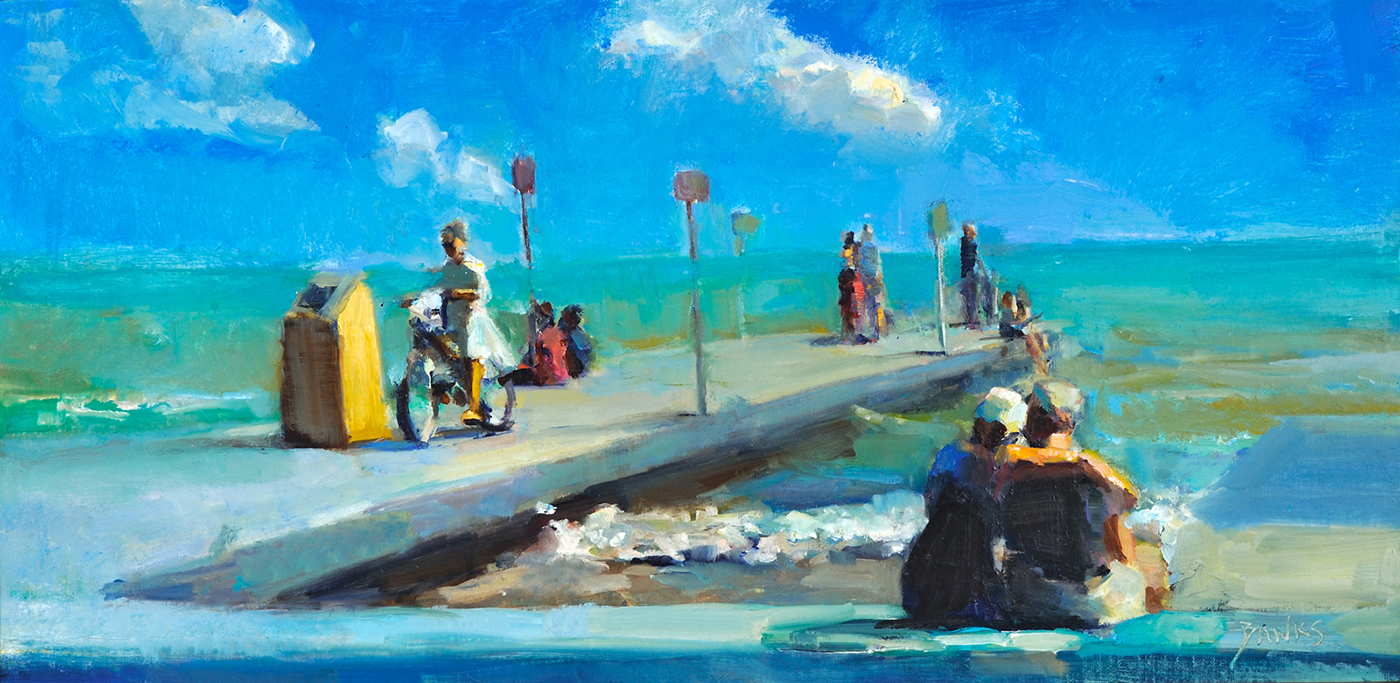
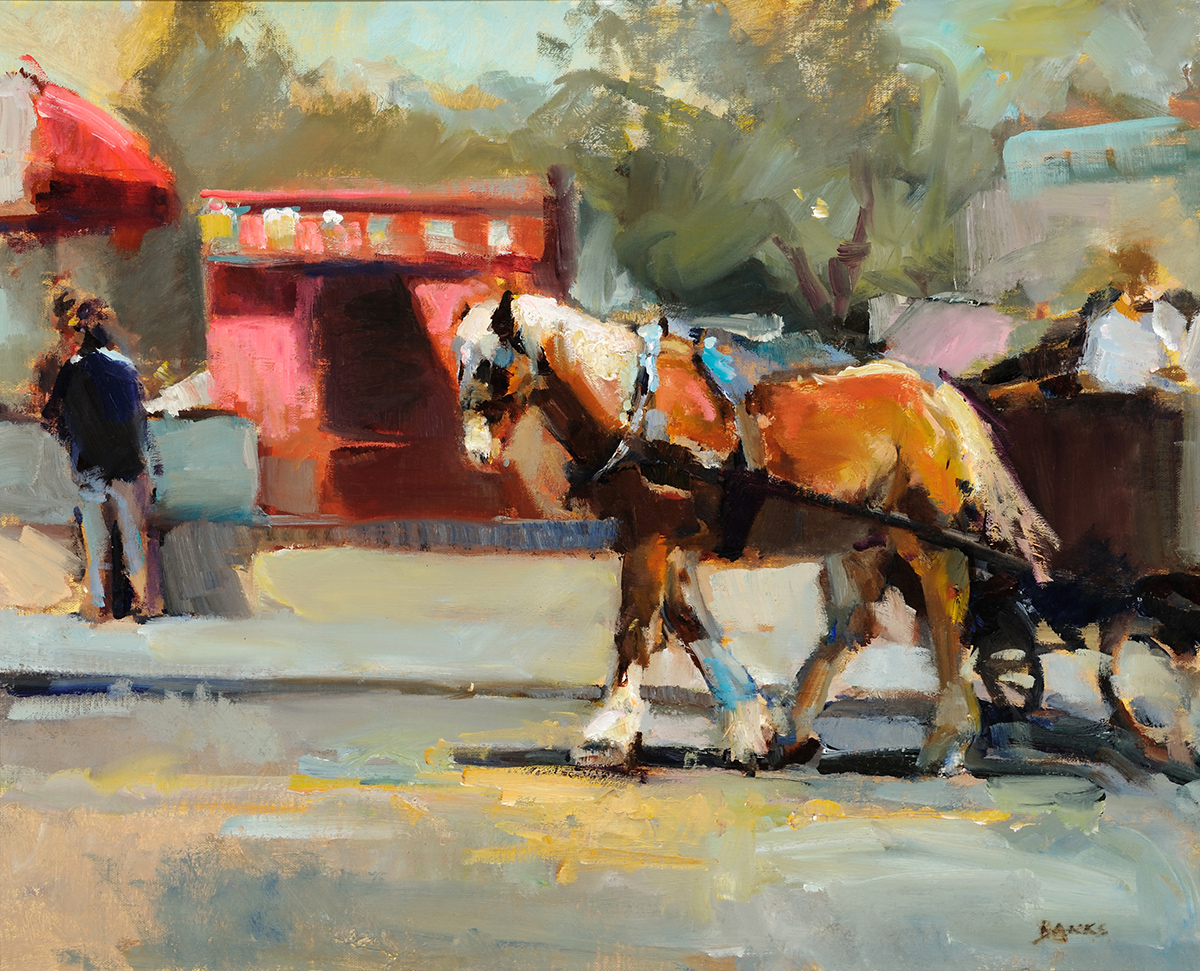
Jill Banks, Love by the Sea, oil on linen-lined panel, 12 x 24 in. Available through the artist. See it and more like it in Jill’s Plein Air & Studio Landscapes Gallery on her website.Jill Banks, Hitched, oil on linen-lined panel, 16 x 20 in. Available through the artist.
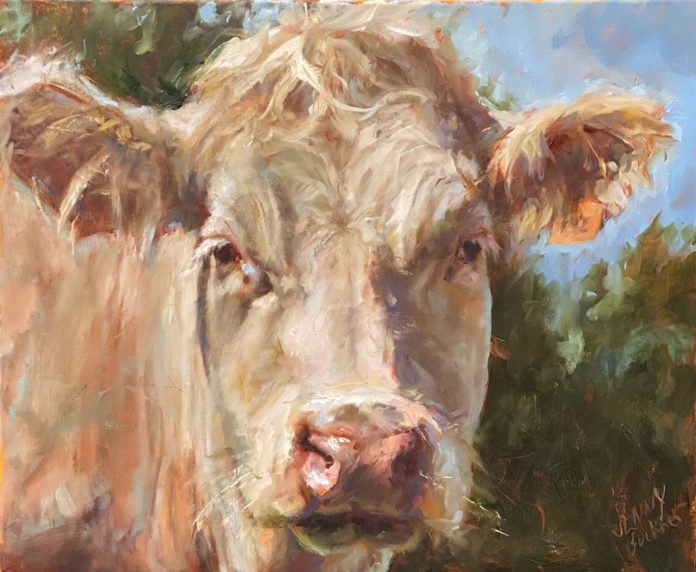
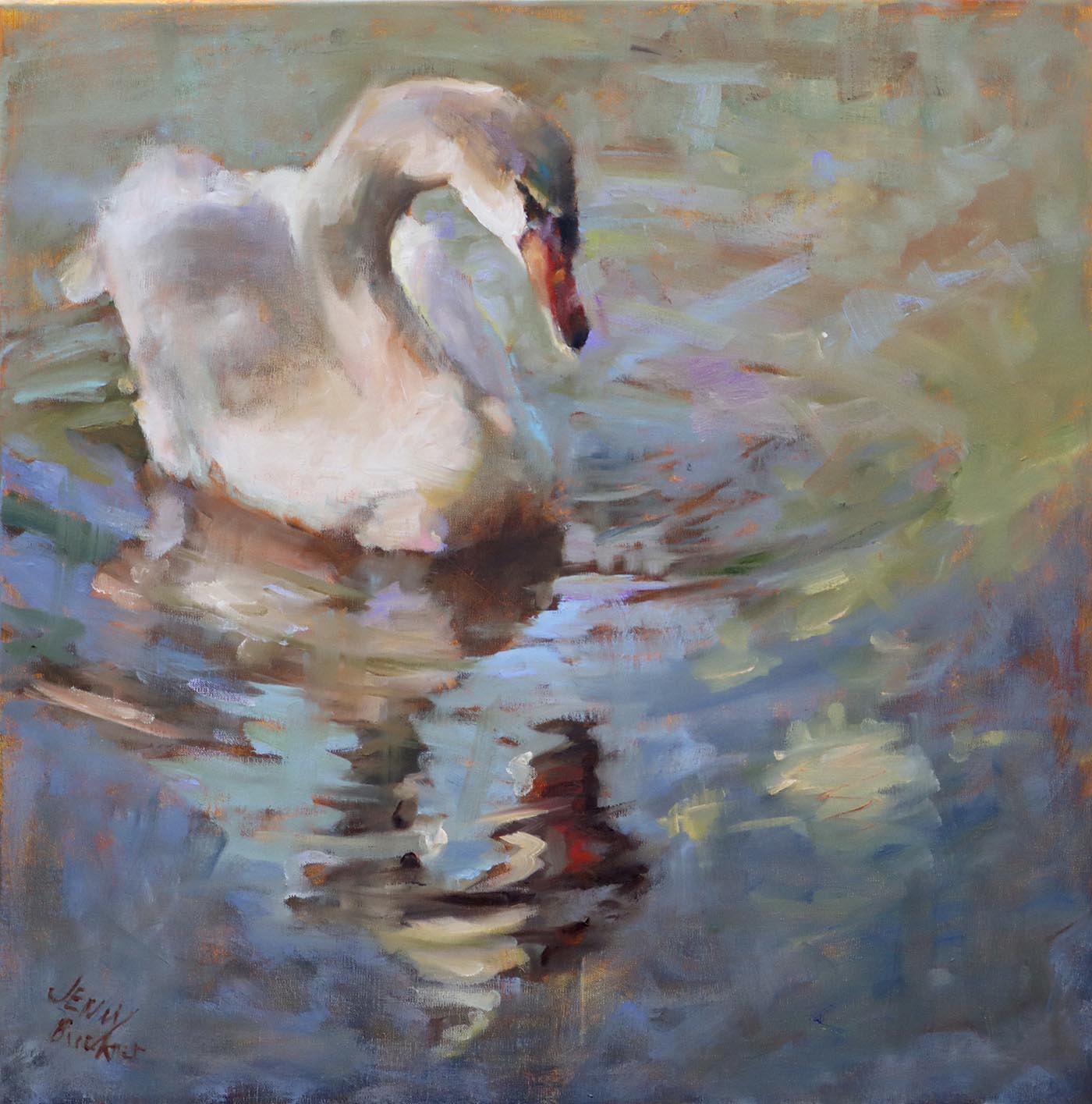
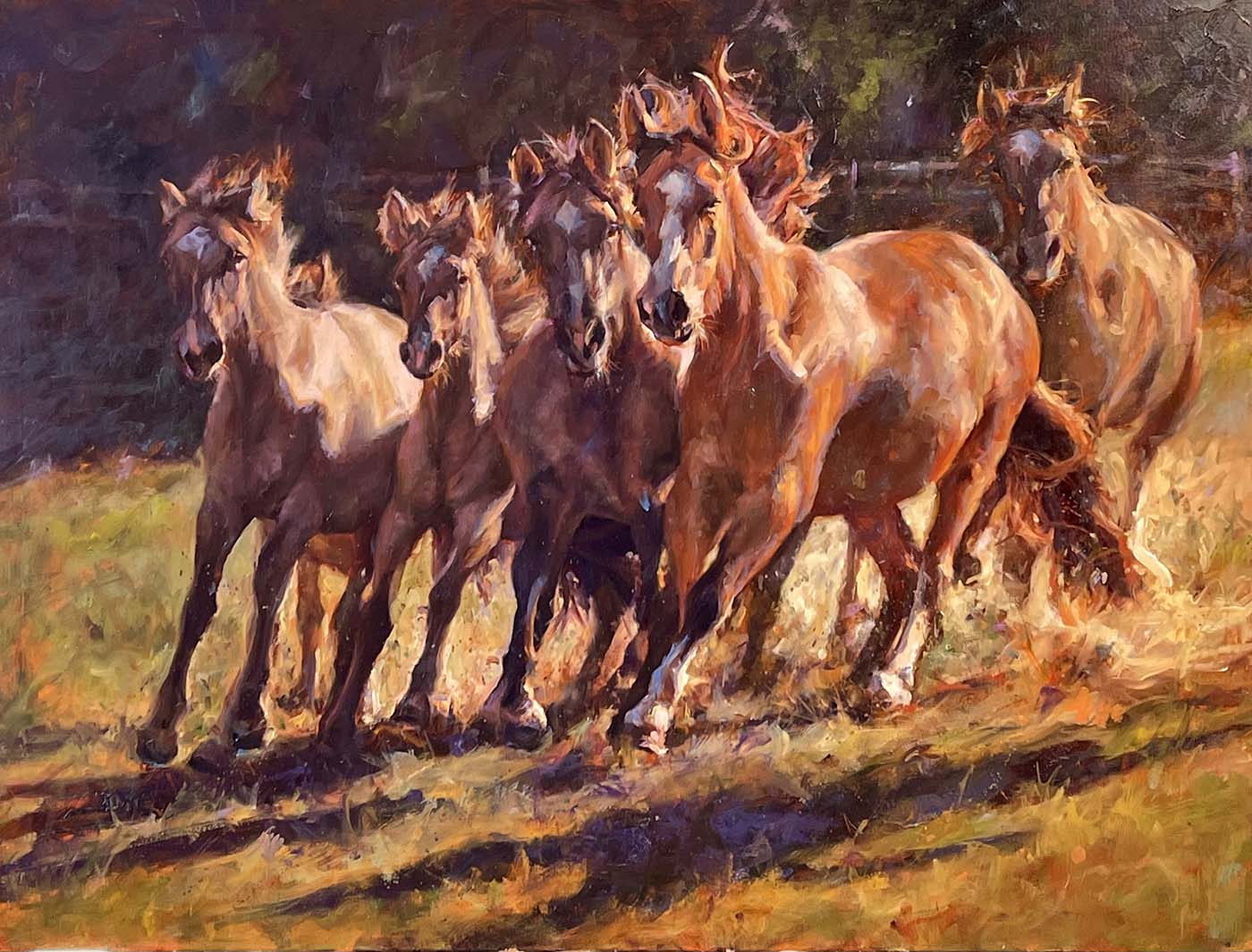
Jenny Buckner, “Hanging With Shirley”, oil, 20 x 24 in, $3000.
Jenny Buckner: I’ve always been fascinated and in love with animals. Their individual personalities and their wildly different forms make them so interesting. Trying to capture that in my paintings is always my goal. I want you to make a connection with them and appreciate their beautiful uniqueness.
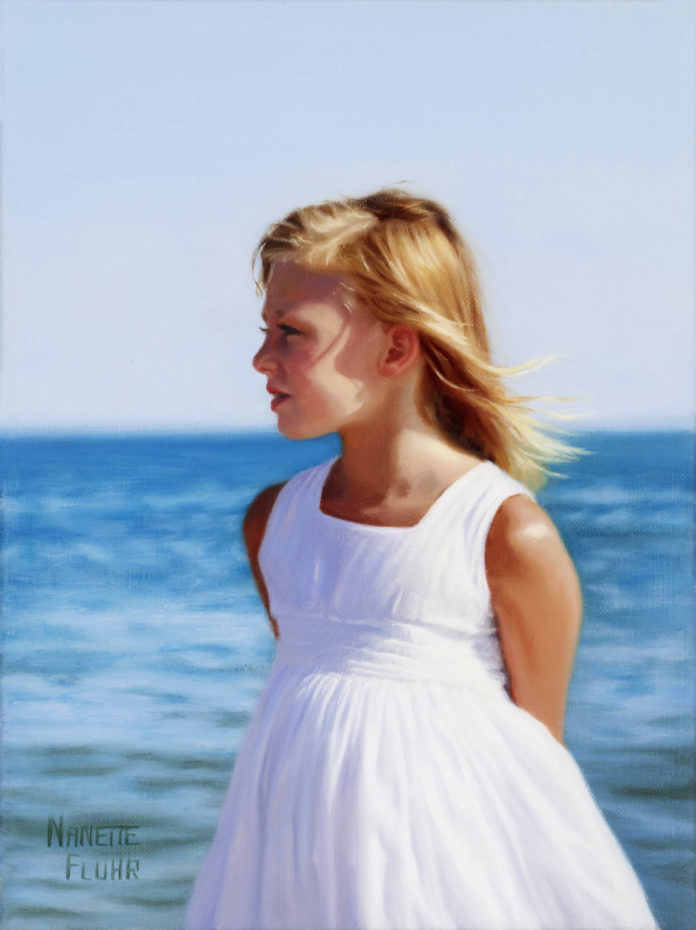
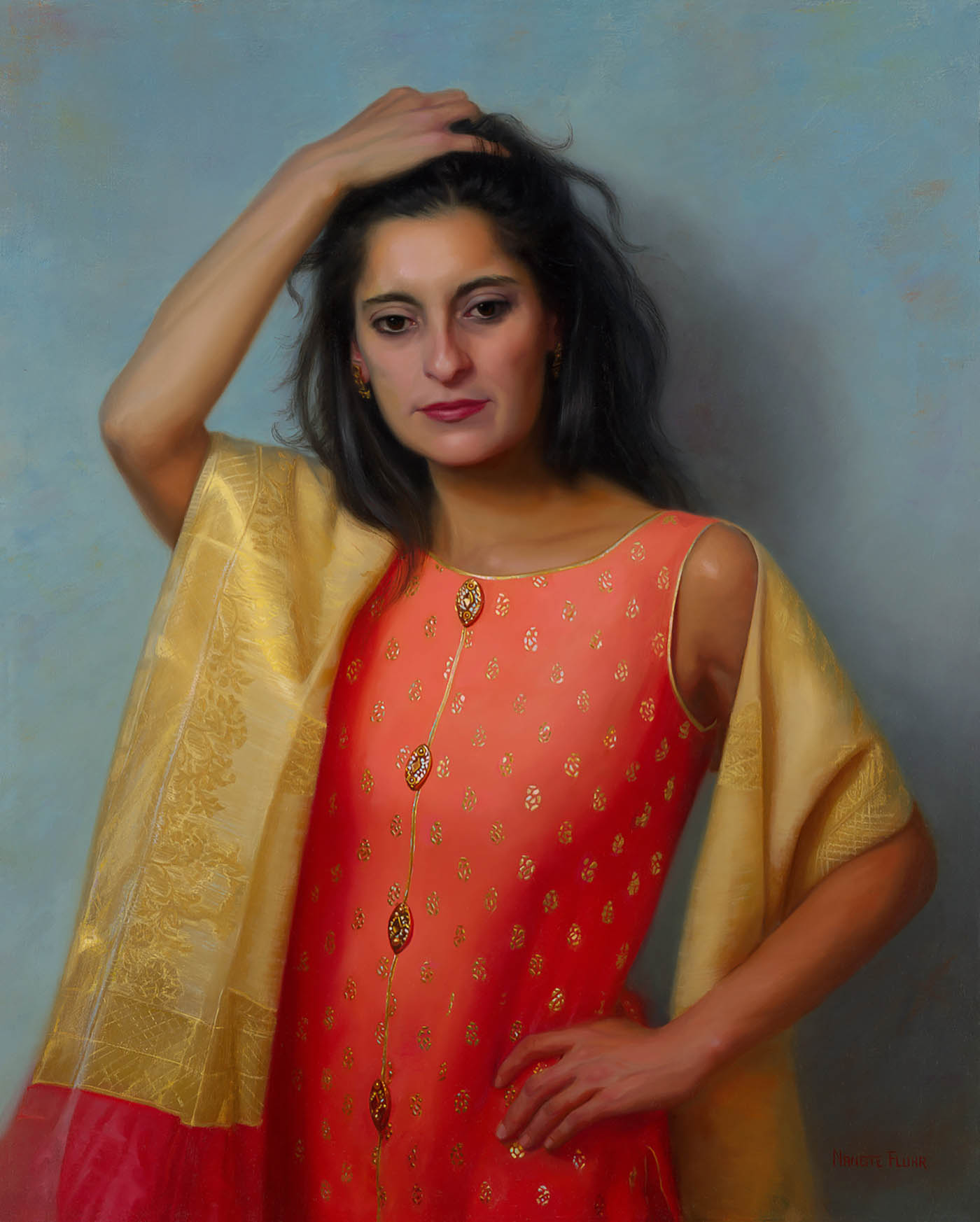
Nanette Fluhr, “Summer Wind”, Oil on Linen, 12 x 9 in, $3,200. Available on Artsy
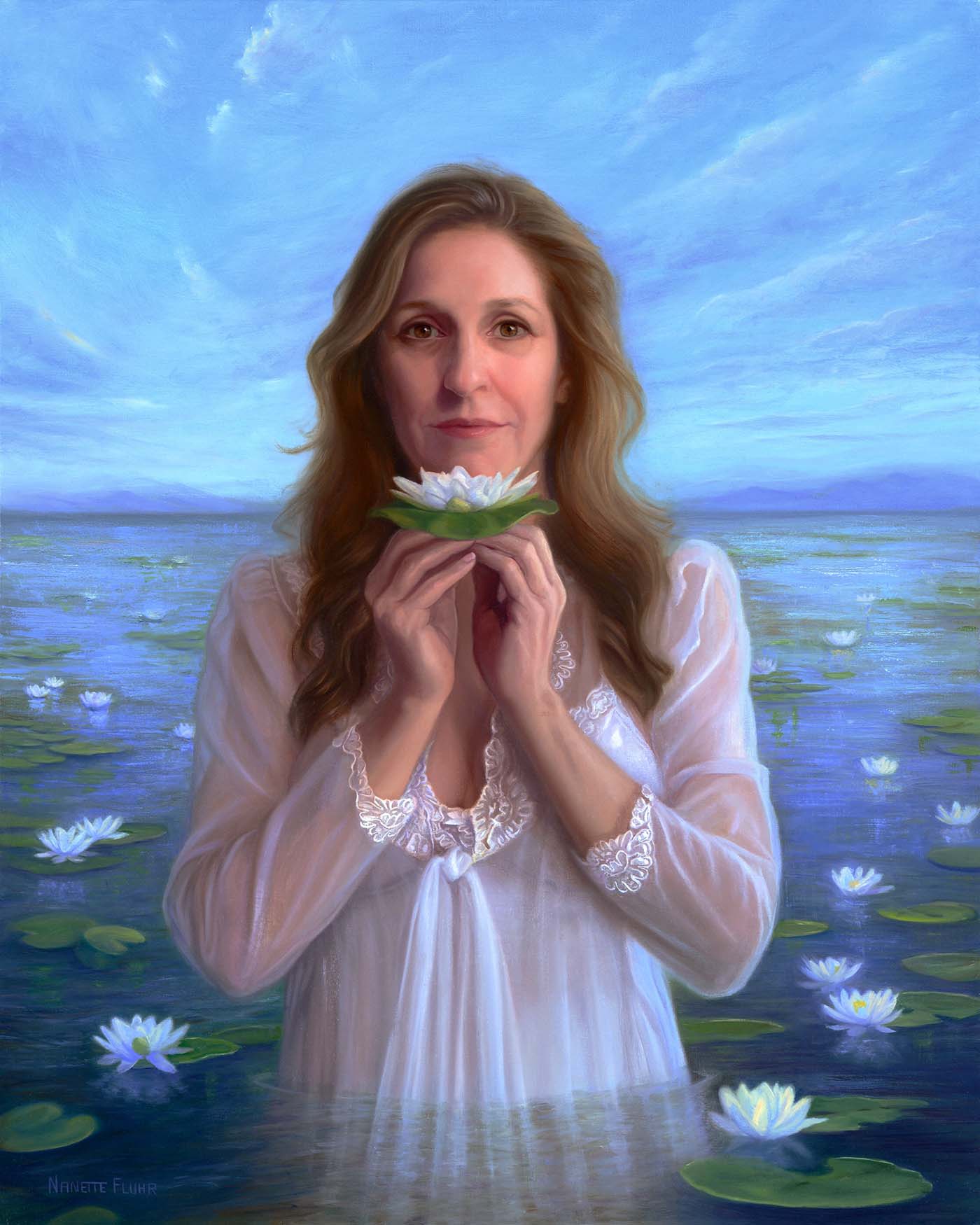
To view Summer Wind, click here https://www.artsy.net/artwork/nanette-fluhr-summer-wind Nanette Fluhr: With over two decades of professional experience, Nanette Fluhr has created paintings that hang in public and private collections worldwide. Known for her sensitive portraits and exacting technique, she has received the highest awards from prominent artistic institutions. Her art has been exhibited at The Butler Institute of American Art, The European Museum of Modern Art, The Wausau Museum of Contemporary Art, as well as in a six-museum exhibition on contemporary American realism in China.
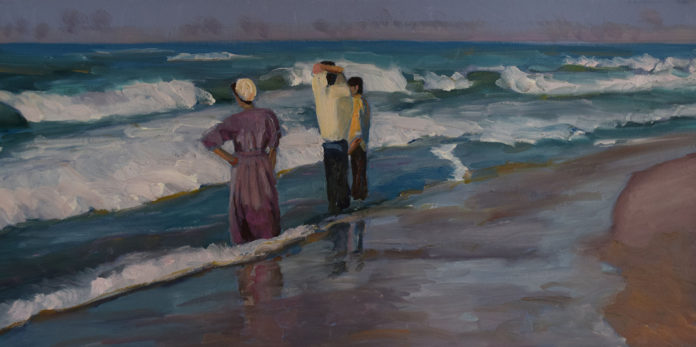
Nina Cobb Walker, “Family Time”, oil on canvas, 18 x 24 in.
“This family was spending the day at the beach on Lake Michigan. They seemed to enjoy the tide lapping at their feet, maybe dreaming of good times together.” Available at Cate Zane Gallery, www.catezane.com 512-300-0898, or the Artist at [email protected]
Nina Cobb Walker: “Tranquility and peacefulness are strong themes throughout my paintings. I try to create and evoke moods which touch the soul that connect us together as humans. My desire is to share these feelings and to elicit strong emotions using color harmony and painting skill. No matter what we do in life Art connects us all.”
One of Nina’s paintings will be included in the National Oil and Acrylic Painters Society (NOAPS) Associate Member Online Exhibit which will be available on the NOAPS website beginning July 30, 2022.
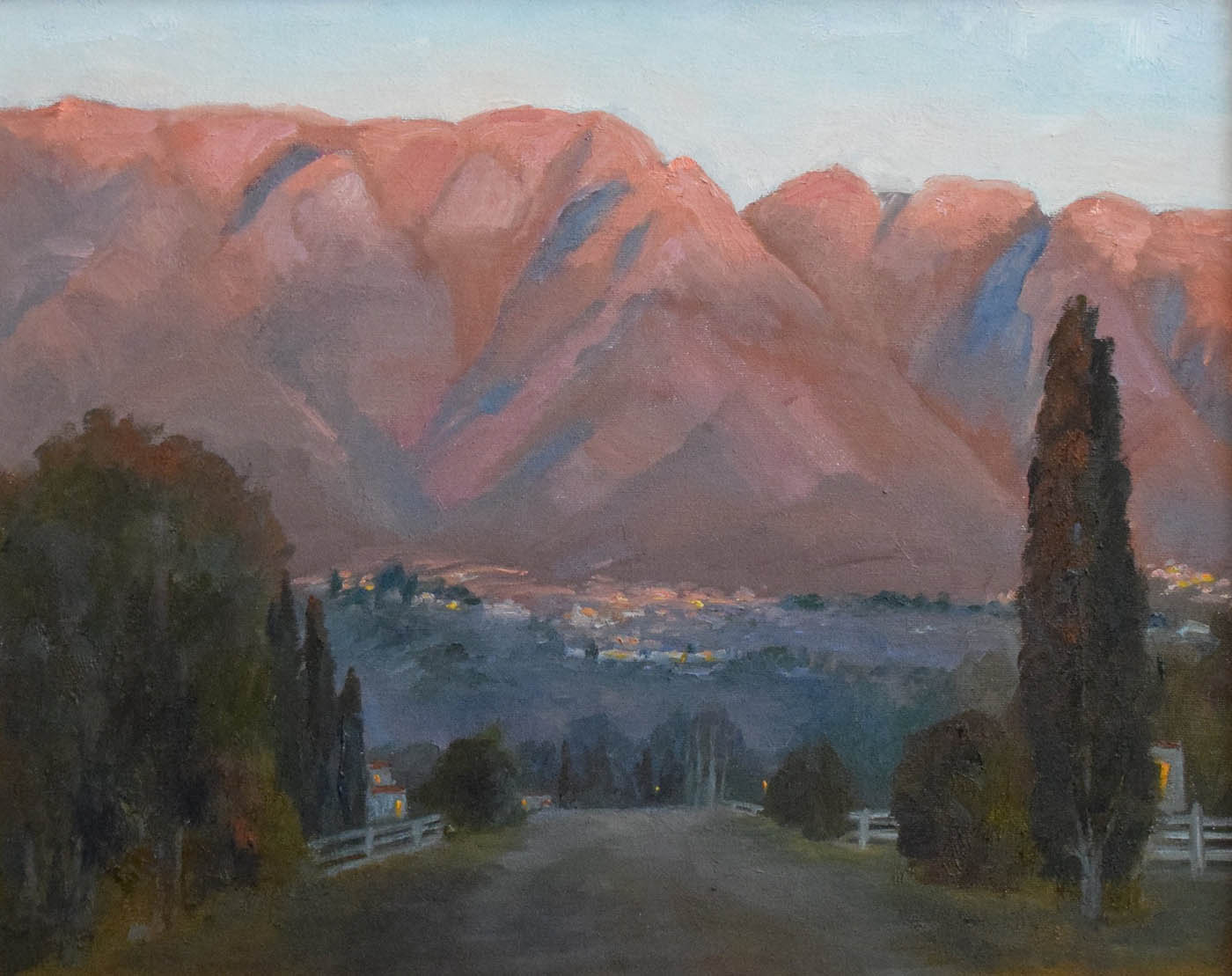
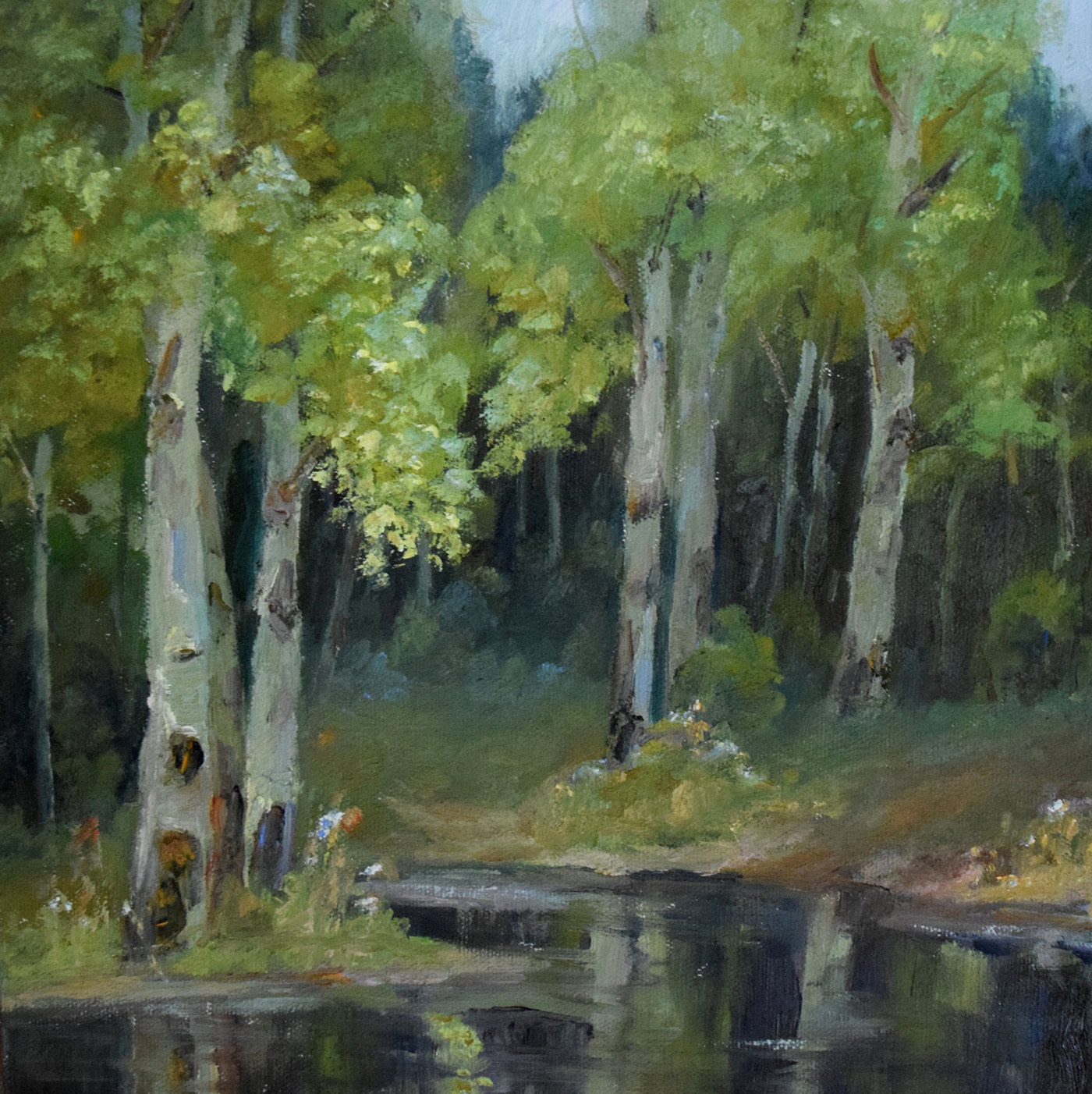
Nina Cobb Walker, “Magic Time Of Day”, oil on canvas, 16 x 20 in. “This was painted from a neighborhood street at sunset near where I live. This seemed to be a magic moment as the street was in shadow yet the Franklin Mountains on the West side were lite up by the sun.” Available at Cate Zane Gallery, www.catezane.com 512-300-0898, or the Artist at [email protected]Nina Cobb Walker, “Peaceful Reflection”, oil on canvas, 12 x 12 in. “This little ponding area in the forest near Cloudcroft, New Mexico where the elk and cattle come to drink is very secluded, almost as if it were their private place to drink in peace tucked among the Aspen trees.”Available at Cate Zane Gallery, www.catezane.com 512-300-0898, or the Artist at [email protected]
Fill your mind with useful art stories, the latest trends, upcoming art shows, top artists, and more. Subscribe to Fine Art Today, from the publishers of Fine Art Connoisseur magazine.