As part of our effort to continue to help artists and art galleries thrive, we’re proud to bring you this week’s “Virtual Gallery Walk.” Browse the artwork below and click the image itself to learn more about it, including how to contact the gallery.
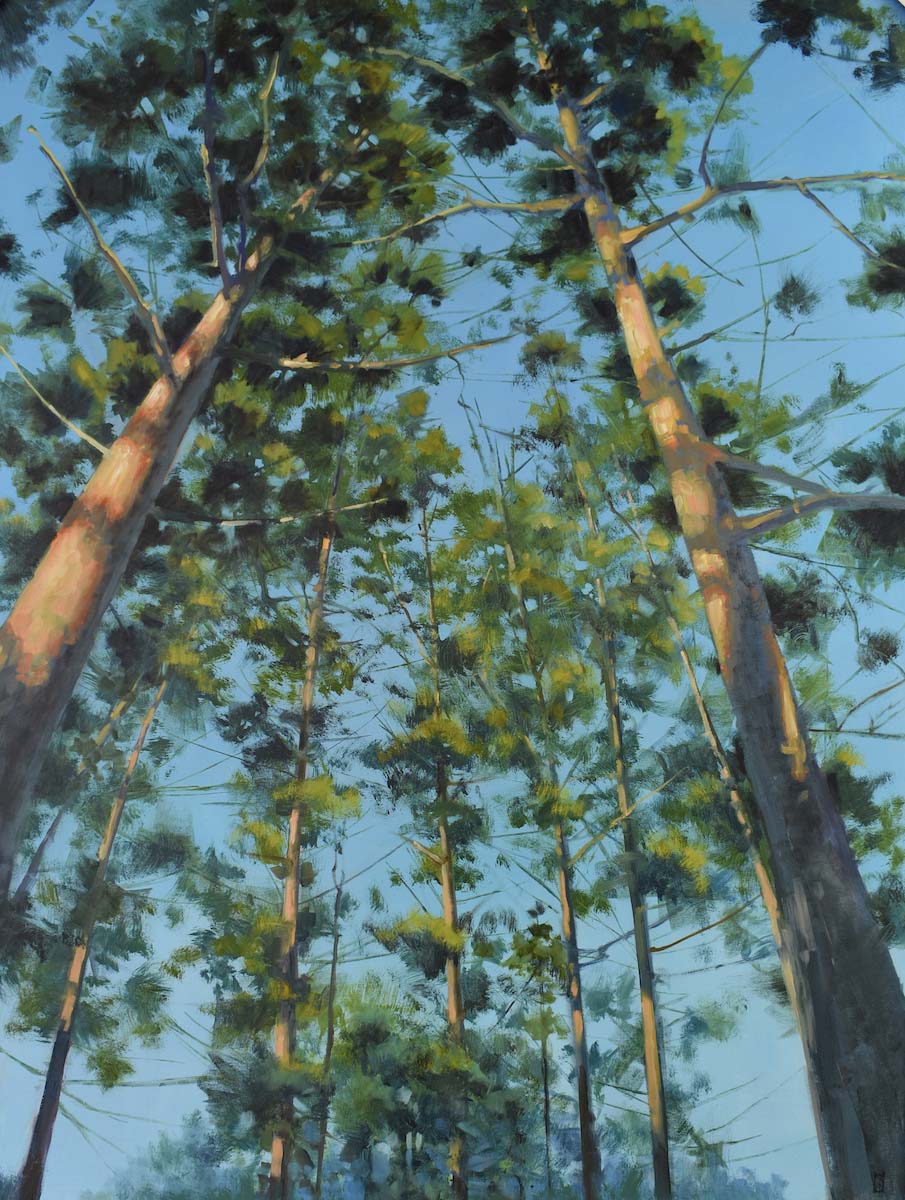
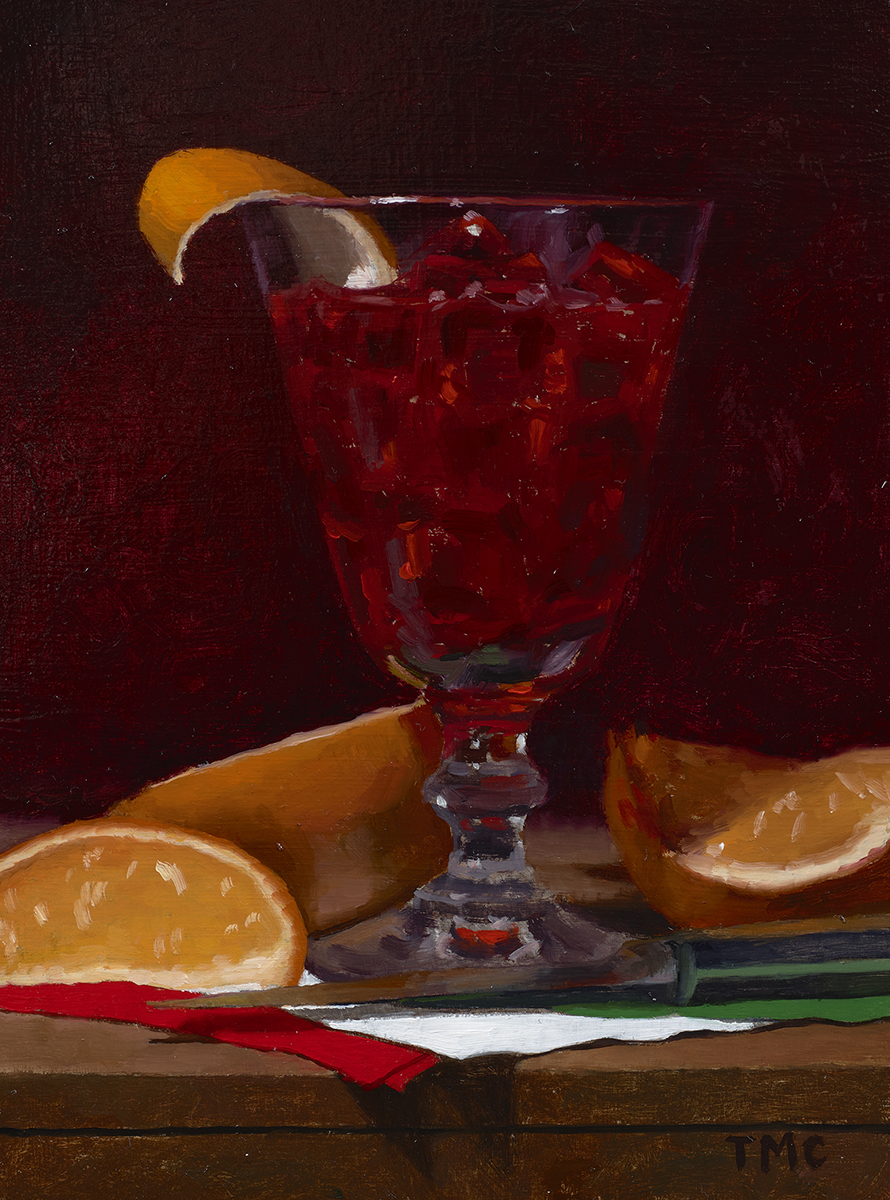
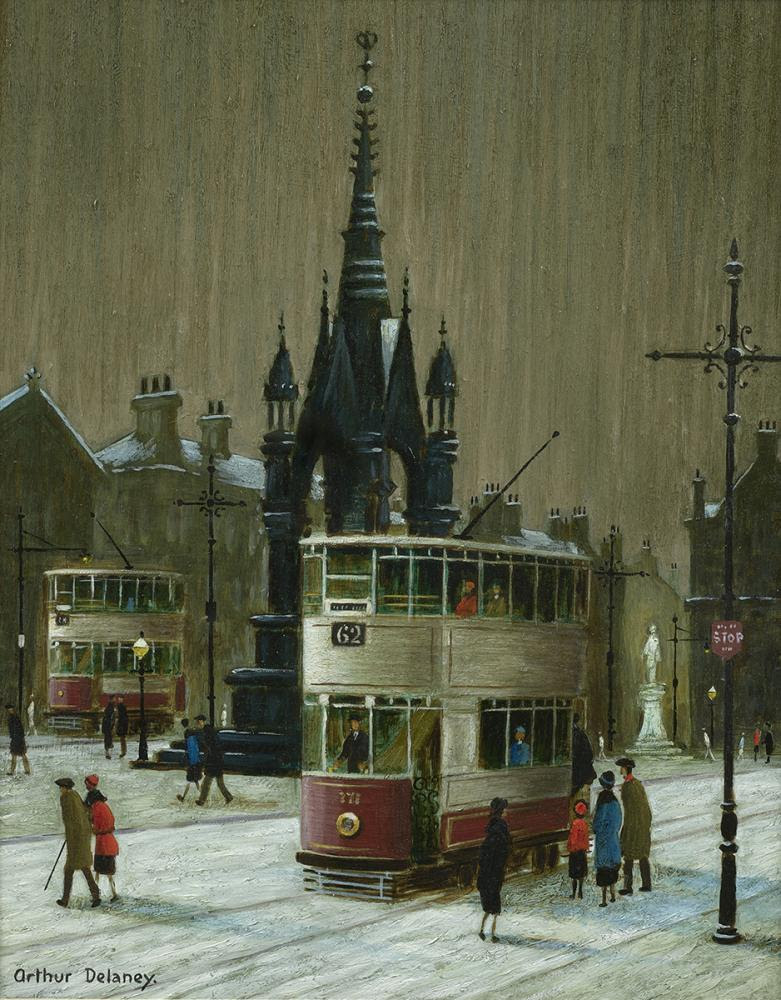
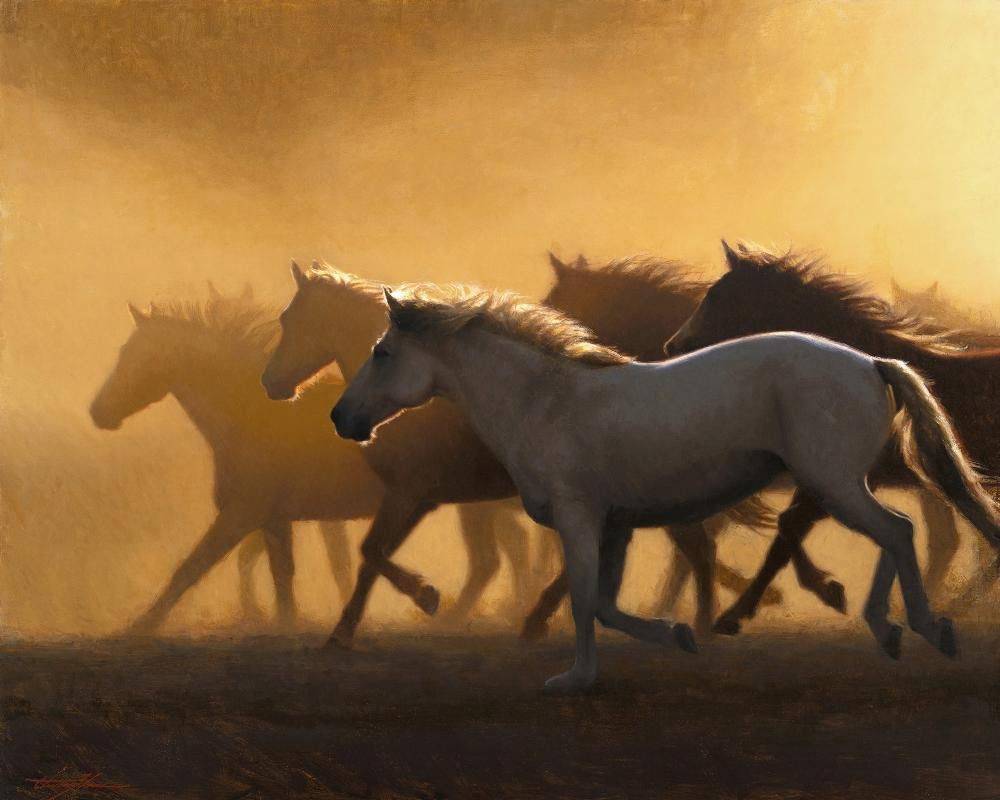
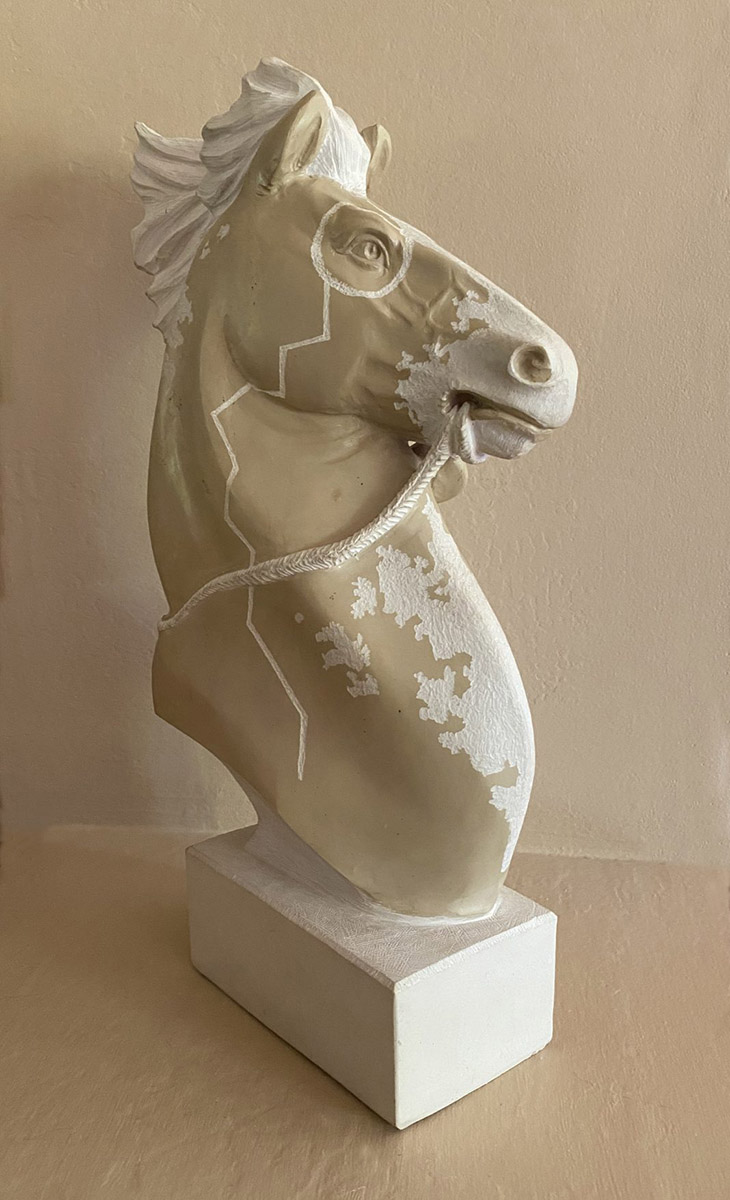
Optimism, Steven Walker, oil, 36×48 in; Anderson Fine Art GalleryNegroni, Todd M. Casey (Born 1979), oil on panel, 8 x 6 in; Signed; Rehs ContemporaryTrams in Albert Square, Arthur Delaney (1927 – 1987), oil on panel, 14 x 11 in; Signed; Rehs Galleries, Inc.Grey Mare at Dusk, Chauncey Homer, 24 x 30 in., oil on linen; chaunceyhomer.comSilent Warrior, Alvin Marshall, flagstone alabaster, 21” H x 9” W x 6” D; artzline.com
Want to see your gallery featured in an upcoming Virtual Gallery Walk? Contact us at [email protected] to advertise today. Don’t delay, as spaces are first come, first served, and availability is limited.
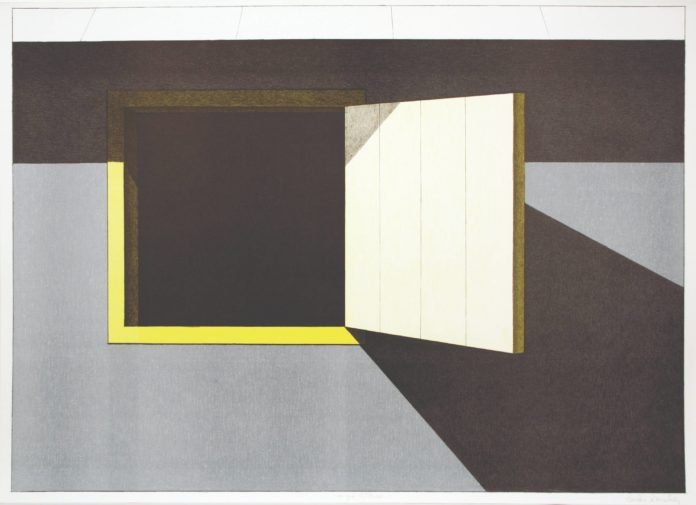
Emilio Sanchez (1921–1999), "Ty's Place," 1976, lithograph on wove paper, 22 x 30 in., Fralin Museum of Art, gift of the Emilio Sanchez Foundation, 2012.1.9
The Fralin Museum of Art is presenting the exhibition “Open Window: Emilio Sanchez on Paper.” It marks a homecoming for Emilio Sanchez (1921–1999), the Cuban-born artist who spent much of his life in the U.S., including two years at the University of Virginia in Charlottesville. Soon he headed to New York, which served as a launchpad for his extensive travels worldwide to investigate the effects of light and shadow on buildings and landscapes.
Selected by curator Laura Minton, the 21 works on view demonstrate Sanchez’s delight in the natural patterns and shadows cast by bright sunlight on façades, doors, windows, and shutters, particularly in the Caribbean, Latin America, and North America.
> Visit EricRhoads.com to learn about more opportunities for artists and art collectors, including retreats, international art trips, art conventions, and more.
> Sign up to receive Fine Art Today, our free weekly e-newsletter
“I dreamed of going to the Moon and one day it was possible,” said Samuel Peralta. “I’m sharing that dream with many of the artists, authors, musicians, and filmmakers whose work I love.”
Peralta is the man behind The Lunar Codex, which is a collection of works from thousands of artists across the globe, launched in three time capsules to the Moon, or in his words, a “dream realized.”
The first launch is set to take place in September 2022, with subsequent launches happening in late 2022 and then 2023, but as Peralta explains in the Lunar Codex FAQs, “Schedule changes in the space industry are not uncommon – space is hard.”
The Lunar Codex is a project of Incandence, which is Peralta’s company, covering interests in arts, technology, and business. Inspired by his involvement in the Writers on the Moon project, Peralta chose to bring about a similar opportunity for artists.
The Lunar Codex “started as a project to spread hope during a dark time – the years of the Covid-19 pandemic on Earth,” he explained. “The Codex instills the Moon with some of the heart of humanity, our art, so that when we look to the sky, the Moon is a tangible symbol of hope, of what is possible when you believe. The Codex is also a message-in-a-bottle to the future, so that travelers who find these time capsules might discover some of the richness of our world today. It speaks to the idea that, despite wars and pandemics and climate upheaval, humankind found time to dream, time to create art.”
The FAQs explains that the Lunar Codex’s contribution is its conscious focus on contemporary, rather than historic, art and books; and its extension of lunar archives to music and film. It is the first project to put the works of women artists, figurative realist art, music, and film on the Moon. The project has representation from 20,000 creative artists in 91 countries and territories around the globe.
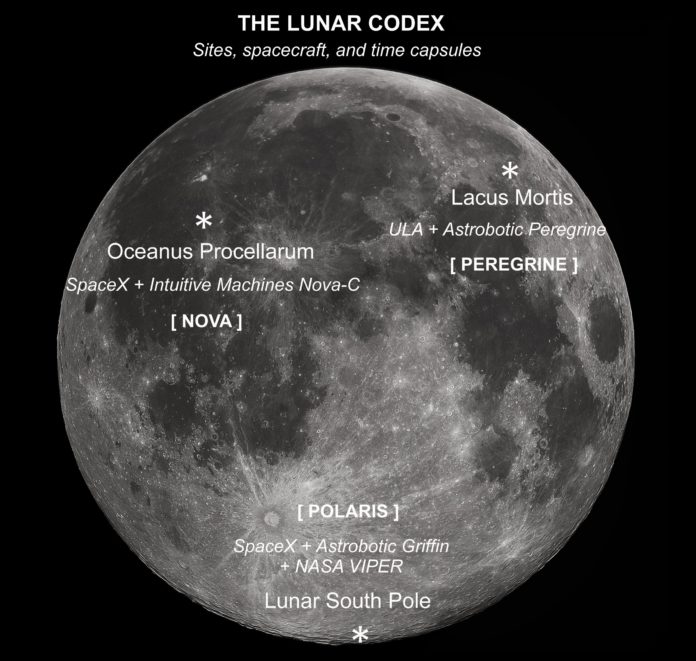
Griffin spacecraft will carry the Polaris time capsule to the Lunar South Pole in 2023 – the full set of Fine Art Connoisseur magazines are here. Astrobotic Griffin lunar lander carrying NASA VIPER rover. Photo credit: Astrobotic TechnologyNova-C spacecraft will carry the Nova time capsule to Oceanus Procellarum in 2022 – all the Fine Art Connoisseur covers are here. Intuitive Machines’ Nova-C lunar lander. Photo credit: Intuitive Machines
But what about “space junk?”
“This isn’t about old satellites that don’t work anymore,” Peralta said. “This is a time capsule project, meant for future generations to discover a bit about our time on Earth. It has historical and cultural value, like an unearthed time capsule from 1945.”
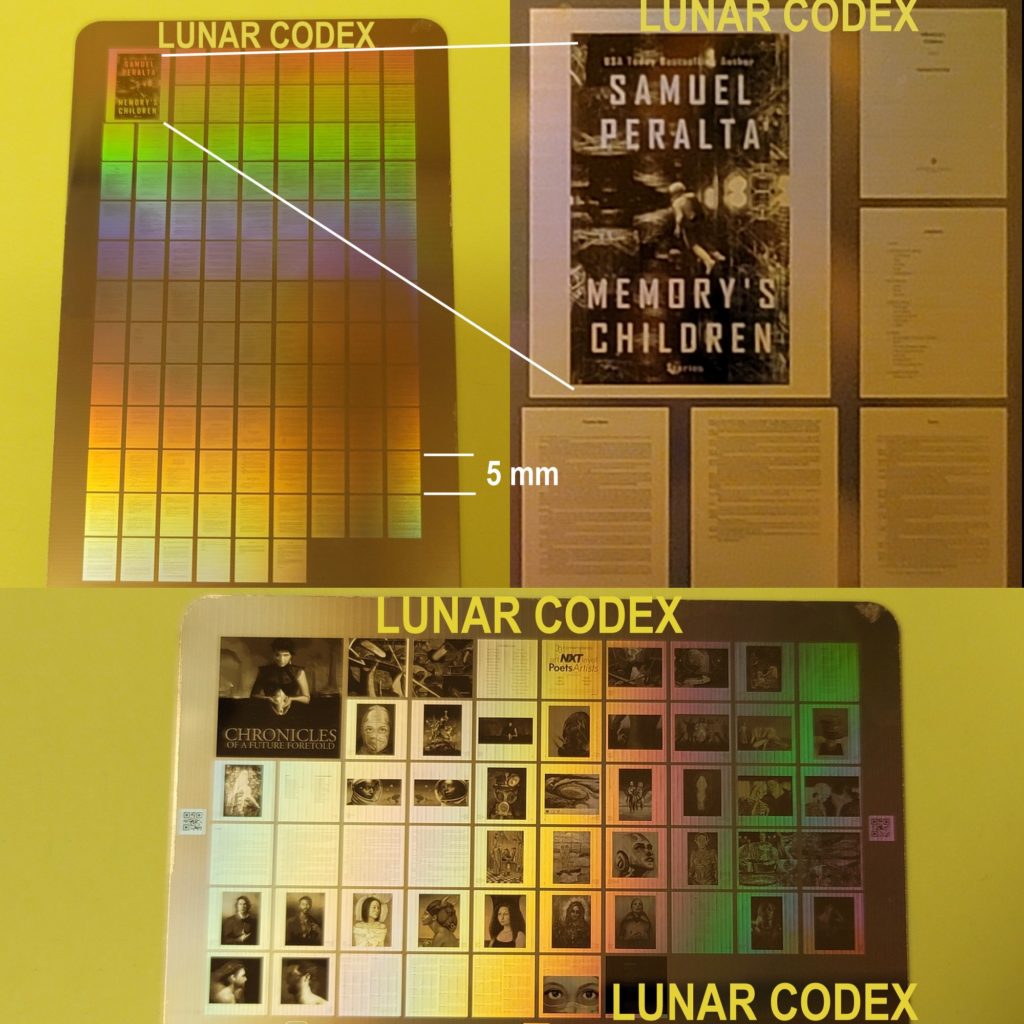
Credit-card sized gold microfiche samples of one of my books and art catalog – under test for Mars mission – too heavy for Moon but can see images with naked eye. Photo credit: Lunar Codex
“The lunar landers themselves are owned by two NASA prime contractors – Astrobotic and Intuitive Machines – via NASA’s Commercial Lunar Payload Services program. SpaceX and the ULA (plus Blue Origin) provide launch services as subcontractors. NASA utilizes lander payload space for scientific instruments or rovers headed for the Moon; this is the primary mission of the launches. You can think of ULA and SpaceX as our Lyft or Uber. We are ridesharing with NASA and NASA’s CLPS partners, who are co-passengers.”
The missions will be streamed for the public to view; visit lunarcodex.com to learn more about this project.
> Visit EricRhoads.com to learn about more opportunities for artists and art collectors, including retreats, international art trips, art conventions, and more.
> Sign up to receive Fine Art Today, our free weekly e-newsletter
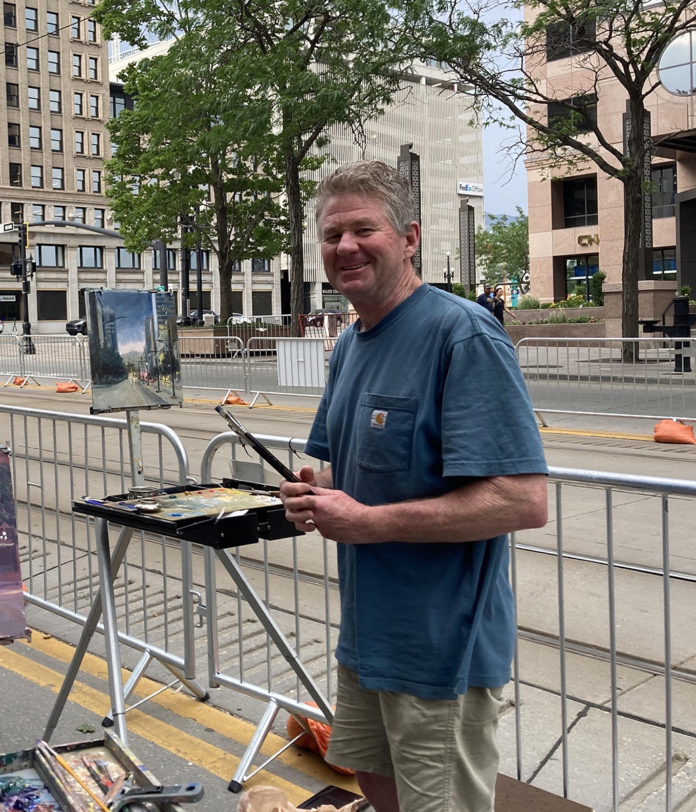
The Artist at work in downtown Salt lake City, shortly after this we had a wind storm blasting down between the buildings, and within a few seconds my easel was airborne and smashed down thirty feet away.
How did you get started and then develop your career?
Richard Boyer: Way back in grammar school the art teacher must have noticed something because every year she put together an art box filled with supplies and hand delivered it to me during class. Then, in high school, I sold my first painting at an art street festival, a painting of the Andromeda Galaxy for a hundred dollars and there was no going back after that, I was hooked!
I went to the University of Utah and studies portrait painting under an English professor, then started knocking on gallery doors. They told me they were not looking for any new artists and don’t let the door hit you on the way out!
Years later as one gallery owner put it, “I only really consider artists after they have painting 10,000 works.” Well, I guess I did and finally got into my first gallery.
How do you describe success?
Richard Boyer: Success in my book is more or less making a living from your artistic endeavors. The bottom line is you as an artist need to pay the bills and support yourself and the family. Easier said than done I know. How many times do you get knocked down, brush off the dust and hit it all again. Maybe this describes the successful artist, that blind determination to keep trying until you get it right!
You begin to treat it as a 9 to 5 job, getting up every morning and putting in the hours painting. The nice thing being that after a while you will notice yourself getting better and better at your endeavors.
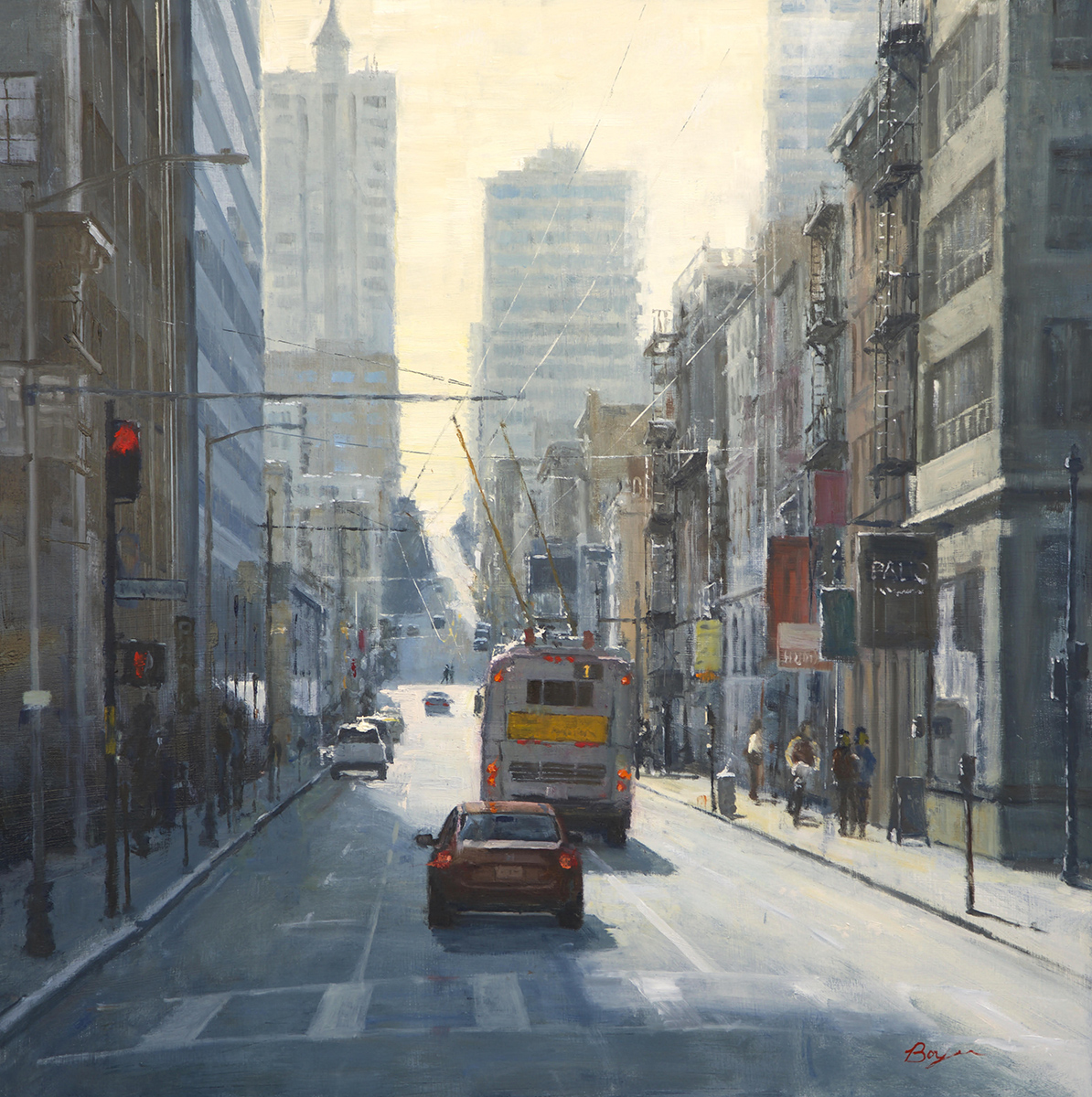
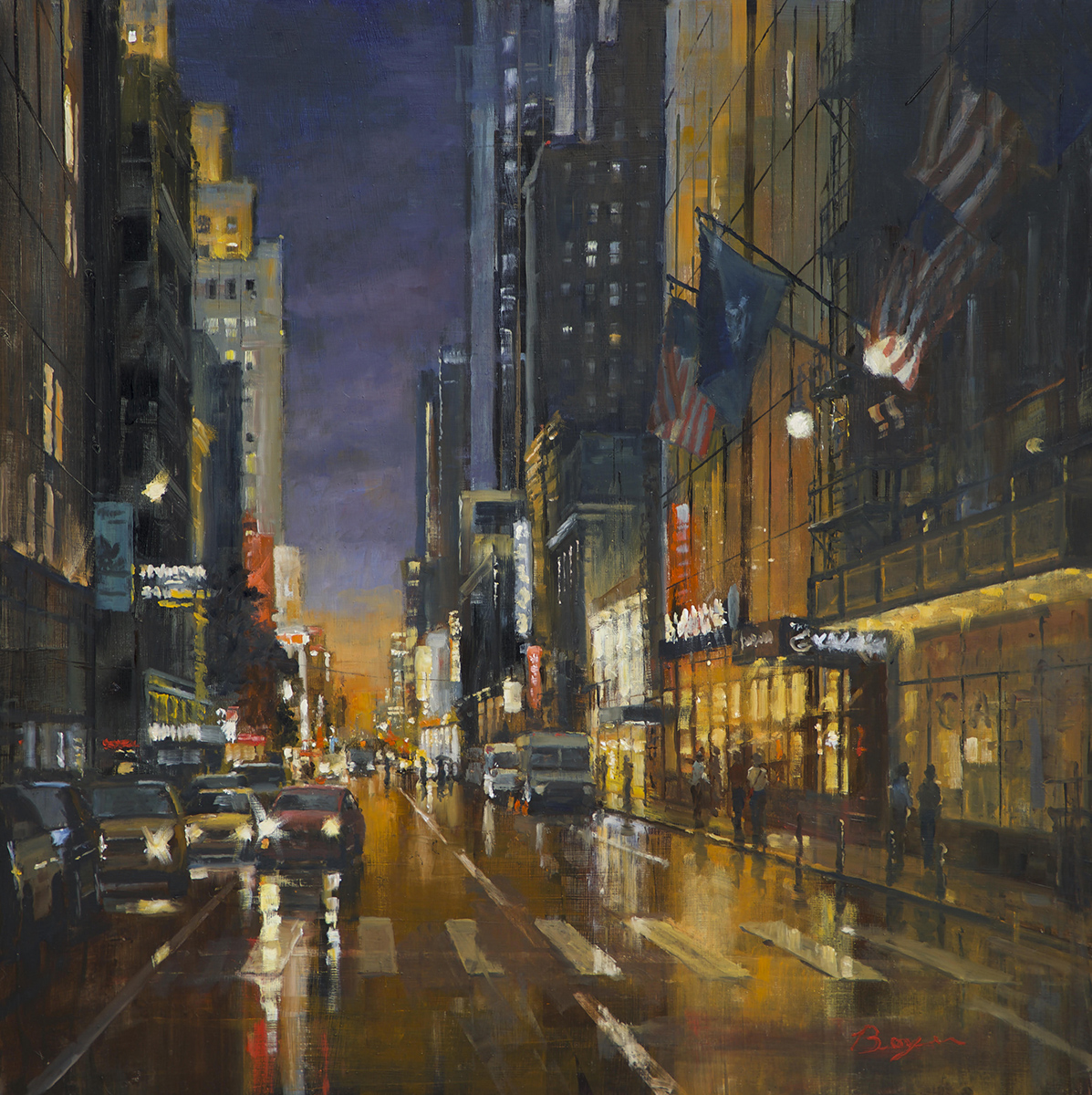
Richard Boyer, San Fran – Behind the Bus, 30 x 30 in., oil on board, 2022; I wanted to capture that frustration of being caught behind a slow-moving bus.Richard Boyer, Clearing Storm in Manhattan, 30 x 30 in., oil on board, 2022; I wanted to capture that wet reflective feeling of the city at night
From the Fine Art Connoisseur May/June 2022 Editor’s Note:
Women Artists, and More
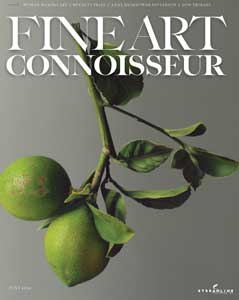
What a joy it has been assembling this issue! From our front cover image by Megan J. Seiter right through to the back cover adorned by Kathryn Mapes Turner — not to mention the impressive gatefold cover created by our friends at The Bennett Prize — this is an issue that takes Fine Art Connoisseur’s longtime championing of women artists to a new level.
On the cover: MEGAN J. SEITER (b. 1986), “Limones” (detail), 2021, colored pencil and pastel on paper, 7 3/4 x 7 1/4 in. (overall), available through Meyer Gallery (Santa Fe).
Our team has enjoyed reconnecting with colleagues at various organizations devoted to women in art, and we thank them for bringing us up to date on their exciting activities. See, for example, our editorial coverage of the Catharine Lorillard Wolfe Art Club, the National Association of Women Artists, and the important exhibitions of female artistry on view this season at museums in Fort Worth and Huntsville. And rest assured that in future issues we will return to covering what’s new at such lively nonprofits as American Women Artists and Women Artists of the West.
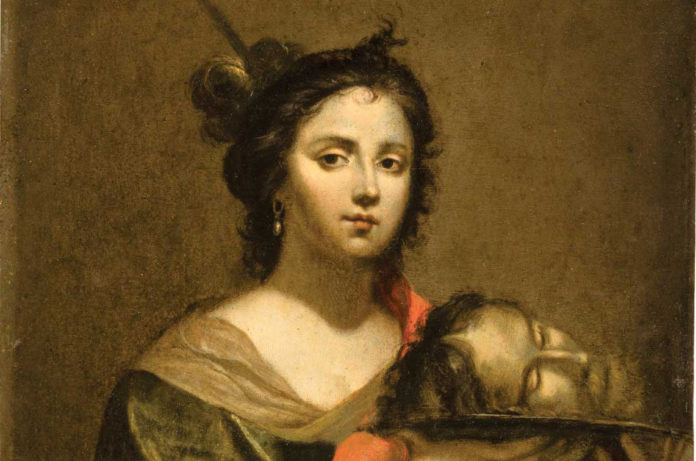
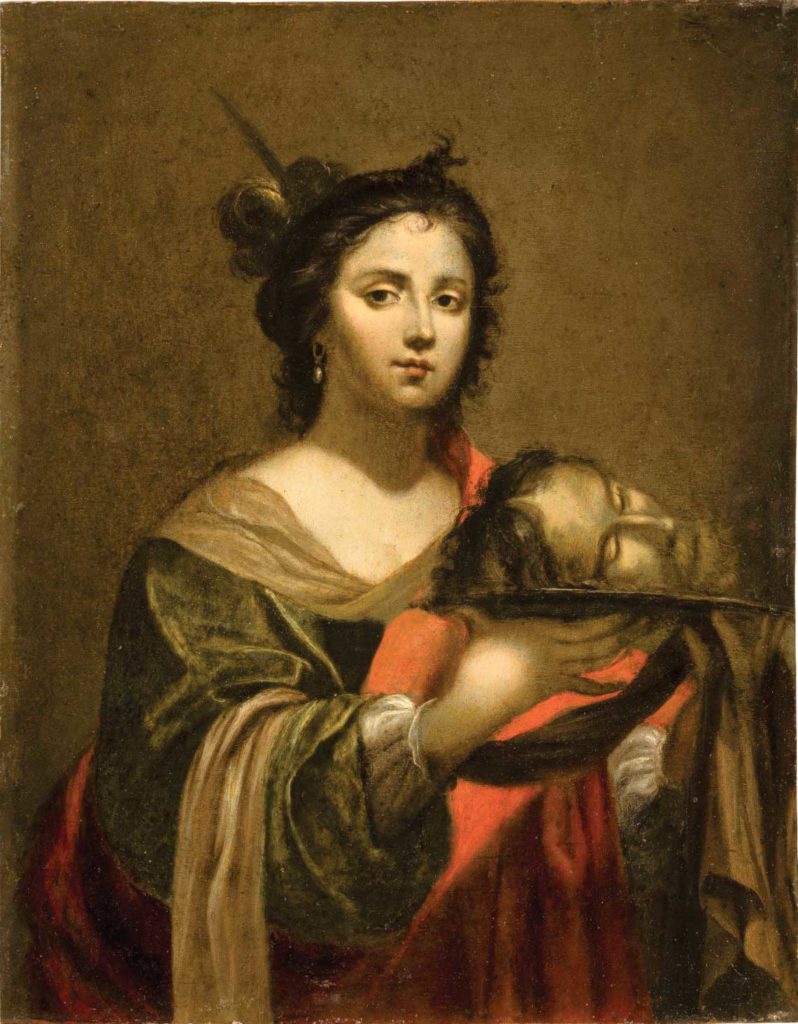
Our highlighting of contemporary women artists comes naturally because their creations are all around us, but it remains challenging to discover female talents of the past. Recently, I was strolling through The Winter Show in Manhattan, a superb fair filled with enticing art and design of all kinds. On the always-fascinating stand of the New York City dealer Robert Simon hung a small yet compelling oil-on-copper painting that depicts Herodias (or possibly Salome) holding the head of St. John the Baptist. It was made by Virginia Vezzi (1600–1638), a gifted Italian artist of whom I had never — to my shame — even heard. As was once often the case, she developed technical skills only because her loving artist father trained her; she proceeded to train with, and then marry, the artist Simon Vouet. At age 24 she was inducted into the world’s first art academy (still operating in Rome), and soon she and her husband moved to Paris, where he became a star and she died too young.
VIRGINIA VEZZI (1600–1638), “Herodias or Salome with the Head of St. John the Baptist,” n.d., oil on copper, 9 1/4 x 7 1/8 in., Robert Simon Fine Art, New York City
I mention Virginia Vezzi because her obscurity should not deter us, but rather inspire us to keep digging — to learn more about historical women artists, whose unique perspectives enrich our understanding of the past, just as contemporary women artists contribute to our visual culture now.
None of this means that Fine Art Connoisseur has lost interest in men, of course. In this issue you’ll find news of a group exhibition I am co-curating this season with Michael Gormley, executive director of the innovative New York Artists Equity Gallery in Manhattan. Our topic? The male nude as seen by contemporary artists of all descriptions, in various materials and from diverse perspectives. This show should be fun, a bit provocative, and a reminder that even timeless themes like the human figure can always be considered afresh when talented artists get involved.
Here’s to a busy, art-filled spring for all of us.
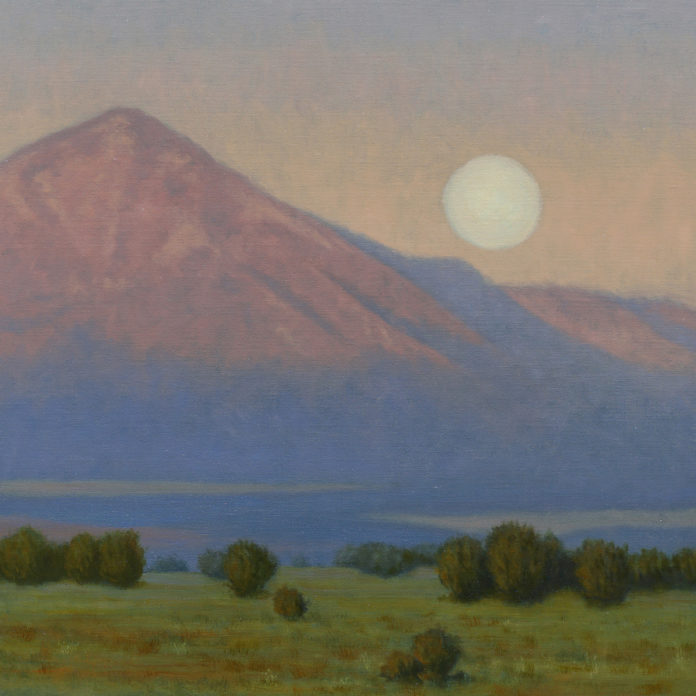
Susan Hediger Matteson, Ute Mountain Moonset, oil on linen panel, 30 x 30 in.
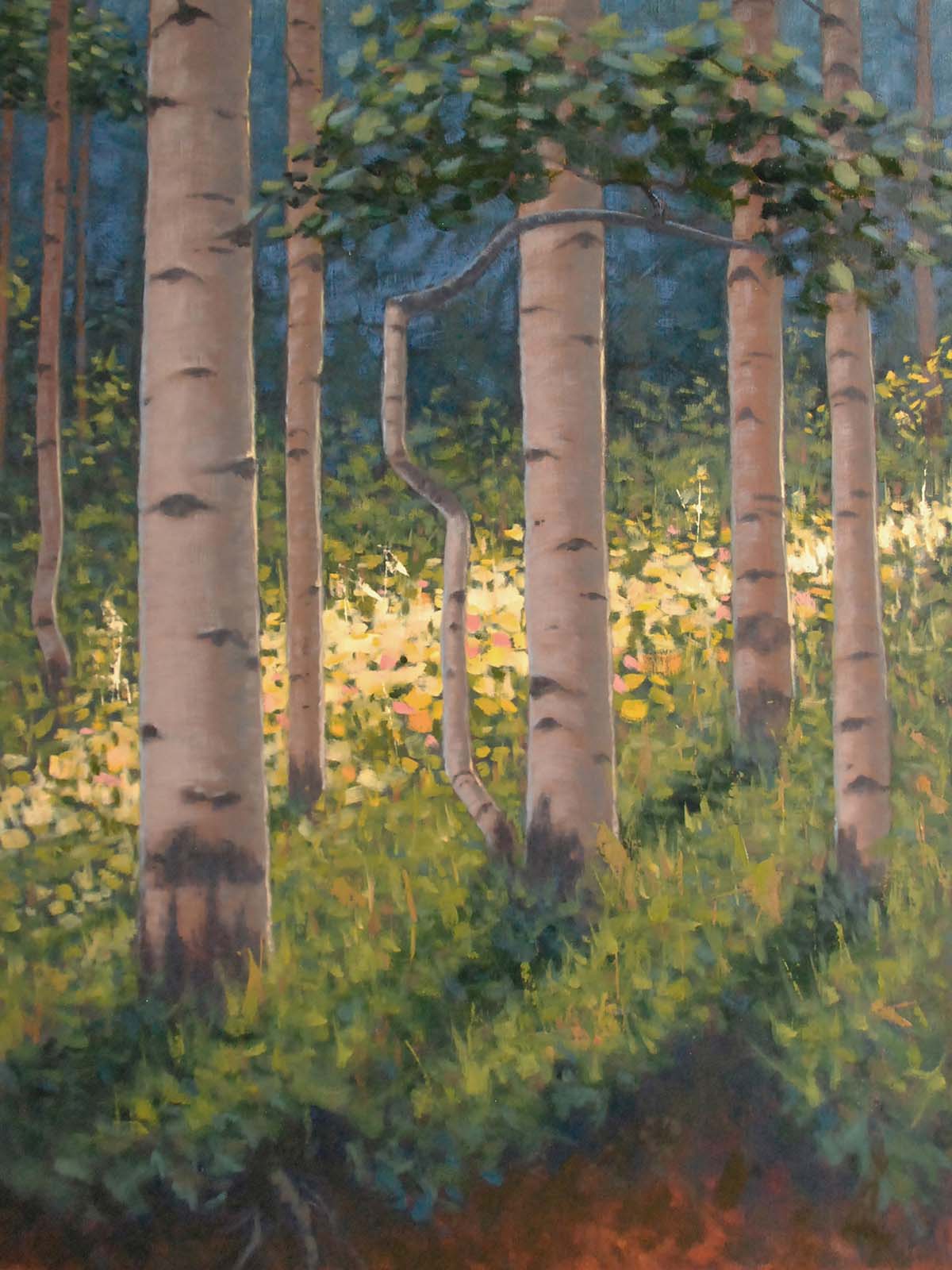
Susan Hediger Matteson: Ute Mountain Moonset is inspired by a view from my house. Reverence came from a plein air study sitting in an aspen grove with sunlight filtering through. Moonlit Pass was inspired by a plein air study during a moonlit night (16 degrees!)
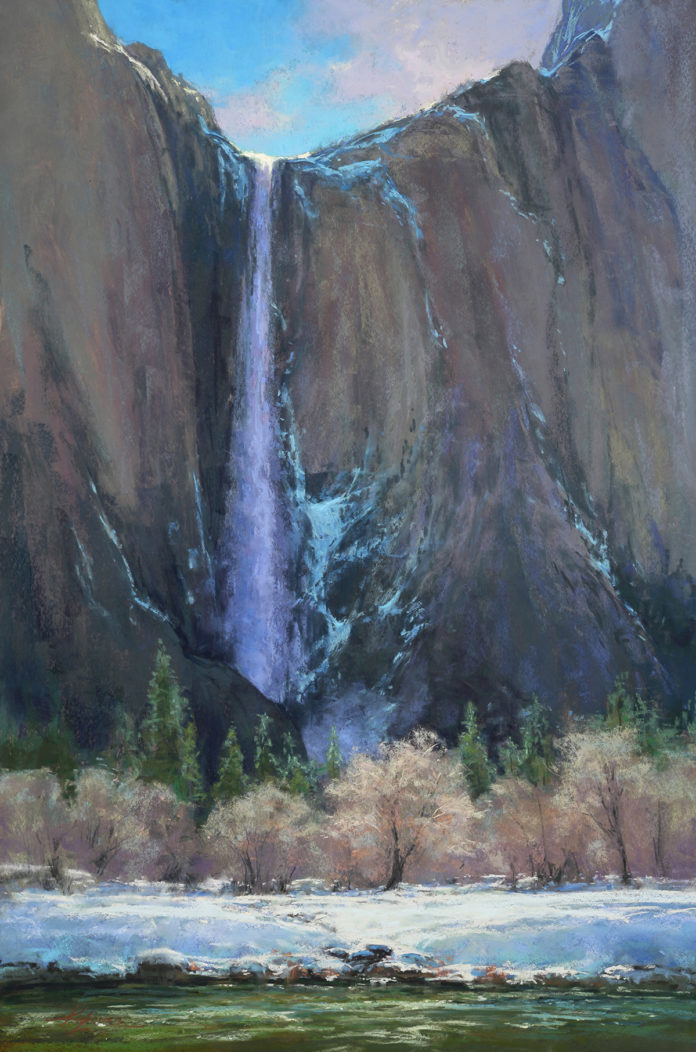
Spirit of the Puffing Wind, Bridalveil Falls, Kim Lordier, Pastel, 24 x 36 in, $ 10,000
Spirit of the Puffing Wind, Bridalveil Falls
By Kim Lordier
24 x 36 in.
Pastel
$ 10,000
Artist Kim Lordier says, “The Ahwahneechee Native Americans called this waterfall “Pohono”, which means “Spirit of the Puffing Wind”. In a brisk wind, the falling water is often blown sideways, and when the flow is light, it may not reach the ground directly below. This massive granite wall in Yosemite, 617 feet, is the backdrop to the beautiful Bridalveil Falls. This photo does not do the painting justice, as the sparkling light bouncing off the icy snow and flowing Merced River just glow in real life.”
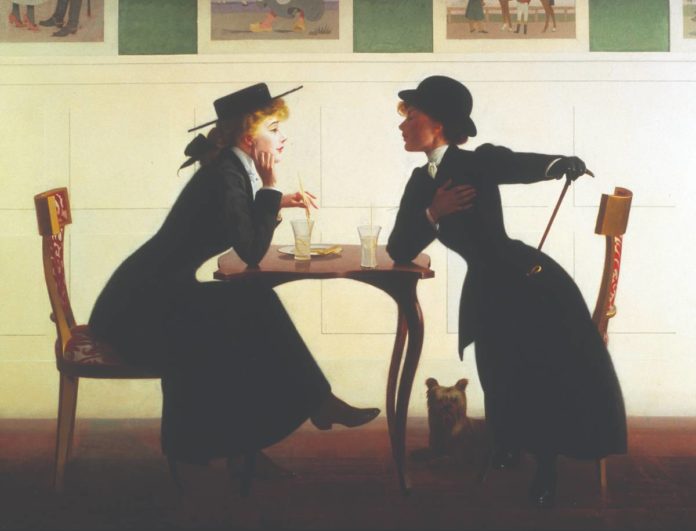
HARRY WILLSON WATROUS (1857–1940), "Some Little Talk of Me and Thee There Was," c. 1905–09, oil on canvas, 27 x 42 in., Permanent Collection of The National Arts Club, New York City
Harry Willson Watrous was known for his meticulous depictions of stylized — and stylish — women. Here, the “Grande Dame of American Cabaret,” Kit Sullivan, tells us why she loves Watrous’s painting, “Some Little Talk of Me and Thee There Was.”
By David Masello
Kit Sullivan, Cabaret performer and artistic director, Mabel Mercer Foundation Photo: Stacy Sullivan
Kit Sullivan describes her favorite work of art by singing. She is, after all, the woman many consider the “Grande Dame of American Cabaret,” as well as artistic director of the Mabel Mercer Foundation, a nonprofit that honors and promotes the legacy of its namesake cabaret star. When Sullivan begins to assess a painting by Harry Willson Watrous that hangs opposite the bar at New York City’s National Arts Club, she intones the lyrics to a song, Old Friends, by Nancy Ford and Gretchen Cryer.
“I look at the two women in the painting and it reminds me of that song,” says Sullivan, whereupon she hits the notes perfectly, singing, “Every time I’ve lost another lover/I call up my old friend/And I say let’s get together/I’m under the weather/Another love has come to an end.”
While the conversation the two women in the painting are having, circa 1905–09, remains a mystery, Sullivan surmises that the topic is love. “I feel there are secrets being told,” she confides, echoing the painting’s title, “Some Little Talk of Me and Thee There Was.”
“The blond woman is a good listener, as if she’s heard her friend discuss this subject before. As the song goes about lost love, the blonde might be thinking of her friend, ‘the pain of getting through it/… You’ll do it again.’”
Watrous, an American painter who trained in France, was known for his meticulous depictions of stylized — and stylish — women. For Sullivan’s sold-out performances at glamorous venues in New York, on cruise ships, and elsewhere, fashion is a big part of the act — another reason she’s so attracted to this image.
She cites the rakish hats the women wear, their shoes, the pinched waistlines of their tailored frocks. “They represent that transition from Victorian to Modern times. There’s power in this work. There’s a sense of liberation: they’re both on the cusp of getting the vote. They’ll have to wait 15 years, but the Suffragist movement is well underway.”
So attuned to fashion and sartorial nuance is Sullivan that she is fascinated, too, by the snippets of paintings that hang on the wall behind the women. On the paneled wall of what might be a clubhouse, perhaps an equestrian one, three paintings show cropped images of people’s feet and legs. Sullivan suggests that the slightly raised heels of the woman at far left indicate she is kissing a tall man. “Her hem is above the ankles, too, which was kind of scandalous then.”
Sullivan adds that the woman in Dutch-style clogs must be moving or dancing since her skirt is flowing, while the figure with the jockey and horse is dressed in what appears to be fashionable stirrup pants or leggings.
To further prove her fascination with clothing, Sullivan opens the closets of her Manhattan apartment to reveal a variety of dressy shoes that might rival in number those of Imelda Marcos’s infamous collection — though Sullivan uses hers to greater effect. “I always wear high heels on stage, but I don’t feel the pain of them until I take them off.”
As a longtime honorary member of the National Arts Club, Sullivan often examines the Watrous painting near its bar, an appropriate spot given that the two women in the painting appear to be drinking lemonades. She continues to wonder about their conversation, and cannot resist singing a few more thoughts from Old Friends: “Yes, we sit in a bar and talk ‘till two/About life and love as old friends do.”
> Visit EricRhoads.com to learn about more opportunities for artists and art collectors, including retreats, international art trips, art conventions, and more.
> Sign up to receive Fine Art Today, our free weekly e-newsletter
As part of our effort to continue to help artists and art galleries thrive, we’re proud to bring you this week’s “Virtual Gallery Walk.” Browse the artwork below and click the image itself to learn more about it, including how to contact the gallery.
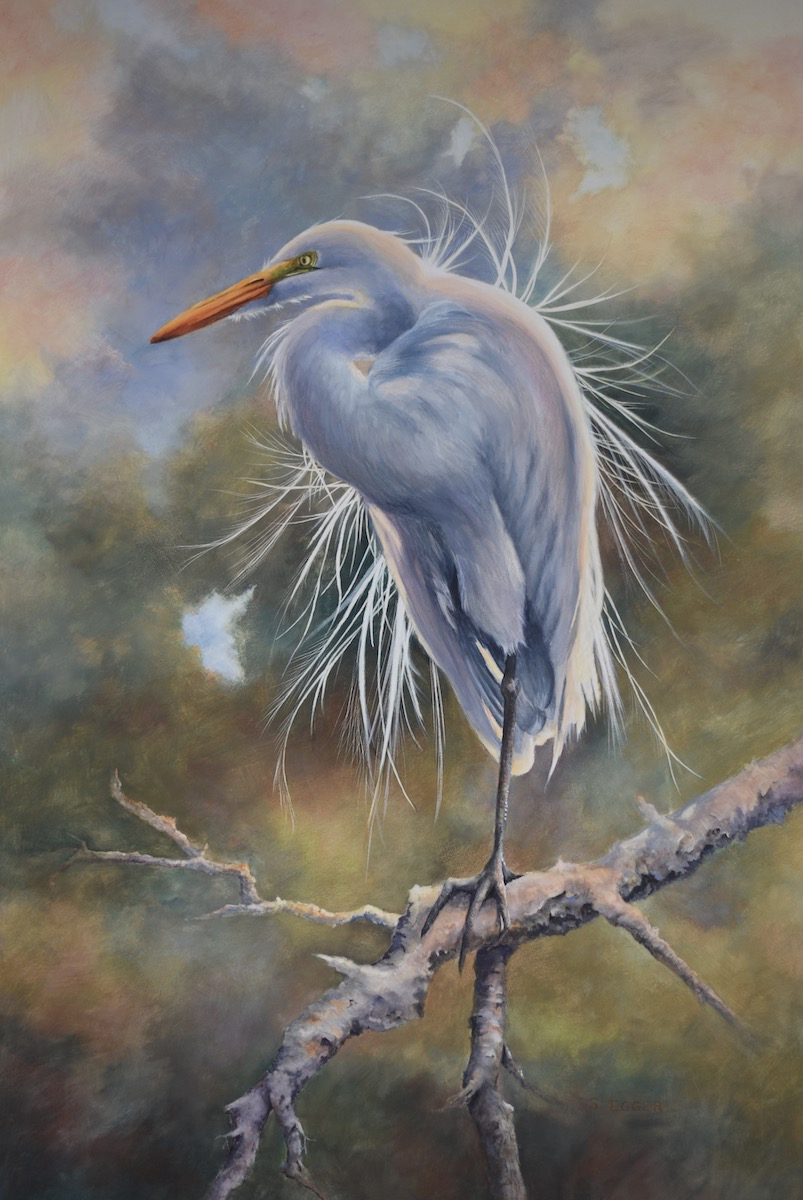
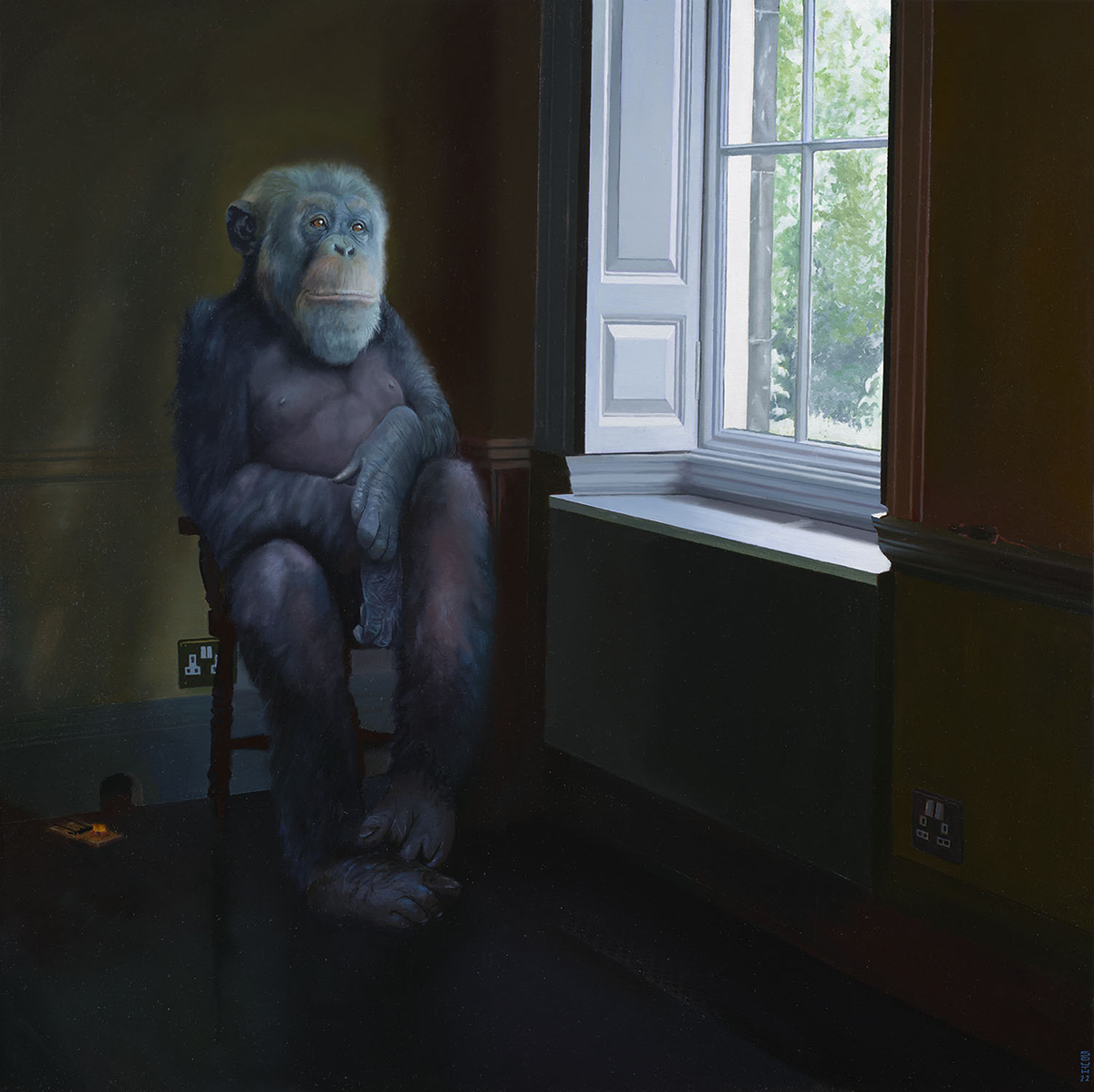
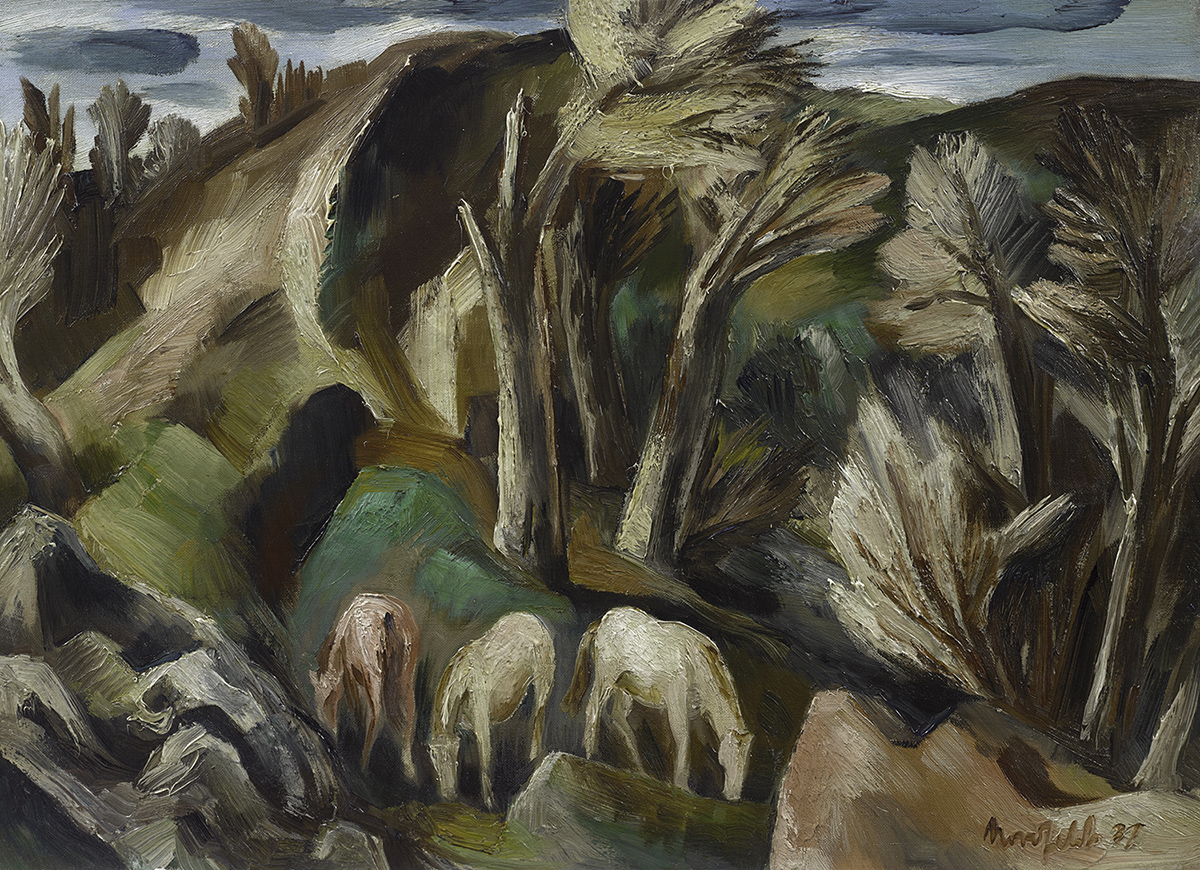
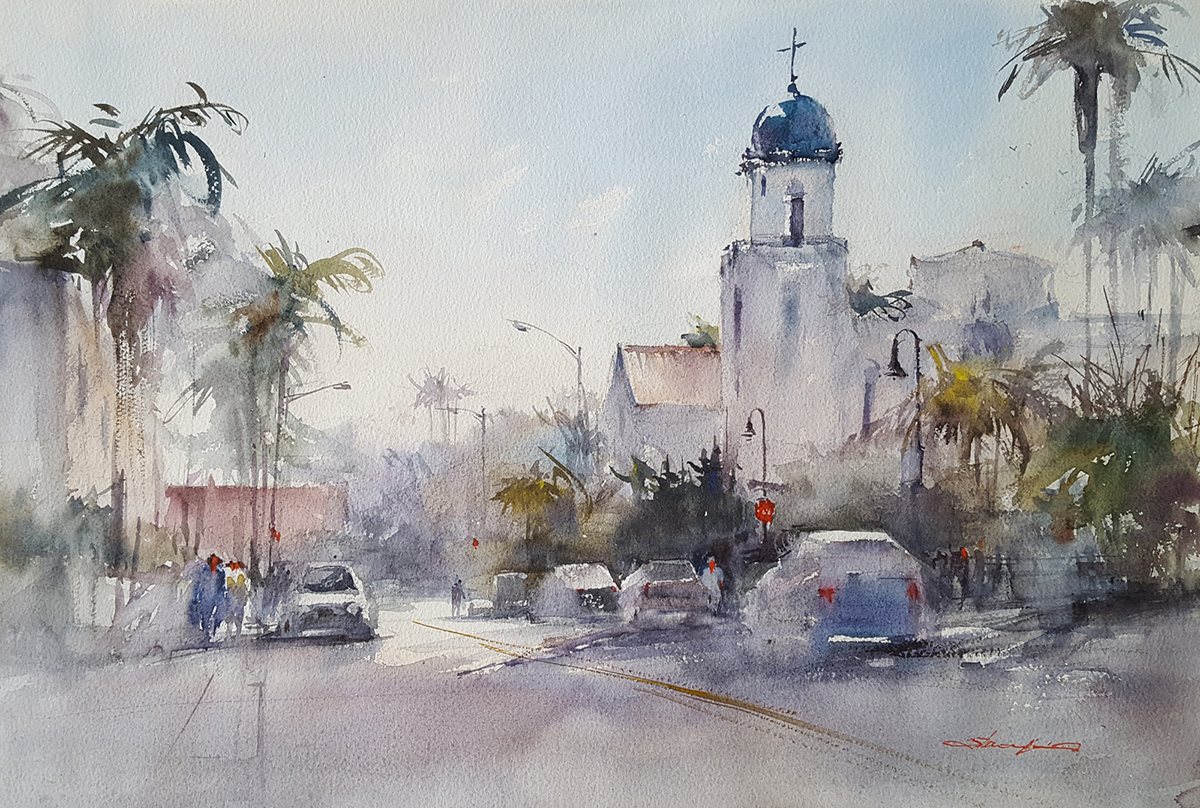
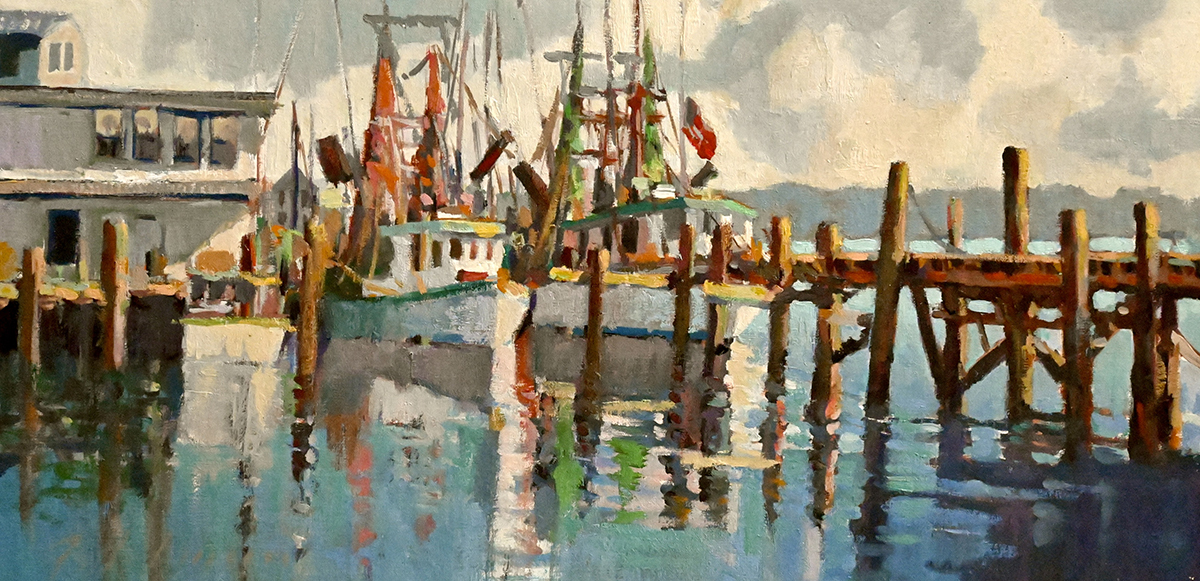
Egret on a Limb, Sherry Egger, mixed media, 36×24 in; Anderson Fine ArtQuarantine, Tony South, oil on Artefex Panel, 26 x 26 in; Signed; Rehs ContemporaryThree White Horses, Bror Julius Olsson Nordfeldt (1878 – 1955), oil on canvas, 16 x 22 in; Signed and dated 37; Rehs Galleries, Inc.Inlet Sandbars – Lake Louise, Canadian Rockies, Darcie Peet, oil, 24 x 20 in; artzline.comTowards Mission Ave, Oceanside, Shuang Li, Watercolor, 15 x 22 in; LPAPA Art Gallery; RICK J. DELANTY & SHUANG LI “Making a Splash in Acrylics & Watercolors!” April 7th thru May 2nd, 2022All Tied Up, Mark Fehlman, oil, 12 x 24 in; Mark Fehlman; preview painting that was exhibited in the Collector’s Preview of the Olmsted Plein Air Invitational 2022
Want to see your gallery featured in an upcoming Virtual Gallery Walk? Contact us at [email protected] to advertise today. Don’t delay, as spaces are first come, first served, and availability is limited.
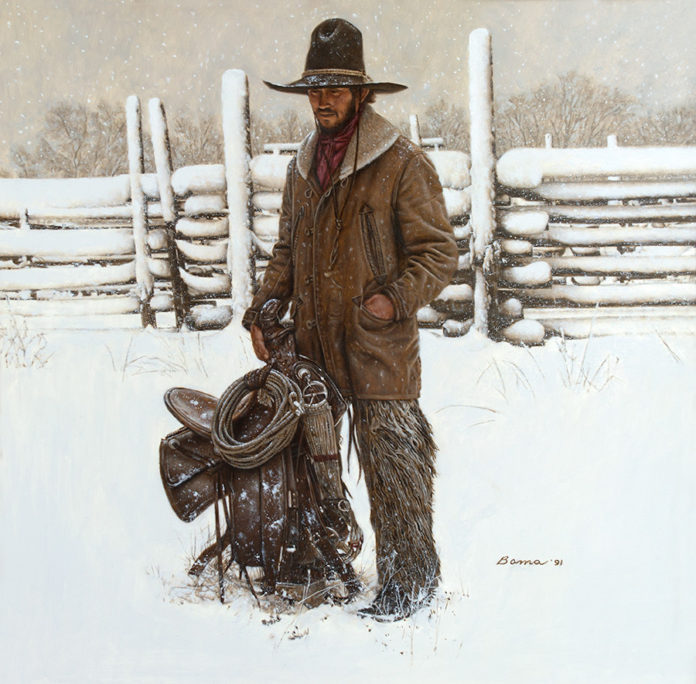
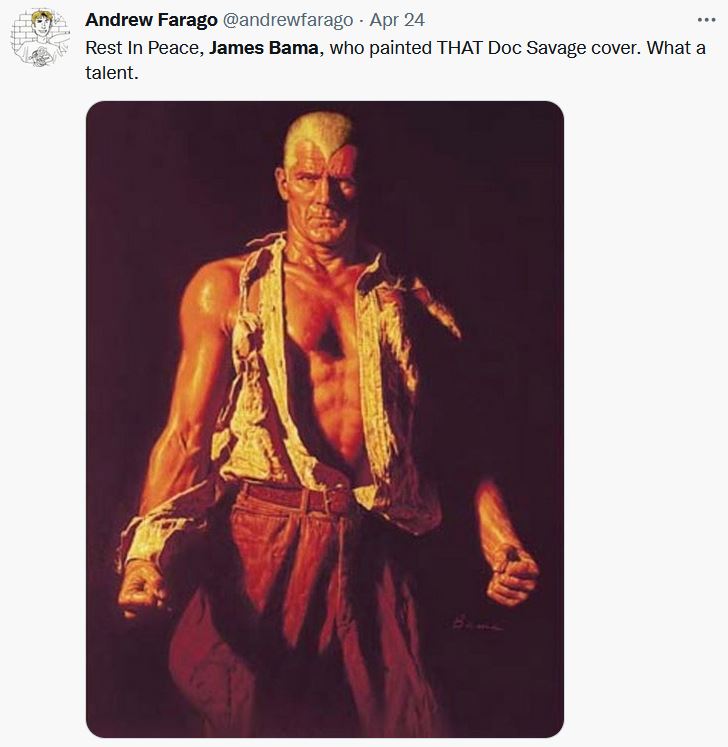
JAMES BAMA (b. 1926), "Trout Creek Ranch," 1991, oil on board, 20 x 20 in.; featured in Fine Art Connoisseur magazine, September/October 2019
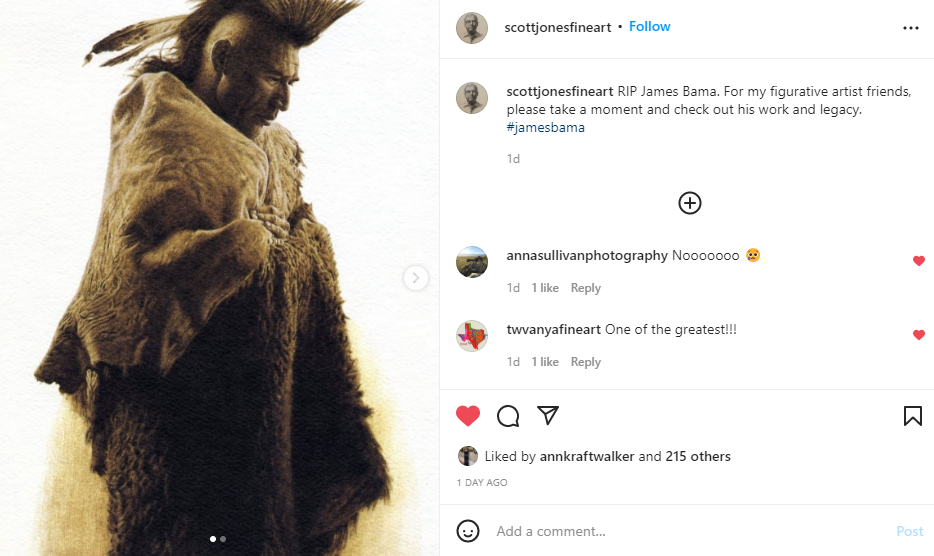
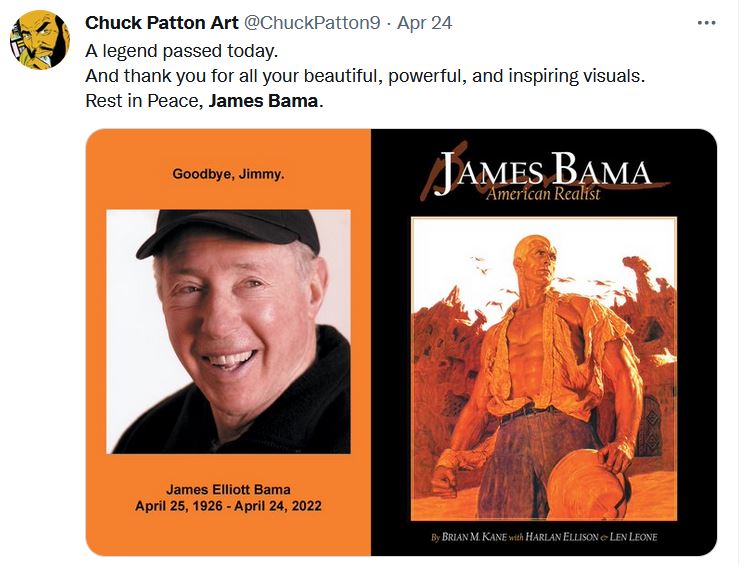
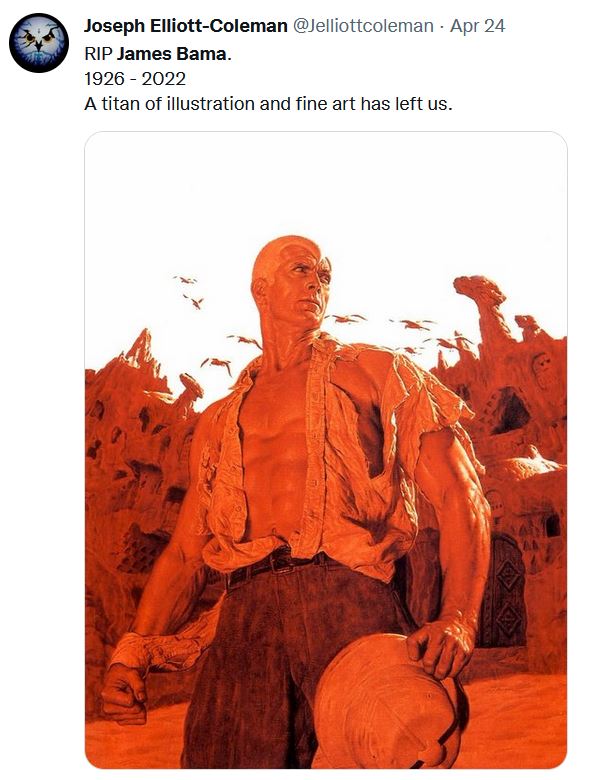
With heavy hearts, we announce that American illustrator and painter James Bama died on April 24, 2022, four days before his 96th birthday.
“Everyone at Fine Art Connoisseur mourns the passing of James Bama, who brilliantly captured both the appearance and the spirit of the American West’s wide-ranging people and landscapes,” said Peter Trippi, Editor-in-Chief. “His artistry helped define a unique moment in the longstanding relationship between illustration and realist fine art, inspiring an audience of admirers worldwide who will remember him with gratitude.”
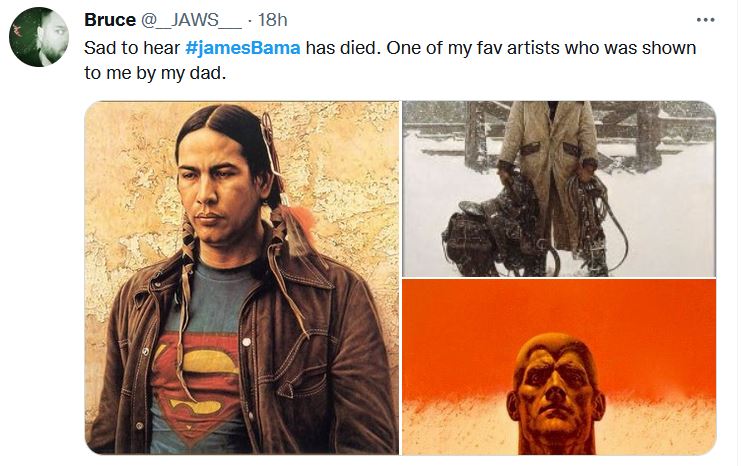
Here, we share some a glimpse of the responses from artists around the globe on the passing of James Bama:
“Anyone who has lived in Wyoming for any length of time has no doubt seen a print of a James Bama painting.
“A portrait so vivid, capturing the essence of the subject’s mood, that one wonders if it might be a photograph. The subject, usually a cowboy, is looking away from the artist, who has finely detailed the person’s clothing and accouterments.
“That was Jim Bama’s style in his later years, and is a large part of his legacy.
“Bama passed away on April 24 at his home in Wapiti. He was 95 years old, and leaves behind scores of art pieces that have stood the test of time.”
Fill your mind with useful art stories, the latest trends, upcoming art shows, top artists, and more. Subscribe to Fine Art Today, from the publishers of Fine Art Connoisseur magazine.




 Download the current issue here