
Home Blog Page 117

Preview The Winter Show

0
Collecting art - The Winter Show
Joseph Wright of Derby (1734-1797), "A Hermit," 1769, Oil on Canvas, 30 x 25 inches; Exhibitor: Lowell Libson & Johnny Yarker Ltd

The 68th edition of The Winter Show takes place April 1–10, 2022 at 660 Madison Avenue, the former flagship location of Barneys New York, following the postponement of the January show due to the surge in COVID-19 cases. Following this temporary move, The Winter Show, a benefit for East Side House Settlement, will return in 2023 to its longtime home at the Park Avenue Armory.

Collecting equine art - The Winter Show
Significant Large-Scale Naïve School Equestrian Portrait Depicting a Grey Horse with Two Attendant Figures and a Dog in a Stylised Landscape with a Country House Beyond, Attributed to “Nathaniel Woodward” English, c.1770, Oils on Canvas, 44.5 x 55 inches; Exhibitor: Robert Young Antiques

More from the organizers:

The 2022 edition features over 60 exhibitors across four floors of 660 Madison Avenue’s iconic building, presenting museum-quality works that span art, antiques, and design, from antiquities to contemporary art. The booths are arranged non-chronologically, allowing for a lively exchange across time periods, regions, artists, and makers. The Show includes a number of thematic presentations and specially curated displays in collaboration with notable designers.

In keeping with The Winter Show’s commitment to presenting works that are the highest standards of quality in the art market, every object that is presented on the Show floor is vetted for authenticity, date, and condition by a committee of more than 120 experts from the United States and Europe.

Collecting art - The Winter Show
Early Ruffled Flower Form Vase, Tiffany Studios, American, circa 1898-1900 Height: 15 in. (38.1 cm); Exhibitor: Lillian Nassau LLC

Exhibitor highlights at the 2022 fair include:

● Boccara (New York, USA) presents a unique tapestry that was designed by Alexander Calder and woven in the Cauquil-Prince workshop in Paris, as well as works by important artists of the modernist era and mid-century tapestry renaissance such as Sonia Delaunay and Jean Lurçat.
● Debra Force Fine Art, Inc., (New York, USA) specializing in American paintings, drawings, and sculpture from the 18th-20th centuries, brings a pastel by James McNeill Whistler, Campanile at Lido – one of his earliest pastels made in Venice upon the artist’s arrival in 1879.
● Milord Antiqués (Montreal, Quebec) features a suite of 17 stained glass panels representing symbolic images of the Old and New Testament by Max Ingrand, alongside fine 18th, 19th and 20th century furniture and works of art ranging from classical pieces to unique modernist designs.
● Richard Green (London, UK) showcases a painting by Pierre Bonnard, Paysage d’automne (environs de Vernon) from 1915, among further paintings by notable artists from the 17th to the 21st century.

Collecting art - The Winter Show
James McNeill Whistler (English, 1834-1903, “Campanile at Lido,” 1879, Pastel and Charcoal on Brown Paper, 8 x 11 7/8 inches; Exhibitor: Debra Force Fine Art, Inc.

For more details, please visit thewintershow.org.


> Visit EricRhoads.com to learn about more opportunities for artists and art collectors, including retreats, international art trips, art conventions, and more.

> Sign up to receive Fine Art Today, our free weekly e-newsletter

> Subscribe to Fine Art Connoisseur magazine, so you never miss an issue

Friday Virtual Gallery Walk for March 25, 2022

0
Friday Virtual Gallery Walk

As part of our effort to continue to help artists and art galleries thrive, we’re proud to bring you this week’s “Virtual Gallery Walk.” Browse the artwork below and click the image itself to learn more about it, including how to contact the gallery.

Spring Flowers & Cezanne, by Elizabeth Floyd, oil, 24 x 36 in.; Anderson Fine Art Gallery


Kitty Kitty (featured in Beneath the Surface opening March 25) by Amanda Greive, Oil on Artefex panel, 24 x 18 in., Signed; Rehs Contemporary


Evening Flight, by Orville Bulman (1904 – 1978), Oil on panel, 10 x 8 in., Signed; Rehs Galleries, Inc.


Rue du Jour, by Jill Banks, Oil on linen, 40 x 30 in.; jillbanks.com


Reclining Nude, by Robert Lemler, oil, 8 x 17 in.; ArtzLine.com


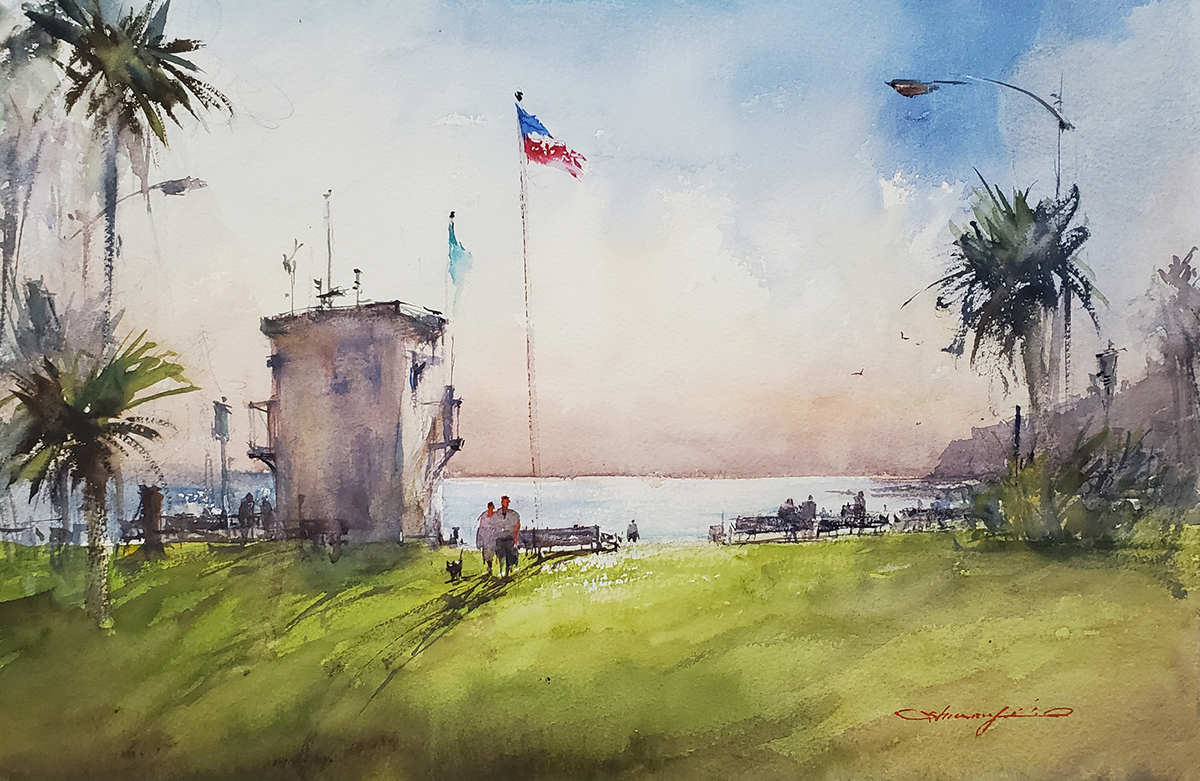
Embarcadero Morning, by David Savellano, Watercolor, 12 x 18 in., 2022; LPAPA Art Gallery

Want to see your gallery featured in an upcoming Virtual Gallery Walk? Contact us at [email protected] to advertise today. Don’t delay, as spaces are first come, first served, and availability is limited.

A Place For Me

0

A PLACE FOR ME: FIGURATIVE PAINTING NOW
Institute of Contemporary Art Boston
icaboston.org
through September 5, 2022

Figurative art - mixed media
DORON LANGBERG (b. 1985), “Sleeping 1,” 2020, oil and colored pencil on linen, 96 x 80 in., collection of Kent Belden and Dr. Louis Re, photo courtesy of Yossi Milo Gallery (New York) and Victoria Miro (London)

Everyone agrees that figurative painting is enjoying a robust revival, so now ICA Boston curators Ruth Erickson and Anni Pullagura have organized an exhibition that highlights eight gifted practitioners they particularly admire.

Working in a range of techniques and styles, the artists featured are David Antonio Cruz (b. 1974), Louis Fratino (b. 1993), Doron Langberg (b. 1985), Aubrey Levinthal (b. 1986), Gisela McDaniel (b. 1995), Arcmanoro Niles (b. 1989), Celeste Rapone (b. 1985), and Ambera Wellmann (b. 1982). All are American except Langberg, who is Israeli, and Wellmann, who is from Canada.

The show’s title, “A Place for Me,” is revealing. All eight of the artists fearlessly depict who they love — including their friends, lovers, and family members — their homes and studio spaces, and scenes of everyday life. Evoking intimacy, community, and the highly personal, these exhibitors consider, in their unique ways, how painting something or someone might register care, tenderness, fragility, empathy, or resilience.


> Visit EricRhoads.com to learn about more opportunities for artists and art collectors, including retreats, international art trips, art conventions, and more.

> Sign up to receive Fine Art Today, our free weekly e-newsletter

> Subscribe to Fine Art Connoisseur magazine, so you never miss an issue

124 Paintings and Sculptures from American Women Artists

1
American Women Artists painting
DIANNE MASSEY DUNBAR (b. 1952), "Rain on Windshield: Red Light," 2019, oil on panel, 30 x 30 in.

BREAKING THROUGH: THE RISE OF AMERICAN WOMEN ARTISTS
Customs House Museum & Cultural Center
Clarksville, Tennessee
americanwomenartists.org and customshousemuseum.org
Through May 29, 2022

The Customs House Museum & Cultural Center is set to host a juried selling exhibition of 124 paintings and sculptures created by members of American Women Artists (AWA). This nonprofit organization has members throughout the U.S. and (increasingly) Canada, and this is the sixth show in its campaign to have 25 museum shows over 25 years. More than 940 entries were received, from which 99 two-dimensional pieces and 25 three-dimensional ones were selected, ranging in approach from representational to abstract.

Customs House exhibitions curator Terri Jordan is busy preparing the accompanying catalogue, which will contain an introduction by Prof. Amy Von Lintel (West Texas A&M University). AWA will present its awards program online, including a grand prize of $10,000 and more than $20,000 in additional prizes of merchandise and advertising space. Also offered online will be a symposium featuring the collector-patrons Steven Alan Bennett and Dr. Elaine Melotti Schmidt, Georgia Museum of Art director William Eiland, and art historian Jann Haynes Gilmore.

AWA has offered encouragement to female artists since it emerged from the Women Artists & the West exhibition series mounted by the Tucson Museum of Art (TMA) between 1991 and 1994. Former TMA director Robert Yassin recalls that the exhibitions’ purpose was not to redefine history, but rather to provide a venue for contemporary women artists addressing Western themes. Since then, AWA has expanded beyond the Western genre to embrace both representational and abstract artists from all regions of the U.S., as well as Canada.

The  Customs House Museum and Cultural Center is Tennessee’s second largest general interest museum, featuring fine art, history, and children’s exhibits spread across 35,000 square feet. Its striking building was constructed in 1898 as a federal post office and customs house to handle the large volume of foreign mail created by Clarksville’s international tobacco business, and was added to the National Register of Historic Places in 1972. Once seen, the building is seldom forgotten, thanks to its steeply pitched roof, elaborate ornamentation, and eclectic mix of architectural styles, including Stick, Queen Anne, Italianate, Romanesque, Flemish, and Gothic.


> Visit EricRhoads.com to learn about more opportunities for artists and art collectors, including retreats, international art trips, art conventions, and more.

> Sign up to receive Fine Art Today, our free weekly e-newsletter

> Subscribe to Fine Art Connoisseur magazine, so you never miss an issue

One Each: Still Lifes by Five French Painters

0
Impressionism - Manet still life painting
Édouard Manet (1832–1883), France, “Fish (Still Life),” 1864, oil on canvas, Art Institute of Chicago; Mr. and Mrs. Lewis Larned Coburn Memorial Collection, 1942.311

Impressionism Art On View > “One Each: Still Lifes by Cézanne, Pissarro and Friends” focuses on still life paintings by five French painters, all created in the mid-1860s, the formative years of Impressionism. This single-gallery special exhibition, organized in partnership with the Toledo Museum of Art, will be on view at the Cincinnati Art Museum through May 8, 2022.

Cincinnati Art Museum’s “Still Life with Bread and Eggs,” a masterpiece by Paul Cézanne, and Toledo Museum of Art’s equally significant “Still Life” by Camille Pissarro—cornerstones of two of Ohio’s great public art collections—form the basis of the exhibition. They are on view with a starkly confrontational still life of freshly caught fish and crustaceans from the hand of Édouard Manet, regarded as the father of modern painting, and another by the underappreciated artist Frédéric Bazille, paintings from the Art Institute of Chicago and the Detroit Institute of Arts, respectively. A rare early still life by Claude Monet from the National Gallery of Art rounds out the grouping.

Impressionism paintings
Claude Monet (1840–1926), France, “Still Life with Bottle, Carafe, Bread, and Wine,” circa 1863–63, oil on canvas, National Gallery of Art, Washington, DC; Collection of Mr. and Mrs. Paul Mellon, 2014.18.32
Impressionism still life painting - Cezanne
Paul Cézanne (1839–1906), France, “Still Life with Bread and Eggs,” 1865, oil on canvas, Cincinnati Art Museum; Gift of Mary E. Johnston, 1955.73

“The paintings in this exhibition, one each by five members of the Impressionist avant-garde, display their artists’ mastery of technique and upending of artistic convention at a precise moment in the mid-1860s. These innovations would have long-reaching effects on the conception and practice of art, making the paintings textbook examples and their makers household names,” says Dr. Peter Jonathan Bell, Cincinnati Art Museum’s Curator of European Paintings, Sculpture and Drawings. Bell organized the exhibition along with Lawrence W. Nichols, Toledo Museum of Art’s William Hutton Senior Curator, European and American Painting and Sculpture before 1900.

Bazille still life painting
Jean-Frederic Bazille (1841–1870), France, “Still Life with Fish,” 1866, oil on canvas, Detroit Institute of Arts; Founders Society Purchase, Robert H. Tannahill Foundation Fund, 1988.9

Two works from the Cincinnati Art Museum’s permanent collection add historical context to the Impressionist paintings: a work by Pieter Claesz, a seventeenth-century Dutch painter renowned for his realistic still lifes, and a Cubist work by French painter Georges Braque, which reflects the Impressionists resounding influence in the twentieth century.

Still life paintings - Pissarro
Camille Pissarro (1830–1903), France, “Still Life,” 1867, oil on canvas, Toledo Museum of Art; Purchased with funds from the Libbey Endowment, Gift of Edward Drummond Libbey, 1949.6

“The exhibition’s core works from the 1860s are thematically tight: arrangements of food and tableware. These extraordinary works reflect their artist’s obsession with the instantaneous quality of observing the world around us—light, movement—and translating that into paint on canvas. They achieve this in astounding and unprecedented ways,” said Bell.


> Visit EricRhoads.com to learn about more opportunities for artists and art collectors, including retreats, international art trips, art conventions, and more.

> Sign up to receive Fine Art Today, our free weekly e-newsletter, featuring Impressionism, Contemporary Realism, and more

> Subscribe to Fine Art Connoisseur magazine, so you never miss an issue

Art, Tradition, and Telescopes

0
Traditional art - John Brosio, "Night Hunt," 27 x 36 inches, Oil on linen
John Brosio, "Night Hunt," 27 x 36 inches, Oil on linen

An essay on traditional art, written by an artist

by John Brosio

What interests me most about writing this article is that I don’t know what to say.

In many ways I don’t consider myself a “painter.” Yes, that is what I do, but I don’t think I aspire to it, per se.. I feel that it is more incidental than anything. I am certainly compelled by some of my notions, my opinions, and painting is my means, my way of realizing and exploring those various ideas. My best imagery is the result of a good fight with relationships, proposals, and “what ifs.” Shoot, I almost continued with film in college. As a kid I made my own little abstract films. I even remember asking my mom, when I was in fourth grade, if I could have a hundred million dollars or so to make a movie. She laughed, of course. I think I even sighed and walked back over to my drawing pad to continue with what I was doing.

Traditional art - John Brosio, "Fatigue," 48 x 60 inches, Oil on linen
John Brosio, “Fatigue,” 48 x 60 inches, Oil on linen

I am thankful for and enjoy the little realm of exploration in painting that luck and other things have afforded me, but I still don’t feel as if I always fit in. I still see lots of paintings at art fairs and galleries of idealized women walking in the surf, contemplating the intersection of orgasm and meaning. I see paintings of contrived, studio lighting dashed over otherwise majestic subject matter like ranch dressing on Kobe beef. I see thick paint, which of course denotes “meaning.” And oh . . . paintings of floating nudes. Tons of paintings of floating nudes, which assume and depend on that pervasive default fetish for “the figyur.”

And then there’s Warhol (see Robert Hughes).

I guess it was always like this. And will always be like this to some degree.

But must I only gripe?! Not at all. I like some of the things coming out England, like Justin Mortimer. I like Matthias Weischer in Germany (less so the Hockney stuff). These artists are trying something. Wayne Thiebaud still addresses color, mass-produced art, and excess better than Warhol.

I like Tara Donovan too.

But to focus in I am very suspicious of what people are calling “traditional” art. I think that folks have to be very careful with “traditional” because painting in many cases is no longer any of the things it was ever used for. The notion of context goes rather unaddressed I think.

John Brosio, "State of the Union," 41 x 66 inches, Oil on linen
John Brosio, “State of the Union,” 41 x 66 inches, Oil on linen

Look, for purposes of analogy, to Galileo (who was born, FYI, three days after the death of Michelangelo). Building that telescope was compulsion. It was need. Only four decades prior the Catholic Church burned Giordano Bruno alive for putting forth essentially what Galileo proved with that little telescope.

That push against comfort, that progress, has palpably continued along in science to this day, where the most learned among us now say that what you are viewing through Galileo’s telescope (or anything else) is actually not entirely there if you are not viewing it directly and collapsing it by way of perception into a wave function. Huh? What? Hard science too now tells us that the universe is probably predetermined to a great degree and that free will is an illusion. Huh? What? These are disconcerting, almost scandalous notions to some, ideas that might get scientists in trouble with any variety of Church.

Or bring them hate mail.
For doing math.
Or for building a telescope.

John Brosio, “Edge of Town study,” 19 x 25 inches, Oil on linen
Paintings of tornadoes
John Brosio, “Edge of Town 7,” 40 x 48 inches, Oil on linen

So if I were to attend a science fair, a supposed meeting of top minds and wonderfully pointy proposals, how disappointed would I be if there were row upon row of homemade telescopes to every one cosmologist?

Just how I feel sometimes is all.

But don’t get me wrong: there is a wonderful culture of amateur astronomers who trade in backyard telescopes. Some have even built their own, if only to go through that first experience, to navigate some of what Galileo felt. That experience is beautiful and elevating. Human and universal.

But no such devices are ever put up anywhere near the summit of exploration.

So. Back to art.

Traditional art - John Brosio, "BFF," 27 x 36 inches, Oil on linen
John Brosio, “BFF,” 27 x 36 inches, Oil on linen

I know a lot of wonderful painters I am proud to call friends. Painters who are trying things. And I see a lot of them struggling in painful competition with rather pedestrian works. One wants so much to find a place to lay some kind of blame for this but that is a mistake perhaps.

All of art and progress is a continuous struggle to elevate us above our nature, and this pursuit can never be abandoned. There will always be a competition with “beautiful” and that is by design. But again, don’t get me wrong: It is in the end a question of sensibilities, no matter what kind of work is being produced. Jeremy Lipking, for example, does what we call “traditional” art. His work is dazzling with regard to the reasons for which it is painted. One can never produce work of that nature, of a traditional sort, and not be responsible to at least that level of aesthetic.

Think about it: Madame Butterfly with world-class singers is amazing. Madame Butterfly with less than world-class singers is silly. “Tradition” has to hold up what has been achieved, not just imitate it or quote it. And the sensibilities have to be there in any successful work, traditional or not. But the folks who buy Lipking have a hard time considering George Herms, Llyn Foulkes, Frank Auerbach, or even David Park, for instance, all of whom champion amazing sensibilities in art that few would call “traditional.”

I wish it were not the case, this latter dynamic. I wish that any consumer could transition back and forth without hesitation between Monet, Turner, and Gustav Klimt on the one hand and artists like Max Beckman, Ed Kienholz, or Kathe Kollwitz on the other.

John Brosio, "Bride in Headlights," 12 x 18 inches, Oil on linen
John Brosio, “Bride in Headlights,” 12 x 18 inches, Oil on linen

We are at the point now where no one, in my opinion, can make a great representational painting anymore and not incorporate the contributions of de Kooning, Diebenkorn, and Pollock. Likewise, no one can make great abstract painting without Velazquez and Da Vinci.

I have even seen self-professed Beethoven fans wince upon hearing his late string quartets like Op. 131. They like Beethoven but as soon as he starts trying something I guess he needs to be edited, huh . . .

And there is still a kind of “art smug” in the air as well over some supposed conflict between abstract and representational work, and that is getting to be a little tired, but I digress.

Here is another take on “traditional” just to end this rant:

If someone wants to engage in tradition, to be connected to the Renaissance, they can also participate directly in what the Renaissance has become. Anywhere you find that continuing, compulsive fever of exploration—in aeronautics, film, medicine, cosmology, art, all of it, you can trace it directly back to the first moments of what occurred in Italy. Folks who call themselves “traditional” artists might have a harder time with their label once they realize that 3D filmmaking has as much to do with the traditions of the Renaissance as do paint and brush.

The Renaissance was a time in which art and science were inseparable. Think about creating an art piece during the Renaissance that brings what are now so many disparate disciplines together—top minds of every pursuit—to create a machine that is designed to explore who we are. Think of combining craft, imagery, technology, engineering, and motion, and having it search for who are and where we’re going.

Then perhaps call it the Hubble Space Telescope.

And think on traditional art.

(The above was originally published in Artists on Art, sister publication to Fine Art Today.)

Since writing this the world has hiccupped a bit. All the Climate Change deniers are awfully quiet of late – for good reason.

I hope they stay that way.

And a pandemic has exposed corner-cutting weaknesses across all of human endeavor.

But the Webb telescope has not only just been launched; it is testing well and is expected to afford us the observations and data that could in some way impart the very kind of morale and innovation we need to get out from under some very dire predictions.

Maybe.

Learn more about John Brosio at www.johnbrosio.com.


> Visit EricRhoads.com to learn about more opportunities for artists and art collectors, including retreats, international art trips, art conventions, and more.

> Sign up to receive Fine Art Today, our free weekly e-newsletter

> Subscribe to Fine Art Connoisseur magazine, so you never miss an issue

Friday Virtual Gallery Walk for March 18, 2022

0
Friday Virtual Gallery Walk

As part of our effort to continue to help artists and art galleries thrive, we’re proud to bring you this week’s “Virtual Gallery Walk.” Browse the artwork below and click the image itself to learn more about it, including how to contact the gallery.

oil painting in
Chrysalis, Judith Pond Kudlow, oil, 44 x 29 in.; Anderson Fine Art Gallery


oil painting of man walking away
ZAP by Nigel Cox (featured in Beneath the Surface opening March 25), Oil on Artefex panel, 30 x 30 in, Signed; Rehs Contemporary


oil painting of hippos hanging out by water
Hot Hippos by DAVID SHEPHERD (1931 – 2017), Oil on canvas 9 x 16 in, Signed; Rehs Galleries, Inc.


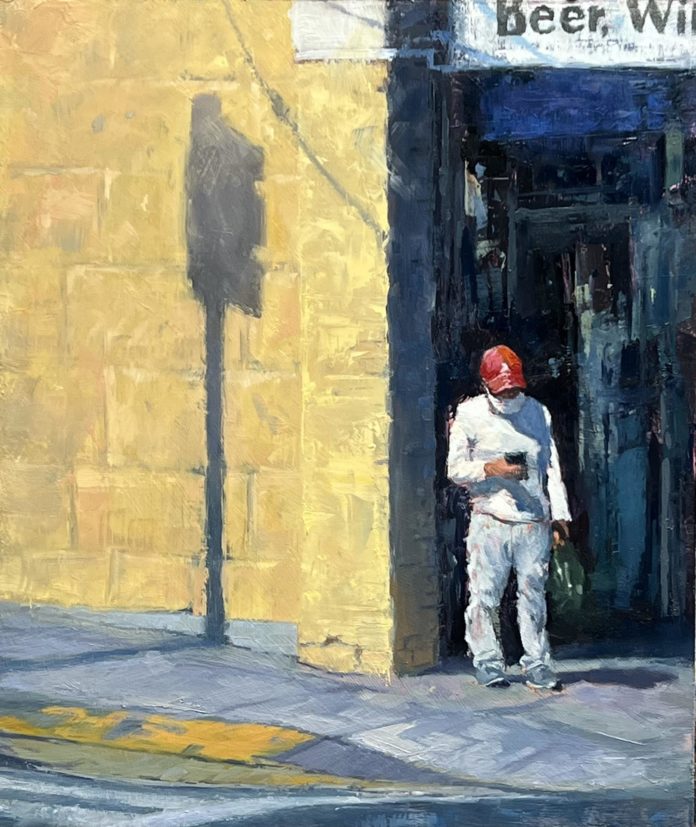
oil painting of man walking through flowers
City Blooms, Jill Banks, Oil on linen, 30 x 30 in; jillbanks.com


oil painting of desert scene
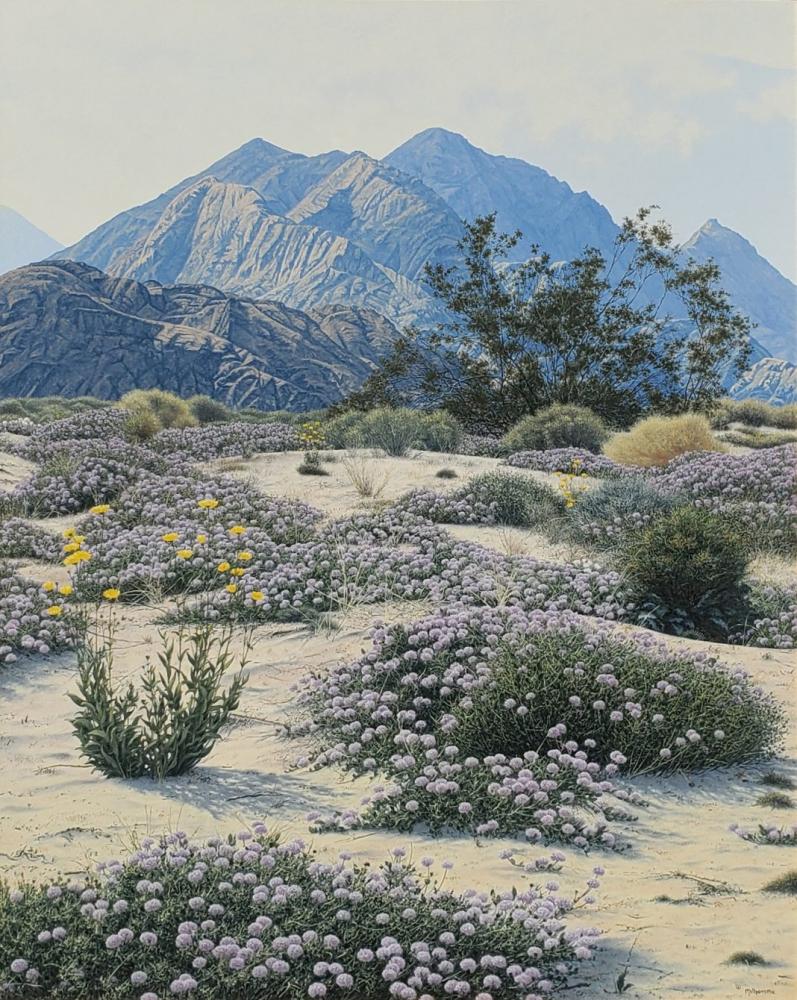
Glenn Dean, California Landscape, oil, 16 x 20 in.; ArtzLine.com

Want to see your gallery featured in an upcoming Virtual Gallery Walk? Contact us at [email protected] to advertise today. Don’t delay, as spaces are first come, first served, and availability is limited.

Artist Spotlight: Jean K. Schwartz

0
Jean K Schwartz in her studio

How do you find inspiration?

Jean K. Schwartz: I am inspired by light and atmospheric effects in nature as well as in urban scenes. I have a clear memory of standing in awe in front of a Sanford Gifford luminist painting at the Metropolitan Museum when I was 10 and asking “how did he paint the air?” That is the quality that interests me most in paintings and what is the main focus in my own work.

I am especially drawn to dawn and dusk as I love the colors and sense of mystery that the lower light and more softly defined forms bring to the landscape. I focus on the places I know best and while I sometimes use a plein air sketch or photos as a reference I often paint from memory which I really enjoy doing. Sometimes all it takes is a beautiful sky to take me back to a moment that I remember in a place I love and the painting will spring from that memory.

What is the best thing about being an artist?

Jean K. Schwartz: Recently my cousin paid me the compliment of telling me, “you have a gift that brings pleasure to others.” Expressing a personal moment in time and having it resonate with others is a large part of what I enjoy about being an artist. The connection we have through common experience and memory inspired by a painting is one of the things that is so wonderful about art.

There is also the joy of painting, at least most of the time it is a joy but there are plenty of frustrations too. Still, working through those is rewarding and often the most challenging paintings are the ones that mean the most to me. I also love being a part of a community of artists and I cherish the friendships I have made through sharing this passion for art.

To see more of Jean’s work, visit: www.jeanschwartzpaintings.com 

Jean K. Schwartz, Once Upon a Mountain, 20 x 24 in, oil on panel, 2021
oil painting of sunset
Jean K. Schwartz, Softly Rests the Day, 20 x 25 in, oil on canvas. 2021

Watercolors of a Remote Paradise

0
Watercolor by James Foot

On View: “Το Χωριό Μου” / “My Village”
An exhibition of new watercolour paintings, exclusively of Kyparissi, by James Foot

For the artist James Foot, staying local for the past two years was positive, as he has little desire to go anywhere else after making Laconia his home 20 years ago. The gift of being home enabled him to dedicate his wok to his beloved, remote village of Kyparissi, Lakonia.

Watercolor by James Foot

His third solo exhibition at Image Gallery, taking place through March 20, 2022 features over 30 paintings exclusively of Kyparissi and its environment. The works enchant with the romance of village life and transport the viewer to idyllic scenes of Kyparissi’s old houses by the shore, hidden corners in the old village of Vrisi, grand mountainous vistas, and also of daily life; like his laundry flapping in the wind, portraits of a strutting rooster, overgrown stairways near the precious water source. In ancient times, an Askleipion was a sanctuary with healing waters dedicated to the Greek God of Medicine Asclepius.

Watercolor by James Foot

The works remark heavily on the crisp clarity of light in Greece, so bright that James must squint to see. He paints the colors separately, the results looking almost like stained glass. The body of work describes both looking into light & also the effect of light on subjects, how light infuses an object with all the power of the Greek sun and throws intense indigo shadows.

Watercolor by James Foot

More About the Artist: James Foot is a British watercolour painter who lives permanently in Greece in a small village by the sea in Lakonia, southern Peloponissos, called Kyparissi. Originally from London, the artist James Foot has long lived in Greece and continues to exhibit internationally in England, Spain, America, Luxembourg & Gibraltar – where another exhibition is planned to open March 31, 2022. Later in the summer, James will show works at Orloff, Palio Limani (Old Harbour), Spetses.

His studio work originates from works painted en plein air, a form of painting done on location, usually outdoors, and he conducts 2 workshops per year that are exclusively en plein air.

James has completed notable commissions including a stunning label for Monemvasia Winery’s Mura Rossa, a 2010 vintage, the Handover Ceremony of Hong Kong from Britain to China, and the last visit of The Britannia to Gibraltar commissioned by British Navy & the Govt of Gibraltar.

Visit the artist’s website at jamesfootwatercolours.com.


> Visit EricRhoads.com to learn about more opportunities for artists and art collectors, including retreats, international art trips, art conventions, and more.

> Sign up to receive Fine Art Today, our free weekly e-newsletter

> Subscribe to Fine Art Connoisseur magazine, so you never miss an issue

Artist to Watch: Lucas Bononi

0

There is a lot of superb contemporary realism being made these days; this article by Allison Malafronte shines light on a gifted individual.

Still life paintings of roses
LUCAS BONONI (b. 1991), “Dried Roses,” 2020, oil on linen, 36 x 24 in., available from the artist

LUCAS BONONI (b. 1991) has worked persistently to reach the position in which he now finds himself: an emerging realist earning the admiration of a wide range of collectors, fellow painters, and art professionals. The Los Angeles-born and New York City-based artist has been creating art full-time since 2014, a pursuit that entailed several sacrifices to make his dream a reality. To that end, Bononi believes in mastering the business side of his profession and spends as much time educating himself about marketing and selling his art as he does creating it.

He is, in that sense, a quintessential millennial: entrepreneurial, resourceful, and eager to achieve what matters most to him.

Bononi’s early dedication to building a business carried with it the realization that his finances (and life) might initially be in the red before he would see the fruits of his labor. The artist was willing to take that gamble.

In 2012, Bononi decided to quit his day job and live in a small subsidized studio while relying on a food bank for groceries so he could officially launch his art business and complete his degree.

In 2016 he earned a B.F.A from San Francisco’s Academy of Art University, and the following year — eager to uncover yet another layer of the mysterious art of masterful painting — he moved to New York City in order to attend the Grand Central Atelier.

Today, in his last semester there and with business picking up, Bononi has settled into a disciplined studio practice, where he creates stylistically multi-dimensional paintings like the striking “Dried Roses,” pictured above.

This still life was created in April 2020, relatively early in the COVID-19 lockdown, and captures the tense and wild mix of emotions the world was facing then.

“Roses have been the subject of many beautiful paintings in history,” the artist says. “In ‘Dried Roses’ I wanted to capture these flowers after they had wilted and dried up in an attempt to bring them back to life through color and brushwork.”

Connect with the artist at lucasbononi.com.


> Visit EricRhoads.com to learn about more opportunities for artists and art collectors, including retreats, international art trips, art conventions, and more.

> Sign up to receive Fine Art Today, our free weekly e-newsletter

> Subscribe to Fine Art Connoisseur magazine, so you never miss an issue

WEEKLY NEWS FROM THE ART WORLD

Fill your mind with useful art stories, the latest trends, upcoming art shows, top artists, and more. Subscribe to Fine Art Today, from the publishers of Fine Art Connoisseur magazine.

  • This field is for validation purposes and should be left unchanged.