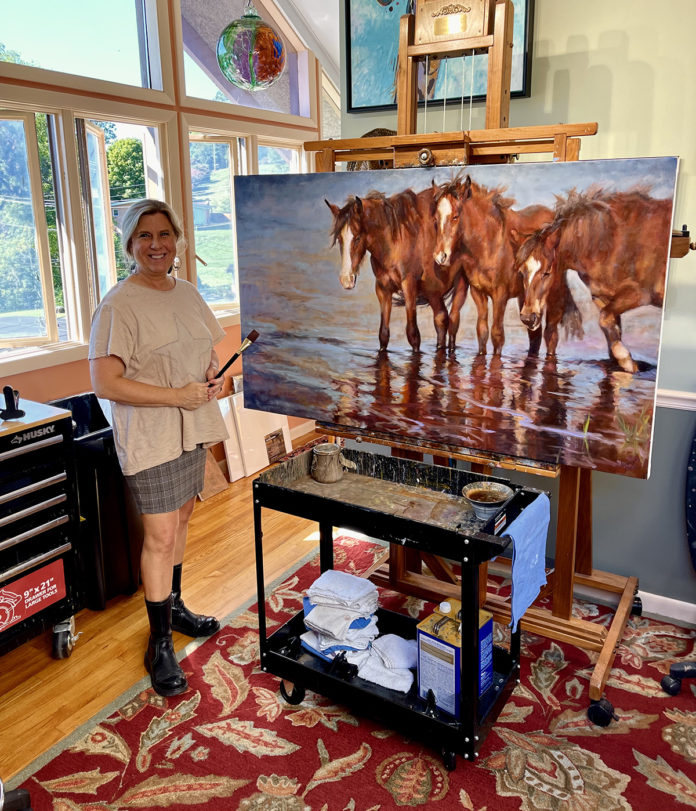
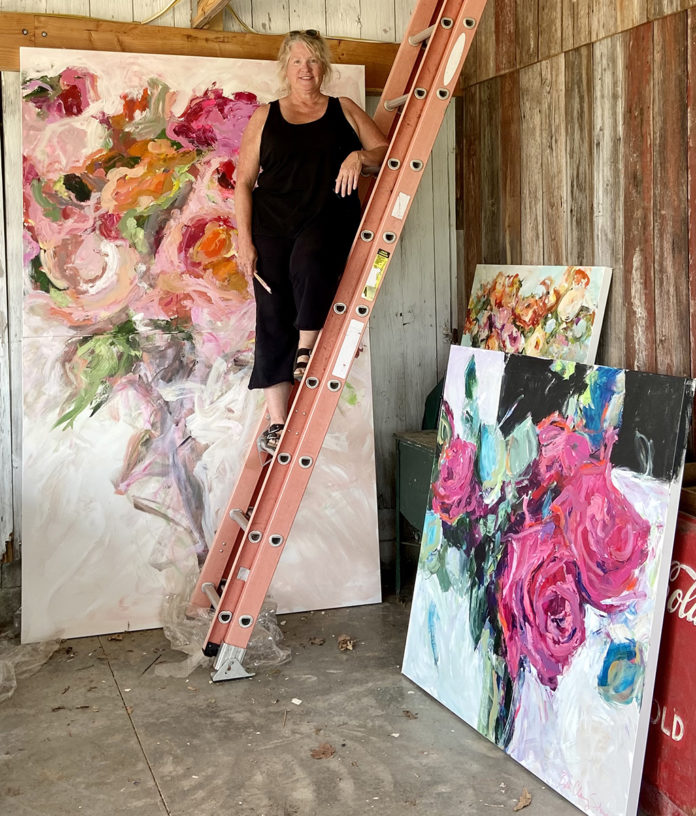
Jenny’s studio with “Reflections,” 36 x 60 in., oil, 2021
What is the best thing about being an artist?
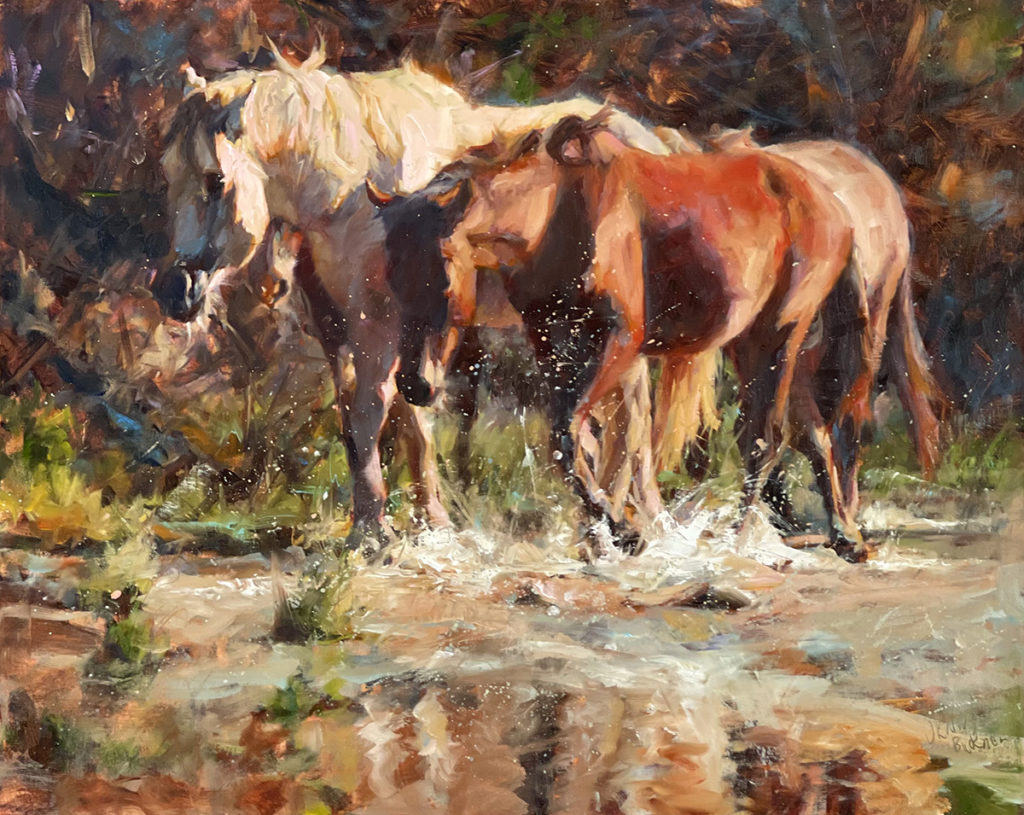
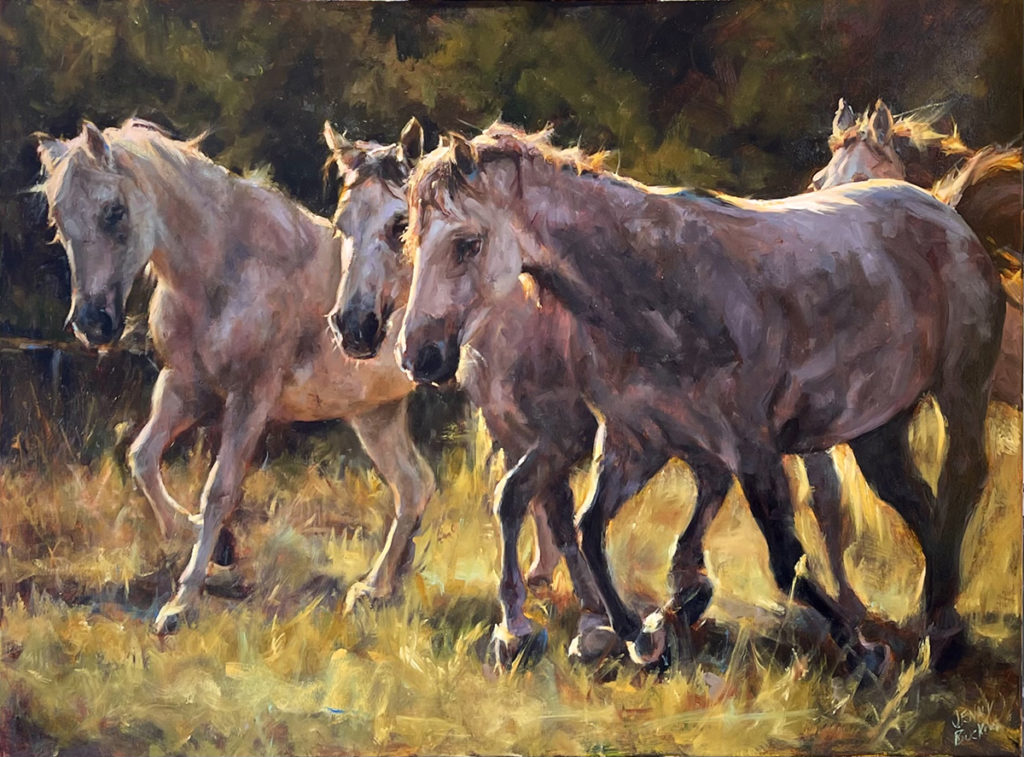
Jenny Buckner: The best thing about being an artist is waking up every day and being excited about my job. It encompasses all my passions: photography, working with my hands, nature, the outdoors, color, design, and light. I can use all these, to tell you about my world, in a painting.
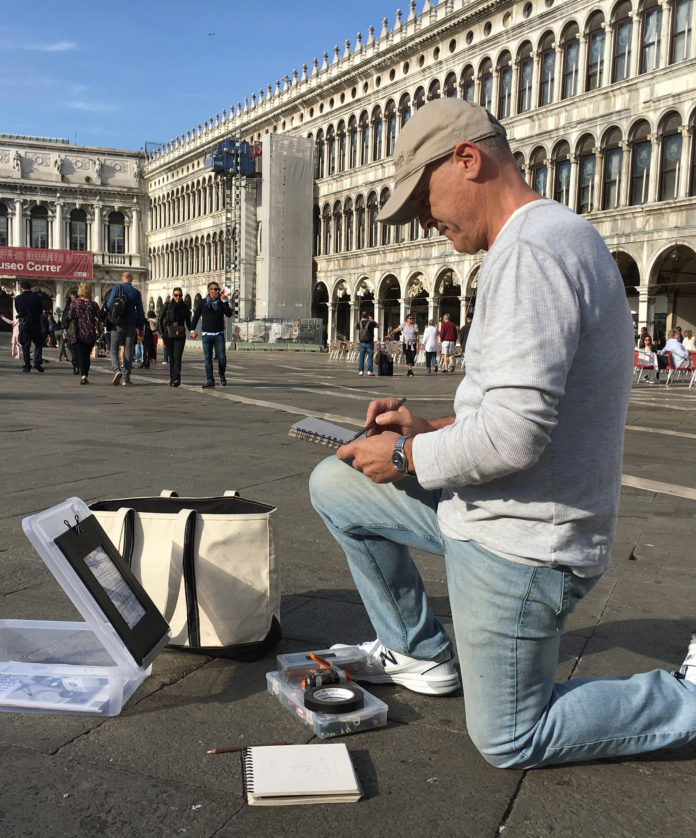
The artist Jon deMartin (b. 1955) has spent much time in Venice drawing, painting, and studying the methods of the many historical Venetian masters who have long inspired him.
Over the years, his annual visits have prompted a subtle “sea change” in his artistry, a move from a naturalistic approach to one that is — in his words — “more felt,” more reliant on his own drawings and his own memory. This evolution has been somewhat surprising even to deMartin, who is hardly a newcomer to art. A native of Wilmington, Delaware, he graduated from Brooklyn’s Pratt Institute with a B.F.A. in filmmaking, then studied fine art in Manhattan at the Art Students League, School of Visual Arts, and New York Academy of Art, as well as privately with Michael Aviano.
Throughout his Venetian initiative, deMartin has “sought to work out a reliable method that supports what I want to express, because how I approach the painting, on the technical side, profoundly influences the outcome. This has been a fascinating, difficult, and passionate adventure, during which I have developed a certain degree of confidence in my process so I that can focus on the idea.”
Ever the educator, deMartin has lectured about this aesthetic journey at such institutions as Studio Incamminati (Philadelphia) and Grand Central Atelier (New York City). His talks are peppered with relevant quotations by the greats of art history, from Leonardo to Hopper, and illustrated by examples of his own work at every stage of the process.
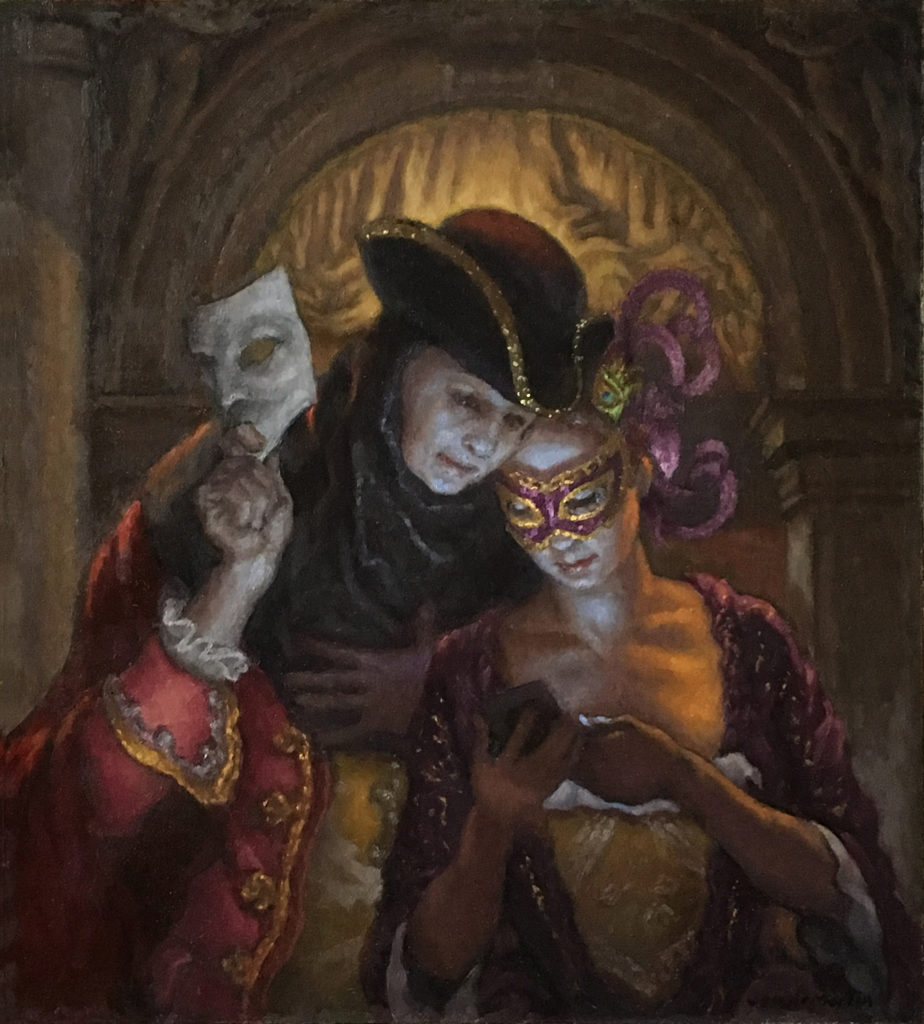
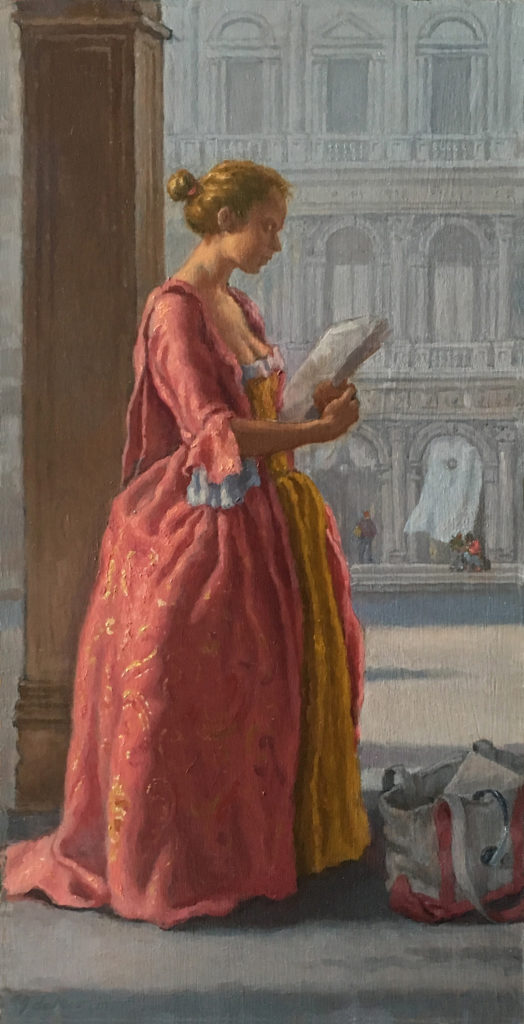
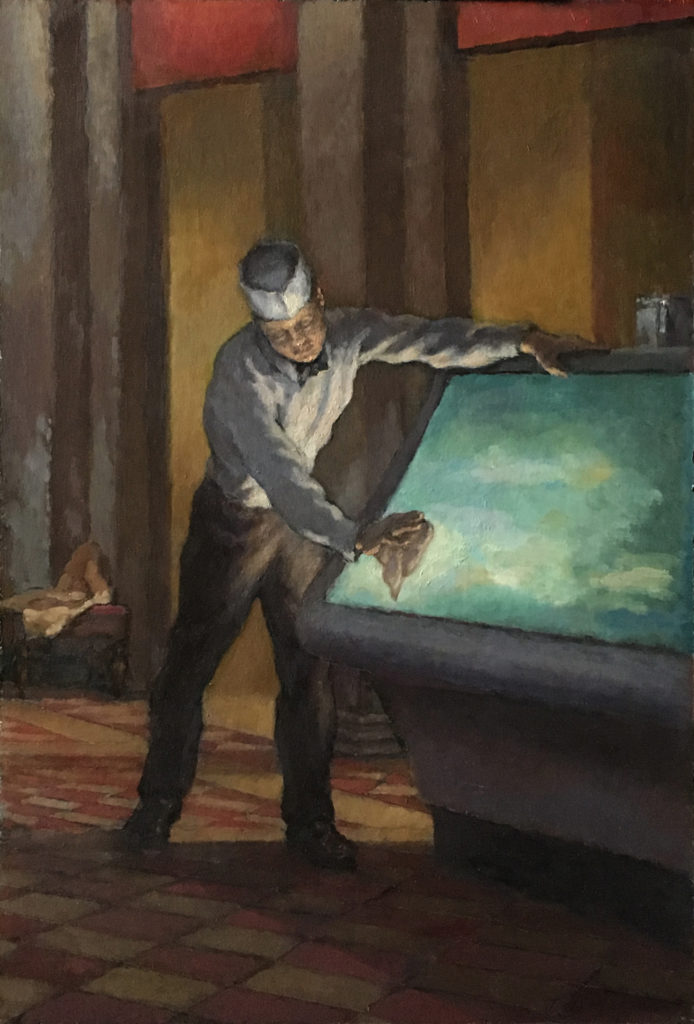
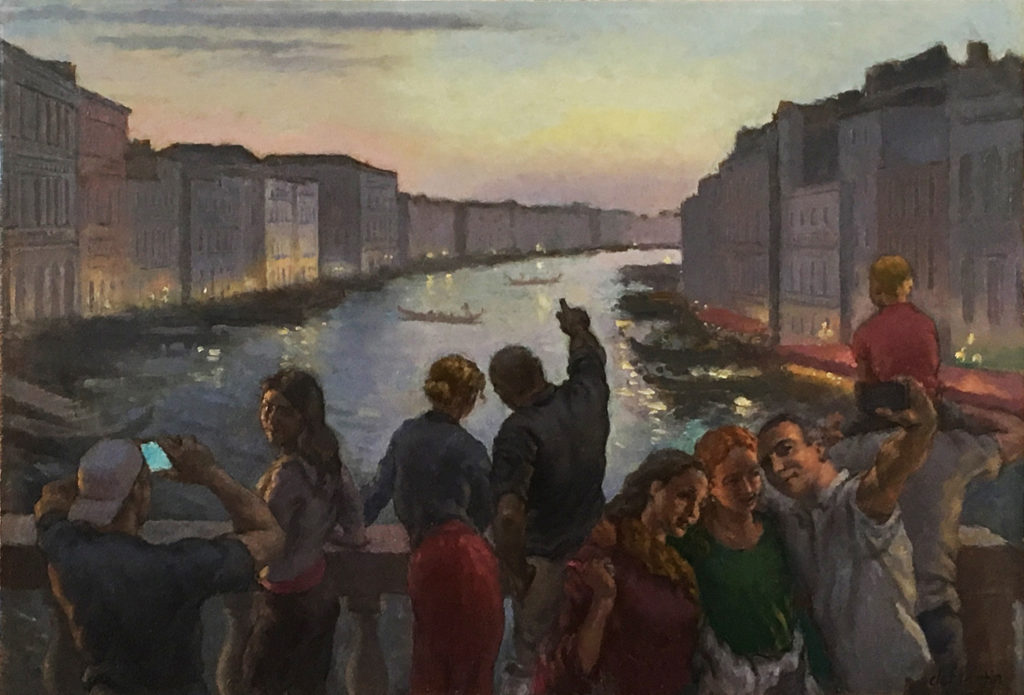
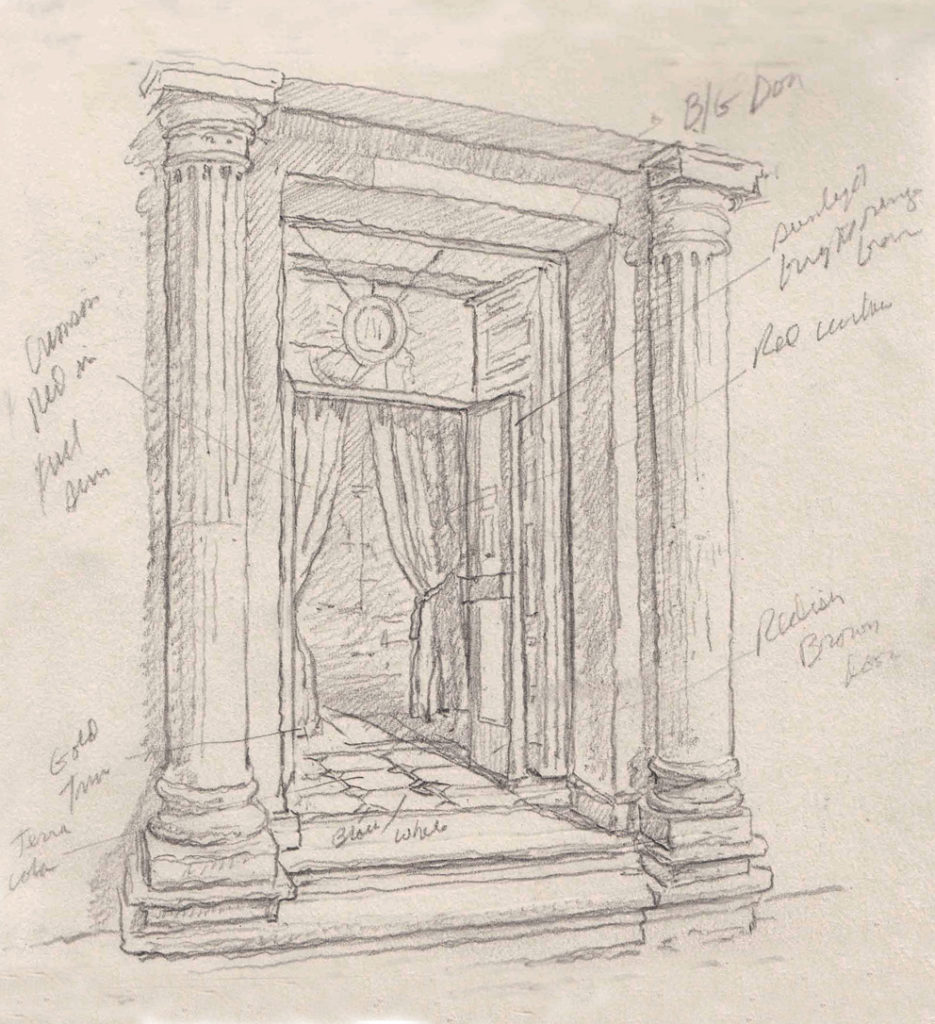
Illustrated here are a few of his paintings of Venetian subjects, and also an architectural study he drew there. Note the recurrence of smart phones in these scenes: deMartin is not seeking to turn back time, but rather to show the city and its people as they are today.
Jon deMartin, “Text Message,” 2019, oil on wood, 15 x 13 1/2 in., collection of the artistJon deMartin, “Program Seller,” 2019, oil on wood, 18 x 12 in., collection of the artistJon deMartin, “Closing Time,” 2019, oil on wood, 16 x 11 in., collection of the artist
SELECTING THE ESSENTIALS
At the heart of deMartin’s self-discovery is his decision to no longer paint from life, but instead from drawings he has made from life, and also from his own memory. He stresses that the act of drawing forces the artist to “select the essentials,” eliminating the clutter of what does not matter. On occasion, he concedes, his photographs of a model or setting become useful in double checking backgrounds or colors, but never can a photograph select the essentials as a drawing does.
Logically, deMartin begins with the idea, allowing nothing to impede his imagination — especially reality. He always has paper and pen handy in case inspiration strikes unexpectedly, and he sees his compositional drawing as the initial “gesture” of the painting that will ultimately emerge. During its preparation, important questions may arise, such as, “Is this painting going to be about the figures or the setting?”
Having drawn a composition, no matter how tentatively, deMartin begins to draw figure poses from his imagination. Like past masters, he also feels free to borrow poses from historical sources, which is why having a good art library is helpful. He urges his students to conceive and draw the main figure, the background figures, the props, and the setting before they hire a single model or go outdoors: “I have wasted precious modeling time and money by not being prepared,” deMartin admits.
Once the models arrive, the artist makes drawings that purify their forms down to the essentials, always depicting them nude before drawing them clothed. DeMartin also draws the entire pose even if part of the body will be cropped out later. He notes that experienced models can provide unanticipated insights, but, like actors in rehearsal, they need a clear-headed director who already has a compositional drawing (or script) well underway. Having continuously sought to strengthen the image’s overall graphic power, deMartin “squares up” the final compositional drawing in order to transfer it to the canvas that he will paint.
Jon deMartin, “Grand Canal at Dusk,” 2018, oil on wood, 14 x 20 in., collection of the artist
After finalizing his color palette so that he can concentrate on the act of painting, deMartin begins to integrate his drawings of the models or architecture. Knowing that he may have to adjust the composition as the painting process unfolds, his goal now is to create “expressive, three-dimensional lines with spontaneous and flowing figures.” This approach means deMartin has abandoned the use of cartoon transfers (which, he says, “force me to color between the lines”) and of oil sketches (“which use up all of my expressive energy before I even get to the final canvas”).
Jon deMartin, “Chiesa San Zulian,” 2019, graphite on paper, 7 x 7 in., collection of the artist
Reasonable as this approach may seem to laymen, it is still not fully understood in the world of American classical ateliers. Fortunately, this is a free country, without a nationalized system of art instruction, so deMartin can do as he wishes, and we all can enjoy the results illustrated here. We at Fine Art Connoisseur look forward to seeing what comes next from his lively brushes and pens.
At Pennsylvania State University, the Palmer Museum of Art is rapidly approaching its 50th anniversary. Its leaders are busy constructing an impressive new building, but that won’t prevent them from using the current one to host a year-long series of celebratory projects.
They will kick it off with the exhibition “An American Place,” which presents highlights from the superb collection of American art bequeathed by the museum’s lead philanthropist, Barbara Palmer (1926–2019).
Assembled over three decades with her husband, James, this trove contains paintings, works on paper, and sculpture dating from the 1870s through the 1970s.
Among the artists represented are Milton Avery, Romare Bearden, Thomas Hart Benton, Charles Burchfield, Paul Cadmus, Mary Cassatt, Frederic Edwin Church, Arthur Dove, Marsden Hartley, Winslow Homer, Jacob Lawrence, Georgia O’Keeffe, and George Tooker.
> Visit EricRhoads.com to learn about more opportunities for artists and art collectors, including retreats, international art trips, art conventions, and more.
> Sign up to receive Fine Art Today, our free weekly e-newsletter
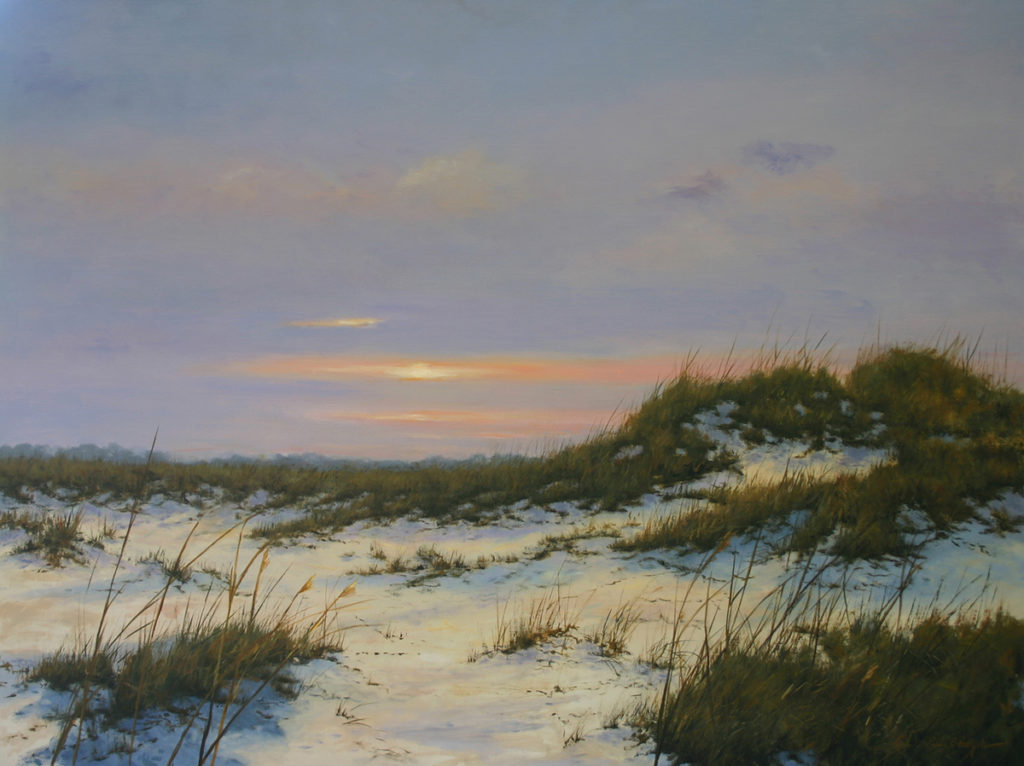
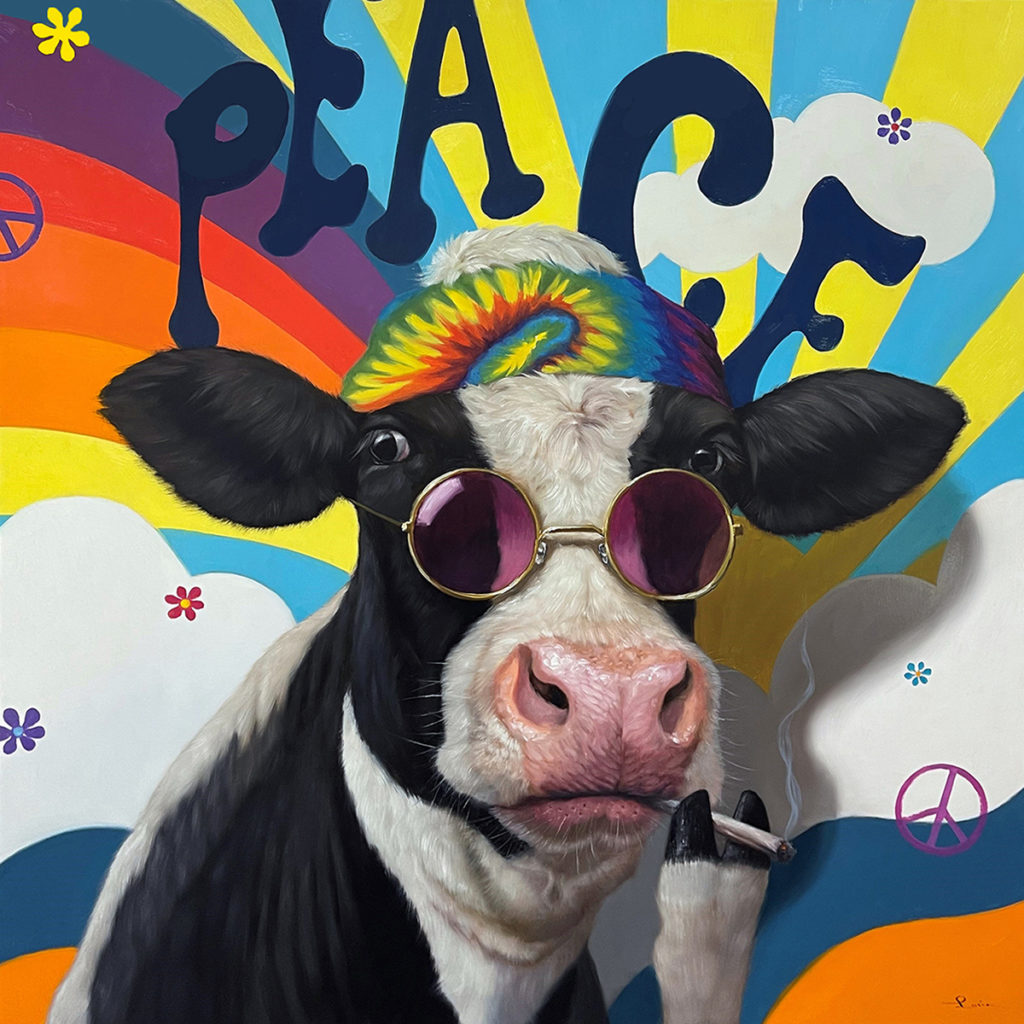
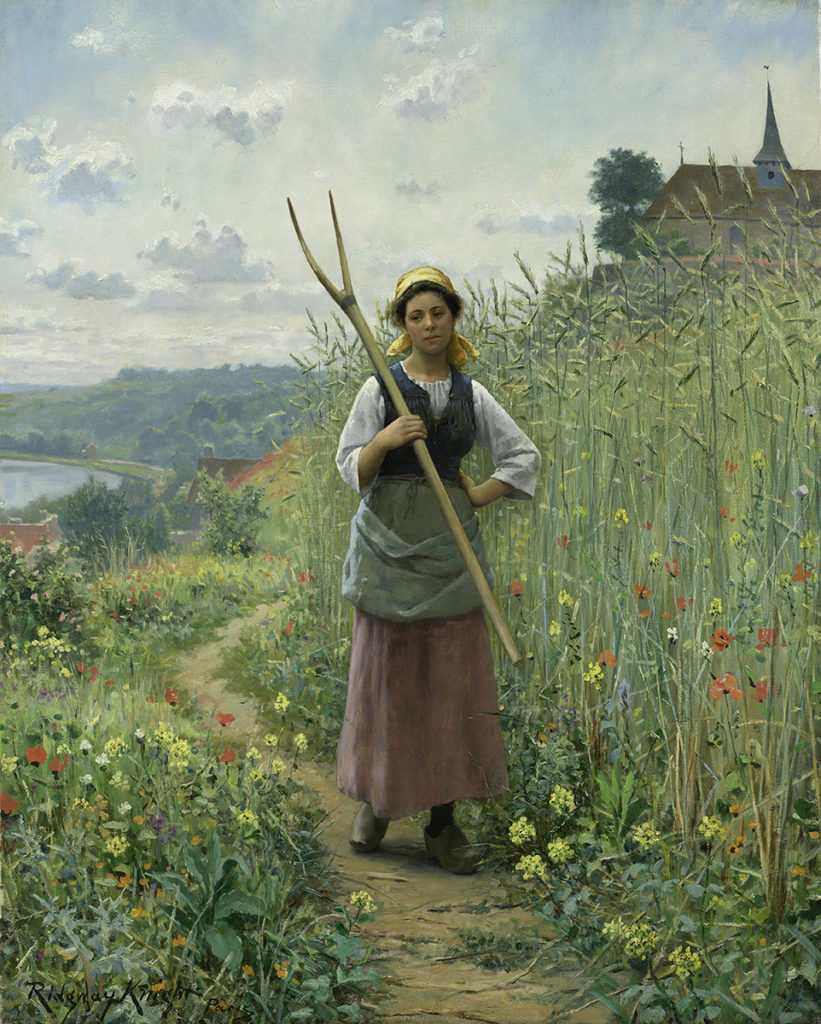
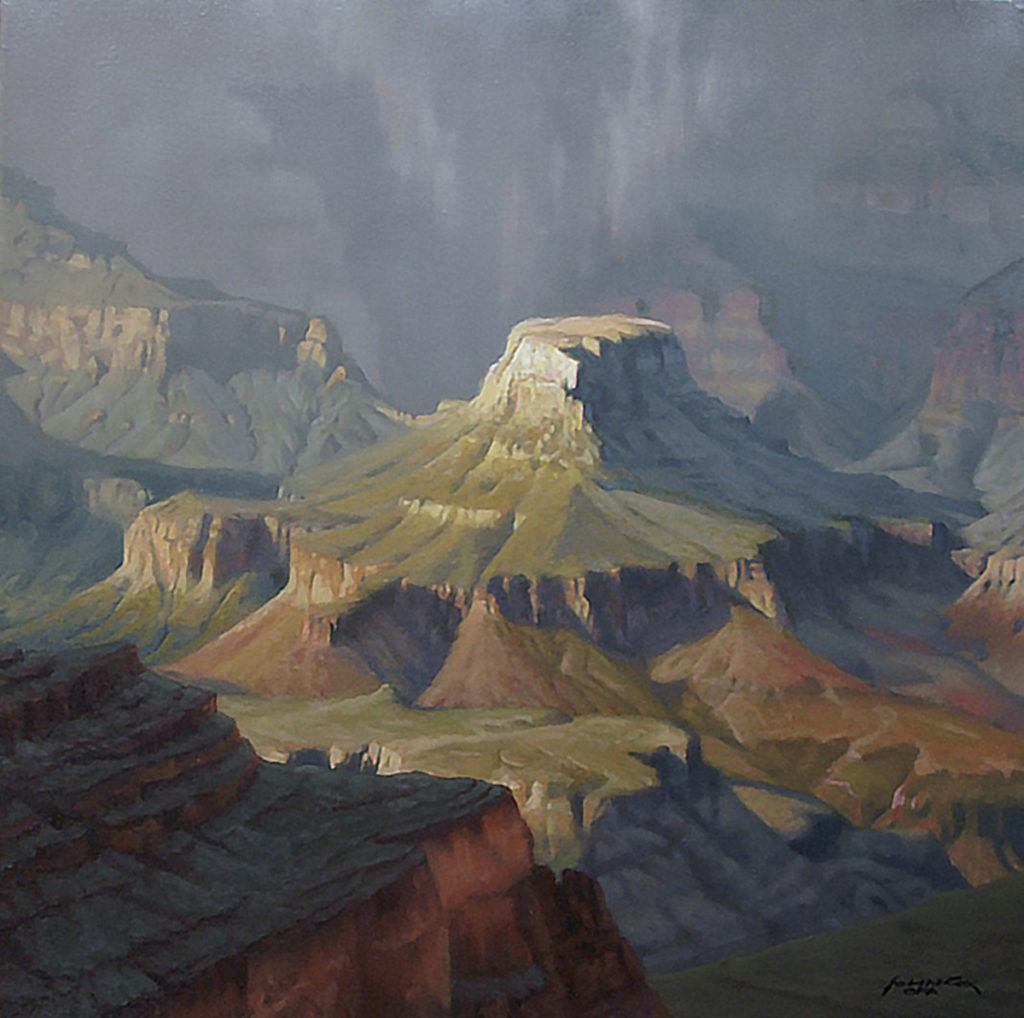
As part of our effort to continue to help artists and art galleries thrive, we’re proud to bring you this week’s “Virtual Gallery Walk.” Browse the artwork below and click the image itself to learn more about it, including how to contact the gallery.
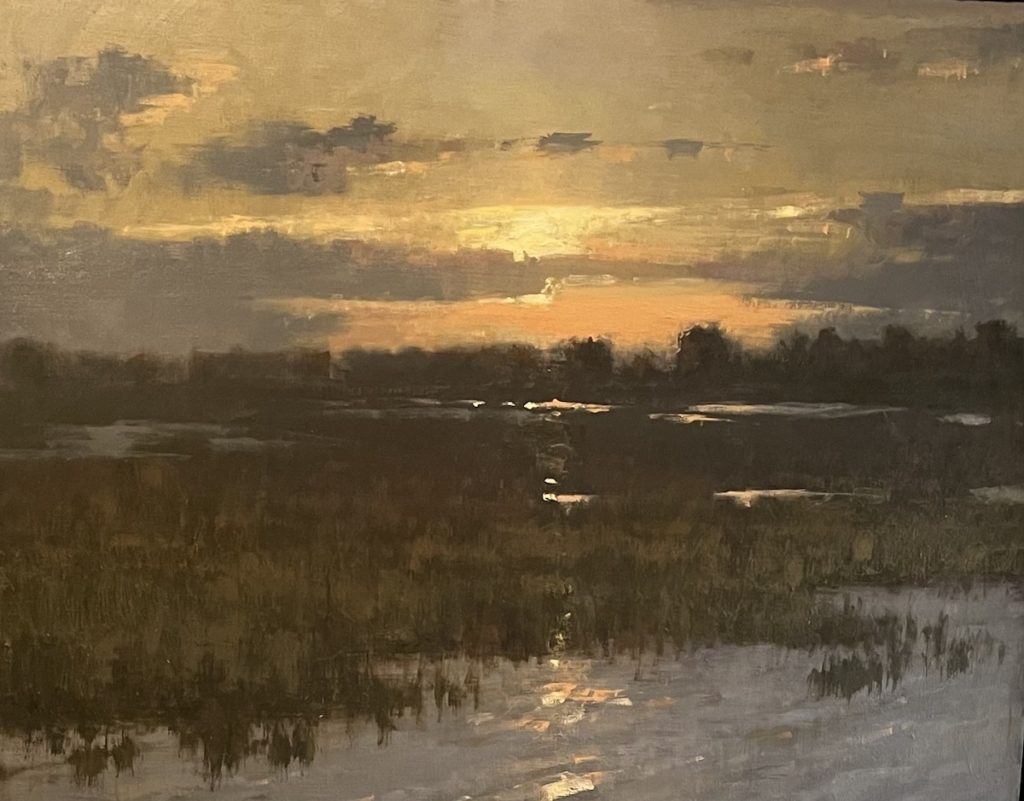
Twilight Harmony by Paula Holtzclaw, Oil, 37 x 47 in.; Anderson Fine Art Gallery
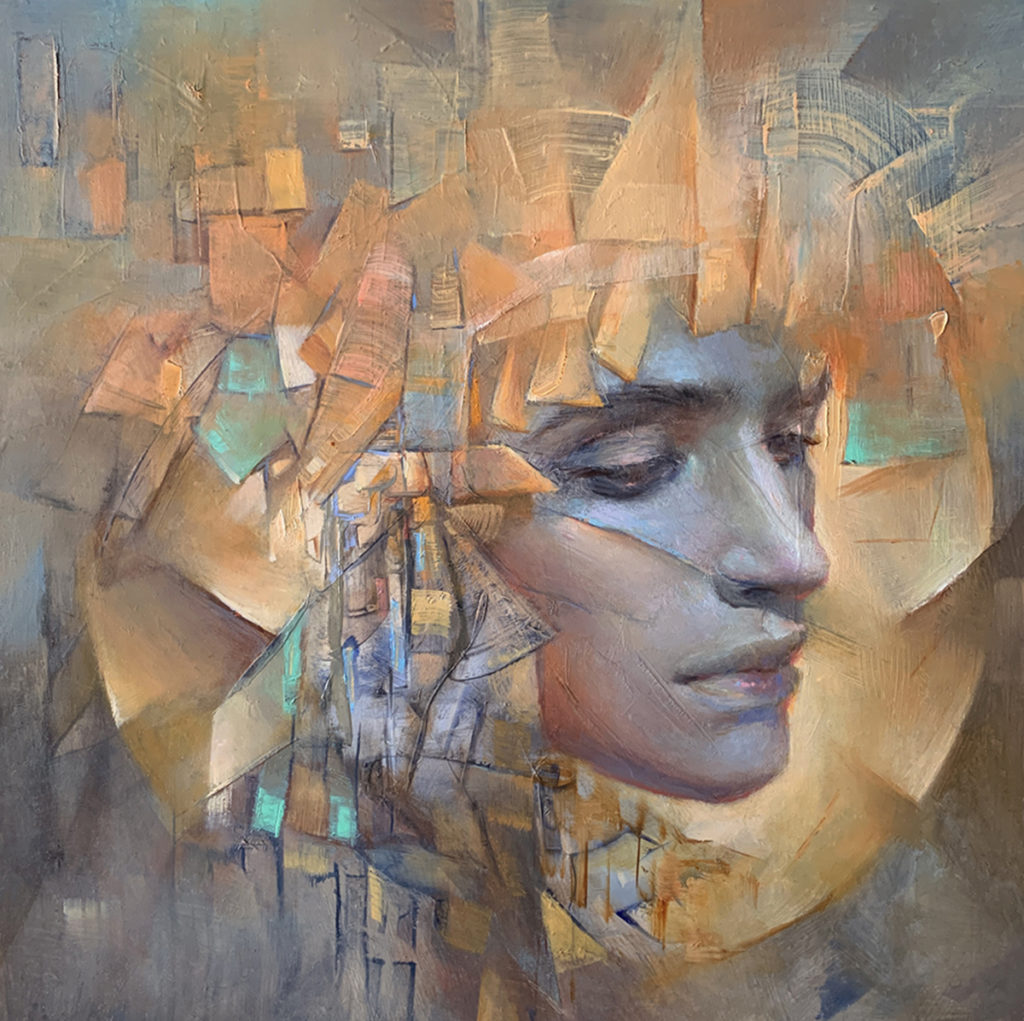
Grazing Daze by Lucia Heffernan, Oil on panel, 36 x 36 in., Signed; Rehs Contemporary
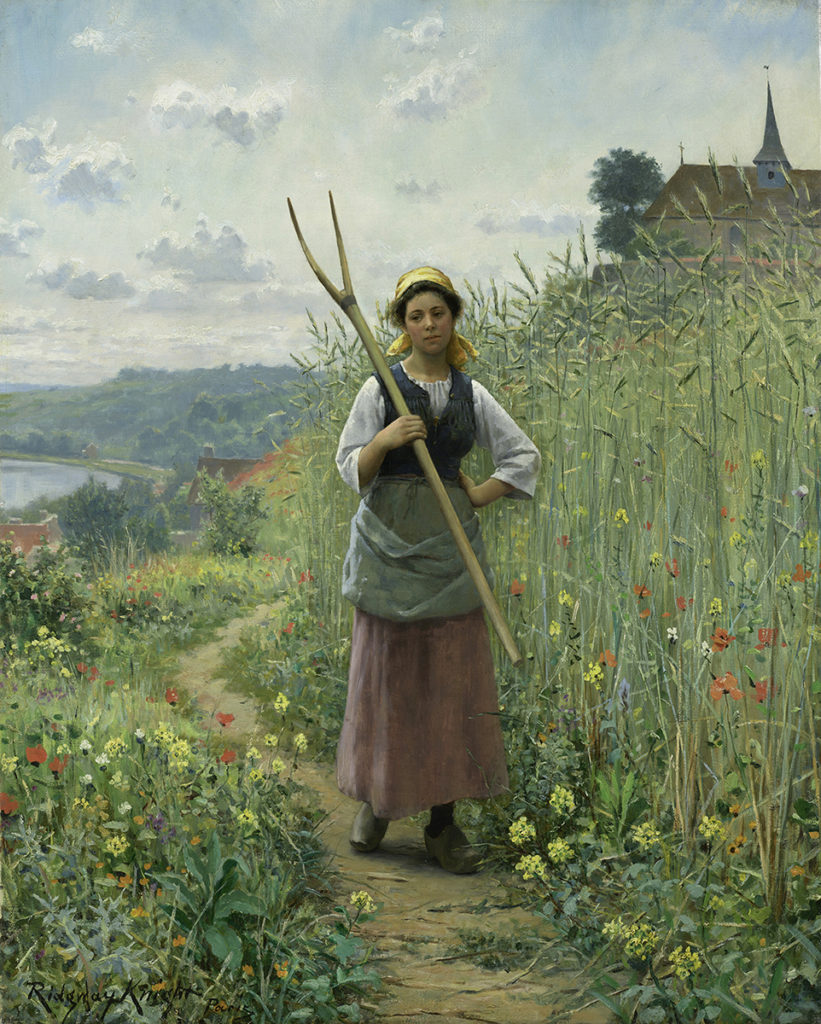
Coming Through the Rye by Daniel Ridgway Knight (1839 – 1924), Oil on canvas, 32.5 x 26 in., Signed and inscribed Paris; Rehs Galleries, Inc.
“Rain Over Cheops Temple” Grand Canyon by John Cox, Oil, 20 x 20 in.; ArtzLine.com
Want to see your gallery featured in an upcoming Virtual Gallery Walk? Contact us at [email protected] to advertise today. Don’t delay, as spaces are first come, first served, and availability is limited.
Beth Clary Schwier, pictured here in her barn studio in Indiana.
How did you get started and then develop your career?
Beth Clary Schwier is an award-winning Indiana artist. Originally from Peru, Indiana. A former actress and model, Beth began painting while raising her six children and then began studying with renowned Indiana impressionist artist C.W. Mundy. She loves experimenting with abstract impressionism and abstract realism.
Although she is known for her amazing floral pieces, Beth likes to paint unusual subjects from everyday life that evoke nostalgia and fond memories. Beth and her art are featured on Seasons 2 thru 6 of HGTV’s National Hit Show Good Bones, filmed in Indianapolis. She was also a featured artist at the 2017 Smithsonian Folklife Festival on the mall in Washington DC, depicting the American Circus. Beth will also soon be a featured artist at the home of the Indiana Pacers, Gainbridge Fieldhouse telling one of the great Indiana Basketball stories on canvas.
She now has her own gallery near downtown Indianapolis. Beth Clary Fine Art is located at 5636 East Washington St, Indianapolis, IN 46219.
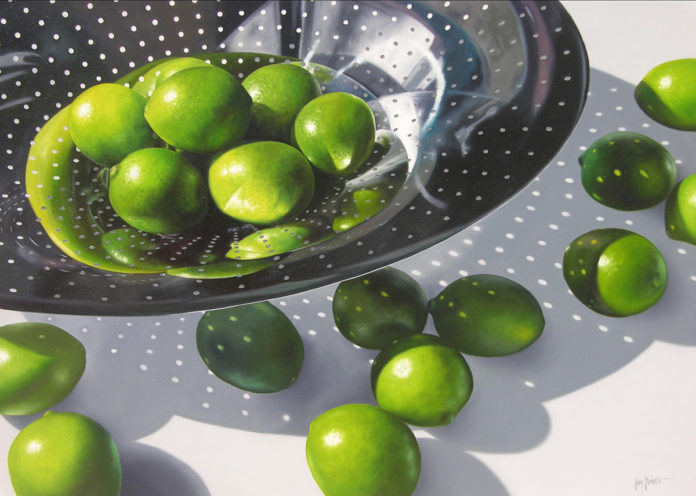
Anatomy of a Lime
By Jenny Stewart
44 x 61 in.
Oil on canvas
$7,000
Jenny Stewart was inspired and impressed early on by the work of Georgia O’Keeffe. ‘I find that like her, I am excited by the beauty I see in ordinary everyday objects. Although some of my work is composed like a traditional still life, many are enlarged beyond a normal scale. I have always been interested in photography and I usually shoot my own reference photographs. With camera in hand, I like to zoom in and explore the subtle textures and curves of an object until I start to lose the object itself,” says Stewart. “I use this same dramatic canvas filling perspective in my paintings. I look for areas where the shadows form interesting shapes, or the light glows thru the flower petals, or the distorted reflection appears on the metal bowl.” Color plays an important role in Stewart’s work, but even more important, is the effect of light on the subject. “I set up my subject, usually in the afternoon sun when shadows are long and I photograph it from several angles.”
Jenny’s stunning works can be found at the Celebration of Fine Art in Scottsdale, Arizona, now through March 27, 2022. Contact 480-443-7695 or [email protected]; www.celebrateart.com.
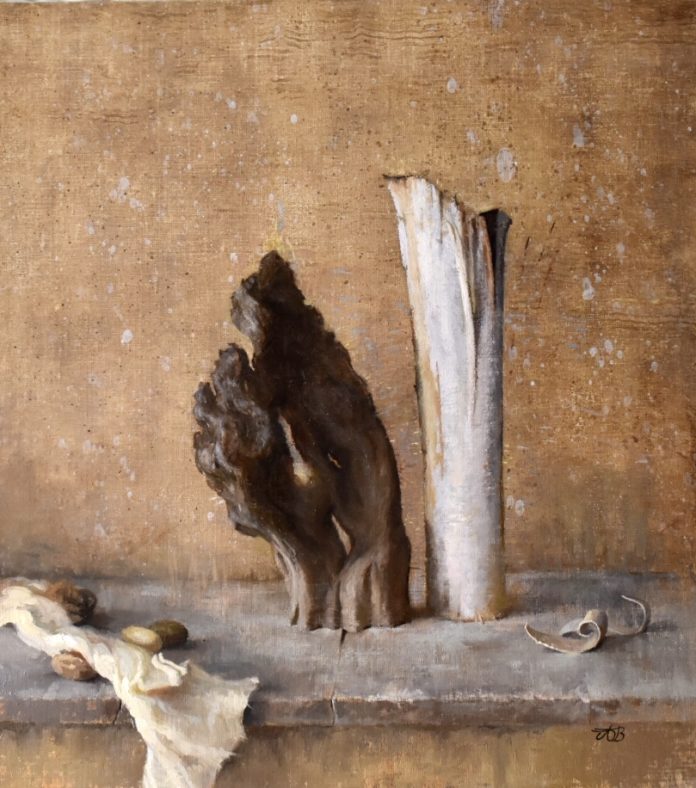
Adra Brown, "Between the Light and the Dark," oil on linen, 20 x 18 in.
Mary Woerner Fine Arts (West Palm Beach, Florida) has announced a new exhibition feature Adra Brown and Trish Beckham in “Found: Places, Plants, and People.” Both artists are contemporary realists working in oil on canvas, linen, and panel.
Adra will show exquisitely rendered still lifes of her often peculiar tableaux and a selection of her portraits and figures.
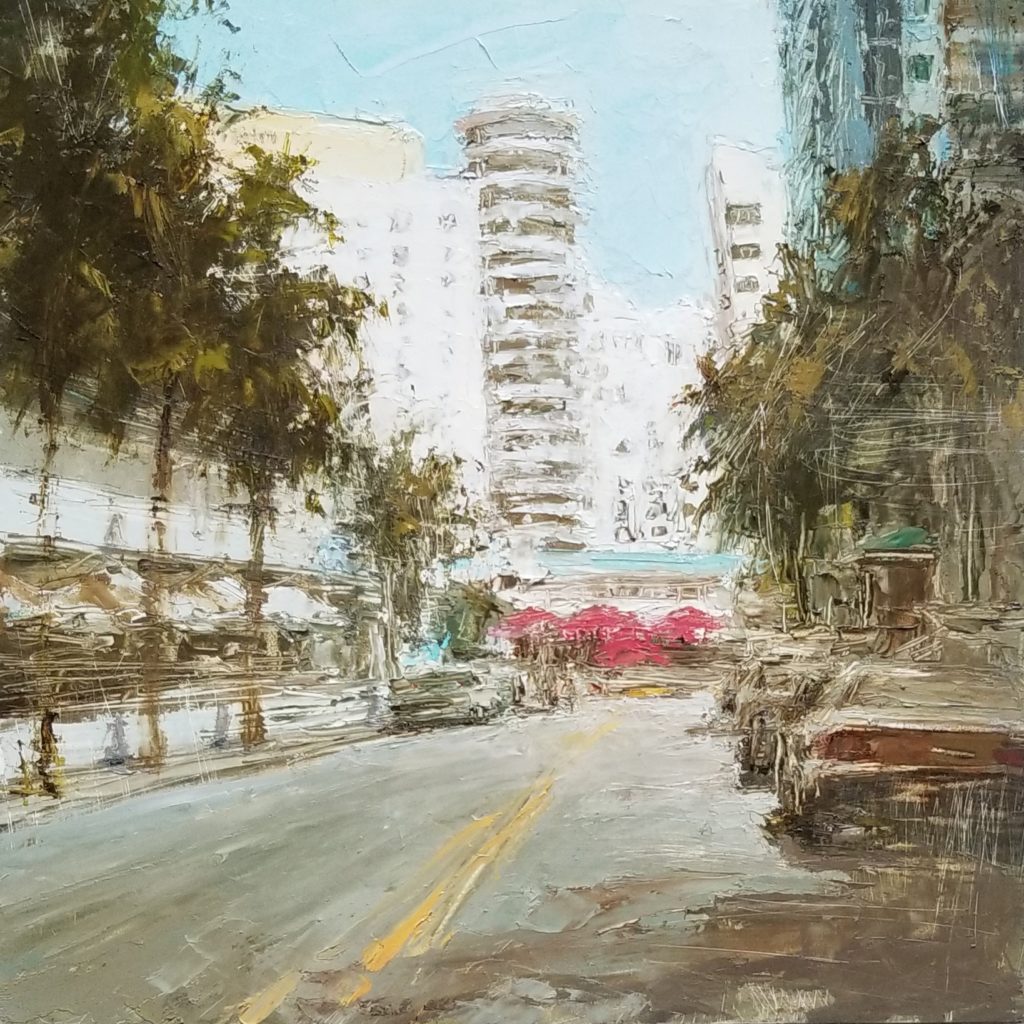
Trish has been painting the city scenes of New York, California, and Florida alongside her vast land and seascapes all done in the quick work of the palette knife.
Trish Beckham, “Weekend at the Royal Palm,” oil on panel, 12 x 12 in.
The show runs through March 12, 2022. For more details, please visit MaryWoernerFineArts.com.
> Visit EricRhoads.com to learn about more opportunities for artists and art collectors, including retreats, international art trips, art conventions, and more.
> Sign up to receive Fine Art Today, our free weekly e-newsletter
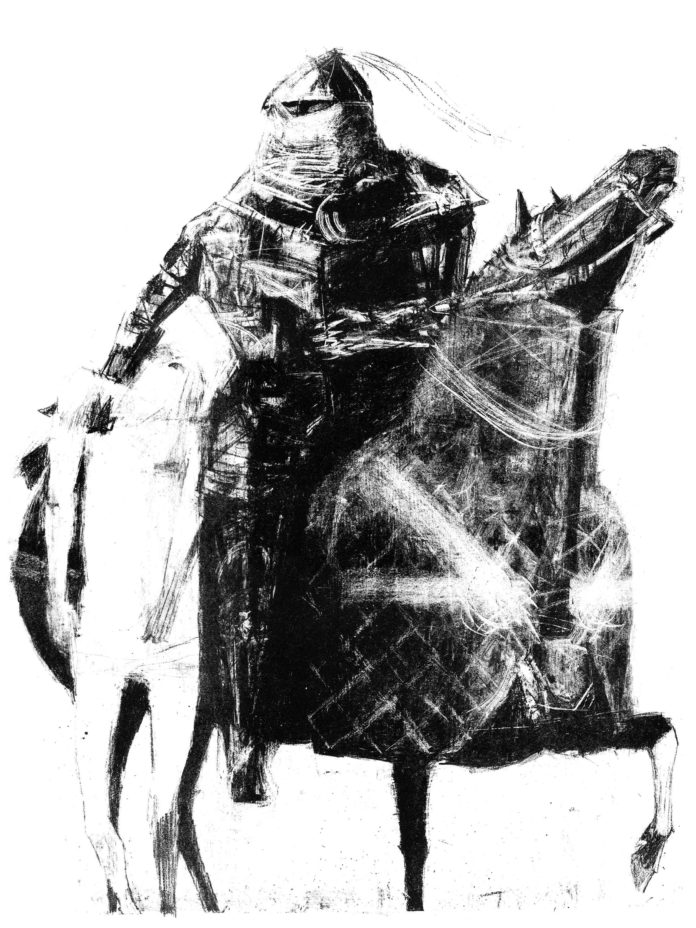
The Louise and Bernard Palitz Gallery at Syracuse University’s Lubin House is hosting the exhibition “Morton Kaish: A Print Retrospective.”
Organized by director and chief curator Vanja Malloy alongside Kaish himself (who graduated from Syracuse in 1949), it surveys this artist’s longstanding love of printmaking over seven decades.
On view are 31 prints in various media, starting with a drawing made in 1945, through his experimental years in Italy, and culminating in the dramatic color of his current “Butterflies” series.
Morton Kaish (b. 1927), “Spring Morning,” 2017, monotype on paper, 16 x 12 in.
> Visit EricRhoads.com to learn about more opportunities for artists and art collectors, including retreats, international art trips, art conventions, and more.
> Sign up to receive Fine Art Today, our free weekly e-newsletter
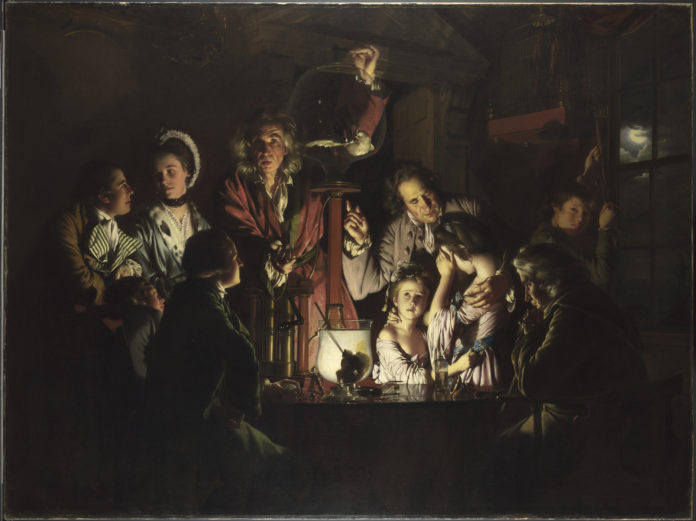
Joseph Wright of Derby, "An Experiment on a Bird in the Air Pump," 1768.
Oil on canvas, 72 x 96 1/16 in. National Gallery, London.
One of the great masterpieces from the Age of Enlightenment, Joseph Wright of Derby’s “An Experiment on a Bird in the Air Pump” (1768) will be shown at The Huntington Library, Art Museum, and Botanical Gardens through May 23, 2022, in an installation titled “Science and the Sublime: A Masterpiece by Joseph Wright of Derby.” The monumental 6-by-8-foot work will be lent by the National Gallery in London, where it is one of that institution’s most popular paintings.
From the organizers:
The powerful scene depicts a small group of people gathered around a candlelit table on which a lecturer in natural history is performing a scientific experiment, namely the creation of a vacuum, as described by chemist Robert Boyle in the 17th century. As air is slowly removed from a glass jar, the fate of a cockatiel inside the jar hangs in the balance.
The observers’ reactions range from fascination to dismay. In Wright’s hands, the tableau is an exercise in the sublime, a moment of extreme tension recast as a dramatic meditation on the fragility of life. At the same time, the experiment being performed relates to advances in the fields of science and medicine, making the scene a celebration of human achievement.
The loan of “Bird in the Air Pump” is part of a reciprocal exchange with the National Gallery, where The Huntington’s most famous work, Thomas Gainsborough’s iconic portrait of “The Blue Boy” (ca. 1770), will be on display for London museumgoers for the first time in a century (through May 15, 2022).
“We’re very excited to be partnering with the National Gallery for the first time in these reciprocal loans, which give audiences on both sides of the Atlantic a rare opportunity to view important works that have strong connections to each museum’s respective collections,” said Christina Nielsen, the Hannah and Russel Kully Director of the Art Museum at The Huntington. “It’s also a wonderful opportunity to collaborate within The Huntington’s own collecting areas to forge deeper connections between the holdings of the Art Museum and the Library.”
> Visit EricRhoads.com to learn about more opportunities for artists and art collectors, including retreats, international art trips, art conventions, and more.
> Sign up to receive Fine Art Today, our free weekly e-newsletter
As part of our effort to continue to help artists and art galleries thrive, we’re proud to bring you this week’s “Virtual Gallery Walk.” Browse the artwork below and click the image itself to learn more about it, including how to contact the gallery.
Sudden Glow by Roger Dale Brown, Oil, 30 x 40 in.; Anderson Fine Art Gallery
Dawn (Featured in The Small Works Show) by Vanessa Lemen, Oil on panel, 8 x 8 in., Signed; Rehs Contemporary
Coming Through the Rye by Daniel Ridgway Knight (1839 – 1924), Oil on canvas, 32.5 x 26 in., Signed and inscribed Paris; Rehs Galleries, Inc.
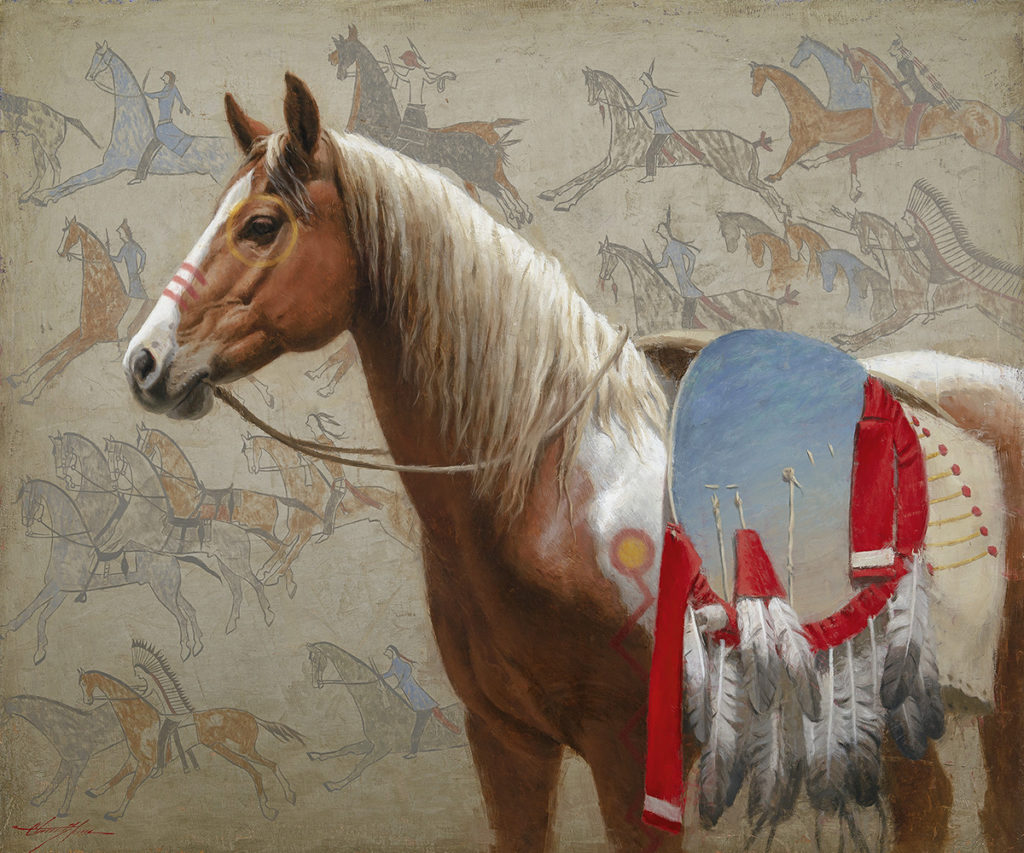
Chasing Fortune by Chauncey Homer, Oil on linen, 30 x 36 in.
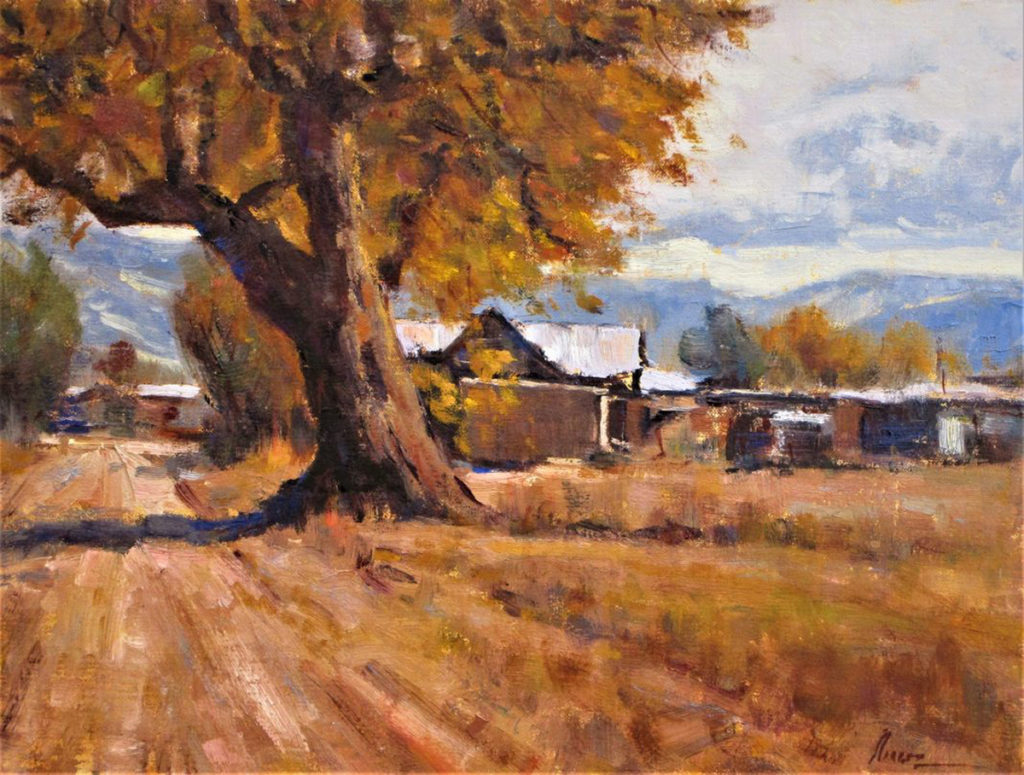
West Side Albuquerque by Lorenzo Chavez, Oil, 12 x 16 in.; ArtzLine.com
Want to see your gallery featured in an upcoming Virtual Gallery Walk? Contact us at [email protected] to advertise today. Don’t delay, as spaces are first come, first served, and availability is limited.
Fill your mind with useful art stories, the latest trends, upcoming art shows, top artists, and more. Subscribe to Fine Art Today, from the publishers of Fine Art Connoisseur magazine.