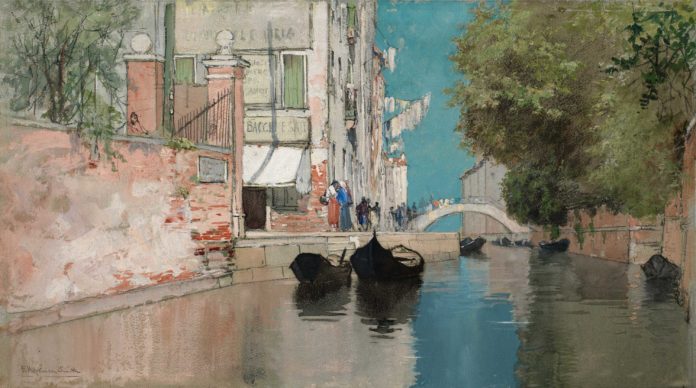
FRANCIS HOPKINSON SMITH (1838–1915), "On the Way to the Public Garden," c. 1895, opaque watercolor and pastel over graphite on paper, 14 1/3 x 24 3/4 in., Smithsonian American Art Museum, Washington, D.C., gift of Laura Dreyfus Barney and Natalie Clifford Barney in memory of their mother, Alice Pike Barney
From the Fine Art Connoisseur January/February 2022 Editor’s Note. Bonus: Get the new issue of Fine Art Connoisseur FREE here, as our gift to you!
Fine Art Connoisseur: Watercolors for All
It’s funny how certain things suddenly come back to your attention again and again, reminding you why you like them or need to notice them more.
On the cover: Joseph Lorusso (b. 1966), “A Mischievous Look” (detail), 2003, oil on board, 15 1/2 x 12 in., collection of Saad and Janan Habba. For details, please see page 92 of the January/February issue.
That happened to me this autumn with watercolor paintings. I have always loved the flowing expressiveness of the watercolor medium — how it can be used to depict an image realistically yet never lets us forget it’s made of a slippery substance over which artists must have complete mastery. Even those drip marks are strategic.
In November, as Eric Rhoads and I co-hosted the successful four-day online conference known as Realism Live, I refocused on watercolor’s joys during our celebration of the South Carolina artist Mary Whyte, who graciously accepted our Lifetime Achievement Award, and who has won acclaim for the superb portraits she creates in the watery medium. This reminder was reinforced by the fascinating demo of landscape painting in watercolors offered by Stewart White (Maryland) during the same conference. I myself can hardly draw a stick figure, so I remain in awe of how these talents make magic with a drippy brush and an unforgiving sheet of white paper.
Still more watercolors delighted my eyes as I gathered information on Dean Mitchell’s current show at the Huntsville Museum of Art in Alabama, and again as I visited a fascinating new exhibition at the Smithsonian American Art Museum in Washington, D.C. Titled “Sargent, Whistler & Venetian Glass: American Artists and the Magic of Murano,” it encompasses an array of watercolors, including the luminous scene (illustrated above) by Francis Hopkinson Smith, an artist I had scarcely heard of. I was astonished by Smith’s orchestration of bright colors — ones that usually strike me as garish — into a harmonious whole, and now I want to learn more about his life and technique.
I am bound to draw further insights by watching Streamline’s next online conference, Watercolor Live, scheduled for January 26–29. Offering their insights then will be an impressive range of talents including Kathleen Alexander, Poppy Balser, Cindy Baron, Susan Blackwood, Carol Carter, Alvaro Castagnet, Ali Cavanaugh, Chien Chung-Wei, Kathleen Giles, Laurie Goldstein-Warren, Michael Holter, Wennie Huang, Paul Jackson, Amit Kapoor, Tom Lynch, Carol McSweeney, Julie Gilbert Pollard, David Poxon, John Salminen, Thomas W. Schaller, Richie Vios, Carrie Waller, and Stewart White.
All of these recent encounters have reminded me how much I enjoy the look of watercolors and why I should keep an eye open for a new one(s) to buy for my own collection. I encourage you to do the same, hopefully by joining us for Watercolor Live and also by Googling around to connect with the watercolor society nearest you. Almost every U.S. state and region has at least one, offering regular exhibitions where you can discover their members’ brilliance in person.
Float Away
By Priscilla Nelson
30 x 48 in.
Oil on canvas
$17,500
Priscilla Nelson’s unique contemporary-realistic style captures the eye of the viewer and invites them to take a closer look. Her primary medium is oil on canvas with many of her subjects containing figures in water as well as intriguing textiles. The play of the water against the figure lends an abstractive quality to the vivid realism of the figure. Nelson says, “I am intrigued by what people wear. I love the movement of cloth and the moods the clothing can convey. When I moved to Arizona I became obsessed by water. Water has become prevalent in my paintings. The way water channels the light and creates its own chaotic movement.” Combining the message of the textiles with the color play of the water has developed into a signature style.
Priscilla’s work, along with 100 other artists, was shown at the Celebration of Fine Art in Scottsdale, Arizona, January 15 – March 27, 2022. Contact 480-443-7695 or [email protected]
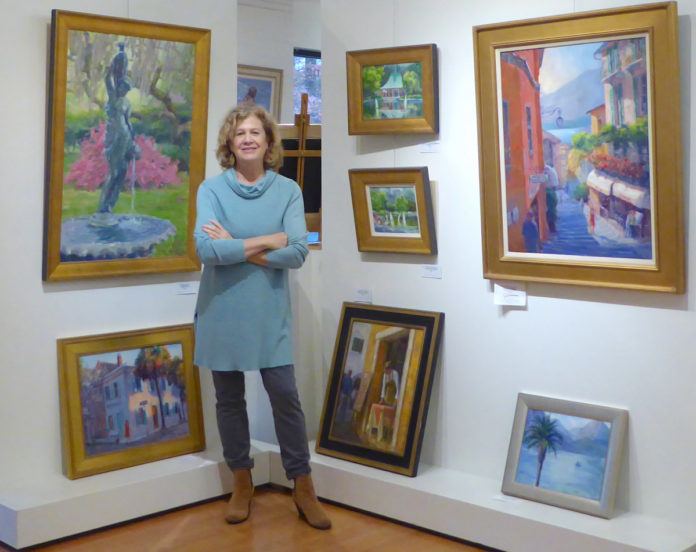
Nicole White Kennedy surrounded by works at her former gallery 2001–2019
How did your career get started?
Nicole White Kennedy, AIS: Following an advertising career in NYC drawing TV storyboards, we decided to move to Raleigh and open a restaurant. I picked up the brush out of necessity to decorate the space and was suddenly inspired. It only took a few surprise sales to launch my art career and even establish a gallery.
How did you develop your unique painting style?
I never knew my style was unique until a renowned instructor told me they could recognize my works. By taking workshops and assimilating new techniques, my works leaned towards colorful impressionism with a narrative flair. My style keeps evolving as I explore creative growth.
How do you describe success?
Getting recognized and juried into national exhibits. One of my first major juried exhibits I caught a lucky break winning an award by a renowned juror, and recently I received an award with NOAPS. Earning Signature Member American Impressionist Society was a huge honor. Being judged by master artists can really boost your confidence, conversely every rejection is an incentive to get back to the easel and try again. Either way I consider it a step towards success.
How do you find inspiration?
Two things: a blank canvas and people watching. Capturing people in a spontaneous moment on canvas… it never gets boring.
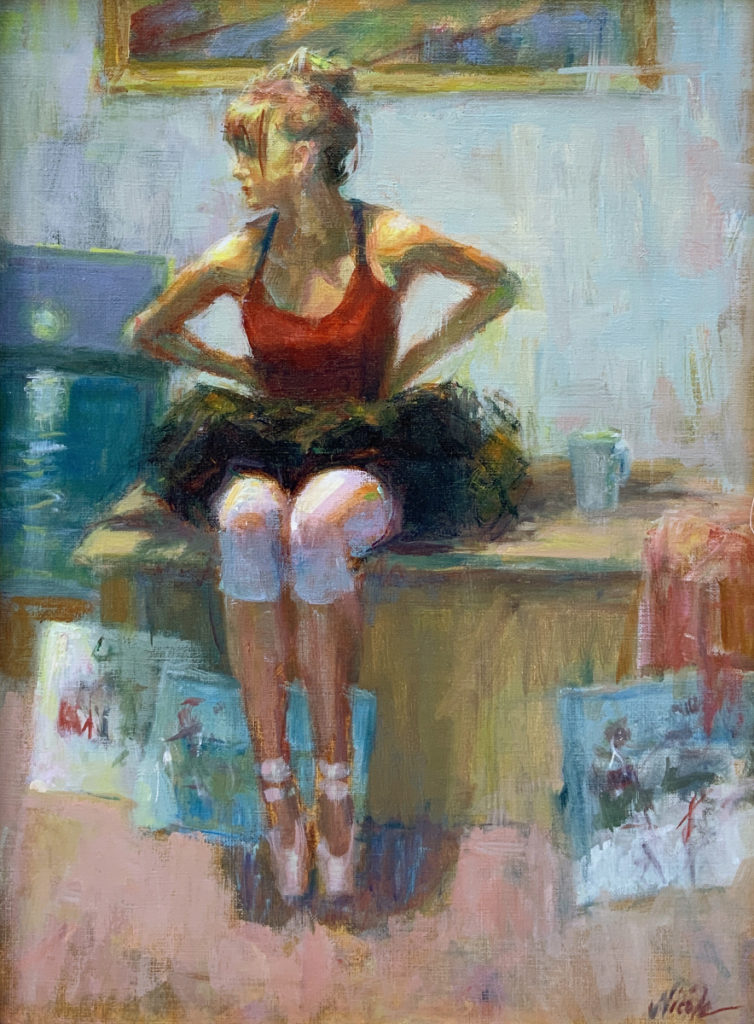
Nicole White Kennedy, “Between Poses,” 16 x 12 in., oil — Merit Award NOAPS Fall Online Exhibit 2021Nicole White Kennedy, “Lakeside,” 24 x 24 in., oil on linen, 2021
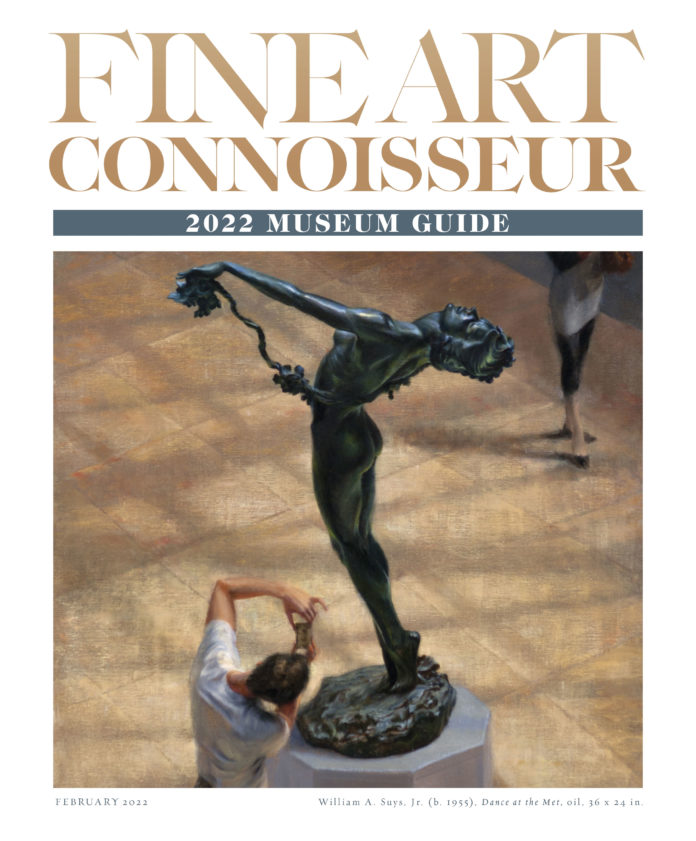
2022 Guide to Fine Art Museums > Strictly speaking, a museum is a place dedicated to the muses — the nine (female) divinities of the arts, history, science, and literature who were revered by the ancient Greeks. Though most of us don’t worship those goddesses anymore, the subjects they symbolized are still brought to life daily in the vast array of museums found all over the world.
Even the Greek gods could not have predicted how central art museums would become in our civic life. They are no longer just places to learn, but also places to gather, celebrate, mourn, and have fun. That accessibility is key: the more often we bring our kids to museums to — say — attend a festival, the more likely they are to return as adults to enjoy the collections and exhibitions inside.
Speaking of art collections, museums deserve enormous credit for cataloguing and posting their collections online; they hold these treasures on behalf of the public, and now we have an ever-clearer idea of what they are. Moreover, many museums are now offering terrific online programs to engage their current audiences, entice new ones, and — in some savvy cases — raise revenues, too.
Every winter, Fine Art Connoisseur dedicates part of an issue to highlighting America’s art museums. I am particularly fond of this initiative because I spent much of my career working in art museums and still love visiting them.
Needless to say, 2020 and 2021 were challenging for museums. Throughout the pandemic, however, our museum colleagues have never lost their focus on sharing the joys of fine art even when it’s harder, or impossible, for us to enter their remarkable buildings. Fortunately, most museums have now reopened, and their exhibitions and events have reminded us just how important they are to our communities.
There are two ways readers of Fine Art Connoisseur can support museums. First, join as a member — even if it’s just a lower-level membership and even when you’re not particularly passionate about a specific museum’s specialties. This is a great way to help museums survive, and many museums have created a cheaper virtual membership that allows first-timers to get their toes wet.
Second, there’s the worthy impulse to shop. Many museums have terrific websites highlighting the same high-quality merchandise they sell in their on-site boutiques. Even though the holidays are behind us, why not click on the relevant webpage and buy art-related items to delight your loved ones?
2022 will surely offer its own share of challenges. Let’s all do what we can to make museums’ paths a little easier, and let’s thank them for all they do to lift our spirits.
Finally, if you know of a museum that should be included in this section in the future, please let us know. We are always grateful for your feedback.
> Visit EricRhoads.com to learn about more opportunities for artists and art collectors, including retreats, international art trips, art conventions, and more.
> Sign up to receive Fine Art Today, our free weekly e-newsletter
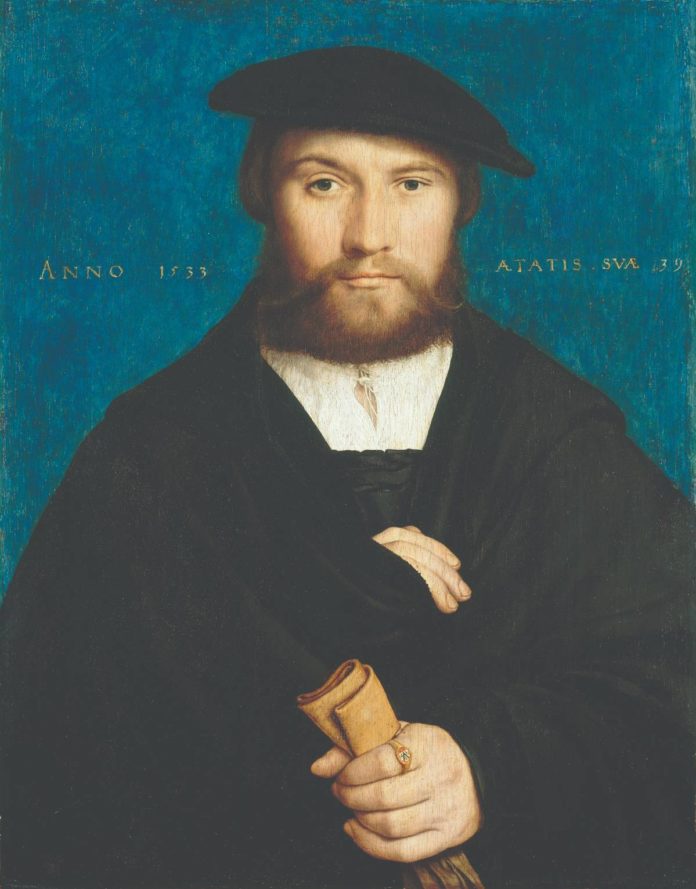
Hans Holbein the Younger (1497/98–1543), "A Member of the Wedigh Family," 1533, oil on panel, 16 9/16 x 12 13/16 in., Staatliche Museen zu Berlin, Gemäldegalerie, photo: Bildagentur / Jörg P. Anders / Art Resource, NY Ex.2021.1.43
Holbein: Capturing Character
J. Paul Getty Museum, Los Angeles getty.edu
through January 9, 2022
The J. Paul Getty Museum has mounted the exhibition “Holbein: Capturing Character,” which features the still-astonishing portraits painted and drawn by the German artist that illuminate fascinating figures from Europe’s merchant class, intellectual elite, and — most famously — the court of King Henry VIII.
Hans Holbein the Younger (1497/98-1543) developed his signature style in Basel and London amid a rich culture of erudition, luxury, and wit.
He portrayed his contemporaries with technical skill and attention to detail while offering profound insights into their unique personalities, often via revealing props such as animals, jewels, letters, and books.
Now Holbein’s oil paintings and chalk drawings are presented alongside his designs for personal emblems and metalwork, as well as jeweled hat badges and portrait medals.
The first major Holbein exhibition ever mounted in the U.S., this project features more than 50 objects from nearly 30 lenders worldwide.
It is accompanied by Getty Publications’ 192-page catalogue, edited by lead curator Anne T. Woollett.
The show will soon move to its second and final venue, New York City’s Morgan Library & Museum (February 11–May 15).
> Visit EricRhoads.com to learn about more opportunities for artists and art collectors, including retreats, international art trips, art conventions, and more.
> Sign up to receive Fine Art Today, our free weekly e-newsletter
On View: “Oasis”
Sparks Gallery, San Diego, California sparksgallery.com
through January 9, 2022
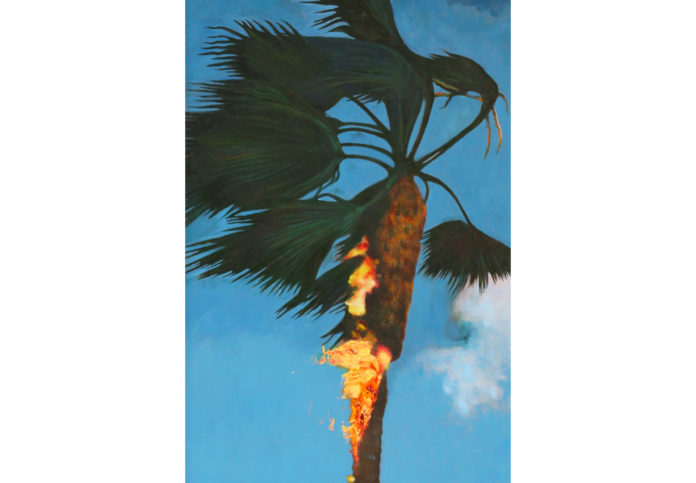
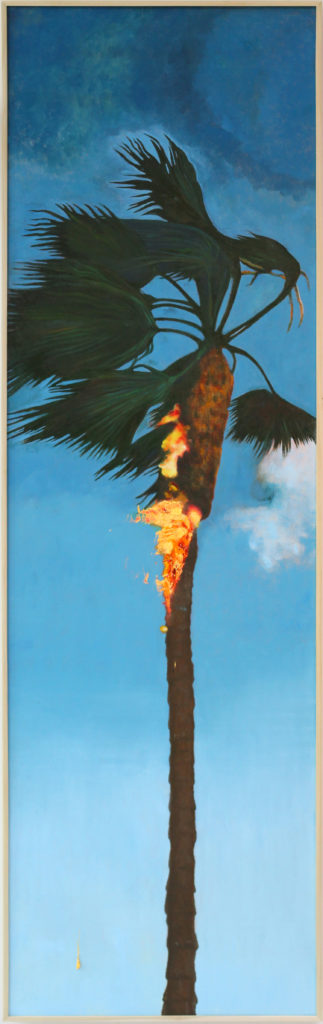
Sparks Gallery is presenting Oasis, an exhibition of recent works by the Southern California artist Perry Vásquez (b. 1959).
Perry Vásquez (b. 1959), “Landscape 3/3,” 2021, oil on canvas, 96 1/2 x 28 1/2 in.
At its heart is a powerful series of paintings of palm trees, which are ubiquitous in his region and normally symbolize nourishment, shelter, and bounty.
Instead, the artist has framed their regal forms in peculiar or dire scenarios, swaying violently, often ablaze, or perhaps morphed into cell towers that only look like trees.
Vásquez explains, “I recall being shaken the first time I saw a burning palm tree. My response was to investigate the meaning of this phenomenon through painting and to work through my feelings of awe and dread…. Our species can choose to protect and nurture life on our planet or we can waste it. The choice is ours.”
> Visit EricRhoads.com to learn about more opportunities for artists and art collectors, including retreats, international art trips, art conventions, and more.
> Sign up to receive Fine Art Today, our free weekly e-newsletter
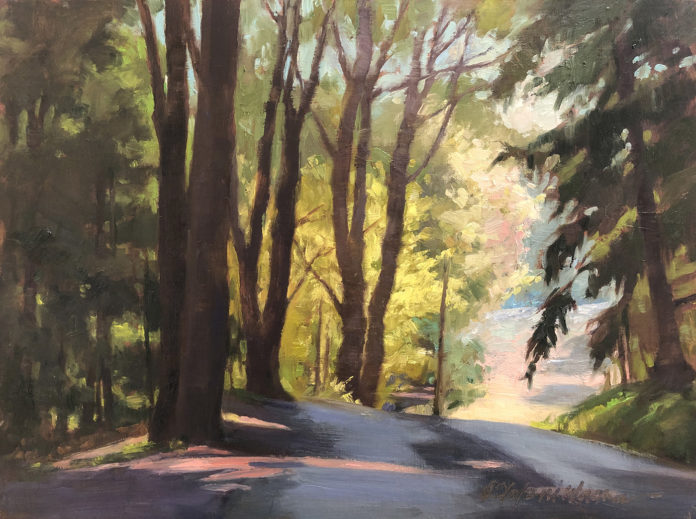
Jill Stefani Wagner, “Taking the High Road, oil on linen panel, 12 x 16 in., $875, available through the artist
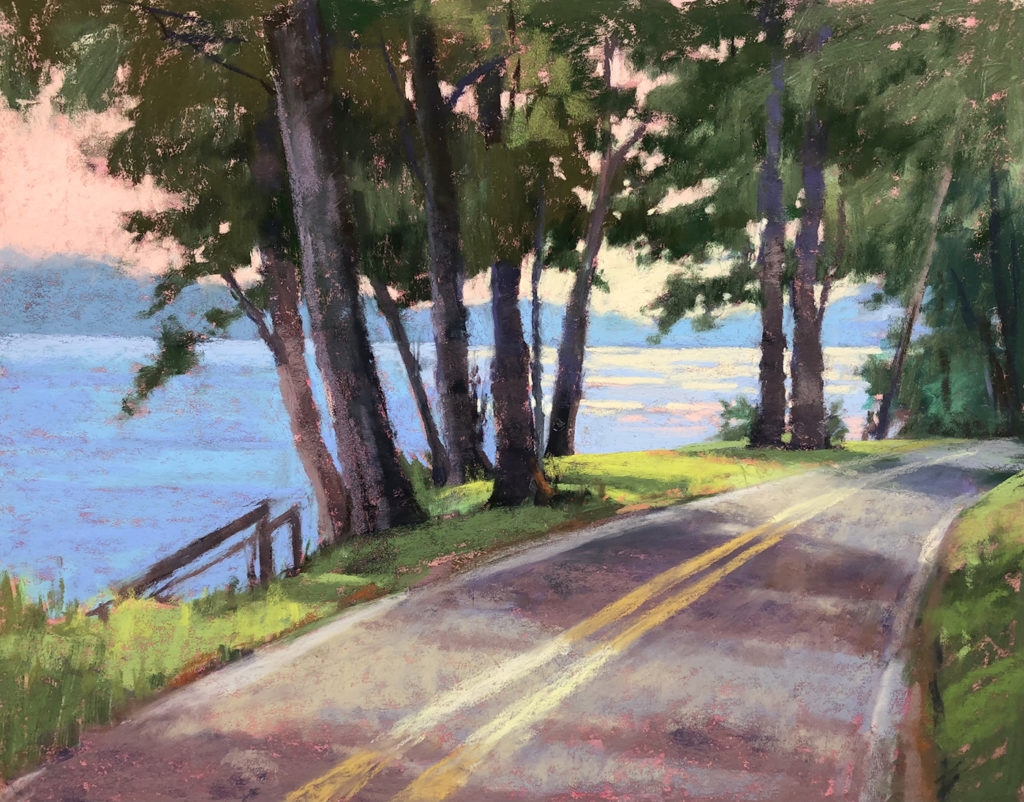
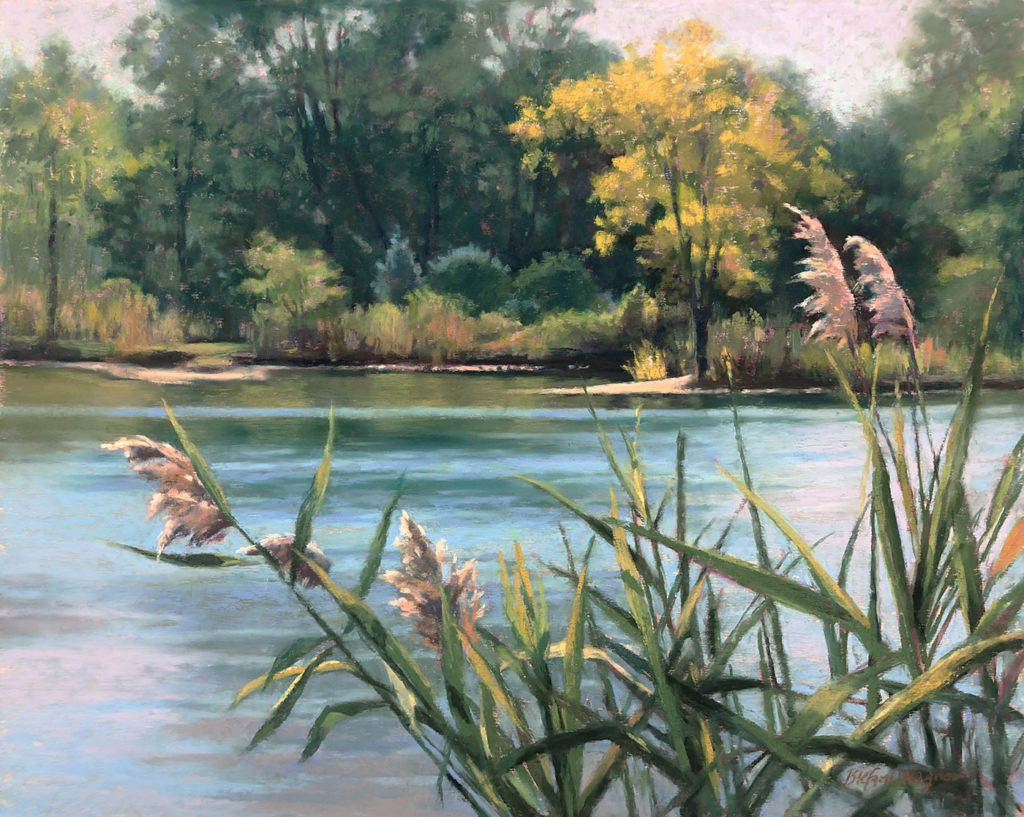
Jill Stefani Wagner PSA-MP IAPS/MC: Painting in pastel and oil, Jill finds inspiration in capturing light. An avid plein air painter, she travels the country capturing the unique views of each area. In her upcoming solo exhibit, “Close to Home” at Kerrytown Concert House in Ann Arbor, MI (1/6–2/15/22), she’ll feature plein air and studio paintings of Michigan. Jill will be Pastel Faculty for the 4th time at the 2022 Plein Air Convention in Santa Fe.
Jill Stefani Wagner, “Azure Daze,” pastel on prepared board, 16 x 20 in., $1250, available through the artistJill Stefani Wagner, “Serenity,” pastel on board, 16 x 20 in., $1250, available through the artist
The 13th annual Grand Canyon Celebration of Art recognized the achievements of 25 artists who have successfully interpreted the canyon, both in plein air and studio work.
The artists painted at the South Rim of the Grand Canyon National Park for a week in September, capturing on canvas the vastness, the ever-changing light and the many moods of the canyon. They also submitted studio paintings of the Grand Canyon.
Hai-Ou Hou is one of the participating artists. Born in China, she received her
B.F.A. from Central Institute of Fine Art and Design. Moving to the United States she later earned her M.F.A. from Townson State University in Maryland. Hou now resides on the Eastern Shore of the Chesapeake Bay where she operates Chesapeake Fine Art Studio, an art school that brings in instructors from all over the world.
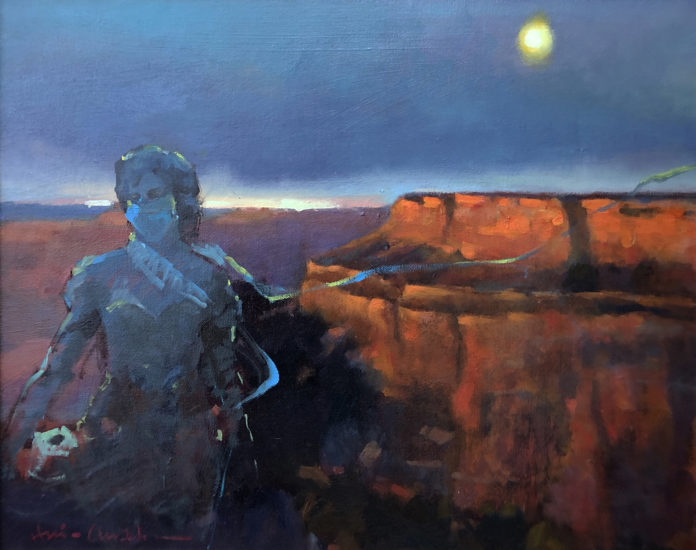
Of her studio painting, Endurance, Hou says: “The Grand Canyon, devastatingly beautiful and monumental, has long inspired me to paint. The Covid-19 pandemic is devastation on a monumental scale and compels me to paint. This painting contrasts the solid greatness of the one to the fearful apparition of the other; the Canyon will remain long after Covid fades away.”
The work of the Celebration of Art artists will be exhibited at Kolb Studio at the South Rim through January 17, 2022, and can be viewed online at:
Sargent, Whistler, and Venetian Glass: American Artists and the Magic of Murano
Washington, D.C.
Smithsonian American Art Museum americanart.si.edu
through May 8, 2022
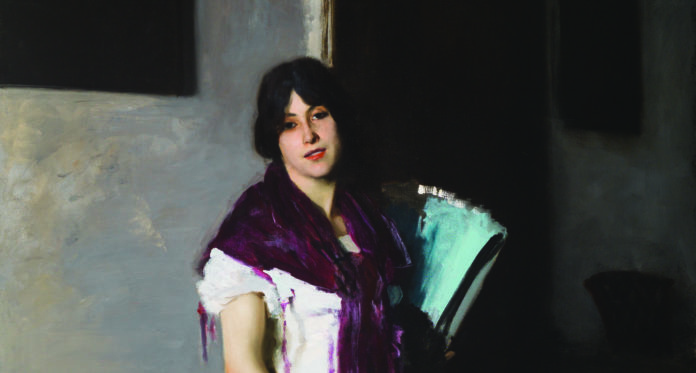
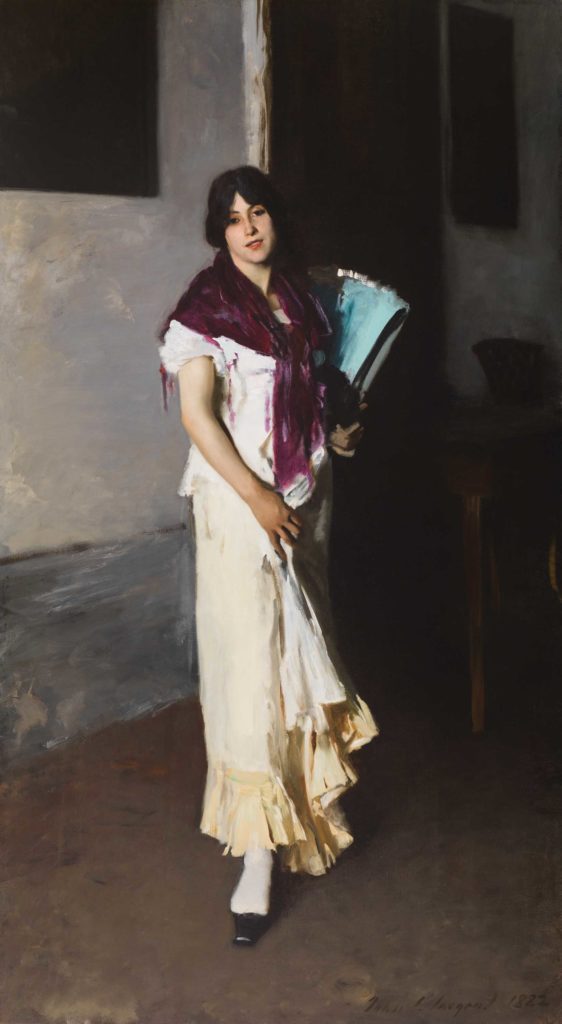
John Singer Sargent (1856–1925), “A Venetian Woman,” 1882, oil on canvas, 93 3/4 x 52 3/8 in., Cincinnati Art Museum
Gracing the Smithsonian American Art Museum is the new exhibition “Sargent, Whistler, and Venetian Glass: American Artists and the Magic of Murano.” It explores Americans’ engagement with Venice during the late 19th century, when anyone on the Grand Tour had to stop there.
Visitors found not only a floating city of palaces, museums, and churches, but also shops filled with brightly colored glass. The island of Murano’s production of glass boomed between 1860 and 1915 and its beauty led American artists to depict Italian glassmakers, as well as American patrons to buy superb examples of glass, mosaic, lace, and other expressions of Venetian skill.
On view now are many glass objects, plus an array of paintings, watercolors, and prints that encompass not only the show’s titular stars, John Singer Sargent and James McNeill Whistler, but also R.F. Blum, C.C. Coleman, Maria Oakey Dewing, Thomas Moran, Maxfield Parrish, and Maurice Prendergast.
The accompanying catalogue has been edited by Crawford Alexander Mann III, who organized the show, which will move to the Amon Carter Museum of American Art in Fort Worth (June 25–September 11, 2022) and finally Venice’s Ca’ Pesaro Galleria Internazionale d’Arte Moderna (October 15, 2022–January 8, 2023).
> Visit EricRhoads.com to learn about more opportunities for artists and art collectors, including retreats, international art trips, art conventions, and more.
> Sign up to receive Fine Art Today, our free weekly e-newsletter
Timothy Wilson, "Sunset," 5 x 7 inches, Oil on panel
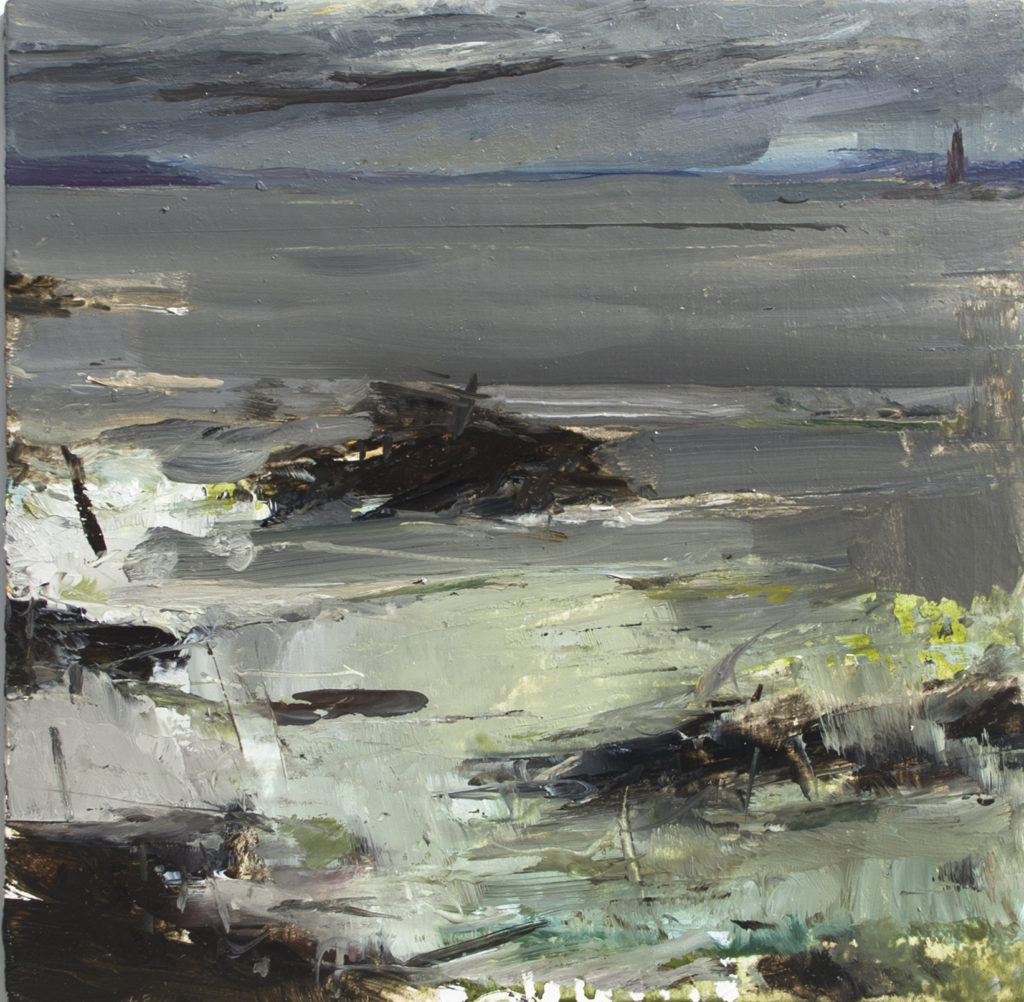
From inside the artist’s mind – an article by Timothy Wilson on the art of painting.
BY TIMOTHY WILSON
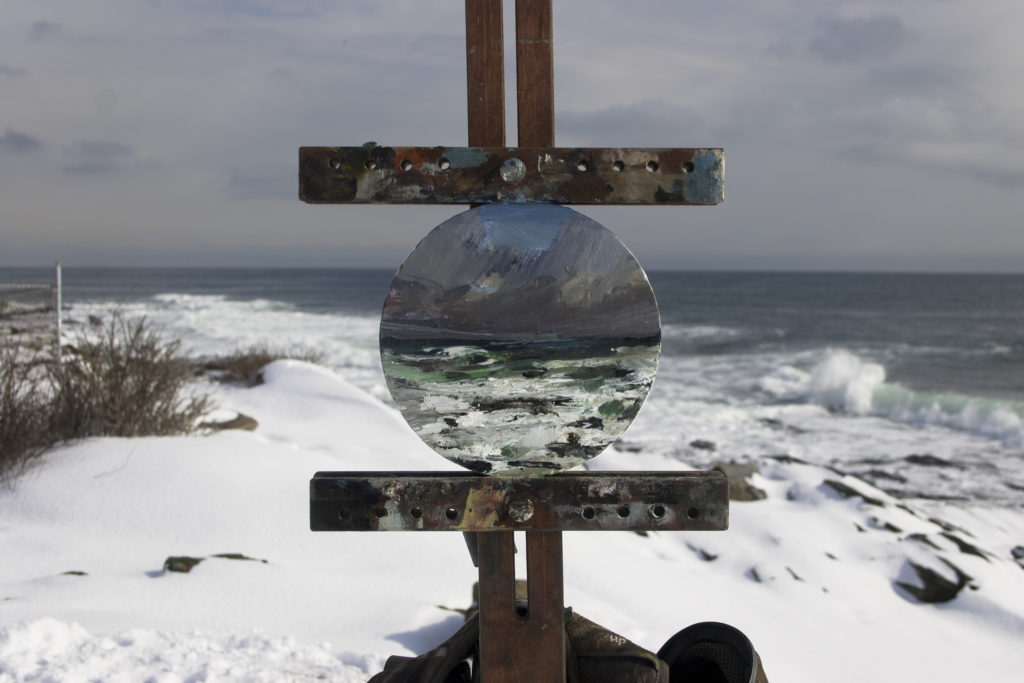
Constable believed that the Painter does not receive illuminations, but rather makes discoveries. It is the job of the Painter (perhaps one of many) to not just describe what something is, but how something is. In order to do so, we need to experience things to create a visual vocabulary from which we pull. In a moment of pure desperation last year, I took a makeshift easel to the ocean in an attempt to vent my never-ending frustrations in the studio; and suddenly found myself captivated by a form of painting that has completely, and dramatically, affected my entire philosophy and approach to painting and life.
The Importance of Experience
Everything naturally exists in a dimension of time. In a still frame or photograph, everything is equal. Everything is frozen. When we spend time studying an object or setting in person, we are exposed to the different mortalities of things. Everything dies at different rates, so in experiencing something in real life, we are progressing through time (dying) together, and thereby creating a more dynamic bond than just using photographic reference. As Painters, we take that tactile experience and push those unique intricacies to redefine how that Something can exist beyond its literal interpretation. We don’t need to use all of the information we get, just the essentials.
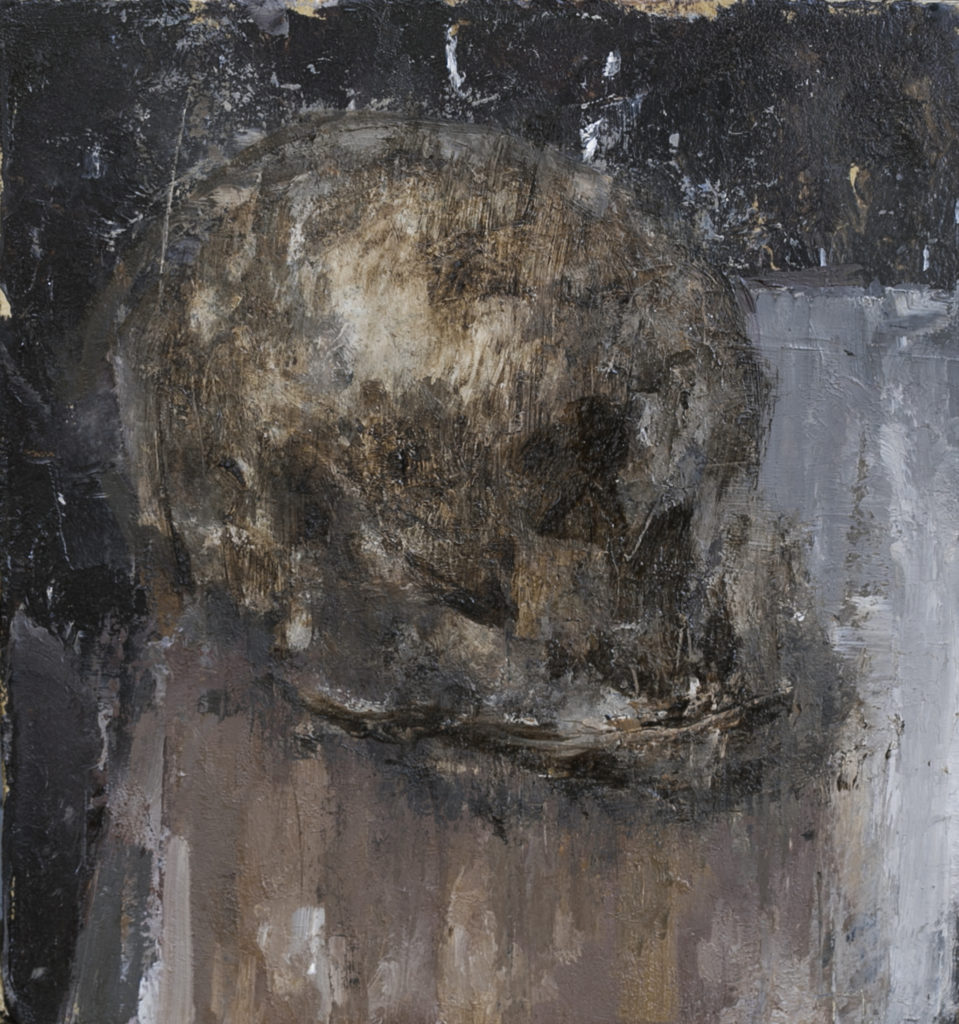
Below is an image that I painted using a porcupine skull I found washed clean in a river, and through a little trial and error I managed to somehow make it a bit more reminiscent of a human. I painted it on rough paper that I shellacked to a panel. I glued canvas to a panel using hide glue, and then traditionally gessoed the canvas. I always find I get a closer bond and perhaps a more interesting image when I spend the extra energy preparing my own supports and materials. There is an added weight to it.
Timothy Wilson, “Schkull,” 8.5 x 8.5 inches, Oil on shellacked paper
As we interpret visual information into our artwork, the descriptions may get lost or deconstructed into abstraction.
A viewer may not be able to place why they find an image compelling, but if we as Painters are truly able to empathize and relate to the ineffable makeup of our inspiration, whatever image occurs will have the sensory details needed so that the viewer can subconsciously relate to it without hesitation.
In other words: in order to output something unique, we need to first input something of importance. Prior to the past year, one could relate my approach to painting as beating my head against various walls to see which one would give the best dent. It wasn’t the most appealing approach. I locked myself away in the studio at all hours, trying to somehow get whispers of images from the back of my head out onto a canvas. I was a figurative and portrait artist painting without figures and portraits at my aid.
After each failed approach, I would make myself stay in the studio longer, usually half sleeping in the corner instead of going home, so I could get up first thing and try to redeem myself. I was too obsessed, and put too much pressure on having to create. Painting was a completely selfish act that was taking over my life in negative way: it was costing me close relationships and physical well-being. I wasn’t allowing myself to work from reference, and suddenly was giving up sketching altogether. Instead, I would just spend hours looking at a blank canvas before attacking it.
Those attacks usually failed. My work became almost completely gray, almost completely null of tone, and almost completely formless. Although I liked some of what I produced, it just wasn’t worth the mental anguish to produce it. I was trying to subvert Constable’s notion. I was pounding my head trying to make illuminations happen without venturing out to make my own discoveries. I wasn’t even allowing myself the enjoyment of nature because it wasn’t immediately “productive.” For me, studio painting was the only option. “Plein air” painting was something on hospital walls.
Going in to the out
One day something popped; rather, I may have finally bored my head through that wall: I had to get out of my studio. I found myself screwing a camera bracket to the bottom of a tabletop easel and driving out to the ocean to paint. I wasn’t even thinking; I just acted on impulse. I had to get outside and break down the proverbial studio walls. Suddenly, my hesitations and frustrations were gone. I was just standing there smelling the salt air, mushing paint around as waves crashed all around me. I was being productive; I was enjoying something, and being soothed by my surroundings simultaneously: I was finally making a discovery.
The painting was absolutely horrible. I didn’t know what I was doing but I absolutely loved the sensation. I bundled up and went out the next day, and the next. I didn’t care that it was the middle of winter and a blizzard was bearing down. I just had to go out and paint, and experience the sensations of the cold and the ferocity of the storm. The paintings weren’t much better, yet somehow the people I showed the work to could tell that I was enjoying it, and that enjoyment seeped through the paint and helped them enjoy the painting as well.
Almost overnight painting went from a laborious torture to a meditative passion. I now wake up to strap on my gear and set out for something that catches my eye. I go on a hunt, and the hunt is always rewarding.
The Sea
However, of all the elements that inspire, I have found the ocean to be the most intoxicating. It is a purity of expressionistic being. The ocean, like Constable and his skies, is an artistic anomaly. Waves are a climactic complexity of rippling form, color changes, light, shadow, form and volume all surging towards you . . . and in the blink of an eye it’s gone. The form of the wave literally explodes, or sinks into nothingness.
For me, it is an impossible thing to capture. So, just like the still frame that renders everything in equal mortality, I have never tried to “freeze” a particular moment. I just study the movement and try to make my marks as expressive as the movement: capturing the broad sense of scale, tone, color. There are certainly painters who are able to render a scene and still manage to capture the energy of a moment. When done correctly, the result is staggeringly beautiful—something I have yet to do.
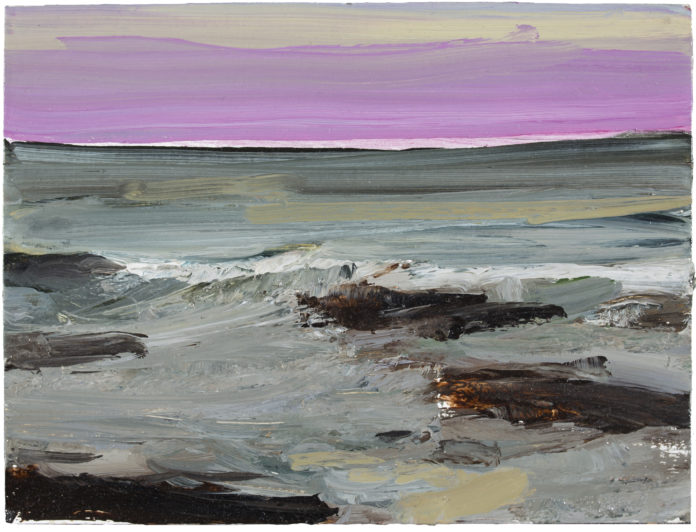
When I approach my larger compositions, rather than try to zero in on details I tend to rely more on reaction. I layer and scumble things, and as moments emerge I try to work with what happens and embrace the textures and slight color variations that I otherwise would never be able to control. The painting below dramatically changed form every time I worked on it, until it finally just felt done.
Timothy Wilson, “Damp Shower,” 7.5 x 7.5 inches, Oil on panel
Rather than always employing a brush, I use materials that lend themselves to a more tactile expression. Palette knives, squeegees and ink rollers are all amazing for redefining the mass of an image in a mere pull of the wrist. Sometimes I sprinkle sand in to get the paint a bit more coarse. Sometimes I drop the painting after two hours of working on it and decide to obliterate it and try again. Sometimes, when I forget materials, I forage for natural receptacles to put my mediums in (crab shells and seashells are perfect!).
Whatever happens, it’s just about the experience and pulling from what is around me. It’s not about minutely rendering the gradated crest of a wave, or the terminating shadow on a leaf stem, it’s about trying to find a way of saying “holy shit.”
Just like the egg that needs to be hatched, you need to spend time with a painting to make it fully realized. It doesn’t mean you need to sit on it hour after hour, day after day. In doing so you may squeeze the life out of it. Painters are in control of how much information is imparted. Certainly when you have an innate ability or flair for paint it is enticing to show it, but sometimes less is more. There is something to be said about the confident strokes of Sargent in which an entire feature is defined in a single motion.
Compare that to the panels of Van Eyck in which every detail is rendered. There is no natural focus as everything is microscopic in detail yet within a telescopic all-encompassing composition. Obviously each is masterful. And furthermore, I can never come close to replicating either! But in viewing them in a contemporary setting, one expresses energy through mark making and embraces the viewer, while the other almost takes the energy away from the viewer and combusts itself into a black hole.
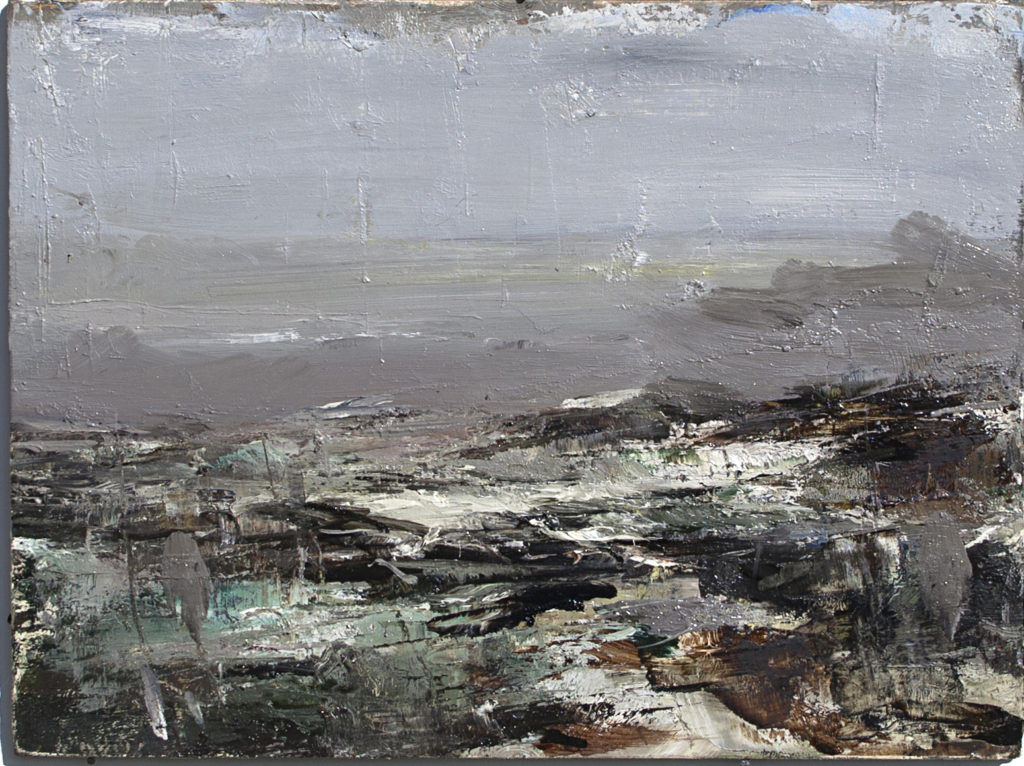
I try to walk a balance in the middle when possible. The study below didn’t take very long, and although perhaps viewed from afar it might capture the scene, when you get up close it all falls apart into little energetic bits that somehow emulate details.
Timothy Wilson, “Sea Finale,” 7.5 x 10 inches, Oil on paper on panel
My entire philosophy has been changed by painting on location—the experience of place, the sensation of direct painting and having a confidence to venture out beyond the dimly lit studio and embrace abstraction, color, and light. My daily studies have become a sense of calm for me, an essential meditation that helps me focus and think. A year earlier I was living in fear of making art. I now spend most of my days yearning to get into the studio to work on larger compositions, but can’t seem to stop painting out in the wild, making discoveries. Constable was right.
> Visit EricRhoads.com to learn about more opportunities for artists and art collectors, including retreats, international art trips, art conventions, and more.
> Sign up to receive Fine Art Today, our free weekly e-newsletter
Fill your mind with useful art stories, the latest trends, upcoming art shows, top artists, and more. Subscribe to Fine Art Today, from the publishers of Fine Art Connoisseur magazine.


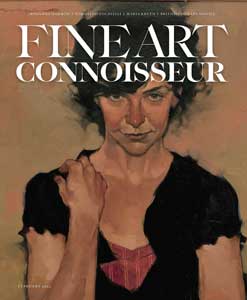
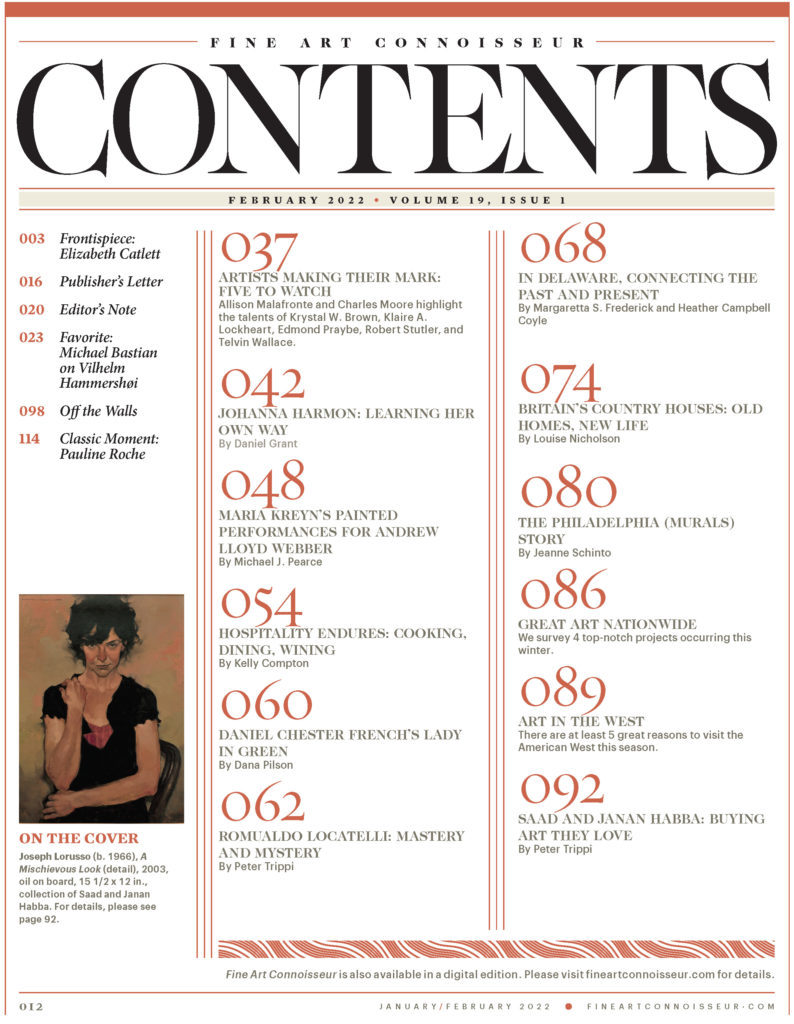 Download the January/February 2022 issue here, or subscribe to Fine Art Connoisseur today so you never miss an issue.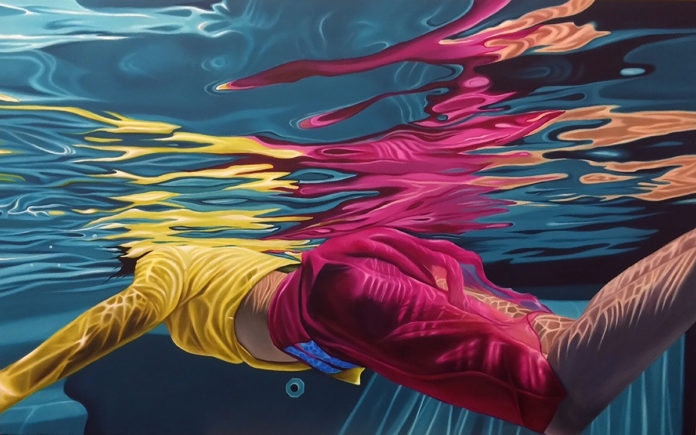
 When I approach my larger compositions, rather than try to zero in on details I tend to rely more on reaction. I layer and scumble things, and as moments emerge I try to work with what happens and embrace the textures and slight color variations that I otherwise would never be able to control. The painting below dramatically changed form every time I worked on it, until it finally just felt done.