
Home Blog Page 135

Turner’s Modern World

0
JMW Turner paintings
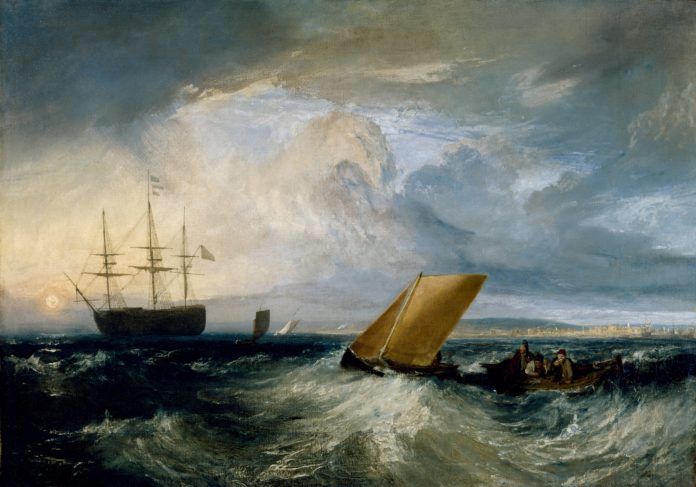
J. M. W. Turner, "Sheerness as seen from the Nore," 1808, Oil on canvas, 41 1/8 × 58 7/8 in., The Museum of Fine Arts, Houston, museum purchase funded by the Alice Pratt Brown Museum Fund, the Brown Foundation Accessions Endowment Fund, Isabel B. and Wallace S. Wilson, The Brown Foundation, Inc., and Ann Trammell, 2005.31

The Kimbell Art Museum is now presenting the U.S. premiere of “Turner’s Modern World,” a showcase of paintings by J.M.W. Turner (1775–1851), one of Britain’s greatest artists.

Drawn from the collections of Tate Britain, the Museum of Fine Arts, Boston, the Metropolitan Museum of Art, the Cleveland Museum of Art, the Yale Center for British Art and others, the exhibition features more than 100 key works that explore how Britain’s preeminent landscape painter found new, modern ways to interpret the extraordinary events of his time.
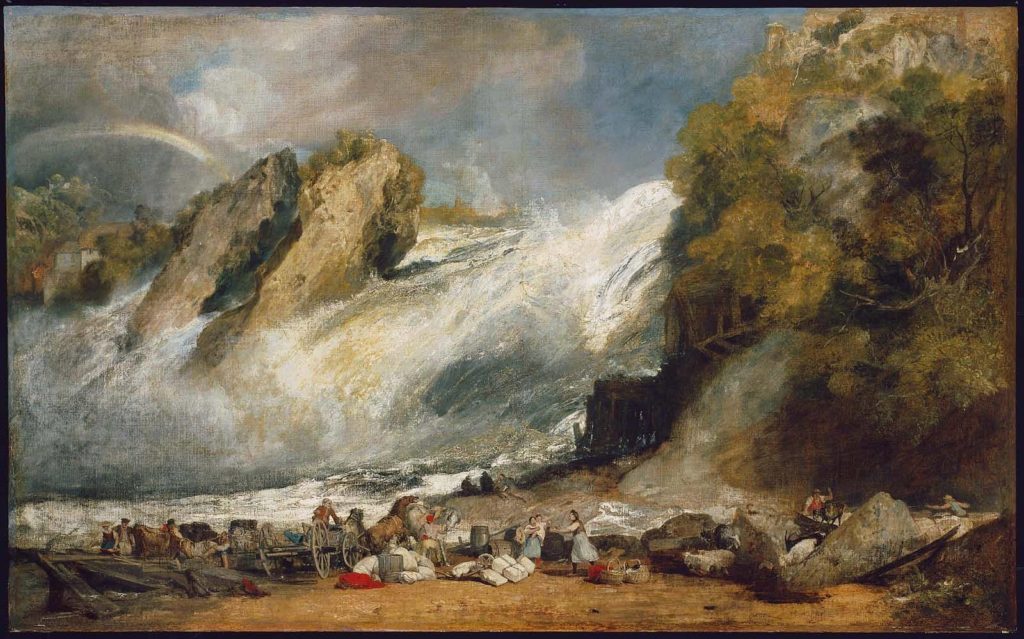
JMW Turner paintings - Fall of the Rhine at Schaffhausen
J. M. W. Turner, “Fall of the Rhine at Schaffhausen,” c. 1805–6, Oil on canvas, 58 1/2 x 94 3/8 in., Museum of Fine Arts, Boston, bequest of Alice Marian Curtis, and Special Picture Fund, 13.2723

More from the museum:

Born in the early years of the Industrial Revolution, Turner witnessed spectacular technological innovations and the mechanization of modern life. As the advances of industry and commerce brought Britain to world power, Turner immortalized these rapid changes in vivid and dramatic compositions.

From the 1790s to the end of Turner’s life, Britain’s economic and political fabric underwent continual and far-reaching alterations. Industrial development brought machines to the workplace, made possible the spread of steam power and resulted in a massive redistribution of the rapidly growing population from the country to newly industrialized cities. The speed of change was dizzying.

“Turner’s Modern World” will explore British life—beginning with the artist’s earliest works, such as “The Interior of a Tilt Forge” from one of his pocket sketchbooks—and British politics, in such works as “The Northampton Election,” during the first half of the century. The great land and sea battles of the Napoleonic Wars—Trafalgar and Waterloo—are marked with monumental canvases, meant to bring modern history home to the public.
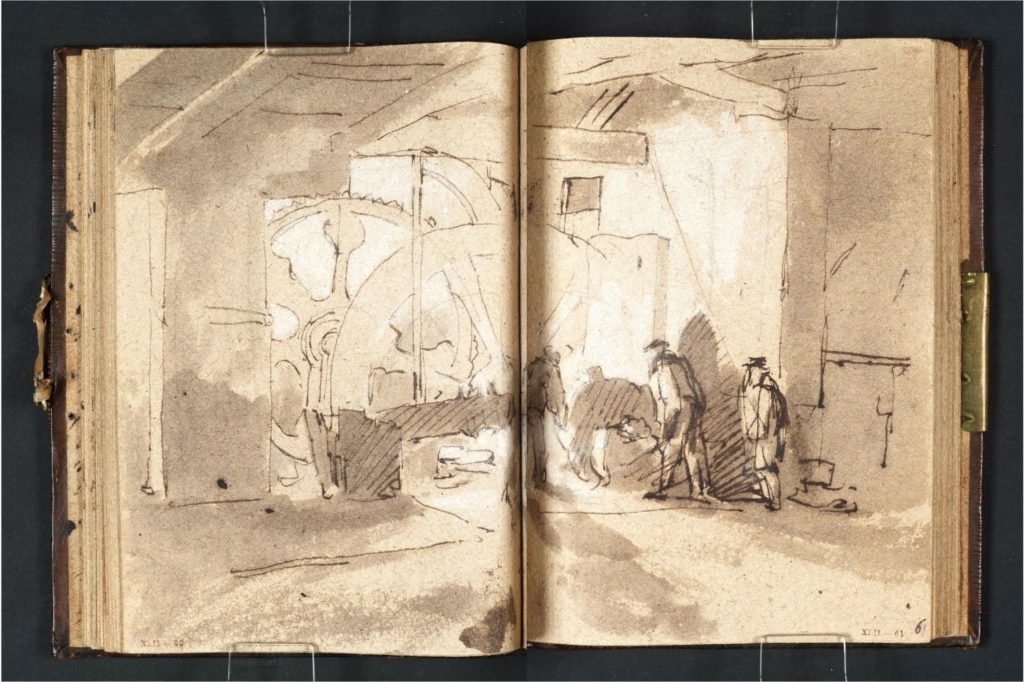
JMW Turner sketchbook
J. M. W. Turner, “The Interior of a Tilt Forge,” (Swans Sketchbook), c. 1798, Graphite on paper, 6 9/10 x 9 9/10 in., Tate Britain, London, accepted by the nation as part of the Turner Bequest 1856, D01735 and D01736 , Photo: © Tate, London, 2020

The advances of industry and commerce that brought Britain to world power—and the limitations of that power—were pictured by Turner in such paintings as “Snow Storm – Steam-Boat off a Harbour’s Mouth” and “Peace – Burial at Sea.” Both works were completed in 1842, at a time when Turner had developed a new and radical style of painting, his sweeping compositions achieved with his trademark brushwork—skillful handling of the paint that gave the impression of being wild and uncontrolled.

In his last years, he surpassed his contemporaries by melding his modern-day subjects with this highly innovative style—an accomplishment that established him as one of the founders of modern art. For a painting by Turner to be “modern,” it did not have to depict a contemporary subject: the great painting from the Kimbell’s permanent collection Glaucus and Scylla, for example, tells the ancient myth of a nymph who flees her lover as a vengeful witch transforms him from a sea-god to a monster. The painting’s subject is taken from Ovid; its modernity lies in the way it is painted.

Though Turner began his career as a topographical watercolorist and painter of beautiful scenery, he grew to be one of the greatest innovators of his century—and left behind him dynamic, inspired and comprehensive testament to his own era. He was not only a witness to modernity, but an interpreter and champion for his generation.
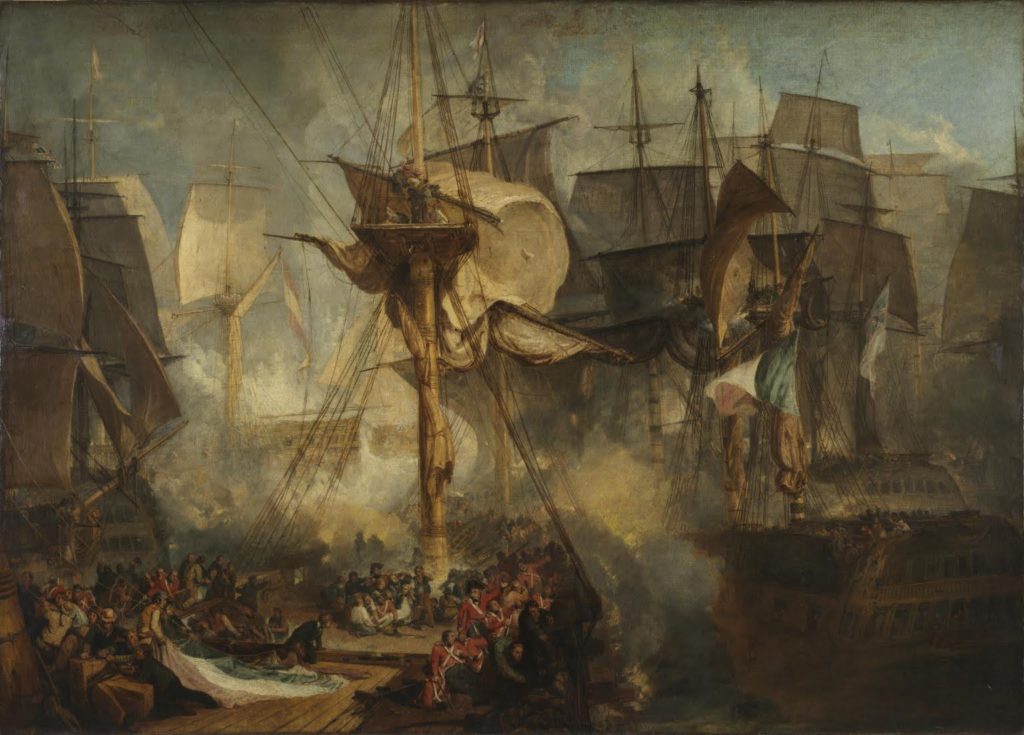
JMW Turner paintings
J. M. W. Turner, “The Battle of Trafalgar, as Seen from the Mizen Starboard Shrouds of the Victory,” 1806–8, Oil on canvas, 67 1/4 x 94 in., Tate Britain, London, accepted by the nation as part of the Turner Bequest 1856, N00480, Photo: © Tate, London, 2020

“Turner’s Modern World” is on view through February 6, 2022.


> Visit EricRhoads.com to learn about more opportunities for artists and art collectors, including retreats, international art trips, art conventions, and more.

> Sign up to receive Fine Art Today, our free weekly e-newsletter

> Subscribe to Fine Art Connoisseur magazine, so you never miss an issue
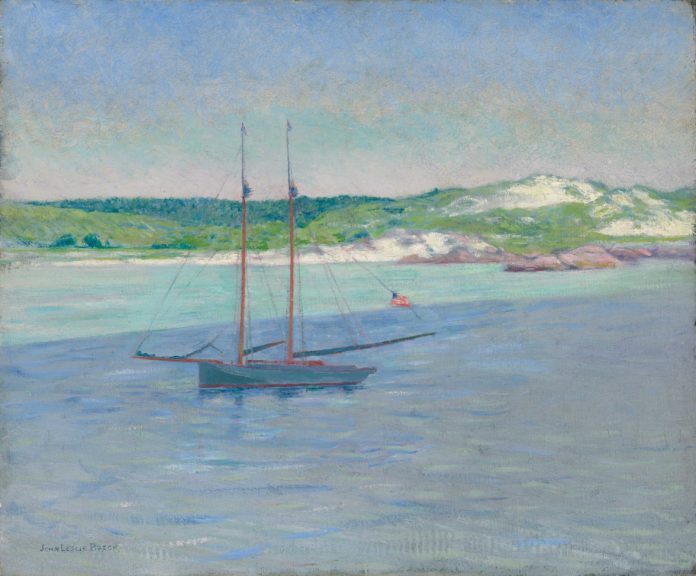
John Leslie Breck: American Impressionist

1
John Leslie Breck paintings
John Leslie Breck (1860–1899), "The Cove, Annisquam," c. 1893, oil on canvas, 18 x 22 in., private collection, courtesy Martha Richardson Fine Art, Boston

“John Leslie Breck: American Impressionist”
Charlotte, North Carolina
mintmuseum.org
Through January 2, 2022

Inspired by its 2016 acquisition of Breck’s canvas “Suzanne Hoschedé-Monet Sewing,” the Mint Museum has organized “John Leslie Breck: American Impressionist,” the first modern retrospective dedicated to this influential artist who died in his late 30s. It includes approximately 70 works drawn from public and private collections, some not shown for more than a century.

In 1887, Breck co-founded the American art colony near Claude Monet’s home at Giverny and then broke new ground by exhibiting his Impressionist paintings back at home. When he relocated to the Boston area in the 1890s, he helped popularize the still-new style.

More than 10 related paintings by Breck’s French and American colleagues, including Theodore Robinson, Willard Metcalf, and Lila Cabot Perry, have been included to help visitors understand his central role in the movement they all championed.

The exhibition will move to Memphis’s Dixon Gallery & Gardens (January 22–March 27, 2022) and finally the Figge Art Museum in Davenport, Iowa (May 28–August 21, 2022).


> Visit EricRhoads.com to learn about more opportunities for artists and art collectors, including retreats, international art trips, art conventions, and more.

> Sign up to receive Fine Art Today, our free weekly e-newsletter

> Subscribe to Fine Art Connoisseur magazine, so you never miss an issue
Contrasted New England Art Colonies

1
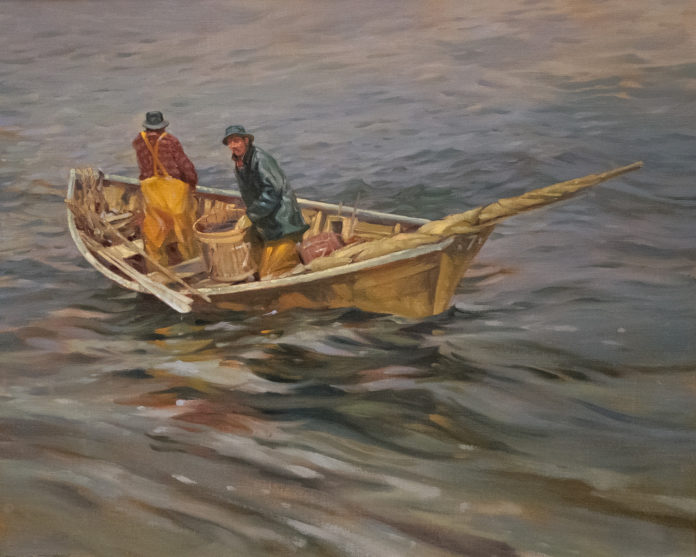
New England paintings - Don Stone
Don Stone (1925 – 2015), “Dorymen,” 1992, Oil on canvas, 20 x 30 inches, Collection of the Cape Ann Museum, Gloucester, MA, Gift of the artist, 1999

The growth of two of New England’s oldest and most revered summer art colonies is the subject of a special exhibition, “Cape Ann & Monhegan Island Vistas: Contrasted New England Art Colonies,” at the Cape Ann Museum. The show features works by artists who visited and were inspired by both places including Theresa Bernstein, Walter Farndon, Eric Hudson, Margaret Patterson, and Charles Movalli.

Monhegan and Cape Ann trace the roots of their respective art colonies back to the mid-19th century and specifically to the years immediately following the Civil War. Summer enclaves, which emerged during that time, gave artists the chance to socialize with one another, work together, share ideas, try out new techniques, and critique each other’s works.

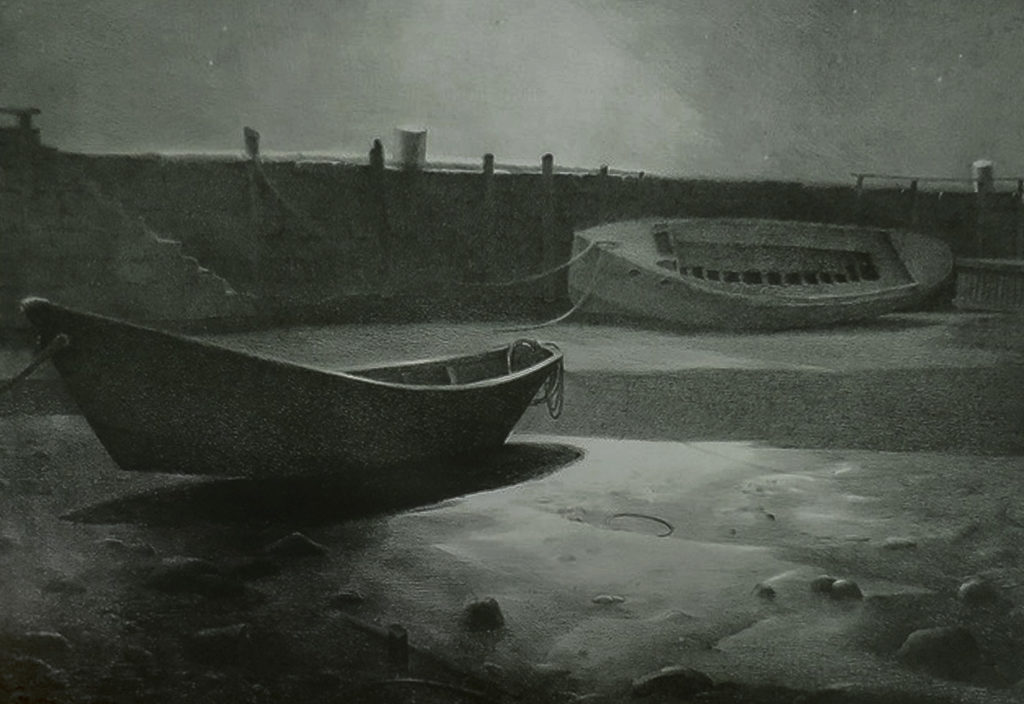
New England paintings - Stow Wengenroth
Stow Wengenroth (1906-1978), “Moonlight,” 1937
Lithograph on paper, 11 x 16 inches
Collection of the Cape Ann Museum,
Gloucester, MA, Gift of Robert L. and
Elizabeth French, 1991

Located 10 miles off the Maine coast, Monhegan is much smaller than Cape Ann and more isolated, however, both places offered their own vistas and many artists moved between the two colonies. During the 20th centuries, both communities saw a surge of artists, professional and amateur, visit their shores. Today, Monhegan and Cape Ann continue to be vibrant regional art colonies of national significance.

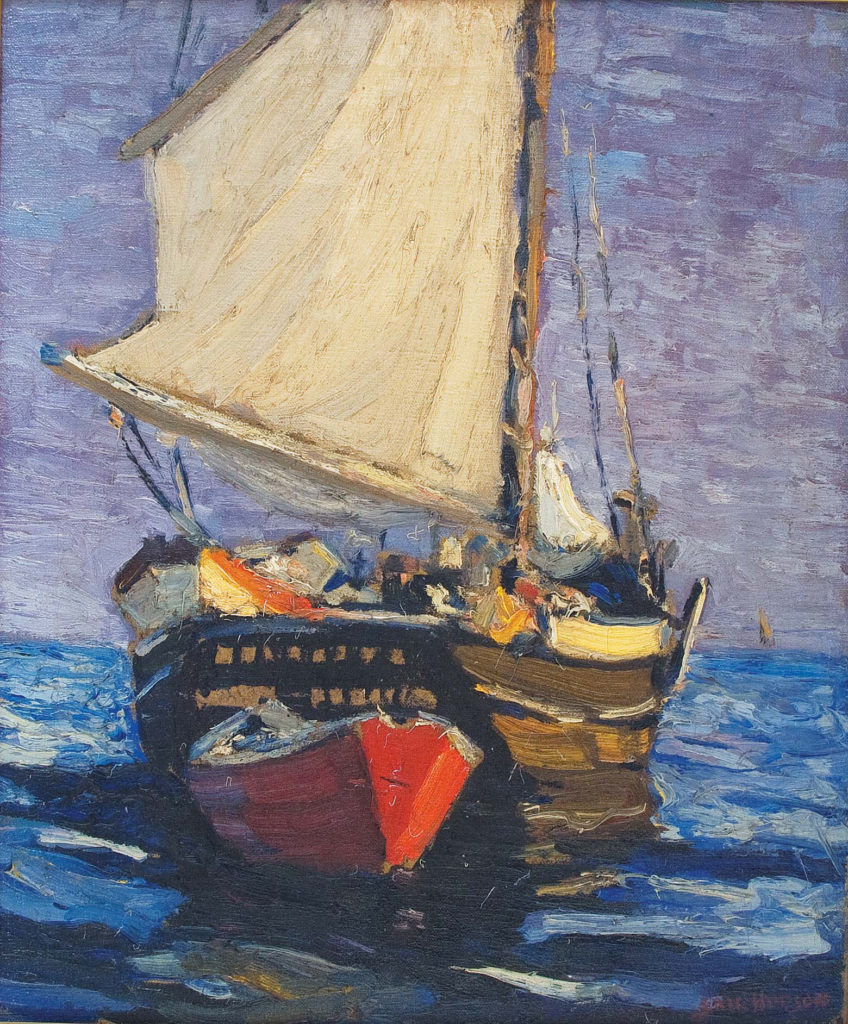
One of the artists featured in Island Vistas is Eric Hudson (1864-1932) who was an accomplished painter and photographer. An expanded collection of Hudson’s paintings will be on display in an adjoining gallery at the Cape Ann Museum, giving visitors the opportunity to delve deeper into his work.

Eric Hudson (1864–1932), “Under Dark Sky,” n.d.
Oil on canvas, 24¼ x 20¼ inches
Monhegan Museum of Art & History,
Gift of James F. O’Gorman and
Jean Baer O’Gorman, 2013

The exhibition includes works from the collections of the Monhegan Museum of Art & History, the Cape Ann Museum, the Rockport Art Association & Museum, and private collections. Curated by art historian James F. O’Gorman, the exhibition was organized by Cape Ann Museum in collaboration with the Monhegan Museum of Art & History on the island of Monhegan in Maine.


> Visit EricRhoads.com to learn about more opportunities for artists and art collectors, including retreats, international art trips, art conventions, and more.

> Sign up to receive Fine Art Today, our free weekly e-newsletter

> Subscribe to Fine Art Connoisseur magazine, so you never miss an issue
Featured Artwork: Chantel Lynn Barber

0
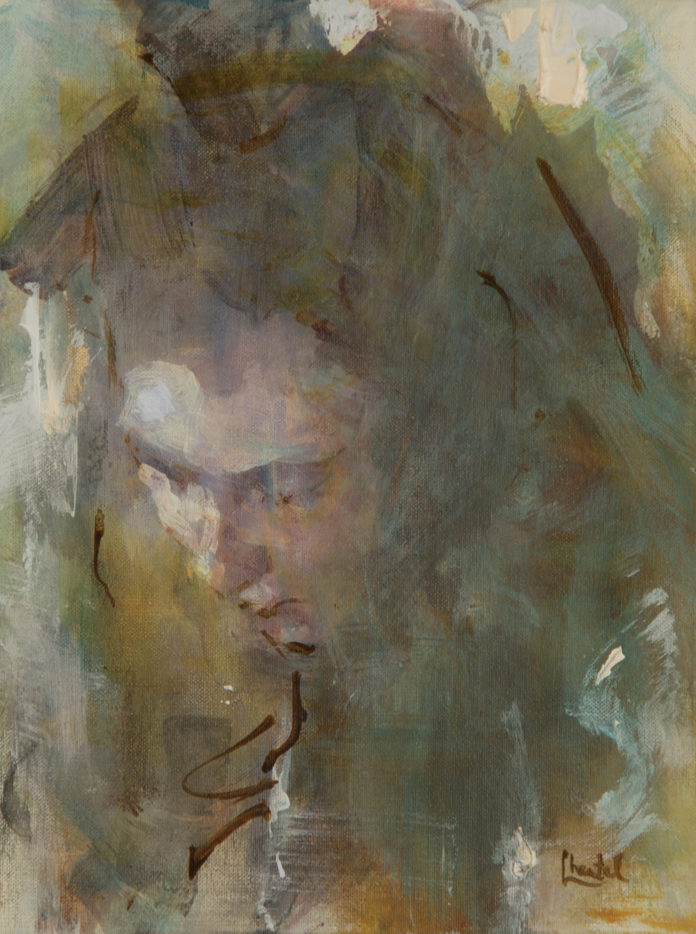
Acrylic painting of a woman

Out of an Agatha Christie Novel
8 x 6 in.
Acrylic on panel
$450
Available through the artist

Chantel Lynn Barber yearns to promote the human spirit in her work. She believes that when it comes to the human race, there is more that unites than divides. There is beauty in everyone, regardless of whether they measure up to society’s definition of beauty. Not only their joys, but their sorrows too. She wants to show the beauty in the human condition. Chantel is on a journey to capture the vision in her mind’s eye – the one blood we as humans share. And she does it all in acrylic – with strong color, energetic brushwork, light and story. Her loose style draws the viewer’s attention, visually beckoning them to wonder at the essence of life.

Chantel is a Signature Member of the International Society of Acrylic Painters (ISAP), an Associate with Distinction Member of American Women Artists (AWA), and a member of the Portrait Society of America (PSoA) and National Oil & Acrylic Painters’ Society (NOAPS). She has served as the National Coordinator of the State Ambassador program for the PSoA.

Selected Award Highlights
• Outstanding Acrylic – BoldBrush Painting Competition, July 2021
• Outstanding Acrylic – BoldBrush Painting Competition, June 2021
• Best Acrylic 10th Annual Plein Air Salon Competition 2020
• Award of Excellence – National Oil & Acrylic Painters’ Society 2020 Spring Online International Exhibition
• Finalist – BoldBrush Painting Competition, March 2020
• Finalist – BoldBrush Painting Competition, January 2020
• Finalist Outside the Box Category – Portrait Society of America’s Members Only Competition, December 2019
• Honorable Mention – International Society of Acrylic Painters All-Member Online Exhibition, December 2019
• Winner AcrylicWorks 7: Color and Light Peak Media 2019 Acrylics Competition
• Finalist – BoldBrush Painting Competition, August 2019
• Award of Excellence – National Oil & Acrylic Painters’ Society 2019 Spring Online International Exhibition
• Finalist – BoldBrush Painting Competition, March 2019
• Winner AcrylicWorks 6: Creative Energy North Light Books’ 2018 Acrylics Competition
• Winner Strokes of Genius 9: Creative Discoveries North Light Books’ 2016 Drawing Competition
• Master Class Finalist – Art Muse Contest, November 2018
• Master Class Finalist – Art Muse Contest, February 2018
• Outstanding Acrylic – BoldBrush Painting Competition, January 2018
• 2017 Annual Award Winner Master Class – Art Muse Contest
• Master Class Finalist – Art Muse Contest, October 2017
• Master Class Winner – Art Muse Contest, May 2017
• Finalist – BoldBrush Painting Competition, February 2017
• 2nd Place – BoldBrush Painting Competition, December 2015

To see more of Chantel’s work, visit: www.chantellynnbarber.com

Artist Spotlight: Nanette Fluhr

0
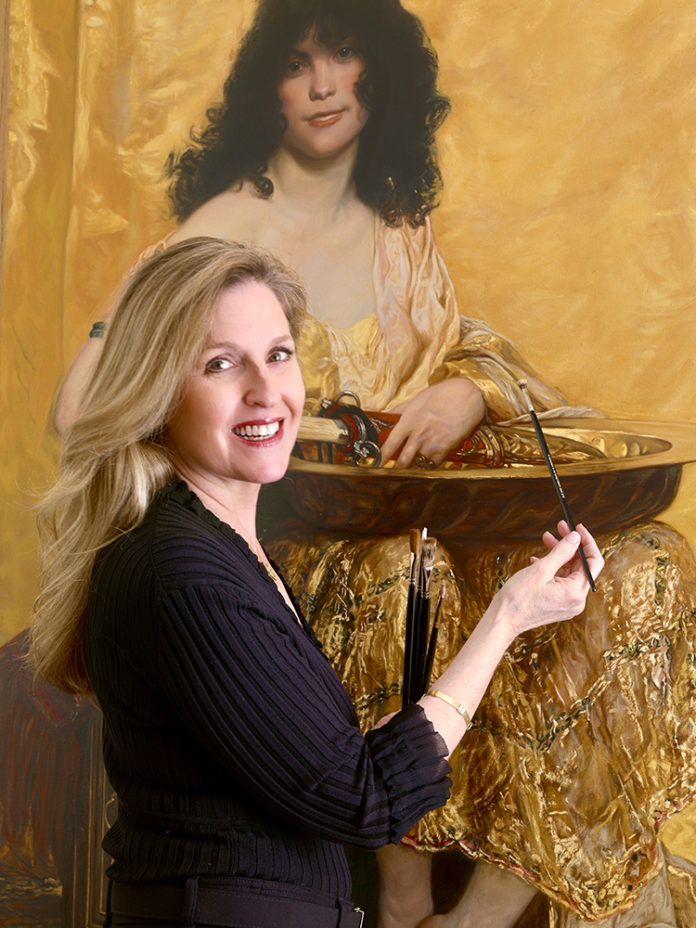
Female artist standing in front of a life-sized painting of a woman
Nanette Fluhr painting her master copy of Henri Regnault’s “Salome,” 63 x 40 in., oil on linen, Private Collection, 2020
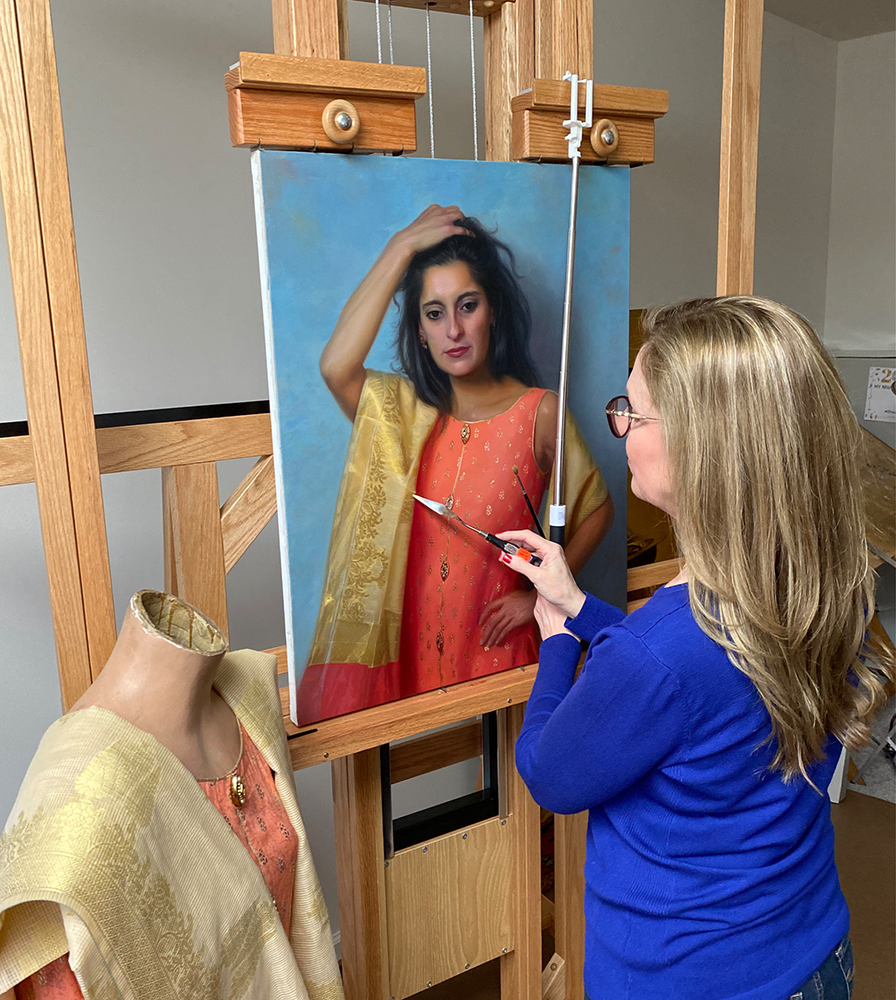
Female artist painting a portrait of a woman on an easel in her studio
Nanette Fluhr painting “Manu,” 30 x 24 in., oil on linen, 2021 in her studio

How did you get started and then develop your career?

Nanette Fluhr: I was drawn to art in childhood and always loved drawing and painting. I attended Rutgers University where I studied Art and Communication. After graduating I accepted a job as the Executive Director of a medical society but realized I wanted to pursue art professionally. I enrolled in the School of Visual Arts in NYC to further hone my skills. There I met John Frederick Murray, who taught me drawing, painting and picture making skills gleaned from the techniques of the Old Masters. In a time when abstract art was in Vogue, it was wonderful to learn classical techniques of the great figurative artists.

Seeing my affinity for the Masters, John suggested I go to the Metropolitan Museum of Art and copy directly from my favorite masterpieces. I registered as a copyist with the Met and painted replicas of works by Lawrence, Le Brun, Rembrandt, Rubens, Velazquez, and Van Dyck at the museum.

I’ve always been drawn to people and human emotions, so painting portraits was a natural choice for me. In the early 90s I entered my first art competition and won an award of excellence. I also received my first portrait commission which was the start of my professional art business.

I’ve been working as an artist for over 25 years and enjoy painting portrait commissions, as well as creating personal work for my collectors and myself. I also enjoy sharing my knowledge of traditional realism through teaching.

How do you describe success?

For me, success is work that enriches my life and others. It is very satisfying when collectors tell me I’ve given them their greatest gift, and when others connect with my art and find joy. Of course, it’s nice to have one’s efforts recognized, and an honor to win awards and be invited to show in prestigious museums and galleries. I am also grateful to be able to make a living in my chosen field. However, at the end of the day, knowing I have done my best is the true reward. We all have unique gifts and skill sets and I feel I am successful if I am using and sharing mine to the fullest. I always want to grow as an artist and continue to create meaningful and lasting art.

As Maya Angelou beautifully states, “Success is liking yourself, liking what you do, and liking how you do it.”

How do you find inspiration?

As an artist I find myself constantly inspired. I love observing and conversing with people; I am fascinated by their stories and am inspired by their beauty — the way color and light illuminate the forms on their faces. Nature also inspires me. I walk almost every morning and love hearing the birds, seeing the clouds and trees and feeling the warm breeze on my face. I delight in the rhythm and light that pull me into the moment. Beautiful art, especially that of the old masters, is always an inspiration. Beauty is everywhere and it cultivates my creativity.

What is the best thing about being an artist?

Being an artist enables me to see subtlety and beauty in the world, to capture and portray my vision, to have an idea and bring it to life. I am grateful to be able to tell someone’s story that will be part of their legacy for future generations. It is a joy to create a timeless work of art that captures an individual’s true essence. I feel fortunate that I am able to follow my passion and do what I love.

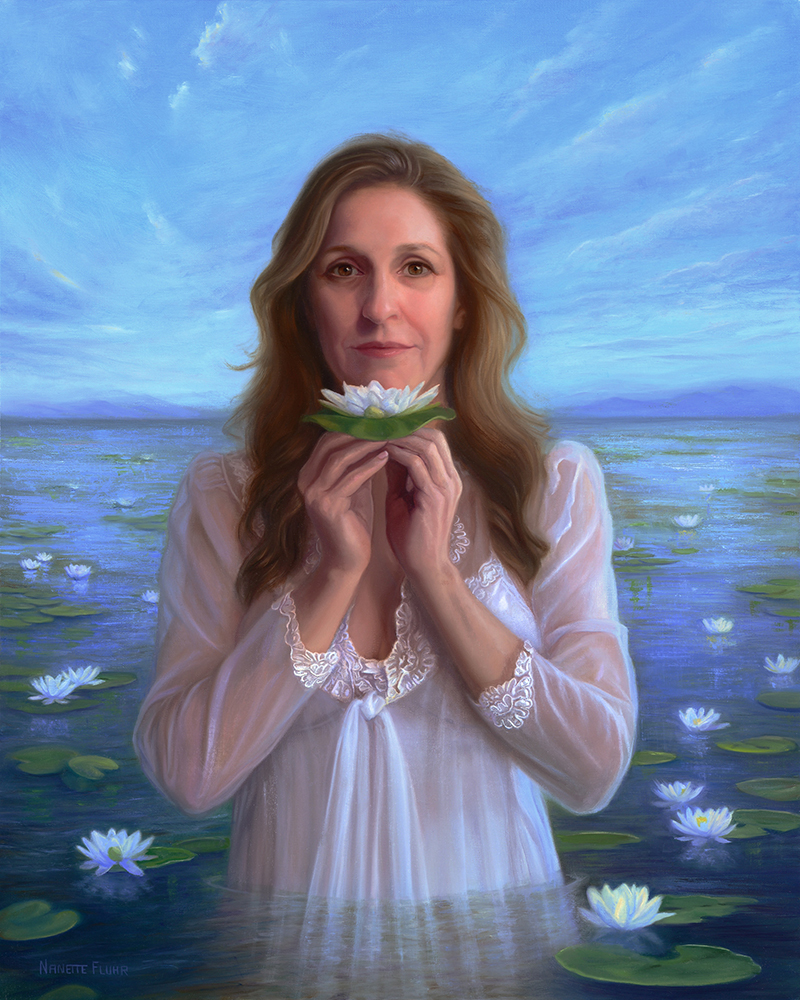
Oil painting of a woman holding a lotus flower
Nanette Fluhr, “A Lotus Grows in the Mud,” 30 x 24 in., oil on linen, 2021
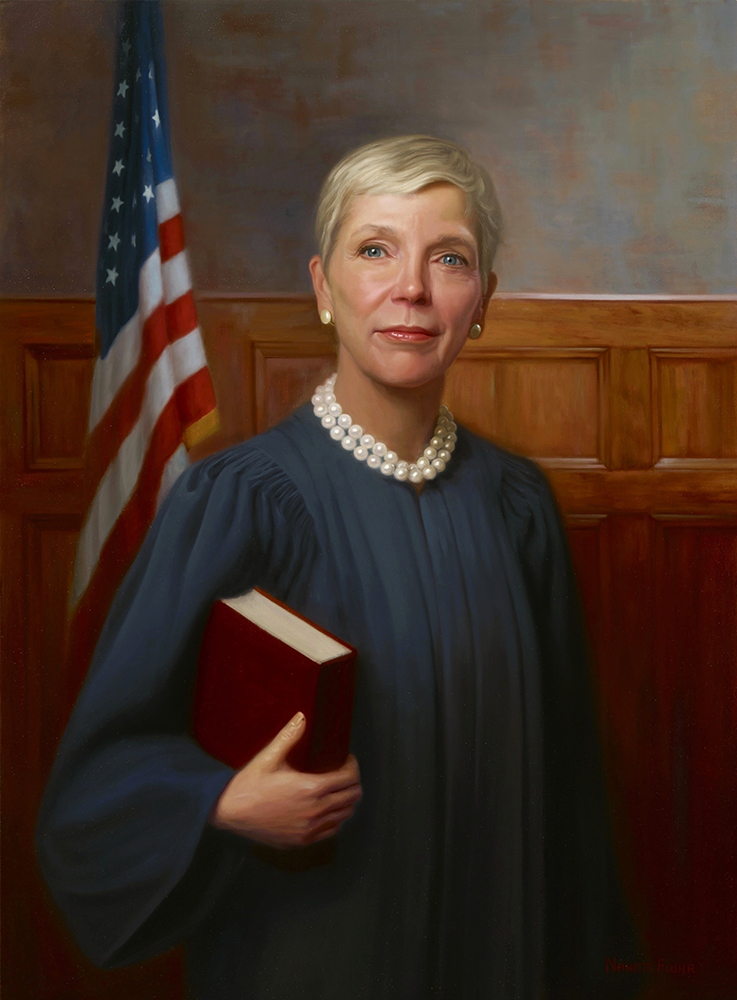
Oil painting of a female judge in her chambers
Nanette Fluhr, “The Honorable Margaret Garvey, Justice Supreme Court of Rockland County (retired),” 37 x 27 in., oil on linen, 2018
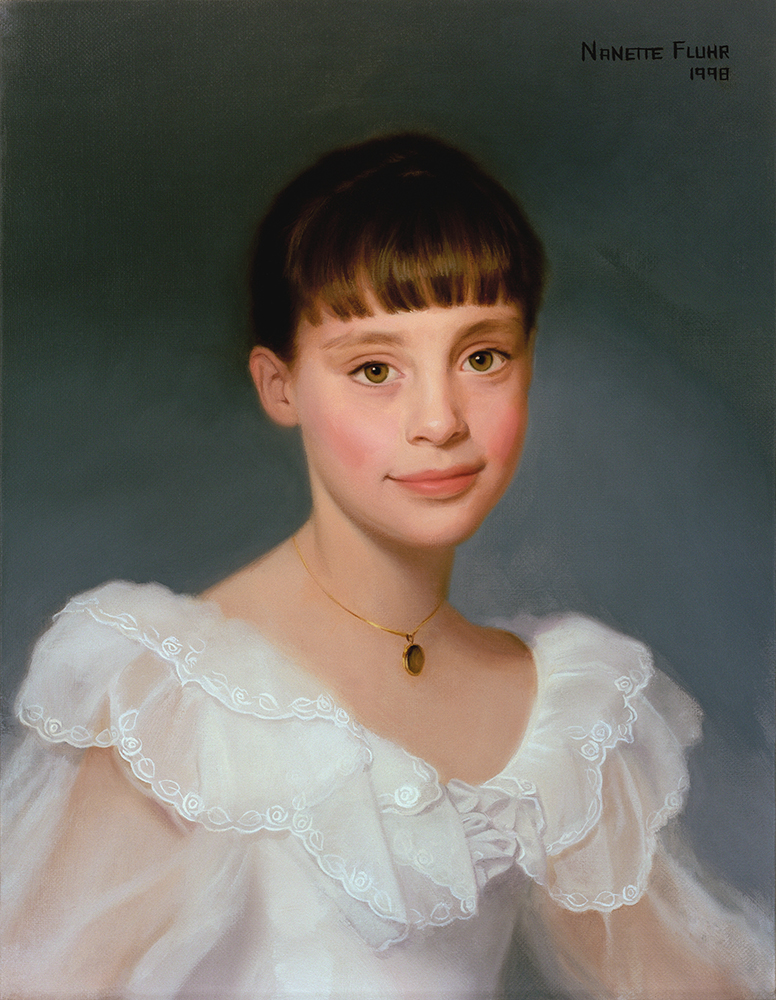
Oil painting of a young girl with a white lacy blouse
Nanette Fluhr, “Lizzy,” 18 x 14 in., oil on linen, 1998
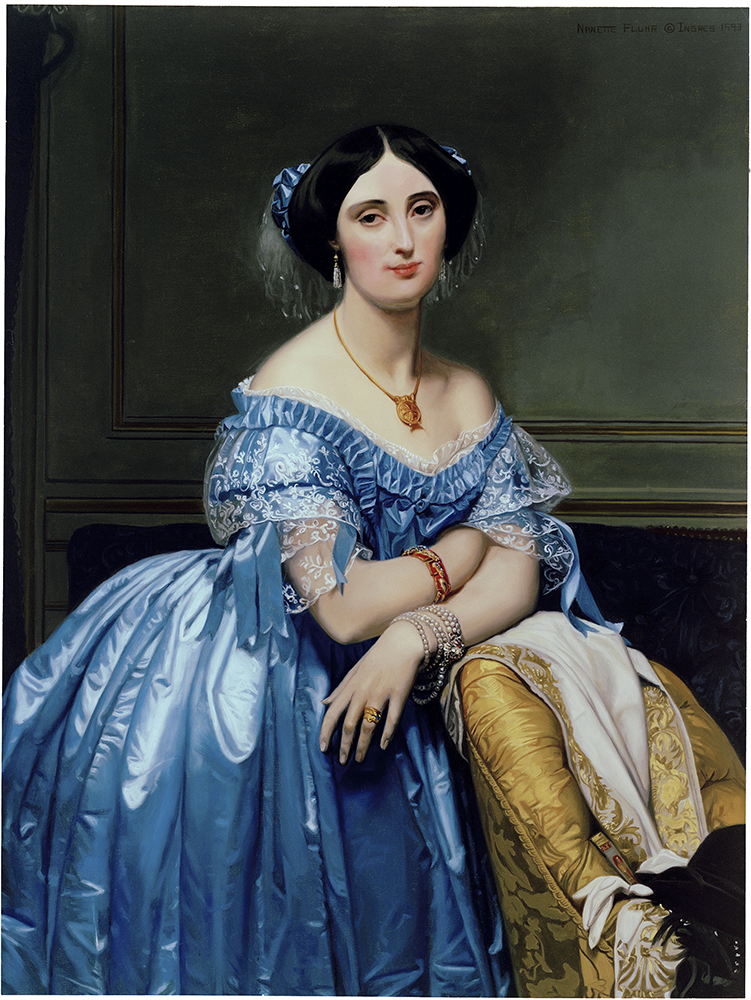
Oil painting of a woman in a blue dress
Nanette Fluhr, “Replica of Ingres’ Princess de Brogli,” 32 x 24 in., oil on canvas, 1993

To learn more about Nanette Fluhr, please visit:
Website: www.nanettefluhr.com
Instagram: @nanette_fluhr

Friday Virtual Gallery Walk for October 15, 2021

0
Friday Virtual Gallery Walk

As part of our effort to continue to help artists and art galleries thrive, we’re proud to bring you this week’s “Virtual Gallery Walk.” Browse the artwork below and click the image itself to learn more about it, including how to contact the gallery.

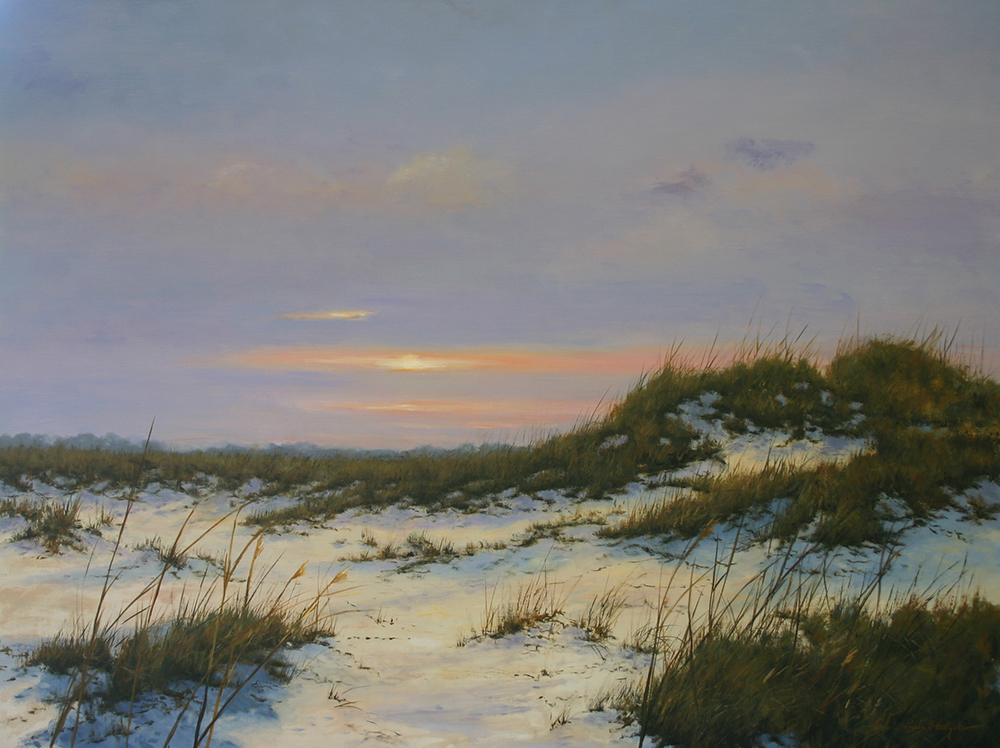
Oil painting of grassy sand dunes
Twilight Harmony by Paula Holtzclaw, Oil, 37 x 47 in. (45 x 53 in. framed); Anderson Fine Art Gallery


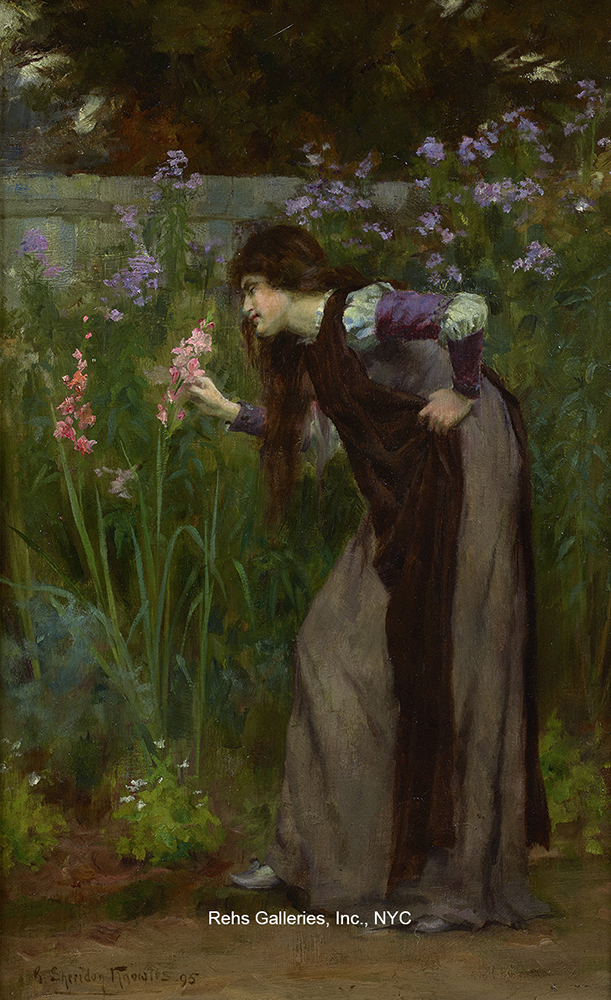
Oil painting of a lady in a long dress smelling tall flowers
Gladiolas by George Sheridan Knowles (1863 – 1931), Oil on panel, 13 1/2 x 8 1/2 in., Signed and dated ’95; also titled on an old exhibition label on the reverse; Rehs Galleries, Inc.


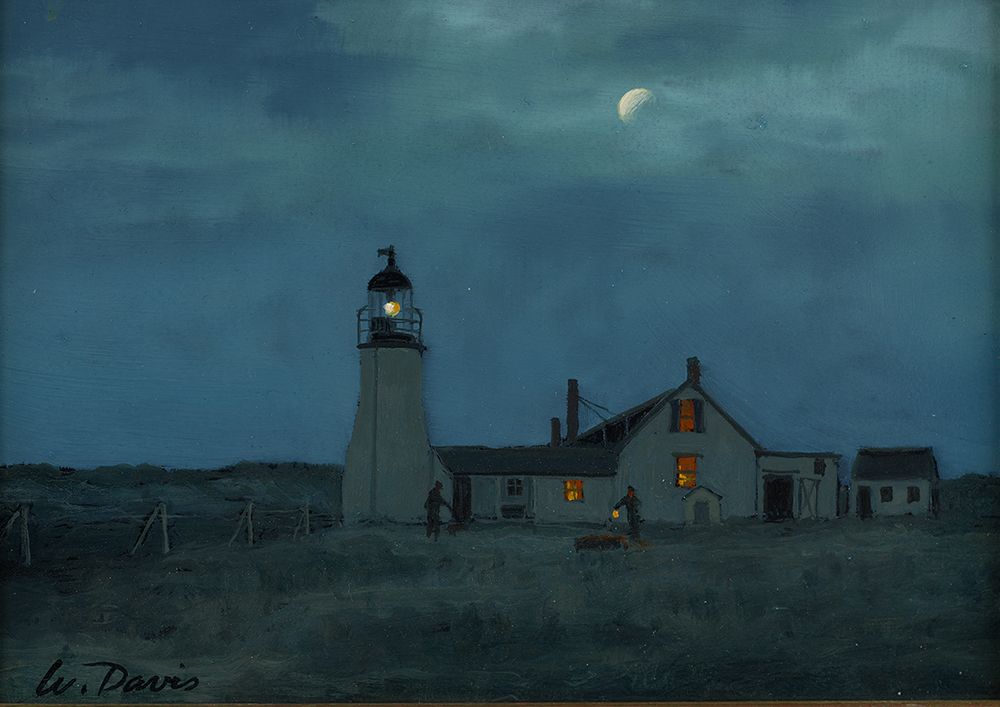
Oil painting of a lighthouse at night
Race Point Lighthouse, Cape Cod, built 1816, c. 1850, 2020 by William Davis (Born 1952), Oil on panel, 5 x 7 in., Signed; Rehs Contemporary


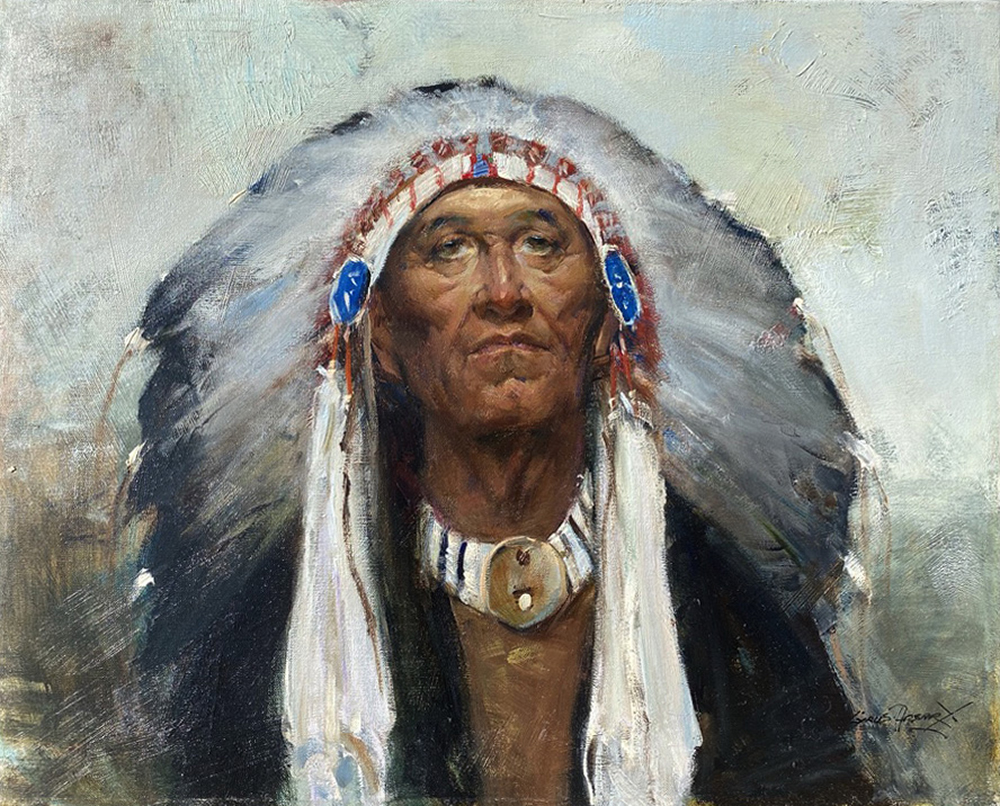
Oil painting of an native American Indian chief
Leader by Cyrus Afsary, Oil, 16 x 20 in.; ArtzLine.com

Want to see your gallery featured in an upcoming Virtual Gallery Walk? Contact us at [email protected] to advertise today. Don’t delay, as spaces are first come, first served, and availability is limited.

Talented Twins

0

Imagined Realism
Fort Worth
cartermuseum.org
Through January 9, 2022

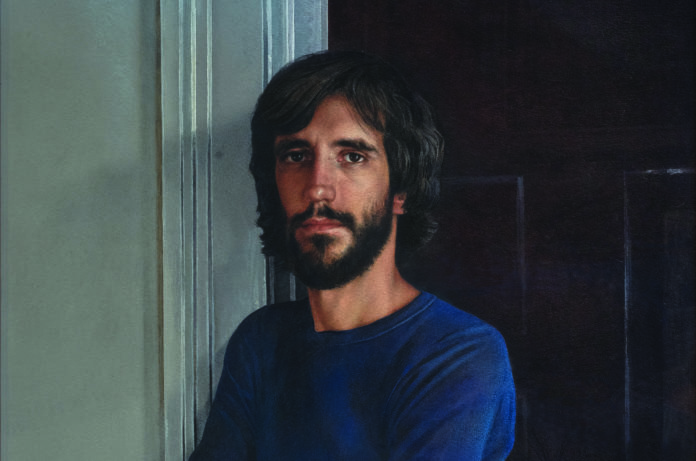
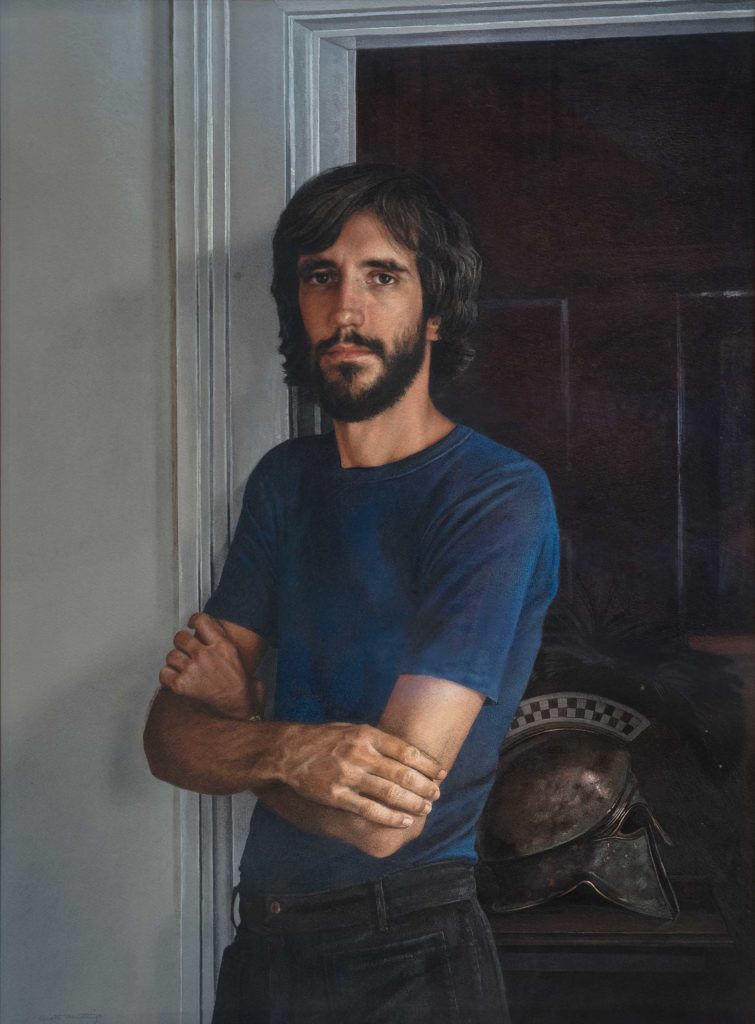
Scott Gentling (1942–2011), "Brent Hyder,"
Scott Gentling (1942–2011), “Brent Hyder,” 1976
(modified c. 1986), graphite, opaque and transparent watercolor on paper, 29 3/8 x 21 1/2 in., private collection of T. Brent Rowan Hyder

The Amon Carter Museum of American Art is going “all in” on the careers of Stuart Gentling (1942–2006) and Scott Gentling (1942–2011), talented twins who came to Fort Worth at age 5 and spent their lives there creating art long admired in Texas yet little studied elsewhere.

“Imagined Realism” is their first retrospective, encompassing more than 160 sketches, etchings, watercolors, and oil paintings.

This year also sees the establishment of the museum’s Gentling Study Center and research fellowship devoted to them and other underappreciated American artists, as well as a new Gentling book. The driving forces behind this initiative are local arts patron Edward P. Bass, curator/archivist Jonathan Frembling, and curatorial assistant Janelle Montgomery.

Blessed with a steady income via portrait commissions, including one of President George W. Bush, the brothers evolved artistically in the realm of historicism and hyperrealism. Their subject matter included romantic landscapes, 18th-century clothing, natural history, visualizations of the Aztec empire, and, most visibly, the 80-foot mural that adorns Fort Worth’s Bass Performance Hall.


> Visit EricRhoads.com to learn about more opportunities for artists and art collectors, including retreats, international art trips, art conventions, and more.

> Sign up to receive Fine Art Today, our free weekly e-newsletter

> Subscribe to Fine Art Connoisseur magazine, so you never miss an issue
Artist Spotlight: Philippe Gandiol

1
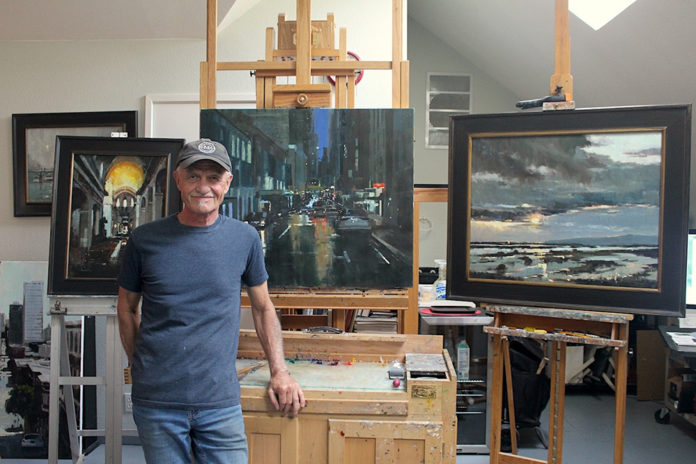
Male artist standing in his studio in front of his work on an easel
Philippe Gandiol in the studio
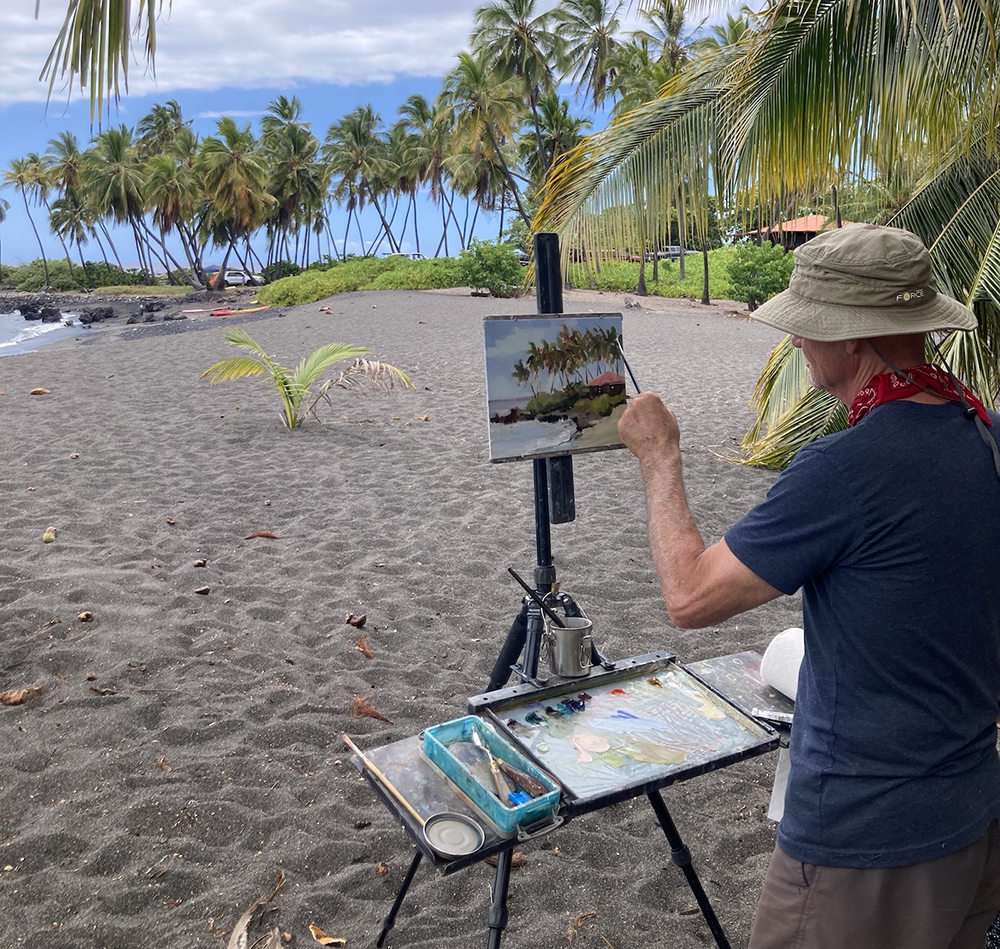
Male artist painting on the beach in Hawaii
Philippe painting in Hawaii

How did you get started and then develop your career?

Philippe Gandiol: My grandfather was a businessman and also an artist/bohemian in his own fashion. He had a strong influence on me very early in my life. The seed was planted. I wanted to be an artist. Art classes in high school were exciting. In college along my major, I studied acting and art. I moved from France to California right after that and kept taking college classes including art.

In order to provide for my family, I worked for a large music distribution and production company and for a while art went on the back burner. I met wonderful musicians, music lovers and bit by bit the strong urge to make art once again took over. I started to hang my paintings on my office walls and co-workers bought some of them. I took workshops and classes with professional artists that I admired. When this very successful company suddenly fell apart, I decided to take the leap and be a full-time artist. I never looked back.

At that same time, I started to paint in plein air, and along with figure drawing/painting the combination was a tremendous force in my development and growth. Then it all came along: participation in plein air events, shows in galleries, teaching.

How do you describe success?

When you discover beauty in everything from a dramatic sunset to a back alley, a shiny rose to a broken glass, a radiant smile to a silhouette lost in the fog.
When struggles, failures and rejections are just opportunities to learn, grow and shine.
When painting is a thrill regardless of the outcome, when time stops, and I am one with it all.
When your heart and soul is open to all possibilities, and you find the courage to express it.
When someone says, “Thank you for what you do and bring to the world.”
When you can pay the bills.
It is success!

How do you find inspiration?

At first, I searched hard for inspiration and could barely find it. Then when I started to paint day in and day out, squeezed the oils on the palette and dipped my brush in to bring them to the canvas, inspiration came into play. That is how I found out that the act of painting IS the inspiration. It is everywhere and in everything. Also looking at other artists work, reading about them is always a rich and fabulous experience.

What is the best thing about being an artist?

In my case it is the freedom to find and express oneself. It is to belong to this wonderful artists’ community which is a constant source of inspiration, who you learn from, have fun with and share meaningful moments. Also, when you paint anything anywhere, you are instantly part of it and make deep connections with the people, the place and the time. It is so rich. I am living the dream.

Who do you collect?

I collect artists close to me and who I admire and love: friends, students, members of the tribe.

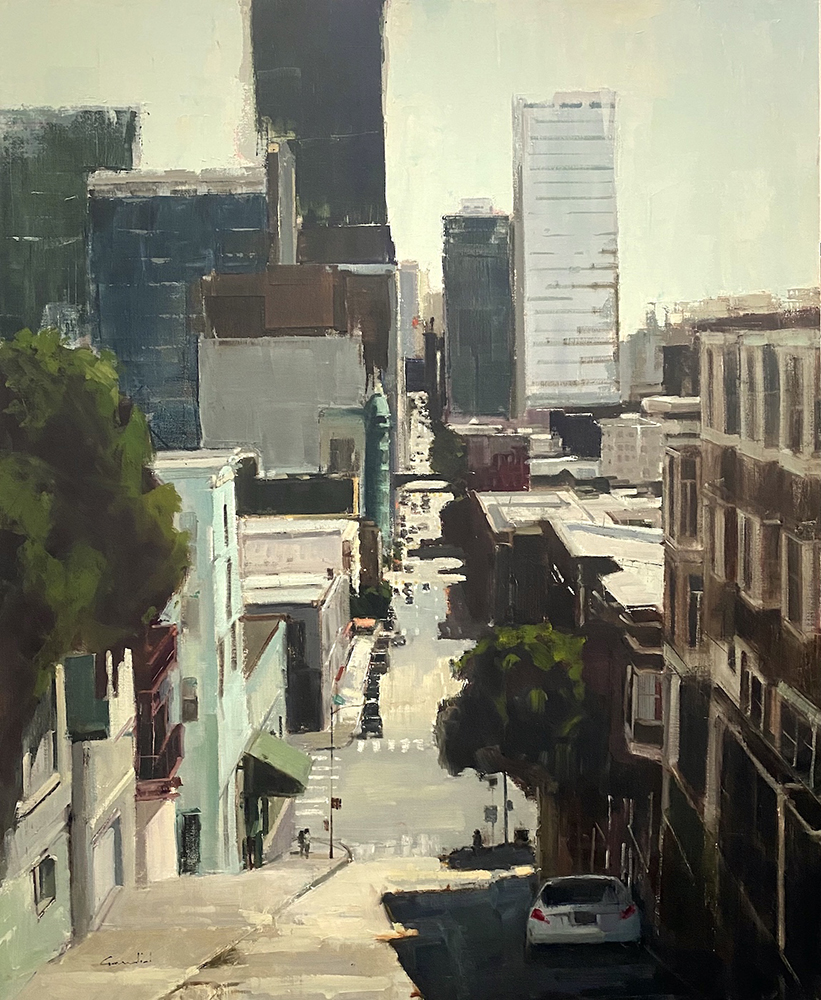
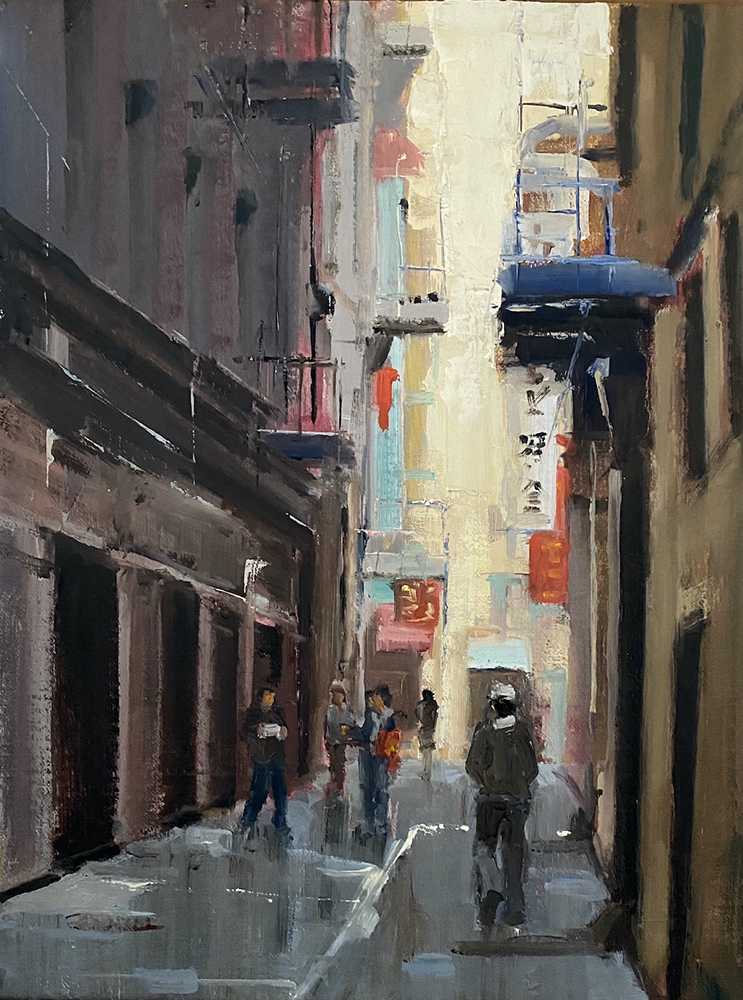
Oil painting of a city street
Philippe Gandiol, “Silence,” 44 x 36 in., oil on canvas, 2021
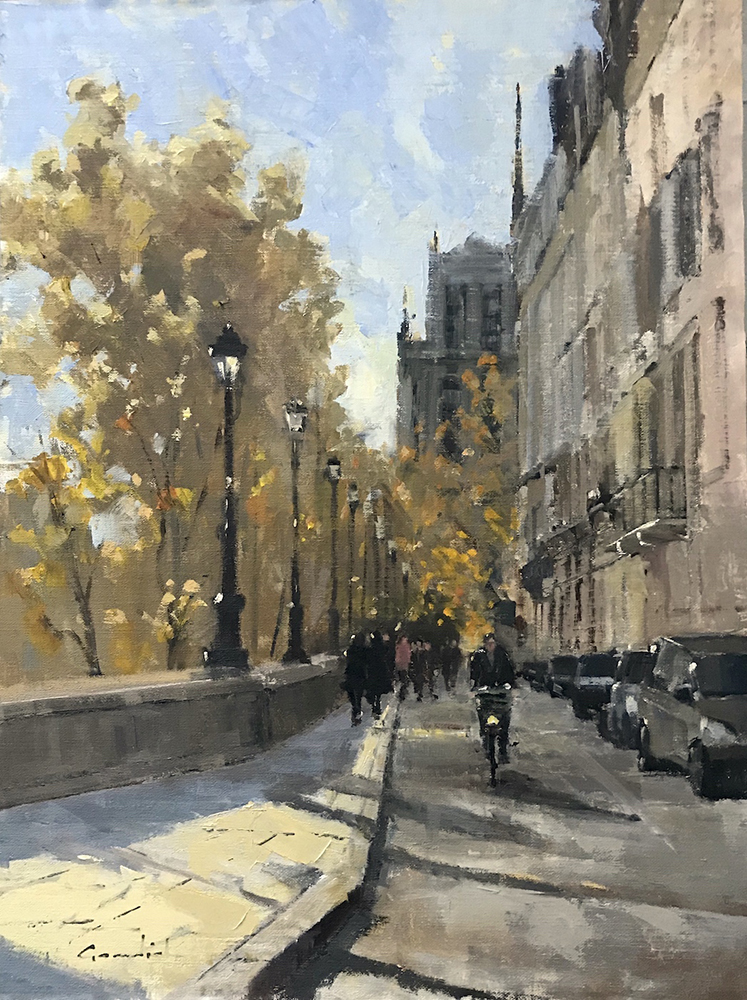
Oil painting of a sidewalk with trees on one side and buildings on the other
Philippe Gandiol, “Homage,” 24 x 18 in., oil on canvas, 2020
Oil painting of a downtown city street
Philippe Gandiol, “Interplay,” 16 x 12 in., oil on panel, 2020
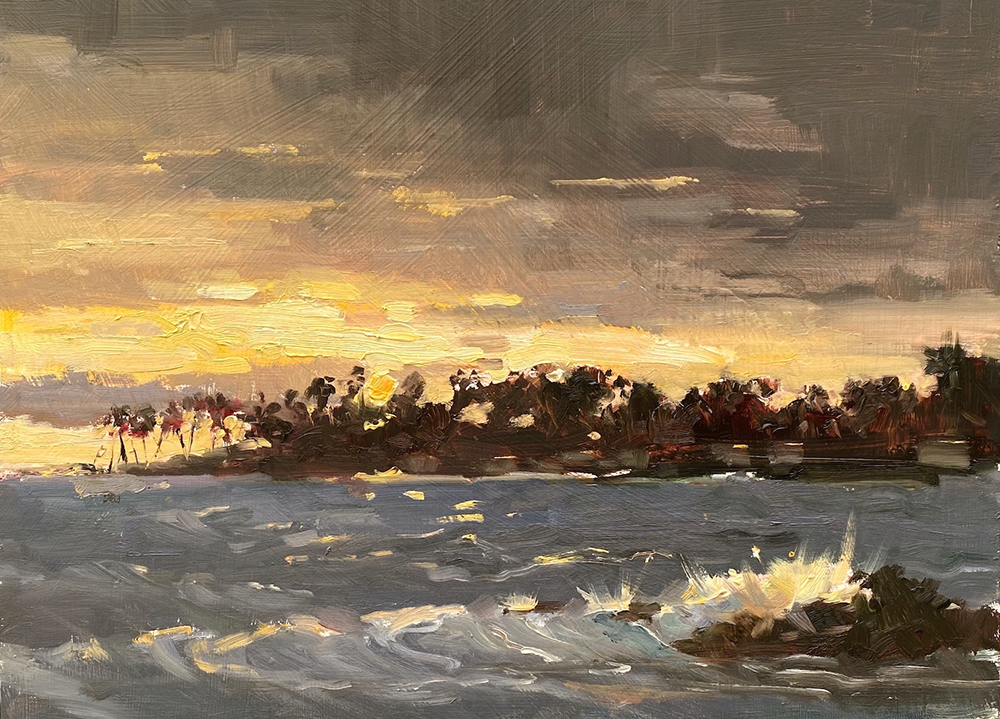
Oil painting of crashing ocean waves in a tropical place
Philippe Gandiol, “Down with a Splash,” 12 x 16 in., oil on panel, 2021

To see more of Philippe’s work, visit: www.philippegandiol.com

Drunk on Color

0
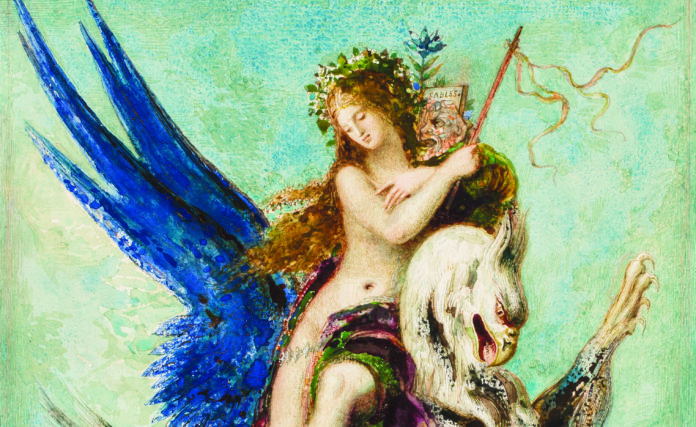
Detail of "Allegory of Fable" (full painting below)

Gustave Moreau: The Fables
Waddesdon Manor
Aylesbury, Buckinghamshire, England
Through October 17, 2021
waddesdon.org.uk

On view at Waddesdon Manor are major works by Gustave Moreau (1826–1898). In the late 1870s, the great French Symbolist was commissioned by the collector Antony Roux to create 64 watercolors illustrating the 17th-century Fables of Jean de La Fontaine.

The results were exhibited to acclaim, with one commentator enthusing that Moreau “was a jeweler before he was a painter and who, drunk on color, had ground up rubies, sapphires, emeralds, topazes, pearls and mother-of-pearl to make his palette.”

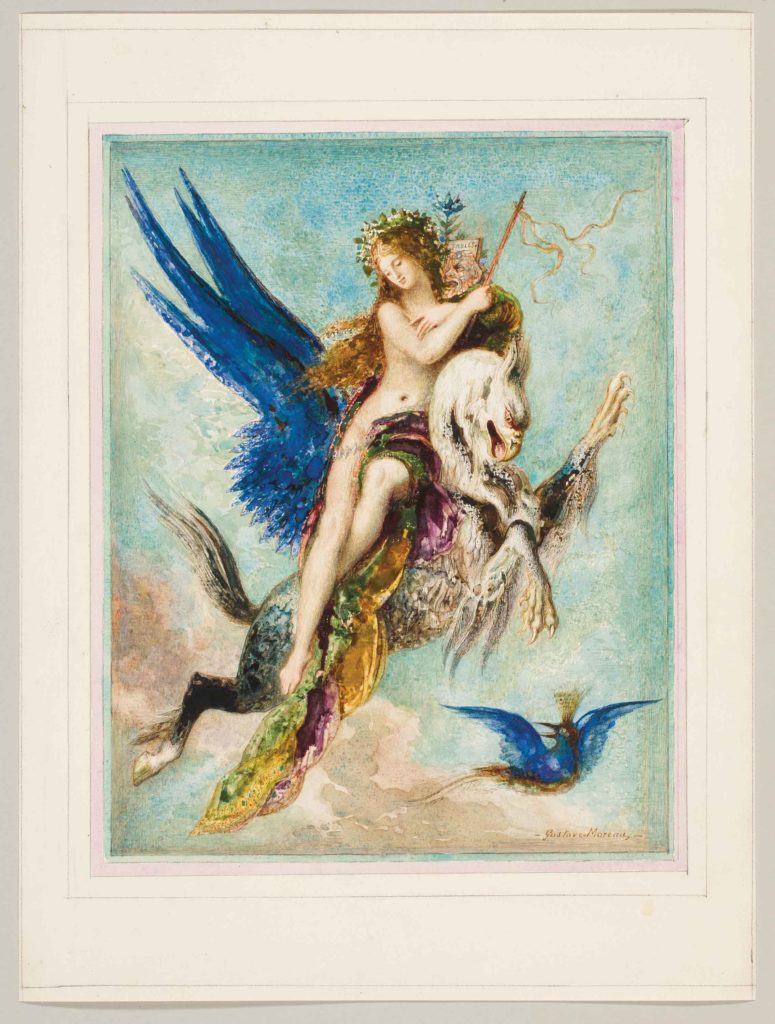
Mixed media fine art painting of a woman on a beast
Gustave Moreau (1826–1898), “Allegory of Fable,” 1879, watercolor and gouache with gold metallic paint on paper, 11 1/2 x 9 1/8 in., private collection

The series was acquired by a member of the Rothschild banking dynasty, but nearly half was lost during the Nazi era, when this Jewish family was persecuted.

Now the surviving 34 watercolors are on display, unseen in public since 1906 and complemented by additional loans from the Musée National Gustave Moreau in Paris.

Waddesdon is a logical place to show these treasures because it was built late in the 19th century by Baron Ferdinand de Rothschild in the style of a 16th-century château to showcase his collection of 18th-century furniture, porcelain, and portraits.

In 1957 the estate was bequeathed to the National Trust, though the Rothschilds still run it through a charitable trust. The project has been organized by Waddesdon curator Juliet Carey, whose accompanying book has been published by Paul Holberton (London).


> Visit EricRhoads.com to learn about more opportunities for artists and art collectors, including retreats, international art trips, art conventions, and more.

> Sign up to receive Fine Art Today, our free weekly e-newsletter

> Subscribe to Fine Art Connoisseur magazine, so you never miss an issue
Contemporary Master: Dan Thompson

0

Today we bring you a Realism Live faculty feature on contemporary realism master artist Dan Thompson.

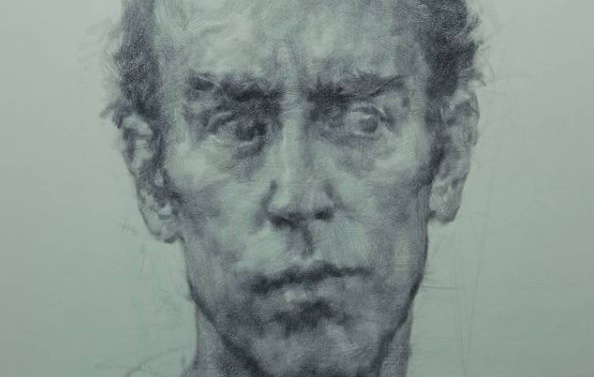
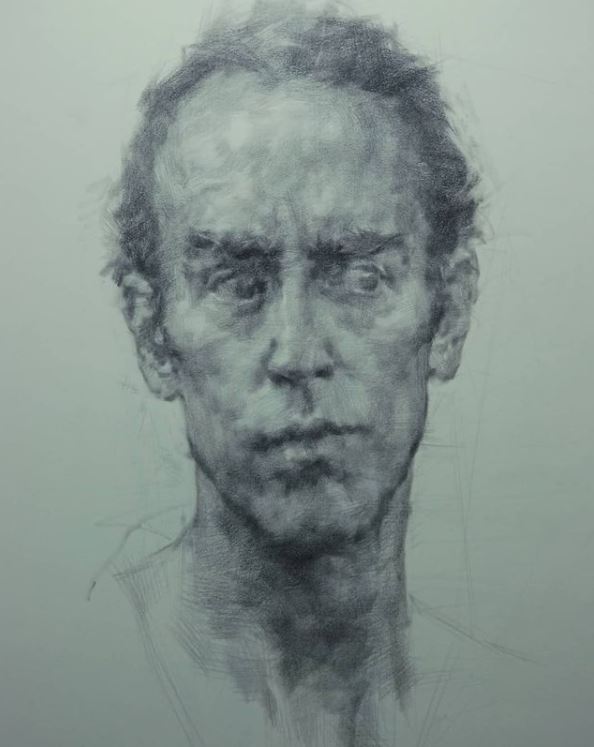
Graphite realism drawing based on a double-mirror self portrait, by Dan Thompson
Graphite drawing based on a double-mirror self portrait, by Dan Thompson

Our ultimate goal with Realism Live is to offer every artist, whether they’ve received formal art training or not, an amazing experience to grow their art through a well-rounded, atelier-style art training event that is led by some of today’s most successful artists, and carried out over just three or four days.

Further, we wanted to offer something students will rarely experience in an art school or program … the chance to watch replays of the entire event so they can review the instruction and demonstrations and put their new knowledge and skills into practice immediately. Learn more about Realism Live, the virtual art conference, here.

In 2006 Dan Thompson co-founded the Grand Central Academy of Art in New York. In 2008, he co-founded the Janus Collaborative School of Art in New York. He has also instructed privately at Studio 126 in New York and is on the faculty of the New York Academy of Art, The Art Students League of New York, and Studio Incamminati, in Philadelphia, PA.

Now you have the opportunity to learn from Thompson during the 2nd Annual Realism Live, November 11-13, 2021, with a Beginner’s Day on November 10.

Contemporary Realism Drawings by Dan Thompson

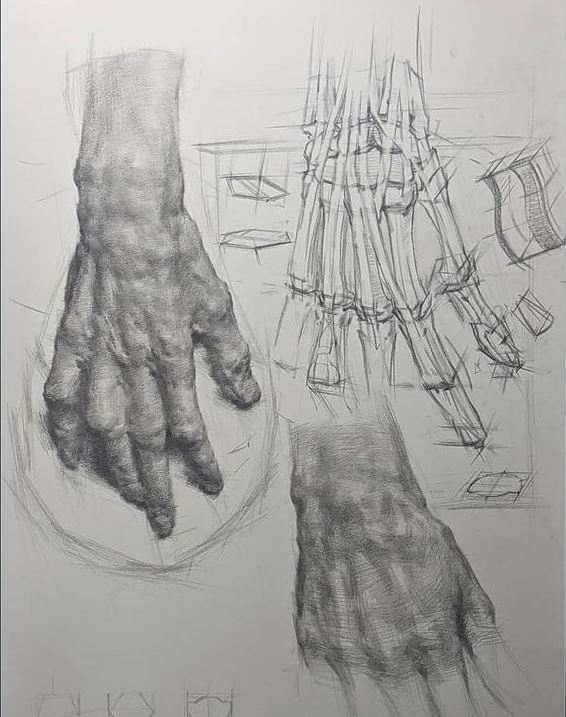
Drawing of a hand, by Dan Thompson
Realism portrait drawing by Dan Thompson
Realism figurative art drawing
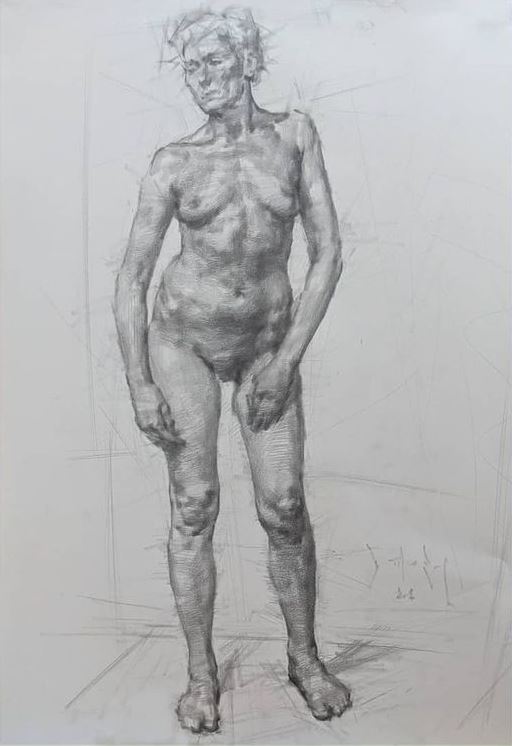
Life drawing from a private lesson, 18×24″ graphite pencil, by Dan Thompson
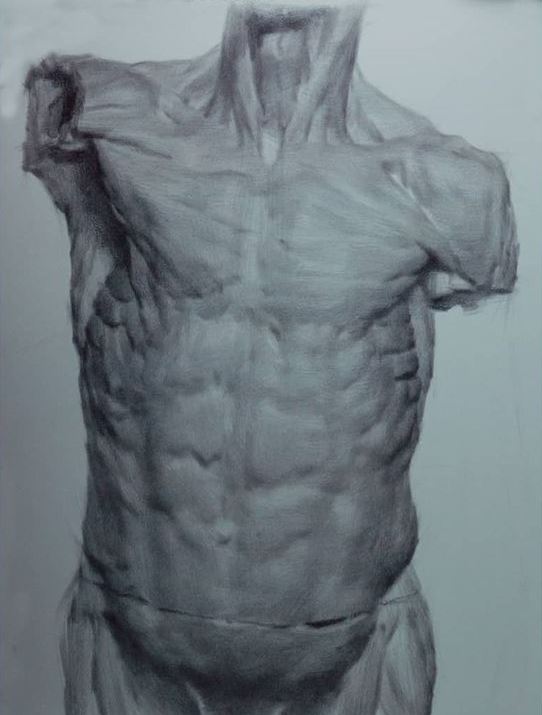
Graphite pencil drawing of a torso, by Dan Thompson

Thompson’s work can be found in public and private collections throughout the United States, and in Canada, Europe, and the Middle East.

Follow him on Instagram @danthompsonart, and sign up at RealismLive.com today to study with him during the largest online training event for realism artists.


> Visit EricRhoads.com to learn about more opportunities for artists and art collectors, including retreats, international art trips, art conventions, and more.

> Sign up to receive Fine Art Today, our free weekly e-newsletter

> Subscribe to Fine Art Connoisseur magazine, so you never miss an issue
WEEKLY NEWS FROM THE ART WORLD

Fill your mind with useful art stories, the latest trends, upcoming art shows, top artists, and more. Subscribe to Fine Art Today, from the publishers of Fine Art Connoisseur magazine.

  • This field is for validation purposes and should be left unchanged.