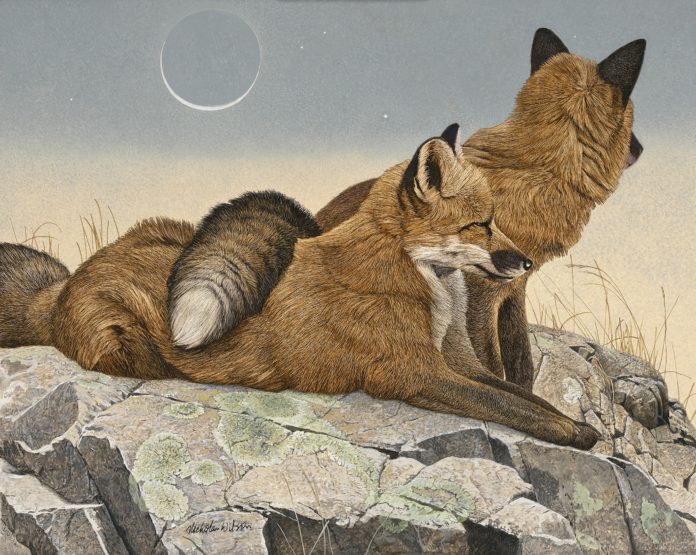
Nicholas Wilson (b. 1947), "Moon Rock," 2021, Gouache, 16" x 20", 2021 Western Visions Art Show + Sale
The National Museum of Wildlife Art continues its largest and longest-running fundraiser, Western Visions with over 140 participating artists. The Western Visions Evening Sale will revert back to an in-person event for 2021.
Also new this year, there are two ways to participate in the Western Visions Sale – virtual or live, in-person. The live event offers a memorable evening of connecting with fellow art enthusiasts and renowned wildlife artists, while the virtual option allows you to join online from home and receive full access to all of the works for sale. Tickets can be purchased at WildlifeArtEvents.org.
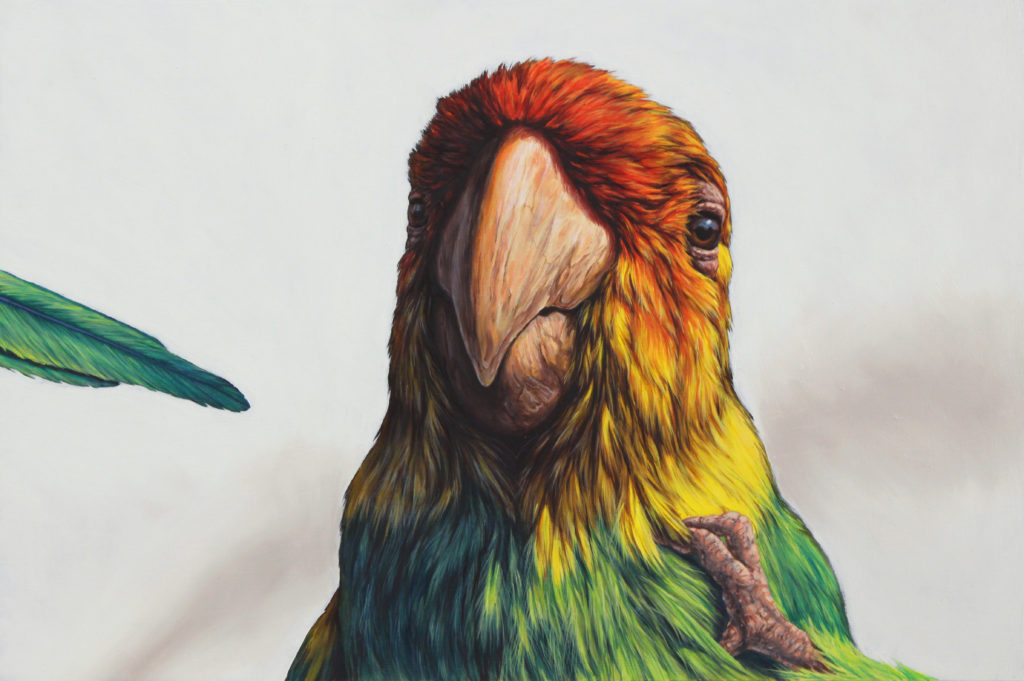
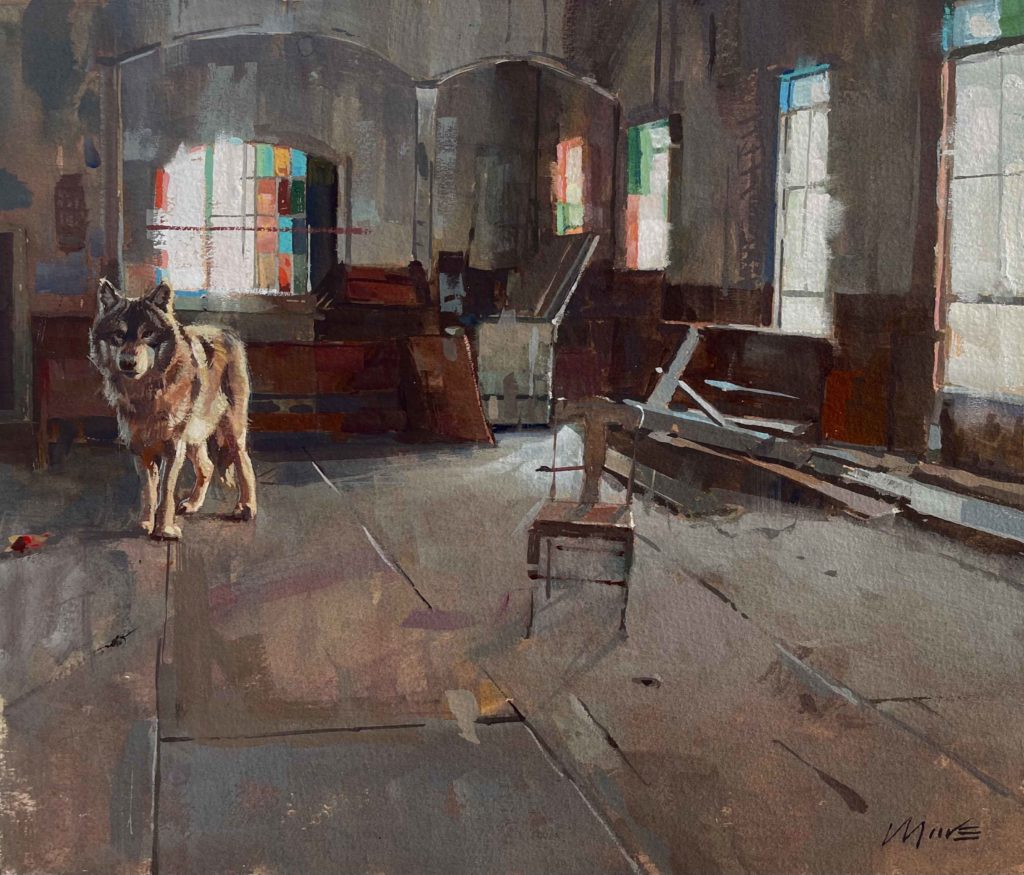
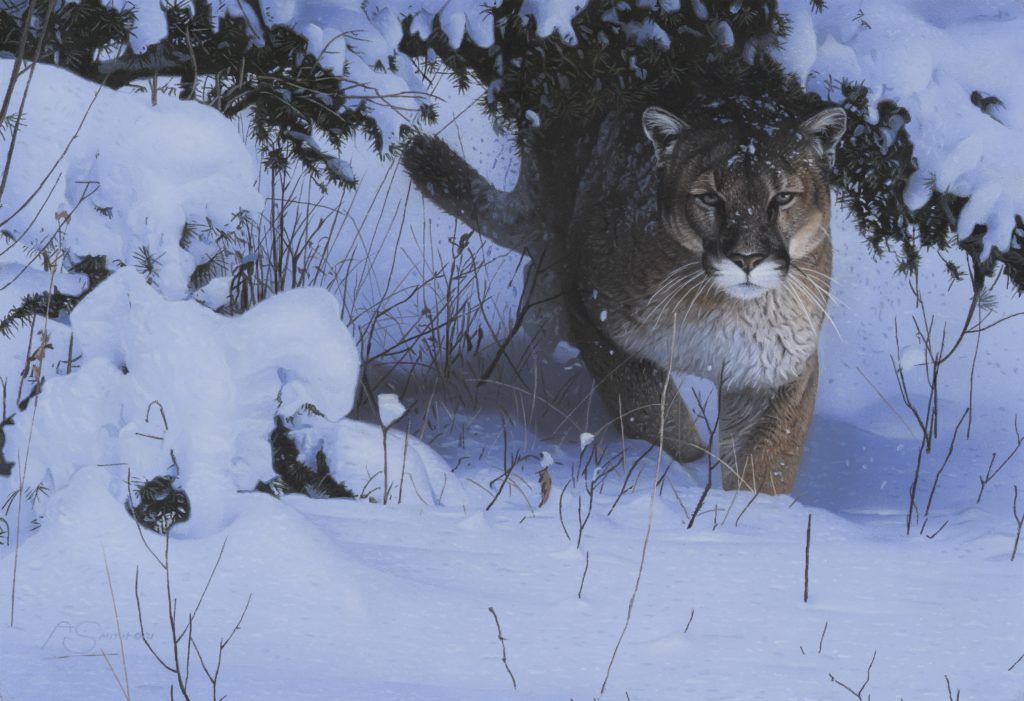
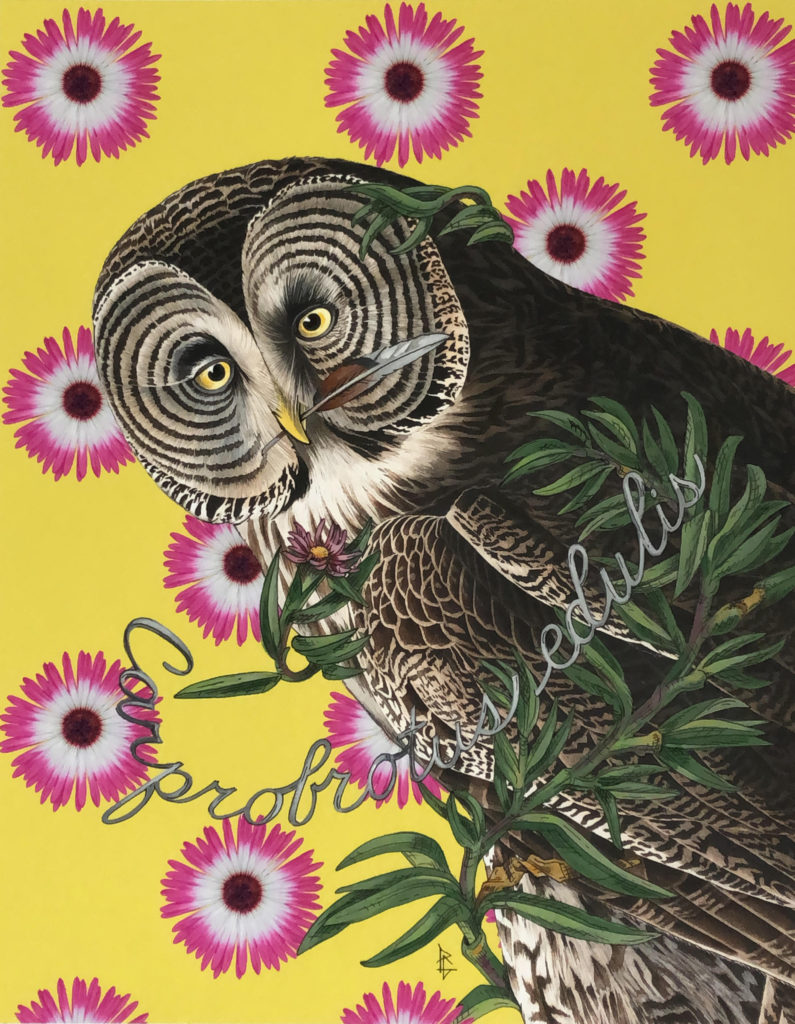
George Boorujy (b. 1973), “Carolina Parakeet,” 2019, Oil on Panel, 12″ x 18″, 2021 Western Visions Art Show + SaleLarry Moore (b. 1957), “Alpha,” 2021, gouache on paper, 12 x 14 in., 2021 Western Visions Art Show + SaleAdam Smith (b. 1984), “Low Profile,” 2021, acrylic, 11 x 16 in., 2021 Western Visions Art Show + SalePenelope Gottlieb (b. 1952), “Carprobrotus edulis,” 2021, Acrylic and Ink over John James Audubon, 14 x 11 in., 2021 Western Visions Art Show + Sale
“We’re happy to be able to offer the evening sale event in-person again, but also give those who can’t make it to Jackson Hole the opportunity to purchase one-of-a-kind art,” says Michelle Dickson, Director of Programs and Events at the National Museum of Wildlife Art. “The show will look a little different this year, featuring smaller format works: paintings are within 16″ x 20″ and sculptures are within 18″ in any one dimension. This new format opens the door for a larger audience to show their support.”
The Western Visions Art Exhibition is open through October 3, 2021. For details, please visit www.WildlifeArt.org.
> Visit EricRhoads.com to learn about more opportunities for artists and art collectors, including retreats, international art trips, art conventions, and more.
> Sign up to receive Fine Art Today, our free weekly e-newsletter
Learn from Graydon Parrish and watch him demonstration how to paint at the 2nd Annual Realism Live virtual art conference.
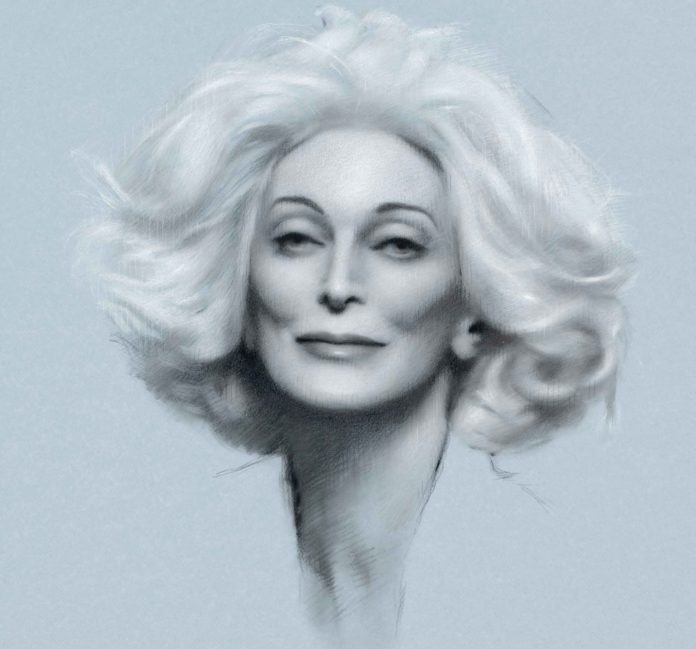
The first time Graydon Parrish set eyes on Carmen Dell’Orefice, he knew he wanted to paint her. “I thought she was one of the most interesting people I’ve ever seen. So intriguing,” he recalls. At the time, Parrish (b. 1970) was living and painting in Amherst, Massachusetts. Carmen (as she’s known) was a celebrated fashion model living in New York City.
The Carmen that Parrish saw that day was a photograph on an advertising poster, and the prospect of meeting the real Carmen — let alone asking her to sit for a portrait — seemed unlikely. Nevertheless, the artist filed away his mental image of Carmen in what he calls his “private list of 10 people I want to paint before I die.”
After all, who was to say the two wouldn’t cross paths someday? “The wonderful thing about being an artist is you meander through different social circles,” Parrish notes. And as the tale of “when Graydon met Carmen” demonstrates, the world is indeed a small place where even unlikely connections can be made.
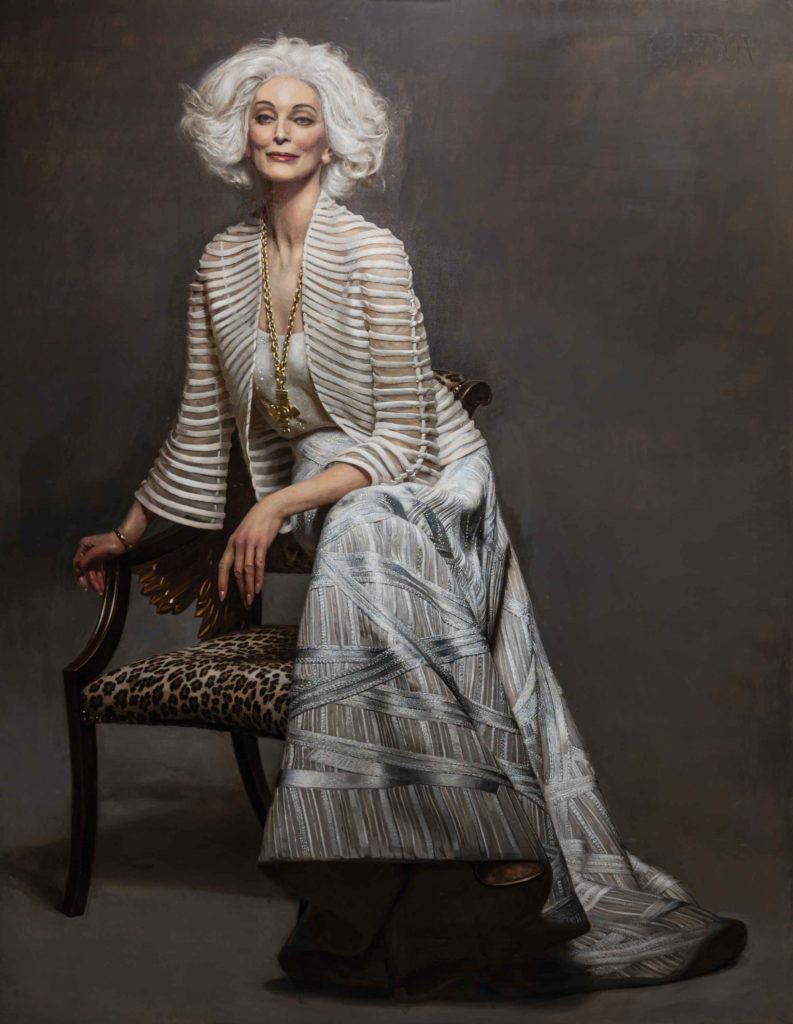
Graydon Parrish, “Carmen,” 2019, oil on polyester, 78 x 60 1/4 in., private collection
THE MODEL AS MUSE
Parrish wasn’t the first person to be so captivated by Carmen’s image. Discovered at age 13 on a Manhattan crosstown bus in 1944 (so one story goes), she was appearing in the pages of Vogue by age 15, photographed by Irving Penn, Cecil Beaton, and Horst P. Horst, among others. Her first Vogue cover was the October 15, 1947, issue, photographed by Erwin Blumenfeld.
When Carmen was in her 20s, legendary fashion editor Diana Vreeland wooed her to Harper’s Bazaar, where she modeled for photographers Lillian Bassman, Melvin Sokolsky, and perhaps most famously, Richard Avedon. By this time, Carmen’s career was well-established, and her circle of friends and professional acquaintances included Salvador Dalí, who considered her a muse. Yet Avedon was resistant to working with her, pointing out her flaws in person even as his photographs celebrated her beauty. Much later in life, Carmen would recall gradually earning Avedon’s respect as their working relationship evolved into genuine friendship.
Carmen retired from modeling when she was in her 30s, only to return in the late 1970s — her dark hair now stunningly white — and reestablish a career that continues to this day. In 2003, she appeared in an advertising campaign for Isaac Mizrahi’s fashion collaboration with Target stores. The photo of Carmen that caught Parrish’s attention was from that campaign. Just as she’d done with Dalí all those years ago, Carmen left an indelible impression on the artist’s imagination.
THE MUSE RETURNS
A few years later made a move in part to be near family and in part, he readily confesses, to escape the New England winters. It was here in Texas that he inadvertently “met” Carmen again.
“Lance Avery Morgan, a friend in Austin, was the publisher of Brilliant magazine,” Parrish says. “And there was Carmen, on the cover! I asked if there was any way he could put me in touch with her.” That was in early 2007. The publisher called New York jewelry designer Peter Martino, a longtime friend of Carmen’s, who said that if Parrish met him in New York, he might be able to arrange a meeting with Carmen.
Parrish was nervous. Carmen arrived late. But their first encounter ended encouragingly, and other casual meetings followed. “It took me about a year and half to get up the courage to ask her to sit for me,” Parrish recalls. “Finally, I invited her to dinner. When she arrived, she said, ‘I know what you’re going to ask me and my answer is yes.’”
Parrish jokes that it was his “inspiring personality” that won Carmen over, but he acknowledges that her interest in him was equally inspired by the realism style and quality of his work. Raised by his art-collector parents to appreciate 19th-century figurative art, as a painter Parrish is firmly rooted in the traditions of European academic painters. “Carmen has been painted before, and she’s been drawn by fashion illustrators, but I think this is the first time she’s been painted in a classical style with an eye to beauty rather than celebrity,” he says.
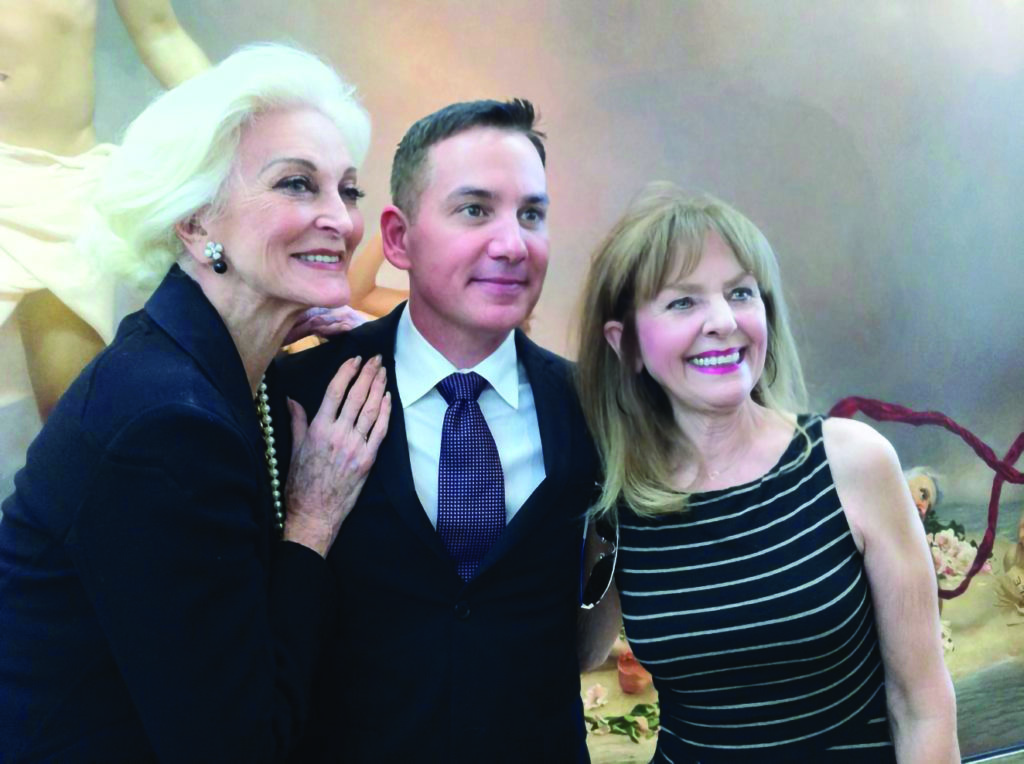
Carmen Dell’Orefice and Graydon Parrish with the artist’s mother, Alice Parrish
THE MUSE AS MENTOR
“One reason Carmen makes a great model is that she studied ballet,” Parrish notes. “She knows herself and how to move. Every hand gesture is articulate. She’s aware of her elegance. That is one of her secrets.”
In choosing a pose for this larger-than-life portrait, Parrish sought “something regal, like Joshua Reynolds.” And while Carmen knows instinctively how to sell a look as a model, “the challenge,” Parrish confides, “was to make her look like she feels on the inside.” Indeed, one might wonder how many times in her career — over tens of thousands of photographs — Carmen has been asked simply to be herself.
Any successful collaboration between artist and model requires underlying trust and confidence in one another. Over the course of their time in the studio — as he sketched, photographed, and painted — the bond deepened between Carmen and Parrish, fueled by their mutual love of classical art. His enthusiasm for work is infectious. When he’s not painting, Parrish is teaching art, most recently as a private mentor to students around the world in sessions online. (“I miss the in-person classes,” he says, “but I never thought I would enjoy this kind of one-on-one teaching so much.”) Carmen is a painter herself, with a studio in her home, and early in their friendship Parrish sent her some oil paints as a gift.
Blessed with insatiable intellectual curiosity, Carmen never tires of learning new things and meeting new people. In the fashion world, her friends and fans are legion and she has amassed a lifetime’s worth of stories, recollections, and mementos from people she has known. She loves fashion as an art form, not as a status symbol, and “rarely name-drops,” although Parrish notes that she chose to wear clothing by American designer Ralph Rucci for the portrait because he is one of her favorites.
“In the studio we talked, but mainly I listened to her stories,” Parrish says. “She has a lot of advice for living and I wanted to gain wisdom. She has great integrity. She’s very gracious. And she’s tenacious.”
As she approaches age 90, Carmen still appears in fashion layouts and print advertisements. She even walks in runway shows from time to time. More than once in the past few years, she’s brought Parrish as her “plus one” to fashion industry events. “I like her even more in person than I did in the abstract,” he laughs.
Parrish says he’ll paint Carmen again on a smaller scale, working from sketches and reference materials. The relationship between artist and muse is a precious one. This artist isn’t ready to let go of his muse just yet.
This article on the contemporary realism portrait painting of Carmen Dell’Orefice is an excerpt from Fine Art Connoisseur magazine, November/December 2020
About the Artist
Graydon Parrish is a realist painter living in Austin, Texas trained in and an exponent of the atelier method which emphasizes classical painting techniques. His parents, collectors of American and European nineteenth-century art, exposed him to painting at a young age and influenced his choice to pursue an academic figurative style.
Parrish attended the Booker T. Washington High School for the Performing and Visual Arts and graduated in 1988. Unable to find further classical art training, he learned of the newly formed New York Academy of Art in the summer of that year created by Andy Warhol and Stuart Pivar. There, Parrish joined other students who have become leading figures in the classical art revival, including Jacob Collins, founder of the Grand Central Academy of Art where Parrish is now an instructor. It is also at the New York Academy where Parrish met his mentor Michael Aviano, a student himself of illustrator and muralist Frank J. Reilly.
Since then Parrish has remodeled color theories by Albert Munsell and Josef Albers to fit traditional painting methods. In some ways, he and his colleagues share the reformist attitude of the Stuckist movement in England and are likewise often at odds with mainstream critical taste.
Learn How to Paint in the Style of Contemporary Realism
Parrish is on the faculty of the 2nd Annual Realism Live virtual art conference, taking place November 11-13, 2021 with a Beginner’s Day on November 20.Learn more and register now at RealismLive.com.
Free Art Museums to Visit on Museum Day > With many public spaces being shut down for a year or more, Museum Day 2021 celebrates the reopening of museums after long closures due to the COVID-19 pandemic. This year’s theme, Experience America, represents the return to, and resurgence of, our country’s diverse cultural experiences, in the safest possible way.
On Saturday, September 18, 2021 museums across the nation will adopt the policy of the Smithsonian, opening their doors for free to visitors with a Museum Day ticket. While tickets will be free of charge, participating museums will have safety precautions in place for this year’s event so guests can safely and comfortably enjoy their experience.
Museum Day goes beyond getting visitors through museum doors—it acts as a springboard to empower and help advance the hopes and ambitions of the public, particularly school-aged children and those in underrepresented communities. It represents a national commitment to access, equity and inclusion. To see the full list of participating museums and download a free ticket please click here.
Tickets for Smithsonian magazine’s 17th annual Museum Day are now available for download. Each ticket grants the ticket holder and one guest free, timed access to any participating museum on September 18, 2021. One ticket is permitted per email address. This year’s event is sponsored by The Quaker Oats Company.
Where will your curiosity lead you this Museum Day?
@MuseumDay #MuseumDay
> Visit EricRhoads.com to learn about more opportunities for artists and art collectors, including retreats, international art trips, art conventions, and more.
> Sign up to receive Fine Art Today, our free weekly e-newsletter
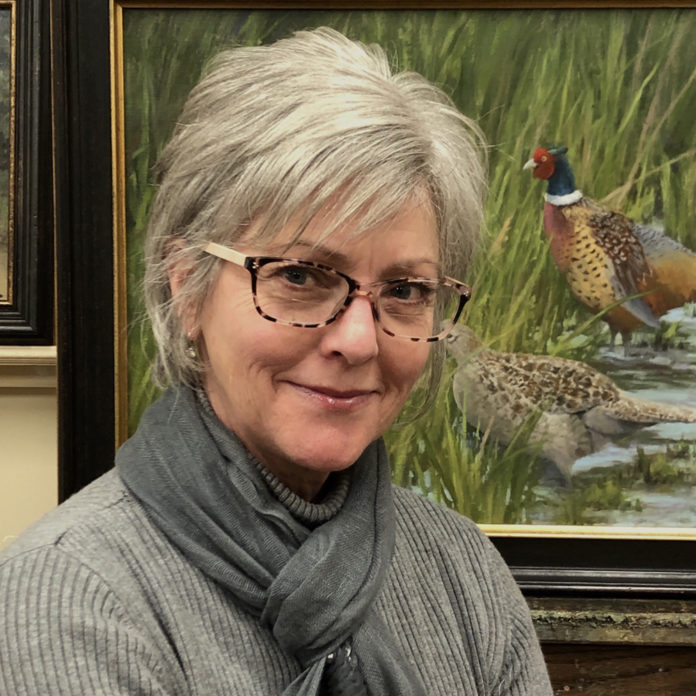
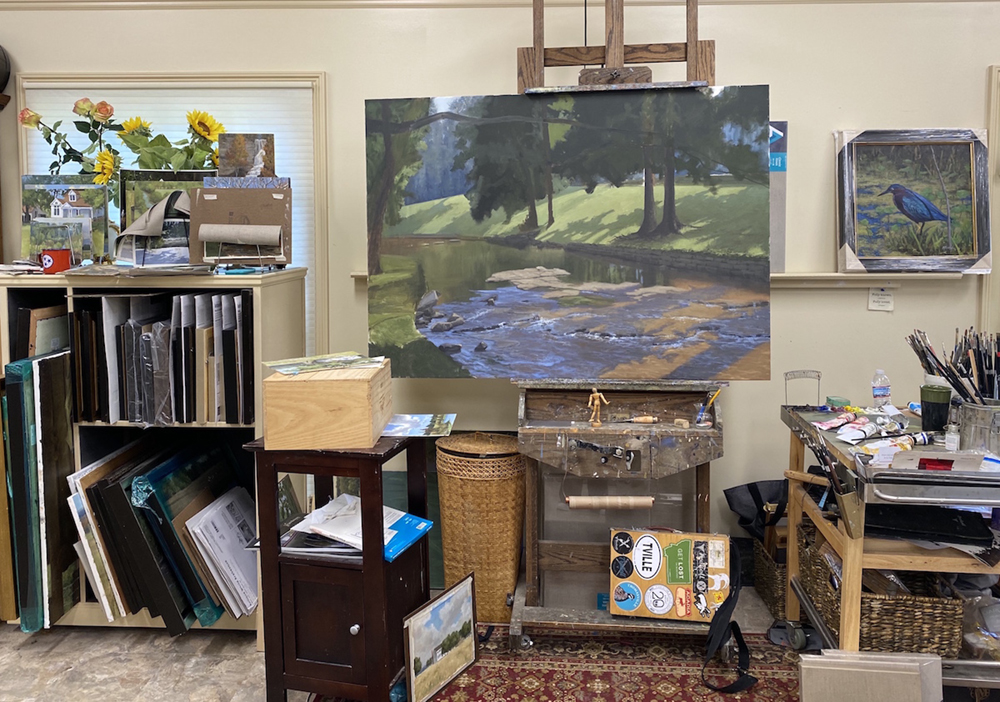
Beverly Ford Evans with her painting “Morning Stroll”
Beverly’s studio
How did you get started and then develop your career?
Beverly Ford Evans, ASMA: Beverly was raised in Nashville, Tennessee and now resides in Franklin, Tennessee. As a child she was drawn to the beauty that surrounded her. Encouraged by her parents, she began drawing and painting.
Beverly has become a prolific artist. With her deliberate brushwork and attention to the scene, Beverly captures the essence of the landscape and wildlife beautifully and artfully.
Coupled with her love of the landscape is her love for animals. Beverly is sought after to paint commissions for loving pet owners, and has participated in the Southeastern Wildlife Expo in Charleston, South Carolina, the Waterfowl Festival in Easton, Maryland, and Plantation Wildlife Arts Festival in Thomasville, Georgia.
“I am blessed with the opportunity to share the talent God gave to me. When my work evokes emotional reactions in a viewer, I am humbled. That is the force that drives me to continue to improve my work…”
How do you describe success?
There are so many ways to measure success. I personally feel successful as an artist when I finish a painting and the outcome is what I envisioned, or even better than I envisioned.
How do you find inspiration?
Inspiration comes to me in many different ways. It comes simply by viewing the beautiful landscape and creatures God created. It comes from conversation with family, friends and other artists. A word can be very powerful to the imagination and inspiration. It comes during quiet moments of meditation and prayer. It also comes to me through hearing. Hearing the song of a bird, the sound of the wind blowing through trees, or the babbling of a brook.
What is the best thing about being an artist?
I feel very blessed to be able to share my life doing what I love with the man I love. With us both being artists, we are able to travel together to paint. We hold dear the friendships with the people, collectors, and other artists who we have encountered over the years.
Who do you collect?
We have been very fortunate to collect many of our artist friends’ works. They all are very special to us because daily, we get reminded of special friends and special moments with them. Along with those, we have collected a few pieces by Everett Raymond Kinstler, Bill Anton, Bye Bitney, and John Moran, along with a couple of French and Russian artists.
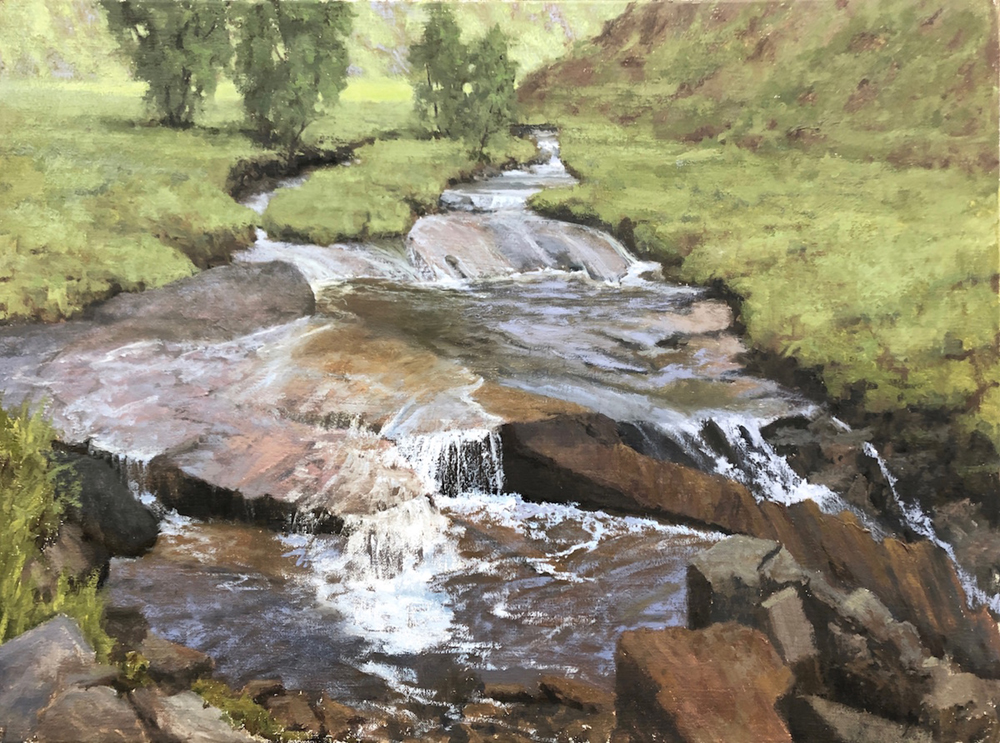
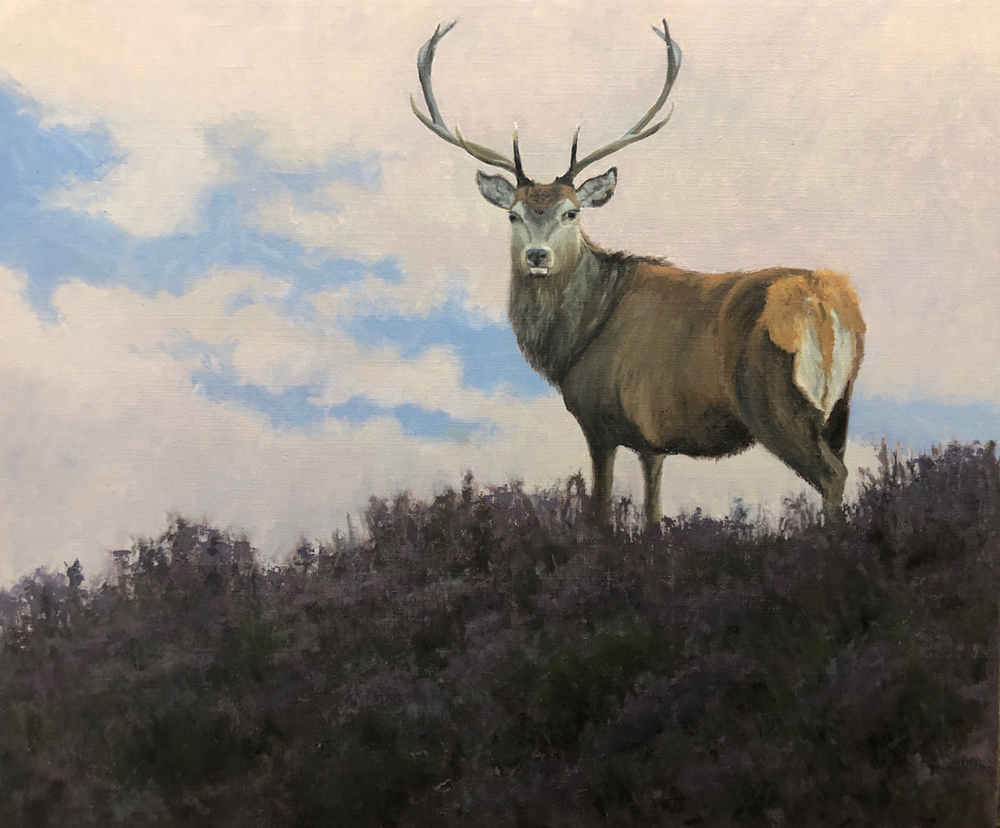
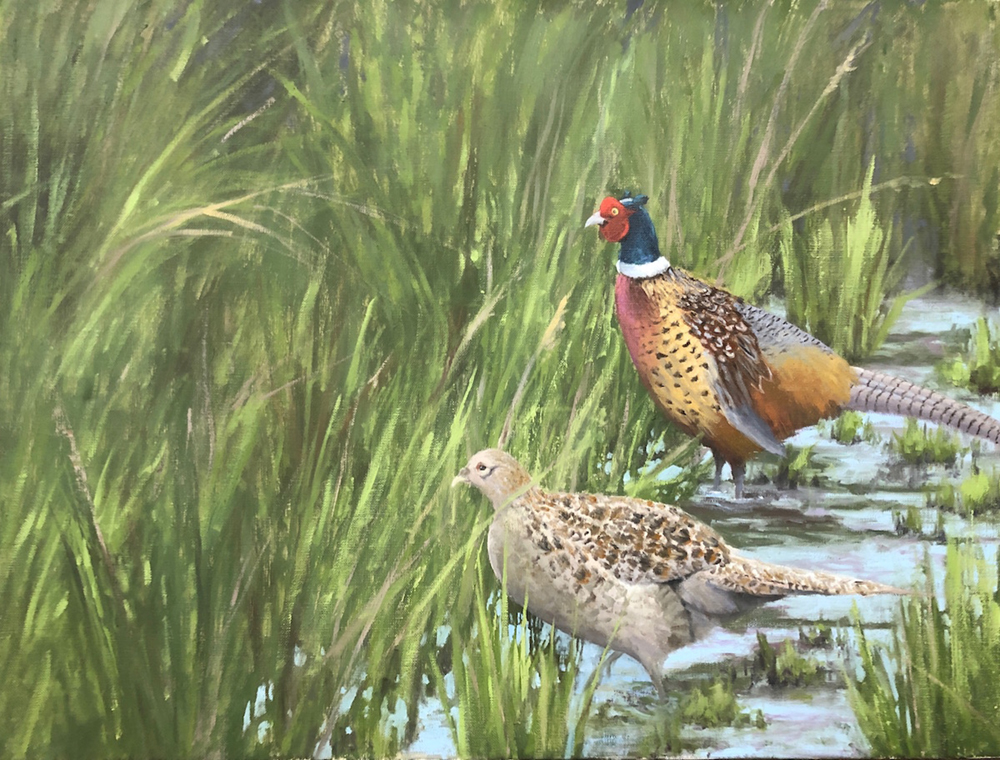
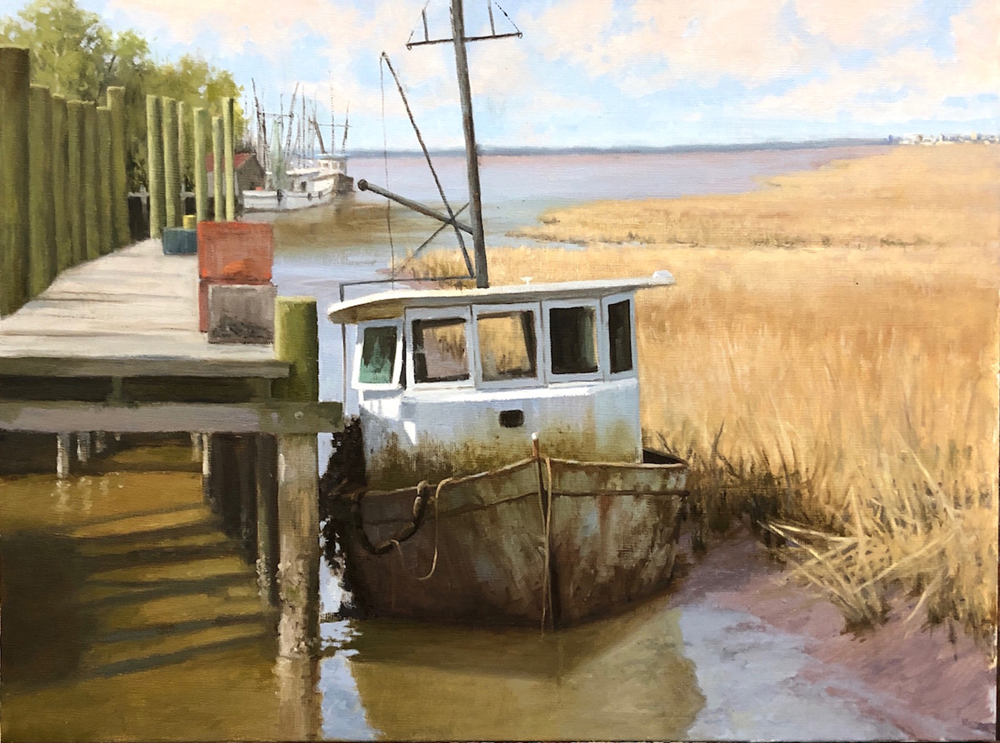
Beverly Ford Evans, “Falling Water,” 18 x 24 in., oil, 2020. One of the many beautiful streams flowing though the Highlands of Scotland.Beverly Ford Evans, “Highland Pride,” 20 x 24 in., oil, 2020. The most magnificent creature of Scotland.Beverly Ford Evans, “Morning Stroll,” 20 x 24 in., oil, 2020. Pheasants are among the top most beautiful birds.Beverly Ford Evans, “Stuck at Low Tide,” 18 x 24 in., oil. The old work boats tell a story with their scars and rust.
As part of our effort to continue to help artists and art galleries thrive, we’re proud to bring you this week’s “Virtual Gallery Walk.” Browse the artwork below and click the image itself to learn more about it, including how to contact the gallery.
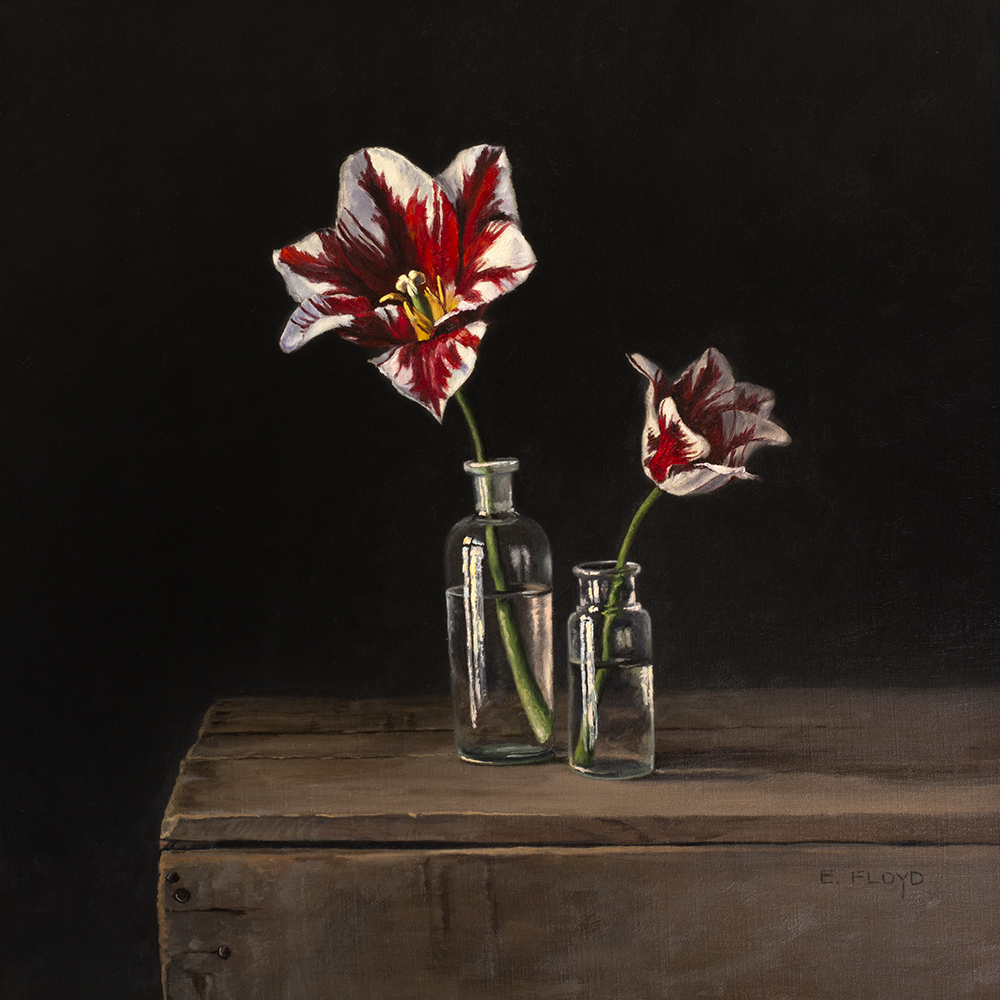
Rembrandt Tulips by Elizabeth Floyd, Oil, 26 x 26 in.; Anderson Fine Art Gallery
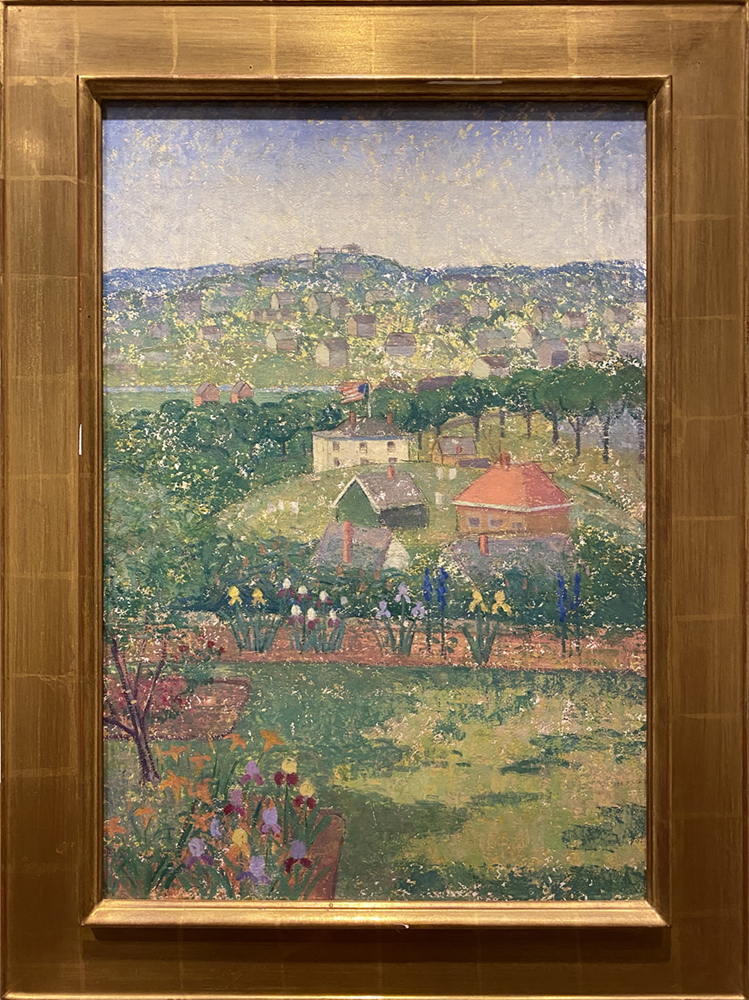
State Fork Park n.d. by Emma Fordyce MacRae (American 1887-1974), Oil and pencil on board, The Janet H. Wilson Collection, April 3 – Ongoing; Blowing Rock Art & History Museum
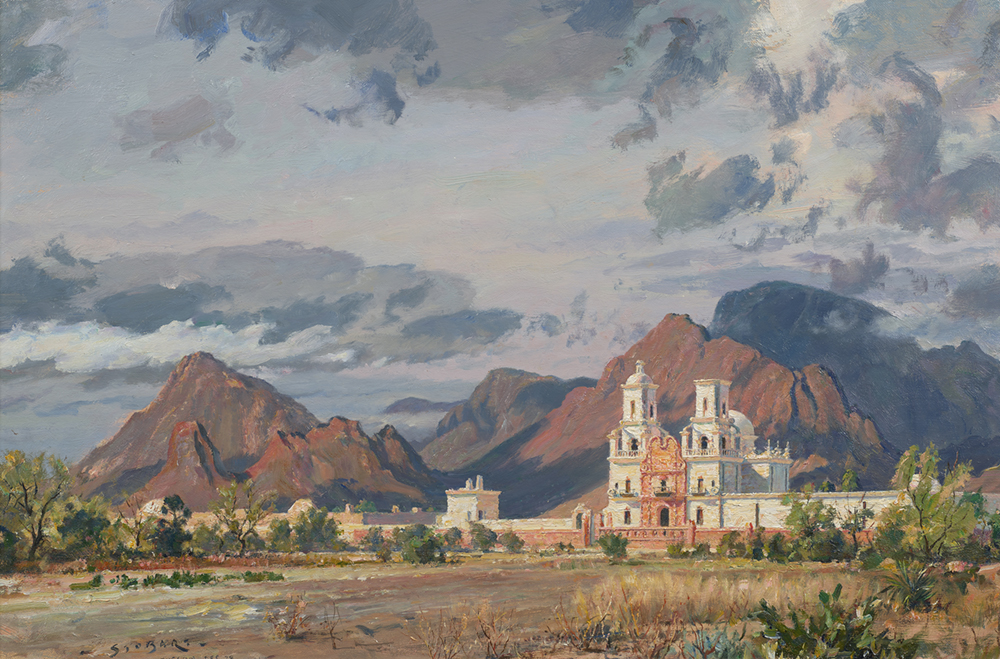
Mission San Xavier, Tucson by John Stobart, Oil on canvas, 14 x 21 in., Signed; Rehs Galleries, Inc.
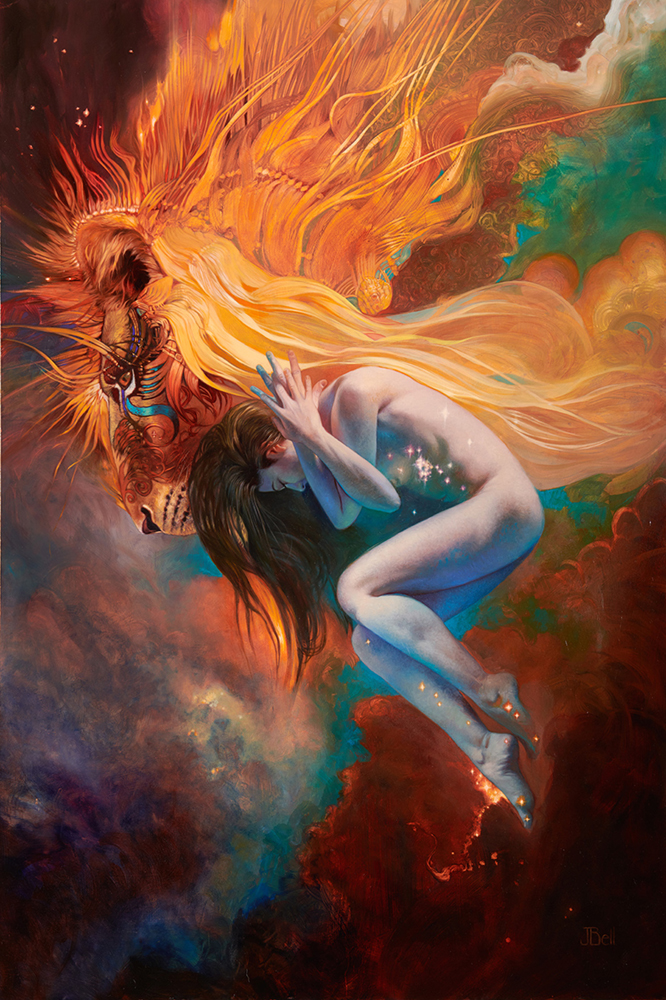
Lion Nebula by Julie Bell, Oil on panel, 36 x 24 in., Signed; Rehs Contemporary
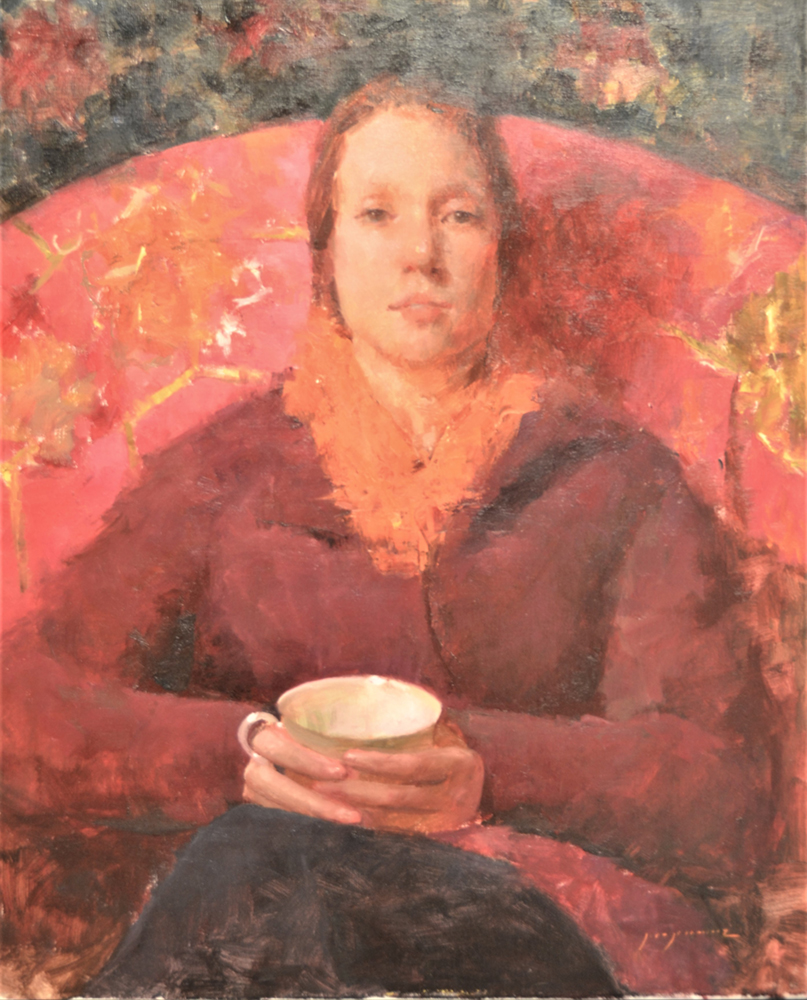
Study in Red by Juan Jr. Ramirez, Oil on canvas, 24 x 20 in. (30 x 26 in. framed); Vermont Artisan Designs
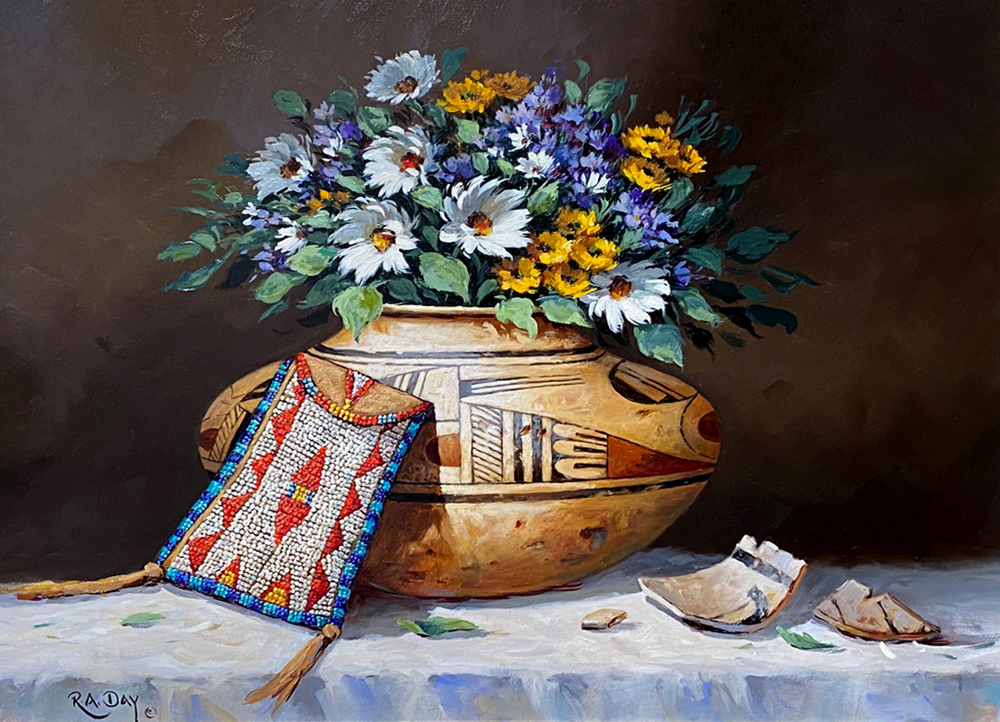
Remnants Of The Past by Rose Ann Day, Oil, 12 x 16 in.; ArtzLine.com
Want to see your gallery featured in an upcoming Virtual Gallery Walk? Contact us at [email protected] to advertise today. Don’t delay, as spaces are first come, first served, and availability is limited.
Photorealistic Paintings On View: “Everything You See Could Be a Lie”
San Diego Museum of Art San Diego sdmaart.org
through September 27, 2021
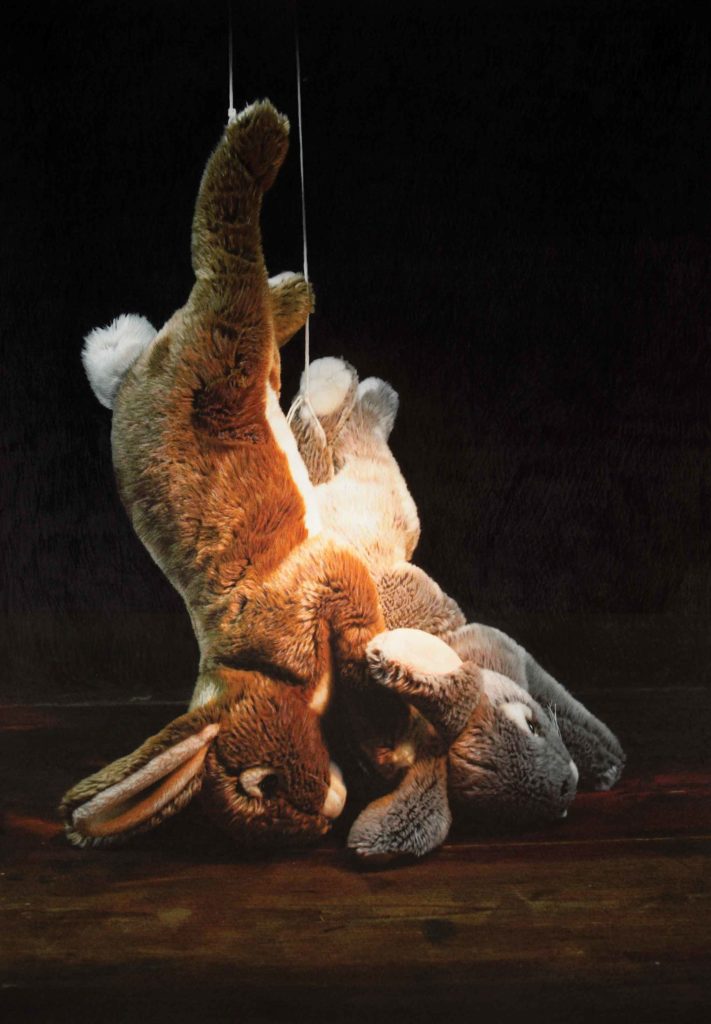
The photorealistic drawings created by the Madrid-based artist Ana de Alvear (b. 1962) are rarely seen in the U.S., just one reason the San Diego Museum of Art’s current show is so welcome. Titled “Everything You See Could Be a Lie,” it demonstrates how Alvear plays with the ambiguities between reality and its representation.
SDMA curator Anita Feldman has selected more than 20 works executed in colored pencil on paper, two of them wall-sized, and all made by hand in incredible detail. Many of them riff wittily on the motifs seen in traditional still life paintings.
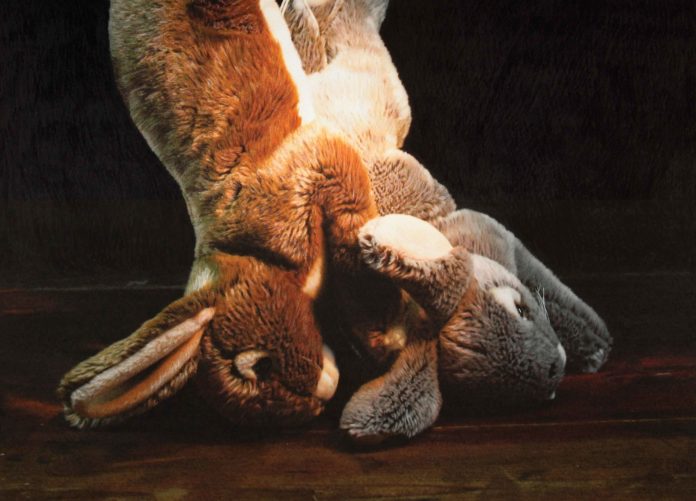
Ana de Alvear (b. 1962), “Two Hares (Dos Liebres),” 2014, colored pencil on paper, 38 3/4 x 27 in., collection of the artist
Illustrated above, for example, are two dead rabbits (hares). In an Old Master scene these would normally be hanging in a kitchen, ready to be skinned and cooked. Alvear’s rabbits, however, are stuffed toys more likely to evoke our memories of the mass-produced prizes we won in a carnival ring-toss.
In 2006, Alvear founded Vital International Video Art, a traveling exhibition through which artists worldwide can find a meeting point for intellectual discourse and create a network with curators, galleries, foundations, and private collectors.
> Visit EricRhoads.com to learn about more opportunities for artists and art collectors, including retreats, international art trips, art conventions, and more.
> Sign up to receive Fine Art Today, our free weekly e-newsletter
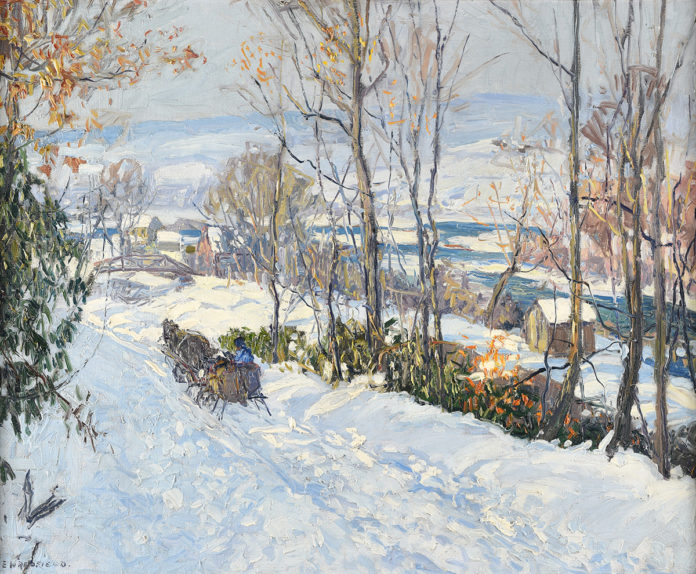
Edward Willis, "Redfield Road and Rivers," from the Daywood art collection
Art collection on view >
“American Impressionism: Treasures from the Daywood Collection”
On view through October 24, 2021 | PolkMuseumofArt.org/Impressionism
The Polk Museum of Art at Florida Southern College is presenting audiences with an incomparable peek not merely into the incredible story of Impressionism’s rise in the United States but also into the influential world of private collecting.
“American Impressionism: Treasures from the Daywood Collection” features 41 rarely-seen Impressionist paintings originally from the private collection of Arthur Dayton and Ruth Woods Dayton (whose surnames combine to create the collection’s portmanteau name: “Day-Wood”).
Celebrated as patrons of the arts in West Virginia and as consequential collectors of American art, the Daytons developed a fine art collection that exceeded 200 works. This extraordinary and beautiful exhibition exemplifies how the support of patrons like the Daytons helped American Impressionists claim their niche in the art world, allowing them to hone their crafts, survive as artists, and find national acclaim at the turn of the 20th century.
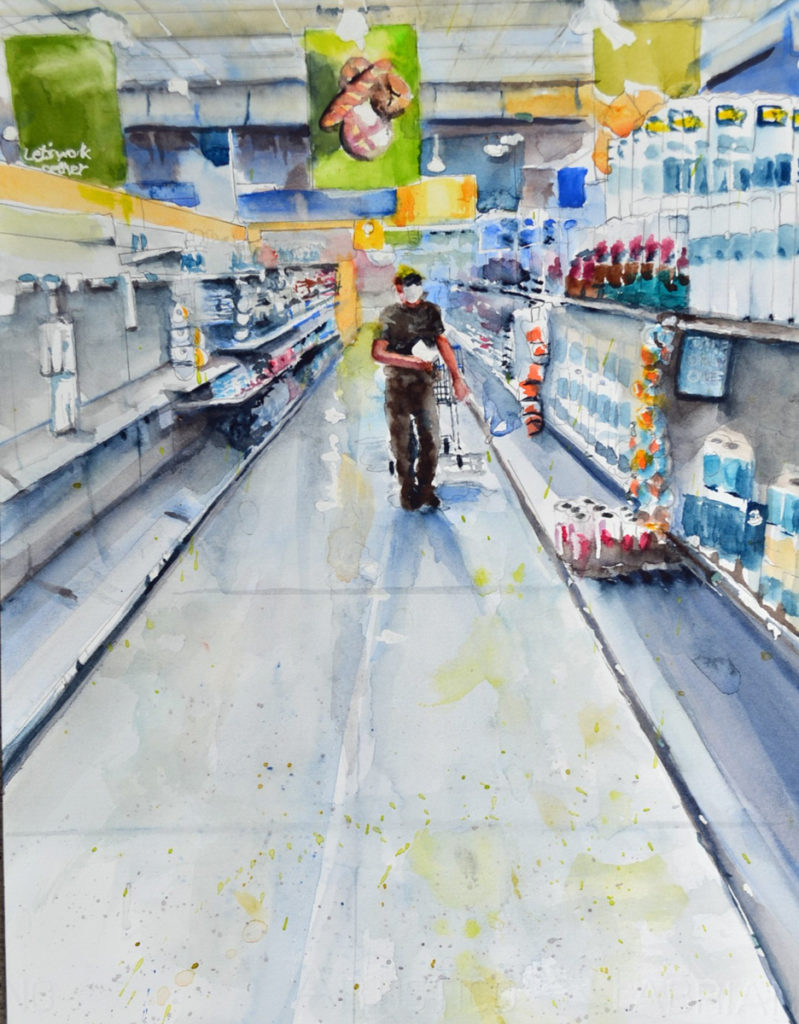
In this new installment of “Hindsight 2020,” the museum selected nine artworks from its online exhibition to revisit and to present for the first time in its galleries as an opportunity to reflect further upon how our lives have changed in the past year.
With rays of hope and setbacks along the way, our community understands the challenges we continue to face each day. Yet, alongside the familiar iconography of masks and the feelings of uncertainty that are still prevalent today, we found that our community cherishes even the smallest moments spent together, no matter how mundane they may appear.
One year later, we have proven that, despite our perceived differences, our community is unified through its shared experiences and resilience.
Deborah Biasetti, “New Norm,” watercolor, 15 x 11 in., created May 2020
> Visit EricRhoads.com to learn about more opportunities for artists and art collectors, including retreats, international art trips, art conventions, and more.
> Sign up to receive Fine Art Today, our free weekly e-newsletter
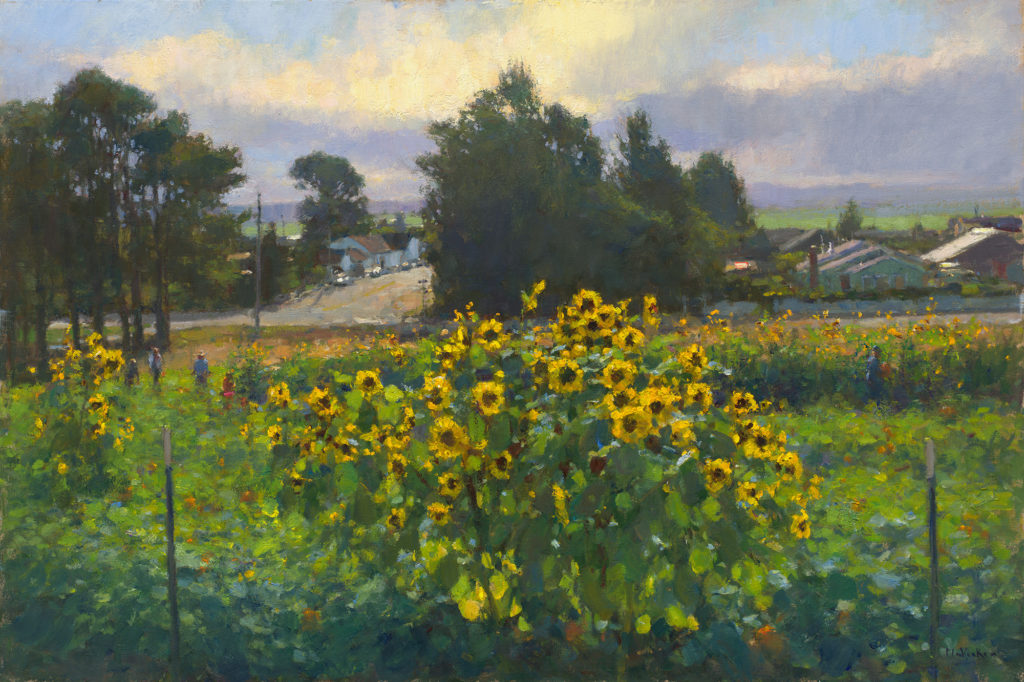
“Eight Takes: California Impressionism” exhibition features 8 nationally known Northern California impressionist artists. This exhibition revolves around each artist’s interpretation of California Impressionism reflected in the landscape and through figurative work.
More from the organizers:
Each of the artists in this exhibition embraces the impressionistic style in their paintings with their attention on the effects of light, loose brush work, and rich color. The work in this exhibition exemplifies each artists’ ability to capturing the atmosphere and emotion of a scene.
The terms “California Impressionism” and “California Plein Air Painting” describe the large movement of 20th century California artists who worked out of doors, directly from nature in California. Their work became popular in the San Francisco Bay Area and Southern in the early 1900’s.
Artists working in this style embraced several key Impressionist interests, including loose brushwork, rich color, and, most of all, a fascination with the effects of sunlight. Some of the more famous early California artists include Edgar Payne, William Wendt, Guy Rose, Armin Hansen, Anna Althea Hills, E. Charleston Fortune and Granville Redmond.
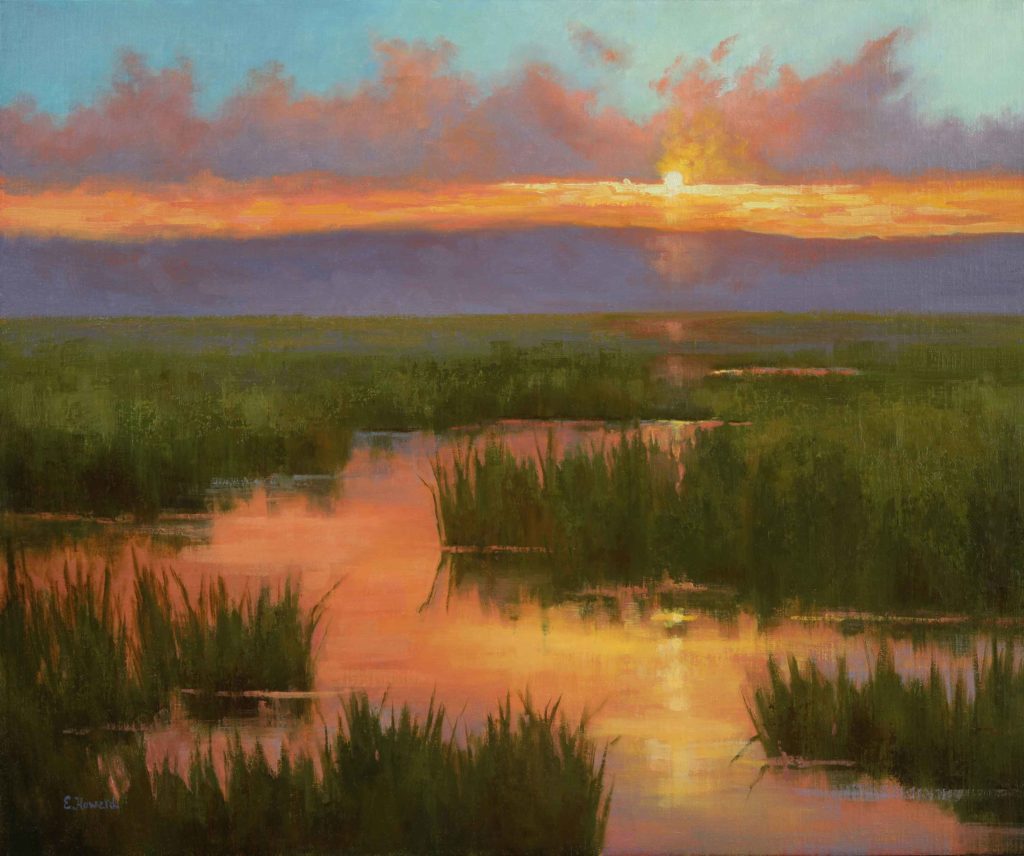
Ellen Howard, “Radiance,” 20×24, Oil
Eight Takes: California Impressionism
Venue: Firehouse Arts Center- Harrington Gallery, Pleasanton, CA
Website: firehousearts.org
Dates: September 11 to October 30, 2021
Opening Reception: Saturday, September 18
Participating Artists:
Nancy Seamons Crookston
Terri Ford
Ellen Howard
Ryan Jensen
Laurie Johnson
Jim McVicker
Carole Rafferty
Tonya Zenin
Painting Demos:
September 19: Nancy Seamons Crookston portrait demo
October 3: Laurie Johnson portrait demo
October 10: Ellen Howard seascape demo
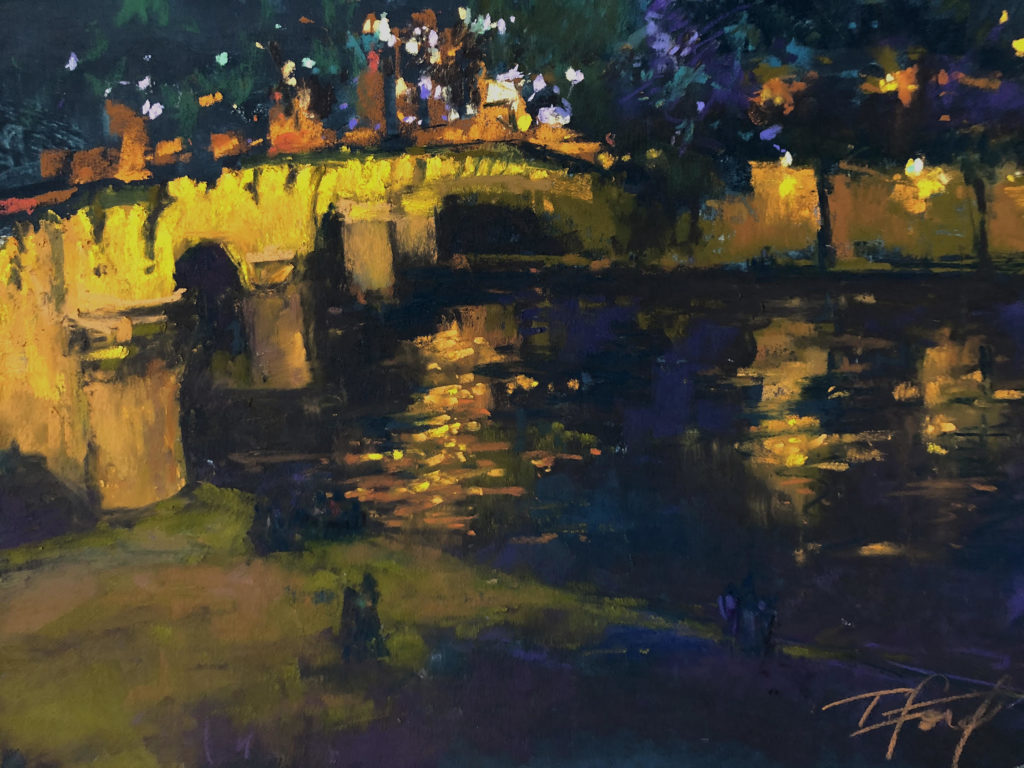
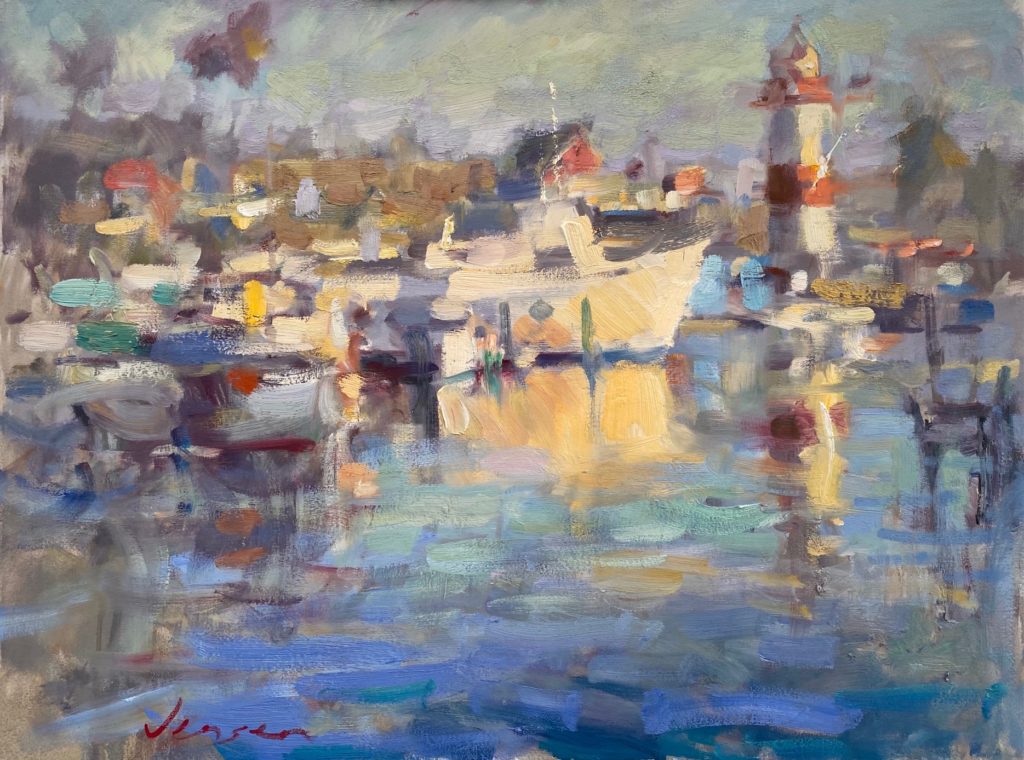
Terri Ford, “Paris Night,” 9×12, PastelRyan Jensen, “Last Light in the Marina,” 24×32, OilLaurie Johnson, “A Great Sense of Dignity,” 6×9, OilJim McVicker, “Community Garden Sunflowers,” 24×36, Oil
> Visit EricRhoads.com to learn about more opportunities for artists and art collectors, including retreats, international art trips, art conventions, and more.
> Sign up to receive Fine Art Today, our free weekly e-newsletter
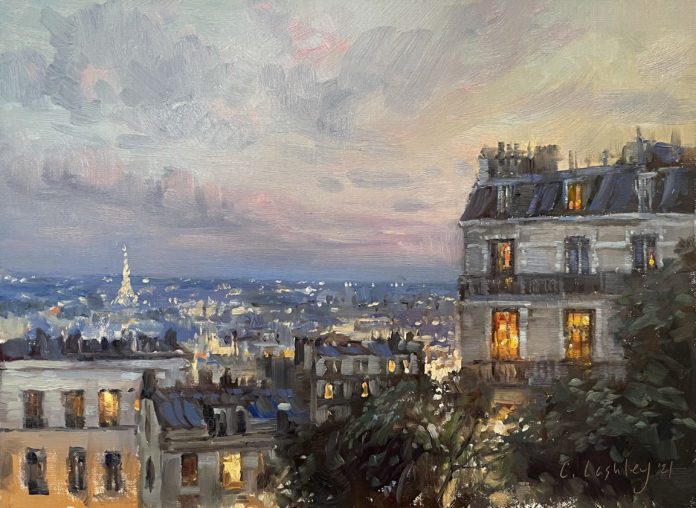
Christine Lashley, "Hilltop View, Paris," oil, 9 x 12 in.
American artist Christine Lashley shares her process and inspiration for her new solo show of landscape paintings.
Transparency and layers in the environment have been the focus of my recent paintings. Nature elements of water, foliage, and the earth’s geology are important in my art; but urban structures, such as glass, and buildings also inspire my creativity.
My work shifts from realism and tangible objects to abstraction and emotion. Even when creating a painting I move between quick, intuitive marks and then let an artwork ‘rest’ to carefully consider each future brush mark. I often ask myself, “what is the painting trying to say,” or “what does it need?” These questions are often answered by going back to my on location art studies and my memory versus a photograph, which seems to only record excessive details.
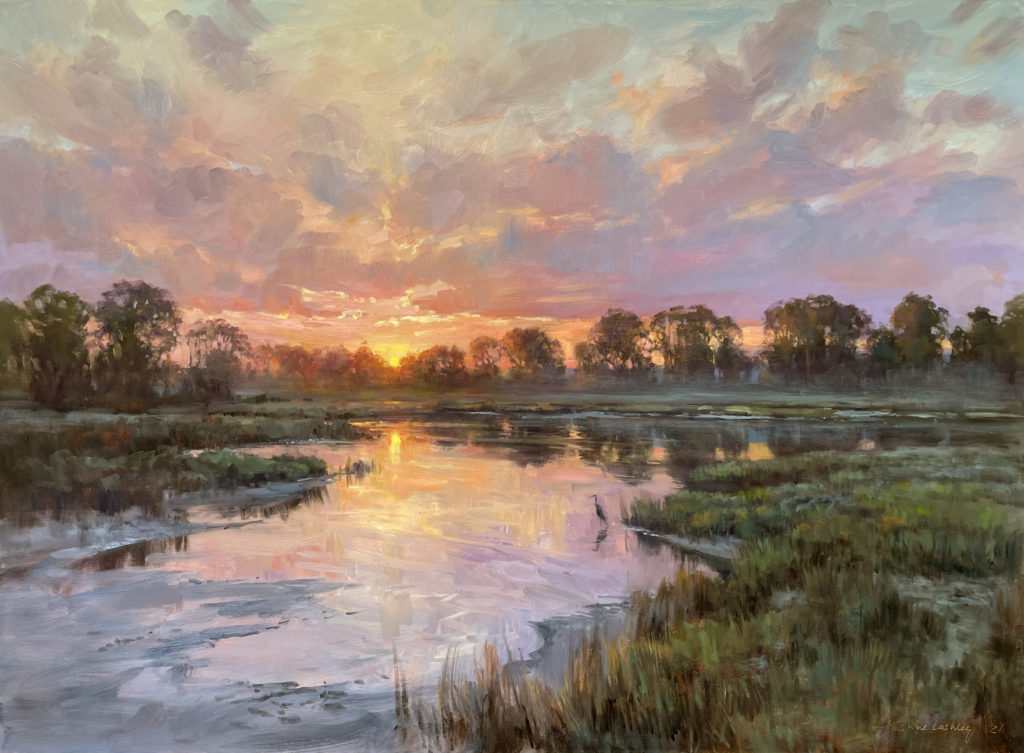
Christine Lashley, “Marsh Glow,” oil, 30 x 40 in.
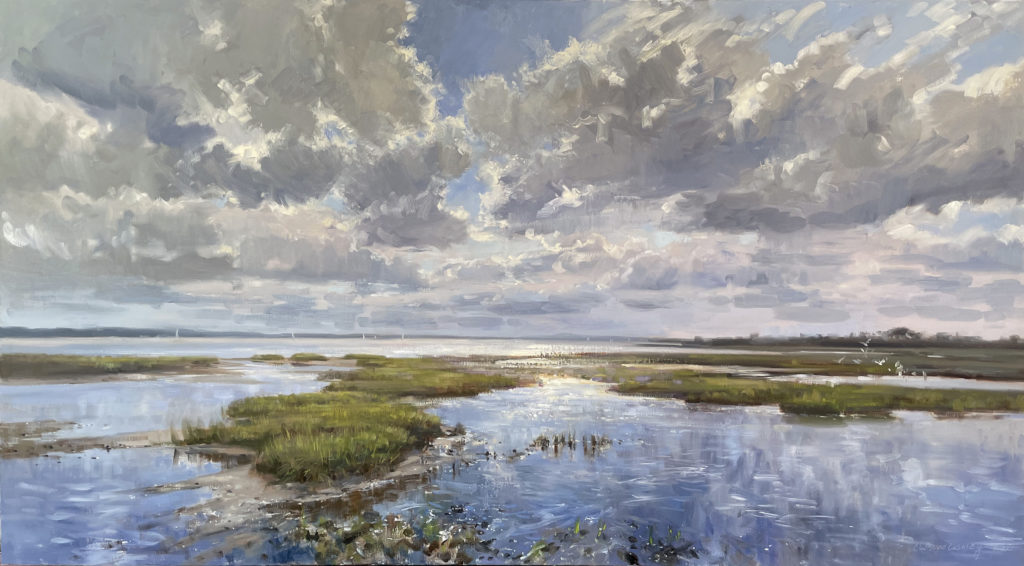
The act of painting on location “en plein air” has changed somewhat for me. I used to try to make a final painting as quickly as possible and think of it as done. Now, I use my field studies to capture color notes and harvest information. I am mindful of the experience and may abstract this later in the studio using memory to distill an idea. Of course, I still create outdoor paintings (I have done plein air competitions for 10 years). However, removing the expectations of always making a final work have pushed my creativity in the studio: to see what I can remember, to design better paintings, and to plan for a certain size if needed. A by-product of this process has been the creation of larger artwork to fit a concept, such as the vast feeling of the marsh.
Creating a large body of work in one year for my solo show at Principle Gallery was a challenge, but one I enjoyed. The gallery requested larger paintings, so I worked my way up from my typical 30×40″ to 36×48″ and then the 40×72″ (Blue Symphony and Silver Harmony). These largest works were from the same reference, but a different interpretation.
Christine Lashley, “Blue Symphony,” oil, 40 x 72 in.
I’ve found that exploring different light and shapes, but the same subject is a great way to deeply connect with a scene. Sure it’s working in a series, but with a little twist, the subject becomes less literal, and I start to invent part of the scene and highlight areas I like. This lead to paintings that were completed faster and had a cohesive feel for the show.
How did you get started and then develop your career?
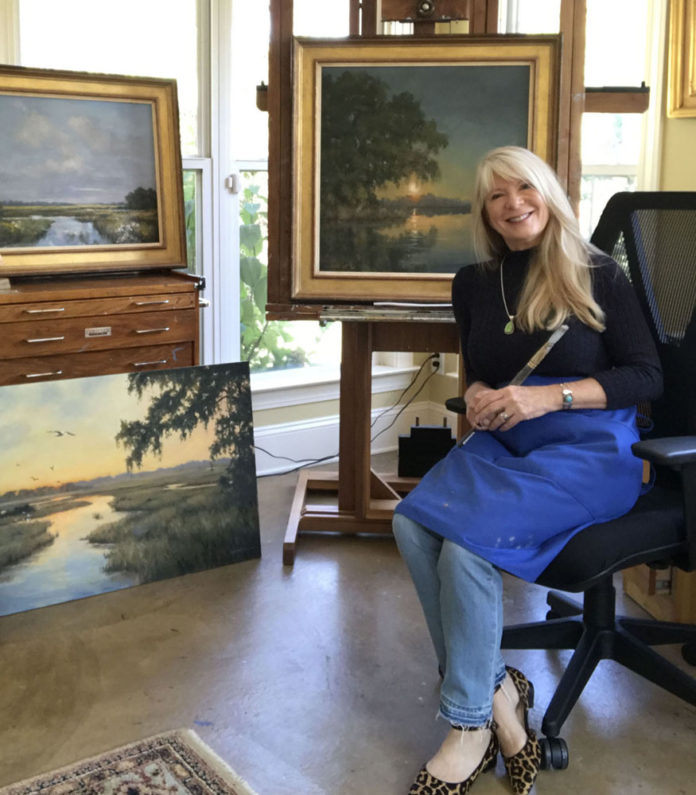
Paula B. Holtzclaw: I drew and painted in my early teen years and throughout college, but this waned when I joined the workforce and had children. In the 90s, I began to paint again primarily for myself and for my home. Friends began to see my paintings and started requesting commissions. From there an invitation to a local gallery came. After that, came miles and miles of paintings, along with knocking on doors (galleries, antique stores, show submissions). In 2001, I left my lifelong career to focus on my art full time. I am fortunate to be a part of some wonderful galleries, many for decades now. But it only came through many hours of constant work, dedication and determination!
How do you find inspiration?
One of my favorite quotes is by Chuck Close, regarding inspiration: “The advice I like to give young artists, or really anybody who’ll listen to me, is not to wait around for inspiration. Inspiration is for amateurs; the rest of us just show up and get to work. If you wait around for the clouds to part and a bolt of lightning to strike you in the brain, you are not going to make an awful lot of work. All the best ideas come out of the process; they come out of the work itself. Things occur to you. If you’re sitting around trying to dream up a great art idea, you can sit there a long time before anything happens. But if you just get to work, something will occur to you, and something else will occur to you, and something else that you reject will push you in another direction. Inspiration is absolutely unnecessary and somehow deceptive. You feel like you need this great idea before you can get down to work, and I fine that’s almost never the case.”
I always find visiting art museums, looking through art books and magazines as well as all of my photographs to also be very inspiring. Again, just showing up to the canvas will create inspiration. And a trip to the coast!
What is the best thing about being an artist?
The best thing about being an artist is truly being able to recognize, being aware of, and taking in the beauty that surrounds us. I believe artists have the gift of being present in the moment; we have to be in order to absorb and then portray. I know that lucky and not always common, is the person who is able to do exactly what they love to do.
Who do you collect?
I collect many artists’ and friends’ works, paintings and sculptures. I can truly say I enjoy all of them every single day. My husband and I began a tradition many years ago when we purchased a painting for our wedding anniversary gift. That has blossomed into sometimes birthdays or just any special event, I laughingly admit. Some of the paintings are by Kyle Ma, Daniel Keys, Ann Larsen, Brian Blood, Ralph James, Cindy Baron, Cynthia Feustal, Bill Cramer, Romona Youngquist, Darcie Peet, Gladys Roldan-de-Moras, and sculptures by Gwen Marcus, Stephen Savides, Diane Mason, Louise Peterson. Each one has a special meaning. I had a beloved Great Dane for 11 years, so I especially enjoy my Danes by Louise Peterson.
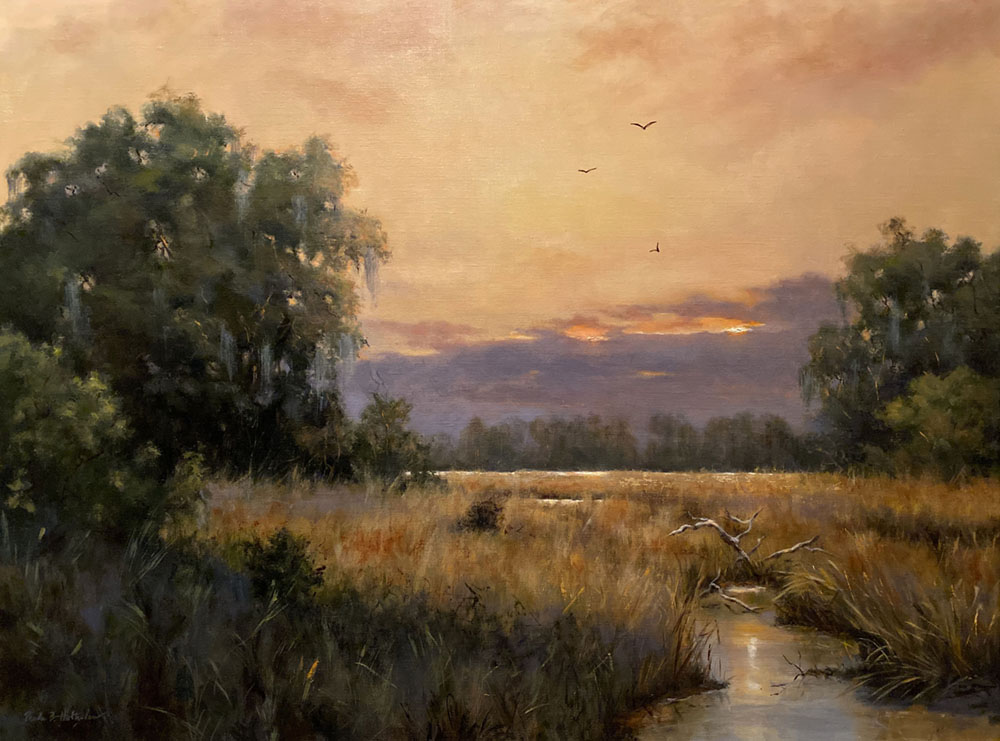
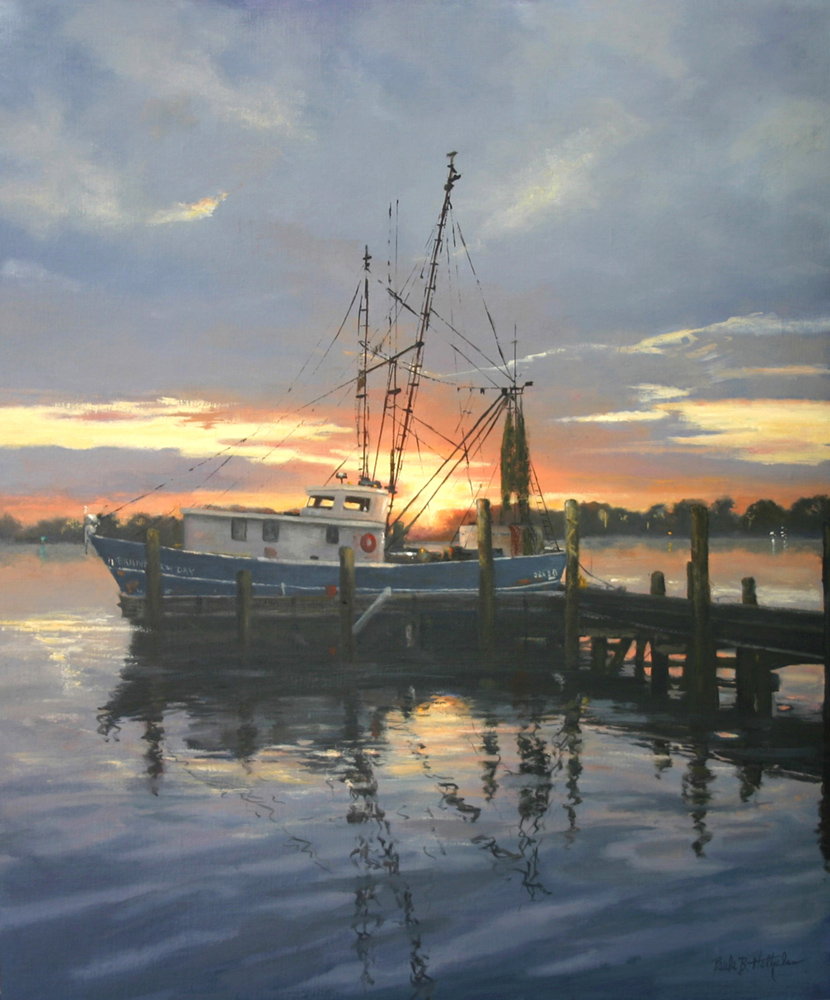
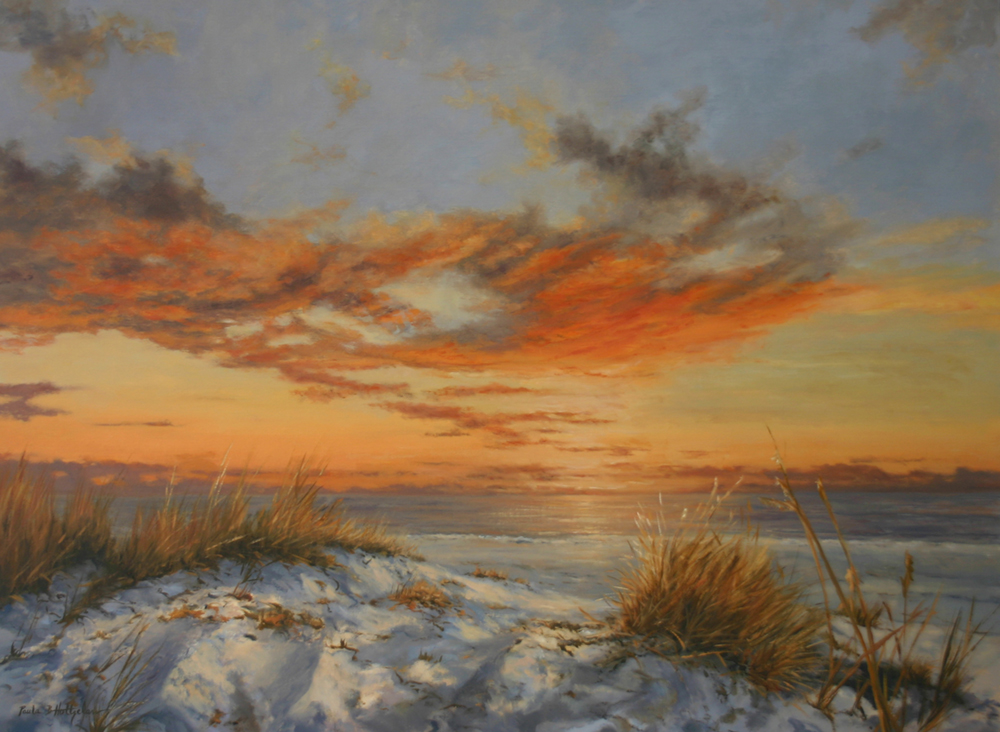
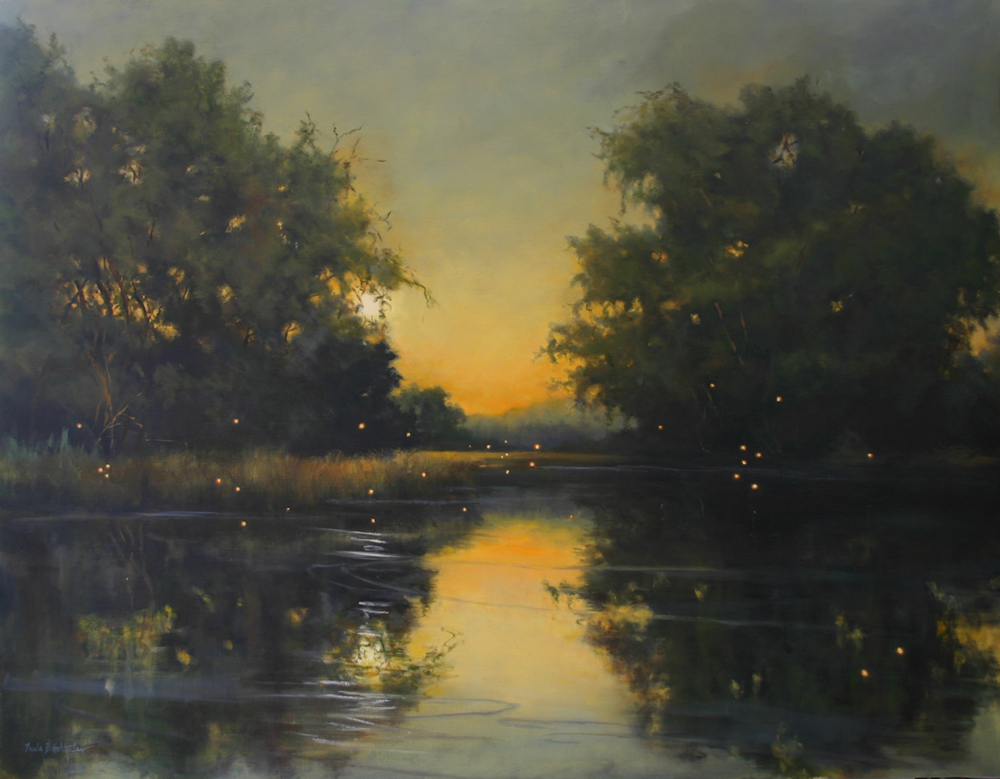
Paula B. Holtzclaw, “In Silence,” 30 x 40 in., oil, 2019Paula B. Holtzclaw, “In Silence,” 30 x 40 in., oil, 2019Paula B. Holtzclaw, “The Golden Hour,” 30 x 40 in., oil, 2021Paula B. Holtzclaw, “Luminescence,” 35 x 45 in., oil, 2018
Fill your mind with useful art stories, the latest trends, upcoming art shows, top artists, and more. Subscribe to Fine Art Today, from the publishers of Fine Art Connoisseur magazine.