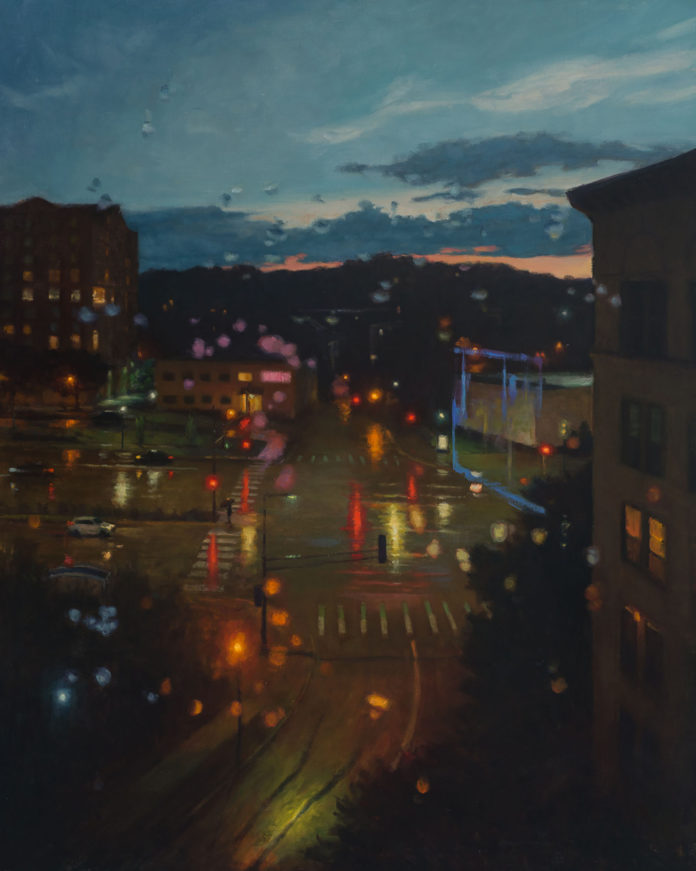
Raindrop Abstract
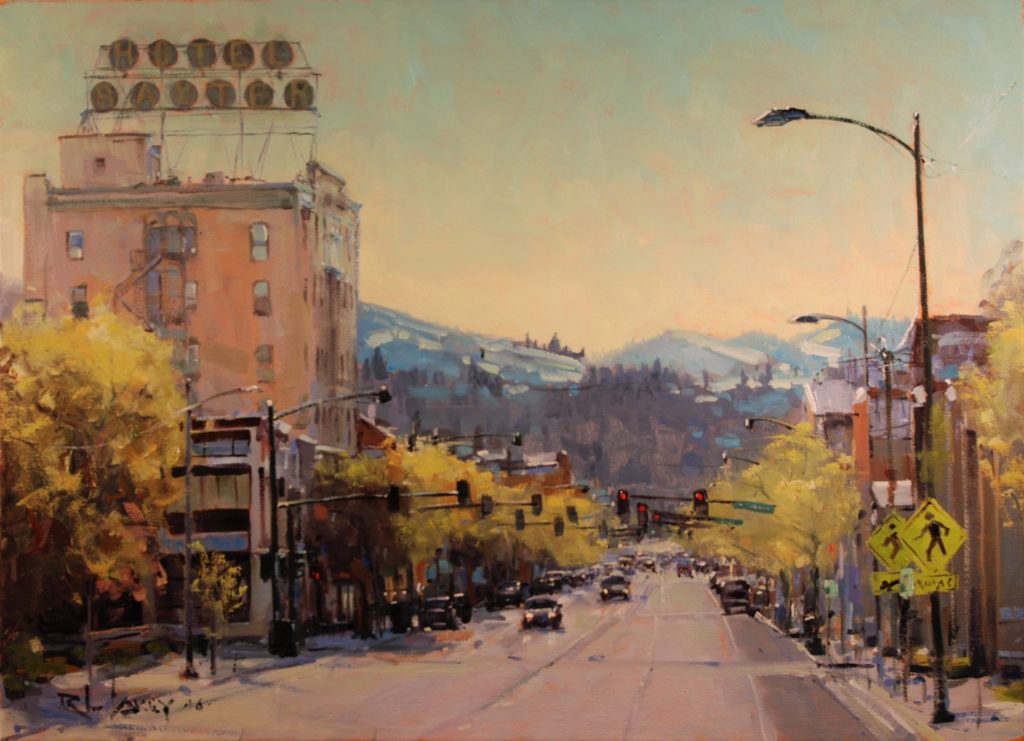
39 x 31.5 in.
Oil on linen
Available through Grenning Gallery
Carl Bretzke is a Minnesota painter known for both his plein air and studio work, including realistic nocturnes, cityscapes, snow scenes and narrative landscapes.
His paintings will once again be on display at Grenning Gallery in Sag Harbor, NY this May with a show opening on Saturday May 8, 2021. Carl’s original yet refined interpretation of American life is both cinematic and yet sometimes gritty. Some have likened his work to that of Edward Hopper for putting his finger on that somewhat melancholic feeling found in celebrated American realism.
A complete biography for Carl Bretzke can be found on his website, carlbretzke.com.
Carl’s work at the upcoming Grenning Gallery May show will be paired with paintings by Kelly Carmody, a Boston realist painter. Carmody is a classically trained portrait artist currently moving towards a looser construction of the real world, featuring compelling interiors and harmoniously colorful impressionistic florals.
For more information on the upcoming exhibition visit…
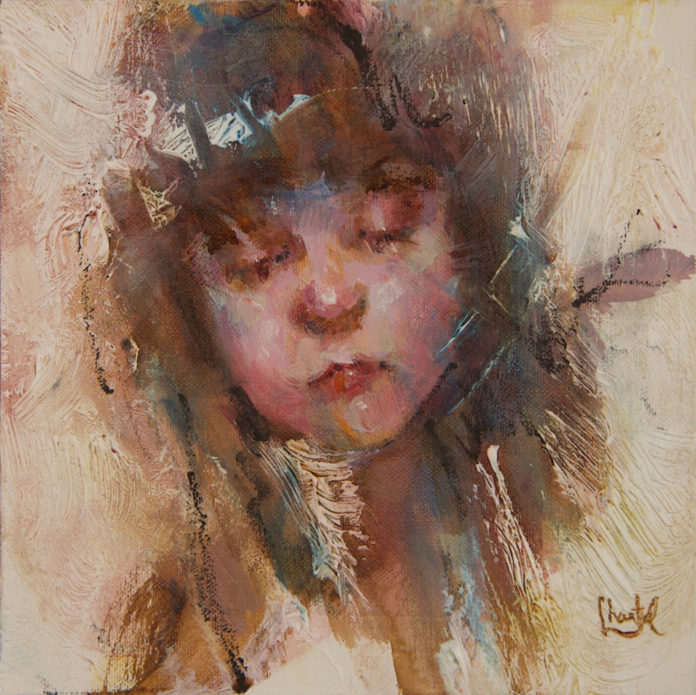
Chantel Lynn Barber yearns to promote the human spirit in her work. She believes that when it comes to the human race, there is more that unites than divides. There is beauty in everyone, regardless of whether they measure up to society’s definition of beauty. Not only their joys, but their sorrows too. She wants to show the beauty in the human condition. Chantel is on a journey to capture the vision in her mind’s eye – the one blood we as humans share. And she does it all in acrylic – with strong color, energetic brushwork, light and story. Her loose style draws the viewer’s attention, visually beckoning them to wonder at the essence of life.
Chantel is a Signature Member of the International Society of Acrylic Painters. She is a member of the Portrait Society of America, The National Oil & Acrylic Painters’ Society, and American Women Artists.
Selected Award Highlights
• Best Acrylic 10th Annual Plein Air Salon Competition 2020
• Award of Excellence – National Oil & Acrylic Painters’ Society 2020 Spring Online International Exhibition
• Finalist – BoldBrush Painting Competition, March 2020
• Finalist – BoldBrush Painting Competition, January 2020
• Finalist – BoldBrush Painting Competition, March 2020
• Award of Excellence – National Oil & Acrylic Painters’ Society 2020 Spring Online International Exhibition
• Finalist Outside the Box Category – Portrait Society of America’s Members Only Competition, December 2019
• Honorable Mention – International Society of Acrylic Painters All-Member Online Exhibition, December 2019
• Winner AcrylicWorks 7: Color and Light Peak Media 2019 Acrylics Competition
• Finalist – BoldBrush Painting Competition, August 2019
• Award of Excellence – National Oil & Acrylic Painters’ Society 2019 Spring Online International Exhibition
• Finalist – BoldBrush Painting Competition, March 2019
• Winner AcrylicWorks 6: Creative Energy North Light Books’ 2018 Acrylics Competition
• Winner Strokes of Genius 9: Creative Discoveries North Light Books’ 2016 Drawing Competition
• Master Class Finalist – Art Muse Contest, November 2018
• Master Class Finalist – Art Muse Contest, February 2018
• Outstanding Acrylic – BoldBrush Painting Competition, January 2018
• 2017 Annual Award Winner Master Class – Art Muse Contest
• Master Class Finalist – Art Muse Contest, October 2017
• Master Class Winner – Art Muse Contest, May 2017
• Finalist – BoldBrush Painting Competition, February 2017
• 2nd Place – BoldBrush Painting Competition, December 2015
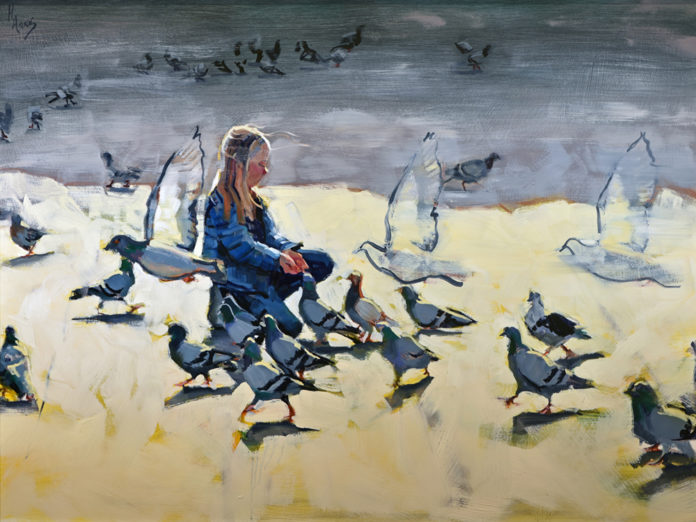
Heather Arenas: On a trip to Spain, I visited one of the many plazas where pigeons gathered to take advantage of the generous tourists. There are ‘pigeon food’ vendors in the plaza. This little girl didn’t mind that she was swarmed by hungry visitors. She was enjoying the connection with each little beak and presenting them with her small offering. My intention with this piece was to capture the movement of the feeding frenzy. I remember thinking how calm the girl was with so much chaos going on around her.
I’m what I would call a contemporary impressionist. I use broken color and strong brushwork, but I say contemporary because of the combination of graphic contrast and grays. I try to build a composition that can draw people from across a room. For my recent work, I’m embracing my inner contemporary artist and applying more techniques that I have only flirted with in the past. In particular, I am emphasizing line and pattern in more direct ways.
I paint from photos that I personally shot because I don’t want to just copy an image. I start with an idea that inspired me to take the picture in the first place. How do I feel in this place? Happiness, excitement, chaos, a somber feeling? Whatever it was, I want to get THAT on to the surface. I don’t worry about whether my subjects match the photo. I often use multiple photos to combine gestures of people to recreate the feeling. Instead of limiting the focus to a recognizable place or person, I’m really trying to create a recognizable feeling with paint. I get the most joy when a collector tells me how my painting makes them feel! That means I have connected with them on a personal level.
I am currently represented by:
Reinert Fine Art, Charleston, SC
Mary Williams Fine Arts, Boulder, CO
The California Art Club is hoping its current exhibition will leave you saying, “Mission Accomplished.”
From the organizers:
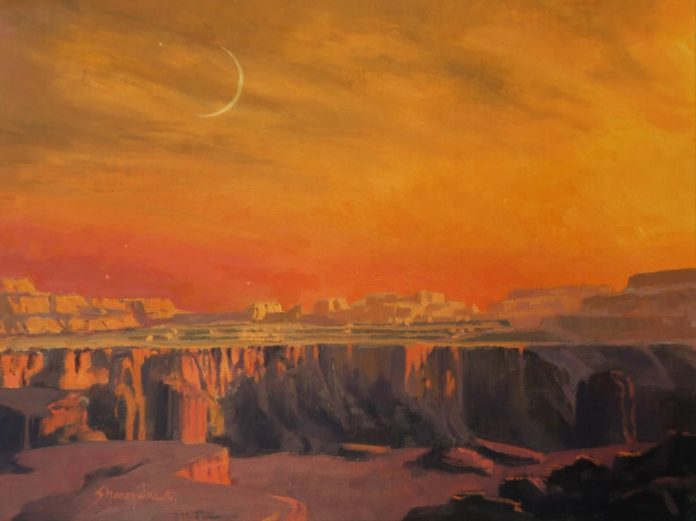
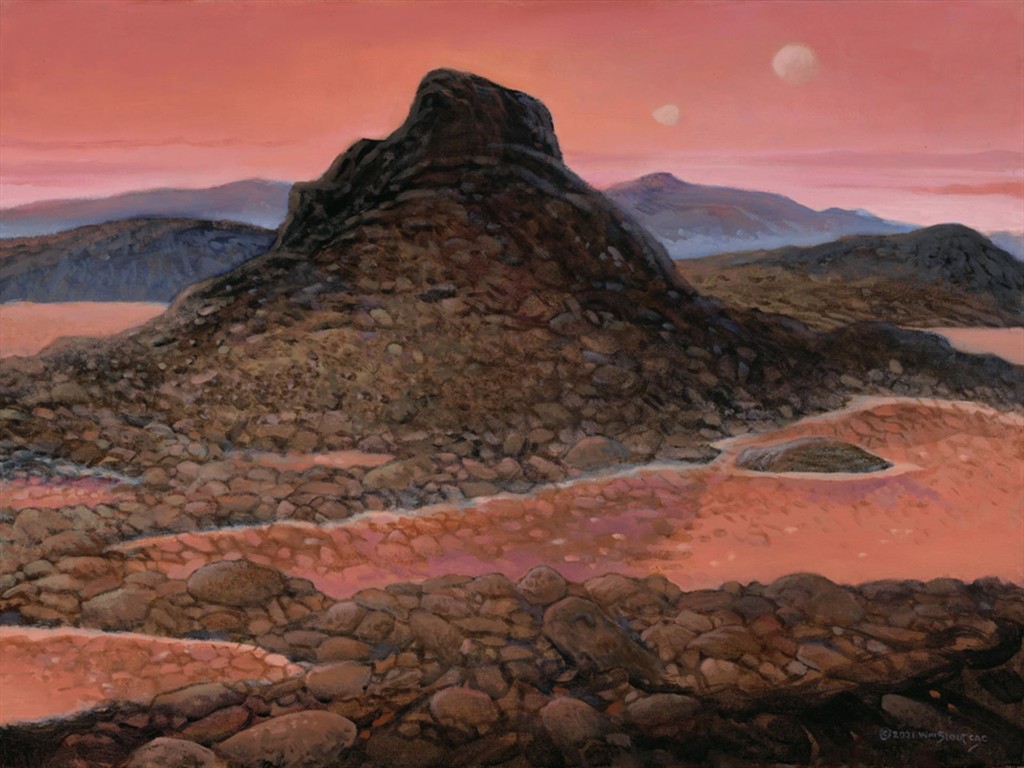
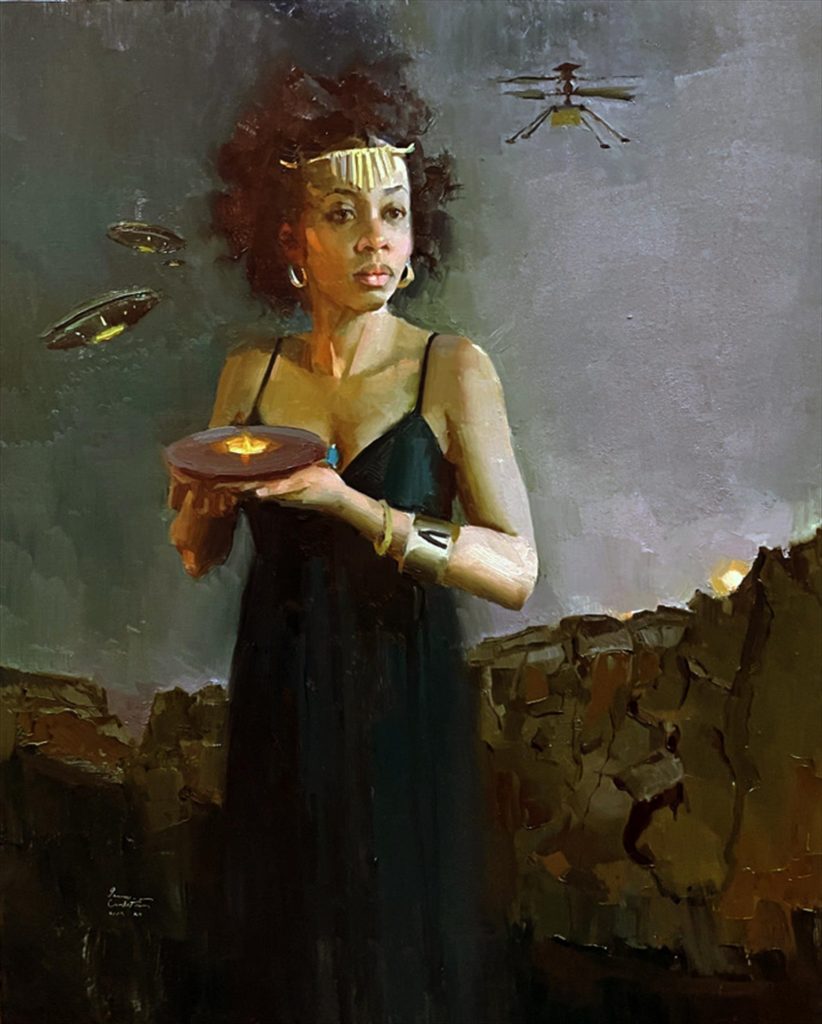
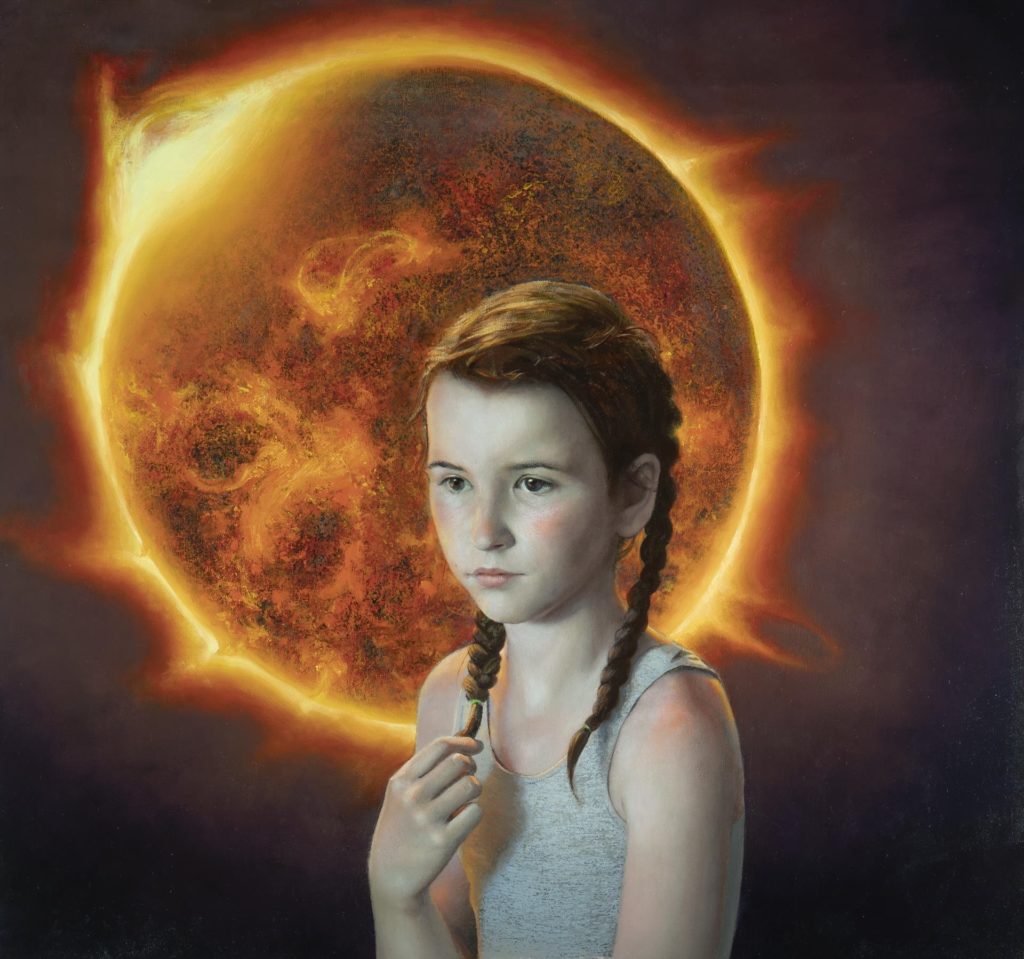
Art and science have been intertwined since the dawn of civilization. Science, and in particular space exploration, has allowed us to transcend our bodily limitations on Earth, magnifying our creativity in the process, as we are propelled into the cosmos. With “Mars: An Artistic Mission,” which celebrates the landing of the Mars Perseverance Rover on the Red Planet, we honor the marriage of art and science.
As you venture through these virtual galleries, you will find dazzling Mars-scapes, snapshots of rovers in operation, and ethereal portraits of life beyond our Earthly barrier.
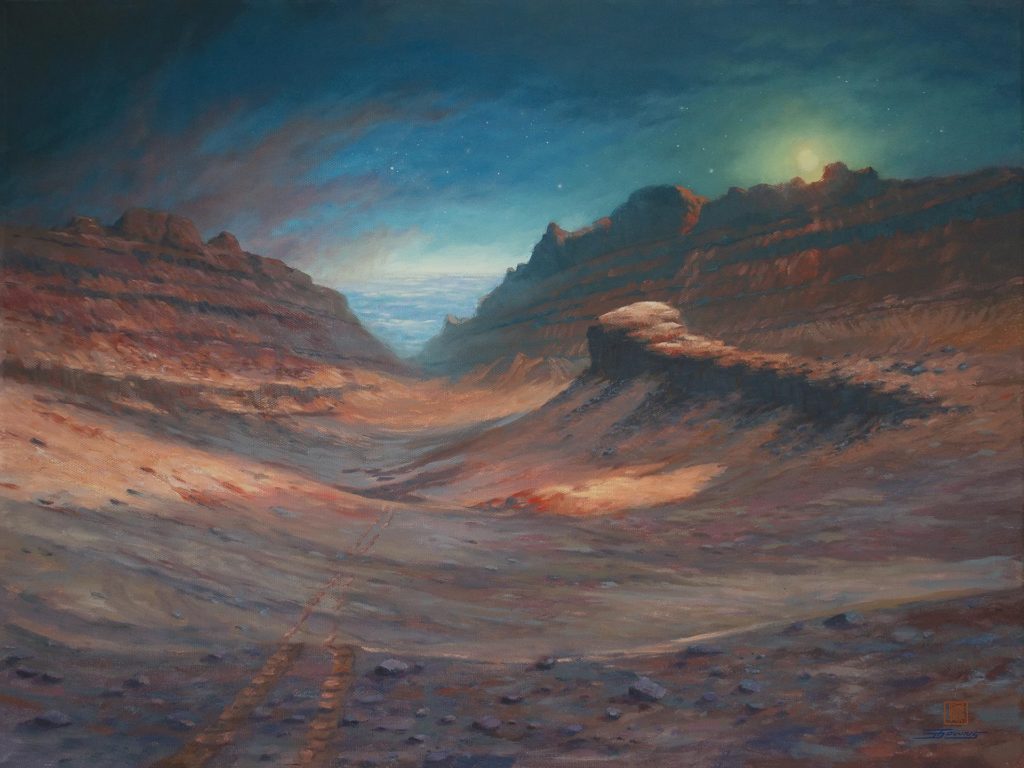
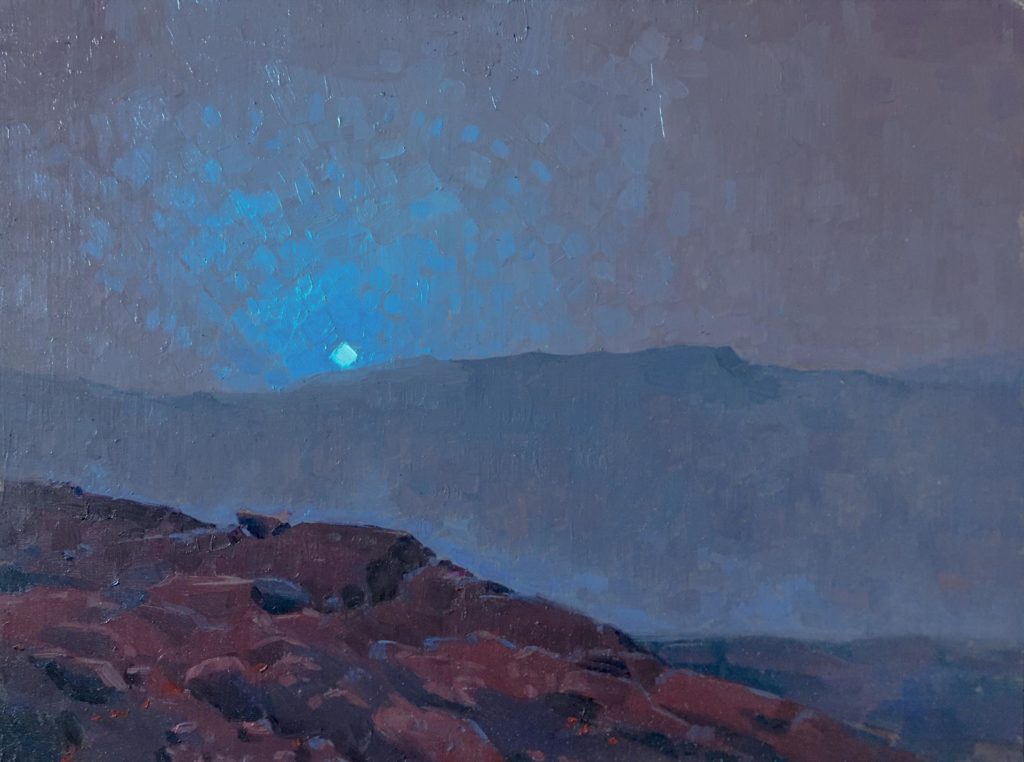
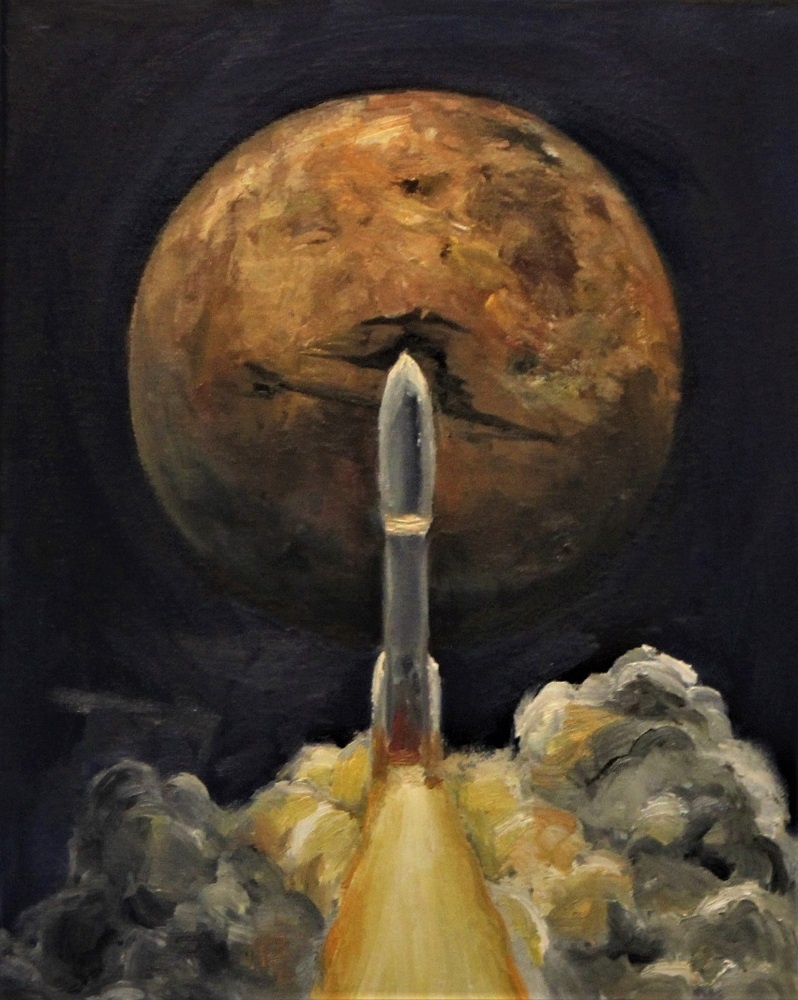
William Stout, “Prehistoric Martian Landscape,” oil, 18 x 24 in.Nancy Crookston, “Martian Peace Goddess,” 24 x 30 in., oilNathanial Skousen, “Solar Flare,” oil, 19 x 19 in.Donald Towns, “Barren Beauty,” 18 x 24 in.Alexey Steele, “Blue Sunset,” 12 x 16 in., oilAryaki K, “Perseverance Rover Rocket Launch,” oil; First Place in the corresponding High School Art Contest
“Mars: An Artistic Mission” is on view through May 31, 2021. For more details, please visit californiaartclub.org.
> Visit EricRhoads.com to learn about more opportunities for artists and art collectors, including retreats, international art trips, art conventions, and more.
> Sign up to receive Fine Art Today, our free weekly e-newsletter
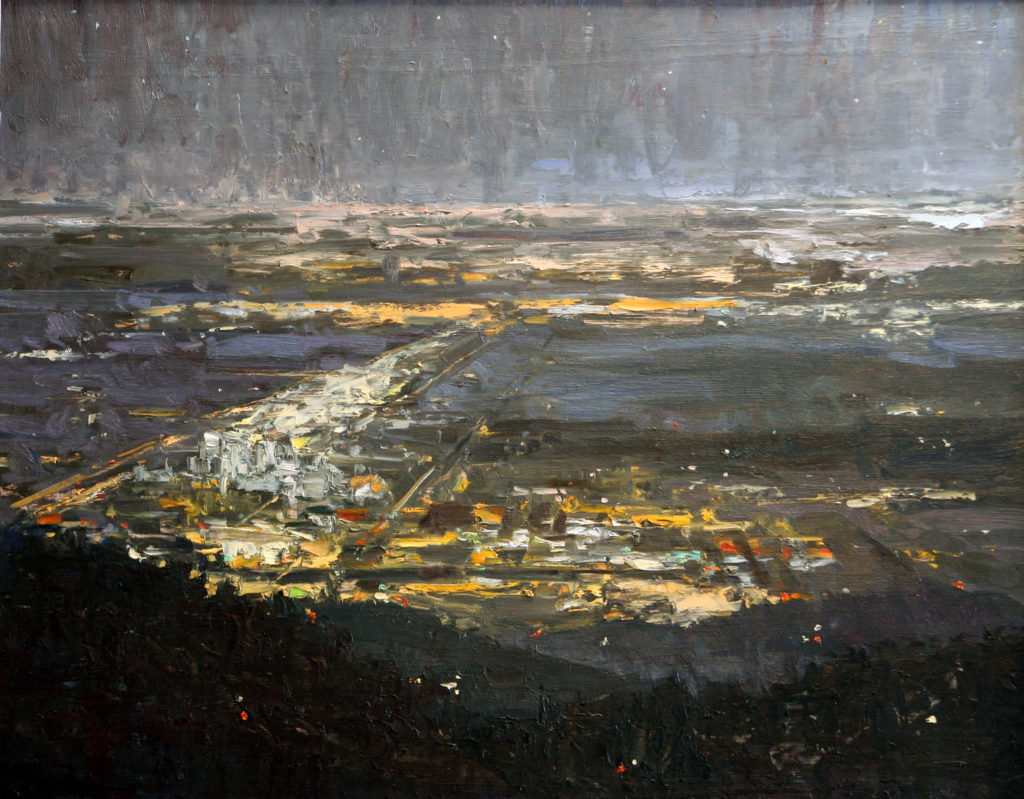
SUSIE HYER (b. 1954), Lights Above Town #1, 2015, oil on panel, 24 x 30 in., private collection
View a gorgeous collection of cityscapes created in oil, watercolor, and acrylic, featuring scenes from Austin to Taipei.
Taking Stock of Our Cities and Towns
BY MAX GILLIES
It’s high time to celebrate the robust health of “cityscape” painting. Scenes of urban life — viewed from every angle and in all kinds of weather and light — are being created by a lively community of artists who work in diverse mediums, manners, and moods. Just as encouraging, the resulting pictures are selling well, according to galleries nationwide.
It would seem that, running right alongside the boom in outdoor landscape painting highlighted in this magazine’s sister publication, PleinAir, there is a universe of people who want to look closely at — and find the strange beauty in — the harder-edged places where so many of us live or work. Meadows and neon signs both have charms, a fact more and more art collectors are discovering.
Now consider collecting a cityscape for yourself.
From Fine Art Connoisseur: 19 Cityscapes by 19 Artists
1. Morning on Main by Rob Akey
ROB AKEY (b. 1956), Morning on Main, 2016, oil on linen, 16 x 22 in., private collection
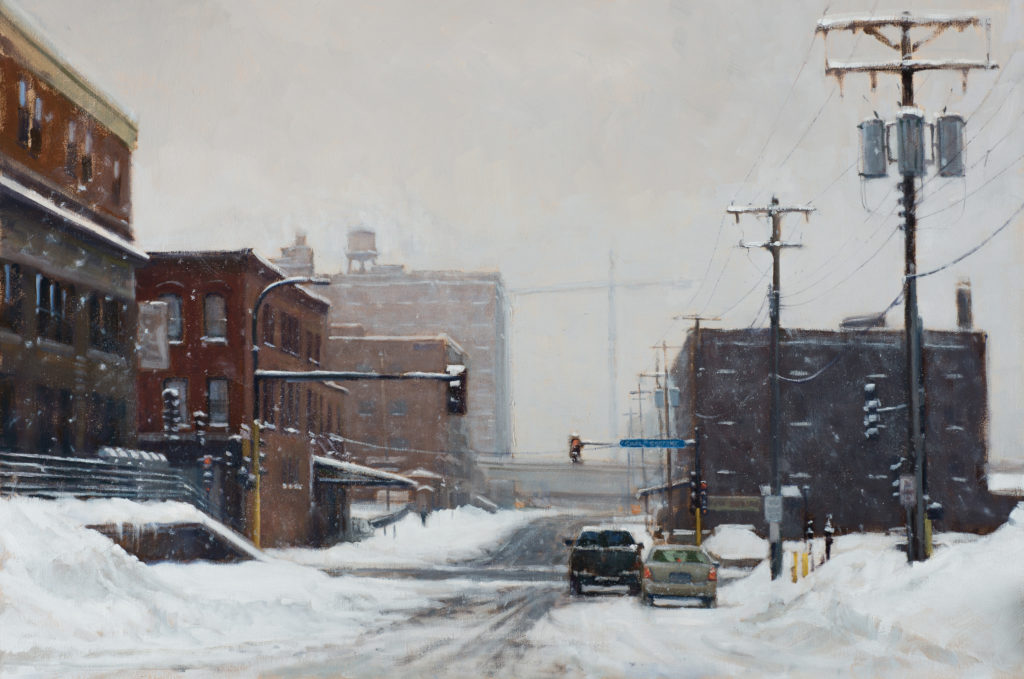
2. Snow Day in the Warehouse District by Carl Bretzke
CARL BRETZKE (b. 1954), Snow Day in the Warehouse District, 2016, oil on linen, 24 x 36 in., private collection
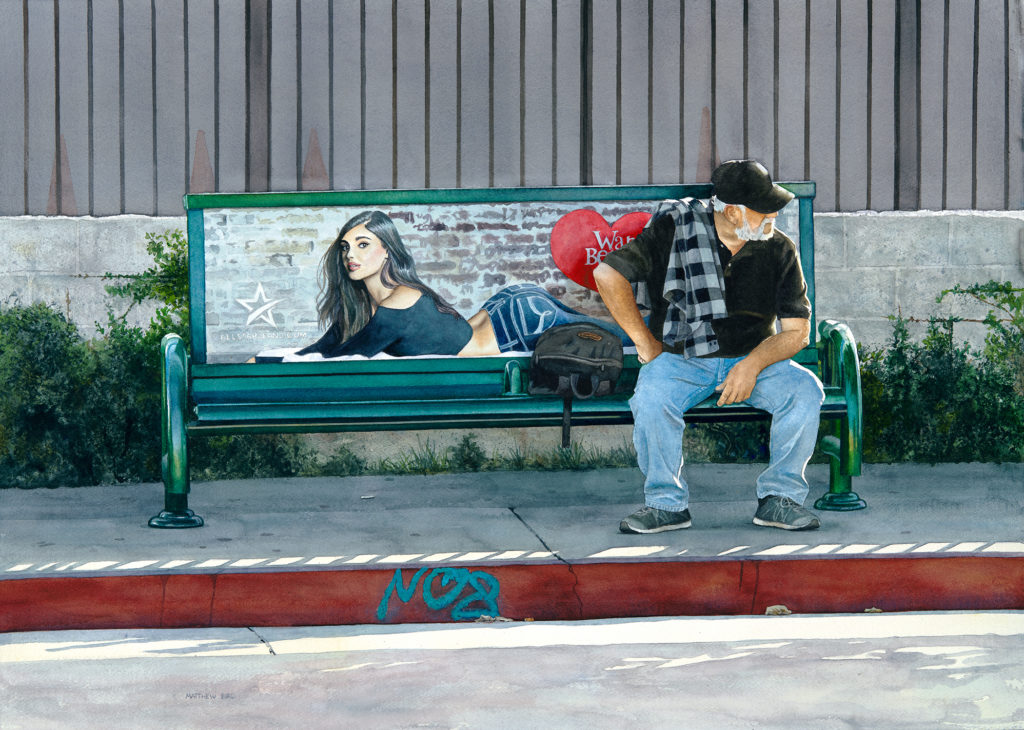
3. Not Interested by Matthew Bird
MATTHEW BIRD (b. 1977), Not Interested, 2018, watercolor on paper, 22 x 30 in., available from the artist
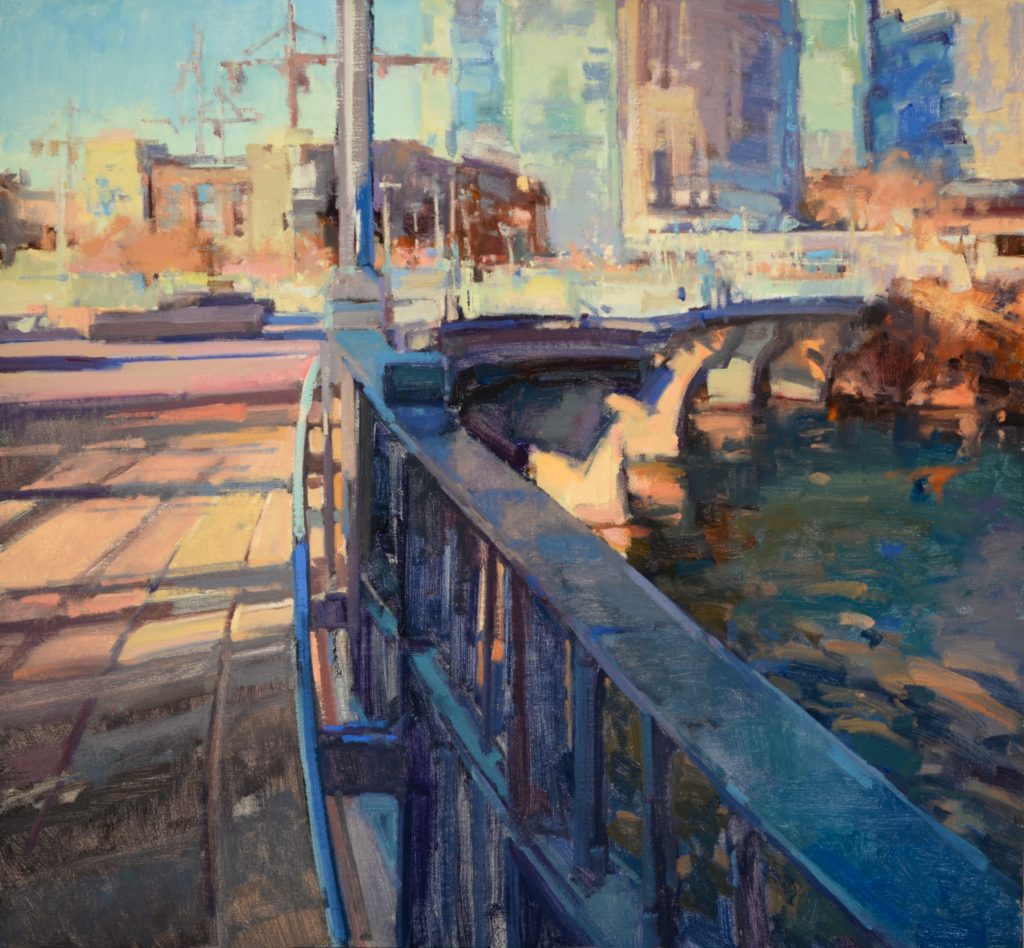
4. Downtown Austin by Jill Carver
JILL CARVER (b. 1968), Downtown Austin, 2017, oil on linen board, 30 x 32 in., InSight Gallery, Fredericksburg, TX
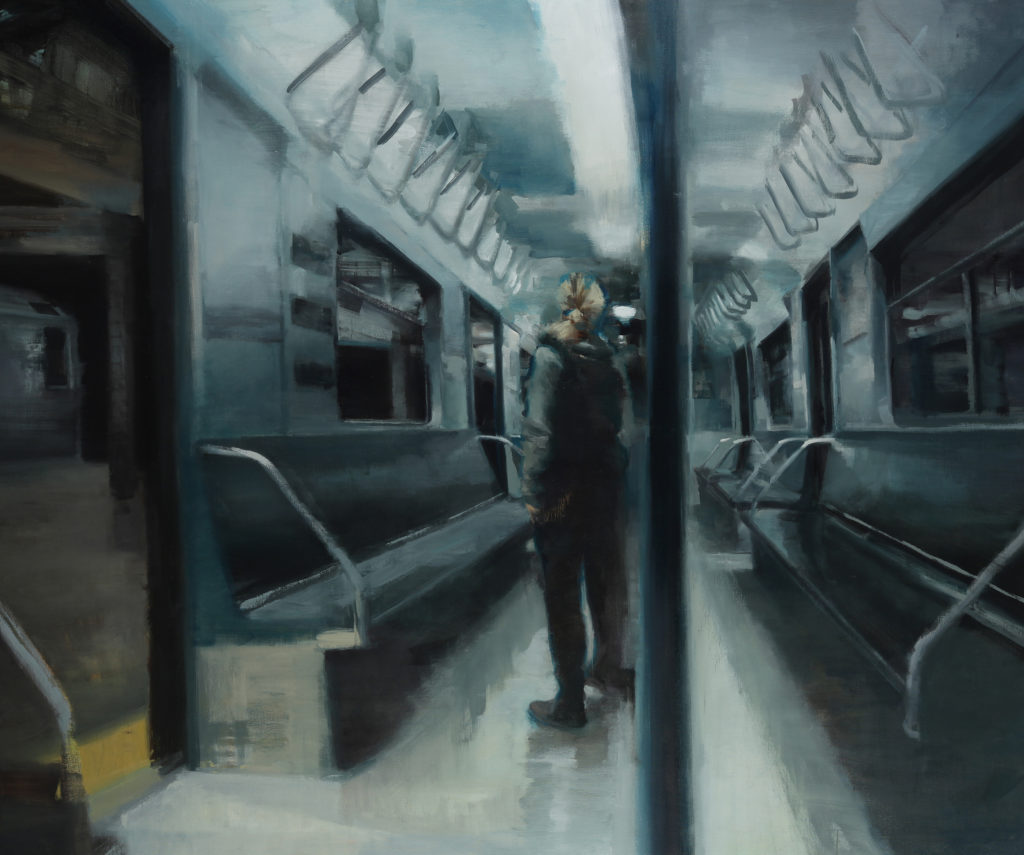
5. Passenger by Kim Cogan
KIM COGAN (b. 1977), Passenger, 2018, oil on canvas, 52 x 62 in., Gallery Henoch, New York City
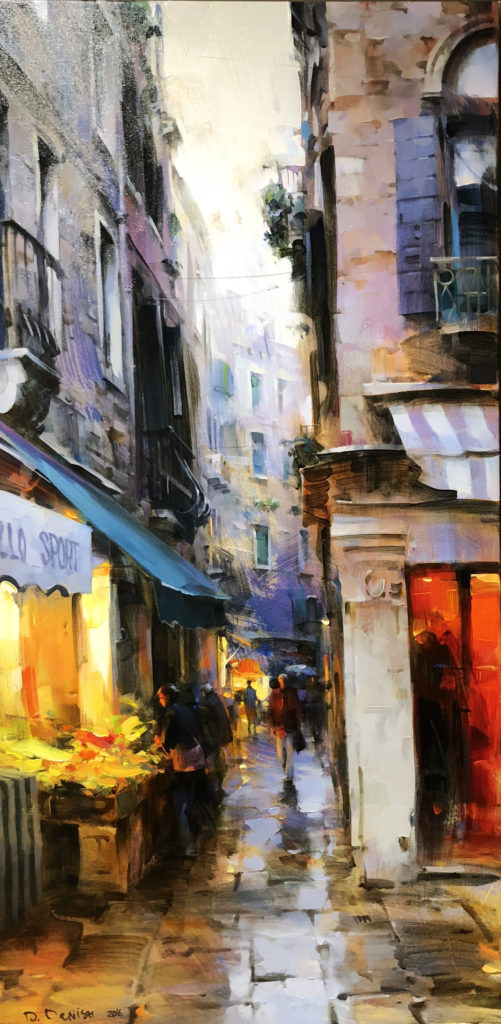
6. Evening, Venice by Dmitri Danish
DMITRI DANISH (b. 1966), Evening, Venice, 2016, oil on canvas, 48 x 24 in., Gallery 901, Santa Fe
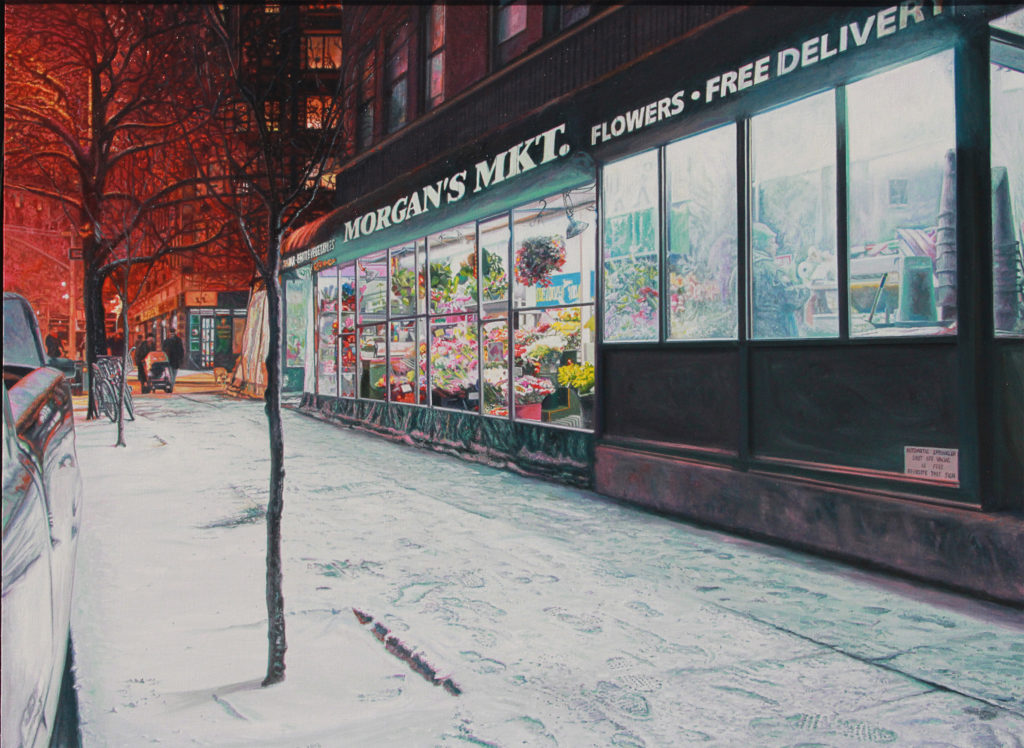
7. Tribeca Market by Fred Danziger
FRED DANZIGER (b. 1946), Tribeca Market, 2013, oil on linen canvas, 30 x 40 in., private collection
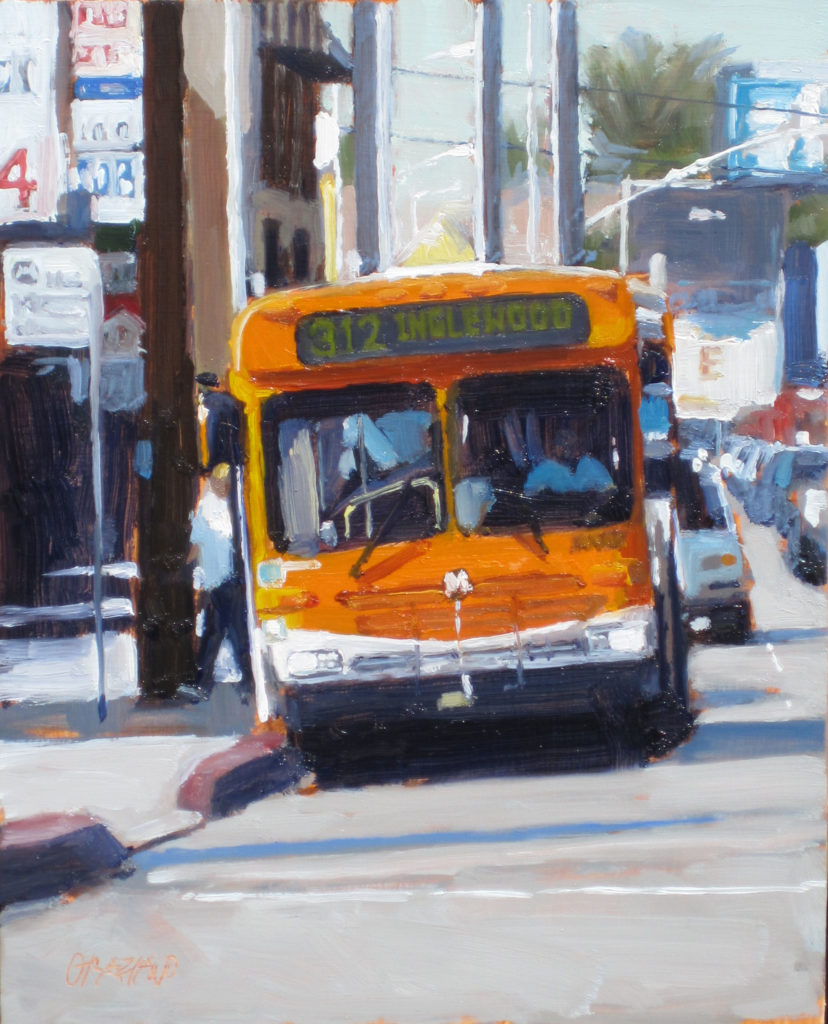
8. 312 Metro by Dan Graziano
DAN GRAZIANO (b. 1953), 312 Metro, 2013, oil on panel, 10 x 8 in., Red Piano Art Gallery, Bluffton, SC
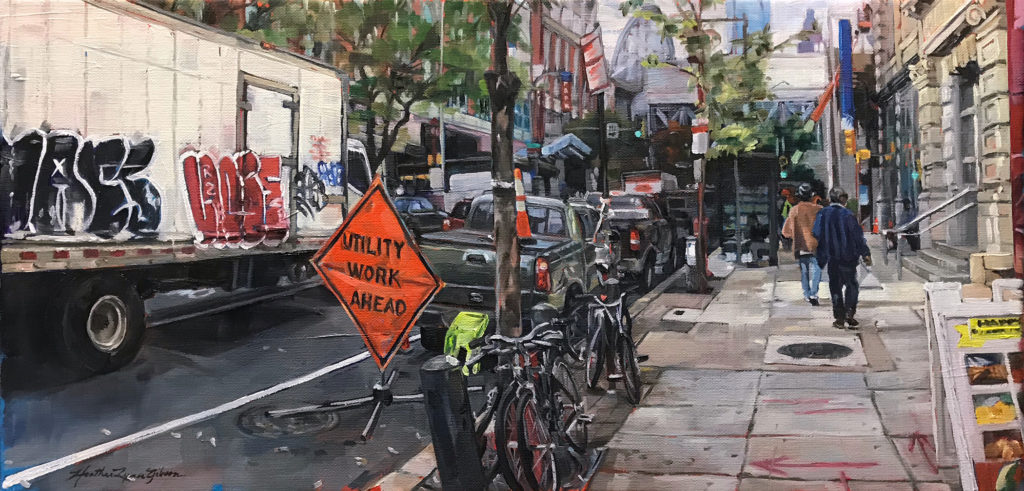
9. Everyday City Life by Heather Lynn Gibson
HEATHER LYNN GIBSON (b. 1970), Everyday City Life, 2018, oil on linen, 10 x 20 in., available from the artist
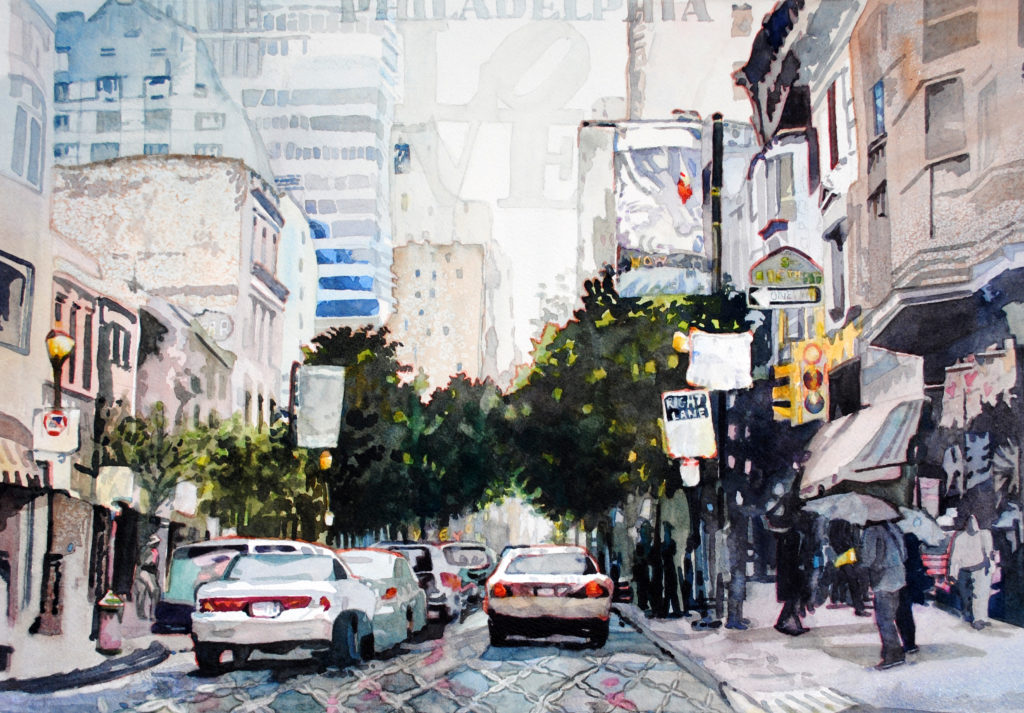
10. City of Brotherly Love by Catherine Hillis
CATHERINE HILLIS (b. 1953), City of Brotherly Love, 2015, watercolor on paper, 22 x 28 in., available from the artist
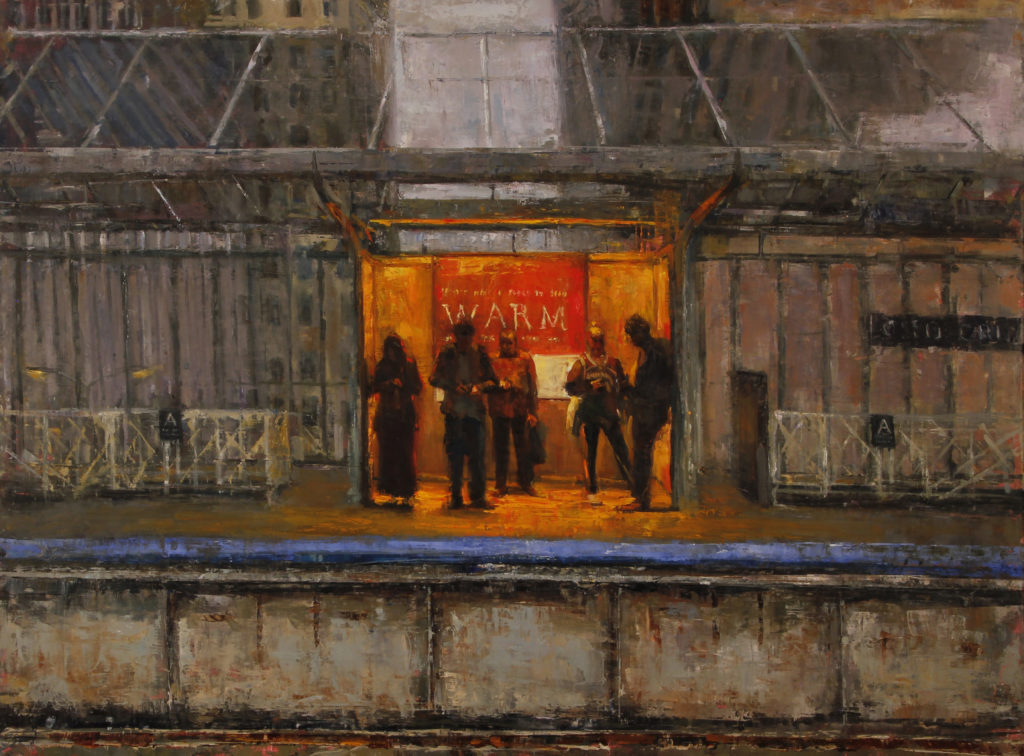
11. Warm by Errol Jacobson
ERROL JACOBSON (b. 1948), Warm, 2018, oil on panel, 36 x 48 in., Jackson Junge Gallery, Chicago
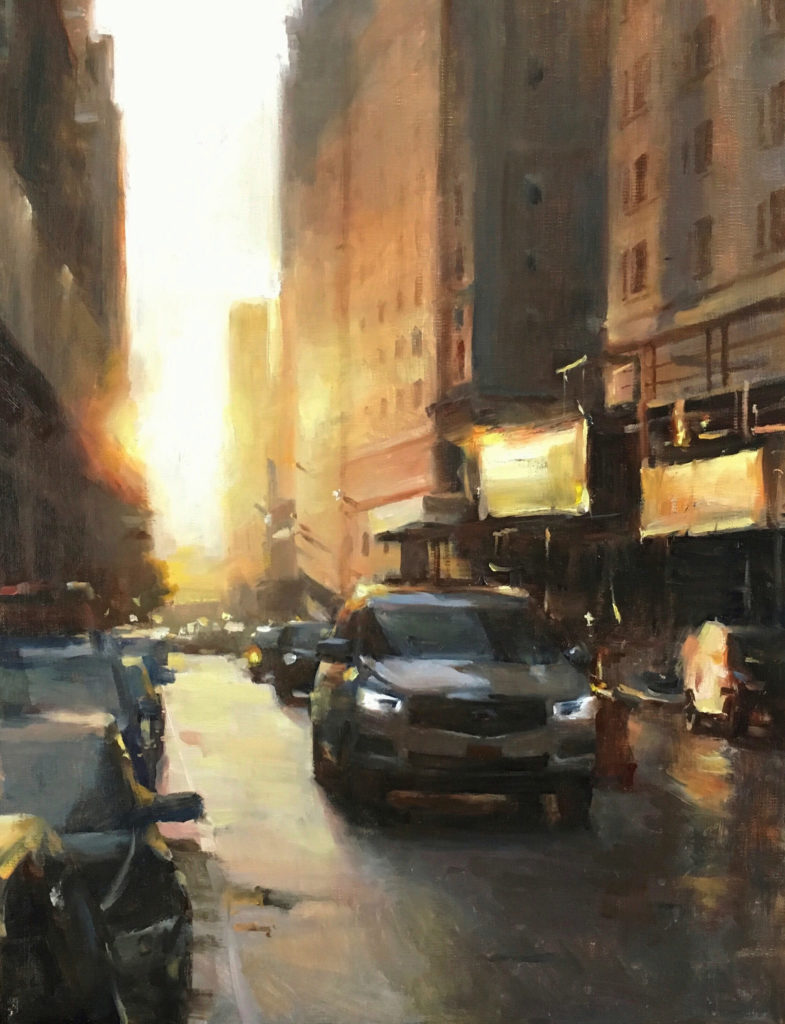
12. New York Sunset by Kyle Ma
KYLE MA (b. 2000), New York Sunset, 2018, oil on panel, 18 x 14 in., available through the artist
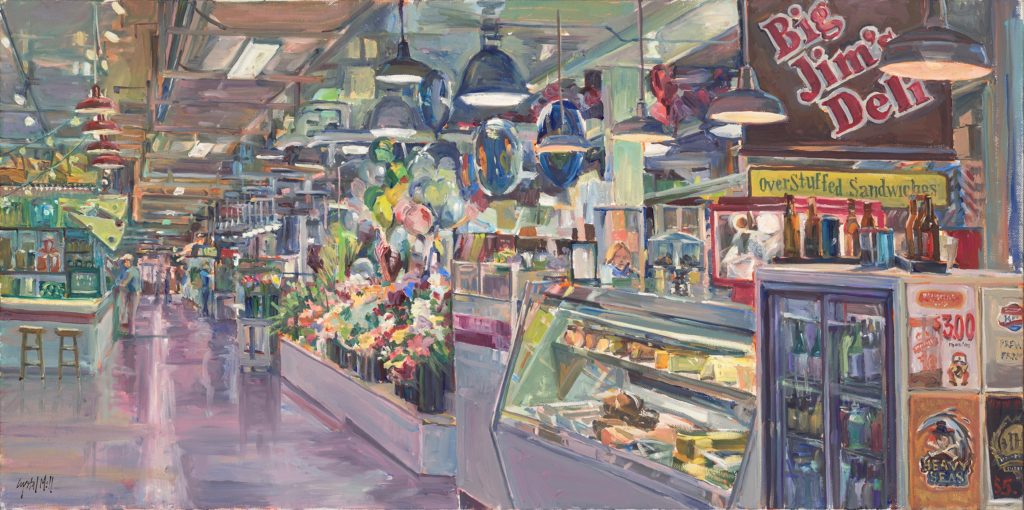
13. Our Market by Crystal Moll
CRYSTAL MOLL (b. 1962), Our Market, 2017, oil on canvas, 18 x 36 in., Crystal Moll Gallery, Baltimore
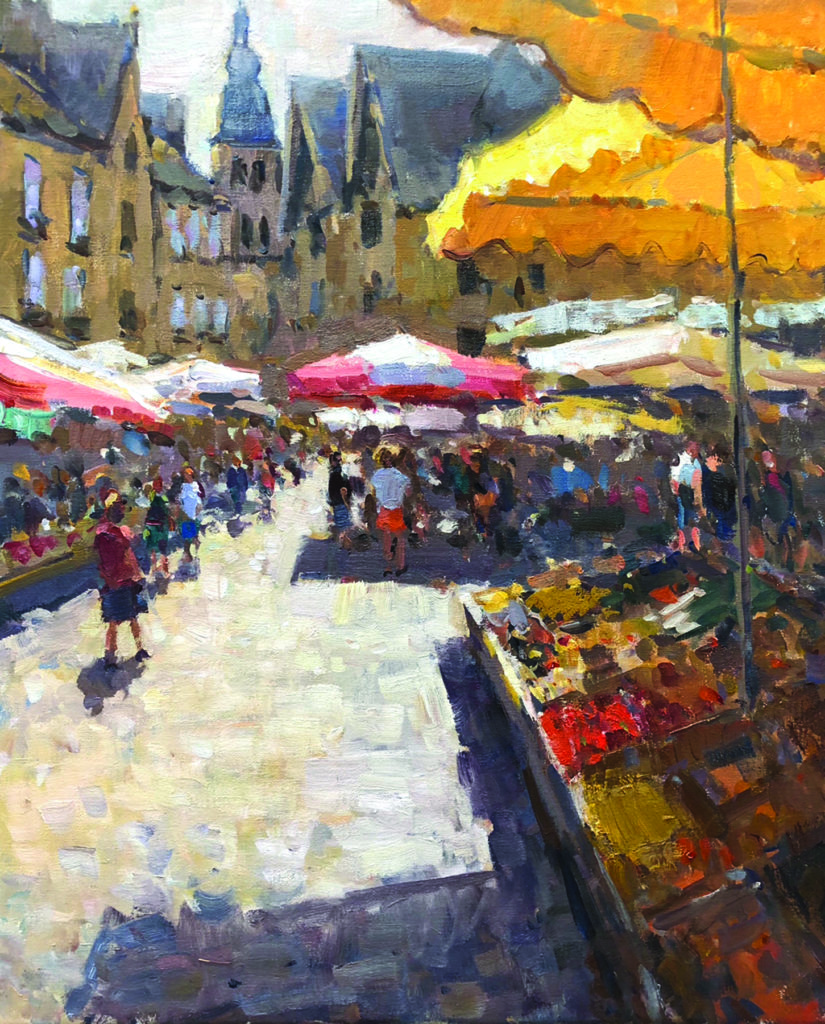
14. Market Day in Sarlat by Richard Oversmith
RICHARD OVERSMITH (b. 1971), Market Day in Sarlat, 2018, oil on linen, 30 x 24 in., J.M. Stringer Gallery, Vero Beach, FL
15. Klei by Christopher St. Leger
CHRISTOPHER ST. LEGER (b. 1973), Klei, 2017, watercolor on paper, 18 x 25 in., available from the artist
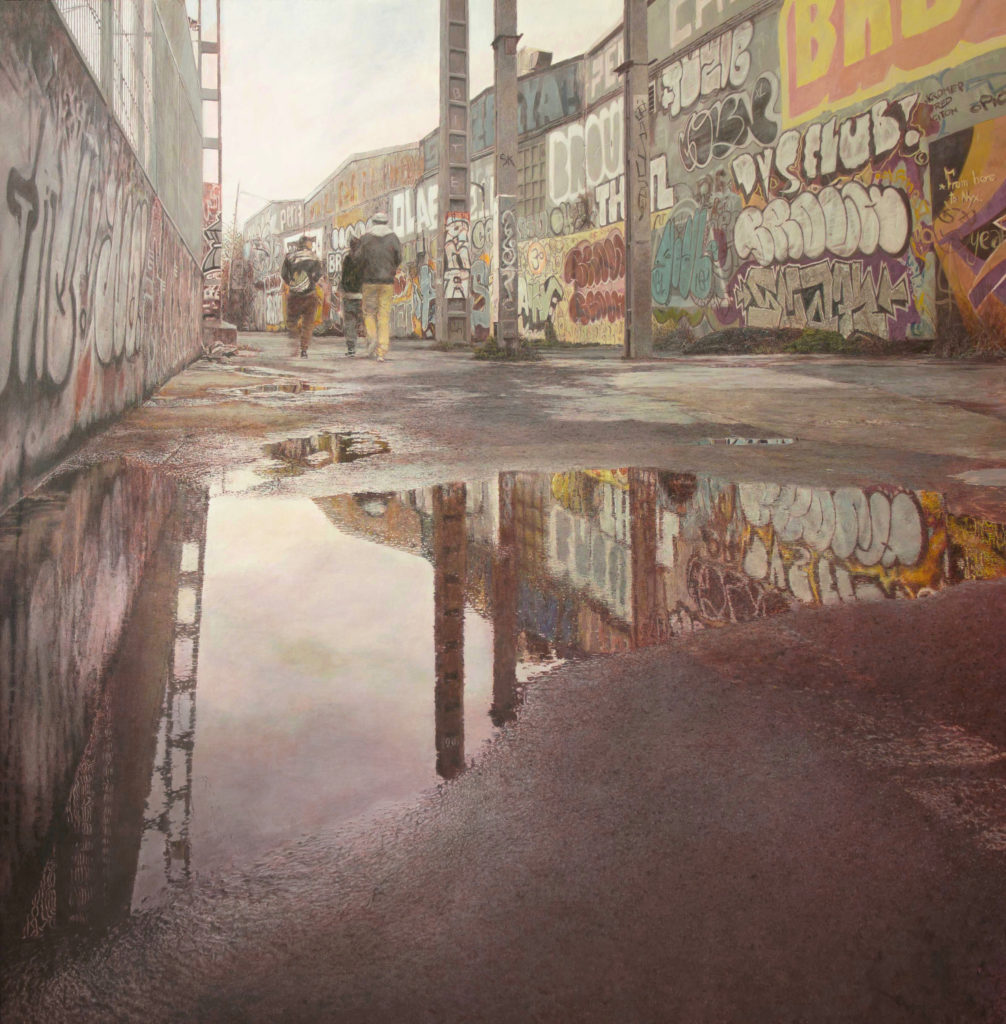
16. This Is Not Graffiti by Ana Schmidt
ANA SCHMIDT (b. 1959), This Is Not Graffiti, 2013, acrylic on canvas, 74 1/2 x 74 1/2 in., private collection
17. Lights Above Town #1 by Susie Hyer
SUSIE HYER (b. 1954), Lights Above Town #1, 2015, oil on panel, 24 x 30 in., private collection
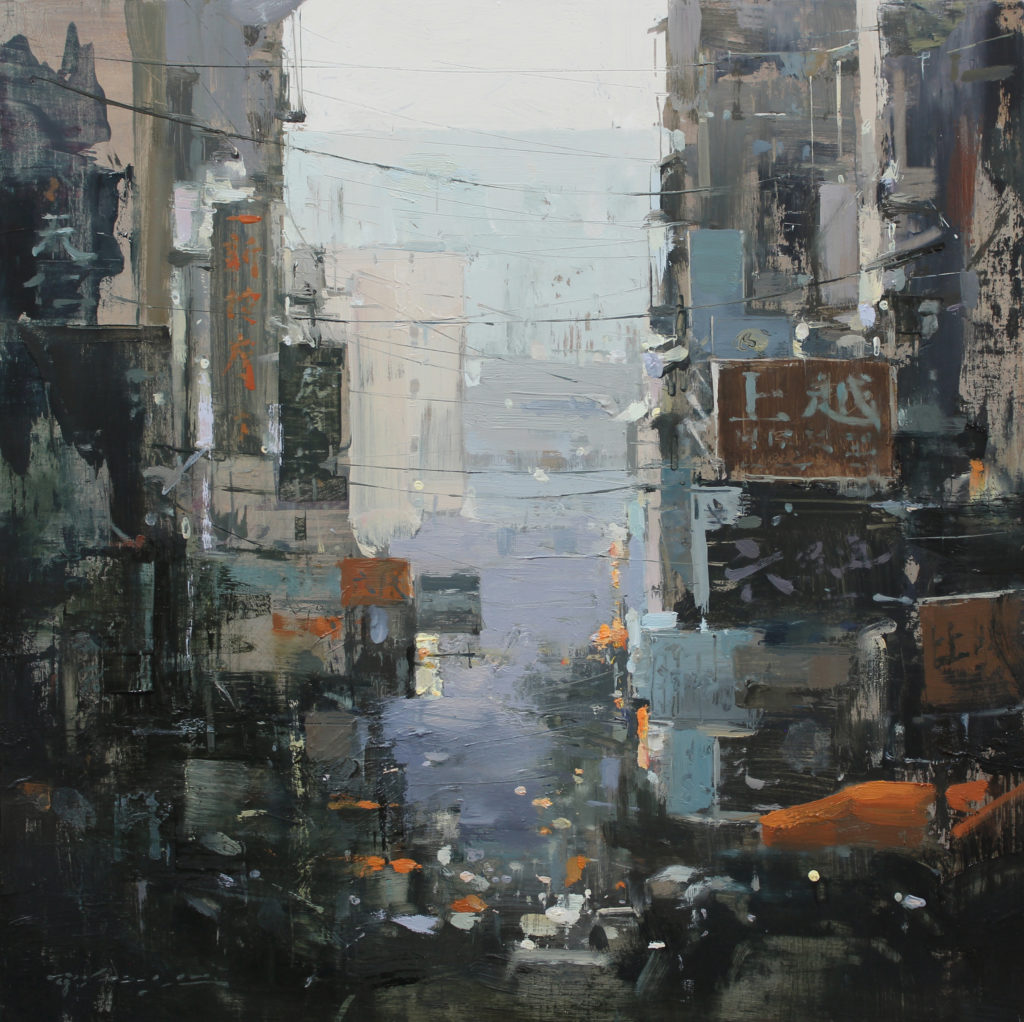
18. Taipei Street Signs by Hsin-Yao Tseng
HSIN-YAO TSENG (b. 1986), Taipei Street Signs, 2018, oil on panel, 16 x 16 in., on view at InSight Gallery (Fredericksburg, TX)
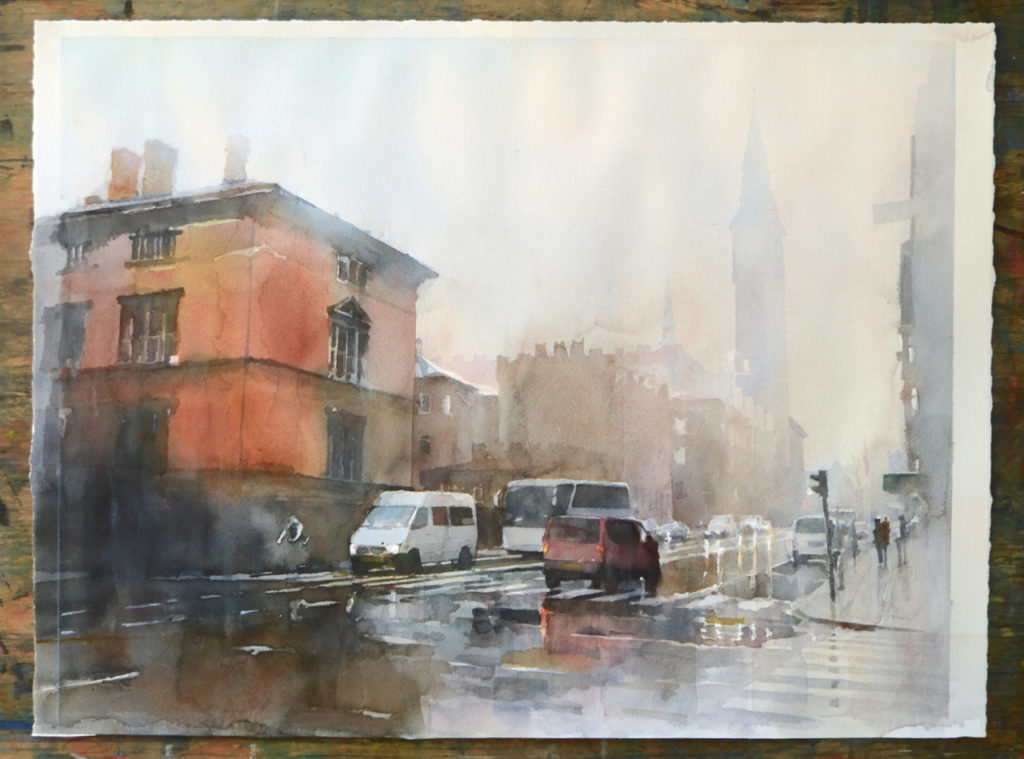
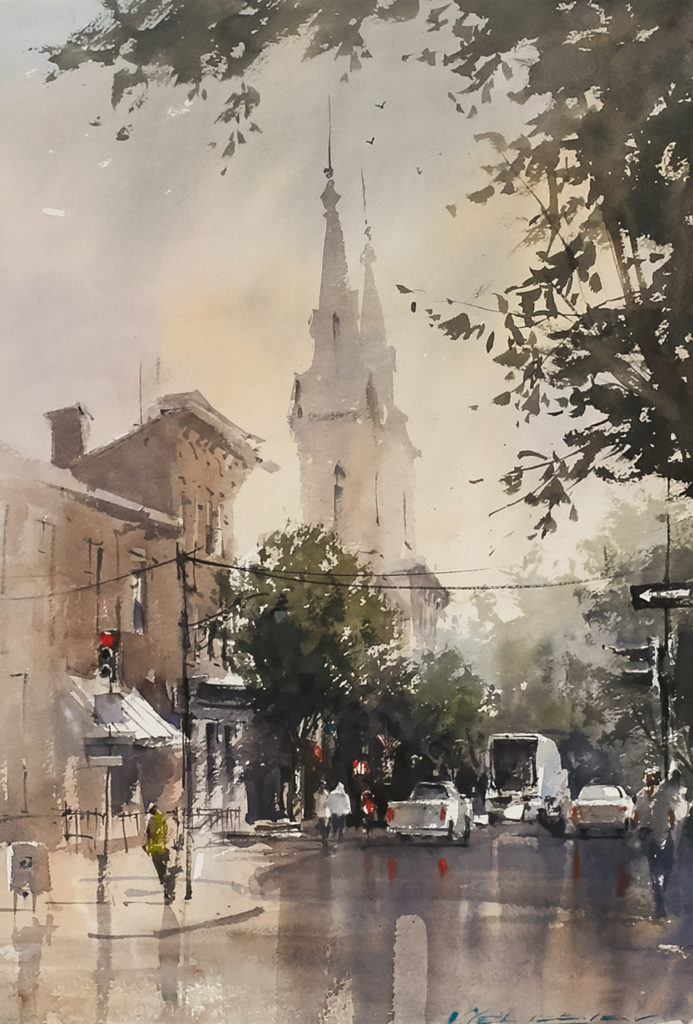
19. Church Street by Vladislav Yeliseyev
VLADISLAV YELISEYEV (b. 1960), Church Street, Frederick, 2016, watercolor on paper, 22 x 15 in., private collection
Do you know of an artist who is painting incredible cityscapes? Share their name with us in the comments below.
> Visit EricRhoads.com to learn about more opportunities for artists and art collectors, including retreats, international art trips, art conventions, and more.
> Sign up to receive Fine Art Today, our free weekly e-newsletter.
> These cityscapes were originally featured in Fine Art Connoisseur. Subscribe to Fine Art Connoisseur magazine, so you never miss an issue.
As part of our effort to continue to help artists and art galleries thrive, we’re proud to bring you this week’s “Virtual Gallery Walk.” Browse the artwork below and click the image itself to learn more about it, including how to contact the gallery.
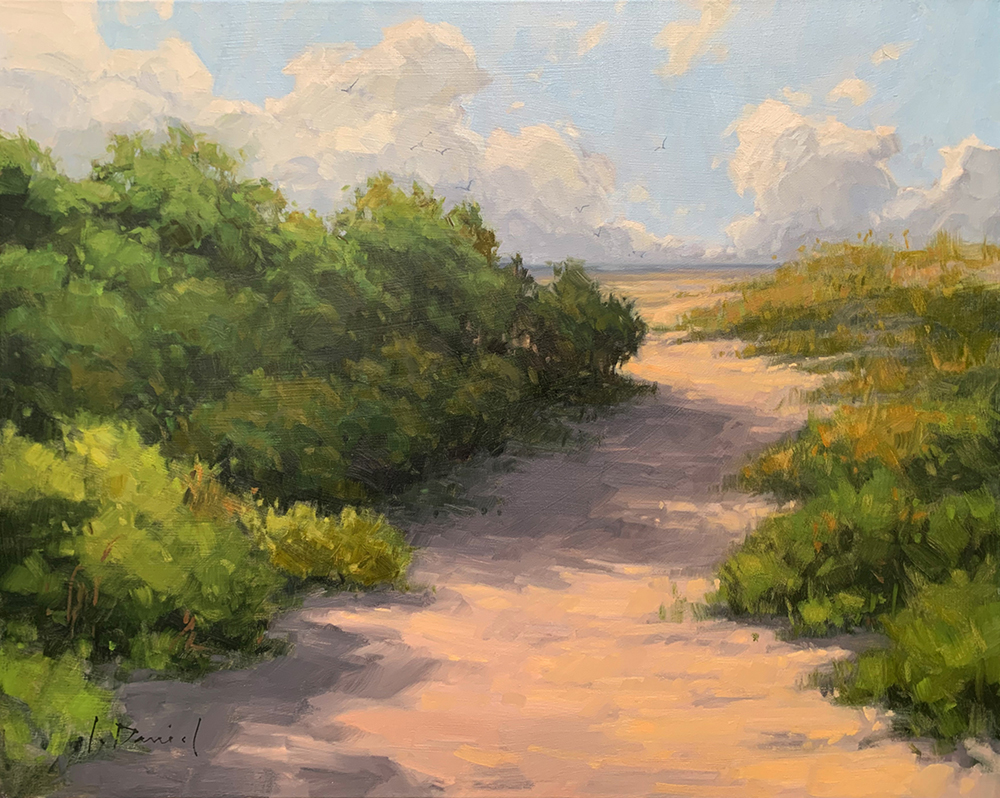
Dune Trail by Laurel Daniel, Oil, 24 x 30 in., 33 x 39 in. framed; Anderson Fine Art Gallery
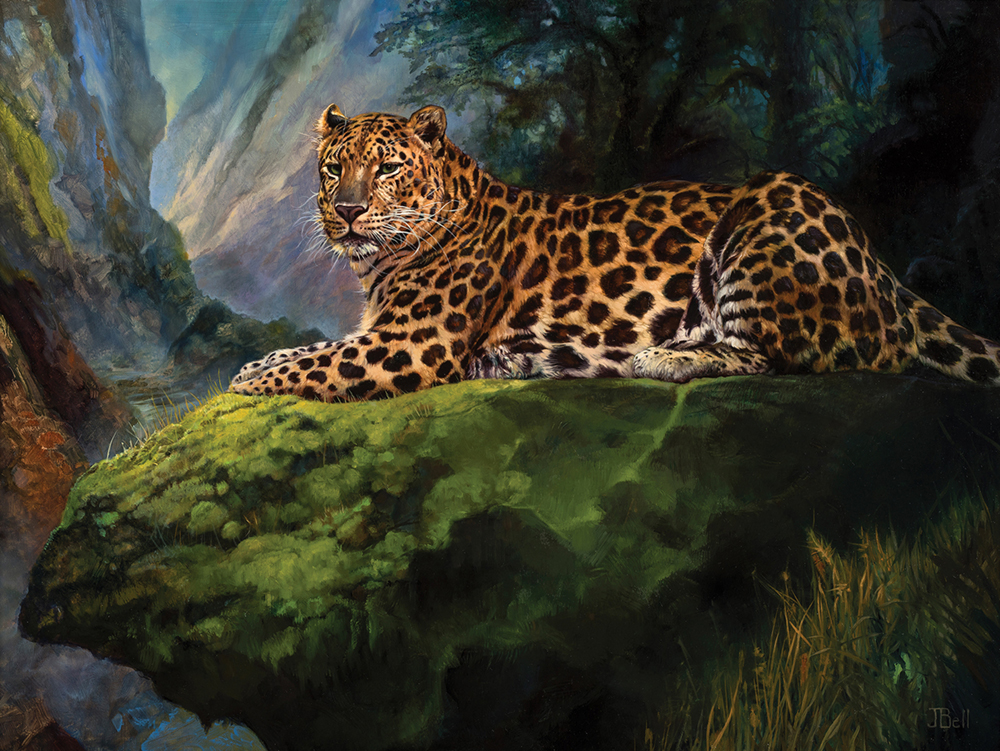
Krepke by Julie Bell, Oil on panel, 18 x 24 in., Signed; Rehs Contemporary
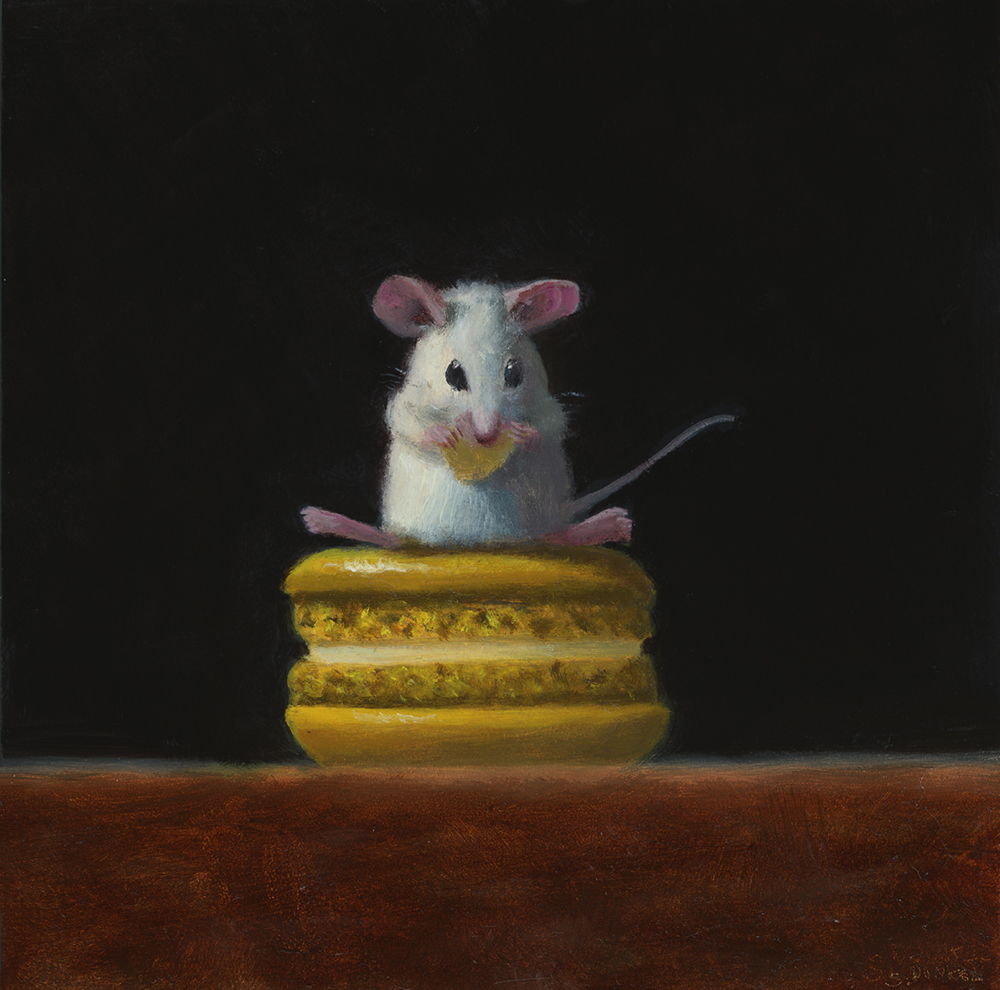
Mac Snack by Stuart Dunkel, Oil on panel, 5 x 5 in., Signed; Rehs Contemporary
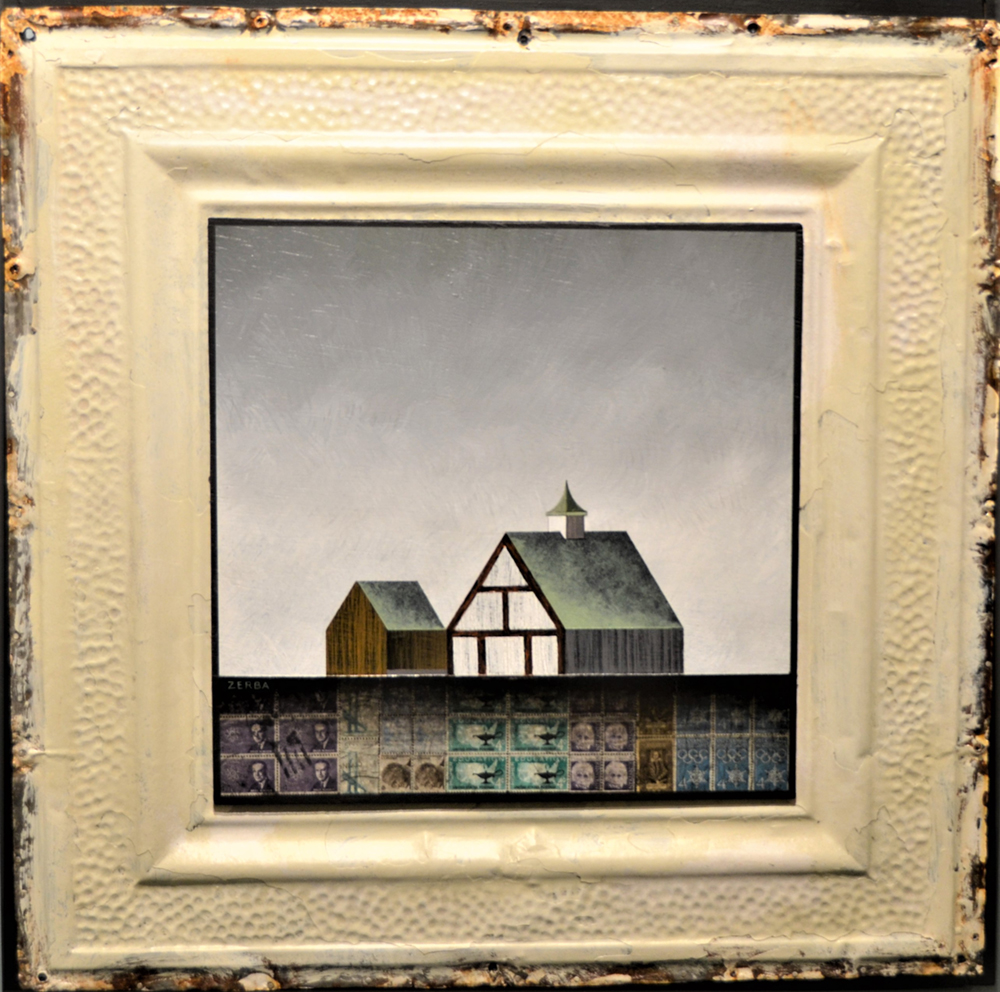
RFD 3 by David Zerba, Mixed media on board, 25 x 25 in.; Vermont Artisan Designs
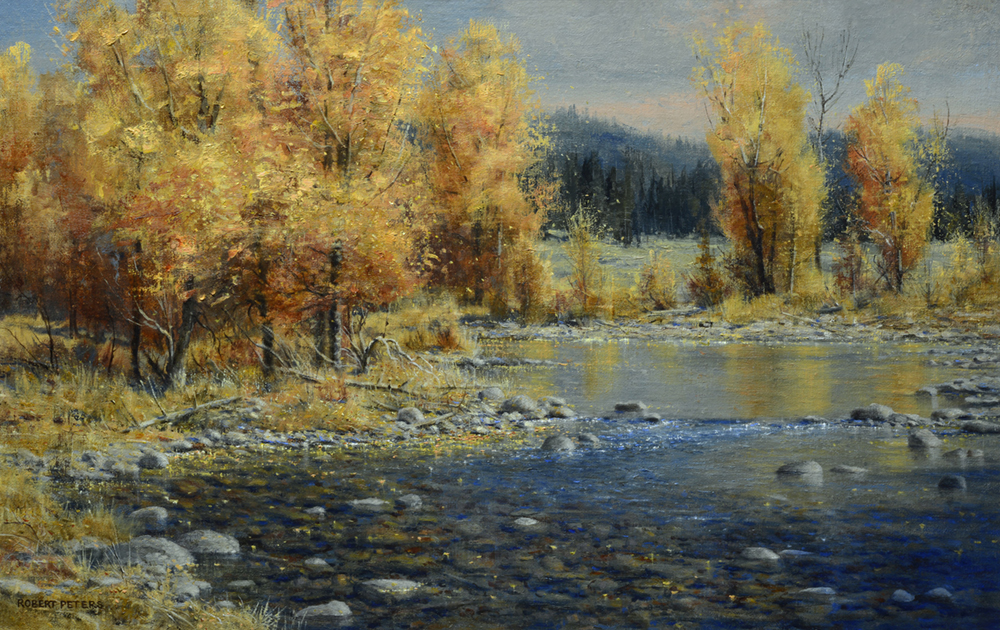
Trout Creek by Robert Peters, Oil, 15 x 24 in.; ArtzLine.com
Want to see your gallery featured in an upcoming Virtual Gallery Walk? Contact us at [email protected] to advertise today. Don’t delay, as spaces are first come, first served, and availability is limited.
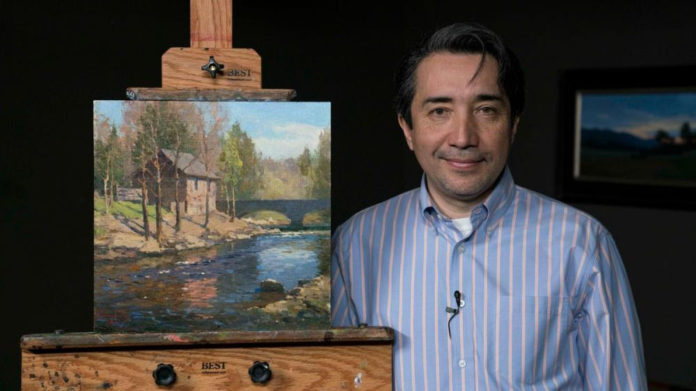
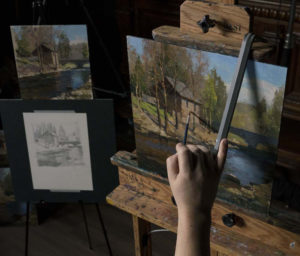
A Q&A with plein air painter Zufar Bikbov on Russian realism, painting landscapes outdoors as a way to improve, and the art of eliciting emotions through a painting.
Cherie Dawn Haas: I understand your father, an engineer, had a dream of being an artist; please tell us about his influence. Zufar Bikbov: Yes, my dad’s plan after school was to study in Fechin’s Art College in the city of Kazan. He showed good potential in drawing and painting and he was accepted to the college. The country was still under Stalin’s government. So since my grandfather was imprisoned in 1937 for anti-Stalin political views, my dad was refused to be provided a stipend for his study in art college, which was vital for his education. My grandfather perished in Labor camp in 1940. Without support my dad had to quit art school. Following Stalin’s death, my dad entered a school of engineering and worked all life as an engineer of civil and industrial buildings.
Painting was his hobby. So he had no problems seeing that I had potential and talent in art. He enrolled me to start education the our Youth Art School in our city when I was 9. With no pressure my dad encouraged my gravitational pull towards art. I was lucky to have a family where art books and visits to art galleries were a regular things.
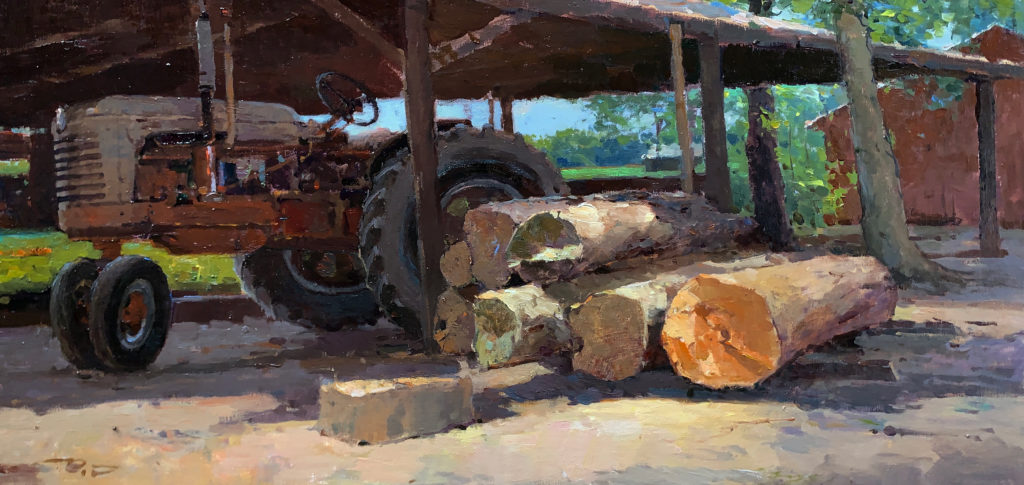
Zufar Bikbov, “Logging In,” 12 x 24 in., oil
CDH: What was it like to begin painting outdoors at the young age of 11? ZB: Outdoor painting, i.e. plein air, was a part of curriculum in Youth Art School. It was called Summer Practice. We painted with watercolors and gouache. Every morning for a few weeks a bus took us to countryside. A few times we went by boat to paint an old Russian Orthodox monastery on the Volga river island Sviyazhsk.
It was so different from painting still lifes or alabaster casts in studio, or some scenery from imagination. It was a real life experience. We knew this was how we could learn painting, this is how Levital and Shishkin painted. We wanted to be like them.
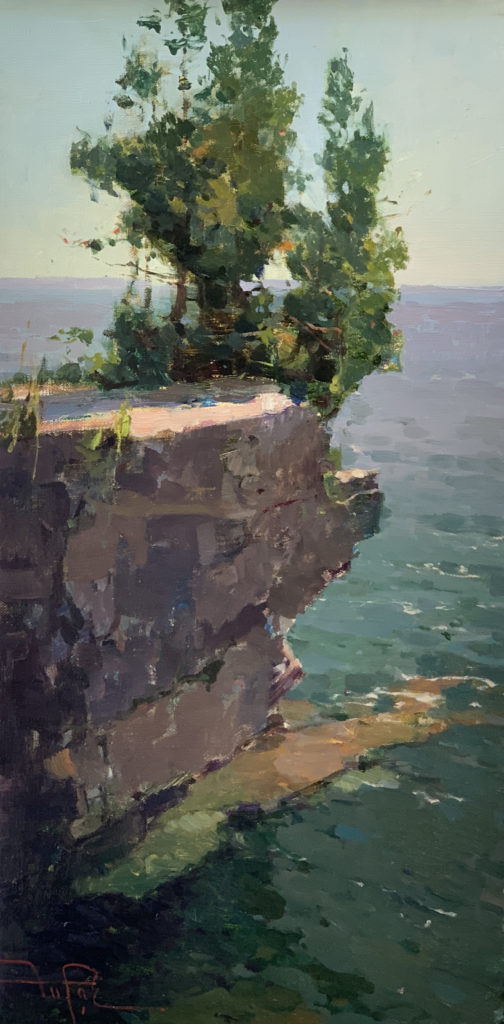
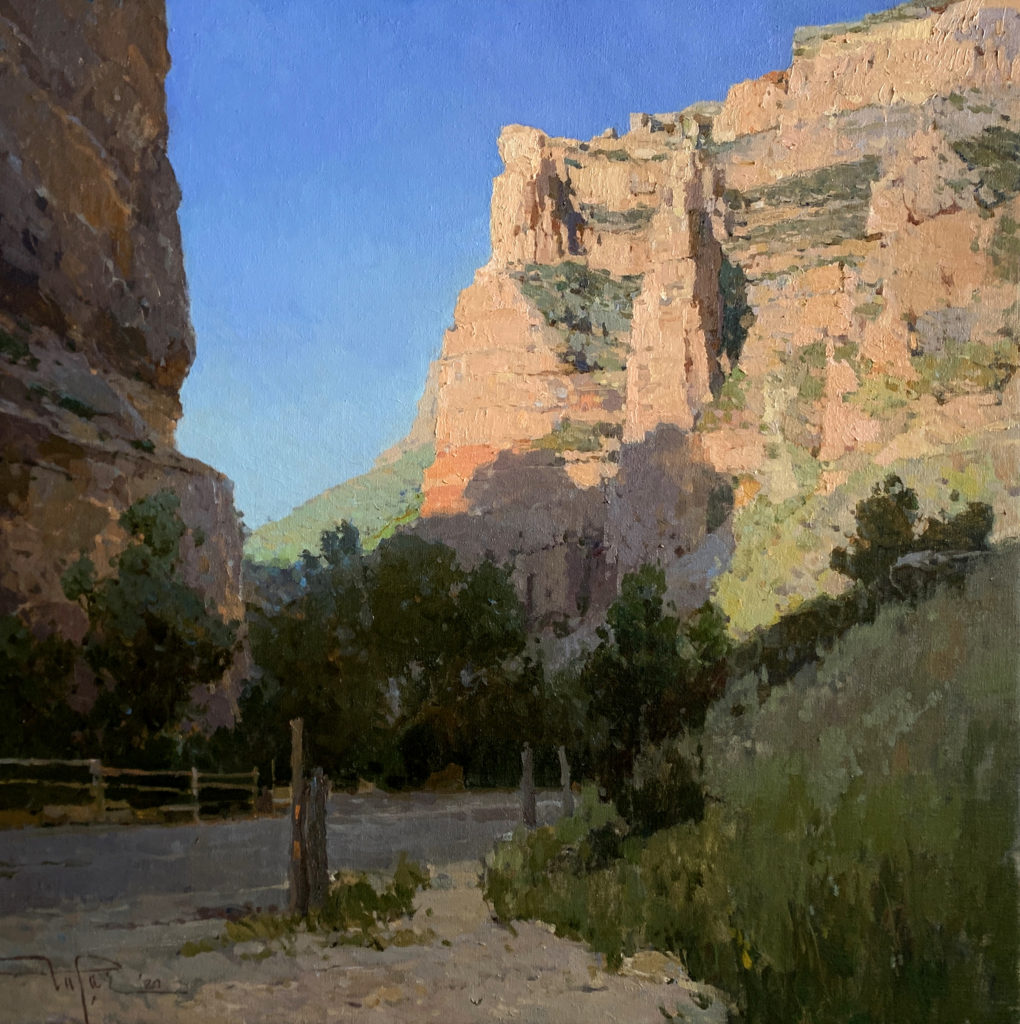
Zufar Bikbov, “Over the Lake,” 20 x 10 in., oil
CDH: When you went to medical school, what did you study there, and how was art a part of your life at that time? ZB: In medical school I studied clinical medicine to be become a doctor. After graduation I completed surgical residency and started the PhD program. During medical school mainly I was drawing. Along with recreation drawing helped me with study, especially with studying Histology and Pathology. During some of my quiet on-call residency nights I would paint abstracts. I also met a few artists that were studying in the Fellowship program affiliated with Repin’s Russian Academy of Fine Arts and some of them were quite good plein air artists, so I learned from them.
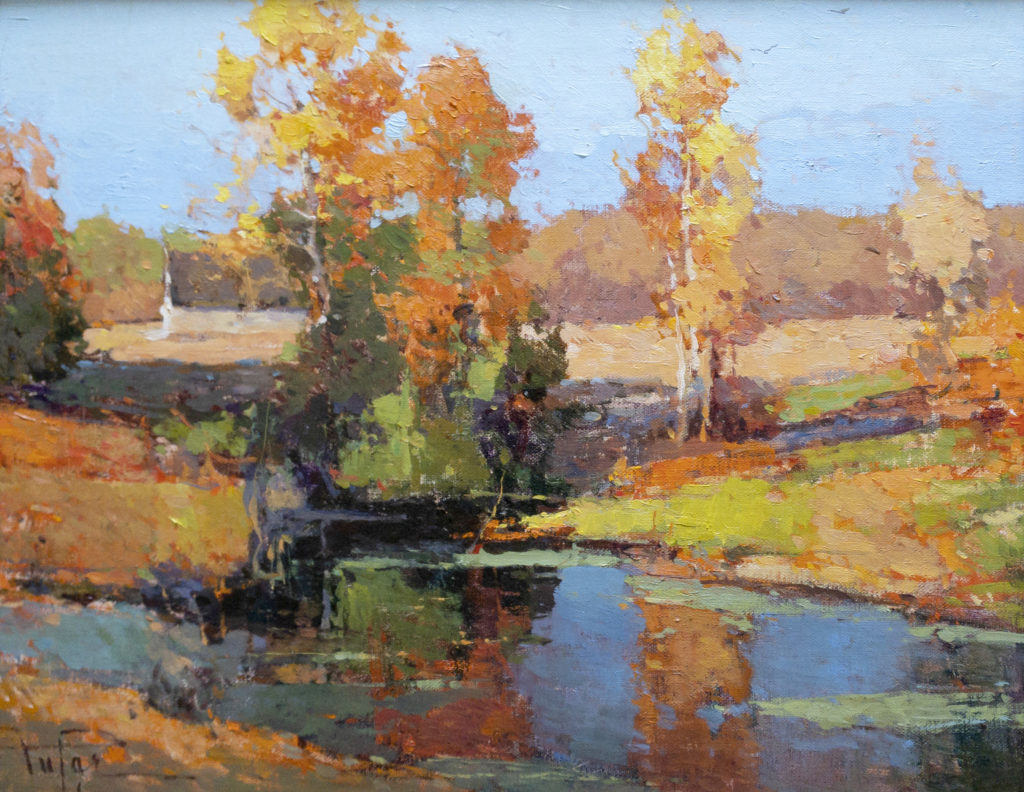
Zufar Bikbov, “Crisp Breath of October,” 11 x 14 in., oil
CDH: What is it about Russian realism that attracts you and inspires your painting style? ZB: In landscape my favorite is Isaak Levitan, in portrait – Ilya Repin. After peak or School or Realism in second half of 19th century with the movement of Wonderers, Russian art along with Russian society in first half of 20th century went through reformation and experiments. My search of new ways in art led me to Chagall, Malevich, Rothko, and Kandinsky, to the world history of art from Russia, and most of them worked in France. The second peak in Russian Realism happened after WWII, in 1950s-70s. And this art is not well known to the American audience. Russia was able to preserve the school of Realism for over a century.
Russian realism is a great beacon for those who study art and those who just love art. It has great balance of true representation of scenery and emotional messages from the artist, painterly rendered texture and details, and a focus on color and value of shapes. Russian Realism delivers an honest human experience to the viewers, since the artist’s talent is getting built on work from direct observation of objects, scenery, events.
All together these aspects create a feeling of rich and unique experience that inspires me to create my art the same way. And of course masterpieces of Russian realism has inspired me since my childhood and my art school years in Russia.
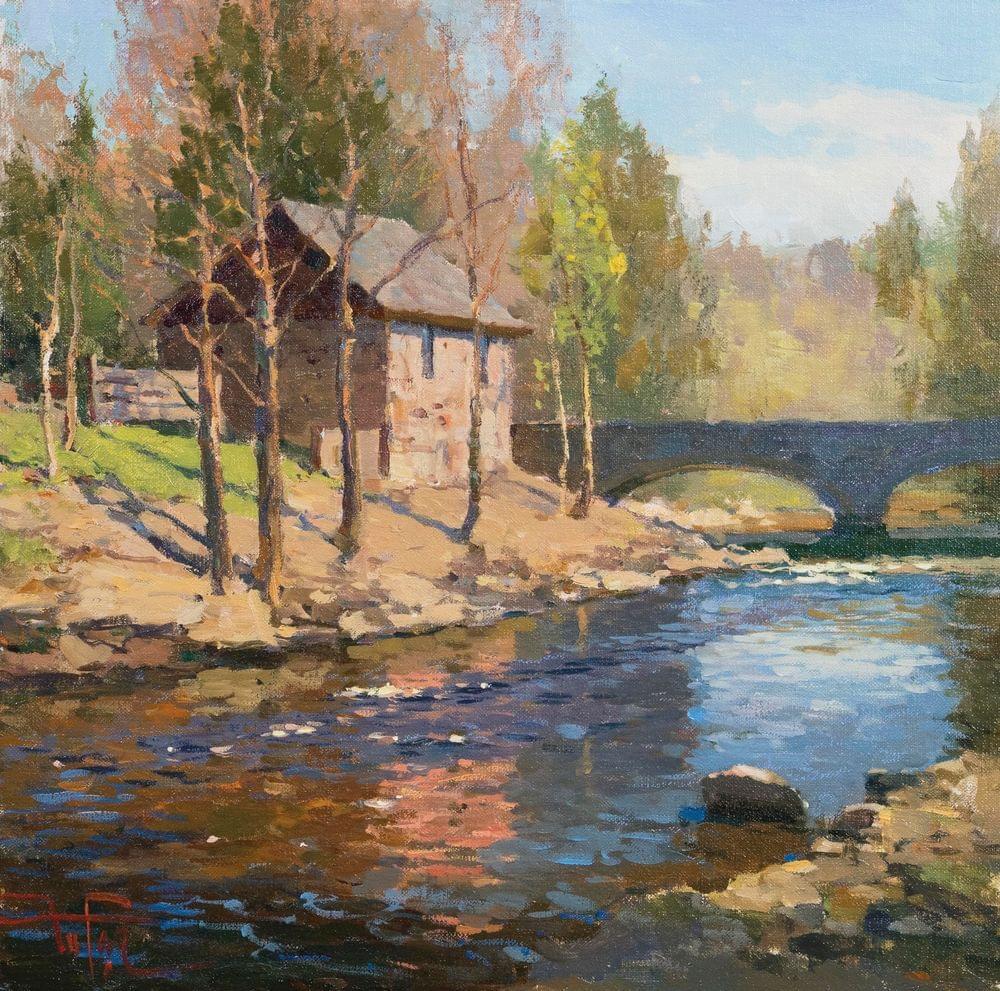
Zufar Bikbov, “Sentinels Along Shell Brook,” 24 x 24 in., oil
CDH: Who are some of your most influential teachers, and what do you hope to pass on to your own students? ZB: I was lucky to live, study, and paint in two great countries. And I learn from every artist and her/his works that I meet. This is how my brain is wired. If it is coming from my medical background or not, I can not say. I did not have a single mentor who led me trough my growth as an artist, but I am grateful to all people in art, who try to be deliver message to the world and try to continue a dialog with it.
I teach my students in the channel of Realism. So before they can deliver their message to the world they need to master fundamentals of painting: drawing, composition, painting as a technique. I also want to tell them that intellectual and emotional aspect of what they want to tell to the world won’t dry out during our classes. It is like becoming a good writer. First, you need to learn the alphabet, read and write basic things like articles and essays. Along the way ideas will grow along with mastery and inspiration.
Zufar Bikbov, “Mom’s Home,” 11 x 14 in., oil
CDH: You have a new how-to landscape painting video coming up with Streamline Publishing; can you tell us about that? ZB: Painting in the Realism style requires artists to present a visual experience that one sees with the human eye and feels with the human heart. The presence of all details is often not requited but composition, proper perspective, shape proportions, and light expressed with correct color and value is absolutely important. So as you see there is no quick and easy way to do it since task is not so simple.
The process of the work can be broken into 20 steps or the painting can be done in one step with no prep work at all. My approach is oriented toward learning artists that want to be confident in the end result of each painting. I have figured out that four steps give a great balance of simplicity versus complexity of approach. In my video I also show how to paint difficult elements of the landscape, such as running water, or rivers and trees in early spring. I hope my instructional video will help aspiring artists to go outdoors more often, and incorporate plein air studies to every work on larger canvases.
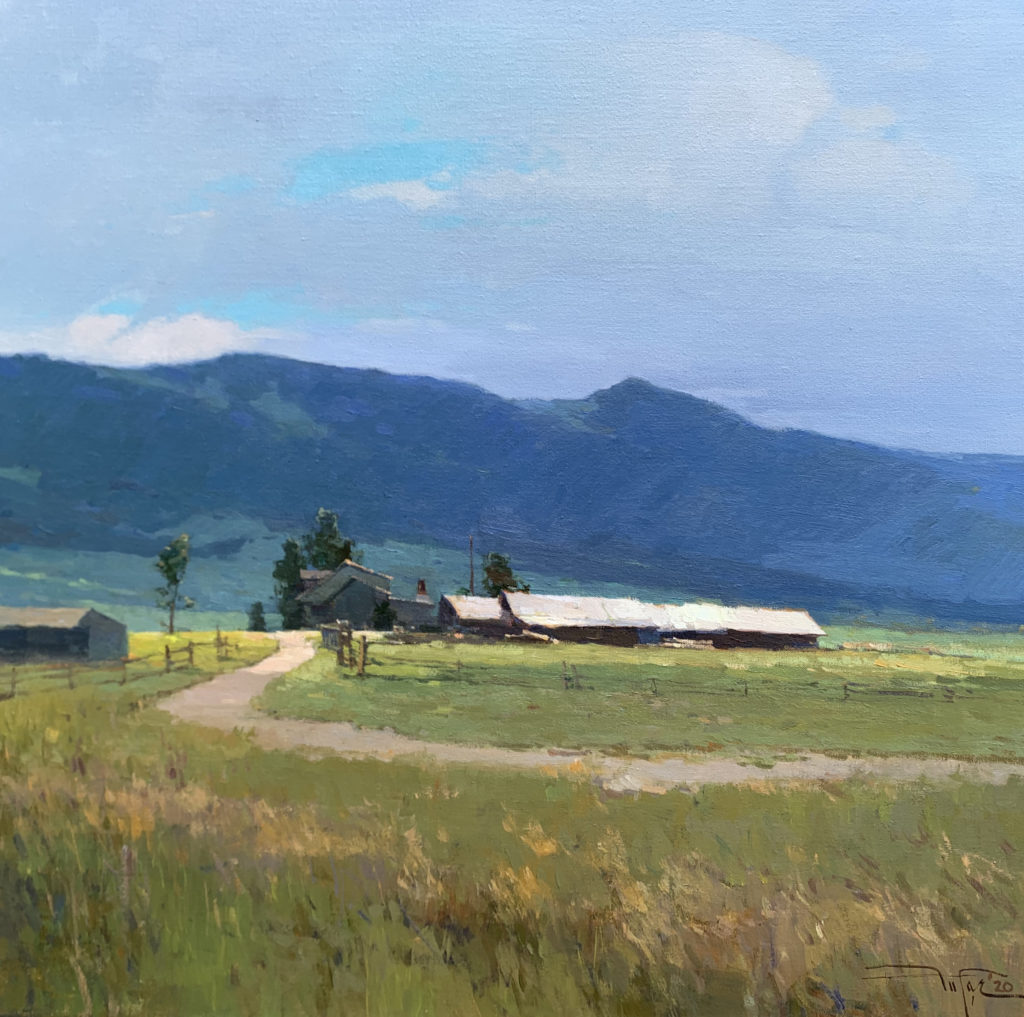
Zufar Bikbov, “Along the Emerald Valley,” 24 x 24 in., oil
CDH: Looking back, what are some of your most memorable moments as an artist so far? ZB: Painting is a sort of magic that one tries to learn and practice. Some things are based on science and hard work, others are based on your gift from above. We, artists, want people next to our painting to experience deep human feelings. It could be just pure emotion like the joy of spring, or thoughts and contemplation about our history, or even about our future. When this happens it is very satisfying.
Sometimes our own paintings create an effect of presence that goes beyond our expectations. I was 14, when I started painting with oils. As a recreation I tried to copy a painting of a Baltic Regatta from a postcard. One brushstroke after another while painting sea waves has brought me to state of excitement and joy. It felt like if waves were real, and sea was real. It was an amazing feeling. My work was giving it back to me.
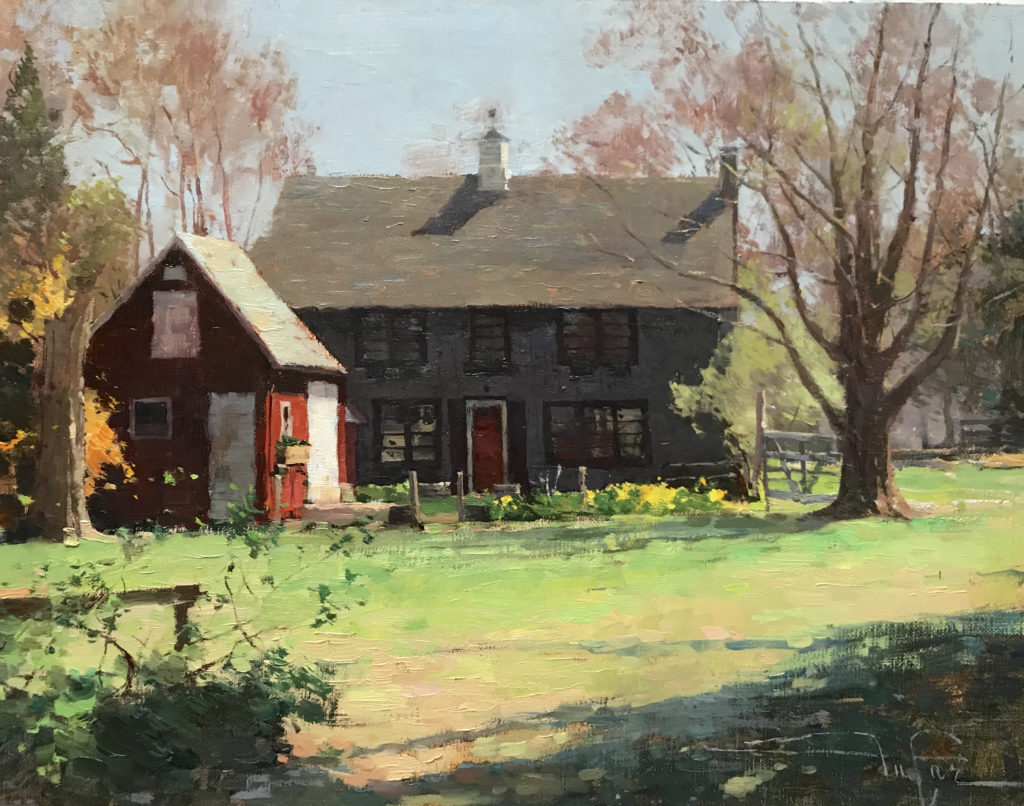
Zufar Bikbov, “New England, Spring”
From Streamline Art Video:
We’re delighted to share with you Zufar’s simplified approach in this video course, Landscape Painting in Four Steps. And though he demonstrates it in oil, the process can be used for other mediums like acrylic, pastel, and watercolor.
You’ll get to watch Zufar as he paints “New England, Spring.”
Inside the art workshop, Zufar will show you how to use his time- and result-efficient 4-step structure for painting landscapes.
M.S. Rau has announced its upcoming exhibition, “The Pissarro Dynasty: Five Generations of Artistic Mastery.” The new show will highlight the Pissarro dynasty, originating with the legendary Impressionist Camille Pissarro and enduring for over 100 years since his death.
From the organizers:
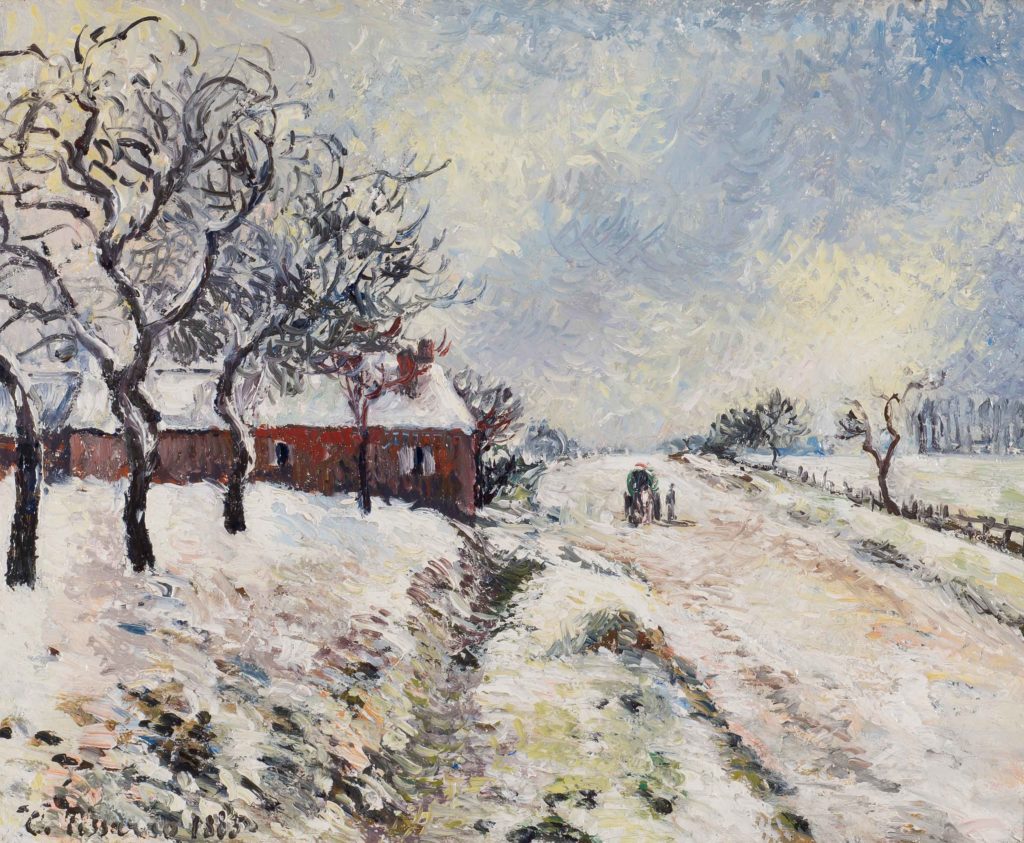
Camille Pissarro (1830-1903 | French), “Route Enneigée avec Maison, Environs d’Éragny,” Signed and dated “C. Pissarro 1885″ (lower left), oil on canvas, Canvas: 12 7/8″ high x 16″ wide, Frame: 22″ high x 24 5/8” wide Brilliant white snow enlivens this wintertime landscape. The work is part of a long tradition of winter landscapes in the history of Impressionist art. Snowscapes by Pissarro, as well as his contemporaries Claude Monet and Alfred Sisley, are among the very best works created by these great masters of Western art. Pissarro triumphs in his depiction of the play of light over snow and the crisp atmosphere of the winter air, and this example clearly demonstrates the artist’s legendary eye for color, light and atmosphere.
The exhibit, which is free and open to the public, will run through May 15, 2021 at the M.S. Rau Gallery at 622 Royal Street in New Orleans, Louisiana. It will also be available for viewing online at http://www.msrau.com/pissarro.
The show will highlight a collection of 25 significant works from five generations of Pissarro family artists. It will feature a wide range of styles, media, and subjects, including Impressionist masterpieces by Camille Pissarro and contemporary canvases of the current generation.
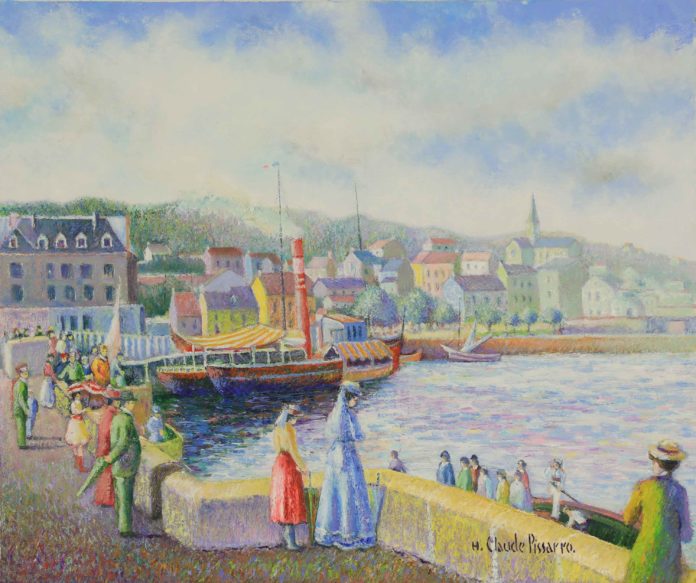
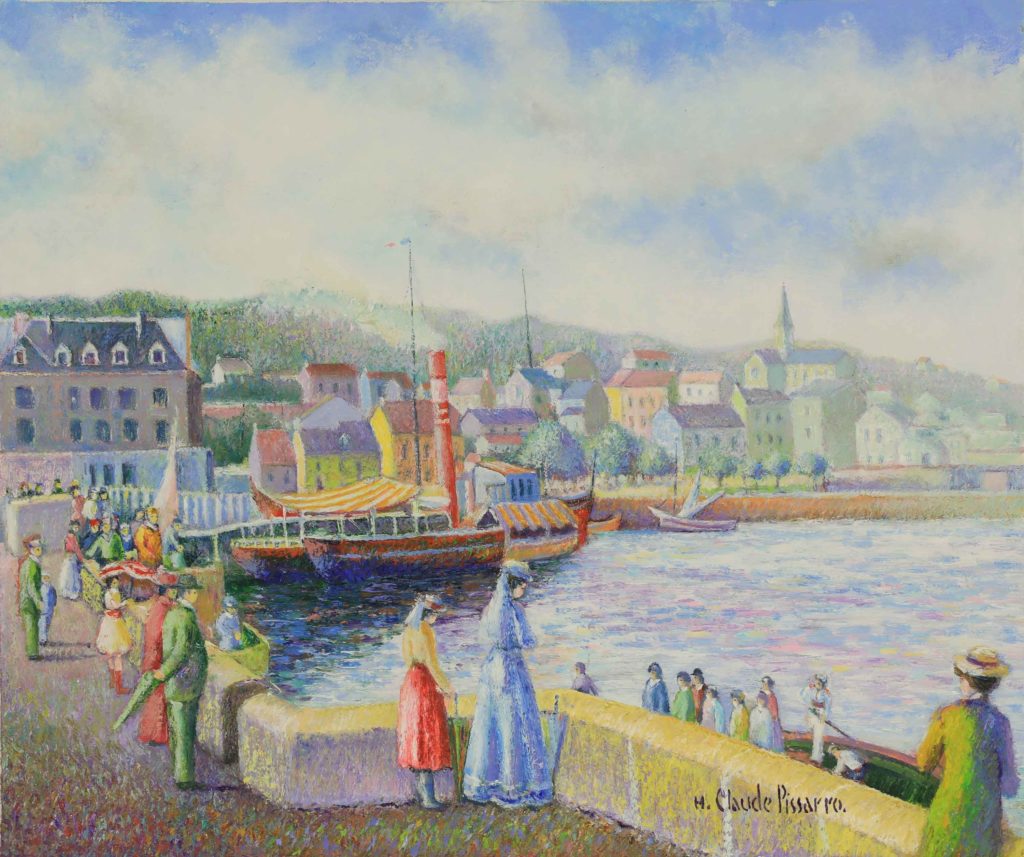
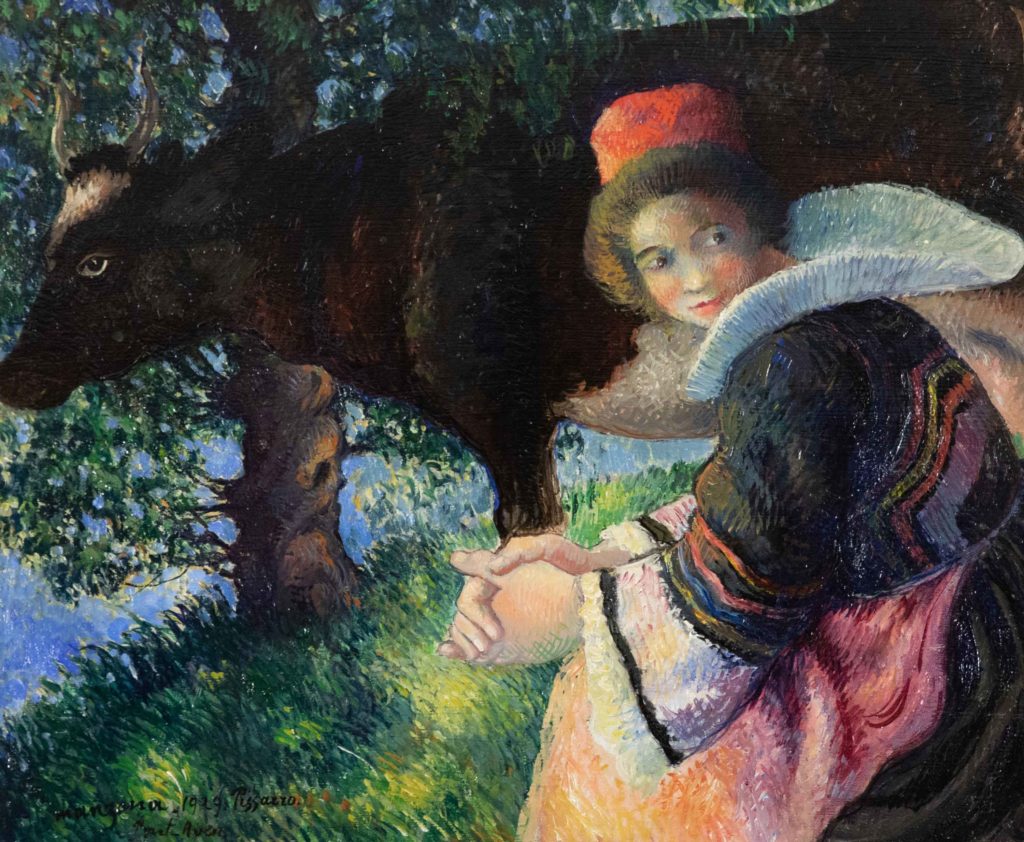
H. Claude Pissarro (b.1935), “Embarquement pour le Havre,” 20th century, oil on canvas, 18 1/8″ high x 21 5/8″ wide; Frame: 25″ high x 28 1/2″ wide. Brilliant colors and a modernist approach define this oil on canvas by Hugues Claude Pissarro. The artist’s work reflects influences not only from his grandfather, the Impressionist Camille Pissarro, but also from wider sources within Post-Impressionism. He developed a distinctive crosshatching technique both in his oil paintings and his pastels that lends his work a unique feel, one not replicated by any other artist, perhaps because it is so labor intensive. In this work, his aim is to re-capture the romantic past, a world which no longer exists where horses and carts thronged the streets and cars were a new invention. His figures are dressed in 19th-century fashion, and so we are taken on a journey back in time. “Embarquement pour le Havre” is exemplary of this aim, beautifully reflecting his preferred subject and distinctive style.Georges Manzana Pissarro (1871-1961), “Bretonne à la Vache,” Signed, dated and inscribed “Manzana 1929 Pissarro / Pont Aven” (lower left), oil on panel, 21 1/8“ high x 25 1 /2” wide; Frame: 30 3/4“ high x 35” wide Vivid color defines this Post-Impressionist work by the great Georges Manzana Pissarro. The third child of the Impressionist Camille Pissarro, Manzana’s unique style reveals both the influence of his father and his own distinctive interpretation of Post-Impressionism, particularly the work of Paul Gauguin. The oil captures a woman in the traditional costume of Brittany, a region of north-west France where Manzana visited often.
“This exhibition allows us to showcase not only Camille Pissarro’s impact on art history, but also his influence on the various talented painters within his own family,” said curator Rebecca Rau. “When I met Camille’s great great great-granddaughter Lyora Pissarro, she explained that her chosen profession, painting, is quite unoriginal given the family’s history! I felt an immediate affinity, being a 4th generation art and antique dealer.”
Counted among the most respected artists of the 19th century, Camille Pissarro was widely considered the father of Impressionism. Five generations of talented painters have sprung from the Pissarro lineage, from Camille and his sons to their descendants, including Lélia and Lyora, who continue to create.
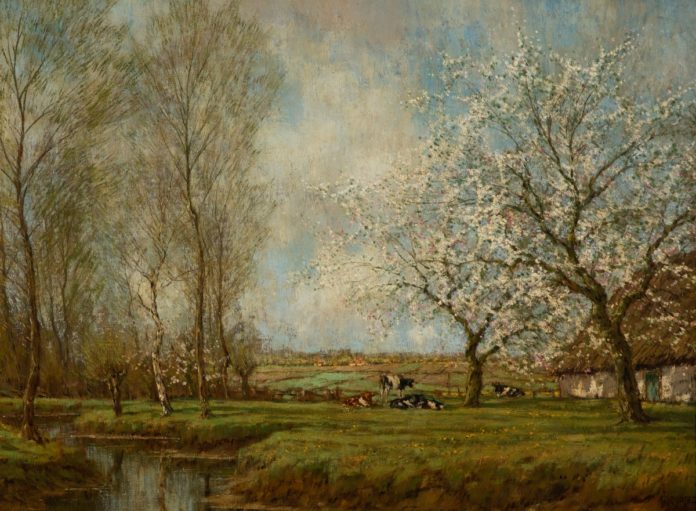
Arnold Marc Gorter (Dutch, 1866–1933), "Farm with Blooming Apple Trees," n.d. Oil on canvas, 22 1/2 x 32 1/2 in. Crocker Art Museum, gift of the Beekhuis Family Foundation, 2019.117.30
Art Exhibition:
Crocker Art Museum, Sacramento CA
“Country, City and Sea: Dutch Romantic and Hague School Paintings from the Beekhuis Gift,” is an exhibition of 50 works that highlight the techniques of distinguished 19th-century artists whose paintings sought to portray the Netherlands’ distinct culture in bucolic pasturelands, bustling city views, and scenes of merchant ships.
A restrained Romanticism, inspired by the virtuosity and subject matter of the Dutch Golden Age, gave way in the 1860s to a direct, tonal style that was nature-based and favored by the Hague School. Jacob Maris, Hendrik Mesdag, and Jozef Israels, all admired by Vincent van Gogh, are just a few of the artists represented in the exhibition.
“The paintings in this exhibition represent a selection from this important American collection and complement the Crocker’s renowned holdings of German and Austrian art of the same period,” says the Museum’s Executive Director and CEO, Lial A. Jones. “We are grateful to the Beekhuis Family Foundation for this and earlier gifts. Jan and Mary Ann were consummate collectors and we are eager to share their eye with the public so they may have the opportunity to discover the masterworks that have recently entered the Crocker’s collection.”
In the 19th-century Netherlands, painters took inspiration from the lively artistic world of Rembrandt two centuries earlier. As the country sought a national culture after 50 years of upheaval (beginning with the French invasion of 1795 and ending with peace with Belgium in 1839), artists sought to emphasize the emotive qualities of Dutch life and lands.
Unlike its counterparts in Germany or France, Dutch Romanticism was not associated with high passion and dramatic vistas, but rather with the restrained exploration of emotional warmth and beauty. Scenes were composed for a specific effect, often achieved in combination with imagined elements and highly finished brushwork. Nostalgia for traditional life in an age of rapid industrialization, the relationship between humanity and the sea, and the intimacy of farm and peasant life were all themes of Dutch Romantic art.
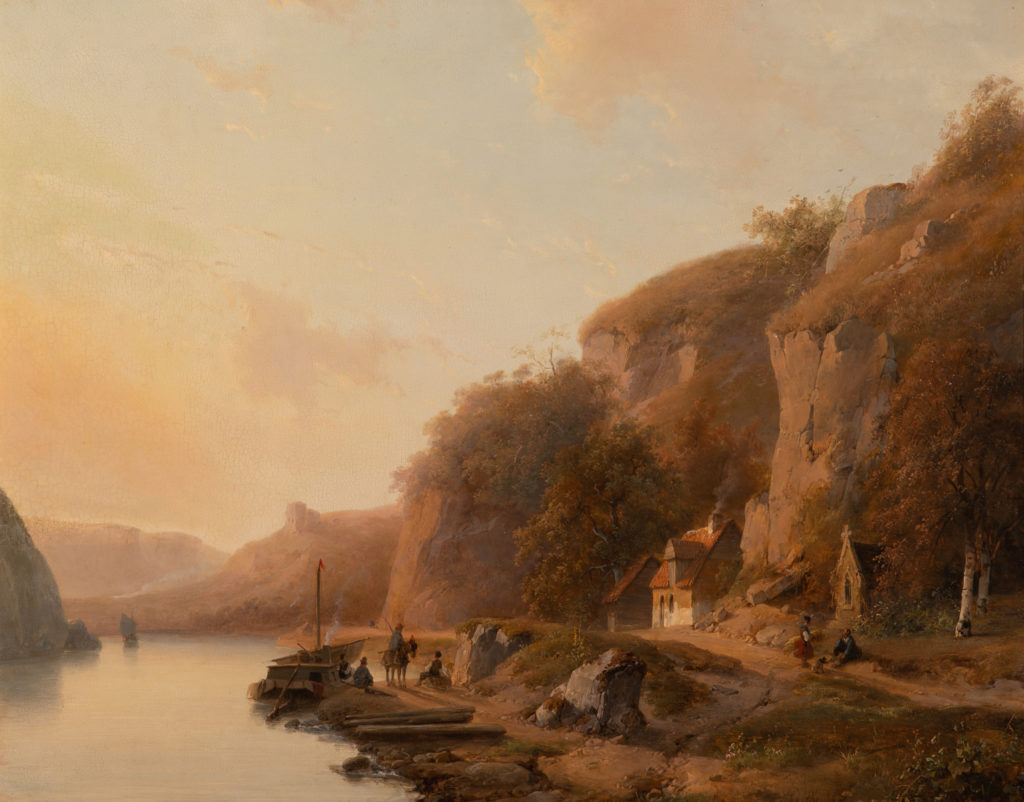
Among the Dutch Romantics, Andreas Schelfhout was one of the most popular, known for his farming landscapes and winter scenes. In “View of a River Gorge” (below), Schelfhout sets the scene along a rock-lined river, perhaps in Limburg with its rolling hills and shallow gorges. A house and chapel are nestled under the rocks above, while one boat is docked to receive goods and another floats the river beyond. The people calmly go about their business or, as at right, chat by the roadside. The congenial atmosphere is heightened by the pleasant glow of the midday sun.
Andreas Schelfhout (Dutch, 1787–1870), “View of a River Gorge,” n.d. Oil on panel, 16 3/4 x 21 1/2 ins. Crocker Art Museum, gift of the Beekhuis Family Foundation, 2019.117.17
Later in the century, Dutch artists looked toward a more realistic view of nature and their surroundings. After working with Barbizon painters such as Théodore Rousseau in France during the 1850s, many Dutch painters brought a new unpretentiousness to their native landscape, along with a preference for a tonal palette and loose brushwork. Working outdoors to better capture light effects, many of these artists gathered in the countryside village of Oosterbeek, a vacation spot for wealthy patrons.
Some artists, on the other hand, used the new tonal mode to depict the coast and life at sea. In the 1870s, the opportunities offered by the Dutch political capital, the Hague, attracted artists to the city. With associations of artists such as Pictura and Pulchri Studio, it was fertile ground for the exchange of ideas and provided a ready market for their paintings. Soon, they became known as the Hague School painters.
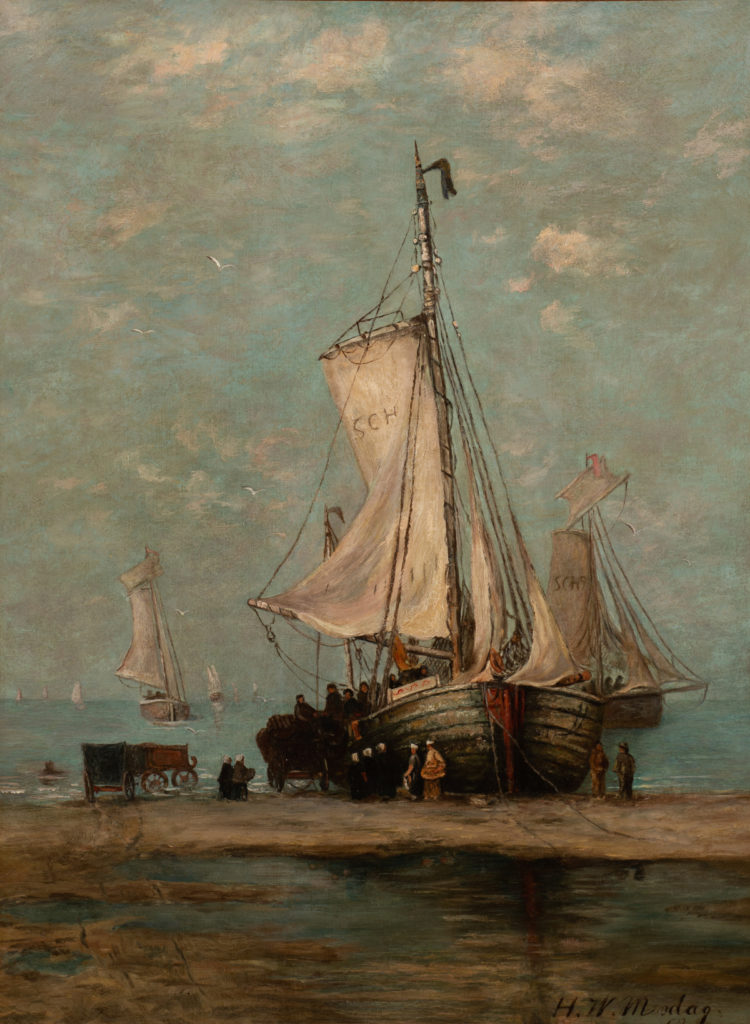
Perhaps the most famous of these artists was Hendrik Mesdag, a marine painter enchanted by the Hague’s seaside district of Scheveningen, identified above by the SCH on the sails of the boat in “Large Fishing Barge Ashore” (below).
Hendrik Willem Mesdag (Dutch, 1831–1915), “Large Fishing Barge Ashore,” 1869. Oil on canvas, 51 3/4 x 39 in. Crocker Art Museum, gift of the Beekhuis Family Foundation, 2019.117.5
Attentive to detail, Mesdag depicts an everyday scene with a fishing boat drawn up on shore to unload the day’s catch, while women gather on the shoreline to inspect the merchandise.
These works and many others were collected by the late Jan Beekhuis and his wife, Mary Ann. Jan was born to a Dutch family in South Africa and grew up in a cultured household adorned with 19th-century Dutch paintings. Once he had the means to continue this interest, he collected Asian, pre-Colombian, and African art before specializing in the Dutch paintings he had known as a youth.
Trained in medicine in Pretoria, he came to the United States and eventually became chairman of the Department of Otolaryngology at Wayne State University. In addition to contributing to the formation of the collection, Mary Ann, also trained as a frame restorer for its care, preserved it intact after Jan’s death.
The paintings in the exhibition account for some 25 percent of the more than 200 works given by the Beekhuis Foundation, established by the couple in 2000. Their first major gift to the Crocker of 65 19th-century Dutch paintings in 2010 established the Beekhuis Family Gallery and provided a fitting counterpoint to the Museum’s collection.
To learn more about “Country, City and Sea: Dutch Romantic and Hague School Paintings from the Beekhuis Gift,” please visit CrockerArt.org.
> Visit EricRhoads.com to learn about more opportunities for artists and art collectors, including retreats, international art trips, art conventions, and more.
> Sign up to receive Fine Art Today, our free weekly e-newsletter
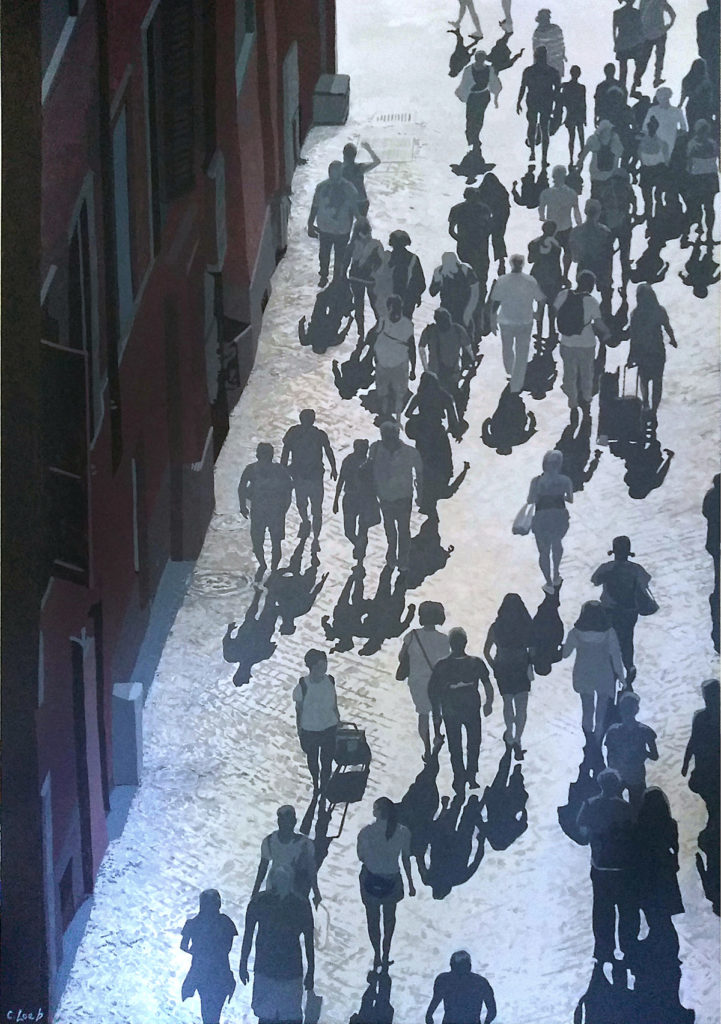
Barbara Pitts Watercolor Cash Award, “Cobblestones” by Carol Loeb. Acrylic 60 x 40
The Northwest Watercolor Society (NWWS) has announced its annual membership exhibition, “Waterworks Unlimited,” at www.nwws.org. No ticket is required for the online show to see “some of the finest watermedia artwork I’ve had the honor of judging,” says juror Liana Bennett. The exhibition runs online only through June 30, 2021.
“The exhibition contains a tremendous representation of a broad range of styles,” comments Mike Thoreson, exhibition chair. “We had 422 entries from 16 states including Washington DC and international entrants from Taiwan, Hong Kong, India and Canada. How Liana was able to narrow the selection to 70 paintings is a wonder.”
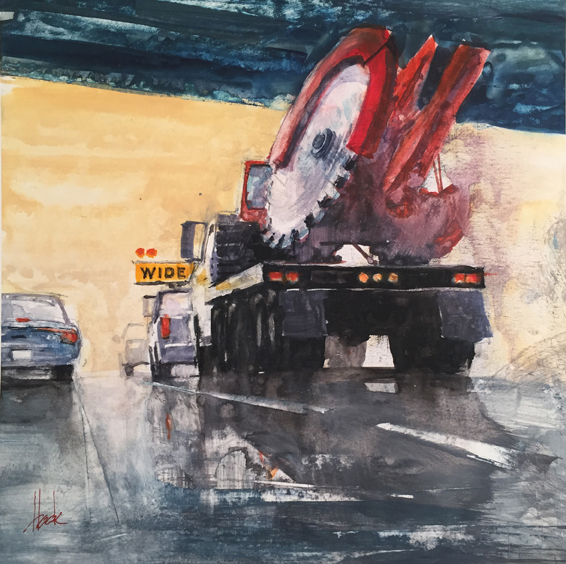
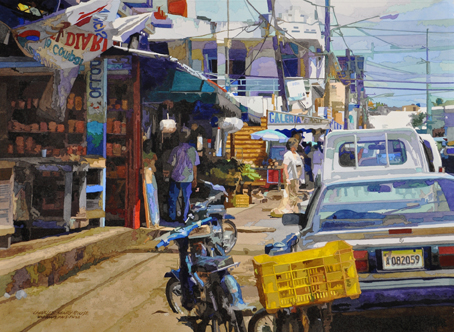
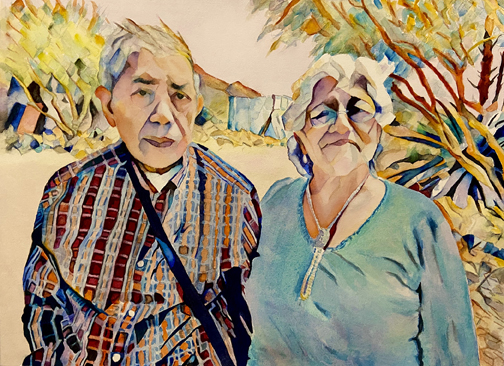
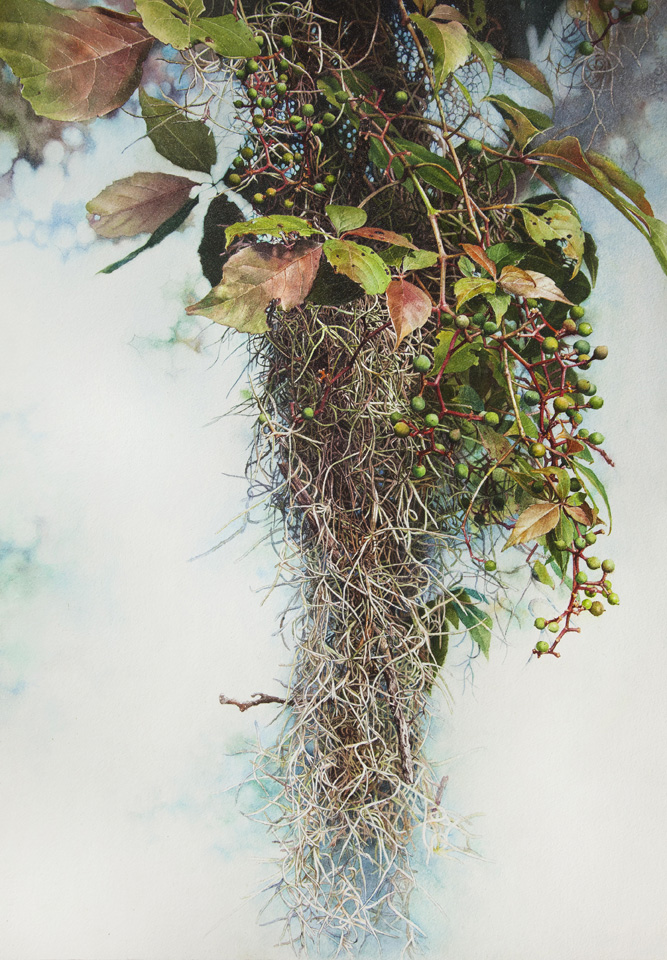
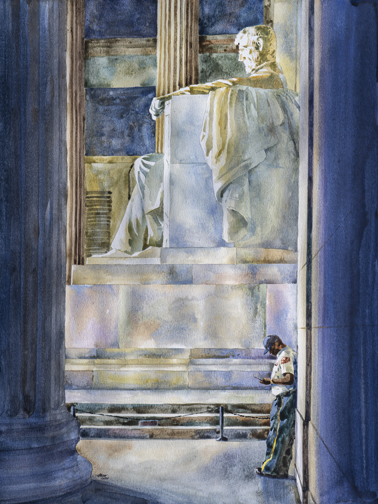
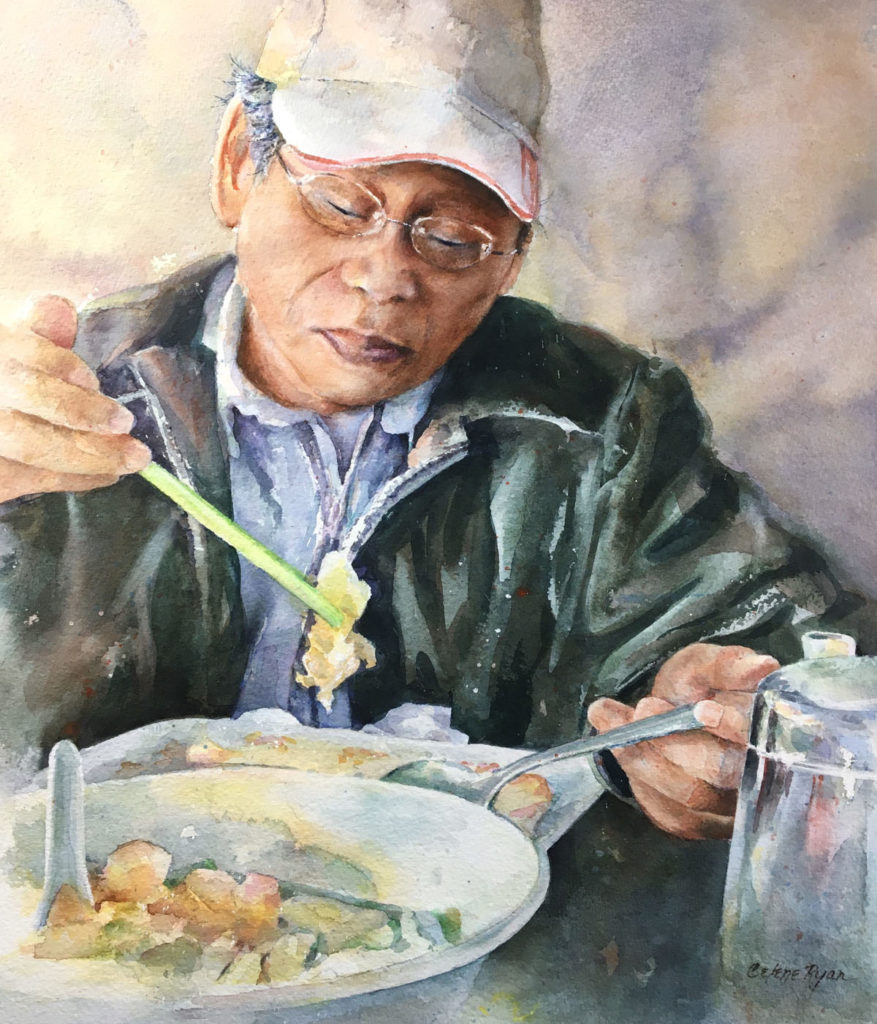
1st Place, “Saw on I-5” by Bill Hook. Mixed Watermedia 10.5 x 10.52nd Place, “Shopping Santo Domingo” by Charles Rouse. Watercolor 21 x 293rd Place, “Viento de Dios” by David Amsellem. Watercolor 14 x 19Harriet Q. Johnson Cash Award, “Dancing Together” by Xi Guo. Watercolor 30 x 20Barbara Pitts Watercolor Cash Award, “Cobblestones” by Carol Loeb. Acrylic 60 x 40Daniel Smith Patron Award, “A Quick Break” by Voon Wong. Watercolor 24 x 18Juror’s Commendation Cash Award, “Lunchtime!” by Celene Ryan. Watercolor 14.5 x 12
About the NWWS:
The Northwest Watercolor Society (NWWS) was founded in 1939 in Seattle, Washington when a group of eight artists came together to form an organization dedicated to the celebration of watercolor. With a goal to inspire both a lasting interest in the art of watercolor painting and an appreciation for watercolor as an artful, imaginative medium, the history of NWWS began. From these modest beginnings, NWWS has grown into the internationally recognized, historically rich organization of today with a membership over nine hundred Signature, Lifetime and Associate Members across the USA, Canada, and internationally.
The NWWS has remained firmly rooted in its history, devoted to the philosophy of the Mission Statement of its Founders: To promote and elevate the art of watercolor and watermedia as a medium and to encourage the growth and creativity of its artist members.
> Visit EricRhoads.com to learn about more opportunities for artists and art collectors, including retreats, international art trips, art conventions, and more.
> Sign up to receive Fine Art Today, our free weekly e-newsletter
Fill your mind with useful art stories, the latest trends, upcoming art shows, top artists, and more. Subscribe to Fine Art Today, from the publishers of Fine Art Connoisseur magazine.