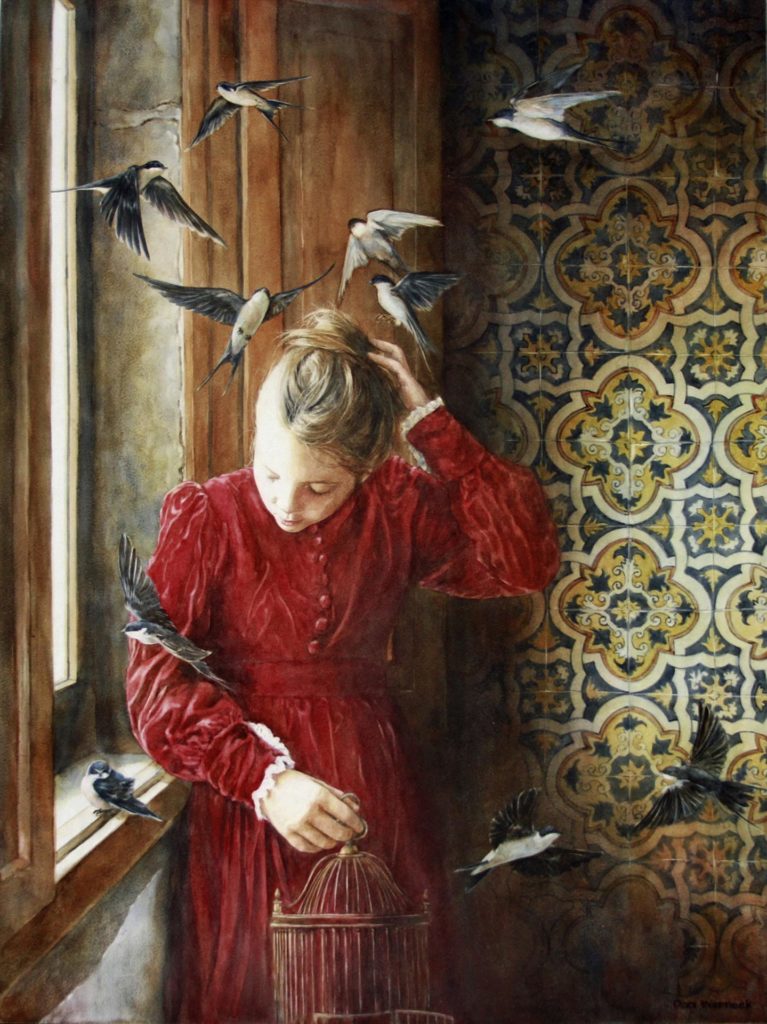
“The Retreat” by Daniela Werneck took the Grand Prize in the annual Spring Online Juried Show of the American Women Artists. This year generated over 1,200 entries by 454 artists across U.S. and Canada. Three jurors were Kelly Kane (KY), Claudia Seymour (CT), and Diana Reuter-Twining (VA), who chose 120 paintings and sculptures for the final show.
Kelly Kane, Editor-in-Chief of Plein Air Magazine and the American Watercolor Weekly newsletter, was the awards juror who selected the 15 award winners.
Kelly was highly impressed with the entries to the Spring Online Show and happy to share her thoughts: “This past year has challenged us all — to stay connected, engaged, hopeful, creative. But in the face of these challenges — and with extended time in their studios, artists have found new themes and creative possibilities to explore in their work.
“In the entries of AWA’s Spring Online Show, we saw paintings and sculptures that were uniquely ‘of the moment,’ making statements or observations about experiences shared around the world. There were, of course, others that offered more personal viewpoints about the political and social conflicts that have also been signs of our time. Most inspiring for me, however, is that the body of work submitted gave testament that art and artists endure. No matter where these women found their inspiration, they’ve bestowed us with artworks that both delight and challenge.”
Open to all 2021 AWA Associate and Associate with Distinction members working in either 2D or 3D, the Grand Prize ($2,000 cash award) went to:
Daniela Werneck (Katy, TX) for her watercolor painting “The Retreat”
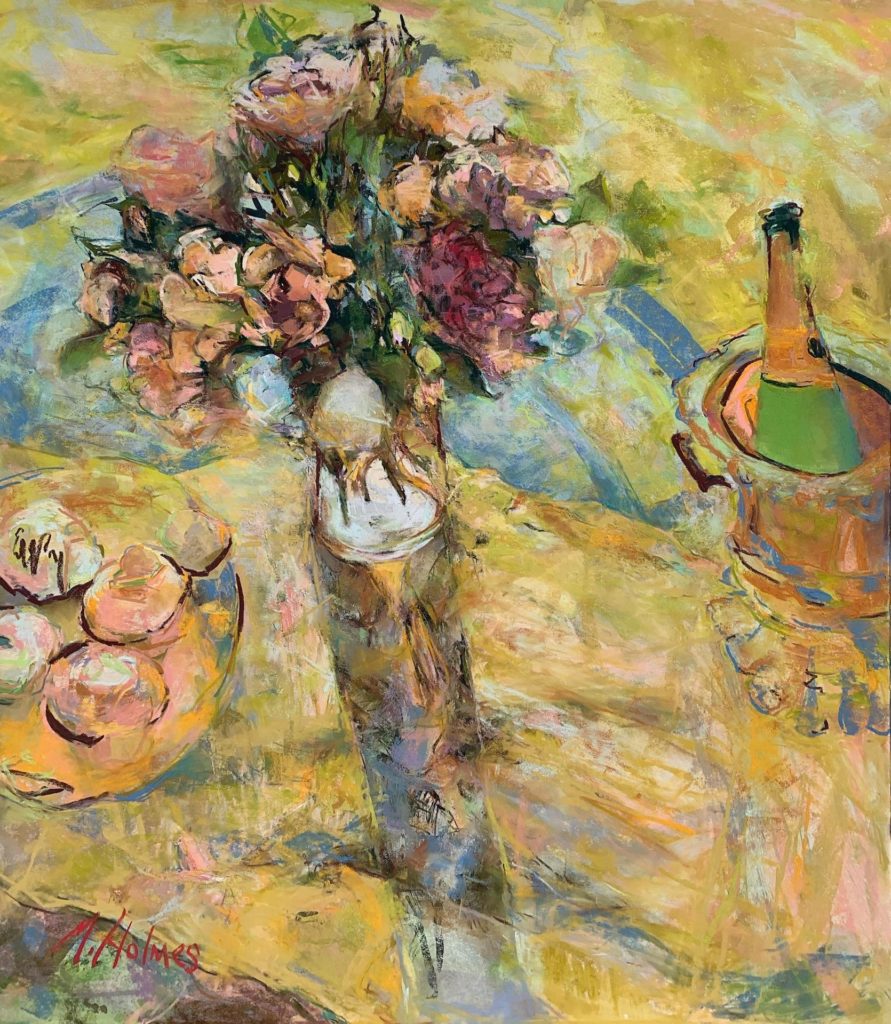
Second Place went to Marcia Holmes (Mandeville, LA) for her soft pastel painting “Rose Bouquet”
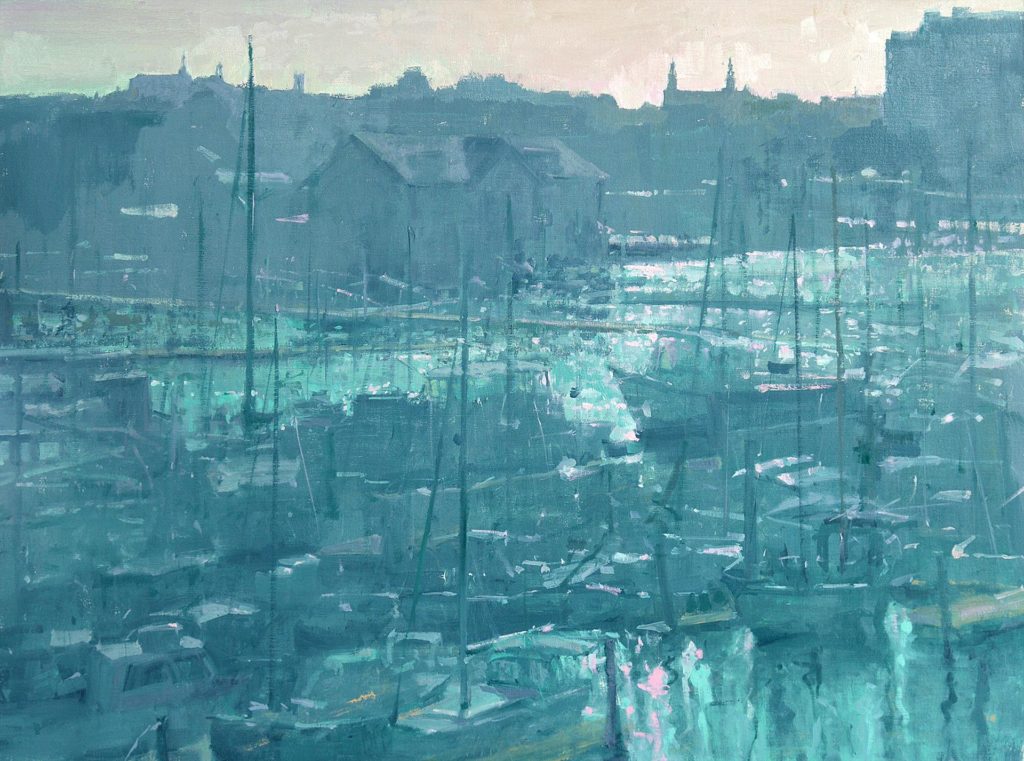
Third Place went to Lori Putnam (Charlotte, TN) for her oil painting “Safe Harbor”
“The Retreat” by Daniela Werneck, Watercolor on Clay Panel, 18” x 24”“Rose Bouquet” by Marcia Holmes, Soft Pastel, 27” x 24”“Safe Harbor” by Lori Putnam, Oil, 30” x 40″
Grand Prize winner Daniela Werneck wrote, “It was a beautiful surprise that could not have happened at a better moment. Being chosen among so many talented women makes me feel very honored and grateful for the opportunity.”
Additional Works:
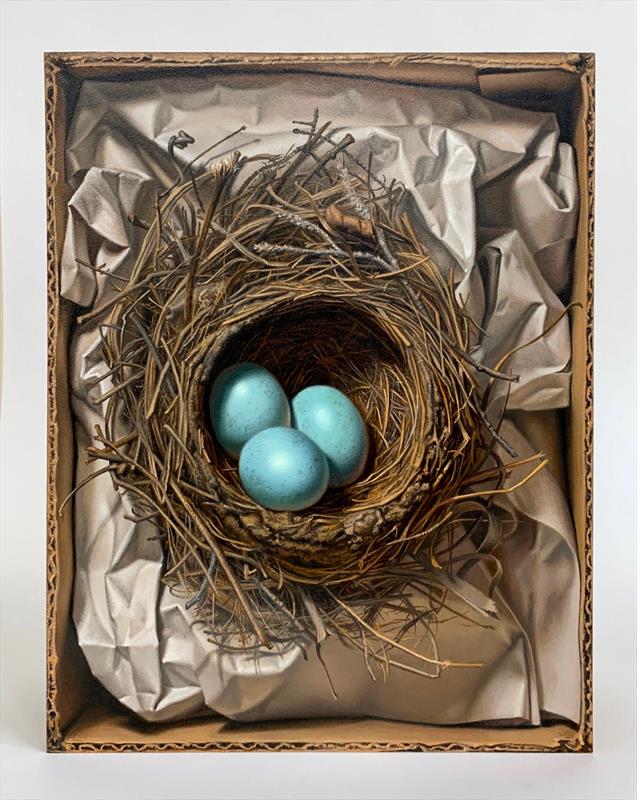
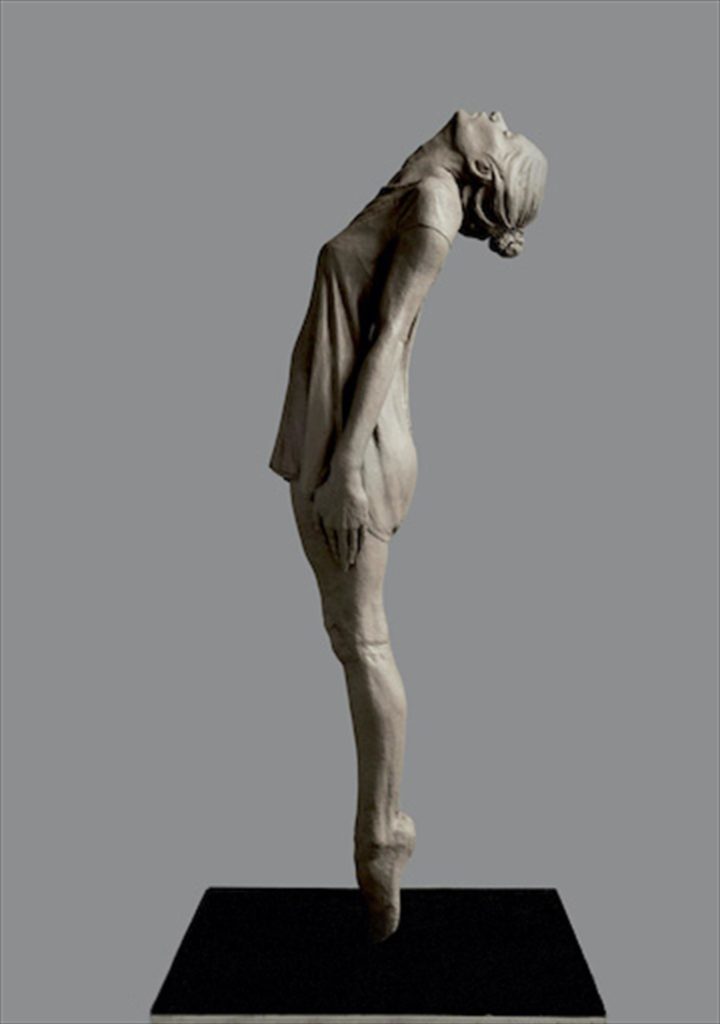
“Nesting Instinct” by Natalie Featherston, Oil on three dimensional panel, 10” x 8” x 2″“Pandemonium, A Self Portrait” by Erin McCarthy, Bronze, 62” x 18” x 20″
> Visit EricRhoads.com to learn about more opportunities for artists and art collectors, including retreats, international art trips, art conventions, and more.
> Sign up to receive Fine Art Today, our free weekly e-newsletter
Oil Painters of America is pleased to announce the 30th National Exhibition will be held at the California Center for the Arts, Escondido Museum, located in Escondido, California, from April 9 through May 16, 2021. The awards presentation will take place virtually on April 19, 2021 at 6:00 p.m. Central Time. To register for this year’s awards ceremony, click here.
Browse select artworks below, and click the images to visit the artists’ websites. To purchase any of these paintings, please call 760.839.4175 or go to www.artcenter.org/museum.
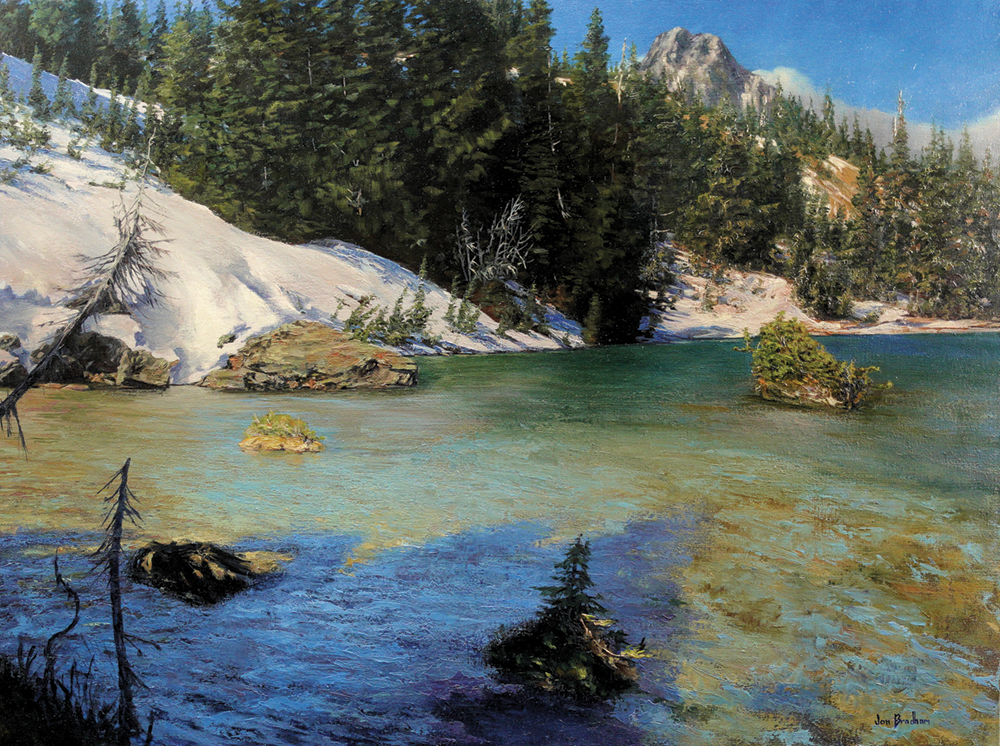
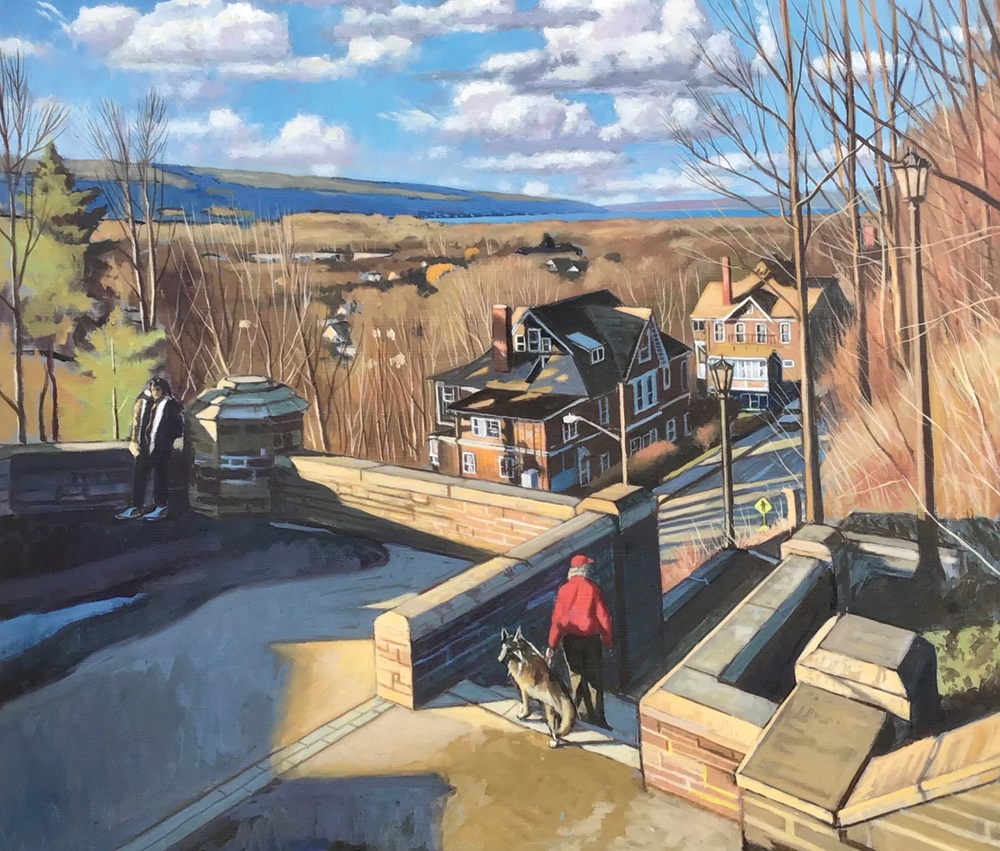
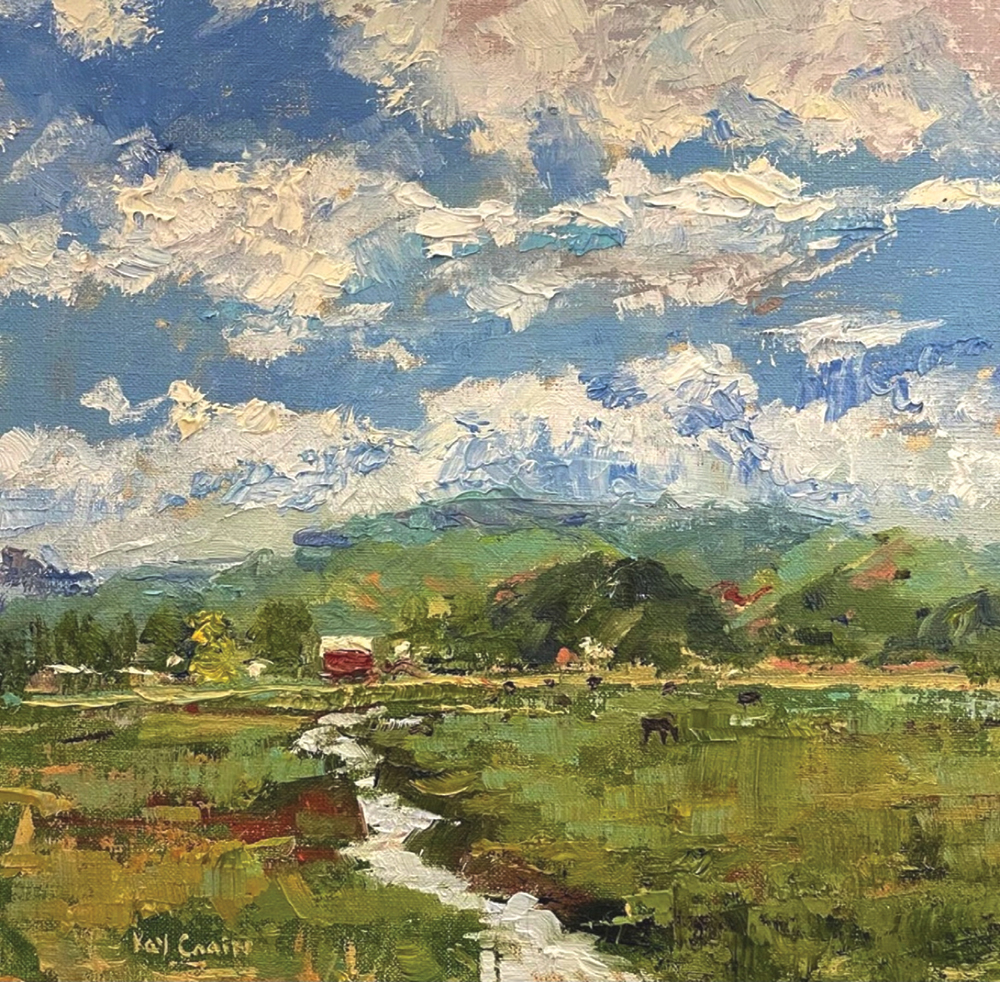
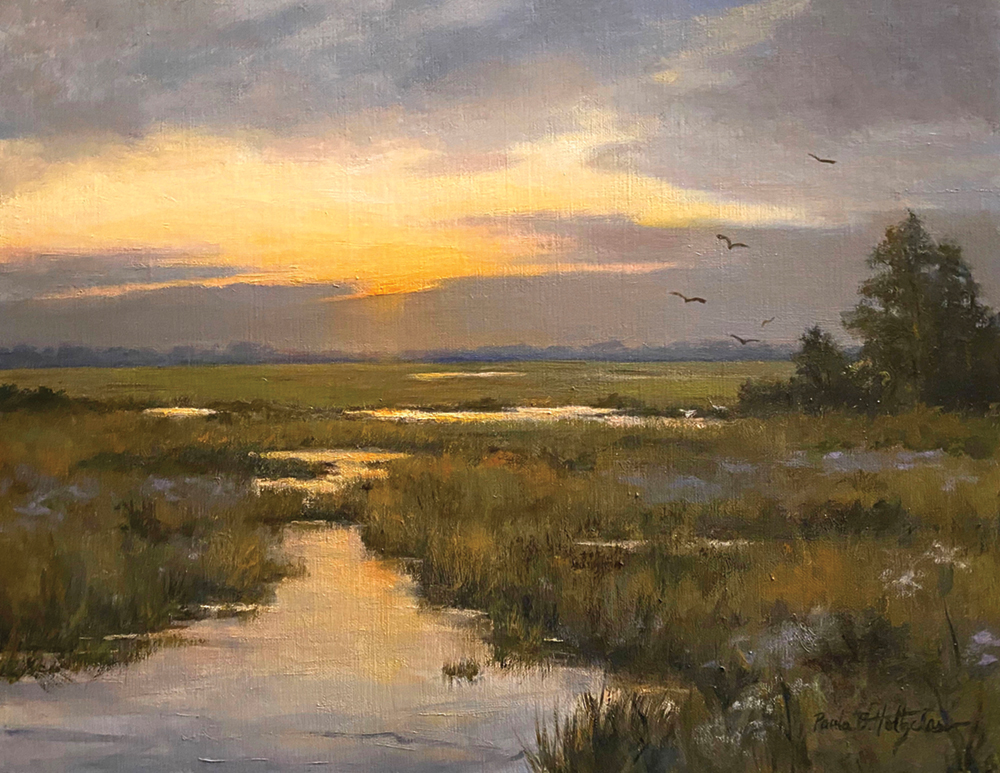
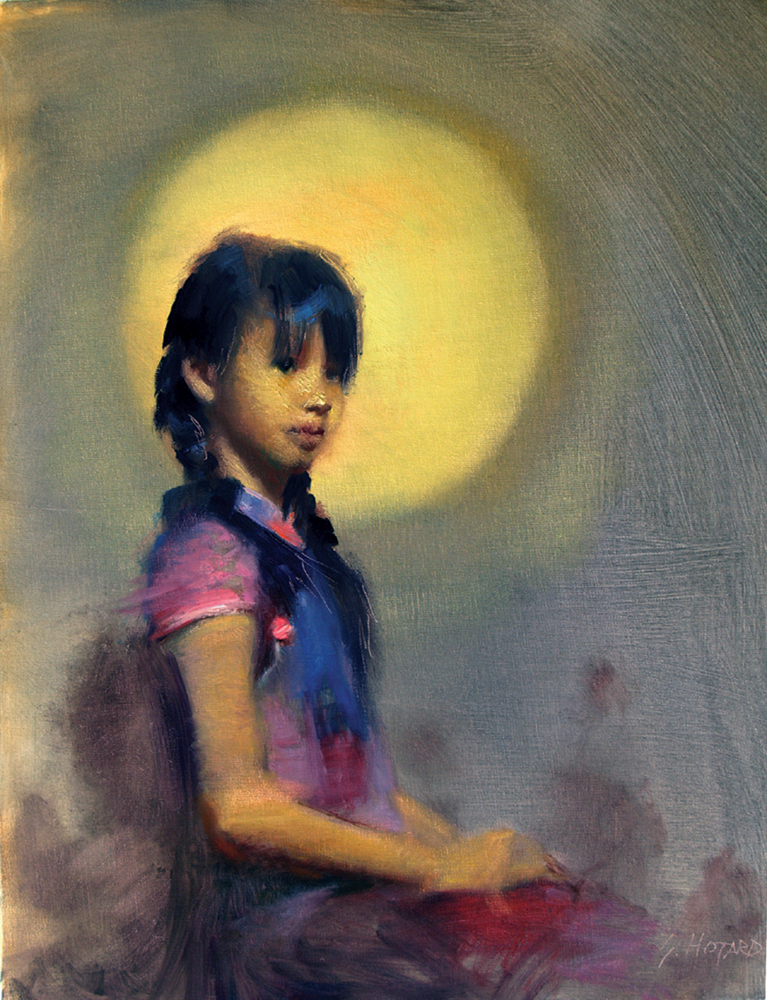
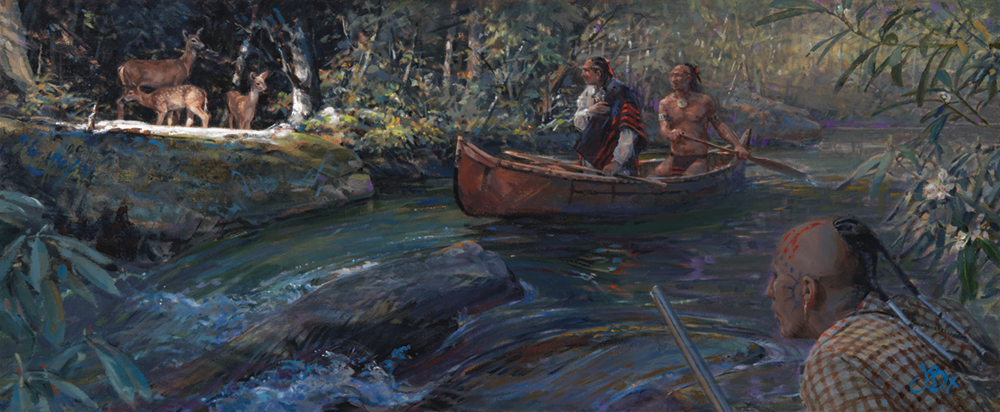
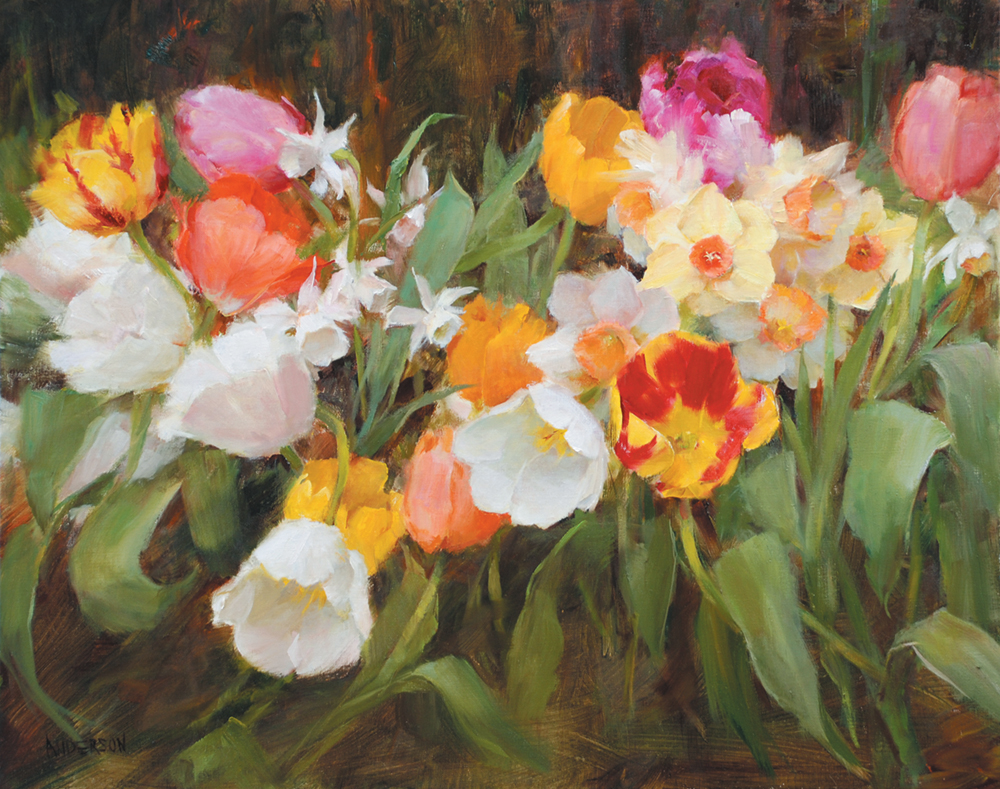
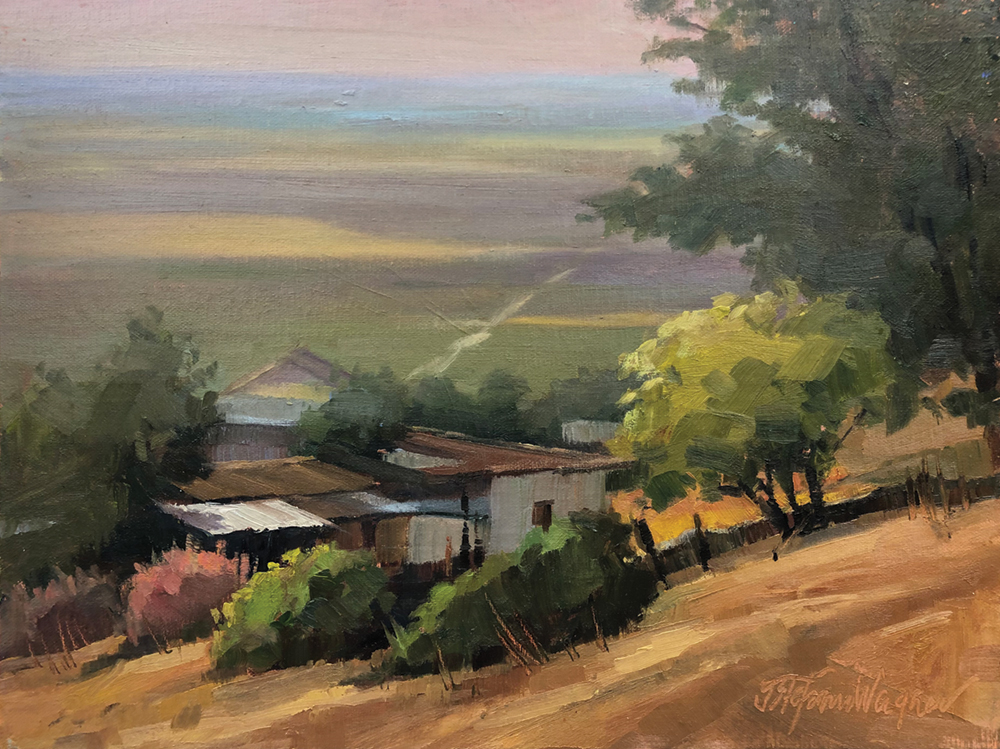
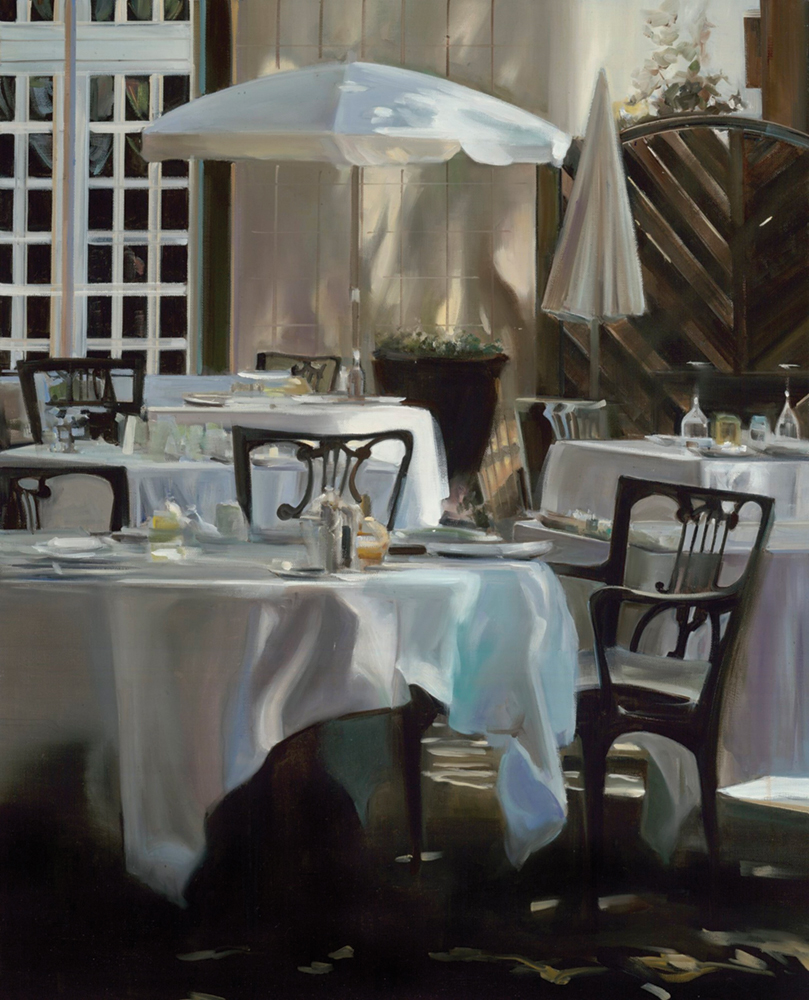
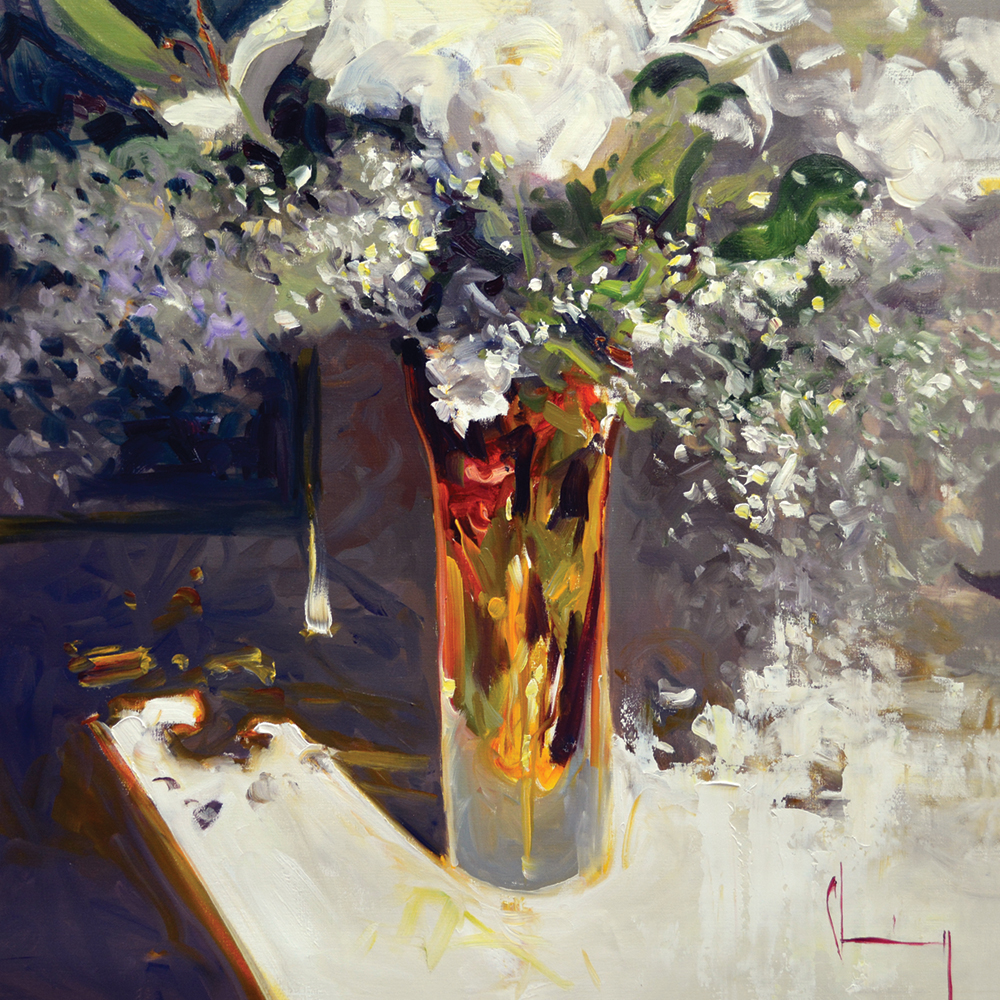
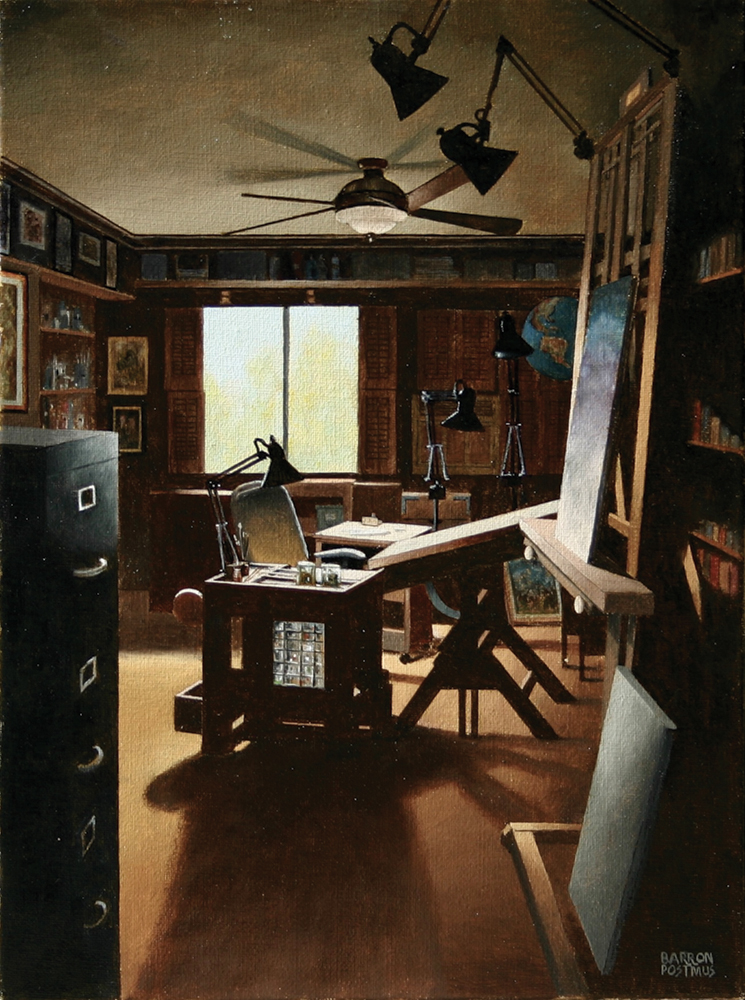
JON BRADHAM Bonney Lake, Washington Crystal Lake Snow Melt, 30 x 40 in., oil on canvas To purchase, please call 760.839.4175 or visit www.artcenter.org/museum www.jonbradham.com Gallery inquiries welcomeBRIAN KEELER Ithaca, New York Angular Light Over Ithaca, NY, 26 x 30 in., oil on linen To purchase, please call 760.839.4175 or visit www.artcenter.org/museum www.northstarartgallery.com Represented by North Star Art Gallery, Ithaca, NY; Argosy Gallery, Bar Harbor, ME; West End Galleries, Corning, NYKAY CRAIN Defiance, Missouri A Quiet Stream, 10 x 10 in., oil on linen panel To purchase, please call 760.839.4175 or visit www.artcenter.org/museum www.kaycrain.comPAULA B. HOLTZCLAW OPA Waxhaw, North Carolina Evening Serenade, 11 x 14 in., oil on linen panel To purchase, please call 760.839.4175 or visit www.artcenter.org/museum www.paulabholtzclawfineart.com Represented by Cheryl Newby Gallery, Pawleys Island, SC; Highlands Art Gallery, Lambertville, NJ; Hughes Gallery, Boca Grande, FLSUSAN HOTARD OPA The Woodlands, Texas Asian Preciousness, 16 x 20 in., oil on linen To purchase, please call 760.839.4175 or visit www.artcenter.org/museum www.susanhotardartist.com Represented by Gallery 330, Fredericksburg, TXJOHN BUXTON Allison Park, Pennsylvania At First Light, 10 x 24 in., oil on linen To purchase, please call 760.839.4175 or visit www.artcenter.org/museum www.buxtonart.com Represented by Lord Nelson’s Gallery, Gettysburg, PAKATHY ANDERSON OPAM Redding, Connecticut Spring with Tulips and Daffodils, 16 x 20 in., oil on linen To purchase, please call 760.839.4175 or visit www.artcenter.org/museum www.kathyandersonstudio.com Represented by Legacy Gallery, Scottsdale, AZ; Susan Powell Fine Art, Madison, CT; Horton Hayes Fine Art, Charleston, SCJILL STEFANI WAGNER, PSA-MP IAPS/MC Saline, Michigan Vega de Carmona Shacks, 9 x 12 in., oil on linen panel To purchase, please call 760.839.4175 or visit www.artcenter.org/museum www.jillwagnerart.com Represented by Tvedten Fine Art, Harbor Springs, MI; J. Petter Galleries, Douglas, MI; Castle Gallery, Fort Wayne, INTHALIA STRATTON OPA San Francisco, California Le Pigonett, 30 x 24 in., oil on canvas To purchase, please call 760.839.4175 or visit www.artcenter.org/museum www.thaliastratton.com Represented by New Masters Gallery, Carmel, CA; Howard/Mandville Gallery, Woodinville, WA; Eminent Design, Palm Springs, CACHUCK LARIVEY OPA Richmond, Virginia Breathless, 20 x 20 in., oil on linen To purchase, please call 760.839.4175 or visit www.artcenter.org/museum www.chucklarivey.com Represented by Crossroads Art Center, Richmond, VA; Richard Stravitz Sculpture & Fine Art, Virginia Beach, VA; Rich Timmons Fine Art & Studio, Doylestown, PABARRON POSTMUS West Hills, California The Studio, 16 x 12 in., oil To purchase, please call 760.839.4175 or visit www.artcenter.org/museum www.barronpostmusart.com Represented by Eisele Gallery, Cincinnati, OH; Dutch Art Gallery, Dallas, TX; Solvang Antiques Fine Art Gallery, Solvang, CAJUDITH NENTWIG Lower Gwynedd, Pennsylvania Vermont Sun, 9 x 12 in., oil on linen To purchase, please call 760.839.4175 or visit www.artcenter.org/museum www.judithnentwig.com
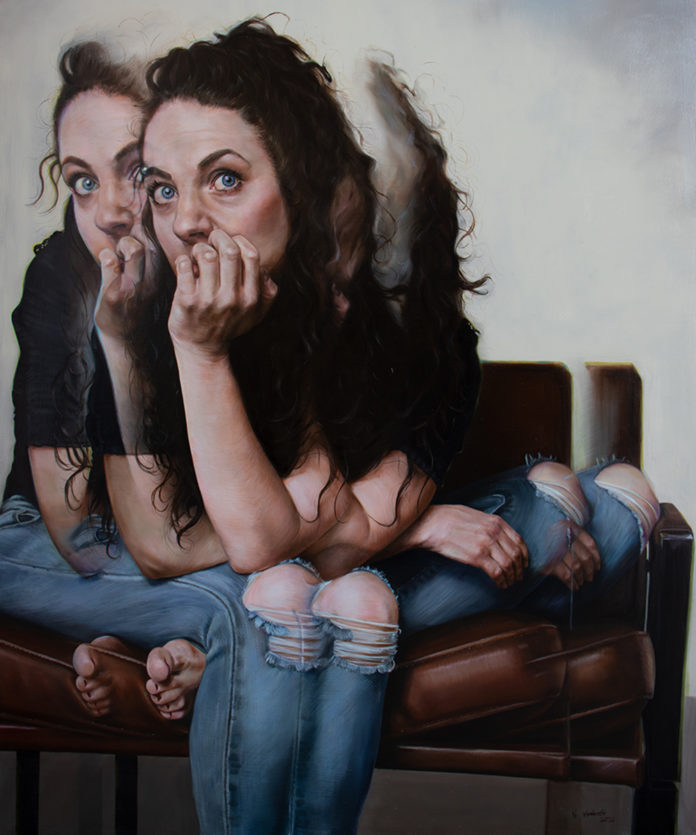
Centered, 2021
By Nicole Woodruff
Oil on ACM
36 × 30 in. (91.4 × 76.2 cm)
Available through 33 Contemporary, Chicago
Nicole Woodruff (b.1986) is an American artist living in Utah, where she was born and raised. She is a contemporary figurative painter. Her most recent series explores the connection between physical experiences and psychological health. She draws upon her own experiences and symptoms of Paresthesia due to chronic Lyme disease. Nicole received a BFA Art Education degree through Weber State University.
The Autry’s 24th Annual Masters of the American West Art Exhibition and Sale is still taking place – exclusively online.
More from the organizers:
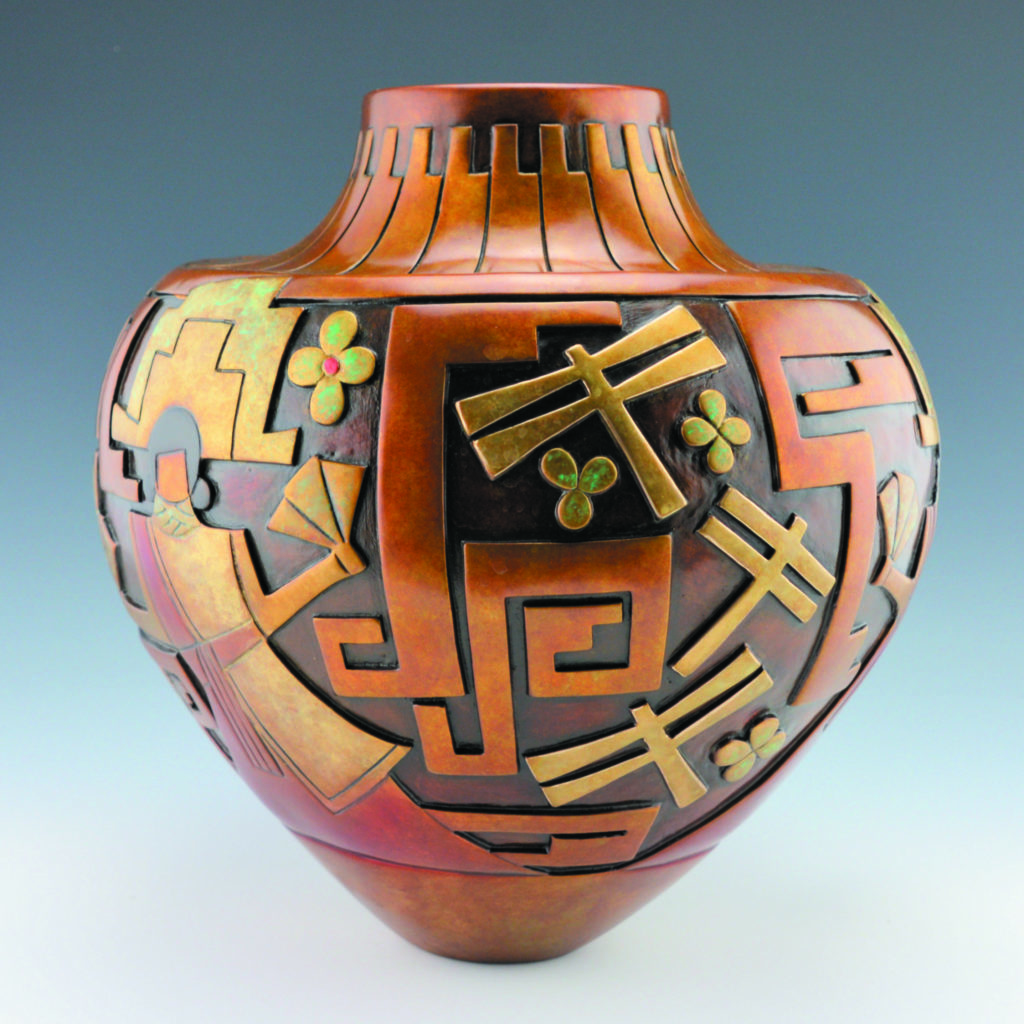
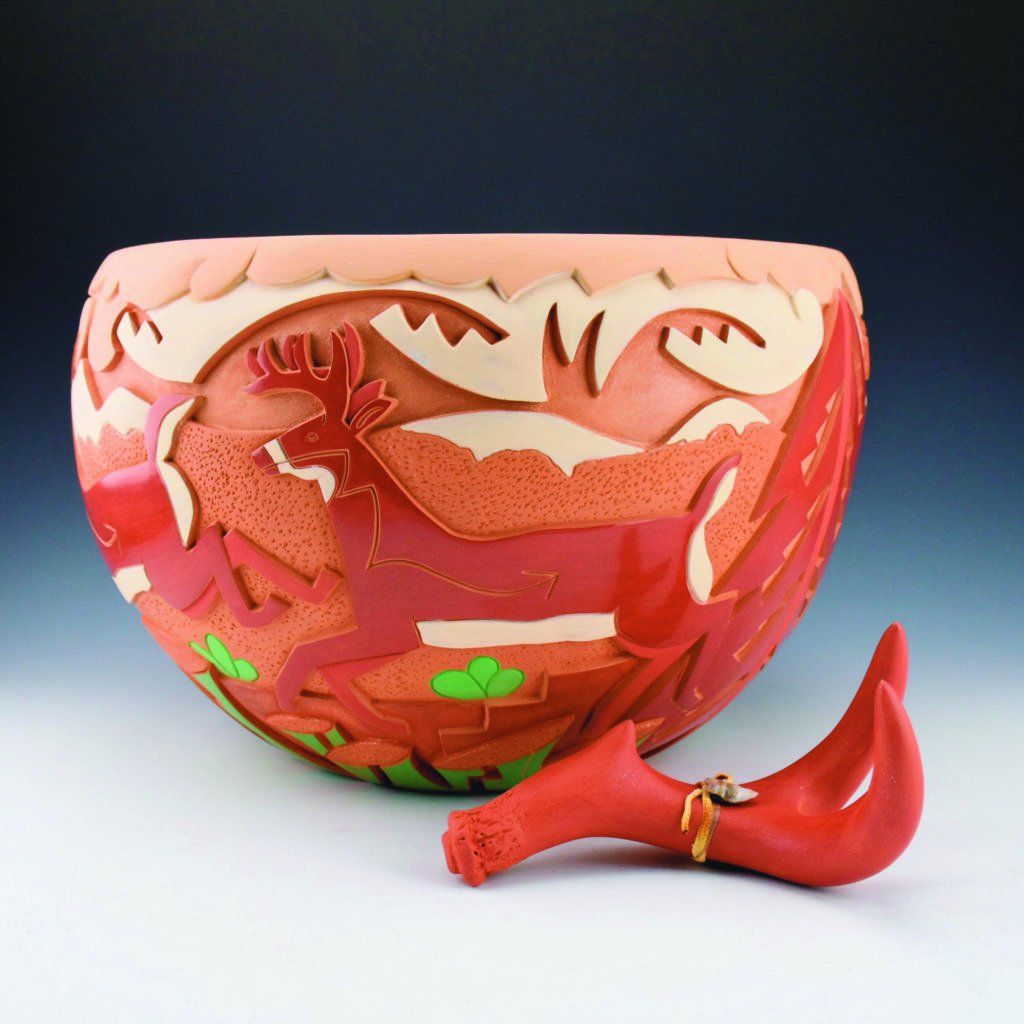
TAMMY GARCA, “Harvest Time,” bronze, 11.75×11AUTUMN BORTS-MEDLOCK, “High Desert Run,” Santa Clara clay
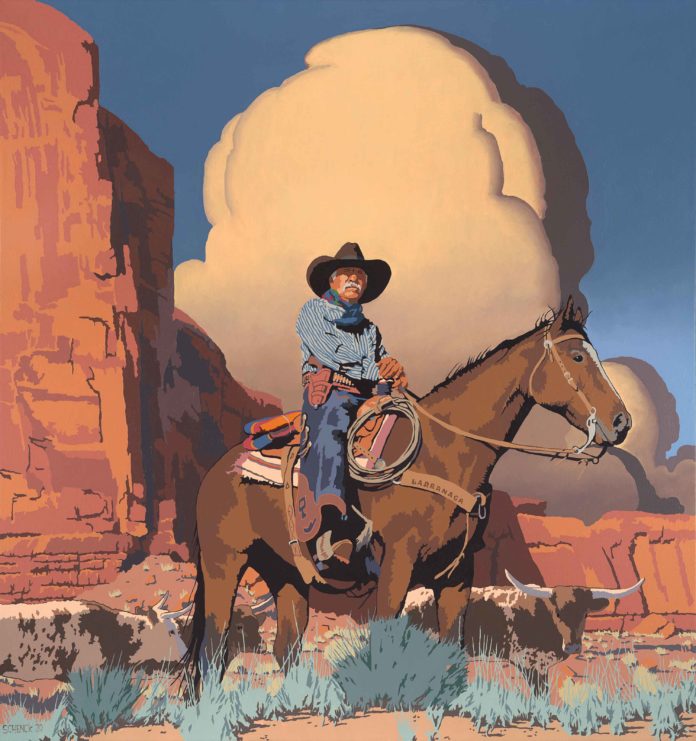
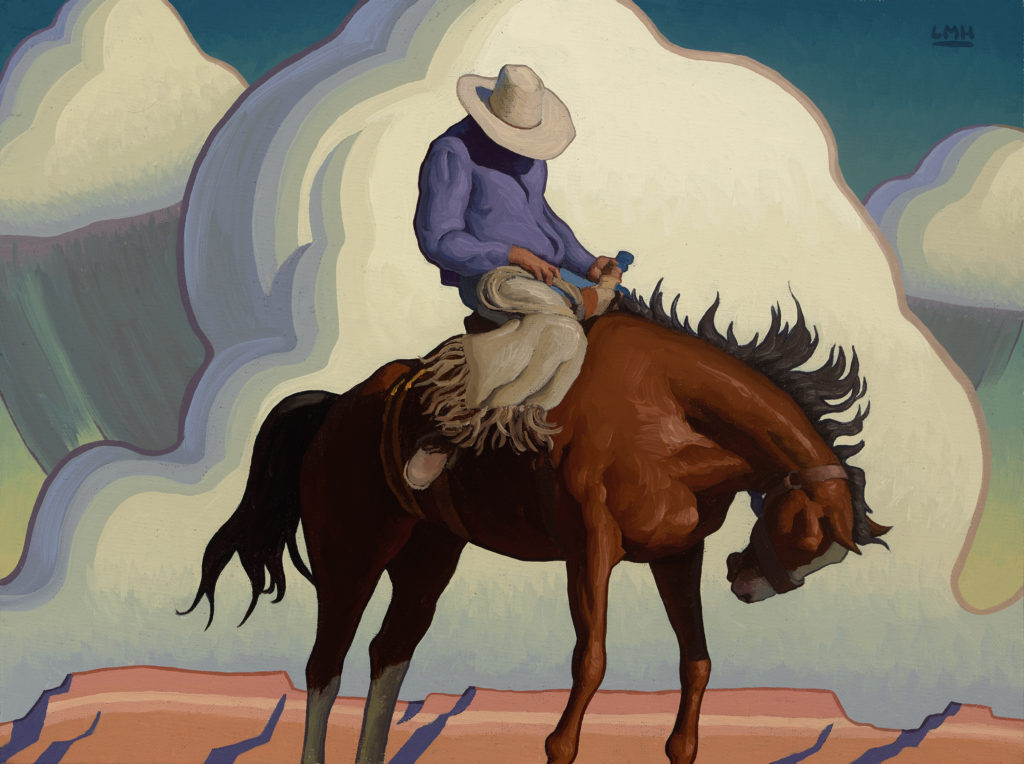
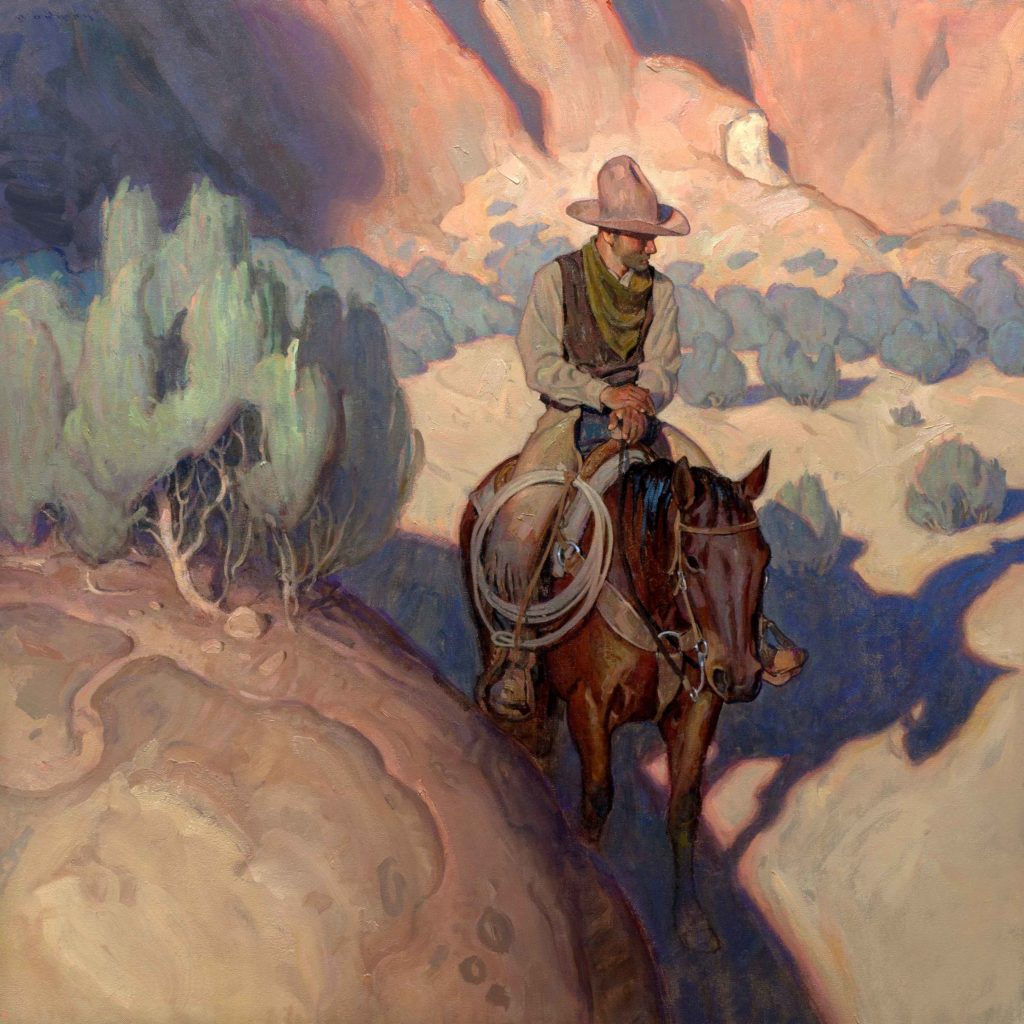
This annual exhibition and sale showcases paintings and sculptures by nationally recognized artists such as George Carlson, G. Russell Case, Tammy Garcia, Logan Maxwell Hagege, Mark Maggiori, Billy Schenck, and Terri Kelly Moyers. This year also welcomes new Masters artists Brett Allen Johnson, Joshua LaRock, and Ed Mell. Proceeds from Masters supports the Autry’s diverse exhibitions, public programs, and educational offerings to teachers and schoolchildren.
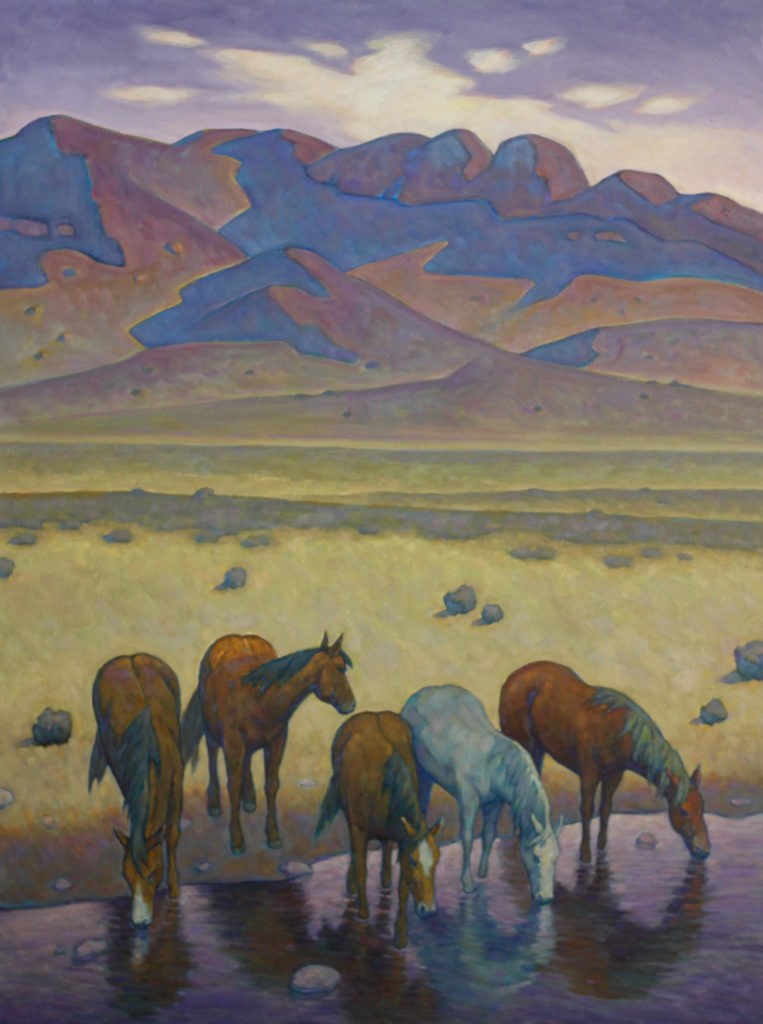
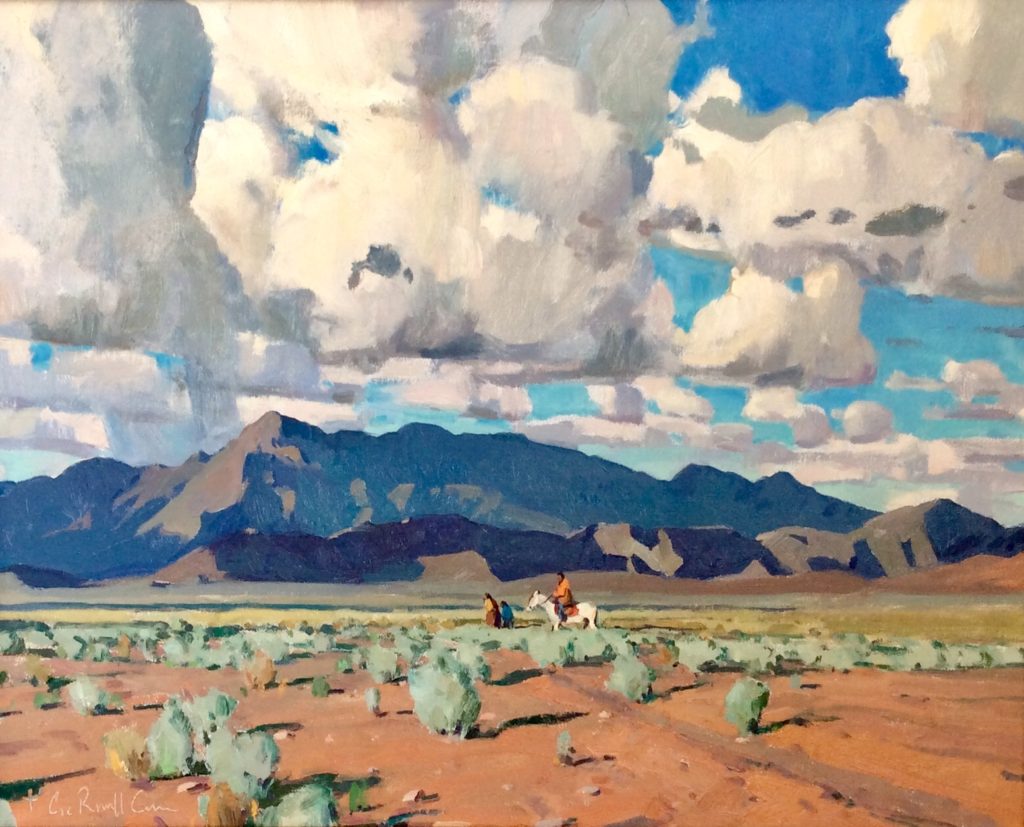
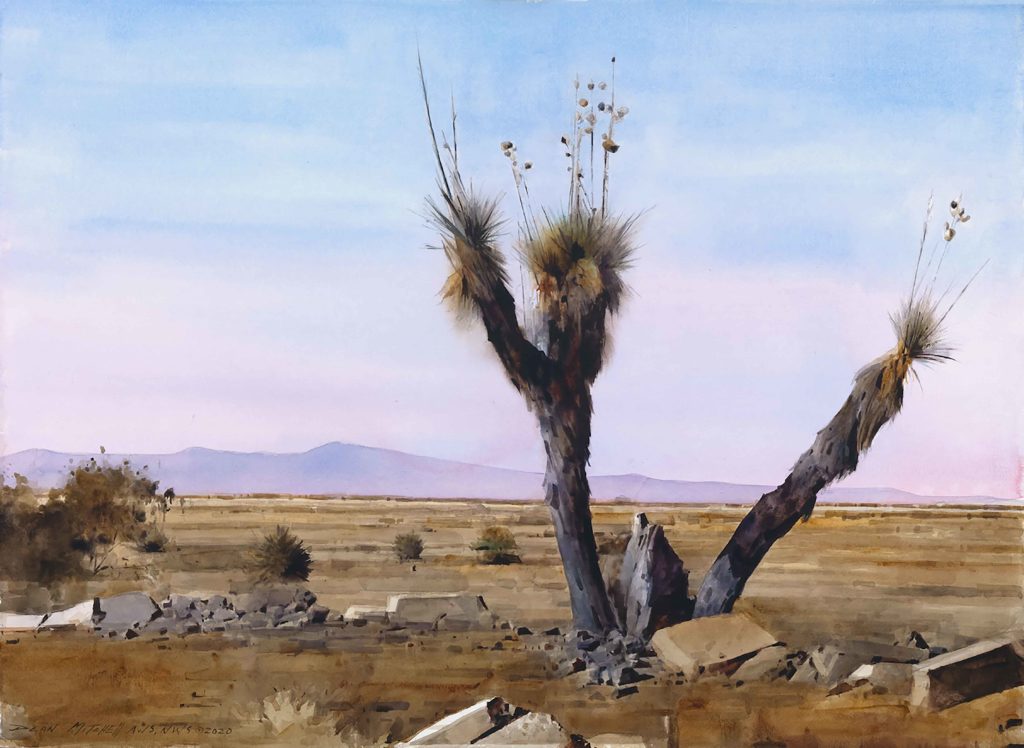
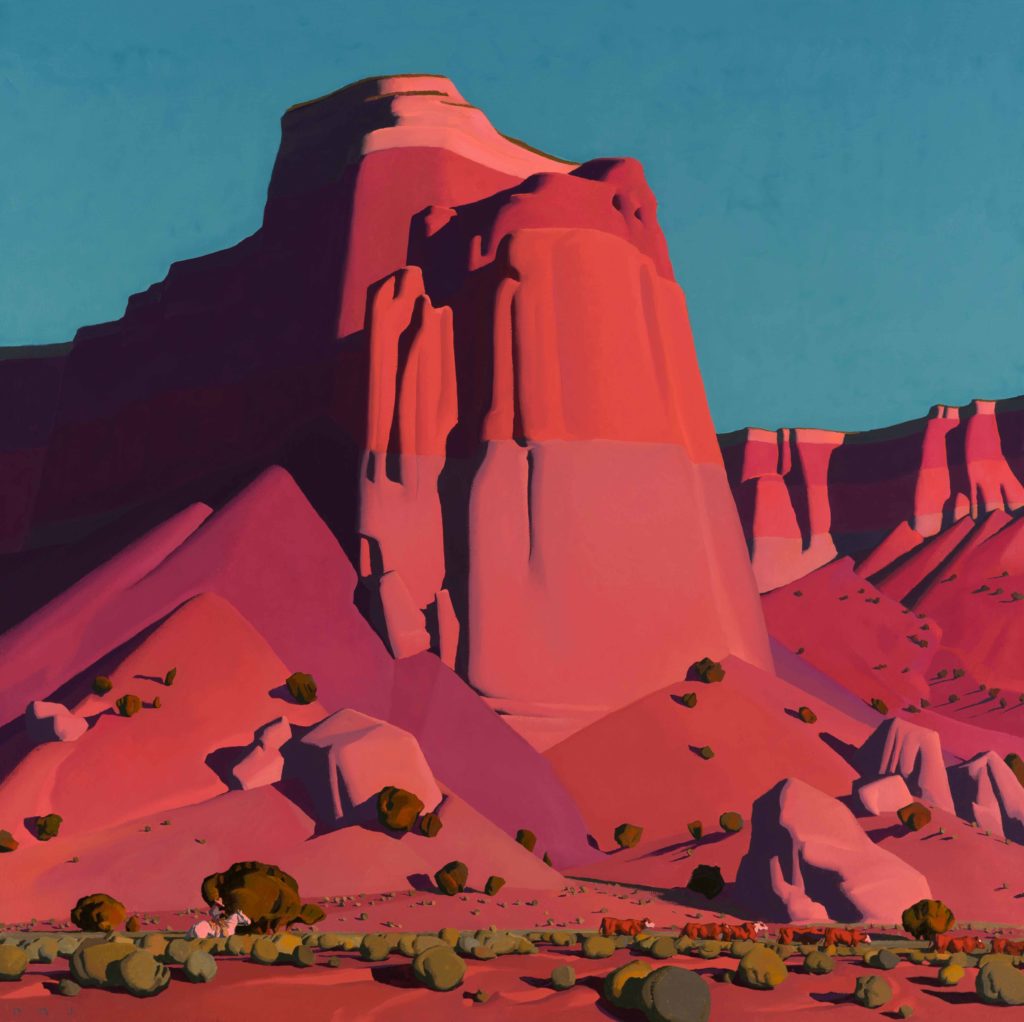
HOWARD POST, “Shaded Water,” oil, 40×30RUSSELL G. CASE, Rolling Clouds, oil on linen on mounted board, 16×20LOGAN MAXWELL HAGEGE, “Falling to Pieces,” oil, 12×16ED MELL, “Cascading Canyon Storm,” oil on linen, 40×48DEAN MITCHELL, “Growing Wild and Free,” watercolor, 22×30BRETT ALLEN JOHNSON, “Last Light on the Red Desert,” oil, 36X36ERIC BOWMAN, “Sand and Sage,” oil on linen, 30×30
For the first time ever, the exhibition and sale will be available online. All of the artwork in the Masters show will remain on view and available for purchase online through Sunday, April 11, 2021 on TheAutry.org/Masters.
“Masters 2021 is a little different than previous years. The show will be available online, giving everyone a chance to take a glimpse into the ever-vibrant and dynamic world of Western American art,” said Amy Scott, the Autry’s Executive Vice President for Research and Interpretation and Marilyn B. and Calvin B. Gross Curator of Visual Arts. “We are excited to share a wide range of Western art styles. From classic frontier stories to contemporary Native visions, Masters embraces a widening array of artists that together celebrate both the history and contemporary beauty of the West.”
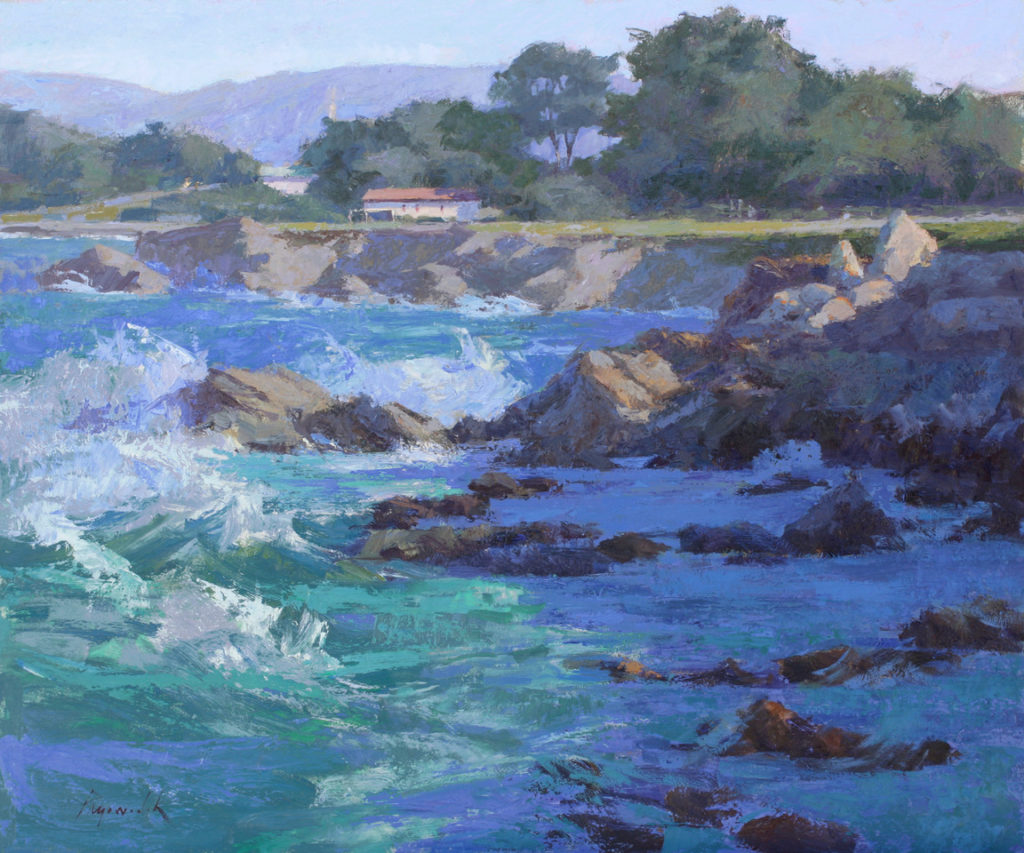
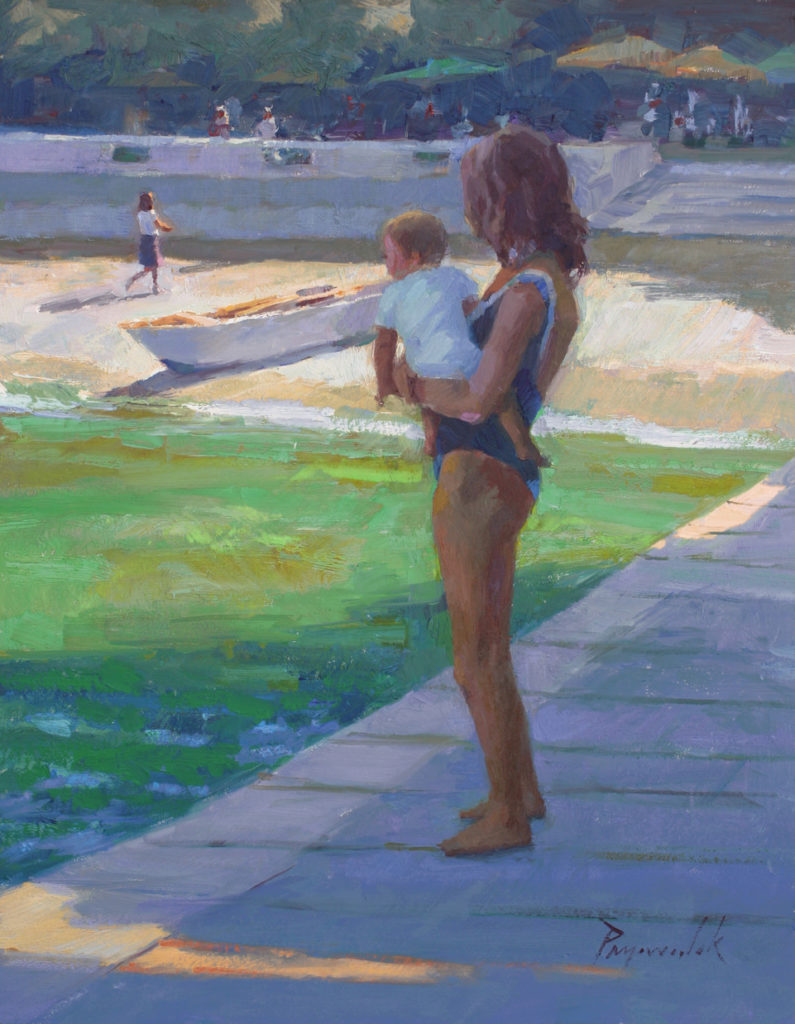
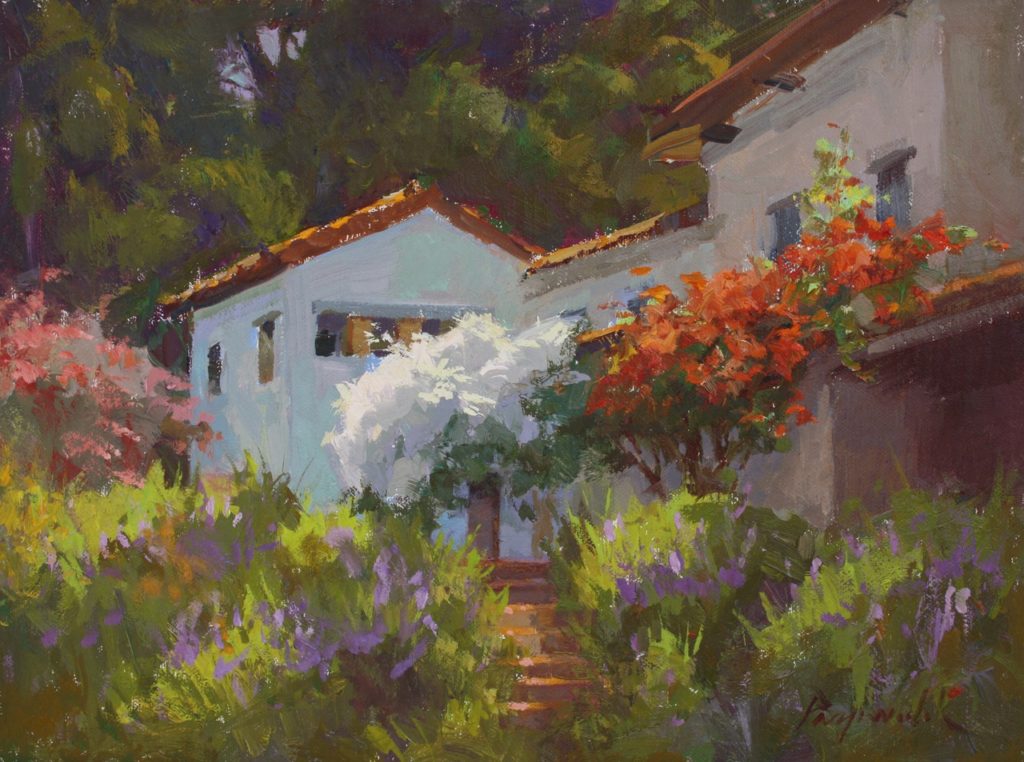
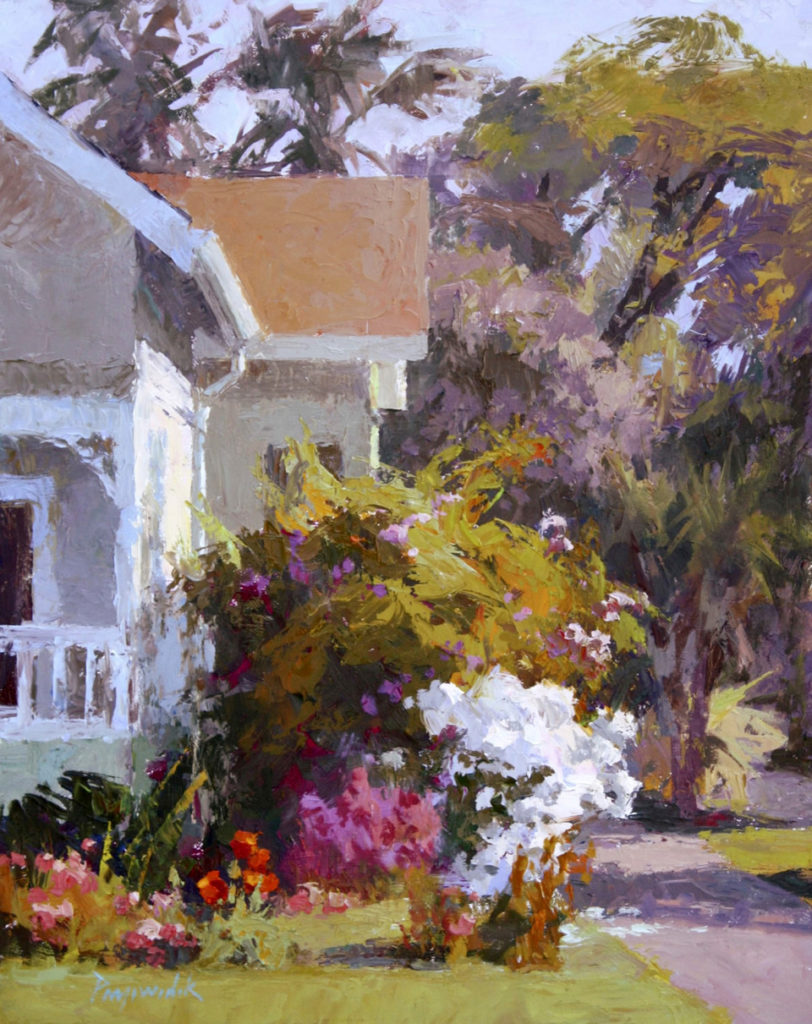
Inspired by Monet and Sorolla, Camille Przewodek’s paintings capture the beauty of light and atmosphere. Here, she answers the question she’s asked most often, which isn’t surprising once you hear it…
SPOTLIGHT: CAMILLE PRZEWODEK
Camille Przewodek is on the faculty of the upcoming Plein Air Live virtual art conference. Register by April 11 to save up to $300!
I am a plein air artist in the tradition of Monet. My aim is to capture the light key of nature — the quality of light on a subject as determined by various factors such as time of day and atmospheric conditions.
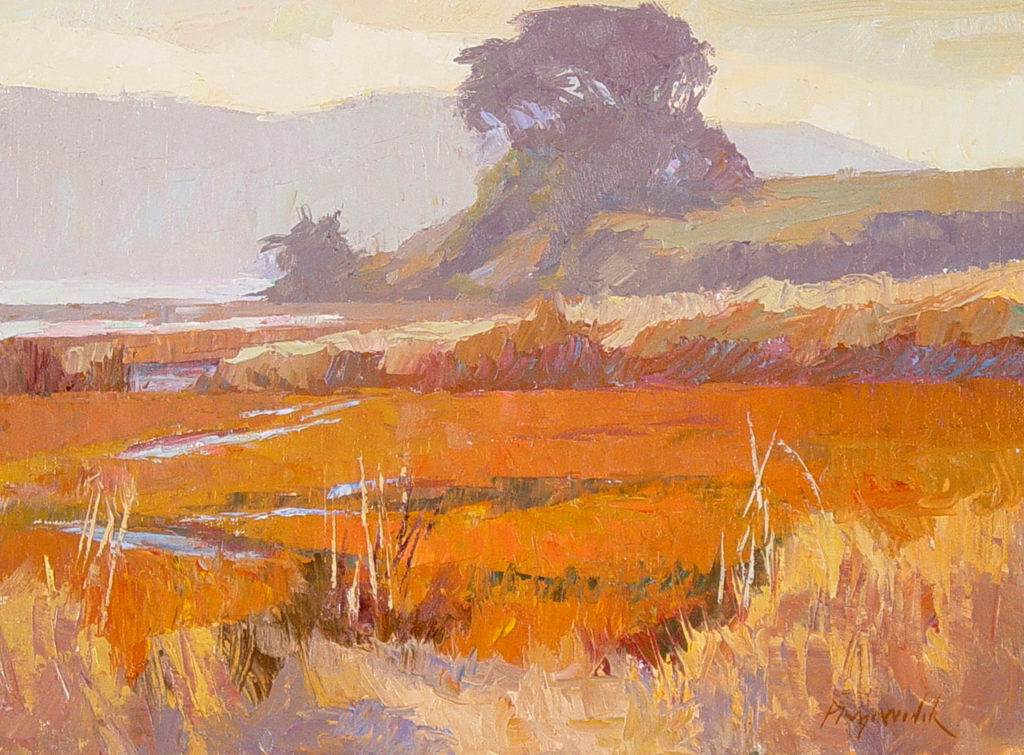
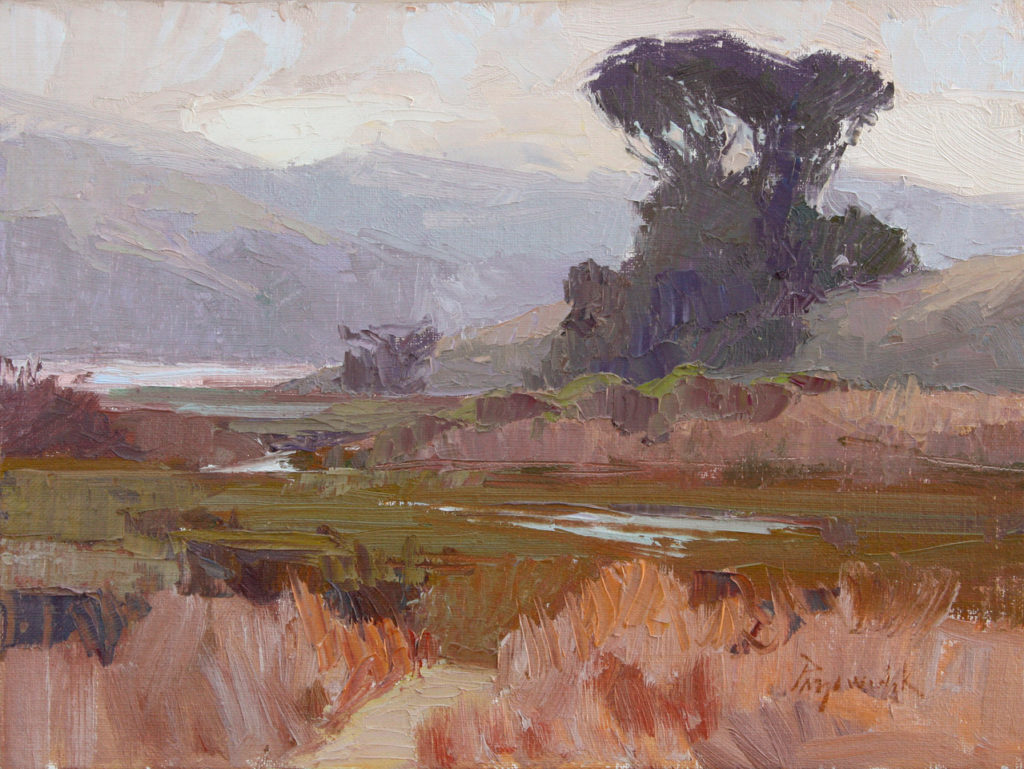
Here are two examples of paintings done of the same location — one of a gray day, the other hazy sun:
Camille Przewodek, “Coastal Fog – Hazy Sun,” 12 x 16 in.Camille Przewodek, “Coastal Fog,” 9 x 12 in.
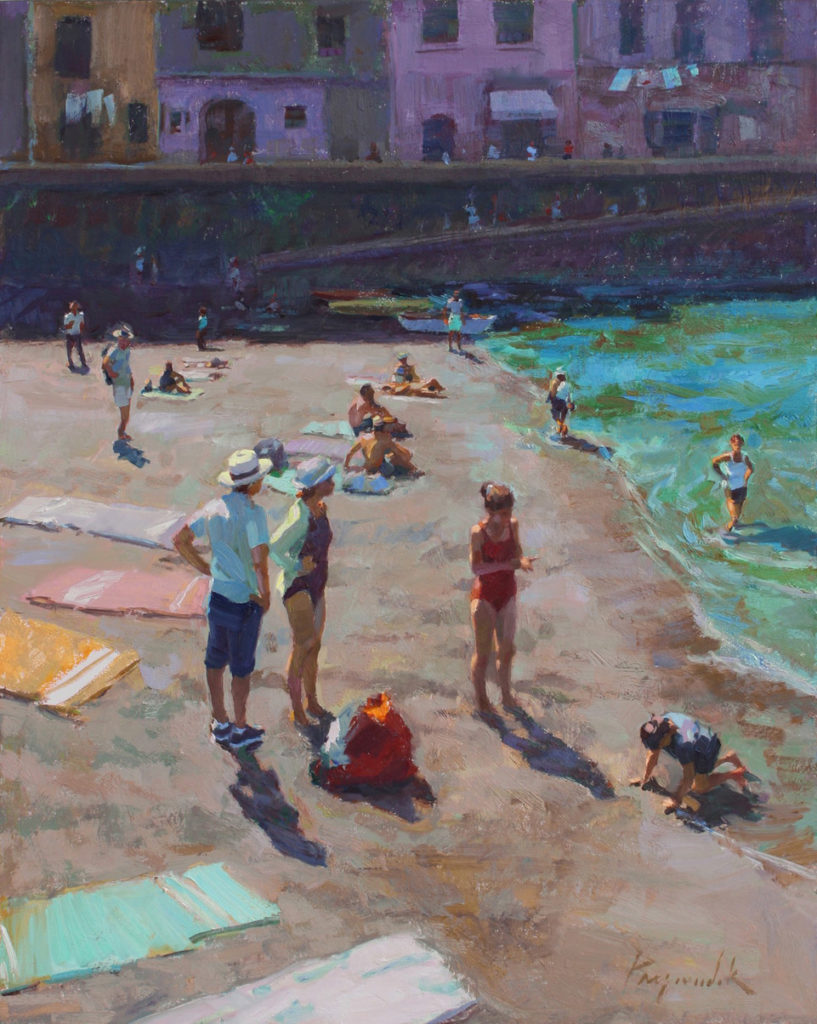
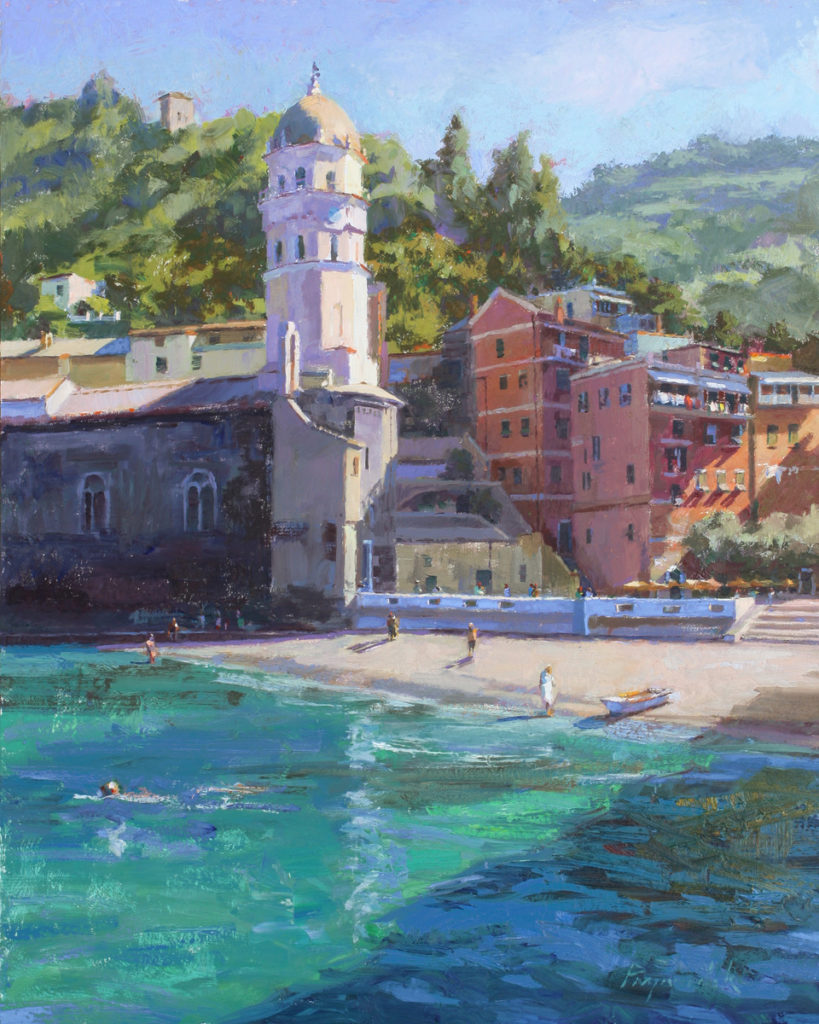
“Vernazza Beach Morning” (below) was done from a reference photo I took on my trip to Italy where I conducted a workshop. I have been painting from life for over 40 years, so I have enough knowledge to create a studio painting filled with color and light from a photo.
Painting in the studio from reference allows me more time to refine the composition. For example, the arrangement of towels on the beach is designed to lead you into the painting.
Camille Przewodek, “Vernazza Beach Morning,” 20 x 16 in.
Q&A with Camille Przewodek
What’s a common mistake that you see beginning artists make, and how can they avoid it?
Beginners tend to complicate everything and fail to understand what is important. The first thing I teach them is to organize their lights and darks, and keep them separate. Simply state the light planes of the object as one color, and the shadows as another color, and then try to accurately relate these color notes to every other color in the painting.
This takes a lot of knowledge that can only be gained by sustained practice coupled with good instruction.
Which living artist do you admire the most?
Dan Pinkham
What’s your all-time favorite painting?
“Mending the Sail,” by Joaquin Sorolla
Consider one of the most common questions you are asked, and answer it.
#1a: How do you pronounce your name? Kah meal, prez wah dik
#1b: How do you achieve harmony in your paintings?
In my book, Mondays with Camille, Capturing the Key of Light in Color, I have a chapter entitled, Harmony Shmarmony, where I elaborate on the premise that if you can accurately portray the light key of nature, then you will automatically achieve color harmony.
What do you plan to teach during the next Plein Air Live art conference?
My live demonstration will be done at one of my favorite locations in my home town of Petaluma, California. I am able to look down on the scene, which gives me a unique view. I will be demonstrating early morning, sunny day light, and aerial perspective.
Additional Landscape Paintings by Camille Przewodek:
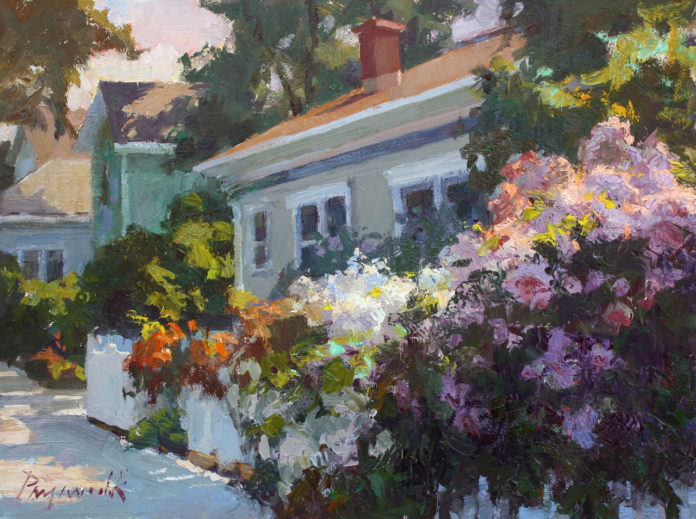
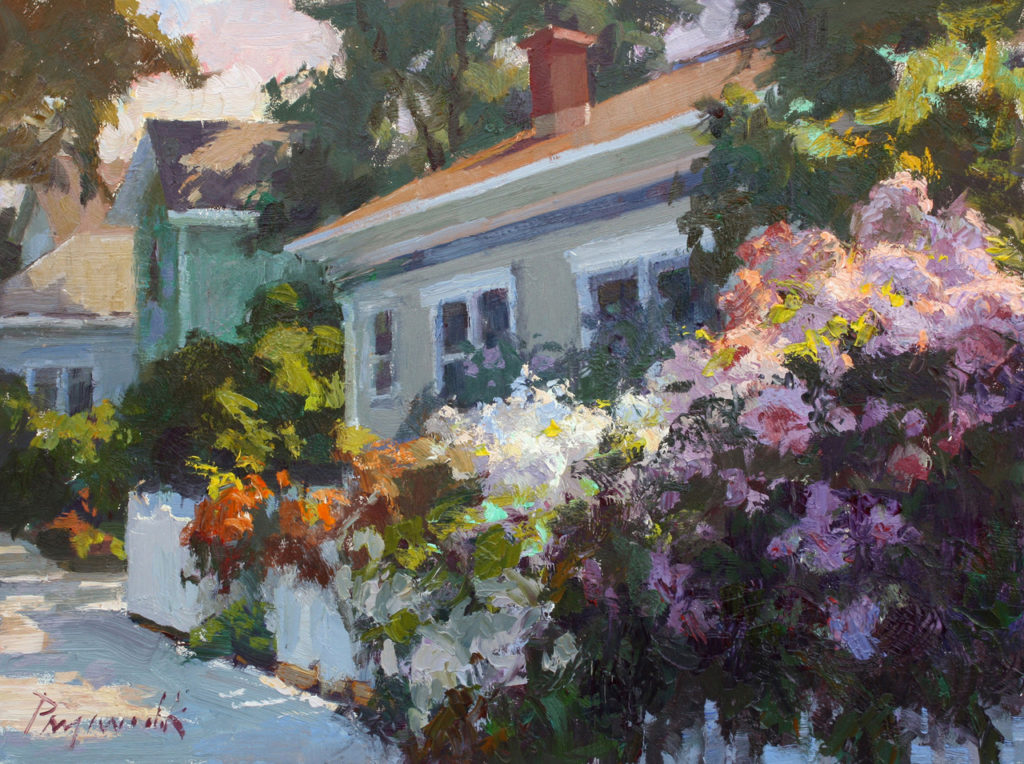
Camille Przewodek, “Surf in Light,” 20 x 24 in.Camille Przewodek, “Beach Babe – Vernazza,” 14 x 11 in.Camille Przewodek, “Villa Stairway – Umbria,” 9 x 12 in.Camille Przewodek, “White Roses,” 14 x 11 in.Camille Przewodek, “Rose Cascade,” 9 x 12 in.Camille Przewodek, “Early Birds at Vernazza Beach,” 20 x 16 in.
Register for PleinAir Live Before April 11 and Save Up to $300 on the Opportunity to Have 30 of the Best Artists Come to You on April 14-17, 2021
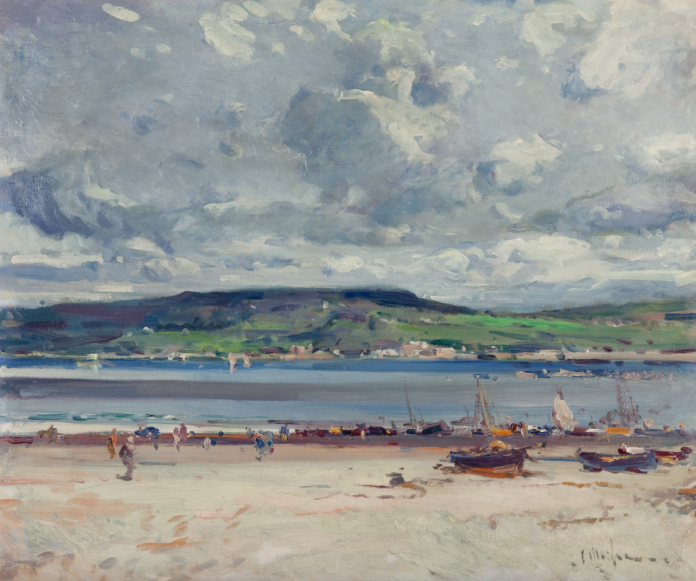
Eliseo Meifren, "Shore with Figures - Riba con Figuras," c. 1910, oil on canvas
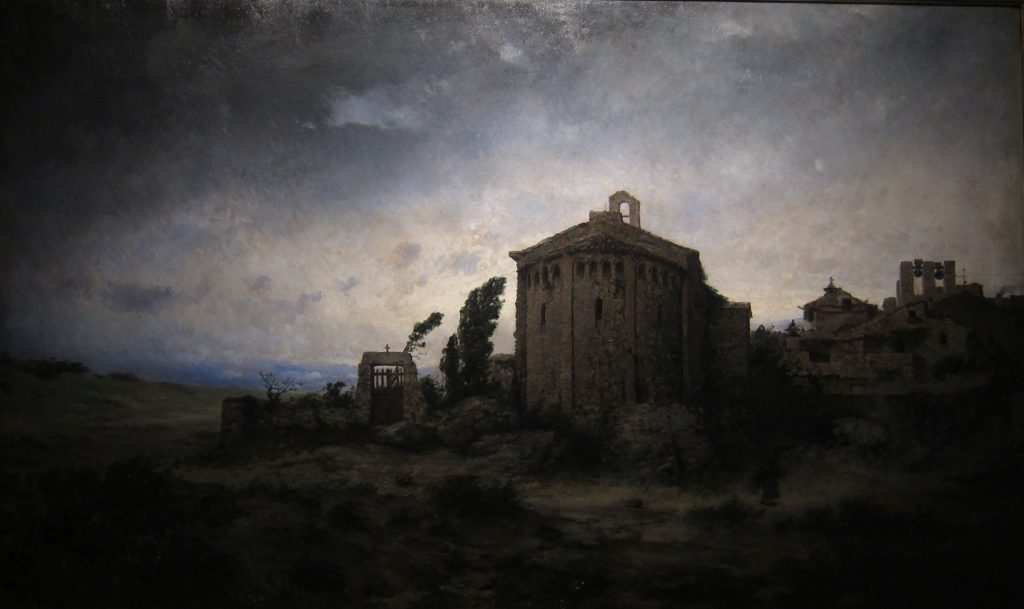
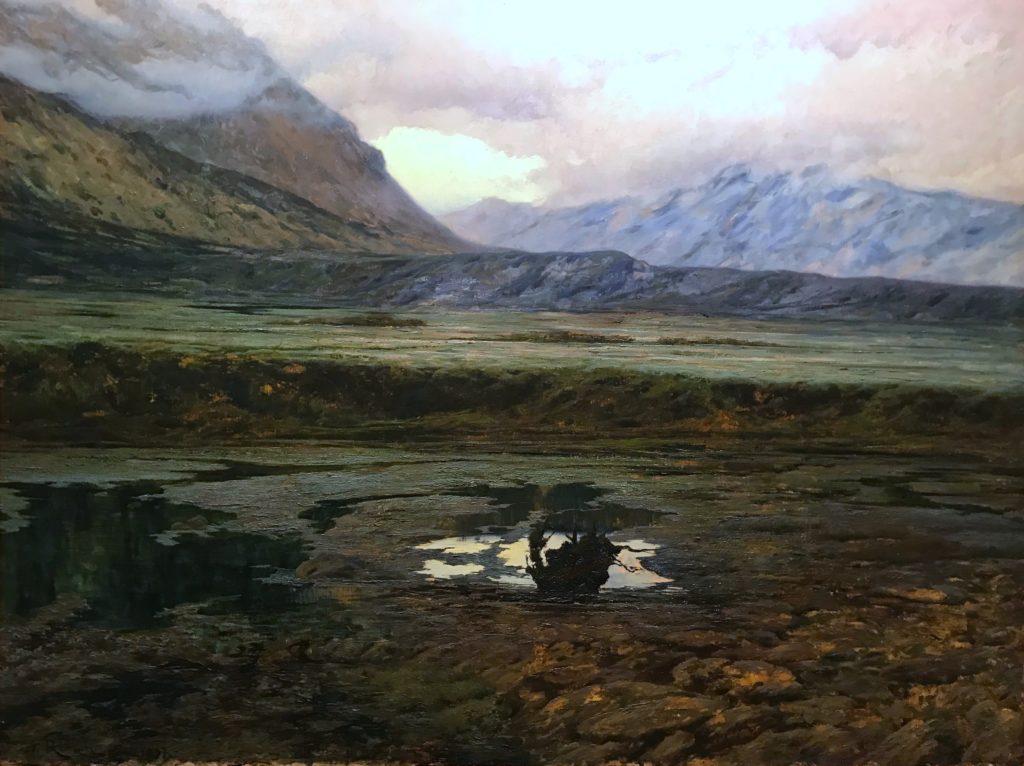
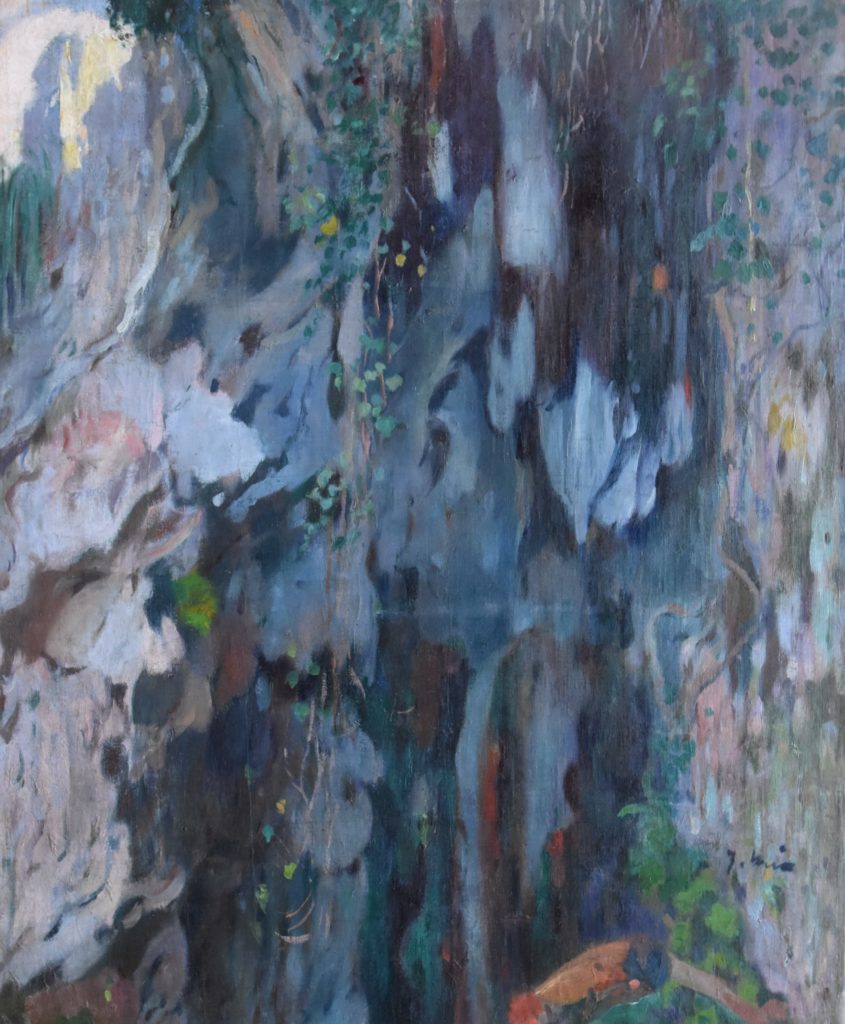
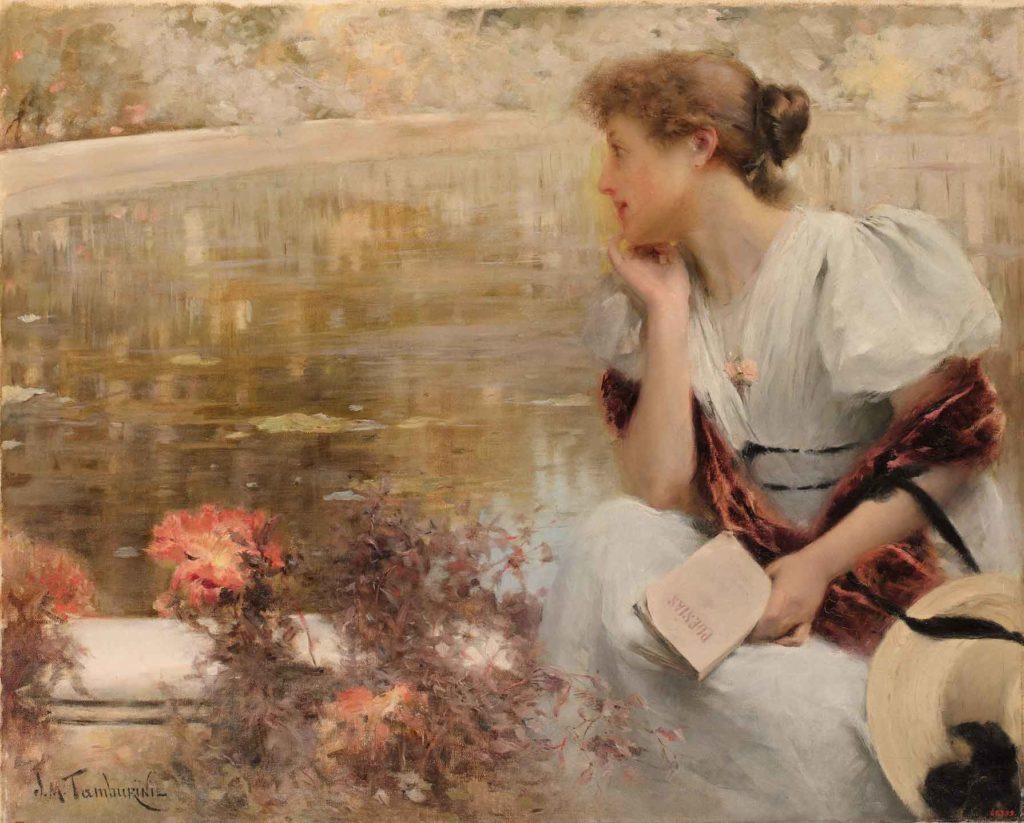
International audiences are now able to explore masterworks of Spanish landscape painting from the late nineteenth and early twentieth centuries, including rarely seen works by Laureano Barrau, Joaquín Mir, and Modest Urgell, among many others.
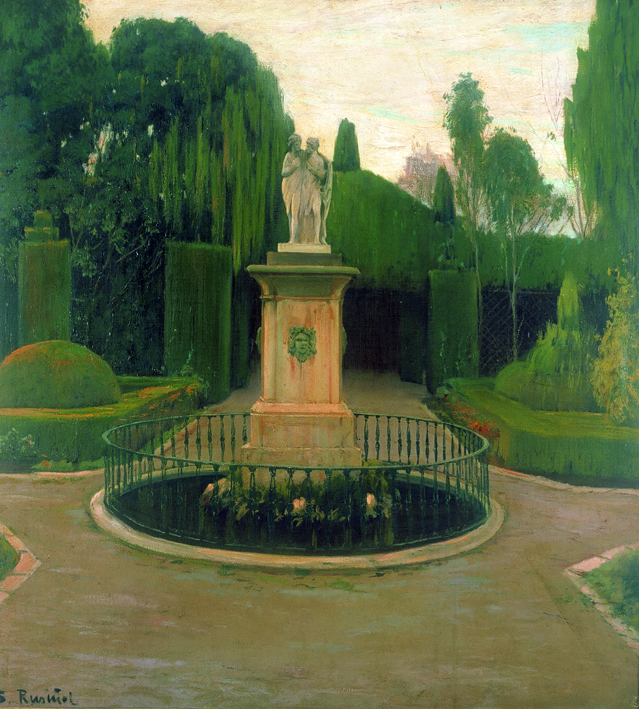
Santiago Rusinol, “Jardin de Valencia,” 1912, oil on canvas, 103 x 93 cm
From the organizers:
“Spanish Modern Landscapes” (online and in-person) at Colnaghi London places a spotlight on the work of these artists who were heralded in their day, yet have remained lesser-known outside of their native Spain.
Co-organized with Sala Parés (est. 1877) and Artur Ramon Art (est. 1911), “Spanish Modern Landscapes” brings new recognition to this school of Spanish artists, all of whom had trained at the top art academies of Barcelona and many of whom had traveled and worked in Paris alongside Degas, Picasso, and Dali.
The paintings on view, dating from 1880 through 1950, capture pivotal moments in the artists’ careers, as the influences of Realism, Impressionism, and Symbolism prompted their experimentation with bold use of light, color, and perspective, in some cases dramatically altering their style permanently.
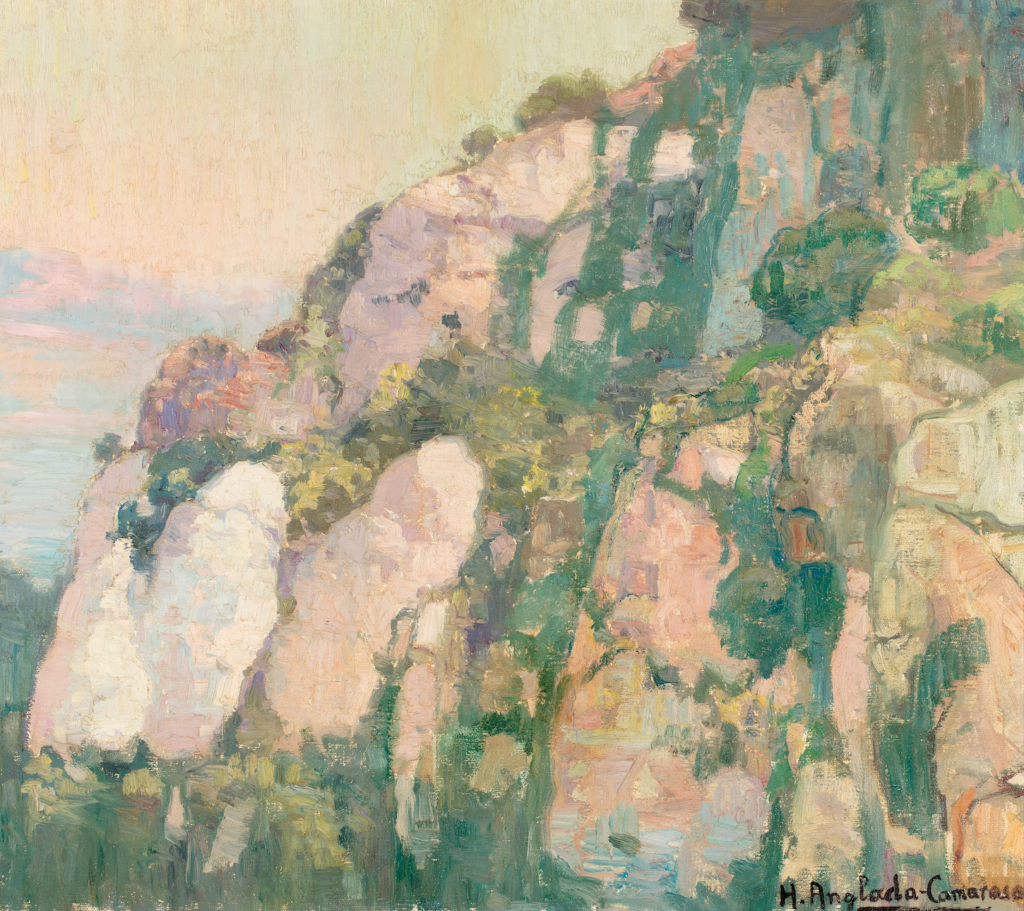
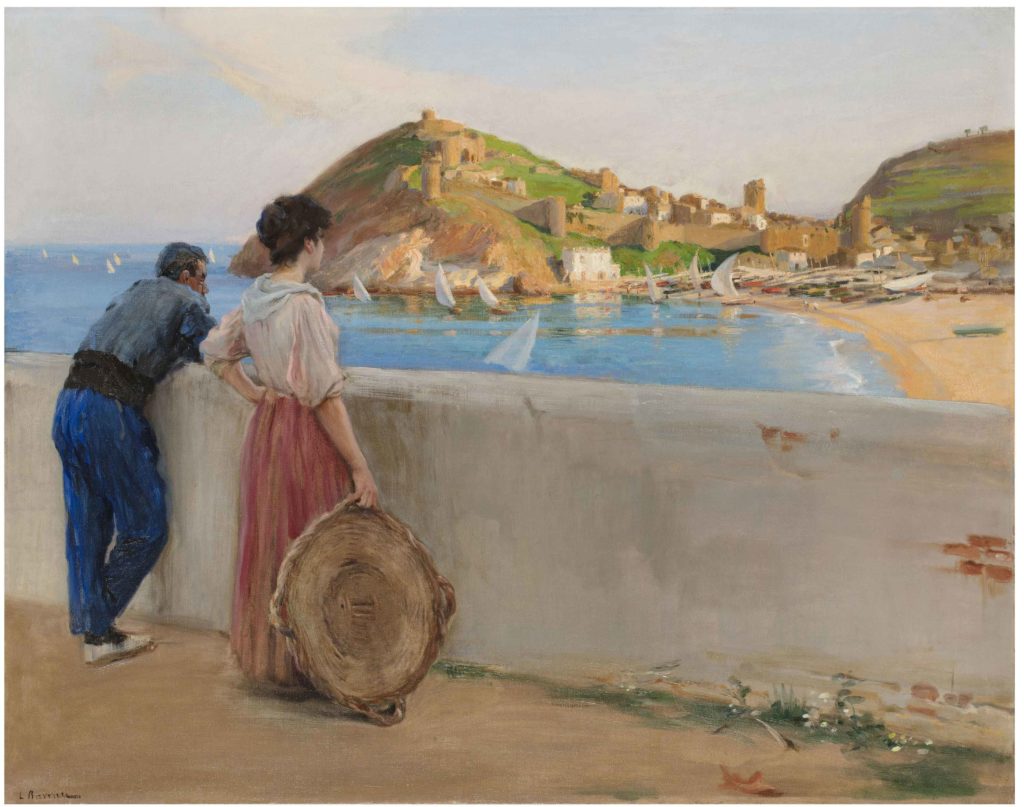
Modest Urgell, “Cemetery and Church – Cementerio e Iglesia,” c. 1880, oil on canvas, 147 x 241 cmNicolau Raurich, 1897, oil on canvas, 147 x 197 cmJoaquín Mir, “Cave of Mallorca – Sa Calobra,” 1903, oil on canvas, 100 x 81 cmJosep Maria Tamburini, “I Dalmau Melancholy,” 1905, oil on canvas, 66 x 82 cmHermenegildo Anglada Camarasa, “Montserrat Landscape – Paisaje de Montserrat,” c. 1937-1938, oil on canvas, 58 x 55 cmLaureano Barrau, “Tossa de Mar,” 1908, oil on canvas; All images courtesy of Colnaghi Gallery
For more information and to view the exhibition online, please visit www.colnaghi.com.
> Visit EricRhoads.com to learn about more opportunities for artists and art collectors, including retreats, international art trips, art conventions, and more.
> Sign up to receive Fine Art Today, our free weekly e-newsletter
The Bayeux Tapestry > Stitched some 950 years ago, the world’s most celebrated tapestry is not a tapestry at all, but an embroidery measuring approximately 224 feet long with 58 chronological scenes; and was probably commissioned for propaganda purposes.
Diplomacy and Propaganda: The Enduring Power of the Bayeux Tapestry
BY SUSAN JAQUES
In a master stroke of cultural diplomacy, French President Emmanuel Macron announced in January 2018 that his country would loan the storied “La Tapisserie de Bayeux (The Bayeux Tapestry)” to Britain in 2022. In exchange, it’s been suggested that the British Museum lend the equally famous Rosetta Stone, taken by Napoleon’s troops from Egypt and turned over to Britain in 1801.
Though Macron’s headline-making offer represents the first time the Bayeux Tapestry would leave France in more than nine centuries, it isn’t the first time the famous work has been unfurled for propaganda purposes. In 1804, Napoleon displayed it in Paris to drum up support for his own planned invasion of England. And after occupying France in 1940, Adolf Hitler exploited it to advance his Aryan agenda.
ENIGMATIC ORIGINS
The world’s most celebrated tapestry is not a tapestry at all, but an embroidery. It was stitched some 950 years ago to chronicle and glorify the Norman Conquest of England. In 1066, William the Conqueror, Duke of Normandy, crossed the English Channel and defeated King Harold at the Battle of Hastings in southern England. After 600 years of Anglo-Saxon rule, William became England’s first Norman king. Laws, society, and architecture were transformed. French became the language of the court; Norman nobility became the new English aristocracy.
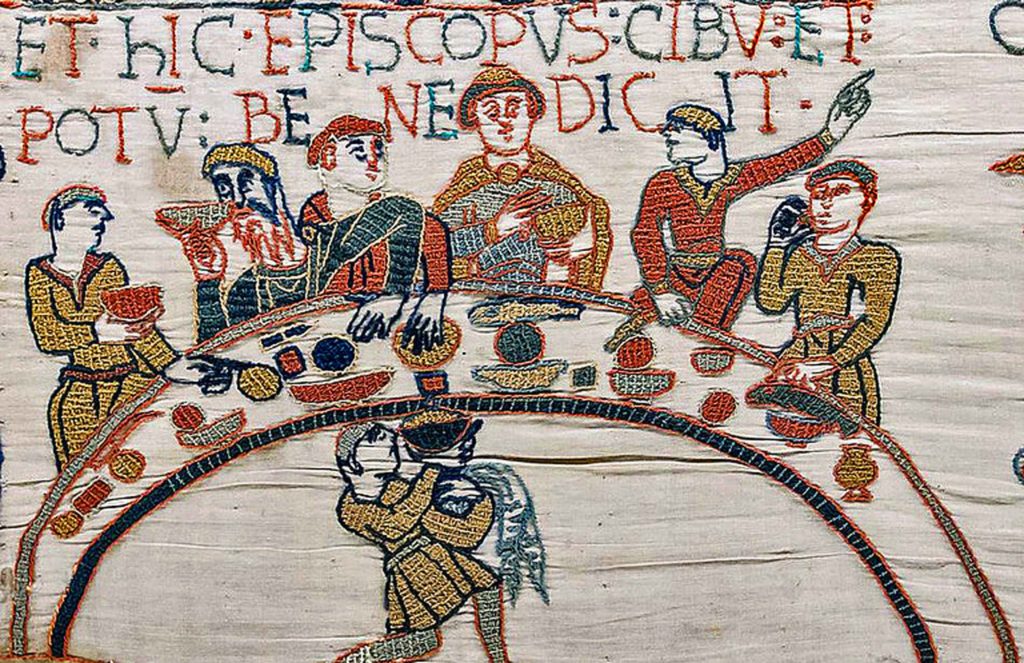
The banquet of William the Conqueror
The Bayeux Tapestry was commissioned and produced in the years following the invasion, probably for propaganda purposes. Yet the name of its patron remains a matter of debate. One leading candidate is William the Conqueror’s half-brother, Bishop Odo of Bayeux, who enjoys a major role in the narrative the embroidery depicts. Other candidates include William or his wife, Queen Matilda; Queen Edith, wife of Edward the Confessor (Harold’s predecessor); and the monks of St. Augustine’s Abbey in Canterbury, where the design style of the tapestry developed.
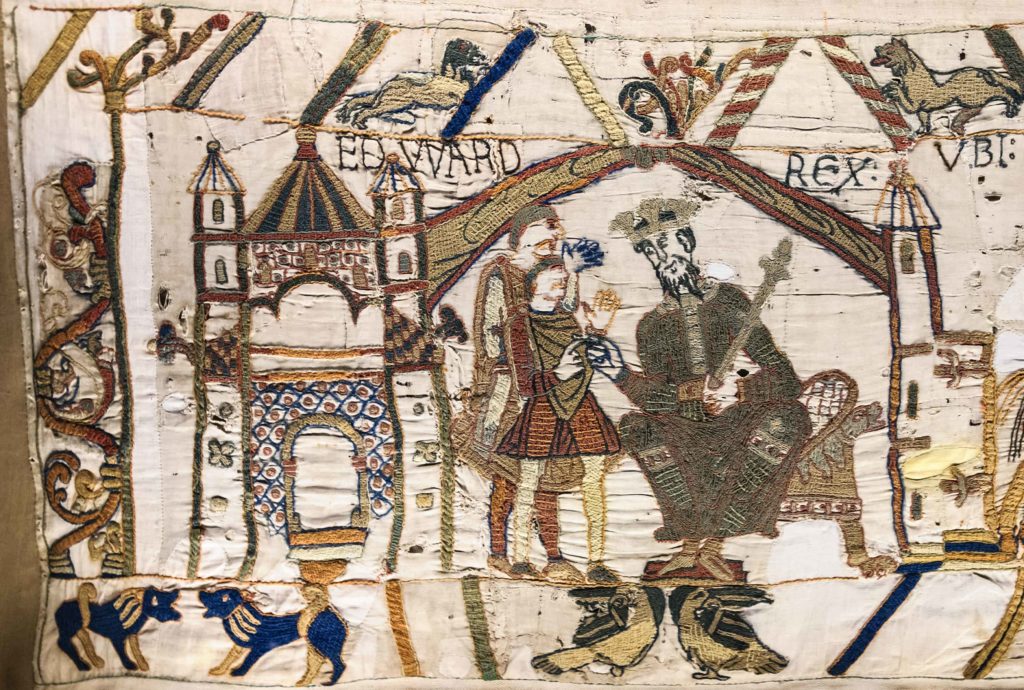
Harold Godwinson visits King Edward the Confessor
Most experts agree that it was produced in Norman England, probably by Anglo-Saxon women, who were renowned for their embroidering skills. Its nine linen panels were hand-stitched before being joined, which points to a professional workshop, according to Alexandra Lester-Makin, a specialist in early medieval embroidery. Measuring approximately 224 feet long and nearly 20 inches high, the tapestry is composed of a central panel flanked by an upper and lower border, each measuring 2 3/4 inches high. Decorating the borders are birds, lions, dogs, and deer along with imaginary creatures like dragons, griffins, and centaurs.
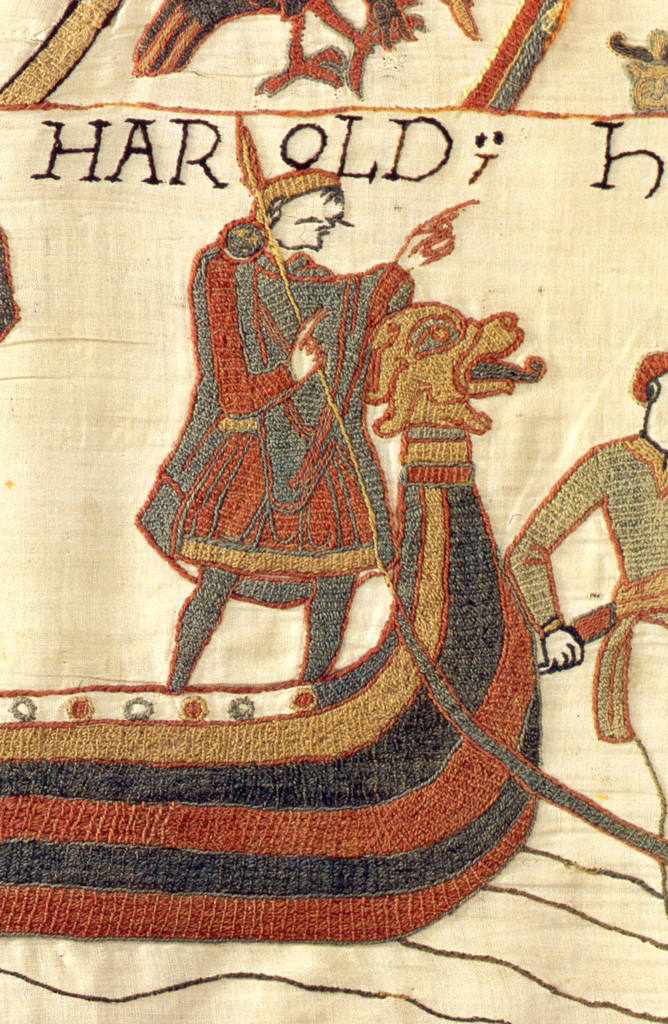
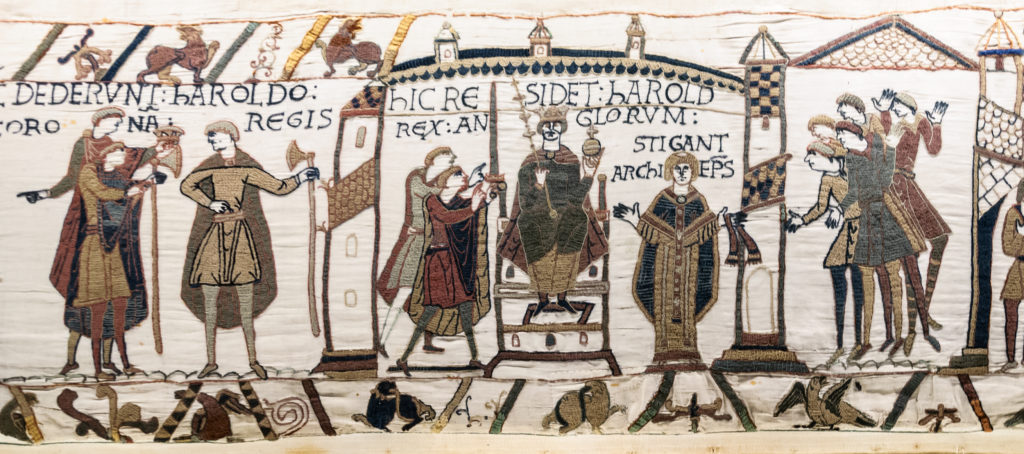
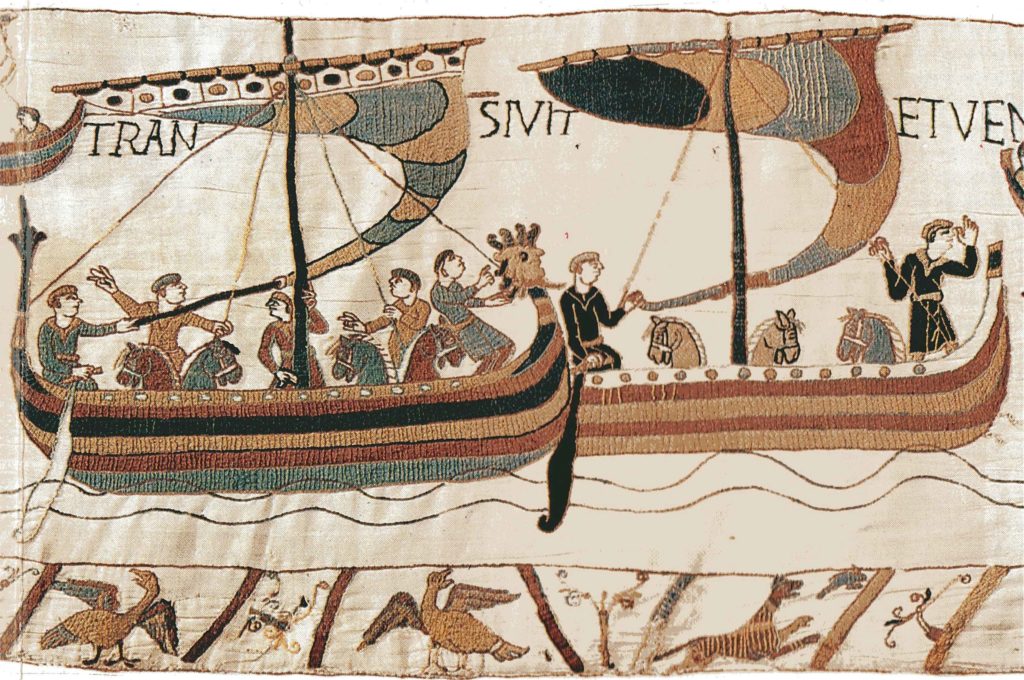
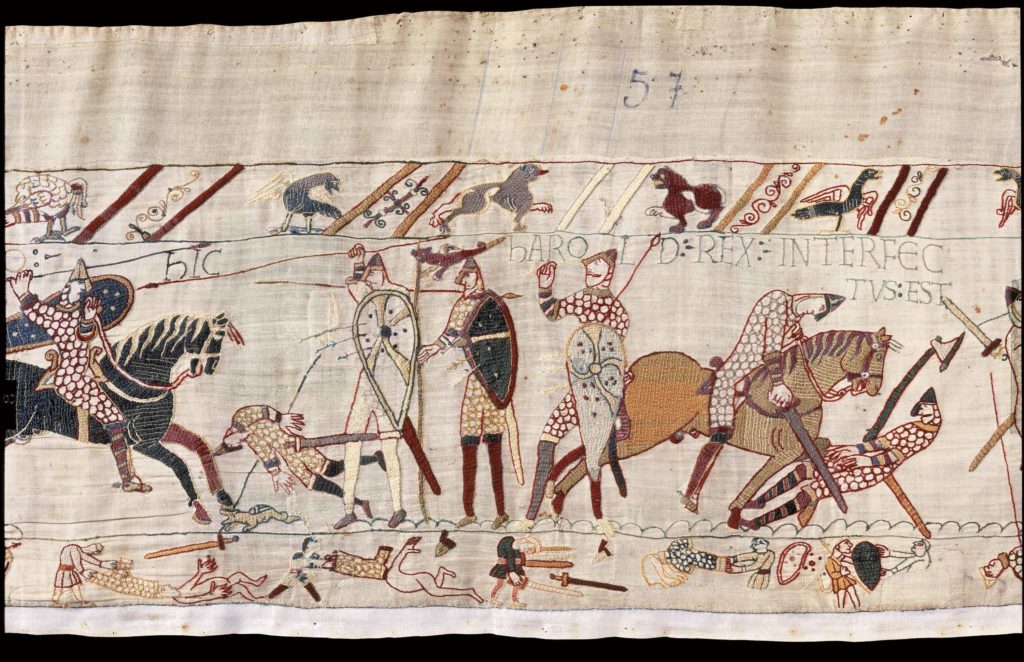
The 58 scenes unfold chronologically — starting with Harold Godwinson’s conversation with his brother-in-law King Edward the Confessor, followed by his voyage to Normandy and oath to Duke William on the sacred relics of Bayeux to uphold William’s claim to the English throne. After learning of Harold’s accession as king, William is so furious that he builds a fleet of ships and leads the Norman army across the Channel. The decisive battle at Hastings is stitched in 10 gory scenes, featuring corpses, dead horses, and the newly crowned Harold taking an arrow to the eye. Survivors are shown fleeing the hilltop battlefield.
Harold journeys to NormandyHarold is crowned King of England
In addition to its invaluable record as a historical document, the Bayeux Tapestry offers insights into 11th-century ships, weaponry, and everyday life. Populating it are more than 200 embroidered horses and mules, 35 dogs, and some 600 humans, including three women and three children. Of these, only 15 people are identified with their names in Latin. Lumberjacks and carpenters build ships; farmers plow and sow with mules and horses. In contrast to the mustachioed, long-haired Englishmen, the Normans are clean-shaven with short hairstyles. Before the battle, the Norman soldiers are shown enjoying a hearty meal of soup, bread, and roasted chicken.
The Norman ships underway
Thick wool threads against a smooth cream linen background give the epic tale a three-dimensional quality. The embroiderers worked with a limited palette of ten dyed colors of thread, all varieties of red, blue, yellow, and green, writes Gale R. Owen-Crocker in Making Sense of the Bayeux Tapestry. Rather than deluxe silk and gold thread, yellow and pale blue were used to represent gold and silver. To create the intricate scenes, embroiderers used four different stitches: the stem stitch for the 500-plus Latin inscriptions (mostly in dark blue yarn), split stitch and chain stitch for various objects, and couching stitch to fill in surfaces.
After a falling-out over his half-brother’s ambition to declare himself pope, William exiled Odo in 1082. It is thought that the tapestry was finished by this time, displayed in churches and castles throughout England and Normandy. (It is worth remembering that many viewers would have been illiterate, so visualizing this recent historical event in clearly defined episodes was essential.) The first record of the textile appears in the 1476 inventory of Bayeux Cathedral in northern France as “a very long and narrow hanging of linen, embroidered with figures and inscriptions representing the Norman conquest of England, and which is hung around the nave of the church on the Feast of Relics” (July 1–8). Confiscated dur-ing the French Revolution, the tapestry was covering a military wagon when a local lawyer rescued it and sent it to city administrators for safekeeping.
USEFUL TO MANY MASTERS
In 1803, Napoleon borrowed the textile from Bayeux for a two-month exhibition at the Louvre, which had been renamed the Musée Napoleon. To make room for the masterpiece, museum director Dominique-Vivant Denon removed several hundred Old Master drawings from the Apollo Gallery. When Napoleon attended the show’s opening, he was reportedly so taken with the parallel between a recent comet sighting and the depiction of the 1066 Halley’s Comet that appears in the tapestry that a description about it was added to the exhibition guide. Excerpts of the guide were reprinted in the influential Paris newspaper Le Moniteur.
While the Louvre showing captured the imagination of the French public, it triggered a backlash in England. A letter published in The Gentleman’s Magazine stated that England would survive “in spite of the vain, inglorious tauntings of the ambitiously mad Corsican tyrant, with all his host of myrmidons at his heels.” As Shirley Ann Brown writes in “The Bayeux Tapestry: New Approaches,” the tapestry became “a weapon in the ongoing propaganda battles between the French and the English which continued almost to the end of the nineteenth century.”
After the tapestry’s display in Paris, Denon wrote the sub-prefect of the borough of Bayeux that Napoleon was entrusting the work to the care of the locals. “He has applauded the care that the habitants of the city of Bayeux have brought for seven centuries and a half to its conservation. He has charged me to testify to them all his satisfaction and to entrust them with the deposit. Invite them to bring new care to the conservation of this fragile monument, which retraces one of the most memorable actions of the French Nation.”
In August 1805, Napoleon traveled to the port of Boulogne, poised to lead some 200,000 soldiers across the Channel for an assault on England. He told his wife, Joséphine: “I will take you to London. I intend the wife of the modern Caesar to be crowned in Westminster.”
But his dream of following in William the Conqueror’s footsteps was dashed. Britain had strengthened its coastal defenses. The superiority of the Royal Navy, recently confirmed by its destruction of the French fleet at Alexandria, led Napoleon to cancel the invasion and redirect his army toward continental Europe.
A decade after the tapestry’s return to Bayeux, an English traveler observed that it was kept “coiled round a machine, like that which lets down the buckets to a well.” In 1842, the tapestry was moved to Bayeux’s library, installed in a glass case in a new exhibition space where it remained for some seven decades. In 1870, when German troops invaded France during the Franco-Prussian war, the tapestry was removed for safekeeping.
After the war, the British government received permission to photograph the tapestry. As Carola Hicks describes in “The Bayeux Tapestry: The Life Story of a Masterpiece,” it took 180 glass negative plates to record the entire work in 1872. The Arundel Society issued the photographs in various formats. One of the full-size hand-colored reproductions was displayed at the South Kensington Museum, today’s Victoria and Albert.
In thanks, a full-size set and a half-size colored roll were sent to Bayeux. In 1931, organizers of a French art show in London asked to borrow the tapestry, but the request was denied due to concerns about the loan’s impact on tourism in Bayeux and the effect of travel on the embroidery itself.
During World War II, the tapestry was rolled on a winder inside a zinc-lined wooden crate and stored in a concrete shelter beneath Bayeux’s Hôtel du Doyen. During the German occupation of France, the SS seized on the tapestry as evidence of an early Germanic conquest of England by descendants of Norsemen or Vikings. In Nazi hands, the tapestry was used to advance German pan-nationalism and Aryan propaganda.
After its display and study, it was moved to the Abbey of Saint-Martin at Mondaye and then the Château at Sourches in 1943. In Berlin, the German archeologist Herbert Jankuhn spoke about the textile to SS chief Heinrich Himmler, who wanted to display it at his castle. In advance of the allied invasion in June 1944, the tapestry was moved to Paris, where it was stored with other looted art in the cellars of the Louvre.
After its display at the Louvre in late 1944, the tapestry was returned in March 1945 to Bayeux, which was among the first French towns to be liberated. In 1948, the textile moved to its new home at the Hôtel du Doyen. Post-war requests from London to borrow the tapestry were rejected, including one in 1953 for the coronation of Elizabeth II, a descendant of William the Conqueror. Another request in 1966 to mark the 900th anniversary of the Battle of Hastings was also denied.
Harold is slain during the Battle of Hastings
A FRAGILE ARTIFACT
Over its nearly 1,000-year history, the Bayeux Tapestry has endured light, dust, temperature changes, insects, and mold. Sometime after 1860, it underwent a major restoration. Areas of missing embroidery were re-stitched with wool threads dyed with chemicals, brighter than the original threads. During this period, a new lining was attached after an early backing was lost during restoration work. According to Pierre Bouet and François Neveux, authors of “The Bayeux Tapestry,” the cloth was mended in 120 places; 518 fragments were added to patch it up.
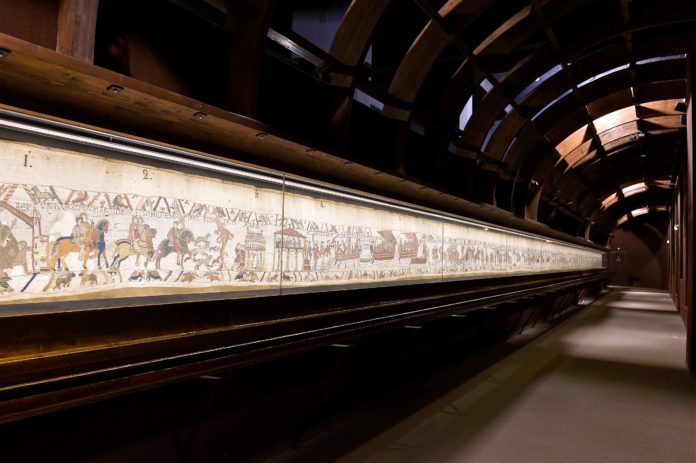
Today the embroidery is treated much more carefully. Since 1983, its home has been a branch of the Bayeux Museum located in a former 17th-century seminary. Installed in a case at eye level behind bulletproof glass, the textile stretches out in a long straight line until the episode when William decides to construct a fleet; there it curves along a rounded corner and circles back down the other side of the hall. To preserve the linen fibers and wool threads, it is kept in a darkened space at a temperature of 18–20 degrees Celsius, with a humidity level of approximately 50 percent. In 2007, the Bayeux Tapestry was added to UNESCO’s Memory of the World register, joining the Gutenberg Bible and other unique treasures.
Today the embroidery is a hugely popular tourist attraction, with some 400,000 people visiting it each year. In 2020, an architectural competition will invite proposals for a redesign of the display aimed at improving the tapestry’s conservation environment and visual presentation. According to spokesperson Fanny Garbe, this refreshed installation will be located in the same place but with a new facility added to welcome and serve visitors. “We want to make the visit more comfortable and also enrich our explanations of the Bayeux Tapestry, William the Conqueror, etc.,” says Garbe. “In a word, to turn this museum into the public’s gateway to Medieval Normandy.”
A committee of curators and historians is slated to begin a scientific study on how to stabilize, safely transport, and display the fragile textile in Britain. Though the timing, length, and venue for the much-anticipated exhibition have not been confirmed, the British Museum is the frontrunner thanks to its capacity for large numbers of visitors, gallery space, and historical focus. Other contenders include the museum at Battle Abbey in East Sussex (site of the Battle of Hastings), along with the Victoria and Albert Museum, which regularly displays textiles.
As the UK continues to debate its departure from the European Union, this highly symbolic gesture of cultural diplomacy between Britain and France seems more compelling than ever.
SUSAN JAQUES is the author of The Caesar of Paris: Napoleon Bonaparte, Rome, and the Artistic Obsession that Shaped an Empire (December 2018, Pegasus Books). This article was originally published in Fine Art Connoisseur magazine, January/February 2019.
> Visit EricRhoads.com to learn about more opportunities for artists and art collectors, including retreats, international art trips, art conventions, and more.
> Sign up to receive Fine Art Today, our free weekly e-newsletter
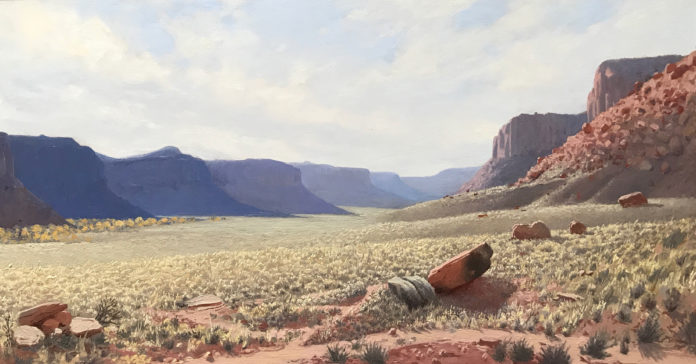
EMILIE LEE (b. 1981), "Bears Ears National Monument," 2018, oil on panel, 10 x 20 in.
There is a lot of superb contemporary realism being made these days; this article by Allison Malafronte shines light on a gifted individual.
Most days EMILIE LEE (b. 1981) can be found in the great outdoors, painting en plein air at bucolic locations around the country or enjoying her favorite outdoor activities. “In the three years since I left New York City, plein air painting has allowed me the freedom to travel the world, practice my craft wherever I am, and support my lifestyle by selling the work on Instagram,” the artist shares.
In addition to recording the beauty of nature in paintings, Lee is passionate about preserving the land she loves. In 2017 she wrote an article for the outerwear purveyor Patagonia detailing a project of which she is particularly proud: a series of paintings created on Montana’s Northern Great Plains.
She explained how deeply the Hudson River School painters’ reverence for nature resonated with her, as did the fact that their work helped inspire the creation of America’s national park system. In keeping with their principles, Lee participated in the Grand Central Atelier’s Hudson River Fellowship for six consecutive summers and went on to become one of its senior fellows.
“As my abilities and confidence grew, so did my dreams of how I could apply my artistry to the modern-day fight for wilderness conservation,” Lee wrote. “I imagined that I would end up traveling to the Arctic and painting the disappearing ice, but as fate would have it, I found a lesser-known and more uplifting story much closer to home.”
American Prairie Reserve is a nonprofit organization that protects 3.5 million acres of wildlife habitat on Montana’s Northern Great Plains. Lee has made several trips there to create more than 50 paintings while sharing her journey on social media and selling the resulting works through Bozeman’s Old Main Gallery.
Since her Montana project began, Lee’s loves of painting, outdoor adventure, and conservation have continued to find natural intersections. In the painting “Bears Ears National Monument” (above), for instance, she brings the clarity of a sunny Utah day into view as only someone intimately familiar with the area can.
An avid rock climber, Lee has been visiting Bears Ears since 1999. When she learned that this desert area’s protected status would be severely compromised, she took action by making a series of paintings on site and designating a portion of its proceeds to the Grand Canyon Trust.
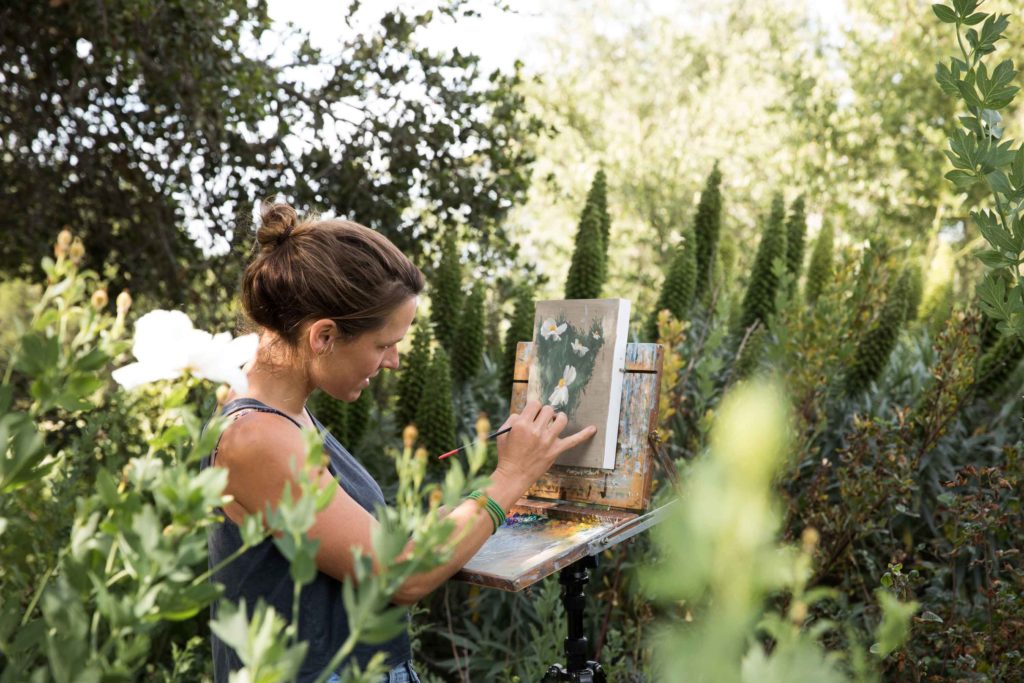
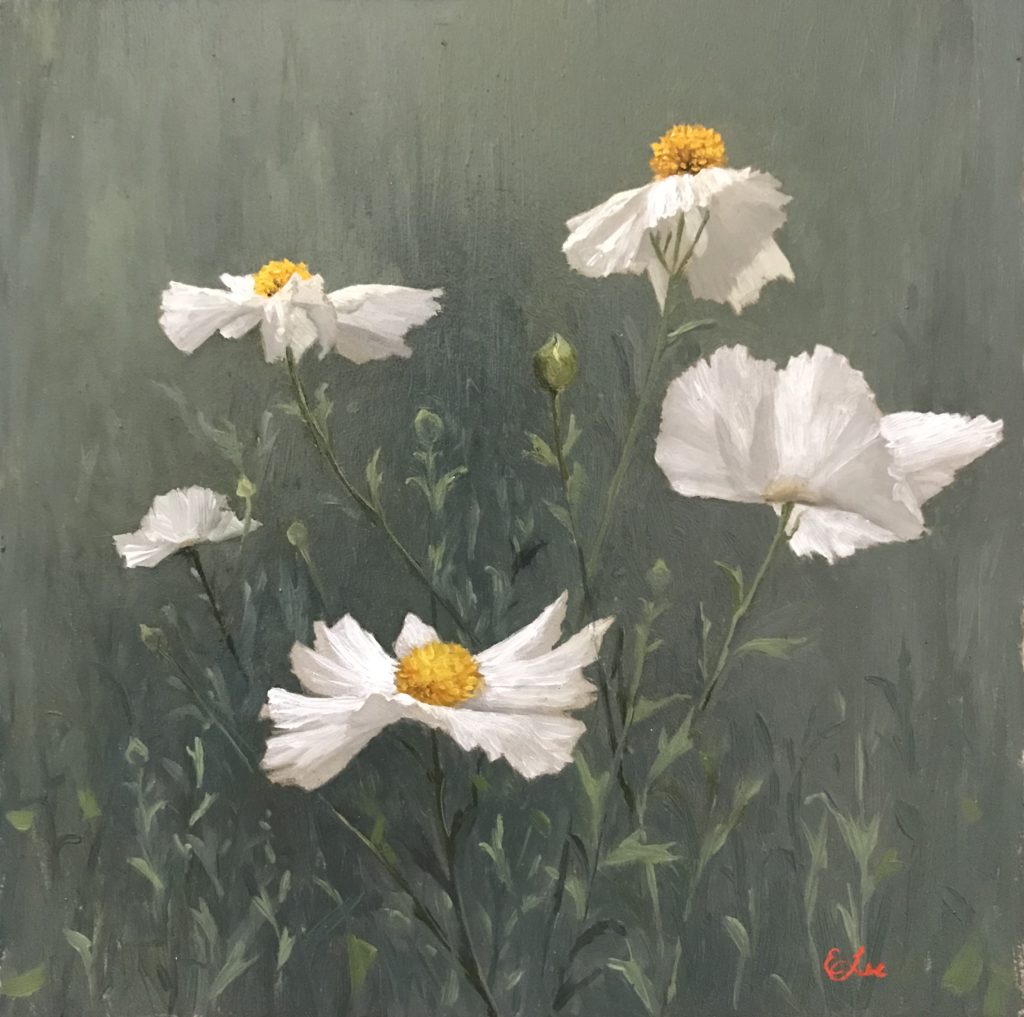
Emilie Lee painting the Matilija Poppy bloom at the Vedanta Center Montecito during the 2020 Covid lockdown. Photo by Lauren Ross.
The above article was originally published in Fine Art Connoisseur in 2019. We followed up with Emily recently, who told us:
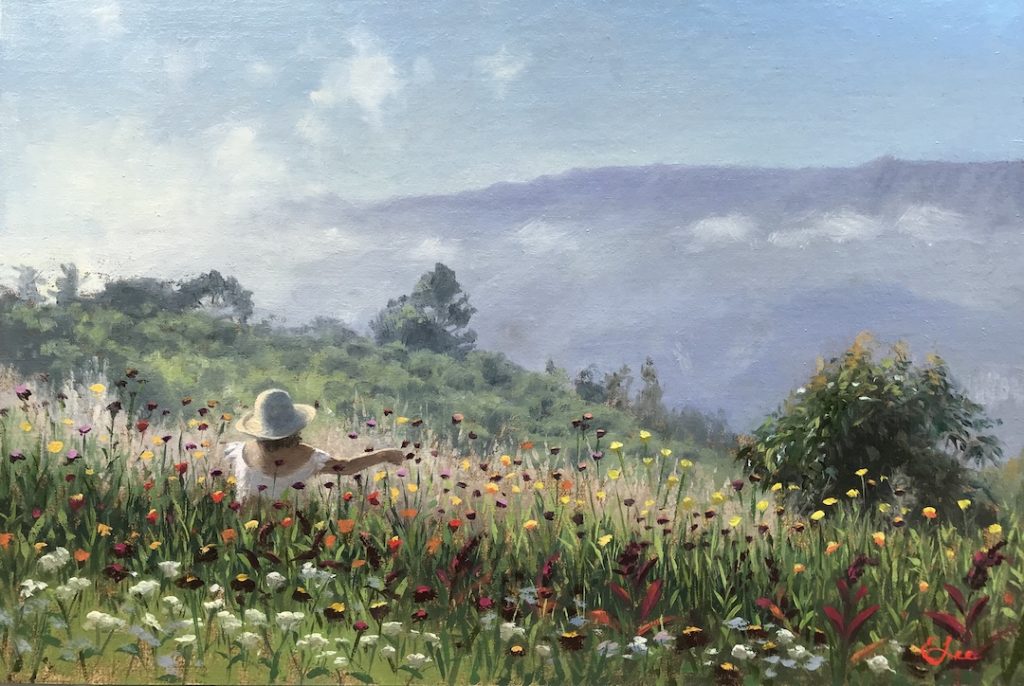
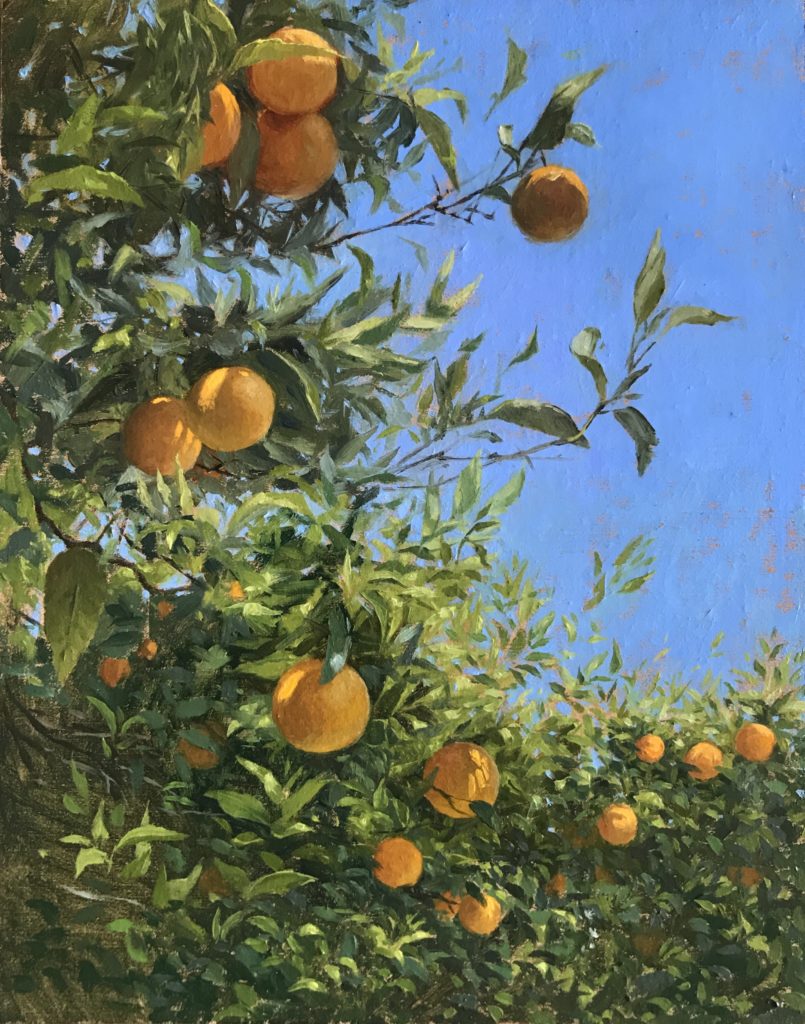
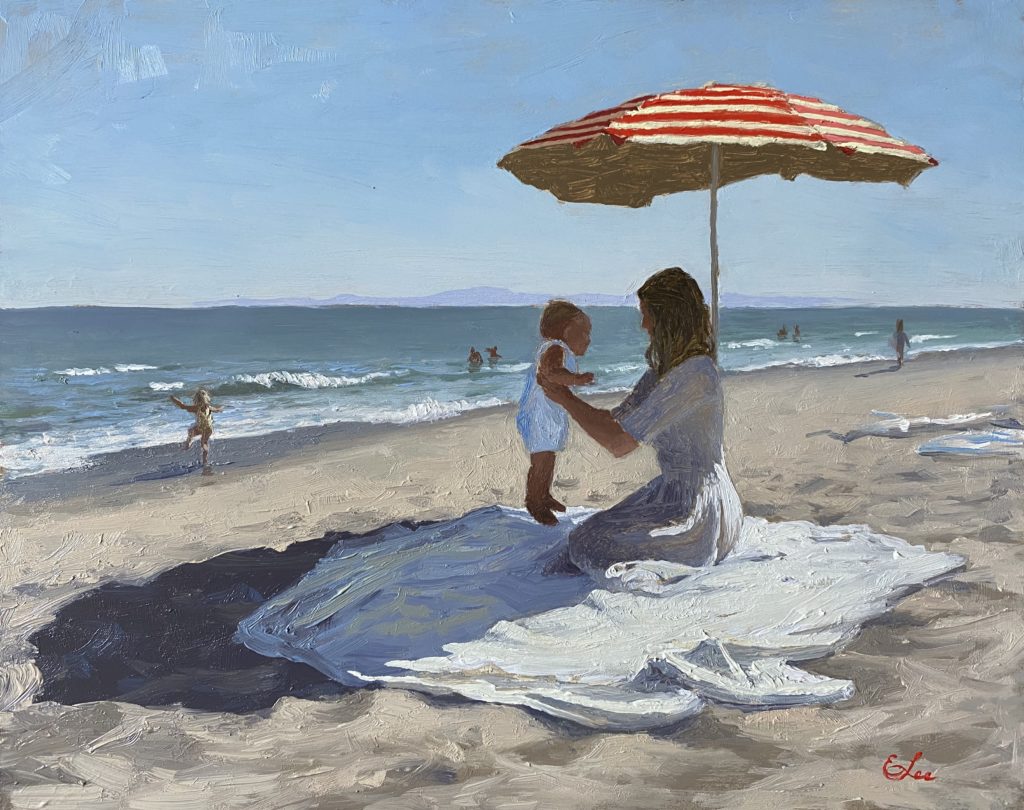
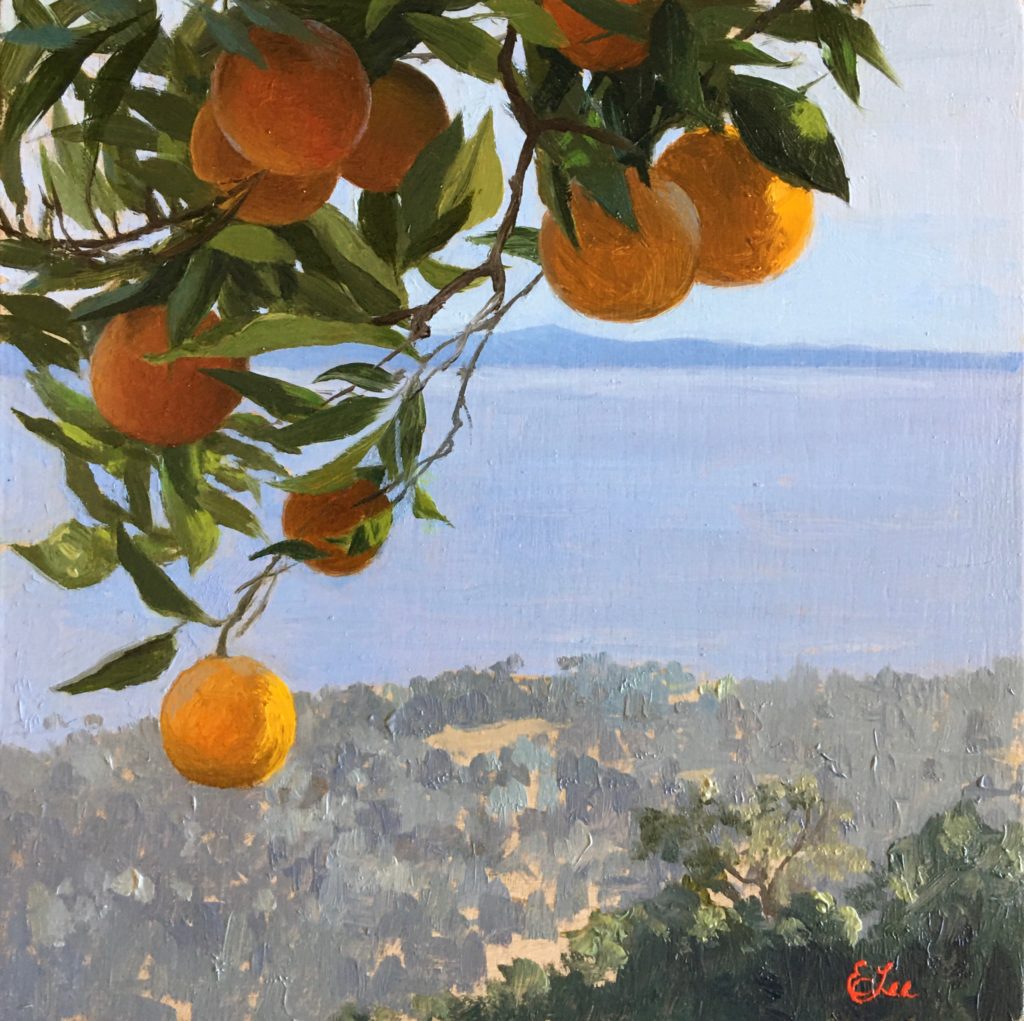
“A lot has changed in my life since that article came out. I spent the past year quarantined at home and painting local scenes of flowers, orange and lemon trees, commissions of family scenes at the beach, and still lifes. I’ve also been pregnant for the past six months, which has kept me in lockdown mode since Covid is still a concern where we live.
“It has been a great year for painting and I feel so grateful to live in a place that has so much beautiful inspiration. 2020 turned out to be a wonderful opportunity for me to become more familiar with our local landscape, which is still new to me. I moved to Santa Barbara in 2017 and until Covid I spent most of my time traveling on adventurous painting and climbing trips. Although I miss traveling a lot right now, I’m really happy with how my painting practice has evolved with my more grounded lifestyle. I’m anticipating more big changes ahead with the arrival of my first baby, but feeling very excited and optimistic about what new directions my painting will take me in the years to come.”
Additional Oil Paintings by Emilie Lee:
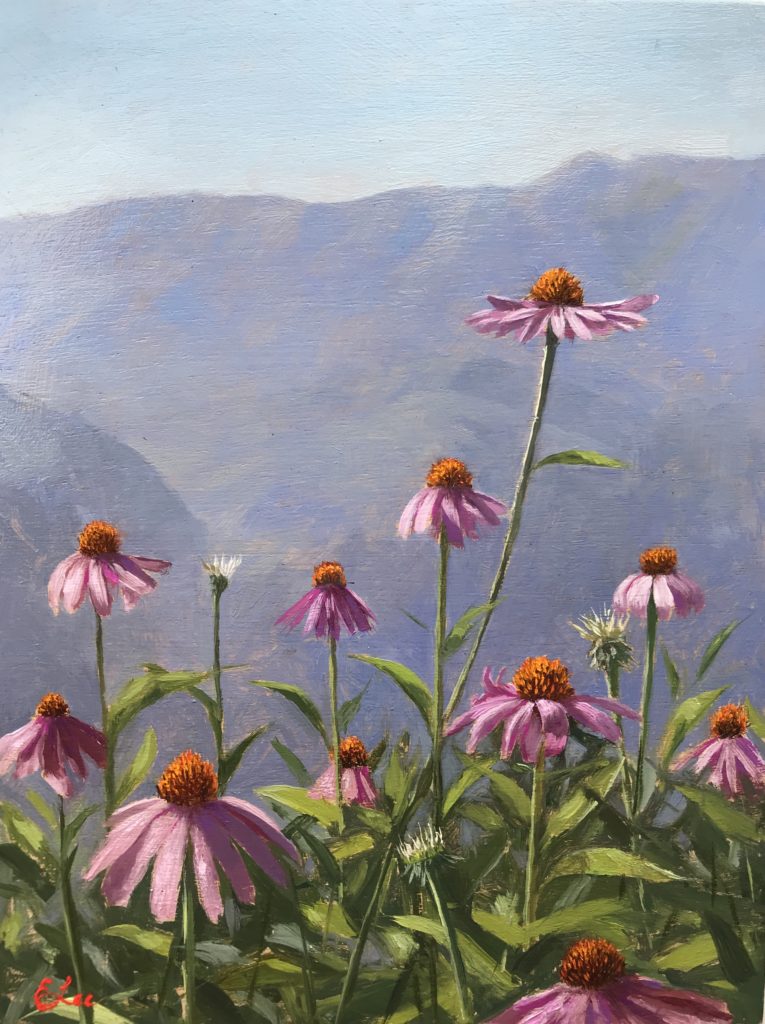
Emilie Lee, “Echinacea,” 6″x8″ oil on panel, 2020Emilie Lee, “Sweet Mountaintop Farm,” 8″x12″ oil on panel, 2020Emilie Lee, “Oranges Under Quarantine,” 11″x14″ oil on panel, 2020Emilie Lee, “Miramar Afternoon,” 8″x10″ oil on panel, 2020Emilie Lee, “Matilija Poppies #6,” 8″x8″ oil on panel, 2020Emilie Lee, “Julia’s Oranges,” 6″x6″ oil on panel, 2020
> Visit EricRhoads.com to learn about more opportunities for artists and art collectors, including retreats, international art trips, art conventions, and more.
> Sign up to receive Fine Art Today, our free weekly e-newsletter
As part of our effort to continue to help artists and art galleries thrive, we’re proud to bring you this week’s “Virtual Gallery Walk.” Browse the artwork below and click the image itself to learn more about it, including how to contact the gallery.
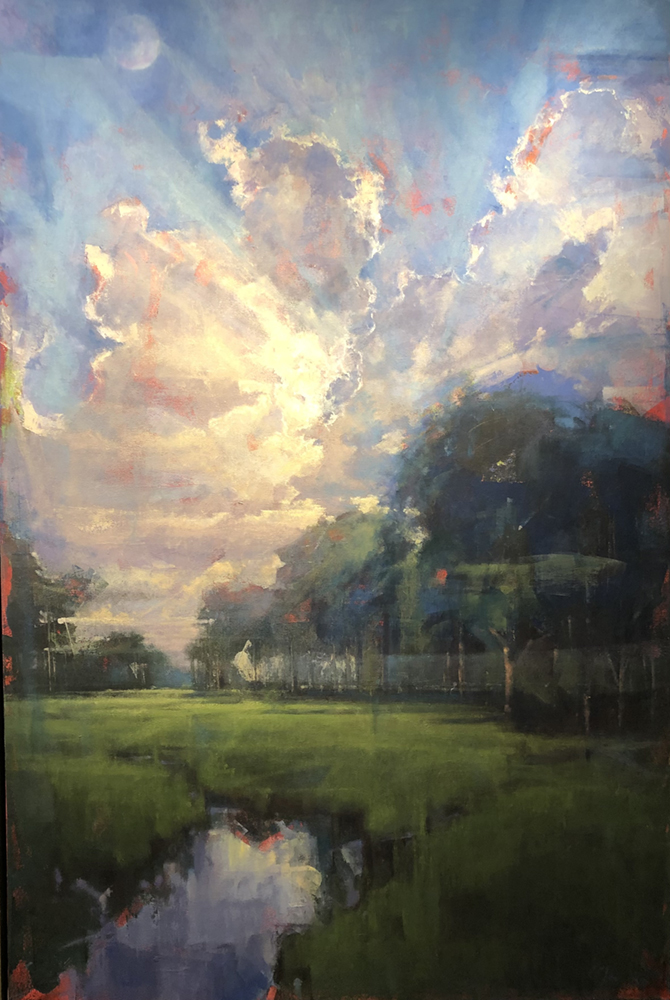
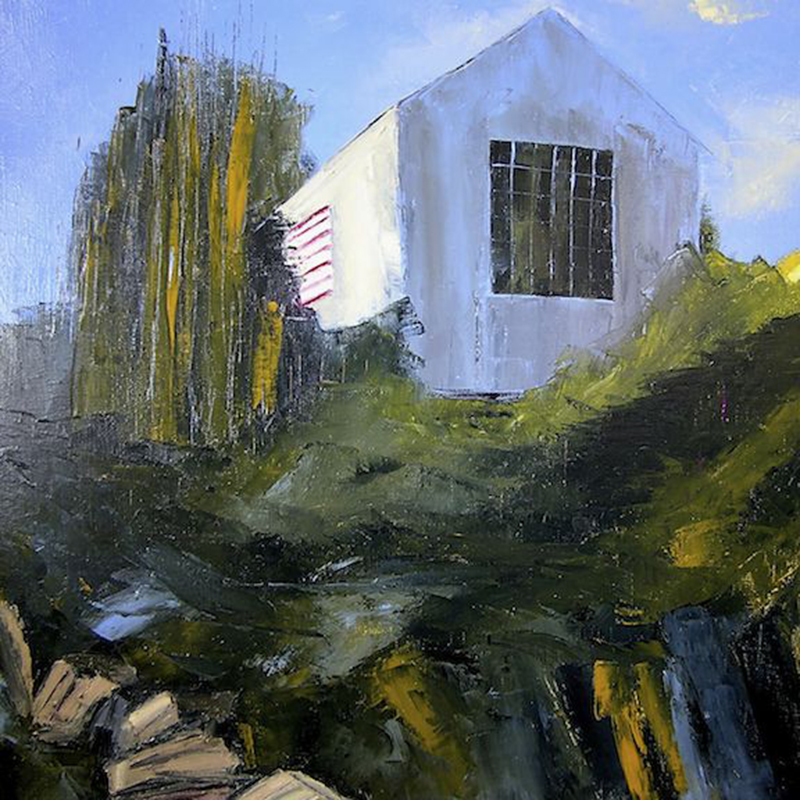
Breaking Through by Chris Groves, Oil, 60 x 40 in.; Anderson Fine Art Gallery
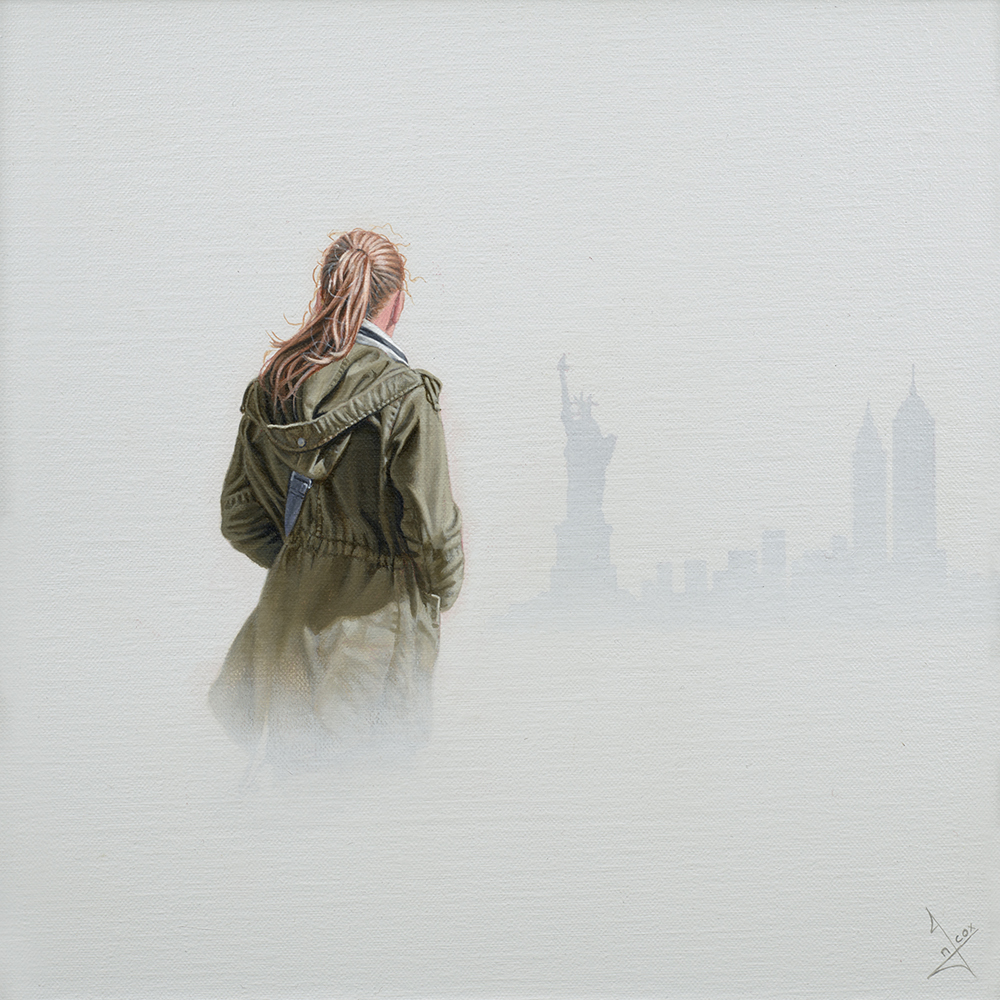
A Trip II by Nigel Cox, Oil on canvas, 12 x 12 in., Signed; Rehs Contemporary
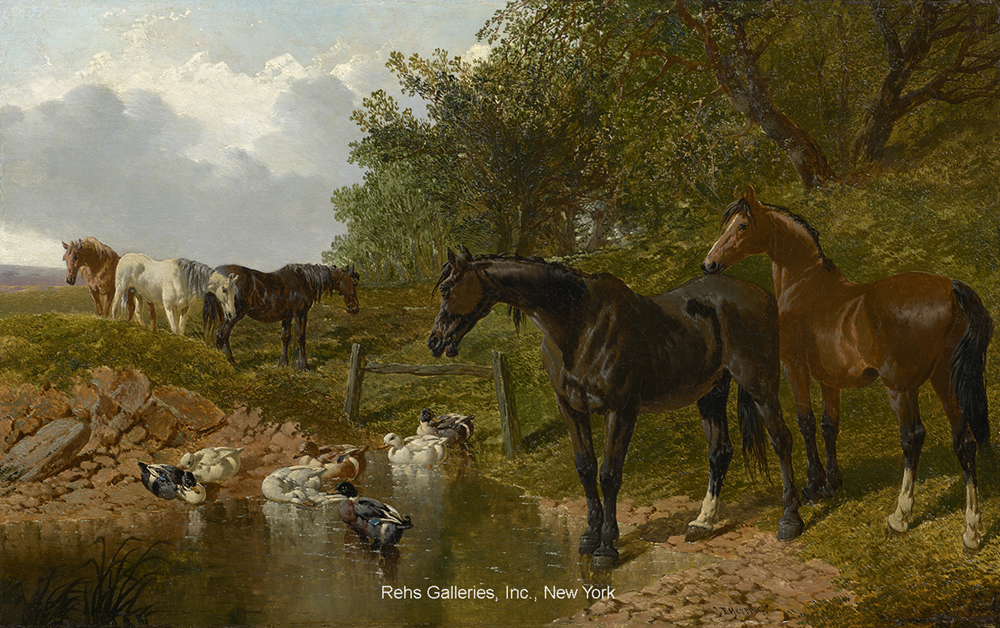
At the Water’s Edge by John F. Herring, Jr. (Circa 1820 – 1907), Oil on canvas, 15 x 24 in., Signed; Rehs Galleries, Inc.
From the Mountains to the Prairies… by Janis Sanders, Oil on canvas, 30 x 30 in.; Vermont Artisan Designs
When Your Heart Beats In Eden by Dale Terbush, Acrylic, 30 x 40 in.; ArtzLine
Want to see your gallery featured in an upcoming Virtual Gallery Walk? Contact us at [email protected] to advertise today. Don’t delay, as spaces are first come, first served, and availability is limited.
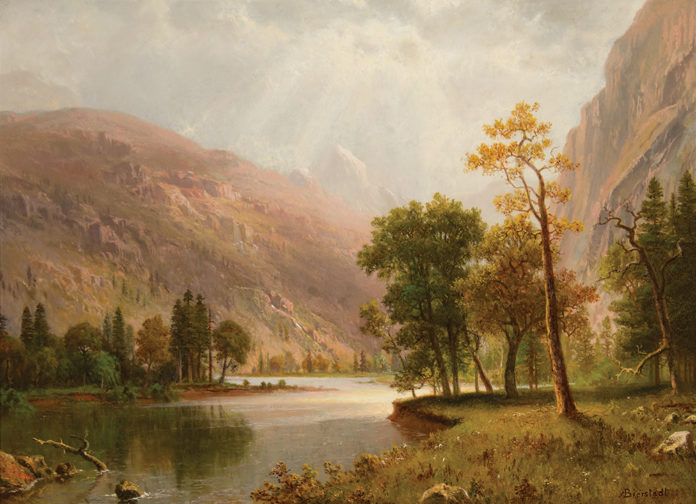
Albert Bierstadt, "Star King Mountain," oil on paper mounted on board, 14 X 19 in., Estimate: $300,000 - $500,000
With more than 400 works of art that speak to the vastness, the adventure and the beauty of the West, the Scottsdale Art Auction returns April 9-10, 2021, featuring Western, wildlife, and sporting art.
More from the organizers:
The sale will include pieces from many of the master painters and sculptors of the West, including:
William Gollings
W. Herbert Dunton
Joseph H. Sharp
Charles M. Russell
Edgar Payne, and
Albert Bierstadt
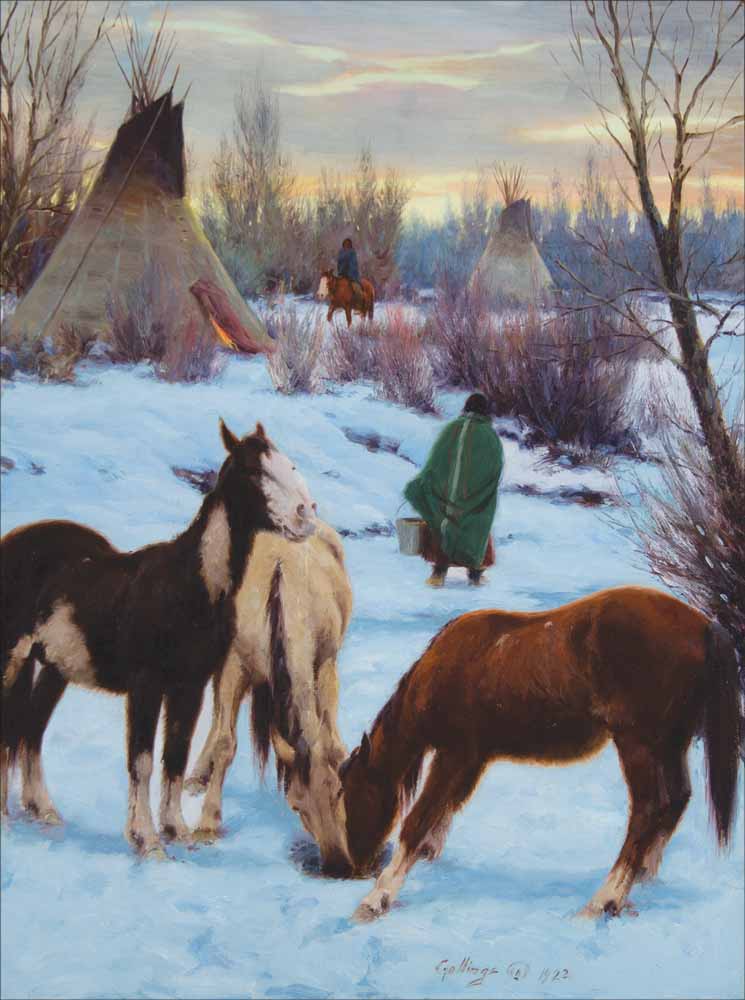
William Gollings, “Cheyenne Winter Camp,” oil on canvas, 24 X 18 in., Estimate: $300,000 – $500,000
As well as works from contemporary greats such as:
Martin Grelle
Logan Maxwell Hagege
Bill Anton
Mark Maggiori
Kyle Polzin
Morgan Weistling, and many more
The Scottsdale Art Auction will also include major pieces from wildlife artist Carl Rungius, who will be represented by two pieces showing some of his most iconic subject matter.
The sale takes place in the heart of the arts district in Scottsdale, “the West’s Most Western Town.” The auction was founded in 2005 by three of the most respected names in the field: Michael Frost of New York City’s J. N. Bartfield Galleries, Jack Morris of Morris Fine Art in Hilton Head, South Carolina, and Brad Richardson of Legacy Gallery in Scottsdale. The three partners have more than a century in combined experience in art and are regarded as leaders in this thriving art market.
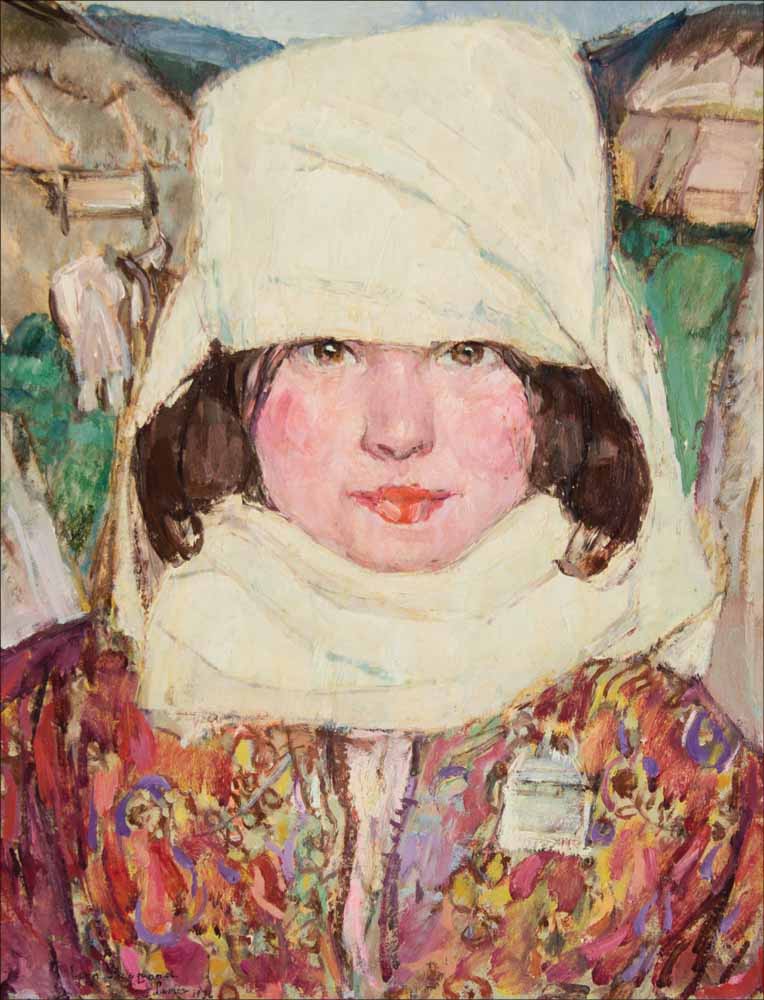
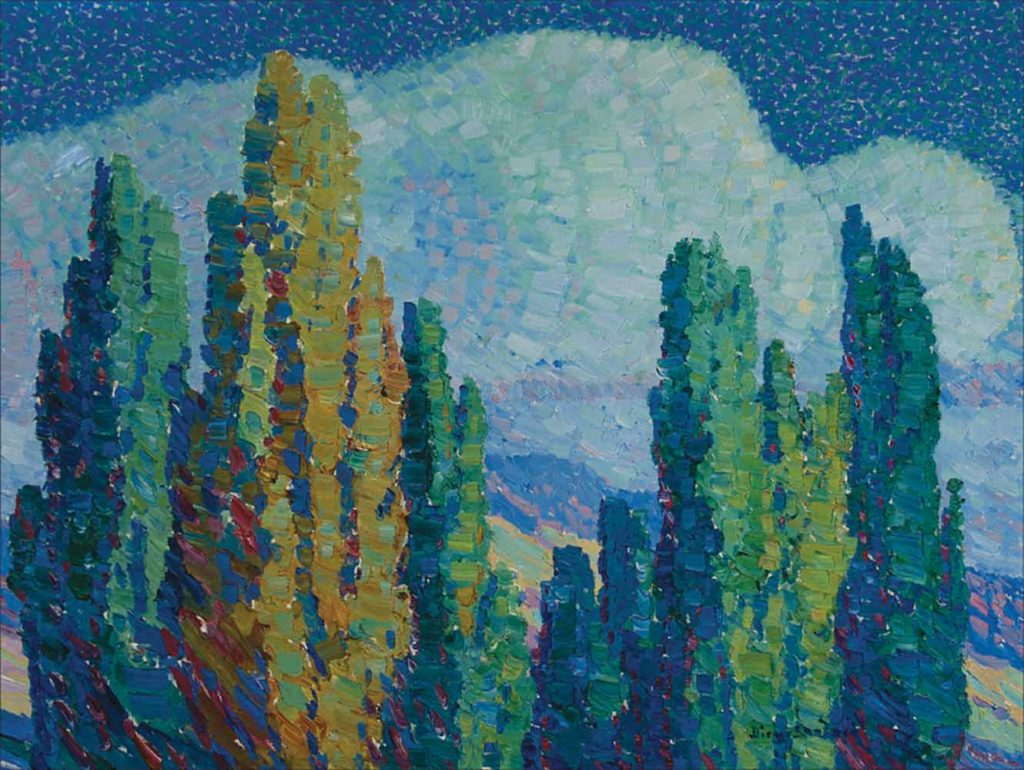
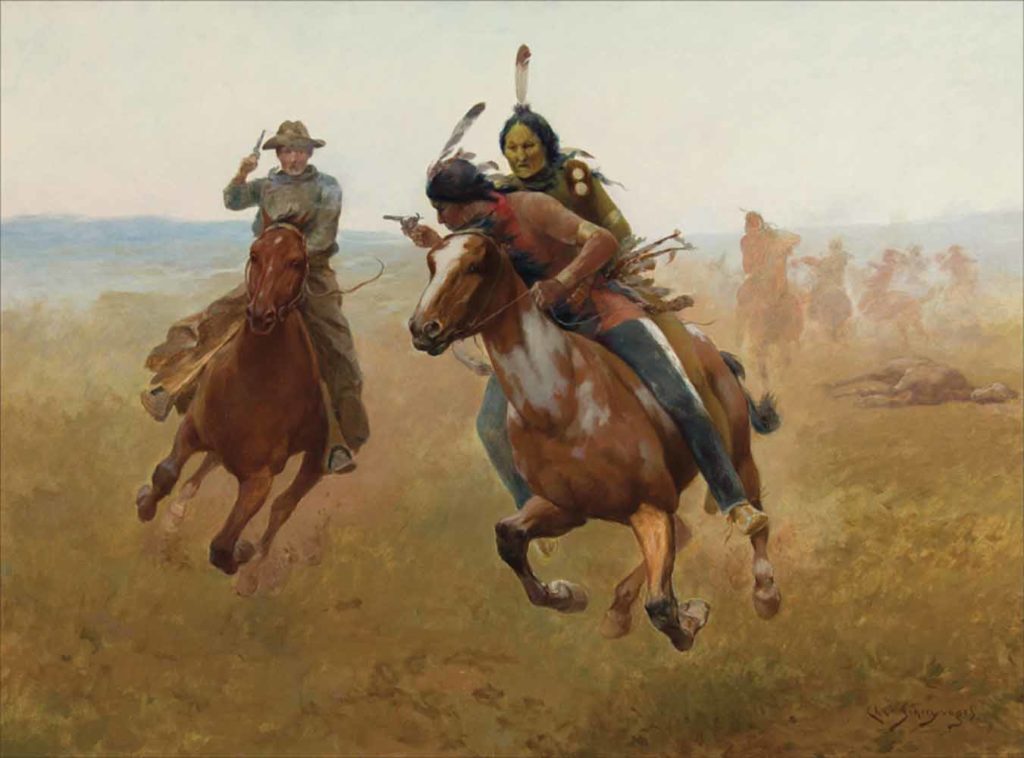
Leon Gaspard, “Korzak Girl,” oil on board, 16 34 X 13 1/4 in., Estimate: $70,000 – $90,000Birger Sandzen, “Poplars in Moonlight,” oil on canvas, 30 X 40 in., Estimate: $125,000 – $175,000Charles Schreyvogel, “A Close Call,” oil on canvas, 25 1/4 X 34 in., Estimate: $750,000 – $1,250,000
> Visit EricRhoads.com to learn about more opportunities for artists and art collectors, including retreats, international art trips, art conventions, and more.
> Sign up to receive Fine Art Today, our free weekly e-newsletter
Fill your mind with useful art stories, the latest trends, upcoming art shows, top artists, and more. Subscribe to Fine Art Today, from the publishers of Fine Art Connoisseur magazine.