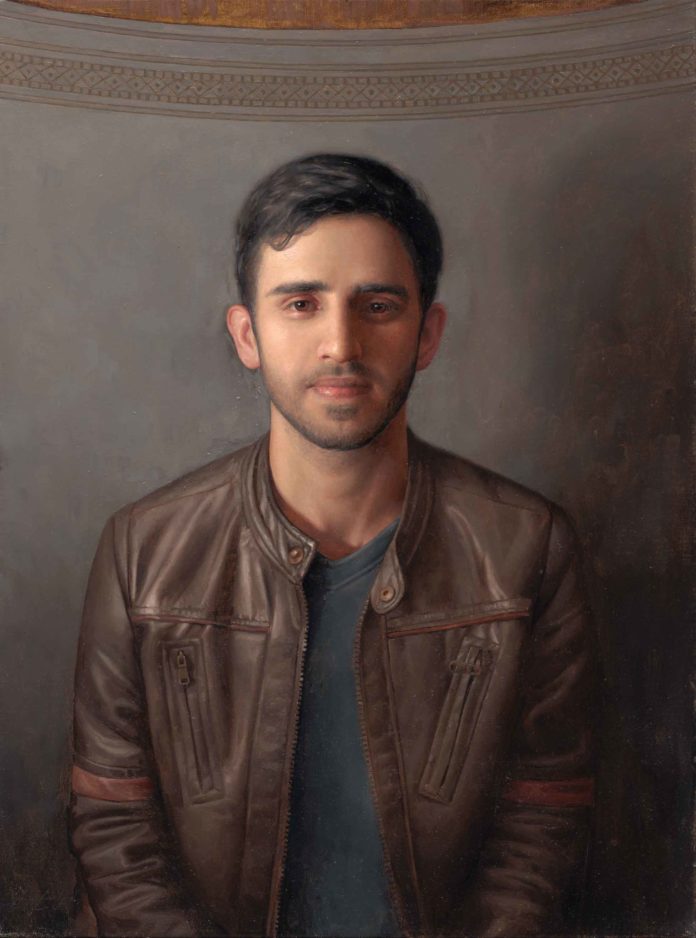
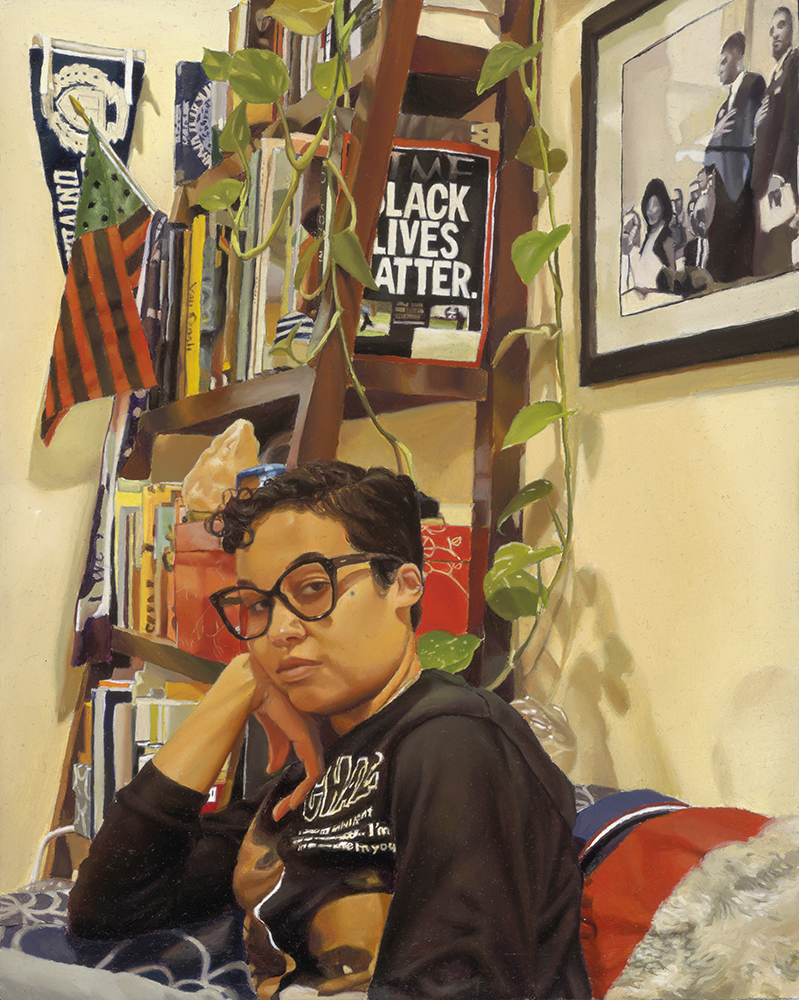
"Ajmal, Refugee from Afghanistan," Carla Crawford (b. 1981), oil on linen, 2016, 24 x 18 in., collection of the artist
Every three years, artists in the U.S. are invited to submit a recent portrait for the Outwin Boochever Portrait Competition, judged by a panel of experts chosen by the Smithsonian Institution’s National Portrait Gallery (NPG).
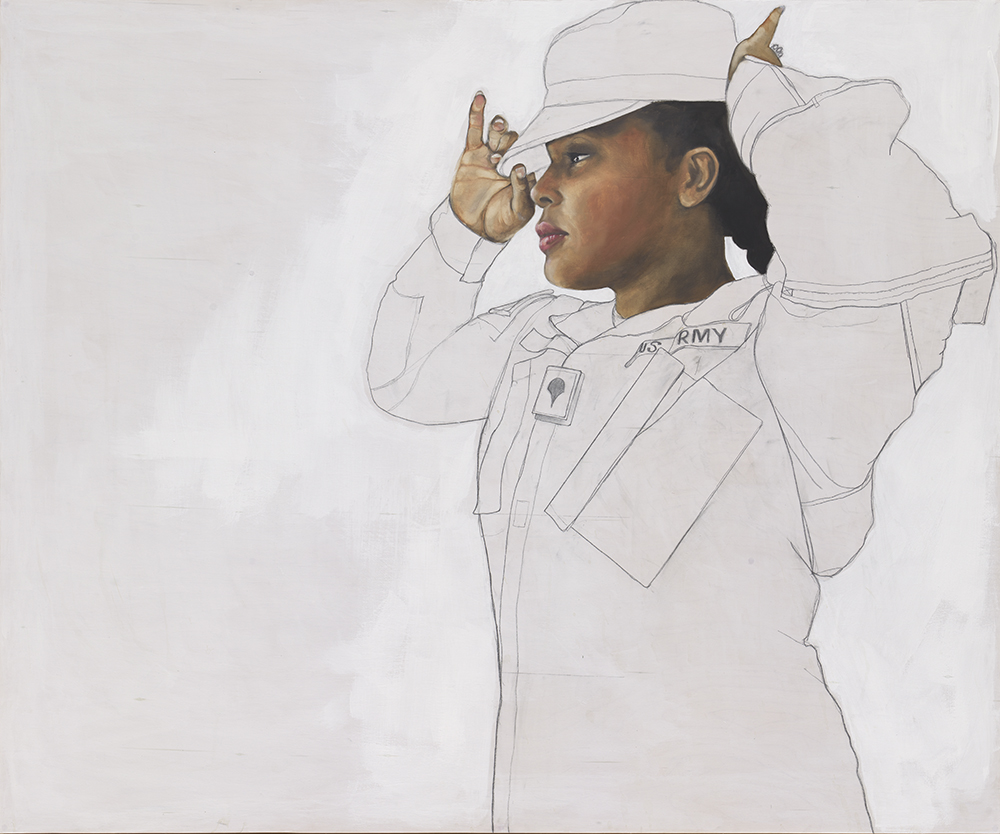
In 2019, nearly 50 works were selected from over 2,600 entries that included painting, drawing, sculpture, photography, time-based media, and performance art. All were displayed at the NPG in the exhibition “The Outwin: American Portraiture Today,” and now that show’s finalist works are on view at the Michele and Donald D’Amour Museum of Fine Arts (Springfield Museums, Massachusetts) through April 4, 2021.
The participating artists hail from 14 states, Washington, D.C., and Puerto Rico and have offered powerful insights into the human lives they portray. “The Outwin has gained a reputation for spotting the best of the best in American portraiture,” says Kay Simpson, president and CEO of the Springfield Museums. “And we are excited to also feature regional portraiture in our Community Gallery.”
After closing in Springfield, the NPG show will move to the Mildred Crosby Kemper Art Museum at Washington University in St. Louis (September 10, 2021–January 23, 2022).
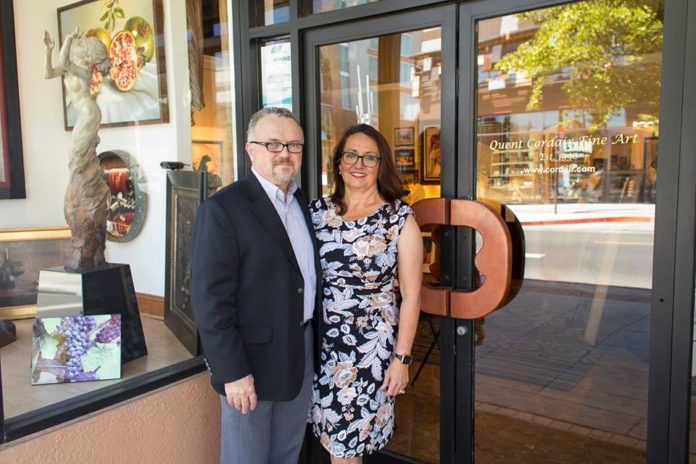
Art Galleries Spotlight > Linda Cordair, Co-Owner/Director of Quent Cordair Fine Art, joined Fine Art Today for an exclusive Q&A about the gallery’s top priorities today, her advice for collectors, and more.
Quent Cordair Fine Art was established by artist Quent Cordair in 1996. As a premier provider of contemporary Romantic Realism in painting, sculpture, and drawing, QCFA has grown to serve an international clientele of private and corporate collectors.
Romantic Realism, the movement which renews the high esthetic standards and techniques of pre-20th century ateliers, brings a rebirth of comprehensibility, beauty, romanticism and stylization to contemporary subject matter. The gallery’s collection emphasizes themes which celebrate the moments of happiness, joy, and success possible to Man on earth. Subject matter includes figurative, narrative, allegorical, still lifes, seascapes and landscapes. Award-winning painters and sculptors of international renown are represented, as well as emerging artists of unique vision and accomplishment. Commissions are available for portraiture, murals, garden and architectural projects.
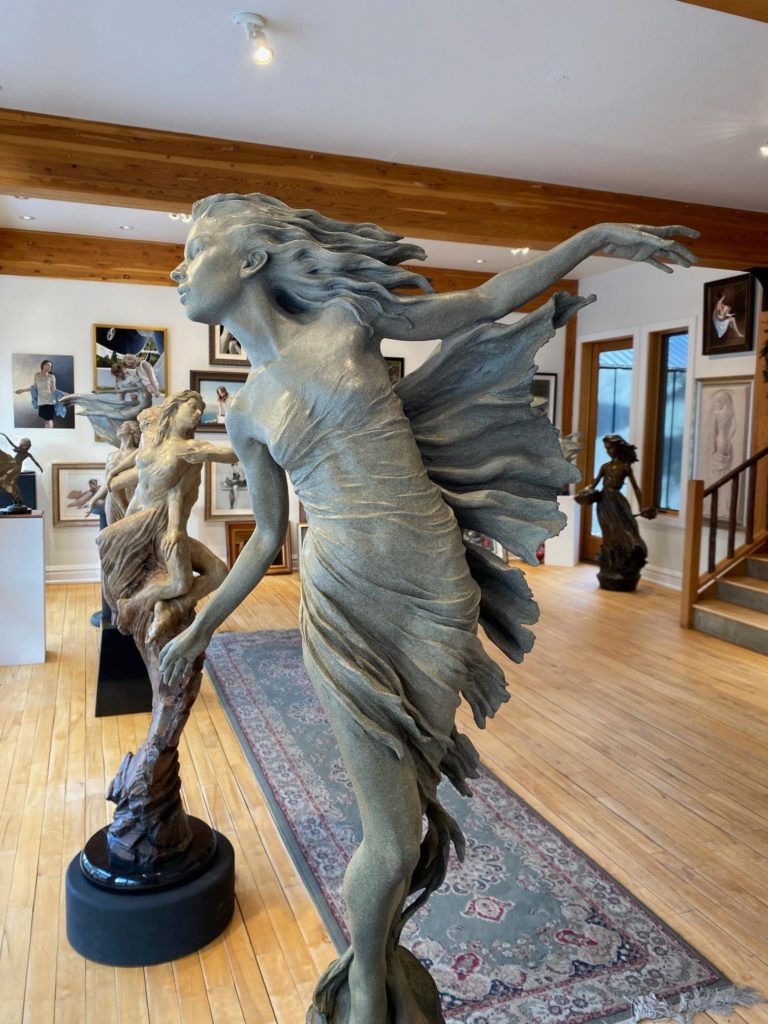
“Dare to Dream,” bronze sculpture by Karl Jensen
Cherie Dawn Haas: Please tell us about your gallery and the type of art in which you specialize. Feel free to share some of the history of your gallery with us. Linda Cordair: Established in 1996, Quent Cordair Fine Art specializes in paintings and sculptures in the Romantic Realist style. Thirty artists – 20 painters and 10 sculptors are represented in two beautiful galleries; one in Napa, CA, and one in Jackson, WY.
“Lunch Break” by Quent Cordair
CDH: What adjustments have you made as a gallery; what special challenges are you facing with opening a new gallery? LC: Thankfully, our longevity and presence online have helped us navigate a challenging year of retail closures and limited travel due to the pandemic. The positive nature of the art we represent, has, and continues to serve as an essential source of fuel for many people around the world.
CDH: What’s your biggest priority at this time? Over the next year? LC: Our biggest priority is always finding homes for the art.
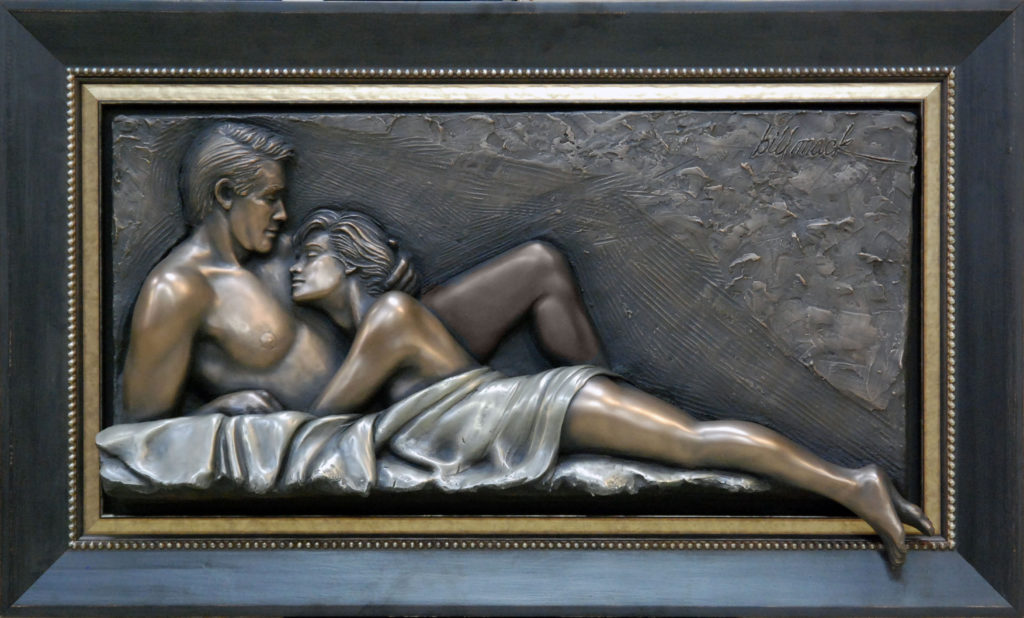
“Forever” by Bill Mack, limited-edition alto relief
CDH: What advice do you have for collectors as they navigate these times, and beyond? LC: Surround yourself with what you love! Purchase art that you look forward to seeing every day; in your workspace, when you come home, when you open your eyes in the morning, and what you see before you close your eyes at the end of the day.
CDH: Anything else you’d like to add about the current issues galleries are navigating? LC: Awareness that art is essential and should be enjoyed. That visiting a gallery can provide a much-needed emotional lift during stressful times.
CDH: What are some of the ways you find artists to represent? LC: Most of our artists have been with us 15-25 years. We recently brought on two new painters. The “inn” is full for now.
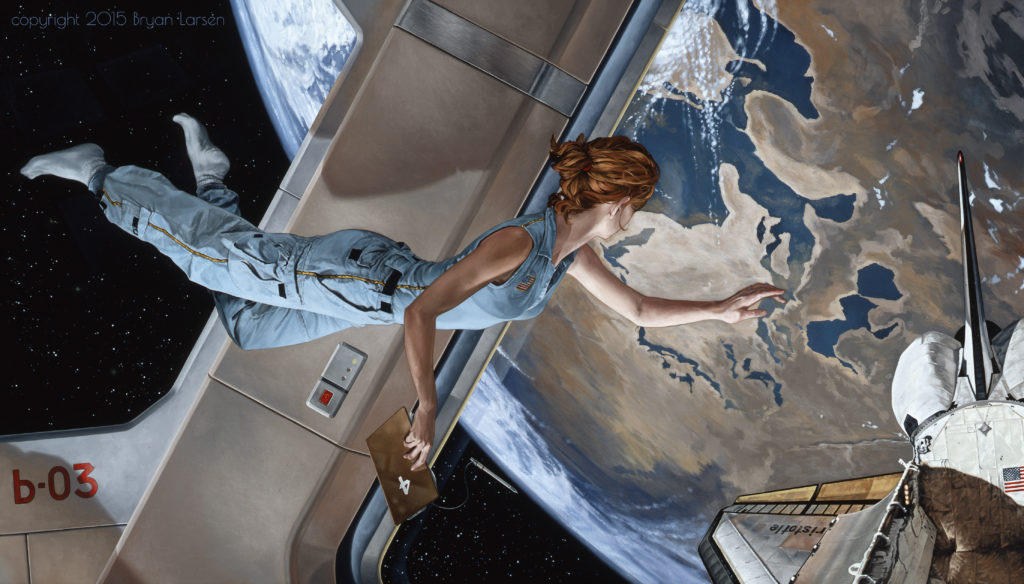
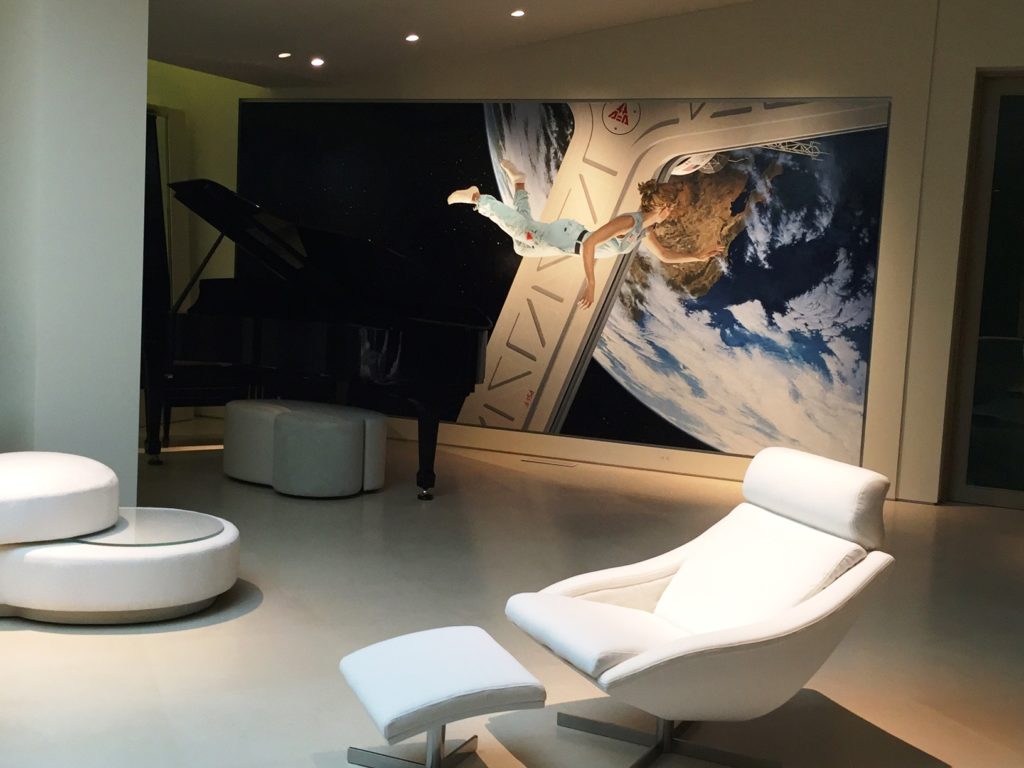
“How Far We’ve Come,” Bryan Larsen
CDH: Regarding your exhibitions, do you have a current online show? LC: To our knowledge, we had the very first online art gallery back in the 1990’s – cordair.com. We do our best to provide beautiful images, information, and user-friendly options to enhance our online guests’ experiences.
CDH: Anything else you’d like to add? LC: Presented with the opportunity, we enjoy supplementing our fans and customers’ art experience with education about displaying, lighting, and caring for their new treasures.
We also delight in school field trips to the galleries starting with the third grade.
We also offer “white glove tours” of the sculptures in the gallery by appointment. The tours provide unique and wonderful opportunities to experience the art tactilely.
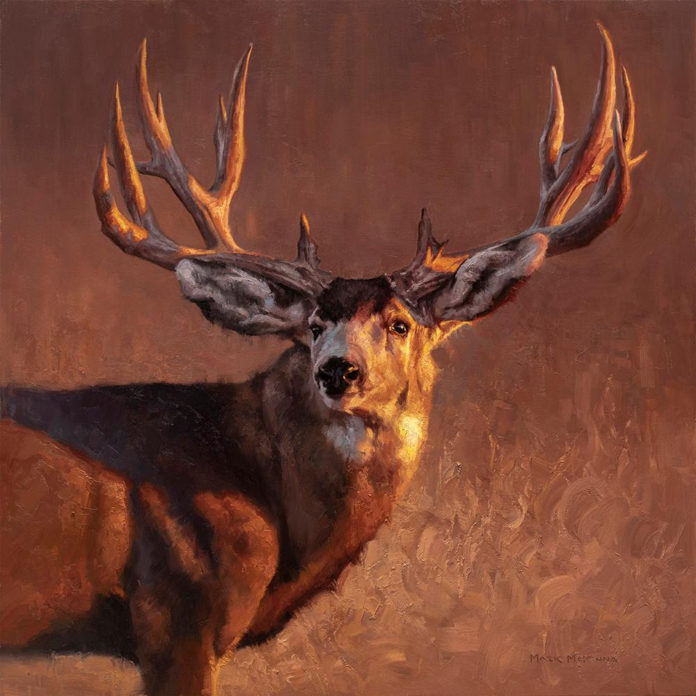
“With art shows being cancelled right and left … due to Covid-19, I have really started to miss being out there and being able to spend time with all of you,” said Mark McKenna of Mark McKenna Studios. “These art shows have become a very important aspect of my life, and I am so grateful for the friendships I have been able to create with each of you! I sincerely miss seeing your smiling faces, having wonderful conversations, and laughing together.
“So, with that being said, a group of several incredible artists and I have decided to hold a show of our own!”
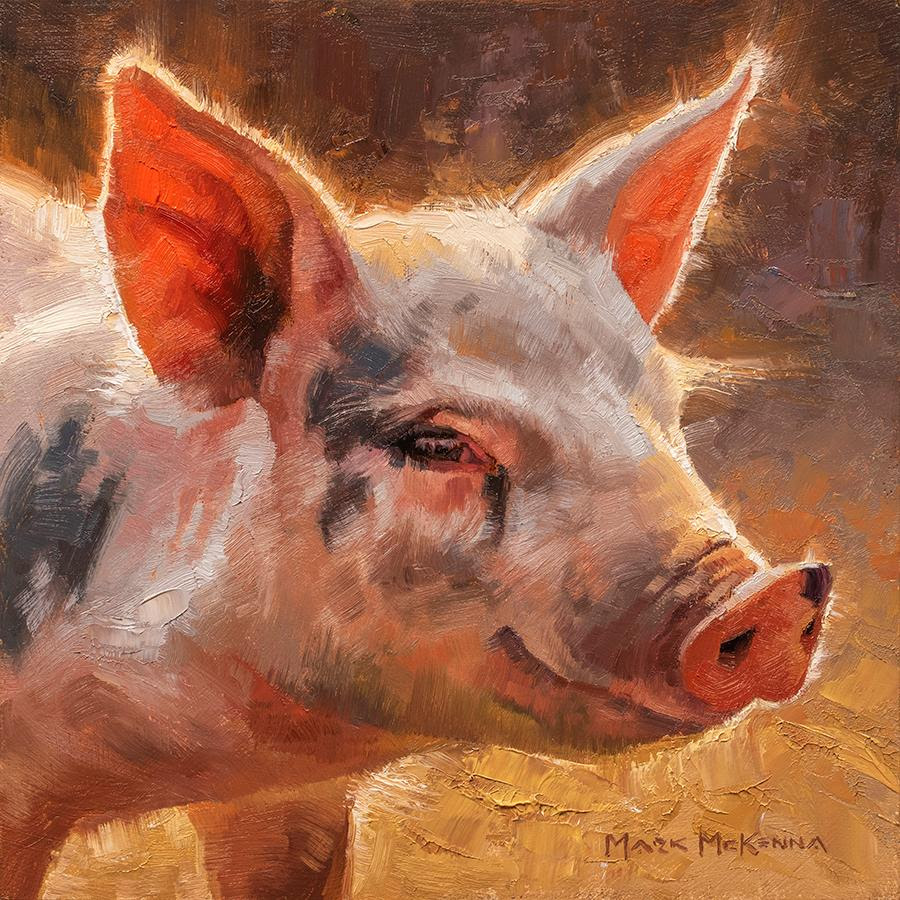
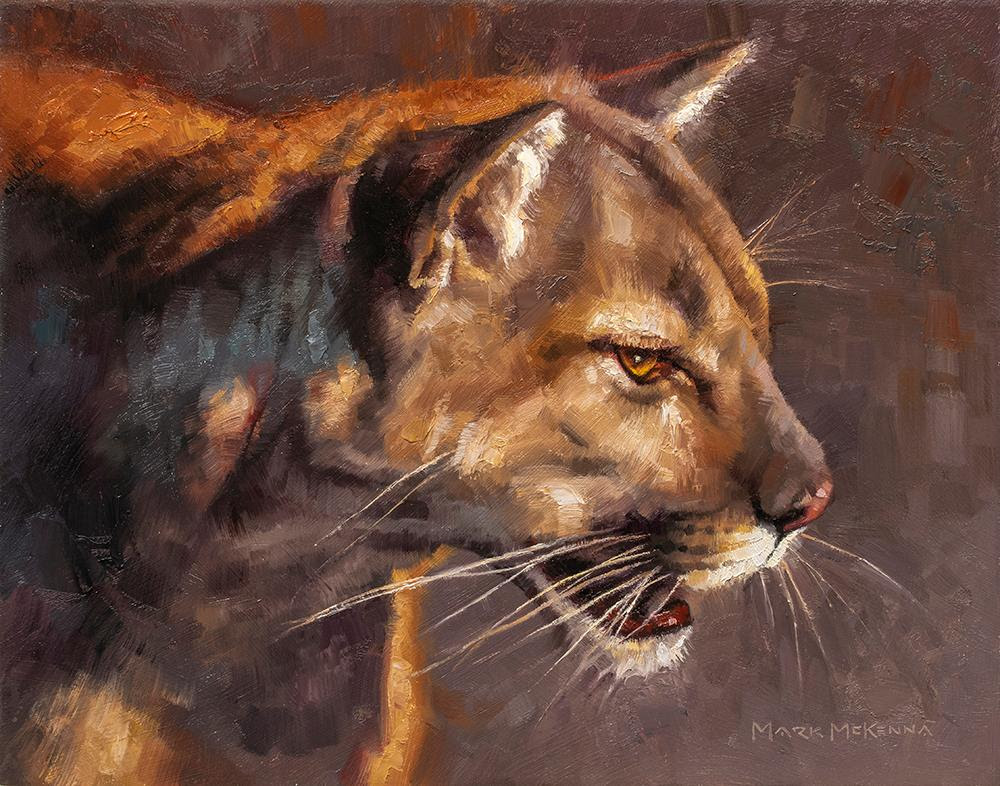
Mark McKenna, “Piglet Posture,” oil, 8 x 8 in.Mark McKenna, “Sleek and Silent,” oil, 11 x 14 in.
Montana Heritage Art Show Featuring 45-50 Artist Booths
March 18-20, 2021
Heritage Inn, Great Falls, MT VisitGreatFallsMontana.org
Social distancing, as well as other required precautions will be in place so as to limit potential health risks.
Featuring 32 masters of plein air painting, the 7th Annual Olmsted Plein Air Invitational invites collectors to a special art show preview at Hindman Auctions, March 18-20, 2021.
The three-day run of the Collector’s Preview Gallery will be a hybrid event, meaning that in addition to the physical Gallery at Hindman, they will also showcase the paintings in a virtual Gallery Catalogue and have Facebook tours/presentations, including live on-site talks/demos, live-streamed on Facebook, remote talks/demos, virtual gallery walking tours and more.
‘The Calm’ by Jason Sacran | 8 x 16 | Oil on Linen | Collectors Preview Painting
Artists Include:
Olena Babak, Mat Barber Kennedy, Jill Basham, Zufar Bikbov, Thomas Bucci, Ed Cahill, Doug Clarke, Valerie Craig, Trey Finney, John Guernsey, Carole Gray-Weihman, Palden Hamilton, Kathleen Hudson, Neal Hughes, Jane Hunt, Tim Kelly, John P Lasater, Christine Lashley, Amanda Lovett, Jonathan McPhillips, D.K. Palecek, Brenda Pinnick, Cristia Pisano, Cynthia Rosen, Jasan Sacran, Patrick Saunders, Daly Smith, Jill Steehuis, Steven Walker, Stewart White, Tara Will, Vladislav Yeliseyev
Protective masks required, temperature checks at the door, hand sanitizer available to all visitors. Due to social distancing a limited number of collectors/art enthusiasts will be in the gallery at any given time. Drop-ins welcome but please expect to wait for guests with timed tickets.
The Olmsted Plein Air Invitational relies on the generous support of our patrons known as FRIENDS of Olmsted Plein Air, Corporate Sponsors, Donors and 100+ capable Volunteers. Join the Friends of Olmsted Plein Air here.
At Historic New England’s Eustis Estate (and also online), more than forty of the finest paintings in the Historic New England collection are now on display together.
“Artful Stories” is a fresh look at the regional stories told through art – stories about the people who sat for portraits, the artists, the owners, and the places. See exquisite works of art made in or about New England spanning more than 200 years and develop a deeper understanding of New England’s artistic legacy.
Closer Encounters: Conversations about Artful Stories
Dive deeper into “Artful Stories: Paintings from Historic New England” through a series of lively online conversations moderated by the exhibition’s co-curators, Nancy Carlisle and Peter Trippi. Explore an aspect of the project’s intriguing themes and artworks while hearing the unique perspectives of leading curators, scholars, and artists.
Exhibition co-curator Peter Trippi notes, “Nancy Carlisle and I realize that even art lovers who live nearby may be unable to visit the Eustis Estate due to the pandemic, a reality which makes us even more excited to present these three lively conversations this winter. We are confident they will not only shed light on some of the exhibition’s most intriguing artworks, but also entice viewers to visit Eustis in the future. We are particularly glad that Artful Stories will remain until October 2021, so there is still plenty of time to experience it.”
Erica Hirshler
Another Curator’s View
Tuesday, March 23, 5:30 p.m. EST Register here.
Art lovers might normally expect to see the kinds of paintings in Artful Stories at the Museum of Fine Arts, Boston (MFA) rather than at a Historic New England property.
Learn what the MFA’s curator of American paintings, Erica Hirshler, thinks about these artworks and how they relate to (and differ from) key examples at her institution.
As part of our effort to continue to help artists and art galleries thrive, we’re proud to bring you this week’s “Virtual Gallery Walk.” Browse the artwork below and click the image itself to learn more about it, including how to contact the gallery.
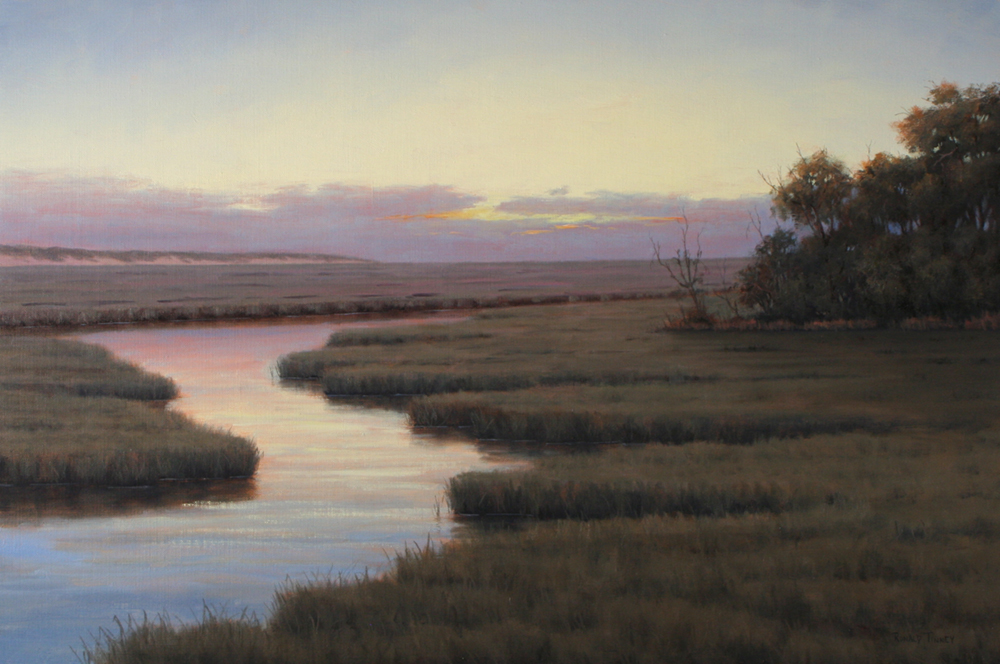
Distant Dunes by Ronald Tinney, Oil, 20 x 30 in.; Anderson Fine Art Gallery
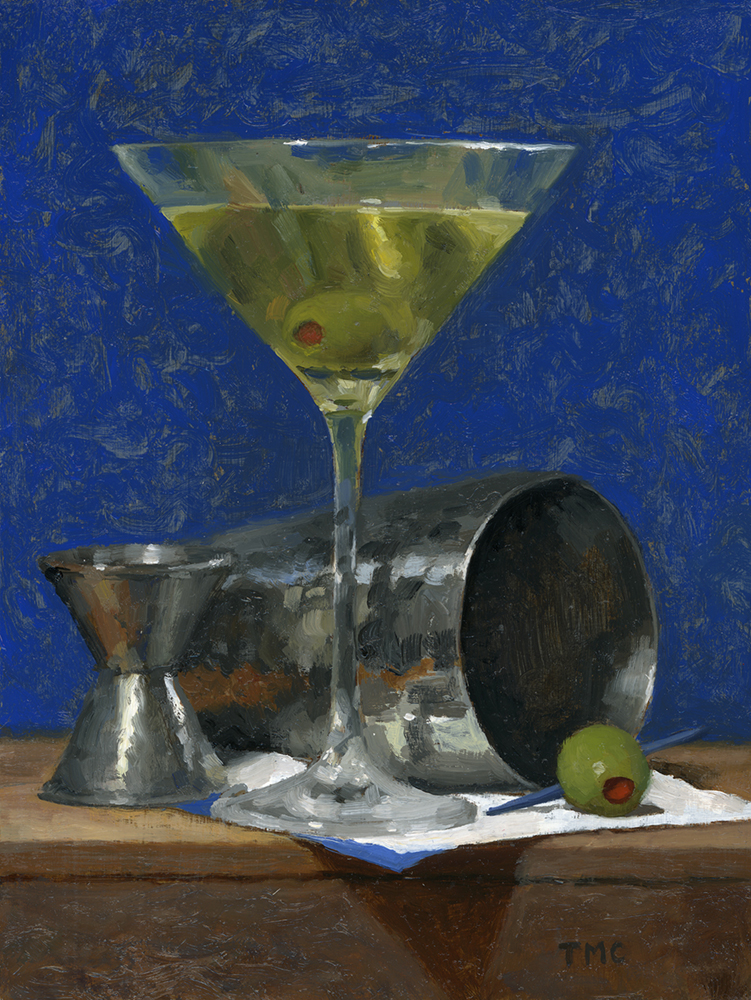
Martini by Todd M. Casey (Born 1979), Oil on panel, 8 x 6 in., Signed; also signed, titled, and dated on the reverse; Rehs Contemporary
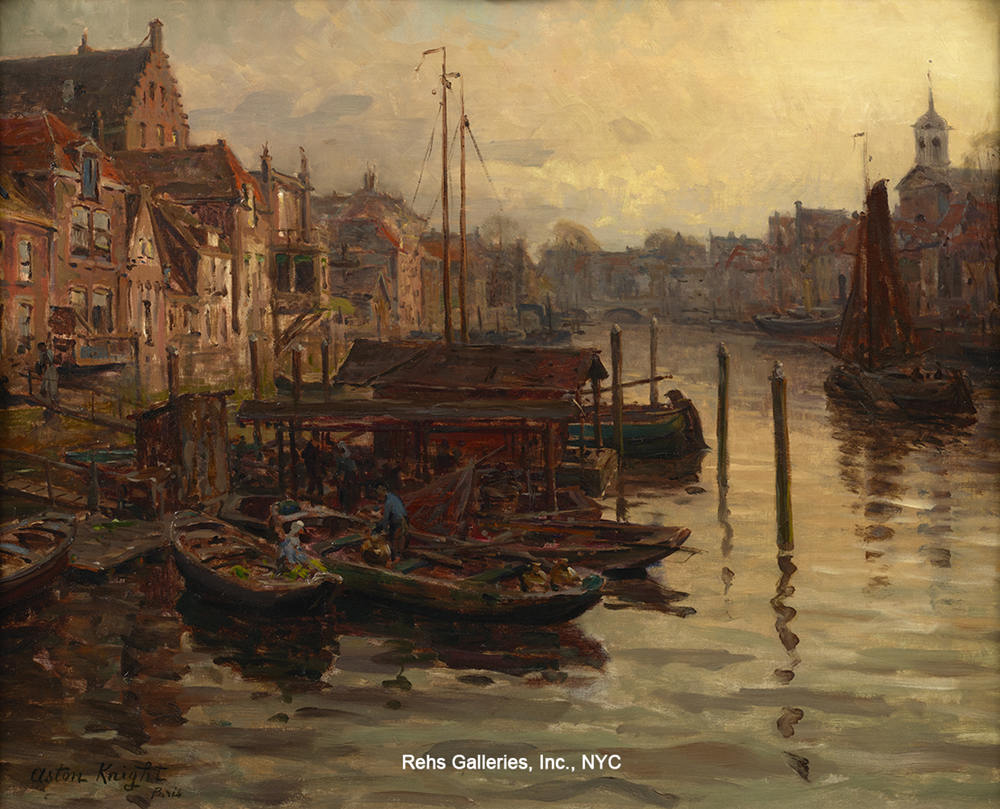
The Old Harbor, Dordrecht, Holland by Louis Aston Knight (1873 – 1948), Oil on canvas, 26 x 32 in., Signed and inscribed Paris; Rehs Galleries, Inc.
Early Morning; Motif #1 by Robert Steinem, Oil on canvas, 36 x 24 in. (42 x 30 in. framed); Vermont Artisan Designs
Want to see your gallery featured in an upcoming Virtual Gallery Walk? Contact us at [email protected] to advertise today. Don’t delay, as spaces are first come, first served, and availability is limited.
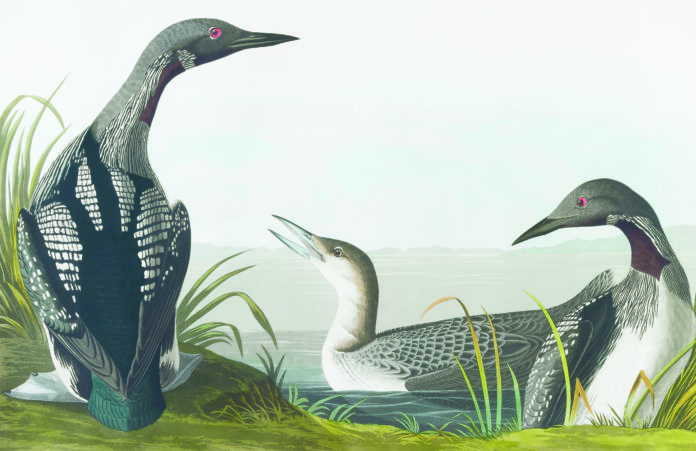
John James Audubon, "Black-throated Diver (Arctic Loon)," 1836, hand-colored aquatint on J. Whatman paper
Backstories are in the spotlight this spring with an array of artwork from the Leigh Yawkey Woodson Art Museum’s collection in “Beyond Artworks: Artists & Their Stories,” on view through June 6, 2021.
More from the museum:
“Beyond Artworks” shares stories of artists, their inspiration, and how artworks were acquired by the Museum for preservation and interpretation via varied exhibitions, always admission free.
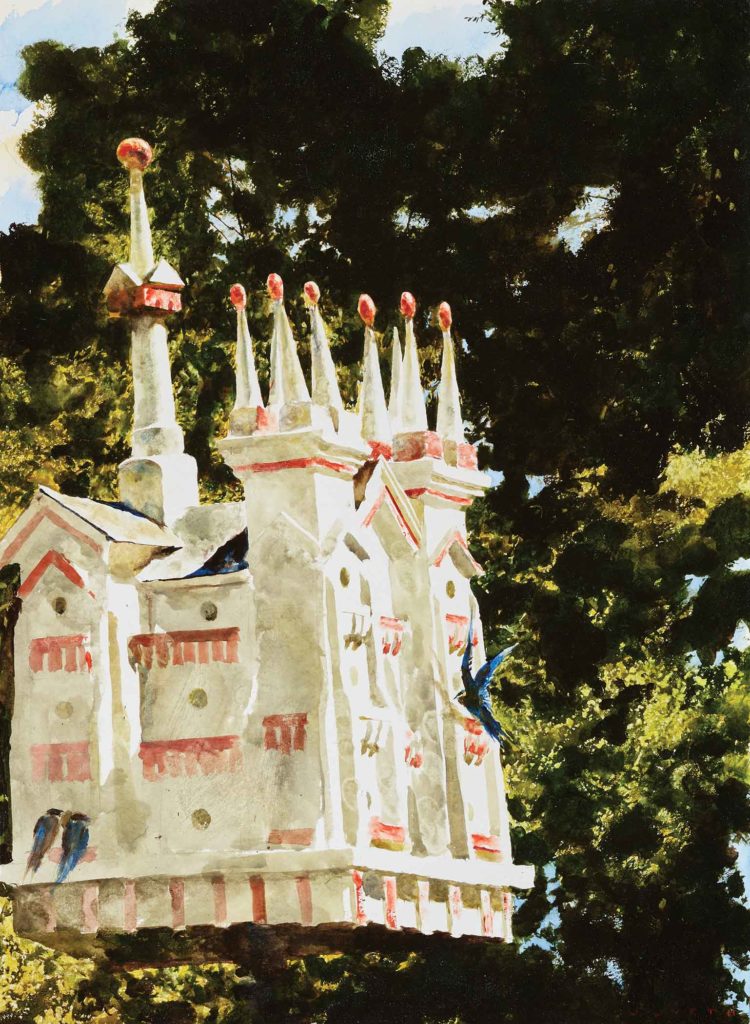
Discover the tale and trace the trail that led to the acquisition of a rare oil painting and a hand-colored aquatint by John James Audubon. Experience artworks by three generations of Wyeth painters, N.C., Andrew, and Jamie, comparing and contrasting their distinct styles and gaining insights into their inspiration and work.
Jamie Wyeth, “Martin Castle,” 1989, mixed media on paper
The how’s and why’s behind artists’ inspiration are peppered throughout “Beyond Artworks.” Describing his acrylic painting of shorebirds, “Pacific,” Robert Bateman wrote: “During stressful times, I find it helpful to close my eyes, breathe deeply, and picture a pleasant, peaceful place. . . . In my vision, it’s a calm, sunny day with just the whisper of little wavelets as they touch the sand. Instead of a focal point to distract from a more meditative state, there is only a slight scattering of marine life and just the hint of bird life … unidentified shorebirds.”
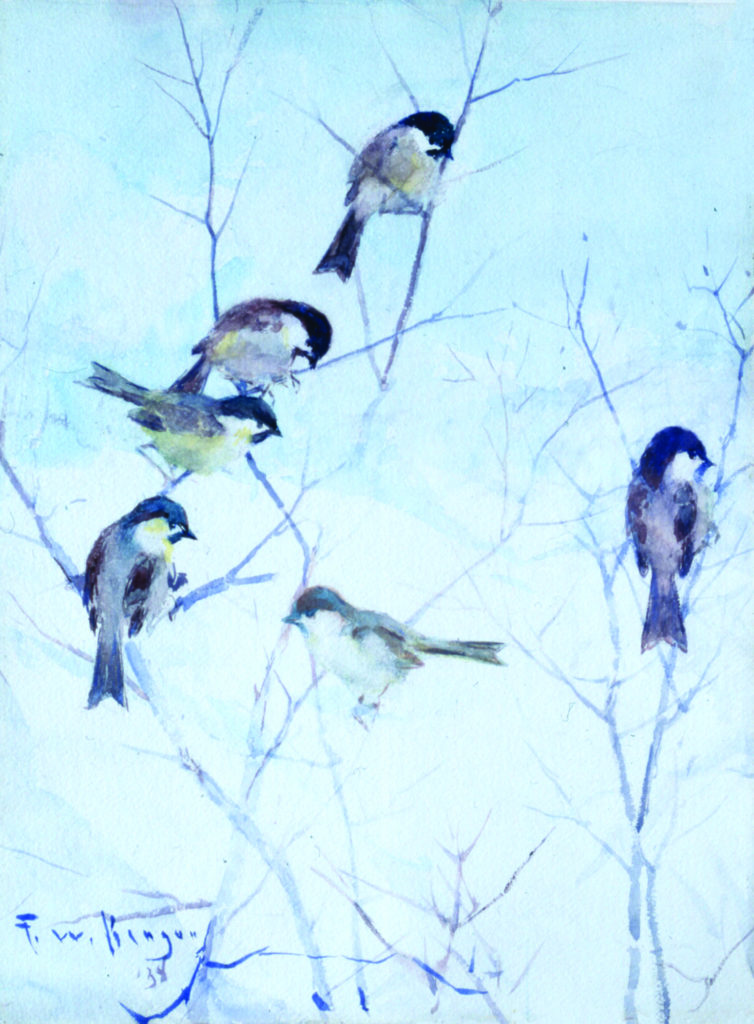
Other stories emphasize the power of personal relationships. A watercolor painting by Frank Weston Benson, “Chickadees,” which had been owned by poet Robert Frost, became the perfect way to honor a member of the Museum’s founding family, fondly remembered for wearing a chickadee-embroidered sweater.
Frank Weston Benson, “Chickadees,” 1938, watercolor on paper
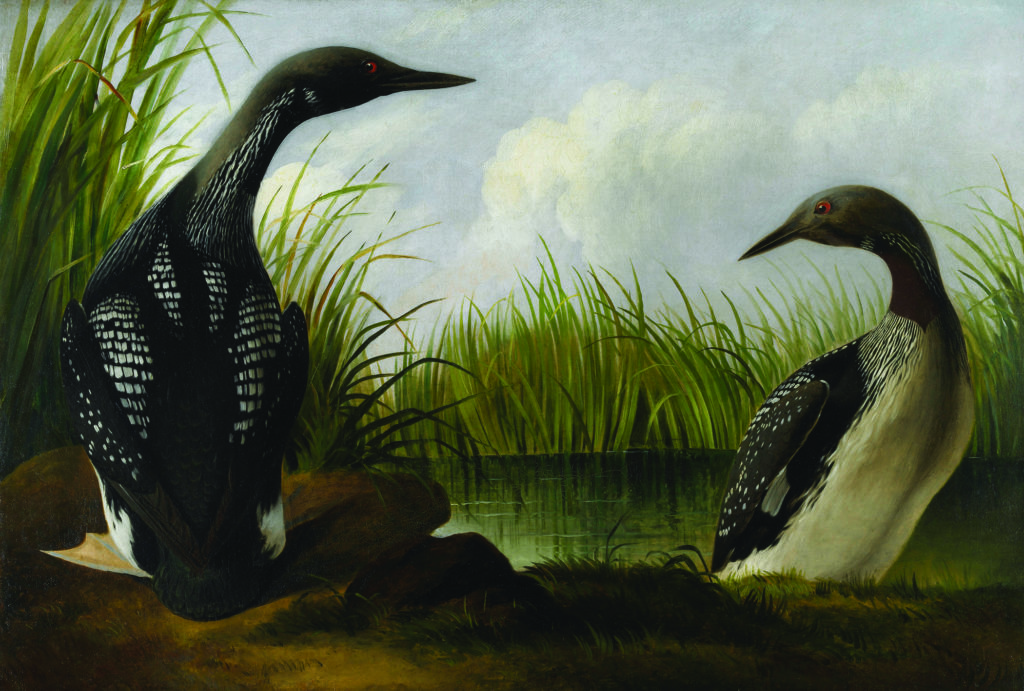
Ever on the quest to continue building the Museum’s world-class collection of avian art, curator Jane Weinke noticed in a 2007 gallery newsletter an image and story about a rare oil painting, “Pacific Loons,” by John James Audubon.
John James Audubon, “Pacific Loons,” ca. 1834, oil on canvas
The painting would augment several Audubon prints in the Museum’s collection and also prompt the acquisition of “Black-throated Diver,” a hand-colored aquatint created for Audubon’s The Birds of America, featuring watercolors of 435 life-size North American birds. The stories that unfold are part of “Beyond Artworks,” which provides opportunities to experience, compare, and contrast Audubon artworks.
Additional Artworks:
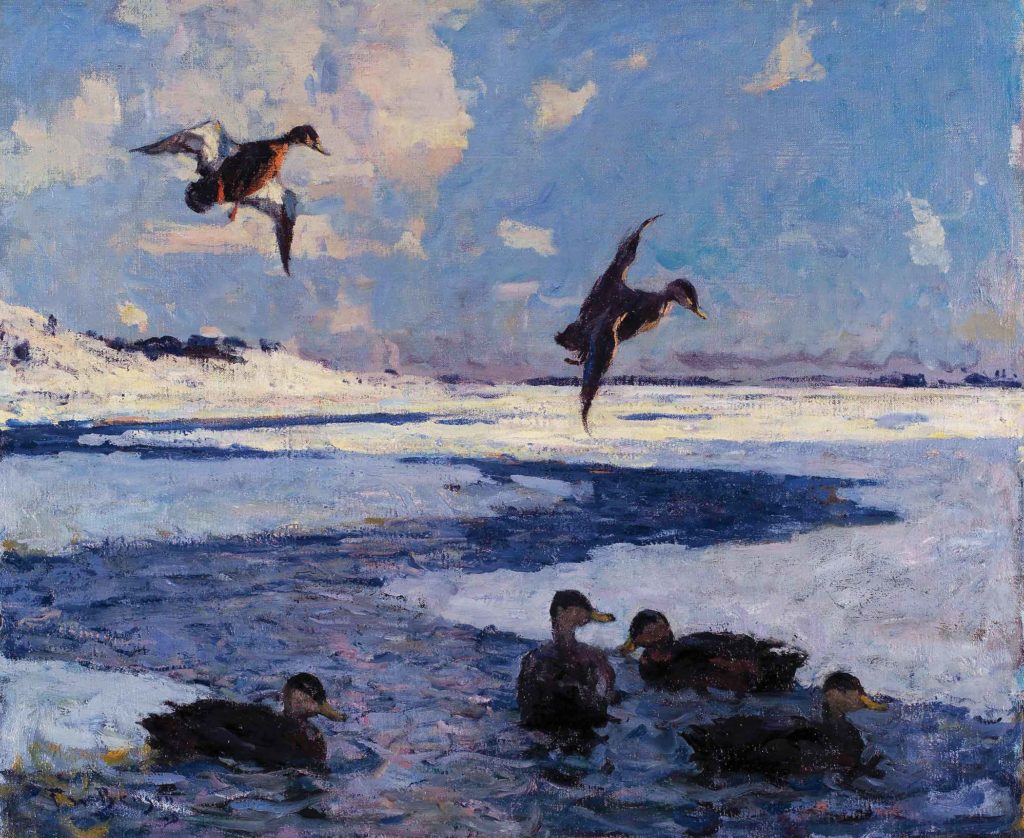
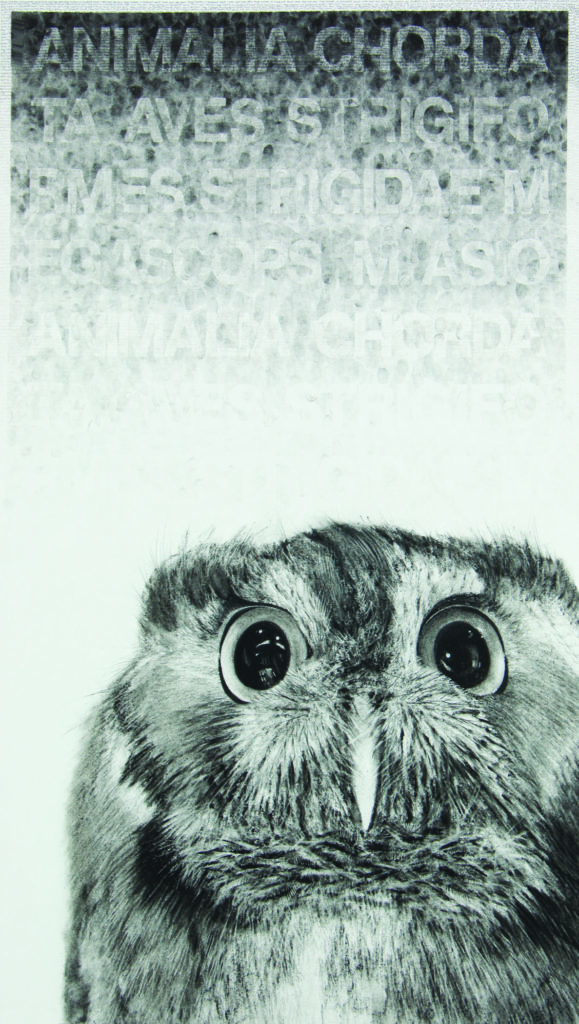
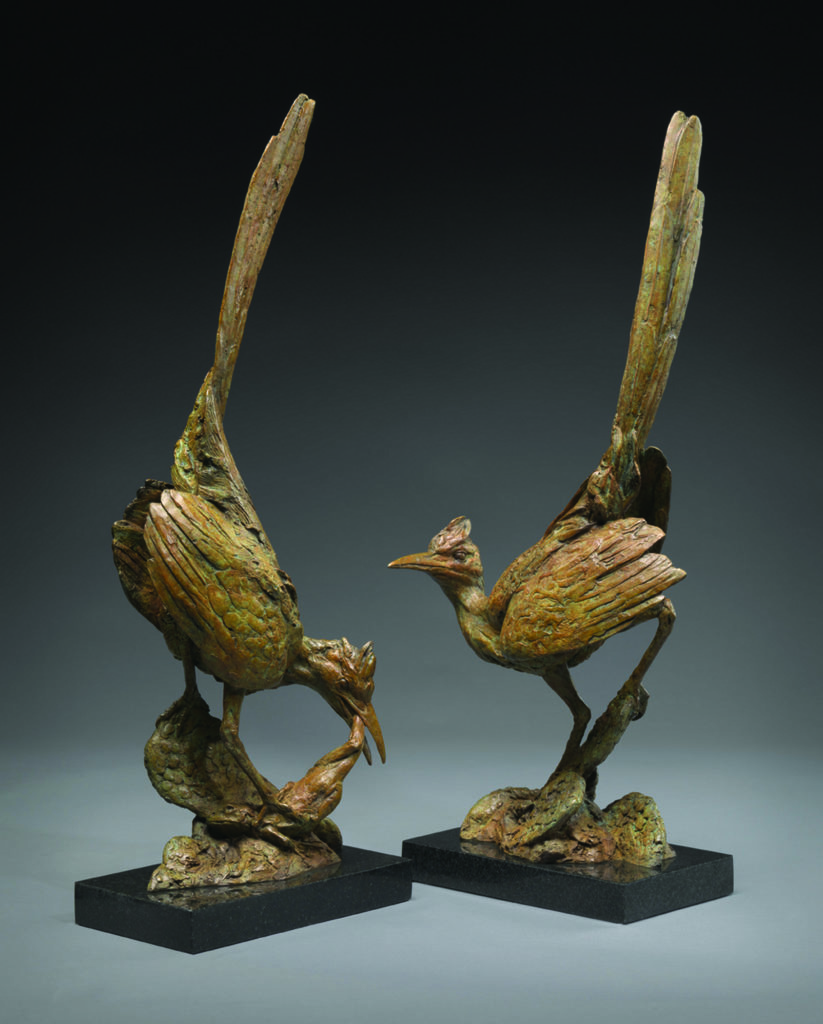
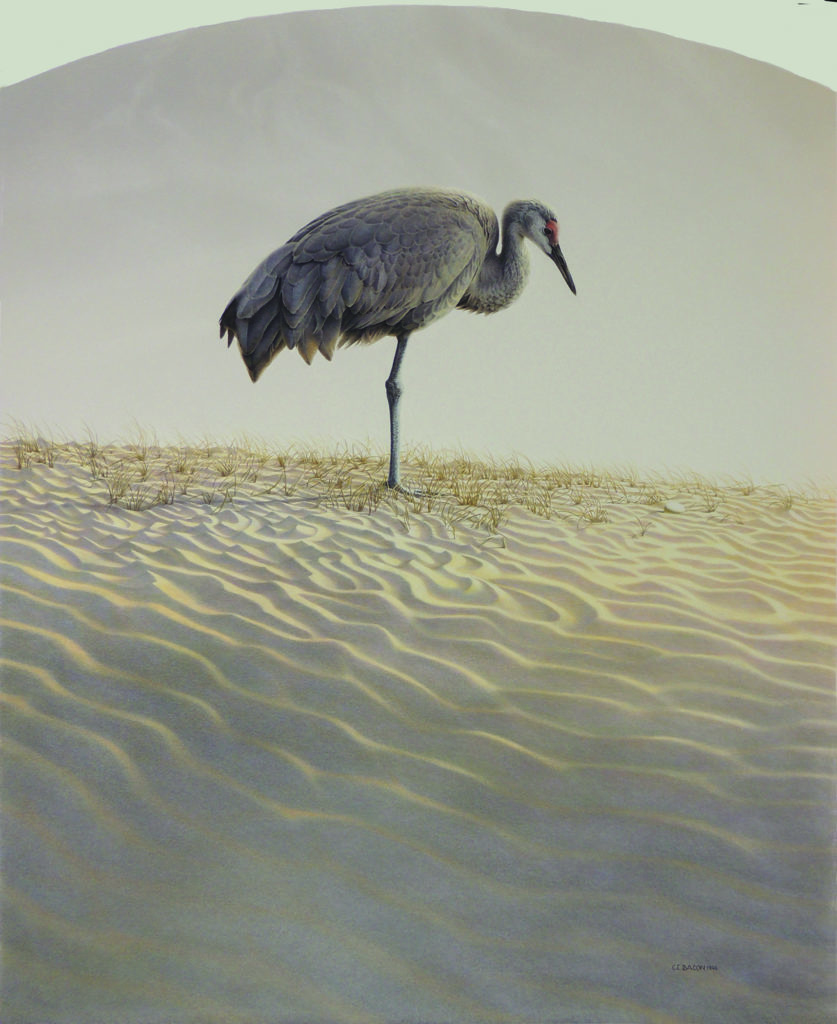
Frank Weston Benson, “Black Ducks,” 1926, oil on canvasKaren Bondarchuk, “My name is Hubert and I am not an owl,” 2011, charcoal and ink on Hahnemühle paperWalter T. Matia, “Hunger Is the Best Sauce & Paisanos,” (6/36), 2014, bronzeChris Bacon, “Sandhill Crane,” 1996, watercolor and Prismacolor on rag board
Exhibition Details:
Leigh Yawkey Woodson Art Museum
Wausau, Wisconsin
Through June 6, 2021
For more information, visit www.lywam.org.
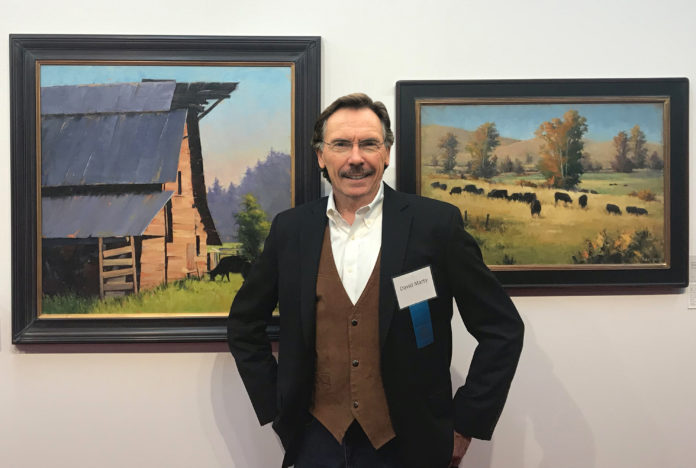
David Marty with his paintings at the Coors Western Show in Denver, Colorado
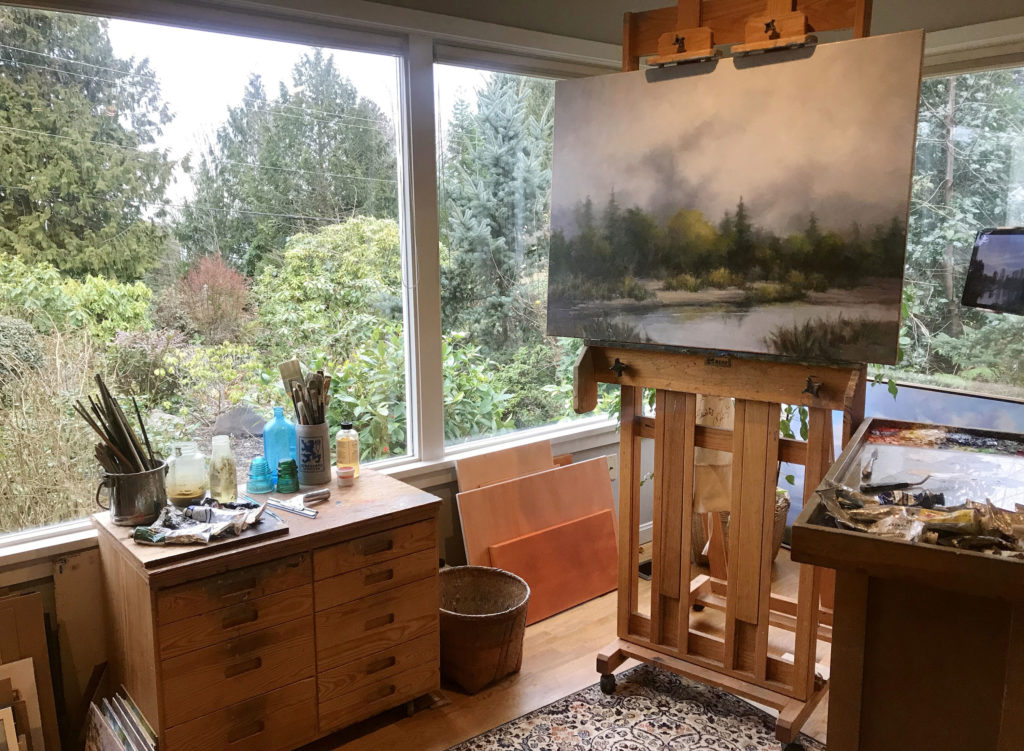
David’s studio in his home
How did you get started and then develop your career?
David Marty: As a kid, I loved drawing and cartoons. It was really the golden era of Disney animations such as Bambi and Snow White. That passion evolved and grew, and I eventually became an art major in college but went into commercial art and graphic design to be “practical.” Although I thoroughly enjoyed it, my first love was painting, and I would paint whenever I could. In the mid-90s we had two children and were in the process of adopting a little boy from Bulgaria when we not only discovered that he had a younger brother at the orphanage, but that my wife was expecting.
As our family grew and life got much busier, I realized how much I needed and wanted to paint. As soon as we got the kids to bed, it was my time to escape and paint. It was a balancing act, but I was able to gradually paint more and more, enter shows, and display my work in a few galleries. About three years ago, I made the transition to painting full time.
Over the years, I have taken classes at Art Center of Design in Pasadena, workshops with artists I admired, and attended several Plein Air Conventions. But what really helped me grow the most as an artist has been to paint on location and participate in plein air events. This has greatly aided in how I look at the landscape and has given my work a new freshness and spontaneity. I would highly recommend plein air painting for anyone who wants to grow and perhaps stretch themselves.
How do you describe success?
For me success is a combination of enjoying the process of painting as well as improving and chasing the best in my art. Sales, acceptance into shows, and awards are a way of validating your art and are wonderful. However, what brings me the greatest satisfaction is when collectors tell me my paintings have made an impact on them and give them real joy or a sense of peace.
How do you find inspiration?
My passion is to paint the landscape and so whenever I go out or travel, I am constantly searching and observing the beauty around me. I live in the Pacific Northwest, which offers spectacular scenery and amazing variety, providing a huge source of unending inspiration. Traveling to other areas within the US and abroad, as well as studying outstanding artists’ works, helps cultivate my creativity.
What is the best thing about being an artist?
One of the best things has been learning to observe and appreciate the world around me more. I am so thankful for the opportunity to follow my passion and do what I love. That is a real gift.
Who do you collect?
I wish I had artwork from more artists I admire. Some whom I currently collect include Howard Friedland, C. Michael Dudash, Ken Auster, John Budicin, Michele Usibelli, and Whitney Buckingham.
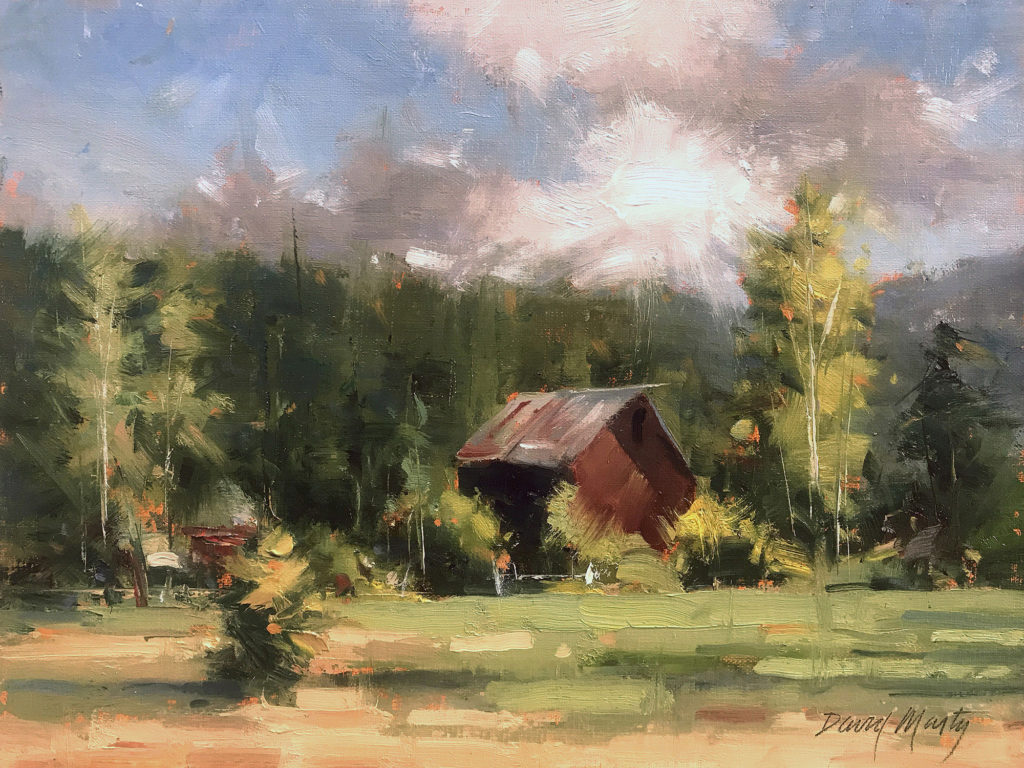
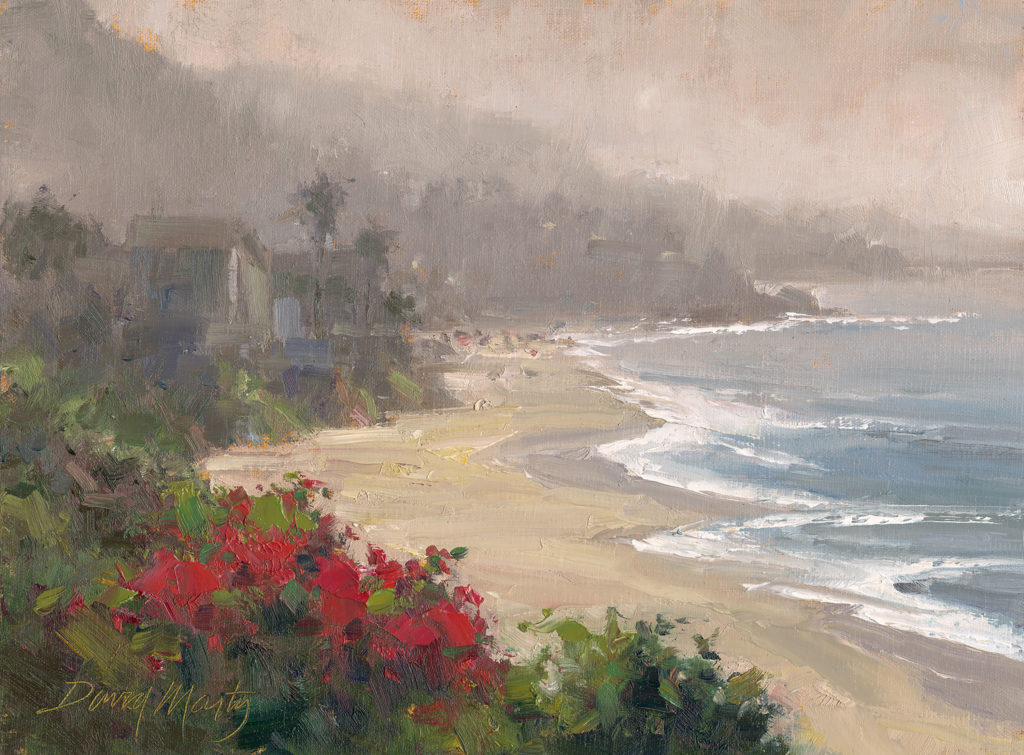
David Marty, “A Good Day,” 9 x 12 in., oil on linen, 2020David Marty, “Evening Hues,” 12 x 16 in., oil on linen, 2020David Marty, “Laguna Morning Fog,” 9 x 12 in., oil on linen, 2020David Marty, “Hope Awaits,” 24 x 36 in., oil on canvas, 2020
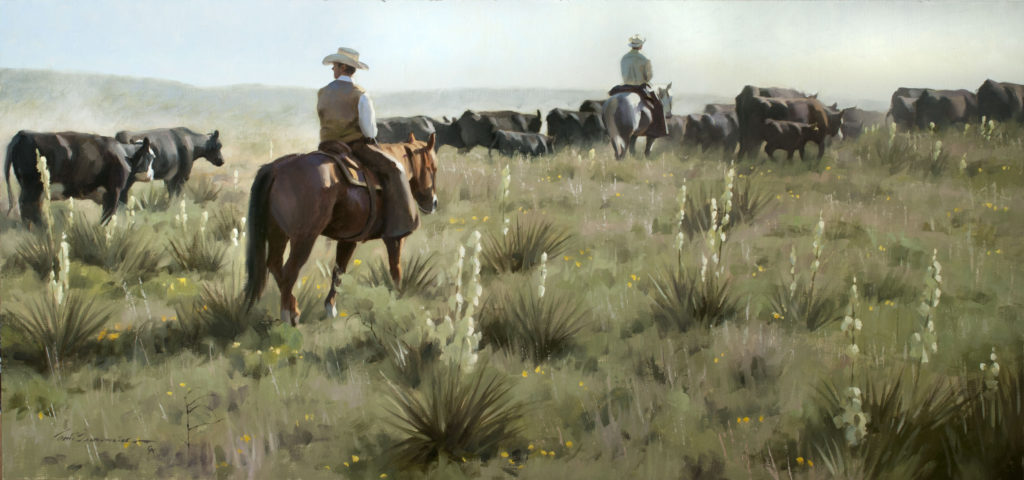
Kim Wiggins, "Along the Chisholm Trail," oil, 30 x 40 in.
Marking the 20th anniversary of the event that sparked the museum’s creation, the Briscoe Western Art Museum is expanding its signature exhibition and sale with a first: a hybrid event that is as unbridled as the west.
More from the organizers:
Featuring online and in-person celebrations, the Briscoe Western Art Museum’s Night of Artists 2021 Exhibition and Sale kicks things off with its Online Art Auction, March 13 – 27. Then a virtual annual Collectors Summit leads up to the 20th Anniversary Celebration of the Night of Artists Exhibition, the conclusion of the Online Auction and Grand Live Auction on March 27. Night of Artists then continues as a public exhibition and sale March 28 – May 9 at the Briscoe.
Night of Artists includes the viewing and sale of nearly 300 new works of painting, sculpture and mixed media by over 75 of today’s leading contemporary Western artists. To celebrate the 20th anniversary, the Briscoe is welcoming virtual audiences via livestream to the centerpiece of the annual event, the live auction, being held in-person at the museum’s Jack Guenther Pavilion on the banks of the famed San Antonio River Walk.
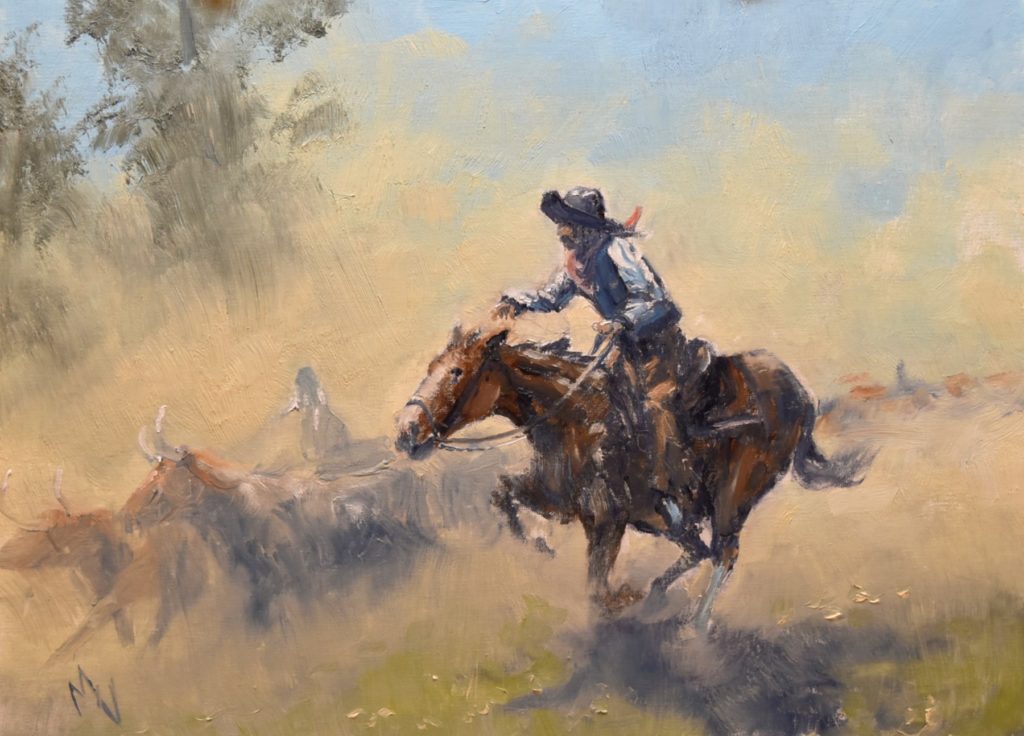
Tom Browning, “Texas Drive,” oil, 16 x 34 in.
This year’s hybrid celebration sprang from the museum’s quick action during 2020’s COVID closure. “When COVID forced the 2020 in-person event to be cancelled, in less than two weeks, the Briscoe successfully shifted the Night of Artists sale online, thanks to the support of amazing sponsors, artists, and collectors we were so fortunate to work with,” explained Michael Duchemin, President and CEO of the Briscoe Western Art Museum.
“Celebrating our 20th anniversary with a series of hybrid events provides a larger platform to showcase the beauty and impact of the rich stories shared through Western art. The continued support of sponsors, art collectors and enthusiasts is key to growing and preserving the unique genre of Western Art. We’re honored that such a fantastic roster of artists is joining this year’s celebration. Their stellar works, shared with an even larger audience, will make this 20th anniversary one to remember.”
There are multiple ways to participate in this year’s hybrid celebration. Bid registration in the Online Art Auction and the Grand Live Auction is free, allowing art enthusiasts to enjoy bidding and livestream the Night of Artists 20th Anniversary Grand Live Auction. A premium registration option includes the 2021 commemorative catalog and access to an exclusive Virtual Gallery Tour.
Michael Ome Untiedt, “Study of Nelson Story,” oil on linen, 12 x 16 in.
Events include:
Online Art Auction
In lieu of the event’s traditional “Luck of the Draw” Art Sale, this special edition of Night of Artists presents an Online Art Auction. Competitive bidding begins Saturday, March 13 and is open to all registered bidders, ticket holders and sponsors. Starting prices are set by the artist and bidding increments will be featured on the sale website. The Online Art Auction concludes in the midst of the opening celebration, March 27.
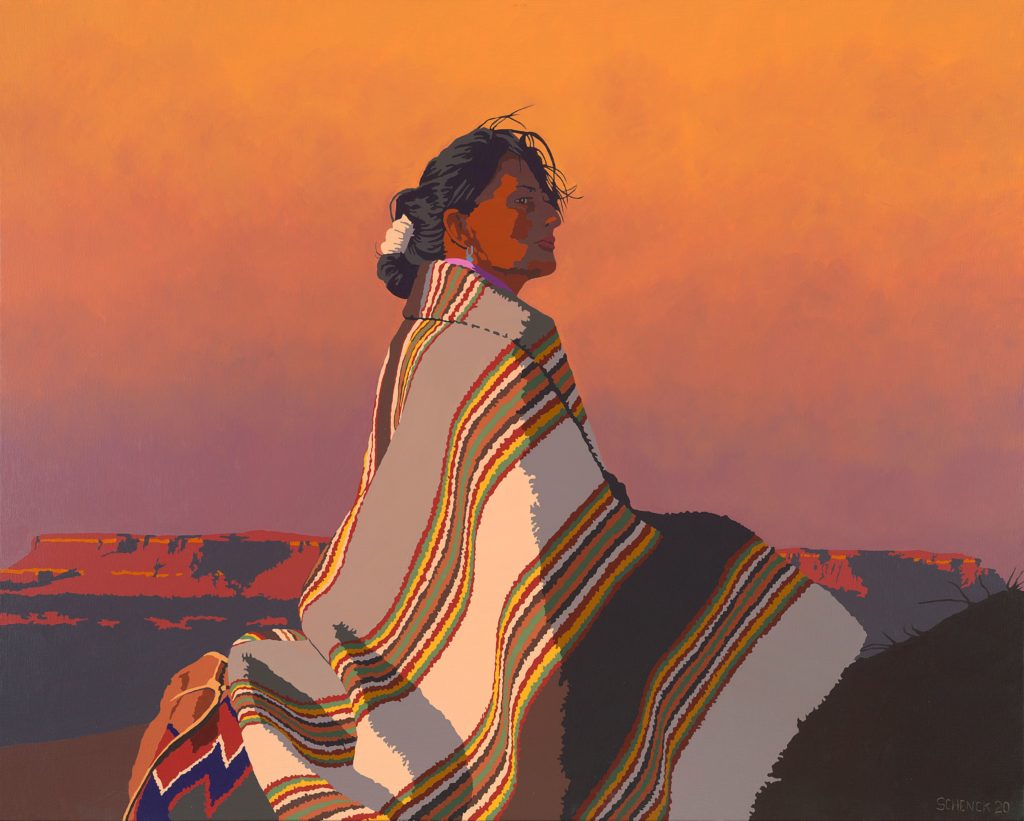
Billy Schenck, “Dusk at Chinle,” oil, 40 x 50 in.
Night of Artists 20th Anniversary Exhibition Opening Celebration and Grand Live Auction
The centerpiece of this year’s celebration unfolds March 27, with options to participate either in-person or virtually. The in-person event features a safe, socially distanced, limited attendance evening at the Briscoe. The “Home on the Range” virtual ticket offer a private evening featuring an exclusive virtual gallery tour, a commemorative catalog, a celebration charcuterie box for two, a branded Briscoe keepsake cutting board, two event favors and access to preview events, including the Fourth Annual Collectors Summit presented by the Briscoe Bison Society and the Online Art Auction.
All ticket options feature participation in the Grand Live Auction conducted by nationally recognized auctioneer Troy Black. The auction will occur both inside the Jack Guenther Pavilion and outdoors in the museum’s McNutt Sculpture Garden and be livestreamed for the online participants to enjoy. Thirty new works are available in the live auction, as well as two works donated by an artist and collector with full sale proceeds to benefit the Briscoe. The Grand Live Auction includes in-person bidding, as well as online, phone, mobile app and absentee bidding.
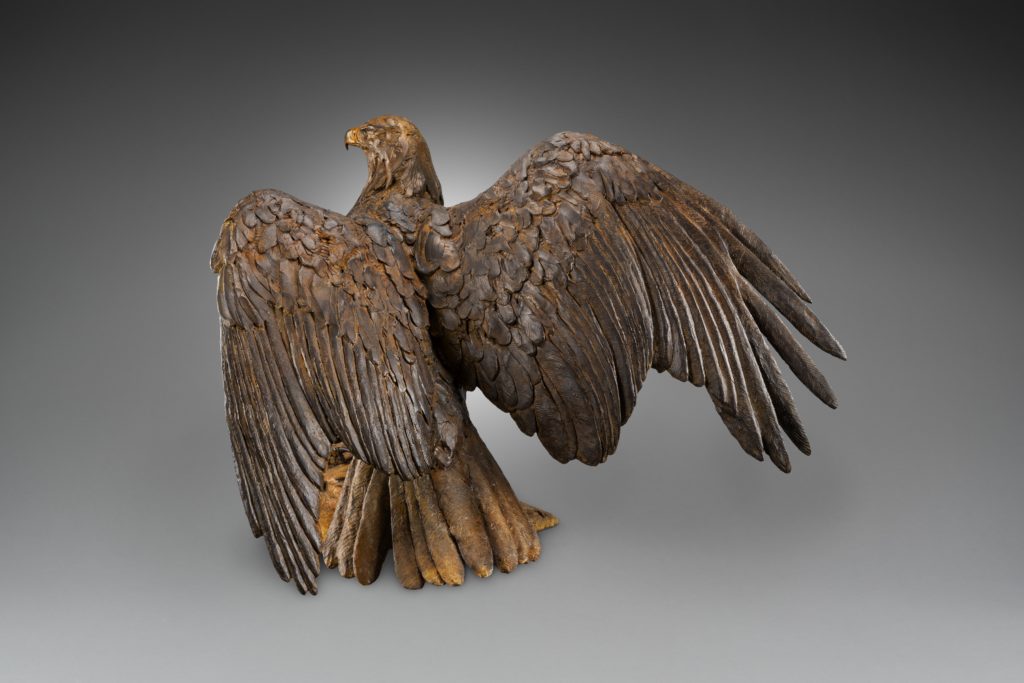
Paul Rhymer, “War Eagle,” bronze
Fixed-Price Sale
The final option to stake your claim and snap up a piece of this year’s Night of Artists excitement is the Fixed-Price Sale. Opening March 28, the sale features works not previously sold through the Online or Grand Live Auction. Available at a fixed price set by the artist, these limited remaining works may be purchased through the public sale. Anyone can participate in the sale online or enjoy the exhibition in-person at the Briscoe and purchase works by visiting the Museum Store.
Teresa Elliott, “Own Sweet Time,” oil, 40 x 30 in.
Annual Collectors Summit A Virtual Opportunity to Explore Collecting
A key aspect of Night of Artists is the opportunity to gather, learn and foster greater understanding and appreciation of Western Art. The Briscoe Bison Society presents the Fourth Annual Briscoe Bison Society Collectors Summit, a platform for experts on Western Art to share their insights during virtual conversations exploring the Western art market and trends. Everyone from novice to seasoned art collectors and enthusiasts will enjoy these virtual, limited attendance sessions. The virtual symposium is free for Night of Artists ticketholders and members of the museum, though space is limited and must be reserved.
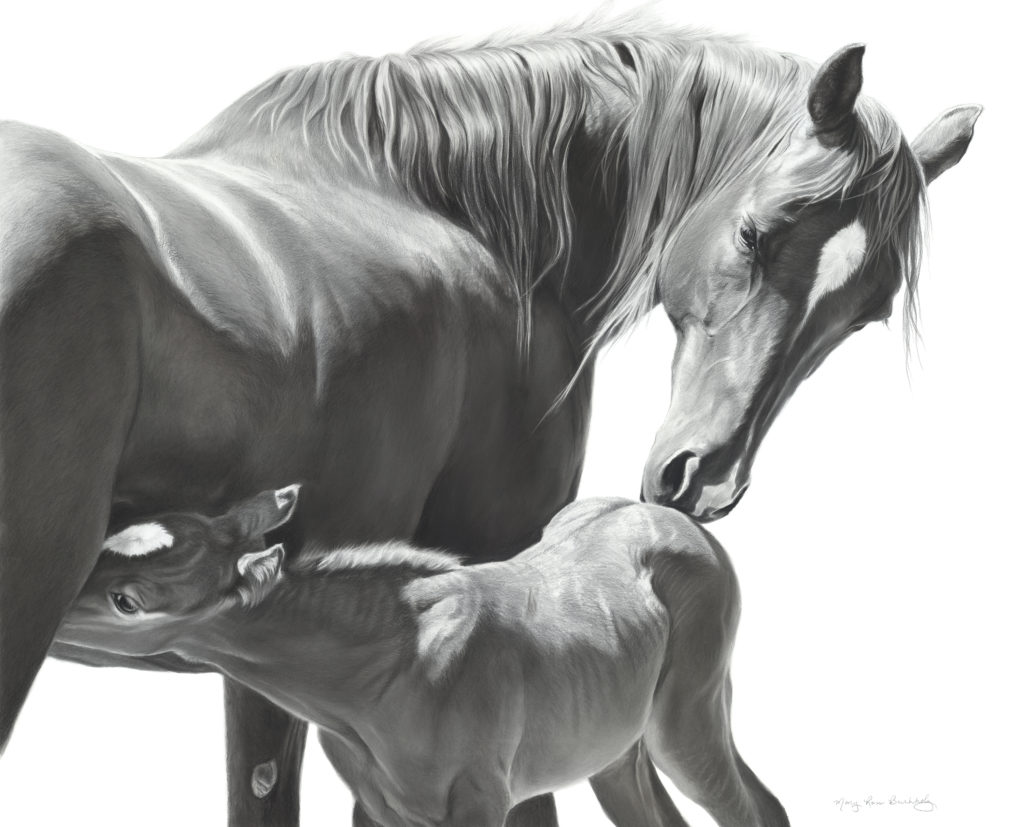
Mary Ross Buchholz, “Mother’s Day,” charcoal and graphite, 22 x 27 in.
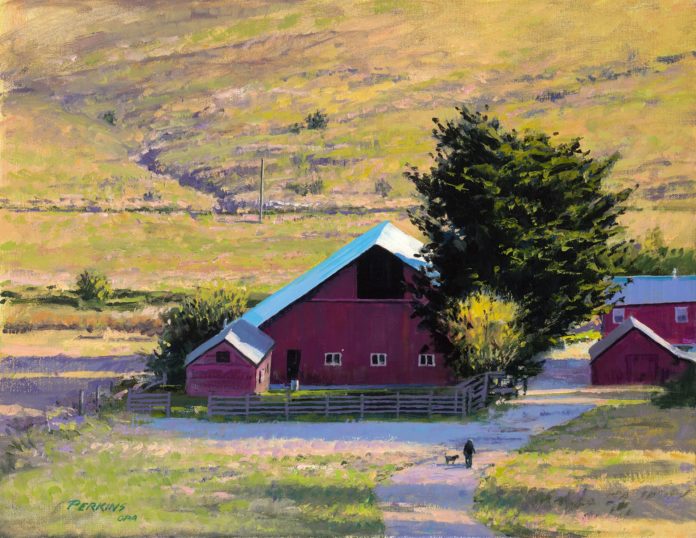
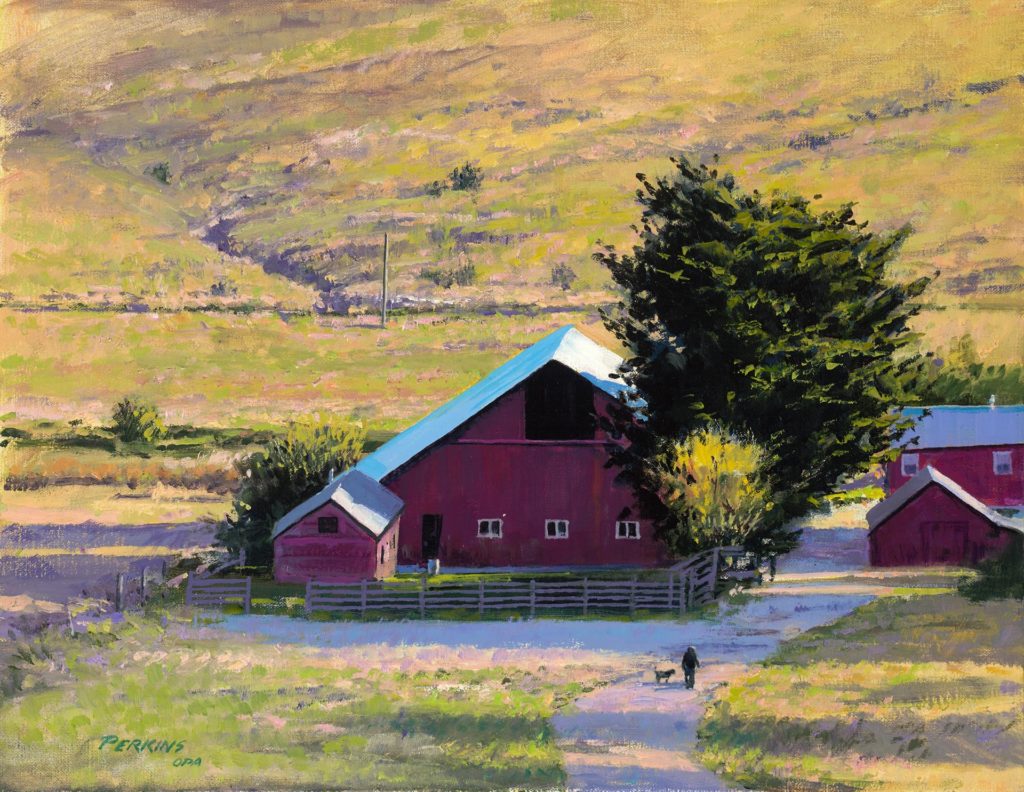
Davis Perkins, "Stemple Ranch," oil, 14 x 28 inches
The California Art Club has announced the winners of “Renewal and Rebirth,” its inaugural Excellence in Traditional Fine Art Competition. The winning Works, selected by guest judge Peter Trippi, Editor-in-Chief of Fine Art Connoisseur Magazine, are showcased in a virtual exhibition that marks the arrival of Spring.
The works, which spotlight the theme of “Renewal and Rebirth,” may be viewed at californiaartclub.org/rebirth among the nearly 50 paintings and sculptures identified as finalists for honors and cash prizes.
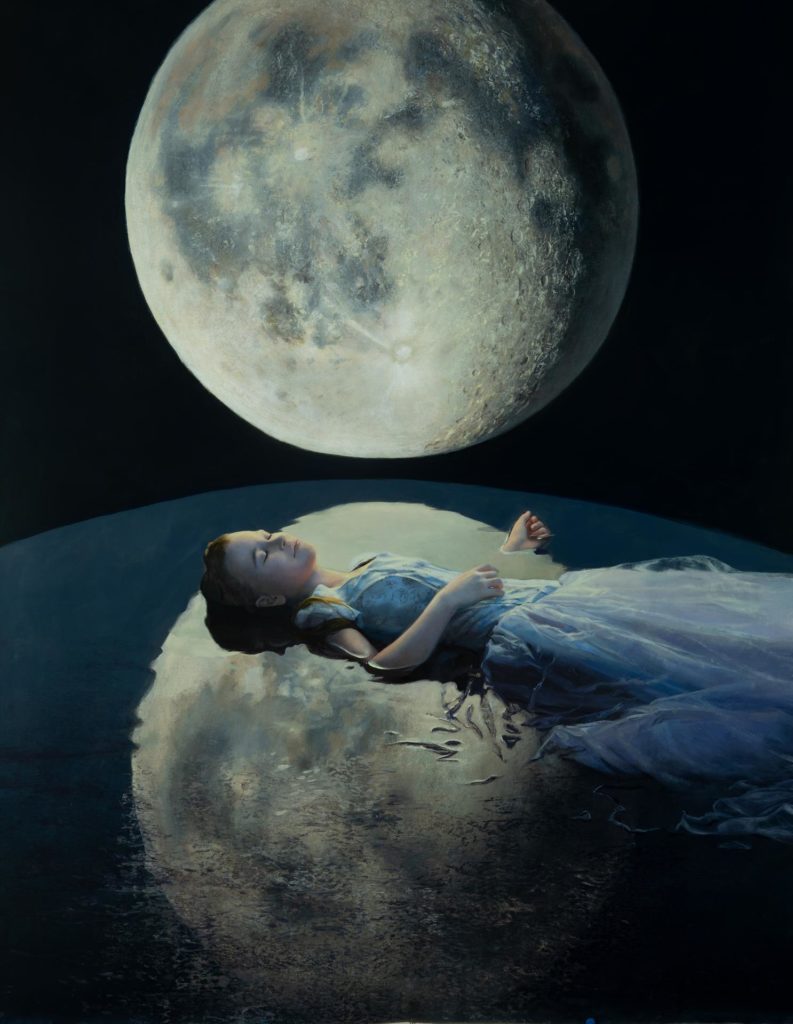
First place went to Nathaniel Skousen for his oil painting “Birth of the Moon.”
“This symbolist scene is not only superbly painted, but also reminds us that the moon has long been associated with renewal and rebirth by cultures around the world,” said Trippi. “The artist quotes John Everett Millais’s famous floating ‘Ophelia’ (1851–52) without the morbid, even misogynistic overtones some artists bring with that motif. Instead, the girl depicted here is very much alive, ready to awaken and move forward.”
The Winners:
First Place – $1,000 Prize, Nathaniel Skousen, “Birth of the Moon”
Nathaniel Skousen, “Birth of the Moon,” oil, 38 x 30 inches
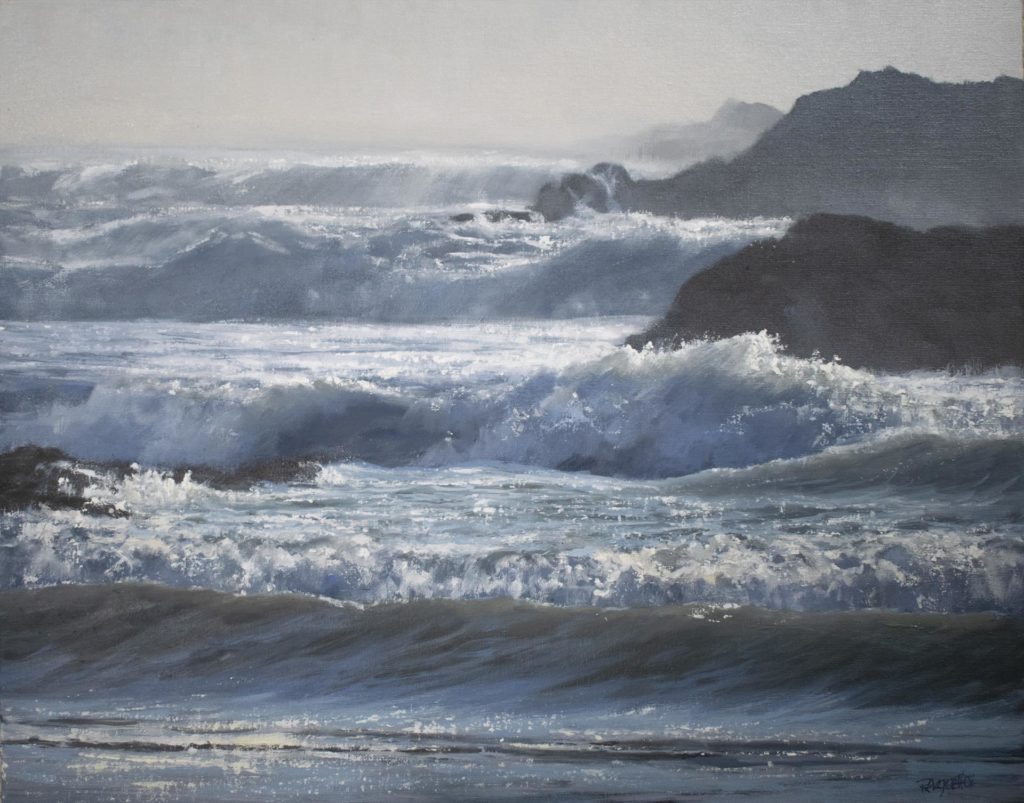
Second Place – $500 Prize, Rebecca Arguello, “Breakers at Indian Beach”
Rebecca Arguello, “Breakers at Indian Beach,” oil, 16 x 20 inches
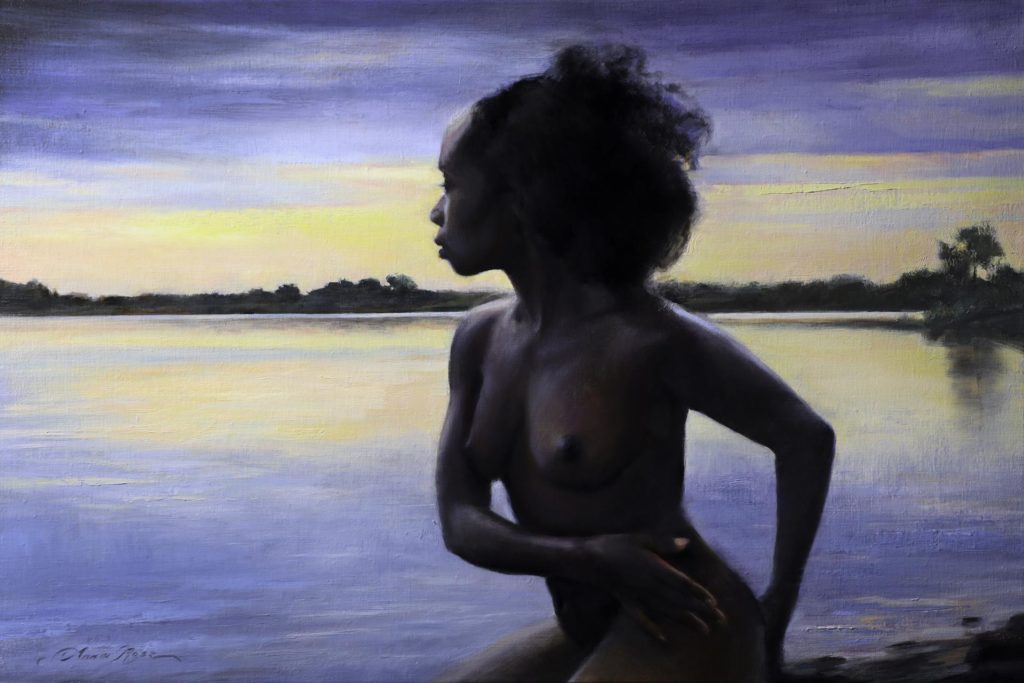
Third Place – $250 Prize, Anna Rose Bain, “A New Dawn”
Anna Rose Bain, “A New Dawn,” oil, 20 x 30 inches
Honorable Mention – $75 Prize, Davis Perkins, “Stemple Ranch”
Davis Perkins, “Stemple Ranch,” oil, 14 x 28 inches
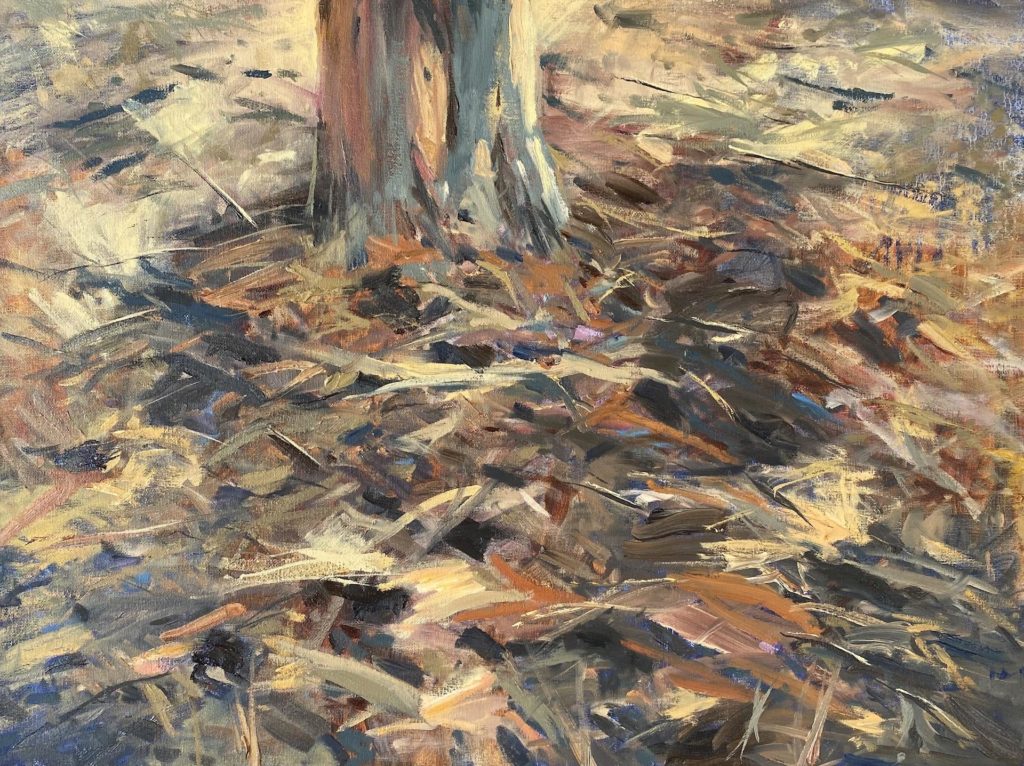
Special Recognition for an Associate Artist Member, William Gullette, “Skin Shed”
William Gullette, “Skin Shed,” oil, 18 x 24 inches
The unveiling of “Renewal and Rebirth” coincides with the arrival of Spring and the new life the season brings each year. The exhibition may be viewed on the CAC website through June 1, 2021, and all works are available for acquisition.
This new quarterly competition was launched by the California Art Club to encourage artists to develop and refine their classical art skills and spotlight their mastery by providing a new platform for showcasing contemporary-traditional works of art.
Fill your mind with useful art stories, the latest trends, upcoming art shows, top artists, and more. Subscribe to Fine Art Today, from the publishers of Fine Art Connoisseur magazine.

 CDH: Regarding your exhibitions, do you have a current online show?