As part of our effort to continue to help artists and art galleries thrive, we’re proud to bring you this week’s “Virtual Gallery Walk.” Browse the paintings below and click the image itself to learn more about it, including how to contact the gallery.
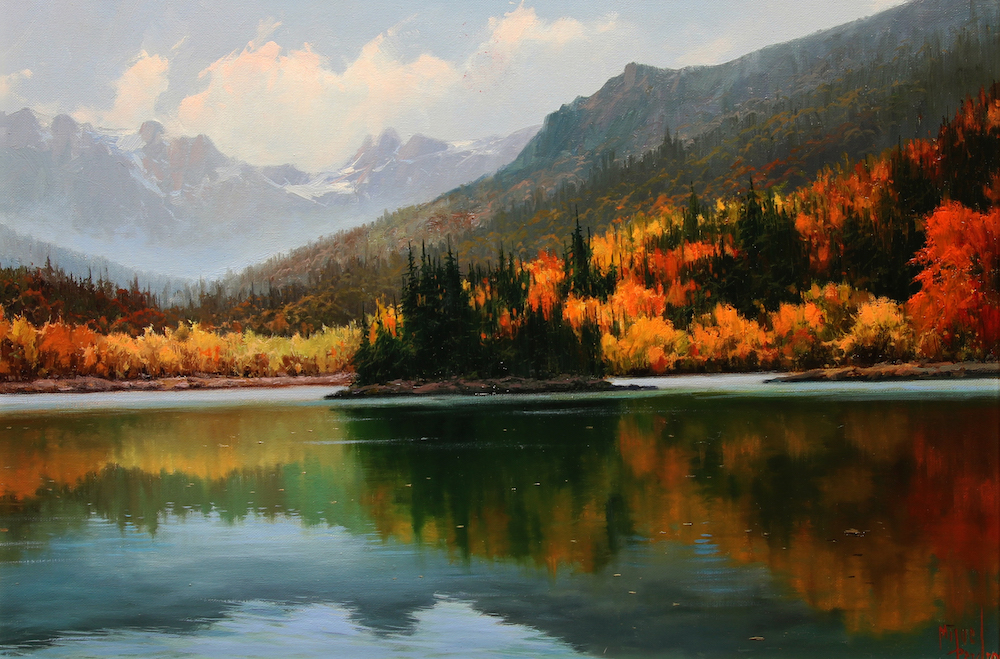
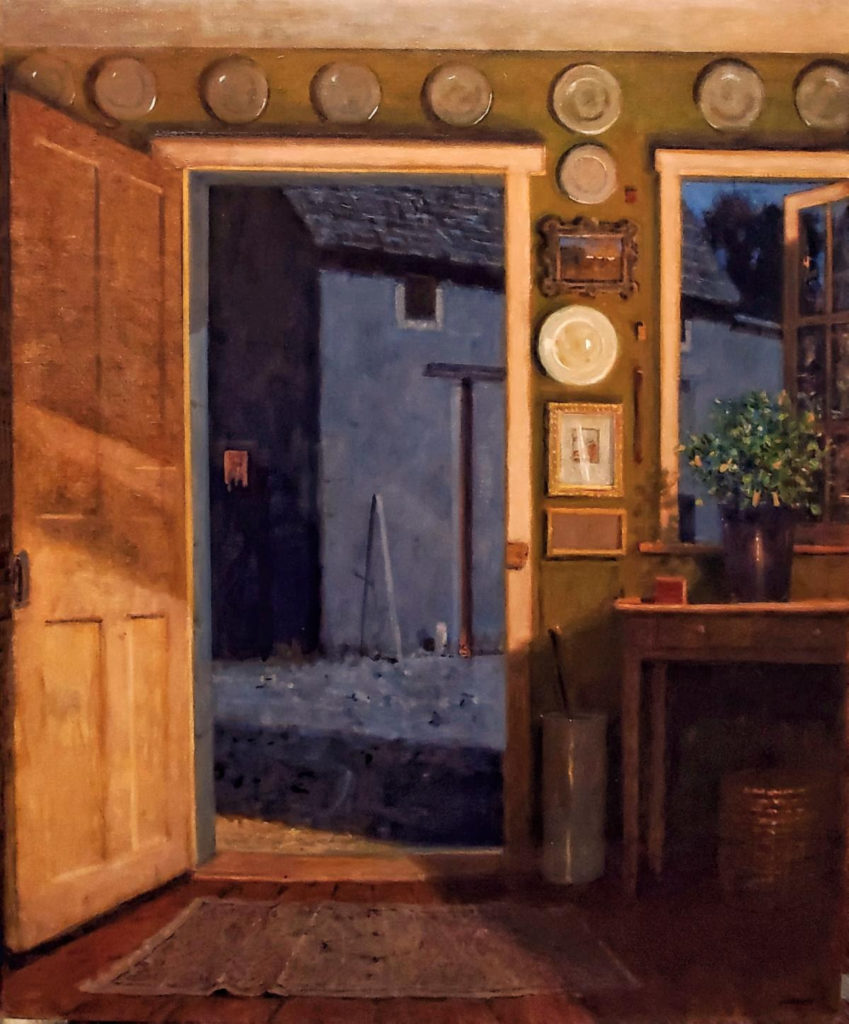
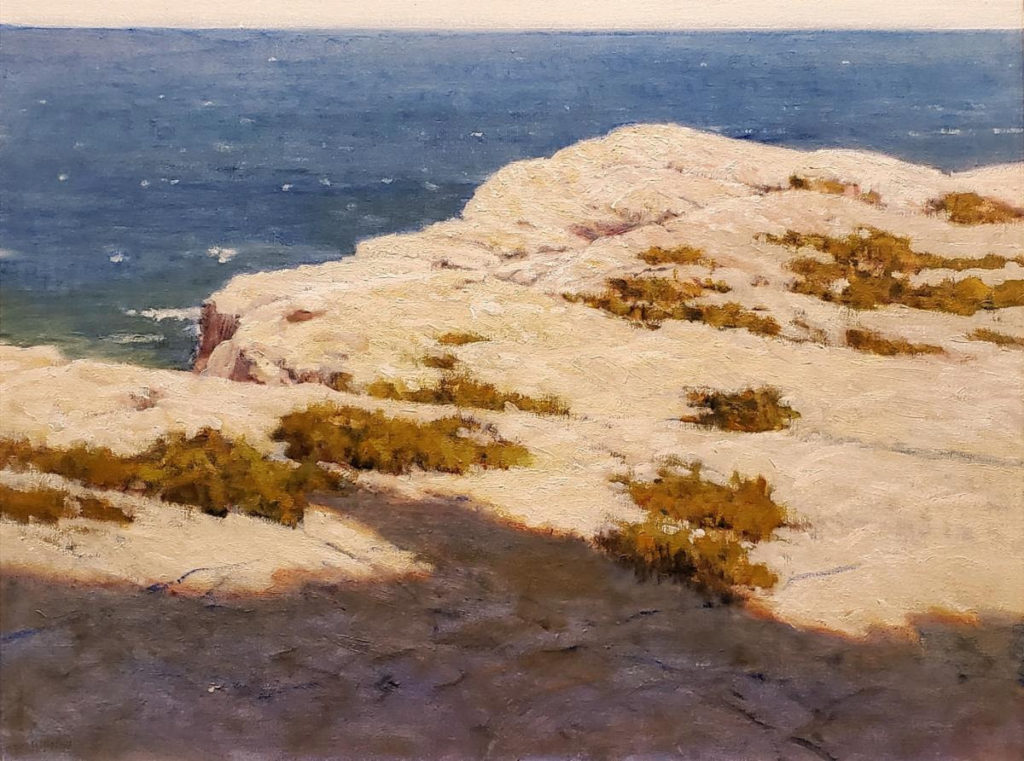
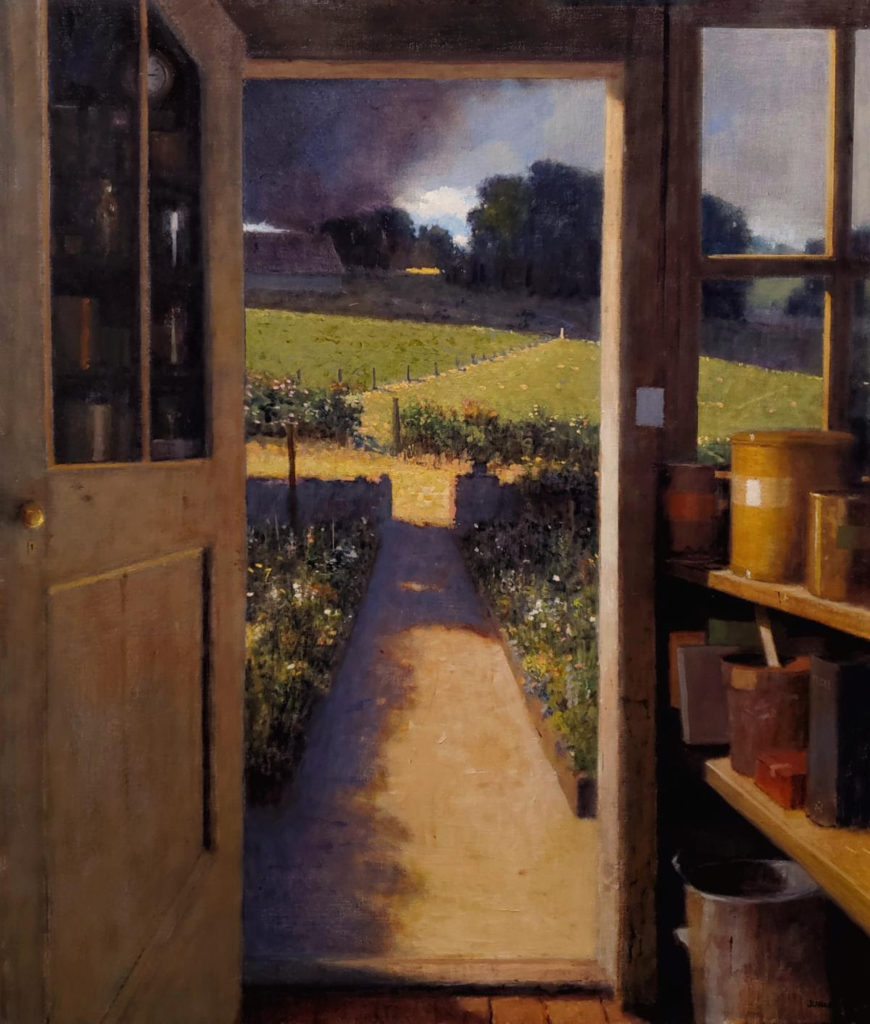
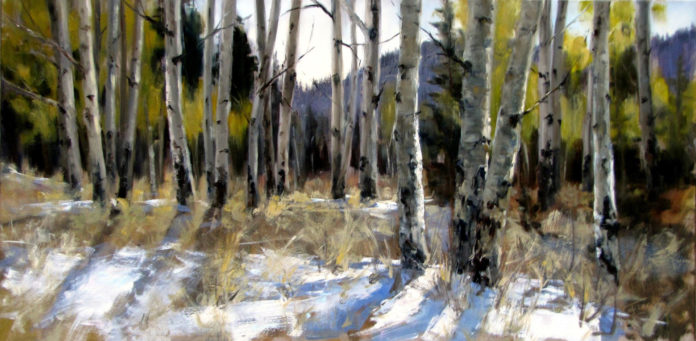
Water’s Reflection by Miguel Peidro, Oil on canvas, 18 x 26 in.; Lotton Gallery
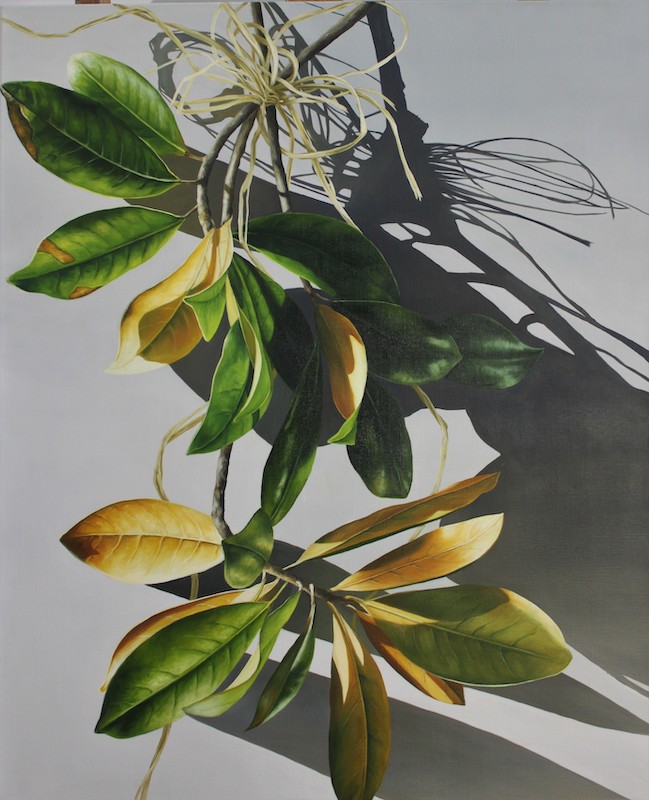
Hanging Magnolia Leaves by Loren DiBenedetto, Oil, 36 x 30 in.; Anderson Fine Art Gallery
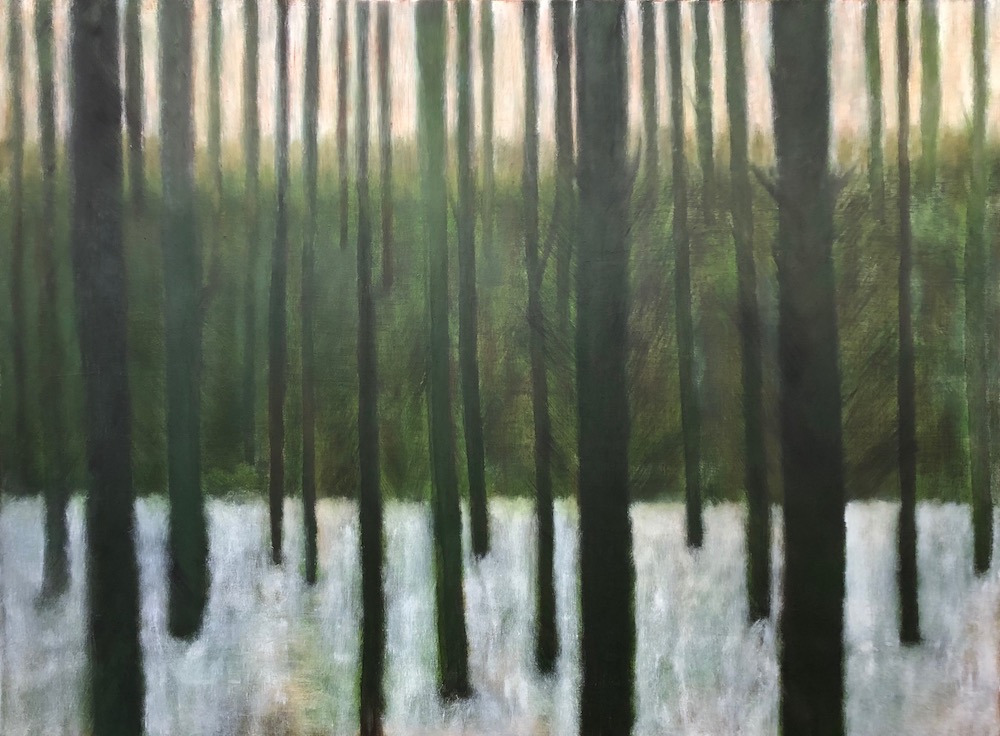
What the Trees Saw by Chris Cox, Oil on Canvas, 36 x 48 in.; Bluestone Fine Art Gallery
Roller Chick by Lucia Heffernan, Oil on panel, 12 in. diameter (image above modified), signed; Rehs Contemporary
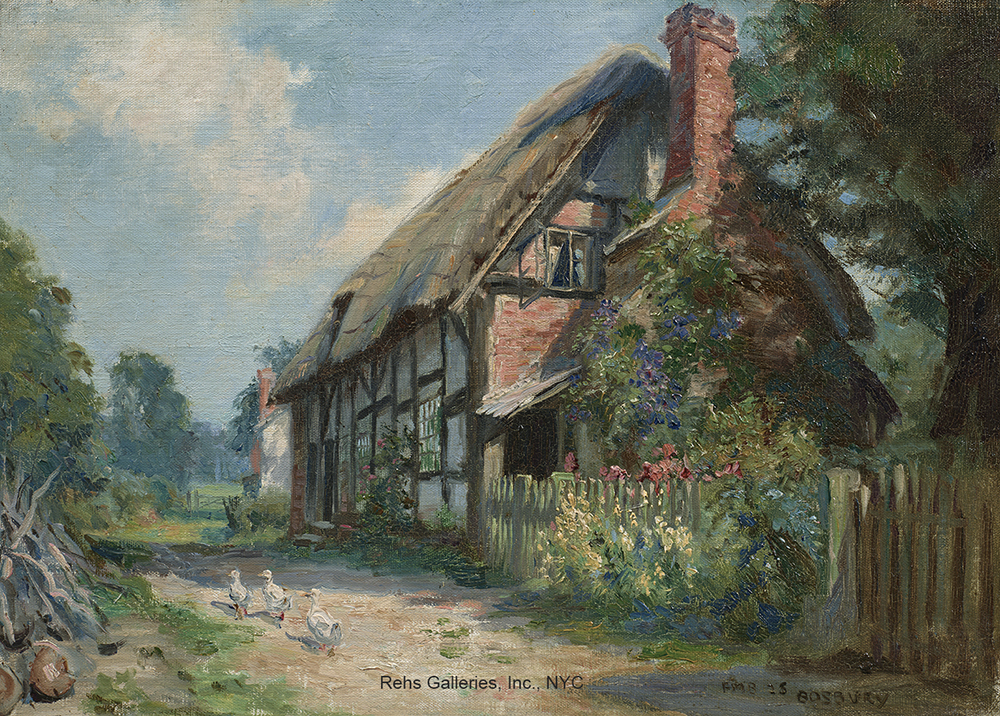
Bosbury, Hereford by Frank Moss Bennett (1874 – 1952), Oil on panel, 10 x 14 in., Signed with initials, dated ’26, and inscribed Bosbury; Rehs Contemporary
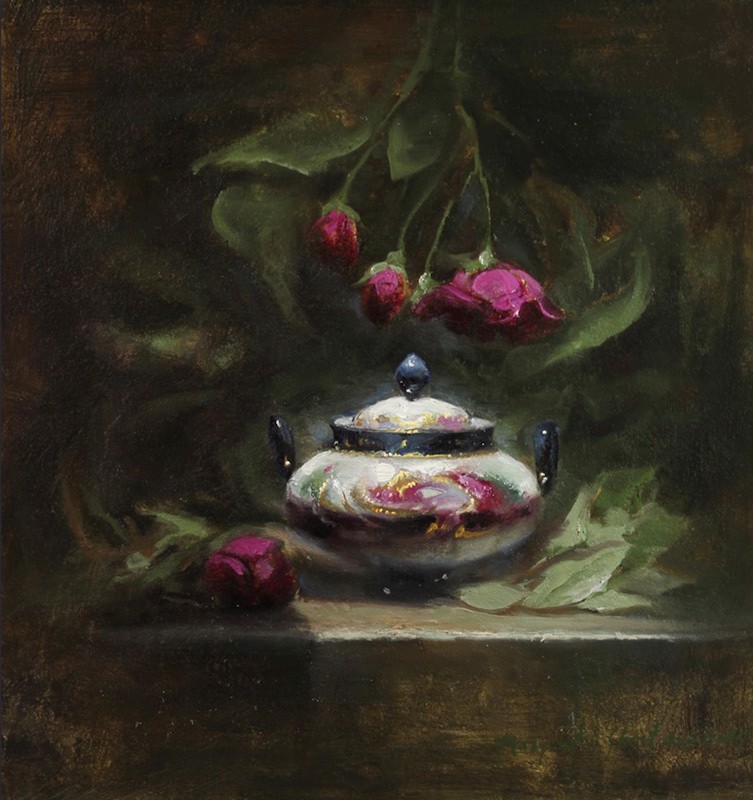
Hot Majolika by Margret Short, Oil on linen, 11 x 10 in.; Bronze Coast Gallery
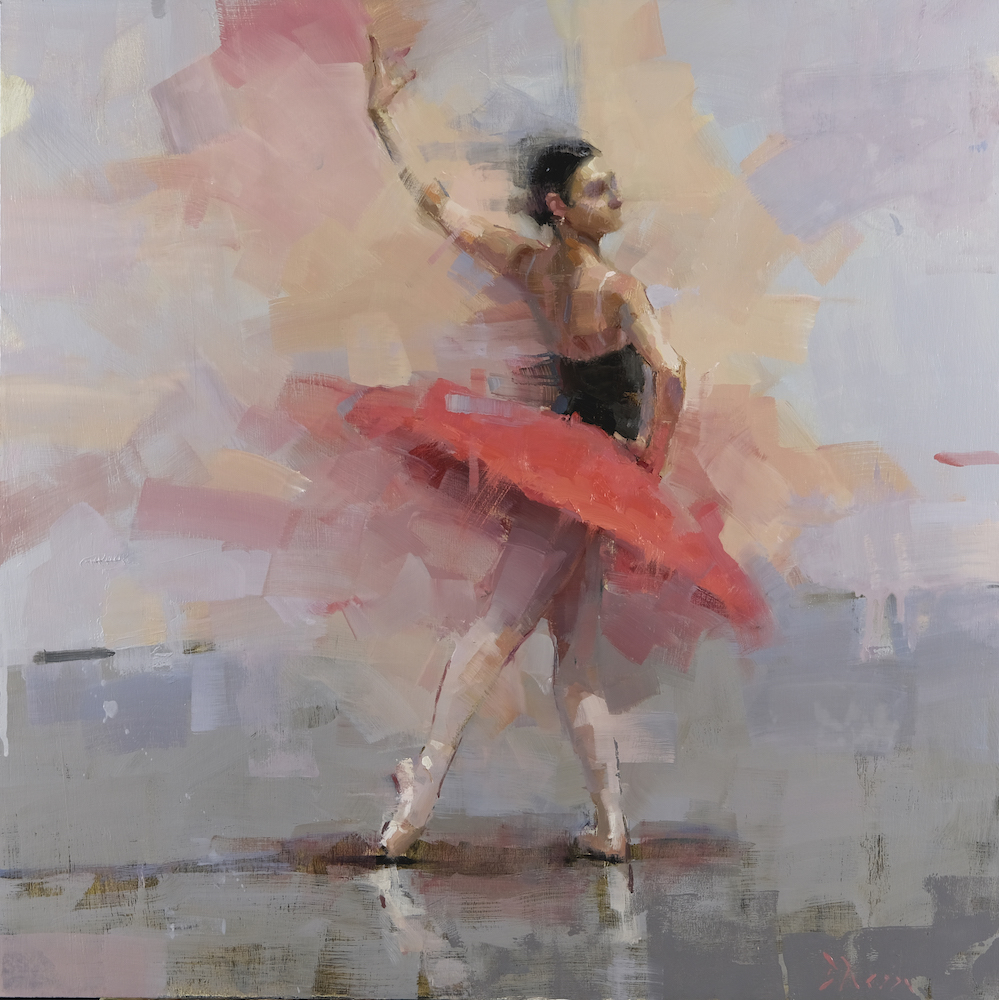
Dancer with Red by Jacob Dhein, Oil on panel, 24 x 24 in.; Anne Neilson Fine Art
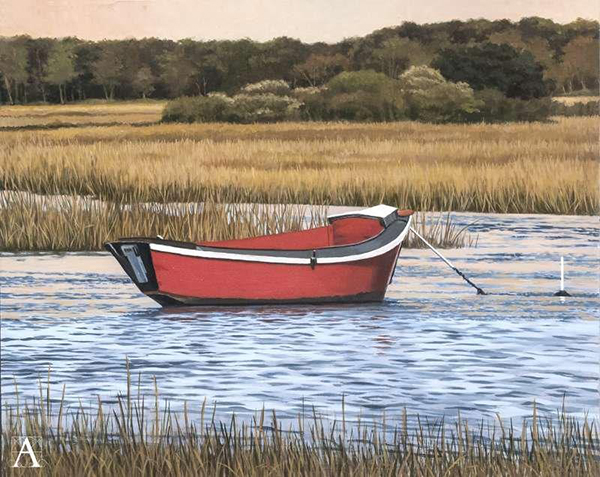
The Cardinal by George Angelini, oil on canvas, 16 x 20 in., 19 x 23 in. framed; Vermont Artisan Designs
Want to see your gallery featured in an upcoming Virtual Gallery Walk? Contact us at [email protected] to advertise today – don’t delay, as spaces are first-come first-serve and availability is limited.
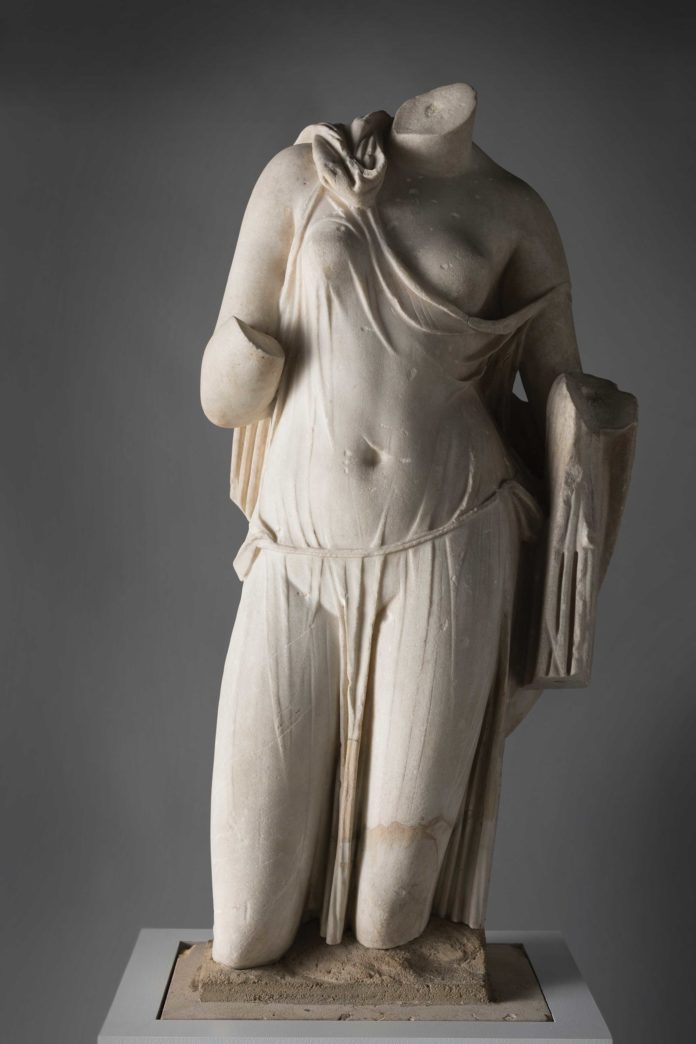
Torso of Aphrodite/Venus, Roman, 1st century AD, marble, 46 in. high
The Tampa Museum of Art houses one of the largest Greek and Roman antiquities collections in the southeastern U.S., so it makes sense for it to celebrate the centenary of American women’s right to vote — and of its own founding — with the exhibition “HerStory: Stories of Ancient Heroines and Everyday Women.”
On view through January 9, 2022 are works from the collection that highlight goddesses and mythological characters including Aphrodite, Athena, and the Amazons, as well as women whose names have been forgotten.
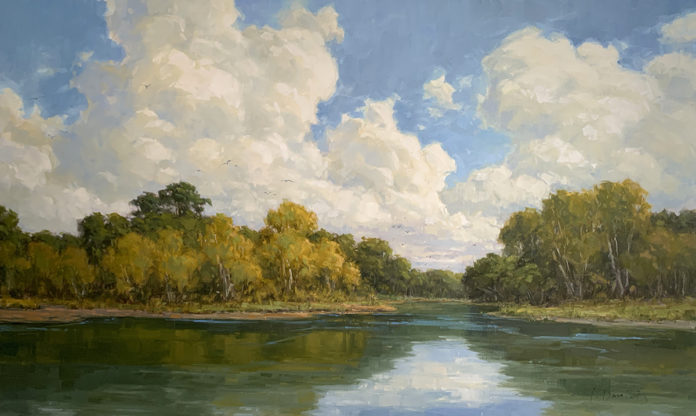
Laurel Daniel, "Around the Bend," 36x60, oil on canvas
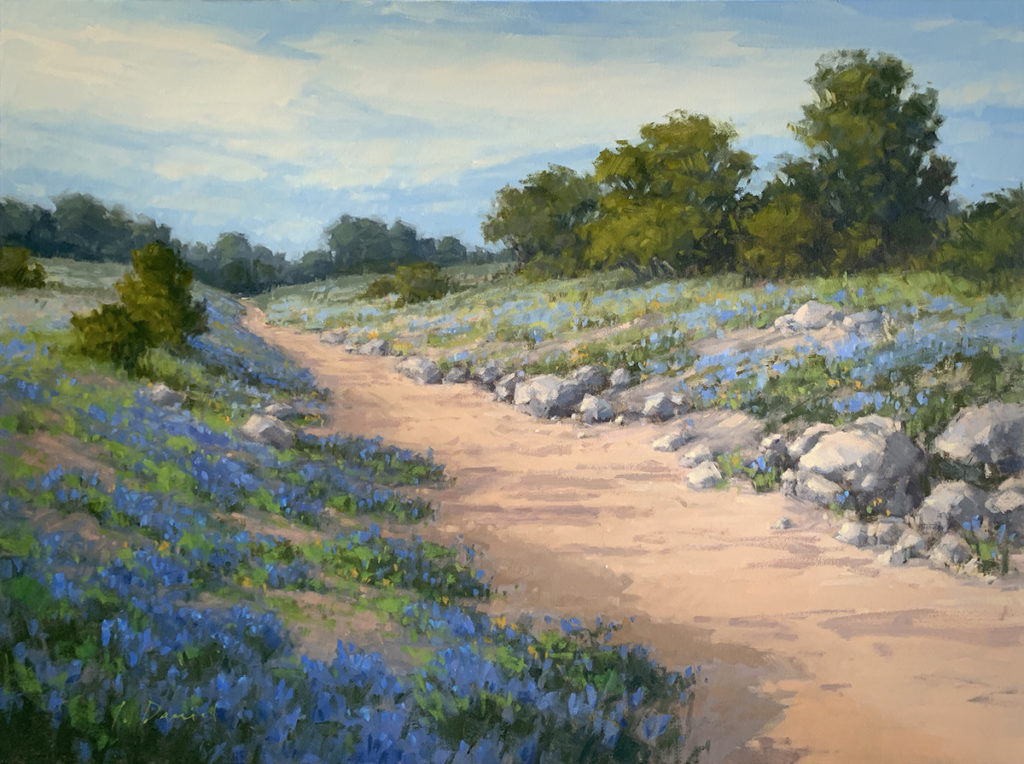
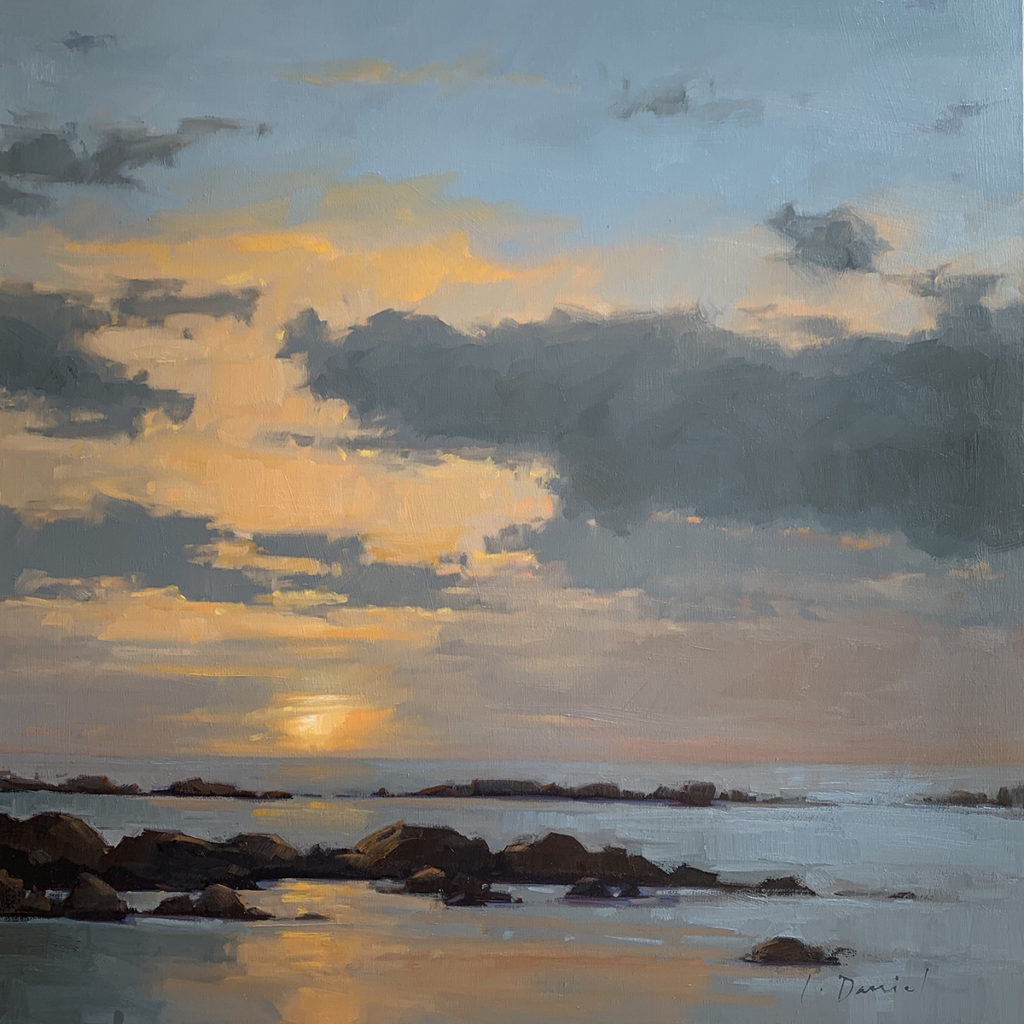
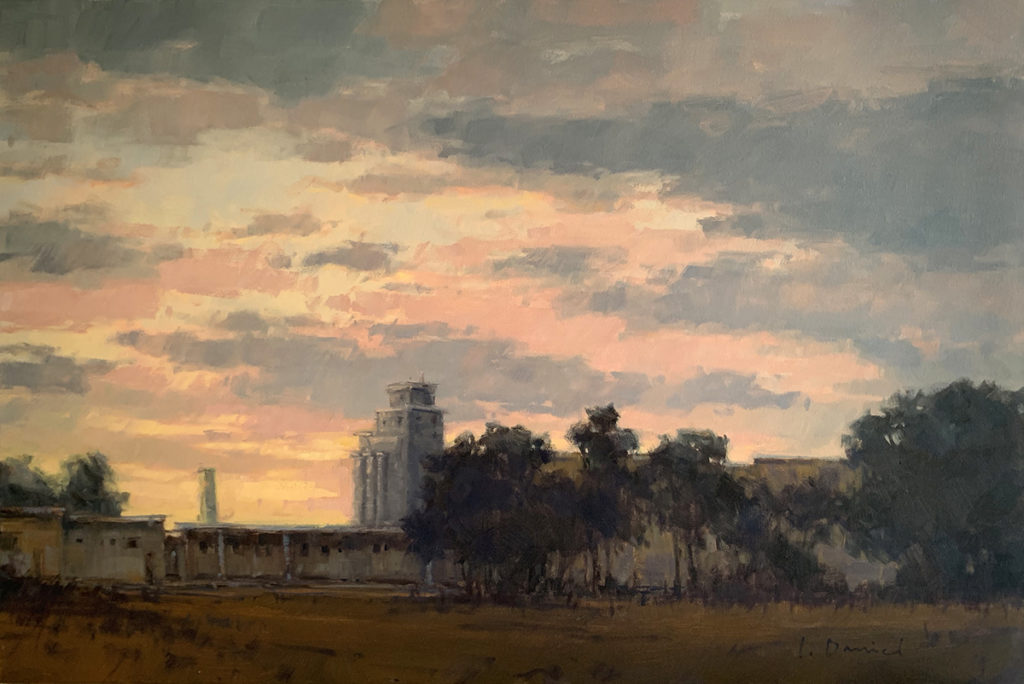
Laurel Daniel’s new body of work focuses on well-known surroundings … big skies, colorful Hill Country landscapes, and bountiful florals. Her latest exhibition, “Evidence of the Search – New Work by Laurel Daniel,” is on view through November 26, 2020 at Davis Gallery in Austin, Texas.
From the gallery: With practiced hand and a loaded brush, Daniel approaches each subject matter with great reverence. Her energetic, painterly mark-making reveals evidence of an ongoing search to capture the essence of our physical world.
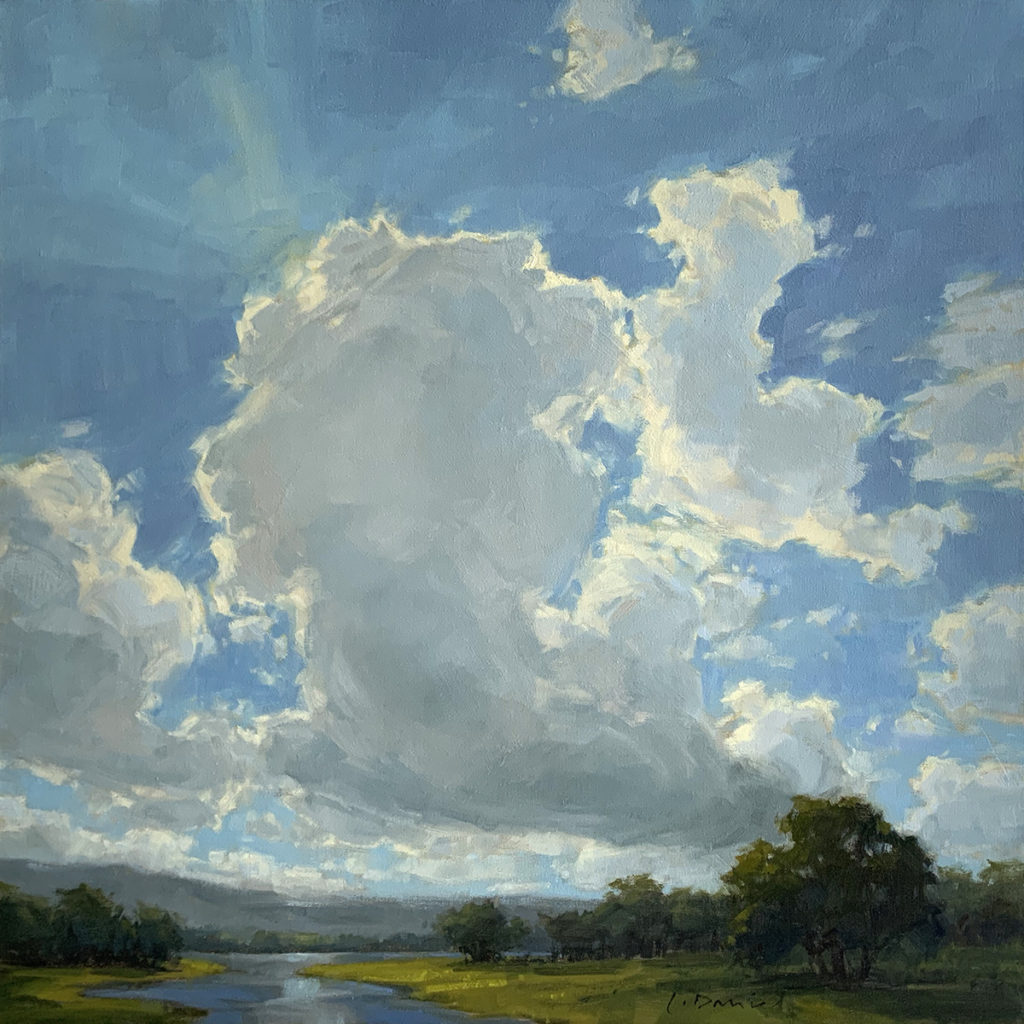
Laurel Daniel, “Heaven’s Kiss,” 30×30, oil on canvas
Throughout her twenty years as an oil painter, Daniel has often returned to nature’s familiar rhythms and forms for inspiration. She notes that they are steady constants in our ever-changing human experience. Vast heavens speak of a higher power. The return of spring awakens new life. The intricacy of design dispels chaos. Nature’s offerings give cause for hope, delivery from the unknown, and much needed respite in uncertain times. Daniel’s work reminds us to recognize these gifts and encourages us to keep searching.
Laurel Daniel, “Wild Blue,” 30×40, oil on canvasLaurel Daniel, “Out Beyond the Shore,” 30×30, oil on canvasLaurel Daniel, “Ruby Sky,” 24×36, oil on canvas
This collection in “Evidence of the Search” includes both smaller plein air paintings finished on location, and larger pieces completed in the studio. For more details, please visit www.davisgalleryaustin.com.
Related > Laurel Daniel has helped people of all ages learn the secrets to getting “up and running” as a painter in record time. In her five-star, two-hour “Outdoor Painting Basics” video workshop, she explains how to choose the perfect outdoor subject for your painting that will capture your unique creative vision; how to set up your materials and mix your paints to get the perfect colors for your work; how to paint shadows, trees, the effects of light, rolling hills, clouds, and much more.
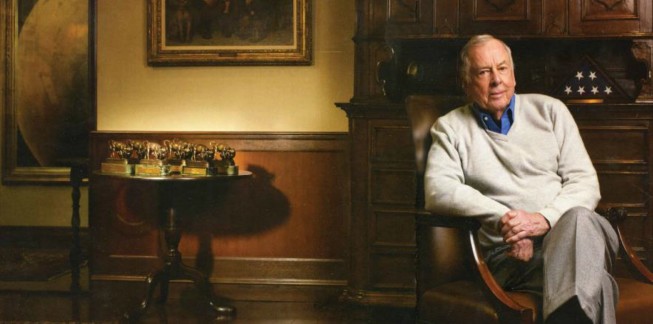
“All history is a resource from which to draw wisdom. The history of the West is particularly rich in wisdom because of the strength of the individuals who lived it. They have given us an unsurpassed legacy of human values founded on such basics as morality, truth, duty, honor and country. I have collected Western art with a hope that it will help preserve these values for successful living and perpetuate them for future generations.” – T. Boone Pickens
Christie’s (New York) recently announced “The Legend of the West: Iconic Works from the T. Boone Pickens Collection,” a landmark auction of American Western Art to be held on October 28, 2020.
From the organizers:
Famous for his larger-than-life personality, T. Boone Pickens was a legendary energy entrepreneur, a pioneer in shareholder’s rights and one of America’s best-known executives, as well as a philanthropist and civic leader. Pickens was also a visionary art collector who built a momentous collection over the course of his career. Spanning over a century, the collection features works by many established artists in American Art history, including Frederic Remington, Thomas Moran, and N.C. Wyeth, together with prominent contemporary painters in the genre, such as Howard Terpning and G. Harvey. Comprised of approximately 75 lots, the auction is expected to exceed $15 million, a portion of which will benefit charity.
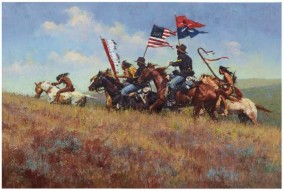
HOWARD TERPNING (B. 1927) “Flags on the Frontier” oil on canvas 37 ¼ x 56 in. Painted in 2001. $700,000-1,000,000
Tylee Abbott, Specialist of American Art, comments, “Mr. Pickens’ assemblage serves as an extension of himself, a kind of self-portrait of the collector. The art with which he chose to surround himself consistently depicts the bold, strong-willed personages of the West and the endurance of the American spirit. The ambition and daring embodied by these pioneers are the qualities that not only contributed to Mr. Pickens’ own legend as an American icon, but have also built the legend that is the West.”
Capera Ryan, Christie’s Deputy Chairman, comments, “T. Boone Pickens was known for his transformation of the American energy industry as an entrepreneur, and for his generous philanthropy, but not as many know of T. Boone Pickens the art collector. Mr. Pickens would say it was the oil fields of Texas that gave rise to his success, but he always understood the importance of adapting to the energy industry’s constantly evolving landscapes. It was the Western landscapes and its inhabitants that inspired both his own art collecting and friendships with artists. Christie’s is honored to celebrate Mr. Pickens’ legacy as a passionate American steward and philanthropist and to share his dynamic vision of Western art with a global audience.”
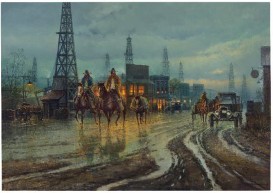
G. HARVEY (1933-2017) “Boomtown Drifters” oil on canvas 42 x 60 in. Painted in 1979. $300,000-500,000
About the Collection:
T. Boone Pickens’ collection is distinguished by its scope, including masterpieces ranging from Frederic Remington’s “The Signal of 1900” to Howard Terpning’s “Flags on the Frontier” from 2001. With this unique combination of both traditional and modern paintings, the dynamic works in the collection reveal Mr. Pickens’ deep understanding and dedication to the Western Art category and, moreover, his lifelong admiration of the boldness and creativity of the American pioneering spirit.
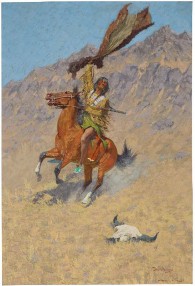
FREDERIC REMINGTON (1861-1909) “The Signal (If Skulls Could Speak)” oil on canvas 40 x 27 in. $3,000,000-5,000,000
Frederic Remington’s remarkable oil painting “The Signal (If Skulls Could Speak)” is at the forefront of the collection (estimate: $3,000,000-5,000,000). Remington’s depictions of the action and drama of the American West were unrivaled among his generation, and this painting dramatically represents one of the enduring themes of his art, the Native American.
Painted here within the traditional art historical archetype of a solitary figure on a rearing horse, Remington’s Native American is established as a heroic icon whose bravery defines the Western spirit. The painter’s talents as a storyteller are exemplified by this bold composition, which transports the viewer to an earlier era of the Old West.
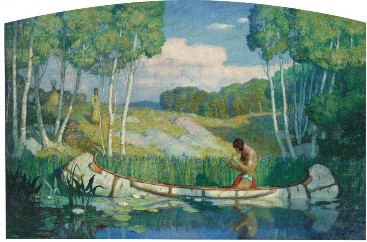
NEWELL CONVERS WYETH (1882-1945) “Indian Love Call” oil on canvas mounted on plywood 45 x 68 in. $2,000,000-3,000,000
N.C. Wyeth’s masterwork “Indian Love Call” (estimate: $2,000,000-3,000,000) similarly celebrates a Native American subject, with the grandeur and romanticism that have come to define the famed American illustrator’s career.
The collection also features similarly-styled historic depictions of American cowboys, ranging from Charles Marion Russell’s “Roping a Wolf” (estimate: $700,000 – $1,000,000) to Frank Tenney Johnson’s “Wyoming Cattlemen” ($250,000-350,000).
In addition to the historic paintings, Mr. Pickens was also determined to collect significant examples by contemporary Western artists, such as Howard Terpning, Bob Kuhn, and G. Harvey, for whom he served as a major patron.
Pickens also directly commissioned from leading landscape artists Clyde Aspevig and Wilson Hurley specific works depicting his beloved Mesa Vista Ranch in the Texas Panhandle. In this pairing of traditional and modern visions, Mr. Pickens’ collection was purposefully designed to fully capture the spirit of the West, thereby embodying the mentality that spurred his own life as an American pioneer and innovator.
Additionally, the sale will include two watches and an assortment of cufflinks belonging to T. Boone Pickens. These include the beloved Rolex Day-Date President that Pickens wore regularly since its purchase in 1964, the year he famously took the oil and gas company he founded, Mesa Petroleum, public. The offering of cufflinks includes those featuring the Mesa Petroleum insignia, oil drums, a bull and bear and Mr. Picken’s initials.
For more information about “The Legend of the West: Iconic Works from the T. Boone Pickens Collection,” please visit christies.com.
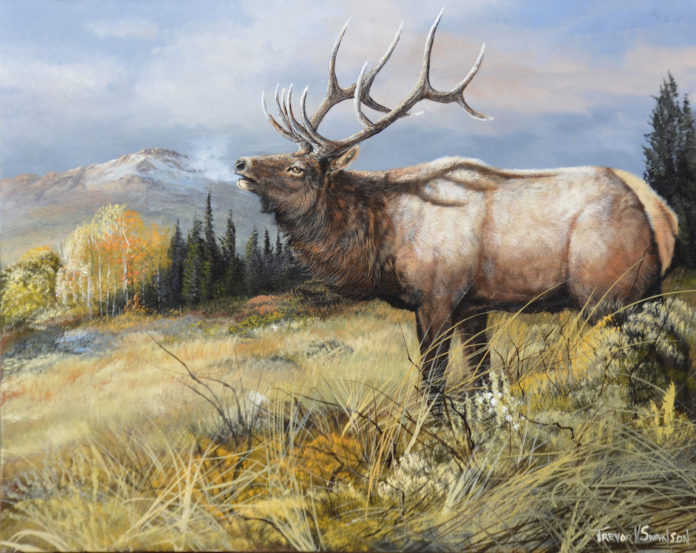
Autumn Song by Trevor Swanson
16 x 20 in.
Oil
$4,250
For Trevor, the creative process begins with the insight and emotional response he gleans directly from wild animals in their natural settings. On one level, his artwork celebrates the majesty of untamed wildlife and beauty of unspoiled environments. On another level, it expresses a keen sense of the drama and emotion found only in the wilderness. On yet another level, through its intense realism, Swanson’s art captures that briefest moment in time when nature reveals her spirit. “I paint realistically, because the beauty of life is in the little things. The multi-colored moss growing on the rock where a wolf is standing, the light beaming through trees branches onto the fur of a bear; these are the details that breathe life into the painting. I try hard to portray these subtle elements of tone and mood because they complete the story being told. I also love to see the response people have to my work. It is always deeply rewarding to see how much someone enjoys a painting that I have put my heart into.”
Trevor Swanson makes his home in Phoenix, Arizona. Visit him and 100 other artists at the Celebration of Fine Art in Scottsdale, AZ January 16 – March 28, 2021. Contact us at 480-443-7695 or [email protected].
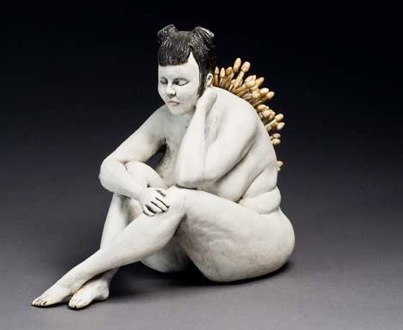
Laura Marmash, “Seated Figure with Fungi,” 2010, porcelain, engobe, stain, 4 3/4 x 9 x 7 in.
Where does the drive to create art come from? Is it the desire of the artist to express an emotion, perhaps a means of reflecting nature’s beauty, or simply a hobby? On occasion, the move toward artistic expression spawns unintentionally from the need to have a voice, and what that voice has to say is often captivating. Figurative sculptor Laura Marmash sat down with Fine Art Today and discussed her unexpected journey to artistry, in which she fired her frustrations — both literally and symbolically.
Artists are a special breed because their spirit drives them to use various materials to express or reflect that which is meaningful to them. For artist Laura Marmash, personal expression through art came in 2008, when her role as an art director wasn’t fulfilling this need.
“My career started in advertising as a ‘creative,’ but I took a class at Lillstreet Art Center in Chicago just to be creative and make something that wasn’t to someone else’s specs or expectations — to have my own voice,” she says. “I think being a woman in a major advertising agency in Chicago — a man’s world — bred frustration. I often felt that I needed to have a dual personality: On the one hand, you needed to be the bitch who’s assertive to get things done, but other times I needed to placate and just go along to get along. I’m somewhere in the middle, but I found myself playing both roles and extremely frustrated.”
Marmash needed an outlet, and with her creative background, art was the natural course. In a fascinating and unexpected path, Marmash today is working in clay — producing figurative works that display complex and raw surfaces. Many of the subjects have unusual growths and patches of glaze that activate the visages.
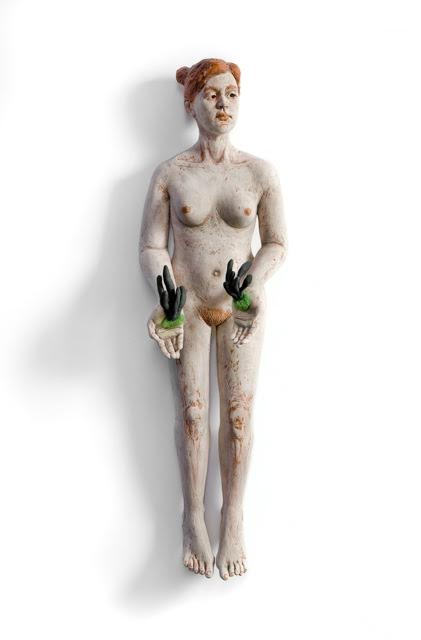
Laura Marmash, “Transcend,” 2015, terracotta, slip, underglaze, stain, wool, cone 4, 24 x 7 x 6 in.
Discussing her work, Marmash admits there’s a certain degree of morbidity and connotations of degradation, rebirth, aging, and nature. “I’m very inspired by thoughts of evolution, destruction, degradation, and how they relate to the body,” she says, “Five or six years ago, I visited a dermatologist, who began to investigate and remove pre-cancerous places from my fair skin. It really struck and inspired me, thinking about these oddities that surface as one ages.”
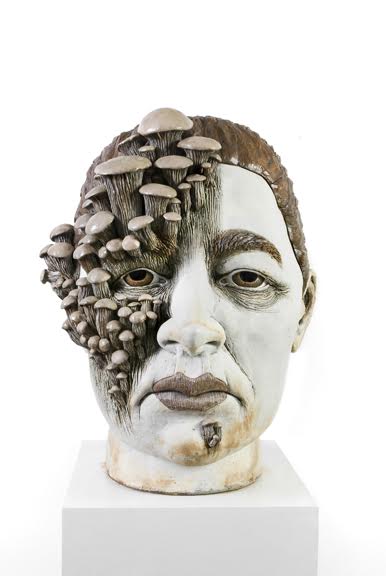
Indeed, Marmash’s creative use of glaze and color imbue her figures’ “skin” with individuality and irregularity. Some of them even display mushroom growths — another telling feature. The artist suggests, “I love the idea of how mushrooms take over an area and decompose/recycle the soil — how they filter and cleanse toxins from the earth in this cycle of degradation and rebirth in nature.” To work in clay was not a deliberate decision on the part of the artist, but it should come as no surprise, given Marmash’s sources of inspiration.
Laura Marmash, “Metamorphosis,” 2015, stoneware, slip, underglaze, stain, glaze, ink, wax, cone 10, 34 x 32 x 32 in.
Working with the figure naturally has deeply personal connections, but it can also communicate broadly and universally. Marmash says, “I saw the work of Cristina Córdova, and it communicated to me on a fundamental level — it was an attraction that I could only express creatively through my own works.” In 2009, Marmash was lucky enough to attend a workshop with Córdova at Penland School of Crafts in Penland, North Carolina — an experience that launched Marmash into a more serious and dedicated process.
“It was such an incredible environment there,” she asserts. “I didn’t have to worry about cooking or cleaning; I could spend as much time in the studio as I wanted and completely immerse myself into learning from Córdova. There were also painters, weavers, wood carvers, sculptors, potters, and more, all together exchanging ideas and critiquing in the studio and at dinner — it was two weeks that gave me years of education.”
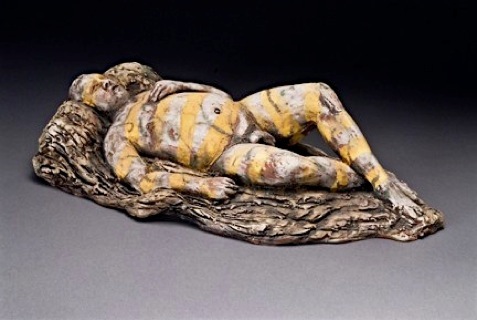
Laura Marmash, “Reclining Study,” 2009, terracotta, slip, stain, glaze, 7 x 12 x 5 1/2 in.
Marmash’s story offers a unique glimpse into the career of an immensely talented artist whose exploration of the figure and clay has only begun. She still has much to explore and understand about her voice and how she seeks to express it, but her current results are undeniable and profoundly beautiful. As the artist continues to grow, she hopes to refine and streamline her process. “I work so terribly slow, I’m like a snail,” she says. “I want to work quicker and in larger scale.”
Be that as it may, there seems little doubt that Marmash is ascending in her artistic career, and producing larger works is only a matter of time. Whether large or small, busts or full figures, abstracted or naturalistic, one can rest assured that whatever comes from the studio of Laura Marmash in the years to come will be something to see, admire, and collect.
The Guild of Boston Artists presents 23 new paintings by artist member Donald Jurney in a spotlight exhibition titled “Celebration of Place” to hang at its Newbury Street gallery through October 31, 2020.
From the Guild:
Combining nostalgic memory that is rooted in a sense of ephemeral familiarity alongside sensitive observation of place, Jurney’s work is an exploration of the romantic potential of landscape. His personal approach to painting is both imaginative and metaphorical, and the resulting image is a purposeful and precise reconstruction of the emotional contents of a specific time and place.
Donald Jurney, “Summer Dusk”
Infused with depth, mood, and investigative possibilities, his paintings are designed to re-inspire and renew the viewer’s wonder for their surroundings.
Speaking of his work, Jurney explains, “often a painting is a conversation between disparate shapes and forms – here brilliant, there disguised – in a carefully-conceived dance of light. This may be a celebration of a place, perhaps, or an investigation of an evanescent mood. For the viewer who has both the time and inclination to really look, one hopes to afford, by way of a painted surface wrought of subtleties, the opportunity to explore at leisure the wonder of the world in which we live.”
Donald Jurney, “Nuit d’été”
Jurney was born in Rye, New York, in 1945, and studied at Columbia University, the Pratt Institute, and the Art Students League. Donald Jurney has lived and worked in the Hudson River Valley, in England, and in the Berkshires. For a number of years, he has painted extensively in France.
A recent interest has been kindled by a trip to the West of Ireland, and he has begun exploring the coastal marshes and the estuaries of Boston’s North Shore. But wherever his travels take him, we can be sure of an invitation to come along, through his paintings, and of the chance to share his unique vision of the landscape — inspired by his unflagging enthusiasm for the remarkable world about us.
Donald Jurney, “Cloud Shadows, Star Island”
Created using masterful handling of paint and color, and a skillful combination of dry brush, impasto, and glazing techniques, Jurney’s work is singular in the way it combines the landscape traditions of the Barbizon and Hudson River Schools with influences from late 19th and early 20th century French and American Impressionism.
His work is widely collected internationally and is in the permanent collections of The Oakland Museum, The Museum of the City of New York, and the Hudson River Museum. Donald Jurney teaches classes on Boston’s North Shore and gives plein air painting workshops both in the U.S. and abroad.
Donald Jurney, “Sunshine After Rain”
For more details about “Donald Jurney: Celebration of Place,” please visit guildofbostonartists.org.
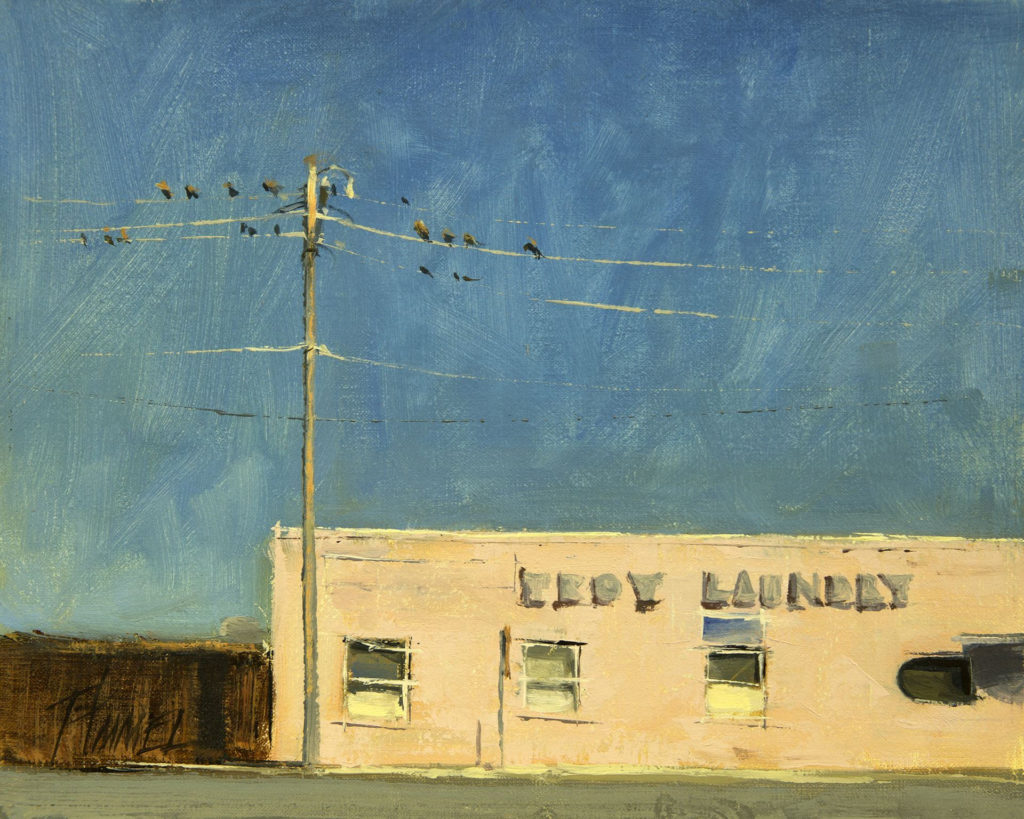
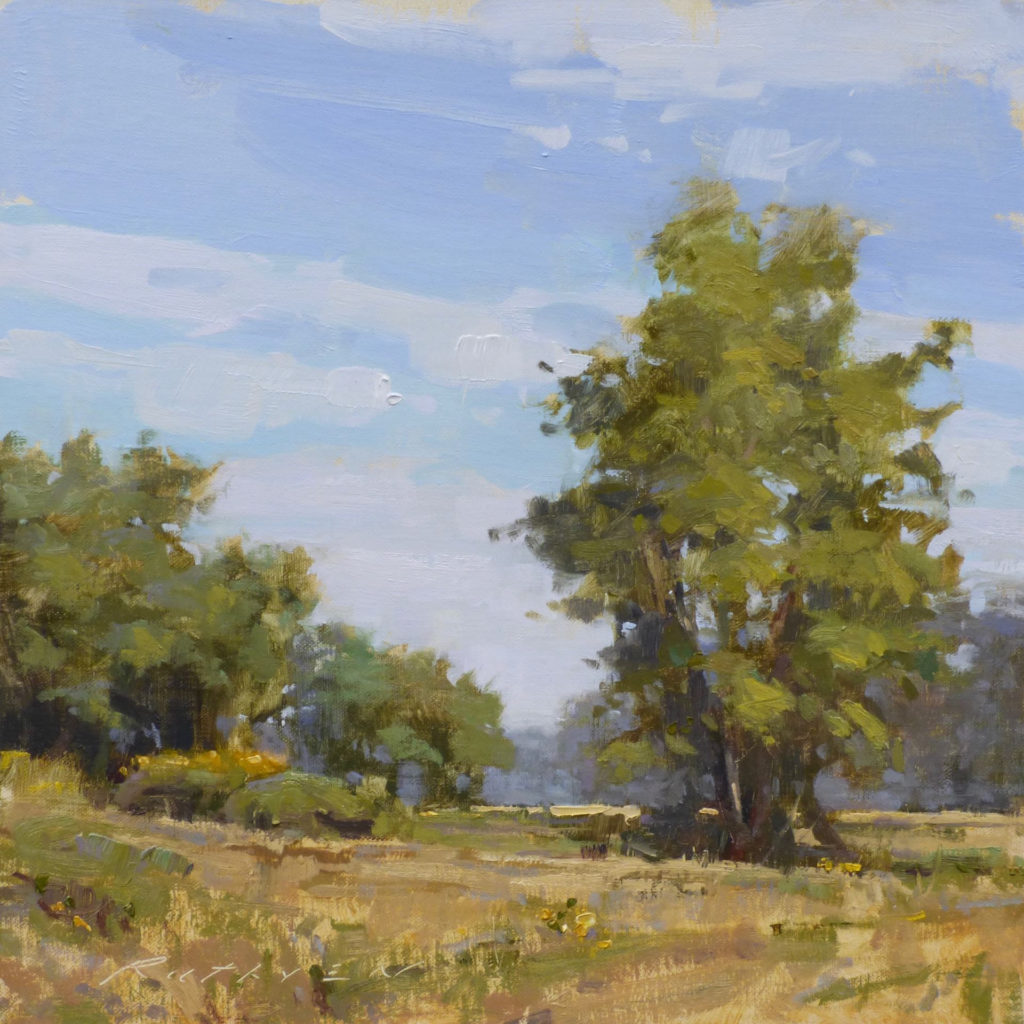
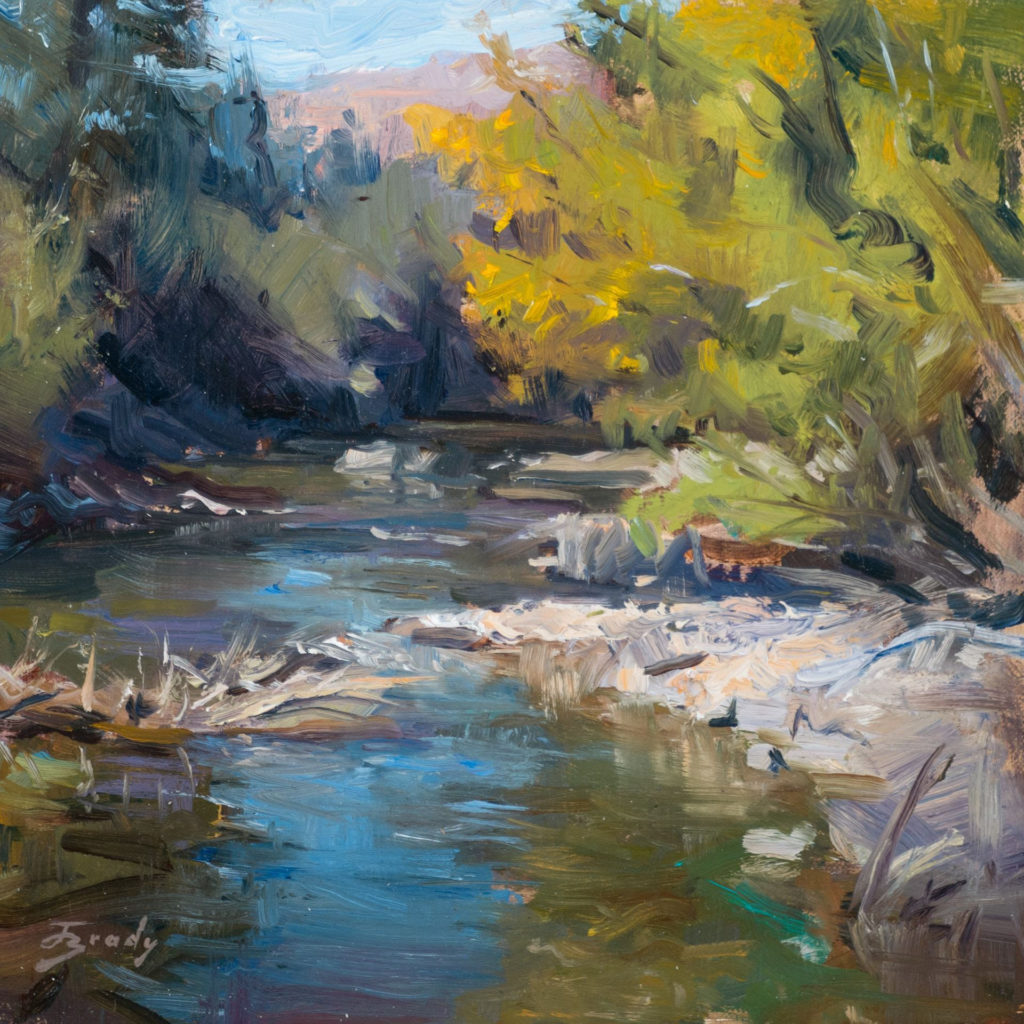
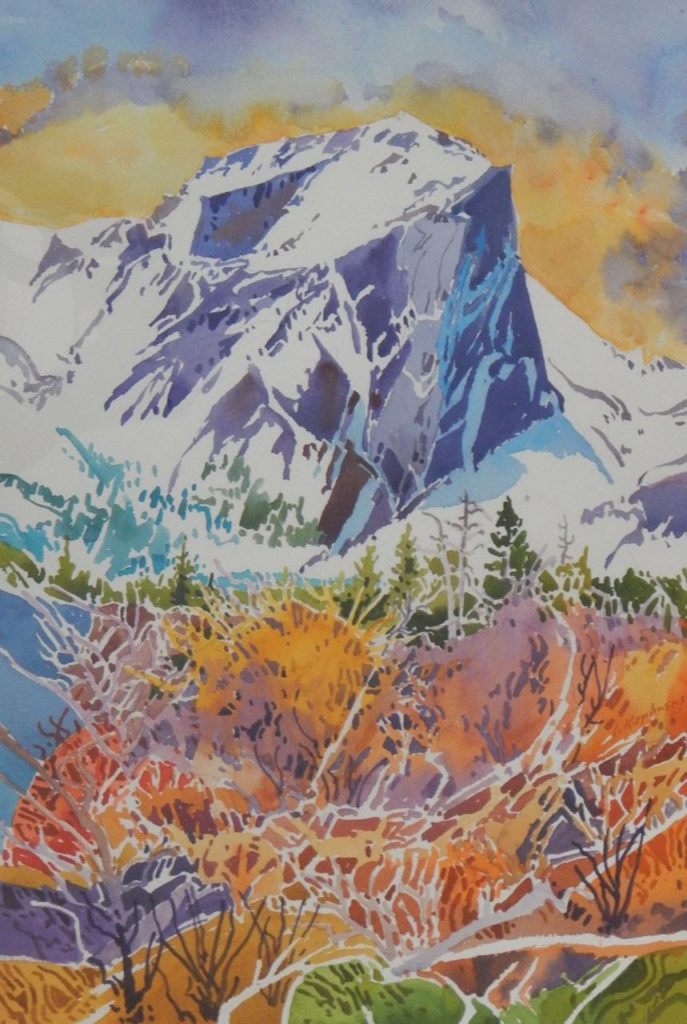
The Plein Air Artists Colorado (PAAC) recently announced the award winners of its 24th Annual Exhibition and Sale. The exhibition is on view at Wilder Nightingale Fine Art in Taos, New Mexico, through December 31, 2020. Frank Lalumia was the juror of awards.
Best of Show:
Jenifer Cline
“Attendance” (shown at top)
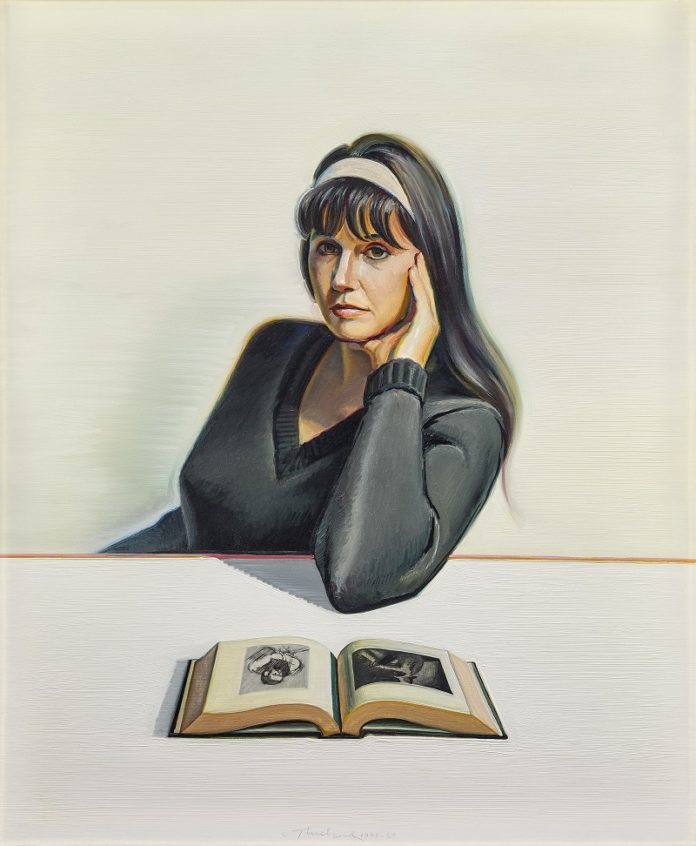
Wayne Thiebaud, "Betty Jean Thiebaud and Book," 1965–1969, Oil on canvas, 36 x 30 in., Crocker Art Museum, gift of Mr. and Mrs. Wayne Thiebaud, 1969
“Wayne Thiebaud 100: Paintings, Prints, and Drawings,” an extensive, celebratory retrospective featuring the full range of the Sacramento artist’s achievements on canvas and on paper is on view at the Crocker Art Museum through January 3, 2021.
Opening shortly before Thiebaud’s 100th birthday, the career-spanning exhibition of 100 objects made over more than 70 years (1947-2019), is the largest survey of Wayne Thiebaud’s work in in two decades. Works drawn from the Crocker’s holdings and the collection of the Thiebaud Family and Foundation, many of which have never been shown publicly, as well as the artist’s newest body of work, circus clowns, reveal an extraordinary, expansive practice.
Accompanied by a full-color, richly illustrated publication with fresh scholarship by Crocker Art Museum’s Associate Director & Chief Curator Scott A. Shields and others asserts that Thiebaud’s body of work is singular and visionary, informed by memory, tradition, and imagination.
“Wayne Thiebaud is a national treasure, Sacramento is his hometown, and we are delighted to celebrate his 100th birthday with an exhibition that honors the vitality, vibrancy, and wit of his art and civically engaged life,” says Lial A. Jones, the Museum’s Mort and Marcy Friedman Director & CEO. “’Wayne Thiebaud 100′ continues a Crocker tradition of organizing an exhibition of the artist’s work in every decade since 1951, when the Crocker accorded him his first solo museum show. We will recognize his achievements through an important publication alongside virtual exhibition tours and programs, fresh and archival interviews with the curator and the artist himself, plus fun and engaging digital activities for all ages.”
“Wayne Thiebaud has a reverence for painting and tradition. His art is deeply felt,” says Shields. “His canvases are some of the most important paintings ever made in California, and they possess an enduring interest, combining nostalgia and optimism, loneliness and isolation.”
Wayne Thiebaud (b. 1920) was raised in California and is today one of America’s greatest and most admired living artists. Appreciated for creating “a world of longing — a serene abundance that is always a windowpane away,” as Adam Gopnik of The New Yorker has stated, Thiebaud is a recipient of the National Medal of Arts (1994) and the Gold Medal for Painting from the American Academy of Arts and Letters (2017).
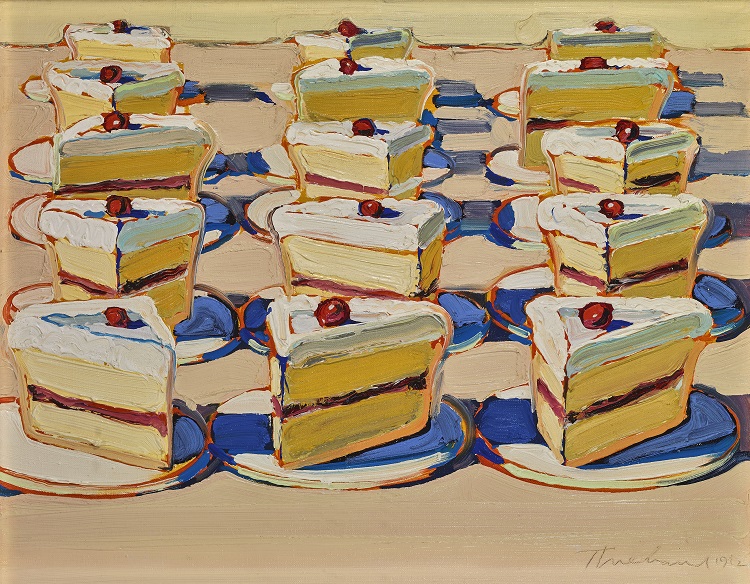
He made his reputation in the early 1960s with still lifes of comforting, ubiquitous foods, the type served at snack counters, cafeterias, and middle-class diners, such as pies and cakes, ice cream cones, lollipops, and other delectables painted with thick impasto, which at the same time evokes simpler times and places.
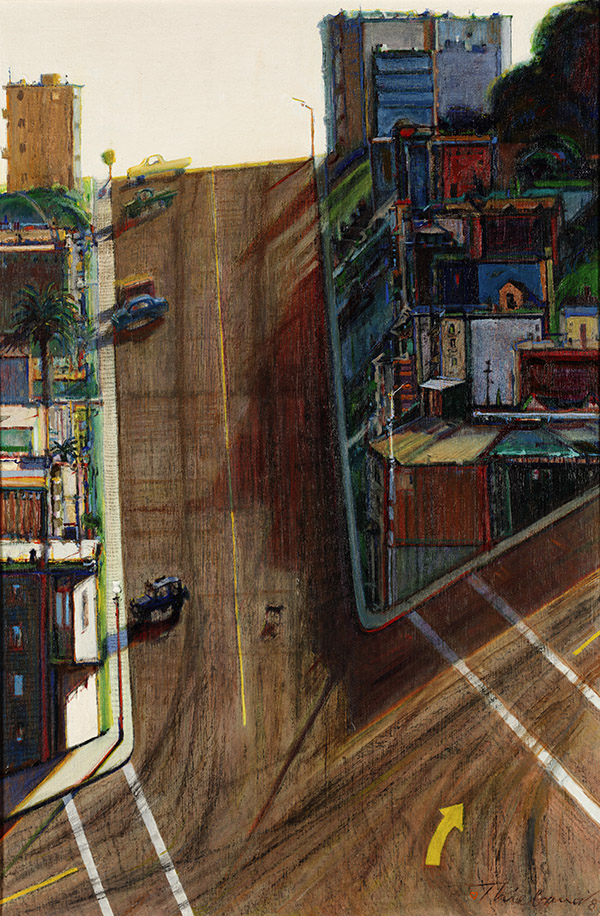
By the mid-1960s, Thiebaud turned to the figure and then landscape and, in the 1970s, gained new recognition for his dramatic, vertiginous interpretations of the San Francisco cityscape. Many of these same qualities are exemplified in the artist’s sweeping, bird’s-eye portrayals of Sacramento-San Joaquin Delta scenes, a group of paintings he started in the mid-1990s.
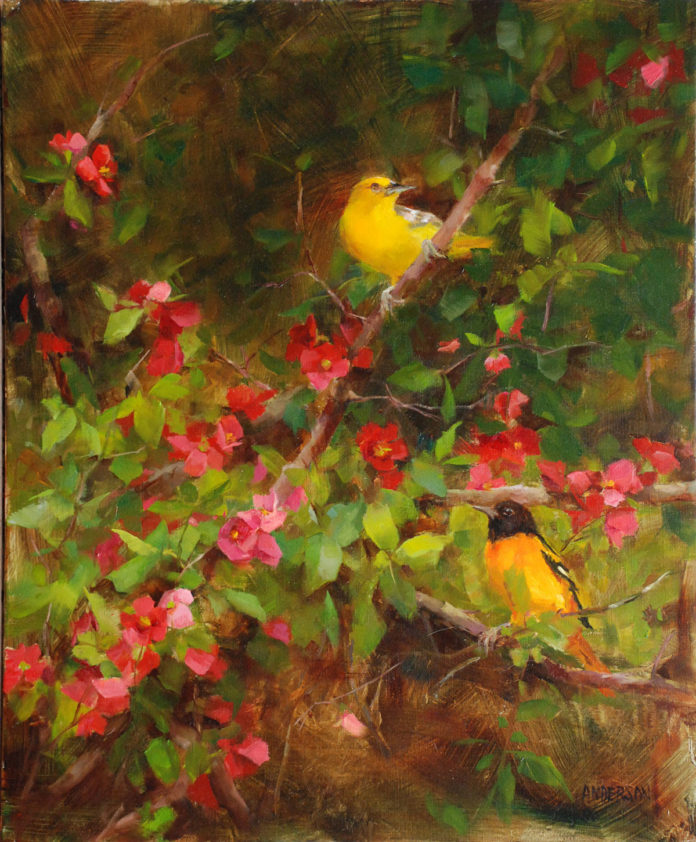
Kathy Anderson's oil painting, “Quince and Oriole”
Kathy Anderson is no stranger to strong design, which is a major factor in her floral paintings. In the following, Kathy shares her thoughts on her oil painting, “Quince and Oriole.”
Related: Kathy Anderson is one of the many faculty artists will learn from during the virtual art conference, Realism Live. Coming October 21-24, 2020, Realism Live is a rare opportunity to see the world’s top artists teaching realistic painting and drawing in one place. Learn more at realismlive.com.
Off the Easel: Quince and Oriole
“This painting was done from life from my quince bush, with one of the orioles ‘posing’ and the other from an Internet image. I keep dead animals and birds in my freezer that meet untimely and natural ends (hitting windows, or my cats) that are in good condition. This enables me to move the bird around for the best point of interest. Using the branches of the shrub is an easy way to create a good design — note the diagonal, with a few branches going off to the right very purposely not on an exact parallel. On the left there are some branches placed vertically to create a sort of ‘fan’.”
“The blossoms are also carefully placed, alternating between some singles and some clusters of flowers. I put one small petal in the upper right so that corner wouldn’t be lost. Also, I made sure the petal was a little higher than the blossoms on the upper left. Not necessary to ‘fill in’ all the background space — it’s nice to have a rest and some mystery — but there’s an indication of leaves with really close values. So the bottom line is the shrub was there for my inspiration, drawing, and light source, but I always have to pick out what I want for the design.”
Featured Video: How to Paint Flowers in the Studio >>>
Award-winning artist Kathy Anderson, with her easy-to-follow and detailed painting instruction, will have you painting fresh beautiful florals with new knowledge of floral structure. Her passion is easily conveyed, so you’ll soon share her true love for the flowers, weeds, dirt, and detritus of a natural, healthy garden. Preview below:
Fill your mind with useful art stories, the latest trends, upcoming art shows, top artists, and more. Subscribe to Fine Art Today, from the publishers of Fine Art Connoisseur magazine.