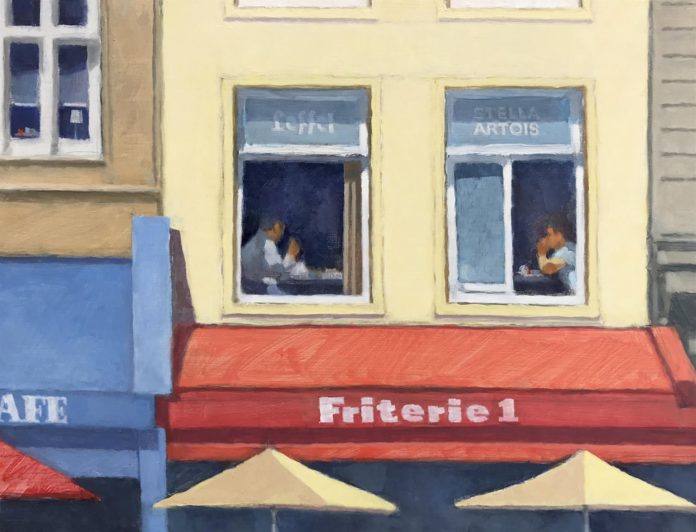
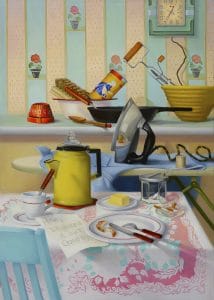
Robert Porter, "Will lunch ever be the same?" 12x16, Oil
“Our World Re-Imagined” is the Northern California Chapter’s first virtual exhibition with the California Art Club (CAC). This exhibition’s theme is to inspire our artists to visually interpret their perception of our changed world during Covid-19. The show is a diverse snapshot into each artist’s state of mind and visual interpretations during this time. These images range from hopeful beautiful landscapes and past times of busy urban life to desolate rural buildings, vacant urban establishments, and isolated people.
Organizers: Ellen Howard, Paul Kratter Co-chairs SF Chapter
CAC Exhibitions Manager: Addy Stupin
Judges: William Davidson & Kim Lordier
President: Peter Adams, Executive Director: Elaine Adams: California Art Club
David Casterson, “Fort,” 12×12, Oil
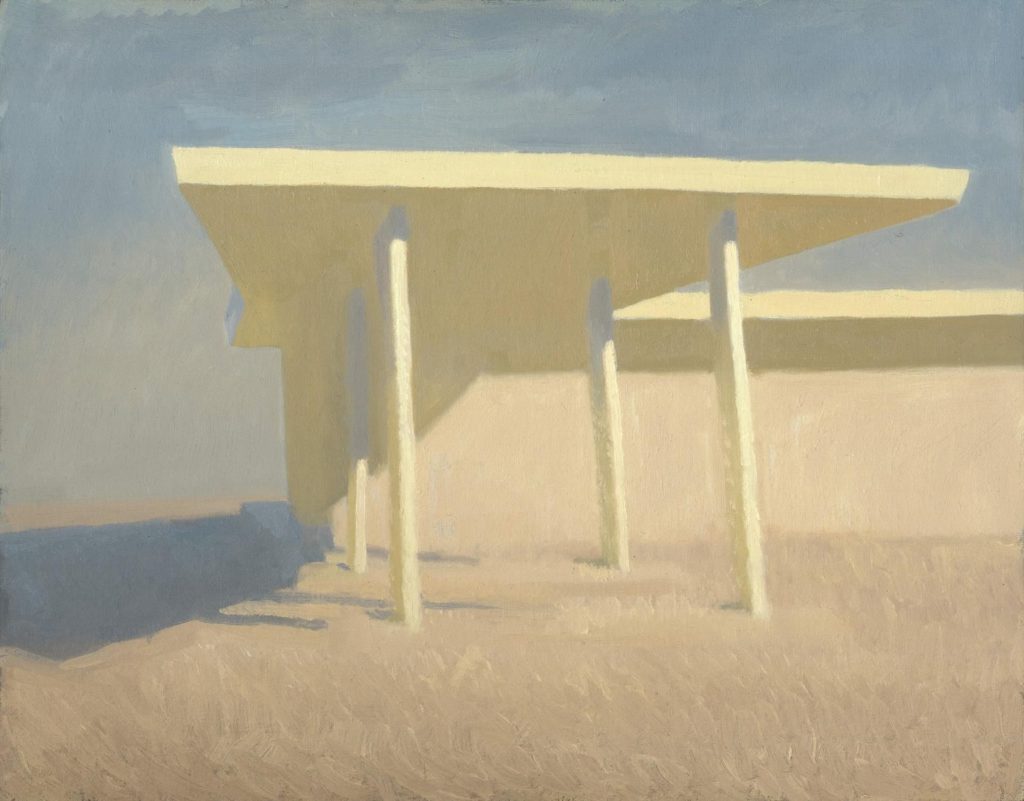
Carolyn Lord points out, “I reimagine our world where the use of fossil fuels is considered archaic, the environment is restored, and the infrastructure left behind become artifacts of the Anthropocene epoch. I painted “Abandoned Gas Station” in Livermore, CA, as if it were made of white marble, bathed in ethereal light. The columns are not Doric, Ionic, or Corinthian; there is neither entablature nor pediment; it is mid-20th century Googie!”
Carolyn Lord, “Abandoned Gas Station,” 11×14, Oil
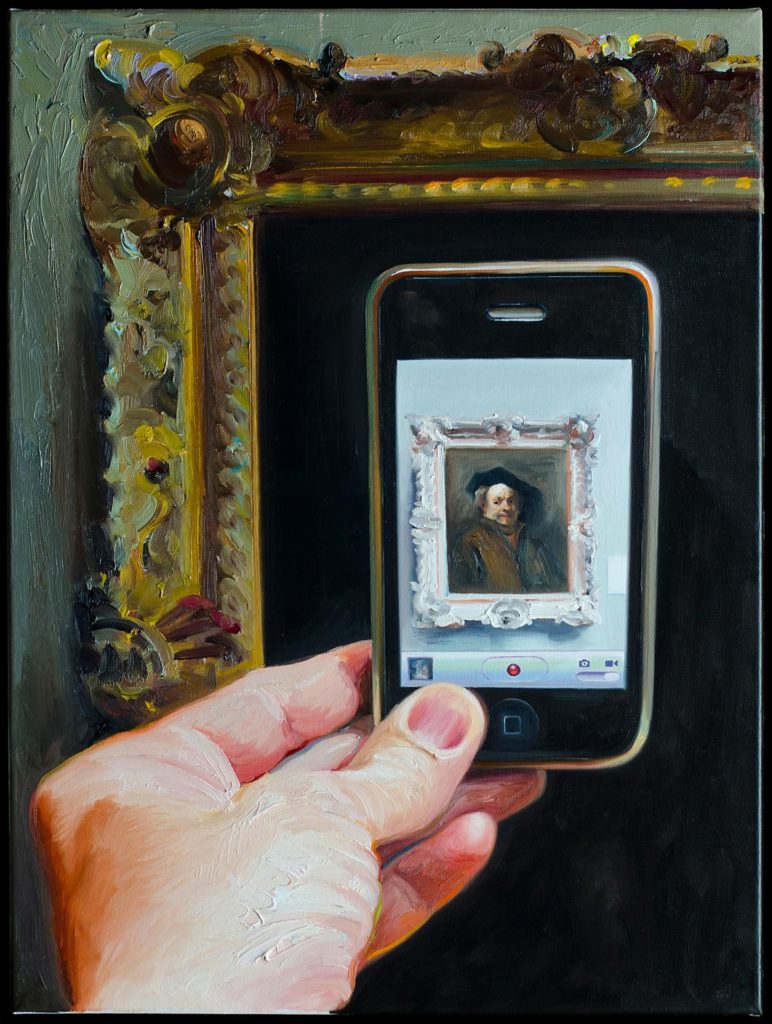
Almeida Deladier’s says his painting “Meta Rembrandt” is from a series of paintings depicting museum visitors’ tendency to take a photo of famous artwork to document their visit, thereby reducing Rembrandt’s work into a tiny snapshot. People miss experiencing the beauty of the artwork as it was originally intended and created.
Deladier Almeida, “Meta Rembrandt,” 18×24, Oil
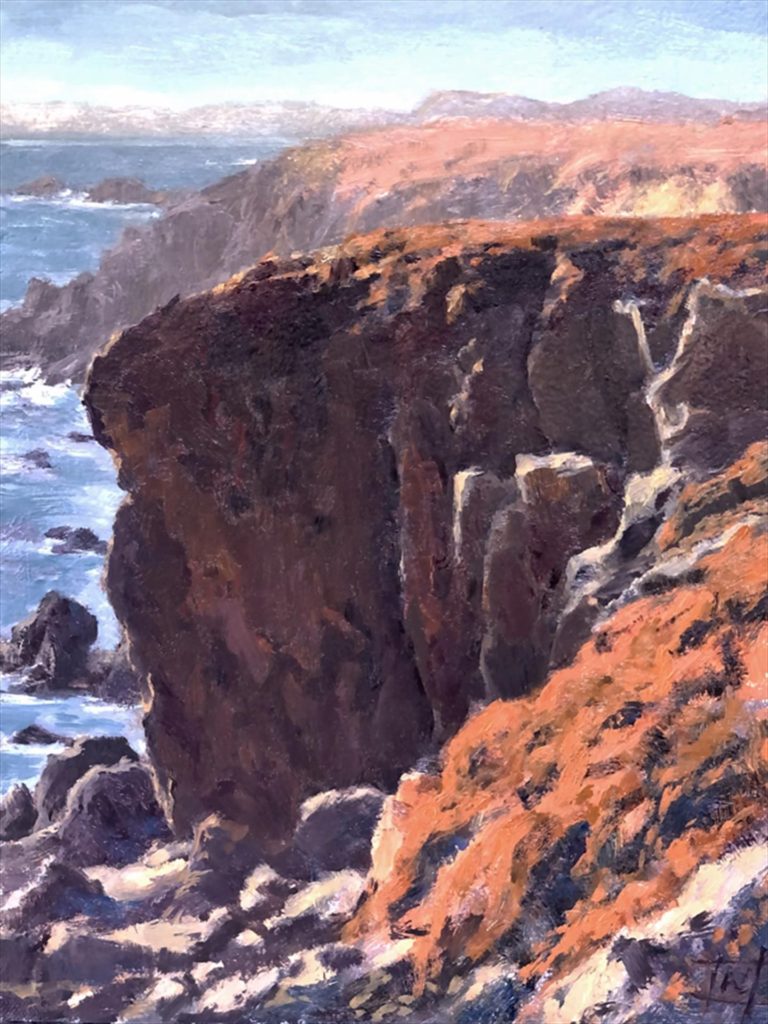
Richard Lindenberg choose to paint one of his favorite areas along the Sonoma Coast escaping the hot frustrating days indoors during sheltering in place, titled “Carmet Cliffs.”
Richard Lindenberg, “Carmet Cliff,” 9×12, Oil
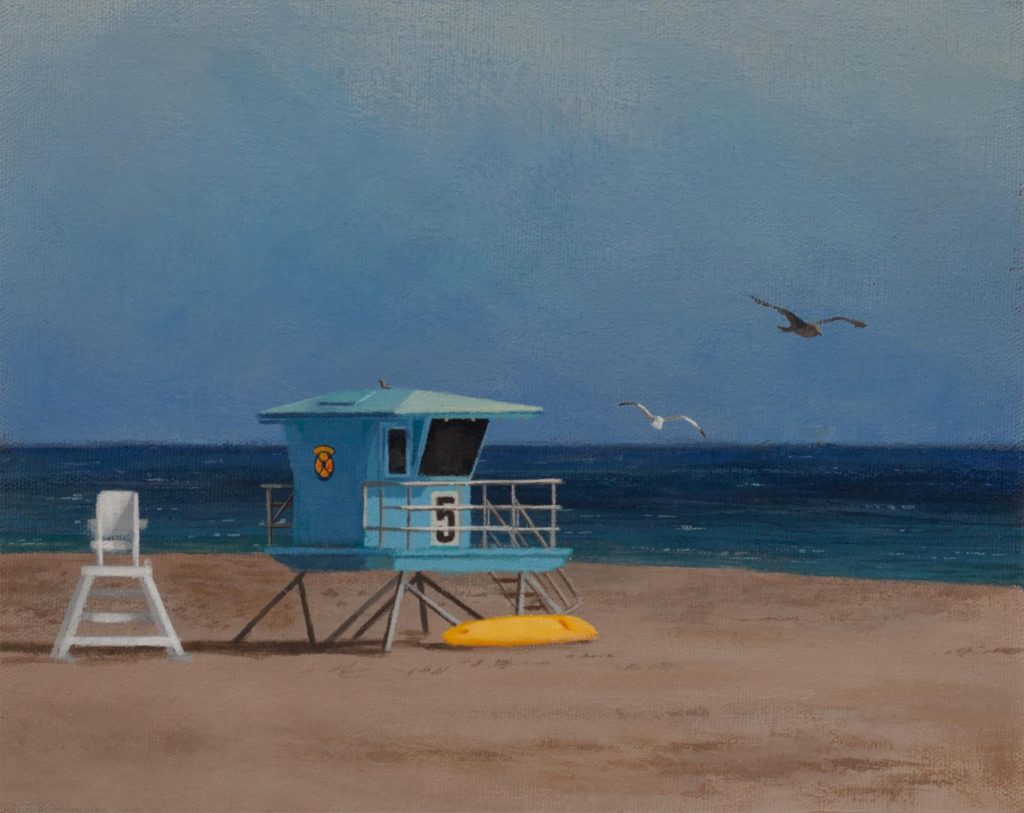
Robert Porter’s painting “Will lunch ever be the same” (below) and Gil Sambrano’s painting “Station Number 5” (shown at top) contrasts two scenes. Painted just prior to the pandemic hit, a group lunch stands in stark contrast to the social distancing in Gil’s painting of the lone lifeguard station on the beach.
Gil Sambrano, “Station Number 5”, 12×16, Acrylic
Juror of Awards: Bill Davidson, Artist Member, and Kim Lordier, Signature Member
CAC “Our World Re-Imagined” Awards:
First Place: Deladier Almeida “Meta Rembrandt”, 24×18, Oil $500 cash award
Second Place: David Casterson “Fort”, 12×12, Oil $250 cash award
Third Place: Richard Lindenberg “Carmet Cliff”, 9×12, Oil $125 cash award
Honorable Mention: Ni Zhu “Caltrain 3:37”, 8×10, Oil $50 cash award
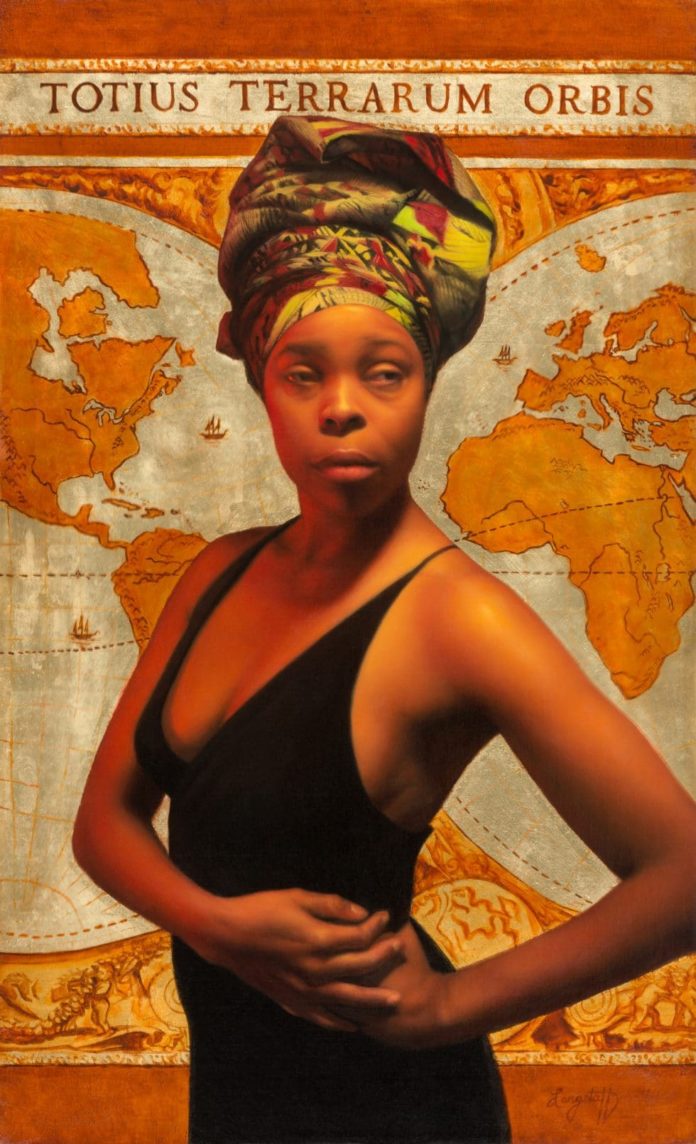
Joshua Langstaff, "Citizen of the World," Oil and gold metal leaf on linen, 26″ x 16″
Women in Art > “Exploring The Influence of Women: A Maryhill Museum and Aristides Atelier Collaborative Exhibition”
BY LOUISE PALERMO
Curator of Education
It is austere and profound studies that make great painters and sculptors. One lives all one’s life on this foundation, and if it is lacking, one will only be mediocre. ~ Jean-Léon Gérôme
Maryhill Museum of Art is full of wonder and surprise. Tucked away at the edge of the grand Columbia River, are collections that never cease to inspire. In this world of Covid-19, Maryhill presents to you “Influence of Women,” a fully online exhibition of student and graduate paintings from the Aristides Atelier, at Gage Academy of Art in Seattle, WA where Master artist Juliette Aristides offers foundational skills necessary for realist artists. We connect with this atelier through our collections of Richard Lack paintings, whose atelier was the source of her training.
The term “Classical Realism” was coined by Richard Lack and a group of atelier-trained realist artists communicating their connection to academic traditions, coupled with a modern way of seeing. It embraces classicism, realism, and an impressionist style using rigorous atelier apprenticeships, intensive mentoring, and an academic method of drawing and painting. To indulge in some name-dropping of direct lineage you will find Jaques-Louis David (1748-1825); Paul Delaroche (1797-1856); Jean-Léon Gérôme (1824-1904); William McGregor Paxton (1869-1941); R. H. Ives Gammell (1893-1981); and Richard F. Lack (1928-2009) to name a few of the many greats.
While ‘Realistic’ might, in a narrow way, define a work of art with recognizable objects, the broad stroke doesn’t do justice to the thoughtful insight of this movement. Simple objects become as beautiful as the most famous portrait, while meaning and insight resonate for those taking time to ponder.
The exhibition theme was chosen to commemorate 100th anniversary of women in America finally achieving their right to vote. Artists were asked to explore the women who have influenced their life and art.
Paintings Featured in “Exploring The Influence of Women”
The young woman who is the subject of “Citizen of the World” (shown at top) by Joshua Langstaff was born in South Africa and immigrated to the US at a young age. She is a survivor of numerous childhood traumas but has persevered to become a prominent performance artist and social justice activist. Interestingly, she has not been allowed to gain citizenship in either her natal country, or her chosen one. In this painting, Langstaff has framed her as though she were a medieval icon, holy and a most important “Citizen of the World.”
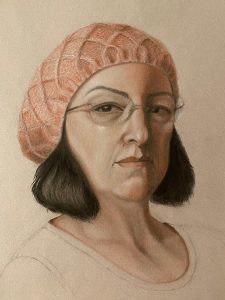
Farida Abadeen, “Self Portrait,” Pastel on Canson paper, 19″ x 25″
Self-portraits can be intimate things as artists sometimes expose the unseen. Farida Abedeen was born in Kuwait in the late fifties, a time when women worldwide were very unlikely to be encouraged toward art. In Kuwait, there was no school for studying to be an artist, but she knew that was who she is. When she moved to Seattle, she enrolled in the Aristides Atelier and her dream became a reality. She made this at the end of her first year when quarantine also requires innovation for finding models!
John Rizzotto, “Hank, I Figured It Out. Goodbye,” Oil on Canvas, 30″ x 42″
Classical Realism lifts every object into the realm of ‘beautiful.’ John Rizzotto wanted to communicate the virtuous attributes that came to him by women: compassion, mindfulness, forgiveness, gratitude, nurturing, and the knowledge that life is full of hard work to be shouldered with or without compensation.
This homage to his mother, whom he calls his closest and most profound influence, adds a note for us to ponder.
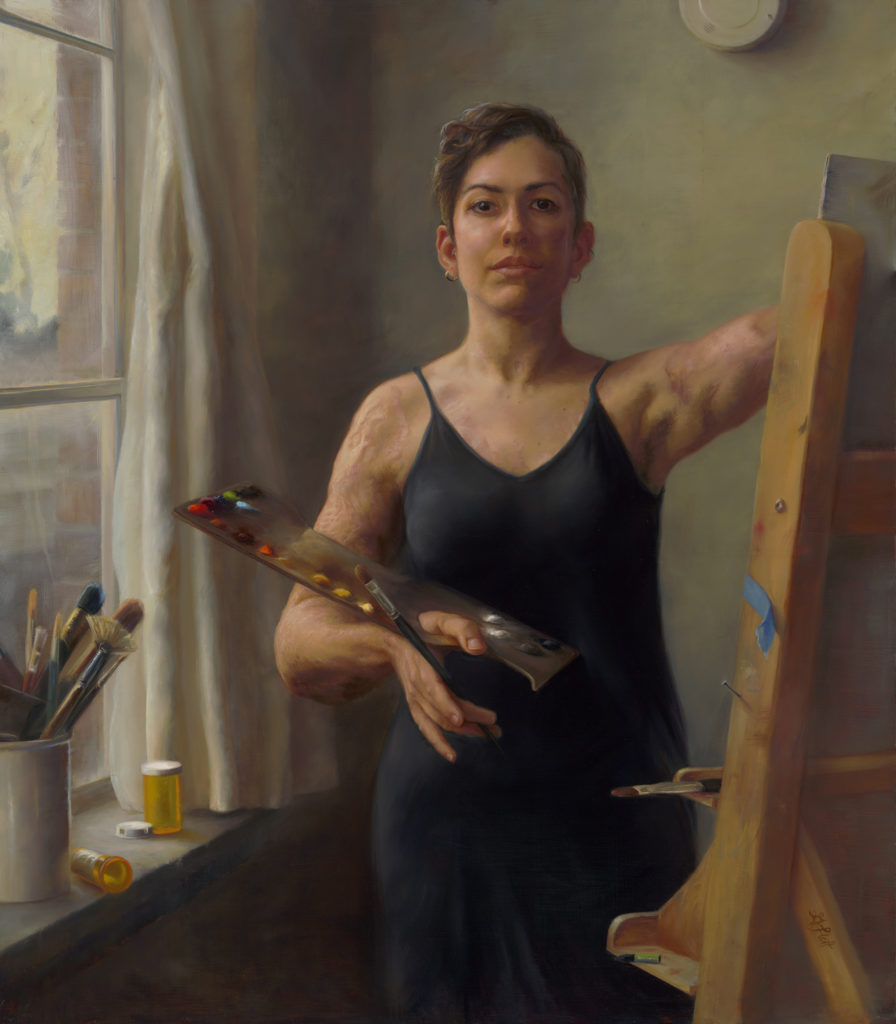
Grace Athena Flott, “Forged in the Flames (Self-portrait at 28),” Oil on panel, 28″ x 32
Artists often confront identities and prescribed ideals for beauty. Grace Athena Flott created a brilliant self-portrait in which we see this in action. As a survivor of a fire-related injury, Flott painted this image as a way to thank the countless women who supported her, showing she was not alone in her journey, and as a way to call out to anyone else who may need to hear this message. She is the reflection of all that is beautiful about her profession.
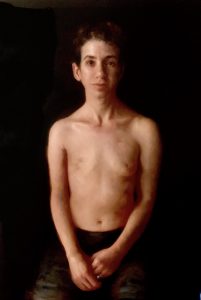
Juliette Artistides, “Yael, survivor,” Oil on panel, 36″ x 26″
The portrait of Juliette Aristides’ sister-in-law, Yael, is equally defining. Mapping her journey through aggressive breast cancer, we are given a measure of beauty that comes from struggle, determination, turbulence, and trauma.
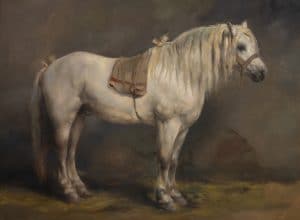
Sally Allwardt, “Buttercup (After Rosa Bonheur/-1866- ‘A White Horse’),” Oil on linen panel, 11 3/4″ x 16″
Influence and gratitude are symbiotic. Sally Allwardt pays homage to a work of art that came to her when she was in her second year of studying painting. Rosa Bonheur was a French woman who lived in the 1800’s. The effect of this interaction was a reminder that there were countless, sometimes faceless and nameless, female artists who came before. Buttercup was created in gratitude to all women who came before and paved way for female artists yet to be.
I end with a dialogue between an artist and me. Charles Burt and I bonded over a drawing of military boots worn specifically when driving a tank. From there, my admiration for his work has grown exponentially, as has our friendship. He has rewarded me by taking a joyful moment in my life and immortalizing it in the person of “Gaia” or Mother Earth.
n see all 29 paintings created by students at the Aristides Atelier; you will also find statements by each artist, exploring their work and the inspiration for it.
The artwork, and I’ve only touched on a sample, in this exhibition represents narratives of lives touching lives. The stories are revealed by the poses, by the objects painted, and by passion that is passed from image to viewer. Take your time, look more than once, and notice details, color, lighting, technique, and choices each artist has made to share this very intimate story.
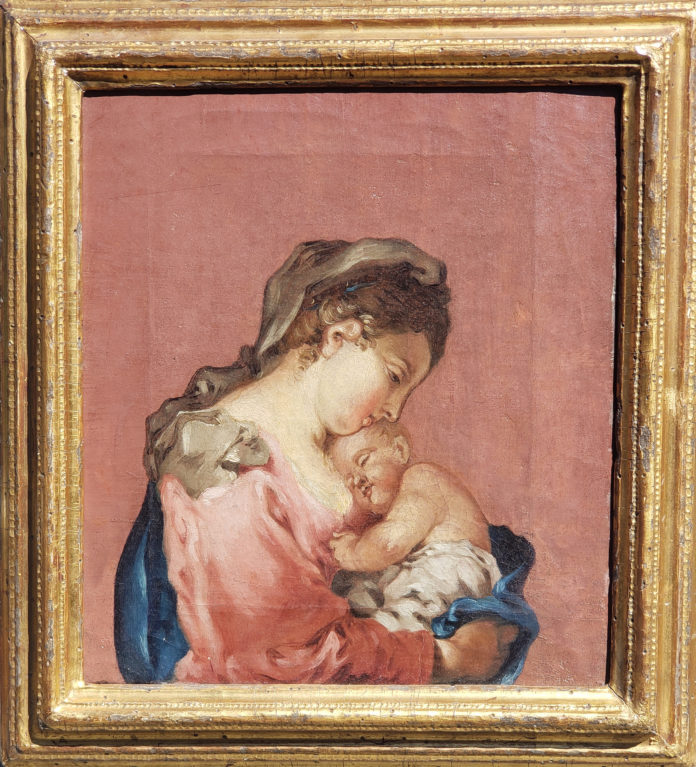
Giuseppe Antonio Pianca, “Mother and Child,” oil on canvas, 9 ¼ x 8 ¼ inches.
Robert Simon Fine Art specializes in European works of the Renaissance and Baroque periods. It’s our pleasure to share with you the following exclusive interview with Robert Simon in this Art Gallery Spotlight.
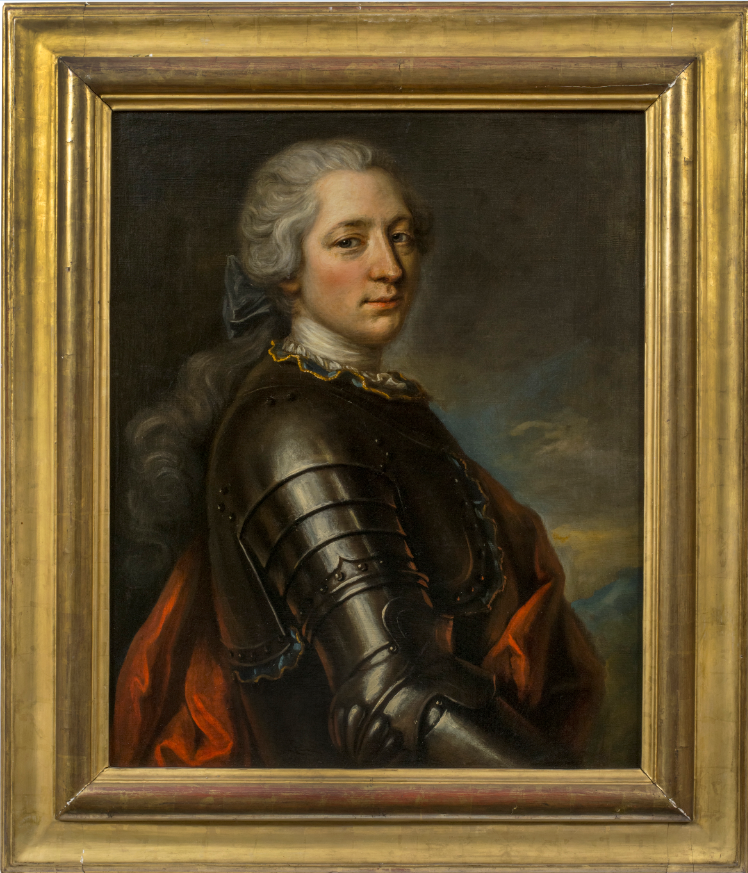
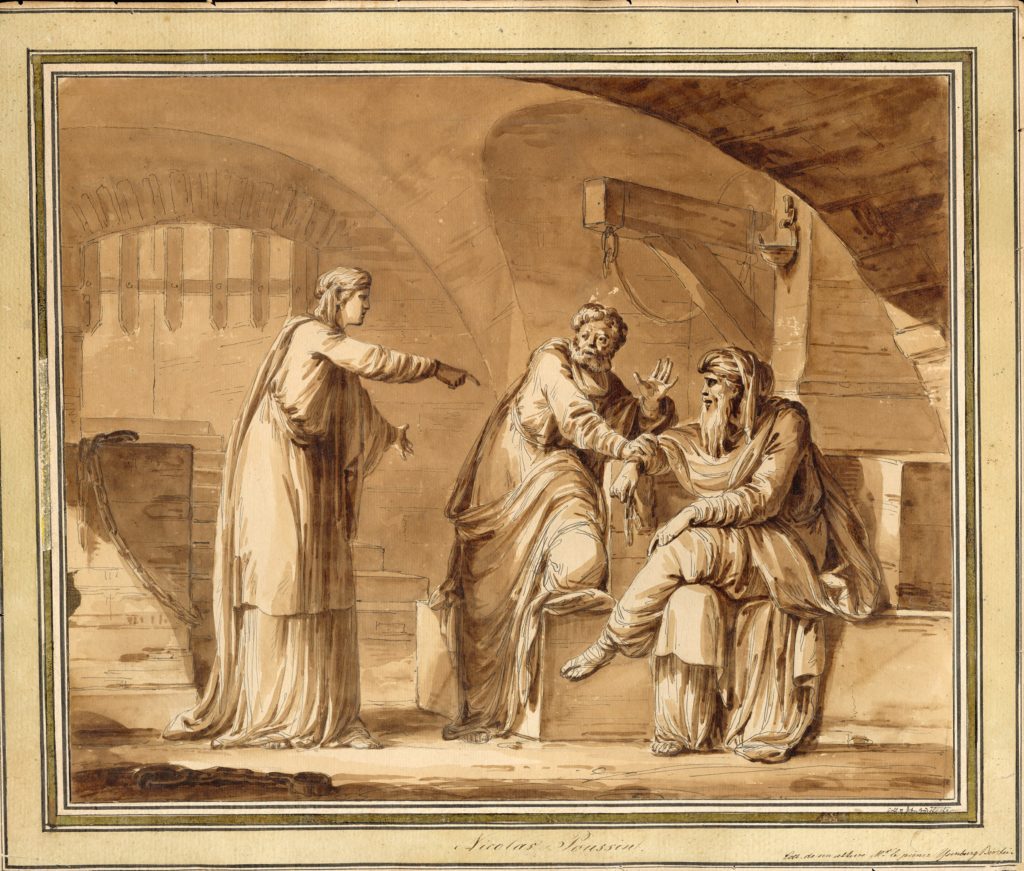
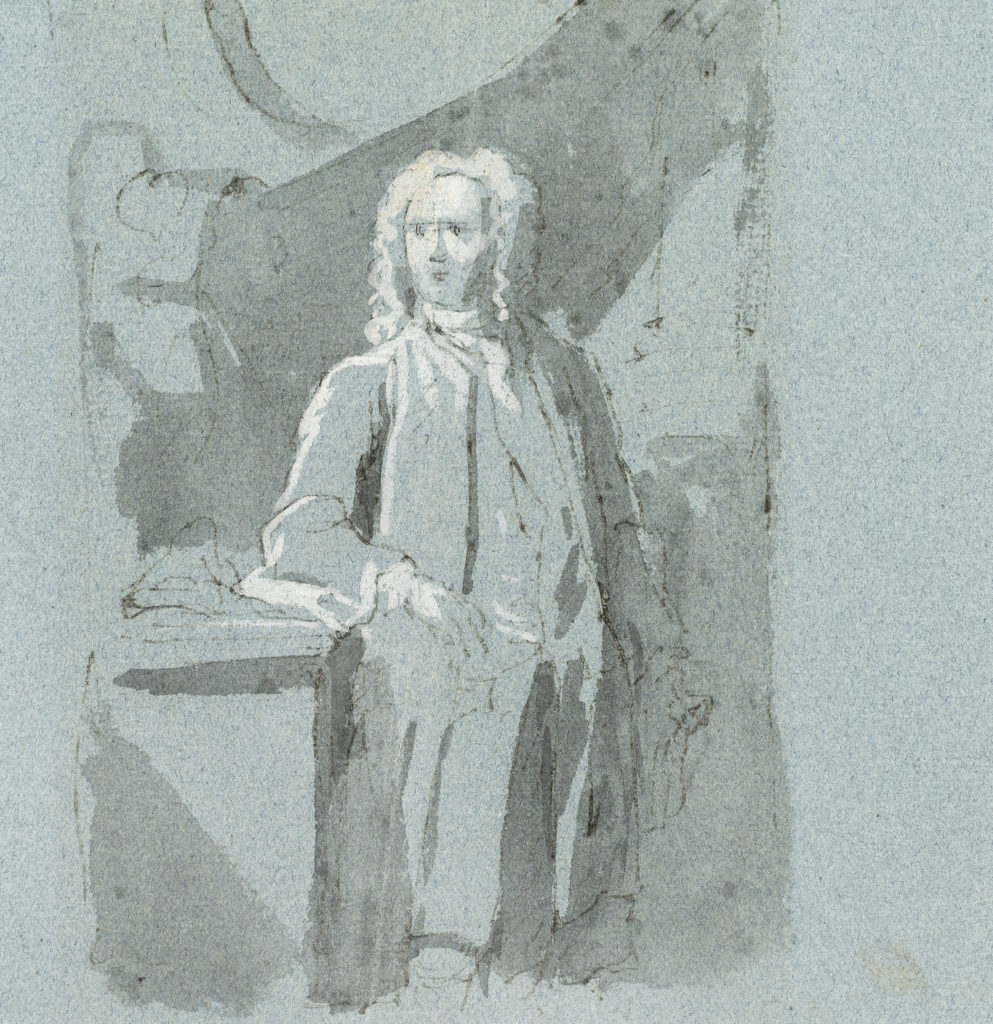
The new Robert Simon Fine Art online catalogue and exhibition is titled “New, Old, and Unexpected” and includes paintings, drawings, and sculpture from the 16th to the 20th centuries. The images featured in this interview are included in the show.
Cherie Dawn Haas: Please tell us about your gallery and the type of art in which you specialize.
Robert Simon: Robert Simon Fine Art is dedicated to introducing the great art of the past to new audiences and to exploring the continuum between that art and contemporary artists who follow in that tradition. The gallery was born out of my expertise in Italian painting, although my interests have since expanded to include the breadth of European painting and sculpture from the Renaissance to the Nineteenth Century. As broad as these interests are, connoisseurship underlies them all and has resulted in a remarkable series of discoveries of major pictures by artists as diverse as Pintoricchio, Dante Gabriel Rossetti, Vittore Carpaccio, Parmigianino, Guido Reni, Salvator Rosa, Paolo Uccello, and, notably, Leonardo da Vinci’s “Salvator Mundi.” Additionally, the gallery has led collector interest in the fields of female Old Master painters and Spanish Colonial art, having brought to light and placed important works in both areas.
Gallery exhibitions have focused on pairing contemporary paintings and sculpture with analogous works from the Renaissance, the Baroque era, and Nineteenth Century. Significant paintings, drawings, and sculpture from the gallery are to be found in major American museums, as well as in private collections across the globe.
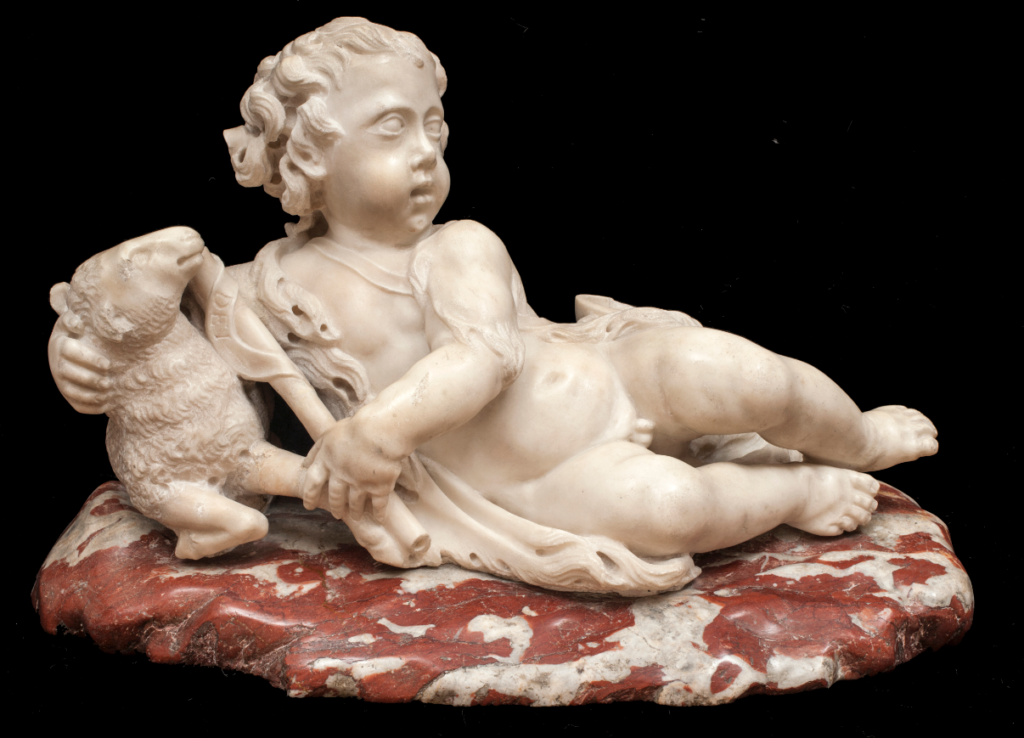
Attributed to Giusto Le Court, “The Infant Saint John the Baptist with a Lamb,” marble, 21 ½ x 14 x 11 inches.
What adjustments have you made as a gallery since the COVID-19 outbreak?
We are working remotely, but have been able to prepare the first of a series of new online catalogues of Old Masters and works in the classical tradition. The aim here is not only to widen our audience and show some unfamiliar works of art, but also to demonstrate just how accessible such works are. The works in the catalogue, which is aimed at new and established collectors alike, are priced between $4,000 and $50,000. And since the ability to examine an item in our gallery is at present difficult, if not impossible, we are including the cost of domestic shipping in the prices that we have given for each.
What’s your biggest priority at this time? Over the next year?
1) Planning for exhibitions, whether in the gallery or online.
2) Staying in touch with collectors and museum colleagues.
3) Drinking all the wine we would normally serve at openings.
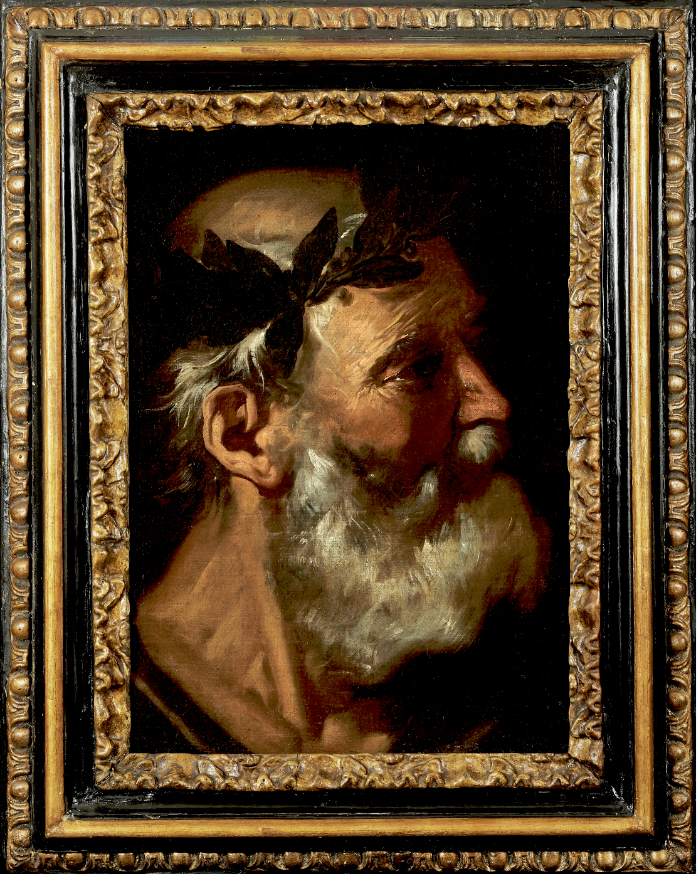
Pier Francesco Mola, “Head of a Classical Poet (Homer or Socrates),” oil on canvas, 19 ½ x 14 ⅜ inches.
What advice do you have for collectors as they navigate these times, and beyond?
While museums are closed, this is a wonderful time to expand and deepen one’s knowledge of the art of the past—through books, online resources, and contact with dealers who handle works of personal interest. Being an informed collector allows one to make better decisions about what to buy—and opportunities are forever appearing. At the same time, as we spend more time at home, it is never more important to buy only things that we will enjoy and that will sustain us over time.
Anything else you’d like to add about the current issues galleries are navigating?
Most galleries are expanding their use of virtual and video exhibitions on their websites and across digital platforms. There is a real danger of overload as every other entity—commercial, educational, governmental—seems to be doing the same thing. It is important that galleries should be judicious in what they present else it becomes lost amid all the noise.
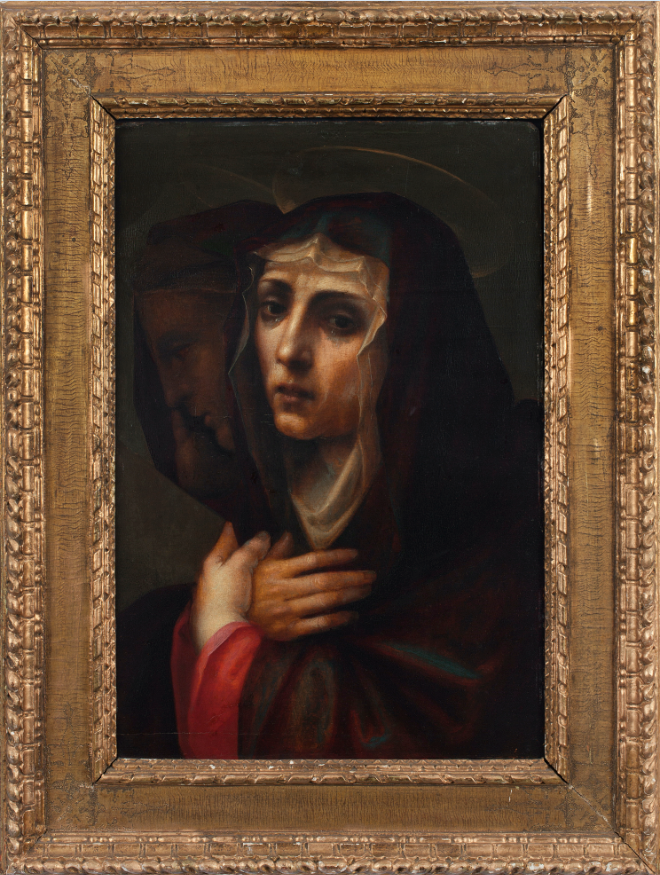
Giovanni Antonio Sogliani, “The Marys on the Road to Calvary,” oil on panel, 20 ½ x 13 ¾ inches.
What are some of the ways you find artists to represent?
I seek out artists with a real affinity for the art of the past—ones that are more than technically accomplished; those who understand the emotional, spiritual, or intellectual components that have nourished and challenged people for centuries.
Anything else you’d like to add?
Governmental agencies do not count art as “essential.” We believe it is—both for those who make it and those who look at it. It is one of the fundamental modes of communication that humans have developed and one that many of us cannot live without. Stay with it, in whatever way you can!
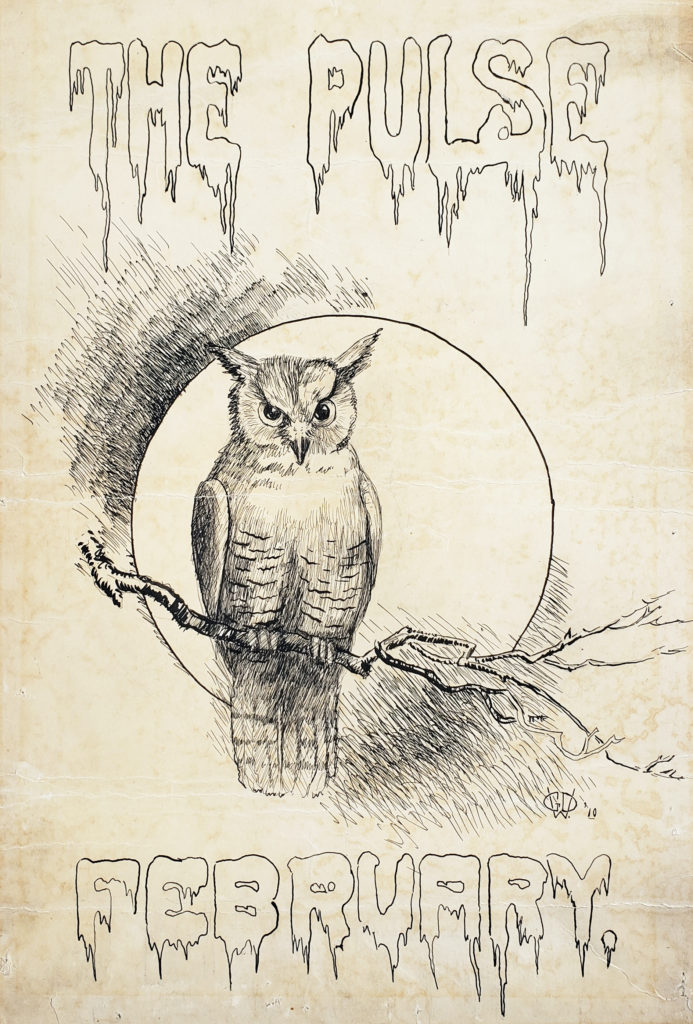
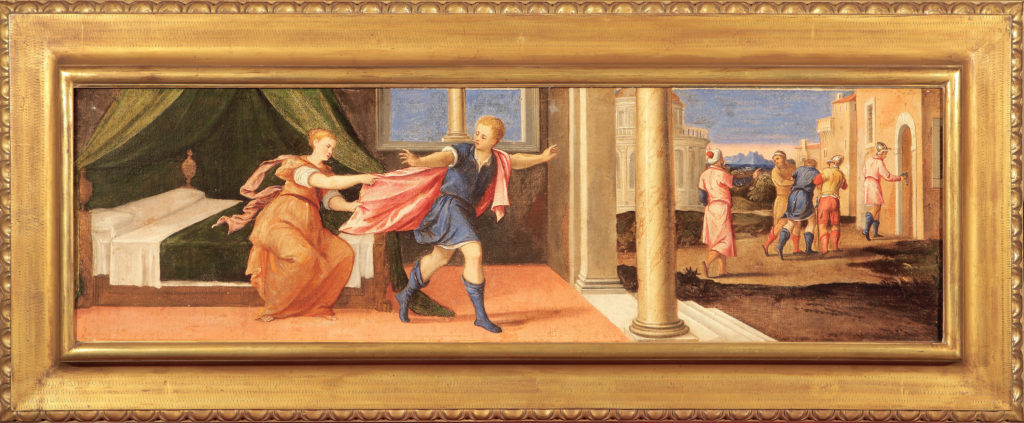
Grant Wood, “Cover for ‘The Pulse’ Magazine, February 1907,” pen and ink on paper, laid down, 18 ¾ x 12 ⅜ inches.Antonio Negretti, called Antonio Palma, “Joseph and Potiphar’s Wife,” oil on canvas, 10 ½ x 35 inches.Robert Gardelle, “Portrait of Jean-Louis Buisson,” oil on canvas, 32 x 25 ¾ inches.Jean-Michel Moreau, Le Jeune, “Joseph Interpreting the Prisoners’ Dreams,” pen, ink and wash on paper, 14 ¼ x 20 ¾ inches.Jacopo Amigoni, “Portrait of a Gentleman,” pen, black ink, wash, and white heightening on blue paper, 7 ¼ x 8 ½ inches.
To learn more about Robert Simon Fine Art and the “New, Old, and Unexpected” exhibition, please visit robertsimon.com.
"Lavender," Sarah Lamb, 2020, Oil on linen, 22 x 19 inches
Grenning Gallery (Sag Harbor, NY) is now welcoming visitors to the gallery for the first time since mid-March, as New York moves to Phase 3 of re-opening the economy. “We simply require the basic precautions (mask, hand sanitizer; etc.) to keep the gallery safe for us and our other guests,” the gallery said.
Through July 12, 2020, the gallery is showing “Butko | Lamb,” with paintings by Viktor Butko (b. 1978, Moscow) and Sarah Lamb (b. 1972, Petersburg, VA).
From the gallery:
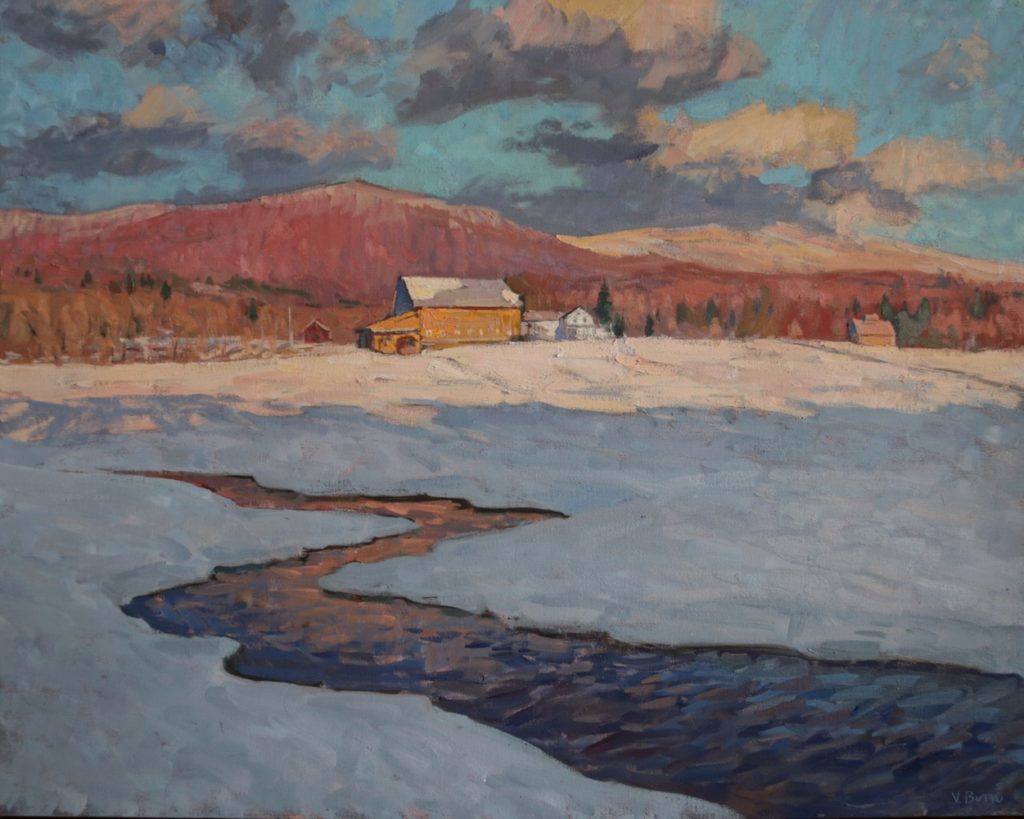
Viktor Butko, in preparation for this major, high-season show, has been painting on the East End and around New England all year. He was also quarantined in Vermont, painting en plein air with fellow Grenning Gallery artists as the pandemic hit in March.
Throughout the year, Butko has deepened his inquiry into the tonal shifts of light at twilight, especially as seen through trees.
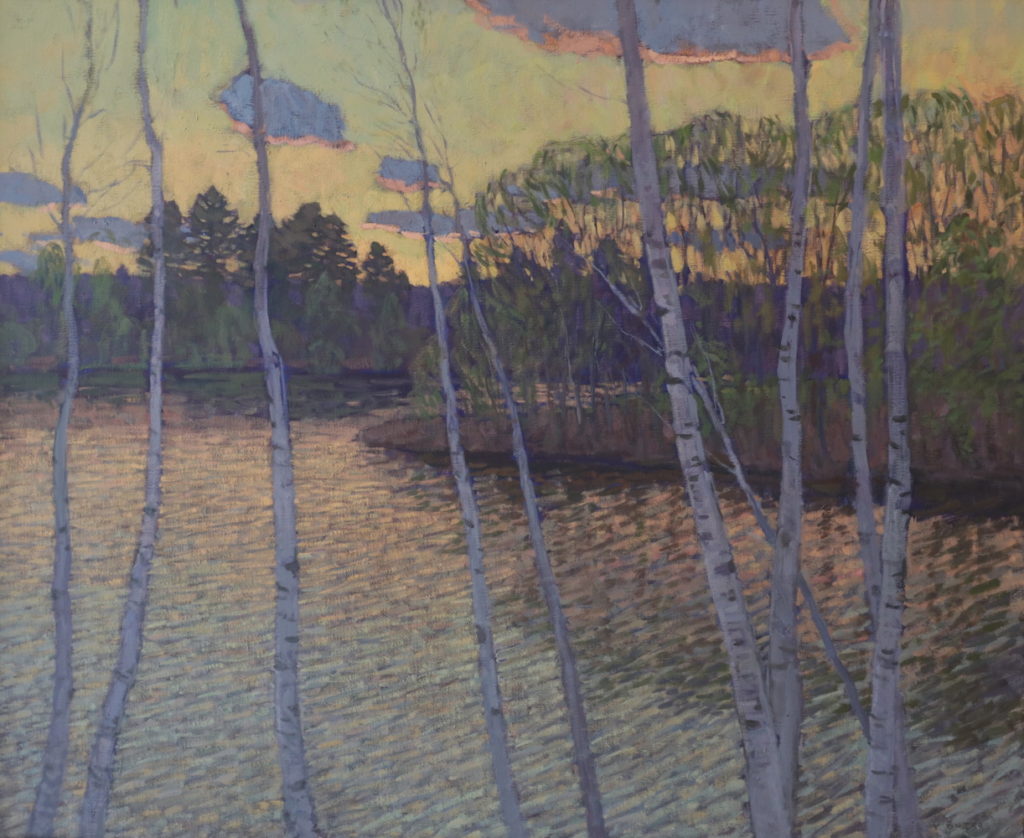
“Over the Pond, Evening Light,” Viktor Butko, 35 x 43 inches, Oil on Linen, 2020
“Over the Pond, Evening Light” is a mid-winter examination of that theme, where Butko deftly inserts a screen of verticals in the form of light-colored birch trees to offset the horizontal landscape beyond. The trees also frame sections of his background, highlighting elements that might otherwise be lost, like the shimmering water, effectively captured by this well trained yet contemporary impressionist.
“Spring is Getting Closer” Viktor Butko, 2020, Oil on linen, 32 x 40 inches
Few may know that Viktor Butko is the third generation of highly respected painters from outside of Moscow. In fact, Butko was invited to show at the famous Moscow Union of Artists with up to 50 paintings tentatively planned on November 25, 2020. It’s an honor rarely afforded to a painter in their early 40s, and interestingly, this was the site of his grandfather’s, Victor Chulovich (b.1922 – d.1994), major exhibit in the early 1950s. (The exhibit dates may be changed due to Covid-related closures, however the invitation to show and what it confers about this fine young Russian painter stands.)
This is a theme that he has been developing for years now, starting with “Deer Park Lane” (2018, sold), and continued with several others in this show, like “Cold Winds”(2020), or “Shelter Island Summer” (2019).
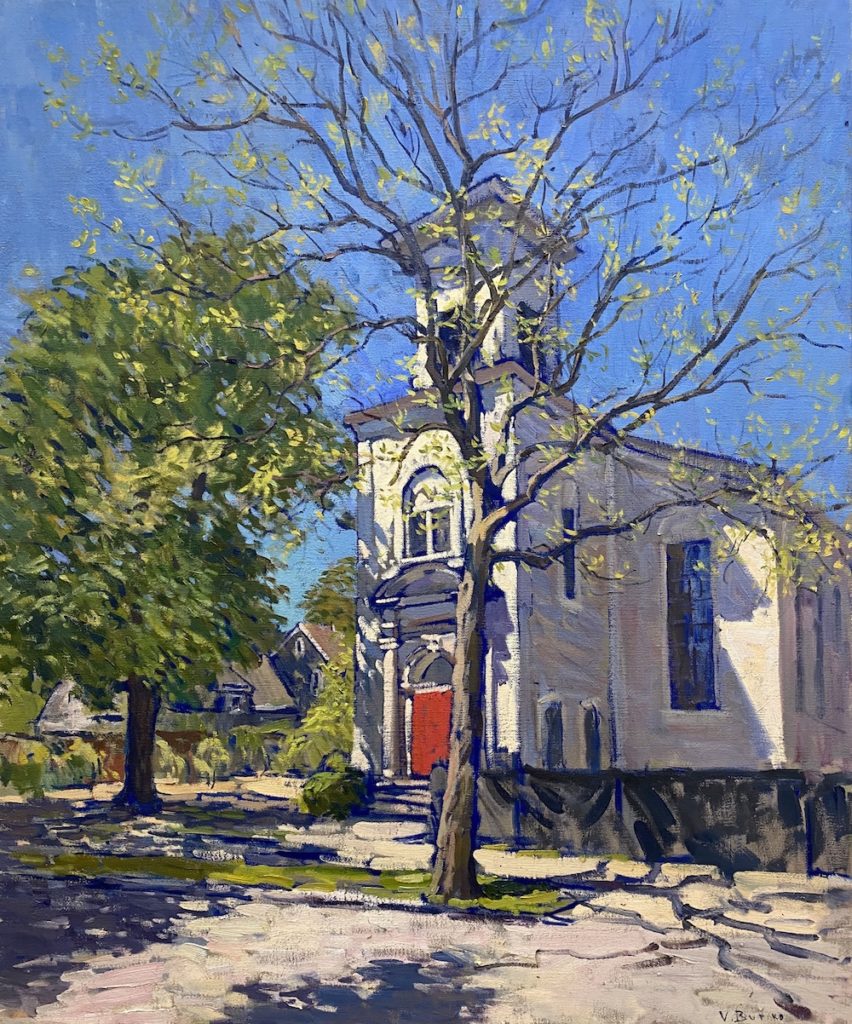
“Red Door, Sag Harbor Church,” Viktor Butko, (2020), Oil on linen, 36 x 30 inches
Unbeknownst to Butko, in “Red Door, Sag Harbor Church” he is striking a bulls-eye in Sag Harbor’s contemporary art scene. Here he captures the early spring visage of The Sag Harbor Church, an exciting new arts center that Eric Fischl and April Gornik are building. Butko was drawn in by the aesthetics of the scene; the dramatic contrast of the red door against the white building, surrounded by the blue sky and green trees.
Through the lens of a global pandemic, and under quarantine on a painting sojourn with fellow painters, we are delighted to see this original and interesting composition of a Vermont valley this past March. His training en plein air in Russia has deeply influenced other Grenning Gallery painters; notably, Ben Fenske, Amy Florence, Tim McGuire, and Kelly Carmody, all of whom were on this painting trip.
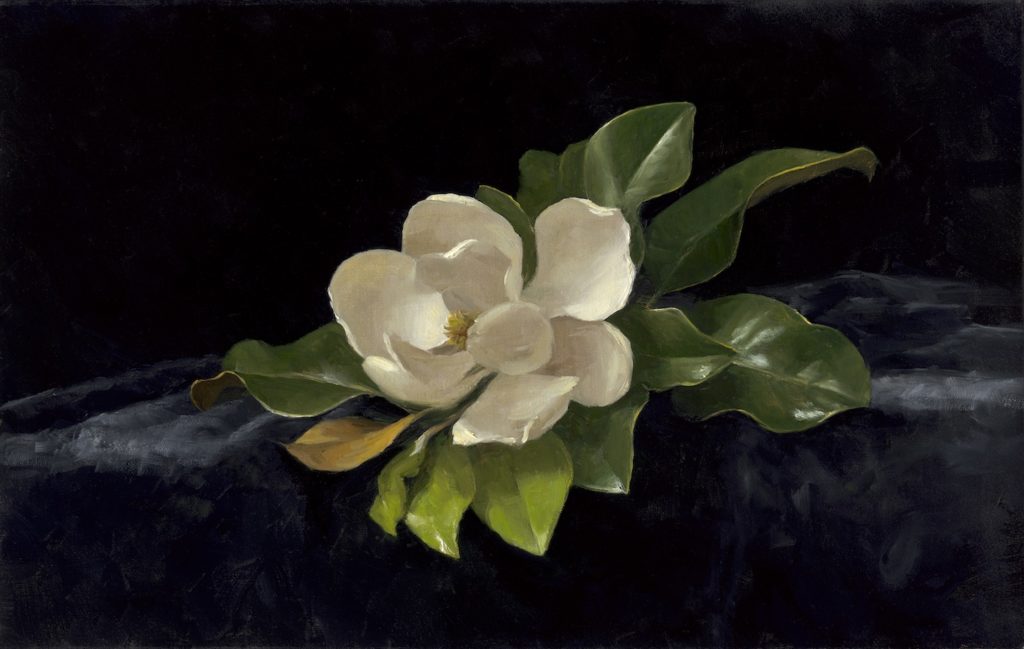
“Magnolia” Sarah Lamb, 2020, Oil on linen, 14 x 22 inches
Sarah Lamb returns this year with wide ranging variety of her sought-after, poetic still-lifes. Lamb has been very busy with commissions, so if one is partial to her highly prized white floral still lifes, or perhaps a jambon and cheese set up…please let us know so we can get you on her schedule!
Fresh from her studio, painted during the pandemic lock down, we see “Magnolia,” a lovely medium sized white flower still life, in the spirit of Martin Johnson Heade. Here we see Lamb’s decisive compositional virtuosity, executed in rich tones and precise brush strokes. Masterful in every way, her still life paintings hum.
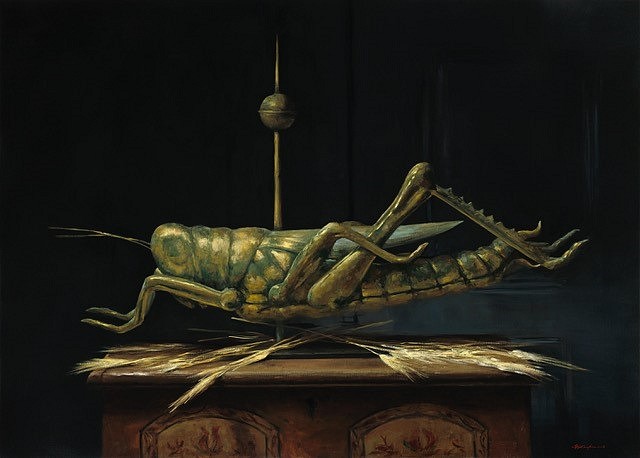
“Antique Grasshopper Weathervane” Sarah Lamb, 2018, Oil on linen, 34 x 47 inches
In “Antique Grasshopper Weathervane,” Lamb revisits an earlier subject matter, as she continues her series of weathervanes. In this larger and somewhat more mysterious painting, the brass sheen of the weathervane is so realistic you almost have to touch it.
“Glass Menagerie,” Sarah Lamb, 2019, Oil on linen, 38 x 47 inches
Lamb’s rare use of a high key palate in “Glass Menagerie” is a lovely investigation into the cool and warm palette amongst these natural and neutral tones.
“Pomegranates with Brass Bowl,” Sarah Lamb, 2020, Oil on linen, 20 x 33 inches
In “Pomegranates with Brass Bowl” Lamb’s sets the table squarely in the center of the picture, and she offers a nod to the great American painter Emil Carlson (1853-1932) with her richly observed brass bowl. We are somehow brought into the 21st century with the subtle wide set vertical lines in the background and Lamb’s quintessential overall lack of fussiness in the painting.
In “Lavender” (shown at top) we see her move forward with her more contemporary iconic composition – with almost simple color field transitions between the grey stone shelf and background, the light brown paper, and the interesting structural use of the lavender stalks.
Learn more about “Butko | Lamb” or schedule a private viewing at grenningallery.com.
As part of our effort to continue to help artists and art galleries thrive, we’re proud to bring you this new “Virtual Gallery Walk.” Browse the paintings below and click the image itself to learn more about it, including how to contact the gallery.
Apricot Sunrise by Judith Pond Kudlow, Oil, 37 x 24 in.; Anderson Fine Art Gallery
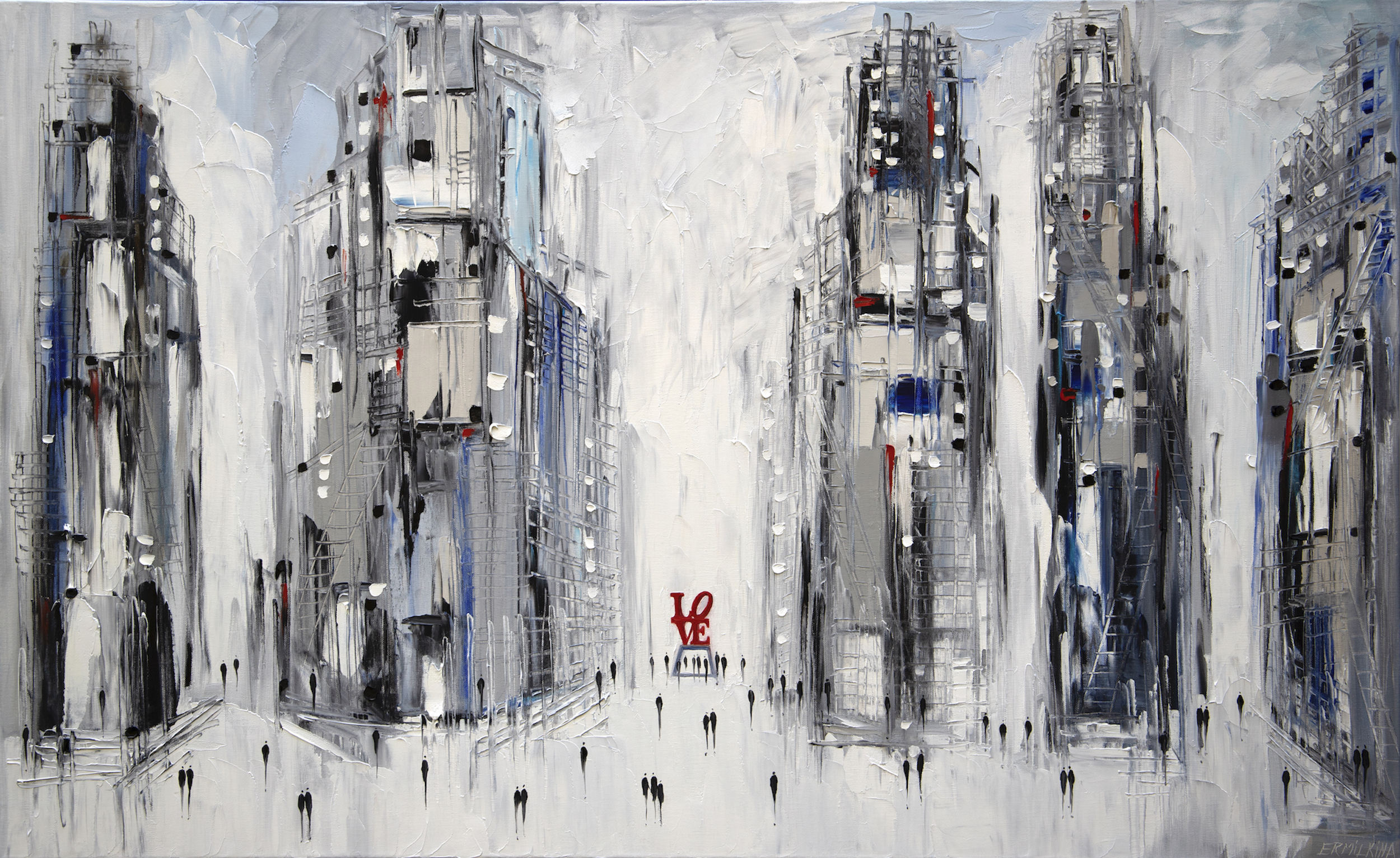
Love Park by Ekaterina Ermilkina, Oil on Canvas, 30 x 48 in.; Bluestone Fine Art Gallery
Equality. Assemblage Collection by Debra Ferrari, Paper & Acrylic on Canvas, 48 x 60 in.; Ferrari Gallery
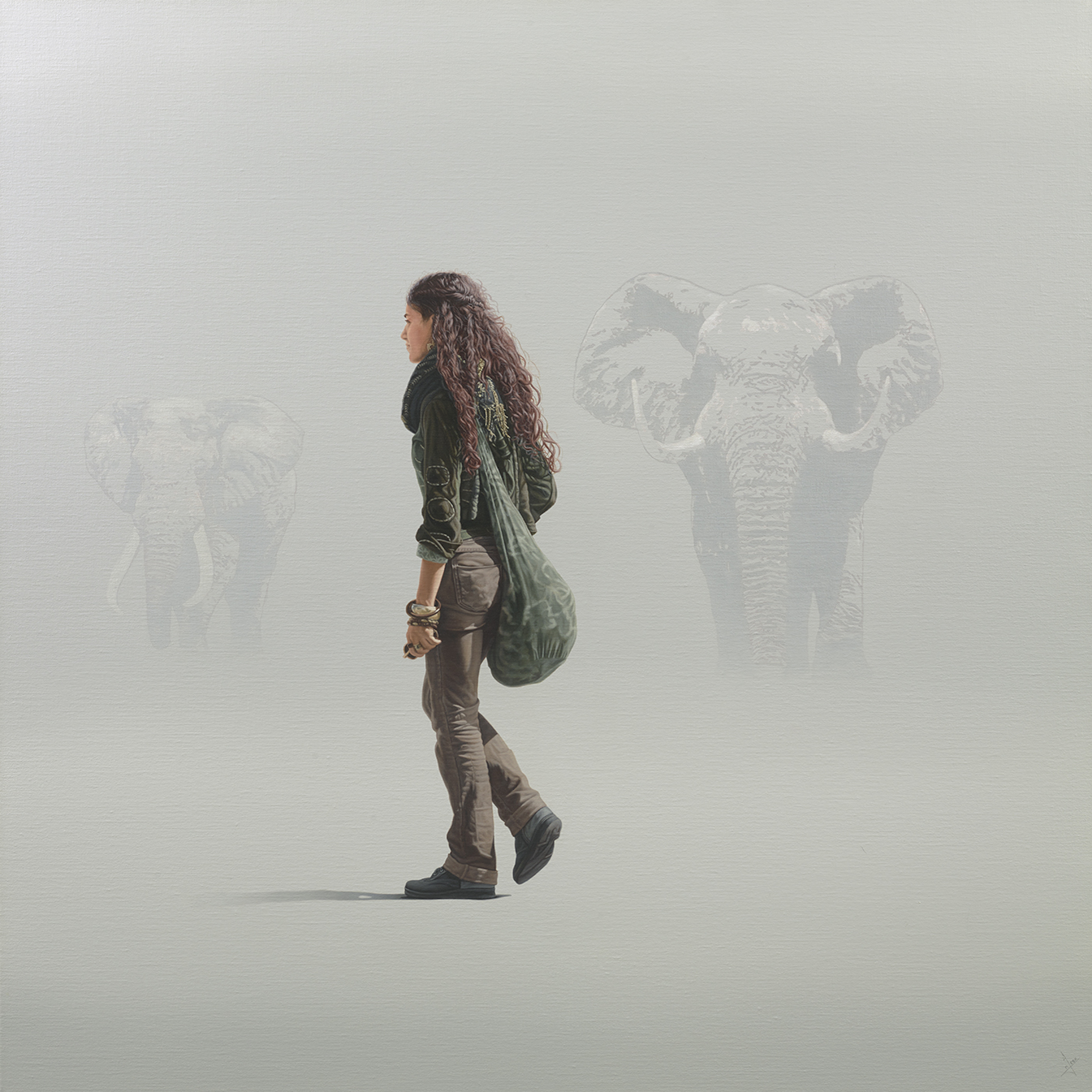
Extinction III by Nigel Cox, Oil on Canvas, 36 x 36 in., Signed; Rehs Contemporary
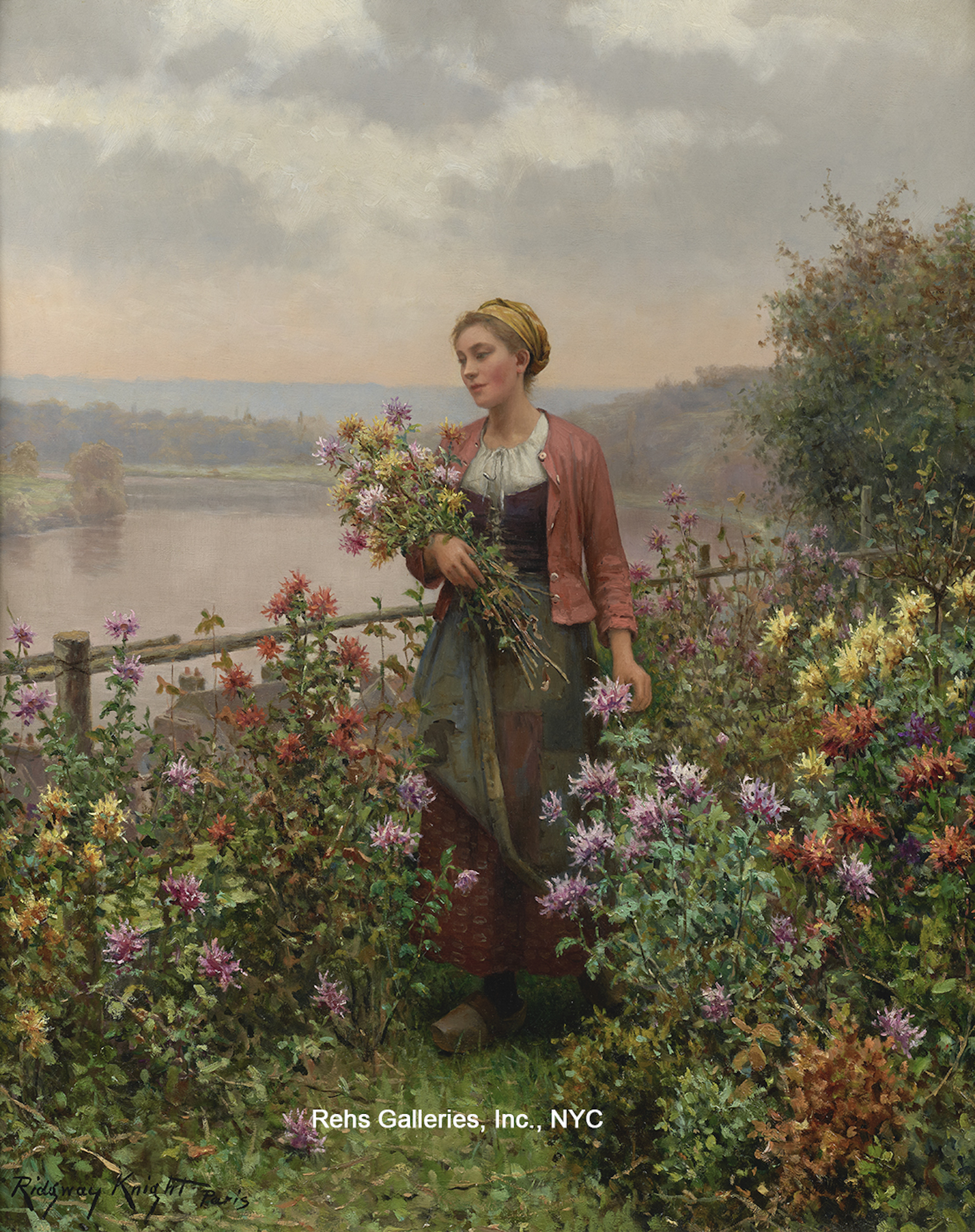
Maria Gathering Flowers by Daniel Ridgway Knight (1839-1924), Oil on Canvas, 26 x 21 1/4 in., Signed and inscribed Paris; Rehs Galleries, Inc.
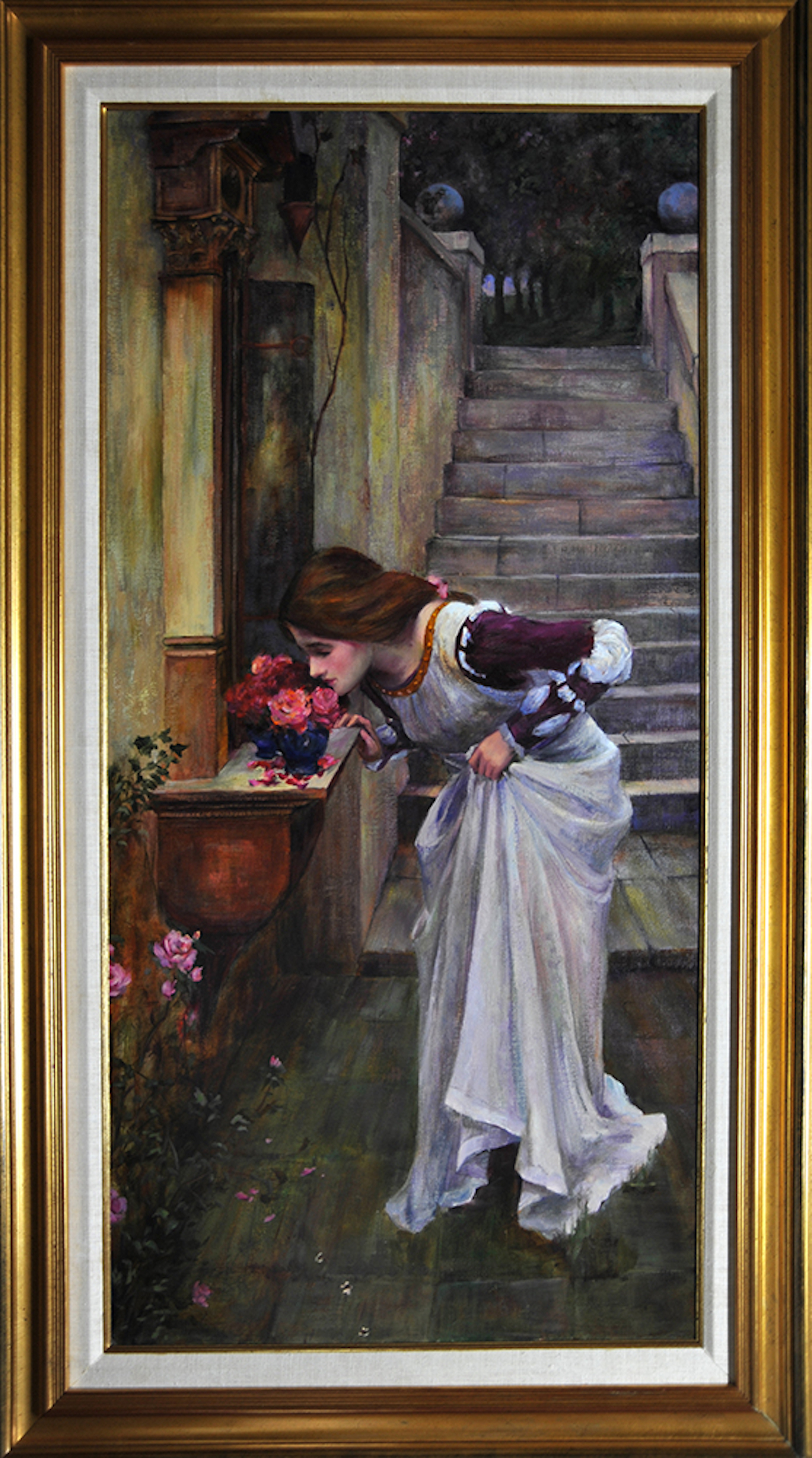
The Shrine by Johnnie Liliedahl AFTER J.W. Waterhouse, Oil on Canvas, 48 x 24 in.; Liliedahl Fine Art Studio-Gallery
Searching For My Mermaid Tail by Lori Mehta, Oil on Panel, 24 x 36 in.; Edgewater Gallery
After the Party by Steven J. Levin, Oil on Canvas, 9 x 14 in.; Tree’s Place
Want to see your gallery featured in an upcoming Virtual Gallery Walk? Contact us at [email protected] to advertise today – don’t delay, as spaces are first-come first-serve and availability is limited.
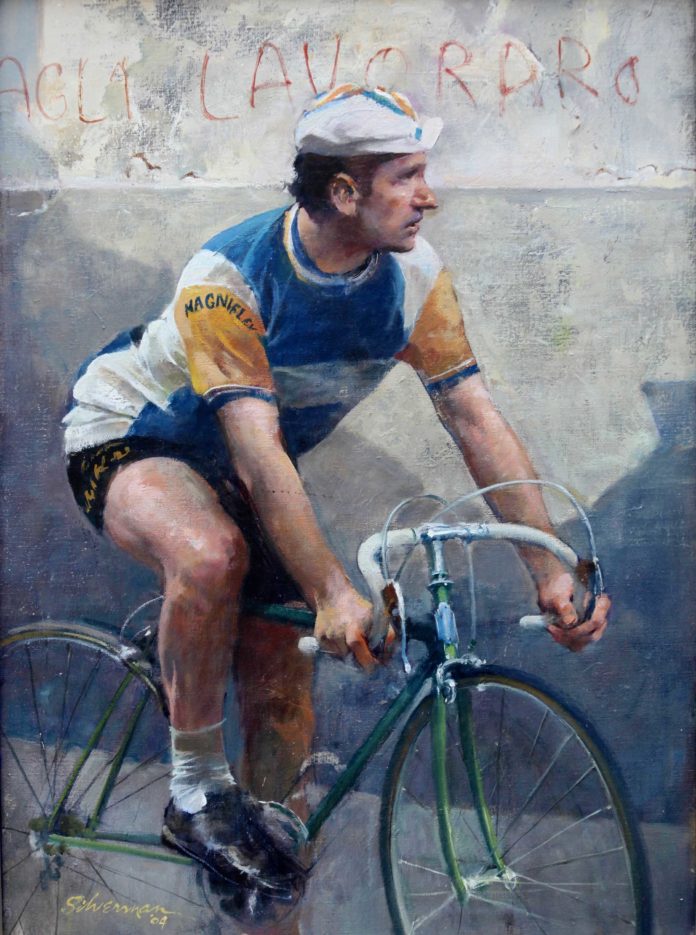
Burton Silverman, "Before the Race, Oil on Canvas, 22 x 16 inches
A new online exhibition of Burton Silverman’s portraits are highlighted in Haynes Galleries’s summer exhibition “Thoughtful Portraits.” Silverman has been an icon of Contemporary Realism for decades; this exhibition presents paintings and watercolors from several periods in his career. The exhibition is available via a digital catalog on Haynes Galleries website and select works are available for viewing by appointment viewing at Haynes Galleries, just south of Nashville, Tennessee.
In 2018 Burton Silverman was awarded the Fine Art Connoisseur Lifetime Achievement Award (see the video below) at the annual Figurative Art Convention & Expo (save $400 on the early-bird registration for 2020).
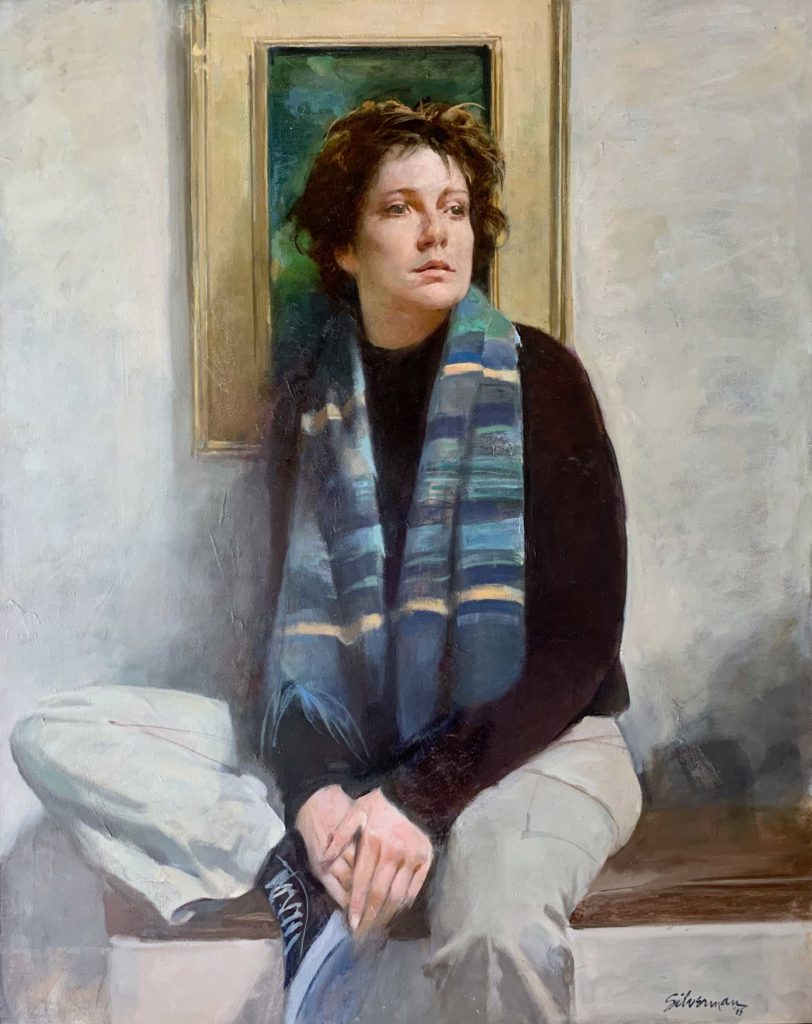
Burton Silverman, “Blue Sneakers,” Oil on Canvas, 30 x 24 inches
From the gallery:
There is a consistency in his style that is comforting but the variety of poses, formality, and intimacy depending on the subject shows Silverman’s range.
Burton Silverman has been an exhibiting fine artist for nearly 70 years. He is most often celebrated for his portraits of people from all walks of life, from Supreme Court justices to New York City strippers. His talent lies in his ability to capture people as they are, without superficiality or grandiosity. Swaying back and forth between tighter brushstrokes for the finer details and looser brushiness for mood and ambiance, Silverman finds the balance between realism and abstraction.
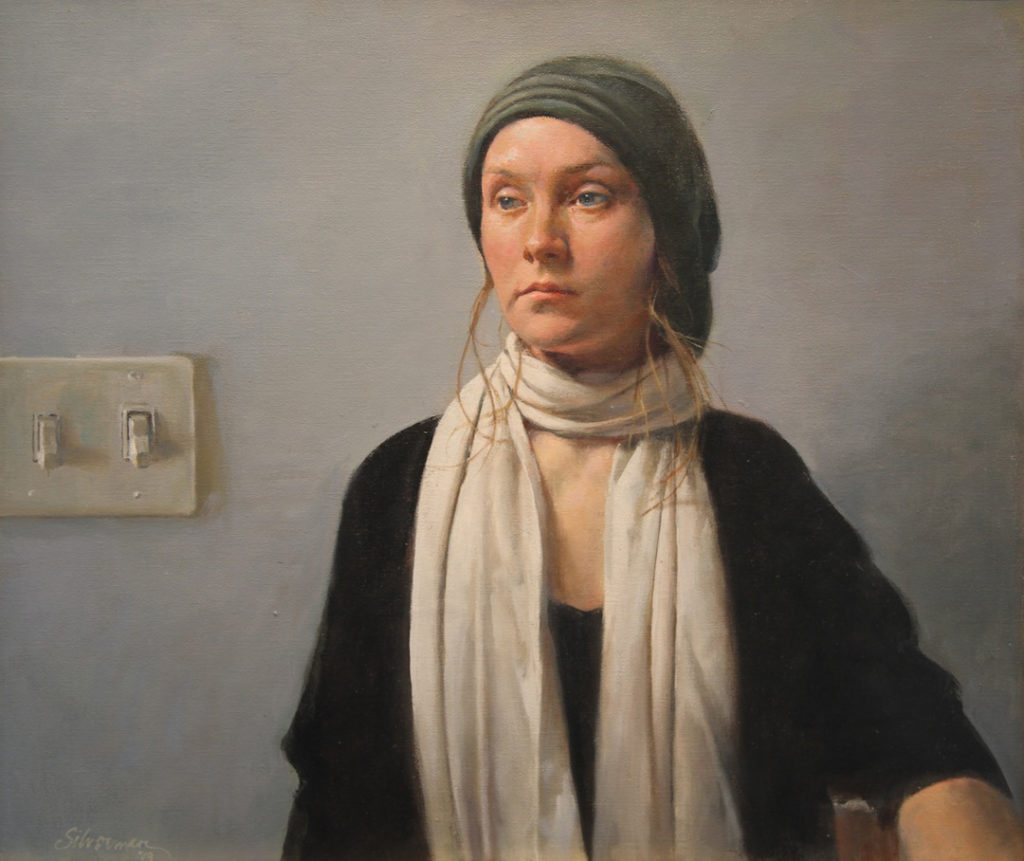
Oil has been Silverman’s preferred media for his portraits over the years. His staging and composing varies from one subject to the next. Set against a blue gray wall “Light Switch” leaves little to identify the young woman, her head turned slightly and wisps of hair escaping from her knit cap. But the care shown to her face and expression reveals all we need.
Burton Silverman, “Light Switch,” Oil on Canvas, 19 x 22 inches
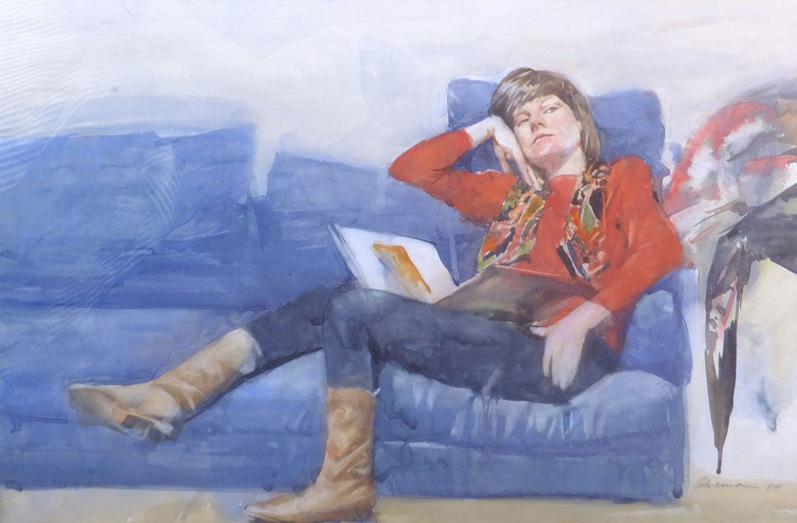
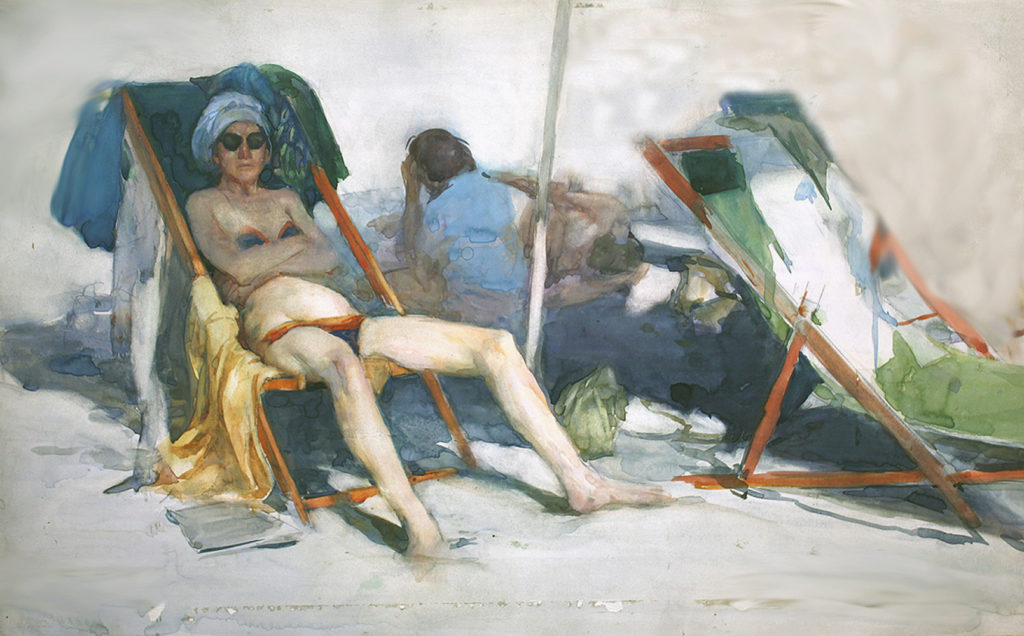
Silverman has also worked consistently in watercolor over the years. His portraits take on a new freshness in the medium, with the fluid quality drawing the eye around the picture to take in a stroke here and a blast of color there. From interiors like “Woman on Blue Sofa” to outdoor scenes like “Beach Scene III,” Silverman’s watercolors are an interesting avenue of his output that gets due consideration in the exhibition.
Burton Silverman, “Woman on Blue Sofa,” Watercolor, 14 x 21 inchesBurton Silverman, “Beach Scene III,” 1985, Watercolor, 13 x 22 inches
“Thoughtful Portraits” is just the latest solo exhibition and accolade for Silverman. They have followed him around his entire career. He has paintings in no fewer than 31 public collections around the country. He has been commissioned by law schools and hospitals to paint deans and directors, and he has been voted by peers into the National Academy of Design, the American Watercolor Society, and the Portrait Society of America.
But even after all the honors, and all the years that have gone by, for Silverman, painting is still about the people. “I continue to make paintings of people and their place in our time because I am of that time. Out of that I hope to make pictures that are timeless.”
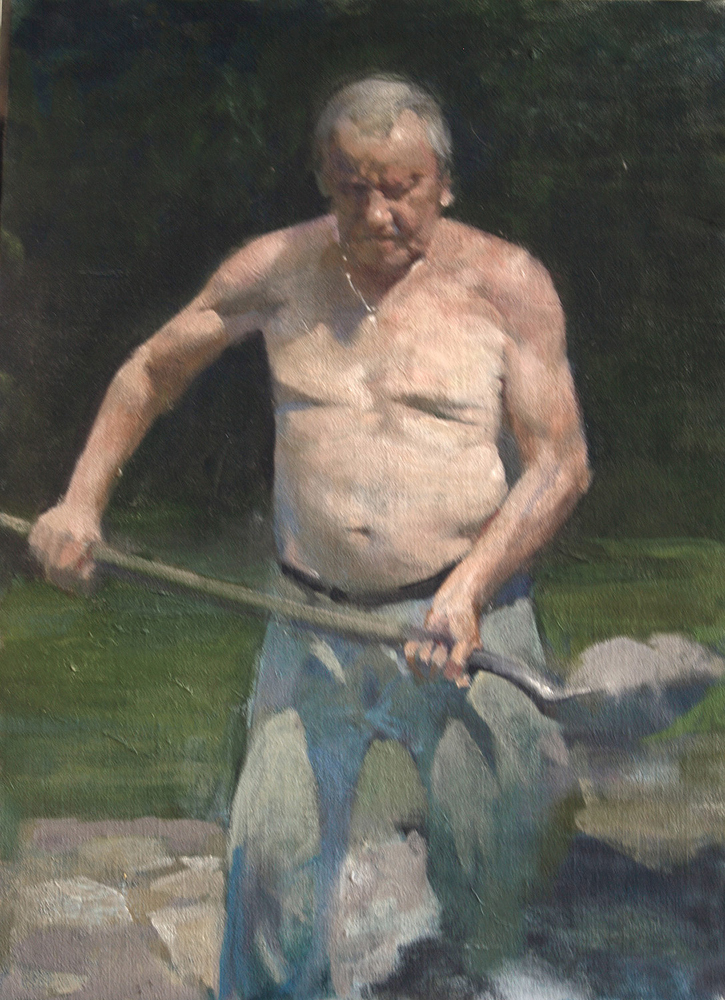
Burton Silverman, “Study for Stonebreaker,” Oil on Linen, 18 x 13 inches
For more information about “Thoughtful Portraits,” please visit haynesgalleries.com.
WATCH > Fine Art Connoisseur Lifetime Achievement Award – Burton Silverman:
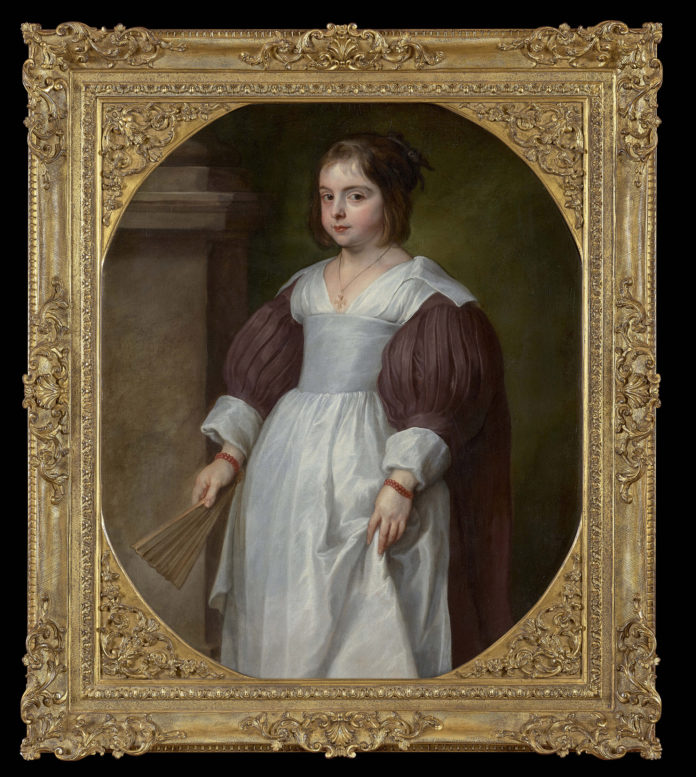
Sir Anthony Van Dyck (1599 - 1641), "Portrait of a Young Girl in a White Apron," 1630, Oil on canvas, 99 × 83 cm. (39 × 32 5/8 in.), Philip Mould & Company
The innovative digital presentation of London Art Week Summer 2020, taking place July 3-10, 2020, welcomes numerous new faces alongside familiar participants that have supported the event for many years. Some 50 exhibitors have been confirmed to date.
International newcomers include Galerie Canesso and Jacques Leegenhoek from Paris, Nicolás Cortés Gallery of Madrid, Daxer & Marschall and Arnoldi-Livie of Munich, and, from Italy, dealers such as Walter Padovani of Milan with sculpture, Antichità Alberto Di Castro Srl of Rome with works of art, Bottegantica of Bologna with Italian art and Enrico Ceci Cornici Antiche of Modena with fine antique frames. From the USA come new participants Jill Newhouse Gallery and Mireille Mosler.
Above: Sam Fogg, London: English glazier, A stained-glass tracery panel of an angel among stars, c. 1450, Stained glass, 20.5 x 20.5 cm / 8 x 8 inches
Among new London-based dealers taking part in London Art Week this summer is Stuart Lochhead Sculpture, Osborne Samuel Ltd, Panter & Hall, Benjamin Proust Fine Art Ltd, and Offer Waterman. Sladmore Gallery and Philip Mould & Company return after a few years. Works for sale span 5000 years of art, from ancient Egypt to Modern British, with an emphasis on Old and Modern Masters, offered by the world’s most respected fine art galleries.
Ceci Antichita di Ceci Enrico (new – Modena) Venice, Xvi°Century, Aedicula Frame
In response to the global Covid-19 situation, London Art Week has created a new online space for dealers to work together, preserving the collegiate nature of the event which embraces auction houses and which is supported by museum partners and art world sponsors. A major feature is a new series of mixed, curated Viewing Rooms where works from a cross-section of participants will be shown side by side, a new way for dealers to be discovered by a world-wide audience.
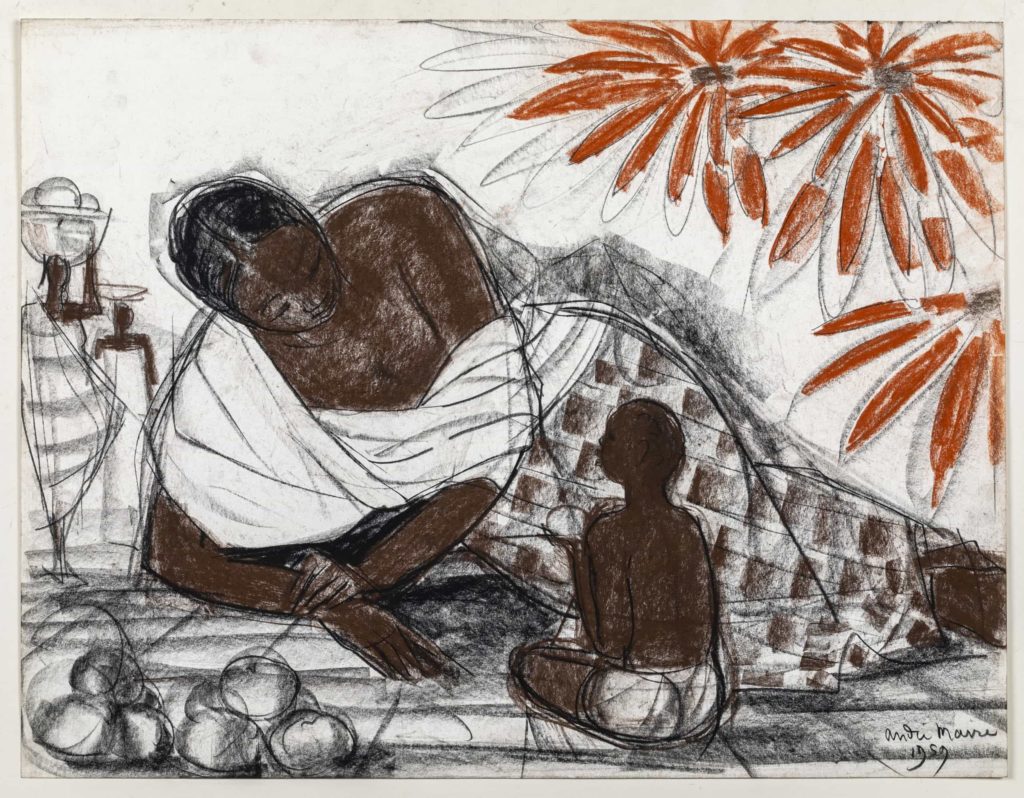
Florian Härb and Martin Grässle: André Maire (Paris 1898 – 1984), “A Malgache Reclining with a Child Holding a Fruit,” 1959, Charcoal, pastel, 50.4 × 65 cm. (19 13/16 × 25 9/16 in.), Signed and dated, lower right, André Maire / 1959
THEMES of HUMANITY AND PORTRAITURE
This summer, many exhibitions focus on the human form and there are many portrait highlights – perhaps life under lockdown has reminded us of the importance of the human face and the stories they mask or express. Lullo • Pampoulides, taking inspiration from our current and unusual situation, is curating an exhibition of portraiture, In Silent Conversation: Portraits from the 16th to the 20th Centuries, while Galleria Carlo Virgilio & C. is showing Faces 4, a series of Italian self-portraits and portrait paintings, mostly of the early 20th century, all new to the market and selected for their quality and intriguing iconography.
Sam Fogg presents Medieval Faces, which brings together some 40 artworks in sculpture, painting, stained glass and manuscript illumination, all created by European artists during a period spanning the 13th to 16th centuries. Through this varied spectrum of objects, the show will aim to demonstrate how the interests and concerns of our medieval forebears, and their insatiable drive to capture the essence of human presence, are really no different from our own in today’s world.
Pieter Coecke Van Aelst (Aalst 1502 – Brussels 1550), “Madonna and Child with the Veil,” c. 1550, Oil on panel, 110 x 70 cm. (43 1/4 x 27 1/2 in.), Klaas Muller
New exhibitor Nicolás Cortés Gallery of Madrid has a wonderful c. 1575 Portrait of a Gentleman by Bartolomeo Passerotti (1529-1592) of Bologna, an example of the artist’s innovative ‘staged’ portraiture, in which the sitter is depicted ‘in action’.
Portraits also feature strongly at Philip Mould & Company, returning to London Art Week after a few years, where highlights include works by Sir Anthony Van Dyck, Duncan Grant, Sir Peter Lely, and a captivating portrait of James Abbott McNeill Whistler, with the old Battersea Bridge and the Swan Tavern beyond, painted in 1869 by the artist’s friend Walter Greaves (1846-1930).
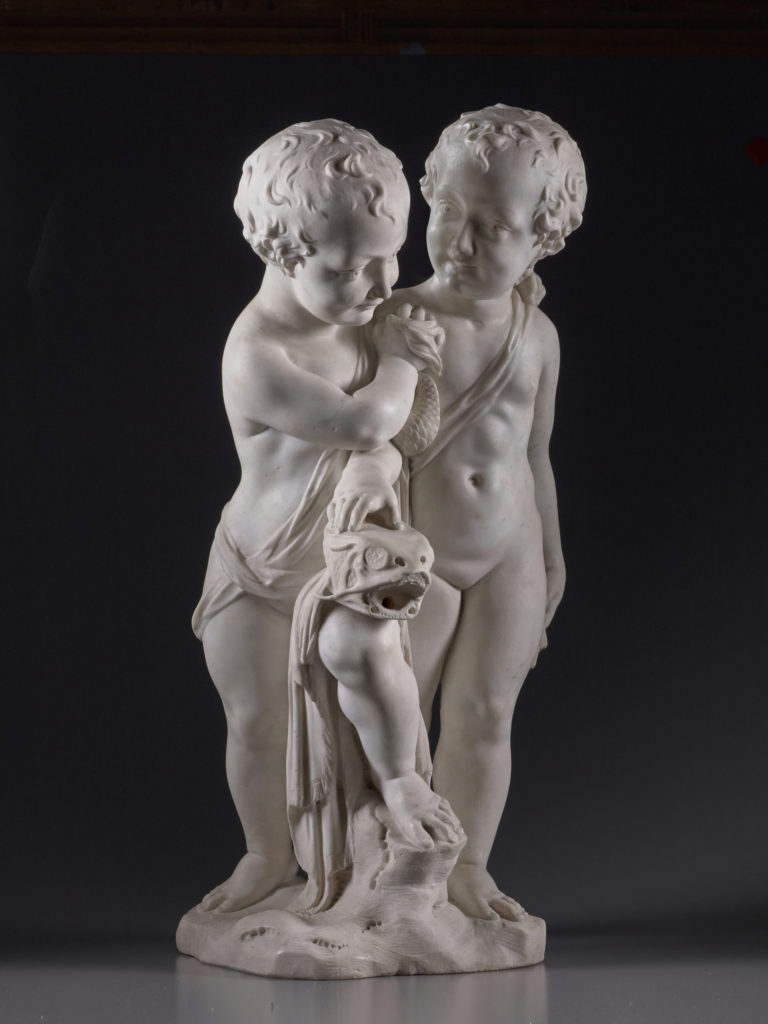
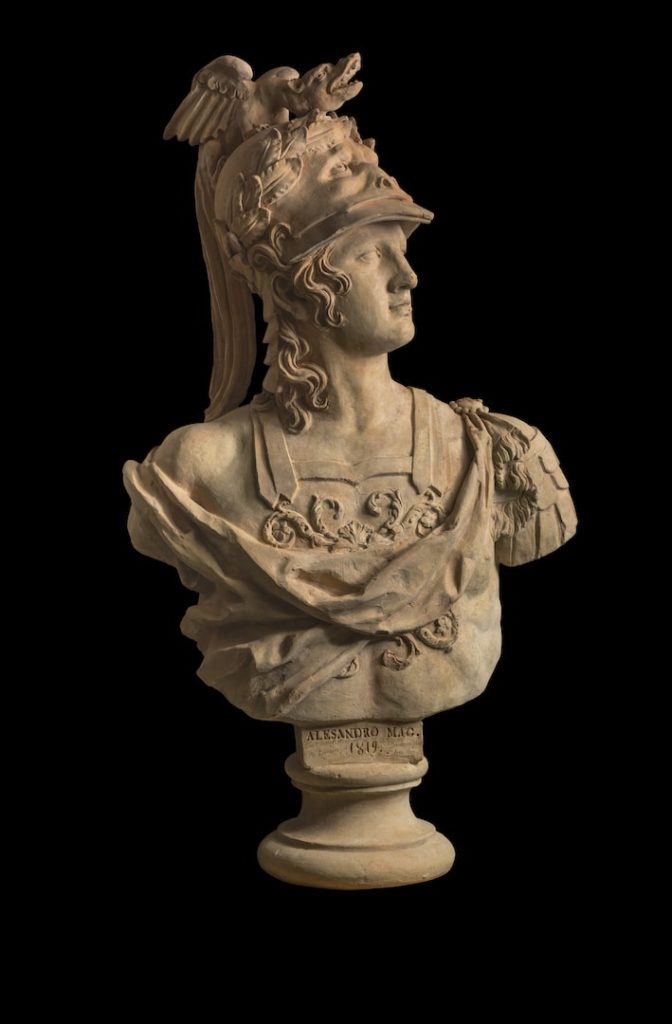
Pierino da Vinci (Vinci 1529/30 – Pisa 1553), “Two Children Holding a Fish,” c. 1545, Carrara marble, 67.7 x 31.2 x 32.6 cm (26.65 x 12.28 x 12.83 in.), Benjamin Proust Fine ArtCallisto Fine Arts, London: Domenico Paci (Ascoli Piceno 1785 – Ascoli Piceno 1863), Alexander the Great,” 1819, Terracotta, Bust: 102 cm. (40.16 in.), Inscription: ‘Alessandro Mag. Conte Antonio Mora fece costruire nel 1819 Domenico Paci Fece Ascoli”, Overall: 132 x 67.5 x 42 cm. (51.97 x 26.57 x 16.53 in.)Arnoldi-Livie, Munich: Edgar Degas (Paris 1834-1917), “Buste de danseuse,” c. 1896, Black chalk, 40 x 59 cm, 15 3/4 x 23 1/4 inches, Atelier stamp, lower left: “Degas” (Lugt 658)
WOMEN IN ART
There are several exhibitions featuring women artists: Ben Elwes Fine Art will present a painting by the Swedish artist Anna Katerina Boberg (1864-1935) who for many decades created work inspired by glaciers, the sea, and the midnight sun particularly around the archipelago of Lofoten in the Norwegian Sea. Boberg even joined a scientific voyage funded by the Swedish Crown in 1911 and her resulting paintings went on tour to the USA in a special exhibit of Scandinavian art sponsored by Gustav V of Sweden and the crowned heads of Norway and Denmark.
Ben Elwes Fine Art, London: Anna Boberg (1864-1935), “Putting Out to Sea,” Swedish, c. 1912, Oil on Canvas, 91 × 64 cm (36 × 25½ in), Signed lower left: ‘Anna Boberg’
Karen Taylor Fine Art presents an exhibition of British Women Artists, 1780-1890 – a Selection of Works on Paper. Karen says: “The work of women artists provides us with an important counterbalance in art history and its gradual emergence into the mainstream is to be celebrated. [Because they worked] outside the academic sphere, female artists have not received the attention bestowed upon their male counterparts.” She hopes “this small selection… will contribute a little to the current reassessment of their work.”
Among artists featured is Augusta Innes Withers (1792-1877), botanical painter to Queen Charlotte and Queen Victoria, and painter to the Royal Horticultural Society, and Evelyn De Morgan (1855-1919), one of the stars of the recent Pre-Raphaelite Sisters show at the National Portrait Gallery.
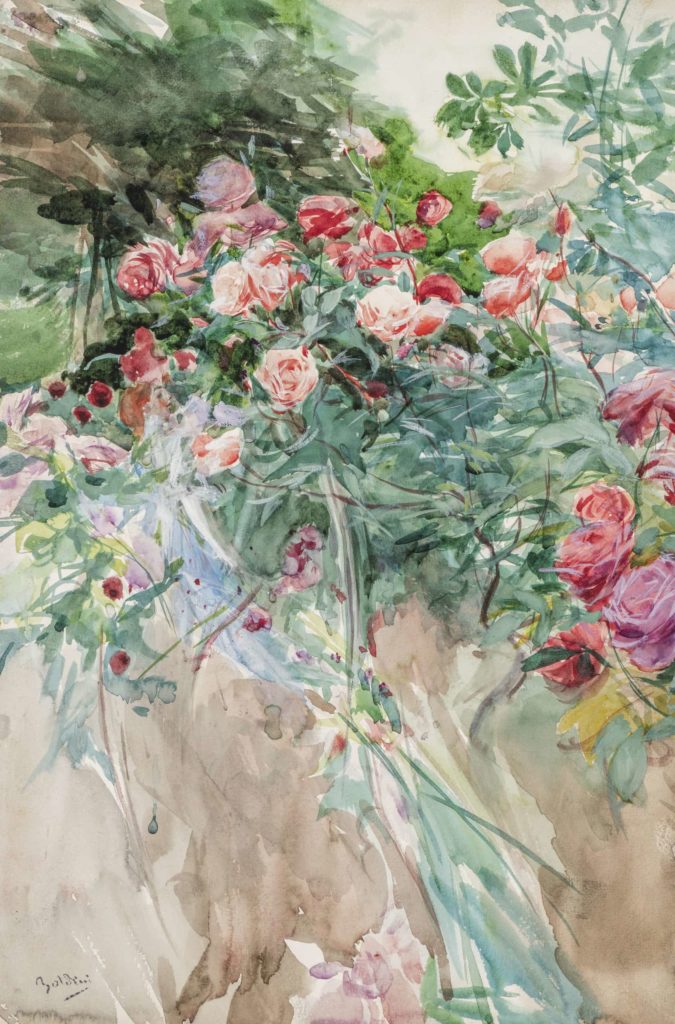
Bottegantica, Bologna: Giovanni Boldini (1842 – 1931), “Rose garden,” Ferrara, Paris, c. 1900-1905, Watercolour on paper, 460 x 320 mm / 18.11 x 12.59, Signed lower left: Boldini
For more information about London Art Week, please visit londonartweek.co.uk.
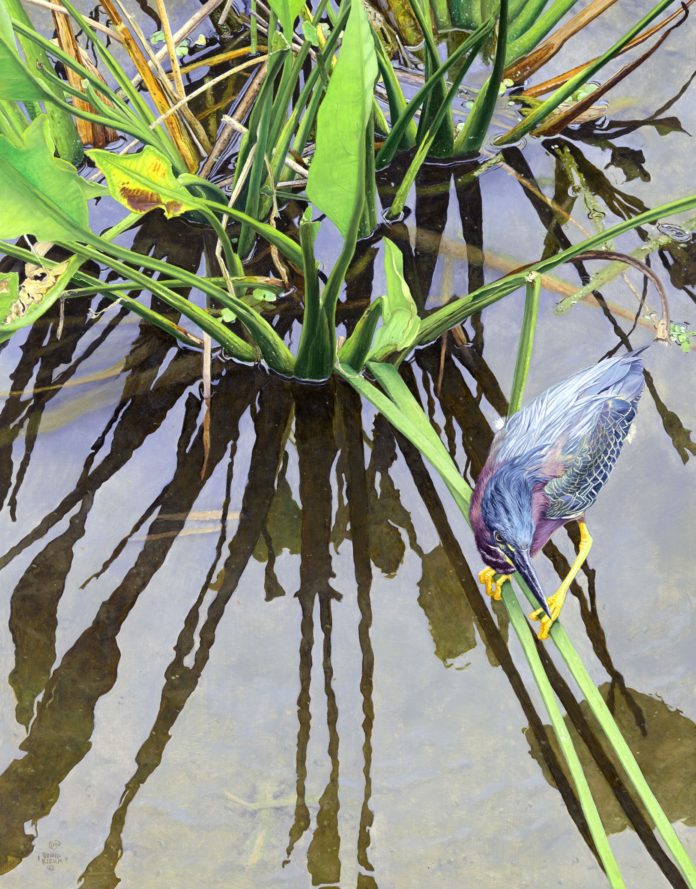
David Kiehm, The Stalker, 11 x 14, Oil on Panel, $2600
The Southeastern Wildlife Exposition (SEWE) recently announced its “Fresh Off the Easel” gallery of wildlife and nature art from premier painters and sculptors in the genre.
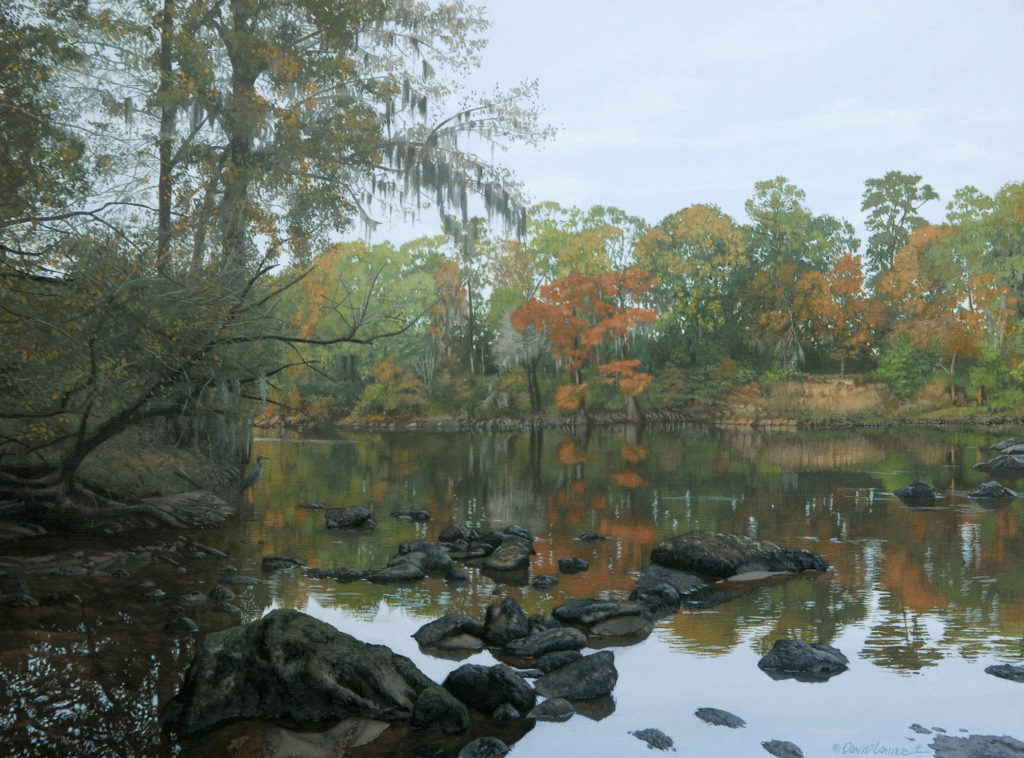
David Lanier, October, 18 x 24, Acrylic on Linen, $6,000
“While the pinnacle of our year occurs in February when artists and collectors gather in Charleston, we represent artists and source new work year-round,” said a representative. “We look forward to celebrating these new works throughout the year, and hope they bring you the same inspiration as they do us.
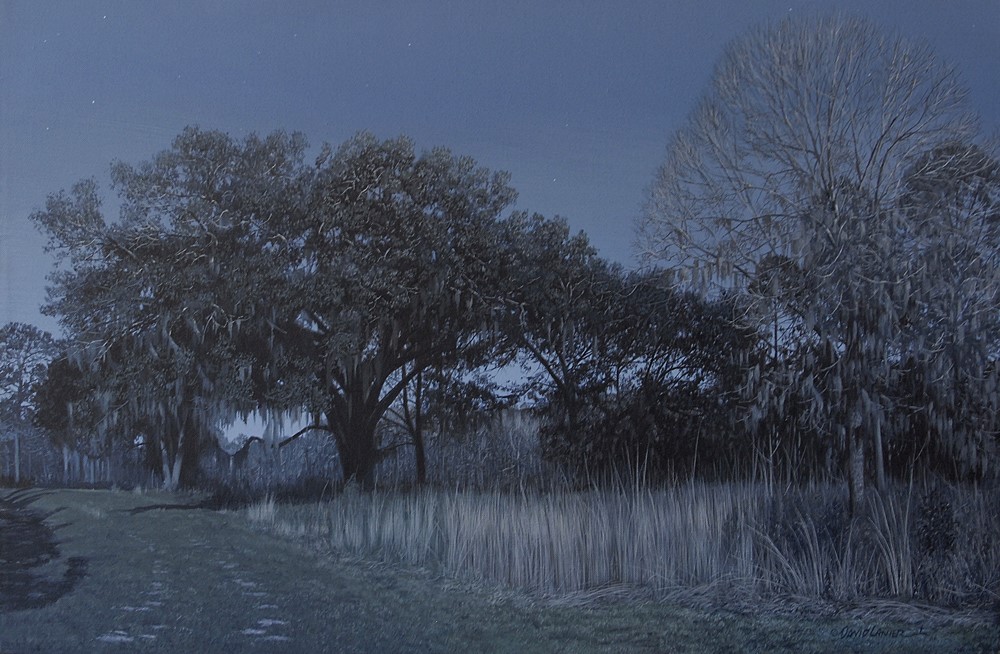
David Lanier, Silent Night, 16 x 24, Acrylic on Linen, $6500
New works will be released bi-monthly. Please visit sewe.com to view more works.
Marsha Massih, “Yellow Dress,” oil on canvas, 20 x 16 in.
At the Second Annual Figurative Art Convention & Expo (FACE), Marsha Massih participated in a panel discussion regarding the classical painter Frank Mason (1921–2009).
I started painting because I was intrigued by the idea of interpreting nature with oil paint, visually communicating something of what I felt while painting the subject. Frank Mason helped me to see light and color on forms, whether that be the figure/portrait, the landscape, or the still life. If I am outside painting a landscape, I want the viewer to feel the atmosphere. When I’m painting a figure or portrait, I try to capture a piece of the personality, hoping to evoke a mood. I am drawn to creating a mood, painting a new world within the existing one.
Marsha Massih, “Santiago,” oil on canvas, 16 x 20 in.
I always dreamed of being an artist but wasn’t really encouraged by my parents, who felt that a professional degree would be a more secure route. So although I traveled Europe in my early 20s internalizing the beauty of the art all around me, it wasn’t until right after graduate school (I studied international affairs) that I began to take my art seriously. I took evening painting classes at the Art Students League and then eventually quit my day job to pursue art full-time. First and foremost was my desire to gain literacy with representational painting and drawing, which required (and continues to require) many hours of practice from live models. Attending Frank Mason’s landscape workshop every June in Vermont for five years helped me see and start to understand atmosphere, color, and light as observed in nature.
Marsha Massih, “Resurrection,” etching, 5 x 8 in.
I am interested in creating with oil paint a world where mood, color, movement, light, and atmosphere are felt and experienced. My impetus for painting is not really conceptual; it has more to do with the visceral pleasure of expressing feeling and the spiritual energy inherent in nature. That’s the vision. That said, I have recently been thinking quite a lot about how to explore (with paint) my Persian and European heritage. I’m experimenting with higher-keyed color and patterns found in Persian art. We’ll see where that exploration goes!
Marsha Massih, “Take Five,” oil on canvas, 12 x 16 in.
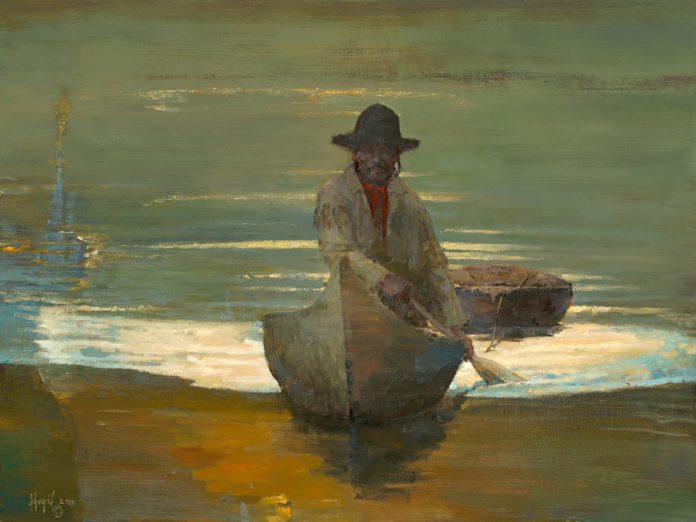
Frank Hagel, “Cree Trapper with Bull Boat,” oil, 30 x 40
Western Art by Frank Hagel > Intent and methodical, he approaches the canvas — or panel — with purpose, imparting in paint his love for Montana and all things Western.
Whether it be an extended experience, a split-second moment, or a historical account met through research, artist Frank Hagel is always ready for his next painting’s subject to reveal itself. When the spark of inspiration hits, Hagel’s methodical process begins, a course that is finely tuned and has consistently yielded breathtaking results.
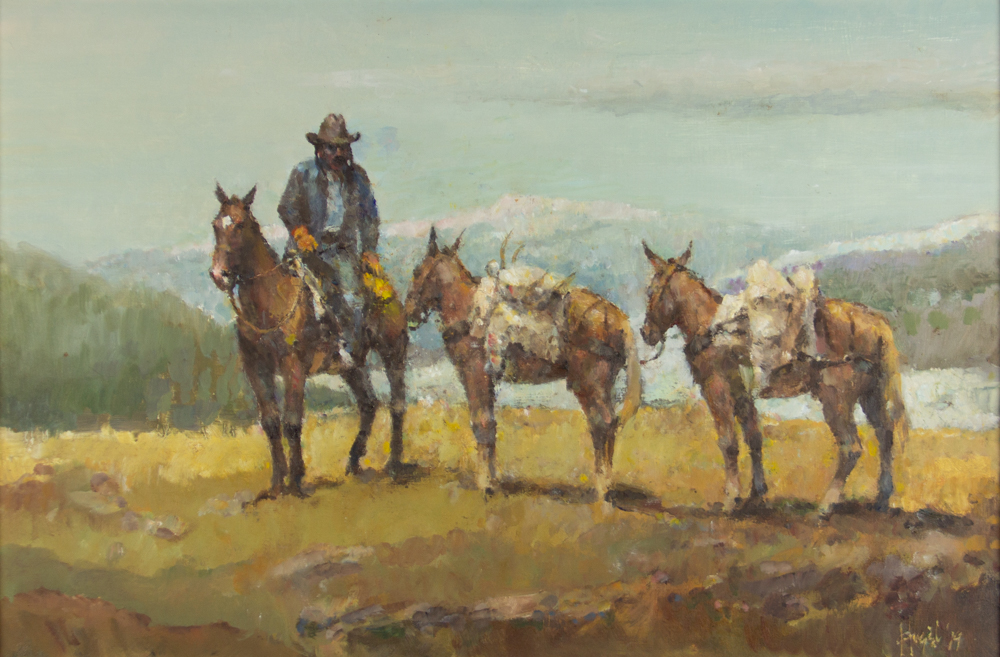
Frank Hagel, “Topping Out,” oil, 16 x 24
“After I’ve thought about the painting in depth, I start with a small color idea sketch in oil on paper on a small notebook, usually no bigger than 4 x 6 inches,” he recounts. “Then comes gathering needed information for the composition, either drawing or photographing from a model, or finding the appropriate landscape. At this point the drawing is enlarged and transferred to the canvas or panel. The painting begins.”
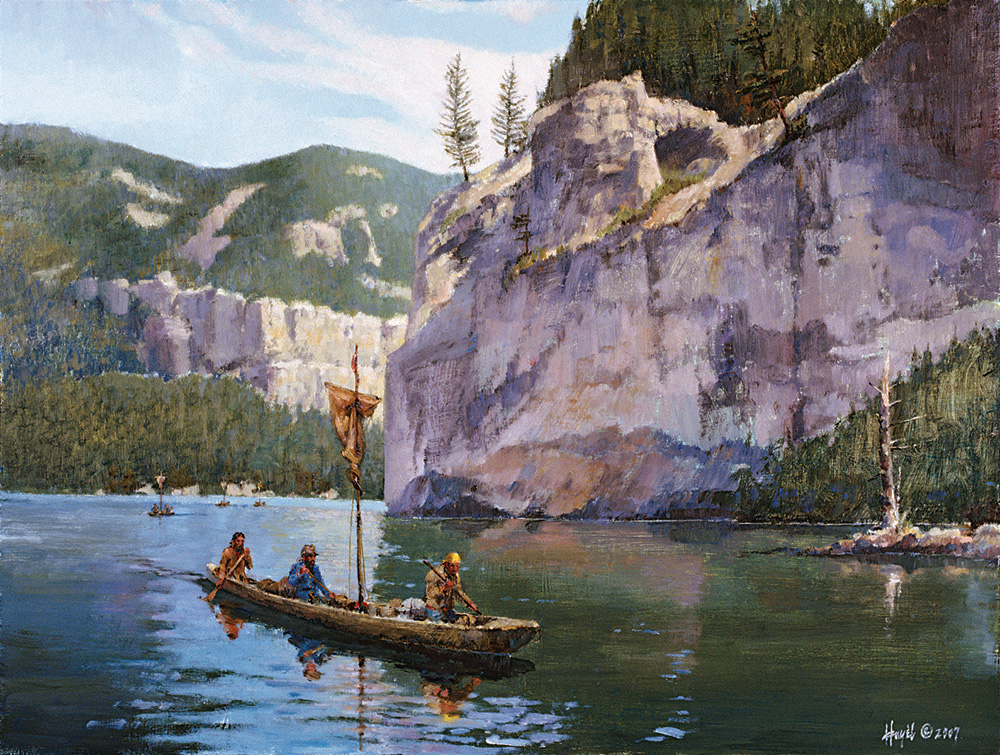
Frank Hagel, “Gates of the Mountains,” oil, 2017
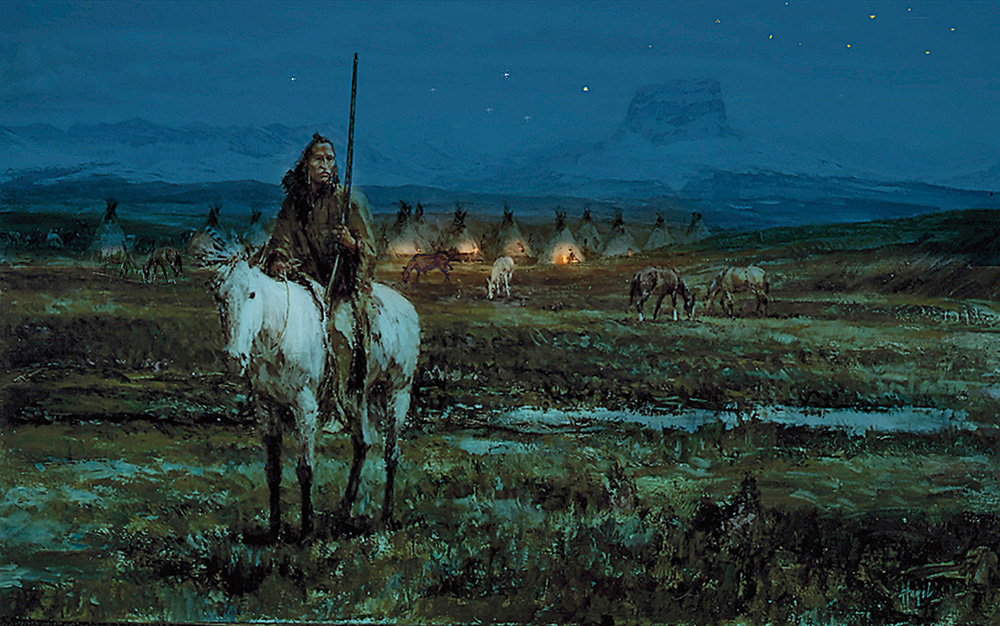
Hagel’s memorable encounter with Chief Mountain, a sacred spot for the Native American Blackfeet tribe in northwestern Montana, led to the outstanding “Chief Mountain Nocturne,” which captures the towering subject just as darkness falls. “I posed my model on horseback and did a fairly small, 5 x 7-inch oil sketch for color and composition, and began the process of rearranging values and colors to suggest a night scene with the horse guard as the dominant element,” says Hagel.
Indeed, the Blackfeet guard stands as majestically as the mountain beyond, endowing the subject with a stoic strength, confidence, and status. Just beyond the main subject, the viewer finds a small herd of grazing horses before the faint glow of fires within tipis grouped along the horizon. The warm glow of the oranges and reds from the fire adds a brief moment of rest for the eyes amidst a beautiful arrangement of cool greens, whites, purples, and blues.
Frank Hagel, “Chief Mountain Nocturne,” oil, 24 x 36 in., 2017
“My paintings are almost always inspired by Montana,” the artist writes, “whether landscapes, animals, or humans, they are all familiar to me and interesting in an historical or pictorial sense.” Hagel is one of the preeminent painters of the American West, and his connection with Montana and Western culture runs extremely deep and, to be sure, well beyond his art. “My mother was born in Wyoming, and my father in Idaho — each only a few years after both territories became states,” Hagel says. “I was born in Montana and have spent most of my life here, enjoying and studying all its facets: the scenery, geography, history of its natives, and its subsequent explorers and inhabitants, the weather, historical and everyday happenings, and the general overall feeling. In the course of growing up here and becoming a full-time artist, I experienced the most true of Montana livelihoods: working at my parents’ tannery, logging, ranching, outfitting and guiding hunters, etc. This familiarity also has led me to become a student of all aspects of Montana’s history — doing the research, exploring, reading, and studying the history of the state, with all its interesting events and occurrences. The subject matter is infinite.”
The connection Hagel experiences with Montana surfaces with great passion in his paintings, and is a key feature that he hopes his viewers share. He writes, “I hope my audience will share some of the reverence I feel and the beauty I find in the state of Montana.” Well put and, indeed, well achieved.
Frank Hagel’s Western art and oil paintings are available through Frame of Reference Fine Art in Whitefish: frameref.com.
This article was featured in Fine Art Today, a weekly e-newsletter from Fine Art Connoisseur magazine. To start receiving Fine Art Today for free, click here.
Fill your mind with useful art stories, the latest trends, upcoming art shows, top artists, and more. Subscribe to Fine Art Today, from the publishers of Fine Art Connoisseur magazine.