
Home Blog Page 202

Investigate these Narrative Mysteries

0
Narrative Art - Fineartconnoisseur.com
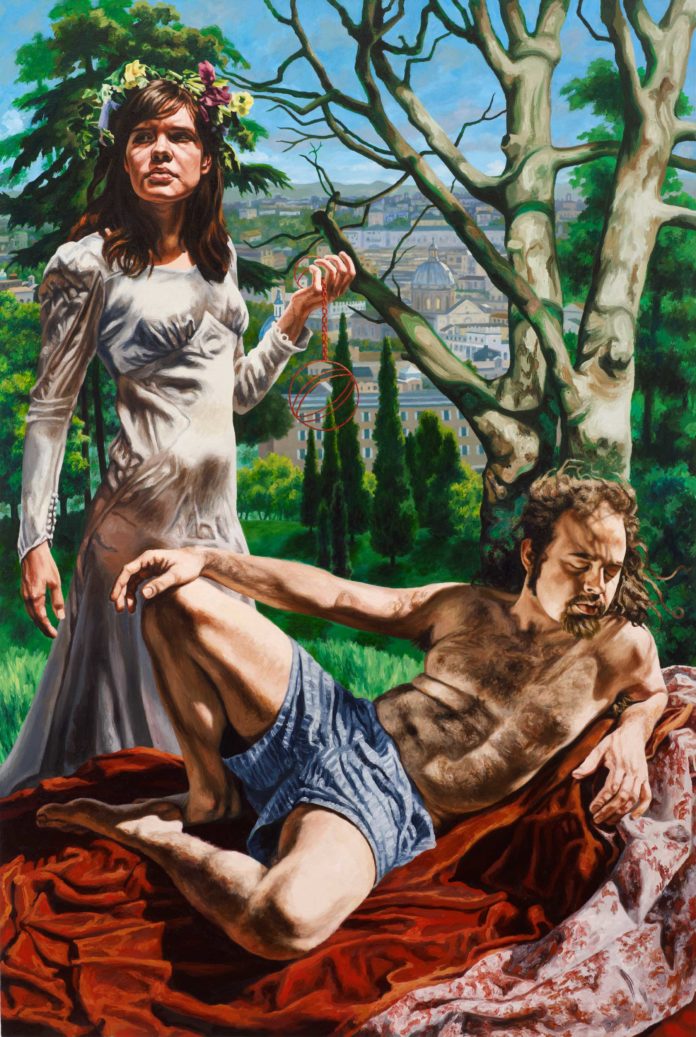
Virginia Derryberry, “Alchemical Wedding,” 2011, oil on canvas, 72 x 48 in. (c) Virginia Derryberry 2017

Using Renaissance and Baroque traditions as a catalyst for her dramatic narrative art, painter Virginia Derryberry invites the viewer into her creative world — one filled with dichotomy, costume, mystery, and more.

Executed properly, narrative painting has near-infinite ways to transport the viewer through places, ideas, and experiences. There can be little doubt that painter Virginia Derryberry has mastered this process, establishing herself among the pantheon of Asheville, North Carolina, artists.

Derryberry’s story has many points of entry, but experiences as a young student at Vanderbilt University proved pivotal for her artistic career. An art history major who occasionally experimented in art-making, Derryberry found herself greatly attracted to Renaissance and Baroque imagery, specifically pictures with strong lighting, complex compositions, and engaging narratives. “Many of these images stay with me,” she writes, “so when I begin the drawing/visual research for a new piece, some kind of related scenario pops up in my head. I use that image (or images) as a catalyst for environment, lighting, body language, and costuming for my models. Over time, I’ve really started to think of myself as being like a cinematographer, always visually ‘scanning’ a space or environment for possibilities. I usually work on ‘suites’ of pieces, sort of a small group of images within a larger series, so one piece often tells me what to do next — not exactly like the chapters in a narrative or scenes in a play — but related to the idea of time, performance, and character development.”
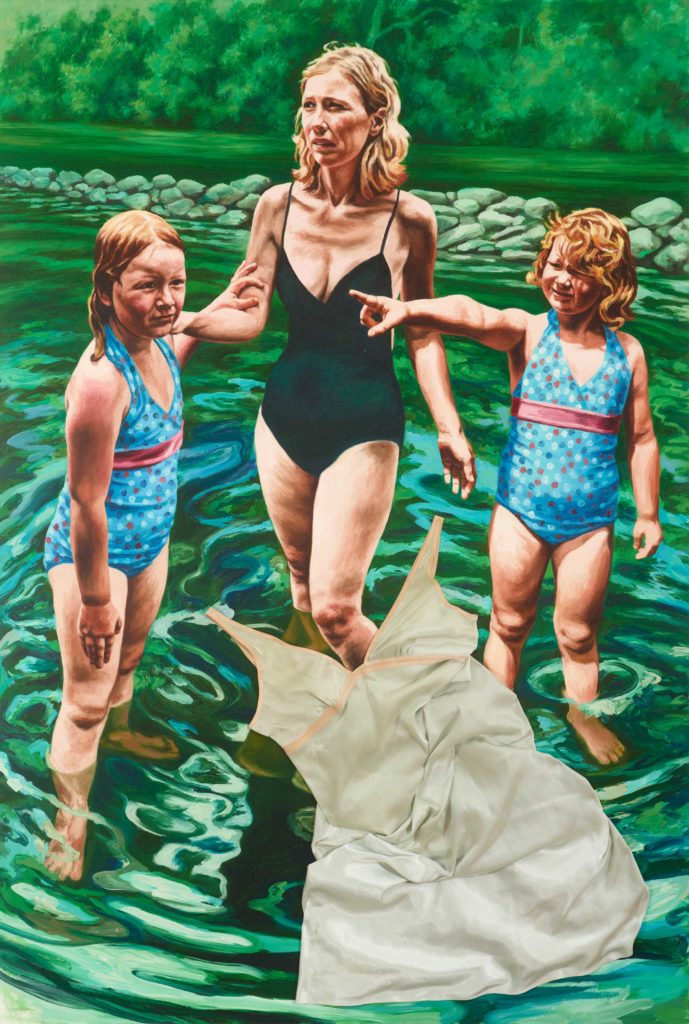
Narrative Art - Virginia Derryberry, “Celo,” 2015, oil on canvas with attached fabric, 70 x 47 in. (c) Virginia Derryberry 2017
Virginia Derryberry, “Celo,” 2015, oil on canvas with attached fabric, 70 x 47 in. (c) Virginia Derryberry 2017

With this in mind, it should come as no surprise that Derryberry was also an avid performer in theater during her undergraduate career. The artist suggests, “The idea of multiple personalities/personae really engaged me, and I think that is still being played out in my paintings. I paint some of the same people over and over again, but in each piece the persona is slightly different according to lighting, composition, body language, and costuming.”
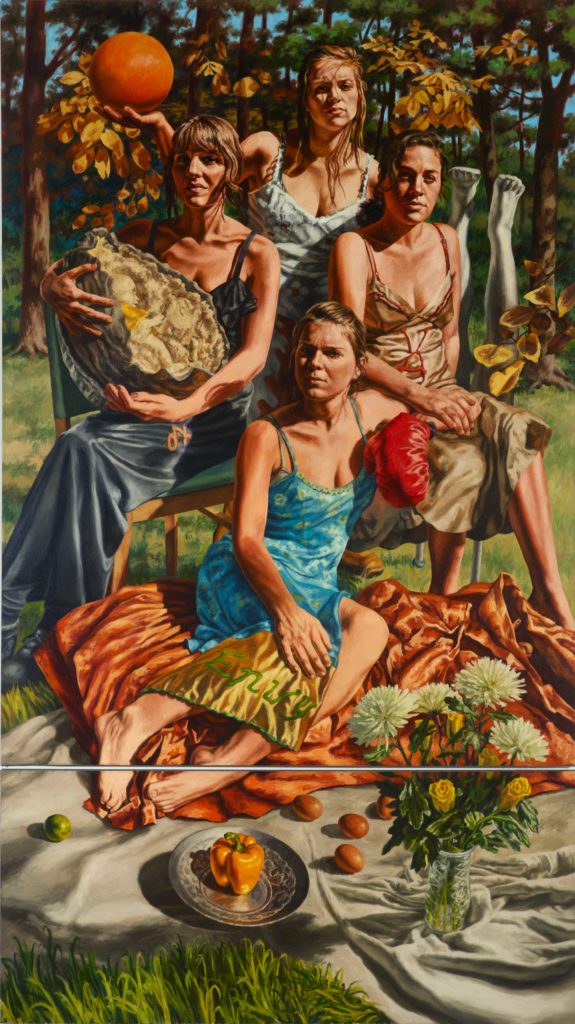
Narrative Art - Virginia Derryberry, “The Four Elements,” 2013, oil on canvas, 96 x 54 in. (c) Virginia Derryberry 2017
Virginia Derryberry, “The Four Elements,” 2013, oil on canvas, 96 x 54 in. (c) Virginia Derryberry 2017

For nearly a decade, Derryberry’s work has increasingly explored alchemy, a Medieval philosophy based on the principle of rebis — “a belief that most aspects of human nature — and nature in general — are built on the idea of dialogue and contrast,” as Derryberry states. In fact, a number of artists influential to Derryberry, such as Michelangelo Caravaggio, have also found dichotomy and alchemical principles captivating.
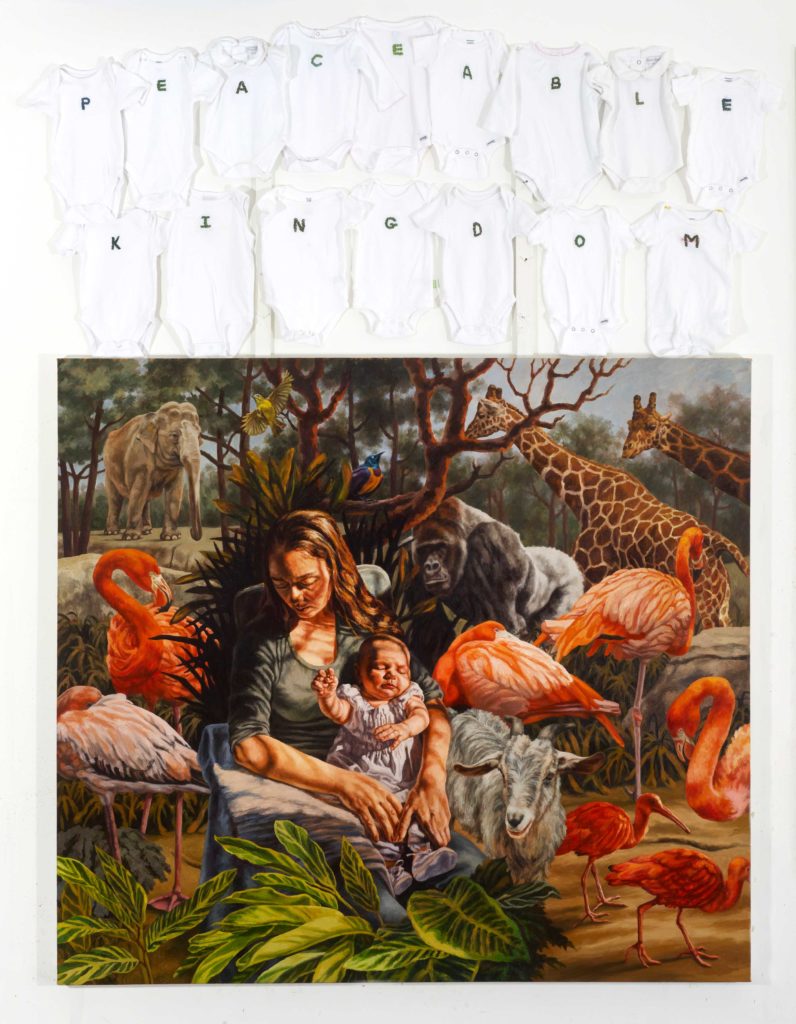
Narrative Art - Virginia Derryberry, “Peaceable Kingdom,” 2012, oil on canvas with 16 embroidered “onesies,” 96 x 60 in. (c) Virginia Derryberry 2017
Virginia Derryberry, “Peaceable Kingdom,” 2012, oil on canvas with 16 embroidered “onesies,” 96 x 60 in. (c) Virginia Derryberry 2017

“Peaceable Kingdom” is an outstanding work that brings each of these concepts and influences to the fore. Derryberry explains how Da Vinci’s “Madonna of the Rocks,” Edward Hicks’ “The Peaceable Kingdom,” and other paintings led to the realization of this magnetic picture: “‘Peaceable Kingdom’ began as a portrait and figure narrative to honor my daughter, Elizabeth, and the birth of her daughter (my granddaughter), Virginia, in 2012. I decided to combine a Madonna and Child format (actually a reference to Da Vinci’s ‘Madonna of the Rocks,’ where Jesus is holding up his hand to John in blessing) with Edward Hicks’ version of ‘The Peaceable Kingdom.’ I’ve always loved the naïve quality of Hicks’ paintings and especially his reference to the idea of the ‘lion laying down with the lamb.’ What struck me about the imagery in this painting is how much the wider environment is included and how it suggests a return to the Garden of Eden. Combining three mythic stories in one — the Garden of Eden, an otherworldly mother and child story, and the possibility of wild animals at peace with one another and humanity — excited and challenged me. My other intent was to go past the Biblical story and to suggest the here and now in terms of the complex struggle that we, as humans, have with finding a peaceful relationship with our environment.
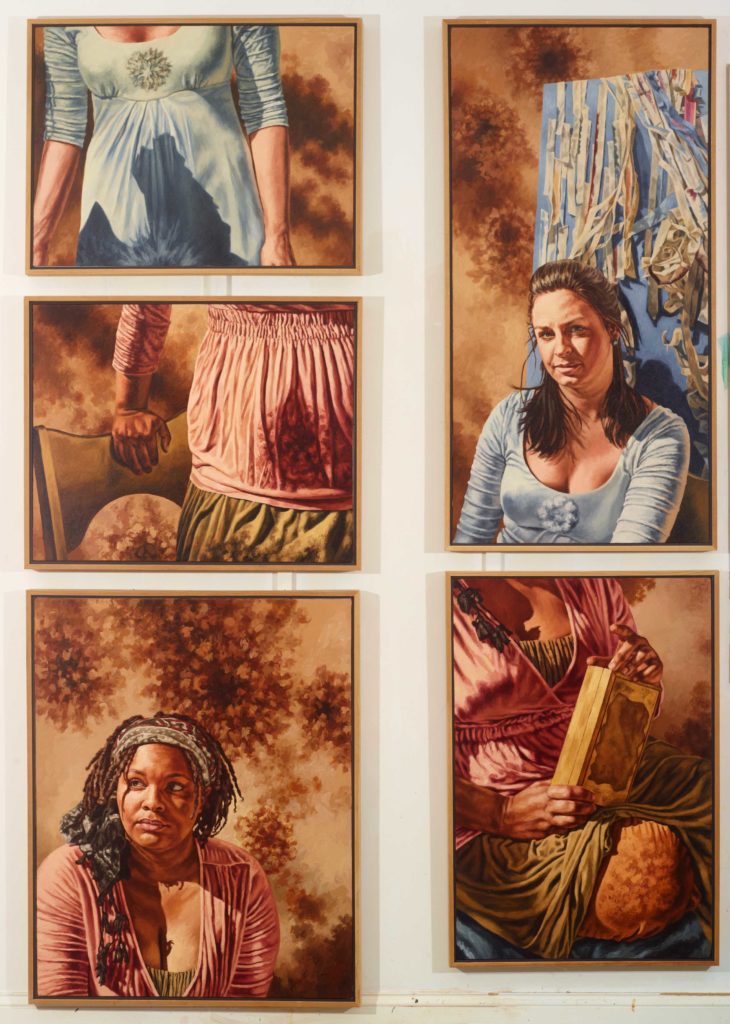
Narrative Art - Virginia Derryberry, “Sol and Luna Have a Conversation,” 2015, oil on canvas, 94 x 72 in. (c) Virginia Derryberry 2017
Virginia Derryberry, “Sol and Luna Have a Conversation,” 2015, oil on canvas, 94 x 72 in. (c) Virginia Derryberry 2017

“A contemporary aspect is my use of 16 ‘onesies’ (actually worn by Virginia over time) that I embroidered with the letters of the title. I think their inclusion suggests many things — a larger life and experience beyond one particular child, a ‘levity’ that plays against the gravity and physicality of life, and even the suggestion of cloud forms over the earth. Many of these, of course, reference alchemical imagery as well.”
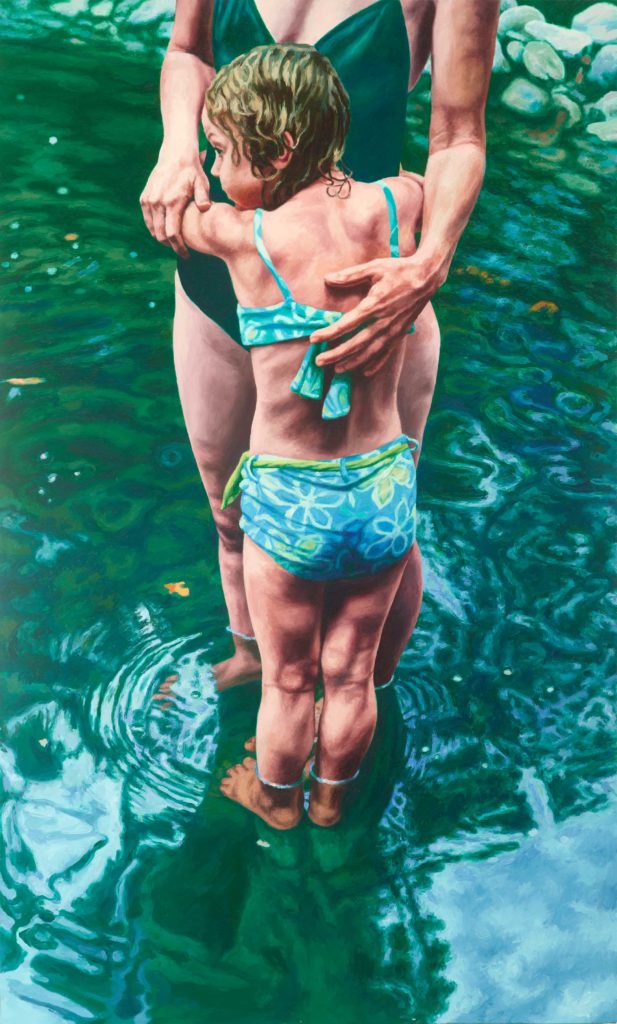
Narrative Art - Virginia Derryberry, “Water Duo,” 2014, oil on canvas, 60 x 36 in. (c) Virginia Derryberry 2017
Virginia Derryberry, “Water Duo,” 2014, oil on canvas, 60 x 36 in. (c) Virginia Derryberry 2017

Derryberry’s primary goal with works such as “Peaceable Kingdom” is twofold, involving both confusion and revelation. The play between the two offers a chance for viewers to ignite self-inquiry while participating in the discovery of the narratives. Derryberry writes, “I try to guide the viewer first to be puzzled about what they are seeing. For example, sometimes I deliberately use conflicting light sources or I put in an object or form that simply doesn’t belong. Secondly, I want the viewer to be lured into the painting due to the color and sensuality of the surface, caught, if you will, by the complex paint passages. Once they are in there for a while, hopefully they start to ask questions of the image and, ultimately, questions about themselves. That’s the main reason that I address multiple story lines in a painting — so that I am not deliberately illustrating a specific message but asking for a more metaphorical interpretation.”

As Derryberry’s teaching career in the Department of Art and Art History at the University of North Carolina at Asheville concludes, one might assume the artist is fading into the sunset. But the truth is quite the opposite. With teaching playing a decreasing role in Derryberry’s life, personal ventures in painting await through a number of solo exhibitions, and artist residency programs in France and Italy. “I have scheduled four upcoming solo exhibitions, titled ‘Private Domain,’” she says, “essentially a traveling exhibition to four separate venues over the next two years, which will give me the opportunity to explore how viewers — mostly college students — react to my work.”

To learn more, visit Virginia Derryberry.

This article was originally published by Andrew Webster in 2017. 


> Sign up to receive Fine Art Today, our free weekly e-newsletter
Newbery Art Prize for Classical Artists, Sculptors, Architects, and Designers

0
Newbury Arts Prize painting
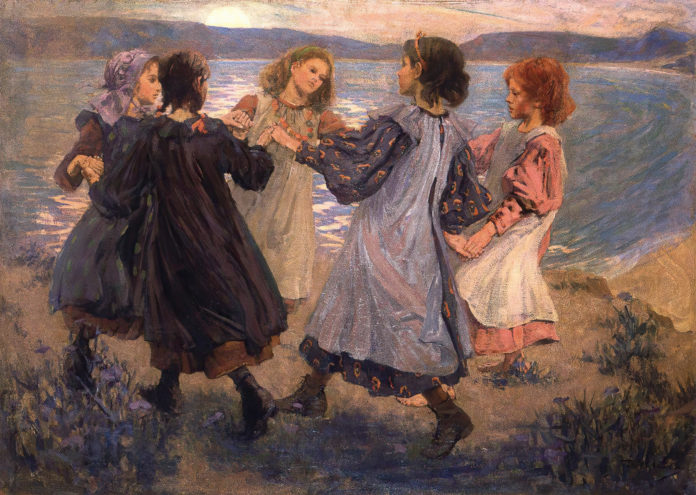
"Sotto la Luna" by Fra Henry Newbery, Circa 1899

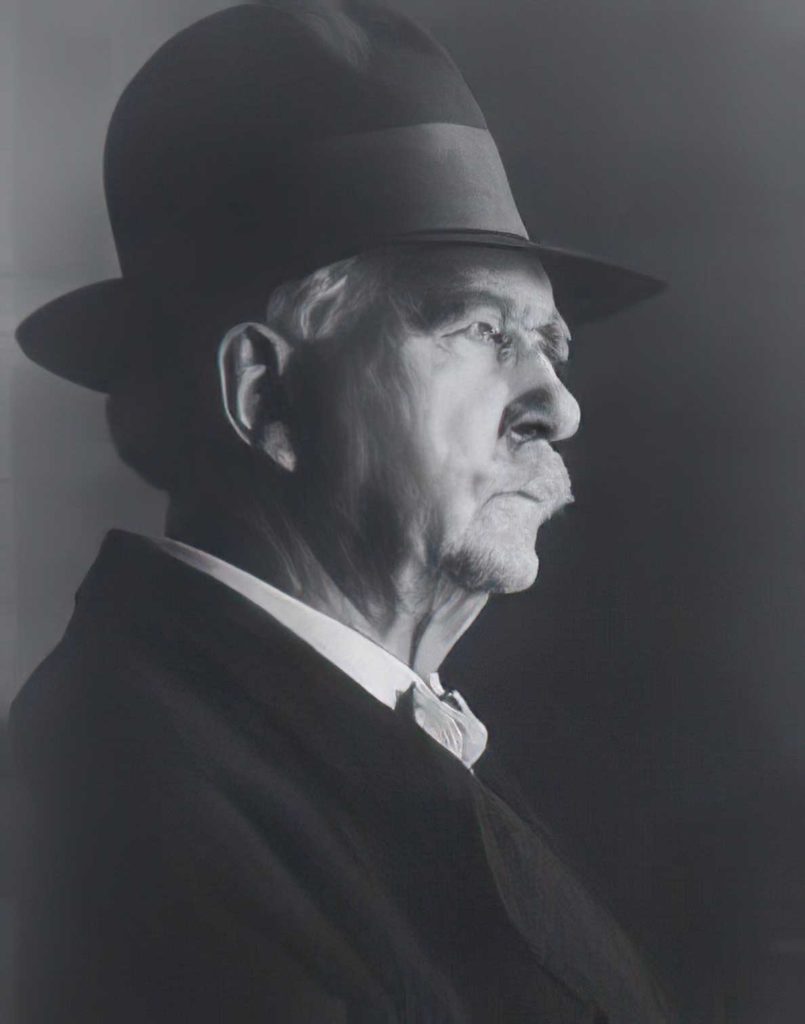
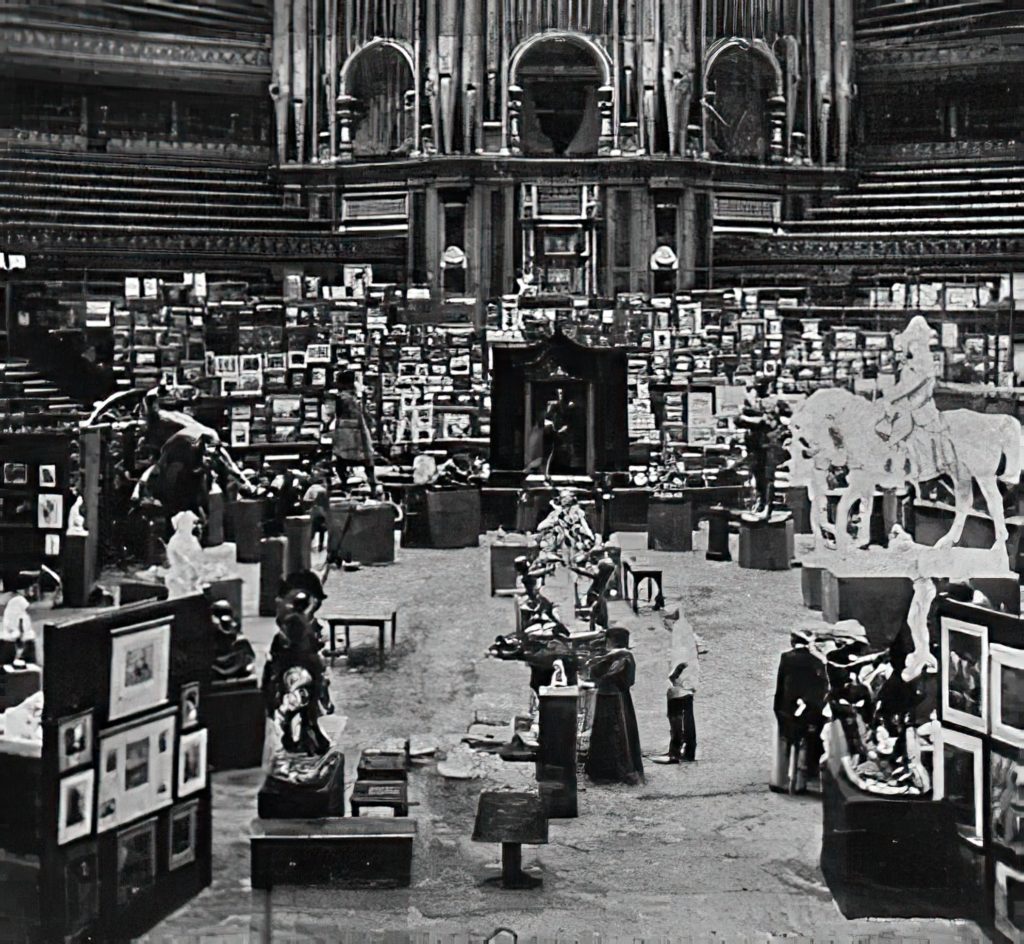
When Francis Henry Newbery started the Newbery Arts Prize in 1875, the telephone had only just been invented. A year later, over 800 artists from around the world filled The Royal Albert Hall in London with over three thousand works of art.

Fra Henry Newbery, Circa 1927

With a £75,000 cash prize across the three categories, the art competition celebrates classical artists, sculptors, architects, and designers. Application opens May 15, 2020.

“We want to recognise the cultural brilliance of artists and designers, and we want everyone’s help to discover them and, just as Newbery did, we are also offering the original prize of One Hundred Guineas and The Newbery Trophy for the people choice,” said Jeremy Gower, Owner of Henry Newbery & Co. and Director of the Arts Competition.

Artists will have the option to sell their art through the competition and the public have the option to view the entries. This is primarily a competition for the classical arts and strictly follows the rules set out by Newbery himself nearly one hundred and fifty years ago.

Newbury Arts Prize
The First Newbery Arts Prize Giving, The Royal Albert Hall 1876
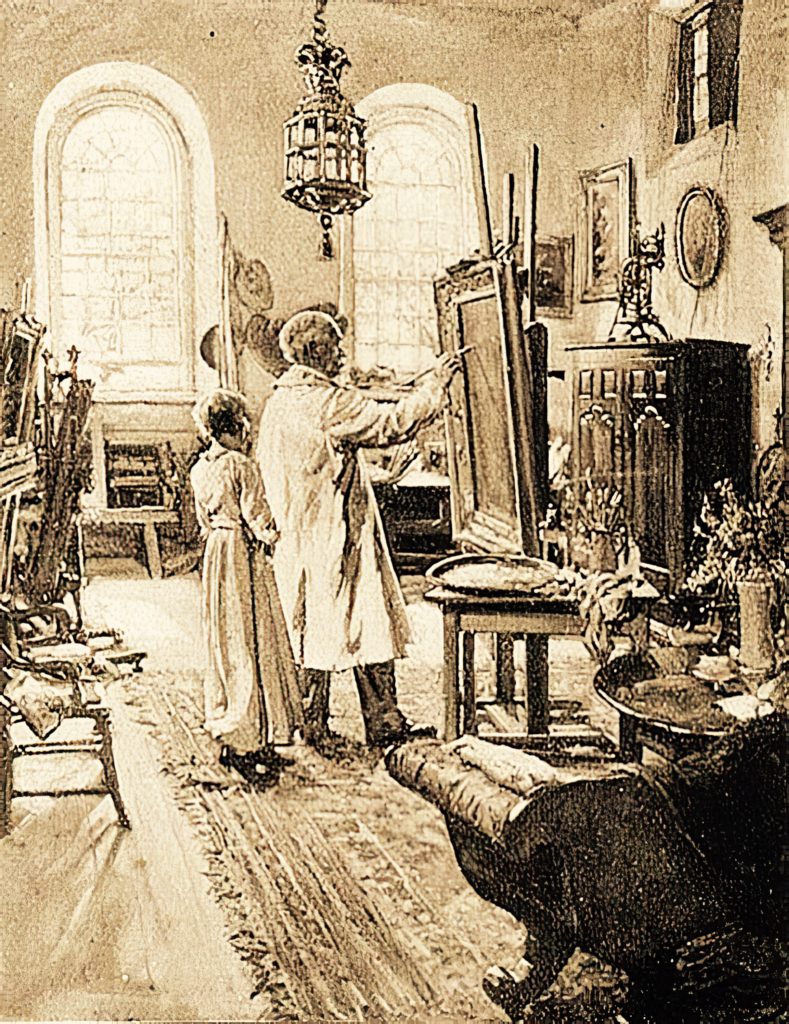
Fra Henry Newbery in his Corfe Chapel Studio Circa 1929
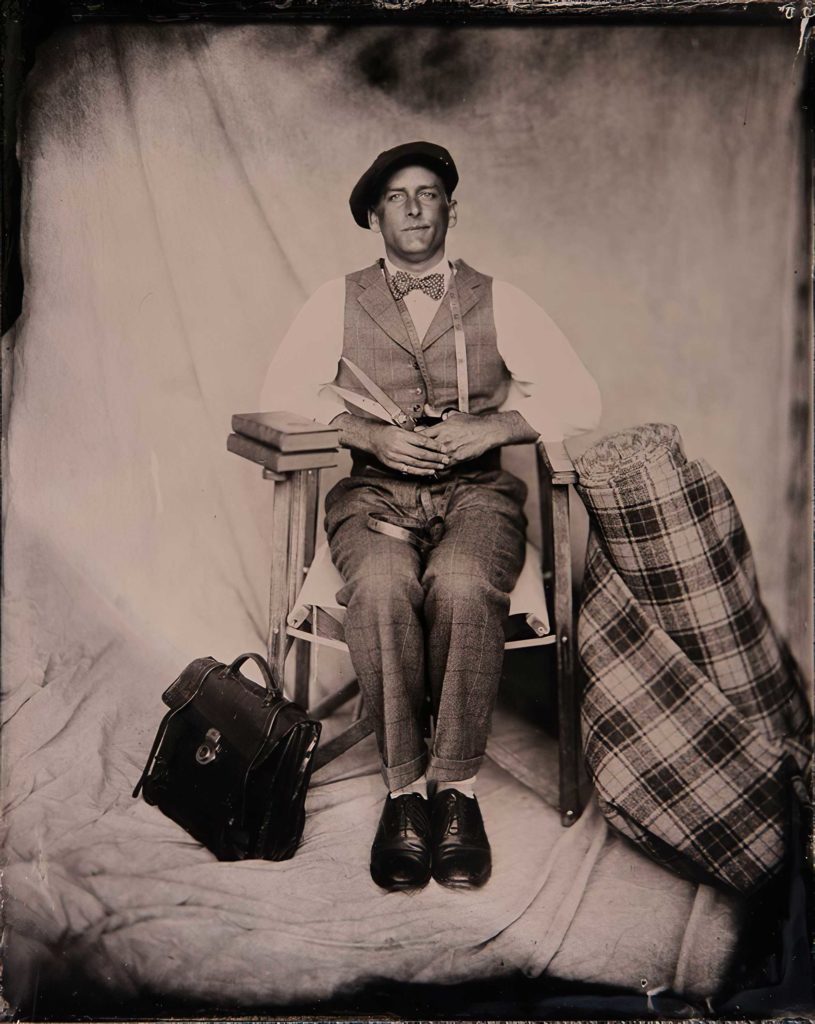
Tin Plate photograph of Jeremy ‘Stitch’ Gower, director of The Newbery Arts Prize by Carl Wilson
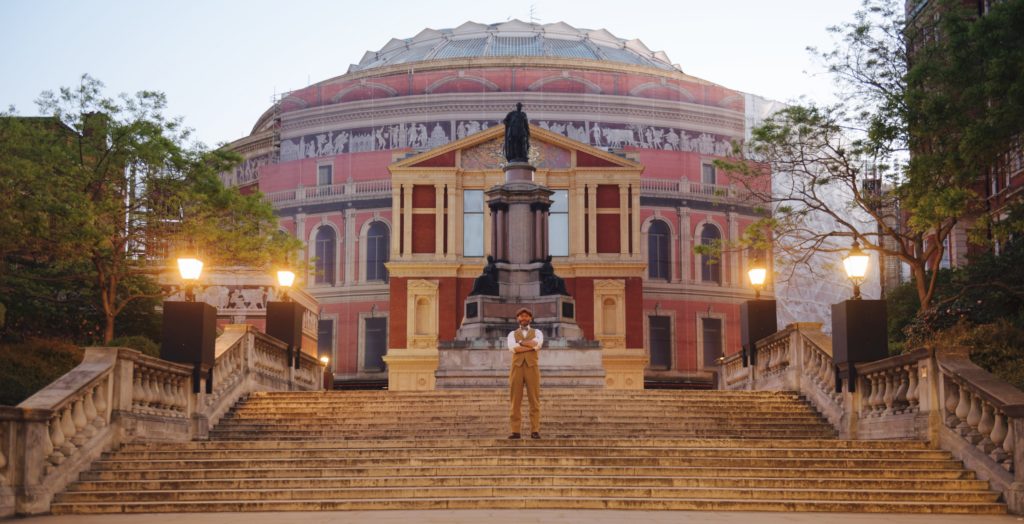
Director Jeremy Gower launches The Newbery Arts Prize 15th May 2020 on the steps of The Royal Albert Hall, London

Timeline:

  • Closing Date for Entries – November 15, 2020
  • All artworks to be submitted by March 15, 2021
  • Up to Three entries per application for either one category or mixed
  • Entry Fee £150
  • Artists can be nominated by public with artists permission

Application for entry and T&C’s can be found on the website www.newberyprize.com


> Sign up to receive Fine Art Today, our free weekly e-newsletter
> Click here to subscribe to Fine Art Connoisseur magazine, so you never miss an issue

> Join us for Realism Live, October 2020

Realism Live virtual art conference

Friday Virtual Gallery Walk for May 8, 2020

0
Friday Virtual Gallery Walk

As part of our effort to continue to help keep artists and art galleries thriving, we’re proud to bring you this new “Virtual Gallery Walk.” Browse the paintings below and click the image itself to learn more about it, including how to contact the gallery.

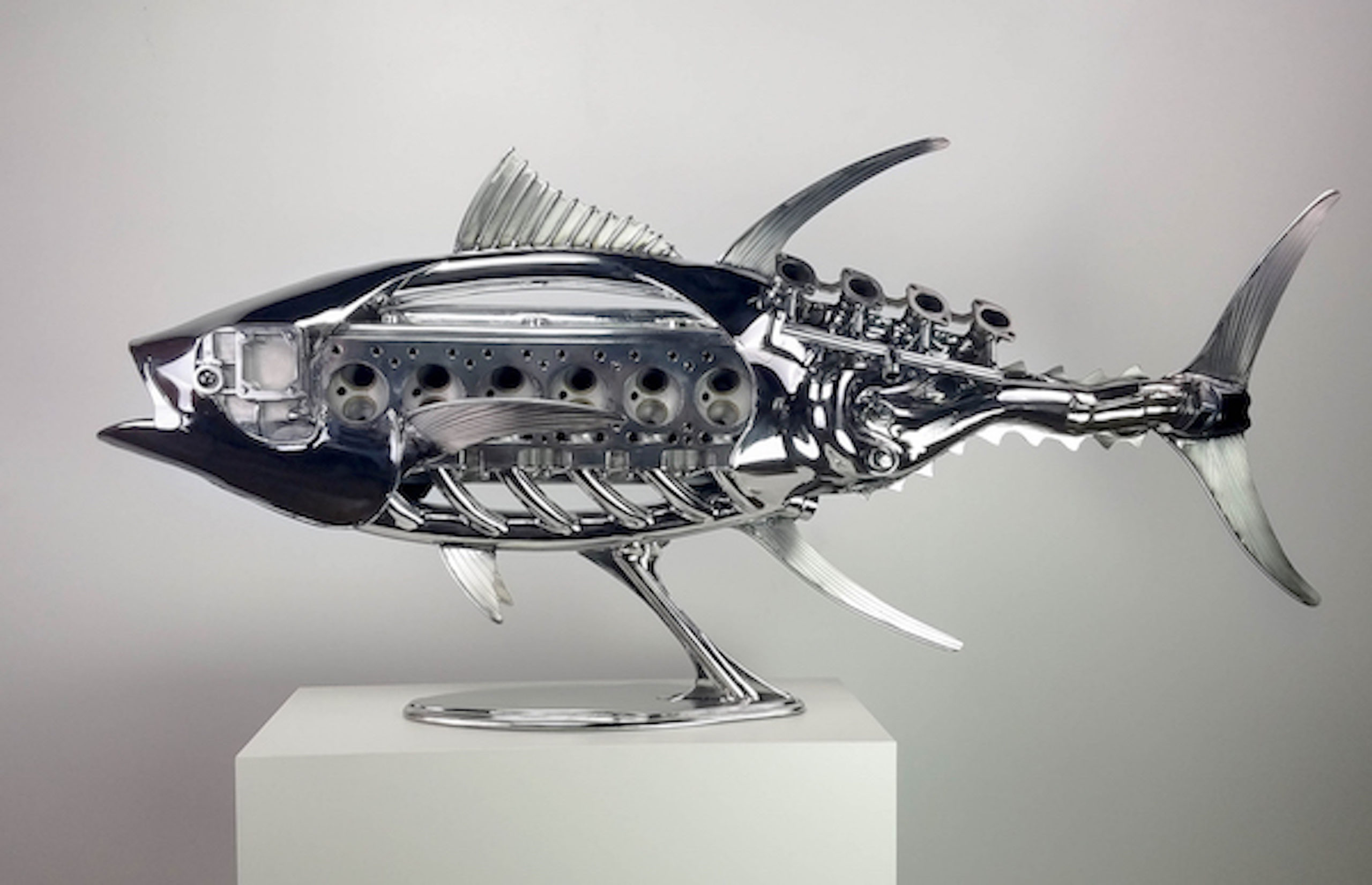
Fairplay by James Ferrari, Upcycled Car Parts & Stainless Steel, 66 x 31 x 14 in.; Ferrari Gallery


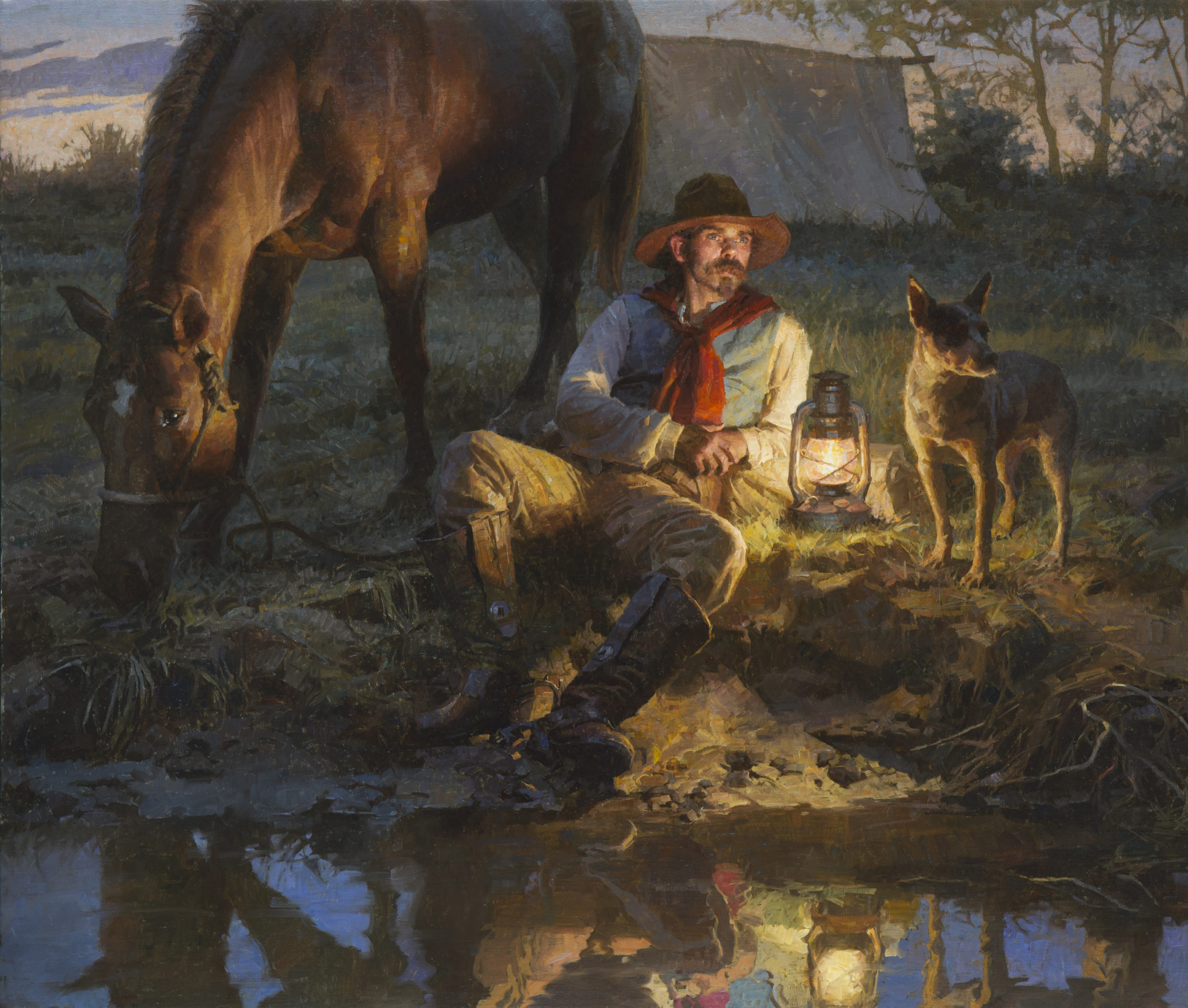
Dusk at Coyote Creek, 1879 by Morgan Weistling, Oil on Linen, 34 x 40 in.; Trailside Galleries


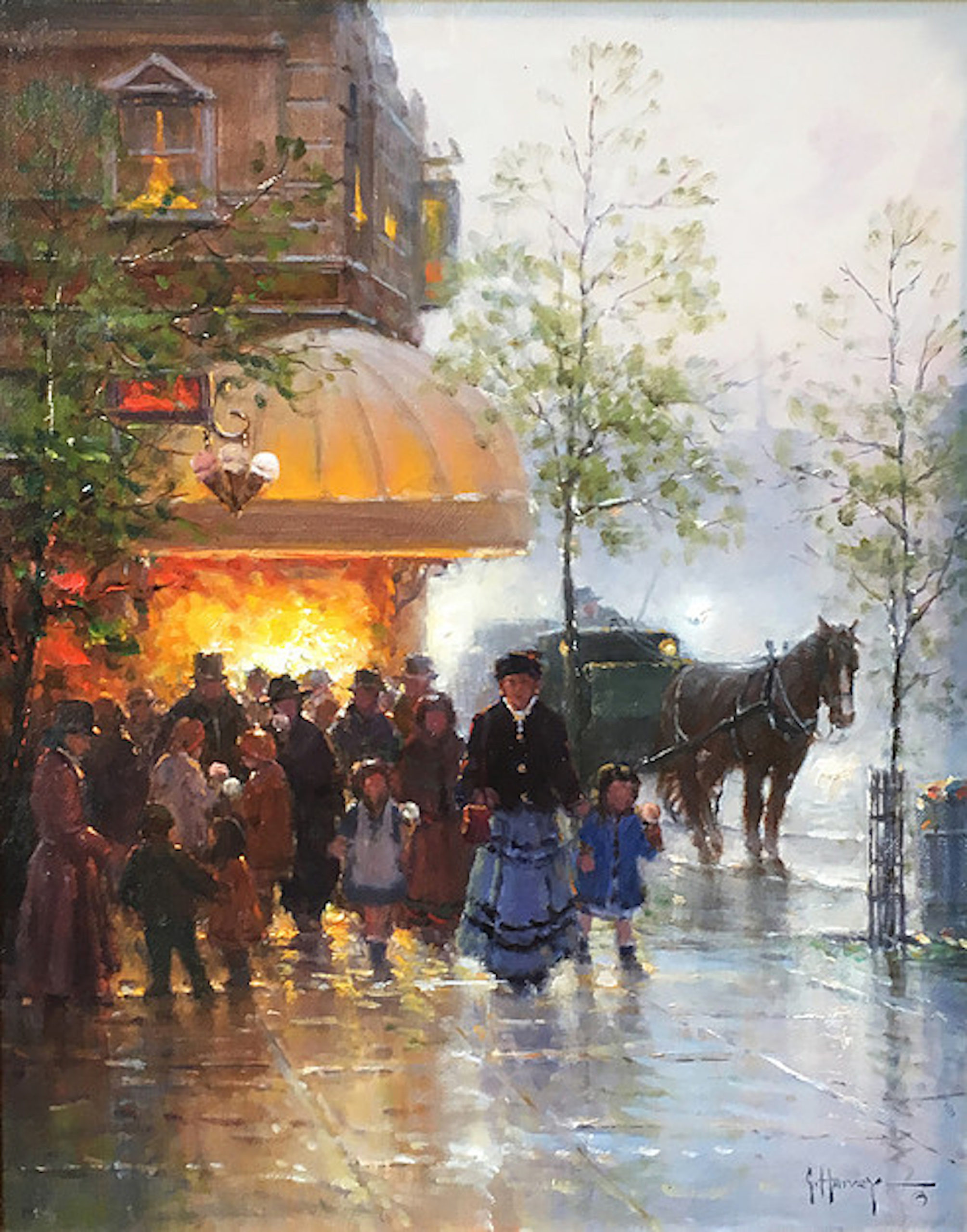
Happy Days by G.Harvey, Oil, 20 x 16 in.; Pitzer’s Fine Art


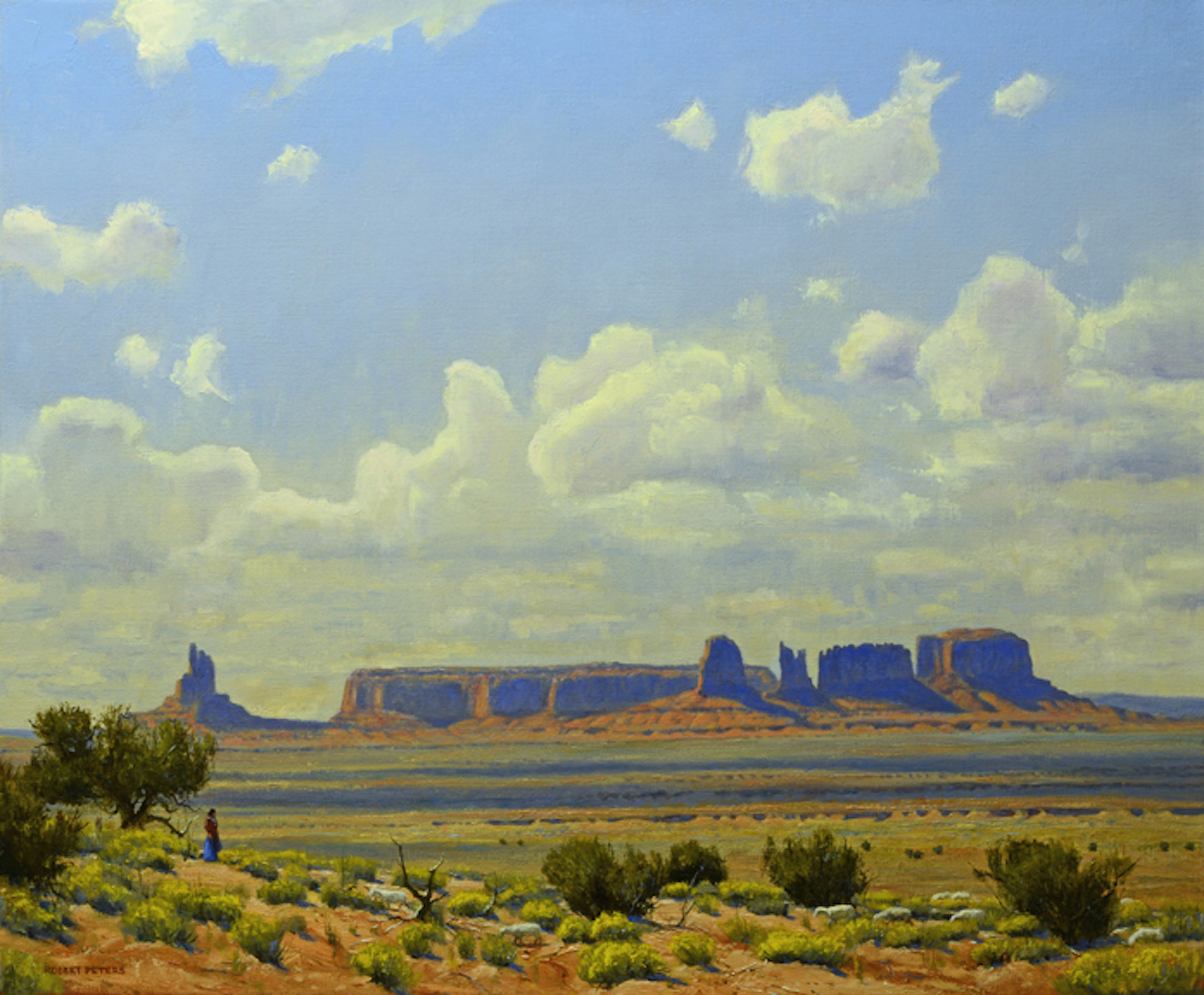
Deep in the West by Robert Peters, Oil, 30 x 36 in.; Pitzer’s Fine Arts


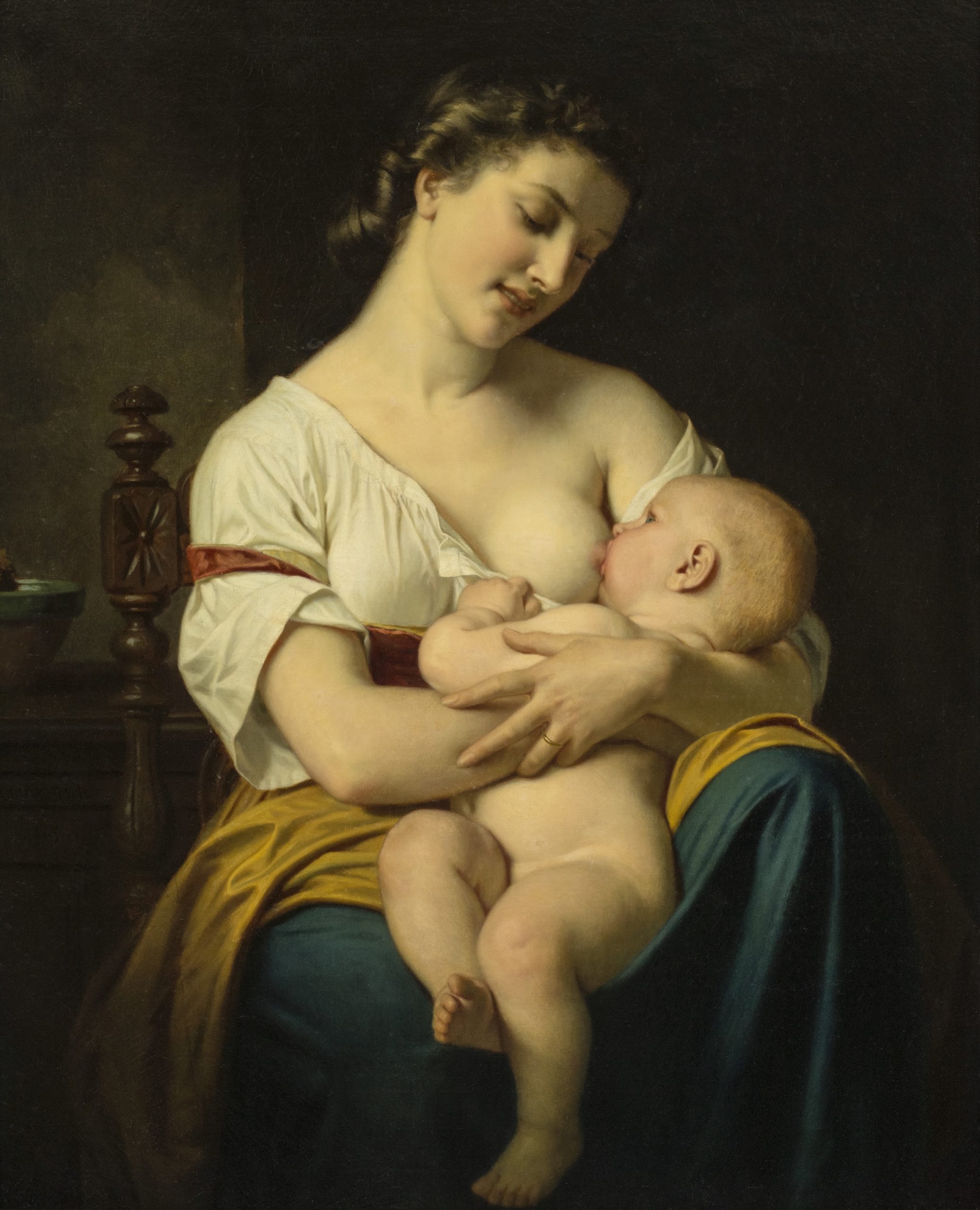
A Young Mother by Hugues Merle (Paris, 1823–1881), Oil on Canvas, 39 1⁄2 x 32 inches, signed and dated 1865; Robert Simon Fine Art


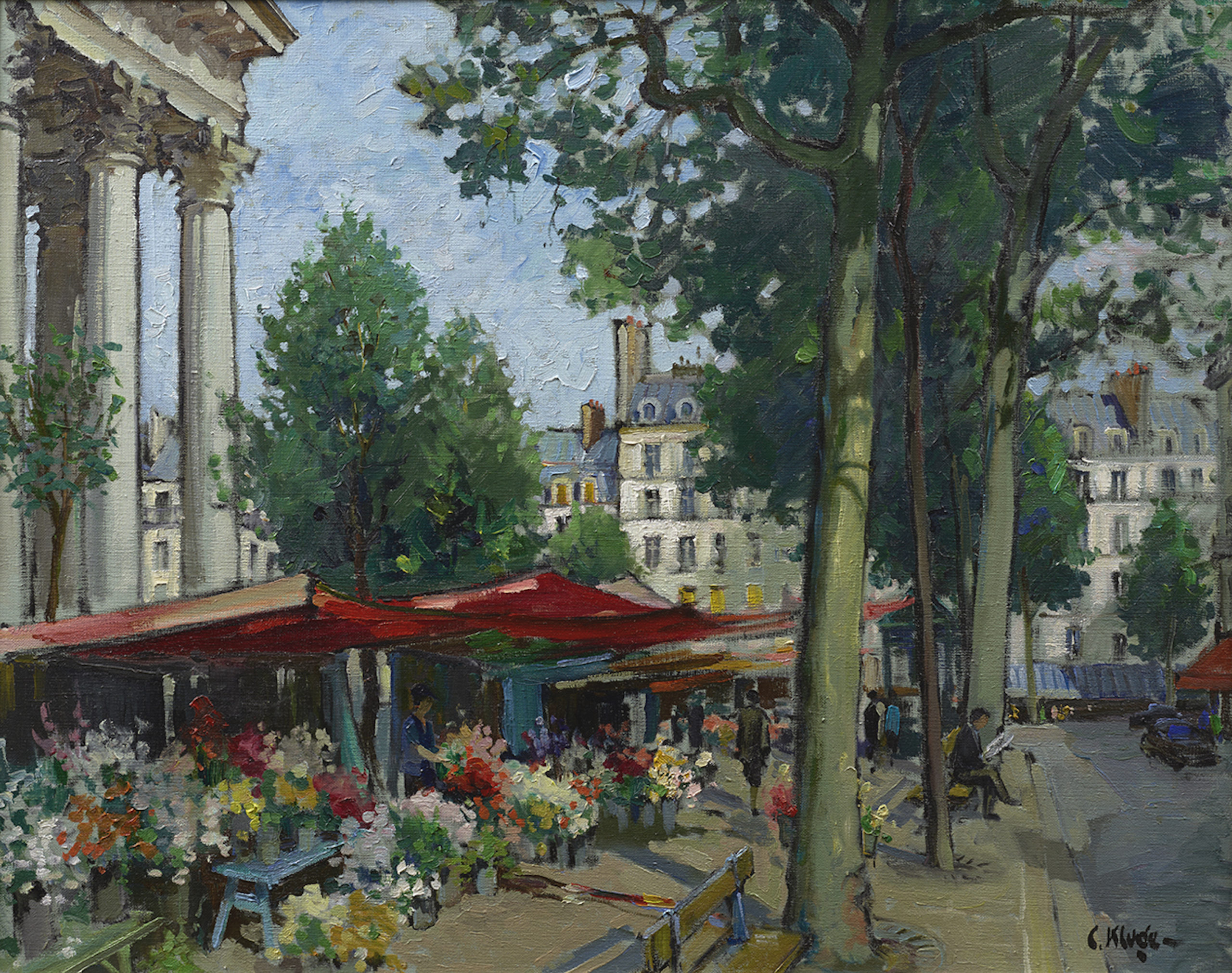
Marche aux fleurs, Madeleine by Constantin Kluge (1912-2003), Oil on Canvas, 30 x 38 in.; Rehs Galleries, Inc.


Mari by Vanessa Lemen, Oil on Panel, 10 x 8 in.; Rehs Contemporary Galleries, Inc.


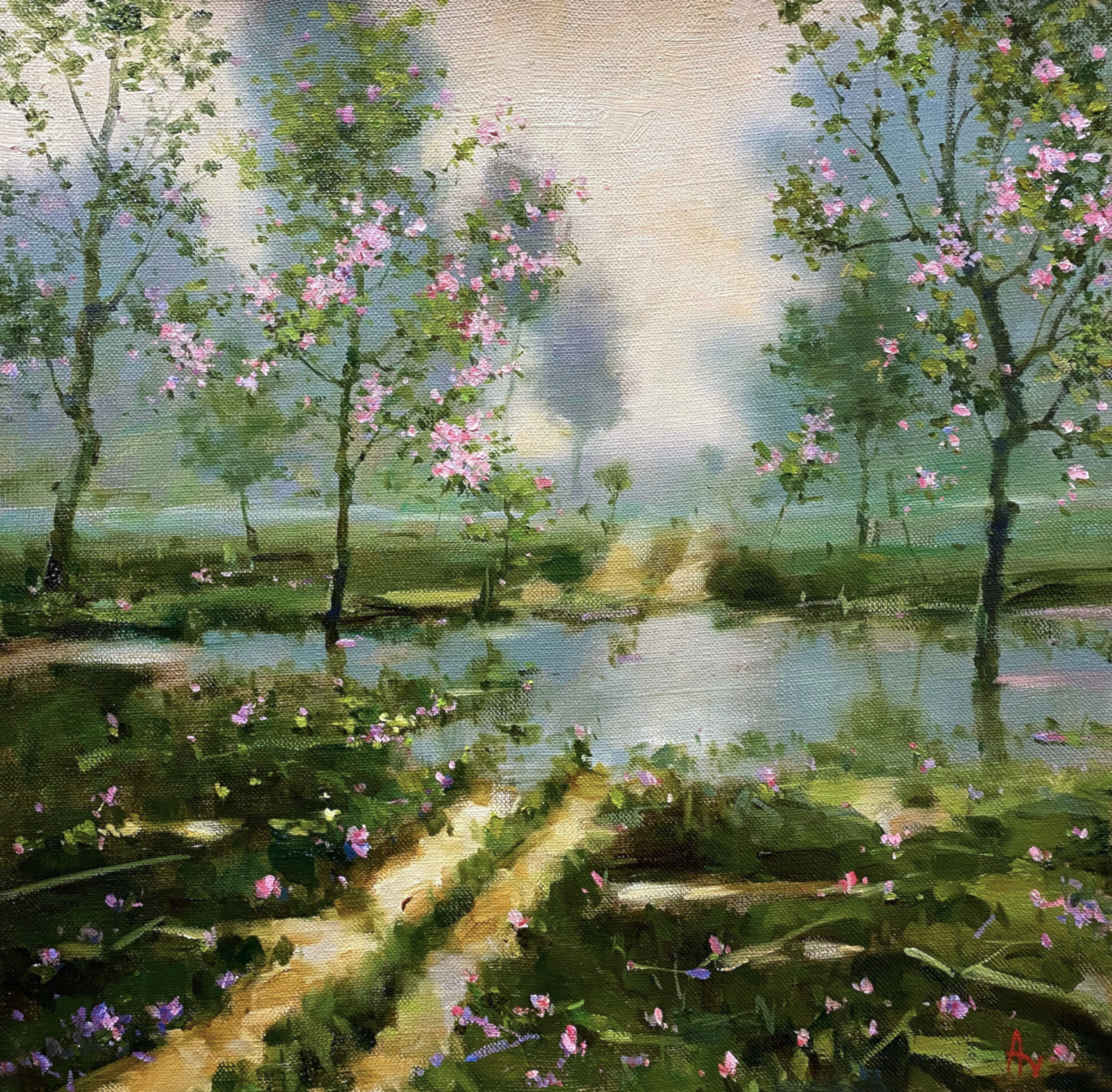
Cherry Blossom in Spring by Vakhtang, Oil on Linen, 16 x 16 in.; Lotton Gallery


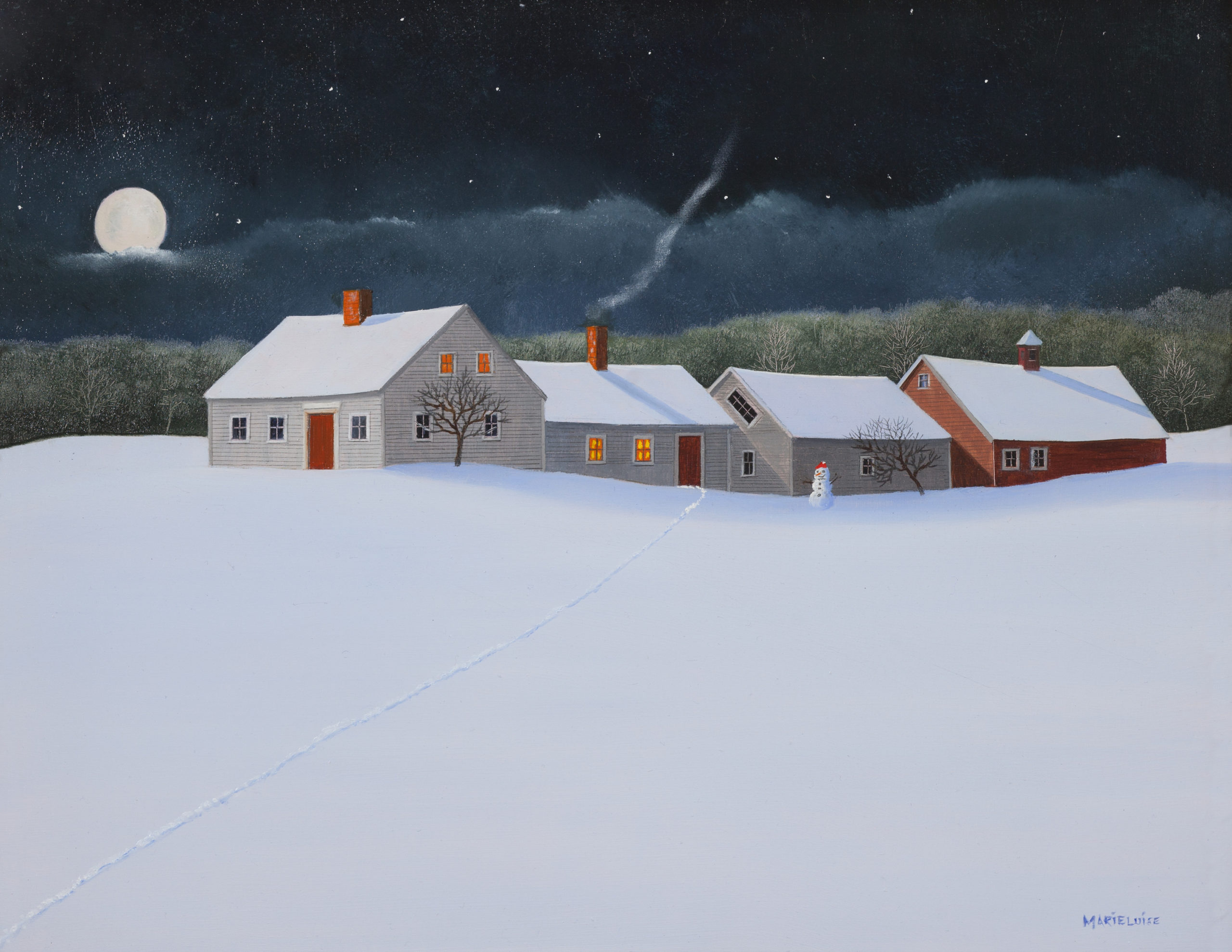
Heavenly Light by Marieluise Hutchinson, Oil on Panel, 11 x 14 in.; Tree’s Place Gallery


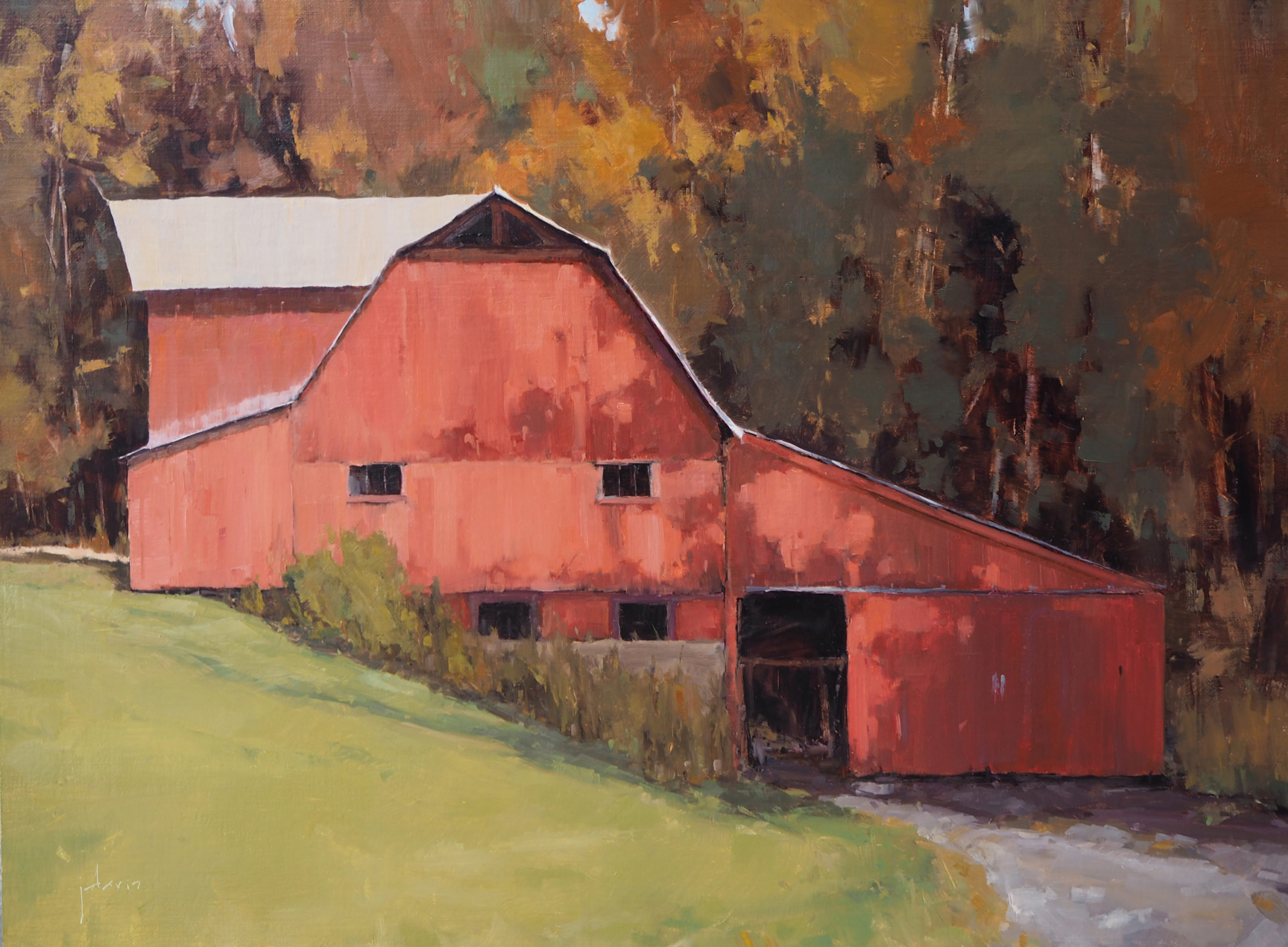
A Peaceful Place by Julie Davis, Oil on Panel, 18 x 24.; Gallery 330


Want to see your gallery featured in an upcoming Virtual Gallery Walk? Contact us at [email protected] to advertise today – don’t delay, as spaces are first-come first-serve and availability is limited.

Featured Artwork: Christopher Remmers

0

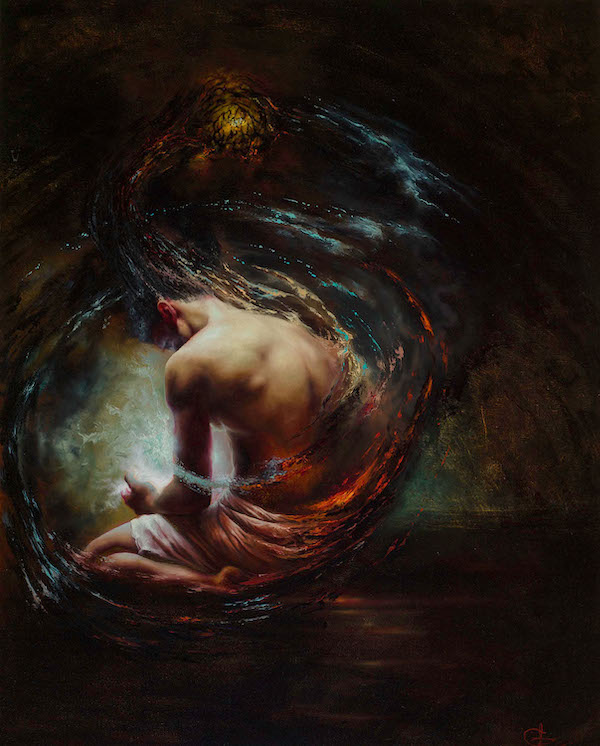
Subversion
Oil on on Canvas
30 x 24 in.
2020
Available through Artsy

Christopher Remmers is an American painter based in the Pacific Northwest. Having studied classical painting and drawing under Virgil Elliott, he moved on to study narrative composition and design under the guidance of Tenaya Sims at the Georgetown Atelier. His work is recognized for its realistic depiction of the human form in surreal environments. His large-scale, figurative paintings explore mysticism and psychedelia through the timelessness of mythological narratives. Christopher’s work has received recognition from the ARC Salon and can be found in collections around the world. He is represented by 33 Contemporary Gallery in Chicago.

About Subversion:
Subversion started as a study for a much larger narrative painting. Christopher Remmers was exploring how to render a very specific effect of “dis-integration” of form on a technical level. At some point, the painting took an unexpected direction. The artist found himself navigating the mechanism between the conscious and un-conscious and the often-times contradictory relationship of each. There was a recognition of the undermining agenda between these parts of ourselves and the necessity to override certain conditioning in our aims for a higher goal. These conflicts become manifest in many ways, but nothing more archetypical than the battle between light and dark.

California Art Club: 109th Annual Gold Medal Exhibition

0
Contemporary still life paintings - FineArtConnoisseur.com
Mary Kay West, "The Pastry Shelf," Oil on panel, 24 x 18 in., Collection of the Artist

The California Art Club (CAC) will present its 109th Annual Gold Medal Exhibition, a display of contemporary-traditional fine art, in an online collaboration with the Hilbert Museum of California Art at Chapman University from Saturday, May 16 to Saturday, June 13, 2020.

The virtual exhibition will feature more than 150 works of art, ranging from pristine landscapes and seascapes to evocative figurative works and still lifes. The un-themed showcase pays tribute to the California Impressionist movement that was inspired by the pioneering artists who founded the organization along the banks of the Arroyo Seco in 1909.

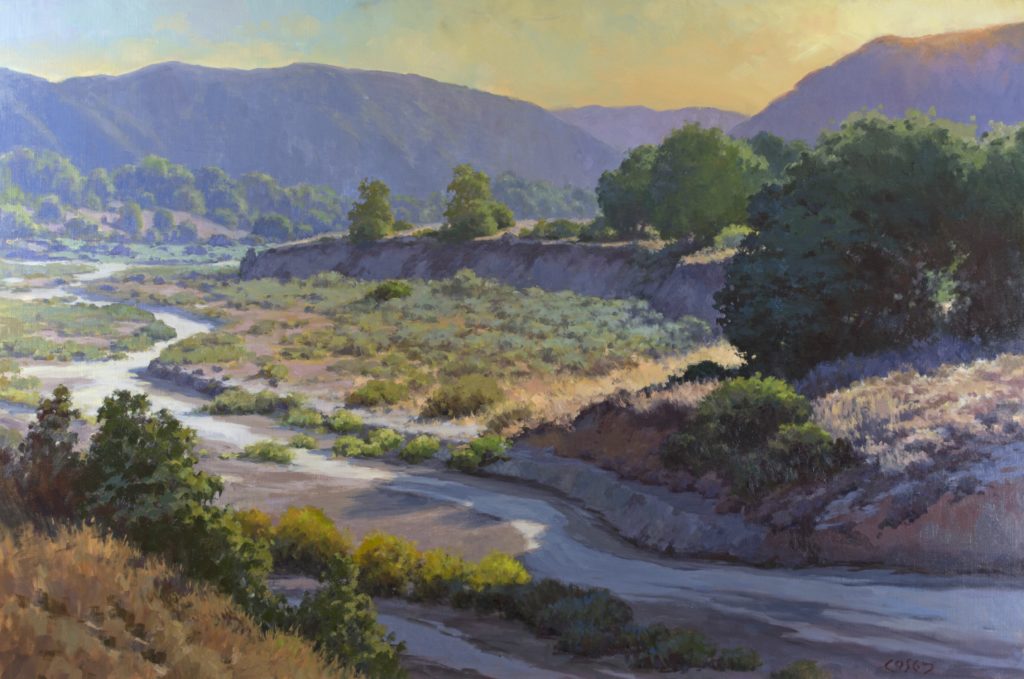
Impressionist paintings - FineArtConnoisseur.com
John Cosby
Last Light
Oil on linen
32 x 48 inches
Collection of the Artist

Exhibiting artists include nationally renowned painters and sculptors, as well as up-and-coming artists, who have employed time-honored techniques to create works that provide a commentary on issues currently facing society, including environmentalism and diversity.

“The California Art Club is thrilled to partner for the first time with the Hilbert Museum of California Art to present our signature event,” says CAC president and artist Peter Adams. “Our shared dedication to spotlighting not only artwork that is uniquely Californian, but also the cultural development of the Golden State, will allow us to raise the bar, once again, for our Annual Gold Medal Exhibition.”

“We’re delighted to host the California Art Club’s Gold Medal Exhibition at the Hilbert Museum,” says Mary Platt, director of the museum. “We look forward with great anticipation to our first opportunity to work with this venerable and highly respected organization, and we know our visitors will enjoy viewing the beauty and diversity of our state through the eyes of these outstanding artists.”

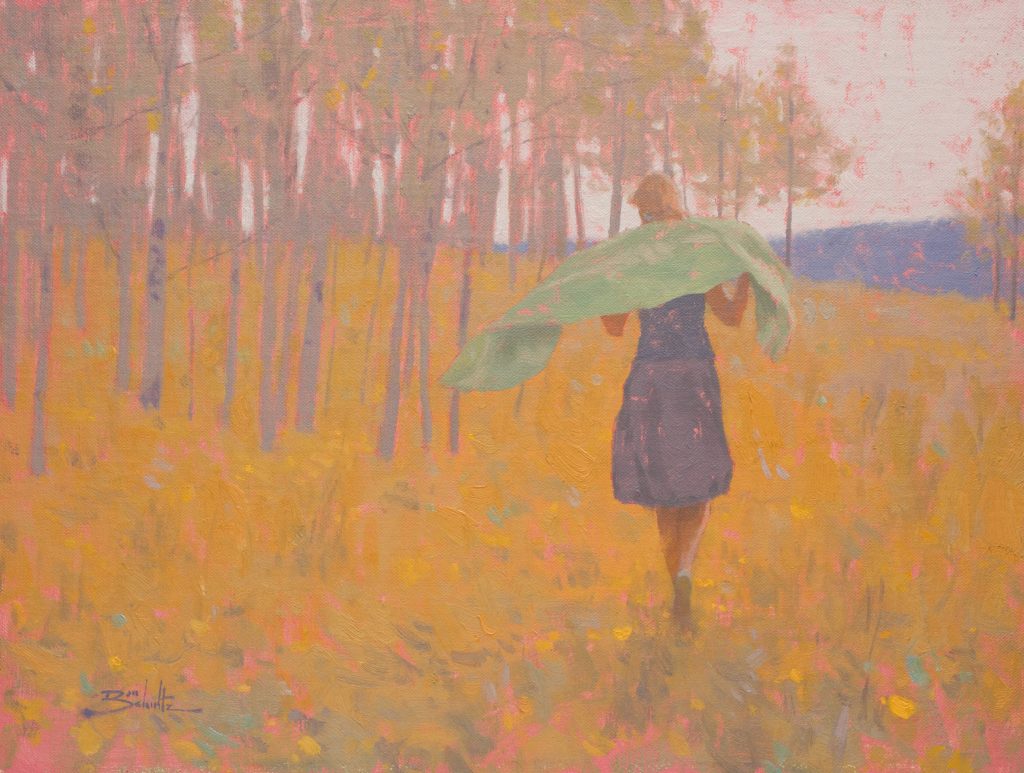
Impressionist paintings - FineArtConnoisseur.com
Dan Schultz
Autumn’s Carpet
Oil on linen
12 x 16 inches
Collection of the Artist

Because the art organization’s mission includes fostering a greater understanding and appreciation for traditional art forms and its classical techniques, it will present a series of free online educational programs during the display.

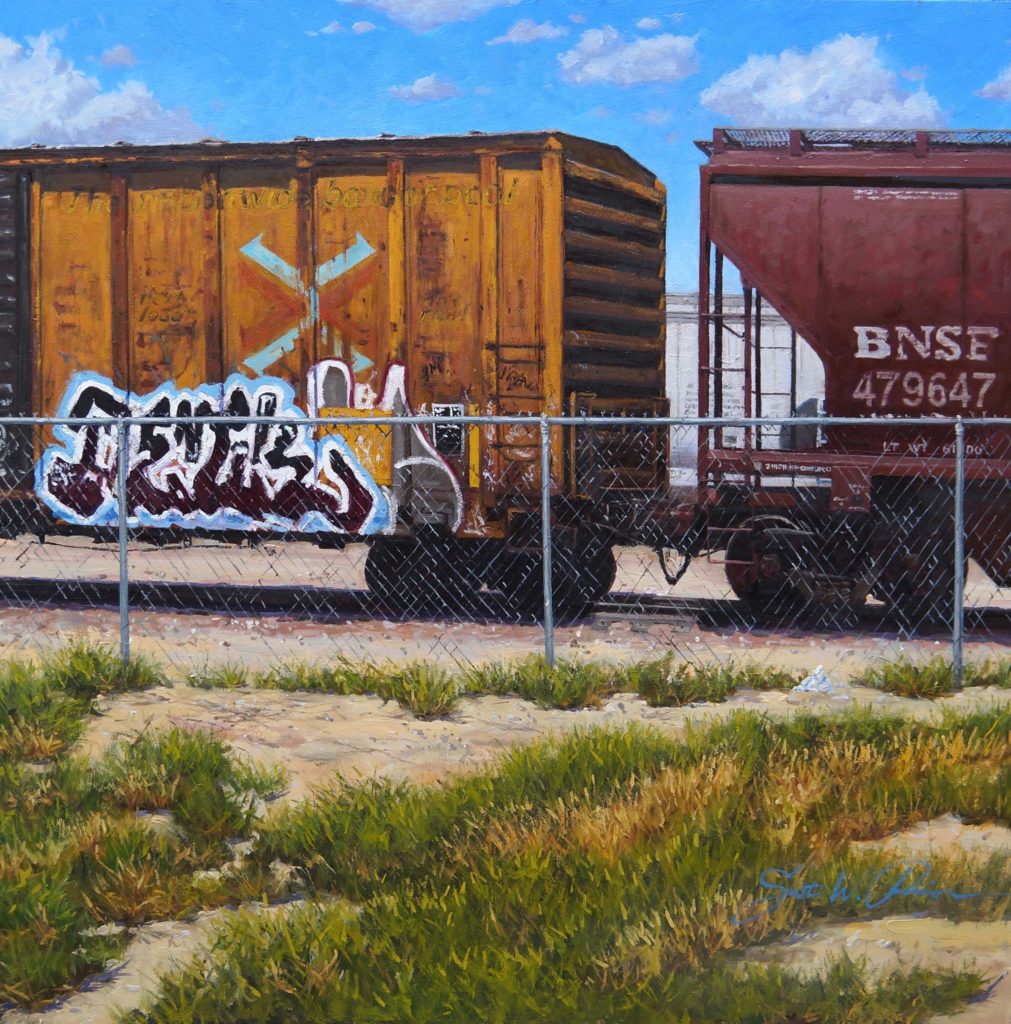
Contemporary landscape paintings - FineArtConnoisseur.com
Scott W. Prior
Bakersfield
Oil on panel
36 x 36 inches
Collection of the Artist

The programming kicks off on opening day with a virtual tour with art historian Jean Stern, the foremost authority on California Impressionism. Other programs during the four-week exhibition include virtual studio visits with Gold Medal artists, “Ask the Artist” question-and-answer opportunities, and demonstrations from master artists.

Contemporary art sculptures - FineArtConnoisseur.com
Adam Matano
Rascal
Bronze on a steel base
82 x 36 x 21 inches
Collection of the Artist

The presenting sponsor of the 109th Annual Gold Medal Exhibition is Majestic Realty Company. For more information about the exhibition and its programs, visit californiaartclub.org.


> Sign up to receive Fine Art Today, our free weekly e-newsletter
> And click here to subscribe to Fine Art Connoisseur magazine, so you never miss an issue

Rest in Peace Ronald Joseph Cavalier Sr.

0
Ronald Cavalier obituary

Ronald Joseph Cavalier, the foundryman the Associated Press credited as being the first to use the ceramic shell technique to cast artwork into bronze, died of natural causes in Marietta, GA on April 28, 2020.

Cavalier began his 60-year foundry career at Scope Precision Castings in Norwalk, CT before starting The Renaissance Art Foundry in Norwalk, CT and later the Cavalier Renaissance Art Foundry in Bridgeport, CT where he used the innovative ceramic shell lost wax process to produce countless works.

Across the span of his career, Cavalier cast and restored bronze, steel, silver, aluminum, concrete, pewter, and brass pieces of small to mammoth proportions for some of the world’s most renowned artists including Brancusi, Calder, Giacometti, Morre, Nakian, Remington, and Rodin as well as contemporary artists Tomm Otterness, Sandro Chia, Brian Hunt, and others. He restored and preserved the Hirshorn sculpture collection before it left Greenwich, CT for Washington, D.C. He also serviced many museums including the Museum of Modern Art, the Metropolitan Museum, Hirshorn Museum and Sculpture Garden, and the Smithsonian Institution.

Cavalier was born in Brooklyn, NY on May 10, 1933 to Alfred and Mae Cavalier. He was the youngest of four and his father was a math and music teacher, machinist, draftsman, bandleader, musician, and Masonic Lodge member. Growing up on Atlantic Avenue, Ron enjoyed neighborhood stickball, raising pigeons, and fishing on Coney Island. After high school, he studied at the American Academy of Dramatic Arts in Manhattan, and apprenticed in Maine summer stock theater appearing with Dinna Barrymore, Lionel Standish, and Kenneth Nelson in South Pacific, Finian’s Rainbow, Oklahoma, Death of a Salesman, and Hamlet. He originated the role of Ghost of Christmas Past for the Music Theater of Connecticut’s world premiere of Ebenezer, played Judge Taylor in To Kill a Mockingbird at the Polka Dot Playhouse, and was in numerous performances for the Darien Dinner Theater, Westport Community Theater, and Stamford Theater works.

Cavalier was a perfect tenor who sang with the New Haven Chorale, and loved singing opera. His acting career continued throughout his life with his most current works being the portrayal of various saints and popes for Eternal World Television Network programs, most recently The Wolf in Sheep’s Clothing in 2018.

During summer stock theater on Peaks Island, ME off of Kennebunkport, he met the actress Cecelia Mary Mack, whom he married. The couple resided in New Jersey when Cavalier was drafted to serve in the U.S. Army during the Korean War as part of the “Bloody One” unit. Posted in Germany, he was a radio broadcaster for the Armed Forces Radio Network with co-host Nick Clooney from 1953 to 1955. Returning home from war, he and Cecelia moved to Norwalk, CT where he began his foundry career, raised a family of five children, and was a member of St. Matthew’s Church. In 1987, he moved to East Haven, CT where he lived on Pequot Street for over two decades before moving to Georgia in 2018.

In addition to foundry life and acting, Cavalier also was a documentary filmmaker. In the late 1970’s, his company Cavalier Productions produced two films about art collector Joseph Hirshorn: The Collection that Became a Museum and the award-winning Life of Joseph Hirshorn.

A self-made renaissance man and passionate entrepreneur, Cavalier also owned a Vermont dairy farm and planted and managed a vineyard on his lakeside home in Benson, VT where he made wine. A die-hard New York Yankee fan, he never missed a game on TV, he was also a devoted Patriots fan. Athletic and health conscious, a lover of the outdoors, dogs, music, boating, and fishing, Cavalier led a remarkably active life.

He is survived by his five children: Michele Cavalier McMahon, Cathy Cavalier, Chris Cavalier, Ronald Cavalier Jr. and Jane Cavalier Lucas of Weston CT; son-in-law Scott Lucas and daughter-in-law Debranne Cingari of Weston, CT; grandchildren Melanie McMahon Ives and husband Regan Ives, Justin Lucas and wife Phoebe Dean, Halle Lucas, Daniel Lucas, Breanna Suden, Madison Suden; great-granddaughter Emma Michele McMahon Ives; and loving dogs Maggie and Buster.

A small celebration of life will be held in his honor post-COVID in Norwalk, CT. If you would like to share condolences with the family, please contact Jane Cavalier Lucas at [email protected]. Donations to honor Ron’s life can be made to The Best Friends Animal Society https://bestfriends.org.

Contemporary Realism: East of the Sun

0
Contemporary realism - FineArtConnoisseur.com
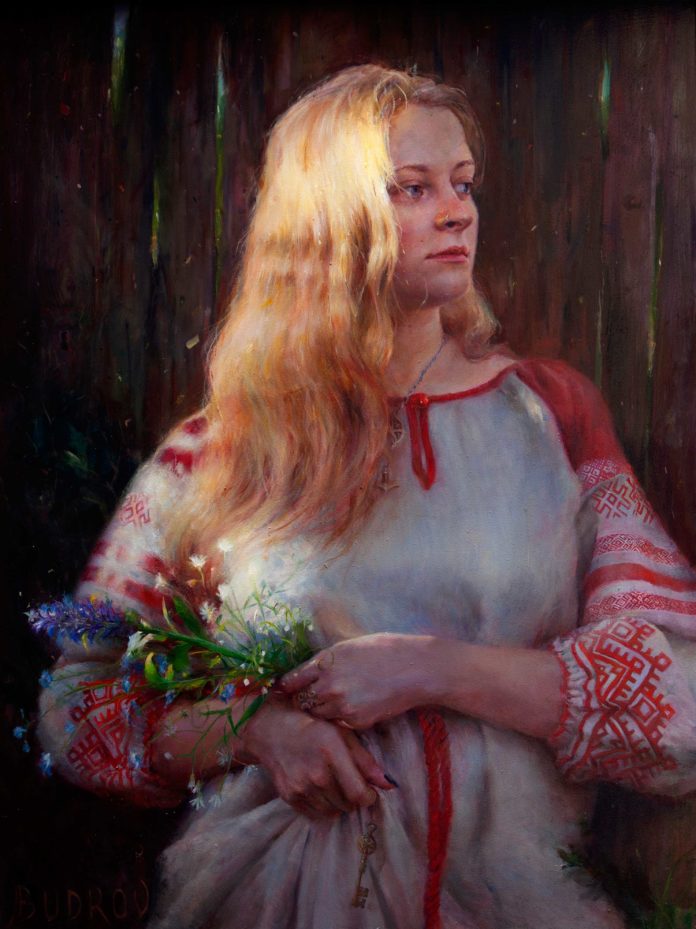
NIKITA BUDKOV (b. 1995), East of the Sun, 2019, oil on panel, 40 x 30 in., available from the artist

There is a lot of superb contemporary realism being made these days; this article by Allison Malafronte shines light on a gifted individual.

NIKITA BUDKOV (b. 1995), a Russian-American painter currently residing in California, works in a style he calls “contemporary traditional and magical realism,” motivated by his pursuit of the mystical and beautiful. He is also inspired by music, so his paintings are titled after songs that have significant meaning to him. In 2019 Budkov presented an exhibition called “The Songbook,” which showcased a range of paintings inspired by his favorite genres of music. “Music is an eternal companion on my career journey,” the artist says of this passion that rivals his love for fine art.

Growing up in Zvenigorod, a suburb of Moscow, young Budkov found himself drawn to classic fairy tales, science fiction novels, and comics, all of which helped develop his creative imagination and illustrative abilities. Drawing in pencil became a constant in his life, and he eventually made his way to the Moscow Architecture Institute with the intention of becoming an architect. A trip to the U.S. as an exchange student, however, shifted Budkov’s path toward traditional fine art. He enrolled at the Los Angeles Academy of Figurative Art, studying there with the Repin Academy-trained painter Leon Okun and eventually graduating with top honors. Budkov subsequently became a member of the California Art Club, where he has been guided and counseled by established artists, primarily club president Peter Adams, through its mentor program.

Like some of his compatriots who trained at the great academies in St. Petersburg and Moscow, Budkov makes paintings that demonstrate his abilities in classical drawing and form construction, and also in more expressive and impressionistic approaches to color and light. His work reveals a sensitivity to his surroundings and to people’s situations, similar to the sensitivity found in the best storytelling and songwriting.

Budkov’s painting “East of the Sun” (above) is a portrait of a young woman holding a simple arrangement of flowers in one hand and a key in the other. There are subtle nuances in both the technical execution of this scene — the colorful variations of light in the hair are worth a close look — and in the symbolist usage of sunlight, flowers, and key. Having titled it after an obscure song based on the Norwegian fairy tale East of the Sun, Budkov explains that the painting is loosely based on a story about a beautiful girl in love with a white bear, who is actually an enchanted prince. “Later in the narrative, the woman goes on a quest to find and save the bear from a troll-witch residing in a castle that is located ‘East of the Sun, West of the Moon.’ As the sun sets in the west, her hair catches the last beam of light,” exactly what we see here.

Contemporary realism - FineArtConnoisseur.com
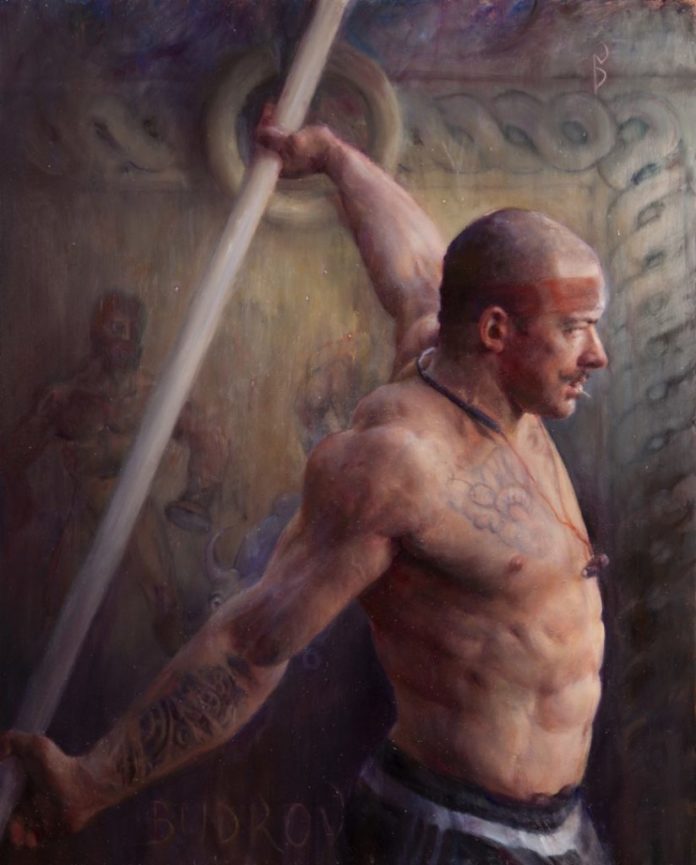
Budkov’s “Mean Machine, Portrait of a Strongman Victor Blud” won the “Best Artist Under 30” category for the August/September 2019 PleinAir Salon. “Mean Machine’ was a collaboration with a famous Russian Old School strongman Victor Blud as a part of my series of strongmen and athletes paintings,” says Budkov. “In the background I depicted a ‘Combat Between Dares and Entellus’ (175 AD) from Getty Villa to show a connection between generations of athleticism and aesthetics.”
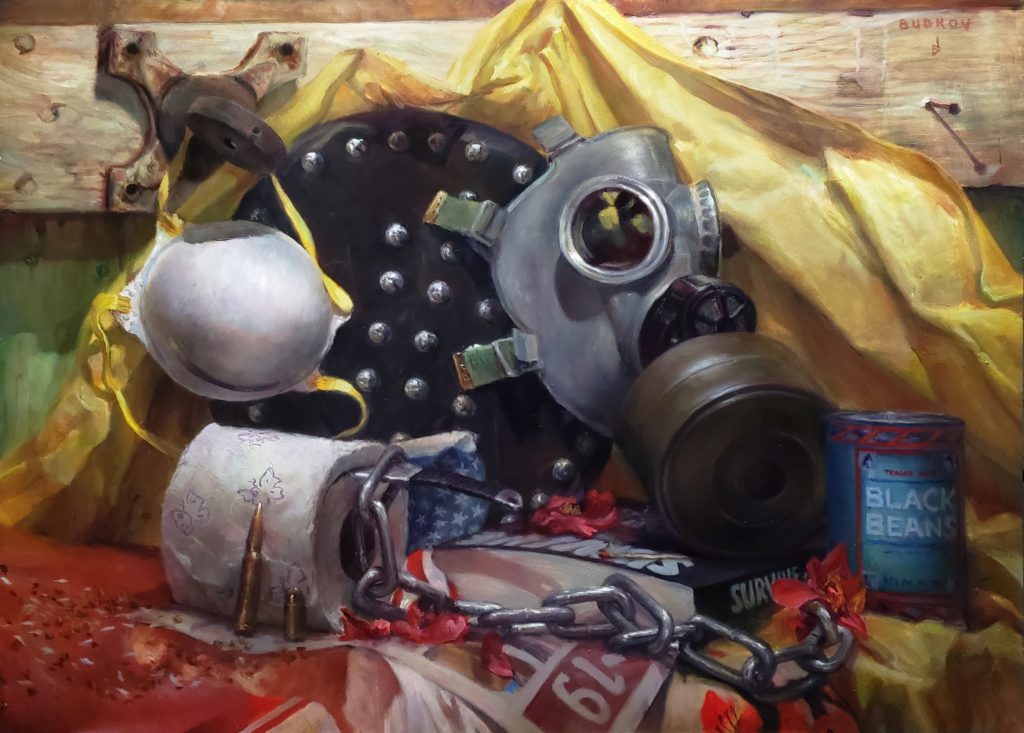
“Some Kind of Monster, COVID 19,” oil on board, 18 x 24 in., showcases essential and not so objects
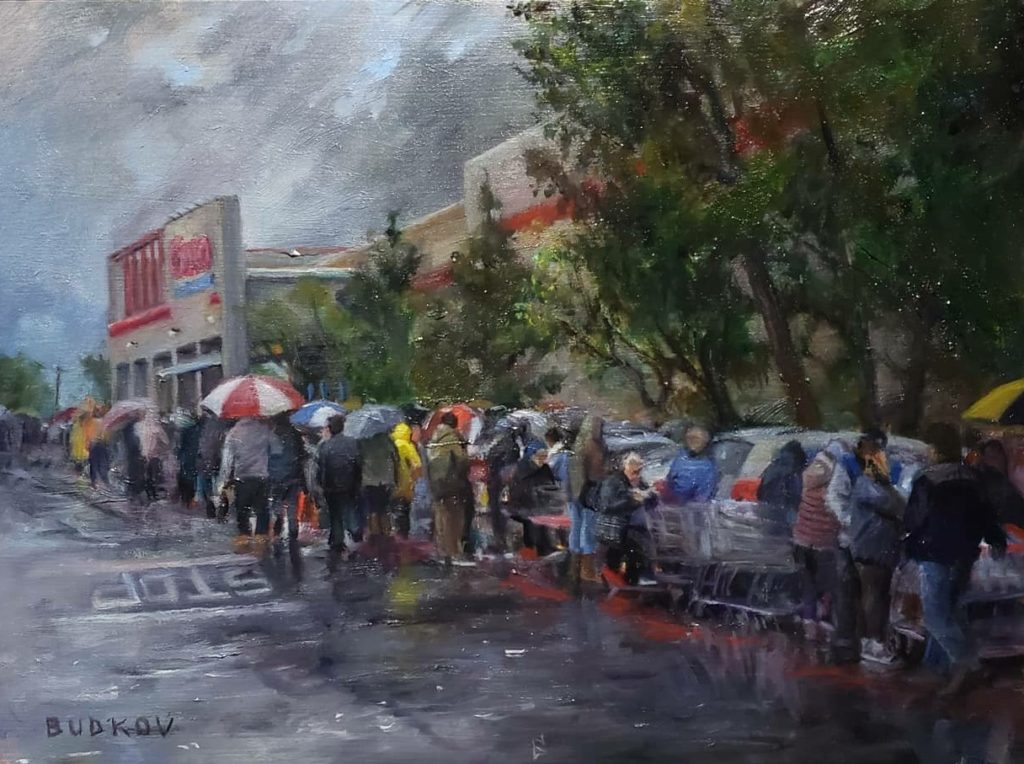
“Floods, March 2020,” oil on wooden panel, 9 x 12 in. This painting is inspired by the current pandemic and symbolizes the long lines at grocery stores.
“Old Mornings Dawn, Paramount Ranch,” oil on canvas panel, 24 x 20 in.
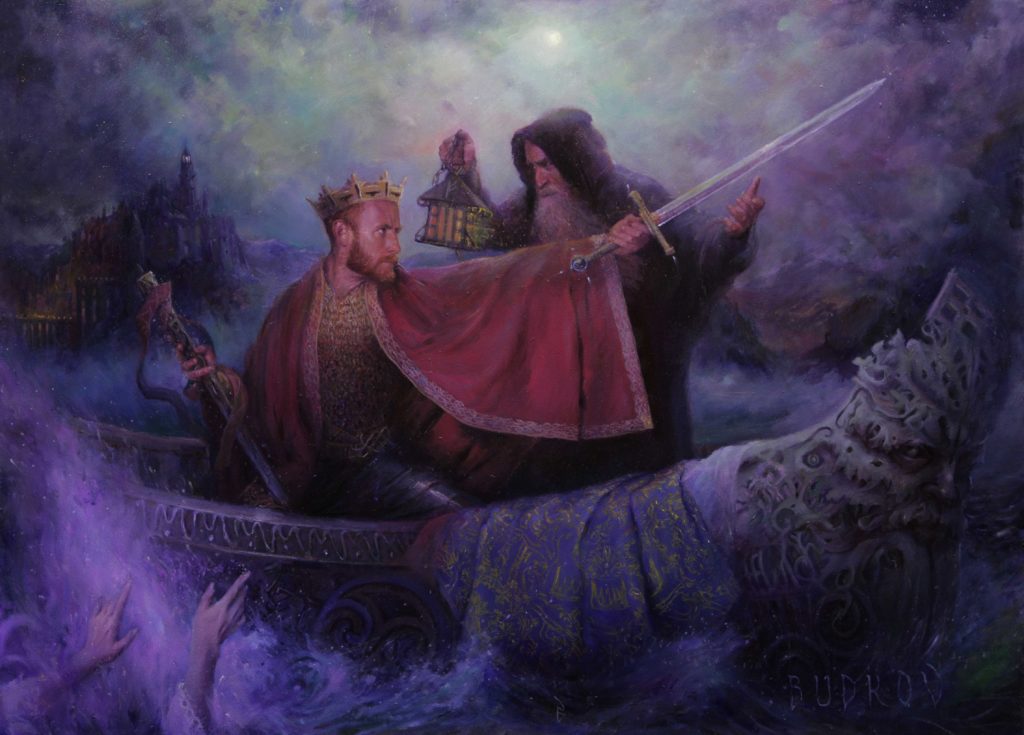
“Ascension (Excalibur),” oil on panel, 26 x 36 in. “This is a commission I painted about Arthurian mythos,” says Budkov. “You may see Arthur and Merlin on a boat. The hands in the lower left corner are of Lady of the Lake.”
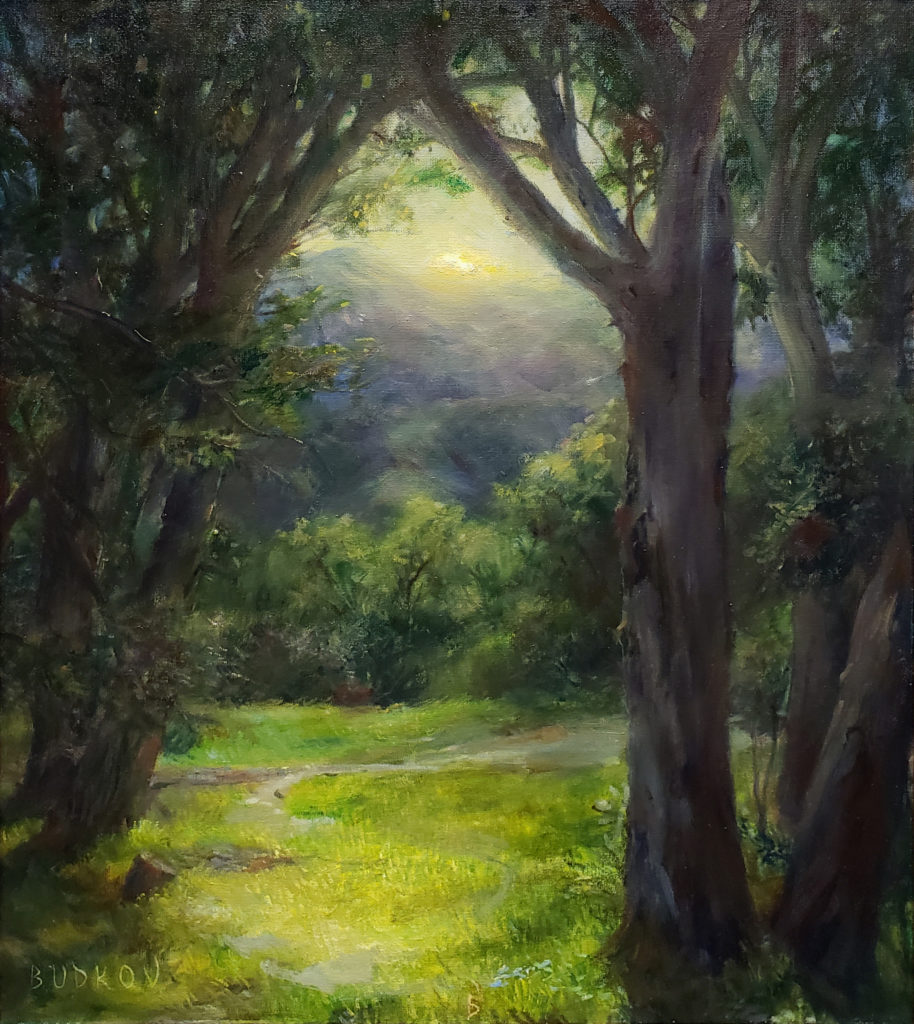
“Towards the Light,” oil on canvas panel, 18 x 14 in.


Connect with Nikita Budkov: www.nikitabudkov.com

Related Article > Painting of the Week: “Mean Machine” by Nikita Budkov


> Sign up to receive Fine Art Today, our free weekly e-newsletter
Christopher Benson: Grand Gestures

1
Contemporary oil paintings - FineArtConnoisseur.com
"The Falcon," oil on linen, 54 x 54

On view at Evoke Contemporary is an exhibition of contemporary oil paintings by Christopher Benson. Preview the works here, and visit EvokeContemporary.com for a virtual gallery visit of the exhibition, titled “Grand Gestures,” as well as “Lee Price: Repose.”

Contemporary oil paintings - FineArtConnoisseur.com
“Road to Nowhere,” oil on linen, 60 x 40
Contemporary oil paintings - FineArtConnoisseur.com
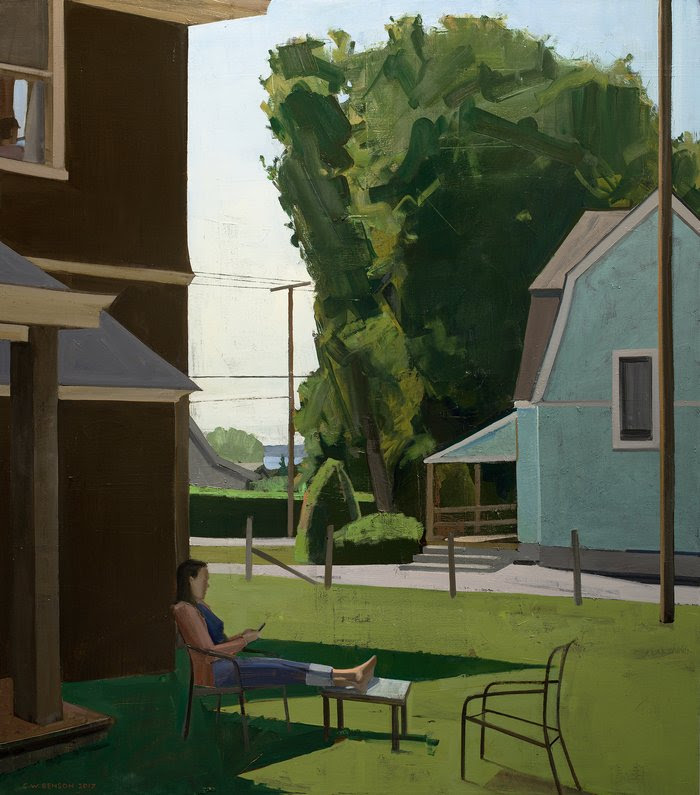
“Seated Figure with iMac,” oil on linen, 40 x 30
Contemporary oil paintings - FineArtConnoisseur.com
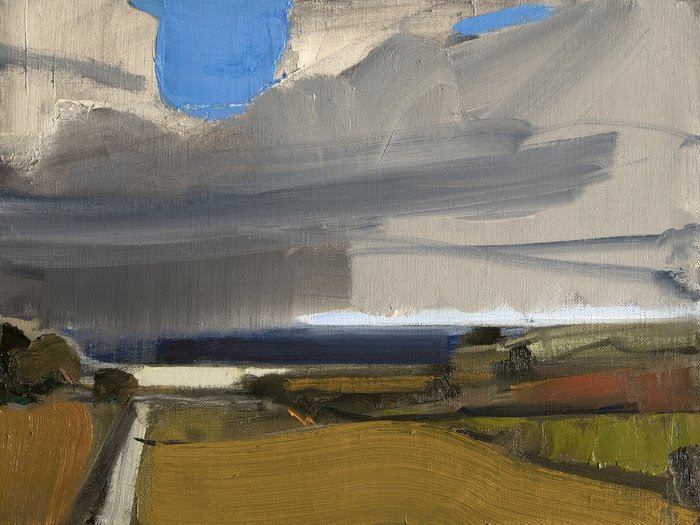
“Big Sky,” oil on linen, 12 x 15
Contemporary oil paintings - FineArtConnoisseur.com
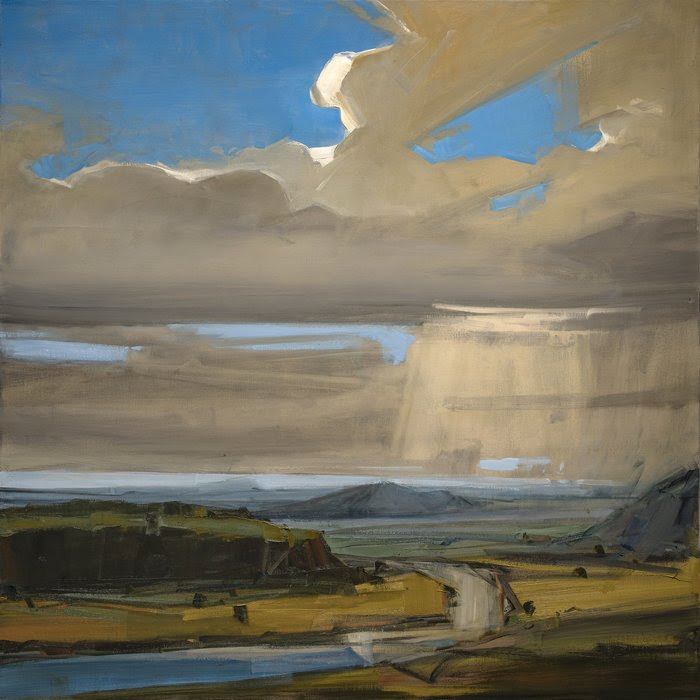
“The Basin,” oil on linen, 54 x 54
Contemporary oil paintings - FineArtConnoisseur.com
“Anti-Social Media,” oil on linen, 50 x 44

For more details: EvokeContemporary.com


> Sign up to receive Fine Art Today, our free weekly e-newsletter
> And click here to subscribe to Fine Art Connoisseur magazine, so you never miss an issue

Pleasant Reminders

Featured in Fine Art Connoisseur
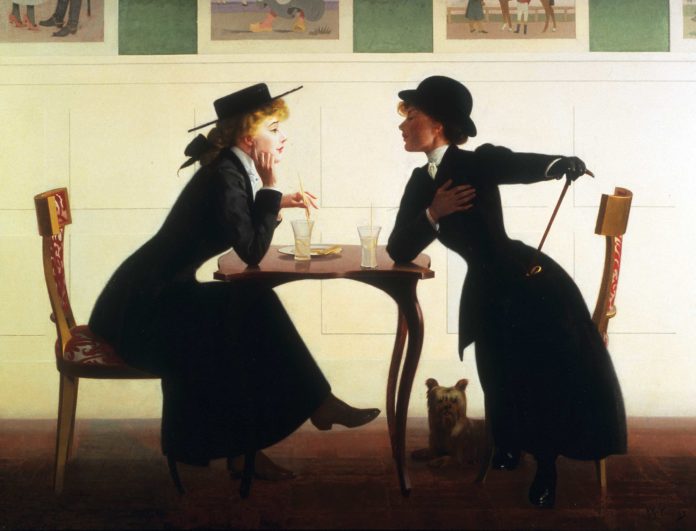
Above: "Some Little Talk of Me and Thee There Was," HARRY WILLSON WATROUS (1857–1940), c. 1905–09, oil on canvas, 27 x 42 in. Permanent Collection of The National Arts Club, New York City. Featured in the May/June 2020 issue of Fine Art Connoisseur

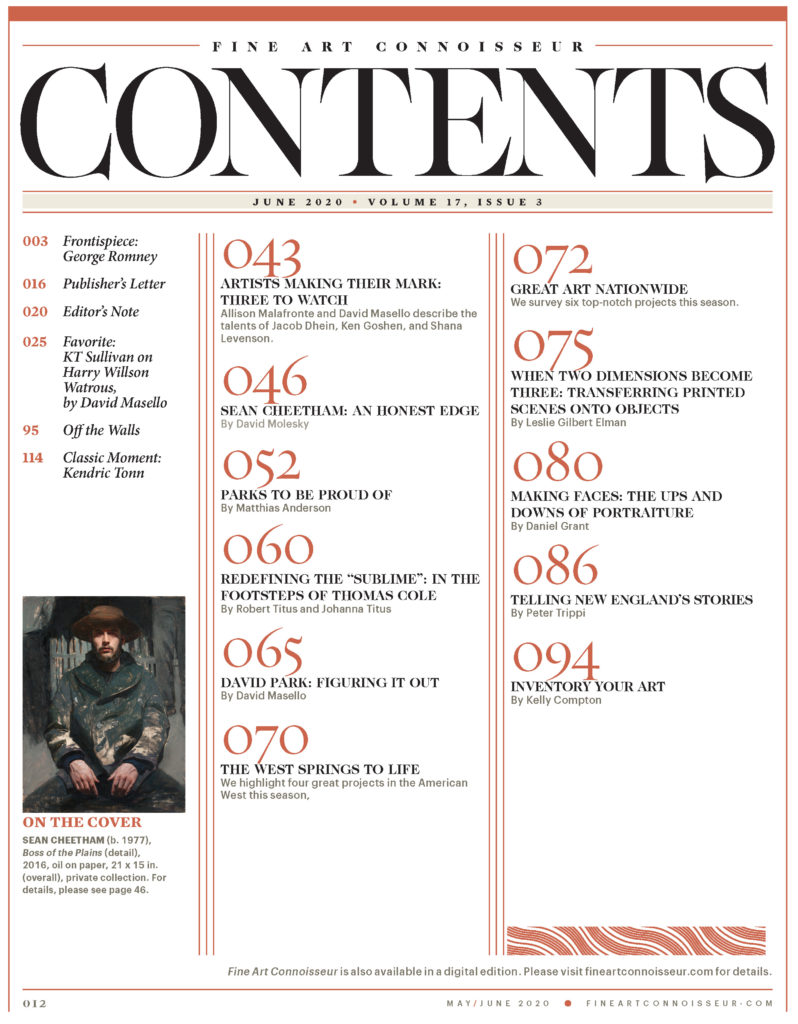
From the Fine Art Connoisseur May/June 2020 Editor’s Note:

Fine Art Connoisseur magazine May/June 2020
On the cover: SEAN CHEETHAM (b. 1977), “Boss of the Plains” (detail), 2016, oil on paper, 21 x 15 in. (overall), private collection

Pleasant Reminders

A few weeks ago, I was happily reminded of two special places we visited last October during Fine Art Connoisseur’s tour of Provence and the French Riviera.

I was glad to learn that “Van Gogh and the Olive Groves” is being organized by the Dallas Museum of Art and Amsterdam’s Van Gogh Museum. This will be the first exhibition dedicated to the series of 15 paintings of olive trees that Vincent Van Gogh created in 1889 while he was a patient at the asylum in Saint-Rémy-de-Provence.

Olive trees near the asylum at Saint-Rémy-de-Provence where Vincent Van Gogh stayed; photo: Elaine Gaskell deSpoelberch

Our jolly group of art lovers visited that still-functioning facility, Saint-Paul de Mausole, and we found it quite touching to see where this troubled genius sought refuge after an especially severe psychotic episode. We were especially moved to walk through the lush olive grove that still grows nearby. The dark, writhing limbs of olive trees are always fascinating to admire, but seeing these particular ones shed new light on Van Gogh’s famous pictures, which possess their own writhing energy.

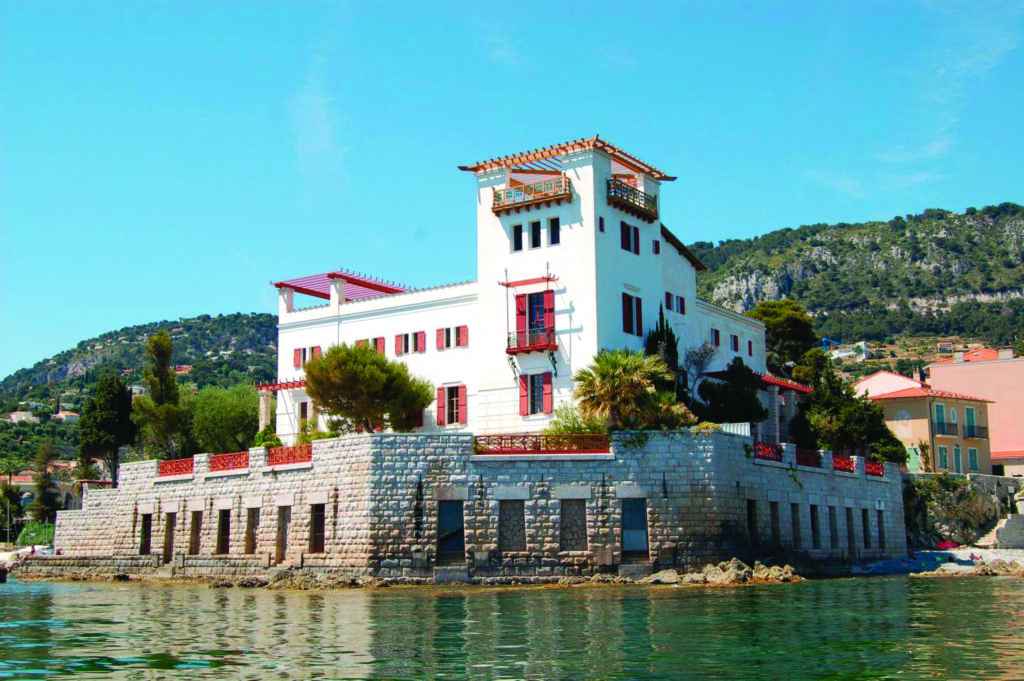
The Villa Kérylos at Beaulieu sur Mer

To open in Amsterdam in June 2021, then in Dallas that October, the new exhibition will reunite Vincent’s 15 paintings for the first time while highlighting the new discoveries about techniques and materials that have emerged during this project’s multi-year collaborative research phase. I look forward to seeing it next year.

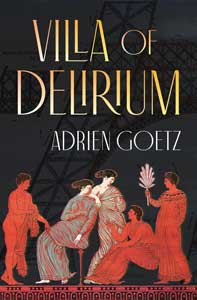
I was further delighted to learn that, this May, New Vessel Press will publish the novel Villa of Delirium, written by Adrien Goetz, who teaches art history at the Sorbonne in Paris. The house in the book’s title is the unforgettable Villa Kérylos, which our Fine Art Connoisseur group visited last October in Beaulieu sur Mer, a chic seaside enclave east of Nice on the French Riviera.

Designed and constructed by the wealthy Parisian archeologist Théodore Salomon von Reinach, this fabulous summer retreat replicates an ancient Greek palace, but with all the modern conveniences money could buy in the early 1900s.

The novel’s narrator calls the house “an act of delirium; above all, an optimistic act, proof that one could reset time as one could reset a clock and resist the outside world.” That imagined narrator is the son of a servant from a nearby mansion; adopted by the Reinachs, he survives the Nazis’ confiscation of the villa and murder of several Reinach grandchildren. Goetz’s 320-page book has been translated from the French by Natasha Lehrer and will intrigue even those who have not yet visited the Villa Kérylos.

I remain grateful for the memorable adventures offered during Fine Art Connoisseur’s 10 previous trips to Europe, and now I am looking forward to the autumn of 2021, when we will explore Vienna, Berlin, and Dresden.

Fine Art Connoisseur magazine May/June 2020Download the May/June 2020 issue here, or subscribe to Fine Art Connoisseur today so you never miss an issue.


Sign up to receive Fine Art Today, the free weekly e-newsletter from
Fine Art Connoisseur magazine.

An Artistic Odyssey

0
Realism portrait paintings
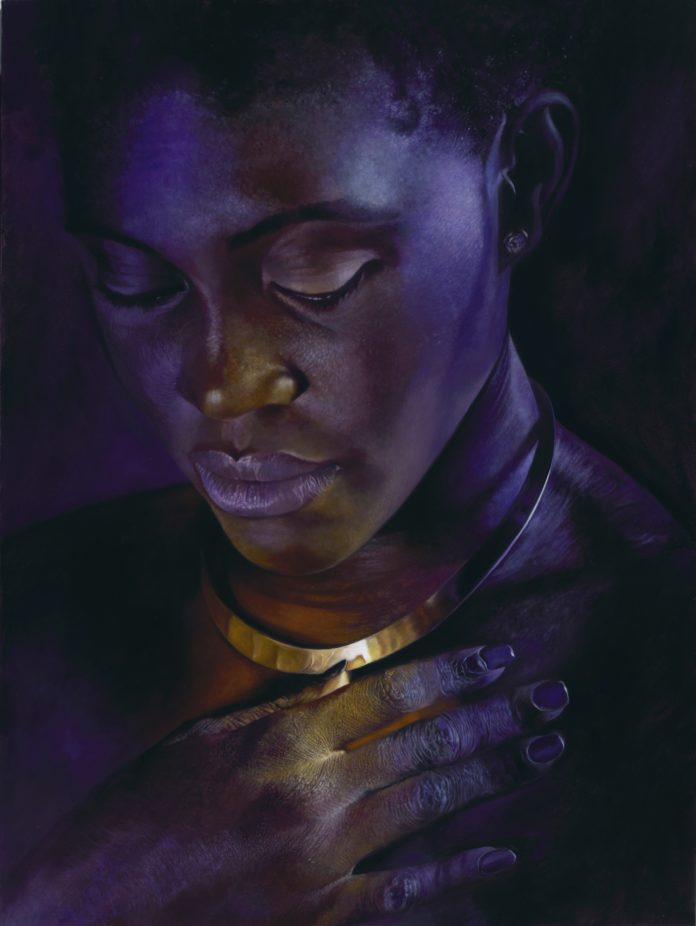
"The Golden Necklace," 48" X 36," oil on canvas

Portrait Paintings > From the West Coast to the East Coast and back, accomplished artist John Rowe has done just about everything to establish a successful career. Supporting a family through major commissions as an illustrator, Rowe continues his epic journey by exploring more deeply how fine art can communicate what words cannot.

The story of artist John Rowe’s career reads like Homer’s Odyssey — filled with triumph, love, deception, failure, and so much more. Like many before him, Rowe’s journey into art began when he was a child. The artist recalls how he had trouble putting down the pencil — how he was constantly observing the world and musing on how to represent it on paper. As a budding artist, Rowe’s formal training began at Cal State LA, where Al Fiori encouraged him to go to Art Center. Rowe recalls, “My first attempt at a student loan fell through, so I worked two full-time jobs to raise tuition and work my way through school. After school, I sold my belongings and took a Greyhound bus to New York City with $600 to my name.”

Contemporary art
Rowe’s work on view at Winn Slavin gallery in Beverly Hills

In the “City That Never Sleeps,” Rowe found himself pushed into roles that didn’t provide the creative outlet he desired, so he took the plunge and resigned his job at an ad agency and began painting full-time. The move proved pivotal for Rowe, who relocated to Los Angeles and was quickly noticed by Disney for his illustrative talent. He writes, “Over the years I have been lucky enough to be able to support my family through commissions from Disney, the United Nations, and National Geographic. I was the president of the Society of Illustrators in Los Angeles for a few years as well. I’ve had lots of fun as a guest artist on cruise ships and learned a lot from many talented people. I feel like I am finally learning how to paint decently and my current work just might have something to offer. Mostly I am very grateful to be able to do what I love and have so much fun making art.”

Oil portrait paintings - FineArtConnoisseur.com
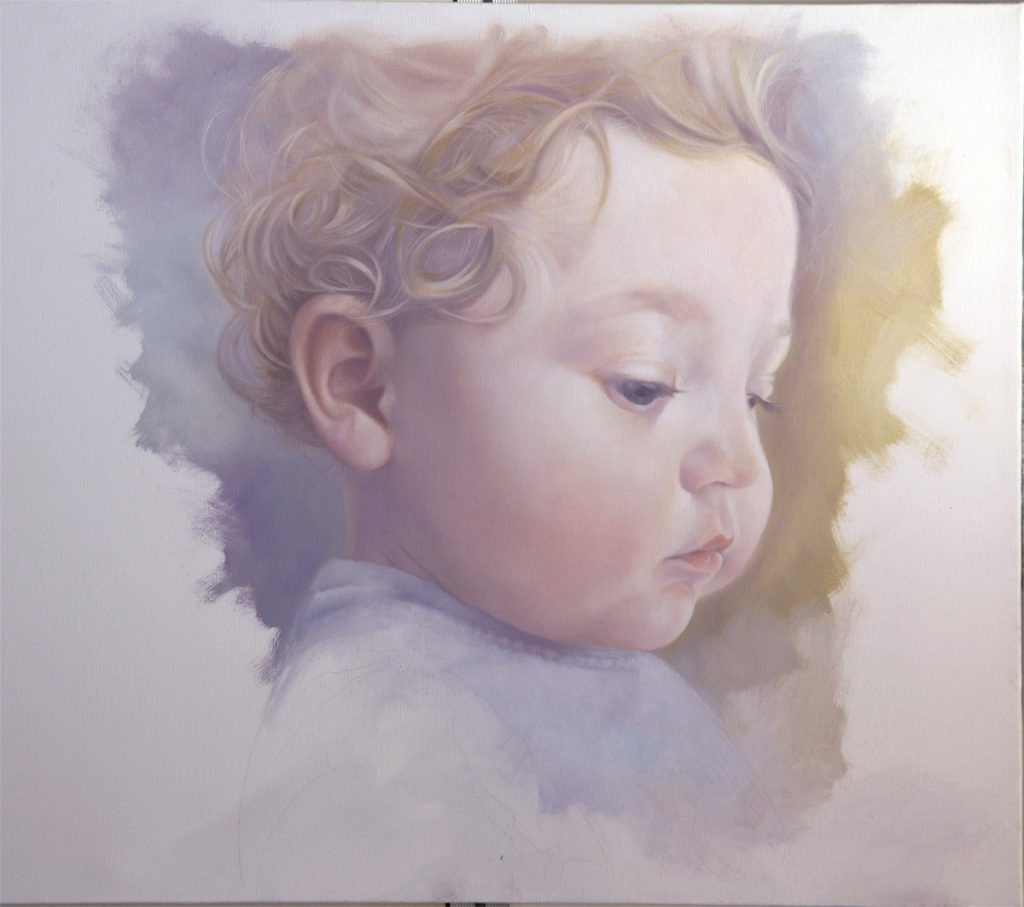
John Rowe, “Baby Study,” oil on canvas, 18 x 24 in. (c) John Rowe 2017
Contemporary still life paintings
“Space Time, 24″ X 24,” oil on canvas
Figurative Art
“Acceptance,” 36″ X 36,” oil on canvas
Figurative Art
“The Flame,” 48″ X 60,” oil on canvas

The range of Rowe’s work is stunning — and inspirational. While many artists hone their skills on portraiture, landscape, still life, and figurative subjects, Rowe has done it all, from book illustration to movie posters, traditional subjects, and beyond. “I never set out to create artworks in such a wide range,” he says, “but I was very determined to earn my living creating art and accepted almost any project that would accomplish that at the beginning. The wide variety of work I was offered defined its own path. Besides, everything in life is so interesting. To me, everywhere you turn, there is wonder and amazement worth studying, worth painting, worth thinking about. Over time I have been letting the subjects that hold my interest the least go and used personal works to evolve in directions that are meaningful to me.”

Oil portrait paintings - FineArtConnoisseur.com
John Rowe, “Her Gift,” 2015, oil on canvas, 30 x 40 in. (c) John Rowe 2017

Rowe’s recently completed “Her Gift” is a terrific — and gorgeous — example of his new direction in portrait paintings. Before a soothing solid background, the viewer is presented with two subjects: a brown and dark-haired mother tenderly grasping a pale-skinned infant. Albeit simple in subject, the piece bursts with emotional and interpretive potential. The piece has a very special meaning to the artist, made palpable through his description.

He writes, “The painting of my wife and our foster child — who has since been returned to his family — is still very close to me. I watched my wife over months give her love and strength and protection to this child. Tears, joy, fierce protection, devotion, sleepless nights — all while knowing she might never see him again but that he would carry the sense of being loved unconditionally into his future life and it would become a foundation for him. We had taken classes to learn about how those first relationships can lay a groundwork for the core of who you become. I wanted the differences in hair, skin, and ethnicity to be apparent and for the emotional connection between her and the baby to be strong enough to make that completely irrelevant. I wanted to leave the viewer with the feeling of profound love that only a mother can have for her child.”

“We did a photo shoot at my studio, and I combined several different shots together,” he says. “I closed her eyes to give the composition a feeling of peace and began painting. To me one of the most important parts was her hand. Each finger held the baby differently: from the talon-like security of her thumb and forefinger gripping him, to the gentle touch of her ring finger and pinky left floating in space, half touching and half letting go, as she would eventually have to do. I painted my wife’s face out of focus so other mothers could relate to her and not become too specific. The child’s fine hair was represented as real as possible so the viewer could relate to the fragile nature and delicate features of a baby.”

Oil portrait paintings - FineArtConnoisseur.com
John Rowe, “Make-up,” 2015, oil on canvas, 30 x 40 in. (c) John Rowe 2017
Oil portrait paintings - FineArtConnoisseur.com
John Rowe, “Stephanie,” 2015, oil on canvas, 18 x 24 in. (c) John Rowe 2017

Rowe hopes to continue producing portrait paintings such as “Her Gift” for gallery spaces into the future. After spending a long career creating illustrations for major publishers, Rowe endeavors to create artworks that are meaningful to his viewers and collectors. He concludes, “I think if I am able to do that from time to time during the rest of my career, that is what would make me happy.”

Realism portrait paintings
“Tara,” 48″ x 36,” oil on canvas

To view more works, including contemporary portrait paintings, visit John Rowe.

Article originally written by Andrew Webster

This article was featured in Fine Art Today, a weekly e-newsletter from Fine Art Connoisseur magazine. To start receiving Fine Art Today for free, click here.
WEEKLY NEWS FROM THE ART WORLD

Fill your mind with useful art stories, the latest trends, upcoming art shows, top artists, and more. Subscribe to Fine Art Today, from the publishers of Fine Art Connoisseur magazine.

  • This field is for validation purposes and should be left unchanged.