Elizabeth Butler Succulents and Kumquats on Gold
36 x 60 in.
Oil and gold leaf on panel
$9,800
As native of Arizona, Elizabeth Butler has always been inspired by the beauty of nature. In turn her floral and botanical works of art inspire others to appreciate the gifts of nature. Her current body of work makes an effort to accomplish that with flowers. She arranges and paints them in such a way as to draw attention to that life-giving fullness they embody. She carefully selects and arranges the flowers and photographs them as reference, but also keeps the live bouquet as inspiration as she lets her imagination run free. Her work is currently on display, along with 100 other artists, at the Celebration of Fine Art in Scottsdale, AZ through March 29, 2020. Contact us at 480-443-7695 or [email protected].
Linda Wilder, “Rundle from Vermillion,” acrylic, 24 x 36 in.
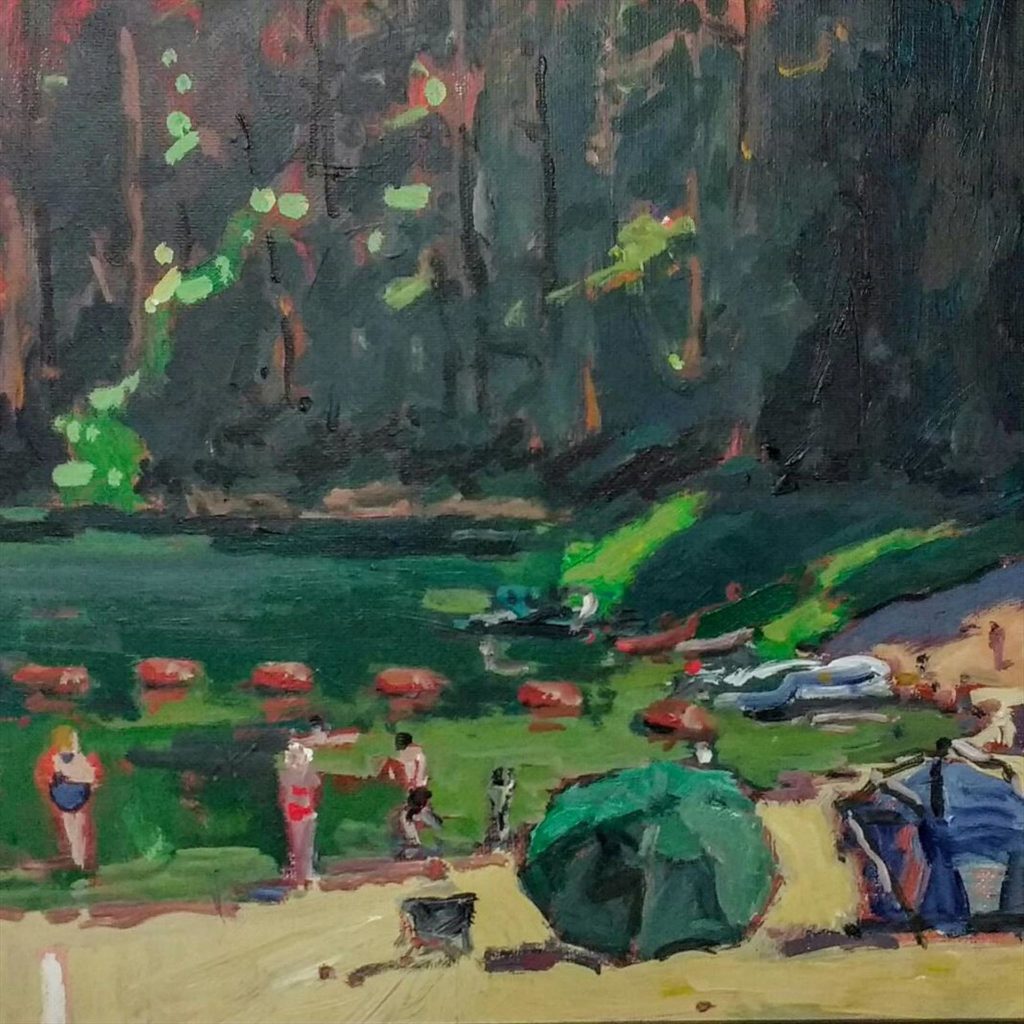
In the spirit of the French Salon created by the Academie des Beaux-Arts in Paris, the Plein Air Salon, with monthly cycles leading to annual Salon Grand Prize winners, is designed to stimulate artistic growth through competition.
Today we celebrate the works of nine winners from the acrylic paintings division of the Plein Air Salon.
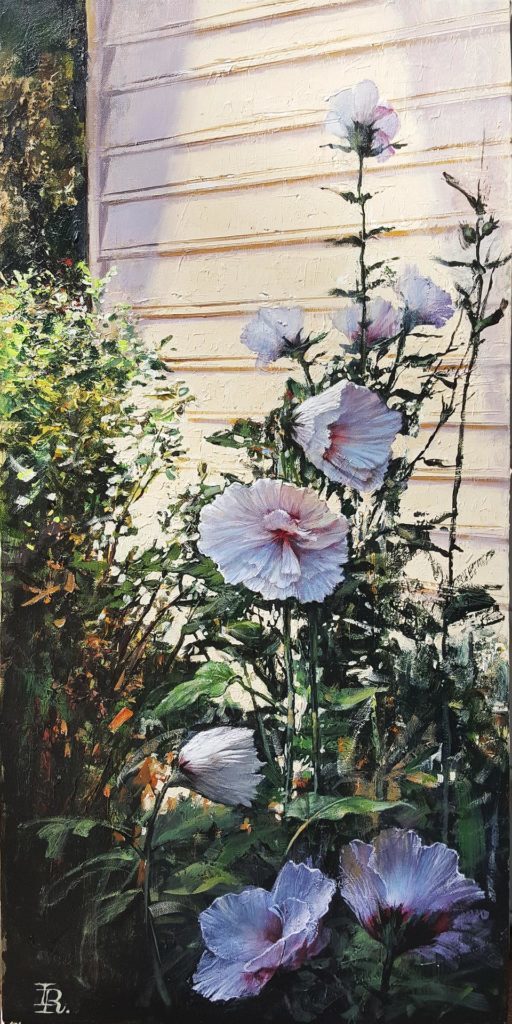
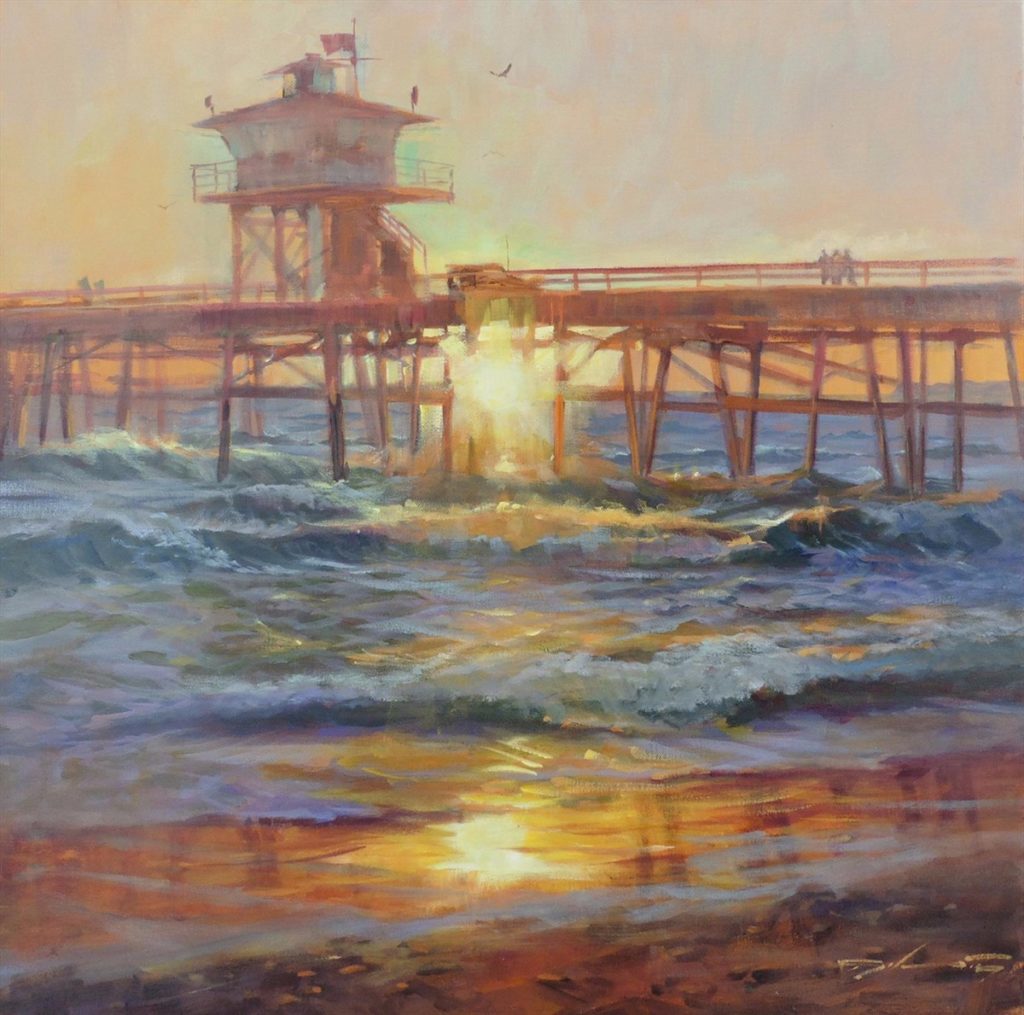
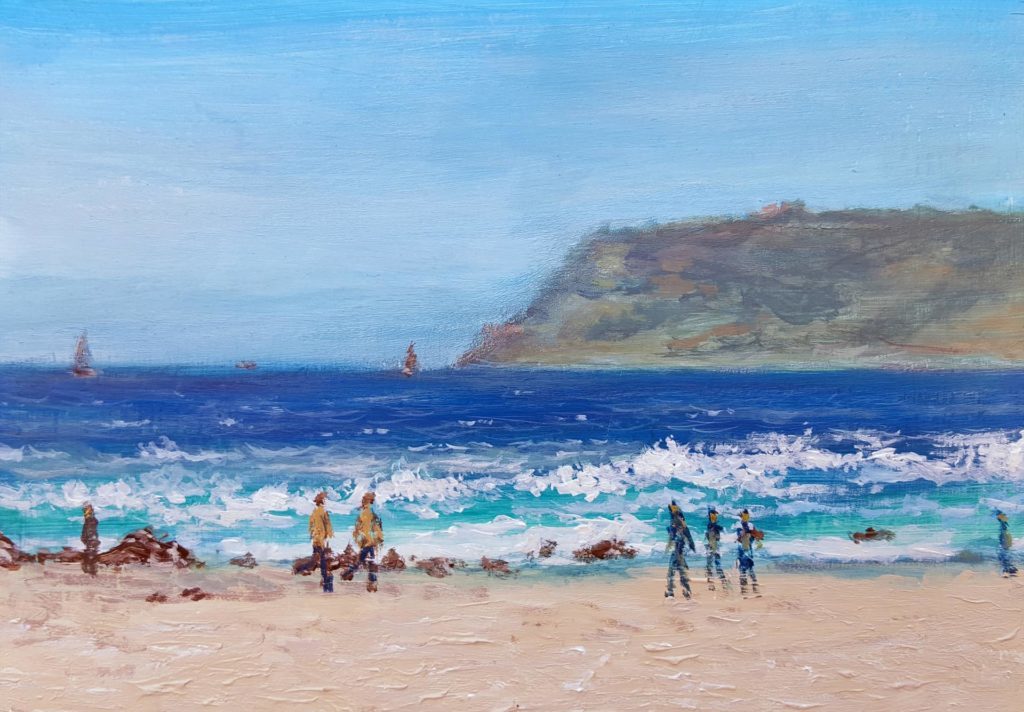
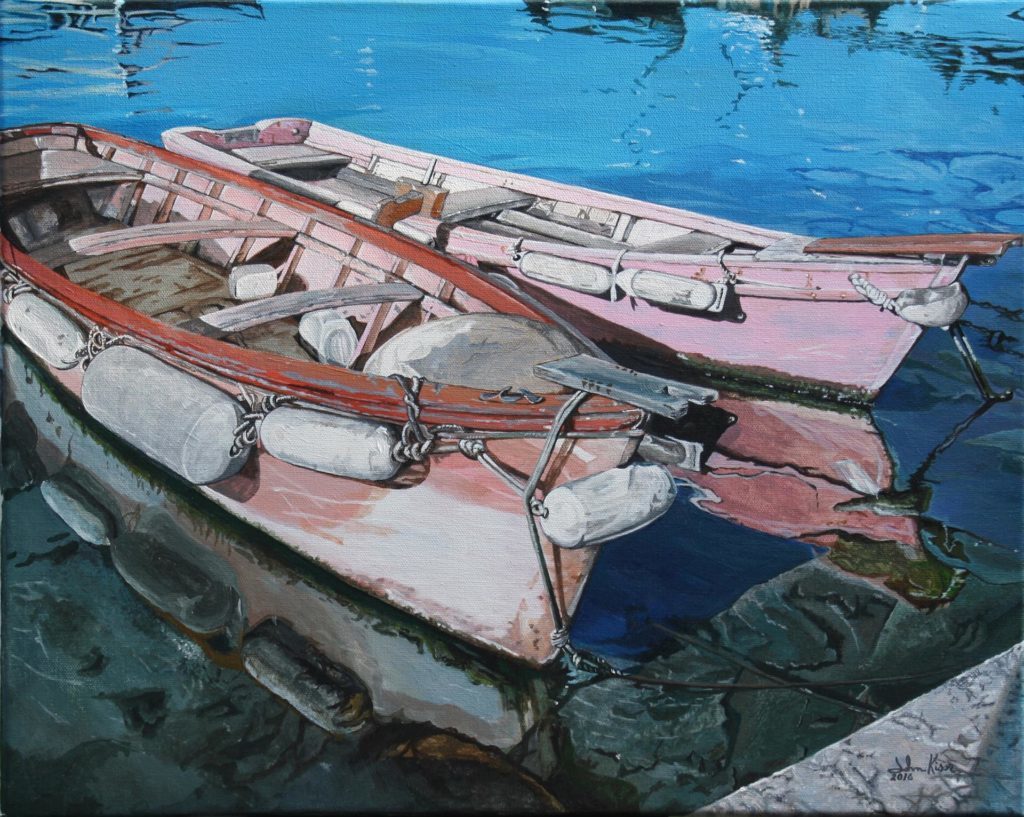
Margaret Plumb, “Loon Lake in June,” acrylicDoug Osa, “Weston Shadows,” acrylic, 18 x 36 in.Laara Cassells, “Adeline,” acrylic, 38 x 26 in.Igor Raikhline, “Sunday Morning,” acrylic, 36 x 18 in.Rick Delanty, “Sunburst,” acrylic, 24 x 24 in.Eugene Kuperman, “Coronado Beach,” acrylic, 5 x 7 in.John Kiser, “Pink Harbor,” acrylic, 16 x 20 in.Brian LaSaga, “Two for Joy,” acrylic, 20 x 28 in.
The Plein Air Salon rewards artists with $33,600 in cash prizes and exposure of their work, with the winning painting featured on the cover of Plein Air Magazine. The art competition is now open and accepting entries.
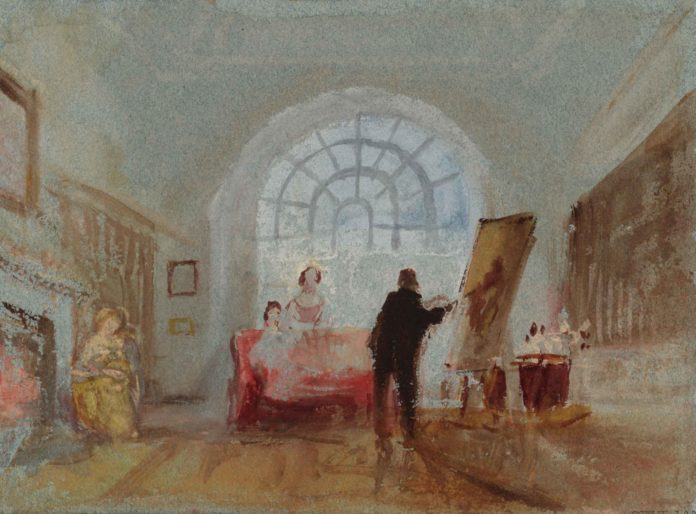
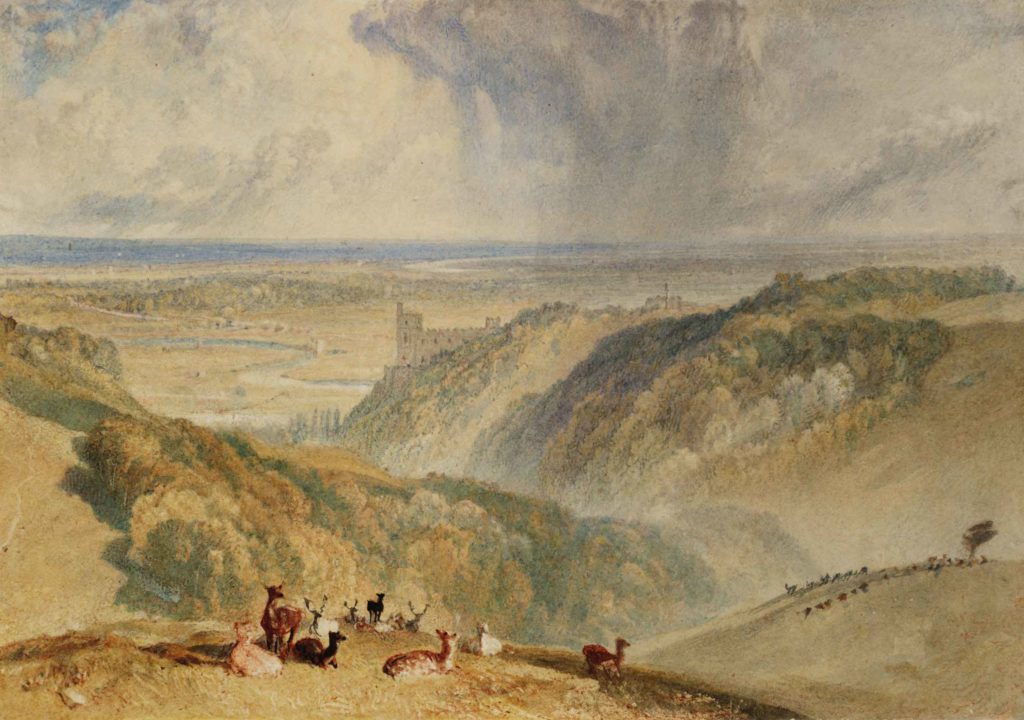
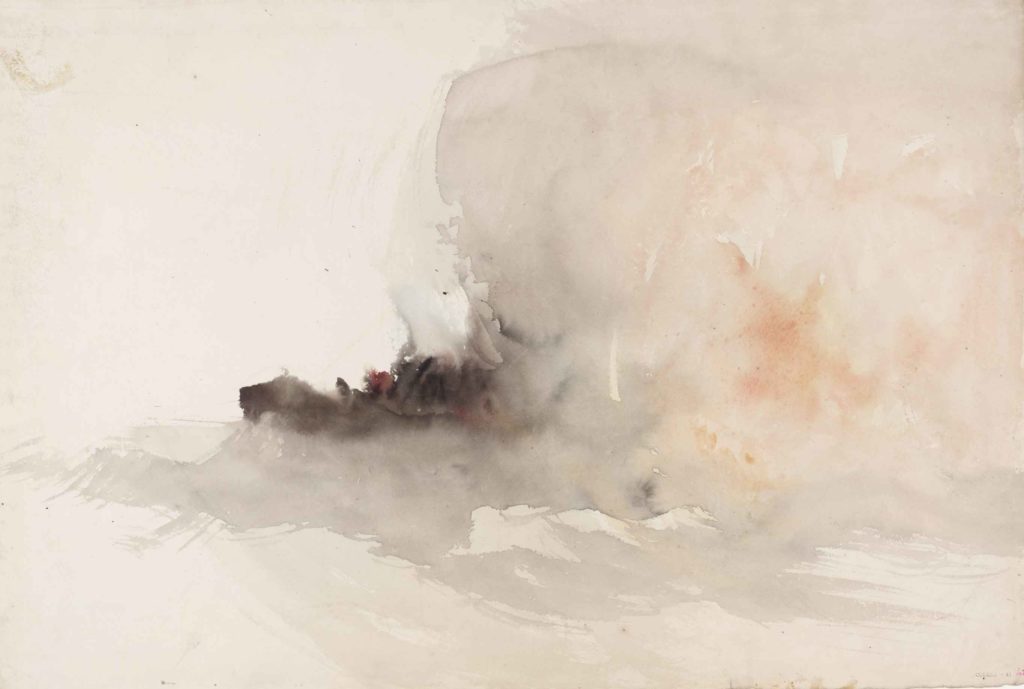
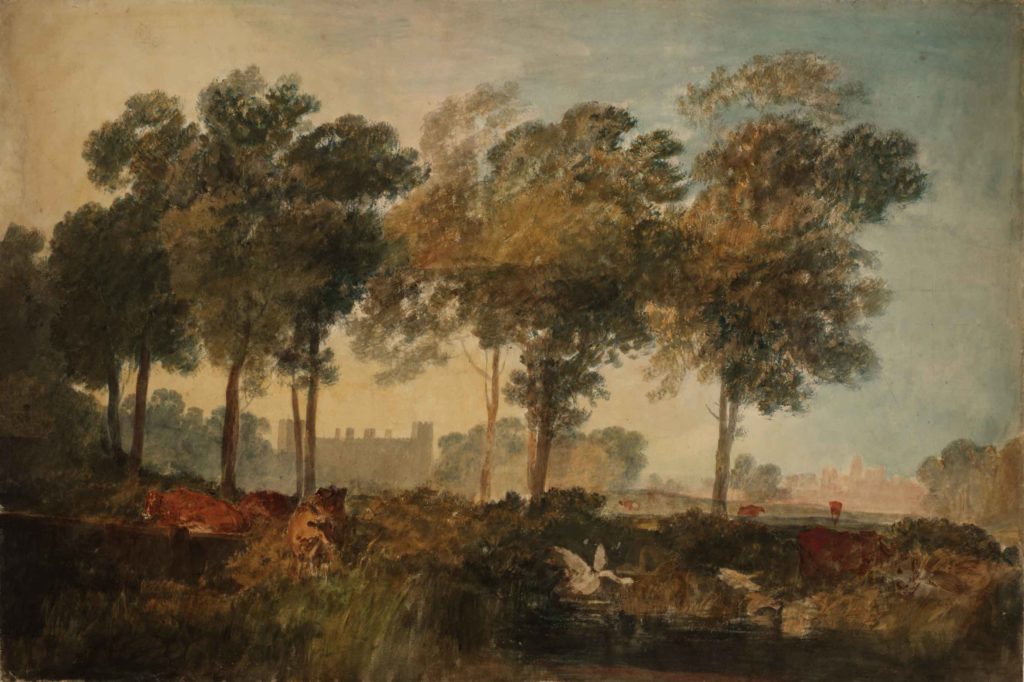
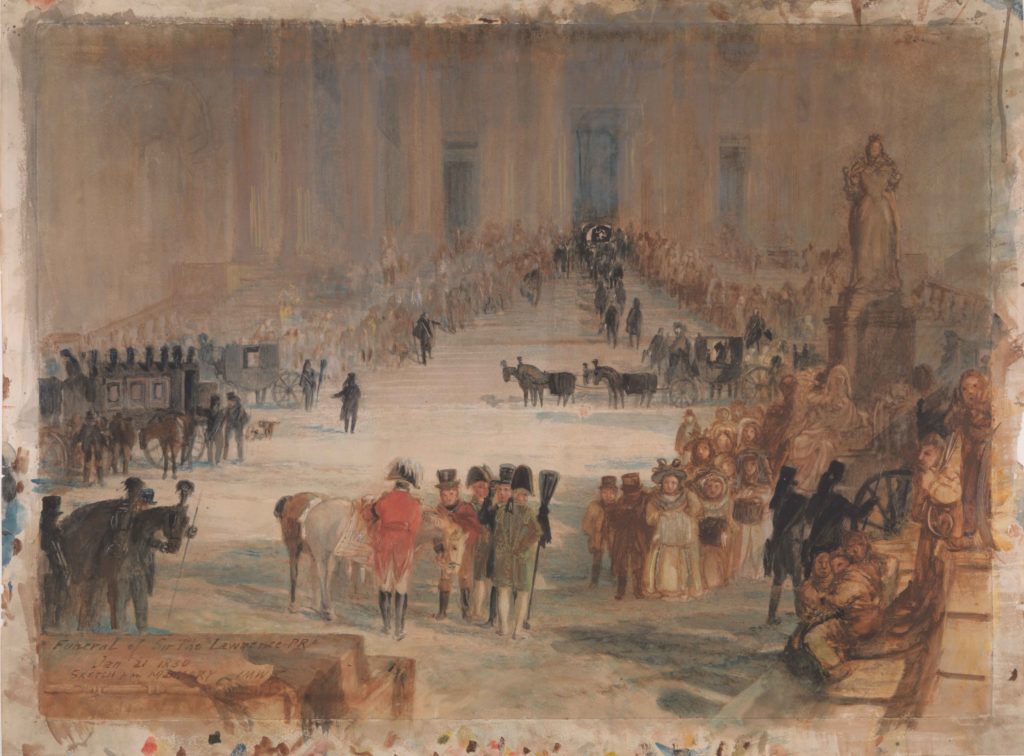
Mystic Seaport Museum, in partnership with Tate, London, will host a major monographic exhibition devoted to the watercolors of one of Britain’s greatest painters: J.M.W. Turner (1775–1851). Mystic Seaport Museum will be the only North American venue for the exhibition.
The exhibition — curated by David Blayney Brown, Tate’s Manton Senior Curator of British Art 1790–1850 — will provide an exceptional opportunity to see key works spanning the entire career of the artist. A unique collection of about 90 works, the selection will provide a view into the evolution of the artist’s vision and creative process.
More from the organizers:
The Turner Bequest received by the British nation in 1856, five years after the death of the painter J.M.W. Turner in 1851, is one of the largest, most revealing collections of a single artist’s work in existence. Mostly housed today at Tate Britain, London, it is a museum within a museum, containing the vast hoard of his lifetime’s work that Turner left in his house and studio. Besides 100 pictures he had kept to hang in a Turner Gallery he hoped would be created in his memory, the Bequest includes many oil sketches, studies and works in progress, and, most remarkably, tens of thousands of works on paper: watercolors, drawings, and sketchbooks.
As one of the most gifted draftsmen of his generation, and a superlative master of watercolor, Turner sold most of his finished and exhibited watercolors. What he kept for himself was different, but in no way inferior. It has a special character of its own, surely often closer to the artist’s true self than the work he made for the public. John Ruskin, one of the first to study the whole Bequest, observed how much of it had been made for Turner’s “own pleasure.” Intimate, expressive, experimental, it offers unique insights into the mind, imagination, and private practice of a great Romantic painter.
This selection from the Bequest allows us to look over Turner’s shoulder as he progresses from conventional beginnings as a topographical and architectural draftsman to embrace an extraordinary range of subject matter in a dynamic manner founded on a refined appreciation of light, color, and atmospheric effects. Joined in this exhibition by a small group of finished watercolors and oil paintings to show their impact on Turner’s public output, these most personal of his works remain as fresh and immediate today as when they first appeared on paper.
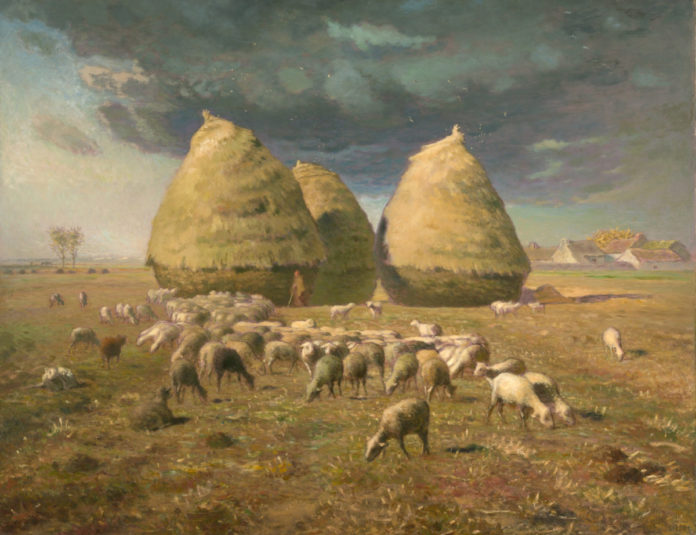
Jean-François Millet, “Haystacks: Autumn,” c. 1874, oil on canvas, 33 1/2 x 43 3/8 in., The Metropolitan Museum of Art, Bequest of Lillian S. Timken, 1959 2020.71
On February 16, the Saint Louis Art Museum will open “Millet and Modern Art: From Van Gogh to Dalí,” an exhibition that examines, for the first time, the international legacy of the 19th-century French painter, Jean-François Millet.
From the museum:
Millet (1814–1875) was a pioneer in developing innovative imagery of rural peasantry, landscapes, and nudes, and his work had a deep impact on later generations of artists. In the late 19th century, he was arguably the best-known modern painter, and his works sold for the highest prices of any modern pictures at auction. Today, he is less well known, and “Millet and Modern Art” explores Millet’s original importance and the international range of artists he influenced.
The exhibition is organized by the Saint Louis Art Museum and the Van Gogh Museum, Amsterdam. It runs through May 17.
“This groundbreaking exhibition rediscovers Millet’s critical role in the birth and development of modern art,” said Brent R. Benjamin, the Barbara B. Taylor Director of the Saint Louis Art Museum. “It will be a visually stunning treat for our visitors, and it is an important contribution to art historical scholarship.”
Masterworks on loan from many of the world’s greatest museums situate Millet’s imagery within the context of work by a wide, international range of artists whom he influenced. Among the latter are the Dutchman Vincent van Gogh; the Frenchmen Camille Pissarro, Georges Seurat, and Claude Monet; the Italian Giovanni Segantini; the American Winslow Homer; the German Paula Modersohn-Becker; the Norwegian Edvard Munch, and the Spaniard Salvador Dalí.
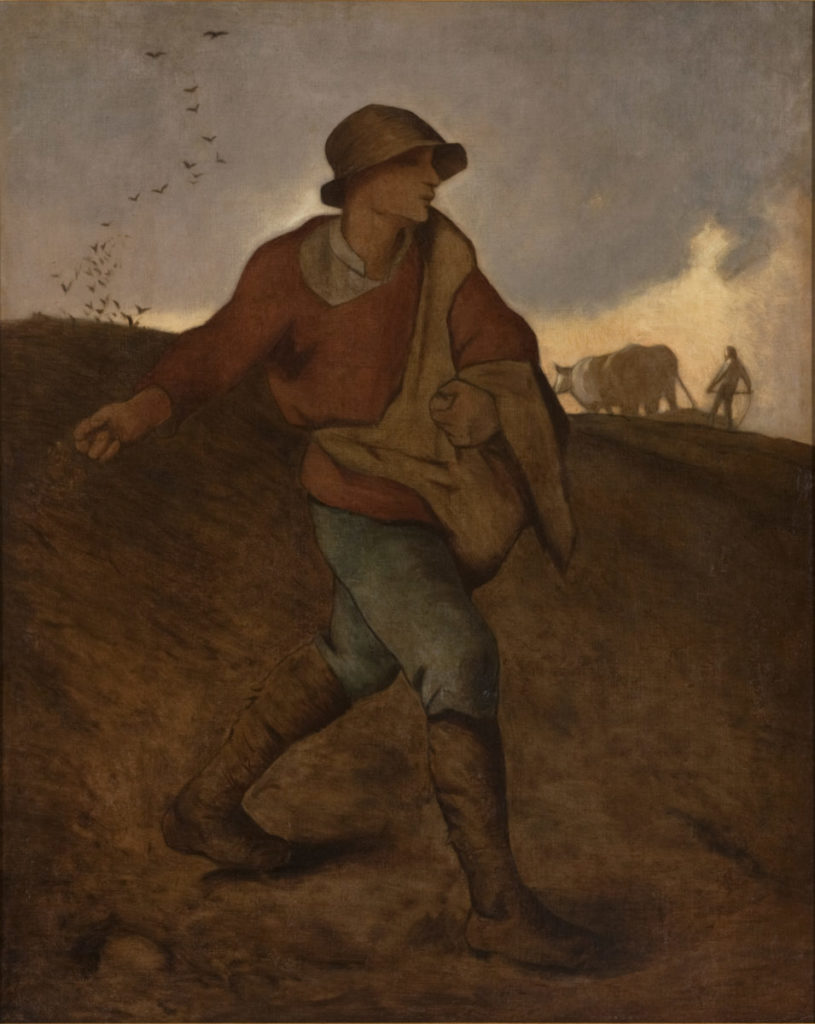
Rural labor was always an important theme for Millet, and the exhibition looks at imagery such as the sower, the reaper, and the gleaner, in which the artist articulated his sympathy for the marginalized rural poor and suggested larger metaphorical narratives of birth and death. Millet’s work had a particularly deep impact on Van Gogh, who referred to him as “father Millet.”
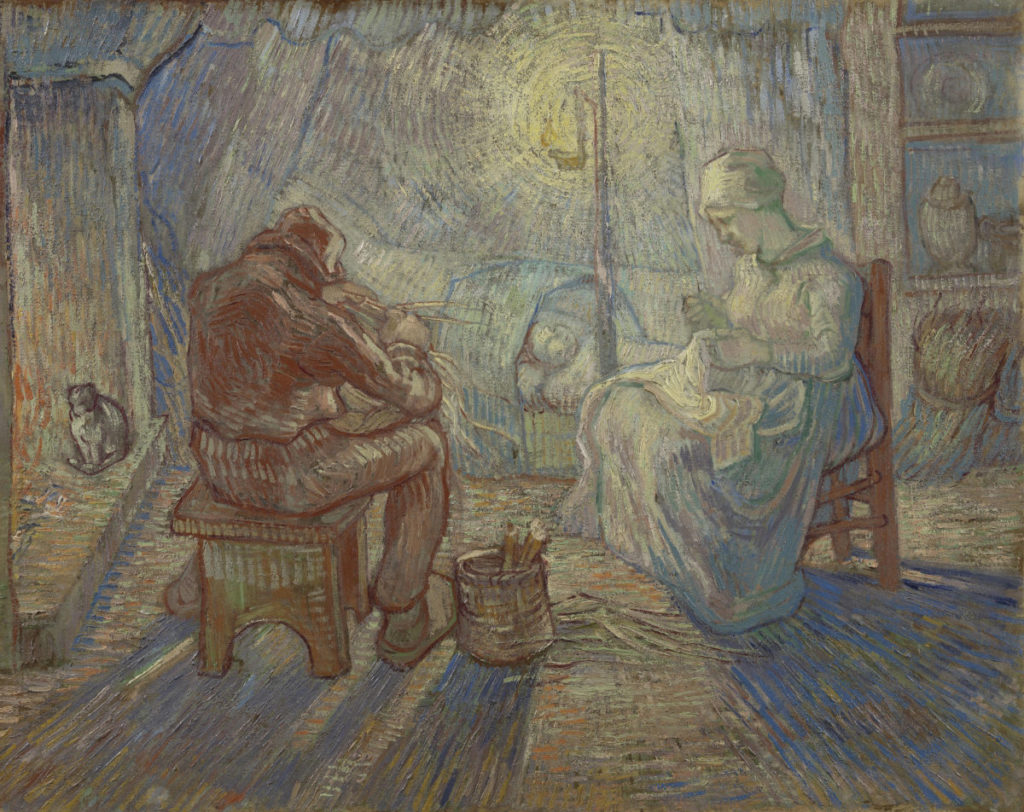
Vincent van Gogh, Dutch (1853–1890), “Evening: The Watch (after Millet),” 1889, oil on canvas, 29 5/16 × 36 13/16 in., Van Gogh Museum, Amsterdam (Vincent van Gogh Foundation) 2020.34
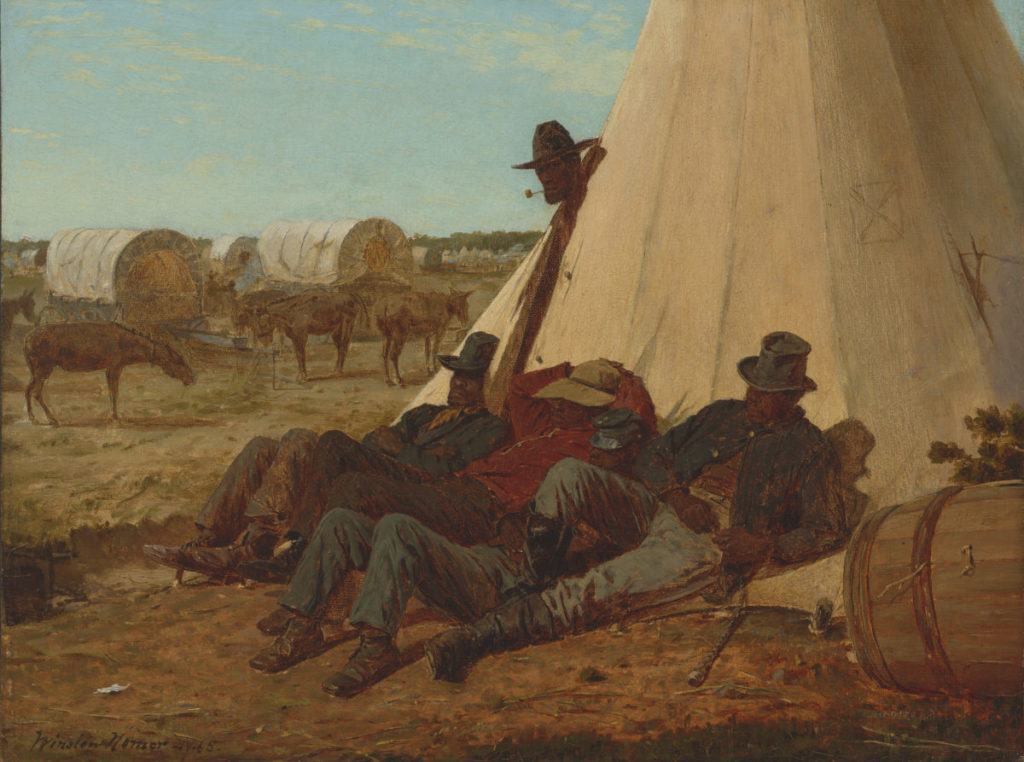
The exhibition includes several iconic images by Van Gogh, including two important paintings of “The Sower” and the Musée d’Orsay’s rarely lent “Starry Night,” which predates van Gogh’s painting of the same title in the collection of the Museum of Modern Art, New York. Among the American artists represented in the show is Homer, whose “The Bright Side” reinterprets Millet’s imagery through the lens of race.
Jean-François Millet, “The Sower,” after 1850, oil on canvas; 41 1/2 × 33 3/4 in., Carnegie Museum of Art, Pittsburgh: 19th Century or Earlier Painting Purchase Fund and with funds provided by Mr. and Mrs. Samuel B. Casey and Mr. and Mrs. George L. Craig, Jr. 2020.117Winslow Homer, American (1836–1910), “The Bright Side,” 1865, oil on canvas, 12 3/4 × 17 in., Fine Arts Museums of San Francisco, Gift of Mr. and Mrs. John D. Rockefeller 3rd 2020.55
In the late 19th century, Millet’s drawings and pastels were often seen as more formally radical than his paintings.
The show includes important groupings of works on paper, demonstrating their impact on artists such as Georges Seurat. There is also a body of Millet’s little-known nude imagery that deeply affected Edgar Degas.
The exhibition emphasizes the significance of Millet’s landscape paintings, which increasingly dominated his practice in the last decade of his life. His marine imagery is paired with that of his fellow Norman, Monet, who was also fascinated by the sea. An important loan in this section is “Spring,” a late masterpiece in which Millet showcases his ability to capture light from a passing rainbow. This is related to imagery by the American George Inness.
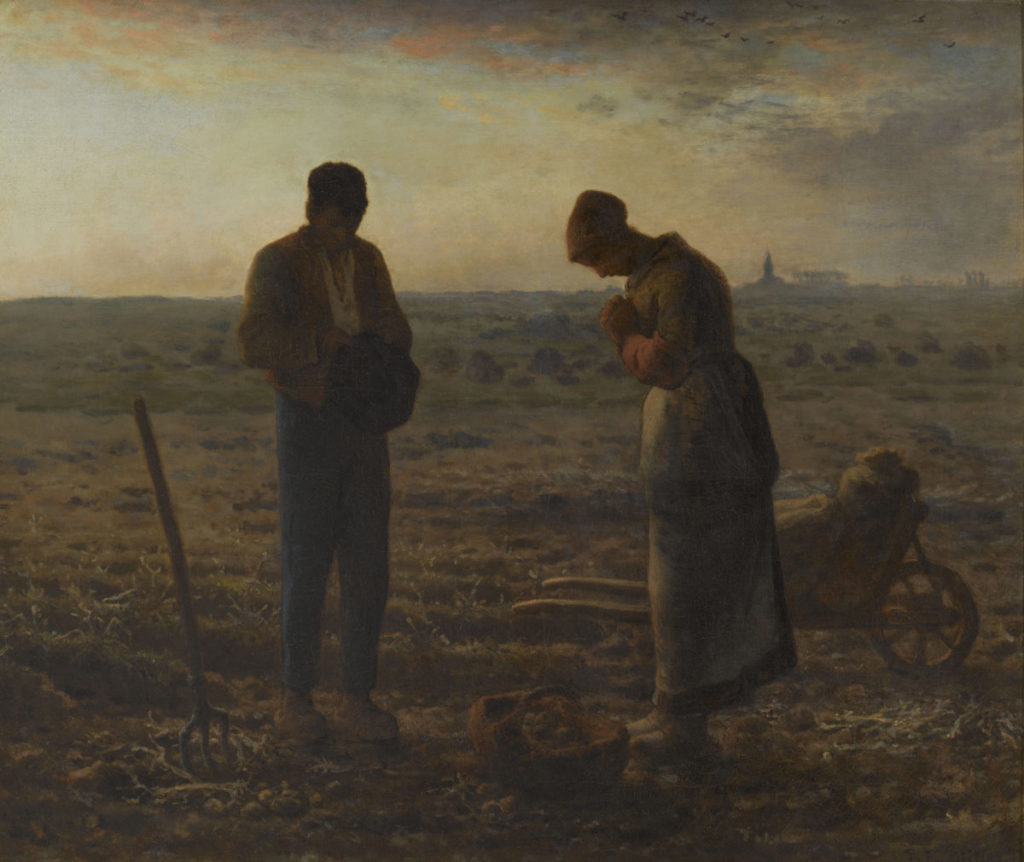
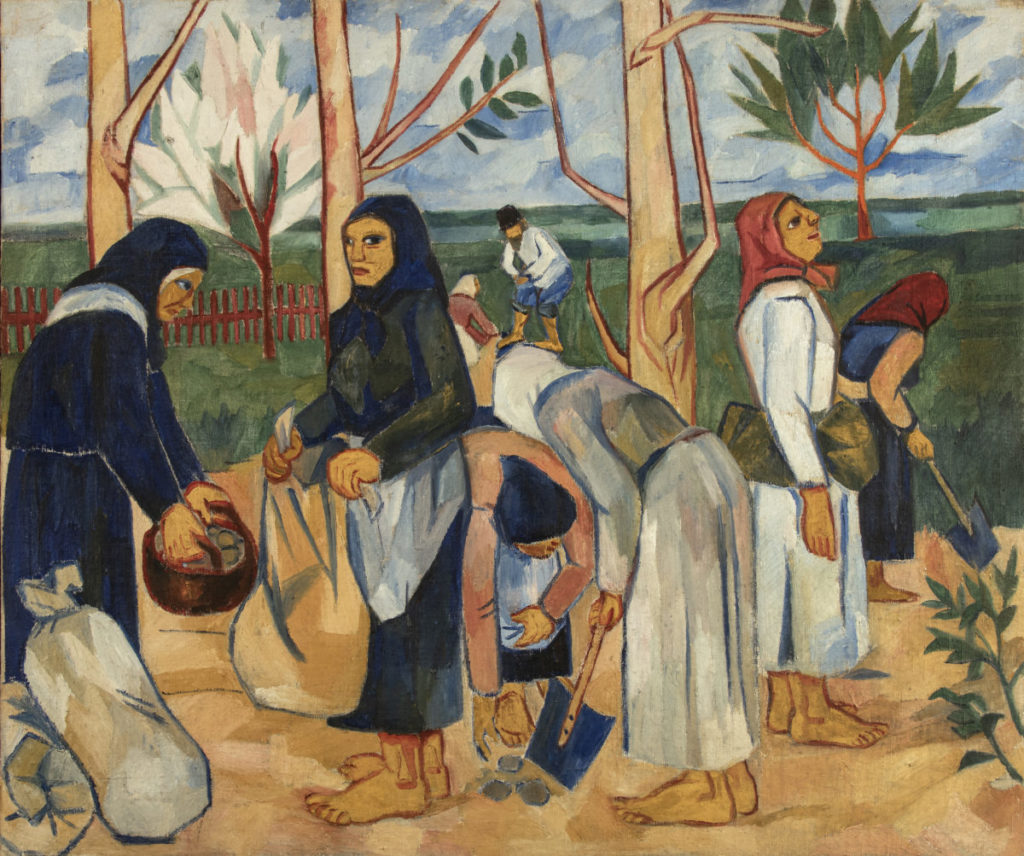
The final and culminating section of the exhibition centers on Millet’s “Angelus,” one of the most expensive modern paintings of the late 19th century and an important national symbol of France to this day. The show includes related work by artists including Munch, the Russian Natalia Goncharova, and an important group of pictures by Dalí, who was obsessed by Millet’s “Angelus.”
The exhibition is co-curated by Simon Kelly, curator of modern and contemporary art at the Saint Louis Art Museum, and Maite van Dijk, senior curator at the Van Gogh Museum, Amsterdam.
“Millet and Modern Art” is organized by the Saint Louis Art Museum and the Van Gogh Museum, Amsterdam, with exceptional support from the Musée d’Orsay, Paris. The exhibition is presented in St. Louis by the Betsy and Thomas Patterson Foundation.
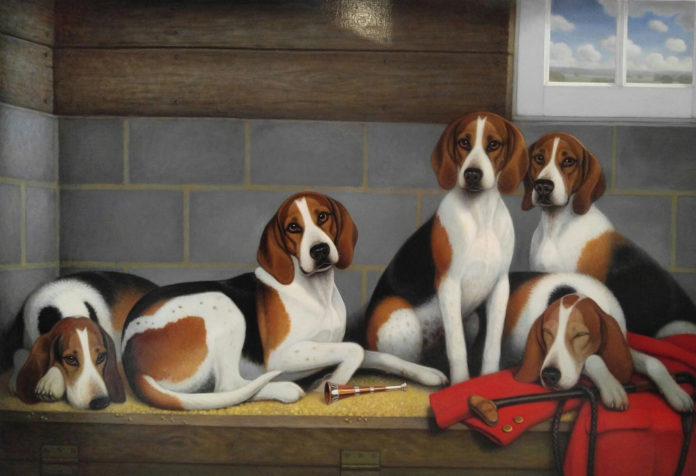
The William Secord Gallery (New York) recently announced “Christine Merrill: The Royal Breeds,” featuring the paintings of Christine Merrill, whose portraits of show dogs, sporting dogs, and beloved pets have enriched the lives of collectors around the world.
From the gallery:
Timed to coincide with the Westminster Kennel Club’s 144th dog show, this exhibition marks Merrill’s thirty-year anniversary with the Gallery. The exhibition is a tribute to the many breeds that the British Royal Family have had over the years, including Cavalier King Charles Spaniels, Collies, Corgis, Foxhounds, Labrador Retrievers, Pomeranians, Pekingese, and Pugs.
Born in Baltimore, Maryland, Christine developed a passion for painting animals at a young age. When she was two, her mother put a pencil in her hand and she immediately started drawing animals. With dogs and horses as her first loves, she painted her first portrait of a dog at the age of five. Rather than pursue a conventional academic degree in the arts, Merrill attended the traditional Schuler School of Fine Arts in Baltimore, where she studied for five years under the school’s founder, Hans Schuler and his wife, Ann. Since 1975, Christine Merrill has specialized in the depiction of dogs, completing commissions for clients across America as well as in Europe and Japan.
Merrill’s work hangs in many private and public collections, including the American Kennel Club Museum of the Dog in New York City. Her work is in the private collections of Barbara Taylor Bradford, Bob Shieffer, and Oprah Winfrey, as well as the late Malcolm Forbes and many others. The artist is currently accepting a limited number of new commissions. A commission brochure and price guide is available upon request.
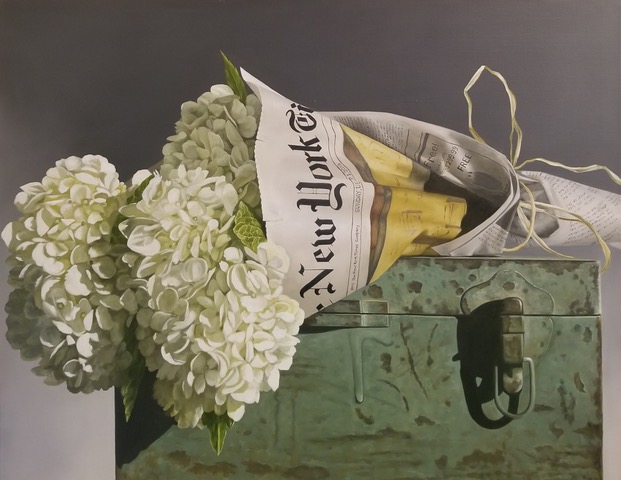
Loren DiBenedetto, “White Hydrangea in NY Times,” 24 x 30 in.
Anderson Fine Art Gallery (St. Simons Island, GA) will feature artists Loren DiBenedetto and Sherry Egger in their upcoming show, February 14 – March 4, 2020. Both artists will be in attendance for the opening reception on Friday, February 14.
From the gallery:
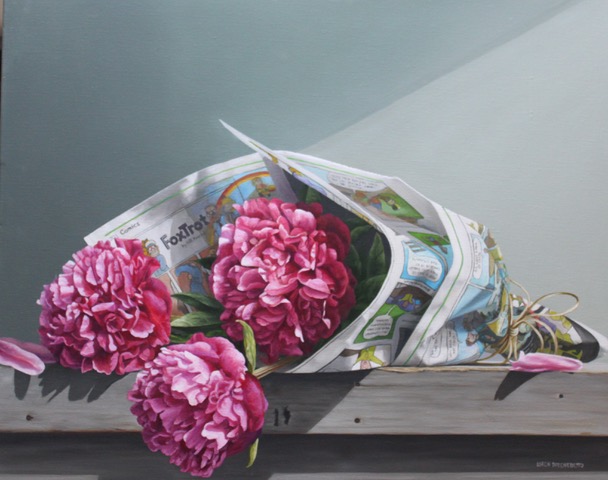
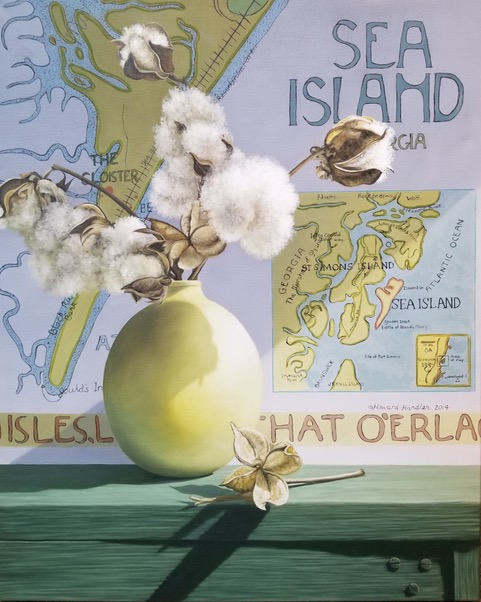
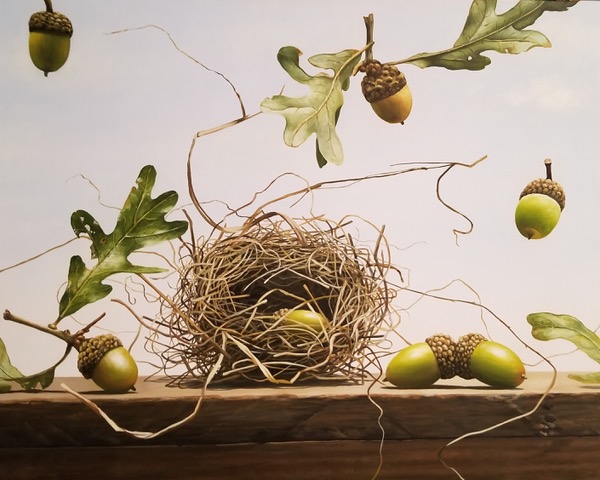
Loren DiBenedetto is an award-winning artist known for her bold still life paintings. Born in New Jersey, Loren was classically trained, graduating from Du Cret School of the Arts in New Jersey. She studied at the National Academy of Fine Arts & Design and Art Students League in New York and trained with David Leffel, Harvey Dinnerstein, and Michael Burbon. She is a member of Oil Painters of America, International Guild of Realism, National Acrylic & Oil Painters Society (noaps), and American Women Artists.
Loren DiBenedetto, “Peonies in Comics,” 24 x 30 in.Loren DiBenedetto, “Sea Island Cotton with Map,” 30 x 24 in.Loren DiBenedetto, “Falling,” 24 x 30 in.
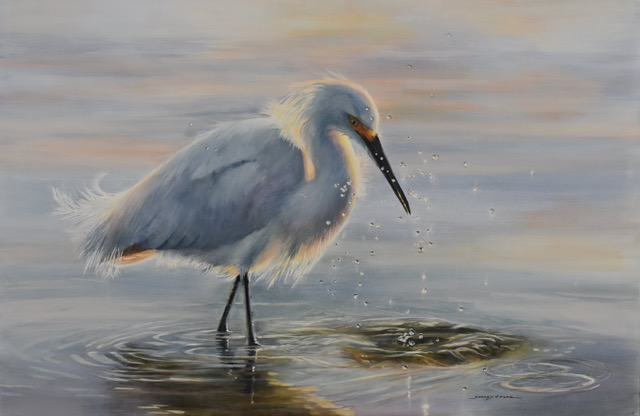
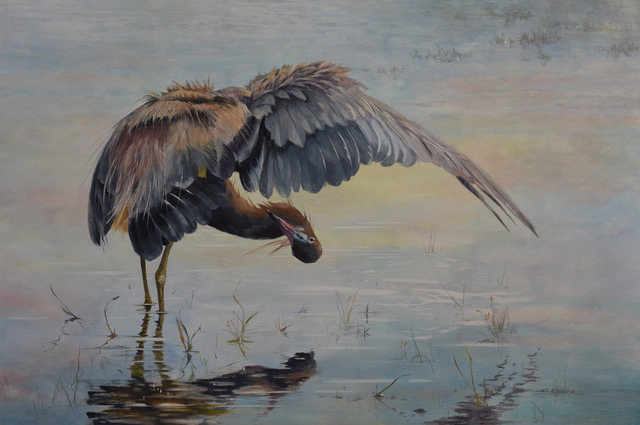
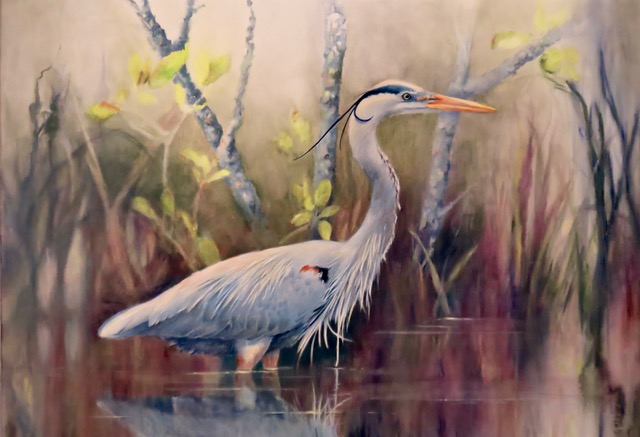
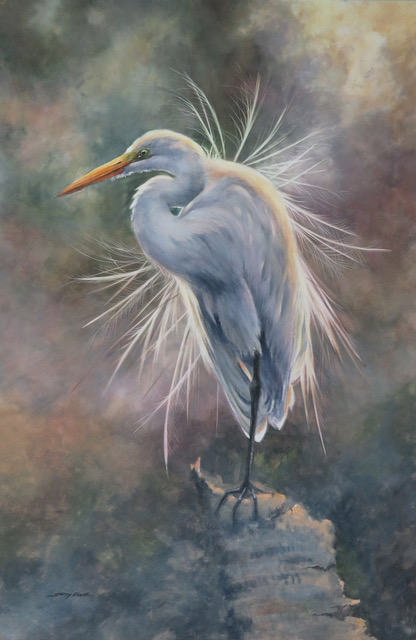
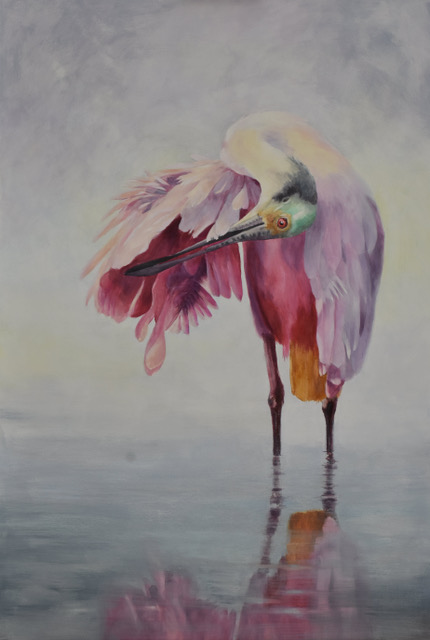
Sherry Egger is known for her beautiful paintings of shorebirds and wildlife. She comes from a graphic art background and studied at Le Millet Art School in Baltimore. Sherry has been featured multiple times in Colored Pencil magazine. Her work is in collections throughout the United States. She is also a sought-after instructor on St. Simons Island.
Sherry Egger, “Snowy Egret,” 24 x 36 in.Sherry Egger, “Fishing Reddish Egret,” 24 x 36 in.Sherry Egger, “Great Blue Heron Marsh Walk,” 20 x 28 in.Sherry Egger, “Egret at Daybreak,” 36 x 24 in.Sherry Egger, “Roseate Spoonbill,” 36 x 24 in.
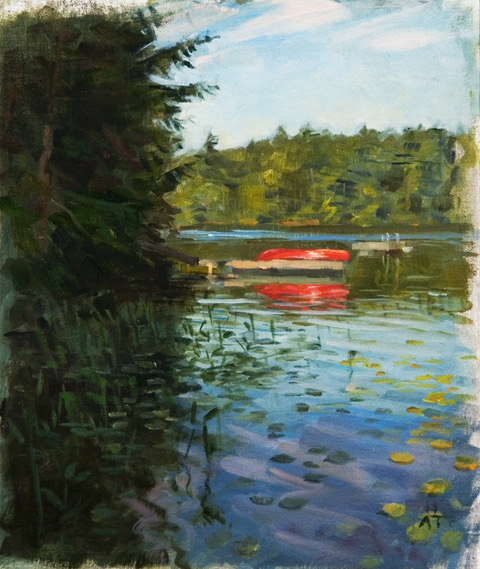
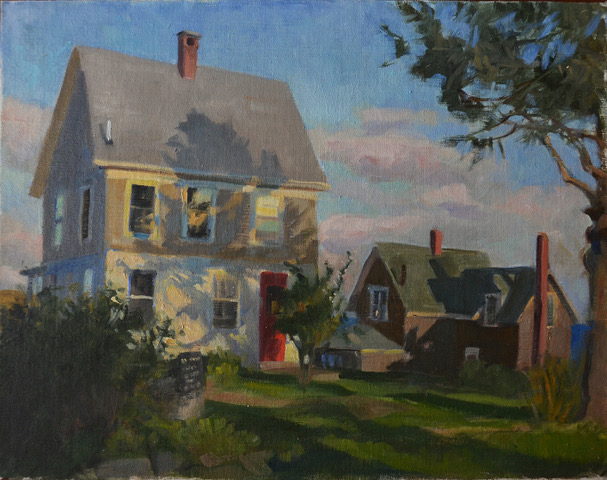
Alexandra Tyng, “Lake Edge in Shadow,” 2011, 13 x 11 in.
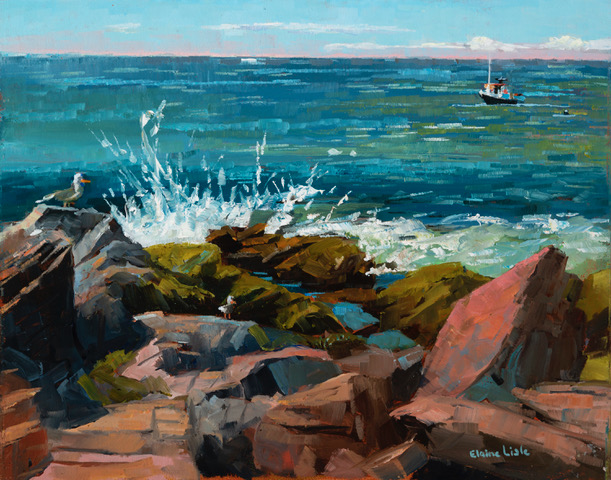
Gallery222 Malvern recently announced “The Maine Event,” highlighting all aspects of the scenic state of Maine. The show opens on February 19 and runs through March 14, with the public artist reception on Thursday, February 20 from 5:30 p.m. to 8:00 p.m.
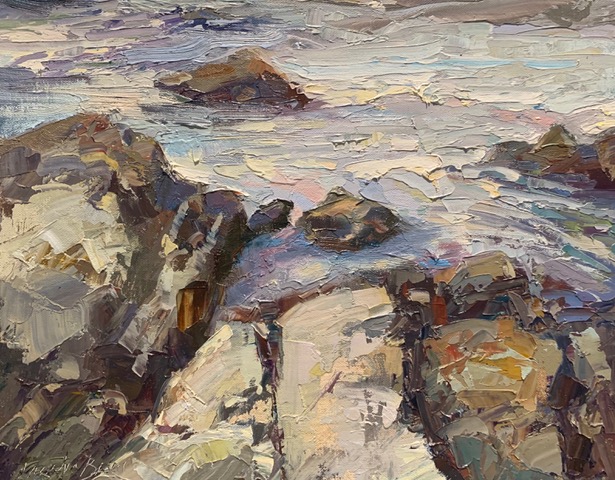
Jacalyn Beam, “Foam,” 12 x 16 in.
From the gallery:
While the Gallery is ecstatic to highlight the beauty of Maine, that’s not the only reason why this show is special. We’re also proud to announce that the “The Maine Event” is an ALL woman show at a gallery owned by a woman. We’ve assembled an all-star cast of seven female artists.
Malvern resident and owner of Gallery222 Malvern, Andrea Strang is thrilled to bring these award-winning plein air artists together in “The Maine Event.” “If 2020 hasn’t been declared the year of the woman in the art world yet, I guess Gallery222 Malvern is doing it now. As a female gallery owner, I don’t think I can be prouder than to have these seven talented ladies showing with us and with such an amazing and beautiful theme. We just can’t wait.”
“One of the wonderful things about painting en plein air has been the chance to develop friendships and travel with other painters” says participating artist Elaine Lisle. “Most of us have painted together for many years, either in plein air competitions or on painting trips, locally and even in Europe.”
The artists participating are Elaine Lisle, Jacalyn Beam, Elise Phillips, Valerie Craig, Nancy Bea Miller, Eliza Auth, and Alexandra Tyng.
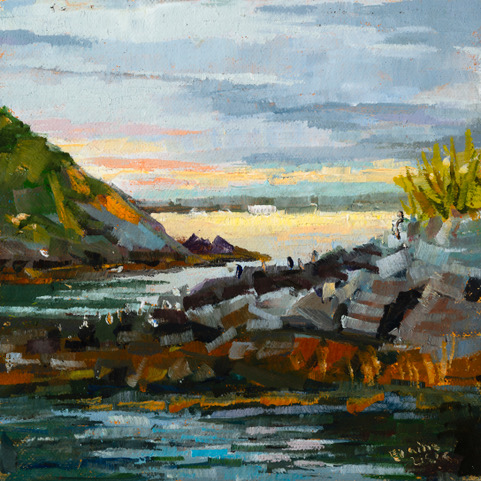
Elaine Lisle, “Morning Promise,” 6 x 6 in.Elaine Lisle, “Low Tide Lobster Cove,” 11 x 14 in.Alexandra Tyng, “Tree Shadows on House,” 14 x 18 in.
“The Maine Event” will predominantly feature plein air paintings. All art will be available for purchase in the gallery as well in Gallery222 Malvern’s online shop once the show opens. Visit www.gallery222malvern.com for more information.
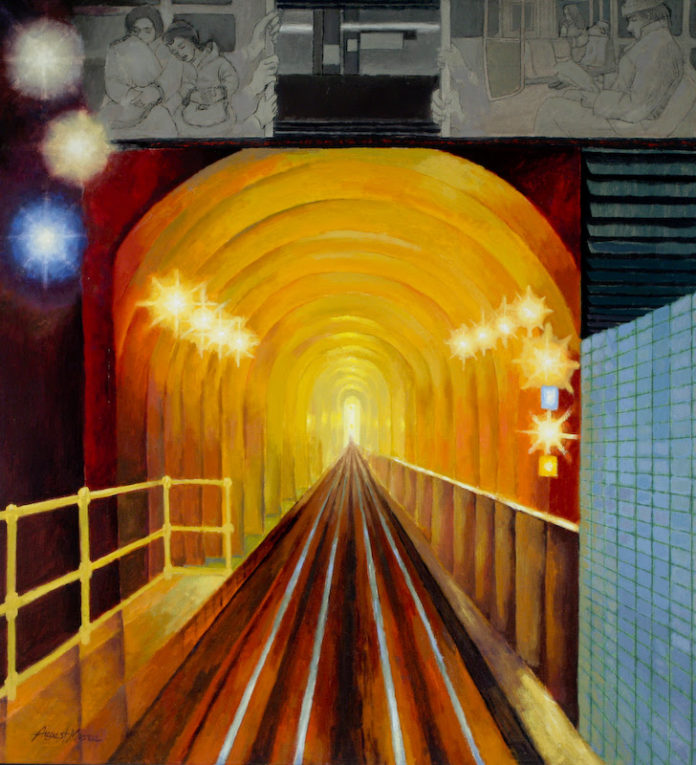
August Mosca, “Subway in Glowing Colors,” 1946, oil on canvas, 28.5 x 31 in.
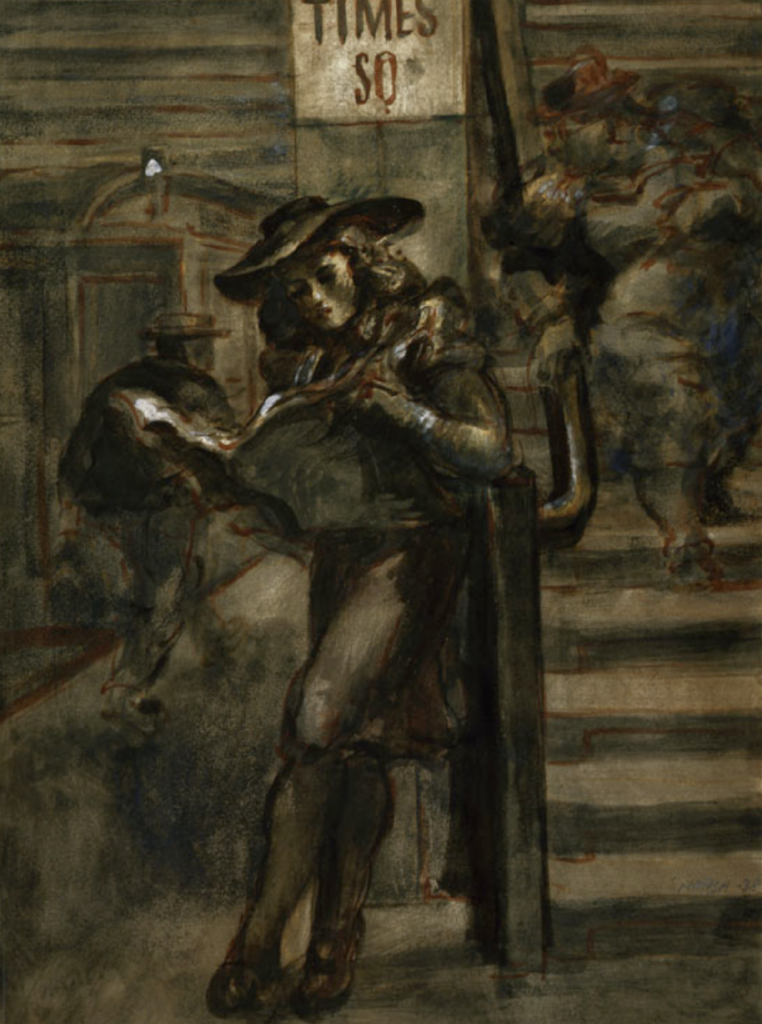
“Track Work: One Hundred Years of New York City’s Subway” is an exhibition at ACA Galleries (New York), on view through March 14, 2020.
More from the gallery
The subway as a subject has captured the artist’s imagination since its beginnings. A symbol of modern progress, the subway is a great unifier; the ultimate democracy, where people from different boroughs, classes, races, and ethnicities come together for the same fare and experience.
The exhibition showcases an array of artists’ narrative interpretations over the last century and demonstrates how the subway exemplifies the diversity and community that defines New York as a city.
The subway provides dramatic possibilities for non-narrative art that explores the geometries and lines of girders and tracks as well as extreme darkness to bright sunlight.
Reginald Marsh, “Times Square Subway Station,” 1938, watercolor, charcoal, and gouache on paper
Artists include Linda Adato, William Behnken, Saul Chase, Howard Cook, Chris “Daze” Ellis, Joseph Golinkin, Steven Katz, Henry Koerner, Greg Lamarche, Martin Lewis, Louis Lozowick, Adriaan Lubbers, Anthony Mitri, Francis Luis Mora, Reginald Marsh, August Mosca, Richard Pantell, Joseph Peller, Alan Petrulis, Jack Prudnikov, Philip Reisman, Doug Safranek, David Schmidlapp, John Sloan, Richard Sloat, Raphael Soyer, Curt Szekessy, Hans Welti, and Edmund Yaghjian.
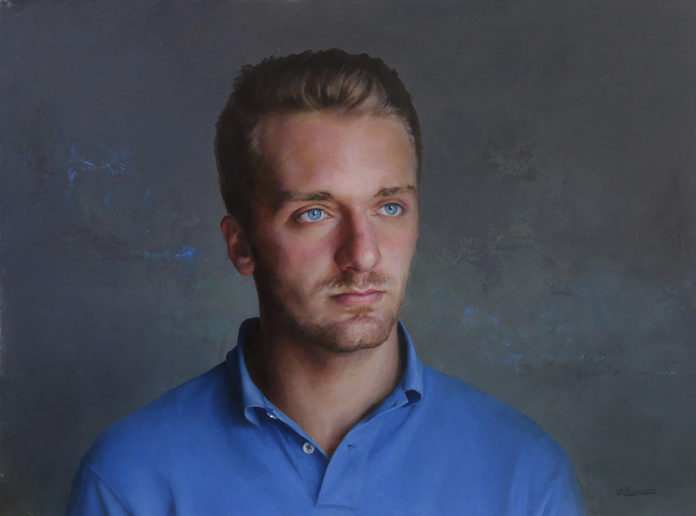
Portrait artist Lisa Kovvuri announces the launch of her new series of portraits: Beyond Appearances
Building on the success of her most recent solo exhibition, The Portrait Experience, at the Whistler House Museum of Art, Artist Lisa Kovvuri is taking the genre of portrait painting to a personal level. Beyond representing a likeness, her new series serves as a catalyst for making connections and getting at the heart of what it means to be human. She’s taking a hiatus from painting commissioned portraits to embrace her desire to paint people in a context that can address the emotional and psychological experiences we all share.
“In this series my focus is on emotional presence more than a person’s identity. The sitters inspire ideas about states of mind and emotional moments we can all recognize. I see these portraits as a kind of mirror of humanity. The models I’ve recruited represent a diverse range of backgrounds and cultures. I’m particularly drawn to people who I don’t typically encounter in my usual circles, people I can learn something from. Painting them bridges a gap for me. It cultivates empathy, and that’s an important personal aspect of my work.”
Although the new portraits strive to go beyond appearances, they depict appearances in a remarkable way. Departing from the more impressionist-leaning approach of her earlier work, these emphasize sculptural form, texture, intricate detail and attention to surfaces, offering viewers a much more intimate experience of the subject’s presence.
“That feeling of intimacy is important to me. I want people to be able to get up close and engage their senses, to feel free of barriers that may otherwise be there in real life.”
A recent painting from her Beyond Appearances series entitled Blue (pictured above), was a finalist in The Portrait Society of America Members only competition in December, 2019.
Paintings in the Beyond Appearances series are released through Lisa’s monthly e-newsletter. Sign up at https://lisakovvuri.com/email-newsletter to be sure to get a first viewing of each piece fresh off the easel. See more of Lisa’s work on her website at www.lisakovvuri.com. Get sneak peeks behind the scenes and of works in progress by following @lisakovvuri on Instagram and Facebook.
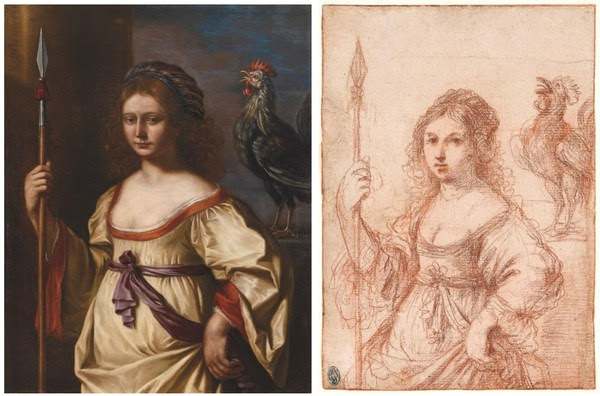
Left: Giovanni Francesco Barbieri, called il Guercino, “Aurora,” 1662, oil on canvas, 99.7 x 80 cm. Christopher Bishop Fine Art.
Right: Giovanni Francesco Barbieri, called il Guercino, “Allegory of Vigilance,” ca. 1662, red chalk on cream laid paper, 197 x 139 mm. Christopher Bishop Fine Art.
A 1662 painting of the Roman goddess Aurora by Guercino has been rediscovered — and reunited with its preparatory drawing. They are on public view in New York for the first time in hundreds of years, having been previously unknown to scholars. The works can be seen through February 15, 2020, at the new Manhattan location of Christopher Bishop Fine Art.
The painting, titled “Aurora,” by the eminent Italian Baroque painter Giovanni Francesco Barbieri (1591–1666), also known as il Guercino, was previously untraced although it appears in the account books of Guercino. The pairing of the painting with its preparatory red chalk drawing, “Allegory of Vigilance,” represents a rare opportunity to study the dynamics of Guercino’s late working method.
The goddess of dawn, Aurora, is portrayed in both works with a full-throated crowing rooster proclaiming the start of the day behind her as the light of the rising sun catches the glint of her spear and the folds of her dress. Aurora’s stance projects an air of strength as her eyes look directly at the viewer. Guercino’s skillful, economic use of color belies the complexity of the work, with its brilliant capture of the mood of dawn. The artist’s use of yellows, purples, and oranges along with multiple shades of blue captures the potential power and opportunity of a new day.
Famous for his large-scale altarpieces in Italian churches, Guercino’s paintings and drawings can be found in museums around the world, and are known for their dramatic compositions, unique sensitivity, dynamic colors, and vivid use of light and shadow. Guercino is one of the most beloved painters of the Italian Baroque and has been the subject of a number of recent exhibitions, including at the Morgan Library and Museum, New York, and in his native Cento, Italy.
Christopher Bishop rediscovered the painting, but had to wait until the reemergence of the drawing at auction this past year to complete the picture of the commission. “The story of the work is a fascinating one, having been ordered by a Bolognese soldier as a personal emblem. The painting ‘Aurora’ is in fact noted in Guercino’s account book as a commission by the Capitano Raffaello Gabrielli, who owned several paintings by Guercino,” said Bishop. “The subject matter combines elements of natural history with allegory in a manner which should appeal to a large and diverse audience. The story it has to tell about feminine power and resolve is one which has a great deal of contemporary relevance.”
The rediscovery of “Aurora” represents an opportunity for both study and research that should lead to a better understanding of Guercino’s late period. “I would love to see both works go to an institution where they could live together and be exhibited together for future generations. She has such presence,” said Bishop.
The painting and drawing of Aurora have both been authenticated by the independent art historian Nicholas Turner, author of the Guercino catalogue raisonné and formerly the curator of drawings at the J. Paul Getty Museum.
Fill your mind with useful art stories, the latest trends, upcoming art shows, top artists, and more. Subscribe to Fine Art Today, from the publishers of Fine Art Connoisseur magazine.






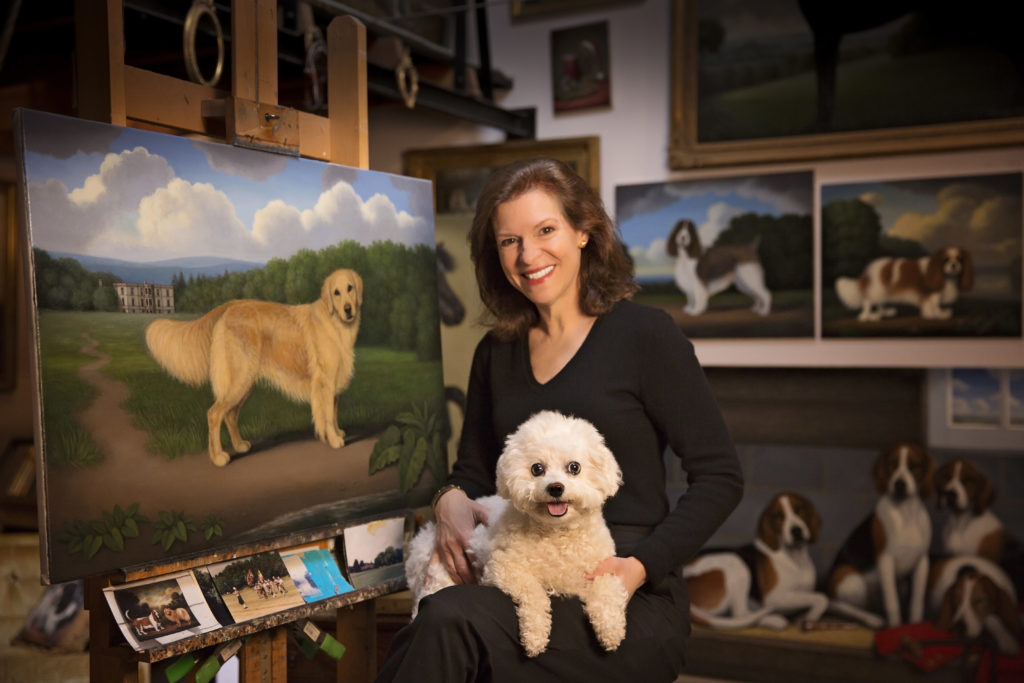 Born in Baltimore, Maryland, Christine developed a passion for painting animals at a young age. When she was two, her mother put a pencil in her hand and she immediately started drawing animals. With dogs and horses as her first loves, she painted her first portrait of a dog at the age of five. Rather than pursue a conventional academic degree in the arts, Merrill attended the traditional Schuler School of Fine Arts in Baltimore, where she studied for five years under the school’s founder, Hans Schuler and his wife, Ann. Since 1975, Christine Merrill has specialized in the depiction of dogs, completing commissions for clients across America as well as in Europe and Japan.